WO2024161606A1 - 情報処理装置、ユーザ端末、および情報処理方法 - Google Patents
情報処理装置、ユーザ端末、および情報処理方法 Download PDFInfo
- Publication number
- WO2024161606A1 WO2024161606A1 PCT/JP2023/003445 JP2023003445W WO2024161606A1 WO 2024161606 A1 WO2024161606 A1 WO 2024161606A1 JP 2023003445 W JP2023003445 W JP 2023003445W WO 2024161606 A1 WO2024161606 A1 WO 2024161606A1
- Authority
- WO
- WIPO (PCT)
- Prior art keywords
- information
- video
- unit
- location
- screen
- Prior art date
- Legal status (The legal status is an assumption and is not a legal conclusion. Google has not performed a legal analysis and makes no representation as to the accuracy of the status listed.)
- Ceased
Links
Images








Classifications
-
- G—PHYSICS
- G06—COMPUTING OR CALCULATING; COUNTING
- G06F—ELECTRIC DIGITAL DATA PROCESSING
- G06F3/00—Input arrangements for transferring data to be processed into a form capable of being handled by the computer; Output arrangements for transferring data from processing unit to output unit, e.g. interface arrangements
- G06F3/14—Digital output to display device ; Cooperation and interconnection of the display device with other functional units
-
- H—ELECTRICITY
- H04—ELECTRIC COMMUNICATION TECHNIQUE
- H04N—PICTORIAL COMMUNICATION, e.g. TELEVISION
- H04N21/00—Selective content distribution, e.g. interactive television or video on demand [VOD]
- H04N21/20—Servers specifically adapted for the distribution of content, e.g. VOD servers; Operations thereof
- H04N21/25—Management operations performed by the server for facilitating the content distribution or administrating data related to end-users or client devices, e.g. end-user or client device authentication, learning user preferences for recommending movies
- H04N21/266—Channel or content management, e.g. generation and management of keys and entitlement messages in a conditional access system, merging a VOD unicast channel into a multicast channel
- H04N21/2665—Gathering content from different sources, e.g. Internet and satellite
-
- H—ELECTRICITY
- H04—ELECTRIC COMMUNICATION TECHNIQUE
- H04N—PICTORIAL COMMUNICATION, e.g. TELEVISION
- H04N21/00—Selective content distribution, e.g. interactive television or video on demand [VOD]
- H04N21/40—Client devices specifically adapted for the reception of or interaction with content, e.g. set-top-box [STB]; Operations thereof
- H04N21/43—Processing of content or additional data, e.g. demultiplexing additional data from a digital video stream; Elementary client operations, e.g. monitoring of home network or synchronising decoder's clock; Client middleware
- H04N21/437—Interfacing the upstream path of the transmission network, e.g. for transmitting client requests to a VOD server
Definitions
- the present invention relates to an information processing device that provides images of multiple locations for comparison.
- a system that includes a terminal on which a viewer watches a video, an advertising video distribution server that distributes advertising video content including advertising products to the terminal, and an advertising product database that stores image information of the advertising products, and when a viewer specifies an advertising product in a video by performing a predetermined instruction operation on the terminal that receives the advertising video content, the system includes a means for comparing the image information of the advertising product in the video with image information of the advertising product registered in the advertising product database and identifying information regarding the specified advertising product, and enables access to the information source of the specified advertising product from the terminal (see Patent Document 1).
- the multiple locations to be compared can be, for example, supermarkets (e.g., Supermarket A and Supermarket B), department stores (e.g., Department Store X, Department Store Y, and Department Store Z), or expressways (e.g., the Meishin Expressway and the Keiji Bypass), but the type of location is not important.
- supermarkets e.g., Supermarket A and Supermarket B
- department stores e.g., Department Store X, Department Store Y, and Department Store Z
- expressways e.g., the Meishin Expressway and the Keiji Bypass
- the information processing device of the first invention is an information processing device that includes an inquiry receiving unit that receives an inquiry including specific information that identifies multiple locations to be compared from a user terminal, a video acquiring unit that acquires videos transmitted from a mobile terminal that is present in each of the multiple locations identified by the specific information, a screen composing unit that composes a single screen using the multiple videos, and a screen transmitting unit that transmits the single screen to the user terminal.
- This configuration makes it possible to obtain videos of multiple locations for comparison.
- the video acquisition unit refers to a group management unit in which one or more pieces of group information including a location identifier that identifies each of a plurality of locations to be compared is stored, acquires a plurality of location identifiers corresponding to the specific information included in the query, and acquires videos received from mobile terminals present in each of the plurality of locations identified by the plurality of location identifiers.
- This configuration makes it easy to obtain video of multiple locations for comparison.
- the information processing device of the third invention is an information processing device in which, compared to the first or second invention, the video acquisition unit transmits a video transmission instruction to a mobile terminal located at each of a plurality of locations identified by the specific information, and receives the video from the mobile terminal in response to the transmission of the transmission instruction.
- This configuration makes it possible to obtain videos of multiple locations for comparison.
- the information processing device of the fourth invention is an information processing device that further includes a location receiving unit that receives location information from each of the multiple mobile terminals, and the video acquisition unit includes a terminal determination means that uses the location information received by the location receiving unit to determine a mobile terminal that is present in each of the multiple locations identified by the specific information, an instruction transmission means that transmits a transmission instruction to each of the multiple mobile terminals determined by the terminal determination means, and a video reception means that receives video from each of the multiple mobile terminals.
- This configuration makes it possible to obtain videos of multiple locations for comparison.
- the information processing device of the fifth invention is an information processing device in which, compared to the third invention, the video acquisition unit includes an instruction sending means for sending an inquiry based on the specific information to a plurality of mobile terminals, and a video receiving means for receiving video from each of the plurality of mobile terminals that has been determined to correspond to the specific information in response to the sending of the inquiry.
- This configuration makes it possible to obtain videos of multiple locations for comparison.
- the information processing device of the sixth invention compared to the first or second invention, further includes a video receiving unit that receives videos corresponding to location information from a plurality of mobile terminals, and a video storage unit that stores each of the plurality of videos in association with the location information, and the video acquisition unit is an information processing device that acquires videos corresponding to location information corresponding to each of the plurality of locations identified by the specific information from among the plurality of videos stored by the video storage unit.
- This configuration makes it possible to obtain videos of multiple locations for comparison.
- the information processing device of the seventh invention is an information processing device according to any one of the first to sixth inventions, in which the screen composition unit includes a ranking means for acquiring attribute values of each of the multiple videos and ranking the multiple videos using the attribute values, and a composition means for composing a screen according to the ranking of each of the multiple videos.
- the information processing device of the seventh invention is an information processing device that, with respect to any one of the first to sixth inventions, further comprises a third security means for storing multiple videos or a screen containing multiple videos in association with a rights holder identifier that identifies the user of the user terminal.
- the rights holder of the video can be the user who needs the video.
- the user terminal of the ninth aspect of the invention is a user terminal that includes a location acquisition unit that acquires a location identifier that identifies the location of the user terminal, a query acquisition unit that acquires a query that includes specific information using the location identifier, a user transmission unit that transmits the query to an information processing device, a user reception unit that receives from the information processing device a screen that is configured using videos of multiple locations including the location identified by the location identifier, and a user output unit that outputs the screen.
- This configuration makes it easy to obtain video of multiple locations for comparison.
- the user terminal of the tenth invention is a user terminal that includes a query acquisition unit that acquires a query including specific information including a user identifier, a user transmission unit that transmits the query to an information processing device, a user reception unit that receives from the information processing device a screen that is configured using videos of multiple locations identified by multiple location identifiers that correspond to the user identifier, and a user output unit that outputs the single screen.
- This configuration makes it easy to obtain video of multiple locations for comparison.
- the information processing device of the present invention can provide videos of multiple locations for comparison.
- Block diagram of information system A Block diagram of information system A Block diagram of the information processing device 1 1 is a flowchart illustrating a first operation example of the information processing device 1. A flowchart illustrating an example of the terminal determination process A flowchart illustrating an example of the comparison target position acquisition process. A flowchart illustrating an example of the screen configuration process. A flowchart illustrating an example of the fourth maintenance process. A flowchart illustrating an example of the compensation process. 11 is a flowchart illustrating a second operation example of the information processing device 1. A flowchart for explaining a first operation example of the mobile terminal 2. A flowchart for explaining a second operation example of the mobile terminal 2.
- a flowchart for explaining an example of the operation of the user terminal 3 A diagram showing the group management table A diagram showing the terminal management table A diagram showing an example of the output A diagram showing an example of the output Block diagram of information system B in embodiment 2
- a flowchart for explaining an example of the operation of the information processing device 4 A flowchart illustrating an example of the video determination process. Overview of the computer system according to the above embodiment. Block diagram of the computer system
- an information processing device receives a query that identifies multiple locations to be compared, and transmits to a user terminal a screen including video of one or more of the multiple locations based on the query.
- video is referred to as video as appropriate.
- the video is real-time video. Real-time video is video that is being shot, but there may be a delay between when it is shot and when it is displayed. It is also preferable that the screen includes video of all of the multiple locations.
- an information processing device determines a mobile terminal that will capture images of multiple locations to be compared, receives videos from each of the multiple mobile terminals, and transmits a screen containing one or more of the multiple videos to a user terminal.
- an information system includes a mobile terminal that receives an inquiry, determines whether or not the inquiry matches, and transmits the captured video if a video of a location that matches the inquiry has been captured, and an information processing device that transmits inquiries to multiple mobile terminals, receives video from a mobile terminal that is determined to match the inquiry, and transmits a screen including the video to a user terminal.
- information X corresponding to information Y means that information Y can be obtained from information X, or information X can be obtained from information Y, and the method of the correspondence is not important.
- Information X and information Y may be linked, may exist in the same buffer, information X may be included in information Y, or information Y may be included in information X, etc.
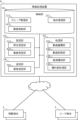
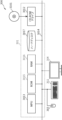
- FIG. 1 is a conceptual diagram of an information system A in this embodiment.
- Information system A includes an information processing device 1, one or more mobile terminals 2, and one or more user terminals 3.
- the information processing device 1 is a device that provides videos received from the mobile terminal 2 to the user terminal 3.
- the information processing device 1 is usually a server that provides videos to the user terminal 3.
- the information processing device 1 is, for example, a cloud server, an ASP server, etc., but the type is not important.
- the information processing device 1 may also be a device that constitutes a blockchain.
- the interval between each of the multiple still images included in the video does not matter.
- the video is, for example, a video of 60 frames per second or 30 frames per second, but it can also be a collection of multiple still images taken with an interval of more than a specified time (for example, one minute), or a collection of multiple still images taken when specified conditions are met.
- the still images can also be called fields or frames.
- the mobile terminal 2 is a terminal that can move.
- the mobile terminal 2 is a device that takes video and transmits it to the information processing device 1.
- the mobile terminal 2 is a terminal that is installed on a moving body and takes video.
- the mobile terminal 2 is, for example, a smartphone, a tablet terminal, a camera with a communication function, glasses with a camera, a smart watch with a camera, or a drive recorder.
- "installed” usually means that it is fixed, but it may also be considered to include being in contact with or held.
- the mobile body is an object that moves, such as a car, a motorcycle, a bicycle, or a living thing.
- a living thing is usually a person, but it may be another living thing.
- the user terminal 3 is a terminal used by a user.
- the user terminal 3 is, for example, a device that accepts an inquiry that specifies multiple locations to be compared, and outputs real-time video of the multiple locations based on the inquiry.
- the user is someone who watches videos or needs videos.
- the user terminal 3 may have the functions of a mobile terminal 2.
- the user terminal 3 may be a terminal of a user who provides videos.
- the user terminal 3 is, for example, a smartphone, a tablet terminal, a so-called personal computer, a navigation terminal, etc., and the type is not important.
- the information processing device 1 and one or more mobile terminals 2, and the information processing device 1 and one or more user terminals 3, can typically communicate with each other via a network such as the Internet.
- FIG. 2 is a block diagram of information system A in this embodiment.
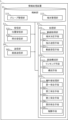
- FIG. 3 is a block diagram of information processing device 1.
- the information processing device 1 comprises a storage unit 11, a receiving unit 12, a processing unit 13, and a transmitting unit 14.
- the storage unit 11 comprises a group management unit 111, and a terminal management unit 112.
- the receiving unit 12 comprises a location receiving unit 121, and an inquiry receiving unit 122.
- the processing unit 13 comprises a video acquisition unit 131, a screen composition unit 132, and a rights holder processing unit 133.
- the video acquisition unit 131 comprises a terminal determination means 1311, an instruction transmission means 1312, and a video reception means 1313.
- the screen composition unit 132 comprises a ranking means 1321, and a composition means 1322.
- the rights holder processing unit 133 comprises a first maintenance means 1331, a second maintenance means 1332, a third maintenance means 1333, a fourth maintenance means 1334, and a reward means 1335.
- the transmitting unit 14 comprises a screen transmission unit 141.
- the mobile terminal 2 includes a mobile storage unit 21, a mobile receiving unit 22, a mobile processing unit 23, a mobile transmitting unit 24, and a mobile output unit 25.
- the mobile processing unit 23 includes a position acquisition unit 231, a photographing unit 232, an attribute value acquisition unit 233, and a configuration unit 234.
- the user terminal 3 includes a user storage unit 31, a user reception unit 32, a user processing unit 33, a user transmission unit 34, a user reception unit 35, and a user output unit 36.
- the user processing unit 33 includes a location acquisition unit 331 and an inquiry acquisition unit 332.
- Various types of information are stored in the storage unit 11. Examples of the various types of information include group information (described later), terminal information (described later), videos, one or more attribute values associated with the videos, and map information.
- the attribute value is, for example, the attribute value of the video.
- the attribute value of the video is, for example, environmental information.
- Environmental information is information about the environment in which the video was shot.
- Environmental information is, for example, the location information, time information, weather information, temperature information, season information, and location identifier described below.
- Time information is information that specifies the time when the video was shot.
- the time when the video was shot may be a time around the time when the video was shot, and accuracy is not required.
- Time information is, for example, the time, year/month/date/time, year/month/date/time/minute, year/month/date/time/minute/second, year/month/date, and month/day. In other words, the granularity of the time indicated by the time information does not matter.
- Weather information is information that specifies the weather at the location (or region) where the video was shot. Weather information is, for example, “sunny,” “rain,” “snow,” and “cloudy.” Temperature information is information that specifies the temperature at the location where the video was shot at the time it was shot. Temperature information is, for example, “25 degrees” and “above 30 degrees.” Seasonal information is information that specifies the season at the location where the video was shot. The season information is, for example, “spring,” “summer,” “early summer,” or “winter.”
- the road attribute value is the attribute value of the road on which the mobile terminal 2 has traveled.
- Map information is used, for example, to obtain a location identifier corresponding to the location information.
- Map information is, for example, in KIWI format, but the data structure is not important.
- Location information is information that identifies a location. Location information is usually (latitude, longitude) or (latitude, longitude, altitude), but it can also be a location identifier, which will be described later.
- a location identifier is information that identifies a location.
- a location identifier is a location name or a location ID.
- a location identifier can also be (latitude, longitude) or (latitude, longitude, altitude).
- the group management unit 111 stores one or more pieces of group information.
- Group information is information that identifies multiple locations to be compared.
- the group information includes, for example, a location identifier for each of the multiple locations to be compared.
- the group information includes, for example, position information for each of the multiple locations to be compared.
- the group information may be associated with a user identifier.
- a group of multiple locations that each user desires to compare may be managed.
- the group information associated with a user identifier is, for example, information registered by a user identified by the user identifier.
- the terminal management unit 112 stores one or more pieces of terminal information.
- the terminal information is information related to the mobile terminal 2.
- the terminal information here typically includes a terminal identifier, which is an identifier for the mobile terminal 2, and terminal communication information.
- the terminal information has, for example, the latest location information of the mobile terminal 2.
- the mobile terminal 2 here is typically a terminal capable of transmitting video.
- the terminal information is associated with the mobile terminal 2.
- the terminal information in the terminal management unit 112 is accumulated by transmitting terminal communication information and the like from the mobile terminal 2, for example, when the mobile terminal 2 is in a state where it can transmit video.
- the terminal identifier is information that identifies the mobile terminal 2.
- the terminal identifier may be a rights holder identifier that identifies the rights holder who is the user of the mobile terminal 2.
- the terminal identifier is, for example, the ID of the mobile terminal 2, the user identifier of the user of the mobile terminal 2, the name of the mobile terminal 2, the IP address of the mobile terminal 2, or the MAC address of the mobile terminal 2.
- a rights holder is someone who has some rights regarding the video captured by the mobile terminal 2.
- a rights holder is, for example, the owner of the video, the copyright holder of the video, the owner of the mobile terminal 2 that captured the video, or the person with the right to dispose of the video.
- a rights holder is, for example, the initial rights holder of the video.
- the rights holder is usually the owner of the mobile terminal 2, but it can be anyone who has rights to the video captured by the mobile terminal 2.
- the rights holder identifier may be a terminal identifier.
- the rights holder identifier is, for example, the rights holder's ID, the rights holder's name, the rights holder's email address, or the rights holder's phone number.
- the rights holder's ID is, for example, a user identifier.
- the terminal communication information is information for communicating with the mobile terminal 2.
- the terminal communication information is, for example, the IP address of the mobile terminal 2, the MAC address of the mobile terminal 2, and the ID of the communication app installed on the mobile terminal 2.
- the receiving unit 12 receives various types of information and instructions.
- the various types of information and instructions are, for example, location information, inquiries described below, videos, and videos that correspond to one or more attribute values. Note that videos that correspond to one or more attribute values are appropriately referred to as additional videos. Note that video is a concept that includes additional videos.
- the location receiving unit 121 receives location information from each of the multiple mobile terminals 2.
- each of the multiple mobile terminals 2 here is a terminal capable of transmitting video.
- a terminal capable of transmitting video is, for example, a terminal currently shooting video, but it may also be a terminal that starts shooting video in response to receiving an instruction from the information processing device 1.
- the location receiving unit 121 normally receives location information from each of the multiple mobile terminals 2 continuously. Receiving continuously means receiving twice or more, for example, receiving constantly, receiving periodically, or receiving irregularly 22 or more times.
- the inquiry receiving unit 122 receives an inquiry from one or more user terminals 3.
- a query can be said to be a request to transmit a screen based on videos of multiple locations to be compared.
- the query includes specific information.
- Specific information is information for identifying multiple locations to be compared.
- Examples of specific information include a location identifier (e.g., a place name) that identifies each of the multiple locations, location information (e.g., (latitude, longitude)) that identifies each of the multiple locations, one location identifier, a location identifier of the location where the user terminal 3 is located, one location information, location information indicating the location where the user terminal 3 is located, or a user identifier.
- the processing unit 13 performs various types of processing. For example, various types of processing are processing performed by the video acquisition unit 131, the screen composition unit 132, or the rights holder processing unit 133.
- the video acquisition unit 131 acquires the video transmitted from the mobile terminal 2 present at each of the multiple locations identified by the identification information.
- the method by which the video acquisition unit 131 acquires the video is, for example, either of the following (1) or (2). (1) When the video acquisition unit 131 determines the mobile terminal 2 to which the video is to be transmitted
- the video acquisition unit 131 transmits a video transmission instruction to the mobile terminal 2 located at each of the multiple locations specified by the specific information, and receives the video from the mobile terminal 2 in response to the transmission instruction.
- the video acquisition unit 131 includes the following terminal determination means 1311, instruction transmission means 1312, and video reception means 1313.
- the terminal determination means 1311 uses the location information of the mobile terminal 2 received by the location receiving unit 121 to determine which mobile terminal 2 is present in each of the multiple locations identified by the specific information.
- the instruction sending means 1312 sends a transmission instruction to each of the multiple mobile terminals 2 determined by the terminal determination means 1311.
- the transmission instruction is an instruction to send a video.
- the video receiving means 1313 receives the video from each of the plurality of mobile terminals 2 to which a transmission instruction has been transmitted. (2) When the mobile terminal 2 determines whether to transmit a video
- the video acquisition unit 131 includes, for example, the following instruction sending means 1312 and video receiving means 1313.
- the instruction sending means 1312 sends a query based on the specific information to the multiple mobile terminals 2.
- the multiple mobile terminals 2 here are multiple mobile terminals 2 that can send videos.
- the multiple mobile terminals 2 here are typically all mobile terminals 2 that can send videos.
- the multiple mobile terminals 2 here are, for example, multiple mobile terminals 2 that are managed by the terminal management unit 112 as being in a state where they can send videos.
- the query based on specific information is a query sent to the mobile terminal 2 and may be the same information as the received query, or may be different information.
- the query based on specific information may include the received specific information, may include multiple pieces of location information corresponding to the received specific information, or may include multiple location identifiers corresponding to the received specific information.
- the video receiving means 1313 receives video from each of the multiple mobile terminals 2 that have been determined to correspond to the specific information in response to the transmission of the inquiry.
- the screen configuration unit 132 configures a screen based on the multiple videos acquired by the video acquisition unit 131. It is preferable that the single screen has multiple videos. It is preferable that the single screen has all the videos acquired by the video acquisition unit 131. However, the single screen may be a screen having a thumbnail image based on a frame constituting each of the multiple videos, or a screen having a part (e.g., one) of the multiple videos and a thumbnail image based on a frame constituting each of the other one or more videos. It is preferable that a part of an area (window) of the single screen contains one or more videos. Furthermore, configuring a screen means acquiring screen information that is the basis for displaying the screen. The screen information is described in, for example, HTML, XML, etc., but the format is not important.
- the ranking means 1321 acquires one or more attribute values for each of the multiple videos, and ranks the multiple videos using the attribute values.
- the attribute values are, for example, the results of video analysis, and the distance from the user terminal 3.
- the results of video analysis are, for example, the price of a specific product in the video, and the degree of road congestion based on the number of cars.
- the distance from the user terminal 3 is the distance acquired using the location information corresponding to the video and the location information transmitted from the user terminal 3.
- the ranking means 1321 for example, performs object recognition processing on one frame of a video shot inside each of multiple supermarkets, determines the object in that frame, and obtains the price, which is a number near the object, through character recognition processing. Next, the ranking means 1321 assigns a rank (for example, any natural number greater than or equal to 1) to the videos, for example, in order of lowest price of the same object.
- a rank for example, any natural number greater than or equal to 1
- the ranking means 1321 performs object recognition processing on one frame in each video of multiple different expressways, obtains the number of cars or the distance between the cars in that frame, and obtains the congestion level of the road using the number of cars or the distance.
- the ranking means 1321 obtains the level by, for example, referring to a correspondence table containing multiple pieces of correspondence information having ranges and levels of the number of cars, or a correspondence table containing multiple pieces of correspondence information having ranges and levels of the distance between cars.
- the ranking means 1321 for example, assigns a level to each video.
- the ranking means 1321 calculates the distance for each of the multiple mobile terminals 2 using the location information associated with the video transmitted from the mobile terminal 2 and the location information transmitted from the user terminal 3. Next, the ranking means 1321 assigns a rank to each video transmitted from the mobile terminal 2, for example, in order of shortest distance.
- the configuration means 1322 configures a screen based on each of the multiple videos. It is preferable for the configuration means 1322 to configure a screen according to the ranking of each of the multiple videos. Note that a screen according to the ranking is, for example, a screen including multiple videos sorted in order of rank, and a screen in which the rank of each video is clearly indicated. Note that, as described above, it is preferable for the single screen to include all of the multiple videos, but it may also include thumbnail images using still images that make up each video, or it may include only some of the videos.
- the rights holder processing unit 133 performs rights holder processing.
- Rights holder processing is processing related to a rights holder identified by a rights holder identifier associated with a video.
- the video in question is, for example, a video acquired by the video acquisition unit 131.
- the video in question is, for example, a video received by the receiving unit 12.
- the rights holder processing unit 133 performs rights holder processing, which is processing in response to the screen transmission unit 141 transmitting a screen, and is processing related to a rights holder identified by a rights holder identifier corresponding to each of the multiple videos corresponding to the screen.
- the rights holder processing is, for example, a first security processing described below, a second security processing described below, a third security processing described below, a fourth security processing described below, and a compensation processing described below.
- the rights holder identifier associated with the video is, for example, the rights holder identifier corresponding to the mobile terminal 2 that transmitted the video, or the identifier of the user of the user terminal 3 to which the video was transmitted.
- the user of the user terminal 3 is the user who transmitted the inquiry.
- the first maintenance means 1331 performs a first maintenance process to store the video received by the receiving unit 12 in association with an attribute value set corresponding to the video.
- the attribute value set includes one or more attribute values.
- the first maintenance means 1331 for example, stores the video in a blockchain.
- the second security means 1332 performs a second security process to store the video received by the receiving unit 12 in association with the rights holder identifier corresponding to the video.
- the second security means 1332 stores the video in a blockchain, for example.
- the third security means 1333 stores a rights holder identifier that identifies the user of the user terminal 3, in association with the video.
- the third security means 1333 stores the rights holder identifier, for example, in the storage unit 11 or in a blockchain.
- the third security means 1333 may store a rights holder identifier that identifies the user of the user terminal 3 for multiple videos received by the receiving unit 12.
- the third security means 1333 may store temporally consecutive screens (video of the screen) transmitted by the screen transmission unit 141, paired with the rights holder identifier.
- the video is stored, for example, in the storage unit 11, but it may also be stored in another device, such as another device that constitutes the blockchain.
- the fourth preservation means 1334 performs a fourth preservation process that accumulates preservation information.
- the preservation information includes access information for accessing the accumulated video.
- the order of accumulation of the video and the fourth preservation process for the preservation information corresponding to the video does not matter.
- the fourth security means 1334 performs a fourth security process, for example, to accumulate security information including access information for accessing the multiple videos acquired by the video acquisition unit 131.
- the fourth security means 1334 performs a fourth security process, for example, to accumulate security information including access information for accessing the video on the screen transmitted by the screen transmission unit 141 to the user terminal 3.
- the fourth security means 1334 accumulates the security information in the blockchain. That is, it is preferable that the fourth security means 1334 accumulates the security information in the distributed ledger of the blockchain. It is preferable that the fourth security means 1334 registers the security information as a non-fungible token (NFT). It is preferable that the fourth security means 1334 registers the security information in a distributed file system in an IPFS (Inter Planetary File System) network.
- NFT non-fungible token
- the preservation information is information for ensuring the originality of a video. It can be said that the preservation information is the heading information of a video.
- the preservation information is, for example, access information and a set of attribute values. It is preferable that the preservation information has, for example, one or more right holder identifiers. When the preservation information has multiple right holder identifiers, the right holder of the video may be shared, and the multiple right holder identifiers may be right holder history information.
- the right holder history information is a set of right holder identifiers and is information indicating the history of the right holder.
- the fourth preservation process can ensure the originality of the preservation information of a registered video (which may be a video of a screen).
- the access information is information for accessing a video.
- the access information is information that identifies the storage destination of the video.
- the access information is, for example, a URL or a URI.
- the compensation means 1335 performs compensation processing for each right holder identified by a right holder identifier associated with the video acquired by the video acquisition unit 131. Note that such a right holder identifier is, for example, the owner of the mobile terminal 2.
- the reward process is a process of giving a reward.
- the reward process is, for example, a process of increasing points managed in pair with one or more rights holder identifiers associated with a video.
- the reward process is, for example, a process of making a payment to a rights holder identified by one or more rights holder identifiers associated with a video.
- the reward process is, for example, a process of transmitting a video or other content to a user terminal 3 of a rights holder identified by one or more rights holder identifiers associated with a video.
- the reward process need only give a benefit to a rights holder identified by one or more rights holder identifiers associated with a video, and the content of the benefit is not important.
- the reward may be, for example, money, points, goods, content, etc., and the content is not important.
- the compensation means 1335 acquires one or more attribute values of the video corresponding to the screen transmitted by the screen transmission unit 141, and performs compensation processing, which is processing for determining compensation to the rights holder of the video using the one or more attribute values and providing the compensation.
- the one or more attribute values here are, for example, the amount of video data, the duration of the video, the number of frames in the video, and the resolution of the video.
- the reward means 1335 preferably performs reward processing, which is a process of acquiring a reward amount corresponding to a service identifier that identifies a service provided to the target video, and giving a reward corresponding to the reward amount.
- the service identifier is, for example, "view” or "purchase.”
- the storage unit 11 stores the reward amount corresponding to the service identifier, or information for determining the reward amount corresponding to the service identifier.
- the reward means 1335 performs reward processing, which is a process of obtaining a reward amount using, for example, one or more pieces of information from one or more attribute values and one or more service identifiers, and granting a reward corresponding to the reward amount.
- reward processing is a process of obtaining a reward amount using, for example, one or more pieces of information from one or more attribute values and one or more service identifiers, and granting a reward corresponding to the reward amount.
- an arithmetic expression or a correspondence table corresponding to each of the multiple service identifiers is stored in the storage unit 11.
- the arithmetic expression is an expression that calculates the reward amount using one or more attribute values as parameters.
- the correspondence table is a table having multiple pieces of correspondence information that manage the reward amounts corresponding to one or more attribute values.
- the reward means 1335 normally performs a process of charging a user who has enjoyed a service related to the target video with a reward.
- the process of charging a user with a reward is, for example, a process of charging the user with the amount of reward acquired.
- the process of charging a user with a reward is, for example, a process of charging the user with the amount of reward acquired and the amount of profit obtained by the operator of the information processing device 1.
- the process of charging a user with a reward is, for example, a process of deducting points corresponding to the user who has enjoyed the service, a payment process using the user's credit card number, etc.
- the user who has enjoyed the service is normally the user of the user terminal 3.
- the transmission unit 14 transmits various types of information or instructions.
- the various types of information or instructions are, for example, a screen.
- the screen transmission unit 141 transmits one of the screens acquired by the screen composition unit 132 to the user terminal 3 that has transmitted the inquiry.
- the screen transmission unit 141 usually transmits to the user terminal 3 a screen including videos taken at multiple locations to be compared.
- the mobile storage unit 21 stores various types of information.
- the various types of information are, for example, video, attribute value sets, rights holder identifiers, camera attribute values, and map information.
- the camera attribute values are the attribute values of the camera.
- the camera attribute values are, for example, the angle of view, directional information, and resolution.
- one or more attribute values that make up an attribute value set correspond to one or more still images that make up a video.
- the one or more attribute values may correspond to all of the still images, to some of the still images, or to multiple still images.
- the mobile receiving unit 22 receives various information and instructions.
- the various information and instructions are, for example, transmission instructions and inquiries.
- the movement processing unit 23 performs various types of processing.
- the various types of processing are, for example, processing performed by a position acquisition unit 231, a photographing unit 232, an attribute value acquisition unit 233, and a configuration unit 234.
- the movement processing unit 23 judges whether the location information acquired by the location acquisition unit 231 matches the query received by the movement receiving unit 22.
- the movement processing unit 23 judges whether any one or more location identifiers or any one or more location information included in the query satisfies a location condition for the location information acquired by the location acquisition unit 231.
- the location condition means that the two locations are the same or nearby.
- the location condition means, for example, that the location indicated by the location information acquired by the location acquisition unit 231 is the same as the location identified by the location identifier or location information included in the query, or that the distance between the point indicated by the location information acquired by the location acquisition unit 231 and the point identified by the location identifier or location information included in the query is within a threshold or is smaller than a threshold.
- the location acquisition unit 231 acquires location information.
- the location acquisition unit 231 typically acquires location information that identifies the current location of the mobile terminal 2.
- the location acquisition unit 231 acquires location information, for example, by a GPS receiver. However, the means or algorithm by which the location acquisition unit 231 acquires the location information is not important.
- the image capturing unit 232 captures video.
- the image capturing unit 232 captures video while the mobile terminal 2 is moving. It is preferable that the captured video be associated with location information acquired by the location acquisition unit 231. It is preferable that the captured video be associated with one or more attribute values acquired by the attribute value acquisition unit 233, which will be described later.
- the image capture unit 232 stores the captured video in the mobile storage unit 21.
- the image capture unit 232 stores video in the mobile storage unit 21, which has a limited storage capacity, it is preferable that the image capture unit 232 overwrites the area in which the old video is stored with the new video.
- the structure of the mobile storage unit 21 is a ring buffer structure.
- the image capturing unit 232 may, for example, start capturing video in response to receiving a transmission instruction.
- the image capturing unit 232 may, for example, start capturing video when it is determined that the location condition is met in response to a received inquiry.
- the image capturing unit 232 may, for example, start capturing video when input of an instruction to capture video is accepted from the user.
- the attribute value acquisition unit 233 acquires one or more camera attribute values including directional information indicating the direction in which the image capture unit 232 captures images. It is preferable that the attribute value acquisition unit 233 acquires one or more attribute values including the camera attribute value.
- the attribute value acquisition unit 233 acquires, for example, one or more attribute values.
- One or more attribute values may be referred to as an attribute value set.
- the attribute value acquisition unit 233 acquires time information from a clock (not shown), for example, during shooting.
- the attribute value acquisition unit 233 acquires time information, for example, constantly, at predetermined intervals, or when acquisition conditions are met.
- the attribute value acquisition unit 233 acquires time information from a clock (not shown), for example, during shooting, and acquires seasonal information corresponding to the time information.
- the attribute value acquisition unit 233 acquires weather information corresponding to the position information, for example, from a server (not shown).
- the attribute value acquisition unit 233 acquires weather information, for example, constantly, at predetermined intervals, or when acquisition conditions are met.
- the attribute value acquisition unit 233 acquires temperature information, for example, during shooting.
- the movement processing unit 23 acquires temperature information corresponding to the position information, for example, from a server (not shown).
- the movement processing unit 23 acquires temperature information, for example, from a temperature sensor installed on a moving object.
- the movement processing unit 23 acquires temperature information, for example, constantly, at predetermined intervals, or when an acquisition condition is met.
- the acquisition condition is, for example, when the analysis result of the video meets a predetermined condition.
- the attribute value acquisition unit 233 acquires a location identifier corresponding to the location information acquired by the location acquisition unit 231 from the map information, and associates the location identifier with a video.
- the attribute value acquisition unit 233 acquires a location identifier that is a location identifier corresponding to the location information acquired by the location acquisition unit 231 and has a specific condition from the map information, and associates the location identifier with a video.
- the specific condition is, for example, that the location identifier is a specific type of location identifier (for example, a station name, a building name).
- associating with a video may mean associating with frames that make up the video, or with the entire video.
- the attribute value acquisition unit 233 acquires one or more tags for a video captured by the image capture unit 232 and associates the tags with the video. Note that a tag can also be considered an attribute value.
- the attribute value acquisition unit 233 analyzes a video captured by the image capture unit 232 and acquires one or more tags for the video.
- the attribute value acquisition unit 233 acquires one or more tags, for example, using one or more moving object attribute values acquired during shooting by the shooting unit 232.
- the moving object attribute values are, for example, CAN data.
- the attribute value acquisition unit 233 determines one or more still images that match the video tag condition, and acquires a tag that pairs with the video tag condition.
- the attribute value acquisition unit 233 may also associate the tag with the one or more still images. Note that the still images are frames that make up the video.
- the attribute value acquisition unit 233 analyzes frames of the video, recognizes multiple cars, and acquires the spacing between each of the multiple cars.
- the attribute value acquisition unit 233 also acquires the number of cars whose spacing is within a threshold.
- the attribute value acquisition unit 233 also acquires the moving distance and frame rate of one car in multiple frames, and acquires the speed of the car.
- the attribute value acquisition unit 233 uses the number of cars whose spacing is within a threshold and the speed of the car to determine whether or not the video tag condition is met. If the video tag condition is met, the attribute value acquisition unit 233 acquires the tag "traffic jam" that is paired with the video tag condition. The attribute value acquisition unit 233 may also associate the tag "traffic jam" with the analyzed frame of the analyzed video.
- the attribute value acquisition unit 233 determines one or more moving object attribute values that match an attribute value tag condition, and acquires a tag that pairs with the attribute value tag condition.
- the attribute value acquisition unit 233 may also associate the tag with a video that pairs with the one or more moving object attribute values.
- the attribute value acquisition unit 233 uses the speed history of the CAN data associated with each field of the video to detect CAN data that matches the attribute value tag condition, acquires the tag "traffic jam” that matches the attribute value tag condition, and associates the tag with the field associated with the CAN data.
- the CAN data associated with each field of the video is CAN data acquired at the same time that the field was photographed.
- the composition unit 234 associates the acquired location information with the video and acquires an additional video.
- the composition unit 234 acquires an additional video in which, for example, one or more camera attribute values acquired by the attribute value acquisition unit 233 are also associated with the video.
- the composition unit 234 acquires an additional video in which, for example, one or more attribute values acquired by the attribute value acquisition unit 233 are also associated with the video.
- the additional video usually includes location information.
- the mobile transmission unit 24 transmits various types of information to the information processing device 1.
- the various types of information are, for example, video and additional video.
- the mobile transmission unit 24 may continuously transmit video captured by the shooting unit 232 to the information processing device 1. In such cases, the video is usually associated with location information and time information.
- the mobile transmission unit 24 transmits the video captured by the image capture unit 232 to the information processing device 1.
- the mobile transmission unit 24 transmits the video captured by the image capture unit 232 to the information processing device 1.
- the movement output unit 25 outputs various types of information.
- the various types of information are, for example, videos, additional videos, and sets of attribute values.
- Output is a concept that includes displaying on a display, projecting using a projector, printing on a printer, outputting sound, transmitting to an external device, storing on a recording medium, and passing on the processing results to other processing devices or other programs.
- the user storage unit 31 stores various types of information. Examples of the various types of information include user identifiers, videos, inquiries, and map information.
- the user reception unit 32 receives various instructions and information.
- the various instructions and information are, for example, inquiries.
- the inquiries received by the user reception unit 32 include, for example, specific information.
- reception includes the reception of information entered from input devices such as a keyboard, mouse, or touch panel, the reception of information transmitted via a wired or wireless communication line, and the reception of information read from recording media such as optical disks, magnetic disks, and semiconductor memory.
- the user reception unit 32 receives an inquiry from a user.
- Such an inquiry is an instruction to obtain videos of multiple locations to be compared.
- the inquiry received from the user may be merely pressing a button or selecting a menu item, or may include input of one or more location identifiers, or may include input of one or more pieces of location information.
- the user reception unit 32 acquires an inquiry including the location information.
- the acquisition of such an inquiry may also be considered as the acceptance of an inquiry.
- the user processing unit 33 performs various types of processing.
- the various types of processing are, for example, processing performed by the location acquisition unit 331 and the inquiry acquisition unit 332.
- the various types of processing are, for example, processing to create a data structure for transmitting various instructions and information received by the user reception unit 32.
- the various types of processing are, for example, processing to create a structure for transmitting information received by the user reception unit 35.
- the location acquisition unit 331 acquires a location identifier that specifies the location of the user terminal 3.
- the location identifier is, for example, a location name and location information.
- the location acquisition unit 331 acquires location information, for example, by a GPS receiver, and acquires a location identifier that corresponds to the location information from map information.
- the map information may be held by the user storage unit 31 or an external device.
- the inquiry acquisition unit 33 for example, acquires an inquiry accepted by the user acceptance unit 32.
- the inquiry acquisition unit 332 acquires an inquiry that includes specific information using, for example, the location identifier acquired by the location acquisition unit 331.
- the inquiry acquisition unit 332 may acquire an inquiry accepted by the user acceptance unit 32.
- the inquiry acquisition unit 332 for example, acquires a location identifier input by a user and acquires an inquiry that has that location identifier.
- the inquiry acquisition unit 33 for example, acquires a user identifier from the user storage unit 31 and acquires an inquiry that has that user identifier.
- the user sending unit 34 sends the inquiry acquired by the inquiry acquiring unit 332 to the information processing device 1.
- the user receiving unit 35 receives from the information processing device 1 a screen composed of videos of multiple locations, including the location identified by the location identifier.
- the user output unit 36 outputs a screen received by the user receiving unit 35. It is preferable that the screen includes videos of multiple comparison locations.
- the storage unit 11, group management unit 111, terminal management unit 112, mobile storage unit 21, and user storage unit 31 are preferably non-volatile recording media, but can also be realized using volatile recording media.
- information may be stored in the storage unit 11, etc. via a recording medium, information transmitted via a communication line, etc. may be stored in the storage unit 11, etc., or information inputted via an input device may be stored in the storage unit 11, etc.
- the receiving unit 12, the location receiving unit 121, the inquiry receiving unit 122, the video receiving means 1313, the mobile receiving unit 22, and the user receiving unit 35 are typically realized by wireless or wired communication means, but may also be realized by means of receiving broadcasts.
- the processing unit 13, video acquisition unit 131, screen composition unit 132, rights holder processing unit 133, terminal determination means 1311, ranking means 1321, composition means 1322, first maintenance means 1331, second maintenance means 1332, third maintenance means 1333, fourth maintenance means 1334, reward means 1335, movement processing unit 23, attribute value acquisition unit 233, composition unit 234, user processing unit 33, and inquiry acquisition unit 332 can usually be realized by a processor, memory, etc.
- the processing procedure of the processing unit 13, etc. is usually realized by software, and the software is recorded on a recording medium such as a ROM. However, it may also be realized by hardware (dedicated circuit).
- the processor may be a CPU, MPU, GPU, etc., and the type does not matter.
- the instruction transmission means 1312, the transmission unit 14, the screen transmission unit 141, the mobile transmission unit 24, and the user transmission unit 34 are typically realized by wireless or wired communication means, but may also be realized by broadcasting means.
- the location acquisition unit 231 is realized, for example, by a GPS receiver.
- the location acquisition unit 331 is realized, for example, by a communication module that receives a location identifier, or a GPS receiver.
- the photographing unit 232 is realized by a camera.
- the movement output unit 25 and the user output unit 36 may or may not include output devices such as a display or a speaker.
- the movement output unit 25 may be realized by driver software for an output device, or by driver software for an output device and an output device, etc.
- the user reception unit 32 can be realized by a device driver for an input means such as a touch panel or a keyboard, or control software for a menu screen. ⁇ Operation>
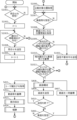
- the first example of the operation is a case in which information processing device 1 determines a mobile terminal 2 to which a video is to be transmitted.
- the location receiving unit 121 determines whether or not location information, etc. has been received from the mobile terminal 2. If location information, etc. has been received, the process proceeds to S402, and if location information, etc. has not been received, the process proceeds to S403.
- the location information, etc. is, for example, the location information and a terminal identifier.
- the processing unit 13 associates the location information received in S401 with the terminal identifier and stores it in the terminal management unit 112. Return to S401.
- the inquiry receiving unit 122 determines whether or not an inquiry has been received from the user terminal 3. If an inquiry has been received, the process proceeds to S404, and if an inquiry has not been received, the process returns to S401. Note that the received inquiry is associated with a user identifier.
- the terminal determination means 1311 determines multiple mobile terminals 2 to which to transmit the video corresponding to the received inquiry. An example of such a terminal determination process will be described using the flowchart in FIG. 5.
- the instruction sending means 1312 acquires the terminal communication information of each of the multiple mobile terminals 2 determined in S404 from the terminal management unit 112. Next, the instruction sending means 1312 sends a transmission instruction to the mobile terminal 2 that is the communication destination indicated by the multiple terminal communication information.
- the video receiving means 1313 judges whether or not a video has been received from any one or more mobile terminals 2 to which a transmission instruction has been sent. If a video has been received, the process proceeds to S407, and if a video has not been received, the process returns to S406.
- the video receiving means 1313 receives the video in pair with the terminal identifier of the mobile terminal 2.
- the video receiving means 1313 may receive a video that is paired with one or more attribute values.
- the video acquisition unit 131 pairs the video received in S406 with the terminal identifier and temporarily stores the video in a buffer (not shown).
- the video acquisition unit 131 may also pair the video received in S406 with one or more attribute values and temporarily store the video in a buffer (not shown).
- the screen composition unit 132 composes a screen using the video temporarily stored in a buffer (not shown).
- a buffer not shown.
- the screen transmission unit 141 transmits the screen constructed in S408 to the user terminal 3 that sent the inquiry.
- the third security means 1333 acquires the user identifier of the user terminal 3.
- the third security means 1333 stores the video of the screen continuously transmitted in S409, or the multiple videos that were the source of the screen, in pairs with the user identifier acquired in S411.
- the rights holder of the video of the screen continuously transmitted in S409, or the multiple videos that were the source of the screen becomes the user identified by the user identifier.
- the user identifier is a rights holder identifier.
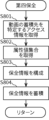
- the fourth maintenance means 1334 performs a fourth maintenance process.
- An example of the fourth maintenance process is explained using the flowchart in FIG. 8.
- the reward means 1335 performs reward processing. Return to S401. An example of the reward processing will be explained using the flowchart in FIG. 9.
- processing ends when the power is turned off or an interrupt occurs to end processing.
- the terminal determination means 1311 acquires the specific information contained in the received inquiry.
- the terminal determination means 1311 uses the specific information to acquire location information for each of the multiple comparison targets.
- An example of such comparison target location acquisition processing is described using the flowchart in FIG. 6.
- the terminal determination means 1311 assigns 1 to counter i.
- the terminal determination means 1311 determines whether the i-th location information to be compared obtained in S502 exists. If the i-th location information exists, the process proceeds to S505; if not, the process returns to the upper process.
- the terminal determination means 1311 assigns 1 to counter j.
- the terminal determination means 1311 determines whether or not location information for the jth mobile terminal 2 exists in the terminal management unit 112. If the jth location information exists, the process proceeds to S506; if not, the process proceeds to S510.
- the terminal determination means 1311 judges whether the location information of the i-th comparison target and the location information of the j-th mobile terminal 2 satisfy the location condition. If the location condition is satisfied, the process proceeds to S508, and if not, the process proceeds to S510.
- the terminal determination means 1311 obtains the terminal identifier and location information of the j-th mobile terminal 2 from the terminal management unit 112, and stores them in a buffer (not shown).
- the terminal determination means 1311 determines one terminal identifier from the terminal identifiers stored in a buffer (not shown). The terminal determination means 1311 determines, for example, one terminal identifier that pairs with the location information of the location closest to the location indicated by the i-th comparison target location information. The terminal determination means 1311 determines one terminal identifier randomly, for example. Any algorithm can be used to determine one terminal identifier.
- the terminal determination means 1311 judges whether the acquired specific information has multiple pieces of location information. If it has multiple pieces of location information, the process proceeds to S602, and if it does not have multiple pieces of location information, the process proceeds to S603. Note that if the specific information has multiple pieces of location information, the locations corresponding to the multiple pieces of location information are the locations to be compared.
- the terminal determination means 1311 acquires multiple pieces of location information contained in the acquired specific information. It then returns to the upper-level processing.
- the terminal determination means 1311 determines whether the acquired specific information has one piece of location information. If it has one piece of location information, the process proceeds to S604. If it does not have any location information, the process proceeds to S607.
- the terminal determination means 1311 uses the map information in the storage unit 11 to obtain a location identifier (e.g., a place name, a store name) that corresponds to the location information contained in the obtained specific information.
- a location identifier e.g., a place name, a store name
- the terminal determination means 1311 obtains one or more location identifiers that are paired with the location identifier obtained in S604 from the group information in the group management unit 111.
- the terminal determination means 1311 uses the map information in the storage unit 11 to obtain location information that pairs with each of the one or more location identifiers obtained in S605.
- the terminal determination means 1311 also obtains location information contained in the obtained specific information.
- the process returns to the upper level process. As a result, the terminal determination means 1311 obtains multiple pieces of location information.
- the terminal determination means 1311 determines whether the acquired specific information has multiple location identifiers. If it has multiple location identifiers, the process proceeds to S608; if it does not have multiple location identifiers, the process proceeds to S609. Note that if the specific information has multiple location identifiers, the locations identified by the multiple location identifiers are the locations to be compared.
- the terminal determination means 1311 uses the map information in the storage unit 11 to obtain location information corresponding to each of the multiple location identifiers contained in the obtained specific information. It then returns to the upper-level processing.
- the terminal determination means 1311 determines whether the acquired specific information has one location identifier. If it has one location identifier, the process proceeds to S610. If it does not have a location identifier, the process proceeds to S612.
- the terminal determination means 1311 acquires the location identifier contained in the acquired specific information.
- the terminal determination means 1311 acquires one or more other location identifiers that are paired with the acquired location identifier from the group information of the group management unit 111.
- the terminal determination means 1311 uses the map information in the storage unit 11 to obtain location information corresponding to the location identifier contained in the obtained specific information and one or more location identifiers obtained from the group management unit 111. It then returns to the upper-level processing.
- the terminal determination means 1311 acquires the user identifier contained in the acquired specific information.
- the terminal determination means 1311 acquires multiple location identifiers that are paired with the user identifier from the group management unit 111.
- the terminal determination means 1311 acquires location information that corresponds to the multiple location identifiers acquired using the map information in the storage unit 11. The process returns to the upper level process.
- the screen composition unit 132 determines whether the i-th mobile terminal 2 exists among the mobile terminals 2 determined in S404. If the i-th mobile terminal 2 exists, the process proceeds to S703; if it does not exist, the process proceeds to S706.
- the screen composition unit 132 acquires the video transmitted and stored by the i-th mobile terminal 2.
- the screen composition unit 132 acquires one or more attribute values corresponding to the i-th mobile terminal 2.
- the ranking means 1321 obtains a rank for each of the multiple mobile terminals 2 using one or more attribute values corresponding to the mobile terminals 2.
- composition unit 1322 composes a screen in which the videos acquired in S703 are arranged according to the ranking. The process returns to the upper level process.
- one screen is, for example, a screen on which the video transmitted by each mobile terminal 2 is displayed within a frame corresponding to each mobile terminal 2 transmitting the video.
- the fourth security means 1334 acquires access information that identifies the storage destination of the video.
- the fourth maintenance means 1334 acquires a set of attribute values corresponding to the stored video.
- the fourth security means 1334 constructs security information having the access information acquired in S801, the attribute value set acquired in S802, and the rights holder identifier of the video. Note that if a new rights holder identifier has been acquired, the fourth security means 1334 constructs security information including, for example, the new rights holder identifier and the original rights holder identifier. (S804) The fourth maintenance unit 1334 accumulates the maintenance information constructed in S803, and then returns to the upper level process.
- preservation information for a video corresponding to the preservation information to be stored has been stored, this preservation information is overwritten onto the preservation information configured in S803. This makes it possible to manage, for example, the transition of rights holders of the video.
- the fourth preservation means 1334 stores the preservation information in, for example, a blockchain.
- the reward means 1345 assigns 1 to counter i.
- the reward means 1345 determines whether the i-th video that was the basis for composing the screen exists. If the i-th video exists, the process proceeds to S903, and if not, the process returns to the upper process.
- the compensation means 1345 acquires the rights holder identifier that is paired with the target video.
- the reward means 1345 acquires a set of attribute values for the target video.
- the reward means 1345 obtains the reward amount using the attribute value set obtained in S904.
- the reward means 1345 performs processing to give a reward to the rights holder identified by the rights holder identifier obtained in S903, in the amount of reward obtained in S905.
- the compensation means 1345 performs a process of making the user corresponding to the user terminal 3 that received the screen pay a compensation.
- the second operation example is a case where an inquiry is sent to all mobile terminals 2 managed by the information processing device 1.
- the explanation of the same steps as in the flowchart in FIG. 4 will be omitted.
- the inquiry receiving unit 122 determines whether or not an inquiry has been received from the user terminal 3. If an inquiry has been received, the process proceeds to S1002, and if an inquiry has not been received, the process returns to S1001.
- the received inquiry is associated with a user identifier.
- the transmission unit 14 acquires the terminal communication information included in the i-th terminal information from the terminal management unit 112. The transmission unit 14 transmits a query to the i-th mobile terminal 2 identified by the terminal communication information.
- the terminal determination means 1311 uses the specific information included in the received inquiry to acquire location information for each of the multiple comparison targets. An example of such comparison target location acquisition processing was explained using the flowchart in FIG. 6.
- the video receiving means 1313 determines whether or not a video or the like has been received from any of the mobile terminals 2. If a video or the like has been received, the process proceeds to S1008; if not, the process returns to S1007.
- the video acquisition unit 131 acquires location information that is paired with the video received in S1007.
- the video acquisition unit 131 determines whether the location information acquired in S1008 satisfies the location condition with any of the location information acquired in S1006 that does not correspond to the video. If the location condition is satisfied, the process proceeds to S1010, and if not, the process proceeds to S1016.
- the video acquisition unit 131 stores the terminal identifier and the video in a buffer (not shown).
- (S1011) Determine whether or not all of the location information acquired in S1006 is associated with video. If all of the location information is associated with video, proceed to S408, and if none of the location information is associated with video, return to S1007.
- processing ends when the power is turned off or an interrupt occurs to end processing.
- the first operation example is a case where the information processing device 1 determines the mobile terminal 2 to which to transmit a video.
- the flowchart for the mobile terminal 2 in FIG. 11 corresponds to the flowchart for the information processing device 1 in FIG. 4.
- the mobile terminal 2 determines whether or not a start instruction has been received. If a start instruction has been received, the process proceeds to S1102; if a start instruction has not been received, the process proceeds to S1101.
- the location acquisition unit 231 acquires the current location information of the mobile terminal 2.
- the movement processing unit 23 acquires a terminal identifier from the movement storage unit 21. Next, the movement processing unit 23 composes information having the terminal identifier and the location information acquired in S1102. The movement transmission unit 24 transmits the information to the information processing device 1.
- the movement processing unit 23 judges whether or not to end the process. If the process is to be ended, the process returns to S1101, and if the process is not to be ended, the process proceeds to S1105. The process is ended, for example, when an end instruction is input by the user.
- the mobile receiving unit 22 determines whether or not a transmission instruction has been received from the information processing device 1. If a transmission instruction has been received, the process proceeds to S1106; if a transmission instruction has not been received, the process returns to S1102.
- the image capture unit 232 captures the video.
- the attribute value acquisition unit 233 acquires one or more attribute values.
- the configuration unit 234 acquires a terminal identifier from the moving storage unit 21.
- the configuration unit 234 associates one or more attribute values and a terminal identifier with the video to configure information to be transmitted. Note that each frame constituting the video is associated with, for example, time information acquired by the attribute value acquisition unit 233, position information acquired by the position acquisition unit 231, etc.
- the mobile transmission unit 24 transmits the video etc. constructed in S1107 to the information processing device 1. Return to S1104. Note that the length of the video and the amount of data transmitted by the mobile transmission unit 24 at one time are not important.
- the image capturing unit 232 starts capturing images in response to receiving a transmission instruction. However, the image capturing unit 232 may also start capturing images in response to receiving a start instruction.
- processing ends when the power is turned off or an interrupt occurs to end processing.
- the second operation example is a case where the mobile terminal 2 decides whether or not to transmit a video to the information processing device 1.
- the flowchart of the mobile terminal 2 in FIG. 12 corresponds to the flowchart of the information processing device 1 in FIG. 10.
- the mobile receiving unit 22 determines whether or not an inquiry has been received from the information processing device 1. If an inquiry has been received, the process proceeds to S1202; if an inquiry has not been received, the process returns to S1201.
- the movement processing unit 23 performs a comparison position acquisition process.
- the comparison position acquisition process is the same as the process described in the flowchart of FIG. 6.
- the location acquisition unit 231 acquires the current location information of the mobile terminal 2.
- the movement processing unit 23 determines whether or not the i-th location information exists among the multiple pieces of location information to be compared acquired in S1202. If the i-th location information exists, the process proceeds to S1206, and if not, the process returns to S1201.
- the movement processing unit 23 determines whether the location information acquired in S1203 and the i-th location information satisfy the location condition. If the location condition is satisfied, the process proceeds to S1207, and if the location condition is not satisfied, the process proceeds to S1211.
- the image capture unit 232 captures the video.
- the attribute value acquisition unit 233 acquires one or more attribute values.
- the configuration unit 234 acquires a terminal identifier from the moving storage unit 21.
- the configuration unit 234 associates the one or more attribute values and the terminal identifier with the video, and configures the information to be transmitted.
- each frame constituting the video is associated with, for example, time information acquired by the attribute value acquisition unit 233, position information acquired by the position acquisition unit 231, etc.
- the mobile transmission unit 24 transmits the video etc. constructed in S1208 to the information processing device 1.
- the mobile processing unit 23 judges whether or not to end the transmission of the video, etc. If the transmission of the video, etc. is to be ended, the process returns to S1201, and if the transmission of the video, etc. is not to be ended, the process returns to S1207. Note that the transmission of the video, etc. is ended, for example, when a no-transmission command is received from the information processing device 1, or when an instruction to end is received from the user of the mobile terminal 2.
- the information processing device 1 may be inquired as to whether or not to transmit the video.
- the mobile transmission unit 24 transmits an inquiry including, for example, location information and other attribute values to the information processing device 1.
- the information processing device 1 determines, for each comparison location, one mobile terminal 2 to transmit the video to, based on the location information and other attribute values. This determination method may be the same as the operation of S510 in the flowchart of FIG. 5.
- processing ends when the power is turned off or an interrupt occurs to end processing.
- the user reception unit 32 determines whether or not an inquiry has been received. If an inquiry has been received, the process proceeds to S1302; if an inquiry has not been received, the process returns to S1301.
- the user processing unit 33 acquires the user identifier from the user storage unit 31.
- the inquiry acquisition unit 332 uses the inquiry received in S1301 to construct an inquiry to be sent.
- the inquiry to be sent is usually associated with a user identifier.
- the inquiry to be sent includes, for example, the location information acquired by the user processing unit 33 or the location identifier acquired by the location acquisition unit 331.
- the user transmission unit 34 transmits the inquiry constructed in S1303 to the information processing device 1.
- the user receiving unit 35 determines whether or not a screen has been received from the information processing device 1. If a screen has been received, the process proceeds to S1306; if a screen has not been received, the process proceeds to S1307.
- the user processing unit 33 creates a screen to be output based on the received screen.
- the user output unit 36 outputs the screen.
- the user processing unit 33 judges whether or not to end the screen output. If the screen output is to be ended, the process returns to S1301. If the screen output is not to be ended, the process returns to S1305. Note that the screen output is to be ended, for example, when an end instruction is received from the user.
- the group management table of FIG. 14 is stored in the group management unit 111 of the information processing device 1.
- the group management table is a table that manages group information.
- the group management table is a table that manages information for determining multiple locations to be compared with specific information included in a received inquiry.
- the group information is the location identifier set of FIG. 14, but it may be considered to include specific information.
- the group management table manages records having an "ID", "specific information", and a "location identifier set".
- the "ID” is information that identifies a record.
- the "specific information” here is, for example, a store name (supermarket name), location information (latitude, longitude), or a user identifier.
- the "location identifier set” is a set of location identifiers that identify each of multiple locations to be compared.
- the location identifier here is the store name (supermarket name), location information (latitude, longitude), and location name (name of a location on a highway).
- the store name is an example of a location name.
- the terminal management table of FIG. 15 is stored in the terminal management unit 112.
- the terminal management table manages records having "ID” and "terminal information.”
- terminal information has “terminal identifier,” “terminal communication information,” and “location information.”
- Location information is the latest location information of the mobile terminal 2.
- the mobile terminal 2 When the mobile terminal 2 is in a state where it can provide video, it continuously transmits current location information to the information processing device 1 in association with a terminal identifier.
- the location receiving unit 121 of the information processing device 1 receives location information associated with the terminal identifier from each mobile terminal 2.
- the processing unit 13 then stores the location information in the terminal management table ( Figure 15) in association with the terminal identifier.
- Map information is stored in the storage unit 11 of the information processing device 1.
- the map information has the location information of the store paired with the store name, and the location information of the location paired with the location name.
- a user inputs a location identifier (here, the name of a store) that identifies multiple locations to be compared into a smartphone, and obtains video of multiple locations including a location identified by another location identifier that pairs with the location identifier.
- a user presses a specific button in a specific app on the smartphone to obtain video of each of the multiple locations to be compared.
- a user inputs a user identifier on the screen of a specific app on the smartphone and then presses a button to obtain video of each of the multiple locations to be compared.
- a video is output to a navigation terminal to show the conditions of multiple roads that branch off after passing the specific point.
- the user reception unit 32 of the user terminal 3 receives the inquiry " ⁇ specific information> Super A”.
- the user processing unit 33 acquires the user identifier "U001" from the user storage unit 31.
- the inquiry acquisition unit 332 uses the received inquiry to construct the inquiry to be sent, " ⁇ user identifier> U001 ⁇ specific information> Super A”.
- the user transmission unit 34 transmits the inquiry to the information processing device 1.
- the inquiry receiving unit 122 of the information processing device 1 receives the inquiry " ⁇ user identifier> U001 ⁇ specific information> Super A" from the user terminal 3.
- the terminal determination means 1311 obtains the specific information "Supermarket A” included in the received inquiry.
- the terminal determination means 1311 obtains the location identifier set "Supermarket B, Supermarket C, Supermarket D” that is paired with the specific information "Supermarket A” from the group management table (FIG. 14).
- the terminal determination means 1311 obtains each piece of location information for "Supermarket A, Supermarket B, Supermarket C, Supermarket D” by referring to the map information in the storage unit 11. It is assumed that the location information for each of these four supermarkets is ( x21 , y21 ), ( x22 , y22 ), ( x23 , y23 ), and ( x24 , y24 ), respectively.
- the terminal determination means 1311 determines the location information of the mobile terminal 2 that satisfies the location condition for the location information for each of the four supermarkets (that is present in the supermarket) from the terminal management table (FIG. 15).
- the terminal determination means 1311 has obtained the terminal identifier "T001" of mobile terminal 2 located in supermarket A, the terminal identifier "T002" of mobile terminal 2 located in supermarket B, the terminal identifier "T003” of mobile terminal 2 located in supermarket C, and the terminal identifier "T004" of mobile terminal 2 located in supermarket D from the terminal management table ( Figure 15).
- the instruction sending means 1312 then obtains the terminal communication information that is paired with each of the four obtained terminal identifiers from the terminal management table (FIG. 15). The instruction sending means 1312 then transmits a transmission instruction to the mobile terminal 2 that is the communication destination indicated by each of the four pieces of terminal communication information.
- the mobile receiving unit 22 of each of the four mobile terminals 2 receives a transmission instruction from the information processing device 1.
- the shooting unit 232 acquires the video.
- the attribute value acquisition unit 233 acquires one or more attribute values. Note that here, it is assumed that the attribute value acquisition unit 233 acquires an attribute value that is the price of a product in the video.
- the configuration unit 234 acquires a terminal identifier from the mobile storage unit 21. The configuration unit 234 associates the video with one or more attribute values and a terminal identifier to configure information to be transmitted.
- the mobile transmitting unit 24 transmits the video, etc. to the information processing device 1.
- the video receiving means 1313 of the information processing device 1 receives the video etc. from each of the four mobile terminals 2 to which the transmission instruction was sent.
- the video etc. has one or more attribute values including the price of the product in the video, and a terminal identifier.
- the video acquisition unit 131 pairs the received video and attribute values with the terminal identifier for each of the four mobile terminals 2, and temporarily stores them in a buffer (not shown).
- the ranking means 1321 uses the price corresponding to the mobile terminal 2 to obtain a rank (a natural number from “1" to "4") of each of the four mobile terminals 2 in order of lowest price.
- the configuration means 1322 composes a screen in which each of the four obtained videos is arranged from top to bottom according to its ranking.
- the configuration means 1322 also composes a screen including a map showing the locations of the four places (supermarkets) to be compared.
- the configuration means 1322 also composes a screen having information that lists the attribute values (here, prices) of the four places to be compared in order of rank.
- the configuration means 1322 composes a screen including the current time obtained from a clock (not shown).
- the screen transmission unit 141 transmits the screen constructed by the screen construction unit 132 to the user terminal 3 that sent the inquiry.
- the user receiving unit 35 of the user terminal 3 receives the screen from the information processing device 1.
- the user processing unit 33 composes a screen to be output based on the received screen.
- the user output unit 36 outputs this screen.
- An example of such a screen is shown in FIG. 16.
- 1601 to 1604 are windows in which videos taken inside each supermarket are output. The videos are arranged in order of the ranking of each supermarket. 1605 is the ranking result of the attribute value (here, price). 1606 shows the locations of the four supermarkets on a map.
- the user can obtain multiple supermarket videos that they wish to compare.
- the user can also obtain a screen that corresponds to the ranking of each of the multiple videos.
- the application is an application that can acquire and output videos of multiple comparison locations.
- the application is launched on the user terminal 3, and a screen is output.
- This screen has a "Send” button. Furthermore, this screen does not have any components such as a field for inputting specific information.
- the "Send” button is a button for sending an inquiry to the information processing device 1.
- the location acquisition unit 331 of the user terminal 3 acquires location information ( x21 , y21 ) by the GPS receiver.
- the user reception unit 32 acquires an inquiry having the location information ( x21 , y21 ).
- the user processing unit 33 acquires the user identifier "U001" from the user storage unit 31. Using the received inquiry, the inquiry acquisition unit 332 constructs a query to be sent, " ⁇ user identifier>U001 ⁇ specific information>( x21 , y21 )."
- the user transmission unit 34 transmits the query to the information processing device 1.
- the inquiry receiving unit 122 of the information processing device 1 receives the inquiry “ ⁇ user identifier> U001 ⁇ specific information> (x 21 , y 21 )” from the user terminal 3 .
- the terminal determination means 1311 acquires the specific information ( x21 , y21 ) included in the received inquiry.
- the terminal determination means 1311 acquires the location identifier set ( x22 , y22 ), ( x23 , y23 ), and ( x24 , y24 ) that is paired with the specific information ( x21 , y21 ) from the group management table (FIG. 14).
- the terminal determination means 1311 determines the location information of the mobile terminal 2 that satisfies the location condition for each of the four pieces of location information ( x21 , y21 ), ( x22 , y22 ), ( x23 , y23 ), and ( x24 , y24 ) from the terminal management table (FIG. 15).
- the four pieces of location information ( x21 , y21 ), ( x22 , y22 ), ( x23 , y23 ), and ( x24 , y24 ) are the location information of supermarkets A, B, C, and D, respectively.
- the terminal determination means 1311 has acquired the terminal identifier "T001" of the mobile terminal 2 present in supermarket A, the terminal identifier "T002" of the mobile terminal 2 present in supermarket B, the terminal identifier "T003” of the mobile terminal 2 present in supermarket C, and the terminal identifier "T004" of the mobile terminal 2 present in supermarket D from the terminal management table (FIG. 15).
- the instruction sending means 1312 sends a transmission instruction to each of the four mobile terminals 2.
- each of the four mobile terminals 2 transmits video or the like to the information processing device 1 by performing the same operation as described in specific example 1.
- the information processing device 1 receives the video etc. by performing the same operation as that described in specific example 1, constructs a screen based on the video etc., and transmits the screen to the user terminal 3.
- the user terminal 3 receives and outputs the screen by performing the same operation as described in specific example 1.
- An example of such output is shown in FIG. 16.
- the user reception unit 32 of the user terminal 3 receives the inquiry " ⁇ specific information> U101".
- the user transmission unit 34 transmits the inquiry " ⁇ specific information> U101" to the information processing device 1.
- the inquiry may also include " ⁇ user identifier> U101".
- the inquiry receiving unit 122 of the information processing device 1 receives the inquiry " ⁇ specific information> U101" from the user terminal 3.
- the terminal determination means 1311 obtains the specific information "U101" included in the received inquiry.
- the terminal determination means 1311 obtains the location identifier set "Supermarket A, Supermarket B, Supermarket C, Supermarket D" that is paired with the specific information "U101" from the group management table (FIG. 14).
- the terminal determination means 1311 obtains each piece of location information of "Supermarket A, Supermarket B, Supermarket C, Supermarket D” by referring to the map information in the storage unit 11.
- the location information of each of these four supermarkets is ( x21 , y21 ), ( x22 , y22 ), ( x23 , y23 ), and ( x24 , y24 ), respectively.
- the terminal determination means 1311 determines the location information of the mobile terminal 2 that satisfies the location condition for the location information of each of the four supermarkets (that is present in the supermarket) from the terminal management table (FIG. 15).
- the terminal determination means 1311 has obtained the terminal identifier "T001" of mobile terminal 2 located in supermarket A, the terminal identifier "T002" of mobile terminal 2 located in supermarket B, the terminal identifier "T003” of mobile terminal 2 located in supermarket C, and the terminal identifier "T004" of mobile terminal 2 located in supermarket D from the terminal management table ( Figure 15).
- the instruction sending means 1312 then obtains the terminal communication information that is paired with each of the four obtained terminal identifiers from the terminal management table (FIG. 15). The instruction sending means 1312 then transmits a transmission instruction to the mobile terminal 2 that is the communication destination indicated by each of the four pieces of terminal communication information.
- each of the four mobile terminals 2 transmits video or the like to the information processing device 1 by performing the same operation as described in specific example 1.
- the information processing device 1 receives the video etc. by performing the same operation as that described in specific example 1, constructs a screen based on the video etc., and transmits the screen to the user terminal 3.
- the user terminal 3 receives and outputs the screen by performing the same operation as described in specific example 1.
- An example of such output is shown in FIG. 16.
- the terminal management table (FIG. 15) manages terminal information including location information transmitted from a mobile terminal 2 mounted on an automobile.
- the mobile terminal 2 is, for example, a drive recorder or a navigation terminal.
- the location acquisition unit 331 of the user terminal 3 which is the navigation terminal of the car, acquires location information (x 31 , y 31 ).
- the inquiry acquisition unit 332 determines that the location information satisfies a predetermined condition (for example, matches or the distance is within a threshold) with respect to the location information for constructing an inquiry stored in the user storage unit 31.
- the inquiry acquisition unit 332 constructs an inquiry having the specific information (x 31 , y 31 ) which is the location information and the user identifier of the user storage unit 31.
- the user transmission unit 34 transmits the inquiry " ⁇ user identifier>U001 ⁇ specific information>(x 31 , y 31 )" to the information processing device 1. It is to be noted that the user terminal 3 may continuously acquire location information and continuously transmit inquiries having the location information to the information processing device 1.
- the inquiry receiving unit 122 of the information processing device 1 receives the inquiry “ ⁇ user identifier> U001 ⁇ specific information> (x 31 , y 31 )” from the user terminal 3 .
- the terminal determination means 1311 obtains the specific information ( x31 , y31 ) included in the received inquiry.
- the terminal determination means 1311 obtains the location identifier set "Point X on the Toumei Expressway inbound, Point Y on the Shin-Tomei Expressway inbound" that is paired with the specific information ( x31 , y31 ) from the group management table (FIG. 14).
- the terminal determination means 1311 obtains each piece of location information of "Point X on the Toumei Expressway inbound, Point Y on the Shin-Tomei Expressway inbound" by referring to the map information in the storage unit 11.
- the terminal determination means 1311 determines the location information of the mobile terminal 2 that satisfies the location condition for each of the two pieces of location information ( xh1 , yh1 ) and ( xh2 , yh2 ) from the terminal management table (FIG. 15).
- the terminal determination means 1311 has acquired the terminal identifier "T001" of the mobile terminal 2 traveling at "Point X on the outbound Tomei Expressway” and the terminal identifier "T002" of the mobile terminal 2 traveling at "Point Y on the outbound Shin-Tomei Expressway” from the terminal management table ( Figure 15).
- the instruction sending means 1312 then obtains the terminal communication information that is paired with each of the two obtained terminal identifiers from the terminal management table (FIG. 15). The instruction sending means 1312 then transmits a transmission instruction to the mobile terminal 2 that is the communication destination indicated by each of the two pieces of terminal communication information.
- the mobile receiving unit 22 of each of the two mobile terminals 2 receives a transmission instruction from the information processing device 1.
- the shooting unit 232 acquires the video.
- the attribute value acquisition unit 233 acquires one or more attribute values. Note that here, it is assumed that the attribute value acquisition unit 233 acquires the number of cars in the video and the degree of congestion based on the number of cars.
- the configuration unit 234 acquires a terminal identifier from the mobile storage unit 21. The configuration unit 234 associates the video with one or more attribute values and a terminal identifier to configure information to be transmitted.
- the mobile transmitting unit 24 transmits the video, etc. to the information processing device 1.
- the video receiving means 1313 of the information processing device 1 receives the video etc. from each of the two mobile terminals 2 to which the transmission instruction was sent.
- the video etc. includes the number of cars in the video, the congestion level, and a terminal identifier.
- the video acquisition unit 131 pairs the received video and attribute value with the terminal identifier for each of the two mobile terminals 2, and temporarily stores them in a buffer (not shown).
- the ranking means 1321 obtains a rank ("1" or "2") for each of the two mobile terminals 2 in ascending order of congestion level using the congestion level corresponding to the mobile terminal 2.
- the configuration means 1322 configures a screen in which each of the two obtained videos is arranged according to the ranking.
- the screen also includes information including the names of expressways and the congestion level of each road.
- the screen transmission unit 141 transmits the screen constructed by the screen construction unit 132 to the user terminal 3 that sent the inquiry.
- the user receiving unit 35 of the user terminal 3 receives the screen from the information processing device 1.
- the user processing unit 33 composes a screen to be output based on the received screen.
- the user processing unit 33 composes a single screen that combines the information of the received screen and the information of the screen being output.
- the screen being output is the map during navigation.
- the user output unit 36 outputs the screen.
- An example of such a screen is shown in FIG. 17.
- 1701 is a map displayed on the navigation terminal which is the user terminal 3, and an icon 1702 of the user's car is displayed at the position of the road on which the user is traveling.
- a video 1703 with a rank of "1" is positioned in the center of the screen, and a video 1704 with a rank of "2" is positioned on the left side of the screen.
- 1705 shows the degree of congestion on each road.
- this embodiment can provide videos of multiple locations for comparison.
- ranked videos can be provided.
- the processing in this embodiment may be realized by software.
- This software may be distributed by software download or the like.
- This software may also be recorded on a recording medium such as a CD-ROM and distributed.
- the software that realizes the information processing device 1 in this embodiment is a program as described below.
- this program causes a computer to function as an inquiry receiving unit that receives an inquiry including specific information that identifies multiple locations to be compared from a user terminal, a video acquiring unit that acquires videos transmitted from a mobile terminal present in each of the multiple locations identified by the specific information, a screen composing unit that uses the multiple videos to compose a single screen, and a screen transmitting unit that transmits the single screen to the user terminal.
- the present embodiment is different from the first embodiment in that the mobile terminal 2 constantly transmits videos to the information processing device.
- the information processing device receives an inquiry, it acquires videos of a plurality of comparison target locations corresponding to the inquiry from the stored videos.
- FIG. 18 is a block diagram of information system B in this embodiment.
- details of the mobile terminal 2 and the user terminal 3 are omitted.
- details of the rights holder processing unit 133 are also omitted.
- Information system B includes an information processing device 4, one or more mobile terminals 2, and one or more user terminals 3.
- the information processing device 4 includes a storage unit 41, a receiving unit 42, a processing unit 43, and a transmission unit 14.
- the storage unit 41 includes a group management unit 111, a terminal management unit 112, and a video storage unit 411.
- the receiving unit 42 includes an inquiry receiving unit 122 and a video receiving unit 421.
- the processing unit 43 includes a video accumulation unit 431, a video acquisition unit 432, a screen composition unit 132, and a right holder processing unit 133.
- the various types of information are stored in the storage unit 41.
- the various types of information are, for example, group information, terminal information, videos, one or more attribute values associated with the videos, and map information.
- the video storage unit 411 stores one or more videos.
- a user identifier is usually associated with a video.
- one or more attribute values are associated with a video.
- time information and position information are associated with the frames that make up a video.
- the video receiving unit 421 receives videos corresponding to location information from each of the multiple mobile terminals 2.
- the location information is usually (latitude, longitude), but may be a location identifier such as a place name.
- the video receiving unit 421 continuously acquires videos from each of the multiple mobile terminals 2. Such videos are usually additional videos.
- the processing unit 43 performs various types of processing.
- the various types of processing are processing performed by the video storage unit 431, the video acquisition unit 432, the screen composition unit 132, or the rights holder processing unit 133.
- the video accumulation unit 431 accumulates the video received by the video receiving unit 421.
- the video accumulation unit 431 normally accumulates the video in association with the terminal identifier of the mobile terminal 2.
- the video accumulation unit 431 normally accumulates the video in the video storage unit 411.
- Each frame constituting the video accumulated by the video accumulation unit 431 is normally associated with location information.
- the video acquisition unit 432 acquires videos sent from mobile terminals 2 present at each of the multiple locations identified by the specific information contained in the received inquiry.
- the video acquisition unit 432 acquires a video corresponding to location information corresponding to each of the multiple locations specified by the specific information from among the multiple videos stored in the video storage unit 431.
- the video acquisition unit 432 acquires a video corresponding to location information corresponding to each of the multiple locations specified by the specific information from among the multiple videos in the video storage unit 411, for example.
- the mobile receiving unit 22 of the mobile terminal 2 does not receive a transmission instruction here.
- the mobile transmitting unit 24 of the mobile terminal 2 continuously transmits the video to the information processing device 4.
- continuously transmitting means transmitting two or more times.
- Continuously transmitting means, for example, transmitting at all times, transmitting periodically, or transmitting two or more times irregularly.
- the storage unit 41 and the video storage unit 411 are preferably non-volatile recording media, but can also be realized using volatile recording media.
- the process by which information is stored in the storage unit 41, etc. is not important.
- information may be stored in the storage unit 41, etc. via a recording medium, information transmitted via a communication line, etc. may be stored in the storage unit 41, etc., or information inputted via an input device may be stored in the storage unit 41, etc.
- the receiving unit 42 and the video receiving unit 421 are usually implemented using wireless or wired communication means, but may also be implemented using means for receiving broadcasts.
- the processing unit 43, the video storage unit 431, and the video acquisition unit 432 can usually be realized by a processor, a memory, etc.
- the processing procedure of the processing unit 43, etc. is usually realized by software, and the software is recorded in a recording medium such as a ROM. However, they may also be realized by hardware (dedicated circuit).
- the processor may be a CPU, MPU, GPU, etc., and the type does not matter.
- the video receiving unit 421 determines whether or not video, etc. has been received from one or more mobile terminals 2. If video, etc. has been received, the process proceeds to S1902; if video, etc. has not been received, the process proceeds to S403.
- the video accumulation unit 431 accumulates one or more videos, etc. in the video storage unit 411 in association with the terminal identifier.
- the video acquisition unit 432 determines videos of multiple locations that correspond to the inquiry from among the videos stored in the video storage unit 411. An example of such video determination processing will be described using the flowchart in FIG. 20.
- the video acquisition unit 432 acquires the videos, etc. identified by the multiple video identifiers determined in S1903 from the video storage unit 411. Go to S408.
- processing ends when the power is turned off or an interrupt occurs to end processing.
- the video acquisition unit 432 determines whether or not the jth video exists in the video storage unit 411. If the jth video exists, the process proceeds to S2002; if not, the process returns to the upper level process.
- the video acquisition unit 432 determines whether the jth location information and the latest location information corresponding to the jth video in the video storage unit 411 satisfy the location condition. If the location condition is satisfied, the process proceeds to S2003, and if the location condition is not satisfied, the process proceeds to S509.
- the video acquisition unit 432 acquires a video identifier that identifies the jth video, and temporarily stores the video identifier in a buffer (not shown) in association with the ith position information.
- the video acquisition unit 432 determines one video identifier from one or more video identifiers corresponding to the i-th location information. Note that the video acquisition unit 432 determines, for example, one video identifier of location information that has the smallest distance between the location indicated by the location information paired with the video identifier and the location indicated by the i-th location information.
- this embodiment can provide videos of multiple locations for comparison.
- ranked videos can be provided.
- the software that realizes the information processing device 4 in this embodiment is a program as described below.
- this program causes a computer to function as an inquiry receiving unit that receives an inquiry including specific information that identifies multiple locations to be compared from a user terminal, a video acquiring unit that acquires videos transmitted from a mobile terminal present in each of the multiple locations identified by the specific information, a screen composing unit that uses the multiple videos to compose a single screen, and a screen transmitting unit that transmits the single screen to the user terminal.
- FIG. 21 also shows the appearance of a computer that executes the programs described in this specification to realize the information processing device 1 and the like of the various embodiments described above.
- the above-mentioned embodiments can be realized by computer hardware and a computer program executed thereon.
- FIG. 21 is an overview of this computer system 300
- FIG. 22 is a block diagram of system 300.
- computer system 300 includes computer 301, which includes a CD-ROM drive, keyboard 302, mouse 303, and monitor 304.
- computer 301 in addition to a CD-ROM drive 3012, computer 301 includes an MPU 3013, a bus 3014 connected to the CD-ROM drive 3012 etc., a ROM 3015 for storing programs such as a boot-up program, a RAM 3016 connected to the MPU 3013 for temporarily storing instructions for application programs and providing temporary storage space, and a hard disk 3017 for storing application programs, system programs, and data.
- computer 301 may further include a network card that provides connection to a LAN.
- the program that causes the computer system 300 to execute the functions of the information processing device 1 of the above-mentioned embodiment may be stored on the CD-ROM 3101, inserted into the CD-ROM drive 3012, and then transferred to the hard disk 3017.
- the program may be sent to the computer 301 via a network (not shown) and stored on the hard disk 3017.
- the program is loaded into the RAM 3016 when executed.
- the program may be loaded directly from the CD-ROM 3101 or the network.
- the program does not necessarily have to include an operating system (OS) that causes the computer 301 to execute the functions of the information processing device 1 of the above-mentioned embodiment, or a third-party program, etc.
- OS operating system
- the program only needs to include an instruction portion that calls appropriate functions (modules) in a controlled manner to obtain the desired results. How the computer system 300 operates is well known, and a detailed description will be omitted.
- the steps of transmitting information and receiving information do not include processing performed by hardware, such as processing performed by a modem or interface card in the transmission step (processing that can only be performed by hardware).
- the computer that executes the above program may be a single computer or multiple computers. In other words, it may perform centralized processing or distributed processing.
- multiple communication means present in one device may be realized physically by one medium.
- each process may be realized by centralized processing in a single device, or may be realized by distributed processing in multiple devices.
- the information processing device 1 has the effect of being able to provide videos of multiple locations for comparison, and is useful as a server that provides videos, etc.
Landscapes
- Engineering & Computer Science (AREA)
- Theoretical Computer Science (AREA)
- Physics & Mathematics (AREA)
- General Physics & Mathematics (AREA)
- Human Computer Interaction (AREA)
- General Engineering & Computer Science (AREA)
- Multimedia (AREA)
- Signal Processing (AREA)
- Astronomy & Astrophysics (AREA)
- Databases & Information Systems (AREA)
- Information Transfer Between Computers (AREA)
- Two-Way Televisions, Distribution Of Moving Picture Or The Like (AREA)
Priority Applications (4)
| Application Number | Priority Date | Filing Date | Title |
|---|---|---|---|
| JP2024574191A JP7746610B2 (ja) | 2023-02-02 | 2023-02-02 | 情報処理装置、ユーザ端末、および情報処理方法 |
| PCT/JP2023/003445 WO2024161606A1 (ja) | 2023-02-02 | 2023-02-02 | 情報処理装置、ユーザ端末、および情報処理方法 |
| EP23919743.7A EP4661405A1 (en) | 2023-02-02 | 2023-02-02 | Information processing device, user terminal, and information processing method |
| US19/284,615 US20250355609A1 (en) | 2023-02-02 | 2025-07-29 | Information processing device, user terminal, and information processing method |
Applications Claiming Priority (1)
| Application Number | Priority Date | Filing Date | Title |
|---|---|---|---|
| PCT/JP2023/003445 WO2024161606A1 (ja) | 2023-02-02 | 2023-02-02 | 情報処理装置、ユーザ端末、および情報処理方法 |
Related Child Applications (1)
| Application Number | Title | Priority Date | Filing Date |
|---|---|---|---|
| US19/284,615 Continuation US20250355609A1 (en) | 2023-02-02 | 2025-07-29 | Information processing device, user terminal, and information processing method |
Publications (1)
| Publication Number | Publication Date |
|---|---|
| WO2024161606A1 true WO2024161606A1 (ja) | 2024-08-08 |
Family
ID=92145983
Family Applications (1)
| Application Number | Title | Priority Date | Filing Date |
|---|---|---|---|
| PCT/JP2023/003445 Ceased WO2024161606A1 (ja) | 2023-02-02 | 2023-02-02 | 情報処理装置、ユーザ端末、および情報処理方法 |
Country Status (4)
| Country | Link |
|---|---|
| US (1) | US20250355609A1 (https=) |
| EP (1) | EP4661405A1 (https=) |
| JP (1) | JP7746610B2 (https=) |
| WO (1) | WO2024161606A1 (https=) |
Citations (3)
| Publication number | Priority date | Publication date | Assignee | Title |
|---|---|---|---|---|
| JP2005286882A (ja) | 2004-03-30 | 2005-10-13 | Nec Corp | 広告動画作成配信システムと方法 |
| JP2008154192A (ja) * | 2006-11-22 | 2008-07-03 | Sony Corp | 画像表示システム、表示装置、表示方法 |
| JP2019041328A (ja) * | 2017-08-28 | 2019-03-14 | 沖電気工業株式会社 | メディア処理装置、プログラム及び方法 |
Family Cites Families (1)
| Publication number | Priority date | Publication date | Assignee | Title |
|---|---|---|---|---|
| JP2019118066A (ja) * | 2017-12-27 | 2019-07-18 | トヨタ自動車株式会社 | 車両用表示装置 |
-
2023
- 2023-02-02 WO PCT/JP2023/003445 patent/WO2024161606A1/ja not_active Ceased
- 2023-02-02 JP JP2024574191A patent/JP7746610B2/ja active Active
- 2023-02-02 EP EP23919743.7A patent/EP4661405A1/en active Pending
-
2025
- 2025-07-29 US US19/284,615 patent/US20250355609A1/en active Pending
Patent Citations (3)
| Publication number | Priority date | Publication date | Assignee | Title |
|---|---|---|---|---|
| JP2005286882A (ja) | 2004-03-30 | 2005-10-13 | Nec Corp | 広告動画作成配信システムと方法 |
| JP2008154192A (ja) * | 2006-11-22 | 2008-07-03 | Sony Corp | 画像表示システム、表示装置、表示方法 |
| JP2019041328A (ja) * | 2017-08-28 | 2019-03-14 | 沖電気工業株式会社 | メディア処理装置、プログラム及び方法 |
Non-Patent Citations (1)
| Title |
|---|
| See also references of EP4661405A1 |
Also Published As
| Publication number | Publication date |
|---|---|
| JP7746610B2 (ja) | 2025-09-30 |
| EP4661405A1 (en) | 2025-12-10 |
| JPWO2024161606A1 (https=) | 2024-08-08 |
| US20250355609A1 (en) | 2025-11-20 |
Similar Documents
| Publication | Publication Date | Title |
|---|---|---|
| CN104918231B (zh) | 用于车载app的用户推荐系统的方法和设备 | |
| EP2109855A1 (en) | Dynamic rendering of map information | |
| WO2008086268A1 (en) | Dynamic map rendering as a function of a user parameter | |
| CN111882112A (zh) | 一种预测到达时间的方法和系统 | |
| KR102197392B1 (ko) | 관심지점 리스트에 대한 구독과 리뷰 정보에 기초하여 보상을 제공하는 방법 및 시스템 | |
| KR102235740B1 (ko) | 관심지점 리스트에 대한 구독과 리뷰 정보에 기초하여 보상을 제공하는 방법 및 시스템 | |
| JP7746610B2 (ja) | 情報処理装置、ユーザ端末、および情報処理方法 | |
| KR102105231B1 (ko) | 정보 공유 시스템 및 방법 | |
| JP7256039B2 (ja) | 駐車需要推定装置、駐車需要推定システム、駐車需要推定方法および車載装置 | |
| JP7667380B2 (ja) | 情報処理装置、移動端末、ユーザ端末、および情報処理方法 | |
| WO2024179507A1 (zh) | 车位可用性信息相关联的方法和装置 | |
| JP7738782B2 (ja) | 情報処理装置、ユーザ端末、および情報処理方法 | |
| KR102427830B1 (ko) | 관심지점을 이용하여 이미지를 필터링하기 위한 방법 및 시스템 | |
| WO2024224502A1 (ja) | 情報処理装置、および情報処理方法 | |
| US12591401B2 (en) | Mobile terminal, information processing device and information processing method | |
| WO2024161605A1 (ja) | 情報処理装置、ユーザ端末、および情報処理方法 | |
| WO2024232011A1 (ja) | 移動端末、情報処理装置、および情報処理方法 | |
| KR20210109759A (ko) | 차량용 컨텐츠 기반 경로 정보 제공 방법 및 그를 수행하기 위한 장치 | |
| EP4535275A1 (en) | Information processing device and information processing method | |
| JP7667921B2 (ja) | 情報処理装置、および情報処理方法 | |
| JP7703294B1 (ja) | 情報処理装置、ユーザ端末、および情報処理方法 | |
| WO2024195107A1 (ja) | 情報処理装置、および情報処理方法 | |
| WO2024224576A1 (ja) | 移動端末、情報処理装置、および情報処理方法 | |
| JP2009211422A (ja) | コンテンツ配信サーバ、コンテンツ配信プログラム、およびコンテンツ配信方法 | |
| WO2024201927A1 (ja) | 情報処理装置、ユーザ端末、および情報処理方法 |
Legal Events
| Date | Code | Title | Description |
|---|---|---|---|
| 121 | Ep: the epo has been informed by wipo that ep was designated in this application |
Ref document number: 23919743 Country of ref document: EP Kind code of ref document: A1 |
|
| WWE | Wipo information: entry into national phase |
Ref document number: 2024574191 Country of ref document: JP |
|
| WWE | Wipo information: entry into national phase |
Ref document number: 2501005041 Country of ref document: TH |
|
| NENP | Non-entry into the national phase |
Ref country code: DE |
|
| WWP | Wipo information: published in national office |
Ref document number: 2023919743 Country of ref document: EP |