WO2024161528A1 - 無線通信システム、無線通信装置、無線通信方法及び信号補償プログラム - Google Patents
無線通信システム、無線通信装置、無線通信方法及び信号補償プログラム Download PDFInfo
- Publication number
- WO2024161528A1 WO2024161528A1 PCT/JP2023/003117 JP2023003117W WO2024161528A1 WO 2024161528 A1 WO2024161528 A1 WO 2024161528A1 JP 2023003117 W JP2023003117 W JP 2023003117W WO 2024161528 A1 WO2024161528 A1 WO 2024161528A1
- Authority
- WO
- WIPO (PCT)
- Prior art keywords
- compensation
- wireless communication
- signal
- processed signal
- processed
- Prior art date
- Legal status (The legal status is an assumption and is not a legal conclusion. Google has not performed a legal analysis and makes no representation as to the accuracy of the status listed.)
- Ceased
Links
Images



Classifications
-
- H—ELECTRICITY
- H04—ELECTRIC COMMUNICATION TECHNIQUE
- H04B—TRANSMISSION
- H04B7/00—Radio transmission systems, i.e. using radiation field
- H04B7/005—Control of transmission; Equalising
Definitions
- the present invention relates to a wireless communication system, a wireless communication device, a wireless communication method, and a signal compensation program.
- the received quadrature components I and Q may be affected by different interferences, resulting in signals with different attenuation and phase rotation (IQ imbalance).
- IQ imbalance occurs, the quality of wireless communications deteriorates, so technology is needed to estimate and compensate for the phenomenon.
- Non-Patent Document 1 In addition to IQ imbalance, other technologies have been proposed for wireless communication that compensate for analog-processed signals that are transmitted by a transmitter using radio waves and received by a receiver, such as nonlinear distortion of an amplifier, carrier frequency offset, and phase noise (see, for example, Non-Patent Document 1).
- the present invention has been made in consideration of the above-mentioned problems, and aims to provide a wireless communication system, wireless communication device, wireless communication method, and signal compensation program that can accurately compensate for a processed signal that is analog-processed in the process of receiving a signal transmitted by a transmitting device using radio waves, even if multiple device failures occur in the processed signal.
- a wireless communication system performs wireless communication by compensating a processed signal that is analog-processed in the process of receiving a signal transmitted by a transmitting device using radio waves, wherein at least one of the transmitting device and the receiving device has a first calculation unit that estimates a plurality of factors that reduce the accuracy of analog processing of the processed signal using a function model and calculates the weight that each of the plurality of factors accounts for in the reduction in accuracy of the analog processing, a first compensation unit that compensates the processed signal using each of the function models based on the weights calculated by the first calculation unit, a second calculation unit that calculates the weight that each of the plurality of factors accounts for the residual error remaining in the signal compensated by the first compensation unit, and a second compensation unit that performs compensation involving machine learning on the processed signal compensated by the first compensation unit based on the weights calculated by the second calculation unit.
- a wireless communication device is a wireless communication device that performs wireless communication by compensating a processed signal that is analog-processed in the process of transmitting and receiving using radio waves, and is characterized by having a first calculation unit that estimates multiple factors that reduce the accuracy of analog processing of the processed signal using a function model and calculates the weight that each of the multiple factors accounts for in the reduction in accuracy of the analog processing, a first compensation unit that compensates the processed signal using each of the function models based on the weights calculated by the first calculation unit, a second calculation unit that calculates the weight that each of the multiple factors accounts for the residual error remaining in the signal compensated by the first compensation unit, and a second compensation unit that performs compensation involving machine learning on the processed signal compensated by the first compensation unit based on the weights calculated by the second calculation unit.
- a wireless communication method is a wireless communication method for performing wireless communication by compensating a processed signal that is analog-processed in the process of receiving a signal transmitted by a transmitting device using radio waves, the method comprising a first calculation step of estimating a plurality of factors that reduce the accuracy of analog processing of the processed signal using a function model and calculating the weight that each of the plurality of factors accounts for in the reduction in the accuracy of analog processing, a first compensation step of compensating the processed signal using each of the function models based on the weights calculated in the first calculation step, a second calculation step of calculating the weight that each of the plurality of factors accounts for the residual error remaining in the signal compensated by the first compensation step, and a second compensation step of performing compensation involving machine learning on the processed signal compensated by the first compensation step based on the weights calculated in the second calculation step.
- the processed signal can be compensated for with high accuracy.
- FIG. 1 is a diagram showing an outline of the configuration of a wireless communication system.
- FIG. 10 is a diagram illustrating a schematic configuration including a compensation model of a wireless communication system that compensates for multiple device failures as a comparative example.
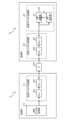
- FIG. 1 is a diagram illustrating a schematic configuration including a compensation model of a wireless communication system that compensates for multiple device failures according to an embodiment.
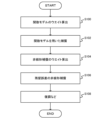
- 1 is a flowchart illustrating an example of an operation of a wireless communication system according to an embodiment.
- FIG. 2 is a diagram illustrating an example of a hardware configuration of a receiving device according to an embodiment.
- Figure 1 shows an overview of the configuration of a wireless communication system.
- the wireless communication system is configured such that, for example, radio waves transmitted by a transmitting device (transmitting station) 1 are received by a receiving device (receiving station) 2.
- the wireless communication system performs wireless communication by compensating the processed signal that is analog-processed in the process of receiving the signal transmitted by the transmitting device 1 using radio waves at the receiving device 2.
- the transmitting device 1 has a transmission digital processing unit 10, a transmission analog processing unit 12, and an antenna 14.
- the transmission digital processing unit 10 performs digital processing for transmitting a signal.
- the transmission analog processing unit 12 performs analog processing for transmitting a signal, and transmits the signal via the antenna 14.
- the transmission analog processing unit 12 has, for example, a quadrature modulation circuit 30, a frequency conversion circuit 32, and a power amplification circuit 34.
- a device failure due to IQ imbalance may occur.
- a device failure due to phase noise may occur.
- a device failure due to nonlinear distortion may occur.
- the receiving device 2 has an antenna 20, a receiving analog processing unit 22, and a receiving digital processing unit 24.
- the receiving analog processing unit 22 receives a signal via the antenna 20, and performs analog processing, for example, to make the signal demodulatable.
- the receiving digital processing unit 24 performs digital processing on the signal received by the receiving analog processing unit 22.
- the receiving analog processing unit 22 has, for example, a frequency conversion circuit 40 and an orthogonal demodulation circuit 42.
- a device failure due to phase noise may occur.
- the orthogonal demodulation circuit 42 a device failure due to IQ imbalance may occur.
- a fading channel exists. Furthermore, a carrier frequency offset may occur between the frequency conversion circuit 32 and the frequency conversion circuit 40.
- At least one of the transmission digital processing unit 10 and the reception digital processing unit 24 estimates each device failure for each event and performs compensation for device failures that may occur decoded.
- FIG. 2 is a diagram showing a schematic example of a configuration including a compensation model of a wireless communication system that compensates for multiple device failures as a comparative example.
- the same reference numerals are used to designate configurations that are substantially the same as those described above.
- the wireless communication system illustrated in FIG. 2 has two function models of device failures that may occur in the transmitting device 1 and the receiving device 2 in order to perform one-to-one wireless communication in which the receiving device 2 performs compensation.
- G is a functional model representation of the device impairments of the analog devices.
- H100 is the transfer function of the fading channel in the transmitter 1 and the receiver 2.
- a function model (G TX,1 ) 50 and a function model (G TX,2 ) 52 are set for the transmission analog processing section 12.
- a function model (G RX,1 ) 60 and a function model (G RX,2 ) 62 are set for the reception analog processing section 22.
- the receiving digital processing unit 24 has a first calculation unit 70 and a first compensation unit 72.
- the first calculation unit 70 estimates multiple factors that reduce the accuracy of analog processing of the processed signal using function models (function model 50, function model 52, H100, function model 60, function model 62), and calculates the weight (compensation weight) that each of the multiple factors accounts for in the reduction in accuracy of analog processing.
- the first compensation unit 72 compensates the processed signal that is analog-processed using each of the function models (function model 50, function model 52, H100, function model 60, function model 62) based on the weights calculated by the first calculation unit 70.
- FIG. 3 is a diagram illustrating a schematic configuration including a compensation model of a wireless communication system that compensates for multiple device failures according to one embodiment.
- the reception digital processing unit 24 has a second calculation unit 74 and a second compensation unit 76 in addition to the first calculation unit 70 and first compensation unit 72 described above.
- the second calculation unit 74 calculates the weights (compensation weights) that each of the multiple factors accounts for in the residual error remaining in the signal compensated by the first compensation unit 72.
- the second compensation unit 76 performs compensation involving machine learning on the processed signal compensated for by the first compensation unit 72 based on the weights calculated by the second calculation unit 74 and the known signal. For example, the second compensation unit 76 performs compensation involving machine learning on the processed signal by at least one of linear compensation, compensation by a neural network, and nonlinear compensation using a nonlinear activation function. Note that the algorithm of nonlinear compensation executed by the second compensation unit 76 is arbitrary.
- Figure 4 is a flowchart showing an example of the operation of the wireless communication system according to one embodiment.
- step 100 the wireless communication system calculates the weights of the function model.
- step 102 the wireless communication system performs compensation using a function model.
- step 104 the wireless communication system calculates the weights for nonlinear compensation. For example, the wireless communication system learns the nonlinear compensation weights based on the compensation results using the function model and the known signal so as to minimize the residual error.
- step 106 the wireless communication system performs nonlinear compensation of the residual error.
- the wireless communication system performs residual error compensation based on the compensation result using the function model and the nonlinear compensation weight.
- step 108 the wireless communication system performs digital processing such as demodulation.
- the wireless communication system estimates and compensates for device failures using multiple function models.
- the wireless communication system may be configured to use any number of function models, or to use any function models.
- the configuration of the wireless communication system in one embodiment is not limited in form, such as the number of systems (e.g., one-to-one communication, one-to-many communication, many-to-many communication, multi-hop communication via relay stations (including regenerative relay/non-regenerative relay)), antenna configurations (e.g., SIMO/MIMO), and signal properties (e.g., single carrier/multi-carrier transmission).
- systems e.g., one-to-one communication, one-to-many communication, many-to-many communication, multi-hop communication via relay stations (including regenerative relay/non-regenerative relay)
- antenna configurations e.g., SIMO/MIMO
- signal properties e.g., single carrier/multi-carrier transmission.
- the nonlinear compensation process may be performed by any wireless communication device, such as a transmitting station, a receiving station, or a relay station, and the number of wireless communication devices is not limited.
- the wireless communication system performs compensation using machine learning even for residual errors remaining in the compensated signal, so that even if a complex device failure occurs in the processed signal that is analog-processed in the process of receiving the signal transmitted by the transmitting device using radio waves and received by the receiving device, the processed signal can be compensated with high accuracy.
- each function possessed by the transmitting device 1 and the receiving device 2 may be configured in whole or in part by hardware such as a PLD (Programmable Logic Device) or an FPGA (Field Programmable Gate Array), or may be configured as a program executed by a processor such as a CPU.
- hardware such as a PLD (Programmable Logic Device) or an FPGA (Field Programmable Gate Array)
- the receiving device 2 can be realized using a computer and a program, and the program can be recorded on a storage medium or provided via a network.
- FIG. 5 is a diagram showing an example of the hardware configuration of a receiving device 2 according to one embodiment.
- the receiving device 2 has an input unit 90, an output unit 91, a communication unit 92, a CPU 93, a memory 94, and a HDD 95 connected via a bus 96, and has the functions of a computer.
- the receiving device 2 is also capable of inputting and outputting data to and from a computer-readable storage medium 97.
- the input unit 90 is, for example, a keyboard and a mouse.
- the output unit 91 is, for example, a display device such as a display.
- the communication unit 92 is a communication interface that performs wireless communication.
- the CPU 93 controls each component of the receiving device 2 and performs predetermined processing.
- the memory 94 and HDD 95 are storage devices that store data, etc.
- the storage medium 97 is capable of storing programs and the like that cause the receiving device 2 to execute the functions of the receiving device 2. Note that the architecture that constitutes the receiving device 2 is not limited to the example shown in FIG. 5.
Landscapes
- Engineering & Computer Science (AREA)
- Computer Networks & Wireless Communication (AREA)
- Signal Processing (AREA)
- Digital Transmission Methods That Use Modulated Carrier Waves (AREA)
Priority Applications (2)
| Application Number | Priority Date | Filing Date | Title |
|---|---|---|---|
| PCT/JP2023/003117 WO2024161528A1 (ja) | 2023-01-31 | 2023-01-31 | 無線通信システム、無線通信装置、無線通信方法及び信号補償プログラム |
| JP2024574127A JP7771439B2 (ja) | 2023-01-31 | 2023-01-31 | 無線通信システム、無線通信装置、無線通信方法及び信号補償プログラム |
Applications Claiming Priority (1)
| Application Number | Priority Date | Filing Date | Title |
|---|---|---|---|
| PCT/JP2023/003117 WO2024161528A1 (ja) | 2023-01-31 | 2023-01-31 | 無線通信システム、無線通信装置、無線通信方法及び信号補償プログラム |
Publications (1)
| Publication Number | Publication Date |
|---|---|
| WO2024161528A1 true WO2024161528A1 (ja) | 2024-08-08 |
Family
ID=92146154
Family Applications (1)
| Application Number | Title | Priority Date | Filing Date |
|---|---|---|---|
| PCT/JP2023/003117 Ceased WO2024161528A1 (ja) | 2023-01-31 | 2023-01-31 | 無線通信システム、無線通信装置、無線通信方法及び信号補償プログラム |
Country Status (2)
| Country | Link |
|---|---|
| JP (1) | JP7771439B2 (https=) |
| WO (1) | WO2024161528A1 (https=) |
Cited By (1)
| Publication number | Priority date | Publication date | Assignee | Title |
|---|---|---|---|---|
| CN119024762A (zh) * | 2024-08-31 | 2024-11-26 | 盐城市鑫纬嘉新能源科技有限公司 | 一种基于图像处理的黑色金属加工方法及系统 |
Citations (1)
| Publication number | Priority date | Publication date | Assignee | Title |
|---|---|---|---|---|
| WO2020175279A1 (ja) * | 2019-02-26 | 2020-09-03 | 日本電信電話株式会社 | 無線通信システム、無線通信方法、送信局装置および受信局装置 |
Family Cites Families (3)
| Publication number | Priority date | Publication date | Assignee | Title |
|---|---|---|---|---|
| JPH0770970B2 (ja) * | 1991-01-23 | 1995-07-31 | 富士通株式会社 | 適応等化器 |
| US8831082B2 (en) | 2013-02-07 | 2014-09-09 | Rajendra Kumar | Systems and methods for blind mode adaptive equalization with multiple algorithms |
| WO2022074734A1 (ja) | 2020-10-06 | 2022-04-14 | 国立大学法人 東京大学 | 制御システムの生産装置、制御システムの生産方法及びプログラム |
-
2023
- 2023-01-31 WO PCT/JP2023/003117 patent/WO2024161528A1/ja not_active Ceased
- 2023-01-31 JP JP2024574127A patent/JP7771439B2/ja active Active
Patent Citations (1)
| Publication number | Priority date | Publication date | Assignee | Title |
|---|---|---|---|---|
| WO2020175279A1 (ja) * | 2019-02-26 | 2020-09-03 | 日本電信電話株式会社 | 無線通信システム、無線通信方法、送信局装置および受信局装置 |
Non-Patent Citations (2)
| Title |
|---|
| FREIRE, Pedro J. et al., Performance versus Complexity Study of Neural Network Equalizers in Coherent Optical Systems, Journal of Lightwave Technology, 13 July 2021, vol. 39, issue 19, pages 6085-6096 * |
| GUPTA ANKIT; SELLATHURAI MATHINI: "End-to-End Learning-based Two-Way AF Relay Networks with I/Q Imbalance", 2021 IEEE 22ND INTERNATIONAL WORKSHOP ON SIGNAL PROCESSING ADVANCES IN WIRELESS COMMUNICATIONS (SPAWC), IEEE, 27 September 2021 (2021-09-27), pages 111 - 115, XP034017429, DOI: 10.1109/SPAWC51858.2021.9593107 * |
Cited By (1)
| Publication number | Priority date | Publication date | Assignee | Title |
|---|---|---|---|---|
| CN119024762A (zh) * | 2024-08-31 | 2024-11-26 | 盐城市鑫纬嘉新能源科技有限公司 | 一种基于图像处理的黑色金属加工方法及系统 |
Also Published As
| Publication number | Publication date |
|---|---|
| JPWO2024161528A1 (https=) | 2024-08-08 |
| JP7771439B2 (ja) | 2025-11-17 |
Similar Documents
| Publication | Publication Date | Title |
|---|---|---|
| US9252822B2 (en) | Adaptive non-linear model for highly-spectrally-efficient communications | |
| US20060067425A1 (en) | Transmitter and transmission method | |
| US20170310508A1 (en) | Systems and methods for adaptively-tuned digital self-interference cancellation | |
| US20160094332A1 (en) | Systems and Methods for Analog Cancellation for Division Free Duplexing for Radios Using MIMO | |
| US10523283B2 (en) | LOS-MIMO demodulation apparatus, communication apparatus, LOS-MIMO transmission system, LOS-MIMO demodulation method and program | |
| US20200028533A1 (en) | Receiver nonlinearity estimation and cancellation | |
| US20230046481A1 (en) | Equalizer digital self interference cancelation for hybrid mimo transmitters | |
| WO2015119910A1 (en) | Interference cancellation in tdd massive mimo wirelss systems | |
| JP7771439B2 (ja) | 無線通信システム、無線通信装置、無線通信方法及び信号補償プログラム | |
| US20240179033A1 (en) | Interference cancellation circuit and operating method thereof | |
| US10892788B2 (en) | Low complexity MIMO digital pre-distortion | |
| US20230379074A1 (en) | Methods and Apparatus for Successive Interference Cancellation (SIC) | |
| US9973225B1 (en) | Receiver providing reduced distortion in a wireless device | |
| US20140010271A1 (en) | Signal processing for diversity combining radio receiver | |
| US11750232B2 (en) | Hybrid GMP/equalizer digital self interference cancelation for MIMO transmitters | |
| JP7787337B2 (ja) | 無線通信システム、無線通信装置、無線通信方法及び信号補償プログラム | |
| US9077534B2 (en) | Communications circuit including a linear quadratic estimator | |
| US11038740B2 (en) | Communication system | |
| JP7593418B2 (ja) | 通信路推定方法、無線通信システム、送信装置、及び受信装置 | |
| Matsushima et al. | Feasibility of 256/1024-QAM Transmission under Time-Varying Self-Interference in Full-duplex Mobile Communications | |
| JP2016019023A (ja) | 受信機、復調方法、及び復調プログラム | |
| WO2025041306A1 (ja) | 無線通信システム | |
| WO2025041309A1 (ja) | 無線通信システム | |
| CN117713852A (zh) | 一种发射机直流偏移校准方法和系统、收发系统 | |
| Zhu et al. | Adaptive compensation of gain/phase imbalances and DC-offsets using constant modulus algorithm |
Legal Events
| Date | Code | Title | Description |
|---|---|---|---|
| 121 | Ep: the epo has been informed by wipo that ep was designated in this application |
Ref document number: 23919668 Country of ref document: EP Kind code of ref document: A1 |
|
| WWE | Wipo information: entry into national phase |
Ref document number: 2024574127 Country of ref document: JP |
|
| NENP | Non-entry into the national phase |
Ref country code: DE |
|
| 122 | Ep: pct application non-entry in european phase |
Ref document number: 23919668 Country of ref document: EP Kind code of ref document: A1 |