WO2024157485A1 - 端末及び測位方法 - Google Patents
端末及び測位方法 Download PDFInfo
- Publication number
- WO2024157485A1 WO2024157485A1 PCT/JP2023/002745 JP2023002745W WO2024157485A1 WO 2024157485 A1 WO2024157485 A1 WO 2024157485A1 JP 2023002745 W JP2023002745 W JP 2023002745W WO 2024157485 A1 WO2024157485 A1 WO 2024157485A1
- Authority
- WO
- WIPO (PCT)
- Prior art keywords
- positioning
- terminal
- base station
- prs
- pfl
- Prior art date
- Legal status (The legal status is an assumption and is not a legal conclusion. Google has not performed a legal analysis and makes no representation as to the accuracy of the status listed.)
- Ceased
Links
Images




Classifications
-
- H—ELECTRICITY
- H04—ELECTRIC COMMUNICATION TECHNIQUE
- H04W—WIRELESS COMMUNICATION NETWORKS
- H04W64/00—Locating users or terminals or network equipment for network management purposes, e.g. mobility management
Definitions
- the present invention relates to a terminal and a positioning method in a wireless communication system.
- 3GPP registered trademark
- 3rd Generation Partnership Project 3rd Generation Partnership Project
- 5G Fifth Generation Partnership Project
- NR New Radio
- 5G various wireless technologies and network architectures are being studied to meet the requirements of achieving a throughput of 10 Gbps or more while keeping latency in wireless sections to 1 ms or less (for example, Non-Patent Document 1 and Non-Patent Document 2).
- 3GPP is currently studying positioning. For example, sidelink positioning, positioning integrity, LPHAP (Low-Power High-Accuracy Positioning), RedCap (Reduced capability) positioning, positioning using carrier phase measurement, and BW (Bandwidth) aggregation for positioning are being discussed.
- PRS Positioning Reference Signal
- terminal position calculations are performed on a CC (Component Carrier) or PFL (Positioning Frequency Layer) basis.
- CC Component Carrier
- PFL Positioning Frequency Layer
- the present invention has been made in consideration of the above points, and aims to improve the accuracy of positioning in wireless communication systems.
- a terminal has a receiving unit that receives information from a base station indicating multiple resources to which a DL-PRS (Downlink Positioning Reference Signal) used for the same positioning calculation is assigned, and a control unit that measures the DL-PRS in the multiple resources and performs positioning, and the control unit performs bandwidth aggregation for positioning when the resources are included in different PFLs (Positioning Frequency Layers).
- a DL-PRS Downlink Positioning Reference Signal
- the disclosed technology can improve the accuracy of positioning in wireless communication systems.
- FIG. 1 is a diagram illustrating an example of a configuration of a wireless communication system according to an embodiment of the present invention.
- FIG. 13 is a diagram for explaining an example of an intraband continuous carrier.
- FIG. 13 is a diagram for explaining an example of an intraband non-contiguous carrier.
- FIG. 13 is a diagram for explaining an example of an inter-band non-contiguous carrier.
- FIG. 1 is a diagram showing an example (1) of SRS resource allocation in an embodiment of the present invention.
- FIG. 11 is a diagram showing an example (2) of SRS resource allocation in an embodiment of the present invention.
- FIG. 2 is a sequence diagram for explaining an example of position measurement according to an embodiment of the present invention.
- FIG. 4 is a diagram showing an example of a frequency domain gap in an embodiment of the present invention.
- FIG. 2 is a diagram illustrating an example of a functional configuration of a base station 10 according to an embodiment of the present invention.
- FIG. 2 is a diagram illustrating an example of a functional configuration of a terminal 20 according to an embodiment of the present invention.
- 2 is a diagram illustrating an example of a hardware configuration of a base station 10 or a terminal 20 according to an embodiment of the present invention.
- FIG. 2 is a diagram showing an example of the configuration of a vehicle 2001 according to an embodiment of the present invention.
- LTE Long Term Evolution
- NR NR
- SS Synchronization signal
- PSS Primary SS
- SSS Secondary SS
- PBCH Physical broadcast channel
- PRACH Physical random access channel
- PDCCH Physical Downlink Control Channel
- PDSCH Physical Downlink Shared Channel
- PUCCH Physical Uplink Control Channel
- PUSCH Physical Uplink Shared Channel
- NR corresponds to NR-SS, NR-PSS, NR-SSS, NR-PBCH, NR-PRACH, etc.
- NR- even if a signal is used in NR, it is not necessarily specified as "NR-".
- the duplex method may be a TDD (Time Division Duplex) method, an FDD (Frequency Division Duplex) method, or another method (e.g., Flexible Duplex, etc.).
- TDD Time Division Duplex
- FDD Frequency Division Duplex
- another method e.g., Flexible Duplex, etc.
- radio parameters and the like when radio parameters and the like are “configured,” this may mean that predetermined values are pre-configured, or that radio parameters notified from the base station 10 or the terminal 20 are configured.
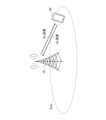
- FIG. 1 is a diagram showing an example of the configuration of a wireless communication system in an embodiment of the present invention.
- the wireless communication system in the embodiment of the present invention includes a base station 10 and a terminal 20.
- FIG. 1 shows one base station 10 and one terminal 20, this is an example, and there may be multiple of each.
- the base station 10 is a communication device that provides one or more cells and performs wireless communication with the terminal 20.
- the physical resources of a wireless signal are defined in the time domain and the frequency domain, where the time domain may be defined by the number of OFDM (Orthogonal Frequency Division Multiplexing) symbols, and the frequency domain may be defined by the number of subcarriers or the number of resource blocks.
- the base station 10 transmits a synchronization signal and system information to the terminal 20.
- the synchronization signal is, for example, NR-PSS and NR-SSS.
- the system information is, for example, transmitted by NR-PBCH and is also called broadcast information.
- the synchronization signal and system information may be called SSB (SS/PBCH block). As shown in FIG.
- the base station 10 transmits a control signal or data to the terminal 20 in DL (Downlink) and receives a control signal or data from the terminal 20 in UL (Uplink). Both the base station 10 and the terminal 20 are capable of transmitting and receiving signals by performing beamforming. In addition, both the base station 10 and the terminal 20 can apply MIMO (Multiple Input Multiple Output) communication to DL or UL. In addition, both the base station 10 and the terminal 20 may communicate via a secondary cell (SCell: Secondary Cell) and a primary cell (PCell: Primary Cell) using CA (Carrier Aggregation). Furthermore, the terminal 20 may communicate via a primary cell of the base station 10 and a primary secondary cell group cell (PSCell: Primary SCG Cell) of another base station 10 using DC (Dual Connectivity).
- SCell Secondary Cell
- PCell Primary Cell
- CA Carrier Aggregation
- the terminal 20 may communicate via a primary cell of the base station 10 and a primary secondary cell group cell (PSCell: Primary SCG Cell) of another base station 10
- the terminal 20 is a communication device equipped with a wireless communication function, such as a smartphone, a mobile phone, a tablet, a wearable terminal, or a communication module for M2M (Machine-to-Machine). As shown in FIG. 1, the terminal 20 receives control signals or data from the base station 10 in DL and transmits control signals or data to the base station 10 in UL, thereby utilizing various communication services provided by the wireless communication system. The terminal 20 also receives various reference signals transmitted from the base station 10, and performs measurement of the propagation path quality based on the reception results of the reference signals.
- M2M Machine-to-Machine
- 3GPP is currently studying positioning. For example, sidelink positioning, positioning integrity, LPHAP (Low-Power High-Accuracy Positioning), RedCap (Reduced capability) positioning, positioning using carrier phase measurement, and BW (Bandwidth) aggregation for positioning are being discussed.
- PRS Positioning Reference Signal
- terminal position calculations are performed on a CC (Component Carrier) or PFL (Positioning Frequency Layer) basis.
- BW aggregation for positioning makes it possible to combine the PRS measurement results from multiple PFLs to perform terminal position calculations using broadband resources, improving positioning accuracy.
- FIG. 2 is a diagram for explaining an example of an intraband contiguous carrier.
- an intraband contiguous carrier refers to two CCs that are arranged contiguously within a certain band A.
- FIG. 3 is a diagram for explaining an example of intraband non-contiguous carriers.
- an intraband non-contiguous carrier refers to two CCs that are not contiguous but are placed apart within a certain band A.
- FIG 4 is a diagram for explaining an example of an interband non-contiguous carrier.
- an interband non-contiguous carrier refers to two CCs, one of which is placed in a certain band A and the other in another band B.
- BW aggregation for positioning may target up to three intraband contiguous carriers. Note that BW aggregation for positioning may target more than three carriers, may target intraband non-contiguous carriers, or may target interband non-contiguous carriers.
- the terminal 20 may operate as shown in 1)-4) below.
- the terminal 20 may assume positioning calculations using DL-PRS or SRS (Sounding Reference Signal) for positioning in multiple carriers. That is, the terminal 20 may assume BW aggregation for positioning. The terminal 20 may also request information from the network indicating whether BW aggregation for positioning is enabled or disabled. The terminal 20 may also request information from the network indicating the number of carriers in BW aggregation for positioning.
- DL-PRS Downlink Reference Signal
- SRS Sounding Reference Signal
- the terminal 20 may assume that the network notifies it of the carrier to be used for the same positioning calculation.
- the terminal 20 may assume that the carrier to be used for the same positioning calculation is implicitly notified by the network via specific parameters.
- the terminal 20 may report the UE capabilities related to BW aggregation for positioning to the network.
- the PFL may have the same definition as the CC or carrier, or may have a different definition than the CC or carrier.
- the PFL, CC, and carrier may be interchangeable.
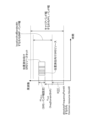
- FIG. 5 is a diagram showing an example of DL-PRS resource allocation in an embodiment of the present invention.
- the DL-PRS resource set is arranged within the carrier bandwidth (set by the higher layer parameter carrierBandwidth), i.e., the PFL bandwidth.
- the resources allocated to the DL-PRS resource set start from the higher layer parameter dl-PRS-StartPRB, which indicates an offset from the higher layer parameter dl-PRS-PointA, and are allocated with a bandwidth set by the higher layer parameter dl-PRS-ResourceBandwidth.
- the DL-PRS resource set includes one or more DL-PRS resources.
- the positioning SRS resource set starts from an offset N BWP,i start from the upper layer parameter absoluteFrequencyPointA in the carrier bandwidth (set by the upper layer parameter carrierBandwidth), i.e., the PFL bandwidth, and is arranged in a BWP (Bandwidth Part) whose bandwidth is set by the upper layer parameter locationAndBandwidth. Furthermore, the offset from the upper layer parameter absoluteFrequencyPointA of the resources allocated to the positioning SRS resource set is set by n shift set by the upper layer parameter freqDomainShift. The bandwidth of the resources allocated to the positioning SRS resource set is set by m SRS,b of the SRS bandwidth setting.
- the positioning-oriented SRS resource set includes one or more positioning-oriented SRS resources.
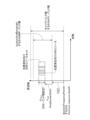
- FIG. 7 is a diagram showing an example (2) of SRS resource allocation in an embodiment of the present invention.
- the positioning SRS resource set starts from an offset N BWP,i start from the upper layer parameter absoluteFrequencyPointA in the carrier bandwidth (set by the upper layer parameter carrierBandwidth), i.e., the PFL bandwidth, and is arranged in a BWP whose bandwidth is set by the upper layer parameter locationAndBandwidth.
- the offset from the lower end of the BWP of the resource allocated to the positioning SRS resource set is set by n shift set by the upper layer parameter freqDomainShift.
- the bandwidth of the resource allocated to the positioning SRS resource set is set by m SRS,b of the SRS bandwidth setting.
- the positioning SRS resource set includes one or more positioning SRS resources.
- the terminal 20 may assume that the carrier to be used for the same positioning calculation is notified by the network.
- FIG. 8 is a sequence diagram for explaining an example of positioning in an embodiment of the present invention.
- the terminal 20 may transmit to the base station 10 an inquiry as to whether BW aggregation for positioning is enabled or disabled.
- the terminal 20 may also transmit to the base station 10 an inquiry as to the number of carriers that can be applied to BW aggregation for positioning.
- the number of carriers may be an applicable specific value, or an applicable range or maximum value.
- the inquiry may be transmitted from the terminal 20 to the LMF (Location Management Function) via the base station 10 using the LTE Positioning Protocol (LPP).
- LMF LTE Positioning Protocol
- NRPPa NR Positioning Protocol A
- the base station 10 transmits a response to the inquiry to the terminal 20. That is, the base station 10 may transmit to the terminal 20 information indicating whether the BW aggregation for positioning is enabled or disabled and/or the number of carriers applicable to the BW aggregation for positioning.
- the response may be transmitted from the LMF to the terminal 20 via the base station 10 using LPP.
- the inquiry may also be transmitted from the LMF to the terminal 20 via the base station 10 using NRPPa.
- steps S11 and S12 may or may not be performed.
- the base station 10 transmits a notification of multiple carriers or resources to be used for the same positioning to the terminal 20. That is, multiple carriers capable of BW aggregation for positioning may be notified to the terminal 20. Multiple unique carriers may be notified to the terminal 20 by RRC signaling. Also, two or more carriers may be configured or pre-configured by RRC signaling, and multiple carriers to be used for BW aggregation for positioning may be semi-statically or dynamically notified to the terminal 20 by MAC-CE or DCI. The terminal 20 may use all of the notified multiple carriers for BW aggregation, or may use a part of the notified multiple carriers for BW aggregation.
- step S13 notification of multiple carriers or resources to be used for the same positioning in DL may be performed as shown in 1)-5) below.
- Notification may be made by PFL index or DL-PRS resource set ID.
- PFL index or DL-PRS resource set ID For example, ⁇ PFL #1, #2 ⁇ may be notified as a notification by PFL index.
- a group including multiple PFL indices or DL-PRS resource set IDs may be set, and the group ID may be notified.
- BWP index For example, ⁇ BWP #1, #2 ⁇ may be notified as a notification by BWP index. Also, one or more groups including multiple BWP indexes may be set, and the group ID may be notified.
- a PPW PRS Processing Window index
- ⁇ PPW #1, #2 ⁇ may be notified as a notification by a PPW index.
- one or more groups including multiple PPW indexes may be set, and a group ID may be notified.
- a PPW is a window in which DL-PRS can be received without using a measurement gap.
- Notification may be made by a combination of 1), 2), and 3).
- ⁇ PFL #1, #2 ⁇ and ⁇ PPW #1, #2 ⁇ may be notified, and PFL #1, PFL #2, PPW #1, and PPW #2 may be available for BW aggregation.
- the operations shown in 1), 2), and 3) above may be switchable.
- the terminal 20 may be notified of which of 1), 2), and 3) above will be used by RRC signaling, MAC-CE, or DCI.
- the terminal 20 may assume the operation shown in 3) above.
- step S13 notification of multiple carriers to be used for the same UL positioning may be performed as shown in 1)-4) below.
- ⁇ PFL #1, #2 ⁇ may be notified as a notification by a PFL index.
- a group including multiple PFL indices or SRS resource set IDs for positioning may be set, and the group ID may be notified.
- BWP index For example, ⁇ BWP #1, #2 ⁇ may be notified as a notification by BWP index. Also, one or more groups including multiple BWP indexes may be set, and the group ID may be notified.
- Notification may be made by a combination of 1), 2), and 3).
- ⁇ PFL #1, #2 ⁇ and ⁇ PPW #1, #2 ⁇ may be notified, and PFL #1, PFL #2, PPW #1, and PPW #2 may be available for BW aggregation.
- the operations shown in 1) and 2) above may be switchable.
- the terminal 20 may be notified of which of 1) and 2) above is to be used by RRC signaling, MAC-CE, or DCI.
- the terminal 20 and the base station 10 use the notified multiple carriers for BW aggregation to perform positioning.
- the terminal 20 may measure DL-PRS in the multiple carriers, or may transmit SRS for positioning to the base station 10 in the multiple carriers.
- the terminal 20 may also assume that the carrier or resources to be used for the same positioning calculation are implicitly notified by the network via specific parameters.
- the terminal 20 may assume that the two carriers, two PPWs, two BWPs, or two resources are used for the same positioning.
- the unit of Y may be PRB or MHz.
- Y may be a value specific to each option, Option 1) to Option 4), or a common value. Y may be uniquely defined in the specifications, or may be notified to the terminal 20 by RRC signaling, MAC-CE, or DCI. A unique value of Y may be defined for each of intraband non-contiguous carrier aggregation, intraband contiguous carrier aggregation, and interband non-contiguous carrier aggregation.
- FIG. 9 is a diagram showing an example of a frequency domain gap in an embodiment of the present invention.
- FIG. 9 shows an example of DL-PRS arrangement. If the gap between option 1)-option 4) shown below is less than or equal to Y, the terminal 20 may assume that two carriers, two BWPs or two resources are used for the same positioning.
- the terminal 20 may assume that the two carriers are used for the same positioning.
- the gap may apply to DL and UL.
- the gap may be the gap between PFL#1 and PFL#2 when PFL#1 and PFL#2 are configured.
- the gap may be the gap between PFL#1 and PFL#3 when PFL#1, PFL#2 and PFL#3 are configured.
- the terminal 20 may assume that the two PPWs are used for the same positioning.
- the bandwidth of the BWP and the PPW may be the same or different.
- the gap may be applied to DL and UL.
- the gap may be the gap between PPW#1 and PPW#2 when PPW#1 and PPW#2 are set.
- the gap may be the gap between PPW#1 and PPW#3 when PPW#1, PPW#2, and PPW#3 are set.
- the terminal 20 may assume that the two BWPs are used for the same positioning.
- the gap may be applied to the DL.
- the gap may be the gap between BWP#1 and BWP#2 when BWP#1 and BWP#2 are set.
- the gap may be the gap between BWP#1 and BWP#3 when BWP#1, BWP#2 and BWP#3 are set.
- the terminal 20 may assume that the two PRS resource sets are used for the same positioning.
- the gap may be applied to the DL.
- the PRS resource set may also be replaced with an SRS resource set for positioning and applied to the UL.
- the gap may be the gap between PRS resource set #1 and PRS resource set #2 when PRS resource set #1 and PRS resource set #2 are configured.
- the gap may be the gap between PRS resource set #1 and PRS resource set #3 when PRS resource set #1, PRS resource set #2, and PRS resource set #3 are configured.
- options 1) to 4) may be combined.
- option 1) and option 4 it may be possible to set the gap between PFL#1 and PFL#2 to be equal to or less than Y0 and the gap between PRS resource set#5 and PRS resource set#6 to be equal to or less than Y1.
- the operations indicated in the above option 1) to option 4) may be switchable.
- the terminal 20 may be notified of which of the above option 1) to option 4) to use by RRC signaling, MAC-CE, or DCI.
- the terminal 20 may also report UE capabilities related to BW aggregation for positioning to the network.
- the UE capabilities may be 1)-4) shown below.
- the supported scope may be per UE, per FR, per positioning method (e.g., TDOA (Time Difference of Arrival), multi-RTT (Round Trip Time), etc.), or per band combination (e.g., intraband continuous carrier, intraband non-continuous carrier, and/or interband non-continuous carrier).
- TDOA Time Difference of Arrival
- multi-RTT Raund Trip Time
- band combination e.g., intraband continuous carrier, intraband non-continuous carrier, and/or interband non-continuous carrier.
- the number of carriers may be the number of PFLs.
- Maximum total bandwidth of BW aggregation for positioning For example, it may be 200 [MHz].
- CC may be read as PFL.
- SRS for positioning may be interpreted as SRS for pos, SRS for positioning, SRS-pos, SRS, SRS for MIMO, SRS-MIMO, or UL-PRS.
- Index may be read as index or ID.
- BW aggregation for positioning may be interpreted as PRS aggregation, PRS multiplexing, or simultaneous PRS transmission and reception (Simultaneous PRS Tx/Rx).
- the above-described embodiment allows the terminal 20 to perform BW aggregation for positioning and improve the accuracy of positioning by measuring a large number of PRSs.
- the accuracy of positioning can be improved in wireless communication systems.
- the base station 10 and the terminal 20 include functions for implementing the above-mentioned embodiments. However, the base station 10 and the terminal 20 may each include only a part of the functions in the embodiments.
- Fig. 10 is a diagram showing an example of a functional configuration of a base station 10 in an embodiment of the present invention.
- the base station 10 has a transmitting unit 110, a receiving unit 120, a setting unit 130, and a control unit 140.
- the functional configuration shown in Fig. 10 is merely an example.
- the names of the functional divisions and functional units may be any as long as they can execute the operations related to the embodiment of the present invention.
- the transmitting unit 110 has a function of generating a signal to be transmitted to the terminal 20 side and transmitting the signal wirelessly.
- the transmitting unit 110 also transmits inter-network node messages to other network nodes.
- the receiving unit 120 has a function of receiving various signals transmitted from the terminal 20 and acquiring, for example, information of a higher layer from the received signals.
- the transmitting unit 110 also has a function of transmitting NR-PSS, NR-SSS, NR-PBCH, DL/UL control signals, etc. to the terminal 20.
- the receiving unit 120 also receives inter-network node messages from other network nodes.
- the setting unit 130 stores preset setting information and various setting information to be transmitted to the terminal 20.
- the contents of the setting information include, for example, information related to the settings for positioning.
- the control unit 140 performs control related to the settings for position measurement, as described in the embodiment.
- the control unit 140 also executes scheduling.
- the functional unit related to signal transmission in the control unit 140 may be included in the transmitting unit 110, and the functional unit related to signal reception in the control unit 140 may be included in the receiving unit 120.
- Fig. 11 is a diagram showing an example of a functional configuration of the terminal 20 in the embodiment of the present invention.
- the terminal 20 has a transmitting unit 210, a receiving unit 220, a setting unit 230, and a control unit 240.
- the functional configuration shown in Fig. 11 is merely an example.
- the names of the functional divisions and functional units may be any as long as they can execute the operations related to the embodiment of the present invention.
- the transmitter 210 creates a transmission signal from the transmission data and transmits the transmission signal wirelessly.
- the receiver 220 wirelessly receives various signals and acquires higher layer signals from the received physical layer signals.
- the receiver 220 also has a function of receiving NR-PSS, NR-SSS, NR-PBCH, DL/UL/SL control signals, etc. transmitted from the base station 10.
- the transmitter 210 transmits PSCCH (Physical Sidelink Control Channel), PSSCH (Physical Sidelink Shared Channel), PSDCH (Physical Sidelink Discovery Channel), PSBCH (Physical Sidelink Broadcast Channel), etc. to another terminal 20 as D2D communication, and the receiver 220 receives PSCCH, PSSCH, PSDCH, PSBCH, etc. from the other terminal 20.
- PSCCH Physical Sidelink Control Channel
- PSSCH Physical Sidelink Shared Channel
- PSDCH Physical Sidelink Discovery Channel
- PSBCH Physical Sidelink Broadcast Channel
- the setting unit 230 stores various setting information received from the base station 10 by the receiving unit 220.
- the setting unit 230 also stores setting information that is set in advance.
- the content of the setting information is, for example, information related to the setting of positioning.
- the control unit 240 performs control related to the settings for position measurement, as described in the embodiment.
- the functional unit related to signal transmission in the control unit 240 may be included in the transmitting unit 210, and the functional unit related to signal reception in the control unit 240 may be included in the receiving unit 220.
- each functional block may be realized using one device that is physically or logically coupled, or may be realized using two or more devices that are physically or logically separated and directly or indirectly connected (for example, using wires, wirelessly, etc.).
- the functional block may be realized by combining the one device or the multiple devices with software.
- Functions include, but are not limited to, judgement, determination, judgment, calculation, computation, processing, derivation, investigation, search, confirmation, reception, transmission, output, access, resolution, selection, selection, establishment, comparison, assumption, expectation, regarding, broadcasting, notifying, communicating, forwarding, configuring, reconfiguring, allocating, mapping, and assignment.
- a functional block (component) that performs the transmission function is called a transmitting unit or transmitter.
- the base station 10, terminal 20, etc. in one embodiment of the present disclosure may function as a computer that performs processing of the wireless communication method of the present disclosure.
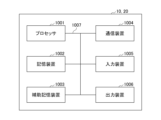
- FIG. 12 is a diagram showing an example of the hardware configuration of the base station 10 and terminal 20 in one embodiment of the present disclosure.
- the above-mentioned base station 10 and terminal 20 may be physically configured as a computer device including a processor 1001, a storage device 1002, an auxiliary storage device 1003, a communication device 1004, an input device 1005, an output device 1006, a bus 1007, etc.
- the term "apparatus" can be interpreted as a circuit, device, unit, etc.
- the hardware configuration of the base station 10 and the terminal 20 may be configured to include one or more of the devices shown in the figure, or may be configured to exclude some of the devices.
- the functions of the base station 10 and the terminal 20 are realized by loading specific software (programs) onto hardware such as the processor 1001 and the storage device 1002, causing the processor 1001 to perform calculations, control communications by the communication device 1004, and control at least one of the reading and writing of data in the storage device 1002 and the auxiliary storage device 1003.
- the processor 1001 for example, operates an operating system to control the entire computer.
- the processor 1001 may be configured as a central processing unit (CPU) including an interface with peripheral devices, a control device, an arithmetic unit, registers, etc.
- CPU central processing unit
- control unit 140, control unit 240, etc. may be realized by the processor 1001.
- the processor 1001 reads out a program (program code), software module, data, etc. from at least one of the auxiliary storage device 1003 and the communication device 1004 to the storage device 1002, and executes various processes according to the program.
- the program is a program that causes a computer to execute at least a part of the operations described in the above-mentioned embodiment.
- the control unit 140 of the base station 10 shown in FIG. 10 may be stored in the storage device 1002 and realized by a control program that runs on the processor 1001.
- the control unit 240 of the terminal 20 shown in FIG. 11 may be stored in the storage device 1002 and realized by a control program that runs on the processor 1001.
- the processor 1001 may be implemented by one or more chips.
- the program may be transmitted from a network via a telecommunication line.
- the storage device 1002 is a computer-readable recording medium and may be composed of, for example, at least one of a ROM (Read Only Memory), an EPROM (Erasable Programmable ROM), an EEPROM (Electrically Erasable Programmable ROM), a RAM (Random Access Memory), etc.
- the storage device 1002 may also be called a register, a cache, a main memory, etc.
- the storage device 1002 can store executable programs (program codes), software modules, etc. for implementing a communication method relating to one embodiment of the present disclosure.
- the auxiliary storage device 1003 is a computer-readable recording medium, and may be, for example, at least one of an optical disk such as a CD-ROM (Compact Disc ROM), a hard disk drive, a flexible disk, a magneto-optical disk (e.g., a compact disk, a digital versatile disk, a Blu-ray (registered trademark) disk), a smart card, a flash memory (e.g., a card, a stick, a key drive), a floppy (registered trademark) disk, a magnetic strip, etc.
- the above-mentioned storage medium may be, for example, a database, a server, or other suitable medium that includes at least one of the storage device 1002 and the auxiliary storage device 1003.
- the communication device 1004 is hardware (transmitting/receiving device) for communicating between computers via at least one of a wired network and a wireless network, and is also referred to as, for example, a network device, a network controller, a network card, a communication module, etc.
- the communication device 1004 may be configured to include a high-frequency switch, a duplexer, a filter, a frequency synthesizer, etc., to realize at least one of, for example, Frequency Division Duplex (FDD) and Time Division Duplex (TDD).
- FDD Frequency Division Duplex
- TDD Time Division Duplex
- the transmitting/receiving antenna, an amplifier unit, a transmitting/receiving unit, a transmission path interface, etc. may be realized by the communication device 1004.
- the transmitting/receiving unit may be implemented as a transmitting unit or a receiving unit that is physically or logically separated.
- the input device 1005 is an input device (e.g., a keyboard, a mouse, a microphone, a switch, a button, a sensor, etc.) that accepts input from the outside.
- the output device 1006 is an output device (e.g., a display, a speaker, an LED lamp, etc.) that performs output to the outside. Note that the input device 1005 and the output device 1006 may be integrated into one structure (e.g., a touch panel).
- each device such as the processor 1001 and the storage device 1002 is connected by a bus 1007 for communicating information.
- the bus 1007 may be configured using a single bus, or may be configured using different buses between each device.
- the base station 10 and the terminal 20 may be configured to include hardware such as a microprocessor, a digital signal processor (DSP), an application specific integrated circuit (ASIC), a programmable logic device (PLD), or a field programmable gate array (FPGA), and some or all of the functional blocks may be realized by the hardware.
- the processor 1001 may be implemented using at least one of these pieces of hardware.
- FIG. 13 shows an example configuration of a vehicle 2001.
- the vehicle 2001 includes a drive unit 2002, a steering unit 2003, an accelerator pedal 2004, a brake pedal 2005, a shift lever 2006, front wheels 2007, rear wheels 2008, an axle 2009, an electronic control unit 2010, various sensors 2021-2029, an information service unit 2012, and a communication module 2013.
- a communication device mounted on the vehicle 2001 and may be applied to the communication module 2013, for example.
- the drive unit 2002 is composed of, for example, an engine, a motor, or a hybrid of an engine and a motor.
- the steering unit 2003 includes at least a steering wheel (also called a handlebar), and is configured to steer at least one of the front wheels and the rear wheels based on the operation of the steering wheel operated by the user.
- the electronic control unit 2010 is composed of a microprocessor 2031, memory (ROM, RAM) 2032, and a communication port (IO port) 2033. Signals are input to the electronic control unit 2010 from various sensors 2021 to 2029 provided in the vehicle 2001.
- the electronic control unit 2010 may also be called an ECU (Electronic Control Unit).
- Signals from the various sensors 2021-2029 include a current signal from a current sensor 2021 that senses the motor current, a front or rear wheel rotation speed signal acquired by a rotation speed sensor 2022, a front or rear wheel air pressure signal acquired by an air pressure sensor 2023, a vehicle speed signal acquired by a vehicle speed sensor 2024, an acceleration signal acquired by an acceleration sensor 2025, an accelerator pedal depression amount signal acquired by an accelerator pedal sensor 2029, a brake pedal depression amount signal acquired by a brake pedal sensor 2026, a shift lever operation signal acquired by a shift lever sensor 2027, and a detection signal for detecting obstacles, vehicles, pedestrians, etc. acquired by an object detection sensor 2028.
- the information service unit 2012 is composed of various devices, such as a car navigation system, an audio system, speakers, a television, and a radio, for providing (outputting) various information such as driving information, traffic information, and entertainment information, and one or more ECUs for controlling these devices.
- the information service unit 2012 uses information acquired from an external device via the communication module 2013 or the like to provide various multimedia information and multimedia services to the occupants of the vehicle 2001.
- the information service unit 2012 may include input devices (e.g., a keyboard, a mouse, a microphone, a switch, a button, a sensor, a touch panel, etc.) that accept input from the outside, and may also include output devices (e.g., a display, a speaker, an LED lamp, a touch panel, etc.) that perform output to the outside.
- input devices e.g., a keyboard, a mouse, a microphone, a switch, a button, a sensor, a touch panel, etc.
- output devices e.g., a display, a speaker, an LED lamp, a touch panel, etc.
- the driving assistance system unit 2030 is composed of various devices that provide functions for preventing accidents and reducing the driving burden on the driver, such as a millimeter wave radar, LiDAR (Light Detection and Ranging), a camera, a positioning locator (e.g., GNSS, etc.), map information (e.g., high definition (HD) maps, autonomous vehicle (AV) maps, etc.), a gyro system (e.g., IMU (Inertial Measurement Unit), INS (Inertial Navigation System), etc.), AI (Artificial Intelligence) chip, and AI processor, as well as one or more ECUs that control these devices.
- the driving assistance system unit 2030 transmits and receives various information via the communication module 2013 to realize driving assistance functions or autonomous driving functions.
- the communication module 2013 can communicate with the microprocessor 2031 and components of the vehicle 2001 via the communication port.
- the communication module 2013 transmits and receives data via the communication port 2033 between the drive unit 2002, steering unit 2003, accelerator pedal 2004, brake pedal 2005, shift lever 2006, front wheels 2007, rear wheels 2008, axle 2009, microprocessor 2031 and memory (ROM, RAM) 2032 in the electronic control unit 2010, and sensors 2021 to 29, which are provided on the vehicle 2001.
- the communication module 2013 is a communication device that can be controlled by the microprocessor 2031 of the electronic control unit 2010 and can communicate with an external device. For example, it transmits and receives various information to and from the external device via wireless communication.
- the communication module 2013 may be located either inside or outside the electronic control unit 2010.
- the external device may be, for example, a base station, a mobile station, etc.
- the communication module 2013 may transmit at least one of the signals from the various sensors 2021-2028 described above input to the electronic control unit 2010, information obtained based on the signals, and information based on input from the outside (user) obtained via the information service unit 2012 to an external device via wireless communication.
- the electronic control unit 2010, the various sensors 2021-2028, the information service unit 2012, etc. may be referred to as input units that accept input.
- the PUSCH transmitted by the communication module 2013 may include information based on the above input.
- the communication module 2013 receives various information (traffic information, signal information, vehicle distance information, etc.) transmitted from an external device and displays it on the information service unit 2012 provided in the vehicle 2001.
- the information service unit 2012 may be called an output unit that outputs information (for example, outputs information to a device such as a display or speaker based on the PDSCH (or data/information decoded from the PDSCH) received by the communication module 2013).
- the communication module 2013 also stores various information received from an external device in a memory 2032 that can be used by the microprocessor 2031.
- the microprocessor 2031 may control the drive unit 2002, steering unit 2003, accelerator pedal 2004, brake pedal 2005, shift lever 2006, front wheels 2007, rear wheels 2008, axles 2009, sensors 2021 to 2029, etc. provided in the vehicle 2001.
- a terminal which includes a receiving unit that receives, from a base station, information indicating a plurality of resources to which a DL-PRS (Downlink Positioning Reference Signal) used for the same positioning calculation is assigned, and a control unit that measures the DL-PRS in the plurality of resources and performs positioning, and the control unit performs bandwidth aggregation for positioning when the resources are included in different PFLs (Positioning Frequency Layers).
- PFLs Physical Frequency Layers
- the terminal 20 can perform BW aggregation for positioning and improve the accuracy of positioning by measuring a large number of PRSs. In other words, the accuracy of positioning can be improved in a wireless communication system.
- the terminal 20 may further include a transmitter that transmits an inquiry to the base station as to whether bandwidth aggregation for positioning is enabled or disabled. With the above configuration, the terminal 20 can improve the accuracy of positioning by performing BW aggregation for positioning and measuring a large number of PRSs.
- the information indicating the multiple resources may be a PFL index, a DL-PRS resource set ID, a BWP (Bandwidth Part) index, or a PPW (PRS Processing Window) index.
- the terminal 20 can improve the accuracy of positioning by performing BW aggregation for positioning and measuring a large number of PRSs.
- the terminal 20 can improve the accuracy of positioning by performing BW aggregation for positioning and measuring a large number of PRSs.
- the control unit may use the first PFL and the second PFL for the same positioning calculation when the frequency gap between the first PFL and the second PFL is equal to or less than a threshold.
- the terminal 20 can perform BW aggregation for positioning and improve the accuracy of positioning by measuring a large number of PRSs.
- the terminal 20 may further include a transmission unit that reports to the base station the maximum number of PFLs that can be used for the same positioning calculation.
- the terminal 20 can improve the accuracy of positioning by performing BW aggregation for positioning and measuring a large number of PRSs.
- a positioning method in which a terminal performs the following steps: receiving information from a base station indicating multiple resources to which a DL-PRS (Downlink Positioning Reference Signal) used for the same positioning calculation is assigned; measuring the DL-PRS in the multiple resources and performing positioning; and, if the resources are included in different PFLs (Positioning Frequency Layers), performing bandwidth aggregation for positioning.
- a DL-PRS Downlink Positioning Reference Signal
- the terminal 20 can perform BW aggregation for positioning and improve the accuracy of positioning by measuring a large number of PRSs. In other words, the accuracy of positioning can be improved in a wireless communication system.
- the operations of multiple functional units may be physically performed by one part, or the operations of one functional unit may be physically performed by multiple parts.
- the order of the processing procedures described in the embodiment may be changed as long as there is no contradiction.
- the base station 10 and the terminal 20 have been described using functional block diagrams, but such devices may be realized by hardware, software, or a combination thereof.
- the software operated by the processor possessed by the base station 10 in accordance with an embodiment of the present invention and the software operated by the processor possessed by the terminal 20 in accordance with an embodiment of the present invention may each be stored in random access memory (RAM), flash memory, read only memory (ROM), EPROM, EEPROM, register, hard disk (HDD), removable disk, CD-ROM, database, server or any other suitable storage medium.
- the notification of information is not limited to the aspects/embodiments described in the present disclosure and may be performed using other methods.
- the notification of information may be performed by physical layer signaling (e.g., Downlink Control Information (DCI), Uplink Control Information (UCI)), higher layer signaling (e.g., Radio Resource Control (RRC) signaling, Medium Access Control (MAC) signaling), broadcast information (Master Information Block (MIB), System Information Block (SIB)), other signals, or a combination of these.
- RRC signaling may be referred to as an RRC message, and may be, for example, an RRC Connection Setup message, an RRC Connection Reconfiguration message, etc.
- Each aspect/embodiment described in this disclosure may be applied to at least one of systems utilizing LTE (Long Term Evolution), LTE-Advanced (LTE-A), SUPER 3G, IMT-Advanced, 4G (4th generation mobile communication system), 5G (5th generation mobile communication system), FRA (Future Radio Access), NR (new Radio), W-CDMA (registered trademark), GSM (registered trademark), CDMA2000, UMB (Ultra Mobile Broadband), IEEE 802.11 (Wi-Fi (registered trademark)), IEEE 802.16 (WiMAX (registered trademark)), IEEE 802.20, UWB (Ultra-Wide Band), Bluetooth (registered trademark), or other suitable systems, and next generation systems enhanced based on these. Additionally, multiple systems may be combined (for example, a combination of at least one of LTE and LTE-A with 5G, etc.).
- certain operations that are described as being performed by the base station 10 may in some cases be performed by its upper node.
- various operations performed for communication with a terminal 20 may be performed by at least one of the base station 10 and other network nodes other than the base station 10 (such as, but not limited to, an MME or S-GW).
- the base station 10 may be a combination of multiple other network nodes (such as an MME and an S-GW).
- the information or signals described in this disclosure may be output from a higher layer (or a lower layer) to a lower layer (or a higher layer). They may be input and output via multiple network nodes.
- the input and output information may be stored in a specific location (e.g., memory) or may be managed using a management table.
- the input and output information may be overwritten, updated, or added to.
- the output information may be deleted.
- the input information may be sent to another device.
- the determination in this disclosure may be based on a value represented by one bit (0 or 1), a Boolean (true or false) value, or a comparison of numerical values (e.g., a comparison with a predetermined value).
- Software shall be construed broadly to mean instructions, instruction sets, code, code segments, program code, programs, subprograms, software modules, applications, software applications, software packages, routines, subroutines, objects, executable files, threads of execution, procedures, functions, etc., whether referred to as software, firmware, middleware, microcode, hardware description language, or otherwise.
- Software, instructions, information, etc. may also be transmitted and received via a transmission medium.
- a transmission medium For example, if the software is transmitted from a website, server, or other remote source using at least one of wired technologies (such as coaxial cable, fiber optic cable, twisted pair, Digital Subscriber Line (DSL)), and/or wireless technologies (such as infrared, microwave), then at least one of these wired and wireless technologies is included within the definition of a transmission medium.
- wired technologies such as coaxial cable, fiber optic cable, twisted pair, Digital Subscriber Line (DSL)
- wireless technologies such as infrared, microwave
- the information, signals, etc. described in this disclosure may be represented using any of a variety of different technologies.
- the data, instructions, commands, information, signals, bits, symbols, chips, etc. that may be referred to throughout the above description may be represented by voltages, currents, electromagnetic waves, magnetic fields or magnetic particles, optical fields or photons, or any combination thereof.
- the channel and the symbol may be a signal (signaling).
- the signal may be a message.
- the component carrier (CC) may be called a carrier frequency, a cell, a frequency carrier, etc.
- system and “network” are used interchangeably.
- a radio resource may be indicated by an index.
- the names used for the above-mentioned parameters are not limiting in any respect. Furthermore, the formulas etc. using these parameters may differ from those explicitly disclosed in this disclosure.
- the various channels (e.g., PUCCH, PDCCH, etc.) and information elements may be identified by any suitable names, and therefore the various names assigned to these various channels and information elements are not limiting in any respect.
- base station BS
- wireless base station base station
- base station device fixed station
- NodeB nodeB
- eNodeB eNodeB
- gNodeB gNodeB
- access point e.g., "transmission point”
- gNodeB gNodeB
- a base station may also be referred to by terms such as macrocell, small cell, femtocell, and picocell.
- a base station can accommodate one or more (e.g., three) cells.
- a base station accommodates multiple cells, the entire coverage area of the base station can be divided into multiple smaller areas, and each smaller area can also provide communication services by a base station subsystem (e.g., a small indoor base station (RRH: Remote Radio Head)).
- RRH Remote Radio Head
- the term "cell” or “sector” refers to a part or the entire coverage area of at least one of the base station and base station subsystems that provide communication services in this coverage.
- a base station transmitting information to a terminal may be interpreted as the base station instructing the terminal to control or operate based on the information.
- MS Mobile Station
- UE User Equipment
- a mobile station may also be referred to by those skilled in the art as a subscriber station, mobile unit, subscriber unit, wireless unit, remote unit, mobile device, wireless device, wireless communication device, remote device, mobile subscriber station, access terminal, mobile terminal, wireless terminal, remote terminal, handset, user agent, mobile client, client, or some other suitable terminology.
- At least one of the base station and the mobile station may be called a transmitting device, a receiving device, a communication device, etc.
- At least one of the base station and the mobile station may be a device mounted on a moving object, the moving object itself, etc.
- the moving object is a movable object, and the moving speed is arbitrary. It also includes the case where the moving object is stopped.
- the moving object includes, but is not limited to, for example, a vehicle, a transport vehicle, an automobile, a motorcycle, a bicycle, a connected car, an excavator, a bulldozer, a wheel loader, a dump truck, a forklift, a train, a bus, a handcar, a rickshaw, a ship and other watercraft, an airplane, a rocket, an artificial satellite, a drone (registered trademark), a multicopter, a quadcopter, a balloon, and objects mounted thereon.
- the moving object may also be a moving object that travels autonomously based on an operation command.
- At least one of the base station and the mobile station may be a device that does not necessarily move during communication operations.
- at least one of the base station and the mobile station may be an IoT (Internet of Things) device such as a sensor.
- IoT Internet of Things
- the base station in the present disclosure may be read as a user terminal.
- each aspect/embodiment of the present disclosure may be applied to a configuration in which communication between a base station and a user terminal is replaced with communication between multiple terminals 20 (which may be called, for example, D2D (Device-to-Device) or V2X (Vehicle-to-Everything)).
- the terminal 20 may be configured to have the functions of the base station 10 described above.
- terms such as "uplink” and "downlink” may be read as terms corresponding to terminal-to-terminal communication (for example, "side").
- the uplink channel, downlink channel, etc. may be read as a side channel.
- the user terminal in this disclosure may be interpreted as a base station.
- the base station may be configured to have the functions of the user terminal described above.
- determining may encompass a wide variety of actions.
- Determining and “determining” may include, for example, judging, calculating, computing, processing, deriving, investigating, looking up, search, inquiry (e.g., searching in a table, database, or other data structure), and considering ascertaining as “judging” or “determining.”
- determining and “determining” may include receiving (e.g., receiving information), transmitting (e.g., sending information), input, output, accessing (e.g., accessing data in memory), and considering ascertaining as “judging” or “determining.”
- judgment” and “decision” can include considering resolving, selecting, choosing, establishing, comparing, etc., to have been “judged” or “decided.” In other words, “judgment” and “decision” can include considering some action to have been “judged” or “decided.” Additionally, “judgment (decision)” can be interpreted as “assuming,” “ex
- connection refers to any direct or indirect connection or coupling between two or more elements, and may include the presence of one or more intermediate elements between two elements that are “connected” or “coupled” to each other.
- the coupling or connection between elements may be physical, logical, or a combination thereof.
- “connected” may be read as "access.”
- two elements may be considered to be “connected” or “coupled” to each other using at least one of one or more wires, cables, and printed electrical connections, as well as electromagnetic energy having wavelengths in the radio frequency range, microwave range, and optical (both visible and invisible) range, as some non-limiting and non-exhaustive examples.
- the reference signal may also be abbreviated as RS (Reference Signal) or may be called a pilot depending on the applicable standard.
- the phrase “based on” does not mean “based only on,” unless expressly stated otherwise. In other words, the phrase “based on” means both “based only on” and “based at least on.”
- any reference to an element using a designation such as "first,” “second,” etc., used in this disclosure does not generally limit the quantity or order of those elements. These designations may be used in this disclosure as a convenient method of distinguishing between two or more elements. Thus, a reference to a first and a second element does not imply that only two elements may be employed or that the first element must precede the second element in some way.
- a radio frame may be composed of one or more frames in the time domain. Each of the one or more frames in the time domain may be called a subframe. A subframe may further be composed of one or more slots in the time domain. A subframe may have a fixed time length (e.g., 1 ms) that is independent of numerology.
- Numerology may be a communication parameter that applies to at least one of the transmission and reception of a signal or channel. Numerology may indicate, for example, at least one of the following: subcarrier spacing (SCS), bandwidth, symbol length, cyclic prefix length, transmission time interval (TTI), number of symbols per TTI, radio frame structure, a specific filtering process performed by the transceiver in the frequency domain, a specific windowing process performed by the transceiver in the time domain, etc.
- SCS subcarrier spacing
- TTI transmission time interval
- radio frame structure a specific filtering process performed by the transceiver in the frequency domain
- a specific windowing process performed by the transceiver in the time domain etc.
- a slot may consist of one or more symbols in the time domain (such as OFDM (Orthogonal Frequency Division Multiplexing) symbols, SC-FDMA (Single Carrier Frequency Division Multiple Access) symbols, etc.).
- a slot may be a time unit based on numerology.
- a slot may include multiple minislots. Each minislot may consist of one or multiple symbols in the time domain. A minislot may also be called a subslot. A minislot may consist of fewer symbols than a slot.
- a PDSCH (or PUSCH) transmitted in a time unit larger than a minislot may be called PDSCH (or PUSCH) mapping type A.
- a PDSCH (or PUSCH) transmitted using a minislot may be called PDSCH (or PUSCH) mapping type B.
- Radio frame, subframe, slot, minislot, and symbol all represent time units for transmitting signals. Radio frame, subframe, slot, minislot, and symbol may each be referred to by a different name that corresponds to the radio frame, subframe, slot, minislot, and symbol.
- one subframe may be called a Transmission Time Interval (TTI)
- TTI Transmission Time Interval
- multiple consecutive subframes may be called a TTI
- one slot or one minislot may be called a TTI.
- at least one of the subframe and the TTI may be a subframe (1 ms) in existing LTE, a period shorter than 1 ms (e.g., 1-13 symbols), or a period longer than 1 ms.
- the unit representing the TTI may be called a slot, minislot, etc., instead of a subframe.
- TTI refers to, for example, the smallest time unit for scheduling in wireless communication.
- a base station performs scheduling to allocate wireless resources (such as frequency bandwidth and transmission power that can be used by each terminal 20) to each terminal 20 in TTI units.
- wireless resources such as frequency bandwidth and transmission power that can be used by each terminal 20
- TTI is not limited to this.
- the TTI may be a transmission time unit for a channel-coded data packet (transport block), a code block, a code word, etc., or may be a processing unit for scheduling, link adaptation, etc.
- the time interval e.g., the number of symbols
- the time interval in which a transport block, a code block, a code word, etc. is actually mapped may be shorter than the TTI.
- one or more TTIs may be the minimum time unit of scheduling.
- the number of slots (minislots) that constitute the minimum time unit of scheduling may be controlled.
- a TTI having a time length of 1 ms may be called a normal TTI (TTI in LTE Rel. 8-12), normal TTI, long TTI, normal subframe, normal subframe, long subframe, slot, etc.
- TTI shorter than a normal TTI may be called a shortened TTI, short TTI, partial or fractional TTI, shortened subframe, short subframe, minislot, subslot, slot, etc.
- a long TTI (e.g., a normal TTI, a subframe, etc.) may be interpreted as a TTI having a time length of more than 1 ms
- a short TTI e.g., a shortened TTI, etc.
- TTI length shorter than the TTI length of a long TTI and equal to or greater than 1 ms.
- a resource block is a resource allocation unit in the time domain and frequency domain, and may include one or more consecutive subcarriers in the frequency domain.
- the number of subcarriers included in an RB may be the same regardless of the numerology, and may be, for example, 12.
- the number of subcarriers included in an RB may be determined based on the numerology.
- the time domain of an RB may include one or more symbols and may be one slot, one minislot, one subframe, or one TTI in length.
- One TTI, one subframe, etc. may each be composed of one or more resource blocks.
- one or more RBs may be referred to as a physical resource block (PRB), a sub-carrier group (SCG), a resource element group (REG), a PRB pair, an RB pair, etc.
- PRB physical resource block
- SCG sub-carrier group
- REG resource element group
- PRB pair an RB pair, etc.
- a resource block may be composed of one or more resource elements (REs).
- REs resource elements
- one RE may be a radio resource area of one subcarrier and one symbol.
- a bandwidth part which may also be referred to as a partial bandwidth, may represent a subset of contiguous common resource blocks (RBs) for a given numerology on a given carrier, where the common RBs may be identified by an index of the RB relative to a common reference point of the carrier.
- PRBs may be defined in a BWP and numbered within the BWP.
- the BWP may include a BWP for UL (UL BWP) and a BWP for DL (DL BWP).
- UL BWP UL BWP
- DL BWP DL BWP
- One or more BWPs may be configured for a UE within one carrier.
- At least one of the configured BWPs may be active, and the UE may not expect to transmit or receive a given signal/channel outside the active BWP.
- BWP bitmap
- radio frames, subframes, slots, minislots, and symbols are merely examples.
- the number of subframes included in a radio frame, the number of slots per subframe or radio frame, the number of minislots included in a slot, the number of symbols and RBs included in a slot or minislot, the number of subcarriers included in an RB, as well as the number of symbols in a TTI, the symbol length, and the cyclic prefix (CP) length can be changed in various ways.
- a and B are different may mean “A and B are different from each other.”
- the term may also mean “A and B are each different from C.”
- Terms such as “separate” and “combined” may also be interpreted in the same way as “different.”
- notification of specific information is not limited to being done explicitly, but may be done implicitly (e.g., not notifying the specific information).
- Base station 110 Transmitter 120 Receiver 130 Setting unit 140 Control unit 20 Terminal 210 Transmitter 220 Receiver 230 Setting unit 240 Control unit 1001 Processor 1002 Storage device 1003 Auxiliary storage device 1004 Communication device 1005 Input device 1006 Output device
Landscapes
- Engineering & Computer Science (AREA)
- Computer Networks & Wireless Communication (AREA)
- Signal Processing (AREA)
- Mobile Radio Communication Systems (AREA)
Priority Applications (2)
| Application Number | Priority Date | Filing Date | Title |
|---|---|---|---|
| JP2024572816A JPWO2024157485A1 (https=) | 2023-01-27 | 2023-01-27 | |
| PCT/JP2023/002745 WO2024157485A1 (ja) | 2023-01-27 | 2023-01-27 | 端末及び測位方法 |
Applications Claiming Priority (1)
| Application Number | Priority Date | Filing Date | Title |
|---|---|---|---|
| PCT/JP2023/002745 WO2024157485A1 (ja) | 2023-01-27 | 2023-01-27 | 端末及び測位方法 |
Publications (1)
| Publication Number | Publication Date |
|---|---|
| WO2024157485A1 true WO2024157485A1 (ja) | 2024-08-02 |
Family
ID=91970125
Family Applications (1)
| Application Number | Title | Priority Date | Filing Date |
|---|---|---|---|
| PCT/JP2023/002745 Ceased WO2024157485A1 (ja) | 2023-01-27 | 2023-01-27 | 端末及び測位方法 |
Country Status (2)
| Country | Link |
|---|---|
| JP (1) | JPWO2024157485A1 (https=) |
| WO (1) | WO2024157485A1 (https=) |
Citations (2)
| Publication number | Priority date | Publication date | Assignee | Title |
|---|---|---|---|---|
| WO2021236698A1 (en) * | 2020-05-21 | 2021-11-25 | Qualcomm Incorporated | Aggregated positioning signal processing management |
| WO2022079918A1 (ja) * | 2020-10-16 | 2022-04-21 | 株式会社Nttドコモ | 端末、及び基地局 |
-
2023
- 2023-01-27 JP JP2024572816A patent/JPWO2024157485A1/ja active Pending
- 2023-01-27 WO PCT/JP2023/002745 patent/WO2024157485A1/ja not_active Ceased
Patent Citations (2)
| Publication number | Priority date | Publication date | Assignee | Title |
|---|---|---|---|---|
| WO2021236698A1 (en) * | 2020-05-21 | 2021-11-25 | Qualcomm Incorporated | Aggregated positioning signal processing management |
| WO2022079918A1 (ja) * | 2020-10-16 | 2022-04-21 | 株式会社Nttドコモ | 端末、及び基地局 |
Non-Patent Citations (2)
| Title |
|---|
| CATT: "Discussion of expanded and improved NR positioning in Rel-18 ", 3GPP TSG RAN MEETING #98-E, RP-223135, 5 December 2022 (2022-12-05), pages 1 - 7, XP093195715 * |
| ERICSSON: "On accuracy improvement based on PRS/SRS bandwidth aggregation", 3GPP TSG RAN WG4 #104-E R4-2213277, 10 August 2022 (2022-08-10), XP052281960 * |
Also Published As
| Publication number | Publication date |
|---|---|
| JPWO2024157485A1 (https=) | 2024-08-02 |
Similar Documents
| Publication | Publication Date | Title |
|---|---|---|
| WO2024157485A1 (ja) | 端末及び測位方法 | |
| WO2024157486A1 (ja) | 端末及び測位方法 | |
| WO2024161657A1 (ja) | 端末及び測位方法 | |
| WO2024161656A1 (ja) | 端末及び測位方法 | |
| WO2024171376A1 (ja) | 端末及び測位方法 | |
| WO2024171377A1 (ja) | 端末及び測位方法 | |
| WO2025032662A1 (ja) | 端末、基地局、及び通信方法 | |
| WO2024069989A1 (ja) | 端末及び通信方法 | |
| WO2025032835A1 (ja) | 端末及び通信方法 | |
| WO2025032836A1 (ja) | 端末及び通信方法 | |
| WO2024100905A1 (ja) | 端末、基地局及び通信方法 | |
| WO2025210871A1 (ja) | 端末及び通信方法 | |
| WO2025017814A1 (ja) | 端末及び測位方法 | |
| WO2025069285A1 (ja) | 端末、基地局及び通信方法 | |
| WO2025243762A1 (ja) | 基地局、端末、及び通信方法 | |
| WO2025057340A1 (ja) | 端末及び通信方法 | |
| WO2025243721A1 (ja) | 基地局、端末、及び通信方法 | |
| WO2025243805A1 (ja) | 端末、基地局、及び通信方法 | |
| WO2025243722A1 (ja) | 端末、基地局、及び通信方法 | |
| WO2025069211A1 (ja) | 端末、基地局、及び通信方法 | |
| WO2025027812A1 (ja) | 端末及び通信方法 | |
| JP2025157061A (ja) | 基地局及び制御方法 | |
| WO2025243699A1 (ja) | 基地局、端末、及び通信方法 | |
| WO2025074603A1 (ja) | 端末、基地局及び通信方法 | |
| WO2025032834A1 (ja) | 端末、基地局、及び通信方法 |
Legal Events
| Date | Code | Title | Description |
|---|---|---|---|
| 121 | Ep: the epo has been informed by wipo that ep was designated in this application |
Ref document number: 23918445 Country of ref document: EP Kind code of ref document: A1 |
|
| ENP | Entry into the national phase |
Ref document number: 2024572816 Country of ref document: JP Kind code of ref document: A |
|
| WWE | Wipo information: entry into national phase |
Ref document number: 2024572816 Country of ref document: JP |
|
| NENP | Non-entry into the national phase |
Ref country code: DE |
|
| 122 | Ep: pct application non-entry in european phase |
Ref document number: 23918445 Country of ref document: EP Kind code of ref document: A1 |