WO2024154752A1 - 感光性樹脂組成物、硬化物、カラーフィルター、光散乱層及び画像表示装置 - Google Patents
感光性樹脂組成物、硬化物、カラーフィルター、光散乱層及び画像表示装置 Download PDFInfo
- Publication number
- WO2024154752A1 WO2024154752A1 PCT/JP2024/001120 JP2024001120W WO2024154752A1 WO 2024154752 A1 WO2024154752 A1 WO 2024154752A1 JP 2024001120 W JP2024001120 W JP 2024001120W WO 2024154752 A1 WO2024154752 A1 WO 2024154752A1
- Authority
- WO
- WIPO (PCT)
- Prior art keywords
- group
- mass
- resin composition
- photosensitive resin
- polymer
- Prior art date
- Legal status (The legal status is an assumption and is not a legal conclusion. Google has not performed a legal analysis and makes no representation as to the accuracy of the status listed.)
- Ceased
Links
Images
Classifications
-
- G—PHYSICS
- G03—PHOTOGRAPHY; CINEMATOGRAPHY; ANALOGOUS TECHNIQUES USING WAVES OTHER THAN OPTICAL WAVES; ELECTROGRAPHY; HOLOGRAPHY
- G03F—PHOTOMECHANICAL PRODUCTION OF TEXTURED OR PATTERNED SURFACES, e.g. FOR PRINTING, FOR PROCESSING OF SEMICONDUCTOR DEVICES; MATERIALS THEREFOR; ORIGINALS THEREFOR; APPARATUS SPECIALLY ADAPTED THEREFOR
- G03F7/00—Photomechanical, e.g. photolithographic, production of textured or patterned surfaces, e.g. printing surfaces; Materials therefor, e.g. comprising photoresists; Apparatus specially adapted therefor
- G03F7/004—Photosensitive materials
- G03F7/038—Macromolecular compounds which are rendered insoluble or differentially wettable
- G03F7/0382—Macromolecular compounds which are rendered insoluble or differentially wettable the macromolecular compound being present in a chemically amplified negative photoresist composition
-
- C—CHEMISTRY; METALLURGY
- C08—ORGANIC MACROMOLECULAR COMPOUNDS; THEIR PREPARATION OR CHEMICAL WORKING-UP; COMPOSITIONS BASED THEREON
- C08F—MACROMOLECULAR COMPOUNDS OBTAINED BY REACTIONS ONLY INVOLVING CARBON-TO-CARBON UNSATURATED BONDS
- C08F2/00—Processes of polymerisation
- C08F2/46—Polymerisation initiated by wave energy or particle radiation
- C08F2/48—Polymerisation initiated by wave energy or particle radiation by ultraviolet or visible light
- C08F2/50—Polymerisation initiated by wave energy or particle radiation by ultraviolet or visible light with sensitising agents
-
- C—CHEMISTRY; METALLURGY
- C08—ORGANIC MACROMOLECULAR COMPOUNDS; THEIR PREPARATION OR CHEMICAL WORKING-UP; COMPOSITIONS BASED THEREON
- C08F—MACROMOLECULAR COMPOUNDS OBTAINED BY REACTIONS ONLY INVOLVING CARBON-TO-CARBON UNSATURATED BONDS
- C08F290/00—Macromolecular compounds obtained by polymerising monomers on to polymers modified by introduction of aliphatic unsaturated end or side groups
- C08F290/08—Macromolecular compounds obtained by polymerising monomers on to polymers modified by introduction of aliphatic unsaturated end or side groups on to polymers modified by introduction of unsaturated side groups
- C08F290/12—Polymers provided for in subclasses C08C or C08F
-
- C—CHEMISTRY; METALLURGY
- C08—ORGANIC MACROMOLECULAR COMPOUNDS; THEIR PREPARATION OR CHEMICAL WORKING-UP; COMPOSITIONS BASED THEREON
- C08F—MACROMOLECULAR COMPOUNDS OBTAINED BY REACTIONS ONLY INVOLVING CARBON-TO-CARBON UNSATURATED BONDS
- C08F32/00—Homopolymers and copolymers of cyclic compounds having no unsaturated aliphatic radicals in a side chain, and having one or more carbon-to-carbon double bonds in a carbocyclic ring system
-
- G—PHYSICS
- G02—OPTICS
- G02B—OPTICAL ELEMENTS, SYSTEMS OR APPARATUS
- G02B1/00—Optical elements characterised by the material of which they are made; Optical coatings for optical elements
- G02B1/10—Optical coatings produced by application to, or surface treatment of, optical elements
-
- G—PHYSICS
- G02—OPTICS
- G02B—OPTICAL ELEMENTS, SYSTEMS OR APPARATUS
- G02B5/00—Optical elements other than lenses
- G02B5/02—Diffusing elements; Afocal elements
-
- G—PHYSICS
- G02—OPTICS
- G02B—OPTICAL ELEMENTS, SYSTEMS OR APPARATUS
- G02B5/00—Optical elements other than lenses
- G02B5/20—Filters
-
- G—PHYSICS
- G03—PHOTOGRAPHY; CINEMATOGRAPHY; ANALOGOUS TECHNIQUES USING WAVES OTHER THAN OPTICAL WAVES; ELECTROGRAPHY; HOLOGRAPHY
- G03F—PHOTOMECHANICAL PRODUCTION OF TEXTURED OR PATTERNED SURFACES, e.g. FOR PRINTING, FOR PROCESSING OF SEMICONDUCTOR DEVICES; MATERIALS THEREFOR; ORIGINALS THEREFOR; APPARATUS SPECIALLY ADAPTED THEREFOR
- G03F7/00—Photomechanical, e.g. photolithographic, production of textured or patterned surfaces, e.g. printing surfaces; Materials therefor, e.g. comprising photoresists; Apparatus specially adapted therefor
- G03F7/0005—Production of optical devices or components in so far as characterised by the lithographic processes or materials used therefor
- G03F7/0007—Filters, e.g. additive colour filters; Components for display devices
-
- G—PHYSICS
- G03—PHOTOGRAPHY; CINEMATOGRAPHY; ANALOGOUS TECHNIQUES USING WAVES OTHER THAN OPTICAL WAVES; ELECTROGRAPHY; HOLOGRAPHY
- G03F—PHOTOMECHANICAL PRODUCTION OF TEXTURED OR PATTERNED SURFACES, e.g. FOR PRINTING, FOR PROCESSING OF SEMICONDUCTOR DEVICES; MATERIALS THEREFOR; ORIGINALS THEREFOR; APPARATUS SPECIALLY ADAPTED THEREFOR
- G03F7/00—Photomechanical, e.g. photolithographic, production of textured or patterned surfaces, e.g. printing surfaces; Materials therefor, e.g. comprising photoresists; Apparatus specially adapted therefor
- G03F7/004—Photosensitive materials
- G03F7/027—Non-macromolecular photopolymerisable compounds having carbon-to-carbon double bonds, e.g. ethylenic compounds
- G03F7/028—Non-macromolecular photopolymerisable compounds having carbon-to-carbon double bonds, e.g. ethylenic compounds with photosensitivity-increasing substances, e.g. photoinitiators
-
- G—PHYSICS
- G03—PHOTOGRAPHY; CINEMATOGRAPHY; ANALOGOUS TECHNIQUES USING WAVES OTHER THAN OPTICAL WAVES; ELECTROGRAPHY; HOLOGRAPHY
- G03F—PHOTOMECHANICAL PRODUCTION OF TEXTURED OR PATTERNED SURFACES, e.g. FOR PRINTING, FOR PROCESSING OF SEMICONDUCTOR DEVICES; MATERIALS THEREFOR; ORIGINALS THEREFOR; APPARATUS SPECIALLY ADAPTED THEREFOR
- G03F7/00—Photomechanical, e.g. photolithographic, production of textured or patterned surfaces, e.g. printing surfaces; Materials therefor, e.g. comprising photoresists; Apparatus specially adapted therefor
- G03F7/004—Photosensitive materials
- G03F7/027—Non-macromolecular photopolymerisable compounds having carbon-to-carbon double bonds, e.g. ethylenic compounds
- G03F7/032—Non-macromolecular photopolymerisable compounds having carbon-to-carbon double bonds, e.g. ethylenic compounds with binders
- G03F7/033—Non-macromolecular photopolymerisable compounds having carbon-to-carbon double bonds, e.g. ethylenic compounds with binders the binders being polymers obtained by reactions only involving carbon-to-carbon unsaturated bonds, e.g. vinyl polymers
-
- G—PHYSICS
- G03—PHOTOGRAPHY; CINEMATOGRAPHY; ANALOGOUS TECHNIQUES USING WAVES OTHER THAN OPTICAL WAVES; ELECTROGRAPHY; HOLOGRAPHY
- G03F—PHOTOMECHANICAL PRODUCTION OF TEXTURED OR PATTERNED SURFACES, e.g. FOR PRINTING, FOR PROCESSING OF SEMICONDUCTOR DEVICES; MATERIALS THEREFOR; ORIGINALS THEREFOR; APPARATUS SPECIALLY ADAPTED THEREFOR
- G03F7/00—Photomechanical, e.g. photolithographic, production of textured or patterned surfaces, e.g. printing surfaces; Materials therefor, e.g. comprising photoresists; Apparatus specially adapted therefor
- G03F7/004—Photosensitive materials
- G03F7/038—Macromolecular compounds which are rendered insoluble or differentially wettable
-
- G—PHYSICS
- G09—EDUCATION; CRYPTOGRAPHY; DISPLAY; ADVERTISING; SEALS
- G09F—DISPLAYING; ADVERTISING; SIGNS; LABELS OR NAME-PLATES; SEALS
- G09F9/00—Indicating arrangements for variable information in which the information is built-up on a support by selection or combination of individual elements
- G09F9/30—Indicating arrangements for variable information in which the information is built-up on a support by selection or combination of individual elements in which the desired character or characters are formed by combining individual elements
-
- H—ELECTRICITY
- H05—ELECTRIC TECHNIQUES NOT OTHERWISE PROVIDED FOR
- H05B—ELECTRIC HEATING; ELECTRIC LIGHT SOURCES NOT OTHERWISE PROVIDED FOR; CIRCUIT ARRANGEMENTS FOR ELECTRIC LIGHT SOURCES, IN GENERAL
- H05B33/00—Electroluminescent light sources
- H05B33/12—Light sources with substantially two-dimensional [2D] radiating surfaces
- H05B33/14—Light sources with substantially two-dimensional [2D] radiating surfaces characterised by the chemical or physical composition or the arrangement of the electroluminescent material, or by the simultaneous addition of the electroluminescent material in or onto the light source
-
- H—ELECTRICITY
- H10—SEMICONDUCTOR DEVICES; ELECTRIC SOLID-STATE DEVICES NOT OTHERWISE PROVIDED FOR
- H10K—ORGANIC ELECTRIC SOLID-STATE DEVICES
- H10K50/00—Organic light-emitting devices
- H10K50/10—OLEDs or polymer light-emitting diodes [PLED]
-
- H—ELECTRICITY
- H10—SEMICONDUCTOR DEVICES; ELECTRIC SOLID-STATE DEVICES NOT OTHERWISE PROVIDED FOR
- H10K—ORGANIC ELECTRIC SOLID-STATE DEVICES
- H10K50/00—Organic light-emitting devices
- H10K50/80—Constructional details
- H10K50/85—Arrangements for extracting light from the devices
- H10K50/854—Arrangements for extracting light from the devices comprising scattering means
-
- H—ELECTRICITY
- H10—SEMICONDUCTOR DEVICES; ELECTRIC SOLID-STATE DEVICES NOT OTHERWISE PROVIDED FOR
- H10K—ORGANIC ELECTRIC SOLID-STATE DEVICES
- H10K59/00—Integrated devices, or assemblies of multiple devices, comprising at least one organic light-emitting element covered by group H10K50/00
- H10K59/10—OLED displays
-
- H—ELECTRICITY
- H10—SEMICONDUCTOR DEVICES; ELECTRIC SOLID-STATE DEVICES NOT OTHERWISE PROVIDED FOR
- H10K—ORGANIC ELECTRIC SOLID-STATE DEVICES
- H10K59/00—Integrated devices, or assemblies of multiple devices, comprising at least one organic light-emitting element covered by group H10K50/00
- H10K59/30—Devices specially adapted for multicolour light emission
- H10K59/38—Devices specially adapted for multicolour light emission comprising colour filters or colour changing media [CCM]
Definitions
- the present invention relates to a photosensitive resin composition, and further to a cured product obtained by curing the photosensitive resin composition, and a color filter, a light-scattering layer, and an image display device each made of the cured product.
- Patent Documents 1 and 2 metal oxides are used as light scattering particles.
- Patent Documents 3 and 4 disclose that melamine resin fine particles are used as light scattering particles in a resin composition for a light scattering layer.
- Patent Documents 5 and 6 melamine resin fine particles are used as light scattering particles in a quantum dot-containing composition.
- compositions described in Patent Documents 1 and 2 use a metal oxide (titanium oxide) having a high refractive index as light-scattering particles, which results in high light scattering properties, but low light transmittance, resulting in reduced luminous efficiency.
- metal oxide titanium oxide
- acrylic resin which have a high specific gravity of 1.5, and therefore the resin particles settle, resulting in reduced storage stability.
- the composition described in Patent Document 4 uses titanium oxide as highly refractive particles having a refractive index of 2.0 or more and resin fine particles having a refractive index of 2.0 or less as light scattering particles in order to improve storage stability.
- compositions containing titanium oxide have high light scattering properties, they have problems in that they have reduced light transmittance and reduced luminous efficiency.
- the compositions described in Patent Documents 5 and 6 contain an acrylic resin as a dispersant, but it has been found that the storage stability decreases when resin particles and an acrylic resin are simply combined.
- the present invention provides a photosensitive resin composition which is developable and has high storage stability while simultaneously achieving both high light scattering properties and high light transmittance.
- Another object of the present invention is to provide a cured product obtained by curing the photosensitive resin composition of the present invention, and an organic electroluminescent device, a semiconductor light-emitting device, a color filter, a light-scattering layer, and an image display device each including the cured product.
- the present inventors have found that the above problems can be solved by using a specific polymer in a photosensitive resin composition, and have thus completed the present invention. That is, the gist of the present invention is as follows.
- a photosensitive resin composition comprising (a) resin particles, a polymer (b11), and (c) a photopolymerization initiator,
- the photosensitive resin composition characterized in that the polymer (b11) has a repeating unit (I) represented by the following general formula (I):
- R 1 to R 4 each independently represent a hydrogen atom or a hydrocarbon group.
- n represents an integer of 0 to 2. * represents a bond.
- R6 represents a hydrogen atom or a methyl group.
- e represents an integer of 1 to 5. * represents a bond.
- III-1 The photosensitive resin composition according to any one of [1] to [5], wherein the polymer (b11) further has a repeating unit represented by the following general formula (III-1):
- R5 has the same meaning as R5 in formula (II-1).
- R7 represents a hydrogen atom or a methyl group. * represents a bond.
- the content of the polymer (b11) is 20 mass% or more based on the total amount of the polymer (b11) and the polymer (b2),
- a photosensitive resin composition comprising (a) resin particles, a polymer (b12), and (c) a photopolymerization initiator, The photosensitive resin composition, characterized in that the polymer (b12) satisfies the following formula (X): ⁇ MAX / ⁇ MIN ⁇ 1.0 ⁇ 10 4 ...(X) ⁇ MAX : the highest value of the infinite dilution activity coefficients ⁇ of the repeating units constituting the polymer (b12).
- ⁇ MIN the smallest value among the infinite dilution activity coefficients ⁇ of the repeating units constituting the polymer (b12).
- a color filter comprising the cured product according to [20], which contains luminescent nanocrystalline particles.
- a light-scattering layer comprising the cured product of [20].
- An image display device comprising the cured product according to [20].
- the present invention provides a photosensitive resin composition that is developable and has high storage stability while simultaneously achieving high light scattering and high light transmittance.
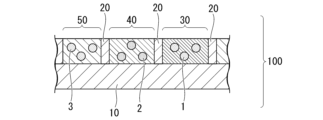
- FIG. 1 is a schematic cross-sectional view of an example of a color filter comprising a cured product of the present invention.
- (meth)acrylic means "either one or both of acrylic and methacrylic".
- total solid content refers to all components in the photosensitive resin composition other than the solvent. Even if a component other than the solvent is liquid at room temperature, that component is not included in the solvent but is included in the total solid content.
- a numerical range expressed using "to” means a range that includes the numerical values before and after "to” as the lower and upper limits.
- (co)polymer is intended to include both homopolymers and copolymers, and the terms "(acid) anhydride” and “(anhydride)...acid” are intended to include both acids and their anhydrides.
- the weight average molecular weight means the weight average molecular weight (Mw) calculated as polystyrene by gel permeation chromatography (GPC).
- the acid value means the acid value calculated based on the effective solid content unless otherwise specified, and is calculated by neutralization titration.
- (b) polymer” and “polymer component” refer to resin components other than the (a) resin particles and dispersant contained in the photosensitive resin composition.
- the photosensitive resin composition according to the first aspect of the present invention contains (a) resin particles, a polymer (b11) having a repeating unit (I) represented by the formula (I) described below, and (c) a photopolymerization initiator. If necessary, it may further contain other components, such as a polymer component other than the polymer (b11), (d) a photopolymerizable compound, (e) a polymerization inhibitor, (f) an ultraviolet absorber, (g) a dispersant, a chain transfer agent, and a solvent.
- a polymer component other than the polymer (b11) may further contain other components, such as a polymer component other than the polymer (b11), (d) a photopolymerizable compound, (e) a polymerization inhibitor, (f) an ultraviolet absorber, (g) a dispersant, a chain transfer agent, and a solvent.
- the photosensitive resin composition according to the second aspect of the present invention contains (a) resin particles, a polymer (b12) that satisfies the formula (X) described below, and (c) a photopolymerization initiator. If necessary, it may further contain other components, such as a polymer component other than the polymer (b12), (d) a photopolymerizable compound, (e) a polymerization inhibitor, (f) an ultraviolet absorber, (g) a dispersant, a chain transfer agent, and a solvent.
- the photosensitive resin composition of the present invention refers to both the photosensitive resin composition according to the first embodiment and the photosensitive resin composition according to the second embodiment.
- Photosensitive resin composition [1] Components and composition of photosensitive resin composition The components constituting the photosensitive resin composition of the present invention and their composition will be described in order.
- the photosensitive resin composition of the present invention contains (a) resin particles.
- the resin particles refer to particles containing a resin as a main component.
- the main component is the component that occupies the largest amount by mass among the components that constitute the particles, and is, for example, a component that occupies 50 mass% or more, preferably 80 mass% or more, and more preferably 90 mass% or more of the particles. Also, it is usually 100 mass% or less. For example, it may be 50 to 100 mass%, 80 to 100 mass%, or 90 to 100 mass%.
- the (a) resin particles may be in a particulate or non-particulate shape. From the viewpoint of improving dispersion stability and light transmittance, the (a) resin particles are preferably in a particulate shape. Examples of the particle shape include spherical, hollow, porous, rod-like, plate-like, fibrous, and amorphous shapes, but spherical is preferred.
- components constituting the resin particles include polystyrene, polyvinylidene chloride, polyimide, polyethylene terephthalate, polysulfone, phenolic resin, melamine resin, benzoguanamine resin, styrene resin, (meth)acrylic resin, polycarbonate, phenolic resin, polyethylene, polyester, urethane resin, epoxy resin, polyvinyl chloride, polyamide, and silicone resin. From the viewpoints of high heat resistance and ease of production of resin particles, melamine resin, benzoguanamine resin, and styrene resin are preferred.
- the component constituting the (a) resin particles preferably contains at least one of a melamine resin, a benzoguanamine resin, and a styrene resin, more preferably contains at least one of a melamine resin and a benzoguanamine resin, and particularly preferably is a resin particle having a melamine resin or a benzoguanamine resin as a main component.
- the melamine resin is preferably a melamine-formaldehyde condensate.
- resin particles containing melamine resin examples include Eposter S6 and Eposter S12 (trade names) manufactured by Nippon Shokubai Co., Ltd., and Optobeads 2000M and Optobeads 3500M (trade names) manufactured by Nissan Chemical Industries, Ltd.
- the benzoguanamine resin is preferably a benzoguanamine-formaldehyde condensate.
- An example of the resin particles containing the benzoguanamine resin is Eposter MS (trade name) manufactured by Nippon Shokubai Co., Ltd.
- the styrene resin is a polymerized styrene monomer alone or together with other monomers.
- styrene monomer examples include styrene, ⁇ -methylstyrene, paramethylstyrene, and divinylbenzene, with styrene being preferred from the viewpoint of increasing the refractive index.
- Examples of other monomers polymerized together with the styrene monomer include butadiene, acrylonitrile, methyl (meth)acrylate, ethyl (meth)acrylate, n-propyl (meth)acrylate, n-butyl (meth)acrylate, tert-butyl (meth)acrylate, glycidyl (meth)acrylate, 2-ethylhexyl (meth)acrylate, and cyclohexyl (meth)acrylate, with the (meth)acrylic acid ester being preferred from the viewpoint of ease of controlling the elastic modulus.
- the (a) resin particles may be used alone or in combination of two or more kinds.
- the average primary particle size of the (a) resin particles is preferably 0.1 ⁇ m or more, more preferably 0.2 ⁇ m or more, even more preferably 0.4 ⁇ m or more, even more preferably more than 0.5 ⁇ m, even more preferably 0.6 ⁇ m or more, particularly preferably 0.8 ⁇ m or more, and especially preferably 1.2 ⁇ m or more. Also, it is preferably 5.0 ⁇ m or less, more preferably 4.0 ⁇ m or less, even more preferably 3.0 ⁇ m or less, even more preferably 2.0 ⁇ m or less, and particularly preferably 1.8 ⁇ m or less. When the average primary particle size is the upper limit or less, the light transmittance and storage stability tend to be high.
- the light scattering property tends to be high.
- the upper and lower limits can be combined in any combination. For example, 0.1 to 5.0 ⁇ m is preferable, 0.2 to 4.0 ⁇ m is more preferable, 0.4 to 3.0 ⁇ m is even more preferable, 0.6 to 2.0 ⁇ m is still more preferable, 0.8 to 1.8 ⁇ m is particularly preferable, and 1.2 to 1.8 ⁇ m is especially preferable.
- the average primary particle diameter of (a) resin particles is measured by a method of directly measuring the size of the primary particles from the electron microscope photograph using a transmission electron microscope (TEM) or a scanning electron microscope (SEM). Specifically, the primary particle diameter of each particle is calculated as a circle equivalent diameter. Measurements are performed by imaging an area of 10 to 100 ⁇ m square and performing measurements on all particles within the area. Different areas are imaged several times, and the particle diameters of a total of 50 to 1000 primary particles are measured, and the average primary particle diameter is obtained by taking the number average.
- the primary particle diameter can be measured, for example, on the resin particles themselves, their dispersion, and the cured film of the photosensitive resin composition. When preparing a measurement sample, the resin particles (a) must be uniformly present in the sample.
- a dispersion the dispersion immediately after dispersion is used, and the measurement is performed after volatilizing the solvent.
- a cured film a cured film is prepared using a photosensitive resin composition in which particles are uniformly dispersed, cut in the thickness direction of the film, and the cross section is observed to perform the measurement.
- the average particle size of the dispersed particles of (a) resin particles can be measured using a dynamic light scattering method or a laser diffraction method.
- the average particle size of the dispersed particles of (a) resin particles is not particularly limited, but is preferably 0.1 ⁇ m or more, more preferably 0.2 ⁇ m or more, even more preferably 0.4 ⁇ m or more, even more preferably 0.6 ⁇ m or more, particularly preferably 0.8 ⁇ m or more, and especially preferably 1.2 ⁇ m or more. Also, it is preferably 5.0 ⁇ m or less, more preferably 4.0 ⁇ m or less, even more preferably 3.0 ⁇ m or less, even more preferably 2.0 ⁇ m or less, and particularly preferably 1.8 ⁇ m or less.
- the storage stability tends to be high. If it is the lower limit or more, the light scattering property tends to be high.
- the upper and lower limits can be combined in any combination. For example, 0.1 to 5.0 ⁇ m is preferable, 0.2 to 4.0 ⁇ m is more preferable, 0.4 to 3.0 ⁇ m is even more preferable, 0.6 to 2.0 ⁇ m is still more preferable, 0.8 to 1.8 ⁇ m is particularly preferable, and 1.2 to 1.8 ⁇ m is especially preferable.
- the refractive index of the (a) resin particles is preferably 1.55 or more, more preferably 1.58 or more, even more preferably 1.60 or more, even more preferably 1.63 or more, particularly preferably 1.64 or more, and especially preferably 1.65 or more. Also, it is preferably 2.00 or less, more preferably 1.90 or less, even more preferably 1.80 or less, and even more preferably 1.70 or less.
- the refractive index of the (a) resin particles is below the upper limit, the light transmittance tends to be high. When it is above the lower limit, the light scattering tends to be high.
- the upper and lower limits can be combined in any combination.
- the refractive index of the resin particles (a) is measured by, for example, the Becke line method or the liquid immersion method. The refractive index of the resin particles (a) is evaluated for light having a wavelength of 400 to 650 nm.
- other particles than the resin particles (a) may be used in combination with the resin particles (a) within a range that does not impair the effects of the present invention.
- the type of other particles is not particularly limited, and particles mainly composed of an organic pigment other than resin, inorganic particles, and luminescent nanocrystalline particles may be used in combination.
- the organic pigment is not particularly limited, but examples thereof include azo-based, phthalocyanine-based, quinacridone-based, benzimidazolone-based, isoindolinone-based, dioxazine-based, indanthrene-based, and perylene-based pigments.
- examples of inorganic particles include particles mainly composed of inorganic pigments and metal oxides.
- inorganic pigments include carbon black, acetylene black, lamp black, bone black, graphite, iron black, titanium black, etc.
- metal oxides include silicon dioxide, titanium oxide, zirconium oxide, aluminum oxide, and hafnium oxide.
- particles other than (a) resin particles it is preferable to use inorganic pigments or particles mainly composed of metal oxides from the viewpoint of durability.
- particles mainly composed of metal oxides are preferable because they have high light transmittance.
- particles containing an organic pigment it is preferable to use particles containing an organic pigment as a main component.
- the content of the (a) resin particles is preferably 80% by mass or less, more preferably 70% by mass or less, even more preferably 60% by mass or less, even more preferably 50% by mass or less, and particularly preferably 40% by mass or less, based on the total solid content of the photosensitive resin composition. Also, it is preferably 1% by mass or more, more preferably 5% by mass or more, even more preferably 10% by mass or more, and particularly preferably 14% by mass or more. The upper and lower limits can be arbitrarily combined.
- 1 to 80% by mass is preferable, 5 to 70% by mass is more preferable, 10 to 60% by mass is even more preferable, 14 to 50% by mass is even more preferable, and 14 to 40% by mass is particularly preferable.
- the lower limit By making it equal to or more than the lower limit, light scattering tends to be high.
- the upper limit By making it equal to or less than the upper limit, light transmittance tends to be high.
- the photosensitive resin composition of the present invention has a total content of melamine resin, benzoguanamine resin, and styrene resin of preferably 80 mass% or less, more preferably 70 mass% or less, even more preferably 60 mass% or less, even more preferably 50 mass% or less, and particularly preferably 40 mass% or less, based on the total solid content of the photosensitive resin composition. Also, it is preferably 1 mass% or more, more preferably 5 mass% or more, even more preferably 10 mass% or more, and particularly preferably 14 mass% or more.
- the upper and lower limits can be arbitrarily combined.
- 1 to 80% by mass is preferable, 5 to 70% by mass is more preferable, 10 to 60% by mass is even more preferable, 14 to 50% by mass is even more preferable, and 14 to 40% by mass is particularly preferable.
- the lower limit By making it equal to or more than the lower limit, light scattering tends to be high.
- the upper limit By making it equal to or less than the upper limit, light transmittance tends to be high.
- the photosensitive resin composition of the present invention contains at least one polymer component.
- the photosensitive resin composition of the present invention contains a polymer (b11) having a repeating unit (I) represented by the formula (I) described below.
- Polymer (b11) has a repeating unit represented by the following general formula (I) (hereinafter, sometimes referred to as “repeating unit (I)").
- R 1 to R 4 each independently represent a hydrogen atom or a hydrocarbon group, n represents an integer of 0 to 2, and * represents a bond.
- the polymer (b11) has a repeating unit (I), which improves its affinity with the resin particles (a). In other words, it has a three-dimensionally bulky structure, and the polymer (b11) is present around the resin particles, which is thought to suppress aggregation between the resin particles and improve storage stability.
- R 1 to R 4 each independently represent a hydrogen atom or a hydrocarbon group, such as an alkyl group, an alkenyl group, an alkynyl group, an aromatic ring group, or an aralkyl group.
- the alkyl group may be linear, branched, or cyclic.
- the number of carbon atoms in the alkyl group is not particularly limited, but is usually 1 or more, preferably 3 or more, more preferably 6 or more, and preferably 15 or less, more preferably 8 or less.
- the upper and lower limits can be arbitrarily combined. For example, it may be 1 to 15, may be 3 to 15, or may be 6 to 8. By making it equal to or more than the lower limit, storage stability tends to be improved, and by making it equal to or less than the upper limit, developability tends to be improved.
- alkyl group examples include a methyl group, an ethyl group, an n-propyl group, an isopropyl group, an n-butyl group, an isobutyl group, a sec-butyl group, a tert-butyl group, a pentyl group, a neopentyl group, a hexyl group, a heptyl group, an octyl group, a nonyl group, a decyl group, an adamantyl group, a cyclopentyl group, a cyclohexyl group, and a cyclooctyl group.
- the number of carbon atoms in the alkenyl group is not particularly limited, but is usually 2 or more, preferably 3 or more, and preferably 10 or less, more preferably 8 or less.
- the upper and lower limits can be arbitrarily combined. For example, it may be 2 to 10, or 3 to 8. By making it equal to or more than the lower limit, storage stability tends to be improved, and by making it equal to or less than the upper limit, developability tends to be improved.
- Examples of the alkenyl group include a vinyl group, an allyl group, a butenyl group, and a pentenyl group.
- the number of carbon atoms in the alkynyl group is not particularly limited, but is usually 2 or more, preferably 3 or more, and preferably 10 or less, more preferably 8 or less.
- the upper and lower limits can be arbitrarily combined. For example, it may be 2 to 10, or 3 to 8. By making it equal to or more than the lower limit, storage stability tends to be improved, and by making it equal to or less than the upper limit, developability tends to be improved.
- Alkynyl groups include, for example, ethynyl groups.
- the aromatic ring group examples include an aromatic hydrocarbon ring group and an aromatic heterocyclic group.
- the number of carbon atoms in the aromatic ring group is not particularly limited, but is usually 4 or more, preferably 5 or more, more preferably 6 or more, and preferably 20 or less, more preferably 15 or less, and even more preferably 10 or less.
- the upper and lower limits can be arbitrarily combined. For example, it may be 4 to 20, 5 to 15, or 6 to 10. By making it equal to or more than the lower limit, storage stability tends to be improved, and by making it equal to or less than the upper limit, developability tends to be improved.
- Examples of the aromatic hydrocarbon ring group include a phenyl group, a naphthyl group, an anthracenyl group, a tolyl group, and a xylyl group.
- Examples of the aromatic heterocyclic group include a pyridyl group and a thiophenyl group.
- the number of carbon atoms in the aralkyl group is not particularly limited, but is usually 7 or more, and preferably 20 or less, more preferably 15 or less, even more preferably 13 or less, and still more preferably 10 or less.
- it may be 7 to 20, may be 7 to 15, may be 7 to 13, or may be 7 to 10.
- the aralkyl group include the above-mentioned alkyl groups in which one hydrogen atom is substituted with the above-mentioned aryl group.
- Examples of the aralkyl group include a benzyl group and a phenethyl group.
- R 1 to R 4 each independently represent a hydrogen atom or a hydrocarbon group, and R 1 and R 4 may be linked to form a cyclic structure, and similarly, R 2 and R 3 may be linked to form a cyclic structure.
- any one of R 1 to R 4 is a hydrogen atom, and it is more preferable that all of R 1 to R 4 are hydrogen atoms.
- n represents an integer of 0 to 2, but from the viewpoint of developability, it is preferable that n is 0.
- repeating unit (I) examples include repeating units represented by the following general formulas (I-1) to (I-3). Of these, the repeating unit represented by the following general formula (I-1) is preferred from the viewpoint of adhesion.
- the polymer (b11) preferably has an ethylenically unsaturated double bond in a side chain. From the viewpoint of alkali developability, it preferably has a carboxy group or a hydroxyl group, and more preferably has a carboxy group.
- the polymer (b11) preferably has a repeating unit (II) having a carboxy group (hereinafter, sometimes referred to as "repeating unit (II)").
- the structure of the repeating unit (II) having a carboxy group in the polymer (b11) is not particularly limited, and examples thereof include repeating units derived from an unsaturated group-containing carboxylic acid and an unsaturated group-containing carboxylic acid anhydride.
- the polymer (b11) has a repeating unit represented by the following general formula (II-1) (hereinafter, sometimes referred to as "repeating unit (II-1)").
- R5 represents an organic group. * represents a bond.
- the organic group may be an alkyl group which may have a substituent, or an aryl group which may have a substituent, and preferably has 1 to 18 carbon atoms.
- R5 is an alkyl group
- the number of carbon atoms is not particularly limited, but is usually 1 or more, preferably 2 or more, more preferably 4 or more, and is preferably 9 or less, more preferably 7 or less.
- the above upper and lower limits can be combined arbitrarily. For example, it may be 1 to 9, it may be 2 to 9, or it may be 4 to 7.
- alkyl group examples include a methyl group, an ethyl group, an n-propyl group, an isopropyl group, an n-butyl group, an isobutyl group, a sec-butyl group, a tert-butyl group, a pentyl group, a neopentyl group, a hexyl group, a heptyl group, an octyl group, a nonyl group, a decyl group, an adamantyl group, a cyclopentyl group, a cyclohexyl group, and a cyclooctyl group.
- R5 is an aryl group
- the number of carbon atoms is not particularly limited, but is preferably 6 or more, and is preferably 20 or less, more preferably 15 or less, and even more preferably 10 or less.
- it may be 6 to 20, 6 to 15, or 6 to 10.
- the aryl group include a phenyl group, a naphthyl group, an anthracenyl group, a tolyl group, and a xylyl group.
- alkyl and aryl groups may have include a hydroxyl group, a (meth)acryloyl group, and a (meth)acryloyloxy group.
- the polymer (b11) preferably has an ethylenically unsaturated double bond in the side chain. Having an ethylenically unsaturated double bond in the side chain tends to improve adhesion to the substrate, chemical resistance, and heat resistance.
- R 5 is more preferably represented by the following formula (II-2).
- R6 represents a hydrogen atom or a methyl group
- e represents an integer of 1 to 5
- * represents a bond.
- e represents an integer of 1 to 5, but from the viewpoint of adhesion, e is preferably an integer of 1 to 3, and more preferably an integer of 1 to 2.
- formula (II-2) is represented by the following general formula (II-2-1).
- R 6 and e are as defined above, and * represents a bond.
- repeating unit (II-1) any of the repeating units represented by the following general formulae (II-3) to (II-6) is more preferred, and the repeating unit represented by the following general formula (II-3) or formula (II-4) is particularly preferred.
- the polymer (b11) may have a repeating unit other than the repeating unit (I) and the repeating unit (II).
- Examples of other repeating units include repeating units represented by the following general formulas (III-1) to (III-5) (hereinafter, sometimes referred to as “repeating units (III-1) to (III-5)”), but are not limited thereto.
- R 5 has the same meaning as in formula (II-1), and in formulas (III-1) and (III-2), R 7 each independently represents a hydrogen atom or a methyl group. * represents a bond.
- R8 represents an alkyl group which may have a substituent. * represents a bond.
- alkyl group which may have a substituent in R 8 include a methyl group, an ethyl group, a propyl group, and a benzyl group.
- polymer (b11) preferably has repeating units (I), (II-1) and (III-1), more preferably has repeating units (I), (II-2-1) and (III-1), even more preferably has repeating units (I), (II-1), (III-1) and (III-4), and even more preferably has repeating units (I), (II-2-1), (III-1) and (III-4).
- the method for producing the polymer (b11) is not particularly limited, and a conventionally known method can be used.
- the polymer (b11) can be produced by the following (step i) to (step iii).
- the following ring-opened precursor polymer obtained in (step ii) can also be used as the polymer (b11).
- Step i A step of preparing a precursor polymer having a repeating unit represented by formula (I) and a repeating unit represented by formula (III-4).
- Step ii A step of reacting the precursor polymer prepared in (Step i) with an alcohol or water to open the anhydride skeleton in formula (III-4) and generate a carboxy group or an ester thereof in the precursor polymer to obtain a ring-opened precursor polymer.
- an alcohol it is more preferable to use a compound represented by the formula (II-2-OH) from the viewpoint of adhesion.
- R 6 and e have the same meanings as in formula (II-2).
- Step iii) optionally, a step of reacting the ring-opened precursor polymer obtained in (Step ii) with a compound having an epoxy group and an ethylenically unsaturated double bond.
- a compound having an epoxy group and an ethylenically unsaturated double bond is glycidyl methacrylate.
- Methods for producing polymer (b11) include, for example, the methods described in International Publication No. WO 2016/194619 and International Publication No. WO 2017/154439.
- the content of repeating unit (I) in polymer (b11) is not particularly limited, but is preferably 10% by mass or more, more preferably 20% by mass or more, even more preferably 25% by mass or more, and is preferably 50% by mass or less, more preferably 40% by mass or less, and even more preferably 30% by mass or less in polymer (b11).
- the upper and lower limits can be combined in any combination. For example, it may be 10 to 50% by mass, 20 to 40% by mass, or 25 to 30% by mass.
- the content of repeating unit (I) in polymer (b11) is not particularly limited, but is preferably 20 mol% or more, more preferably 30 mol% or more, even more preferably 40 mol% or more, and is preferably 80 mol% or less, more preferably 70 mol% or less, and even more preferably 60 mol% or less, of all repeating units in polymer (b11).
- the upper and lower limits can be combined in any combination. For example, it may be 20 to 80 mol%, 30 to 70 mol%, or 40 to 60 mol%.
- the polymer (b11) has the repeating unit (II-1)
- its content is not particularly limited, but is preferably 5 mol% or more, more preferably 10 mol% or more, even more preferably 15 mol% or more, and is preferably 40 mol% or less, more preferably 30 mol% or less, even more preferably 20 mol% or less, in the total repeating units of the polymer (b11).
- the upper and lower limits can be combined in any combination. For example, it may be 5 to 40 mol%, 10 to 30 mol%, or 15 to 20 mol%.
- the polymer (b11) has the repeating unit (III-1)
- its content is not particularly limited, but is preferably 5 mol% or more, more preferably 10 mol% or more, even more preferably 15 mol% or more, and is preferably 40 mol% or less, more preferably 30 mol% or less, and even more preferably 20 mol% or less, in the total repeating units of the polymer (b11).
- the lower limit there is a tendency for adhesion to be improved
- the upper limit there is a tendency for developability to be improved.
- the upper and lower limits above can be combined in any combination. For example, it may be 5 to 40 mol%, 10 to 30 mol%, or 15 to 20 mol%.
- polymer (b11) has repeating unit (III-4), its content is not particularly limited, but is preferably 5 mol% or more, more preferably 10 mol% or more, even more preferably 15 mol% or more, and is preferably 40 mol% or less, more preferably 30 mol% or less, and even more preferably 20 mol% or less, in the total repeating units of polymer (b11).
- the lower limit By making it equal to or greater than the lower limit, synthesis tends to be easier, and by making it equal to or less than the upper limit, adhesion and developability tend to be improved.
- the upper and lower limits can be combined in any combination. For example, it may be 5 to 40 mol%, 10 to 30 mol%, or 15 to 20 mol%.
- the content ratio of the repeating unit (II-1) to the total content ratio of the repeating unit (II-1), the repeating unit (III-1) and the repeating unit (III-4) in the polymer (b11) is preferably 10 mol% or more, more preferably 20 mol% or more, even more preferably 30 mol% or more, and also preferably 90 mol% or less, more preferably 70 mol% or less, even more preferably 50 mol% or less.
- the upper and lower limits can be combined in any combination. For example, it may be 10 to 90 mol%, may be 20 to 70 mol%, or may be 30 to 50 mol%.
- the acid value of the polymer (b11) is not particularly limited, but is preferably 10 mgKOH/g or more, more preferably 30 mgKOH/g or more, even more preferably 50 mgKOH/g or more, and is preferably 200 mgKOH/g or less, more preferably 150 mgKOH/g or less, even more preferably 100 mgKOH/g or less, and particularly preferably 80 mgKOH/g or less.
- the upper and lower limits can be arbitrarily combined. For example, it may be 10 to 200 mgKOH/g, 10 to 150 mgKOH/g, 30 to 100 mgKOH/g, or 50 to 80 mgKOH/g.
- the weight average molecular weight (Mw) of the polymer (b11) is not particularly limited, but is preferably 2000 or more, more preferably 3000 or more, even more preferably 4000 or more, even more preferably 5000 or more, particularly preferably 6000 or more, and is preferably 35000 or less, more preferably 20000 or less, even more preferably 15000 or less, and particularly preferably 10000 or less.
- Mw weight average molecular weight
- the upper and lower limits above can be combined in any combination. For example, it may be 2000 to 35000, 3000 to 35000, 4000 to 20000, 5000 to 15000, or 6000 to 10000.
- the double bond equivalent of the polymer (b11) is not particularly limited, but is preferably 200 g/mol or more, more preferably 300 g/mol or more, even more preferably 400 g/mol or more, particularly preferably 500 g/mol or more, and is preferably 800 g/mol or less, more preferably 700 g/mol or less, and even more preferably 600 g/mol or less.
- the upper and lower limits can be arbitrarily combined.
- the content ratio of the polymer (b11) in the polymer components contained in the photosensitive resin composition is not particularly limited, but is preferably 10 mass% or more, more preferably 20 mass% or more, even more preferably 30 mass% or more, even more preferably 40 mass% or more, particularly preferably 50 mass% or more, and is preferably 100 mass% or less, more preferably 90 mass% or less, even more preferably 80 mass% or less, and particularly preferably 70 mass% or less, based on the total mass of the polymer (b11) and the epoxy (meth)acrylate resin (b2) described later (a resin other than the polymer (b11) and excluding the resin particles and dispersant (a)) (note that the photosensitive resin composition may or may not contain the epoxy (meth)acrylate resin (b2)).
- the upper and lower limits can be combined in any combination. For example, 10 to 100% by mass is preferable, 20 to 90% by mass is more preferable, 30 to 80% by mass is even more preferable, 40 to 80% by mass is even more preferable, and 50 to 70% by mass is particularly preferable.
- 10 to 100% by mass is preferable, 20 to 90% by mass is more preferable, 30 to 80% by mass is even more preferable, 40 to 80% by mass is even more preferable, and 50 to 70% by mass is particularly preferable.
- By making it equal to or more than the lower limit developability tends to be improved.
- adhesion tends to be improved.
- the content ratio of the polymer (b11) in the polymer component contained in the photosensitive resin composition is not particularly limited, but is preferably 10 mass% or more, more preferably 20 mass% or more, even more preferably 30 mass% or more, even more preferably 40 mass% or more, and particularly preferably 50 mass% or more, and is preferably 100 mass% or less, more preferably 90 mass% or less, even more preferably 80 mass% or less, and particularly preferably 70 mass% or less, based on the total mass of the polymer component.
- the upper and lower limits can be combined in any combination.
- 10 to 100% by mass is preferable, 20 to 90% by mass is more preferable, 30 to 80% by mass is even more preferable, 40 to 80% by mass is even more preferable, and 50 to 70% by mass is particularly preferable.
- the lower limit developability tends to be improved.
- adhesion tends to be improved.
- the content ratio of polymer (b11) relative to 100 parts by mass of the (a) resin particles is preferably 11 parts by mass or more, more preferably 30 parts by mass or more, even more preferably 50 parts by mass or more, particularly preferably 70 parts by mass or more, and particularly preferably 100 parts by mass or more, and is preferably 900 parts by mass or less, more preferably 600 parts by mass or less, even more preferably 500 parts by mass or less, and even more preferably 300 parts by mass or less.
- the amount may be 11 to 900 parts by mass, 30 to 900 parts by mass, 50 to 600 parts by mass, 70 to 500 parts by mass, or 100 to 300 parts by mass.
- the photosensitive resin composition of the present invention contains a polymer (b12) that satisfies the formula (X) described below.
- ⁇ MAX is the highest infinite dilution activity coefficient ⁇ of the repeating units constituting the polymer (b12);
- ⁇ MIN is the infinite dilution activity coefficient ⁇ of the repeating units constituting the polymer (b12). This is the lowest value among the coefficients ⁇ .
- the infinite dilution activity coefficient ⁇ can be calculated using the software “COSMOquick” (manufactured by Dassault Systemes). Specifically, the intermolecular interaction energy between the resin particles and the polymer in the solution was calculated from the surface charge density obtained for the repeating unit structure constituting the target polymer using the database "COSMO Fragment Data Base” (manufactured by Dassault Systèmes), which previously determined the three-dimensional structure and surface charge density of molecules in the solution for various molecular structures by molecular orbital calculation, and the chemical potential of the molecular surface segment was obtained. Furthermore, the infinite dilution activity coefficient was calculated from the chemical potential. Tables 1 and 2 show examples of infinite dilution activity coefficients of melamine resin particles having positively charged particle surfaces and repeating units constituting the polymer.
- ⁇ MAX / ⁇ MIN is preferably 1.0 ⁇ 10 4 or more, more preferably 2.0 ⁇ 10 4 or more, even more preferably 3.0 ⁇ 10 4 or more, even more preferably 4.0 ⁇ 10 4 or more, especially preferably 5.0 ⁇ 10 4 or more, particularly preferably 6.0 ⁇ 10 4 or more, and especially preferably 7.0 ⁇ 10 4 or more.
- the polymer (b12) preferably has an ethylenically unsaturated double bond in a side chain. From the viewpoint of alkali developability, it preferably has a carboxy group or a hydroxyl group, and more preferably has a carboxy group.
- the photosensitive resin composition may further contain "other polymers (b111)” other than the polymer (b11).
- the polymer (b11) and the other polymers (b111) are collectively referred to as the "polymer component" or "polymer (b)".
- the photosensitive resin composition according to the second aspect of the present invention the photosensitive resin composition may further contain "other polymers (b121)” other than the polymer (b12).
- the polymer (b12) and the other polymer (b121) are collectively referred to as the "polymer component" or "(b) polymer”.
- the photosensitive resin composition of the present invention is preferably provided with the other polymer (b111) or the other polymer (b121) since it can provide further properties, including improved developability, while maintaining the storage stability described above.
- Examples of the other polymer (b111) in the photosensitive resin composition of the first aspect of the present invention include, from the viewpoint of development solubility, epoxy (meth)acrylate resin (b2) (excluding (a) resin particles and dispersant) (hereinafter, may be referred to as "epoxy (meth)acrylate resin (b2)") other than the polymer (b11).
- examples of the other polymer (b11) include acrylic copolymer resin (b3) (excluding (a) resin particles and dispersant) (hereinafter, may be referred to as "acrylic copolymer resin (b3)") other than the polymer (b11) and the epoxy (meth)acrylate resin (b2).
- the other polymer (b121) in the photosensitive resin composition of the second aspect of the present invention includes a polymer other than the polymer (b12) (excluding the (a) resin particles and dispersant).
- Epoxy (meth)acrylate resin (b2) is a resin obtained by adding an ethylenically unsaturated monocarboxylic acid or ester compound to an epoxy resin, optionally reacting with an isocyanate group-containing compound, and then further reacting with a polybasic acid or an anhydride thereof. Note that the polymer (b11) is not included.
- a compound in which a polyhydric alcohol is added at the same time as the polybasic acid anhydride is added may also be mentioned.
- the epoxy (meth)acrylate resin does not substantially have an epoxy group in terms of its chemical structure, and is not limited to "(meth)acrylate", but is named in this manner according to convention since the raw material is an epoxy compound (epoxy resin) and "(meth)acrylate” is a representative example.
- the epoxy (meth)acrylate resin (b2) one having an aromatic ring in the main chain is more preferably used from the viewpoint of adhesion.
- the epoxy resin includes the raw material compound before the resin is formed by thermal curing, and the epoxy resin can be appropriately selected from known epoxy resins.
- the epoxy resin can be a compound obtained by reacting a phenolic compound with epihalohydrin.
- the phenolic compound is preferably a compound having a divalent or more valent phenolic hydroxyl group, and may be a monomer or a polymer.
- Specific examples include bisphenol A epoxy resin, bisphenol F epoxy resin, bisphenol S epoxy resin, phenol novolac epoxy resin, cresol novolac epoxy resin, biphenyl novolac epoxy resin, triglycidyl isocyanurate resin, polymerized epoxy resin of phenol and dicyclopentadiene, dihydroxylfluorene type epoxy resin, dihydroxylalkyleneoxylfluorene type epoxy resin, diglycidyl ether of 9,9-bis(4'-hydroxyphenyl)fluorene, diglycidyl ether of 1,1-bis(4'-hydroxyphenyl)adamantane, and adamantyl group-containing phenol epoxy resin.
- those having an aromatic ring in the main chain can be suitably used.
- epoxy resins include bisphenol A type epoxy resins (e.g., Mitsubishi Chemical Corporation's "jER (registered trademark, the same applies below) 828,""jER1001,”"jER1002,” and “jER1004,” and Nippon Kayaku Co., Ltd.'s “NER-1302” (epoxy equivalent: 323, softening point: 76° C.), etc.), bisphenol F type resins (e.g., Mitsubishi Chemical Corporation's “jER807,””jER4004P,””jER4005P,” and “jER4007P,” and Nippon Kayaku Co., Ltd.'s “NER-1302” (epoxy equivalent: 323, softening point: 76° C.), etc.), "NER-7406” (epoxy equivalent: 350, softening point: 66°C), etc.), bisphenol S type epoxy resin, biphenyl glycidyl ether (e.g., "jERYX-4000” manufactured by Mitsubishi Chemical Corporation), phenol novo
- Examples of ethylenically unsaturated monocarboxylic acids include (meth)acrylic acid, crotonic acid, maleic acid, fumaric acid, itaconic acid, citraconic acid, and the like, as well as pentaerythritol tri(meth)acrylate succinic anhydride adduct, pentaerythritol tri(meth)acrylate tetrahydrophthalic anhydride adduct, dipentaerythritol penta(meth)acrylate succinic anhydride adduct, dipentaerythritol penta(meth)acrylate phthalic anhydride adduct, dipentaerythritol penta(meth)acrylate tetrahydrophthalic anhydride adduct, and reaction products of (meth)acrylic acid and ⁇ -caprolactone. From the viewpoint of sensitivity, (meth)acrylic acid is preferred.
- polybasic acids examples include succinic acid, maleic acid, itaconic acid, phthalic acid, tetrahydrophthalic acid, 3-methyltetrahydrophthalic acid, 4-methyltetrahydrophthalic acid, 3-ethyltetrahydrophthalic acid, 4-ethyltetrahydrophthalic acid, hexahydrophthalic acid, 3-methylhexahydrophthalic acid, 4-methylhexahydrophthalic acid, 3-ethylhexahydrophthalic acid, 4-ethylhexahydrophthalic acid, trimellitic acid, pyromellitic acid, benzophenonetetracarboxylic acid, biphenyltetracarboxylic acid, and anhydrides thereof.
- succinic anhydride succinic anhydride, maleic anhydride, tetrahydrophthalic anhydride, and hexahydrophthalic anhydride are preferred, and succinic anhydride and tetrahydrophthalic anhydride are more preferred.
- the molecular weight of the epoxy (meth)acrylate resin (b2) can be increased, branching can be introduced into the molecule, and the molecular weight and viscosity tend to be well balanced.
- the introduction rate of acid groups into the molecule can be increased, and the sensitivity, adhesion, and other properties tend to be well balanced.
- the polyhydric alcohol is preferably one or more polyhydric alcohols selected from, for example, trimethylolpropane, ditrimethylolpropane, pentaerythritol, dipentaerythritol, trimethylolethane, and 1,2,3-propanetriol.
- examples of the epoxy (meth)acrylate resin (b2) include the resins described in Korean Patent Publication No. 10-2013-0022955.
- the acid value of the epoxy (meth)acrylate resin (b2) is not particularly limited, but is preferably 10 mgKOH/g or more, more preferably 30 mgKOH/g or more, even more preferably 50 mgKOH/g or more, even more preferably 70 mgKOH/g or more, and particularly preferably 80 mgKOH/g or more, and is preferably 200 mgKOH/g or less, more preferably 180 mgKOH/g or less, even more preferably 150 mgKOH/g or less, even more preferably 120 mgKOH/g or less, and particularly preferably 110 mgKOH/g or less.
- the upper and lower limits can be combined in any combination.
- 10 to 200 mgKOH/g is preferable, 30 to 180 mgKOH/g is more preferable, 50 to 150 mgKOH/g is even more preferable, 70 to 120 mgKOH/g is even more preferable, and 80 to 110 mgKOH/g is particularly preferable.
- the lower limit or more developability tends to be improved.
- the upper limit or less film strength tends to be improved.
- the weight average molecular weight (Mw) of the epoxy (meth)acrylate resin (b2) is not particularly limited, but is preferably 1,000 or more, more preferably 2,000 or more, even more preferably 3,000 or more, even more preferably 4,000 or more, and particularly preferably 5,000 or more, and is preferably 30,000 or less, more preferably 20,000 or less, even more preferably 15,000 or less, even more preferably 10,000 or less, and particularly preferably 8,000 or less.
- the upper and lower limits can be combined in any combination. For example, 1000 to 30000 is preferable, 2000 to 20000 is more preferable, 3000 to 15000 is even more preferable, 4000 to 10000 is even more preferable, and 5000 to 8000 is particularly preferable.
- the double bond equivalent of the epoxy (meth)acrylate resin (b2) is not particularly limited, but is preferably 700 g/mol or less, more preferably 600 g/mol or less, even more preferably 500 g/mol or less, particularly preferably 400 g/mol or less, and is preferably 100 g/mol or more, more preferably 200 g/mol or more, even more preferably 250 g/mol or more, particularly preferably 300 g/mol or more.
- the upper and lower limits can be combined in any combination. For example, 100 to 700 g/mol is preferable, 200 to 600 g/mol is more preferable, 250 to 500 g/mol is even more preferable, and 300 to 400 g/mol is particularly preferable.
- the double bond equivalent of the epoxy (meth)acrylate resin (b2) can be calculated in the same manner as the double bond equivalent of the polymer (b11) in the photosensitive resin composition of the first aspect of the present invention.
- the content ratio thereof is not particularly limited, but when the total amount of the polymer components in the photosensitive resin composition of the present invention is taken as 100 mass%, the content ratio is preferably 10 mass% or more, more preferably 20 mass% or more, even more preferably 30 mass% or more, even more preferably 35 mass% or more, particularly preferably 40 mass% or more, most preferably 50 mass% or more, and is preferably 90 mass% or less, more preferably 70 mass% or less, and even more preferably 60 mass% or less.
- the upper and lower limits can be combined in any combination.
- 10 to 90% by mass is preferable, 20 to 90% by mass is more preferable, 30 to 70% by mass is even more preferable, 35 to 70% by mass is even more preferable, 40 to 60% by mass is even more preferable, and 50 to 60% by mass is particularly preferable.
- the lower limit outgas resistance tends to be improved.
- the upper limit transparency tends to be improved.
- the epoxy (meth)acrylate resin (b2) can be synthesized by a conventional method. Specifically, a method can be used in which the epoxy resin is dissolved in an organic solvent, and in the presence of a catalyst and a thermal polymerization inhibitor, an acid or ester compound having an ethylenically unsaturated bond is added to cause an addition reaction, and a polybasic acid or anhydride thereof is further added to continue the reaction.
- a method described in Japanese Patent No. 3938375 and Japanese Patent No. 5169422 can be mentioned.
- the organic solvent used in the reaction may be, for example, one or more of organic solvents such as methyl ethyl ketone, cyclohexanone, diethylene glycol ethyl ether acetate, and propylene glycol monomethyl ether acetate.
- organic solvents such as methyl ethyl ketone, cyclohexanone, diethylene glycol ethyl ether acetate, and propylene glycol monomethyl ether acetate.
- the catalyst examples include one or more of tertiary amines such as triethylamine, benzyldimethylamine, and tribenzylamine; quaternary ammonium salts such as tetramethylammonium chloride, methyltriethylammonium chloride, tetraethylammonium chloride, tetrabutylammonium chloride, and trimethylbenzylammonium chloride; phosphorus compounds such as triphenylphosphine; and stibines such as triphenylstibine.
- the thermal polymerization inhibitor include one or more of hydroquinone, hydroquinone monomethyl ether, and methylhydroquinone.
- the amount of the acid or ester compound having an ethylenically unsaturated bond used is preferably 0.7 to 1.3 chemical equivalents, and more preferably 0.9 to 1.1 chemical equivalents, per 1 chemical equivalent of the epoxy group of the epoxy resin.
- the temperature during the addition reaction is preferably from 60 to 150°C, more preferably from 80 to 120°C.
- the amount of polybasic acid (anhydride) used is preferably 0.1 to 1.2 chemical equivalents, more preferably 0.2 to 1.1 chemical equivalents, per chemical equivalent of the hydroxyl group generated by the addition reaction.
- the acrylic copolymer resin (b3) is preferably an acrylic copolymer resin having an ethylenically unsaturated double bond in the side chain. It is not included in the polymer (b11) or the epoxy (meth)acrylate resin (b2). It is considered that the ethylenically unsaturated double bond in the side chain causes photocuring by exposure to form a stronger film, and the adhesion to the substrate is increased.
- the partial structure containing a side chain having an ethylenically unsaturated double bond that the acrylic copolymer resin (b3) has is not particularly limited, but from the viewpoint of the ease of radical dispersal associated with the flexibility of the film, it is preferable that the partial structure be represented by the following general formula (1):
- the acrylic copolymer resin (b3) has a carbonyl group, and is useful because it also acts as a dispersant due to dipole interaction with the resin particles.
- R a1 and R a2 each independently represent a hydrogen atom or a methyl group. * represents a bond.
- the partial structure represented by formula (1) is preferred from the viewpoints of sensitivity and alkaline developability.
- R a1 and R a2 each independently represent a hydrogen atom or a methyl group, and R x represents a hydrogen atom or a polybasic acid residue.
- the polybasic acid residue in formula (1') means a monovalent or divalent group obtained by removing one or two OH groups from a polybasic acid.
- the polybasic acid include one or more selected from maleic acid, succinic acid, itaconic acid, phthalic acid, tetrahydrophthalic acid, hexahydrophthalic acid, pyromellitic acid, trimellitic acid, benzophenonetetracarboxylic acid, methylhexahydrophthalic acid, endomethylenetetrahydrophthalic acid, chlorendic acid, methyltetrahydrophthalic acid, and biphenyltetracarboxylic acid.
- maleic acid succinic acid, itaconic acid, phthalic acid, tetrahydrophthalic acid, hexahydrophthalic acid, pyromellitic acid, trimellitic acid, and biphenyltetracarboxylic acid, and more preferred are tetrahydrophthalic acid and biphenyltetracarboxylic acid.
- the content ratio of the partial structure represented by formula (1) contained in the acrylic copolymer resin (b3) is not particularly limited, but is preferably 10 mol % or more, more preferably 30 mol % or more, even more preferably 50 mol % or more, still more preferably 60 mol % or more, particularly preferably 70 mol % or more, particularly preferably 80 mol % or more, and is preferably 99 mol % or less, more preferably 95 mol % or less, and even more preferably 90 mol % or less, based on the total number of moles of the structural units of the acrylic copolymer resin (b3).
- the upper and lower limits can be arbitrarily combined.
- it is preferably 10 to 99 mol%, more preferably 30 to 95 mol%, even more preferably 50 to 95 mol%, still more preferably 60 to 95 mol%, particularly preferably 70 to 95 mol%, and particularly preferably 80 to 90 mol%.
- the lower limit heat resistance tends to be improved.
- the upper limit developability tends to be improved.
- the acrylic copolymer resin (b3) has a partial structure represented by formula (1')
- its content is not particularly limited, but is preferably 10 mol% or more, more preferably 30 mol% or more, even more preferably 50 mol% or more, even more preferably 60 mol% or more, particularly preferably 70 mol% or more, particularly preferably 80 mol% or more, and is preferably 99 mol% or less, more preferably 95 mol% or less, and even more preferably 90 mol% or less, based on the total number of moles of the structural units of the acrylic copolymer resin (b3).
- the upper and lower limits can be arbitrarily combined.
- it is preferably 10 to 99 mol%, more preferably 30 to 95 mol%, even more preferably 50 to 95 mol%, still more preferably 60 to 95 mol%, particularly preferably 70 to 95 mol%, and particularly preferably 80 to 90 mol%.
- the lower limit heat resistance tends to be improved.
- the upper limit developability tends to be improved.
- the partial structure contained in the acrylic copolymer resin (b3) is not particularly limited. From the viewpoint of development adhesion, for example, the partial structure may be represented by the following general formula (2).
- R a3 represents a hydrogen atom or a methyl group
- R a4 represents an alkyl group which may have a substituent, an aromatic ring group which may have a substituent, or an alkenyl group which may have a substituent.
- R a4 represents an alkyl group which may have a substituent, an aromatic ring group which may have a substituent, or an alkenyl group which may have a substituent.
- the alkyl group in R a4 may be a linear, branched or cyclic alkyl group.
- the number of carbon atoms is preferably 1 or more, more preferably 3 or more, even more preferably 5 or more, and particularly preferably 8 or more, and is preferably 20 or less, more preferably 18 or less, even more preferably 16 or less, even more preferably 14 or less, and particularly preferably 12 or less.
- the upper and lower limits can be arbitrarily combined.
- 1 to 20 is preferable, 1 to 18 is more preferable, 3 to 16 is even more preferable, 5 to 14 is even more preferable, and 8 to 12 is particularly preferable.
- the value to be equal to or more than the lower limit the film strength tends to be high and the development adhesion tends to be improved.
- the value to be equal to or less than the upper limit the residue tends to be reduced.
- alkyl group examples include a methyl group, an ethyl group, a cyclohexyl group, a dicyclopentanyl group, and a dodecanyl group. From the viewpoint of developability, the dicyclopentanyl group and the dodecanyl group are preferred, and the dicyclopentanyl group is more preferred.
- Examples of the substituent that the alkyl group may have include a methoxy group, an ethoxy group, a chloro group, a bromo group, a fluoro group, a hydroxy group, an amino group, an epoxy group, an oligoethylene glycol group, a phenyl group, a carboxy group, an acryloyl group, and a methacryloyl group. From the viewpoint of developability, a hydroxy group and an oligoethylene glycol group are preferred.
- the aromatic ring group in R a4 includes a monovalent aromatic hydrocarbon ring group and a monovalent aromatic heterocyclic group.
- the number of carbon atoms is preferably 6 or more, and is preferably 24 or less, more preferably 22 or less, even more preferably 20 or less, and particularly preferably 18 or less.
- the upper and lower limits can be arbitrarily combined. For example, it is preferably 6 to 24, more preferably 6 to 22, even more preferably 6 to 20, and even more preferably 6 to 18. By setting it to the lower limit or more, the development adhesion tends to be improved. By setting it to the upper limit or less, the residue tends to be reduced.
- the aromatic hydrocarbon ring in the aromatic hydrocarbon ring group may be a single ring or a condensed ring, and examples thereof include a benzene ring, a naphthalene ring, an anthracene ring, a phenanthrene ring, a perylene ring, a tetracene ring, a pyrene ring, a benzpyrene ring, a chrysene ring, a triphenylene ring, an acenaphthene ring, a fluoranthene ring, and a fluorene ring.
- the aromatic heterocycle in the aromatic heterocycle group may be a single ring or a condensed ring, and examples thereof include furan ring, benzofuran ring, thiophene ring, benzothiophene ring, pyrrole ring, pyrazole ring, imidazole ring, oxadiazole ring, indole ring, carbazole ring, pyrroloimidazole ring, pyrrolopyrazole ring, pyrrolopyrrole ring, thienopyrrole ring, thienothiophene ring, furopyrrole ring, furofuran ring, thienofuran ring, benzisoxazole ring, benzisothiazole ring, benzimidazole ring, pyridine ring, pyrazine ring, pyridazine ring, pyrimidine ring, triazine ring, quinoline ring, isoquino
- Examples of the substituent that the aromatic ring group may have include a methyl group, an ethyl group, a propyl group, a methoxy group, an ethoxy group, a chloro group, a bromo group, a fluoro group, a hydroxy group, an amino group, an epoxy group, an oligoethylene glycol group, a phenyl group, and a carboxy group. From the viewpoint of developability, a hydroxy group and an oligoethylene glycol group are preferred.
- the alkenyl group in R a4 may be a linear, branched or cyclic alkenyl group having 2 or more carbon atoms, and preferably 22 or less, more preferably 20 or less, even more preferably 18 or less, even more preferably 16 or less, and particularly preferably 14 or less.
- the upper and lower limits can be arbitrarily combined. For example, it is preferably 2 to 22, more preferably 2 to 20, even more preferably 2 to 18, still more preferably 2 to 16, and particularly preferably 2 to 14.
- Examples of the substituent that the alkenyl group may have include a methoxy group, an ethoxy group, a chloro group, a bromo group, a fluoro group, a hydroxy group, an amino group, an epoxy group, an oligoethylene glycol group, a phenyl group, and a carboxy group. From the viewpoint of developability, the hydroxy group and the oligoethylene glycol group are preferred.
- R a4 is preferably an alkyl group or an alkenyl group, and more preferably an alkyl group.
- the acrylic copolymer resin (b3) has a partial structure represented by formula (2)
- its content is not particularly limited, but is preferably 1 mol % or more, more preferably 2 mol % or more, even more preferably 5 mol % or more, still more preferably 10 mol % or more, particularly preferably 20 mol % or more, and is preferably 70 mol % or less, more preferably 60 mol % or less, even more preferably 50 mol % or less, and even more preferably 40 mol % or less, based on the total number of moles of the structural units of the acrylic copolymer resin (b3).
- the upper and lower limits can be arbitrarily combined.
- it is preferably 1 to 70 mol%, more preferably 2 to 70 mol%, even more preferably 5 to 60 mol%, still more preferably 10 to 50 mol%, and particularly preferably 20 to 40 mol%.
- the development adhesion tends to be improved.
- the heat resistance tends to be improved.
- the acrylic copolymer resin (b3) may have a partial structure represented by the following general formula (3) as a partial structure from the viewpoints of heat resistance and film strength.
- R a5 represents a hydrogen atom or a methyl group
- R a6 represents an alkyl group which may have a substituent, an alkenyl group which may have a substituent, an alkynyl group which may have a substituent, a hydroxy group, a carboxy group, a halogen atom, an alkoxy group which may have a substituent, a thiol group, or an alkylsulfide group which may have a substituent
- t represents an integer of 0 to 5.
- the alkyl group in R a6 may be a linear, branched or cyclic alkyl group.
- the number of carbon atoms is preferably 1 or more, more preferably 3 or more, and even more preferably 5 or more, and is preferably 20 or less, more preferably 18 or less, even more preferably 16 or less, even more preferably 14 or less, and particularly preferably 12 or less.
- the upper and lower limits can be arbitrarily combined. For example, it is preferably 1 to 20, more preferably 1 to 18, even more preferably 3 to 16, and even more preferably 5 to 14. By setting it to the lower limit or more, the development adhesion tends to be improved. By setting it to the upper limit or less, the residue tends to be reduced.
- alkyl group examples include a methyl group, an ethyl group, a cyclohexyl group, a dicyclopentanyl group, and a dodecanyl group. From the viewpoints of developability and film strength, a dicyclopentanyl group or a dodecanyl group is preferred, and a dicyclopentanyl group is more preferred.
- Examples of the substituent that the alkyl group may have include a methoxy group, an ethoxy group, a chloro group, a bromo group, a fluoro group, a hydroxy group, an amino group, an epoxy group, an oligoethylene glycol group, a phenyl group, a carboxy group, an acryloyl group, and a methacryloyl group. From the viewpoint of developability, a hydroxy group and an oligoethylene glycol group are preferred.
- the alkenyl group in R a6 may be a linear, branched or cyclic alkenyl group.
- the number of carbon atoms is preferably 2 or more and 22 or less, more preferably 20 or less, even more preferably 18 or less, even more preferably 16 or less, and particularly preferably 14 or less.
- the upper and lower limits can be arbitrarily combined. For example, it is preferably 2 to 22, more preferably 2 to 20, even more preferably 2 to 18, still more preferably 2 to 16, and particularly preferably 2 to 14.
- Examples of the substituent that the alkenyl group may have include a methoxy group, an ethoxy group, a chloro group, a bromo group, a fluoro group, a hydroxy group, an amino group, an epoxy group, an oligoethylene glycol group, a phenyl group, and a carboxy group. From the viewpoint of developability, the hydroxy group and the oligoethylene glycol group are preferred.
- the alkynyl group in R a6 may be a linear, branched or cyclic alkynyl group having 2 or more carbon atoms, and preferably 22 or less, more preferably 20 or less, even more preferably 18 or less, even more preferably 16 or less, and particularly preferably 14 or less.
- the upper and lower limits can be arbitrarily combined. For example, it is preferably 2 to 22, more preferably 2 to 20, even more preferably 2 to 18, still more preferably 2 to 16, and particularly preferably 2 to 14.
- Examples of the substituent that the alkynyl group may have include a methoxy group, an ethoxy group, a chloro group, a bromo group, a fluoro group, a hydroxy group, an amino group, an epoxy group, an oligoethylene glycol group, a phenyl group, and a carboxy group. From the viewpoint of developability, the hydroxy group and the oligoethylene glycol group are preferred.
- halogen atom in R a6 examples include a fluorine atom, a chlorine atom, a bromine atom and an iodine atom.
- the alkoxy group in R a6 may be a linear, branched or cyclic alkoxy group.
- the number of carbon atoms is 1 or more, and is preferably 20 or less, more preferably 18 or less, even more preferably 16 or less, still more preferably 14 or less, and particularly preferably 12 or less.
- the upper and lower limits can be arbitrarily combined. For example, it is preferably 1 to 20, more preferably 1 to 18, even more preferably 1 to 16, still more preferably 1 to 14, and particularly preferably 1 to 12.
- Examples of the substituent that the alkoxy group may have include a methoxy group, an ethoxy group, a chloro group, a bromo group, a fluoro group, a hydroxy group, an amino group, an epoxy group, an oligoethylene glycol group, a phenyl group, a carboxy group, an acryloyl group, and a methacryloyl group. From the viewpoint of developability, the hydroxy group and the oligoethylene glycol group are preferred.
- the alkyl sulfide group in R a6 may be a linear, branched or cyclic alkyl sulfide group.
- the number of carbon atoms is preferably 1 or more, and is preferably 20 or less, more preferably 18 or less, even more preferably 16 or less, still more preferably 14 or less, and particularly preferably 12 or less.
- the upper and lower limits can be arbitrarily combined. For example, it is preferably 1 to 20, more preferably 1 to 18, even more preferably 1 to 16, still more preferably 1 to 14, and particularly preferably 1 to 12.
- Examples of the substituent that the alkyl group in the alkyl sulfide group may have include a methoxy group, an ethoxy group, a chloro group, a bromo group, a fluoro group, a hydroxy group, an amino group, an epoxy group, an oligoethylene glycol group, a phenyl group, a carboxy group, an acryloyl group, and a methacryloyl group. From the viewpoint of developability, the hydroxy group and the oligoethylene glycol group are preferred.
- R a6 is preferably a hydroxy group or a carboxy group, and more preferably a carboxy group.
- t represents an integer from 0 to 5, but from the viewpoint of ease of manufacture, it is preferable that t is 0.
- the acrylic copolymer resin (b3) has a partial structure represented by formula (3)
- its content is not particularly limited, but is preferably 0.5 mol% or more, more preferably 1 mol% or more, even more preferably 2 mol% or more, and particularly preferably 4 mol% or more, based on the total number of moles of the structural units of the acrylic copolymer resin (b3). Also, it is preferably 50 mol% or less, more preferably 30 mol% or less, even more preferably 20 mol% or less, even more preferably 10 mol% or less, and particularly preferably 6 mol% or less. The upper and lower limits can be combined in any combination.
- it is preferably 0.5 to 50 mol%, more preferably 1 to 30 mol%, even more preferably 1 to 20 mol%, even more preferably 2 to 10 mol%, and even more preferably 4 to 6 mol%.
- the uniformity of the film tends to be improved.
- the upper limit or less the amount of residue tends to be reduced.
- the acrylic copolymer resin (b3) may have a partial structure represented by the following general formula (4) as a partial structure from the viewpoint of developability.
- R a7 represents a hydrogen atom or a methyl group.
- the acrylic copolymer resin (b3) has a partial structure represented by formula (4)
- its content is not particularly limited, but is preferably 5 mol % or more, more preferably 10 mol % or more, and even more preferably 20 mol % or more, and is preferably 80 mol % or less, more preferably 70 mol % or less, and even more preferably 60 mol % or less, based on the total number of moles of the structural units of the acrylic copolymer resin (b3).
- the above upper and lower limits can be arbitrarily combined.
- the content is preferably 5 to 80 mol %, more preferably 10 to 70 mol %, and further preferably 20 to 60 mol %.
- the double bond equivalent of the acrylic copolymer resin (b3) is preferably 700 g/mol or less, more preferably 600 g/mol or less, and even more preferably 500 g/mol or less. Also, it is preferably 100 g/mol or more, more preferably 200 g/mol or more, even more preferably 250 g/mol or more, particularly preferably 300 g/mol or more, and especially preferably 400 g/mol or more.
- the upper and lower limits can be combined in any combination. For example, 100 to 700 g/mol is preferable, 200 to 600 g/mol is more preferable, 250 to 500 g/mol is even more preferable, 300 to 500 g/mol is particularly preferable, and 400 to 500 g/mol is particularly preferable. By setting it to the upper limit or less, developability tends to be improved. By setting it to the lower limit or more, adhesion tends to be improved.
- the double bond equivalent of the acrylic copolymer resin (b3) can be calculated in the same manner as for the polymer (b11) in the photosensitive resin composition of the first embodiment of the present invention.
- the acid value of the acrylic copolymer resin (b3) is not particularly limited, but is preferably 10 mgKOH/g or more, more preferably 20 mgKOH/g or more, even more preferably 25 mgKOH/g or more, even more preferably 30 mgKOH/g or more, particularly preferably 40 mgKOH/g or more, and particularly preferably 50 mgKOH/g or more, and is preferably 150 mgKOH/g or less, more preferably 120 mgKOH/g or less, even more preferably 100 mgKOH/g or less, and even more preferably 90 mgKOH/g or less.
- the upper and lower limits can be arbitrarily combined.
- 10 to 150 mgKOH/g is preferable, 20 to 120 mgKOH/g is more preferable, 25 to 100 mgKOH/g is even more preferable, 30 to 90 mgKOH/g is even more preferable, 40 to 90 mgKOH/g is particularly preferable, and 50 to 90 mgKOH/g is particularly preferable.
- the lower limit or more developability tends to be improved.
- the upper limit or less adhesion tends to be improved.
- the weight average molecular weight (Mw) of the acrylic copolymer resin (b3) is not particularly limited, but is preferably 1,000 or more, more preferably 2,000 or more, even more preferably 4,000 or more, even more preferably 6,000 or more, and particularly preferably 7,000 or more, and is preferably 30,000 or less, more preferably 20,000 or less, even more preferably 15,000 or less, and particularly preferably 10,000 or less.
- the upper and lower limits can be combined in any combination. For example, 1000 to 30000 is preferable, 2000 to 20000 is more preferable, 4000 to 20000 is even more preferable, 6000 to 15000 is even more preferable, 7000 to 15000 is even more preferable, and 7000 to 10000 is particularly preferable.
- adhesion tends to be improved.
- By setting it to the upper limit or less residue tends to be reduced.
- the content ratio thereof is not particularly limited, but when the total amount of the polymer components in the photosensitive resin composition of the present invention is taken as 100 mass%, the content is preferably 10 mass% or more, more preferably 20 mass% or more, even more preferably 30 mass% or more, even more preferably 40 mass% or more, and particularly preferably 50 mass% or more, and is preferably 100 mass% or less, more preferably 90 mass% or less, even more preferably 80 mass% or less, and particularly preferably 70 mass% or less.
- the upper and lower limits can be combined in any combination.
- 10 to 100% by mass is preferable, 20 to 90% by mass is more preferable, 30 to 80% by mass is even more preferable, 40 to 70% by mass is even more preferable, and 50 to 70% by mass is particularly preferable.
- adhesion tends to be improved.
- upper limit residues tend to be reduced.
- the content ratio of the acrylic copolymer resin (b3) in the (a) resin particles is preferably 10 mass% or more, more preferably 30 mass% or more, even more preferably 50 mass% or more, particularly preferably 70 mass% or more, and especially preferably 100 mass% or more, and is preferably 900 mass% or less, more preferably 600 mass% or less, even more preferably 500 mass% or less, and even more preferably 300 mass% or less, based on the total mass of the (a) resin particles.
- the content By setting the content to be equal to or more than the lower limit, transparency tends to be improved, whereas by setting the content to be equal to or less than the upper limit, light scattering properties and developability tend to be improved.
- the upper and lower limits can be combined in any manner.
- the content may be 10 to 900% by mass, 30 to 900% by mass, 50 to 600% by mass, 70 to 500% by mass, or 100 to 300% by mass.
- acrylic copolymer resin (b3) examples include the resins described in Japanese Patent Application Publication No. 8-297366 and Japanese Patent Application Publication No. 2001-89533.
- the photosensitive resin composition of the first aspect of the present invention may further contain, as the other polymer (111), a polymer other than the epoxy (meth)acrylate resin (b2) and the acrylic copolymer resin (b3) (excluding the resin particles and dispersant (a)).
- the acid value of the polymer component contained in the photosensitive resin composition of the present invention is not particularly limited, but is preferably 30 mgKOH/g or more, more preferably 50 mgKOH/g or more, and preferably 60 mgKOH/g or more, and is preferably 300 mgKOH/g or less, more preferably 200 mgKOH/g or less, even more preferably 100 mgKOH/g or less, and particularly preferably 80 mgKOH/g or less.
- 30 to 300 mgKOH/g is preferred, 30 to 200 mgKOH/g is more preferred, 50 to 100 mgKOH/g is more preferred, and 60 to 80 mgKOH/g is particularly preferred.
- the acid value means a weighted average value according to the content ratio of each polymer.
- the content ratio of the polymer component in the photosensitive resin composition of the present invention is not particularly limited, but is preferably 5% by mass or more, more preferably 10% by mass or more, even more preferably 20% by mass or more, even more preferably 30% by mass or more, particularly preferably 35% by mass or more, and is preferably 90% by mass or less, more preferably 80% by mass or less, and even more preferably 70% by mass or less, based on the total solid content of the photosensitive resin composition.
- 5 to 90% by mass is preferred, 10 to 80% by mass is more preferred, 20 to 80% by mass is even more preferred, 30 to 80% by mass is even more preferred, and 35 to 70% by mass is especially preferred.
- the photosensitive resin composition of the present invention contains a photopolymerizable compound (d)
- the sum of the content of the photopolymerizable compound (d) and the content of the polymer component relative to the total solid content of the photosensitive resin composition is not particularly limited, but is preferably 10% by mass or more, more preferably 30% by mass or more, even more preferably 50% by mass or more, and particularly preferably 60% by mass or more, and is preferably 95% by mass or less, more preferably 92% by mass or less, and even more preferably 90% by mass or less.
- 10 to 95% by mass is preferred, more preferably 30 to 95% by mass, even more preferably 50 to 92% by mass, and particularly preferably 60 to 90% by mass.
- the photosensitive resin composition of the present invention contains (c) a photopolymerization initiator.
- the (c) photopolymerization initiator is not particularly limited as long as it is a compound that cures the photosensitive resin composition by actinic rays, and is preferably a compound that cures (d) a photopolymerizable compound.
- the photosensitive resin composition of the present invention may use, as the photopolymerization initiator (c), those commonly used in the technical field of the present invention.
- the photopolymerization initiator (c) those commonly used in the technical field of the present invention.
- metallocene compounds including titanocene compounds described in JP-A-59-152396 and JP-A-61-151197; hexaarylbiimidazole derivatives described in JP-A-2000-56118; halomethyl-s-triazine derivatives described in JP-A-10-39503; halomethylated oxadiazole derivatives; halomethyl-s-triazine derivatives; N-aryl- ⁇ -amino acids such as N-phenylglycine; N-aryl- ⁇ -amino acid salts; radical activators such as N-aryl- ⁇ -amino acid esters; and alkylphenone derivatives (alkylphenone initiators).
- metallocene compounds include dicyclopentadienyltitanium dichloride, dicyclopentadienyltitanium bisphenyl, dicyclopentadienyltitanium bis(2,3,4,5,6-pentafluorophenyl), dicyclopentadienyltitanium bis(2,3,5,6-tetrafluorophenyl), dicyclopentadienyltitanium bis(2,4,6-trifluorophenyl), dicyclopentadienyltitanium di(2,6-difluorophenyl), dicyclopentadienyltitanium di(2,4-difluorophenyl), di(methylcyclopentadienyl)titanium bis(2,3,4,5,6-pentafluorophenyl), di(methylcyclopentadienyl)titanium bis(2,6-difluorophenyl), and dicyclopenta
- biimidazole derivatives include 2-(2'-chlorophenyl)-4,5-diphenylimidazole dimer, 2-(2'-chlorophenyl)-4,5-bis(3'-methoxyphenyl)imidazole dimer, 2-(2'-fluorophenyl)-4,5-diphenylimidazole dimer, 2-(2'-methoxyphenyl)-4,5-diphenylimidazole dimer, and (4'-methoxyphenyl)-4,5-diphenylimidazole dimer.
- halomethylated oxadiazole derivatives examples include 2-trichloromethyl-5-(2'-benzofuryl)-1,3,4-oxadiazole, 2-trichloromethyl-5-[ ⁇ -(2'-benzofuryl)vinyl]-1,3,4-oxadiazole, 2-trichloromethyl-5-[ ⁇ -(2'-(6''-benzofuryl)vinyl)]-1,3,4-oxadiazole, and 2-trichloromethyl-5-furyl-1,3,4-oxadiazole.
- halomethyl-s-triazine derivatives examples include 2-(4-methoxyphenyl)-4,6-bis(trichloromethyl)-s-triazine, 2-(4-methoxynaphthyl)-4,6-bis(trichloromethyl)-s-triazine, 2-(4-ethoxynaphthyl)-4,6-bis(trichloromethyl)-s-triazine, and 2-(4-ethoxycarbonylnaphthyl)-4,6-bis(trichloromethyl)-s-triazine.
- alkylphenone initiators examples include benzyl ketal initiators such as 2,2-dimethoxy-2-phenylacetophenone; hydroxyalkylphenone initiators such as 1-hydroxycyclohexyl phenyl ketone, 2-hydroxy-2-methylpropiophenone, 2-hydroxy-4'-(2-hydroxyethoxy)-2-methylpropiophenone, and 2,2'-dihydroxy-2,2'-dimethyl-1,1'-[methylenebis(4,1-phenylene)]bis(propan-1-one); and ⁇ -aminoalkylphenone initiators such as 2-methyl-1[4-(methylthio)phenyl]-2-morpholinopropan-1-one, 2-benzyl-2-dimethylamino-1-(4-morpholinophenyl)butan-1-one, and 2-dimethylamino-2-(4-methylbenzyl)-1-(4-morpholinophenyl)butan-1-one.
- the (c) photopolymerization initiator contains an alkylphenone-based photopolymerization initiator.
- alkylphenone-based photopolymerization initiators from the viewpoint of achieving both adhesion and developability, ⁇ -aminoalkylphenone-based photopolymerization initiators are preferable, and 2-benzyl-2-dimethylamino-1-(4-morpholinophenyl)butan-1-one and 2-dimethylamino-2-(4-methylbenzyl)-1-(4-morpholinophenyl)butan-1-one are even more preferable.
- an oxime ester-based photopolymerization initiator is effective in terms of sensitivity and plate making properties.
- a polymer containing a phenolic hydroxyl group is used, it is disadvantageous in terms of sensitivity, so an oxime ester-based photopolymerization initiator with excellent sensitivity is particularly useful.
- Oxime ester photopolymerization initiators have a high quantum yield of photoreaction and generate radicals with high activity, and therefore have high sensitivity and are stable against thermal reactions, making it possible to obtain a highly sensitive photosensitive resin composition with a small amount.
- An oxime ester photopolymerization initiator has, in its structure, a structure that absorbs ultraviolet light, a structure that transmits light energy, and a structure that generates radicals. Therefore, even with a small amount of the oxime ester photopolymerization initiator, it has high sensitivity and is stable against thermal reactions, and it is possible to obtain a highly sensitive photosensitive resin composition with a small amount of the oxime ester photopolymerization initiator.
- An example of an oxime ester photopolymerization initiator is a compound represented by the following general formula (i):
- R 21a represents a hydrogen atom, an alkyl group which may have a substituent, or an aromatic ring group which may have a substituent.
- R 21b represents any substituent containing an aromatic ring.
- R 22a represents an alkanoyl group which may have a substituent, or an aroyl group which may have a substituent.
- n represents an integer of 0 or 1.
- the number of carbon atoms in the alkyl group in R 21a is not particularly limited, but from the viewpoint of solubility in a solvent and sensitivity, it is preferably 1 or more, more preferably 2 or more, and is preferably 20 or less, more preferably 15 or less, and even more preferably 10 or less.
- the above upper and lower limits can be arbitrarily combined. For example, it may be 1 to 20, 1 to 15, or 2 to 10.
- alkyl group examples include a methyl group, an ethyl group, a propyl group, a butyl group, a pentyl group, a hexyl group, a cyclopentylmethyl group, a cyclopentylethyl group, a cyclohexylmethyl group, and a cyclohexylethyl group.
- alkyl group may have include an aromatic ring group, a hydroxyl group, a carboxy group, a halogen atom, an amino group, an amide group, a 4-(2-methoxy-1-methyl)ethoxy-2-methylphenyl group, and an N-acetyl-N-acetoxyamino group. From the viewpoint of ease of synthesis, the alkyl group is preferably unsubstituted.
- Examples of the aromatic ring group in R 21a include an aromatic hydrocarbon ring group and an aromatic heterocyclic group.
- the number of carbon atoms in the aromatic ring group is not particularly limited, but is preferably 5 or more from the viewpoint of solubility in the photosensitive resin composition. Also, from the viewpoint of developability, it is preferably 30 or less, more preferably 20 or less, and even more preferably 12 or less. For example, it is preferably 5 to 30, more preferably 5 to 20, and even more preferably 5 to 12.
- Examples of the aromatic ring group include a phenyl group, a naphthyl group, a pyridyl group, a furyl group, and a thienyl group. Among these, from the viewpoint of developability, a phenyl group and a naphthyl group are preferred, and a phenyl group is more preferred.
- Examples of the substituent that the aromatic ring group may have include a hydroxyl group, a carboxy group, a halogen atom, an amino group, an amide group, an alkyl group, an alkoxy group, and a group formed by linking these substituents.
- R 21a is preferably an alkyl group which may have a substituent, or an aromatic ring group which may have a substituent.
- R 21b is preferably a carbazolyl group which may be substituted, a thioxanthonyl group which may be substituted, a diphenylsulfide group which may be substituted, a fluorenyl group which may be substituted, or an indolyl group which may be substituted. From the viewpoint of sensitivity, a carbazolyl group which may be substituted is preferred.
- the number of carbon atoms in the alkanoyl group in R 22a is not particularly limited, but from the viewpoint of solubility in a solvent and sensitivity, it is preferably 2 or more, and is preferably 20 or less, more preferably 15 or less, even more preferably 10 or less, and particularly preferably 5 or less. For example, it is preferably 2 to 20, more preferably 2 to 15, even more preferably 2 to 10, and particularly preferably 2 to 5.
- the alkanoyl group include an acetyl group, an ethyloyl group, a propanoyl group, and a butanoyl group.
- alkanoyl group may have include an aromatic ring group, a hydroxyl group, a carboxy group, a halogen atom, an amino group, and an amide group, and from the viewpoint of ease of synthesis, it is preferable that the alkanoyl group is unsubstituted.
- the number of carbon atoms of the aroyl group in R 22a is not particularly limited, but from the viewpoint of solubility in a solvent and sensitivity, it is preferably 7 or more, and is preferably 20 or less, more preferably 15 or less, and even more preferably 10 or less. For example, it is preferably 7 to 20, more preferably 7 to 15, and even more preferably 7 to 10.
- the aroyl group include a benzoyl group and a naphthoyl group.
- the substituent that the aroyl group may have include a hydroxyl group, a carboxy group, a halogen atom, an amino group, an amide group, and an alkyl group. From the viewpoint of ease of synthesis, it is preferable that the aroyl group is unsubstituted.
- R 22a is preferably an alkanoyl group which may have a substituent, more preferably an unsubstituted alkanoyl group, and even more preferably an acetyl group.
- photopolymerization initiators described in Japanese Patent No. 4454067, International Publication No. 2002/100903, International Publication No. 2012/45736, International Publication No. 2015/36910, International Publication No. 2006/18973, Japanese Patent No. 4818458, International Publication No. 2005/80338, International Publication No. 2008/75564, International Publication No. 2009/131189, International Publication No. 2010/133077, International Publication No. 2010/102502, and International Publication No. 2012/68879 can be used.
- the photopolymerization initiator may be used alone or in combination of two or more types.
- the photopolymerization initiator (c) may contain a sensitizing dye and a polymerization accelerator according to the wavelength of the image exposure light source in order to increase the sensitivity.
- sensitizing dyes include xanthene dyes described in JP-A-4-221958 and JP-A-4-219756; coumarin dyes having a heterocycle described in JP-A-3-239703 and JP-A-5-289335; 3-ketocoumarin compounds described in JP-A-3-239703 and JP-A-5-289335; pyrromethene dyes described in JP-A-6-19240; Dyes having a dialkylaminobenzene skeleton described in JP-B-45-37377, JP-A-48-84183, JP-A-52-112681, JP-A-58-15503, JP-A-60-88005, JP-A-59-56403, JP-A-2-69, JP-A-57-168088, JP--
- the sensitizing dye is preferably an amino group-containing sensitizing dye, and more preferably a compound having an amino group and a phenyl group in the same molecule.
- benzophenone compounds such as 4,4'-dimethylaminobenzophenone, 4,4'-diethylaminobenzophenone, 2-aminobenzophenone, 4-aminobenzophenone, 4,4'-diaminobenzophenone, 3,3'-diaminobenzophenone, and 3,4-diaminobenzophenone; 2-(p-dimethylaminophenyl)benzoxazole, 2-(p-diethylaminophenyl)benzoxazole, 2-(p-dimethylaminophenyl)benzo[4,5]benzoxazole, 2-(p-dimethylaminophenyl)benzo[6,7]benzoxazole, 2,5-bis(p-diethylaminophenyl)-1,3,4
- p-Dialkylaminophenyl group-containing compounds such as (p-phenyl)benzothiazole, 2-(p-diethylaminophenyl)benzothiazole, 2-(p-dimethylaminophenyl)benzimidazole, 2-(p-diethylaminophenyl)benzimidazole, 2,5-bis(p-diethylaminophenyl)-1,3,4-thiadiazole, (p-dimethylaminophenyl)pyridine, (p-diethylaminophenyl)pyridine, (p-dimethylaminophenyl)quinoline, (p-diethylaminophenyl)quinoline, (p-dimethylaminophenyl)pyrimidine, and (p-diethylaminophenyl)pyrimidine are particularly preferred, with 4,4'-dialkylaminobenzophenone being particularly preferred.
- the sensitizing dyes may be used alone or in combination of
- polymerization accelerator for example, aromatic amines such as ethyl 4-dimethylaminobenzoate, 2-ethylhexyl 4-dimethylaminobenzoate, 4-dimethylaminoacetophenone, and 4-dimethylaminopropiophenone, and aliphatic amines such as n-butylamine, N-methyldiethanolamine, and 2-dimethylaminoethyl benzoate can be used.
- aromatic amines such as ethyl 4-dimethylaminobenzoate, 2-ethylhexyl 4-dimethylaminobenzoate, 4-dimethylaminoacetophenone, and 4-dimethylaminopropiophenone
- aliphatic amines such as n-butylamine, N-methyldiethanolamine, and 2-dimethylaminoethyl benzoate
- the polymerization accelerator may be used alone or in combination of two or more kinds.
- the content ratio of the photopolymerization initiator (c) in the photosensitive resin composition of the present invention is not particularly limited, but is preferably 0.01 mass % or more, more preferably 0.1 mass % or more, even more preferably 1 mass % or more, and is preferably 25 mass % or less, more preferably 20 mass % or less, even more preferably 15 mass % or less, still more preferably 10 mass % or less, and particularly preferably 7 mass % or less, relative to the total solid content of the photosensitive resin composition.
- the upper and lower limits can be arbitrarily combined.
- 0.01 to 25% by mass is preferable, 0.01 to 20% by mass is more preferable, 0.1 to 15% by mass is even more preferable, 1 to 10% by mass is even more preferable, and 1 to 7% by mass is particularly preferable.
- the content By making the content equal to or more than the lower limit, adhesion tends to be improved.
- the content By making the content equal to or less than the upper limit, developability tends to be improved.
- the content ratio of the photopolymerization initiator (c) to the photopolymerizable compound (d) in the photosensitive resin composition is, relative to 100 parts by mass of the photopolymerizable compound (d), preferably 0.1 parts by mass or more, more preferably 1 part by mass or more, even more preferably 5 parts by mass or more, even more preferably 10 parts by mass or more, and is preferably 200 parts by mass or less, more preferably 100 parts by mass or less, even more preferably 50 parts by mass or less, even more preferably 30 parts by mass or less, and especially preferably 20 parts by mass or less.
- the upper and lower limits can be arbitrarily combined.
- 0.1 to 200 parts by mass is preferable, 1 to 100 parts by mass is more preferable, 5 to 50 parts by mass is even more preferable, 10 to 30 parts by mass is even more preferable, and 10 to 20 parts by mass is particularly preferable.
- the amount equal to or more than the lower limit, the adhesion tends to be improved.
- the amount equal to or less than the upper limit the developability tends to be improved.
- a chain transfer agent may be used in combination with the photopolymerization initiator.
- chain transfer agents include mercapto group-containing compounds and carbon tetrachloride. Among these, mercapto group-containing compounds are more preferred because they tend to have a high chain transfer effect. This is thought to be because the S-H bond energy is small, making bond cleavage more likely to occur, and hydrogen abstraction reactions and chain transfer reactions more likely to occur.
- the use of a chain transfer agent is effective in improving sensitivity and surface hardening.
- the mercapto group-containing compound may have multiple mercapto groups in the molecule, and examples of such compounds include mercapto group-containing compounds having aromatic rings such as 2-mercaptobenzothiazole, 2-mercaptobenzimidazole, 2-mercaptobenzoxazole, 3-mercapto-1,2,4-triazole, 2-mercapto-4(3H)-quinazoline, ⁇ -mercaptonaphthalene, and 1,4-dimethylmercaptobenzene; hexanedithiol, decanedithiol, butanediol bis(3-mercaptopropionate), butanediol bisthioglycolate, ethylene glycol bis(3-mercaptopropionate), ethylene glycol bisthioglycolate, trimethylolpropane tris(3-mercaptopropionate), ...
- aromatic rings such as 2-mercaptobenzothiazole, 2-mercaptobenzimidazole, 2-mercaptobenz
- Examples of the mercapto group-containing aliphatic compounds include trimethylolpropane tristhioglycolate, trishydroxyethyl tristhiopropionate, pentaerythritol tetrakis (3-mercaptopropionate), pentaerythritol tris (3-mercaptopropionate), butanediol bis (3-mercaptobutyrate), ethylene glycol bis (3-mercaptobutyrate), trimethylolpropane tris (3-mercaptobutyrate), pentaerythritol tetrakis (3-mercaptobutyrate), pentaerythritol tris (3-mercaptobutyrate), and 1,3,5-tris (3-mercaptobutyloxyethyl)-1,3,5-triazine-2,4,6 (1H,3H,5H)-trione.
- 2-mercaptobenzothiazole and 2-mercaptobenzimidazole are preferred.
- aliphatic mercapto group-containing compounds trimethylolpropane tris(3-mercaptopropionate), pentaerythritol tetrakis(3-mercaptopropionate), pentaerythritol tris(3-mercaptopropionate), trimethylolpropane tris(3-mercaptobutyrate), pentaerythritol tetrakis(3-mercaptobutyrate), pentaerythritol tris(3-mercaptobutyrate), and 1,3,5-tris(3-mercaptobutyloxyethyl)-1,3,5-triazine-2,4,6(1H,3H,5H)-trione are preferred.
- aliphatic mercapto group-containing compounds are preferred, and trimethylolpropane tris(3-mercaptopropionate), pentaerythritol tetrakis(3-mercaptopropionate), pentaerythritol tris(3-mercaptopropionate), trimethylolpropane tris(3-mercaptobutyrate), pentaerythritol tetrakis(3-mercaptobutyrate), pentaerythritol tris(3-mercaptobutyrate), and 1,3,5-tris(3-mercaptobutyloxyethyl)-1,3,5-triazine-2,4,6(1H,3H,5H)-trione are preferred, and pentaerythritol tetrakis(3-mercaptopropionate) and pentaerythritol tetrakis(3-mercaptobutyrate
- 2-mercaptobenzothiazole 2-mercaptobenzimidazole
- 2-mercaptobenzoxazole 2-mercaptobenzoxazole
- 2-mercaptobenzothiazole may be used
- 2-mercaptobenzimidazole may be used
- 2-mercaptobenzothiazole and 2-mercaptobenzimidazole may be used in combination.
- the content of the chain transfer agent is not particularly limited, but is preferably 0.01 mass % or more, more preferably 0.1 mass % or more, even more preferably 0.5 mass % or more, still more preferably 0.8 mass % or more, and is preferably 5 mass % or less, more preferably 4 mass % or less, even more preferably 3 mass % or less, and still more preferably 2 mass % or less, relative to the total solid content of the photosensitive resin composition.
- the upper and lower limits can be combined in any combination.
- 0.01 to 5% by mass is preferable, 0.1 to 4% by mass is more preferable, 0.5 to 3% by mass is even more preferable, and 0.8 to 2% by mass is particularly preferable.
- the content is equal to or greater than the lower limit, the adhesion tends to be improved.
- the content is equal to or less than the upper limit, the developability tends to be improved.
- the photosensitive resin composition of the present invention may contain (d) a photopolymerizable compound. It is believed that the inclusion of (d) a photopolymerizable compound increases the curability of the coating film and improves adhesion.
- the photopolymerizable compound may be a compound having one or more ethylenically unsaturated double bonds in the molecule (hereinafter also referred to as ethylenic monomer).
- ethylenic monomer having two or more ethylenically unsaturated double bonds in the molecule, and more preferably, the ethylenically unsaturated double bonds are derived from (meth)acryloyloxy groups, that is, (meth)acrylate compounds.
- a polyfunctional ethylenic monomer having two or more ethylenically unsaturated double bonds in one molecule is particularly desirable.
- the number of ethylenically unsaturated double bonds in the polyfunctional ethylenic monomer is not particularly limited, but is preferably two or more, more preferably three or more, even more preferably five or more, and is preferably 15 or less, more preferably 10 or less, even more preferably 8 or less, and particularly preferably 7 or less.
- the upper and lower limits can be combined in any combination. For example, 2 to 15 is preferable, 2 to 10 is more preferable, 3 to 8 is even more preferable, and 5 to 7 is particularly preferable.
- the ethylenic monomer examples include esters of an aliphatic polyhydroxy compound and an unsaturated carboxylic acid; esters of an aromatic polyhydroxy compound and an unsaturated carboxylic acid; and esters obtained by an esterification reaction between a polyhydric hydroxy compound, such as an aliphatic polyhydroxy compound or an aromatic polyhydroxy compound, and an unsaturated carboxylic acid and a polybasic carboxylic acid.
- Esters of aliphatic polyhydroxy compounds and unsaturated carboxylic acids include, for example, acrylic acid esters of aliphatic polyhydroxy compounds such as ethylene glycol diacrylate, triethylene glycol diacrylate, trimethylolpropane triacrylate, trimethylolethane triacrylate, pentaerythritol diacrylate, pentaerythritol triacrylate, pentaerythritol tetraacrylate, dipentaerythritol tetraacrylate, dipentaerythritol pentaacrylate, dipentaerythritol hexaacrylate, and glycerol acrylate; methacrylic acid esters in which the acrylate of these exemplary compounds is replaced with methacrylate; itaconic acid esters in which itaconate is replaced with itaconate; crotonic acid esters in which cronate is replaced with crotonate; and maleic acid esters in which maleate is replaced with
- esters of aromatic polyhydroxy compounds and unsaturated carboxylic acids include acrylic acid esters and methacrylic acid esters of aromatic polyhydroxy compounds such as hydroquinone diacrylate, hydroquinone dimethacrylate, resorcinol diacrylate, resorcinol dimethacrylate, and pyrogallol triacrylate.
- the ester obtained by the esterification reaction of a polyhydric hydroxy compound, such as an aliphatic polyhydroxy compound or an aromatic polyhydroxy compound, with an unsaturated carboxylic acid and a polybasic carboxylic acid is not necessarily a single compound, but representative specific examples include a condensation product of acrylic acid, phthalic acid, and ethylene glycol, a condensation product of acrylic acid, maleic acid, and diethylene glycol, a condensation product of methacrylic acid, terephthalic acid, and pentaerythritol, and a condensation product of acrylic acid, adipic acid, butanediol, and glycerin.
- urethane (meth)acrylates obtained by reacting a polyisocyanate compound with a hydroxyl group-containing (meth)acrylic acid ester or a polyisocyanate compound with a polyol and a hydroxyl group-containing (meth)acrylic acid ester
- epoxy acrylates
- urethane (meth)acrylates examples include DPHA-40H, UX-5000, UX-5002D-P20, UX-5003D, and UX-5005 (manufactured by Nippon Kayaku Co., Ltd.), U-2PPA, U-6LPA, U-10PA, U-33H, UA-53H, UA-32P, and UA-1100H (manufactured by Shin-Nakamura Chemical Co., Ltd.), UA-306H, UA-510H, and UF-8001G (manufactured by Kyoeisha Chemical Co., Ltd.), UV-1700B, UV-7600B, UV-7605B, UV-7630B, and UV7640B (manufactured by Mitsubishi Chemical Corporation).
- the (d) photopolymerizable compound is preferably an ester of an aliphatic polyhydroxy compound and an unsaturated carboxylic acid, or a urethane (meth)acrylate, and more preferably dipentaerythritol hexa(meth)acrylate, dipentaerythritol penta(meth)acrylate, 2,2,2-tris(meth)acryloyloxymethylethyl phthalate, pentaerythritol tetra(meth)acrylate, pentaerythritol tri(meth)acrylate, a dibasic acid anhydride adduct of dipentaerythritol penta(meth)acrylate, or a dibasic acid anhydride adduct of pentaerythritol tri(meth)acrylate.
- these may be used alone or in combination of two or more.
- the molecular weight of the photopolymerizable compound (d) is not particularly limited, but is preferably 100 or more, more preferably 150 or more, even more preferably 200 or more, even more preferably 300 or more, particularly preferably 400 or more, and most preferably 500 or more, and is preferably 1000 or less, more preferably 700 or less.
- the lower limit adhesion tends to be improved.
- the upper limit developability tends to be improved.
- the upper and lower limits can be combined in any combination. For example, 100 to 1000 is preferable, 150 to 1000 is more preferable, 200 to 1000 is even more preferable, 300 to 700 is even more preferable, 400 to 700 is particularly preferable, and 500 to 700 is particularly preferable.
- the number of carbon atoms in the photopolymerizable compound (d) is not particularly limited, but from the viewpoint of adhesion and suppression of residues, it is preferably 7 or more, more preferably 10 or more, even more preferably 15 or more, still more preferably 20 or more, particularly preferably 25 or more, and is preferably 50 or less, more preferably 40 or less, even more preferably 35 or less, particularly preferably 30 or less.
- the upper and lower limits can be combined in any combination. For example, 7 to 50 is preferable, 10 to 50 is more preferable, 15 to 40 is even more preferable, 20 to 35 is still more preferable, and 25 to 30 is particularly preferable.
- ester (meth)acrylates from the viewpoint of achieving both adhesion and developability, ester (meth)acrylates, epoxy (meth)acrylates, and urethane (meth)acrylates are preferred, and trifunctional or higher ester (meth)acrylates such as pentaerythritol tetra(meth)acrylate, pentaerythritol tri(meth)acrylate, dipentaerythritol hexa(meth)acrylate, and dipentaerythritol penta(meth)acrylate; and acid anhydride adducts of trifunctional or higher ester (meth)acrylates such as 2,2,2-tris(meth)acryloyloxymethylethylphthalate and dibasic acid anhydride adducts of dipentaerythritol penta(meth)acrylate are preferred.
- trifunctional or higher ester (meth)acrylates such as pentaerythritol te
- the content ratio of the photopolymerizable compound (d) in the photosensitive resin composition is not particularly limited, but is preferably 1 mass % or more, more preferably 5 mass % or more, even more preferably 10 mass % or more, still more preferably 15 mass % or more, particularly preferably 20 mass % or more, and is preferably 80 mass % or less, more preferably 60 mass % or less, even more preferably 40 mass % or less, and still more preferably 30 mass % or less, based on the total solid content of the photosensitive resin composition.
- the upper and lower limits can be combined in any combination.
- 1 to 80% by mass is preferred, 5 to 80% by mass is more preferred, 10 to 60% by mass is even more preferred, 15 to 40% by mass is even more preferred, and 20 to 30% by mass is particularly preferred.
- the content ratio of the photopolymerizable compound (d) relative to 100 parts by mass of the polymer component is not particularly limited, but is preferably 1 part by mass or more, more preferably 5 parts by mass or more, even more preferably 10 parts by mass or more, still more preferably 20 parts by mass or more, particularly preferably 30 parts by mass or more, particularly preferably 40 parts by mass or more, and most preferably 50 parts by mass or more, and is also preferably 150 parts by mass or less, more preferably 120 parts by mass or less, even more preferably 100 parts by mass or less, still more preferably 80 parts by mass or less, and particularly preferably 70 parts by mass or less.
- the upper and lower limits can be combined in any combination. For example, 1 to 150 parts by mass is preferred, 5 to 150 parts by mass is more preferred, 10 to 120 parts by mass is even more preferred, 20 to 120 parts by mass is even more preferred, 30 to 100 parts by mass is even more preferred, 40 to 80 parts by mass is particularly preferred, and 50 to 70 parts by mass is most preferred.
- 1 to 150 parts by mass is preferred, 5 to 150 parts by mass is more preferred, 10 to 120 parts by mass is even more preferred, 20 to 120 parts by mass is even more preferred, 30 to 100 parts by mass is even more preferred, 40 to 80 parts by mass is particularly preferred, and 50 to 70 parts by mass is most preferred.
- the photosensitive resin composition of the present invention may contain (e) a polymerization inhibitor from the viewpoint of suppressing residues after development.
- a polymerization inhibitor examples include hydroquinone, 2,6-tert-butyl-4-cresol, 2,6-di-tert-butylphenol, 4-methoxyphenol, 2-methylhydroquinone, hydroquinone, benzoquinone, tert-butylcatechol, and phenoxazine. From the viewpoints of developability and storage stability, 4-methoxyphenol and 2-methylhydroquinone are preferred, and 2-methylhydroquinone is more preferred.
- the content ratio of the polymerization inhibitor (e) in the photosensitive resin composition is not particularly limited, but is preferably 0.01 mass % or more, more preferably 0.05 mass % or more, even more preferably 0.1 mass % or more, and is preferably 5 mass % or less, more preferably 3 mass % or less, even more preferably 2 mass % or less, and particularly preferably 1 mass % or less, based on the total solid content of the photosensitive resin composition.
- the upper and lower limits can be arbitrarily combined.
- 0.01 to 5% by mass is preferable, 0.05 to 3% by mass is more preferable, 0.1 to 2% by mass is even more preferable, and 0.1 to 1% by mass is particularly preferable.
- the content By making the content equal to or more than the lower limit, the developability tends to be improved.
- the content By making the content equal to or less than the upper limit, the adhesion tends to be improved.
- the content ratio of the polymerization inhibitor (e) relative to 100 parts by mass of the photopolymerization initiator (c) is not particularly limited, but is preferably 0.1 parts by mass or more, more preferably 1 part by mass or more, even more preferably 2 parts by mass or more, and is preferably 50 parts by mass or less, more preferably 40 parts by mass or less, even more preferably 30 parts by mass or less, still more preferably 20 parts by mass or less, and particularly preferably 10 parts by mass or less.
- the upper and lower limits can be arbitrarily combined.
- 0.1 to 50 parts by mass is preferable, 1 to 40 parts by mass is more preferable, 2 to 30 parts by mass is even more preferable, 2 to 20 parts by mass is even more preferable, and 2 to 10 parts by mass is particularly preferable.
- the lower limit developability tends to be improved.
- adhesion tends to be improved.
- the polymerization inhibitor may be used alone or in combination of two or more kinds.
- the produced polymer may contain a polymerization inhibitor.
- the polymer may be used as it is containing the polymerization inhibitor, or a polymerization inhibitor the same as or different from the polymerization inhibitor contained in the resin may be further added during the production of the photosensitive resin composition.
- the photosensitive resin composition of the present invention may contain (f) an ultraviolet absorber.
- an ultraviolet absorber examples include a benzophenone-based ultraviolet absorbing agent, a benzotriazole-based ultraviolet absorbing agent, a cyanoacrylate-based ultraviolet absorbing agent, a triazine-based ultraviolet absorbing agent, and a benzoxazine-based ultraviolet absorbing agent.
- benzophenone-based UV absorbers examples include 2,4-dihydroxybenzophenone, 2-hydroxy-4-methoxybenzophenone, 2-hydroxy-4-octoxybenzophenone, 2-hydroxy-4-benzyloxybenzophenone, 2-hydroxy-4-methoxybenzophenone-5-sulfonic acid, 2-hydroxy-4-methoxybenzophenone-5-sulfonic acid trihydrate, 2,2'-dihydroxy-4-methoxybenzophenone, 2,2',4,4'-tetrahydroxybenzophenone, 2,2'-dihydroxy-4,4'-dimethoxybenzophenone, 2,2'-dihydroxy-4,4'-dimethoxybenzophenone-5-sodium sulfonate, bis(5-benzoyl-4-hydroxy-2-methoxyphenyl)methane, 2-hydroxy-4-n-dodecyloxybenzophenone, and 2-hydroxy-4-methoxy-2'-carboxybenzophenone.
- Benzotriazole-based ultraviolet absorbers include, for example, 2-(2-hydroxy-5-methylphenyl)benzotriazole, 2-(2-hydroxy-5-tert-octylphenyl)benzotriazole, 2-(2-hydroxy-3,5-dicumylphenyl)benzotriazole, 2-(2-hydroxy-3-tert-butyl-5-methylphenyl)-5-chlorobenzotriazole, 2,2'-methylenebis[4-(1,1,3,3-tetramethylbutyl)-6-(2H-benzotriazol-2-yl)phenol], 2-(2-hydroxy-3,5-di-tert-butylphenyl)benzotriazole, 2-(2-hydroxy-3,5-di-tert-butylphenyl)-5-chlorobenzotriazole, 2-(2-hydroxy-3,5-di-tert-amylphenyl)benzotriazole, 2-(2-hydroxy-5-tert-butylphenyl)benz
- Cyanoacrylate-based UV absorbers include, for example, 2-ethylhexyl 2-cyano-3,3-diphenylacrylate, ethyl 2-cyano-3,3-diphenylacrylate, hexadecyl 2-cyano-3-(4-methylphenyl)acrylate, 2-cyano-3-(4-methylphenyl)acrylate, and 1,3-bis(2'-cyano-3,3'-diphenylacryloyl)oxy)-2,2-bis(((2'-cyano-3,3'-diphenylacryloyl)oxy)methyl)propane.
- triazine-based ultraviolet absorbers examples include 2-(2-hydroxy-4-methoxyphenyl)-4,6-diphenyl-1,3,5-triazine, 2-(2-hydroxy-4-ethoxyphenyl)-4,6-diphenyl-1,3,5-triazine, 2-(2-hydroxy-4-propoxyphenyl)-4,6-diphenyl-1,3,5-triazine, 2-(2-hydroxy-4-butoxyphenyl)-4,6-diphenyl-1,3,5-triazine, and 2-(2-hydroxy-4-hexyloxyphenyl)-4,6-diphenyl-1,3,5-triazine.
- benzoxazine ultraviolet absorber examples include 2,2'-(1,4-phenylene)bis(4H-3,1-benzoxazin-4-one), 2-methyl-3,1-benzoxazin-4-one, 2-butyl-3,1-benzoxazin-4-one, and 2-phenyl-3,1-benzoxazin-4-one.
- the ultraviolet absorbing agent (f) may be used alone or in combination of two or more kinds.
- the content ratio of the ultraviolet absorber (f) in the photosensitive resin composition is not particularly limited, but is preferably 0.01 mass % or more, more preferably 0.1 mass % or more, even more preferably 0.5 mass % or more, and particularly preferably 1 mass % or more, relative to the total solid content of the photosensitive resin composition, and is also preferably 10 mass % or less, more preferably 5 mass % or less, even more preferably 3 mass % or less, and particularly preferably 2 mass % or less.
- the upper and lower limits can be arbitrarily combined.
- 0.01 to 10% by mass is preferable, 0.1 to 5% by mass is more preferable, 0.5 to 3% by mass is even more preferable, and 1 to 2% by mass is particularly preferable.
- the content is equal to or more than the lower limit, the developability and adhesion tend to be improved.
- the content is equal to or less than the upper limit, the adhesion tends to be improved.
- the content ratio of the ultraviolet absorber (f) relative to 100 parts by mass of the photopolymerization initiator (c) is not particularly limited, but is preferably 0.1 parts by mass or more, more preferably 0.5 parts by mass or more, even more preferably 1 part by mass or more, still more preferably 2 parts by mass or more, and is preferably 100 parts by mass or less, more preferably 50 parts by mass or less, even more preferably 30 parts by mass or less, still more preferably 20 parts by mass or less, and particularly preferably 10 parts by mass or less.
- the upper and lower limits can be arbitrarily combined.
- 0.1 to 100 parts by mass is preferable, 0.5 to 50 parts by mass is more preferable, 1 to 30 parts by mass is even more preferable, 2 to 20 parts by mass is even more preferable, and 2 to 10 parts by mass is particularly preferable.
- 0.5 to 50 parts by mass is more preferable
- 1 to 30 parts by mass is even more preferable
- 2 to 20 parts by mass is even more preferable
- 2 to 10 parts by mass is particularly preferable.
- a surfactant may be used in the photosensitive resin composition of the present invention.
- the surfactant can be used, for example, for the purpose of improving the coatability of the photosensitive resin composition as a coating liquid and the developability of the coating film, and silicone-based and fluorine-based surfactants are preferred. Silicone surfactants are preferred, and polyether-modified silicone surfactants are more preferred, since they have the effect of removing the residue of the photosensitive resin composition from the unexposed area during development and also have the function of expressing wettability. Fluorine-based surfactants are preferred from the viewpoint of improving the flatness of the cured product.
- fluorine-based surfactant a compound having a fluoroalkyl or fluoroalkylene group at least at any one of the terminal, main chain, and side chain is preferable.
- fluorine-based surfactants include "BM-1000" and "BM-1100” manufactured by BM Chemie; "Megafac F142D,”"MegafacF172,””MegafacF173,””MegafacF183,””MegafacF470,””MegafacF475,””MegafacF554,” and “Megafac F559” manufactured by DIC Corporation; "FC430” manufactured by 3M Japan; and “DFX-18” manufactured by Neos.
- silicone surfactants include, for example, “DC3PA,” “SH7PA,” “DC11PA,” “SH21PA,” “SH28PA,” “SH29PA,” “8032Additive,” and “SH8400” manufactured by Dow Corning Toray Co., Ltd., and “BYK (registered trademark, the same applies below) 323" and “BYK330” manufactured by BYK-Chemie Co., Ltd.
- the surfactant may include surfactants other than fluorine-based surfactants and silicone-based surfactants, such as nonionic surfactants, anionic surfactants, cationic surfactants, and amphoteric surfactants.
- nonionic surfactants include polyoxyethylene alkyl ethers, polyoxyethylene polyoxypropylene alkyl ethers, polyoxyethylene alkyl phenyl ethers, polyoxyethylene alkyl esters, polyoxyethylene fatty acid esters, glycerin fatty acid esters, polyoxyethylene glycerin fatty acid esters, pentaerythritol fatty acid esters, polyoxyethylene pentaerythritol fatty acid esters, sorbitan fatty acid esters, polyoxyethylene sorbitan fatty acid esters, sorbitol fatty acid esters, and polyoxyethylene sorbitol fatty acid esters.
- examples of commercially available nonionic surfactants include polyoxyethylene surfactants such as "EMULGEN (registered trademark, hereinafter the same) 104P" and "EMULGEN A60" manufactured by Kao Corporation.
- anionic surfactant examples include alkyl sulfonates, alkyl benzene sulfonates, alkyl naphthalene sulfonates, polyoxyethylene alkyl ether sulfonates, alkyl sulfates, alkyl sulfate ester salts, higher alcohol sulfate ester salts, aliphatic alcohol sulfate ester salts, polyoxyethylene alkyl ether sulfates, polyoxyethylene alkyl phenyl ether sulfates, alkyl phosphate ester salts, polyoxyethylene alkyl ether phosphates, polyoxyethylene alkyl phenyl ether phosphates, and special polymer surfactants.
- special polymer surfactants are preferred, and special polycarboxylic acid type polymer surfactants are more preferred.
- anionic surfactants include alkyl sulfate salts such as "EMAL (registered trademark, hereinafter the same) 10" manufactured by Kao Corporation, alkyl naphthalene sulfonates such as “Pelex (registered trademark) NB-L” manufactured by Kao Corporation, and special polymer surfactants such as "Homogenol (registered trademark, hereinafter the same) L-18" and “Homogenol L-100” manufactured by Kao Corporation.
- cationic surfactants examples include quaternary ammonium salts, imidazoline derivatives, and alkylamine salts, while examples of amphoteric surfactants include betaine-type compounds, imidazolium salts, imidazolines, and amino acids.
- quaternary ammonium salts are preferred, and stearyltrimethylammonium salts are more preferred.
- Commercially available cationic surfactants include alkylamine salts such as "Acetamine (registered trademark) 24" manufactured by Kao Corporation, and quaternary ammonium salts such as "Quatamine (registered trademark, the same applies below) 24P" and “Quatamine 86W” manufactured by Kao Corporation.
- the surfactant may be used alone or in combination of two or more.
- the combination of a silicone surfactant and a fluorine surfactant, the combination of a silicone surfactant and a special polymer surfactant, and the combination of a fluorine surfactant and a special polymer surfactant are listed, and the combination of a silicone surfactant and a fluorine surfactant is preferred.
- silicone surfactants and fluorine surfactants examples include combinations of Neos Corporation's “DFX-18,” BYK Corporation's “BYK-300” or “BYK-330,” and AGC Seimi Chemical's “S-393;” Shin-Etsu Silicones'"KP340" and DIC Corporation's “F-554" or “F-559;” Toray Dow Corning's "SH7PA” and Daikin's “DS-401;” and NUC's "L-77” and 3M Japan's "FC4430.”
- the photosensitive resin composition of the present invention preferably contains (g) a dispersant in order to finely disperse the (a) resin particles and stabilize the dispersed state.
- a dispersant a polymer dispersant having a functional group is preferred, and furthermore, from the viewpoint of dispersion stability, a polymer dispersant having a functional group such as a carboxy group, a phosphoric acid group, a sulfonic acid group, or a base thereof, a primary, secondary or tertiary amino group, a quaternary ammonium base, or a group derived from a nitrogen-containing heterocycle such as pyridine, pyrimidine or pyrazine is preferred.
- a polymer dispersant having a basic functional group such as a primary, secondary or tertiary amino group, a quaternary ammonium base, or a group derived from a nitrogen-containing heterocycle such as pyridine, pyrimidine or pyrazine is particularly preferred from the viewpoint that a small amount of dispersant is needed to disperse the pigment.
- polymeric dispersants examples include urethane-based dispersants, acrylic-based dispersants, polyethyleneimine-based dispersants, polyallylamine-based dispersants, dispersants consisting of monomers and macromonomers with amino groups, polyoxyethylene alkyl ether-based dispersants, polyoxyethylene diester-based dispersants, polyether phosphate-based dispersants, polyester phosphate-based dispersants, sorbitan aliphatic ester-based dispersants, and aliphatic modified polyester-based dispersants.
- polymer dispersant examples include, by trade name, EFKA (registered trademark, manufactured by BASF), DISPERBYK (registered trademark, manufactured by BYK-Chemie), DISPARLON (registered trademark, manufactured by Kusumoto Chemical Industries, Ltd.), SOLSPERSE (registered trademark, manufactured by Lubrizol Corporation), KP (manufactured by Shin-Etsu Chemical Co., Ltd.), Polyflow (manufactured by Kyoeisha Chemical Co., Ltd.), and AJISPER (registered trademark, manufactured by Ajinomoto Co., Inc.).
- the polymer dispersing agent may be used alone or in combination of two or more kinds.
- the weight average molecular weight (Mw) of the polymer dispersant is preferably 700 or more, more preferably 1,000 or more. Also, it is preferably 100,000 or less, more preferably 50,000 or less. The above upper and lower limits can be combined in any combination.
- the weight average molecular weight (Mw) of the polymer dispersant is preferably 700 to 100,000, and more preferably 1,000 to 50,000.
- the (g) dispersant preferably contains an acrylic polymer dispersant having a functional group.
- polymer dispersants having a basic functional group and either or both of a polyester bond and a polyether bond are preferred.
- the acrylic polymer dispersant it is preferable to use a random copolymer, graft copolymer, or block copolymer of an unsaturated group-containing monomer having a functional group (the functional group here is the functional group described above as the functional group contained in the polymer dispersant) and an unsaturated group-containing monomer not having a functional group.
- the functional group here is the functional group described above as the functional group contained in the polymer dispersant
- an unsaturated group-containing monomer not having a functional group unsaturated group-containing monomer not having a functional group.
- the acrylic polymer dispersant is particularly preferably an A-B or B-A-B block copolymer consisting of an A block having a functional group and a B block having no functional group.
- the A block may contain a partial structure derived from an unsaturated group-containing monomer not containing the above-mentioned functional group in addition to the partial structure derived from the unsaturated group-containing monomer having the above-mentioned functional group, and these may be contained in the A block in the form of either random copolymerization or block copolymerization.
- the content of the partial structure not containing a functional group in the A block is preferably 80% by mass or less, more preferably 50% by mass or less, and further preferably 30% by mass or less.
- the B block is composed of a partial structure derived from an unsaturated group-containing monomer not containing the above functional group, but one B block may contain partial structures derived from two or more types of monomers, and these may be contained in the B block in either a random copolymerization or block copolymerization mode.
- the AB or BAB block copolymer is prepared, for example, by the living polymerization method shown below. Living polymerization methods include anionic living polymerization methods, cationic living polymerization methods, and radical living polymerization methods.
- the amount of quaternary ammonium base in 1 g of the A-B block copolymer or B-A-B block copolymer that can be used in the present invention is preferably 0.1 to 10 mmol. By keeping it within this range, good dispersibility tends to be ensured.
- the amine value is preferably 1 to 100 mgKOH/g, and from the viewpoint of dispersibility, the amine value is preferably 10 mgKOH/g or more, more preferably 30 mgKOH/g or more, even more preferably 50 mgKOH/g or more, and is preferably 90 mgKOH/g or less, more preferably 80 mgKOH/g or less, even more preferably 75 mgKOH/g or less.
- the upper and lower limits can be arbitrarily combined. For example, 1 to 100 mgKOH/g is preferable, 10 to 90 mgKOH/g is more preferable, 30 to 80 mgKOH/g is further preferable, and 50 to 75 mgKOH/g is particularly preferable.
- the amine value is expressed as the mass of KOH equivalent to the amount of base per gram of solids excluding the solvent in a dispersant sample, and is measured by the following method. Weigh out 0.5 to 1.5 g of the dispersant sample into a 100 mL beaker and dissolve it in 50 mL of acetic acid. Using an automatic titrator equipped with a pH electrode, neutralize this solution with a 0.1 mol/L HClO4 acetic acid solution. The inflection point of the titration pH curve is set as the titration end point, and the amine value is calculated using the following formula.
- Amine value [mg KOH / g] (561 ⁇ V) / (W ⁇ S) (W: weight of the dispersant sample [g], V: titration amount at the end of the titration [mL], and S: solids concentration of the dispersant sample [mass %].)
- the acid value of the block copolymer although it depends on the presence or absence and type of acidic groups that are the source of the acid value, is preferably low, and is preferably 10 mgKOH/g or less.
- the weight average molecular weight (Mw) of the block copolymer is preferably in the range of 1,000 to 100,000. By setting it within this range, good dispersibility tends to be ensured.
- the content ratio thereof is not particularly limited, but is preferably 0.1 mass % or more, more preferably 1 mass % or more, still more preferably 5 mass % or more, and particularly preferably 10 mass % or more, and is preferably 60 mass % or less, more preferably 40 mass % or less, still more preferably 30 mass % or less, and particularly preferably 20 mass % or less, based on the total solid content of the photosensitive resin composition.
- the upper and lower limits can be combined in any combination. For example, 0.1 to 60% by mass is preferable, 0.1 to 40% by mass is more preferable, 0.5 to 30% by mass is even more preferable, and 0.5 to 20% by mass is particularly preferable.
- the content of the dispersant (g) is preferably 1 part by mass or more, more preferably 5 parts by mass or more, even more preferably 10 parts by mass or more, particularly preferably 30 parts by mass or more, particularly preferably 50 parts by mass or more, and is preferably 150 parts by mass or less, more preferably 120 parts by mass or less, and even more preferably 100 parts by mass or less, relative to 100 parts by mass of the resin particles (a).
- the upper and lower limits can be combined in any combination.
- 1 to 150 parts by mass is preferable, 5 to 120 parts by mass is more preferable, 10 to 100 parts by mass is even more preferable, 20 to 100 parts by mass is particularly preferable, and 50 to 100 parts by mass is particularly preferable.
- the photosensitive resin composition of the present invention may contain a thermal polymerization initiator.
- a thermal polymerization initiator By containing a thermal polymerization initiator, the degree of crosslinking of the film tends to be increased.
- the thermal polymerization initiator include azo compounds, organic peroxides, and hydrogen peroxide. These may be used alone or in combination of two or more.
- the total content of the (c) photopolymerization initiator and the thermal polymerization initiator is equal to the content of the (c) photopolymerization initiator relative to the total solid content of the photosensitive resin composition described above.
- the combined ratio is preferably 5 to 300 parts by mass of the thermal polymerization initiator per 100 parts by mass of the photopolymerization initiator from the viewpoint of heat resistance.
- the photosensitive resin composition of the present invention may contain a silane coupling agent in order to improve adhesion to a substrate.
- a silane coupling agent for example, epoxy-based, methacryl-based, amino-based, and imidazole-based silane coupling agents can be used. From the viewpoint of improving adhesion, epoxy-based and imidazole-based silane coupling agents are particularly preferred.
- the content thereof is, from the viewpoint of adhesion, preferably 0.01 mass % or more, more preferably 0.1 mass % or more, even more preferably 0.5 mass % or more, relative to the total solid content of the photosensitive resin composition, and is preferably 20 mass % or less, more preferably 15 mass % or less, even more preferably 10 mass % or less, still more preferably 5 mass % or less, and particularly preferably 2 mass % or less.
- the upper and lower limits can be combined in any combination.
- the content is preferably 0.01 to 20 parts by mass, more preferably 0.5 to 15 parts by mass, even more preferably 0.5 to 10 parts by mass, particularly preferably 0.5 to 5 parts by mass, and even more preferably 0.5 to 2 parts by mass.
- the content is preferably 0.01 to 20 parts by mass, more preferably 0.5 to 15 parts by mass, even more preferably 0.5 to 10 parts by mass, particularly preferably 0.5 to 5 parts by mass, and even more preferably 0.5 to 2 parts by mass.
- the photosensitive resin composition of the present invention may contain an inorganic filler in addition to the inorganic particles described above, for the purposes of improving the strength of the cured product and also improving the perpendicularity and taper angle of the coating film through a suitable interaction with the polymer (formation of a matrix structure).
- an inorganic filler include talc, barium sulfate, and those that have been surface-treated with various silane coupling agents.
- the average particle size of the inorganic filler is preferably 0.005 to 2 ⁇ m, more preferably 0.01 to 1 ⁇ m.
- the average particle size is a value measured by a laser diffraction scattering particle size distribution measuring device manufactured by Beckman Coulter, Inc., etc.
- silica sol and modified silica sol are particularly preferred because they tend to be excellent in terms of dispersion stability and the effect of improving the taper angle.
- the content thereof is, from the viewpoint of the crack resistance of the cured product, preferably 5% by mass or more, more preferably 10% by mass or more, and is preferably 80% by mass or less, more preferably 70% by mass or less, based on the total solid content of the photosensitive resin composition.
- the upper and lower limits can be arbitrarily combined.
- the content is preferably 5 to 80% by mass, and more preferably 10 to 70% by mass.
- Adhesion improver The photosensitive resin composition of the present invention may contain an adhesion improver for the purpose of imparting adhesion to a substrate.
- adhesion improver include ethylenic phosphoric acid monomers.
- phosphoric acid-based ethylenic monomer (meth)acryloyloxy group-containing phosphates are preferred, and those represented by the following general formulas (g1), (g2) and (g3) are preferred.
- R 51 represents a hydrogen atom or a methyl group
- l and l′ represent integers from 1 to 10
- m represents 1, 2, or 3.
- phosphoric acid-based ethylenic monomers may be used alone or in combination of two or more kinds.
- the content thereof is preferably 0.02 mass% or more, more preferably 0.05 mass% or more, even more preferably 0.1 mass% or more, and particularly preferably 0.2 mass% or more, relative to the total solid content of the photosensitive resin composition, and is preferably 4 mass% or less, more preferably 3 mass% or less, even more preferably 2 mass% or less, and particularly preferably 1 mass% or less.
- the upper and lower limits can be combined in any combination.
- 0.02 to 4 mass% is preferable, 0.05 to 3 mass% is more preferable, 0.1 to 2 mass% is even more preferable, and 0.2 to 1 mass% is particularly preferable.
- the photosensitive resin composition of the present invention may contain a solvent, and each component contained in the photosensitive resin composition may be used in a state of being dissolved or dispersed in the solvent.
- the solvent is not particularly limited, and examples thereof include the organic solvents described below.
- Glycol monoalkyl ethers such as ethylene glycol monomethyl ether, ethylene glycol monoethyl ether, ethylene glycol monopropyl ether, ethylene glycol monobutyl ether, propylene glycol monomethyl ether, propylene glycol monoethyl ether, propylene glycol mono-n-butyl ether, propylene glycol-tert-butyl ether, diethylene glycol monomethyl ether, diethylene glycol monoethyl ether, diethylene glycol mono-n-butyl ether, dipropylene glycol monoethyl ether, dipropylene glycol monomethyl ether, 3-methyl-3-methoxybutanol, 3-methoxy-1-butanol, triethylene glycol monomethyl ether, triethylene glycol monoethyl ether, and tripropylene glycol methyl ether; ethylene glycol dimethyl ether, ethylene glycol diethyl ether, diethylene glycol dimethyl ether, di
- glycol alkyl ether acetates such as ethylene glycol monomethyl ether acetate, diethylene glycol monoethyl ether acetate, diethylene glycol mono-n-butyl ether acetate, dipropylene glycol monomethyl ether acetate, triethylene glycol monomethyl ether acetate, triethylene glycol monoethyl ether acetate, and 3-methyl-3-methoxybutyl acetate; ethylene glycol diacetate, propylene glycol diacetate, 1,3-butylene glycol diacetate, and 1,4-butadiene glycol diacetate; glycol diacetates such as 1,6-hexanol diacetate; alkyl acetates such as cyclohexanol acetate; ethers such as amyl ether, diethyl ether, dipropyl ether, diisopropyl ether, dibutyl ether, diamyl ether, ethyl isobuty
- ketones such as methyl ketone, methyl butyl ketone, methyl hexyl ketone, methyl nonyl ketone, and methoxymethyl pentanone; monohydric or polyhydric alcohols such as methanol, ethanol, propanol, butanol, hexanol, cyclohexanol, ethylene glycol, propylene glycol, butanediol, diethylene glycol, dipropylene glycol, triethylene glycol, methoxymethyl pentanol, glycerin, and benzyl alcohol; n-pentane, n-octane, diisobutylene, n-hexane, hexene, isoprene, dipentene, dodecane, and the like; aliphatic hydrocarbons such as hexane; alicyclic hydrocarbons such as cyclohexane, methylcyclohexane, methylcycl
- Chain or cyclic esters such as methyl 3-methoxypropionate, ethyl 3-methoxypropionate, propyl 3-methoxypropionate, butyl 3-methoxypropionate, and gamma-butyrolactone; alkoxycarboxylic acids such as 3-methoxypropionic acid and 3-ethoxypropionic acid; halogenated hydrocarbons such as butyl chloride and amyl chloride; ether ketones such as methoxymethylpentanone; nitriles such as acetonitrile and benzonitrile; tetrahydrofurans such as tetrahydrofuran, dimethyltetrahydrofuran, and dimethoxytetrahydrofuran.
- solvents include, for example, mineral spirits, Valsol #2, Apco #18 Solvent, Apco Thinner, Socal Solvent No. 1 and No. 2, Solvesso #150, Shell TS28 Solvent, Carbitol, ethyl carbitol, butyl carbitol, methyl cellosolve, ethyl cellosolve, ethyl cellosolve acetate, methyl cellosolve acetate, and diglyme (all trade names).
- the solvent is capable of dissolving or dispersing each component contained in the photosensitive resin composition, and is selected according to the method of use of the photosensitive resin composition of the present invention.
- the boiling point of the solvent under atmospheric pressure is preferably 60 to 280°C, more preferably 70 to 260°C.
- propylene glycol monomethyl ether, 3-methoxy-1-butanol, propylene glycol monomethyl ether acetate, and 3-methoxy-1-butyl acetate are preferred.
- the solvent may be used alone or in combination of two or more kinds.
- the solvent is preferably used so that the content ratio of the total solid content in the photosensitive resin composition solution is preferably 10 mass % or more, more preferably 15 mass % or more, even more preferably 20 mass % or more, particularly preferably 25 mass % or more, and is preferably 90 mass % or less, more preferably 50 mass % or less, even more preferably 40 mass % or less, and particularly preferably 35 mass % or less.
- the above upper and lower limits can be arbitrarily combined.
- the amount is preferably 10 to 90 mass%, more preferably 15 to 50 mass%, further preferably 20 to 40 mass%, and particularly preferably 25 to 35 mass%.
- the amount By setting the amount to be equal to or greater than the lower limit, the occurrence of coating unevenness tends to be suppressed.
- the amount By setting the amount to be equal to or less than the upper limit, the occurrence of foreign matter, repelling, etc. tends to be suppressed.
- the photosensitive resin composition of the present invention is prepared by mixing the components contained in the photosensitive resin composition with a stirrer.
- a solvent-insoluble component such as (a) resin particles
- the dispersion treatment reduces the size of the (a) resin particles, organic pigments, and inorganic particles, thereby improving the coating properties of the photosensitive resin composition.
- the dispersion treatment is preferably carried out in a system in which (a) resin particles and, if necessary, an organic pigment, inorganic particles, a solvent, and (g) dispersant are used in combination, or in which a part or all of a polymer component is optionally used in combination with these (hereinafter, the mixture to be subjected to the dispersion treatment and the composition obtained by the dispersion treatment may be referred to as an "ink” or a "resin particle dispersion liquid.”)
- the use of a polymer dispersant as the (g) dispersant is preferred because the resulting ink and photosensitive resin composition have excellent dispersion stability and are prevented from thickening over time.
- a resin particle dispersion containing (a) resin particles, an organic pigment, inorganic particles, a solvent, and (g) a dispersant.
- the (a) resin particles, organic pigment, inorganic particles, organic solvent, and (g) dispersant that can be used in the resin particle dispersion those described as those that can be used in the photosensitive resin composition can be preferably used.
- the content ratio of the (a) resin particles in the resin particle dispersion those described as the content ratio in the photosensitive resin composition can be preferably used.
- (a) resin particles, organic pigments, and inorganic particles are dispersed using a sand grinder, glass beads or zirconia beads having a particle size of about 0.1 to 8 mm are preferably used.
- the temperature is preferably 0°C to 100°C, and more preferably in the range of room temperature to 80°C.
- the dispersion time is adjusted appropriately since the appropriate time varies depending on the composition of the liquid and the size of the dispersion treatment device.
- a guideline for dispersion is to control the gloss of the ink so that the 20 degree specular gloss (JIS Z8741) of the photosensitive resin composition is in the range of 50 to 300.
- the dispersed particle size (average particle size of dispersed particles) of the (a) resin particles dispersed in the ink is preferably 0.8 to 5 ⁇ m.
- the dispersed particle size of the organic pigment and inorganic particles dispersed in the ink is preferably 0.03 to 5 ⁇ m.
- the dispersed particle size of the (a) resin particles, organic pigment, and inorganic particles in the ink is measured by dynamic light scattering, etc.
- the ink obtained by the dispersion process is mixed with the other components contained in the photosensitive resin composition to form a homogeneous solution or dispersion. Since fine particles of dust may be mixed into the liquid during the manufacturing process of the photosensitive resin composition, it is desirable to filter the obtained photosensitive resin composition using a filter or the like.
- the cured product of the present invention can be obtained by curing the photosensitive resin composition of the present invention.
- the photosensitive resin composition of the present invention can be used as a cured product in partition walls.
- the cured product of the present invention can be suitably used as a material that scatters light from an organic electroluminescent device or a semiconductor light emitting device.
- the method of forming a cured product using the photosensitive resin composition of the present invention is not particularly limited, and a conventionally known method can be adopted.
- the method of forming a cured product includes a coating step of coating a photosensitive resin composition on a substrate to form a photosensitive resin composition layer, and an exposure step of exposing the photosensitive resin composition layer. Specific examples of the method of forming such a cured product include an inkjet method and a photolithography method.
- a photosensitive resin composition whose viscosity has been adjusted by diluting it with a solvent or the like is used as ink, and the photosensitive resin composition is applied to a substrate by ejecting ink droplets onto the substrate according to a predetermined pattern using the inkjet method, thereby forming an uncured pattern.
- the uncured pattern is then exposed to light to form a cured product on the substrate.
- the exposure of the uncured pattern is performed in the same manner as the exposure process in the photolithography method described below, except that no mask is used.
- a photosensitive resin composition is applied to the entire surface of the area on the substrate where a pattern is to be formed, to form a photosensitive resin composition layer.
- the formed photosensitive resin composition layer is exposed to light according to a predetermined pattern, and then the exposed photosensitive resin composition layer is developed to form a cured product on the substrate.
- the photosensitive resin composition in the coating process in which the photosensitive resin composition is applied onto a substrate, the photosensitive resin composition is applied onto the substrate on which the cured product is to be formed using a contact transfer type coating device such as a roll coater, reverse coater, bar coater, or die coater, or a non-contact type coating device such as a spinner (rotary coating device) or curtain flow coater, and if necessary, the solvent is removed by drying to form a photosensitive resin composition layer.
- a contact transfer type coating device such as a roll coater, reverse coater, bar coater, or die coater
- a non-contact type coating device such as a spinner (rotary coating device) or curtain flow coater
- the photosensitive resin composition is irradiated with active energy rays such as ultraviolet rays and excimer laser light using a negative mask, and the photosensitive resin composition layer is partially exposed according to the pattern.
- active energy rays such as ultraviolet rays and excimer laser light using a negative mask
- a light source that emits ultraviolet rays such as a high pressure mercury lamp, an ultra-high pressure mercury lamp, a xenon lamp, or a carbon arc lamp can be used.
- the exposure amount varies depending on the composition of the photosensitive resin composition, but is preferably about 10 to 3000 mJ/ cm2 .
- the photosensitive resin composition layer exposed to light according to the pattern is developed with a developer to form a cured product.
- the development method is not particularly limited, and a dipping method, a spray method, or the like can be used.
- Specific examples of developers include organic ones such as dimethylbenzylamine, monoethanolamine, diethanolamine, and triethanolamine, as well as aqueous solutions of sodium hydroxide, potassium hydroxide, sodium carbonate, ammonia, and quaternary ammonium salts.
- an antifoaming agent or a surfactant can be added to the developer.
- the post-baking conditions are preferably 80° C. or higher, more preferably 100° C. or higher, and more preferably 120° C. or higher.
- the post-baking conditions are preferably 250° C. or lower, more preferably 200° C. or lower, even more preferably 180° C. or lower, and even more preferably 160° C. or lower.
- the post-baking time is preferably from 15 to 180 minutes.
- the substrate used for forming the cured product is not particularly limited, and is appropriately selected according to the type of organic electroluminescent device or semiconductor light-emitting device to be manufactured using the substrate on which the cured product is formed.
- Suitable substrate materials include glass and various resin materials.
- the resin material include polyesters such as polyethylene terephthalate; polyolefins such as polyethylene and polypropylene; polycarbonates; poly(meth)methacrylic resins; polysulfones; and polyimides.
- glass and polyimide are preferred because of their excellent heat resistance.
- a transparent electrode layer such as ITO or ZnO may be provided in advance on the surface of the substrate on which the cured product is formed.
- the thickness of the cured product of the present invention is preferably 0.1 ⁇ m or more, more preferably 1 ⁇ m or more, even more preferably 3 ⁇ m or more, particularly preferably 5 ⁇ m or more, and also preferably 1 mm or less, more preferably 100 ⁇ m or less, even more preferably 50 ⁇ m or less, even more preferably 30 ⁇ m or less, particularly preferably 20 ⁇ m or less, and especially preferably 10 ⁇ m or less.
- the thickness equal to or greater than the lower limit, the light scattering property tends to be improved. Also, by making the thickness equal to or less than the upper limit, the transparency tends to be improved.
- the thickness of the cured product is measured by a step/surface roughness/fine shape measuring device, a scanning white light interference microscope, an ellipsometer, a reflection spectroscopic film thickness meter, and an electron microscope.
- the upper and lower limits can be combined in any manner.
- the thickness may be 0.1 ⁇ m or more and 1 mm or less, 0.1 to 100 ⁇ m, 1 to 50 ⁇ m, 1 to 30 ⁇ m, 3 to 20 ⁇ m, or 5 to 10 ⁇ m.
- the color filter of the present invention comprises the cured product of the present invention and contains luminescent nanocrystalline particles.
- the color filter of the present invention is not particularly limited as long as it contains luminescent nanocrystalline particles and is provided with the cured product of the present invention, and examples thereof include a color filter in which pixels are formed in regions partitioned by partition walls.
- FIG. 1 is a schematic cross-sectional view of an example of a color filter comprising the cured product of the present invention.
- the color filter 100 comprises a substrate 10, partition walls 20 provided on the substrate, red pixels 30, green pixels 40, and blue pixels 50.
- the red pixels 30, green pixels 40, and blue pixels 50 are arranged in a lattice pattern so as to be repeated in this order.
- the partition walls 20 are provided between these adjacent pixels. In other words, the adjacent pixels are separated from each other by the partition walls 20.
- the red pixel 30 contains red-emitting nanocrystal particles 1
- the green pixel 40 contains green-emitting nanocrystal particles 2.
- the blue pixel 50 is a pixel that transmits blue light from the light source, and contains resin particles as particles 3 that scatter the light from the light source.
- the photosensitive resin composition of the present invention can be preferably used to form blue pixel portions, and the cured product of the present invention can be preferably used for blue pixel portions.
- Red- and green-luminescent nanocrystal particles are nano-sized crystals that absorb excitation light and emit fluorescence or phosphorescence, and are, for example, crystals whose maximum particle size measured by a transmission electron microscope or a scanning electron microscope is 100 nm or less.
- Luminescent nanocrystal particles are capable of absorbing light of a specific wavelength and emitting light (fluorescence or phosphorescence) of a wavelength different from the absorbed wavelength.
- red-luminescent nanocrystal particle 1 emits light (red light) with a peak emission wavelength in the range of 605 to 665 nm
- green-luminescent nanocrystal particle 2 emits light (green light) with a peak emission wavelength in the range of 500 to 560 nm.
- the wavelength (emission color) of light emitted by luminescent nanocrystal particles depends on the size (e.g., particle diameter) of the luminescent nanocrystal particles according to the solution of the Schrödinger wave equation of the well-type potential model, but also on the energy gap of the luminescent nanocrystal particles. Therefore, the emission color can be selected by changing the constituent material and size of the luminescent nanocrystal particles used. Examples of luminescent nanocrystal particles include quantum dots.
- the method for producing a color filter containing luminescent nanocrystalline particles is not particularly limited, but examples thereof include a method of preparing a substrate equipped with partition walls, and forming a layer containing luminescent nanocrystalline particles in an area partitioned by the partition walls, and a layer containing the photosensitive resin composition of the present invention in a blue pixel.
- the method for forming the layer containing luminescent nanocrystalline particles and the layer containing the photosensitive resin composition of the present invention is not particularly limited, but they can be produced, for example, by a method of selectively depositing the layer using an inkjet method and curing it by irradiation with active energy rays or heating, or by a photolithography method.
- Light-scattering layer The cured product of the present invention can be used as a light-scattering layer.
- a light-scattering layer When used as a light-scattering layer in an image display device including an electroluminescent device or the like, it tends to increase the luminous efficiency. Since the refractive index of the light-emitting layer of an electroluminescent element is high, the emitted light is easily totally reflected at the interface, and the efficiency of extracting the light to the outside is easily reduced.
- the light-scattering layer of the present invention can be used for applications such as changing the traveling direction of the light generated by the light-scattering layer, suppressing the reflection of the light at the interface, and improving the light-extraction efficiency, and for applications such as forming irregularities on the scattering film surface by adding particles and suppressing the reflection of the light at the interface, thereby improving the light-extraction efficiency, and for applications such as suppressing the reflection of external light on the surface of an image display device.
- the light-scattering layer when the light-scattering layer is used as a light-scattering layer in an image display device including a semiconductor light-emitting element, the light-scattering layer of the present invention tends to improve light distribution characteristics.
- the light-scattering layer of the present invention can be used for applications in which the viewing angle is enlarged by controlling the traveling direction of light with the light-scattering layer.
- the image display device of the present invention includes the cured product of the present invention.
- the image display device of the present invention includes a color filter including the cured product of the present invention in a pixel region, and a light scattering layer using the cured product of the present invention.
- the light source may be, for example, an organic electroluminescent element or a semiconductor light emitting element.
- An example of the image display device of the present invention is an image display device equipped with a color filter containing the luminescent nanocrystalline particles of the present invention.
- Examples of types of image display devices include liquid crystal display devices, and image display devices including organic electroluminescent devices and semiconductor light-emitting devices.
- An example of a liquid crystal display device is an image display device including a light source having a blue LED, and a liquid crystal layer having electrodes that control the blue light emitted from the light source for each pixel portion.
- a blue-emitting organic electroluminescent element or a semiconductor light-emitting element may be arranged at a position corresponding to each pixel of a color filter. For example, the methods described in JP 2019-87746 A and JP 2021-089433 A may be mentioned.
- the photosensitive resin composition of the present invention will be described below with reference to specific examples. However, the present invention is not limited to the following examples as long as it does not depart from the gist of the present invention.
- the components of the photosensitive resin composition used in the following Examples and Comparative Examples are as follows.
- Polymer-I corresponds to a polymer (b11) having a repeating unit (I) represented by formula (I).
- ⁇ Polymer-II> An alkali-soluble acrylic copolymer resin obtained by subjecting a copolymer resin having dicyclopentanyl methacrylate/styrene/glycidyl methacrylate (molar ratio: 0.30/0.10/0.60) as constituent monomers to an addition reaction of an equal amount of acrylic acid to the glycidyl methacrylate, and then further subjecting tetrahydrophthalic anhydride to an addition reaction of 0.39 mol per mol of the copolymer resin, and the weight average molecular weight (Mw) measured by GPC in terms of polystyrene is 9000, the solid acid value is 80 mgKOH/g, and the double bond equivalent is 470 g/mol. Polymer-II does not correspond to the polymer (b11) having the repeating unit (I) represented by formula (I).
- Polymer-III > "ZCR-1642H” manufactured by Nippon Kayaku Co., Ltd.
- the weight average molecular weight Mw is 6,500, the solid acid value is 98 mg KOH/g, and the double bond equivalent is 440 g/mol.
- Polymer-III does not fall under the category of polymer (b11) having a repeating unit (I) represented by formula (I).
- Polymer-IV> A copolymer resin whose constituent monomers are benzyl methacrylate/methacrylic acid (molar ratio 0.73/0.27). The weight average molecular weight Mw is 12,100, and the acid value of the solid content is 98 mgKOH/g. Polymer-IV does not have an ethylenically unsaturated double bond in a side chain, and does not fall under the category of polymer (b11).
- DPHA A mixture of dipentaerythritol hexaacrylate and dipentaerythritol pentaacrylate manufactured by Nippon Kayaku Co., Ltd.
- KAYAMER PM-21 methacryloyl group-containing phosphate manufactured by Nippon Kayaku Co., Ltd.
- ⁇ Resin particle dispersion-I> Resin particles-I, polymer-II, and a solvent were mixed in the mass ratio shown in Table 1. This mixture was subjected to a dispersion treatment for 2 hours at a temperature in the range of 25 to 45° C. using a paint shaker. As the dispersion medium, zirconia beads having a diameter of 0.1 mm were used, and added in an amount 1.7 times the mass of the mixed liquid. After dispersion was completed, the beads and the dispersion liquid were separated using a filter to prepare resin particle dispersion liquid-I.
- the blending ratio of the polymer in Table 5 is a solid content converted value, and the blending ratio of the solvent includes the amount of the solvent derived from the dispersant.
- Resin particle dispersion liquid-II was prepared by carrying out a dispersion treatment in the same manner as in Resin particle dispersion liquid-I, except that Resin particle-II was used.
- Resin particle dispersion-III was prepared by carrying out a dispersion treatment in the same manner as in Resin particle dispersion-I, except that Resin particle-III was used.
- Each of the obtained photosensitive resin compositions was evaluated by the method described below. The blending ratios of the resin particle dispersion, inorganic particle dispersion, polymer, and surfactant in Tables 6 and 7 are calculated on a solid content basis.
- ⁇ MAX represents the highest infinite dilution activity coefficient of the repeating units constituting the polymer
- ⁇ MIN represents the lowest infinite dilution activity coefficient of the repeating units constituting the polymer, calculated by the same method as described above.
- the photosensitive resin composition was stirred with a mix rotor for 20 minutes, and then coated on a glass substrate using a spinner so that the thickness of the cured film after heat curing would be 10 ⁇ m.
- the substrate was vacuum-dried for 1 minute, and then heated and dried on a hot plate at 100° C. for 120 seconds to obtain a coated substrate.
- a high-pressure mercury lamp was used to cut off light with a wavelength of 330 nm or less, and 50 mJ/
- the entire surface was exposed to light at 45 mW/cm2 at a wavelength of 365 nm.
- the light intensity at this time was 45 mW/ cm2 .
- the substrate was then immersed in a 1000-mL immersion bath containing 0.03% by mass of KOH and 0.07% by mass of Emulgen A-60 (Kao Corporation).
- the substrate was spray-developed at 24° C. for 70 seconds using an aqueous solution of a surfactant (manufactured by Sigma-Aldrich Co., Ltd.) as a developer, and then washed with pure water for 10 seconds.
- a surfactant manufactured by Sigma-Aldrich Co., Ltd.
- the substrate was heated and cured in an oven at 150° C. for 30 minutes, and optical evaluation was performed. A substrate for use was obtained.
- the total light transmittance and haze of the optical evaluation substrate were measured using a haze meter (NDH5000SP manufactured by Nippon Denshoku Industries Co., Ltd.). The total light transmittance was measured in accordance with JIS K 7361, and the haze was measured in accordance with JIS K 7136. The haze measured at this time was designated as haze 1.
- the light source was D65.
- ⁇ Storage stability evaluation> 8 g of the photosensitive resin composition was placed in a 20 mL vial (inner diameter 2.1 cm), stirred with a mix rotor, and then allowed to stand for 3 hours. 0.5 mL of the photosensitive resin composition was sampled with a dropper from a position 1 cm from the bottom of the vial, and a substrate for evaluating storage stability was prepared by the same procedure as for the substrate for optical evaluation. The haze of the storage stability evaluation substrate was measured in the same manner as for the optical evaluation substrate, and was taken as haze 2. The haze change rate was calculated from the following formula: The evaluation criteria for the haze change rate are as follows: The smaller the haze change rate, the higher the storage stability. Haze change rate (%) ⁇
- the entire lines (2 mm) on the line pattern substrate were observed under an optical microscope to confirm whether the lines were in close contact with the substrate without chipping or peeling.
- the polymer (b12) has a high ⁇ MAX and a repeating unit with low affinity with the resin particles, the polymer (b12) satisfying ⁇ MAX / ⁇ MIN ⁇ 1.0 ⁇ 10 4 is present around the resin particles, and the resin particles are easily maintained apart from each other, and the aggregation is thought to be suppressed.
- Red light emitting nanocrystal particle 2 Green light emitting nanocrystal particle 3 Particles that scatter light from a light source 10
- Substrate 20 Partition wall 30 Red pixel 40 Green pixel 50 Blue pixel 100 Color filter
Landscapes
- Physics & Mathematics (AREA)
- General Physics & Mathematics (AREA)
- Spectroscopy & Molecular Physics (AREA)
- Chemical & Material Sciences (AREA)
- Optics & Photonics (AREA)
- Chemical Kinetics & Catalysis (AREA)
- Medicinal Chemistry (AREA)
- Health & Medical Sciences (AREA)
- Polymers & Plastics (AREA)
- Organic Chemistry (AREA)
- Theoretical Computer Science (AREA)
- Engineering & Computer Science (AREA)
- Materials For Photolithography (AREA)
- Compositions Of Macromolecular Compounds (AREA)
- Optical Filters (AREA)
Abstract
Description
本願は、2023年1月17日に日本出願された特願2023-5305号、2023年1月31日に日本出願された特願2023-12478号に基づき優先権を主張し、その内容をここに援用する。
近年、ディスプレイの広色域化、低消費電力化のため、量子ドット等の発光性ナノ結晶粒子を用いた画素やカラーフィルターの形成が検討されている。具体的には、赤色発光性のナノ結晶粒子を含む赤色画素、緑色発光性のナノ結晶粒子を含む緑色画素、光源からの青色光を透過する青色画素を有するものが知られている。発光性のナノ結晶粒子により赤色画素、緑色画素を透過する光は散乱されるが、青色画素の光が直進すると不鮮明な画像となるため、青色画素を透過する青色光の散乱を目的とした光散乱粒子の導入が検討されている。
特許文献1、2では光散乱粒子として金属酸化物が使用されている。
有機エレクトロルミネッセンス装置の発光効率を高めるため、特許文献3、4には光散乱層用樹脂組成物に光散乱粒子としてメラミン樹脂微粒子が用いられている。
特許文献5、6では量子ドット含有組成物の光散乱粒子としてメラミン樹脂微粒子が用いられている。
特許文献3に記載の組成物は、比重が1.5と高いメラミン樹脂粒子とアクリル樹脂を使用するため、樹脂粒子が沈降し、保存安定性が低下することが見出された。
特許文献4に記載の組成物は、保存安定性を向上するため、屈折率2.0以上の高屈折粒子として酸化チタンと、屈折率2.0以下の樹脂微粒子を光散乱粒子として使用しているが、酸化チタンを含有する組成物は、光散乱性は高いが、光透過性が低下し、発光効率が低下する問題がある。
特許文献5、6に記載の組成物は、分散剤としてアクリル樹脂を含有するが、樹脂粒子とアクリル樹脂を組合せただけでは、保存安定性が低下することが見出された。
また、本発明は、本発明の感光性樹脂組成物を硬化させてなる硬化物、硬化物を備える有機電界発光素子、半導体発光素子、カラーフィルター、光散乱層及び画像表示装置を提供することを目的とする。
即ち本発明の要旨は以下の通りである。
前記ポリマー(b11)が、下記一般式(I)で表される繰り返し単位(I)を有することを特徴とする感光性樹脂組成物。
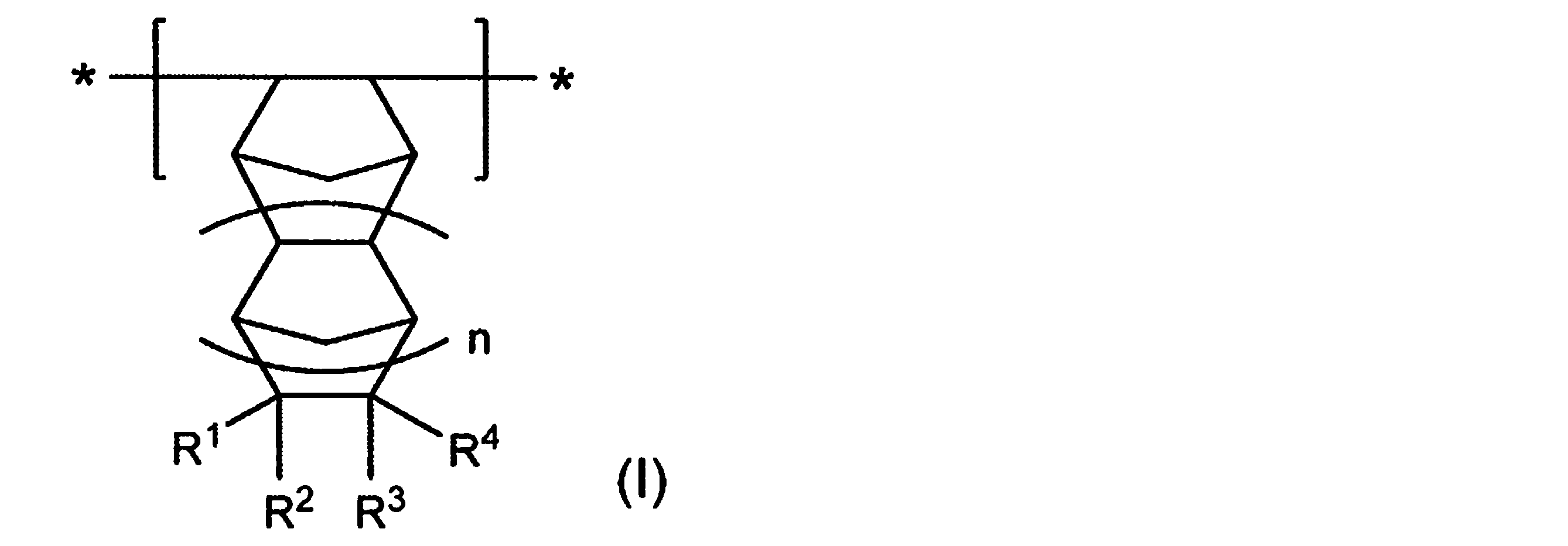
[2]前記ポリマー(b11)が側鎖にエチレン性不飽和二重結合を有する、[1]の感光性樹脂組成物。
[3]前記ポリマー(b11)が、カルボキシ基を有する、[1]又は[2]の感光性樹脂組成物。
[4]前記ポリマー(b11)が、下記一般式(II-1)で表される繰り返し単位をさらに有する、[1]~[3]のいずれかの感光性樹脂組成物。

[5]前記一般式(II-1)で表される繰り返し単位が、下記一般式(II-2-1)で表される繰り返し単位である、[4]の感光性樹脂組成物。
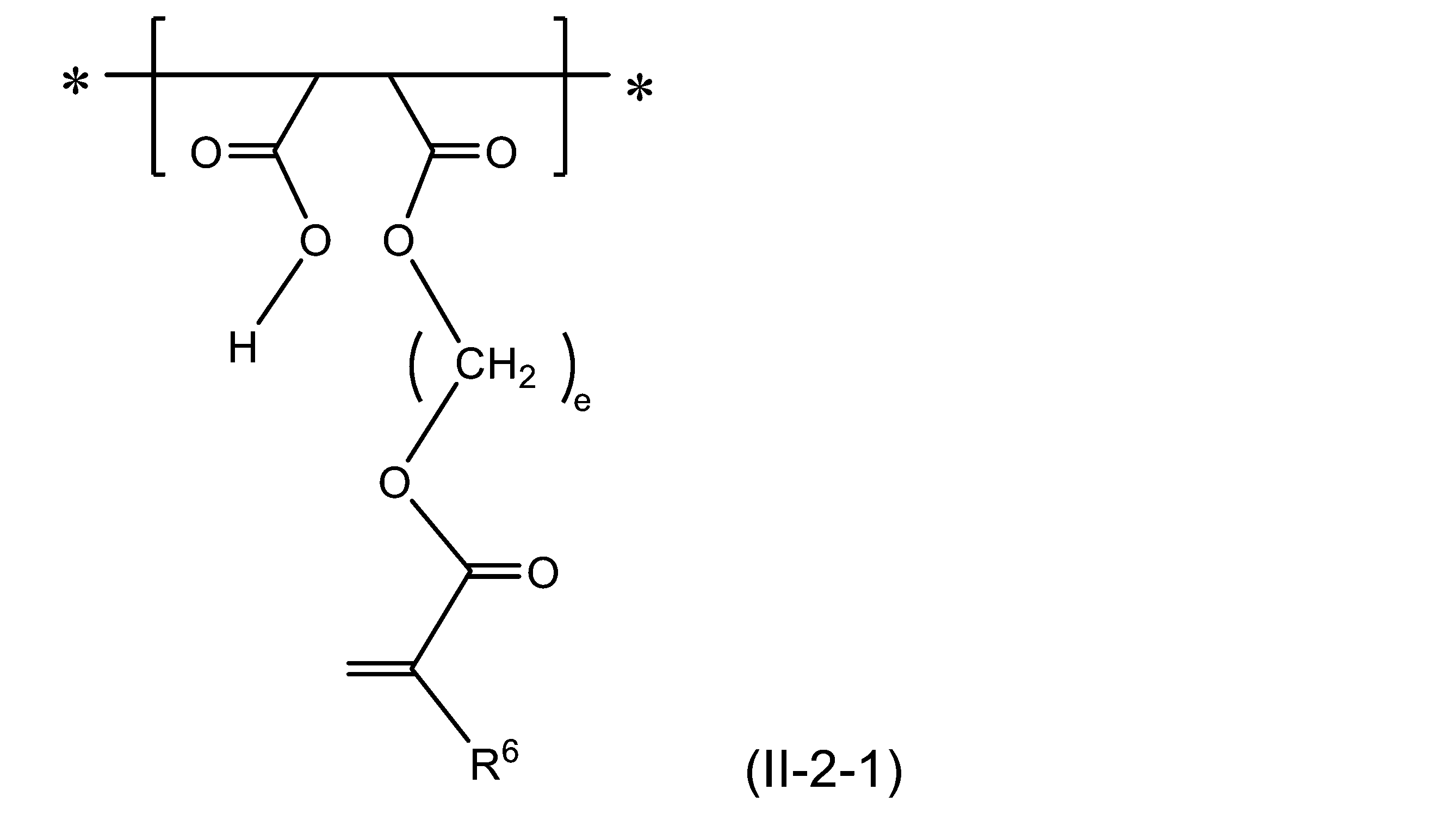
[6]前記ポリマー(b11)が、下記一般式(III-1)で表される繰り返し単位をさらに有する、[1]~[5]のいずれかの感光性樹脂組成物。

[7]前記ポリマー(b11)の含有割合が、前記ポリマー(b11)、及びポリマー(b2)の合計量に対して20質量%以上であり、
前記ポリマー(b2)が、前記ポリマー(b11)以外のエポキシ(メタ)アクリレート樹脂である、[1]~[6]のいずれかの感光性樹脂組成物。
[8]前記ポリマー(b11)の含有割合が、感光性樹脂組成物中のポリマー成分の合計量に対して10質量%以上である、[1]~[6]のいずれかの感光性樹脂組成物。
[9]前記(a)樹脂粒子の含有割合が、感光性樹脂組成物の全固形分量に対して5質量%以上である、[1]~[8]のいずれかの感光性樹脂組成物。
[10]前記(a)樹脂粒子が、メラミン樹脂、ベンゾグアナミン樹脂、スチレン樹脂から選ばれる少なくとも一つを含有する、[1]~[9]のいずれかの感光性樹脂組成物。
[11]前記(a)樹脂粒子の一次粒子の平均粒子径が0.4μm以上である[1]~[10]のいずれかの感光性樹脂組成物。
[12]前記(a)樹脂粒子の一次粒子の平均粒子径が0.5μmを超える[1]~[11]のいずれかの感光性樹脂組成物。
[13]さらに(d)光重合性化合物を含有する、[1]~[12]のいずれかの感光性樹脂組成物。
[14]さらに(e)重合禁止剤を含有する、[1]~[13]のいずれかの感光性樹脂組成物。
[15]さらに(f)紫外線吸収剤を含有する、[1]~[14]のいずれかの感光性樹脂組成物。
[16](a)樹脂粒子、ポリマー(b12)及び(c)光重合開始剤を含有する感光性樹脂組成物であって、
前記ポリマー(b12)が、下記式(X)を満たすことを特徴とする感光性樹脂組成物。
γMAX/γMIN≧1.0×104 ・・・(X)
γMAX:ポリマー(b12)を構成する繰り返し単位の無限希釈活量係数γのうち、最も高い値。
γMIN:ポリマー(b12)を構成する繰り返し単位の無限希釈活量係数γのうち、最も低い値。
[17]前記ポリマー(b12)が側鎖にエチレン性不飽和二重結合を有する、[16]の感光性樹脂組成物。
[18]前記ポリマー(b12)が、カルボキシ基を有する、[16]又は[17]の感光性樹脂組成物。
[19]前記ポリマー(b12)が、下記式(X’)を満たす、[16]~[18]のいずれかの感光性樹脂組成物。
γMAX/γMIN≧5.0×104 ・・・(X’)
[20][1]~[19]のいずれかの感光性樹脂組成物を硬化させてなる硬化物。
[21][20]の硬化物を備える、発光性ナノ結晶粒子を含むカラーフィルター。
[22][20]の硬化物からなる、光散乱層。
[23][20]の硬化物を備える画像表示装置。
本発明において、「(メタ)アクリル」とは、「アクリル及びメタクリルのいずれか一方又は両方」を意味する。
「全固形分量」とは、感光性樹脂組成物における溶剤以外の全成分を意味する。溶剤以外の成分が常温で液体であっても、その成分は溶剤には含めず、全固形分量に含める。
「~」を用いて表される数値範囲は、「~」の前後に記載される数値を下限値および上限値として含む範囲を意味する。
「(共)重合体」とは、単一重合体(ホモポリマー)と共重合体(コポリマー)の双方を含むことを意味し、「(酸)無水物」、「(無水)…酸」とは、酸とその無水物の双方を含むことを意味する。
重量平均分子量とは、GPC(ゲルパーミエーションクロマトグラフィー)によるポリスチレン換算の重量平均分子量(Mw)を意味する。
酸価とは、特に断りのない限り有効固形分換算の酸価を意味し、中和滴定により算出される。
「(b)ポリマー」及び「ポリマー成分」とは、感光性樹脂組成物に含まれる(a)樹脂粒子及び分散剤以外の樹脂成分を意味する。
[1-1]感光性樹脂組成物の成分および組成
本発明の感光性樹脂組成物を構成する成分およびその組成について順に説明する。
本発明の感光性樹脂組成物は、(a)樹脂粒子を含有する。(a)樹脂粒子を含有することで、感光性樹脂組成物から形成される硬化物の光散乱性と光透過性が高いまま、保存安定性を高めることができる。
樹脂粒子とは、樹脂を主成分とする粒子をいう。
主成分とは、粒子を構成する成分の中で、質量基準で最も多く占める成分であり、例えば、粒子中の50質量%以上、好ましくは80質量%以上、より好ましくは90質量%以上を占める成分であることが好ましい。また、通常は100質量%以下である。例えば、50~100質量%であってよく、80~100質量%であってよく、90~100質量%であってよい。
光散乱性を高める観点から、(a)樹脂粒子を構成する成分としてはメラミン樹脂、ベンゾグアナミン樹脂、スチレン樹脂のうち少なくとも1種を含有することが好ましく、メラミン樹脂、ベンゾグアナミン樹脂のうち少なくとも1種を含有することがさらに好ましく、メラミン樹脂、又はベンゾグアナミン樹脂を主成分とする樹脂粒子が特に好ましい。
メラミン樹脂としては、メラミン・ホルムアルデヒド縮合物であることが好ましい。メラミン樹脂を含む樹脂粒子としては、日本触媒社製 商品名エポスターS6、エポスターS12、日産化学工業社製 商品名オプトビーズ2000M、オプトビーズ3500Mを挙げることができる。
ベンゾグアナミン樹脂としては、ベンゾグアナミン・ホルムアルデヒド縮合物であることが好ましい。ベンゾグアナミン樹脂を含む樹脂粒子としては、日本触媒社製 商品名エポスターMSを挙げることができる。
スチレン樹脂としては、スチレン系単量体を単独又は他の単量体と共に重合させたものである。スチレン系単量体には、スチレン、α-メチルスチレン、パラメチルスチレン、ジビニルベンゼンが挙げられ、屈折率を高める観点からスチレンが好ましい。スチレン系単量体とともに重合する他の単量体として、ブタジエン、アクリルニトリル、メチル(メタ)アクリレート、エチル(メタ)アクリレート、n-プロピル(メタ)アクリレート、n-ブチル(メタ)アクリレート、tert-ブチル(メタ)アクリレート、グリシジル(メタ)アクリレート、2-エチルヘキシル(メタ)アクリレート、シクロヘキシル(メタ)アクリレート等の(メタ)アクリル酸エステルが挙げられ、弾性率のコントロールのしやすさの観点から(メタ)アクリル酸エステルが好ましい。
(a)樹脂粒子は1種類を単独で用いても、2種類以上を組み合わせて使用してもよい。
上記の上限及び下限は任意に組み合わせることができる。例えば、0.1~5.0μmが好ましく、0.2~4.0μmがより好ましく、0.4~3.0μmがさらに好ましく、0.6~2.0μmがよりさらに好ましく、0.8~1.8μmが特に好ましく、1.2~1.8μmがことさら好ましい。
上記の上限及び下限は任意に組み合わせることができる。例えば、0.1~5.0μmが好ましく、0.2~4.0μmがより好ましく、0.4~3.0μmがさらに好ましく、0.6~2.0μmがよりさらに好ましく、0.8~1.8μmが特に好ましく、1.2~1.8μmがことさら好ましい。
上記の上限及び下限は任意に組み合わせることができる。例えば、1.55~2.00が好ましく、1.58~1.90がより好ましく、1.60~1.80がさらに好ましく、1.63~1.80がよりさらに好ましく、1.64~1.70が特に好ましく、1.65~1.70がことさら好ましい。
(a)樹脂粒子の屈折率は、例えば、ベッケ線法、液浸法により測定される。(a)樹脂粒子の屈折率の値は、波長400~650nmの光に対して評価される。
有機顔料は特に限定されないが、例えば、アゾ系、フタロシアニン系、キナクリドン系、ベンズイミダゾロン系、イソインドリノン系、ジオキサジン系、インダンスレン系、ペリレン系が挙げられる。
無機粒子としては無機顔料や金属酸化物を主成分とする粒子が挙げられる。無機顔料としては、例えば、カーボンブラック、アセチレンブラック、ランプブラック、ボーンブラック、黒鉛、鉄黒、チタンブラック等を挙げることができる。金属酸化物としては、例えば、二酸化ケイ素、酸化チタン、酸化ジルコニウム、酸化アルミニウム、酸化ハフニウムが挙げられる。
感光性樹脂組成物の透過波長をコントロールして効率的に硬化させる観点から、有機顔料を主成分とする粒子を用いることが好ましい。
上記の上限及び下限は任意に組み合わせることができる。例えば、1~80質量%が好ましく、5~70質量%がより好ましく、10~60質量%がさらに好ましく、14~50質量%がよりさらに好ましく、14~40質量%が特に好ましい。前記下限値以上とすることで光散乱性が高くなる傾向がある。前記上限値以下とすることで光透過性が高くなる傾向がある。
上記の上限及び下限は任意に組み合わせることができる。例えば、1~80質量%が好ましく、5~70質量%がより好ましく、10~60質量%がさらに好ましく、14~50質量%がよりさらに好ましく、14~40質量%が特に好ましい。前記下限値以上とすることで光散乱性が高くなる傾向がある。前記上限値以下とすることで光透過性が高くなる傾向がある。
本発明の感光性樹脂組成物は、少なくとも1種のポリマー成分を含有する。
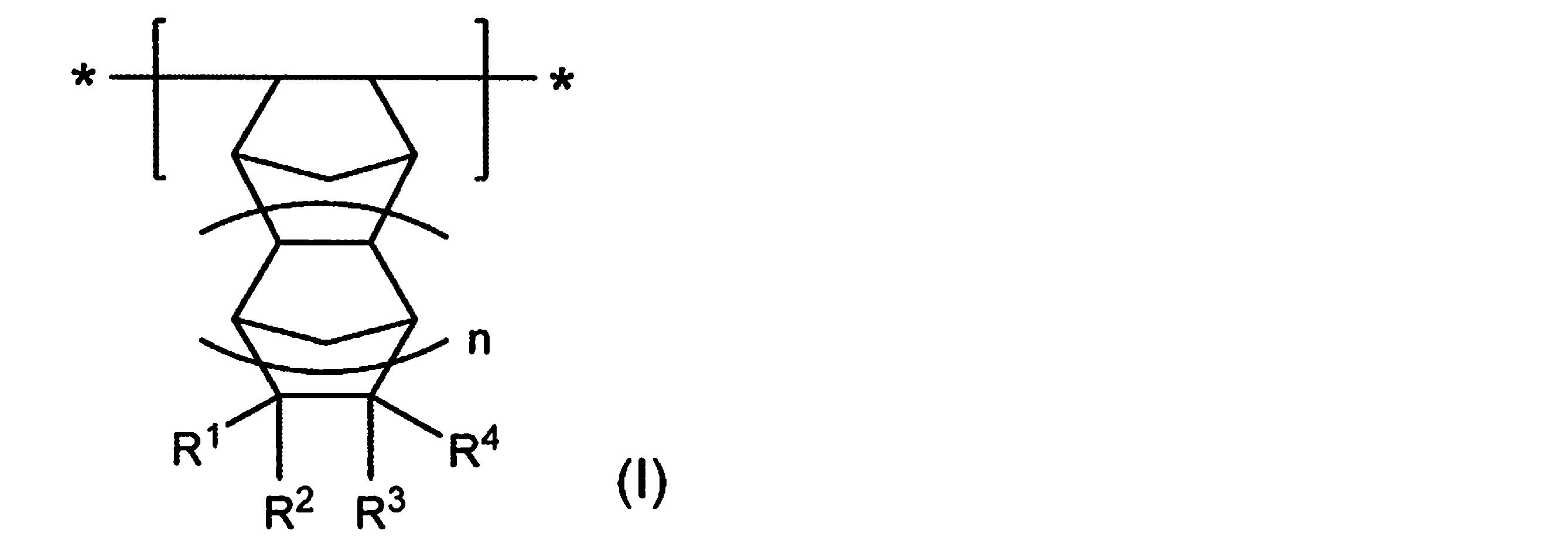
アルキル基としては、例えば、メチル基、エチル基、n-プロピル基、イソプロピル基、n-ブチル基、イソブチル基、sec-ブチル基、tert-ブチル基、ペンチル基、ネオペンチル基、ヘキシル基、ヘプチル基、オクチル基、ノニル基、デシル基、アダマンチル基、シクロペンチル基、シクロヘキシル基、シクロオクチル基が挙げられる。
アルケニル基としては、例えば、ビニル基、アリル基、ブテニル基、ペンテニル基が挙げられる。
アルキニル基としては、例えば、エチニル基が挙げられる。
芳香族炭化水素環基としては、例えば、フェニル基、ナフチル基、アントラセニル基、トリル基、キシリル基が挙げられる。
芳香族複素環基としては、例えば、ピリジル基、チオフェニル基が挙げられる。
アラルキル基としては、例えば、前述したアルキル基の1つの水素原子を、前述したアリール基で置換した基が挙げられる。
アラルキル基としては、例えば、ベンジル基、フェネチル基が挙げられる。
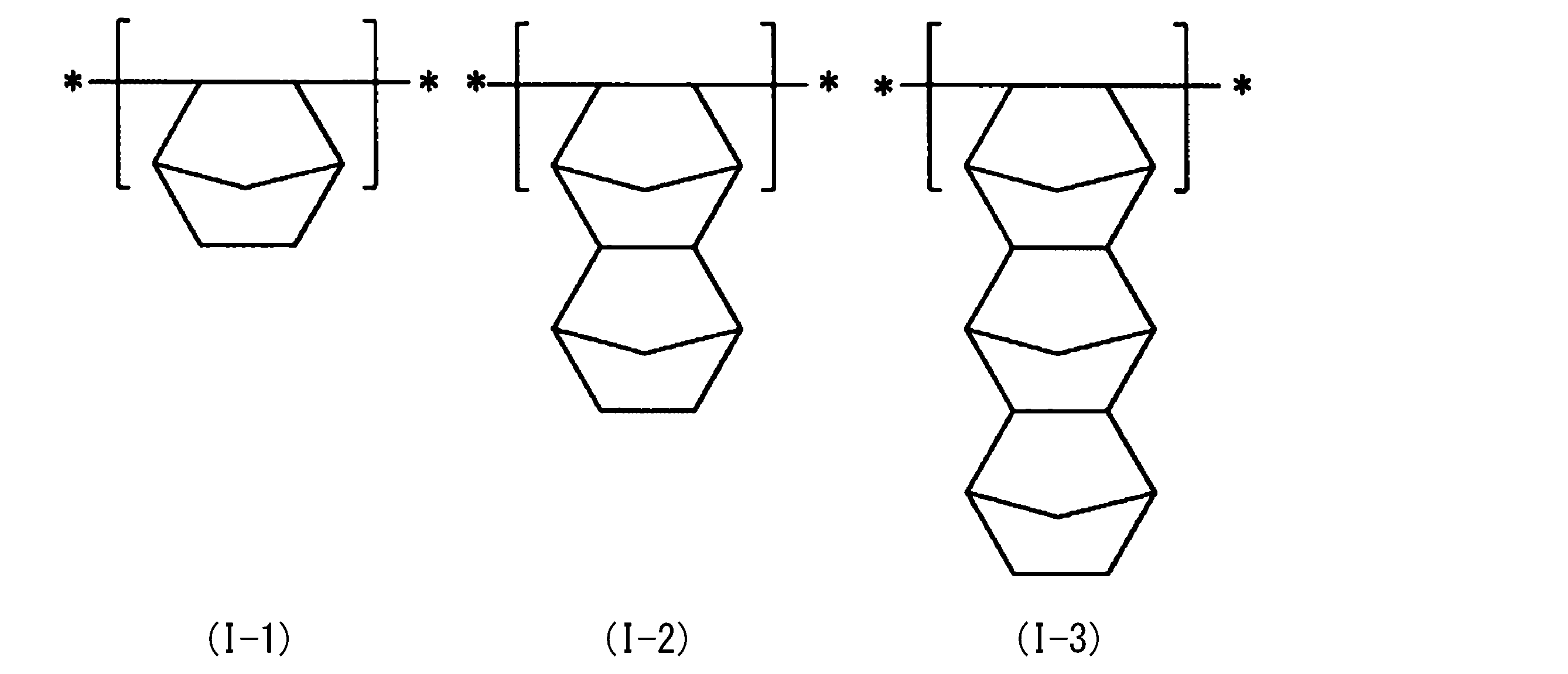
また、アルカリ現像性を有する観点から、カルボキシ基又は水酸基を有することが好ましく、カルボキシ基を有することがより好ましい。
ポリマー(b11)のカルボキシ基を有する繰り返し単位(II)の構造は特に限定されないが、例えば不飽和基含有カルボン酸や、不飽和基含有カルボン酸無水物由来の繰り返し単位が挙げられる。
そのうち、現像性や密着性を向上する観点から、ポリマー(b11)は、下記一般式(II-1)で表される繰り返し単位(以下、「繰り返し単位(II-1)」と称する場合がある。)を有することが好ましい。
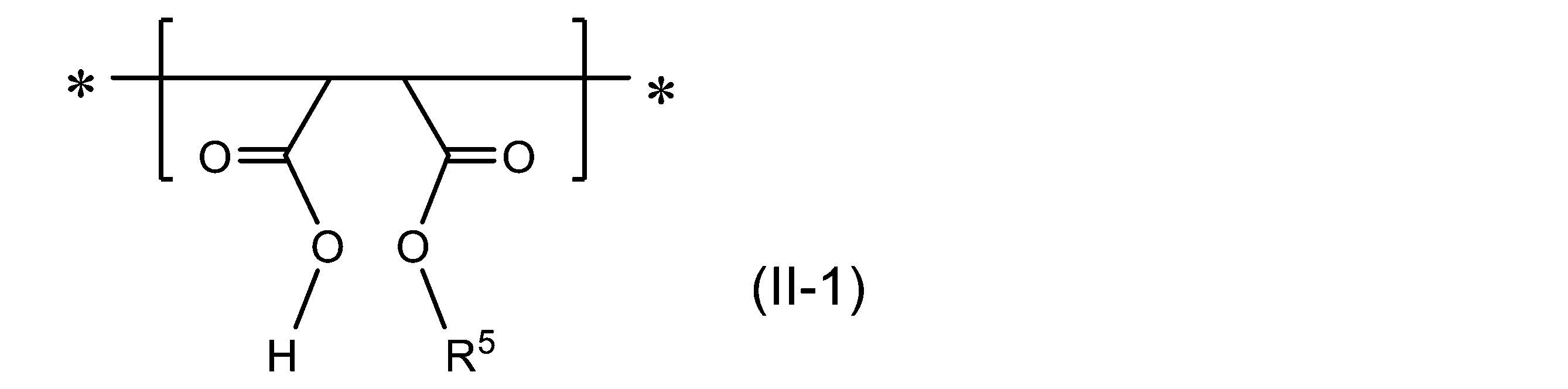
アルキル基としては、例えば、メチル基、エチル基、n-プロピル基、イソプロピル基、n-ブチル基、イソブチル基、sec-ブチル基、tert-ブチル基、ペンチル基、ネオペンチル基、ヘキシル基、ヘプチル基、オクチル基、ノニル基、デシル基、アダマンチル基、シクロペンチル基、シクロヘキシル基、シクロオクチル基が挙げられる。
アリール基としては、例えば、フェニル基、ナフチル基、アントラセニル基、トリル基、キシリル基が挙げられる。

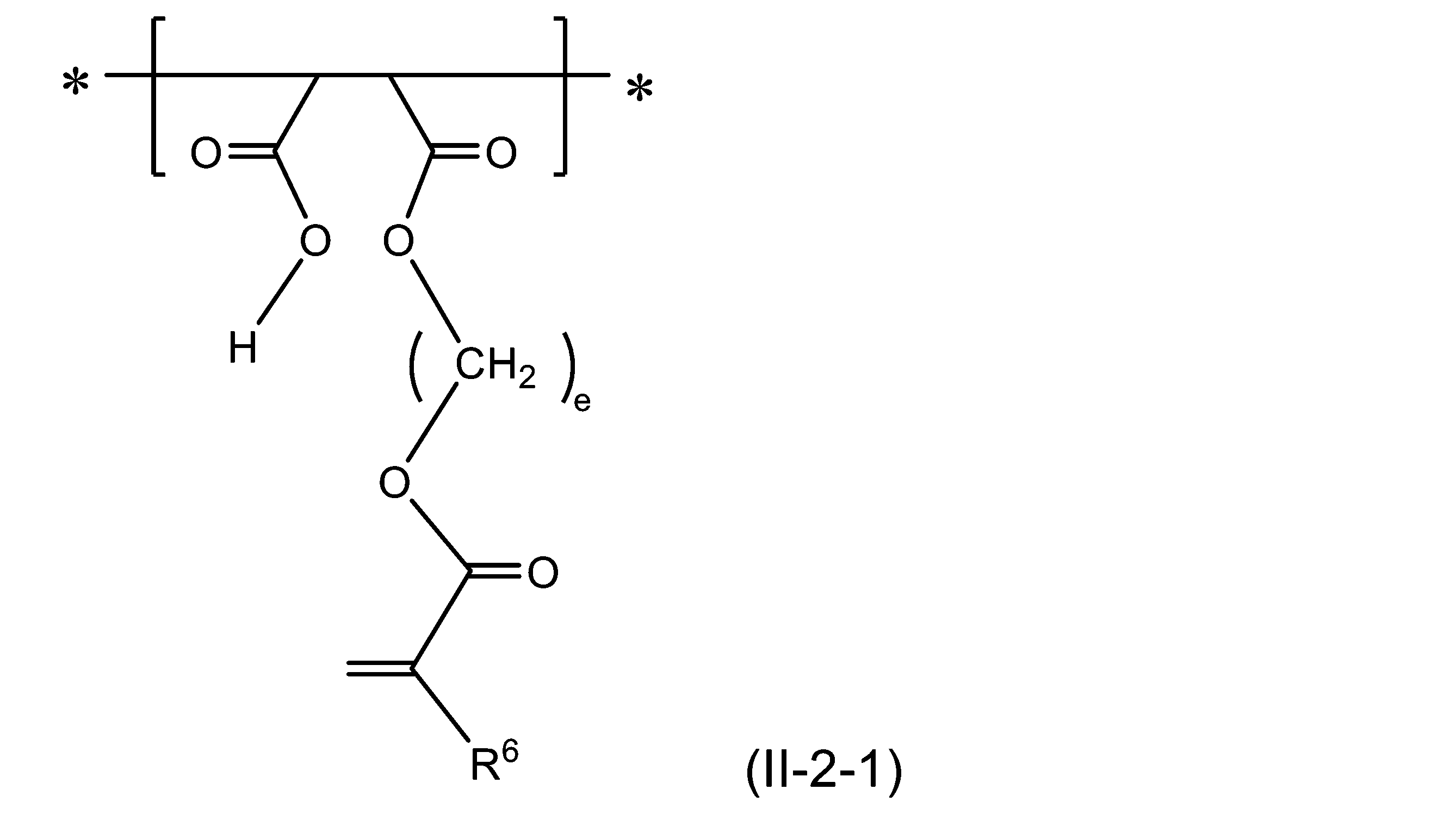

ポリマー(b11)は、繰り返し単位(I)、繰り返し単位(II)以外の繰り返し単位を有していてもよい。
それ以外の繰り返し単位としては、例えば下記一般式(III-1)~(III-5)で表される繰り返し単位(以下、「繰り返し単位(III-1)~(III-5)」と称する場合がある。)が挙げられるが、これらに限定するものではない。
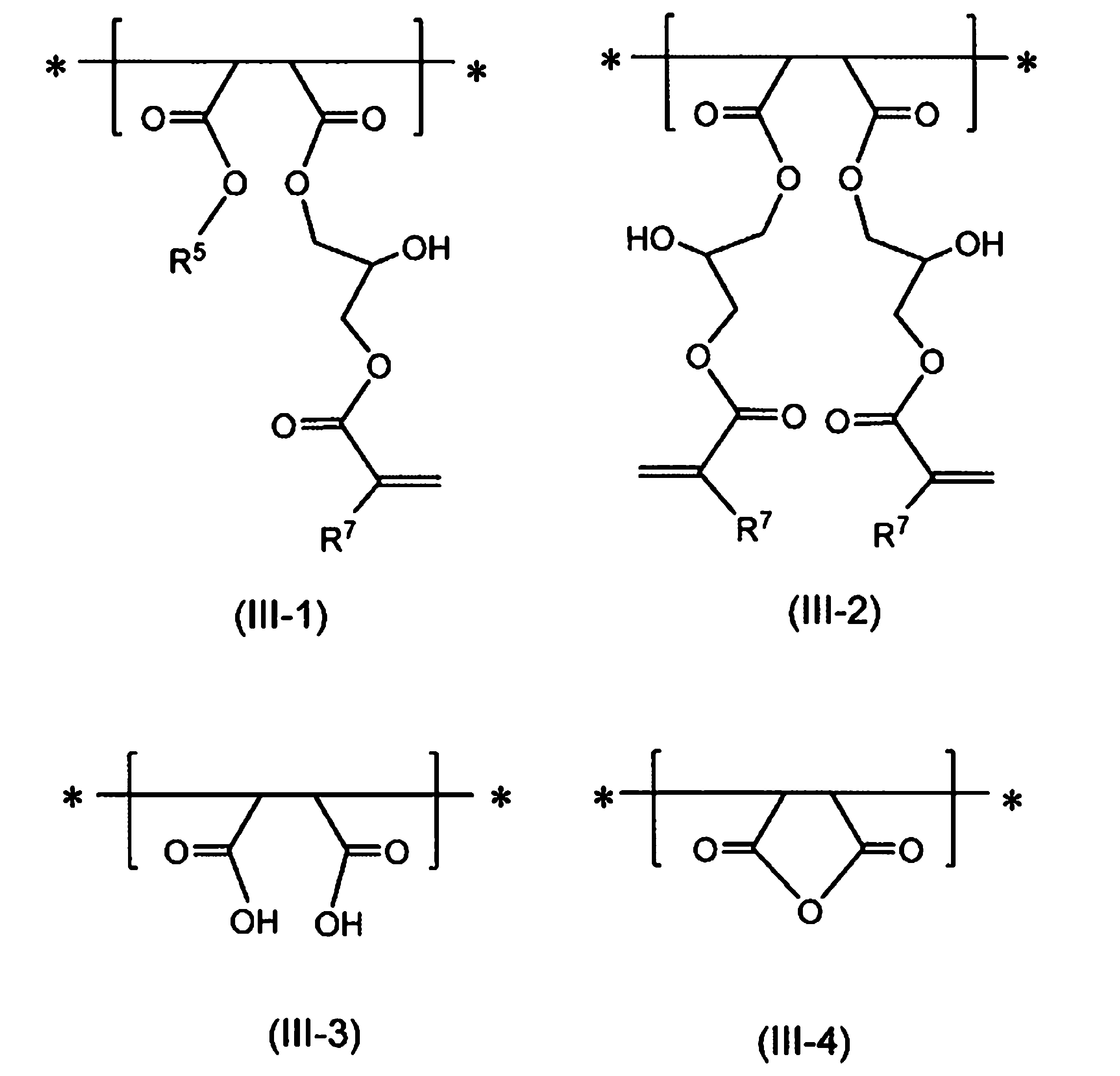

ポリマー(b11)の製造方法は特に限定されず、従来公知の方法を採用することができる。例えば、以下の(工程i)~(工程iii)にて製造することができる。なお、(工程ii)で得た下記開環前駆体ポリマーを、ポリマー(b11)として用いることもできる。
アルコール類としては、式(II-2-OH)で表される化合物を用いることが、密着性の観点から、より好ましい。

エポキシ基およびエチレン性不飽和二重結合を有する化合物としては、例えば、グリシジルメタクリレートが挙げられる。
ポリマー(b11)の二重結合当量は、下記式から算出することができる。
(ポリマー(b11)の二重結合当量)=(ポリマー(b11)の重量平均分子量)/(ポリマー(b11)1分子当たりのエチレン性不飽和二重結合の数)
上記の上限及び下限は任意に組み合わせることができる。例えば、10~100質量%が好ましく、20~90質量%がより好ましく、30~80質量%がさらに好ましく、40~80質量%がよりさらに好ましく、50~70質量%が特に好ましい。前記下限値以上とすることで現像性が向上する傾向がある。前記上限値以下とすることで密着性が向上する傾向がある。
上記の上限及び下限は任意に組み合わせることができる。例えば、10~100質量%が好ましく、20~90質量%がより好ましく、30~80質量%がさらに好ましく、40~80質量%がよりさらに好ましく、50~70質量%が特に好ましい。前記下限値以上とすることで現像性が向上する傾向がある。前記上限値以下とすることで密着性が向上する傾向がある。
下限値以上とすることで光透過性が向上する傾向がある。前記上限値以下とすることで光散乱性が向上する傾向がある。
上記の上限及び下限は任意に組み合わせることができる。例えば、11~900質量部であってよく、30~900質量部であってよく、50~600質量部であってよく、70~500質量部であってよく、100~300質量部であってよい。
式中、γMAXは、ポリマー(b12)を構成する繰り返し単位の無限希釈活量係数γのうち、最も高い値であり;γMINは、ポリマー(b12)を構成する繰り返し単位の無限希釈活量係数γのうち、最も低い値である。
具体的には、あらかじめ様々な分子構造に対して溶液内の分子の立体構造や表面電荷密度を分子軌道計算により決定したデータベース「COSMO Fragment Data Base」(ダッソー・システムズ社製)を使用して、対象のポリマーを構成する繰り返し単位構造に対して得られた表面電荷密度から溶液中の樹脂粒子とポリマーの分子間相互作用エネルギーを算出し、分子表面セグメントの化学ポテンシャルを求めた。さらに、化学ポテンシャルから無限希釈活量係数を算出した。
ここで、粒子表面が正に帯電したメラミン樹脂粒子とポリマーを構成する繰り返し単位の無限希釈活量係数の例を表1~2に示す。
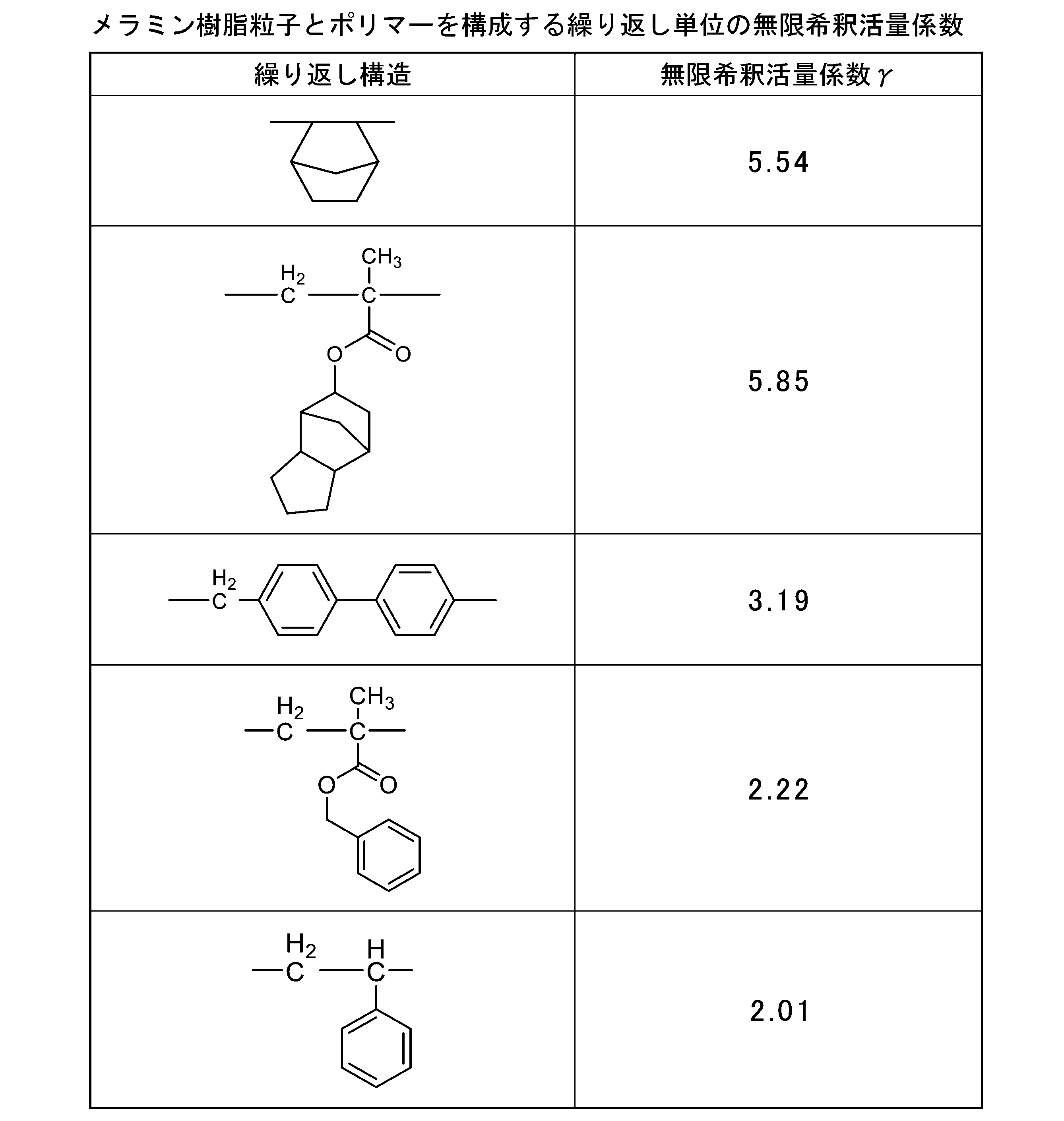

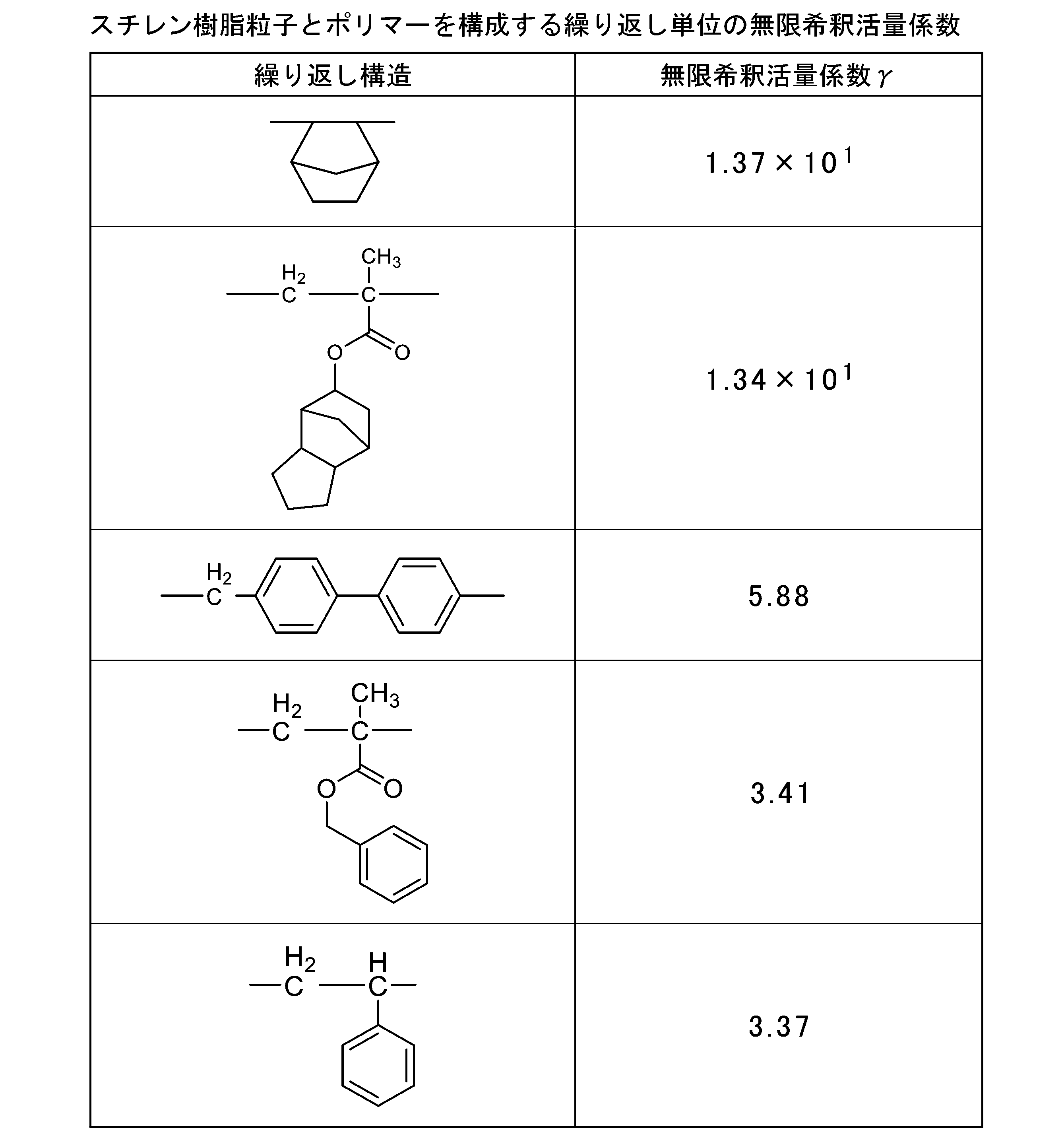
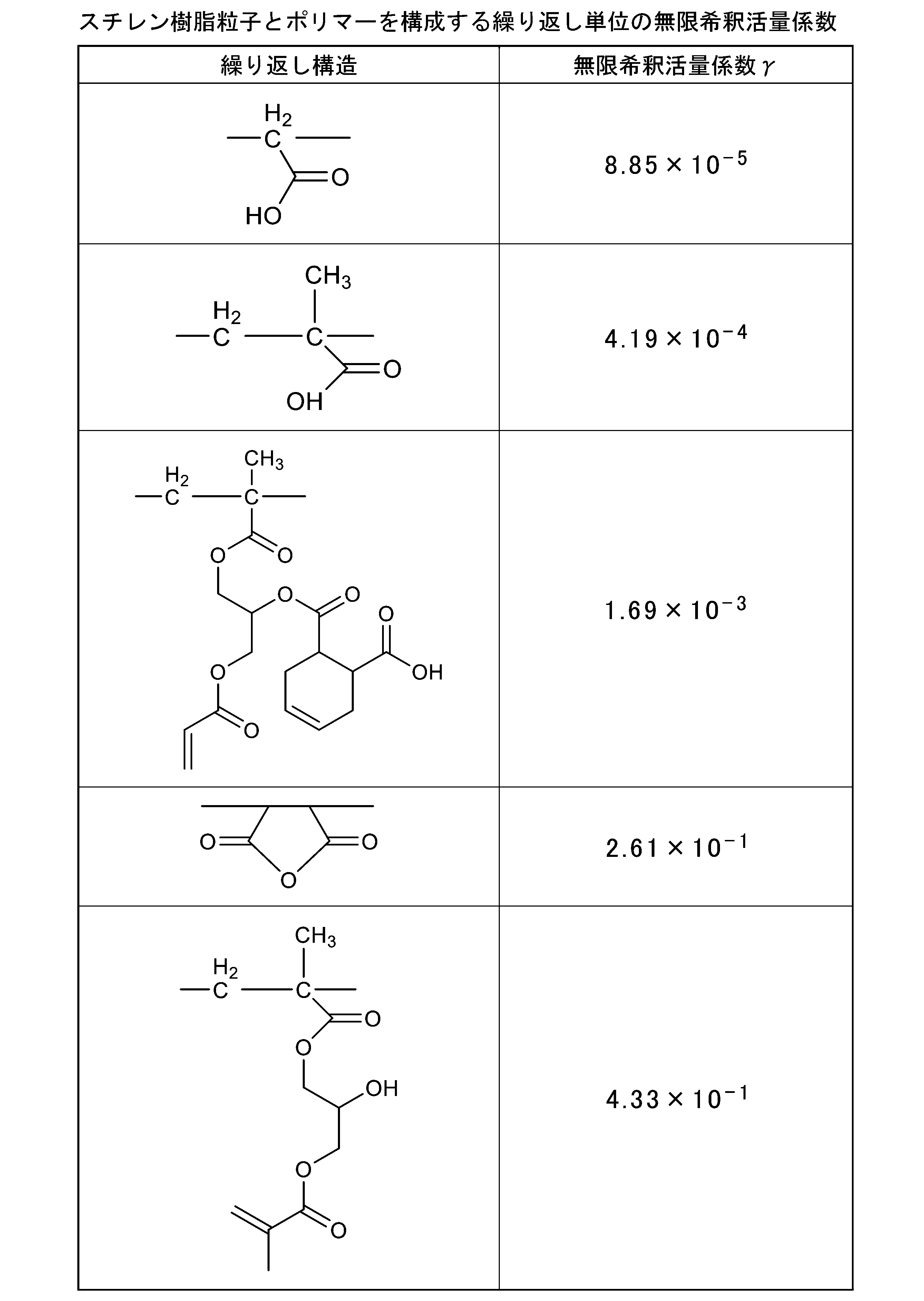
また、アルカリ現像性を有する観点から、カルボキシ基又は水酸基を有することが好ましく、カルボキシ基を有することがより好ましい。
本発明の第2の態様の感光性樹脂組成物において、感光性樹脂組成物は、ポリマー(b12)以外の「その他のポリマー(b121)」をさらに含有していてもよい。なお、本発明の第2の態様の感光性樹脂組成物において、ポリマー(b12)及びその他のポリマー(b121)を合わせて「ポリマー成分」あるいは「(b)ポリマー」と言う。
本発明の第2の態様の感光性樹脂組成物におけるその他のポリマー(b121)としては、ポリマー(b12)以外のポリマー((a)樹脂粒子及び分散剤を除く。)が挙げられる。
エポキシ(メタ)アクリレート樹脂(b2)は、エポキシ樹脂にエチレン性不飽和モノカルボン酸又はエステル化合物を付加し、任意でイソシアネート基含有化合物を反応させた後、さらに多塩基酸又はその無水物を反応させた樹脂である。なお、ポリマー(b11)に該当するポリマーは含まれない。
例えば、エポキシ樹脂のエポキシ基に、不飽和モノカルボン酸のカルボキシ基が開環付加されることにより、エポキシ化合物にエステル結合(-COO-)を介してエチレン性不飽和結合が付加されると共に、その際生じた水酸基に、多塩基酸無水物の一方のカルボキシ基が付加されたものが挙げられる。また多塩基酸無水物を付加するときに、多価アルコールを同時に添加して付加されたものも挙げられる。
このように、エポキシ(メタ)アクリレート樹脂は化学構造上、実質的にエポキシ基を有さず、かつ「(メタ)アクリレート」に限定されるものではないが、エポキシ化合物(エポキシ樹脂)が原料であり、かつ、「(メタ)アクリレート」が代表例であるので慣用に従いこのように命名されている。エポキシ(メタ)アクリレート樹脂(b2)としては、密着性の観点から、主鎖に芳香族環を有するものをより好適に用いることができる。
具体的には、例えば、ビスフェノールAエポキシ樹脂、ビスフェノールFエポキシ樹脂、ビスフェノールSエポキシ樹脂、フェノールノボラックエポキシ樹脂、クレゾールノボラックエポキシ樹脂、ビフェニルノボラックエポキシ樹脂、トリグリシジルイソシアヌレート樹脂、フェノールとジシクロペンタジエンとの重合エポキシ樹脂、ジハイドロオキシルフルオレン型エポキシ樹脂、ジハイドロオキシルアルキレンオキシルフルオレン型エポキシ樹脂、9,9-ビス(4’-ヒドロキシフェニル)フルオレンのジグリシジルエーテル化物、1,1-ビス(4’-ヒドロキシフェニル)アダマンタンのジグリシジルエーテル化物、アダマンチル基含有フェノールエポキシ樹脂が挙げられ、このように主鎖に芳香族環を有するものを好適に用いることができる。
耐熱性の観点で、ビフェニルグリシジルエーテル、アダマンチル基含有フェノールエポキシ樹脂が好ましい。
感度の観点から、(メタ)アクリル酸が好ましい。
アウトガスの観点から、コハク酸無水物、マレイン酸無水物、テトラヒドロフタル酸無水物、ヘキサヒドロフタル酸無水物が好ましく、コハク酸無水物、テトラヒドロフタル酸無水物がより好ましい。
多価アルコールとしては、例えば、トリメチロールプロパン、ジトリメチロールプロパン、ペンタエリスリトール、ジペンタエリスリトール、トリメチロールエタン、1,2,3-プロパントリオールの中から選ばれる1種又は2種以上の多価アルコールであることが好ましい。
上記の上限及び下限は任意に組み合わせることができる。例えば、10~200mgKOH/gが好ましく、30~180mgKOH/gがより好ましく、50~150mgKOH/gがさらに好ましく、70~120mgKOH/gがよりさらに好ましく、80~110mgKOH/gが特に好ましい。前記下限値以上とすることで現像性が向上する傾向がある。前記上限値以下とすることで膜強度が向上する傾向がある。
上記の上限及び下限は任意に組み合わせることができる。例えば、1000~30000が好ましく、2000~20000がより好ましく、3000~15000がさらに好ましく、4000~10000がよりさらに好ましく、5000~8000が特に好ましい。前記下限値以上とすることで膜強度が向上する傾向がある。前記上限値以下とすることで残渣が低減する傾向がある。
上記の上限及び下限は任意に組み合わせることができる。例えば、100~700g/molが好ましく、200~600g/molがより好ましく、250~500g/molがさらに好ましく、300~400g/molが特に好ましい。前記上限値以下とすることで耐熱性が向上する傾向がある。前記下限値以上とすることで現像性が向上する傾向がある。
エポキシ(メタ)アクリレート樹脂(b2)の二重結合当量は、本発明の第一の態様の感光性樹脂組成物におけるポリマー(b11)の二重結合当量と同様の方法で算出することができる。
上記の上限及び下限は任意に組み合わせることができる。例えば、10~90質量%が好ましく、20~90質量%がより好ましく、30~70質量%がさらに好ましく、35~70質量%がよりさらに好ましく、40~60質量%がことさらに好ましく、50~60質量%が特に好ましい。前記下限値以上とすることで耐アウトガス性が向上する傾向がある。前記上限値以下とすることで透明性が向上する傾向がある。
上記触媒としては、例えば、トリエチルアミン、ベンジルジメチルアミン、トリベンジルアミン等の第3級アミン類、テトラメチルアンモニウムクロライド、メチルトリエチルアンモニウムクロライド、テトラエチルアンモニウムクロライド、テトラブチルアンモニウムクロライド、トリメチルベンジルアンモニウムクロライドなどの第4級アンモニウム塩類、トリフェニルホスフィンなどの燐化合物、トリフェニルスチビンなどのスチビン類の1種または2種以上が挙げられる。
熱重合禁止剤としては、例えば、ハイドロキノン、ハイドロキノンモノメチルエーテル、メチルハイドロキノンの1種または2種以上が挙げられる。
付加反応時の温度としては、60~150℃が好ましく、80~120℃がより好ましい。
多塩基酸(無水物)の使用量としては、付加反応で生じた水酸基の1化学当量に対して、0.1~1.2化学当量が好ましく、0.2~1.1化学当量がより好ましい。
アクリル共重合樹脂(b3)としては、側鎖にエチレン性不飽和二重結合を有するアクリル共重合樹脂が好ましい。なお、ポリマー(b11)若しくはエポキシ(メタ)アクリレート樹脂(b2)に該当するポリマーは含まれない。側鎖にエチレン性不飽和二重結合を有することで、露光による光硬化が起こってより強固な膜となり、基板との密着性が高くなると考えられる。
アクリル共重合樹脂(b3)が有する、エチレン性不飽和二重結合を有する側鎖を含む部分構造は特に限定されないが、膜の柔軟性に伴うラジカルの発散しやすさの観点から、例えば、下記一般式(1)で表される部分構造を有することが好ましい。また、下記一般式(1)で表される部分構造を有する場合、アクリル共重合樹脂(b3)は、カルボニル基を有することになり、樹脂粒子との双極子相互作用により分散剤としての作用も発現するため、有用である。

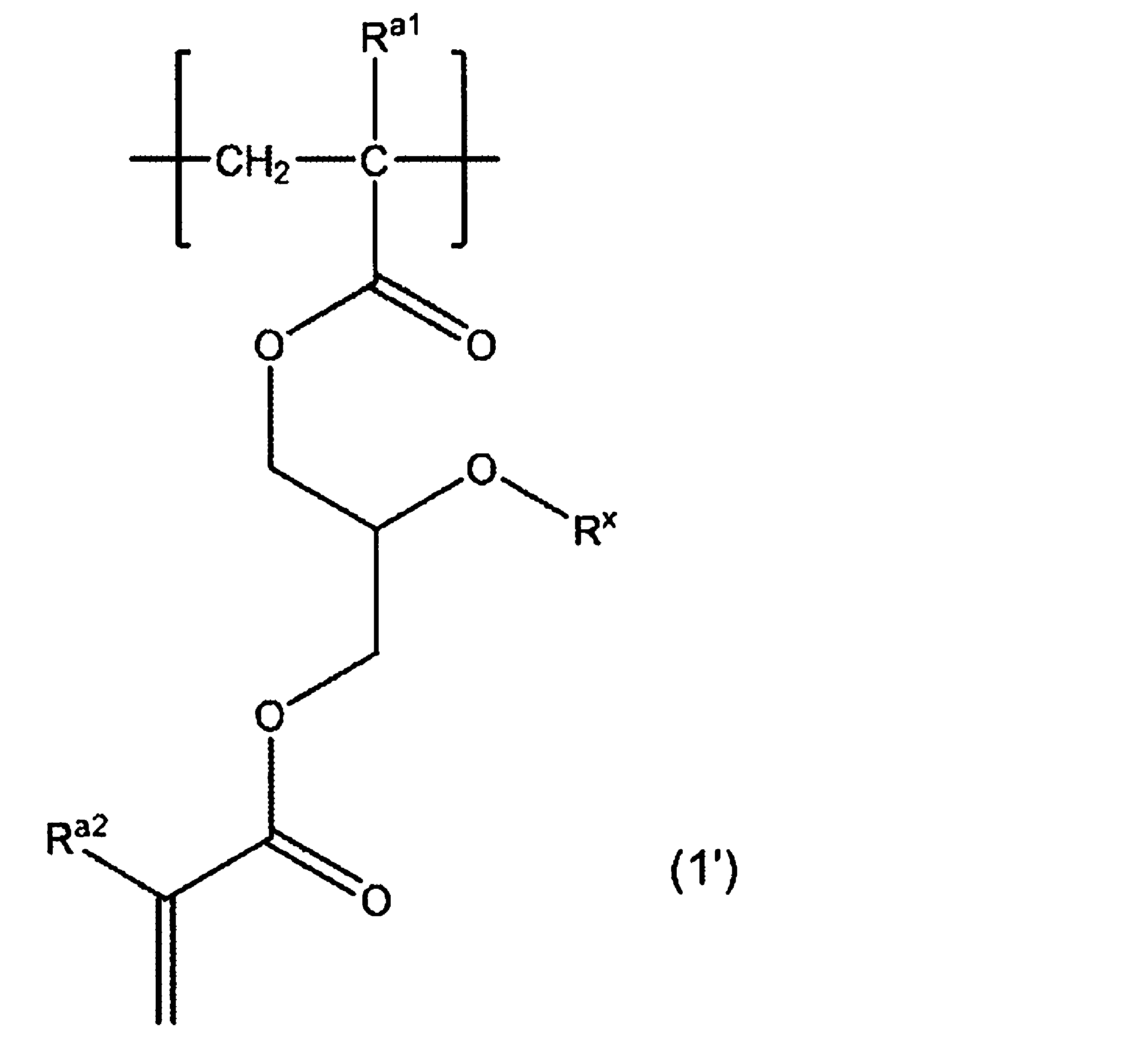
パターニング特性の観点から、好ましくは、マレイン酸、コハク酸、イタコン酸、フタル酸、テトラヒドロフタル酸、ヘキサヒドロフタル酸、ピロメリット酸、トリメリット酸、ビフェニルテトラカルボン酸であり、より好ましくは、テトラヒドロフタル酸、ビフェニルテトラカルボン酸である。
上記の上限及び下限は任意に組み合わせることができる。例えば、好ましくは10~99モル%、より好ましくは30~95モル%、さらに好ましくは50~95モル%、よりさらに好ましくは60~95モル%、ことさらに好ましくは70~95モル%、特に好ましくは80~90モル%である。前記下限値以上とすることで耐熱性が向上する傾向がある。前記上限値以下とすることで現像性が向上する傾向がある。
上記の上限及び下限は任意に組み合わせることができる。例えば、好ましくは10~99モル%、より好ましくは30~95モル%、さらに好ましくは50~95モル%、よりさらに好ましくは60~95モル%、ことさらに好ましくは70~95モル%、特に好ましくは80~90モル%である。前記下限値以上とすることで耐熱性が向上する傾向がある。前記上限値以下とすることで現像性が向上する傾向がある。
式(1)で表される部分構造の他に、アクリル共重合樹脂(b3)が有する部分構造は特に限定されないが、現像密着性の観点から、例えば、下記一般式(2)で表される部分構造を有してもよい。
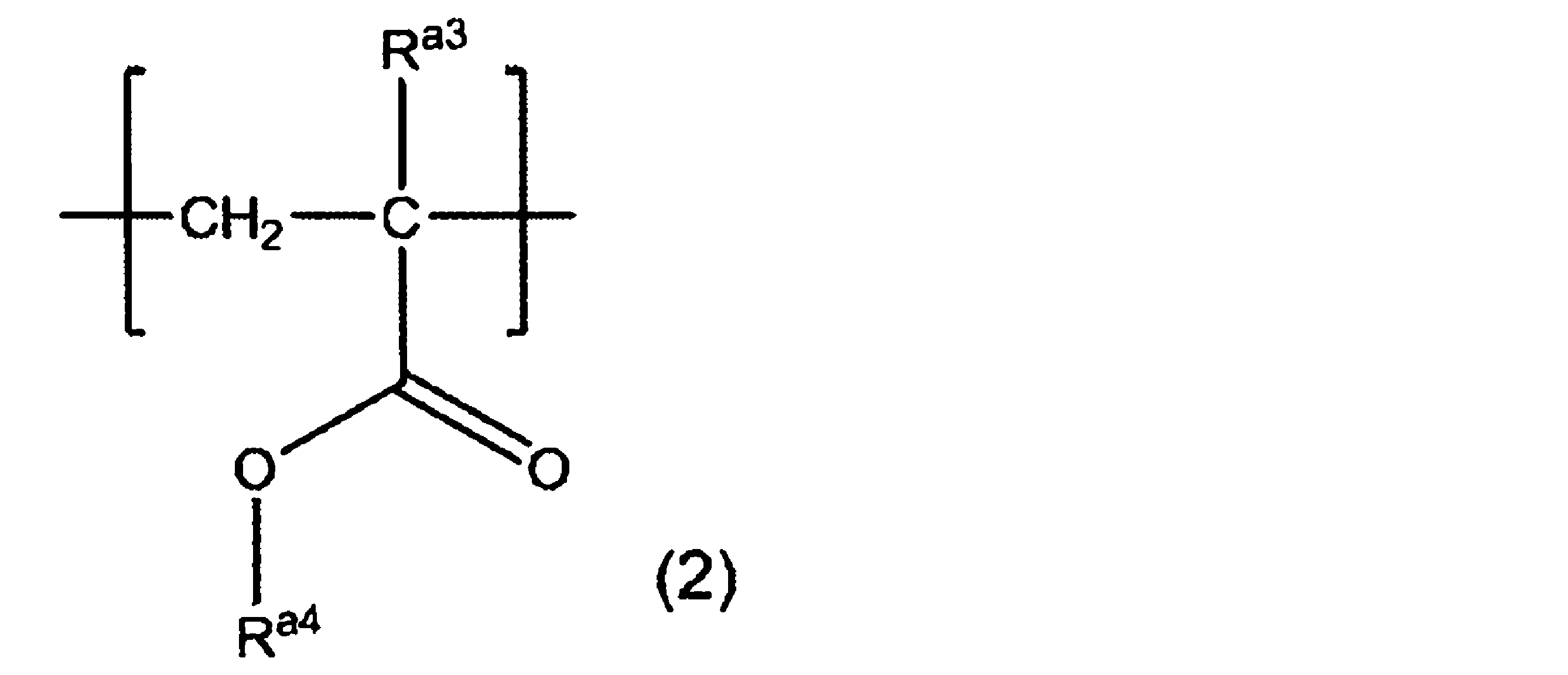
式(2)において、Ra4は置換基を有していてもよいアルキル基、置換基を有していてもよい芳香族環基、又は置換基を有していてもよいアルケニル基を表す。
Ra4におけるアルキル基としては直鎖状、分岐鎖状又は環状のアルキル基が挙げられる。その炭素数は、1以上が好ましく、3以上がより好ましく、5以上がさらに好ましく、8以上が特に好ましく、また、20以下が好ましく、18以下がより好ましく、16以下がさらに好ましく、14以下がよりさらに好ましく、12以下が特に好ましい。
上記の上限及び下限は任意に組み合わせることができる。例えば、1~20が好ましく、1~18がより好ましく、3~16がさらに好ましく、5~14がよりさらに好ましく、8~12が特に好ましい。前記下限値以上とすることで膜強度が高くなり、現像密着性が向上する傾向がある。前記上限値以下とすることで残渣が低減する傾向がある。
アルキル基が有していてもよい置換基としては、例えば、メトキシ基、エトキシ基、クロロ基、ブロモ基、フルオロ基、ヒドロキシ基、アミノ基、エポキシ基、オリゴエチレングリコール基、フェニル基、カルボキシ基、アクリロイル基、メタクリロイル基が挙げられ、現像性の観点から、ヒドロキシ基、オリゴエチレングリコール基が好ましい。
上記の上限及び下限は任意に組み合わせることができる。例えば、好ましくは6~24、より好ましくは6~22、さらに好ましくは6~20、よりさらに好ましくは6~18である。前記下限値以上とすることで現像密着性が向上する傾向がある。前記上限値以下とすることで残渣が低減する傾向がある。
芳香族複素環基における芳香族複素環としては、単環であっても縮合環であってもよく、例えば、フラン環、ベンゾフラン環、チオフェン環、ベンゾチオフェン環、ピロール環、ピラゾール環、イミダゾール環、オキサジアゾール環、インドール環、カルバゾール環、ピロロイミダゾール環、ピロロピラゾール環、ピロロピロール環、チエノピロール環、チエノチオフェン環、フロピロール環、フロフラン環、チエノフラン環、ベンゾイソオキサゾール環、ベンゾイソチアゾール環、ベンゾイミダゾール環、ピリジン環、ピラジン環、ピリダジン環、ピリミジン環、トリアジン環、キノリン環、イソキノリン環、シノリン環、キノキサリン環、フェナントリジン環、ペリミジン環、キナゾリン環、キナゾリノン環、アズレン環が挙げられる。現像性の観点から、ベンゼン環、ナフタレン環が好ましく、ベンゼン環がより好ましい。
芳香族環基が有していてもよい置換基としては、例えば、メチル基、エチル基、プロピル基、メトキシ基、エトキシ基、クロロ基、ブロモ基、フルオロ基、ヒドロキシ基、アミノ基、エポキシ基、オリゴエチレングリコール基、フェニル基、カルボキシ基が挙げられ、現像性の観点から、ヒドロキシ基、オリゴエチレングリコール基が好ましい。
上記の上限及び下限は任意に組み合わせることができる。例えば、好ましくは2~22、より好ましくは2~20、さらに好ましくは2~18、よりさらに好ましくは2~16、ことさらに好ましくは2~14である。前記下限値以上とすることで現像密着性が向上する傾向がある。前記上限値以下とすることで残渣が低減する傾向がある。
上記の上限及び下限は任意に組み合わせることができる。例えば、好ましくは1~70モル%、より好ましくは2~70モル%、さらに好ましくは5~60モル%、よりさらに好ましくは10~50モル%、特に好ましくは20~40モル%である。前記下限値以上とすることで現像密着性が向上する傾向がある。前記上限値以下とすることで耐熱性が向上する傾向がある。
式(1)で表される部分構造の他に、アクリル共重合樹脂(b3)が有する部分構造として、耐熱性、膜強度の観点から下記一般式(3)で表される部分構造を有してもよい。
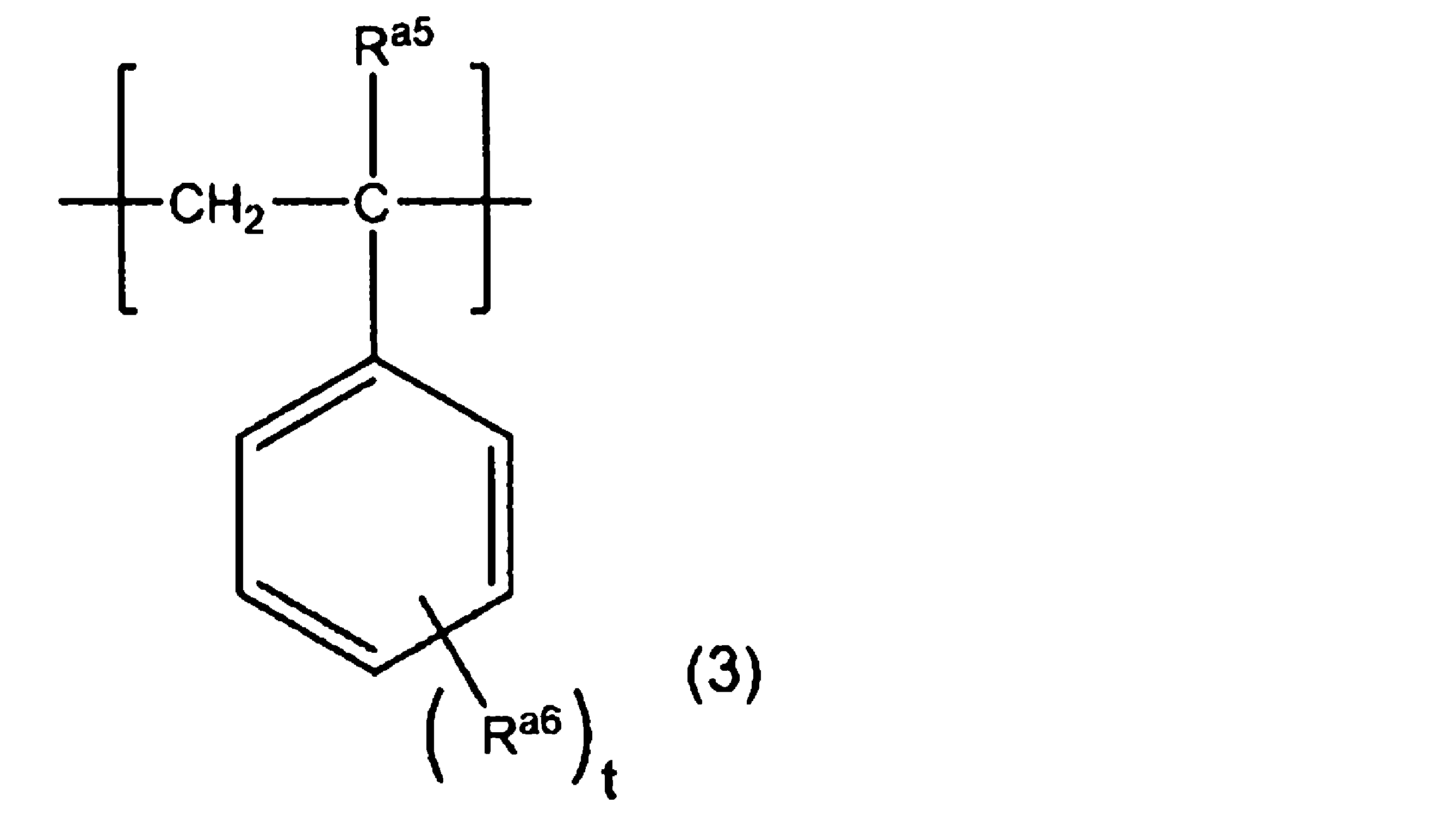
Ra6におけるアルキル基としては、直鎖状、分岐鎖状又は環状のアルキル基が挙げられる。その炭素数は、1以上が好ましく、3以上がより好ましく、5以上がさらに好ましく、また、20以下が好ましく、18以下がより好ましく、16以下がさらに好ましく、14以下がよりさらに好ましく、12以下が特に好ましい。
上記の上限及び下限は任意に組み合わせることができる。例えば、好ましくは1~20、より好ましくは1~18、さらに好ましくは3~16、よりさらに好ましくは5~14である。前記下限値以上とすることで現像密着性が向上する傾向がある。前記上限値以下とすることで残渣が低減する傾向がある。
アルキル基が有していてもよい置換基としては、例えば、メトキシ基、エトキシ基、クロロ基、ブロモ基、フルオロ基、ヒドロキシ基、アミノ基、エポキシ基、オリゴエチレングリコール基、フェニル基、カルボキシ基、アクリロイル基、メタクリロイル基が挙げられ、現像性の観点から、ヒドロキシ基、オリゴエチレングリコール基が好ましい。
上記の上限及び下限は任意に組み合わせることができる。例えば、好ましくは2~22、より好ましくは2~20、さらに好ましくは2~18、よりさらに好ましくは2~16、ことさらに好ましくは2~14である。前記下限値以上とすることで現像密着性が向上する傾向がある。前記上限値以下とすることで残渣が低減する傾向がある。
上記の上限及び下限は任意に組み合わせることができる。例えば、好ましくは2~22、より好ましくは2~20、さらに好ましくは2~18、よりさらに好ましくは2~16、ことさらに好ましくは2~14である。前記下限値以上とすることで現像密着性が向上する傾向がある。前記上限値以下とすることで残渣が低減する傾向がある。
上記の上限及び下限は任意に組み合わせることができる。例えば、好ましくは1~20、より好ましくは1~18、さらに好ましくは1~16、よりさらに好ましくは1~14、ことさらに好ましくは1~12である。前記下限値以上とすることで現像密着性が向上する傾向がある。前記上限値以下とすることで残渣が低減する傾向がある。
上記の上限及び下限は任意に組み合わせることができる。例えば、好ましくは1~20、より好ましくは1~18、さらに好ましくは1~16、よりさらに好ましくは1~14、ことさらに好ましくは1~12である。前記下限値以上とすることで現像密着性が向上する傾向がある。前記上限値以下とすることで残渣が低減する傾向がある。
上記の上限及び下限は任意に組み合わせることができる。例えば、好ましくは0.5~50モル%、より好ましくは1~30モル%、さらに好ましくは1~20モル%、よりさらに好ましくは2~10モル%、ことさらに好ましくは4~6モル%である。前記下限値以上とすることで膜の均一性が向上する傾向がある。前記上限値以下とすることで残渣が低減する傾向がある。
式(1)で表される部分構造の他に、アクリル共重合樹脂(b3)が有する部分構造として、現像性の観点から下記一般式(4)で表される部分構造を有してもよい。

上記の上限及び下限は任意に組み合わせることができる。例えば、好ましくは5~80モル%、より好ましくは10~70モル%、さらに好ましくは20~60モル%である。
前記下限値以上とすることで残渣が低減する傾向がある。前記上限値以下とすることで密着性が向上する傾向がある。
上記の上限及び下限は任意に組み合わせることができる。例えば、100~700g/molが好ましく、200~600g/molがより好ましく、250~500g/molがさらに好ましく、300~500g/molが特に好ましく、400~500g/molがとりわけ好ましい。前記上限値以下とすることで現像性が向上する傾向がある。前記下限値以上とすることで密着性が向上する傾向がある。
上記の上限及び下限は任意に組み合わせることができる。例えば、10~150mgKOH/gが好ましく、20~120mgKOH/gがより好ましく、25~100mgKOH/gがさらに好ましく、30~90mgKOH/gがよりさらに好ましく、40~90mgKOH/gが特に好ましく、50~90mgKOH/gがとりわけ好ましい。前記下限値以上とすることで現像性が向上する傾向がある。前記上限値以下とすることで密着性が向上する傾向がある。
上記の上限及び下限は任意に組み合わせることができる。例えば、1000~30000が好ましく、2000~20000がより好ましく、4000~20000がさらに好ましく、6000~15000がよりさらに好ましく、7000~15000がことさらに好ましく、7000~10000が特に好ましい。前記下限値以上とすることで密着性が向上する傾向がある。前記上限値以下とすることで残渣が低減する傾向がある。
上記の上限及び下限は任意に組み合わせることができる。例えば、10~100質量%が好ましく、20~90質量%がより好ましく、30~80質量%がさらに好ましく、40~70質量%がよりさらに好ましく、50~70質量%が特に好ましい。前記下限値以上とすることで密着性が向上する傾向がある。前記上限値以下とすることで残渣が低減する傾向がある。
下限値以上とすることで透明性が向上する傾向がある。前記上限値以下とすることで光散乱性、現像性が向上する傾向がある。
上記の上限及び下限は任意に組み合わせることができる。例えば、10~900質量%であってよく、30~900質量%であってよく、50~600質量%であってよく、70~500質量%であってよく、100~300質量%であってよい。
なお、本発明の第1の態様の感光性樹脂組成物がポリマー(b11)以外のその他のポリマー(b111)を含む場合、並びに、本発明の第2の態様の感光性樹脂組成物がポリマー(b12)以外のその他のポリマー(b121)を含む場合、酸価は、各々のポリマーの含有割合に応じた加重平均値を意味する。
本発明の感光性樹脂組成物は(c)光重合開始剤を含有する。(c)光重合開始剤は、活性光線により感光性樹脂組成物を硬化させる化合物であれば特に限定されず、好ましくは(d)光重合性化合物を硬化させる化合物である。
オキシムエステル系光重合開始剤は、光反応の量子収率が高く、生成するラジカルの活性が高いために、感度が高く、かつ、熱反応に対して安定であり、少量で高感度な感光性樹脂組成物を得ることが可能である。
オキシムエステル系光重合開始剤は、その構造の中に紫外線を吸収する構造と光エネルギーを伝達する構造とラジカルを発生する構造を併せ持っているために、少量で感度が高く、かつ、熱反応に対して安定であり、少量で高感度な感光性樹脂組成物を得ることが可能である。

R21bは芳香環を含む任意の置換基を示す。
R22aは、置換基を有していてもよいアルカノイル基、又は、置換基を有していてもよいアロイル基を示す。
nは0または1の整数を示す。
アルキル基としては、例えば、メチル基、エチル基、プロピル基、ブチル基、ペンチル基、ヘキシル基、シクロペンチルメチル基、シクロペンチルエチル基、シクロヘキシルメチル基、シクロヘキシルエチル基が挙げられる。
アルキル基が有していてもよい置換基としては、例えば、芳香族環基、水酸基、カルボキシ基、ハロゲン原子、アミノ基、アミド基、4-(2-メトキシ-1-メチル)エトキシ-2-メチルフェニル基、N-アセチル-N-アセトキシアミノ基が挙げられ、合成容易性の観点からは、無置換であることが好ましい。
芳香族環基が有していてもよい置換基としては、例えば、水酸基、カルボキシ基、ハロゲン原子、アミノ基、アミド基、アルキル基、アルコキシ基、これらの置換基が連結した基が挙げられ、現像性の観点からアルキル基、アルコキシ基、これらを連結した基が好ましく、連結したアルコキシ基がより好ましい。
感度の観点から、R21aが置換基を有していてもよいアルキル基、置換基を有していてもよい芳香族環基であることが好ましい。
アルカノイル基としては、例えば、アセチル基、エチロイル基、プロパノイル基、ブタノイル基が挙げられる。
アルカノイル基が有していてもよい置換基としては、例えば、芳香族環基、水酸基、カルボキシ基、ハロゲン原子、アミノ基、アミド基が挙げられ、合成容易性の観点からは、無置換であることが好ましい。
アロイル基としては、例えば、ベンゾイル基、ナフトイル基が挙げられる。
アロイル基が有していてもよい置換基としては、例えば、水酸基、カルボキシ基、ハロゲン原子、アミノ基、アミド基、アルキル基が挙げられ、合成容易性の観点からは、無置換であることが好ましい。
増感色素としては、例えば、日本国特開平4-221958号公報、日本国特開平4-219756号公報に記載のキサンテン色素;日本国特開平3-239703号公報、日本国特開平5-289335号公報に記載の複素環を有するクマリン色素;日本国特開平3-239703号公報、日本国特開平5-289335号公報に記載の3-ケトクマリン化合物;日本国特開平6-19240号公報に記載のピロメテン色素;日本国特開昭47-2528号公報、日本国特開昭54-155292号公報、日本国特公昭45-37377号公報、日本国特開昭48-84183号公報、日本国特開昭52-112681号公報、日本国特開昭58-15503号公報、日本国特開昭60-88005号公報、日本国特開昭59-56403号公報、日本国特開平2-69号公報、日本国特開昭57-168088号公報、日本国特開平5-107761号公報、日本国特開平5-210240号公報、日本国特開平4-288818号公報に記載のジアルキルアミノベンゼン骨格を有する色素;を挙げることができる。
増感色素は、1種を単独で用いてもよく、2種以上を併用してもよい。
重合促進剤は、1種を単独で用いても、2種以上を併用してもよい。
上記の上限及び下限は任意に組み合わせることができる。例えば、0.01~25質量%が好ましく、0.01~20質量%がより好ましく、0.1~15質量%がさらに好ましく、1~10質量%がよりさらに好ましく、1~7質量%がことさらに好ましい。前記下限値以上とすることで密着性が向上する傾向がある。前記上限値以下とすることで現像性が向上する傾向がある。
上記の上限及び下限は任意に組み合わせることができる。例えば、0.1~200質量部が好ましく、1~100質量部がより好ましく、5~50質量部がさらに好ましく、10~30質量部がよりさらに好ましく、10~20質量部が特に好ましい。前記下限値以上とすることで密着性が向上する傾向がある。前記上限値以下とすることで現像性が向上する傾向がある。
脂肪族系のメルカプト基含有化合物の中では、トリメチロールプロパントリス(3-メルカプトプロピオネート)、ペンタエリスリトールテトラキス(3-メルカプトプロピオネート)、ペンタエリスリトールトリス(3-メルカプトプロピオネート)、トリメチロールプロパントリス(3-メルカプトブチレート)、ペンタエリスリトールテトラキス(3-メルカプトブチレート)、ペンタエリスリトールトリス(3-メルカプトブチレート)、1,3,5-トリス(3-メルカプトブチルオキシエチル)-1,3,5-トリアジン-2,4,6(1H,3H,5H)-トリオンが好ましい。
これらは1種を単独で用いてもよく、2種以上を併用してもよい。
感度の観点からは、ペンタエリスリトールテトラキス(3-メルカプトプロピオネート)、ペンタエリスリトールテトラキス(3-メルカプトブチレート)よりなる群から選択された1又は2以上と、(c)光重合開始剤とを組み合わせて用いることが好ましい。
別の態様として、感度の観点から、2-メルカプトベンゾチアゾール、2-メルカプトベンゾイミダゾール、及び2-メルカプトベンゾオキサゾールよりなる群から選択された1又は2以上と、ペンタエリスリトールテトラキス(3-メルカプトプロピオネート)、ペンタエリスリトールテトラキス(3-メルカプトブチレート)よりなる群から選択された1又は2以上と、(c)光重合開始剤とを組み合わせて用いることが好ましい。
上記の上限及び下限は任意に組み合わせることができる。例えば、0.01~5質量%が好ましく、0.1~4質量%がより好ましく、0.5~3質量%がさらに好ましく、0.8~2質量%が特に好ましい。前記下限値以上とすることで密着性が向上する傾向がある。前記上限値以下とすることで現像性が向上する傾向がある。
本発明の感光性樹脂組成物は、(d)光重合性化合物を含有してもよい。(d)光重合性化合物を含有することで、塗膜の硬化性が高くなり、また密着性が向上すると考えられる。
(d)光重合性化合物としては、エチレン性不飽和二重結合を分子内に1個以上有する化合物(以下、エチレン性単量体とも称する。)が挙げられる。重合性、架橋性、およびそれに伴う露光部と非露光部の現像液溶解性の差異を拡大できる等の点から、エチレン性不飽和二重結合を分子内に2個以上有するエチレン性単量体であることが好ましく、また、そのエチレン性不飽和二重結合は(メタ)アクリロイルオキシ基に由来するもの、つまり、(メタ)アクリレート化合物であることがさらに好ましい。
上記の上限及び下限は任意に組み合わせることができる。例えば、2~15個が好ましく、2~10個がより好ましく、3~8個がさらに好ましく、5~7個が特に好ましい。
前記下限値以上とすることで重合性が向上して密着性が高くなる傾向がある。前記上限値以下とすることで現像性がより良好となる傾向がある。
エチレン性単量体としては、例えば、脂肪族ポリヒドロキシ化合物と不飽和カルボン酸とのエステル;芳香族ポリヒドロキシ化合物と不飽和カルボン酸とのエステル;脂肪族ポリヒドロキシ化合物、芳香族ポリヒドロキシ化合物等の多価ヒドロキシ化合物と、不飽和カルボン酸及び多塩基性カルボン酸とのエステル化反応により得られるエステルが挙げられる。
脂肪族ポリヒドロキシ化合物、芳香族ポリヒドロキシ化合物等の多価ヒドロキシ化合物と、不飽和カルボン酸及び多塩基性カルボン酸とのエステル化反応により得られるエステルとしては必ずしも単一物ではないが、代表的な具体例を挙げれば、例えば、アクリル酸、フタル酸、及びエチレングリコールの縮合物、アクリル酸、マレイン酸、及びジエチレングリコールの縮合物、メタクリル酸、テレフタル酸及びペンタエリスリトールの縮合物、アクリル酸、アジピン酸、ブタンジオール及びグリセリンの縮合物が挙げられる。
ウレタン(メタ)アクリレート類としては、例えば、DPHA-40H、UX-5000、UX-5002D-P20、UX-5003D、UX-5005(日本化薬社製)、U-2PPA、U-6LPA、U-10PA、U-33H、UA-53H、UA-32P、UA-1100H(新中村化学工業社製)、UA-306H、UA-510H、UF-8001G(協栄社化学社製)、UV-1700B、UV-7600B、UV-7605B、UV-7630B、UV7640B(三菱ケミカル社製)が挙げられる。
これらは1種を単独で用いてもよく、2種以上を併用してもよい。
上記の上限及び下限は任意に組み合わせることができる。例えば、100~1000が好ましく、150~1000がより好ましく、200~1000がさらに好ましく、300~700がよりさらに好ましく、400~700がことさら好ましく、500~700が特に好ましい。
上記の上限及び下限は任意に組み合わせることができる。例えば、7~50が好ましく、10~50がより好ましく、15~40がさらに好ましく、20~35がよりさらに好ましく、25~30が特に好ましい。
上記の上限及び下限は任意に組み合わせることができる。例えば、1~80質量%が好ましく、5~80質量%がより好ましく、10~60質量%がさらに好ましく、15~40質量%がよりさらに好ましく、20~30質量%が特に好ましい。前記下限値以上とすることで密着性が向上する傾向がある。前記上限値以下とすることで現像性が向上する傾向がある。
上記の上限及び下限は任意に組み合わせることができる。例えば、1~150質量部が好ましく、5~150質量部がより好ましく、10~120質量部がさらに好ましく、20~120質量部がよりさらに好ましく、30~100質量部がことさらに好ましく、40~80質量部が特に好ましく、50~70質量部が最も好ましい。前記下限値以上とすることで密着性が向上する傾向がある。前記上限値以下とすることで現像性が向上する傾向がある。
本発明の感光性樹脂組成物は、現像後の残渣を抑制する観点から、(e)重合禁止剤を含有してもよい。
(e)重合禁止剤としては、例えば、ハイドロキノン、2,6-tert-ブチル-4-クレゾール、2,6-ジ-tert-ブチルフェノール、4-メトキシフェノール、2-メチルハイドロキノン、ハイドロキノン、ベンゾキノン、tert-ブチルカテコール、フェノキサジンが挙げられる。現像性、保存安定性の観点から、4-メトキシフェノール、2-メチルハイドロキノンが好ましく、2-メチルハイドロキノンがより好ましい。
上記の上限及び下限は任意に組み合わせることができる。例えば、0.01~5質量%が好ましく、0.05~3質量%がより好ましく、0.1~2質量%がさらに好ましく、0.1~1質量%がことさら好ましい。前記下限値以上とすることで現像性が向上する傾向がある。前記上限値以下とすることで密着性が向上する傾向がある。
上記の上限及び下限は任意に組み合わせることができる。例えば、0.1~50質量部が好ましく、1~40質量部がより好ましく、2~30質量部がさらに好ましく、2~20質量部がよりさらに好ましく、2~10質量部がことさら好ましい。前記下限値以上とすることで現像性が向上する傾向がある。前記上限値以下とすることで密着性が向上する傾向がある。
本発明の感光性樹脂組成物に含有されるポリマー成分の製造方法によっては製造されたポリマーに重合禁止剤が含まれることがある。その場合、ポリマーに重合禁止剤が含まれたまま用いてもよいし、樹脂中に含まれる重合禁止剤の他に、それと同一、又は異なる重合禁止剤を感光性樹脂組成物製造時にさらに添加してもよい。
本発明の感光性樹脂組成物は、(f)紫外線吸収剤を含有してもよい。
(f)紫外線吸収剤としては、例えば、ベンゾフェノン系紫外線吸収剤、ベンゾトリアゾール系紫外線吸収剤、シアノアクリレート系紫外線吸収剤、トリアジン系紫外線吸収剤、ベンゾオキサジン系紫外線吸収剤が挙げられる。
ベンゾオキサジン系紫外線吸収剤には2,2’-(1,4-フェニレン)ビス(4H-3,1-ベンゾオキサジン-4-オン)、2-メチル-3,1-ベンゾオキサジン-4-オン、2-ブチル-3,1-ベンゾオキサジン-4-オン、2-フェニル-3,1-ベンゾオキサジン-4-オンが挙げられる。
(f)紫外線吸収剤は、1種を単独で用いてもよく、2種以上を併用してもよい。
上記の上限及び下限は任意に組み合わせることができる。例えば、0.01~10質量%が好ましく、0.1~5質量%がより好ましく、0.5~3質量%がさらに好ましく、1~2質量%がことさら好ましい。前記下限値以上とすることで現像性密着性が向上する傾向がある。前記上限値以下とすることで密着性が向上する傾向がある。
上記の上限及び下限は任意に組み合わせることができる。例えば、0.1~100質量部が好ましく、0.5~50質量部がより好ましく、1~30質量部がさらに好ましく、2~20質量部がよりさらに好ましく、2~10質量部がことさら好ましい。前記下限値以上とすることで現像性が向上する傾向がある。前記上限値以下とすることで密着性が向上する傾向がある。
現像の際、未露光部から感光性樹脂組成物の残渣を除去する作用があり、また、濡れ性を発現する機能を有することから、シリコーン系界面活性剤が好ましく、ポリエーテル変性シリコーン系界面活性剤がさらに好ましい。硬化物の平坦性を向上する観点では、フッ素系界面活性剤が好ましい。
フッ素系界面活性剤の市販品としては、例えば、BM Chemie社製「BM-1000」、「BM-1100」、DIC社製「メガファックF142D」、「メガファックF172」、「メガファックF173」、「メガファックF183」、「メガファックF470」、「メガファックF475」、「メガファックF554」、「メガファックF559」、スリーエムジャパン社製「FC430」、ネオス社製「DFX-18」を挙げることができる。
ノニオン性界面活性剤の市販品としては、例えば、花王社製の「エマルゲン(登録商標、以下同じ。)104P」、「エマルゲンA60」等のポリオキシエチレン系界面活性剤が挙げられる。
アニオン性界面活性剤の市販品としては、アルキル硫酸エステル塩類では、例えば、花王社製「エマール(登録商標、以下同じ。)10」、アルキルナフタレンスルホン酸塩類では、例えば、花王社製「ペレックス(登録商標。)NB-L」、特殊高分子系界面活性剤では、例えば、花王社製「ホモゲノール(登録商標、以下同じ。)L-18」、「ホモゲノールL-100」が挙げられる。
カチオン性界面活性剤としては、第4級アンモニウム塩類が好ましく、ステアリルトリメチルアンモニウム塩類がさらに好ましい。
カチオン性界面活性剤の市販品としては、アルキルアミン塩類では、例えば、花王社製「アセタミン(登録商標。)24」、第4級アンモニウム塩類では、例えば、花王社製「コータミン(登録商標、以下同じ。)24P」、「コータミン86W」が挙げられる。
シリコーン系界面活性剤とフッ素系界面活性剤との組み合わせでは、例えば、ネオス社製「DFX-18」、ビックケミー社製「BYK-300」または「BYK-330」とAGCセイミケミカル社製「S-393」との組み合わせ;信越シリコーン社製「KP340」とDIC社製「F-554」または「F-559」との組み合わせ;東レ・ダウコーニング社製「SH7PA」とダイキン社製「DS-401」との組み合わせ;NUC社製「L-77」とスリーエムジャパン社製「FC4430」との組み合わせが挙げられる。
本発明の感光性樹脂組成物は、(a)樹脂粒子を微細に分散させ、かつその分散状態を安定化させるため、(g)分散剤を含有することが好ましい。
(g)分散剤としては、官能基を有する高分子分散剤が好ましく、さらに、分散安定性の面からカルボキシ基;リン酸基;スルホン酸基;又はこれらの塩基;一級、二級又は三級アミノ基;四級アンモニウム塩基;ピリジン、ピリミジン、ピラジン等の含窒素ヘテロ環由来の基、等の官能基を有する高分子分散剤が好ましい。特に、一級、二級又は三級アミノ基;四級アンモニウム塩基;ピリジン、ピリミジン、ピラジン等の含窒素ヘテロ環由来の基、等の塩基性官能基を有する高分子分散剤が顔料を分散する際に少量の分散剤で分散することができるとの観点から特に好ましい。
高分子分散剤は、1種を単独で用いてもよく、2種以上を併用してもよい。
上記の上限及び下限は任意に組み合わせることができる。例えば、高分子分散剤の重量平均分子量(Mw)は700~100000が好ましく、1000~50000がより好ましい。
分散性、保存性の面から、塩基性官能基を有し、ポリエステル結合及びポリエーテル結合のいずれか一方又は両方を有する高分子分散剤が好ましい。
官能基を含まない部分構造の、Aブロック中の含有量は、好ましくは80質量%以下であり、より好ましくは50質量%以下、さらに好ましくは30質量%以下である。
A-B又はB-A-Bブロック共重合体は、例えば、以下に示すリビング重合法にて調製される。
リビング重合法には、アニオンリビング重合法、カチオンリビング重合法、ラジカルリビング重合法がある。
上記の上限及び下限は任意に組み合わせることができる。例えば、1~100mgKOH/gが好ましく、10~90mgKOH/gがより好ましく、30~80mgKOH/gがさらに好ましく、50~75mgKOH/gが特に好ましい。
100mLのビーカーに分散剤試料の0.5~1.5gを精秤し、50mLの酢酸で溶解する。pH電極を備えた自動滴定装置を使って、この溶液を0.1mol/LのHClO4酢酸溶液にて中和滴定する。滴定pH曲線の変曲点を滴定終点とし次式によりアミン価を求める。
〔但し、W:分散剤試料秤取量[g]、V:滴定終点での滴定量[mL]、S:分散剤試料の固形分濃度[質量%]を表す。〕
ブロック共重合体の重量平均分子量(Mw)は、1000~100000の範囲が好ましい。前記範囲内とすることで良好な分散性を確保できる傾向がある。
上記の上限及び下限は任意に組み合わせることができる。例えば、0.1~60質量%が好ましく、0.1~40質量%がより好ましく、0.5~30質量%がさらに好ましく、0.5~20質量%が特に好ましい。前記下限値以上とすることで凝集物を抑制し、樹脂粒子の分散状態が均一な塗膜を形成できる傾向がある。前記上限値以下とすることで造膜性が向上し、平滑な膜を形成できる傾向がある。
上記の上限及び下限は任意に組み合わせることができる。例えば、1~150質量部が好ましく、5~120質量部がより好ましく、10~100質量部がさらに好ましく、20~100質量部が特に好ましく、50~100質量部がことさら好ましい。前記下限値以上とすることで凝集物による残渣発生を抑制できる傾向がある。前記上限値以下とすることで造膜性が向上し、平滑な膜を形成できる傾向がある。
本発明の感光性樹脂組成物は、熱重合開始剤を含有してもよい。熱重合開始剤を含有することで、膜の架橋度を高くできる傾向がある。
熱重合開始剤としては、例えば、アゾ系化合物、有機過酸化物、過酸化水素が挙げられる。
これらは1種を単独で用いてもよく、2種以上を併用してもよい。
光重合開始剤と熱重合開始剤とを併用する場合の併用割合としては、耐熱性の観点から、光重合開始剤100質量部に対して熱重合開始剤を5~300質量部とすることが好ましい。
本発明の感光性樹脂組成物は、基板との密着性を改善するため、シランカップリング剤を含有してもよい。
シランカップリング剤としては、例えば、エポキシ系、メタクリル系、アミノ系、イミダゾール系のシランカップリング剤が使用できる。密着性向上の観点から、特にエポキシ系、イミダゾール系のシランカップリング剤が好ましい。
上記の上限及び下限は任意に組み合わせることができる。例えば、0.01~20質量部が好ましく、0.5~15質量部がより好ましく、0.5~10質量部がさらに好ましく、0.5~5質量部が特に好ましく、0.5~2質量部がことさら好ましい。
前記下限値以上とすることで基板との密着性が高くなる傾向がある。前記上限値以下とすることで塗布液の保存安定性が高くなる傾向がある。
本発明の感光性樹脂組成物は、硬化物としての強度の向上と共に、ポリマーとの適度な相互作用(マトリックス構造の形成)による塗膜の優れた垂直性とテーパ角の向上等を目的として、前述の無機粒子とは別に、無機充填剤を含有してもよい。
無機充填剤としては、例えば、タルク、硫酸バリウム、或いは、これらを各種シランカップリング剤により表面処理したものが挙げられる。
本発明の感光性樹脂組成物が無機充填剤を含有する場合、その含有量としては、硬化物の耐クラック性の観点から、感光性樹脂組成物の全固形分量に対して、好ましくは5質量%以上、より好ましくは10質量%以上であり、また、好ましくは80質量%以下、より好ましくは70質量%以下である。
上記の上限及び下限は任意に組み合わせることができる。例えば、5~80質量%が好ましく、10~70質量%がより好ましい。
本発明の感光性樹脂組成物は、基板との密着性を付与する目的で、密着性向上剤を含有してもよい。密着性向上剤としては、例えば、リン酸系のエチレン性単量体が挙げられる。
リン酸系のエチレン性単量体としては、(メタ)アクリロイルオキシ基含有ホスフェート類が好ましく、下記一般式(g1)、(g2)、(g3)で表されるものが好ましい。

本発明の感光性樹脂組成物が密着性向上剤としてリン酸系エチレン性単量体を含有する場合、その含有割合は、感光性樹脂組成物の全固形分量に対して0.02質量%以上が好ましく、0.05質量%以上がより好ましく、0.1質量%以上がさらに好ましく、0.2質量%以上が特に好ましく、また、4質量%以下が好ましく、3質量%以下がより好ましく、2質量%以下がさらに好ましく、1質量%以下が特に好ましい。
上記の上限及び下限は任意に組み合わせることができる。例えば、0.02~4質量%が好ましく、0.05~3質量%がより好ましく、0.1~2質量%がさらに好ましく、0.2~1質量%が特に好ましい。前記下限値以上とすることで基板との密着性の改善効果が十分となる傾向がある。上記上限値以下とすることで基板との密着性の悪化を抑制しやすい傾向がある。
本発明の感光性樹脂組成物は、溶剤を含有し、感光性樹脂組成物に含有される各成分を溶剤に溶解または分散させた状態で用いてもよい。その溶剤としては、特に制限は無いが、例えば、以下に記載する有機溶剤が挙げられる。
溶剤は、感光性樹脂組成物溶液中の全固形分量の含有割合が、好ましくは10質量%以上、より好ましくは15質量%以上、さらに好ましくは20質量%以上、特に好ましくは25質量%以上、また、好ましくは90質量%以下、より好ましくは50質量%以下、さらに好ましくは40質量%以下、特に好ましくは35質量%以下となるように使用されることが好ましい。
上記の上限及び下限は任意に組み合わせることができる。例えば、好ましくは10~90質量%、より好ましくは15~50質量%、さらに好ましくは20~40質量%、特に好ましくは25~35質量%となるように使用される。前記下限値以上とすることで塗布ムラの発生を抑制できる傾向がある。前記上限値以下とすることで異物、ハジキ等の発生を抑制できる傾向がある。
本発明の感光性樹脂組成物は、感光性樹脂組成物に含有される各成分を撹拌機で混合することにより調製される。
例えば、(a)樹脂粒子等の溶剤不溶成分を含有する場合には、予めスターラー、スリーワンモーター、ペイントコンディショナー、サンドグラインダー、ボールミル、ロールミル、ストーンミル、ジェットミル、ホモジナイザー等を用いて分散処理することが好ましい。分散処理により(a)樹脂粒子や有機顔料、無機粒子が微粒子化されるため、感光性樹脂組成物の塗布特性が向上する。
本発明の感光性樹脂組成物を製造する工程において、(a)樹脂粒子、有機顔料、無機粒子、溶剤、及び(g)分散剤を含有する樹脂粒子分散液を製造することが好ましい。
樹脂粒子分散液に用いることができる(a)樹脂粒子、有機顔料、無機粒子、有機溶剤、及び(g)分散剤としては、それぞれ感光性樹脂組成物に用いることができるものとして記載したものを好ましく採用することができる。また、樹脂粒子分散液における(a)樹脂粒子の含有割合としても、感光性樹脂組成物における含有割合として記載したものを好ましく採用することができる。
分散処理条件は、温度は0℃から100℃が好ましく、より好ましくは室温から80℃の範囲である。分散時間は液の組成及び分散処理装置のサイズ等により適正時間が異なるため適宜調節する。感光性樹脂組成物の20度鏡面光沢度(JIS Z8741)が50~300の範囲となるように、インクの光沢を制御することが分散の目安である。
本発明の感光性樹脂組成物を硬化させることで、本発明の硬化物を得ることができる。
本発明の感光性樹脂組成物は隔壁内の硬化物として用いることができ、例えば、有機電界発光素子や半導体発光素子からの光を散乱する材料として本発明の硬化物を好適に用いることができる。
本発明の感光性樹脂組成物を用いて硬化物を形成する方法は特に限定されず、従来公知の方法を採用することができる。硬化物の形成方法としては、例えば、感光性樹脂組成物を、基板上に塗布し、感光性樹脂組成物層を形成する塗布工程と、感光性樹脂組成物層を露光する露光工程と、を含む方法が挙げられる。このような硬化物の形成方法の具体例としては、インクジェット法とフォトリソグラフィー法とが挙げられる。
ポストベーク時間としては、15~180分間が好ましい。
樹脂材料としては、例えば、ポリエチレンテレフタレート等のポリエステル;ポリエチレン、及びポリプロピレン等のポリオレフィン;ポリカーボネート;ポリ(メタ)メタアクリル樹脂;ポリスルホン;ポリイミドが挙げられる。
これらの基板の材料の中では、耐熱性に優れることからガラス、及びポリイミドが好ましい。また、製造される有機電界発光素子の種類に応じて、硬化物が形成される基板の表面には、予めITOやZnO等の透明電極層を設けておいてもよい。
上記の上限及び下限は任意に組み合わせることができる。例えば、0.1μm以上1mm以下であってよく、0.1~100μmであってよく、1~50μmであってよく、1~30μmであってよく、3~20μmであってよく、5~10μmであってよい。
本発明のカラーフィルターは、本発明の硬化物を備え、発光性ナノ結晶粒子を含む。
本発明のカラーフィルターは、発光性ナノ結晶粒子を含み、かつ本発明の硬化物を備えていれば特に限定されず、隔壁で区画された領域に画素を形成したものが挙げられる。
本発明の硬化物は、光散乱層として用いることができる。電界発光素子等を含む画像表示装置の光散乱層として用いた場合、発光効率を高める傾向がある。
電界発光素子は発光層の屈折率が高いため、発光した光が界面で全反射しやすく、外部への光の取り出し効率が低下しやすい。そこで光散乱層により発生した光の進行方向を変化させ、界面での光の反射を抑制し、光取り出し効率を向上する用途や、粒子添加により散乱膜表面に凹凸を形成し、界面での光の反射を抑制することで光取り出し効率を向上する用途の他、画像表示装置表面に外光の映り込みを抑制する用途に、本発明の光散乱層を用いることができる。
また、半導体発光素子等を含む画像表示装置の光散乱層として用いた場合、配光特性を改善する傾向がある。光散乱層により光の進行方向を制御することで、視野角を拡大する用途に、本発明の光散乱層を用いることができる。
本発明の画像表示装置は、本発明の硬化物を備える。例えば、本発明の硬化物を画素領域に含むカラーフィルター、本発明の硬化物を用いた光散乱層を備える。
画像表示装置の型式や構造については特に制限はなく、光源は、例えば、有機電界発光素子、半導体発光素子を用いることができる。
画像表示装置の種類としては、例えば、液晶表示装置や、有機電界発光素子、半導体発光素子を含む画像表示装置が挙げられる。
液晶表示装置としては、青色LEDを備えた光源と、光源から発せられた青色光を画素部ごとに制御する電極を備えた液晶層を含む画像表示装置が挙げられる。
その他、カラーフィルターの各画素部に対応する位置に青色発光の有機電界発光素子、半導体発光素子を配置したものが挙げられる。例えば、日本国特開2019-87746号公報、日本国特開2021-089433号公報に記載の方式が挙げられる。
以下の実施例及び比較例で用いた感光性樹脂組成物の構成成分は次の通りである。
(前駆体樹脂の合成)
撹拌機、冷却管を備えた適切なサイズの反応容器に、2-ノルボルネン(75質量%トルエン溶液、丸善石油化学社製、125.5g、1.00mol)およびジメチル2,2’-アゾビス(2-メチルプロピオネート)(V-601、和光純薬工業社製、9.2g、40mmol)を計量し、メチルエチルケトン(MEK、196.1g)に溶解させた。この溶液に対して10分間窒素を通気して酸素を除去した後、撹拌しつつ80℃まで加熱した。溶液を80℃に保持しつつ、あらかじめ調製しておいた無水マレイン酸(日本触媒社製、98.1g、1.00mol)をMEK119.9gに溶解した溶液を1.5時間で滴下し、その温度でさらに8時間反応させた。この反応混合物を大量のメタノールに滴下し、ポリマーを析出させた。ヌッチェフィルターを用いてろ過した後、さらにメタノールにて固体を洗浄し、70℃で真空乾燥した。得られた前駆体樹脂の重量平均分子量Mwは6900であった。
撹拌機、冷却管を備えた適切なサイズの反応容器に、前駆体樹脂の合成で得た前駆体樹脂(50.0g)を計量しMEK(90g)に溶解させた。さらにメタクリル酸2-ヒドロキシエチル(日本触媒社製、21.2g、163mmol)、トリエチルアミン(5.0g)を添加し、70℃で6時間加熱した。この反応液に対して、メタクリル酸グリシジル(11.1g、78mmol)を添加し、さらに70℃で4時間撹拌した。反応液にギ酸を加えて酸処理した後、大量の純水に滴下しポリマーを析出させた。濾取した固体を真空乾燥機にて40℃で16時間乾燥させ、ポリマー-Iを得た。重量平均分子量Mwは7800、固形分酸価は105mgKOH/g、二重結合当量は540g/mol。
ポリマー-Iは式(I)で表される繰り返し単位(I)を有するポリマー(b11)に該当する。
ジシクロペンタニルメタクリレート/スチレン/グリシジルメタクリレート(モル比:0.30/0.10/0.60)を構成モノマーとする共重合樹脂に、アクリル酸を前記グリシジルメタクリレートに対して等量付加反応させ、さらに無水テトラヒドロフタル酸を上記の共重合樹脂1モルに対して0.39モルになるように付加反応させた、アルカリ可溶性のアクリル共重合樹脂。GPCで測定したポリスチレン換算の重量平均分子量(Mw)は9000、固形分酸価は80mgKOH/g、二重結合当量は470g/mol。
ポリマー-IIは式(I)で表される繰り返し単位(I)を有するポリマー(b11)に該当しない。
日本化薬社製「ZCR-1642H」。重量平均分子量Mwは6500、固形分酸価は98mgKOH/g、二重結合当量は440g/mol。
ポリマー-IIIは式(I)で表される繰り返し単位(I)を有するポリマー(b11)に該当しない。
ベンジルメタクリレート/メタクリル酸(モル比0.73/0.27)を構成モノマーとする共重合樹脂。重量平均分子量Mwは12100、固形分酸価は98mgKOH/g。
ポリマー-IVは側鎖にエチレン性不飽和二重結合を有さない。ポリマー-IVはポリマー(b11)に該当しない。
PGMEA:プロピレングリコールモノメチルエーテルアセテート
<溶剤-II>
PGME:プロピレングリコールモノメチルエーテル
DPHA:日本化薬社製 ジペンタエリスリトールヘキサアクリレートとジペンタエリスリトールペンタアクリレートの混合物
2-(N,N―ジメチルアミノ)-2-(4-メチルベンジル)-1-(4-モルフォリノフェニル)ブタン-1-オン
以下の化学構造を有する化合物を用いた。
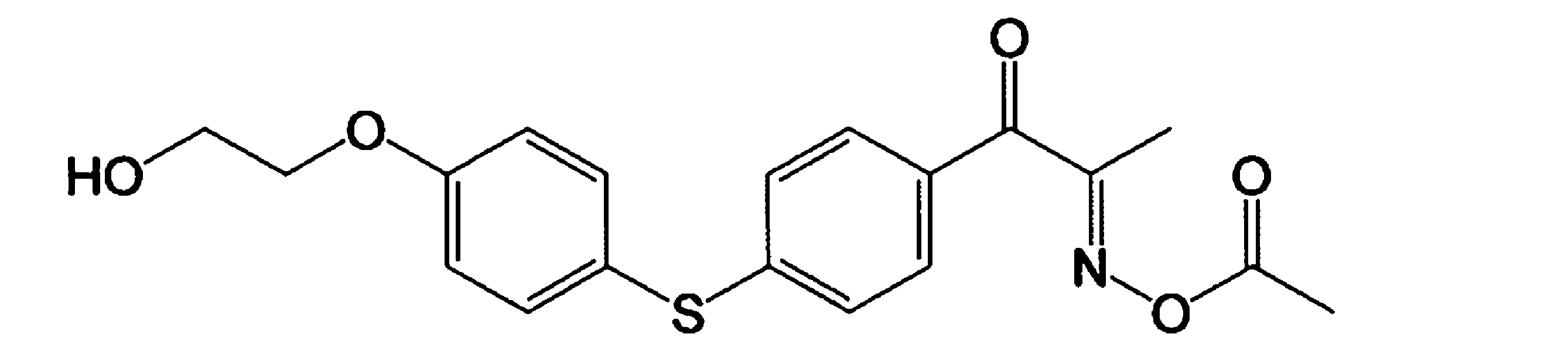
DIC社製 メガファック F-559(フッ素系界面活性剤)
2-メチルハイドロキノン
日本化薬社製 KAYAMER PM-21(メタクリロイル基含有ホスフェート)
日本触媒社製 エポスターS6(メラミン・ホルムアルデヒド縮合物(メラミン樹脂)、平均一次粒子径0.4μm、屈折率1.66)
<樹脂粒子-II>
日本触媒社製 エポスターS12(メラミン・ホルムアルデヒド縮合物(メラミン樹脂)、平均一次粒子径1.4μm、屈折率1.66)
<樹脂粒子-III>
綜研化学社製 SX-130H(スチレン樹脂、平均一次粒子径1.3μm、屈折率1.59)
<無機粒子-I>
石原産業社製 PT501R(酸化チタン、一次粒子の平均粒子径0.18μm、屈折率2.7)
樹脂粒子-I、ポリマー-II、及び溶剤を、表1に記載の質量比となるように混合した。この混合液をペイントシェーカーにより25~45℃の範囲で2時間分散処理を行った。ビーズとしては、0.1mmφのジルコニアビーズを用い、混合液の1.7倍の質量を加えた。分散終了後、フィルターによりビーズと分散液を分離して、樹脂粒子分散液-Iを調製した。
なお、表5中のポリマーの配合割合は固形分換算値であり、溶剤の配合割合には分散剤由来の溶剤の量も含まれる。
樹脂粒子-IIを用いたこと以外は樹脂粒子分散液-Iと同様な操作により分散処理を行い、樹脂粒子分散液-IIを調製した。
樹脂粒子-IIIを用いたこと以外は樹脂粒子分散液-Iと同様な操作により分散処理を行い、樹脂粒子分散液-IIIを調製した。
無機粒子-I、アミノ基含有塩基性高分子系アクリル分散剤(分散剤-I)、及び溶剤を、表5に記載の質量比となるように混合した。分散処理を6時間行い、ビーズとしては、0.3mmφのジルコニアビーズを用い、混合液の2.5倍の質量を加えたこと以外は、樹脂粒子分散液-Iと同様な操作により分散処理を行い、無機粒子分散液-Iを調製した。
無機粒子分散液-Iと同様な操作により分散処理を行い、無機粒子分散液-IIを調製した。
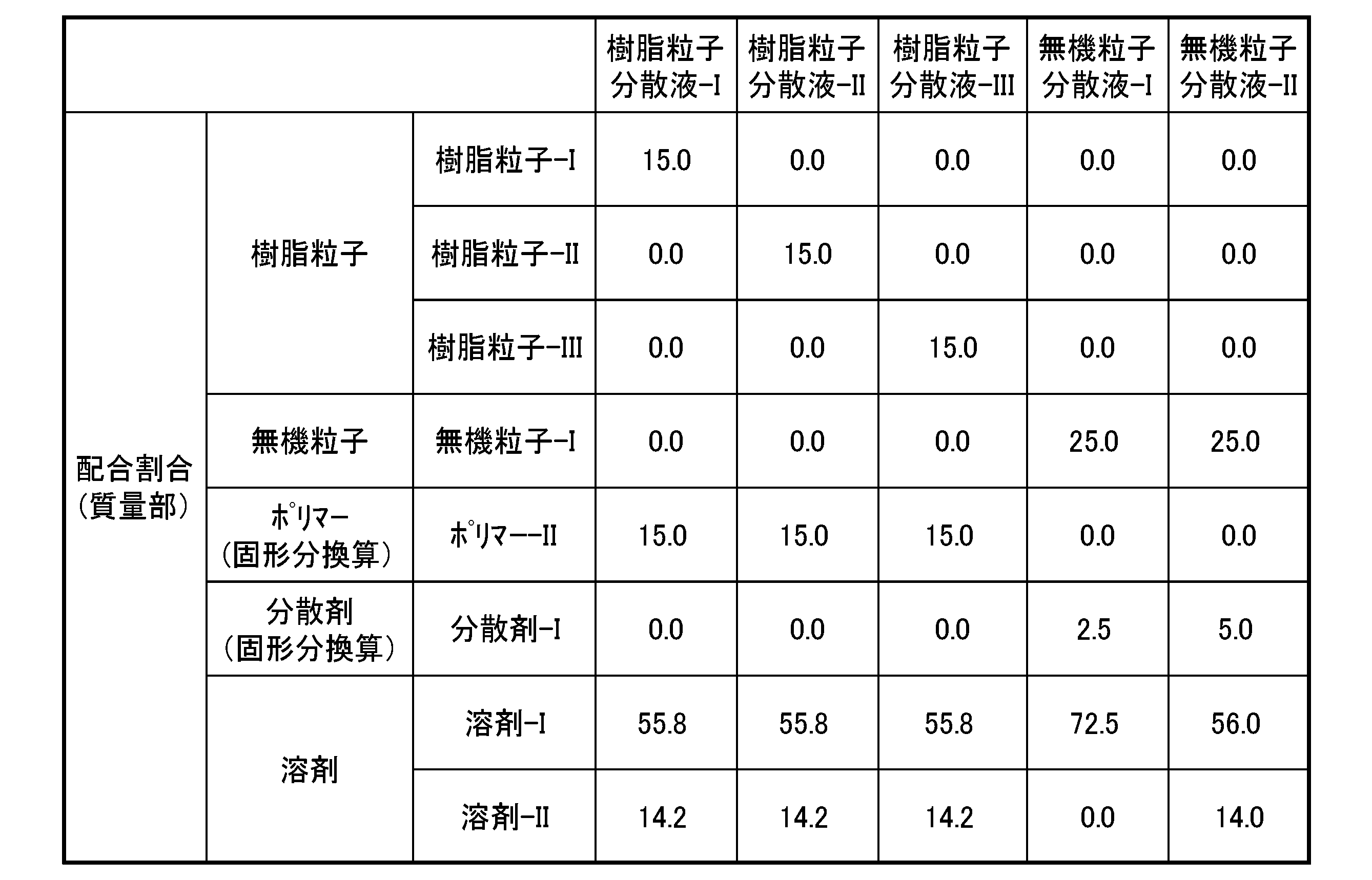
全固形分中の各成分の固形分の比率が、表6~7の配合割合、全固形分の含有割合となるように各成分を加え、さらに全固形分の含有割合が表6~7に記載の固形分濃度、かつ、全溶剤中において溶剤-I/溶剤-II=80/20(質量比)となるように溶剤を加え、攪拌、溶解させて、組成物1~10を調製した。得られた各感光性樹脂組成物を用いて、後述する方法で評価を行った。
なお、表6~7中の樹脂粒子分散液、無機粒子分散液、ポリマー、界面活性剤の配合割合は固形分換算値である。
表6~8中、γMAXはポリマーを構成する繰り返し単位の無限希釈活量係数のうち、最も高い値、γMINはポリマーを構成する繰り返し単位の無限希釈活量係数のうち、最も低い値を前述と同様な方法により算出した数値を表す。

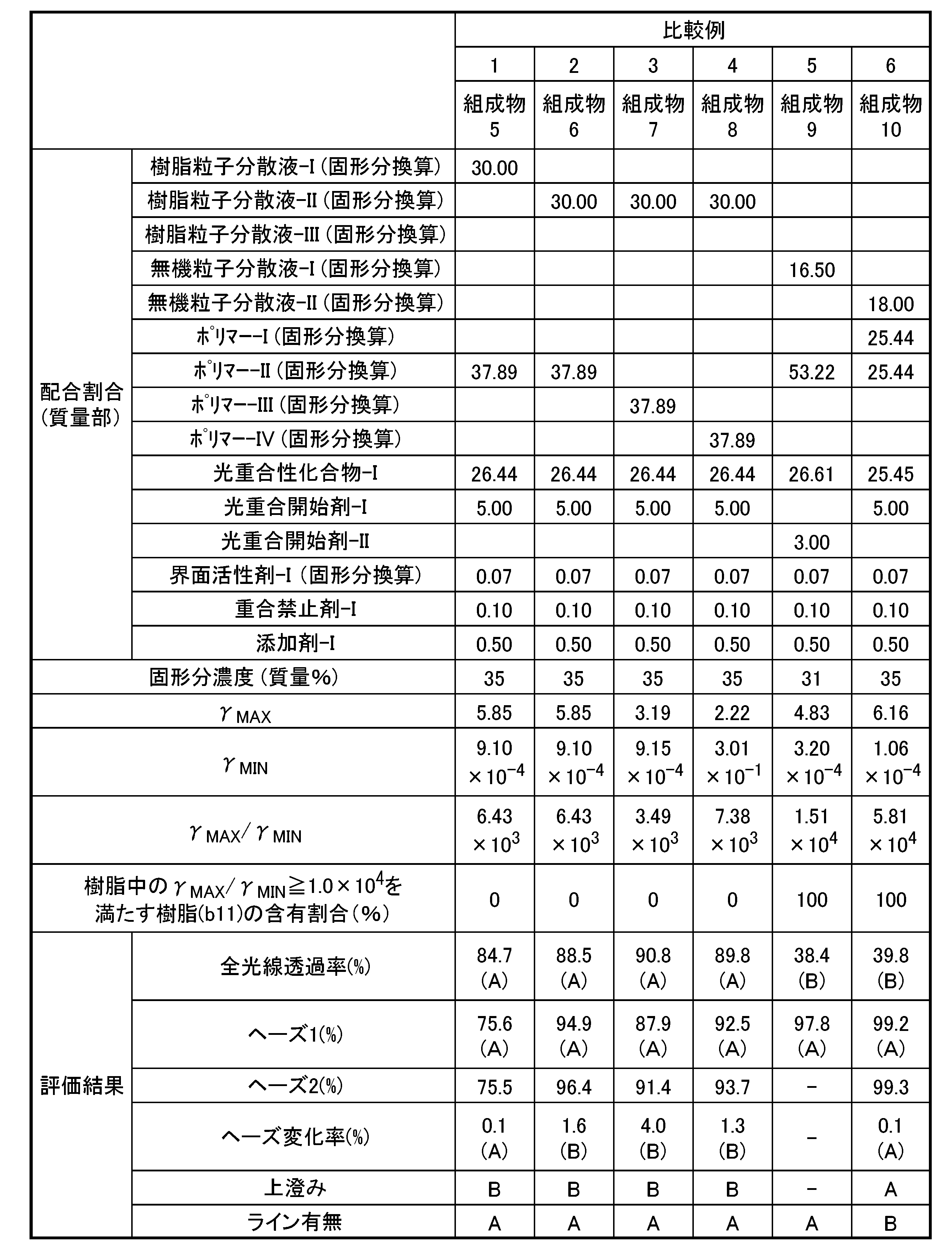
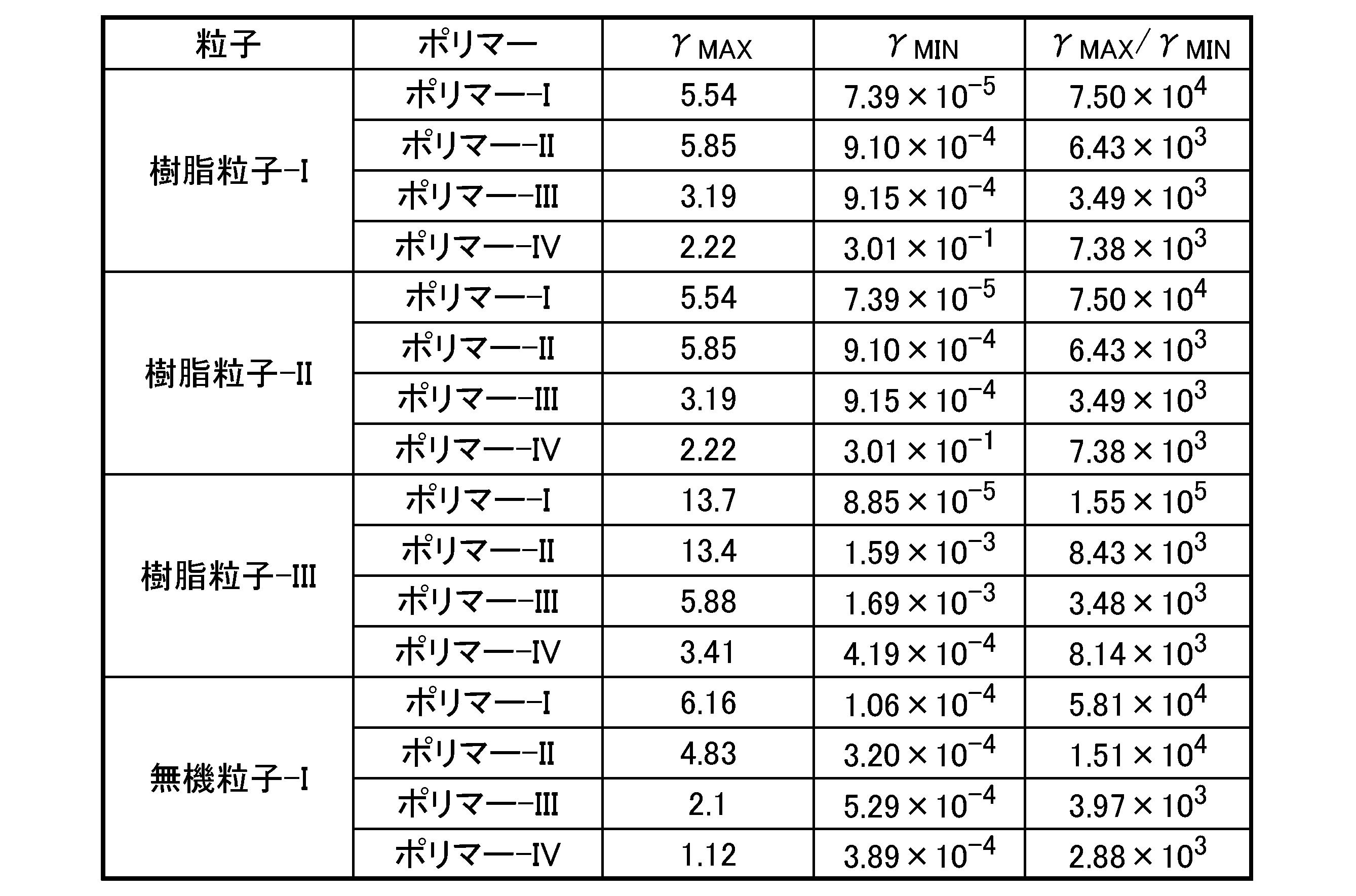
感光性樹脂組成物をミックスローターで20分間攪拌し、ガラス基板上にスピナーを用いて、加熱硬化後の硬化膜の厚みが10μmになるように前記感光性樹脂組成物を塗布した。得られた基板を1分間真空乾燥し、さらに100℃で120秒間、ホットプレート上で加熱乾燥して塗膜基板を得た。次に、高圧水銀灯を用いて、波長330nm以下の光をカットし、50mJ/cm2で全面露光した。この時の波長365nmにおける光強度は45mW/cm2であった。次いで、この基板を0.03質量%のKOH及び0.07質量%のエマルゲンA-60(花王社製界面活性剤)を溶解した水溶液を現像液として、24℃で70秒間スプレー現像した後、純水で10秒間洗浄した。最後にこの基板をオーブン中150℃で30分間加熱硬化し、光学評価用基板を得た。
A:80%以上
B:80%未満
A:75%以上
B:75%未満
感光性樹脂組成物8gを20mLバイアル瓶(内径2.1cm)に入れ、ミックスローターで攪拌後3時間静置し、バイアル瓶の底より1cmのところから0.5mLの感光性樹脂組成物をスポイトで採取し、光学評価用基板と同様な操作により保存安定性評価用基板を作製した。
保存安定性評価用基板のヘーズを光学評価用基板と同様な操作により測定し、ヘーズ2とした。
ヘーズ変化率を次式より算出した。ヘーズ変化率の評価基準を以下に示す。ヘーズ変化率が小さいほど、保存安定性が高い。
ヘーズ変化率(%)={|ヘーズ1-ヘーズ2|/ヘーズ1}×100(ヘーズ変化率の評価基準)
A:1.0%未満
B:1.0%以上
(上澄みの評価基準)
A:上澄み無し
B:上澄み有り
上澄みが無い場合、保存安定性が高い。
露光時に開口幅5~50μm(5~20μm:1μmおき、25~50μm:5μmおき)で開口長さ2mmの各種幅のライン状開口部を有するフォトマスクを使用し、露光ギャップを100μmとしたこと以外は光学評価用基板と同様な操作手順により、ライン状パターン基板を作製した。
前記ライン状パターン基板上のライン全体(2mm)を光学顕微鏡で観察し、欠けや剥離がなく基板上に密着しているラインの有無を確認した。
A:基板上にライン有り
B:基板上にライン無し
現像性が高い場合、基板上にラインを形成することができる。
2 緑色発光性のナノ結晶粒子
3 光源からの光を散乱する粒子
10 基板
20 隔壁
30 赤色画素
40 緑色画素
50 青色画素
100 カラーフィルター
Claims (23)
- (a)樹脂粒子、ポリマー(b11)及び(c)光重合開始剤を含有する感光性樹脂組成物であって、
前記ポリマー(b11)が、下記一般式(I)で表される繰り返し単位(I)を有することを特徴とする感光性樹脂組成物。

- 前記ポリマー(b11)が側鎖にエチレン性不飽和二重結合を有する、請求項1に記載の感光性樹脂組成物。
- 前記ポリマー(b11)が、カルボキシ基を有する、請求項1に記載の感光性樹脂組成物。
- 前記ポリマー(b11)が、下記一般式(II-1)で表される繰り返し単位をさらに有する、請求項1に記載の感光性樹脂組成物。
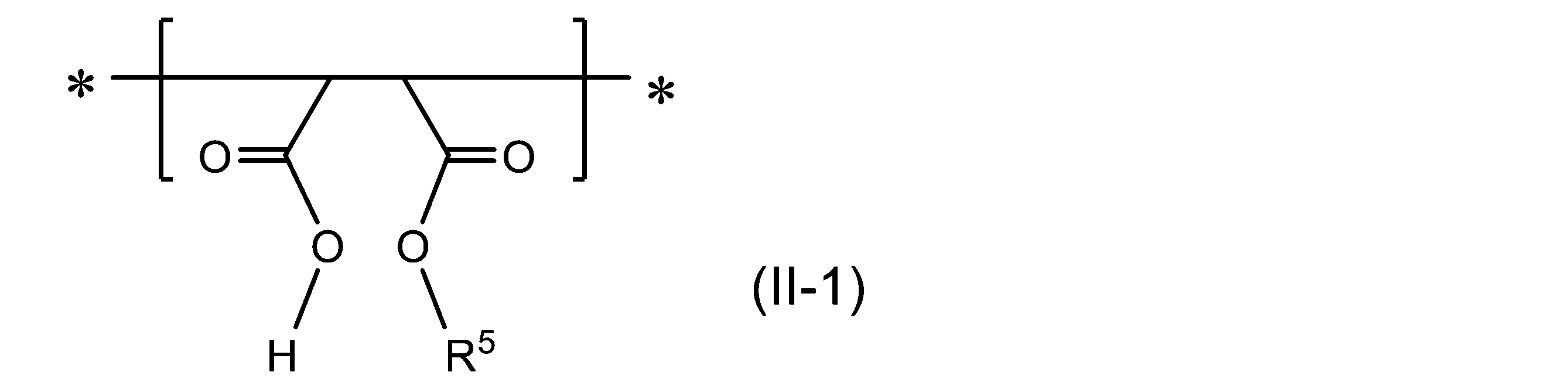
- 前記一般式(II-1)で表される繰り返し単位が、下記一般式(II-2-1)で表される繰り返し単位である、請求項4に記載の感光性樹脂組成物。

- 前記ポリマー(b11)が、下記一般式(III-1)で表される繰り返し単位をさらに有する、請求項4に記載の感光性樹脂組成物。

- 前記ポリマー(b11)の含有割合が、前記ポリマー(b11)、及びポリマー(b2)の合計量に対して20質量%以上であり、
前記ポリマー(b2)が、前記ポリマー(b11)以外のエポキシ(メタ)アクリレート樹脂である、請求項1~6のいずれか1項に記載の感光性樹脂組成物。 - 前記ポリマー(b11)の含有割合が、感光性樹脂組成物中のポリマー成分の合計量に対して10質量%以上である、請求項1~6のいずれか1項に記載の感光性樹脂組成物。
- 前記(a)樹脂粒子の含有割合が、感光性樹脂組成物の全固形分量に対して5質量%以上である、請求項1~6いずれか1項に記載の感光性樹脂組成物。
- 前記(a)樹脂粒子が、メラミン樹脂、ベンゾグアナミン樹脂、スチレン樹脂から選ばれる少なくとも一つを含有する、請求項1~6のいずれか一項に記載の感光性樹脂組成物。
- 前記(a)樹脂粒子の一次粒子の平均粒子径が0.4μm以上である請求項1~6のいずれか一項に記載の感光性樹脂組成物。
- 前記(a)樹脂粒子の一次粒子の平均粒子径が0.5μmを超える請求項1~6のいずれか一項に記載の感光性樹脂組成物。
- さらに(d)光重合性化合物を含有する、請求項1~6のいずれか1項に記載の感光性樹脂組成物。
- さらに(e)重合禁止剤を含有する、請求項1~6のいずれか1項に記載の感光性樹脂組成物。
- さらに(f)紫外線吸収剤を含有する、請求項1~6のいずれか1項に記載の感光性樹脂組成物。
- (a)樹脂粒子、ポリマー(b12)及び(c)光重合開始剤を含有する感光性樹脂組成物であって、
前記ポリマー(b12)が、下記式(X)を満たすことを特徴とする感光性樹脂組成物。
γMAX/γMIN≧1.0×104 ・・・(X)
γMAX:ポリマー(b12)を構成する繰り返し単位の無限希釈活量係数γのうち、最も高い値。
γMIN:ポリマー(b12)を構成する繰り返し単位の無限希釈活量係数γのうち、最も低い値。 - 前記ポリマー(b12)が側鎖にエチレン性不飽和二重結合を有する、請求項16に記載の感光性樹脂組成物。
- 前記ポリマー(b12)が、カルボキシ基を有する、請求項16に記載の感光性樹脂組成物。
- 前記ポリマー(b12)が、下記式(X’)を満たす、請求項16~18のいずれか1項に記載の感光性樹脂組成物。
γMAX/γMIN≧5.0×104 ・・・(X’) - 請求項1~6及び請求項16~18のいずれか1項に記載の感光性樹脂組成物を硬化させてなる硬化物。
- 請求項20に記載の硬化物を備える、発光性ナノ結晶粒子を含むカラーフィルター。
- 請求項20に記載の硬化物からなる、光散乱層。
- 請求項20に記載の硬化物を備える画像表示装置。
Priority Applications (3)
| Application Number | Priority Date | Filing Date | Title |
|---|---|---|---|
| CN202480005381.4A CN120344919A (zh) | 2023-01-17 | 2024-01-17 | 感光性树脂组合物、固化物、滤色器、光散射层及图像显示装置 |
| JP2024571778A JPWO2024154752A1 (ja) | 2023-01-17 | 2024-01-17 | |
| KR1020257017849A KR20250134071A (ko) | 2023-01-17 | 2024-01-17 | 감광성 수지 조성물, 경화물, 컬러 필터, 광산란층 및 화상 표시 장치 |
Applications Claiming Priority (4)
| Application Number | Priority Date | Filing Date | Title |
|---|---|---|---|
| JP2023-005305 | 2023-01-17 | ||
| JP2023005305 | 2023-01-17 | ||
| JP2023012478 | 2023-01-31 | ||
| JP2023-012478 | 2023-01-31 |
Publications (1)
| Publication Number | Publication Date |
|---|---|
| WO2024154752A1 true WO2024154752A1 (ja) | 2024-07-25 |
Family
ID=91956136
Family Applications (1)
| Application Number | Title | Priority Date | Filing Date |
|---|---|---|---|
| PCT/JP2024/001120 Ceased WO2024154752A1 (ja) | 2023-01-17 | 2024-01-17 | 感光性樹脂組成物、硬化物、カラーフィルター、光散乱層及び画像表示装置 |
Country Status (5)
| Country | Link |
|---|---|
| JP (1) | JPWO2024154752A1 (ja) |
| KR (1) | KR20250134071A (ja) |
| CN (1) | CN120344919A (ja) |
| TW (1) | TW202436367A (ja) |
| WO (1) | WO2024154752A1 (ja) |
Citations (2)
| Publication number | Priority date | Publication date | Assignee | Title |
|---|---|---|---|---|
| JP2009110930A (ja) * | 2007-08-21 | 2009-05-21 | Fujifilm Corp | 散乱部材、及びこれを用いた有機エレクトロルミネッセンス表示装置 |
| JP2020126117A (ja) * | 2019-02-04 | 2020-08-20 | 三菱ケミカル株式会社 | 感光性着色樹脂組成物、硬化物、及び画像表示装置 |
Family Cites Families (5)
| Publication number | Priority date | Publication date | Assignee | Title |
|---|---|---|---|---|
| JP2015114588A (ja) | 2013-12-13 | 2015-06-22 | 東洋インキScホールディングス株式会社 | 光散乱層用樹脂組成物、光散乱層、および有機エレクトロルミネッセンス装置 |
| TWI766941B (zh) | 2017-03-31 | 2022-06-11 | 南韓商東友精細化工有限公司 | 藍色感光性樹脂組成物以及利用彼製造之彩色濾光片與影像顯示裝置 |
| JP7312824B2 (ja) | 2019-06-27 | 2023-07-21 | 富士フイルム株式会社 | 組成物、膜および光センサ |
| JP6736106B1 (ja) | 2019-09-05 | 2020-08-05 | Nsマテリアルズ株式会社 | 量子ドット含有組成物、及び、前記量子ドット含有組成物を用いた量子ドット含有部材、バックライト装置、表示装置、並びに、液晶表示素子 |
| KR102622963B1 (ko) | 2019-12-05 | 2024-01-10 | 동우 화인켐 주식회사 | 백색 감광성 수지 조성물, 이를 이용하여 제조된 컬러필터 및 화상표시장치 |
-
2024
- 2024-01-17 CN CN202480005381.4A patent/CN120344919A/zh active Pending
- 2024-01-17 JP JP2024571778A patent/JPWO2024154752A1/ja active Pending
- 2024-01-17 KR KR1020257017849A patent/KR20250134071A/ko active Pending
- 2024-01-17 TW TW113101835A patent/TW202436367A/zh unknown
- 2024-01-17 WO PCT/JP2024/001120 patent/WO2024154752A1/ja not_active Ceased
Patent Citations (2)
| Publication number | Priority date | Publication date | Assignee | Title |
|---|---|---|---|---|
| JP2009110930A (ja) * | 2007-08-21 | 2009-05-21 | Fujifilm Corp | 散乱部材、及びこれを用いた有機エレクトロルミネッセンス表示装置 |
| JP2020126117A (ja) * | 2019-02-04 | 2020-08-20 | 三菱ケミカル株式会社 | 感光性着色樹脂組成物、硬化物、及び画像表示装置 |
Also Published As
| Publication number | Publication date |
|---|---|
| KR20250134071A (ko) | 2025-09-09 |
| TW202436367A (zh) | 2024-09-16 |
| JPWO2024154752A1 (ja) | 2024-07-25 |
| CN120344919A (zh) | 2025-07-18 |
Similar Documents
| Publication | Publication Date | Title |
|---|---|---|
| JP7294146B2 (ja) | 着色感光性樹脂組成物、隔壁、有機電界発光素子、画像表示装置及び照明 | |
| JP6885518B1 (ja) | 感光性着色樹脂組成物、硬化物、隔壁及び画像表示装置 | |
| JPWO2020017576A1 (ja) | 感光性着色樹脂組成物、硬化物、画像表示装置及び照明 | |
| JP2012072252A (ja) | 緑色顔料着色樹脂組成物、カラーフィルタ、液晶表示装置及び有機el表示装置 | |
| WO2021090836A1 (ja) | 感光性樹脂組成物、硬化物、隔壁、有機電界発光素子、カラーフィルタ及び画像表示装置 | |
| JP7331371B2 (ja) | 感光性着色樹脂組成物、硬化物、及び画像表示装置 | |
| JP2021124704A (ja) | 感光性着色樹脂組成物、硬化物、隔壁及び画像表示装置 | |
| KR20250134071A (ko) | 감광성 수지 조성물, 경화물, 컬러 필터, 광산란층 및 화상 표시 장치 | |
| TW202311303A (zh) | 感光性樹脂組合物、硬化物、阻隔壁、有機電致發光元件、彩色濾光器、圖像顯示裝置、及硬化物之形成方法 | |
| JP2019203932A (ja) | 感光性樹脂組成物、硬化物、画像表示装置、及び照明 | |
| WO2024204340A1 (ja) | 感光性樹脂組成物、硬化物、カラーフィルター、光散乱層及び画像表示装置 | |
| WO2024034608A1 (ja) | 感光性樹脂組成物、硬化物、カラーフィルター及び画像表示装置 | |
| TWI904355B (zh) | 著色感光性樹脂組合物、硬化物、阻隔壁、彩色濾光器及圖像顯示裝置 | |
| KR20230164671A (ko) | 착색 감광성 수지 조성물, 경화물, 격벽, 유기 전계 발광 소자, 발광성 나노 결정 입자를 포함하는 컬러 필터 및 화상 표시 장치 | |
| JP7652335B2 (ja) | 感光性樹脂組成物、硬化物及び画像表示装置 | |
| CN117136333A (zh) | 着色感光性树脂组合物、固化物、间隔壁、滤色片及图像显示装置 | |
| KR20260066115A (ko) | 감광성 착색 조성물, 경화물, 격벽, 유기 전계 발광 소자, 컬러 필터 및 화상 표시 장치 | |
| JP2016006514A (ja) | 緑色顔料着色樹脂組成物、カラーフィルタ、液晶表示装置及び有機el表示装置 |
Legal Events
| Date | Code | Title | Description |
|---|---|---|---|
| 121 | Ep: the epo has been informed by wipo that ep was designated in this application |
Ref document number: 24744673 Country of ref document: EP Kind code of ref document: A1 |
|
| WWE | Wipo information: entry into national phase |
Ref document number: 2024571778 Country of ref document: JP |
|
| WWE | Wipo information: entry into national phase |
Ref document number: 202480005381.4 Country of ref document: CN |
|
| WWP | Wipo information: published in national office |
Ref document number: 202480005381.4 Country of ref document: CN |
|
| NENP | Non-entry into the national phase |
Ref country code: DE |
|
| 122 | Ep: pct application non-entry in european phase |
Ref document number: 24744673 Country of ref document: EP Kind code of ref document: A1 |