WO2024154316A1 - 学習用画像選別装置、学習用画像選別方法、およびプログラム - Google Patents
学習用画像選別装置、学習用画像選別方法、およびプログラム Download PDFInfo
- Publication number
- WO2024154316A1 WO2024154316A1 PCT/JP2023/001612 JP2023001612W WO2024154316A1 WO 2024154316 A1 WO2024154316 A1 WO 2024154316A1 JP 2023001612 W JP2023001612 W JP 2023001612W WO 2024154316 A1 WO2024154316 A1 WO 2024154316A1
- Authority
- WO
- WIPO (PCT)
- Prior art keywords
- learning
- training
- image
- similarity
- layer group
- Prior art date
- Legal status (The legal status is an assumption and is not a legal conclusion. Google has not performed a legal analysis and makes no representation as to the accuracy of the status listed.)
- Ceased
Links
Images





Classifications
-
- G—PHYSICS
- G06—COMPUTING OR CALCULATING; COUNTING
- G06V—IMAGE OR VIDEO RECOGNITION OR UNDERSTANDING
- G06V10/00—Arrangements for image or video recognition or understanding
- G06V10/70—Arrangements for image or video recognition or understanding using pattern recognition or machine learning
- G06V10/77—Processing image or video features in feature spaces; using data integration or data reduction, e.g. principal component analysis [PCA] or independent component analysis [ICA] or self-organising maps [SOM]; Blind source separation
- G06V10/774—Generating sets of training patterns; Bootstrap methods, e.g. bagging or boosting
-
- G—PHYSICS
- G06—COMPUTING OR CALCULATING; COUNTING
- G06N—COMPUTING ARRANGEMENTS BASED ON SPECIFIC COMPUTATIONAL MODELS
- G06N3/00—Computing arrangements based on biological models
- G06N3/02—Neural networks
- G06N3/04—Architecture, e.g. interconnection topology
- G06N3/045—Combinations of networks
- G06N3/0455—Auto-encoder networks; Encoder-decoder networks
-
- G—PHYSICS
- G06—COMPUTING OR CALCULATING; COUNTING
- G06N—COMPUTING ARRANGEMENTS BASED ON SPECIFIC COMPUTATIONAL MODELS
- G06N3/00—Computing arrangements based on biological models
- G06N3/02—Neural networks
- G06N3/08—Learning methods
- G06N3/084—Backpropagation, e.g. using gradient descent
-
- G—PHYSICS
- G06—COMPUTING OR CALCULATING; COUNTING
- G06N—COMPUTING ARRANGEMENTS BASED ON SPECIFIC COMPUTATIONAL MODELS
- G06N3/00—Computing arrangements based on biological models
- G06N3/02—Neural networks
- G06N3/08—Learning methods
- G06N3/09—Supervised learning
-
- G—PHYSICS
- G06—COMPUTING OR CALCULATING; COUNTING
- G06V—IMAGE OR VIDEO RECOGNITION OR UNDERSTANDING
- G06V10/00—Arrangements for image or video recognition or understanding
- G06V10/70—Arrangements for image or video recognition or understanding using pattern recognition or machine learning
- G06V10/764—Arrangements for image or video recognition or understanding using pattern recognition or machine learning using classification, e.g. of video objects
-
- G—PHYSICS
- G06—COMPUTING OR CALCULATING; COUNTING
- G06V—IMAGE OR VIDEO RECOGNITION OR UNDERSTANDING
- G06V10/00—Arrangements for image or video recognition or understanding
- G06V10/70—Arrangements for image or video recognition or understanding using pattern recognition or machine learning
- G06V10/82—Arrangements for image or video recognition or understanding using pattern recognition or machine learning using neural networks
Definitions
- the present invention relates to a training image selection device, a training image selection method, and a program for selecting training images to be used in training a machine learning model.
- a technology has been disclosed for selecting training images to be used in training machine learning models.
- Patent Document 1 discloses a learning device that includes a first learning means that executes a first learning process that learns a first model that determines the category to which given data belongs by machine learning using training data.
- the learning device described in Patent Document 1 also selects the top learning data as the first learning data and the bottom learning data as the second learning data from the learning data sorted in ascending order based on the difference between the determination result by the first learning means and the correct category determined by the user.
- the learning device described in Patent Document 1 further includes a second learning means that executes a second learning process to learn a second model that evaluates the learning data through machine learning using the first learning data and the second learning data.
- the learning device described in Patent Document 1 has a problem in that it cannot properly select learning data if the correct category is incorrect. Because the correct category is determined by the user, the user may set an incorrect correct category. Furthermore, in cases where the correct category depends on the skill of the person who sets it, such as pathological cells, the correct category is not necessarily set correctly.
- the training data is unbiased and comprehensive.
- the learning device described in Patent Document 1 is unable to select training data that is biased as inappropriate training data.
- One aspect of the present invention has been made in consideration of the above problems, and one example of the purpose of the present invention is to provide a technology for optimally selecting training images to be used in training a machine learning model.
- a training image selection device includes a first learning means for training a first machine learning model having a first layer group that receives an image as an input and generates features of the image by contrastive learning using a training image set that is a plurality of training images, the first layer group, and a second layer group connected to the first layer group and that receives features of the image as an input and classifies the image, a second learning means for training a second machine learning model using the training image set, the second machine learning model having the first machine learning model as a pre-training model, a first calculation means for calculating a first similarity that is the similarity between parameters in the first layer group before training by the second learning means and parameters in the first layer group after training by the second learning means, which are trained by the first learning means, and a first determination means for determining whether or not an inappropriate training image is included in the training image set based on the first similarity.
- a training image selection method includes a training image selection device that trains a first machine learning model, the first machine learning model having a first layer group that receives an image as an input and generates features of the image, by contrastive learning using a training image set that is a plurality of training images; a second machine learning model having the first layer group and a second layer group connected to the first layer group and that receives features of the image as an input and classifies the image, the second machine learning model having the first machine learning model as a pre-training model, is trained using the training image set; a first similarity is calculated, which is the similarity between parameters in the first layer group before learning by training the second machine learning model and parameters in the first layer group after learning by training the second machine learning model, which are trained in the contrastive learning; and a determination as to whether an inappropriate training image is included in the training image set based on the first similarity.
- a program is a program that causes a computer to function as a training image selection device, and causes the computer to function as: a first learning means for training a first machine learning model, the first machine learning model having a first layer group that receives an image as an input and generates features of the image, by contrastive learning using a training image set that is a plurality of training images; a second learning means for training a second machine learning model using the training image set, the second machine learning model having the first layer group and a second layer group that is connected to the first layer group and receives features of the image as an input and classifies the image, the second machine learning model being a pre-training model of the first machine learning model; a first calculation means for calculating a first similarity, which is the similarity between the parameters in the first layer group before training by the second learning means and the parameters in the first layer group after training by the second learning means, which are trained by the first learning means; and a first determination means for determining whether or not an inappropriate training image is included in the
- FIG. 1 is a block diagram showing a configuration of a learning image selection device according to a first exemplary embodiment of the present invention.
- FIG. 1 is a flow chart showing the flow of a method for selecting images for learning according to an exemplary embodiment 1 of the present invention.
- FIG. 11 is a block diagram showing a configuration of a learning image selection device according to an exemplary embodiment 2 of the present invention.
- FIG. 11 is a diagram showing an example of a first machine learning model in exemplary embodiment 2 of the present invention.
- FIG. 11 is a diagram showing an example of a second machine learning model in exemplary embodiment 2 of the present invention.
- FIG. 11 is a flow chart showing the flow of a method for selecting images for learning according to an exemplary embodiment 2 of the present invention.
- FIG. 1 is a block diagram showing a configuration of a learning image selection device according to a first exemplary embodiment 1 of the present invention.
- FIG. 11 is a block diagram showing a configuration of a learning image selection device according to an exemplary embodiment 2
- FIG. 11 is a flowchart showing the flow of a method for selecting images for learning according to a modified example of the second exemplary embodiment of the present invention.
- FIG. 11 is a block diagram showing a configuration of a learning image selection device according to an exemplary embodiment 3 of the present invention.
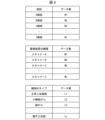
- FIG. 13 is a diagram showing attributes of each of a plurality of learning images in the third exemplary embodiment of the present invention.
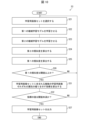
- FIG. 11 is a flow chart showing the flow of a method for selecting images for learning according to an exemplary embodiment 3 of the present invention.
- FIG. 11 is a flowchart showing the flow of a method for selecting images for learning according to a modified example of the third exemplary embodiment of the present invention.
- FIG. 2 is a block diagram showing an example of a hardware configuration of a learning image selection device according to each exemplary embodiment of the present invention.
- Example embodiment 1 DETAILED DESCRIPTION OF THE PREFERRED EMBODIMENTS
- This exemplary embodiment is a basic form of the exemplary embodiments described below.
- the training image selection device 1 is a device that selects training images used when training a machine learning model. For example, the training image selection device 1 selects training images by determining whether or not an inappropriate training image is included in a training image set, which is a plurality of training images.
- An example of an inappropriate training image is a training image with an incorrect teacher label.
- a case in which a plurality of training images included in a training image set are biased is also cited as a case in which an inappropriate training image is included in the training image set.
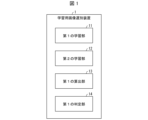
- FIG. 1 is a block diagram showing the configuration of the learning image selection device 1 according to this exemplary embodiment.
- the learning image selection device 1 includes a first learning unit 11, a second learning unit 12, a first calculation unit 13, and a first judgment unit 14.
- the first learning unit 11, the second learning unit 12, the first calculation unit 13, and the first judgment unit 14 are configured to realize a first learning means, a second learning means, a first calculation means, and a first judgment means, respectively.
- the first learning unit 11 trains a first machine learning model having a first group of layers that receives an image as input and generates features of the image by contrastive learning using a training image set that is a plurality of training images.
- Contrastive learning is a method of selecting one image of interest (anchor) from multiple training images, and training a machine learning model so that the inner product of the feature vectors of the attention image and positive examples (training images classified in the same category as the attention image, and images of the attention image with optional image extension) is large, and the inner product of the feature vectors of the attention image and negative examples (training images classified in a different category from the attention image) is small.
- the first machine learning model has an Encoder (feature analysis model), which is a first layer group that takes an input image as input and generates features of the input image. It is also used as a pre-training model for the second machine learning model described below.
- Encoder feature analysis model
- the second learning unit 12 includes a first group of layers and a second group of layers connected to the first group of layers that classifies images using image features as input, and uses a learning image set to train a second machine learning model that uses the first machine learning model trained by the first learning unit 11 as a pre-training model.
- the second machine learning model is a model in which a second group of layers (Classifier) is connected to the first group of layers (Encoder) of the first machine learning model.
- the second learning unit 12 mainly trains the Classifier part, but also trains the Encoder part to fine-tune it.
- a known method may be used as a method by which the second learning unit 12 trains the first machine learning model and the second machine learning model.
- One example of a method by which the second learning unit 12 fine-tunes the first machine learning model and trains the second machine learning model is a method of learning to minimize the error between the output from the machine learning model and the ground truth data using cross entropy loss as a loss function.
- the first calculation unit 13 calculates a first similarity, which is the similarity between the parameters in the first layer group (encoder, feature analysis model) learned by the first learning unit 11 before learning by the second learning unit 12, and the parameters in the first layer group (encoder, feature analysis model) after learning by the second learning unit 12.
- first parameters the parameters of the first layer group (encoder, feature analysis model) after the first learning unit 11 has trained the first machine learning model and before the second learning unit 12 has trained it are also referred to as "first parameters.”
- second parameters the parameters in the first layer group (encoder, feature analysis model) of the second machine learning model after the second learning unit 12 has trained it are also referred to as "second parameters.”
- the first calculation unit 13 calculates a first similarity, which is the similarity between the first parameter and the second parameter.
- the first calculation unit 13 supplies the calculated first similarity to the first determination unit 14.
- the first determination unit 14 determines whether or not an inappropriate learning image is included in the learning image set based on the first similarity calculated by the first calculation unit 13.
- the first judgment unit 14 judges that the inappropriate learning image is not included in the learning image set. In this case, if the first similarity is equal to or greater than a threshold, the first judgment unit 14 judges that the inappropriate learning image is not included in the learning image set. Also, if the first similarity is less than the threshold, the first judgment unit 14 judges that the inappropriate learning image is included in the learning image set.
- the training image selection device 1 includes a first learning unit 11 that trains a first machine learning model having a first layer group that receives an image as an input and generates features of the image by contrastive learning using a training image set that is a plurality of training images; a second learning unit 12 that trains a second machine learning model using the training image set, the second machine learning model having the first machine learning model as a pre-training model, the first layer group, and a second layer group that is connected to the first layer group and receives image features as an input and classifies the image; a first calculation unit 13 that calculates a first similarity that is the similarity between the parameters in the first layer group trained by the first learning unit 11 before training by the second learning unit 12 and the parameters in the first layer group after training by the second learning unit 12; and a first determination unit 14 that determines whether an inappropriate training image is included in the training image set based on the first similarity calculated by the first calculation unit 13.
- the first machine learning model if the first machine learning model is trained to extract features that are highly invariant, the first similarity will be high. On the other hand, if the first machine learning model is not trained to extract features that are highly invariant, the first similarity will be low. For example, if the training image set contains training images with inappropriate teacher labels, or if there is a bias among the multiple training images contained in the training image set, the first machine learning will not be trained to extract features that are highly invariant, and the first similarity will be low.
- the training image selection device 1 determines whether or not an inappropriate training image is included in the training image set based on the first similarity. Therefore, when the first similarity is high, the training image selection device 1 according to this exemplary embodiment determines that the first machine learning model has been trained to extract highly invariant features, and can determine that an inappropriate training image is not included in the training image set.
- the training image selection device 1 when the first similarity is low, the training image selection device 1 according to this exemplary embodiment can determine that the first machine learning model has not been trained to extract highly invariant features, and can determine that inappropriate training images are included in the training image set.
- the learning image selection device 1 has the effect of being able to appropriately select learning images to be used in training a machine learning model.
- Flow of learning image selection method S1 The flow of the learning image selection method S1 according to this exemplary embodiment will be described with reference to Fig. 2.
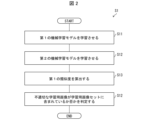
- Fig. 2 is a flow diagram showing the flow of the learning image selection method S1 according to this exemplary embodiment.
- step S11 the first learning unit 11 trains a first machine learning model having a first layer group that receives an image as input and generates features of the image by contrastive learning using a training image set that is a plurality of training images.
- the second learning unit 12 includes a first group of layers and a second group of layers connected to the first group of layers for classifying images using image features as input, and uses a training image set to train a second machine learning model that uses the first machine learning model trained by the first learning unit 11 as a pre-training model.
- step S13 the first calculation unit 13 calculates a first similarity which is a similarity between the parameters in the first layer group (encoder, feature analysis model) learned by the first learning unit 11 before learning by the second learning unit 12 and the parameters in the first layer group (encoder, feature analysis model) after learning by the second learning unit 12.
- the first calculation unit 13 calculates a first similarity which is a similarity between the first parameter and the second parameter.
- the first calculation unit 13 supplies the calculated first similarity to the first determination unit 14.
- step S14 the first determination unit 14 determines, based on the first similarity calculated by the first calculation unit 13, whether or not an inappropriate learning image is included in the learning image set.
- step S14 if the first parameter and the second parameter are similar, the first judgment unit 14 judges that the inappropriate learning image is not included in the learning image set. In this case, if the first similarity is equal to or greater than a threshold, the first judgment unit 14 judges that the inappropriate learning image is not included in the learning image set. Also, if the first similarity is less than the threshold, the first judgment unit 14 judges that the inappropriate learning image is included in the learning image set.
- a first learning unit 11 trains a first machine learning model having a first layer group that receives an image as input and generates features of the image by contrastive learning using a training image set that is a plurality of training images in a step S11
- a second learning unit 12 trains a second machine learning model using the training image set, which is a plurality of training images, and includes a first layer group and a second layer group connected to the first layer group and that receives the features of the image as input and classifies the image
- the first machine learning model trained by the first learning unit 11 is used as a pre-training model.
- the configuration includes a step S12 in which the first calculation unit 13 calculates a first similarity, which is a similarity between the parameters in the first layer group (encoder, feature analysis model) trained by the first learning unit 11 before the training by the second learning unit 12 and the parameters in the first layer group (encoder, feature analysis model) trained by the second learning unit 12, and a step S14 in which the first determination unit 14 determines whether or not an inappropriate training image is included in the training image set based on the first similarity calculated by the first calculation unit 13. Therefore, the training image selection method S1 according to this exemplary embodiment can achieve the same effect as the above-mentioned training image selection device 1.
- Exemplary embodiment 2 A second exemplary embodiment of the present invention will be described in detail with reference to the drawings. Note that components having the same functions as those described in the first exemplary embodiment are denoted by the same reference numerals, and the description thereof will be omitted as appropriate.
- the training image selection device 2 is a device that selects a portion of a plurality of images as a training image set, which is a plurality of training images for training a machine learning model, and outputs the training image set if the training image set is appropriate for machine learning. For example, the training image selection device 2 selects training images by determining whether or not the training image set, which is a plurality of training images, includes an inappropriate training image, and outputs the training image set if the inappropriate training image is not included.
- the learning image selection device 2 determines that the learning image set includes an inappropriate learning image, it selects a learning image set different from the selected learning image set. For example, the learning image selection device 2 selects a learning image set different from the selected learning image set by changing at least one learning image among the learning images included in the selected learning image set to an unselected learning image.
- the learning image selection device 2 selects learning images by determining whether the newly selected learning image set contains any inappropriate learning images, and outputs the learning image set if it does not contain any inappropriate learning images.
- An example of an inappropriate training image is a training image with an incorrect teacher label.
- this can also be cited as a case in which an inappropriate training image is included in the training image set.
- Fig. 3 is a block diagram showing the configuration of the learning image selection device 2 according to this exemplary embodiment.
- the learning image selection device 2 includes a control unit 21, a storage unit 25, a communication unit 26, an input unit 27, and an output unit 28.
- the memory unit 25 stores data referenced by the control unit 21.
- One example of data stored in the memory unit 25 is training images and teacher labels corresponding to the training images.
- the communication unit 26 is a communication module that communicates with other devices connected via a network. As an example, the communication unit 26 receives learning images and outputs a learning image set that is determined not to include inappropriate learning images.
- the input unit 27 is an interface that acquires data from other connected devices. As an example, the input unit 27 acquires learning images.
- the output unit 28 is an interface that outputs data to other connected devices. As an example, the output unit 28 outputs a set of training images that have been determined not to include any inappropriate training images.
- the control unit 21 controls each of the components included in the learning image selection device 2. As shown in Fig. 3, the control unit 21 also includes a first learning unit 11, a second learning unit 12, a first calculation unit 13, a first judgment unit 14, and a selection unit 22.
- the first learning unit 11, the second learning unit 12, the first calculation unit 13, the first judgment unit 14, and the selection unit 22 are configured to realize a first learning means, a second learning means, a first calculation means, a first judgment means, and a selection means, respectively.
- the first learning unit 11 trains the machine learning model by contrastive learning.
- the first learning unit 11 trains a first machine learning model having a first layer group that receives an image as input and generates features of the image by contrastive learning using a training image set that is a plurality of training images selected by a selection unit 22 described later.
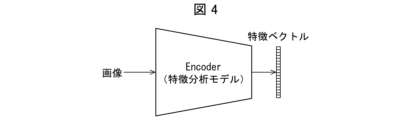
- FIG. 4 is a diagram showing an example of the first machine learning model in this exemplary embodiment.
- the first machine learning model includes an Encoder (feature analysis model), which is a first layer group that receives an image as input and outputs a feature vector as a feature of the image.
- Encoder feature analysis model
- the second learning unit 12 trains a machine learning model using a known method.
- the second learning unit 12 includes a first group of layers and a second group of layers connected to the first group of layers, which classifies images using image features as input, and trains a second machine learning model using a training image set, with the first machine learning model as a pre-training model.
- FIG. 5 is a diagram showing an example of the second machine learning model in this exemplary embodiment.
- the second machine learning model includes a first layer group (Encoder, feature analysis model) included in the first machine learning model trained by the first learning unit 11, and a second layer group (Classifier, classifier) that outputs a classification result that classifies an input image.
- the second machine learning model is a combination of the first layer group (Encoder, feature analysis model) and the second layer group (Classifier, classifier).
- a pathology image containing specimen cells as a subject is input to the first machine learning model, and the second machine learning model outputs a classification result indicating whether the specimen cells are benign or malignant.
- the first layer group (encoder, feature analysis model) of the first machine learning model learned by the first learning unit 11 and before learning by the second learning unit 12 will also be referred to as the “feature analysis model M1.”
- the first layer group (encoder, feature analysis model) learned by the second learning unit 12 will also be referred to as the “feature analysis model M2.”
- feature analysis model M1 the first layer group (encoder, feature analysis model) learned by the second learning unit 12
- the feature analysis model M2 When there is no particular need to distinguish between them, they will simply be referred to as the "feature analysis model.”
- the first calculation unit 13 calculates a first similarity, which is the similarity between a parameter (weight, first parameter) in the feature analysis model M1 and a parameter (second parameter) in the feature analysis model M2.
- a second similarity which is the similarity for each layer of a first layer group (Encoder, feature analysis model) included in the first machine learning model.
- the first calculation unit 13 calculates the first similarity based on the calculated second similarity.
- the first determination unit 14 determines whether or not an inappropriate learning image is included in the learning image set. As an example, the first determination unit 14 determines whether or not an inappropriate learning image is included in the learning image set based on the first similarity calculated by the first calculation unit 13.
- the first determination unit 14 determines that the inappropriate learning image is not included in the learning image set. Also, if the first similarity is less than the threshold, the first determination unit 14 determines that the inappropriate learning image is included in the learning image set.
- the selection unit 22 selects a portion of the multiple images as a learning image set. As an example, the selection unit 22 selects a portion of the learning images stored in the memory unit 25 as the learning image set. There is no particular limit to the number of learning images selected by the selection unit 22. As an example, the selection unit 22 may randomly select a predetermined number (e.g., 9,500 or more) from the entire learning images (e.g., 10,000). The selection unit 22 supplies the selected learning image set to the first learning unit 11 and the second learning unit 12.
- a predetermined number e.g., 9,500 or more
- the selection unit 22 when the selection unit 22 repeatedly selects a portion of a plurality of images as a training image set, the selection unit 22 selects a training image set different from the already selected training image set. As an example, when the first determination unit 14 determines that an inappropriate training image is included in the training image set, the selection unit 22 selects a training image set different from the already selected training image set. With this configuration, the selection unit 22 can cause the first determination unit 14 to determine whether or not an inappropriate training image is included in a training image set different from a training image set that has already been determined to include an inappropriate training image.
- Flow of learning image selection method S2 The flow of the learning image selection method S2 according to this exemplary embodiment will be described with reference to Fig. 6.
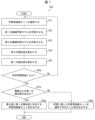
- Fig. 6 is a flow diagram showing an example of the flow of the learning image selection method S2 according to this exemplary embodiment.
- Step S21 the selection unit 22 selects, as a learning image set, a portion of the learning images stored in the storage unit 25.
- the selection unit 22 supplies the selected learning image set to the first learning unit 11 and the second learning unit 12.
- Step S22 the first learning unit 11 trains a first machine learning model including a first layer group (encoder, feature analysis model) by contrastive learning using the training image set supplied by the selection unit 22.
- the first layer group (encoder, feature analysis model) of the first machine learning model after training by the first learning unit 11 in step S22 is the feature analysis model M1.
- Step S23 the second learning unit 12 trains a second machine learning model including a first layer group and a second layer group, the second machine learning model having the feature analysis model M1 as a pre-training model, using the training image set supplied by the selection unit 22.
- the first layer group (Encoder, feature analysis model) trained by the second learning unit 12 is the feature analysis model M2.
- Step S24 the first calculation unit 13 calculates a second similarity, which is a similarity for each layer of the first layer group included in the first machine learning model.
- the first calculation unit 13 calculates a similarity between the first parameter in each layer of the feature analysis model M1 and the second parameter in each layer of the feature analysis model M2.
- the first calculation unit 13 stores the calculated second similarity in the storage unit 25.
- the first calculation unit 13 calculates the second similarity in the k-th layer, “similarity k (x, y)”, by using the following formula (1).
- x is the first parameter (weight vector) in the kth layer of the feature analysis model M1
- x ( x1 , x2 , x3 , ... xn )
- Step S25 the first calculation unit 13 calculates a first similarity based on the second similarity stored in the storage unit 25.
- the first calculation unit 13 stores the calculated first similarity in the storage unit 25.
- the first calculation unit 13 calculates the first similarity by dividing the sum of the second similarities by the number of layers in the first layer group included in the first machine learning model. Specifically, the first calculation unit 13 calculates the first similarity, “similarity”, by using the second similarity “similarity k (x, y)” calculated by the above-mentioned formula (1), by using the following formula (2).
- m is the number of layers of the first machine learning model.
- the first calculation unit 13 calculates the first similarity by dividing the weighted sum of the second similarities by the total sum of the weight values, which is weighted for each of the second similarities. Specifically, the first calculation unit 13 calculates the first similarity, “similarity”, by the following formula (3), using the second similarity “similarity k (x, y)” calculated by the above formula (1).
- W k is the weight given to the k-th second similarity.
- the first calculation unit 13 may also increase the weighting value of the second similarity of a layer (deeper layer) in the first group of layers that is closer to the output of one machine learning model. With this configuration, the first calculation unit 13 can increase the influence of the second similarity on the first similarity of a layer that is closer to the output and focuses on global features.
- Step S26 the first determination unit 14 determines whether the first similarity stored in the storage unit 25 is equal to or greater than a threshold value.
- Step S27 when it is determined that the first similarity is equal to or greater than the threshold value (step S26: YES), the first determination unit 14 outputs a learning image set in step S27. In other words, when the first determination unit 14 determines that the learning image set does not include an inappropriate learning image, it outputs the learning image set.
- step S26 if it is determined in step S26 that the first similarity is less than the threshold value (step S26: NO), the learning image selection device 2 returns to the process of step S21. In other words, if the first determination unit 14 determines that an inappropriate learning image is included in the learning image set, the learning image selection device 2 returns to the process of step S21.
- step S21 the selection unit 22 selects a training image set that is different from the already selected training image set. Then, in the processing from step S22 onwards, it is determined whether the newly selected training image set contains inappropriate training images.
- the learning image selection device 2 when it is determined that the learning image set includes an inappropriate learning image, the selection unit 22 selects a learning image set different from the previously selected learning image set. Then, the first determination unit 14 determines whether the learning image set newly selected by the selection unit 22 includes an inappropriate learning image. With this configuration, the learning image selection device 2 according to this exemplary embodiment does not output a learning image set until it is determined that the learning image set does not include an inappropriate learning image, so that it is possible to output an appropriate learning image set.
- the learning image selection device 2A executes the process from selecting a learning image set to determining whether or not an inappropriate learning image is included in the learning image set until a predetermined time has elapsed. Note that, instead of (or in addition to) the predetermined time, the learning image selection device 2A may be configured to execute the process from selecting a learning image set to determining whether or not an inappropriate learning image is included in the learning image set a predetermined number of times.
- the configuration of the learning image selection device 2A is the same as that of the learning image selection device 2, so a description will be omitted.
- Flow of learning image selection method S2A The flow of the learning image selection method S2A according to the modified example of this exemplary embodiment will be described with reference to Fig. 7.
- Fig. 7 is a flow diagram showing the flow of the learning image selection method S2A according to the modified example of this exemplary embodiment.
- Steps S21 to S25 The processes from step S21 to step S25, which are the processes from when the selection unit 22 selects a learning image set to when the first calculation unit 13 calculates the first similarity, are the same as the processes described above, and therefore will not be described.
- Step S26a the first determination unit 14 determines whether or not a predetermined time has elapsed.
- step S26a If it is determined in step S26a that the predetermined time has not elapsed (step S26a: NO), the learning image selection device 2A returns to the processing of step S21. Then, in step S21, the selection unit 22 selects a learning image set different from the already selected learning image set, and the processing from step S22 onwards is executed using the selected learning image set.
- the learning image selection device 2A is configured to execute the process from selecting a learning image set to determining whether or not an inappropriate learning image is included in the learning image set a predetermined number of times instead of (or in addition to) a predetermined period of time
- the first determination unit 14 may be configured to determine whether or not the process of step S26a has been executed a predetermined number of times instead of (or in addition to) determining whether or not a predetermined period of time has elapsed.
- step S26a if it is determined in step S26a that the processing of step S26a has been executed a predetermined number of times (step S26a: YES), the learning image selection device 2A proceeds to the processing of step S27a. On the other hand, if it is determined in step S26a that the processing of step S26a has not been executed a predetermined number of times (step S26a: NO), the learning image selection device 2A returns to the processing of step S21.
- step S25 the first calculation unit 13 stores the calculated first similarity in the storage unit 25 each time. In other words, if steps S21 to S25 are repeated N times, the first calculation unit 13 stores the first similarity for N times in the storage unit 25.
- Step S27a If it is determined in step S26a that a predetermined time has elapsed (step S26a: YES), in step S27a, the first judgment unit 14 determines whether or not there is a first similarity among the multiple first similarities stored in the memory unit 25 that is greater than or equal to a threshold value.
- Step S28a If it is determined in step S27a that the first similarity is equal to or greater than the threshold (step S27a: YES), in step S28a, the first determination unit 14 outputs a learning image set corresponding to the highest first similarity among the first similarities equal to or greater than the threshold. In other words, the first determination unit 14 outputs a learning image set determined to be most appropriate for learning among the multiple learning image sets.
- Step S29a If it is determined in step S27a that the first similarity is not greater than or equal to the threshold value (step S27a: YES), in step S29a, the first judgment unit 14 outputs a message indicating that a learning image set suitable for learning could not be selected.
- the training image selection device 2A In the training image selection device 2A according to the modified example of this exemplary embodiment, the process from selecting a training image set to determining whether or not an inappropriate training image is included in the training image set is executed until a predetermined time has elapsed (or until the process is executed a predetermined number of times). Therefore, in addition to the effects achieved by the training image selection device 2 according to the exemplary embodiment 2, the training image selection device 2A according to the modified example of this exemplary embodiment can output a training image set that is determined to be most appropriate for training from among the selected training image sets.
- Exemplary embodiment 3 A third exemplary embodiment of the present invention will be described in detail with reference to the drawings. Note that components having the same functions as those described in the above exemplary embodiment are denoted by the same reference numerals, and the description thereof will not be repeated.
- the learning image selection device 3 determines whether or not there is bias in the attributes of each of the multiple learning images included in the learning image set. When it is determined that there is bias in the attributes of each of the multiple learning images included in the learning image set, the learning image selection device 3 determines that an inappropriate learning image is included in the learning image set.
- the attributes of the learning images will be described later.
- FIG. 8 is a block diagram showing the configuration of the learning image selection device 3 according to this exemplary embodiment.
- the learning image selection device 2 includes a control unit 31, a memory unit 25, a communication unit 26, an input unit 27, and an output unit 28.
- the memory unit 25, communication unit 26, input unit 27, and output unit 28 are as described in the exemplary embodiment 1, so their description will be omitted.
- the control unit 31 controls each component included in the learning image selection device 3. As shown in Fig. 8, the control unit 31 also includes a first learning unit 11, a second learning unit 12, a first calculation unit 13, a first judgment unit 14, a selection unit 22, a second calculation unit 32, and a second judgment unit 33.
- the first learning unit 11, the second learning unit 12, the first calculation unit 13, the first judgment unit 14, the selection unit 22, the second calculation unit 32, and the second judgment unit 33 are configured to realize a first learning means, a second learning means, a first calculation means, a first judgment means, a selection means, a second calculation means, and a second judgment means, respectively.
- the first learning unit 11, the second learning unit 12, the first calculation unit 13, the first determination unit 14, and the selection unit 22 are as described in the above exemplary embodiment, so description thereof will be omitted.
- the second calculation unit 32 calculates an index indicating the bias of the attributes of each of the multiple images.
- the second calculation unit 32 calculates an index indicating the bias of the attributes of each of the multiple training images included in the training image set selected by the selection unit 22.
- variance is used as an example of the index, but the index is not limited to this.
- the attributes of the training images will be described with reference to Figure 9.
- Figure 9 is a diagram showing the attributes of each of the multiple training images in this exemplary embodiment.
- the second calculation unit 32 sets the facility where the image was captured as an attribute. In this case, the second calculation unit 32 calculates the number of data for each hospital where each of the multiple training images included in the training image set was captured. The second calculation unit 32 then calculates the variance as an index showing the bias of the facility where each of the multiple training images included in the training image set was captured.
- the second calculation unit 32 sets the model of the imaging device as the attribute. In this case as well, the second calculation unit 32 calculates the variance as an index showing the bias in the models of the imaging devices that captured each of the multiple training images included in the training image set.
- the second calculation unit 32 sets the type of cells contained as the subject as the attribute. In this case as well, the second calculation unit 32 calculates the variance as an index showing the bias in the types of cells contained as subjects in each of the multiple training images included in the training image set.
- the second determination unit 33 determines whether the index calculated by the second calculation unit 32 is equal to or greater than a threshold value. In other words, the second determination unit 33 determines whether there is bias in the attributes of each of the multiple learning images included in the learning image set. As an example, when the second calculation unit 32 calculates variance as an index, the second determination unit 33 determines whether the value of the variance is equal to or greater than a threshold value (whether there is bias) or whether the value of the variance is less than the threshold value (whether there is no bias).
- Flow of learning image selection method S3 The flow of the learning image selection method S3 according to this exemplary embodiment will be described with reference to Fig. 10.
- Fig. 10 is a flow diagram showing the flow of the learning image selection method S3 according to this exemplary embodiment.
- Steps S21 to S26 The processes from step S21 to step S26, which are the processes from when the selection unit 22 selects a learning image set to when the first judgment unit 14 judges whether the first similarity is greater than or equal to a threshold value, are the same as those described above, and therefore will not be described.
- step S31 In step S26, if it is determined that the first similarity is greater than or equal to the threshold value (step S26: YES), in step S31, the second calculation unit 32 calculates an index indicating the bias in the attributes of each of the multiple learning images included in the learning image set selected by the selection unit 22.
- Step S32 the second determination unit 33 determines whether the index calculated by the second calculation unit 32 is less than a threshold value.
- step S32 If it is determined in step S32 that the index calculated by the second calculation unit 32 is not less than the threshold value (step S32: NO), the training image selection device 3 returns to the processing of step S21. Then, in step S21, the selection unit 22 selects a training image set different from the already selected training image set. In other words, if there is a bias in the attributes of each of the multiple training images included in the training image set, the selection unit 22 selects a training image set different from the already selected training image set.
- step S32 is a process that is executed when the index is variance. However, even if the index is something other than variance, if the second determination unit 33 determines in step S32 that there is bias in the attributes of each of the multiple training images included in the training image set based on the index, the training image selection device 3 returns to the process of step S21.
- Step S27 In step S32, if it is determined that the index calculated by the second calculation unit 32 is less than the threshold value (step S32: YES), the second determination unit 33 outputs a learning image set in step S27. In other words, if there is no bias in the attributes of the multiple learning images included in the learning image set, the second determination unit 33 outputs the learning image set.
- the training image selection device 3 employs a configuration including the second calculation unit 32 that calculates an index indicating bias in the attributes of each of the multiple training images included in the training image set selected by the selection unit 22, and the second determination unit 33 that determines whether the index calculated by the second calculation unit 32 is less than a threshold value.
- the training image selection device 3 can provide a training image set including unbiased training images, in addition to the effects achieved by the training image selection device 1 according to the first exemplary embodiment.
- the configuration of the learning image selection device 3A is the same as that of the learning image selection device 3, so a description will be omitted.
- Flow of learning image selection method S3A The flow of the learning image selection method S3A according to the modified example of this exemplary embodiment will be described with reference to Fig. 11.
- Fig. 11 is a flow diagram showing the flow of the learning image selection method S3A according to the modified example of this exemplary embodiment.
- step S21 the selection unit 22 selects, as a set of learning images, a portion of the learning images stored in the storage unit 25.
- the selection unit 22 supplies the selected set of learning images to the second calculation unit 32.
- step S31 In step S ⁇ b>31 , the second calculation unit 32 calculates an index indicating bias in the attributes of each of the multiple learning images included in the learning image set selected by the selection unit 22 .
- Step S32 the second determination unit 33 determines whether the index calculated by the second calculation unit 32 is less than a threshold value.
- step S32 If it is determined in step S32 that the index calculated by the second calculation unit 32 is not less than the threshold value (step S32: NO), the training image selection device 3A returns to the processing of step S21. In other words, if there is a bias in the attributes of each of the multiple training images included in the training image set, the selection unit 22 selects a training image set different from the already selected training image set in step S21.
- step S32 determines whether the index calculated by the second calculation unit 32 is less than the threshold value (step S32: YES). If it is determined in step S32 that the index calculated by the second calculation unit 32 is less than the threshold value (step S32: YES), the selection unit 22 supplies the selected training image set to the first training unit 11 and the second training unit 12. In other words, if the second determination unit 33 determines that there is no bias in the attributes of each of the multiple training images included in the training image set, the selection unit 22 supplies the selected training image set to the first training unit 11 and the second training unit 12.
- Steps S22 to S27 The processing from step S22 to step S27 in which the first learning unit 11 trains the first machine learning model by contrastive learning and the first judgment unit 14 outputs a learning image set when it determines that the first similarity is equal to or greater than a threshold value is the same as the processing described above, and therefore will not be described.
- the training image selection device 3A before training the first machine learning model, it is determined whether or not there is bias in the attributes of each of the multiple training images included in the training image set.
- the training image selection device 3A according to the modified example of the present exemplary embodiment can reduce the processing load by not training the machine learning model if there is bias in the attributes of each of the multiple training images included in the training image set.
- Some or all of the functions of the learning image selection devices 1, 2, 2A, 3, and 3A may be realized by hardware such as an integrated circuit (IC chip), or may be realized by software.
- the learning image selection devices 1, 2, 2A, 3, and 3A are realized, for example, by a computer that executes program instructions, which are software that realize each function.
- a computer that executes program instructions, which are software that realize each function.
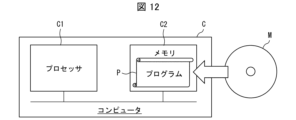
- FIG. 12 An example of such a computer (hereinafter referred to as computer C) is shown in FIG. 12.
- Computer C has at least one processor C1 and at least one memory C2.
- Memory C2 stores program P for operating computer C as learning image selection devices 1, 2, 2A, 3, and 3A.
- processor C1 reads and executes program P from memory C2, thereby realizing each function of learning image selection devices 1, 2, 2A, 3, and 3A.
- the processor C1 may be, for example, a CPU (Central Processing Unit), GPU (Graphic Processing Unit), DSP (Digital Signal Processor), MPU (Micro Processing Unit), FPU (Floating point number Processing Unit), PPU (Physics Processing Unit), TPU (Tensor Processing Unit), quantum processor, microcontroller, or a combination of these.
- the memory C2 may be, for example, a flash memory, HDD (Hard Disk Drive), SSD (Solid State Drive), or a combination of these.
- Computer C may further include a RAM (Random Access Memory) for expanding program P during execution and for temporarily storing various data.
- Computer C may further include a communications interface for sending and receiving data to and from other devices.
- Computer C may further include an input/output interface for connecting input/output devices such as a keyboard, mouse, display, and printer.
- the program P can also be recorded on a non-transitory, tangible recording medium M that can be read by the computer C.
- a recording medium M can be, for example, a tape, a disk, a card, a semiconductor memory, or a programmable logic circuit.
- the computer C can obtain the program P via such a recording medium M.
- the program P can also be transmitted via a transmission medium.
- a transmission medium can be, for example, a communications network or broadcast waves.
- the computer C can also obtain the program P via such a transmission medium.
- a first learning means for training a first machine learning model for training a first machine learning model, the first machine learning model having a first layer group that receives an image as an input and generates features of the image, by contrast learning using a training image set that is a plurality of training images; a second layer group connected to the first layer group and that receives features of the image as an input and classifies the image; a second learning means for training a second machine learning model, the second machine learning model having the first machine learning model as a pre-training model, using the training image set; a first calculation means for calculating a first similarity, which is a similarity between parameters in the first layer group before training by the second learning means and parameters in the first layer group after training by the second learning means, which are trained by the first learning means; and a first determination means for determining whether or not an inappropriate training image is included in the training image set, based on the first similarity.
- the training image selection device of claim 1 further comprising a selection means for selecting a portion of a plurality of images as the training image set, wherein when the first determination means determines that the inappropriate training image is included in the training image set, the selection means selects a training image set different from the already selected training image set.
- the first calculation means calculates the first similarity as a sum of the second similarities divided by the number of layers in the first layer group provided in the first machine learning model, and the first determination means determines that the inappropriate training image is included in the training image set when the first similarity is less than a threshold.
- the first calculation means calculates the first similarity by dividing a weighted sum obtained by weighting each of the second similarities and adding the weighted sum by a total sum of the weight values, and the first determination means determines that the inappropriate training image is included in the training image set when the first similarity is less than a threshold.
- the learning image selection device described in Appendix 2 further includes a second calculation means for calculating an index indicating a bias in attributes of each of a plurality of learning images included in the learning image set selected by the selection means, and a second determination means for determining whether the index calculated by the second calculation means is less than a threshold value.
- a first machine learning model including a first layer group that receives an image as an input and generates features of the image, the first layer group being trained by contrastive learning using a training image set that is a plurality of training images; a second machine learning model including the first machine learning model as a pre-training model, the second machine learning model being trained by using the training image set, the second machine learning model including the first machine learning model as a pre-training model, the second machine learning model being trained by the contrastive learning, the first similarity being a similarity between parameters in the first layer group before learning by training the second machine learning model and parameters in the first layer group after learning by training the second machine learning model; and determining whether or not an inappropriate training image is included in the training image set based on the first similarity.
- a training image selection device comprising at least one processor, the processor executing a first learning process for training a first machine learning model, the first machine learning model having a first layer group that receives an image as input and generates features of the image, by contrastive learning using a training image set that is a plurality of training images; a second learning process for training a second machine learning model having the first layer group and a second layer group connected to the first layer group and that receives features of the image as input and classifies the image, the second machine learning model having the first machine learning model as a pre-training model, using the training image set; a first calculation process for calculating a first similarity, which is a similarity between the parameters in the first layer group before learning by the second learning process and the parameters in the first layer group after learning by the second learning process, which are trained in the first learning process; and a first determination process for determining whether an inappropriate training image is included in the training image set, based on the first similarity.
- the learning image selection device may further include a memory, and the memory may store a program for causing the processor to execute the first learning process, the second learning process, the first calculation process, and the first judgment process.
- the program may also be recorded on a computer-readable, non-transitory, tangible recording medium.
Landscapes
- Engineering & Computer Science (AREA)
- Theoretical Computer Science (AREA)
- Physics & Mathematics (AREA)
- Evolutionary Computation (AREA)
- Artificial Intelligence (AREA)
- General Physics & Mathematics (AREA)
- General Health & Medical Sciences (AREA)
- Health & Medical Sciences (AREA)
- Computing Systems (AREA)
- Software Systems (AREA)
- Multimedia (AREA)
- Medical Informatics (AREA)
- Databases & Information Systems (AREA)
- Computer Vision & Pattern Recognition (AREA)
- Biomedical Technology (AREA)
- Mathematical Physics (AREA)
- General Engineering & Computer Science (AREA)
- Molecular Biology (AREA)
- Data Mining & Analysis (AREA)
- Computational Linguistics (AREA)
- Biophysics (AREA)
- Life Sciences & Earth Sciences (AREA)
- Image Analysis (AREA)
Priority Applications (5)
| Application Number | Priority Date | Filing Date | Title |
|---|---|---|---|
| PCT/JP2023/001612 WO2024154316A1 (ja) | 2023-01-20 | 2023-01-20 | 学習用画像選別装置、学習用画像選別方法、およびプログラム |
| US18/554,752 US12541954B2 (en) | 2023-01-20 | 2023-01-20 | Image-for-training selecting apparatus, image-for-training selecting method, and storage medium for decision making |
| EP23917529.2A EP4654094A4 (en) | 2023-01-20 | 2023-01-20 | TRAINING IMAGE FILTERING APPARATUS, TRAINING IMAGE FILTERING METHOD AND PROGRAM |
| JP2024571559A JPWO2024154316A1 (https=) | 2023-01-20 | 2023-01-20 | |
| US19/424,534 US20260112151A1 (en) | 2023-01-20 | 2025-12-18 | Image-for-training selecting apparatus, image-for-training selecting method, and storage medium for decision making |
Applications Claiming Priority (1)
| Application Number | Priority Date | Filing Date | Title |
|---|---|---|---|
| PCT/JP2023/001612 WO2024154316A1 (ja) | 2023-01-20 | 2023-01-20 | 学習用画像選別装置、学習用画像選別方法、およびプログラム |
Related Child Applications (4)
| Application Number | Title | Priority Date | Filing Date |
|---|---|---|---|
| US18/554,752 A-371-Of-International US12541954B2 (en) | 2023-01-20 | 2023-01-20 | Image-for-training selecting apparatus, image-for-training selecting method, and storage medium for decision making |
| US19/424,564 Continuation US20260127863A1 (en) | 2025-12-18 | Image-for-training selecting apparatus, image-for-training selecting method, and storage medium for decision making | |
| US19/424,624 Continuation US20260127864A1 (en) | 2025-12-18 | Image-for-training selecting apparatus, image-for-training selecting method, and storage medium for decision making | |
| US19/424,534 Continuation US20260112151A1 (en) | 2023-01-20 | 2025-12-18 | Image-for-training selecting apparatus, image-for-training selecting method, and storage medium for decision making |
Publications (1)
| Publication Number | Publication Date |
|---|---|
| WO2024154316A1 true WO2024154316A1 (ja) | 2024-07-25 |
Family
ID=91955758
Family Applications (1)
| Application Number | Title | Priority Date | Filing Date |
|---|---|---|---|
| PCT/JP2023/001612 Ceased WO2024154316A1 (ja) | 2023-01-20 | 2023-01-20 | 学習用画像選別装置、学習用画像選別方法、およびプログラム |
Country Status (4)
| Country | Link |
|---|---|
| US (2) | US12541954B2 (https=) |
| EP (1) | EP4654094A4 (https=) |
| JP (1) | JPWO2024154316A1 (https=) |
| WO (1) | WO2024154316A1 (https=) |
Citations (4)
| Publication number | Priority date | Publication date | Assignee | Title |
|---|---|---|---|---|
| JP2014178229A (ja) * | 2013-03-15 | 2014-09-25 | Dainippon Screen Mfg Co Ltd | 教師データ作成方法、画像分類方法および画像分類装置 |
| WO2019187594A1 (ja) | 2018-03-29 | 2019-10-03 | 日本電気株式会社 | 学習装置、学習方法および学習プログラム |
| WO2020031243A1 (ja) * | 2018-08-06 | 2020-02-13 | 株式会社島津製作所 | 教師ラベル画像修正方法、学習済みモデルの作成方法および画像解析装置 |
| JP2022129136A (ja) * | 2021-02-24 | 2022-09-05 | 沖電気工業株式会社 | 処理装置、処理方法及びプログラム |
Family Cites Families (9)
| Publication number | Priority date | Publication date | Assignee | Title |
|---|---|---|---|---|
| US8605956B2 (en) * | 2009-11-18 | 2013-12-10 | Google Inc. | Automatically mining person models of celebrities for visual search applications |
| US11776072B2 (en) * | 2019-04-25 | 2023-10-03 | Shibaura Machine Co., Ltd. | Machine learning method, information processing device, computer program product, and additive manufacturing monitoring system |
| CN113450306B (zh) * | 2020-03-09 | 2024-04-30 | 长庚医疗财团法人林口长庚纪念医院 | 提供骨折检测工具的方法 |
| WO2021235247A1 (ja) | 2020-05-21 | 2021-11-25 | ソニーグループ株式会社 | 学習装置、生成方法、推論装置、推論方法、およびプログラム |
| US20240185582A1 (en) * | 2021-01-30 | 2024-06-06 | Ecole Polytechnique Federale De Lausanne (Epfl) | Annotation-efficient image anomaly detection |
| JP2022169009A (ja) | 2021-04-27 | 2022-11-09 | 国立大学法人 東京大学 | プログラム、情報処理方法及び情報処理装置 |
| US12272446B2 (en) * | 2021-05-12 | 2025-04-08 | Orbsurgical Ltd. | Machine learning-assisted surgery |
| CN114742754A (zh) * | 2022-03-03 | 2022-07-12 | 湖南工程学院 | 肺结节检测方法、电子设备及计算机可读存储介质 |
| WO2023230748A1 (en) * | 2022-05-30 | 2023-12-07 | Nvidia Corporation | Dynamic class weighting for training one or more neural networks |
-
2023
- 2023-01-20 US US18/554,752 patent/US12541954B2/en active Active
- 2023-01-20 WO PCT/JP2023/001612 patent/WO2024154316A1/ja not_active Ceased
- 2023-01-20 JP JP2024571559A patent/JPWO2024154316A1/ja active Pending
- 2023-01-20 EP EP23917529.2A patent/EP4654094A4/en active Pending
-
2025
- 2025-12-18 US US19/424,534 patent/US20260112151A1/en active Pending
Patent Citations (4)
| Publication number | Priority date | Publication date | Assignee | Title |
|---|---|---|---|---|
| JP2014178229A (ja) * | 2013-03-15 | 2014-09-25 | Dainippon Screen Mfg Co Ltd | 教師データ作成方法、画像分類方法および画像分類装置 |
| WO2019187594A1 (ja) | 2018-03-29 | 2019-10-03 | 日本電気株式会社 | 学習装置、学習方法および学習プログラム |
| WO2020031243A1 (ja) * | 2018-08-06 | 2020-02-13 | 株式会社島津製作所 | 教師ラベル画像修正方法、学習済みモデルの作成方法および画像解析装置 |
| JP2022129136A (ja) * | 2021-02-24 | 2022-09-05 | 沖電気工業株式会社 | 処理装置、処理方法及びプログラム |
Non-Patent Citations (1)
| Title |
|---|
| See also references of EP4654094A1 |
Also Published As
| Publication number | Publication date |
|---|---|
| US20260112151A1 (en) | 2026-04-23 |
| US12541954B2 (en) | 2026-02-03 |
| EP4654094A1 (en) | 2025-11-26 |
| US20250086943A1 (en) | 2025-03-13 |
| JPWO2024154316A1 (https=) | 2024-07-25 |
| EP4654094A4 (en) | 2026-03-11 |
Similar Documents
| Publication | Publication Date | Title |
|---|---|---|
| US12087043B2 (en) | Leveraging unsupervised meta-learning to boost few-shot action recognition | |
| CN101937513B (zh) | 信息处理设备、信息处理方法 | |
| CN113515639A (zh) | 基于置信学习与标签平滑的噪声数据处理方法与系统 | |
| US11620557B2 (en) | Online trained object property estimator | |
| US20210224647A1 (en) | Model training apparatus and method | |
| US8391551B2 (en) | Object detecting device, learning device, object detecting method, and program | |
| US8693791B2 (en) | Object detection apparatus and object detection method | |
| JP6897749B2 (ja) | 学習方法、学習システム、および学習プログラム | |
| CN113822324B (zh) | 基于多任务模型的图像处理方法、装置及相关设备 | |
| CN113762382B (zh) | 模型的训练及场景识别方法、装置、设备及介质 | |
| JP2017102906A (ja) | 情報処理装置、情報処理方法及びプログラム | |
| JP2009026326A (ja) | 集団学習装置及び方法 | |
| JP2009140369A (ja) | 集団学習装置及び集団学習方法、対象物検出装置及び対象物検出方法、並びにコンピュータ・プログラム | |
| JP5214679B2 (ja) | 学習装置、方法及びプログラム | |
| CN110443267A (zh) | 误检过滤方法、装置、拍摄装置及存储介质 | |
| JP2010009517A (ja) | パターン検出器の学習装置、学習方法及びプログラム | |
| US20050141767A1 (en) | Apparatus and method of pattern recognition | |
| KR102393951B1 (ko) | 객체 중심 데이터 증강 방법 | |
| WO2024154316A1 (ja) | 学習用画像選別装置、学習用画像選別方法、およびプログラム | |
| CN101676912A (zh) | 在存储器有限的系统中对数据进行分类的方法 | |
| US20260127864A1 (en) | Image-for-training selecting apparatus, image-for-training selecting method, and storage medium for decision making | |
| US20260127863A1 (en) | Image-for-training selecting apparatus, image-for-training selecting method, and storage medium for decision making | |
| JP2009070321A (ja) | 文書分類装置、及び文書分類プログラム | |
| CN110334738A (zh) | 用于图像识别的多分类网络的方法 | |
| Kim et al. | Hidden conditional ordinal random fields for sequence classification |
Legal Events
| Date | Code | Title | Description |
|---|---|---|---|
| WWE | Wipo information: entry into national phase |
Ref document number: 18554752 Country of ref document: US |
|
| 121 | Ep: the epo has been informed by wipo that ep was designated in this application |
Ref document number: 23917529 Country of ref document: EP Kind code of ref document: A1 |
|
| WWP | Wipo information: published in national office |
Ref document number: 18554752 Country of ref document: US |
|
| WWE | Wipo information: entry into national phase |
Ref document number: 2024571559 Country of ref document: JP |
|
| NENP | Non-entry into the national phase |
Ref country code: DE |
|
| WWP | Wipo information: published in national office |
Ref document number: 2023917529 Country of ref document: EP |
|
| WWG | Wipo information: grant in national office |
Ref document number: 18554752 Country of ref document: US |