WO2024150379A1 - 情報処理装置、情報処理方法、プログラム - Google Patents
情報処理装置、情報処理方法、プログラム Download PDFInfo
- Publication number
- WO2024150379A1 WO2024150379A1 PCT/JP2023/000649 JP2023000649W WO2024150379A1 WO 2024150379 A1 WO2024150379 A1 WO 2024150379A1 JP 2023000649 W JP2023000649 W JP 2023000649W WO 2024150379 A1 WO2024150379 A1 WO 2024150379A1
- Authority
- WO
- WIPO (PCT)
- Prior art keywords
- data
- information processing
- processing device
- state
- biometric data
- Prior art date
- Legal status (The legal status is an assumption and is not a legal conclusion. Google has not performed a legal analysis and makes no representation as to the accuracy of the status listed.)
- Ceased
Links
Images



Classifications
-
- G—PHYSICS
- G16—INFORMATION AND COMMUNICATION TECHNOLOGY [ICT] SPECIALLY ADAPTED FOR SPECIFIC APPLICATION FIELDS
- G16H—HEALTHCARE INFORMATICS, i.e. INFORMATION AND COMMUNICATION TECHNOLOGY [ICT] SPECIALLY ADAPTED FOR THE HANDLING OR PROCESSING OF MEDICAL OR HEALTHCARE DATA
- G16H50/00—ICT specially adapted for medical diagnosis, medical simulation or medical data mining; ICT specially adapted for detecting, monitoring or modelling epidemics or pandemics
- G16H50/20—ICT specially adapted for medical diagnosis, medical simulation or medical data mining; ICT specially adapted for detecting, monitoring or modelling epidemics or pandemics for computer-aided diagnosis, e.g. based on medical expert systems
-
- G—PHYSICS
- G16—INFORMATION AND COMMUNICATION TECHNOLOGY [ICT] SPECIALLY ADAPTED FOR SPECIFIC APPLICATION FIELDS
- G16H—HEALTHCARE INFORMATICS, i.e. INFORMATION AND COMMUNICATION TECHNOLOGY [ICT] SPECIALLY ADAPTED FOR THE HANDLING OR PROCESSING OF MEDICAL OR HEALTHCARE DATA
- G16H20/00—ICT specially adapted for therapies or health-improving plans, e.g. for handling prescriptions, for steering therapy or for monitoring patient compliance
-
- G—PHYSICS
- G16—INFORMATION AND COMMUNICATION TECHNOLOGY [ICT] SPECIALLY ADAPTED FOR SPECIFIC APPLICATION FIELDS
- G16H—HEALTHCARE INFORMATICS, i.e. INFORMATION AND COMMUNICATION TECHNOLOGY [ICT] SPECIALLY ADAPTED FOR THE HANDLING OR PROCESSING OF MEDICAL OR HEALTHCARE DATA
- G16H40/00—ICT specially adapted for the management or administration of healthcare resources or facilities; ICT specially adapted for the management or operation of medical equipment or devices
- G16H40/20—ICT specially adapted for the management or administration of healthcare resources or facilities; ICT specially adapted for the management or operation of medical equipment or devices for the management or administration of healthcare resources or facilities, e.g. managing hospital staff or surgery rooms
Definitions
- This disclosure relates to an information processing device, an information processing method, and a program.
- Patent Document 1 describes a method for generating a model by learning the relationship between biometric information previously measured from the patient and whether the patient is in an agitated or non-agitated state, and for detecting agitated states based on this model.
- the objective of this disclosure is therefore to provide an information processing device that can solve the above-mentioned problem of being unable to improve the accuracy of detecting when a person is in an agitated state.
- An information processing device includes: A data acquisition unit that acquires biometric data measured from a person who is to be judged for a state related to agitation and a result of the state judgment made by an evaluator for the person; a data selection unit that selects learning data from the biometric data based on a skill value that is set for the assessor and indicates the ability to determine the condition and the result of the determination; Equipped with The structure is as follows.
- an information processing method includes: Acquiring biometric data measured from a person to be judged for a state related to agitation and a result of a judgement made by an assessor on the state of the person; selecting learning data from the biometric data based on a skill value representing an ability to judge the condition set for the assessor and the judgment result;
- the structure is as follows.
- a program includes: Acquiring biometric data measured from a person to be judged for a state related to agitation and a result of a judgement made by an assessor on the state of the person; selecting learning data from the biometric data based on a skill value representing an ability to judge the condition set for the assessor and the judgment result; Have a computer carry out the process,
- the structure is as follows.
- this disclosure can improve the accuracy of detecting when a person is in a restless state.
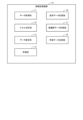
- FIG. 1 is a block diagram showing a configuration of an information processing device according to a first embodiment of the present disclosure.
- FIG. 2 is a diagram showing a process performed by the information processing device disclosed in FIG. 1 .
- FIG. 2 is a diagram showing a process performed by the information processing device disclosed in FIG. 1 .
- FIG. 2 is a diagram showing a process performed by the information processing device disclosed in FIG. 1 .
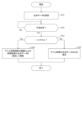
- 2 is a flowchart showing an operation of the information processing device disclosed in FIG. 1 .
- 2 is a flowchart showing an operation of the information processing device disclosed in FIG. 1 .
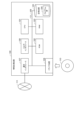
- FIG. 11 is a block diagram showing a hardware configuration of an information processing device according to a second embodiment of the present disclosure.
- FIG. 11 is a block diagram showing a configuration of an information processing device according to a second embodiment of the present disclosure.
- Fig. 1 is a diagram for explaining the configuration of an information processing device
- Fig. 2 to Fig. 6 are diagrams for explaining the processing operation of the information processing device.
- the information processing device 10 in this embodiment has a function of generating a model for detecting a state of agitation in a patient in a hospital.
- the information processing device 10 has a function of acquiring biometric data measured from a patient and selecting learning data to be used when generating a model by machine learning from the biometric data, as described below.
- the information processing device 10 is composed of one or more information processing devices (computers) equipped with a calculation device and a storage device. As shown in FIG. 1, the information processing device 10 is equipped with a data acquisition unit 11, a skill assessment unit 12, a data selection unit 13, and a learning unit 14. Each function of the data acquisition unit 11, the skill assessment unit 12, the data selection unit 13, and the learning unit 14 can be realized by the calculation device executing a program for realizing each function stored in the storage device.
- the information processing device 10 is also equipped with a patient data storage unit 16, a nurse data storage unit 17, and a learning data storage unit 18. The patient data storage unit 16, the nurse data storage unit 17, and the learning data storage unit 18 are composed of storage devices. Each component will be described in detail below.
- the data acquisition unit 11 acquires biometric data measured from a patient (person) who is to be judged as being in a state related to agitation, that is, an agitated state or a calm state.
- the biometric data is data that represents the patient's movements and state measured by a sensor attached to the patient, and in this embodiment, is acquired by measuring acceleration.
- the data acquisition unit 11 then associates the acquired biometric data with the time at which the data was measured and stores the data in the patient data storage unit 16.
- the data acquisition unit 11 acquires biometric data that is represented as time-series data on a graph with time (Time) on the horizontal axis and acceleration (Acc) on the vertical axis.
- the biometric data is not limited to the patient's acceleration, and may be other biometric data that represents the patient's movements and state, such as heartbeat intervals and skin temperature.
- the data acquisition unit 11 also acquires imaging data that captures the patient's movements while the biometric data is being measured. Note that the time of the imaging data is synchronized with the time of the biometric data. The data acquisition unit 11 then associates the acquired imaging data with the biometric data of the same patient and stores it in the patient data storage unit 16.
- the data acquisition unit 11 also acquires the result of the assessment of the patient's condition by the nurse (assessor).
- the nurse looks at the photographed data stored in the patient data storage unit 16 and assesses the degree of agitation in stages, such as "agitated” or “likely to be agitated.” Note that "agitated” is considered to be a higher degree of agitation than "likely to be agitated.”
- the data acquisition unit 11 then associates, with the photographed data of the patient, information identifying the nurse who made the assessment, a label indicating the degree of agitation that is the assessment result, and a judgment time that is the time of the judgment on the photographed data, and stores them in the patient data storage unit 16.
- the above-mentioned assessment is not limited to being made by a nurse, and may be made by any person who is the subject of calculation of a skill value that indicates the ability to assess the patient's condition, as described below.
- the data acquisition unit 11 also acquires correct answer data on the patient's condition.
- the correct answer data is the result of a judgment made by a doctor or a nurse with high judgment ability who can judge with high accuracy the degree of agitation of the patient, such as "in an agitated state" or "considered to be agitated", from the patient's photographed data.
- the data acquisition unit 11 then associates a label indicating the degree of agitation that is determined to be correct data with a judgment time, which is the time of judgment on the photographed data, and stores the association in the patient data storage unit 16.
- the above-mentioned correct answer data is not limited to the result of a judgment made by a doctor or a nurse with high judgment ability, and the result of a judgment made by any person may be used, and a judgment result based on an analysis result using a computer may also be used.
- the degree of agitation of the patient is rated in two stages, “agitated” or “supposedly agitated,” in the nurse's judgment and correct answer data, but it may be rated in one stage, such as “agitated,” or may be rated in more stages.
- the degree of agitation of the patient may be expressed based on a preset sedation scale called the Richmond Agitation-Sedation Scale (RASS).
- RASS Richmond Agitation-Sedation Scale
- the patient's condition may be expressed as "calm” or "degree of calm” in the nurse's judgment and correct answer data.
- the skill assessment unit 12 assesses the skill value representing the assessment ability of the nurse who assessed the patient's condition as described above. Specifically, the skill assessment unit 12 first reads out the label representing the degree of agitation, which is the assessment result of the nurse who is the subject of skill assessment for a specific patient, and the label which is the correct answer data for the same patient, stored in the patient data storage unit 16. At this time, the assessment results and the correct answer data for multiple patients are read out for the nurse who is the subject of skill assessment. Then, the skill assessment unit 12 compares the label of the assessment result by the nurse with the label of the correct answer data, and calculates a score according to the difference.
- the skill assessment unit 12 calculates, for example, such that the score value is higher the more the number of times that the labels of the assessment result by the nurse and the labels of the correct answer data match, or the closer the assessment time at which the labels of the assessment result and the labels of the correct answer data match, the higher the score value. Then, the skill assessment unit 12 checks whether the calculated score value is equal to or higher than a preset threshold value, and if it is equal to or higher than the threshold value, it determines that the skill value of the nurse is high skill, and if it is less than the threshold value, it determines that the skill value of the nurse is low skill. In this case, high skill means that the skill value is higher than low skill. In other words, the skill assessment unit 12 determines that the skill value is higher the smaller the difference between the assessment result by the nurse and the correct answer data.
- the skill value of a nurse two values, high skill and low skill, are set as the skill value of a nurse, but it is also possible to set it in stages using more values.
- the skill value may be set in five stages, such as "1, 2, 3, 4, 5," in which the skill value increases as the value increases, and the skill value may be determined to one of the values depending on the score value described above.
- the skill value may be data in any format as long as it is a value that represents the judgment ability of the nurse.
- the skill assessment unit 12 stores the skill value assessed for each nurse in the nurse data storage unit 17 in association with the nurse's identification information.
- the above-mentioned nurse's skill value may be determined by another information processing device or other method, set in advance, and stored in the nurse data storage unit 17. For this reason, the above-mentioned skill assessment unit 12 does not need to be equipped in the information processing device 10.
- the data selection unit 13 selects learning data to be used for machine learning to generate a model from the patient's biometric data stored in the patient data storage unit 16.
- the data selection unit 13 selects learning data from the biometric data using a selection method set according to the skill value of the nurse who assessed the patient's condition.
- the data selection unit 13 first searches for the judgment time at which the patient's biometric data was judged to be "in an agitated state" or “likely to be in an agitated state", that is, the judgment time at which the label of agitation was given. Then, for the biometric data that was labelled as agitation, a time interval is set based on the judgment time according to the skill value of the nurse who made the judgment, and the biometric data for the set time interval is set as learning data.
- the data selection unit 13 sets a time interval having a predetermined time width centered on the judgment time, and selects the biometric data for the time interval as learning data. Then, the data selection unit 13 assigns a label of "agitated state" to the biometric data selected as learning data, and stores it in the learning data storage unit 18.
- the symbol G1 in the upper diagram of FIG. 2 indicates a method of selecting learning data from the acceleration Acc, which is biometric data labeled as "uneasy state”.
- the data selection unit 13 sets an acceleration threshold Aa lower than the acceleration Acc at the determination time La labeled as "uneasy state”, and sets a time section Ra having a predetermined time width in which the acceleration Acc equal to or greater than the acceleration threshold Aa is measured.
- the data selection unit 13 selects the acceleration Acc of the time section Ra having a predetermined time width centered on the determination time La as learning data. Furthermore, in order for the determined skill value of a nurse to be "high skill”, the data selection unit 13 copies the acceleration data of the set time section Ra and selects it as learning data. For example, the data selection unit 13 copies the acceleration data of the time section Ra having a predetermined time width two or more times and selects it as learning data.
- the acceleration threshold Aa may be a value calculated from the acceleration at the determination time La, or may be a preset value. For example, the acceleration threshold Aa may be set to a value lower than the acceleration that may be determined to be "disturbing" based on the results of past analysis and examination of biometric data of many people.
- the symbol G2 in the lower diagram of FIG. 2 shows a method of selecting learning data from the acceleration Acc, which is biometric data labeled as "probably agitated”.
- the data selection unit 13 sets an acceleration threshold Ab lower than the acceleration Acc at the judgment time Lb labeled as "probably agitated", and sets a time section Rb having a predetermined time width in which the acceleration Acc equal to or greater than the acceleration threshold Ab is measured. In this way, in order for the skill value of the determined nurse to be "high skill", the data selection unit 13 selects the acceleration Acc of the time section Rb having a predetermined time width centered on the judgment time Lb as learning data.
- the acceleration threshold Ab is set to a value higher than the acceleration threshold Aa set when the label "in agitated” is assigned. Therefore, when it is determined that the degree of agitation is "probably agitated” which is lower than when it is determined that the patient is in a "agitated” state, a narrow time section Rb centered on the judgment time Lb is selected. That is, the data selection unit 13 changes and sets the above-mentioned time interval according to the degree of unrest judged by the nurse, and in particular, the higher the degree of unrest judged, the longer the time interval is set. Furthermore, in order for the skill value of the judged nurse to be "high skill", the data selection unit 13 copies the acceleration data of the set time interval Rb and selects it as learning data.
- the data selection unit 13 copies the acceleration data of the time interval Rb having a predetermined time width two or more times and selects it as learning data.
- the acceleration threshold Ab may be a value calculated from the acceleration in the judgment time Lb, or may be a value set in advance.
- the acceleration threshold Ab may be set to a value lower than the acceleration Acc set as a value that can be judged to be "likely to be in an unrestful state" based on the results of past analysis and examination of the biometric data of many people, and higher than the above-mentioned acceleration threshold Aa.
- the data selection unit 13 may set a time width in advance according to the label "in a state of agitation” or “suspected to be in a state of agitation”, and set the time intervals Ra, Rb based on the determination times La, Lb according to the time width.
- the data selection unit 13 may set the above-mentioned time width, i.e., the time interval, to change according to the degree of agitation determined by the nurse, and in particular, the higher the degree of agitation, the longer the time interval that is set.
- symbol G3 in the upper diagram of Figure 3 indicates a method of selecting learning data from acceleration Acc, which is biometric data labeled as "in an unsettled state”.
- the data selection unit 13 sets only the biometric data for the determination time La labeled as "in an unsettled state” as learning data.
- acceleration data for only the determination time La is selected as learning data without selecting acceleration data for a long time interval as described above.
- the selected acceleration data is used as learning data without being duplicated.
- symbol G4 in the lower diagram of Figure 3 shows a method of selecting learning data from the acceleration Acc, which is biometric data labeled "likely to be agitated" when the determined skill value of the nurse is "low skill.”
- the data selection unit 13 does not select such data as learning data. For this reason, when the nurse's skill value is low and the determined level of agitation is low, learning data will not be selected from the biometric data.
- the higher the determined skill value of the nurse the longer the time interval of acceleration data that the data selection unit 13 selects, and further copies the data to use as learning data. Therefore, the higher the determined skill value of the nurse, the greater the amount of learning data that the data selection unit 13 selects from the biometric data.
- a time interval with a shorter duration than in the case of "high skill” may be set and selected as learning data, or fewer copies than in the case of "high skill” may be selected as learning data.
- the data selection unit 13 may select learning data based on the determination time at which the label "quiet state” was assigned from the biometric data, and may assign the label "quiet state” to the learning data storage unit 18 and store the data in the learning data storage unit 18.
- the selection of learning data from biometric data in which the determined skill value of the nurse is "high skill” and the nurse has been determined to be in a "quiet state" will be described with reference to FIG. 4.
- the data selection unit 13 sets an acceleration threshold Ac that is higher than the acceleration Acc at the determination time Lc at which the label "quiet state” was assigned, and sets a time interval Rc having a predetermined time width in which the acceleration Acc equal to or less than the acceleration threshold Ac is measured. In this way, the data selection unit 13 selects the acceleration Acc of the time interval Rc having a predetermined time width centered on the determination time Lc as learning data to which the label "quiet state" is assigned, in order to determine that the skill value of the determined nurse is "high skill”. In addition, in order to determine that the skill value of a nurse is "high skill", the data selection unit 13 may duplicate several pieces of acceleration data for the set time interval Rc and select them as learning data.
- the data selection unit 13 may select only the acceleration data for the determination time Lc as learning data, that is, without setting a time interval with a time width, or may not select the acceleration data for the determination time Lc as learning data.
- the learning unit 14 reads out the learning data selected by the data selection unit 13 as described above from the learning data storage unit 18, and learns the acceleration data, which is the learning data, to generate a model. Specifically, the learning unit 14 generates a model that detects an agitated state from acceleration data newly measured from a patient by learning the acceleration data labeled as "agitated state", which is the learning data. The learning unit 14 then stores the generated model in the learning data storage unit 18. Note that, if the learning data includes acceleration data labeled as "calm state", the learning unit 14 may learn this to generate models that detect both an agitated state and a calm state from acceleration data newly measured from a patient.
- the information processing device 10 stores biometric data measured from the patient and imaging data capturing the patient's movements.
- the information processing device 10 then records the results of the nurse's assessment of the patient's condition as seen in the imaging data (step S1).
- the information processing device 10 records the degree of agitation, such as "in an agitated state” or “seems to be in an agitated state,” as well as the assessment time, as the assessment results.
- the information processing device 10 calculates a score according to the difference between the label indicating the degree of agitation, which is the nurse's judgment of the patient, and the label which is the preset correct answer data for the same patient (step S2).
- the information processing device 10 checks whether the calculated score value is equal to or greater than a preset threshold value (step S3), and if it is equal to or greater than the threshold value (Yes in step S3), it determines that the nurse's skill value is high skill (step S4), and if it is less than the threshold value, it determines that the nurse's skill value is low skill (step S5).
- the information processing device 10 stores the skill value determined for each nurse in association with the nurse's identification information.
- the information processing device 10 first searches for judgment times in the patient's biometric data that are judged to be "in an unsettled state” or “likely to be in an unsettled state,” that is, judgment times that are labeled as unsettled (step S11). If there is a judgment time that is labeled as unsettled (Yes in step S12), the information processing device 10 selects learning data from the biometric data based on the judgment time that is labeled as unsettled. At this time, the information processing device 10 first checks the skill value of the judged nurse (step S13).
- the information processing device 10 sets time intervals Ra and Rb having a predetermined time width centered on the judgment times La and Lb, as shown in FIG. 2, and copies the biometric data of the time intervals Ra and Rb and selects them as learning data (step S14).
- the information processing device 10 assigns a label of "unsettled state” to the biometric data selected as learning data and stores it.
- the information processing device 10 may select the biological data by changing the length of the time intervals Ra and Rb depending on the degree of the nurse's assessment of the state of agitation, such as the difference between symbols G1 and G2 in FIG. 2.
- the information processing device 10 sets only the biometric data at the judgment time La as learning data (step S15), as shown in the upper diagram of Figure 3. However, as shown in the lower diagram of Figure 3, when the label "uneasy state” is assigned, the information processing device 10 does not need to select the biometric data at the judgment time Lb as learning data.
- the higher the skill value of the determined nurse the more acceleration data of a longer time period is selected by the information processing device 10, which is then duplicated and used as learning data. Therefore, the higher the skill value of the determined nurse, the more learning data the information processing device 10 selects from the biometric data.
- the information processing device 10 learns the acceleration data, which is the learning data selected as described above, and generates a model for detecting agitated states. Furthermore, the information processing device 10 uses the generated model to detect agitated states from new biometric data measured from the patient.
- the higher the skill value, which is the nurse's ability to determine whether a patient is in an agitated state the more biometric data of patients that the nurse has determined to be in an agitated state is selected as learning data. This makes it possible to improve the quality of the biometric data to be learned. Furthermore, by learning from high-quality biometric data and generating a model that detects agitated states, the accuracy of detecting agitated states using such a model can be improved.
- Fig. 7 to Fig. 8 are block diagrams showing the configuration of an information processing device in embodiment 2. Note that this embodiment shows an outline of the configuration of the information processing device described in the above embodiment.
- the information processing device 100 is configured as a general information processing device (computer), and is equipped with the following hardware configuration, as an example.
- ⁇ CPU Central Processing Unit
- ROM Read Only Memory
- RAM Random Access Memory
- Program group 104 loaded into RAM 103
- a storage device 105 for storing the program group 104
- a drive device 106 that reads and writes data from and to a storage medium 110 outside the information processing device.
- a communication interface 107 that connects to a communication network 111 outside the information processing device
- Input/output interface 108 for inputting and outputting data
- a bus 109 that connects each component
- FIG. 7 shows an example of the hardware configuration of the information processing device 100, and the hardware configuration of the information processing device is not limited to the above-mentioned case.
- the information processing device may be configured with a part of the above-mentioned configuration, such as not having the drive device 106.
- the information processing device may use a GPU (Graphic Processing Unit), a DSP (Digital Signal Processor), an MPU (Micro Processing Unit), an FPU (Floating point number Processing Unit), a PPU (Physics Processing Unit), a TPU (Tensor Processing Unit), a quantum processor, a microcontroller, or a combination of these.
- the information processing device 100 can be equipped with the data acquisition unit 121 and data selection unit 122 shown in FIG. 8 by having the CPU 101 acquire the program group 104 and execute it.
- the program group 104 is stored in advance in the storage device 105 or ROM 102, for example, and is loaded into the RAM 103 and executed by the CPU 101 as necessary.
- the program group 104 may be supplied to the CPU 101 via the communication network 111, or may be stored in advance in the storage medium 110, and the drive device 106 may read out the programs and supply them to the CPU 101.
- the data acquisition unit 121 and data selection unit 122 described above may be constructed of dedicated electronic circuits for realizing such means.
- the data acquisition unit 121 acquires biometric data measured from a person who is to be judged for a state related to agitation, and the result of the judgement made by an assessor on the state of the person. For example, the data acquisition unit 121 acquires the result of the judgement of the person's state of agitation.
- the data selection unit 122 selects learning data from the biometric data based on the skill value representing the state judgment ability set for the assessor and the judgment result. For example, the higher the skill value, the more learning data the data selection unit 122 selects from the biometric data judged to be in an uneasy state.
- the higher the skill value of an assessor the more biometric data of a person assessed by that assessor is selected as learning data. This makes it possible to improve the quality of the biometric data to be learned. Furthermore, by learning high-quality biometric data and generating a model that detects a condition, it is possible to improve the accuracy of detecting the condition using that model.
- Non-transitory computer readable medium includes various types of tangible storage medium.
- Examples of non-transitory computer readable medium include magnetic recording media (e.g., flexible disks, magnetic tapes, hard disk drives), magneto-optical recording media (e.g., magneto-optical disks), CD-ROM (Read Only Memory), CD-R, CD-R/W, and semiconductor memory (e.g., mask ROM, PROM (Programmable ROM), EPROM (Erasable PROM), flash ROM, RAM (Random Access Memory)).
- the program may also be supplied to a computer by various types of transitory computer readable medium. Examples of transitory computer readable medium include electrical signals, optical signals, and electromagnetic waves.
- the temporary computer-readable medium can supply the program to the computer via a wired communication path, such as an electric wire or optical fiber, or via a wireless communication path.
- the present disclosure has been described above with reference to the above-mentioned embodiments, but the present disclosure is not limited to the above-mentioned embodiments.
- Various modifications that can be understood by a person skilled in the art can be made to the configuration and details of the present disclosure within the scope of the present disclosure.
- at least one or more of the functions of the data acquisition unit 121 and the data selection unit 122 described above may be executed by an information processing device installed and connected anywhere on the network, that is, they may be executed by so-called cloud computing.
- Appendix 1 A data acquisition unit that acquires biometric data measured from a person who is to be judged for a state related to agitation and a result of the state judgment made by an evaluator for the person; a data selection unit that selects learning data from the biometric data based on a skill value that is set for the assessor and indicates the ability to determine the condition and the result of the determination;
- An information processing device comprising: (Appendix 2) 2.
- the information processing device selects learning data from the biometric data using a selection method preset according to the skill value of the assessor.
- Information processing device. (Appendix 3) 3.
- the information processing device according to claim 1, the data selection unit selects a larger amount of learning data from the biometric data as the skill value of the assessor is higher;
- Information processing device. (Appendix 4)
- An information processing device according to any one of claims 1 to 3, the data selection unit is more likely to copy the biometric data and select learning data as the skill value of the assessor is higher; Information processing device. (Appendix 5) 5.
- the data acquisition unit acquires the biometric data, which is time-series data measured from the person, and the judgment result including a judgment time of the state of the person by the judge, the data selection unit sets a time interval of the biometric data based on the judgment time in accordance with the skill value of the judge, and selects the biometric data of the set time interval as learning data.
- Information processing device (Appendix 6)
- the data selection unit sets the time interval to be longer as the skill value of the judge is higher.
- the information processing device acquires the judgment result including the degree of the state judged by the judge, the data selection unit sets a time interval of the biometric data based on the determination time in accordance with the degree of the state, and selects the biometric data of the set time interval as learning data.
- Information processing device. (Appendix 8) 8. The information processing device according to claim 1, A skill determination unit is provided for determining the skill value of the determiner based on the determination result by the determiner for the person and correct answer data of the state of the person. Information processing device.
- (Appendix 9) Acquiring biometric data measured from a person to be judged for a state related to agitation and a result of a judgement made by an assessor on the state of the person; selecting learning data from the biometric data based on a skill value representing an ability to judge the condition set for the assessor and the judgment result; Information processing methods.
- Appendix 9.1 10. The information processing method according to claim 9, selecting learning data from the biometric data using a selection method preset according to the skill value of the assessor; Information processing methods. (Appendix 9.2) 1. An information processing method according to claim 9, further comprising: The higher the skill value of the judge, the larger the amount of learning data to be selected from the biometric data. Information processing methods.
- Information processing device 11 Data acquisition unit 12 Skill determination unit 13 Data selection unit 14 Learning unit 16 Patient data storage unit 17 Nurse data storage unit 18 Learning data storage unit 100 Information processing device 101 CPU 102 ROM 103 RAM 104 Program group 105 Storage device 106 Drive device 107 Communication interface 108 Input/output interface 109 Bus 110 Storage medium 111 Communication network 121 Data acquisition unit 122 Data selection unit
Landscapes
- Health & Medical Sciences (AREA)
- Engineering & Computer Science (AREA)
- Medical Informatics (AREA)
- Public Health (AREA)
- Biomedical Technology (AREA)
- Primary Health Care (AREA)
- General Health & Medical Sciences (AREA)
- Epidemiology (AREA)
- Business, Economics & Management (AREA)
- General Business, Economics & Management (AREA)
- Data Mining & Analysis (AREA)
- Databases & Information Systems (AREA)
- Pathology (AREA)
- Measurement Of The Respiration, Hearing Ability, Form, And Blood Characteristics Of Living Organisms (AREA)
- Management, Administration, Business Operations System, And Electronic Commerce (AREA)
- Medical Treatment And Welfare Office Work (AREA)
Priority Applications (3)
| Application Number | Priority Date | Filing Date | Title |
|---|---|---|---|
| PCT/JP2023/000649 WO2024150379A1 (ja) | 2023-01-12 | 2023-01-12 | 情報処理装置、情報処理方法、プログラム |
| US18/288,866 US20250078999A1 (en) | 2023-01-12 | 2023-01-12 | Information processing device, information processing method, and program |
| JP2024569950A JPWO2024150379A1 (https=) | 2023-01-12 | 2023-01-12 |
Applications Claiming Priority (1)
| Application Number | Priority Date | Filing Date | Title |
|---|---|---|---|
| PCT/JP2023/000649 WO2024150379A1 (ja) | 2023-01-12 | 2023-01-12 | 情報処理装置、情報処理方法、プログラム |
Publications (1)
| Publication Number | Publication Date |
|---|---|
| WO2024150379A1 true WO2024150379A1 (ja) | 2024-07-18 |
Family
ID=91896646
Family Applications (1)
| Application Number | Title | Priority Date | Filing Date |
|---|---|---|---|
| PCT/JP2023/000649 Ceased WO2024150379A1 (ja) | 2023-01-12 | 2023-01-12 | 情報処理装置、情報処理方法、プログラム |
Country Status (3)
| Country | Link |
|---|---|
| US (1) | US20250078999A1 (https=) |
| JP (1) | JPWO2024150379A1 (https=) |
| WO (1) | WO2024150379A1 (https=) |
Citations (6)
| Publication number | Priority date | Publication date | Assignee | Title |
|---|---|---|---|---|
| KR20200046946A (ko) * | 2018-10-26 | 2020-05-07 | 재단법인 아산사회복지재단 | 섬망 여부의 조기 판단 및 섬망의 중증도 판단 방법 및 프로그램 |
| US20200168340A1 (en) * | 2018-11-26 | 2020-05-28 | Industry-Academic Cooperation Foundation, Yonsei University | Method For Predicting Risk Of Delirium And Device For Predicting Risk Of Delirium Using The Same |
| JP2020086519A (ja) * | 2018-11-15 | 2020-06-04 | キヤノンメディカルシステムズ株式会社 | 医用画像処理装置、医用画像処理方法、およびプログラム |
| US20200211692A1 (en) * | 2018-12-31 | 2020-07-02 | GE Precision Healthcare, LLC | Facilitating artificial intelligence integration into systems using a distributed learning platform |
| WO2020161901A1 (ja) * | 2019-02-08 | 2020-08-13 | 日本電気株式会社 | 生体情報処理装置、方法、及びコンピュータ読取可能記録媒体 |
| WO2020174863A1 (ja) * | 2019-02-28 | 2020-09-03 | ソニー株式会社 | 診断支援プログラム、診断支援システム及び診断支援方法 |
-
2023
- 2023-01-12 US US18/288,866 patent/US20250078999A1/en active Pending
- 2023-01-12 WO PCT/JP2023/000649 patent/WO2024150379A1/ja not_active Ceased
- 2023-01-12 JP JP2024569950A patent/JPWO2024150379A1/ja active Pending
Patent Citations (6)
| Publication number | Priority date | Publication date | Assignee | Title |
|---|---|---|---|---|
| KR20200046946A (ko) * | 2018-10-26 | 2020-05-07 | 재단법인 아산사회복지재단 | 섬망 여부의 조기 판단 및 섬망의 중증도 판단 방법 및 프로그램 |
| JP2020086519A (ja) * | 2018-11-15 | 2020-06-04 | キヤノンメディカルシステムズ株式会社 | 医用画像処理装置、医用画像処理方法、およびプログラム |
| US20200168340A1 (en) * | 2018-11-26 | 2020-05-28 | Industry-Academic Cooperation Foundation, Yonsei University | Method For Predicting Risk Of Delirium And Device For Predicting Risk Of Delirium Using The Same |
| US20200211692A1 (en) * | 2018-12-31 | 2020-07-02 | GE Precision Healthcare, LLC | Facilitating artificial intelligence integration into systems using a distributed learning platform |
| WO2020161901A1 (ja) * | 2019-02-08 | 2020-08-13 | 日本電気株式会社 | 生体情報処理装置、方法、及びコンピュータ読取可能記録媒体 |
| WO2020174863A1 (ja) * | 2019-02-28 | 2020-09-03 | ソニー株式会社 | 診断支援プログラム、診断支援システム及び診断支援方法 |
Also Published As
| Publication number | Publication date |
|---|---|
| US20250078999A1 (en) | 2025-03-06 |
| JPWO2024150379A1 (https=) | 2024-07-18 |
Similar Documents
| Publication | Publication Date | Title |
|---|---|---|
| EP4036931B1 (en) | Training method for specializing artificial intelligence model in institution for deployment, and apparatus for training artificial intelligence model | |
| CN110335259B (zh) | 一种医学影像识别方法、装置和存储介质 | |
| JP2021029692A (ja) | 軽度認知障害判定システム | |
| US20230363679A1 (en) | Systems and methods for assisting with stroke and other neurological condition diagnosis using multimodal deep learning | |
| CN111226287B (zh) | 用于分析医学成像数据集的方法、系统、程序产品和介质 | |
| JP2015173827A (ja) | 画像処理装置、画像処理方法、及び画像処理プログラム | |
| JP7485512B2 (ja) | 医用情報処理装置、医用情報処理方法、及び医用情報処理プログラム | |
| JP2017530849A (ja) | 生理データに基づく患者の継続的な心拍出量(cco)を予測する方法およびシステム | |
| WO2024040268A2 (en) | Attentional generative multimodal network for pain estimation | |
| JP6590386B1 (ja) | 画像処理装置、画像処理システム、および画像処理プログラム | |
| EP4231311A1 (en) | Method and apparatus for providing information needed for dementia diagnosis | |
| CN113554640A (zh) | Ai模型的训练方法、使用方法、计算机设备及存储介质 | |
| JP2020151358A (ja) | 睡眠時無呼吸症候群判定装置、睡眠時無呼吸症候群判定方法および睡眠時無呼吸症候群判定プログラム | |
| Utsumil et al. | Personalized gaussian processes for forecasting of alzheimer’s disease assessment scale-cognition sub-scale (adas-cog13) | |
| KR20230007124A (ko) | 치주질환 진단을 위한 보조지표를 제공하는 방법 및 시스템 | |
| US20060247544A1 (en) | Characterization of cardiac motion with spatial relationship | |
| JP7826013B2 (ja) | 医用情報処理装置、方法およびプログラム | |
| TW202111617A (zh) | 區域性腦年齡預測之方法、非暫時性電腦可讀媒體及設備 | |
| WO2024150379A1 (ja) | 情報処理装置、情報処理方法、プログラム | |
| KR20210028200A (ko) | 아동의 신경발달 장애 위험을 평가하는 방법 | |
| CN118402783B (zh) | 一种基于人体压力分布的睡姿检测系统 | |
| CN120526270A (zh) | 融合多技术的主动脉病变识别方法、系统及存储介质 | |
| JP2020010804A (ja) | 医用画像診断支援装置、プログラム及び医用画像診断支援方法 | |
| KR20180078032A (ko) | 대뇌 피질 위축 정도를 고려한 알츠하이머 병의 서브타입 분류 방법 및 장치 | |
| KR102825896B1 (ko) | 의료 영상 처리 방법 및 디바이스 |
Legal Events
| Date | Code | Title | Description |
|---|---|---|---|
| WWE | Wipo information: entry into national phase |
Ref document number: 18288866 Country of ref document: US |
|
| 121 | Ep: the epo has been informed by wipo that ep was designated in this application |
Ref document number: 23916000 Country of ref document: EP Kind code of ref document: A1 |
|
| WWP | Wipo information: published in national office |
Ref document number: 18288866 Country of ref document: US |
|
| ENP | Entry into the national phase |
Ref document number: 2024569950 Country of ref document: JP Kind code of ref document: A |
|
| WWE | Wipo information: entry into national phase |
Ref document number: 2024569950 Country of ref document: JP |
|
| NENP | Non-entry into the national phase |
Ref country code: DE |
|
| 122 | Ep: pct application non-entry in european phase |
Ref document number: 23916000 Country of ref document: EP Kind code of ref document: A1 |