WO2024142358A1 - 音信号処理装置、音信号処理方法、プログラム - Google Patents
音信号処理装置、音信号処理方法、プログラム Download PDFInfo
- Publication number
- WO2024142358A1 WO2024142358A1 PCT/JP2022/048529 JP2022048529W WO2024142358A1 WO 2024142358 A1 WO2024142358 A1 WO 2024142358A1 JP 2022048529 W JP2022048529 W JP 2022048529W WO 2024142358 A1 WO2024142358 A1 WO 2024142358A1
- Authority
- WO
- WIPO (PCT)
- Prior art keywords
- channel
- signal
- value
- input sound
- sound signal
- Prior art date
- Legal status (The legal status is an assumption and is not a legal conclusion. Google has not performed a legal analysis and makes no representation as to the accuracy of the status listed.)
- Ceased
Links
Images





Classifications
-
- G—PHYSICS
- G10—MUSICAL INSTRUMENTS; ACOUSTICS
- G10L—SPEECH ANALYSIS TECHNIQUES OR SPEECH SYNTHESIS; SPEECH RECOGNITION; SPEECH OR VOICE PROCESSING TECHNIQUES; SPEECH OR AUDIO CODING OR DECODING
- G10L19/00—Speech or audio signals analysis-synthesis techniques for redundancy reduction, e.g. in vocoders; Coding or decoding of speech or audio signals, using source filter models or psychoacoustic analysis
-
- G—PHYSICS
- G10—MUSICAL INSTRUMENTS; ACOUSTICS
- G10L—SPEECH ANALYSIS TECHNIQUES OR SPEECH SYNTHESIS; SPEECH RECOGNITION; SPEECH OR VOICE PROCESSING TECHNIQUES; SPEECH OR AUDIO CODING OR DECODING
- G10L19/00—Speech or audio signals analysis-synthesis techniques for redundancy reduction, e.g. in vocoders; Coding or decoding of speech or audio signals, using source filter models or psychoacoustic analysis
- G10L19/008—Multichannel audio signal coding or decoding using interchannel correlation to reduce redundancy, e.g. joint-stereo, intensity-coding or matrixing
Definitions
- the present invention relates to a technology for processing two-channel stereo sound signals so as to suppress deterioration in the auditory quality of the decoded sound signal obtained by stereo encoding and decoding.
- Patent Document 1 and Patent Document 2 describe technologies for processing the L-channel signal and the R-channel signal, respectively, to obtain an L-channel processed signal and an R-channel processed signal, and subjecting the L-channel processed signal and the R-channel processed signal to subsequent encoding processing.
- Patent Document 1 the energy ratio and time difference between the L channel signal and the R channel signal are obtained as spatial information, and the signal of one of the channels is processed using the spatial information to obtain an L channel processed signal and an R channel processed signal that are more similar than the L channel signal and the R channel signal.
- Patent Document 2 for each channel, the energy ratio and time difference between the channel signal and a monaural signal that is the average of the left channel signal and the right channel signal are obtained as spatial information for that channel, and the channel signal is made closer to the monaural signal using the spatial information for that channel to obtain an L channel processed signal and an R channel processed signal.
- the present invention aims to obtain a signal to be coded from a two-channel stereo sound signal, without requiring a code representing information related to processing, and without requiring processing on the decoding side, so as to suppress deterioration in the auditory quality of the decoded sound signal obtained by stereo coding and decoding the signal to be coded.
- One aspect of the present invention is a sound signal processing device that obtains a two-channel stereo encoding target signal consisting of encoding target signals of two channels that are subject to stereo encoding by a stereo encoding device, from a two-channel stereo input sound signal consisting of input sound signals of two channels, and includes a signal mixing unit that obtains, for each of the channels, a signal that is a weighted addition of the input sound signal of that channel and the input sound signal of the other channel as the encoding target signal of that channel, wherein the weight of the input sound signal of that channel in the weighted addition is a value that has a monotonically decreasing relationship in a broad sense with respect to the absolute value of the channel-to-channel time difference of the two-channel stereo input sound signals, and the weight of the input sound signal of the other channel in the weighted addition is a value that has a monotonically increasing relationship in a broad sense with respect to the absolute value of the channel-to-channel time difference.
- One aspect of the present invention is a sound signal processing device that obtains a two-channel stereo encoding target signal consisting of encoding target signals of two channels that are subject to stereo encoding by a stereo encoding device, from a two-channel stereo input sound signal consisting of input sound signals of two channels, the sound signal processing device including: a downmix signal generation unit that mixes the input sound signals of the two channels to generate a downmix signal; and a mixing unit that obtains, for each of the channels, a signal obtained by weighting and adding the input sound signal of the channel and the downmix signal as the encoding target signal of the channel, wherein a weight of the input sound signal of the channel in the weighted addition is a value that has a monotonically decreasing relationship in a broad sense with respect to an absolute value of a time difference between channels of two-channel stereo input sound signals, and a weight of the downmix signal in the weighted addition is a value that has a monotonically increasing relationship in a broad sense with respect to the absolute value of the time difference
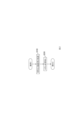
- the sound signal encoding system 300 obtains a stereo code, which is a code corresponding to the two-channel stereo input sound signal, from the two-channel stereo input sound signal.
- the stereo code obtained by the sound signal encoding system 300 is output from the sound signal encoding system 300.
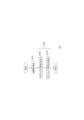
- the sound signal encoding system 300 performs the processes of steps S100 and S200 shown in FIG. 2.
- the sound signal processing device 100 obtains a first channel encoding target signal x' 1 (1), x' 1 (2), ..., x ' 1 (T) and a second channel encoding target signal x' 2 (1), x ' 2 (2), ..., x ' 2 (T) from a first channel input sound signal x 1 (1), x 1 (2), ..., x 1 (T) and a second channel input sound signal x 2 (1), x 2 (2), ..., x 2 (T).
- the stereo coding device 200 receives as input the two-channel stereo coding target signal output from the sound signal processing device 100.
- the stereo coding device 200 stereo-codes the two-channel stereo coding target signal to obtain stereo codes (step S200). Specifically, the stereo coding device 200 stereo-codes the first channel coding target signal and the second channel coding target signal to obtain stereo codes.
- the stereo codes obtained by the stereo coding device 200 are output from the sound signal coding system 300.
- the stereo encoding apparatus 200 stereo-encodes the first-channel encoding target signals x'1 (1), x'1 (2), ..., x'1 (T) and the second-channel encoding target signals x'2 (1), x'2 (2), ..., x'2 (T) for each frame to obtain a stereo code CS.
- stereo coding is a method that includes at least a time interval for coding utilizing at least the relationship between channels, and it can also be said to be an encoding method that may utilize at least the relationship between channels.
- the method of always independently encoding the signal to be encoded for each channel to obtain the code is not included in "stereo encoding" because it is an encoding method that does not utilize the relationship between the channels.
- the stereo code output from the sound signal encoding system 300 is input to the stereo decoding device 400 shown in FIG. 7 via a transmission path.
- the stereo decoding device 400 performs the process of step S400 shown in FIG. 8. Specifically, the stereo decoding device 400 decodes the stereo code using a stereo decoding method corresponding to the stereo encoding method of the stereo encoding device 200 to obtain and output a two-channel stereo decoded sound signal (step S400).
- the two-channel stereo decoded sound signal is made up of decoded sound signals of two channels, specifically, a first channel decoded sound signal and a second channel decoded sound signal. The first channel decoded sound signal and the second channel decoded sound signal are appropriately DA converted and are presented to the listener.
- the channel in question refers to X channel
- the other channel refers to Y channel
- An example of a signal in which the input sound signal of each channel is mixed with the input sound signal of the other channel is a signal in which the input sound signal of the channel is weighted and added with the input sound signal of the other channel, or more specifically, a signal in which, for each time, the input sound signal of the channel at that time and the input sound signal of the other channel at that time are weighted and added.
- the first channel input sound signal at time t be x 1 (t)
- the second channel input sound signal at time t be x 2 (t)
- the first channel encoding target signal at time t be x' 1 (t)
- the second channel encoding target signal at time t be x' 2 (t).
- the first channel signal mixer 120-1 may calculate and obtain the first-channel encoding target signal x' 1 (t) using the above formula (2-1), or may use another calculation method or the like to obtain the first-channel encoding target signal x' 1 (t) represented by the above formula (2-1).
- the second channel signal mixer 120-2 may calculate and obtain the second-channel encoding target signal x' 2 (t) using the above formula (2-2), or may use another calculation method or the like to obtain the second-channel encoding target signal x' 2 (t) represented by the above formula (2-2).
- weight value w1 has a broadly monotonically increasing relationship with the stereo encoding bitrate, which means that (1- w1 ) in the above formula (2-1) has a broadly monotonically decreasing relationship with the stereo encoding bitrate.
- weight value w2 has a broadly monotonically increasing relationship with the stereo encoding bitrate, which means that (1- w2 ) in the above formula (2-2) has a broadly monotonically decreasing relationship with the stereo encoding bitrate.
- That the second type of value is in a broadly monotonically decreasing relationship with the first type of value means that if the first type of value is a, the second type of value is a function f(a) of the first type of value a, the minimum value that the first type of value can take is a min , and the maximum value that the first type of value can take is a max , then f(a min ) > f(a max ) and, for all combinations of a 1 and a 2 that satisfy a min ⁇ a 1 ⁇ a 2 ⁇ a max , f(a 1 ) ⁇ f(a 2 ).
- the second type of value being in a broadly monotonically decreasing relationship with the first type of value means that the second type of value when the first type of value is the minimum value in the range that the first type of value can take is greater than the second type of value when the first type of value is the maximum value in the range that the first type of value can take, and that, within the entire range that the first type of value can take, the second type of value when the first type of value is a certain value is greater than or equal to the second type of value when the first type of value is greater than the aforementioned certain value.
- the fact that the second type of value has a monotonically decreasing relationship with the first type of value means that the second type of value has a negative correlation with the first type of value, and the smaller the first type of value is, the larger the second type of value is, and vice versa. Note that “monotonically decreasing” may be read as “strictly defined monotonically decreasing.”
- the signal mixing unit 120 obtains, for each channel, a signal obtained by mixing the input sound signal of the channel with the input sound signal of the other channel in all possible ranges of the stereo encoding bit rate, where the higher the stereo encoding bit rate, the closer the signal is to the input sound signal of the channel; or, in a portion of the range of possible stereo encoding bit rates (a first type of range), obtains, for each channel, a signal obtained by mixing the input sound signal of the channel with the input sound signal of the other channel, where the closeness to the input sound signal of the channel is the same regardless of the stereo encoding bit rate, and in ranges other than the portion of the range of possible stereo encoding bit rates (a range other than the first type of range, a second type of range), obtains, for each channel, a signal obtained by mixing the input sound signal of the channel with the input sound signal of the other channel, where the higher the stereo encoding bit rate, the closer the signal is to the input sound signal of the channel (step S120).
- the signal mixing unit 120 may obtain, for each channel, a signal that is a weighted addition of the input sound signal of that channel and the input sound signal of the other channel, where the weight of the input sound signal of that channel in the weighted addition is a value that has a broad-sense monotonically increasing relationship with the stereo encoding bit rate, and the weight of the input sound signal of the other channel in the weighted addition is a value that has a broad-sense monotonically decreasing relationship with the stereo encoding bit rate, as the signal to be encoded for that channel.
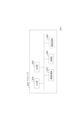
- the signal mixing unit 120 may include a first channel signal mixing unit 120-1 and a second channel signal mixing unit 120-2, as shown in Figure 3.
- the first channel signal mixing unit 120-1 to which the index value ⁇ is input may obtain, as the first channel encoding target signal, a signal obtained by mixing the first channel input sound signal and the second channel input sound signal, where the larger the index value ⁇ , the closer the signal is to the first channel input sound signal
- the first channel signal mixing unit 120-1 to which the index value ⁇ ' is input may obtain, as the first channel encoding target signal, a signal obtained by mixing the first channel input sound signal and the second channel input sound signal, where the smaller the index value ⁇ ', the closer the signal is to the first channel input sound signal.
- the value having a broad monotonically decreasing relationship with the stereo encoding bit rate is, for example, a function value of a broad monotonically decreasing function with the stereo encoding bit rate as an argument. Therefore, for example, a broad monotonically decreasing function for each channel may be stored in the mixer 1211 in advance, and the mixer 1211 may obtain a function value for each channel of each frame by providing the stereo encoding bit rate of the frame as an argument to the broad monotonically decreasing function for that channel, and use the obtained function value as the weight of the downmix signal.
- a pair of each bit rate and each weight value corresponding to each bit rate that is predetermined so that the weight value has a broad monotonically decreasing relationship with the bit rate may be stored in the mixer 1211 in advance, and the mixer 1211 may obtain a weight value corresponding to the stereo encoding bit rate of the frame from among the stored weight values for each channel of each frame, and use the obtained weight value as the weight of the downmix signal.
- the mixing unit 1211 obtains, for each channel, the input sound signal of that channel as is as the encoding target signal for that channel, and when the stereo encoding bit rate is equal to or less than a predetermined second value that is smaller than the above-mentioned predetermined first value, the mixing unit 1211 obtains, for each channel, the downmix signal as is as the encoding target signal for that channel, and when neither of the above two cases applies, i.e., when the stereo encoding bit rate is equal to or less than the above-mentioned predetermined first value and greater than the above-mentioned predetermined second value, the mixing unit 1211 obtains, for each channel, a signal obtained by mixing the input sound signal and the downmix signal for that channel, in the entire range of the possible stereo encoding bit rate, and in which the higher the stereo encoding bit rate, the closer the signal is to the input sound signal for that channel (i.e., the lower the
- the weighting value of the first channel determined from the bit rate of the previous frame may be w p1
- the weighting value of the first channel determined from the bit rate of the current frame may be w c1
- the first channel mixing unit 1211-1 may use the value obtained by the following equation (2-19) as the weighting value w 1 (t) for each time from the first time (i.e., the 1st time) to the T 0 -1th time of the current frame, and use w c1 as the weighting value w 1 (t) for each time from the T 0th time to the last time (i.e., the Tth time) of the current frame, to obtain a first channel encoding target signal x' 1 (t) represented by the following equation (2-20) instead of the above equation (2-17) for each time t of the current frame.
- the second channel mixing unit 1211-2 to which the index value ⁇ ' is input may obtain, as a second channel encoding target signal, a signal obtained by mixing the second channel input sound signal and the downmix signal, where the smaller the index value ⁇ ', the closer the signal is to the second channel input sound signal, and the larger the index value ⁇ ', the closer the signal is to the downmix signal.
- the mixer 1211 to which the index value ⁇ is input may obtain, for each channel, the input sound signal of that channel as is as the signal to be coded for that channel if the index value ⁇ is greater than a predetermined value, and may obtain, for each channel, a signal obtained by mixing the input sound signal of that channel with the downmix signal, where the larger the index value ⁇ , the closer the signal is to the input sound signal of that channel (i.e., the smaller the index value ⁇ , the closer the signal is to the downmix signal), as the signal to be coded for that channel (step S1211).
- the mixing unit 1211 may operate by replacing the previously mentioned “greater than a predetermined first value” and “less than or equal to a predetermined first value” with “greater than or equal to a predetermined first value” and “less than a predetermined first value”, respectively, and may operate by replacing the previously mentioned "greater than a predetermined second value” and “less than or equal to a predetermined second value” with “greater than or equal to a predetermined second value” and “less than a predetermined second value", respectively.
- the mixer 1211 to which the index value ⁇ ' is input may obtain, for each channel, the downmix signal as is as the encoding target signal for that channel when the index value ⁇ ' is greater than a predetermined value, and may obtain, for each channel, a signal obtained by mixing the input sound signal and the downmix signal for that channel, and in which the smaller the index value ⁇ ' is, the closer the signal is to the input sound signal for that channel (i.e., the larger the index value ⁇ ' is, the closer the signal is to the downmix signal) as the encoding target signal for that channel (step S1211).
- the mixer 1211 may perform an operation in which the above-mentioned "greater than the predetermined value” and “equal to or less than the predetermined value” are respectively interpreted as “equal to or greater than the predetermined value” and “equal to or less than the predetermined value”.
- the index value calculation unit 110 obtains an index value ⁇ of 1 when the stereo encoding device 200 has a stereo encoding bitrate of 32 kbps, obtains an index value ⁇ of 0.8 when the stereo encoding device 200 has a stereo encoding bitrate of 24.4 kbps, obtains an index value ⁇ of 0.6 when the stereo encoding device 200 has a stereo encoding bitrate of 16.4 kbps, and obtains an index value ⁇ of 0.4 when the stereo encoding device 200 has a stereo encoding bitrate of 13.2 kbps.
- the mixer 1211 obtains, for each time t, a first-channel encoding target signal x' 1 (t) represented by the following equation (2-23) and a second-channel encoding target signal x' 2 (t) represented by the following equation (2-24).
- the mixer 1211 may, for each frame, set the index value ⁇ calculated by the index value calculation unit 110 for the immediately preceding frame as ⁇ p and the index value ⁇ calculated by the index value calculation unit 110 for the current frame as ⁇ c , set the value obtained by the following equation (2-25) as the index value ⁇ (t) for each time from the first time (i.e., the 1st time) to the T 0 -1th time of the current frame, and set ⁇ c as the index value ⁇ (t) for each time from the T 0th time to the last time (i.e., the Tth time) of the current frame, and may obtain a first-channel encoding target signal x' 1 (t) represented by the following equation (2-26) instead of the above equation (2-23) for each time t of the current frame, or may obtain a second-channel encoding target signal x' 2 (t) represented by the following equation (2-27) instead of the above
- Index value calculation unit 110 obtains index value ⁇ ' which is greater than or equal to 0 and less than or equal to 1 and which has a monotonically decreasing relationship in a broad sense with the stereo encoding bitrate of stereo encoding device 200. For example, index value calculation unit 110 obtains index value ⁇ ' which is 0 when the stereo encoding bitrate of stereo encoding device 200 is the maximum value that the bitrate can take, and is 1 when the stereo encoding bitrate of stereo encoding device 200 is the minimum value that the bitrate can take, and which increases as the stereo encoding bitrate of stereo encoding device 200 is lower.
- the mixer 1211 may use, for each frame, the index value ⁇ ' calculated by the index value calculation unit 110 for the immediately preceding frame as ⁇ 'p and the index value ⁇ ' calculated by the index value calculation unit 110 for the current frame as ⁇ 'c , set the value obtained by the following equation (2-30) as the index value ⁇ '(t) for each time from the first time (i.e., the 1st time) to the T 0 -1th time of the current frame, and set ⁇ 'c as the index value ⁇ '(t) for each time from the T 0th time to the last time (i.e., the Tth time) of the current frame.
- the mixer 1211 may obtain a first-channel encoding target signal x' 1 (t) represented by the following equation (2-31) instead of the above equation (2-28), or may obtain a second-channel encoding target signal x' 2 (t) represented by the following equation (2-32) instead of the above equation (2-29).
- a sound signal processing device 100 that performs processing according to the absolute value of the inter-channel time difference in two-channel stereo input sound signals input to the sound signal processing device 100.
- the sound signal processing device 100 of the third embodiment is as shown by the dashed line, dashed line, and solid line in Fig. 3, and includes an index value calculation unit 110 and a signal mixing unit 120.
- the sound signal processing device 100 performs processing of steps S110 and S120 shown by the dashed line and solid line in Fig. 4.
- the following description will focus on the differences between the third embodiment and the second embodiment.
- the index value calculation unit 110 receives a first channel input sound signal and a second channel input sound signal, which are input sound signals of two channels constituting the two-channel stereo input sound signal input to the sound signal processing device 100.
- the index value calculation unit 110 calculates an absolute value
- of the inter-channel time difference obtained by the index value calculation unit 110 is output to the signal mixing unit 120.
- the inter-channel time difference ITD is a value that corresponds to the time required for a sound emitted by a main sound source in a space to reach one of the first channel microphone and the second channel microphone arranged in the space and then reach the other microphone.
- the index value calculation unit 110 does not need to distinguish which microphone the sound emitted by the main sound source reaches first, or which microphone the sound emitted by the main sound source reaches last, and it is sufficient for the index value calculation unit 110 to calculate the absolute value of the inter-channel time difference
- the index value calculation unit 110 may calculate the inter-channel time difference ITD first and then obtain the absolute value of the inter-channel time difference
- the first example is an example using the absolute value of the correlation coefficient. For each number of candidate samples ⁇ cand from a predetermined positive number ⁇ max to a predetermined negative number ⁇ min , the index value calculation unit 110 obtains an absolute value ⁇ cand of the correlation coefficient between a sample sequence of the first channel input sound signal and a sample sequence of the second channel input sound signal that is shifted backward from the sample sequence by each number of candidate samples ⁇ cand (step S110-A1). The index value calculation unit 110 then obtains the absolute value of ⁇ cand when the absolute value ⁇ cand of the correlation coefficient is maximum as the absolute value of the inter-channel time difference
- the inter-channel time difference ITD is a positive value
- the inter-channel time difference ITD is a negative value
- the second example is an example using a correlation value using information on the phase of the signal.
- the index value calculation unit 110 first obtains a first channel frequency spectrum X 1 (k) at each frequency k from 0 to T-1 by performing a Fourier transform of the first channel input sound signals x 1 ( 1), x 1 (2), ..., x 1 (T) according to the following formula (3-1) (step S110-B1).
- the index value calculation unit 110 obtains a second channel frequency spectrum X 2 (k) at each frequency k from 0 to T-1 by performing a Fourier transform of the second channel input sound signals x 2 (1), x 2 (2), ..., x 2 (T) according to the following formula (3-2) (step S110-B2).
- the index value calculation unit 110 obtains the phase difference spectrum ⁇ (k) for each frequency k by using the first channel frequency spectrum X 1 (k) and the second channel frequency spectrum X 2 (k) according to the following equation (3-3) (step S110-B3).
- the index value calculation unit 110 obtains a phase difference signal ⁇ ( ⁇ cand ) by performing an inverse Fourier transform of the following equation (3-4) using the phase difference spectrum ⁇ (k) for each number of candidate samples ⁇ cand from ⁇ max to ⁇ min (step S110-B4).
- ⁇ max and ⁇ min are the same as those in the first example.
- the absolute value of the phase difference signal ⁇ ( ⁇ cand ) represents a kind of correlation corresponding to the likelihood of the time difference between the first channel input sound signal x 1 (1), x 1 (2), ..., x 1 (T) and the second channel input sound signal x 2 (1), x 2 (2), ..., x 2 (T). Therefore, the index value calculation unit 110 obtains the absolute value of the phase difference signal ⁇ ( ⁇ cand ) for each number of candidate samples ⁇ cand as the correlation value ⁇ cand (step S110-B5). The index value calculation unit 110 then obtains the absolute value of ⁇ cand when the correlation value ⁇ cand is maximum as the absolute value of the inter-channel time difference
- the index value calculation unit 110 may use a normalized value, such as the relative difference between the absolute value of the phase difference signal ⁇ ( ⁇ cand ) for each ⁇ cand and the average of the absolute values of the phase difference signal obtained for each of a number of candidate samples before and after ⁇ cand . That is, the index value calculation unit 110 may use a predetermined positive number ⁇ range to obtain an average value for each ⁇ cand using the following formula (3-5), and obtain a normalized correlation value as ⁇ cand using the obtained average value ⁇ c ( ⁇ cand ) and the phase difference signal ⁇ ( ⁇ cand ) using the following formula (3-6) (step S110-B5').
- a normalized value such as the relative difference between the absolute value of the phase difference signal ⁇ ( ⁇ cand ) for each ⁇ cand and the average of the absolute values of the phase difference signal obtained for each of a number of candidate samples before and after ⁇ cand . That is, the index value calculation unit 110 may use a predetermined positive number ⁇ range to obtain an average value for each ⁇ cand
- the signal mixer 120 receives a first channel input sound signal and a second channel input sound signal, which are input sound signals of two channels constituting the two-channel stereo input sound signal input to the sound signal processing device 100, and an absolute value
- the signal mixing unit 120 may include a first channel signal mixing unit 120-1 and a second channel signal mixing unit 120-2.
- the first channel signal mixing unit 120-1 may obtain, as the first channel encoding target signal, a signal obtained by mixing the first channel input sound signal and the second channel input sound signal, and the smaller the absolute value of the inter-channel time difference
- the second channel signal mixing unit 120-2 may obtain, as the second channel encoding target signal, a signal obtained by mixing the second channel input sound signal and the first channel input sound signal, and the smaller the absolute value of the inter-channel time difference
- the first channel signal mixer 120-1 may obtain the first-channel encoding target signal x'1(t) represented by the above formula (2-1) for each time t
- the second channel signal mixer 120-2 may obtain the second-channel encoding target signal x'2 (t) represented by the above formula (2-2) for each time t, using weight values w1 and w2 that are between 0.5 and 1 and have a negative correlation with the absolute value
- the weight values w1 and w2 may be the same or different values.
- the signal mixing unit 120 obtains, as the signal to be coded for the channel, a signal obtained by mixing the input sound signal of the channel with the input sound signal of the other channel in all possible ranges of the absolute value
- of the inter-channel time difference is obtained as the encoding target signal of the channel, and in ranges other than the part of the ranges that the absolute value
- the first type of range and the second type of range each include one or more ranges. That is, there may be multiple first type ranges, and there may be multiple second type ranges.
- of the inter-channel time difference is, for example, the function value of a broadly-sense monotonically decreasing function that takes the absolute value
- the signal mixing unit 120 may store in advance a set of information for identifying the absolute value
- the weighting value w1 is 1, the first-channel encoding target signal x'1 (t) expressed by the above formula (2-1) is the same as the first-channel input sound signal x1 (t), and when the weighting value w2 is 1, the second-channel encoding target signal x'2 (t) expressed by the above formula (2-2) is the same as the second-channel input sound signal x2 (t).
- of the previous frame is set to w p1
- of the current frame is set to w c1
- the first channel signal mixing unit 120-1 may set the value obtained by the above equation (2-3) as the weighting value w 1 (t) for each time from the first time (i.e., the 1st time) to the T 0 -1th time of the current frame, and set w c1 as the weighting value w 1 (t) for each time from the T 0th time to the last time (i.e., the Tth time) of the current frame, thereby obtaining the first channel encoding target signal x' 1 (t) represented by the above equation (2-4) instead of the above equation (2-1) for each time
- the second channel signal mixing unit 120-2 may use the value obtained by the above equation (2-5) as the weighting value w 2 (t) for each time from the first time (i.e., the 1st time) to the T 0 -1th time of the current frame, and use w c2 as the weighting value w 2 (t) for each time from the T 0th time to the last time (i.e., the Tth time) of the current frame, thereby obtaining the second channel encoding target signal x' 2 (t) represented by the above equation (2-6) instead of the above equation (2-2) for each time t of the current frame.
- can be performed by, for example, storing in advance in the index value calculation unit 110 a set of information specifying the absolute value of the inter-channel time difference
- of the inter-channel time difference can be performed, for example, by storing the broad monotonically increasing function in advance in the index value calculation unit 110, and by the index value calculation unit 110 providing the absolute value
- the signal mixer 120 to which the index value ⁇ is input obtains, for each of the first and second channels, a signal obtained by mixing an input sound signal of the first channel with an input sound signal of the other channel, where the larger the index value ⁇ , the closer the signal is to the input sound signal of the first channel
- the signal mixer 120 to which the index value ⁇ ' is input obtains, for each of the first and second channels, a signal obtained by mixing an input sound signal of the first channel with an input sound signal of the other channel, where the smaller the index value ⁇ ', the closer the signal is to the input sound signal of the first channel (step S120).
- the encoding target signals of the two channels obtained by the signal mixer 120 i.e., two-channel stereo encoding target signals
- the signal mixing unit 120 may operate by replacing the previously described "smaller than a predetermined value” and “equal to or greater than a predetermined value” with “equal to or less than a predetermined value” and “equal to or greater than a predetermined value”, respectively.
- the index value calculation unit 110 obtains an index value ⁇ that is equal to or greater than 0.5 and equal to or less than 1 and has a monotonically decreasing relationship in a broad sense with the absolute value
- the mixer 1211 receives as input a first channel input sound signal and a second channel input sound signal which are input sound signals of two channels constituting the two-channel stereo input sound signal input to the sound signal processing device 100, a downmix signal output from the downmix signal generation unit 1201, and an absolute value
- the mixer 1211 obtains, as the encoding target signal for that channel, a signal obtained by mixing the input sound signal and the downmix signal for that channel, where the smaller the absolute value
- the encoding target signals for the two channels obtained by the mixer 1211 i.e., two-channel stereo encoding target signals
- the weight values w1 and w2 may be constant regardless of the absolute value
- the mixer 1211 obtains, as the signal to be coded for the channel, a signal obtained by mixing the input sound signal of the channel with the downmix signal in the entire range in which the absolute value
- the mixer 1211 may store in advance a set of information for identifying the absolute value
- the mixer 1211 may perform an operation in which the above-mentioned "greater than a predetermined value” and “equal to or smaller than a predetermined value” are respectively read as “equal to or larger than a predetermined value” and "equal to or smaller than a predetermined value”.
- of the inter-channel time difference may be obtained as the signal to be coded for the channel, and in a range other than the part of the ranges (ranges other than the first type of range, second type of range) of the possible ranges of the absolute value
- the mixer 1211 may operate by replacing the above-mentioned "smaller than a predetermined first value” and “greater than a predetermined first value” with “smaller than a predetermined first value” and “greater than a predetermined first value”, respectively, and may operate by replacing the above-mentioned "smaller than a predetermined second value” and “greater than a predetermined second value” with “smaller than a predetermined second value” and “greater than a predetermined second value", respectively.
- the first type of range and the second type of range each include one or more ranges. That is, there may be multiple first type ranges, and there may be multiple second type ranges.
- the mixer 1211 obtains the input sound signal of each channel as it is as the signal to be coded for that channel, and in a second range in which the absolute value
- the index value calculation unit 110 calculates an index value ⁇ that is in a broadly monotonically decreasing relationship with the absolute value
- the index value ⁇ or the index value ⁇ ' obtained by the index value calculation unit 110 is output to the signal mixing unit 120.
- the mixing unit 1211 to which the index value ⁇ ' is input may obtain, for each channel, the input sound signal of that channel as is as the signal to be encoded for that channel if the index value ⁇ ' is smaller than a predetermined first value, and may obtain, for each channel, the downmix signal as is as the signal to be encoded for that channel if the index value ⁇ ' is equal to or greater than a predetermined second value greater than the above-mentioned predetermined first value, and may obtain, for each channel, a signal obtained by mixing the input sound signal and the downmix signal for that channel, where the smaller the index value ⁇ ' is, the closer the signal is to the input sound signal of that channel (i.e., the larger the index value ⁇ ' is, the closer the signal is to the downmix signal) as the signal to be encoded for that channel (step S1211).
- the mixer 1211 may obtain, for each frame, the first-channel encoding target signal x' 1 ( t) represented by the above equation (2-31) instead of the above equation (2-28) or the second-channel encoding target signal x' 2 ( t ) represented by the above equation (2-32) instead of the above equation (2-29), using, for each frame, the index value ⁇ ' calculated by the index value calculation unit 110 for the immediately preceding frame as ⁇ ' p and the index value ⁇ ' calculated by the index value calculation unit 110 for the current frame as ⁇ ' c , and using the value obtained by the above equation (2-30) as the index value ⁇ '(t) for each time from the first time (i.e., the 1st time ) to the T 0 -1th time of the current frame, and using ⁇ ' c as the index value ⁇ ' (t) for each time from the T 0th time to the last time (i.e.
- a sound signal processing device 100 which performs processing according to the single sound source likeliness of a two-channel stereo input sound signal input to the sound signal processing device 100.
- the sound signal processing device 100 of the fourth embodiment is as shown by the dashed line, dashed line, and solid line in Fig. 3, and includes an index value calculation unit 110 and a signal mixing unit 120.
- the sound signal processing device 100 performs processing of steps S110 and S120 shown by the dashed line and solid line in Fig. 4.
- the following description will focus on the differences between the fourth embodiment and the second embodiment.
- the index value calculation unit 110 then obtains the maximum value ⁇ 2 of the absolute value ⁇ cand of the correlation value for ⁇ cand excluding a predetermined range around ⁇ 1 (step S110-C1-B7). For example, if the predetermined range around ⁇ 1 is from ⁇ 1 + ⁇ 1 to ⁇ 1 - ⁇ 1 , the index value calculation unit 110 obtains the maximum value ⁇ 2 of the absolute value ⁇ cand of the correlation value for each candidate sample number ⁇ cand excluding ⁇ 1 + ⁇ to ⁇ 1 - ⁇ among ⁇ max to ⁇ min . ⁇ 1 is a predetermined value.
- ⁇ 2 is referred to as the second peak of the absolute value of the correlation value.
- the index value calculation unit 110 may use a predetermined positive number ⁇ range to obtain an average value for each ⁇ cand using the above formula (3-5), and obtain a normalized correlation value obtained by the above formula (3-6) using the obtained average value ⁇ c ( ⁇ cand ) and the phase difference signal ⁇ ( ⁇ cand ) as ⁇ cand (step S110-C1-B5').
- the third example is an example using the ratio of energies of phase difference correlation signals.
- the index value calculation unit 110 first performs steps S110-C1-B1 to S110-C1-B6 described in the second example. In this case, the index value calculation unit 110 may perform step S110-C1-B5' described in the second example instead of step S110-C1-B5.
- the index value calculation unit 110 may obtain a value obtained by the following formula (4-1) as an index value of the single sound source-likeness of the two-channel stereo input sound signal.
- the signal mixer 120 to which the index value ⁇ is input obtains, for each of the first and second channels, a signal obtained by mixing an input sound signal of the first channel with an input sound signal of the other channel, where the larger the index value ⁇ , the closer the signal is to the input sound signal of the first channel
- the signal mixer 120 to which the index value ⁇ ' is input obtains, for each of the first and second channels, a signal obtained by mixing an input sound signal of the first channel with an input sound signal of the other channel, where the smaller the index value ⁇ ', the closer the signal is to the input sound signal of the first channel (step S120).
- the encoding target signals of the two channels obtained by the signal mixer 120 i.e., two-channel stereo encoding target signals
- the signal mixing unit 120 to which the index value ⁇ ' is input obtains, for each channel, a signal obtained by weighting and adding the input sound signal of that channel and the input sound signal of the other channel, where the weight of the input sound signal of that channel in the weighting and addition is a value that has a monotonically decreasing relationship with the index value ⁇ ', and the weight of the input sound signal of the other channel in the weighting and addition is a value that has a monotonically increasing relationship with the index value ⁇ ' or a signal that is the index value ⁇ ', as the signal to be coded for that channel.
- a value that has a monotonically decreasing relationship with the index value ⁇ ' is, for example, a function value of a monotonically decreasing function with the index value ⁇ ' as an argument. Therefore, for example, a monotonically decreasing function for each channel is stored in advance in the signal mixing unit 120, and for each channel of each frame, the signal mixing unit 120 provides the index value ⁇ ' as an argument to the monotonically decreasing function for that channel to obtain a function value, and sets the obtained function value as the weight of the input sound signal for that channel.
- the monotonically decreasing function for the first channel and the monotonically decreasing function for the second channel may be the same or different.
- a set of information specifying the index value ⁇ ' that belongs to each partial range and each weight value corresponding to each partial range that is predetermined so that the weight value has a monotonically decreasing relationship with the index value ⁇ ' may be stored in advance in the signal mixing unit 120 for each channel, and the signal mixing unit 120 may acquire, for each channel of each frame, the weight value that corresponds to the index value ⁇ ' of that frame from the stored weight values, and set the acquired weight value as the weight of the input sound signal of that channel.
- the sets stored in advance may be the same or different for the first and second channels.
- a value that has a monotonically increasing relationship with the index value ⁇ ' is, for example, the function value of a monotonically increasing function with the index value ⁇ ' as an argument. Therefore, for example, a monotonically increasing function for each channel is stored in advance in the signal mixing unit 120, and for each channel of each frame, the signal mixing unit 120 provides the index value ⁇ ' as an argument to the monotonically increasing function for that channel to obtain a function value, and sets the obtained function value as the weight of the input sound signal of the other channel.
- the monotonically increasing function for the first channel and the monotonically increasing function for the second channel may be the same or different.
- a set of information specifying the index value ⁇ ' that belongs to each partial range and each weight value corresponding to each partial range that is predetermined so that the weight value has a monotonically increasing relationship with the index value ⁇ ' may be stored in advance in the signal mixing unit 120 for each channel, and the signal mixing unit 120 may acquire, for each channel of each frame, the weight value that corresponds to the index value ⁇ ' of that frame from the stored weight values, and set the acquired weight value as the weight of the input sound signal of the other channel.
- the sets stored in advance may be the same or different for the first and second channels.
- the reason why a large amount of information is required to represent the localization of multiple sound sources is that the multiple sound sources are located at various positions in space, and if the range of existence of the multiple sound sources in space is narrow, or in extreme cases, if the multiple sound sources are located at a single point in space, it is thought that the amount of information required to represent the localization of the multiple sound sources will be small.
- the index value calculation unit 110 obtains an index value ⁇ that is equal to or greater than 0.5 and equal to or less than 1 and has a monotonically increasing relationship with respect to the single sound source-likeness. For example, the index value calculation unit 110 obtains an index value ⁇ that is 0.5 when the index value of the single sound source-likeness is the minimum value that the index value can take, and 1 when the index value of the single sound source-likeness is the maximum value that the index value can take, and the larger the index value of the single sound source-likeness is, the larger the value that the index value calculation unit 110 obtains as the index value ⁇ .
- the signal mixer 120 obtains, for each time t, the first-channel encoding target signal x'1 (t) represented by the above equation (2-7) and the second-channel encoding target signal x'2 (t) represented by the above equation (2-8).
- the signal mixer 120 may, for each frame, take the index value ⁇ calculated by the index value calculation unit 110 for the immediately preceding frame as ⁇ p and the index value ⁇ calculated by the index value calculation unit 110 for the current frame as ⁇ c , set the value obtained by the above equation (2-9) as the index value ⁇ (t) for each time from the first time (i.e., the 1st time) to the T 0 -1th time of the current frame, and set ⁇ c as the index value ⁇ (t) for each time from the T 0th time to the last time (i.e., the Tth time) of the current frame, and may obtain the first-channel encoding target signal x' 1 (t) represented by the above equation (2-10) instead of the above equation (2-7) for each time t of the current frame, or may obtain the second-channel encoding target signal x' 2 (t) represented by the above equation (2-11) instead of the above equation (2
- the signal mixer 120 obtains, for each time t, the first-channel encoding target signal x'1 (t) expressed by the above equation (2-12) and the second-channel encoding target signal x'2 (t) expressed by the above equation (2-13).
- the input/output and operation of the downmix signal generation unit 1201 are the same as those of the second and third modifications of the second embodiment and the third embodiment, and the details are as described in the second modification of the second embodiment.
- the downmix signal generation unit 1201 receives a first channel input sound signal and a second channel input sound signal, which are input sound signals of two channels constituting a two-channel stereo input sound signal input to the sound signal processing device 100.
- the downmix signal generation unit 1201 mixes the first channel input sound signal and the second channel input sound signal to generate a downmix signal (step S1201).
- the downmix signal obtained by the downmix signal generation unit 1201 is output to the mixer 1211.
- the mixer 1211 receives, as inputs, a first channel input sound signal and a second channel input sound signal, which are input sound signals of two channels constituting the two-channel stereo input sound signal input to the sound signal processing device 100, the downmix signal output from the downmix signal generation unit 1201, and the index value ⁇ or the index value ⁇ ' output from the index value calculation unit 110.
- the mixer 1211 to which the index value ⁇ is input obtains, for each of the first and second channels, a signal obtained by mixing the input sound signal of the channel with the downmix signal, and the larger the index value ⁇ , the closer the signal is to the input sound signal of the channel (i.e., the smaller the index value ⁇ , the closer the signal is to the downmix signal), as a signal to be coded for the channel
- the mixer 1211 to which the index value ⁇ ' is input obtains, for each of the first and second channels, a signal obtained by mixing the input sound signal of the channel with the downmix signal, and the smaller the index value ⁇ ', the closer the signal is to the input sound signal of the channel (i.e., the larger the index value ⁇ ', the closer the signal is to the downmix signal), as a signal to be coded for the channel (step S1201).
- the coding target signals of the two channels obtained by the mixer 1211 i.e., two-channel stereo coding target signals
- the mixer 1211 to which the index value ⁇ is input obtains, for each channel, a signal obtained by weighting and adding the input sound signal and downmix signal of that channel, where the weight of the input sound signal of that channel in the weighting and addition is a value or index value ⁇ that has a monotonically increasing relationship with the index value ⁇ , and the weight of the downmix signal in the weighting and addition is a value that has a monotonically decreasing relationship with the index value ⁇ , as the encoding target signal for that channel.
- the value that is in a monotonically increasing relationship with the index value ⁇ is, for example, a function value of a monotonically increasing function with the index value ⁇ as an argument. Therefore, for example, a monotonically increasing function for each channel is stored in the mixer 1211 in advance, and the mixer 1211 obtains a function value for each channel of each frame by giving the index value ⁇ as an argument to the monotonically increasing function for that channel, and sets the obtained function value as the weight of the input sound signal of that channel.
- the monotonically increasing function for the first channel and the monotonically increasing function for the second channel may be the same or different.
- a set of information that specifies the index value ⁇ that belongs to each partial range and each weight value corresponding to each partial range that is predetermined so that the weight value has a monotonically increasing relationship with the index value ⁇ is stored in the mixer 1211 in advance for each channel, and the mixer 1211 obtains a weight value that corresponds to the index value ⁇ of the frame from the stored weight values for each channel of each frame, and sets the obtained weight value as the weight of the input sound signal of that channel.
- Each set that is stored in advance may be the same or different for the first and second channels.
- the value that is in a monotonically decreasing relationship with the index value ⁇ is, for example, a function value of a monotonically decreasing function with the index value ⁇ as an argument. Therefore, for example, a monotonically decreasing function for each channel may be stored in the mixer 1211 in advance, and the mixer 1211 may obtain a function value for each channel of each frame by providing the index value ⁇ as an argument to the monotonically decreasing function for that channel, and use the obtained function value as the weight of the downmix signal.
- the monotonically decreasing function for the first channel and the monotonically decreasing function for the second channel may be the same or different.
- a set of information that specifies the index value ⁇ that belongs to each partial range and each weight value corresponding to each partial range that is predetermined so that the weight value has a monotonically decreasing relationship with the index value ⁇ may be stored in the mixer 1211 in advance for each channel, and the mixer 1211 may obtain a weight value that corresponds to the index value ⁇ of the frame from the stored weight values for each channel of each frame, and use the obtained weight value as the weight of the downmix signal.
- Each set that is stored in advance may be the same or different for the first and second channels.
- the mixer 1211 to which the index value ⁇ ' is input obtains, for each channel, a signal obtained by weighting and adding the input sound signal and downmix signal of that channel, where the weight of the input sound signal of that channel in the weighting and addition is a value that has a monotonically decreasing relationship with the index value ⁇ ', and the weight of the downmix signal in the weighting and addition is a value that has a monotonically increasing relationship with the index value ⁇ ' or a signal that is the index value ⁇ ', as the signal to be coded for that channel.
- a set of information specifying the index value ⁇ ' that belongs to each partial range and each weight value corresponding to each partial range that is predetermined so that the weight value has a monotonically decreasing relationship with the index value ⁇ ' may be stored in the mixer 1211 for each channel in advance, and the mixer 1211 may acquire, for each channel of each frame, a weight value that corresponds to the index value ⁇ ' of that frame from the stored weight values, and set the acquired weight value as the weight of the input sound signal of that channel.
- the sets stored in advance may be the same or different for the first and second channels.
- the value that has a monotonically increasing relationship with the index value ⁇ ' is, for example, the function value of a monotonically increasing function with the index value ⁇ ' as an argument. Therefore, for example, a monotonically increasing function for each channel is stored in advance in the mixer 1211, and for each channel of each frame, the mixer 1211 obtains a function value by providing the index value ⁇ ' as an argument to the monotonically increasing function for that channel, and sets the obtained function value as the weight of the downmix signal.
- the monotonically increasing function for the first channel and the monotonically increasing function for the second channel may be the same or different.
- a set of information specifying the index value ⁇ ' belonging to each partial range and each weight value corresponding to each partial range that is predetermined so that the weight value has a monotonically increasing relationship with the index value ⁇ ' may be stored in advance in the mixer 1211 for each channel, and the mixer 1211 may acquire, for each channel of each frame, a weight value corresponding to the index value ⁇ ' of the frame from among the stored weight values, and set the acquired weight value as the weight of the downmix signal.
- the sets stored in advance may be the same or different for the first and second channels.
- the mixer 1211 to which the index value ⁇ is input may obtain, for each channel, the downmix signal as is as the encoding target signal for that channel when the index value ⁇ is smaller than a predetermined value, and may obtain, for each channel, a signal obtained by mixing the input sound signal and the downmix signal for that channel, and the larger the index value ⁇ , the closer the signal is to the input sound signal for that channel (i.e., the smaller the index value ⁇ , the closer the signal is to the downmix signal), as the encoding target signal for that channel (step S1211).
- the mixer 1211 may perform an operation in which the above-mentioned "smaller than the predetermined value” and “equal to or greater than the predetermined value” are interpreted as “equal to or less than the predetermined value” and “equal to or greater than the predetermined value", respectively.
- the mixing unit 1211 to which the index value ⁇ is input may obtain, for each channel, the input sound signal of that channel as is as the signal to be encoded for that channel if the index value ⁇ is greater than a predetermined first value, and may obtain, for each channel, the downmix signal as is as the signal to be encoded for that channel if the index value ⁇ is equal to or less than a predetermined second value which is smaller than the predetermined first value described above, and may obtain, for each channel, a signal obtained by mixing the input sound signal and the downmix signal of that channel, where the larger the index value ⁇ , the closer the signal is to the input sound signal of that channel (i.e., the smaller the index value ⁇ , the closer the signal is to the downmix signal), as the signal to be encoded for that channel (step S1211).
- the mixing unit 1211 to which the index value ⁇ is input obtains, for each channel, the input sound signal of the channel as is as the encoding target signal for the channel in a first range in which the index value ⁇ can take is greater than a predetermined first value (i.e., in the first case where the index value ⁇ is greater than the predetermined first value), and obtains, for each channel, the downmix signal as is as the encoding target signal for the channel in a second range in which the index value ⁇ can take is equal to or less than a predetermined second value smaller than the first value described above (i.e., in the second case where the index value ⁇ is equal to or less than the predetermined second value smaller than the first value described above).
- the mixer 1211 to which the index value ⁇ ' is input may obtain, for each channel, the input sound signal of that channel as is as the encoding target signal for that channel when the index value ⁇ ' is smaller than a predetermined value, and may obtain, for each channel, a signal obtained by mixing the input sound signal of that channel with the downmix signal, in which the smaller the index value ⁇ ' is, the closer the signal is to the input sound signal of that channel (i.e., the larger the index value ⁇ ' is, the closer the signal is to the downmix signal), as the encoding target signal for that channel (step S1211).
- the mixer 1211 may perform an operation in which the above-mentioned "smaller than the predetermined value” and “equal to or greater than the predetermined value” are interpreted as “equal to or less than the predetermined value” and “equal to or greater than the predetermined value", respectively.
- the mixing unit 1211 to which the index value ⁇ ' is input may obtain, for each channel, the input sound signal of that channel as is as the signal to be encoded for that channel in a first range in which the index value ⁇ ' can be in a range in which the index value ⁇ ' is smaller than a predetermined value (i.e., in the first case in which the index value ⁇ ' is smaller than the predetermined value), and may obtain, for each channel, a signal in which the input sound signal of that channel and the downmix signal are weighted together, where the weight of the input sound signal of that channel in the weighted addition is a value that is in a monotonically decreasing relationship with the index value ⁇ ' in the second range, and the weight of the downmix signal in the weighted addition is a value or index value ⁇ ' that is in a monotonically increasing relationship with the index value ⁇ ' in the second range.
- the mixing unit 1211 may operate by replacing the previously mentioned "smaller than a predetermined value" and "greater than or equal to a
- the mixer 1211 to which the index value ⁇ ' is input may obtain, for each channel, the downmix signal as is as the encoding target signal for that channel when the index value ⁇ ' is greater than a predetermined value, and may obtain, for each channel, a signal obtained by mixing the input sound signal and the downmix signal for that channel, and in which the smaller the index value ⁇ ' is, the closer the signal is to the input sound signal for that channel (i.e., the larger the index value ⁇ ' is, the closer the signal is to the downmix signal) as the encoding target signal for that channel (step S1211).
- the mixing unit 1211 may operate by replacing the previously mentioned “smaller than a predetermined first value” and “greater than or equal to a predetermined first value” with “smaller than a predetermined first value” and “greater than a predetermined first value”, respectively, and may operate by replacing the previously mentioned "smaller than a predetermined second value” and “greater than or equal to a predetermined second value” with “smaller than a predetermined second value” and “greater than a predetermined second value", respectively.
- the mixing unit 1211 may operate by replacing the previously mentioned “smaller than a predetermined first value” and “greater than or equal to a predetermined first value” with “smaller than a predetermined first value” and “greater than a predetermined first value”, respectively, and may operate by replacing the previously mentioned "smaller than a predetermined second value” and “greater than or equal to a predetermined second value” with “smaller than a predetermined second value” and “greater than a predetermined second value", respectively.
- the index value calculation unit 110 obtains an index value ⁇ that is greater than or equal to 0 and less than or equal to 1 and has a monotonically increasing relationship with respect to the single sound source-likeness. For example, the index value calculation unit 110 obtains index value ⁇ such that the index value is 0 when the index value of the single sound source-likeness is the minimum value that the index value can take, and the index value is 1 when the index value of the single sound source-likeness is the maximum value that the index value can take, and the larger the index value of the single sound source-likeness is, the larger the value that the index value calculation unit 110 obtains as index value ⁇ .
- the index value calculation unit 110 obtains an index value for the single sound source-likeness of the two-channel stereo input sound signal by any of the above-mentioned methods from [First example of a method in which the index value calculation unit 110 obtains an index value for the single sound source-likeness of the two-channel stereo input sound signal] to [Third example of a method in which the index value calculation unit 110 obtains an index value for the single sound source-likeness of the two-channel stereo input sound signal], and obtains, as index value ⁇ , a value normalized so that the index value for the single sound source-likeness of the two-channel stereo input sound signal falls within the range of 0 to 1.
- step S110-C1-A2' of [first example of the method in which the index value calculation unit 110 obtains an index value of the single sound source-likeness of the two-channel stereo input sound signal] and step S110-C1-B6' of [second example of the method in which the index value calculation unit 110 obtains an index value of the single sound source-likeness of the two-channel stereo input sound signal] fall within the range of 0 to 1
- the index value calculation unit 110 may directly obtain the index value ⁇ of either of these two-channel stereo input sound signal single sound source-likeness index values.
- the index value calculation unit 110 may obtain an index value of the single sound source-likeness of the two-channel stereo input sound signal by any of the above-mentioned [First example of a method in which the index value calculation unit 110 obtains an index value of the single sound source-likeness of the two-channel stereo input sound signal] to [Third example of a method in which the index value calculation unit 110 obtains an index value of the single sound source-likeness of the two-channel stereo input sound signal], and normalize the index value of the single sound source-likeness of the two-channel stereo input sound signal so that the index value falls within a range of 0 to 1, as y, or obtain an index value ⁇ expressed by the following formula (4-2) by using the index value of the single sound source-likeness of the two-channel stereo input sound signal obtained in any of step S110-C1-A2′ of [First example of a method in which the index value calculation unit 110 obtains an index value of the single sound source-likeness of the two-channel stereo input sound signal] and step S
- the mixer 1211 obtains, for each time t, the first-channel encoding target signal x' 1 (t) expressed by the above equation (2-23), and obtains the second-channel encoding target signal x' 2 (t) expressed by the above equation (2-24).
- the first condition is that when conditions other than the stereo encoding bit rate of the stereo encoding device 200 are the same, the ratio must be in a broadly monotonically increasing relationship with the stereo encoding bit rate of the stereo encoding device 200.
- the first type of index value ⁇ ' is an index value that satisfies the fourth and fifth conditions.
- the index value calculation unit 110 calculates the first type of index value ⁇ ', for example, a function that monotonically decreases in a broad sense with respect to the first argument when the second argument is the same value and monotonically increases in a broad sense with respect to the second argument when the first argument is the same value is stored in the index value calculation unit 110, and the index value calculation unit 110 may obtain a function value for each frame by providing the stereo encoding bit rate of the frame as a first argument and the absolute value
- the index value calculation unit 110 obtains an index value ⁇ that is 0.5 or more and 1 or less and satisfies two or more of the first condition, the second condition, and the third condition. Specifically, the index value calculation unit 110 obtains any one of the index value ⁇ that is 0.5 or more and 1 or less and satisfies the first condition and the second condition, the index value ⁇ that is 0.5 or more and 1 or less and satisfies the first condition and the third condition, the index value ⁇ that is 0.5 or more and 1 or less and satisfies the second condition and the third condition, and the index value ⁇ that is 0.5 or more and 1 or less and satisfies the first condition, the second condition, and the third condition.
- index value calculation unit 110 receives a first channel input sound signal and a second channel input sound signal, which are input sound signals of two channels constituting a two-channel stereo input sound signal input to the sound signal processing device 100.
- the index value calculation unit 110 calculates a value that satisfies two or more of the first condition, the second condition, and the third condition as the index value ⁇ , or calculates a value that satisfies two or more of the fourth condition, the fifth condition, and the sixth condition as the index value ⁇ ' (step S110).
- the index value ⁇ or the index value ⁇ ' obtained by the index value calculation unit 110 is output to the signal mixing unit 120.
- the input/output and operation of the downmix signal generation unit 1201 are the same as those of Modifications 2 and 3 of the second embodiment, Modifications 2 and 3 of the third embodiment, and Modification 1 of the fourth embodiment, and are as described in detail in Modification 2 of the second embodiment.
- the downmix signal generation unit 1201 receives a first channel input sound signal and a second channel input sound signal, which are input sound signals of two channels constituting a two-channel stereo input sound signal input to the sound signal processing device 100.
- the downmix signal generation unit 1201 mixes the first channel input sound signal and the second channel input sound signal to generate a downmix signal (step S1201).
- the downmix signal obtained by the downmix signal generation unit 1201 is output to the mixer 1211.
- a set of information that specifies the index value ⁇ that belongs to each partial range and each weight value that corresponds to each partial range that is predetermined so that the weight value has a monotonically increasing relationship with the index value ⁇ is stored in the mixer 1211 in advance for each channel, and the mixer 1211 obtains a weight value that corresponds to the index value ⁇ of the frame from the stored weight values for each channel of each frame, and sets the obtained weight value as the weight of the input sound signal of that channel.
- Each set that is stored in advance may be the same or different for the first and second channels.
- the value that is in a monotonically decreasing relationship with the index value ⁇ is, for example, a function value of a monotonically decreasing function with the index value ⁇ as an argument. Therefore, for example, a monotonically decreasing function for each channel may be stored in the mixer 1211 in advance, and the mixer 1211 may obtain a function value for each channel of each frame by providing the index value ⁇ as an argument to the monotonically decreasing function for that channel, and use the obtained function value as the weight of the downmix signal.
- the monotonically decreasing function for the first channel and the monotonically decreasing function for the second channel may be the same or different.
- a set of information specifying the index value ⁇ ' that belongs to each partial range and each weight value corresponding to each partial range that is predetermined so that the weight value has a monotonically decreasing relationship with the index value ⁇ ' may be stored in the mixer 1211 for each channel in advance, and the mixer 1211 may acquire, for each channel of each frame, a weight value that corresponds to the index value ⁇ ' of that frame from the stored weight values, and set the acquired weight value as the weight of the input sound signal of that channel.
- the sets stored in advance may be the same or different for the first and second channels.
- the mixer 1211 to which the index value ⁇ is input may obtain, for each channel, the downmix signal as is as the encoding target signal for that channel when the index value ⁇ is smaller than a predetermined value, and may obtain, for each channel, a signal obtained by mixing the input sound signal and the downmix signal for that channel, and the larger the index value ⁇ , the closer the signal is to the input sound signal for that channel (i.e., the smaller the index value ⁇ , the closer the signal is to the downmix signal), as the encoding target signal for that channel (step S1211).
- the mixing unit 1211 to which the index value ⁇ is input may obtain, for each channel, the downmix signal as is as the signal to be encoded for that channel in a first range in which the index value ⁇ can be in a range where the index value ⁇ is smaller than a predetermined value (i.e., in the first case where the index value ⁇ is smaller than the predetermined value), and may obtain, for each channel, a signal in which the input sound signal and the downmix signal for that channel are weighted together, in which the weight of the input sound signal for that channel in the weighted addition is a value or index value ⁇ that is monotonically increasing with respect to the index value ⁇ in the second range, and the weight of the downmix signal in the weighted addition is a value that is monotonically decreasing with respect to the index value ⁇ in the second range.
- the mixing unit 1211 may operate by replacing the previously mentioned "smaller than a predetermined value" and "greater than or equal to a predetermined value” with "less than or equal to a predetermined
- the mixing unit 1211 to which the index value ⁇ is input may obtain, for each channel, the input sound signal of that channel as is as the signal to be encoded for that channel if the index value ⁇ is greater than a predetermined first value, and may obtain, for each channel, the downmix signal as is as the signal to be encoded for that channel if the index value ⁇ is equal to or less than a predetermined second value which is smaller than the predetermined first value described above, and may obtain, for each channel, a signal obtained by mixing the input sound signal and the downmix signal of that channel, where the larger the index value ⁇ , the closer the signal is to the input sound signal of that channel (i.e., the smaller the index value ⁇ , the closer the signal is to the downmix signal), as the signal to be encoded for that channel (step S1211).
- a third range which is a range that is neither the first range nor the second range (that is, in the third case which is neither the first case nor the second case, specifically, when the index value ⁇ is equal to or less than the above-mentioned predetermined first value and greater than the above-mentioned predetermined second value)
- a signal obtained by weighting together an input sound signal and a downmix signal of the channel in which the weight of the input sound signal of the channel in the weighting addition is a value or index value ⁇ that has a monotonically increasing relationship with the index value ⁇ in the third range, and the weight of the downmix signal in the weighting addition is a value that has a monotonically decreasing relationship with the index value ⁇ in the third range, may be obtained as the encoding target signal of the channel.
- the mixing unit 1211 may operate by replacing the previously mentioned “greater than a predetermined first value” and “less than or equal to a predetermined first value” with “greater than or equal to a predetermined first value” and “less than a predetermined first value”, respectively, and may operate by replacing the previously mentioned "greater than a predetermined second value” and “less than or equal to a predetermined second value” with “greater than or equal to a predetermined second value” and “less than a predetermined second value", respectively.
- the mixer 1211 to which the index value ⁇ ' is input may obtain, for each channel, the input sound signal of that channel as is as the encoding target signal for that channel when the index value ⁇ ' is smaller than a predetermined value, and in other cases, i.e., when the index value ⁇ ' is equal to or greater than the above-mentioned predetermined value, may obtain, for each channel, a signal obtained by mixing the input sound signal of that channel with the downmix signal, in which the smaller the index value ⁇ ' is, the closer the signal is to the input sound signal of that channel (i.e., the larger the index value ⁇ ' is, the closer the signal is to the downmix signal) as the encoding target signal for that channel (step S1211).
- the mixing unit 1211 to which the index value ⁇ ' is input may obtain, for each channel, the input sound signal of that channel as is as the signal to be encoded for that channel if the index value ⁇ ' is smaller than a predetermined first value, and may obtain, for each channel, the downmix signal as is as the signal to be encoded for that channel if the index value ⁇ ' is equal to or greater than a predetermined second value greater than the above-mentioned predetermined first value, and may obtain, for each channel, a signal obtained by mixing the input sound signal and the downmix signal of that channel, where the smaller the index value ⁇ ' is, the closer the signal is to the input sound signal of that channel (i.e., the larger the index value ⁇ ' is, the closer the signal is to the downmix signal) as the signal to be encoded for that channel (step S1211).
- the mixing unit 1211 may operate by replacing the previously mentioned “smaller than a predetermined first value” and “greater than or equal to a predetermined first value” with “smaller than a predetermined first value” and “greater than a predetermined first value”, respectively, and may operate by replacing the previously mentioned "smaller than a predetermined second value” and “greater than or equal to a predetermined second value” with “smaller than a predetermined second value” and “greater than a predetermined second value", respectively.
- the mixer 1211 to which the index value ⁇ ' is input obtains, for each channel, the input sound signal of the channel as is as the signal to be coded for the channel in a first range in which the index value ⁇ ' can be taken, where the index value ⁇ ' is a range smaller than a predetermined first value (i.e., in the first case where the index value ⁇ ' is smaller than the predetermined first value), and obtains, for each channel, the downmix signal as is as the signal to be coded for the channel in a second range in which the index value ⁇ ' can be taken, where the index value ⁇ ' is equal to or greater than a predetermined second value larger than the first value described above (i.e., in the second case where the index value ⁇ ' is equal to or greater than a predetermined second value larger than the first value described above).
- a third range which is a range that is neither the first range nor the second range (that is, in the third case which is neither the first case nor the second case, specifically, when the index value ⁇ ' is equal to or greater than the above-mentioned predetermined first value and smaller than the above-mentioned predetermined second value)
- a signal obtained by weighting together an input sound signal and a downmix signal of the channel in which the weight of the input sound signal of the channel in the weighting addition is a value that has a monotonically decreasing relationship with the index value ⁇ ' in the third range, and the weight of the downmix signal in the weighting addition is a value that has a monotonically increasing relationship with the index value ⁇ ' in the third range or the index value ⁇ ', may be obtained as the encoding target signal of the channel.
- the mixing unit 1211 may operate by replacing the previously mentioned “smaller than a predetermined first value” and “greater than or equal to a predetermined first value” with “smaller than a predetermined first value” and “greater than a predetermined first value”, respectively, and may operate by replacing the previously mentioned "smaller than a predetermined second value” and “greater than or equal to a predetermined second value” with “smaller than a predetermined second value” and “greater than a predetermined second value", respectively.
- the index value calculation unit 110 may obtain ⁇ cand when ⁇ cand is at its maximum value as the absolute value of the inter-channel time difference
- the index value calculation unit 110 may obtain the value v expressed by the above formula (5-2) as the index value ⁇ that satisfies the first and third conditions.
- the mixer 1211 obtains, for each time t, the first-channel encoding target signal x' 1 (t) expressed by the above equation (2-23), and obtains the second-channel encoding target signal x' 2 (t) expressed by the above equation (2-24).
- the mixer 1211 may take the index value ⁇ calculated by the index value calculation unit 110 for the immediately preceding frame as ⁇ p and the index value ⁇ calculated by the index value calculation unit 110 for the current frame as ⁇ c , set the value obtained by the above equation (2-25) as the index value ⁇ (t) for each time from the first time (i.e., the 1st time) to the T 0 -1th time of the current frame, and set ⁇ c as the index value ⁇ (t) for each time from the T 0th time to the last time (i.e., the Tth time) of the current frame.
- the mixer 1211 may obtain the first-channel encoding target signal x' 1 (t) represented by the above equation (2-26) instead of the above equation (2-23), or may obtain the second-channel encoding target signal x' 2 (t) represented by the above equation (2-27) instead of the above equation (2-24).
- the index value calculation unit 110 obtains an index value ⁇ ' that is 0 or more and 1 or less and satisfies two or more of the fourth, fifth, and sixth conditions. Specifically, the index value calculation unit 110 obtains any one of the index value ⁇ ' that is 0 or more and 1 or less and satisfies the fourth and fifth conditions, the index value ⁇ ' that is 0 or more and 1 or less and satisfies the fourth and sixth conditions, the index value ⁇ ' that is 0 or more and 1 or less and satisfies the fifth and sixth conditions, and the index value ⁇ ' that is 0 or more and 1 or less and satisfies the fourth, fifth, and sixth conditions.
- the mixer 1211 obtains, for each time t, the first-channel encoding target signal x' 1 (t) expressed by the above equation (2-28) and the second-channel encoding target signal x' 2 (t) expressed by the above equation (2-29).
- the mixer 1211 may obtain, for each frame, the first-channel encoding target signal x' 1 ( t) represented by the above equation (2-31) instead of the above equation (2-28) or the second-channel encoding target signal x' 2 ( t ) represented by the above equation (2-32) instead of the above equation (2-29), using, for each frame, the index value ⁇ ' calculated by the index value calculation unit 110 for the immediately preceding frame as ⁇ ' p and the index value ⁇ ' calculated by the index value calculation unit 110 for the current frame as ⁇ ' c , and using the value obtained by the above equation (2-30) as the index value ⁇ '(t) for each time from the first time (i.e., the 1st time ) to the T 0 -1th time of the current frame, and using ⁇ ' c as the index value ⁇ ' (t) for each time from the T 0th time to the last time (i.e.
- the downmix signal generating unit 1201 receives a first channel input sound signal and a second channel input sound signal, which are input sound signals of two channels constituting the two-channel stereo input sound signal input to the sound signal processing device 100.
- the downmix signal generating unit 1201 generates a signal obtained by weighting and adding the first channel input sound signal and the second channel input sound signal so that the input sound signal of the preceding channel out of the first channel input sound signal and the second channel input sound signal is included to a greater extent the greater the correlation between the first channel input sound signal and the second channel input sound signal (step S1201).
- the downmix signal generating unit 1201 obtains the downmix signal by performing each of the following processes.
- the downmix signal generating unit 1201 first performs the same processing as step S110-A1 of the first example of the method in which the index value calculating unit 110 of the third embodiment calculates the absolute value
- ⁇ cand is a value representing the magnitude of correlation between a sample sequence of a first channel input sound signal and a sample sequence of a second channel input sound signal that is shifted backward from the sample sequence by each candidate sample number ⁇ cand .
- the downmix signal generation unit 1201 does not need to perform processing to obtain ⁇ cand . As indicated by the two-dot chain line in FIG. 5 , it is sufficient that the ⁇ cand obtained by the index value calculation unit 110 is input to the downmix signal generation unit 1201, and the downmix signal generation unit 1201 uses the input ⁇ cand .
- the downmix signal generating unit 1201 then obtains the maximum value ⁇ of ⁇ cand .
- ⁇ cand is a positive value when ⁇ cand is the maximum value ⁇
- the downmix signal generating unit 1201 obtains information indicating that the first channel is leading as the leading channel information
- ⁇ cand is a negative value when ⁇ cand is the maximum value ⁇
- the downmix signal generating unit 1201 obtains information indicating that the second channel is leading as the leading channel information.
- the downmix signal generating unit 1201 may obtain information indicating that none of the channels is leading as the leading channel information, but may also obtain information indicating that the first channel is leading as the leading channel information, or may obtain information indicating that the second channel is leading as the leading channel information.
- the leading channel information is information that corresponds to whether the sound emitted by the main sound source in a space reaches the first channel microphone placed in that space first, or the second channel microphone placed in that space first.
- the leading channel information is information that indicates whether the same sound signal is contained first in the first channel input sound signal or the second channel input sound signal. If the same sound signal is contained first in the first channel input sound signal, it is said that the first channel is leading, and if the same sound signal is contained first in the second channel input sound signal, it is said that the second channel is leading.
- the leading channel information is information that indicates whether the first channel or the second channel is leading.
- the downmix signal generating unit 1201 then generates a downmix signal that is a weighted addition of the first channel input sound signal and the second channel input sound signal, such that the input sound signal of the preceding channel out of the first channel input sound signal and the second channel input sound signal is included to a greater extent the greater the correlation between the first channel input sound signal and the second channel input sound signal.
- each part of the above-mentioned system and each device may be realized by a computer, in which case the processing contents of the functions that each device should have are described by a program. Then, by loading this program into the storage unit 2020 of the computer 2000 shown in Fig. 9 and operating the arithmetic processing unit 2010, the input unit 2030, the output unit 2040, etc., various processing functions of the above-mentioned system and each of the above-mentioned devices are realized on the computer.
- each program stored in an external storage device or ROM, etc.
- the data required to process each program are loaded into memory as necessary, and interpreted, executed, and processed by the CPU as appropriate.
- the CPU realizes a specified function (each component represented as the above, “... unit,” “... means,” etc.).
- each component of an embodiment of the present invention may be configured by a processing circuit.
- the program describing this processing can be recorded on a computer-readable recording medium.
- a computer-readable recording medium is, for example, a non-transitory recording medium, specifically, a magnetic recording device, an optical disk, etc.
- the program may be distributed, for example, by selling, transferring, lending, etc. portable recording media such as DVDs and CD-ROMs on which the program is recorded. Furthermore, the program may be distributed by storing the program in a storage device of a server computer and transferring the program from the server computer to other computers via a network.
- a computer that executes such a program for example, first stores the program recorded on a portable recording medium or the program transferred from a server computer in its own non-transient storage device, auxiliary storage unit 2050. Then, when executing processing, the computer loads the program stored in its own non-transient storage device, auxiliary storage unit 2050, into storage unit 2020, and executes processing according to the loaded program. As another execution form of this program, the computer may load the program directly from a portable recording medium into storage unit 2020 and execute processing according to the program, or, each time a program is transferred to this computer from the server computer, the computer may execute processing according to the received program.
- the server computer may not transfer the program to this computer, but may instead execute the above-mentioned processing using a so-called ASP (Application Service Provider) type service that realizes processing functions only by issuing execution instructions and obtaining results.
- ASP Application Service Provider
- the program includes information used for processing by an electronic computer that is equivalent to a program (such as data that is not a direct command to a computer but has properties that dictate computer processing).
- system and device are configured by executing a specific program on a computer, but at least a portion of the processing content may be realized by hardware.
Landscapes
- Engineering & Computer Science (AREA)
- Physics & Mathematics (AREA)
- Computational Linguistics (AREA)
- Signal Processing (AREA)
- Health & Medical Sciences (AREA)
- Audiology, Speech & Language Pathology (AREA)
- Human Computer Interaction (AREA)
- Acoustics & Sound (AREA)
- Multimedia (AREA)
- Mathematical Physics (AREA)
- Stereophonic System (AREA)
Priority Applications (2)
| Application Number | Priority Date | Filing Date | Title |
|---|---|---|---|
| PCT/JP2022/048529 WO2024142358A1 (ja) | 2022-12-28 | 2022-12-28 | 音信号処理装置、音信号処理方法、プログラム |
| JP2024567129A JPWO2024142358A1 (https=) | 2022-12-28 | 2022-12-28 |
Applications Claiming Priority (1)
| Application Number | Priority Date | Filing Date | Title |
|---|---|---|---|
| PCT/JP2022/048529 WO2024142358A1 (ja) | 2022-12-28 | 2022-12-28 | 音信号処理装置、音信号処理方法、プログラム |
Publications (1)
| Publication Number | Publication Date |
|---|---|
| WO2024142358A1 true WO2024142358A1 (ja) | 2024-07-04 |
Family
ID=91716813
Family Applications (1)
| Application Number | Title | Priority Date | Filing Date |
|---|---|---|---|
| PCT/JP2022/048529 Ceased WO2024142358A1 (ja) | 2022-12-28 | 2022-12-28 | 音信号処理装置、音信号処理方法、プログラム |
Country Status (2)
| Country | Link |
|---|---|
| JP (1) | JPWO2024142358A1 (https=) |
| WO (1) | WO2024142358A1 (https=) |
Citations (6)
| Publication number | Priority date | Publication date | Assignee | Title |
|---|---|---|---|---|
| JPH1132399A (ja) * | 1997-05-13 | 1999-02-02 | Sony Corp | 符号化方法及び装置、並びに記録媒体 |
| WO2010016270A1 (ja) * | 2008-08-08 | 2010-02-11 | パナソニック株式会社 | 量子化装置、符号化装置、量子化方法及び符号化方法 |
| WO2010140350A1 (ja) * | 2009-06-02 | 2010-12-09 | パナソニック株式会社 | ダウンミックス装置、符号化装置、及びこれらの方法 |
| JP2013033189A (ja) * | 2011-07-01 | 2013-02-14 | Sony Corp | オーディオ符号化装置、オーディオ符号化方法、およびプログラム |
| JP2018533056A (ja) * | 2015-09-25 | 2018-11-08 | ヴォイスエイジ・コーポレーション | ステレオ音声信号をプライマリチャンネルおよびセカンダリチャンネルに時間領域ダウンミックスするために左チャンネルと右チャンネルとの間の長期相関差を使用する方法およびシステム |
| WO2022097244A1 (ja) * | 2020-11-05 | 2022-05-12 | 日本電信電話株式会社 | 音信号高域補償方法、音信号後処理方法、音信号復号方法、これらの装置、プログラム、および記録媒体 |
-
2022
- 2022-12-28 WO PCT/JP2022/048529 patent/WO2024142358A1/ja not_active Ceased
- 2022-12-28 JP JP2024567129A patent/JPWO2024142358A1/ja active Pending
Patent Citations (6)
| Publication number | Priority date | Publication date | Assignee | Title |
|---|---|---|---|---|
| JPH1132399A (ja) * | 1997-05-13 | 1999-02-02 | Sony Corp | 符号化方法及び装置、並びに記録媒体 |
| WO2010016270A1 (ja) * | 2008-08-08 | 2010-02-11 | パナソニック株式会社 | 量子化装置、符号化装置、量子化方法及び符号化方法 |
| WO2010140350A1 (ja) * | 2009-06-02 | 2010-12-09 | パナソニック株式会社 | ダウンミックス装置、符号化装置、及びこれらの方法 |
| JP2013033189A (ja) * | 2011-07-01 | 2013-02-14 | Sony Corp | オーディオ符号化装置、オーディオ符号化方法、およびプログラム |
| JP2018533056A (ja) * | 2015-09-25 | 2018-11-08 | ヴォイスエイジ・コーポレーション | ステレオ音声信号をプライマリチャンネルおよびセカンダリチャンネルに時間領域ダウンミックスするために左チャンネルと右チャンネルとの間の長期相関差を使用する方法およびシステム |
| WO2022097244A1 (ja) * | 2020-11-05 | 2022-05-12 | 日本電信電話株式会社 | 音信号高域補償方法、音信号後処理方法、音信号復号方法、これらの装置、プログラム、および記録媒体 |
Also Published As
| Publication number | Publication date |
|---|---|
| JPWO2024142358A1 (https=) | 2024-07-04 |
Similar Documents
| Publication | Publication Date | Title |
|---|---|---|
| US10607629B2 (en) | Methods and apparatus for decoding based on speech enhancement metadata | |
| US20110235810A1 (en) | Apparatus and method for generating a multi-channel synthesizer control signal, multi-channel synthesizer, method of generating an output signal from an input signal and machine-readable storage medium | |
| JP7517461B2 (ja) | 音信号高域補償方法、音信号後処理方法、音信号復号方法、これらの装置、プログラム、および記録媒体 | |
| JP7544139B2 (ja) | 音信号高域補償方法、音信号後処理方法、音信号復号方法、これらの装置、プログラム、および記録媒体 | |
| EP3869826A1 (en) | Signal processing device and method, and program | |
| JP7517459B2 (ja) | 音信号高域補償方法、音信号後処理方法、音信号復号方法、これらの装置、プログラム、および記録媒体 | |
| JP7491393B2 (ja) | 音信号精製方法、音信号復号方法、これらの装置、プログラム及び記録媒体 | |
| JP7537512B2 (ja) | 音信号精製方法、音信号復号方法、これらの装置、プログラム及び記録媒体 | |
| JP7491394B2 (ja) | 音信号精製方法、音信号復号方法、これらの装置、プログラム及び記録媒体 | |
| JP7537511B2 (ja) | 音信号精製方法、音信号復号方法、これらの装置、プログラム及び記録媒体 | |
| JP7491395B2 (ja) | 音信号精製方法、音信号復号方法、これらの装置、プログラム及び記録媒体 | |
| JP7517460B2 (ja) | 音信号高域補償方法、音信号後処理方法、音信号復号方法、これらの装置、プログラム、および記録媒体 | |
| JP7517458B2 (ja) | 音信号高域補償方法、音信号後処理方法、音信号復号方法、これらの装置、プログラム、および記録媒体 | |
| JP2026001181A (ja) | 音信号ダウンミックス方法、音信号ダウンミックス装置、プログラム | |
| US20250149047A1 (en) | Downmixer and Method of Downmixing | |
| WO2024142358A1 (ja) | 音信号処理装置、音信号処理方法、プログラム | |
| WO2024142357A1 (ja) | 音信号処理装置、音信号処理方法、プログラム | |
| WO2024142359A1 (ja) | 音信号処理装置、音信号処理方法、プログラム | |
| WO2024142360A1 (ja) | 音信号処理装置、音信号処理方法、プログラム | |
| JP7380837B2 (ja) | 音信号符号化方法、音信号復号方法、音信号符号化装置、音信号復号装置、プログラム及び記録媒体 | |
| JP7521595B2 (ja) | 音信号精製方法、音信号復号方法、これらの装置、プログラム及び記録媒体 | |
| JP7521596B2 (ja) | 音信号精製方法、音信号復号方法、これらの装置、プログラム及び記録媒体 | |
| EP4120251B1 (en) | Sound signal encoding method, sound signal decoding method, sound signal encoding device, sound signal decoding device, program, and recording medium |
Legal Events
| Date | Code | Title | Description |
|---|---|---|---|
| 121 | Ep: the epo has been informed by wipo that ep was designated in this application |
Ref document number: 22970146 Country of ref document: EP Kind code of ref document: A1 |
|
| WWE | Wipo information: entry into national phase |
Ref document number: 2024567129 Country of ref document: JP |
|
| NENP | Non-entry into the national phase |
Ref country code: DE |
|
| 122 | Ep: pct application non-entry in european phase |
Ref document number: 22970146 Country of ref document: EP Kind code of ref document: A1 |