WO2024134796A1 - 情報処理装置、シミュレーション方法、およびシミュレーションプログラム - Google Patents
情報処理装置、シミュレーション方法、およびシミュレーションプログラム Download PDFInfo
- Publication number
- WO2024134796A1 WO2024134796A1 PCT/JP2022/047048 JP2022047048W WO2024134796A1 WO 2024134796 A1 WO2024134796 A1 WO 2024134796A1 JP 2022047048 W JP2022047048 W JP 2022047048W WO 2024134796 A1 WO2024134796 A1 WO 2024134796A1
- Authority
- WO
- WIPO (PCT)
- Prior art keywords
- value
- elements
- simulation
- information processing
- variable
- Prior art date
- Legal status (The legal status is an assumption and is not a legal conclusion. Google has not performed a legal analysis and makes no representation as to the accuracy of the status listed.)
- Ceased
Links
Images




Classifications
-
- G—PHYSICS
- G06—COMPUTING OR CALCULATING; COUNTING
- G06N—COMPUTING ARRANGEMENTS BASED ON SPECIFIC COMPUTATIONAL MODELS
- G06N7/00—Computing arrangements based on specific mathematical models
- G06N7/01—Probabilistic graphical models, e.g. probabilistic networks
Definitions
- the present invention relates to an information processing device that performs processing related to causal analysis.
- Patent Document 1 describes constructing a directed acyclic graph that represents the relationships between multiple variables and a target outcome. The same document also describes using the constructed directed acyclic graph to analyze whether there is sufficient causal evidence to identify a causal relationship between a variable of interest and the target outcome.
- One aspect of the present invention aims to realize an information processing device or the like that can improve the convenience of simulations based on the results of causal analysis.
- An information processing device includes an element extraction means for extracting from each of the elements subjected to the causal analysis a plurality of elements that are causally linked to an element that is a target variable in a simulation based on the results of a causal analysis of the plurality of elements, a display control means for displaying, for each of the plurality of elements, an object for changing the value of the element extracted by the element extraction means, and a simulation execution means for calculating the value of the target variable using the value of the element changed via the object.
- a simulation method includes at least one processor extracting, from each of the elements subjected to the causal analysis, a plurality of elements that are causally linked to an element that is a target variable in a simulation based on the results of the causal analysis of the plurality of elements, displaying an object for changing the value of the extracted element for each of the plurality of elements, and calculating the value of the target variable using the value of the element changed via the object.
- a simulation program causes a computer to function as: element extraction means for extracting, from each of the elements subjected to the causal analysis, a plurality of elements that are causally linked to an element that is a target variable in a simulation based on the results of a causal analysis of a plurality of elements; display control means for displaying, for each of the plurality of elements, an object for changing the value of the element extracted by the element extraction means; and simulation execution means for calculating the value of the target variable using the value of the element changed via the object.
- FIG. 1 is a block diagram showing a configuration of an information processing device according to a first exemplary embodiment of the present invention
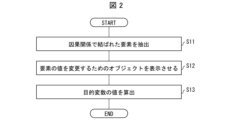
- FIG. 2 is a flow chart showing the flow of a simulation method according to the first exemplary embodiment of the present invention.
- FIG. 11 is a block diagram showing a configuration of an information processing device according to an exemplary embodiment 2 of the present invention.
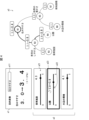
- FIG. 13 is a diagram showing an example of a display screen displayed during a simulation.
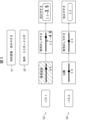
- FIG. 11 is a diagram showing another example of the display screen displayed during the simulation.
- FIG. 11 is a flow chart showing the flow of a simulation method according to an exemplary embodiment 2 of the present invention.
- FIG. 1 is a diagram showing an example of a computer that executes instructions of a program, which is software that realizes the functions of each device according to each exemplary embodiment of the present invention.
- Example embodiment 1 DETAILED DESCRIPTION OF THE PREFERRED EMBODIMENTS
- This exemplary embodiment is a basic form of the exemplary embodiments described below.
- Fig. 1 is a block diagram showing the configuration of the information processing device 1. As shown in the figure, the information processing device 1 includes an element extraction unit 11, a display control unit 12, and a simulation execution unit 13.
- the element extraction unit 11 extracts, from each of the elements subjected to the causal analysis, multiple elements that are causally linked to the element that is the target variable in a simulation based on the results of the causal analysis of multiple elements.
- the display control unit 12 displays an object for changing the value of each of the elements extracted by the element extraction unit 11 for each of the multiple elements.
- the simulation execution unit 13 calculates the value of the objective variable using the values of the elements changed via the object displayed by the display control unit 12.
- the information processing device 1 is configured to include an element extraction unit 11 that extracts from each of the elements subjected to the causal analysis a plurality of elements that are causally linked to an element that is a target variable in a simulation based on the results of a causal analysis of a plurality of elements, a display control unit 12 that displays, for each of the plurality of elements, an object for changing the value of the element extracted by the element extraction unit 11, and a simulation execution unit 13 that calculates the value of the target variable using the value of the element changed via the object displayed by the display control unit 12. Therefore, the information processing device 1 according to this exemplary embodiment has the effect of improving the convenience of the simulation.
- the above-mentioned functions of the information processing device 1 can also be realized by a program.
- the simulation program according to the present exemplary embodiment is configured to make a computer function as an element extracting means for extracting, from each of the elements subjected to the causal analysis, a plurality of elements that are causally connected to an element that is a target variable in a simulation based on the result of the causal analysis of a plurality of elements, a display control means for displaying, for each of the plurality of elements, an object for changing the value of the element extracted by the element extracting means, and a simulation execution means for calculating the value of the target variable using the value of the element changed via the object displayed by the display control means. Therefore, according to the simulation program according to the present exemplary embodiment, the effect of improving the convenience of the simulation is obtained.
- Flow of simulation method The flow of the simulation method according to the present exemplary embodiment will be described with reference to Fig. 2.
- Fig. 2 is a flow diagram showing the flow of the simulation method. Note that the execution subject of each step in this simulation method may be a processor provided in the information processing device 1, a processor provided in another device, or a processor provided in a different device.
- At least one processor extracts, from each of the elements subjected to the causal analysis, multiple elements that are causally linked to the element that is the target variable in the simulation based on the results of the causal analysis of multiple elements.
- At least one processor displays an object for changing the value of the element extracted in S11 for each of the multiple elements.
- At least one processor calculates the value of the objective variable using the value of the element that was changed via the object displayed in S12.
- the simulation method according to this exemplary embodiment employs a configuration in which at least one processor extracts, from each of the elements subjected to the causal analysis, a plurality of elements that are causally linked to an element that is a target variable in a simulation based on the results of the causal analysis targeting a plurality of elements, displays an object for changing the value of the extracted element for each of the plurality of elements, and calculates the value of the target variable using the value of the element changed via the displayed object. Therefore, the simulation method according to this exemplary embodiment has the effect of improving the convenience of the simulation.
- Fig. 3 is a block diagram showing the configuration of the information processing device 2.
- the information processing device 2 includes a control unit 20 that controls each unit of the information processing device 2, and a storage unit 21 that stores various data used by the information processing device 2.
- the information processing device 2 also includes a communication unit 22 that allows the information processing device 2 to communicate with other devices, an input unit 23 that accepts input of various data to the information processing device 2, and a display unit 24 that allows the information processing device 2 to display and output various data. Note that each of the components from the storage unit 21 to the display unit 24 may be built into the information processing device 2, or may be an external device attached to the information processing device 2.
- the control unit 20 also includes a reception unit 201, a causal analysis unit 202, an element extraction unit 203, a change index calculation unit 204, a path coefficient calculation unit 205, a condition satisfaction determination unit 206, a display order determination unit 207, a display control unit 208, and a simulation execution unit 209.
- the reception unit 201 receives various user specifications regarding the simulation. For example, the reception unit 201 receives the specification of an element that will be a target variable in a simulation performed by the simulation execution unit 209, from among multiple elements that have been causally analyzed by the causal analysis unit 202. The term "element" is explained in the next paragraph. The reception unit 201 also receives changes to the values of elements that will be explanatory variables in the simulation.
- the causal analysis unit 202 performs causal analysis on multiple given elements, and identifies the causal structure and causal relationships between those elements.
- the elements that are the subject of the causal analysis may be each question in a questionnaire and the answers to those questions, or the elements that are the subject of the causal analysis may be the actions and their results shown in the behavioral history information of a subject or group of subjects.
- the data format of each element may or may not be standardized.
- the causal analysis unit 202 may perform the causal analysis by applying known causal inference or causal search methods that correspond to the target elements, etc.
- each element is a variable related to a certain event.
- a variable related to the event of a product being purchased for example, a numerical value indicating the number of products purchased or the sales price
- a variable indicating the price of a product, which is related to the above event can also be an element.
- the information processing device 2 does not necessarily need to include the causal analysis unit 202. If the information processing device 2 does not include the causal analysis unit 202, it is sufficient for the information processing device 2 to acquire the results of the causal analysis performed in another device via the communication unit 22 or the input unit 23.
- the element extraction unit 203 extracts multiple elements that are causally connected to the element that is the objective variable in the simulation performed by the simulation execution unit 209 from each element causally analyzed by the causal analysis unit 202.
- the extracted string of elements (which can also be called an element group) is called a "path.”
- the reception unit 201 receives the designation of the element that is the objective variable, and the element extraction unit 203 can detect a path by sequentially tracing the elements that are causally connected to the designated element, and extract each element included in the detected path.
- the element extraction unit 203 only needs to extract each element included in each detected path.
- each element that has undergone causal analysis can be represented in a causal graph.
- each element is represented as a "node,” and the causal relationships between each element are represented as "edges" connecting the nodes.
- nodes are classified into RCVs (Root Cause Variables), which are the start points of paths, targets, which are the end points of paths, and variables located between the RCVs and targets.
- RCVs Root Cause Variables
- a "path” can also be expressed as a route consisting of one or more edges connecting an RCV and a target, or as a matrix of nodes from an RCV to a target that are connected by edges.
- a "path” can be classified into direct paths, which directly connect an RCV and a target, and indirect paths, which involve one or more variables between the RCV and the target.
- the target which is the end point of the path, is sometimes called the objective variable, response variable, reaction variable, outcome variable, dependent variable, or non-explanatory variable.
- the RCV which is the start point of the path, and the variables located between the RCV and the target are sometimes called explanatory variables, predictor variables, or independent variables.
- the change index calculation unit 204 calculates an index value indicating the degree of change in the objective variable (which can also be called a target variable) when the value of each element extracted by the element extraction unit 203 is changed.
- the elements extracted by the element extraction unit 203 are elements that become explanatory variables in the simulation.
- the change index calculation unit 204 calculates an index value indicating the degree of change in the objective variable when the value of the explanatory variable is changed.
- the index value indicating the degree of change may, for example, indicate the amount of change or the rate of change.
- the change index calculation unit 204 may calculate the amount of change in the objective variable when the explanatory variable is increased by a predetermined amount (for example, 1) as the index value.
- This index value can be calculated by multiplying the amount of change in the explanatory variable by a path coefficient, which will be described later. Note that, when there are multiple paths, the index value can be calculated by the sum of the products of the amount of change in the explanatory variable and each path coefficient.
- the index value may also indicate a change in a statistical quantity.
- the change index calculation unit 204 may calculate the index value indicating a change in a statistical quantity of the objective variable when the explanatory variable is increased by a predetermined amount (for example, 1).
- the statistical quantity may be, for example, a standard deviation.
- the change index calculation unit 204 may calculate, as the index value, the ratio of the standard deviation of the objective variable after the explanatory variable is changed to the standard deviation of the objective variable before the explanatory variable is changed.
- the user may be able to specify the statistical quantity to be targeted.
- the path coefficient calculation unit 205 calculates the path coefficient of a path whose components are the elements extracted by the element extraction unit 203.
- the path coefficient is a coefficient calculated using the weight of each edge connecting each element that has been causally analyzed. Specifically, for a direct path, the path coefficient calculation unit 205 calculates the weight of the edges that make up the path. For an indirect path, the path coefficient calculation unit 205 calculates the product of the weights of the multiple edges that make up the path. Note that the product of the edge weights is merely one example of a path coefficient, and path coefficients may be calculated using other methods. A path with a larger path coefficient value is more likely to be a useful path.
- the condition satisfaction determination unit 206 determines whether or not each of the elements extracted by the element extraction unit 203 satisfies a predetermined condition. Any condition can be set, and the user may be allowed to set the conditions. For example, conditions may be set regarding the index value calculated by the change index calculation unit 204, the path coefficient calculated by the path coefficient calculation unit 205, and the like. As a specific example, the condition satisfaction determination unit 206 may determine that an element whose index value is equal to or less than a predetermined threshold satisfies the condition, and that an element whose index value is less than the threshold does not satisfy the condition.
- the display order determination unit 207 determines the display order of objects displayed during simulation by the simulation execution unit 209. Details will be described later, but these objects are objects for changing the values of each element extracted by the element extraction unit 203, i.e., the values of explanatory variables, and are objects displayed as a UI (User Interface). The method for determining the display order will be described later in the section "Method for determining the display order”.
- the display control unit 208 causes the display unit 24 to display various information necessary for the simulation performed by the simulation execution unit 209, the results of the simulation, and the like. As an example, the display control unit 208 causes the display unit 24 to display the above-mentioned object for each of the elements extracted by the element extraction unit 203.
- the simulation execution unit 209 performs a simulation based on the results of the causal analysis of multiple elements performed by the causal analysis unit 202. Specifically, the simulation execution unit 209 calculates the value of the objective variable using the explanatory variables changed via the above-mentioned objects. The calculated value is the predicted value of the objective variable when the changed explanatory variables are applied.
- FIG. 4 is a diagram showing an example of a display screen displayed during a simulation by the display control unit 208.
- the example of the display screen in Fig. 4 includes a display area a1 for displaying information related to the objective variable, a display area a2 for displaying information related to each explanatory variable, and a display area a3 for displaying a causal graph.
- Display area a1 displays object a11 for accepting the designation of the objective variable.
- the user selects object a11 by performing an input operation via input unit 23, and designates the element to be used as the objective variable.
- display control unit 208 may display a list of elements that have been subjected to causal analysis and can be used as the objective variable, and allow the user to designate an element to be used as the objective variable from the list of elements.
- a character string indicating the designated element (“Livability" in the example of FIG. 4) is displayed on object a11.
- the value of the specified objective variable is displayed in display area a1. More specifically, display area a1 displays the value of the objective variable before the explanatory variable is changed, "3.0", and the value of the objective variable after the explanatory variable is changed, "3.4". It also displays that the increase rate of the objective variable is "+13%”.
- the value of the objective variable after the explanatory variable is changed is calculated by the simulation execution unit 209 based on the user's operation on the object displayed in display area a2, which will be described below.
- Display area a2 displays the elements, i.e., explanatory variables, extracted by element extraction unit 203. Specifically, in the example of FIG. 4, display area a2 displays explanatory variables for three elements: "childcare facilities,” “parks,” and "waterside environment.”
- explanatory variables are the top three elements determined by the display order determination unit 207 among the elements extracted by the element extraction unit 203; more specifically, "childcare facilities” is ranked first, “parks” is ranked second, and "waterside environment” is ranked third. Note that it is up to which explanatory variables of a certain rank to be displayed on one screen. It may also be possible to display explanatory variables of lower ranks. For example, the display control unit 208 may display explanatory variables of lower ranks when an operation to scroll the display contents of the display area a2 is performed.
- the display area for each explanatory variable displays the character string "childcare facility,” “park,” or “waterside environment” that indicates the element that corresponds to that explanatory variable, the value of that explanatory variable, and an object a21 for changing the value of that explanatory variable.
- Object a21 is an object having a slider arranged on a slider bar that can be moved on the slider bar.
- the slider bar indicates the range in which the value of the explanatory variable can be changed, and the position of the slider indicates the value of the explanatory variable.
- the information processing device 2 according to this exemplary embodiment has a function for displaying such object a21, and thereby, in addition to the effect of the information processing device 1 according to exemplary embodiment 1, the effect of allowing the user to change the value of the explanatory variable by an intuitive and simple operation of moving the slider on the slider bar can be obtained.
- the frame in display area a2 in which various information about the "Park” element is displayed is drawn in a thick line.
- the display control unit 208 may display the changed value in addition to the value of the explanatory variable before the change, as shown, and may also display an indicator a22 indicating the value of the explanatory variable before the change.
- the fact that the value before the change, "2.8", has been changed to "3.8” is indicated by the numerical display, the slider, and the indicator a22.
- the display control unit 208 may also display an icon a23 for updating the value of the explanatory variable, as shown in the figure.
- the simulation execution unit 209 does not start the simulation just by moving the slider, but starts the simulation when the icon a23 is operated while the slider is being moved. Then, when the simulation ends, the display control unit 208 displays the results in the display area a1.
- a causal graph is displayed in display area a3.
- a causal graph is a graph in which multiple elements that have been causally analyzed are represented as nodes, and the causal relationships between each element are indicated by directed edges (one-way arrows); it is also called a directed acyclic graph.
- Display area a3 in Figure 4 displays a causal graph consisting of seven nodes N1 to N7. Note that instead of a directed acyclic graph, a CPDAG (Completed Partially Directed Acyclic Graph) or an undirected graph may also be displayed.
- CPDAG Completed Partially Directed Acyclic Graph
- node N4 is indicated by a dashed circle
- node N1 is indicated by a thick circle.
- the dashed circle indicates that the explanatory variable corresponding to that node was subject to change by the simulation
- the thick circle indicates that the variable corresponding to that node was set as the objective variable of the simulation.
- node N4 which was the subject of the change, it is shown that the value of the explanatory variable corresponding to that node has been changed from "2.8" to "3.8".
- node N2 downstream of node N4 the transition in the value of the explanatory variable accompanying the change in the value of the explanatory variable corresponding to node N4 is shown, and for node N1 further downstream, the transition in the value of the objective variable accompanying the transition in the value of the explanatory variable corresponding to node N2 is shown.
- the display control unit 208 may display node N4, which corresponds to the element that is the subject of change by the simulation, and node N1, which corresponds to the element that is the target variable, in a manner that makes them distinguishable from other nodes on the causal graph. This allows the user to recognize the position of the element that is the subject of the simulation in the entire causal graph.
- the display control unit 208 may display on the causal graph the results of the simulation, that is, information showing the transition of the variable values of each element included in the path from the element that was the subject of the change to the element set as the objective variable. This allows the user to recognize how a change in a certain variable propagates and affects the objective variable.
- the information processing device 2 includes a change index calculation unit 204 that calculates, for each element extracted by the element extraction unit 203, an index value that indicates the degree of change in the objective variable when the value of the element is changed.
- the display order determination unit 207 may set the display order of the objects for changing the value of the explanatory variable to be the order of the index values.
- the display control unit 208 displays the multiple objects in the order of the index values.
- the effect of allowing the user to recognize the magnitude relationship of the degree of change in the objective variable for the elements corresponding to each object, and allowing an efficient simulation to be performed can be obtained.
- the order in which the objects are displayed may be in ascending or descending order of the index value, and the user may be able to switch between ascending and descending order.
- the information processing device 2 also includes a path coefficient calculation unit 205 that calculates, for each element extracted by the element extraction unit 203, the path coefficient of the path connecting that element and the element set as the objective variable. Therefore, the display order determination unit 207 may determine the display order of the objects for changing the value of the explanatory variable in descending order of path coefficient based on the index value. In this case, the display control unit 208 displays the multiple objects in descending order of path coefficient.
- the effect of allowing the user to recognize the elements that make up a path that has a high path coefficient and is likely to be useful can be obtained, allowing efficient simulation to be performed.
- the information processing device 2 also includes a condition satisfaction determination unit 206 that determines, for each element extracted by the element extraction unit 203, whether or not that element satisfies a predetermined condition. For this reason, the display order determination unit 207 may determine the display order of objects for changing the values of explanatory variables corresponding to elements that satisfy the predetermined condition to be higher than objects for changing the values of explanatory variables corresponding to elements that do not satisfy the condition. In this case, the display control unit 208 gives priority to displaying objects for changing the values of explanatory variables corresponding to elements that satisfy the predetermined condition.
- the effect of allowing the user to recognize explanatory variables corresponding to elements that satisfy a predetermined condition can be obtained.
- the display order determination unit 207 may also determine the display order of objects for changing the values of explanatory variables in ascending order of the cost of changing the value of an element corresponding to the object by a predetermined amount. In this case, the display control unit 208 displays the multiple objects in ascending order of the cost of changing the value of an element corresponding to the object by a predetermined amount.
- the effect of allowing the user to recognize the relative magnitude of costs and perform a simulation that takes costs into consideration can be obtained.
- the above "cost” includes at least one of monetary cost, time cost, and human cost.
- the cost required to change the value of each element by a unit amount can be specified in advance. For example, if the amount of money, time, number of people, etc. required to increase each explanatory variable by one point is specified in advance and stored in the storage unit 21, the display order determination unit 207 can use the specified results to determine the display order of the objects.
- the display order determination unit 207 may also determine the display order based on multiple evaluation criteria. For example, the display order determination unit 207 may assign points for each evaluation criterion, such as 10 points to the element with the lowest cost and 5 points to an element that the condition satisfaction determination unit 206 determines as satisfying the condition, and may determine the display order in the order of the total points. Note that the criteria for determining the display order can be set arbitrarily and are not limited to the above-mentioned examples.
- FIG. 5 is a diagram showing another example of a display screen displayed by the display control unit 208 during a simulation.
- an object b1 for receiving a designation of a target variable and an object b2 for receiving a designation of a simulation condition are displayed.
- the display screen in the same figure also includes a display area b3 for information on "path 1", which is one of the paths detected by the element extraction unit 203, and a display area b4 for information on "path 2", which is another path detected by the element extraction unit 203.
- the user can specify the element to be used as the objective variable by selecting object b1 through an input operation via the input unit 23.
- a character string indicating the specified element (“Livability" in the example of FIG. 5) is displayed on object b1.
- the user can specify the conditions for the simulation by selecting object b2 through an input operation via the input unit 23.
- the display control unit 208 may display a list of settable conditions and allow the user to specify the condition to be applied from the listed conditions.
- a character string indicating the specified condition (“30s to 40s" in the example of FIG. 5) is displayed on object b2.
- the causal analysis unit 202 may perform causal analysis again under the changed conditions. For example, if "30s to 40s" is specified as in the example of FIG. 5, the causal analysis unit 202 may perform causal analysis again using data for "30s to 40s" (e.g., responses to a questionnaire from people in their 30s to 40s). The causal analysis unit 202 may also update the values of variables to those according to the specified conditions without updating the causal relationships.
- each element to be simulated is displayed on a path-by-path basis.
- display area b3 shows explanatory variables corresponding to the elements that make up "Path 1,” “childcare facilities” and “ease of raising children,” as well as a response variable corresponding to the end element of "Path 1,” “ease of living.”
- display area b4 shows explanatory variables corresponding to the elements that make up “Path 2,” “parks” and “ease of raising children,” as well as a response variable corresponding to the end element of "Path 2,” “ease of living.”
- an object for changing the value of that explanatory variable is displayed.
- this object is a slide bar similar to that in Figure 4, and the user can use this slide bar to change the value of the explanatory variable.
- the "ease of raising children" for "Path 1" has been changed from 3.5 to 4.0.
- the value of the objective variable, "ease of living” has increased from 3.2 to 3.5.
- the reception unit 201 may function as a change restriction means that, when the value of an element extracted by the element extraction unit 203 is changed, prevents the value of elements upstream of the element from being changed. This is because, if the value of an element is changed by a first operation and then an element upstream of the element is changed by a second operation, the value of the element will also change by the second operation, making the first operation meaningless.
- reception unit 201 function as a change restriction means, in addition to the effect of the information processing device 1 according to the exemplary embodiment 1, it is possible to prevent operations that would render previous operations meaningless, and to perform an efficient simulation.
- Fig. 6 is a flow diagram showing the flow of the simulation method. Note that Fig. 6 shows processing in a state where the causal analysis by the causal analysis unit 202 is completed and causal relationships between multiple elements are identified.
- the reception unit 201 receives the designation of an element to be used as a target variable in the simulation from among the multiple elements that have been causally analyzed.
- the display control unit 208 may display an object for receiving the designation of the element (such as object a11 in FIG. 4 or object b1 in FIG. 5) on the display unit 24.
- the display control unit 208 may also display a causal graph such as that displayed in the display area a3 in FIG. 4. Note that when the element to be used as the target variable has been determined in advance, the process of S21 may be omitted by, for example, setting a flag on the element so that it can be recognized as a target variable.
- the element extraction unit 203 extracts multiple elements that are causally linked to the element specified in S21 from among the elements causally analyzed by the causal analysis unit 202.
- the path coefficient calculation unit 205 calculates, for each of the elements extracted in S22, the path coefficient of the path connecting that element with the element set as the objective variable. Note that the weight value used to calculate the path coefficient can be calculated by known methods of causal inference or causal search.
- the change index calculation unit 204 calculates an index value for each element extracted in S22 that indicates the degree of change in the objective variable when the value of that element, i.e., the value of the explanatory variable, is changed.
- the path coefficient calculated in S23 is used to calculate the index value.
- condition satisfaction determination unit 206 determines whether each of the elements extracted in S22 satisfies a predetermined condition.
- the display order determination unit 207 identifies the cost for changing the value of each element extracted in S22 by a specified amount.
- the display order determination unit 207 determines the display order of objects for changing the values of the explanatory variables based on the results of S23 to S26. Note that the display order determination unit 207 does not necessarily need to use all of the results of S23 to S26. For example, the display order determination unit 207 may determine the display order based on some or all of the results of S23 to S26 in accordance with a user specification.
- the display control unit 208 causes the display unit 24 to display objects for changing the values of the explanatory variables (for example, an object such as a21 in FIG. 4) in the display order determined in S27. Note that the display control unit 208 does not need to display all objects simultaneously, and may display only a predetermined number of objects corresponding to higher-ranked elements, and display objects corresponding to lower-ranked elements in response to a user operation.
- the reception unit 201 receives the change to the value of the explanatory variable via the object displayed in S28.
- the simulation execution unit 209 calculates the value of the objective variable using the explanatory variable changed in S29, and the display control unit 208 displays the calculation result on the display unit 24, and the processing in FIG. 6 is then terminated.
- the process may return to S29, and the reception unit 201 may receive further value changes.
- the reception unit 201 may not allow the values of elements upstream of the element whose value was previously changed to be changed.
- the execution subject of each process described in the above embodiment is arbitrary and is not limited to the above example.
- the functions of the information processing devices 1 and 2 can be realized by multiple devices (which can also be called processors) that can communicate with each other.
- processors which can also be called processors
- each process described in the flowcharts of Figures 2 and 6 can be shared and executed by multiple processors.
- the execution subject of the simulation method in the above embodiment may be one processor or multiple processors.
- Some or all of the functions of the information processing devices 1 and 2 may be realized by hardware such as an integrated circuit (IC chip), or may be realized by software.
- the information processing devices 1 and 2 are realized, for example, by a computer that executes instructions of a program, which is software that realizes each function.
- a computer that executes instructions of a program, which is software that realizes each function.
- An example of such a computer (hereinafter referred to as computer C) is shown in Figure 7.
- Computer C has at least one processor C1 and at least one memory C2.
- Memory C2 stores a program (simulation program) P for operating computer C as information processing device 1 or 2.
- processor C1 reads and executes program P from memory C2, thereby realizing each function of information processing device 1 or 2.
- the processor C1 may be, for example, a CPU (Central Processing Unit), GPU (Graphic Processing Unit), DSP (Digital Signal Processor), MPU (Micro Processing Unit), FPU (Floating point number Processing Unit), PPU (Physics Processing Unit), TPU (Tensor Processing Unit), quantum processor, microcontroller, or a combination of these.
- the memory C2 may be, for example, a flash memory, HDD (Hard Disk Drive), SSD (Solid State Drive), or a combination of these.
- Computer C may further include a RAM (Random Access Memory) for expanding program P during execution and for temporarily storing various data.
- Computer C may further include a communications interface for sending and receiving data to and from other devices.
- Computer C may further include an input/output interface for connecting input/output devices such as a keyboard, mouse, display, and printer.
- the program P can also be recorded on a non-transitory, tangible recording medium M that can be read by the computer C.
- a recording medium M can be, for example, a tape, a disk, a card, a semiconductor memory, or a programmable logic circuit.
- the computer C can obtain the program P via such a recording medium M.
- the program P can also be transmitted via a transmission medium.
- a transmission medium can be, for example, a communications network or broadcast waves.
- the computer C can also obtain the program P via such a transmission medium.
- An information processing device comprising: an element extraction means for extracting from each of the elements subjected to causal analysis a plurality of elements that are causally linked to an element that is a target variable in a simulation based on the results of a causal analysis of a plurality of elements; a display control means for displaying, for each of the plurality of elements, an object for changing the value of the element extracted by the element extraction means; and a simulation execution means for calculating the value of the target variable using the value of the element changed via the object.
- Appendix 2 The information processing device described in Appendix 1, wherein the display control means displays the object on a slider bar indicating a range in which the value of the element can be changed, and a slider that indicates the value of the element and can be moved on the slider bar is arranged on the slider bar.
- (Appendix 3) The information processing device according to claim 1, further comprising: a change index calculation means for calculating, for each of the elements extracted by the element extraction means, an index value indicating a degree of change in the objective variable when a value of the element is changed, and the display control means displays the plurality of objects in order of the index values.
- a simulation method including: at least one processor extracting, from each of the elements subjected to causal analysis, a plurality of elements that are causally linked to an element that is a target variable in a simulation based on the results of a causal analysis targeting a plurality of elements; displaying, for each of the plurality of elements, an object for changing the value of the extracted element; and calculating a value of the target variable using the value of the element changed via the object.
- a simulation program that causes a computer to function as: element extraction means for extracting, from each of the elements subjected to causal analysis, a plurality of elements that are causally linked to an element that is a target variable in a simulation based on the results of a causal analysis of a plurality of elements; display control means for displaying, for each of the plurality of elements, an object for changing the value of the element extracted by the element extraction means; and simulation execution means for calculating the value of the target variable using the value of the element changed via the object.
- An information processing device including at least one processor, the processor executing a process of extracting, from each of the elements subjected to the causal analysis, a plurality of elements that are causally connected to an element that is a target variable in a simulation based on the result of a causal analysis of a plurality of elements, a process of displaying, for each of the plurality of elements, an object for changing the value of the element extracted by the element extraction means, and a process of calculating a value of the target variable using the value of the element changed via the object.
- the information processing device may further include a memory, and the memory may store a program for causing the processor to execute the extraction process, the display process, and the calculation process.
- the program may also be recorded on a computer-readable, non-transitory, tangible recording medium.
- Element extraction unit (element extraction means) 12 Display control unit (display control means) 13 Simulation execution unit (simulation execution means) 2 Information processing device 201 Reception unit (change restriction means) 203 Element extraction unit (element extraction means) 204 Change index calculation unit (change index calculation means) 208 Display control unit (display control means) 209 Simulation execution unit (simulation execution means)
Landscapes
- Physics & Mathematics (AREA)
- Engineering & Computer Science (AREA)
- Theoretical Computer Science (AREA)
- General Physics & Mathematics (AREA)
- Artificial Intelligence (AREA)
- Pure & Applied Mathematics (AREA)
- Data Mining & Analysis (AREA)
- Evolutionary Computation (AREA)
- Algebra (AREA)
- Mathematical Analysis (AREA)
- Mathematical Optimization (AREA)
- Computational Mathematics (AREA)
- Computing Systems (AREA)
- General Engineering & Computer Science (AREA)
- Mathematical Physics (AREA)
- Software Systems (AREA)
- Probability & Statistics with Applications (AREA)
- Management, Administration, Business Operations System, And Electronic Commerce (AREA)
Priority Applications (2)
| Application Number | Priority Date | Filing Date | Title |
|---|---|---|---|
| PCT/JP2022/047048 WO2024134796A1 (ja) | 2022-12-21 | 2022-12-21 | 情報処理装置、シミュレーション方法、およびシミュレーションプログラム |
| JP2024565469A JPWO2024134796A1 (https=) | 2022-12-21 | 2022-12-21 |
Applications Claiming Priority (1)
| Application Number | Priority Date | Filing Date | Title |
|---|---|---|---|
| PCT/JP2022/047048 WO2024134796A1 (ja) | 2022-12-21 | 2022-12-21 | 情報処理装置、シミュレーション方法、およびシミュレーションプログラム |
Publications (1)
| Publication Number | Publication Date |
|---|---|
| WO2024134796A1 true WO2024134796A1 (ja) | 2024-06-27 |
Family
ID=91588213
Family Applications (1)
| Application Number | Title | Priority Date | Filing Date |
|---|---|---|---|
| PCT/JP2022/047048 Ceased WO2024134796A1 (ja) | 2022-12-21 | 2022-12-21 | 情報処理装置、シミュレーション方法、およびシミュレーションプログラム |
Country Status (2)
| Country | Link |
|---|---|
| JP (1) | JPWO2024134796A1 (https=) |
| WO (1) | WO2024134796A1 (https=) |
Citations (1)
| Publication number | Priority date | Publication date | Assignee | Title |
|---|---|---|---|---|
| WO2022254802A1 (ja) * | 2021-05-31 | 2022-12-08 | 日立Astemo株式会社 | 改善システム、改善方法 |
-
2022
- 2022-12-21 JP JP2024565469A patent/JPWO2024134796A1/ja active Pending
- 2022-12-21 WO PCT/JP2022/047048 patent/WO2024134796A1/ja not_active Ceased
Patent Citations (1)
| Publication number | Priority date | Publication date | Assignee | Title |
|---|---|---|---|---|
| WO2022254802A1 (ja) * | 2021-05-31 | 2022-12-08 | 日立Astemo株式会社 | 改善システム、改善方法 |
Non-Patent Citations (1)
| Title |
|---|
| ANONYMOUS: "Release of AI-based factor analysis service "CALC 3.0" -Equipped with new functions to intervene based on causal information and to simulate the effectiveness of measures", INFORMATION SERVICES INTERNATIONAL-DENTSU, LTD., 6 November 2019 (2019-11-06), pages 1 - 2, XP093183725 * |
Also Published As
| Publication number | Publication date |
|---|---|
| JPWO2024134796A1 (https=) | 2024-06-27 |
Similar Documents
| Publication | Publication Date | Title |
|---|---|---|
| US11048530B1 (en) | Predictive action modeling to streamline user interface | |
| US12585989B2 (en) | Feature effectiveness assessment method and apparatus, electronic device, and storage medium | |
| JP6460095B2 (ja) | 学習モデル選択システム、学習モデル選択方法及びプログラム | |
| US11551818B2 (en) | Computer system and method of presenting information related to basis of predicted value output by predictor | |
| CN107045503B (zh) | 一种特征集确定的方法及装置 | |
| CN109862432A (zh) | 点击率预测方法和装置 | |
| JP6870312B2 (ja) | 施策導入効果予測装置、施策導入効果予測プログラム及び施策導入効果予測方法 | |
| US10537801B2 (en) | System and method for decision making in strategic environments | |
| TWI598812B (zh) | 判定用於軟體開發之經推薦之最佳化策略 | |
| CN112785390B (zh) | 推荐处理方法、装置、终端设备以及存储介质 | |
| JP7105227B2 (ja) | シミュレーションプログラム、シミュレーション方法およびシミュレーション装置 | |
| KR20220059287A (ko) | 시계열 예측을 위한 어텐션 기반 스태킹 방법 | |
| JP6511333B2 (ja) | 意思決定支援システム及び意思決定支援方法 | |
| WO2024134797A1 (ja) | 情報処理装置、シミュレーション方法、およびシミュレーションプログラム | |
| WO2024134796A1 (ja) | 情報処理装置、シミュレーション方法、およびシミュレーションプログラム | |
| CN114757713A (zh) | 一种信息推荐方法、装置、存储介质及电子设备 | |
| WO2025180354A1 (zh) | 产品特征数据的预测以及预测模型的训练 | |
| CN111861538B (zh) | 信息推送方法、装置、电子设备和存储介质 | |
| CN114522426A (zh) | 游戏ai角色技能确定方法、装置、电子设备及存储介质 | |
| JP2023064408A (ja) | アンケート結果分析プログラム、アンケート結果分析方法、および情報処理装置 | |
| CN112000325A (zh) | 一种可视化的算法模型构建方法和存储介质 | |
| WO2024134795A1 (ja) | 情報処理装置、分析支援方法、および分析支援プログラム | |
| JP2006012115A (ja) | 推奨情報提供方法、推奨情報送信システム、推奨情報送信装置及び記録媒体 | |
| US20240242099A1 (en) | Systems and methods for conducting simulations with virtual humans | |
| JP7736164B2 (ja) | 可視化方法、可視化装置、およびプログラム |
Legal Events
| Date | Code | Title | Description |
|---|---|---|---|
| 121 | Ep: the epo has been informed by wipo that ep was designated in this application |
Ref document number: 22969184 Country of ref document: EP Kind code of ref document: A1 |
|
| WWE | Wipo information: entry into national phase |
Ref document number: 2024565469 Country of ref document: JP |
|
| NENP | Non-entry into the national phase |
Ref country code: DE |
|
| 122 | Ep: pct application non-entry in european phase |
Ref document number: 22969184 Country of ref document: EP Kind code of ref document: A1 |