WO2024122522A1 - 殺菌方法、及び殺菌方法に用いる組成物 - Google Patents
殺菌方法、及び殺菌方法に用いる組成物 Download PDFInfo
- Publication number
- WO2024122522A1 WO2024122522A1 PCT/JP2023/043383 JP2023043383W WO2024122522A1 WO 2024122522 A1 WO2024122522 A1 WO 2024122522A1 JP 2023043383 W JP2023043383 W JP 2023043383W WO 2024122522 A1 WO2024122522 A1 WO 2024122522A1
- Authority
- WO
- WIPO (PCT)
- Prior art keywords
- experiment
- sterilization method
- composition
- potential
- conductor
- Prior art date
- Legal status (The legal status is an assumption and is not a legal conclusion. Google has not performed a legal analysis and makes no representation as to the accuracy of the status listed.)
- Ceased
Links
Images




Classifications
-
- A—HUMAN NECESSITIES
- A61—MEDICAL OR VETERINARY SCIENCE; HYGIENE
- A61L—METHODS OR APPARATUS FOR STERILISING MATERIALS OR OBJECTS IN GENERAL; DISINFECTION, STERILISATION OR DEODORISATION OF AIR; CHEMICAL ASPECTS OF BANDAGES, DRESSINGS, ABSORBENT PADS OR SURGICAL ARTICLES; MATERIALS FOR BANDAGES, DRESSINGS, ABSORBENT PADS OR SURGICAL ARTICLES
- A61L2/00—Disinfection or sterilisation of materials or objects, in general; Accessories therefor
- A61L2/02—Disinfection or sterilisation of materials or objects, in general; Accessories therefor using physical processes
- A61L2/03—Electric current
-
- A—HUMAN NECESSITIES
- A01—AGRICULTURE; FORESTRY; ANIMAL HUSBANDRY; HUNTING; TRAPPING; FISHING
- A01N—PRESERVATION OF BODIES OF HUMANS OR ANIMALS OR PLANTS OR PARTS THEREOF; BIOCIDES, e.g. AS DISINFECTANTS, AS PESTICIDES OR AS HERBICIDES; PEST REPELLANTS OR ATTRACTANTS; PLANT GROWTH REGULATORS
- A01N43/00—Biocides, pest repellants or attractants, or plant growth regulators containing heterocyclic compounds
- A01N43/34—Biocides, pest repellants or attractants, or plant growth regulators containing heterocyclic compounds having rings with one nitrogen atom as the only ring hetero atom
- A01N43/40—Biocides, pest repellants or attractants, or plant growth regulators containing heterocyclic compounds having rings with one nitrogen atom as the only ring hetero atom six-membered rings
-
- A—HUMAN NECESSITIES
- A01—AGRICULTURE; FORESTRY; ANIMAL HUSBANDRY; HUNTING; TRAPPING; FISHING
- A01P—BIOCIDAL, PEST REPELLANT, PEST ATTRACTANT OR PLANT GROWTH REGULATORY ACTIVITY OF CHEMICAL COMPOUNDS OR PREPARATIONS
- A01P1/00—Disinfectants; Antimicrobial compounds or mixtures thereof
-
- A—HUMAN NECESSITIES
- A61—MEDICAL OR VETERINARY SCIENCE; HYGIENE
- A61L—METHODS OR APPARATUS FOR STERILISING MATERIALS OR OBJECTS IN GENERAL; DISINFECTION, STERILISATION OR DEODORISATION OF AIR; CHEMICAL ASPECTS OF BANDAGES, DRESSINGS, ABSORBENT PADS OR SURGICAL ARTICLES; MATERIALS FOR BANDAGES, DRESSINGS, ABSORBENT PADS OR SURGICAL ARTICLES
- A61L2/00—Disinfection or sterilisation of materials or objects, in general; Accessories therefor
- A61L2/16—Disinfection or sterilisation of materials or objects, in general; Accessories therefor using chemical substances
- A61L2/18—Liquid substances
-
- A—HUMAN NECESSITIES
- A61—MEDICAL OR VETERINARY SCIENCE; HYGIENE
- A61L—METHODS OR APPARATUS FOR STERILISING MATERIALS OR OBJECTS IN GENERAL; DISINFECTION, STERILISATION OR DEODORISATION OF AIR; CHEMICAL ASPECTS OF BANDAGES, DRESSINGS, ABSORBENT PADS OR SURGICAL ARTICLES; MATERIALS FOR BANDAGES, DRESSINGS, ABSORBENT PADS OR SURGICAL ARTICLES
- A61L2101/00—Chemical composition of materials used in disinfecting, sterilising or deodorising
- A61L2101/02—Inorganic materials
- A61L2101/28—Inorganic materials containing iron
-
- A—HUMAN NECESSITIES
- A61—MEDICAL OR VETERINARY SCIENCE; HYGIENE
- A61L—METHODS OR APPARATUS FOR STERILISING MATERIALS OR OBJECTS IN GENERAL; DISINFECTION, STERILISATION OR DEODORISATION OF AIR; CHEMICAL ASPECTS OF BANDAGES, DRESSINGS, ABSORBENT PADS OR SURGICAL ARTICLES; MATERIALS FOR BANDAGES, DRESSINGS, ABSORBENT PADS OR SURGICAL ARTICLES
- A61L2101/00—Chemical composition of materials used in disinfecting, sterilising or deodorising
- A61L2101/32—Organic compounds
- A61L2101/42—Organo-metallic compounds or complexes
-
- A—HUMAN NECESSITIES
- A61—MEDICAL OR VETERINARY SCIENCE; HYGIENE
- A61L—METHODS OR APPARATUS FOR STERILISING MATERIALS OR OBJECTS IN GENERAL; DISINFECTION, STERILISATION OR DEODORISATION OF AIR; CHEMICAL ASPECTS OF BANDAGES, DRESSINGS, ABSORBENT PADS OR SURGICAL ARTICLES; MATERIALS FOR BANDAGES, DRESSINGS, ABSORBENT PADS OR SURGICAL ARTICLES
- A61L2103/00—Materials or objects being the target of disinfection or sterilisation
- A61L2103/15—Laboratory, medical or dentistry appliances, e.g. catheters or sharps
-
- A—HUMAN NECESSITIES
- A61—MEDICAL OR VETERINARY SCIENCE; HYGIENE
- A61L—METHODS OR APPARATUS FOR STERILISING MATERIALS OR OBJECTS IN GENERAL; DISINFECTION, STERILISATION OR DEODORISATION OF AIR; CHEMICAL ASPECTS OF BANDAGES, DRESSINGS, ABSORBENT PADS OR SURGICAL ARTICLES; MATERIALS FOR BANDAGES, DRESSINGS, ABSORBENT PADS OR SURGICAL ARTICLES
- A61L2202/00—Aspects relating to methods or apparatus for disinfecting or sterilising materials or objects
- A61L2202/10—Apparatus features
- A61L2202/17—Combination with washing or cleaning means
Definitions
- the present invention relates to a sterilization method and a composition used in the sterilization method.
- Non-Patent Documents 1 to 4 report a method of removing biofilms formed on the surface of a conductor by applying a high potential (e.g., about 7 V) to a conductor (electrical conductor) such as stainless steel or titanium, generating H2 and negative-negative surface repulsion.
- a high potential e.g., about 7 V
- Non-Patent Documents 1 to 4 do not cause the problem of drug-resistant bacteria, they must be carried out under harsh conditions that cause electrolysis of solvents, etc. Sterilization under such harsh conditions is costly because it requires a lot of energy consumption, and there is also a risk of side reactions producing active chemical species that have adverse effects on the human body.
- the present invention aims to provide a method for sterilizing bacteria contained in biofilms that can be performed more efficiently under milder conditions and with less adverse effects on the human body, and a composition for use in said sterilization method.
- the inventors have discovered that the above object can be achieved by the following configuration.
- a method for sterilizing bacteria contained in a biofilm comprising: preparing a composition containing an organic compound having a standard oxidation-reduction potential (pH 7) of -0.7 V to -0.2 V and water; bringing the composition into contact with the biofilm and a conductor; and applying a potential to the conductor that is greater than the lower limit of the potential window and is -0.4 V or less relative to a silver/silver chloride electrode.
- the sterilization method described in [1], wherein the potential applied to the conductor is ⁇ 1.2 V to ⁇ 0.8 V.
- the sterilization method according to [1] or [2], wherein the organic compound is a compound having a dipyridine structure.
- the present invention provides a method for sterilizing bacteria contained in a biofilm, which can be carried out efficiently under mild conditions and reduces adverse effects on the human body, and a composition used in said sterilization method.
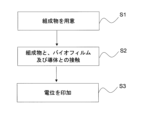
- FIG. 2 is a flowchart illustrating the sterilization method of the present embodiment.
- FIG. 2 is a schematic diagram illustrating a presumed mechanism of the sterilization method of the present embodiment.
- FIG. 13 is a schematic diagram illustrating a presumed mechanism of a sterilization method according to a modified example of the present embodiment.
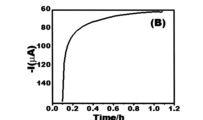
- 1 shows time-current curves (CA diagrams) obtained in Experiment 1. This is a time-current curve (CA diagram) obtained in Experiment 2-1.
- FIG. 1 shows the evaluation results (number of colonies) of the bactericidal effects of Experiment 1, Experiment 2-1, and Experiment 3-1.
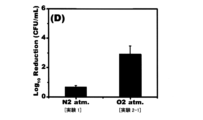
- FIG. 1 is a diagram showing the evaluation results (bacterial reduction amount) of the bactericidal effect in Experiment 1 and Experiment 2-1.
- FIG. 13 is a diagram showing the evaluation results (bacterial reduction amount) of the bactericidal effect in Experiments 2-1 to 2-4.
- FIG. 13 is a diagram showing the evaluation results (bacterial reduction amount) of the bactericidal effect in Experiments 5-1 and 5-2.
- FIG. 13 is a diagram showing the evaluation results (bacterial reduction amount) of the bactericidal effect in Experiments 6-1 to 6-3.
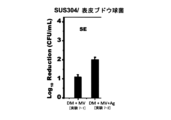
- FIG. 13 is a diagram showing the evaluation results (bacterial reduction amount) of the bactericidal effect in Experiments 7-1 and 7-2.
- FIG. 13 is a diagram showing the evaluation results (number of colonies) of the bactericidal effect in Experiments 8-1 to 8-9.
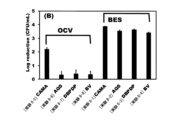
- FIG. 13 is a diagram showing the evaluation results (bacterial reduction amount) of the bactericidal effect in Experiments 8-1 to 8-8.
- a numerical range expressed using “to” means a range including the numerical values before and after "to” as the lower and upper limits.
- “A to B” indicates A or more and B or less.
- the sterilization method of the present embodiment will be described with reference to the flow chart shown in Figure 1.
- the sterilization method of the present embodiment includes the following steps S1 to S3.
- Step S1 A step of preparing a composition containing an organic compound having a standard oxidation-reduction potential (pH 7) of ⁇ 0.7 V to ⁇ 0.2 V (hereinafter, appropriately referred to as a “specific organic compound”) and water (hereinafter, appropriately referred to as a “sterilization composition”;
- Step S2 Contacting the sterilization composition with the biofilm and the conductor;
- Step S3 A step of applying a potential within a predetermined range to the conductor.
- a biofilm 10 including bacterial cells (bacteria) 1 is attached onto a conductor 2.
- NADH is produced from the NAD + used in the decomposition of the organic compounds, and electrons are transferred from NADH to the conductor 2, which is an electron acceptor, via the electron transport system (arrow 4), returning to NAD + and being used again to obtain energy.
- the inventors have surprisingly found that in a composition containing specific organic compound 5, applying a negative potential to conductor 2 reduces the activity of bacterial cells 1 in a biofilm 10 and ultimately kills bacteria, leading to the present invention. Moreover, a weak potential within the potential window is sufficient for the negative potential applied to conductor 2. This allows for sterilization under mild conditions without electrolysis of the solvent (water). When a negative potential is applied to conductor 2, the transfer of electrons from bacterial cells 1 to conductor 2 (arrow 4) is restricted. In particular, applying a potential of -0.4 V or less based on a silver/silver chloride electrode causes electrons to transfer from conductor 2 to bacterial cells 1 (arrow 3).
- sterilization includes not only the complete annihilation of the bacteria in the biofilm, but also the killing of a portion of the bacteria in the biofilm (i.e., reducing the number of bacteria in the biofilm).
- Step S1 First, a sterilizing composition containing an organic compound (specific organic compound) having a standard oxidation-reduction potential (pH 7) of ⁇ 0.7 V to ⁇ 0.2 V and water is prepared.
- an organic compound specifically organic compound having a standard oxidation-reduction potential (pH 7) of ⁇ 0.7 V to ⁇ 0.2 V and water is prepared.
- the standard redox potential (pH7) of the specific organic compound is not particularly limited as long as it is in the range of -0.7V to -0.2V, but from the viewpoint of obtaining a higher bactericidal effect, -0.6V to -0.3V is preferable, and -0.6V to -0.4V is more preferable.
- the specific organic compound is not particularly limited as long as it is an organic compound whose standard oxidation-reduction potential is within the above range, but for example, a compound containing a nitrogen-containing aromatic heterocycle, among which a compound having a dipyridine structure is preferred.
- Specific compounds include the compounds shown in Table 1 and their derivatives, and among them, from the viewpoint of obtaining a higher bactericidal effect, methyl viologen and its derivatives are preferred, with methyl viologen being more preferred.
- the specific organic compound may be composed of a single compound or two or more types of compounds.
- the standard redox potential of a specific organic compound can be directly measured by electrochemical measurement by potential sweep using a three-electrode system, and was also determined by referring to the values described in the following documents 1 to 3.
- Reference 1 Ryo Nakagawa and Yuta Nishina, “Simulating the redox potentials of unexplored phenazine derivatives as electron mediators for biofuel cells” J. Phys. Energy 3 (2021) 034008
- Reference 2 Mary Lou Fultz and Richard A. Durst, “Mediator compounds for the electrochemical study of biological redox systems: a compilation” Analytica Chimica Acta, 140 (1982) 1-18.
- the water contained in the sterilizing composition is not particularly limited, and may be pure water, distilled water, ion-exchanged water, etc.
- the amount of water contained in the sterilizing composition is not particularly limited, but is, for example, 90.0% to 99.9% by mass when the entire composition is taken as 100% by mass.
- the sterilizing composition may further contain a positive ion (cation).
- a positive ion By using a specific organic compound in combination with a cation, a synergistic effect occurs, and the sterilizing effect can be further enhanced.
- the mechanism is not clear, but is speculated as follows.
- a composition containing a specific organic compound 5 applying a negative potential to the conductor 2 promotes the transfer of electrons to the bacteria 1 (arrow 3 in Figure 2).
- the sterilizing composition contains a cation
- the cation flows into the bacterial cell 1. This causes an osmotic pressure abnormality in the bacterial cell 1, reducing the activity of the bacteria 1, and ultimately sterilizing the bacteria.
- the cation has the property of damaging the DNA or enzymes in the bacteria 1, the sterilizing effect can be further enhanced. Note that the mechanism explained above is speculation and does not affect the scope of the present invention in any way.
- the cation is not particularly limited, and may be, for example, a cation containing a metal such as a metal ion or a complex ion, or an organic cation generated from a drug or the like.
- Metals contained in metal ions and cations containing a metal include, for example, silver (Ag), copper (Cu), cobalt (Co), aluminum (Al), nickel (Ni), zinc (Zn), molybdenum (Mo), vanadium (V), zirconium (Zr), tungsten (W), palladium (Pd), platinum (Pt), etc., and from the viewpoint of further enhancing the bactericidal effect, silver ion (Ag + ), copper ion (Cu + , Cu 2+ ) are preferred, and silver (Ag + ) is more preferred.
- the cation may be a so-called physiological electrolyte-derived cation, and examples of physiological electrolyte-derived cations include, for example, sodium ion (Na + ), potassium ion (K + ), calcium ion (Ca 2+ ), magnesium ion (Mg 2+ ), etc.
- the positive ions (cations) one type of cation may be used, or two or more types of cations may be used.
- the sterilizing composition may further contain an anion that serves as a counter ion of the cation.
- the anion is not particularly limited, and examples thereof include halide ions such as fluorine, chlorine, bromine, and iodine ions.
- the cation may be an ion derived from a salt consisting of a cation and an anion.
- Preferred salts include, for example, metal halides such as silver chloride and copper chloride.
- the cation can be introduced into the sterilizing composition by dispersing or dissolving (including partially dissolving) these salts in the sterilizing composition.
- the concentration of the cation in the sterilizing composition is not particularly limited, and can be adjusted as appropriate within the range in which the effects of this embodiment are achieved. From the viewpoint of obtaining a higher sterilizing effect, for example, the concentration of the cation in the sterilizing composition is preferably 1 ⁇ M to 1 M, and more preferably 10 ⁇ M to 200 mM.
- the concentration of the anion in the sterilizing composition is not particularly limited, and like the concentration of the cation, from the viewpoint of obtaining a higher sterilizing effect, it is preferably 1 ⁇ M to 1 M, and more preferably 10 ⁇ M to 200 mM.
- the sterilization composition may be composed of only the specific organic compound and water, or may contain other components other than the specific organic compound and water within the scope of the effect of this embodiment.
- Other components include the above-mentioned cations and anions, but also include, for example, electron mediators other than the specific organic compound, electron source compounds, buffering agents, and coagulants.
- Electron source compounds are compounds used in bacterial metabolism, and include, but are not limited to, organic compounds (amino acids, sugars, organic acids, etc.).
- Buffering agents include, but are not limited to, borates, bicarbonates, Tris-HCl, citrates, phosphates, succinates, phosphates, and acetates.
- Coagulants include agar, gelatin, agar, etc., with agar being preferred.
- the sterilizing composition can be prepared by uniformly mixing the specific organic compound, water, and, if necessary, other ingredients using a general-purpose method.
- the sterilization composition may also be prepared by adding a predetermined amount of a specific organic compound to a composition containing a general-purpose medium (liquid medium, solid medium), a buffer solution, physiological saline, etc. (hereinafter also referred to as a "medium composition").
- the medium, buffer solution, physiological saline, etc. may be commercially available.
- As the medium for example, Lysogeny broth (LB medium) is used.
- the medium composition contains water and the other components described above. Therefore, the sterilization composition of this embodiment may be a mixture of a specific organic compound and the medium composition. Note that the medium composition does not have to contain a buffer solution or physiological saline.
- the water content contained in the sterilization composition takes into account the water contained in the medium composition.
- Step S2 A germicidal composition is then contacted with the biofilm and the conductor.
- the bacteria contained in the biofilm i.e., the bacteria to be sterilized in this embodiment, are not particularly limited and may be, for example, either gram-positive or gram-negative bacteria.
- the sterilization method of this embodiment is also effective against Klebsiella pneumoniae (gram-negative bacteria), Pseudomonas aeruginosa (gram-negative bacteria), and Staphylococcus epidermidis (gram-positive bacteria), which are designated by the U.S. Food and Drug Administration (FDA) as bacteria that have a significant impact on endoscope contamination.
- FDA U.S. Food and Drug Administration
- the electron transfer becomes more efficient, and a more excellent sterilization effect can be obtained.
- bacteria belonging to the family Enterobacteriaceae include the above-mentioned Klebsiella pneumoniae (Klebsiella spp.), Enterobacter spp., Escherichia spp., Salmonella spp., Serratia spp., Shigella spp., and Yersinia spp.
- a biofilm is a higher-order structure formed by bacteria attached to the surface of a solid phase (substrate), and is covered, for example, by polysaccharides produced by the bacteria. As shown in Figure 2, a biofilm 10 may be formed on a conductor 2 (an example of a substrate).
- the material, shape, or size of the conductor there are no particular limitations on the material, shape, or size of the conductor, so long as it is capable of transferring electrons to and from the biofilm.
- materials include metal materials such as silver, copper, aluminum, nickel, iron, and alloys containing these metals (e.g., stainless steel (SUS)), and carbon materials such as amorphous carbon, graphite, and carbon nanotubes.
- Examples of conductors include medical instruments that are embedded in a living body (medical implants, etc.), medical instruments that are used beyond the mucous membrane of a living body (forceps, etc.), and medical instruments that are used in direct contact with the mucous membrane of a living body (endoscopes, etc.). If such items are used as conductors, the sterilization method of this embodiment can also be used as a method for cleaning and washing medical instruments and medical implants, etc.
- the method of contacting the sterilizing composition with the biofilm and the conductor is not particularly limited, but for example, when the sterilizing composition is liquid, a method of immersing the biofilm and the conductor in the sterilizing composition, and a method of dripping the sterilizing composition onto the biofilm and the conductor can be used.
- the sterilizing composition is solid (for example, when the sterilizing composition is a solid medium)
- a method of directly contacting the sterilizing composition with the conductor with or without pressure can be used.
- direct contact typically means contacting the surface on which the biofilm is formed with the sterilizing composition.
- Step S3 Step S3: Next, a potential of ⁇ 0.4 V or less is applied to the conductor, exceeding the lower limit of the potential window, relative to a silver/silver chloride electrode.
- the inventors have found that, regardless of the type of bacteria, by using the sterilizing composition of this embodiment, applying a weak potential of -0.4 V or less promotes electron transfer from the conductor 2 to the bacterial cell 1 (arrow 3 in Figure 2), inhibits the cell from acquiring energy, and ultimately sterilizes the bacteria. From the viewpoint of obtaining a higher sterilizing effect, it is preferable to apply a potential of preferably -0.6 V or less, more preferably -0.8 V or less, and even more preferably -0.9 V or less to the conductor.
- the lower limit of the negative potential applied to the conductor is not particularly limited as long as it exceeds the lower limit of the potential window.
- the lower limit of the potential window is a value determined by the components of the sterilizing composition, the pH of the sterilizing composition, and the material of the electrode, and is clear to those skilled in the art.
- a potential that exceeds the lower limit of the potential window sterilization can be performed under mild conditions that do not cause electrolysis of the solvent (water).
- the sterilization method of this embodiment is low cost because it reduces energy consumption, and can also suppress side reactions that may generate active chemical species that are harmful to the human body. Furthermore, if a high potential is applied to cause water electrolysis, reactions such as hydrogen generation may take precedence, and there is a risk that electron transfer from the conductor 2 to the bacterial cell 1 (arrow 3 in FIG. 2) may be suppressed.
- the potential applied is weak, so hydrogen generation does not occur, and the metabolism of the bacteria 1 can be efficiently suppressed and sterilized.
- the lower limit of the potential applied to the conductor is, for example, -1.4 V or more, preferably -1.2 V or more, and more preferably -1.1 V or more, based on a silver/silver chloride electrode.
- the method of applying a potential to the conductor is not particularly limited.
- the working electrode, the reference electrode, and the counter electrode are brought into contact with the sterilization composition, and the working electrode is further brought into contact with the above-mentioned conductor, and the electrode set (working electrode, counter electrode, and reference electrode) is connected to a potentiostat, which is controlled to apply a predetermined potential to the working electrode.
- the electrode set (working electrode, counter electrode, and reference electrode) is connected to a potentiostat, which is controlled to apply a predetermined potential to the working electrode.
- the reference electrode is preferably a silver/silver chloride electrode.
- the conductor on which the biofilm is formed may be used as the working electrode.
- the sterilizing composition may be liquid or solid. If it is liquid, the electrode set (working electrode, counter electrode, and reference electrode) may be immersed in the sterilizing composition. The sterilizing composition may also be dripped onto the electrode set made by printed electronics or the like so that it comes into contact with the electrode set. If the sterilizing composition is solid, the working electrode, counter electrode, and reference electrode may be directly contacted with the sterilizing composition, as with the conductor described above.
- This step (step S3) may be carried out under anaerobic conditions that do not contain oxygen (e.g., a nitrogen atmosphere) or under aerobic conditions that contain oxygen (e.g., in the air). Because the atmosphere is not limited to anaerobic conditions, the sterilization method of this embodiment can be carried out with simpler equipment.
- anaerobic conditions that do not contain oxygen (e.g., a nitrogen atmosphere) or under aerobic conditions that contain oxygen (e.g., in the air). Because the atmosphere is not limited to anaerobic conditions, the sterilization method of this embodiment can be carried out with simpler equipment.
- the temperature (sterilization temperature) during this step (step S3) is not particularly limited and may be, for example, 0°C to 100°C or room temperature.
- the time during which the potential is applied is also not particularly limited and may be adjusted as appropriate depending on the type of specific organic compound, the type of bacteria, the type and size of the conductor, etc., and may be, for example, 30 minutes to 24 hours.
- the sterilization method of this embodiment described above it is possible to reduce the activity of bacteria in a biofilm and ultimately kill (sterilize) all or part of the bacteria in the biofilm simply by applying a weak electric potential to the conductor. This is expected to have a continuous effect on drug-resistant bacteria lurking in the biofilm. Furthermore, by using the sterilization method of this embodiment, antibacterial agents are not required or the amount of antibacterial agent used can be reduced, which also makes it possible to suppress the emergence of new drug-resistant bacteria.
- the sterilization method of this embodiment can kill the bacteria in the biofilm, and is expected to be effective in preventing bacterial infection.
- the conductor is a medical instrument that is embedded in the living body (e.g., various implants such as dental implants), or a medical instrument that is used beyond the mucous membrane of the living body or in direct contact with it (e.g., forceps and endoscopes)
- biofilms may occur in small areas that cannot be reached by mechanical cleaning.
- the bacteria in such biofilms can also be killed (sterilized) by the sterilization method of this embodiment.
- the biofilm 10 is formed on the conductor 2, but the present invention is not limited to this.
- the biofilm 10 may be formed on a substrate 12 different from the conductor 2.
- the sterilization method described in this modification is similar to the sterilization method described in the above embodiment, except that the biofilm 10 is formed on the substrate 12, and has the same effects. Description of similar content will be omitted.
- the specific organic compound 5 also increases the efficiency of electron transfer (arrow 3 in FIG. 3) from the conductor 2 to the bacterial cells 1. Therefore, by applying a negative potential to the conductor 2, it is possible to kill (sterilize) the bacteria 1 in the biofilm 10 on the substrate 12 without applying a potential directly to the substrate 12.
- the material of the substrate 12 is not particularly limited, but since there is no need to apply an electric potential, an insulating material such as resin (plastic) can be used.
- resins include polytetrafluoroethylene (PTFE), polyethylene terephthalate (PET), polycarbonate (PC), polyvinyl chloride (PVC), polypropylene (PP), polyethylene (PE), polystyrene (PS), etc.
- Examples of the substrate 12 include medical instruments that are embedded in a living body (medical implants, etc.), medical instruments that are used beyond the mucous membrane of a living body (forceps, etc.), and medical instruments that are used in direct contact with the mucous membrane of a living body (endoscopes, etc.). If such materials are used as the substrate 12, the sterilization method of this modified example can also be used as a method for cleaning and washing medical instruments and medical implants, etc.
- the conductor 2 may be, for example, the electrode (working electrode) itself.
- the conductor 2 and the substrate 12 may be in a non-contact state as shown in FIG. 3, or may be in contact.
- the shortest distance between the conductor 2 and the substrate 12 may be, for example, 0 (contact state) to 1 m. If the shortest distance between the conductor 2 and the substrate 12 is within the above range, the bacteria 1 in the biofilm 10 can be efficiently killed (sterilized).
- the sterilization method of this modification makes it possible to sterilize biofilms formed on an insulator (substrate 12) such as PTFE, to which an electric potential cannot be applied. Therefore, the sterilization method of this modification can be applied to the sterilization and cleaning of medical instruments made of insulators.
- KP biofilm Klebsiella pneumoniae
- Methyl viologen (MV) was added to a DM (defined medium, liquid medium) to a concentration of 100 ⁇ M and mixed uniformly.
- the standard oxidation-reduction potential (pH 7) of methyl viologen is ⁇ 0.440 V, as shown in Table 1.
- MV-containing medium (DM) was poured into the three-electrode electrochemical cell, and the MV-containing medium (DM) was brought into contact with the electrode set (working electrode, counter electrode, and reference electrode) and the SUS tube on which the biofilm was formed, and the potential of the working electrode was set to -1.0 V (vs Ag/AgCl) at room temperature under anaerobic conditions (nitrogen atmosphere) for 1 hour, and chronoamperometry (CA) measurements were performed. That is, a potential was applied to the SUS tube via the working electrode.
- a time-current curve (CA diagram) is shown in FIG. 4A.
- Experiment 2-2 to [Experiment 2-4]
- KPt Klebsiella pneumoniae
- SE Staphylococcus epidermidis
- PA Pseudomonas aeruginosa
- Example 3-1 In this experiment, methyl viologen (MV) was not used, and no potential was applied.
- MV methyl viologen
- a biofilm containing KP was formed on a SUS tube in the same manner as in Experiment 1.
- the SUS tube on which the biofilm was formed was washed three times with phosphate buffer solution (PBS), and then cultured in DM (without MV) at room temperature for 1 hour without applying a potential.
- PBS phosphate buffer solution
- Klebsiella pneumoniae (KPt), Staphylococcus epidermidis (SE), and Pseudomonas aeruginosa (PA) were used instead of Klebsiella pneumoniae (KP), respectively, and the rest of the experiments were performed in the same manner as in Experiment 3-1. That is, in Experiments 3-2 to 3-4, methyl viologen (MV) was not used, and no potential was applied.
- KPt Klebsiella pneumoniae
- SE Staphylococcus epidermidis
- PA Pseudomonas aeruginosa
- CFU Colony Forming Unit
- FIG. 4C shows the results (number of colonies) of experiment 1 (with MVs, with potential application under anaerobic conditions), experiment 2-1 (with MVs, with potential application under aerobic conditions), and experiment 3-1 (control, without MVs, without potential application).
- experiment 3-1 control
- the number of bacterial colonies was reduced in experiments 1 and 2-1. This shows that bacteria in a biofilm can be killed by applying a potential to a SUS tube in a composition containing MV, regardless of the atmosphere when the potential is applied.
- experiment 2-1 in which a potential was applied under aerobic conditions, the number of bacteria was dramatically reduced.
- Figure 4D shows the amount of bacterial reduction in each of Experiments 1 and 2-1.
- the amount of bacterial reduction is the difference obtained by subtracting the number of colonies in each experiment from the number of colonies in Experiment 3-1 (control), as shown in Figure 4C.
- Figure 4D under aerobic conditions (Experiment 2-1), a bactericidal effect of more than 100 times was obtained compared to under anaerobic conditions (Experiment 1).
- Table 2 shows the bactericidal efficiency in Experiments 2-1 to 2-4 (with MV, with potential application under aerobic conditions) using different types of bacteria.
- the bactericidal efficiency is expressed by the following formula, where the number of colonies in each of Experiments 2-1 to 2-4 is "X" and the number of colonies in each of Experiments 3-1 to 3-4 (control, without MV, without potential application) using the same corresponding inoculum is "Y”.
- Sterilization efficiency (%) ⁇ (Y-X)/Y) ⁇ x 100
- Figure 5A shows the results of Experiments 2-1 to 2-4 and the corresponding Experiments 4-1 to 4-4 (control, with MV, no applied potential) using various bacteria. Regardless of the type of bacteria, the number of bacterial colonies was significantly reduced in all of Experiments 2-1 to 2-4 compared to Experiments 4-1 to 4-4 (control). From these results, it was confirmed that a bactericidal effect cannot be obtained by simply immersing a biofilm in a composition containing MV, but that a bactericidal effect can be obtained by applying a potential to a SUS tube.
- Figure 5B shows the amount of bacterial reduction in each of Experiments 2-1 to 2-4.
- the amount of bacterial reduction is the difference between the colony counts in Experiments 4-1 to 4-4 (control) shown in Figure 5A minus the corresponding colony counts in Experiments 2-1 to 2-4.
- a higher bactericidal effect was obtained against Gram-negative bacteria (KP, KPt, PA) than against Gram-positive bacteria (SE).
- Example 5-1 In this experiment, the same experiment as in Experiment 2-1 was performed except that an insulating PTFE tube was used instead of a SUS tube. That is, in this experiment, a biofilm containing Klebsiella pneumoniae (KP) was formed in a PTFE tube, and a potential was applied under aerobic conditions (in the atmosphere) to a working electrode WE (titanium wire) in contact with the PTFE tube in a DM (liquid medium) containing methyl viologen (MV). In this experiment, the working electrode (titanium wire) itself corresponds to the "conductor" that applies the potential.
- WE Klebsiella pneumoniae
- DM liquid medium
- MV methyl viologen
- Example 5-2 In this experiment, the same experiment as in Experiment 5-1 was performed except that no potential was applied. That is, in this experiment, a PTFE tube with a biofilm containing Klebsiella pneumoniae (KP) was cultured in DM containing tilviologen (MV) at room temperature for 1 hour without applying a potential.
- KP Klebsiella pneumoniae
- MV tilviologen
- Figure 6 shows the amount of bacterial reduction in each of Experiments 5-1 and 5-2.
- the amount of bacterial reduction is the difference between the number of colonies in Experiment 5-3 (control) minus the number of colonies in each experiment.
- Experiment 5-1 (with MV, with potential application) had a much greater amount of bacterial reduction than Experiment 5-2 (with MV, without potential application).
- PTFE insulator
- Example 6-3 In this experiment, a DM (liquid medium) containing 20 ⁇ M silver chloride (AgCl) instead of methyl viologen (MV) was used as the sterilizing composition. Otherwise, the experiment was conducted in the same manner as in Experiment 6-1.
- Example 6-4 In this experiment, methyl viologen (MV) and silver chloride were not used, and no potential was applied. Otherwise, the experiment was performed in the same manner as in Experiment 6-1. That is, in this experiment, a PTFE tube with a biofilm containing Pseudomonas aeruginosa (PA) was cultured in DM at room temperature for 1 hour without applying a potential.
- PA Pseudomonas aeruginosa
- Example 7-1 In this experiment, the same experiment as in Experiment 5-1 was performed except that Staphylococcus epidermidis (SE) was used instead of Klebsiella pneumoniae (KP). That is, in this experiment, Staphylococcus epidermidis (SE) in a biofilm formed on a PTFE tube was sterilized in DM (liquid medium) containing methyl viologen (MV).
- SE Staphylococcus epidermidis
- KP Klebsiella pneumoniae
- Example 7-3 In this experiment, methyl viologen (MV) and silver chloride were not used, and no potential was applied. Otherwise, the experiment was performed in the same manner as in Experiment 7-1. That is, in this experiment, a PTFE tube with a biofilm containing Staphylococcus epidermidis (SE) was cultured in DM at room temperature for 1 hour without applying a potential.
- SE Staphylococcus epidermidis
- FIG. 7A shows the amount of bacteria reduced in each of Experiments 6-1 to 6-3 using Pseudomonas aeruginosa.
- the amount of bacteria reduced is the difference obtained by subtracting the number of colonies in each experiment from the number of colonies in Experiment 6-4 (control).
- the amount of bacteria reduced was greater in both Experiment 6-1 (MV only) and Experiment 6-2 (combination of MV and AgCl) compared to Experiment 6-3 (AgCl only).
- the amount of bacteria reduced in Experiment 6-2 (combination of MV and AgCl) was even greater than that in Experiment 6-1 (MV only).
- the sterilization composition has a high bactericidal effect against Pseudomonas aeruginosa (PA), and further, it was confirmed that a synergistic effect was generated by combining MV and Ag + in the sterilization composition, resulting in a higher bactericidal effect.
- PA Pseudomonas aeruginosa
- FIG. 7B shows the amount of bacteria reduction in each of Experiments 7-1 and 7-2 using Staphylococcus epidermidis (SE).
- SE Staphylococcus epidermidis
- the amount of bacteria reduction is the difference obtained by subtracting the number of colonies in each experiment from the number of colonies in Experiment 7-3 (control).
- the bactericidal effect was confirmed for Staphylococcus epidermidis (SE) (Experiment 7-1) on the insulating substrate (PTFE) as well as for Klebsiella pneumoniae (KP) (FIG. 6, Experiment 5-1) and Pseudomonas aeruginosa (PA) (FIG.
- SE Staphylococcus epidermidis
- KP Klebsiella pneumoniae
- PA Pseudomonas aeruginosa
- Experiment 7A Experiment 6-1 on the insulating substrate (PTFE).
- the amount of bacteria reduction was greater in Experiment 7-2 (combination of MV and AgCl) compared to Experiment 7-1 (MV only). From these results, it was confirmed that a higher bactericidal effect can be obtained by combining MV and Ag + in the sterilization composition.
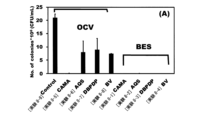
- Example 8-1 In this experiment, the experiment was carried out in the same manner as in Experiment 2-1, except that carminic acid (CAMA) was used instead of methyl viologen (MV). That is, Klebsiella pneumoniae (KP) in the biofilm formed on the surface of the SUS tube was sterilized under aerobic conditions (in the atmosphere). However, the biofilm was formed by adding Klebsiella pneumoniae (KP) to TSB medium, adjusting the cell optical density OD 600nm to 0.01, immersing the SUS tube in this medium, and culturing at 37°C for 3 days.
- the standard redox potential (pH 7) of carminic acid is -0.519 V, as shown in Table 1.
- Experiment 8-2 In this experiment, the same experiment as in Experiment 8-1 was carried out, except that anthraquinone-2-sulfonate (AQS) was used instead of carminic acid (CAMA).
- the standard redox potential (pH 7) of anthraquinone-2-sulfonate is ⁇ 0.225 V, as shown in Table 1.
- Experiments 8-5 to 8-8 correspond to Experiments 8-1 to 8-4, respectively, and used the same specific organic compounds as in Experiments 8-1 to 8-4, but no potential was applied.
- CFU Colony Forming Unit
- Figure 8A shows the number of colonies in Experiments 8-1 to 8-9.
- Figure 8B shows the amount of bacteria reduced in each of Experiments 8-1 to 8-8.
- the amount of bacteria reduced is the difference obtained by subtracting the number of colonies in each experiment from the number of colonies in Experiment 8-9 (control) shown in Figure 8A.
- Experiments 8-1 to 8-4 showed a larger amount of bacteria reduced than Experiments 8-5 to 8-8 (with specific organic compound and no potential application), confirming that a higher bactericidal effect was obtained.
- the sterilization method of the present invention can be used for washing and cleaning medical instruments and medical implants to prevent infections caused by them.
Landscapes
- Life Sciences & Earth Sciences (AREA)
- Health & Medical Sciences (AREA)
- General Health & Medical Sciences (AREA)
- Zoology (AREA)
- Chemical & Material Sciences (AREA)
- Pest Control & Pesticides (AREA)
- Plant Pathology (AREA)
- Wood Science & Technology (AREA)
- Chemical Kinetics & Catalysis (AREA)
- Environmental Sciences (AREA)
- Veterinary Medicine (AREA)
- Engineering & Computer Science (AREA)
- Public Health (AREA)
- General Chemical & Material Sciences (AREA)
- Epidemiology (AREA)
- Animal Behavior & Ethology (AREA)
- Dentistry (AREA)
- Agronomy & Crop Science (AREA)
- Apparatus For Disinfection Or Sterilisation (AREA)
Priority Applications (3)
| Application Number | Priority Date | Filing Date | Title |
|---|---|---|---|
| AU2023389352A AU2023389352A1 (en) | 2022-12-09 | 2023-12-05 | Sterilization method and composition used in sterilization method |
| EP23900637.2A EP4631530A1 (en) | 2022-12-09 | 2023-12-05 | Sterilization method and composition used in sterilization method |
| JP2024562771A JPWO2024122522A1 (https=) | 2022-12-09 | 2023-12-05 |
Applications Claiming Priority (2)
| Application Number | Priority Date | Filing Date | Title |
|---|---|---|---|
| JP2022196933 | 2022-12-09 | ||
| JP2022-196933 | 2022-12-09 |
Publications (1)
| Publication Number | Publication Date |
|---|---|
| WO2024122522A1 true WO2024122522A1 (ja) | 2024-06-13 |
Family
ID=91379407
Family Applications (1)
| Application Number | Title | Priority Date | Filing Date |
|---|---|---|---|
| PCT/JP2023/043383 Ceased WO2024122522A1 (ja) | 2022-12-09 | 2023-12-05 | 殺菌方法、及び殺菌方法に用いる組成物 |
Country Status (4)
| Country | Link |
|---|---|
| EP (1) | EP4631530A1 (https=) |
| JP (1) | JPWO2024122522A1 (https=) |
| AU (1) | AU2023389352A1 (https=) |
| WO (1) | WO2024122522A1 (https=) |
Citations (4)
| Publication number | Priority date | Publication date | Assignee | Title |
|---|---|---|---|---|
| US5312813A (en) * | 1991-05-03 | 1994-05-17 | University Technologies International | Biofilm reduction method |
| JPH06285138A (ja) * | 1993-03-31 | 1994-10-11 | Tadashi Matsunaga | 微生物の電気化学的制御方法及びそれに用いる電子メディエータ |
| JP2012034576A (ja) * | 2010-08-03 | 2012-02-23 | Kajima Corp | 亜酸化窒素分解装置 |
| US20150073491A1 (en) * | 2009-08-03 | 2015-03-12 | The Research Foundation For The State University Of New York | Electrochemical eradication of microbes on surfaces of objects |
-
2023
- 2023-12-05 JP JP2024562771A patent/JPWO2024122522A1/ja active Pending
- 2023-12-05 EP EP23900637.2A patent/EP4631530A1/en active Pending
- 2023-12-05 AU AU2023389352A patent/AU2023389352A1/en active Pending
- 2023-12-05 WO PCT/JP2023/043383 patent/WO2024122522A1/ja not_active Ceased
Patent Citations (4)
| Publication number | Priority date | Publication date | Assignee | Title |
|---|---|---|---|---|
| US5312813A (en) * | 1991-05-03 | 1994-05-17 | University Technologies International | Biofilm reduction method |
| JPH06285138A (ja) * | 1993-03-31 | 1994-10-11 | Tadashi Matsunaga | 微生物の電気化学的制御方法及びそれに用いる電子メディエータ |
| US20150073491A1 (en) * | 2009-08-03 | 2015-03-12 | The Research Foundation For The State University Of New York | Electrochemical eradication of microbes on surfaces of objects |
| JP2012034576A (ja) * | 2010-08-03 | 2012-02-23 | Kajima Corp | 亜酸化窒素分解装置 |
Non-Patent Citations (8)
| Title |
|---|
| APPLIED SCIENCES, vol. 12, 2022, pages 6320 |
| BIOELECTROCHEMISTRY, vol. 121, 2018, pages 84 - 94 |
| COLLOIDSSURFACES B, BIOINTERFACES, vol. 117, no. 1, May 2014 (2014-05-01), pages 152 - 157 |
| CURRENT OPINION IN SOLID STATE AND MATERIALS SCIENCE, vol. 25, August 2021 (2021-08-01), pages 100926 |
| MARY LOU FULTZRICHARD A. DURST: "Analytica Chimica Acta", vol. 140, 1982, ELSEVIER SCIENTIFIC PUBLISHING COMPANY, article "Mediator compounds for the electrochemical study of biological redox systems: a compilation", pages: 1 - 18 |
| OCTAVIO REYES-SALAS ET AL.: "Titrimetric and Polarographic Determination of Carminic Acid and its Quantification in Cochineal (Dactylopius coccus) Extracts", J. MEX. CHEM. SOC., vol. 55, no. 2, 2011, pages 89 - 93 |
| RYO NAKAGAWAYUTA NISHINA: "Simulating the redox potentials of unexplored phenazine derivatives as electron mediators for biofuel cells", J. PHYS. ENERGY, vol. 3, 2021, pages 034008 |
| See also references of EP4631530A1 |
Also Published As
| Publication number | Publication date |
|---|---|
| JPWO2024122522A1 (https=) | 2024-06-13 |
| EP4631530A1 (en) | 2025-10-15 |
| AU2023389352A1 (en) | 2025-04-24 |
Similar Documents
| Publication | Publication Date | Title |
|---|---|---|
| Kiamco et al. | Hypochlorous-acid-generating electrochemical scaffold for treatment of wound biofilms | |
| Del Pozo et al. | Bioelectric effect and bacterial biofilms. A systematic review | |
| Sandvik et al. | Direct electric current treatment under physiologic saline conditions kills Staphylococcus epidermidis biofilms via electrolytic generation of hypochlorous acid | |
| Dusane et al. | Electroceutical treatment of Pseudomonas aeruginosa biofilms | |
| US20090148540A1 (en) | Antibacterial composition and method of production | |
| JP6803896B2 (ja) | 次亜塩素酸を含む抗微生物剤 | |
| Marais et al. | Antimicrobial effectiveness of electro‐chemically activated water as an endodontic irrigation solution | |
| US6482309B1 (en) | Electrolytic generation of nascent iodine as a method of treatment and for the prevention of infections associated with medical implant devices | |
| WO2008149104A1 (en) | An antimicrobial composition comprising an aqueous solution of silver and copper | |
| Jeyapalan et al. | Comparative evaluation of the antimicrobial efficacy of three immersion chemical disinfectants on clinically derived poly (vinyl siloxane) impressions | |
| Lata et al. | Anti bacterial effectiveness of electro-chemically activated (ECA) water as a root canal irrigant-an in-vitro comparative study | |
| Froughreyhani et al. | Effect of electric currents on antibacterial effect of chlorhexidine against Entrococcus faecalis biofilm: An in vitro study | |
| JP6506924B2 (ja) | 電極形成用導電性ダイヤモンド粉末含有塗料、電極及び歯科治療器具 | |
| WO2024122522A1 (ja) | 殺菌方法、及び殺菌方法に用いる組成物 | |
| JP2002500055A (ja) | 根管用潅注媒体 | |
| WO2003045446A1 (en) | Method for the management and/or treatment of microbially contaminated environments and the use of a new class of microbicidal reagents in such management | |
| WO2025033496A1 (ja) | 殺菌システム、及び殺菌方法 | |
| Gupta et al. | Cathodic voltage-controlled electrical stimulation and betadine decontaminate nosocomial pathogens from implant surfaces | |
| Yadav et al. | Evaluation of disinfection of gutta-percha cones and their surface changes using different chemical solutions | |
| JP3633003B2 (ja) | 殺菌方法 | |
| JP7560187B2 (ja) | バイオフィルムの活性調整方法 | |
| Szkotak et al. | Differential gene expression to investigate the effects of low-level electrochemical currents on Bacillus subtilis | |
| Aggarwal et al. | Evaluation of microbiocidal activity of superoxidized water on hospital isolates | |
| CN115245174B (zh) | 一种水溶性复方过硫酸氢钾消毒剂及其制备方法 | |
| Liu et al. | Effects of Hydrogen-rich Water on Cariogenic Bacteria |
Legal Events
| Date | Code | Title | Description |
|---|---|---|---|
| 121 | Ep: the epo has been informed by wipo that ep was designated in this application |
Ref document number: 23900637 Country of ref document: EP Kind code of ref document: A1 |
|
| WWE | Wipo information: entry into national phase |
Ref document number: 2024562771 Country of ref document: JP |
|
| WWE | Wipo information: entry into national phase |
Ref document number: AU2023389352 Country of ref document: AU |
|
| ENP | Entry into the national phase |
Ref document number: 2023389352 Country of ref document: AU Date of ref document: 20231205 Kind code of ref document: A |
|
| WWE | Wipo information: entry into national phase |
Ref document number: 2023900637 Country of ref document: EP |
|
| NENP | Non-entry into the national phase |
Ref country code: DE |
|
| ENP | Entry into the national phase |
Ref document number: 2023900637 Country of ref document: EP Effective date: 20250709 |
|
| WWP | Wipo information: published in national office |
Ref document number: 2023900637 Country of ref document: EP |