WO2024121962A1 - 音響品質評価装置、音響品質評価方法、およびプログラム - Google Patents
音響品質評価装置、音響品質評価方法、およびプログラム Download PDFInfo
- Publication number
- WO2024121962A1 WO2024121962A1 PCT/JP2022/045043 JP2022045043W WO2024121962A1 WO 2024121962 A1 WO2024121962 A1 WO 2024121962A1 JP 2022045043 W JP2022045043 W JP 2022045043W WO 2024121962 A1 WO2024121962 A1 WO 2024121962A1
- Authority
- WO
- WIPO (PCT)
- Prior art keywords
- sound
- terminal device
- acoustic
- voice
- far
- Prior art date
- Legal status (The legal status is an assumption and is not a legal conclusion. Google has not performed a legal analysis and makes no representation as to the accuracy of the status listed.)
- Ceased
Links
Images




Classifications
-
- H—ELECTRICITY
- H04—ELECTRIC COMMUNICATION TECHNIQUE
- H04M—TELEPHONIC COMMUNICATION
- H04M1/00—Substation equipment, e.g. for use by subscribers
- H04M1/24—Arrangements for testing
-
- H—ELECTRICITY
- H04—ELECTRIC COMMUNICATION TECHNIQUE
- H04M—TELEPHONIC COMMUNICATION
- H04M1/00—Substation equipment, e.g. for use by subscribers
- H04M1/60—Substation equipment, e.g. for use by subscribers including speech amplifiers
Definitions
- the disclosed technology relates to technology for evaluating speech quality, and in particular to quality evaluation test technology for loudspeaker communication systems.
- AEC Acoustic echo cancellers
- Figure 1 shows a schematic diagram of acoustic echo and AEC.
- a near-end talker 101 and a far-end talker 102 communicate with each other using a loudspeaker communication system.
- Reference numerals 103 and 104 denote a microphone and a speaker on the near-end talker's side
- reference numerals 105 and 106 denote a microphone and a speaker on the far-end talker's side.
- “Hello” spoken by near-end talker 101 is output (107) from far-end speaker 105 and reaches the ear of far-end talker 102.
- speaker output 107 is also picked up by far-end microphone 106 (wraparound 108). If the voice of the near-end talker "Hello” (acoustic echo) picked up by the far-end microphone 106 is transmitted to the near-end side as is, it may make it difficult to communicate or cause howling. For this reason, the loudspeaker communication system is equipped with an AEC 109, which transmits a voice signal from which the voice originating from the near-end talker has been removed or reduced to the near-end side. If the AEC also has a noise cancellation function, the noise around the far-end talker is also removed or suppressed.
- Non-Patent Document 1 In order to evaluate acoustic echo or sound processed by AEC through subjective evaluation (human listening evaluation), it is necessary to perceive the acoustic echo, and the evaluation can only be made by the evaluator himself making a call. For this reason, quality evaluation through two-way conversation tests has been recommended for public address communication systems such as hands-free public address calls (see Non-Patent Document 1). However, conducting conversation tests requires know-how, is time-consuming and costly, and has the problem of low reproducibility.
- the voice transmitted from the far-end side is not affected by the near-end talker, such as acoustic echo, and only the far-end voice can be evaluated.
- the speech quality can be evaluated by a simplified conversation test and a listening test for one-way conversation, and this test method is generally used for evaluating the speech quality of IP telephones.
- the listening test is highly reproducible and takes less time to perform than the conversation test, making it highly convenient.
- objective evaluation methods such as PESQ (Perceptual Evaluation of Speech Quality), which estimates a subjective evaluation value (also called "listening MOS: Mean Opinion Score") from a listening test, have also been established (see Non-Patent Document 2).
- PESQ Perceptual Evaluation of Speech Quality
- listening MOS Mean Opinion Score
- Environmental noise refers to, for example, the sound of an office air conditioner, the sound inside a moving car, the sound of cars passing by at an intersection, the sound of insects, the sound of typing on a keyboard, the sound of machinery from a factory, the voices of multiple people (bustling noise), etc., regardless of whether the sound is loud or quiet, or whether it is indoors or outdoors.
- a method for evaluating the sound quality of a loudspeaker communication system in such an environmental noise environment has not yet been established.
- the speaker output sound from the far-end terminal (the far-end talker's voice, the noise around the far-end talker, acoustic echo, distortion of the far-end talker's voice due to AEC processing, residual echo, etc.) is easy to perceive in detail, so even the slightest distortion or noise superimposition will result in a low rating.
- An objective of the disclosed technology is to realize an acoustic quality evaluation technology that can obtain an appropriate evaluation value through a listening test, even in a call environment with environmental noise, without conducting a conversation test.
- the acoustic quality evaluation device of the disclosed technology is a device for evaluating the acoustic quality of a loudspeaker communication system including a first terminal device and a second terminal device, and includes a data storage unit, an acoustic output processing unit, and a noise output processing unit.
- the data storage unit records the evaluation target sound that is picked up by the first terminal device and received by the second terminal device.
- the sound output processing unit outputs the evaluation target sound to a head-mounted open-type sound device.
- the noise output processing unit outputs the environmental noise that surrounds the open-type acoustic device.
- the disclosed technology makes it possible to perform appropriate acoustic quality evaluation of a public address communication system through listening tests, even in a call environment with environmental noise, without having to conduct a conversation test.
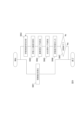
- FIG. 1 is a diagram for explaining an acoustic quality evaluation test by listening test in a public address communication system.
- FIG. 1 is a functional block diagram of a sound quality evaluation system according to a first embodiment.
- FIG. 2 is a functional block diagram of the data generating device according to the first embodiment.
- FIG. 4 is a flowchart showing the operation of a near-end system of the data generating device.
- FIG. 4 is a flowchart showing the operation of a far-end system of the data generating device.
- FIG. 4 is a flowchart showing the operation of a data recording system of the data generating device.
- 1 is a functional block diagram of a sound quality evaluation device according to a first embodiment.
- FIG. 4 is a flowchart showing the operation of the sound quality evaluation device.
- FIG. 4 is a diagram showing an example of a display by a display unit.
- FIG. 1 is a diagram showing an example of a listening test room.
- FIG. 13 shows a second example of a listening test room.
- FIG. 13 shows a third example of a listening test room.
- FIG. 2 is a diagram showing an example of the functional configuration of a computer.
- a loudspeaker communication system is a communication system that transmits and receives acoustic signals between terminal devices equipped with microphones and speakers, in which at least a portion of a sound output from the speaker of a terminal device (e.g., 210 "Hello") is received by the microphone of the terminal device (e.g., sound leakage 211 occurs).
- Examples of the amplifying communication system are audio conference systems and video conference systems.
- the voice 209 of the near-end talker is received by the microphone 204 on the near-end talker side, an acoustic signal obtained based on the voice is transmitted to the far-end talker side via the network 208, and the sound represented by the acoustic signal is output from the speaker 206 on the far-end talker side.
- the voice of the far-end talker is received by the microphone 207 on the far-end talker side, an acoustic signal obtained based on the voice is transmitted to the near-end talker side via the network 208, and the sound represented by the acoustic signal is output from the speaker 205 on the near-end talker side.
- the sound output from the speaker 206 on the far-end talker side is also received by the microphone 207 on the far-end talker side. That is, the sound on the far-end talker side received by the microphone 207 on the far-end talker side is a sound in which the voice 212 "Hi" of the far-end talker is superimposed with the wraparound 211 of the voice originating from the near-end talker (acoustic echo).
- the sound on the far-end talker side received by the microphone 207 on the far-end talker side is a sound in which the voice 210 originating from the near-end talker is superimposed with the voice 212 of the far-end talker and degraded in the space on the far-end talker side.
- the wraparound 211 of the voice originating from the near-end talker is not superimposed, so the voice of the far-end talker is not degraded.
- the deterioration of the sound on the far-end talker side is also caused by the superposition of ambient noise 213 on the far-end talker side.
- the acoustic signal transmitted to the near-end talker may be derived from a processed signal obtained by performing a specified processing on a signal based on the sound received by a microphone on the far-end talker, or it may be obtained without performing such signal processing.
- An example of the signal processing is a process including at least one of echo cancellation processing and noise cancellation processing.
- the echo cancellation processing means a process by an echo canceller in a broad sense for reducing echo.
- the process by an echo canceller in a broad sense means a process for reducing echo in general.
- Noise cancellation processing refers to processing for suppressing or eliminating noise components that occur around the microphone of the far-end terminal and are attributable to all kinds of environmental noise other than the voice of the far-end speaker (see Reference 2 below).
- the disclosed technology provides an apparatus and method for hearing tests, particularly in situations where there is environmental noise on the near-end speaker side.
- the technology disclosed in Patent Document 1 differs in that it is a hearing test that targets a quiet environment with no noise around the near-end speaker.
- FIG. 3 shows a functional block diagram of an example of the acoustic evaluation system according to the first embodiment.
- the sound evaluation system 3 includes a data generating device 31 for testing and a sound quality evaluation device 32 .
- [Data Generation Device] 4 shows a functional block diagram of the data generating device 4 according to the first embodiment.
- the data generating device 4 comprises a near-end system 41 that simulates a near-end speaker environment, a far-end system 42 that simulates a far-end speaker environment, and a data recording system 43 that records simulated communications between the simulated environments.
- the near-end system 41 and the far-end system 42 communicate with each other via a network 44.
- the simulated communication recorded by the data recording system 43 is used in the subsequent acoustic quality evaluation.
- the near-end system includes a near-end environmental noise signal storage unit 410 , a near-end speaker voice signal storage unit 411 , reproduction units 412 and 413 , a near-end terminal unit 414 , and a signal processing unit 415 .
- the far-end system includes a far-end environmental noise signal storage unit 420 , a far-end talker voice signal storage unit 421 , reproduction units 422 and 423 , speakers 424 , 425 and 426 , a microphone 427 , a far-end terminal unit 428 , and a signal processing unit 429 .
- the data recording system includes a recording processing unit 430 , a time adjustment processing unit 431 , a data storage unit 432 , data output units 433 , 434 , 435 , 436 , 437 , 438 , and a switch 439 .
- FIGS. 5, 6 and 7 are flow charts for explaining an example of the operation of the data generating device 4.
- the data generator 4 retrieves a voice signal from the near-end speaker voice signal storage unit 411, reproduces it in the reproduction unit 413 (step S501), and inputs it to the near-end terminal unit 414. This input corresponds to the voice uttered by the near-end speaker.
- the reproduced signal is output to the output units 433, 435, and 437 of the data recording system 43 (step S504).
- This output (the voice uttered by the near-end speaker) becomes the reference sound (described later) in the stereo hearing test (described later).
- the data generating device 4 also retrieves the noise signal from the near-end environmental noise signal storage unit 410, reproduces it in the reproduction unit 412 (step S502), and inputs it to the near-end terminal unit 414. This input corresponds to the environmental noise of the near-end speaker.
- the signal processing unit 415 performs signal processing (echo cancellation processing and noise cancellation processing) on the voice and noise input to the near-end terminal unit 414 (step S503), and transmits the processed signal to the far-end terminal unit 428 via the network 44 (step S505).
- the data generating device 4 outputs the far-end voice received by the near-end terminal unit to the recording processing unit 430 of the data recording system (step S507).
- the far-end terminal unit 428 outputs a voice based on the signal received from the near-end terminal from the speaker 426 (step S602). This output corresponds to the voice of the near-end speaker emitted from the loudspeaker communication system and heard by the far-end speaker.
- the data generating device 4 retrieves the voice signal from the far-end talker voice signal storage unit 421, plays it in the playback unit 423 (step S603), and outputs it from the speaker 425 (step S604). This output corresponds to the voice emitted by the far-end talker.
- the playback unit 423 outputs the played sound to the time adjustment processing unit 431 of the data recording system (step S611). This output becomes a reference signal for later quality evaluation.
- the data generating device 4 also retrieves the noise signal from the far-end ambient noise signal storage unit 420, reproduces it in the reproduction unit 422 (step S605), and outputs it from the speaker 424 (step S606). This output corresponds to the ambient noise of the far-end talker.
- the far-end terminal unit 428 acquires the outputs of the speakers 426, 425, and 424 by the microphone 427 (step S607) and inputs them to the signal processing unit 429.
- the signal processing unit 429 performs signal processing (echo cancellation processing and noise cancellation processing) on the input voice signal (superimposed near-end talker voice, far-end talker voice, and environmental noise) as necessary (step S608), and transmits the signal to the near-end terminal unit 414 via the network 44 (S610).
- the signal processing unit transmits a signal processing presence/absence signal indicating whether or not signal processing has been performed to the recording processing unit 430 of the data recording system (step S609).
- the signal indicating whether or not signal processing is performed is used when recording the sound to be evaluated (described later).
- the data recording system 43 records the audio output of the near-end system 41 and the audio output of the far-end system 42 in a data storage unit 432 for use in later sound quality evaluation.
- the voice of the far-end talker before echo or noise is superimposed (reference sound)
- the voice of the far-end talker with echo and noise superimposed thereon that has not been signal processed (degraded signal 1)
- the voice of the far-end talker with echo and noise superimposed thereon that has been signal processed degraded signal 2
- test sounds are stereo so that the evaluator perceives acoustic echo in the listening test.
- the far-end sound (sound to be evaluated) containing acoustic echo is presented to one ear, and the near-end sound (reference sound) that is the source of the acoustic echo is presented to the other ear at the same time.
- the reference sound and the sound to be evaluated may be supplied to either ear, but it is preferable to supply the reference sound to, for example, the non-dominant ear (e.g., the right ear) and the sound to be evaluated to, for example, the dominant ear (e.g., the left ear).
- the non-dominant ear e.g., the right ear
- the dominant ear e.g., the left ear
- the data generating device 4 outputs the output of the reproduction unit 413 of the near-end terminal unit as a reference sound of the standard signal, a reference sound of the noisy signal 1, and a reference sound of the noisy signal 2 to the output units 433, 435, and 437 (step S701), and records them in the data storage unit 432 (step S707).
- the data generating device 4 applies a delay equivalent to the network delay to the output of the reproduction unit 423 in the time adjustment processing unit 431 (step S702), outputs the output to the output unit 438 (step S703), and records it in the data storage unit 432 (step S707).
- the pair of the signal obtained from the output unit 437 and the signal obtained from the output unit 438 is hereinafter referred to as a reference signal pair.
- the data generator 4 records the signals received by the near-end terminal unit 414 in conjunction with the processing of the far-end system. That is, when the signal processing unit 429 of the far-end terminal unit does not perform signal processing such as echo cancellation or noise cancellation, the signal processing unit 429 outputs a "signal processing OFF signal" to the recording processing unit 430 (step S609).
- the recording processing unit 430 controls the switch 439 in accordance with the signal processing OFF signal (step S704), and outputs the voice received from the far end to the output unit 434 (step S705).
- the voice signal output from the output unit 434 is recorded in the data storage unit 432 (step S707).
- the pair of the voice signal obtained from the output unit 433 and the voice signal obtained from the output unit 434 is hereinafter referred to as degraded signal pair 1.
- the signal processing unit 429 of the far-end terminal unit performs signal processing such as echo cancellation or noise cancellation
- the signal processing unit 429 outputs a "signal processing ON signal" to the recording processing unit 430 (step S609).
- the recording processing unit 430 controls the switch 439 in accordance with the signal processing ON signal (step S704) and outputs the voice received from the far end to the output unit 436 (step S706).
- the voice signal output from the output unit 436 is recorded in the data storage unit 432 (step S707).
- the pair of the voice signal obtained from the output unit 435 and the voice signal obtained from the output unit 436 is hereinafter referred to as degraded signal pair 2.
- the degraded signal pair 1 and the degraded signal pair 2 may be collectively referred to as a degraded signal pair.
- the evaluator uses a binaural sound reproduction device such as headphones or earphones to alternately listen to the sound that should be output from the speaker on the near-end speaker when there is no sound leakage on the far-end speaker side (i.e., the reference sound) and the sound that should be output from the speaker on the near-end speaker when there is sound leakage on the far-end speaker side (i.e., the sound to be evaluated), and makes a subjective evaluation (opinion evaluation) of the speech quality.
- a binaural sound reproduction device such as headphones or earphones to alternately listen to the sound that should be output from the speaker on the near-end speaker when there is no sound leakage on the far-end speaker side (i.e., the reference sound) and the sound that should be output from the speaker on the near-end speaker when there is sound leakage on the far-end speaker side (i.e., the sound to be evaluated), and makes a subjective evaluation (opinion evaluation) of the speech quality.
- test sounds are presented to the evaluator in the stereo configuration described above, but in this embodiment, the channel of the reference sound is denoted as "Rch” and the channel of the sound to be evaluated is denoted as "Lch.”
- FIG. 8 shows a functional block diagram of a sound quality evaluation device 8 according to the first embodiment.
- the sound quality evaluation device 8 can simultaneously test multiple (N) evaluators. For this reason, although the N sound processing output units, display units, input units, and sound reproduction devices are illustrated as “XXX-1...XXX-N", hereinafter, the notation "XXX" without a hyphen will refer collectively to the N units. For example, “evaluator 850” will refer collectively to evaluators 850-1 to 850-N.
- the sound quality evaluation device 8 acquires the test sound from the data storage unit 432 and the environmental noise from the near-end environmental noise signal storage unit 410 and supplies them to the evaluator 850 .
- An evaluator 850 wears an open-type binaural sound reproduction device such as headphones or earphones (hereinafter, open-type headphones) 840.
- open-type headphones refers to a structure that has little sound insulation to prevent the reproduced sound from leaking to the outside, and therefore allows surrounding sounds to easily reach the ears of the user of the reproduction device.
- a speaker 860 is arranged for the evaluator 850 to supply environmental noise.
- the environmental noise may be presented from a common speaker for multiple evaluators, and the number of speakers does not necessarily have to match the number of evaluators.
- the evaluator 850 wears the open-type headphones 840 and listens to the reference sound and the sound to be evaluated in stereo. As described above, the open-type headphones 840 do not block out environmental noise, so the evaluator 850 listens to the reference sound and the sound to be evaluated in a noisy environment.
- FIG. 9 is a flow chart for explaining an example of the operation of the sound quality evaluation device 8 .
- the sound quality evaluation device 8 acquires a signal from the near-end environmental noise signal storage unit 410, reproduces it in the reproduction unit 806, and outputs it from the speaker 860 (step S901).
- the playback control unit 801 determines an evaluation execution signal from among the signals recorded in the data storage unit (step S902).
- the display control unit 802 displays an evaluation input screen for evaluating the signal determined by the playback control unit on the display unit 820 (step S903).
- the evaluation input screen is, for example, as shown in FIG.
- the playback control unit 801 acquires the reference signal pair from the data storage unit 432, and outputs it from the audio output processing unit 810 to the open-type headphones 840 (step S904). Next, the playback control unit 801 acquires the degraded signal pair from the data storage unit 432, and outputs it from the audio output processing unit 810 to the open-type headphones 840 (step S905).
- the evaluator 850 inputs the evaluation using the display unit 820 and the input unit 830 (step S906).
- the sound quality evaluation device 8 judges whether all the evaluations have been completed, and if not, executes the next evaluation (No in step S907), or if all the evaluations have been completed, ends the evaluation procedure (Yes in step S907).
- the tallying unit 803 tallies the evaluation results and records them in the tallying result storage unit 805 .
- FIG. 11 shows an example of a test room for carrying out the acoustic quality evaluation of the first embodiment.
- a diagram 1101 on the left is a top view of the soundproof room 1100
- a diagram 1102 on the right is a side view of the soundproof room 1100.
- an evaluator 1104 wearing open headphones 1105 and multiple speakers 1103 are placed, and environmental noise is output from the speakers 1103.
- the evaluators it is desirable for the evaluators to be positioned at approximately equal distances from the multiple speakers. In addition, it is desirable to place the speakers far enough away from the evaluator and at a position equal to or higher than the height of the evaluator's ears.
- the speaker output may be either the same sound (monaural sound) or stereo sound. In either case, the S/N ratio and volume level are measured near the ears of the evaluator.
- stereo sound here refers to sound that expresses the left/right position and depth of the sound source through the cooperation of two speakers, and stereo sound can more accurately simulate real environmental sounds.
- FIG. 12 shows a second example of a test room for carrying out the acoustic quality evaluation of the first embodiment.
- Reference numeral 1201 denotes a top view of the soundproof room 1100.
- a plurality of evaluators 1104 wearing open headphones 1105 and a plurality of speakers are arranged, and environmental noise is output from the speakers.
- Fig. 12 shows an example in which four speakers 1202, 1203, 1204, and 1205 are arranged. It is desirable to place the speakers 1202 to 1205 at a sufficient distance from the evaluator 1104 and at the top of the soundproof room 1100 .
- the speaker output may be either the same sound (monaural sound) or stereo sound.
- the S/N ratio and volume level are measured near the ears of the evaluator 1104.
- the number of speakers is an even number, and the speakers outputting the left channel and the speakers outputting the right channel are arranged alternately along the walls of the soundproof room.
- the left channel sound is output from speakers 1202 and 1205, and the right channel sound is output from speakers 1203 and 1204.
- FIG. 13 shows a third example of a test room for carrying out the acoustic quality evaluation of the first embodiment.
- Reference numeral 1301 denotes a top view of the soundproof room 1100.
- a plurality of evaluators 1104 wearing open headphones 1105 and a plurality of speakers 1103 are placed, and environmental noise is output from the speakers 1103.
- the output of the speaker 1103 may be either the same sound (monaural sound) or stereo sound. In either case, the S/N ratio and volume level are measured near the ears of the evaluator 1104.
- the evaluator 1104 it is desirable for the evaluator 1104 to be positioned at approximately equal distances from the multiple speakers 1103, but as long as the evaluator is sufficiently far from the speakers 1103, the position of the evaluator does not necessarily have to be at an equal distance from the multiple speakers.
- the disclosed technology may have several modifications.
- the first embodiment separate environmental noise signals are prepared for the near-end side and the far-end side, but in order to generate data for evaluation tests, both the near-end side and the far-end side may be supplied from a common noise signal storage unit.
- the first embodiment is configured so that the voice that is the source of the acoustic echo is transmitted from the near end to the far end, but for a listening test in a noisy environment, the near end may receive only the far-end voice superimposed with the far-end environmental noise, and the listening test may be performed in a near-end noise environment. In this case, it is not necessary to supply the near-end voice that is the source of the acoustic echo to the evaluator.
- the disclosed technology employs a configuration in which the evaluation sound is supplied from open headphones and environmental noise is supplied from speakers arranged around the evaluator.
- the disclosed technology aims to evaluate "communication sounds output from speakers of a public address system in a noisy environment," and performs a listening evaluation by simulating that environment.
- the ambient noise and the target sound generally occur at different points, and in such a case, a human being can distinguish the ambient noise from the target sound by the cocktail party effect.
- One method of simulating a noisy environment is to electronically mix the environmental noise and the sound to be evaluated and send it to headphones, but in this case, the ambient noise and the sound to be evaluated are generated in the same place.
- the disclosed technology supplies ambient noise from speakers (out-of-head localization) and the evaluation target sound from headphones (in-head localization). By supplying each sound from a different device, it simulates a situation in which the environmental noise and the evaluation target sound occur in different locations. As a result, a cocktail party effect is obtained, making it possible to distinguish between the environmental noise and the evaluation target sound, and obtaining a stable evaluation value.
- the program describing this processing can be recorded on a computer-readable recording medium.
- Examples of computer-readable recording media include magnetic recording devices, optical disks, magneto-optical recording media, and semiconductor memories.
- the program may be distributed, for example, by selling, transferring, or lending portable recording media such as DVDs or CD-ROMs on which the program is recorded. Furthermore, the program may be distributed by storing the program in a storage device of a server computer and transferring the program from the server computer to other computers via a network.
- a computer that executes such a program for example, first stores in its own storage device the program recorded on a portable recording medium or the program transferred from a server computer. Then, when executing a process, the computer reads the program stored on its own recording medium and executes the process according to the read program. As another execution form of the program, the computer may read the program directly from the portable recording medium and execute the process according to the program, or may execute the process according to the received program each time a program is transferred from the server computer to the computer.
- the above-mentioned process may also be executed by a so-called ASP (Application Service Provider) type service that does not transfer the program from the server computer to the computer, but realizes the processing function only by issuing an execution instruction and obtaining the results.
- ASP Application Service Provider
- the program in this form includes information used for processing by an electronic computer that is equivalent to a program (such as data that is not a direct command to the computer but has properties that specify the processing of the computer).
- the device is configured by executing a specific program on a computer, but at least a portion of the processing may be realized by hardware.
Landscapes
- Engineering & Computer Science (AREA)
- Signal Processing (AREA)
- Soundproofing, Sound Blocking, And Sound Damping (AREA)
Priority Applications (2)
| Application Number | Priority Date | Filing Date | Title |
|---|---|---|---|
| PCT/JP2022/045043 WO2024121962A1 (ja) | 2022-12-07 | 2022-12-07 | 音響品質評価装置、音響品質評価方法、およびプログラム |
| JP2024562464A JPWO2024121962A1 (https=) | 2022-12-07 | 2022-12-07 |
Applications Claiming Priority (1)
| Application Number | Priority Date | Filing Date | Title |
|---|---|---|---|
| PCT/JP2022/045043 WO2024121962A1 (ja) | 2022-12-07 | 2022-12-07 | 音響品質評価装置、音響品質評価方法、およびプログラム |
Publications (1)
| Publication Number | Publication Date |
|---|---|
| WO2024121962A1 true WO2024121962A1 (ja) | 2024-06-13 |
Family
ID=91378945
Family Applications (1)
| Application Number | Title | Priority Date | Filing Date |
|---|---|---|---|
| PCT/JP2022/045043 Ceased WO2024121962A1 (ja) | 2022-12-07 | 2022-12-07 | 音響品質評価装置、音響品質評価方法、およびプログラム |
Country Status (2)
| Country | Link |
|---|---|
| JP (1) | JPWO2024121962A1 (https=) |
| WO (1) | WO2024121962A1 (https=) |
Cited By (1)
| Publication number | Priority date | Publication date | Assignee | Title |
|---|---|---|---|---|
| WO2026009400A1 (ja) * | 2024-07-05 | 2026-01-08 | Ntt株式会社 | 音響品質評価装置、音響品質評価方法、およびプログラム |
Citations (4)
| Publication number | Priority date | Publication date | Assignee | Title |
|---|---|---|---|---|
| JP2004048253A (ja) * | 2002-07-10 | 2004-02-12 | Denso Corp | エコーキャンセラ装置、及び音声通信装置 |
| JP2015106896A (ja) * | 2013-12-03 | 2015-06-08 | 日本電信電話株式会社 | 通話品質推定方法、通話品質推定装置、及びプログラム |
| CN107910014A (zh) * | 2017-11-23 | 2018-04-13 | 苏州科达科技股份有限公司 | 回声消除的测试方法、装置及测试设备 |
| CN108712585A (zh) * | 2018-05-09 | 2018-10-26 | 质音通讯科技(深圳)有限公司 | 通话终端、滤波器的初始化方法、装置、设备及存储介质 |
-
2022
- 2022-12-07 WO PCT/JP2022/045043 patent/WO2024121962A1/ja not_active Ceased
- 2022-12-07 JP JP2024562464A patent/JPWO2024121962A1/ja active Pending
Patent Citations (4)
| Publication number | Priority date | Publication date | Assignee | Title |
|---|---|---|---|---|
| JP2004048253A (ja) * | 2002-07-10 | 2004-02-12 | Denso Corp | エコーキャンセラ装置、及び音声通信装置 |
| JP2015106896A (ja) * | 2013-12-03 | 2015-06-08 | 日本電信電話株式会社 | 通話品質推定方法、通話品質推定装置、及びプログラム |
| CN107910014A (zh) * | 2017-11-23 | 2018-04-13 | 苏州科达科技股份有限公司 | 回声消除的测试方法、装置及测试设备 |
| CN108712585A (zh) * | 2018-05-09 | 2018-10-26 | 质音通讯科技(深圳)有限公司 | 通话终端、滤波器的初始化方法、装置、设备及存储介质 |
Cited By (1)
| Publication number | Priority date | Publication date | Assignee | Title |
|---|---|---|---|---|
| WO2026009400A1 (ja) * | 2024-07-05 | 2026-01-08 | Ntt株式会社 | 音響品質評価装置、音響品質評価方法、およびプログラム |
Also Published As
| Publication number | Publication date |
|---|---|
| JPWO2024121962A1 (https=) | 2024-06-13 |
Similar Documents
| Publication | Publication Date | Title |
|---|---|---|
| US6931123B1 (en) | Echo cancellation | |
| US6035046A (en) | Recorded conversation method for evaluating the performance of speakerphones | |
| Rämö et al. | Digital augmented reality audio headset | |
| US12087321B2 (en) | Evaluation method, evaluation apparatus, and program | |
| EP3979609B1 (en) | Evaluation device, evaluation method, and program | |
| JP2019516311A (ja) | アクティブモニタリングヘッドホンとその較正方法 | |
| WO2024121962A1 (ja) | 音響品質評価装置、音響品質評価方法、およびプログラム | |
| JP6571623B2 (ja) | 音響品質評価装置、音響品質評価方法、およびプログラム | |
| US7353002B2 (en) | Measuring a talking quality of a communication link in a network | |
| JP6363429B2 (ja) | データ構造、データ生成装置、データ生成方法、およびプログラム | |
| WO2026009400A1 (ja) | 音響品質評価装置、音響品質評価方法、およびプログラム | |
| JP7184174B2 (ja) | データ補正装置、データ補正方法、およびプログラム | |
| Gierlich et al. | Advanced speech quality testing of modern telecommunication equipment: An overview | |
| Kurihara et al. | Subjective Quality Estimation Using PESQ For Hands-Free Terminals | |
| JP6594840B2 (ja) | 音響品質評価装置、音響品質評価方法、データ構造、およびプログラム | |
| JP6972858B2 (ja) | 音響処理装置、プログラム及び方法 | |
| Davat et al. | A study on the Lombard Effect in telepresence robotics | |
| Reimes | Assessment of listening effort for various telecommunication scenarios | |
| JP2004158963A (ja) | 音質評価装置 | |
| JP2662824B2 (ja) | 会議通話端末装置 | |
| Rietz et al. | Towards conversational crowdsourcing tests: Measuring loudness ratings and delay of German crowdworkers | |
| JP3381838B2 (ja) | 場内拡声用反響消去装置 | |
| Aker | Objective and Subjective Evaluation of Binaural Beamformers in Hearing Aids | |
| JP2016046694A (ja) | 音響品質評価装置、音響品質評価方法、およびプログラム | |
| GB2613898A (en) | Noise cancellation |
Legal Events
| Date | Code | Title | Description |
|---|---|---|---|
| 121 | Ep: the epo has been informed by wipo that ep was designated in this application |
Ref document number: 22967813 Country of ref document: EP Kind code of ref document: A1 |
|
| WWE | Wipo information: entry into national phase |
Ref document number: 2024562464 Country of ref document: JP |
|
| NENP | Non-entry into the national phase |
Ref country code: DE |
|
| 122 | Ep: pct application non-entry in european phase |
Ref document number: 22967813 Country of ref document: EP Kind code of ref document: A1 |