WO2024095564A1 - 代謝フラックス分布の推定方法、解析装置、プログラム - Google Patents
代謝フラックス分布の推定方法、解析装置、プログラム Download PDFInfo
- Publication number
- WO2024095564A1 WO2024095564A1 PCT/JP2023/030109 JP2023030109W WO2024095564A1 WO 2024095564 A1 WO2024095564 A1 WO 2024095564A1 JP 2023030109 W JP2023030109 W JP 2023030109W WO 2024095564 A1 WO2024095564 A1 WO 2024095564A1
- Authority
- WO
- WIPO (PCT)
- Prior art keywords
- flux
- estimating
- cell
- metabolic
- excretion
- Prior art date
- Legal status (The legal status is an assumption and is not a legal conclusion. Google has not performed a legal analysis and makes no representation as to the accuracy of the status listed.)
- Ceased
Links
Images


Classifications
-
- C—CHEMISTRY; METALLURGY
- C12—BIOCHEMISTRY; BEER; SPIRITS; WINE; VINEGAR; MICROBIOLOGY; ENZYMOLOGY; MUTATION OR GENETIC ENGINEERING
- C12M—APPARATUS FOR ENZYMOLOGY OR MICROBIOLOGY; APPARATUS FOR CULTURING MICROORGANISMS FOR PRODUCING BIOMASS, FOR GROWING CELLS OR FOR OBTAINING FERMENTATION OR METABOLIC PRODUCTS, i.e. BIOREACTORS OR FERMENTERS
- C12M1/00—Apparatus for enzymology or microbiology
-
- C—CHEMISTRY; METALLURGY
- C12—BIOCHEMISTRY; BEER; SPIRITS; WINE; VINEGAR; MICROBIOLOGY; ENZYMOLOGY; MUTATION OR GENETIC ENGINEERING
- C12M—APPARATUS FOR ENZYMOLOGY OR MICROBIOLOGY; APPARATUS FOR CULTURING MICROORGANISMS FOR PRODUCING BIOMASS, FOR GROWING CELLS OR FOR OBTAINING FERMENTATION OR METABOLIC PRODUCTS, i.e. BIOREACTORS OR FERMENTERS
- C12M1/00—Apparatus for enzymology or microbiology
- C12M1/34—Measuring or testing with condition measuring or sensing means, e.g. colony counters
-
- C—CHEMISTRY; METALLURGY
- C12—BIOCHEMISTRY; BEER; SPIRITS; WINE; VINEGAR; MICROBIOLOGY; ENZYMOLOGY; MUTATION OR GENETIC ENGINEERING
- C12M—APPARATUS FOR ENZYMOLOGY OR MICROBIOLOGY; APPARATUS FOR CULTURING MICROORGANISMS FOR PRODUCING BIOMASS, FOR GROWING CELLS OR FOR OBTAINING FERMENTATION OR METABOLIC PRODUCTS, i.e. BIOREACTORS OR FERMENTERS
- C12M3/00—Tissue, human, animal or plant cell, or virus culture apparatus
-
- C—CHEMISTRY; METALLURGY
- C12—BIOCHEMISTRY; BEER; SPIRITS; WINE; VINEGAR; MICROBIOLOGY; ENZYMOLOGY; MUTATION OR GENETIC ENGINEERING
- C12Q—MEASURING OR TESTING PROCESSES INVOLVING ENZYMES, NUCLEIC ACIDS OR MICROORGANISMS; COMPOSITIONS OR TEST PAPERS THEREFOR; PROCESSES OF PREPARING SUCH COMPOSITIONS; CONDITION-RESPONSIVE CONTROL IN MICROBIOLOGICAL OR ENZYMOLOGICAL PROCESSES
- C12Q1/00—Measuring or testing processes involving enzymes, nucleic acids or microorganisms; Compositions therefor; Processes of preparing such compositions
- C12Q1/02—Measuring or testing processes involving enzymes, nucleic acids or microorganisms; Compositions therefor; Processes of preparing such compositions involving viable microorganisms
-
- G—PHYSICS
- G16—INFORMATION AND COMMUNICATION TECHNOLOGY [ICT] SPECIALLY ADAPTED FOR SPECIFIC APPLICATION FIELDS
- G16B—BIOINFORMATICS, i.e. INFORMATION AND COMMUNICATION TECHNOLOGY [ICT] SPECIALLY ADAPTED FOR GENETIC OR PROTEIN-RELATED DATA PROCESSING IN COMPUTATIONAL MOLECULAR BIOLOGY
- G16B5/00—ICT specially adapted for modelling or simulations in systems biology, e.g. gene-regulatory networks, protein interaction networks or metabolic networks
Definitions
- the present invention relates to a method, an analysis device, and a program for estimating metabolic flux distribution, and more specifically, to a method, an analysis device, and a program for estimating metabolic flux distribution in cells.
- the field of synthetic biology involves using genetic engineering techniques to modify the metabolism of cells such as microorganisms to produce useful substances for use in fuels, functional foods, medicines, etc.
- Non-Patent Documents 1 and 2 disclose a method for designing the metabolism of cells using flux balance analysis (FBA) in the field of synthetic biology.
- FBA is a metabolic flux analysis method that constructs a metabolic model that linearly represents metabolic reactions and uses linear programming to determine the metabolic flow rate (flux) distribution that maximizes the cell growth rate.
- Non-Patent Document 3 discloses a method of performing FBA using the actual measured values of four added inhibitors and two metabolites that are excreted outside the cell. This makes it possible to estimate metabolic flux distributions for the actually measured fluxes of several types of metabolites that are well consistent with the metabolic reactions that actually take place in the cells.
- the present disclosure has been made in light of these circumstances, and its purpose is to provide a method for accurately estimating metabolic flux in the analysis of cellular metabolic flux distribution.
- a first aspect of the present disclosure is a method for estimating a metabolic flux distribution of a cell, comprising the steps of acquiring excretion data including time series data of a substance excreted outside the cell for each of a first cell line and a second cell line for comparison, calculating the excretion flux of the substance outside the cell based on the excretion data, estimating a plurality of first-order flux patterns based on the excretion flux, and clustering and outputting the plurality of first-order flux patterns based on the similarity between the plurality of first-order flux patterns.
- a second aspect of the present disclosure is a method for estimating a metabolic flux distribution of a cell, comprising the steps of acquiring excretion data for a given cell line, the excretion data including time series data of a substance excreted outside the cell, calculating the excretion flux of the substance outside the cell based on the excretion data, estimating multiple first-order flux patterns based on the excretion flux, and clustering and outputting the multiple first-order flux patterns based on the similarity between the multiple first-order flux patterns.
- a third aspect of the present disclosure is an analysis device that estimates a metabolic flux distribution of a cell.
- the analysis device includes a memory and a processor.
- the memory stores excretion data including time series change data of a substance excreted outside the cell for each of a first cell line and a second cell line for comparison.
- the processor calculates the excretion flux of the substance to the cell based on the excretion data, estimates multiple primary flux patterns based on the excretion flux, and clusters and outputs the multiple primary flux patterns based on the similarity between the multiple primary flux patterns.
- the metabolic flux distribution estimation method disclosed herein can provide a method for accurately estimating metabolic fluxes in the analysis of cellular metabolic flux distribution.
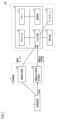
- FIG. 1 is a diagram illustrating a configuration of an analysis system according to an embodiment.
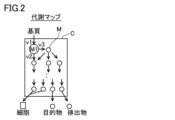
- FIG. 1 is a diagram for explaining a metabolic map.
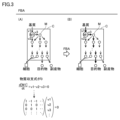
- FIG. 1 is a diagram for explaining metabolic flux distribution and FBA.
- FIG. 13 is a diagram for explaining a method for estimating a flux pattern according to the embodiment.
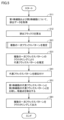
- 5 is a flowchart showing a process of estimating a flux pattern according to the embodiment.
- FIG. 13 is a diagram for explaining a method for calculating proliferation flux. 13 is a flowchart showing a process of estimating a primary flux pattern.
- Configuration of the analysis system] 1 is a diagram showing a configuration of an analysis system according to an embodiment.
- the analysis system 100 includes an analysis device 1, a measurement device 2, and a culture device 3.
- the culture device 3 is a device for culturing cells.
- the culture device 3 cultures a first cell line, which is a first cell line, and a second cell line, which is a second cell line and is a comparison target for the first cell line.
- the first cell line and the second cell line are cells of strains that have different production amounts of a specific type of metabolite (hereinafter referred to as a "specific metabolite").
- the first cell line and the second cell line are cells that belong to two types of strains of the same lineage.
- the specific metabolite is a specific useful metabolite that is intended to be obtained by culture. In this specification, such a specific useful metabolite is referred to as a "target product.”
- the measuring device 2 measures the amount of metabolites discharged outside the cells.
- metabolites discharged outside the cells are also referred to as "extracellular metabolites.”
- the measuring device 2 includes, for example, a cell measuring unit 21 and an extracellular metabolite measuring unit 22 .
- the cell measuring unit 21 is a unit that measures the amount of cells (hereinafter, also referred to as "cell amount").
- the cell measuring unit 21 may directly measure the cell amount, or may calculate the cell amount by measuring the concentration of a predetermined substance that correlates with the cell amount.
- the cell measuring unit 21 includes a turbidity meter, and in this case, the cell amount can be measured based on turbidity.
- Another example of the cell measuring unit 21 includes an instrument for measuring the dry cell weight of the cells (for example, a drying dish and a weighing scale).
- the user measures the dry cell weight of the cells using the instrument, and measures the cell amount based on the measured dry cell weight of the cells.
- the cell measuring unit 21 includes a predetermined instrument and chemicals such as RIPA (Radio-Immunoprecipitation Assay) buffer and Bicachininic Acid (BCA).
- RIPA Radio-Immunoprecipitation Assay
- BCA Bicachininic Acid
- the user uses these chemicals to extract and quantify proteins, thereby quantifying the cell amount.
- the measurement of the cell amount may be replaced by the measurement of the amount of the predetermined type of extracellular metabolite.
- the measurement of cell mass may be substituted for the measurement of said consumption.
- the cell measuring unit 21 also records the time when the cell mass is measured.
- the cell measuring unit 21 transmits time series data of the cell mass, including the time and the cell mass corresponding to the time, to the analysis device 1.
- the time series data includes time series changes.
- the time series data of the cell mass is also referred to as "cell data" below.
- the method of acquiring the cell data in the analysis system 100 is not limited to the above example.
- the cell measuring unit 21 may immediately transmit the measured value of the cell mass to the analysis device 1, and the analysis device 1 may calculate the time when the cell mass was measured based on the time when the measured value of the cell mass was received, and create cell data during culture.
- the extracellular metabolite measuring unit 22 is a unit for measuring the amount of extracellular metabolites (hereinafter also referred to as "extracellular metabolite amount").
- the extracellular metabolite measuring unit 22 includes a device for measuring the amount of extracellular metabolites.
- the device for measuring the amount of extracellular metabolites includes, for example, an analytical device such as GC (Gas Chromatograph), LC (Liquid Chromatograph), MS (Mass Spectrometry), LC-MS (Liquid Chromatograph-Mass Spectrometry), or HPLC (High Performance Liquid Chromatography).
- the user extracts a portion of the culture fluid in the culture device 3, and uses the extracted portion of the culture fluid as a sample to analyze them using an analytical device included in the extracellular metabolite measuring unit 22.
- the extracellular metabolite measuring unit 22 also records the time when the cells are analyzed. In this case, for example, the extracellular metabolite measuring unit 22 transmits time series data of the extracellular metabolite amounts, including the time and the extracellular metabolite amounts corresponding to the time, to the analysis device 1.
- the time series data of the extracellular metabolite amounts is hereinafter also referred to as "extracellular metabolite data".
- the method of acquiring the extracellular metabolite data in the analysis system 100 is not limited to the above example.
- the extracellular metabolite measuring unit 22 may immediately transmit the analyzed value of the extracellular metabolites to the analysis device 1, and the analysis device 1 may calculate the time when the extracellular metabolite amounts were measured based on the time when the measurement value of the extracellular metabolite amounts was received, and create the extracellular metabolite data.
- the analysis device 1 acquires cell data and extracellular metabolite data, and estimates a "flux pattern," which is a pattern of the metabolic flux distribution of cells, based on this data. The method of estimating the flux pattern will be described later.
- the analysis device 1 includes a controller 19, a display 15, and an operation unit 14.
- the display 15 and operation unit 14 are connected to the controller 19.
- the operation unit 14 is typically composed of a touch panel, a keyboard, a mouse, etc.
- the operation unit 14 accepts user operation input to the processor 10.
- the display 15 is composed of, for example, a liquid crystal panel capable of displaying images.
- the display 15 displays images related to the acceptance of the user operation input, and displays the results of processing by the processor 10.
- the controller 19 has as its main components a processor 10, a memory 11, a communication unit 12, and an input/output unit 13. These units are connected to each other via a bus so that they can communicate with each other.
- the input/output unit 13 is an interface for exchanging various data between the processor 10 and an external device connected to the input/output unit 13.
- the external device includes the measurement device 2, the operation unit 14, and the display 15.
- the input/output unit 13 receives the extracellular metabolite data and the cell data from the measurement device 2.
- the method of acquiring the extracellular metabolite data and the cell data in the analysis device 1 is not limited to this, and the data may be acquired, for example, via the communication unit 12 or via a storage medium such as a USB memory.
- the communication unit 12 is a communication interface for exchanging various data with an external device, and is realized by an adapter or a connector.
- the communication method may be a wireless communication method using a wireless LAN (Local Area Network) or the like, or a wired communication method using a USB (Universal Serial Bus) or the like.
- the memory 11 stores the extracellular metabolite data and cell data acquired by the input/output unit 13.
- the memory 11 is realized by a storage device such as a ROM (Read Only Memory), a RAM (Random Access Memory), and a HDD (Hard Disk Drive).
- the ROM can store the program executed by the processor 10.
- the RAM can temporarily store data used during execution of the program in the processor 10, and can function as a temporary data memory used as a working area.
- the HDD is a non-volatile storage device.
- a semiconductor storage device such as a flash memory may be adopted.
- the above programs and/or data may be stored in an external storage device accessible by the processor 10.
- the processor 10 estimates a flux pattern, which is a pattern of metabolic flux distribution of cells, based on the extracellular metabolite data and cell data stored in the memory 11.
- the processor 10 is typically an arithmetic processing unit such as a CPU (Central Processing Unit) or MPU (Micro Processing Unit).
- the processor 10 controls the operation of the analysis device 1 by reading and executing a program stored in the memory 11.
- the program includes a program that, when executed by a computer, causes the computer to implement the flux pattern estimation method according to the embodiment.
- FBA (2-1. Overview of FBA)
- FBA is a method for constructing a metabolic model that linearly expresses metabolic reactions and estimating metabolic flux distribution by linear programming. FBA will be described in more detail below with reference to Figs. 2 and 3.
- FIG 2 is a diagram explaining the "metabolic map” that is the premise of FBA.
- a map (metabolic map) of metabolic reactions that can occur in a cell (C) is shown diagrammatically. Circles (M) indicate each metabolite, and arrows indicate the conversion of the metabolite.
- the metabolic map is created, for example, based on the genomic information of the cell.
- a cell takes in a substrate.
- the cell then converts the taken-up substrate into another metabolite.
- some metabolites are eventually excreted outside the cell.
- some of the metabolites that are excreted outside the cell are often used as the target product.
- Metabolites other than the target product that are excreted outside the cell are sometimes called by-products.
- some of the metabolites are used to construct the next generation of cells.
- FBA is a method for predicting the extent of such metabolic reactions that are actually taking place.
- Figure 3 is a diagram for explaining metabolic flux distribution and FBA. Flux is expressed as the amount of change in metabolites.
- the amount of change v1 from the substrate to the metabolite indicated by the circle M1 is illustrated.
- the first condition for FBA is that the metabolism of all metabolites in the cell is in a steady state. This means that the amount of all metabolites does not change over time. Therefore, in the mass balance equation for metabolite M1 shown in Figure 3(A), the amount of change, v1-v2-v3, is 0. In this way, a mass balance equation with a solution of 0 is created for all metabolites.
- a model that comprehensively includes fluxes in a cell, such as this determinant, is referred to as a metabolic model, stoichiometric model, etc. by those skilled in the art, but in this specification it is referred to as a "metabolic model.”
- a metabolic model based on this first condition is used to uniquely determine the flux distribution that satisfies the second condition that the cell growth rate is maximized ( Figure 3 (B)).
- the unit of flux is expressed as mmol/(h gDCW) using cell mass (gram dry cell weight), unit time (h), and millimolar mass (mmol) of metabolic components. Therefore, to calculate flux from actual measured values, it is necessary to obtain time series data of metabolite concentration (mol/mL) and cell density (gDCW/mL). Analytical devices such as HPLC and MS are used to measure metabolite concentration. Cell density can be measured by measuring the culture solution with a turbidity meter or by extracting and quantifying proteins using RIPA buffer and BCA.
- Non-Patent Document 3 discloses an example of FBA using the actual measured values of four inhibitors added and two metabolites discharged outside the cell.
- the directly measured flux value measured using a Seahorse XF Analyzer and the indirectly measured flux value calculated from the measured value were given as constraints on the flux in the metabolic model, and FBA was performed.
- the estimated values of GABA (Gamma-Aminobutyric Acid), ABAT (4-Aminobutyrate Aminotransferase), glucose, glutamic acid, and palmitate matched the actual measured values.
- GABA Gamma-Aminobutyric Acid
- ABAT 4-Aminobutyrate Aminotransferase
- glucose glutamic acid
- palmitate matched the actual measured values.
- the solution space of flux in the metabolic model is huge, and FBA extracts only one solution from it, so it is possible that the flux of substances other than the above five types of substances evaluated may not be correctly estimated.
- Non-Patent Documents 4 and 5 disclose a method for estimating flux distribution in intracellular metabolic pathways by 13C metabolic flux analysis using GC-MS. 13C is carbon-13, a stable isotope of naturally occurring carbon-12 (12C).
- cells are cultured in a medium containing 13C glucose, a carbon source labeled with the stable carbon isotope 13C, and the flux distribution can be estimated by measuring the 13C-labeled ratio in metabolites based on 13C glucose taken up by the cells.
- the 13C metabolic flux analysis method has the problem that 13C glucose is expensive.
- glycerol, carbon dioxide, etc. cannot be labeled with 13C, so it cannot be applied to hosts that use these substances as carbon sources.
- flux analysis methods that use stable isotopes including 13C metabolic flux analysis, have the problem that even slight differences in the experimental system require tuning of the experimental conditions, which poses high technical hurdles. Specifically, flux analysis methods that use stable isotopes require the experimental system to be stopped in a desired state, which is technically very difficult.
- the method for estimating a flux pattern according to this embodiment includes the following four processes, namely, first to fourth processes.
- FIG. 4 is a diagram for explaining a method for estimating a flux pattern according to the embodiment.
- a feature of the first process of the flux pattern estimation method according to the present embodiment is to obtain time series data of many types of extracellular metabolites, preferably time series data of extracellular metabolome data, because in order to estimate a flux pattern that is highly consistent with metabolic reactions actually occurring in cells, it is preferable to measure as many types of extracellular metabolites as possible, and ideally, it is preferable to comprehensively measure all types of measurable extracellular metabolites.
- time series data on cells and extracellular metabolites is obtained. From the perspective of material balance, both the cells and extracellular metabolites produced by cell proliferation are a form of substance that is excreted outside the underlying cells. Therefore, in this specification, cells and extracellular metabolites are collectively referred to as "excreted products,” and the time series data on cell mass and the time series data on extracellular metabolite mass are collectively referred to as "excretion data.”
- the proliferation flux which is the flux of the cell proliferation rate
- the extracellular flux which is the change in the proliferation flux
- proliferation flux and extracellular flux are collectively referred to as “excretion flux.”
- extracellular flux the flux of metabolic reactions within the cell is referred to as “intracellular flux.”
- the many types of extracellular metabolites preferably include amino acids, vitamins, organic acids, metabolites involved in amino acid metabolism (organic acids, etc.), metabolites involved in nucleic acid metabolism, metabolites involved in the TCA cycle (Tricarboxylic Acid Cycle), etc. More preferably, the many types of extracellular metabolites are metabolites that constitute the totality of extracellular metabolites. The totality of extracellular metabolites is called the “extracellular metabolome,” and the measured values are called “extracellular metabolome data.”
- Many types of extracellular metabolites include, for example, dozens or more types of substances, and preferably, one hundred or more types of substances.
- an optimization problem and flux variability analysis are used to estimate multiple flux patterns based on the measured values.
- the specific calculation method will be described later.
- the flux patterns estimated in this way by the optimization problem and FVA are also referred to as "primary flux patterns" in this specification.
- post-processing clustering and ranking
- a most plausible flux pattern is one that is considered to have a high probability of occurring in real cells.
- the estimated primary flux patterns are clustered into groups of similar primary flux patterns.
- a representative flux pattern is generated from the primary flux patterns in each cluster.
- the representative flux patterns are ranked in order of plausibility.
- plausibility is the order in which they are thought to be most likely to occur in real cells. The method for ranking the representative flux patterns will be described later.
- the flux pattern estimation method solves an optimization problem based on the measured values of the cell proliferation rate and the measured values of many types of extracellular metabolites. Therefore, compared to FBA, which has the theoretical maximum cell proliferation rate as a constraint, it is possible to obtain a flux pattern that is consistent with the actual measured values. Furthermore, compared to FBA, which incorporates only the measured values of a small number (e.g., five types) of extracellular metabolites, it is possible to narrow down the flux space further. Furthermore, in the second process, instead of being limited to one flux pattern as in FBA, it is possible to estimate multiple plausible flux patterns. Therefore, it is considered that the solution is more likely to include a flux pattern that reflects the metabolic reaction in an actual cell than conventional metabolic flux analysis.
- the most representative patterns can be ranked and checked from among multiple flux patterns, which does not place an excessive burden on the user.
- the flux pattern estimation method according to this embodiment makes it easy to estimate the metabolic pathway that is the cause of the change in productivity.
- the flux pattern estimation method according to this embodiment is shown in FIG. 5.
- FIG. 5 is a flowchart showing a flux pattern estimation process according to an embodiment. The steps shown in Fig. 5 are executed by the processor 10 of the analysis device 1.
- S is used as an abbreviation for "STEP.”
- S11 to S12 in Fig. 5 correspond to the first process in Fig. 4.
- S21 in Fig. 5 corresponds to the second process in Fig. 4.
- S31 in Fig. 5 corresponds to the third process in Fig. 4.
- S41 in Fig. 5 corresponds to the fourth process in Fig. 4.
- the processor 10 acquires excretion data including time series change data of substances excreted outside the cells for each of the first cell line and the second cell line.
- the second cell line has a different production amount of a specific metabolite from the first cell line.
- the first cell line and the second cell line are cells that belong to two different strains of the same lineage.
- the first cell line and the second cell line may be prokaryotic or eukaryotic.
- the first cell line and the second cell line are preferably cells derived from organisms such as Escherichia coli, Bacillus subtilis, Mycobacterium tuberculosis, Saccharomyces cerevisiae, green algae, nematodes, Arabidopsis thaliana, and humans, for which a metabolic map based on the genome has been constructed.
- Such metabolic maps based on the genome are also referred to as "genome-scale metabolic models" by those skilled in the art.
- cells derived from organisms for which no existing metabolic map exists can be subject to the metabolic flux pattern estimation method according to this embodiment by constructing a metabolic map.
- Specific metabolites are typically metabolites that are excreted outside the cells, and in this case, the "production amount of specific metabolites” corresponds to the "amount of specific metabolites excreted outside the cells.”
- Specific metabolites are typically targets that are specific useful metabolites.
- the excretion data includes cell data, which is time series data on the amount of cells, and extracellular metabolite data, which is time series data on the amount of extracellular metabolites, which are metabolites excreted outside the cells.
- the cell data is time series data on cell density (gDCW/mL)
- the extracellular metabolite data is time series data on extracellular metabolite concentration (mol/mL).
- time series data on the amount of the target substance is obtained from measurements by GC and/or MS.
- time series data on the amount of by-products e.g., amino acids, vitamins, organic acids, metabolites involved in amino acid metabolism (organic acids, etc.), metabolites involved in nucleic acid metabolism, metabolites involved in the TCA cycle
- amino acids, vitamins, organic acids, metabolites involved in amino acid metabolism (organic acids, etc.), metabolites involved in nucleic acid metabolism, metabolites involved in the TCA cycle is obtained from measurements by an LC-MS cell culture profiling method (manufactured by Shimadzu Corporation).
- the processor 10 calculates the excretion flux of the substance outside the cell based on the excretion data.
- the processor 10 calculates the extracellular metabolite flux, which is the amount of change in the extracellular metabolite per cell per time, from the extracellular metabolite data. Also, the processor 10 calculates the proliferation flux, which is the amount of change in the extracellular metabolite per cell per time, from the cell data.
- the excretion flux includes the extracellular metabolite flux and the proliferation flux.
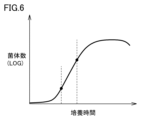
- FIG. 6 is a diagram for explaining a method for calculating the growth flux.
- FIG. 6 is a graph showing the time series change in cell mass, with the horizontal axis showing the culture time and the vertical axis showing the number of bacteria (log scale).
- the growth flux is the value obtained by dividing the number of bacteria grown in a specified period by the product of the number of bacteria in that specified period and at the start of the specified period.
- the processor 10 estimates a number of primary flux patterns based on the discharge flux. The process of estimating the primary flux patterns is described in detail in FIG. 7.
- the processor 10 estimates a representative representative flux pattern by clustering the multiple primary flux patterns using information regarding the mutual similarity of the multiple primary flux patterns.
- similarity the degree of similarity between flux patterns or fluxes.
- the processor 10 clusters a plurality of primary flux patterns based on the mutual similarity of the excretion fluxes.
- the intracellular fluxes may differ depending on the degree of freedom of the intracellular fluxes.
- the difference in intracellular flux has no effect on the excretion flux and is therefore not important as a factor in the change in productivity of the target product, so it is considered that there is no need to incorporate it into the clustering. This reduces the possibility that factors that are not important as a factor in the change in productivity of the target product will affect the clustering.
- the processor 10 performs clustering using hierarchical clustering. For example, the processor 10 calculates the Euclidean distance between two first-order fluxes, and repeats clustering the combinations with the shortest distance (highest similarity) to create a tree diagram, thereby performing hierarchical clustering. The distance is calculated, for example, using the Ward method (minimum variance method).
- the processor 10 estimates a representative flux pattern based on the primary flux patterns contained in each cluster.
- the representative flux pattern may be created by selecting one flux pattern from the primary flux patterns in the cluster, or by integrating at least a portion of the primary flux patterns in the cluster.
- the processor 10 ranks the representative flux patterns.
- the rank is a rank that is considered to be plausible, more specifically, a rank that is considered to be highly likely to be similar to a flux pattern that is actually performed in a cell.
- the representative flux pattern ranked first is the most plausible flux pattern.
- the ranking can be said to be the user's order of priority when considering representative flux patterns. For example, it is considered most efficient for the user to conduct verification experiments with the representative flux pattern ranked first.
- the processor 10 ranks the representative flux patterns based on the consistency between the measured values of the excretion flux and the estimated values by FBA.
- the processor 10 ranks the representative flux patterns based on the error between the measured values of the proliferation flux and the estimated values by FBA, and the error between the measured values of the extracellular metabolite flux and the estimated values by FBA.
- the error is, for example, the root mean squared percentage error (RMSPE) calculated by the following formula:
- the processor 10 detects differences by comparing a representative flux pattern of the first cell line with a representative flux pattern of the second cell line.
- the processor 10 first detects similar flux pattern pairs between the first cell line and the second cell line by comparing a representative flux pattern of the first cell line with a representative flux pattern of the second cell line.
- the processor 10 detects differential fluxes that differ between the flux pattern pairs by comparing the flux pattern pairs.
- the differential fluxes are fluxes that are estimated to be the cause of changes in the production amount of the target product in the second cell line. As described above, the user can estimate the flux that is the cause of changes in the production amount of the target product in the second cell line.
- the processor 10 clusters and outputs the multiple primary flux patterns, and ends the process.
- the processor 10 may output at least one of the representative flux pattern, the ranked representative flux pattern, the flux pattern pair, and the difference flux.
- the processor 10 outputs these estimation results by displaying them on the display 15.
- the output form of the estimation results is not limited to this, and the estimation results may be sent to an external device of the analysis system 100 via the communication unit 12, for example, and output by the external device.
- the external device is, for example, a printer or a computer equipped with a display. This allows the user to easily understand the estimation results. Furthermore, the user can plan a verification experiment for the estimation results based on the estimation results.
- FIG. 7 is a flowchart showing the process of estimating the primary flux pattern.
- FIG. 7 corresponds to the subroutine of S21 in FIG. 5, and is executed after S12 and before S51 in FIG. 5.
- the steps shown in FIG. 7 are executed by the processor 10 of the analysis device 1 .
- the processor 10 solves an optimization problem in which the intracellular flux is used as an explanatory variable, and the error between the measured value and the estimated value of the cell proliferation rate and the error between the measured value and the estimated value of the discharge amount of a specific metabolite are used as objective functions.
- the flux pattern estimated in this manner is referred to as an "optimized flux pattern" in this specification.
- the optimized flux pattern is a flux pattern optimized to explain the cell proliferation rate and the measured value of a specific metabolite.
- the first condition is the same as the first condition of FBA, and is that the mass balance equation must be zero for all metabolites within the cell.
- the second condition is different from the second condition of FBA, and is to find multiple flux patterns that minimize the error between the estimated and experimental values of extracellular metabolites.
- the processor 10 calculates, as the optimized flux pattern, a flux pattern that minimizes the sum of the squared error between the measured and estimated values of the cell proliferation rate and the squared error between the measured and estimated values of the excretion amount of a specific metabolite.
- the measured value of the cell proliferation rate is, for example, a proliferation flux calculated based on measured proliferation data.
- the estimated value of the cell proliferation rate is a proliferation flux in a flux pattern that is a candidate for the optimized flux pattern.
- the measured value of the excretion amount of a specific metabolite is, for example, an extracellular flux of a specific metabolite calculated based on measured extracellular metabolite data.
- the estimated value of the excretion amount of a specific metabolite is, for example, an extracellular flux of a specific metabolite in a flux pattern that is a candidate for the optimized flux pattern.
- the processor 10 performs FVA for each intracellular flux for the optimized flux pattern while maintaining the explanatory variables, cell growth rate, and excretion amount of specific metabolites, and obtains the minimum and maximum values.
- FVA is an analytical method that calculates the theoretical maximum yield and theoretical minimum yield under constraint conditions to determine the range of flux variation.
- the objective function is the extracellular flux of a specific metabolite. More specifically, the minimum and maximum values of each intracellular flux are determined under the condition that they match the value of the extracellular flux of a specific metabolite calculated from the measured value. Note that this alone does not take into account cell proliferation ability, so when calculating the theoretical maximum yield while maintaining a certain level of cell proliferation ability, a constraint is also added that the cell proliferation rate must be within a specified percentage of the theoretical maximum value.
- the cell proliferation rate is not fixed uniquely to a maximum value, but is assumed to be within a certain percentage of the maximum value. This is because in actual living organisms, metabolic reactions that satisfy the theoretical maximum cell proliferation rate are not necessarily taking place. For example, if flux pattern A is the one that maximizes the theoretical cell proliferation rate, and flux pattern B is the one that maximizes the theoretical cell proliferation rate slightly lower than the maximum value, it is entirely possible that flux pattern B is taking place within the cell.
- FVA can estimate multiple plausible flux patterns (primary flux patterns) with each flux having a certain degree of freedom. This is thought to improve the possibility of estimating flux patterns that correspond to the metabolic reactions taking place in actual cells, compared to simply solving FBA.
- the processor 10 further estimates a primary flux pattern using FBA for each of the cases where the flux is set to the minimum value and the maximum value.
- a specific intracellular flux is fixed to a minimum value
- the values of the other fluxes are calculated based on the measured values.
- the minimum value of this specific intracellular flux and the corresponding values of the other fluxes form a single primary flux pattern.
- the processor 10 uniquely fixes the value of a flux whose difference between its minimum and maximum values is equal to or less than a predetermined threshold value. This prevents unnecessary increase in the variations of primary flux patterns that are almost the same.
- the processor 10 advances the process to S31 in FIG.
- the effect of the flux pattern estimation method according to this embodiment will be described below along the processes shown in Figures 6 and 7.
- the proliferation flux and the extracellular flux can be calculated from the measured values. This makes it possible to estimate a flux pattern that matches the measured values.
- extracellular metabolome data that comprehensively measures extracellular metabolites, it is possible to estimate a flux pattern that is more realistic.
- an optimized flux pattern that minimizes the error between the cell proliferation rate of the second cell line and the extracellular flux of the target substance can be easily estimated based on the measured values.
- the optimized flux pattern found in S211 can be said to be just one example.
- FVA the allowable range for each intracellular flux. This makes it possible to estimate various flux patterns (primary flux patterns) with the same explanatory variables, cell proliferation rate, and target substance excretion flux, but different intracellular fluxes, in S213.
- the degree of agreement between the measured values and estimated values for cell proliferation rate and extracellular flux among the representative flux patterns is calculated. Then, by ranking the representative flux patterns based on the degree of agreement, the user can easily determine which representative flux pattern is most plausible (highly likely to be true).
- the user can know the cause of the change in the production amount of the target product. Note that if the flux pattern of the first cell line has already been estimated, the user can estimate only the representative flux pattern of the second cell line in S11 to S41, and compare it with the existing flux pattern of the first cell line in S51.
- the user can maintain the change in production volume by taking measures to keep the factor stable. Furthermore, when culturing the same cell line next time onwards, the desirable production volume can be reproduced by reproducing the factor. This allows a desirable culture system to be established.
- the flux pattern estimation method makes it possible to control the culture system, thereby improving its stability and expandability.
- the target substance is a metabolite discharged from the cell, but the present embodiment can also be applied to the case where the target substance is a metabolite accumulated in the cell and collected by disrupting the cell.
- the metabolite accumulated in the cell is, for example, a metabolite that constitutes an intracellular organelle or a cytoskeleton.
- a part of the cell culture solution is fractionated at a predetermined time (for example, at a predetermined time interval), and the target substance is measured by disrupting the cells from the part of the culture solution, thereby measuring the amount of the target substance.
- the extracellular flux may be measured using a part of the culture solution in which the target substance was measured, or may be measured using another part of the culture solution.
- the cell proliferation rate may be measured using a part of the culture solution in which the target substance and/or the extracellular flux was measured, or may be measured in the original culture solution, for example, by turbidity. In this way, it is possible to measure the amount of the target substance, the cell proliferation rate, and the extracellular flux. Therefore, the method for estimating a flux pattern according to this embodiment can determine the metabolic pathway that causes a change in the production amount of the metabolite accumulated in the cell.
- the metabolic pathway that causes a change in the amount of target substance excreted outside the cell and/or the amount accumulated inside the cell can be determined by measuring the amount excreted outside the cell and the amount accumulated inside the cell separately.
- the flux pattern estimation method can also be applied to determining the flux pattern and the flux that causes the change in a system in which at least a portion of the target substance accumulates intracellularly.
- the subject of the flux pattern estimation method according to this embodiment does not have to be a second cell line that has a different production amount of a specific metabolite from the first cell line, but may be any cell line. Therefore, the flux pattern estimation method according to this embodiment can also be applied to estimating the flux pattern of a specific cell line.
- emission data is obtained for the specific cell line.
- processing is performed only for the specific cell line. S51 is not performed.
- a method for estimating a metabolic flux distribution of a cell includes the steps of acquiring excretion data including time series data of a substance excreted outside the cell for each of a first cell line and a second cell line for comparison, calculating the excretion flux of the substance outside the cell based on the excretion data, estimating multiple primary flux patterns based on the excretion flux, and clustering and outputting the multiple primary flux patterns based on the similarity between the multiple primary flux patterns.
- the method for estimating metabolic flux distribution described in paragraph 1 makes it possible to estimate, in an analysis of the metabolic flux distribution of a cell, a number of metabolic flux distribution patterns that are likely to match the metabolic reactions actually taking place in the cell, based on the measured values of substances discharged outside the cell.
- the patterns of the metabolic flux distribution can be clustered and output. This makes it possible to provide a method for correctly estimating metabolic flux in an analysis of the metabolic flux distribution of a cell.
- the outputting step includes a step of estimating a representative representative flux pattern by clustering a plurality of first-order flux patterns.
- the metabolic flux distribution estimation method described in paragraph 2 makes it possible to estimate a representative pattern from among multiple metabolic flux distribution patterns.
- the method for estimating metabolic flux distribution described in Section 2 further includes a step of ranking the representative flux patterns.
- the method for estimating metabolic flux distribution described in Section 3 allows the user to easily determine which representative flux pattern is most plausible (highly likely to be true).
- the method for estimating metabolic flux distribution described in 3 further includes a step of detecting differences by comparing a representative flux pattern of the first cell line with a representative flux pattern of the second cell line.
- the user can easily recognize the difference between the representative flux pattern of the first cell line and the representative flux pattern of the second cell line.
- the user can recognize the cause (flux) of the change in the production amount.
- the user can take a specific approach to the cause.
- the user can control the change in the production amount.
- the specific metabolite is, for example, the target of the culture.
- the method for estimating metabolic flux distribution described in 4 further includes a step of displaying at least one of the multiple primary flux patterns, the representative flux patterns, the ranked representative flux patterns, and the differences.
- the metabolic flux distribution estimation method described in Section 5 allows the user to easily understand the estimation results. Furthermore, the user can plan a verification experiment for the estimation results based on the estimation results.
- the first cell line and the second cell line are cells that belong to two types of strains of the same lineage.
- the method for estimating metabolic flux distribution described in paragraph 6 can provide a method for accurately estimating metabolic flux in cells belonging to two different strains of the same lineage.
- the excretion data includes cell data, which is time series data on the amount of cells, and extracellular metabolite data, which is time series data on the amount of extracellular metabolites, which are metabolites excreted outside the cells.
- the excretion flux includes proliferation flux, which is the flux of the cell proliferation rate, and extracellular flux, which is the flux of excretion of extracellular metabolites.
- the method for estimating metabolic flux distribution described in paragraph 7 makes it possible to estimate a flux pattern that is consistent with the measured values of cell proliferation rate and extracellular metabolites.
- the extracellular metabolites include at least one of amino acids, vitamins, metabolites involved in amino acid metabolism, metabolites involved in nucleic acid metabolism, and metabolites involved in the TCA cycle (Tricarboxylic Acid Cycle).
- the method for estimating metabolic flux distribution described in paragraph 8 makes it possible to estimate a flux pattern that is consistent with the actual measurement values based on at least one measurement value, and preferably all measurement values, of amino acids, vitamins, metabolites involved in amino acid metabolism, metabolites involved in nucleic acid metabolism, and metabolites involved in the TCA cycle.
- the extracellular metabolite data is calculated based on extracellular metabolome data, which is data on the totality of extracellular metabolites.
- the method for estimating metabolic flux distribution described in Section 9 makes it possible to estimate flux patterns that are highly consistent with the metabolic reactions that actually take place in cells.
- the step of estimating a plurality of primary flux patterns includes a step of estimating an optimized flux pattern by solving an optimization problem in which the intracellular flux is an explanatory variable and the error between the measured value and the estimated value of the cell proliferation rate and the error between the measured value and the estimated value of the discharge amount of the specific metabolite are an objective function; a step of performing a flux fluctuation analysis for each intracellular flux in the optimized flux pattern while maintaining the explanatory variables, the cell proliferation rate, and the discharge amount of the specific metabolite, to obtain a minimum value and a maximum value; and a step of estimating a primary flux pattern using a flux balance analysis for each of the cases in which the flux is set to the minimum value and the maximum value, for a flux whose difference between the minimum value and the maximum value is equal to or greater than a predetermined threshold value.
- the step of clustering and outputting further includes a step of clustering a plurality of first-order flux patterns based on the similarity between the excretion fluxes.
- the ranking step includes a step of ranking the representative flux patterns based on the error between the measured values of the excretion flux and the estimated values obtained by flux balance analysis.
- the method for estimating metabolic flux distribution described in Section 12 makes it possible to rank the excretion flux based on the consistency between the measured values and the FBA estimated values.
- the method for estimating a metabolic flux distribution of a cell includes the steps of acquiring excretion data for a given cell line, the excretion data including time series change data of a substance excreted outside the cell, calculating the excretion flux of the substance outside the cell based on the excretion data, estimating multiple primary flux patterns based on the excretion flux, and clustering and outputting the multiple primary flux patterns based on the similarity between the multiple primary flux patterns.
- the method for estimating metabolic flux distribution described in paragraph 13 makes it possible to estimate, in an analysis of the metabolic flux distribution of a cell, a number of metabolic flux distribution patterns that are likely to match the metabolic reactions actually taking place in the cell, based on the measured values of substances discharged outside the cell.
- the patterns of the metabolic flux distribution can be clustered and output. This makes it possible to provide a method for correctly estimating metabolic flux in an analysis of the metabolic flux distribution of a cell.
- the analysis device is an analysis device that estimates a metabolic flux distribution of cells.
- the analysis device includes a memory and a processor.
- the memory stores excretion data including time series change data of a substance excreted outside the cells for each of the first cell line and the second cell line for comparison.
- the processor calculates the excretion flux of the substance outside the cells based on the excretion data, estimates multiple primary flux patterns based on the excretion flux, and clusters and outputs the multiple primary flux patterns based on the similarity between the multiple primary flux patterns.
- the analysis device described in paragraph 14 can estimate, in an analysis of the metabolic flux distribution of a cell, a pattern of multiple metabolic flux distributions that is likely to match the metabolic reactions actually taking place in the cell, based on the measured values of substances discharged outside the cell.
- the multiple metabolic flux distributions can be clustered and output. This provides a method for correctly estimating metabolic fluxes in an analysis of the metabolic flux distribution of a cell.
- 1 Analysis device 2 Measurement device, 3 Culture device, 10 Processor, 11 Memory, 12 Communication unit, 13 Input/output unit, 14 Operation unit, 15 Display, 19 Controller, 21 Cell measurement unit, 22 Extracellular metabolite measurement unit, 100 Analysis system.
Landscapes
- Life Sciences & Earth Sciences (AREA)
- Engineering & Computer Science (AREA)
- Health & Medical Sciences (AREA)
- Chemical & Material Sciences (AREA)
- Bioinformatics & Cheminformatics (AREA)
- Organic Chemistry (AREA)
- Wood Science & Technology (AREA)
- Zoology (AREA)
- Biotechnology (AREA)
- General Health & Medical Sciences (AREA)
- Genetics & Genomics (AREA)
- Microbiology (AREA)
- Biochemistry (AREA)
- General Engineering & Computer Science (AREA)
- Biomedical Technology (AREA)
- Sustainable Development (AREA)
- Physics & Mathematics (AREA)
- Molecular Biology (AREA)
- Proteomics, Peptides & Aminoacids (AREA)
- Medicinal Chemistry (AREA)
- Analytical Chemistry (AREA)
- Biophysics (AREA)
- Cell Biology (AREA)
- Physiology (AREA)
- Bioinformatics & Computational Biology (AREA)
- Evolutionary Biology (AREA)
- Medical Informatics (AREA)
- Spectroscopy & Molecular Physics (AREA)
- Theoretical Computer Science (AREA)
- Virology (AREA)
- Immunology (AREA)
- Investigating Or Analysing Biological Materials (AREA)
Priority Applications (1)
| Application Number | Priority Date | Filing Date | Title |
|---|---|---|---|
| JP2024554268A JPWO2024095564A1 (https=) | 2022-10-31 | 2023-08-22 |
Applications Claiming Priority (2)
| Application Number | Priority Date | Filing Date | Title |
|---|---|---|---|
| JP2022174798 | 2022-10-31 | ||
| JP2022-174798 | 2022-10-31 |
Publications (1)
| Publication Number | Publication Date |
|---|---|
| WO2024095564A1 true WO2024095564A1 (ja) | 2024-05-10 |
Family
ID=90930144
Family Applications (1)
| Application Number | Title | Priority Date | Filing Date |
|---|---|---|---|
| PCT/JP2023/030109 Ceased WO2024095564A1 (ja) | 2022-10-31 | 2023-08-22 | 代謝フラックス分布の推定方法、解析装置、プログラム |
Country Status (2)
| Country | Link |
|---|---|
| JP (1) | JPWO2024095564A1 (https=) |
| WO (1) | WO2024095564A1 (https=) |
Citations (6)
| Publication number | Priority date | Publication date | Assignee | Title |
|---|---|---|---|---|
| US20120185226A1 (en) * | 2009-02-26 | 2012-07-19 | Genomatica, Inc. | Mammalian cell line models and related methods |
| CN102629304A (zh) * | 2012-04-05 | 2012-08-08 | 天津大学 | 基于基因组尺度代谢网络模型的代谢工程设计预测方法 |
| US20130095566A1 (en) * | 2007-07-10 | 2013-04-18 | University Of Pittsburgh - Of The Commonwealth System Of Higher Education | Flux Balance Analysis With Molecular Crowding |
| JP2019103447A (ja) * | 2017-12-12 | 2019-06-27 | 株式会社日立製作所 | 細胞株及び培養条件のスクリーニング方法、及びその装置 |
| WO2020142035A1 (en) * | 2018-12-31 | 2020-07-09 | Istanbul Sehir University | Disease diagnosis system |
| JP2021508872A (ja) * | 2017-12-29 | 2021-03-11 | エフ.ホフマン−ラ ロシュ アーゲーF. Hoffmann−La Roche Aktiengesellschaft | 細胞培養物の代謝状態の予測 |
-
2023
- 2023-08-22 JP JP2024554268A patent/JPWO2024095564A1/ja active Pending
- 2023-08-22 WO PCT/JP2023/030109 patent/WO2024095564A1/ja not_active Ceased
Patent Citations (6)
| Publication number | Priority date | Publication date | Assignee | Title |
|---|---|---|---|---|
| US20130095566A1 (en) * | 2007-07-10 | 2013-04-18 | University Of Pittsburgh - Of The Commonwealth System Of Higher Education | Flux Balance Analysis With Molecular Crowding |
| US20120185226A1 (en) * | 2009-02-26 | 2012-07-19 | Genomatica, Inc. | Mammalian cell line models and related methods |
| CN102629304A (zh) * | 2012-04-05 | 2012-08-08 | 天津大学 | 基于基因组尺度代谢网络模型的代谢工程设计预测方法 |
| JP2019103447A (ja) * | 2017-12-12 | 2019-06-27 | 株式会社日立製作所 | 細胞株及び培養条件のスクリーニング方法、及びその装置 |
| JP2021508872A (ja) * | 2017-12-29 | 2021-03-11 | エフ.ホフマン−ラ ロシュ アーゲーF. Hoffmann−La Roche Aktiengesellschaft | 細胞培養物の代謝状態の予測 |
| WO2020142035A1 (en) * | 2018-12-31 | 2020-07-09 | Istanbul Sehir University | Disease diagnosis system |
Non-Patent Citations (1)
| Title |
|---|
| "NEDO pamphlet", 20 October 2022, NEW ENERGY AND INDUSTRIAL TECHNOLOGY DEVELOPMENT ORGANIZATION, JP, article ANONYMOUS: "Bio-manufacturing project technology collection", pages: 1 - 35, XP093167560 * |
Also Published As
| Publication number | Publication date |
|---|---|
| JPWO2024095564A1 (https=) | 2024-05-10 |
Similar Documents
| Publication | Publication Date | Title |
|---|---|---|
| Fang et al. | Reconstructing organisms in silico: genome-scale models and their emerging applications | |
| US11636917B2 (en) | Simulating the metabolic pathway dynamics of an organism | |
| Feist et al. | Reconstruction of biochemical networks in microorganisms | |
| Thiele et al. | A protocol for generating a high-quality genome-scale metabolic reconstruction | |
| Ye et al. | Genome-scale metabolic network models: from first-generation to next-generation | |
| Akiyama et al. | PRIMe: a Web site that assembles tools for metabolomics and transcriptomics | |
| Lee et al. | Flux balance analysis in the era of metabolomics | |
| Maarleveld et al. | Basic concepts and principles of stoichiometric modeling of metabolic networks | |
| Libourel et al. | Metabolic flux analysis in plants: from intelligent design to rational engineering | |
| Hur et al. | A global approach to analysis and interpretation of metabolic data for plant natural product discovery | |
| Kim et al. | Methods for integration of transcriptomic data in genome-scale metabolic models | |
| Cook et al. | Genome‐scale metabolic models applied to human health and disease | |
| Oberhardt et al. | Flux balance analysis: interrogating genome-scale metabolic networks | |
| CN115135752A (zh) | 细胞培养工艺搜索方法、细胞培养工艺搜索程序、细胞培养工艺搜索装置及已学习模型 | |
| Santos et al. | A practical guide to genome-scale metabolic models and their analysis | |
| Haggart et al. | Whole-genome metabolic network reconstruction and constraint-based Modeling⋆ | |
| Chen et al. | Metabolic systems modeling for cell factories improvement | |
| Dias et al. | Systems biology in fungi | |
| Wu et al. | Genome-scale reconstruction of a metabolic network for Gluconobacter oxydans 621H | |
| Daud et al. | Optimizing the production of valuable metabolites using a hybrid of constraint-based model and machine learning algorithms: a review | |
| US20230097018A1 (en) | Kinetic learning | |
| Cvijovic et al. | Mathematical models of cell factories: moving towards the core of industrial biotechnology | |
| WO2024095564A1 (ja) | 代謝フラックス分布の推定方法、解析装置、プログラム | |
| Arita | Computational resources for metabolomics | |
| Bazzani | Article Commentary: Promise and Reality in the Expanding Field of Network Interaction Analysis: Metabolic Networks |
Legal Events
| Date | Code | Title | Description |
|---|---|---|---|
| 121 | Ep: the epo has been informed by wipo that ep was designated in this application |
Ref document number: 23885334 Country of ref document: EP Kind code of ref document: A1 |
|
| WWE | Wipo information: entry into national phase |
Ref document number: 2024554268 Country of ref document: JP |
|
| NENP | Non-entry into the national phase |
Ref country code: DE |
|
| 122 | Ep: pct application non-entry in european phase |
Ref document number: 23885334 Country of ref document: EP Kind code of ref document: A1 |