WO2024090230A1 - 情報処理装置、情報処理方法及びプログラム - Google Patents
情報処理装置、情報処理方法及びプログラム Download PDFInfo
- Publication number
- WO2024090230A1 WO2024090230A1 PCT/JP2023/037124 JP2023037124W WO2024090230A1 WO 2024090230 A1 WO2024090230 A1 WO 2024090230A1 JP 2023037124 W JP2023037124 W JP 2023037124W WO 2024090230 A1 WO2024090230 A1 WO 2024090230A1
- Authority
- WO
- WIPO (PCT)
- Prior art keywords
- user
- facial expression
- information processing
- beauty
- unit
- Prior art date
- Legal status (The legal status is an assumption and is not a legal conclusion. Google has not performed a legal analysis and makes no representation as to the accuracy of the status listed.)
- Ceased
Links
Images




Classifications
-
- G—PHYSICS
- G06—COMPUTING OR CALCULATING; COUNTING
- G06V—IMAGE OR VIDEO RECOGNITION OR UNDERSTANDING
- G06V40/00—Recognition of biometric, human-related or animal-related patterns in image or video data
- G06V40/10—Human or animal bodies, e.g. vehicle occupants or pedestrians; Body parts, e.g. hands
- G06V40/16—Human faces, e.g. facial parts, sketches or expressions
- G06V40/174—Facial expression recognition
-
- G—PHYSICS
- G06—COMPUTING OR CALCULATING; COUNTING
- G06Q—INFORMATION AND COMMUNICATION TECHNOLOGY [ICT] SPECIALLY ADAPTED FOR ADMINISTRATIVE, COMMERCIAL, FINANCIAL, MANAGERIAL OR SUPERVISORY PURPOSES; SYSTEMS OR METHODS SPECIALLY ADAPTED FOR ADMINISTRATIVE, COMMERCIAL, FINANCIAL, MANAGERIAL OR SUPERVISORY PURPOSES, NOT OTHERWISE PROVIDED FOR
- G06Q50/00—Information and communication technology [ICT] specially adapted for implementation of business processes of specific business sectors, e.g. utilities or tourism
- G06Q50/10—Services
-
- G—PHYSICS
- G06—COMPUTING OR CALCULATING; COUNTING
- G06T—IMAGE DATA PROCESSING OR GENERATION, IN GENERAL
- G06T7/00—Image analysis
- G06T7/20—Analysis of motion
-
- G—PHYSICS
- G06—COMPUTING OR CALCULATING; COUNTING
- G06V—IMAGE OR VIDEO RECOGNITION OR UNDERSTANDING
- G06V10/00—Arrangements for image or video recognition or understanding
- G06V10/70—Arrangements for image or video recognition or understanding using pattern recognition or machine learning
- G06V10/74—Image or video pattern matching; Proximity measures in feature spaces
- G06V10/75—Organisation of the matching processes, e.g. simultaneous or sequential comparisons of image or video features; Coarse-fine approaches, e.g. multi-scale approaches; using context analysis; Selection of dictionaries
-
- G—PHYSICS
- G06—COMPUTING OR CALCULATING; COUNTING
- G06V—IMAGE OR VIDEO RECOGNITION OR UNDERSTANDING
- G06V10/00—Arrangements for image or video recognition or understanding
- G06V10/70—Arrangements for image or video recognition or understanding using pattern recognition or machine learning
- G06V10/764—Arrangements for image or video recognition or understanding using pattern recognition or machine learning using classification, e.g. of video objects
-
- G—PHYSICS
- G06—COMPUTING OR CALCULATING; COUNTING
- G06V—IMAGE OR VIDEO RECOGNITION OR UNDERSTANDING
- G06V20/00—Scenes; Scene-specific elements
- G06V20/40—Scenes; Scene-specific elements in video content
-
- G—PHYSICS
- G06—COMPUTING OR CALCULATING; COUNTING
- G06V—IMAGE OR VIDEO RECOGNITION OR UNDERSTANDING
- G06V40/00—Recognition of biometric, human-related or animal-related patterns in image or video data
- G06V40/10—Human or animal bodies, e.g. vehicle occupants or pedestrians; Body parts, e.g. hands
- G06V40/16—Human faces, e.g. facial parts, sketches or expressions
Definitions
- the present invention relates to an information processing device, an information processing method, and a program.
- Patent Document 1 discloses a technology that provides information according to a user's skin type identified from an image of the user's skin.
- the present invention was made in consideration of these points, and aims to provide information that takes into account skin changes that may occur to the user in the future.
- the information processing device includes a video acquisition unit that acquires a video image of a user's face, a detection unit that detects one or more facial expression patterns of the user and a facial expression intensity indicating the degree of facial strength in each of the one or more facial expression patterns based on the video image acquired by the video acquisition unit, and an output unit that outputs beauty information related to the beauty of the user's face based on the detection result by the detection unit.
- the information processing device may further include an estimation unit that estimates a risk of wrinkles occurring on the user's face based on the frequency of occurrence of one or more facial expression patterns detected by the detection unit and the facial expression intensity, and the output unit may output the beauty information according to the risk of wrinkles occurring estimated by the estimation unit.
- the detection unit may detect the facial expression pattern and the facial expression intensity at a predetermined interval
- the information processing device may further include a calculation unit that calculates a sum of the facial expression intensities detected at the predetermined interval, and an estimation unit that estimates the risk of wrinkles developing on the user's face based on a predetermined threshold and the sum.
- the information processing device may further have a storage unit that stores one or more facial expression patterns in association with each part of the face, the calculation unit may calculate, for each part, the sum of the facial expression intensities of the one or more facial expression patterns detected by the detection unit and associated with the part, and the estimation unit may estimate, for each part, the occurrence risk based on the threshold value corresponding to the part and the sum corresponding to the part.
- the output unit may output, as the beauty information, an index indicating a risk of developing wrinkles on the user's face.
- the output unit may output, as the beauty information, information indicating a product for addressing a risk of developing wrinkles on the user's face.
- the product may be at least one of cosmetics, beauty equipment, and food.
- the information processing device may further have a history acquisition unit that acquires a purchase history of the product by the user, and the output unit may refer to the purchase history and output information for requesting the transmission of the video image after a predetermined period has elapsed from the date on which the user purchased the product.
- the output unit may output, as the beauty information, information indicating a beauty method for addressing a risk of developing wrinkles on the user's face.
- the information processing device may further include a history acquisition unit that acquires a history of the user's implementation of the beauty treatment, and the output unit may refer to the implementation history and output information for requesting the transmission of the video image after a predetermined period of time has elapsed since the user implemented the beauty treatment.
- the output unit may output, as the beauty information, at least one of a scene from the video when an expression pattern whose occurrence frequency is equal to or greater than a predetermined threshold among one or more expression patterns detected by the detection unit is detected, and a scene from the video when an expression pattern whose expression intensity is equal to or greater than a predetermined threshold among one or more expression patterns detected by the detection unit is detected.
- the output unit may output, as the beauty information, a result of comparing the risk of wrinkles occurring on the user's face estimated based on the first moving image, which is the moving image, with the risk estimated based on a second moving image captured before the first moving image was captured.
- the output unit may output a question to the user before the video acquisition unit acquires the video, and the video acquisition unit may acquire the video after the output unit outputs a question to the user.
- the information processing method includes the steps of: acquiring a moving image of a user's face, which is executed by a computer; detecting one or more facial expression patterns of the user and a facial expression intensity indicating the degree of facial strength in each of the one or more facial expression patterns based on the acquired moving image; and outputting beauty information related to the beauty of the user's face based on the detection result.
- the program according to the third aspect of the present invention causes a computer to function as a video acquisition unit that acquires a video image of a user's face, a detection unit that detects one or more facial expression patterns of the user and facial expression intensity indicating the degree of facial strength in each of the one or more facial expression patterns based on the video image acquired by the video acquisition unit, and an output unit that outputs beauty information related to the beauty of the user's face based on the detection result by the detection unit.
- the present invention has the effect of providing information that takes into account future changes in the user's skin.
- FIG. 1 is a diagram for explaining an overview of an information processing system.
- FIG. 1 is a diagram for explaining an overview of an information processing system.
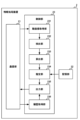
- FIG. 1 is a diagram illustrating a configuration of an information processing device.
- FIG. 13 is a diagram illustrating an example of the configuration of a correspondence table.
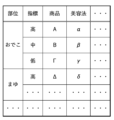
- FIG. 2 is a diagram illustrating an example of a configuration of a beauty management database.
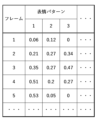
- 4A and 4B are diagrams illustrating the detection results obtained by a detection unit.
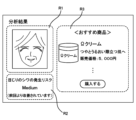
- FIG. 13 is a diagram illustrating a display screen on which beauty information is displayed.
- 10 is a flowchart showing a flow of processing in the information processing device.
- the information processing system S is a system used to provide an information processing service to a user.
- the information processing service is a service that provides beauty information to a user.
- the beauty information is information related to the beauty of a user's face, such as beauty-related products (e.g., cosmetics, beauty equipment, or food) or beauty methods.
- each user has a set pattern of facial expressions corresponding to each emotion, and when a user expresses a certain emotion on their face, they make a facial expression that corresponds to that emotion.
- lines wrinkles
- the wrinkles that appeared in accordance with that facial expression disappear.
- some of the wrinkles that appeared temporarily on the user's skin in accordance with the habit of the facial expression will remain even when the user returns to a neutral expression, and these remaining wrinkles may become permanent.
- FIG. 2(a) shows the user's normal facial expression (e.g., a straight face)
- FIG. 2(b) shows the user's facial expression when laughing.
- the user's face has no wrinkles in the normal facial expression shown in FIG. 2(a), but if the user repeats the facial expression shown in FIG. 2(b) every time he or she laughs, the wrinkles around the eyes and the nasolabial folds may not go away in the future and the wrinkles may become permanent.
- the degree of the facial expression shown in FIG. 2(b) becomes stronger, the wrinkles around the eyes and the nasolabial folds become deeper and the wrinkles become more likely to become permanent.
- the user may not only consciously make a certain facial expression as described above, but may also unconsciously make a certain facial expression, and unconsciously repeating a certain facial expression may also cause wrinkles to become permanent on the user's face. For this reason, it is desirable for the information processing service to provide the user with beauty information that takes into account future changes in the user's skin, such as wrinkles.
- the information processing system S therefore provides the user with beauty information that takes into account future changes in the skin of the user's face.
- the information processing system S shown in FIG. 1 includes a user terminal 1 and an information processing device 2.
- the user terminal 1 is a terminal used by a user, and is, for example, a smartphone, a tablet terminal, or a personal computer.
- the user terminal 1 has an operation unit such as a touch panel or a keyboard for accepting user operations, a display unit such as an LCD display for displaying information, an imaging unit such as a camera for capturing images, an audio output unit such as a speaker for outputting sound, and an audio input unit such as a microphone for collecting sound.
- the user terminal 1 is capable of communicating with the information processing device 2 via a network.
- the information processing device 2 is a device that manages information processing services, and is, for example, a server.
- the information processing device 2 is capable of communicating with the user terminal 1 via a network.
- a process executed by the information processing system S for providing information for maintaining or improving the beauty of a user's face will be described with reference to FIG.
- the user terminal 1 transmits the captured moving image to the information processing device 2 ((1) in FIG. 1).
- the information processing device 2 detects one or more facial expression patterns of the user and the facial expression intensity of each of the one or more facial expression patterns based on the moving image acquired from the user terminal 1 ((2) in FIG. 1).
- the facial expression patterns are, for example, patterns such as "raising the inner eyebrows” and “lifting the cheeks,” and various facial expression patterns are predefined.
- the facial expression patterns are, for example, action units (AU: Action Units) defined in the Facial Action Coding System (FACS).
- the facial expression intensity indicates the degree of strength of the facial expression, and is, for example, a numerical value indicating the degree of strength at which the user's face changes from a normal expression to an expression of a specified facial expression pattern.
- the information processing device 2 transmits the beauty information to the user terminal 1 based on the detection result ((3) in FIG. 1). After that, the user terminal 1 displays the beauty information on the display unit.
- the information processing system S can provide information that takes into account future changes in the user's skin due to the user's conscious or unconscious facial expressions.
- the user can delay the progression of changes in skin condition or extend the period for which the user's current skin condition is maintained based on the provided information.
- the information processing system S can inform the user of the user's facial expression habits as information that takes into account future changes in the user's skin, allowing the user to predict wrinkles that may occur in the future (wrinkles that may become permanent on the user's skin in the future).
- the configuration of the information processing device 2 will be described below.
- [Configuration of information processing device 2] 3 is a diagram showing a configuration of the information processing device 2.
- the information processing device 2 has a communication unit 21, a storage unit 22, and a control unit 23.
- the control unit 23 has a moving image acquisition unit 231, a detection unit 232, a calculation unit 233, an estimation unit 234, an output unit 235, and a history acquisition unit 236.
- the communication unit 21 is an interface for connecting to a network, and includes, for example, a communication controller.
- the memory unit 22 is a storage medium such as a ROM (Read Only Memory), a RAM (Random Access Memory), or a hard disk.
- the memory unit 22 stores programs executed by the control unit 23.
- the storage unit 22 stores a correspondence table in which facial expression patterns are associated with parts of the face.
- Figure 4 is a diagram showing an example of the configuration of the correspondence table.
- facial expression patterns are associated with whether or not each part of the face (forehead, eyebrows, eyes, nose, mouth, etc.) corresponds to the pattern.
- facial expression pattern "1" is associated with the "forehead” out of the multiple parts of the face.
- the storage unit 22 also stores a beauty management database that manages information related to beauty treatments recommended to the user.
- Figure 5 is a diagram showing an example of the configuration of the beauty management database.
- the beauty management database stores facial parts, indicators, products, and beauty treatments in association with each other.
- the index is a numerical value indicating the risk of wrinkles developing on or around a part of the user's face (hereinafter referred to as "wrinkle risk").
- the product is a product recommended to the user to reduce the risk of wrinkles developing on the face depending on the degree of risk of wrinkles developing on the face.
- the product is, for example, at least one of cosmetics, beauty equipment, and food.
- the beauty treatment is a method of performing massage, etc., recommended to the user to reduce the risk of wrinkles developing on the face depending on the degree of risk of wrinkles developing on the face.
- the beauty treatment is, for example, at least one of images or videos introducing a method of performing massage, etc., to be performed by the user himself, and information indicating a store such as an esthetic salon where massage, etc., is performed.
- control unit 23 is, for example, a CPU (Central Processing Unit).
- the control unit 23 executes the programs stored in the memory unit 22, thereby functioning as a moving image acquisition unit 231, a detection unit 232, a calculation unit 233, an estimation unit 234, an output unit 235, and a history acquisition unit 236.
- the video image acquisition unit 231 acquires a video image of the user's face from the user terminal 1.
- the video image acquisition unit 231 may further acquire identification information (ID: identifier) for identifying the user.
- the video acquisition unit 231 acquires, for example, video captured while the user is talking. Specifically, first, the output unit 235 outputs a question to the user before the video acquisition unit 231 acquires the video. Then, the video acquisition unit 231 acquires the video after the output unit 235 outputs the question to the user.
- the output unit 235 causes the display screen for the information processing service to be displayed on the user terminal 1.
- the display screen is provided with an image capture button for causing the imaging unit of the user terminal 1 to capture a moving image, and when the user presses the image capture button on the display screen displayed on the user terminal 1, the imaging unit of the user terminal 1 starts capturing a moving image.
- the output unit 235 causes the user terminal 1 to output a predetermined question to the user by voice.
- the imaging unit of the user terminal 1 captures images of the user's facial expressions when listening to the question and when answering the question during a predetermined period (e.g., several minutes) after the imaging button is pressed. Then, when the predetermined period has elapsed after the imaging button was pressed, the user terminal 1 transmits the captured video to the information processing device 2. In this way, the information processing device 2 can capture images of changes in the user's face.
- the display screen of the information processing service is a display screen that is displayed in response to accessing a website, but this is not limiting.
- the display screen of the information processing service may be a display screen that is displayed in response to the launch of a dedicated application program (hereinafter referred to as a "dedicated app") for providing the information processing service.
- a dedicated app is installed in the user terminal 1, and when a user performs an operation to launch the dedicated app on the user terminal 1, the user terminal 1 displays the display screen of the information processing service on the display unit.
- the detection unit 232 detects one or more facial expression patterns of the user and the facial expression intensity of each of the one or more facial expression patterns based on the video acquired by the video acquisition unit 231. Specifically, the detection unit 232 detects one or more facial expression patterns and the facial expression intensity of each of the one or more patterns at predetermined intervals in the video acquired by the video acquisition unit 231.
- FIG. 6 is a diagram showing a schematic representation of the detection results by the detection unit 232.
- a numerical value indicating the facial expression intensity of each of a plurality of facial expression patterns is shown for each frame of the video. For example, if a certain facial expression pattern is detected, the facial expression intensity is shown as a numerical value greater than 0, and if a certain facial expression pattern is not detected, the facial expression intensity is shown as 0. In this way, the detection unit 232 detects the facial expression intensity of each of a plurality of predetermined facial expression patterns for each frame of the video.
- the detection unit 232 may detect the user's facial expression pattern and the facial expression intensity of the facial expression pattern by using an external service.
- the external service is a service that analyzes the user's face shown in a video and provides a detection result that detects the facial expression intensity of each of a plurality of predetermined facial expression patterns at a specified interval (e.g., frame of the video).
- the detection unit 232 obtains the detection result output by the external service by sending the video to the external service.
- the output unit 235 outputs beauty information related to the beauty of the user's face based on the detection result by the detection unit 232. Specifically, the output unit 235 transmits the beauty information to the user terminal 1, thereby causing the beauty information to be displayed on the user terminal 1.
- the information processing device 2 may further include a display unit (not shown), and the output unit 235 may cause the beauty information to be displayed on the display unit.
- the output unit 235 outputs, as the beauty information, at least one of information indicating a product and information indicating a beauty method.
- the output unit 235 outputs, for example, beauty information corresponding to the risk of wrinkle development based on the detection result by the detection unit 232.
- the information processing device 2 outputs beauty information corresponding to the risk of wrinkle development by executing the following two steps.
- the estimation unit 234 estimates the risk of future changes in the user's skin based on the detection results detected by the detection unit 232. Specifically, the estimation unit 234 estimates the risk of wrinkle development based on the occurrence frequency of each of the one or more facial expression patterns detected by the detection unit 232 and the facial expression intensity of each of the one or more facial expression patterns detected by the detection unit 232.
- the estimation unit 234 estimates the risk of wrinkle development by classifying the risk of wrinkle development into an index based on the occurrence frequency of each of the one or more facial expression patterns detected by the detection unit 232 and the facial expression intensity of each of the one or more facial expression patterns detected by the detection unit 232.
- the indices indicating the risk of wrinkle development include "low” and "high.”
- the lower the occurrence frequency of a facial expression pattern or the lower the facial expression intensity of the facial expression pattern the smaller the numerical value indicating the facial expression intensity
- the higher the occurrence frequency of a facial expression pattern or the higher the facial expression intensity of the facial expression pattern the larger the numerical value indicating the facial expression intensity
- the estimation unit 234 may estimate the risk of wrinkle development using a predetermined threshold. Specifically, the calculation unit 233 first calculates the sum of the facial expression intensities detected by the detection unit 232 at a predetermined interval. The calculation unit 233 calculates, for example, the sum of the facial expression intensities of each facial expression pattern detected by the detection unit 232 for each frame of a moving image.
- the estimation unit 234 estimates the risk of wrinkle development based on the sum of the facial expression intensities calculated by the calculation unit 233 (hereinafter referred to as the "sum value”) and a threshold sum value, which is a predetermined threshold value. For example, if the sum value is less than the threshold sum value, the estimation unit 234 classifies the risk of wrinkle development as a "low” index, and if the sum value is equal to or greater than the threshold sum value, the estimation unit 234 classifies the risk of wrinkle development as a "high” index.
- the estimation unit 234 may estimate the risk of wrinkle development using multiple threshold sum values.
- the information processing device 2 is set with multiple threshold sum values (e.g., two threshold values, a first threshold sum value and a second threshold value greater than the first threshold sum value) for classifying the risk into one of "low,” “medium,” and "high” included in the index.
- the estimation unit 234 classifies the risk of wrinkles as a "low” index. If the sum value is equal to or greater than the first threshold sum value and less than the second threshold sum value, the estimation unit 234 classifies the risk of wrinkles as a "medium” index. If the sum value is equal to or greater than the second threshold sum value, the estimation unit 234 classifies the risk of wrinkles as a "high” index.
- output unit 235 outputs beauty information according to the wrinkle risk estimated by estimation unit 234. Specifically, output unit 235 outputs, as the beauty information according to the estimated wrinkle risk, at least one of information indicating products for addressing the risk of wrinkles occurring on the user's face and information indicating beauty methods for addressing the risk of wrinkles occurring on the user's face.
- the output unit 235 outputs information on at least one of the products and beauty methods associated with the "high" index in the beauty management database. In this way, the information processing device 2 can provide information for slowing the progression of wrinkles that may develop on the user's face in the future.
- the output unit 235 may output beauty information corresponding to at least one of a plurality of parts of the face. For example, in the information processing device 2, a threshold sum value is set for each part of the face.
- the calculation unit 233 first refers to the correspondence table stored in the storage unit 22, and calculates, for each part of the face, the sum of the facial expression intensities of one or more facial expression patterns that are detected by the detection unit 232 and are associated with the part.
- the calculation unit 233 calculates the sum of the facial expression intensities of the facial expression patterns "1" and “2" detected by the detection unit 232 at a predetermined interval, thereby calculating the sum of the facial expression intensities of the facial part "forehead”.
- the estimation unit 234 estimates the risk of wrinkles for each part of the face based on one or more threshold sum values corresponding to that part and the sum value corresponding to that part.
- the output unit 235 then outputs beauty information corresponding to at least one of the multiple parts of the face based on the wrinkle risk corresponding to each part.
- the output unit 235 outputs, for example, beauty information corresponding to each of a plurality of parts of the face.
- the output unit 235 may output beauty information corresponding to parts of the face that have a relatively high risk of wrinkles.
- the output unit 235 outputs, for example, beauty information corresponding to parts of the face that have an index equal to or greater than a threshold index (e.g., the index "medium") as parts that have a relatively high risk of wrinkles, among the indices corresponding to each of the plurality of parts of the face.
- a threshold index e.g., the index "medium”
- the output unit 235 may output beauty information corresponding to parts of the face that have the highest index for wrinkle development (e.g., the index "high") as parts that have a relatively high risk of wrinkles, among the indices corresponding to each of the plurality of parts of the face.
- the information processing device 2 can provide information for delaying the progression of wrinkles that may develop in parts that have a high risk of wrinkles in the future.
- the output unit 235 outputs either information indicating a product or information indicating a beauty regime as beauty information, but this is not limited to this.
- the output unit 235 may output the index classified by the estimation unit 234 as beauty information.
- the output unit 235 may output indicators for all parts of the face, or may output indicators for some parts of the face. In this way, the information processing device 2 can allow the user to recognize how high the risk of developing wrinkles on the user's face in the future.
- the output unit 235 may output, as the beauty information, at least one of a scene (frame) of the video when a facial expression pattern with a relatively high occurrence frequency is detected and a scene of the video when a relatively high facial expression intensity is detected in the facial expression pattern. Specifically, the output unit 235 outputs, as the beauty information, at least one of a scene of the video when a facial expression pattern with an occurrence frequency equal to or greater than a predetermined threshold frequency is detected among one or more facial expression patterns detected by the detection unit 232 and a scene of the video when a facial expression pattern with an occurrence frequency equal to or greater than a predetermined threshold intensity is detected among one or more facial expression patterns detected by the detection unit 232.
- the output unit 235 may output, as beauty information, at least one of a scene from the video when an expression pattern with a relatively high frequency of occurrence (e.g., the expression pattern with the highest frequency of occurrence) among one or more expression patterns detected by the detection unit 232 is detected, and a scene from the video when an expression pattern with a relatively high expression intensity (e.g., the expression pattern with the highest expression intensity) among one or more expression patterns detected by the detection unit 232 is detected.
- the information processing device 2 can allow the user to recognize the user's facial expression habits. This allows the user to recognize what facial expressions are causing an increased risk of developing wrinkles. In addition, the user can predict wrinkles that may develop in the future based on his or her own facial expression habits.
- the output unit 235 may output, as the beauty information, the result of comparing the currently estimated wrinkle risk with the previously estimated wrinkle risk. Specifically, the output unit 235 outputs, as the beauty information, the result of comparing the wrinkle risk estimated based on the first moving image (hereinafter referred to as the "first wrinkle risk") with the wrinkle risk estimated based on the second moving image (hereinafter referred to as the "second wrinkle risk").
- the first moving image is the currently captured moving image.
- the second moving image is the previously captured moving image, specifically, the moving image captured before the first moving image was captured.
- the memory unit 22 stores a user's ID and information indicating the second wrinkle risk estimated by the estimation unit 234 in the past based on the second moving image of the user in association with each other.
- the output unit 235 outputs a comparison result obtained by comparing the first wrinkle risk estimated based on the first moving image of the user acquired by the moving image acquisition unit 231 with the second wrinkle risk stored in the memory unit 22 in association with the user's ID. For example, if the index of the first wrinkle risk is "medium" and the index of the second wrinkle risk is "high”, the output unit 235 outputs a message indicating that the wrinkle risk is decreasing as the comparison result.
- the information processing device 2 can allow a user who repeatedly uses the information processing service to recognize whether or not the wrinkle risk is improving.
- FIG. 7 is a schematic diagram of a display screen on which beauty information is displayed.
- beauty information is displayed in each of a plurality of display areas (R1, R2, R3).
- Display area R1 displays a predetermined scene from a video (a scene from a video when a facial expression pattern with a relatively high occurrence frequency is detected, or a scene from a video when a facial expression pattern with a relatively high facial expression intensity is detected).
- Display area R2 displays an index indicating the risk of wrinkles around the "eyes" part of the face, and a message indicating the result of comparing the first wrinkle risk with the second wrinkle risk.
- Display area R3 displays information indicating cosmetics for addressing the risk of wrinkles around the "eyes" part of the face. For example, a user can purchase cosmetics displayed in display area R3 by pressing a "Purchase" button on the beauty information display screen displayed on user terminal 1.
- the information processing device 2 may prompt the user to use the information processing service again when a certain period of time has passed after the user has purchased a product indicated by beauty information provided in response to using the information processing service.
- the history acquisition unit 236 acquires the user's product purchase history.
- the purchase history is, for example, a history of products purchased by the user via the information processing service, and the purchased products are associated with the dates on which the products were purchased.
- the purchase history may be stored in the memory unit 22, or may be managed by an external server.
- the output unit 235 refers to the purchase history, and outputs information for requesting the transmission of a video image after a predetermined period of time (e.g., one month) has elapsed since the user purchased the product. In this way, the information processing device 2 can diagnose whether the risk of wrinkle development has improved.
- a predetermined period of time e.g., one month
- the information processing device 2 may prompt the user to use the information processing service again when a certain period of time has passed after the user has performed a beauty treatment indicated by the beauty information provided in response to the user's use of the information processing service.
- the history acquisition unit 236 acquires the user's history of performing the beauty treatment.
- the history of performing the beauty treatment is, for example, a browsing history of images introducing a method of performing massage, etc., a viewing history of videos introducing a method of performing massage, etc., or a usage history of a store such as an esthetic salon that performs massage, etc., and the beauty treatment performed is associated with the date on which the beauty treatment was performed.
- the output unit 235 refers to the implementation history, and outputs information for requesting the transmission of a video image after a predetermined period of time has passed since the user implemented the beauty treatment. In this way, the information processing device 2 can diagnose whether the risk of wrinkle development has improved.
- FIG. 8 is a flowchart showing the flow of processing in the information processing device 2. This flowchart starts when the video acquisition unit 231 acquires a video from the user terminal 1 (S1).
- the detection unit 232 detects one or more facial expression patterns and the facial expression intensities of each of the one or more patterns at predetermined intervals in the video acquired by the video acquisition unit 231 (S2).
- the calculation unit 233 calculates the sum of the facial expression intensities detected by the detection unit 232 at predetermined intervals (S3).
- the estimation unit 234 estimates the risk of wrinkle development based on the sum value (the sum of the facial expression intensities calculated by the calculation unit 233) and the threshold sum value (S4). Then, the output unit 235 outputs beauty information according to the risk of wrinkle development estimated by the estimation unit 234 (S5).
- the information processing device 2 detects one or more facial expression patterns of the user and the facial expression intensities of each of the one or more facial expression patterns based on a moving image of the user, and outputs beauty information based on the detection results. In this way, the information processing device 2 can provide information that takes into account changes in the user's skin, such as wrinkles, that may occur in the future due to the user's conscious or unconscious facial expressions.
- Reference Signs List 1 User terminal 2 Information processing device 21 Communication unit 22 Storage unit 23 Control unit 231 Video image acquisition unit 232 Detection unit 233 Calculation unit 234 Estimation unit 235 Output unit 236 History acquisition unit S Information processing system
Landscapes
- Engineering & Computer Science (AREA)
- Theoretical Computer Science (AREA)
- Physics & Mathematics (AREA)
- General Physics & Mathematics (AREA)
- Multimedia (AREA)
- Health & Medical Sciences (AREA)
- General Health & Medical Sciences (AREA)
- Computer Vision & Pattern Recognition (AREA)
- Software Systems (AREA)
- Medical Informatics (AREA)
- Evolutionary Computation (AREA)
- Databases & Information Systems (AREA)
- Computing Systems (AREA)
- Artificial Intelligence (AREA)
- Oral & Maxillofacial Surgery (AREA)
- Human Computer Interaction (AREA)
- Business, Economics & Management (AREA)
- Tourism & Hospitality (AREA)
- General Business, Economics & Management (AREA)
- Strategic Management (AREA)
- Primary Health Care (AREA)
- Marketing (AREA)
- Human Resources & Organizations (AREA)
- Economics (AREA)
- Image Processing (AREA)
- Image Analysis (AREA)
- Management, Administration, Business Operations System, And Electronic Commerce (AREA)
Abstract
Description
前記出力部は、前記美容情報として、前記ユーザの顔にシワが発生する発生リスクに対応するための商品を示す情報を出力してもよい。
前記商品は、化粧品、美容機器、食品のうちの少なくともいずれか一つであってもよい。
前記出力部は、前記美容情報として、前記ユーザの顔にシワが発生する発生リスクに対応するための美容法を示す情報を出力してもよい。
図1及び図2は、情報処理システムSの概要を説明するための図である。情報処理システムSは、ユーザに情報処理サービスを提供するために用いられるシステムである。情報処理サービスは、ユーザに美容情報を提供するサービスである。美容情報は、ユーザの顔の美容に関する情報であり、例えば、美容に関する商品(例えば、化粧品、美容機器又は食品等)又は美容法等である。
以下において、情報処理システムSがユーザの顔の美容を維持又は改善するための情報を提供するために実行する処理について、図1を用いて説明する。
以下、情報処理装置2の構成について説明する。
図3は、情報処理装置2の構成を示す図である。情報処理装置2は、通信部21と、記憶部22と、制御部23とを有する。制御部23は、動画像取得部231と、検出部232と、算出部233と、推定部234と、出力部235と、履歴取得部236とを有する。
続いて、情報処理装置2の処理の流れについて説明する。図8は、情報処理装置2の処理の流れを示すフローチャートである。本フローチャートは、動画像取得部231がユーザ端末1から動画像を取得したことを契機として開始する(S1)。
以上説明したとおり、情報処理装置2は、ユーザの動画像に基づいてユーザの一以上の表情パターンと一以上の表情パターンそれぞれの表情強度とを検出し、検出した検出結果に基づいて美容情報を出力する。このようにすることで、情報処理装置2は、将来においてユーザの意識的または無意識的な表情からユーザに発生し得るシワ等の肌の変化を考慮した情報を提供することができる。
2 情報処理装置
21 通信部
22 記憶部
23 制御部
231 動画像取得部
232 検出部
233 算出部
234 推定部
235 出力部
236 履歴取得部
S 情報処理システム
Claims (15)
- ユーザの顔が撮像された動画像を取得する動画像取得部と、
前記動画像取得部が取得した前記動画像に基づいて、前記ユーザの一以上の表情パターンと、前記一以上の表情パターンそれぞれにおける表情の強さの度合いを示す表情強度とを検出する検出部と、
前記検出部による検出結果に基づいて、前記ユーザの顔の美容に関する美容情報を出力する出力部と、
を有する情報処理装置。 - 前記検出部により検出された一以上の表情パターンそれぞれの発生頻度と、前記表情強度とに基づいて、前記ユーザの顔にシワが発生する発生リスクを推定する推定部をさらに有し、
前記出力部は、前記推定部により推定された前記発生リスクに応じた前記美容情報を出力する、
請求項1に記載の情報処理装置。 - 前記検出部は、所定の間隔ごとに、前記表情パターンと前記表情強度とを検出し、
前記所定の間隔ごとに検出された前記表情強度の総和を算出する算出部と、
予め定められた閾値と前記総和とに基づいて、前記ユーザの顔にシワが発生する発生リスクを推定する推定部と、
をさらに有する、
請求項1に記載の情報処理装置。 - 顔の部位ごとに、一以上の表情パターンを対応付けて記憶する記憶部をさらに有し、
前記算出部は、前記部位ごとに、前記検出部が検出した前記表情パターンであって、当該部位に対応付けられている前記一以上の表情パターンそれぞれの前記表情強度の総和を算出し、
前記推定部は、前記部位ごとに、当該部位に対応する前記閾値と当該部位に対応する前記総和とに基づいて、前記発生リスクを推定する、
請求項3に記載の情報処理装置。 - 前記出力部は、前記美容情報として、前記ユーザの顔にシワが発生する発生リスクを示す指標を出力する、
請求項1に記載の情報処理装置。 - 前記出力部は、前記美容情報として、前記ユーザの顔にシワが発生する発生リスクに対応するための商品を示す情報を出力する、
請求項1に記載の情報処理装置。 - 前記商品は、化粧品、美容機器、食品のうちの少なくともいずれか一つである、
請求項6に記載の情報処理装置。 - 前記ユーザによる前記商品の購入履歴を取得する履歴取得部をさらに有し、
前記出力部は、前記購入履歴を参照し、前記ユーザが前記商品を購入した日から所定の期間が経過した後に、前記動画像の送信を要求するための情報を出力する、
請求項6又は7に記載の情報処理装置。 - 前記出力部は、前記美容情報として、前記ユーザの顔にシワが発生する発生リスクに対応するための美容法を示す情報を出力する、
請求項1に記載の情報処理装置。 - 前記ユーザによる前記美容法の実施履歴を取得する履歴取得部をさらに有し、
前記出力部は、前記実施履歴を参照し、前記ユーザが前記美容法を実施した日から所定の期間が経過した後に、前記動画像の送信を要求するための情報を出力する、
請求項9に記載の情報処理装置。 - 前記出力部は、前記検出部が検出した一以上の表情パターンのうちの発生頻度が所定の閾値以上である表情パターンが検出されたときの前記動画像のシーンと、前記検出部が検出した一以上の表情パターンのうちの前記表情強度が所定の閾値以上である表情パターンが検出されたときの前記動画像のシーンのうちの少なくともいずれかを、前記美容情報として出力する、
請求項1に記載の情報処理装置。 - 前記出力部は、前記動画像である第1動画像に基づいて推定された前記ユーザの顔にシワが発生する発生リスクと、前記第1動画像が撮像される前に撮像された第2動画像に基づいて推定された前記発生リスクとを比較した結果を前記美容情報として出力する、
請求項1に記載の情報処理装置。 - 前記出力部は、前記動画像取得部が前記動画像を取得する前に、前記ユーザへの質問を出力し、
前記動画像取得部は、前記出力部が前記ユーザへの質問を出力した後における前記動画像を取得する、
請求項1に記載の情報処理装置。 - コンピュータが実行する、
ユーザの顔が撮像された動画像を取得するステップと、
取得した前記動画像に基づいて、前記ユーザの一以上の表情パターンと、前記一以上の表情パターンそれぞれにおける表情の強さの度合いを示す表情強度とを検出するステップと、
検出結果に基づいて、前記ユーザの顔の美容に関する美容情報を出力するステップと、
を有する情報処理方法。 - コンピュータを、
ユーザの顔が撮像された動画像を取得する動画像取得部、
前記動画像取得部が取得した前記動画像に基づいて、前記ユーザの一以上の表情パターンと、前記一以上の表情パターンそれぞれにおける表情の強さの度合いを示す表情強度とを検出する検出部、及び
前記検出部による検出結果に基づいて、前記ユーザの顔の美容に関する美容情報を出力する出力部、
として機能させるためのプログラム。
Priority Applications (2)
| Application Number | Priority Date | Filing Date | Title |
|---|---|---|---|
| CN202380069282.8A CN120153389A (zh) | 2022-10-27 | 2023-10-13 | 信息处理装置、信息处理方法以及程序 |
| US19/115,952 US20260105778A1 (en) | 2022-10-27 | 2023-10-13 | Information processing device, information processing method, and recording medium storing program |
Applications Claiming Priority (2)
| Application Number | Priority Date | Filing Date | Title |
|---|---|---|---|
| JP2022-172617 | 2022-10-27 | ||
| JP2022172617A JP7905847B2 (ja) | 2022-10-27 | 情報処理装置、情報処理方法及びプログラム |
Publications (1)
| Publication Number | Publication Date |
|---|---|
| WO2024090230A1 true WO2024090230A1 (ja) | 2024-05-02 |
Family
ID=90830744
Family Applications (1)
| Application Number | Title | Priority Date | Filing Date |
|---|---|---|---|
| PCT/JP2023/037124 Ceased WO2024090230A1 (ja) | 2022-10-27 | 2023-10-13 | 情報処理装置、情報処理方法及びプログラム |
Country Status (3)
| Country | Link |
|---|---|
| US (1) | US20260105778A1 (ja) |
| CN (1) | CN120153389A (ja) |
| WO (1) | WO2024090230A1 (ja) |
Citations (4)
| Publication number | Priority date | Publication date | Assignee | Title |
|---|---|---|---|---|
| JP2005148797A (ja) * | 2003-11-11 | 2005-06-09 | Sharp Corp | 調合化粧品のアドバイス提供装置、調合化粧品のアドバイス提供方法、調合化粧品のアドバイス提供システム、化粧品サンプル提供管理装置、化粧品サンプル提供管理方法、化粧品サンプル提供管理システム、調合化粧品のアドバイス提供プログラム及び記録媒体、化粧品サンプル提供管理プログラム及び記録媒体 |
| JP2022032546A (ja) * | 2020-08-12 | 2022-02-25 | ポーラ化成工業株式会社 | 出力方法、出力システム及び出力プログラム |
| JP2022045280A (ja) * | 2020-09-08 | 2022-03-18 | 花王株式会社 | シワの評価方法 |
| US20220230471A1 (en) * | 2021-01-15 | 2022-07-21 | Chih-Wei Li | Artificial Intelligence-Assisted Evaluation Method for Aesthetic Medicine and Evaluation System Using Same |
-
2023
- 2023-10-13 US US19/115,952 patent/US20260105778A1/en active Pending
- 2023-10-13 WO PCT/JP2023/037124 patent/WO2024090230A1/ja not_active Ceased
- 2023-10-13 CN CN202380069282.8A patent/CN120153389A/zh active Pending
Patent Citations (4)
| Publication number | Priority date | Publication date | Assignee | Title |
|---|---|---|---|---|
| JP2005148797A (ja) * | 2003-11-11 | 2005-06-09 | Sharp Corp | 調合化粧品のアドバイス提供装置、調合化粧品のアドバイス提供方法、調合化粧品のアドバイス提供システム、化粧品サンプル提供管理装置、化粧品サンプル提供管理方法、化粧品サンプル提供管理システム、調合化粧品のアドバイス提供プログラム及び記録媒体、化粧品サンプル提供管理プログラム及び記録媒体 |
| JP2022032546A (ja) * | 2020-08-12 | 2022-02-25 | ポーラ化成工業株式会社 | 出力方法、出力システム及び出力プログラム |
| JP2022045280A (ja) * | 2020-09-08 | 2022-03-18 | 花王株式会社 | シワの評価方法 |
| US20220230471A1 (en) * | 2021-01-15 | 2022-07-21 | Chih-Wei Li | Artificial Intelligence-Assisted Evaluation Method for Aesthetic Medicine and Evaluation System Using Same |
Also Published As
| Publication number | Publication date |
|---|---|
| US20260105778A1 (en) | 2026-04-16 |
| JP2024064203A (ja) | 2024-05-14 |
| CN120153389A (zh) | 2025-06-13 |
Similar Documents
| Publication | Publication Date | Title |
|---|---|---|
| JP6914377B2 (ja) | 音声対話方法、装置、スマートロボット及びコンピュータ可読記憶媒体 | |
| US11636859B2 (en) | Transcription summary presentation | |
| JP7036046B2 (ja) | 情報処理装置、情報処理方法、及び情報処理プログラム | |
| JP7701368B2 (ja) | 感情判定装置、感情判定方法及び感情判定プログラム | |
| Biancardi et al. | Analyzing first impressions of warmth and competence from observable nonverbal cues in expert-novice interactions | |
| CN113868472A (zh) | 数字人视频的生成方法以及相关设备 | |
| EP3799407B1 (en) | Initiating communication between first and second users | |
| JP2024064203A (ja) | 情報処理装置、情報処理方法及びプログラム | |
| CN107770476B (zh) | 一种自动缩小视频窗口的方法、移动终端以及存储装置 | |
| JP2023059238A (ja) | ビデオミーティング評価端末 | |
| JP6583754B2 (ja) | 情報処理装置、ミラーデバイス、プログラム | |
| WO2021161387A1 (ja) | 処理装置、処理方法及び記憶媒体 | |
| WO2022201383A1 (ja) | 動画像分析プログラム | |
| JP7388768B2 (ja) | 動画像分析プログラム | |
| JP7121436B1 (ja) | 動画像分析プログラム | |
| JP7471683B2 (ja) | 反応通知システム | |
| JP7465013B2 (ja) | ビデオミーティング評価端末、ビデオミーティング評価システム及びビデオミーティング評価プログラム | |
| Mustafa et al. | The Human in the Loop: EEG-driven Photo Optimization | |
| WO2022230069A1 (ja) | 動画像分析システム | |
| JP2026070103A (ja) | システム | |
| JP2026070254A (ja) | システム | |
| CN115272922A (zh) | 远程会议的参会人关注度检测方法、装置及存储介质 | |
| JP2023036034A (ja) | ビデオセッション評価端末、ビデオセッション評価システム及びビデオセッション評価プログラム | |
| WO2024257161A1 (ja) | 制御システム、制御方法、および記録媒体 | |
| JP2026017790A (ja) | 表示装置、表示方法およびプログラム |
Legal Events
| Date | Code | Title | Description |
|---|---|---|---|
| 121 | Ep: the epo has been informed by wipo that ep was designated in this application |
Ref document number: 23882438 Country of ref document: EP Kind code of ref document: A1 |
|
| WWE | Wipo information: entry into national phase |
Ref document number: 202380069282.8 Country of ref document: CN |
|
| NENP | Non-entry into the national phase |
Ref country code: DE |
|
| WWP | Wipo information: published in national office |
Ref document number: 202380069282.8 Country of ref document: CN |
|
| 122 | Ep: pct application non-entry in european phase |
Ref document number: 23882438 Country of ref document: EP Kind code of ref document: A1 |