WO2024070774A1 - アクセス制御装置、アクセス制御方法 - Google Patents
アクセス制御装置、アクセス制御方法 Download PDFInfo
- Publication number
- WO2024070774A1 WO2024070774A1 PCT/JP2023/033750 JP2023033750W WO2024070774A1 WO 2024070774 A1 WO2024070774 A1 WO 2024070774A1 JP 2023033750 W JP2023033750 W JP 2023033750W WO 2024070774 A1 WO2024070774 A1 WO 2024070774A1
- Authority
- WO
- WIPO (PCT)
- Prior art keywords
- vehicle
- api
- access control
- access
- service
- Prior art date
- Legal status (The legal status is an assumption and is not a legal conclusion. Google has not performed a legal analysis and makes no representation as to the accuracy of the status listed.)
- Ceased
Links
Images





Classifications
-
- H—ELECTRICITY
- H04—ELECTRIC COMMUNICATION TECHNIQUE
- H04W—WIRELESS COMMUNICATION NETWORKS
- H04W12/00—Security arrangements; Authentication; Protecting privacy or anonymity
- H04W12/08—Access security
-
- B—PERFORMING OPERATIONS; TRANSPORTING
- B60—VEHICLES IN GENERAL
- B60W—CONJOINT CONTROL OF VEHICLE SUB-UNITS OF DIFFERENT TYPE OR DIFFERENT FUNCTION; CONTROL SYSTEMS SPECIALLY ADAPTED FOR HYBRID VEHICLES; ROAD VEHICLE DRIVE CONTROL SYSTEMS FOR PURPOSES NOT RELATED TO THE CONTROL OF A PARTICULAR SUB-UNIT
- B60W30/00—Purposes of road vehicle drive control systems not related to the control of a particular sub-unit, e.g. of systems using conjoint control of vehicle sub-units
- B60W30/14—Adaptive cruise control
- B60W30/16—Control of distance between vehicles, e.g. keeping a distance to preceding vehicle
- B60W30/165—Automatically following the path of a preceding lead vehicle, e.g. "electronic tow-bar"
-
- G—PHYSICS
- G06—COMPUTING OR CALCULATING; COUNTING
- G06F—ELECTRIC DIGITAL DATA PROCESSING
- G06F21/00—Security arrangements for protecting computers, components thereof, programs or data against unauthorised activity
- G06F21/60—Protecting data
- G06F21/62—Protecting access to data via a platform, e.g. using keys or access control rules
-
- G—PHYSICS
- G06—COMPUTING OR CALCULATING; COUNTING
- G06F—ELECTRIC DIGITAL DATA PROCESSING
- G06F9/00—Arrangements for program control, e.g. control units
- G06F9/06—Arrangements for program control, e.g. control units using stored programs, i.e. using an internal store of processing equipment to receive or retain programs
- G06F9/46—Multiprogramming arrangements
- G06F9/468—Specific access rights for resources, e.g. using capability register
-
- G—PHYSICS
- G06—COMPUTING OR CALCULATING; COUNTING
- G06F—ELECTRIC DIGITAL DATA PROCESSING
- G06F9/00—Arrangements for program control, e.g. control units
- G06F9/06—Arrangements for program control, e.g. control units using stored programs, i.e. using an internal store of processing equipment to receive or retain programs
- G06F9/46—Multiprogramming arrangements
- G06F9/54—Interprogram communication
- G06F9/547—Remote procedure calls [RPC]; Web services
-
- G—PHYSICS
- G08—SIGNALLING
- G08G—TRAFFIC CONTROL SYSTEMS
- G08G1/00—Traffic control systems for road vehicles
-
- G—PHYSICS
- G08—SIGNALLING
- G08G—TRAFFIC CONTROL SYSTEMS
- G08G1/00—Traffic control systems for road vehicles
- G08G1/22—Platooning, i.e. convoy of communicating vehicles
-
- H—ELECTRICITY
- H04—ELECTRIC COMMUNICATION TECHNIQUE
- H04W—WIRELESS COMMUNICATION NETWORKS
- H04W12/00—Security arrangements; Authentication; Protecting privacy or anonymity
- H04W12/60—Context-dependent security
- H04W12/63—Location-dependent; Proximity-dependent
-
- B—PERFORMING OPERATIONS; TRANSPORTING
- B60—VEHICLES IN GENERAL
- B60W—CONJOINT CONTROL OF VEHICLE SUB-UNITS OF DIFFERENT TYPE OR DIFFERENT FUNCTION; CONTROL SYSTEMS SPECIALLY ADAPTED FOR HYBRID VEHICLES; ROAD VEHICLE DRIVE CONTROL SYSTEMS FOR PURPOSES NOT RELATED TO THE CONTROL OF A PARTICULAR SUB-UNIT
- B60W2554/00—Input parameters relating to objects
- B60W2554/80—Spatial relation or speed relative to objects
- B60W2554/804—Relative longitudinal speed
Definitions
- This disclosure relates to technology for providing services that utilize vehicle functions.
- Patent Document 1 describes a system that includes a driving assistance device and an in-vehicle terminal, and in which multiple vehicles travel in a platoon according to a plan generated by the driving assistance device.
- the in-vehicle device repeatedly transmits vehicle position information, planned route information, and other information to the center device.
- the center device generates information for platooning based on information collected from multiple vehicles, and transmits this information to each vehicle in the platoon.
- vehicle API When considering platooning of vehicles configured to provide their own information and functions via an API (hereinafter, vehicle API), it is necessary to allow access to the vehicle API from external devices (e.g., a center device or other vehicles). However, it is necessary to prevent such access to the vehicle API from external devices from leading to the leakage of personal information unrelated to the provision of services or unauthorized vehicle control unintended by the user.
- external devices e.g., a center device or other vehicles.
- One aspect of the present disclosure provides a technique for appropriately restricting access to a vehicle API from outside the vehicle.
- the access restriction unit is configured to receive an access request from an API-using app provided outside the vehicle and control access to the vehicle API.
- the vehicle API is an interface for providing vehicle functions possessed by the vehicle.
- the API-using app is an application that realizes a service using the vehicle API.
- the acceptance determination unit is configured to provide, via the vehicle API, a function for determining whether or not the vehicle can accept a target service, which is a service provided by the API-using app.
- the start confirmation unit is configured to provide, via the vehicle API, a function for confirming with a user of the vehicle whether or not to start providing the target service.
- the access control unit includes a first granting unit and a second granting unit.
- the first granting unit is configured to grant the API-using app access rights to the vehicle API that provides the function of the start confirmation unit when the acceptance determination unit determines that the service is acceptable.
- the second granting unit is configured to grant the API-using app access rights to the vehicle API necessary for providing the target service when the start confirmation unit confirms the user's intention to start the service.
- This configuration makes it possible to appropriately restrict access to the vehicle API from outside the vehicle.
- One aspect of the present disclosure is an access control method that receives an access request from a service provider that provides an API-using service located outside the vehicle and controls access to a vehicle API.
- the vehicle API is an interface for providing vehicle functions that the vehicle possesses.
- the API-using app is an application that realizes a service that uses the vehicle API.
- the acceptance determination unit is configured to provide, via the vehicle API, a function for determining whether or not the vehicle can accept a target service, which is a service provided by an API-using app. If the acceptance determination unit determines that the vehicle can accept, it grants the service provider access rights to the vehicle API that provides the function of the start confirmation unit.
- the start confirmation unit is configured to provide, via the vehicle API, a function for confirming to the user of the vehicle whether or not to start providing the target service. If the start confirmation unit confirms the user's intention to start, it grants the API-using app access rights to the vehicle API necessary for providing the target service.
- This method makes it possible to appropriately restrict access to the vehicle API from outside the vehicle.
- FIG. 1 is a block diagram showing a configuration of a mobility service providing system 1.
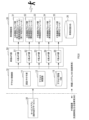
- FIG. FIG. 2 is a block diagram showing a functional configuration of the in-vehicle system.
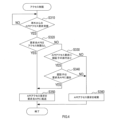
- 13 is a flowchart showing the processing contents in an authenticator providing unit; 13 is a flowchart showing the processing contents in an access restriction unit.
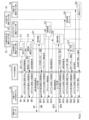
- FIG. 2 is a sequence diagram showing a typical operation example of the in-vehicle system.
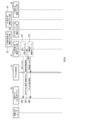
- FIG. 2 is a sequence diagram showing a typical operation example of the in-vehicle system.
- FIG. 2 is a sequence diagram showing a typical operation example of the in-vehicle system.
- FIG. 11 is a block diagram showing a functional configuration when the API-utilizing service is a platooning service.
- 11 is a block diagram showing a functional configuration when the API-using service is an AVP service.
- FIG. 11 is a sequence diagram showing an example of the operation of an AVP service.
- the mobility service providing system 1 of this embodiment includes an in-vehicle system 100 mounted in a vehicle, an automated valet parking (hereinafter, AVP) infrastructure 200, another vehicle 300, and a user terminal 400.
- AVP automated valet parking
- a vehicle equipped with the in-vehicle system 100 may have an automatic driving function in addition to a manual driving function.
- the vehicle may be a hybrid vehicle having an engine and an electric motor as a driving source.
- the vehicle is not limited to a vehicle having an automatic driving function or a hybrid vehicle, but may be a vehicle equipped with only a manual driving function, or a vehicle having only an engine or only an electric motor as a driving source.
- a vehicle equipped with the in-vehicle system 100 will simply be referred to as a vehicle.
- the in-vehicle system 100 includes one ECU 2, multiple ECUs 3, multiple ECUs 4, an external communication device 5, and an in-vehicle communication network 6.
- ECU stands for Electronic Control Unit.
- the ECU 2 manages multiple ECUs 3 to achieve coordinated control of the entire vehicle.
- the ECU 2 is connected to an in-vehicle communication network 6 to which multiple ECUs 3 are connected, and relays data frames communicated from each ECU 3 and an external communication device 5.
- ECUs 3 are provided for each domain divided according to the vehicle's functions, and mainly control the multiple ECUs 4 present within that domain.
- Each ECU 3 is connected to its subordinate ECUs 4 via a lower-level network (e.g., CAN) that is provided individually for each ECU 3.
- CAN is an abbreviation for Controller Area Network and is a registered trademark.
- ECUs 3 have the function of centrally managing access rights to the subordinate ECUs 4 and authenticating users, etc. Domains include, for example, the powertrain, body, chassis, and cockpit.
- the ECUs 4 connected to the ECUs 3 belonging to the powertrain domain include, for example, an ECU 4 that controls the engine, an ECU 4 that controls the motor, and an ECU 4 that controls the battery.
- the ECUs 4 connected to the ECUs 3 belonging to the body domain include, for example, an ECU 4 that controls the air conditioner and an ECU 4 that controls the doors.
- the ECU 4 connected to the ECU 3 belonging to the chassis domain includes, for example, an ECU that controls the brakes and an ECU that controls the steering.
- the ECUs 4 connected to the ECUs 3 belonging to the cockpit domain include, for example, ECUs 4 that control the display of meters and navigation systems, and ECUs 4 that control the in-vehicle HMI operated by the vehicle user (hereinafter, "user").
- HMI is an abbreviation for Human Machine Interface.
- the external vehicle communication device 5 performs peer-to-peer data communication within a small range (e.g., within a few tens of meters) with external devices that provide API-based services (i.e., AVP infrastructure 200 and other vehicles 300). The API-based services will be described later.
- the external vehicle communication device 5 also performs data communication with a user terminal 400 carried by the user via a wide-area wireless communication network.
- the in-vehicle communication network 6 includes, for example, CAN FD and Ethernet.
- Ethernet is a registered trademark.
- CAN FD is an abbreviation for CAN with Flexible Data Rate.
- the CAN FD connects the ECU 2 to each ECU 3 and the external-vehicle communication device 5 via a bus.
- the Ethernet individually connects the ECU 2 to each ECU 3 and the external-vehicle communication device 5.
- ECU2 is an electronic control device that is mainly composed of a microcomputer equipped with a CPU2a, a ROM2b, and a RAM2c.
- the various functions of the microcomputer are realized by CPU2a executing a program stored in a non-transient physical recording medium.
- ROM2b corresponds to the non-transient physical recording medium that stores the program.
- a method corresponding to the program is executed. Note that some or all of the functions executed by CPU2a may be configured in hardware using one or more ICs, etc. Also, the number of microcomputers that make up ECU2 may be one or more.
- ECU3, ECU4, and external vehicle communication device 5 are electronic control devices that are configured around a microcomputer equipped with a CPU, ROM, RAM, etc., just like ECU2. Furthermore, the number of microcomputers that make up ECU3, ECU4, and external vehicle communication device 5 may be one or more.
- ECU2, ECU3, ECU4, and external vehicle communication device 5 will be referred to as in-vehicle devices 2 to 5 unless otherwise specified.
- AVP infrastructure 200 is infrastructure installed in parking lots that provide the AVP service.
- the AVP service is a service in which vehicles automatically drive in large unmanned parking lots and automatically park in vacant parking spaces.
- the AVP infrastructure 200 includes a communication unit 201, an HMI unit 202, and a control unit 203.
- the communication unit 201 performs peer-to-peer data communication with the in-vehicle system 100 within a small range.
- the HMI unit 202 is used to input information and commands necessary for providing the AVP service.
- the HMI unit 202 may be configured to input information and commands via the user terminal 400.
- the control unit 203 is mainly composed of a microcomputer equipped with a CPU, ROM, RAM, etc.
- a service application (hereinafter, service app) that realizes the AVP service is implemented in the control unit 203.
- the service app that realizes the AVP service accesses the vehicle API of the in-vehicle system 100 via the communication unit 201, and performs vehicle control such as sending and receiving information necessary to start the AVP service and steering and accelerating and decelerating the vehicle equipped with the in-vehicle system 100. This vehicle control realizes the entry and exit of the vehicle by autonomous driving.
- API is an abbreviation for Application Programming Interface.
- the vehicle API is a standardized interface used to access functions provided by a vehicle, and is not dependent on a specific vehicle model or grade.
- the vehicle API is configured so that even engineers who are not familiar with the characteristics and constraints of the vehicle can easily develop service apps that use the vehicle API.
- the other vehicle 300 is equipped with an in-vehicle system similar to the in-vehicle system 100 described above.
- a service app that realizes the platooning service is implemented in the in-vehicle system of the other vehicle 300.
- the service app implemented in the vehicle that will be the lead vehicle in the platoon accesses the vehicle API of the in-vehicle system 100 of the vehicle that will be the following vehicle in the platoon.
- the service app of the leading vehicle exchanges information necessary to start the platooning service, and performs vehicle control such as steering and acceleration/deceleration of the following vehicle so as to maintain the platoon.
- This vehicle control realizes platooning by autonomous driving.
- the user terminal 400 is, for example, a mobile terminal such as a smartphone or tablet.
- the in-vehicle system 100 includes an access control unit 10, a vehicle function unit 20, and a vehicle API unit 50.
- the access control unit 10 and the vehicle function unit 20 may be disposed in any of the in-vehicle devices 2 to 5.
- the access control unit 10, the vehicle function unit 20, and the vehicle API unit 50 are disposed in the ECU 2.
- the vehicle function unit 20 is a set of modules that subdivide the functions of the vehicle. Each module belonging to the vehicle function unit 20 is mounted in one of the in-vehicle devices 2 to 5.
- the modules belonging to the vehicle function unit 20 have multiple categories, and different access restrictions are set for each category.
- a vehicle API for which access restrictions have been set will only accept and process an API access request if an authenticator corresponding to the category to which it belongs is attached to the API access request.
- the vehicle function unit 20 has four categories corresponding to four attributes F, S, O, and P defined as security-protected assets, and one category with no access restrictions.
- F stands for Financial
- S stands for Safety
- O stands for Operational
- P stands for Privacy.
- the vehicle function unit 20 includes an N-system function block group 21, an O-system function block group 22, a P-system function block group 23, an S-system function block group 24, and an F-system function block group 25, corresponding to each division. Furthermore, the vehicle function unit 20 includes a vehicle state database (hereinafter, vehicle state DB) 26.
- vehicle state DB vehicle state database
- the N-system functional block group 21 is a collection of modules that provide functions that do not require access to vehicle functions or vehicle information.
- the O-system functional block group 22 is a collection of modules that provide functions related to the vehicle's operating performance.
- the P-system functional block group 23 is a collection of modules that provide functions related to the user's privacy information stored in the vehicle.
- the S-system functional block group 24 is a collection of modules that provide functions related to safety.
- the F-system functional block group 25 is a collection of modules that provide functions related to corporate or personal property.
- Vehicle state DB26 stores vehicle state data that indicates the state of the vehicle.
- the vehicle state data stored in vehicle state DB26 is updated successively.
- the vehicle state data includes at least the vehicle's position and driving speed.
- the vehicle state data may also include the vehicle's operating state, the operating state of on-board devices, and detection results from various monitoring sensors that monitor the vehicle's surroundings and interior.
- the vehicle API unit 50 is a set of vehicle APIs prepared to access functions provided by the vehicle, i.e., modules belonging to the vehicle function unit 20.
- the vehicle API unit 50 includes an N-system API group 51, an O-system API group 52, a P-system API group 53, an S-system API group 54, and an F-system API group 55.
- the N-system API group 51 is a collection of vehicle APIs (hereinafter, N-system APIs) used to access each module belonging to the N-system function block group 21.
- the N-system APIs have no access restrictions and accept access requests even if an authenticator is not attached to the access request.
- the N-system functional block group 21 may include, for example, an acceptance determination module 211, a reliability confirmation module 212, and an end determination module 213, as shown in FIG. 5 and FIG. 10.
- the acceptance determination module 211 provides a function of determining whether the vehicle is in a state in which it can accept a service provided by an API-using application, and notifying the provider of the API-using application.
- the reliability confirmation module 212 provides a function of determining the reliability of the service provider based on reliability information provided by the API-using application, and notifying the access control unit 10 of the determination result.
- the end determination module 213 provides a function of determining whether the condition for ending the target service is satisfied, and if satisfied, notifying the access control unit 10 of that fact.
- the O-system API group 52 is a set of vehicle APIs (hereinafter, O-system APIs) used to access each module belonging to the O-system functional block group 22.
- O-system APIs accept an access request when an O-system authenticator is attached to the access request.
- the O-system functional block group 22 may include, for example, a provision confirmation module 221, a start confirmation module 222, etc.
- the provision confirmation module 221 provides a function to confirm whether or not there is an intention to receive the provision of a service, using the in-vehicle HMI equipped in the vehicle.
- the start confirmation module 222 provides a function to confirm whether or not it is OK to start the provision of a service, using the in-vehicle HMI equipped in the vehicle.
- the P-system API group 53 is a collection of vehicle APIs (hereinafter, P-system APIs) used to access each module belonging to the P-system function block group 23.
- P-system APIs vehicle APIs (hereinafter, P-system APIs) used to access each module belonging to the P-system function block group 23.
- the P-system APIs accept an access request when a P-system authenticator is attached to the access request.
- the P system functional block group 23 may include, for example, an information providing module 231, an alighting confirmation module 232, etc.
- the information providing module 231 provides a function to read out privacy information stored in the vehicle.
- the privacy information may include route information to a destination set by the user, parking lot reservation information, etc.
- the alighting confirmation module 232 provides a function to access privacy information stored in the vehicle (for example, an image taken of the inside of the vehicle cabin) and notify information obtained from the image (for example, the presence or absence of an occupant).
- the S-system API group 54 is a vehicle API (hereinafter, S-system API) used to access each module belonging to the S-system function block group 24.
- S-system API a vehicle API (hereinafter, S-system API) used to access each module belonging to the S-system function block group 24.
- the S-system API accepts an access request when an S-system authenticator is attached to the access request.
- the S-system functional block group 23 may include, for example, a vehicle control module 241.
- the vehicle control module 241 provides functions for performing vehicle control that changes the behavior of the vehicle, such as steering and acceleration/deceleration, and includes different modules for each type of vehicle control.
- the F-system API group 55 is a collection of vehicle APIs (hereinafter, F-system APIs) used to access each module belonging to the F-system function block group 25.
- F-system APIs vehicle APIs (hereinafter, F-system APIs) used to access each module belonging to the F-system function block group 25.
- the F-system APIs accept an access request when an F-system authenticator is attached to the access request.
- the F-system functional block group 25 may include, for example, an account settlement module 251.
- the account settlement module 251 provides a function for settling fees for the services provided.
- API-using apps The service application 30 that realizes a desired function by using the vehicle API is called an API-using application.
- the API-using application realizes a service that uses vehicle information and vehicle functions by accessing the vehicle API.
- the API-using application may be installed in the in-vehicle system 100, but here we will explain the case where it is installed in an external device such as the AVP infrastructure 200 or another vehicle 300.
- the API-using app may be provided by the OEM or a third party.
- OEM is the vehicle manufacturer that produced the vehicle. OEM stands for Original Equipment Manufacturer.
- OEM apps may include apps developed by the OEM itself and apps developed by other vendors.
- Third parties are those other than the vehicle owner and the OEM.
- Services provided by API-using apps include, for example, a platooning service that realizes platooning by autonomous driving, and an AVP service that realizes AVP by autonomous driving.
- the platooning service the other vehicle 300 traveling at the front of the platoon corresponds to the external device in this disclosure.
- the AVP infrastructure 200 installed in the parking lot corresponds to the external device in this disclosure.
- an API-using application uses a function provided by the vehicle function unit 20, it sends an API access request, which is a request for access to a vehicle API belonging to the vehicle API unit 50.
- the API access request includes at least information identifying the service application that is the source of use (hereinafter, the source application) and information identifying the vehicle API that is the destination of use (hereinafter, the destination API).
- the API access request may be provided with an authenticator indicating that the application has access rights to a specific API.
- the API access request is forwarded to the vehicle API unit 50 via the access control unit 10, and is then forwarded from the vehicle API unit 50 to the vehicle function unit 20.
- the access control unit 10 has a function of controlling access to the vehicle API provided by each module belonging to the vehicle function unit 20 .
- the access control unit 10 includes an authentication code assignment unit 11, an access restriction unit 12, and an access management database (hereinafter, access management DB) 13.
- the authenticator granting unit 11 executes a process of granting an authenticator prepared for each category to an API-using application.
- an API-using application that uses the vehicle API of the vehicle is referred to as a target application 30.
- a service provided by a target application 30 is referred to as a target service.
- the authenticator assignment process executed by the authenticator assignment unit 11 will be explained using the flowchart shown in FIG. 3.
- the authenticator assignment process is executed individually for each API-using application.
- the authenticator granting unit 11 determines whether or not the vehicle is in a state in which it can accept the target service. This determination is made using the acceptance determination module 211 belonging to the N-system functional block group 21.
- the acceptance determination module 211 is installed in advance in the vehicle's in-vehicle system 100, for example, when the target service is to be used. If the vehicle is in a state in which it can accept the target service, the acceptance determination module 211 notifies the authenticator granting unit 11 of that effect.
- the acceptance determination module 211 receives reliability information from an external device that is the provider of the target service, and determines whether the service is provided by the service provider intended by the driver based on the reliability information provided.
- the target service is platooning
- the leading vehicle in the platoon becomes the service provider
- the position and driving speed of the leading vehicle are used as reliability information.
- the target service is automatic parking
- the infrastructure that provides the automatic parking service becomes the service provider
- the location and name of the infrastructure are used as reliability information.
- the acceptance determination module 211 compares the reliability information provided by the service provider with the vehicle's position, driving speed, map information, etc. stored in the vehicle state DB 26 to determine whether the vehicle is in a position where the service can be provided.
- the position where the service can be provided may be, for example, a position where the vehicle and infrastructure that are the service provider are visible to the driver of the vehicle.
- the authenticator granting unit 11 receives a notification from the acceptance determination module 211, it determines that the service is acceptable and moves the process to S120. If the authenticator granting unit 11 does not receive a notification from the acceptance determination module 211, it determines that the service is not acceptable and waits by repeating the same step.
- the authenticator granting unit 11 sends an acceptance notification to the target application 30 implemented in the external device.
- the authenticator granting unit 11 determines whether the target service has ended. This determination may be made when a payment completion notification indicating that the settlement process has ended is received from the settlement module 251. In addition, when the settlement process is omitted, the authenticator granting unit 11 may make the determination using the completion determination module 213 belonging to the N-system functional block group 21.
- the completion determination module 213, like the acceptance determination module 211, is installed in advance in the in-vehicle system 100 of the vehicle when the target service is used. When the completion condition for terminating the service is satisfied, the completion determination module 213 notifies the authenticator granting unit 11 of this fact.
- the completion determination module 213 may determine whether the completion condition is satisfied based on, for example, vehicle state data stored in the vehicle state DB 26.
- the authenticator granting unit 11 may determine that the service has ended when a notification is received from the completion determination module 213.
- the authenticator granting unit 11 determines that the service has ended, it transitions the process to S140, and if it determines that the service has not ended, it transitions the process to S150.
- the authenticator assignment unit 11 invalidates the authenticator assigned to the target application 30 in S160, S180, S200, and S220 described below, and ends the process.
- the authenticator granting unit 11 determines whether the O-system opening condition that permits access to the O-system API is satisfied, and if the O-system opening condition is satisfied, the process proceeds to S160, and if the O-system opening condition is not satisfied, the process proceeds to S170.
- the authenticator granting unit 11 grants an O-system authenticator to the target application 30 implemented in the external device, and returns the process to S130.
- the authenticator granting unit 11 determines whether the P system opening condition that permits access to the P system API is met, and if the P system opening condition is met, the process proceeds to S180, and if the P system opening condition is not met, the process proceeds to S190.
- the authenticator granting unit 11 grants a P-type authenticator to the target application 30 implemented in the external device, and returns the process to S130.
- the authenticator granting unit 11 determines whether the S-system opening condition that permits access to the S-system API is satisfied, and if the S-system opening condition is satisfied, the process proceeds to S200, and if the S-system opening condition is not satisfied, the process proceeds to S210.
- the authenticator granting unit 11 grants an S-type authenticator to the target application 30 implemented in the external device, and returns the process to S130.
- the authenticator granting unit 11 determines whether the F-system opening condition that permits access to the F-system API is met, and if the F-system opening condition is met, the process proceeds to S220, and if the F-system opening condition is not met, the process returns to S130.
- the authenticator granting unit 11 grants an F-system authenticator to the target application 30 implemented in the external device, and returns the process to S130.
- the release conditions used in S150, S170, S190, and S210 may include, for example, that the result of the process executed in response to an API access request from the target application 30 is a predetermined content.
- the release conditions may also include that an authenticator of another category has already been assigned to the target application 30. In other words, the order in which authenticators of each category are assigned may be controlled depending on how the release conditions are set.
- the access restriction unit 12 classifies the authenticators assigned to the target application 30 in S160, S180, S200, and S220 into categories of O, P, S, and F, and stores them in the access management DB 13.
- the access restriction unit 12 invalidates the authenticators in S140 by deleting the authenticators stored in the access management DB 13.
- the access restriction unit 12 receives an API access request from a target application 30 (i.e., an external device) and executes an access restriction process to determine whether or not to permit access to the vehicle API to be accessed.
- a target application 30 i.e., an external device
- the access restriction process executed by the access restriction unit 12 will be explained using the flowchart shown in FIG. 4.
- the access control process is executed in common for all API-using applications.
- the access restriction unit 12 determines in S310 whether or not an API access request has been received from the target application 30 implemented in the external device. If the access restriction unit 12 determines that an API access request has been received, it transitions to S320, and if it determines that an API access request has not been received, it waits by repeating the same step.
- the access restriction unit 12 determines whether the destination API indicated in the API access request is an N-system API with no access restrictions, and if it is an N-system API, the process proceeds to S350, and if it is not an N-system API, the process proceeds to S330.
- the access restriction unit 12 determines whether an authenticator is attached to the API access request, and if an authenticator is attached, the process proceeds to S340, and if an authenticator is not attached, the process proceeds to S360.
- the access restriction unit 12 determines whether the authenticator attached to the API access request is compatible with the destination API, and if it is compatible, the process proceeds to S350, and if it is not compatible, the process proceeds to S360. Specifically, for example, if the destination API is an O-system API, the authenticator attached to the API access request may be determined to be compatible if it matches an O-system authenticator stored in the access management DB 13.
- the access restriction unit 12 determines that the target application 30 does not have access authority to the destination API, discards the API access request, and ends the process. At this time, the access restriction unit 12 may notify the source target application 30 that the API access request has been discarded.
- the in-vehicle system 100 uses the acceptance determination module 211 to determine whether the vehicle itself is in a state in which it can accept the target service. Then, as shown in FIG. 5, the in-vehicle system 100 transmits a result notification M1 indicating the result of the determination made by the acceptance determination module 211 to the target application 30 implemented in the external device.
- the target application 30 that receives the result notification M1 indicating that the service can be accepted sends an API access request M2 to the reliability confirmation module 212.
- Reliability information which is information related to the reliability of the service itself, is attached to the API access request M2.
- the access control unit 10 which has received the API access request M2, checks the destination API indicated in the API access request M2. In this case, since it is a request to access an N-system API (i.e., a positive judgment is made in S320), the access control unit 10 transfers the API access request M2 to the destination API.
- the destination API activates the trust confirmation module 212, which is a destination module, in accordance with the transferred API access request M2.
- the reliability confirmation module 212 that receives the API access request M2 sends a reliability notification M3 to the access control unit 10 indicating the result of determining the reliability of the target service based on the reliability information attached to the API access request M2.
- the access control unit 10 receives the reliability notification M3 and determines that the target service is sufficiently reliable, it regards the O-system opening condition as being met (i.e., a positive determination was made in S150) and sends an access permission notification M4 with an O-system authenticator attached to the target application 30. For example, the access control unit 10 may determine that the target service is sufficiently reliable if the reliability of the target service in the reliability notification M3 exceeds a predetermined threshold.
- the access control unit 10 receives the reliability notification M3 and determines that the target service is not reliable, it sends an access denial notification M5 to the target application 30 indicating that the grant of access to the O-system API is denied, as shown in FIG. 6.
- the target application 30 that has received the access permission notification M4 sends an API access request M6 to the provision confirmation module 221.
- the O-system authenticator acquired in the access permission notification M4 is attached to the API access request M6.
- the provision confirmation module 221 provides a function to confirm the user's intention regarding the provision of the target service via the in-vehicle HMI.
- the access control unit 10 which has received the API access request M6, checks the destination API, etc., indicated in the API access request M6. In this case, it is a request for access to an O-system API (i.e., a negative determination is made in S320), an authenticator is attached (i.e., a positive determination is made in S330), and the authenticator matches the destination API (i.e., a positive determination is made in S340). Therefore, the access control unit 10 forwards the API access request M6 to the destination API.
- the destination API activates the provision confirmation module 221, which is a destination module, in accordance with the forwarded API access request M6.
- the ECU that receives the provision confirmation request M7 displays a message via the in-vehicle HMI prompting the user to confirm whether or not they wish to receive the target service, and when the user makes an input, it returns a user response M8 indicating the input content to the provision confirmation module 221.
- the provision confirmation module 221 which receives the user response M8, sends a provision confirmation notification M9 indicating the user's intention indicated in the user response M8 to the access control unit 10.
- the access control unit 10 upon receiving the provision confirmation notification M9, regards it as the P-system opening condition being met (i.e., a positive judgment was made in S170) and sends the access permission notification M10 with the P-system authenticator attached to the target application 30. Also, if the provision confirmation notification M9 indicates that the provision of the target service is not desired, the access control unit 10 sends the target application 30 an access refusal notification M11 indicating that the grant of access to the P-system API is being refused, as shown in FIG. 7.
- the target application 30 that has received the access permission notification M10 sends an API access request M12 to the information providing module 231.
- the P-system authenticator acquired in the access permission notification M10 is attached to the API access request M12.
- the access control unit 10 which has received the API access request, checks the destination API, etc., indicated in the API access request M12. In this case, it is a request for access to a P-system API (i.e., a negative determination is made in S320), an authenticator is attached (i.e., a positive determination is made in S330), and the authenticator matches the destination API (i.e., a positive determination is made in S340). Therefore, the access control unit 10 forwards the API access request M12 to the destination API.
- the destination API activates the information provision module 231, which is a destination module, in accordance with the forwarded API access request M12.
- the information provision module 23 which operates in accordance with the API access request M12, obtains the privacy information indicated in the API access request M12 and transmits the obtained privacy information to the target application 30 via an information provision notification M13.
- the target application 30 that receives the information provision notification M13 sends an API access request M14 to the start confirmation module 222.
- the O-system authenticator acquired in the access permission notification M4 is attached to the API access request M14.
- the start confirmation module 222 provides a function to confirm the user's intention regarding the start of the target service via the in-vehicle HMI.
- the access control unit 10 which has received the API access request M14, checks the destination API, etc., indicated in the API access request M14. In this case, it is a request for access to an O-system API (i.e., a negative determination is made in S320), an authenticator is attached (i.e., a positive determination is made in S330), and the authenticator matches the destination API (i.e., a positive determination is made in S340). Therefore, the access control unit 10 forwards the API access request M14 to the destination API.
- the destination API activates the start confirmation module 222, which is a destination module, in accordance with the forwarded API access request M14.
- the start confirmation module 222 which operates in accordance with the API access request M14, sends a start confirmation request M15 to the ECU that controls the in-vehicle HMI.
- the ECU that receives the start confirmation request M15 displays a message via the vehicle MHI prompting the user to confirm whether or not they wish to start the target service, and when the user makes an input, returns a user response M16 indicating the input content to the start confirmation module 222.
- the start confirmation module 222 that receives the user response M16 sends a start necessity notification M17 indicating the user's intention indicated in the user response M16 to the access control unit 10.
- the access control unit 10 upon receiving the start necessity notification M17, regards it as the S-system opening condition being met (i.e., a positive judgment was made in S190) and sends an access permission notification M18 with an S-system authenticator attached to the target application 30. Also, if the start necessity notification M17 indicates that the target service is not desired to be started, the access control unit 10 sends an access refusal notification (not shown) to the target application 30 indicating that the grant of access to the S-system API is being refused.
- the target application 30 that receives the access permission notification M18 sends an API access request M19 to the vehicle control module 241.
- the S-system authenticator acquired in the access permission notification M18 is attached to the API access request M19.
- the access control unit 10 which has received the API access request M19, checks the destination API, etc., indicated in the API access request M19. In this case, it is a request for access to an S-system API (i.e., a negative determination is made in S320), an authenticator is attached (i.e., a positive determination is made in S330), and the authenticator matches the destination API (i.e., a positive determination is made in S340). Therefore, the access control unit 10 forwards the API access request M19 to the destination API.
- the destination API operates the vehicle control module 241, which is the destination module, in accordance with the forwarded API access request M19.
- the vehicle control module 241 operating in accordance with the API access request M19, executes the vehicle control required to realize the target service in accordance with the instructions indicated in the API access request M19. Although only one API access request M19 to the vehicle control module 241 is shown in FIG. 5, multiple API access requests M19 may be sent.
- the target application needs to terminate the service, it sends an API access request M20 to the termination determination module 213.
- the access control unit 10 which has received the API access request M20, checks the destination API, etc., indicated in the API access request M20. In this case, since it is a request to access an N-system API (i.e., a positive judgment is made in S320), the access control unit 10 transfers the API access request M20 to the destination API.
- the destination API activates the termination judgment module 213, which is a destination module, in accordance with the transferred API access request M20.
- the termination condition is not limited to receiving the API access request M20, but may also include detection of a vehicle abnormality, etc.
- the access control unit 10 having received the completion notification M21, determines that the F-system opening condition has been met (i.e., a positive determination was made in S210), and sends an access permission notification M22 with an F-system authenticator attached to the target application 30.
- the target application 30 that receives the access permission notification M22 sends an API access request M23 to the settlement module 251.
- the F-system authenticator acquired in the access permission notification M22 is attached to the API access request M23.
- the access control unit 10 which has received the API access request M23, checks the destination API, etc., indicated in the API access request M23. In this case, it is a request for access to an F-system API (i.e., a negative determination is made in S320), an authenticator is attached (i.e., a positive determination is made in S330), and the authenticator is compatible with the destination API (i.e., a positive determination is made in S340). Therefore, the access control unit 10 forwards the API access request M23 to the destination API.
- the destination API operates the settlement module 251, which is a destination module, in accordance with the forwarded API access request M23.
- the settlement module 25 which operates in accordance with the API access request M23, executes the process of settling the costs incurred for the target service, and then sends a payment completion notification M24 to the access control unit 10.
- the access control unit 10 having received the payment completion notification M24, assumes that the service has been completed (i.e., a positive judgment was made in S130), invalidates each authenticator that was assigned to the target application 30 during the processing, and sends a service completion notification M25 to the target application.
- the target application 30 that receives the service termination notification M25 discards each authenticator that was assigned by the access control unit 10 as a processing assumption, and terminates the provision of the service.
- the access control unit 10 may assume that the service has ended (i.e., a positive determination has been made in S130) upon receiving the end notification M21, and may invalidate the authenticator and send a service end notification M25 to the target application 30.
- the other vehicle 300 that is the lead vehicle in the platoon is an external device that provides a service (hereinafter, the service providing vehicle).
- the service providing vehicle 300 is equipped with a service app (hereinafter, the target app) 30 for providing the platooning service.
- the acceptance determination module 211 used in the platooning service may include, for example, in the determination conditions that the vehicle is traveling on a road on which the provision of the platooning service is permitted.
- the road on which the provision of the platooning service is permitted may be, for example, a specific road on which there are no pedestrians, such as a highway.
- the reliability confirmation module 212 used in the platooning service acquires the position and speed of the service providing vehicle as reliability information, and calculates a reliability that is higher the closer the service providing vehicle is to the vehicle itself and the slower the relative speed between the vehicle itself and the vehicle.
- the reliability being equal to or greater than a threshold value may be used as a criterion for determining whether the service providing vehicle is sufficiently reliable.
- the criterion for determining whether at least one of the distance and the relative speed between the service providing vehicle and the vehicle itself is within an acceptable range may also be used.
- the information provision module 231 used in the convoy driving service may provide route information to the destination as privacy information to the target application 30.
- the route information may be set, for example, using a navigation device installed in the vehicle.
- the termination determination module 213 used in the convoy driving service may determine that the termination condition is met when the destination is reached, when a command to leave the convoy is received from the service providing vehicle, when there is an input from the user via the in-vehicle HMI requesting to leave the convoy, etc.
- the in-vehicle system 100 of the vehicle grants an O-system authenticator to the target application 30.
- the target application 30 uses the granted O-system authenticator to access the provision confirmation module 221 belonging to the O-system functional block group 22 to confirm with the user whether or not the user intends to receive the service.
- the in-vehicle system 100 grants a P-system authenticator to the target application 30.
- the target application 30 uses the granted P-system authenticator to access the information provision module 231 belonging to the P-system functional block group 23 to obtain route information, which is private information.
- the target application 30 uses the previously granted O-system authenticator to access the start confirmation module 222 belonging to the O-system functional block group 22 to confirm with the user again whether or not to start the provision of the service.
- the in-vehicle system 100 grants an S-system authenticator to the target application 30.
- the target application 30 uses the assigned S-system authenticator to access a vehicle control module 241 belonging to the S-system functional block group 24, thereby performing vehicle control to realize platooning.
- the in-vehicle system 100 confirms that the termination condition of the target application 30 is met, it assigns an F-system authenticator to the target application 30.
- the target application 30 uses the assigned F-system authenticator to access a settlement module 251 belonging to the F-system functional block group 25, thereby performing settlement for the service provided by the target application 30.
- the in-vehicle system 100 invalidates each authenticator assigned to the target application 30.
- an AVP infrastructure 200 installed in a parking lot becomes an external device that provides a service.
- the AVP infrastructure 200 includes a service application (hereinafter, a target application) 30 that is executed to realize the AVP service.
- the AVP infrastructure 200 also includes a vehicle calling device 40 for calling a parked vehicle.
- the vehicle may be called using the user terminal 400.
- the AVP service procedures are as shown in Figures 5 to 7, including service acceptance judgment, service reliability confirmation, confirmation of the need to provide the service to the user, and service termination/settlement, i.e., the procedures using messages M1 to M10 and M20 to M25, are the same as the general procedures shown in Figures 5 to 7.
- the acceptance determination module 211 used in the AVP service may determine that the vehicle is acceptable if, for example, the vehicle's location is near a parking lot where the AVP service is provided.
- the reliability confirmation module 212 used in the AVP service may obtain, as reliability information, the location and name of the parking lot providing the AVP service from the target application 30, and if the location and name of the parking lot where the user plans to park match those stored in advance, determine that the AVP infrastructure 200 is reliable.
- the target application 30 that has received the access permission notification M10 sends an API access request M31 to the alighting confirmation module 232 that belongs to the P-system functional block group 23.
- the P-system authenticator acquired in the access permission notification M10 is attached to the API access request M31.
- the alighting confirmation module 232 acquires an image of the interior of the vehicle, and confirms whether all passengers have alighted based on the results of image analysis, etc., and sends the confirmation result to the access control unit 10. Since the processing in the alighting confirmation module 232 includes access to privacy information (i.e., an image of the interior of the vehicle), the API access request M31 to the alighting confirmation module needs to have a P-system authenticator attached.
- the access control unit 10 which has received the API access request M31, checks the destination API, etc., indicated in the API access request M31. In this case, it is a request for access to a P-system API (i.e., a negative determination is made in S320), an authenticator is attached (i.e., a positive determination is made in S330), and the authenticator is compatible with the destination API (i.e., a positive determination is made in S340). Therefore, the access control unit 10 forwards the API access request M31 to the destination API.
- the destination API activates the destination module, the disembarkation confirmation module 232, in accordance with the API access request M31.
- the disembarkation confirmation module 232 which is activated in accordance with the API access request M31, sends a disembarkation confirmation notification M32 to the access control unit 10, indicating whether all passengers have disembarked.
- the access control unit 10 determines that the S-system release condition is met (i.e., a positive determination is made in S190) and sends an access permission notification M33 with an S-system authenticator attached to the target application 30. If the alighting confirmation notification M32 indicates that there are passengers who have not yet alighted, the access control unit 10 sends an access denial notification (not shown) to the target application 30 indicating that access permission to the S-system API is denied.
- the target application 30 that receives the access permission notification M33 sends an API access request M34 to the vehicle control module 241.
- the S-system authenticator acquired in the access permission notification M33 is attached to the API access request M34.
- the access control unit 10 receives the API access request M34, checks the destination API, etc., and transfers the API access request M34 to the destination API.
- the destination API operates the vehicle control module 241 in accordance with the API access request M34.
- the vehicle control module 241 operating in accordance with the API access request M34, executes vehicle control in accordance with the instructions indicated in the API access request M34.
- the target application 30 repeatedly sends the API access request M34 until the vehicle reaches the parking space. As a result, the vehicle enters the parking space by autonomous driving.
- the target application 30 that has received the call command via the vehicle call device 40 sends an API access request M35 to the vehicle control module 241.
- the S-system authenticator acquired in the access permission notification M33 is attached to the API access request M35.
- the access control unit 10 which receives the API access request M35, checks the destination API, etc., and transfers the API access request M35 to the destination API.
- the destination API operates the destination module, the vehicle control module 241, in accordance with the API access request M35.
- the vehicle control module 241 operating in accordance with the API access request M35, executes vehicle control in accordance with the instructions indicated in the API access request M35.
- the target application 30 repeatedly sends the API access request M34 until the vehicle leaves the parking space and reaches the designated boarding/disembarking space. As a result, the vehicle leaves the parking space by autonomous driving.
- the target application 30 sends an API access request M20 to the end determination module 213.
- the following procedure is the same as the general procedure shown in FIG. 5.
- the vehicle-mounted system 100 of the vehicle grants an O-system authenticator to the target application 30.
- the target application 30 uses the granted O-system authenticator to access the provision confirmation module 221 belonging to the O-system function block group 22 to confirm with the user whether or not the user intends to receive the service.
- the vehicle-mounted system 100 grants a P-system authenticator to the target application 30.
- the target application 30 uses the granted P-system authenticator to access the disembarking confirmation module 232 belonging to the P-system function block group 23 to confirm that all occupants have disembarked from an image of the vehicle interior.
- the vehicle-mounted system 100 grants an S-system authenticator to the target application 30.
- the target application 30 uses the granted S-system authenticator to repeatedly access the vehicle control module 241 belonging to the S-system function block group 24 to execute vehicle control to realize parking.
- the target application 30 executes vehicle control to realize the departure of the specified vehicle by repeatedly accessing the vehicle control module 241 belonging to the S-system functional block group 24 using the previously assigned S-system authenticator.
- the in-vehicle system 100 assigns an F-system authenticator to the target application 30.
- the target application 30 executes settlement for the AVP service provided by the target application 30 by accessing the settlement module 251 belonging to the F-system functional block group 25 using the assigned F-system authenticator.
- settlement is completed, the in-vehicle system 100 invalidates each authenticator assigned to the target application 30.
- the in-vehicle system 100 corresponds to the access control device in this disclosure
- the acceptance determination module 211 and the reliability confirmation module 212 correspond to the acceptance determination unit in this disclosure
- the start confirmation module 222 corresponds to the start confirmation unit in this disclosure
- the settlement module 251 corresponds to the settlement unit in this disclosure.
- the authenticator granting unit 11 corresponds to the first granting unit to the third granting unit in this disclosure.
- the processes of S150 to S160 correspond to the first granting unit in this disclosure
- the processes of S170 to S200 correspond to the second granting unit in this disclosure
- the processes of S210 to S220 correspond to the third granting unit in this disclosure.
- a center device which causes a time lag depending on the processing status at the center device and the communication status between the center device and the in-vehicle system 100.
- Such a time lag is fatal to a moving vehicle where the surrounding conditions are constantly changing in real time.
- such a time lag can prevent a user from being unable to receive the necessary service at the moment they need it, which can result in, for example, missing an opportunity to join or leave the platoon.
- the API-using service is an AVP service
- the image information of the vehicle interior which is private information
- the AVP infrastructure is granted access to the vehicle API that provides vehicle control. This makes it possible to prevent the vehicle from moving into a parking space while leaving some of the occupants locked inside the vehicle.
- the vehicle API is classified by FSOP and access rights are granted for each classification together, but for example, the stage at which access rights are granted may be different for each type of vehicle control within the S classification.
- the in-vehicle devices 2 to 5 and the method thereof described in the present disclosure may be realized by a dedicated computer provided by configuring a processor and a memory programmed to execute one or more functions embodied in a computer program.
- the in-vehicle devices 2 to 5 and the method thereof described in the present disclosure may be realized by a dedicated computer provided by configuring a processor with one or more dedicated hardware logic circuits.
- the in-vehicle devices 2 to 5 and the method thereof described in the present disclosure may be realized by one or more dedicated computers configured by combining a processor and a memory programmed to execute one or more functions and a processor configured with one or more hardware logic circuits.
- the computer program may be stored in a computer-readable non-transient tangible recording medium as instructions executed by a computer.
- the method for realizing the functions of each part included in the in-vehicle devices 2 to 5 does not necessarily need to include software, and all of the functions may be realized using one or more hardware.
- Multiple functions possessed by one component in the above embodiments may be realized by multiple components, or one function possessed by one component may be realized by multiple components. Also, multiple functions possessed by multiple components may be realized by one component, or one function realized by multiple components may be realized by one component. Also, part of the configuration of the above embodiments may be omitted. Also, at least part of the configuration of the above embodiments may be added to or substituted for the configuration of another of the above embodiments.
- the present disclosure can be realized in various forms, such as a system that includes the access control device as a component, a program for causing a computer to function as the access control device, a non-transient physical recording medium such as a semiconductor memory on which the program is recorded, and an access control method.
- an access control unit configured to receive an access request from an API-using application (30) provided outside the vehicle and control access to the vehicle API, the API-using application (30) being an interface for providing a vehicle function of the vehicle; and an acceptance determination unit (211, 212) configured to provide, via the vehicle API, a function of determining whether or not the vehicle can accept a target service that is a service provided by the API-using application; a start confirmation unit (222) configured to provide a function of confirming with a user of the vehicle whether or not to start provision of the target service via the vehicle API; Equipped with The access control unit a first granting unit (11: S150 to S160) configured to grant, when the acceptance determination unit determines that the application is acceptable, an access right to the vehicle API that provides a function of the start confirmation unit to the API-using application; a second granting unit (11: S170 to S200) configured to grant, when the start confirmation unit confirms the user's intention to start the target
- the access control device according to item 1 or 2, A settlement unit (251) configured to provide a function of settling a payment related to the target service via the vehicle API,
- the access control unit further includes a third granting unit (11: S210 to S220) configured to grant access rights to the vehicle API that provides the function of the settlement unit to the API-using application when the termination of the target service is confirmed.
- the access control device according to any one of claims 1 to 3,
- the target service is a platooning service that controls the following vehicles so that the following vehicles maintain the platoon in accordance with instructions from a leading vehicle,
- the access control device includes the API-utilizing application in another vehicle (300) at the front of the platoon.
- Item 4 Item 4.
- An access control device comprising: The access control device, wherein the acceptance determination unit includes in a determination condition that the vehicle is traveling on a road on which the provision of the platooning service is permitted.
- the access control device according to item 4 or 5 The access control device, wherein the acceptance determination unit includes in its determination conditions that at least one of a distance and a relative speed with respect to the other vehicle is within an allowable range.
- the vehicle API necessary for providing the platooning service includes a privacy-related API that provides a function of obtaining route information to the destination of the vehicle, and a safety-related API that provides a function of controlling the behavior of the vehicle. Access control device.
- the access control device according to any one of claims 1 to 3,
- the target service is an auto valet parking service in which entering and leaving a parking lot is done by autonomous driving
- the access control device includes an infrastructure device (200) installed in a parking lot that realizes the auto valet parking service, and the API-using application is included in the access control device.
- Item 9 Item 9. An access control device according to item 8, An access control device, wherein the acceptance determination unit includes in its determination conditions that the position of the vehicle and a pre-set parking lot name match the information provided by the service provider.
- the access control device includes a privacy-related API that provides a function for obtaining information necessary to confirm that the vehicle's occupants have disembarked, and a safety-related API that provides a function for controlling the behavior of the vehicle. Access control device.
Landscapes
- Engineering & Computer Science (AREA)
- Computer Security & Cryptography (AREA)
- Physics & Mathematics (AREA)
- General Physics & Mathematics (AREA)
- Theoretical Computer Science (AREA)
- Software Systems (AREA)
- Signal Processing (AREA)
- Computer Networks & Wireless Communication (AREA)
- General Engineering & Computer Science (AREA)
- Automation & Control Theory (AREA)
- Transportation (AREA)
- Mechanical Engineering (AREA)
- Health & Medical Sciences (AREA)
- Bioethics (AREA)
- General Health & Medical Sciences (AREA)
- Computer Hardware Design (AREA)
- Traffic Control Systems (AREA)
- Small-Scale Networks (AREA)
Abstract
Description
本実施形態のモビリティサービス提供システム1は、図1に示すように、車両に搭載される車載システム100と、自動バレーパーキング(以下、AVP)インフラ200と、他車両300と、ユーザ端末400とを備える。
車載システム100の機能構成について説明する。
車両機能部20は、車両が有する機能を、細分化したモジュールの集合である。車両機能部20に属する各モジュールは、それぞれ車載装置2~5のいずれかに実装される。
車両APIを利用して所望の機能を実現するサービスアプリ30を、API利用アプリという。API利用アプリは、車両APIにアクセスすることで、車両情報や車両機能を利用したサービスを実現する。
アクセス制御部10は、車両機能部20に属する各モジュールが提供する車両APIへのアクセスを制御する機能を有する。
[3-1.代表的な動作例]
図5~7のシーケンス図を用いて、代表的な動作例について説明する。なお、図5~7では、図面を見やすくするために、API群51~55の記載を省略する。これは、N系API群51とN系機能ブロック群21、O系API群52とO系機能ブロック群22、P系API群53とP系機能ブロック群23、S系API群54とS系機能ブロック群24、F系API群55とF系機能ブロック群25は、それぞれ1対1に対応づけられるためである。
次に、API利用アプリが隊列走行サービスを提供する場合の動作例について説明する。
次に、API利用アプリがAVPサービスを提供する場合の動作例について説明する。
本実施形態において、車載システム100が本開示におけるアクセス制御装置に相当し、受入判定モジュール211及び信頼度確認モジュール212が本開示における受入判定部に相当する。開始確認モジュール222が本開示における開始確認部に相当し、精算モジュール251が本開示における精算部に相当する。認証子付与部11が、本開示における第1付与部~第3付与部に相当する。特に、S150~S160の処理が本開示における第1付与部に相当し、S170~S200の処理が本開示における第2付与部に相当し、S210~S220の処理が本開示における第3付与部に相当する。
以上詳述した実施形態によれば、以下の効果を奏する。
以上、本開示の実施形態について説明したが、本開示は上述の実施形態に限定されることなく、種々変形して実施することができる。
[7.本明細書が開示する技術思想]
[項目1]
車両が有する車両機能を提供するためのインタフェースを車両APIとし、前記車両APIを利用したサービスを実現するアプリケーションをAPI利用アプリ(30)として、前記車両の外部に設けられた前記API利用アプリからのアクセス要求を受け付けて、前記車両APIへのアクセスを制御するように構成されたアクセス制御部(10)と、
前記車両が前記API利用アプリによるサービスである対象サービスを受け入れ可能であるか否かを判定する機能を、前記車両APIを介して提供するように構成された受入判定部(211,212)と、
前記対象サービスの提供を開始するか否かを前記車両の利用者に確認する機能を、前記車両APIを介して提供するように構成された開始確認部(222)と、
を備え、
前記アクセス制御部は、
前記受入判定部にて受け入れ可能と判定された場合、前記開始確認部の機能を提供する前記車両APIに対するアクセス権を、前記API利用アプリに付与するように構成された第1付与部(11:S150~S160)と、
前記開始確認部にて、前記利用者の開始意図が確認された場合、前記対象サービスの提供に必要な前記車両APIに対するアクセス権を、前記API利用アプリに付与するように構成された第2付与部(11:S170~S200)と、
を備える
アクセス制御装置。
[項目2]
項目1に記載のアクセス制御装置であって、
前記API利用アプリを、前記車両との間でピアツーピアによる通信が可能な範囲に存在する外部装置(200,300)が備える
アクセス制御装置。
[項目3]
項目1又は項目2に記載のアクセス制御装置であって、
前記対象サービスに関わる精算を行う機能を、前記車両APIを介して提供するように構成された精算部(251)を更に備え、
前記アクセス制御部は、
前記対象サービスの終了が確認された場合、前記精算部の機能を提供する前記車両APIに対するアクセス権を、前記API利用アプリに付与するように構成された第3付与部(11:S210~S220)を更に備える
アクセス制御装置。
[項目4]
項目1から項目3までのいずれか1項に記載のアクセス制御装置であって、
前記対象サービスは、先頭車両からの指示に従って、後続車両が隊列を維持して走行するように前記後続車両を制御する隊列走行サービスであり、
前記API利用アプリを、隊列走行の先頭となる他車両(300)が備える
アクセス制御装置。
[項目5]
項目4に記載のアクセス制御装置であって、
前記受入判定部は、前記車両が前記隊列走行サービスの提供が許容されている道路を走行中であることを判定条件に含む
アクセス制御装置。
[項目6]
項目4又は項目5に記載のアクセス制御装置であって、
前記受入判定部は、前記他車両との距離及び相対速度のうち、少なくとも一つが許容範囲内であることを判定条件に含む
アクセス制御装置。
[項目7]
項目4ないし項目6までのいずれか1項に記載のアクセス制御装置であって、
前記隊列走行サービスの提供に必要な前記車両APIには、前記車両の目的地までの経路情報を取得する機能を提供するプライバシー系APIと、前記車両の挙動を制御する機能を提供する安全系APIとが含まれる
アクセス制御装置。
[項目8]
項目1から項目3までのいずれか1項に記載のアクセス制御装置であって、
前記対象サービスは、駐車場での入庫及び出庫を自動運転によって行うオートバレー駐車サービスであり、
前記API利用アプリを、前記オートバレー駐車サービスを実現する駐車場に設置されたインフラ装置(200)が備える
アクセス制御装置。
[項目9]
項目8に記載のアクセス制御装置であって、
前記受入判定部は、自車両の位置及び事前に設定された駐車場名称が、前記サービス提供元から提供される情報と一致していることを判定条件に含む
アクセス制御装置。
[項目10]
項目8又は項目9に記載のアクセス制御装置であって、
前記オートバレー駐車サービスの提供に必要な前記車両APIには、前記車両の乗員が降車したことを確認するのに必要な情報を取得する機能を提供するプライバシー系APIと、前記車両の挙動を制御する機能を提供する安全系APIとが含まれる
アクセス制御装置。
Claims (11)
- 車両が有する車両機能を提供するためのインタフェースを車両APIとし、前記車両APIを利用したサービスを実現するアプリケーションをAPI利用アプリ(30)として、前記車両の外部に設けられた前記API利用アプリからのアクセス要求を受け付けて、前記車両APIへのアクセスを制御するように構成されたアクセス制御部(10)と、
前記車両が前記API利用アプリによるサービスである対象サービスを受け入れ可能であるか否かを判定する機能を、前記車両APIを介して提供するように構成された受入判定部(211,212)と、
前記対象サービスの提供を開始するか否かを前記車両の利用者に確認する機能を、前記車両APIを介して提供するように構成された開始確認部(222)と、
を備え、
前記アクセス制御部は、
前記受入判定部にて受け入れ可能と判定された場合、前記開始確認部の機能を提供する前記車両APIに対するアクセス権を、前記API利用アプリに付与するように構成された第1付与部(11:S150~S160)と、
前記開始確認部にて、前記利用者の開始意図が確認された場合、前記対象サービスの提供に必要な前記車両APIに対するアクセス権を、前記API利用アプリに付与するように構成された第2付与部(11:S170~S200)と、
を備えるアクセス制御装置。 - 請求項1に記載のアクセス制御装置であって、
前記API利用アプリを、前記車両との間でピアツーピアによる通信が可能な範囲に存在する外部装置(200,300)が備える
アクセス制御装置。 - 請求項1に記載のアクセス制御装置であって、
前記対象サービスに関わる精算を行う機能を、前記車両APIを介して提供するように構成された精算部(251)を更に備え、
前記アクセス制御部は、
前記対象サービスの終了が確認された場合、前記精算部の機能を提供する前記車両APIに対するアクセス権を、前記API利用アプリに付与するように構成された第3付与部(11:S210~S220)を更に備える
アクセス制御装置。 - 請求項1から請求項3までのいずれか1項に記載のアクセス制御装置であって、
前記対象サービスは、先頭車両からの指示に従って、後続車両が隊列を維持して走行するように前記後続車両を制御する隊列走行サービスであり、
前記API利用アプリを、隊列走行の先頭となる他車両(300)が備える
アクセス制御装置。 - 請求項4に記載のアクセス制御装置であって、
前記受入判定部は、前記車両が前記隊列走行サービスの提供が許容されている道路を走行中であることを判定条件に含む
アクセス制御装置。 - 請求項4に記載のアクセス制御装置であって、
前記受入判定部は、前記他車両との距離及び相対速度のうち、少なくとも一つが許容範囲内であることを判定条件に含む
アクセス制御装置。 - 請求項4に記載のアクセス制御装置であって、
前記隊列走行サービスの提供に必要な前記車両APIには、前記車両の目的地までの経路情報を取得する機能を提供するプライバシー系APIと、前記車両の挙動を制御する機能を提供する安全系APIとが含まれる
アクセス制御装置。 - 請求項1から請求項3までのいずれか1項に記載のアクセス制御装置であって、
前記対象サービスは、駐車場での入庫及び出庫を自動運転によって行うオートバレー駐車サービスであり、
前記API利用アプリを、前記オートバレー駐車サービスを実現する駐車場に設置されたインフラ装置(200)が備える
アクセス制御装置。 - 請求項8に記載のアクセス制御装置であって、
前記受入判定部は、自車両の位置及び事前に設定された駐車場名称が、前記サービス提供元から提供される情報と一致していることを判定条件に含む
アクセス制御装置。 - 請求項8に記載のアクセス制御装置であって、
前記オートバレー駐車サービスの提供に必要な前記車両APIには、前記車両の乗員が降車したことを確認するのに必要な情報を取得する機能を提供するプライバシー系APIと、前記車両の挙動を制御する機能を提供する安全系APIとが含まれる
アクセス制御装置。 - 車両が有する車両機能を提供するためのインタフェースを車両APIとし、前記車両APIを利用したサービスを実現するアプリケーションをAPI利用アプリ(30)として、前記車両の外部に設けられた前記API利用アプリからのアクセス要求を受け付けて、前記車両APIへのアクセスを制御するアクセス制御方法であって、
前記車両が前記API利用アプリによるサービスである対象サービスを受け入れ可能であるか否かを判定する機能を、前記車両APIを介して提供するように構成された受入判定部(211,212)にて、受け入れ可能と判定された場合、開始確認部(222)の機能を提供する前記車両APIに対するアクセス権を、前記API利用アプリに付与し(S150~S160)、
前記車両の利用者に対して、前記対象サービスの提供を開始するか否かを確認する機能を、前記車両APIを介して提供するように構成された前記開始確認部にて、前記利用者の開始意図が確認された場合、前記対象サービスの提供に必要な前記車両APIに対するアクセス権を、前記API利用アプリに付与する(S170~S200)
アクセス制御方法。
Priority Applications (4)
| Application Number | Priority Date | Filing Date | Title |
|---|---|---|---|
| DE112023004059.1T DE112023004059T5 (de) | 2022-09-29 | 2023-09-15 | Zugriffssteuerungsvorrichtung und zugriffssteuerungsverfahren |
| CN202380068681.2A CN119998808A (zh) | 2022-09-29 | 2023-09-15 | 访问控制装置、访问控制方法 |
| JP2024550100A JP7790592B2 (ja) | 2022-09-29 | 2023-09-15 | アクセス制御装置、アクセス制御方法 |
| US19/081,904 US20250220429A1 (en) | 2022-09-29 | 2025-03-17 | Access control device and access control method |
Applications Claiming Priority (2)
| Application Number | Priority Date | Filing Date | Title |
|---|---|---|---|
| JP2022-156690 | 2022-09-29 | ||
| JP2022156690 | 2022-09-29 |
Related Child Applications (1)
| Application Number | Title | Priority Date | Filing Date |
|---|---|---|---|
| US19/081,904 Continuation US20250220429A1 (en) | 2022-09-29 | 2025-03-17 | Access control device and access control method |
Publications (1)
| Publication Number | Publication Date |
|---|---|
| WO2024070774A1 true WO2024070774A1 (ja) | 2024-04-04 |
Family
ID=90477399
Family Applications (1)
| Application Number | Title | Priority Date | Filing Date |
|---|---|---|---|
| PCT/JP2023/033750 Ceased WO2024070774A1 (ja) | 2022-09-29 | 2023-09-15 | アクセス制御装置、アクセス制御方法 |
Country Status (5)
| Country | Link |
|---|---|
| US (1) | US20250220429A1 (ja) |
| JP (1) | JP7790592B2 (ja) |
| CN (1) | CN119998808A (ja) |
| DE (1) | DE112023004059T5 (ja) |
| WO (1) | WO2024070774A1 (ja) |
Citations (3)
| Publication number | Priority date | Publication date | Assignee | Title |
|---|---|---|---|---|
| WO2006114878A1 (ja) * | 2005-04-21 | 2006-11-02 | Mitsubishi Electric Corporation | コンピュータ及びコンピュータリソースへのアクセス制御方法及びアクセス制御プログラム |
| JP2019026067A (ja) * | 2017-07-31 | 2019-02-21 | 日立オートモティブシステムズ株式会社 | 自律運転制御装置、自律移動車及び自律移動車制御システム |
| JP2022120689A (ja) * | 2021-02-05 | 2022-08-18 | トヨタ自動車株式会社 | 車載情報処理装置、情報処理方法及びプログラム |
-
2023
- 2023-09-15 CN CN202380068681.2A patent/CN119998808A/zh active Pending
- 2023-09-15 JP JP2024550100A patent/JP7790592B2/ja active Active
- 2023-09-15 DE DE112023004059.1T patent/DE112023004059T5/de active Pending
- 2023-09-15 WO PCT/JP2023/033750 patent/WO2024070774A1/ja not_active Ceased
-
2025
- 2025-03-17 US US19/081,904 patent/US20250220429A1/en active Pending
Patent Citations (3)
| Publication number | Priority date | Publication date | Assignee | Title |
|---|---|---|---|---|
| WO2006114878A1 (ja) * | 2005-04-21 | 2006-11-02 | Mitsubishi Electric Corporation | コンピュータ及びコンピュータリソースへのアクセス制御方法及びアクセス制御プログラム |
| JP2019026067A (ja) * | 2017-07-31 | 2019-02-21 | 日立オートモティブシステムズ株式会社 | 自律運転制御装置、自律移動車及び自律移動車制御システム |
| JP2022120689A (ja) * | 2021-02-05 | 2022-08-18 | トヨタ自動車株式会社 | 車載情報処理装置、情報処理方法及びプログラム |
Also Published As
| Publication number | Publication date |
|---|---|
| JP7790592B2 (ja) | 2025-12-23 |
| US20250220429A1 (en) | 2025-07-03 |
| CN119998808A (zh) | 2025-05-13 |
| JPWO2024070774A1 (ja) | 2024-04-04 |
| DE112023004059T5 (de) | 2025-07-31 |
Similar Documents
| Publication | Publication Date | Title |
|---|---|---|
| US20080204191A1 (en) | System and method for controlling information access on a mobile platform | |
| US9513133B2 (en) | System for parking time management | |
| CN109643117B (zh) | 车辆移动授权 | |
| US20190366979A1 (en) | Management server, management system, and management method | |
| US10488862B2 (en) | Method for communication between a control station which externally controls an automatically traveling vehicle and a further traffic participant as well as an automatically traveling vehicle | |
| US10515550B1 (en) | Transferring control of vehicles | |
| DE102021126319A1 (de) | Authentifizieren einer berechtigungserhöhung bei einem beförderungsdienst | |
| DE102019114358A1 (de) | Vorübergehender und benutzerdefinierter fahrzeugzugriff | |
| US11695766B2 (en) | Apparatus and server for sharing position information of vehicle | |
| CN111355701A (zh) | 针对连接性的基于策略和令牌的授权框架 | |
| CN111798008B (zh) | 用于建立对共乘体验特征的主要和次要控制的系统和方法 | |
| US20240042888A1 (en) | Facilitating access to power dispensers at a charging station | |
| CN110856171A (zh) | 车辆智能连接 | |
| CN112217768B (zh) | 一种车辆的驾驶权限的移交方法及装置 | |
| US12147798B2 (en) | Server managing operation of automatic driving vehicle and updating of control program, and information processing method | |
| US12197210B2 (en) | Server, information processing system and information processing method | |
| US20200143689A1 (en) | Control device for vehicle and method of operating vehicle | |
| US20250086312A1 (en) | Authentication system, authentication device, and storage medium storing authentication program | |
| JP7790592B2 (ja) | アクセス制御装置、アクセス制御方法 | |
| US20240394396A1 (en) | Authentication system and relay device | |
| CN113044049A (zh) | 辅助驾驶的方法、系统、电子设备及计算机可读介质 | |
| US20250298381A1 (en) | Safety and control interface for safe vehicle operation | |
| CN121646777A (zh) | 授权方法、装置、终端、车端及存储介质 |
Legal Events
| Date | Code | Title | Description |
|---|---|---|---|
| 121 | Ep: the epo has been informed by wipo that ep was designated in this application |
Ref document number: 23872002 Country of ref document: EP Kind code of ref document: A1 |
|
| WWE | Wipo information: entry into national phase |
Ref document number: 2024550100 Country of ref document: JP |
|
| WWE | Wipo information: entry into national phase |
Ref document number: 202380068681.2 Country of ref document: CN |
|
| WWE | Wipo information: entry into national phase |
Ref document number: 112023004059 Country of ref document: DE |
|
| WWP | Wipo information: published in national office |
Ref document number: 202380068681.2 Country of ref document: CN |
|
| WWP | Wipo information: published in national office |
Ref document number: 112023004059 Country of ref document: DE |
|
| 122 | Ep: pct application non-entry in european phase |
Ref document number: 23872002 Country of ref document: EP Kind code of ref document: A1 |