WO2024070282A1 - 作業システムの最適化方法、および、制御システム - Google Patents
作業システムの最適化方法、および、制御システム Download PDFInfo
- Publication number
- WO2024070282A1 WO2024070282A1 PCT/JP2023/029396 JP2023029396W WO2024070282A1 WO 2024070282 A1 WO2024070282 A1 WO 2024070282A1 JP 2023029396 W JP2023029396 W JP 2023029396W WO 2024070282 A1 WO2024070282 A1 WO 2024070282A1
- Authority
- WO
- WIPO (PCT)
- Prior art keywords
- parameter set
- control parameter
- management device
- control
- posterior distribution
- Prior art date
- Legal status (The legal status is an assumption and is not a legal conclusion. Google has not performed a legal analysis and makes no representation as to the accuracy of the status listed.)
- Ceased
Links
Images






Classifications
-
- G—PHYSICS
- G06—COMPUTING OR CALCULATING; COUNTING
- G06N—COMPUTING ARRANGEMENTS BASED ON SPECIFIC COMPUTATIONAL MODELS
- G06N99/00—Subject matter not provided for in other groups of this subclass
Definitions
- the present invention relates to the optimization of work systems.
- Patent Document 1 discloses a production process optimization system that obtains the results of execution of an execution procedure by an entity executing the production process, obtains evaluation results for the execution results (e.g., a human fragrance evaluation), and uses the evaluation results to optimize variable parameters in the execution procedure.
- optimizing a work system requires users to perform a wide range of tasks, including adjusting parameters used to control the work system. Therefore, there is a constant demand for technology to reduce the burden on users.
- the present invention was conceived in light of the above-mentioned circumstances, and its purpose is to provide a technology for reducing the burden on users in optimizing the work system.
- a method for optimizing a work system includes the steps of: setting a control parameter set consisting of one or more parameters for controlling the operation of the work system; controlling the operation of the work system based on the control parameter set; acquiring from the work system observed values related to the execution of the operation based on the control parameter set; using the control parameter set and the observed values, calculating the posterior distribution of a model function with one or more parameters as variables; and updating an optimization function using the calculation result of the posterior distribution to identify an optimal parameter set as the control parameter set.
- a control system includes a work system and a management device that controls the operation of the work system.
- the management device sets a control parameter set consisting of one or more parameters for controlling the operation of the work system, and controls the operation of the work system based on the control parameter set.
- the work system executes an operation based on the control parameter set.
- the management device acquires from the work system observed values related to the execution of the operation based on the control parameter set, and calculates a posterior distribution of a model function with one or more parameters as variables using the control parameter set and the observed values, and updates an optimization function for identifying an optimal parameter set as the control parameter set using the calculation result of the posterior distribution.
- the burden on the user to optimize the work system is reduced.
- FIG. 1 is a schematic configuration diagram of a control system 1 according to an embodiment of the present disclosure.
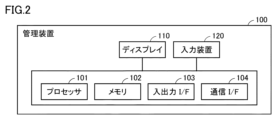
- FIG. 2 illustrates an example of a hardware configuration of a management device 100.
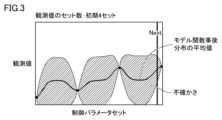
- FIG. 13 shows an example of a search result based on four sets of observations.
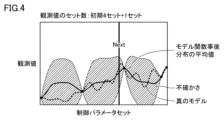
- FIG. 13 shows an example of search results based on five sets of observations.
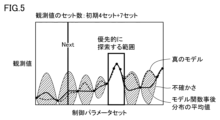
- FIG. 13 shows an example of a search result based on 11 sets of observations.
- FIG. 1 illustrates an equation expressing the assumption that the model function follows a Gaussian process.
- FIG. 13 is a diagram illustrating an example of a kernel function.
- FIG. 13 is a diagram showing a formula for calculating an average value.
- FIG. 13 is a diagram showing a formula for calculating a variance value.
- FIG. 13 is a diagram illustrating an example of an optimization function.
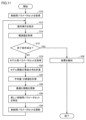
- 11 is a flowchart of a process for optimizing a control parameter set, which is implemented by the management device 100.
- FIG. 1 is a schematic configuration diagram of a control system 1 according to an embodiment of the present disclosure.
- the control system 1 includes a management device 100 and an operation system 200.
- the management device 100 performs processing for optimizing the operation of the operation system 200.
- the operation system 200 produces and/or processes a target substance.
- the operation system 200 cultivates bacteria. That is, the operation system 200 uses a bacterial strain to generate new bacteria.
- the operating system 200 includes an incubator 210, a centrifuge 220, a sample transport robot 230, a liquid dispenser 240, a plate reader 250, a mass spectrometer 260, and a liquid chromatograph 270.
- the management device 100 controls the operation of each element of the work system 200 . More specifically, when a well plate in which a bacterial strain and a medium are placed in each well is set in the incubator 210, the management device 100 causes the incubator 210 to culture the bacteria.
- the management device 100 After the start of incubation in the incubator 210, when a given time has elapsed (when it is assumed that a given degree of cell proliferation and metabolism has progressed), the management device 100 causes the sample transport robot 230 to remove the well plate from the incubator 210. The management device 100 then causes the sample transport robot 230 to move the well plate for pre-processing before measuring the metabolic components of the sample. More specifically, the management device 100 causes the sample transport robot 230 to move the well plate to the centrifuge 220, and causes the centrifuge 220 to sink the bacterial cells in each well. The management device 100 also causes the sample transport robot 230 to move to the liquid dispenser 240, and causes the liquid dispenser 240 to add a reagent to each well.
- the management device 100 causes the sample transport robot 230 to move the well plate to the plate reader 250, and causes the plate reader 250 to perform cell density measurement for each well.
- the management device 100 also causes the sample transport robot 230 to move the well plate to the mass spectrometer 260, and causes the mass spectrometer 260 to perform mass analysis for each well.
- the management device 100 also causes the sample transport robot 230 to move the well plate to the liquid chromatograph 270, and causes the liquid chromatograph 270 to generate a liquid chromatogram for each well.
- control system 1 cell density measurements and metabolic component measurements are performed for the culture in the incubator 210, and the productivity of the target substance can be evaluated using these measurement results.
- control system 1 a series of experimental sequences is automated, improving the reproducibility of pre-processing work, which is prone to variability.
- the well plate is removed from the incubator 210 at the scheduled time and metabolic component measurements are performed, improving the throughput of the experimental process achieved by the operation system 200.
- Fig. 2 is a diagram showing an example of a hardware configuration of the management device 100.
- the management device 100 is configured, for example, by a general-purpose computer.
- the management device 100 includes a processor 101, a memory 102, an input/output interface (I/F) 103, and a communication I/F 104.
- I/F input/output interface
- the processor 101 executes various programs so that the management device 100 can carry out various processes.
- the memory 102 non-temporarily stores the programs executed by the processor 101 and various data required for the execution of the programs.
- the input/output I/F 103 is an interface that allows the processor 101 to communicate with the incubator 210, the centrifuge 220, the sample transport robot 230, the liquid dispenser 240, the plate reader 250, the mass spectrometer 260, and the liquid chromatograph 270.
- the communication I/F 104 is an interface that allows the processor 101 to communicate with devices outside the control system 1 via a network.
- the management device 100 further includes a display 110 and an input device 120.
- the display 110 displays the results of the calculations performed by the processor 101, and the input device 120 (mouse, keyboard, touch sensor, etc.) accepts data input operations to the processor 101.
- Control parameter set In the control system 1, the management device 100 uses one or more parameters to control each element in the operation system 200.
- a set of parameters constituted by the "one or more parameters” is also referred to as a "control parameter set.”
- control parameter set An example of a parameter related to the incubator 210 is the incubation temperature.
- centrifugation rotation speed is the centrifugation rotation speed.
- rotation time is another example of a parameter related to the centrifuge 220 .
- One example of a parameter related to the sample transport robot 230 is the speed at which the well plate moves.
- a parameter for liquid dispenser 240 is the amount of reagent dispensed into each well.
- An example of a parameter for the plate reader 250 is a designation of the type of measurement (luminescence measurement, fluorescence intensity measurement, absorbance measurement (UV), absorbance measurement (visible), time-resolved fluorescence measurement, and/or fluorescence polarization measurement).
- One example of a parameter related to the mass spectrometer 260 is the voltage of the inlet electrode of the quadrupole electrostatic electrodes, and another example is the voltage of the outlet electrode.
- One example of a parameter related to the liquid chromatograph 270 is the pump speed that delivers the mobile phase.
- the management device 100 operates the operation system 200 according to a control parameter set, and acquires observation values for estimating the behavior of the target object (the contents of each well) in association with the execution of the operation according to the control parameter set.
- the observation values can be acquired before the operation in the operation system 200 starts, during the operation, and/or after the operation ends.
- the observed value may be a collection of one or more indices.
- the indices are, for example, measurement results that represent the behavior of an operation in the operation system 200.
- An index is an index of absorbance of each well measured by the plate reader 250.
- Another example is an index of absorbance of a given wavelength in the chromatography produced by the liquid chromatograph 270.
- Yet another example is an index of peak intensity (relative intensity) of a given mass number in the mass spectrum produced by the mass spectrometer 260.
- the management device 100 uses the observed values to identify an optimized control parameter set.
- the management device 100 further operates the work system 200 according to the optimized control parameter set and acquires new observed values.
- the management device 100 repeats the process of operating the work system 200 according to the control parameter set, acquiring new observed values, and optimizing the control parameter set using the control parameter set and the new observed values.
- the management device 100 may generate a single new index from the multiple indexes that make up the observed values, and use the single new index in place of the multiple indexes to optimize the control parameter set. This enables the management device 100 to perform optimization that takes multiple indexes into account in calculations for optimizing the control parameter set (calculation of the posterior distribution of the model function).
- One example of a new indicator is the amount of target substance produced per cell.
- the management device 100 generates the amount of target substance produced per cell, for example, by dividing the amount of target substance produced, which is determined from the liquid chromatogram generated by the liquid chromatograph 270, by the yield of cells, which is determined based on the cell density measurement results by the plate reader 250.
- the management device 100 may, for example, identify the amounts of each of the two types of components from the liquid chromatograph generated by the liquid chromatograph 270, and then calculate the sum of the amounts of the two types of components using the amounts of each of the two types of components identified.
- the management device 100 uses Bayesian optimization as an example of a method for optimizing the control parameter set of the operation system 200. That is, the management device 100 searches for an optimal control parameter set based on Bayesian optimization.
- FIG. 3 shows an example of a search result based on four sets of observed values.
- the black dots represent each set of observed values actually obtained in connection with the execution of the operation of the work system 200.
- the solid curve represents the average value of the posterior distribution of the model function estimated by the Bayesian optimization method.
- the shaded area represents the uncertainty (or variance) of the posterior distribution of the model function.
- the thick solid vertical line labeled "Next" represents the next set of control parameters identified.
- the management device 100 also estimates a model function of the operation system 200 from four sets of observation values corresponding to each of the four sets of control parameters, and calculates the mean and variance of the posterior distribution of the model function. More specifically, to calculate the posterior distribution of the model function shown in FIG. 3, the operation system 200 performs four operations (bacteria culture experiments) according to each of the four sets of control parameters. The management device 100 acquires one set of observation values in relation to one operation. Thus, the management device 100 acquires four sets of observation values acquired in relation to each of the four operations. The management device 100 then uses the four sets of observation values acquired in this way to calculate the posterior distribution of the model function, and also calculates the mean and variance of the posterior distribution.
- the management device 100 identifies the next set of control parameters that are expected to improve the model so that it is closer to the true one.
- the management device 100 performs calculations under the assumption that the model of the work system 200 follows a Gaussian process.
- the management device 100 further acquires new observation values by operating the work system 200 under conditions according to the "next control parameter set" identified as above.
- the management device 100 then adds the newly acquired observation values to the already acquired observation values and re-estimates the posterior distribution of the model function. By repeating this process, the management device 100 can obtain a control parameter set that will bring about observation values that correspond to more favorable results.
- the control parameter set that brings about a more favorable result in the operation system 200 is the control parameter set that maximizes the optimization function described below with reference to FIG. 10.
- a more favorable result is, for example, a higher yield of bacteria in a bacterial culture.
- FIG. 4 shows an example of a search result based on five sets of observations.
- FIG. 4 shows a state where one set of observations has been added to the initial four sets of observations shown in FIG. 3.
- FIG. 5 shows an example of a search result based on eleven sets of observations.
- FIG. 5 shows a state where seven sets of observations have been added to the initial four sets of observations shown in FIG. 3, that is, six sets of observations have been added to the five sets of observations shown in FIG. 4.
- the management device 100 identifies the control parameter set within the range in which the observed value in the model function is highest as the next control parameter set, as shown as the "range to be searched preferentially" in FIG. 5. Note that in the graphs shown in FIG. 3 to FIG. 5, a higher observed value corresponds to a higher yield of bacteria in the culture.
- Figure 6 shows an equation that expresses the assumption that the model function follows a Gaussian process. Equation (1) shown in Figure 6 contains three terms. The leftmost term and the middle term are connected with " ⁇ ", and the middle term and the rightmost term are connected with " ⁇ ".
- the leftmost term f represents a model function.
- the subscripts attached to f correspond to each set of the control parameter sets. For example, “1", “n”, and “i” shown in FIG. 6 represent the first control parameter set, the nth control parameter set, and the ith control parameter set, respectively.
- f 1 represents the observation value corresponding to the first control parameter set.
- f n represents the observation value corresponding to the nth control parameter set
- f i represents the observation value corresponding to the ith control parameter set.
- the ⁇ in the middle term represents the mean parameter of the Gaussian assumption.
- the subscripts attached to ⁇ have the same meaning as the subscripts attached to f.
- N represents a normal distribution.
- K represents a kernel function.
- K has two subscripts i and j.
- Kij represents the kernel function (covariance function) of the control parameters fi and fj.
- Fig. 7 is a diagram showing an example of a kernel function.
- the kernel function is shown as formula (2).
- x represents each set of control parameters.
- x i represents the i-th control parameter set.
- ⁇ represents the variance calculated from the mean parameter ⁇ (the regression function ⁇ (x) under the Gaussian assumption). 1 represents the covariance amplitude.
- the subscript D represents the data set that has already been acquired.
- the subscript T represents transposition.
- the management device 100 calculates the mean and variance of the posterior distribution of f(x) for any x i according to the assumptions shown in FIG. 6.
- Fig. 8 is a diagram showing a formula for calculating the average value.
- the management device 100 calculates the average value E(p(f i
- p represents a probability function.
- the management device 100 calculates the variance value V(p(f i
- the management device 100 uses an optimization function in searching for a control parameter set based on Bayesian optimization.
- An example of the optimization function is an acquisition function.
- the management device 100 uses an upper confidence bound (UCB) function as an example of the acquisition function.
- UFB upper confidence bound
- Fig. 10 is a diagram showing an example of an optimization function.
- ⁇ (x) represents a regression function of a Gaussian assumption
- ⁇ (x) represents a variance function
- ⁇ represents a predetermined constant
- x represents a control parameter set. Note that the value of ⁇ (x) in formula (5) can also be expressed as a variance value V(p(f i
- the function UCB(x) includes the mean value of the posterior distribution by including ⁇ (x), and also includes the variance value of the posterior distribution by including ⁇ (x).
- the management device 100 identifies the value of x that maximizes the value of UCB(x) in equation (5), and identifies the control parameter set that corresponds to the identified value of x as a new control parameter set.
- the management device 100 repeatedly operates the operation system 200 according to the control parameter set, acquires new observed values, and optimizes the control parameter set using the new observed values. Note that a termination condition for the above repetition may be set in the management device 100.
- An example of a termination condition includes a criterion related to an observed value. For example, if the termination condition is set to be that the yield of the target substance identified by the observed value has reached a predetermined amount, the management device 100 may determine that the termination condition is met if the yield of the target substance identified from the observed value has reached the predetermined amount, and may terminate the process related to optimizing the control parameter set without further operating the operation system 200.
- termination condition include criteria related to the number of times the optimization of the control parameter set has been performed (the number of times the control parameter set has been updated). For example, if the termination condition is set to be that the number of optimizations has reached 100, the management device 100 may determine that the termination condition is met if the control parameter set has been updated 100 times, and may terminate the process related to the optimization of the control parameter set without further operating the work system 200.
- the termination condition include criteria regarding the relationship between the observed values before and after the optimization of the control parameter set.
- the termination condition may be set such that the yield of the target substance identified by the observed values after the control parameter set is updated is increased by 10% or more compared to the yield of the target substance identified by the observed values before the control parameter set is updated.
- the management device 100 may determine that the termination condition is met and terminate the process related to the optimization of the control parameter set without further operating the operation system 200.
- the termination condition may be such that the change in the observed values is saturated as the updates are repeated.
- the termination condition may be such that the change in the yield of the target substance in the most recent five updates is less than 10% compared to the oldest yield among the most recent five updates.
- the management device 100 terminates the process related to optimizing the control parameter set. This can prevent the operation system 200 from operating more than necessary. For example, if the usage fee for the control system 1 is set according to the number of times the operation system 200 operates, a user can set the termination condition in advance to avoid being charged an unexpected usage fee due to operating the operation system 200 more than necessary.
- FIG. 11 is a flowchart of a process for optimizing a control parameter set, which is performed by the management device 100.
- the process shown in Fig. 11 is realized, for example, by the processor 101 executing a given program, and is started when a user instructs the management device 100 to start the process.
- step S10 the management device 100 acquires a control parameter set.
- the management device 100 acquires a control parameter set by accepting input of the control parameter set from the user.
- step S12 the management device 100 instructs the operation system 200 to perform operations according to the control parameter set acquired in step S10 (or updated in step S28, described below).
- step S14 the management device 100 acquires from the work system 200 observed values related to the operation that was instructed to be performed in step S12.
- step S16 the management device 100 determines whether or not a termination condition for the repeated optimization of the control parameter set is satisfied. If the management device 100 determines that the termination condition is satisfied (YES in step S16), control proceeds to step S30. If the management device 100 determines that the termination condition is not satisfied (NO in step S16), control proceeds to step S18.
- the management device 100 acquires a model parameter set (reads it from memory 102).
- the model parameter set refers to a set of data to be used for estimating a model function.
- the model parameter set includes the control parameter set used in the instruction in step S12 and the observation value acquired in step S14.
- the model parameter set may include a control parameter set used in a past operation of the management device 100 and an observation value related to that operation.
- the control parameter set used in a past operation of the management device 100 and an observation value related to that operation may be stored in memory 102.
- control parameter sets and observed values may be used to estimate the model function.
- step S18 in addition to the latest “control parameter sets and observed values", i.e., the control parameter sets in step S12 and the observed values in step S14, past “control parameter sets and observed values” may also be used.
- step S20 the management device 100 calculates the posterior distribution of the model function using the model parameter set obtained in step S18.
- step S22 the management device 100 calculates the mean and variance of the posterior distribution calculated in step S20.
- step S24 the management device 100 updates the optimization function (e.g., equation (5) in FIG. 10) using the mean and variance calculated in step S22.
- the optimization function e.g., equation (5) in FIG. 10.
- step S26 the management device 100 identifies a new set of control parameters that maximizes the value of the optimization function updated in step S24.
- step S28 the management device 100 replaces the parameter set used to instruct the operation system 200 to perform an operation with the control parameter set identified in step S26. This updates the control parameter set for the instruction. The management device 100 then returns control to step S12. This causes the operation system 200 to perform an operation again based on the updated control parameter set in response to the instruction in step S12. In step S14, the management device 100 acquires observed values related to the operation based on the updated control parameter set.
- step S30 the management device 100 notifies the result of the optimization of the control parameter set and ends the process of FIG. 11.
- step S16 if the management device 100 determines in step S16 that the termination condition is met, the control proceeds to step S30 in order to avoid updating the control parameter set in step S28.
- the control of step S16 is an example of a step for avoiding updating the control parameter set.
- step S30 One example of the information notified in step S30 is the latest control parameter set and the observation values obtained in association with the operation according to the latest control parameter set. Another example is the control parameter set and the observation values obtained in association with the operation according to the control parameter set for each experiment that has been repeated up to that point in the process of FIG. 11.
- step S30 when the management device 100 avoids updating the control parameter set, it performs the above notification in step S30.
- step S0 it may be notified that "the update of the control parameter set has been avoided and optimization of the control parameter set has ended."
- the control of step S30 is an example of a step of notifying that the update of the control parameter set has been avoided.
- One example of a method of notification is displaying data on the display 110.
- Another example is sending a notification to an address stored in the management device 100 for the process of optimizing the control parameter set (for example, the address of the user who instructed the optimization).
- the management device 100 instructs the work system to perform an operation based on a certain control parameter set, acquires observed values related to the work system associated with the execution of the operation, calculates the posterior distribution of the model function using the acquired observed values, and updates the optimization function using the results of the calculated posterior distribution (e.g., mean and variance).
- the results of the calculated posterior distribution e.g., mean and variance.
- the operation of the operation system 200 is an operation for producing bacteria.
- bacteria is merely one example of a target substance to be produced.
- the target substance produced in the operation system 200 is not limited to bacteria.
- the operation of the operation system 200 is not limited to producing a target substance, and may be processing of a target substance.
- the working system 200 may be a system that produces a solid material with desired characteristics.
- a device that sets parameters for controlling the ratio of components that make up the solid material and uses tensile strength as an index.
- an index such as the sum of tensile strength and toughness may be used to optimize the index that takes both characteristics into account.
- a method for optimizing a work system may include the steps of: setting a control parameter set consisting of one or more parameters for controlling the operation of the work system; controlling the operation of the work system based on the control parameter set; acquiring from the work system observed values related to the execution of the operation based on the control parameter set; using the control parameter set and the observed values, calculating a posterior distribution of a model function with the one or more parameters as variables; and updating an optimization function to identify an optimal parameter set as the control parameter set using the calculation result of the posterior distribution.
- the method for optimizing a work system described in paragraph 1 reduces the burden on the user for optimizing the work system.
- the optimization function may include a mean and a variance of the posterior distribution.
- a function suitable for optimizing an operation system is used as the optimization function.
- the method for optimizing an operating system described in clause 1 or clause 2 may further include a step of updating the control parameter set with a set of parameters that maximizes the value of the updated optimization function.
- the method for optimizing a work system described in Section 3 provides an optimal set of control parameters.
- the method for optimizing a work system described in 3 may further include a step of avoiding updating the control parameter set in accordance with a predetermined condition.
- the method for optimizing the work system described in Section 4 prevents the work system from operating more than necessary.
- the predetermined conditions may include at least one of a criterion regarding the observed value, a criterion regarding the number of updates, and a criterion regarding the relationship between the observed value before and after an update.
- the method for optimizing the work system described in Section 5 prevents the work system from operating more than necessary according to specific criteria.
- the method for optimizing a work system described in 4 may further include a step of notifying that the update of the control parameter set has been avoided.
- the step of calculating the posterior distribution of the model function may include generating one index from a plurality of indexes included in the observed value, and calculating the posterior distribution using at least the one index.
- the dimension of the observed values is reduced in optimizing the control parameter set, thereby reducing the computational load for optimizing the control parameter set.
- the operation may include generating a target substance from an object or processing a target substance.
- the method for optimizing an operating system described in paragraph 8 reduces the burden on the user when optimizing a system related to the production or processing of a target substance.
- a control system includes a work system and a management device that controls the operation of the work system, the management device sets a control parameter set consisting of one or more parameters for controlling the operation of the work system, and controls the operation of the work system based on the control parameter set, the work system executes an operation based on the control parameter set, the management device acquires from the work system observed values related to the execution of the operation based on the control parameter set, and calculates a posterior distribution of a model function with the one or more parameters as variables using the control parameter set and the observed values, and may update an optimization function for identifying an optimal parameter set as the control parameter set using the calculation result of the posterior distribution.
- control system described in paragraph 9 reduces the burden on the user for optimizing the work system.
- the optimization function may include a mean and a variance of the posterior distribution.
- a function suitable for optimizing the work system is used as the optimization function.
- the management device may update the control parameter set with a set of parameters that maximizes the value of the updated optimization function.
- control system described in paragraph 11 provides an optimal set of control parameters.
- the management device may avoid updating the control parameter set in accordance with a predetermined condition.
- control system described in paragraph 12 prevents the work system from operating more than necessary.
- the predetermined conditions may include at least one of a criterion regarding the observed value, a criterion regarding the number of updates, and a criterion regarding the relationship between the observed value before and after an update.
- control system described in paragraph 13 prevents the operating system from operating more than necessary according to specific criteria.
- the management device may notify that the update of the control parameter set has been avoided.
- control system described in paragraph 14 allows the user to easily recognize that updating of the control parameter set has been avoided.
- calculating the posterior distribution of the model function may include generating one index from a plurality of indexes included in the observed value, and calculating the posterior distribution using at least the one index.
- the dimension of the observations is reduced in optimizing the control parameter set, thereby reducing the computational load for optimizing the control parameter set.
- the operation may include generating a target substance from an object or processing a target substance.
- control system described in paragraph 16 reduces the burden on the user in optimizing the system for producing or processing a target substance.
- Control system 100 Management device, 101 Processor, 102 Memory, 110 Display, 120 Input device, 200 Working system, 210 Incubator, 220 Centrifuge, 230 Sample transport robot, 240 Liquid dispenser, 250 Plate reader, 260 Mass spectrometer, 270 Liquid chromatograph.
Landscapes
- Engineering & Computer Science (AREA)
- Theoretical Computer Science (AREA)
- Physics & Mathematics (AREA)
- Computing Systems (AREA)
- General Engineering & Computer Science (AREA)
- General Physics & Mathematics (AREA)
- Mathematical Physics (AREA)
- Software Systems (AREA)
- Feedback Control In General (AREA)
Abstract
管理装置は、作業システムを最適化する。より具体的には、管理装置は、作業システムの動作を制御するための1以上のパラメータによって構成される制御用パラメータセットを設定し(ステップS10)、制御用パラメータセットに基づいて作業システムの動作を制御し(ステップS12)、制御用パラメータセットに基づく動作の実行に関連して作業システムに関する観測値を取得し(ステップS14)、制御用パラメータセットおよび観測値を用いて、1以上のパラメータを変数としたモデル関数の事後分布を計算し(ステップS20)、事後分布の計算結果を用いて、制御用パラメータセットとして最適なパラメータセットを特定するための最適化関数を更新する(ステップS24)。
Description
本発明は、作業システムの最適化に関する。
従来、対象物を生産および/または加工する作業システムの最適化に関し、種々の技術が提案されている。たとえば、特許第6931946号公報(特許文献1)は、生産プロセスの実行主体による実行手順の実行結果を取得し、当該実行結果に対する評価結果(たとえば、人間による香り評価)を取得し、そして、評価結果を用いて、実行手順における可変パラメータを最適化する、生産プロセス最適化システムを開示している。
一般的に、作業システムの最適化のために、ユーザは、作業システムの制御に利用されるパラメータの調整を含む、多岐にわたる作業を必要とされる。したがって、ユーザの負荷を軽減するための技術が常に求められている。
本発明は、係る実情に鑑み考え出されたものであり、その目的は、作業システムの最適化のためのユーザの負荷を軽減するための技術を提供することである。
本開示のある局面に従う作業システムの最適化方法は、作業システムの動作を制御するための1以上のパラメータによって構成される制御用パラメータセットを設定するステップと、制御用パラメータセットに基づいて、作業システムの動作を制御するステップと、作業システムから、制御用パラメータセットに基づく動作の実行に関連した観測値を取得するステップと、制御用パラメータセットおよび観測値を用いて、1以上のパラメータを変数としたモデル関数の事後分布を計算するステップと、事後分布の計算結果を用いて、制御用パラメータセットとして最適なパラメータセットを特定するための最適化関数を更新するステップと、を備える。
本開示のある局面に従う制御システムは、作業システムと、作業システムの動作を制御する管理装置と、を備える。管理装置は、作業システムの動作を制御するための1以上のパラメータによって構成される制御用パラメータセットを設定し、制御用パラメータセットに基づいて、作業システムの動作を制御し、作業システムは、制御用パラメータセットに基づいて動作を実行し、管理装置は、作業システムから、制御用パラメータセットに基づく動作の実行に関連した観測値を取得し、制御用パラメータセットおよび観測値を用いて、1以上のパラメータを変数としたモデル関数の事後分布を計算し、事後分布の計算結果を用いて、制御用パラメータセットとして最適なパラメータセットを特定するための最適化関数を更新する。
本開示のある局面に従うと、作業システムの最適化のためのユーザの負荷が軽減される。
以下、本開示の実施の形態について、図面を参照しながら詳細に説明する。なお、図中同一または相当部分には同一符号を付してその説明は繰り返さない。
[制御システムの構成]
図1は、本開示の一実施の形態に従う制御システム1の概略構成図である。制御システム1は、管理装置100と、作業システム200とを含む。管理装置100は、作業システム200の動作を最適化するための処理を実施する。作業システム200は、目的物質を生産および/または加工する。図1の例では、作業システム200は菌を培養する。すなわち、作業システム200は、菌株を利用して、新たな菌を生成する。
作業システム200は、培養器210、遠心分離機220、サンプル搬送ロボット230、液体分注機240、プレートリーダー250、質量分析計260、および液体クロマトグラフ270を含む。
管理装置100は、作業システム200の各要素の動作を制御する。
より具体的には、培養器210に各ウェルに菌株および培地を投入されたウェルプレートをセットされると、管理装置100は、培養器210に、菌の培養を実施させる。
培養器210における培養の開始後、(所与の度合いの細胞増殖および代謝が進んだことが想定される)所与の時間が経過すると、管理装置100は、サンプル搬送ロボット230に、培養器210からウェルプレートを取り出させる。そして、管理装置100は、サンプル搬送ロボット230に、サンプルの代謝成分計測のための前処理のために、ウェルプレートを移動させる。より具体的には、管理装置100は、サンプル搬送ロボット230に、ウェルプレートを遠心分離機220へ移動させ、そして、遠心分離機220に、各ウェルの菌体を沈めさせる。また、管理装置100は、サンプル搬送ロボット230を液体分注機240へ移動させ、そして、液体分注機240に、各ウェルへ試薬を添加させる。
その後、管理装置100は、サンプル搬送ロボット230に、ウェルプレートをプレートリーダー250へ移動させ、そして、プレートリーダー250に、各ウェルについての細胞密度計測を実施させる。また、管理装置100は、サンプル搬送ロボット230に、ウェルプレートを質量分析計260へ移動させ、そして、質量分析計260に、各ウェルについての質量分析を実施させる。また、管理装置100は、サンプル搬送ロボット230に、ウェルプレートを液体クロマトグラフ270へ移動させ、そして、液体クロマトグラフ270に、各ウェルについての液体クロマトグラムを生成させる。
制御システム1では、培養器210における培養について、細胞密度計測および代謝成分計測が実施され、これらの計測結果が利用されて、目的物質の生産性が評価され得る。制御システム1では、一連の実験シーケンスが自動化されることにより、ばらつきが生じやすい前処理作業などの再現性が向上され得る。また、予定された時間にウェルプレートが培養器210から取り出されて、代謝成分の計測が実施されることにより、作業システム200によって実現される実験プロセスのスループット性が向上し得る。
[管理装置のハードウェア構成]
図2は、管理装置100のハードウェア構成の一例を示す図である。管理装置100は、たとえば汎用のコンピュータによって構成される。図1の例では、管理装置100は、プロセッサ101と、メモリ102と、入出力インターフェース(I/F)103と、通信I/F104とを含む。
プロセッサ101は、管理装置100が種々の処理を実施するために、各種のプログラムを実行する。メモリ102は、プロセッサ101によって実行されるプログラム、および、プログラムの実行に必要な各種のデータを非一時的に格納する。入出力I/F103は、プロセッサ101を、培養器210、遠心分離機220、サンプル搬送ロボット230、液体分注機240、プレートリーダー250、質量分析計260、および液体クロマトグラフ270と通信させるためのインターフェースである。通信I/F104は、プロセッサ101を、制御システム1外の装置とネットワークを通じて通信させるためのインターフェースである。
管理装置100は、さらにディスプレイ110および入力装置120を含む。ディスプレイ110は、プロセッサ101の演算処理の結果を表示し、入力装置120(マウス、キーボード、タッチセンサ、等)は、プロセッサ101へのデータの入力操作を受け付ける。
[制御用パラメータセット]
制御システム1において、管理装置100は、作業システム200内の各要素を制御するために1以上のパラメータを利用する。本明細書では、当該「1以上のパラメータ」によって構成されるパラメータのセットは、「制御用パラメータセット」とも称される。
制御用パラメータセットを構成するパラメータの具体例は以下の通りである。
培養器210に関するパラメータの一例は、培養温度である。
遠心分離機220に関するパラメータの一例は、遠心分離の回転数である。他の例は、回転時間である。
サンプル搬送ロボット230に関するパラメータの一例は、ウェルプレートの移動における移動速度である。
液体分注機240に関するパラメータの一例は、各ウェルへの試薬の注入量である。
プレートリーダー250に関するパラメータの一例は、測定の種類(発光測定、蛍光強度測定、吸光度測定(紫外)、吸光度測定(可視)、時間分解蛍光測定、および/または、蛍光偏光測定)の指定である。
質量分析計260に関するパラメータの一例は、四重極静電電極のうち、入口側の電極の電圧であり、他の例は、出口側の電極の電圧である。
液体クロマトグラフ270に関するパラメータの一例は、移動相を送るポンプの送液速度である。
[観測値]
制御システム1において、管理装置100は、制御用パラメータセットに従って作業システム200を動作させ、そして、制御用パラメータセットに従った動作の実行に関連して、対象物(各ウェルの内容物)の挙動を推定するための観測値を取得する。観測値は、作業システム200における動作の、開始前、動作途中、および/または、動作終了後に取得され得る。
観測値は、1以上の指標の集合体であってもよい。指標は、たとえば、作業システム200において作業の挙動を表す計測結果である。指標の一例は、プレートリーダー250によって計測される各ウェルの吸光度の指標である。他の例は、液体クロマトグラフ270によって作成されるクロマトグラフィにおける、所与の波長の吸光度の指標である。さらに他の例は、質量分析計260によって作成されるマススペクトルにおける所与の質量数のピーク強度(相対的強度)の指標である。
管理装置100は、観測値を用いて、最適化された制御用パラメータセットを特定する。管理装置100は、さらに、最適化された制御用パラメータセットに従って作業システム200を動作させ、新たな観測値を取得する。管理装置100は、制御用パラメータセットに従って作業システム200を動作させること、新たな観測値を取得すること、および、制御用パラメータセットおよび新たな観測値を用いた制御用パラメータセットの最適化、を繰り返す。
管理装置100は、制御用パラメータセットの最適化に利用する観測値の次元を低減するために、観測値を構成する複数の指標から新たな1つの指標を生成し、当該複数の指標の代わりに当該新たな1つの指標を用いて、制御用パラメータセットを最適化してもよい。これにより、管理装置100において、制御用パラメータセットの最適化のための計算(モデル関数の事後分布の計算)において、複数の指標を考慮した最適化が可能になる。
新たな1つの指標の一例は、細胞当たりの目的物質生成量である。管理装置100は、たとえば、液体クロマトグラフ270によって生成された液体クロマトグラフから特定される目的物質の生成量を、プレートリーダー250による細胞密度計測結果に基づいて特定される細胞の収量で除することによって、細胞当たりの目的物質生成量を生成する。
新たな1つの指標の他の例は、2種類の成分の量の和である。管理装置100は、たとえば、液体クロマトグラフ270によって生成された液体クロマトグラフから2種類の成分のそれぞれの量を特定し、そして、特定される2種類の成分のそれぞれの量を用いて、2種類の成分の量の和を算出してもよい。
[ベイズ最適化]
管理装置100は、作業システム200の制御用パラメータセットの最適化手法の一例として、ベイズ最適化を利用する。すなわち、管理装置100は、ベイズ最適化に基づいて、最適な制御用パラメータセットを探索する。
図3は、4セットの観測値に基づく探索結果の一例を示す図である。図3において、黒丸点は、作業システム200の動作の実行に関連して実際に取得された観測値の各セットを表す。実線で示すカーブは、ベイズ最適化法により推定されたモデル関数の事後分布の平均値を表す。斜線で塗りつぶした範囲は、当該モデル関数の事後分布の不確かさ(或いは分散)を表す。「Next」と記載された縦の太実線は、特定された次の制御用パラメータセットを表す。
図3の例では、管理装置100は、また、4セットの制御用パラメータセットのそれぞれに対応する4セットの観測値から作業システム200のモデル関数を推定し、そして、モデル関数の事後分布の平均値および分散値を計算する。より具体的には、図3に示されたモデル関数の事後分布の計算のために、作業システム200は、4セットの制御用パラメータセットのそれぞれに従った、4回の動作(菌の培養実験)を実施している。管理装置100は、1回の動作に関連して、1セットの観測値を取得している。したがって、管理装置100は、4回の動作のそれぞれに関連して取得された4セットの観測値を取得している。そして、管理装置100は、このように取得された4セットの観測値を利用して、モデル関数の事後分布を計算し、また、事後分布の平均値および分散値を計算する。
そして、管理装置100は、平均値および分散値のそれぞれの計算値を基に、真のものにより近づくようにモデルを改善することが期待される次の制御用パラメータセットを特定する。
なお、管理装置100は、作業システム200のモデルがガウス過程に従うという仮定の下で計算を実施する。
管理装置100は、さらに、上記のように特定された「次の制御用パラメータセット」に従った条件の下で作業システム200を動作させることにより、新たな観測値を取得する。そして、管理装置100は、新たに取得された観測値を、既に取得している観測値に加えて、モデル関数の事後分布を再度推定する。こうした処理を繰り返すことで、管理装置100は、より好ましい結果に対応する観測値をもたらすような制御用パラメータセットを得ることができる。
作業システム200におけるより好ましい結果をもたらすような制御用パラメータセットとは、図10を参照して後述される最適化関数を最大にする制御用パラメータセットである。より好ましい結果とは、たとえば、菌の培養におけるより高い菌の収量である。
図4は、5セットの観測値に基づく探索結果の一例を示す図である。図4には、図3に示された初期の4セットの観測値に1セットの観測値が加わった状態が示されている。図5は、11セットの観測値に基づく探索結果の一例を示す図である。図5には、図3に示された初期の4セットの観測値に7セットの観測値が加わった状態、すなわち、図4に示された5セットの観測値に6セットの観測値が加わった状態が示されている。
管理装置100は、図5において「優先的に探索する範囲」として示されるように、モデル関数において観測値が最も高くなる範囲内の制御用パラメータセットを、次の制御用パラメータセットとして特定する。なお、図3~図5に示されたグラフにおいて、観測値が高くなることは、培養における菌の収量が高くなることに相当する。
[モデル関数の事後分布の平均値と分散値]
次に、上述のモデル関数の事後分布の平均値および分散値のそれぞれの求め方について説明する。
図6は、モデル関数がガウス過程に従うという仮定を表す式を示す図である。図6に示された式(1)は、3つの項を含む。左端の項と中央の項が「~」で連結され、また、中央の項と右端の項が「~」で連結されている。
左端の項に示されたfは、モデル関数を表す。fに付された添え字は、制御用パラメータセットの各セットに対応する。たとえば、図6に示された「1」「n」「i」のそれぞれは、1番目の制御用パラメータセット、n番目の制御用パラメータセット、およびi番目の制御用パラメータセットのそれぞれを表す。そして、f1は、1番目の制御用パラメータセットに対応する観測値を表す。また、fnは、n番目の制御用パラメータセットに対応する観測値を表し、fiは、i番目の制御用パラメータセットに対応する観測値を表す。
中央の項に示されたμは、ガウス仮定の平均値パラメータを表す。μに付された添え字は、fに付された添え字と同様の意味を有する。
Nは、正規分布を表す。
Kは、カーネル関数を表す。Kには、2つの添え字i,jが付されている。Kijは制御パラメータfiとfjのカーネル関数(共分散関数)を表す。
図7は、カーネル関数の一例を示す図である。図7では、カーネル関数は式(2)として示される。式(2)において、xは、制御用パラメータセットの各セットを表す。たとえば、xiは、i番目の制御用パラメータセットを表す。σは、平均値パラメータμ(ガウス仮定の回帰関数μ(x))から計算される分散を表す。lは、共分散振幅を表す。
再度、図6を参照する。右端の項において、添え字のDは、取得済みのデータ群を表す。また、添え字のTは、転置を表す。
管理装置100は、図6に示された仮定に従って、任意のxiに対するf(x)の事後分布の平均値および分散値を計算する。
図8は、平均値を計算するための数式を示す図である。管理装置100は、図8の式(3)に従って、平均値E(p(fi|fD,K,μ))を計算する。式(3)において、pは、確率関数を表す。
図9は、分散値を計算するための数式を示す図である。管理装置100は、図9の式(4)に従って、分散値V(p(fi|fD,K,μ))を計算する。
[最適化関数]
管理装置100は、ベイズ最適化に基づいた制御用パラメータセットの探索において、最適化関数を利用する。最適化関数の一例は、獲得関数である。管理装置100は、獲得関数の一例として、UCB(Upper Confidence Bound)関数を利用する。
図10は、最適化関数の一例を示す図である。図10の式(5)において、μ(x)は、ガウス仮定の回帰関数を表し、σ(x)は、分散の関数を表し、κは、予め定められた定数を表す。xは、制御用パラメータセットを表す。なお、式(5)のσ(x)の値は、式(4)において分散値V(p(fi|fD,K,μ))としても表され得る。
式(5)において、関数UCB(x)は、μ(x)を含むことにより事後分布の平均値を含み、また、σ(x)を含むことにより事後分布の分散値を含む。
管理装置100は、式(5)におけるUCB(x)の値を最大にするxの値を特定し、特定されたxの値に対応する制御用パラメータセットを新たな制御用パラメータセットとして特定する。
[終了条件]
上述のように、管理装置100は、制御用パラメータセットに従って作業システム200を動作させること、新たな観測値を取得すること、および、新たな観測値を用いた制御用パラメータセットの最適化を繰り返す。なお、管理装置100には、上記の繰り返しに関する終了条件が設定されていてもよい。
終了条件の一例は、観測値に関する基準を含む。たとえば、終了条件として、観測値によって特定される目的物質の収量が予め定められた量に達したことが設定されている場合、管理装置100は、観測値から特定される目的物質の収量が予め定められた量に達していれば、終了条件が成立していると判断し、それ以上作業システム200を動作させることなく、制御用パラメータセットの最適化に関する処理を終了させてもよい。
終了条件の他の例は、制御用パラメータセットの最適化が実施された回数(制御用パラメータセットが更新された回数)に関する基準を含む。たとえば、終了条件として最適化回数が100回に到達したことが設定されている場合、管理装置100は、制御用パラメータセットが100回更新されていれば、終了条件が成立していると判断し、それ以上作業システム200を動作させることなく、制御用パラメータセットの最適化に関する処理を終了させてもよい。
終了条件のさらに他の例は、制御用パラメータセットの最適化の前後における観測値の関係に関する基準を含む。たとえば、終了条件として、制御用パラメータセットを更新された後の観測値によって特定された目的物質の収量が、制御用パラメータセットを更新される前の観測値によって特定された目的物質の収量に対して10%以上増加していることが設定されているとする。この場合、管理装置100は、更新後の収量が更新前の収量に対して10%増加していれば、終了条件が成立していると判断し、それ以上作業システム200を動作させることなく、制御用パラメータセットの最適化に関する処理を終了させてもよい。なお、終了条件は、更新を繰り返しにおいて観測値の変化が飽和していることであってもよい。たとえば、終了条件は、最新の5回の更新において、目的物質の収量の変化量が、当該最新の5回の更新のうち最も古い収量に対して10%未満であること、であってもよい。
上述のように、制御システム1において、管理装置100は、終了条件が成立した場合、制御用パラメータセットの最適化に関する処理を終了させる。これにより、作業システム200が必要以上に動作することが回避され得る。たとえば、制御システム1の利用料金が作業システム200の動作回数に従って設定されている場合、ユーザは、予め終了条件を設定しておけば、必要以上に作業システム200を動作させることによる想定外の利用料金を請求される事態を回避できる。
[処理の流れ]
図11は、管理装置100によって実施される、制御用パラメータセットの最適化に関する処理のフローチャートである。図11に示された処理は、たとえば、プロセッサ101が所与のプログラムを実行することによって実現され、また、ユーザが管理装置100に対して当該処理の開始を指示したことによって開始する。
ステップS10にて、管理装置100は、制御用パラメータセットを取得する。一実現例のステップS10において、管理装置100は、ユーザからの制御用パラメータセットの入力を受け付けることによって、制御用パラメータセットを取得する。
ステップS12にて、管理装置100は、作業システム200に対して、ステップS10において取得した(または後述するステップS28において更新された)制御用パラメータセットに従った動作の実行を指示する。
ステップS14にて、管理装置100は、作業システム200から、ステップS12において実行を指示した動作に関連した観測値を取得する。
ステップS16にて、管理装置100は、制御用パラメータセットの最適化の繰り返しに関する終了条件が成立しているか否かを判断する。管理装置100は、終了条件が成立していると判断すると(ステップS16にてYES)、ステップS30へ制御を進める。管理装置100は、終了条件が成立していないと判断すると(ステップS16にてNO)、ステップS18へ制御を進める。
ステップS18にて、管理装置100は、モデル用パラメータセットを取得する(メモリ102から読み出す)。モデル用パラメータセットとは、モデル関数の推定に利用するためのデータのセットを意味する。モデル用パラメータセットは、ステップS12における指示において利用された制御用パラメータセット、および、ステップS14において取得された観測値を含む。モデル用パラメータセットは、過去の管理装置100の動作において利用された制御用パラメータセット、および、当該動作に関連した観測値を含んでいてもよい。過去の管理装置100の動作において利用された制御用パラメータセット、および、当該動作に関連した観測値は、メモリ102に格納されていてもよい。
より具体的には、図3~図5を参照して説明されたように、モデル関数の推定には、複数の「制御用パラメータセットと観測値」のセットが利用され得る。ステップS18では、最新の「制御用パラメータセットと観測値」、すなわち、ステップS12の制御用パラメータセットとステップS14の観測値に加えて、過去の「制御用パラメータセットと観測値」も利用され得る。
ステップS20にて、管理装置100は、ステップS18において取得されたモデル用パラメータセットを利用して、モデル関数の事後分布を計算する。
ステップS22にて、管理装置100は、ステップS20において計算された事後分布の平均値および分散値を計算する。
ステップS24にて、管理装置100は、ステップS22において計算された平均値および分散値を利用して、最適化関数(たとえば、図10の式(5))を更新する。
ステップS26にて、管理装置100は、ステップS24において更新された最適化関数の値を最大にする、新しい制御用パラメータセットを特定する。
ステップS28にて、管理装置100は、作業システム200に対する動作の指示に利用するパラメータセットを、ステップS26において特定された制御用パラメータセットに置き換える。これにより、上記指示用の制御用パラメータセットが更新される。その後、管理装置100は、ステップS12へ制御を戻す。これにより、作業システム200は、ステップS12における指示に応じて、更新された制御用パラメータセットに基づいて、再度動作を実行する。管理装置100は、更新された制御用パラメータセットに基づく動作に関連した観測値を、ステップS14において取得する。
一方、ステップS30にて、管理装置100は、制御用パラメータセットの最適化の結果を報知して、図11の処理を終了させる。
図11の処理において、管理装置100は、ステップS16において終了条件が成立していると判断すると、ステップS28における制御用パラメータセットの更新を回避するために、ステップS30へ制御を進める。この意味において、ステップS16の制御は、制御用パラメータセットの更新を回避するためのステップの一例である。
ステップS30において報知される情報の一例は、最新の制御用パラメータセット、および、最新の制御用パラメータセットに従った動作に関連して取得された観測値である。他の例は、それまでに図11の処理において繰り返されてきた実験に関するそれぞれの回についての、制御用パラメータセット、および、制御用パラメータセットに従った動作に関連して取得された観測値である。
図11の処理において、管理装置100は、制御用パラメータセットの更新を回避したときに、ステップS30において、上記の報知を実施する。ステップS0では、「制御用パラメータセットの更新が回避されて、制御用パラメータセットの最適化が終了したこと」が報知されてもよい。この意味において、ステップS30の制御は、制御用パラメータセットの更新が回避されたことを報知するステップの一例である。
報知の方法の一例は、ディスプレイ110におけるデータの表示である。他の例は、管理装置100において制御用パラメータセットの最適化の処理について格納されているアドレス(たとえば、最適化を指示したユーザのアドレス)への通知の送信である。
以上説明された本実施の形態では、管理装置100は、ある制御用パラメータセットに基づいた動作の実行を作業システムに対して指示し、当該動作の実行に関連した作業システムに関する観測値を取得し、取得した観測値を用いてモデル関数の事後分布を計算し、そして、計算した事後分布の結果(たとえば、平均値および分散値)を用いて最適化関数を更新する。すなわち、本実施の形態では、作業システムに対する動作の実行の指示から最適化関数の更新までの流れにおいて、ユーザの介在が必要とされない。これにより、作業システムの最適化において、ユーザの労力が軽減され得る。
[変形例]
制御システム1では、作業システム200の動作は、菌を生成するための動作であった。この点、菌は、生成される目的物質の単なる一例である。作業システム200において生成される目的物質は、菌に限定されない。また、作業システム200の動作は、目的物質の生成に限定されず、目的物質の加工であってもよい。
より具体的には、作業システム200は、所望の特性を有する固体材料を生成するシステムであってもよい。例えば固体材料を構成する成分比を制御用のパラメータセットし、引張強さを指標とする装置が挙げられる。また引張強さと靭性の合計などの指標で、両特性を加味した指標に対して最適化を図ることが挙げられる。
[態様]
上述した複数の例示的な実施形態は、以下の態様の具体例であることが当業者により理解される。
(第1項) 一態様にかかる作業システムの最適化方法は、作業システムの動作を制御するための1以上のパラメータによって構成される制御用パラメータセットを設定するステップと、前記制御用パラメータセットに基づいて、前記作業システムの動作を制御するステップと、前記作業システムから、前記制御用パラメータセットに基づく前記動作の実行に関連した観測値を取得するステップと、前記制御用パラメータセットおよび前記観測値を用いて、前記1以上のパラメータを変数としたモデル関数の事後分布を計算するステップと、前記事後分布の計算結果を用いて、前記制御用パラメータセットとして最適なパラメータセットを特定するための最適化関数を更新するステップと、を備えていてもよい。
第1項に記載の作業システムの最適化方法によれば、作業システムの最適化のためのユーザの負荷を軽減される。
(第2項) 第1項に記載の作業システムの最適化方法において、前記最適化関数は、前記事後分布の平均値および分散値を含んでいてもよい。
第2項に記載の作業システムの最適化方法によれば、最適化関数として、作業システムの最適化に適した関数が利用される。
(第3項) 第1項または第2項に記載の作業システムの最適化方法は、更新された前記最適化関数の値を最大にするパラメータのセットで、前記制御用パラメータセットを更新するステップをさらに備えていてもよい。
第3項に記載の作業システムの最適化方法によれば、最適な制御用パラメータセットが提供される。
(第4項) 第3項に記載の作業システムの最適化方法は、予め定められた条件に従って、前記制御用パラメータセットの更新を回避するステップをさらに備えていてもよい。
第4項に記載の作業システムの最適化方法によれば、作業システムが必要以上に動作することが回避される。
(第5項) 第4項に記載の作業システムの最適化方法において、前記予め定められた条件は、前記観測値に関する基準、更新の回数に関する基準、および、更新の前後における前記観測値の関係に関する基準のうち少なくとも1つを含んでいてもよい。
第5項に記載の作業システムの最適化方法によれば、具体的な基準に従って、作業システムが必要以上に動作することが回避される。
(第6項) 第4項に記載の作業システムの最適化方法は、前記制御用パラメータセットの更新が回避されたことを報知するステップをさらに備えていてもよい。
第6項に記載の作業システムの最適化方法によれば、ユーザは、制御用パラメータセットの更新が回避されたことを容易に認識できる。
(第7項) 第1項~第6項のいずれか1項に記載の作業システムの最適化方法において、前記モデル関数の事後分布を計算するステップは、前記観測値に含まれる複数の指標から1つの指標を生成することと、少なくとも前記1つの指標を用いて、前記事後分布を計算することと、を含んでいてもよい。
第7項に記載の作業システムの最適化方法によれば、制御用パラメータセットの最適化において観測値の次元が低減され、これにより、制御用パラメータセットの最適化のための計算処理の負荷が低減され得る。
(第8項) 第1項~第7項のいずれか1項に記載の作業システムの最適化方法において、前記動作は、対象物から目的物質を生成すること、または、目的物質を加工することを含んでいてもよい。
第8項に記載の作業システムの最適化方法によれば、目的物質の生成または加工に関するシステムの最適化において、ユーザの負荷が軽減される。
(第9項) 一態様にかかる制御システムは、作業システムと、前記作業システムの動作を制御する管理装置と、を備え、前記管理装置は、作業システムの動作を制御するための1以上のパラメータによって構成される制御用パラメータセットを設定し、前記制御用パラメータセットに基づいて、前記作業システムの動作を制御し、前記作業システムは、前記制御用パラメータセットに基づいて動作を実行し、前記管理装置は、前記作業システムから、前記制御用パラメータセットに基づく前記動作の実行に関連した観測値を取得し、前記制御用パラメータセットおよび前記観測値を用いて、前記1以上のパラメータを変数としたモデル関数の事後分布を計算し、前記事後分布の計算結果を用いて、前記制御用パラメータセットとして最適なパラメータセットを特定するための最適化関数を更新してもよい。
第9項に記載の制御システムによれば、作業システムの最適化のためのユーザの負荷を軽減される。
(第10項) 第9項に記載の制御システムにおいて、前記最適化関数は、前記事後分布の平均値および分散値を含んでいてもよい。
第10項に記載の制御システムによれば、最適化関数として、作業システムの最適化に適した関数が利用される。
(第11項) 第9項または第10項に記載の制御システムにおいて、前記管理装置は、更新された前記最適化関数の値を最大にするパラメータのセットで、前記制御用パラメータセットを更新してもよい。
第11項に記載の制御システムによれば、最適な制御用パラメータセットが提供される。
(第12項) 第11項に記載の制御システムにおいて、前記管理装置は、予め定められた条件に従って、前記制御用パラメータセットの更新を回避されてもよい。
第12項に記載の制御システムによれば、作業システムが必要以上に動作することが回避される。
(第13項) 第12項に記載の制御システムにおいて、前記予め定められた条件は、前記観測値に関する基準、更新の回数に関する基準、および、更新の前後における前記観測値の関係に関する基準のうち少なくとも1つを含んでいてもよい。
第13項に記載の制御システムによれば、具体的な基準に従って、作業システムが必要以上に動作することが回避される。
(第14項) 第12項に記載の制御システムにおいて、前記管理装置は、前記制御用パラメータセットの更新が回避されたことを報知してもよい。
第14項に記載の制御システムによれば、ユーザは、制御用パラメータセットの更新が回避されたことを容易に認識できる。
(第15項) 第9項~第14項のいずれか1項に記載制御システムにおいて、モデル関数の事後分布を計算することは、前記観測値に含まれる複数の指標から1つの指標を生成することと、少なくとも前記1つの指標を用いて、前記事後分布を計算することと、を含んでいてもよい。
第15項に記載の制御システムによれば、制御用パラメータセットの最適化において観測値の次元が低減され、これにより、制御用パラメータセットの最適化のための計算処理の負荷が低減され得る。
(第16項) 第9項~第14項のいずれか1項に記載制御システムにおいて、前記動作は、対象物から目的物質を生成すること、または、目的物質を加工することを含んでいてもよい。
第16項に記載の制御システムによれば、目的物質の生成または加工に関するシステムの最適化において、ユーザの負荷が軽減される。
今回開示された実施の形態は、すべての点で例示であって制限的なものではないと考えられるべきである。本開示の範囲は、上記した実施の形態の説明ではなくて請求の範囲によって示され、請求の範囲と均等の意味および範囲内でのすべての変更が含まれることが意図される。また、実施の形態中の各技術は、単独でも、また、必要に応じて実施の形態中の他の技術と可能な限り組み合わされても、実施され得ることが意図される。
1 制御システム、100 管理装置、101 プロセッサ、102 メモリ、110 ディスプレイ、120 入力装置、200 作業システム、210 培養器、220 遠心分離機、230 サンプル搬送ロボット、240 液体分注機、250 プレートリーダー、260 質量分析計、270 液体クロマトグラフ。
Claims (16)
- 作業システムの動作を制御するための1以上のパラメータによって構成される制御用パラメータセットを設定するステップと、
前記制御用パラメータセットに基づいて、前記作業システムの動作を制御するステップと、
前記作業システムから、前記制御用パラメータセットに基づく前記動作の実行に関連した観測値を取得するステップと、
前記制御用パラメータセットおよび前記観測値を用いて、前記1以上のパラメータを変数としたモデル関数の事後分布を計算するステップと、
前記事後分布の計算結果を用いて、前記制御用パラメータセットとして最適なパラメータセットを特定するための最適化関数を更新するステップと、を備える、作業システムの最適化方法。 - 前記最適化関数は、前記事後分布の平均値および分散値を含む、請求項1に記載の作業システムの最適化方法。
- 更新された前記最適化関数の値を最大にするパラメータセットで、前記制御用パラメータセットを更新するステップをさらに備える、請求項1に記載の作業システムの最適化方法。
- 予め定められた条件に従って、前記制御用パラメータセットの更新を回避するステップをさらに備える、請求項3に記載の作業システムの最適化方法。
- 前記予め定められた条件は、前記観測値に関する基準、更新の回数に関する基準、および、更新の前後における前記観測値の関係に関する基準のうち少なくとも1つを含む、請求項4に記載の作業システムの最適化方法。
- 前記制御用パラメータセットの更新が回避されたことを報知するステップをさらに備える、請求項4に記載の作業システムの最適化方法。
- 前記モデル関数の事後分布を計算するステップは、
前記観測値に含まれる複数の指標から1つの指標を生成することと、
少なくとも前記1つの指標を用いて、前記事後分布を計算することと、を含む、請求項1に記載の作業システムの最適化方法。 - 前記動作は、対象物から目的物質を生成すること、または、目的物質を加工することを含む、請求項1に記載の作業システムの最適化方法。
- 作業システムと、
前記作業システムの動作を制御する管理装置と、を備え、
前記管理装置は、
作業システムの動作を制御するための1以上のパラメータによって構成される制御用パラメータセットを設定し、
前記制御用パラメータセットに基づいて、前記作業システムの動作を制御し、
前記作業システムは、
前記制御用パラメータセットに基づいて動作を実行し、
前記管理装置は、
前記作業システムから、前記制御用パラメータセットに基づく前記動作の実行に関連した観測値を取得し、
前記制御用パラメータセットおよび前記観測値を用いて、前記1以上のパラメータを変数としたモデル関数の事後分布を計算し、
前記事後分布の計算結果を用いて、前記制御用パラメータセットとして最適なパラメータセットを特定するための最適化関数を更新する、制御システム。 - 前記最適化関数は、前記事後分布の平均値および分散値を含む、請求項9に記載の制御システム。
- 前記管理装置は、
更新された前記最適化関数の値を最大にするパラメータセットで、前記制御用パラメータセットを更新する、請求項9に記載の制御システム。 - 前記管理装置は、
予め定められた条件に従って、前記制御用パラメータセットの更新を回避する、請求項11に記載の制御システム。 - 前記予め定められた条件は、前記観測値に関する基準、更新の回数に関する基準、および、更新の前後における前記観測値の関係に関する基準のうち少なくとも1つを含む、請求項12に記載の制御システム。
- 前記管理装置は、
前記制御用パラメータセットの更新が回避されたことを報知する、請求項12に記載の制御システム。 - 前記モデル関数の事後分布を計算することは、
前記観測値に含まれる複数の指標から1つの指標を生成することと、
少なくとも前記1つの指標を用いて、前記事後分布を計算することと、を含む、請求項9に記載の制御システム。 - 前記動作は、対象物から目的物質を生成すること、または、目的物質を加工することを含む、請求項9に記載の制御システム。
Priority Applications (1)
| Application Number | Priority Date | Filing Date | Title |
|---|---|---|---|
| JP2024549841A JP7835299B2 (ja) | 2022-09-27 | 2023-08-14 | 作業システムの最適化方法、および、制御システム |
Applications Claiming Priority (2)
| Application Number | Priority Date | Filing Date | Title |
|---|---|---|---|
| JP2022-153646 | 2022-09-27 | ||
| JP2022153646 | 2022-09-27 |
Publications (1)
| Publication Number | Publication Date |
|---|---|
| WO2024070282A1 true WO2024070282A1 (ja) | 2024-04-04 |
Family
ID=90477221
Family Applications (1)
| Application Number | Title | Priority Date | Filing Date |
|---|---|---|---|
| PCT/JP2023/029396 Ceased WO2024070282A1 (ja) | 2022-09-27 | 2023-08-14 | 作業システムの最適化方法、および、制御システム |
Country Status (2)
| Country | Link |
|---|---|
| JP (1) | JP7835299B2 (ja) |
| WO (1) | WO2024070282A1 (ja) |
Citations (4)
| Publication number | Priority date | Publication date | Assignee | Title |
|---|---|---|---|---|
| JP2019152986A (ja) * | 2018-03-01 | 2019-09-12 | 国立研究開発法人産業技術総合研究所 | 探索装置、探索方法及び製造システム |
| WO2021024396A1 (ja) * | 2019-08-07 | 2021-02-11 | 株式会社島津製作所 | 質量分析装置及び質量分析装置用プログラム |
| WO2021049044A1 (ja) * | 2019-09-13 | 2021-03-18 | エピストラ株式会社 | 培地製造方法、培地製造パラメータ決定方法、培地、およびプログラム |
| JP2022074880A (ja) * | 2020-11-05 | 2022-05-18 | 株式会社東芝 | パラメータ最適化装置、方法及びシステム |
-
2023
- 2023-08-14 WO PCT/JP2023/029396 patent/WO2024070282A1/ja not_active Ceased
- 2023-08-14 JP JP2024549841A patent/JP7835299B2/ja active Active
Patent Citations (4)
| Publication number | Priority date | Publication date | Assignee | Title |
|---|---|---|---|---|
| JP2019152986A (ja) * | 2018-03-01 | 2019-09-12 | 国立研究開発法人産業技術総合研究所 | 探索装置、探索方法及び製造システム |
| WO2021024396A1 (ja) * | 2019-08-07 | 2021-02-11 | 株式会社島津製作所 | 質量分析装置及び質量分析装置用プログラム |
| WO2021049044A1 (ja) * | 2019-09-13 | 2021-03-18 | エピストラ株式会社 | 培地製造方法、培地製造パラメータ決定方法、培地、およびプログラム |
| JP2022074880A (ja) * | 2020-11-05 | 2022-05-18 | 株式会社東芝 | パラメータ最適化装置、方法及びシステム |
Also Published As
| Publication number | Publication date |
|---|---|
| JP7835299B2 (ja) | 2026-03-25 |
| JPWO2024070282A1 (ja) | 2024-04-04 |
Similar Documents
| Publication | Publication Date | Title |
|---|---|---|
| Loeff et al. | AutoStepfinder: A fast and automated step detection method for single-molecule analysis | |
| Eimer et al. | DACBench: A benchmark library for dynamic algorithm configuration | |
| JP7895967B2 (ja) | アクティブラーニングによる薬剤の最適化 | |
| Harrison et al. | An automatic adaptive method to combine summary statistics in approximate Bayesian computation | |
| Byun et al. | Multi-step lookahead Bayesian optimization with active learning using reinforcement learning and its application to data-driven batch-to-batch optimization | |
| Yewale et al. | Deep reinforcement learning-based self-optimization of flow chemistry | |
| Gunawan et al. | Optimizing crop selection: a multi-criteria decision support system for sustainable agriculture | |
| Spooner et al. | Harvest time prediction for batch processes | |
| Khuat et al. | Uncertainty quantification using ensemble learning and Monte Carlo sampling for performance prediction and monitoring in cell culture processes | |
| Fiosina et al. | Machine learning supported evolutionary optimization for multi-objective reverse engineering of radical polymerizations | |
| Che et al. | Adaptive experimentation at scale: A computational framework for flexible batches | |
| Syahrani | Comparation analysis of ensemble technique with boosting (Xgboost) and bagging (Randomforest) for classify splice junction DNA sequence category | |
| JP7835299B2 (ja) | 作業システムの最適化方法、および、制御システム | |
| Martens et al. | Holistic bioprocess development across scales using multi-fidelity batch bayesian optimization | |
| US8417661B2 (en) | Method for quantifying amplitude of a response of a biological network | |
| Koledina et al. | Internal parallelism of multi-objective optimization and optimal control based on a compact kinetic model for the catalytic reaction of dimethyl carbonate with alcohols | |
| Sándor et al. | Efficient structure learning of gene regulatory networks with Bayesian active learning | |
| Chrisman et al. | Incorporating biological knowledge into evaluation of causal regulatory hypotheses | |
| Blau et al. | Machine learning for biological design | |
| CN117829251A (zh) | 基于多目标强化学习的策略信息生成方法及装置 | |
| Tawfeek et al. | A multi-objective fuzzy model based on enhanced artificial fish Swarm for multiple RNA sequences alignment | |
| Etourneau et al. | Unveiling the links between peptide identification and differential analysis FDR controls by means of a practical introduction to knockoff filters | |
| Shaul | A Mathematical Model Linking CD8 T Cell Population and Transcriptional Dynamics Following Acute Viral Infection | |
| Zhang | From Genotype to Phenotype: Statistical Theory, Transferability, and Machine Learning for Predictive Modeling | |
| Nguyen et al. | Deep Reinforcement Learning for Dynamic Algorithm Configuration: A Case Study on Optimizing OneMax with the-GA |
Legal Events
| Date | Code | Title | Description |
|---|---|---|---|
| 121 | Ep: the epo has been informed by wipo that ep was designated in this application |
Ref document number: 23871524 Country of ref document: EP Kind code of ref document: A1 |
|
| WWE | Wipo information: entry into national phase |
Ref document number: 2024549841 Country of ref document: JP |
|
| NENP | Non-entry into the national phase |
Ref country code: DE |
|
| 122 | Ep: pct application non-entry in european phase |
Ref document number: 23871524 Country of ref document: EP Kind code of ref document: A1 |