WO2024047882A1 - Ghg排出量導出装置、ghg排出量導出方法及びプログラム - Google Patents
Ghg排出量導出装置、ghg排出量導出方法及びプログラム Download PDFInfo
- Publication number
- WO2024047882A1 WO2024047882A1 PCT/JP2022/045572 JP2022045572W WO2024047882A1 WO 2024047882 A1 WO2024047882 A1 WO 2024047882A1 JP 2022045572 W JP2022045572 W JP 2022045572W WO 2024047882 A1 WO2024047882 A1 WO 2024047882A1
- Authority
- WO
- WIPO (PCT)
- Prior art keywords
- product
- activity
- ghg emissions
- unit
- amount
- Prior art date
- Legal status (The legal status is an assumption and is not a legal conclusion. Google has not performed a legal analysis and makes no representation as to the accuracy of the status listed.)
- Ceased
Links
Images


Classifications
-
- G—PHYSICS
- G05—CONTROLLING; REGULATING
- G05B—CONTROL OR REGULATING SYSTEMS IN GENERAL; FUNCTIONAL ELEMENTS OF SUCH SYSTEMS; MONITORING OR TESTING ARRANGEMENTS FOR SUCH SYSTEMS OR ELEMENTS
- G05B19/00—Program-control systems
- G05B19/02—Program-control systems electric
- G05B19/418—Total factory control, i.e. centrally controlling a plurality of machines, e.g. direct or distributed numerical control [DNC], flexible manufacturing systems [FMS], integrated manufacturing systems [IMS] or computer integrated manufacturing [CIM]
-
- G—PHYSICS
- G06—COMPUTING OR CALCULATING; COUNTING
- G06Q—INFORMATION AND COMMUNICATION TECHNOLOGY [ICT] SPECIALLY ADAPTED FOR ADMINISTRATIVE, COMMERCIAL, FINANCIAL, MANAGERIAL OR SUPERVISORY PURPOSES; SYSTEMS OR METHODS SPECIALLY ADAPTED FOR ADMINISTRATIVE, COMMERCIAL, FINANCIAL, MANAGERIAL OR SUPERVISORY PURPOSES, NOT OTHERWISE PROVIDED FOR
- G06Q10/00—Administration; Management
- G06Q10/06—Resources, workflows, human or project management; Enterprise or organisation planning; Enterprise or organisation modelling
-
- G—PHYSICS
- G06—COMPUTING OR CALCULATING; COUNTING
- G06Q—INFORMATION AND COMMUNICATION TECHNOLOGY [ICT] SPECIALLY ADAPTED FOR ADMINISTRATIVE, COMMERCIAL, FINANCIAL, MANAGERIAL OR SUPERVISORY PURPOSES; SYSTEMS OR METHODS SPECIALLY ADAPTED FOR ADMINISTRATIVE, COMMERCIAL, FINANCIAL, MANAGERIAL OR SUPERVISORY PURPOSES, NOT OTHERWISE PROVIDED FOR
- G06Q50/00—Information and communication technology [ICT] specially adapted for implementation of business processes of specific business sectors, e.g. utilities or tourism
- G06Q50/04—Manufacturing
-
- Y—GENERAL TAGGING OF NEW TECHNOLOGICAL DEVELOPMENTS; GENERAL TAGGING OF CROSS-SECTIONAL TECHNOLOGIES SPANNING OVER SEVERAL SECTIONS OF THE IPC; TECHNICAL SUBJECTS COVERED BY FORMER USPC CROSS-REFERENCE ART COLLECTIONS [XRACs] AND DIGESTS
- Y02—TECHNOLOGIES OR APPLICATIONS FOR MITIGATION OR ADAPTATION AGAINST CLIMATE CHANGE
- Y02P—CLIMATE CHANGE MITIGATION TECHNOLOGIES IN THE PRODUCTION OR PROCESSING OF GOODS
- Y02P90/00—Enabling technologies with a potential contribution to greenhouse gas [GHG] emissions mitigation
- Y02P90/80—Management or planning
- Y02P90/84—Greenhouse gas [GHG] management systems
Definitions
- the present invention relates to a GHG emissions derivation device, a GHG emissions derivation method, and a program.
- Patent Document 1 states, "The energy of processes and equipment (CO 2 emissions information) is linked with production information (number of products, operating status, quality), and CO 2 emissions are calculated and managed by product and by lot.” Energy management systems are described. [Prior art documents] [Patent document] [Patent Document 1] Japanese Patent Application Publication No. 2010-67114
- the GHG emissions deriving device indicates the amount of activity from a plurality of measuring instruments that measure the amount of activity, which indicates the scale of each activity performed regarding the manufacture of at least one type of product.
- the apparatus includes an acquisition unit that acquires activity amount information.
- the GHG emissions deriving device generates an activity amount indicating at least one type of product and a proportion of the activity amount to be allocated to the at least one product, in order to allocate each activity amount measured by the plurality of measuring instruments.
- a derivation unit is provided that derives greenhouse gas emissions (GHG emissions) of each of the activities performed in connection with the manufacturing of the product for each type of product based on the allocation information and the activity amount information.
- the GHG emissions derivation device receives a change in at least one of the type of the product associated with each of the plurality of measuring instruments indicated in the activity amount allocation information and the proportion of the activity amount allocated to the product. It may further include a change reception section.
- the activity amount allocation information may further indicate, for each of the plurality of measuring instruments, an emission coefficient according to the type of the activity to be measured.
- the deriving unit may further derive the GHG emissions based on the emission coefficient indicated in the activity amount allocation information.
- the derivation unit may identify defective products in each manufacturing process of the product, and derive GHG emissions according to the amount of activity used in manufacturing the products excluding the defective products.
- Any of the GHG emission amount deriving devices may calculate the type of the product, the proportion of the activity amount allocated to the product, and the emission coefficient that are associated with each of the plurality of measuring instruments indicated in the activity amount allocation information.
- the computer may further include a change accepting unit that accepts at least one change of the.
- the activity performed in connection with manufacturing the product may be an activity that consumes at least one of electricity, gas, oil, and water.
- the amount of activity measured by the plurality of measuring devices may be the amount of usage of any one of electricity, gas, oil, and water.
- the activities performed in connection with manufacturing the product may be divided into a plurality of categories.
- the activity amount allocation information may indicate at least one category among the plurality of categories in association with each of the plurality of measuring instruments.
- the deriving unit may derive, for each category, GHG emissions of each activity performed in connection with manufacturing the product for each type of product.
- the activity performed regarding the manufacture of the product may include a unit of a manufacturing line of the product, a unit of a facility that manufactures the product, a unit of an organization that manufactures the product,
- the plurality of categories may be divided into the units of supply points or power receiving points of electricity consumed by manufacturing equipment used in manufacturing the product, or the supply chain for manufacturing the product.
- the activity performed in connection with manufacturing the product may be an activity that uses electricity.
- the acquisition unit may further acquire electricity usage information indicating the electricity usage of a specific category.
- the deriving unit may derive the total GHG emissions of the specific category based on the electricity usage amount indicated in the electricity usage information.
- the derivation unit may derive the direct GHG emissions amount of the specific category from the activity amount measured by each measuring device belonging to the specific category, based on the activity amount allocation information.
- the derivation unit subtracts the direct GHG emissions from the overall GHG emissions to calculate indirect GHG emissions due to electricity use associated with activities that are not measured by the plurality of measuring instruments in the specific category. You may derive the quantity.
- the deriving unit may derive the indirect GHG emissions in the specific category of the specific type of product by multiplying the indirect GHG emissions by a predetermined ratio for the specific type of product. .
- the derivation unit adds the indirect GHG emissions in the specific category of the specific type of product to the direct GHG emissions in the specific category of the specific type of product based on the activity amount allocation information. By doing so, the total GHG emissions in the specific category of the specific type of product may be derived.
- Any of the GHG emissions deriving devices may further include an information providing unit that causes a display unit to display the GHG emissions derived by the deriving unit for each type of product and for each of the plurality of measuring instruments.
- Any of the GHG emissions deriving devices may further include an information providing unit that causes the display unit to display the GHG emissions derived by the deriving unit for each of the plurality of categories for each type of product.
- the acquisition unit collects activity amounts from a plurality of measuring instruments that measure the respective activity amounts indicating the scale of each activity performed regarding the manufacturing of at least one type of product.
- the method may include a step of acquiring activity amount information indicating the amount of activity.
- the derivation unit determines an activity amount indicating at least one type of product to which each activity amount measured by the plurality of measuring devices is to be allocated and a proportion of the activity amount to be allocated to the at least one product.
- the method includes a step of deriving greenhouse gas emissions (GHG emissions) of each activity performed in manufacturing a product for each type of product based on the allocation information and the activity amount information.
- GHG emissions greenhouse gas emissions
- a program acquires activity amount information indicating the amount of activity from a plurality of measuring instruments that measure the amount of each activity indicating the scale of each activity performed regarding the manufacturing of at least one type of product. It is used to cause a computer to execute a step.
- the program includes: activity amount allocation information indicating at least one product type to which each activity amount measured by the plurality of measuring devices is allocated and a proportion of the activity amount to be allocated to the at least one product; and the activity amount information.
- the purpose is to cause a computer to perform a step of deriving greenhouse gas emissions (GHG emissions) of each activity performed in connection with the manufacturing of a product for each type of product based on the following.
- GSG emissions greenhouse gas emissions
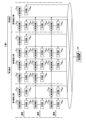
- FIG. 1 is a diagram of a production line to which a GHG emission amount deriving device according to the present embodiment is applied.
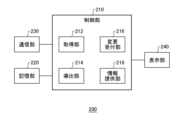
- 1 is a diagram of functional blocks of a GHG emissions deriving device according to the present embodiment.
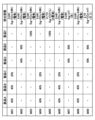
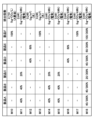
- FIG. It is a figure showing a table of activity amount allocation information. It is a figure showing a table of activity amount allocation information. It is a figure showing a table of activity amount allocation information. It is a figure showing a table of activity amount allocation information. It is a figure showing a table of activity amount allocation information. It is a figure showing a table of activity amount allocation information.
- FIG. 2 is a flowchart for deriving GHG emissions from each activity performed in manufacturing a product for each type of product according to the present embodiment.
- the total GHG emissions in a specific category of a specific product is derived by adding the direct GHG emissions in a specific category of a specific product and the indirect GHG emissions in a specific category of a specific product.
- FIG. 1 illustrates an example computer in which aspects of the present invention may be implemented, in whole or in part.
- FIG. 1 is a diagram showing an example of a manufacturing line to which the GHG emissions deriving device 200 of this embodiment may be applied.
- the three manufacturing lines 1 to 3 manufacture a plurality of types of products through a first manufacturing process to a third manufacturing process.
- Measuring instruments 20 M01 to 20 M18 (hereinafter, sometimes collectively referred to as measuring instruments 20) are attached to the manufacturing apparatuses 10 A01 to 10 A18 (hereinafter sometimes collectively referred to as the manufacturing apparatuses 10).
- Each measuring device 20 measures the amount of electricity, gas, oil, or water used by each manufacturing device 10 .
- Each measuring device 20 and the GHG emission amount deriving device 200 are communicably connected.
- the GHG emissions deriving device 200 calculates the amount of products manufactured through the first to third manufacturing steps based on the amount of electricity, gas, oil, or water used by each manufacturing device 10 measured by each measuring device 20. Determine greenhouse gas emissions (GHG emissions) for each product type.
- FIG. 2 is a functional block diagram of the GHG emissions deriving device 200.
- the GHG emissions deriving device 200 includes a communication section 230, a display section 240, a storage section 220, and a control section 210.
- the communication unit 230 manages communication between each component within the GHG emissions derivation device 200.
- the communication unit 230 also communicates with an external computer via the Internet or the like.
- the storage unit 220 stores programs and the like necessary for deriving GHG emissions.
- the storage unit 220 also stores an activity amount allocation information table, which will be described later.
- the storage unit 220 may also store discharge coefficients for electricity, gas, oil, and water.
- the storage unit 220 may store measurement value data measured by each measuring device 20.
- the storage unit 220 includes, for example, random access memory (RAM), read-only memory (ROM), dynamic RAM (DRAM), synchronous DRAM (SD-RAM), flash memory, volatile memory, non-volatile memory, cache memory, including a buffer, short-term memory unit, long-term storage, or other suitable memory unit.
- Storage 220 includes, for example, a hard disk drive, a floppy disk drive, a compact disc (CD) drive, a CD-ROM drive, a DVD drive, or other suitable removable or non-removable storage.
- the control unit 210 controls the entire GHG emissions derivation device 200.
- the control unit 210 may include a microprocessor such as a CPU or an MPU, a microcontroller such as an MCU, and the like.
- the control unit 210 includes an acquisition unit 212, a derivation unit 214, a change reception unit 216, and an information provision unit 218.
- GHG emissions can be derived by aggregating the amount of activity generated by the activities of organizations such as companies and organizations for each organization, or can be derived by calculating the amount of activity generated by the activities of organizations such as companies and organizations. It can be derived as an evaluation value for carbon footprint, or it can be derived to measure carbon footprint. Here, for example, when multiple manufacturing equipment, etc.
- a GHG emission derivation device 200 that can reduce GHG emissions is provided.
- the GHG emissions deriving device 200 of this embodiment will be described below.
- five types of products, products A, B, C, D, E, and F are manufactured in factory Y of organization X.
- Products A, B, C, D, E, and F are arbitrary products such as daily necessities, electrical appliances, chemical products, industrial products, vehicles, and foodstuffs.
- the first base and the second base correspond to each manufacturing base within Factory Y.
- Production line 1 produces products A, B, and C.
- Production line 2 produces products D and E.
- Production line 3 produces product F.
- the final processes of manufacturing lines 2 and 3 are integrated into the manufacturing apparatus 10 A18 of manufacturing line 1.
- IMDS trademark
- the working days of the factory are 25 days per month.
- product A is produced for 10 days
- product B is produced for 10 days
- product C is produced for 5 days out of 25 working days.
- product D is produced for 10 days
- product E is produced for 15 days out of 25 working days.
- product F is produced for 25 days out of 25 working days.
- Products A, B, and C undergo a first manufacturing process using manufacturing apparatus 10 A01 and manufacturing apparatus 10 A04 . Thereafter, products A, B and C undergo a second manufacturing process using manufacturing apparatus 10 A06 , manufacturing apparatus 10 A08 , manufacturing apparatus 10 A11 and manufacturing apparatus 10 A14 . Finally, products A, B, and C are manufactured through a third manufacturing process using manufacturing apparatus 10 A15 and manufacturing apparatus 10 A18 .
- Products D and E undergo a first manufacturing process using manufacturing apparatus 10 A02 . Thereafter, products D and E undergo a second manufacturing process using manufacturing equipment 10A07 , manufacturing equipment 10A09 , and manufacturing equipment 10A12 . Finally, the products D and E are manufactured through a third manufacturing process using the manufacturing apparatus 10 A16 and the manufacturing apparatus 10 A18 .
- Product F undergoes a first manufacturing process using manufacturing apparatus 10 A03 and manufacturing apparatus 10 A05 . Thereafter, product F undergoes a second manufacturing process using manufacturing apparatus 10 A10 and manufacturing apparatus 10 A13 . Finally, the product F is manufactured through a third manufacturing process using the manufacturing apparatus 10 A17 and the manufacturing apparatus 10 A18 .
- a measuring instrument 20 is attached to each manufacturing apparatus 10.
- Each measuring device 20 measures the amount of electricity, gas, oil, or water consumed for manufacturing each product.
- manufacturing equipment 10 A01 , manufacturing equipment 10 A02 , manufacturing equipment 10 A03 , manufacturing equipment 10 A04 , manufacturing equipment 10 A06 , manufacturing equipment 10 A08 , manufacturing equipment 10 A11 , manufacturing equipment 10 A14 , manufacturing equipment 10 A15 , manufacturing equipment 10A16 , manufacturing device 10A17 , and manufacturing device 10A18 are devices that use electricity.
- the manufacturing apparatus 10A18 also operates with electric power supplied from a solar power generation device.
- the solar power generation device connects the power generated by the solar power generation module with the electric power system of the power company via an inverter, and supplies the power generated by the solar power generation module to the manufacturing device 10 A18 with priority. .
- the manufacturing apparatus 10 A18 operates by receiving power supply (purchased power) from the power grid side to cover the power shortage that could not be covered only by the power generated by the solar power generation module. In addition, the solar power generation device reversely flows (sells) excess power to the power grid.
- Manufacturing device 10 A05 and manufacturing device 10 A10 are devices that use oil.
- Manufacturing device 10 A07 , manufacturing device 10 A12 , and manufacturing device 10 A13 are devices that use water.
- Manufacturing apparatus 10 A09 is an apparatus that uses gas.
- the acquisition unit 212 acquires activity amount information indicating the amount of activity from the plurality of measuring instruments 20 that measure the amount of activity indicating the scale of each activity performed regarding the manufacture of at least one type of product.
- the acquisition unit 212 reads and collects measurement value data from each measuring device 20 stored in the storage unit 220.
- the measuring instruments 20 of the manufacturing equipment involved in manufacturing product A include measuring instrument 20 M01 , measuring instrument 20 M04 , measuring instrument 20 M06 , measuring instrument 20 M08 , measuring instrument 20 M11 , measuring instrument 20 M14 , measuring instrument 20 M15 , and
- the measuring instrument is 20 M18 .
- the measurement values of these measuring instruments collected by the acquisition unit 212 over 25 working days were as follows.
- Electricity consumption measured by measuring device 20 M01 is 1000kWh Electricity usage measured by measuring device 20 M04 is 1000kWh Electricity usage measured by measuring device 20 M06 is 1000kWh Electricity consumption measured by measuring device 20 M08 is 1000kWh Electricity usage measured by measuring device 20 M11 is 1000kWh Electricity usage measured by measuring device 20 M14 is 1000kWh Electricity usage measured by measuring device 20 M15 is 1000kWh Electricity usage measured by measuring device 20 M18 is 1000kWh
- the derivation unit 214 generates activity amount allocation information indicating the type of at least one product and the proportion of the activity amount to be allocated to at least one product, in order to allocate the respective activity amounts measured by the plurality of measuring instruments 20. Based on the quantity information, the GHG emissions of each activity performed in connection with the manufacturing of the product are derived for each type of product. Specifically, the derivation unit 214 reads the activity amount allocation information tables shown in FIGS. 3A, 3B, 3C, and 3D stored in the storage unit 220. The activity amount allocation information table may be created by allocating a measuring device and manufacturing time or number of days to each type of product in advance based on a manufacturing plan.
- the activity amount allocation information table may be created by allocating the measuring device 20 and manufacturing time or number of days to each type of product as a result based on the classification and counting of items that actually passed through the manufacturing line.
- the storage unit 220 may store the activity amount allocation information tables shown in FIGS. 3A, 3B, 3C, and 3D.
- the storage unit 220 may store at least two of the activity amount allocation information tables shown in FIGS. 3A, 3B, 3C, and 3D as one table.
- the column direction of the activity amount allocation information table includes columns indicating products A to F.
- the row direction of the activity amount allocation information table includes rows indicating measuring devices 20 M01 to M18 .
- the ratio of product A to container 20 M18 is all 40%.
- the derivation unit 214 further reads the GHG emission coefficient of electricity stored in the storage unit 220.
- the GHG emission coefficient of electricity is 0.441 (kg-CO 2 /kWh). Therefore, the derivation unit 214 multiplies the electricity consumption measured by these measuring instruments 20 by the GHG emission coefficient of electricity and the ratio of product A to obtain the GHG emissions due to electricity consuming activities performed in the manufacture of product A. Derive.
- the derivation unit 214 derives the amount of GHG emissions due to activities that consume electricity performed in connection with the manufacture of product A for each measuring device 20.
- the GHG emission amount derived for each product type may be a value that takes yield into consideration.
- the derivation unit 214 calculates the activity amount obtained by subtracting the quantity of products removed as defective products from the total number of products manufactured in the relevant type after the final process, from among the activity data acquired by each measuring device 20. May be used to derive emissions.
- the derivation unit 214 may identify defective products in each process and derive the GHG emissions according to the amount of activity used for the products excluding the defective products. Note that here, the deriving unit 214 may total the GHG emissions derived for each measuring device 20.
- the derivation unit 214 uses the electricity emission coefficient stored in the storage unit 220, but the derivation unit 214 communicates with an external computer via the communication unit 230, for example. It is also possible to obtain the emission factor.
- the amount of GHG emissions was calculated by multiplying the amount of activity by the emission coefficient, but the amount of GHG emissions may be directly measured as the amount of activity.
- the emission factor may be unique (primary data) for each organization, base, production line, product type, etc. In this case, the emission coefficient may be expressed based on a numerical value measured in advance through experiments or the like. Emission factors may be based on industry-related tables or various accumulation formulas (secondary data).
- Secondary data emission factors may be used when primary data emission factors are not available.
- the manufacturing apparatus 10 A018 also operates using electric power supplied from a solar power generation device.
- the emission factor of electricity generated by a solar power generation device is zero.
- the amount of power generated by the solar power generation device is measured every month, and the monthly average value is derived and stored in the storage unit 220.
- the deriving unit 214 may derive the GHG emissions by multiplying the value obtained by subtracting the monthly average value of the amount of power generated by sunlight from the value measured by the measuring device 20 M018 by the emission coefficient.
- any manufacturing device 10 may be provided with a GHG absorption and fixation device.
- a GHG absorption and fixation device is a device that absorbs and fixes CO2 , and uses technologies such as CCS (carbon capture and storage), CCUS (carbon capture and utilization storage), and DAC (direct air capture) to absorb and fix CO2 . You may do so.
- the derivation unit 214 may subtract the amount of GHG emissions absorbed by the GHG absorption and fixation device when deriving the amount of GHG emissions.
- the derivation unit 214 may derive the amount of GHG reduction (for example, by carbon credits, etc.) offset from the total amount of GHG emissions without subtracting the amount of GHG emissions absorbed by the GHG absorption and fixation device. .
- the amount of GHG emissions that can be absorbed by the GHG absorption and fixation device may be measured in advance through an experiment or the like, and the amount of CO 2 absorbed per hour may be stored in the storage unit 220, for example.
- the acquisition unit 212 may acquire the GHG absorption amount from the GHG absorption and fixation device. At least one GHG absorption and fixation device may be installed in each manufacturing process or each site.
- each manufacturing apparatus 10 is provided with each measuring device 20, and the ratio of each product to each measuring device 20 is specified in the activity amount allocation information table. For this reason, when a plurality of manufacturing devices 10 are operated on a complex manufacturing line in a factory or the like to manufacture a plurality of products, the GHG emissions emitted by each manufacturing device 20 during the manufacturing of each product are calculated for each type of product. can be derived with high accuracy.
- the change reception unit 216 receives changes in at least one of the type of product associated with each of the plurality of measuring instruments 20 indicated in the activity amount allocation information and the proportion of the amount of activity allocated to the product.
- the user can add, delete, or change the type of product in the activity amount allocation information table via the change reception unit 216.
- the user can change the ratio of each product to each measuring device 20 in the activity amount allocation information table via the change reception unit 216.
- the change reception unit 216 changes the ratio of each product to each measuring device 20 in the activity amount allocation information table according to the type and number of raw materials passing through each measuring device 20, operating hours or days, etc. Good too.
- the activity amount allocation information may further indicate, for each of the plurality of measuring instruments 20, an emission coefficient according to the type of activity to be measured. Further, the derivation unit 214 may derive the GHG emissions based further on the emission coefficient shown in the activity amount allocation information. Specifically, as shown in FIGS. 3A and 3B, the activity amount allocation information table includes discharge coefficients for electricity, gas, oil, and water. In deriving the GHG emissions due to activities that consume electricity performed in connection with the production of product A by the deriving unit 214 described above, the deriving unit 214 used the emission coefficients stored in the storage unit 220. On the other hand, here, each emission coefficient is held in the activity amount allocation information table.
- the derivation unit 214 applies the electricity, gas, oil, or water emission coefficients held in the activity amount allocation information table to the electricity consumption, gas consumption, oil consumption, or water consumption measured by each measuring device 20, respectively. Multiply to derive GHG emissions.
- the derivation method is the same as described above, so it will not be repeated.
- the change reception unit 216 may accept changes in at least one of the type of product, the proportion of the amount of activity allocated to the product, and the emission factor associated with each of the plurality of measuring instruments 20 indicated in the activity amount allocation information.
- the user can add, delete, or change the type of product in the activity amount allocation information table via the change reception unit 216.
- the user can change the ratio of each product to each measuring device in the activity amount allocation information table via the change reception unit 216.
- the user can add, delete, or change each emission factor in the activity amount allocation information table via the change reception unit 216.
- the information providing unit 218 causes the display unit 240 to display information indicating the GHG emissions derived by the deriving unit 214.
- the display unit 240 may be connected to the GHG emissions deriving device 200 via a network as a separate device from the GHG emissions deriving device 200.
- a display of a user terminal such as a personal computer or a smartphone may function as the display unit 240.
- the information providing unit 218 may display the GHG emissions derived by the deriving unit 214 on the display unit 240 for each type of product and for each of the plurality of measuring instruments 20.
- the information providing unit 218 may display the GHG emissions derived by the deriving unit 214 on the display unit 240 for each product type and for each of a plurality of categories to be described later.
- the information providing unit 218 may display a list of GHG emissions emitted by each manufacturing device 10 on the display unit 240.
- the information providing unit 218 may cause the display unit 240 to display a list of GHG emissions emitted by each manufacturing apparatus 10 for each category.
- the information providing unit 218 may cause the display unit 240 to display the amount of GHG emissions emitted by each manufacturing device 10 in the target year and in the comparison year in parallel.
- the information providing unit 218 may display on the display unit 240 the amount of GHG emissions emitted by each manufacturing device 10 for each category in parallel with the target year and the comparison year.
- the information providing unit 218 may cause the display unit 240 to display manufacturing apparatuses 10 that emit GHG emissions equal to or greater than a threshold value among the GHG emissions emitted by each manufacturing apparatus 10 .
- the information providing unit 218 may display the manufacturing apparatuses 10 on the display unit 240 in order of increasing or decreasing GHG emissions.
- the information providing unit 218 determines, among a plurality of manufacturing lines that manufacture the same product through the same process, GHG emissions that are higher than the GHG emissions emitted by the manufacturing equipment 10 of other manufacturing lines by a predetermined percentage or more.
- the display unit 240 may display the manufacturing apparatus 10 to be discharged.
- the information providing unit 218 displays the amount of activity (for example, electricity usage) in any arbitrary manner, such as in units of 1 second, 5 seconds, 30 seconds, 1 minute, 5 minutes, 30 minutes, 1 hour, 6 hours, etc. It may be displayed on the display unit 240 in units of time. At this time, the information providing unit 218 may display the amount of GHG emissions in the same time unit on the display unit 240 in addition to the amount of activity.
- the information providing unit 218 may group certain measuring instruments 20 into groups for each manufacturing process, and display on the display unit 240 the activity amount allocation (ratio) for each type of product in a list or breakdown for each manufacturing process.
- the information providing unit 218 may cause the display unit 240 to display a list or breakdown of the amount of activity allocated to each type of product for each device (for example, a sequencer) to which a certain measuring device 20 is attached.
- the information providing unit 218 may display on the display unit 240 a list or a breakdown of activity amounts (electricity usage, water usage, gas usage, oil usage, and other activity amounts) that differ for each type of product.
- Activities performed in connection with manufacturing a product may be activities that consume at least one of electricity, gas, oil, and water.
- the amount of activity measured by the plurality of measuring devices 20 may be the usage amount of any one of electricity, gas, oil, and water.
- all activities performed in connection with manufacturing product A were activities that consumed electricity.
- product D manufactured on production line 2 consumes water (measuring instrument 20 M07 and measuring instrument 20 M12 ) and gas (measuring instrument 20 M09 ) in the second manufacturing process in addition to activities that consume electricity. Includes activities.
- product F manufactured on production line 3 consumes oil (measuring instrument 20 M05 ) in the first manufacturing process, and oil (measuring instrument 20 M10 ) and water (measuring instrument 20) in the second manufacturing process. Activities that consume 20 M13 ) are included. Activities performed in connection with manufacturing a product may be activities that consume fuel.
- Fuels include solid fuels (coking coal, thermal coal, anthracite, coke, petroleum coke, briquettes or pea charcoal, wood, charcoal, and other solid fuels), liquid fuels (coal tar, petroleum asphalt, condensate, and crude oil (condensate (NGL)).
- the activity performed may be an activity that consumes at least one of heat and steam.
- Activities performed in connection with manufacturing a product may be divided into multiple categories.
- the activity amount allocation information may indicate at least one division among the plurality of divisions in association with each of the plurality of measuring instruments 20.
- the derivation unit 214 may derive the GHG emissions of each activity performed in connection with product manufacturing for each product type, for each category. Activities that consume electricity, gas, oil, or water performed in connection with the production of products A to F are, for example, factory Y, the first base and the second base, the first manufacturing process, the second manufacturing process, and the third manufacturing process, It can also be divided into production line 1, production line 2, and production line 3.
- the derivation unit 214 calculates the measuring instruments 20 M01 , 20 M04 , 20 M06 , 20 M08 , and 20 M08 instruments included in production line 1.
- 20 M11 , measuring device 20 M14 , measuring device 20 M15 , and measuring device 20 M18 are multiplied by respective emission coefficients, and the respective GHG emissions derived are summed.
- the derivation unit 214 calculates the measuring instruments 20 M06 , 20 M07 , 20 M08 , 20 M09 , and 20 M09 instruments included in the second manufacturing process.
- the derivation unit 214 calculates the measured values of the measuring instruments 20 M15 , 20 M16 , 20 M17 , and 20 M18 included in the second base. The GHG emissions derived by multiplying each emission factor are summed. To derive the GHG emissions in the category of factory Y, the derivation unit 214 multiplies each measurement value of all measuring instruments included in factory Y by each emission coefficient and totals the derived GHG emissions.
- the table of activity amount allocation information shown in FIGS. 3C and 3D includes columns indicating production line, base, factory, organization, supply point, and power receiving point as classification information. Of course, the example of classification here is only one example, and various other classifications may be included in the table of activity amount allocation information depending on implementation needs.
- Activities performed in connection with product manufacturing are divided into (1) product manufacturing line units, (2) product manufacturing unit units, (3) product manufacturing organizational units, and (4) product manufacturing units. It may be divided into a plurality of categories based on the unit of supply point or power receiving point of electricity consumed by the manufacturing apparatus 10 used, or (5) the unit of the supply chain for manufacturing the product.
- the GHG emissions are derived in the category of production line 1. That is, the deriving unit 214 may derive the GHG emissions based on activities that consume electricity, gas, oil, or water that are performed in connection with manufacturing the product for each product manufacturing line.
- the derivation unit 214 derives the GHG emissions in the category of factory Y, as described above.
- the amount of GHG emissions based on the activities performed in connection with product manufacturing may be derived for each facility such as factory Y.
- the derivation unit 214 may derive the GHG emissions based on the activities performed in relation to the manufacturing of the product in units of organization X. For example, if organization GHG emissions may be derived based on the activities performed in connection with manufacturing.
- the activity amount allocation information table shown in FIGS. 3C and 3D includes columns indicating supply points and power receiving points, and these columns include 22-digit numbers.
- the supply point number is a 22-digit number for specifying the location where electricity is used.
- the power reception point number is a 22-digit number for specifying the location of renewable energy (solar power, etc.) power generation equipment.
- ⁇ - ⁇ - ⁇ - ⁇ - ⁇ - ⁇ - ⁇ " may be assigned.
- the derivation unit 214 operates in units of the measuring instruments 20 M01 , 20 M02 , 20 M03 , 20 M04 , 20 M06 , 20 M08 , 20 M11 , and 20 M14 .
- GHG emissions may be derived based on the electricity, gas, oil or water consuming activities performed in connection with the manufacture of the product.
- the derivation unit 214 may derive GHG emissions based on activities that consume electricity, gas, oil, or water that are performed in connection with product manufacturing in units of the product manufacturing supply chain.
- the supply chain includes other organizations related to Organization X's activities. For example, if organization A and organization B are included in the supply chain of products A to F of organization X, the units of the supply chain can be GHG emissions can be derived using this method, making it especially easy to calculate Scope 3 GHG emissions.
- Activities performed in connection with the manufacturing of products may be activities that use electricity.
- the acquisition unit 212 may further acquire electricity usage information indicating the electricity usage of a specific category.
- the deriving unit 214 may derive the total GHG emissions of a specific category based on the amount of electricity used shown in the electricity usage information.
- the derivation unit 214 may derive the direct GHG emissions amount of a specific category from the activity amount measured by each measuring device 20 belonging to the specific category based on the activity amount allocation information.
- the derivation unit 214 derives the indirect GHG emissions due to the use of electricity associated with activities that are not measured by the plurality of measuring instruments 20 in a specific category by subtracting the direct GHG emissions from the total GHG emissions. You may do so.
- the derivation unit 214 may derive the indirect GHG emissions in a specific category of a specific type of product by multiplying the indirect GHG emissions by a predetermined ratio for the specific type of product.
- the derivation unit 214 calculates the specific type by adding the indirect GHG emissions in the specific category of the specific type of product to the direct GHG emissions in the specific category of the specific type of product based on the activity amount allocation information.
- the total GHG emissions for a particular category of products may be derived.
- the acquisition unit 212 may acquire electricity usage information indicating the electricity usage of the first base, which is stored in the storage unit 220.
- the electricity usage information is the electricity usage shown on the monthly electricity receipt.
- the electricity usage amount shown on the electricity receipt for a certain month at the first base is 10,000 kWh.
- the acquisition unit 212 acquires 10,000 kWh as electricity usage information for a certain month at the first base.
- the derivation unit 214 derives the total GHG emissions of the first base, which is a specific category, based on the electricity usage amount of 10,000 kWh shown in the electricity usage information.
- the total GHG emission amount refers to the GHG emission amount that is the sum of the direct GHG emission amount and the indirect GHG emission amount, which will be described later.
- the derivation unit 214 multiplies the electricity usage amount of 10,000 kWh by the electricity emission coefficient of 0.441 (kg-CO 2 /kWh) to derive the total GHG emissions of the first base of 4410 (kg-CO 2 ). .
- the deriving unit 214 refers to the activity amount allocation information table and determines whether the measuring devices 20 that measure electricity usage belonging to the first base are the measuring device 20 M01 , the measuring device 20 M02 , the measuring device 20 M03 , or the measuring device 20 M02 , the measuring device 20 M03 , or They are identified as the measuring device 20 M04 , the measuring device 20 M06 , the measuring device 20 M08 , the measuring device 20 M11 and the measuring device 20 M14 .
- the derivation unit 214 calculates the measuring device 20 M01 , the measuring device 20 M02 , the measuring device 20 M03 , the measuring device 20 M04 , the measuring device 20 M06 , the measuring device 20 M08 , and the measuring device 20 in the certain month stored in the storage unit 220 .
- M11 and the measuring device 20 M14 identify the amount of electricity used, respectively, and add up the respective values.
- the total value was 8,000kWh.
- the derivation unit 214 multiplies the total electricity consumption of 8,000 kWh by the electricity emission coefficient of 0.441 (kg-CO 2 /kWh), and calculates the amount for manufacturing the products for the certain month at the first base. Derive the amount of direct GHG emissions emitted.
- the amount of GHG emissions directly derived from the usage amount emitted for manufacturing a product and measured by the meter 20 is referred to as direct GHG emissions.
- the derivation unit 214 multiplies 8000 (kWh) by 0.441 (kg-CO 2 /kWh) to derive the direct GHG emissions amount of 3528 (kg-CO 2 ) at the first site.
- the derivation unit 214 subtracts the direct GHG emissions of the first site, 3528 (kg-CO 2 ), from the total GHG emissions of the first site, 4410 (kg-CO 2 ), to obtain the indirect GHG emissions of 882. (kg-CO 2 ) is derived.
- indirect GHG emissions refer to GHG emissions due to the use of electricity associated with activities that are not measured by meters.
- Indirect GHG emissions include, for example, GHG emissions due to the use of electricity in places where products are not directly manufactured, such as the break room, office, and toilet at the first site.
- the derivation unit 214 multiplies the indirect emissions 882 (kg-CO 2 ) by a predetermined ratio for the specific type of product, thereby calculating the indirect GHG emissions at the first site for the specific type of product. Derive emissions.
- the predetermined ratio may be determined based on, for example, the number of products sold or produced. Here, the predetermined ratios are 20%, 20%, 20%, 15%, 15%, and 10% for product A, product B, product C, product D, product E, and product F, respectively.
- the deriving unit 214 multiplies the indirect GHG emissions amount 882 (kg-CO 2 ) by 0.2 to derive the indirect GHG emissions amount 176.4 (kg-CO 2 ) for product A at the first site. Note that the predetermined ratio may be recorded in the activity amount allocation information table.
- the derivation unit 214 derives the direct GHG emissions of product A at the first site based on the activity amount allocation information table.
- the derivation unit 214 refers to the activity amount allocation information table and determines that the measuring instruments that measure the amount of electricity used in manufacturing product A at the first site are measuring instrument 20 M01 , measuring instrument 20 M04 , measuring instrument 20 M06 , They are identified as measuring instrument 20 M08 , measuring instrument 20 M11 , and measuring instrument 20 M14 .
- the derivation unit 214 stores information about the certain month that was measured by the measuring instruments 20 M01 , 20 M04 , 20 M06 , 20 M08 , 20 M11 and 20 M14 , respectively, which are stored in the storage unit 220 .
- the derivation unit 214 multiplies 6000 kWh by the emission coefficient 0.441 (kg-CO 2 /kWh) and the ratio 40% to obtain the direct GHG emissions of product A at the first site as 1058.4 (kg-CO 2 /kWh). ) is derived. After that, the derivation unit 214 adds the direct GHG emissions of product A at the first site of 1058.4 (kg-CO 2 ) to the already derived indirect GHG emissions of product A at the first site of 176.4 (kg-CO 2 ). 2 ) to derive the total GHG emissions of product A at the first site of 1234.8 (kg-CO 2 ).
- the activity amount allocation information table includes a plurality of categories, and the GHG emissions can be derived for each category, and the GHG emissions can be calculated in various units.
- direct GHG emissions and indirect GHG emissions in a specific category of a specific product can be derived by the ratio of each product to the meter and the predetermined ratio of a specific product to indirect GHG emissions, and The overall GHG emissions for a particular category of a particular product can also be derived.
- the GHG emissions deriving device by introducing the GHG emissions deriving device according to this embodiment into the supply chain, calculation of GHG emissions in the supply chain becomes easy.
- the type of product, the proportion of activity amount allocated to the product, and the emission coefficient, which are shown in the activity amount allocation information table can be changed as appropriate via the change reception unit 216. Therefore, even if the types of products manufactured in a product line, the ratio of products, etc. are changed, it is only necessary to modify the contents shown in the activity amount allocation information table.
- FIG. 4 is a flow diagram for deriving GHG emissions from each activity performed in connection with product manufacturing for each product type, according to the present embodiment.
- the acquisition unit 212 acquires the amount of electricity, gas, oil, or water used in manufacturing at least one type of product from the plurality of measuring instruments 20 .
- the acquisition unit 212 acquires measurement value data stored in the storage unit 220.
- the acquisition unit 212 acquires measuring instruments 20 M01 , measuring instruments 20 M04 , measuring instruments 20 M06 , measuring instruments 20 M08 , measuring instruments 20 M11 , and measuring instruments 20 M01 , 20 M04 , 20 M06 , 20 M08 , 20 M11 , and The amount of electricity used measured by the measuring device 20 M14 , the measuring device 20 M15 , and the measuring device 20 M18 is acquired.
- the derivation unit 214 adds each emission coefficient and the product proportion to the obtained electricity, gas, oil, or water usage amount based on the activity amount allocation information indicating the type of product and the proportion of the activity amount allocated to the product.
- Multiply by The derivation unit 214 refers to the activity mass allocation information table stored in the storage unit 220, and determines the measuring instruments 20 M01 , 20 M04 , 20 M06 , 20 M08 , and 20 M08 involved in the manufacturing of product A. The ratio of product A to instrument 20 M11 , instrument 20 M14 , instrument 20 M15 and instrument 20 M18 and the emission factors associated with these instruments are identified.
- the derivation unit 214 multiplies the obtained electricity consumption by the emission coefficient and the proportion of product A.
- the derivation unit 214 derives the value of the multiplication result as the amount of GHG emissions caused by activities that consume electricity, gas, oil, or water performed in connection with manufacturing the product.
- the derivation unit 214 derives the value of the multiplication result as the amount of GHG emissions due to electricity consuming activities performed in connection with the manufacture of product A. The flow ends.
- FIG. 5 is a flowchart of adding the direct GHG emissions and indirect GHG emissions in a specific category of a specific product to derive the total GHG emissions in a specific category of a specific product, according to the present embodiment. be.
- the acquisition unit 212 acquires the amount of electricity used in a specific category. For example, the acquisition unit 212 acquires 10,000 kWh as the amount of electricity used at the first base in a certain month, which is stored in the storage unit 220.
- the derivation unit 214 multiplies the electricity usage amount acquired by the acquisition unit 212 by the emission coefficient to derive the total GHG emission amount for the specific category.
- the derivation unit 214 multiplies the electricity usage amount of 10,000 kWh acquired by the acquisition unit 212 in S200 by the electricity emission coefficient of 0.441 (kg-CO 2 /kWh) to obtain the total GHG emissions of the first base 4410 ( kg-CO 2 ).
- the derivation unit 214 derives the direct GHG emissions of the specific category by multiplying the amount of electricity used measured by each meter 20 belonging to the specific category by the emission coefficient based on the activity amount allocation information table. .
- the deriving unit 214 refers to the activity amount allocation information table stored in the storage unit 220, and determines that the measuring devices that measure the electricity usage belonging to the first base are the measuring device 20 M01 and the measuring device 20 M02 . , measuring device 20 M03 , measuring device 20 M04 , measuring device 20 M06 , measuring device 20 M08 , measuring device 20 M11 , and measuring device 20 M14 .
- the deriving unit 214 extracts the measuring device 20 M01 , the measuring device 20 M02 , the measuring device 20 M03 , the measuring device 20 M04 , the measuring device 20 M06 , the measuring device 20 M08 , and the measuring device 20 from the measurement value data stored in the storage unit 220 .
- M11 and the measuring device 20 M14 identify the amount of electricity used, respectively, and add up the respective values.
- the total value is 8,000kWh.
- the derivation unit 214 multiplies the total electricity consumption of 8,000 kWh by the electricity emission coefficient of 0.441 (kg-CO 2 /kWh), and calculates the amount for manufacturing the products for the certain month at the first base.
- the amount of GHG emissions emitted that is, the amount of direct GHG emissions is derived.
- the derivation unit 214 multiplies 8,000 (kWh) by 0.441 (kg-CO 2 /kWh) to derive the direct GHG emissions amount of 3528 (kg-CO 2 ) at the first site.
- the derivation unit 214 subtracts the direct GHG emissions of the specific category from the total GHG emissions of the specific category to derive the indirect GHG emissions of the specific category.
- the derivation unit 214 subtracts the direct GHG emissions of the first base, 3528 (kg-CO 2 ), from the total GHG emissions of the first base, 4410 (kg-CO 2 ), to obtain the indirect GHG emissions of the first base, 882. (kg-CO 2 ) is derived.
- the derivation unit 214 multiplies the indirect GHG emissions by a predetermined ratio for the specific type of product to derive the indirect GHG emissions in the specific category of the specific product. Assume that the predetermined percentage for product A is 20%.
- the derivation unit 214 multiplies the indirect GHG emissions amount 882 (kg-CO 2 ) at the first site derived in S206 by 0.2 to obtain the indirect GHG emissions amount 176.4 (kg-CO 2 ) at the first site for product A. CO 2 ) is derived.
- the derivation unit 214 adds the indirect GHG emissions in the specific category of the specific product to the direct GHG emissions in the specific category of the specific product, based on the activity amount allocation information, to determine the amount of indirect GHG emissions in the specific category of the specific product. Derive the total GHG emissions in a specific category. First, the derivation unit 214 derives the direct GHG emissions of product A at the first site based on the activity amount allocation information table.
- the deriving unit 214 refers to the activity amount allocation information table, and determines that the measuring instruments 20 that measure the amount of electricity used in the manufacturing of product A at the first site are measuring instrument 20 M01 , measuring instrument 20 M04 , and measuring instrument 20 M06 , measuring instrument 20 M08 , measuring instrument 20 M11 , and measuring instrument 20 M14 .
- the derivation unit 214 stores information about the certain month that was measured by the measuring instruments 20 M01 , 20 M04 , 20 M06 , 20 M08 , 20 M11 and 20 M14 , respectively, which are stored in the storage unit 220 . Determine the amount of electricity used and add up each value. The total value was 6,000kWh. The ratio of product A to these measuring instruments is all 40%.
- the derivation unit 214 multiplies 6000 kWh by the emission coefficient 0.441 (kg-CO 2 /kWh) and the product ratio 40% to obtain the direct GHG emissions of product A at the first site of 1058.4 (kg-CO 2 /kWh). CO 2 ) is derived. Subsequently, the derivation unit 214 calculates the direct GHG emissions of product A at the first site of 1058.4 (kg-CO 2 ) and the indirect GHG emissions of product A at the first site of 176.4 (kg-CO 2 ) derived in S208. -CO 2 ) to derive the total GHG emissions of product A at the first site of 1234.8 (kg-CO 2 ). The flow ends.
- FIG. 6 illustrates an example computer 1200 in which aspects of the invention may be implemented, in whole or in part.
- a program installed on computer 1200 can cause computer 1200 to function as one or more "parts" of or operations associated with a device according to an embodiment of the present invention.
- the program may cause the computer 1200 to perform the operation or the one or more "units".
- the program can cause the computer 1200 to execute a process or a step of the process according to an embodiment of the present invention.
- Such programs may be executed by CPU 1212 to cause computer 1200 to perform certain operations associated with some or all of the blocks in the flowcharts and block diagrams described herein.
- the computer 1200 includes a CPU 1212 and a RAM 1214, which are interconnected by a host controller 1210.
- Computer 1200 also includes a communication interface 1222 and an input/output unit that are connected to host controller 1210 via input/output controller 1220.
- Computer 1200 also includes ROM 1230.
- the CPU 1212 operates according to programs stored in the ROM 1230 and RAM 1214, thereby controlling each unit.
- the communication interface 1222 communicates with other electronic devices via the network.
- a hard disk drive may store programs and data used by CPU 1212 within computer 1200.
- ROM 1230 stores therein programs that are executed by computer 1200 upon activation, such as a boot program, and/or programs that are dependent on the computer 1200 hardware.
- the program is provided via a computer-readable recording medium such as a CD-ROM, USB memory, or IC card, or via a network.
- the program is installed in RAM 1214 or ROM 1230, which is also an example of a computer-readable recording medium, and is executed by CPU 1212.
- the information processing described in these programs is read by the computer 1200 and provides coordination between the programs and the various types of hardware resources described above.
- An apparatus or method may be configured to implement operations or processing of information according to the use of computer 1200.
- the CPU 1212 executes a communication program loaded into the RAM 1214 and sends communication processing to the communication interface 1222 based on the processing written in the communication program. You can give orders.
- the communication interface 1222 reads transmission data stored in a transmission buffer area provided in the RAM 1214 or a recording medium such as a USB memory, and transmits the read transmission data to a network, or The received data received from the network is written to a receive buffer area provided on the recording medium.
- the CPU 1212 also causes all or a necessary portion of a file or database stored on an external storage medium such as a USB memory to be read into the RAM 1214, and performs various types of processing on the data on the RAM 1214. good. CPU 1212 may then write the processed data back to an external storage medium.
- an external storage medium such as a USB memory
- CPU 1212 performs various types of operations, information processing, conditional determination, conditional branching, unconditional branching, and information retrieval on data read from RAM 1214 as described elsewhere in this disclosure and specified by the program's instruction sequence. Various types of processing may be performed, including /substitutions, etc., and the results are written back to RAM 1214. Further, the CPU 1212 may search for information in a file in a recording medium, a database, or the like.
- the CPU 1212 search the plurality of entries for an entry that matches the condition, read the attribute value of the second attribute stored in the entry, and thereby associate it with the first attribute that satisfies the predetermined condition.
- the attribute value of the second attribute may be acquired.
- the programs or software modules described above may be stored in a computer-readable storage medium on or near computer 1200.
- a storage medium such as a hard disk or RAM provided in a server system connected to a dedicated communication network or the Internet can be used as a computer-readable storage medium, thereby allowing the program to be transferred to the computer 1200 over the network. provide.
- the computer-readable medium may include any tangible device capable of storing instructions for execution by a suitable device.
- a computer-readable medium having instructions stored thereon will comprise an article of manufacture that includes instructions that can be executed to create a means for performing the operations specified in the flowchart or block diagram.
- Examples of computer readable media may include electronic storage media, magnetic storage media, optical storage media, electromagnetic storage media, semiconductor storage media, and the like.
- Computer readable media include floppy disks, diskettes, hard disks, random access memory (RAM), read only memory (ROM), erasable programmable read only memory (EPROM or flash memory), Electrically Erasable Programmable Read Only Memory (EEPROM), Static Random Access Memory (SRAM), Compact Disc Read Only Memory (CD-ROM), Digital Versatile Disk (DVD), Blu-ray (RTM) Disc, Memory sticks, integrated circuit cards, etc. may be included.
- RAM random access memory
- ROM read only memory
- EPROM or flash memory erasable programmable read only memory
- EEPROM Electrically Erasable Programmable Read Only Memory
- SRAM Static Random Access Memory
- CD-ROM Compact Disc Read Only Memory
- DVD Digital Versatile Disk
- RTM Blu-ray
- Computer readable instructions may include either source code or object code written in any combination of one or more programming languages.
- Source code or object code includes conventional procedural programming languages.
- Traditional procedural programming languages include assembler instructions, Instruction Set Architecture (ISA) instructions, machine instructions, machine-dependent instructions, microcode, firmware instructions, state configuration data, or Smalltalk®, JAVA®, C++ etc., and the "C" programming language or similar programming language.
- Computer-readable instructions may be implemented on a processor or programmable circuit of a general purpose computer, special purpose computer, or other programmable data processing device, either locally or over a wide area network (WAN), such as a local area network (LAN), the Internet, etc. ).
- WAN wide area network
- LAN local area network
- the Internet etc.
- a processor or programmable circuit may execute computer-readable instructions to create a means for performing the operations specified in the flowchart or block diagram.
- processors include computer processors, processing units, microprocessors, digital signal processors, controllers, microcontrollers, and the like.
Landscapes
- Engineering & Computer Science (AREA)
- Business, Economics & Management (AREA)
- Strategic Management (AREA)
- General Physics & Mathematics (AREA)
- Economics (AREA)
- Physics & Mathematics (AREA)
- Human Resources & Organizations (AREA)
- General Business, Economics & Management (AREA)
- Entrepreneurship & Innovation (AREA)
- Marketing (AREA)
- Tourism & Hospitality (AREA)
- Quality & Reliability (AREA)
- Theoretical Computer Science (AREA)
- Manufacturing & Machinery (AREA)
- Health & Medical Sciences (AREA)
- General Engineering & Computer Science (AREA)
- General Health & Medical Sciences (AREA)
- Automation & Control Theory (AREA)
- Development Economics (AREA)
- Educational Administration (AREA)
- Primary Health Care (AREA)
- Game Theory and Decision Science (AREA)
- Operations Research (AREA)
- Management, Administration, Business Operations System, And Electronic Commerce (AREA)
- General Factory Administration (AREA)
Applications Claiming Priority (2)
| Application Number | Priority Date | Filing Date | Title |
|---|---|---|---|
| JP2022137002A JP7248259B1 (ja) | 2022-08-30 | 2022-08-30 | Ghg排出量導出装置、ghg排出量導出方法及びプログラム |
| JP2022-137002 | 2022-08-30 |
Publications (1)
| Publication Number | Publication Date |
|---|---|
| WO2024047882A1 true WO2024047882A1 (ja) | 2024-03-07 |
Family
ID=85726020
Family Applications (1)
| Application Number | Title | Priority Date | Filing Date |
|---|---|---|---|
| PCT/JP2022/045572 Ceased WO2024047882A1 (ja) | 2022-08-30 | 2022-12-09 | Ghg排出量導出装置、ghg排出量導出方法及びプログラム |
Country Status (2)
| Country | Link |
|---|---|
| JP (2) | JP7248259B1 (https=) |
| WO (1) | WO2024047882A1 (https=) |
Families Citing this family (2)
| Publication number | Priority date | Publication date | Assignee | Title |
|---|---|---|---|---|
| JP2025002022A (ja) * | 2023-06-21 | 2025-01-09 | booost technologies株式会社 | 管理装置、管理方法および管理プログラム |
| WO2025088976A1 (ja) * | 2023-10-27 | 2025-05-01 | パナソニックIpマネジメント株式会社 | 環境負荷情報算出方法および装置 |
Citations (3)
| Publication number | Priority date | Publication date | Assignee | Title |
|---|---|---|---|---|
| JP2010134663A (ja) * | 2008-12-04 | 2010-06-17 | Hitachi Ltd | 温室効果ガス監視装置 |
| JP2011191074A (ja) * | 2010-03-11 | 2011-09-29 | Ishida Co Ltd | 計量システムおよび包装システム |
| JP2012247954A (ja) * | 2011-05-26 | 2012-12-13 | Hitachi Ltd | 温室効果ガス排出量管理装置 |
-
2022
- 2022-08-30 JP JP2022137002A patent/JP7248259B1/ja active Active
- 2022-12-09 WO PCT/JP2022/045572 patent/WO2024047882A1/ja not_active Ceased
-
2023
- 2023-03-06 JP JP2023034142A patent/JP2024035036A/ja active Pending
Patent Citations (3)
| Publication number | Priority date | Publication date | Assignee | Title |
|---|---|---|---|---|
| JP2010134663A (ja) * | 2008-12-04 | 2010-06-17 | Hitachi Ltd | 温室効果ガス監視装置 |
| JP2011191074A (ja) * | 2010-03-11 | 2011-09-29 | Ishida Co Ltd | 計量システムおよび包装システム |
| JP2012247954A (ja) * | 2011-05-26 | 2012-12-13 | Hitachi Ltd | 温室効果ガス排出量管理装置 |
Also Published As
| Publication number | Publication date |
|---|---|
| JP2024033432A (ja) | 2024-03-13 |
| JP2024035036A (ja) | 2024-03-13 |
| JP7248259B1 (ja) | 2023-03-29 |
Similar Documents
| Publication | Publication Date | Title |
|---|---|---|
| Zaporozhets | Correlation analysis between the components of energy balance and pollutant emissions | |
| Kebede et al. | Can the urban poor afford modern energy? The case of Ethiopia | |
| Talaei et al. | Assessment of the impacts of process-level energy efficiency improvement on greenhouse gas mitigation potential in the petroleum refining sector | |
| CN113723718A (zh) | 一种能源碳排放预测方法、装置、设备及介质 | |
| JP7248259B1 (ja) | Ghg排出量導出装置、ghg排出量導出方法及びプログラム | |
| Lee et al. | Gasoline demand elasticities in the world’s energy gluttons: a time-varying coefficient approach | |
| CN118607785A (zh) | 一种电力设备全生命周期产品碳足迹核算方法及系统 | |
| Kubule et al. | Analysis of the results of national energy audit program in Latvia | |
| Huang et al. | Analyzing the driving forces behind CO2 emissions and reduction strategies for energy-intensive sectors in Taiwan, 1996–2006 | |
| Paoli et al. | Useful energy balance for the UK: An uncertainty analysis | |
| Nicoli | A TIMES-like open-source model for the Italian energy system | |
| Schäfer et al. | Towards standardized grid emission factors: methodological insights and best practices | |
| May et al. | Sustainability assessment of Australian electricity generation | |
| Ramseur | Us carbon dioxide emissions trends and projections: Role of the clean power plan and other factors | |
| Avellaneda et al. | Assessment of the Colombian long-term energy planning scenarios for the national hydrocarbon value chain: Insights from the TIMES-O&G model | |
| Ozalp | Energy and material flow models of hydrogen production in the US Chemical Industry | |
| Qaiser et al. | Measuring the ecological efficiency of thermal power plants: evidence from Pakistan | |
| Allena-Ozolina et al. | Decarbonisation pathways of industry in TIMES model | |
| Raza et al. | Analysis of sectoral energy demand in Pakistan | |
| CN118153771A (zh) | 一种碳排放量的预测方法、装置、设备及存储介质 | |
| Abdul-Manan et al. | Analyzing the effects of Gas-to-Liquid (GTL) diesel blending on the efficiency and emissions of petroleum refineries and transport fuels in the US and Europe | |
| Fridley | Inventory of China's energy-related CO2 emissions in 2008 | |
| Kallummal et al. | Estimating carbon emission intensity of energy intensive firms: a firm-level analyses | |
| Kartika et al. | Electrical Demand Analysis on Households and Industry in Indonesia | |
| Karaev et al. | Cross-country analysis of the comparative efficiency of government support for coal and lignite production |
Legal Events
| Date | Code | Title | Description |
|---|---|---|---|
| 121 | Ep: the epo has been informed by wipo that ep was designated in this application |
Ref document number: 22957476 Country of ref document: EP Kind code of ref document: A1 |
|
| NENP | Non-entry into the national phase |
Ref country code: DE |
|
| 122 | Ep: pct application non-entry in european phase |
Ref document number: 22957476 Country of ref document: EP Kind code of ref document: A1 |