WO2024028918A1 - 農産物に兌換可能な貨幣及び貨幣システム - Google Patents
農産物に兌換可能な貨幣及び貨幣システム Download PDFInfo
- Publication number
- WO2024028918A1 WO2024028918A1 PCT/JP2022/029411 JP2022029411W WO2024028918A1 WO 2024028918 A1 WO2024028918 A1 WO 2024028918A1 JP 2022029411 W JP2022029411 W JP 2022029411W WO 2024028918 A1 WO2024028918 A1 WO 2024028918A1
- Authority
- WO
- WIPO (PCT)
- Prior art keywords
- money
- currency
- agricultural products
- amount
- coin
- Prior art date
- Legal status (The legal status is an assumption and is not a legal conclusion. Google has not performed a legal analysis and makes no representation as to the accuracy of the status listed.)
- Ceased
Links
Images





Classifications
-
- G—PHYSICS
- G06—COMPUTING OR CALCULATING; COUNTING
- G06Q—INFORMATION AND COMMUNICATION TECHNOLOGY [ICT] SPECIALLY ADAPTED FOR ADMINISTRATIVE, COMMERCIAL, FINANCIAL, MANAGERIAL OR SUPERVISORY PURPOSES; SYSTEMS OR METHODS SPECIALLY ADAPTED FOR ADMINISTRATIVE, COMMERCIAL, FINANCIAL, MANAGERIAL OR SUPERVISORY PURPOSES, NOT OTHERWISE PROVIDED FOR
- G06Q50/00—Information and communication technology [ICT] specially adapted for implementation of business processes of specific business sectors, e.g. utilities or tourism
- G06Q50/02—Agriculture; Fishing; Forestry; Mining
-
- G—PHYSICS
- G06—COMPUTING OR CALCULATING; COUNTING
- G06Q—INFORMATION AND COMMUNICATION TECHNOLOGY [ICT] SPECIALLY ADAPTED FOR ADMINISTRATIVE, COMMERCIAL, FINANCIAL, MANAGERIAL OR SUPERVISORY PURPOSES; SYSTEMS OR METHODS SPECIALLY ADAPTED FOR ADMINISTRATIVE, COMMERCIAL, FINANCIAL, MANAGERIAL OR SUPERVISORY PURPOSES, NOT OTHERWISE PROVIDED FOR
- G06Q20/00—Payment architectures, schemes or protocols
- G06Q20/04—Payment circuits
- G06Q20/06—Private payment circuits, e.g. involving electronic currency used among participants of a common payment scheme
-
- G—PHYSICS
- G06—COMPUTING OR CALCULATING; COUNTING
- G06Q—INFORMATION AND COMMUNICATION TECHNOLOGY [ICT] SPECIALLY ADAPTED FOR ADMINISTRATIVE, COMMERCIAL, FINANCIAL, MANAGERIAL OR SUPERVISORY PURPOSES; SYSTEMS OR METHODS SPECIALLY ADAPTED FOR ADMINISTRATIVE, COMMERCIAL, FINANCIAL, MANAGERIAL OR SUPERVISORY PURPOSES, NOT OTHERWISE PROVIDED FOR
- G06Q40/00—Finance; Insurance; Tax strategies; Processing of corporate or income taxes
- G06Q40/04—Trading; Exchange, e.g. stocks, commodities, derivatives or currency exchange
-
- G—PHYSICS
- G06—COMPUTING OR CALCULATING; COUNTING
- G06Q—INFORMATION AND COMMUNICATION TECHNOLOGY [ICT] SPECIALLY ADAPTED FOR ADMINISTRATIVE, COMMERCIAL, FINANCIAL, MANAGERIAL OR SUPERVISORY PURPOSES; SYSTEMS OR METHODS SPECIALLY ADAPTED FOR ADMINISTRATIVE, COMMERCIAL, FINANCIAL, MANAGERIAL OR SUPERVISORY PURPOSES, NOT OTHERWISE PROVIDED FOR
- G06Q40/00—Finance; Insurance; Tax strategies; Processing of corporate or income taxes
- G06Q40/04—Trading; Exchange, e.g. stocks, commodities, derivatives or currency exchange
- G06Q40/046—Trading across multiple trading exchanges or platforms
-
- G—PHYSICS
- G06—COMPUTING OR CALCULATING; COUNTING
- G06Q—INFORMATION AND COMMUNICATION TECHNOLOGY [ICT] SPECIALLY ADAPTED FOR ADMINISTRATIVE, COMMERCIAL, FINANCIAL, MANAGERIAL OR SUPERVISORY PURPOSES; SYSTEMS OR METHODS SPECIALLY ADAPTED FOR ADMINISTRATIVE, COMMERCIAL, FINANCIAL, MANAGERIAL OR SUPERVISORY PURPOSES, NOT OTHERWISE PROVIDED FOR
- G06Q40/00—Finance; Insurance; Tax strategies; Processing of corporate or income taxes
- G06Q40/04—Trading; Exchange, e.g. stocks, commodities, derivatives or currency exchange
- G06Q40/055—Trading non-fungible tokens [NFT]
-
- G—PHYSICS
- G06—COMPUTING OR CALCULATING; COUNTING
- G06Q—INFORMATION AND COMMUNICATION TECHNOLOGY [ICT] SPECIALLY ADAPTED FOR ADMINISTRATIVE, COMMERCIAL, FINANCIAL, MANAGERIAL OR SUPERVISORY PURPOSES; SYSTEMS OR METHODS SPECIALLY ADAPTED FOR ADMINISTRATIVE, COMMERCIAL, FINANCIAL, MANAGERIAL OR SUPERVISORY PURPOSES, NOT OTHERWISE PROVIDED FOR
- G06Q40/00—Finance; Insurance; Tax strategies; Processing of corporate or income taxes
- G06Q40/06—Asset management; Financial planning or analysis
- G06Q40/063—Asset management predictions or forecasting
Definitions
- the present invention relates to electronic money and tokens and their systems. Further, regarding storage facilities for agricultural products.
- One stone is approximately 180 liters (approximately 150 kg), which is the amount of rice that one person eats in one year.
- Each domain needed to convert large amounts of shogunate rice and domain rice into cash, so they collected the collected rice in Edo (present-day Tokyo) and Osaka, and converted it into cash to purchase necessary supplies.
- Rice was the main grain and the basis of life and economy. Against this background, the Dojima Rice Association was established to conduct rice trading, and the rice market price determined there became the foundation of the Japanese economy.
- Kuramai stamps can be exchanged for a certain amount of Kuramai at any time, and in the unlikely event that the Kuramai stamps become dishonored, the Edo Shogunate will buy them back. protected the claims of The receipt of Kuramai stamps can be done at any time of the holder of the Kuramai stamp, by the deadline called "eviction” or "Kuragairi" set by the warehouse that issued the Kuramai stamp, so the distribution of Kuramai stamps is The period is from the date of issue to the date of eviction. In this way, Kuramai stamps were used for settlement, as certificates that allowed the rice written on the face to be exchanged in kind.
- the expulsion deadline set on Kuramai stamps was sometimes over one year from the date of issue, but in Japan new rice arrives every year, so the expulsion deadline is not limited to the year in which the Kuramai stamp was issued. Since rice can be stored for the following year, it can be inferred that the storage period for stored rice was actually one year or less. However, the storage of stored rice was an important issue, as the storehouses were responsible for any damage caused by the loss or damage of stored rice during this period. When storing rice for a long period of time, in order to maintain the quality of the rice, dry mugwort, peach leaves, and mulberry leaves may be placed in the rice bales, or straw ash from early rice may be mixed in. I took a method.
- Kuramai stamps are not only exchangeable for rice but can also be used as a means of procuring cash, as they are used as convertible tickets for rice stored in warehouses, and can be used for capital savings or as payment for goods. It was distributed throughout the city as it made it possible to do so. This means that Kuramai stamps had the function of money.
- futures transactions are based on the assumption that they will be settled in cash on the expiry date, and trading brokers compare the futures price with the spot price, sell the more expensive one, and buy the cheaper one, thereby making arbitrage profits.
- the difference between the two prices converges and the futures price matches the spot price at the expiration date.
- this arbitrage trading was also conducted at the Otsu Goyomai Association (currently located in Otsu City, Shiga Prefecture, Japan), which was licensed at the same time. This also extends to the spread with (location).
- currency in circulation whose value is guaranteed by the state and given compulsory currency by law is called currency.
- money should be standard money that can be converted into valuables with absolute value such as gold and silver, but due to the expansion of the currency market, it is difficult to convert into standard money or valuables.
- Current currency is a currency whose face value is guaranteed by the nation or economic community that issues the currency.
- crypto assets such as Bitcoin and Ethereum are virtual currencies, and whether or not they belong to currencies differs depending on the government of each country.
- tokens In connection with money, there are opportunities to use tokens in economic society.
- the term token is defined differently depending on the environment and context in which it is used.
- a token is generally a substitute currency, which is issued as a coin by the government and used as a substitute for legal tender.
- tokens issued by the private sector can be used, for example, by substituting one token for the fare of a bus or train ride, and paying with that token when getting on the train, allowing multiple coins to be prepared. No need for it, increasing convenience.
- DeFi Decentralized Finance
- NFT virtual space non-fungible tokens
- Money and Currency is a function and element that provides a measure of the value of goods, a medium for the distribution of goods, and a means of payment for the exchange of goods.
- Currency's main role is to serve as a means of circulation and payment, and money encompasses currencies.
- Money whose stated face value is equivalent to the real value of gold or silver is called standard money, and money or currency that has compulsory currency as a means of payment or circulation according to law is called legal tender or legal tender.
- legal tender or legal tender due to a currency system that does not assume the convertibility of standard money, money and currency are now treated as synonymous.
- money that is in public circulation will be referred to as currency
- money that fulfills its functions and elements even if it is not in public circulation will be referred to as money.
- crypto assets and tokens that meet this requirement are interpreted as money.
- Crypto assets Electronic currencies also called virtual currencies, such as Bitcoin and Ethereum.
- cryptographic assets constructed using blockchain which is the elemental technology of these cryptographic assets, are called tokens.
- Token Similar to coins issued by the government, but mainly issued by private companies, organizations, or individuals, and distributed as a substitute for money. In the field of digital currency and crypto assets, tokens are synonymous with crypto assets built on blockchain. However, depending on the definition of the term token, crypto assets that have their own blockchains, such as Bitcoin and Ethereum, may not be included.
- Convertibility The general meaning is to exchange banknotes or government notes for standard currency or gold bullion, etc. In a broad sense, it is to replace or exchange, but in the present invention, It means to exchange something for something of value.
- Depreciation of money There is a depreciation of money due to a decrease in the amount of valuables that can be converted into one unit of money, or a depreciation of money due to a decrease in the amount of money held by money holders. Regarding the latter, the actual value of the money from the time of acquisition decreases as the currency that was at the time of acquisition deteriorates over time. In the present invention, both terms mean depreciation of money.
- Conforming quality Meeting and conforming to the quality standards required for the purpose, and in the present invention, for the purpose of converting money into agricultural products, the quality of the agricultural products, such as freshness and standards, is determined to be appropriate. It is about meeting and conforming to the standards.
- Agricultural products with shelf life Agricultural products refer to agricultural products, including grains, vegetables, fruits, etc., as well as livestock products.
- the present invention targets agricultural products that have shelf life and can maintain their commercial value for a relatively long period of time. Agricultural products can be preserved while maintaining their quality by drying or freezing, and grains are generally preserved.
- Cereals Rice, wheat, corn, and soybeans are the main grains used for the purposes of the present invention, but are not limited thereto. Although there is a view that soybeans are not included in grains, in the present invention, soybeans are included in grains.
- Storage and stockpiling Storing something of value for future use is stockpiling, and in the present invention, storage includes the meaning of stockpiling.
- Real space and virtual space Real space is a place in real society or the real world, and virtual space is a place in a society that does not actually exist, created by a computer.
- the Metaverse is characterized by the ability to interact with others, share space, and engage in social activities that are interconnected with the real world by placing avatars that represent people in the real world in a three-dimensional virtual space on the Internet. shall be.
- the present invention is based on the mechanism of monetizing agricultural products learned from historical facts, and uses computers and network technology to create a system for managing agricultural products, issuing convertible currency for the agricultural products, and distributing the currency. For the purpose of providing.
- the present invention aims to maintain the credibility of money by using money that is backed by physical goods that have value, and to revitalize economic activities by increasing the liquidity of money.
- the objective is to provide money that is characterized by its ability to be converted into cash at any time.
- the purpose is to provide a means to indirectly guarantee those other currencies or tokens with the actual value through the money of the present invention. .
- Kuramai stamps which are backed by agricultural products and can be exchanged for agricultural products at any time, are useful and reliable.
- the warehouse stamps mentioned in the background art can be said to be convertible notes similar to warehouse bills, and monetized tribute rice.
- the way a storehouse issues a Kuramai stamp and converts it into Kuramai, which becomes reserve rice for convertibility, is similar to the way in which the issuing bank issues convertible banknotes and converts them into real value, such as gold and silver, which becomes a reserve for withdrawal. It is similar to However, with regard to Kuramai stamps, by issuing empty rice stamps in excess of the amount of Kuramai in stock, warehouses may be unable to respond to withdrawals of Kuramai, resulting in so-called bankruptcies or bank runs. As a result, the value of the Kuramai stamps issued by the Kurayashiki that caused such a situation will be damaged, and the price of the rice will also fall. Even if money promises to be converted into physical goods, a system is needed to maintain its reliability.
- the settlement amount for each transaction is also high.
- Warehouse bills are used for settlement in the commodity futures trading market, but if these warehouse bills, which represent one transaction unit of agricultural products, are used as convertible tickets for agricultural products and for the purchase of general consumer goods like currency. Because the unit is too large, it is difficult to use it for settlement in general society.
- a decline in the value of money will lead to inflation, and a decline in the speed of money circulation will lead to deflation, so countries and central banks, which issue money, will come up with various solutions.
- One of the solutions is for local governments and the private sector to issue community money, which is a unique currency that circulates within a specific area, to prevent money from stagnation and to keep consumers within the community. , are taking steps to encourage consumption.
- WIR the Swiss community money
- WIR is a currency that sets an expiration date on money and introduces a system in which money depreciates at fixed intervals.
- WIR is a system in which the value cannot be maintained unless stamps equivalent to a portion of the face value are purchased at regular intervals, and the value of the stamp purchase is depreciated from the currency, and the currency is hoarded. This is to encourage distribution.
- This is a monetary system that embodies the idea of depreciating money proposed by Silvio Gesell. In this system, by attaching positive interest to money, the hoarding of money will generate profits from interest, and by attaching negative interest to money, hoarding of money will cause depreciation, so that money can be used for consumption.
- the lifespan of money refers to the physical lifespan of a banknote or coin, and in that situation, the value of the money is maintained by replacing it with new equivalent banknotes or coins.
- the means of agricultural support in many countries is to protect domestic agriculture by providing subsidies to farmers and agricultural products, import restrictions on agricultural products coming from other countries, and adding tariffs.
- these policies can become a barrier to international free trade and cause financial pressure on countries.
- the issuance and distribution of money can be automatically executed by a computer system, but the agricultural products used for converting money are produced by farmers, and cooperatives and producer organizations are responsible for production management and operation of common facilities. Through collective decision-making, it becomes possible to produce enough agricultural products to match the amount of money issued.
- cooperatives and producer organizations are responsible for the construction and operation of common facilities, the introduction and shared use of production equipment, the development of infrastructure such as irrigation water, the joint transportation of agricultural products, the construction and operation of storage facilities for agricultural products, and the It plays a major role as an organization to implement the monetary system, such as quality inspection and certification, and also handles human emotions that cannot be solved by computer systems, such as pursuing planned productivity, resolving conflicts between producers, and adjusting interests. I have a role to play in solving this problem. This means that cooperatives and producer organizations have a major role to play in building and controlling large-scale agricultural production systems.
- a system of convertible money for agricultural products taking rice as a grain as an example, the production of rice by farmers, receipt of rice at collection points, quality inspection through sampling, drying and preparation process, storage, and inventory.
- processes such as the management of Furthermore, equipment and equipment such as measuring instruments, moisture measuring instruments, quality inspection machines, dryers, country elevators or storages, threshing machines, rice milling machines, sorting machines, and bagging machines are required.
- the process using these facilities and equipment is the same for grains other than rice, and for other agricultural products, corresponding procedures and equipment are required depending on the preservation method, such as freezing equipment and drying equipment. do.
- a major issue in the production process of these agricultural products is financing for equipment, equipment, and infrastructure. Even if production farmland and labor exist, it is difficult for a single producer to bear the initial costs and production costs required to produce enough agricultural products for currency exchange, and cooperatives, etc. Production by a community is desirable. In this case, each producer, as a member of a cooperative, seeks to obtain the right to use the common goods while hoping to minimize his or her own cost burden, which tends to lead to conflicts between producers. .
- the money and money system of the present invention are composed of a combination of multiple elements, and the composition of the present invention is determined by the combination and implementation.
- the present invention relates to agricultural products used for converting money, storage facilities for storing and managing the agricultural products, money issued in proportion to the amount of stored agricultural products, a system for distributing and trading the money, and converting the money to the stored agricultural products.
- the system consists of a computer and network that integrate and control these processes.
- the requirements for the money of the present invention to be established as money are as follows. 1. There is trust in the issuer or the currency itself. 2. The value of the currency fluctuates depending on prices, popularity, and other factors. 3.The total amount of money issued is limited under certain conditions. 4. The money is exchangeable with other money or currencies and is easy to exchange and transfer. 5. Money maintains its existence in a tangible or intangible manner for a permanent or fixed period of time.
- the money of the present invention is characterized by a money system that does not require the form of physical banknotes or coins and is issued and distributed by electronic means. This is different from using Dojima Bei Kaisho's Kuramai stamps and modern warehouse bills for transactions as physical certificates, and it is not possible to realize the present invention by means of digitizing money. can.
- agricultural products that have a shelf life are suitable, and grains, which are major agricultural products and can be stored for a long period of time with proper preservation methods, are suitable.
- major grains such as rice, wheat, corn, and soybeans can be stored for several years without significant quality deterioration.
- Other agricultural products that can be stored with conforming quality for a certain period of time such as dried agricultural products and frozen agricultural products, can also be applied.
- Agricultural products are used not only as food, but also as feed and industrial raw materials, and demand for aged products is also expected.
- the fixed period for satisfying conforming quality depends on the intended use of the agricultural products, but for the purposes of the present invention, it is desirable that the period be between one and five years. Since these agricultural products form prices that reflect the price level and supply and demand relationship at the time, they naturally form the value of the money that can be converted into them.
- Agricultural products used for conversion must meet certain standards in variety, quality, and specifications when received at a storage facility. In addition, it is necessary to store the product in such a way that its quality does not deteriorate significantly over a certain period of time.
- Country elevators play this role, and their usefulness and means of managing agricultural products are known.
- storage facilities include cold storage. The production amount of agricultural products fluctuates depending on natural environmental factors, etc., and the storage amount also fluctuates depending on supply and demand. For this reason, storage facilities constantly monitor the inventory status of agricultural products, measure and weigh them, and use computers to manage the amount of agricultural products stored that meet a certain level of quality. At this time, the unit of measurement for the amount of agricultural products may be either weight or volume.
- the monetary system of the present invention issues coins in an amount commensurate with the stored amount of agricultural products used for convertibility, and uses blockchain technology, encryption technology, etc. to safely distribute the coins and use them for transactions.
- the process of converting the money into legal tender or tokens, or converting legal tender or tokens into the money of the present invention, and converting the money of the present invention into agricultural products, is operated and managed on a computer and a network.
- the currency of the present invention has value based on commodity prices because it is convertible into agricultural products.
- the present invention provides a check function to maintain fairness and transparency by a reliable government agency or third party organization in a timely and appropriate manner. In particular, we will conduct audits to check whether the issued currency is correctly backed by agricultural products and whether the agricultural products maintain quality, and separate the institution that issues the currency from the institution that evaluates and audits its legitimacy. That's good.
- money issuance does not have to be done by the state, national organization, or international organization, but can be done by the private sector, such as cooperatives or producer groups that produce agricultural products, or private companies such as financial institutions that trade money or currencies. However, it may also be responsible for issuing the currency. In that case, it is also possible for the state etc. to audit and manage the monetary system, directly or indirectly.
- the holder of the coins can store the coins having the value of the agricultural products at that time. It can be used to pay for general consumer goods such as goods and services. This depends on whether the recipient of the money for this payment trusts the money and accepts it in the transaction, and in the case of the money of the present invention, by comparing it with the market price of agricultural products that everyone accepts, Get that trust.
- economic activity can be revitalized by giving money a lifetime as an expiry date.
- money is, in principle, an electronic intangible object, consisting of blocks of data or programs. Additionally, computers and networks are indispensable, and as elements for constructing a monetary system, data processing related to the storage of agricultural products and data processing related to the control of money issuance management and distribution will be linked.
- the concept that money has a lifespan was devised from the deterioration over time of the value of agricultural products used for converting money.
- the lifespan of money is the same as setting an expiration date for money, and by increasing the liquidity of money by inducing the holders of money to have the intention to put the money into circulation by the expiration date. , intended to increase economic efficiency.
- the currency of the present invention since the currency of the present invention has a finite expiration date, it has the opportunity to timely change parameters of the data that constitute the currency that are subject to future fluctuations.
- the value becomes zero due to depreciation due to exchange with new money, exchange with other money or currencies, convertibility of money into agricultural products, or hoarding of money at a financial institution or currency exchange office. This is the point at which the currency disappears.
- it is good to maintain the monetary parameters before the transaction even after the transaction, but it is better to cancel the payer's currency after each transaction.
- the time of the money transaction can be used as an opportunity to rewrite the parameters of the money.
- the money of the present invention is in the form of intangible electronic money made up of data and programs.
- the means for distributing this and using it for transactions can be realized by techniques used for electronic money or crypto assets, and these are practical and known.
- the data structure of the money of the present invention may be in the international standard ISO 20022 format due to its compatibility with financial transactions, or a smart contract mechanism may be introduced to automate transaction execution.
- processes and transactions such as automatically collecting predetermined fees and taxes when issuing money or making transactions, and allocating the money and the physical goods converted into it to each account can be automatically implemented. can be executed programmatically.
- the mechanism and technology of smart contracts are well known, especially as they have been implemented in the field of crypto assets.
- the money and money system of the present invention is effective for each production region of the same type of agricultural products used for currency exchange. This is because, if a holder of money wishes to convert money into agricultural products, the exchange or convertibility office that allows such convertibility is usually located within the area where the agricultural products are produced, so it is not necessary to move geographically to that area. This is because it targets as many people as possible.
- the purpose is solely for the exchange rate of the currency and arbitrage, or for the purpose of reassuring other money or currencies, there is no need to consider convertibility into agricultural products, and the area of circulation of the currency is It is not limited to the area where the agricultural products are produced, nor does it impede their trade.
- the money of the present invention can be used as a substitute for the agricultural products used for convertibility, allowing for smooth transactions in agricultural products, and can also be used as a means of payment when purchasing general consumer goods.
- one unit of money be appropriately small.
- one unit of currency is set to be equivalent to one coin, such as 1 US dollar, 1 euro, 100 Japanese yen, or 1 Chinese yuan, and guaranteed by the amount of agricultural products corresponding to that coin.
- the international price of major grains, which are agricultural products suitable for the purpose of the present invention varies depending on factors such as the type, country of production, country of consumption, supply and demand, exchange rate, etc., but is approximately several hundred US dollars per ton of grain.
- the amount of agricultural products that can be converted into one unit of money should be in the range of weight from 100g to 100kg or in the range of volume from 100 cubic centimeters to 1 cubic meter. It is desirable to do so.
- the producer of agricultural products used for converting the money selectively exchanges the agricultural products for the money of the present invention by bringing the agricultural products to a collection point such as a cooperative association.
- a collection point such as a cooperative association.
- they In order for someone other than the producer of the agricultural products to obtain the currency, they must exchange it for legal currency or crypto assets at a currency exchange office or financial institution that handles the currency. Also, by receiving the money in the transaction of goods.
- the money of the present invention can be used not only for transactions between parties involved in agricultural product transactions, but also for such purposes in the same way that currency and crypto assets are used for commercial transactions of general consumer goods, settlements, remittances, etc. I can do it. While most crypto assets cannot guarantee their own value, the currency of the present invention is backed by agricultural products and naturally has a certain value. This means that the basic requirements for money are met by its real value, which reflects prices and current trends, and transaction participants can use the money of the present invention for general commercial transactions, payments, etc. based on its value and credibility. Become.
- the important mission of the country is to protect the lives of its citizens, and this includes securing food. For example, it is an important national policy to stockpile staple grains for a certain period of time.
- national food stockpiling requires enormous costs and places a heavy burden on national finances.
- the nation can liquidize the stockpiled agricultural products in the form of money by issuing and distributing money using the stockpiled agricultural products as collateral, and use it for financial transactions. This can generate profits. It is also possible to invest in financial products re-secured with that currency.
- the nation needs to release stockpiled agricultural products in an emergency, it can convert the currency of the present invention that it owns into agricultural products, or purchase money from the market that is equivalent to the amount of agricultural products to be released, and release the agricultural products from the stockpiled inventory. By doing so, the original role of the national stockpile can be fulfilled.
- the money of the present invention assumes that not all the issued money will be immediately converted into agricultural products, and the issuer of the money or the system operating organization will be able to sell general consumer goods during the period when the money is in circulation. We can expect to earn income from commissions for settlements, or from guarantee fees when the currency is used for re-guaranteeing. In addition, a country can obtain tax revenue by setting transaction taxes, asset taxes, etc. on its currency.
- the basis of the value and credibility of the monetary system of the present invention is that it can be converted into agricultural products.
- the holder of money has the right to request the issuer of the money to convert the held money into agricultural products in accordance with the amount of agricultural products that can be converted into one unit of money, and the issuer of the money shall: Trust can be gained by stipulating the obligation of convertibility.
- the present invention is a monetary system that solves the conventional problems and can be implemented by a system using a computer and a network.
- the implementation is broadly divided into whether the amount of money issued is derived according to the amount of stored agricultural products, or the amount of stored agricultural products is determined according to the amount of issued money.
- One type is electronic money that can be converted into agricultural products.
- the amount of agricultural products that can be converted into one unit of money is determined, and the compatible quality and storage amount of the agricultural products are managed by computer.
- Based on the quantity, issue that amount of money commensurate with the convertibility in the stock of the agricultural product of conforming quality circulate the money through the network and use it for trade, and make the difference between the stock of the agricultural product and the amount of the money.
- This is the construction of a system that manages integrity using a computer.
- it is electronic money that can be converted into agricultural products, and the money is distributed through a network and used for transactions, and the amount of agricultural products that converts one unit of money is determined, and the amount of money is calculated based on the amount of money issued.
- the monetary system of the present invention provides economic incentives to producers of agricultural products and has the effect of increasing motivation for production.
- the expected value of owning the money of the present invention by trading participants is added as a premium.
- a system can be designed to return that amount to producers.
- Farmer income can be improved by increasing the amount of agricultural products produced or raising the prices of agricultural products.
- the yield of agricultural products increases and there is a so-called bumper harvest, the prices of agricultural products fall, and farmers cannot fully enjoy the income benefits of increased production.
- the production volume of agricultural products decreases due to factors such as weather, in the case of a so-called crop failure, the prices of agricultural products will rise, but the overall income will not increase because the yield is small.
- the agricultural market there is a commodity futures market, although it is limited to specific agricultural products, allowing farmers to hedge the yield and price of agricultural products and stabilize or increase their income.
- By using the money of the present invention for transactions such hedging can be easily carried out as a monetary transaction, which has the effect of contributing to stabilizing and increasing farmers' income.
- the money of the present invention can be expected to be used in agricultural products trading in the commodity market and to be developed into financial derivative products based on it. Mutual cooperation between these financial transactions and commodity transactions has the effect of expanding and activating the transaction volume of those markets.
- the value of the money of the present invention Since the prices of agricultural products fluctuate depending on the market conditions of agricultural products, naturally the value of the money of the present invention also fluctuates. Depending on the embodiment of the present invention, the money may depreciate in value, but the value of the money may also increase due to an increase in prices. In that case, by exchanging the money for other money or currencies, you can obtain capital gains between the time you acquired the money and the time you sold it. Previously, capital gains based on commodity price fluctuations were pursued through commodity markets, but this required specialized financial knowledge and the procedure for physical settlement was not easy. Utilizing the monetary system of the present invention, it becomes possible to conduct this as a monetary transaction or in the financial market.
- the money and money system of the present invention can be used for transactions in commodity markets and financial markets for the holders of the money, and can also be applied to payments for everyday general consumer goods, allowing them to enjoy the convenience of payment. Furthermore, due to the feature that the currency of the present invention is convertible into agricultural products, even in times of inflation or when it becomes difficult to obtain agricultural products from the general market, agricultural products can be obtained by converting the currency at a convertibility office. can. This has the effect of ensuring food security, and this increases the desire to hold the currency of the present invention and adds a premium to the value of the currency.
- a supporter from another country purchases money that is convertible to agricultural products produced in the target country, and then transfers the money.
- the recipients of the money will be able to obtain food by converting the money into agricultural products in their own country.
- This system can also be an effective means of making in-kind donations to the poor.
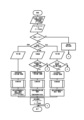
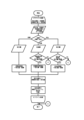
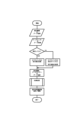
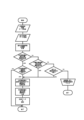
- 1 is a conceptual diagram of the present invention. It is an explanatory diagram of movement of agricultural products in a storage facility. It is an explanatory diagram of the depreciation of money. It is an explanatory diagram of the depreciation of money. It is an explanatory diagram of the depreciation of money. It is an explanatory diagram of the depreciation of money. It is an explanatory diagram of the depreciation of money. It is an explanatory diagram of the depreciation of money. It is an explanatory diagram of an example of depreciation of money. It is an explanatory diagram of the flow of offline transactions. It is a flowchart of the monetary system. It is a flowchart of the monetary system.
- the money and money system of the present invention are constructed through a plurality of steps, and the embodiment can be changed depending on various conditions. Examples based on the steps and various conditions will be described in Example 2 to Example 11 with reference to the drawings.
- the issuance and distribution of the coin 11 of the present invention is carried out through collaboration between multiple equipment and facilities and existing institutions.
- the organizational structure and system construction there are producers 13 of agricultural products 12, cooperatives or producer groups 14 to which the producers 13 belong, and storage facilities 15 for agricultural products that receive shipments 30 of agricultural products.
- storage facilities 15 When agricultural products are produced over a wide area, a plurality of storage facilities 15 are connected through a network to form a storage facility group 16 for agricultural products.
- the system operating organization constructs the system of the present invention as a data center, issues, distributes, trades, and settles the currency of the present invention, manages inventory of agricultural products used for convertibility of the currency, and controls convertibility of the currency and agricultural products.
- a process is carried out and the necessary data and parameters are transmitted via a communication network.
- the monetary system of the present invention can be subdivided by type or variety of agricultural products, and can issue many types of coins of the present invention that are convertible to each type.
- the rice traded at the Dojima Rice Association during the Edo period in Japan was stored in the warehouses of the warehouses, but storage technology at the time was poor. However, in modern times, there are highly controlled storage techniques in country elevators. Immediately after harvesting, rice has a high moisture content, so it is dried and stored. By drying, it is possible to reduce the loss of quality due to consumption of ingredients, generation of respiratory heat, growth of mold, etc.
- the rice received at the collection point 17 from rice producers 13 or producer groups 14 is in the unhulled state.In order to maintain a certain level of quality, the received unhulled rice is sampled and processed through an impeller-type huller.
- the rice is classified into brown rice using a visible light analyzer, grain discriminator, etc., and component analysis using a near-infrared analyzer, etc.
- agricultural products can be stored in a storage facility by storing them in the silo of a country elevator in the form of unhulled rice, or storing them in bags in the form of brown rice in a warehouse.
- rice is generally stored as unhulled rice, but in Japan, due to historical background, it is sometimes stored as brown rice.
- it is important to control the moisture content and temperature of the rice, and by maintaining the degree of dryness and storing it at low temperatures, the deterioration of rice quality can be suppressed and the convertibility of the currency of the present invention can be guaranteed. , can be maintained for anywhere from one year to several years.
- the storage facility 15 which is composed of a collection site, a preliminary storage facility, and a main storage facility, may be located in multiple locations to form a storage facility group 16.
- rice is transferred 34 between storage facilities as necessary.
- the issuance of money and the storage of rice are linked, and correctly storing rice in proportion to the amount of money issued is related to the reliability and credibility of the money and monetary system of the present invention. Therefore, trust is maintained by auditing36 by auditing institutions21 such as national organizations and third-party organizations that evaluate the appropriateness of the rice inventory and quality corresponding to the issued currency.
- Storage data 35 is transmitted between each storage facility and the system operating organization 20, the storage status of rice is managed, the amount of rice inventory required for issuing currency is calculated, and in the amount that corresponds to the amount of rice, Issue money. Furthermore, since the money of the present invention is electronic money, it is distributed via the network 22, and the money data 37 is transmitted between the network and the system operating institution.
- the network includes currency exchange or convertible offices23, commodity markets or commodity futures trading markets24, financial markets or financial futures trading markets25, crypto-asset exchanges or crypto-asset markets26, government agencies27, and financial institutions involved in currency transactions23. Institutions 28 and the like are connected, and trading participants 29 trade money or convert money into rice 38 through the network.
- the effect can be produced by giving money a life as an expiration date or by issuing money that depreciates in value. This is closely related to the fact that the currency of the present invention is convertible into agricultural products.
- the value of money may be set to be constant for one year from the date of issue, and the value of money may be set to start depreciating after one year has passed.
- the first year after harvesting is called new rice, and rice is treated differently from subsequent rice, and it is also used as a physical supply for physical settlement of commodity futures transactions, etc. It is also convenient for conforming to standards.
- the practical product life of rice is assumed to be 3 years, but with improvements in storage technology, it is possible to maintain a certain quality and store it for more than 3 years.
- the maximum expiration date is 10 years.
- the deadline can be set as short as, for example, one year.
- the rice used for converting the currency of the present invention is maintained at a constant quality by sequentially replacing the stored rice on a first-in, first-out basis as newly harvested rice is received. Since it is stored sustainably, the value of the entire amount of money issued relative to the total amount of stored rice can also be considered sustainable. According to this, it is not necessary for the value of money to depreciate within a specific period, and it is possible to devise a system in which money with a set expiry date can be replaced with new money with the same denomination as the previous money. According to this embodiment, although newly issued coins reach the end of their useful life at an arbitrarily set expiration date, a system can be set up in which they are automatically updated to newly issued equivalent coins of the present invention on the expiry date. . The mechanism of depreciation of these currencies will be explained in Example 5 using FIGS. 3A to 3F and FIG. 4.
- a lifespan can be set for the coin of the present invention. Furthermore, it is possible to incorporate a process for starting the depreciation of money from the time when the money is issued or from the time when the money is acquired through transactions or the like.
- the producer 13 of the rice used for converting the coins must receive the rice when the rice is collected at the collection point, or the general consumer etc. must participate in the transaction.
- a person29 exchanges the currency for another currency at a financial institution or exchange office that handles the currency, or obtains the currency through a transaction from another holder of the currency.
- Each coin obtained in this way has a date of issue. Then, these coins depreciate in value or reach the end of their lifespan based on values determined by parameters, starting from the date of issue or acquisition.
- the value of the currency of the present invention is characterized by being determined by the actual value of the rice used to convert it, but the factors incidental to the value of the currency include receiving costs, storage costs, inspection and quality maintenance costs, There are miscellaneous costs for maintaining the monetary system of the present invention, such as administrative processing costs and depreciation costs for equipment. In addition, transaction fees, transaction taxes, asset taxes, insurance premiums, subsidies, etc. are involved in the formation of value, including the maintenance costs and profits of money issuing institutions and national tax revenues.
- the monetary system of the present invention can be operated stably by adding all or part of these incidental elements to the monetary value or collecting them separately at the time of transaction.
- the issued coins of the present invention can be traded as a substitute for actual rice.
- a person in need of rice obtains the coin of the present invention, he or she can sell the coin in kind at a convertible exchange or exchange at any time, taking into account the depreciation schedule and lifespan parameters set for the coin. of rice.
- the depreciation schedule defines how the value of money is to be reduced over the life of the money, and will be explained in Example 5.
- the money of the present invention is not only the amount of rice it represents, but also has the characteristics of money, so like currency, it can be circulated as a means of payment for goods and remittance through a financial settlement system.
- the system automatically assigns the holder's currency to use for settlement. It is preferable to use a program that compares the data of individual currencies, determines the settlement order, and executes the transaction.
- the convertibility requester In order to convert the currency of the present invention into physical rice, the convertibility requester must specify the amount of currency to be converted within the amount of the currency held, at a convertibility exchange or exchange that handles the currency, and exchange the currency with physical rice. receive rice. At this time, various expenses can be deducted from the currency balance held by the person requesting conversion.
- the monetary system of the present invention subtracts the amount of liquidated currency from the amount of currency held by the person requesting conversion, and the liquidated currency disappears from the storage amount data of the storage facility. , reduce the physical amount of converted rice.
- the coins and monetary system of the present invention require agricultural products to be used for converting the issued coins
- the agricultural products are inspected to ensure that they meet the appropriate quality, are received, are stored in a storage facility, and are stored during the storage period. must maintain a certain level of quality. Therefore, the quality and standards for agricultural products used for conversion are determined, their conformity is evaluated, and agricultural products that meet the standards are designated as conforming quality agricultural products.
- the coin and monetary system of the present invention are based on the principle that at the time of issuing the coin, a sufficient amount of agricultural products to be used for the convertibility of the coin is stored; It is permissible to issue money in anticipation of agricultural products that are expected to be received and stored in the future, even if the agricultural products worth the amount are not stored at that time, within a possible period, as fulfilling the purpose of the present invention. .
- the system can be maintained by replenishing the same type of agricultural products or the currency of the present invention that is convertible to the agricultural products, taking into account the cost of transporting the agricultural products between regions.
- the issuance of coins according to the present invention is not necessarily carried out for the entire amount of agricultural products produced, but a limited amount of the produced agricultural products may be received and used for the purpose of the system of the present invention. be. In that case, fairness can be maintained by adopting a bidding system for agricultural products received for that purpose, so that there is no imbalance among producers due to production time or production volume.
- the agricultural products used for its convertibility will not be stored in one storage facility, but in multiple locations.
- the agricultural products used for the convertibility of the issued money can be stored in any of the storage facilities within the storage facility group, which is a group of multiple storage facilities. Integrated management is carried out to ensure that the total amount within the facility group is commensurate with each other.
- a single agricultural product can be harvested in a wide area with the same variety and quality, it is possible to store it on a large scale and issue a large amount of a single currency based on it. . In that case, there will be multiple storage facilities within the region, and there may be differences in production between districts within the region due to weather conditions, pests, etc. It's biased. Since the currency of the present invention is characterized in that it can be converted into agricultural products of the face value stated on the currency if the holder thereof desires, it is possible for the currency of the present invention to be converted into agricultural products at the face value indicated on the currency. If there is a high concentration of output of convertible agricultural products, their processing will be delayed.
- the agricultural products used for conversion are replenished by transferring agricultural products from another storage facility that stores the same type of agricultural products.
- the time required for the transfer must be within a time that does not violate the expectations for convertibility, and is preferably about one day.
- today's world where logistics has become more efficient and there are various means of transportation, there is a way to redistribute agricultural products that have been stored in different locations according to the demand in each area and eliminate deviations, so it is possible to use a single currency.
- the unit of the country is one region.
- the currency of the present invention is intended for agricultural products produced in that area in the distribution area of the currency. Therefore, it has the characteristics of community money.
- system of the present invention when used as a traceability system for agricultural products, it is preferable to operate the system by fixing a specific currency to a specific agricultural product rather than integrated management.
- At the storage facility monitor and weigh the inventory status of agricultural products to ensure that they meet a certain level of quality, and determine the amount of conforming quality agricultural products in stock.
- the quality and inventory amount of agricultural products are managed using a computer, and the system operating organization reflects the data and controls the issuance and distribution of money according to the present invention in conjunction with it.
- the system operating organization will aggregate the inventory data from each storage facility and control the total amount of money issued and the total amount of stored agricultural products used for converting money.
- the system operating organization does not necessarily have to be manned; by building a data center and providing the system with various data, parameters, authentication codes, etc., it is possible to configure the system to run programs using computers. It is. Automation using AI (Artificial Intelligence) is also effective for this purpose.
- AI Artificial Intelligence
- the amount of agricultural products 40 used for its exchange will, in principle, be removed from the main storage facility 19 42 .
- the agricultural products used for convertibility40 of the money shall be treated according to the evaluation of its quality suitability. It is also possible to take out an amount of agricultural products equivalent to the amount of money traded42 from the main storage facility 19, but only if the agricultural products 40 used for conversion remain sufficiently fresh and continue to have quality compatibility. If so, keep it in the main storage facility, set the agricultural products to be used for conversion43, and make it a new agricultural product41 to be used for convertibility.
- Agricultural products in a state of high freshness are generally those in the first year of production, such as new rice in the case of rice and new grains in general for grains. Conforming quality agricultural products can withstand storage while maintaining a certain quality for a certain period of time, so they can be stored repeatedly as agricultural products for convertibility as long as the quality is compatible. .
- agricultural products39 whose quality has deteriorated due to decreased freshness or deterioration of quality over the course of storage in the main storage facility are shipped out42 on a first-in, first-out basis to maintain quality conformity.
- the replenishment and storage increase of the produce is coordinated by moving produce 32 from the reserve storage facility 18 to the reserve storage facility and the main storage facility. Furthermore, if the newly produced agricultural products 12 can be received 30 from the producer 13, they will be received at the collection point 17, and the agricultural products after inspection and storage processing such as drying will be warehoused 31 in the storage facility for preliminary storage.
- the agricultural products are adjusted and stored in the equipment 18 and stored as conforming quality agricultural products 33 in the main storage equipment 19, thereby maintaining the storage amount and quality of the agricultural products in the main storage equipment.
- the conforming quality agricultural products 33 become agricultural products 41 that are newly used for convertibility according to the settings 43 of agricultural products used for convertibility when issuing money or making transactions.
- the management of these agricultural products in storage facilities can be automated by using computers to program inventory management and inventory processing.
- agricultural products that are stored in a storage facility are newly produced agricultural products that are in a high state of freshness.
- agricultural products that have aged a certain amount of time or substitute agricultural products are used. Measures can be taken to compensate for this by allocating the shortfall and making adjustments such as paying out the reduced quality as an increase when converting.
- the system of the present invention is used for the purpose of traceability, since a specific currency has a one-to-one correspondence with a specific agricultural product, even if that currency is traded, there is no possibility that the currency will disappear due to its lifespan. , maintains the data and parameters of the currency until it is converted into agricultural products and consumed.
- the currency of the present invention has the advantage that if you fix the agricultural products used for convertibility and continue to hold them, those agricultural products will deteriorate over time and their commercial value will decline. Since the value of money will decline, there is a concept of depreciating that money as well. At that time, there are several ways of depreciating money.
- money depreciates as the amount of money held by its holders decreases over time.
- the monetary system of the present invention calculates the elapsed time since the acquisition date of the coin held by the holder of the coin, that is, the stockpiling time of the coin, and calculates the amount of money held by the holder in accordance with the depreciation schedule of the coin. decrease.
- the holder of money does not have to bear new costs for maintaining it in response to the depreciation of the money, and by hoarding the money, the depreciation of the money due to the decrease in the amount of money held I will receive it. It is as if the money in the wallet of the person who owns the money automatically decreases and disappears as time passes.
- FIGS. 3A to 3F show examples of how the depreciation schedule depreciates over time. When depreciation progresses and the value of money reaches zero, that is the expiration date and lifespan of that money. Also, when money reaches the end of its lifespan, it disappears.
- Figure 3A shows how the currency is depreciated linearly from the date of issuance or acquisition of the money as the starting date
- Figure 3B shows how the depreciation is postponed for a certain period from the starting date and then depreciated linearly. be.
- Figure 3C shows a mode in which the total value is instantaneously reduced to zero without depreciation from the start date until the time when the life of the money is set.
- FIG. 3D shows a mode in which the price is depreciated in stages on a monthly or yearly basis
- FIG. 3E shows a mode in which the price is depreciated according to a specific function.
- FIG. 3F it is possible to implement the mode shown in FIG. 3F, in which the currency is transferred to a new currency at an equivalent value, or the currency value is decreased 44 as a renewal fee, and the currency is transferred to a new currency.
- the embodiment shown in FIG. 4 is a mode in which the depreciation is postponed for a certain period from the starting date and then depreciated linearly, as shown in FIG. 3B.
- the time when depreciation starts is the depreciation timing, and after a grace period 45 from the start date to the depreciation timing, there is a depreciation period 46, and eventually the value becomes zero and the currency disappears.
- the grace period from the date of inception of the currency to the timing of depreciation is 365 days, and the depreciation rate during the depreciation period is set to 0.1% per day.
- the currency will depreciate after 365 days of grace period 45 from the start date to depreciation timing, and 1000 days of depreciation period 46 from the depreciation timing. After a period of time, 100% depreciation is reached and the currency has no value, which is the end of its lifespan.
- the lifespan of the money is 365 days + from the start of depreciation until the lifespan of the money. Even after a total of 1365 days after the 1000-day depreciation period, the actual value of the rice will not become zero if it is properly preserved.
- the coin of the present invention does not use the coin for transactions or convert it, and stores it until the life of the coin, the coin will expire and disappear, but the convertibility of the coin will not be changed.
- Agricultural products that have been reserved for a period of time usually have a residual value, depending on the settings of the monetary life parameters. This is because even if the value of agricultural products as food decreases, there is still demand and value as feed or industrial raw materials. When money disappears, the excess of its actual value becomes the money-issuing institution's profit margin.
- the profit margin serves as a financial resource for common goods of cooperatives and producer organizations, investment in infrastructure development, and funds for supporting agricultural producers.
- the coins of the present invention are issued based on agricultural products in the national stockpile, it would be possible to reduce stockpiling costs, allocate money to the cost of receiving new stockpiled agricultural products, reduce the cost of buying back coins in the event of an emergency, reduce hedging costs, and cover insurance costs. It is possible to reduce the financial burden and provide in-kind support to international aid.
- the coin of the present invention is based on the concept of depreciating the currency convertible to agricultural products due to the phenomenon of deterioration over time; however, unless the present invention is intended for traceability, it cannot be stored. It does not require that the measured value of the deterioration of agricultural products over time and the depreciation rate of money match. For example, if the general conformity quality period for a certain agricultural product is 3 years, the lifespan of the currency that converts it is only a nominal value of 3 years, and the actual degree of deterioration of that agricultural product is not measured. There is no need to set a depreciation schedule for money accordingly.
- the deterioration of agricultural products should be viewed as a cause of the lifespan and depreciation of money, and the lifespan and depreciation schedule of money should be set based on the convenience of money circulation.
- the system of the present invention manages the amount of money issued and the amount of agricultural products stored in a manner that matches the total amount, so the storage period of each currency matches the storage period of each agricultural product.
- agricultural products prepared for conversion are updated and stored as high quality agricultural products on a first-in, first-out basis whenever possible, so that agricultural products prepared for conversion of individual currencies are has sufficient residual value at any point in the money's depreciation schedule.
- the value of the coins decreases according to a depreciation schedule that determines how the money value will decrease until that lifespan.
- the lifespan of a coin reaches its expiration date after a preset period has elapsed from the date of issue or acquisition of the coin.
- a depreciation schedule determines how the monetary value of an asset is reduced over its lifetime. From the starting date, depreciation can be started immediately, depreciation can be left unchanged for a certain period of time, a grace period can be set, and the time when depreciation starts is considered as the depreciation timing, so that the value of money starts to decrease from that depreciation timing. Can be set.
- the acquisition date of the currency is set as the starting date for each transaction.
- the value date of the coin is fixed as the issue date of the coin and the depreciation timing and lifespan are determined, then the payer of the coin will be able to collect the coin that has been hoarded for nearly a year. This is because, when acquired, the timing of its depreciation and the grace period until its lifespan are short, and the value depreciates quickly and its lifespan runs out early, resulting in unfairness.
- Another way to eliminate the unfairness caused by the timing of currency depreciation and the start date of its lifespan is to collect and cancel the currency paid by the payer each time a transaction is made, issue new currency equivalent to the amount, and give it to the receiver. By doing so, the date of acquisition of that currency will match the date of issue of that currency, and that will be set as the starting date of calculation.
- the money of the present invention is electronic money, which is issued, distributed, and used for transactions using computers and networks. Therefore, what constitutes money is blocks of data or programs. If the block includes a program, the money of the present invention can be used as a smart contract to automatically execute, for example, a depreciation schedule for the money, a cancellation process according to the life of the money, and the like.
- the data block it is possible to write the unique issue number of the currency, the issue date and acquisition date of the currency, the type, variety, and standard of agricultural products used for conversion, the transaction history of the currency, the amount and rate of transaction fees and various taxes, etc.
- parameters related to the depreciation timing and depreciation schedule such as the grace period from the currency value date to the start of depreciation, the depreciation interval, the amount and rate of depreciation, etc., must be set, and the currency data Configure.
- currency is issued as a pair of specific agricultural products for the purpose of traceability of agricultural products
- data such as agricultural product producer information, production location, information on pesticides and fertilizers used, growth information, harvest date, etc.
- Information such as processing means is recorded as data.
- the system may also be a system that communicates currency data with a data center via a network to inquire, collate, and update currency data each time based on the currency's unique issue number.
- the money and money system of the present invention has a structure implemented by a computer and a network, and data processing is premised on being connected to the network.
- the monetary system at least be able to operate even in the event that the system goes offline due to communication problems, disasters, etc.
- each currency data block contains necessary data and parameters so that offline transactions, balance confirmation, etc. can be realized on a practical level.
- the system when the terminal equipment of a transaction participant and the data center of the system operating organization that controls the entire system and processes data are online, the system is able to communicate between the terminal equipment and the data center.
- the data center also collates data based on the storage status of agricultural products used for converting money with data based on the issue and distribution status of coins, and processes transactions, payments, and convertibility.
- existing financial settlement systems such as DTNS (Designated Time Net Settlement) and RTGS (Real-time Gross Settlement) settlement processes can be implemented.
- blockchain technology is used in the system of the present invention, it can be implemented using a transaction process that is realized in crypto asset transactions such as Bitcoin or Ethereum. Since the currency of the present invention is also a substitute for agricultural products used for conversion, it becomes possible to include transactions in agricultural products in the financial settlement process using these fintechs.
- the monetary system of the present invention uses an application on the terminal device of the trading participant to verify whether the transaction is within the range that can be traded, performs payment processing, and when the money system of the present invention returns online, Transmit the processing results to the system operating organization, collate them, and update the system data.
- N the counter for the number of transactions while offline
- M the counter for the cumulative amount of transactions while offline.
- n is the limit value of the number of transactions
- m is the limit value of the cumulative transaction amount during offline.
- the transaction amount with the trading partner in each transaction is shown as p1, p2, p3, and so on.
- n is set to 10 and m is set to 100.
- Figure 5 shows that offline transactions occur when the number of transactions N is 10 or less and the cumulative transaction volume M exceeds 100, and when the cumulative transaction volume M is 100 or less and the number of transactions N exceeds 10. Shows how it stops.
- Transactions also include the convertibility of money into agricultural products, but convertibility is the same as receiving actual agricultural products as a result of payment as a movement of money by the money holder, and is not considered as a monetary transaction. , convertibility is similar to the payment processing procedure.
- M When counting M, it is desirable to limit it by the sum of the absolute values of individual transaction volumes, rather than offsetting the inflows and outflows of money, in order to avoid settlement exposure.
- M is within the limit value of m and the transaction is stopped when N exceeds n.
- the terminal device and the data center of the system operating organization will mutually communicate and collate data regarding the transaction results during the offline period, and verify the integrity and legitimacy of the transaction. Then, the data in the data center is updated, and the M counter value and N counter value on the terminal device are reset to prepare for the next offline transaction.
- FIGS. 6A and 6B are flowcharts of various processes in the monetary system of the present invention when the transaction participant's terminal device and the system operating institution's data center are online.
- the processing items are transactions involving receipt, payment, and conversion of the currency of the present invention, and the associated processing of agricultural products used for conversion.
- Payments include payments for purchasing goods, remittances to others, and the like.
- receipt occurs when a producer receives money when agricultural products are received at a storage facility, when money is received from another person, or when money is exchanged from other money.
- network communication between the terminal equipment and the data center verifies mutual data, establishes consistency, and executes transactions.
- FIG. 6C is a flowchart of the program in the terminal device when the terminal device of the trading participant and the data center of the system operating institution are in an offline state. As described above, this state is handled assuming a transaction that takes account of the settlement exposure, and is a flowchart that introduces the flow shown in FIG. 5.
- FIGS. 5 and 6C are flowcharts of the trading participant's terminal device when the trading participant returns online after the offline transaction described in FIGS. 5 and 6C.
- a flowchart is shown in FIG. 6E.
- transactions made while offline cannot be verified against data at the data center, it is necessary to create a recovery process in the event that an unauthorized transaction occurs during that time.
- FIG. 6F is a flowchart of a program for managing the inventory of agricultural products used for converting money according to the present invention.
- the inventory management method is as explained in Examples 2 to 4.
- FIG. 6G is a flowchart of the inventory processing subroutine in the flowcharts of FIGS. 6A and 6D.
- the inventory processing mechanism is as explained in the second to fourth embodiments.
- actions described in each block of the flowcharts of FIGS. 6A to 6G are as described in this specification.
- actions such as data acquisition and input and physical movement may be performed manually, or non-human actions can be performed using automatically executed program transactions and automated warehouse systems. It can also be executed manually.
- a trading participant owns multiple terminal devices, whether to manage data on them individually or collectively depends on the specifications of the system and application.
- the RTGS method which processes payments in real time for each individual trade, is required. good.
- transactions between traders maintenance of a peg system, clearing of cross-border trades, cancellation of open positions, or clearing of financial products, etc.
- the DTNS method of payment reduces the load on the system compared to the RTGS method.
- the time stamp used in the monetary system of the present invention is preferably based on the standard time of the country that issues the currency, but when the currency is distributed over a wide area or used for international transactions, Greenwich Mean Time is used as the time stamp. It is better to use
- a token is interpreted as a part of money, so the structure and mechanism of the token and token system conform to that of money. Since a token is a term and a mechanism used particularly in the field of crypto assets, the compatibility of the currency of the present invention can be increased by adopting the data structure, format, and process used in that field. Thereby, the money of the present invention can be used in existing crypto asset trading systems. This is due to the introduction of blockchain technology into the circulation of money and the process of transactions. Furthermore, if the present invention is constructed as a token and a token system, due to the affinity with the crypto asset and its system, if a certain crypto asset does not have its own reliability or has poor reliability, the crypto asset cannot be authenticated.
- the token of the invention is convertible into agricultural products by collateralizing or guaranteeing convertibility with the token of the invention
- the crypto asset is indirectly collateralized with the agricultural product, and as a result, the token of the invention is convertible into agricultural products. It can complement the reliability of assets.
- the present invention can be a system that provides reliability of crypto assets.
- the money of the present invention is not a tangible thing like banknotes or coins, but consists of blocks of electronic data or programs, but it is also the actual thing backed by the agricultural product.
- a society in a virtual space is a society that is not real in a virtual space created by a computer, and people themselves virtually exist and operate in that world.
- there are role-playing games and simulation games and there is a metaverse in which players place their virtual alter egos, avatars, in a virtual three-dimensional space and operate in the society formed there.
- virtual money or currency, game scores, etc. that are valid within the application to which the user belongs are given, depending on the activity within that space, and these serve as funds for activities in that space. They are used as virtual money or currency limited to the virtual space or application for purchasing and trading items there.
- Both the money of the present invention and the money in the virtual space have the same or similar roles and structures as electronic money. This means that the money of the present invention has the potential to be used across real space and virtual space.
- the virtual money obtained in the virtual society can be converted into money in the real world or valuables through it. This makes it possible to provide a system that allows this.
- the present invention was inspired by the Kuramai stamps of Japan's Dojima Rice Association, which had an extremely important origin in the history of commodity futures trading, and its trading mechanism. provide a means for widespread use.
- the local currency is WIR, which is issued by the Swiss WIR BANK mentioned above, and its liquidity is increased by depreciating its value at regular intervals.
- the depreciation of money according to the present invention results in the same effect as the depreciating money proposed by Gesell et al., but the present invention pursues convenience by monetizing agricultural products in the distribution and management of agricultural products. , was created due to the depreciation of agricultural products over time, while Gesell was created by pursuing the role of money in a market economy.
- the rice trading system at the Dojima Rice Association formed the basis of today's global commodity futures trading.
- the money and monetary system of the present invention allows for the construction of transaction systems and new payment methods that were not possible at the time due to the development of information processing technology, network environment, globalization, and fintech that did not exist in the socio-economic environment at the time. It creates means.
- the monetary system of the present invention not only pursues the convenience of payment, but also increases the profits of agricultural producers or producer organizations by implementing the system of the present invention and various transactions derived thereby. This contributes to the stability of civils.
- the use of derivatives provides opportunities for the creation of new financial products and economic activities.
- the money of the present invention can be said to be a substitute for commodities and a substitute for currency, it facilitates the coordination of settlements in commodity markets and settlements in financial markets, enables unified trading of commodities and finance, and supports financial methods such as hedging and derivatives. Contribute to the revitalization of trading markets and the diversification of payments using financial derivatives.
- the money of the present invention is used as a substitute for bringing in physical goods in spot settlement in commodity futures transactions, the cost of inspecting and maintaining agricultural products used for spot settlement can be reduced, and Facilitate market participation.
- the present invention can be easily applied to these by using the coins of the present invention issued for each type of agricultural product.
- the present invention provides a highly reliable monetary system based on commodity prices, which allows the currency to be distributed and used for payment of goods and services.
- it functions as a traceability means for agricultural products by recording and managing data segmented by the type, variety, quality, production area, producer, or date of production in the data blocks that constitute the currency of the present invention. .
- JP2004-86486 “Payment methods, monetary data storage devices, electronic money”, March 18, 2004, Sony Corporation Patent No. 6491372, “Payment processing system, payment processing method, and payment processing program”, March 27, 2019, Mizuho Bank, Ltd. JP2021-167992, “Automatic rice milling equipment”, October 21, 2021, Kubota Co., Ltd. JP 10-73374, “Grain dryer control method”, March 17, 1998, Satake Seisakusho Co., Ltd.
Landscapes
- Business, Economics & Management (AREA)
- Engineering & Computer Science (AREA)
- Accounting & Taxation (AREA)
- Finance (AREA)
- Physics & Mathematics (AREA)
- Theoretical Computer Science (AREA)
- General Physics & Mathematics (AREA)
- Strategic Management (AREA)
- General Business, Economics & Management (AREA)
- Marketing (AREA)
- Economics (AREA)
- Development Economics (AREA)
- Technology Law (AREA)
- Human Resources & Organizations (AREA)
- Agronomy & Crop Science (AREA)
- Game Theory and Decision Science (AREA)
- Operations Research (AREA)
- Life Sciences & Earth Sciences (AREA)
- Entrepreneurship & Innovation (AREA)
- Animal Husbandry (AREA)
- Marine Sciences & Fisheries (AREA)
- Mining & Mineral Resources (AREA)
- Health & Medical Sciences (AREA)
- General Health & Medical Sciences (AREA)
- Primary Health Care (AREA)
- Tourism & Hospitality (AREA)
- Management, Administration, Business Operations System, And Electronic Commerce (AREA)
Priority Applications (3)
| Application Number | Priority Date | Filing Date | Title |
|---|---|---|---|
| US18/994,634 US20260030676A1 (en) | 2022-07-31 | 2022-07-31 | Money convertible to agricultural products and its monetary system |
| PCT/JP2022/029411 WO2024028918A1 (ja) | 2022-07-31 | 2022-07-31 | 農産物に兌換可能な貨幣及び貨幣システム |
| JP2024538515A JPWO2024028918A1 (https=) | 2022-07-31 | 2022-07-31 |
Applications Claiming Priority (1)
| Application Number | Priority Date | Filing Date | Title |
|---|---|---|---|
| PCT/JP2022/029411 WO2024028918A1 (ja) | 2022-07-31 | 2022-07-31 | 農産物に兌換可能な貨幣及び貨幣システム |
Publications (1)
| Publication Number | Publication Date |
|---|---|
| WO2024028918A1 true WO2024028918A1 (ja) | 2024-02-08 |
Family
ID=89848689
Family Applications (1)
| Application Number | Title | Priority Date | Filing Date |
|---|---|---|---|
| PCT/JP2022/029411 Ceased WO2024028918A1 (ja) | 2022-07-31 | 2022-07-31 | 農産物に兌換可能な貨幣及び貨幣システム |
Country Status (3)
| Country | Link |
|---|---|
| US (1) | US20260030676A1 (https=) |
| JP (1) | JPWO2024028918A1 (https=) |
| WO (1) | WO2024028918A1 (https=) |
Citations (2)
| Publication number | Priority date | Publication date | Assignee | Title |
|---|---|---|---|---|
| JP2016170530A (ja) * | 2015-03-11 | 2016-09-23 | 株式会社Orb | 仮想通貨管理プログラム、及び仮想通貨管理方法 |
| JP2018170045A (ja) * | 2018-08-08 | 2018-11-01 | 株式会社三菱総合研究所 | 仮想通貨システム |
-
2022
- 2022-07-31 JP JP2024538515A patent/JPWO2024028918A1/ja active Pending
- 2022-07-31 WO PCT/JP2022/029411 patent/WO2024028918A1/ja not_active Ceased
- 2022-07-31 US US18/994,634 patent/US20260030676A1/en active Pending
Patent Citations (2)
| Publication number | Priority date | Publication date | Assignee | Title |
|---|---|---|---|---|
| JP2016170530A (ja) * | 2015-03-11 | 2016-09-23 | 株式会社Orb | 仮想通貨管理プログラム、及び仮想通貨管理方法 |
| JP2018170045A (ja) * | 2018-08-08 | 2018-11-01 | 株式会社三菱総合研究所 | 仮想通貨システム |
Non-Patent Citations (3)
| Title |
|---|
| agrotoken WHITEPAPER 2020. [online]. 2020, pp. 1-28 (in particular, pp. 10-11), Internet <URL: https://agrotoken.io/Agrotoken_Whitepaper_EN.pdf>, [retrieval date: 24 October 2022] * |
| HAMAGUCHI MIHO: "Omusubi Currency" money that makes you happy and goes around in the community", NAGOYA OPEN UNIVERSITY OF THE ENVIRONMENT, 21 November 2013 (2013-11-21), XP093136209, Retrieved from the Internet <URL:https://www.n-kd.jp/column/3815.html> [retrieved on 20240229] * |
| SUWANDANA EKA: "Rice-Based Stablecoin Is Being Launched in Indonesia", BITCOIN NEWS - PRESS RELEASE, 20 January 2021 (2021-01-20), XP093136211, Retrieved from the Internet <URL:https://news.bitcoin.com/rice-based-stablecoin-is-being-launched-in-indonesia> [retrieved on 20240229] * |
Also Published As
| Publication number | Publication date |
|---|---|
| US20260030676A1 (en) | 2026-01-29 |
| JPWO2024028918A1 (https=) | 2024-02-08 |
Similar Documents
| Publication | Publication Date | Title |
|---|---|---|
| Goreux et al. | Reforming the cotton sector in Sub-Saharan Africa | |
| Kolavalli et al. | The cocoa coast: The board-managed cocoa sector in Ghana | |
| US8583547B2 (en) | Precious metal financial instrument | |
| Carrera et al. | Interbank market and macroprudential tools in a DSGE model | |
| CN107180301A (zh) | 商品及消费信息处理方法及系统 | |
| Essah et al. | Proposal on automatic cocoa quality testing and procurement in Ghana | |
| Knopf | A lexicon of economics | |
| Kähkönen et al. | Transaction costs analysis of maize and cotton marketing in Zambia and Tanzania | |
| Sadler | Vertical coordination in the cotton supply chains in Central Asia | |
| WO2024028918A1 (ja) | 農産物に兌換可能な貨幣及び貨幣システム | |
| Janković et al. | Possibilities for development of commodity exchange in Serbia | |
| JP7525100B2 (ja) | 中小企業向けヘッジサービス提供システム | |
| Lynton-Evans | Strategic grain reserves: guidelines for their establishment, management and operation | |
| Bose | The Indian derivatives market revisited | |
| Jonakin | The interaction of market failure and structural adjustment in producer credit and land markets: The case of Nicaragua | |
| Wailes | Arkansas Global Rice Model: International Baseline Projections for 2000-2010 | |
| US20150317665A1 (en) | Credit Card Reward Program Incorporating Investing in Precious Metals | |
| Crow et al. | The finance of trade and agriculture in a backward area of Bangladesh | |
| Gundogdu | Financing the Production of Agricultural Commodities: The Role of Cash Crops and Cooperatives in Food Security | |
| Cornelli | When bricks meet bytes: does tokenisation fill gaps in traditional real estate markets? | |
| Leinonen | Developments in retail payment systems | |
| Worrell | A Practical Policy Model of the Small Open Economy, with Applications | |
| Abor et al. | The economics of financial markets and institutions | |
| Boltovska | Integration links and methods of their improvement for the effective functioning of the meat and food subcomplex | |
| Hughes | The Capital Markets for Farm Firms |
Legal Events
| Date | Code | Title | Description |
|---|---|---|---|
| 121 | Ep: the epo has been informed by wipo that ep was designated in this application |
Ref document number: 22953909 Country of ref document: EP Kind code of ref document: A1 |
|
| WWE | Wipo information: entry into national phase |
Ref document number: 2024538515 Country of ref document: JP |
|
| NENP | Non-entry into the national phase |
Ref country code: DE |
|
| 122 | Ep: pct application non-entry in european phase |
Ref document number: 22953909 Country of ref document: EP Kind code of ref document: A1 |