WO2024014055A1 - 前庭機能改善装置、酔い刺激付与システムおよびプログラム - Google Patents
前庭機能改善装置、酔い刺激付与システムおよびプログラム Download PDFInfo
- Publication number
- WO2024014055A1 WO2024014055A1 PCT/JP2023/009900 JP2023009900W WO2024014055A1 WO 2024014055 A1 WO2024014055 A1 WO 2024014055A1 JP 2023009900 W JP2023009900 W JP 2023009900W WO 2024014055 A1 WO2024014055 A1 WO 2024014055A1
- Authority
- WO
- WIPO (PCT)
- Prior art keywords
- stimulation
- sound
- stimulus
- vestibular function
- motion sickness
- Prior art date
- Legal status (The legal status is an assumption and is not a legal conclusion. Google has not performed a legal analysis and makes no representation as to the accuracy of the status listed.)
- Ceased
Links
Images






Classifications
-
- A—HUMAN NECESSITIES
- A61—MEDICAL OR VETERINARY SCIENCE; HYGIENE
- A61F—FILTERS IMPLANTABLE INTO BLOOD VESSELS; PROSTHESES; DEVICES PROVIDING PATENCY TO, OR PREVENTING COLLAPSING OF, TUBULAR STRUCTURES OF THE BODY, e.g. STENTS; ORTHOPAEDIC, NURSING OR CONTRACEPTIVE DEVICES; FOMENTATION; TREATMENT OR PROTECTION OF EYES OR EARS; BANDAGES, DRESSINGS OR ABSORBENT PADS; FIRST-AID KITS
- A61F11/00—Methods or devices for treatment of the ears or hearing sense; Non-electric hearing aids; Methods or devices for enabling ear patients to achieve auditory perception through physiological senses other than hearing sense; Protective devices for the ears, carried on the body or in the hand
-
- A—HUMAN NECESSITIES
- A61—MEDICAL OR VETERINARY SCIENCE; HYGIENE
- A61M—DEVICES FOR INTRODUCING MEDIA INTO, OR ONTO, THE BODY; DEVICES FOR TRANSDUCING BODY MEDIA OR FOR TAKING MEDIA FROM THE BODY; DEVICES FOR PRODUCING OR ENDING SLEEP OR STUPOR
- A61M21/00—Other devices or methods to cause a change in the state of consciousness; Devices for producing or ending sleep by mechanical, optical, or acoustical means, e.g. for hypnosis
- A61M2021/0005—Other devices or methods to cause a change in the state of consciousness; Devices for producing or ending sleep by mechanical, optical, or acoustical means, e.g. for hypnosis by the use of a particular sense, or stimulus
- A61M2021/0027—Other devices or methods to cause a change in the state of consciousness; Devices for producing or ending sleep by mechanical, optical, or acoustical means, e.g. for hypnosis by the use of a particular sense, or stimulus by the hearing sense
-
- A—HUMAN NECESSITIES
- A61—MEDICAL OR VETERINARY SCIENCE; HYGIENE
- A61M—DEVICES FOR INTRODUCING MEDIA INTO, OR ONTO, THE BODY; DEVICES FOR TRANSDUCING BODY MEDIA OR FOR TAKING MEDIA FROM THE BODY; DEVICES FOR PRODUCING OR ENDING SLEEP OR STUPOR
- A61M21/00—Other devices or methods to cause a change in the state of consciousness; Devices for producing or ending sleep by mechanical, optical, or acoustical means, e.g. for hypnosis
Definitions
- the present disclosure relates to a technique for improving vestibular function of the inner ear using sound stimulation, and particularly relates to a technique for improving motion sickness using sound stimulation.
- the present disclosers discovered that sound stimulation in the low frequency range affects the function of the vestibule of the inner ear, and developed a vestibular stimulation device that activates vestibular function using sound stimulation (patented Reference 1).
- This vestibular stimulation device activates vestibular function by generating sound (pure tone) stimulation with a constant frequency between 20 and 140 Hz, and is effective in preventing and improving motion sickness including car sickness and VR sickness. is expected.
- Non-Patent Document 2 a decrease in tail body temperature indicates worsening of motion sickness.
- 6 mice were prepared, and 3 mice (rotary stimulation group) were given a rotational oscillation stimulus for 10 minutes, and 3 mice (linear stimulation group) were given a linear oscillation stimulus for 10 minutes.
- Tail temperature was measured before, during, and after stimulation.
- FIG. 7 is a graph showing changes in the tail body temperature of the mouse, with the body temperature before stimulation as the reference (zero point). In all mice, tail body temperature increased during perturbation stimulation and decreased after stimulation. This confirms that in mice, a decrease in tail body temperature after perturbation stimulation indicates the onset of motion sickness.
- VL inner ear destroyed mice
- a motion stimulation test was conducted using inner ear destroyed mice (VL) with impaired inner ear function. Specifically, six mice were prepared, and inner ear function was impaired in three of them by intratympanic administration of an ototoxic drug. Then, linear perturbation stimulation was applied to six mice for 10 minutes, and the body temperature of the tail was measured before, during, and after the stimulation.
- FIG. 8 is a graph showing changes in tail body temperature of inner ear destroyed mice and normal mice.
- the tail body temperature increased during the perturbation stimulation and decreased after the stimulation, similar to the graph shown in FIG. 7.
- the tail body temperature hardly changed during or after the perturbation stimulation.
- mice were prepared, and 3 mice (pre-agitation pure tone stimulation group) were given a pure tone stimulus with a sound pressure level of 85 dBZ and a frequency of 100 Hz for 5 minutes, and then an agitation stimulus was given. It was given for 10 minutes. On the other hand, three mice (control group) were given perturbation stimulation for 10 minutes without sound stimulation.
- FIG. 9 is a graph showing changes in tail body temperature in the control group and the pre-perturbation pure tone stimulation group.
- the tail temperature increased due to the perturbation stimulation, and the tail temperature decreased after the stimulation, suggesting that the animals developed motion sickness.
- the pre-perturbation pure-tone stimulation group in which pure-tone stimulation was given before perturbation stimulation, tail body temperature hardly changed during or after perturbation stimulation, suggesting that they did not develop motion sickness. That is, it is presumed that the effect of improving motion sickness (preventing its onset) can be obtained by applying pure tone stimulation before stimulation of motion.
- mice were prepared, and three mice (the post-perturbation pure tone stimulation group) were given perturbation stimulation for 10 minutes, and then pure tone stimulation with a sound pressure level of 85 dBZ and a frequency of 100 Hz was given for 5 minutes. I gave it a minute. On the other hand, three mice (control group) were given perturbation stimulation for 10 minutes, and then were not given pure tone stimulation.
- FIG. 10 is a graph showing changes in tail body temperature in the control group and the pure tone stimulation group after perturbation.
- the control group to which pure tone stimulation was not given, was presumed to have developed motion sickness, as the tail body temperature decreased after the motion stimulation.
- the post-perturbation pure-tone stimulation group in which pure-tone stimulation was given after perturbation stimulation, also had a decrease in tail body temperature after perturbation stimulation, suggesting that they developed motion sickness.
- mice given pure tone stimulation during agitation stimulation showed a slight improvement in motion sickness compared to mice not given sound stimulation during agitation stimulation.
- the improvement effect is not comparable to that obtained when a pure tone stimulus is given before stimulation.
- the conventional technology it is desirable to apply the sound stimulus at a timing before the agitation stimulus. Therefore, if it is not possible to predict in advance that the person will receive an agitation stimulus that requires prevention, the conventional technology may not be able to cope with the situation.
- the present disclosure has been made to solve the above problems, and an object of the present disclosure is to further improve vestibular function.
- Item 1 A vestibular function improvement device that generates sound stimulation for improving vestibular function of the inner ear, A vestibular function improvement device in which the frequency of the sound stimulation changes over time.
- Item 2. Item 2. The vestibular function improving device according to item 1, wherein the frequency is 120 Hz or less.
- Item 3. Item 2. The vestibular function improving device according to item 1, wherein the difference between the maximum value and the minimum value of the frequencies is 60 Hz or less.
- Item 4. 4. The vestibular function improving device according to any one of Items 1 to 3, wherein the frequency changes periodically.
- the vestibular function improving device according to any one of Items 1 to 3, wherein the frequency changes continuously.
- Item 6. The vestibular function improving device according to any one of claims 1 to 3, wherein the frequency changes with a cycle time of 0.08 s to 13 s.
- Section 7. comprising a setting section for setting the timing of generating the sound stimulus, Any one of items 1 to 3, wherein the setting unit detects that the subject is receiving a motion sickness stimulus, and sets the sound stimulus to be generated while the motion sickness stimulus is being applied to the subject.
- Section 8. Item 2.
- the vestibular function improving device according to item 1, wherein the sound stimulation is a sound stimulation for improving motion sickness.
- the vestibular function improving device wherein the sound stimulation is a sound stimulation for improving motion sickness caused by visual stimulation received from a video or the like that does not involve motion.
- Item 10. An intoxication stimulation system that applies intoxication stimulation to a subject, comprising a vestibular function improvement device that generates sound stimulation to improve the vestibular function of the inner ear of the subject; A stimulation application system in which the frequency of the sound stimulation changes over time.
- Item 11. comprising a setting section for setting the timing of generating the sound stimulus, 11.
- the motion sickness stimulation application system according to item 10, wherein the setting unit sets the sound stimulation to be generated while the motion sickness stimulation is being applied to the subject.
- Item 12. A program for making a computer realize a function of generating sound stimulation for improving vestibular function, A program in which the frequency of the sound stimulus changes over time.
- vestibular function can be further improved.
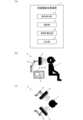
- (a) is a block diagram showing the configuration of the vestibular function improvement device 1 according to an embodiment of the present disclosure
- (b) and (c) are a side view and a plan view showing the configuration of the vestibular function improvement device 1.
- (a) is a graph showing an example of the waveform of sound stimulation
- (b) is a graph showing a modified example of the waveform of sound stimulation.
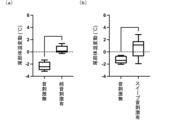
- (a) is a graph showing changes in tail body temperature after perturbation stimulation when no sound stimulation was given and when pure tone stimulation was given in advance
- (b) is a graph showing the changes in tail body temperature after no sound stimulation was given and when pure tone stimulation was given beforehand.
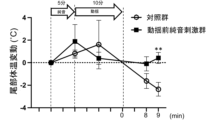
- FIG. 2 is a graph showing changes in the tail body temperature of mice when no sound stimulation is applied during the period and when a sweep sound stimulation is applied during the first half of the agitation stimulation.
- (a) is a graph showing changes in mouse tail body temperature when no sound stimulus was given during the agitation stimulus and when a sweep sound stimulus was given in the latter half of the agitation stimulus; It is a graph showing changes in the tail body temperature of a mouse when no sound stimulus is given during the agitation stimulus and when a sweep sound stimulus is given after the end of the agitation stimulus.
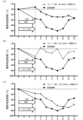
- (a) is a graph showing the changes in tail body temperature of mice when no sound stimulus was given during the agitation stimulus and when a sweep sound whose frequency varied in the range of 40-80 Hz was given during the agitation stimulus.
- (b) shows the changes in tail body temperature of mice when no sound stimulus was given during the agitation stimulus and when a sweep sound whose frequency varied in the range of 80-120 Hz was given during the agitation stimulus.
- Graph (c) shows the changes in tail body temperature of mice when no sound stimulus was given during the agitation stimulus and when a sweep sound whose frequency varied in the range of 120-160 Hz was given during the agitation stimulus. This is a graph showing. It is a graph showing changes in the tail body temperature of a mouse when a perturbation stimulus is applied. It is a graph showing changes in tail body temperature of inner ear destroyed mice and normal mice.
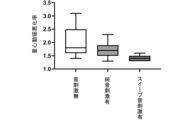
- FIG. 3 is a box plot showing the deterioration rate of the center of gravity sway after the sway stimulation compared to before the sway stimulation.
- FIG. 1(a) is a block diagram showing the configuration of the vestibular function improvement device 1 according to the present embodiment
- FIG. 1(b) and (c) are a side view and a plan view showing the configuration of the vestibular function improvement device 1.
- the vestibular function improvement device 1 has a function of generating sound in a sound stimulation pattern for improving vestibular function, and in particular, generates sound stimulation that can improve motion sickness even when applied during agitation. It has the function of generating.
- sound stimulation the sound itself generated by the vestibular function improvement device 1 will be referred to as "sound stimulation.”
- the vestibular function improvement device 1 includes an operation reception unit 2 that receives an operation for outputting a sound stimulus, a setting unit 3 that sets the timing of generating the sound stimulus according to the operation, and a set unit that generates a signal of the set sound stimulus. and an output section 5 that outputs a sound stimulus based on the generated signal.
- the operation reception unit 2 is composed of, for example, operation buttons.
- the setting section 3 and the sound signal generating section 4 are built into the main body 6.
- the sound signal generating section 4 has a function of continuously or intermittently generating a sound stimulation signal whose frequency changes over time.
- the output unit 5 may be a speaker, and may output sound from the vestibular function improvement device 1 to the outside.
- the output unit 5 is held diagonally to the right and rear of the head of the subject 7 by the variable arm 8. Note that the output unit 5 may output sound from headphones or earphones connected to the vestibular function improvement device 1.
- the setting unit 3 is configured to apply a sound stimulus to the subject 7 while a motion sickness stimulus (a motion sickness stimulus that induces motion sickness in the subject 7 (including a motion stimulus and a visual stimulus via an image)) is applied to the subject 7. It is preferable to control this so that it occurs. As a result, no sound stimulation is generated before and after the motion sickness stimulation, so that motion sickness can be efficiently prevented or improved. Further, the setting unit 3 may have a function of detecting that the subject 7 is receiving intoxication stimulation (detection is not limited to detection by sensing, but may be estimated by the operation of the subject 7). good).
- each element described as a functional block that performs various processes can be configured with a circuit block, memory, or other LSI in terms of hardware, and can be configured with a circuit block, memory, or other LSI in terms of software. This is achieved through programs, etc. Therefore, those skilled in the art will understand that these functional blocks can be implemented in various ways using only hardware, only software, or a combination thereof, and are not limited to either.
- the vestibular function improvement device 1 generates sound stimulation whose frequency changes over time in order to improve vestibular function.
- the sound stimulus may be a continuous sound that is emitted continuously in time, or may be a discontinuous sound that is emitted intermittently and/or periodically.
- the vestibular function improvement device 1 may be installed as a medical device in a medical facility such as a hospital, or may be commercially available as a health device and used for the purpose of improving vestibular function and promoting health of healthy people.
- the vestibular function improving device 1 is preferably formed compactly so that it can be carried.
- "improving the vestibular function of the inner ear” refers to improving the vestibular function (e.g., motion sickness) between a living body that has been given the sound stimulation according to the present disclosure and a living body that has not been given the sound stimulation. ) means that there is a significant difference in the index indicating the degree (for example, the p value is less than 0.05). Examples of such indicators include, in the case of mice, changes in tail body temperature, and in the case of humans, the rate of deterioration of center of gravity sway before and after a sway stimulus.
- the sound stimulation generated by the vestibular function improvement device 1 is a sound stimulation whose frequency changes over time.
- FIG. 2(a) is a graph showing an example of the waveform of sound stimulation.
- the frequency is not particularly limited as long as it is within the audible range (20 Hz or higher), but is preferably 140 Hz or lower. Further, the frequency range, that is, the difference between the maximum value Fmax and the minimum value Fmin is not particularly limited, but is preferably 60 Hz or less.
- the frequency of the sound stimulation shown in FIG. 2(a) changes continuously (gradually), and such sound stimulation is hereinafter referred to as a "sweep sound.”
- the frequency change of the sweep sound does not have to be linear.
- the frequency may change discontinuously, as in the sound stimulation shown in FIG. 2(b).
- the sound pressure level of the sound stimulation only needs to be loud enough for humans to notice, and is preferably 80 dBZ or higher, more preferably 85 dBZ or higher.
- "sound pressure level” means a sound pressure level without audibility correction.
- the sound pressure level means the sound pressure level at the ear, but when the subject is a mouse, it is synonymous with the sound pressure level at the position where the mouse is present.
- the vestibular function improvement device 1 shown in FIG. 1 sound stimulation can be set by user operation, but the configuration may be such that sound stimulation cannot be set.
- the vestibular function improvement device may be configured to output only one type of sound stimulation by reproducing pre-stored audio data.
- a vestibular function improvement device can be used by inputting audio data of sound stimulation for improving vestibular function into a computer such as a general-purpose audio device or a smartphone via a telecommunications line or a storage medium such as a flash memory. may be realized.
- the present discloser has determined that sound whose frequency changes over time is a sound stimulus that can improve vestibular function, and that in particular, it can be applied not only before agitation but also during agitation to cause motion sickness. We found that sound stimulation can improve the
- Example 1 In Example 1, it was verified whether sweep sounds, like pure tones, have the effect of improving motion sickness by providing a sound stimulus before motion. Specifically, three mice were prepared, and agitation stimulation was given for 10 minutes without sound stimulation. Further, at a time interval, using the same mouse, a pure tone stimulus with a sound pressure level of 85 dBZ and a frequency of 100 Hz was given for 5 minutes, and then a sway stimulus was given for 10 minutes. During the experiment, the tail body temperature of each mouse was measured by thermography.
- FIG. 3(a) is a graph showing changes in tail body temperature after perturbation stimulation in the case where no sound stimulation was applied and in the case where pure tone stimulation was applied in advance. Similar to the results shown in FIG. 9, by giving pure tone stimulation in advance, the decrease in body temperature after the motion stimulation was significantly suppressed, and the effect of improving motion sickness was observed.
- An agitation experiment was conducted using a sweep sound. Specifically, three mice were prepared, and agitation stimulation was given for 10 minutes without sound stimulation. Furthermore, after a time interval, using the same mouse, a sweeping sound stimulus with a sound pressure level of 85 dBZ and a frequency varying in the range of 60-110 Hz with a cycle time of 0.1 s was applied for 5 minutes, and then a sway stimulus was applied. was given for 10 minutes.
- FIG. 3(b) is a graph showing changes in tail body temperature after agitation stimulation when no sound stimulation was applied and when a sweep sound stimulation was applied in advance.
- a sweep sound stimulus was given in advance, the decrease in body temperature after the motion stimulus was significantly suppressed compared to when no sound stimulus was given, and an effect of improving motion sickness was observed.
- Example 2 it was verified whether giving pure tones and sweep sounds to mice while they were shaking had an effect on improving motion sickness. Specifically, six mice were prepared, and a perturbation stimulus was given for 10 minutes without giving a sound stimulus. Further, at a time interval, using the same mouse, an agitation stimulus was applied for 10 minutes, and for 5 minutes from the start of the agitation stimulus, a pure tone stimulus with a sound pressure level of 85 dBZ and a frequency of 100 Hz was applied. Furthermore, using the same mouse, agitation stimulation was applied for 10 minutes at a time interval, and during the first half of the agitation stimulation (5 minutes from the start of the agitation stimulation), the sound pressure level was 85 dBZ and the frequency range was 0 to 0.
- a sweeping sound stimulus varying with a cycle time of .1 s was applied. Furthermore, using the same mouse, agitation stimulation was given for 10 minutes at a time interval, and in the latter half of the agitation stimulation (5 minutes after 5 minutes to 10 minutes after the start of the agitation stimulation), the sound pressure level was 85 dBZ and the frequency was The stimulus was a sweeping sound that varied in the range of 80-120 Hz with a cycle time of 0.1 s. Furthermore, at a time interval, using the same mouse, agitation stimulation was applied for 10 minutes, and for 5 minutes from 5 minutes to 10 minutes after the end of the agitation stimulation, the sound pressure level was 85 dBZ and the frequency range was 80-120 Hz. A sweeping sound stimulus varying with a cycle time of .1 s was applied. During the experiment, the tail body temperature of each mouse was measured by thermography.
- FIG. 4(a) is a graph showing changes in the tail body temperature of the mouse when no sound stimulation was applied during the agitation stimulation and when a pure tone stimulation was applied during the agitation stimulation. No significant difference in body temperature fluctuations after motion stimulation was observed between the two, and even when pure tone stimulation was given during motion stimulation, no significant effect on motion sickness was observed.
- FIG. 4(b) is a graph showing changes in the tail body temperature of the mouse when no sound stimulation was applied during the agitation stimulation and when a sweep sound stimulation was applied during the first half of the agitation stimulation.
- sweep sound stimulation was given, the decrease in body temperature after motion stimulation was significantly suppressed compared to when no sound stimulation was given, and an improvement in motion sickness was observed.
- FIG. 5(a) is a graph showing the changes in the tail body temperature of the mouse when no sound stimulation was applied during the agitation stimulation and when the sweep sound stimulation was applied in the latter half of the agitation stimulation.
- the decrease in body temperature after motion stimulation was significantly suppressed compared to when no sound stimulation was given, and an improvement in motion sickness was observed.
- Figure 5(b) shows the changes in tail body temperature of mice when no sound stimulus was given during the agitation stimulus and when a sweep sound stimulus was given for 5 minutes from 5 minutes to 10 minutes after the end of the agitation stimulus. This is a graph showing. When sweep sound stimulation was given, the decrease in body temperature after motion stimulation was significantly suppressed compared to when no sound stimulation was given, and an improvement in motion sickness was observed.
- Example 3 it was verified whether or not giving sweep sounds with different frequency ranges (the difference between the maximum value and the minimum value) to mice while they were shaking had an effect on improving motion sickness. Specifically, six mice were prepared, and a perturbation stimulus was given for 10 minutes without giving a sound stimulus. Furthermore, after a time interval, using the same mouse, agitation stimulation was applied for 10 minutes, and during the agitation stimulation, a sweep sound with a sound pressure level of 85 dBZ and a frequency changing in the range of 40-80 Hz with a cycle time of 0.1 s was applied. It inspired me.
- agitation stimulation was given for 10 minutes at a time interval, and during the agitation stimulation, a sweep sound with a sound pressure level of 85 dBZ and a frequency changing in the range of 80-120 Hz with a cycle time of 0.1 s was applied. It inspired me. Furthermore, after a time interval, using the same mouse, agitation stimulation was applied for 10 minutes, and during the agitation stimulation, a sweep sound with a sound pressure level of 85 dBZ and a frequency changing in the range of 120-160 Hz with a cycle time of 0.1 s was applied. It inspired me. During the experiment, the tail body temperature of each mouse was measured by thermography.
- Figure 6(a) shows the changes in tail body temperature of mice when no sound stimulus was given during the agitation stimulus and when a sweep sound whose frequency varied in the range of 40-80 Hz was given during the agitation stimulus. It is a graph. When a sweep sound stimulus of 40-80 Hz was given, the decrease in body temperature after the motion stimulus was significantly suppressed compared to when no sound stimulus was given, and an effect of improving motion sickness was observed.
- Figure 6(b) shows the changes in tail body temperature of mice when no sound stimulus was given during the agitation stimulus and when a sweep sound whose frequency varied in the range of 80-120 Hz was given during the agitation stimulus. It is a graph. Even when a sweep sound stimulus of 80-120 Hz was given, the decrease in body temperature after the motion stimulus was significantly suppressed compared to when no sound stimulus was given, and the effect of improving motion sickness was observed.
- Figure 6(c) shows the changes in tail body temperature of mice when no sound stimulus was given during the agitation stimulus and when a sweep sound whose frequency varied in the range of 120-160 Hz was given during the agitation stimulus. It is a graph. When a sweep sound stimulus of 120-160 Hz was given, compared to when no sound stimulus was given, there was no significant difference in body temperature change after the motion stimulation, and no improvement in motion sickness was observed.
- the frequency of the sweep sound is preferably 120 Hz or less.
- Example 4 In Example 4, a center-of-gravity sway test was conducted on healthy human subjects to verify the effect of improving motion sickness due to the stimulus of a sweep sound. Specifically, one subject was given a rotational oscillation stimulus (12 rpm) for 1 minute without sound stimulation, and the center of gravity sway (eyes closed for 1 minute) before and after the oscillation stimulation was measured. Furthermore, after a time interval, the same sway stimulus as above was given to the same subject for 1 minute while a pure tone stimulus with a sound pressure level of 85 dBZ and a frequency of 100 Hz was given via headphones, and the sway of the center of gravity before and after the sway stimulus was measured. It was measured.
- the same subject was given the same stimulus via headphones with a sound pressure level of 85 dBZ and a frequency of 90 to 110 Hz that varied in a cycle time of 0.1 s.
- the same agitation stimulus was applied for 1 minute, and the center of gravity sway before and after the agitation stimulus was measured.
- Table 1 shows the rate of deterioration of center of gravity sway after the sway stimulation compared to before the sway stimulation.
- Example 5 human vestibular function was evaluated by a VEMP (vestibular evoked myogenic potential) test. Specifically, the first VEMP test was conducted for one subject, and after a 5-minute break, the sound pressure level was 80 dBZ and the frequency was in the range of 95-105 Hz for a cycle time of 0.1 s through headphones. Immediately after, a second VEMP test was performed. As a result, the potential difference (cVEMP amplitude) in the first VEMP test was 51.82 ⁇ V, whereas the potential difference in the second VEMP test was 92.90 ⁇ V, and the potential difference was 41.08 ⁇ V. When vestibular function improves, the amplitude of the potential difference increases, so it was found that applying sweep sound stimulation had an excellent effect on vestibular function improvement.
- a VEMP vestibular evoked myogenic potential
- Examples 4 and 5 indicate that the present disclosure can be used to evaluate motion disorders such as poor physical condition and car sickness caused by a decline in vestibular function and balance function. It has been suggested that it is also effective in preventing space sickness, vertigo, locomotive syndrome, and fall accidents.
- Example 6 the vestibular function of mice was evaluated by a balance beam test. Specifically, 15 ICR mice (6 months old, male) were subjected to linear motion (lateral direction: 80 rpm, vertical direction: 50 rpm) for 15 minutes. Five mice (non-stimulation group) were not given sound stimulation during agitation, and five mice (pure tone stimulation group) were given a pure tone with a sound pressure level of 85 dBZ and a frequency of 100 Hz for 5 minutes from the start of agitation.
- mice The remaining five mice (sweep sound stimulation group) were given a sweep sound with a sound pressure level of 85 dBZ and a frequency varying in the range of 90-110 Hz with a cycle time of 0.1 s for 5 minutes from the start of agitation. It inspired me.
- the balance beam test was performed five times in a row for each animal to evaluate motion sickness. If a mouse fell even once out of five times, the mouse was counted as the "number of mice that fell.”
- Table 2 shows the results of the balance beam test.
- Example 7 In Example 7, a center of gravity sway test was conducted on healthy human subjects, and a sweep sound test was conducted on 7 healthy subjects (age group 20s, 6 men, 1 woman) using the same protocol as in Example 4. We verified the effect of stimulation on improving motion sickness.
- the Romberg test which is one of the center of gravity sway tests, involves standing upright with both feet together and measuring the center of gravity trajectory for 60 seconds with eyes open and the center of gravity trajectory for 60 seconds with eyes closed.
- the Romberg coefficient of the trajectory length which is expressed as (trajectory length when eyes are closed/trajectory length when eyes are open)
- the Romberg coefficient of the outer peripheral area which is expressed as (area of trajectory area when eyes are closed/area of trajectory area when eyes are open). Used as an evaluation index.
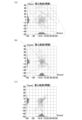
- FIGS. 11(a) to (c) are typical data of the center of gravity sway of one of the subjects in the center of gravity sway test. Specifically, FIG. 11(a) shows the data on center of gravity sway when no sound stimulation was given during the sway stimulation, and FIG. 11(b) shows the data when the above pure tone stimulus was given during the sway stimulation. Fig. 11(c) shows data on the center of gravity sway when the above-mentioned sweep sound stimulation was applied during the oscillation stimulation. It can be seen that the aggravation of center of gravity sway can be suppressed by applying a sweep sound stimulus.
- FIG. 12 is a box plot showing the deterioration rate of center of gravity sway after sway stimulation compared to before sway stimulation. It was found that giving a pure tone stimulus was effective in suppressing the deterioration of center of gravity sway compared to when no sound stimulus was given, but by giving a sweep sound stimulus, the center of gravity sway was further reduced compared to when a pure tone stimulus was given. The effect of suppressing the deterioration of
- the experiment was conducted using a 100 Hz sound stimulus (a 100 Hz pure tone and a sweep sound with a center frequency of 100 Hz), but it is known that a similar tendency exists when the frequency is 300 Hz or less. Among them, a sweep sound with a center frequency of 150 Hz or less is preferable, and a sweep sound with a center frequency of 120 Hz or less is more preferable. Furthermore, a sweeping sound stimulus varying in cycle time from 0.08 s to 13 s was also found to be effective in improving motion sickness in humans. The cycle time is more preferably 0.08 s to 3 s.
- the vestibular function improvement device is an agitation stimulation application system (mainly designed to provide intoxication stimulation to a subject) that provides intoxication stimulation (including agitation stimulation and visual stimulation via video) that induces motion sickness in a subject.
- intoxication stimulation including agitation stimulation and visual stimulation via video
- the vestibular function improvement device can be installed in the seat of a vehicle.
- the vestibular function improvement device may be installed in something that the subject uses while receiving visual stimulation via images, such as a monitor, chair, controller, glasses, etc. used when viewing VR images.
Landscapes
- Health & Medical Sciences (AREA)
- Life Sciences & Earth Sciences (AREA)
- Public Health (AREA)
- General Health & Medical Sciences (AREA)
- Engineering & Computer Science (AREA)
- Veterinary Medicine (AREA)
- Biomedical Technology (AREA)
- Heart & Thoracic Surgery (AREA)
- Physics & Mathematics (AREA)
- Acoustics & Sound (AREA)
- Animal Behavior & Ethology (AREA)
- Psychology (AREA)
- Hematology (AREA)
- Anesthesiology (AREA)
- Biophysics (AREA)
- Otolaryngology (AREA)
- Vascular Medicine (AREA)
- Percussion Or Vibration Massage (AREA)
- Measurement Of The Respiration, Hearing Ability, Form, And Blood Characteristics Of Living Organisms (AREA)
Priority Applications (3)
| Application Number | Priority Date | Filing Date | Title |
|---|---|---|---|
| EP23839234.4A EP4555983A4 (en) | 2022-07-13 | 2023-03-14 | VESTIBULAR FUNCTION ENHANCEMENT DEVICE, DRUNKENNESS STIMULATION APPLICATION SYSTEM AND PROGRAM |
| US18/992,848 US20260007850A1 (en) | 2022-07-13 | 2023-03-14 | Vestibular function improvement device, motion sickness stimulus application system, and program |
| JP2024533509A JPWO2024014055A1 (https=) | 2022-07-13 | 2023-03-14 |
Applications Claiming Priority (2)
| Application Number | Priority Date | Filing Date | Title |
|---|---|---|---|
| JP2022-112199 | 2022-07-13 | ||
| JP2022112199 | 2022-07-13 |
Publications (1)
| Publication Number | Publication Date |
|---|---|
| WO2024014055A1 true WO2024014055A1 (ja) | 2024-01-18 |
Family
ID=89536447
Family Applications (1)
| Application Number | Title | Priority Date | Filing Date |
|---|---|---|---|
| PCT/JP2023/009900 Ceased WO2024014055A1 (ja) | 2022-07-13 | 2023-03-14 | 前庭機能改善装置、酔い刺激付与システムおよびプログラム |
Country Status (4)
| Country | Link |
|---|---|
| US (1) | US20260007850A1 (https=) |
| EP (1) | EP4555983A4 (https=) |
| JP (1) | JPWO2024014055A1 (https=) |
| WO (1) | WO2024014055A1 (https=) |
Citations (6)
| Publication number | Priority date | Publication date | Assignee | Title |
|---|---|---|---|---|
| US20030220536A1 (en) * | 2002-05-21 | 2003-11-27 | Hissong James B. | Apparatus and methods for directly displacing the partition between the middle ear and inner ear at an infrasonic frequency |
| CN104799999A (zh) * | 2015-05-17 | 2015-07-29 | 宋鹏龙 | 耳石振动治疗仪 |
| US20160089298A1 (en) * | 2014-09-29 | 2016-03-31 | Otolith Sound Inc | Device for Mitigating Motion Sickness and Other Responses to Inconsistent Sensory Information |
| WO2019230941A1 (ja) | 2018-05-31 | 2019-12-05 | 国立大学法人名古屋大学 | 前庭刺激装置、めまい治療装置、健康促進装置 |
| JP2020501852A (ja) * | 2016-11-14 | 2020-01-23 | オトリス サウンド,インコーポレイテッド | 前庭系の疾患の症状を緩和する装置及び方法 |
| US20200121544A1 (en) * | 2016-12-06 | 2020-04-23 | Nocira, Llc | Systems and methods for treating neurological disorders |
Family Cites Families (4)
| Publication number | Priority date | Publication date | Assignee | Title |
|---|---|---|---|---|
| US6042533A (en) * | 1998-07-24 | 2000-03-28 | Kania; Bruce | Apparatus and method for relieving motion sickness |
| US9999835B2 (en) * | 2015-02-05 | 2018-06-19 | Sony Interactive Entertainment Inc. | Motion sickness monitoring and application of supplemental sound to counteract sickness |
| US10945880B2 (en) * | 2015-09-04 | 2021-03-16 | Scion Neurostim, Llc | Systems, devices and methods for galvanic vestibular stimulation having an envelope modulation |
| JP2018126185A (ja) * | 2017-02-06 | 2018-08-16 | 株式会社日立製作所 | 装置、音データの生成方法、及びプログラム |
-
2023
- 2023-03-14 WO PCT/JP2023/009900 patent/WO2024014055A1/ja not_active Ceased
- 2023-03-14 EP EP23839234.4A patent/EP4555983A4/en active Pending
- 2023-03-14 US US18/992,848 patent/US20260007850A1/en active Pending
- 2023-03-14 JP JP2024533509A patent/JPWO2024014055A1/ja active Pending
Patent Citations (6)
| Publication number | Priority date | Publication date | Assignee | Title |
|---|---|---|---|---|
| US20030220536A1 (en) * | 2002-05-21 | 2003-11-27 | Hissong James B. | Apparatus and methods for directly displacing the partition between the middle ear and inner ear at an infrasonic frequency |
| US20160089298A1 (en) * | 2014-09-29 | 2016-03-31 | Otolith Sound Inc | Device for Mitigating Motion Sickness and Other Responses to Inconsistent Sensory Information |
| CN104799999A (zh) * | 2015-05-17 | 2015-07-29 | 宋鹏龙 | 耳石振动治疗仪 |
| JP2020501852A (ja) * | 2016-11-14 | 2020-01-23 | オトリス サウンド,インコーポレイテッド | 前庭系の疾患の症状を緩和する装置及び方法 |
| US20200121544A1 (en) * | 2016-12-06 | 2020-04-23 | Nocira, Llc | Systems and methods for treating neurological disorders |
| WO2019230941A1 (ja) | 2018-05-31 | 2019-12-05 | 国立大学法人名古屋大学 | 前庭刺激装置、めまい治療装置、健康促進装置 |
Non-Patent Citations (3)
| Title |
|---|
| DIZIO ET AL.: "An Active Suspension System for Mitigating Motion Sickness and Enabling Reading in a Car", AEROSPACE MEDICINE AND HUMAN PERFORMANCE, vol. 89, no. 9, September 2018 (2018-09-01), pages 822 - 829, XP093011280, DOI: 10.3357/AMHP.5012.2018 |
| NALIVAIKO ET AL.: "Motion sickness, nausea and thermoregulation: The ''toxic'' hypothesis", TEMPERATURE, vol. 1, no. 3, October 2014 (2014-10-01), pages 164 - 171 |
| See also references of EP4555983A4 |
Also Published As
| Publication number | Publication date |
|---|---|
| EP4555983A4 (en) | 2025-10-29 |
| US20260007850A1 (en) | 2026-01-08 |
| EP4555983A1 (en) | 2025-05-21 |
| JPWO2024014055A1 (https=) | 2024-01-18 |
Similar Documents
| Publication | Publication Date | Title |
|---|---|---|
| Holmes et al. | Correlation between heart rate and the severity of motion sickness caused by optokinetic stimulation. | |
| Pengo et al. | Randomised sham-controlled trial of transcutaneous electrical stimulation in obstructive sleep apnoea | |
| Scarpa et al. | A comparison of auditory and vestibular dysfunction in Parkinson's disease and Multiple System Atrophy | |
| Ornitz et al. | Brain-stem dysfunction in autism: Results of vestibular stimulation | |
| Altree et al. | The norepinephrine reuptake inhibitor reboxetine alone reduces obstructive sleep apnea severity: a double-blind, placebo-controlled, randomized crossover trial | |
| US20210196134A1 (en) | Physiological state evaluation device | |
| US20250261901A1 (en) | Systems and methods for determining untreated health-related issues | |
| Rusanen et al. | Self‐applied somnography: Technical feasibility of electroencephalography and electro‐oculography signal characteristics in sleep staging of suspected sleep‐disordered adults | |
| Hautus et al. | Can binaural beats facilitate autonomic recovery following exposure to an acute stressor? | |
| JP2023551012A (ja) | 呼吸治療中にユーザの体位を識別するためのシステムおよび方法 | |
| Taneja | Improving hearing performance through yoga | |
| Lorenzi-Filho et al. | Effects of continuous positive airway pressure on central and peripheral blood pressure in patients with uncontrolled hypertension and obstructive sleep apnea: the randomized controlled MORPHEOS clinical trial | |
| Zhou et al. | Comparing Video Head Impulse Testing With Rotary Chair in Pediatric Patients: A Controlled Trial | |
| Emami et al. | Vestibular hearing and speech processing | |
| Ooishi et al. | Habituation of rapid sympathetic response to aversive timbre eliminated by change in basal sympathovagal balance | |
| WO2024014055A1 (ja) | 前庭機能改善装置、酔い刺激付与システムおよびプログラム | |
| EP3232903A1 (en) | Method for detecting teeth grinding | |
| Schmuziger et al. | Incapacitating hypersensitivity to one’s own body sounds due to a dehiscence of bone overlying the superior semicircular canal. A case report | |
| Lavender et al. | American Academy of Audiology clinical consensus statement: assessment of vestibular function in the pediatric population | |
| Zafar et al. | Stroke: What's Sleep Got to Do With It? | |
| So et al. | Polysomnographic features of hypoglossal nerve stimulation efficacy: Looking deeper than the apnea‐hypopnea index | |
| Calianese et al. | Atomoxetine plus oxybutynin for symptomatic snoring and airflow limitation in individuals without moderate-to-severe obstructive sleep apnea | |
| Wackym et al. | Otologic evaluation | |
| Bolton et al. | Skin sympathetic nerve activity is modulated during slow sinusoidal linear displacements in supine humans | |
| TWI602143B (zh) | 疲勞偵測裝置與疲勞偵測方法 |
Legal Events
| Date | Code | Title | Description |
|---|---|---|---|
| 121 | Ep: the epo has been informed by wipo that ep was designated in this application |
Ref document number: 23839234 Country of ref document: EP Kind code of ref document: A1 |
|
| WWE | Wipo information: entry into national phase |
Ref document number: 2024533509 Country of ref document: JP |
|
| WWE | Wipo information: entry into national phase |
Ref document number: 18992848 Country of ref document: US |
|
| WWE | Wipo information: entry into national phase |
Ref document number: 2023839234 Country of ref document: EP |
|
| NENP | Non-entry into the national phase |
Ref country code: DE |
|
| ENP | Entry into the national phase |
Ref document number: 2023839234 Country of ref document: EP Effective date: 20250213 |
|
| WWP | Wipo information: published in national office |
Ref document number: 2023839234 Country of ref document: EP |
|
| WWP | Wipo information: published in national office |
Ref document number: 18992848 Country of ref document: US |