WO2023238336A1 - 情報処理装置、情報提示方法、および情報提示プログラム - Google Patents
情報処理装置、情報提示方法、および情報提示プログラム Download PDFInfo
- Publication number
- WO2023238336A1 WO2023238336A1 PCT/JP2022/023325 JP2022023325W WO2023238336A1 WO 2023238336 A1 WO2023238336 A1 WO 2023238336A1 JP 2022023325 W JP2022023325 W JP 2022023325W WO 2023238336 A1 WO2023238336 A1 WO 2023238336A1
- Authority
- WO
- WIPO (PCT)
- Prior art keywords
- recommendation
- question
- hypothesis
- target
- generated
- Prior art date
- Legal status (The legal status is an assumption and is not a legal conclusion. Google has not performed a legal analysis and makes no representation as to the accuracy of the status listed.)
- Ceased
Links
Images




Classifications
-
- G—PHYSICS
- G06—COMPUTING OR CALCULATING; COUNTING
- G06F—ELECTRIC DIGITAL DATA PROCESSING
- G06F16/00—Information retrieval; Database structures therefor; File system structures therefor
- G06F16/90—Details of database functions independent of the retrieved data types
Definitions
- Patent Document 1 customer groups by purchase reason tendency are generated based on product purchase history information and product factors indicating the reason for purchasing the product, and customer groups are classified into customer groups by purchase reason tendency.
- a product recommendation device is disclosed that determines recommended products to be recommended to the customer depending on whether the product belongs to the customer.
- the product recommendation device described in Patent Document 1 can only determine recommended products, but cannot present useful information when recommending the determined recommended products, and there is room for improvement in this point. There is.
- One aspect of the present invention has been made in view of the above viewpoint, and an example of the purpose is to provide an information processing device or the like that can present useful information when recommending a recommendation target. It is.
- An information processing apparatus includes: a generating means for generating a question or a hypothesis according to a recommendation target determined to be recommended to a target person; and an answer to the question generated by the generating means; Presentation means for presenting a verification result of the hypothesis generated by the generation means.
- An information presentation method includes the steps of: at least one processor generating a question or hypothesis according to a recommendation target determined to be recommended to a target person; and presenting an answer or a verification result of the generated hypothesis.
- An information presentation program includes a generation means for generating a question or a hypothesis according to a recommendation target determined to be recommended to a target person, and a question or hypothesis generated by the generation means. It functions as a presentation means for presenting an answer or a verification result of a hypothesis generated by the generation means.
- FIG. 1 is a block diagram showing the configuration of an information processing device according to exemplary embodiment 1 of the present invention.
- FIG. FIG. 2 is a flow diagram showing the flow of an information presentation method according to exemplary embodiment 1 of the present invention.
- FIG. 3 is a diagram illustrating an overview of an information presentation method according to a second exemplary embodiment of the present invention.
- FIG. 2 is a block diagram showing the configuration of an information processing device according to a second exemplary embodiment of the present invention.
- FIG. 6 is a diagram illustrating an example of generating a prediction model and an example of generating a recommendation reason.
- FIG. 2 is a flow diagram showing the flow of an information presentation method according to exemplary embodiment 2 of the present invention.
- 1 is a diagram illustrating an example of a computer that executes instructions of a program that is software that implements each function of each device according to each exemplary embodiment of the present invention.
- FIG. 1 is a block diagram showing the configuration of the information processing device 1. As shown in FIG. As shown in FIG. 1, the information processing device 1 includes a generation section (generation means) 11 and a presentation section (presentation means) 12.
- the generation unit 11 generates a question or hypothesis according to the recommendation target determined to be recommended to the target person. Note that the generation unit 11 may generate both questions and hypotheses.
- the presentation unit 12 presents the answer to the question generated by the generation unit 11 or the verification result of the hypothesis generated by the generation unit 11. Note that when the generation unit 11 generates both a question and a hypothesis, the presentation unit 12 may present both the answer to the question and the verification result of the hypothesis. Further, generation of answers to questions and verification of hypotheses may be performed by the information processing device 1, or may be performed by another information processing device.
- the information processing device 1 includes the generation unit 11 that generates a question or hypothesis according to the recommendation target determined to be recommended to the target person, and the generation unit 11 It includes a presentation section 12 that presents an answer to the generated question or a verification result of the hypothesis generated by the generation section 11. Therefore, according to the information processing device 1 according to the present exemplary embodiment, it is possible to present useful information when recommending a recommendation target.
- the functions of the information processing device 1 described above can also be realized by a program.
- the information presentation program according to this exemplary embodiment causes a computer to function as the generation unit 11 and the presentation unit 12. According to this information presentation program, it is possible to present useful information when recommending a recommendation target.
- FIG. 2 is a flow diagram showing the flow of the information presentation method.
- the execution entity of each step in this information presentation method may be a processor included in the information processing device 1 or may be a processor included in another device, and the execution entity of each step may be executed by a different device. It may be a processor provided.
- At least one processor generates a question or hypothesis according to the recommendation target determined to be recommended to the target person. Note that in S11, both a question and a hypothesis may be generated.
- At least one processor presents the answer to the question generated in S11 or the verification result of the hypothesis generated in S11. Note that if both a question and a hypothesis are generated in S11, both the answer to the question and the verification result of the hypothesis may be presented in S12.
- the information presentation method includes the steps of: generating a question or hypothesis according to the recommendation target determined to be recommended to the target person by at least one processor; and presenting an answer to the question asked or a verification result of the generated hypothesis. According to this information presentation method, it is possible to present useful information when recommending a recommendation target.
- FIG. 3 is a diagram illustrating an overview of the information presentation method (hereinafter referred to as the present method) according to the present exemplary embodiment.
- FIG. 3 shows two people, person A and person B, of whom person B is a recommender who recommends a recommendation target such as a product or service, and person A is the person to whom the recommendation is made.
- Person B may be a salesperson, for example, and in this case, what kind of product he recommends to Person A and how he recommends it will affect the success or failure of the business, that is, whether or not he will conclude a contract for the recommended product. According to this method, it is possible to present useful information when recommending a recommendation target to person B, thereby making person B's business activities more effective.
- attribute data D1 indicating what kind of person B, who is the recommendation target, is, is input into the prediction model 211, and for each candidate product, the product is assigned to person A. Predict the probability of closing a deal when making a recommendation.
- the contract probability for Product A is expected to be 0.82
- the contract probability for Product B is expected to be 0.1.
- the recommended products A and B may be products, services, or a combination thereof. Further, details of the prediction model 211 will be described later.
- the numerical range of accuracy is set from 0 to 1, so it can be said that there is a high possibility that a contract will be concluded when product A is recommended, and a low possibility that a contract will be concluded when product B is recommended. Therefore, in this example, the product A is determined to be recommended.
- whether or not there is a high probability of concluding a contract may be determined based on a predetermined threshold value.
- a recommendation target may be determined if the accuracy obtained using the prediction model 211 is greater than or equal to a threshold value.
- a recommendation reason for the determined recommendation target is generated.
- the reason for recommendation is that person A's hobby is golf and his annual income is 7 million yen or more.
- the recommendation reason is information that is useful in recommending product A.
- Person B cannot understand the relationship between Person A's characteristic hobbies such as golf and annual income of 7 million or more and Product A. Therefore, person B may not be able to successfully appeal product A to person A.
- questions and hypotheses are generated according to the recommendation target determined as described above.
- the questions "What is golf useful for?" and "What kind of person is a person with an annual income of 7 million?" and the hypothesis "Product A is related to golf" are generated.
- this method only either a question or a hypothesis may be generated. Furthermore, only one question or a plurality of questions may be generated. The same goes for hypotheses. Note that the method for generating questions and hypotheses will be described later.
- the answers and verification results generated as described above are presented to person B.
- This information is useful information when person B recommends product A to person A.
- Person B who has been presented with the above-mentioned answers and verification results, has come to the conclusion that many customers with an annual income of 7 million yen or more play golf as part of their career development. Person B then gets the idea of proposing a plan that allows for network formation in combination with product A. In this way, the answers and verification results presented by this method are useful information that contributes to making Person B's business activities more effective.
- this method involves generating questions or hypotheses corresponding to the recommendation target (product A in the example of Figure 3) to be recommended to the target person (person A in the example of Figure 3), and This includes presenting answers to questions or verification results of generated hypotheses. Therefore, according to this method, it is possible to present useful information when recommending a recommendation target.
- the information to be presented in this method may be a recommendation target.
- some online shopping sites automatically determine and present recommended products to viewers of the shopping site.
- the present method may generate a question or hypothesis corresponding to the recommended product, and present an answer or verification result thereto together with the recommended product. This makes it possible for the viewer to recognize the reason and background for why the product was recommended, or various information about the product itself, thereby motivating the viewer to purchase the product.
- FIG. 4 is a block diagram showing the configuration of the information processing device 2.
- the information processing device 2 includes a control section 20 that centrally controls each section of the information processing device 2, and a storage section 21 that stores various data used by the information processing device 2.
- the information processing device 2 also includes an input unit 22 that receives user input operations on the information processing device 2, an output unit 23 for the information processing device 2 to output data, and an output unit 23 for the information processing device 2 to communicate with other devices. It is equipped with a communication section 24 for communication.
- the control unit 20 also includes a recommendation unit (recommendation means) 201, a recommendation reason generation unit (recommendation reason generation unit) 202, a generation unit (generation unit) 203, a response unit (response unit) 204, and a presentation unit (presentation unit). ) 205 are included.
- the storage unit 21 stores a prediction model 211 and a generation model 212.
- the recommendation unit 201 determines the recommendation target to be recommended to the target person.
- the recommendation target may be a thing, a service, or a combination thereof as described above. Further, it is preferable that the recommendation target be based on the attributes of the target person.
- the recommendation unit 201 may use the prediction model 211 to determine a recommendation target according to the attributes of the target person. Note that the prediction model 211 will be explained later in the section "Method for determining recommendation target/Method for generating recommendation reason".
- the recommendation reason generation unit 202 generates a recommendation reason for the recommendation target determined by the recommendation unit 201. More precisely, the recommendation reason generation unit 202 generates information indicating the recommendation reason for the recommendation target determined by the recommendation unit 201, but herein, the information indicating the recommendation reason is simply referred to as a recommendation reason.
- the method for generating recommendation reasons will be explained in the section ⁇ Method for determining recommendation targets and generating method for recommendation reasons'' below.
- the generation unit 203 generates a question or hypothesis according to the recommendation target determined by the recommendation unit 201. More precisely, the generation unit 203 generates a question sentence that is a sentence expressing a question in natural language or a hypothesis sentence that is a sentence that expresses a hypothesis in natural language. is simply called a question.
- Generative models 212 may also be used to generate questions or hypotheses. Note that the question generation section that generates questions and the hypothesis generation section that generates hypotheses may be provided as separate blocks. Details of the question and hypothesis generation method and the generative model 212 will be explained in the "Question and hypothesis generation method" section below.
- the response unit 204 generates a response to the question or hypothesis generated by the generation unit 203.
- an answer generation section that generates an answer to a question and a hypothesis verification section that generates a hypothesis verification result may be provided as separate blocks.
- the questions and hypotheses generated by the generation unit 203 are both sentences, it is possible to generate responses thereto using natural language processing technology. Details of the method for generating answers to questions and the method for verifying hypotheses will be explained in the section "Answer generation/hypothesis verification method" below.
- the presentation unit 205 presents the answer to the question generated by the generation unit 203 or the verification result of the hypothesis generated by the generation unit 203.
- the presentation method may be any method as long as it can make the subject to be presented recognize the content to be presented.
- the output unit 23 is a display device
- the presentation unit 205 may present the answers or verification results by causing the output unit 23 to display and output the answers or verification results.
- the output unit 23 is a voice output device
- the presentation unit 205 may present the answer or the verification result by causing the output unit 23 to output the answer or the verification result as voice.
- the presentation unit 205 may cause a device external to the information processing device 2 to output the answer or the verification result.
- the information processing device 2 includes the generation unit 203 that generates a question or hypothesis according to the recommendation target determined to be recommended to the target person; It includes a presentation unit 205 that presents an answer to the generated question or a verification result of the hypothesis generated by the generation unit 203. Therefore, the information processing device 2 according to the present exemplary embodiment has the effect that useful information can be presented when recommending a recommendation target.
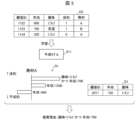
- FIG. 5 is a diagram showing a generation example of the prediction model 211 and a generation example of the recommendation reason.
- the predictive model 211 is generated by learning using the teacher data D2.
- the teacher data D2 includes, for each of a plurality of customers, the customer's ID (identification), the customer's annual income and hobbies, the product that the customer has been offered to purchase, and the information regarding the contract for the product. This is data indicating whether or not it has been reached.
- the teacher data D2 shows the relationship between the attributes of a person and the results of recommending a recommendation target to the person with the attributes. Therefore, by learning using the teacher data D2, it is possible to generate a prediction model 211 that predicts the probability of concluding a sale when the target person is recommended to purchase a specific product based on the target person's attributes.
- the prediction model 211 is information representing the relationship between explanatory variables and objective variables.
- the prediction model 211 is, for example, a component for estimating a result to be estimated by calculating a target variable based on an explanatory variable.
- the prediction model 211 is generated by executing a learning algorithm using learning data for which the value of the objective variable has already been obtained and arbitrary parameters as input.
- the prediction model 211 may be represented by a function c that maps an input x to a correct answer y.
- the prediction model 211 may be one that estimates a numerical value to be estimated, or may be one that estimates a label to be estimated.
- the prediction model 211 may output variables that describe the probability distribution of the target variable.
- the predictive model 211 may also be described as a "learning model,” “analytical model,” “AI (Artificial Intelligence) model,” “trained model,” “inference model,” or “prediction formula.” .
- an explanatory variable is a variable used as an input in a prediction model. Explanatory variables are sometimes described as “features” or “features.”
- the predictive model 211 only needs to be able to predict the probability of closing a deal, and the learning algorithm for generating the predictive model is not particularly limited.
- the learning algorithm for generating predictive model 211 may be a random forest, support vector machine, Naive Bayes, or neural network.
- the prediction model 211 may be a piecewise linear model.
- a piecewise linear model is constructed by setting sections such that prediction by the linear model is possible and generating a linear model for each section.
- Category 1 has an attribute value of ⁇ Hobby'' of ⁇ Golf'' and the attribute value of ⁇ Annual Income'' is ⁇ 700'' or more
- Category 2 has an attribute value of ⁇ Annual Income'' of ⁇ 1200'' or more. It is assumed that a total of three categories are set, including category 3 in which the attribute value of "annual income" is "400" or less. In this case, for each of these categories, a linear model is generated that predicts the probability of concluding a sale when product A is recommended, based on the target person's attribute values.
- the recommendation unit 201 When determining a recommendation target using a piecewise linear model, the recommendation unit 201 identifies the category of the target person based on the attributes of the target person, and predicts the probability of closing a deal using the linear model of the category. For example, the person with the attribute data D1 shown in FIG. 5 (the person whose customer ID is 2011) has an "annual income" of "720" and a "hobby" of "golf.” Therefore, the recommendation unit 201 specifies that the person falls under category 1, and uses the linear model corresponding to category 1 to calculate To predict the probability of concluding a contract when product A is recommended to the person.
- the recommendation unit 201 can use the prediction model 211 to predict the probability that a contract will be concluded for each candidate to be recommended. Then, the recommendation unit 201 can determine a recommendation target based on the prediction results. For example, the recommendation unit 201 may determine the candidate with the highest probability of concluding a contract as the candidate to be recommended, or may determine the candidate whose probability of concluding a contract is equal to or higher than a predetermined threshold value as the candidate to be recommended.
- a graph G1 shown in FIG. 5 shows the number of contracts completed by a person belonging to each of categories 1 to 3 of the above-mentioned piecewise linear model.
- categories with a large number of successful deals are placed at the top, and categories with a large number of unsuccessful deals are placed at the bottom.
- a prediction model generated by learning the relationship between a person's attributes and a recommendation target that should be recommended to a person with the attribute may be used.
- the output of the prediction model becomes the recommendation target.
- the format of the input data input to the information processing device 2 to determine the recommendation target is not particularly limited.
- data in other data formats such as images and audio can also be used as input data.
- the input data may be used for determining recommendation targets after converting the format as necessary.
- the prediction algorithm is not particularly limited, and for example, a predetermined rule, such as an attribution model, may be used to predict the probability of closing a deal. Furthermore, it is also possible to determine recommendation targets without using a prediction model generated by machine learning. For example, if purchase history information of products or services is available, customers may be classified in advance into a plurality of groups based on purchase trends and customer attributes using the purchase history information. In this case, the recommendation unit 201 classifies the target person into one of the groups, and determines the recommended target according to the purchasing tendency of the group (for example, the purchase frequency is high or the total purchase amount is high within the group). You may.
- a predetermined rule such as an attribution model
- the recommendation reason generation unit 202 may use an attribute that has a relatively strong correlation with a contract for a product as a recommendation reason, among the attributes of the target person used to determine the recommendation target. For example, assume that the common attribute of many of the people who concluded a contract for a specific product in past cases was that their hobby was watching videos. In this case, if the target person's attributes include that his hobby is watching videos, the recommendation reason generation unit 202 sets the recommendation reason for the product to be that his hobby is watching videos, or that his hobby is watching videos. Regarding this, it may be assumed that a person whose hobby is watching videos has a high contract rate.
- a method for generating questions and hypotheses by the generation unit 203 will be explained.
- Various methods can be applied to generate questions and hypotheses.
- the generation unit 203 uses a generative model generated by learning the relationship between a recommendation target and a question or hypothesis corresponding to the recommendation target. 212 may be used to generate questions and hypotheses.
- it is possible to generate a valid question or hypothesis based on the learning results.
- a generative model 212 that generates questions and hypotheses from information can be generated. Note that the generative model is not limited to one learned using teacher data.
- the generative model may be an unsupervised learning model such as GAN (Generative Adversarial Networks).
- the attributes of the recommendation target e.g., product name, product category, price or price range, target age, etc.
- the reason for recommendation e.g., the attributes of the target person or recommender (e.g., age, gender, occupation, income, career, affiliation), etc.
- the probability of concluding a contract for the recommended object may be used as information regarding the recommended object.
- the target person's attributes as information regarding the recommendation target, it is possible to generate questions or hypotheses according to the target person. For example, it is possible to generate questions or hypotheses according to the gender and age group of the target person, and thereby it is possible to present answers and hypothesis verification results according to the gender and age group of the target person.
- the recommender's attributes as information regarding the recommendation target, it is possible to generate questions or hypotheses that are appropriate for the recommender. For example, questions or hypotheses can be generated according to the number of years the recommender has worked as a salesperson, and the answers and hypothesis verification results can be presented. This allows the recommender who receives the recommendation to provide the target person with an explanation that is appropriate for the person's years of service.
- a question or hypothesis is generated according to the probability, and the question or hypothesis is answered accordingly. Answers or verification results of the hypothesis can be presented.
- the generation unit 203 when the accuracy is greater than or equal to a predetermined threshold, the generation unit 203 generates predetermined wording that reflects the high degree of accuracy (for example, can be recommended with confidence, is particularly recommended, is optimal for the target person, etc.). Questions or hypotheses may be generated that include: Further, for example, the generation unit 203 may generate a question or hypothesis using different generation models or different templates depending on whether the accuracy is greater than or equal to a predetermined threshold value or less than the threshold value. Note that generation of questions or hypotheses using templates will be described later.
- the generation unit 203 may generate questions and hypotheses without using the generative model 212.
- the generation unit 203 can also generate questions and hypotheses using either or both of rules and templates created in advance.
- the generation unit 203 uses the template "What is the use of (the value of a predetermined attribute extracted from the recommendation reason)?”, so that the value of the attribute "hobby" is determined from the recommendation reason in the example of FIG. By extracting the word "golf”, it is possible to generate a question such as "What is the use of golf?"
- the generation unit 203 uses the template ⁇ What kind of person is the person whose (predetermined attribute extracted from the recommendation reason) is (the value of the attribute)?'' from the recommendation reason in the example of FIG.
- Examples of rules for generating questions and hypotheses include word replacement. For example, a rule that replaces the word “golf” with the broader concept of "sports,” or replaces the attribute value of "annual income” with "high income group,” “middle income group,” etc. depending on the value range. may be specified. By applying such rules, it becomes possible to generate more general questions and hypotheses. For example, instead of or in addition to the above question ⁇ What is the use of golf?'', it is possible to generate a more general question ⁇ What is the use of sports?'' .
- a rule when generating a question or hypothesis is a rule that selects a template to be used depending on the attributes used for generation. For example, to generate a question about the attribute of ⁇ hobby,'' use the template ⁇ What is (hobby) useful for?'', and to generate a question about the attribute of ⁇ annual income,'' use the template ⁇ What is the value of annual income?'' ) You may also make it a rule to use a template that says, ⁇ What kind of person is this person?'''
- the attributes of the recommendation target e.g., product name, product genre, price or price range, target age, etc.
- the reason for the recommendation e.g., the reason for the recommendation
- the target or recommender's Information related to the recommendation target such as attributes (eg, age, gender, occupation, income, etc.), may be used as material for questions and hypotheses.
- the generation unit 203 may generate a question or hypothesis based on the recommendation reason generated by the recommendation reason generation unit 202.
- the generation unit 203 may generate a question or hypothesis based on the recommendation reason generated by the recommendation reason generation unit 202.
- the recommendation unit 201 determines the relationship between a person's attributes and the result of recommending a recommendation target to a person with the attribute, or the relationship between the person's attribute and the recommendation target that should be recommended to the person with the attribute.
- the prediction model 211 generated by learning may be used to determine a recommendation target according to the attributes of the target person.
- the generation unit 203 may generate a question or hypothesis according to the accuracy of the prediction result of the prediction model 211.
- the generation unit 203 may generate questions or hypotheses based on the attributes of the target person. As a result, in addition to the effects of the information processing device 1 according to the first exemplary embodiment, it is possible to present information suitable for the target person.
- the generation unit 203 may generate questions or hypotheses based on the attributes of the recommender who recommends the recommendation target to the target person. As a result, in addition to the effects of the information processing apparatus 1 according to the first exemplary embodiment, it is possible to present information suitable for the recommender.
- the details of the question answer generation method and hypothesis verification method by the response unit 204 will be explained.
- the answers to the questions can be generated by using a corpus external to the information processing device 2, for example.
- a corpus is a large-scale collection of structured natural language sentences.
- the response unit 204 detects a question sentence that is the same as the question sentence generated by the generation unit 203 or has similar content from among the large number of question sentences included in the corpus, and associates it with the question sentence.
- the generated answer sentence is generated as an answer to the question generated by the generation unit 203.
- answers can be generated in the same way by using a knowledge graph instead of a corpus.
- a knowledge graph is a graph structure that systematically connects various types of knowledge.
- a hypothesis can be verified by using a premise whose content is known to be correct and a language understanding model.
- a language understanding model is a model that is constructed so that when a pair of a hypothesis sentence and a presupposition sentence is input, it outputs an implication score, which is an index value indicating the degree to which the presupposition sentence entails the hypothesis sentence. be.
- Such a language understanding model can be constructed by using a set of a presupposition sentence and a hypothetical sentence whose implication relationship is known as training data, and learning whether or not the presupposition sentence implies the hypothetical sentence.
- the response unit 204 performs a process of inputting the hypothetical sentence and the antecedent sentence generated by the generation unit 203 into the language understanding model for various antecedent sentences, and if there is one whose implication score is equal to or higher than a threshold, It may be determined that the hypothesis of the hypothetical sentence is correct.
- the method for determining the degree of implication is not limited to the above-mentioned method that uses a language understanding model constructed using teacher data.
- the response unit 204 may calculate the degree of similarity between the premise sentence and the hypothesis sentence that have been vectorized using the pre-trained language model, and use the calculated degree of similarity as an index value indicating the degree of implication.
- any determination method can be applied to determine the degree of implication as long as it is possible to define the relationship between the hypothetical sentence and the premise sentence.
- existing methods such as keyword matching or TF-IDF (Inverse Document Frequency) may be used as a method for determining the degree of implication.
- the presentation unit 205 may present the answer to the question generated by the generation unit 203 or the verification result of the hypothesis generated by the generation unit 203 as is, or may generate presentation data using the answer or the verification result. , the generated presentation data may be presented.
- the method of generating the presentation data is not particularly limited, and for example, the presentation data may be generated using predetermined rules or templates. For example, when the above-mentioned answer or verification result is a word, the presentation unit 205 may embed the word in a template and convert it into a sentence as presentation data.
- the presentation unit 205 uses a template that says "(value of the attribute 'hobby') is useful for (words included in the question answer)" to respond to the answer "network building, health improvement" in the example of FIG. can be presented as a sentence such as ⁇ Golf is useful for forming connections and improving health.''
- the presentation unit 205 uses, for example, a sentence generation model generated by learning effective explanations and phrases used by salespeople as training data to generate sentences in accordance with the answers or verification results. may be generated. This makes it possible for even inexperienced salespeople to carry out effective sales activities.
- the presentation unit 205 preferably presents not only the answers or verification results, but also the corresponding questions and hypotheses, recommendation targets, and reasons for recommendation.
- the presentation unit 205 may also present various information regarding the recommendation target (for example, specifications of the recommendation target, an image showing the appearance of the recommendation target, word of mouth about the recommendation target, etc.), attributes of the target person, and the like.
- the response unit 204 may receive an input of a question regarding the answer or verification result presented by the presentation unit 205. Then, the response unit 204 may generate an answer to the input question, and the presentation unit 205 may also present the answer.
- the response unit 204 which is originally intended for generating answers to questions generated by the generation unit 203, can be used to answer questions. The effect of being able to interactively resolve the questions of the person who inputs the information (for example, the recommender or the target person) can be obtained.
- the input of the question may be received via the input unit 22.
- the input unit 22 is a device that accepts input of characters, such as a keyboard
- the question may be input in characters.
- the input unit 22 may be a device such as a speaker that accepts voice input; in this case, questions are input by voice, and the voice input by the information processing device 2 or an external device is converted into character data. do it.
- the input of the question may be received by a device external to the information processing device 2, and the response unit 204 may obtain the input received by the device via the communication unit 24.
- FIG. 6 is a flow diagram illustrating the flow of the information presentation method according to the exemplary embodiment.
- the recommendation unit 201 acquires attribute data of the target person.
- the attribute data is used to determine the recommendation target and indicates the target person's attributes.
- the recommendation unit 201 determines a recommendation target based on the attribute data acquired in S21.
- the recommendation unit 201 may determine the recommendation target based on the output value of the prediction model 211.
- the presentation unit 205 may present the recommendation target when the recommendation target is determined in S22.
- the recommendation reason generation unit 202 generates a recommendation reason for the recommendation target determined in S22.
- the method for generating the recommendation reason is as described in the section ⁇ Method for determining recommendation target/Generating method for recommendation reason''.
- the presentation unit 205 may present the recommendation reason when the recommendation reason is generated in S23.
- the generation unit 203 generates a question or hypothesis according to the recommendation target determined in S22. As explained in the section “How to generate a question/hypothesis”, the generating unit 203 may generate a question or a hypothesis using the generative model 212.
- the response unit 204 generates an answer to the question generated in S24 or a verification result of the hypothesis generated in S24.
- the method for generating answers and verification results is as explained in the section "Answer generation/hypothesis verification method.”
- the presentation unit 205 presents the answer or verification result generated in S25.
- the presentation unit 205 preferably presents, in addition to the answer or verification result generated in S25, a question or hypothesis corresponding to the answer or verification result. Further, if the recommendation target and recommendation reason are not presented in S22 and S23, the presentation unit 205 may also present the recommendation target and recommendation reason in S26.
- the response unit 204 determines whether the question presented in S26 or the question regarding the verification result has been input. If YES is determined in S27, the process returns to S25, where the response unit 204 generates an answer to the input question, and the presentation unit 205 presents the answer in subsequent S26. On the other hand, if the determination in S27 is NO, the process in FIG. 6 ends.
- the information presentation method includes generating questions or hypotheses corresponding to the recommendation target determined to be recommended to the target person (S24); (S26). Therefore, according to this information presentation method, it is possible to present useful information when recommending a recommendation target.
- each process described in the above-mentioned exemplary embodiment is arbitrary and is not limited to the above-mentioned example.
- an information presentation system having the same functions as the information processing device 2 can be constructed using a plurality of devices that can communicate with each other. For example, by distributing and providing each block shown in FIG. 4 in a plurality of devices, an information presentation system having the same functions as the information processing device 2 can be constructed.
- each process in the flowchart of FIG. 6 can be executed in a shared manner by a plurality of processors.
- Some or all of the functions of the information processing devices 1 and 2 may be realized by hardware such as an integrated circuit (IC chip), or may be realized by software.
- the information processing devices 1 and 2 are realized, for example, by a computer that executes instructions of a program that is software that implements each function.
- a computer that executes instructions of a program that is software that implements each function.
- An example of such a computer (hereinafter referred to as computer C) is shown in FIG.
- Computer C includes at least one processor C1 and at least one memory C2.
- a program (information presentation program) P for operating the computer C as the information processing device 1 or 2 is recorded in the memory C2.
- the processor C1 reads the program P from the memory C2 and executes it, thereby realizing each function of the information processing device 1 or 2.
- Examples of the processor C1 include a CPU (Central Processing Unit), GPU (Graphic Processing Unit), DSP (Digital Signal Processor), MPU (Micro Processing Unit), FPU (Floating Point Number Processing Unit), and PPU (Physics Processing Unit). , TPU (Tensor Processing Unit), quantum processor, microcontroller, or a combination thereof.
- the memory C2 for example, a flash memory, an HDD (Hard Disk Drive), an SSD (Solid State Drive), or a combination thereof can be used.
- the computer C may further include a RAM (Random Access Memory) for expanding the program P during execution and temporarily storing various data. Further, the computer C may further include a communication interface for transmitting and receiving data with other devices. Further, the computer C may further include an input/output interface for connecting input/output devices such as a keyboard, a mouse, a display, and a printer.
- RAM Random Access Memory
- the program P can be recorded on a non-temporary tangible recording medium M that is readable by the computer C.
- a recording medium M for example, a tape, a disk, a card, a semiconductor memory, or a programmable logic circuit can be used.
- Computer C can acquire program P via such recording medium M.
- the program P can be transmitted via a transmission medium.
- a transmission medium for example, a communication network or broadcast waves can be used.
- Computer C can also obtain program P via such a transmission medium.
- a generating means for generating a question or a hypothesis according to a recommendation target determined to be recommended to a target person, and an answer to the question generated by the generating means or a verification result of the hypothesis generated by the generating means is presented.
- An information processing device comprising: presentation means for presenting information.
- the information processing device according to supplementary note 1, further comprising a recommendation reason generation unit that generates a recommendation reason for the recommendation target, and wherein the generation unit generates the question or the hypothesis based on the recommendation reason.
- the response means generates an answer to the question generated by the generation means or a verification result of the hypothesis generated by the generation means, and the response means generates a question regarding the answer or the verification result presented by the presentation means. is input, generates an answer to the input question, and the presentation means presents the answer to the input question generated by the response means, as described in any one of Supplementary Notes 1 to 6. information processing equipment.
- At least one processor generates a question or a hypothesis according to the recommendation target determined to be recommended to the target person, and generates an answer to the generated question or a verification result of the generated hypothesis.
- An information presentation method comprising: presenting;
- a generation means for causing a computer to generate a question or a hypothesis according to a recommendation target determined to be recommended to a target person, and an answer to the question generated by the generation means, or a verification of the hypothesis generated by the generation means.
- An information presentation program that functions as a presentation means for presenting results.
- the processor includes at least one processor, and the processor performs a process of generating a question or a hypothesis according to the recommendation target determined to be recommended to the target person, and an answer to the generated question or a generated hypothesis.
- An information processing device that executes a process of presenting verification results.
- this information processing device may further include a memory, and this memory includes a memory for causing the processor to execute the process of generating a question or hypothesis and the process of presenting an answer or verification result.
- An information presentation program may be stored. Further, this information presentation program may be recorded on a computer-readable non-temporary tangible recording medium.
Landscapes
- Engineering & Computer Science (AREA)
- Databases & Information Systems (AREA)
- Theoretical Computer Science (AREA)
- Data Mining & Analysis (AREA)
- Physics & Mathematics (AREA)
- General Engineering & Computer Science (AREA)
- General Physics & Mathematics (AREA)
- Information Retrieval, Db Structures And Fs Structures Therefor (AREA)
- Management, Administration, Business Operations System, And Electronic Commerce (AREA)
Priority Applications (2)
| Application Number | Priority Date | Filing Date | Title |
|---|---|---|---|
| PCT/JP2022/023325 WO2023238336A1 (ja) | 2022-06-09 | 2022-06-09 | 情報処理装置、情報提示方法、および情報提示プログラム |
| JP2024526162A JP7831596B2 (ja) | 2022-06-09 | 2022-06-09 | 情報処理装置、情報提示方法、および情報提示プログラム |
Applications Claiming Priority (1)
| Application Number | Priority Date | Filing Date | Title |
|---|---|---|---|
| PCT/JP2022/023325 WO2023238336A1 (ja) | 2022-06-09 | 2022-06-09 | 情報処理装置、情報提示方法、および情報提示プログラム |
Publications (1)
| Publication Number | Publication Date |
|---|---|
| WO2023238336A1 true WO2023238336A1 (ja) | 2023-12-14 |
Family
ID=89117789
Family Applications (1)
| Application Number | Title | Priority Date | Filing Date |
|---|---|---|---|
| PCT/JP2022/023325 Ceased WO2023238336A1 (ja) | 2022-06-09 | 2022-06-09 | 情報処理装置、情報提示方法、および情報提示プログラム |
Country Status (2)
| Country | Link |
|---|---|
| JP (1) | JP7831596B2 (https=) |
| WO (1) | WO2023238336A1 (https=) |
Cited By (1)
| Publication number | Priority date | Publication date | Assignee | Title |
|---|---|---|---|---|
| JP7778982B1 (ja) | 2025-06-16 | 2025-12-02 | ソフトバンク株式会社 | Q&aデータの生成方法、q&aデータの生成プログラム、及びq&aデータの生成システム |
Citations (1)
| Publication number | Priority date | Publication date | Assignee | Title |
|---|---|---|---|---|
| JP2014149780A (ja) * | 2013-02-04 | 2014-08-21 | Nomura Research Institute Ltd | 情報処理装置および情報処理方法 |
Family Cites Families (1)
| Publication number | Priority date | Publication date | Assignee | Title |
|---|---|---|---|---|
| WO2006045004A2 (en) | 2004-10-18 | 2006-04-27 | Bioveris Corporation | System and method for obtaining, storing, and processing immunologic information of individuals and populations |
-
2022
- 2022-06-09 WO PCT/JP2022/023325 patent/WO2023238336A1/ja not_active Ceased
- 2022-06-09 JP JP2024526162A patent/JP7831596B2/ja active Active
Patent Citations (1)
| Publication number | Priority date | Publication date | Assignee | Title |
|---|---|---|---|---|
| JP2014149780A (ja) * | 2013-02-04 | 2014-08-21 | Nomura Research Institute Ltd | 情報処理装置および情報処理方法 |
Non-Patent Citations (1)
| Title |
|---|
| "How to utilize ID-POS data in the era of huge competition: Become the store of choice!; 1st ed.", 1 June 2018, DIAMOND RETIL MEDIA, JP, ISBN: 978-4-478-09055-8, article MIDORI ISHIHARA: "Passage; How to utilize ID-POS data in the era of huge competition: Become the store of choice!", pages: 65 - 69, XP009551223 * |
Cited By (1)
| Publication number | Priority date | Publication date | Assignee | Title |
|---|---|---|---|---|
| JP7778982B1 (ja) | 2025-06-16 | 2025-12-02 | ソフトバンク株式会社 | Q&aデータの生成方法、q&aデータの生成プログラム、及びq&aデータの生成システム |
Also Published As
| Publication number | Publication date |
|---|---|
| JPWO2023238336A1 (https=) | 2023-12-14 |
| JP7831596B2 (ja) | 2026-03-17 |
Similar Documents
| Publication | Publication Date | Title |
|---|---|---|
| KR102071582B1 (ko) | 딥 뉴럴 네트워크(Deep Neural Network)를 이용하여 문장이 속하는 클래스(class)를 분류하는 방법 및 장치 | |
| US12147775B2 (en) | Content augmentation with machine generated content to meet content gaps during interaction with target entities | |
| JP6851894B2 (ja) | 対話システム、対話方法及び対話プログラム | |
| US20210342744A1 (en) | Recommendation method and system and method and system for improving a machine learning system | |
| US20240428068A1 (en) | Systems and methods for a neural network based shopping agent bot | |
| CN113886539A (zh) | 话术推荐方法、装置、客服设备及存储介质 | |
| CN116703509A (zh) | 一种针对直播营销商品质量感知分析的网购助手构建方法 | |
| CN117540078A (zh) | 一种推荐理由生成模型的优化方法及装置 | |
| CN119474259A (zh) | 一种心理异常疾病的量化诊断方法、装置及设备 | |
| CN117764669A (zh) | 物品推荐方法、装置、设备、介质及产品 | |
| Li et al. | Self-supervised bot play for conversational recommendation with justifications | |
| WO2023238336A1 (ja) | 情報処理装置、情報提示方法、および情報提示プログラム | |
| CN120911611A (zh) | 用户意图识别方法、装置、存储介质以及终端 | |
| WO2021200502A1 (ja) | 情報処理装置及び情報処理方法 | |
| JP2022134801A (ja) | 対象属性表現を生成可能な対象属性表現生成モデル、対象属性推定装置及び方法 | |
| JP6983729B2 (ja) | 抽出装置、評価装置、抽出方法および抽出プログラム | |
| JP2024101453A (ja) | 情報処理装置及び情報処理方法 | |
| JP2019215483A (ja) | 学習装置、学習方法および学習プログラム | |
| JP2023140478A (ja) | プログラム、情報処理装置、及び方法 | |
| KR102623467B1 (ko) | 사용자 보컬 평가 정보에 기반한 기획사 추천 서비스 제공 방법, 장치 및 시스템 | |
| Li et al. | Characteristics of micro-learning units in college physical education based on improved particle swarm optimization | |
| KR102623459B1 (ko) | 사용자의 보컬 평가에 기반한 오디션 이벤트 서비스 제공 방법, 장치 및 시스템 | |
| KR102623449B1 (ko) | 사용자 보컬 평가 결과 맞춤형 보컬 트레이닝 서비스 제공 방법, 장치 및 시스템 | |
| KR102958361B1 (ko) | 인공지능 기반 챗봇 서비스 플랫폼 운영 서버 및 그 동작 방법 | |
| CN117708340B (zh) | 标签文本的确定方法、模型训练及调整方法、设备和介质 |
Legal Events
| Date | Code | Title | Description |
|---|---|---|---|
| 121 | Ep: the epo has been informed by wipo that ep was designated in this application |
Ref document number: 22945838 Country of ref document: EP Kind code of ref document: A1 |
|
| WWE | Wipo information: entry into national phase |
Ref document number: 2024526162 Country of ref document: JP |
|
| NENP | Non-entry into the national phase |
Ref country code: DE |
|
| 122 | Ep: pct application non-entry in european phase |
Ref document number: 22945838 Country of ref document: EP Kind code of ref document: A1 |