WO2023218858A1 - 情報処理装置、情報処理方法及び情報処理プログラム - Google Patents
情報処理装置、情報処理方法及び情報処理プログラム Download PDFInfo
- Publication number
- WO2023218858A1 WO2023218858A1 PCT/JP2023/015211 JP2023015211W WO2023218858A1 WO 2023218858 A1 WO2023218858 A1 WO 2023218858A1 JP 2023015211 W JP2023015211 W JP 2023015211W WO 2023218858 A1 WO2023218858 A1 WO 2023218858A1
- Authority
- WO
- WIPO (PCT)
- Prior art keywords
- user
- virtual space
- child
- information
- information processing
- Prior art date
- Legal status (The legal status is an assumption and is not a legal conclusion. Google has not performed a legal analysis and makes no representation as to the accuracy of the status listed.)
- Ceased
Links
Images




Classifications
-
- G—PHYSICS
- G06—COMPUTING OR CALCULATING; COUNTING
- G06F—ELECTRIC DIGITAL DATA PROCESSING
- G06F3/00—Input arrangements for transferring data to be processed into a form capable of being handled by the computer; Output arrangements for transferring data from processing unit to output unit, e.g. interface arrangements
- G06F3/01—Input arrangements or combined input and output arrangements for interaction between user and computer
-
- G—PHYSICS
- G09—EDUCATION; CRYPTOGRAPHY; DISPLAY; ADVERTISING; SEALS
- G09B—EDUCATIONAL OR DEMONSTRATION APPLIANCES; APPLIANCES FOR TEACHING, OR COMMUNICATING WITH, THE BLIND, DEAF OR MUTE; MODELS; PLANETARIA; GLOBES; MAPS; DIAGRAMS
- G09B9/00—Simulators for teaching or training purposes
Definitions
- aspect 4 for example, information regarding the virtual space in which a predetermined event occurs is output to the user in accordance with the progress of changes in the child's object. Accordingly, aspect 4 can provide an experience of caring for the target indicated by the predetermined object.
- Aspect 5 is characterized in that in Aspect 4, information regarding a virtual space in which an event occurs in accordance with a change in which the predetermined object grows is outputted to the user as the predetermined event. shall be.
- a virtual space in which an event corresponding to one of the predetermined events, such as night crying, breastfeeding, holding, putting to bed, eating, changing diapers, reading a picture book, etc., occurs. output information to the user.
- aspect 5 can bring changes that occur in virtual space closer to reality. Accordingly, aspect 5 can provide an experience of caring for the target indicated by the predetermined object.
- Aspect 6 is, in any of Aspects 1 to 5, outputting to the user information regarding a virtual space including an object in which the predetermined object has been changed and another object different from the predetermined object. It is characterized by
- aspect 6 for example, information regarding a virtual space in which a predetermined event occurs due to the presence of two child objects may be output to the user.
- aspect 6 includes, as a predetermined event, an event in which a first child's object becomes ashamed of a second child's object, an event in which the first child's object turns into a baby, and an event in which the first child's object turns into a baby.
- Information regarding a virtual space in which any event in which an object of one child commits violence against an object of a second child may occur may be output to the user.
- aspect 6 can bring changes that occur in virtual space closer to reality. Accordingly, aspect 6 can provide an experience of caring for the target indicated by the predetermined object.
- Aspect 7 is an action performed in a virtual space by a second user who is different from the first user who is the user in any of Aspects 1 to 6, acquiring information regarding an action that assists a user, and changing the predetermined object cared for by the first user when the action indicated by the information regarding the action satisfies a predetermined condition;
- the method is characterized in that information regarding the virtual space including the changed object is output to the first user and the second user.
- a second user such as a user who has already experienced childcare, acquires information regarding actions to assist a first user who is trying to raise his or her own child.
- the action performed by the first user on the child's object satisfies a predetermined condition, the child's object is changed to a child's object that has been appropriately grown.
- Aspect 7 outputs information regarding the virtual space including the appropriately grown child's object to the first user and the second user.
- aspect 7 users can help each other and make users understand the benefits of a cohesive society in which everyone raises children. Thereby, aspect 7 can encourage the realization of a symbiotic society, which is a society where people help each other.
- Aspect 8 is the aspect 7, in which the first user receives information regarding the virtual space in which a predetermined event occurs in accordance with the progress of changes in the object in which the predetermined object cared for by the first user is changed. and output to the second user.
- the child object may be provided with care such as crying at night, breastfeeding, holding, putting to bed, eating, changing diapers, reading picture books, etc.
- Information regarding the virtual space in which a predetermined event such as a playback event occurs is output to the first user and the second user.
- Aspect 9 is characterized in that, in any of Aspects 1 to 8, it is determined whether the behavior indicated by the information regarding the behavior is a predetermined behavior.
- the user determines whether or not the user's behavior is childcare behavior when the child's object is crying. Accordingly, aspect 9 can determine whether the user's behavior is appropriate.
- Aspect 10 is characterized in that, in aspect 9, it is determined whether the behavior is a behavior related to predetermined nursing care.
- aspect 10 for example, when the user performs an action of changing the diaper worn by the child object in response to the action of the child object crying, the user's action is determined to be childcare action. do. Accordingly, aspect 10 can determine whether the user's behavior is appropriate.
- FIG. 1 is a diagram illustrating an example of output processing executed by the information processing apparatus 100 according to the embodiment.
- the information processing device 100 receives a request to output information regarding the virtual space (step S1).
- the information processing device 100 outputs information regarding the virtual space to the terminal device 10 (step S2).
- the information processing device 100 outputs information regarding a virtual space that includes children's objects to the terminal device 10.
- the virtual space in this case is a predetermined virtual space.
- the virtual space is a space imitating the home of the user U1.
- the virtual space is a space in the user U1's home that indicates a room in which the child's bed is placed. In this case, the child object is sleeping on the child's bed.
- the information processing device 100 acquires behavior information regarding the behavior of the user U1 (step S3).
- the information processing apparatus 100 acquires behavior information such as the user's U1's motion detected by the terminal device 10 worn by the user U1 and his or her behavior toward an object placed in the virtual space.
- the information processing device 100 selects behavior information regarding the object from among the behavior information (step S4). For example, the information processing device 100 selects behavior information regarding a child's object from among the behavior information.
- the information processing device 100 determines that the user U1's action is a childcare action. That is, the information processing device 100 determines that the action performed by the user U1 toward the child's object is an action that satisfies the predetermined condition.
- the information processing device 100 determines that if the user U1 acts in response to the child's crying behavior by simply staring at the child's object, the user U1's behavior is not childcare behavior. It is determined that That is, the information processing device 100 determines that the action performed by the user U1 toward the child's object is an action that does not satisfy the predetermined condition.
- the information processing device 100 determines that the action performed by the user U1 toward the child's object is an action that does not satisfy the predetermined condition, the information processing device 100 replaces the child's object with a child who has not grown up appropriately. object. For example, the body of the child object does not grow, and the weight of the child object decreases. Additionally, the child object continues to wear a diaper even after reaching a predetermined age. It is assumed that such information regarding the objects of each grown child is stored in advance in a predetermined storage unit included in the information processing device 100.
- the information processing device 100 accepts a request to output information regarding the virtual space (step S7).
- the user U1 transmits an output request for information regarding the virtual space to the information processing device 100 by operating the terminal device 10.
- the terminal device 10 transmits a request to the information processing device 100 such that the user U1 is displayed as the mother in the virtual space.
- the information processing device 100 then receives an output request for information regarding the virtual space from the terminal device 10 .
- the information processing device 100 outputs information regarding the virtual space including the changed object (step S8).
- the information processing device 100 outputs information regarding a virtual space including objects of a grown child to the terminal device 10.
- the information processing device 100 acquires behavior information regarding the behavior performed by the user in the virtual space, in which the user takes care of a child object placed in the virtual space, and determines the behavior indicated by the behavior information. Modify the child's object if a predetermined condition is met. Then, the information processing apparatus 100 outputs to the user information regarding the virtual space that includes the object of the grown child in which the child's object has been changed. In this way, the information processing device 100 can provide an experience of caring for a child.
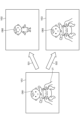
- FIG. 2 is a diagram illustrating an example of changing objects in the virtual space according to the embodiment.
- FIG. 2 an example in which a child's object grows according to the user's actions will be described using FIG. 2.
- the virtual spaces VS1 to VS3 shown in FIG. 2 are displayed on the terminal device 10.
- a child object OB1 is wearing a diaper.
- the child object OB1 is crying.
- the user U1 performs the action of changing the diaper worn by the child object OB1 in response to the action of the child object OB1 crying.
- the information processing device 100 determines that the behavior of the user U1 is childcare behavior.
- the child's object grows according to the time in the real world where the user U1 resides.
- the information processing device 100 changes the child object OB1 to the child object OB2 (step S21).
- a child's object OB2 is displayed in the virtual space VS2 displayed on the terminal device 10.
- the virtual space VS2 is a space that the user U1 accesses after a predetermined period has elapsed.
- the child object OB2 is wearing training pants instead of a diaper.
- the user U1 in response to the behavior of the user U1 in which the child object OB1 is crying, the user U1 performs an action of simply staring at the child object OB1.
- the information processing device 100 determines that the behavior of the user U1 is not childcare behavior.
- the information processing device 100 changes the child object OB1 to the child object OB3 (step S22).
- a child's object OB3 is displayed in the virtual space VS3 displayed on the terminal device 10.
- the virtual space VS3 is a space accessed by the user U1 after a predetermined period has elapsed.
- the child object OB3 is wearing a diaper.
- the child object OB3 does not proceed to the stage of wearing training pants like the child object OB2, but continues to wear a diaper. In this way, the child's object grows appropriately through appropriate child-rearing actions by the user U1.
- the terminal device 10 allows the user U1 to experience the virtual space by providing the user U1 with the feeling of being located in the virtual space.
- the terminal device 10 can provide the user U1 with a realistic childcare experience by providing a virtual space that appropriately reflects reality.
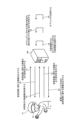
- FIG. 3 is a diagram showing a configuration example of the information processing system 1 according to the embodiment.
- the information processing system 1 includes a terminal device 10 and an information processing device 100.
- the terminal device 10 and the information processing device 100 are connected via a network N so that they can communicate by wire or wirelessly.
- the information processing system 1 shown in FIG. 3 may include a plurality of terminal devices 10 and a plurality of information processing apparatuses 100.
- the terminal device 10 is an information processing device configured by a combination of a glasses-type wearable device worn by a user and a sensor-type wearable device that detects the user's gestures and the like. For example, the terminal device 10 displays information regarding the virtual space output from the information processing device 100 within the field of view of the user. Further, when the orientation of the user's face or body is changed, the terminal device 10 provides the user with information regarding the virtual space corresponding to the orientation changed by the user.
- the terminal device 10 allows the user to experience the virtual space by providing the user with the feeling of being located within the virtual space.
- the experience provided by such a terminal device 10 can be realized using XR technology such as virtual reality (VR), augmented reality (AR), and mixed reality (MR). be.
- VR virtual reality
- AR augmented reality
- MR mixed reality
- the glasses-type wearable device may have a function of outputting audio, BGM (background music), etc. output from the information processing device 100.
- a glasses-type wearable device provides a user with a video of a virtual space outputted by the information processing device 100, audio, and BGM as information regarding the virtual space.
- the terminal device 10 is a sensor device that is used integrally with, for example, a desktop PC (Personal Computer), a notebook PC, a tablet terminal, a mobile phone, etc., and is capable of detecting the user's gestures, etc. It may be realized by a sensor device.
- the selection unit 133 selects various information. For example, the selection unit 133 selects behavior information regarding a child's object from among the behavior information stored in the behavior information storage unit 121.
- the output unit 136 outputs various information. Specifically, the output unit 136 outputs to the user information regarding a virtual space that includes an object in which a predetermined object has been changed. For example, the output unit 136 outputs information regarding the virtual space including the child's object to the terminal device 10 based on the virtual space stored in the output information storage unit 123.
- the output unit 136 outputs information regarding the virtual space including the object changed by the changing unit 135. For example, based on the virtual space stored in the output information storage unit 123, the output unit 136 outputs information regarding the virtual space including the object of a grown child as a changed object to the terminal device 10.
- the output unit 136 outputs information regarding the virtual space in which a predetermined event occurs to the terminal device 10 in accordance with the progress of changes in the child's object.
- the output unit 136 may be connected to a virtual space in which an event corresponding to one of the predetermined events, such as night crying, breastfeeding, holding, putting to bed, eating, changing diapers, reading a picture book, etc., occurs.
- the information is output to the terminal device 10.
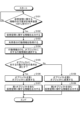
- FIG. 7 is a flowchart illustrating an example of the flow of output processing executed by the information processing apparatus 100 according to the embodiment.
- the receiving unit 131 determines whether or not a request for outputting information regarding the virtual space has been received from the terminal device 10 (step S101). Specifically, if the receiving unit 131 has not received a request to output information about the virtual space from the terminal device 10 (step S101; No), it waits until it receives a request to output the information about the virtual space from the terminal device 10.
- the output unit 136 outputs information regarding the virtual space (step S102).
- the acquisition unit 132 acquires the user's behavior information (step S103). Then, the selection unit 133 selects behavior information regarding the object from among the behavior information (step S104). Subsequently, the determination unit 134 determines whether the action toward the object satisfies a predetermined condition (step S105).
- the changing unit 135 changes the object to the first object (step S106). Then, the output unit 136 outputs information regarding the virtual space including the first object (step S107).
- the changing unit 135 changes the object to the second object (step S108). Then, the output unit 136 outputs information regarding the virtual space including the second object (step S109).
- the acquisition unit 132 acquires information regarding the user's facial image.
- the acquisition unit 132 may then generate a child object having the child's face estimated based on the face image.
- the object for the first child is the object corresponding to the second child who is about to be raised. Further, the object of the second child is an object corresponding to the first child who is currently caring for the child.
- Steps S31 to S32 shown in FIG. 8 are the same processes as step S1 shown in FIG. 1, so a description of steps S31 to S32 shown in FIG. 8 will be omitted. Further, since steps S33 to S34 shown in FIG. 8 are the same processing as step S2 shown in FIG. 1, explanation regarding steps S33 to S34 shown in FIG. 8 will be omitted. Further, since steps S35 to S36 shown in FIG. 8 are the same processing as step S3 shown in FIG. 1, explanation regarding steps S35 to S36 shown in FIG. 8 will be omitted.
- the determination unit 134 of the information processing device 100 determines whether the action toward the object is an action that satisfies a predetermined condition (step S38). For example, assume that the action that satisfies the predetermined condition is the action of changing a diaper. In this case, the determination unit 134 determines that if the user U1 changes the diaper worn by the child object while receiving assistance from the user U2, the user U1's behavior is appropriate. It is determined that there is.
- the determination unit 134 determines that the user U1's behavior is appropriate. It is determined that it is not.
- the changing unit 135 determines that the action performed by the user U1 with respect to the child's object is an action that does not satisfy the predetermined condition, the changing unit 135 changes the child's object to a child who has not grown up appropriately. Change to object.
- the information processing device 100 can provide the user U1 with the experience of raising a child indicated by the child object. Furthermore, the information processing device 100 can provide the user U2 with an opportunity to assist the childcare activities of the user U1. Thereby, user U2 can increase his or her sense of life satisfaction by helping other users. In this way, the information processing device 100 makes it possible to realize a symbiotic society in which users help each other.
- the information processing device 100 may output information regarding the virtual space including the changed object to the user U2. Furthermore, when a predetermined event occurs in the virtual space that includes the object output to the user U1, the information processing device 100 notifies the user U2 that the predetermined event has occurred. You can also output it.
- the user also creates his or her own avatar in the virtual space.
- matching processing may be performed for the user and other users in the virtual space. This allows users to make friends in virtual space. Additionally, users can consult and discuss childcare with other users in the virtual space. This allows users to create a community of parents.
- the information processing apparatus 100 may store the user and other users in association with each other in the storage unit 120.
- content related to a product corresponding to the diaper used by the user when changing the diaper of the child's object may be displayed.
- the terminal device 10 may display the content related to the electronic commerce service.
- the terminal device 10 may display information regarding the location of a retail store that sells the product together with predetermined map information. Further, when the user actually purchases such a product, the terminal device 10 may provide a predetermined item that can be used in the virtual space.
- section, module, unit can be read as “means”, “circuit”, etc.
- output section can be read as an output means or an output circuit.
- FIG. 9 is a diagram showing an example of the hardware configuration.
- the computer 1000 is connected to an output device 1010 and an input device 1020, and is connected to an arithmetic device 1030, a cache 1040, a memory 1050, an output IF (Interface) 1060, an input IF 1070, and a network IF 1080 via a bus 1090.
- the output IF 1060 is an interface for transmitting information to be output to the output device 1010 that outputs various information such as a monitor or a printer, and is, for example, a USB (Universal Serial Bus), a DVI (Digital Visual Interface), It may be realized by a connector of a standard such as HDMI (registered trademark) (High Definition Multimedia Interface).
- the input IF 1070 is an interface for receiving information from various input devices 1020 such as a mouse, a keyboard, and a scanner, and is realized by, for example, a USB or the like.
- the input device 1020 is an optical recording medium such as a CD (Compact Disc), a DVD (Digital Versatile Disc), or a PD (Phase change rewritable disk), a magneto-optical recording medium such as an MO (Magneto-Optical disk), a tape medium, It may also be realized by a device that reads information from a magnetic recording medium, a semiconductor memory, or the like. Further, the input device 1020 may be realized by an external storage medium such as a USB memory.
- the network IF 1080 has a function of receiving data from other devices via the network N and sending it to the computing device 1030, and also transmitting data generated by the computing device 1030 to the other devices via the network N.
- the arithmetic device 1030 controls the output device 1010 and the input device 1020 via the output IF 1060 and the input IF 1070.
- the arithmetic device 1030 loads a program from the input device 1020 or the memory 1050 onto the cache 1040, and executes the loaded program.
- the arithmetic unit 1030 of the computer 1000 realizes the functions of the control unit 130 by executing a program loaded onto the cache 1040.
- N Network 1 Information processing system 10, 11, 12 Terminal device 100 Information processing device 110 Communication unit 120 Storage unit 121 Behavior information storage unit 122 Judgment condition storage unit 123 Output information storage unit 130 Control unit 131 Reception unit 132 Acquisition unit 133 Selection unit 134 Judgment unit 135 Change unit 136 Output unit
Landscapes
- Engineering & Computer Science (AREA)
- Theoretical Computer Science (AREA)
- General Engineering & Computer Science (AREA)
- Physics & Mathematics (AREA)
- General Physics & Mathematics (AREA)
- Human Computer Interaction (AREA)
- Business, Economics & Management (AREA)
- Educational Administration (AREA)
- Educational Technology (AREA)
- User Interface Of Digital Computer (AREA)
- Information Transfer Between Computers (AREA)
Abstract
本願に係る情報処理装置(100)は、利用者によって仮想空間で行われた行動であって、当該利用者が当該仮想空間における所定のオブジェクトを養護する行動に関する情報を取得する取得部(132)と、前記行動に関する情報が示す行動が所定の条件を満たす場合に、前記所定のオブジェクトを変更する変更部(135)と、前記所定のオブジェクトが変更されたオブジェクトを含む仮想空間に関する情報を前記利用者に対して出力する出力部(136)とを備えることを特徴とする。
Description
本発明は、情報処理装置、情報処理方法及び情報処理プログラムに関する。
従来、利用者によって操作されるキャラクタ等のオブジェクトが仮想空間内で存在する位置に応じた配列で、オブジェクトに対して入力されたテキスト情報を表示するシステムが知られている。
しかしながら、上記従来技術では、仮想空間内でオブジェクト同士がテキスト情報でやり取りするに過ぎず、現実世界で起こることを仮想的に体験させるとは言い難い。
本願は、上記に鑑みてなされたものであって、所定のオブジェクトが示す対象を養護する体験を提供することを目的とする。
本願に係る情報処理装置は、利用者によって仮想空間で行われた行動であって、当該利用者が当該仮想空間における所定のオブジェクトを養護する行動に関する情報を取得する取得部と、前記行動に関する情報が示す行動が所定の条件を満たす場合に、前記所定のオブジェクトを変更する変更部と、前記所定のオブジェクトが変更されたオブジェクトを含む仮想空間に関する情報を前記利用者に対して出力する出力部とを備えることを特徴とする。
実施形態の一態様によれば、所定のオブジェクトが示す対象を養護する体験を提供することができる。
本明細書及び添付図面の記載により、少なくとも以下の事項が明らかとなる。
態様1は、利用者によって仮想空間で行われた行動であって、当該利用者が当該仮想空間における所定のオブジェクトを養護する行動に関する情報を取得する取得部と、前記行動に関する情報が示す行動が所定の条件を満たす場合に、前記所定のオブジェクトを変更する変更部と、前記所定のオブジェクトが変更されたオブジェクトを含む仮想空間に関する情報を前記利用者に対して出力する出力部とを備えることを特徴とする。
このような態様1によれば、例えば、利用者によって仮想空間で行われた行動であって、利用者が仮想空間に配置された子供のオブジェクト(所定のオブジェクトの一例)を養護する行動に関する情報を取得し、かかる行動に関する情報が示す行動が所定の条件を満たす場合に、子供のオブジェクトを変更する。例えば、仮想空間は、一の事業者によって提供されるプラットフォームによって実現されるメタバース(クローズドメタバース)や、複数の事業者の各々によって提供される複数のプラットフォームで相互運用されるメタバース(オープンメタバース)等である。利用者は、仮想空間上でアバターを作成し、所定の端末装置を操作することで、仮想空間上のアバターを動かすことができる。
続いて、態様1は、子供のオブジェクトが変更された成長した子供のオブジェクトを含む仮想空間に関する情報を利用者に対して出力する。このように、態様1は、利用者に対して子供を養護する体験を提供することができる。
従来、利用者によって操作されるキャラクタ等のオブジェクトが仮想空間内で存在する位置に応じた配列で、オブジェクトに対して入力されたテキスト情報を表示するシステムが知られていた。しかしながら、上記システムは、仮想空間内でオブジェクト同士がテキスト情報でやり取りするに過ぎず、現実世界で起こることを仮想的に体験させているとは限らなかった。このように、従来、仮想空間内でキャラクタ同士がテキスト情報でやりとりするだけで、現実世界の属性に応じた仮想空間のキャラクタが、他のキャラクタから行動を促すような行動を仮想空間上で出力する仕組みまで開示したものはなかった。
そこで、態様1は、利用者が仮想空間に配置された子供のオブジェクトを養護する行動に関する情報を取得し、かかる行動に関する情報が示す行動が所定の条件を満たす場合に子供のオブジェクトが変更され、成長した子供のオブジェクトを含む仮想空間に関する情報を利用者に対して出力する。このように、態様1は、仮想空間上での体験をより現実的な体験に近づけることができる。これにより、態様1は、利用者に対して、現実感を有する体験を経験させることができる。このようにして、態様1は、利用者に対してより現実感を得た状態で、子供を養護することについて具体的に考えることができるように促すことができる。
例えば、利用者は、態様1により、利用者のパートナーの行動を体験することができる。また、利用者が男性である場合、利用者は、一人で子供を養護することがどれほど大変かを体験することができる。このように、態様1は、利用者に対して、子供を養護することの大変さと、楽しさとを体験させることができる。
態様2は、態様1において、前記所定のオブジェクトを、当該所定のオブジェクトを成長させたオブジェクトに変更することを特徴とする。
態様2によれば、例えば、子供のオブジェクトを、成長させた子供のオブジェクトに変更する。これにより、態様2は、仮想空間上で生じる変化をより現実的なものに近づけることができる。
態様3は、態様1又は2において、前記所定のオブジェクトが、前記利用者が居住する現実世界の時間に応じて成長するように前記所定のオブジェクトを変更することを特徴とする。
態様3によれば、例えば、子供のオブジェクトを、現実世界(現実空間)で流れる時間に応じて成長させた子供のオブジェクトに変更する。これにより、態様3は、仮想空間上で生じる変化をより現実的なものに近づけることができる。
態様4は、態様1~3のいずれかにおいて、前記所定のオブジェクトが変更されたオブジェクトの変化の経過に応じて、所定のイベントが発生する仮想空間に関する情報を前記利用者に対して出力することを特徴とする。
態様4によれば、例えば、子供のオブジェクトの変化の経過に応じて、所定のイベントが発生する仮想空間に関する情報を利用者に対して出力する。これにより、態様4は、所定のオブジェクトが示す対象を養護する体験を提供することができる。
態様5は、態様4において、前記所定のイベントとして、前記所定のオブジェクトが成長するように変更された経過に応じたイベントが発生する仮想空間に関する情報を前記利用者に対して出力することを特徴とする。
態様5によれば、例えば、所定のイベントとして、夜泣きや、授乳や、抱っこや、寝かしつけや、食事や、おむつの交換や、絵本の読み聞かせ等のいずれかに対応するイベントが発生する仮想空間に関する情報を利用者に対して出力する。このように、態様5は、仮想空間上で生じる変化をより現実的なものに近づけることができる。これにより、態様5は、所定のオブジェクトが示す対象を養護する体験を提供することができる。
態様6は、態様1~5のいずれかにおいて、前記所定のオブジェクトが変更されたオブジェクトと、前記所定のオブジェクトとは異なる他のオブジェクトを含む仮想空間に関する情報を前記利用者に対して出力することを特徴とする。
態様6によれば、例えば、子供のオブジェクトが2つあることにより生じる所定のイベントが発生する仮想空間に関する情報を利用者に対して出力してもよい。より具体的な例を挙げると、態様6は、所定のイベントとして、第1子供のオブジェクトが第2子供のオブジェクトに対して嫉妬するイベントや、第1子供のオブジェクトが赤ちゃん返りするイベントや、第1子供のオブジェクトが第2子供のオブジェクトに対して暴力を振るうイベントのいずれかが発生する仮想空間に関する情報を利用者に対して出力してもよい。このように、態様6は、仮想空間上で生じる変化をより現実的なものに近づけることができる。これにより、態様6は、所定のオブジェクトが示す対象を養護する体験を提供することができる。
態様7は、態様1~6のいずれかにおいて、前記利用者である第1利用者とは異なる他の利用者である第2利用者によって仮想空間で行われた行動であって、当該第1利用者を補助する行動に関する情報を取得し、前記行動に関する情報が示す行動が所定の条件を満たす場合に、前記第1利用者によって養護される前記所定のオブジェクトを変更し、前記所定のオブジェクトが変更されたオブジェクトを含む仮想空間に関する情報を前記第1利用者及び前記第2利用者に対して出力することを特徴とする。
態様7によれば、例えば、既に育児を経験した利用者等の第2利用者が、自身の子供に対して育児をしようとしている第1利用者に対して、補助する行動に関する情報を取得する。続いて、態様7は、第1利用者が行った子供のオブジェクトに対する行動が所定の条件を満たす行動である場合、子供のオブジェクトを、子供のオブジェクトを適切に成長させた子供のオブジェクトに変更する。そして、態様7は、適切に成長させた子供のオブジェクトを含む仮想空間に関する情報を第1利用者及び第2利用者に対して出力する。
このように、態様7は、第1利用者に対して子供のオブジェクトが示す子供を育児する体験を提供することができる。また、態様7は、第2利用者に対して、第1利用者の育児行動を補助するといった機会を提供することができる。これにより、第2利用者は、他の利用者の力になることで、自身の人生の満足感を高めることができる。このようにして、態様7は、利用者同士が互いに助け合うといった共生社会の実現を可能とする。
また、態様7は、利用者同士が互いに助け合うことで、皆で育児をする社会である共生社会の良さを利用者に対して理解させることができる。これにより、態様7は、互いに助け合う社会である共生社会を実現することができるように促すことができる。
態様8は、態様7において、前記第1利用者によって養護される前記所定のオブジェクトが変更されたオブジェクトの変化の経過に応じて、所定のイベントが発生する仮想空間に関する情報を前記第1利用者及び前記第2利用者に対して出力することを特徴とする。
態様8によれば、例えば、第1利用者によって養護される子供のオブジェクトが成長する経過に応じて、夜泣きや、授乳や、抱っこや、寝かしつけや、食事や、おむつの交換や、絵本の読み聞かせ等の所定のイベントが発生する仮想空間に関する情報を第1利用者及び第2利用者に対して出力する。これにより、態様8は、複数の利用者に対して、所定のオブジェクトが示す対象を養護する体験を提供することができる。
態様9は、態様1~8のいずれかにおいて、前記行動に関する情報が示す行動が所定の行動であるか否かを判定することを特徴とする。
態様9によれば、例えば、利用者が子供のオブジェクトが泣いている行動に対して、利用者の行動が育児行動であるか否かを判定する。これにより、態様9は、利用者の行動が適切な行動であるか否かを判定することができる。
態様10は、態様9において、前記行動が所定の養護に関する行動であるか否かを判定することを特徴とする。
態様10によれば、例えば、利用者が子供のオブジェクトが泣いている行動に対して、子供のオブジェクトが着用するおむつを交換する行動を行った場合、利用者の行動が育児行動であると判定する。これにより、態様10は、利用者の行動が適切な行動であるか否かを判定することができる。
以下に、情報処理装置、情報処理方法及び情報処理プログラムを実施するための形態(以下、「実施形態」と記載する)の一例について図面を参照しつつ詳細に説明する。なお、この実施形態により情報処理装置、情報処理方法及び情報処理プログラムが限定されるものではない。また、以下の実施形態において同一の部位には同一の符号を付し、重複する説明は省略する。
[実施形態]
〔1.情報処理装置が示す出力処理の一例〕
図1を用いて、実施形態に係る情報処理装置100が実行する出力処理の一例について説明する。図1は、実施形態に係る情報処理装置100が実行する出力処理の一例を示す図である。
〔1.情報処理装置が示す出力処理の一例〕
図1を用いて、実施形態に係る情報処理装置100が実行する出力処理の一例について説明する。図1は、実施形態に係る情報処理装置100が実行する出力処理の一例を示す図である。
図1の例では、利用者U1が自身の子供に対して育児をしようとしている利用者である。ここで、利用者U1は男性であり、既に結婚しているものとする。このような場合に、情報処理装置100が、利用者U1に対して育児に関する育児行動(所定のオブジェクトを養護する行動の一例)を仮想空間上で体験させる仮想空間に関する情報を出力する例について説明する。
ここで、育児行動とは、例えば、入浴や、授乳や、寝かしつけや、抱っこや、夜泣きの対応や、絵本の読み聞かせや、おむつの交換や、食事等である。情報処理装置100が出力する仮想空間に関する情報が示す仮想空間は、各育児行動に対応するイベントが仮想空間上で発生する。
以下では、まず、図1を用いて、仮想空間上で利用者U1が子供のオブジェクトに対して育児行動を行ったか否かで子供のオブジェクトが変化する例について説明する。次に、図1を用いて、変化した子供のオブジェクトを含む仮想空間に関する情報が利用者U1に対して提供される例について説明する。なお、図1の例では、子供のオブジェクトは、所定の子供のオブジェクトである例について説明する。
まず、図1を用いて、仮想空間上で利用者U1が子供のオブジェクトに対して育児行動を行ったか否かで子供のオブジェクトが変化する例について説明する。図1の例では、情報処理装置100は、仮想空間に関する情報の出力要求を受付ける(ステップS1)。
例えば、利用者U1が端末装置10を装着する。続いて、利用者U1は、端末装置10を操作することで、仮想空間に関する情報の出力要求を情報処理装置100に対して送信する。この場合、端末装置10は、利用者U1が母親として仮想空間上で表示されるような要求を情報処理装置100に対して送信する。そして、情報処理装置100は、仮想空間に関する情報の出力要求を端末装置10から受付ける。
続いて、情報処理装置100は、仮想空間に関する情報を端末装置10に出力する(ステップS2)。例えば、情報処理装置100は、子供のオブジェクトを含む仮想空間に関する情報を端末装置10に出力する。この場合の仮想空間は、所定の仮想空間である。例えば、仮想空間は、利用者U1の自宅を模した空間等である。より具体的な例を挙げると、仮想空間は、利用者U1の自宅のうち、子供のベッドが配置された部屋を示す空間である。この場合、かかる子供のベッドに子供のオブジェクトが寝ている状態である。
そして、情報処理装置100は、利用者U1の行動に関する行動情報を取得する(ステップS3)。例えば、情報処理装置100は、利用者U1が装着した端末装置10によって検知された利用者U1の動作や、仮想空間上に配置されたオブジェクトに対する行動等の行動情報を取得する。
続いて、情報処理装置100は、行動情報のうち、オブジェクトに対する行動情報を選択する(ステップS4)。例えば、情報処理装置100は、行動情報のうち、子供のオブジェクトに対する行動情報を選択する。
そして、情報処理装置100は、オブジェクトに対する行動が所定の条件を満たす行動か否かを判定する(ステップS5)。例えば、所定の条件を満たす行動が育児行動であるものとする。この場合、情報処理装置100は、利用者U1が子供のオブジェクトが泣いている行動に対して、子供のオブジェクトが着用するおむつを交換する行動を行った場合、利用者U1の行動が育児行動であると判定する。すなわち、情報処理装置100は、利用者U1が行った子供のオブジェクトに対する行動が所定の条件を満たす行動であると判定する。
また、情報処理装置100は、利用者U1が子供のオブジェクトが泣いている行動に対してあやす行動を行った場合、利用者U1の行動が育児行動であると判定する。すなわち、情報処理装置100は、利用者U1が行った子供のオブジェクトに対する行動が所定の条件を満たす行動であると判定する。
一方、情報処理装置100は、利用者U1が子供のオブジェクトが泣いている行動に対して、例えば、子供のオブジェクトを凝視するだけの行動を行った場合、利用者U1の行動が育児行動ではないと判定する。すなわち、情報処理装置100は、利用者U1が行った子供のオブジェクトに対する行動が所定の条件を満たさない行動であると判定する。
続いて、情報処理装置100は、オブジェクトを変更する(ステップS6)。例えば、情報処理装置100は、利用者U1が行った子供のオブジェクトに対する行動が所定の条件を満たす行動であると判定した場合、子供のオブジェクトを、子供のオブジェクトを適切に成長させた子供のオブジェクトに変更する。このとき、情報処理装置100は、子供のオブジェクトが、利用者U1が居住する現実世界の時間に応じて成長するように子供のオブジェクトを変更する。例えば、子供のオブジェクトが、成長することで体が大きくなる。また、子供のオブジェクトが、成長することでおむつではなく、トレーニングパンツを着用する。
一方、情報処理装置100は、利用者U1が行った子供のオブジェクトに対する行動が所定の条件を満たさない行動であると判定した場合、子供のオブジェクトを、子供のオブジェクトを適切に成長しなかった子供のオブジェクトに変更する。例えば、子供のオブジェクトの体が大きくならず、子供のオブジェクトの体重が減少する。また、子供のオブジェクトが、所定の年齢になってもおむつを着用したままである。このような成長した各子供のオブジェクトに関する情報は、情報処理装置100が有する所定の記憶部に予め記憶されているものとする。
次に、図1を用いて、変化した子供のオブジェクトを含む仮想空間に関する情報が利用者U1に対して提供される例について説明する。例えば、所定の期間経過した後に、利用者U1がアクセスする例について説明する。ここで、仮想空間上の子供のオブジェクトは、利用者U1が居住する現実世界の時間に応じて成長しているものとする。
図1の例では、情報処理装置100は、仮想空間に関する情報の出力要求を受付ける(ステップS7)。例えば、利用者U1は、端末装置10を操作することで、仮想空間に関する情報の出力要求を情報処理装置100に対して送信する。この場合、端末装置10は、利用者U1が母親として仮想空間上で表示されるような要求を情報処理装置100に対して送信する。そして、情報処理装置100は、仮想空間に関する情報の出力要求を端末装置10から受付ける。
続いて、情報処理装置100は、変更したオブジェクトを含む仮想空間に関する情報を出力する(ステップS8)。例えば、情報処理装置100は、成長した子供のオブジェクトを含む仮想空間に関する情報を端末装置10に出力する。
従来、利用者によって操作されるキャラクタ等のオブジェクトが仮想空間内で存在する位置に応じた配列で、オブジェクトに対して入力されたテキスト情報を表示するシステムが知られていた。しかしながら、上記システムは、仮想空間内でオブジェクト同士がテキスト情報でやり取りするに過ぎず、現実世界で起こることを仮想的に体験させているとは限らなかった。そこで、情報処理装置100は、利用者によって仮想空間で行われた行動であって、利用者が仮想空間に配置された子供のオブジェクトを養護する行動情報を取得し、かかる行動情報が示す行動が所定の条件を満たす場合に、子供のオブジェクトを変更する。そして、情報処理装置100は、子供のオブジェクトが変更された成長した子供のオブジェクトを含む仮想空間に関する情報を利用者に対して出力する。このように、情報処理装置100は、子供を養護する体験を提供することができる。
〔2.オブジェクトの変更の一例〕
次に、図2を用いて、オブジェクトの変更例について説明する。図2は、実施形態に係る仮想空間上のオブジェクトの変更の一例を示す図である。以下では、図2を用いて、利用者の行動に応じて、子供のオブジェクトが成長する例について説明する。なお、図2に示す仮想空間VS1~VS3は、端末装置10に表示される。
次に、図2を用いて、オブジェクトの変更例について説明する。図2は、実施形態に係る仮想空間上のオブジェクトの変更の一例を示す図である。以下では、図2を用いて、利用者の行動に応じて、子供のオブジェクトが成長する例について説明する。なお、図2に示す仮想空間VS1~VS3は、端末装置10に表示される。
図2に示すように、端末装置10に表示される仮想空間VS1には、子供のオブジェクトOB1がおむつを着用している。ここで、子供のオブジェクトOB1は、泣いているものとする。この場合、利用者U1は、利用者U1が子供のオブジェクトOB1が泣いている行動に対して、子供のオブジェクトOB1が着用するおむつを交換する行動を行う。このような行動を、情報処理装置100が利用者U1の行動が育児行動であると判定する。ここで、子供のオブジェクトは、利用者U1が居住する現実世界の時間に応じて成長する。
そして、情報処理装置100は、子供のオブジェクトOB1を子供のオブジェクトOB2に変更する(ステップS21)。例えば、端末装置10に表示される仮想空間VS2には、子供のオブジェクトOB2が表示される。ここで、仮想空間VS2は、所定の期間経過した後に、利用者U1がアクセスした空間である。図2の例では、子供のオブジェクトOB2は、おむつではなく、トレーニングパンツを着用している。
一方、利用者U1は、利用者U1が子供のオブジェクトOB1が泣いている行動に対して、子供のオブジェクトOB1を凝視するだけの行動を行う。このような行動を、情報処理装置100が利用者U1の行動が育児行動ではないと判定する。
そして、情報処理装置100は、子供のオブジェクトOB1を子供のオブジェクトOB3に変更する(ステップS22)。例えば、端末装置10に表示される仮想空間VS3には、子供のオブジェクトOB3が表示される。ここで、仮想空間VS3は、所定の期間経過した後に、利用者U1がアクセスした空間である。図2の例では、子供のオブジェクトOB3は、おむつを着用している。例えば、子供のオブジェクトOB3は、利用者U1が適切な育児行動を行えない場合に、子供のオブジェクトOB2のようにトレーニングパンツを着用する段階に進めず、おむつを着用し続ける。このように、子供のオブジェクトは、利用者U1による適切な育児行動によって、適切に成長する。
このように、端末装置10は、利用者U1に対して仮想空間内に位置する感覚を提供することで、仮想空間を利用者U1に体験させる。そして、端末装置10は、現実を適切に反映した仮想空間を提供することで、現実感を有する育児をする体験を利用者U1に対して体験させることができる。
〔3.情報処理システムの構成〕
次に、図3を用いて、実施形態に係る情報処理システム1の構成について説明する。図3は、実施形態に係る情報処理システム1の構成例を示す図である。図3に示すように、情報処理システム1は、端末装置10と、情報処理装置100とを含む。端末装置10及び情報処理装置100は、ネットワークNを介して有線又は無線により通信可能に接続される。なお、図3に示す情報処理システム1には、複数台の端末装置10や、複数台の情報処理装置100が含まれてもよい。
次に、図3を用いて、実施形態に係る情報処理システム1の構成について説明する。図3は、実施形態に係る情報処理システム1の構成例を示す図である。図3に示すように、情報処理システム1は、端末装置10と、情報処理装置100とを含む。端末装置10及び情報処理装置100は、ネットワークNを介して有線又は無線により通信可能に接続される。なお、図3に示す情報処理システム1には、複数台の端末装置10や、複数台の情報処理装置100が含まれてもよい。
端末装置10は、利用者が装着する眼鏡型のウェアラブルデバイスと、利用者のジェスチャー等を検知するセンサ型のウェアラブルデバイスとの組合せによって構成される情報処理装置である。例えば、端末装置10は、利用者の視野内に情報処理装置100から出力される仮想空間に関する情報を表示する。また、端末装置10は、利用者の顔又は体の向きが変更された場合に、利用者が変更した向きに対応する仮想空間に関する情報を利用者に対して提供する。
また、端末装置10は、利用者が仮想空間内に配置されたオブジェクトに対して触れる等の動作を検知する。この場合、端末装置10は、利用者の動作を仮想空間上に再現した仮想空間に関する情報を利用者に対して提供する。また、端末装置10は、利用者の動作が反映された仮想空間に関する情報を利用者に対して提供する。
これにより、端末装置10は、利用者に対して仮想空間内に位置する感覚を提供することで、仮想空間を利用者に体験させる。なお、このような端末装置10が提供する体験は、仮想現実(VR:Virtual Reality)や、拡張現実(AR:Augmented Reality)や、複合現実(MR:Mixed Reality)等のXR技術によって実現可能である。
また、眼鏡型のウェアラブルデバイスは、情報処理装置100から出力された音声やBGM(Background Music)等を出力する機能を有してもよい。例えば、眼鏡型のウェアラブルデバイスは、情報処理装置100によって出力された仮想空間の映像と、音声及びBGMとを仮想空間に関する情報として利用者に対して提供する。
なお、端末装置10は、例えば、デスクトップ型PC(Personal Computer)や、ノート型PCや、タブレット端末や、携帯電話機等と一体的に利用されるセンサデバイスであって、利用者のジェスチャー等を検知するセンサデバイスにより実現されてもよい。
情報処理装置100は、インターネット等のネットワークNを介して、各種の装置と通信可能な情報処理装置であり、例えば、サーバ装置や、クラウドシステムや、ゲーム機等により実現される。例えば、情報処理装置100は、ネットワークNを介して、他の各種装置と通信可能に接続される。
〔4.情報処理装置の構成〕
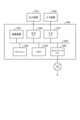
次に、図3を用いて、実施形態に係る情報処理装置100の構成について説明する。図3に、実施形態に係る情報処理装置100の構成例を示す。図3に示すように、情報処理装置100は、通信部110と、記憶部120と、制御部130とを有する。
次に、図3を用いて、実施形態に係る情報処理装置100の構成について説明する。図3に、実施形態に係る情報処理装置100の構成例を示す。図3に示すように、情報処理装置100は、通信部110と、記憶部120と、制御部130とを有する。
(通信部110について)
通信部110は、例えば、NIC(Network Interface Card)等によって実現される。そして、通信部110は、ネットワークNと有線又は無線で接続され、他の各種装置との間で情報の送受信を行う。
通信部110は、例えば、NIC(Network Interface Card)等によって実現される。そして、通信部110は、ネットワークNと有線又は無線で接続され、他の各種装置との間で情報の送受信を行う。
(記憶部120について)
記憶部120は、例えば、RAM(Random Access Memory)、フラッシュメモリ(Flash Memory)等の半導体メモリ素子、または、ハードディスク、光ディスク等の記憶装置によって実現される。記憶部120は、行動情報記憶部121と、判定条件記憶部122と、出力情報記憶部123とを有する。
記憶部120は、例えば、RAM(Random Access Memory)、フラッシュメモリ(Flash Memory)等の半導体メモリ素子、または、ハードディスク、光ディスク等の記憶装置によって実現される。記憶部120は、行動情報記憶部121と、判定条件記憶部122と、出力情報記憶部123とを有する。
(行動情報記憶部121について)
行動情報記憶部121は、利用者の行動に関する各種情報を記憶する。ここで、図4に、実施形態に係る行動情報記憶部121の一例を示す。図4に示した例では、行動情報記憶部121は、「利用者ID(Identifier)」、「利用者情報」、「行動情報ID」、「時間」、「行動情報」といった項目を有する。
行動情報記憶部121は、利用者の行動に関する各種情報を記憶する。ここで、図4に、実施形態に係る行動情報記憶部121の一例を示す。図4に示した例では、行動情報記憶部121は、「利用者ID(Identifier)」、「利用者情報」、「行動情報ID」、「時間」、「行動情報」といった項目を有する。
「利用者ID」は、利用者を識別する識別子である。「利用者情報」は、「利用者ID」に対応付けられた利用者に関する情報である。例えば、利用者情報は、利用者の年齢や、性別や、家族構成や、居住環境に関する情報等である。また、利用者情報は、利用者のパートナーに関する情報を含んでもよい。
「行動情報ID」は、「利用者ID」に対応付けられた行動情報を識別する識別子である。「時間」は、「行動情報ID」に対応付けられた利用者の行動が行われた時間に関する情報である。「行動情報」は、「行動情報ID」に対応付けられた利用者の行動情報である。
例えば、図4では、利用者IDによって識別された「U1」は、利用者情報が「UI1」であり、行動情報IDが「A1」であり、時間が「DT1」であり、行動情報が「AC1」である。
なお、図4に示した例では、利用者情報等を、「UI1」等の抽象的な符号で表現したが、利用者情報等は、数値や、文字列に関する情報や、利用者情報等を含むファイルのファイル形式等であってもよい。
(判定条件記憶部122について)
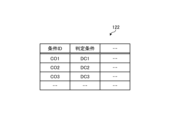
判定条件記憶部122は、オブジェクトに対する行動を判定するための判定条件に関する情報を記憶する。例えば、判定条件記憶部122は、情報処理装置100を管理する事業者によって予め指定された判定条件に関する情報を記憶する。ここで、図5に、実施形態に係る判定条件記憶部122の一例を示す。図5に示した例では、判定条件記憶部122は、「条件ID」、「判定条件」といった項目を有する。
判定条件記憶部122は、オブジェクトに対する行動を判定するための判定条件に関する情報を記憶する。例えば、判定条件記憶部122は、情報処理装置100を管理する事業者によって予め指定された判定条件に関する情報を記憶する。ここで、図5に、実施形態に係る判定条件記憶部122の一例を示す。図5に示した例では、判定条件記憶部122は、「条件ID」、「判定条件」といった項目を有する。
「条件ID」は、判定条件を識別する識別子である。「判定条件」は、「条件ID」に対応付けられた判定条件に関する情報である。例えば、判定条件とは、養護行動のうち、適切な育児に関する行動等である。
例えば、図5では、条件IDによって識別された「CO1」は、判定条件が「DC1」である。なお、図5に示した例では、判定条件を、「DC1」等の抽象的な符号で表現したが、判定条件は、数値や、文字列に関する情報や、判定条件を含むファイルのファイル形式等であってもよい。
(出力情報記憶部123について)
出力情報記憶部123は、仮想空間に関する各種情報を記憶する。ここで、図6に、実施形態に係る出力情報記憶部123の一例を示す。図6に示した例では、出力情報記憶部123は、「出力情報ID」、「空間情報ID」、「空間情報」、「オブジェクトID」、「位置情報」、「オブジェクト」、「仮想空間」といった項目を有する。
出力情報記憶部123は、仮想空間に関する各種情報を記憶する。ここで、図6に、実施形態に係る出力情報記憶部123の一例を示す。図6に示した例では、出力情報記憶部123は、「出力情報ID」、「空間情報ID」、「空間情報」、「オブジェクトID」、「位置情報」、「オブジェクト」、「仮想空間」といった項目を有する。
「出力情報ID」は、出力情報を識別する識別子である。「空間情報ID」は、「出力情報ID」に対応付けられた空間情報を識別する識別子である。「空間情報」は、「空間情報ID」に対応付けられた空間情報である。例えば、空間情報は、所定の各種仮想的な空間に関する情報である。例えば、空間情報は、所定の街並みに関する空間情報等である。また、空間情報は、自宅や、学校や、公共施設や、小売店舗等に関する空間情報等を含む。
「オブジェクトID」は、「空間情報ID」に対応付けられた空間内に配置されるオブジェクトを識別する識別子である。「位置情報」は、「オブジェクトID」に対応付けられた空間内に配置されたオブジェクトの空間内の位置情報である。「オブジェクト」は、「オブジェクトID」に対応付けられた空間内に配置されたオブジェクトに関する情報である。例えば、オブジェクトは、所定の各種オブジェクトである。
「仮想空間」は、「出力情報ID」に対応付けられた仮想空間に関する情報である。例えば、「仮想空間」は、「空間情報」と、「位置情報」と、「オブジェクト」とに基づいて生成される仮想空間である。
例えば、図6では、出力情報IDによって識別された「V1」は、空間情報IDが「SP1」であり、空間情報が「SI1」であり、オブジェクトIDが「O1」であり、位置情報が「OP1」であり、オブジェクトが「OB1」であり、仮想空間が「VS1」である。なお、図6に示した例では、空間情報等を、「SI1」等の抽象的な符号で表現したが、空間情報等は、数値や、文字列に関する情報や、空間情報等を含むファイルのファイル形式等であってもよい。
(制御部130について)
制御部130は、コントローラ(Controller)であり、例えば、CPU(Central Processing Unit)やMPU(Micro Processing Unit)等によって、情報処理装置100内部の記憶装置に記憶されている各種プログラム(情報処理プログラムの一例)がRAMを作業領域として実行されることにより実現される。また、制御部130は、コントローラであり、例えば、ASIC(Application Specific Integrated Circuit)やFPGA(Field Programmable Gate Array)等の集積回路により実現される。
制御部130は、コントローラ(Controller)であり、例えば、CPU(Central Processing Unit)やMPU(Micro Processing Unit)等によって、情報処理装置100内部の記憶装置に記憶されている各種プログラム(情報処理プログラムの一例)がRAMを作業領域として実行されることにより実現される。また、制御部130は、コントローラであり、例えば、ASIC(Application Specific Integrated Circuit)やFPGA(Field Programmable Gate Array)等の集積回路により実現される。
図3に示すように、制御部130は、受付部131と、取得部132と、選択部133と、判定部134と、変更部135と、出力部136とを有し、以下に説明する情報処理の機能や作用を実現または実行する。なお、制御部130の内部構成は、図3に示した構成に限られず、後述する情報処理を行う構成であれば他の構成であってもよい。また、制御部130が有する各処理部の接続関係は、図3に示した接続関係に限られず、他の接続関係であってもよい。
(受付部131について)
受付部131は、各種要件を受付ける。例えば、受付部131は、仮想空間に関する情報の出力要求を端末装置10から受付ける。より具体的な例を挙げると、出力要求が、利用者が母親として仮想空間上で表示されるような要求を含むものとする。この場合、受付部131は、仮想空間に関する情報の出力要求であって、利用者が母親として仮想空間上で表示されるような要求を含む出力要求を端末装置10から受付ける。
受付部131は、各種要件を受付ける。例えば、受付部131は、仮想空間に関する情報の出力要求を端末装置10から受付ける。より具体的な例を挙げると、出力要求が、利用者が母親として仮想空間上で表示されるような要求を含むものとする。この場合、受付部131は、仮想空間に関する情報の出力要求であって、利用者が母親として仮想空間上で表示されるような要求を含む出力要求を端末装置10から受付ける。
また、受付部131は、利用者情報を端末装置10から受付けてもよい。そして、受付部131は、受付けた利用者情報を行動情報記憶部121に記憶してもよい。また、受付部131は、利用者のパートナーに関する情報と、パートナーの設定に関する情報とを受付けてもよい。そして、受付部131は、受付けた利用者のパートナーに関する情報と、パートナーの設定に関する情報とを行動情報記憶部121に記憶してもよい。
(取得部132について)
取得部132は、各種情報を取得する。具体的には、取得部132は、利用者によって仮想空間で行われた行動であって、利用者が仮想空間における所定のオブジェクトを養護する行動に関する情報を取得する。例えば、取得部132は、利用者が装着した端末装置10によって検知された利用者の動作や、仮想空間上に配置されたオブジェクトに対する行動等の行動情報を取得する。そして、取得部132は、取得した行動情報を行動情報記憶部121に記憶する。
取得部132は、各種情報を取得する。具体的には、取得部132は、利用者によって仮想空間で行われた行動であって、利用者が仮想空間における所定のオブジェクトを養護する行動に関する情報を取得する。例えば、取得部132は、利用者が装着した端末装置10によって検知された利用者の動作や、仮想空間上に配置されたオブジェクトに対する行動等の行動情報を取得する。そして、取得部132は、取得した行動情報を行動情報記憶部121に記憶する。
(選択部133について)
選択部133は、各種情報を選択する。例えば、選択部133は、行動情報記憶部121に記憶された行動情報のうち、子供のオブジェクトに対する行動情報を選択する。
選択部133は、各種情報を選択する。例えば、選択部133は、行動情報記憶部121に記憶された行動情報のうち、子供のオブジェクトに対する行動情報を選択する。
(判定部134について)
判定部134は、行動に関する情報が示す行動が所定の行動であるか否かを判定する。例えば、判定部134は、判定条件記憶部122に記憶される判定条件に基づいて、子供のオブジェクトに対する行動が所定の条件を満たす行動か否かを判定する。
判定部134は、行動に関する情報が示す行動が所定の行動であるか否かを判定する。例えば、判定部134は、判定条件記憶部122に記憶される判定条件に基づいて、子供のオブジェクトに対する行動が所定の条件を満たす行動か否かを判定する。
例えば、判定条件記憶部122に記憶される判定条件が、利用者の行動が育児行動であるか否かを判定する条件であるものする。この場合、判定部134は、利用者が子供のオブジェクトが泣いている行動に対して、子供のオブジェクトが着用するおむつを交換する行動を行った場合、利用者の行動が育児行動であると判定する。すなわち、判定部134は、利用者が行った子供のオブジェクトに対する行動が所定の条件を満たす行動であると判定する。
また、判定部134は、利用者が子供のオブジェクトが泣いている行動に対してあやす行動を行った場合、利用者の行動が育児行動であると判定する。すなわち、判定部134は、利用者が行った子供のオブジェクトに対する行動が所定の条件を満たす行動であると判定する。
一方、判定部134は、利用者が子供のオブジェクトが泣いている行動に対して、例えば、子供のオブジェクトを凝視するだけの行動を行った場合、利用者の行動が育児行動ではないと判定する。すなわち、判定部134は、利用者が行った子供のオブジェクトに対する行動が所定の条件を満たさない行動であると判定する。
(変更部135について)
変更部135は、行動に関する情報が示す行動が所定の条件を満たす場合に、所定のオブジェクトを変更する。例えば、変更部135は、所定のオブジェクトとして、子供のオブジェクトを変更する。
変更部135は、行動に関する情報が示す行動が所定の条件を満たす場合に、所定のオブジェクトを変更する。例えば、変更部135は、所定のオブジェクトとして、子供のオブジェクトを変更する。
より具体的な例を挙げると、判定部134が、利用者が行った子供のオブジェクトに対する行動が所定の条件を満たす行動であると判定した場合、変更部135は、子供のオブジェクトを、子供のオブジェクトを適切に成長させた子供のオブジェクトに変更する。このとき、変更部135は、子供のオブジェクトが、利用者が居住する現実世界の時間に応じて成長するように子供のオブジェクトを変更する。例えば、子供のオブジェクトが、成長することで体が大きくなる。また、子供のオブジェクトが、成長することでおむつではなく、トレーニングパンツを着用する。
一方、判定部134が、利用者が行った子供のオブジェクトに対する行動が所定の条件を満たさない行動であると判定した場合、変更部135は、子供のオブジェクトを、子供のオブジェクトを適切に成長しなかった子供のオブジェクトに変更する。例えば、子供のオブジェクトの体が大きくならず、子供のオブジェクトの体重が減少する。また、子供のオブジェクトが、泣いていたら泣いたままであったり、所定の年齢になってもおむつを着用したままであったりする。
このような成長した各子供のオブジェクトに関する情報は、記憶部120に予め記憶されているものとする。そして、変更部135は、出力情報記憶部123に記憶される子供のオブジェクトを、変更した子供のオブジェクトに更新する。
(出力部136について)
出力部136は、各種情報を出力する。具体的には、出力部136は、所定のオブジェクトが変更されたオブジェクトを含む仮想空間に関する情報を利用者に対して出力する。例えば、出力部136は、出力情報記憶部123に記憶された仮想空間に基づいて、子供のオブジェクトを含む仮想空間に関する情報を端末装置10に出力する。
出力部136は、各種情報を出力する。具体的には、出力部136は、所定のオブジェクトが変更されたオブジェクトを含む仮想空間に関する情報を利用者に対して出力する。例えば、出力部136は、出力情報記憶部123に記憶された仮想空間に基づいて、子供のオブジェクトを含む仮想空間に関する情報を端末装置10に出力する。
また、出力部136は、変更部135によって変更されたオブジェクトを含む仮想空間に関する情報を出力する。例えば、出力部136は出力情報記憶部123に記憶された仮想空間に基づいて、変更されたオブジェクトとして、成長した子供のオブジェクトを含む仮想空間に関する情報を端末装置10に出力する。
また、出力部136は、子供のオブジェクトの変化の経過に応じて、所定のイベントが発生する仮想空間に関する情報を端末装置10に出力する。例えば、出力部136は、所定のイベントとして、夜泣きや、授乳や、抱っこや、寝かしつけや、食事や、おむつの交換や、絵本の読み聞かせ等のいずれかに対応するイベントが発生する仮想空間に関する情報を端末装置10に出力する。
〔5.処理手順〕
次に、図7を用いて、実施形態に係る情報処理装置100が実行する出力処理の手順について説明する。図7は、実施形態に係る情報処理装置100が実行する出力処理の流れの一例を示すフローチャートである。
次に、図7を用いて、実施形態に係る情報処理装置100が実行する出力処理の手順について説明する。図7は、実施形態に係る情報処理装置100が実行する出力処理の流れの一例を示すフローチャートである。
図7に示すように、受付部131は、仮想空間に関する情報の出力要求を端末装置10から受付けたか否かを判定する(ステップS101)。具体的には、受付部131は、仮想空間に関する情報の出力要求を端末装置10から受付けていない場合(ステップS101;No)、仮想空間に関する情報の出力要求を端末装置10から受付けるまで待機する。
一方、出力部136は、受付部131が仮想空間に関する情報の出力要求を端末装置10から受付けた場合(ステップS101;Yes)、仮想空間に関する情報を出力する(ステップS102)。
続いて、取得部132は、利用者の行動情報を取得する(ステップS103)。そして、選択部133は、行動情報のうち、オブジェクトに対する行動情報を選択する(ステップS104)。続いて、判定部134は、オブジェクトに対する行動が所定の条件を満たすか否かを判定する(ステップS105)。
具体的には、変更部135は、判定部134がオブジェクトに対する行動が所定の条件を満たすと判定した場合(ステップS105;Yes)、オブジェクトを第1オブジェクトに変更する(ステップS106)。そして、出力部136は、第1オブジェクトを含む仮想空間に関する情報を出力する(ステップS107)。
一方、変更部135は、判定部134がオブジェクトに対する行動が所定の条件を満たさないと判定した場合(ステップS105;No)、オブジェクトを第2オブジェクトに変更する(ステップS108)。そして、出力部136は、第2オブジェクトを含む仮想空間に関する情報を出力する(ステップS109)。
〔6.変形例〕
上述した情報処理装置100は、上記実施形態以外にも種々の異なる形態にて実施されてよい。そこで、以下では、情報処理装置100の他の実施形態について説明する。
上述した情報処理装置100は、上記実施形態以外にも種々の異なる形態にて実施されてよい。そこで、以下では、情報処理装置100の他の実施形態について説明する。
〔6-1.利用者〕
上記実施形態では、利用者が自身の子供に対して育児をしようとしている利用者である例を挙げて説明したが、これに限定されない。例えば、利用者がこれから育児をしようとする利用者であるならば、如何なる利用者であってもよい。例えば、利用者は、未婚であってもよい。また、利用者は、既婚であり、これから子供を産む計画を立てている利用者であってもよい。
上記実施形態では、利用者が自身の子供に対して育児をしようとしている利用者である例を挙げて説明したが、これに限定されない。例えば、利用者がこれから育児をしようとする利用者であるならば、如何なる利用者であってもよい。例えば、利用者は、未婚であってもよい。また、利用者は、既婚であり、これから子供を産む計画を立てている利用者であってもよい。
また、利用者が第2子を産むことを計画しており、第2子に対して育児をしようとしている利用者であってもよい。なお、ここでいう第2子は例示に過ぎず、第2子の代わりに第N(Nは任意の整数)子の場合であってもよい。
〔6-2.養護する対象〕
上記実施形態では、養護する対象が子供である例を挙げて説明したが、これに限定されない。例えば、養護する対象は、高齢者等の被介護者であってもよい。例えば、高齢者のオブジェクトは、時間の経過とともに、老いるようなオブジェクトである。この場合の高齢者のオブジェクトを養護する行動は、例えば、おむつの交換、入浴、トイレ誘導、食事等である。
上記実施形態では、養護する対象が子供である例を挙げて説明したが、これに限定されない。例えば、養護する対象は、高齢者等の被介護者であってもよい。例えば、高齢者のオブジェクトは、時間の経過とともに、老いるようなオブジェクトである。この場合の高齢者のオブジェクトを養護する行動は、例えば、おむつの交換、入浴、トイレ誘導、食事等である。
また、養護する対象は、ペットであってもよい。この場合のペットを養護する行動は、例えば、散歩、ペットシート交換、排泄用猫砂の交換、給餌等である。また、養護する対象が高齢のペットである場合、養護行動におむつの交換が含まれてもよい。なお、ここでいうペットは、飼育可能なペットであれば、如何なるペットでもよく、例えば、犬や、猫や、フェレット等である。
〔6-3.オブジェクト〕
上記実施形態では、子供のオブジェクトが所定の子供のオブジェクトである例を挙げて説明したが、これに限定されない。例えば、取得部132は、利用者情報を取得する。そして、取得部132は、利用者情報に基づいて、子供のオブジェクトを生成してもよい。
上記実施形態では、子供のオブジェクトが所定の子供のオブジェクトである例を挙げて説明したが、これに限定されない。例えば、取得部132は、利用者情報を取得する。そして、取得部132は、利用者情報に基づいて、子供のオブジェクトを生成してもよい。
また、取得部132は、利用者の顔画像に関する情報を取得する。そして、取得部132は、顔画像に基づいて推定される子供の顔を有する子供のオブジェクトを生成してもよい。
また、取得部132は、利用者のデオキシリボ核酸(DNA)情報を取得する。そして、取得部132は、DNA情報に基づいて推定される子供の顔を有する子供のオブジェクトを生成してもよい。これにより、取得部132は、利用者が子供のオブジェクトに対して親近感を得られるようにすることができる。
〔6-4.仮想空間上の利用者〕
上記実施形態では、利用者が男性であり、仮想空間上では母親として表示される例を挙げて説明したが、これに限定されない。例えば、利用者が女性であり、仮想空間上では母親として表示されてもよい。また、利用者が女性であり、仮想空間上では父親として表示されてもよい。また、利用者が男性であり、仮想空間上では父親として表示されてもよい。
上記実施形態では、利用者が男性であり、仮想空間上では母親として表示される例を挙げて説明したが、これに限定されない。例えば、利用者が女性であり、仮想空間上では母親として表示されてもよい。また、利用者が女性であり、仮想空間上では父親として表示されてもよい。また、利用者が男性であり、仮想空間上では父親として表示されてもよい。
また、利用者が母親として仮想空間上で表示される場合、仮想空間上の母親が妊婦であるものとする。このとき、母親は、胎児の成長に応じてお腹が大きくなるといった変化が発生してもよい。
また、利用者が子供として仮想空間上に表示されてもよい。例えば、利用者は、子供として、子供が成長する過程を体験してもよい。これにより、利用者は、子供目線で育児に関する行動を体験することができる。
この場合、現実世界の子供は、如何なる状態の子供であってもよい。例えば、子供が、NICU(Neonatal Intensive Care Unit)に入院していてもよい。また、子供が、発達障害児であってもよい。
〔6-5.仮想空間内の時間の流れ〕
上記実施形態では、子供のオブジェクトが、利用者が居住する現実世界の時間に応じて成長する例を挙げて説明したが、これに限定されない。例えば、仮想空間内の時間は、現実世界の時間よりも早く流れてもよい。この場合、子供のオブジェクトは、利用者が居住する現実世界の時間よりも早く成長する。
上記実施形態では、子供のオブジェクトが、利用者が居住する現実世界の時間に応じて成長する例を挙げて説明したが、これに限定されない。例えば、仮想空間内の時間は、現実世界の時間よりも早く流れてもよい。この場合、子供のオブジェクトは、利用者が居住する現実世界の時間よりも早く成長する。
〔6-6.仮想空間上でのマッチング〕
上記実施形態では、利用者が既に結婚している例を挙げて説明したが、これに限定されない。例えば、利用者は、仮想空間上に自身のアバターを作成する。この場合、仮想空間上で利用者と、他の利用者とに対してマッチング処理が行われてもよい。そして、利用者は、マッチングした他の利用者と夫婦を形成し、上記実施形態で説明した育児をする体験を体験してもよい。
上記実施形態では、利用者が既に結婚している例を挙げて説明したが、これに限定されない。例えば、利用者は、仮想空間上に自身のアバターを作成する。この場合、仮想空間上で利用者と、他の利用者とに対してマッチング処理が行われてもよい。そして、利用者は、マッチングした他の利用者と夫婦を形成し、上記実施形態で説明した育児をする体験を体験してもよい。
〔6-7.他のオブジェクト〕
上記実施形態では、出力部136が子供のオブジェクトを含む仮想空間に関する情報を出力する例を挙げて説明したが、これに限定されない。例えば、出力部136は、変更部135によって変更された第1子供のオブジェクトと、第1子供のオブジェクトとは異なる他のオブジェクトである第2子供のオブジェクトとを含む仮想空間に関する情報を端末装置10に出力してもよい。
上記実施形態では、出力部136が子供のオブジェクトを含む仮想空間に関する情報を出力する例を挙げて説明したが、これに限定されない。例えば、出力部136は、変更部135によって変更された第1子供のオブジェクトと、第1子供のオブジェクトとは異なる他のオブジェクトである第2子供のオブジェクトとを含む仮想空間に関する情報を端末装置10に出力してもよい。
ここで、第1子供のオブジェクトがこれから育児をしようとしている第2子に対応するオブジェクトである。また、第2子供のオブジェクトが現に育児をしている第1子に対応するオブジェクトである。
例えば、出力部136は、子供のオブジェクトが2つあることにより生じる所定のイベントが発生する仮想空間に関する情報を端末装置10に出力してもよい。より具体的な例を挙げると、出力部136は、所定のイベントとして、第2子供のオブジェクトが第1子供のオブジェクトに対して嫉妬するイベントや、第2子供のオブジェクトが赤ちゃん返りするイベントや、第2子供のオブジェクトが第1子供のオブジェクトに対して暴力を振るうイベントのいずれかが発生する仮想空間に関する情報を端末装置10に出力してもよい。
なお、他のオブジェクトは、如何なるオブジェクトでもよい。例えば、オブジェクトがペットであるならば、第1ペットのオブジェクトがこれから飼育しようとしている2頭目のペットに対応するオブジェクトであり、第2ペットのオブジェクトが現に飼育しているペットに対応するオブジェクトである。また、オブジェクトが被介護者であるならば、第1被介護者のオブジェクトがこれから介護しようとしている被介護者に対応するオブジェクトであり、第2被介護者のオブジェクトが現に介護している被介護者に対応するオブジェクトである。
また、他のオブジェクトは、利用者と現実世界で関係している人であれば、如何なる人であってもよい。例えば、他のオブジェクトは、利用者のパートナーに対応するオブジェクトであってもよい。
〔6-8.他の利用者〕
また、他の利用者が端末装置10を操作し、利用者が体験している仮想空間に参加してもよい。
また、他の利用者が端末装置10を操作し、利用者が体験している仮想空間に参加してもよい。
上記例について、図8を用いて説明する。図8は、変形例に係る情報処理装置100が実行する出力処理の一例を示す図である。図8の例では、利用者U1が利用する端末装置が端末装置11であり、利用者U2が利用する端末装置が端末装置12である。なお、以下では、端末装置11及び12を区別しない場合の端末装置を端末装置10と表記する。
例えば、他の利用者は、過去に現実世界で子供に対して育児をした経験がある利用者や、過去に現実世界で子供に対して育児をした経験がある利用者のうち、現実世界では子供を育児する予定はないが、仮想空間でもう1度育児を経験したい利用者等である。また、他の利用者は、医師や、助産師や、睡眠コンサルタント等であってもよい。また、他の利用者は、NPC(Non-player Character)であってもよい。なお、他の利用者は、利用者の祖母や、親戚等であってもよい。
図8の例では、利用者U1が自身の子供に対して育児をしようとしている利用者である。ここで、利用者U1は既に結婚しているものとする。また、利用者U2が既に育児を経験した利用者である。このような場合に、情報処理装置100が、利用者U1に対して利用者U2が補助することで、利用者U1が育児行動を体験する仮想空間に関する情報を出力する例について説明する。
以下では、まず、図8を用いて、仮想空間上で利用者U1が子供のオブジェクトに対して、利用者U2からの補助を受けつつ、育児行動を行ったか否かで子供のオブジェクトが変化する例について説明する。次に、図8を用いて、変化した子供のオブジェクトを含む仮想空間に関する情報が利用者U1に対して提供される例について説明する。なお、図8の例では、子供のオブジェクトは、所定の子供のオブジェクトである例について説明する。
まず、図8を用いて、仮想空間上で利用者U1が子供のオブジェクトに対して、利用者U2からの補助を受けつつ、育児行動を行ったか否かで子供のオブジェクトが変化する例について説明する。
図8に示すステップS31~S32は、図1に示すステップS1と同一の処理であるため、図8に示すステップS31~S32に関する説明を省略する。また、図8に示すステップS33~S34は、図1に示すステップS2と同一の処理であるため、図8に示すステップS33~S34に関する説明を省略する。また、また、図8に示すステップS35~S36は、図1に示すステップS3と同一の処理であるため、図8に示すステップS35~S36に関する説明を省略する。
図8の例では、情報処理装置100の選択部133は、利用者U1の行動情報のうち、オブジェクトに対する行動情報であって、利用者U2によって補助された行動に関する行動情報を選択する(ステップS37)。例えば、選択部133は、利用者U1の行動情報のうち、子供のオブジェクトに対する行動情報であって、利用者U2によって補助された行動情報を選択する。
続いて、情報処理装置100の判定部134は、オブジェクトに対する行動が所定の条件を満たす行動か否かを判定する(ステップS38)。例えば、所定の条件を満たす行動がおむつを交換する行動であるものとする。この場合、判定部134は、利用者U1が子供のオブジェクトに対して、利用者U2の補助を受けつつ、子供のオブジェクトが着用するおむつを交換した場合、利用者U1の行動が適切な行動であると判定する。
一方、判定部134は、利用者U1が子供のオブジェクトに対して、利用者U2の補助を受けつつも子供のオブジェクトが着用するおむつを交換できなかった場合、利用者U1の行動が適切な行動ではないと判定する。
そして、情報処理装置100の変更部135は、オブジェクトを変更する(ステップS39)。例えば、変更部135は、利用者U1が行った子供のオブジェクトに対する行動が所定の条件を満たす行動であると判定した場合、子供のオブジェクトを、子供のオブジェクトを適切に成長させた子供のオブジェクトに変更する。
一方、変更部135は、利用者U1が行った子供のオブジェクトに対する行動が所定の条件を満たさない行動であると判定した場合、子供のオブジェクトを、子供のオブジェクトを適切に成長しなかった子供のオブジェクトに変更する。
次に、図8を用いて、変化した子供のオブジェクトを含む仮想空間に関する情報が利用者U1に対して提供される例について説明する。図8に示すステップS40~S41は、図1に示すステップS7~S8と同一の処理であるため、図8に示すステップS40~S41に関する説明を省略する。
このように、情報処理装置100は、利用者U1に対して子供のオブジェクトが示す子供を育児する体験を提供することができる。また、情報処理装置100は、利用者U2に対して、利用者U1の育児行動を補助するといった機会を提供することができる。これにより、利用者U2は、他の利用者の力になることで、自身の人生の満足感を高めることができる。このようにして、情報処理装置100は、利用者同士が互いに助け合うといった共生社会の実現を可能とする。
なお、情報処理装置100は、変更したオブジェクトを含む仮想空間に関する情報を利用者U2に対して出力してもよい。また、情報処理装置100は、利用者U1に対して出力したオブジェクトを含む仮想空間内で所定のイベントが発生した際に、利用者U2に対して、かかる所定のイベントが発生した旨の通知を出力してもよい。
〔6-9.仮想空間上での他の利用者との交流〕
また、利用者は、仮想空間上に自身のアバターを作成する。この場合、仮想空間上で利用者と、他の利用者とに対してマッチング処理が行われてもよい。これにより、利用者は、仮想空間上で友人を作ることができる。また、利用者は、仮想空間上で、他の利用者と育児に関する相談や、話し合い等を行うことができる。これにより、利用者は、親同士のコミュニティを作ることができる。この場合、情報処理装置100は、利用者と、他の利用者とを関連付けて記憶部120に記憶してもよい。
また、利用者は、仮想空間上に自身のアバターを作成する。この場合、仮想空間上で利用者と、他の利用者とに対してマッチング処理が行われてもよい。これにより、利用者は、仮想空間上で友人を作ることができる。また、利用者は、仮想空間上で、他の利用者と育児に関する相談や、話し合い等を行うことができる。これにより、利用者は、親同士のコミュニティを作ることができる。この場合、情報処理装置100は、利用者と、他の利用者とを関連付けて記憶部120に記憶してもよい。
〔6-10.端末装置10を利用するもの〕
また、利用者の子供が端末装置10を利用してもよい。例えば、利用者も端末装置10を利用し、仮想空間上で子供に対して、絵本の読み聞かせを行ってもよい。また、利用者も端末装置10を利用し、仮想空間上で流した曲に応じて、利用者と、子供とがダンスしてもよい。これにより、利用者は、子供に対して、リトミックを行うことができる。
また、利用者の子供が端末装置10を利用してもよい。例えば、利用者も端末装置10を利用し、仮想空間上で子供に対して、絵本の読み聞かせを行ってもよい。また、利用者も端末装置10を利用し、仮想空間上で流した曲に応じて、利用者と、子供とがダンスしてもよい。これにより、利用者は、子供に対して、リトミックを行うことができる。
他の例として、利用者に対応するオブジェクトと、利用者のパートナーに対応するオブジェクトとが喧嘩するものとする。この場合、子供に対して、仮想的に喧嘩する様子を見せることができる。このとき、利用者は、端末装置10を利用する子供の様子を現実世界から観察することができる。これにより、利用者は、夫婦同士の喧嘩が子供にどのような影響を及ぼすか理解することができる。
〔6-11.仮想空間上でのコミュニケーション〕
また、利用者は、仮想空間上でボイスチャットを利用して他の利用者とコミュニケーションを取ってもよい。
また、利用者は、仮想空間上でボイスチャットを利用して他の利用者とコミュニケーションを取ってもよい。
〔6-12.仮想空間上で表示されるコンテンツ〕
また、子供を育児する場合、仮想空間上で表示されるコンテンツとして、子供の洋服や、子供の育児用品等の広告コンテンツが仮想空間上の所定の位置に表示されてもよい。また、おむつを購入するためのコンテンツが仮想空間上に表示されてもよい。この場合、利用者がおむつを購入するためのコンテンツに触れる等することで、端末装置10は、電子商取引サービスに関するコンテンツを表示してもよい。
また、子供を育児する場合、仮想空間上で表示されるコンテンツとして、子供の洋服や、子供の育児用品等の広告コンテンツが仮想空間上の所定の位置に表示されてもよい。また、おむつを購入するためのコンテンツが仮想空間上に表示されてもよい。この場合、利用者がおむつを購入するためのコンテンツに触れる等することで、端末装置10は、電子商取引サービスに関するコンテンツを表示してもよい。
また、利用者が子供のオブジェクトに対しておむつを交換する際に使用したおむつに対応する商品に関するコンテンツが表示されてもよい。この場合、利用者が商品に関するコンテンツに触れる等することで、端末装置10は、電子商取引サービスに関するコンテンツを表示してもよい。また、利用者が商品に関するコンテンツに触れる等することで、端末装置10は、かかる商品を販売する小売店舗の位置に関する情報を所定の地図情報とともに表示してもよい。また、利用者が実際にかかる商品を購入した場合、端末装置10は、仮想空間上で使用可能な所定のアイテムを提供してもよい。
〔6-13.その他〕
上記した各処理のうち、自動的に行われるものとして説明した処理の全部または一部は、手動的に行われてもよい。また、手動的に行われるものとして説明した処理の全部または一部は、公知の方法で自動的に行われてもよい。この他、上記文書中や図面中で示した処理手順、具体的名称、各種のデータやパラメータを含む情報については、特記する場合を除いて任意に変更することができる。例えば、各図に示した各種情報は、図示した情報に限られるものではない。
上記した各処理のうち、自動的に行われるものとして説明した処理の全部または一部は、手動的に行われてもよい。また、手動的に行われるものとして説明した処理の全部または一部は、公知の方法で自動的に行われてもよい。この他、上記文書中や図面中で示した処理手順、具体的名称、各種のデータやパラメータを含む情報については、特記する場合を除いて任意に変更することができる。例えば、各図に示した各種情報は、図示した情報に限られるものではない。
また、図示した各装置の各構成要素は機能概念的なものであり、必ずしも物理的に図示の如く構成されなくともよい。すなわち、各装置の分散・統合の具体的形態は図示のものに限られない。また、各構成要素は、その全部または一部を、各種の負荷や使用状況などに応じて、任意の単位で機能的または物理的に分散・統合して構成してもよい。
また、上記してきた各処理は、矛盾しない範囲で適宜組合せて実行されてもよい。
また、上述してきた「部(section、module、unit)」は、「手段」や「回路」などに読み替えることができる。例えば、出力部は、出力手段や出力回路に読み替えることができる。
〔7.ハードウェア構成〕
また、上述した実施形態に係る端末装置10や、情報処理装置100は、例えば、図9に示すような構成のコンピュータ1000によって実現される。図9は、ハードウェア構成の一例を示す図である。コンピュータ1000は、出力装置1010、入力装置1020と接続され、演算装置1030、キャッシュ1040、メモリ1050、出力IF(Interface)1060、入力IF1070、ネットワークIF1080がバス1090により接続される。
また、上述した実施形態に係る端末装置10や、情報処理装置100は、例えば、図9に示すような構成のコンピュータ1000によって実現される。図9は、ハードウェア構成の一例を示す図である。コンピュータ1000は、出力装置1010、入力装置1020と接続され、演算装置1030、キャッシュ1040、メモリ1050、出力IF(Interface)1060、入力IF1070、ネットワークIF1080がバス1090により接続される。
演算装置1030は、キャッシュ1040やメモリ1050に格納されたプログラムや入力装置1020から読み出したプログラム等に基づいて動作し、各種の処理を実行する。キャッシュ1040は、RAM等、演算装置1030が各種の演算に用いるデータを一次的に記憶するキャッシュである。また、メモリ1050は、演算装置1030が各種の演算に用いるデータや、各種のデータベースが登録される記憶装置であり、ROM(Read Only Memory)、HDD(Hard Disk Drive)、フラッシュメモリ等により実現されるメモリである。
出力IF1060は、モニタやプリンタといった各種の情報を出力する出力装置1010に対し、出力対象となる情報を送信するためのインタフェースであり、例えば、USB(Universal Serial Bus)やDVI(Digital Visual Interface)、HDMI(登録商標)(High Definition Multimedia Interface)といった規格のコネクタにより実現されてよい。一方、入力IF1070は、マウス、キーボード、およびスキャナ等といった各種の入力装置1020から情報を受信するためのインタフェースであり、例えば、USB等により実現される。
例えば、入力装置1020は、CD(Compact Disc)、DVD(Digital Versatile Disc)、PD(Phase change rewritable Disk)等の光学記録媒体、MO(Magneto-Optical disk)等の光磁気記録媒体、テープ媒体、磁気記録媒体、または半導体メモリ等から情報を読み出す装置により実現されてもよい。また、入力装置1020は、USBメモリ等の外付け記憶媒体により実現されてもよい。
ネットワークIF1080は、ネットワークNを介して他の機器からデータを受信して演算装置1030へ送り、また、ネットワークNを介して演算装置1030が生成したデータを他の機器へ送信する機能を有する。
ここで、演算装置1030は、出力IF1060や入力IF1070を介して、出力装置1010や入力装置1020の制御を行うこととなる。例えば、演算装置1030は、入力装置1020やメモリ1050からプログラムをキャッシュ1040上にロードし、ロードしたプログラムを実行する。例えば、コンピュータ1000が情報処理装置100として機能する場合、コンピュータ1000の演算装置1030は、キャッシュ1040上にロードされたプログラムを実行することにより、制御部130の機能を実現することとなる。
以上、本願の実施形態を図面に基づいて詳細に説明した。しかしながら、これらは例示であり、本願の実施形態は、発明の開示の欄に記載の態様を始めとして、所謂当業者の知識に基づいて種々の変形、改良を施した他の形態で実施することが可能である。
N ネットワーク
1 情報処理システム
10、11、12 端末装置
100 情報処理装置
110 通信部
120 記憶部
121 行動情報記憶部
122 判定条件記憶部
123 出力情報記憶部
130 制御部
131 受付部
132 取得部
133 選択部
134 判定部
135 変更部
136 出力部
1 情報処理システム
10、11、12 端末装置
100 情報処理装置
110 通信部
120 記憶部
121 行動情報記憶部
122 判定条件記憶部
123 出力情報記憶部
130 制御部
131 受付部
132 取得部
133 選択部
134 判定部
135 変更部
136 出力部
Claims (12)
- 利用者によって仮想空間で行われた行動であって、当該利用者が当該仮想空間における所定のオブジェクトを養護する行動に関する情報を取得する取得部と、
前記行動に関する情報が示す行動が所定の条件を満たす場合に、前記所定のオブジェクトを変更する変更部と、
前記所定のオブジェクトが変更されたオブジェクトを含む仮想空間に関する情報を前記利用者に対して出力する出力部と
を備えることを特徴とする情報処理装置。 - 前記変更部は、
前記所定のオブジェクトを、当該所定のオブジェクトを成長させたオブジェクトに変更する
ことを特徴とする請求項1に記載の情報処理装置。 - 前記変更部は、
前記所定のオブジェクトが、前記利用者が居住する現実世界の時間に応じて成長するように前記所定のオブジェクトを変更する
ことを特徴とする請求項2に記載の情報処理装置。 - 前記出力部は、
前記所定のオブジェクトが変更されたオブジェクトの変化の経過に応じて、所定のイベントが発生する仮想空間に関する情報を前記利用者に対して出力する
ことを特徴とする請求項1に記載の情報処理装置。 - 前記出力部は、
前記所定のイベントとして、前記所定のオブジェクトが成長するように変更された経過に応じたイベントが発生する仮想空間に関する情報を前記利用者に対して出力する
ことを特徴とする請求項4に記載の情報処理装置。 - 前記出力部は、
前記所定のオブジェクトが変更されたオブジェクトと、前記所定のオブジェクトとは異なる他のオブジェクトとを含む仮想空間に関する情報を前記利用者に対して出力する
ことを特徴とする請求項1に記載の情報処理装置。 - 前記取得部は、
前記利用者である第1利用者とは異なる他の利用者である第2利用者によって仮想空間で行われた行動であって、当該第1利用者を補助する行動に関する情報を取得し、
前記変更部は、
前記行動に関する情報が示す行動が所定の条件を満たす場合に、前記第1利用者によって養護される前記所定のオブジェクトを変更し、
前記出力部は、
前記所定のオブジェクトが変更されたオブジェクトを含む仮想空間に関する情報を前記第1利用者及び前記第2利用者に対して出力する
ことを特徴とする請求項1に記載の情報処理装置。 - 前記出力部は、
前記第1利用者によって養護される前記所定のオブジェクトが変更されたオブジェクトの変化の経過に応じて、所定のイベントが発生する仮想空間に関する情報を前記第1利用者及び前記第2利用者に対して出力する
ことを特徴とする請求項7に記載の情報処理装置。 - 前記行動に関する情報が示す行動が所定の行動であるか否かを判定する判定部をさらに備える
ことを特徴とする請求項1に記載の情報処理装置。 - 前記判定部は、
前記行動が所定の養護に関する行動であるか否かを判定する
ことを特徴とする請求項9に記載の情報処理装置。 - コンピュータが実行する情報処理方法であって、
利用者によって仮想空間で行われた行動であって、当該利用者が当該仮想空間における所定のオブジェクトを養護する行動に関する情報を取得する取得工程と、
前記行動に関する情報が示す行動が所定の条件を満たす場合に、前記所定のオブジェクトを変更する変更工程と、
前記所定のオブジェクトが変更されたオブジェクトを含む仮想空間に関する情報を前記利用者に対して出力する出力工程と
を含むことを特徴とする情報処理方法。 - 利用者によって仮想空間で行われた行動であって、当該利用者が当該仮想空間における所定のオブジェクトを養護する行動に関する情報を取得する取得手順と、
前記行動に関する情報が示す行動が所定の条件を満たす場合に、前記所定のオブジェクトを変更する変更手順と、
前記所定のオブジェクトが変更されたオブジェクトを含む仮想空間に関する情報を前記利用者に対して出力する出力手順と
をコンピュータに実行させることを特徴とする情報処理プログラム。
Applications Claiming Priority (2)
| Application Number | Priority Date | Filing Date | Title |
|---|---|---|---|
| JP2022077107A JP7902630B2 (ja) | 2022-05-09 | 2022-05-09 | 情報処理装置、情報処理方法及び情報処理プログラム |
| JP2022-077107 | 2022-05-09 |
Publications (1)
| Publication Number | Publication Date |
|---|---|
| WO2023218858A1 true WO2023218858A1 (ja) | 2023-11-16 |
Family
ID=88730170
Family Applications (1)
| Application Number | Title | Priority Date | Filing Date |
|---|---|---|---|
| PCT/JP2023/015211 Ceased WO2023218858A1 (ja) | 2022-05-09 | 2023-04-14 | 情報処理装置、情報処理方法及び情報処理プログラム |
Country Status (2)
| Country | Link |
|---|---|
| JP (1) | JP7902630B2 (ja) |
| WO (1) | WO2023218858A1 (ja) |
Citations (2)
| Publication number | Priority date | Publication date | Assignee | Title |
|---|---|---|---|---|
| JP2018175461A (ja) * | 2017-04-14 | 2018-11-15 | 株式会社国際電気通信基礎技術研究所 | 返答インタフェースおよび対話訓練システム |
| JP2019128631A (ja) * | 2018-01-22 | 2019-08-01 | 株式会社コナミデジタルエンタテインメント | プログラムおよび画像表示システム |
Family Cites Families (2)
| Publication number | Priority date | Publication date | Assignee | Title |
|---|---|---|---|---|
| JP3044116U (ja) * | 1997-03-18 | 1997-12-16 | 株式会社バンダイ | 仮想生命体の育成シミュレーション装置 |
| US11094136B2 (en) * | 2017-04-28 | 2021-08-17 | Linden Research, Inc. | Virtual reality presentation of clothing fitted on avatars |
-
2022
- 2022-05-09 JP JP2022077107A patent/JP7902630B2/ja active Active
-
2023
- 2023-04-14 WO PCT/JP2023/015211 patent/WO2023218858A1/ja not_active Ceased
Patent Citations (2)
| Publication number | Priority date | Publication date | Assignee | Title |
|---|---|---|---|---|
| JP2018175461A (ja) * | 2017-04-14 | 2018-11-15 | 株式会社国際電気通信基礎技術研究所 | 返答インタフェースおよび対話訓練システム |
| JP2019128631A (ja) * | 2018-01-22 | 2019-08-01 | 株式会社コナミデジタルエンタテインメント | プログラムおよび画像表示システム |
Also Published As
| Publication number | Publication date |
|---|---|
| JP2023166209A (ja) | 2023-11-21 |
| JP7902630B2 (ja) | 2026-08-10 |
Similar Documents
| Publication | Publication Date | Title |
|---|---|---|
| Whittingham et al. | Acceptance and commitment therapy: The clinician's guide for supporting parents | |
| Planalp et al. | The infant version of the Laboratory Temperament Assessment Battery (Lab-TAB): Measurement properties and implications for concepts of temperament | |
| Burns-Nader et al. | Facilitating play for hospitalized children through child life services | |
| Turati et al. | Newborns' face recognition: Role of inner and outer facial features | |
| Hollett et al. | “Bean’s World”:(Mine) Crafting affective atmospheres of gameplay, learning, and care in a children’s hospital | |
| Barton et al. | Teaching pretend play to young children with autism | |
| Carrillo et al. | Everyday technologies for Alzheimer's disease care: Research findings, directions, and challenges | |
| Miller-McLemore | Embodied knowing, embodied theology: What happened to the body? | |
| JP2012146029A (ja) | 動物診療データ表示システム | |
| JP2020190774A (ja) | 提供装置、提供方法、提供プログラム及び提供システム | |
| WO2023218859A1 (ja) | 情報処理装置、情報処理方法及び情報処理プログラム | |
| Emond | More than just a bracelet: the use of material symbolism to communicate love | |
| Cagiltay et al. | Exploring children’s preferences for taking care of a social robot | |
| Brace | ‘Settling In’: Exploring the complexities of observing and responding to young children’s communications of distress as they start day care | |
| JP2020190771A (ja) | 提供装置、提供方法、提供プログラム及び提供システム | |
| Goleniowska | The importance of developing confidence and self-esteem in children with a learning disability | |
| Yamada-Rice | Designing play: Young children’s play and communication practices in relation to designers’ intentions for their toy | |
| Tizzard-Kleister et al. | ‘Breath, Belief, Focus, Touch’: Applied puppetry in simulated role-play for person-centred nursing education | |
| Lemos et al. | Observing the emotional development of a baby at home and in a nursery using ester Bick’s infant observation method | |
| JP2023166209A (ja) | 情報処理装置、情報処理方法及び情報処理プログラム | |
| Ulrich Hygum et al. | Crèche and cry, here and there: exploring children’s agency in Romanian and Danish nurseries | |
| St-Hilaire | The Therapeutic Power of Synthetic Relationships with Dolls. | |
| Murray et al. | Mothers’ experiences of settling infants in central Vietnam “through their eyes”: A photo-elicitation study | |
| JP2020190772A (ja) | 提供装置、提供方法、提供プログラム及び提供システム | |
| Yamada-Rice et al. | The importance of multimodal play and storytelling in medtech for children: A Case Study of Co-designing a Mixed Realities Play Kit to Prepare 4 to 10-year-Olds for an MRI Scan |
Legal Events
| Date | Code | Title | Description |
|---|---|---|---|
| 121 | Ep: the epo has been informed by wipo that ep was designated in this application |
Ref document number: 23803340 Country of ref document: EP Kind code of ref document: A1 |
|
| NENP | Non-entry into the national phase |
Ref country code: DE |
|
| 122 | Ep: pct application non-entry in european phase |
Ref document number: 23803340 Country of ref document: EP Kind code of ref document: A1 |