WO2023195051A1 - 関連情報表示装置、プログラム及び関連情報表示方法 - Google Patents
関連情報表示装置、プログラム及び関連情報表示方法 Download PDFInfo
- Publication number
- WO2023195051A1 WO2023195051A1 PCT/JP2022/017063 JP2022017063W WO2023195051A1 WO 2023195051 A1 WO2023195051 A1 WO 2023195051A1 JP 2022017063 W JP2022017063 W JP 2022017063W WO 2023195051 A1 WO2023195051 A1 WO 2023195051A1
- Authority
- WO
- WIPO (PCT)
- Prior art keywords
- related information
- information
- keyword
- unit
- band
- Prior art date
- Legal status (The legal status is an assumption and is not a legal conclusion. Google has not performed a legal analysis and makes no representation as to the accuracy of the status listed.)
- Ceased
Links
Images










Classifications
-
- G—PHYSICS
- G06—COMPUTING OR CALCULATING; COUNTING
- G06F—ELECTRIC DIGITAL DATA PROCESSING
- G06F16/00—Information retrieval; Database structures therefor; File system structures therefor
- G06F16/90—Details of database functions independent of the retrieved data types
- G06F16/904—Browsing; Visualisation therefor
Definitions
- the present disclosure relates to a related information display device, a program, and a related information display method.
- DB database
- DB database
- search conditions or a DB to be searched are specified from a knowledge graph that is conceptual structure information regarding the extracted words.
- a method for extracting knowledge, converting it into a graph structure or sentences, and presenting it is shown.
- one or more aspects of the present disclosure make it possible to easily present the relationship between keywords and knowledge extracted from the knowledge graph using the keywords, even if the structure of the knowledge graph is not understood.
- the purpose is to
- a related information display device includes a knowledge graph storage unit that stores a knowledge graph that holds knowledge information with a plurality of nodes and links connecting the plurality of nodes, and related information related to a keyword.
- a related information inference unit that infers from the knowledge graph; a relevance calculation unit that calculates the degree of relevance between the keyword and the related information; and a band connecting the keyword and the related information related to the keyword.
- a display data generation unit that generates display data for displaying a flow rate diagram showing the relationship between the keyword and the related information, and the width of the band is wider as the degree of relationship is higher. It is characterized by
- a program includes a knowledge graph storage unit that stores a knowledge graph that stores knowledge information using a plurality of nodes and links that connect the plurality of nodes; a related information inference unit that infers from the knowledge graph; a relevance calculation unit that calculates the degree of association between the keyword and the related information; and connecting the keyword and the related information related to the keyword with a band. and functions as a display data generation unit that generates display data for displaying a flow rate diagram showing the relationship between the keyword and the related information, and the width of the band is wider as the degree of relationship is higher. It is characterized by
- a related information display method infers related information related to a keyword from a knowledge graph that holds knowledge information with a plurality of nodes and links connecting the plurality of nodes, and , calculate the degree of association with the related information, and connect the keyword and the related information related to the keyword with a band, thereby displaying a flow diagram showing the relationship between the keyword and the related information.
- the width of the band is characterized in that the higher the degree of association, the wider the width of the band.
- the relationship between keywords and knowledge extracted from the knowledge graph using the keywords can be presented in an easy-to-understand manner even if the structure of the knowledge graph is not understood. .
- FIG. 1 is a block diagram schematically showing the configuration of a related information display device according to Embodiment 1.
- FIG. It is a schematic diagram showing an ontology that is a structure of a knowledge graph centered on documents.
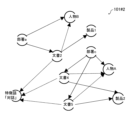
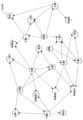
- FIG. 2 is a schematic diagram representing a first example of a knowledge graph.
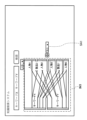
- FIG. 2 is a schematic diagram representing a first example of a Sankey diagram.
- FIG. 2 is a schematic diagram illustrating a first example of a subgraph.
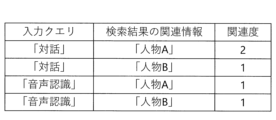
- FIG. 3 is a schematic diagram illustrating a second example of a subgraph. This is a table summarizing the degree of relevance between an input query and related information that is a search result.
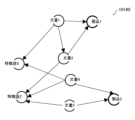
- FIG. 3 is a schematic diagram representing a second example of a knowledge graph.
- FIG. 3 is a schematic diagram representing a second example of a knowledge graph.
- FIG. 7 is a schematic diagram representing a third example of a subgraph.
- FIG. 3 is a schematic diagram representing a second example of a Sankey diagram.
- 1 is a block diagram schematically showing an example of a hardware configuration.
- FIG. 7 is a flowchart showing the operation of the related information display device according to the first embodiment.
- FIG. 2 is a block diagram schematically showing the configuration of a related information display device according to a second embodiment.
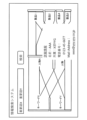
- FIG. 7 is a schematic diagram showing a third example of a Sankey diagram. It is a schematic diagram showing the 4th example of a Sankey diagram. It is a schematic diagram showing a fourth example of a subgraph. 7 is a flowchart showing the operation of the related information display device according to Embodiment 2.
- FIG. 2 is a block diagram schematically showing the configuration of a related information display device according to a second embodiment.
- FIG. 7 is a schematic diagram showing a third example of a Sankey diagram. It is a schematic diagram showing the
- FIG. 3 is a block diagram schematically showing the configuration of a related information display device according to Embodiment 3.
- FIG. 12 is a flowchart showing the operation of the related information display device according to Embodiment 3.
- FIG. 7 is a block diagram schematically showing the configuration of a related information display device according to a fourth embodiment. 12 is a block diagram schematically showing the configuration of a related information display device according to a fifth embodiment.
- FIG. FIG. 3 is a schematic diagram showing an example of displaying detailed information in a pop-up.
- FIG. 7 is a schematic diagram showing an example of displaying band information as detailed information.
- FIG. 1 is a block diagram schematically showing the configuration of a related information display device 100 according to the first embodiment.
- the related information display device 100 includes a knowledge graph DB (Data Base) 101, a DB operation section 102, a user I/F (interFace) section 103, a related information inference section 104, a degree of association calculation section 105, and display data.
- the generation unit 106 is also provided.
- the knowledge graph DB 101 holds knowledge information.
- the knowledge graph DB 101 is a knowledge graph database that holds knowledge information in a graph structure, with knowledge information obtained in advance as nodes and relationships between the nodes as links.
- the knowledge graph DB 101 functions as a knowledge graph storage unit that stores a knowledge graph that holds knowledge information using a plurality of nodes and links that connect the plurality of nodes.
- the knowledge graph has various formats, such as a property graph or RDF (Resource Description Framework).
- RDF Resource Description Framework
- the explanation will be given assuming that the knowledge graph is represented by a property graph. However, it may be expressed in other graph formats.
- the knowledge graph DB 101 holds knowledge information obtained from business documents such as design documents or papers as a knowledge graph.
- FIG. 2 and 3 are schematic diagrams for explaining the knowledge graph in the first embodiment.
- FIG. 2 is a schematic diagram showing an ontology that is a structure of a knowledge graph centered on documents.
- FIG. 3 is a schematic diagram illustrating an example of a knowledge graph.
- the knowledge graph 101#1 shown in FIG. 3 holds knowledge information as a graph from documents and information related thereto, in accordance with the ontology shown in FIG. 2. Note that although the knowledge graph 101#1 shown in FIG. 3 has been described as an example in which knowledge information related to business documents is held, such knowledge graph 101#1 is only an example, and other information may be stored. May be retained.
- the DB operation unit 102 operates the knowledge graph DB 101.
- the DB operation unit 102 performs operations such as registering, updating, or deleting knowledge in the knowledge graph DB 101, and searching for knowledge under specified conditions.
- the DB operation unit 102 performs processing according to the type of the knowledge graph DB 101, receives a keyword as an input query and the type of information to be searched from the related information inference unit 104, and performs the search using the specified search method. shall be implemented.
- the DB operation unit 102 searches for knowledge that is connected via a specified route path based on the structure of the knowledge graph.
- the user I/F unit 103 functions as an interface unit that acquires keywords and information types.
- the user I/F unit 103 functions as an input reception unit that receives input from the user and a display processing unit that displays related information.
- the user I/F unit 103 receives input from the user via an input device (not shown) such as a keyboard or mouse that functions as an input unit, and sends the received input query to the related information inference unit 104. hand over.
- the user I/F unit 103 Based on the display data received from the display data generation unit 106, the user I/F unit 103 presents the related information and its degree of association to the user on a display functioning as a display unit.
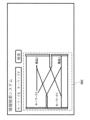
- the user I/F unit 103 presents the user with a search screen for searching for related information, and the user requests the keyword and the information type that is the type of information to which the keyword belongs as data necessary for the search. , accepts input of information type, which is the type of information to be searched. Then, the user I/F unit 103 displays related information based on the display data using a flow rate diagram representing the flow rate between processes, represented by the Sankey diagram IM1 as shown in FIG. The degree of relevance between the input query and related information is presented to the user.
- the display data received from the display data generation unit 106 includes at least each keyword that is the input query, related information that is the search result, the width of the band connecting the keyword and the search result, and the keyword and the search result. Contains width information for display. Based on this information, the user I/F section 103 causes the display section to display related information in the form of a Sankey diagram IM1.
- a keyword that is an input query, related information, and a band connecting the keyword and related information are drawn.
- Input queries are displayed side by side on the left side of the Sankey diagram IM1
- related information is displayed side by side on the right side of the Sankey diagram IM1
- the width of the band connecting keywords and related information becomes wider as the relevance of the keyword and related information is higher.
- the related information may be displayed in descending order of band width from top to bottom. This allows information that is more closely related to the keyword to be ranked higher, making it easier to see the results. Furthermore, if related information can be grouped, such as a person and their affiliation information, the information may be displayed together in that group. This allows the user to grasp the group of related information, making it easier to see the results.
- a search screen is displayed when the user accesses a specified URL (Uniform Resource Locator) from the browser.
- the user then inputs the keyword using the keyboard.
- the related information obtained based on the input from the user is drawn as a Sankey diagram on the web browser displayed on the display.
- voice input from the user may be accepted.
- the flow rate diagram is displayed in two dimensions, but it may also be displayed in three dimensions.
- the horizontal side shows the relationship with the person
- the back side shows the relationship with the document.
- the related information inference unit 104 infers related information related to the keyword from the knowledge graph stored in the knowledge graph DB 101.
- the related information inference unit 104 receives input from the user and infers related information.
- the related information inference unit 104 uses the DB operation unit 102 to extract related information desired by the user from a keyword as an input query input by the user and the information type of the information desired to be searched.
- the related information inference unit 104 infers information related to the keyword and belonging to the information type as related information.
- the related information inference unit 104 extracts related information by specifying a path to search based on the structure of the knowledge graph. For example, if a user wants to know information about a "person" who is familiar with "speech recognition" and "dialogue," the related information inference unit 104 may ask the author of a document whose feature word is "speech recognition" to know about "dialogue.” The author of the document having the characteristic word is extracted using the DB operation unit 102, and the common person is inferred as a related person as related information. In other words, the related information inference unit 104 selects an inference method according to the related information desired by the user and infers the related information.
- the related information inference unit 104 may consider the author of a document that includes both "speech recognition" and "dialogue” as feature words as a related person. Furthermore, if a graph structure assumed for each type of information specified by the user as information to be searched is held, the related information inference unit 104 extracts a subgraph similar to the graph structure and includes The node of the information type specified as the information to be searched may be obtained as the related information. Further, the related information inference unit 104 may extract related information by calculating the shortest route path from the input query. The related information inference unit 104 may extract related information using other methods.
- the related information inference unit 104 may present information of various information types as related information. For example, the related information inference unit 104 may use a graph structure to extract information within a specified number of hops from a keyword as related information. Further, the related information inference unit 104 may decide in advance the information type to be extracted according to the information type of the input query, and extract only that data.
- the relevance calculation unit 105 calculates the relevance between the keyword and related information.
- the relevance calculation unit 105 calculates the relevance with the input keyword from the inference result of the related information.
- the relevance calculation unit 105 uses the search results of the related information extracted by the related information inference unit 104 and the graph structure of the extracted knowledge graph to calculate the keyword that is the input query and the extracted Calculate the degree of relevance with related information.
- the relevance calculation unit 105 calculates the number of documents to be relayed as the relevance based on the node structure. It may be calculated as Further, the relevance calculation unit 105 may calculate the relevance of the keyword in the document using tf-idf (Term Frequency - Inverse Document Frequency) or the like, and add up the results. . Alternatively, the relevance calculation unit 105 may calculate the sum of link weights set using PageRank as the relevance between the input query and related information. Further, the relevance calculation unit 105 may change the calculation method for each type of node. Furthermore, the relevance calculation unit 105 may calculate the relevance by combining several methods. Further, the relevance calculation unit 105 may calculate using information other than that described here.
- tf-idf Term Frequency - Inverse Document Frequency
- the display data generation unit 106 connects a keyword and related information related to the keyword with a band to generate display data for displaying a flow rate diagram showing the relationship between the keyword and the related information.
- a flow rate diagram showing the relationship between the keyword and the related information.
- the flow rate diagram is, for example, a Sankey diagram, and the width of the band is normalized based on the width for displaying keywords.
- the display data generation unit 106 generates display data, which is data for display, based on the related information and the degree of association. For example, the display data generation unit 106 calculates the relationship between the keyword and the related information in a Sankey diagram based on the related information received from the related information inference unit 104 and the degree of association received from the degree of association calculation unit 105. Generate the necessary display data for representation.
- the display data includes at least each keyword serving as an input query, related information as a search result, a band connecting the input keyword and the search result, and information indicating the respective widths required for display. In addition, information indicating colors necessary for display or display positional relationships may be included.
- the display data generation unit 106 normalizes the width of the band between each keyword and each related information for each keyword using the degree of association calculated by the degree of association calculation unit 105. In other words, the display data generation unit 106 calculates the width of the band by dividing the width of the keyword in proportion to the degree of relevance to related information, and the width of the node of related information is calculated by dividing the width of the keyword in proportion to the degree of relevance to related information. This is the total width of the strip. At this time, it is assumed that all the keywords input by the user are of equal importance, and that the keyword widths are all the same.
- the band width is normalized for each keyword. As a result, even if the relevance value from one keyword is large, by normalizing the width for each keyword, it is possible to prevent only the relevance value to one input query from affecting the results. I can do it.
- the degree of association between “feature word A” and “product P” is “18”
- the degree of association between “feature word A” and “product Q” is “12”
- the degree of association between “feature word B” and “product P” is “12”
- the degree of association between “feature word B” and “product P” is “12”
- the degree of association between “feature word B” and “product P” is “12”
- the degree of association between “feature word B” and “product P” is "1”
- the degree of association between “feature word B” and “product Q” is "4"
- “product P” does not have a very high degree of association with “feature word B,” but has a high degree of association with "feature word A,” so it is determined that the degree of association as a whole is high.
- the display data generation unit 106 normalizes the band width based on the degree of association.
- the display data generation unit 106 can display related information that is strongly related to both "feature word A" and "feature word B" that the user originally wants to search as a top result. I can do it. Then, it is possible to prevent the degree of association from one input query from affecting the entire query.
- each input keyword is assumed to have the same importance and is set to the same width.
- the user may specify the importance of each keyword, and the width of the input keyword may be changed accordingly.
- the display data generation unit 106 normalizes and calculates the width of each band according to the width of the set keyword.
- FIG. 11 is a hardware configuration diagram of the related information display device 100 according to the first embodiment.
- the related information display device 100 is realized by a computer 120 including an input I/F 121, an output I/F 122, an auxiliary storage device 123, a memory 124, and a processor 125. I can do it.
- the input I/F 121 is, for example, an input device such as a keyboard or a mouse for receiving input from a user.
- the input I/F 121 functions as an input unit for receiving input from the user.
- the output I/F 122 is, for example, an output device such as a display for providing information to the user.
- the output I/F 122 functions as a display section for displaying information to the user.
- the auxiliary storage device 123 is a storage device such as an HDD (Hard Disk Drive) or an SSD (Solid State Drive) for storing information and programs necessary for processing in the related information display device 100, such as knowledge graphs.
- Memory 124 is volatile or non-volatile memory that provides a work area for processor 125.
- the processor 125 loads a program stored in the auxiliary storage device 123 into the memory 124 and executes the program, thereby executing processing in the related information display device 100.
- the knowledge graph DB 101 can be realized by the auxiliary storage device 123. Further, the DB operation unit 102, user I/F unit 103, related information inference unit 104, relevance calculation unit 105, and display data generation unit This can be achieved by loading the program into
- Such a program may be provided through a network, or may be provided recorded on a recording medium. That is, such a program may be provided as a program product, for example.
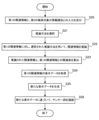
- FIG. 12 is a flowchart showing the operation of the related information display device 100 according to the first embodiment.
- the user I/F unit 103 receives input of a keyword, the information type of the keyword, and the information type to be searched from the user via an input unit (not shown) and a display unit (not shown) (S10 ).
- the user I/F unit 103 receives the keyword input by the user and the information type for which selection has been input by the user.
- the related information inference unit 104 infers related information related to the input keyword using the selected inference method (S12). In other words, the related information inference unit 104 extracts knowledge information related to the keyword from the knowledge graph by using the selected inference method for the keyword received from the user I/F unit 103.
- the relevance calculation unit 105 calculates the relevance of each keyword to the inferred related information using a graph structure (S13). In other words, the relevance calculation unit 105 calculates the relevance based on the structure of the subgraph including the keyword and the extracted related information, using information such as the number of nodes passed through or their importance.
- the display data generation unit 106 uses the calculated degree of association to calculate the band width and node width necessary for the Sankey diagram, and generates display data (S14).
- the display data generation unit 106 generates a band representing the relationship between the keyword and the related information based on the related information extracted by the related information inference unit 104 and the degree of association calculated by the degree of association calculation unit 105.
- the display data generation unit 106 normalizes the width of the band between the keyword and related information based on the width of the keyword on the input side, and calculates the sum of the width of the keyword and the width of the band as the related information. Take the width value. Then, the display data generation unit 106 generates display data including the above values.
- the user I/F unit 103 draws a Sankey diagram on a display unit (not shown) based on the generated display data (S15). In other words, the user I/F unit 103 draws a Sankey diagram based on the received display data and presents it to the user.
- the relationship between the keyword input by the user and the inferred related information is represented using a Sankey diagram. Relevance to information can be expressed by the width of the band. Therefore, the user can grasp the relationship between the input keyword and the obtained related information at a glance.
- the normalized value of the degree of association obtained from the knowledge graph is used to calculate the width of the band that represents the relationship between a keyword and related information, Things can be displayed at the top, and the information that the user wants can be presented.
- Embodiment 2 In the first embodiment described above, related information from a keyword is displayed. Next, we will consider a case where new related information is searched and displayed using the related information obtained from a keyword as input. , will be explained as Embodiment 2.
- FIG. 13 is a block diagram schematically showing the configuration of related information display device 200 according to the second embodiment.
- the related information display device 200 includes a knowledge graph DB 101, a DB operation section 102, a user I/F section 203, a related information inference section 204, a degree of association calculation section 205, a display data generation section 206, and a display data storage. 207.
- the knowledge graph DB 101 and the DB operation unit 102 of the related information display device 200 according to the second embodiment are the same as the knowledge graph DB 101 and the DB operation unit 102 of the related information display device 100 according to the first embodiment.
- the user I/F unit 203 functions as an input reception unit that receives input from the user and a display processing unit that displays related information.
- the user I/F unit 203 presents the user with a search screen for searching for related information, and the user requests a keyword and information to which the keyword belongs as data necessary for the search.
- the information type that is the type of information and the information type that is the type of information to be searched are accepted.
- the user I/F unit 203 presents the related information to the user based on the display data and the degree of association between the input query and the related information using the flow chart.
- the related information inferred based on the keyword input by the user is also referred to as first related information.
- the information type of the information to be searched for which is used when inferring the first related information, is also referred to as the first information type.
- the user I/F unit 203 receives, from the user, an input of the type of information to be searched from the first related information on a screen displaying the first related information via an input unit (not shown). For example, as shown in FIG. 14, on the screen where the Sankey diagram IM3 is displayed when the first related information is inferred, the information type of the information to be searched is further specified using the first related information as a keyword.
- the user I/F unit 203 uses the first related information as a keyword to search for information of the selected information type.
- the information is provided to the inference unit 204.
- the information type selected here is also referred to as a new information type or a second information type. In other words, in the second embodiment, the user I/F unit 203 acquires a new information type after display data is generated.
- the related information inference unit 204 receives input from the user and infers the first related information. Then, when the related information inference unit 204 receives the keyword that is the first related information and the selected information type from the user I/F unit 203, the related information inference unit 204 determines the related information related to the keyword based on them. Inferring some second related information. For example, the related information inference unit 204 uses the DB operation unit 102 and the knowledge graph DB 101 to select persons 1 to 5 as the first related information, which is the first search result in FIG. 14, as input keywords. Extract related information of information type from the knowledge graph. In other words, the related information inference unit 204 uses the first related information as a new keyword and infers information that is related to the new keyword and belongs to a new information type as second related information that is new related information. do.
- the related information inference unit 204 uses the information in the knowledge graph. Using the structure, an inference method is selected so that a product related to a document whose author is one of the input persons is considered as related information.
- the relevance calculation unit 205 calculates the relevance with the keyword from the inference result of the first related information or the second related information. For example, when the first related information is used as an input node and the second related information is used as an output node, the relevance calculation unit 205 calculates using the number of nodes passed through on the graph or the importance of the passed nodes. . Specifically, the degree of association calculation unit 205 calculates the total number of nodes between the input node and the output node as the degree of association. Further, the relevance calculation unit 205 may calculate the total importance of nodes passed through as the relevance. Note that the degree of association in the first related information is also referred to as the first degree of association, and the degree of association in the second related information is also referred to as the new degree of association or the second degree of association.
- the display data storage unit 207 stores the display data generated by the display data generation unit 206.
- the display data generation unit 206 generates display data based on the first related information and its degree of association, as in the first embodiment.
- the display data generated here is also referred to as first display data.
- the display data generation unit 206 generates display data based on the first related information, the second related information, and their degree of association.
- the display data generated here is also referred to as new display data or second display data.
- the first display data also includes data for displaying a selection area for further inference based on the first related information.
- the display data generation unit 206 when the display data generation unit 206 generates the first display data through the same process as in the first embodiment, it provides the first display data to the user I/F unit 203 and also displays the first display data.
- the data is stored in the display data storage unit 207.
- the display data generation section 206 receives the second related information from the related information inference section 204 and the second degree of association from the degree of association calculation section 205.
- the width of the band between the second related information and the width of the second related information are calculated by the same process as in the first embodiment.
- the display data generation unit 206 reads out the first display data stored in the display data storage unit 207, and generates the width of the keyword, the keyword, and the first related information indicated in the first display data. Generate second display data indicating the width of the band, the width of the node of the first related information, the width of the band of the first related information and the second related information, and the width of the node of the second related information. do.
- the display data generation unit 206 determines the width of the band connecting the first related information and the second related information based on the width of the node of the first related information.
- the width is determined by normalizing the width according to the degree of association calculated by the degree of association calculation unit.
- the display data generation unit 206 calculates a value obtained by dividing the width of the first related information in proportion to the degree of association with the second related information as the band width, and divides the width of the first related information into nodes of the second related information.
- the width of the band shall be the total width of the band.
- the display data generation unit 206 connects a new keyword and new related information related to the new keyword with a band, thereby generating a new keyword indicating the relationship between the new keyword and the new related information. Generate new display data to display a flow rate diagram.
- the width of the band connecting the new keyword and new related information becomes wider as the new degree of association increases.
- the second display data includes, as order information for displaying the first related information and the second related information, order information indicating which column the data is in, and information with the largest width from the top.
- Information for displaying from a node, information representing a display order for grouping display, etc. may be included.
- the user I/F unit 203 displays the Sankey diagram IM4 including the keyword, the first related information, and the second related information, as shown in FIG. is displayed on a display section (not shown).
- the input keyword is displayed on the left end, the first related information is displayed in the middle, and the second related information is displayed on the left side. Then, the degree of relevance with each search result is represented by the width of the band. Specifically, the first related information "Person 1", “Person 2", “Person 3", “Person 4", and “Person 4" are related to the input keywords “Keyword X” and "Keyword Y”. "Person 5" is displayed respectively.
- the related information inference unit 204 uses the structure of the knowledge graph to determine whether one of the persons is the author. An inference method is selected so that products related to the document are considered relevant information. For example, in the subgraph 101#6 shown in FIG. 16, "Product 1" is related to "Document 2", “Document 3", “Document 4", and "Document 5" whose author is "Person A”.
- the related information display device 200 described above can also be realized by a computer 120 as shown in FIG. 11.
- the display data storage unit 207 can be realized by the auxiliary storage device 123.
- FIG. 17 is a flowchart showing the operation of the related information display device 200 according to the second embodiment.
- the operation up to displaying the first related information is the same as the operation of the related information display device 100 according to the first embodiment, so here, the first related information
- the operation from the time the first related information is displayed until the second related information is displayed will be explained.
- the user I/F unit 203 receives an input of the type of information for which the second related information is to be searched from the user via a screen that includes a flow rate diagram representing the first related information (S20).
- the user I/F unit 203 receives a selection of the information type of the second related information from the user in order to display information related to the first related information.
- the first related information "Person A” and “Person B” related to "Keyword X" and "Keyword Y" are shown in the Sankey diagram IM5, and the user , in the selection area SA2, select the information type for searching for second related information related to the first related information "Person A" and "Person B".
- "product" is selected as the information type of the second related information.
- the related information inference unit 204 selects an inference method based on the information type of the first related information and the information type of the second related information (S21). In other words, the related information inference unit 204 generates a knowledge graph that is predetermined according to the information type of the first related information and the information type of the second related information received from the user I/F unit 203. Choose an inference method. In the example shown in Figure 18, in order to infer a related "product" from a "person”, we search for a "document” that has a "person” as the author, and then search for a "product” related to that "document”. An inference method to be extracted as the second related information is selected.
- the related information inference unit 204 infers second related information using the selected inference method for the first related information (S22).
- the related information inference unit 204 uses the selected inference method for the first related information received from the user I/F unit 203 to extract related knowledge information from the knowledge graph.
- the documents whose author is person A are "Document 2," “Document 3,” “Document 4,” and “Document 5,” and the products related to these documents are: Since these are “Product 1,” “Product 2,” and “Product 3," the product information related to "Person A” is “Product 1,” “Product 2,” and “Product 3.”
- the association calculation unit 205 calculates the association between the inferred second related information and the first related information using a graph structure (S23).
- the relevance calculation unit 205 calculates information such as the number of nodes passed through or their importance based on the structure of the subgraph that includes the first relevant information that is a keyword and the extracted second relevant information. The degree of relevance is calculated using .
- the display data generation unit 206 acquires the display data of the first related information stored in the display data storage unit 207 (S24). Then, the display data generation unit 206 generates the width of the keyword node and the width of the node of the first related information as display data of the keyword of the input query and the first related information that are already displayed to the user. , the keyword, and the width of the band of the first related information.
- the width of the nodes of "keyword The width of the node of "Person B” is "65", and the width of the node of "Person B” is “35".
- the width of the band for “keyword X” and “person A” is “35”
- the width of the band for “keyword Y” and “person A” is “30”
- the width of the band for “keyword The width of the band is "15”
- the width of the bands for "keyword Y" and "person B” is "20”.
- the display data generation unit 206 uses the calculated degree of association to calculate the band width and node width necessary for the Sankey diagram, and generates new display data (S25). For example, the display data generation unit 206 generates first related information and second related information based on the second related information inferred by the related information inference unit 204 and the degree of association calculated by the degree of association calculation unit 205. The width of the band representing the relationship with the related information is calculated, and new display data is generated.
- the display data generation unit 206 normalizes the width of the band between the first related information and the second related information based on the width of the node of the first related information that is the input side. , the sum of the widths of each band is set as the width of the second related information node.
- FIG. 19 is a schematic diagram showing an example of a screen including a Sankey diagram IM6 drawn using new display data.
- the width of the band connecting the first related information and the second related information and the width of the node of the second related information are determined as follows. .
- the node width of "Person A” is "65”
- the products related to "Person A” are "Product 1" with relevance 2, "Product 2" with relevance 2, and "Product 3” with relevance 1. ”.
- the display data generation unit 206 calculates (input side node width) x (degree of association)/(sum of degrees of association) in order to normalize the width of the band according to the degree of association of related products.
- the user I/F unit 203 draws a Sankey diagram based on the new display data (S26). For example, the user I/F unit 203 draws a Sankey diagram based on the received display data and presents it to the user.
- the search results as input and further displaying related information related to related information
- the relationships between related information can be presented, the related information desired by the user can be found more efficiently.
- the width of the first closely related information node increases from the input query, and this width is used to represent the width of further related information, so by looking at the width of the band, the input The degree of relationship can be easily read from the query.
- the method of displaying the second related information using the first related information has been described, but similarly, the third related information can be further displayed using the second related information as an input query. Furthermore, fourth related information can be displayed using the third related information as an input query. In other words, it is possible to search for related information one after another using the search results for related information.
- Embodiment 3 In the first embodiment, the user inputs a keyword, but in the third embodiment, a sentence or document is input, the keyword is automatically extracted, and related information is presented as the keyword and characteristic word. It can be so.
- FIG. 20 is a block diagram schematically showing the configuration of related information display device 300 according to the third embodiment.
- the related information display device 300 includes a knowledge graph DB 101, a DB operation section 102, a user I/F section 303, a related information inference section 304, a degree of association calculation section 105, a display data generation section 106, and an important word extraction section. 308.
- the knowledge graph DB 101, the DB operation section 102, the degree of association calculation section 105, and the display data generation section 106 of the related information display device 300 according to the third embodiment are the knowledge graph DB 101 of the related information display device 100 according to the first embodiment, It is the same as the DB operation section 102, the degree of association calculation section 105, and the display data generation section 106.
- the user I/F unit 303 receives input of a keyword and the information type of the keyword from the user.
- the operation of related information display device 300 in this case is the same as that of related information display device 300 in Embodiment 1, so the description will be omitted below.
- the user I/F unit 303 in Embodiment 3 can also accept input from the user of a sentence or document and the information type of the information desired to be searched, instead of the keyword and information type. Thereby, the user I/F unit 303 acquires the text sentence and the information type. The user I/F unit 303 then provides the acquired text sentence to the related information inference unit 304.
- the input from the user may be in any format, such as text data or a document file, as long as a text sentence can be obtained.
- a character string may be input into an input box, or a file name of a document file may be input.
- the user I/F unit 303 extracts text data as a text sentence from the document file with the file name, and provides the text sentence to the related information inference unit 304.
- the user I/F unit 303 receives display data from the display data generation unit 106, and based on the display data, generates related information using a flow rate diagram, and generates an input query. The degree of relevance with related information is presented to the user. Note that, similarly to the second embodiment, the user I/F unit 303 further provides related information related to the related information by accepting input of the type of information for further searching on the screen displaying related information. You can also do that.
- the related information inference unit 304 passes the text received from the user I/F unit 303 to the important word extraction unit 308. Then, the related information inference unit 304 receives the extracted important words from the important word extraction unit 308. The related information inference unit 304 uses the received important word as a keyword, its information type as a "feature word”, determines an inference method based on the information type of the information to be searched input by the user, and extracts related information. reason. Here, the related information inference unit 304 infers information related to the keyword and belonging to the information type of the search information as related information. The related information inference unit 304 then passes the inferred related information to the relevance calculation unit 105.
- the important word extraction unit 308 extracts important words from the text received from the related information inference unit 304.
- the extracted important words are passed to the related information inference unit 304.
- a known technique may be used to extract the important words.
- the important word extraction unit 308 performs morphological analysis of the text sentence and extracts important words from the text sentence using TF-IDF (Term Frequency - Inverse Document Frequency).
- TF-IDF Term Frequency - Inverse Document Frequency
- previously registered words may be extracted as important words, or nouns may be extracted as important words. Since the important words extracted here are treated as keywords, the important word extraction unit 308 functions as a keyword extraction unit that extracts keywords from text sentences.
- the processing in the relevance calculation unit 105 and the display data generation unit 106 is the same as in the first embodiment.
- the display data generation unit 106 changes the width of keywords that are important words depending on the importance level (for example, the importance level calculated by TF-IDF) in the extraction of important words by the important word extraction unit 308. Good too. Further, the user may decide the width of the input keyword band.
- the related information display device 300 described above can also be realized by a computer 120 as shown in FIG. 11.
- the important word extraction unit 308 can be realized by the processor 125 loading a program stored in the auxiliary storage device 123 into the memory 124 and executing the program.
- FIG. 21 is a flowchart showing the operation of related information display device 300 according to the third embodiment.
- steps that perform the same processing as in the flowchart in the first embodiment shown in FIG. 12 are given the same reference numerals as in FIG.
- the user I/F unit 203 obtains a text sentence and the searched information type from the user (S30). For example, the user I/F unit 203 accepts input of a character string or the file name of a document file into an input box from the user. Here, if the input from the user is the file name of a document file, the user I/F unit 203 extracts a text sentence from the document file. Specifically, the user I/F unit 203 accesses the document file and extracts a text sentence from the document file. The text sentence is provided to the important word extraction unit 308 via the related information inference unit 304 .
- the important word extraction unit 308 extracts important words from the text sentence from the related information inference unit 304 (S31). For example, the important word extraction unit 308 performs important word extraction processing on the text sentence, extracts important words, and provides them to the related information inference unit 304 as input keywords for use in related information.
- the processing in steps S11 to S15 in FIG. 21 is the same as the processing in steps S11 to S15 in FIG.
- the related information inference unit 304 infers related information using the key words from the key word extraction unit 308 as keywords of the information type “feature word”.
- Embodiment 4 In the first or third embodiment described above, the data structure on the knowledge graph is used to search for related information, but there is also a case where a database other than the knowledge graph DB 101 is used in combination to search for related information. , will be described as Embodiment 4.
- FIG. 22 is a block diagram schematically showing the configuration of related information display device 400 according to the fourth embodiment.
- the related information display device 400 includes a knowledge graph DB 101, a DB operation section 402, a user I/F section 303, a related information inference section 404, a degree of association calculation section 105, a display data generation section 106, and a full text search DB 409. Equipped with.
- the knowledge graph DB 101, the association degree calculation unit 105, and the display data generation unit 106 of the related information display device 400 according to the fourth embodiment are the knowledge graph DB 101, the association degree calculation unit 105 of the related information display device 100 according to the first embodiment. and the display data generation unit 106.
- the user I/F section 303 of the related information display device 400 according to the fourth embodiment is similar to the user I/F section 303 of the related information display device 300 according to the third embodiment. Therefore, the user I/F unit 303 in the fourth embodiment accepts input of a keyword and its information type, or a sentence or text and the information type of information to be searched. In other words, the user I/F unit 303 functions as an interface unit that acquires keywords or text sentences.
- the related information inference unit 404 receives keywords or text sentences and information types from the user I/F unit 303, and selects an inference method that uses full text search in accordance with these. In other words, the related information inference unit 404 uses the full text search DB 409 to search for documents related to keywords or text sentences, and infers related information related to the searched documents using the structure of the knowledge graph.
- the related information inference unit 404 causes the DB operation unit 402 to perform a full text search using the input keyword or text sentence as a query, and acquires document information indicating related documents in order of relevance from the DB operation unit 402. . Then, the related information inference unit 404 causes the DB operation unit 402 to search for related information by inputting the document indicated by the document information that is the search result into the knowledge graph DB 101.
- the related information inference unit 404 causes the DB operation unit 402 to perform a full-text search.
- the DB 409 is searched for related documents using the words “knowledge graph” and “summary.”
- “Document 1,” “Document 2,” and “Document 3” were found in “Knowledge Graph,” and "Document 2,” “Document 4,” and “Document 3” were found in “Summary.”
- Document 5" has been retrieved.
- the related information inference unit 404 may identify documents with a high degree of relevance using a threshold value, or may identify a predetermined number of documents in descending order of degree of relevance.
- the related information inference unit 404 inputs “Document 1,” “Document 2,” and “Document 3” in the knowledge graph DB 101 to the DB operation unit 402, and inputs information about people related to these documents (e.g. , document author information).
- the information type of "Document 1,””Document2,” and “Document 3" is "Document.”
- the DB operation unit 402 inputs "Document 2,”"Document4,” and "Document 5" in the knowledge graph DB 101 to search for people related to these documents.
- the full text search DB 409 is a database that stores text information indicating the text of a document indicated by a node with the information type of "document" in the knowledge graph DB 101.
- the full text search DB 409 functions as a text information storage unit that stores text information indicating the text of each of a plurality of documents.
- the DB operation unit 402 receives a keyword or a text sentence from the related information inference unit 404, and performs a full-text search on the text information stored in the full-text search DB 409 using the keyword or text sentence. Alternatively, documents are searched in order of relevance, which indicates the degree of relevance to the text sentence. Then, the DB operation unit 402 provides document information indicating the retrieved document to the related information inference unit 404.
- the related information display device 400 described above can also be realized by a computer 120 as shown in FIG. 11.
- the full text search DB 409 can be realized by the auxiliary storage device 123.
- the full text search DB 409 in conjunction with inference of related information, it is possible to extract related documents that are not displayed on the knowledge graph. Therefore, more relevant information can be presented to the user, and desired information can be presented without omission.
- the file name of a document file is input as in the third embodiment
- important words are extracted from the text of the document and search is performed using the keywords that are the important words. Extracting information.
- the text sentence received by the related information inference unit 404 is used as an input in a full text search, and related information is extracted by extracting similar documents. This eliminates the need for the user to consider important words, and by inputting the entire text sentence, it is possible to extract documents that are more similar to the input text sentence. can be presented.
- Embodiment 5 shows a case where further detailed information is provided regarding the related information displayed in Embodiments 1 to 4.
- FIG. 23 is a block diagram schematically showing the configuration of a related information display device 500 according to the fifth embodiment.
- the related information display device 500 includes a knowledge graph DB 501, a DB operation section 502, a user I/F section 503, a related information inference section 104, a degree of association calculation section 105, a display data generation section 106, and a detailed information acquisition section. 510.
- the related information inference unit 104, the degree of association calculation unit 105, and the display data generation unit 106 of the related information display device 500 according to the fifth embodiment are the same as the related information inference unit 104, the related information This is similar to the degree calculation unit 105 and the display data generation unit 106.
- the knowledge graph DB 501 holds knowledge information as in the first embodiment.
- the knowledge graph DB 501 in the fifth embodiment also stores detailed information regarding each node forming the knowledge graph as knowledge information.
- the detailed information is, for example, node property information or adjacent node information.
- the property information is, for example, information such as the document's title, creation date, update date and time, or number of pages, and adjacent node information includes the author, acceptance inspector, updater, etc. This is information indicating a node adjacent to a node corresponding to related information, such as a node of a certain person, a node of a publishing department, a node of related products, projects, solutions, etc.
- the DB operation unit 502 converts detailed information related to related information given from the detailed information acquisition unit 510 into the knowledge graph DB 501 in response to instructions from the detailed information acquisition unit 510. and provides the detailed information to the detailed information acquisition unit 510.
- User I/F unit 503 performs the same processing as user I/F unit 103 in Embodiment 1, and also performs the following processing.
- the user I/F unit 503 receives the display data from the display data generation unit 106
- the user I/F unit 503 receives related information and band detailed information included in the display data from the detailed information acquisition unit 510.
- the user I/F unit 503 displays a flow rate diagram on a display unit (not shown) based on the display data, and when there is an instruction from the user on the flow rate diagram, The information or detailed information of the band is displayed on a display section (not shown).
- the detailed information acquisition unit 510 receives related information from the user I/F unit 503 and acquires detailed information from the knowledge graph DB 501 using the DB operation unit 502. In other words, the detailed information acquisition unit 510 uses the DB operation unit 502 to acquire detailed information from the knowledge graph DB 501 in order to obtain detailed information regarding the related information received from the user I/F unit 503.
- the detailed information acquisition unit 510 may acquire, as the detailed information, band information representing the relationship between keywords and related information.
- the band information is information used in the related information inference method in the related information inference unit 104.
- the information indicating the nodes to be passed through becomes the band information.
- property information of nodes to be passed through and adjacent node information may be included in the band information.
- information on the degree of association between bands may be included in the band information.
- the detailed information acquisition unit 510 provides the above detailed information to the user I/F unit 503.
- the user I/F unit 503 presents the acquired detailed information to the user. For example, when a Sankey diagram is displayed on a display section (not shown) and the user clicks on related information included in the Sankey diagram via an input section (not shown), a pop-up will appear showing the related information. Display detailed information.
- FIG. 24 is a schematic diagram showing an example of displaying detailed information in a pop-up.
- the user I/F unit 503 may display detailed information in a tab of the browser.
- the user I/F unit 503 in the fifth embodiment acquires an instruction to acquire related information or detailed information regarding the band, and in response to the instruction, the detailed information acquisition unit 510 acquires the corresponding detailed information.
- FIG. 25 is a schematic diagram showing an example of displaying band information as detailed information.
- the related information display device 500 described above can also be realized by a computer 120 as shown in FIG. 11.
- the detailed information acquisition unit 510 can be realized by the processor 125 loading a program stored in the auxiliary storage device 123 into the memory 124 and executing the program.
- the user can easily find out which related information is more desired by obtaining detailed information about the related information.
- the user I/F unit 503 uses the detailed information to filter related information to be displayed on a display unit (not shown), and extracts only the portion related to specified display data. (not shown).
- the filtering unit filters the related information using the detailed information.
- the filtering unit extracts only a portion of the display data that satisfies a condition specified by the user through an input unit (not shown), and the user I/F unit 503 uses only the extracted portion to display the display data.
- Update the user I/F unit 503 presents the property information or adjacent node information obtained from the detailed information to the user as filter information, and the user selects a condition in the filter unit to set a specific condition. Only relevant information that meets the criteria can be displayed.
- the filter unit may perform filtering using band information. For example, display only results that have a certain value for a property, display only bands that include a specified property in their detailed information, or display only related information that has a degree of relevance greater than or equal to a specified value. .
- 100, 200, 300, 400, 500 Related information display device 101, 501 Knowledge graph DB, 102, 402, 502 DB operation unit, 103, 203, 303, 503 User I/F unit, 104, 204, 304, 404 Related information inference unit, 105, 205 relevance calculation unit, 106, 206 display data generation unit, 207 display data storage unit, 308 important word extraction unit, 409 full text search DB, 510 detailed information acquisition unit.
Landscapes
- Engineering & Computer Science (AREA)
- Databases & Information Systems (AREA)
- Theoretical Computer Science (AREA)
- Data Mining & Analysis (AREA)
- Physics & Mathematics (AREA)
- General Engineering & Computer Science (AREA)
- General Physics & Mathematics (AREA)
- Information Retrieval, Db Structures And Fs Structures Therefor (AREA)
Abstract
Description
しかしながら、グラフ構造のままでは、グラフ構造を理解していないと理解しづらい、又は、入力されたデータとの関係を読み取ることが難しいという問題点があった。
図1は、実施の形態1に係る関連情報表示装置100の構成を概略的に示すブロック図である。
関連情報表示装置100は、知識グラフDB(Data Base)101と、DB操作部102と、ユーザI/F(interFace)部103と、関連情報推論部104と、関連度算出部105と、表示データ生成部106とを備える。
図2は、文書を中心とした知識グラフの構造であるオントロジーを表す概略図である。
図3は、知識グラフの一例を表す概略図である。
なお、図3に示されている知識グラフ101#1は、業務文書に関連した知識情報を保持する例を説明したが、このような知識グラフ101#1は、一例であり、別の情報が保持されていてもよい。
入力クエリは、サンキー図IM1の左側に並べて表示され、関連情報は、サンキー図IM1の右側に並べて表示され、キーワード及び関連情報をつなぐ帯の幅は、キーワード及び関連情報の関連度が高いほど広くなる。
また、例えば、人物と、その所属情報とのように、関連情報がグルーピングできるような場合には、そのグループでまとめて表示されてもよい。これにより、ユーザが関連情報のまとまりを把握することができ、結果を見やすくすることができる。
例えば、特徴語であるキーワードと、人物との間にある文書数を関連度とする場合、図3に示されている知識グラフ101#1において、「対話」と。それぞれの関連人物との関連度は、図5に示されているような部分グラフ101#2の構造を元に、「対話」から「人物A」は、「文書4」及び「文書5」を介してつながっているため、関連度は「2」となる。また、「対話」から「人物B」は、「文書1」を介してつながっているため、関連度は「1」となる。
まず、前提として、「特徴語X」及び「特徴語Z」の幅を30とする。
これらに関連する関連情報である関連製品は、図9に示されている部分グラフ101#5に示されているように、「製品1」及び「製品2」である。「特徴語X」と「製品1」との関連度は「1」、「特徴語X」と「製品2」との関連度は「1」であるため、それぞれの帯の幅は、「特徴語X」の幅の1/2=15となる。
図11に示されているように、関連情報表示装置100は、入力I/F121と、出力I/F122と、補助記憶装置123と、メモリ124と、プロセッサ125とからなるコンピュータ120により実現することができる。
出力I/F122は、ユーザに情報を提供するための、例えば、ディスプレイのような出力装置である。出力I/F122は、ユーザに情報を表示するための表示部として機能する。
メモリ124は、プロセッサ125に作業領域を提供する揮発性メモリ又は不揮発性メモリである。
また、DB操作部102、ユーザI/F部103、関連情報推論部104、関連度算出部105及び表示データ生成部106は、プロセッサ125が、補助記憶装置123に記憶されているプログラムをメモリ124にロードして、そのプログラムを実行することで、実現することができる。
まず、ユーザI/F部103は、ユーザから、入力部(図示せず)及び表示部(図示せず)を介して、キーワード、キーワードの情報種別及び検索対象の情報種別の入力を受け付ける(S10)。言い換えると、ユーザI/F部103は、ユーザから入力されたキーワードと、ユーザから選択の入力を受けた情報種別とを受け取る。
以上の実施の形態1では、キーワードからの関連情報を表示するようにしたものであるが、次に、キーワードから得られた関連情報を入力として、新たな関連情報を検索及び表示を行う場合を、実施の形態2として、説明する。
関連情報表示装置200は、知識グラフDB101と、DB操作部102と、ユーザI/F部203と、関連情報推論部204と、関連度算出部205と、表示データ生成部206と、表示データ記憶部207とを備える。
実施の形態2に係る関連情報表示装置200の知識グラフDB101及びDB操作部102は、実施の形態1に係る関連情報表示装置100の知識グラフDB101及びDB操作部102と同様である。
例えば、図14に示されているように、第1の関連情報を推論した際のサンキー図IM3が表示されている画面において、第1の関連情報をキーワードとして、さらに検索する情報の情報種別を選択するための選択領域SA1において、情報種別が選択されると、ユーザI/F部203は、第1の関連情報をキーワードとし、選択された情報種別の情報の検索を行うように、関連情報推論部204にそれらの情報を与える。ここで選択される情報種別を、新たな情報種別又は第2の情報種別ともいう。言い換えると、実施の形態2では、ユーザI/F部203は、表示データが生成された後に、新たな情報種別を取得する。
そして、関連情報推論部204は、ユーザI/F部203から、第1の関連情報であるキーワードと、選択された情報種別とを受け取ると、それらに基づいて、そのキーワードに関連する関連情報である第2の関連情報を推論する。例えば、関連情報推論部204は、図14における第1の検索結果である第1の関連情報としての人物1~5を入力キーワードとして、DB操作部102及び知識グラフDB101を用いて、選択された情報種別の関連情報を知識グラフから抽出する。言い換えると、関連情報推論部204は、第1の関連情報を新たなキーワードとして、その新たなキーワードに関連し、新たな情報種別に属する情報を新たな関連情報である第2の関連情報として推論する。
なお、第1の関連情報における関連度を第1の関連度ともいい、第2の関連情報における関連度を新たな関連度又は第2の関連度ともいう。
また、表示データ生成部206は、第1の関連情報、第2の関連情報及びそれらの関連度を元に表示データを生成する。ここで生成される表示データを新たな表示データ又は第2の表示データともいう。
但し、第1の表示データには、第1の関連情報に基づいて、さらに推論を行うための選択領域を表示するためのデータも含まれている。
具体的には、入力キーワードである「キーワードX」及び「キーワードY」の関連人物として、第1の関連情報である「人物1」、「人物2」、「人物3」、「人物4」及び「人物5」がそれぞれ表示されている。
実施の形態2に係る関連情報表示装置200において、第1の関連情報を表示するまでの動作は、実施の形態1に係る関連情報表示装置100の動作と同様であるため、ここでは、第1の関連情報が表示されてから、第2の関連情報を表示するまでの動作を説明する。
図19に示されている例では、第1の関連情報と第2の関連情報とをつなぐ帯の幅、及び、第2の関連情報のノードの幅は、以下のようにして決定されている。
「人物A」のノードの幅が「65」であり、「人物A」に関連する製品は、関連度2の「製品1」、関連度2の「製品2」及び関連度1の「製品3」である。表示データ生成部206は、関連する製品の関連度に応じて帯の幅を正規化するため、(入力側のノード幅)×(関連度)/(関連度の合計)を算出する。このため、「人物A」から「製品1」への帯の幅は、65×2/(2+2+1)=26となる。同様に、「人物A」から「製品2」への帯の幅は、65×2/(2+2+1)=26となり、「人物A」から「製品1」への帯の幅は、65×1/(2+2+1)=13となる。
また、「人物B」から「製品1」への帯の幅は、35×1/(1+1)=17.5であり、「人物B」から「製品4」への幅も、35×1/(1+1)=17.5となる。
実施の形態1では、ユーザが、キーワードを入力していたが、実施の形態3は、文又は文書を入力とし、キーワードを自動的に抽出することで、そのキーワードと特徴語として関連情報を提示できるようにする。
関連情報表示装置300は、知識グラフDB101と、DB操作部102と、ユーザI/F部303と、関連情報推論部304と、関連度算出部105と、表示データ生成部106と、重要語抽出部308とを備える。
実施の形態3に係る関連情報表示装置300の知識グラフDB101、DB操作部102、関連度算出部105及び表示データ生成部106は、実施の形態1に係る関連情報表示装置100の知識グラフDB101、DB操作部102、関連度算出部105及び表示データ生成部106と同様である。
なお、ユーザI/F部303は、実施の形態2と同様に、関連情報を表示する画面において、さらなる検索を行う情報種別の入力を受け付けることで、関連情報に関連する関連情報をさらに提供することもできる。
関連情報推論部304は、受け取った重要語をキーワードとし、その情報種別を「特徴語」とし、ユーザから入力された検索する情報の情報種別をもとに、推論方法を決定し、関連情報を推論する。ここでは、関連情報推論部304は、キーワードに関連し、検索情報の情報種別に属する情報を関連情報として推論する。
そして、関連情報推論部304は、推論された関連情報を関連度算出部105へと渡す。
図21に示されているフローチャートにおいて、図12に示されている実施の形態1におけるフローチャートと同じ処理を行うステップについては、図12と同じ符号を付す。
但し、関連情報推論部304は、重要語抽出部308からの重要語を、情報種別「特徴語」のキーワードとして関連情報の推論を行う。
以上に記載された実施の形態1又は3では、知識グラフ上のデータ構造を使って、関連情報を検索しているが、知識グラフDB101以外のデータベースを併用して関連情報の検索を行う場合を、実施の形態4として説明する。
関連情報表示装置400は、知識グラフDB101と、DB操作部402と、ユーザI/F部303と、関連情報推論部404と、関連度算出部105と、表示データ生成部106と、全文検索DB409とを備える。
実施の形態4に係る関連情報表示装置400の知識グラフDB101、関連度算出部105及び表示データ生成部106は、実施の形態1に係る関連情報表示装置100の知識グラフDB101、関連度算出部105及び表示データ生成部106と同様である。
また、実施の形態4に係る関連情報表示装置400のユーザI/F部303は、実施の形態3に係る関連情報表示装置300のユーザI/F部303と同様である。このため、実施の形態4におけるユーザI/F部303は、キーワード及びその情報種別、又は、文若しくは文章と、検索を行う情報の情報種別との入力を受け付ける。言い換えると、ユーザI/F部303は、キーワード又はテキスト文を取得するインターフェース部として機能する。
以上のように、実施の形態4における関連情報推論部404は、キーワード又はテキスト文に関連する文書を、全文検索DB409に記憶されているテキスト情報でテキストが示されている複数の文書から推論し、その関連する文書に関連する関連情報を知識グラフから推論する。
実施の形態5は、実施の形態1~4において表示される関連情報について、さらなる詳細情報を提供する場合について示したものである。
関連情報表示装置500は、知識グラフDB501と、DB操作部502と、ユーザI/F部503と、関連情報推論部104と、関連度算出部105と、表示データ生成部106と、詳細情報取得部510とを備える。
実施の形態5に係る関連情報表示装置500の関連情報推論部104、関連度算出部105及び表示データ生成部106は、実施の形態1に係る関連情報表示装置100の関連情報推論部104、関連度算出部105及び表示データ生成部106と同様である。
実施の形態5における知識グラフDB501は、知識情報としての知識グラフを構成する各ノードに関する詳細情報も記憶する。詳細情報は、例えば、ノードのプロパティ情報又は隣接ノード情報である。関連情報が「文書」であった場合、そのプロパティ情報は、例えば、文書のタイトル、作成日、更新日時又はページ数等の情報であり、隣接ノード情報として、著者、検収者又は更新者等である人物のノード、発行部署のノード、関連する製品やプロジェクト、ソリューション等のノード等のように関連情報に対応するノードに隣接するノードを示す情報である。
ユーザI/F部503は、表示データ生成部106から表示データを受け取ると、詳細情報取得部510から、表示データに含まれている関連情報及び帯の詳細情報を受け取る。そして、ユーザI/F部503は、実施の形態1と同様に、表示データに基づいて流量図を、図示しない表示部に表示させ、その流量図において、ユーザから指示があった場合に、関連情報又は帯の詳細情報を、図示しない表示部に表示させる。
詳細情報取得部510は、以上のような詳細情報を、ユーザI/F部503に与える。
Claims (11)
- 複数のノードと、前記複数のノードを連結するリンクとで知識情報を保持する知識グラフを記憶する知識グラフ記憶部と、
キーワードに関連する関連情報を前記知識グラフから推論する関連情報推論部と、
前記キーワードと、前記関連情報との関連度を算出する関連度算出部と、
前記キーワードと、前記キーワードに関連する前記関連情報とを帯でつなぐことで、前記キーワードと、前記関連情報との関連性を示す流量図を表示するための表示データを生成する表示データ生成部と、を備え
前記帯の幅は、前記関連度が高いほど広いこと
を特徴とする関連情報表示装置。 - 前記流量図は、サンキー図であること
を特徴とする請求項1に記載の関連情報表示装置。 - 前記サンキー図では、前記帯の幅は、前記キーワードを表示する幅に基づいて、正規化されていること
を特徴とする請求項2に記載の関連情報表示装置。 - 前記キーワード及び情報種別を取得するインターフェース部をさらに備え、
前記関連情報推論部は、前記キーワードに関連し、前記情報種別に属する情報を前記関連情報として推論すること
を特徴とする請求項1から3の何れか一項に記載の関連情報表示装置。 - テキスト文及び情報種別を取得するインターフェース部と、
前記テキスト文から前記キーワードを抽出するキーワード抽出部と、をさらに備え、
前記関連情報推論部は、前記キーワードに関連し、前記情報種別に属する情報を前記関連情報として推論すること
を特徴とする請求項1から3の何れか一項に記載の関連情報表示装置。 - 前記インターフェース部は、前記表示データが生成された後に、新たな情報種別を取得し、
前記関連情報推論部は、前記関連情報を新たなキーワードとして、前記新たなキーワードに関連し、前記新たな情報種別に属する情報を新たな関連情報として推論し、
前記関連度算出部は、前記新たなキーワードと、前記新たな関連情報との関連度である新たな関連度を算出し、
前記表示データ生成部は、前記新たなキーワードと、前記新たなキーワードに関連する前記新たな関連情報とを帯でつなぐことで、前記新たなキーワードと前記新たな関連情報との関連性を示す新たな流量図を表示するための新たな表示データを生成し、
前記新たなキーワードと、前記新たな関連情報とをつなぐ前記帯の幅は、前記新たな関連度が高いほど広いこと
を特徴とする請求項4又は5に記載の関連情報表示装置。 - 複数の文書のそれぞれのテキストを示すテキスト情報を記憶するテキスト情報記憶部と、
前記キーワード又はテキスト文を取得するインターフェース部と、をさらに備え、
前記関連情報推論部は、前記キーワード又は前記テキスト文に関連する文書を前記複数の文書から推論し、前記関連する文書に関連する前記関連情報を前記知識グラフから推論すること
を特徴とする請求項1から3の何れか一項に記載の関連情報表示装置。 - 前記インターフェース部は、前記関連情報又は前記帯に関する詳細情報を取得する指示を取得し、
前記指示に応じて、前記関連情報又は前記帯に関する詳細情報を取得する詳細情報取得部をさらに備えること
を特徴とする請求項4から7の何れか一項に記載の関連情報表示装置。 - 前記詳細情報を用いて前記関連情報に対してフィルタリングを行うフィルタリング部をさらに備えること
を特徴とする請求項8に記載の関連情報表示装置。 - コンピュータを、
複数のノードと、前記複数のノードを連結するリンクとで知識情報を保持する知識グラフを記憶する知識グラフ記憶部、
キーワードに関連する関連情報を前記知識グラフから推論する関連情報推論部、
前記キーワードと、前記関連情報との関連度を算出する関連度算出部、及び、
前記キーワードと、前記キーワードに関連する前記関連情報とを帯でつなぐことで、前記キーワードと、前記関連情報との関連性を示す流量図を表示するための表示データを生成する表示データ生成部、として機能させ、
前記帯の幅は、前記関連度が高いほど広いこと
を特徴とするプログラム。 - キーワードに関連する関連情報を、複数のノードと、前記複数のノードを連結するリンクとで知識情報を保持する知識グラフから推論し、
前記キーワードと、前記関連情報との関連度を算出し、
前記キーワードと、前記キーワードに関連する前記関連情報とを帯でつなぐことで、前記キーワードと、前記関連情報との関連性を示す流量図を表示するための表示データを生成し、
前記帯の幅は、前記関連度が高いほど広いこと
を特徴とする関連情報表示方法。
Priority Applications (5)
| Application Number | Priority Date | Filing Date | Title |
|---|---|---|---|
| PCT/JP2022/017063 WO2023195051A1 (ja) | 2022-04-04 | 2022-04-04 | 関連情報表示装置、プログラム及び関連情報表示方法 |
| JP2024511962A JP7558450B2 (ja) | 2022-04-04 | 2022-04-04 | 関連情報表示装置、プログラム及び関連情報表示方法 |
| CN202280094381.7A CN118946881A (zh) | 2022-04-04 | 2022-04-04 | 关联信息显示装置、程序以及关联信息显示方法 |
| DE112022006581.8T DE112022006581T5 (de) | 2022-04-04 | 2022-04-04 | Anzeigevorrichtung für in beziehung stehende informationen, programm und anzeigeverfahren für in beziehung stehende informationen |
| US18/791,607 US20240394313A1 (en) | 2022-04-04 | 2024-08-01 | Related-information display device, non-transitory computer-readable storage medium, and related-information display method |
Applications Claiming Priority (1)
| Application Number | Priority Date | Filing Date | Title |
|---|---|---|---|
| PCT/JP2022/017063 WO2023195051A1 (ja) | 2022-04-04 | 2022-04-04 | 関連情報表示装置、プログラム及び関連情報表示方法 |
Related Child Applications (1)
| Application Number | Title | Priority Date | Filing Date |
|---|---|---|---|
| US18/791,607 Continuation US20240394313A1 (en) | 2022-04-04 | 2024-08-01 | Related-information display device, non-transitory computer-readable storage medium, and related-information display method |
Publications (1)
| Publication Number | Publication Date |
|---|---|
| WO2023195051A1 true WO2023195051A1 (ja) | 2023-10-12 |
Family
ID=88242638
Family Applications (1)
| Application Number | Title | Priority Date | Filing Date |
|---|---|---|---|
| PCT/JP2022/017063 Ceased WO2023195051A1 (ja) | 2022-04-04 | 2022-04-04 | 関連情報表示装置、プログラム及び関連情報表示方法 |
Country Status (5)
| Country | Link |
|---|---|
| US (1) | US20240394313A1 (ja) |
| JP (1) | JP7558450B2 (ja) |
| CN (1) | CN118946881A (ja) |
| DE (1) | DE112022006581T5 (ja) |
| WO (1) | WO2023195051A1 (ja) |
Citations (3)
| Publication number | Priority date | Publication date | Assignee | Title |
|---|---|---|---|---|
| WO2017221858A1 (ja) * | 2016-06-21 | 2017-12-28 | 日本電気株式会社 | 情報分析システム、情報分析方法及び記録媒体 |
| WO2021234896A1 (ja) * | 2020-05-21 | 2021-11-25 | 三菱電機株式会社 | 推論装置、更新方法、及び更新プログラム |
| US20220067056A1 (en) * | 2020-08-25 | 2022-03-03 | Jnd Holdings Llc | Systems and methods to facilitate enhanced document retrieval in electronic discovery |
Family Cites Families (4)
| Publication number | Priority date | Publication date | Assignee | Title |
|---|---|---|---|---|
| JP2004287827A (ja) | 2003-03-20 | 2004-10-14 | Fuji Xerox Co Ltd | 検索システム、プログラム、及び検索条件選択肢の提示方法 |
| KR100724122B1 (ko) | 2005-09-28 | 2007-06-04 | 최진근 | 데이터의 연관성 구조를 저장하는 번들데이터베이스관리시스템 및 그 관리방법 |
| JP2020140604A (ja) | 2019-03-01 | 2020-09-03 | 富士ゼロックス株式会社 | 情報処理装置及びプログラム |
| US20200356604A1 (en) | 2019-05-06 | 2020-11-12 | Waterford Energy Services, Inc. | Question and answer system and associated method |
-
2022
- 2022-04-04 JP JP2024511962A patent/JP7558450B2/ja active Active
- 2022-04-04 WO PCT/JP2022/017063 patent/WO2023195051A1/ja not_active Ceased
- 2022-04-04 CN CN202280094381.7A patent/CN118946881A/zh active Pending
- 2022-04-04 DE DE112022006581.8T patent/DE112022006581T5/de active Pending
-
2024
- 2024-08-01 US US18/791,607 patent/US20240394313A1/en active Pending
Patent Citations (3)
| Publication number | Priority date | Publication date | Assignee | Title |
|---|---|---|---|---|
| WO2017221858A1 (ja) * | 2016-06-21 | 2017-12-28 | 日本電気株式会社 | 情報分析システム、情報分析方法及び記録媒体 |
| WO2021234896A1 (ja) * | 2020-05-21 | 2021-11-25 | 三菱電機株式会社 | 推論装置、更新方法、及び更新プログラム |
| US20220067056A1 (en) * | 2020-08-25 | 2022-03-03 | Jnd Holdings Llc | Systems and methods to facilitate enhanced document retrieval in electronic discovery |
Also Published As
| Publication number | Publication date |
|---|---|
| JPWO2023195051A1 (ja) | 2023-10-12 |
| DE112022006581T5 (de) | 2025-01-02 |
| US20240394313A1 (en) | 2024-11-28 |
| CN118946881A (zh) | 2024-11-12 |
| JP7558450B2 (ja) | 2024-09-30 |
Similar Documents
| Publication | Publication Date | Title |
|---|---|---|
| US9305100B2 (en) | Object oriented data and metadata based search | |
| Yi et al. | Linking folksonomy to Library of Congress subject headings: an exploratory study | |
| JP5392077B2 (ja) | オントロジ処理装置、オントロジ処理方法、及びオントロジ処理プログラム | |
| JP5744873B2 (ja) | トラステッドクエリのシステムおよび方法 | |
| US8060505B2 (en) | Methodologies and analytics tools for identifying white space opportunities in a given industry | |
| RU2696305C2 (ru) | Браузинг изображений через интеллектуально проанализированные связанные гиперссылкой фрагменты текста | |
| US20090265330A1 (en) | Context-based document unit recommendation for sensemaking tasks | |
| US20090070322A1 (en) | Browsing knowledge on the basis of semantic relations | |
| CN111598702A (zh) | 一种基于知识图谱的风险投资语义搜索的方法 | |
| CN111061828B (zh) | 一种数字图书馆知识检索方法及装置 | |
| WO2009154153A1 (ja) | 文書検索システム | |
| US20120179709A1 (en) | Apparatus, method and program product for searching document | |
| JPWO2009048130A1 (ja) | 文書重要度算出システム、文書重要度算出方法およびプログラム | |
| CN113407678A (zh) | 知识图谱构建方法、装置和设备 | |
| CN108694208A (zh) | 用于构造数据库的方法和装置 | |
| JP4967037B2 (ja) | 情報検索装置、情報検索方法、端末装置、およびプログラム | |
| JP5135412B2 (ja) | 文書分析装置およびプログラム | |
| Nikas et al. | Open domain question answering over knowledge graphs using keyword search, answer type prediction, SPARQL and pre-trained neural models | |
| US7689433B2 (en) | Active relationship management | |
| JP2000020537A (ja) | テキスト検索装置及びテキスト検索プログラムを記録したコンピュータ読み取り可能な記録媒体 | |
| Kadry et al. | On the improvement of weighted page content rank | |
| KR20230057114A (ko) | 기술 문서 데이터 베이스를 통한 키워드 도출 방법 및 장치 | |
| JP4324650B2 (ja) | 情報資源検索装置、情報資源検索方法及び情報資源検索プログラム | |
| JP7558450B2 (ja) | 関連情報表示装置、プログラム及び関連情報表示方法 | |
| JP2014102625A (ja) | 情報検索システム、プログラム、および方法 |
Legal Events
| Date | Code | Title | Description |
|---|---|---|---|
| 121 | Ep: the epo has been informed by wipo that ep was designated in this application |
Ref document number: 22936453 Country of ref document: EP Kind code of ref document: A1 |
|
| ENP | Entry into the national phase |
Ref document number: 2024511962 Country of ref document: JP Kind code of ref document: A |
|
| WWE | Wipo information: entry into national phase |
Ref document number: 202280094381.7 Country of ref document: CN |
|
| WWE | Wipo information: entry into national phase |
Ref document number: 112022006581 Country of ref document: DE |
|
| 122 | Ep: pct application non-entry in european phase |
Ref document number: 22936453 Country of ref document: EP Kind code of ref document: A1 |