WO2023182103A1 - 医療関連情報管理システム - Google Patents
医療関連情報管理システム Download PDFInfo
- Publication number
- WO2023182103A1 WO2023182103A1 PCT/JP2023/010099 JP2023010099W WO2023182103A1 WO 2023182103 A1 WO2023182103 A1 WO 2023182103A1 JP 2023010099 W JP2023010099 W JP 2023010099W WO 2023182103 A1 WO2023182103 A1 WO 2023182103A1
- Authority
- WO
- WIPO (PCT)
- Prior art keywords
- medical
- data
- sensor
- information
- person
- Prior art date
- Legal status (The legal status is an assumption and is not a legal conclusion. Google has not performed a legal analysis and makes no representation as to the accuracy of the status listed.)
- Ceased
Links
Images



Classifications
-
- G—PHYSICS
- G16—INFORMATION AND COMMUNICATION TECHNOLOGY [ICT] SPECIALLY ADAPTED FOR SPECIFIC APPLICATION FIELDS
- G16H—HEALTHCARE INFORMATICS, i.e. INFORMATION AND COMMUNICATION TECHNOLOGY [ICT] SPECIALLY ADAPTED FOR THE HANDLING OR PROCESSING OF MEDICAL OR HEALTHCARE DATA
- G16H10/00—ICT specially adapted for the handling or processing of patient-related medical or healthcare data
Definitions
- the present invention relates to a medical-related information management system.
- This application claims priority to Japanese Patent Application No. 2022-049346 filed in Japan on March 25, 2022, the contents of which are incorporated herein.
- the purpose of the present invention is to enable diagnosis to be made based on the daily life situation of the person to be monitored.
- One aspect of the present invention that solves the above-mentioned problems includes one or more sensors that are provided corresponding to a living space and that detect different predetermined daily activities of a target person, and that the target person uses the sensors.
- one or more user devices each detecting a different predetermined biological motion, detection information detected by the sensor, and detection information detected by the user device via a network.
- an information collection unit that generates diagnostic data used in diagnosing a predetermined disease based on the acquired detection information; and an information provision unit that transmits the generated diagnostic data to a device of a predetermined institution.
- This is a medical-related information management system that includes:
- the effect of being able to perform a diagnosis based on the daily life situation of the person to be monitored can be obtained.
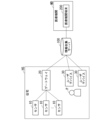
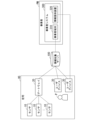
- FIG. 1 is a diagram illustrating a configuration example of a medical-related information management system according to a first embodiment. It is a diagram showing an example of the configuration of an information collection server according to the first embodiment. It is a figure showing an example of daily activity data and daily operation data concerning a 1st embodiment. It is a figure showing an example of composition of a medical related information management system concerning a 3rd embodiment. It is a figure showing an example of composition of a medical related information management system concerning a 4th embodiment.
- the present invention has the following aspects.
- One or more sensors that are provided corresponding to the living space and detect a plurality of different predetermined living activities of the target person; one or more user devices that detect a plurality of different predetermined biological movements depending on the use by the subject;
- a diagnostic device that acquires at least one of the detection information detected by the sensor and the detection information detected by the user device via a network, and uses the acquired detection information to diagnose a predetermined disease.
- an information collection unit that generates data;
- a medical-related information management system comprising: an information provision unit that transmits generated diagnostic data to a device of a predetermined institution.
- the medical-related information management system of [1] wherein the predetermined institution is a medical institution.
- the apparatus further includes a diagnostic unit that determines which stage of subjective cognitive impairment, mild cognitive impairment, or dementia falls under in the diagnosis of cognitive dysfunction based on the generated diagnostic data
- the medical-related information management system according to any one of [5] to [5].
- the sensor is installed in the sleeping place where the subject sleeps, and detects vibrations to detect at least part of the subject's heartbeat, breathing, and blood pressure while sleeping.
- a sensor corresponding to the time is installed, Any of [1] to [6], further comprising a diagnostic unit that diagnoses the subject's sleep apnea syndrome based on at least a portion of the heartbeat, respiration, and blood pressure detected by the bedtime sensor.
- the medical-related information management system according to item (1).
- a sleeping-time sensor is provided at a sleeping place where the subject uses to sleep, and detects body movement displacement of the subject while sleeping by detecting vibrations, According to any one of [1] to [7], further comprising a diagnosis unit that diagnoses frailty of the subject based on changes over time in body movement displacement detected by the bedtime sensor.
- medical information management system is provided at a sleeping place where the subject uses to sleep, and detects body movement displacement of the subject while sleeping by detecting vibrations.
- diagnosis includes not only a doctor examining a subject and making a judgment regarding a disease, but also a computer making a judgment regarding a disease based on information acquired regarding the subject.
- determination regarding disease performed by a computer also includes predictions and estimates regarding predetermined matters regarding the disease.
- FIG. 1 shows a configuration example of a medical-related information management system as a first embodiment.
- the medical-related information management system shown in the figure collects information regarding the daily life behavior and biological movements of the person to be monitored P who lives in a residence HS (an example of a living space), and Using the information collected in example), it is possible to diagnose the disease of the person to be monitored P.
- HS an example of a living space
- one or more sensors 10 are provided.
- the sensor 10 detects different events as events corresponding to predetermined daily activities of the person to be monitored P in the residence HS.
- One sensor 10 may be capable of detecting events corresponding to multiple daily activities.
- living behavior here means the prescribed daily activities (living behavior) of the person to be monitored P, and specific examples include the sleeping status of the person to be monitored, eating behavior, and lighting. Activities include turning on and off devices, opening and closing curtains, cooking, and using various home appliances and equipment.
- one sensor 10 may include a camera. Sensors serving as cameras may be installed in various places in the house HS, such as the living room, entrance, kitchen, and bedroom. The sensor 10 as a camera may output an image obtained by imaging as detection information.
- the senor 10 may be one that detects a predetermined operation or state of equipment provided in the residence HS.
- a sensor 10 may be installed in a lighting fixture in a room to detect the status of lighting, such as turning on, turning off, and illuminance.
- a sensor 10 may be one that detects the open/closed state of a water faucet.
- a sensor 10 may be one that detects the open/closed state of a door, a door, a sliding door, or the like. Alternatively, it may be installed in a stove or the like to detect the ignition state, firepower, etc.
- the sensor 10 is installed in a place where the person to be monitored P sleeps in daily life, such as a bed (an example of a sleeping place), and is equipped with a piezoelectric sensor, etc., to reduce pressure, vibration, etc. It may be a bed-leaving sensor (an example of a bedtime sensor) that can detect when the person to be monitored P gets up from a bed or the like. In addition to detecting when the person to be monitored P gets up from a bed, etc., such a bed-leaving sensor detects vibrations detected by a piezoelectric sensor when the person to be monitored P is sleeping or lying down on the bed, etc. It is possible to measure body movements, heartbeat, breathing, blood pressure, etc. of the person to be monitored P while sleeping.
- a bed-leaving sensor an example of a bedtime sensor
- a bed-leaving sensor detects vibrations detected by a piezoelectric sensor when the person to be monitored P is sleeping or lying down on the bed, etc. It is possible to measure
- a predetermined electronic device among the electronic devices that the person to be watched P uses on a daily basis is used as a user device 30 that detects the daily biological motion of the person to be watched P.
- biological motion here broadly includes various biological motions of the person to be monitored P in daily life, and includes, for example, one or more predetermined parts of the body of the person to be watched P ( For example, it refers to biological movements of the face (head), eyes, mouth, all or part of limbs, trunk, etc.).
- a single user device 30 may detect multiple biological motions.
- the user device 30 may be, for example, a smartphone, a tablet terminal, a personal computer, or the like.
- the user device 30 may be, for example, a smartphone, a tablet terminal, a wearable terminal such as a smart watch, or the like.
- the user device 30 detects, for example, a biological motion when the person to be monitored P is using the user device.
- a biological motion when the user device 30 is a portable terminal such as a smartphone, a tablet terminal, or a smart watch, biological motion may be detected even when the user device 30 is used outside the residence HS.
- a certain user device 30 uses its own camera to image specific parts such as the face and eyes, or limbs, trunk, etc. of the person to be monitored P, as information on biological motion, and displays the image obtained by the imaging. may be output as detection information.
- a certain user device 30 may collect the voice of the person to be monitored P as biological motion information, and output the collected voice as detection information.
- Detection information obtained by detection by each of the sensors 10 is transmitted from the gateway 20 to the information collection server 100 via the network. Further, the detection information obtained by the detection by the user device 30 is transmitted to the information collection server 100 via the network by the network communication function of the user device 30.
- the detection information transmitted from each of the sensor 10 and the user device 30 to the information collection server 100 includes a monitoring subject ID that uniquely indicates the corresponding monitoring subject P.
- the sensor 10 and user device 30 of the house HS corresponding to one monitoring target P are shown, but the information collection server 100 of this embodiment In response to the transmission of detection signals from the sensor 10 and the user device 30, it may be possible to manage information for each of a plurality of persons P to be monitored.
- the information collection server 100 acquires detection information transmitted from the sensor 10 and the user device 30.
- the information collection server 100 generates diagnostic data using the acquired detection information and stores the generated diagnostic data.
- the information collection server 100 stores daily activity data (an example of first diagnostic data) and daily operation data (an example of second diagnostic data) as diagnostic data.
- the daily activity data is data indicating a predetermined daily activity (living behavior) of the corresponding person P to be monitored.
- the daily activity data includes, for example, the amount of activity, sleeping status, behavioral status during meals, on/off history of lighting equipment, history of opening/closing of curtains, and behavioral status during cooking for the person to be monitored P.
- various home appliances, usage status of equipment, etc. may be information that is associated with date and time.
- the information collection server 100 collects the activity state (sleeping, sitting, standing, It can be calculated based on the recognized activity status.
- the information on the amount of activity may also include information such as positional information measured by the user device 30 for each hour and the number of steps measured by the pedometer function.
- the information collection server 100 also determines sleeping conditions, behavioral conditions during meals, etc. based on the captured images, which are the detection outputs of the sensor 10 as a camera, and the captured times at which the captured images correspond. It is possible to manage the physical movements of the person P to be viewed, meal times, appearance during meals, etc. in association with time.
- the daily activity data also includes body movements during sleep and various vital signs (e.g., heartbeat status, breathing status, blood pressure, etc.) detected by the sensor 10 as the above-mentioned bed leaving sensor. good.
- the daily movement data is data indicating the biological movement of the person P to be monitored.
- the daily movement data may include, for example, data indicating eye movements of the person to be watched P, audio data, data on facial expressions of the person to be watched P, and the like.
- the information collection server 100 can generate data indicating eye movements and facial expressions of the person to be watched P based on captured image data obtained by capturing images with the camera of the user device 30.
- the audio data may be audio data obtained by collecting sounds by the user device 30.
- the information collection server 100 provides the diagnostic data (daily activity data and daily operation data) stored as described above to the medical institution MD. Although one medical institution MD is shown in the figure, there may be a plurality of medical institutions MD to which the information collection server 100 provides diagnostic data.
- the medical institution MD includes a medical institution terminal 200 (an example of a device of a predetermined institution). Medical institution terminal 200 is connected to information collection server 100 via a network.
- the medical institution terminal 200 may be, for example, a computer device used by a doctor or the like in a medical institution MD.
- the medical institution terminal 200 accesses the information collection server 100, specifies the person to be monitored P, and requests diagnostic data.
- Such a request for diagnostic data may be made in response to an operation by a person in charge of diagnosis (for example, a doctor) in the medical institution MD, or may be made, for example, in response to an operation by the medical institution terminal 200 at a preset timing. May be executed.
- the medical institution terminal 200 transmits the diagnostic data of the designated person to be monitored P transmitted from the information collection server 100 in response to the request.
- the medical institution terminal 200 may output the transmitted diagnostic data on a display.
- the medical institution terminal 200 may output the transmitted diagnostic data by printing.
- the medical institution terminal 200 may store the transmitted diagnostic data. In this manner, in this embodiment, diagnostic data is provided to the medical institution MD.
- a doctor analyzes the contents of the diagnostic data output by the medical institution terminal 200 and diagnoses the disease of the person to be monitored P.
- the disease to be diagnosed based on the diagnostic data is dementia.
- diseases that can be diagnosed based on the diagnostic data of this embodiment may include, in addition to the above-mentioned dementia, neurological diseases, lifestyle-related diseases, and the like.
- the doctor diagnoses a disease of a person to be watched P by interviewing the person to be watched face-to-face, for example, due to the need to deal with a large number of patients during clinic hours, There is a limit to the amount of time that can be spent interviewing P.
- the person to be watched P meets directly with the doctor, so for example, when diagnosing early dementia, the person to be watched P may tend to react in a different way than in everyday life. do. Therefore, depending on the interview, the doctor may not be able to make an accurate diagnosis.
- the doctor can analyze the diagnostic data and make a diagnosis at a time convenient for him and in a relatively sufficient amount of time, without being subject to time restrictions like when conducting an interview.
- the diagnostic data is information acquired in an environment where the person to be monitored P goes about his daily life without being particularly aware of the presence of a doctor, the doctor should be able to understand the original Symptoms, etc. can be accurately grasped.
- dementia cognitive dysfunction
- MCI mild cognitive impairment
- AD dementia
- SCI subjective cognitive impairment
- SCI mild cognitive impairment
- AD dementia
- the doctor performs medical care based on diagnostic data included in daily activity data such as the heartbeat state, breathing state, and blood pressure detected (measured) by the sensor 10 as the above-mentioned bed leaving sensor. Diagnosis regarding sleep apnea syndrome of the viewing subject P can be performed. In addition, the doctor diagnoses frailty by looking at the long-term change in body movement displacement during sleep measured by the sensor 10 as the bed leaving sensor among the diagnostic data. be able to. Frailty is located between a healthy state and a state requiring care, and refers to a decline in physical and cognitive functions. Here, we mainly treat decline in physical function as frailty.
- a sensor 10 other than the above-mentioned bed leaving sensor may be used to detect the heartbeat state, breathing state, blood pressure, etc. used in the diagnosis of the above-mentioned sleep apnea syndrome.
- FIG. 2 shows an example of the functional configuration of the information collection server 100 of this embodiment.
- the function of the information collection server 100 in the figure is realized by a computer serving as the information collection server 100 executing a program.
- the information collection server 100 includes a communication section 101, a control section 102, and a storage section 103.
- the communication unit 101 communicates with the sensor 10, the user device 30, and the medical institution terminal 200 via the network.
- the control unit 102 executes various controls in the information collection server 100.
- the control unit 102 includes an information collection unit 121 and an information provision unit 122. Note that the diagnosis unit 123 corresponds to the second embodiment, so a description thereof will be omitted here.
- the information collection unit 121 collects daily activity data and daily movement data. That is, the information collection unit 121 generates daily activity data and daily operation data based on the detection information transmitted from the sensor 10 and the user device 30.
- the information collection unit 121 stores the generated daily activity data in the daily activity data storage unit 1311.
- the information collection unit 121 stores the generated daily activity data in the daily activity data storage unit 1312.
- the information providing unit 122 retrieves the specified monitoring target P from the diagnostic data storage unit (daily activity data storage unit 1311, daily activity data storage unit 1312). Search for diagnostic data (daily activity data, daily movement data). The information providing unit 122 transmits the searched diagnostic data to the medical institution terminal 200.
- the storage unit 103 stores various types of information in the information collection server 100.
- the information collection server 100 includes a diagnostic data storage section 131.
- the diagnostic data storage unit 131 stores diagnostic data (daily activity data, daily operation data).
- the diagnostic data storage unit 131 includes a daily activity data storage unit 1311 and a daily activity data storage unit 1312. Note that the diagnosis result data storage unit 132 corresponds to the second embodiment, so a description thereof will be omitted here.
- the daily activity data storage unit 1311 stores daily activity data for each person P to be monitored.
- FIG. 3A shows an example of daily activity data corresponding to one person P to be monitored.
- the daily activity data corresponding to 1 monitoring target person P in the same figure includes each area of monitoring target person ID, monitoring target person basic information, and behavior data 1 to n.
- the viewing target person ID area stores the watching target person ID, which is an identifier that uniquely indicates the corresponding watching target person P.
- the monitoring target person basic information area stores monitoring target person basic information including basic information such as the name, age, contact information, etc. of the corresponding monitoring target P.
- the behavioral data areas 1 to n store behavioral data indicating different daily activities (behaviors).
- Each of the behavioral data 1 to n includes, for example, the amount of activity described above, sleeping status, behavioral status during meals, on/off history of lighting equipment, history of opening and closing of curtains, behavioral status during cooking, and use of various home appliances. Either of the situations etc. will correspond.
- the daily movement data storage unit 1312 stores daily movement data for each person P to be monitored.
- FIG. 3(B) shows an example of daily movement data corresponding to one person P to be monitored.
- the daily movement data corresponding to the person P to be watched 1 in the same figure includes each area of the person to be watched ID, the basic information of the person to be watched, and the movement data 1 to m.
- the viewing target person ID area stores the watching target person ID, which is an identifier that uniquely indicates the corresponding watching target person P.
- the monitoring target person basic information area stores monitoring target person basic information including basic information such as the name, age, contact information, etc. of the corresponding monitoring target P.
- the motion data areas 1 to m store motion data indicating different daily motions. Each of the motion data 1 to m is data indicating eye movements, audio data, facial expression data of the person to be watched P, or the like.
- the behavior data and motion data described above have content as a history of a target event.
- the behavior data and the motion data are information indicating changes over time regarding the target event.
- Such behavior data and motion data are collected, for example, when a doctor at a medical institution MD meets and regularly provides medical care to a person to be monitored P, and after one medical treatment is performed, the next medical treatment is performed. It can be used as useful information for doctors to objectively judge the course of symptoms until then.
- the information collection unit 121 acquires detection information that is regularly or occasionally transmitted to the information collection server 100 from the sensors 10 and user devices 30 of the residential HS via the communication unit 101, and generates information based on the acquired detection information.
- the behavior data and the movement data may be stored in the daily activity data storage unit 1311 and the daily activity data storage unit 1312, respectively.
- the detection information of the sensor 10 may be stored in a storage device or the like in the residential HS, and the user device 30 may store the detection information obtained by self-detection in an internal storage unit or a storage unit connected to the user device 30. I'll try to keep it that way.
- the information collection unit 121 may periodically acquire detection information stored in the storage device or the user device 30. In this case, the periodic timing of acquiring the detection information may be set, for example, shorter than the normally expected medical treatment interval, and may be set on a weekly basis, for example, one week or two weeks.
- the control unit 102 of the information collection server 100 stores daily activity data and daily operation data that store the monitoring target person ID indicating the designated monitoring target P. It is possible to search from each of the activity data storage section 1311 and the daily operation data storage section 1312 and transmit it to the medical institution terminal 200.
- the information collection server 100 is configured to perform diagnosis based on daily activity data and daily operation data.
- the control unit 102 of the information collection server 100 of this embodiment includes a diagnosis unit 123.
- the diagnosis unit 123 determines the disease details (disease name, disease stage, etc.).
- the diagnosis here corresponds to, for example, estimating the nature of the disease of the person to be monitored P.
- the diagnosis unit 123 stores, for example, a disease database (not shown) that indicates disease contents corresponding to each combination pattern of daily behavior indicated by the daily activity data and a predetermined daily behavior of the person to be monitored P indicated by the daily motion data. can be used for diagnosis.
- the diagnosis unit 123 uses a trained model trained using learning data indicating the relationship between the disease content and the combination pattern of daily behavior corresponding to the daily activity data and daily behavior corresponding to the daily movement data. Diagnosis may be performed.
- daily behavior and daily movement data indicated by daily activity data corresponding to subjective cognitive impairment (SCI), mild cognitive impairment (MCI), and dementia (AD). may have a combination pattern with a predetermined motion of the person to be monitored P in daily life.
- the diagnosis unit 123 determines which stage of subjective cognitive impairment (SCI), mild cognitive impairment (MCI), or dementia (AD) it corresponds to when outputting the diagnosis result of dementia. can be determined.
- the diagnostic unit 123 determines the diagnosis result regarding sleep apnea syndrome in accordance with the input of diagnostic data such as heartbeat status, breathing status, and blood pressure detected by the sensor 10 as a bed leaving sensor. It can be output.
- the diagnosis unit 123 can output a diagnosis result regarding frailty based on changes in body movement displacement input so far.
- the storage unit 103 of the information collection server 100 of this embodiment includes a diagnosis result data storage unit 132.
- the diagnosis unit 123 stores diagnosis result data indicating the diagnosis results for each person P to be monitored.
- the information providing unit 122 of the information collection server 100 can transmit the requested diagnosis result of the person to be monitored P from among the diagnosis result data stored in the diagnosis result data storage unit 132 to the medical institution terminal 200.
- the daily activity data and daily motion data of the designated person to be monitored P may be transmitted, as in the first embodiment. .
- the doctor at the medical institution MD can obtain information on diagnosis results in addition to diagnostic data (daily activity data, daily movement data) of the person to be monitored P using the medical institution terminal 200. Thereby, the doctor can efficiently diagnose by using the daily activity data and the daily movement data while also considering the already obtained diagnosis results.
- the information collection server 100 in this embodiment may transmit diagnostic result data to the medical institution terminal 200, but may not transmit diagnostic data.
- FIG. 4 shows an example of the configuration of the medical-related information management system of this embodiment.
- the same parts as those in FIG. 1 are given the same reference numerals, and the description thereof will be omitted.
- the provider PM is the provider of diagnostic data, diagnosis result data, and the like.
- the information collection server 100 of this embodiment may provide diagnosis data to the business PM as in the first embodiment and not provide diagnosis result data, or may be configured to provide diagnosis data to the business PM as in the second embodiment. data and diagnostic result data may be provided.
- the type of business of the business PM is not particularly limited, but may be, for example, an insurance company, a health insurance association, a local government, or various manufacturers.
- the business operator may be either private or public. When the business PM is a private company, the person P to be monitored by the business PM may be, for example, a customer.
- the business operator PM may store, for example in the information providing device 320, customer information regarding the person to be monitored P who is registered as a customer.
- a business operator PM (an example of a predetermined organization) is equipped with a business system 300.
- the business system 300 includes, for example, a business terminal 310 (an example of a device of a predetermined institution) and an information providing device 320.
- the operator terminal 310 accesses the information collection server 100, acquires diagnostic data (daily activity data, daily movement data) and diagnostic results of the person to be monitored P that the operator PM supports, and displays, prints, etc. It is possible to output by Further, the business terminal 310 may store the acquired diagnostic data and diagnostic result data.
- the information providing device 320 is a device that provides information for the person to be monitored P from the business operator PM to a predetermined user device 30 used by the person to be monitored P.
- the information providing device 320 may be constructed as a server provided on a cloud, for example. Note that the user device 30 that receives information provision from the information provision apparatus 320 does not need to have the function of transmitting detection information to the information collection server 100.
- the business PM diagnoses the disease (dementia, neurological disease, lifestyle-related disease, etc.) of the person to be monitored P based on the diagnostic data and diagnosis result data acquired by the business terminal 310.
- the business terminal 310 acquires the diagnosis result data by the diagnosis unit 123 in the information collection server 100, so that the business PM can diagnose the person to be monitored P. It may be possible to obtain results.
- the business operator PM provides information to the person to be monitored P from the information providing device 320 according to the diagnosis result.
- the business PM is an organization such as a local government that aims to maintain the health of residents
- the business PM causes the information providing device 320 to transmit information according to the diagnosis result to the user device 30.
- the information according to the diagnosis result may be, for example, a treatment method according to the diagnosed disease and the degree of the disease, and suggestions for actions to be taken in daily life to improve symptoms. Provision of such information may be, for example, by sending an email, a message to a messenger application on the user device 30, or a website that the user logs into to access.
- the information may be published.
- the information providing apparatus 320 may transmit to the user device 30 information on how to deal with the disease depending on the degree of the diagnosed disease.
- the business operator PM is a housing business operator
- the information providing device 30 may be caused to transmit information recommending renovation of the residence HS to make it barrier-free or the like.
- the user device 30 may be a navigation device of a car, and in this case, a message asking people to refrain from driving a car is displayed on the navigation device depending on the diagnosis result regarding dementia.
- Information may be transmitted from the information providing device 320 as shown in FIG.
- FIG. 5 shows an example of the configuration of the medical-related information management system of this embodiment.
- the medical-related information management system of FIG. 5 includes a health-related history data server 400. Further, in the medical-related information management system, a business PM is shown as a provider of diagnostic data and diagnosis result data.
- the health-related history data server 400 collects health-related history data for each person to be monitored P, and stores the collected health-related history data.
- the health-related history data may be PHR (Personal Health Record) data or EHR (Electric Health Record) data.
- the health-related history data may include, for example, vaccinations conducted by local governments, business owners, etc., and the results of various medical examinations. Further, the health-related history data may include test results, medical examination history, treatment history, etc. at various medical institutions. Further, information related to health detected by sensors, devices, etc. other than the sensor 10 and the user device 30 of this embodiment may also be included.
- the information collection server 100 When the business terminal 310 of the business PM requests the information collection server 100 for diagnostic data of a certain person to be monitored P, the information collection server 100 requests health-related data for the specified person to be monitored P. Historical data is acquired from the health-related historical data server 400. The information collection server 100 transfers the acquired health-related history data and the diagnostic data (daily activity data, daily movement data) of the designated person to be monitored P stored in the diagnostic data storage unit 131 to the operator's terminal. 310.
- the medical institution MD or business operator PM of this embodiment can acquire health-related history data along with diagnostic data.
- the business PM can diagnose diseases using health-related history data in addition to diagnostic data.
- a more accurate diagnosis result can be obtained by referring to, for example, the results of a medical examination, medical examination history, treatment history, etc. indicated by the health-related history data.
- the business PM uses the information providing device 320 to send information that proposes treatment methods and information for improving symptoms according to the diagnosis results, the business PM uses health-related history data to make more accurate proposals. It becomes possible to do so.
- the employer PM may propose a more appropriate treatment method for the person to be monitored P, or provide advice on how to avoid it, based on information such as past illnesses, medical history, and current medications shown in the health-related history data. You can also provide information about medicines.
- the diagnosis unit 123 of the information collection server 100 may obtain diagnosis result data by performing diagnosis using health-related history data in addition to diagnostic data.
- either daily activity data or daily operation data may be used as the diagnostic data.
- the information collection server 100 collects diagnostic data, diagnosis result data, and health-related data for both the medical institution terminal 200 of the medical institution MD and the operator terminal 310 of the operator PM. etc. may be transmitted.
- programs for realizing the functions of the information collection server 100, medical institution terminal 200, business terminal 310, information providing device 320, etc. described above are recorded on a computer-readable recording medium, and the programs are recorded on this recording medium.
- processing as the above-mentioned information collection server 100, medical institution terminal 200, business terminal 310, information providing device 320, etc. may be performed.
- “reading a program recorded on a recording medium into a computer system and executing it” includes installing the program on the computer system.
- the "computer system” here includes hardware such as an OS and peripheral devices.
- a "computer system” may include a plurality of computer devices connected via a network including the Internet, a WAN, a LAN, a communication line such as a dedicated line, etc.
- computer-readable recording medium refers to portable media such as flexible disks, magneto-optical disks, ROMs, and CD-ROMs, and storage devices such as hard disks built into computer systems.
- the recording medium storing the program may be a non-transitory recording medium such as a CD-ROM.
- the recording medium also includes a recording medium provided internally or externally that can be accessed from the distribution server to distribute the program.
- the code of the program stored in the recording medium of the distribution server may be different from the code of the program in a format executable by the terminal device. That is, as long as it can be downloaded from the distribution server and installed in an executable form on the terminal device, the format in which it is stored on the distribution server does not matter.
- the program may be divided into a plurality of parts, downloaded at different timings, and then combined on a terminal device, or the distribution servers that deliver each of the divided programs may be different.
- a ⁇ computer-readable recording medium'' refers to a storage medium that retains a program for a certain period of time, such as volatile memory (RAM) inside a computer system that serves as a server or client when a program is transmitted via a network. This shall also include things.
- the above-mentioned program may be for realizing a part of the above-mentioned functions. Furthermore, it may be a so-called difference file (difference program) that can realize the above-mentioned functions in combination with a program already recorded in the computer system.
- difference file difference program
Landscapes
- Health & Medical Sciences (AREA)
- Engineering & Computer Science (AREA)
- Epidemiology (AREA)
- General Health & Medical Sciences (AREA)
- Medical Informatics (AREA)
- Primary Health Care (AREA)
- Public Health (AREA)
- Measuring And Recording Apparatus For Diagnosis (AREA)
Abstract
居住空間に対応して備えられ、対象者を対象に、複数の異なる所定の生活行動について検出する1以上のセンサと、前記対象者が利用することに応じて、複数の異なる所定の生体的動作について検出する1以上のユーザデバイスと、前記センサにより検出される検出情報と、前記ユーザデバイスにより検出される検出情報との少なくともいずれかを、ネットワーク経由で取得し、取得した検出情報に基づいて、所定の疾病についての診断に用いる診断用データを記憶部に記憶させる情報収集部を備えて医療関連情報管理システムを構成する。
Description
本発明は、医療関連情報管理システムに関する。
本願は、2022年3月25日に日本に出願された特願2022-049346号について優先権を主張し、その内容をここに援用する。
本願は、2022年3月25日に日本に出願された特願2022-049346号について優先権を主張し、その内容をここに援用する。
被験者の睡眠時の生体データに基づく睡眠データと、実際の発症患者から得られた症状特有の睡眠データとを比較して、アルツハイマー型、認知症レビー小体型認知症、前頭側頭型認知症の3類型の認知症の種類のうちのいずれに該当するのかを判定する技術が知られている(例えば、特許文献1参照)。
認知症等をはじめとする疾病は、対象者の日常生活の状況が影響しているともいわれる。この観点からすると、疾病の診断には、対象者の日常生活における状況を把握することが求められる。しかしながら、例えば医療機関で行われる問診等では、時間の制約があったり、対象者がいつもよりも健常そうな様子を見せたりすることなどがあり、対象者の日常生活の状況を的確に把握して的確な診断を行うことが難しい。
本発明は、看視対象者の日常生活の状況に基づいて診断が行えるようにすることを目的とする。
上述した課題を解決する本発明の一態様は、居住空間に対応して備えられ、対象者を対象に、それぞれ異なる所定の生活行動について検出する1以上のセンサと、前記対象者が利用することに応じて、それぞれが異なる所定の生体的動作について検出する1以上のユーザデバイスと、前記センサにより検出される検出情報と、前記ユーザデバイスにより検出される検出情報との少なくともいずれかを、ネットワーク経由で取得し、取得した検出情報に基づいて、所定の疾病についての診断に用いる診断用データを生成する情報収集部と、生成された診断用データを、所定の機関の装置に送信する情報提供部とを備える医療関連情報管理システムである。
以上説明したように、看視対象者の日常生活の状況に基づいて診断が行えるようになるという効果が得られる。
本発明は、以下の態様を有する。
[1]居住空間に対応して備えられ、対象者を対象に、複数の異なる所定の生活行動について検出する1以上のセンサと、
前記対象者が利用することに応じて、複数の異なる所定の生体的動作について検出する1以上のユーザデバイスと、
前記センサにより検出される検出情報と、前記ユーザデバイスにより検出される検出情報との少なくともいずれかを、ネットワーク経由で取得し、取得した検出情報に基づいて、所定の疾病についての診断に用いる診断用データを生成する情報収集部と、
生成された診断用データを、所定の機関の装置に送信する情報提供部と
を備える医療関連情報管理システム。
[2]前記所定の機関は、医療機関である
[1]の医療関連情報管理システム。
[3]前記所定の機関は、医療機関以外の事業機関である
[1]の医療関連情報管理システム。
[4]前記情報収集部は、取得した前記センサの検出情報に基づいて、対象者の日常的生活行動を示す第1の診断用データを生成する
[1]から[3]のいずれか一項に記載の医療関連情報管理システム。
[5]前記情報収集部は、取得した前記ユーザデバイスの検出情報に基づいて、対象者の日常生活における所定の生体的動作を示す第2の診断用データを生成する
[1]から[4]のいずれか一項に記載の医療関連情報管理システム。
[6]生成された診断用データに基づいて、認知機能障害の診断において、主観的認知障害、軽度認知障害、認知症のいずれの段階に該当するのかを判定する診断部をさらに備える
[1]から[5]のいずれか一項に記載の医療関連情報管理システム。
[7]前記センサとして、対象者が就寝に用いる就寝場所に設けられ、振動を検出することで、就寝しているときの対象者の心拍、呼吸、血圧のうちの少なくとも一部を検出する就寝時対応センサが設けられ、
前記就寝時対応センサにより検出される心拍、呼吸、血圧のうちの少なくとも一部に基づいて、対象者の睡眠時無呼吸症候群に関する診断を行う診断部をさらに備える
[1]から[6]のいずれか一項に記載の医療関連情報管理システム。
[8]前記センサとして、対象者が就寝に用いる就寝場所に設けられ、振動を検出することで、就寝しているときの対象者の体動変位を検出する就寝時対応センサが設けられ、
前記就寝時対応センサにより検出される体動変位の時間経過に応じた変化に基づいて、対象者のフレイルに関する診断を行う診断部をさらに備える
[1]から[7]のいずれか一項に記載の医療関連情報管理システム。
[1]居住空間に対応して備えられ、対象者を対象に、複数の異なる所定の生活行動について検出する1以上のセンサと、
前記対象者が利用することに応じて、複数の異なる所定の生体的動作について検出する1以上のユーザデバイスと、
前記センサにより検出される検出情報と、前記ユーザデバイスにより検出される検出情報との少なくともいずれかを、ネットワーク経由で取得し、取得した検出情報に基づいて、所定の疾病についての診断に用いる診断用データを生成する情報収集部と、
生成された診断用データを、所定の機関の装置に送信する情報提供部と
を備える医療関連情報管理システム。
[2]前記所定の機関は、医療機関である
[1]の医療関連情報管理システム。
[3]前記所定の機関は、医療機関以外の事業機関である
[1]の医療関連情報管理システム。
[4]前記情報収集部は、取得した前記センサの検出情報に基づいて、対象者の日常的生活行動を示す第1の診断用データを生成する
[1]から[3]のいずれか一項に記載の医療関連情報管理システム。
[5]前記情報収集部は、取得した前記ユーザデバイスの検出情報に基づいて、対象者の日常生活における所定の生体的動作を示す第2の診断用データを生成する
[1]から[4]のいずれか一項に記載の医療関連情報管理システム。
[6]生成された診断用データに基づいて、認知機能障害の診断において、主観的認知障害、軽度認知障害、認知症のいずれの段階に該当するのかを判定する診断部をさらに備える
[1]から[5]のいずれか一項に記載の医療関連情報管理システム。
[7]前記センサとして、対象者が就寝に用いる就寝場所に設けられ、振動を検出することで、就寝しているときの対象者の心拍、呼吸、血圧のうちの少なくとも一部を検出する就寝時対応センサが設けられ、
前記就寝時対応センサにより検出される心拍、呼吸、血圧のうちの少なくとも一部に基づいて、対象者の睡眠時無呼吸症候群に関する診断を行う診断部をさらに備える
[1]から[6]のいずれか一項に記載の医療関連情報管理システム。
[8]前記センサとして、対象者が就寝に用いる就寝場所に設けられ、振動を検出することで、就寝しているときの対象者の体動変位を検出する就寝時対応センサが設けられ、
前記就寝時対応センサにより検出される体動変位の時間経過に応じた変化に基づいて、対象者のフレイルに関する診断を行う診断部をさらに備える
[1]から[7]のいずれか一項に記載の医療関連情報管理システム。
以下、医療関連情報管理システムの実施形態について説明する。以下の説明にあたり「診断」は、医師が対象者を診察して疾病に関する判断を行うことのほか、コンピュータが、対象者に関して取得した情報に基づいて、疾病に関する判定を実行することも含まれる。コンピュータが実行する「疾病に関する判定」は、疾病に関する所定事項についての予測、推定も含む。
<第1実施形態>
図1は、第1実施形態としての医療関連情報管理システムの構成例を示している。同図の医療関連情報管理システムは、住宅HS(居住空間の一例)にて居住する看視対象者Pの日常生活における行動、生体的動作に関する情報を収集し、医療機関MD(所定の機関の一例)にて収集した情報を利用して看視対象者Pの疾病についての診断が行えるようにされる。
図1は、第1実施形態としての医療関連情報管理システムの構成例を示している。同図の医療関連情報管理システムは、住宅HS(居住空間の一例)にて居住する看視対象者Pの日常生活における行動、生体的動作に関する情報を収集し、医療機関MD(所定の機関の一例)にて収集した情報を利用して看視対象者Pの疾病についての診断が行えるようにされる。
住宅HSにおいては、1以上のセンサ10が設けられる。センサ10は、看視対象者Pの住宅HSでの所定の生活行動に対応する事象として、それぞれ異なる事象を検出する。センサ10は、1つで複数の生活行動に対応する事象を検出可能とされてよい。
なお、ここで「生活行動」とは、看視対象者Pについての日常における所定の活動(生活行動)を意味し、具体例としては看視対象者Pの睡眠状況、食事時の行動、照明装置のスイッチをオンオフする行動、カーテンを開け閉めする行動、調理時の行動、各種家電品や設備の利用などの活動があげられる。
具体的に、或るセンサ10には、カメラが含まれてよい。カメラとしてのセンサは、住宅HSにおける居間、玄関、キッチン、寝室など各所に設けられてよい。カメラとしてのセンサ10は、撮像により得られた画像を検出情報として出力してよい。
なお、ここで「生活行動」とは、看視対象者Pについての日常における所定の活動(生活行動)を意味し、具体例としては看視対象者Pの睡眠状況、食事時の行動、照明装置のスイッチをオンオフする行動、カーテンを開け閉めする行動、調理時の行動、各種家電品や設備の利用などの活動があげられる。
具体的に、或るセンサ10には、カメラが含まれてよい。カメラとしてのセンサは、住宅HSにおける居間、玄関、キッチン、寝室など各所に設けられてよい。カメラとしてのセンサ10は、撮像により得られた画像を検出情報として出力してよい。
また、センサ10は、住宅HSにおいて備えられる設備における所定の動作、状態を検出するようなものであってよい。例えば、このようなセンサ10としては、部屋の照明器具に備えられ、照明の点灯・消灯・照度等の状態を検出するものであってよい。また、このようなセンサ10としては、水道の蛇口の開閉状態を検出するようなものであってもよい。また、このようなセンサ10としては、ドア、扉、引き戸等の開閉状態を検出するようなものであってもよい。また、コンロなどに備えられ着火状態、火力等を検出するものであってもよい。
また、センサ10は、例えばベッド等(就寝場所の一例)のように看視対象者Pが日常生活において就寝する場所に敷かれるように設けられ、例えば圧電センサ等を備えることで圧力、振動等を検出可能とされ、ベッド等からの看視対象者Pの起き上がりを検出する離床センサ(就寝時対応センサの一例)であってよい。このような離床センサは、看視対象者Pのベッド等からの起き上がりを検出するほか、ベッド等で看視対象者Pが就寝、横臥しているときに圧電センサにより検出される振動に基づいて、看視対象者Pの就寝中の体動変位、心拍の状態、呼吸の状態、血圧等を測定することができる。
また、看視対象者Pが日常使用する電子機器のうちの所定のものは、看視対象者Pの日常の生体的動作を検出するユーザデバイス30として使用される。
なお、ここで「生体的動作」とは、看視対象者Pの日常における生体的な種々の動作を広く包含するものであり、例えば看視対象者Pの身体の所定の一以上の部位(例えば、顔(頭部)、目、口、四肢全体もしくは四肢の一部、体幹等)の生体的な動きを意味する。ユーザデバイス30は、1つで複数の生体的動作を検出してよい。
ユーザデバイス30は、例えばスマートフォン、タブレット端末、パーソナルコンピュータ等であってよい。ユーザデバイス30は、例えばスマートフォン、タブレット端末、スマートウォッチ等のウェアラブル端末等であってもよい。
なお、ここで「生体的動作」とは、看視対象者Pの日常における生体的な種々の動作を広く包含するものであり、例えば看視対象者Pの身体の所定の一以上の部位(例えば、顔(頭部)、目、口、四肢全体もしくは四肢の一部、体幹等)の生体的な動きを意味する。ユーザデバイス30は、1つで複数の生体的動作を検出してよい。
ユーザデバイス30は、例えばスマートフォン、タブレット端末、パーソナルコンピュータ等であってよい。ユーザデバイス30は、例えばスマートフォン、タブレット端末、スマートウォッチ等のウェアラブル端末等であってもよい。
ユーザデバイス30は、例えば看視対象者Pが当該ユーザデバイスを使用しているときの生体的動作を検出する。ユーザデバイス30が、スマートフォン、タブレット端末、スマートウォッチ等の可搬型の端末である場合には、住宅HSの外で利用される場合にも生体的動作の検出を行ってよい。
或るユーザデバイス30は、生体的動作の情報として、自己が備えるカメラにより、看視対象者Pの顔や目などの特定部分、あるいは四肢、体幹等を撮像し、撮像により得られた画像を検出情報として出力してよい。
或るユーザデバイス30は、生体的動作の情報として、看視対象者Pの音声を集音し、集音された音声を検出情報として出力してよい。
或るユーザデバイス30は、生体的動作の情報として、自己が備えるカメラにより、看視対象者Pの顔や目などの特定部分、あるいは四肢、体幹等を撮像し、撮像により得られた画像を検出情報として出力してよい。
或るユーザデバイス30は、生体的動作の情報として、看視対象者Pの音声を集音し、集音された音声を検出情報として出力してよい。
センサ10のそれぞれが検出して得られた検出情報は、ゲートウェイ20からネットワークを経由して情報収集サーバ100に送信される。また、ユーザデバイス30が検出して得られた検出情報は、ユーザデバイス30が有するネットワーク通信機能により、ネットワーク経由で情報収集サーバ100に送信される。
センサ10とユーザデバイス30とのそれぞれから情報収集サーバ100に送信される検出情報には、対応の看視対象者Pを一意に示す看視対象者IDが含まれる。
センサ10とユーザデバイス30とのそれぞれから情報収集サーバ100に送信される検出情報には、対応の看視対象者Pを一意に示す看視対象者IDが含まれる。
同図においては1の看視対象者Pに対応する住宅HSのセンサ10とユーザデバイス30とが示されているが、本実施形態の情報収集サーバ100は、複数の看視対象者Pごとのセンサ10及びユーザデバイス30カラの検出信号の送信に対応し、複数の看視対象者Pごとの情報を管理可能とされてよい。
情報収集サーバ100は、センサ10とユーザデバイス30から送信される検出情報を取得する。情報収集サーバ100は、取得した検出情報を利用して診断用データを生成し、生成した診断用データを記憶する。
情報収集サーバ100は、診断用データとして、日常活動データ(第1の診断用データの一例)と日常動作データ(第2の診断用データの一例)とを記憶する。
日常活動データは、対応の看視対象者Pについての日常における所定の活動(生活行動)を示すデータである。
具体的には、例えば日常活動データは、看視対象者Pについての活動量、睡眠状況、食事時の行動状況、照明装置のスイッチのオンオフ履歴、カーテンの開け閉めの履歴、調理時の行動状況、各種家電品、設備の利用状況等のそれぞれを、日時と対応付けた情報であってよい。
一例として、活動量について、情報収集サーバ100は、住宅HSに備えられたカメラとしてのセンサ10の検出情報である撮像画像から看視対象者Pの活動状態(寝ている、座っている、立っている、歩行している等)を認識し、認識した活動状態に基づいて算出することができる。例えば活動量を、日ごと、あるいは1日における時間帯ごとといったように期間単位により管理することで、日々の日常における活動量の情報として得ることができる。なお、ユーザデバイス30により測定された時間ごとの位置情報や、歩数計機能により計測された歩数などの情報も活動量の情報に含まれてよい。
また、情報収集サーバ100は、睡眠状況、食事時の行動状況等も、カメラとしてのセンサ10の検出出力である撮像画像と撮像画像が対応する撮像時刻に基づいて、睡眠時間、睡眠時の看視対象者Pの身体の動き、食事時間、食事時の様子等を時間と対応付けて管理できる。
また、日常活動データには、前述の離床センサとしてのセンサ10により検出される、就寝中の体動変位や、各種バイタルサイン(例えば、心拍の状態、呼吸の状態、血圧等)も含まれてよい。
具体的には、例えば日常活動データは、看視対象者Pについての活動量、睡眠状況、食事時の行動状況、照明装置のスイッチのオンオフ履歴、カーテンの開け閉めの履歴、調理時の行動状況、各種家電品、設備の利用状況等のそれぞれを、日時と対応付けた情報であってよい。
一例として、活動量について、情報収集サーバ100は、住宅HSに備えられたカメラとしてのセンサ10の検出情報である撮像画像から看視対象者Pの活動状態(寝ている、座っている、立っている、歩行している等)を認識し、認識した活動状態に基づいて算出することができる。例えば活動量を、日ごと、あるいは1日における時間帯ごとといったように期間単位により管理することで、日々の日常における活動量の情報として得ることができる。なお、ユーザデバイス30により測定された時間ごとの位置情報や、歩数計機能により計測された歩数などの情報も活動量の情報に含まれてよい。
また、情報収集サーバ100は、睡眠状況、食事時の行動状況等も、カメラとしてのセンサ10の検出出力である撮像画像と撮像画像が対応する撮像時刻に基づいて、睡眠時間、睡眠時の看視対象者Pの身体の動き、食事時間、食事時の様子等を時間と対応付けて管理できる。
また、日常活動データには、前述の離床センサとしてのセンサ10により検出される、就寝中の体動変位や、各種バイタルサイン(例えば、心拍の状態、呼吸の状態、血圧等)も含まれてよい。
日常動作データは、看視対象者Pについての生体的動作を示すデータである。日常動作データには、例えば看視対象者Pの目の動きを示すデータ、音声データ、看視対象者Pの表情のデータなどであってよい。
看視対象者Pの目の動きを示すデータや表情のデータについて、情報収集サーバ100は、ユーザデバイス30のカメラにより撮像して得られた撮像画像データに基づいて生成することができる。また、音声データについては、ユーザデバイス30が集音して得られた音声データであってよい。
看視対象者Pの目の動きを示すデータや表情のデータについて、情報収集サーバ100は、ユーザデバイス30のカメラにより撮像して得られた撮像画像データに基づいて生成することができる。また、音声データについては、ユーザデバイス30が集音して得られた音声データであってよい。
情報収集サーバ100は、上記のように記憶した診断用データ(日常活動データと日常動作データ)を、医療機関MDに提供する。同図においては1つの医療機関MDが示されているが、情報収集サーバ100が診断用データの提供先とする医療機関MDは複数であってよい。
医療機関MDは、医療機関端末200(所定の機関の装置の一例)を備える。医療機関端末200は、ネットワーク経由で情報収集サーバ100と接続される。医療機関端末200は、例えば医療機関MDにおいて医師等が使用するコンピュータ装置等であってよい。
医療機関端末200は、情報収集サーバ100にアクセスし、看視対象者Pを指定して診断用データを要求する。このような診断用データの要求は、医療機関MDにおいて診断を行う担当者(例えば、医師)の操作に応じて行われてもよいし、例えば予め設定された所定のタイミングで医療機関端末200が実行してもよい。
医療機関端末200は、要求に応じて情報収集サーバ100から送信された指定の看視対象者Pの診断用データを送信する。医療機関端末200は、送信された診断用データを表示により出力させてよい。また、医療機関端末200は、送信された診断用データを印刷により出力してもよい。また、医療機関端末200は、送信された診断用データを記憶してもよい。このようにして、本実施形態においては、診断用データが医療機関MDに提供される。
医療機関MDは、医療機関端末200(所定の機関の装置の一例)を備える。医療機関端末200は、ネットワーク経由で情報収集サーバ100と接続される。医療機関端末200は、例えば医療機関MDにおいて医師等が使用するコンピュータ装置等であってよい。
医療機関端末200は、情報収集サーバ100にアクセスし、看視対象者Pを指定して診断用データを要求する。このような診断用データの要求は、医療機関MDにおいて診断を行う担当者(例えば、医師)の操作に応じて行われてもよいし、例えば予め設定された所定のタイミングで医療機関端末200が実行してもよい。
医療機関端末200は、要求に応じて情報収集サーバ100から送信された指定の看視対象者Pの診断用データを送信する。医療機関端末200は、送信された診断用データを表示により出力させてよい。また、医療機関端末200は、送信された診断用データを印刷により出力してもよい。また、医療機関端末200は、送信された診断用データを記憶してもよい。このようにして、本実施形態においては、診断用データが医療機関MDに提供される。
医療機関MDにおいて医師は、医療機関端末200により出力された診断用データの内容を分析し、看視対象者Pの疾病に関する診断を行う。
本実施形態において診断用データに基づいて診断対象となる疾病は、認知症である。また、本実施形態の診断用データに基づいて診断可能な疾病は、上記の認知症のほか、神経性疾患、生活習慣病なども含まれてよい。
本実施形態において診断用データに基づいて診断対象となる疾病は、認知症である。また、本実施形態の診断用データに基づいて診断可能な疾病は、上記の認知症のほか、神経性疾患、生活習慣病なども含まれてよい。
例えば医師が看視対象者Pと直接対面して問診を行うことで看視対象者Pの疾病を診断する場合には、例えば診療時間内に多数の患者に対応する必要上、看視対象者Pとの問診に費やすことのできる時間には制限がある。また、問診においては、看視対象者Pが医師と直接対面することから、例えば初期の認知症の診断等では、看視対象者Pが日常とは異なってしっかりした反応をしがちであったりする。このため、問診によっては、医師が的確に診断を行えない場合がある。
本実施形態であれば、医師は、問診の時のように時間に制限を受けることなく、自分の都合のよい時間に比較的十分な時間をかけて診断用データを分析して診断を行える。また、診断用データは、看視対象者Pが特に医師の存在を意識することなく日常生活を行っている環境下で取得された情報であることから、医師は看視対象者Pの本来の症状等を的確に把握することができる。
特に、認知症(認知機能障害)に関しては、問診の場合には上記のように看視対象者Pが日常とは異なってしっかりした反応をしがちであるなどの理由で、初期の症状であるか否かを診断することが難しい。具体的に、認知症は、主観的認知障害(SCI)、軽度認知障害(MCI)、及び認知症(AD)による3段階での診断が行われる場合がある。問診では、最も軽度である主観的認知障害(SCI)に該当するか否かの診断が難しい。本実施形態の診断用データを用いれば、主観的認知障害(SCI)に該当するか否かの診断を問診の場合よりも的確に行うことが可能になる。
本実施形態であれば、医師は、問診の時のように時間に制限を受けることなく、自分の都合のよい時間に比較的十分な時間をかけて診断用データを分析して診断を行える。また、診断用データは、看視対象者Pが特に医師の存在を意識することなく日常生活を行っている環境下で取得された情報であることから、医師は看視対象者Pの本来の症状等を的確に把握することができる。
特に、認知症(認知機能障害)に関しては、問診の場合には上記のように看視対象者Pが日常とは異なってしっかりした反応をしがちであるなどの理由で、初期の症状であるか否かを診断することが難しい。具体的に、認知症は、主観的認知障害(SCI)、軽度認知障害(MCI)、及び認知症(AD)による3段階での診断が行われる場合がある。問診では、最も軽度である主観的認知障害(SCI)に該当するか否かの診断が難しい。本実施形態の診断用データを用いれば、主観的認知障害(SCI)に該当するか否かの診断を問診の場合よりも的確に行うことが可能になる。
また、医師は、診断用データのうち、前述の離床センサとしてのセンサ10により検出(測定)された心拍の状態、呼吸の状態、血圧などの日常活動データに含まれる診断データに基づいて、看視対象者Pの睡眠時無呼吸症候群に関する診断を行うことができる。
また、医師は、診断用データのうち、前述の離床センサとしてのセンサ10により測定される睡眠中の体動変位についての長期的な時間経過に応じた変化を見ることで、フレイルに関する診断を行うことができる。
フレイルは、健康な状態と要介護状態の中間に位置し、身体的機能や認知機能の低下を指す。ここでは、主に身体的機能の低下をフレイルとして扱う。例えば、医師は、離床センサとしてのセンサ10により測定される体動変位の際の動きの早さが以前より遅くなってきたことに基づいて、看視対象者Pがフレイルになりつつあることや、フレイルの進行状況などを診断することができる。
なお、上記の睡眠時無呼吸症候群の診断に用いられる心拍の状態、呼吸の状態、血圧等の検出は、上記の離床センサ以外のセンサ10が用いられる場合があってもよい。
また、医師は、診断用データのうち、前述の離床センサとしてのセンサ10により測定される睡眠中の体動変位についての長期的な時間経過に応じた変化を見ることで、フレイルに関する診断を行うことができる。
フレイルは、健康な状態と要介護状態の中間に位置し、身体的機能や認知機能の低下を指す。ここでは、主に身体的機能の低下をフレイルとして扱う。例えば、医師は、離床センサとしてのセンサ10により測定される体動変位の際の動きの早さが以前より遅くなってきたことに基づいて、看視対象者Pがフレイルになりつつあることや、フレイルの進行状況などを診断することができる。
なお、上記の睡眠時無呼吸症候群の診断に用いられる心拍の状態、呼吸の状態、血圧等の検出は、上記の離床センサ以外のセンサ10が用いられる場合があってもよい。
図2は、本実施形態の情報収集サーバ100の機能構成例を示している。同図の情報収集サーバ100としての機能は、情報収集サーバ100としてのコンピュータがプログラムを実行することにより実現される。
情報収集サーバ100は、通信部101、制御部102、及び記憶部103を備える。
通信部101は、ネットワーク経由でセンサ10、ユーザデバイス30、及び医療機関端末200と通信を行う。
制御部102は、情報収集サーバ100における各種制御を実行する。制御部102は、情報収集部121、情報提供部122を備える。なお、診断部123は、第2実施形態に対応することから、ここでの説明を省略する。
情報収集サーバ100は、通信部101、制御部102、及び記憶部103を備える。
通信部101は、ネットワーク経由でセンサ10、ユーザデバイス30、及び医療機関端末200と通信を行う。
制御部102は、情報収集サーバ100における各種制御を実行する。制御部102は、情報収集部121、情報提供部122を備える。なお、診断部123は、第2実施形態に対応することから、ここでの説明を省略する。
情報収集部121は、日常活動データと日常動作データとを収集する。つまり、情報収集部121は、センサ10、ユーザデバイス30から送信される検出情報に基づいて、日常活動データ、日常動作データを生成する。情報収集部121は、生成した日常活動データを日常活動データ記憶部1311に記憶させる。情報収集部121は、生成した日常動作データを日常動作データ記憶部1312に記憶させる。
情報提供部122は、医療機関端末200の診断用データの要求に応じて、診断用データ記憶部(日常活動データ記憶部1311、日常動作データ記憶部1312)から、指定された看視対象者Pの診断用データ(日常活動データ、日常動作データ)を検索する。情報提供部122は、検索した診断用データを医療機関端末200に送信する。
記憶部103は、情報収集サーバ100における各種の情報を記憶する。情報収集サーバ100は、診断用データ記憶部131を備える。診断用データ記憶部131は診断用データ(日常活動データ、日常動作データ)を記憶する。診断用データ記憶部131は、日常活動データ記憶部1311と日常動作データ記憶部1312とを備える。
なお、診断結果データ記憶部132は、第2実施形態に対応することから、ここでの説明を省略する。
なお、診断結果データ記憶部132は、第2実施形態に対応することから、ここでの説明を省略する。
日常活動データ記憶部1311は、看視対象者Pごとの日常活動データを記憶する。
図3(A)は、1の看視対象者Pに対応する日常活動データの一例を示している。同図の1の看視対象者Pに対応する日常活動データは、看視対象者ID、看視対象者基本情報、行動データ1~nの各領域を含む。
看視対象者IDの領域は、対応の看視対象者Pを一意に示す識別子である看視対象者IDを格納する。
看視対象者基本情報の領域は、対応の看視対象者Pについての氏名、年齢、連絡先等の基本的な情報を含む看視対象者基本情報を格納する。
行動データ1~nの領域は、それぞれ異なる日常の活動(行動)を示す行動データを格納する。行動データ1~nのそれぞれは、例えば前述の活動量、睡眠状況、食事時の行動状況、照明装置のスイッチのオンオフ履歴、カーテンの開け閉めの履歴、調理時の行動状況、各種家電品の利用状況等のいずれかが対応する。
図3(A)は、1の看視対象者Pに対応する日常活動データの一例を示している。同図の1の看視対象者Pに対応する日常活動データは、看視対象者ID、看視対象者基本情報、行動データ1~nの各領域を含む。
看視対象者IDの領域は、対応の看視対象者Pを一意に示す識別子である看視対象者IDを格納する。
看視対象者基本情報の領域は、対応の看視対象者Pについての氏名、年齢、連絡先等の基本的な情報を含む看視対象者基本情報を格納する。
行動データ1~nの領域は、それぞれ異なる日常の活動(行動)を示す行動データを格納する。行動データ1~nのそれぞれは、例えば前述の活動量、睡眠状況、食事時の行動状況、照明装置のスイッチのオンオフ履歴、カーテンの開け閉めの履歴、調理時の行動状況、各種家電品の利用状況等のいずれかが対応する。
日常動作データ記憶部1312は、看視対象者Pごとの日常動作データを記憶する。
図3(B)は、1の看視対象者Pに対応する日常動作データの一例を示している。同図の1の看視対象者Pに対応する日常動作データは、看視対象者ID、看視対象者基本情報、動作データ1~mの各領域を含む。
看視対象者IDの領域は、対応の看視対象者Pを一意に示す識別子である看視対象者IDを格納する。
看視対象者基本情報の領域は、対応の看視対象者Pについての氏名、年齢、連絡先等の基本的な情報を含む看視対象者基本情報を格納する。
動作データ1~mの領域は、それぞれ異なる日常の動作を示す動作データを格納する。動作データ1~mのそれぞれは、目の動きを示すデータ、音声データ、看視対象者Pの表情のデータ等のいずれかである。
図3(B)は、1の看視対象者Pに対応する日常動作データの一例を示している。同図の1の看視対象者Pに対応する日常動作データは、看視対象者ID、看視対象者基本情報、動作データ1~mの各領域を含む。
看視対象者IDの領域は、対応の看視対象者Pを一意に示す識別子である看視対象者IDを格納する。
看視対象者基本情報の領域は、対応の看視対象者Pについての氏名、年齢、連絡先等の基本的な情報を含む看視対象者基本情報を格納する。
動作データ1~mの領域は、それぞれ異なる日常の動作を示す動作データを格納する。動作データ1~mのそれぞれは、目の動きを示すデータ、音声データ、看視対象者Pの表情のデータ等のいずれかである。
上記のような行動データおよび動作データは、対象の事象についての履歴としての内容を有する。つまり、行動データおよび動作データは、対象の事象についての経時的な変化を示す情報となる。このような行動データおよび動作データは、例えば医療機関MDの医師が看視対象者Pと対面して診療を定期的に行う場合において、1回の診療が行われてから次の診療が行われるまでの間の症状の経過を医師らが客観的に判断するのに有用な情報として用いることができる。
情報収集部121は、住宅HSのセンサ10やユーザデバイス30から定常的あるいは随時的に情報収集サーバ100に送信される検出情報を通信部101経由で取得し、取得した検出情報に基づいて生成した行動データおよび動作データのそれぞれを、日常活動データ記憶部1311および日常動作データ記憶部1312に記憶させてよい。
あるいは、例えば住宅HSにてセンサ10の検出情報をストレージデバイス等に記憶し、ユーザデバイス30は自己が検出して得られた検出情報を、内部の記憶部あるいは自己と接続された記憶部に記憶しておくようにする。情報収集部121は、周期的タイミングで、ストレージデバイスやユーザデバイス30が記憶している検出情報を取得してもよい。この場合の検出情報の取得の周期タイミングは、例えば通常想定される診療の間隔よりも短く設定されてよく、例えば1週間あるいは2週間といった週単位で設定されてよい。
情報収集部121は、住宅HSのセンサ10やユーザデバイス30から定常的あるいは随時的に情報収集サーバ100に送信される検出情報を通信部101経由で取得し、取得した検出情報に基づいて生成した行動データおよび動作データのそれぞれを、日常活動データ記憶部1311および日常動作データ記憶部1312に記憶させてよい。
あるいは、例えば住宅HSにてセンサ10の検出情報をストレージデバイス等に記憶し、ユーザデバイス30は自己が検出して得られた検出情報を、内部の記憶部あるいは自己と接続された記憶部に記憶しておくようにする。情報収集部121は、周期的タイミングで、ストレージデバイスやユーザデバイス30が記憶している検出情報を取得してもよい。この場合の検出情報の取得の周期タイミングは、例えば通常想定される診療の間隔よりも短く設定されてよく、例えば1週間あるいは2週間といった週単位で設定されてよい。
情報収集サーバ100の制御部102は、医療機関端末200からのアクセスに応じて、指定された看視対象者Pを示す看視対象者IDを格納する日常活動データと日常動作データとを、日常活動データ記憶部1311、日常動作データ記憶部1312のそれぞれから検索し、医療機関端末200に送信することができる。
<第2実施形態>
続いて、第2実施形態について説明する。本実施形態においては、情報収集サーバ100が、日常活動データと日常動作データとに基づいて、診断を行うようにされる。
続いて、第2実施形態について説明する。本実施形態においては、情報収集サーバ100が、日常活動データと日常動作データとに基づいて、診断を行うようにされる。
本実施形態の情報収集サーバ100の制御部102は、診断部123を備える。
診断部123は、日常活動データ記憶部1311が記憶する日常活動データと、日常動作データ記憶部1312が記憶する日常動作データとに基づいて、看視対象者Pの疾病内容(疾病名称、疾病段階等)がどのようなものであるかについての診断を行う。ここでの診断は、例えば看視対象者Pの疾病内容がどのようなものであるのかについて推定することに相当する。
診断部123は、例えば日常活動データが示す日常における行動と日常動作データが示す日常における看視対象者Pの所定の動作との組み合わせパターンごとに対応する疾病内容を示す疾病データベース(図示せず)を利用して診断を行ってよい。
あるいは、診断部123は、日常活動データに対応する日常の行動と日常動作データが対応する日常の動作との組み合わせパターンと疾病内容との関係を示す学習データにより学習させた学習済みモデルを用いて診断を行ってもよい。
診断部123は、日常活動データ記憶部1311が記憶する日常活動データと、日常動作データ記憶部1312が記憶する日常動作データとに基づいて、看視対象者Pの疾病内容(疾病名称、疾病段階等)がどのようなものであるかについての診断を行う。ここでの診断は、例えば看視対象者Pの疾病内容がどのようなものであるのかについて推定することに相当する。
診断部123は、例えば日常活動データが示す日常における行動と日常動作データが示す日常における看視対象者Pの所定の動作との組み合わせパターンごとに対応する疾病内容を示す疾病データベース(図示せず)を利用して診断を行ってよい。
あるいは、診断部123は、日常活動データに対応する日常の行動と日常動作データが対応する日常の動作との組み合わせパターンと疾病内容との関係を示す学習データにより学習させた学習済みモデルを用いて診断を行ってもよい。
また、上記の疾病データベースにおいて、認知症に関して、主観的認知障害(SCI)、軽度認知障害(MCI)、及び認知症(AD)のそれぞれに対応する日常活動データが示す日常における行動と日常動作データが示す日常における看視対象者Pの所定の動作との組み合わせパターンを有させてよい。あるいは、上記の学習データとして、主観的認知障害(SCI)、軽度認知障害(MCI)、及び認知症(AD)のそれぞれに、日常活動データに対応する日常の行動と日常動作データが対応する日常の動作との組み合わせパターンを対応させたものを用意し、学習器に学習させてもよい。
このような構成により、診断部123は、認知症の診断結果を出力するにあたり、主観的認知障害(SCI)、軽度認知障害(MCI)、及び認知症(AD)のいずれの段階に該当するのかを判定することができる。
このような構成により、診断部123は、認知症の診断結果を出力するにあたり、主観的認知障害(SCI)、軽度認知障害(MCI)、及び認知症(AD)のいずれの段階に該当するのかを判定することができる。
また、上記の疾病データベースにおいて、前述の離床センサとしてのセンサ10により検出(測定)される心拍の状態、呼吸の状態、血圧等と、睡眠時無呼吸症候群の診断内容との組み合わせパターンを有させてよい。
あるいは上記の学習データとして心拍の状態、呼吸の状態、血圧等と睡眠時無呼吸症候群の診断内容との関連を示す学習データを学習器に学習させた学習済みモデルを構築してもよい。
このような構成により、診断部123は、離床センサとしてのセンサ10により検出される心拍の状態、呼吸の状態、血圧等の診断データの入力に応じて、睡眠時無呼吸症候群についての診断結果を出力することができる。
あるいは上記の学習データとして心拍の状態、呼吸の状態、血圧等と睡眠時無呼吸症候群の診断内容との関連を示す学習データを学習器に学習させた学習済みモデルを構築してもよい。
このような構成により、診断部123は、離床センサとしてのセンサ10により検出される心拍の状態、呼吸の状態、血圧等の診断データの入力に応じて、睡眠時無呼吸症候群についての診断結果を出力することができる。
また、上記の疾病データベースにおいて、前述の離床センサとしてのセンサ10により検出(測定)される睡眠中の体動変位の時間経過に応じた変動とフレイルの進行との組み合わせパターンを有させてよい。
あるいは、離床センサとしてのセンサ10により検出される睡眠中の体動変位の時間経過に応じた変位とフレイルの進行との関連を示す学習データを学習器に学習させた学習済みモデルを構築してもよい。
このような構成により、診断部123は、これまでに入力された体動変位の変化に基づいて、フレイルについての診断結果を出力することができる。
あるいは、離床センサとしてのセンサ10により検出される睡眠中の体動変位の時間経過に応じた変位とフレイルの進行との関連を示す学習データを学習器に学習させた学習済みモデルを構築してもよい。
このような構成により、診断部123は、これまでに入力された体動変位の変化に基づいて、フレイルについての診断結果を出力することができる。
本実施形態の情報収集サーバ100の記憶部103は、診断結果データ記憶部132を備える。診断部123は、看視対象者Pごとの診断結果を示す診断結果データを記憶する。
情報収集サーバ100の情報提供部122は、診断結果データ記憶部132が記憶する診断結果データのうちから、要求された看視対象者Pの診断結果を医療機関端末200に送信することができる。また、本実施形態においては、医療機関端末200からの要求に応じて、第1実施形態と同様に、指定された看視対象者Pの日常活動データと日常動作データとを送信してもよい。
情報収集サーバ100の情報提供部122は、診断結果データ記憶部132が記憶する診断結果データのうちから、要求された看視対象者Pの診断結果を医療機関端末200に送信することができる。また、本実施形態においては、医療機関端末200からの要求に応じて、第1実施形態と同様に、指定された看視対象者Pの日常活動データと日常動作データとを送信してもよい。
本実施形態において、医療機関MDにおける医師は、医療機関端末200により、看視対象者Pの診断用データ(日常活動データ、日常動作データ)に加えて診断結果の情報も得ることができる。これにより、医師は、既に得られた診断結果も考慮しながら日常活動データと日常動作データとを利用して効率良く診断を行える。
なお、本実施形態における情報収集サーバ100は、医療機関端末200に対して診断結果データを送信し、診断用データは送信しないようにされてもよい。
なお、本実施形態における情報収集サーバ100は、医療機関端末200に対して診断結果データを送信し、診断用データは送信しないようにされてもよい。
<第3実施形態>
続いて、第3実施形態について説明する。図4は、本実施形態の医療関連情報管理システムの構成例を示している。図4において、図1と同一部分については同一符号を付して説明を省略する。
続いて、第3実施形態について説明する。図4は、本実施形態の医療関連情報管理システムの構成例を示している。図4において、図1と同一部分については同一符号を付して説明を省略する。
図4の本実施形態の医療関連情報管理システムにおいては、図1の医療機関MDに代えて、事業者PMが診断用データ、診断結果データ等の提供先となる。本実施形態の情報収集サーバ100は、第1実施形態のように事業者PMに診断用データを提供し、診断結果データを提供しない態様であってもよいし、第2実施形態のように診断用データと診断結果データとを提供可能であってもよい。
事業者PMの業態については特に限定されないが、例えば保険会社、健康保険組合、自治体、各種メーカ等であってよい。事業者は民間、公営のいずれであってもよい。事業者PMが民間企業であるような場合、事業者PMが対応する看視対象者Pは、例えば顧客となる関係であってよい。事業者PMは、例えば情報提供装置320において、顧客として登録した看視対象者Pについての顧客情報を記憶してよい。
事業者PMの業態については特に限定されないが、例えば保険会社、健康保険組合、自治体、各種メーカ等であってよい。事業者は民間、公営のいずれであってもよい。事業者PMが民間企業であるような場合、事業者PMが対応する看視対象者Pは、例えば顧客となる関係であってよい。事業者PMは、例えば情報提供装置320において、顧客として登録した看視対象者Pについての顧客情報を記憶してよい。
事業者PM(所定の機関の一例)においては事業者システム300が備えられる。事業者システム300は、例えば事業者端末310(所定の機関の装置の一例)及び情報提供装置320を備える。
事業者端末310は、情報収集サーバ100にアクセスして、事業者PMが対応する看視対象者Pの診断用データ(日常活動データ、日常動作データ)、診断結果を取得し、表示や印刷等により出力可能とされる。また、事業者端末310は、取得した診断用データ、診断結果データを記憶してもよい。
情報提供装置320は、事業者PMから看視対象者Pが利用する所定のユーザデバイス30に対して、看視対象者P向けの情報を提供する装置である。情報提供装置320は、例えばクラウド上に設けられるサーバとして構築されたものであってもよい。なお、情報提供装置320からの情報提供を受けるユーザデバイス30については、情報収集サーバ100に検出情報を送信する機能を有していなくともよい。
事業者端末310は、情報収集サーバ100にアクセスして、事業者PMが対応する看視対象者Pの診断用データ(日常活動データ、日常動作データ)、診断結果を取得し、表示や印刷等により出力可能とされる。また、事業者端末310は、取得した診断用データ、診断結果データを記憶してもよい。
情報提供装置320は、事業者PMから看視対象者Pが利用する所定のユーザデバイス30に対して、看視対象者P向けの情報を提供する装置である。情報提供装置320は、例えばクラウド上に設けられるサーバとして構築されたものであってもよい。なお、情報提供装置320からの情報提供を受けるユーザデバイス30については、情報収集サーバ100に検出情報を送信する機能を有していなくともよい。
事業者PMは、事業者端末310が取得した診断用データ、診断結果データに基づいて、看視対象者Pについて疾病(認知症、神経性疾患、生活習慣病等)の診断を行う。なお、本実施形態において第2実施形態を適用して、情報収集サーバ100における診断部123による診断結果データを事業者端末310が取得することで、事業者PMが看視対象者Pについての診断結果を得られるようにしてもよい。
事業者PMは、診断結果に応じて、情報提供装置320から看視対象者Pに向けて情報提供を行う。
例えば、事業者PMが自治体などで住民の健康維持を目的とするような機関である場合、事業者PMは、診断結果に応じた情報を、情報提供装置320からユーザデバイス30に送信させる。診断結果に応じた情報は、例えば診断された疾病と疾病の度合い等に応じた治療方法や症状改善等のために日々の生活で行う行動等の提案であってよい。このような情報の提供は、例えば電子メールの送信によるものであってもよいし、ユーザデバイス30のメッセンジャーアプリケーションへのメッセージの送信であってもよいし、ユーザがログインしてアクセスするウェブサイトでの情報の掲載であってもよい。
例えば事業者PMが生活習慣病であると診断した場合には、診断された病状の程度に応じた対処法等を情報提供装置320からユーザデバイス30に送信させてよい。
また、事業者PMが住宅事業者であるような場合には、看視対象者Pについて歩行が困難になってきたなどの症状であると診断したような場合には、情報提供装置320からユーザデバイス30に対して、住宅HSについてバリアフリー化などのためのリフォームを勧める情報を送信させてもよい。
また、例えばユーザデバイス30は自動車のナビゲーション装置などであってもよく、この場合には、認知症に関する診断結果に応じて、自動車の運転を控えてもらうようなメッセージがナビゲーション装置にて表示されるように、情報提供装置320から情報を送信してよい。
例えば、事業者PMが自治体などで住民の健康維持を目的とするような機関である場合、事業者PMは、診断結果に応じた情報を、情報提供装置320からユーザデバイス30に送信させる。診断結果に応じた情報は、例えば診断された疾病と疾病の度合い等に応じた治療方法や症状改善等のために日々の生活で行う行動等の提案であってよい。このような情報の提供は、例えば電子メールの送信によるものであってもよいし、ユーザデバイス30のメッセンジャーアプリケーションへのメッセージの送信であってもよいし、ユーザがログインしてアクセスするウェブサイトでの情報の掲載であってもよい。
例えば事業者PMが生活習慣病であると診断した場合には、診断された病状の程度に応じた対処法等を情報提供装置320からユーザデバイス30に送信させてよい。
また、事業者PMが住宅事業者であるような場合には、看視対象者Pについて歩行が困難になってきたなどの症状であると診断したような場合には、情報提供装置320からユーザデバイス30に対して、住宅HSについてバリアフリー化などのためのリフォームを勧める情報を送信させてもよい。
また、例えばユーザデバイス30は自動車のナビゲーション装置などであってもよく、この場合には、認知症に関する診断結果に応じて、自動車の運転を控えてもらうようなメッセージがナビゲーション装置にて表示されるように、情報提供装置320から情報を送信してよい。
<第4実施形態>
続いて、第4実施形態について説明する。図5は、本実施形態の医療関連情報管理システムの構成例を示している。図5において、図4と同一部分には同一符号を付して適宜説明を省略する。
図5の医療関連情報管理システムにおいては、健康関連履歴データサーバ400が備えられる。また、同図に医療関連情報管理システムにおいては、診断用データ、診断結果データの提供先として事業者PMが示されている。
続いて、第4実施形態について説明する。図5は、本実施形態の医療関連情報管理システムの構成例を示している。図5において、図4と同一部分には同一符号を付して適宜説明を省略する。
図5の医療関連情報管理システムにおいては、健康関連履歴データサーバ400が備えられる。また、同図に医療関連情報管理システムにおいては、診断用データ、診断結果データの提供先として事業者PMが示されている。
健康関連履歴データサーバ400は、看視対象者Pごとに健康関連履歴データを収集し、収集した健康関連履歴データを記憶する。
健康関連履歴データは、PHR(Personal Health Record)データやEHR(Electric Health Record)データであってよい。
健康関連履歴データは、例えば自治体、事業主等が実施する予防接種、各種検診の結果等を含んでよい。また、健康関連履歴データは、各種医療機関における検査結果、診察履歴、治療履歴等を含んでよい。
また、本実施形態のセンサ10やユーザデバイス30以外のセンサやデバイス等により検出された健康に関する情報も含まれてよい。
健康関連履歴データは、PHR(Personal Health Record)データやEHR(Electric Health Record)データであってよい。
健康関連履歴データは、例えば自治体、事業主等が実施する予防接種、各種検診の結果等を含んでよい。また、健康関連履歴データは、各種医療機関における検査結果、診察履歴、治療履歴等を含んでよい。
また、本実施形態のセンサ10やユーザデバイス30以外のセンサやデバイス等により検出された健康に関する情報も含まれてよい。
事業者PMの事業者端末310が、情報収集サーバ100に或る1の看視対象者Pの診断用データを要求した場合、情報収集サーバ100は、指定された看視対象者Pの健康関連履歴データを、健康関連履歴データサーバ400から取得する。情報収集サーバ100は、取得した健康関連履歴データと、診断用データ記憶部131が記憶する指定された看視対象者Pの診断用データ(日常活動データ、日常動作データ)とを、事業者端末310に送信する。
このように、本実施形態の医療機関MDあるいは事業者PMは、診断用データとともに、健康関連履歴データを取得できる。これにより、事業者PMは、診断用データに加えて、健康関連履歴データも利用して疾病についての診断を行うことができる。この場合、例えば健康関連履歴データが示す健康診断の結果や診察履歴、治療履歴などを参考にして、より的確な診断結果を得ることが期待できる。
また、事業者PMは、情報提供装置320により診断結果に応じた治療方法や症状改善のための情報等を提案する情報を送信するにあたり、健康関連履歴データを利用して、より的確な提案を行うことが可能となる。具体的に、例えば事業者PMは、健康関連履歴データにおいて示される既往症、病歴、現在において服用中の薬剤、などの情報から、看視対象者Pにとってより的確な治療方法を提案したり、忌避薬の情報を提供したりすることができる。
また、事業者PMは、情報提供装置320により診断結果に応じた治療方法や症状改善のための情報等を提案する情報を送信するにあたり、健康関連履歴データを利用して、より的確な提案を行うことが可能となる。具体的に、例えば事業者PMは、健康関連履歴データにおいて示される既往症、病歴、現在において服用中の薬剤、などの情報から、看視対象者Pにとってより的確な治療方法を提案したり、忌避薬の情報を提供したりすることができる。
また、本実施形態において、情報収集サーバ100の診断部123は、診断用データに加えて健康関連履歴データも利用して診断を行うことで、診断結果データを得るようにされてよい。
上記各実施形態において、診断用データは、日常活動データと日常動作データのうちのいずれか一方が用いられてもよい。
上記各実施形態のいずれにおいても、医療機関MDの医療機関端末200と事業者PMの事業者端末310とのいずれに対しても情報収集サーバ100が診断データ、診断結果データ、健康関連理できデータ等を送信可能とされてよい。
上記各実施形態のいずれにおいても、医療機関MDの医療機関端末200と事業者PMの事業者端末310とのいずれに対しても情報収集サーバ100が診断データ、診断結果データ、健康関連理できデータ等を送信可能とされてよい。
なお、上述の情報収集サーバ100、医療機関端末200、事業者端末310、情報提供装置320等の機能を実現するためのプログラムをコンピュータ読み取り可能な記録媒体に記録して、この記録媒体に記録されたプログラムをコンピュータシステムに読み込ませ、実行することにより上述の情報収集サーバ100、医療機関端末200、事業者端末310、情報提供装置320等としての処理を行ってもよい。ここで、「記録媒体に記録されたプログラムをコンピュータシステムに読み込ませ、実行する」とは、コンピュータシステムにプログラムをインストールすることを含む。ここでいう「コンピュータシステム」とは、OSや周辺機器等のハードウェアを含むものとする。また、「コンピュータシステム」は、インターネットやWAN、LAN、専用回線等の通信回線を含むネットワークを介して接続された複数のコンピュータ装置を含んでもよい。また、「コンピュータ読み取り可能な記録媒体」とは、フレキシブルディスク、光磁気ディスク、ROM、CD-ROM等の可搬媒体、コンピュータシステムに内蔵されるハードディスク等の記憶装置のことをいう。このように、プログラムを記憶した記録媒体は、CD-ROM等の非一過性の記録媒体であってもよい。また、記録媒体には、当該プログラムを配信するために配信サーバからアクセス可能な内部または外部に設けられた記録媒体も含まれる。配信サーバの記録媒体に記憶されるプログラムのコードは、端末装置で実行可能な形式のプログラムのコードと異なるものでもよい。すなわち、配信サーバからダウンロードされて端末装置で実行可能な形でインストールができるものであれば、配信サーバで記憶される形式は問わない。なお、プログラムを複数に分割し、それぞれ異なるタイミングでダウンロードした後に端末装置で合体される構成や、分割されたプログラムのそれぞれを配信する配信サーバが異なっていてもよい。さらに「コンピュータ読み取り可能な記録媒体」とは、ネットワークを介してプログラムが送信された場合のサーバやクライアントとなるコンピュータシステム内部の揮発性メモリ(RAM)のように、一定時間プログラムを保持しているものも含むものとする。また、上記プログラムは、上述した機能の一部を実現するためのものであってもよい。さらに、上述した機能をコンピュータシステムにすでに記録されているプログラムとの組み合わせで実現できるもの、いわゆる差分ファイル(差分プログラム)であってもよい。
10 センサ
30 ユーザデバイス
100 情報収集サーバ
101 通信部
102 制御部
103 記憶部
121 情報収集部
122 情報提供部
123 診断部
131 診断用データ記憶部
132 診断結果データ記憶部
200 医療機関端末
300 事業者システム
310 事業者端末
320 情報提供装置
400 健康関連履歴データサーバ
1311 日常活動データ記憶部
1312 日常動作データ記憶部
30 ユーザデバイス
100 情報収集サーバ
101 通信部
102 制御部
103 記憶部
121 情報収集部
122 情報提供部
123 診断部
131 診断用データ記憶部
132 診断結果データ記憶部
200 医療機関端末
300 事業者システム
310 事業者端末
320 情報提供装置
400 健康関連履歴データサーバ
1311 日常活動データ記憶部
1312 日常動作データ記憶部
Claims (8)
- 居住空間に対応して備えられ、対象者を対象に、複数の異なる所定の生活行動について検出するセンサと、
前記対象者が利用することに応じて、複数の異なる所定の生体的動作について検出するユーザデバイスと、
前記センサにより検出される検出情報と、前記ユーザデバイスにより検出される検出情報との少なくともいずれかを、ネットワーク経由で取得し、取得した検出情報に基づいて、所定の疾病についての診断に用いる診断用データを生成する情報収集部と、
生成された診断用データを、所定の機関の装置に送信する情報提供部と
を備える医療関連情報管理システム。 - 前記所定の機関は、医療機関である
請求項1に記載の医療関連情報管理システム。 - 前記所定の機関は、医療機関以外の事業機関である
請求項1に記載の医療関連情報管理システム。 - 前記情報収集部は、取得した前記センサの検出情報に基づいて、対象者の日常的生活行動を示す第1の診断用データを生成する
請求項1から3のいずれか一項に記載の医療関連情報管理システム。 - 前記情報収集部は、取得した前記ユーザデバイスの検出情報に基づいて、対象者の日常生活における所定の生体的動作を示す第2の診断用データを生成する
請求項1から4のいずれか一項に記載の医療関連情報管理システム。 - 生成された診断用データに基づいて、認知機能障害の診断において、主観的認知障害、軽度認知障害、認知症のいずれの段階に該当するのかを判定する診断部をさらに備える
請求項1から5のいずれか一項に記載の医療関連情報管理システム。 - 前記センサとして、対象者が就寝に用いる就寝場所に設けられ、振動を検出することで、就寝しているときの対象者の心拍、呼吸、血圧のうちの少なくとも一つのバイタルサインを検出する就寝時対応センサが設けられ、
前記就寝時対応センサにより検出される前記バイタルサインに基づいて、対象者の睡眠時無呼吸症候群に関する診断を行う診断部をさらに備える
請求項1から6のいずれか一項に記載の医療関連情報管理システム。 - 前記センサとして、対象者が就寝に用いる就寝場所に設けられ、振動を検出することで、就寝しているときの対象者の体動変位を検出する就寝時対応センサが設けられ、
前記就寝時対応センサにより検出される体動変位の時間経過に応じた変化に基づいて、対象者のフレイルに関する診断を行う診断部をさらに備える
請求項1から7のいずれか一項に記載の医療関連情報管理システム。
Priority Applications (1)
| Application Number | Priority Date | Filing Date | Title |
|---|---|---|---|
| JP2024510066A JPWO2023182103A1 (ja) | 2022-03-25 | 2023-03-15 |
Applications Claiming Priority (2)
| Application Number | Priority Date | Filing Date | Title |
|---|---|---|---|
| JP2022049346 | 2022-03-25 | ||
| JP2022-049346 | 2022-03-25 |
Publications (1)
| Publication Number | Publication Date |
|---|---|
| WO2023182103A1 true WO2023182103A1 (ja) | 2023-09-28 |
Family
ID=88101457
Family Applications (1)
| Application Number | Title | Priority Date | Filing Date |
|---|---|---|---|
| PCT/JP2023/010099 Ceased WO2023182103A1 (ja) | 2022-03-25 | 2023-03-15 | 医療関連情報管理システム |
Country Status (2)
| Country | Link |
|---|---|
| JP (1) | JPWO2023182103A1 (ja) |
| WO (1) | WO2023182103A1 (ja) |
Citations (1)
| Publication number | Priority date | Publication date | Assignee | Title |
|---|---|---|---|---|
| JP2020201851A (ja) * | 2019-06-13 | 2020-12-17 | Advanced Medical InfoTec株式会社 | 医療システム |
-
2023
- 2023-03-15 WO PCT/JP2023/010099 patent/WO2023182103A1/ja not_active Ceased
- 2023-03-15 JP JP2024510066A patent/JPWO2023182103A1/ja active Pending
Patent Citations (1)
| Publication number | Priority date | Publication date | Assignee | Title |
|---|---|---|---|---|
| JP2020201851A (ja) * | 2019-06-13 | 2020-12-17 | Advanced Medical InfoTec株式会社 | 医療システム |
Also Published As
| Publication number | Publication date |
|---|---|
| JPWO2023182103A1 (ja) | 2023-09-28 |
Similar Documents
| Publication | Publication Date | Title |
|---|---|---|
| KR102207631B1 (ko) | 의료 중재 레벨을 원격으로 판단하기 위한 방법 및 시스템 | |
| Lyons et al. | Pervasive computing technologies to continuously assess Alzheimer’s disease progression and intervention efficacy | |
| US7244231B2 (en) | System and method for assessing the functional ability or medical condition of an actor | |
| Virone et al. | Behavioral patterns of older adults in assisted living | |
| Juneja et al. | A perspective roadmap for IoMT‐based early detection and care of the neural disorder, dementia | |
| Doyle et al. | An integrated home-based self-management system to support the wellbeing of older adults | |
| Robert et al. | Recommendations for ICT use in Alzheimer's disease assessment: Monaco CTAD expert meeting | |
| VandeWeerd et al. | HomeSense: Design of an ambient home health and wellness monitoring platform for older adults | |
| Rantz et al. | Using technology to enhance aging in place | |
| Kikhia et al. | Utilizing ambient and wearable sensors to monitor sleep and stress for people with BPSD in nursing homes | |
| JP2013078567A (ja) | 遠隔健康監視データを提供するための方法および関連するシステム | |
| US12105482B2 (en) | Environment control system | |
| CN110459311B (zh) | 用于患者服药远程监控的服药提醒系统及方法 | |
| JP7776254B2 (ja) | サービスのメニューの作成を支援する方法、当該方法をコンピューターに実行させるプログラム、および、情報提供装置 | |
| KR20230011550A (ko) | 맞춤형 디지털 헬스 케어 시스템 및 그 방법 | |
| Addae et al. | Smart solutions for detecting, predicting, monitoring, and managing dementia in the elderly: A survey | |
| Mars et al. | Electronic patient-generated health data for healthcare | |
| Sadek et al. | Contactless remote monitoring of sleep: evaluating the feasibility of an under-mattress sensor mat in a real-life deployment | |
| US20210313058A1 (en) | Modular telehealth system and method thereof | |
| KR20170123728A (ko) | 수면무호흡 원격진료 어플리케이션을 적용한 진단시스템 | |
| KR20230016761A (ko) | 맞춤형 건강 관리 시스템 | |
| Ratcliffe et al. | Patient‐centred measurement of recovery from day‐case surgery using wrist worn accelerometers: a pilot and feasibility study | |
| WO2007113890A2 (en) | Method and system for testing and control of home-care rehabilitation activity | |
| KR20120031757A (ko) | 질병 자가 진단 시스템 | |
| JP7405352B2 (ja) | 認知機能改善ソリューション推定システム、認知機能改善ソリューション推定方法及びプログラム |
Legal Events
| Date | Code | Title | Description |
|---|---|---|---|
| 121 | Ep: the epo has been informed by wipo that ep was designated in this application |
Ref document number: 23774699 Country of ref document: EP Kind code of ref document: A1 |
|
| WWE | Wipo information: entry into national phase |
Ref document number: 2024510066 Country of ref document: JP |
|
| NENP | Non-entry into the national phase |
Ref country code: DE |
|
| 122 | Ep: pct application non-entry in european phase |
Ref document number: 23774699 Country of ref document: EP Kind code of ref document: A1 |