WO2023157641A1 - 油脂酵母の油脂生産制御因子 - Google Patents
油脂酵母の油脂生産制御因子 Download PDFInfo
- Publication number
- WO2023157641A1 WO2023157641A1 PCT/JP2023/003246 JP2023003246W WO2023157641A1 WO 2023157641 A1 WO2023157641 A1 WO 2023157641A1 JP 2023003246 W JP2023003246 W JP 2023003246W WO 2023157641 A1 WO2023157641 A1 WO 2023157641A1
- Authority
- WO
- WIPO (PCT)
- Prior art keywords
- yeast
- gene
- sequence
- expression
- target gene
- Prior art date
- Legal status (The legal status is an assumption and is not a legal conclusion. Google has not performed a legal analysis and makes no representation as to the accuracy of the status listed.)
- Ceased
Links
Images


Classifications
-
- C—CHEMISTRY; METALLURGY
- C12—BIOCHEMISTRY; BEER; SPIRITS; WINE; VINEGAR; MICROBIOLOGY; ENZYMOLOGY; MUTATION OR GENETIC ENGINEERING
- C12N—MICROORGANISMS OR ENZYMES; COMPOSITIONS THEREOF; PROPAGATING, PRESERVING, OR MAINTAINING MICROORGANISMS; MUTATION OR GENETIC ENGINEERING; CULTURE MEDIA
- C12N15/00—Mutation or genetic engineering; DNA or RNA concerning genetic engineering, vectors, e.g. plasmids, or their isolation, preparation or purification; Use of hosts therefor
- C12N15/09—Recombinant DNA-technology
- C12N15/63—Introduction of foreign genetic material using vectors; Vectors; Use of hosts therefor; Regulation of expression
- C12N15/79—Vectors or expression systems specially adapted for eukaryotic hosts
- C12N15/80—Vectors or expression systems specially adapted for eukaryotic hosts for fungi
- C12N15/81—Vectors or expression systems specially adapted for eukaryotic hosts for fungi for yeasts
-
- C—CHEMISTRY; METALLURGY
- C07—ORGANIC CHEMISTRY
- C07K—PEPTIDES
- C07K14/00—Peptides having more than 20 amino acids; Gastrins; Somatostatins; Melanotropins; Derivatives thereof
- C07K14/195—Peptides having more than 20 amino acids; Gastrins; Somatostatins; Melanotropins; Derivatives thereof from bacteria
-
- C—CHEMISTRY; METALLURGY
- C07—ORGANIC CHEMISTRY
- C07K—PEPTIDES
- C07K14/00—Peptides having more than 20 amino acids; Gastrins; Somatostatins; Melanotropins; Derivatives thereof
- C07K14/37—Peptides having more than 20 amino acids; Gastrins; Somatostatins; Melanotropins; Derivatives thereof from fungi
- C07K14/39—Peptides having more than 20 amino acids; Gastrins; Somatostatins; Melanotropins; Derivatives thereof from fungi from yeasts
-
- C—CHEMISTRY; METALLURGY
- C12—BIOCHEMISTRY; BEER; SPIRITS; WINE; VINEGAR; MICROBIOLOGY; ENZYMOLOGY; MUTATION OR GENETIC ENGINEERING
- C12M—APPARATUS FOR ENZYMOLOGY OR MICROBIOLOGY; APPARATUS FOR CULTURING MICROORGANISMS FOR PRODUCING BIOMASS, FOR GROWING CELLS OR FOR OBTAINING FERMENTATION OR METABOLIC PRODUCTS, i.e. BIOREACTORS OR FERMENTERS
- C12M1/00—Apparatus for enzymology or microbiology
-
- C—CHEMISTRY; METALLURGY
- C12—BIOCHEMISTRY; BEER; SPIRITS; WINE; VINEGAR; MICROBIOLOGY; ENZYMOLOGY; MUTATION OR GENETIC ENGINEERING
- C12N—MICROORGANISMS OR ENZYMES; COMPOSITIONS THEREOF; PROPAGATING, PRESERVING, OR MAINTAINING MICROORGANISMS; MUTATION OR GENETIC ENGINEERING; CULTURE MEDIA
- C12N15/00—Mutation or genetic engineering; DNA or RNA concerning genetic engineering, vectors, e.g. plasmids, or their isolation, preparation or purification; Use of hosts therefor
- C12N15/09—Recombinant DNA-technology
-
- C—CHEMISTRY; METALLURGY
- C12—BIOCHEMISTRY; BEER; SPIRITS; WINE; VINEGAR; MICROBIOLOGY; ENZYMOLOGY; MUTATION OR GENETIC ENGINEERING
- C12N—MICROORGANISMS OR ENZYMES; COMPOSITIONS THEREOF; PROPAGATING, PRESERVING, OR MAINTAINING MICROORGANISMS; MUTATION OR GENETIC ENGINEERING; CULTURE MEDIA
- C12N15/00—Mutation or genetic engineering; DNA or RNA concerning genetic engineering, vectors, e.g. plasmids, or their isolation, preparation or purification; Use of hosts therefor
- C12N15/09—Recombinant DNA-technology
- C12N15/63—Introduction of foreign genetic material using vectors; Vectors; Use of hosts therefor; Regulation of expression
- C12N15/79—Vectors or expression systems specially adapted for eukaryotic hosts
- C12N15/80—Vectors or expression systems specially adapted for eukaryotic hosts for fungi
- C12N15/81—Vectors or expression systems specially adapted for eukaryotic hosts for fungi for yeasts
- C12N15/815—Vectors or expression systems specially adapted for eukaryotic hosts for fungi for yeasts for yeasts other than Saccharomyces
-
- C—CHEMISTRY; METALLURGY
- C12—BIOCHEMISTRY; BEER; SPIRITS; WINE; VINEGAR; MICROBIOLOGY; ENZYMOLOGY; MUTATION OR GENETIC ENGINEERING
- C12P—FERMENTATION OR ENZYME-USING PROCESSES TO SYNTHESISE A DESIRED CHEMICAL COMPOUND OR COMPOSITION OR TO SEPARATE OPTICAL ISOMERS FROM A RACEMIC MIXTURE
- C12P7/00—Preparation of oxygen-containing organic compounds
- C12P7/64—Fats; Fatty oils; Ester-type waxes; Higher fatty acids, i.e. having at least seven carbon atoms in an unbroken chain bound to a carboxyl group; Oxidised oils or fats
-
- C—CHEMISTRY; METALLURGY
- C12—BIOCHEMISTRY; BEER; SPIRITS; WINE; VINEGAR; MICROBIOLOGY; ENZYMOLOGY; MUTATION OR GENETIC ENGINEERING
- C12R—INDEXING SCHEME ASSOCIATED WITH SUBCLASSES C12C - C12Q, RELATING TO MICROORGANISMS
- C12R2001/00—Microorganisms ; Processes using microorganisms
- C12R2001/645—Fungi ; Processes using fungi
Definitions
- Patent Document 1 Non-Patent Document 1
- Non-Patent Document 2 it is reported that yeasts of the genus Lipomyces were mutated and screened for yeasts with higher oil-producing ability.
- the lipid production control factors have not been clarified.
- Patent document 2 clarifies three factors that control oil productivity by utilizing genetic analysis data of mutant strains. Since the metabolic pathways of fats and oils are complex and long, it is conceivable that multiple factors controlling the production of fats and oils are involved in these pathways. If new factors that control lipid productivity are further clarified, the degree of freedom in regulating the lipid production capacity of yeast will increase, and by stacking these factors, it will be possible to produce yeast with higher lipid production capacity. .
- Item 7. The manufacturing reagent according to Item 6, which contains at least one selected from the group consisting of yeast 110315 gene expression inhibitors and function inhibitors, and is for use in producing yeast with improved oil-producing ability.
- the hydroxyl group at the 2nd position of the sugar (ribose) of each ribonucleotide is -OR (R is, for example, CH3 (2'-O-Me), CH2CH2OCH3 (2'-O-MOE), CH2CH2NHC(NH)NH2, CH2CONHCH3, CH2CH2CN, etc.).
- R is, for example, CH3 (2'-O-Me), CH2CH2OCH3 (2'-O-MOE), CH2CH2NHC(NH)NH2, CH2CONHCH3, CH2CH2CN, etc.
- the base moiety pyrimidine, purine
- the yeast is not particularly limited as long as it is a yeast capable of producing oils and fats.
- Yeast is more preferably oily yeast.
- the oleaginous yeast is not particularly limited as long as it is a yeast having a high oleaginous property.
- oleaginous yeast has a high fat content, for example, 20% (w/w) or more, preferably 30% (w/w) or more, more preferably 40% (w/w) or more, further preferably 50% (w/w) or more. w/w) or more, more preferably 60% (w/w) or more.
- yeast 110315 gene is sometimes referred to as the "target gene”.
- the target gene also includes mutations that can occur in nature.
- the target gene may have nucleotide mutations such as substitutions, deletions, additions, and insertions as long as the properties of the encoded protein are not significantly impaired.
- the mutation is preferably a mutation that does not cause amino acid substitution or a mutation that causes conservative amino acid substitution in the protein translated from the mRNA.
- “Regulating the expression and/or function" of a target gene means regulating (enhancing or decreasing) the expression level of the target gene or the function of the target gene (i.e., intrinsic function). , is not particularly limited to that extent.
- “Expression” of a gene of interest includes both expression of mRNA of the gene of interest and expression of protein of the gene of interest, preferably expression of protein of the gene of interest.
- “Enhancement” refers to the expression of the target gene in a sample obtained from the yeast obtained by the yeast production method of the present invention (yeast at a certain point in culture, preferably yeast earlier (e.g., 1 day later) from the start of culture).
- siRNA, miRNA, antisense nucleic acid, and ribozyme target gene-specific siRNA are not particularly limited as long as they are double-stranded RNA molecules that specifically suppress the expression of the target gene.
- the siRNA is preferably, for example, 18 bases or longer, 19 bases or longer, 20 bases or longer, or 21 bases or longer.
- the siRNA preferably has a length of, for example, 25 bases or less, 24 bases or less, 23 bases or less, or 22 bases or less. Any combination of the upper and lower limits of the siRNA length described herein is assumed.
- an arbitrary linker sequence (for example, about 5 to 25 bases) capable of forming a loop structure is appropriately selected, and the sense strand and antisense strand are connected via the linker sequence. It can be designed by concatenating.
- target gene-specific siRNA, target gene-specific miRNA, or target gene-specific antisense nucleic acid can be expressed. It is not particularly limited as long as it is a polynucleotide that is incorporated in a state.
- the expression cassette comprises a promoter sequence and a coding sequence for a gene-of-interest-specific siRNA, a gene-of-interest-specific miRNA, or a gene-of-interest-specific antisense nucleic acid (and, optionally, a transcription termination signal sequence).
- Polynucleotides comprising, optionally other sequences.
- a ribozyme when used in the form of an expression vector containing the DNA encoding it, it should be a hybrid ribozyme in which a tRNA-modified sequence is further ligated in order to promote translocation of the transcript into the cytoplasm. [Nucleic Acids Res., 29(13): 2780-2788 (2001)].
- the target site refers to a PAM (Proto-spacer Adjacent Motif) sequence and a 17 to 30 base length (preferably 18 to 25 base length, more preferably 19 to 22 base length) adjacent to its 5′ side. Particularly preferably, it is a site on genomic DNA consisting of a DNA strand (target strand) having a sequence of about 20 nucleotides (base length) and its complementary DNA strand (non-target strand).
- PAM Proto-spacer Adjacent Motif
- the guide RNA has a sequence (sometimes referred to as a crRNA (CRISPR RNA) sequence) involved in binding to the target site of genomic DNA, and this crRNA sequence is By binding complementary (preferably complementary and specific) to the sequence, the guide RNA can bind to the target site of the genomic DNA.
- CRISPR RNA crRNA
- a more stringent hybridization condition is about "0.5 x SSC, 0.1% SDS, 42°C”
- an even more stringent hybridization condition is about "0.1 x SSC, 0.1% SDS, 65°C” washing conditions. can be done.
- the promoter for the Cas protein expression cassette is not particularly limited, and for example, various pol II promoters can be used. EF1 promoter, SV40 promoter, MSCV promoter, CAG promoter and the like. Various promoters inducible by drugs can also be used.
- the target gene gene editing agent can be easily produced according to known genetic engineering techniques. For example, it can be produced using PCR, restriction enzyme cleavage, DNA ligation technology, in vitro transcription/translation technology, recombinant protein production technology, and the like.
- target gene expression promoters include transcription activators of target genes and their expression vectors, and low-molecular compounds capable of activating transcription of target genes.
- the aspect of the expression vector is the same as that of the expression vector for the target gene.
- Target gene function regulators include, for example, neutralizing antibodies against target gene proteins.
- a neutralizing antibody refers to an antibody that has the property of inhibiting the activity of a target gene protein by binding to the target gene.
- Antibodies include polyclonal antibodies, monoclonal antibodies, chimeric antibodies, single-chain antibodies, or portions of the above antibodies that have antigen-binding properties, such as Fab fragments and fragments generated by Fab expression libraries.
- the antibody of the present invention also includes an antibody that has antigen-binding to a polypeptide consisting of at least 8 consecutive amino acids, preferably 15 amino acids, and more preferably 20 amino acids in the amino acid sequence of the target gene.
- a non-human animal such as a mouse is immunized with an oligopeptide having a target gene expressed in Escherichia coli or the like and purified according to a conventional method, or an oligopeptide having a partial amino acid sequence of the target gene. It can be obtained from hybridoma cells prepared by cell fusion with myeloma cells (Current protocols in Molecular Biology edit. Ausubel et al. (1987) Publish. John Wiley and Sons. Section 11.4-11.11).
- the antibody of the present invention may also be prepared using an oligopeptide having a partial amino acid sequence of the target gene.
- the oligo(poly)peptides used for the production of such antibodies need not have functional biological activity, but desirably have immunogenic properties similar to the gene of interest.
- an oligo(poly)peptide having this immunogenic property and consisting of at least 8 consecutive amino acids, preferably 15 amino acids, more preferably 20 amino acids in the amino acid sequence of the target gene can be exemplified.
- Antibodies against such oligo(poly)peptides can also be produced by enhancing the immunological response using various adjuvants depending on the host.
- adjuvants include, but are not limited to, Freund's adjuvant, mineral gels such as aluminum hydroxide, and surface agents such as lysolecithin, pluronic polyols, polyanions, peptides, oil emulsions, keyhole limpet hemocyanin and dinitrophenol.
- Active substances human adjuvants such as BCG (Bacille Calmette-Guerin) and Corynebacterium parvum.
- target gene-neutralizing antibody target gene antagonists, target gene agonists, target gene dominant-negative mutants, etc. can also be used as the target gene function regulating agent.
- target gene function regulating agent when a protein such as a neutralizing antibody is employed as the target gene function regulating agent, its expression cassette can be employed instead.
- the definition of the expression cassette is the same as in the above “3-1. Target gene expression regulator”.
- the yeast-producing reagent of the present invention is used for producing yeast with adjusted fat-producing ability. Specifically, the yeast-producing reagent of the present invention is introduced into yeast to regulate the expression of a target gene in the yeast, or to express a foreign gene, thereby regulating the oil-producing ability of the yeast. used to manufacture
- the yeast-producing reagent of the present invention may consist of only the above-described essential ingredients, but in addition to the essential ingredients, various other may contain ingredients.
- the content ratio of the essential component (dry weight) in the production agent of the present invention can be appropriately determined according to the dosage form, mode of use, etc. described later, but for example, the range of 0.0001 to 100% by mass is exemplified. can be done.
- Other components include bases, carriers, solvents, dispersants, emulsifiers, buffers, stabilizers, excipients, binders, disintegrants, lubricants, thickeners, humectants, colorants, and perfumes. , chelating agents and the like.
- a composition for fat production containing the fat-producing yeast of the present invention (in this specification, may be referred to as the "fat-producing composition of the present invention"), Regarding.
- the fat-producing yeast of the present invention may be further mutated.
- the oleaginous yeast of the present invention may have a mutation added in the fatty acid conversion pathway. More specifically, for example, for C16/C18 fatty acid elongase, ⁇ 9 desaturase, ⁇ 9 elongase, ⁇ 8 desaturase, ⁇ 5 desaturase, ⁇ 15 desaturase, ⁇ 17 desaturase, etc., mutation such as introduction of exogenous gene, modification of endogenous gene or its promoter may have mutations in the fatty acid conversion pathway. This makes it possible to further increase, for example, the content of polyunsaturated fatty acids, preferably polyunsaturated fatty acids with high added value such as DHA and EPA.
- Sugars include monosaccharides, oligosaccharides and polysaccharides. Oligosaccharides are intended to refer to di- to decasaccharides, which may be homo-oligosaccharides or hetero-oligosaccharides. Polysaccharides refer to saccharides having a larger number of monosaccharide units than oligosaccharides, and these may be homopolysaccharides or heteropolysaccharides.
- monosaccharides include pentoses such as L-arabinose, D-xylose and D-ribose; hexoses such as D-glucose, D-galactose, D-fructose and D-mannose; deoxyhexose and the like.
- Oligosaccharides include disaccharides such as sucrose, maltose, lactose, cellobiose, trehalose and melibiose, and trisaccharides such as raffinose.
- Polysaccharides include starch, cellulose, glycogen, dextran, mannan, xylan and the like. The above saccharides may be used alone or in combination as appropriate. Starch hydrolysates and the like are also included in the above combinations.
- raw materials containing sugars as main components such as blackstrap molasses and bean curd refuse, can also be used.
- Extracellularly secreted fats and oils can be obtained, for example, by adding a solvent to the culture or, if necessary, the liquid fraction obtained by removing the cells from the culture and dissolving the fats and oils in the solvent. can be recovered.
- a solvent an organic solvent that dissolves fats and oils and is liquid at room temperature with little or no miscibility with water, such as halogenated lower alkanes (chloroform, methylene chloride, carbon tetrachloride, 1,2-dichloroethane), n-hexane , ethyl ether, ethyl acetate, aromatic hydrocarbons (benzene, toluene, xylene) and the like are preferably used.
- the amount of the extraction solvent to be added is not particularly limited as long as it is sufficient to recover the fats and oils produced and accumulated in the culture or its liquid fraction.
- the mutant Transcript Id 110315 found in the lipid accumulation mutant m115694-19 exhibited a nonsense mutation. Specifically, this nonsense mutation is a mutation in which T is substituted with A at the 1270th base in the DNA sequence of the 110315 gene (SEQ ID NO: 1: including intron, from start codon to stop codon).
Landscapes
- Life Sciences & Earth Sciences (AREA)
- Chemical & Material Sciences (AREA)
- Health & Medical Sciences (AREA)
- Organic Chemistry (AREA)
- Genetics & Genomics (AREA)
- Engineering & Computer Science (AREA)
- Zoology (AREA)
- Wood Science & Technology (AREA)
- Bioinformatics & Cheminformatics (AREA)
- Biotechnology (AREA)
- General Engineering & Computer Science (AREA)
- Mycology (AREA)
- General Health & Medical Sciences (AREA)
- Biochemistry (AREA)
- Microbiology (AREA)
- Biomedical Technology (AREA)
- Biophysics (AREA)
- Molecular Biology (AREA)
- Plant Pathology (AREA)
- Physics & Mathematics (AREA)
- Medicinal Chemistry (AREA)
- Gastroenterology & Hepatology (AREA)
- Proteomics, Peptides & Aminoacids (AREA)
- Oil, Petroleum & Natural Gas (AREA)
- Chemical Kinetics & Catalysis (AREA)
- General Chemical & Material Sciences (AREA)
- Sustainable Development (AREA)
- Micro-Organisms Or Cultivation Processes Thereof (AREA)
- Apparatus Associated With Microorganisms And Enzymes (AREA)
- Preparation Of Compounds By Using Micro-Organisms (AREA)
Abstract
Description
本明細書において、「酵母~遺伝子」なる用語は、遺伝子等のデータベース(https://mycocosm.jgi.doe.gov/Lipst1_1/Lipst1_1.home.html)中の、Lipomyces starkeyiにおけるTranscript Id番号(当該用語中の「~(複数桁の数字)」に対応する)で特定される遺伝子、及び当該遺伝子のオーソログ遺伝子を意味する。
本発明は、その一態様において、酵母において、酵母110315遺伝子の発現及び/又は機能を調節することを含む、油脂産生能が調節された酵母の製造方法(本明細書において、「本発明の酵母製造方法」と示すこともある。)に関する。以下に、これについて説明する。
本発明は、その一態様において、酵母110315遺伝子の発現調節剤及び機能調節剤からなる群より選択される少なくとも1種を含む、油脂産生能が調節された酵母の製造用試薬(本明細書において、「本発明の酵母製造用試薬」と示すこともある。)に関する。以下に、これについて説明する。なお、本項において記載の無い事項については、上記「2.油脂産生能が調節された酵母の製造方法」の記載が援用される。
対象遺伝子発現調節剤は、対象遺伝子タンパク質又は対象遺伝子 mRNAの発現を調節可能なものである限り、特に制限されず、例えば対象遺伝子発現抑制剤、対象遺伝子発現促進剤等を包含する。対象遺伝子発現調節剤は、1種単独で用いることもできるし、2種以上を組み合わせて用いることもできる。
対象遺伝子発現抑制剤としては、対象遺伝子タンパク質、対象遺伝子 mRNAなどの発現量を抑制し得るものである限り特に制限されず、例えば対象遺伝子特異的small interfering RNA(siRNA)、対象遺伝子特異的microRNA(miRNA)、対象遺伝子特異的アンチセンス核酸、これらの発現ベクター; 対象遺伝子特異的リボザイム; CRISPR/Casシステムによる対象遺伝子遺伝子編集剤などが挙げられる。
対象遺伝子特異的siRNAは、対象遺伝子の発現を特異的に抑制する二本鎖RNA分子である限り特に制限されない。一実施形態において、siRNAは、例えば、18塩基以上、19塩基以上、20塩基以上、又は21塩基以上の長さであることが好ましい。また、siRNAは、例えば、25塩基以下、24塩基以下、23塩基以下、又は22塩基以下の長さであることが好ましい。ここに記載するsiRNAの長さの上限値及び下限値は任意に組み合わせることが想定される。例えば、下限が18塩基であり、上限が25塩基、24塩基、23塩基、又は22塩基である長さ;下限が19塩基であり、上限が25塩基、24塩基、23塩基、又は22塩基である長さ;下限が20塩基であり、上限が25塩基、24塩基、23塩基、又は22塩基である長さ;下限が21塩基であり、上限が25塩基、24塩基、23塩基、又は22塩基である長さの組み合わせが想定される。
Ambionが提供するsiRNA Target Finder(http://www.ambion.com/jp/techlib/misc/siRNA_finder.html)pSilencer(登録商標)Expression Vector用インサートデザインツール(http://www.ambion.com/jp/techlib/misc/psilencer_converter.html)RNAi Codexが提供するGeneSeer(http://codex.cshl.edu/scripts/newsearchhairpin.cgi)。
対象遺伝子遺伝子編集剤は、標的配列特異的ヌクレアーゼシステム(例えばCRISPR/Casシステム)により、対象遺伝子遺伝子の発現を抑制可能なものである限り特に制限されない。対象遺伝子遺伝子の発現抑制は、例えば対象遺伝子遺伝子の破壊、対象遺伝子遺伝子のプロモーターの改変による該プロモーターの活性抑制により可能である。
対象遺伝子発現促進剤は、細胞中の対象遺伝子量を増加させることができる限りにおいて特に制限されない。
対象遺伝子機能調節剤は、対象遺伝子タンパク質又は対象遺伝子 mRNAの機能を調節可能なものである限り、特に制限されず、例えば対象遺伝子機能抑制剤、対象遺伝子機能促進剤等を包含する。対象遺伝子機能調節剤は、1種単独で用いることもできるし、2種以上を組み合わせて用いることもできる。
本発明の酵母製造用試薬は、油脂産生能が調節された酵母の製造のために使用される。具体的には、本発明の酵母製造用試薬は、酵母に導入することにより、酵母内の対象遺伝子の発現等を調節し、或いは外来遺伝子を発現させ、それにより油脂産生能が調節された酵母を製造するために使用される。
本発明は、その一態様において、酵母110315遺伝子の発現が低下している状態である、油脂産生酵母(本明細書において、「本発明の油脂産生酵母」と示すこともある。)、に関する。
油脂蓄積変異株を取得のため、変異原性物質エチルメタンスルホン酸又はUVをL. starkeyi CBS1807株に作用させ、変異を誘発させた変異株群を培養し、Percoll密度勾配遠心法で分画した。油の密度は水よりも低いことから、油脂高蓄積細胞と油脂低蓄積細胞の密度が異なり、油脂高蓄積細胞は低密度画分に、油脂低蓄積細胞は高密度画分に分画されることが予想される。低密度画分を分取後に培養し、密度勾配遠心法で再分画することを繰り返すことにより油脂高蓄積変異細胞の濃縮が可能となる(特許文献1)。
油脂の生産性を向上させる因子を獲得するために、Δlslig4 株の野生型 115694 遺伝子に対して置換した株 (m115694)と油脂蓄積変異株m115694-19のゲノム塩基配列比較による変異遺伝子抽出を行った。比較ゲノム解析を実施するにおいて、ナンセンス変異、フレームシフト変異、スプライシング異常、ミスセンス変異に注目した。その結果、Transcript Id: 110315(https://mycocosm.jgi.doe.gov/Lipst1_1/Lipst1_1.home.html)が変異遺伝子として見出された。油脂蓄積変異株m115694-19において見出された変異型Transcript Id: 110315は、ナンセンス変異を示した。このナンセンス変異は、具体的には、110315遺伝子のDNA配列(配列番号1:イントロンを含む。開始コドンから終始コドンまで。)の1270 番目の塩基がTからAに置換された変異である。
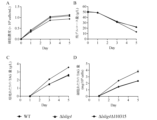
野生株(WT)及びΔlslig4株をコントロール株として、110315 欠失 (Δlslig4Δ110315) 株における TAG 生産との関連性を明らかにするために、これらの株を作製した。株の作製は、特許文献2に記載の方法を参照して行った。得られた株及びコントロール株それぞれを、200 mL バッフルフラスコに 75 mL スケールの S 培地 (0.5% (NH4)2SO4, 0.1% KH2PO4, 0.01% NaCl, 0.1% 酵母エキス, 0.05% MgSO4・7H2O, 0.01% CaCl2・2H2O, 5% Glucose)の培地30℃、160 rpm の条件で 5日間培養し、その表現型を解析した。

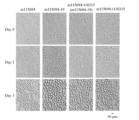
m115697 株をコントロール株として、m115697 株の110315 遺伝子への油脂高蓄積変異株 m115697-19 由来の変異導入(m115697/110315(m115697-19)) または m115697 株の 110315 遺伝子の欠失 (m115697Δ110315) における TAG 生産との関連性を明らかにするために、これらの株を作製した。株の作製は、特許文献2に記載の方法を参照して行った。得られた株及びコントロール株それぞれを、200 mL バッフルフラスコに 75 mL スケールの S 培地 (0.5% (NH4)2SO4, 0.1% KH2PO4, 0.01% NaCl, 0.1% 酵母エキス, 0.05% MgSO4・7H2O, 0.01% CaCl2・2H2O, 7% Glucose) を 30℃、160 rpm の条件で 3日間培養し、その表現型を解析した。

Claims (11)
- 酵母において、酵母110315遺伝子の発現及び/又は機能を調節することを含む、油脂産生能が調節された酵母の製造方法。
- 酵母110315遺伝子の発現及び/又は機能を低下させることを含み、油脂産生能が向上した酵母を製造する、請求項1に記載の製造方法。
- 酵母110315遺伝子の発現を低下させることを含み、油脂産生能が向上した酵母を製造する、請求項1又は2に記載の製造方法。
- 前記酵母が油脂酵母である、請求項1~3のいずれかに記載の製造方法。
- 前記酵母がLipomyces属酵母である、請求項1~4のいずれかに記載の製造方法。
- 酵母110315遺伝子の発現調節剤及び機能調節剤からなる群より選択される少なくとも1種を含む、油脂産生能が調節された酵母の製造用試薬。
- 酵母110315遺伝子の発現抑制剤及び機能抑制剤からなる群より選択される少なくとも1種を含み、油脂産生能が向上した酵母の製造に用いるための、請求項6に記載の製造用試薬。
- 酵母110315遺伝子の発現抑制剤を含み、油脂産生能が向上した酵母の製造に用いるための、請求項6又は7に記載の製造用試薬。
- 酵母110315遺伝子の発現が低下している状態である、油脂産生酵母。
- 請求項9に記載の油脂産生酵母を含有する、油脂産生用組成物。
- 請求項9に記載の油脂産生酵母の培養物及び請求項10に記載の油脂産生用組成物からなる群より選択される少なくとも1種から油脂を回収することを含む、油脂の製造方法。
Priority Applications (1)
| Application Number | Priority Date | Filing Date | Title |
|---|---|---|---|
| US18/839,920 US20250163439A1 (en) | 2022-02-21 | 2023-02-01 | Lipid production control factor for oleaginous yeast |
Applications Claiming Priority (2)
| Application Number | Priority Date | Filing Date | Title |
|---|---|---|---|
| JP2022024585A JP2023121315A (ja) | 2022-02-21 | 2022-02-21 | 油脂酵母の油脂生産制御因子 |
| JP2022-024585 | 2022-11-14 |
Publications (1)
| Publication Number | Publication Date |
|---|---|
| WO2023157641A1 true WO2023157641A1 (ja) | 2023-08-24 |
Family
ID=87578464
Family Applications (1)
| Application Number | Title | Priority Date | Filing Date |
|---|---|---|---|
| PCT/JP2023/003246 Ceased WO2023157641A1 (ja) | 2022-02-21 | 2023-02-01 | 油脂酵母の油脂生産制御因子 |
Country Status (3)
| Country | Link |
|---|---|
| US (1) | US20250163439A1 (ja) |
| JP (1) | JP2023121315A (ja) |
| WO (1) | WO2023157641A1 (ja) |
Citations (1)
| Publication number | Priority date | Publication date | Assignee | Title |
|---|---|---|---|---|
| WO2021171925A1 (ja) * | 2020-02-28 | 2021-09-02 | 学校法人 新潟科学技術学園 | 油脂酵母の油脂生産制御因子 |
-
2022
- 2022-02-21 JP JP2022024585A patent/JP2023121315A/ja active Pending
-
2023
- 2023-02-01 WO PCT/JP2023/003246 patent/WO2023157641A1/ja not_active Ceased
- 2023-02-01 US US18/839,920 patent/US20250163439A1/en active Pending
Patent Citations (1)
| Publication number | Priority date | Publication date | Assignee | Title |
|---|---|---|---|---|
| WO2021171925A1 (ja) * | 2020-02-28 | 2021-09-02 | 学校法人 新潟科学技術学園 | 油脂酵母の油脂生産制御因子 |
Non-Patent Citations (4)
| Title |
|---|
| SATO, RIKAKO; MORI, KAZUKI; ARA, SATOSHI; YAMAZAKI, HARUTAKE; SHIDA, YOSUKE; OGASAWARA, WATARU; YAOI, KATSURO; ARAKI, HIDEO; TASHI: "3B02-10 Identification of a novel gene involved in lipid production by comparative genome analysis of oleaginous yeast Lipomyces starkeyi starkeyi mutants", PROCEEDINGS OF THE 2022 ANNUAL MEETING OF JAPAN SOCIETY FOR BIOSCIENCE, BIOTECHNOLOGY, AND AGROCHEMISTRY (JSBBA 2022); MARCH 15-18, 2022, vol. 2022, 5 March 2022 (2022-03-05) - 18 March 2022 (2022-03-18), pages 543, XP009548686 * |
| TAKAKU HIROAKI, EBINA SAYAKA, KASUGA KOTOHA, SATO RIKAKO, ARA SATOSHI, KAZAMA HARUKA, MATSUZAWA TOMOHIKO, YAOI KATSURO, ARAKI HIDE: "Isolation and characterization of Lipomyces starkeyi mutants with greatly increased lipid productivity following UV irradiation", JOURNAL OF BIOSCIENCE AND BIOENGINEERING, ELSEVIER, AMSTERDAM, NL, vol. 131, no. 6, 1 June 2021 (2021-06-01), NL , pages 613 - 621, XP093085216, ISSN: 1389-1723, DOI: 10.1016/j.jbiosc.2021.01.006 * |
| TAKAKU HIROAKI, YAMAZAKI HARUTAKE: "Establishment of a New Genetic Transformation System and Its Application for Genetic Engineering on Lipid Production in the Oleaginous Yeast Lipomyces starkeyi", OREO-SAISENSU : JOURNAL OF JAPAN OIL CHEMISTS' SOCIETY, JAPAN OIL CHEMISTS' SOCIETY, JP, vol. 17, no. 3, 1 January 2017 (2017-01-01), JP , pages 107 - 116, XP093085214, ISSN: 1345-8949, DOI: 10.5650/oleoscience.17.107 * |
| TAKAKU HIROAKI; MIYAJIMA ATSUMI; KAZAMA HARUKA; SATO RIKAKO; ARA SATOSHI; MATSUZAWA TOMOHIKO; YAOI KATSURO; ARAKI HIDEO; SHIDA YOS: "A novel electroporation procedure for highly efficient transformation of Lipomyces starkeyi", JOURNAL OF MICROBIOLOGICAL METHODS, ELSEVIER, AMSTERDAM,, NL, vol. 169, 24 December 2019 (2019-12-24), NL , XP086003252, ISSN: 0167-7012, DOI: 10.1016/j.mimet.2019.105816 * |
Also Published As
| Publication number | Publication date |
|---|---|
| US20250163439A1 (en) | 2025-05-22 |
| JP2023121315A (ja) | 2023-08-31 |
Similar Documents
| Publication | Publication Date | Title |
|---|---|---|
| US20260125719A1 (en) | Lipid production control factor for oleaginous yeast | |
| US20200263186A1 (en) | Altered guide rnas for modulating cas9 activity and methods of use | |
| AU2015266785A1 (en) | Increasing lipid production and optimizing lipid composition | |
| US7820407B2 (en) | Schizochytrium fatty acid synthase (FAS) and products and methods related thereto | |
| EP3137616B1 (en) | Increasing cellular lipid production by increasingthe activity of diacylglycerol acyltransferase and decreasing the activity of triacylglycerol lipase | |
| Liu et al. | RNA interference in the oleaginous yeast Rhodosporidium toruloides | |
| US11332764B2 (en) | Microorganisms having increased lipid productivity | |
| CN102686737B (zh) | 使用硫酯酶变异体的含有脂肪酸的脂质的制造方法 | |
| Wang et al. | Identification of a putative patatin-like phospholipase domain-containing protein 3 (PNPLA3) ortholog involved in lipid metabolism in microalga Phaeodactylum tricornutum | |
| US11352602B2 (en) | Microalgae adapted for heterotrophic culture conditions | |
| AU2015266724A1 (en) | Increasing lipid production in oleaginous yeast | |
| CN102884189A (zh) | 硫酯酶以及使用其的脂肪酸或脂质的制造方法 | |
| US20140256927A1 (en) | Increasing the lipid content in microalgae by genetically manipulating a triacylglycerol (tag) lipase | |
| CN107406818A (zh) | 增强产油酵母中核心脂质的生产 | |
| US20250163439A1 (en) | Lipid production control factor for oleaginous yeast | |
| US11124798B2 (en) | Algal lipid productivity via genetic modification of a TPR domain containing protein | |
| CN104662154B (zh) | 使用硫酯酶变异体的脂质的制造方法 | |
| CN111433219A (zh) | 通过基因修饰信号传导蛋白提高藻类脂质生产力 | |
| CN106916798B (zh) | 莱茵衣藻溶血性磷脂酸酰基转移酶及其基因和用途 | |
| JP2026050014A (ja) | オメガ3脂肪酸を選択的に伸長させる油脂酵母とそれを用いたオメガ3脂肪酸の製造方法 | |
| WO2021252570A1 (en) | Novel type i-c crispr-cas system from clostridia | |
| WO2019203073A1 (ja) | 脂質の製造方法 | |
| Dey et al. | Enhancement of Lipid Productivity in Oleaginous Colletotrichum Fungus through |
Legal Events
| Date | Code | Title | Description |
|---|---|---|---|
| 121 | Ep: the epo has been informed by wipo that ep was designated in this application |
Ref document number: 23756168 Country of ref document: EP Kind code of ref document: A1 |
|
| WWE | Wipo information: entry into national phase |
Ref document number: 18839920 Country of ref document: US |
|
| NENP | Non-entry into the national phase |
Ref country code: DE |
|
| 122 | Ep: pct application non-entry in european phase |
Ref document number: 23756168 Country of ref document: EP Kind code of ref document: A1 |
|
| WWP | Wipo information: published in national office |
Ref document number: 18839920 Country of ref document: US |