WO2023157436A1 - Ghg排出量導出装置、ghg排出量導出方法及びプログラム - Google Patents
Ghg排出量導出装置、ghg排出量導出方法及びプログラム Download PDFInfo
- Publication number
- WO2023157436A1 WO2023157436A1 PCT/JP2022/045521 JP2022045521W WO2023157436A1 WO 2023157436 A1 WO2023157436 A1 WO 2023157436A1 JP 2022045521 W JP2022045521 W JP 2022045521W WO 2023157436 A1 WO2023157436 A1 WO 2023157436A1
- Authority
- WO
- WIPO (PCT)
- Prior art keywords
- activity
- emission
- emissions
- unit
- ghg
- Prior art date
- Legal status (The legal status is an assumption and is not a legal conclusion. Google has not performed a legal analysis and makes no representation as to the accuracy of the status listed.)
- Ceased
Links
Images




Classifications
-
- G—PHYSICS
- G06—COMPUTING OR CALCULATING; COUNTING
- G06Q—INFORMATION AND COMMUNICATION TECHNOLOGY [ICT] SPECIALLY ADAPTED FOR ADMINISTRATIVE, COMMERCIAL, FINANCIAL, MANAGERIAL OR SUPERVISORY PURPOSES; SYSTEMS OR METHODS SPECIALLY ADAPTED FOR ADMINISTRATIVE, COMMERCIAL, FINANCIAL, MANAGERIAL OR SUPERVISORY PURPOSES, NOT OTHERWISE PROVIDED FOR
- G06Q30/00—Commerce
- G06Q30/018—Certifying business or products
-
- G—PHYSICS
- G06—COMPUTING OR CALCULATING; COUNTING
- G06Q—INFORMATION AND COMMUNICATION TECHNOLOGY [ICT] SPECIALLY ADAPTED FOR ADMINISTRATIVE, COMMERCIAL, FINANCIAL, MANAGERIAL OR SUPERVISORY PURPOSES; SYSTEMS OR METHODS SPECIALLY ADAPTED FOR ADMINISTRATIVE, COMMERCIAL, FINANCIAL, MANAGERIAL OR SUPERVISORY PURPOSES, NOT OTHERWISE PROVIDED FOR
- G06Q10/00—Administration; Management
- G06Q10/06—Resources, workflows, human or project management; Enterprise or organisation planning; Enterprise or organisation modelling
-
- G—PHYSICS
- G06—COMPUTING OR CALCULATING; COUNTING
- G06Q—INFORMATION AND COMMUNICATION TECHNOLOGY [ICT] SPECIALLY ADAPTED FOR ADMINISTRATIVE, COMMERCIAL, FINANCIAL, MANAGERIAL OR SUPERVISORY PURPOSES; SYSTEMS OR METHODS SPECIALLY ADAPTED FOR ADMINISTRATIVE, COMMERCIAL, FINANCIAL, MANAGERIAL OR SUPERVISORY PURPOSES, NOT OTHERWISE PROVIDED FOR
- G06Q50/00—Information and communication technology [ICT] specially adapted for implementation of business processes of specific business sectors, e.g. utilities or tourism
- G06Q50/10—Services
-
- Y—GENERAL TAGGING OF NEW TECHNOLOGICAL DEVELOPMENTS; GENERAL TAGGING OF CROSS-SECTIONAL TECHNOLOGIES SPANNING OVER SEVERAL SECTIONS OF THE IPC; TECHNICAL SUBJECTS COVERED BY FORMER USPC CROSS-REFERENCE ART COLLECTIONS [XRACs] AND DIGESTS
- Y02—TECHNOLOGIES OR APPLICATIONS FOR MITIGATION OR ADAPTATION AGAINST CLIMATE CHANGE
- Y02P—CLIMATE CHANGE MITIGATION TECHNOLOGIES IN THE PRODUCTION OR PROCESSING OF GOODS
- Y02P90/00—Enabling technologies with a potential contribution to greenhouse gas [GHG] emissions mitigation
- Y02P90/80—Management or planning
- Y02P90/84—Greenhouse gas [GHG] management systems
Definitions
- the present invention relates to a GHG emission amount derivation device, a GHG emission amount derivation method, and a program.
- Patent Literature 1 discloses a carbon dioxide emissions calculation system that calculates carbon dioxide emissions for each electrical device.
- Patent Literature 1 JP 2013-25487 A
- a GHG emissions derivation device includes an acquisition unit that acquires first activity amount data indicating the activity content for which greenhouse gas (GHG) emissions are to be derived and the activity amount for each activity content. you can The GHG emission amount derivation device selects the first data corresponding to the type of the first activity data from among a plurality of emission rate formats indicating the emission rate for each activity content, which is predetermined for each type of activity data. A selector may be provided for selecting one emissions intensity format.
- the GHG emissions derivation device may include a determination unit that determines at least one emission factor for each activity indicated in the first activity data based on the first emission factor format.
- the GHG emission amount derivation device may include a derivation unit that derives a GHG emission amount for each activity amount for each activity content indicated in the first activity amount data, based on the at least one emission factor. .
- the type of the activity amount data may correspond to the type of application used to create the activity amount data.
- An application may be a program for operating an accounting system, business system, personnel system, or ERP system on a computer.
- the activity data may be data obtained by converting the application file into a CSV file.
- the type of activity data may further correspond to the type of activity subject.
- An activity entity may be an entity that conducts activities that directly or indirectly emit GHGs. Actors may be businesses wishing to derive GHG emissions associated with their activities.
- the activity content may include vendor information related to the vendor involved in the activity.
- the trader information may be information on business partners and electricity purchasers.
- the activity content may include point information related to the location involved in the activity.
- the location information may be store name, building name, and geographical area information.
- the GHG emissions derivation device presents activity details for which the determination unit cannot determine at least one emission factor based on the first emission factor format, among the activity details indicated by the first activity data.
- a presenter may be provided.
- the GHG emission amount derivation device may include a reception unit that receives from the user the emissions unit value for the presented activity content.
- the receiving unit receives from a user a designation of an emission factor database to be referenced to determine an emission factor for the presented activity content from among a plurality of emission factor databases indicating emission factor values for each activity content.
- the emissions unit values for the presented activity content may be accepted from the user from among the emissions unit values shown in the received emissions unit value database.
- the GHG emissions are not included in indirect emissions indicating GHG emissions indirectly emitted by the business by purchasing energy
- Other indirect emissions indicating GHG emissions emitted by the activities of the business may contain at least an amount.
- the emission factor format indicates at least one emission factor corresponding to at least one category according to the activity content of the other indirect emissions, if the activity content corresponds to the target of the other indirect emissions. you can
- the GHG emissions derivation device corresponds to activity details for which the determination unit cannot determine at least one emission intensity based on the first emission intensity format, among the activity details indicated by the first activity data. , extracting at least one set of at least one category and at least one emission intensity related to the other indirect emissions from another existing emission intensity format corresponding to the type of the first activity data. You may have a department.
- the GHG emission amount derivation device may further include a reception unit that receives from the user a set about the activity content that cannot be determined from among the at least one set.
- the GHG emissions are not included in indirect emissions indicating GHG emissions indirectly emitted by the business by purchasing energy
- Other indirect emissions indicating GHG emissions emitted by the activities of the business may contain at least an amount.
- the GHG emissions derivation device converts an existing emission intensity format corresponding to the type of new activity data to at least other indirect emissions corresponding to each activity content indicated in the new activity data.
- An extractor may be provided for extracting at least one set of one category and at least one emission factor.
- the GHG emission amount derivation device specifies, from among the at least one set, one set for each activity content indicated in the new activity amount data in accordance with a user's instruction, thereby creating a new A generator that generates a new emission intensity format for the activity data may be further included.
- the extraction unit uses, as training data, a combination of a type of activity data and activity details, and at least one category and at least one emission factor related to other indirect emissions, which are specified from an existing emission factor format.
- a predetermined number of sets in descending order of reliability may be extracted as the at least one set according to the learning model subjected to machine learning.
- an acquisition unit stores first activity amount data indicating the activity content for which greenhouse gas (GHG) emissions are to be derived and the amount of activity for each activity content.
- the selection unit selects from among a plurality of emission unit value formats indicating an emission unit value for each activity content predetermined for each type of activity data stored in the storage unit, Selecting a first emissions intensity format corresponding to the type of the first activity data may be included.
- the method for deriving GHG emissions includes a step of determining at least one emission factor for each activity indicated in the first activity data, based on the first emission factor format. good.
- the method for deriving GHG emissions, wherein the derivation unit derives GHG emissions for each activity amount for each activity content indicated in the first activity amount data, based on the at least one emission factor. Be prepared.
- a program according to one aspect of the present invention may cause a computer to function as a GHG emissions derivation device.
- FIG. 10 is a diagram showing an example of a user interface showing an input screen for an emissions intensity format
- FIG. 10 is a diagram showing the results of calculating GHG emissions after assigning activity data to an emissions intensity format
- FIG. 10 is a diagram illustrating an example of a user interface of an emissions intensity format
- Figure 5 shows a continuation of the user interface of the emissions intensity format of Figure 4
- FIG. 10 is a diagram showing an example of a user interface after loading activity data into the GHG emissions derivation device
- FIG. 10 is a diagram showing an example of a user interface in an emission factor format when the activity is electricity;
- FIG. 10 is a diagram showing an example of a user interface showing an input screen for an emissions intensity format
- FIG. 10 is a diagram showing the results of calculating GHG emissions after assigning activity data to an emissions intensity format
- FIG. 10 is a diagram illustrating an example of a user interface of an emissions intensity format
- Figure 5 shows a continuation of the user interface of the emissions intensity format of Figure 4
- FIG. 10 is a diagram showing an example of a user interface after loading activity amount data into the GHG emissions derivation device when activity content is electricity; It is a figure which shows an example of the GHG emission amount derivation apparatus by this embodiment. It is a figure which shows an example of each part which comprises a GHG emission amount derivation apparatus.
- 4 is a flow chart showing an example of a procedure for deriving a GHG emission amount by a GHG emission amount deriving device; 4 is a flow chart showing an example of a procedure for creating a new emission intensity format using a GHG emissions derivation device; It is a figure which shows an example of a hardware configuration.
- GHG emissions In recent years, not only companies' own greenhouse gas emissions (GHG emissions), but also supply chain emissions, which indicate the GHG emissions of all supply chains related to business activities, have been derived to understand the overall corporate activities. , has been attempted to manage.
- Supply chain emissions indicate GHG emissions (1,000 t-CO 2 ) generated in association with organizational activities in the entire series of processes, such as raw material procurement, manufacturing, distribution, sales, and disposal.
- Supply chain emissions consist of Scope 1, Scope 2 and Scope 3.
- Scope 1 indicates direct emissions, which indicate the amount of greenhouse gases emitted directly by the business itself.
- Scope 2 refers to indirect emissions of greenhouse gases that are indirectly emitted when businesses purchase energy such as electricity, heat, and steam from electric power companies and other companies and use the purchased energy. Indicate the amount (energy-derived indirect emissions).
- Scope 3 represents other indirect emissions that indicate greenhouse gas emissions from activities in a company's supply chain that are not included in Scope 1 and Scope 2. Scope 3 is further classified into 15 categories according to the content of activities.
- Category 1 indicates "purchased products and services”.
- Category 2 indicates “capital goods”.
- Category 3 indicates “fuel- and energy-related activities not included in Scope 1 and Scope 2”.
- Category 4 indicates “transportation, transportation (upstream)”.
- Category 5 indicates “waste from business activities”.
- Category 6 indicates “business trip”.
- Category 7 indicates “employer commuting”.
- Category 8 indicates “leased assets (upstream)”.
- Category 9 indicates “transportation and delivery (downstream)”.
- Category 10 indicates "processing of sold products”.
- Category 11 indicates “use of sold products”.
- Category 12 indicates “disposal of sold products”.
- Category 13 shows “leased assets (downstream)”.
- Category 14 indicates “Franchise”.
- Category 15 indicates “investment”.
- Scope 3 further includes “Other” which indicates indirect GHG emissions not included in the 15 categories. GHG emissions falling under “others” include, for example, GHG emissions related to the daily lives of employees or consumers.
- Supply chain emissions are the sum of scope 1, scope 2 and scope 3 emissions.
- the basic formula is activity amount x emissions intensity.
- a basic formula is derived for each of the 15 categories and summed together.
- the amount of activity in the basic formula is the amount related to the scale of the activity of the operator. For example, the amount of electricity used, the amount of freight transported, the amount of waste processed, and various transaction amounts are applicable.
- the amount of activity is collected from various in-house data, literature data, industry average data, product design values, and the like.
- Emissions intensity is the amount of CO2 emitted per amount of activity.
- Emissions unit values are basically selected from existing databases and used, but there is also a method of directly measuring emissions or a method of receiving emissions derivation results from business partners.
- the computer processing burden for deriving supply chain emissions is not small. This is because the process of deriving supply chain emissions by computer extracts individual activity details from a huge amount of various data of business operators, classifies each activity content into three types of scopes, and in the case of scope 3, further categories This is because it entails a series of processes of classifying emissions into categories and selecting an appropriate emission factor. In particular, there are a wide variety of emissions unit values, and the burden of processing for the computer to select appropriate emission unit values one by one is heavy.
- the present embodiment provides a GHG emission derivation device, a GHG emission derivation method, and a program that can reduce the processing burden of calculating supply chain emissions (hereinafter sometimes referred to as GHG emissions).
- the user records various data including activity contents and activity amount of the business operator, such as accounting system, business system, personnel system, ERP system, etc., to the CSV file 10.
- the CSV file 10 is an example of activity data.
- the activity amount data may be a file of a predetermined format other than a CSV file, as long as it is data that indicates the content of each item such as the activity content and activity amount of the business operator in a predetermined format.
- the GHG emissions derivation device reads the CSV file specified by the user and displays an input screen for generating the emission intensity format according to the CSV file.
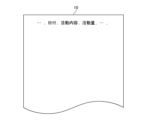
- FIG. 2 shows an example of a user interface 20 showing an input screen for generating an emission factor format.
- the user interface 20 includes at least activity content 21 , activity amount 22 , scope 23 , category 24 (only when applicable to scope 3), and emissions intensity 25 .
- the GHG emissions derivation device accepts input of information necessary for each item from the user.
- the OK button 26 at the bottom of the screen is pressed, the GHG emissions derivation device determines that the input has been completed.
- the activity content 21, the scope 23, the category 24, and the emission intensity 25 are associated with each other.
- This emissions intensity format 20 can be reused when a new CSV file is loaded into the GHG emissions calculator.
- the CSV file is read into the GHG emission derivation device, but this embodiment is not limited in this respect.
- data may be individually entered by a person into a GHG emissions derivation device.
- direct acquisition of data by a sensor or the like or direct acquisition of data from another system through API cooperation may be used.
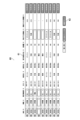
- FIG. 3 shows an example of a user interface 30 showing a result screen for calculating GHG emissions after applying the emissions intensity format to activity data.
- the GHG emissions derivation device multiplies the activity amount of each activity content by the emissions unit value of each activity content to calculate the GHG emission amount of each activity content. is calculated, and the user interface 30 is output.
- FIG. 4 is an example of a user interface 40 showing a creation screen for creating an emission intensity format in an application that embodies the GHG emissions derivation device.
- [Item name 1] and [Item name 2] shown in the area 41 of the creation screen 40 correspond to the data representing the activity content.
- column number "5" in the CSV file is specified for [item name 1]
- column number "4" in the CSV file is specified for [item name 2].
- [Amount of activity] shown in area 42 of user interface 40 corresponds to data representing the amount of activity.
- column number "6" in the CSV file is specified for [activity].
- one column of activity contents is included in one record for clarity.
- the number of columns representing activity content is not limited to one, and may be two or more.
- the number of columns representing activity contents may be, for example, three.
- FIG. 5 shows an example of a user interface 50 of an emission factor format creation screen displayed subsequent to the user interface 40 of the emission factor format creation screen of FIG.
- “Petroleum product (tCO 2 /kl)" is specified in [corresponding emission intensity 1] shown in area 51 of user interface 50 .
- [corresponding emissions intensity 2] is shown in area 54 of user interface 50. In this way, it is possible to specify multiple emissions unit values for one activity.
- the correspondence between the activity content and the emissions intensity can be stored using the [correspondence table between item names and emissions intensity] displayed in the area 43 of the creation screen 40 .
- the user interface 20 of the input screen for the emission factor format in FIG. 2 shows an example in which one scope, category, and emission factor are associated with one activity content.
- Scope 3 category 10 processing of sold products
- category 11 use of sold products
- category 12 dispenser of sold products
- three different emission factors may be associated with each other. This is because in Scope 3, there are cases where GHG emissions are calculated across multiple categories from the same activity.
- [target scope/category] shown in the area 52 of the user interface 50 "scope 3 and category 1" is specified.
- [Emission factor database] shown in the area 53 of the user interface 50 shows a database indicating the emission factor according to the content of the activity. More specifically, area 53 shows the emission factor database by the Ministry of the Environment and the emission factor database by IDEA.
- a custom emission factor database showing the custom emission factors that the user creates and manages.
- the user interface 40 and the user interface 50 which are emission factor format creation screens in FIGS. 4 and 5, are merely examples, and the items shown in FIGS. may
- FIG. 6 shows an example of the user interface 60 after the CSV files have been assigned to the emissions intensity format in FIGS. 4 and 5, and the CSV files have been loaded into the GHG emissions derivation device.
- the user interface 60 includes two data representing the contents of activities as [item name 1] and [item name 2], [item name 1] gasoline + [item name 2] supplier A, [item name 1 ] gasoline + [item name 2] client B.
- the GHG emission derivation device can distinguish the activity content for each business partner even if the same gasoline is used, and calculate the GHG emission of each.
- By including a plurality of columns representing activity details it is possible to set more detailed data representing activity details and calculate GHG emissions.
- An area 61 of the user interface 60 displays the display name when the CSV file is loaded into the GHG emissions derivation device.
- an item to be displayed as a display name is specified among those items.
- the same column number "5" as the column number specified in item name 1 is specified.
- FIG. 7 shows an example of a user interface 70 of an emission factor format creation screen, especially when the activity is electricity.
- [Supply point name 1] and [Supply point name 2] shown in the area 72 of the user interface 70 correspond to the data representing the contents of the activity.
- column number "2" in the CSV file is specified for [supply point name 1].
- three supply point names can be included for one supply point identification number (22-digit number). This is similar to the fact that the number of columns representing activity content is not limited to one, as described above with respect to FIG. For example, [supply point name 1] store A + [supply point name 2] Kanto area and [supply point name 1] store B + [supply point name 2] Kanto area. And the GHG emissions for each store B can be calculated.
- FIG. 8 shows an example of the user interface 80 after the CSV file has been assigned to the emissions intensity format via the user interface 70 shown in FIG. 7, and the CSV file has been read into the GHG emission calculation device.
- [Add Corresponding Point] in the area 81 of the user interface 80 is for adding supply point information.
- the user's business type should be entered as user information when registering as a user for the GHG emissions calculation device.
- the application type the CSV file creation source application may be specified in the GHG emissions derivation device.
- scopes, categories, and emission factors from already created emissions factor formats for example, by aggregating multiple emissions factor formats by multiple users, the same industry, the same application type, and the same activity content can be aggregated.
- the set of scope, category, and emissions intensity mappings that you have may be sorted and counted, and the top five sets, for example, may be presented in descending order of frequency. In this way, users can reuse existing emissions intensity formats to quickly load CSV files into GHG emissions calculators.
- the GHG emissions derivation device inputs the user's industry and activity details, and according to the learning model trained using teacher data in which the scope, category, and emissions intensity are output, the scope, category, and emissions to be presented Intensity may be specified.
- the learning model in this case is a classifier.
- the GHG emissions derivation device derives the reliability of a set of correspondences between multiple scopes, categories, and emissions intensity when industry and activity details are input to a trained learning model, and the reliability is high. For example, the top five sets may be presented in order from the top. In this way, even if the user does not create an emission factor format, the user only needs to select an appropriate set from the displayed sets of scopes, categories, and emission factors.
- FIG. 9 shows an example of a GHG emissions derivation device 100 according to this embodiment.
- GHG emissions derivation device 100 communicates with emissions intensity database 200 via network 150 .
- the GHG emission amount derivation device 100 multiplies the amount of activity by the emission unit value registered in the emission unit value database 200 to calculate the GHG emission amount.
- the emissions intensity database includes, for example, the emissions intensity database by the Ministry of the Environment, the emissions intensity database by IDEA, the Environmental Impact Intensity Data Book (3EID) by the Input-Output Table, the LCA database by the LCA Japan Forum, and the like.
- FIG. 10 shows an example of each part that constitutes the GHG emissions derivation device 100.
- FIG. GHG emissions derivation device 100 includes generation unit 102 , acquisition unit 104 , selection unit 106 , determination unit 108 , derivation unit 110 , storage unit 112 , presentation unit 114 , reception unit 116 and extraction unit 118 .
- the GHG emissions derivation device 100 may be a computer.
- the generation unit 102, the acquisition unit 104, the selection unit 106, the determination unit 108, the derivation unit 110, the presentation unit 114, the reception unit 116, and the extraction unit 118 may be implemented by a central processing unit.
- the storage unit 112 may be implemented with memory.
- the acquisition unit 104 acquires the first activity amount data indicating the activity content for which the GHG emission amount is derived and the activity amount for each activity content.
- the first activity amount data includes the activity content and the activity amount for each activity content.
- the activity amount data may be, for example, a file (for example, a CSV file) obtained by converting a file of an accounting system or the like into a format readable by the GHG emissions calculation device 100 .
- the activity content indicates the activity of the company directly or indirectly involved in GHG emissions.
- the activity content may be, for example, "employee's business trip". For example, if the method of derivation is to derive the amount of GHG emissions from business trips from the number of employees, the amount of activity may be, for example, "500 people (the number of employees)."
- the selection unit 106 selects the type of the first activity amount data from among a plurality of emission unit value formats indicating emission unit values for each activity content, which are predetermined for each type of activity amount data, stored in the storage unit 112 . Select the first emissions intensity format that corresponds to .
- the type of activity amount data corresponds to the type of application used to create the activity amount data. Also, the type of activity data corresponds to the type of activity subject.
- An active entity is an entity that conducts activities that directly or indirectly emit GHG, for example, a business that desires to derive the GHG emissions associated with its own activities.
- the type of activity amount data is specified by the user's business type and the type of application that created the activity amount data.
- An application may be a program for operating an accounting system, business system, personnel system, or ERP system on a computer.
- the type of the original application may be indicated in the activity amount data.
- the user's industry may also be indicated in the activity data.
- the storage unit 112 may store user identification information that identifies a user and industry information that indicates the industry of the user in association with each other.
- Activity data may include user identification information.
- the selection unit 106 may refer to the activity amount data to identify the type of the original application, and refer to the storage unit 112 to identify the type of business of the user corresponding to the user identification information.
- the storage unit 112 may store the application type used by the user in association with the user identification information.
- the selection unit 106 selects, from among a plurality of emission factor formats created in advance by a plurality of users, an emission factor format for which the user's business type and the application type that created the activity amount data are the same as the first emission factor format. Select as format.
- the determining unit 108 determines at least one emission factor for each activity indicated in the first activity data based on the first emission factor format.
- the primary emission factor format indicates emission factors associated with activities. When the activity content is "business trip by employee", the first emission factor format is "0.103 t-CO 2 / "Person/Year".
- the activity content includes vendor information about the vendors involved in the activity.
- the trader information is, for example, information such as business partners and electricity purchasers.
- the activity content includes point information about the location involved in the activity.
- the point information is, for example, information such as store name, building name, geographical area, and the like.
- GHG emissions are not included in indirect emissions, which indicate GHG emissions that are indirectly emitted through the purchase of energy by the business.
- supply chain emissions include scope 1 emissions, scope 2 emissions and scope 3 emissions.
- Scope 2 emissions are indirect emissions that indicate GHG emissions that are indirectly emitted by a company through its purchase of energy.
- Other indirect emissions that indicate GHG emissions from a company's activities are scope 3 emissions.
- the emissions unit value format indicates at least one emission factor corresponding to at least one category according to the other indirect emissions activity content. That is, if the activity is Scope 3, the emission intensity format indicates at least one emission intensity corresponding to at least one category according to the Scope 3 activity. Particularly in the case of Scope 3, there are cases where multiple categories and multiple emission factors are associated with one activity.
- the presentation unit 114 presents activity details for which the determination unit 108 cannot determine at least one emission unit value based on the first emission unit value format, among the activity details shown in the first activity amount data. From the selected first emission unit value format, the determining unit 108 may not be able to determine the emission unit value of the activity content indicated by the first activity data. This may occur when the activity details specified in the selected first emission intensity format for which the user's business type and application type are the same do not match the activity details of the first activity data.
- the determination unit 108 cannot determine the emission unit value.
- the activity specified in the selected first emission unit value format is "sale of gasoline" instead of "employee business trip”
- the determination unit 108 cannot determine the emission unit value.
- the user's business type and application type are the same and the activity content specified in the selected first emission factor format is the same as that of the first activity amount data, the activity amount unit is the same. Otherwise, the determining unit 108 cannot determine the emissions intensity. If the first emissions intensity format specifies that GHG emissions from business travel are derived from the number of employees, the activity data is the number of employees.
- the first emission factor format will include the travel expenses for business trips by employees. Emissions unit values must be associated with monetary amounts. However, the first emissions unit value format does not correspond to the emissions unit value for the travel expenses amount. In this case, the determining unit 108 cannot determine the emissions unit value for the employee's business trip.
- the reception unit 116 receives from the user the emissions unit value for the presented activity content.
- the user designates, for example, an emission unit of "0.00137 kg-CO 2 /yen" per business travel expense amount, which is the emission unit of a passenger railway, for the presented activity content, that is, a business trip by an employee.
- the presentation unit 114 when the presentation unit 114 presents activity details that cannot be determined based on the first emission intensity format, only one of the application type and the business type of the activity subject is the same, and the same activity details are specified. You may search for other emissions intensity formats provided. If other emission factor formats are found, the presentation unit 114 may present to the user the emission factors entered in the other emission factor formats along with the undeterminable activity. The user may select emission factors entered in other emission factor formats, if appropriate.
- the reception unit 116 allows the user to specify an emission factor database to be referenced to determine the emission factor for the presented activity content from among a plurality of emission factor databases indicating the emission factor for each activity.
- an emission factor database may be referenced to determine the emission factor for the presented activity content from among a plurality of emission factor databases indicating the emission factor for each activity.
- the user may select from among the displayed emission factor database by the Ministry of the Environment, the emission factor database by IDEA, the environmental load factor data book (3EID) by the input-output table, and the LCA database by the LCA Japan Forum. .
- users may specify their own emissions intensity database.
- the receiving unit 116 may receive from the user the emission unit values for the presented activity content, among the emission unit values indicated in the received emission unit value database.
- the extraction unit 118 extracts at least one category related to other indirect emissions corresponding to activity details indicated in the first activity data that the determination unit 108 cannot determine based on the first emission intensity format; At least one set of at least one emissions intensity is extracted from other existing emissions intensity formats corresponding to the first activity data type. If the determination unit 108 cannot determine the emission unit values based on the selected first emission unit value format, the extraction unit 118 selects the first emission unit value format in which the user's business type, application type, and activity content are the same. At least one set of at least one category and at least one emission factor is extracted from another existing emission factor format different from the presenting unit 114, and the extracted at least one set is presented to the user Present.
- the accepting unit 116 accepts from the user a set of activity details that cannot be determined from among at least one set. The user selects an appropriate set from the presented at least one category and at least one set of at least one emission factor to specify for the undeterminable activity.
- the extraction unit 118 arranges sets of associations of categories and emission factors for each identical set from among a plurality of other existing emission factor formats having the same business type, the same application type, and the same activity content. Alternatively, counting may be performed to extract specific upper sets in descending order of the number of cases, and the presentation unit 114 may display the extracted specific upper sets. For example, the presentation unit 114 may present the top five sets. Alternatively, the extracting unit 118 selects the corresponding categories and emissions unit values from among a plurality of other existing emission unit values formats having the same business type and the same activity content, or the same application type and the same activity content.
- the sets of attachments may be rearranged and counted for each identical set, the top five sets may be extracted in descending order of the number of items, and the presentation unit 114 may present the top five sets.
- the extracting unit 118 sorts and counts sets of associations between categories and emission factors from among a plurality of other existing emission factor formats having the same activity content for each identical set, and counts the number of cases.
- the top five sets may be extracted in descending order, and the presentation unit 114 may present the top five sets.
- the GHG emission amount derivation device determines the emission unit value from a pre-created emission unit value format and derives the GHG emission amount.
- a new emission factor format is generated when the user reads new activity data into the GHG emissions derivation device. It is assumed that the activity content in the activity amount data corresponds to any category of Scope 3.
- the acquisition unit 104 acquires new activity amount data indicating the activity content for which GHG emissions are derived and the activity amount for each activity content.
- the acquisition unit 104 may acquire the activity amount data corresponding to the file name designated by the user from the storage unit 112 .
- the acquisition unit 104 may acquire new activity amount data attached to e-mail or the like and transmitted from another device via the network 150 .
- the extracting unit 118 refers to the new activity amount data to identify the type of the application that created it, refers to the storage unit 112, and identifies the industry of the user corresponding to the user identification information. You may specify the classification of active mass data.
- the extraction unit 118 extracts at least one category related to other indirect emissions corresponding to each activity content indicated in the new activity amount data from the existing emission intensity format corresponding to the type of the new activity amount data and At least one set of at least one emission factor is extracted.
- the generation unit 102 specifies one set corresponding to each activity content indicated in the new activity amount data according to the user's instruction from at least one set, thereby creating a new activity amount data. Generate a new emissions intensity format for the data.
- the extracting unit 118 extracts at least one category and a After extracting at least one set of at least one emission factor, the presentation unit 114 presents the extracted at least one set to the user.
- the extraction unit 118 sorts and counts the sets of associations between the categories and the emissions intensity for each identical set, extracts sets up to a specific top in descending order of the number of cases, and the presentation unit 114 outputs the extracted specific You may present a set up to the top.
- the presentation unit 114 may present, for example, the top five sets. If at least one set of at least one category and at least one emission unit value with the same activity content cannot be extracted from the existing emission unit value formats with the same user industry, application type, and activity content, The extracting unit 118 extracts at least one set of at least one category and at least one emission factor having the same activity content from among a plurality of existing emission factor formats of the same business type and having different application types. can be extracted.
- the extraction unit 118 extracts at least one category and at least one emission factor having the same activity content from among a plurality of existing emission factor formats for which the user's industry is different and the application type is the same. One set may be extracted. If at least one set still cannot be extracted, the extraction unit 118 extracts at least one category and at least one emission factor having the same activity content from the existing emission factor formats for different user industries and application types. At least one set of units may be extracted. The user designates the appropriate set for the activity from among the presented at least one set.
- the reception unit 116 may accept designation of an appropriate category and emission factor set for the activity from the user. .
- the presentation unit 114 may further present to the user an emissions intensity database to be referenced to determine the emissions intensity for the activity content.
- the generation unit 102 generates a new emission intensity format for new activity amount data by specifying a set for the activity content according to the user's designation.
- the extracting unit 118 extracts at least one set of at least one category and at least one emission factor having a large number of cases with the same activity content from among a plurality of existing emission factor formats. An example was described. On the other hand, below, the extraction unit 118 extracts at least one set of at least one category and at least one emission intensity according to the activity content indicated in the activity amount data by a trained learning model. Aspects will be described.
- the extraction unit 118 extracts, as training data, a combination of the activity amount data type and activity content, and at least one category and at least one emission factor related to other indirect emissions, which are specified from the existing emissions factor format.
- a predetermined number of sets in descending order of reliability may be extracted as at least one set according to the machine-learned learning model.
- the learning model may be a deep learning model.
- the extraction unit 118 may derive the reliability using the output of the Softmax function.
- the generation unit 102 uses training data in which the user's industry and activity details are input, and the scope, category, and emission intensity are output, and at least the type and activity content of the activity amount data and other indirect emissions
- a learning model indicating the relationship between one category and at least one emission intensity may be trained according to a supervised learning algorithm to generate a trained learning model and store it in the storage unit 112 .
- the algorithm can be any type of algorithm such as neural network, support vector machine, multiple regression analysis, decision tree, and the like.
- the data input to the learning model may be individual input by a person or direct acquisition of data by a sensor or the like.
- the extracting unit 118 derives the reliability of the set of correspondences between scope, category, and emission intensity according to the trained learning model, and ranks the set with the highest reliability in descending order of the specific top level. You may extract sets up to .
- the extraction unit 118 may extract, for example, the top five sets.
- FIG. 11 is a flowchart showing an example of procedures for deriving GHG emissions by the GHG emission derivation device according to this embodiment.
- the acquisition unit 104 acquires the application type, the user's business type, and activity amount data.
- the acquisition unit 104 may refer to the activity amount data to acquire the type of the original application, and may refer to the storage unit 112 to acquire the type of business of the user corresponding to the user identification information.
- the selection unit 106 selects an emission factor format according to the application type and the user's business type from a plurality of existing emission factor formats that have been created in advance.
- the selection unit 106 selects, from a plurality of existing emission factor formats, an emission factor format for which the user's business type and application type are the same.
- the determination unit 108 determines at least one emission unit value for each activity content indicated in the activity amount data according to the selected emission unit value format.
- the determining unit 108 may determine one emission intensity for each of a plurality of categories corresponding to the activity content.
- the determination unit 108 determines whether there is any activity content for which at least one emission factor has not been determined.
- the reception unit 116 receives from the user at least one emissions unit value for activity details that have not been determined.
- the extracting unit 118 extracts the same set of associations between the category and the emission factor from among the emission factor formats for which the user's business type and application type are the same among the plurality of existing emission factor formats.
- the sets may be sorted and counted, a specific top set may be extracted in descending order of the number of cases, and the presentation unit 114 may present the extracted specific top set.
- the accepting unit 116 may accept at least one emissions unit value by accepting a set for an undetermined activity content from among the presented sets.
- the deriving unit 110 derives the GHG emission amount of each activity content according to the emission intensity of each activity content in the activity amount data.
- the optimal emission factor format for new activity data can be selected from among the existing emission factor formats, taking into account the user's industry and the type of application from which the activity data was created. Therefore, for new activity data, it is possible to reduce the labor of manually selecting appropriate emission unit values one by one and creating a new emission unit value format. In addition, it is possible to reduce the processing load of the GHG emission derivation device 100 when creating a new emission intensity format.
- FIG. 12 is a flow chart showing an example of a procedure for creating a new emission intensity format using the GHG emissions derivation device 100 according to this embodiment.
- the acquisition unit 104 acquires the application type, the user's business type, and activity amount data.
- the acquisition unit 104 may refer to the activity amount data to acquire the type of the original application, and may refer to the storage unit 112 to acquire the type of business of the user corresponding to the user identification information.
- the extraction unit 118 extracts an existing emission factor format corresponding to the type of application and the type of business of the user.
- the extraction unit 118 may extract an existing emission factor format for which the user's business type and application type are the same, from among a plurality of existing emission factor formats.
- the extraction unit 118 extracts at least one of at least one category and at least one emission factor of Scope 3 corresponding to each activity content indicated in the activity amount data from the extracted existing emission factor format. extract one set.
- the extraction unit 118 sorts and counts the sets of correspondences between Scope 3 categories and emission factors from the existing emission factor format for each identical set, and selects sets up to a specific top in descending order of the number of cases. can be extracted.
- the extraction unit 118 selects a predetermined number in descending order of reliability according to a trained learning model that indicates the relationship between the type and activity content of the activity amount data, and at least one category and at least one emissions intensity of Scope 3. may be extracted as at least one set.
- the generation unit 102 identifies one set from at least one set for each activity content according to the user's instruction.
- the presentation unit 114 may present at least one category of Scope 3 and at least one set of at least one emission intensity extracted by the extraction unit 118 for each activity content.
- the receiving unit 116 may receive one set from at least one set presented for each activity content as a user's instruction for each activity content.
- the generation unit 102 generates a new emission intensity format based on each set specified for each activity content.
- At least one category of Scope 3 and at least one emissions intensity for each activity should be selected according to the existing emissions intensity format.
- a set is presented. For new activity data, it is possible to reduce the trouble of manually selecting appropriate emission unit values one by one and creating a new emission unit value format.
- FIG. 13 illustrates an example computer 1300 in which aspects of the present invention may be embodied in whole or in part.
- Programs installed on the computer 1300 may cause the computer 1300 to act as one or more "parts" of or operations associated with apparatus according to embodiments of the present invention.
- the program may cause computer 1300 to perform the operation or the one or more "parts.”
- the program may cause the computer 1300 to perform a process or steps of the process according to embodiments of the invention.
- Such programs may be executed by CPU 1312 to cause computer 1300 to perform certain operations associated with some or all of the blocks in the flowcharts and block diagrams described herein.
- a computer 1300 includes a CPU 1312 and a RAM 1314 , which are interconnected by a host controller 1310 .
- Computer 1300 also includes a communication interface 1322 and an input/output unit, which are connected to host controller 1310 via input/output controller 1320 .
- Computer 1300 also includes ROM 1330 .
- the CPU 1312 operates according to programs stored in the ROM 1330 and RAM 1314, thereby controlling each unit.
- a communication interface 1322 communicates with other electronic devices via a network.
- a hard disk drive may store programs and data used by CPU 1312 in computer 1300 .
- ROM 1330 stores therein programs that are dependent on the hardware of computer 1300, such as a boot program that is executed by computer 1300 upon activation.
- the program is provided via a computer-readable recording medium such as a CD-ROM, USB memory or IC card or via a network.
- the program is installed in RAM 1314 or ROM 1330 , which are also examples of computer-readable recording media, and executed by CPU 1312 .
- the information processing described within these programs is read by computer 1300 to provide coordination between the programs and the various types of hardware resources described above.
- An apparatus or method may be configured by implementing information operations or processing in accordance with the use of computer 1300 .
- the CPU 1312 executes a communication program loaded in the RAM 1314 and sends communication processing to the communication interface 1322 based on the processing described in the communication program. you can command.
- the communication interface 1322 under the control of the CPU 1312, reads the transmission data stored in the transmission buffer area provided in the RAM 1314 or a recording medium such as a USB memory, transmits the read transmission data to the network, or Received data received from a network is written in a receive buffer area or the like provided on a recording medium.
- the CPU 1312 also causes the RAM 1314 to read all or a necessary portion of a file or database stored in an external storage medium such as a USB memory, and performs various types of processing on the data on the RAM 1314. good. CPU 1312 may then write back the processed data to an external recording medium.
- an external storage medium such as a USB memory
- CPU 1312 performs various types of operations on data read from RAM 1314, information processing, conditional decisions, conditional branching, unconditional branching, information retrieval, as described throughout this disclosure and specified by a program's instruction sequence. Various types of processing may be performed, including /replace, etc., and the results written back to RAM 1314 . Also, the CPU 1312 may search for information in a file in a recording medium, a database, or the like.
- the CPU 1312 determines that the attribute value of the first attribute is specified. search the plurality of entries for an entry that matches the condition, read the attribute value of the second attribute stored in the entry, and thereby associate it with the first attribute that satisfies the predetermined condition. an attribute value of the second attribute obtained.
- the programs or software modules described above may be stored in a computer-readable storage medium on or near computer 1300 .
- a recording medium such as a hard disk or RAM provided in a server system connected to a dedicated communication network or the Internet can be used as a computer-readable storage medium, whereby the program can be transferred to the computer 1300 via the network.
- a computer-readable medium may include any tangible device capable of storing instructions to be executed by a suitable device.
- a computer-readable medium having instructions stored thereon provides an article of manufacture that includes instructions that can be executed to create means for performing the operations specified in the flowchart or block diagram.
- Examples of computer-readable media may include electronic storage media, magnetic storage media, optical storage media, electromagnetic storage media, semiconductor storage media, and the like.
- Computer readable media include floppy disks, diskettes, hard disks, random access memory (RAM), read only memory (ROM), erasable programmable read only memory (EPROM or flash memory), electrically erasable programmable read only memory (EEPROM), static random access memory (SRAM), compact disc read only memory (CD-ROM), digital versatile disc (DVD), Blu-ray (RTM) disc, Memory sticks, integrated circuit cards, etc. may be included.
- RAM random access memory
- ROM read only memory
- EPROM or flash memory erasable programmable read only memory
- EEPROM electrically erasable programmable read only memory
- SRAM static random access memory
- CD-ROM compact disc read only memory
- DVD digital versatile disc
- RTM Blu-ray
- Computer readable instructions may include either source code or object code written in any combination of one or more programming languages.
- Source code or object code includes conventional procedural programming languages.
- Traditional procedural programming languages include assembler instructions, Instruction Set Architecture (ISA) instructions, machine instructions, machine dependent instructions, microcode, firmware instructions, state setting data, or Smalltalk, JAVA, C++. etc., and the "C" programming language or similar programming languages.
- Computer readable instructions may be transferred to a processor or programmable circuitry of a general purpose computer, special purpose computer, or other programmable data processing apparatus, either locally or over a wide area network (WAN), such as a local area network (LAN), the Internet, or the like.
- WAN wide area network
- LAN local area network
- the Internet or the like.
- processors may be provided via A processor or programmable circuit may execute computer readable instructions to produce means for performing the operations specified in the flowcharts or block diagrams.
- processors include computer processors, processing units, microprocessors, digital signal processors, controllers, microcontrollers, and the like.
- GHG emission derivation device 200 emission intensity database 102 generation unit 104 acquisition unit 106 selection unit 108 determination unit 110 derivation unit 112 storage unit 114 presentation unit 116 reception unit 118 extraction unit 1300 computer 1310 host controller 1312 CPU 1314 RAM 1320 Input/Output Controller 1322 Communication Interface 1330 ROM
Landscapes
- Business, Economics & Management (AREA)
- Engineering & Computer Science (AREA)
- Economics (AREA)
- Strategic Management (AREA)
- General Business, Economics & Management (AREA)
- Marketing (AREA)
- Physics & Mathematics (AREA)
- General Physics & Mathematics (AREA)
- Entrepreneurship & Innovation (AREA)
- Theoretical Computer Science (AREA)
- Development Economics (AREA)
- Human Resources & Organizations (AREA)
- Tourism & Hospitality (AREA)
- Finance (AREA)
- Accounting & Taxation (AREA)
- Health & Medical Sciences (AREA)
- General Health & Medical Sciences (AREA)
- Primary Health Care (AREA)
- Educational Administration (AREA)
- Game Theory and Decision Science (AREA)
- Operations Research (AREA)
- Quality & Reliability (AREA)
- Management, Administration, Business Operations System, And Electronic Commerce (AREA)
Priority Applications (1)
| Application Number | Priority Date | Filing Date | Title |
|---|---|---|---|
| US18/805,609 US20250014050A1 (en) | 2022-02-18 | 2024-08-15 | Ghg emission amount derivation apparatus, ghg emission amount derivation method, and non-transitory computer-readable medium |
Applications Claiming Priority (2)
| Application Number | Priority Date | Filing Date | Title |
|---|---|---|---|
| JP2022024220A JP7132580B1 (ja) | 2022-02-18 | 2022-02-18 | Ghg排出量導出装置、ghg排出量導出方法及びプログラム |
| JP2022-024220 | 2022-02-18 |
Related Child Applications (1)
| Application Number | Title | Priority Date | Filing Date |
|---|---|---|---|
| US18/805,609 Continuation US20250014050A1 (en) | 2022-02-18 | 2024-08-15 | Ghg emission amount derivation apparatus, ghg emission amount derivation method, and non-transitory computer-readable medium |
Publications (1)
| Publication Number | Publication Date |
|---|---|
| WO2023157436A1 true WO2023157436A1 (ja) | 2023-08-24 |
Family
ID=83191726
Family Applications (1)
| Application Number | Title | Priority Date | Filing Date |
|---|---|---|---|
| PCT/JP2022/045521 Ceased WO2023157436A1 (ja) | 2022-02-18 | 2022-12-09 | Ghg排出量導出装置、ghg排出量導出方法及びプログラム |
Country Status (3)
| Country | Link |
|---|---|
| US (1) | US20250014050A1 (https=) |
| JP (2) | JP7132580B1 (https=) |
| WO (1) | WO2023157436A1 (https=) |
Cited By (2)
| Publication number | Priority date | Publication date | Assignee | Title |
|---|---|---|---|---|
| JP2025037223A (ja) * | 2023-09-05 | 2025-03-17 | 株式会社ゼロボード | 情報処理システム、情報処理方法及びプログラム |
| JP2025104113A (ja) * | 2023-12-27 | 2025-07-09 | アスエネ株式会社 | 温室効果ガス排出量管理方法 |
Families Citing this family (16)
| Publication number | Priority date | Publication date | Assignee | Title |
|---|---|---|---|---|
| JP7279905B1 (ja) | 2022-11-17 | 2023-05-23 | booost technologies株式会社 | Ghg排出量導出装置、ghg排出量導出方法およびプログラム |
| JP7515838B1 (ja) | 2023-01-31 | 2024-07-16 | 株式会社ホリケン | 温室効果ガス(co2等)排出量およびエネルギーデータ算出システム |
| JP2024146591A (ja) * | 2023-03-31 | 2024-10-15 | アスエネ株式会社 | 温室効果ガス排出量管理方法 |
| JP2024146597A (ja) * | 2023-03-31 | 2024-10-15 | アスエネ株式会社 | 温室効果ガス排出量管理方法 |
| JP2024146547A (ja) * | 2023-03-31 | 2024-10-15 | アスエネ株式会社 | 温室効果ガス排出量管理方法 |
| JP2024146598A (ja) * | 2023-03-31 | 2024-10-15 | アスエネ株式会社 | 温室効果ガス排出量管理方法 |
| JP7553994B1 (ja) | 2023-05-25 | 2024-09-19 | 株式会社ゼロボード | 情報処理システム、情報処理方法及びプログラム |
| JP2024171750A (ja) | 2023-05-30 | 2024-12-12 | 株式会社ゼロボード | 情報処理システム、情報処理方法及びプログラム |
| JP7805551B2 (ja) * | 2023-09-15 | 2026-01-26 | アスエネ株式会社 | 温室効果ガス排出量管理方法 |
| JP7620347B1 (ja) | 2023-10-31 | 2025-01-23 | 株式会社ゼロボード | 情報処理システム、情報処理方法及びプログラム |
| JP2025088414A (ja) * | 2023-11-30 | 2025-06-11 | 株式会社ゼロボード | 情報処理システム、情報処理方法及びプログラム |
| JP7712700B2 (ja) * | 2023-11-30 | 2025-07-24 | 株式会社ゼロボード | 情報処理システム、情報処理方法及びプログラム |
| JP7698359B1 (ja) | 2023-12-07 | 2025-06-25 | 株式会社ゼロボード | 情報処理システム、情報処理方法及びプログラム |
| JP2025104090A (ja) * | 2023-12-27 | 2025-07-09 | アスエネ株式会社 | 温室効果ガス排出量管理方法 |
| JP7628652B1 (ja) | 2024-10-01 | 2025-02-10 | 株式会社エスプールブルードットグリーン | 情報処理装置及び情報処理方法 |
| KR102845730B1 (ko) * | 2024-11-14 | 2025-08-14 | 대구가톨릭대학교산학협력단 | 환경유해인자의 발생에 따른 인체 위해성 평가시스템 |
Citations (5)
| Publication number | Priority date | Publication date | Assignee | Title |
|---|---|---|---|---|
| JP2004152091A (ja) * | 2002-10-31 | 2004-05-27 | Hitachi Ltd | 排出量認証申請支援装置および排出量認証申請支援プログラムならびに排出量認証申請支援方法 |
| JP2007164753A (ja) * | 2005-11-17 | 2007-06-28 | Nec Corp | 温暖化対策支援システム、温暖化対策支援方法及びプログラム |
| JP2008108204A (ja) * | 2006-10-27 | 2008-05-08 | Toshiba Corp | 環境負荷評価システム、方法及びプログラム |
| US20110178938A1 (en) * | 2011-03-28 | 2011-07-21 | Climate Earth, Inc. | System and method for assessing environmental footprint |
| JP2016126372A (ja) * | 2014-12-26 | 2016-07-11 | 日本電信電話株式会社 | 算定装置、算定方法および算定プログラム |
Family Cites Families (7)
| Publication number | Priority date | Publication date | Assignee | Title |
|---|---|---|---|---|
| US20070192221A1 (en) * | 2006-02-10 | 2007-08-16 | Richard Sandor | Present valuation of emission credit and allowance futures |
| JP6219778B2 (ja) * | 2014-05-14 | 2017-10-25 | 日本電信電話株式会社 | Co2排出削減量評価システム、方法、およびプログラム |
| US11398000B2 (en) * | 2019-05-20 | 2022-07-26 | Singularity Energy, Inc. | Methods and systems for machine-learning for prediction of grid carbon emissions |
| WO2022232162A2 (en) * | 2021-04-27 | 2022-11-03 | Patrick Gruber | Systems and methods for automatic carbon intensity calculation and tracking |
| JP7845995B2 (ja) * | 2022-12-05 | 2026-04-14 | 株式会社日立製作所 | 活動量計算装置、活動量計算装置を備えるシステム、および、活動量計算方法 |
| CN116957296A (zh) * | 2023-08-24 | 2023-10-27 | 江苏徐工工程机械研究院有限公司 | 碳排放配额的分配方法、装置及计算机可读存储介质 |
| US20250265602A1 (en) * | 2024-02-15 | 2025-08-21 | Muir AI Inc. | Methods and systems for generating upstream cradle-to-gate product carbon footprints |
-
2022
- 2022-02-18 JP JP2022024220A patent/JP7132580B1/ja active Active
- 2022-08-18 JP JP2022130384A patent/JP7840014B2/ja active Active
- 2022-12-09 WO PCT/JP2022/045521 patent/WO2023157436A1/ja not_active Ceased
-
2024
- 2024-08-15 US US18/805,609 patent/US20250014050A1/en active Pending
Patent Citations (5)
| Publication number | Priority date | Publication date | Assignee | Title |
|---|---|---|---|---|
| JP2004152091A (ja) * | 2002-10-31 | 2004-05-27 | Hitachi Ltd | 排出量認証申請支援装置および排出量認証申請支援プログラムならびに排出量認証申請支援方法 |
| JP2007164753A (ja) * | 2005-11-17 | 2007-06-28 | Nec Corp | 温暖化対策支援システム、温暖化対策支援方法及びプログラム |
| JP2008108204A (ja) * | 2006-10-27 | 2008-05-08 | Toshiba Corp | 環境負荷評価システム、方法及びプログラム |
| US20110178938A1 (en) * | 2011-03-28 | 2011-07-21 | Climate Earth, Inc. | System and method for assessing environmental footprint |
| JP2016126372A (ja) * | 2014-12-26 | 2016-07-11 | 日本電信電話株式会社 | 算定装置、算定方法および算定プログラム |
Cited By (4)
| Publication number | Priority date | Publication date | Assignee | Title |
|---|---|---|---|---|
| JP2025037223A (ja) * | 2023-09-05 | 2025-03-17 | 株式会社ゼロボード | 情報処理システム、情報処理方法及びプログラム |
| JP7668588B2 (ja) | 2023-09-05 | 2025-04-25 | 株式会社ゼロボード | 情報処理システム、情報処理方法及びプログラム |
| JP2025104113A (ja) * | 2023-12-27 | 2025-07-09 | アスエネ株式会社 | 温室効果ガス排出量管理方法 |
| JP7761283B2 (ja) | 2023-12-27 | 2025-10-28 | アスエネ株式会社 | 温室効果ガス排出量管理方法 |
Also Published As
| Publication number | Publication date |
|---|---|
| JP7840014B2 (ja) | 2026-04-03 |
| US20250014050A1 (en) | 2025-01-09 |
| JP7132580B1 (ja) | 2022-09-07 |
| JP2023121025A (ja) | 2023-08-30 |
| JP2023121111A (ja) | 2023-08-30 |
Similar Documents
| Publication | Publication Date | Title |
|---|---|---|
| JP7132580B1 (ja) | Ghg排出量導出装置、ghg排出量導出方法及びプログラム | |
| JP7178064B1 (ja) | 導出装置、導出方法及びプログラム | |
| Suratno et al. | Development of user interface/user experience using design thinking approach for GMS service company | |
| JP7748673B2 (ja) | 脱炭素社会の構築に向けた導出装置、導出方法、及びプログラム | |
| JP7114038B1 (ja) | Ghg排出量導出装置、ghg排出量導出方法、及びプログラム | |
| US11521145B2 (en) | System and a method for life of mine planning and cost control | |
| JP7809887B2 (ja) | 温室効果ガス排出量管理方法 | |
| US20180322585A1 (en) | Management support device and management support method | |
| JP2024044063A (ja) | 収支管理装置、収支管理方法、及び収支管理プログラム | |
| Balashova et al. | Accounting of logistics costs and their impact on pricing | |
| JP7642515B2 (ja) | 流通小売管理装置、流通小売管理方法、および、流通小売管理プログラム | |
| Sapozhnikova et al. | Environmental Factor of Sustainable Development of a Corporation | |
| JP7785370B2 (ja) | 温室効果ガス排出量管理方法 | |
| JP7642514B2 (ja) | 流通小売管理装置、流通小売管理方法、および、流通小売管理プログラム | |
| JP7785371B2 (ja) | 温室効果ガス排出量管理方法 | |
| Rząd et al. | Investigating Purchase-to-Pay process using Process Mining in a multinational corporation | |
| JP5123879B2 (ja) | 原価改善活動支援システム | |
| JP7522778B2 (ja) | 原価管理装置、原価管理方法、および、原価管理プログラム | |
| JP2020166514A (ja) | 計算装置、計算方法及び計算処理プログラム | |
| JP7761280B2 (ja) | 温室効果ガス排出量管理方法 | |
| JP7697797B2 (ja) | 経費管理システム、経費管理方法、及び経費管理プログラム | |
| Brela et al. | Determining User Requirements for a Tailored Web-Based Inventory and Sales Management System in Micro-Small Construction Supply Stores using Design Thinking | |
| Calixto | Predictive Analysis for Sales: A B2B Case | |
| JP2025162417A (ja) | 温室効果ガス排出量管理方法 | |
| JP2025151254A (ja) | 温室効果ガス排出量管理方法 |
Legal Events
| Date | Code | Title | Description |
|---|---|---|---|
| 121 | Ep: the epo has been informed by wipo that ep was designated in this application |
Ref document number: 22927322 Country of ref document: EP Kind code of ref document: A1 |
|
| NENP | Non-entry into the national phase |
Ref country code: DE |
|
| 122 | Ep: pct application non-entry in european phase |
Ref document number: 22927322 Country of ref document: EP Kind code of ref document: A1 |