WO2023153232A1 - 情報処理装置、情報処理方法およびプログラム - Google Patents
情報処理装置、情報処理方法およびプログラム Download PDFInfo
- Publication number
- WO2023153232A1 WO2023153232A1 PCT/JP2023/002540 JP2023002540W WO2023153232A1 WO 2023153232 A1 WO2023153232 A1 WO 2023153232A1 JP 2023002540 W JP2023002540 W JP 2023002540W WO 2023153232 A1 WO2023153232 A1 WO 2023153232A1
- Authority
- WO
- WIPO (PCT)
- Prior art keywords
- information processing
- flexibility
- contact
- control unit
- vibration waveform
- Prior art date
- Legal status (The legal status is an assumption and is not a legal conclusion. Google has not performed a legal analysis and makes no representation as to the accuracy of the status listed.)
- Ceased
Links
Images






Classifications
-
- G—PHYSICS
- G06—COMPUTING OR CALCULATING; COUNTING
- G06F—ELECTRIC DIGITAL DATA PROCESSING
- G06F3/00—Input arrangements for transferring data to be processed into a form capable of being handled by the computer; Output arrangements for transferring data from processing unit to output unit, e.g. interface arrangements
- G06F3/01—Input arrangements or combined input and output arrangements for interaction between user and computer
- G06F3/011—Arrangements for interaction with the human body, e.g. for user immersion in virtual reality
-
- G—PHYSICS
- G06—COMPUTING OR CALCULATING; COUNTING
- G06F—ELECTRIC DIGITAL DATA PROCESSING
- G06F3/00—Input arrangements for transferring data to be processed into a form capable of being handled by the computer; Output arrangements for transferring data from processing unit to output unit, e.g. interface arrangements
- G06F3/01—Input arrangements or combined input and output arrangements for interaction between user and computer
-
- G—PHYSICS
- G06—COMPUTING OR CALCULATING; COUNTING
- G06F—ELECTRIC DIGITAL DATA PROCESSING
- G06F3/00—Input arrangements for transferring data to be processed into a form capable of being handled by the computer; Output arrangements for transferring data from processing unit to output unit, e.g. interface arrangements
- G06F3/01—Input arrangements or combined input and output arrangements for interaction between user and computer
- G06F3/016—Input arrangements with force or tactile feedback as computer generated output to the user
Definitions
- the present invention relates to an information processing device, an information processing method, and a program.
- haptic technology A technology that artificially reproduces human skin sensation (tactile sensation) through mechanical stimulation such as vibration is known. This kind of technology is called haptic technology. Since haptics technology can realistically reproduce the movement and texture of objects, it is expected to be applied to XR (Extended Reality).
- tactile feedback is provided based on physics simulation.
- tactile feedback methods based on physical simulations, and the fact is that methods for expressing the flexibility of objects in particular have hardly been studied.
- the presentation time of the tactile sense stimulus is set to the same time as the contact time in the displayed image, but considering the flexibility of the object, it may not always be appropriate to match the two.
- the present disclosure proposes an information processing device, an information processing method, and a program capable of performing appropriate tactile feedback considering the flexibility of an object.
- an information processing device includes a control unit that controls a presentation period of haptic feedback presented in response to collision of an object based on the flexibility of the object. Further, according to the present disclosure, there are provided an information processing method in which the information processing of the information processing device is executed by a computer, and a program for causing the computer to implement the information processing of the information processing device.
- FIG. 1 is a diagram illustrating an outline of an information processing system 1 using a haptic device 30. As shown in FIG. 1
- the information processing system 1 has an information processing device 10 , a display device 20 , a haptic device 30 and a sensor device 40 .
- the display device 20 provides the user U with video and audio.
- a known wearable display such as a head-mounted display or AR (Augmented Reality) glasses is used.
- the haptic device 30 presents the user U with tactile stimulation.
- Known methods such as piezoelectric, electrostatic, and pneumatic methods are used as methods for presenting tactile stimulation.
- FIG. 1 shows a glove-type haptic device 30 with pneumatic balloons at the palms and fingers. Tactile stimulation is applied by varying the air pressure within the balloon.
- the sensor device 40 includes various sensors for detecting self-location information. This type of sensor includes a camera, a gyro sensor, and the like. The sensor device 40 is built in the display device 20, for example.
- the information processing apparatus 10 extracts information (self-location information) on the position and orientation of the user U from sensor data using a known self-location estimation technique such as SLAM (Simultaneous Localization and Mapping).
- SLAM Simultaneous Localization and Mapping
- the information processing device 10 performs various processes for interacting with the object OB.
- the object OB may be a real object that actually exists or a virtual object presented on the display device 20 .
- FIG. 1 shows a virtual ball generated by CG (Computer Graphics) as an example of the object OB.
- the user U feels the object OB through the haptic device 30 .
- the information processing apparatus 10 exchanges information with the display device 20, the haptic device 30, and the sensor device 40 via wireless communication.
- FIG. 2 is a diagram showing an example of the configuration of the information processing device 10. As shown in FIG.
- the information processing device 10 has a control unit 11 , an operation input unit 12 , a display unit 13 , a storage unit 14 and a communication unit 15 .
- the control unit 11 functions as an arithmetic processing device and a control device.
- the control unit 11 controls overall operations in the information processing apparatus 10 according to various programs.
- the control section 11 has an output signal processing section 16 and an output control section 17 .
- the output signal processing unit 16 generates output signals (video signals, audio signals, and tactile signals) for the haptic device 30 and the display device 20 based on the content acquired from the content server (not shown) and the storage unit 14 .
- the tactile signal is a drive signal for an actuator for varying the air pressure of a balloon placed at the palm or finger position.
- the output control unit 17 outputs the generated output signal to the haptic device 30 and the display device 20 via the communication unit 15 at appropriate timing.
- the haptic device 30 provides tactile stimulation to the hand HN of the user U based on the tactile signal.
- tactile feedback tactile feedback
- the display device 20 displays an image based on the image signal.
- visual feedback visual feedback regarding the position and movement of the object OB is provided.
- the communication unit 15 communicates with the haptic device 30 and the display device 20 under the control of the output control unit 17.
- the communication unit 15 is, for example, a wired/wireless LAN (Local Area Network), Wi-Fi (registered trademark), Bluetooth (registered trademark), short-range wireless communication, and a mobile communication network (LTE (Long Term Evolution) or 5G (5th generation mobile communication system)), etc., to communicate with other devices.
- the operation input unit 12 receives an operation instruction from the user U and outputs the operation content to the control unit 11 .
- Known input devices such as a touch sensor, a pressure sensor, and a proximity sensor are used as the operation input unit 12 .
- the operation input unit 220 may be a physical configuration such as a keyboard, mouse, buttons, switches, and levers.
- the display unit 13 displays various information such as application screens and menu screens.
- a known display device such as an LCD (Liquid Crystal Display) or an OLED (Organic Light Emitting Diode) is used.
- the storage unit 14 stores programs, calculation parameters, and the like used in the processing of the control unit 11 .
- the storage unit 14 can temporarily store content acquired from a content server or the like.
- the control unit 11 controls the presentation period FH (tactile presentation period) of the haptic feedback presented in response to the collision of the object OB based on the weight, flexibility and collision speed of the object OB.
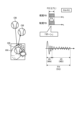
- FIGS. 3 and 4 show examples of a hard ball (low flexibility object) colliding with the hand HN.
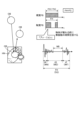
- 5 to 8 show examples of a soft ball (soft object) colliding with the hand HN.
- an object the hand HN in the example of FIG. 1 that is a collision target of the object OB will be referred to as a collided object.
- the collision speed is calculated as the relative speed between the object OB and the colliding object.
- the weight is appropriately set according to the type and material of the object OB.
- the weight of the object OB may change according to the progress of the game, the attribute information of the user of the object OB, and the like. For example, if the character throwing the ball is a large person, the ball will be heavy, and the weight can be represented by the magnitude of elastic deformation, deformation time, or vibration intensity or vibration duration. Also, if the number of revolutions of the ball is high, it is possible to set the ball to be lighter.
- Flexibility is determined based on preset flexibility criteria.
- Information about flexible criteria is stored in the storage unit 14 .
- the flexibility criterion is determined for each type of object OB. For example, when the object OB is an elastic body such as a ball, if the elastic modulus is equal to or less than a preset reference value, it is determined that the flexibility criterion is satisfied.
- An object OB that satisfies the flexibility criteria is hereinafter referred to as a flexible object.
- a (hard) object OB whose elastic modulus is greater than the reference value and does not satisfy the flexibility criterion is called a low-flexibility object.
- the control unit 11 changes the vibration waveform of the tactile stimulation according to the flexibility of the object OB. For example, when the object OB is a flexible object (see FIGS. 5 to 8), the control unit 11 sets the vibration waveforms of the tactile stimulation as the vibration waveforms of the contact ON vibration waveform WN, the continuous contact vibration waveform WD, and the contact OFF vibration waveform WN. A tactile signal SG including a temporal vibration waveform WF is generated. When the object OB is a low-flexibility object (see FIGS. 3 and 4), the control unit 11 selectively selects the contact ON vibration waveform WN and the continuous contact vibration waveform WD as the vibration waveform of the tactile stimulation. generates a haptic signal SG containing:
- the amplitude and frequency of vibration are calculated based on the weight, flexibility and impact speed of the object OB.
- the waveform calculation processing may be performed at the time of collision, or may be performed prior to the collision by predicting the collision from the trajectory of the object OB.
- the contact ON vibration waveform WN is a vibration waveform corresponding to the instant tN when contact is made with the object OB.
- the continuous contact vibration waveform WD is a vibration waveform corresponding to the contact continuation period tD with the object OB.
- the contact OFF vibration waveform WF is a vibration waveform corresponding to the moment tF when the object OB leaves.
- the contact ON vibration waveform WN is generated as a vibration waveform whose amplitude momentarily becomes larger than the continuous contact vibration waveform WD at the timing of the collision of the object OB.
- the contact OFF vibration waveform WF is generated as a vibration waveform whose amplitude momentarily becomes larger than the continuous contact vibration waveform WD at the timing of rebound of the object OB.
- Amplitude at collision and amplitude at rebound are determined based on the weight, flexibility and collision speed of the object OB.
- the amplitude at the time of collision and the amplitude at the time of rebound are sufficiently larger than the continuous contact vibration waveform WD.
- the amplitude at the time of collision and the amplitude at the time of rebound are set to be two or more times the average value of the amplitude of the continuous contact vibration waveform WD. This gives a clear perception of when the flexible object hits and bounces.
- the touch-off vibration waveform WF is not included in the haptic signal SG. This is because a low-flexibility object that is difficult to deform does not generate a large repulsion due to elastic restoring force.
- the user U recognizes the contact between the hand HN and the object OB from the image on the display device 20 .
- the user obtains contact with the object OB presented as an image as visual feedback.
- the control unit 11 uses physical simulation to calculate the contact time between the hand HN and the object OB.
- the control unit 11 determines the calculated contact time as the visual feedback presentation period FC regarding contact with the object OB.
- the control unit 11 calculates the visual feedback presentation period FC based on the weight, flexibility, and collision speed of the low-flexibility object.
- the control unit 11 adjusts the size of the haptic feedback presentation period FH according to the size of the visual feedback presentation period FC.
- the object OB in FIG. 3 is very hard, and the contact time (visual feedback presentation period FC) in contact with the hand HN is also very short.
- the object OB in FIG. 4 is softer than the object OB in FIG. 3, so the visual feedback presentation period FC is also longer than in the example of FIG.
- the control unit 11 compares the visual feedback presentation period FC with a preset threshold value TL, and adjusts the haptic feedback presentation period FH based on the comparison result.
- the visual feedback presentation period FC is smaller than the preset threshold TL.
- the control unit 11 matches the presentation period FH of the haptic feedback with the threshold TL.
- the visual feedback presentation period FC is equal to or greater than the threshold TL.
- the control unit 11 matches the haptic feedback presentation period FH with the visual feedback presentation period FC.
- the magnitude of the threshold TL is set based on the limit of human perceptual ability to perceive the collision of the object OB.
- the magnitude of the threshold TL may be set based on a sensory test or the like. Since a low-flexibility object undergoes little deformation upon impact, the contact time with the hand HN is short. With a very hard object OB, the contact time is very short, and if the haptic feedback presentation period FH is set according to the contact time, the tactile stimulus may become imperceptibly small. However, in the configuration of the present disclosure, the haptic feedback presentation period FH is not set to a short period that cannot be perceived by humans. Therefore, the collision of the object OB is reliably perceived by the user U.
- the control unit 11 matches the tactile feedback presentation period FH and the visual feedback presentation period FC (contact time between the hand HN and the object OB).
- the control unit 11 converts the haptic signal SG into a signal including the vibration waveform WN at contact ON, the vibration waveform WD at continuous contact, and the vibration waveform WF at contact OFF. (see FIGS. 5-8).
- the collision speed of the object OB increases in the order of FIGS. 5, 6 and 8.
- the control unit 11 controls the continuous contact vibration period including the no-vibration period NB within the continuous contact period tD.
- the no-vibration period NB is a period during which the amplitude is substantially zero. This reduces the load on the actuator. Further, by providing the non-vibration period NB, the feeling that the deformation reaches a saturated state and further deformation is stopped is reproduced. Therefore, it is possible to realistically reproduce the feeling when the object OB is greatly deformed.
- the vibration waveform of the tactile signal SG can be adjusted to protect the actuator.
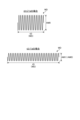
- the control unit 11 when the contact continuation period tD is greater than a preset threshold value Td, the control unit 11 generates the contact continuation vibration waveform WD having a smaller amplitude than when the contact continuation period tD is equal to or less than the threshold value Td.
- the threshold Td is, for example, 5 seconds, but the length of the threshold Td is not limited to this.
- the threshold Td is arbitrarily set according to the type of actuator.
- the object OB collides at the same speed as in FIG.
- the amplitude AM0 is calculated as the amplitude of the contact continuation period tD.
- the contact continuation vibration waveform WD having the amplitude AM0 calculated by the physical simulation is generated (see the upper diagram in FIG. 7).
- the vibration waveform WD at the time of contact continuation is generated with an amplitude AM1 that is smaller than the amplitude AM0 calculated by the physical simulation (see the lower diagram in FIG. 7).
- the haptic feedback presentation period FH was controlled based on the weight, flexibility and collision speed of the object OB.
- the control unit 11 can also control the presentation period FH of the haptic feedback in consideration of the flexibility of the object to collide with the object OB (the hand HN in the example of FIG. 1).
- the hardness of the hand HN is different between when the hand HN is open and when the hand HN is tightly clenched.
- the amount of deformation of the object OB that is, the period during which tactile feedback should be presented is greater when the object OB collides with a hard fist than when the object OB collides with the palm.
- Considering the hardness of the impacted object which varies according to the shape of the impacted object, provides better tactile feedback.
- the control unit 11 can also change the properties of the object OB according to the parameters of the real environment in which the collision takes place. For example, the control unit 11 changes the flexibility of the object OB according to the temperature of the object OB at the time of collision. When the temperature of the real environment of the AR experience is low, the elastic modulus of the object OB is set high accordingly. Further, when the temperature of the object OB virtually rises due to repeated collisions, the elastic modulus of the object OB is set low accordingly. This provides realistic tactile feedback according to temperature.
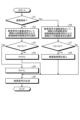
- FIG. 9 is a diagram showing an example of the processing flow of the information processing device 10. As shown in FIG.
- the control unit 11 determines whether the object OB that collides with the hand HN is a flexible object that satisfies the flexibility criteria (step S1).
- step S2 the control unit 11 selects the vibration waveform WN during contact ON and the vibration waveform WD during continuous contact as the vibration waveform of the tactile stimulus. (Step S2).
- control unit 11 determines whether or not the visual feedback presentation period FC is smaller than the threshold TL (step S3).
- step S3: No When the visual feedback presentation period FC is equal to or greater than the threshold TL (step S3: No), the control unit 11 matches the haptic feedback presentation period FH with the visual feedback presentation period FC (step S4). If the visual feedback presentation period FC is smaller than the threshold TL (step S3: Yes), the control unit 11 matches the haptic feedback presentation period FH with the threshold TL (step S5).
- the control unit 11 generates a haptic signal SG using the presentation period FH of the haptic feedback and the vibration waveform information (step S9).
- step S6 the control unit 11 selects the vibration waveform WN at contact ON, the vibration waveform WD at continuous contact, and the vibration waveform WF at contact OFF as the vibration waveform of the tactile stimulation.
- the control unit 11 determines whether or not the visual feedback presentation period FC is greater than the threshold TH (step S7). When the visual feedback presentation period FC is longer than the threshold TH (step S7: Yes), the control unit 11 introduces a non-vibration period NB within the contact continuation period. When the visual feedback presentation period FC is equal to or less than the threshold TH (step S7: No), the control unit 11 does not introduce the non-vibration period NB within the contact continuation period.
- the control unit 11 generates a tactile signal SG using information on the vibration waveform and information on the presence or absence of the non-vibration period NB (step S9).
- FIG. 10 is a diagram showing a hardware configuration example of the information processing apparatus 10. As shown in FIG.
- the information processing device 10 is realized by a computer 1000.
- the computer 1000 has a CPU 1100 , a RAM 1200 , a ROM (Read Only Memory) 1300 , a HDD (Hard Disk Drive) 1400 , a communication interface 1500 and an input/output interface 1600 .
- Each part of computer 1000 is connected by bus 1050 .
- the CPU 1100 operates based on programs stored in the ROM 1300 or HDD 1400 and controls each section. For example, the CPU 1100 loads programs stored in the ROM 1300 or HDD 1400 into the RAM 1200 and executes processes corresponding to various programs.
- the ROM 1300 stores a boot program such as BIOS (Basic Input Output System) executed by the CPU 1100 when the computer 1000 is started, and programs dependent on the hardware of the computer 1000.
- BIOS Basic Input Output System
- the HDD 1400 is a computer-readable recording medium that non-temporarily records programs executed by the CPU 1100 and data (including various databases) used by these programs.
- HDD 1400 is a recording medium that records an information processing program according to the present disclosure, which is an example of program data 1450 .
- a communication interface 1500 is an interface for connecting the computer 1000 to an external network 1550 (for example, the Internet).
- the CPU 1100 receives data from another device via the communication interface 1500, and transmits data generated by the CPU 1100 to another device.
- the input/output interface 1600 is an interface for connecting the input/output device 1650 and the computer 1000 .
- the CPU 1100 receives data from input devices such as a keyboard and mouse via the input/output interface 1600 .
- the CPU 1100 also transmits data to an output device such as a display, speaker, or printer via the input/output interface 1600 .
- the input/output interface 1600 may function as a media interface for reading a program or the like recorded on a predetermined recording medium.
- Media include, for example, optical recording media such as DVD (Digital Versatile Disc) and PD (Phase change rewritable disk), magneto-optical recording media such as MO (Magneto-Optical disk), tape media, magnetic recording media, semiconductor memories, etc. is.
- the CPU 1100 of the computer 1000 implements the various functions described above by executing programs loaded on the RAM 1200.
- the HDD 1400 also stores a program for causing a computer to function as the information processing apparatus 10 .
- CPU 1100 reads and executes program data 1450 from HDD 1400 , as another example, these programs may be obtained from another device via external network 1550 .
- the information processing device 10 has a control unit 11 .
- the control unit 11 controls the presentation period FH of the haptic feedback presented in response to the collision of the object OB based on the flexibility of the object OB.
- the processing of the information processing apparatus 10 is executed by the computer 1000 .
- the program of the present disclosure causes the computer 1000 to implement the processing of the information processing apparatus 10 .
- the control unit 11 When the object OB is a flexible object that satisfies the flexibility criteria, the control unit 11 generates a tactile signal including a contact ON vibration waveform WN, a continuous contact vibration waveform WD, and a contact OFF vibration waveform WF as the vibration waveform of the tactile stimulus. Generate SG.
- the control unit 11 When the visual feedback presentation period FC calculated based on the flexibility of the flexible object is greater than the threshold TH, the control unit 11 generates a continuous contact vibration waveform WD including a no-vibration period NB within the continuous contact period tD. to generate
- the control unit 11 When the contact duration tD is greater than the threshold Td, the control unit 11 generates the vibration waveform WD during continuous contact with a smaller amplitude than when the contact duration tD is equal to or less than the threshold Td.
- the control unit 11 When the object OB is a low-flexibility object that does not meet the flexibility standard, the control unit 11 generates a tactile signal SG that selectively includes a contact-ON vibration waveform WN and a continuous-contact vibration waveform WD as the vibration waveform of the tactile stimulus. Generate.
- the control unit 11 matches the haptic feedback presentation period FH with the threshold TL.
- the control unit 11 matches the haptic feedback presentation period FH with the visual feedback presentation period FC.
- the haptic feedback presentation period FH does not become excessively short. Therefore, the user U can reliably perceive the object OB based on the tactile stimulation.
- the control unit 11 controls the presentation period FH of the haptic feedback, taking into consideration the flexibility of the colliding object that collides with the object OB.
- the deformation state of the object OB which changes depending on the flexibility (hardness) of the collided object, is realistically reproduced through tactile stimulation.
- the control unit 11 changes the flexibility of the object OB according to the temperature of the object OB at the time of collision.
- FIG. 11 is a diagram showing another application example of the information processing apparatus 10. As shown in FIG.
- the haptic control method of the present disclosure was applied to the manipulation of virtual objects.
- the object OB to be manipulated is not limited to the virtual object.
- the haptic control technique of the present disclosure is applied to manipulation of real objects that actually exist.
- the information processing system in FIG. 11 performs a golf simulation using an actual golf club GC and golf ball GB.
- the display device 20 projects the view of the golf course onto the screen SCR.
- a user U uses a golf club GC to hit a golf ball GB toward the screen SCR.
- the control unit 11 analyzes the swing using a sensor such as a camera, and reproduces the trajectory of the golf ball GB on the screen SCR.
- the golf club GC incorporates a haptic device 30.
- the control unit 11 calculates the collision speed between the club head CH (colliding object TG) and the golf ball GB based on the analysis result of the swing.
- the weight and flexibility of the golf ball GB can be set by the system.
- the control unit 11 controls the vibration waveform of the tactile signal SG based on the weight, flexibility and impact speed of the golf ball GB.
- the object OB to be manipulated is a golf ball GB that is a real object, realistic tactile feedback can be obtained by the same processing as in the example of FIG.
- haptic feedback and visual feedback were controlled according to the flexibility of the OB of the object. This control technique is applicable beyond haptic and visual feedback.
- auditory feedback may be provided using similar techniques.
- An information processing apparatus comprising a control unit that controls a presentation period of haptic feedback presented in response to collision of an object based on flexibility of the object.
- the control unit sets the vibration waveform of the tactile stimulus as a contact-on vibration waveform corresponding to the moment of contact with the object and a duration of contact with the object. generating a haptic signal including a continuous contact vibration waveform corresponding to and a contact OFF vibration waveform corresponding to the moment the object leaves;
- the control unit controls the continuous contact vibration waveform including a no-vibration period within the continuous contact period. to generate The information processing apparatus according to (2) above.
- the control unit When the contact continuation period is greater than a second threshold, the control unit generates the contact continuation vibration waveform having a smaller amplitude than when the contact continuation period is equal to or less than the second threshold.
- the control unit selectively includes the vibration waveform at the time of contact ON and the vibration waveform at the time of continuous contact as the vibration waveform of the tactile sense stimulus.
- the control unit matches the haptic feedback presentation period with the third threshold, and If the visual feedback presentation period is equal to or greater than the third threshold, matching the haptic feedback presentation period with the visual feedback presentation period; The information processing apparatus according to (5) above.
- the control unit controls the presentation period of the haptic feedback, taking into consideration the flexibility of a collided object that collides with the object.
- the information processing apparatus according to any one of (1) to (6) above.
- the control unit changes the flexibility of the object according to the temperature of the object at the time of collision.
- a computer-implemented method of information processing comprising controlling a presentation duration of haptic feedback presented in response to an impact of an object based on the flexibility of said object.
Landscapes
- Engineering & Computer Science (AREA)
- General Engineering & Computer Science (AREA)
- Theoretical Computer Science (AREA)
- Human Computer Interaction (AREA)
- Physics & Mathematics (AREA)
- General Physics & Mathematics (AREA)
- User Interface Of Digital Computer (AREA)
Abstract
Description
[1.情報処理システムの概要]
[2.情報処理装置の構成]
[3.情報処理方法]
[4.ハードウェア構成例]
[5.効果]
[6.他の適用例]
図1は、ハプティックデバイス30を用いた情報処理システム1の概要を説明する図である。
図2は、情報処理装置10の構成の一例を示す図である。
図3ないし図8は、情報処理装置10が行う情報処理の一例を説明する図である。
図10は、情報処理装置10のハードウェア構成例を示す図である。
情報処理装置10は、制御部11を有する。制御部11は、物体OBの衝突に応答して提示される触覚フィードバックの提示期間FHを物体OBの柔軟性に基づいて制御する。本開示の情報処理方法は、情報処理装置10の処理がコンピュータ1000により実行される。本開示のプログラムは、情報処理装置10の処理をコンピュータ1000に実現させる。
図11は、情報処理装置10の他の適用例を示す図である。
なお、本技術は以下のような構成も採ることができる。
(1)
物体の衝突に応答して提示される触覚フィードバックの提示期間を前記物体の柔軟性に基づいて制御する制御部を有する、情報処理装置。
(2)
前記物体が柔軟基準を満たす柔軟物体である場合には、前記制御部は、触覚刺激の振動波形として、前記物体と接触した瞬間に対応する接触ON時振動波形と、前記物体との接触継続期間に対応する接触継続時振動波形と、前記物体が離れる瞬間に対応する接触OFF時振動波形と、を含む触覚信号を生成する、
上記(1)に記載の情報処理装置。
(3)
前記制御部は、前記柔軟物体の柔軟性に基づいて算出される視覚フィードバックの提示期間が第1閾値よりも大きい場合には、前記接触継続期間内に無振動期間を含む前記接触継続時振動波形を生成する、
上記(2)に記載の情報処理装置。
(4)
前記制御部は、前記接触継続期間が第2閾値よりも大きい場合には、前記接触継続期間が前記第2閾値以下である場合よりも振幅が小さい前記接触継続時振動波形を生成する、
上記(3)に記載の情報処理装置。
(5)
前記物体が前記柔軟基準に満たない低柔軟物体である場合には、前記制御部は、前記触覚刺激の振動波形として、前記接触ON時振動波形および前記接触継続時振動波形を選択的に含む触覚信号を生成する、
上記(2)ないし(4)のいずれか1つに記載の情報処理装置。
(6)
前記制御部は、前記低柔軟物体の柔軟性に基づいて算出される視覚フィードバックの提示期間が第3閾値よりも小さい場合には、前記触覚フィードバックの提示期間を前記第3閾値と一致させ、前記視覚フィードバックの提示期間が前記第3閾値以上である場合には、前記触覚フィードバックの提示期間を前記視覚フィードバックの提示期間と一致させる、
上記(5)に記載の情報処理装置。
(7)
前記制御部は、前記物体と衝突する被衝突物体の柔軟性を加味して前記触覚フィードバックの提示期間を制御する、
上記(1)ないし(6)のいずれか1つに記載の情報処理装置。
(8)
前記制御部は、衝突時の前記物体の温度に応じて前記物体の柔軟性を変化させる、
上記(1)ないし(7)のいずれか1つに記載の情報処理装置。
(9)
物体の衝突に応答して提示される触覚フィードバックの提示期間を前記物体の柔軟性に基づいて制御することを有する、コンピュータにより実行される情報処理方法。
(10)
物体の衝突に応答して提示される触覚フィードバックの提示期間を前記物体の柔軟性に基づいて制御することをコンピュータに実現させるプログラム。
11 制御部
FC 視覚フィードバックの提示期間
FH 触覚フィードバックの提示期間
NB 無振動期間
OB 物体
SG 触覚信号
tD 接触継続期間
Td 閾値(第2閾値)
TH 閾値(第1閾値)
TL 閾値(第3閾値)
WD 接触継続時振動波形
WF 接触OFF時振動波形
WN 接触ON時振動波形
Claims (10)
- 物体の衝突に応答して提示される触覚フィードバックの提示期間を前記物体の柔軟性に基づいて制御する制御部を有する、情報処理装置。
- 前記物体が柔軟基準を満たす柔軟物体である場合には、前記制御部は、触覚刺激の振動波形として、前記物体と接触した瞬間に対応する接触ON時振動波形と、前記物体との接触継続期間に対応する接触継続時振動波形と、前記物体が離れる瞬間に対応する接触OFF時振動波形と、を含む触覚信号を生成する、
請求項1に記載の情報処理装置。 - 前記制御部は、前記柔軟物体の柔軟性に基づいて算出される視覚フィードバックの提示期間が第1閾値よりも大きい場合には、前記接触継続期間内に無振動期間を含む前記接触継続時振動波形を生成する、
請求項2に記載の情報処理装置。 - 前記制御部は、前記接触継続期間が第2閾値よりも大きい場合には、前記接触継続期間が前記第2閾値以下である場合よりも振幅が小さい前記接触継続時振動波形を生成する、
請求項3に記載の情報処理装置。 - 前記物体が前記柔軟基準に満たない低柔軟物体である場合には、前記制御部は、前記触覚刺激の振動波形として、前記接触ON時振動波形および前記接触継続時振動波形を選択的に含む触覚信号を生成する、
請求項2に記載の情報処理装置。 - 前記制御部は、前記低柔軟物体の柔軟性に基づいて算出される視覚フィードバックの提示期間が第3閾値よりも小さい場合には、前記触覚フィードバックの提示期間を前記第3閾値と一致させ、前記視覚フィードバックの提示期間が前記第3閾値以上である場合には、前記触覚フィードバックの提示期間を前記視覚フィードバックの提示期間と一致させる、
請求項5に記載の情報処理装置。 - 前記制御部は、前記物体と衝突する被衝突物体の柔軟性を加味して前記触覚フィードバックの提示期間を制御する、
請求項1に記載の情報処理装置。 - 前記制御部は、衝突時の前記物体の温度に応じて前記物体の柔軟性を変化させる、
請求項1に記載の情報処理装置。 - 物体の衝突に応答して提示される触覚フィードバックの提示期間を前記物体の柔軟性に基づいて制御することを有する、コンピュータにより実行される情報処理方法。
- 物体の衝突に応答して提示される触覚フィードバックの提示期間を前記物体の柔軟性に基づいて制御することをコンピュータに実現させるプログラム。
Priority Applications (1)
| Application Number | Priority Date | Filing Date | Title |
|---|---|---|---|
| US18/834,892 US20250110558A1 (en) | 2022-02-08 | 2023-01-26 | Information processing apparatus, information processing method, and program |
Applications Claiming Priority (2)
| Application Number | Priority Date | Filing Date | Title |
|---|---|---|---|
| JP2022018131 | 2022-02-08 | ||
| JP2022-018131 | 2022-02-08 |
Publications (1)
| Publication Number | Publication Date |
|---|---|
| WO2023153232A1 true WO2023153232A1 (ja) | 2023-08-17 |
Family
ID=87564092
Family Applications (1)
| Application Number | Title | Priority Date | Filing Date |
|---|---|---|---|
| PCT/JP2023/002540 Ceased WO2023153232A1 (ja) | 2022-02-08 | 2023-01-26 | 情報処理装置、情報処理方法およびプログラム |
Country Status (2)
| Country | Link |
|---|---|
| US (1) | US20250110558A1 (ja) |
| WO (1) | WO2023153232A1 (ja) |
Cited By (1)
| Publication number | Priority date | Publication date | Assignee | Title |
|---|---|---|---|---|
| KR102889495B1 (ko) * | 2024-09-09 | 2025-11-20 | 한국기술교육대학교 산학협력단 | 자기유변 탄성체를 이용한 타격 햅틱을 제공하는 타격 장치 및 시스템 |
Citations (5)
| Publication number | Priority date | Publication date | Assignee | Title |
|---|---|---|---|---|
| JP2011096171A (ja) * | 2009-11-02 | 2011-05-12 | National Institute Of Information & Communication Technology | 多感覚インタラクションシステム |
| WO2016181469A1 (ja) * | 2015-05-11 | 2016-11-17 | 富士通株式会社 | シミュレーションシステム |
| WO2017043400A1 (ja) * | 2015-09-08 | 2017-03-16 | ソニー株式会社 | 情報処理装置、方法およびコンピュータプログラム |
| JP2018106598A (ja) * | 2016-12-28 | 2018-07-05 | 任天堂株式会社 | 情報処理システム、情報処理プログラム、情報処理装置、および、情報処理方法 |
| JP2020112978A (ja) * | 2019-01-10 | 2020-07-27 | ソニー株式会社 | 触覚提示装置、触覚提示システムおよび触覚提示方法 |
-
2023
- 2023-01-26 US US18/834,892 patent/US20250110558A1/en active Pending
- 2023-01-26 WO PCT/JP2023/002540 patent/WO2023153232A1/ja not_active Ceased
Patent Citations (5)
| Publication number | Priority date | Publication date | Assignee | Title |
|---|---|---|---|---|
| JP2011096171A (ja) * | 2009-11-02 | 2011-05-12 | National Institute Of Information & Communication Technology | 多感覚インタラクションシステム |
| WO2016181469A1 (ja) * | 2015-05-11 | 2016-11-17 | 富士通株式会社 | シミュレーションシステム |
| WO2017043400A1 (ja) * | 2015-09-08 | 2017-03-16 | ソニー株式会社 | 情報処理装置、方法およびコンピュータプログラム |
| JP2018106598A (ja) * | 2016-12-28 | 2018-07-05 | 任天堂株式会社 | 情報処理システム、情報処理プログラム、情報処理装置、および、情報処理方法 |
| JP2020112978A (ja) * | 2019-01-10 | 2020-07-27 | ソニー株式会社 | 触覚提示装置、触覚提示システムおよび触覚提示方法 |
Cited By (1)
| Publication number | Priority date | Publication date | Assignee | Title |
|---|---|---|---|---|
| KR102889495B1 (ko) * | 2024-09-09 | 2025-11-20 | 한국기술교육대학교 산학협력단 | 자기유변 탄성체를 이용한 타격 햅틱을 제공하는 타격 장치 및 시스템 |
Also Published As
| Publication number | Publication date |
|---|---|
| US20250110558A1 (en) | 2025-04-03 |
Similar Documents
| Publication | Publication Date | Title |
|---|---|---|
| US10860105B2 (en) | Haptically enabled flexible devices | |
| JP5164226B2 (ja) | タッチパネル入力補助装置、同装置を用いたコンピュータ動作方法、および触感連動型プログラム | |
| US11379054B2 (en) | Apparatus for use in a virtual reality system | |
| Araujo et al. | Snake charmer: Physically enabling virtual objects | |
| US6366272B1 (en) | Providing interactions between simulated objects using force feedback | |
| KR20160067766A (ko) | 햅틱 신호를 제어하기 위한 시스템 및 방법 | |
| JP2019121397A (ja) | 仮想物体に接触すること及び仮想物体を把持することに関連する触覚効果を提供するためのシステム及び方法 | |
| JP2008134990A (ja) | 情報処理装置、情報処理方法 | |
| CN109478089A (zh) | 多模态触觉效果 | |
| EP3333674A1 (en) | Systems and methods for compliance simulation with haptics | |
| US11880528B2 (en) | Stimulus transmission device | |
| WO2023153232A1 (ja) | 情報処理装置、情報処理方法およびプログラム | |
| JP2011059862A (ja) | 非接地型力覚提示装置 | |
| CN108170276B (zh) | 输入装置、输入系统、电子装置和感觉呈现方法 | |
| KR102154337B1 (ko) | 맞춤형 햅틱 효과를 제공하는 방법 및 그를 이용한 시스템 | |
| JP2014109818A (ja) | 力覚提示システム | |
| Chen et al. | A Haptic Device for Tennis Simulation: Dual-Flywheel System for Rendering Virtual Impact | |
| WO2022075136A1 (ja) | 信号生成装置、信号生成方法及び信号生成プログラム | |
| US20040113931A1 (en) | Human-computer interfaces incorporating haptics and path-based interaction | |
| Oakley | Haptic augmentation of the cursor: Transforming virtual actions into physical actions | |
| Wu et al. | ACTIVE-Hand: automatic configurable tactile interaction in virtual environment | |
| EP4647873A1 (en) | System and method for simulating movement of an object | |
| Mentzelopoulos et al. | Hardware interfaces for VR applications: evaluation on prototypes | |
| CN121028987A (zh) | 虚拟现实多模态交互方法、边缘计算设备及介质 | |
| JP2023150608A (ja) | 触覚音提供システム、触覚音提供プログラム、及び、触覚音提供方法 |
Legal Events
| Date | Code | Title | Description |
|---|---|---|---|
| 121 | Ep: the epo has been informed by wipo that ep was designated in this application |
Ref document number: 23752697 Country of ref document: EP Kind code of ref document: A1 |
|
| WWE | Wipo information: entry into national phase |
Ref document number: 18834892 Country of ref document: US |
|
| NENP | Non-entry into the national phase |
Ref country code: DE |
|
| 122 | Ep: pct application non-entry in european phase |
Ref document number: 23752697 Country of ref document: EP Kind code of ref document: A1 |
|
| NENP | Non-entry into the national phase |
Ref country code: JP |
|
| WWP | Wipo information: published in national office |
Ref document number: 18834892 Country of ref document: US |