WO2023127583A1 - 機械学習装置、データ処理装置、推論装置、機械学習方法、データ処理方法、及び、推論方法 - Google Patents
機械学習装置、データ処理装置、推論装置、機械学習方法、データ処理方法、及び、推論方法 Download PDFInfo
- Publication number
- WO2023127583A1 WO2023127583A1 PCT/JP2022/046755 JP2022046755W WO2023127583A1 WO 2023127583 A1 WO2023127583 A1 WO 2023127583A1 JP 2022046755 W JP2022046755 W JP 2022046755W WO 2023127583 A1 WO2023127583 A1 WO 2023127583A1
- Authority
- WO
- WIPO (PCT)
- Prior art keywords
- data
- learning
- person
- behavior
- processing unit
- Prior art date
- Legal status (The legal status is an assumption and is not a legal conclusion. Google has not performed a legal analysis and makes no representation as to the accuracy of the status listed.)
- Ceased
Links
Images





Classifications
-
- G—PHYSICS
- G06—COMPUTING OR CALCULATING; COUNTING
- G06N—COMPUTING ARRANGEMENTS BASED ON SPECIFIC COMPUTATIONAL MODELS
- G06N20/00—Machine learning
-
- G—PHYSICS
- G06—COMPUTING OR CALCULATING; COUNTING
- G06N—COMPUTING ARRANGEMENTS BASED ON SPECIFIC COMPUTATIONAL MODELS
- G06N3/00—Computing arrangements based on biological models
- G06N3/02—Neural networks
- G06N3/08—Learning methods
-
- G—PHYSICS
- G06—COMPUTING OR CALCULATING; COUNTING
- G06Q—INFORMATION AND COMMUNICATION TECHNOLOGY [ICT] SPECIALLY ADAPTED FOR ADMINISTRATIVE, COMMERCIAL, FINANCIAL, MANAGERIAL OR SUPERVISORY PURPOSES; SYSTEMS OR METHODS SPECIALLY ADAPTED FOR ADMINISTRATIVE, COMMERCIAL, FINANCIAL, MANAGERIAL OR SUPERVISORY PURPOSES, NOT OTHERWISE PROVIDED FOR
- G06Q50/00—Information and communication technology [ICT] specially adapted for implementation of business processes of specific business sectors, e.g. utilities or tourism
- G06Q50/10—Services
Definitions
- the present invention relates to a machine learning device, a data processing device, an inference device, a machine learning method, a data processing method, and an inference method.
- Patent Literature 1 and Patent Literature 2 disclose a system that distributes advertisement information to a user's terminal based on personal information including the user's name, gender, age, and the like.
- Patent Documents 1 and 2 are based on the premise that personal information is input by each user, and therefore it is possible to provide appropriate information to users who have not input personal information. could not.
- a behavioral factor index for example, sensibility, etc.
- the systems disclosed in Patent Literatures 1 and 2 such behavioral factor indexes are not input as personal information, so appropriate information corresponding to the behavioral factor indexes inherent in each user is provided.
- Such behavioral factor indexes are not input as personal information, so appropriate information corresponding to the behavioral factor indexes inherent in each user is provided.
- the present invention has been made in view of the above-described problems, and provides a machine learning device, a data processing device, an inference device, and a machine for appropriately grasping, from the behavior of a person, factors that motivate the person to take action.
- An object is to provide a learning method, a data processing method, and an inference method.
- a machine learning device includes: A plurality of sets of learning data composed of person data recording the behavior of a person based on one or a plurality of viewpoints and behavioral factor indexes indicating factors that motivate the person to perform the behavior are inputted to the learning model. a machine learning unit that causes the learning model to learn the correlation between the person data and the behavior factor index by machine learning; and a learned model storage unit that stores the learning model for which the correlation has been learned by the machine learning unit.
- the behavior factor index indicating the factors that motivate the person to take action is calculated based on the person data in which the behavior of the person is recorded based on one or more viewpoints.
- a learning model that can be estimated can be provided. Therefore, by using this learning model, for example, it is possible to appropriately assign (infer) a behavior factor index inherent in a person (user) without requesting the person (user) to input personal information.
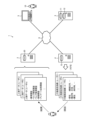
- FIG. 1 is an overall configuration diagram showing an example of a person information management system 1;
- FIG. 3 is a hardware configuration diagram showing an example of a computer 900;
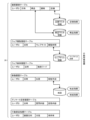
- FIG. 2 is a data configuration diagram showing an example of a person database 20;
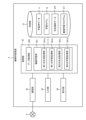
- FIG. 3 is a block diagram showing an example of a machine learning device 3;
- FIG. 3 is a diagram showing an example of judgment rule data 310.
- FIG. 1 is a diagram showing an example of learning data 11 and a learning model 12;
- FIG. 3 is a functional explanatory diagram showing an example of a machine learning unit 301;
- FIG. 2 is a block diagram showing an example of a data processing device 4;
- FIG. 4 is a functional explanatory diagram showing an example of a data processing device 4;
- 4 is a flowchart showing an example of a machine learning method by the machine learning device 3; 11 is a flowchart (continuation of FIG. 10) showing an example of a machine learning method by the machine learning device 3; 4 is a flowchart showing an example of a data processing method by the data processing device 4;
- FIG. 1 is an overall configuration diagram showing an example of a person information management system 1. As shown in FIG. The person information management system 1 assigns behavior factor indexes (tags) that indicate factors that motivate the person to act to person data that records the behavior of a person, so that the behavior factor indexes of each person can be displayed in various ways. services (product planning, product development, production management, purchase/order management, sales strategy formulation, marketing, advertising, etc.).
- behavior factor indexes tags
- services product planning, product development, production management, purchase/order management, sales strategy formulation, marketing, advertising, etc.
- Person data is data that records the behavior of a person based on one or more perspectives.
- a person's behavior for example, purchasing behavior when a person purchases goods or services at a store or e-commerce site, web browsing behavior when a person browses a website, Web search behavior when searching with , movement behavior when a person moves by any means of transportation (walking, train, car, etc.), questionnaire response behavior when a person answers a questionnaire on a website or on paper, etc. mentioned.
- personal data includes, for example, a purchase history that records purchase behavior, a web browsing history that records web browsing behavior, a web search history that records web search behavior, a movement history that records movement behavior, and a questionnaire response behavior that is recorded. This includes the questionnaire response history, etc.
- the behavioral factor index indicates the factors that motivate a person to take a specific action.
- the behavior factor index has a plurality of types classified by, for example, sensibility, preference, attributes, and the like.
- sensibility and palatability for example, health-oriented, organic, production area-oriented, price (saving)-oriented, luxury-oriented, safe and secure, highly sensitive to beauty, beautiful, Japanese-style, Western-style, sweet-toothed ), those who like spicy food (spicy), those who like strong tastes, those who like sour tastes, those who like soda, those who like indoors, and those who like outdoors.
- Attributes related to demographics, lifestyle, etc. include age, gender, single, married, having children, owning a house, renting, owning a car, raising pets, and dieting.
- a behavioral factor index is given by a variable value to person data, and a variable value is given for each type of behavioral factor index.
- the variables of the behavior factor index of "health consciousness” is given by "0: not health conscious” and "1: health conscious”.
- the behavioral factor index may be defined by multiclass classification (multivalued classification). For example, when defined by a three-class classification, the value of the variable of the behavioral factor index of "health consciousness” is , “-1: not health conscious", “0: neither” and “1: health conscious”. Also, the definition of the behavioral factor index may be different for each type of behavioral factor index.
- the person information management system 1 includes a database device 2, a machine learning device 3, a data processing device 4, and an operator terminal device 5 as its main components.
- Each of the devices 2 to 5 is configured by, for example, a general-purpose or dedicated computer (see FIG. 2 described below), and is connected to a wired or wireless network 6 so that various data can be transmitted and received between them. .
- the number of devices 2 to 5 and the connection configuration of the network 6 are not limited to the example in FIG. 1, and may be changed as appropriate.
- the database device 2 cooperates with an external system (not shown) that records the daily actions of each person as action history based on one or more viewpoints, and records the action history based on one or more viewpoints as person data for each person.
- a person database 20 that can be registered is provided.
- the external system includes, for example, a point-of-sale information management system (POS system), a computer operation log collection system, a navigation system, a questionnaire system, and the like.
- POS system point-of-sale information management system
- the external system records the purchase history, web browsing history, web search history, movement history, questionnaire response history, etc. as the behavior history according to the daily behavior of each person.
- POS system point-of-sale information management system
- the external system records the purchase history, web browsing history, web search history, movement history, questionnaire response history, etc. as the behavior history according to the daily behavior of each person.
- the database device 2 Provided to the database device 2.
- the machine learning device 3 operates as the subject of the learning phase of machine learning, and performs machine learning of the learning model 12 by using the person data registered in the person database 20 as the learning data 11.
- the trained learning model 12 is provided to the data processing device 4 via the network 6, a recording medium, or the like. As a method of machine learning, supervised learning is adopted.
- the data processing device 4 operates as the subject of the inference phase of machine learning, uses the learned learning model 12 generated by the machine learning device 3, assigns behavioral factor indices to human data, and assigns the result (In this embodiment, values of variables for each type of behavioral factor index) are provided to the database device 2, the worker terminal device 5, and the like.
- the worker terminal device 5 is a terminal device used by the worker 10 who annotates the learning data 11 when performing machine learning of the learning model 12 .
- the operator terminal device 5 accepts various input operations via display screens of application programs, web browsers, etc., and displays various information (eg, person data, behavior factor indices, etc.) via the display screen.
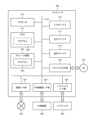
- FIG. 2 is a hardware configuration diagram showing an example of the computer 900. As shown in FIG. Each device 2 to 5 of the personal information management system 1 is configured by a general-purpose or dedicated computer 900 .
- the computer 900 includes, as its main components, a bus 910, a processor 912, a memory 914, an input device 916, an output device 917, a display device 918, a storage device 920, a communication I/F (interface). It has a section 922 , an external equipment I/F section 924 , an I/O (input/output) device I/F section 926 and a media input/output section 928 . Note that the above components may be omitted as appropriate depending on the application for which the computer 900 is used.
- the processor 912 is composed of one or more arithmetic processing units (CPU (Central Processing Unit), MPU (Micro-processing unit), DSP (digital signal processor), GPU (Graphics Processing Unit), etc.), and the entire computer 900 It operates as a control unit that supervises the
- the memory 914 stores various data and programs 930, and is composed of, for example, a volatile memory (DRAM, SRAM, etc.) functioning as a main memory, a non-volatile memory (ROM), a flash memory, and the like.
- the input device 916 is composed of, for example, a keyboard, mouse, numeric keypad, electronic pen, etc., and functions as an input unit.
- the output device 917 is configured by, for example, a sound (voice) output device, a vibration device, or the like, and functions as an output unit.
- a display device 918 is configured by, for example, a liquid crystal display, an organic EL display, electronic paper, a projector, or the like, and functions as an output unit.
- the input device 916 and the display device 918 may be configured integrally like a touch panel display.
- the storage device 920 is composed of, for example, a HDD (Hard Disk Drive), an SSD (Solid State Drive), etc., and functions as a storage unit.
- the storage device 920 stores various data necessary for executing the operating system and programs 930 .
- the communication I/F unit 922 is connected by wire or wirelessly to a network 940 (which may be the same as the network 6 in FIG. 1) such as the Internet or an intranet, and exchanges data with other computers according to a predetermined communication standard. functions as a communication unit that transmits and receives.
- the external device I/F unit 924 is connected to the external device 950 such as a camera, printer, scanner, reader/writer, etc. by wire or wirelessly, and serves as a communication unit that transmits and receives data to and from the external device 950 according to a predetermined communication standard. Function.
- the I/O device I/F unit 926 is connected to I/O devices 960 such as various sensors and actuators, and exchanges with the I/O devices 960, for example, detection signals from sensors and control signals to actuators. functions as a communication unit that transmits and receives various signals and data.
- the media input/output unit 928 is composed of a drive device such as a DVD (Digital Versatile Disc) drive, a CD (Compact Disc) drive, etc., and transfers data to media (non-temporary storage media) 970 such as DVDs and CDs. read and write.
- the processor 912 calls the program 930 stored in the storage device 920 to the memory 914 and executes it, and controls each part of the computer 900 via the bus 910 .
- the program 930 may be stored in the memory 914 instead of the storage device 920 .
- the program 930 may be recorded on the media 970 in an installable file format or executable file format and provided to the computer 900 via the media input/output unit 928 .
- Program 930 may be provided to computer 900 by downloading via network 940 via communication I/F section 922 .
- the computer 900 may implement various functions realized by the processor 912 executing the program 930 by hardware such as FPGA (field-programmable gate array), ASIC (application specific integrated circuit), or the like. good.
- the computer 900 is, for example, a stationary computer or a portable computer, and is an arbitrary form of electronic equipment.
- the computer 900 may be a client-type computer, a server-type computer, or a cloud-type computer.
- FIG. 3 is a data configuration diagram showing an example of the person database 20.
- the person database 20 is a database for managing person data based on person identification information (user ID) assigned to each person.
- the person database 20 includes, for example, a purchase history table, a web browsing history table, a web search history table, a movement history table, a questionnaire response history table, a behavior factor index table, merchandise master information, store master information, website master information, and Consists of map information.
- the purchase history table has multiple records for recording purchase behavior, and each record registers the date and time, product, price, store (which may be an electronic commerce site), and so on.
- a product ID is registered with the product, and the product ID is associated with the product master information, so that the product attributes (product name, product category, etc.) registered in the product master information are associated.
- a store ID is registered in the store, and by linking the store item ID to the store master information, the store attributes (store name, store category, etc.) registered in the store master information are associated.
- a product index (behavior feature index) corresponding to the behavior factor index may be assigned to the product, and may be registered in the product master information as part of the product attribute, for example.
- a store index (behavior feature index) corresponding to the behavior factor index may be assigned to the store, and may be registered in the store master information as part of the store attribute, for example.
- the web browsing history table has multiple records for recording web browsing behavior, and each record registers the date and time, website, browsing time, etc.
- the web search history table has a plurality of records for recording web search behavior, and each record registers date and time, search words, and the like.
- a URL for accessing the website is registered, and by linking with the website master information by the URL, the website attribute registered in the website master information (administrator name , website category, etc.).
- the website may be given a website index (behavior feature index) corresponding to the behavior factor index, and may be registered in the website master information as part of the website attribute, for example.
- the movement history table has multiple records for recording movement behavior, and each record registers the date, location, means of transportation, and so on.
- each record registers the date, location, means of transportation, and so on.
- the point attribute registered in the map information is linked to the map information by the point of stay or the area of stay.
- location name, location category, etc. and area attributes (area name, area category, etc.) are associated.
- a point index (behavioral characteristic index) or a regional index (behavioral characteristic index) corresponding to the behavioral factor index may be assigned to the point or region. may be registered with
- the questionnaire response history table has multiple records for recording questionnaire response behavior, and each record registers the date and time, question content, response content, etc.
- the behavior factor index table has a plurality of records for storing the behavior factor indexes assigned by the data processing device 4, and each record registers the date and time, the values of variables of the behavior factor indexes, and the like.
- FIG. 3 three fields corresponding to the three behavioral factor indexes of "health consciousness,” “sweet tooth,” and “car ownership” are shown. provided respectively.
- the person database 20 by associating the information in each table with the user ID, the person data that records the behavior of the person based on a plurality of viewpoints and the behavior factor index are managed for each person.
- the information registered in the person database 20 is configured so that various statistical processing can be performed.
- the person data is assigned a behavioral feature index (in the present embodiment, a product index, a store index, a website index, a location index, and a region index), which is an index indicating behavioral characteristics and corresponds to the behavioral factor index. It may be recorded in association with feature data (products, stores, websites, locations, regions in this embodiment).
- the behavioral feature index may also be given to features such as time of day, day of the week, and season.
- the data structure of the person database 20 may be changed as appropriate, data other than the above may be registered, and part of the above data may be omitted.
- FIG. 4 is a block diagram showing an example of the machine learning device 3.
- the machine learning device 3 includes a control unit 30 configured by a processor, etc., a storage unit 31 configured by an HDD, an SSD, a memory, etc., a communication unit 32 as a communication interface with the network 6, a keyboard, a mouse, etc.
- An input unit 33 configured and a display unit 34 configured by a display or the like are provided. Note that the input unit 33 and the display unit 34 may be omitted.
- the storage unit 31 stores the learning data 11, the learning model 12, the judgment rule data 310, and the machine learning program 311, as well as the operating system, other programs, various data, and the like.
- the storage unit 31 functions as a learning data storage unit that stores the learning data 11 and a trained model storage unit that stores the learning model 12 .
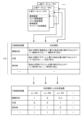
- FIG. 5 is a diagram showing an example of the judgment rule data 310.
- determination rules for determining whether or not a person matches the behavior factor index are registered for each type of behavior factor index.
- the determination rule data 310 is information that can be edited by the worker 10 via the worker terminal device 5 .
- Judgment rules are defined for person data based on at least some of the viewpoints, for example, comparison, ratio, frequency, period, category, behavior feature index (product index, store index, website index, location index, area index ), etc., by appropriately combining various numerical calculations.
- the determination rule is defined for each type of behavioral factor index. In the example of FIG. It is defined for "purchase history” based on the viewpoint of For example, in the determination rule for the behavioral factor index of "health consciousness", each user has purchased products with the product category of "health food” and products with the product index of "health consciousness” in the past year. When the total purchase amount is X yen or more, the behavior factor index "1: health-conscious" is given to the user.
- the person data of "user A” includes behavioral factor indexes such as “1: health conscious”, “0: not sweet tooth”, and “1: car owner”. is given to the person data of “user B”, and the behavior factor indices of “0: not health-conscious”, “0: not sweet tooth”, and “1: owns a car” are given to the person data of “user C”. Behavioral factor indices such as “1: has a sweet tooth” and "0: does not own a car” are assigned to the person data.
- the determination result of the "health-oriented” determination rule is as follows: "N/A: undetermined” is recorded.
- determination rule may be defined for person data based on a plurality of viewpoints, for example, "purchase history”, “purchase history”, It may also be defined for "moving behavior” and “questionnaire response history”. Also, determination rules may be defined for person data based on different viewpoints for each type of behavioral factor index. , and a decision rule for 'vehicle ownership' may be defined for 'movement history' based on 'movement behavior'.
- the control unit 30 functions as a data acquisition unit 300 and a machine learning unit 301 by executing a machine learning program 311 stored in the storage unit 41, as shown in FIG.
- the data acquisition unit 300 receives requests from, for example, the machine learning unit 301 and the worker terminal device 5, and accesses the person database 20 via the communication unit 32 and the network 6.
- the data acquisition unit 300 acquires person data in which actions of a plurality of persons are respectively recorded from the person database 20 for each person, provides the machine learning unit 301 with the person data, and stores the person data in the storage unit 31 .
- the machine learning unit 301 generates learning data 11 composed of person data and behavioral factor indexes, and inputs a plurality of sets to the learning model 12, so that the correlation between the person data and the behavioral factor indexes is calculated by machine learning. Let the learning model 12 learn. Then, the machine learning unit 301 stores the learned learning model 12 (specifically, the adjusted parameter group) in the storage unit 31 .
- the machine learning unit 301 converts the person data into the learning model 12 by an arbitrary conversion method such as one-hot encoding or label encoding.
- a pre-processing may be performed for converting into a predetermined feature amount to be input to .
- preprocessing includes, for example, comparison, ratio, frequency, period, category, behavior feature index ( Person data may be converted into feature amounts by appropriately combining various numerical calculations with product indexes, store indexes, website indexes, location indexes, area indexes, and the like.
- the person data is feature data (product, store, website, location, area )
- the machine learning unit 301 performs preprocessing for converting the person data into feature amounts based on the action feature index assigned to the feature data included in the person data
- the machine learning unit 301 performs preprocessing for converting the person data into feature amounts based on the action feature index assigned to the feature data included in the person data
- a learning model 12 By inputting a plurality of sets of learning data 11 after preprocessing, which are composed of feature values converted from human data in the preprocessing and behavioral factor indexes included in the human data, to a learning model 12, human data and the behavioral factor index may be learned by the learning model 12 .
- the behavior factor index of "health consciousness" is added.
- the purchase amount of products, the purchase amount of products with a behavioral factor index of "sweet tooth”, the purchase amount of products with a behavioral factor index of "car ownership”, etc. are aggregated, and the total purchase amount is calculated By normalizing each to a value in the range of 0 to 1, it is possible to convert to a feature quantity.
- FIG. 6 is a diagram showing an example of the learning data 11 and the learning model 12.
- the learning data 11 used for machine learning of the learning model 12 is composed of person data and behavioral factor indices.
- the learning data 11 is data used as teacher data (training data), verification data, and test data in supervised learning.
- the behavioral factor index is data used as a correct label in supervised learning.
- the person data constituting the learning data 11 is acquired from the person database 20.
- the behavioral factor index that constitutes the learning data 11 is given based on the judgment result by the judgment rule registered in the judgment rule data 310 or given by the annotation work by the worker 10 .
- the learning model 12 employs, for example, a neural network structure, and includes an input layer 120, an intermediate layer 121, and an output layer 122.
- a synapse (not shown) connecting each neuron is provided between each layer, and a weight is associated with each synapse.
- the input layer 120 has a number of neurons corresponding to person data as input data (which may be feature values converted from person data in preprocessing), and each value of person data is input to each neuron. .
- the output layer 122 has neurons corresponding to behavioral factor indexes as output data, and the results of assigning behavioral factor indexes to person data (inference results) are output data (a value in the range of 0 to 1 in this embodiment). ).
- a process of comparing the behavioral factor index (correct label) that constitutes the learning data 11 and the behavioral factor index (inference result) output from the output layer 122 and adjusting a parameter group such as the weight of each synapse (back propagating process). gation, etc.), machine learning of the learning model 12 is performed.
- the machine learning unit 301 performs machine learning of the learning model 12 for each type of behavioral factor index.
- a model 12 is stored.
- the learning model 12 shown in FIG. 6 outputs the behavior factor index of "health consciousness” for the person data, and the learning data 11 composed of the person data and the behavior factor index of "health consciousness”.
- Machine learning is performed using Note that the learning model 12 may output a plurality of behavioral factor indexes for the person data. may be output. In that case, machine learning may be performed using learning data 11 composed of person data and behavioral factor indexes of "health consciousness,” “sweet tooth,” and "car ownership.”
- the number and types of learning models 12 that are machine-learned by the machine-learning unit 301 and stored in the storage unit 31 may be changed as appropriate.
- a plurality of learning models 12 with different conditions may be stored, such as the type of data included in the behavioral factor index, the preprocessing method for person data, and the like. In that case, a plurality of types of learning data 11 having data configurations corresponding to a plurality of learning models 12 having different conditions may be used.
- the machine learning unit 301 includes a first generation processing unit 301a, a first learning processing unit 301b, and a second generation processing unit 301c as units that perform machine learning of the learning model 12. , and a second learning processing unit 301d.
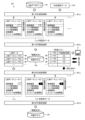
- FIG. 7 is a functional explanatory diagram showing an example of the machine learning unit 301. Details of the machine learning unit 301 will be described below with reference to FIG. 7 as well as the determination rule data 310 shown in FIG. 5 and the learning data 11 and learning model 12 shown in FIG.
- the first generation processing unit 301 a determines whether a person whose behavior is recorded in the person data acquired by the data acquisition unit 300 conforms to the behavior factor index according to the determination rule registered in the determination rule data 310 . judge each time.
- the first generation processing unit 301a generates the learning data 11a by adding the behavior factor index to the person data based on the determination result.
- the first generation processing unit 301a determines whether each person (users A to C) conforms to "health consciousness" according to the determination rule (see FIG. 5) defined for the purchase record. Based on the determination result, the behavior factor is set to "1: health-conscious” for the person data of "user A” and "0: not health-conscious” for the person data of "user B".
- the learning data 11a is generated by assigning each as an index (temporary correct label). For the person data of "user C", who cannot be judged according to the judgment rule of "health consciousness" because his purchase history is not sufficiently recorded, the behavior factor index (temporary correct label) is not given, the learning data 11a based on the person data of "user C" is not generated.
- the first learning processing unit 301b uses the learning data 11a generated by the first generation processing unit 301a to make the learning model 12a learn the correlation between the person data and the behavioral factor index.
- the person data constituting the learning data 11a includes not only the purchase history but also the web browsing history, web search history, movement history, and questionnaire response history.
- the first learning processing unit 301b may use the preprocessed learning data 11a to cause the learning model 12a to learn the correlation between the person data (feature amount) and the behavioral factor index.
- the second generation processing unit 301c inputs the person data (or the feature amount converted from the person data in the preprocessing) to the learning model 12a whose correlation has been learned by the first learning processing unit 301b.
- a correction instruction is accepted for the behavior factor index output from the learning model 12a.
- the second generation processing unit 301c associates the behavior factor index output from the learning model 12a with the person data and displays it for each person. By performing annotation work using the device 5, correction instructions are accepted for the displayed behavioral factor index. Then, the second generation processing unit 301c generates the learning data 11b by adding the behavior factor index to the person data based on the reception result.
- the second generation processing unit 301c inputs the person data of each person (users A to C) into the learning model 12a, so that "user A” "0.9” is output for "user B", “0.6” is output for "user C”, and "0.8” is output for "user C”.
- the second generation processing unit 301c causes the worker terminal device 5 to display an evaluation list in which the behavioral factor index (inference result) output from the learning model 12a is associated with the person data, the work performed by viewing the evaluation list is performed.
- the person 10 confirms the person data of "user B", and "1: health-conscious” is more appropriate than "0: not health-conscious” assigned as a temporary correct label by the first generation processing unit 301a.
- a correction instruction is given so as to assign "1: health-conscious” to "user B". Further, when the worker 10 confirms the person data of "user C” and determines that "0: not health-conscious” is more appropriate than “1: health-conscious”, "user C” A correction instruction is given so as to give “0: not health-conscious” to the Then, the second generation processing unit 301c receives these correction instructions, and based on the reception result, the personal data of “user B” is “1: health conscious” and “user C” Learning data 11b is generated by assigning “0: not health-conscious” to each person data as a behavior factor index (correct label after correction).
- the second generation processing unit 301c When performing machine learning of the learning model 12a corresponding to the preprocessed learning data 11a, the second generation processing unit 301c causes the learning model 12a that has learned the correlation by the first learning processing unit 301b to , the behavior factor index output from the learning model 12a by inputting the feature amount converted from the person data in the preprocessing (person data after preprocessing), and the behavior given to the feature data included in the person data
- a correction instruction may be accepted for at least one of the characteristic indices.
- the second generation processing unit 301c converts the behavior factor index output from the learning model 12a and the behavior feature index added to the feature data included in the person data into the person data.
- the operator 10 performs the annotation work using the worker terminal device 5 while displaying the corresponding behavior factor index for each person, and instructs to correct at least one of the displayed behavioral factor index and the behavioral feature index.
- the second generation processing unit 301c generates the learning data 11b by assigning the behavior factor index to the person data based on the reception result, and corrects the behavior feature index assigned to the feature data.
- the second learning processing unit 301d uses at least the learning data 11b generated by the second generation processing unit 301c to make the learning model 12b learn the correlation between the person data and the behavioral factor index. At that time, the second learning processing unit 301d generates not only the learning data 11b generated by the second generation processing unit 301c, but also the learning data 11a generated by the first generation processing unit 301a (see FIG. 7). In the example, learning data 11a) based on the person data of "user A" may also be used. Note that the second learning processing unit 301d may cause the learning model 12b to learn the correlation between the person data (feature amount) and the behavioral factor index using the preprocessed learning data 11b.
- the machine learning unit 301 When the second learning processing unit 301d causes the learning model 12b to learn the correlation between the person data and the behavior factor index, the machine learning unit 301 performs the second The generation processing unit 301c inputs the person data to the learning model 12b learned by the second learning processing unit 301d instead of the first learning processing unit 301b, so that the behavior factor index output from the learning model 12b is a process of receiving a correction instruction through the second learning processing unit 301d and generating the learning data 11b by adding a behavior factor index to the person data based on the reception result;
- the process of causing the learning model 12b to learn using the learning data 11b generated by 301c may be repeatedly executed until the learning end condition is satisfied. Whether or not the learning termination condition is satisfied depends, for example, on whether or not the accuracy of the learning model 12 has reached a predetermined accuracy, or whether or not the number of learning data 11 has reached a predetermined upper limit number. be judged.
- the machine learning unit 301 when performing machine learning of the learning model 12b corresponding to the preprocessed learning data 11b, the machine learning unit 301 performs correlation between the person data (feature amount) and the behavior factor index by the second learning processing unit 301d.
- the second generation processing unit 301c replaces the first learning processing unit 301b with the second learning processing unit 301d.
- a process of correcting the action feature index assigned to the data may be repeatedly executed until the learning end condition is satisfied.
- FIG. 8 is a block diagram showing an example of the data processing device 4.
- FIG. 9 is a functional explanatory diagram showing an example of the data processing device 4.
- the data processing device 4 includes a control unit 40 configured by a processor, etc., a storage unit 41 configured by an HDD, an SSD, a memory, etc., a communication unit 42 as a communication interface with the network 6, a keyboard, a mouse, etc.
- An input unit 43 configured and a display unit 44 configured by a display or the like are provided. Note that the input unit 43 and the display unit 44 may be omitted.
- the storage unit 41 stores the learning model 12 and the data processing program 410, as well as the operating system, other programs, various data, and the like.
- the storage unit 41 functions as a learned model storage unit that stores the learned model 12 that has been learned.
- the control unit 40 functions as a data acquisition unit 400, an index assignment unit 401, and an output processing unit 402 by executing the data processing program 410 stored in the storage unit 41.
- the data acquisition unit 400 receives requests from, for example, the index assignment unit 401 and the worker terminal device 5 and accesses the person database 20 via the communication unit 42 and the network 6 .
- the data acquisition unit 400 acquires person data from the person database 20 , provides it to the index assignment unit 401 , and stores it in the storage unit 41 .
- the indexing unit 401 inputs the person data acquired by the data acquisition unit 400 (the feature amount converted from the person data in the preprocessing may be used) to the trained learning model 12 stored in the storage unit 41 . By doing so, the behavior factor index (inference result) output from the learning model 12 is given to the person data. At that time, the index assigning unit 401 performs post-processing on the behavior factor index (inference result) output from the learning model 12 as output data (a value in the range of 0 to 1 in this embodiment) by adding a behavior factor index variable ("0.9" in FIG.
- a predetermined threshold for example, "0.5"
- the indexing unit 401 performs preprocessing similar to that of the machine learning unit 301.
- a feature amount converted from person data may be input to the learning model 12 .
- the learning model 12 is generated by the machine learning device 3 for each type of behavioral factor index. 12 are stored.
- the learning model 12 shown in FIG. 9 outputs a behavior factor index of "health consciousness" for person data. Therefore, the index assigning unit 401 inputs personal data to the plurality of learning models 12 corresponding to each type of behavioral factor index, as in FIG. is also given to the person data.
- the output processing unit 402 performs output processing for outputting the behavioral factor index assigned by the index assigning unit 401 .
- the output processing unit 402 may be registered in the behavior factor index table of the person database 20 by providing the behavior factor index to the database device 2, for example, or by providing it to the worker terminal device 5, It may be presented to the operator. At that time, the output processing unit 402 adds or replaces the behavior factor index (0 or 1) after the post-processing by the index adding unit 401, and the behavior factor index (0 to 1) before the post-processing. 1) may be output.
- the number of learning models 12 stored in the storage unit 41 is not limited to one.
- a plurality of learning models 12 with different conditions may be stored and selectively available, such as a preprocessing method for .
- the learning model 12 may be stored in a storage unit of an external computer (for example, a server computer or a cloud computer), in which case the data processing device 4 may access the external computer. .
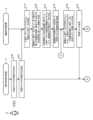
- machine learning method 10 and 11 are flowcharts showing an example of a machine learning method by the machine learning device 3.
- step S100 when the worker terminal device 5 receives a learning instruction including learning conditions for machine learning of the learning model 12 from the worker 10, the learning instruction is sent to the machine learning device 3 in step S101.
- the learning condition for example, a person data acquisition condition when acquiring person data for generating the learning data 11 from the person database 20 and a learning end condition are designated.
- step S110 when the machine learning device 3 receives the learning instruction for the learning model 12 transmitted in step S101, the data acquisition unit 300 satisfies the learning condition of the learning model 12 included in the learning instruction.
- the person database 20 is accessed and a plurality of person data corresponding to a plurality of persons are acquired.
- step S120 the first generation processing unit 301a generates determination rule data 310 for the plurality of person data acquired in step S110 to determine whether or not the behavior of each person conforms to the behavior factor index. Each person is judged according to the judgment rules registered in the . Then, in step S121, the first generation processing unit 301a generates a plurality of sets of learning data 11a by adding a behavior factor index to the person data for each person based on the determination result.
- step S130 the first learning processing unit 301b uses the plurality of sets of learning data 11a generated in step S121 (the learning data 11a after preprocessing may be used) to obtain human data and behavior data.
- the learning model 12a is made to learn the correlation with the factor index.
- step S140 the second generation processing unit 301c inputs the plurality of person data acquired in step S110 to the learning model 12a trained in step S130, and generates the learning model 12a as the inference result.
- the behavior factor index output from each is associated with the person data to create an evaluation list composed of the person data and the behavior factor index.
- step S141 the second generation processing unit 301c transmits the evaluation list to the worker terminal device 5.
- step S142 when the worker terminal device 5 receives the evaluation list transmitted in step S141, the worker terminal device 5 displays the evaluation list on the display screen. At that time, the worker terminal device 5 displays the person data corresponding to the person displayed in the evaluation list on the display screen of the worker terminal device 5 as reference information for the worker 10 to perform the annotation work.
- the display screen may display, for example, the purchase history, web browsing history, web search history, movement history, and questionnaire response history included in the person data.
- product, store, website, location, area and behavioral feature indicators (in this embodiment, product index, store index, website index, location index, area index) given to the feature data, and may be displayed.
- a list of products purchased by each person and the product attributes of each product are displayed, and as part of the product attributes, the product index currently assigned to the product (for example, "high-end", etc.) is displayed. good too.
- the display screen may display not only the raw data of the person data but also information obtained by subjecting the person data to predetermined statistical processing. The content of statistical processing may be changeable.
- the evaluation list on the display screen may display not only the inference result by the learning model 12a in step S140 but also the determination result by the determination rule in step S120.
- step S143 when the worker terminal device 5 receives a correction instruction for the behavior factor index from the worker 10 on its display screen, it transmits the correction instruction to the machine learning device 3 in step S144.
- the worker terminal device 5 receives a correction instruction for the behavior factor index from the worker 10 on its display screen, it transmits the correction instruction to the machine learning device 3 in step S144.
- the annotation work of the worker 10 similarly to FIG. 0: not health-conscious” is shown.
- step S145 when the second generation processing unit 301c receives the correction instruction transmitted in step S144 and accepts the correction instruction for the behavior factor index output in step S140, A plurality of sets of learning data 11b are generated by adding a behavior factor index to the person data based on the acceptance result.
- the worker terminal device 5 may receive a correction instruction for the action feature index from the worker 10 on the display screen, and in that case, the second generation processing unit 301c may perform
- the person database 20 may be updated (corrected) by correcting the action feature index in the feature data registered in the person database 20 .
- the instruction to modify the behavioral characteristic index may be, for example, to add the product index of “health use” to the product currently assigned with the behavioral characteristic index of “luxury”.
- the product index of "luxury” may be deleted.
- the second learning processing unit 301d uses the learning data 11b (preprocessed learning data 11b may be used) generated in step S145 to convert the person data and the behavioral factor index into is learned by the learning model 12b. At that time, the second learning processing unit 301d may further use not only the learning data 11b generated in step S145 but also the learning data 11a generated in step S121. Note that when the person database 20 is updated based on an instruction to correct the action feature index, the learning data 11b is preprocessed while the updated person database 20 is reflected.
- the learning data 11b is preprocessed while the updated person database 20 is reflected.
- step S160 the machine learning unit 301 satisfies a predetermined learning end condition when the second learning processing unit 301d causes the learning model 12b to learn the correlation between the person data and the behavior factor index. Determine whether or not
- step S140 the second generation processing unit 301c replaces the plurality of person data acquired in step S110 with the learning model 12a learned by the first learning processing unit 301b in step S130, By inputting to the learning model 12b learned by the second learning processing unit 301d in step S150, the machine learning unit 301 performs the subsequent processes (steps S140 to S150) in step S160 by satisfying the learning end condition. Repeat until it is determined.
- step S110 corresponds to the data acquisition step
- steps S120 to S160 correspond to the machine learning step
- step S170 corresponds to the learned model storage step.
- the series of processes shown in FIGS. 10 and 11 are executed.
- a series of processes shown in FIGS. 10 and 11 are executed when it is determined that a predetermined execution condition (for example, when a certain period of time has passed since the previous execution or when the person database 20 is updated) is satisfied. good too.
- the machine learning unit 301 determines that the predetermined learning end condition is not satisfied ("No" in step S160)
- the process returns to step S140.
- the process returns to step S120.
- the worker 10 may change, for example, the determination rule of the behavioral factor index, and the machine learning unit 301 performs the processing from step S120 onward based on the changed determination rule. should be executed.
- the machine learning device 3 and the machine learning method according to the present embodiment based on the person data in which the behavior of the person is recorded based on one or a plurality of viewpoints, It is possible to provide a learning model 12 capable of estimating a behavioral factor index indicating a factor. Therefore, by using this learning model 12 in the data processing device 4, the person (user) is not required to input personal information, and the behavior factor index inherent in the person is appropriately given (inferred). can do
- the machine learning unit 301 performs machine learning using the learning data 11a generated based on the determination result by the determination rule, and the learning data 11b generated based on the reception result of the correction instruction for the behavioral factor index.
- the learning model 12 is made to learn the correlation between the person data and the behavioral factor index. Therefore, the machine learning of the learning model 12 is performed step by step through automatic generation of the learning data 11a according to the judgment rule and correction of the learning data 11b by the annotation work of the worker 10.
- a highly accurate learning model 12 can be generated while reducing the workload of annotation work.
- the machine learning unit 301 updates the behavioral feature index given to the feature data in the person database 20 based on the reception result of the correction instruction for the behavioral feature index, so that the person database 20 after the update is reflected.
- Machine learning is performed in a state where Therefore, the accuracy of the action feature index assigned to the feature data included in the person data is improved through the correction of the action feature index by the annotation work of the worker 10, so that the learning model 12 with higher accuracy is generated. can do.
- FIG. 12 is a flow chart showing an example of a data processing method by the data processing device 4. As shown in FIG. In the following, when the worker 10 performs a tagging instruction operation using the worker terminal device 5, the data processing device 4 refers to the person database 20 and the learned learning model 12, and the person data A case of giving a behavioral factor index will be described.
- step S200 when the worker terminal device 5 receives from the worker 10 an imparting instruction including an imparting condition for imparting a behavioral factor index, the imparting instruction is sent to the machine learning device 3 in step S201.
- the provision condition for example, a person data acquisition condition for acquiring the person data to which the behavior factor index is to be assigned from the person database 20 is specified.
- step S210 when the data processing device 4 receives the behavior factor index assignment instruction transmitted in step S201, the data acquisition unit 400 satisfies the behavior factor index assignment condition included in the assignment instruction.
- the person database 20 is accessed and, for example, multiple person data corresponding to multiple persons are acquired.
- the index assigning unit 401 inputs the plurality of person data acquired in step S110 to the learning model 12, and assigns the behavior factor index output from the learning model 12 as the inference result to the person. Assign to each data.
- the index assigning unit 401 assigns “user P” and The assignment list is shown when "user R" is assigned “1: health-conscious” and "user Q" is assigned "0: not health-conscious”.
- the addition list includes the behavior factor index (0 to 1) before post-processing. range of values) may be included.
- step S230 the output processing unit 402 provides, for example, the database device 2 with the behavior factor index (assigned list in FIG. 12) assigned to the person data in step S220, so that the person database 20 Registered in the behavior factor index table.
- the series of processes shown in FIG. 12 ends.
- step S210 corresponds to the data acquisition step
- step S220 corresponds to the indexing step
- step S230 corresponds to the output processing step.
- the worker terminal device 5 executes the series of processes shown in FIG.
- the series of processes shown in FIG. 12 may be executed when it is determined that a condition (for example, when a certain period of time has elapsed since the previous execution or when the person database 20 is updated) is satisfied.
- the behavior factor index inherent in a person (user) can be appropriately calculated without requesting the person (user) to input personal information. It can be given (deduced). Then, the behavioral factor index given to each person is processed by predetermined statistical processing, visualization processing, etc., and various services (product planning, product development, production management, purchase / order management, sales strategy formulation, marketing, advertising, etc.).
- the database device 2, the machine learning device 3, and the data processing device 4 are described as being composed of separate devices, but these three devices may be composed of a single device. However, any two of the three devices may be configured as a single device. At least one of the machine learning device 3 and the data processing device 4 may be incorporated in the worker terminal device 5 .
- machine learning models include tree models such as decision trees and regression trees, ensemble learning models such as bagging and boosting, recurrent neural networks, convolutional neural networks, and neural network models such as LSTM (deep learning including), hierarchical clustering, non-hierarchical clustering, k-neighbor method, k-means clustering models, principal component analysis, factor analysis, logistic regression and other multivariate analysis models, support vector machines, and the like.
- LSTM deep learning including
- the present invention can be provided not only in the aspect of the data processing device 4 (data processing method or data processing program) according to the above embodiment, but also in the aspect of an inference device (inference method or inference program).
- the inference device may include a memory and a processor, and the processor of these may execute a series of processes.
- the series of processes includes a data acquisition process (data acquisition process) for acquiring personal data, and an inference process (inference process ) and
- the index assignment unit uses the learned learning model generated by the machine learning device 3 and the machine learning method according to the above embodiment. It should be understood by those skilled in the art that reasoning techniques may be applied.
- 1... person information management system 2... database device, 3... machine learning device, 4... Data processing device, 5... Worker terminal device, 6... Network, 10... Worker, 11, 11a, 11b... Learning data, 12, 12a, 12b... learning model, 20... person database, 30... control unit, 31... storage unit, 32... communication unit, 33... input unit, 34... display unit, 40... control unit, 41... storage unit, 42... communication unit, 43... input unit, 44... display unit, 120... Input layer, 121... Intermediate layer, 122... Output layer, 300... data acquisition unit, 301... machine learning unit, 301a... first generation processing unit, 301b... first learning processing unit, 301c... second generation processing unit, 301d... second learning processing unit, 310... Judgment rule data, 311... Machine learning program, 400... data acquisition unit, 401... index assignment unit, 402... output processing unit, 410 data processing program
Landscapes
- Engineering & Computer Science (AREA)
- Theoretical Computer Science (AREA)
- Physics & Mathematics (AREA)
- Software Systems (AREA)
- Business, Economics & Management (AREA)
- General Physics & Mathematics (AREA)
- Tourism & Hospitality (AREA)
- General Health & Medical Sciences (AREA)
- Computing Systems (AREA)
- General Engineering & Computer Science (AREA)
- Evolutionary Computation (AREA)
- Mathematical Physics (AREA)
- Data Mining & Analysis (AREA)
- Health & Medical Sciences (AREA)
- Artificial Intelligence (AREA)
- Computational Linguistics (AREA)
- Economics (AREA)
- Medical Informatics (AREA)
- Biomedical Technology (AREA)
- Molecular Biology (AREA)
- Computer Vision & Pattern Recognition (AREA)
- Life Sciences & Earth Sciences (AREA)
- Biophysics (AREA)
- Human Resources & Organizations (AREA)
- Marketing (AREA)
- Primary Health Care (AREA)
- Strategic Management (AREA)
- General Business, Economics & Management (AREA)
- Management, Administration, Business Operations System, And Electronic Commerce (AREA)
Applications Claiming Priority (2)
| Application Number | Priority Date | Filing Date | Title |
|---|---|---|---|
| JP2021213643A JP7664585B2 (ja) | 2021-12-28 | 2021-12-28 | 機械学習装置、データ処理装置、推論装置、機械学習方法、データ処理方法、及び、推論方法 |
| JP2021-213643 | 2021-12-28 |
Publications (1)
| Publication Number | Publication Date |
|---|---|
| WO2023127583A1 true WO2023127583A1 (ja) | 2023-07-06 |
Family
ID=86998915
Family Applications (1)
| Application Number | Title | Priority Date | Filing Date |
|---|---|---|---|
| PCT/JP2022/046755 Ceased WO2023127583A1 (ja) | 2021-12-28 | 2022-12-20 | 機械学習装置、データ処理装置、推論装置、機械学習方法、データ処理方法、及び、推論方法 |
Country Status (2)
| Country | Link |
|---|---|
| JP (1) | JP7664585B2 (https=) |
| WO (1) | WO2023127583A1 (https=) |
Families Citing this family (1)
| Publication number | Priority date | Publication date | Assignee | Title |
|---|---|---|---|---|
| JP7798989B1 (ja) | 2024-09-19 | 2026-01-14 | 株式会社サイバーエージェント | 自然言語生成装置、履歴データ生成装置、自然言語生成方法、およびプログラム |
Citations (4)
| Publication number | Priority date | Publication date | Assignee | Title |
|---|---|---|---|---|
| JP2019061525A (ja) * | 2017-09-27 | 2019-04-18 | トッパン・フォームズ株式会社 | コンテンツレコメンドシステム、コンテンツレコメンド方法、及びプログラム |
| JP2020035409A (ja) * | 2018-08-27 | 2020-03-05 | 楽天株式会社 | 特性推定装置、特性推定方法、及び特性推定プログラム等 |
| WO2020183979A1 (ja) * | 2019-03-11 | 2020-09-17 | Necソリューションイノベータ株式会社 | 学習装置、学習方法及び非一時的なコンピュータ可読媒体 |
| JP2021121888A (ja) * | 2020-01-31 | 2021-08-26 | 横河電機株式会社 | 学習装置、学習方法、学習プログラム、判定装置、判定方法、および判定プログラム |
-
2021
- 2021-12-28 JP JP2021213643A patent/JP7664585B2/ja active Active
-
2022
- 2022-12-20 WO PCT/JP2022/046755 patent/WO2023127583A1/ja not_active Ceased
Patent Citations (4)
| Publication number | Priority date | Publication date | Assignee | Title |
|---|---|---|---|---|
| JP2019061525A (ja) * | 2017-09-27 | 2019-04-18 | トッパン・フォームズ株式会社 | コンテンツレコメンドシステム、コンテンツレコメンド方法、及びプログラム |
| JP2020035409A (ja) * | 2018-08-27 | 2020-03-05 | 楽天株式会社 | 特性推定装置、特性推定方法、及び特性推定プログラム等 |
| WO2020183979A1 (ja) * | 2019-03-11 | 2020-09-17 | Necソリューションイノベータ株式会社 | 学習装置、学習方法及び非一時的なコンピュータ可読媒体 |
| JP2021121888A (ja) * | 2020-01-31 | 2021-08-26 | 横河電機株式会社 | 学習装置、学習方法、学習プログラム、判定装置、判定方法、および判定プログラム |
Also Published As
| Publication number | Publication date |
|---|---|
| JP7664585B2 (ja) | 2025-04-18 |
| JP2023097496A (ja) | 2023-07-10 |
Similar Documents
| Publication | Publication Date | Title |
|---|---|---|
| Gooljar et al. | Sentiment-based predictive models for online purchases in the era of marketing 5.0: a systematic review | |
| US20170053208A1 (en) | Behavioral Prediction for Targeted End Users | |
| CN119693066A (zh) | 一种基于人工智能的广告精准投放方法与系统 | |
| CA2899489A1 (en) | Dynamic prediction of online shopper's intent using a combination of prediction models | |
| CN103608834A (zh) | 报告优先级维度数据转化路径 | |
| JP7761890B2 (ja) | データ処理装置、推論装置、機械学習装置、データ処理方法、推論方法、及び、機械学習方法 | |
| JP2019125007A (ja) | 情報分析装置、情報分析方法および情報分析プログラム | |
| KR102409718B1 (ko) | 소셜 네트워크와 연동되는 커머스 플랫폼에서의 리뷰샵 관리 방법 및 시스템 | |
| US20240177113A1 (en) | Systems and methods for digital shelf display | |
| JP7571520B2 (ja) | 情報処理方法、情報処理装置、及び、プログラム | |
| US10013699B1 (en) | Reverse associate website discovery | |
| Kuric et al. | Effect of low-level interaction data in repeat purchase prediction task | |
| CA3267736A1 (en) | Artificial intelligence-based methods and systems for generating responses, ratings, and feedback of social media marketing campaigns | |
| Gao et al. | Validation of the information processing theory of consumer choice: evidence from travel search engine clickstream data | |
| Wasilewski | Multi-variant User Interfaces in E-commerce | |
| Ehsani et al. | Customer purchase prediction in electronic markets from clickstream data using the Oracle meta-classifier | |
| US20260030516A1 (en) | Systems and methods for personalized guidance | |
| WO2023127583A1 (ja) | 機械学習装置、データ処理装置、推論装置、機械学習方法、データ処理方法、及び、推論方法 | |
| WO2020106950A1 (en) | User-experience development system | |
| CN119415693A (zh) | 商品打标方法及其装置、设备、介质 | |
| KR20210106297A (ko) | 블록체인 결제 플랫폼 기반 유무선 광고 서비스 제공 시스템 | |
| JP6152215B2 (ja) | 算出装置、算出方法及び算出プログラム | |
| Rajapaksha et al. | Recommendations to increase the customer interaction of e-commerce applications with web usage mining | |
| Pariserum Perumal et al. | FIRMACA-Fuzzy intelligent recommendation model using ant clustering algorithm for social networking | |
| TWM573493U (zh) | 藉由訪客瀏覽路徑預測轉換機率之系統 |
Legal Events
| Date | Code | Title | Description |
|---|---|---|---|
| 121 | Ep: the epo has been informed by wipo that ep was designated in this application |
Ref document number: 22915807 Country of ref document: EP Kind code of ref document: A1 |
|
| NENP | Non-entry into the national phase |
Ref country code: DE |
|
| 32PN | Ep: public notification in the ep bulletin as address of the adressee cannot be established |
Free format text: NOTING OF LOSS OF RIGHTS PURSUANT TO RULE 112(1) EPC (EPO FORM 1205A DATED 270924) |
|
| 122 | Ep: pct application non-entry in european phase |
Ref document number: 22915807 Country of ref document: EP Kind code of ref document: A1 |