WO2023127319A1 - 電池診断システム - Google Patents
電池診断システム Download PDFInfo
- Publication number
- WO2023127319A1 WO2023127319A1 PCT/JP2022/041695 JP2022041695W WO2023127319A1 WO 2023127319 A1 WO2023127319 A1 WO 2023127319A1 JP 2022041695 W JP2022041695 W JP 2022041695W WO 2023127319 A1 WO2023127319 A1 WO 2023127319A1
- Authority
- WO
- WIPO (PCT)
- Prior art keywords
- soh
- data
- secondary battery
- unit
- battery
- Prior art date
- Legal status (The legal status is an assumption and is not a legal conclusion. Google has not performed a legal analysis and makes no representation as to the accuracy of the status listed.)
- Ceased
Links
Images






Classifications
-
- G—PHYSICS
- G01—MEASURING; TESTING
- G01R—MEASURING ELECTRIC VARIABLES; MEASURING MAGNETIC VARIABLES
- G01R31/00—Arrangements for testing electric properties; Arrangements for locating electric faults; Arrangements for electrical testing characterised by what is being tested not provided for elsewhere
- G01R31/36—Arrangements for testing, measuring or monitoring the electrical condition of accumulators or electric batteries, e.g. capacity or state of charge [SoC]
- G01R31/367—Software therefor, e.g. for battery testing using modelling or look-up tables
-
- G—PHYSICS
- G01—MEASURING; TESTING
- G01N—INVESTIGATING OR ANALYSING MATERIALS BY DETERMINING THEIR CHEMICAL OR PHYSICAL PROPERTIES
- G01N27/00—Investigating or analysing materials by the use of electric, electrochemical, or magnetic means
- G01N27/02—Investigating or analysing materials by the use of electric, electrochemical, or magnetic means by investigating impedance
- G01N27/026—Dielectric impedance spectroscopy
-
- G—PHYSICS
- G01—MEASURING; TESTING
- G01R—MEASURING ELECTRIC VARIABLES; MEASURING MAGNETIC VARIABLES
- G01R31/00—Arrangements for testing electric properties; Arrangements for locating electric faults; Arrangements for electrical testing characterised by what is being tested not provided for elsewhere
- G01R31/36—Arrangements for testing, measuring or monitoring the electrical condition of accumulators or electric batteries, e.g. capacity or state of charge [SoC]
-
- G—PHYSICS
- G01—MEASURING; TESTING
- G01R—MEASURING ELECTRIC VARIABLES; MEASURING MAGNETIC VARIABLES
- G01R31/00—Arrangements for testing electric properties; Arrangements for locating electric faults; Arrangements for electrical testing characterised by what is being tested not provided for elsewhere
- G01R31/36—Arrangements for testing, measuring or monitoring the electrical condition of accumulators or electric batteries, e.g. capacity or state of charge [SoC]
- G01R31/382—Arrangements for monitoring battery or accumulator variables, e.g. SoC
- G01R31/3828—Arrangements for monitoring battery or accumulator variables, e.g. SoC using current integration
-
- G—PHYSICS
- G01—MEASURING; TESTING
- G01R—MEASURING ELECTRIC VARIABLES; MEASURING MAGNETIC VARIABLES
- G01R31/00—Arrangements for testing electric properties; Arrangements for locating electric faults; Arrangements for electrical testing characterised by what is being tested not provided for elsewhere
- G01R31/36—Arrangements for testing, measuring or monitoring the electrical condition of accumulators or electric batteries, e.g. capacity or state of charge [SoC]
- G01R31/389—Measuring internal impedance, internal conductance or related variables
-
- G—PHYSICS
- G01—MEASURING; TESTING
- G01R—MEASURING ELECTRIC VARIABLES; MEASURING MAGNETIC VARIABLES
- G01R31/00—Arrangements for testing electric properties; Arrangements for locating electric faults; Arrangements for electrical testing characterised by what is being tested not provided for elsewhere
- G01R31/36—Arrangements for testing, measuring or monitoring the electrical condition of accumulators or electric batteries, e.g. capacity or state of charge [SoC]
- G01R31/392—Determining battery ageing or deterioration, e.g. state of health
-
- G—PHYSICS
- G01—MEASURING; TESTING
- G01R—MEASURING ELECTRIC VARIABLES; MEASURING MAGNETIC VARIABLES
- G01R31/00—Arrangements for testing electric properties; Arrangements for locating electric faults; Arrangements for electrical testing characterised by what is being tested not provided for elsewhere
- G01R31/36—Arrangements for testing, measuring or monitoring the electrical condition of accumulators or electric batteries, e.g. capacity or state of charge [SoC]
- G01R31/396—Acquisition or processing of data for testing or for monitoring individual cells or groups of cells within a battery
-
- H—ELECTRICITY
- H01—ELECTRIC ELEMENTS
- H01M—PROCESSES OR MEANS, e.g. BATTERIES, FOR THE DIRECT CONVERSION OF CHEMICAL ENERGY INTO ELECTRICAL ENERGY
- H01M10/00—Secondary cells; Manufacture thereof
- H01M10/42—Methods or arrangements for servicing or maintenance of secondary cells or secondary half-cells
- H01M10/48—Accumulators combined with arrangements for measuring, testing or indicating the condition of cells, e.g. the level or density of the electrolyte
-
- H—ELECTRICITY
- H02—GENERATION; CONVERSION OR DISTRIBUTION OF ELECTRIC POWER
- H02J—ELECTRIC POWER NETWORKS; CIRCUIT ARRANGEMENTS OR SYSTEMS FOR SUPPLYING OR DISTRIBUTING ELECTRIC POWER; SYSTEMS FOR STORING ELECTRIC ENERGY
- H02J7/00—Circuit arrangements for charging or discharging batteries or for supplying loads from batteries
-
- Y—GENERAL TAGGING OF NEW TECHNOLOGICAL DEVELOPMENTS; GENERAL TAGGING OF CROSS-SECTIONAL TECHNOLOGIES SPANNING OVER SEVERAL SECTIONS OF THE IPC; TECHNICAL SUBJECTS COVERED BY FORMER USPC CROSS-REFERENCE ART COLLECTIONS [XRACs] AND DIGESTS
- Y02—TECHNOLOGIES OR APPLICATIONS FOR MITIGATION OR ADAPTATION AGAINST CLIMATE CHANGE
- Y02E—REDUCTION OF GREENHOUSE GAS [GHG] EMISSIONS, RELATED TO ENERGY GENERATION, TRANSMISSION OR DISTRIBUTION
- Y02E60/00—Enabling technologies; Technologies with a potential or indirect contribution to GHG emissions mitigation
- Y02E60/10—Energy storage using batteries
Definitions
- This disclosure relates to a battery diagnostic system.
- the remaining life diagnostic device acquires the charging information of the secondary battery module from the charger, and calculates the degree of deterioration of the secondary battery module as an actual measurement based on the charging information.
- the degree of deterioration is the current full charge capacity with respect to the new battery capacity.
- the degree of deterioration is SOH (State of Health).
- the remaining life diagnostic device obtains the output information of the secondary battery module and calculates a predicted value of the degree of deterioration by a prediction formula using the output information.
- the remaining life diagnosis device compares the measured value and the predicted value, and calculates the remaining life if the difference between the measured value and the predicted value is equal to or less than a predetermined value. If the difference between the measured value and the predicted value exceeds a predetermined value, the remaining life assessment device corrects the prediction formula based on the measured value. The remaining life diagnostic device calculates the predicted value again using the corrected prediction formula, and calculates the remaining life when the difference between the actual measurement value and the predicted value is equal to or less than a predetermined value.
- the measured value as the degree of deterioration of the secondary battery module calculated by the remaining life diagnostic device is acquired based on the section capacity measurement by current integration. For this reason, the measured value includes a sensing error in the charger and a logic error in the calculation process, so it is difficult to predict the remaining life with high accuracy.
- the present disclosure aims to provide a battery diagnosis system capable of improving the accuracy of estimating the SOH of a secondary battery.
- the battery diagnosis system estimates SOH indicating the degree of deterioration of the secondary battery.
- the battery diagnostic system includes a model section, an SOH calculation section, and an SOH estimation section.
- the model unit acquires usage history data indicating the usage state of the secondary battery, and calculates SOH based on the usage history data.
- the SOH calculation unit acquires physical quantities that change according to the degree of deterioration of the secondary battery as sensing data, and calculates SOH based on the sensing data. Based on the SOH calculated by the model unit and the SOH calculated by the SOH calculation unit, the SOH estimation unit combines both calculation results to estimate the optimum SOH.
- both the error caused by the cell variation of the secondary battery generated in the model section and the sensing error generated in the SOH calculation section are optimized in the SOH estimation section. Therefore, it is possible to reduce the influence of the SOH sensing error calculated by the SOH calculation unit. Therefore, it is possible to improve the estimation accuracy of the SOH of the secondary battery.
- the battery diagnosis system includes a data acquisition section, a data processing section, and a calculation section.
- the data acquisition unit acquires time-series data indicating the usage status of the secondary battery.
- the data processing unit acquires time-series data from the data acquisition unit and processes the time-series data as histogram data.
- the calculation unit calculates SOH as an estimated value using either one of the time-series data acquired by the data acquisition unit and the histogram data acquired by the data processing unit based on a preset calculation model. .
- the SOH is estimated using either one of the time-series data and histogram data of the secondary battery. Therefore, the intervention of errors such as sensing errors can be reduced more than the current integration method. Therefore, it is possible to improve the estimation accuracy of the SOH of the secondary battery.
- FIG. 1 is a diagram showing the configuration of the battery diagnostic system according to the first embodiment
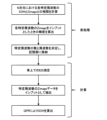
- FIG. 2 is a diagram showing preprocessing for obtaining a specific frequency in advance and processing for calculating an SOH using the specific frequency
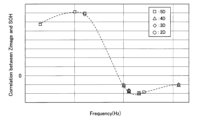
- FIG. 3 is a diagram showing the relationship between the imaginary component Zimage of the impedance and the SOH and the correlation with the frequency.
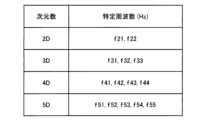
- FIG. 4 is a diagram showing a specific frequency with respect to the number of dimensions
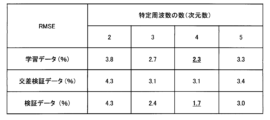
- FIG. 5 is a diagram showing each error of learning data, cross-validation data, and validation data for each number of dimensions
- FIG. 6 is a diagram plotting the real component Zreal and the imaginary component Zimage of the impedance measured by the impedance generator for each frequency.
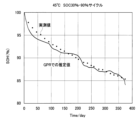
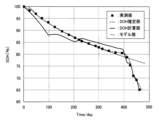
- FIG. 7 is a diagram showing the estimated SOH value of the SOH calculation unit and the measured SOH value when the temperature of the secondary battery is 45° C. and the SOC is charged and discharged between 30% and 90%.
- FIG. 8 is a diagram showing the estimated value of SOH of the SOH calculation unit and the actual measured value of SOH when the temperature of the secondary battery is 10° C. and the SOC is charged and discharged between 10% and 90%.
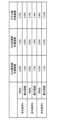
- FIG. 9 is a diagram showing errors in the calculation results of the SOH estimator, the SOH calculator, and the modeler with respect to the measured SOH values for the deterioration conditions A, B, and C.
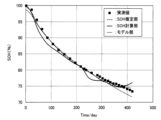
- FIG. 10 is a diagram showing the calculation results of the SOH estimation unit, the SOH calculation unit, and the model unit, and the actual measurement value of SOH for the deterioration condition A.
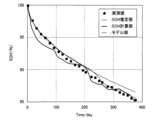
- FIG. 11 is a diagram showing the calculation results of the SOH estimation unit, the SOH calculation unit, and the model unit, and the actual measurement value of SOH for the deterioration condition B.
- FIG. 12 is a diagram showing the calculation results of the SOH estimator, the SOH calculator, and the modeler, and the measured value of SOH for the deterioration condition C.
- FIG. 13 is a diagram showing the flow of preprocessing and calculation of sensing data according to the second embodiment
- FIG. 14 is a diagram showing the flow of preprocessing and calculation of sensing data according to the third embodiment, FIG.
- FIG. 15 is a diagram showing the configuration of a battery diagnosis system according to the fourth embodiment
- FIG. 16 is a diagram showing the flow of calculating SOH according to the fourth embodiment
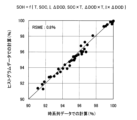
- FIG. 17 is a diagram showing the accuracy of the calculation result when the product of parameters is included in the calculation of SOH
- FIG. 18 is a diagram showing the accuracy of calculation results when the product of parameters is not included in the calculation of SOH.
- the battery diagnostic system is a system that estimates SOH indicating the degree of deterioration of a secondary battery.
- the battery diagnostic system 100 includes a secondary battery 110, a temperature sensor 120, a current sensor 121, a voltage sensor 122, and a data acquisition section . Also, the battery diagnostic system 100 includes an impedance generator 140 , a storage unit 150 , a specific frequency calculation unit 160 and a calculation unit 170 .
- the secondary battery 110 constitutes a battery module in which a plurality of battery cells are connected in series. Each individual battery cell is, for example, a lithium ion secondary battery.
- the secondary battery 110 constitutes a power source of an electric vehicle such as an electric vehicle or a hybrid vehicle. Note that the battery module also includes a configuration in which each battery cell is connected in parallel.
- the temperature sensor 120 measures the temperature of the secondary battery 110 .
- a temperature sensor 120 is installed in the secondary battery 110 .
- a current sensor 121 measures the current value of the secondary battery 110 .
- Current sensor 121 is connected to secondary battery 110 .
- a voltage sensor 122 measures the voltage value of the secondary battery 110 .
- Voltage sensor 122 is connected to secondary battery 110 .
- Each of the sensors 120-122 outputs a detection signal to the data acquisition section 130 at any time.
- the data acquisition unit 130 periodically acquires data on the temperature, current value, and voltage value of the secondary battery 110 . Therefore, the data acquisition section 130 has a temperature acquisition section 131 , a current value acquisition section 132 , and a voltage value acquisition section 133 .
- the temperature acquisition unit 131 periodically acquires information on the temperature T of the secondary battery 110 measured by the temperature sensor 120 .
- the temperature acquisition unit 131 calculates the temperature T from the temperature distribution of the secondary battery 110 acquired during a certain period of time.
- the temperature T can be an average value calculated from the frequency distribution of the temperature of the secondary battery 110 acquired over a certain period of time.
- the temperature acquisition unit 131 outputs information on the temperature T of the secondary battery 110 to the calculation unit 170 .
- the temperature T it is also possible to use an average value of the temperatures of the secondary battery 110 acquired over a certain period of time, or the like, in order to reduce the calculation load.
- the current value acquisition unit 132 periodically acquires information on the current I of the secondary battery 110 measured by the current sensor 121 .
- the current value acquiring unit 132 calculates the current I from the current distribution of the secondary battery 110 acquired during a certain period of time.
- the current I can be an average value calculated from the frequency distribution of the current of the secondary battery 110 acquired over a certain period of time.
- the current value acquisition unit 132 outputs information on the current I of the secondary battery 110 to the calculation unit 170 .
- the current I it is also possible to adopt, for example, the average value of the current of the secondary battery 110 acquired during a certain period in order to reduce the calculation load.
- the voltage value acquisition unit 133 periodically acquires information on the voltage V of the secondary battery 110 measured by the voltage sensor 122 .
- the voltage V can be an average value calculated from the frequency distribution of the voltage values of the secondary battery 110 acquired over a certain period of time.
- the voltage value acquisition unit 133 outputs information on the voltage V of the secondary battery 110 to the calculation unit 170 .
- the voltage V it is also possible to adopt the average value of the voltage of the secondary battery 110 acquired in a certain period, or the like, in order to reduce the calculation load.
- the data acquisition unit 130 acquires information on the temperature T acquired by the temperature acquisition unit 131, information on the current I acquired by the current value acquisition unit 132, and information on the voltage V acquired by the voltage value acquisition unit 133. It is stored in the storage unit 150 as usage history data indicating the usage state of the secondary battery 110 .
- Usage history data includes time-series data and histogram data.
- the time-series data includes temperature T, SOC, voltage V, and current I data of secondary battery 110 .
- Histogram data is data obtained by processing time-series data into a histogram. Note that the SOC is acquired by a calculation unit 170, which will be described later.
- the impedance generator 140 is a device that acquires the impedance of the secondary battery 110 by electrochemical impedance spectroscopy (EIS). Impedance is a physical quantity that changes according to the degree of deterioration of secondary battery 110 .
- the impedance data EIS is sensing data measured by the impedance generator 140 .
- the impedance generator 140 has a superimposed current applying section 141 and an impedance measuring section 142 .
- the superimposed current applying unit 141 applies to the secondary battery 110 a superimposed current in which a plurality of frequency components are superimposed. By using the superimposed current, it is possible to collectively obtain battery voltages when currents of a plurality of frequencies are applied to the secondary battery 110 .
- multiple sine waves can be adopted as the superimposed current.
- a rectangular wave, a sawtooth wave, or a triangular wave can also be used as the superimposed current.
- the current value of the harmonics of the fundamental frequency as the superimposed frequency is greatly reduced as the order increases, whereas the multiple sinusoidal wave does not reduce the current value. Therefore, by adopting multiple sine waves as the superimposed current, high measurement accuracy can be maintained.
- the frequency to be superimposed is not particularly limited and can be set arbitrarily.
- the impedance measurement unit 142 acquires the current value of the superimposed current applied to the secondary battery 110 by the superimposed current application unit 141 . Also, the impedance measurement unit 142 acquires the response voltage when the superimposed current is applied to the secondary battery 110 . Therefore, after measuring the response voltage corresponding to the alternating current applied to the secondary battery 110, the impedance is calculated by dividing the response voltage by the alternating current as a complex number having information on the absolute value and the phase. is the value to be That is, the impedance includes a real component Zreal and an imaginary component Zimage.
- the impedance measurement unit 142 uses discrete Fourier transform to calculate the impedance of the secondary battery 110 for each of a plurality of frequency components.
- Detected values of the current sensor 121 and the voltage sensor 122 can be used as the current value and the voltage value when the superimposed current is applied.
- a fast discrete Fourier transform (FFT) can be employed as the discrete Fourier transform.
- the impedance generator 140 outputs the calculated impedance for each of the plurality of frequency components to the calculator 170 .
- the impedance generator 140 may store impedance data in the storage unit 150 .
- the impedance generator 140 can be configured using, for example, a power conversion device that configures an in-vehicle power control unit. This eliminates the need to separately provide the impedance generator 140 including the superimposed current generator. Also, a large superimposed current can be generated. Therefore, a device configuration suitable for on-board diagnosis of the secondary battery 110 for vehicle use can be achieved. Alternatively, it is also possible to adopt a configuration in which the superimposed current generator is arranged in a vehicle-mounted charging device (not shown) or an external charging device.
- the specific frequency calculation unit 160 is a device for obtaining in advance information on a specific frequency necessary for calculating the optimum SOH of the secondary battery 110 by electrochemical impedance spectroscopy.
- the specific frequency calculator 160 may or may not be mounted on the vehicle.
- the specific frequency is a frequency determined by machine learning using impedance data EIS of the secondary battery 110 obtained in advance. Also, the specific frequency is a frequency that greatly affects the SOH of the secondary battery 110 .
- the optimum SOH is the SOH finally estimated by the calculation unit 170.
- the degree of influence of the secondary battery 110 on the SOH corresponds to the strength of the correlation between the imaginary component Zimage of the impedance and the SOH.
- the specific frequency is, for example, a specific frequency within a range of frequencies greater than 1 Hz, preferably greater than 10 Hz.
- the configuration of the secondary battery 110 differs depending on the electric vehicle in which it is mounted. Therefore, the characteristics of the secondary battery 110 differ, for example, depending on the vehicle type. Therefore, the specific frequency differs depending on the configuration of secondary battery 110 .
- the specific frequency calculator 160 is used to obtain a specific frequency corresponding to the secondary battery 110 mounted on the electric vehicle. A method of obtaining the specific frequency will be described later.
- the storage unit 150 is, for example, a rewritable non-volatile memory.
- the storage unit 150 stores programs for controlling the data acquisition unit 130 , the impedance generator 140 and the calculation unit 170 .
- the storage unit 150 also stores usage history data input from the data acquisition unit 130 and the calculation unit 170 at any time.
- the storage unit 150 stores information on a plurality of specific frequencies in the range of frequencies used in electrochemical impedance spectroscopy measurement in the impedance generator 140 .
- Information on a plurality of specific frequencies is input in advance from the specific frequency calculator 160 .
- the calculation unit 170 estimates the optimum SOH of the secondary battery 110 .
- the calculation unit 170 is configured by a device such as a processor.
- the calculator 170 has an SOC calculator 171 , a modeler 172 , an SOH calculator 173 , and an SOH estimator 174 .
- the SOC calculation unit 171 calculates a charging rate indicating the remaining battery capacity of the secondary battery 110 .
- the charging rate of the secondary battery 110 is expressed as a percentage of the remaining capacity to the full charge capacity of the secondary battery 110 .
- the charging rate of the secondary battery 110 is SOC (State Of Charge).
- the SOC calculation unit 171 calculates the integrated value of the current values of the secondary battery 110 acquired by the current value acquisition unit 132, and calculates the charging rate of the secondary battery 110 based on the integrated value.
- Information on the SOC calculated by the SOC calculation unit 171 is stored in the storage unit 150 and output to the SOH calculation unit 173 .
- the model unit 172 acquires usage history data of the secondary battery 110 from the storage unit 150 .
- the model unit 172 also calculates the SOH by applying the usage history data to a theoretical formula that is a preset calculation model.
- Model section 172 outputs the calculated SOH to SOH estimation section 174 .
- the SOH calculator 173 acquires the impedance data EIS from the impedance generator 140 as sensing data.
- the SOH calculator 173 converts the impedance data EIS into data at a predetermined temperature and predetermined SOC using a temperature conversion model and an SOC conversion model.
- the predetermined temperature is 25° C., for example.
- a predetermined SOC is, for example, 50%.
- the SOH calculator 173 does not use all impedance data EIS corresponding to the measurement frequencies, but uses impedance data EIS corresponding to a plurality of specific frequencies stored in the storage unit 150 . That is, the SOH calculation unit 173 calculates the SOH based on machine learning using as input the imaginary component Zimage of the impedance corresponding to a plurality of specific frequencies among the impedance data EIS. Thereby, the number of input data used in the SOH calculator 173 can be reduced. Therefore, the calculation load of the SOH calculator 173 can be reduced.
- the SOH calculation unit 173 calculates the SOH by Gaussian Process Regression (GPR) using the impedance data EIS as an input as a machine learning technique.
- GPR is one of models for estimating predicted values using current and past states as input values.
- the accuracy of estimating the SOH calculated by the SOH calculator 173 is improved.
- the machine learning method since the machine learning method is used, the SOH estimation accuracy is improved compared to the current integration method.
- SOH calculator 173 outputs the calculated SOH to SOH estimator 174 .
- the SOH estimation unit 174 Based on the SOH calculated by the model unit 172 and the SOH calculated by the SOH calculation unit 173, the SOH estimation unit 174 combines both calculation results to estimate the optimum SOH. Specifically, the SOH estimation unit 174 corrects the SOH calculated by the model unit 172 with the SOH calculated by the SOH calculation unit 173 . The SOH estimation unit 174 calculates the degree of correction based on the SOH variance calculated by the model unit 172 and the noise variance of the SOH calculation unit 173, and estimates the final SOH.
- the SOH estimating unit 174 acquires the optimal SOH estimation result, for example, several times a day or once a day.
- the optimal SOH estimation frequency is not limited to these, and a required frequency is set as appropriate.
- the SOH estimation unit 174 estimates the optimum SOH using a nonlinear Kalman filter.
- the nonlinear Kalman filter is preferably an Extended Kalman Filter. The above is the overall configuration of the battery diagnostic system 100 according to the present embodiment.
- model section 172 calculates SOH based on the usage history data stored in storage section 150 and outputs the calculated SOH to SOH estimation section 174 .
- the SOH calculator 173 calculates the SOH based on the impedance input from the impedance generator 140 .
- the SOH calculation unit 173 calculates the SOH using the information on the plurality of specific frequencies stored in the storage unit 150 . As shown in FIG. 2, information on a plurality of specific frequencies is obtained in advance in preprocessing.
- the secondary battery 110 has a capacity of 50 Ah and has a configuration of NCM622/Gr.
- the configuration of the secondary battery 110 when acquiring the information of the specific frequency in advance in the preprocessing and the configuration of the secondary battery 110 employed in the battery diagnosis system 100 are the same.
- the secondary battery 110 is deteriorated in advance under various conditions.
- Degradation conditions include, for example, storage with different temperatures and SOCs, and repeated charging and discharging with different temperatures, central SOCs, and ⁇ DODs. Also, the transition of SOH until the end of the life of the secondary battery 110 and the imaginary component Zimage of the impedance are acquired as data.
- DOD Depth Of Discharge
- ⁇ DOD is calculated, for example, from the difference between the SOC at the start of charging/discharging and the SOC at the end of charging/discharging.
- FIG. 3 the correlation between the imaginary component Zimage of the impedance and the SOH and the frequency in a certain range is obtained.
- the horizontal axis of FIG. 3 is a logarithmic scale. The larger the value indicating the relationship between the imaginary component Zimage of the impedance and the SOH, the higher the importance.
- the specific frequencies are determined to be f21 and f22.
- the two frequencies correspond to two frequencies of the correlation line shown in FIG.
- three frequencies f31, f32, and f33 are determined, corresponding to three frequencies of the correlation lines shown in FIG.
- Multiple frequencies are determined for the 4th and 5th dimensions as well.
- the learning data is the data actually used for machine learning.
- cross-validation data for example, data under one type of deterioration condition is used as learning data from among all data under multiple types of deterioration conditions, and the excluded data is used as verification data to obtain multiple types of data. This data is obtained by machine learning by sequentially changing all the data to verification data.
- Validation data is unknown data that has not been used for machine learning.
- RMSE indicates the root mean square error (%) of each data with respect to the measured SOH.
- the measured value of SOH is obtained when the temperature of the secondary battery 110 is 25° C., the SOC of the secondary battery 110 is charged and discharged between 0% and 100%, and the current of the secondary battery 110 is C/3. , (current battery capacity/initial battery capacity) ⁇ 100(%).
- the specific frequency calculator 160 determines the number and frequency of specific frequencies. After that, the specific frequency calculation unit 160 stores the number of specific frequencies and the frequency information in the storage unit 150 . The pretreatment is thus completed.
- the SOH calculator 173 executes the calculation flow shown in FIG. 2 using the information of the four specific frequencies acquired in advance as described above. Therefore, the SOH calculator 173 first acquires the impedance data EIS measured by the impedance generator 140 . As shown in FIG. 6, the impedance changes in the real number component Zreal and the imaginary number component Zimage for each frequency.
- the SOH calculator 173 converts the impedance data EIS into data at a temperature of 25° C. and an SOC of 50%, for example, using a temperature conversion model and an SOC conversion model. This allows calculation of SOH at any temperature and SOC.
- the SOH calculation unit 173 requests information on the four specific frequencies from the storage unit 150 and acquires information on the four specific frequencies from the storage unit 150 . Also, the SOH calculator 173 extracts imaginary number components Zimage corresponding to four specific frequencies from the impedance data group shown in FIG. 6 as inputs.
- the SOH calculator 173 calculates the SOH by GPR using the four imaginary components Zimage of the impedance as inputs. SOH calculator 173 outputs the calculated SOH to SOH estimator 174 .
- the inventors set the temperature of the secondary battery 110 to 45° C. and calculated the SOH of the SOH calculation unit 173 when the charge/discharge cycle was repeated multiple times with the SOC between 30% and 90%. The results are shown in FIG.
- the horizontal axis of FIG. 7 is the number of days. As shown in FIG. 7, the estimated value of SOH in GPR was close to the measured value of SOH.
- the inventors set the temperature of the secondary battery 110 to 10° C., and calculated the SOH of the SOH calculation unit 173 when the charge/discharge cycle was repeated multiple times with an SOC between 10% and 90%.
- the results are shown in FIG.
- the horizontal axis of FIG. 8 is the number of days. As shown in FIG. 8, even when the secondary battery 110 was placed in a cold environment, the estimated value of SOH in GPR did not deviate greatly from the measured value of SOH.
- the SOH estimation unit 174 estimates the optimum SOH by an extended Kalman filter using the SOH calculated by the model unit 172 and the SOH calculated by the SOH calculation unit 173 as described above.
- the optimum SOH is hereinafter referred to as optimized SOH.
- the SOH estimator 174 outputs the optimized SOH to an external device.
- the external device is used for displaying the obtained optimized SOH to the user, charging/discharging control of the secondary battery 110, and the like.
- the inventors compared the calculation results of the model unit 172, the calculation results of the SOH calculation unit 173, and the calculation results of the SOH estimation unit 174 under a plurality of deterioration conditions with the measured SOH values. The results are shown in FIG.
- the deterioration condition A is a case where the temperature of the secondary battery 110 is set to 45° C., and the charge/discharge cycle of SOC between 0% and 100% is repeated multiple times.
- Deterioration condition B is a case in which the temperature of the secondary battery 110 is set to 45° C. and the charge/discharge cycle of SOC between 30% and 90% is repeated multiple times.
- Deterioration condition C is a case where the temperature of the secondary battery 110 is set to 10° C., and the charge/discharge cycle of SOC between 10% and 90% is repeated multiple times.
- the charging current is 0.3C and the discharging current is 1C.
- the method for measuring the actual value of SOH is the same as described above.
- the error in the calculation result of the optimized SOH of the SOH estimation unit 174 was 0.3%, and the maximum error was 1.2%.
- the optimized SOH of the SOH estimator 174 is closer to the measured SOH than the calculation results of the modeler 172 and SOH calculator 173 .
- the SOH estimating unit 174 synthesizes the calculation result of the model unit 172 and the calculation result of the SOH calculation unit 173 for optimization. Specifically, the SOH estimation unit 174 uses the SOH calculated by the model unit 172 as a base, and corrects the SOH of the model unit 172 with the actual measurement value SOH calculated by the SOH calculation unit 173 to obtain the final value. Estimates SOH.
- the SOH estimator 174 allows the SOH estimator 174 to optimize both the error caused by the cell variation of the secondary battery 110 that occurs in the model unit 172 and the sensing error that occurs in the SOH calculator 173 . In other words, the influence of the SOH sensing error calculated by the SOH calculator 173 can be reduced. Therefore, the estimation accuracy of the optimized SOH of the secondary battery 110 can be improved.
- the battery diagnosis system 100 may employ only the calculation result of the SOH calculation unit 173 as the estimated value of SOH.
- the SOH calculator 173 acquires physical quantities that change according to the degree of deterioration of the secondary battery 110 as sensing data, and estimates the SOH based on the sensing data. Therefore, the intervention of errors such as sensing errors can be reduced more than the current integration method. Therefore, the estimation accuracy of the SOH of the secondary battery 110 can be improved.
- the SOH calculation unit 173 calculates the SOH using the voltage change during charging of the secondary battery 110 as sensing data.
- the secondary battery 110 in preprocessing, the secondary battery 110 is deteriorated in advance under various deterioration conditions, and the transition of the SOH until the life of the secondary battery 110 is acquired. Also, the voltage change during charging under the deterioration condition is acquired and stored in advance in the storage unit 150 .
- a voltage change is, for example, a change in voltage value in the section from 3.6V to 3.7V.
- the voltage section of 3.6V-3.7V is a region where the voltage value changes significantly when the secondary battery 110 deteriorates.
- the present inventors have elucidated the correlation between the voltage change and the SOH in the voltage section after extensive studies. That is, the voltage value is a physical quantity that changes according to the degree of deterioration of secondary battery 110 .
- the secondary battery 110 is charged at a charging stand.
- the SOH calculation unit 173 acquires the voltage change of the secondary battery 110 acquired by the data acquisition unit 130 via the storage unit 150 .
- the SOH calculation unit 173 extracts a voltage change of 3.6V-3.7V from the voltage changes acquired by the data acquisition unit 130 . Then, the SOH calculator 173 calculates the SOH by GPR with the voltage change of 3.6V-3.7V as input. In this way, the SOH can also be calculated using the voltage change during charging of the secondary battery 110 as sensing data.
- the voltage change may be a change in voltage value in the section from 4.0V to 4.1V. It is possible to improve the estimation accuracy of SOH in the voltage section as well. Of course, it is not limited to the 3.6V-3.7V section and the 4.0V-4.1V section, and other voltage sections may be set.
- the SOH calculator 173 calculates the SOH using the amount of voltage change in charging voltage relaxation as sensing data.
- the secondary battery 110 in preprocessing, the secondary battery 110 is deteriorated in advance under various deterioration conditions, and the transition of the SOH until the life of the secondary battery 110 is acquired. Also, the voltage relaxation response after charging under the deterioration condition is acquired and stored in advance in the storage unit 150 .
- the voltage relaxation response is, for example, the amount of voltage change for 10 minutes.
- the inventors of the present invention found that the voltage relaxation response after charging correlates with SOH after extensive studies. That is, the amount of voltage change in voltage relaxation response is a physical quantity that changes according to the degree of deterioration of secondary battery 110 .
- the secondary battery 110 is charged at a charging stand and left stationary for 10 minutes or more.
- the SOH calculation unit 173 acquires the amount of voltage change of the secondary battery 110 acquired by the data acquisition unit 130 via the storage unit 150 .
- the SOH calculation unit 173 extracts the voltage change amount for 10 minutes from the voltage changes acquired by the data acquisition unit 130 . Then, the SOH calculation unit 173 calculates the SOH by GPR using the voltage change amount for 10 minutes as an input. In this way, the SOH can also be calculated using the amount of voltage change during charging of the secondary battery 110 as sensing data.
- the battery diagnosis system 100 includes a secondary battery 110 , a data acquisition section 130 , a data processing section 180 , a storage section 150 and a calculation section 170 .
- the data processing unit 180 acquires time-series data from the data acquisition unit 130 and processes the time-series data as histogram data. Note that the histogram data may be processed by the data acquisition unit 130 .
- the data processor 180 has an SOC calculator 181 and a parameter calculator 182 .
- the SOC calculator 181 has the same function as the SOC calculator 171 shown in the first embodiment.
- the parameter calculation unit 182 receives the time-series data of the secondary battery 110 and processes the time-series data as histogram data.
- the histogram data includes parameters of SOC, temperature T, current I, and ⁇ DOD of secondary battery 110 .
- the parameter calculation unit 182 calculates the product of preset parameters.
- the product of parameters includes at least one of SOC ⁇ T, ⁇ DOD ⁇ T, I ⁇ DOD.
- the parameter calculation unit 182 stores the product of parameters in the storage unit 150 . When histogram data is used for SOH estimation, recording of time-series data becomes unnecessary.
- the computing unit 170 has a model unit 172 .
- the model unit 172 calculates the SOH as an estimated value using either one of the time-series data and the histogram data based on a preset calculation model. When histogram data is used, the calculation unit 170 calculates the SOH using each parameter and the product of two or more of the parameters.
- the above is the configuration of the battery diagnostic system 100 according to the present embodiment.
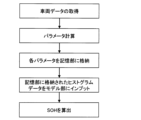
- the data acquisition unit 130 first acquires vehicle data such as time-series data. Subsequently, the data processing unit 180 calculates the product of parameters in the parameter calculation unit 182 . After that, the parameter calculator 182 stores the calculated product of the parameters in the storage 150 .
- f is a preset calculation formula.
- the SOH can be estimated using either one of the time-series data and histogram data of the secondary battery 110 .
- intervening errors such as sensing errors can be reduced more than the current integration method. Therefore, the estimation accuracy of the SOH of the secondary battery 110 can be improved.
- the secondary battery 110 is not limited to being mounted on an electric vehicle, and may be installed at a predetermined location.
- the SOH of the secondary battery 110 is not limited to the SOH of the entire secondary battery 110 , and may be the SOH of a single battery cell constituting the secondary battery 110 or a plurality of SOHs.
Landscapes
- Physics & Mathematics (AREA)
- General Physics & Mathematics (AREA)
- Chemical & Material Sciences (AREA)
- Chemical Kinetics & Catalysis (AREA)
- Electrochemistry (AREA)
- Biochemistry (AREA)
- Pathology (AREA)
- Analytical Chemistry (AREA)
- Health & Medical Sciences (AREA)
- General Health & Medical Sciences (AREA)
- Spectroscopy & Molecular Physics (AREA)
- Immunology (AREA)
- Life Sciences & Earth Sciences (AREA)
- Engineering & Computer Science (AREA)
- Power Engineering (AREA)
- Manufacturing & Machinery (AREA)
- General Chemical & Material Sciences (AREA)
- Secondary Cells (AREA)
- Charge And Discharge Circuits For Batteries Or The Like (AREA)
Priority Applications (4)
| Application Number | Priority Date | Filing Date | Title |
|---|---|---|---|
| DE112022006246.0T DE112022006246T5 (de) | 2021-12-28 | 2022-11-09 | Batteriediagnosesystem |
| CN202280081889.3A CN118401851A (zh) | 2021-12-28 | 2022-11-09 | 电池诊断系统 |
| JP2023570718A JP7639947B2 (ja) | 2021-12-28 | 2022-11-09 | 電池診断システム |
| US18/646,120 US20240272235A1 (en) | 2021-12-28 | 2024-04-25 | Battery diagnostic system |
Applications Claiming Priority (2)
| Application Number | Priority Date | Filing Date | Title |
|---|---|---|---|
| JP2021-214442 | 2021-12-28 | ||
| JP2021214442 | 2021-12-28 |
Related Child Applications (1)
| Application Number | Title | Priority Date | Filing Date |
|---|---|---|---|
| US18/646,120 Continuation US20240272235A1 (en) | 2021-12-28 | 2024-04-25 | Battery diagnostic system |
Publications (1)
| Publication Number | Publication Date |
|---|---|
| WO2023127319A1 true WO2023127319A1 (ja) | 2023-07-06 |
Family
ID=86998808
Family Applications (1)
| Application Number | Title | Priority Date | Filing Date |
|---|---|---|---|
| PCT/JP2022/041695 Ceased WO2023127319A1 (ja) | 2021-12-28 | 2022-11-09 | 電池診断システム |
Country Status (5)
| Country | Link |
|---|---|
| US (1) | US20240272235A1 (https=) |
| JP (1) | JP7639947B2 (https=) |
| CN (1) | CN118401851A (https=) |
| DE (1) | DE112022006246T5 (https=) |
| WO (1) | WO2023127319A1 (https=) |
Families Citing this family (5)
| Publication number | Priority date | Publication date | Assignee | Title |
|---|---|---|---|---|
| JP7540403B2 (ja) | 2021-06-29 | 2024-08-27 | 株式会社デンソー | 電池測定装置及び電池測定方法 |
| JP7775720B2 (ja) * | 2022-01-20 | 2025-11-26 | 株式会社デンソー | 二次電池システム |
| KR20250006629A (ko) * | 2023-07-04 | 2025-01-13 | 삼성에스디아이 주식회사 | 배터리 수명 예측 방법 및 배터리 시스템 |
| CN117239868B (zh) * | 2023-09-14 | 2024-10-01 | 内蒙古工业大学 | 光伏储能系统充放电控制方法 |
| CN118914865B (zh) * | 2024-10-10 | 2024-12-17 | 北京国电通网络技术有限公司 | 一种电池状态评估系统 |
Citations (8)
| Publication number | Priority date | Publication date | Assignee | Title |
|---|---|---|---|---|
| JP2013537638A (ja) * | 2010-08-27 | 2013-10-03 | インペリアル イノヴェイションズ リミテッド | 電気自動車、ハイブリッド電気自動車、および他の用途でのバッテリ監視 |
| JP2015052482A (ja) * | 2013-09-05 | 2015-03-19 | カルソニックカンセイ株式会社 | バッテリの健全度推定装置および健全度推定方法 |
| JP2016099251A (ja) * | 2014-11-21 | 2016-05-30 | 古河電気工業株式会社 | 二次電池状態検出装置および二次電池状態検出方法 |
| JP2016133514A (ja) * | 2015-01-21 | 2016-07-25 | 三星電子株式会社Samsung Electronics Co.,Ltd. | バッテリの状態を推定する方法及び装置 |
| JP2018179684A (ja) * | 2017-04-10 | 2018-11-15 | 三菱自動車工業株式会社 | 二次電池の劣化状態推定装置並びにそれを備えた電池システム及び電動車両 |
| CN111323719A (zh) * | 2020-03-18 | 2020-06-23 | 北京理工大学 | 一种电动汽车动力电池组健康状态在线确定方法和系统 |
| JP2020170622A (ja) * | 2019-04-02 | 2020-10-15 | 東洋システム株式会社 | バッテリー残存価値決定システム |
| US20210055353A1 (en) * | 2017-12-07 | 2021-02-25 | Yazami Ip Pte. Ltd. | Method and system for online assessing state of health of a battery |
Family Cites Families (8)
| Publication number | Priority date | Publication date | Assignee | Title |
|---|---|---|---|---|
| US5650937A (en) * | 1991-11-08 | 1997-07-22 | Universite Paris Val De Marne | Device and method for measuring the charge state of a nickel-cadmium accumulator |
| JPH08250159A (ja) * | 1995-03-08 | 1996-09-27 | Nippon Telegr & Teleph Corp <Ntt> | Ni−Cd電池の劣化状態検知方法 |
| US9035619B2 (en) * | 2012-05-24 | 2015-05-19 | Datang Nxp Semiconductors Co., Ltd. | Battery cell temperature detection |
| JP6004334B2 (ja) * | 2012-10-05 | 2016-10-05 | 学校法人早稲田大学 | 電池システム及び電池システムの評価方法 |
| JP6789025B2 (ja) * | 2015-11-30 | 2020-11-25 | 積水化学工業株式会社 | 診断用周波数決定方法、蓄電池劣化診断方法、診断用周波数決定システムおよび蓄電池劣化診断装置 |
| JP6672112B2 (ja) * | 2016-09-06 | 2020-03-25 | プライムアースEvエナジー株式会社 | 電池容量測定装置及び電池容量測定方法 |
| JP6991616B2 (ja) * | 2018-10-30 | 2022-01-12 | エンネット株式会社 | 電流パルス法による電池診断装置及び電池診断方法 |
| JP7182476B2 (ja) | 2019-01-21 | 2022-12-02 | 株式会社日立製作所 | 二次電池モジュールの余寿命診断方法及び余寿命診断システム |
-
2022
- 2022-11-09 JP JP2023570718A patent/JP7639947B2/ja active Active
- 2022-11-09 CN CN202280081889.3A patent/CN118401851A/zh active Pending
- 2022-11-09 DE DE112022006246.0T patent/DE112022006246T5/de active Pending
- 2022-11-09 WO PCT/JP2022/041695 patent/WO2023127319A1/ja not_active Ceased
-
2024
- 2024-04-25 US US18/646,120 patent/US20240272235A1/en active Pending
Patent Citations (8)
| Publication number | Priority date | Publication date | Assignee | Title |
|---|---|---|---|---|
| JP2013537638A (ja) * | 2010-08-27 | 2013-10-03 | インペリアル イノヴェイションズ リミテッド | 電気自動車、ハイブリッド電気自動車、および他の用途でのバッテリ監視 |
| JP2015052482A (ja) * | 2013-09-05 | 2015-03-19 | カルソニックカンセイ株式会社 | バッテリの健全度推定装置および健全度推定方法 |
| JP2016099251A (ja) * | 2014-11-21 | 2016-05-30 | 古河電気工業株式会社 | 二次電池状態検出装置および二次電池状態検出方法 |
| JP2016133514A (ja) * | 2015-01-21 | 2016-07-25 | 三星電子株式会社Samsung Electronics Co.,Ltd. | バッテリの状態を推定する方法及び装置 |
| JP2018179684A (ja) * | 2017-04-10 | 2018-11-15 | 三菱自動車工業株式会社 | 二次電池の劣化状態推定装置並びにそれを備えた電池システム及び電動車両 |
| US20210055353A1 (en) * | 2017-12-07 | 2021-02-25 | Yazami Ip Pte. Ltd. | Method and system for online assessing state of health of a battery |
| JP2020170622A (ja) * | 2019-04-02 | 2020-10-15 | 東洋システム株式会社 | バッテリー残存価値決定システム |
| CN111323719A (zh) * | 2020-03-18 | 2020-06-23 | 北京理工大学 | 一种电动汽车动力电池组健康状态在线确定方法和系统 |
Also Published As
| Publication number | Publication date |
|---|---|
| DE112022006246T5 (de) | 2024-10-10 |
| JP7639947B2 (ja) | 2025-03-05 |
| US20240272235A1 (en) | 2024-08-15 |
| CN118401851A (zh) | 2024-07-26 |
| JPWO2023127319A1 (https=) | 2023-07-06 |
Similar Documents
| Publication | Publication Date | Title |
|---|---|---|
| JP7639947B2 (ja) | 電池診断システム | |
| JP7289063B2 (ja) | 二次電池の残存性能評価方法、二次電池の残存性能評価プログラム、演算装置、及び残存性能評価システム | |
| Xu et al. | A relative state of health estimation method based on wavelet analysis for lithium-ion battery cells | |
| US7197487B2 (en) | Apparatus and method for estimating battery state of charge | |
| Hu et al. | A multiscale framework with extended Kalman filter for lithium-ion battery SOC and capacity estimation | |
| Hussein | Capacity fade estimation in electric vehicle li-ion batteries using artificial neural networks | |
| CN104833921B (zh) | 电池包荷电状态的计算方法和计算装置 | |
| CN109633477B (zh) | 基于ekf-gpr和日常片段数据的电池组健康状态的实时监控方法 | |
| JP2013019730A (ja) | バッテリの状態予測システム、方法及びプログラム | |
| KR20170092589A (ko) | 배터리의 셀의 충전의 상태를 추정하는 자동적 방법 | |
| EP4636421A1 (en) | Battery evaluation device, machine learning device, battery evaluation program, battery evaluation method, machine learning program, and machine learning method | |
| US9746523B2 (en) | Method for determining at least one state of a plurality of battery cells, computer program, battery and motor vehicle | |
| US20240385250A1 (en) | Secondary battery state detection device, learning unit, and secondary battery state detection method | |
| US20230324463A1 (en) | Method and Apparatus for Operating a System for Detecting an Anomaly of an Electrical Energy Store for a Device by Means of Machine Learning Methods | |
| Sui et al. | Small-sample-learning-based lithium-ion batteries health assessment: An optimized ensemble framework | |
| Kim et al. | Investigation of noise suppression in experimental multi-cell battery string voltage applying various mother wavelets and decomposition levels in discrete wavelet transform for precise state-of-charge estimation | |
| WO2026045644A1 (zh) | 动力电池残值评估方法、装置、车辆、介质及程序 | |
| Wei et al. | Unscented particle filter based state of energy estimation for LiFePO4 batteries using an online updated model | |
| KR20240127604A (ko) | 배터리의 soc 추정장치 및 방법 | |
| WO2024184279A1 (en) | Estimating battery capacity using incremental capacity differentiation | |
| Marisetty et al. | DaSoR: Data-driven State-of-Health & Remaining Useful Life Estimation of Li-ion Batteries in a Closed-loop system of Electric Vehicles | |
| JP7377743B2 (ja) | バッテリ管理装置 | |
| CN117980758A (zh) | 劣化状态预测方法、劣化状态预测装置以及劣化状态预测程序 | |
| Xu et al. | Wavelet based relative state of health estimation for lithium-ion batteries | |
| Kumar | Dual-Stage Hybrid State-of-Charge Estimation of Lithium-Ion Battery Pack |
Legal Events
| Date | Code | Title | Description |
|---|---|---|---|
| 121 | Ep: the epo has been informed by wipo that ep was designated in this application |
Ref document number: 22915551 Country of ref document: EP Kind code of ref document: A1 |
|
| WWE | Wipo information: entry into national phase |
Ref document number: 2023570718 Country of ref document: JP |
|
| WWE | Wipo information: entry into national phase |
Ref document number: 202280081889.3 Country of ref document: CN |
|
| WWE | Wipo information: entry into national phase |
Ref document number: 112022006246 Country of ref document: DE |
|
| 122 | Ep: pct application non-entry in european phase |
Ref document number: 22915551 Country of ref document: EP Kind code of ref document: A1 |