WO2023112203A1 - 情報処理装置、情報処理方法、およびプログラム - Google Patents
情報処理装置、情報処理方法、およびプログラム Download PDFInfo
- Publication number
- WO2023112203A1 WO2023112203A1 PCT/JP2021/046268 JP2021046268W WO2023112203A1 WO 2023112203 A1 WO2023112203 A1 WO 2023112203A1 JP 2021046268 W JP2021046268 W JP 2021046268W WO 2023112203 A1 WO2023112203 A1 WO 2023112203A1
- Authority
- WO
- WIPO (PCT)
- Prior art keywords
- information
- advice
- cancellation
- resource usage
- advice information
- Prior art date
- Legal status (The legal status is an assumption and is not a legal conclusion. Google has not performed a legal analysis and makes no representation as to the accuracy of the status listed.)
- Ceased
Links
Images





Classifications
-
- G—PHYSICS
- G06—COMPUTING OR CALCULATING; COUNTING
- G06Q—INFORMATION AND COMMUNICATION TECHNOLOGY [ICT] SPECIALLY ADAPTED FOR ADMINISTRATIVE, COMMERCIAL, FINANCIAL, MANAGERIAL OR SUPERVISORY PURPOSES; SYSTEMS OR METHODS SPECIALLY ADAPTED FOR ADMINISTRATIVE, COMMERCIAL, FINANCIAL, MANAGERIAL OR SUPERVISORY PURPOSES, NOT OTHERWISE PROVIDED FOR
- G06Q10/00—Administration; Management
- G06Q10/06—Resources, workflows, human or project management; Enterprise or organisation planning; Enterprise or organisation modelling
- G06Q10/063—Operations research, analysis or management
- G06Q10/0631—Resource planning, allocation, distributing or scheduling for enterprises or organisations
- G06Q10/06315—Needs-based resource requirements planning or analysis
-
- G—PHYSICS
- G06—COMPUTING OR CALCULATING; COUNTING
- G06N—COMPUTING ARRANGEMENTS BASED ON SPECIFIC COMPUTATIONAL MODELS
- G06N20/00—Machine learning
-
- G—PHYSICS
- G06—COMPUTING OR CALCULATING; COUNTING
- G06Q—INFORMATION AND COMMUNICATION TECHNOLOGY [ICT] SPECIALLY ADAPTED FOR ADMINISTRATIVE, COMMERCIAL, FINANCIAL, MANAGERIAL OR SUPERVISORY PURPOSES; SYSTEMS OR METHODS SPECIALLY ADAPTED FOR ADMINISTRATIVE, COMMERCIAL, FINANCIAL, MANAGERIAL OR SUPERVISORY PURPOSES, NOT OTHERWISE PROVIDED FOR
- G06Q10/00—Administration; Management
- G06Q10/02—Reservations, e.g. for tickets, services or events
-
- G—PHYSICS
- G06—COMPUTING OR CALCULATING; COUNTING
- G06Q—INFORMATION AND COMMUNICATION TECHNOLOGY [ICT] SPECIALLY ADAPTED FOR ADMINISTRATIVE, COMMERCIAL, FINANCIAL, MANAGERIAL OR SUPERVISORY PURPOSES; SYSTEMS OR METHODS SPECIALLY ADAPTED FOR ADMINISTRATIVE, COMMERCIAL, FINANCIAL, MANAGERIAL OR SUPERVISORY PURPOSES, NOT OTHERWISE PROVIDED FOR
- G06Q50/00—Information and communication technology [ICT] specially adapted for implementation of business processes of specific business sectors, e.g. utilities or tourism
- G06Q50/10—Services
Definitions
- the present invention relates to an information processing device, an information processing method, and a program that can provide users with advice that allows them to use an AI platform more appropriately.
- the AI platform is being used.
- the AI platform provides the equipment and software necessary for constructing analysis models, and by utilizing the AI platform, the burden on users is greatly reduced.
- Patent Document 1 proposes a technology that uses cancellation prediction to generate a sales activity plan and allows sales personnel to efficiently conduct sales activities at the appropriate timing.
- One aspect of the present invention has been made in view of the above problems, and an example of its purpose is to provide users with advice that allows them to make better use of AI platforms.
- An information processing apparatus includes acquisition means for acquiring log information and resource usage of a target user in an analysis environment in which analysis by machine learning is performed, and advice information from the log information and resource usage in the analysis environment.
- generation means for generating advice information about the target user by inputting the log information and resource usage rate of the target user acquired by the acquisition means into an advice information generation model learned to generate the and output means for outputting the advice information generated by the means.
- An information processing method includes acquiring log information and resource usage of a target user in an analysis environment in which machine learning analysis is performed, and generating advice information from the log information and resource usage in the analysis environment. generating advice information about the target user by inputting the target user's log information and resource usage rate acquired by the acquisition means into an advice information generation model learned to Including output.
- a program comprises: acquisition means for acquiring log information and resource usage of a target user in an analysis environment in which analysis by machine learning is performed; and advice from the log information and resource usage in the analysis environment.
- generation means for generating advice information about the target user by inputting the log information and the resource usage rate of the target user acquired by the acquisition means into an advice information generation model trained to generate information; and output means for outputting the advice information generated by the generation means.
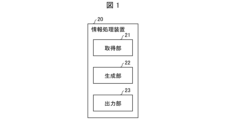
- FIG. 1 is a block diagram showing a configuration example of an information processing apparatus according to illustrative Embodiment 1 of the present invention
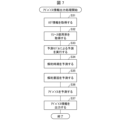
- FIG. 3 is a flow chart showing the flow of an information processing method according to exemplary embodiment 1 of the present invention
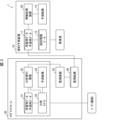
- FIG. 11 is a block diagram showing a configuration example of a cancellation prediction system according to exemplary Embodiment 2 of the present invention
- FIG. 4 is a block diagram showing a configuration example of a cancellation prediction device.
- 8 is a diagram for explaining a prediction method of an advice information generation model 81;
- FIG. It is a figure explaining the example of advice information.
- 4 is a flowchart for explaining the flow of advice information output processing by the cancellation prediction device 10.
- FIG. 3 is a flow chart showing the flow of an information processing method according to exemplary embodiment 1 of the present invention
- FIG. 11 is a block diagram showing a configuration example of a cancellation prediction system according to exemplary Embodiment 2 of the present invention
- FIG. 4 is a block diagram showing
- FIG. 3 is a diagram showing an example of a computer that executes program instructions for realizing each function
- the information processing device 20 is, roughly speaking, a device that generates information for providing advice to users by using operation monitoring data by a provider of an AI platform.
- the information processing device 20 Acquisition means for acquiring log information and resource usage rate of a target user in an analysis environment for performing analysis by machine learning; Advice information about the target user by inputting the target user's log information and resource usage rate acquired by the acquisition means into an advice information generation model trained to generate advice information from the log information and resource usage rate in the analysis environment a generating means for generating and output means for outputting the advice information generated by the generation means.
- FIG. 1 is a block diagram showing a configuration example of an information processing device 20. As shown in FIG.
- the information processing device 20 includes an acquisition unit 21, a generation unit 22 and an output unit 23.
- the acquisition unit 21 is a configuration that implements acquisition means in this exemplary embodiment.
- the generation unit 22 is a configuration that implements generation means in this exemplary embodiment.
- the output unit 23 is a configuration that implements output means in this exemplary embodiment.
- the acquisition unit 21 acquires the target user's log information and resource usage rate in the analysis environment for machine learning analysis.
- An example of an analysis environment for machine learning analysis is an AI platform.
- Log information includes, for example, user access history, execution history when analysis is performed on the AI platform, and error history.
- the resource usage rate is, for example, the usage rate of CPU, memory, GPU, etc.
- the generation unit 22 inputs the target user's log information and resource usage rate acquired by the acquisition unit 21 into the advice information generation model trained to generate advice information from the log information and resource usage rate in the analysis environment. , to generate advisory information about the target user.
- the advice information generation model is, for example, a prediction model that includes decision tree rules and a linear regression model. For example, the target user's log information and resource usage rate are divided into cases based on rules, and prediction is performed by a linear regression model in each case.
- the advice information generation model is, for example, a model learned by machine learning with reference to training data that includes multiple sets of user log information, resource usage rate, and advice information.
- the time when users will cancel the AI platform service is predicted.
- the factors that cause the user to cancel the AI platform service can be predicted by classifying cases based on the rules.
- advice information is generated that includes advice to eliminate the cause of cancellation.
- the output unit 23 outputs the advice information generated by the generation unit 22.
- FIG. 2 is a flow chart showing the flow of the information processing method. As shown in the figure, information processing includes steps S11, S12, and S13.
- step S11 the acquisition unit 21 acquires the target user's log information and resource usage rate in the analysis environment for machine learning analysis.
- step S12 the generation unit 22 applies the log information and resource usage rate of the target user acquired by the acquisition unit 21 to the advice information generation model trained to generate advice information from the log information and resource usage rate in the analysis environment.
- the input generates advice information about the target user.
- step S13 the output unit 23 outputs the advice information generated by the generation unit 22.
- the log information and the resource usage rate of the target user are acquired, and advice information generation is learned to generate advice information from the log information and the resource usage rate in the analysis environment.
- Advisory information about the target user is generated by inputting the target user's log information and resource usage into the model. By doing so, it is possible to provide the user with advice for making better use of the AI platform. For example, the user can be advised to perform a more accurate analysis, and the project can be prevented from being derailed.
- FIG. 3 is a diagram illustrating a cancellation prediction system. As shown in FIG. 3, it includes a churn prediction device 10 and an AI platform 30 .
- AI platform 30 The AI platform 30 provides equipment and software necessary for constructing an analysis model by AI, and can be used by contracted users, for example.
- a user who has a contract with a business operator obtains a user ID and password and is permitted to access the AI platform 30. Thereby, the user builds an analysis model using the AI platform. In this way, the AI platform service will be provided by the business operator.
- the user is a data scientist who aims to build an analytical model to predict product sales as accurately as possible at the request of a retail company.
- the retailer will provide information such as past product sales performance, customer attributes, and sales outlets, and the project will start to complete the analysis model within the deadline specified by the retailer.
- the AI platform 30 is equipped with a storage 31.
- the storage 31 stores learning data, prediction data, and the like.
- the learning data is, for example, data that includes information such as product sales records, customer attributes, and stores that have been accumulated in the past.
- Prediction data is, for example, data including information such as sales conditions of products to be predicted.
- the AI platform 30 also has an analysis execution environment 32 and an analysis model 33 .
- the analysis execution environment 32 is configured by, for example, a computer, and executes arithmetic processing related to analysis.
- the analysis execution environment 32 may be realized by cloud computing, for example.
- the analysis model 33 is generated by processing executed in the analysis execution environment 32 and is, for example, a prediction model configured by model parameters stored in the storage 31 .
- the user obtains a prediction result 34 by inputting data related to the sales conditions of the product targeted for prediction into the analysis model 33 .
- the AI platform 30 includes a monitoring infrastructure 35 and a storage 36.
- a user who uses the AI platform cannot access the monitoring infrastructure 35 and the storage 36 , but a business operator can access the monitoring infrastructure 35 and the storage 36 .
- the monitoring base 35 monitors the processing executed in the analysis execution environment 32.
- the monitoring base 35 records, for example, the date and time of the user's login to the analysis execution environment 32 and the date and time of logout from the analysis execution environment 32 in the storage 36 as access history to the AI platform 30 .
- the monitoring base 35 records the resource usage rate of the analysis execution environment 32 in the storage 36 .
- Resource usage is, for example, CPU usage and/or memory usage.
- the monitoring platform 35 records in the storage 36 the start date and time and the end date and time of the job related to the analysis executed by the user in the analysis execution environment 32 and the error history indicating whether the job ended normally.
- the access history and error information described above may be recorded in the storage 36 as log information, for example. That is, the log information includes the number of accesses to the analysis execution environment by the target user and the error history related to the analysis.
- the log information and resource usage rates as described above are stored in the storage 36 as monitoring results. Also, the monitoring results may include other information acquired by the monitoring infrastructure 35 in addition to the log information and resource usage rate.
- the monitoring results stored in the storage 36 are provided to the cancellation prediction device 10 as learning data and prediction data.
- the cancellation prediction device 10 is used, for example, by a business operator that provides the AI platform 30 .
- the cancellation prediction device 10 is a device that predicts when a user using the AI platform 30 will cancel the contract of the AI platform service and the reason for the cancellation, and also generates advice to be provided to the user by the business operator. .
- the cancellation prediction device 10 includes a storage 11.
- the storage 11 stores learning data, prediction data, and the like.
- the learning data is, for example, data including monitoring results accumulated in the past.
- contract information data is stored in the storage 12 of the cancellation prediction device 10.
- the contract information data is data including information indicating the user's service usage start date, the user's cancellation date, and the user's reason for cancellation, and is stored as a database composed of records for each user, for example.
- the business confirms with the user the reason for cancellation and records the contract information data record including the reason for cancellation.
- Prediction data is, for example, data that includes information such as monitoring results related to users to be predicted.
- the information processing device 20 uses the advice information generation model to predict when and why the user will cancel the AI platform service.
- the information processing device 20 also generates advice information using an advice information generation model.
- the advice information generation model is composed of model parameters obtained by machine learning using learning data.
- the prediction result 15 by the information processing device 20 includes the cancellation timing, cancellation factors, and coping methods for eliminating the cancellation factors, and based on the prediction results 15, advice information including the cancellation timing and cancellation factors is generated.
- FIG. 4 is a block diagram showing a configuration example of the cancellation prediction device 10.
- the cancellation prediction device 10 includes an information processing device 20 , a storage unit 100 , a communication unit 121 , an external input unit 122 and an external output unit 123 .
- the information processing device 20 is a functional block having the same functions as the information processing device 20 described in the first exemplary embodiment.
- the storage unit 100 is configured by, for example, a semiconductor memory device, and stores data.
- the storage unit 100 stores prediction data and contract information data.
- the storage unit 100 is a functional block corresponding to the storages 11 and 12 shown in FIG.
- the storage unit 100 stores prediction data, contract information data, and model parameters. Model parameters are used for prediction by the advice information generation model 81 .
- the communication unit 121 is an interface for connecting the cancellation prediction device 10 to the network.
- the specific configuration of the network does not limit this exemplary embodiment, but as an example, a wireless LAN (Local Area Network), a wired LAN, a WAN (Wide Area Network), a public line network, a mobile data communication network, or , a combination of these networks can be used.
- the external input unit 122 receives various inputs to the cancellation prediction device 10.
- the specific configuration of the external input unit 122 does not limit this exemplary embodiment, but as an example, it can be configured to include an input device such as a keyboard and a touch pad.
- the external input unit 122 may be configured to include a data scanner that reads data via electromagnetic waves such as infrared rays and radio waves, and a sensor that senses the state of the environment.
- the external output unit 123 is a functional block that outputs the processing result of the cancellation prediction device 10.
- the specific configuration of the external output unit 123 does not limit this exemplary embodiment, but as an example, it is composed of a display, a speaker, a printer, etc., and displays various processing results etc. by the cancellation prediction device 10 on the screen. or output as audio or graphics.
- the acquisition unit 21 of the information processing device 20 acquires the target user's log information and resource usage rate in the analysis execution environment 32 .
- log information and resource usage are stored in the storage 36 as monitoring results and used as prediction data.
- the resource usage rate cannot be obtained for each user, so for example, the CPU usage rate and/or memory usage rate in the analysis execution environment 32 within the execution time of the job specified from the log information is obtained.
- the acquisition unit 21 may further acquire the contract information of the target user.
- the target user may be a part of the contract information data stored in the storage unit 100, and the target user's service usage start time may be acquired.
- the generation unit 22 of the information processing device 20 has an advice information generation model 81.
- the advice information generation model 81 categorizes the target user's log information and resource usage rate acquired by the acquisition unit 21 into cases based on rules, and executes prediction by a linear regression model in each case.
- the data input to the advice information generation model 81 may include the contract information of the target user.
- the output unit 23 refers to the predicted cause of cancellation and generates advice information including advice to resolve the cancellation.
- FIG. 5 is a diagram for explaining the prediction method of the advice information generation model 81.
- the advice information generation model is configured as a heterogeneous prediction model.
- a heterogeneous mixture prediction model divides input data into cases according to decision tree rules, and predicts with a linear model that combines different explanatory variables for each case.
- the input data corresponds to prediction data and contract information data, and includes, for example, the target user's log information and resource usage rate, and the time when the target user contracted for the AI platform service.
- condition A Y
- prediction formula 1 That is, part or all of the information contained in the input data is used as explanatory variables, and prediction is performed by computation of a linear prediction formula for obtaining the objective variable.
- Prediction formula 2 may be, for example, a linear prediction formula with a weight variable different from that of prediction formula 1.
- prediction formula 2 may be a linear prediction formula that differs from prediction formula 1 in both weighting variables and explanatory variables.
- prediction formula 2 may be a linear prediction formula that predicts an objective variable different from prediction formula 1.
- Prediction formula 3 may also be a linear prediction formula with different weight variables from prediction formulas 1 and 2, or may be a linear prediction formula with different weight variables and explanatory variables. Alternatively, prediction formula 3 may be a linear prediction formula that predicts an objective variable different from prediction formulas 1 and 2.
- prediction by a linear model corresponding to prediction formulas 1 to 3 predicts when the user will cancel the AI platform service.
- factors that cause the user to cancel the AI platform service are predicted by classification based on the rules of the decision tree.
- the timing of cancellation is predicted by classifying cases based on the decision tree rule, and the factors for the cancellation of the AI platform service by the user are predicted by prediction using a linear model corresponding to prediction formulas 1 to 3.
- a linear model corresponding to prediction formula 6 may be generated. Then, the timing of churn is predicted by each of the linear models corresponding to prediction formulas 1 to 3, and the factors for churn are predicted by each of the linear models corresponding to prediction formulas 4 to 6.
- the advice information generation model 81 of the heterogeneous mixture prediction model As described above, by using the advice information generation model 81 of the heterogeneous mixture prediction model, the grounds for the prediction can be explained in an easy-to-understand manner, and highly accurate prediction can be performed.
- Example 1 of prediction results For example, when a prediction is made by the advice information generation model 81 using the prediction data related to user U1, it is predicted that the cancellation time will be within one month, and the reason for the cancellation is predicted to be lack of knowledge about how to use the AI platform.
- the advice information generation model 81 predicts that the cancellation factor is lack of knowledge about how to use the AI platform.
- the cancellation timing is predicted by a prediction calculation based on the linear prediction formula selected as a result of the case classification described above.
- the output unit 23 generates advice information including advice to review the setting items specified at the time of analysis by referring to the predicted cancellation factors and the start-up guide.
- the advice is associated with, for example, a table or the like stored in advance as a coping method for eliminating the cause of cancellation. That is, the output unit 23 selects, as advice to the target user, the coping method corresponding to the cancellation factor obtained as the prediction result of the advice information generation model 81 .
- Prediction result example 2 Further, for example, when prediction is made by the advice information generation model 81 using the prediction data related to user U2, it is predicted that the termination time will be the end of the fiscal year, and the cause of cancellation is predicted to be high costs due to inefficient use of resources.
- job execution by user U2 is concentrated between 17:00 and 19:00 on weekdays, and the memory usage rate exceeds 80%. Further, after a high load state for 2 to 3 hours, it is confirmed by classification according to the rule of the advice information generation model 81 that there is no operation log until 9:00 the next morning.
- the output unit 23 generates advice information including advice that costs should be reduced by scaling down the server, referring to the predicted cancellation factors.
- Example 3 of prediction result Furthermore, for example, when a prediction is made by the advice information generation model 81 using the prediction data related to the user U3, the termination time is predicted to be the end of the fiscal year, and the reason for the cancellation is predicted to be insufficient utilization of the functions of the AI platform 30.
- the termination time is predicted to be the end of the fiscal year, and the reason for the cancellation is predicted to be insufficient utilization of the functions of the AI platform 30.
- the access frequency of the user U3 tends to decrease and there is no log using the new function/engine of the AI platform 30 released half a year ago.
- the output unit 23 generates advice information including advice to try new functions/engines by referring to the predicted cancellation factors.
- Example 4 of prediction results Further, for example, when prediction is performed by the advice information generation model 81 using the prediction data related to user U4, it is predicted that the cancellation time will be within one month. Suppose that it was predicted that
- the output unit 23 generates advice information including advice that a sufficient number of valid data should be collected before analysis by referring to the predicted churn factors.
- Example 5 of prediction results Also, for example, when prediction is made by the advice information generation model 81 using the prediction data related to user U5, it is assumed that the termination time is predicted to be the end of the fiscal year, and that dissatisfaction with cost-effectiveness is predicted as the reason for cancellation. .
- the user U5 executes the job only once every several months, and it is confirmed by the rule of the advice information generation model 81 that the process takes about one day.
- the output unit 23 generates advice information including advice to select a price plan suitable for the actual state of the analysis by referring to the predicted cancellation factors.
- the advice information generation model 81 is a model that generates advice information and predicts cancellation factors and cancellation timing.
- the advice information generation model 81 refers to a first model that predicts cancellation factors and cancellation timing from the target user's log information and resource usage rate, and the cancellation factors and cancellation timing predicted by the first model. and a second model for generating advice information.
- the generation unit 22 is provided with an advice information generation model 81-1 and an advice information generation model 81-2.
- the advice information generation model 81-1 for example, predicts cancellation factors and cancellation timing using the target user's log information and resource usage rate acquired by the acquisition unit 21 as input.
- the advice information generation model 81-2 for example, predicts advice information by inputting the cancellation factor and cancellation timing predicted by the advice information generation model 81-1.
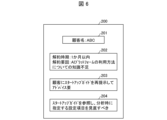
- FIG. 6 is a diagram explaining an example of advice information.
- the advice information shown in the figure shows an example of a case where it is displayed on a display of a computer, a smart phone, or the like. Also, this display may be a display that constitutes the external output unit 123 of the cancellation prediction device 10 .
- a customer name display area 201 is displayed on the display 200, and in this example, the customer name "ABC" is displayed.
- the display 200 also displays a cancellation timing/cancellation factor display area 202 .
- the cancellation time/cancellation cause display area 202 displays "cancellation time: within one month” and "cancellation cause: lack of knowledge about how to use the AI platform".
- the advice information includes predictions regarding cancellation factors and cancellation timing.
- cancellation timing/cancellation factor display area 202 may not be displayed on the display 200 .
- an advice display area 203 for businesses is displayed on the display 200.
- the advice display area 203 for businesses displays "Advice is required by presenting the startup guide again to the customer.”
- the business operator's advice display area 203 is an area in which advice to be presented to the user from the business operator's standpoint is displayed.
- the advice information includes advice to the provider who provides the analysis execution environment 32.
- the display 200 also displays a customer advice display area 204.
- the customer advice display area 204 displays "Refer to the startup guide and review the setting items to be specified at the time of analysis.” ing.
- the customer-oriented advice display area 204 is an area in which advice that the user should directly refer to is displayed.
- the advice information includes advice to the target user.
- the advice information may not include the advice display area 204 for customers.
- the advice information is displayed, for example, on the display that constitutes the external output unit 123 of the cancellation prediction device 10 .
- the advice information may not include the advice display area 203 for businesses.
- the advice information is displayed, for example, on the display of the smartphone of the user to whom the advice is given.
- step S31 the acquisition unit 21 acquires log information.
- the specific processing of the acquisition unit 21 is as described above.
- the access history and error information recorded in the storage 36 are acquired as log information.
- the contract information of the target user may be further acquired. For example, it may be a part of the contract information data stored in the storage unit 100, and the target user's service usage start time may be acquired.
- step S32 the acquisition unit 21 acquires the resource usage rate.
- the resource usage rate of the analysis execution environment 32 recorded in the storage 36 is obtained as described above.
- step S ⁇ b>33 the generation unit 22 executes prediction by the advice information generation model 81 .
- the specific processing of the generation unit 22 is as described above.
- the log information acquired in step S31 and the resource usage rate acquired in step S32 are input to the advice information generation model 81.
- FIG. 1 the log information acquired in step S31 and the resource usage rate acquired in step S32 are input to the advice information generation model 81.
- step S34 the advice information generation model 81 predicts the cancellation timing.
- step S35 the advice information generation model 81 predicts cancellation factors.
- step S36 the advice information generation model 81 predicts advice.
- the specific processing of the advice information generation model 81 is as described above, but at this time, the advice information generation model predicts business advice and/or customer advice.
- the business advice is, for example, information displayed in the business advice display area 203 in FIG. 6, and the customer advice is information displayed, for example, in the customer advice display area 204 in FIG. be.
- step S37 the output unit 23 outputs advice information including the advice predicted in step S36.
- the specific processing of the output unit 23 is as described above. At this time, for example, the advice information is presented on the screen as described above with reference to FIG.
- advice information may be printed on a medium such as paper and output, or may be output as voice from a speaker or the like.
- the configuration of the cancellation learning/prediction device 10A according to this exemplary embodiment will be described with reference to FIG.
- the churn learning/prediction device 10A is a device that further has a function of learning model parameters of the advice information generation model 81 in addition to the functions of the churn prediction device 10 .
- FIG. 8 is a block diagram showing a configuration example of the cancellation learning/prediction device 10A.
- the cancellation learning/prediction device 10A shown in FIG. 10 differs from the cancellation prediction device 10 shown in FIG. It is that learning data and evaluation data are stored in the unit 100 .
- the storage unit 100 stores learning data.
- the learning data is, for example, data including monitoring results accumulated in the past. Contains log information including execution history, error history, etc. Note that the log information is stored for each user.
- the learning data includes resource usage rates.
- the resource usage rate is, for example, the CPU usage rate, memory usage rate, and/or GPU usage rate in the analysis execution environment 32 within the execution time of the job executed by each user.
- the storage unit 100 stores evaluation data.
- the evaluation data is, for example, data for verifying whether or not the learned advice information generation model 81 can perform proper prediction.
- the training data acquisition unit 24 acquires training data, which is data for learning the advice information generation model 81.
- the training data are log information and resource usage rate of each user, and attribute information of each user.
- the attribute information is, for example, the user who has already canceled the contract as the target user, the target user's service usage start date, the target user's cancellation date, the target user's cancellation reason, and the cancellation prevention measures to be presented to the target user.
- the target user's service usage start date, the target user's cancellation date, and the target user's cancellation reason are, for example, included in the contract information data.
- An example of the cancellation prevention measure that should be presented to the target user is a cancellation prevention measure that the business operator believes should have been presented in order to prevent the user from canceling the contract. This cancellation prevention measure corresponds, for example, to the business advice displayed in the business advice display area 203 and/or the customer advice displayed in the customer advice display area 204 in FIG.
- Cancellation prevention measures to be presented to the target user are, for example, input by the business operator via the external input unit 122 and stored as part of the contract information data.
- the training data acquisition unit 24 acquires a set of service usage start date, log information, resource usage rate, cancellation date, cancellation reason, and cancellation prevention measures for each user. do. Note that the service use start date may not be acquired. That is, the training data acquisition unit 24 acquires training data including a plurality of pairs of advice information and log information and resource usage rates in the analysis execution environment 32 .
- the training data may be acquired by the acquisition unit 21.
- the training data acquisition unit 24 may not be provided in the cancellation learning/prediction device 10A.
- the learning unit 25 learns the advice information generation model 81 by executing machine learning with reference to the training data acquired by the training data acquiring unit 24 or the acquiring unit 21 . More specifically, the learning unit 25 learns the advice information generation model 81 by referring to the training data and updating the model parameters of the advice information generation model 81 .
- the advice information generation model 81 generates advice information by referring to the first model for predicting cancellation factors and cancellation timing, and the cancellation factors and cancellation timing predicted by the first model. 2 models.
- the training data acquisition unit 24 or the acquisition unit 21 acquires training data including a plurality of sets of log information and resource usage rate in the analysis environment, cancellation factors and cancellation timing, and the learning unit 25 acquires advice information.
- a first model included in the generative model is trained using the training data.
- step S101 the training data acquisition unit 24 acquires training data.
- the specific processing of the training data acquisition unit 24 is as described above.
- a set of the service usage start date, log information, resource usage rate, cancellation date, cancellation reason, and cancellation prevention measures is set. , obtained for each user. Note that the service use start date may not be acquired.
- step S102 the learning unit 25 learns the decision tree of the advice information generation model 81. This learns appropriate thresholds for variables derived from log information and resource utilization.
- step S ⁇ b>103 the learning unit 25 learns the linear model of the advice information generation model 81 . Appropriate weighting factors are thereby learned for variables obtained from log information and resource usage. For the variables obtained from the log information and the resource usage rate used at this time, for example, different combinations of variables are selected according to the result of classification by the decision tree. That is, as described above with reference to FIG. 5, different linear models are selected according to the results of case classification by the decision tree, so different combinations of variables are selected according to the respective linear models.
- step S104 the learning unit 25 evaluates the advice information generation model 81 learned through the processing of steps S102 and S103. At this time, evaluation is performed using evaluation data.
- step S105 the learning unit 25 refers to the evaluation result of step S104, and deletes unnecessary cases in the decision tree and linear models selected as a result of the cases.
- step S106 the learning unit 25 updates the model parameters of the advice information generation model 81 by reflecting the processing result of step S105.
- the learning process is executed in this way.
- the learning device 10B is a device configured to have a function related to model parameter learning, and does not have a function related to advice information generation, unlike the cancellation learning/prediction device 10A described above with reference to FIG. . That is, the learning device 10B does not include the acquisition unit 21, the generation unit 22, and the output unit 23 in the information processing device 20.
- FIG. Other configurations of the learning device 10B are the same as those of the cancellation learning/prediction device 10A, and detailed description thereof will be omitted.
- the learning device 10B the learning process described with reference to FIG. 9 is executed, and the model parameters of the storage unit 100 are learned.
- the model parameters stored in the storage unit 100 of the learning device 10B are stored in a storage medium such as a USB memory, for example.
- the model parameters stored in the storage medium are used by another device (for example, the churn prediction device 10 of FIG. 3).
- the model parameters of learning device 10B may be transferred to another device via a network.
- model parameters obtained by learning with reference to different training data can be provided to other devices.
- Some or all of the functions of the information processing device 20, the cancellation prediction device 10, the cancellation learning/prediction device 10A, and the learning device 10B may be realized by hardware such as an integrated circuit (IC chip), or by software. may be realized.
- the information processing device 20, the cancellation prediction device 10, the cancellation learning/prediction device 10A, and the learning device 10B are realized, for example, by a computer that executes program instructions that are software that realizes each function.
- a computer that executes program instructions that are software that realizes each function.
- An example of such a computer hereinafter referred to as computer C is shown in FIG.
- Computer C includes at least one processor C1 and at least one memory C2.
- the memory C2 stores a program P for operating the computer C as the information processing device 20, the cancellation prediction device 10, the cancellation learning/prediction device 10A, or the learning device 10B.
- the processor C1 reads the program P from the memory C2 and executes it, thereby realizing each function of the information processing device 20, the cancellation prediction device 10, the cancellation learning/prediction device 10A, or the learning device 10B.
- processor C1 for example, CPU (Central Processing Unit), GPU (Graphic Processing Unit), DSP (Digital Signal Processor), MPU (Micro Processing Unit), FPU (Floating point number Processing Unit), PPU (Physics Processing Unit) , a microcontroller, or a combination thereof.
- memory C2 for example, a flash memory, HDD (Hard Disk Drive), SSD (Solid State Drive), or a combination thereof can be used.
- the computer C may further include a RAM (Random Access Memory) for expanding the program P during execution and temporarily storing various data.
- Computer C may further include a communication interface for sending and receiving data to and from other devices.
- Computer C may further include an input/output interface for connecting input/output devices such as a keyboard, mouse, display, and printer.
- the program P can be recorded on a non-temporary tangible recording medium M that is readable by the computer C.
- a recording medium M for example, a tape, disk, card, semiconductor memory, programmable logic circuit, or the like can be used.
- the computer C can acquire the program P via such a recording medium M.
- the program P can be transmitted via a transmission medium.
- a transmission medium for example, a communication network or broadcast waves can be used.
- Computer C can also obtain program P via such a transmission medium.
- An information processing apparatus comprising: generating means for generating advice information regarding a user; and output means for outputting the advice information generated by the generating means.
- the log information includes the number of accesses to the analysis environment by the target user; and The information processing device according to appendix 1, wherein an error history relating to the analysis is included.
- Appendix 3 The information processing apparatus according to appendix 1 or 2, wherein the advice information includes a cancellation factor and a prediction regarding cancellation timing.
- the advice information generation model is a first model that predicts cancellation factors and cancellation timing from the target user's log information and resource usage; 3.
- Appendix 7 The information processing apparatus according to any one of appendices 1 to 6, comprising a learning unit that learns the advice information generation model.
- the acquisition means is Acquiring training data including a plurality of sets of log information and resource usage rate and advice information in the analysis environment;
- the information processing apparatus according to appendix 7, wherein the learning unit learns the advice information generation model using the training data.
- the acquisition means is Acquiring training data including a plurality of sets of log information and resource usage rate in the analysis environment, cancellation factors and cancellation timing,
- the information processing apparatus according to appendix 8, wherein the learning unit learns a first model included in the advice information generation model using the training data.
- a program functioning as an information processing apparatus, comprising generating means for generating advice information about a user and output means for outputting the advice information generated by the generating means.
- processors comprising: A process of acquiring log information and resource usage rate of a target user in an analysis environment that performs analysis by machine learning; By inputting the target user's log information and resource usage rate acquired by the acquisition means into an advice information generation model trained to generate advice information from the log information and resource usage rate in the analysis environment, a process of generating advice information about a user; and a process of outputting the advice information generated by the generating means.
- the information processing apparatus may further include a memory, and the memory may store a program for causing the processor to execute the acquisition process and the output sequence generation process. Also, this program may be recorded in a computer-readable non-temporary tangible recording medium.
- cancellation prediction system 10 cancellation prediction device 10A cancellation learning/prediction device 10B learning device 20 information processing device 21 acquisition unit 22 generation unit 23 output unit 24 training data acquisition unit 25 learning unit 30 AI platform 32 analysis execution environment 35 monitoring base 81 advice Information generation model 100 storage unit 121 communication unit 122 external input unit 123 external output unit
Landscapes
- Business, Economics & Management (AREA)
- Engineering & Computer Science (AREA)
- Human Resources & Organizations (AREA)
- Tourism & Hospitality (AREA)
- Economics (AREA)
- Strategic Management (AREA)
- Theoretical Computer Science (AREA)
- Entrepreneurship & Innovation (AREA)
- Physics & Mathematics (AREA)
- General Physics & Mathematics (AREA)
- Marketing (AREA)
- General Business, Economics & Management (AREA)
- Quality & Reliability (AREA)
- Operations Research (AREA)
- Development Economics (AREA)
- Game Theory and Decision Science (AREA)
- Educational Administration (AREA)
- Software Systems (AREA)
- Primary Health Care (AREA)
- General Health & Medical Sciences (AREA)
- Artificial Intelligence (AREA)
- Computer Vision & Pattern Recognition (AREA)
- Data Mining & Analysis (AREA)
- Evolutionary Computation (AREA)
- Medical Informatics (AREA)
- Health & Medical Sciences (AREA)
- Computing Systems (AREA)
- General Engineering & Computer Science (AREA)
- Mathematical Physics (AREA)
- Management, Administration, Business Operations System, And Electronic Commerce (AREA)
Priority Applications (3)
| Application Number | Priority Date | Filing Date | Title |
|---|---|---|---|
| PCT/JP2021/046268 WO2023112203A1 (ja) | 2021-12-15 | 2021-12-15 | 情報処理装置、情報処理方法、およびプログラム |
| JP2023567387A JP7662055B2 (ja) | 2021-12-15 | 2021-12-15 | 情報処理装置、情報処理方法、およびプログラム |
| US18/716,531 US20250045646A1 (en) | 2021-12-15 | 2021-12-15 | Information processing apparatus, information processing method, and storage medium |
Applications Claiming Priority (1)
| Application Number | Priority Date | Filing Date | Title |
|---|---|---|---|
| PCT/JP2021/046268 WO2023112203A1 (ja) | 2021-12-15 | 2021-12-15 | 情報処理装置、情報処理方法、およびプログラム |
Publications (1)
| Publication Number | Publication Date |
|---|---|
| WO2023112203A1 true WO2023112203A1 (ja) | 2023-06-22 |
Family
ID=86773816
Family Applications (1)
| Application Number | Title | Priority Date | Filing Date |
|---|---|---|---|
| PCT/JP2021/046268 Ceased WO2023112203A1 (ja) | 2021-12-15 | 2021-12-15 | 情報処理装置、情報処理方法、およびプログラム |
Country Status (3)
| Country | Link |
|---|---|
| US (1) | US20250045646A1 (https=) |
| JP (1) | JP7662055B2 (https=) |
| WO (1) | WO2023112203A1 (https=) |
Cited By (1)
| Publication number | Priority date | Publication date | Assignee | Title |
|---|---|---|---|---|
| CN119149500A (zh) * | 2024-11-04 | 2024-12-17 | 广东三雄极光照明股份有限公司 | 一种光学数据批量分析方法和系统 |
Citations (2)
| Publication number | Priority date | Publication date | Assignee | Title |
|---|---|---|---|---|
| US20180253637A1 (en) * | 2017-03-01 | 2018-09-06 | Microsoft Technology Licensing, Llc | Churn prediction using static and dynamic features |
| JP2019091356A (ja) * | 2017-11-16 | 2019-06-13 | 東芝映像ソリューション株式会社 | システム、方法及びプログラム |
-
2021
- 2021-12-15 WO PCT/JP2021/046268 patent/WO2023112203A1/ja not_active Ceased
- 2021-12-15 US US18/716,531 patent/US20250045646A1/en not_active Abandoned
- 2021-12-15 JP JP2023567387A patent/JP7662055B2/ja active Active
Patent Citations (2)
| Publication number | Priority date | Publication date | Assignee | Title |
|---|---|---|---|---|
| US20180253637A1 (en) * | 2017-03-01 | 2018-09-06 | Microsoft Technology Licensing, Llc | Churn prediction using static and dynamic features |
| JP2019091356A (ja) * | 2017-11-16 | 2019-06-13 | 東芝映像ソリューション株式会社 | システム、方法及びプログラム |
Non-Patent Citations (1)
| Title |
|---|
| MATSUMOTO HIDEKI, YUSUKE NAKAMURA: "3 Steps to Achieve Results with Customer Success, Explained with 3 Tools", NIKKEI XTREND, 11 September 2020 (2020-09-11), XP093071847, Retrieved from the Internet <URL:https://xtrend.nikkei.com/atcl/contents/18/00356/00005/> [retrieved on 20230808] * |
Cited By (1)
| Publication number | Priority date | Publication date | Assignee | Title |
|---|---|---|---|---|
| CN119149500A (zh) * | 2024-11-04 | 2024-12-17 | 广东三雄极光照明股份有限公司 | 一种光学数据批量分析方法和系统 |
Also Published As
| Publication number | Publication date |
|---|---|
| JPWO2023112203A1 (https=) | 2023-06-22 |
| JP7662055B2 (ja) | 2025-04-15 |
| US20250045646A1 (en) | 2025-02-06 |
Similar Documents
| Publication | Publication Date | Title |
|---|---|---|
| US10404526B2 (en) | Method and system for generating recommendations associated with client process execution in an organization | |
| US9442983B2 (en) | Method and system for reducing instability when upgrading software | |
| US20100138268A1 (en) | Progress management platform | |
| US8606905B1 (en) | Automated determination of system scalability and scalability constraint factors | |
| US20110066420A1 (en) | System and method for system integration test (sit) planning | |
| WO2008134143A1 (en) | Resource model training | |
| KR20190055264A (ko) | 애플리케이션별 자원 사용량 정보의 제공 기법 | |
| WO2001025876A2 (en) | Method and estimator for providing capacity modeling and planning | |
| Schulz et al. | Behavior-driven load testing using contextual knowledge-approach and experiences | |
| CN109685089A (zh) | 评估模型性能的系统及方法 | |
| US10417712B2 (en) | Enterprise application high availability scoring and prioritization system | |
| Concas et al. | Simulation of software maintenance process, with and without a work‐in‐process limit | |
| WO2006047595A2 (en) | Apparatus and method for measuring service performance | |
| Oliveira Junior et al. | SMartySPEM: a SPEM-based approach for variability management in software process lines | |
| US20120331440A1 (en) | Optimized software development | |
| JP2005326953A (ja) | ソフトウェア品質評価システム及び方法並びにソフトウェア品質評価用プログラム | |
| WO2023112203A1 (ja) | 情報処理装置、情報処理方法、およびプログラム | |
| KR102196966B1 (ko) | 지능형 운영 서비스가 결합된 스마트 콘텐츠의 통합 검증 방법 및 시스템 | |
| Wert et al. | Integrating software performance curves with the palladio component model | |
| WO2022022572A1 (en) | Calculating developer time during development process | |
| Saylam et al. | A process mining approach in software development and testing process: a case study | |
| JP5200678B2 (ja) | サービシステム、サービスシステム管理方法、及びプログラム | |
| US20180005249A1 (en) | Optimize a resource allocation plan corresponding to a legacy software product sustenance | |
| JP5768813B2 (ja) | 知的生産性計測装置、知的生産性計測方法およびプログラム | |
| JP2015138432A (ja) | 性能予測装置、性能モデル生成方法およびプログラム |
Legal Events
| Date | Code | Title | Description |
|---|---|---|---|
| 121 | Ep: the epo has been informed by wipo that ep was designated in this application |
Ref document number: 21968119 Country of ref document: EP Kind code of ref document: A1 |
|
| WWE | Wipo information: entry into national phase |
Ref document number: 18716531 Country of ref document: US |
|
| WWE | Wipo information: entry into national phase |
Ref document number: 2023567387 Country of ref document: JP |
|
| NENP | Non-entry into the national phase |
Ref country code: DE |
|
| 122 | Ep: pct application non-entry in european phase |
Ref document number: 21968119 Country of ref document: EP Kind code of ref document: A1 |