WO2023100459A1 - 化粧料用界面活性剤組成物及び化粧料 - Google Patents
化粧料用界面活性剤組成物及び化粧料 Download PDFInfo
- Publication number
- WO2023100459A1 WO2023100459A1 PCT/JP2022/036208 JP2022036208W WO2023100459A1 WO 2023100459 A1 WO2023100459 A1 WO 2023100459A1 JP 2022036208 W JP2022036208 W JP 2022036208W WO 2023100459 A1 WO2023100459 A1 WO 2023100459A1
- Authority
- WO
- WIPO (PCT)
- Prior art keywords
- weight
- cosmetic
- surfactant
- manufactured
- sodium
- Prior art date
- Legal status (The legal status is an assumption and is not a legal conclusion. Google has not performed a legal analysis and makes no representation as to the accuracy of the status listed.)
- Ceased
Links
Classifications
-
- A—HUMAN NECESSITIES
- A61—MEDICAL OR VETERINARY SCIENCE; HYGIENE
- A61K—PREPARATIONS FOR MEDICAL, DENTAL OR TOILETRY PURPOSES
- A61K8/00—Cosmetics or similar toiletry preparations
- A61K8/18—Cosmetics or similar toiletry preparations characterised by the composition
- A61K8/30—Cosmetics or similar toiletry preparations characterised by the composition containing organic compounds
- A61K8/40—Cosmetics or similar toiletry preparations characterised by the composition containing organic compounds containing nitrogen
- A61K8/44—Aminocarboxylic acids or derivatives thereof, e.g. aminocarboxylic acids containing sulfur; Salts; Esters or N-acylated derivatives thereof
-
- A—HUMAN NECESSITIES
- A61—MEDICAL OR VETERINARY SCIENCE; HYGIENE
- A61Q—SPECIFIC USE OF COSMETICS OR SIMILAR TOILETRY PREPARATIONS
- A61Q1/00—Make-up preparations; Body powders; Preparations for removing make-up
-
- A—HUMAN NECESSITIES
- A61—MEDICAL OR VETERINARY SCIENCE; HYGIENE
- A61Q—SPECIFIC USE OF COSMETICS OR SIMILAR TOILETRY PREPARATIONS
- A61Q15/00—Anti-perspirants or body deodorants
-
- A—HUMAN NECESSITIES
- A61—MEDICAL OR VETERINARY SCIENCE; HYGIENE
- A61Q—SPECIFIC USE OF COSMETICS OR SIMILAR TOILETRY PREPARATIONS
- A61Q17/00—Barrier preparations; Preparations brought into direct contact with the skin for affording protection against external influences, e.g. sunlight, X-rays or other harmful rays, corrosive materials, bacteria or insect stings
-
- A—HUMAN NECESSITIES
- A61—MEDICAL OR VETERINARY SCIENCE; HYGIENE
- A61Q—SPECIFIC USE OF COSMETICS OR SIMILAR TOILETRY PREPARATIONS
- A61Q17/00—Barrier preparations; Preparations brought into direct contact with the skin for affording protection against external influences, e.g. sunlight, X-rays or other harmful rays, corrosive materials, bacteria or insect stings
- A61Q17/005—Antimicrobial preparations
-
- A—HUMAN NECESSITIES
- A61—MEDICAL OR VETERINARY SCIENCE; HYGIENE
- A61Q—SPECIFIC USE OF COSMETICS OR SIMILAR TOILETRY PREPARATIONS
- A61Q17/00—Barrier preparations; Preparations brought into direct contact with the skin for affording protection against external influences, e.g. sunlight, X-rays or other harmful rays, corrosive materials, bacteria or insect stings
- A61Q17/04—Topical preparations for affording protection against sunlight or other radiation; Topical sun tanning preparations
-
- A—HUMAN NECESSITIES
- A61—MEDICAL OR VETERINARY SCIENCE; HYGIENE
- A61Q—SPECIFIC USE OF COSMETICS OR SIMILAR TOILETRY PREPARATIONS
- A61Q19/00—Preparations for care of the skin
-
- A—HUMAN NECESSITIES
- A61—MEDICAL OR VETERINARY SCIENCE; HYGIENE
- A61Q—SPECIFIC USE OF COSMETICS OR SIMILAR TOILETRY PREPARATIONS
- A61Q19/00—Preparations for care of the skin
- A61Q19/007—Preparations for dry skin
-
- A—HUMAN NECESSITIES
- A61—MEDICAL OR VETERINARY SCIENCE; HYGIENE
- A61Q—SPECIFIC USE OF COSMETICS OR SIMILAR TOILETRY PREPARATIONS
- A61Q5/00—Preparations for care of the hair
-
- C—CHEMISTRY; METALLURGY
- C07—ORGANIC CHEMISTRY
- C07C—ACYCLIC OR CARBOCYCLIC COMPOUNDS
- C07C227/00—Preparation of compounds containing amino and carboxyl groups bound to the same carbon skeleton
- C07C227/14—Preparation of compounds containing amino and carboxyl groups bound to the same carbon skeleton from compounds containing already amino and carboxyl groups or derivatives thereof
- C07C227/18—Preparation of compounds containing amino and carboxyl groups bound to the same carbon skeleton from compounds containing already amino and carboxyl groups or derivatives thereof by reactions involving amino or carboxyl groups, e.g. hydrolysis of esters or amides, by formation of halides, salts or esters
-
- A—HUMAN NECESSITIES
- A61—MEDICAL OR VETERINARY SCIENCE; HYGIENE
- A61K—PREPARATIONS FOR MEDICAL, DENTAL OR TOILETRY PURPOSES
- A61K2800/00—Properties of cosmetic compositions or active ingredients thereof or formulation aids used therein and process related aspects
- A61K2800/40—Chemical, physico-chemical or functional or structural properties of particular ingredients
- A61K2800/52—Stabilizers
-
- C—CHEMISTRY; METALLURGY
- C07—ORGANIC CHEMISTRY
- C07C—ACYCLIC OR CARBOCYCLIC COMPOUNDS
- C07C229/00—Compounds containing amino and carboxyl groups bound to the same carbon skeleton
- C07C229/02—Compounds containing amino and carboxyl groups bound to the same carbon skeleton having amino and carboxyl groups bound to acyclic carbon atoms of the same carbon skeleton
- C07C229/04—Compounds containing amino and carboxyl groups bound to the same carbon skeleton having amino and carboxyl groups bound to acyclic carbon atoms of the same carbon skeleton the carbon skeleton being acyclic and saturated
- C07C229/06—Compounds containing amino and carboxyl groups bound to the same carbon skeleton having amino and carboxyl groups bound to acyclic carbon atoms of the same carbon skeleton the carbon skeleton being acyclic and saturated having only one amino and one carboxyl group bound to the carbon skeleton
- C07C229/10—Compounds containing amino and carboxyl groups bound to the same carbon skeleton having amino and carboxyl groups bound to acyclic carbon atoms of the same carbon skeleton the carbon skeleton being acyclic and saturated having only one amino and one carboxyl group bound to the carbon skeleton the nitrogen atom of the amino group being further bound to acyclic carbon atoms or to carbon atoms of rings other than six-membered aromatic rings
- C07C229/12—Compounds containing amino and carboxyl groups bound to the same carbon skeleton having amino and carboxyl groups bound to acyclic carbon atoms of the same carbon skeleton the carbon skeleton being acyclic and saturated having only one amino and one carboxyl group bound to the carbon skeleton the nitrogen atom of the amino group being further bound to acyclic carbon atoms or to carbon atoms of rings other than six-membered aromatic rings to carbon atoms of acyclic carbon skeletons
Definitions
- the present invention relates to cosmetic surfactant compositions and cosmetics.
- Surfactants such as anionic surfactants and amphoteric surfactants are used in cosmetics for human skin and hair.
- Detergent compositions containing sodium ⁇ -dodecylaminopropionate are known as compositions that can be used in cosmetics such as detergents and facial cleansers (Patent Document 1, etc.).
- An object of the present invention is to provide a cosmetic surfactant composition capable of obtaining a cosmetic having excellent bacteriostasis and moisturizing properties.
- the present invention provides a cosmetic surfactant composition containing an amphoteric surfactant (A) and an ester (B), wherein the amphoteric surfactant (A) is represented by the following general formula (1). contains an amphoteric surfactant (a1), the ester (B) contains an ester (b1) represented by the following general formula (2), and the ester (b1) with respect to the weight of the amphoteric surfactant (a1) is 0.1% by weight to 10% by weight, and a cosmetic containing the above cosmetic surfactant composition.
- R 1 represents an alkyl group or alkenyl group having 6 to 25 carbon atoms
- X represents a hydrogen atom or an alkyl group having 1 to 3 carbon atoms
- M 1 represents a hydrogen atom, a sodium atom, a potassium atom or a represents ethanolammonium
- n represents 1 or 2
- R 2 represents an alkyl or alkenyl group having 6 to 25 carbon atoms
- n represents 1 or 2.
- Cosmetics using the surfactant composition for cosmetics of the present invention are excellent in bacteriostasis and highly moisturizing of the skin after use.
- surfactant composition for cosmetics refers to a surfactant composition used as a raw material for cosmetics.
- Cosmetics in the present application include cleansers for hair or skin (shampoo, pump foamer facial cleanser, cream facial cleanser, facial cleanser, body soap, bar soap, cleansing and liquid soap, etc.), and hair care cosmetics.
- amphoteric surfactant (a1) contained in the cosmetic surfactant composition of the first invention of the present application contains an amphoteric surfactant (a1) represented by general formula (1).
- R 1 represents an alkyl or alkenyl group having 6 to 25 carbon atoms.
- alkyl groups having 6 to 25 carbon atoms include n-hexyl group, n-heptyl group, n-octyl group, isooctyl group, 2-ethylhexyl group, n-nonyl group, isononyl group, n-decyl group, isodecyl group, undecyl group, n-dodecyl group, isododecyl group, n-tridecyl group, isotridecyl group, n-tetradecyl group, isotetradecyl group, n-hexadecyl group, isohexadecyl group, n-stearyl group, isostearyl group, n- nonadecyl group, n-icosyl group, n-tetracosyl
- alkenyl groups having 6 to 25 carbon atoms include n-hexenyl, n-heptenyl, n-octenyl, n-decenyl, isodecenyl, n-undecenyl, n-dodecenyl, n-tetradecenyl, iso hexadecenyl group, n-octadecenyl group, n-octadecadienyl group and the like.
- R 1 from the viewpoint of bacteriostatic properties of cosmetics, it is preferably an alkyl group having 6 to 20 carbon atoms or an alkenyl group having 6 to 20 carbon atoms, more preferably an alkyl group having 8 to 18 carbon atoms or a carbon It is an alkenyl group of number 8-18.
- X represents a hydrogen atom or an alkyl group having 1 to 3 carbon atoms.
- alkyl groups having 1 to 3 carbon atoms include methyl group, ethyl group and propyl group.
- X is preferably a hydrogen atom or a methyl group, more preferably a hydrogen atom, from the viewpoint of bacteriostatic properties of cosmetics containing a surfactant composition for cosmetics.
- M1 is a hydrogen atom, sodium atom, potassium atom or triethanolammonium.
- M1 from the viewpoint of bacteriostatic properties of cosmetics containing surfactant compositions for cosmetics, sodium atom or triethanolammonium is preferable, and sodium atom is more preferable.
- n 1 or 2.
- n is preferably 2 from the viewpoint of bacteriostatic properties of cosmetics containing the surfactant composition for cosmetics of the present invention.
- amphoteric surfactant (a1) represented by the general formula (1) include sodium ⁇ -hexylaminopropionate, sodium ⁇ -heptylaminopropionate, sodium ⁇ -octylaminopropionate, and ⁇ -isooctyl.
- the amphoteric surfactant (a1) represented by the general formula (1) is preferably sodium ⁇ -dodecylaminopropionate, ⁇ - Potassium dodecylaminopropionate and triethanolammonium ⁇ -dodecylaminopropionate, more preferably sodium ⁇ -dodecylaminopropionate.
- sodium ⁇ -dodecylaminopropionate, potassium ⁇ -dodecylaminopropionate, and triethanolammonium ⁇ -dodecylaminopropionate are used as constituents, so sodium ⁇ -coconut fatty acid aminopropionate, ⁇ -coconut fatty acid Potassium aminopropionate and triethanolammonium ⁇ -cocoate aminopropionate are also preferred, and sodium ⁇ -cocoate aminopropionate is more preferred.
- the amphoteric surfactant (a1) represented by the general formula (1) can be obtained by a known method described in Japanese Patent Laid-Open No. 2008-162914. On the other hand, it can be obtained by subjecting 1 mol of methyl acrylate to Michael addition to obtain a Michael adduct, and then hydrolyzing the Michael adduct with an alkaline compound such as sodium hydroxide. For example, preferably at 50 to 150° C. (more preferably at 70 to 100° C.), 1.17 mol of methyl acrylate is added dropwise to 1 mol of a primary amine having 6 to 25 carbon atoms to conduct a Michael addition reaction. Then, by hydrolysis with an alkaline compound such as sodium hydroxide, the amphoteric surfactant (a1) is obtained.
- the ester (B) contained in the surfactant composition for cosmetics which is the first invention of the present application, contains the ester (b1) represented by the general formula (2).
- the cosmetic containing the surfactant composition for cosmetics of the present invention has good bacteriostasis and good moisturizing properties after use.
- R 2 represents an alkyl group or alkenyl group having 6 to 25 carbon atoms, and is specifically the same as mentioned for R 1 in general formula (1).
- R 2 is preferably an alkyl group having 6 to 20 carbon atoms or an alkenyl group having 6 to 20 carbon atoms, from the viewpoint of bacteriostatic properties of cosmetics containing the surfactant composition for cosmetics of the present invention; More preferably, it is an alkyl group having 8 to 18 carbon atoms or an alkenyl group having 8 to 18 carbon atoms.
- ester (b1) represented by the general formula (2) in the present invention examples include methyl ⁇ -hexylaminopropionate, methyl ⁇ -heptylaminopropionate, methyl ⁇ -octylaminopropionate, and ⁇ -isooctyl.
- the ester (b1) represented by formula (2) is preferably methyl ⁇ -dodecylaminopropionate from the viewpoint of bacteriostatic properties of cosmetics containing surfactant compositions for cosmetics. Moreover, since it contains methyl ⁇ -dodecylaminopropionate as a constituent, methyl ⁇ -coconut oil fatty acid methyl aminopropionate can also be preferably used.
- the ester (b1) represented by the general formula (2) can be obtained by a known method described in JP-A-2008-162914 and the like. It can be obtained by, for example, Michael addition of 1 mol of methyl acrylate per mol. For example, an ester ( b1) is obtained.
- the reaction rate is controlled by adjusting the reaction conditions (reaction temperature, reaction time, etc.) for the hydrolysis of the Michael adduct performed when synthesizing the amphoteric surfactant (a1) represented by the general formula (1).
- a mixture of amphoteric surfactant (a1) and ester (b1) can be obtained.
- amphoteric surfactant (a2) contained in the surfactant composition for cosmetics, which is the first invention of the present application, may further contain an amphoteric surfactant (a2) represented by general formula (3). .
- R 3 represents an alkyl group or alkenyl group having 6 to 25 carbon atoms, and specific examples include the same groups as those listed for R 1 in general formula (1), some of which are preferred. It is the same as general formula (1).
- M2 and M3 are each independently a hydrogen atom, a sodium atom, a potassium atom or triethanolammonium.
- M2 sodium atom or triethanolammonium is preferred, and sodium atom is more preferred.
- M3 sodium atom or triethanolammonium is preferred, and sodium atom is more preferred.
- m represents 1 or 2
- k represents 1 or 2.
- m is preferably two.
- k is preferably two.
- amphoteric surfactant (a2) represented by the general formula (3) include sodium ⁇ -hexyliminodipropionate, sodium ⁇ -heptyliminodipropionate, sodium ⁇ -octyliminodipropionate, ⁇ -Sodium Isooctyliminodipropionate, Sodium ⁇ -2-Ethylhexyliminodipropionate, Sodium ⁇ -Nonyliminodipropionate, Sodium ⁇ -Isononyliminodipropionate, Sodium ⁇ -Decyliminodipropionate, ⁇ - sodium isodecyliminodipropionate, sodium ⁇ -undecyliminodipropionate, sodium ⁇ -dodecyliminodipropionate, potassium ⁇ -dodecyliminodipropionate, triethanolammonium ⁇ -dodecyliminodipropionate,
- the amphoteric surfactant (a2) represented by the general formula (3) is obtained by the Michael reaction of 2 mol of methyl acrylate with 1 mol of a primary amine having 6 to 25 carbon atoms to obtain a Michael adduct, It can be obtained by hydrolyzing the Michael adduct with an alkaline compound such as sodium hydroxide. For example, 2.5 mol of methyl acrylate is added dropwise to 1 mol of a primary amine having 6 to 25 carbon atoms at a temperature of preferably 50 to 150° C. (more preferably 70 to 100° C.) to carry out a Michael addition reaction. After that, hydrolysis with an alkaline compound gives an amphoteric surfactant (a2).
- amphoteric surfactant (a1) represented by the general formula (1) when producing the amphoteric surfactant (a1) represented by the general formula (1), a side reaction occurs in which 2 mol of methyl acrylate is added to 1 mol of a primary amine having 6 to 25 carbon atoms. In some cases, amphoteric surfactant (a2) is obtained at the same time as amphoteric surfactant (a1) by hydrolysis of the reactants.
- ester (B) contained in the surfactant composition for cosmetics which is the first invention of the present application, may further contain an ester (b2) represented by the following general formula (4).
- R 4 represents an alkyl group or alkenyl group having 6 to 25 carbon atoms, and specific examples include the same groups as those listed for R 1 in general formula (1), some of which are preferred. are the same.
- m represents 1 or 2
- k represents 1 or 2.
- m is preferably two.
- k is preferably two.
- ester (b2) represented by the general formula (4) in the present invention include methyl ⁇ -hexyliminodipropionate, methyl ⁇ -heptyliminodipropionate, methyl ⁇ -octyliminodipropionate, and ⁇ -methyl isooctyliminodipropionate, methyl ⁇ -2-ethylhexyliminodipropionate, methyl ⁇ -nonyliminodipropionate, methyl ⁇ -isononyliminodipropionate, methyl ⁇ -decyliminodipropionate, ⁇ - methyl isodecyliminodipropionate, methyl ⁇ -undecyliminodipropionate, methyl ⁇ -dodecyliminodipropionate, methyl ⁇ -coconut fatty acid iminodipropionate, methyl ⁇ -isododec
- the ester (b2) represented by the general formula (4) can be obtained, for example, by mixing 1 mol of a primary amine having 6 to 25 carbon atoms with 2 mol of methyl acrylate and subjecting the mixture to Michael addition. For example, preferably at 50 to 150° C. (more preferably 70 to 100° C.), 2.5 mol of methyl acrylate is added dropwise to 1 mol of a primary amine having 6 to 25 carbon atoms to carry out a Michael addition reaction. gives the ester (b2). Further, when producing the amphoteric surfactant (a1) represented by the general formula (1), a reaction occurs in which 2 mol of methyl acrylate is added to 1 mol of a primary amine having 6 to 25 carbon atoms. , the ester (b2) may be obtained at the same time as the amphoteric surfactant (a1) because the reactant remains without being hydrolyzed.
- the weight ratio of the ester (b1) to the weight of the amphoteric surfactant (a1) in the cosmetic surfactant composition of the present invention (hereinafter sometimes abbreviated as [(b1)/(a1)]) is , From the viewpoint of suppressing turbidity and separation of the cosmetic surfactant composition over time, and from the viewpoint of moisturizing and bacteriostatic properties of cosmetics containing the cosmetic surfactant composition, 0.1 weight % to 10% by weight, preferably 0.3% to 9% by weight, more preferably 0.4% to 8% by weight.
- the cosmetic surfactant composition of the present invention is an amphoteric interface produced by the above method so that the weight ratio of the ester (b1) to the weight of the amphoteric surfactant (a1) is within the above range. It can be obtained by mixing the activator (a1) and the ester (b1). In addition, the hydrolysis reaction conditions (reaction temperature, reaction time, etc.) performed when synthesizing the amphoteric surfactant (a1) are adjusted to control the reaction rate, and the ester (b1 ) may be prepared and used in a mixture in which the weight ratio of ) is within the above range.
- the weight of the ester (b1) contained in the cosmetic surfactant composition can be measured by the following quantitative analysis method using gas chromatography (hereinafter referred to as GC).
- the horizontal axis is the weight ratio of ester (b1) to the weight of n-decane [(weight of ester (b1)) / (weight of n-decane)], and the vertical axis is n Plot on a graph which is the ratio of the peak area of ester (b1) to the peak area of decane [(peak area of ester (b1))/(peak area of n-decane)] and create a calibration curve by the least squares method.
- the peaks of n-decane and ester (b1) in the GC chart can be distinguished by the retention time, and under the following GC measurement conditions, the peak of n-decane is at a retention time of about 3.3 seconds.
- a peak for ester (b1) appears at a retention time of about 15.5 seconds.
- 2.0 g of an ethanol solution in which 1% by weight of n-decane is dissolved is added to a sample weighed and sampled from the cosmetic surfactant composition, and then 50 mL of ethanol is added to prepare the sample solution as follows. GC analysis is performed under measurement conditions.
- GC-9A manufactured by Shimadzu Corporation
- Detector FID GC packed column: SE-30 (dimethylpolysiloxane content 5% by weight, inner diameter 3.2 mm, length 2.1 m, manufactured by GL Sciences Co., Ltd.)
- Column temperature raised from 80° C. to 280° C. (heating rate: 10° C./min)
- Sample injection volume 5 ⁇ L
- the weight of the amphoteric surfactant (a1) contained in the surfactant composition for cosmetics is determined by converting the amphoteric surfactant (a1) into an ester (b1) by methyl-esterifying the amphoteric surfactant (a1) by the method described below, followed by methyl-esterification treatment.
- the ester (b1) contained in the subsequent solution can be quantified by GC, and the difference from the content of the ester (b1) contained in the cosmetic surfactant composition can be calculated.
- the number of moles of the ester (b1) contained in the solution after the methyl-esterification treatment is the number of moles of the ester (b1) and the amphoteric surfactant (a1) contained in the methyl-esterification-treated cosmetic surfactant composition. equal to the total number of moles.
- the ester (b1) contained in the cosmetic surfactant composition used for the methyl esterification treatment when the weight of the ester (b1) contained in the solution after the methyl esterification treatment is converted to the number of moles, the ester (b1) contained in the cosmetic surfactant composition used for the methyl esterification treatment and The total number of moles of the amphoteric surfactant (a1) can be calculated, and the number of moles of the ester (b1) contained before the methyl esterification treatment is subtracted from the total number of moles.
- the weight of the amphoteric surfactant (a1) was calculated based on the molecular weight of the surfactant (a1), and the amphoteric surfactant (a1 ) can be calculated.
- the pressure of the oil layer is reduced to 0.09 MPa for 3 hours in a hot bath at 60° C. to distill off the petroleum ether contained in the oil layer.
- a sample (0.03 g) sampled from the residue was Formamide dimethylacetal (1 g) is added and heated at 60° C. for 15 minutes to carry out a methyl esterification reaction of the amphoteric surfactant (a1) contained in the residue.
- the content of the amphoteric surfactant (a1) in the cosmetic surfactant composition is 0.10 to 5.0% by weight based on the total weight of the cosmetic surfactant composition. It is preferably 0.55 to 4.04% by weight, more preferably 0.55 to 4.04% by weight.
- the content of the ester (b1) in the cosmetic surfactant composition is preferably 0.001 to 0.50% by weight based on the total weight of the cosmetic surfactant composition, and It is preferably 0.002 to 0.13% by weight.
- the cosmetic surfactant composition which is the first invention of the present application, may contain any other component, and preferably contains water.
- the content of water is preferably 10 to 90% by weight, more preferably 10 to 90% by weight, based on the total weight of the surfactant composition for cosmetics. 20 to 80% by weight.
- the water contained in the surfactant composition for cosmetics may contain the water used as the reaction solvent when synthesizing the amphoteric surfactant (a1) and the ester (b1).
- agent (a1) and ester (b1) may be mixed with agent (a1) and ester (b1).
- the surfactant composition for cosmetics of the present invention comprises a paddle type stirring blade, a spiral type stirring blade, or the like, so that the amphoteric surfactant (a1), the ester (b1), and optionally water, etc., are mixed at a predetermined ratio. It can be obtained by mixing with a known mixing device equipped with a stirring device. Moreover, it can also be obtained by mixing a mixture containing the amphoteric surfactant (a1) and the ester (b1) at a predetermined ratio, and water, etc., used if necessary, at a predetermined ratio.
- the cosmetic surfactant composition of the present invention includes an amphoteric surfactant other than the amphoteric surfactant (A), an anionic surfactant, a cationic surfactant, a nonionic surfactant, water, and pH adjustment.
- an amphoteric surfactant other than the amphoteric surfactant (A) an anionic surfactant, a cationic surfactant, a nonionic surfactant, water, and pH adjustment.
- One of the ingredients contained in cosmetics such as agents, solvents, conditioning agents, oils, cooling agents, moisturizers, antioxidants, chelating agents, thickeners, fragrances, coloring agents, preservatives, UV protection agents and whitening agents It may contain part or all.
- the surfactant composition for cosmetics may contain unreacted substances, reaction catalyst residues and the like from the synthesis of the amphoteric surfactant (a1) and the ester (b1).
- the cosmetic that is the second invention of the present application is the first invention of the present application, and is a cosmetic comprising a cosmetic surfactant composition containing an amphoteric surfactant (a1) and an ester (b1) in a predetermined ratio. is the fee.
- the weight ratio of the surfactant composition for cosmetics contained in the cosmetic of the present invention can be appropriately adjusted according to the formulation and application of the cosmetic, for example, the cosmetic is a cleansing agent. 1 to 20% by weight is preferable when the cosmetic is a skin care cosmetic, and 2 to 7% by weight is preferable when the cosmetic is a hair care cosmetic.
- the cosmetic is a UV care cosmetic, it is preferably 2-7% by weight, and when the cosmetic is a wipe-off cosmetic, it is preferably 2-15% by weight. Within this range, the cosmetic has good bacteriostasis and moisturizing properties.
- the cosmetic of the present invention may contain other components (C) in addition to the surfactant composition for cosmetics described above.
- Other components (C) include amphoteric surfactants other than amphoteric surfactant (A), anionic surfactants, cationic surfactants, nonionic surfactants, water, pH adjusters, solvents, and conditioning agents.
- well-known cosmetic ingredients used as cosmetic ingredients such as agents, oils, cooling agents, moisturizing agents, antioxidants, chelating agents, thickeners, fragrances, coloring agents, preservatives, UV protection agents, and whitening agents. are mentioned.
- anionic surfactants include ethercarboxylic acids or salts thereof, sulfates, sulfonates, phosphates, fatty acid salts and acylated amino acid salts.
- Ether carboxylic acids or salts thereof include polyoxyethylene (degree of polymerization 4) lauryl ether acetic acid, polyoxyethylene (degree of polymerization 6) lauryl ether acetic acid, polyoxyethylene (degree of polymerization 4) tridecyl ether acetic acid, polyoxyethylene ( Degree of polymerization 7) tridecyl ether acetic acid and lauryl glycol carboxylic acid (lauryl glycol acetic acid, etc.), polyoxyethylene (degree of polymerization 4) sodium lauryl ether acetate, polyoxyethylene (degree of polymerization 6) sodium lauryl ether acetate, polyoxyethylene ( Degree of polymerization 4) sodium tridecyl ether acetate, polyoxyethylene (degree of polymerization 7) sodium tridecyl ether acetate, sodium lauryl glycol carboxylate (sodium lauryl glycol acetate, etc.), and the like.
- sulfate salts include sodium lauryl sulfate, polyoxyethylene (degree of polymerization 2-4), lauryl ether sulfate (polyoxyethylene (degree of polymerization 2-4), sodium lauryl ether sulfate, polyoxyethylene (degree of polymerization 2-4). lauryl ether sulfate triethanolamine, etc.), polyoxyethylene (degree of polymerization 3) coconut oil fatty acid monoethanolamide sodium sulfate and polyoxyethylene (degree of polymerization 3) alkyl (C 12-13) sodium ether sulfate and the like.
- sulfonates include olefin (C 14-16) sodium sulfonate, sodium dodecylbenzene sulfonate, polyoxyethylene (polymerization degree 2) disodium lauryl sulfosuccinate, disodium lauryl sulfosuccinate and polyoxyethylene (polymerization Degree 5) disodium lauroylethanolamide sulfosuccinate and the like.
- phosphate salts include sodium lauryl phosphate and polyoxyethylene (degree of polymerization: 10) sodium lauryl ether phosphate.
- Fatty acid salts include sodium myristate, potassium myristate, triethanolamine myristate, salts of lauric acid (sodium laurate, potassium laurate, triethanolamine laurate, etc.), salts of stearic acid (sodium stearate, stearic potassium palmitate and triethanolamine stearate, etc.), salts of palmitic acid (sodium palmitate, potassium palmitate and triethanolamine palmitate, etc.) and salts of isostearic acid (sodium isostearate, potassium isostearate and triethanolamine isostearate). etc.).
- Acylated amino acid salts include sodium N-cocoate methyltaurate, sodium N-cocosine sarcosine, sodium N-lauroylsarcosinate, N-cocosine triethanolamine, and N-cocoate acyl-L-glutamic acid.
- amphoteric surfactants other than amphoteric surfactant (A) include alkyldimethylacetate betaine, fatty acid amidopropyl betaine, alkylimidazolinium betaine, and sulfobetaine type amphoteric surfactants.
- the alkyldimethylamino betaine includes lauryldimethylamino betaine, myristyldimethylamino betaine and stearyldimethylamino betaine.
- the fatty acid amidopropyl betaine includes lauramidopropyl betaine, myristate amidopropyl betaine, isostearamide propyl betaine and cocamidopropyl betaine.
- alkylimidazolinium betaines examples include sodium lauroamphoacetate (N-lauroyl-N'-carboxymethyl-N'-hydroxyethylethylenediamine sodium), 2-coconut fatty acid-N-hydroxyethyl-N-hydroxyethylimidazolinium betaine. and sodium cocoamphoacetate (2-alkyl-N-carboxymethyl-N-hydroxyethylimidazolinium betaine).
- Sulfobetaine-type amphoteric surfactants include lauramidopropyl hydroxysultaine and cocamidopropyl hydroxysultaine.
- Cationic surfactants include quaternary ammonium salts and amine salts.
- the quaternary ammonium salts include stearyltrimethylammonium chloride, behenyltrimethylammonium chloride, distearyldimethylammonium chloride, lanolin fatty acid aminopropylethyldimethylammonium ethylsulfate and behentrimonium chloride.
- Amine salts include stearic acid diethylaminoethylamide lactate and behenic acid dimethylaminoethylamide lactate.
- nonionic surfactants include polypropylene glycol (PPG-34, etc.), alkylene oxide adducts of alcohols having 4 to 24 carbon atoms (2 to 8 carbon atoms), fatty acids having 8 to 24 carbon atoms and alcohols or alkylene oxides ( Examples include esters or ethers with polymers having 2 to 8 carbon atoms, alkylene oxide adducts of higher fatty acid esters of polyhydric (dihydric to decahydric) alcohols, polyglycerin fatty acid esters and fatty acid alkanolamides.
- PPG-34 polypropylene glycol
- fatty acids having 8 to 24 carbon atoms and alcohols or alkylene oxides
- Examples include esters or ethers with polymers having 2 to 8 carbon atoms, alkylene oxide adducts of higher fatty acid esters of polyhydric (di
- alkylene oxide adducts of alcohols having 4 to 24 carbon atoms (2 to 8 carbon atoms) examples include PPG-7 buteth-10 (polyoxyethylene (degree of polymerization: 10) polyoxypropylene (degree of polymerization: 7) butyl ether), laureth- 7 (polyoxyethylene (degree of polymerization 7) lauryl ether), laureth-20 (polyoxyethylene (degree of polymerization 20) lauryl ether), oleth-20 (polyoxyethylene (degree of polymerization 20) oleyl ether), PPG-2 ceteth -12 (polyoxyethylene (degree of polymerization 12) polyoxypropylene (degree of polymerization 2) cetyl ether) and cetress-5 (polyoxyethylene (degree of polymerization 5) cetearyl ether and polyoxyethylene (degree of polymerization 5) oleyl ether mixture) and the like.
- Esters or ethers of fatty acids having 8 to 24 carbon atoms and alcohols or alkylene oxide (2 to 8 carbon atoms) polymers include glyceryl stearate, ethylene glycol stearate, sorbitan laurate, sorbitan palmitate, sorbitan stearate, Sorbitan Oleate, Sorbitan Cocoate, PEG-9 Oleate, Steareth-20, PEG-23 Stearate, PEG-3 Distearate, PEG-150 Distearate, PEG-190 Distearate and PEG-60 Hydrogenated Castor Oil etc.
- alkylene oxide adducts of higher fatty acid esters of polyhydric (dihydric to decahydric) alcohols include (caprylic acid/capric acid) PEG-6 glycerides [caprylic acid and capric acid glycerol esters and polyethylene oxide (polymerization degree 6) PEG-10 sorbitan laurate, PEG-80 sorbitan laurate, PEG-6 sorbitan oleate, PEG-3 sorbitan oleate, PEG-40 sorbitan oleate, PEG-6 sorbitan stearate, PEG-40 sorbitan stearate, PEG-160 sorbitan triisostearate, PEG-120 methylglucose dioleate, and the like.
- PEG-6 glycerides [caprylic acid and capric acid glycerol esters and polyethylene oxide (polymerization degree 6)
- PEG-10 sorbitan laurate PEG-80 sorbitan
- Polyglycerin fatty acid esters include decaglyceryl monooleate, decaglyceryl monolaurate, and decaglyceryl isostearate.
- fatty acid alkanolamides examples include coconut oil fatty acid monoethanolamide, coconut oil fatty acid N-methylethanolamide, coconut oil fatty acid diethanolamide, lauric acid diethanolamide, lauric myristate diethanolamide and stearic acid diethanolamide.
- Examples of water include ordinary water, purified water, hard water, soft water, natural water, deep sea water, hot spring water, electrolytic alkaline ionized water, electrolytic acidic ionized water, ion-exchanged water, and cluster water.
- pH adjusters examples include lactic acid, citric acid, phosphoric acid, malic acid, tartaric acid, hydrochloric acid, acetic acid, sodium hydroxide, potassium hydroxide, triethanolamine and salts thereof.
- solvents examples include ethanol, isoprenediol, denatured alcohol, dipropylene glycol, 1,2-hexanediol, isododecane, isopropanol, butyl acetate, ethoxydiglycol and propylene glycol.
- Conditioning agents include polyquaternium-10 (a quaternary ammonium salt polymer obtained by adding glycidyltrimethylammonium chloride to hydroxyethyl cellulose), polyquaternium-7 (a quaternary ammonium salt obtained from acrylic acid amide and dimethyldiallylammonium chloride).
- polyquaternium-22 (copolymer of dimethyldiallylammonium chloride and acrylic acid), (VP/VA) copolymer (copolymer of vinyl acetate and vinylpyrrolidone), guar hydroxypropyltrimonium chloride (with guar gum quaternary ammonium salt to which glycidyltrimethylammonium chloride is added), PEG-34, PEG-400, sodium polyacrylate, hydroxyethylcellulose and panthenol.
- VP/VA copolymer of vinyl acetate and vinylpyrrolidone
- guar hydroxypropyltrimonium chloride with guar gum quaternary ammonium salt to which glycidyltrimethylammonium chloride is added
- PEG-34, PEG-400 sodium polyacrylate, hydroxyethylcellulose and panthenol.
- oils examples include liquid oils, solid oils, hydrocarbon oils, synthetic ester oils, silicone oils and essential oils.
- Liquid oils include mineral oil, avocado oil, camellia oil, turtle oil, macadamia seed oil, corn oil, mink oil, olive oil, rapeseed oil, egg yolk oil, sesame oil, persic oil, wheat germ oil, sasanqua oil, castor oil, Flaxseed oil, safflower oil, cottonseed seed oil, soybean oil, peanut oil, tea seed oil, mussel oil, rice bran oil, jojoba oil, rice germ oil, triethylhexanoin and triisopalmitin.
- Solid fats and oils include cacao butter, coconut oil, candelilla wax, beeswax, shea butter, horse oil, hydrogenated coconut oil, palm oil, beef tallow, lanolin, hydrogenated beef tallow, palm kernel oil, hydrogenated palm oil, lard , Japanese wax and hydrogenated castor oil.
- Hydrocarbon oils include isododecane, isohexadecane, squalane, squalene, petrolatum, paraffin, hydrogenated polyisobutene, ozokerite, olefin oligomers, pristane, ceresin and microcrystalline wax.
- Synthetic ester oils include isopropyl myristate, cetyl ethylhexanoate, octyldodecyl myristate, cetyl palmitate, isopropyl palmitate, butyl stearate, hexyl laurate, myristyl myristate, decyl oleate, hexyldecyl ethylhexanoate, Cetyl lactate, myristyl lactate, lanolin acetate, isocetyl stearate, isocetyl isostearate, cholesteryl hydroxystearate, glycol diethylhexanoate, neopentyl glycol dicaprate, caprylic/capric triglyceryl (caprylic/capric/glycerol) hydroxystearic acid, hexa (hydroxystearic acid/stearic acid/rosin acid) dipentaerythrityl (
- silicone oils include linear polysiloxanes, cyclic polysiloxanes, and modified polysiloxanes (amino-modified polysiloxanes, polyether-modified siloxanes, alkyl-modified polysiloxanes, fluorine-modified polysiloxanes, etc.).
- linear siloxanes examples include diphenyl dimethicone, caprylyl methicone, dimethicone, (dimethicone/vinyl dimethicone) crosspolymer (dimethylpolysiloxane crosslinked with divinyldimethylpolysiloxane) and (dimethicone/phenylvinyldimethicone) crosspolymer (phenylvinyldimethylpolysiloxane). dimethylpolysiloxane copolymer crosslinked with siloxane) and the like.
- Cyclic siloxanes include cyclopentasiloxane and cyclohexasiloxane.
- Modified polysiloxanes include amodimethicone (silicone polymer modified with an amino group at the end), aminopropyl dimethicone, alkyl (C26-28) dimethicone, alkyl (C30-45) dimethicone, PEG-10 dimethicone and PEG-12 dimethicone. and perfluorononyl dimethicone.
- Cooling agents include menthol, peppermint oil, thymol, methyl salicylate and camphor.
- Moisturizers include glycerin, 1,3-butylene glycol, hydrogenated rapeseed oil alcohol, sorbitol, sodium lactate, PCN-Na (sodium pyrrolidone carboxylate), sodium hyaluronate and sodium chondroitin sulfate.
- Antioxidants include vitamin E, BHT (dibutylhydroxytoluene), BHA (butylhydroxyanisole), dipotassium glycyrrhizinate, ascorbyl palmitate, and rosemary leaf extract.
- Chelating agents include EDTA (ethylenediaminetetraacetic acid), EDTA-2Na (disodium salt of ethylenediaminetetraacetic acid), sodium polyphosphate, 2Na pyrophosphate, gluconic acid, sodium gluconate and ascorbic acid.
- Thickeners include guar gum, xanthan gum, starch, behenyl alcohol, stearyl alcohol, cetearyl alcohol, cetanol, myristyl alcohol, carbomer, hydroxypropyl methylcellulose, polyvinyl alcohol, sodium polyacrylate, sodium acrylate grafted starch, disteardimonium. hectorite, talc, glycol distearate, corn starch and the like.
- Fragrances include limonene, ⁇ -caryophyllene, linalool, farnesol, phenethyl alcohol, citral, hexyl cinnamal, ionone, linalyl acetate, benzyl benzoate, undecalactone, cinnamic aldehyde, anise oil and jasmine oil.
- coloring agents examples include Blue No. 1, Blue No. 2, Green No. 3 and Red No. 1.
- antiseptics examples include phenoxyethanol, o-cymen-5-ol, methylparaben, ethylparaben, propylparaben, isopropylparaben, butylparaben, isobutylparaben and isopropylmethylphenol.
- UV protection agents include titanium oxide, zinc oxide, ethylhexyl methoxycinnamate, ethylhexyl dimethyl PABA, and t-butyl methoxydibenzoylmethane.
- Whitening agents include tranexamic acid, arbutin and hydroquinone.
- the content of the other component (C) in the cosmetic of the present invention can be appropriately adjusted according to the dosage form, application, and the like of the cosmetic.
- the solvent contained in the cosmetic is preferably 95% by weight or less based on the total weight of the cosmetic.
- Active agents, nonionic surfactants, cationic surfactants, oils and moisturizers each preferably account for 50% by weight or less based on the total weight of the cosmetic, and whitening agents and conditioning agents account for the total weight of the cosmetic.
- each is preferably 20% by weight or less, and pH adjusters, cooling agents, antioxidants, chelating agents, thickeners, UV protection agents, fragrances and colorants are based on the total weight of the cosmetic,
- Each is preferably 10% by weight or less, water contained in the cosmetic is preferably 95% by weight or less based on the total weight of the cosmetic, and preservatives contained in the cosmetic are preferably 10% by weight or less, Based on, it is preferably 0.5% by weight or less.
- the anionic surfactant contains a fatty acid salt
- it is assumed that all the fatty acids in the cosmetic are potassium salts, and the weight of the potassium salt of the fatty acid is expressed as the fatty acid salt in the cosmetic. as the weight of
- compositions containing the following components Cosmetic surfactant composition of the present invention: 2.1 to 11.3% by weight Anionic surfactant: 15.0 to 33.0% by weight Amphoteric surfactant: 0 to 10.0% by weight Humectant: 0 to 2.0% by weight Conditioning agent: 0.5-2.3% by weight Oil agent: 0 to 0.3% by weight Chelating agent: 0 to 0.1% by weight Nonionic surfactant: 2.0-5.0% by weight Cooling agent: 0 to 1.0% by weight pH adjuster: 0 to 0.1% by weight
- compositions of each component converted to active ingredients include the following compositions.
- an active ingredient means the component which remove
- Cosmetic surfactant composition of the present invention 0.6 to 3.3% by weight Anionic surfactant: 4.9-10.0% by weight Amphoteric surfactant: 0 to 3.4% by weight Humectant: 0 to 2.0% by weight Conditioning agent: 0.5-0.6% by weight Oil agent: 0 to 0.3% by weight Chelating agent: 0 to 0.1% by weight Nonionic surfactant: 2.0-5.0% by weight Cooling agent: 0 to 1.0% by weight pH adjuster: 0 to 0.1% by weight
- the shampoo preferably contains, for example, the following ingredients.
- Preferred anionic surfactants are sodium cocoyl glutamate and/or sodium olefin (14-16 carbon atoms) sulfonate. Cocamidopropyl betaine is preferred as the amphoteric surfactant.
- BG 1,3-butylene glycol
- the conditioning agent is preferably one or more selected from the group consisting of polyquaternium-22, polyquaternium-7 and polyquaternium-10. Dimethicone is preferred as the oil agent.
- EDTA 2Na is preferred as the chelating agent.
- Preferred nonionic surfactants are coconut fatty acid N-methylethanolamide and/or PEG-160 sorbitan triisostearate.
- menthol is preferred. Citric acid is preferred as the pH adjuster.
- a preferred composition includes the following components.
- Cosmetic surfactant composition of the present invention 6.0 to 12.0% by weight
- Anionic surfactant 15.0 to 25.0% by weight
- Amphoteric surfactant 0 to 10.0% by weight
- Conditioning agent 0 to 5.0% by weight
- Water 60.0-75.0% by weight
- compositions of each component converted to active ingredients include the following compositions.
- an active ingredient means the component which remove
- Surfactant composition for cosmetics of the present invention 1.5 to 4.0% by weight
- Anionic surfactant 3.0-8.0% by weight
- Amphoteric surfactant 0 to 2.0% by weight
- Conditioning agent 0 to 1.0% by weight
- the pump foamer facial cleanser preferably contains, for example, the following components.
- Preferred anionic surfactants are TEA lauroyl glutamate and/or sodium olefin (14-16 carbon atoms) sulfonate.
- Cocamidopropyl betaine is preferred as the amphoteric surfactant.
- Polyquaternium-7 is preferred as a conditioning agent.
- compositions include the following components.
- Surfactant composition for cosmetics of the present invention 3.8 to 5.0% by weight
- Anionic surfactant 17.0-26.0% by weight
- Amphoteric surfactant 0 to 3.0% by weight
- Humectant 5-20% by weight
- Conditioning agent 0-0.5% by weight
- Antioxidant 0 to 0.1% by weight
- Nonionic surfactant 0-8.0% by weight
- Thickener 0 to 2.0% by weight pH adjuster: 0 to 6.3% by weight
- Water 42.6-65.7% by weight
- compositions of each component converted to active ingredients include the following compositions.
- an active ingredient means the component which remove
- Cosmetic surfactant composition of the present invention 1.1 to 1.5% by weight Anionic surfactant: 13.5-26.0% by weight Amphoteric surfactant: 0 to 0.9% by weight Humectant: 5.0 to 20.0% by weight Conditioning agent: 0-0.05% by weight Antioxidant: 0-0.1% by weight
- Nonionic surfactant 0-8.0% by weight
- Thickener 0 to 2.0% by weight pH adjuster: 0 to 6.3% by weight
- the cream facial cleanser preferably contains, for example, the following components.
- the anionic surfactant is preferably one or more selected from the group consisting of sodium cocoyl glutamate, glycine K coconut oil, salts of lauric acid, salts of stearic acid and salts of palmitic acid.
- Cocamidopropyl betaine is preferred as the amphoteric surfactant.
- glycerin is preferred.
- Polyquaternium-7 is preferred as a conditioning agent.
- Vitamin E is preferred as the antioxidant.
- Preferred nonionic surfactants are coconut fatty acid N-methylethanolamide and/or PEG-190 distearate. Glycol distearate is preferred as the thickening agent. Potassium hydroxide is preferred as the pH adjuster.
- compositions containing the following components Cosmetic surfactant composition of the present invention: 5.0 to 10.0% by weight Solvent: 7.0 to 15.0% by weight Humectant: 2.0 to 4.0% by weight Thickener: 0.1 to 0.5% by weight Nonionic surfactant: 0.1-0.5% by weight Water: 75.0-85.0% by weight
- compositions of each component converted to active ingredients include the following compositions.
- an active ingredient means the component which remove
- Cosmetic surfactant composition of the present invention 1.0 to 3.0% by weight Solvent: 7.0 to 15.0% by weight Humectant: 2.0 to 4.0% by weight Thickener: 0.1 to 0.5% by weight
- Nonionic surfactant 0.1-0.5% by weight
- the lotion preferably contains, for example, the following ingredients.
- Preferred solvents are isoprene diol and/or ethanol.
- glycerin is preferred.
- Xanthan gum and/or sodium acrylate-grafted starch are preferred as thickeners.
- a preferred nonionic surfactant is PEG-60 hydrogenated castor oil.
- compositions containing the following ingredients Cosmetic surfactant composition of the present invention: 2.0 to 4.0% by weight Humectant: 10.0 to 15.0% by weight Thickener: 3.0 to 8.0% by weight Antioxidant: 0 to 0.1% by weight Oil agent: 15.0 to 25.0% by weight Nonionic surfactant: 1.5-4.0% by weight Anionic surfactant: 0 to 2.0% by weight Preservative: 0.1-0.5% by weight Water: 50.0-65.0% by weight
- compositions of each component converted to active ingredients include the following compositions.
- an active ingredient means the component which remove
- Cosmetic surfactant composition of the present invention 0.5 to 1.0% by weight Humectant: 10.0 to 15.0% by weight Thickener: 3.0 to 8.0% by weight
- Antioxidant 0-0.1% by weight
- Oil agent 15.0 to 25.0% by weight
- Nonionic surfactant 1.5-4.0% by weight
- Anionic surfactant 0 to 2.0% by weight
- Preservative 0.1-0.5% by weight
- the cream preferably contains, for example, the following ingredients.
- Glycerin and/or BG (1,3-butylene glycol) are preferred as moisturizing agents.
- Behenyl alcohol and/or stearyl alcohol are preferred as thickeners.
- Vitamin E is preferred as the antioxidant.
- the oil agent is preferably one or more selected from the group consisting of tri(caprylic/capric)glyceryl, hexa(hydroxystearate/stearate/rosinate)dipentaerythrityl, jojoba oil and dimethicone.
- PPG-2 ceteth-12 is preferred as the nonionic surfactant.
- Preferred preservatives are phenoxyethanol and/or methylparaben.
- Preferred anionic surfactants are salts of stearic acid and/or salts of isostearic acid.
- compositions include the following ingredients.
- Cosmetic surfactant composition of the present invention 4.0 to 8.0% by weight Humectant: 3.0 to 8.0% by weight Thickener: 0 to 0.5% by weight Antioxidant: 0-0.5% by weight
- Oil agent 15.0 to 25.0% by weight
- Nonionic surfactant 0.1-0.5% by weight
- Anionic surfactant 0 to 2.0% by weight
- Water 60.0-75.0% by weight
- compositions of each component converted to active ingredients include the following compositions.
- an active ingredient means the component which remove
- Cosmetic surfactant composition of the present invention 1.0 to 2.5% by weight Humectant: 3.0 to 8.0% by weight Thickener: 0 to 0.5% by weight Antioxidant: 0-0.5% by weight Oil agent: 15.0 to 25.0% by weight Nonionic surfactant: 0.1-0.5% by weight Anionic surfactant: 0 to 2.0% by weight
- the hand cream preferably contains, for example, the following ingredients.
- the moisturizing agent is preferably one or more selected from the group consisting of glycerin, BG (1,3-butylene glycol) and hydrogenated rapeseed oil alcohol.
- Xanthan gum is preferred as a thickening agent.
- Vitamin E is preferred as the antioxidant.
- the oil is preferably one or more selected from the group consisting of ethylhexyl palmitate, shea butter and triethylhexanoin.
- a preferred nonionic surfactant is PEG-190 distearate.
- Preferred anionic surfactants are salts of stearic acid and/or salts of isostearic acid.
- compositions containing the following components Cosmetic surfactant composition of the present invention: 10.0 to 20.0% by weight Oil agent: 60.0 to 70.0% by weight Nonionic surfactant: 15.0-25.0% by weight Anionic surfactant: 0 to 2.0% by weight
- compositions of each component converted to active ingredients include the following compositions.
- an active ingredient means the component which remove
- Cosmetic surfactant composition of the present invention 3.0 to 5.0% by weight
- Oil agent 60.0 to 70.0% by weight
- Nonionic surfactant 15.0-25.0% by weight
- Anionic surfactant 0 to 2.0% by weight
- the cleansing oil preferably contains, for example, the following ingredients.
- the oil is preferably one or more selected from the group consisting of ethylhexyl palmitate, cyclopentasiloxane and mineral oil.
- the nonionic surfactant is preferably one or more selected from the group consisting of sorbitan oleate, PEG-9 oleate and cetress-5.
- Preferred anionic surfactants are salts of stearic acid and/or salts of isostearic acid.
- compositions containing the following ingredients Cosmetic surfactant composition of the present invention: 5.0 to 10.0% by weight Thickener: 0.5 to 1.5% by weight Oil agent: 2.5 to 5.0% by weight Nonionic surfactant: 0.5 to 1.0% by weight Cationic surfactant: 1.0 to 5.0% by weight Preservative: 0.1-0.5% by weight Water: 80.0-90.0% by weight
- compositions of each component converted to active ingredients include the following compositions.
- an active ingredient means the component which remove
- Surfactant composition for cosmetics of the present invention 1.0 to 3.0% by weight
- Thickener 0.5 to 1.5% by weight
- Oil agent 2.5 to 5.0% by weight
- Nonionic surfactant 0.5 to 1.0% by weight
- Cationic surfactant 1.0 to 4.0% by weight
- Preservative 0.1-0.5% by weight
- the conditioner preferably contains, for example, the following ingredients.
- Cetearyl alcohol is preferred as the thickening agent.
- the oil is preferably one or more selected from the group consisting of shea butter, dimethicone and mineral oil.
- Glyceryl stearate is preferred as the nonionic surfactant.
- phenoxyethanol is preferred.
- Behentrimonium chloride is preferred as the cationic surfactant.
- compositions include the following components.
- Surfactant composition for cosmetics of the present invention 1.5 to 4.0% by weight
- Humectant 1.5-5.0% by weight
- Thickener 3.0 to 6.0% by weight
- Oil agent 1.5 to 4.0% by weight
- Water 85.0-95.0% by weight
- compositions of each component converted to active ingredients include the following compositions.
- an active ingredient means the component which remove
- Cosmetic surfactant composition of the present invention 0.3 to 1.5% by weight Humectant: 1.5-5.0% by weight Thickener: 3.0 to 6.0% by weight Oil agent: 1.5 to 4.0% by weight
- the non-cationic conditioner preferably contains, for example, the following ingredients.
- a humectant glycerin is preferred.
- the thickener is preferably one or more selected from the group consisting of cetyl alcohol, hydroxypropylmethylcellulose and xanthan gum. Shea butter is preferable as the oil agent.
- compositions containing the following components Cosmetic surfactant composition of the present invention: 5.0 to 10.0% by weight Thickener: 0.1 to 0.5% by weight Oil agent: 10.0 to 20.0% by weight Nonionic surfactant: 1.5-4.0% by weight Conditioning agent: 0.1 to 1.0% by weight pH adjuster: 0.1 to 0.5% by weight Preservative: 0.1-0.5% by weight Water: 70.0-80.0% by weight
- compositions of each component converted to active ingredients include the following compositions.
- an active ingredient means the component which remove
- Surfactant composition for cosmetics of the present invention 1.5 to 4.0% by weight
- Thickener 0.1 to 0.5% by weight
- Oil agent 10.0 to 20.0% by weight
- Nonionic surfactant 1.5-4.0% by weight
- Conditioning agent 0.1 to 1.0% by weight
- pH adjuster 0.1 to 0.5% by weight
- Preservative 0.1-0.5% by weight
- the hair gel preferably contains, for example, the following ingredients.
- Carbomer is preferred as a thickening agent.
- the oil agent is preferably one or more selected from the group consisting of hexa(hydroxystearic acid/stearic acid/rosin acid) dipentaerythrityl, squalane, candelilla wax, mineral oil and beeswax.
- the nonionic surfactant is preferably one or more selected from the group consisting of PPG-7-buteth-10, PPG-34, PEG-60 hydrogenated castor oil and laureth-7.
- PEG-400 is preferred as a conditioning agent.
- Potassium hydroxide is preferred as the pH adjuster.
- phenoxyethanol is preferred.
- compositions containing the following components Cosmetic surfactant composition of the present invention: 1.0 to 5.0% by weight Humectant: 1.0 to 3.0% by weight Solvent: 90.0-95.0% by weight Oil agent: 0.5 to 2.0% by weight Conditioning agent: 2.0-4.0% by weight
- compositions of each component converted to active ingredients include the following compositions.
- an active ingredient means the component which remove
- Cosmetic surfactant composition of the present invention 0.5 to 1.5% by weight Humectant: 1.0 to 3.0% by weight Solvent: 90.0-95.0% by weight Oil agent: 0.5 to 2.0% by weight Conditioning agent: 2.0-4.0% by weight
- the hairspray preferably contains, for example, the following ingredients.
- a humectant glycerin is preferred.
- Denatured alcohol is preferred as the solvent.
- PEG-12 dimethicone is preferred as the oil.
- conditioning agents (vinylpyrrolidone/VA) copolymers are preferred.
- a preferred composition includes the following components.
- Cosmetic surfactant composition of the present invention 5.0 to 10.0% by weight UV protection agent: 10.0 to 20.0% by weight
- Oil agent 5.0 to 15.0% by weight
- Nonionic surfactant 1.0 to 5.0% by weight
- Thickener 5.0 to 10.0% by weight
- Humectant 1.0 to 3.0% by weight
- Preservative 0-0.5% by weight
- Water 50.0-60.0% by weight
- compositions of each component converted to active ingredients include the following compositions.
- an active ingredient means the component which remove
- Cosmetic surfactant composition of the present invention 1.0 to 3.0% by weight UV protection agent: 10.0 to 20.0% by weight
- Oil agent 5.0 to 15.0% by weight
- Nonionic surfactant 1.0 to 5.0% by weight
- Thickener 5.0 to 10.0% by weight
- Humectant 1.0 to 3.0% by weight
- Preservative 0-0.5% by weight
- the cream-type UV care cosmetic preferably contains, for example, the following components.
- the ultraviolet protective agent is preferably one or more selected from the group consisting of titanium oxide, zinc oxide, ethylhexyl methoxycinnamate and t-butylmethoxydibenzoylmethane.
- the oil agent is preferably one or more selected from the group consisting of diisostearyl malate, caprylic/capric triglyceryl, and dimethicone.
- PPG-2 ceteth-12 is preferred as the nonionic surfactant.
- Behenyl alcohol and/or carbomer are preferred as thickeners.
- glycerin is preferred.
- phenoxyethanol is preferred.
- a preferred composition includes the following components.
- Cosmetic surfactant composition of the present invention 1.0 to 5.0% by weight UV protection agent: 10.0 to 20.0% by weight
- Oil agent 2.0 to 6.0% by weight
- Thickener 0.5 to 2.0% by weight
- Anionic surfactant 0 to 5.0% by weight
- Humectant 5.0 to 10.0% by weight
- Solvent 1.0 to 5.0% by weight pH adjuster: 0.2 to 1.0% by weight Water: 60.0-70.0% by weight
- compositions of each component converted to active ingredients include the following compositions.
- an active ingredient means the component which remove
- Surfactant composition for cosmetics of the present invention 0.3 to 1.5% by weight UV protection agent: 10.0 to 20.0% by weight
- Humectant 5.0 to 10.0% by weight
- Solvent 1.0 to 5.0% by weight pH adjuster: 0.2 to 1.0% by weight
- the gel-type UV care cosmetic preferably contains, for example, the following components.
- Ethylhexyl methoxycinnamate and/or t-butylmethoxydibenzoylmethane are preferred as UV protection agents.
- Ethylhexyl palmitate is preferred as the oil.
- Carbomer and/or xanthan gum are preferred as thickening agents.
- As a humectant glycerin is preferred.
- Isoprene diol is preferred as the solvent.
- Potassium hydroxide and/or citric acid are preferred as pH adjusters.
- Preferred anionic surfactants are salts of isostearic acid and/or salts of stearic acid.
- compositions containing the following components Cosmetic surfactant composition of the present invention: 5.0 to 10.0% by weight Humectant: 15.0 to 25.0% by weight Thickener: 0.1 to 0.5% by weight Whitening agent: 0-0.5% by weight Antioxidant: 0-0.3% by weight Preservative: 0-0.5% by weight Water: 67.0-77.0% by weight
- compositions of each component converted to active ingredients include the following compositions.
- an active ingredient means the component which remove
- Cosmetic surfactant composition of the present invention 1.0 to 4.0% by weight Humectant: 15.0 to 25.0% by weight Thickener: 0.1 to 0.5% by weight
- the pack preferably contains, for example, the following ingredients.
- Glycerin and/or sodium hyaluronate are preferred as moisturizing agents.
- Xanthan gum is preferred as a thickening agent.
- tranexamic acid is preferred.
- Vitamin E is preferred as the antioxidant.
- phenoxyethanol is preferred.
- compositions include the following components.
- Cosmetic surfactant composition of the present invention 1.0 to 5.0% by weight
- Humectant 5.0 to 15.0% by weight
- Nonionic surfactant 5.0 to 15.0% by weight
- Water 72.0-82.0% by weight
- compositions of each component converted to active ingredients include the following compositions.
- an active ingredient means the component which remove
- Cosmetic surfactant composition of the present invention 0.3 to 1.5% by weight
- Humectant 5.0 to 15.0% by weight
- Nonionic surfactant 5.0 to 15.0% by weight
- the makeup-removing sheet preferably contains, for example, the following components.
- a humectant glycerin is preferred.
- PEG-9 oleate is preferred as the nonionic surfactant.
- compositions include the following components.
- Cosmetic surfactant composition of the present invention 4.0 to 8.0% by weight
- Solvent 25.0 to 35.0% by weight
- Humectant 3.0 to 5.0% by weight
- Preservative 0-0.5% by weight
- Water 55.0-65.0% by weight
- compositions of each component converted to active ingredients include the following compositions.
- an active ingredient means the component which remove
- Cosmetic surfactant composition of the present invention 1.0 to 4.0% by weight Solvent: 25.0 to 35.0% by weight Humectant: 3.0 to 5.0% by weight Preservative: 0-0.5% by weight
- the sweat-wiping sheet preferably contains, for example, the following components.
- Ethanol is preferred as the solvent.
- BG 1,3-butylene glycol
- sodium hyaluronate are preferred.
- isopropylmethylphenol is preferred.
- compositions include the following components.
- Cosmetic surfactant composition of the present invention 11.0 to 17.0% by weight
- Solvent 15.0 to 25.0% by weight
- Humectant 3.0 to 8.0% by weight
- Antioxidant 0 to 0.1% by weight
- Nonionic surfactant 0.1 to 1.0% by weight
- Cooling agent 0.1 to 1.0% by weight
- Water 55.0-65.0% by weight
- compositions of each component converted to active ingredients include the following compositions.
- an active ingredient means the component which remove
- Cosmetic surfactant composition of the present invention 2.0 to 6.0% by weight Solvent: 15.0 to 25.0% by weight Humectant: 3.0 to 8.0% by weight Antioxidant: 0 to 0.1% by weight Nonionic surfactant: 0.1 to 1.0% by weight Cooling agent: 0.1 to 1.0% by weight
- the hair-wiping sheet preferably contains, for example, the following components.
- Ethanol is preferred as the solvent.
- glycerin is preferred.
- Vitamin E is preferred as the antioxidant.
- a preferred nonionic surfactant is PEG-60 hydrogenated castor oil.
- phenoxyethanol is preferred.
- the cosmetic of the present invention can be produced by mixing the surfactant composition for cosmetics and other component (C) used as necessary.
- amphoteric surfactant (a1), amphoteric surfactant (a1), The ester (b1) and optionally other components (C) may be mixed to produce the cosmetic of the present invention.
- the order of mixing the raw materials is not particularly limited, but when water is used, the cosmetic surfactant composition and the other component (C) are added to the water from the viewpoint of uniformity of the cosmetic. is preferred.
- a known mixing device equipped with a stirring device such as a paddle type stirring blade or spiral type stirring blade can be used.
- the cosmetic of the present invention containing the above cosmetic surfactant composition exhibits excellent bacteriostasis against skin-inhabiting bacteria Escherichia coli, Staphylococcus aureus, Aspergillus niger, and P. acnes. can.
- various indigenous skin bacteria form skin indigenous flora, which protects the skin surface from external stimuli, and only specific skin indigenous bacteria
- skin diseases such as acne and skin inflammation occur when the balance of resident skin microflora is disrupted due to the proliferation or decrease of .
- the cosmetic surfactant composition contained in the cosmetic of the present invention has excellent bacteriostasis against Escherichia coli, Staphylococcus aureus, Aspergillus niger, and P. acnes, which are also indigenous to the skin. It is presumed that a well-balanced skin indigenous flora can be formed by preventing proliferation. Continuous use of the cosmetic composition of the present invention can also be expected to improve the indigenous skin flora to a better state.
- the cosmetic composition of the present invention when used as a cleansing agent, it also has the feature of less elution of the natural moisturizing factor [also referred to as Natural Moisturizing Factor, hereinafter sometimes abbreviated as NMF]. It is presumed that the cosmetics of the present invention exhibit excellent moisturizing properties because the amount of NMF components eluted is small.
- NMF Natural Moisturizing Factor
- the cosmetic surfactant composition of the present invention prevents the propagation of Escherichia coli, Staphylococcus aureus, and Aspergillus niger, which may degrade the quality of the cosmetic. It can also be expected to have the feature that quality deterioration does not easily occur.
- the present disclosure (1) is a cosmetic surfactant composition containing an amphoteric surfactant (A) and an ester (B), wherein the amphoteric surfactant (A) is represented by the following general formula (1) Containing an amphoteric surfactant (a1) represented, the ester (B) contains an ester (b1) represented by the following general formula (2), and the ester (a1) with respect to the weight of the amphoteric surfactant (a1) A surfactant composition for cosmetics, wherein the weight ratio of b1) is 0.1% by weight to 10% by weight.
- R 1 represents an alkyl group or alkenyl group having 6 to 25 carbon atoms
- X represents a hydrogen atom or an alkyl group having 1 to 3 carbon atoms
- M 1 represents a hydrogen atom, a sodium atom, a potassium atom or a represents ethanolammonium and n is 1 or 2
- R 2 represents an alkyl or alkenyl group having 6 to 25 carbon atoms, and n represents 1 or 2.
- the present disclosure (2) is a cosmetic containing the cosmetic surfactant composition according to the present disclosure (1).
- Surfactant aqueous solution 1 contains 0.11% by weight of methyl ⁇ -dodecylaminopropionate (b1-1) as ester (B), and sodium ⁇ -dodecylaminopropionate (a1- 1) in an amount of 28.89% by weight.
- ⁇ Method of analyzing the content of the ester (b1) by GC> First, a calibration curve was prepared using n-decane as an internal standard substance and methyl ⁇ -dodecylaminopropionate (b1-1) as a substance to be quantified. Next, 2 g of a 1% by weight ethanol solution of n-decane was added to a sample sampled from surfactant aqueous solution 1, and then 50 mL of ethanol was added to prepare a sample solution, which was analyzed by GC.
- GC-9A manufactured by Shimadzu Corporation
- Detector FID GC packed column: SE-30 (dimethylpolysiloxane content 5% by weight, inner diameter 3.2 mm, length 2.1 m, manufactured by GL Sciences Co., Ltd.)
- Column temperature raised from 80° C. to 280° C. (heating rate: 10° C./min)
- Sample injection volume 5 ⁇ L
- reaction mixture ⁇ reaction mixture containing ester (b1) ⁇ was used as a measurement sample for GC analysis.
- 50 mL of ethanol was further added to prepare a sample solution and analyzed by GC.
- the surfactant aqueous solution 1 (80 g) contained The total number of moles of methyl ⁇ -dodecylaminopropionate (b1-1) and sodium ⁇ -dodecylaminopropionate (a1-1) was calculated.
- Lactic acid was added while measuring the pH so that the obtained reaction solution after hydrolysis had a pH of 6.0.
- the total weight of lactic acid added was 62.5 g.
- methanol in the solution was distilled off, and a surfactant aqueous solution 2 was obtained.
- 1 g of the surfactant aqueous solution 2 was sampled, the ester (b1) and the amphoteric surfactant (a1) contained in the sampled solution were identified, and their contents were measured by the same method as in Example 1.
- Surfactant aqueous solution 2 contains 2.15% by weight of methyl ⁇ -dodecylaminopropionate (b1-1) as ester (B), and sodium ⁇ -dodecylaminopropionate (a1- 1) in an amount of 26.85% by weight.
- surfactant aqueous solution 5 contains 0.03% by weight of methyl ⁇ -octylaminopropionate (b1-2) as ester (B), and sodium ⁇ -octylaminopropionate (a1-2) as amphoteric surfactant (A). ) contained 28.97% by weight.
- the aqueous surfactant solution 6 contains 0.03% by weight of methyl ⁇ -stearylaminopropionate (b1-3) as the ester (B), and sodium ⁇ -stearylaminopropionate (a1-3) as the amphoteric surfactant (A). ) contained 28.97% by weight.
- Surfactant aqueous solution 7 contains 2.39% by weight of methyl ⁇ -stearylaminopropionate (b1-3) as ester (B), and sodium ⁇ -stearylaminopropionate (a1-3) as amphoteric surfactant (A). ) contained 26.61% by weight.
- Surfactant aqueous solution 8 contains 2.64% by weight of methyl ⁇ -icosylaminopropionate (b1-4) as ester (B), and sodium ⁇ -icosylaminopropionate (a1 -4) in an amount of 26.36% by weight.
- Example 2 The surfactant aqueous solutions 1 to 8 obtained in Production Examples 1 to 8 were mixed in the proportions shown in Table 1 to give cosmetic surfactant compositions 1 to 8 of the present invention and surfactant compositions for comparison. 1' and 2' were made.
- Example 2 the surfactant aqueous solution 2 obtained in Production Example 2 was used as the surfactant composition 2 for cosmetics, and in Example 5, the surfactant aqueous solution 5 obtained in Production Example 5 was used as the cosmetic composition.
- the surfactant aqueous solution 6 obtained in Production Example 6 was used in the cosmetic surfactant composition 6, and in Example 7, the surfactant obtained in Production Example 7.
- the aqueous solution 7 was used as a cosmetic surfactant composition 7, in Comparative Example 1, the surfactant aqueous solution 3 obtained in Production Example 3 was used as a comparative surfactant composition 1′, and in Comparative Example 3, Production Example 4.
- the surfactant aqueous solution 4 obtained in 1. was used as it was for the surfactant composition 3′ for comparison.
- the storage stability of the cosmetic surfactant compositions 1 to 8 and comparative surfactant compositions 1' to 3' obtained was measured by the following method, and the results are shown in Table 1.
- ⁇ Storage stability of cosmetic surfactant composition The cosmetic surfactant compositions 1 to 8 and comparative surfactant compositions 1' to 3' according to Examples 1 to 8 and Comparative Examples 1 to 3 were placed in a shielded screw tube No. 25°C. 7 (manufactured by Maruem Co., Ltd.) immediately after preparing 30 g of each cosmetic surfactant composition, and visually confirming the appearance 90 days after the start of storage, storage stability was evaluated according to the following criteria. evaluated. (Evaluation criteria for storage stability) ⁇ : The appearance on the 90th day is transparent, and no white turbidity or separation is observed. ⁇ : The appearance on the 90th day shows white turbidity or separation.
- Examples 9 to 17 and Comparative Examples 4 to 6 The cosmetic surfactant compositions of the present invention obtained in Examples 1 to 8 and the comparative cosmetic surfactant compositions obtained in Comparative Examples 1 to 3, and other components described later (C ) and were mixed at the ratios shown in Tables 2 to 5, and the detergents (shampoo, pump foamer facial cleanser and cream facial cleanser) that are the cosmetics of the present invention according to Examples 9 to 17, and Comparative Examples 4 to 4 A cleaning agent (shampoo) for comparison according to No. 6 was prepared.
- the numbers in parentheses in Tables 2 to 5 are values of residual components (also called active components) after water is removed from each raw material.
- Examples 18 to 21 and Comparative Examples 7 and 8 The cosmetic surfactant compositions obtained in Examples 1 to 8 and the comparative cosmetic surfactant compositions obtained in Comparative Examples 1 and 2, and other components (C) described later were mixed.
- Skin care cosmetics lotions, creams, hand creams and cleansing oils
- Comparative skin care cosmetics hand cream and cleansing oil
- the numbers in parentheses in Tables 6 and 7 are values of residual components (also called active components) after water is removed from each raw material.
- Examples 22 and 23 and Comparative Examples 9 and 10 The cosmetic surfactant compositions obtained in Examples 1 to 8 and the comparative cosmetic surfactant compositions obtained in Comparative Examples 1 and 2, and other components (C) described later were mixed.
- Hair care cosmetics conditioner and non-cationic conditioners
- conditioner and non-cationic conditioners which are the cosmetics of the present invention according to Examples 22 and 23, and comparative hair care cosmetics according to Comparative Examples 9 and 10, mixed at the charging ratio shown in Table 8. (conditioner and non-cationic conditioner) were prepared.
- the numbers in parentheses in Table 8 are values of residual components (also called active components) after water is removed from each raw material.
- Examples 24 and 25 and Comparative Examples 11 and 12 The cosmetic surfactant compositions obtained in Examples 1 to 8 and the comparative cosmetic surfactant compositions obtained in Comparative Examples 1 and 2, and the other component (C) described later were combined. Styling agents (hair gel and hair spray) that are the cosmetics of the present invention according to Examples 24 and 25, and comparative styling agents (hair gel and Hairspray) was prepared.
- the numbers in parentheses in Table 9 are values of residual components (also called active components) after water is removed from each raw material.
- Examples 26 and 27 and Comparative Examples 13 and 14 The cosmetic surfactant compositions obtained in Examples 1 to 8 and the comparative cosmetic surfactant compositions obtained in Comparative Examples 1 and 2, and other components (C) described later were mixed.
- UV care cosmetics creams and gels
- Examples 26 and 27 and Comparative Examples 13 and 14 which were mixed at the charging ratio shown in Table 10.
- the numbers in parentheses in Table 10 are the values of the remaining ingredients (also called active ingredients) after water is removed from each raw material.
- Examples 28 to 31 and Comparative Examples 15 and 16 The cosmetic surfactant compositions obtained in Examples 1 to 8 and the comparative cosmetic surfactant compositions obtained in Comparative Examples 1 and 2, and the other component (C) described later were combined. Wiping cosmetics (pack, makeup remover sheet, sweat wiping sheet and hair wiping sheet) which are the cosmetics of the present invention according to Examples 28 to 31, and Comparative Example 15. and 16 were prepared as a comparative wipe-off cosmetic (pack, makeup remover sheet).
- the numbers in parentheses in Tables 11 and 12 are the values of the remaining components (also called active ingredients) after water is removed from each raw material.
- Examples 9 to 31 and Comparative Examples 4 to 16 were evaluated for bacteriostasis against Escherichia coli, Staphylococcus aureus, Aspergillus niger, and P. acnes, and skin moisturizing properties by the following methods. The results are shown in Table 13. described in
- Bacteriostasis against Escherichia coli was evaluated in the preservation efficacy test detailed below.
- 30 g of soybean-casein digest medium "Daigo" (manufactured by Fujifilm Wako Pure Chemical Industries, Ltd.) and 14 g of agar powder (manufactured by Fujifilm Wako Pure Chemical Industries, Ltd.) are placed in a 1 L volumetric flask, and ion-exchanged water is added to 1 L.
- the medium was sterilized in a 120° C. autoclave (BACcT autoclave KTS-2322, manufactured by Japan Bacteritest Co., Ltd.) to obtain a medium.
- the medium after sterilization was dispensed into sterilized petri dishes (manufactured by IWAKI) by 15 mL each, and allowed to stand at room temperature for about 30 minutes to prepare a solidified agar medium.
- Escherichia coli NRBC strain, National Institute of Technology and Evaluation
- 30 g of soybean-casein digest medium "Daigo" manufactured by Fujifilm Wako Pure Chemical Industries, Ltd. was placed in a 1 L volumetric flask, and the volume was increased to 1 L with deionized water to prepare a liquid medium.
- the supernatant liquid medium of the suspension after centrifugation is discarded, 5 mL of physiological saline (0.9% by weight saline) is added to the remaining residue, and the mixture is stirred with a vortex mixer (manufactured by AS ONE Corporation), Centrifugation was performed again for 15 minutes at 3000 rpm in the centrifuge. After centrifugation, the supernatant liquid medium was discarded, 5 mL of physiological saline (0.9% by weight saline) was added to the remaining residue, and the mixture was stirred with a vortex mixer (manufactured by AS ONE Co., Ltd.). of bacteria solution.
- a vortex mixer manufactured by AS ONE Co., Ltd.
- 39 g of potato dextrose agar medium "Daigo" for Japanese Pharmacopoeia test (manufactured by Fujifilm Wako Pure Chemical Industries, Ltd.) is added to 1 L with deionized water and autoclaved at 120 ° C. (BACcT autoclave It was sterilized with KTS-2322, manufactured by Japan Bacteriological Inspection Co., Ltd.).
- the medium after sterilization was dispensed into sterilized petri dishes (manufactured by IWAKI) by 15 mL each, and allowed to stand at room temperature for about 30 minutes to prepare a solidified agar medium. 10 mL of the sterilized medium was poured into a test tube and solidified at room temperature for about 30 minutes so that the liquid surface was slanted to prepare a solidified slant agar medium.
- Bacteriostasis against P. acnes was evaluated in the same manner as bacteriostasis against Escherichia coli, except that the bacterium used was changed to P. acnes [NRBC strain obtained from National Institute of Technology and Evaluation].
- ⁇ Elution amount of NMF component> A total of 20 Japanese men and women between the ages of 20 and 50 were used as subjects, and the total amount of the three NMF components, urocanic acid, pyrrolidonecarboxylic acid, and lactic acid, removed by the cosmetics of the present invention was measured. The eluted amount of the NMF component was used. A solution obtained by diluting the shampoo of Example 9 10-fold with deionized water was prepared as a detergent for testing. Screw tube no. 5 (manufactured by Maruem Co., Ltd.) was placed on the inner side of the left forearm of the subject, and the right arm held down the solution so as not to spill it.
- the subject's left forearm is placed on a digital shaker (manufactured by DLAB) so that the solution does not leak, and is shaken at a speed of 100 to 120 (reciprocating / min) for 10 minutes. was extracted into the test detergent.
- the test cleaning agent was filtered through a 0.45 ⁇ m membrane filter, and the filtrate was measured by high-performance liquid chromatography under the following conditions, and the amounts of urocanic acid, pyrrolidonecarboxylic acid, and lactic acid were calculated using the calibration curve method. was calculated, and the values of the three components were summed. The average value of 20 subjects for the total value of the three components was calculated and shown in Table 13.
- the shampoos of Examples 10-14 and Comparative Examples 4-6 and the facial cleansers of Examples 15-17 were also evaluated in the same manner. Table 13 shows the evaluation results.
- Moisturizing properties were evaluated by measuring the water content of stratum corneum after using each cosmetic by the method described below. The higher the moisture content of the stratum corneum, the better the moisturizing properties.
- ⁇ Moisturizing property of hair cleanser (shampoo)> A total of 20 Japanese male and female subjects aged 20 to 50 thoroughly wetted their hair with hot water at 40°C, then washed their scalps with 1 g of a hair cleanser (shampoo), followed by washing with hot water at 40°C. After thorough rinsing, the hair was dried with a hair dryer for 5 minutes, which was repeated once a day for 14 days.
- ⁇ Moisturizing properties of facial cleansers (pump foamer facial cleanser and cream facial cleanser)> A total of 20 Japanese men and women between the ages of 20 and 50 thoroughly wet their faces with hot water at 40°C, and then wash their faces with 1 g of a facial cleanser (pump foamer facial cleanser and cream facial cleanser). After thoroughly rinsing with hot water at 40° C., drying with a towel for 5 minutes was repeated once a day for 14 days.
- ⁇ Moisturizing properties of skin care cosmetics (lotions, creams, hand creams and cleansing oils)> A total of 20 Japanese men and women aged 20 to 50 applied 0.5 g of skin care cosmetics (lotion, cream, hand cream and cleansing oil) to the face once a day, and repeated every day for 14 days. . Two hours after application on the 14th day of use, the moisture content of the horny layer on the cheekbones was randomly measured at three locations using a corneometer [product name: Corneometer CM825 ⁇ manufactured by Courage and Khazaka ⁇ ], and the average value was calculated.
- ⁇ Moisturizing property of styling agent (hair gel and hair spray)> A total of 20 Japanese men and women between the ages of 20 and 50 set their hair with styling agents (hair gel and hair spray) once a day for 14 days. Two hours after setting the scalp on the 14th day after the start of use, the stratum corneum water content of the scalp was randomly measured at three locations with a corneometer [product name: Corneometer CM825 ⁇ manufactured by Courage + Khazaka ⁇ ], and the average value was calculated. The same test was performed for each of the styling agents (hair gel and hair spray) of Examples 24-25 and Comparative Examples 11-12, and the average value for all 20 subjects calculated based on the average value calculated for each subject was calculated. It described in Table 13.
- ⁇ Moisturizing properties of UV care cosmetics (cream and gel)> A total of 20 Japanese men and women aged 20 to 50 applied 0.5 g of UV care cosmetics (cream and gel) to their faces once a day for 14 days. Two hours after application on the 14th day of use, the moisture content of the horny layer on the cheekbones was randomly measured at three locations using a corneometer [product name: Corneometer CM825 ⁇ manufactured by Courage and Khazaka ⁇ ], and the average value was calculated. The same test was performed for each of the UV care cosmetics (creams and gels) of Examples 26-27 and Comparative Examples 13-14, and the average value for all 20 subjects was calculated based on the average value calculated for each subject. was described in Table 13.
- ⁇ Moisturizing property of wiping off cosmetics (pack)> A total of 20 Japanese men and women between the ages of 20 and 50 applied a 10-minute pack using the wiping cosmetic (pack) once a day for 14 days. 2 hours after the pack on the 14th day of use, the moisture content of the horny layer on the cheekbones was randomly measured at three points with a corneometer [product name: Corneometer CM825 ⁇ manufactured by Courage+Khazaka ⁇ ], and the average value was calculated. The same test was performed for each of the cosmetic wipes (packs) of Example 29 and Comparative Example 15, and Table 13 shows the average value for all 20 subjects calculated based on the average value calculated for each subject.
- ⁇ Moisturizing properties of wiping cosmetics (makeup remover sheet and sweat wiping sheet)> A total of 20 Japanese men and women between the ages of 20 and 50 wiped their faces with a cosmetic wipe (makeup remover sheet and sweat wipe sheet) once a day for 14 days. Two hours after wiping off on the 14th day of use, the moisture content of the horny layer on the cheekbones was randomly measured at three points with a corneometer [product name: Corneometer CM825 ⁇ manufactured by Courage and Khazaka ⁇ ], and the average value was calculated. The same test was performed for each of the wiping cosmetics (makeup remover sheet and sweat wiping sheet) of Examples 29 to 30 and Comparative Example 16, and the average for all 20 subjects was calculated based on the average value calculated for each subject. The values are listed in Table 13.
- ⁇ Moisturizing property of wiping cosmetic (hair wiping sheet)> A total of 20 Japanese male and female subjects aged 20 to 50 wiped their hair with the wiping cosmetic preparation (hair wiping sheet) of Example 31 once a day for 14 days. Two hours after wiping off the hair on the 14th day of use, the stratum corneum water content of the scalp was randomly measured at three locations with a corneometer [product name: Corneometer CM825 ⁇ manufactured by Courage and Khazaka ⁇ ], and the average value was calculated. Table 13 shows the average value for all 20 subjects calculated based on the average value calculated for each subject.
- the cosmetics of Examples 9, 16 and 18 were used for 8 days, and the balance of normal skin flora before and after use was evaluated.
- the balance of resident skin flora was evaluated by the Simpson index.
- the Simpson index is calculated by the following formula using the ratio (relative priority) of each of P. acnes, Staphylococcus epidermidis and Corynebacterium spp. based on the total number of bacteria in the skin flora, The calculated Simpson Index is listed in Table 14.
- the maximum value of the Simpson's index is 1, and it can be interpreted that a larger value indicates a higher diversity of indigenous bacteria and a better state of the indigenous flora.
- Simpson index 1 - (the square of the relative priority of P. acnes + the square of the relative priority of Staphylococcus epidermidis + the square of the relative priority of Corynebacterium)
- Resident flora samples were used for evaluation. By genetically analyzing the collected resident skin flora, the relative priority of acne bacteria, Staphylococcus epidermidis, and Corynebacterium relative to the total number of bacteria contained in the collected skin flora was calculated. Simpson index before using face cleanser (pump foamer cleanser and cream cleanser) on day 1 and Simpson index after using face cleanser (pump foamer cleanser and cream cleanser) on day 8 The index was calculated and listed in Table 14.
- the Simpson index before application of the skin care cosmetic (lotion) on Day 1 and the Simpson index after application of the skin care cosmetic (lotion) on Day 8 were calculated and shown in Table 14.
- Sampling of the skin flora was performed using TAK-Circulator's microorganism collection kit MySkinKit [MySkin is a registered trademark of TAK-Circulator], and analysis of the skin flora was performed using TAK- It was carried out outsourced to Circulator Co., Ltd.
- the cosmetics using the cosmetic surfactant composition of the present invention were superior to the cosmetics of Comparative Examples 4 to 16 in E. coli, Staphylococcus aureus, Clostridium It has high bacteriostasis against Aspergillus and P. acnes, and also has high moisturizing properties.
- the Simpson's index increased in all cases in which the cosmetic of the present invention was used, indicating that the use of the cosmetic of the present invention improved the balance of the indigenous skin flora.
- Cosmetics using the cosmetic surfactant composition of the present invention have high bacteriostasis and excellent skin moisturizing properties, and are therefore suitable for cosmetics such as detergents and skin care cosmetics. Furthermore, it can be used as a household cleaning agent (such as laundry detergent and dishwashing detergent) and an industrial cleaning agent (such as a cleaning agent for metals and precision parts).
Landscapes
- Health & Medical Sciences (AREA)
- Life Sciences & Earth Sciences (AREA)
- Animal Behavior & Ethology (AREA)
- General Health & Medical Sciences (AREA)
- Public Health (AREA)
- Veterinary Medicine (AREA)
- Dermatology (AREA)
- Chemical & Material Sciences (AREA)
- Organic Chemistry (AREA)
- Birds (AREA)
- Epidemiology (AREA)
- Chemical Kinetics & Catalysis (AREA)
- Cosmetics (AREA)
- Detergent Compositions (AREA)
Abstract
Description
すなわち本発明は、両性界面活性剤(A)及びエステル(B)を含有する化粧料用界面活性剤組成物であって、両性界面活性剤(A)が下記の一般式(1)で表される両性界面活性剤(a1)を含有し、エステル(B)が下記の一般式(2)で表されるエステル(b1)を含有し、両性界面活性剤(a1)の重量に対するエステル(b1)の重量割合が0.1重量%~10重量%である化粧料用界面活性剤組成物、及び前記の化粧料用界面活性剤組成物を含む化粧料である。
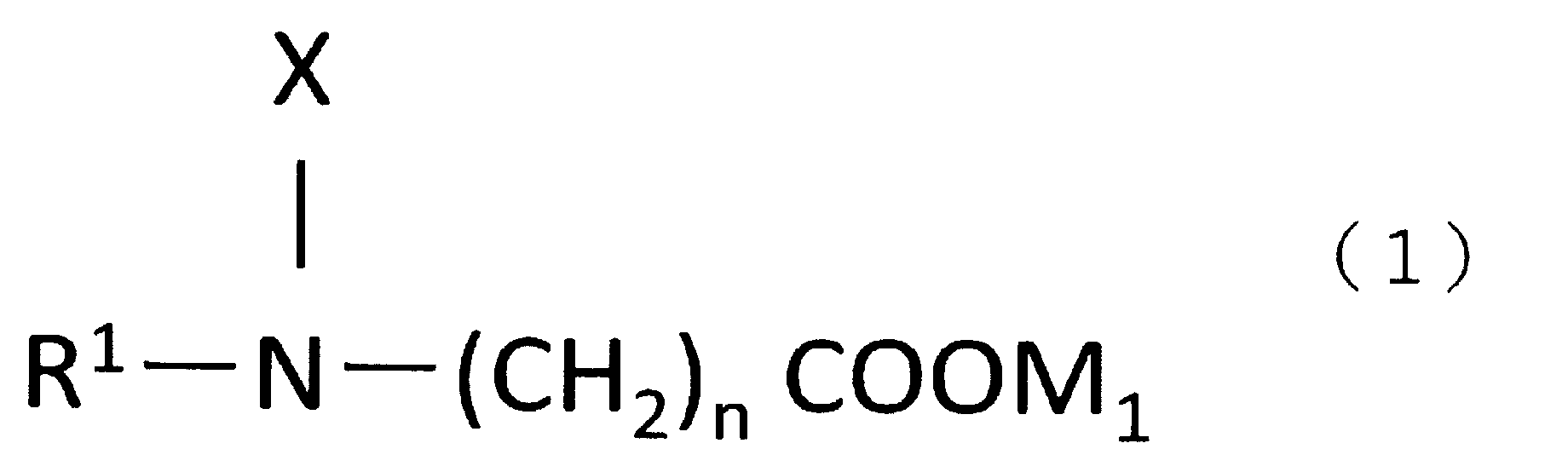

本願における化粧料用界面活性剤組成物とは、化粧料用原料として用いる界面活性剤組成物を示す。
また、本願における化粧料とは、頭髪用又は皮膚洗浄用の洗浄剤(シャンプー、ポンプフォーマー洗顔料、クリーム洗顔料、洗顔料、ボディソープ、固形石鹸、クレンジング及び液体石けん等)、ヘアケア化粧料(ヘアリンス、コンディショナー、ノンカチオンコンディショナー、トリートメント、ヘアオイル及びスタイリング剤等)、スキンケア化粧料(ローション、クリーム、ハンドクリーム、クレンジングオイル、化粧水、乳液、オールインワンジェル及びシェービング剤等)、メイクアップ用化粧料(ファンデーション、化粧下地、おしろい、口紅、頬紅、アイライナー、アイシャドウ、アイブロウ及びマスカラ等)、毛髪用化粧料(ヘアワックス、ヘアジェル、ヘアスプレー及びヘアカラー剤等)、UVケア化粧料(クリームタイプ、ジェルタイプ及びロールオンタイプ等)、ふき取り化粧料(パック、メイク落としシート、汗ふきシート及び髪の毛ふき取りシート等)、フレグランス製品及び制汗剤等を示す。
なお、本明細書においては、化合物の名称を日本化粧品工業連合会が作成する「化粧品の成分表示名称リスト」に収載されている表示名称又は表示別名称で記載する場合がある。
本願第一の発明である化粧料用界面活性剤組成物に含まれる両性界面活性剤(A)は、一般式(1)で表される両性界面活性剤(a1)を含有する。
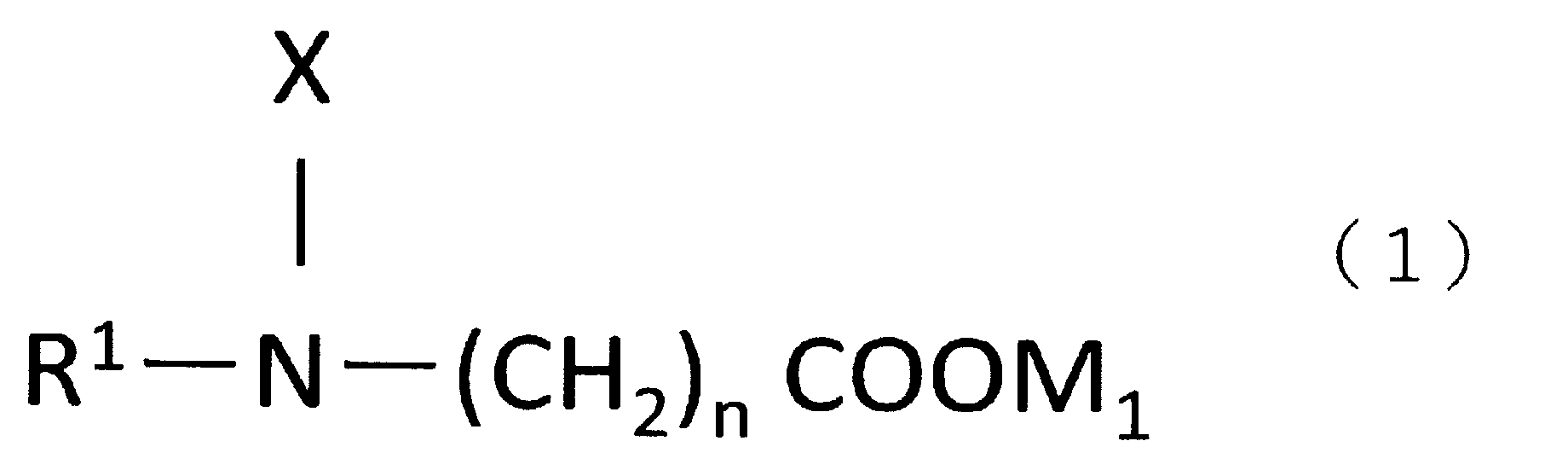
炭素数6~25のアルキル基としては、n-ヘキシル基、n-ヘプチル基、n-オクチル基、イソオクチル基、2-エチルヘキシル基、n-ノニル基、イソノニル基、n-デシル基、イソデシル基、ウンデシル基、n-ドデシル基、イソドデシル基、n-トリデシル基、イソトリデシル基、n-テトラデシル基、イソテトラデシル基、n-ヘキサデシル基、イソヘキサデシル基、n-ステアリル基、イソステアリル基、n-ノナデシル基、n-イコシル基及びn-テトラコシル基等が挙げられる。
炭素数6~25のアルケニル基としては、n-ヘキセニル基、n-ヘプテニル基、n-オクテニル基、n-デセニル基、イソデセニル基、n-ウンデセニル基、n-ドデセニル基、n-テトラデセニル基、イソヘキサデセニル基、n-オクタデセニル基及びn-オクタデカジエニル基等が挙げられる。
R1のうち、化粧料の静菌性の観点から、好ましくは炭素数6~20のアルキル基又は炭素数6~20のアルケニル基であり、さらに好ましくは炭素数8~18のアルキル基又は炭素数8~18のアルケニル基である。
炭素数1~3のアルキル基としては、メチル基、エチル基及びプロピル基等が挙げられる。
Xのうち、化粧料用界面活性剤組成物を含む化粧料の静菌性の観点から、好ましくは水素原子又はメチル基であり、さらに好ましくは水素原子である。
M1のうち、化粧料用界面活性剤組成物を含む化粧料の静菌性の観点から、好ましくはナトリウム原子又はトリエタノールアンモニウムであり、さらに好ましくはナトリウム原子である。
nは、本発明の化粧料用界面活性剤組成物を含む化粧料の静菌性の観点から、好ましくは2である。
これらのうち1種を単独で用いても2種以上を併用してもよい。
また、β-ドデシルアミノプロピオン酸ナトリウム、β-ドデシルアミノプロピオン酸カリウム、及びβ-ドデシルアミノプロピオン酸トリエタノールアンモニウムを構成成分とすることからβ-ヤシ油脂肪酸アミノプロピオン酸ナトリウム、β-ヤシ油脂肪酸アミノプロピオン酸カリウム、及びβ-ヤシ油脂肪酸アミノプロピオン酸トリエタノールアンモニウムもそれぞれ好ましく、β-ヤシ油脂肪酸アミノプロピオン酸ナトリウムがさらに好ましい。
例えば、好ましくは50~150℃(より好ましくは70~100℃)で炭素数6~25の1級アミン1モルに対してアクリル酸メチル1.17モルを滴下してマイケル付加反応を行った後、さらに水酸化ナトリウム等のアルカリ性化合物で加水分解することによって、両性界面活性剤(a1)が得られる。
本願第一の発明である化粧料用界面活性剤組成物に含まれるエステル(B)は、一般式(2)で表されるエステル(b1)を含有する。
一般式(2)で表されるエステル(b1)を含むことで本発明の化粧料用界面活性剤組成物を含む化粧料の静菌性と、使用後の保湿性が良好となる。

R2のうち、本発明の化粧料用界面活性剤組成物を含む化粧料の静菌性の観点から、好ましくは炭素数6~20のアルキル基又は炭素数6~20のアルケニル基であり、さらに好ましくは炭素数8~18のアルキル基又は炭素数8~18のアルケニル基である。
これらのうち1種を単独で用いても2種以上を併用してもよい。
また、β-ドデシルアミノプロピオン酸メチルを構成成分として含有していることから、β-ヤシ油脂肪酸アミノプロピオン酸メチルも好ましく用いることができる。
例えば、好ましくは50~150℃(より好ましくは70~100℃)の温度で1モルのアルキルアミンに対して1.17モルのアクリル酸メチルを滴下してマイケル付加反応を行うことで、エステル(b1)が得られる。
また、一般式(1)で表される両性界面活性剤(a1)を合成する時に行う、マイケル付加物の加水分解の反応条件(反応温度及び反応時間等)を調整して反応率を制御することによって、両性界面活性剤(a1)とエステル(b1)との混合物を得ることも出来る。
本願第一の発明である化粧料用界面活性剤組成物に含まれる両性界面活性剤(A)は、さらに一般式(3)で表される両性界面活性剤(a2)を含有してもよい。
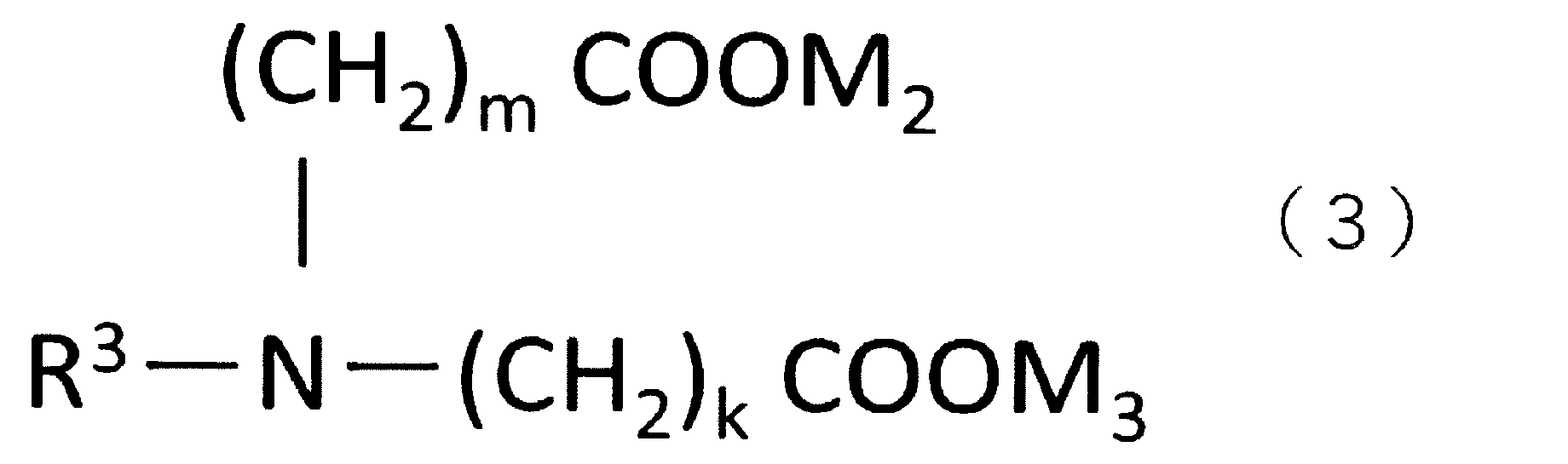
M2のうち、好ましくはナトリウム原子又はトリエタノールアンモニウムであり、さらに好ましくはナトリウム原子である。
M3のうち、好ましくはナトリウム原子又はトリエタノールアンモニウムであり、さらに好ましくはナトリウム原子である。
mは、好ましくは2である。
kは、好ましくは2である。
これらのうち1種を単独で用いても2種以上を併用してもよい。
例えば、好ましくは50~150℃(より好ましくは70~100℃)の温度で炭素数6~25の1級アミン1モルに対してアクリル酸メチル2.5モルを滴下してマイケル付加反応を行った後、アルカリ性化合物で加水分解することによって、両性界面活性剤(a2)が得られる。
また、一般式(1)で表される両性界面活性剤(a1)を製造する際に、炭素数6~25の1級アミン1モルに対して2モルのアクリル酸メチルが付加する副反応が起こり、その反応物が加水分解されることで、両性界面活性剤(a1)と同時に両性界面活性剤(a2)が得られる場合がある。
本願第一の発明である化粧料用界面活性剤組成物に含まれるエステル(B)は、さらに下記の一般式(4)で表されるエステル(b2)を含有してもよい。

mは、好ましくは2である。
kは、好ましくは2である。
これらのうち1種を単独で用いても2種以上を併用してもよい。
例えば、好ましくは50~150℃(より好ましくは70~100℃)で炭素数6~25の1級アミン1モルに対して2.5モルのアクリル酸メチルを滴下してマイケル付加反応を行うことで、エステル(b2)が得られる。
また、一般式(1)で表される両性界面活性剤(a1)を製造する際に、炭素数6~25の1級アミン1モルに対して2モルのアクリル酸メチルが付加する反応が起こり、その反応物が加水分解されることなく残留することで、両性界面活性剤(a1)と同時にエステル(b2)が得られる場合がある。
本発明の化粧料用界面活性剤組成物における両性界面活性剤(a1)の重量に対する、エステル(b1)の重量割合(以下、[(b1)/(a1)]と略記する場合がある)は、化粧料用界面活性剤組成物の経時での濁りや分離の抑制の観点、及び化粧料用界面活性剤組成物を含む化粧料の保湿性及び静菌性の観点等から、0.1重量%~10重量%であり、好ましくは0.3重量%~9重量%であり、さらに好ましくは0.4重量%~8重量%である。
[(b1)/(a1)]が0.1重量%未満だと、化粧料用界面活性剤組成物を含む化粧料の保湿性及び静菌性が不十分となり、また、[(b1)/(a1)]が10重量%を超えると、化粧料用界面活性剤組成物に経時的な濁りや分離が生じて均質な組成の化粧料を安定的に製造することが困難となる。
また、両性界面活性剤(a1)を合成する時に行う加水分解の反応条件(反応温度及び反応時間等)を調整して反応率を制御して両性界面活性剤(a1)の重量に対するエステル(b1)の重量の割合が前記の範囲に含まれる混合物を製造して用いてもよい。
まず、内部標準物質であるn-デカンと定量対象の物質であるエステル(b1)とを含む3つの検量線サンプル[エステル(b1)の濃度がそれぞれ2.0、1.0、0.5重量%であり、n-デカンの濃度がそれぞれ1.0重量%であるエタノール溶液]を作製して下記測定条件でGCによる分析を行う。
次に、GCによる分析結果を、横軸がn-デカンの重量に対するエステル(b1)の重量比率[(エステル(b1)の重量)/(n-デカンの重量)]であり、縦軸がn-デカンのピーク面積に対するエステル(b1)のピーク面積比[(エステル(b1)のピーク面積)/(n-デカンのピーク面積)]であるグラフにプロットし、最小二乗法によって検量線を作成する。
なお、GCチャートにおけるn-デカン及びエステル(b1)のピークは保持時間によって判別することができ、下記のGC測定の条件においては、n―デカンのピークは保持時間約3.3秒の箇所に現れ、エステル(b1)のピークは保持時間約15.5秒の箇所に現れる。
次に、化粧料用界面活性剤組成物から秤量してサンプリングした試料に1重量%のn-デカンを溶解したエタノール溶液を2.0g加えた後、さらにエタノール50mLを加えて試料溶液として、下記測定条件でGCによる分析を行う。
分析で得られたGCスペクトルからn-デカンのピーク面積に対するエステル(b1)のピーク面積の比率[(エステル(b1)のピーク面積)/(n-デカンのピーク面積)]を算出し、前記の検量線の傾きであるKを用いて、下記計算式(1)によって、化粧料用界面活性剤組成物からサンプリングした試料に含まれるエステル(b1)の含有量を計算する。
エステル(b1)の含有量(重量%)=(K×T×2.0)/S (1)
計算式(1)において、Kは検量線の傾きであり、Tは[(エステル(b1)のピーク面積)/(n-デカンのピーク面積)]であり、Sは試料溶液を作成するために化粧料用界面活性剤組成物からサンプリングした試料の重量(g)である。
装置:GC-9A((株)島津製作所製)
検出器:FID
GCパックドカラム:SE-30(ジメチルポリシロキサン含有量5重量%、内径3.2mm、長さ2.1m、GLサイエンス(株)製)
カラム温度:80℃から280℃まで昇温(昇温速度:10℃/min)
サンプル注入量:5μL
両性界面活性剤(a1)とエステル(b1)とを含む化粧料用界面活性剤組成物に対してメチルエステル化処理を行うと、メチルエステル化処理後の溶液には、メチルエステル化処理をする前から含まれていたエステル(b1)と、両性界面活性剤(a1)のメチルエステル化によって合成されたエステル(b1)との両方が含まれることになる。
メチルエステル化処理後の溶液に含まれるエステル(b1)のモル数は、メチルエステル化処理化粧料用界面活性剤組成物に含まれていたエステル(b1)と両性界面活性剤(a1)との合計モル数と等しい。
したがって、メチルエステル化処理後の溶液に含まれるエステル(b1)の重量をモル数に換算すると、メチルエステル化処理に用いた化粧料用界面活性剤組成物に含まれていたエステル(b1)と両性界面活性剤(a1)との合計モル数を算出することができ、その合計モル数からメチルエステル化処理をする前から含まれていたエステル(b1)のモル数を引き算し、それを両性界面活性剤(a1)の分子量に基づいて両性界面活性剤(a1)の重量に換算し、メチルエステル化処理に用いた化粧料用界面活性剤組成物に含まれていた両性界面活性剤(a1)の含有量を計算することができる。
(1)化粧料用界面活性剤組成物(80g)に塩酸(35重量%水溶液、富士フイルム和光純薬(株)製)を加えてpH2にし、さらに石油エーテル(富士フイルム和光純薬(株)製)20gを加えて混合し、化粧料用界面活性剤組成物に含まれる両性界面活性剤(a1)及びエステル(b1)を石油エーテルに抽出する。
次いで、200mLの分液漏斗を用いて水層と油層に分離し、油層を取り出す。ロータリーエバポレーター(回転数50rpm/min)を用いて、60℃の温浴中、圧力0.09MPaで油層を3時間減圧し、油層中に含まれる石油エーテルを留去する。石油エーテルを留去した後の残留物{両性界面活性剤(a1)及びエステル(b1)の混合物}の重量を記録した後、残留物からサンプリングした試料(0.03g)にN,N-ジメチルホルムアミドジメチルアセタール(1g)を加え、60℃で15分加熱して前記残留物に含まれる両性界面活性剤(a1)のメチルエステル化反応を行う。得られた反応混合物{エステル(b1)を含む反応混合物}を、前述のGCによるエステル(b1)の定量分析方法における測定試料に変更すること以外はGCによるエステル(b1)の定量分析方法と同様に分析を行い、メチルエステル化処理で得られた反応混合物中に含まれるエステル(b1)の含有量を測定する。
化粧料用界面活性剤組成物中の、エステル(b1)の含有割合は、化粧料用界面活性剤組成物の合計重量に基づいて0.001~0.50重量%であることが好ましく、さらに好ましくは0.002~0.13重量%である。
化粧料用界面活性剤組成物に含まれる水としては、両性界面活性剤(a1)及びエステル(b1)の合成を行う際の反応溶媒として用いた水をそのまま含んでいてもよく、所定の重量割合となるように常水、精製水の他、硬水、軟水、天然水、海洋深層水、温泉水、電解アルカリイオン水、電解酸性イオン水、イオン交換水及びクラスター水等を用いて両性界面活性剤(a1)及びエステル(b1)と混合しても良い。
また、化粧料用界面活性剤組成物は、両性界面活性剤(a1)及びエステル(b1)の合成を行った際の未反応物及び反応触媒の残渣等を含んでいても良い。
本願第二の発明である化粧料は、前記の本願第一の発明であり、両性界面活性剤(a1)及びエステル(b1)を所定の割合で含む化粧料用界面活性剤組成物を含む化粧料である。
本発明の化粧料は、pH調整剤により、pHを4~11程度に調整することで、保存安定性の高い(経時での分離や濁りが発生しにくい)化粧料とすることができる。
例えば、化粧料に含まれる溶剤は、化粧料の全重量に基づき、95重量%以下であることが好ましく、化粧料に含まれる両性界面活性剤(A)以外の両性界面活性剤、アニオン性界面活性剤、ノニオン性界面活性剤、カチオン性界面活性剤、油剤及び保湿剤は、化粧料の全重量に基づき、好ましくはそれぞれ50重量%以下であり、美白剤及びコンディショニング剤は、化粧料の全重量に基づき、好ましくはそれぞれ20重量%以下であり、pH調整剤、清涼剤、酸化防止剤、キレート剤、増粘剤、紫外線防御剤、香料及び着色料は、化粧料の全重量に基づき、好ましくはそれぞれ10重量%以下であり、化粧料に含まれる水は、化粧料の全重量に基づき、95重量%以下であることが好ましく、化粧料に含まれる防腐剤は、化粧料の全重量に基づき、0.5重量%以下であることが好ましい。なお、本明細書中において、アニオン性界面活性剤が脂肪酸塩を含む場合、化粧料中の脂肪酸が全てカリウム塩となっていると仮定し、脂肪酸のカリウム塩の重量を化粧料中の脂肪酸塩の重量とみなす。
本発明の化粧料用界面活性剤組成物:2.1~11.3重量%
アニオン性界面活性剤:15.0~33.0重量%
両性界面活性剤:0~10.0重量%
保湿剤:0~2.0重量%
コンディショニング剤:0.5~2.3重量%
油剤:0~0.3重量%
キレート剤:0~0.1重量%
ノニオン性界面活性剤:2.0~5.0重量%
清涼剤:0~1.0重量%
pH調整剤:0~0.1重量%
本発明の化粧料用界面活性剤組成物:0.6~3.3重量%
アニオン性界面活性剤:4.9~10.0重量%
両性界面活性剤:0~3.4重量%
保湿剤:0~2.0重量%
コンディショニング剤:0.5~0.6重量%
油剤:0~0.3重量%
キレート剤:0~0.1重量%
ノニオン性界面活性剤:2.0~5.0重量%
清涼剤:0~1.0重量%
pH調整剤:0~0.1重量%
アニオン性界面活性剤としては、ココイルグルタミン酸ナトリウム及び/又はオレフィン(炭素数14~16)スルホン酸ナトリウムが好ましい。
両性界面活性剤としては、コカミドプロピルベタインが好ましい。
保湿剤としては、BG(1,3-ブチレングリコール)が好ましい。
コンディショニング剤としては、ポリクオタニウム-22、ポリクオタニウム-7及びポリクオタニウム-10からなる群より選択される1以上であることが好ましい。
油剤としては、ジメチコンが好ましい。
キレート剤としては、EDTA 2Naが好ましい。
ノニオン性界面活性剤としては、ヤシ油脂肪酸N-メチルエタノールアミド及び/又はトリイソステアリン酸PEG-160ソルビタンが好ましい。
清涼剤としては、メントールが好ましい。
pH調整剤としては、クエン酸が好ましい。
本発明の化粧料用界面活性剤組成物:6.0~12.0重量%
アニオン性界面活性剤:15.0~25.0重量%
両性界面活性剤:0~10.0重量%
コンディショニング剤:0~5.0重量%
水:60.0~75.0重量%
本発明の化粧料用界面活性剤組成物:1.5~4.0重量%
アニオン性界面活性剤:3.0~8.0重量%
両性界面活性剤:0~2.0重量%
コンディショニング剤:0~1.0重量%
アニオン性界面活性剤としては、ラウロイルグルタミン酸TEA及び/又はオレフィン(炭素数14~16)スルホン酸ナトリウムが好ましい。
両性界面活性剤としては、コカミドプロピルベタインが好ましい。
コンディショニング剤としては、ポリクオタニウム-7が好ましい。
本発明の化粧料用界面活性剤組成物:3.8~5.0重量%
アニオン性界面活性剤:17.0~26.0重量%
両性界面活性剤:0~3.0重量%
保湿剤:5~20重量%
コンディショニング剤:0~0.5重量%
酸化防止剤:0~0.1重量%
ノニオン性界面活性剤:0~8.0重量%
増粘剤:0~2.0重量%
pH調整剤:0~6.3重量%
水:42.6~65.7重量%
本発明の化粧料用界面活性剤組成物:1.1~1.5重量%
アニオン性界面活性剤:13.5~26.0重量%
両性界面活性剤:0~0.9重量%
保湿剤:5.0~20.0重量%
コンディショニング剤:0~0.05重量%
酸化防止剤:0~0.1重量%
ノニオン性界面活性剤:0~8.0重量%
増粘剤:0~2.0重量%
pH調整剤:0~6.3重量%
アニオン性界面活性剤としては、ココイルグルタミン酸ナトリウム、ヤシ油脂肪酸グリシンK、ラウリン酸の塩、ステアリン酸の塩及びパルミチン酸の塩からなる群より選択される1以上であることが好ましい。
両性界面活性剤としては、コカミドプロピルベタインが好ましい。
保湿剤としては、グリセリンが好ましい。
コンディショニング剤としては、ポリクオタニウム-7が好ましい。
酸化防止剤としては、ビタミンEが好ましい。
ノニオン性界面活性剤としては、ヤシ油脂肪酸N-メチルエタノールアミド及び/又はジステアリン酸PEG-190が好ましい。
増粘剤としては、ジステアリン酸グリコールが好ましい。
pH調整剤としては、水酸化カリウムが好ましい。
本発明の化粧料用界面活性剤組成物:5.0~10.0重量%
溶剤:7.0~15.0重量%
保湿剤:2.0~4.0重量%
増粘剤:0.1~0.5重量%
ノニオン性界面活性剤:0.1~0.5重量%
水:75.0~85.0重量%
本発明の化粧料用界面活性剤組成物:1.0~3.0重量%
溶剤:7.0~15.0重量%
保湿剤:2.0~4.0重量%
増粘剤:0.1~0.5重量%
ノニオン性界面活性剤:0.1~0.5重量%
溶剤としては、イソプレンジオール及び/又はエタノールが好ましい。
保湿剤としては、グリセリンが好ましい。
増粘剤としては、キサンタンガム及び/又はアクリル酸Naグラフトデンプンが好ましい。
ノニオン性界面活性剤としては、PEG-60水添ヒマシ油が好ましい。
本発明の化粧料用界面活性剤組成物:2.0~4.0重量%
保湿剤:10.0~15.0重量%
増粘剤:3.0~8.0重量%
酸化防止剤:0~0.1重量%
油剤:15.0~25.0重量%
ノニオン性界面活性剤:1.5~4.0重量%
アニオン性界面活性剤:0~2.0重量%
防腐剤:0.1~0.5重量%
水:50.0~65.0重量%
本発明の化粧料用界面活性剤組成物:0.5~1.0重量%
保湿剤:10.0~15.0重量%
増粘剤:3.0~8.0重量%
酸化防止剤:0~0.1重量%
油剤:15.0~25.0重量%
ノニオン性界面活性剤:1.5~4.0重量%
アニオン性界面活性剤:0~2.0重量%
防腐剤:0.1~0.5重量%
保湿剤としては、グリセリン及び/又はBG(1,3-ブチレングリコール)が好ましい。
増粘剤としては、ベヘニルアルコール及び/又はステアリルアルコ―ルが好ましい。
酸化防止剤としては、ビタミンEが好ましい。
油剤としては、トリ(カプリル/カプリン酸)グリセリル、ヘキサ(ヒドロキシステアリン酸/ステアリン酸/ロジン酸)ジペンタエリスリチル、ホホバ油及びジメチコンからなる群より選択される1以上であることが好ましい。
ノニオン性界面活性剤としては、PPG-2セテス-12が好ましい。
防腐剤としては、フェノキシエタノール及び/又はメチルパラベンが好ましい。
アニオン性界面活性剤としては、ステアリン酸の塩及び/又はイソステアリン酸の塩が好ましい。
本発明の化粧料用界面活性剤組成物:4.0~8.0重量%
保湿剤:3.0~8.0重量%
増粘剤:0~0.5重量%
酸化防止剤:0~0.5重量%
油剤:15.0~25.0重量%
ノニオン性界面活性剤:0.1~0.5重量%
アニオン性界面活性剤:0~2.0重量%
水:60.0~75.0重量%
本発明の化粧料用界面活性剤組成物:1.0~2.5重量%
保湿剤:3.0~8.0重量%
増粘剤:0~0.5重量%
酸化防止剤:0~0.5重量%
油剤:15.0~25.0重量%
ノニオン性界面活性剤:0.1~0.5重量%
アニオン性界面活性剤:0~2.0重量%
保湿剤としては、グリセリン、BG(1,3-ブチレングリコール)及び水添ナタネ油アルコールからなる群より選択される1以上であることが好ましい。
増粘剤としては、キサンタンガムが好ましい。
酸化防止剤としては、ビタミンEが好ましい。
油剤としては、パルミチン酸エチルヘキシル、シア脂及びトリエチルヘキサノインからなる群より選択される1以上であることが好ましい。
ノニオン性界面活性剤としては、ジステアリン酸PEG-190が好ましい。
アニオン性界面活性剤としては、ステアリン酸の塩及び/又はイソステアリン酸の塩が好ましい。
本発明の化粧料用界面活性剤組成物:10.0~20.0重量%
油剤:60.0~70.0重量%
ノニオン性界面活性剤:15.0~25.0重量%
アニオン性界面活性剤:0~2.0重量%
本発明の化粧料用界面活性剤組成物:3.0~5.0重量%
油剤:60.0~70.0重量%
ノニオン性界面活性剤:15.0~25.0重量%
アニオン性界面活性剤:0~2.0重量%
油剤としては、パルミチン酸エチルヘキシル、シクロペンタシロキサン及びミネラルオイルからなる群より選択される1以上であることが好ましい。
ノニオン性界面活性剤としては、オレイン酸ソルビタン、オレイン酸PEG-9及びセトレス-5からなる群より選択される1以上であることが好ましい。
アニオン性界面活性剤としては、ステアリン酸の塩及び/又はイソステアリン酸の塩が好ましい。
本発明の化粧料用界面活性剤組成物:5.0~10.0重量%
増粘剤:0.5~1.5重量%
油剤:2.5~5.0重量%
ノニオン性界面活性剤:0.5~1.0重量%
カチオン性界面活性剤:1.0~5.0重量%
防腐剤:0.1~0.5重量%
水:80.0~90.0重量%
本発明の化粧料用界面活性剤組成物:1.0~3.0重量%
増粘剤:0.5~1.5重量%
油剤:2.5~5.0重量%
ノニオン性界面活性剤:0.5~1.0重量%
カチオン性界面活性剤:1.0~4.0重量%
防腐剤:0.1~0.5重量%
増粘剤としては、セテアリルアルコールが好ましい。
油剤としては、シア脂、ジメチコン及びミネラルオイルからなる群より選択される1以上であることが好ましい。
ノニオン性界面活性剤としては、ステアリン酸グリセリルが好ましい。
防腐剤としては、フェノキシエタノールが好ましい。
カチオン性界面活性剤としては、ベヘントリモニウムクロリドが好ましい。
本発明の化粧料用界面活性剤組成物:1.5~4.0重量%
保湿剤:1.5~5.0重量%
増粘剤:3.0~6.0重量%
油剤:1.5~4.0重量%
水:85.0~95.0重量%
本発明の化粧料用界面活性剤組成物:0.3~1.5重量%
保湿剤:1.5~5.0重量%
増粘剤:3.0~6.0重量%
油剤:1.5~4.0重量%
保湿剤としては、グリセリンが好ましい。
増粘剤としては、セチルアルコール、ヒドロキシプロピルメチルセルロース及びキサンタンガムからなる群より選択される1以上であることが好ましい。
油剤としては、シア脂が好ましい。
本発明の化粧料用界面活性剤組成物:5.0~10.0重量%
増粘剤:0.1~0.5重量%
油剤:10.0~20.0重量%
ノニオン性界面活性剤:1.5~4.0重量%
コンディショニング剤:0.1~1.0重量%
pH調整剤:0.1~0.5重量%
防腐剤:0.1~0.5重量%
水:70.0~80.0重量%
本発明の化粧料用界面活性剤組成物:1.5~4.0重量%
増粘剤:0.1~0.5重量%
油剤:10.0~20.0重量%
ノニオン性界面活性剤:1.5~4.0重量%
コンディショニング剤:0.1~1.0重量%
pH調整剤:0.1~0.5重量%
防腐剤:0.1~0.5重量%
増粘剤としては、カルボマーが好ましい。
油剤としては、ヘキサ(ヒドロキシステアリン酸/ステアリン酸/ロジン酸)ジペンタエリスリチル、スクワラン、キャンデリラロウ、ミネラルオイル及びミツロウからなる群より選択される1以上であることが好ましい。
ノニオン性界面活性剤としては、PPG-7-ブテス-10、PPG-34、PEG-60水添ヒマシ油及びラウレス―7からなる群より選択される1以上であることが好ましい。
コンディショニング剤としては、PEG-400が好ましい。
pH調整剤としては、水酸化カリウムが好ましい。
防腐剤としては、フェノキシエタノールが好ましい。
本発明の化粧料用界面活性剤組成物:1.0~5.0重量%
保湿剤:1.0~3.0重量%
溶剤:90.0~95.0重量%
油剤:0.5~2.0重量%
コンディショニング剤:2.0~4.0重量%
本発明の化粧料用界面活性剤組成物:0.5~1.5重量%
保湿剤:1.0~3.0重量%
溶剤:90.0~95.0重量%
油剤:0.5~2.0重量%
コンディショニング剤:2.0~4.0重量%
保湿剤としては、グリセリンが好ましい。
溶剤としては、変性アルコールが好ましい。
油剤としては、PEG-12ジメチコンが好ましい。
コンディショニング剤としては、(ビニルピロリドン/VA)コポリマーが好ましい。
本発明の化粧料用界面活性剤組成物:5.0~10.0重量%
紫外線防御剤:10.0~20.0重量%
油剤:5.0~15.0重量%
ノニオン性界面活性剤:1.0~5.0重量%
増粘剤:5.0~10.0重量%
保湿剤:1.0~3.0重量%
防腐剤:0~0.5重量%
水:50.0~60.0重量%
本発明の化粧料用界面活性剤組成物:1.0~3.0重量%
紫外線防御剤:10.0~20.0重量%
油剤:5.0~15.0重量%
ノニオン性界面活性剤:1.0~5.0重量%
増粘剤:5.0~10.0重量%
保湿剤:1.0~3.0重量%
防腐剤:0~0.5重量%
紫外線防御剤としては、酸化チタン、酸化亜鉛、メトキシケイヒ酸エチルヘキシル及びt-ブチルメトキシジベンゾイルメタンからなる群より選択される1以上であることが好ましい。
油剤としては、リンゴ酸ジイソステアリル、トリ(カプリル酸/カプリン酸)グリセリル及びジメチコンからなる群より選択される1以上であることが好ましい。
ノニオン性界面活性剤としては、PPG-2セテス-12が好ましい。
増粘剤としては、ベヘニルアルコール及び/又はカルボマーが好ましい。
保湿剤としては、グリセリンが好ましい。
防腐剤としては、フェノキシエタノールが好ましい。
本発明の化粧料用界面活性剤組成物:1.0~5.0重量%
紫外線防御剤:10.0~20.0重量%
油剤:2.0~6.0重量%
増粘剤:0.5~2.0重量%
アニオン性界面活性剤:0~5.0重量%
保湿剤:5.0~10.0重量%
溶剤:1.0~5.0重量%
pH調整剤:0.2~1.0重量%
水:60.0~70.0重量%
本発明の化粧料用界面活性剤組成物:0.3~1.5重量%
紫外線防御剤:10.0~20.0重量%
油剤:2.0~6.0重量%
増粘剤:0.5~2.0重量%
アニオン性界面活性剤:0~5.0重量%
保湿剤:5.0~10.0重量%
溶剤:1.0~5.0重量%
pH調整剤:0.2~1.0重量%
紫外線防御剤としては、メトキシケイヒ酸エチルヘキシル及び/又はt-ブチルメトキシジベンゾイルメタンが好ましい。
油剤としては、パルミチン酸エチルヘキシルが好ましい。
増粘剤としては、カルボマー及び/又はキサンタンガムが好ましい。
保湿剤としては、グリセリンが好ましい。
溶剤としては、イソプレンジオールが好ましい。
pH調整剤としては、水酸化カリウム及び/又はクエン酸が好ましい。
アニオン性界面活性剤としては、イソステアリン酸の塩及び/又はステアリン酸の塩が好ましい。
本発明の化粧料用界面活性剤組成物:5.0~10.0重量%
保湿剤:15.0~25.0重量%
増粘剤:0.1~0.5重量%
美白剤:0~0.5重量%
酸化防止剤:0~0.3重量%
防腐剤:0~0.5重量%
水:67.0~77.0重量%
本発明の化粧料用界面活性剤組成物:1.0~4.0重量%
保湿剤:15.0~25.0重量%
増粘剤:0.1~0.5重量%
美白剤:0~0.5重量%
酸化防止剤:0~0.3重量%
防腐剤:0~0.5重量%
保湿剤としては、グリセリン及び/又はヒアルロン酸Naが好ましい。
増粘剤としては、キサンタンガムが好ましい。
美白剤としては、トラネキサム酸が好ましい。
酸化防止剤としては、ビタミンEが好ましい。
防腐剤としては、フェノキシエタノールが好ましい。
本発明の化粧料用界面活性剤組成物:1.0~5.0重量%
保湿剤:5.0~15.0重量%
ノニオン性界面活性剤:5.0~15.0重量%
水:72.0~82.0重量%
本発明の化粧料用界面活性剤組成物:0.3~1.5重量%
保湿剤:5.0~15.0重量%
ノニオン性界面活性剤:5.0~15.0重量%
保湿剤としては、グリセリンが好ましい。
ノニオン性界面活性剤としては、オレイン酸PEG-9が好ましい。
本発明の化粧料用界面活性剤組成物:4.0~8.0重量%
溶剤:25.0~35.0重量%
保湿剤:3.0~5.0重量%
防腐剤:0~0.5重量%
水:55.0~65.0重量%
本発明の化粧料用界面活性剤組成物:1.0~4.0重量%
溶剤:25.0~35.0重量%
保湿剤:3.0~5.0重量%
防腐剤:0~0.5重量%
溶剤としては、エタノールが好ましい。
保湿剤としては、BG(1,3-ブチレングリコール)及び/又はヒアルロン酸Naが好ましい。
防腐剤としては、イソプロピルメチルフェノールが好ましい。
本発明の化粧料用界面活性剤組成物:11.0~17.0重量%
溶剤:15.0~25.0重量%
保湿剤:3.0~8.0重量%
酸化防止剤:0~0.1重量%
ノニオン性界面活性剤:0.1~1.0重量%
清涼剤:0.1~1.0重量%
水:55.0~65.0重量%
本発明の化粧料用界面活性剤組成物:2.0~6.0重量%
溶剤:15.0~25.0重量%
保湿剤:3.0~8.0重量%
酸化防止剤:0~0.1重量%
ノニオン性界面活性剤:0.1~1.0重量%
清涼剤:0.1~1.0重量%
溶剤としては、エタノールが好ましい。
保湿剤としては、グリセリンが好ましい。
酸化防止剤としては、ビタミンEが好ましい。
ノニオン性界面活性剤としては、PEG-60水添ヒマシ油が好ましい。
清涼剤としては、フェノキシエタノールが好ましい。
また、両性界面活性剤(a1)及びエステル(b1)の化粧料中での含有量が前記の化粧料用界面活性剤組成物における所定の割合になるように、両性界面活性剤(a1)、エステル(b1)及び必要に応じて用いるその他の成分(C)を混合して本発明の化粧料を製造しても良い。
原料の混合の順序は、特に限定されないが、水を使用する場合は、化粧料の均一性の観点から、水の中に化粧料用界面活性剤組成物及びその他の成分(C)を加えることが好ましい。
混合には、パドル型攪拌羽根又は螺旋型攪拌羽根等の攪拌装置を備えた公知の混合装置が使用できる。
人の皮膚表面には、種々の皮膚常在菌が皮膚常在菌叢を形成しており、皮膚常在菌叢が皮膚表面を外的な刺激から守っており、特定の皮膚常在菌だけが繁殖したり、減少したりするなどして皮膚常在菌叢のバランスが崩れると、ニキビ、皮膚の炎症などの皮膚疾患が発生する原因となることが知られている。
本発明の化粧料に含まれる前記の化粧料用界面活性剤組成物は、皮膚常在菌でもある大腸菌、黄色ブドウ球菌、クロコウジカビ、及びアクネ菌に対する優れた静菌性によって、これらの菌の繁殖を防ぐことによってバランスの良い皮膚常在菌叢を形成できるものと推測される。
そして、本発明の化粧料を継続的に使用することで皮膚常在菌叢がより良い状態に改善されることも期待できる。


攪拌装置、還流冷却機、滴下漏斗、及び温度計を装備した2Lの4つ口フラスコにラウリルアミン[ニッサンアミンBB、日油(株)製(ニッサンアミンは日油(株)の登録商標である)]185gを仕込み、窒素置換したのちに70℃に昇温し、アクリル酸メチル[東亜合成(株)製]101gを滴下漏斗から3時間かけて滴下して同温度で反応を行った。その後、100℃に昇温した後、7時間反応を行い、同温度でゲージ圧が2.7kPaになるまで減圧し、残存したアクリル酸メチルを除去した。
得られた反応溶液に、32gの49重量%水酸化ナトリウム水溶液と964gの水を仕込んで95℃で3時間加水分解反応を行った。
得られた加水分解後の溶液がpH6.0になるように、pHを測定しながら乳酸を添加した。添加した乳酸の総重量は62.5gであった。
乳酸添加後の溶液を90℃で加温することにより、溶液中のメタノールを留去し、界面活性剤水溶液1を得た。
界面活性剤水溶液1から1gサンプリングを行い、サンプリングした溶液中に含まれるエステル(b1)及び両性界面活性剤(a1)の同定を行い、その含量を後述するGCによる定量分析方法によって測定した。
界面活性剤水溶液1は、エステル(B)としてβ-ドデシルアミノプロピオン酸メチル(b1-1)を0.11重量%含み、両性界面活性剤(A)としてβ-ドデシルアミノプロピオン酸ナトリウム(a1-1)を28.89重量%含むものであった。
まず、内部標準物質であるn-デカンと定量の対象物質であるβ-ドデシルアミノプロピオン酸メチル(b1-1)とを用いて検量線を作成した。
次に、界面活性剤水溶液1からサンプリングした試料にn-デカンの1重量%エタノール溶液を2g加えた後、さらにエタノール50mLを加えて試料溶液を作製しGCによる分析を行った。
分析で得られたGCスペクトルのβ-ドデシルアミノプロピオン酸メチル(b1-1)とn-デカンのピーク面積比から得られたサンプリングした試料に含まれるβ-ドデシルアミノプロピオン酸メチル(b1-1)の含有量を元に、界面活性剤水溶液1に含まれるβ-ドデシルアミノプロピオン酸メチル(b1-1)の含有量を計算した。
装置:GC-9A((株)島津製作所製)
検出器:FID
GCパックドカラム:SE-30(ジメチルポリシロキサン含有量5重量%、内径3.2mm、長さ2.1m、GLサイエンス(株)製)
カラム温度:80℃から280℃まで昇温(昇温速度:10℃/min)
サンプル注入量:5μL
界面活性剤水溶液1(80g)に塩酸(35重量%水溶液、富士フイルム和光純薬(株)製)を加えてpH2にしたサンプルに石油エーテル(富士フイルム和光純薬(株)製)20gを加えて混合し、界面活性剤水溶液1に含まれるβ-ドデシルアミノプロピオン酸ナトリウム(a1-1)及びβ-ドデシルアミノプロピオン酸メチル(b1-1)を石油エーテルに抽出した。
次いで、200mLの分液漏斗を用いて水層と油層に分離し、油層を取り出した。ロータリーエバポレーター(回転数50rpm/min)を用いて、60℃の温浴中、圧力0.09MPaで油層を3時間減圧し、石油エーテルを留去した。石油エーテルを留去した後の残留物{両性界面活性剤(a1)及びエステル(b1)の混合物}の重量を記録した後、残留物からサンプリングした試料(0.03g)にN,N-ジメチルホルムアミドジメチルアセタール(東京化成工業(株))(1g)を加え、60℃で15分加熱して、前記残留物に含まれる両性界面活性剤(a1)のメチルエステル化反応を行った。得られた反応混合物{エステル(b1)を含む反応混合物}をGC分析の測定試料とした。
得られた反応混合物からGC測定用に秤量してサンプリングした試料にn-デカンの1重量%エタノール溶液を2g加えた後、さらにエタノール50mLを加えて試料溶液を作製しGCによる分析を行い、分析で得られたGCスペクトルのβ-ドデシルアミノプロピオン酸メチル(b1-1)とn-デカンのピーク面積比から、残留物からGC測定用にサンプリングした試料に含まれるβ-ドデシルアミノプロピオン酸メチル(b1-1)の含有量を計算した。
石油エーテルを留去した後の前記の残留物からGC測定用にサンプリングした試料に含まれるβ-ドデシルアミノプロピオン酸メチル(b1-1)の含有量から、界面活性剤水溶液1(80g)に含まれているβ-ドデシルアミノプロピオン酸メチル(b1-1)とβ-ドデシルアミノプロピオン酸ナトリウム(a1-1)との合計モル数を計算した。
得られた合計モル数から、前記のエステル(b1)の含有量の分析結果で得られるβ-ドデシルアミノプロピオン酸メチル(b1-1)のモル数を引き算し、β-ドデシルアミノプロピオン酸ナトリウム(a1-1)のモル数を算出し、さらにβ-ドデシルアミノプロピオン酸ナトリウム(a1-1)の分子量に基づいてβ-ドデシルアミノプロピオン酸ナトリウム(a1-1)重量に換算することで界面活性剤水溶液1に含まれる両性界面活性剤(a1)の含有量を求めた。
攪拌装置、還流冷却機、滴下漏斗、及び温度計を装備した2Lの4つ口フラスコにラウリルアミン[ニッサンアミンBB]185gを仕込み、窒素置換したのちに70℃に昇温し、アクリル酸メチル[東亜合成(株)製]101gを滴下漏斗から3時間かけて滴下し同温度で反応を行った。その後、100℃に昇温し7時間反応を行い、同温度でゲージ圧が2.7kPaになるまで減圧し、残存したアクリル酸メチルを除去した。
得られた反応溶液に、32gの49重量%水酸化ナトリウム水溶液と964gの水を仕込んで95℃で1時間加水分解反応を行った。
得られた加水分解後の反応溶液がpH6.0になるように、pHを測定しながら乳酸を添加した。添加した乳酸の総重量は62.5gであった。
乳酸添加後の溶液を90℃で加温することにより、溶液中のメタノールを留去し、界面活性剤水溶液2を得た。
界面活性剤水溶液2から、1gサンプリングを行い、サンプリングした溶液中に含まれるエステル(b1)及び両性界面活性剤(a1)の同定を行い、その含量を実施例1と同様の方法によって測定した。
界面活性剤水溶液2は、エステル(B)としてβ-ドデシルアミノプロピオン酸メチル(b1-1)を2.15重量%含み、両性界面活性剤(A)としてβ-ドデシルアミノプロピオン酸ナトリウム(a1-1)を26.85重量%含むものであった。
攪拌装置、還流冷却機、滴下漏斗、及び温度計を装備した2Lの4つ口フラスコにラウリルアミン[ニッサンアミンBB]185gを仕込み、窒素置換したのちに70℃に昇温し、アクリル酸メチル[東亜合成(株)製]101gを滴下漏斗から3時間かけて滴下し同温度で反応を行った。その後、100℃に昇温し7時間反応を行い、同温度でゲージ圧が2.7kPaになるまで減圧し、残存したアクリル酸メチルを除去した。
得られた反応溶液に、32gの49重量%水酸化ナトリウム水溶液と964gの水を仕込んで150℃で6時間加水分解反応を行った。
得られた加水分解後の溶液がpH6.0になるように、pHを測定しながら乳酸を添加した。添加した乳酸の総重量は62.5gであった。
乳酸添加後の溶液を90℃で加温することにより、溶液中のメタノールを留去し、界面活性剤水溶液3を得た。
界面活性剤水溶液3から1gサンプリングを行い、サンプリングした溶液中に含まれるエステル(b1)及び両性界面活性剤(a1)の同定を行い、その含量を実施例1と同様の方法によって測定した。
界面活性剤水溶液3は両性界面活性剤(A)としてβ-ドデシルアミノプロピオン酸ナトリウム(a1-1)を29.00重量%含み、エステル(b1)は含んでいなかった。
攪拌装置、還流冷却機、滴下漏斗、及び温度計を装備した2Lの4つ口フラスコにラウリルアミン[ニッサンアミンBB]185gを仕込み、窒素置換したのちに70℃に昇温し、アクリル酸メチル[東亜合成(株)製]215gを滴下漏斗から3時間かけて滴下し同温度で反応を行った。その後、100℃に昇温し7時間反応を行い、同温度でゲージ圧が2.7kPaになるまで減圧し、残存したアクリル酸メチルを除去した。
得られた反応溶液に664gの水を仕込んで、界面活性剤水溶液4を得た。
界面活性剤水溶液4から1gサンプリングを行った。サンプリングした溶液中に含まれるエステル(b1)及び両性界面活性剤(a1)の含量を実施例1と同様の方法によって測定した。
界面活性剤水溶液4は、エステル(B)として、β-ドデシルアミノプロピオン酸メチル(b1-1)を29.00重量%含み、両性界面活性剤(a1)は含んでいなかった。
攪拌装置、還流冷却機、滴下漏斗、及び温度計を装備した2Lの4つ口フラスコにオクチルアミン[ファーミン08D{花王(株)製(ファーミンは花王(株)の登録商標である)}]129gを仕込み、窒素置換したのちに70℃に昇温し、アクリル酸メチル[東亜合成(株)製]101gを滴下漏斗から3時間かけて滴下し同温度で反応を行った。その後、100℃に昇温し7時間反応を行い、同温度でゲージ圧が2.7kPaになるまで減圧し、残存したアクリル酸メチルを除去した。
得られた反応溶液に、32gの49重量%水酸化ナトリウム水溶液と964gの水を仕込んで95℃で6時間加水分解反応を行った。
得られた加水分解後の溶液がpH6.0になるように、pHを測定しながら乳酸を添加した。添加した乳酸の総重量は62.5gであった。
乳酸添加後の溶液を90℃で加温することにより、溶液中のメタノールを留去し、界面活性剤水溶液5を得た。
界面活性剤水溶液5から1gサンプリングを行い、サンプリングした溶液中に含まれるエステル(b1)及び両性界面活性剤(a1)の同定を行い、その含量を実施例1と同様の方法によって測定した。
界面活性剤水溶液5はエステル(B)としてβ-オクチルアミノプロピオン酸メチル(b1-2)を0.03重量%含み、両性界面活性剤(A)としてβ-オクチルアミノプロピオン酸ナトリウム(a1-2)を28.97重量%含むものであった。
攪拌装置、還流冷却機、滴下漏斗、及び温度計を装備した2Lの4つ口フラスコにステアリルアミン[ニッサンアミンAB(日油(株)製)]270gを仕込み、窒素置換したのちに70℃に昇温し、アクリル酸メチル[東亜合成(株)製]101gを滴下漏斗から3時間かけて滴下し同温度で反応を行った。その後、100℃に昇温し7時間反応を行い、同温度でゲージ圧が2.7kPaになるまで減圧し、残存したアクリル酸メチルを除去した。
得られた反応溶液に、32gの49重量%水酸化ナトリウム水溶液と964gの水を仕込んで95℃で6時間加水分解反応を行った。
得られた加水分解後の溶液がpH6.0になるように、pHを測定しながら乳酸を添加した。添加した乳酸の総重量は62.5gであった。
乳酸添加後の溶液を90℃で加温することにより、溶液中のメタノールを留去し、界面活性剤水溶液6を得た。
界面活性剤水溶液6から1gサンプリングを行い、サンプリングした溶液中に含まれるエステル(b1)及び両性界面活性剤(a1)の同定を行い、その含量を実施例1と同様の方法によって測定した。
界面活性剤水溶液6はエステル(B)としてβ-ステアリルアミノプロピオン酸メチル(b1-3)を0.03重量%含み、両性界面活性剤(A)としてβ-ステアリルアミノプロピオン酸ナトリウム(a1-3)を28.97重量%含むものであった。
攪拌装置、還流冷却機、滴下漏斗、及び温度計を装備した2Lの4つ口フラスコにステアリルアミン[ニッサンアミンAB]270gを仕込み、窒素置換したのちに70℃に昇温し、アクリル酸メチル[東亜合成(株)製]101gを滴下漏斗から3時間かけて滴下し同温度で反応を行った。その後、100℃に昇温し7時間反応を行い、同温度でゲージ圧が2.7kPaになるまで減圧し、残存したアクリル酸メチルを除去した。
得られた反応溶液に、32gの49重量%水酸化ナトリウム水溶液と964gの水を仕込んで80℃で2時間加水分解反応を行った。
得られた加水分解後の溶液がpH6.0になるように、pHを測定しながら乳酸を添加した。添加した乳酸の総重量は62.5gであった。
乳酸添加後の溶液を90℃で加温することにより、溶液中のメタノールを留去し、界面活性剤水溶液7を得た。
界面活性剤水溶液7から1gサンプリングを行い、サンプリングした溶液中に含まれるエステル(b1)及び両性界面活性剤(a1)の同定を行い、その含量を実施例1と同様の方法によって測定した。
界面活性剤水溶液7はエステル(B)としてβ-ステアリルアミノプロピオン酸メチル(b1-3)を2.39重量%含み、両性界面活性剤(A)としてβ-ステアリルアミノプロピオン酸ナトリウム(a1-3)を26.61重量%含むものであった。
攪拌装置、還流冷却機、滴下漏斗、及び温度計を装備した2Lの4つ口フラスコにイコサン-1-アミン[富士フイルム和光純薬(株)製]298gを仕込み、窒素置換したのちに70℃に昇温し、アクリル酸メチル[東亜合成(株)製]101gを滴下漏斗から3時間かけて滴下し同温度で反応を行った。その後、100℃に昇温し7時間反応を行い、同温度でゲージ圧が2.7kPaになるまで減圧し、残存したアクリル酸メチルを除去した。
得られた反応溶液に、32gの49重量%水酸化ナトリウム水溶液と964gの水を仕込んで80℃で1時間加水分解反応を行った。
得られた加水分解後の溶液がpH6.0になるように、pHを測定しながら乳酸を添加した。添加した乳酸の総重量は62.5gであった。
乳酸添加後の溶液を90℃で加温することにより、溶液中のメタノールを留去し、界面活性剤水溶液8を得た。
界面活性剤水溶液8から1gサンプリングを行い、サンプリングした溶液中に含まれるエステル(b1)及び両性界面活性剤(a1)の同定を行い、その含量を実施例1と同様の方法によって測定した。
界面活性剤水溶液8はエステル(B)としてβ-イコシルアミノプロピオン酸メチル(b1-4)を2.64重量%含み、両性界面活性剤(A)としてβ-イコシルアミノプロピオン酸ナトリウム(a1-4)を26.36重量%含むものであった。
製造例1~8で得られた界面活性剤水溶液1~8を表1に記載の割合で混合し、本願発明の化粧料用界面活性剤組成物1~8並びに比較用の界面活性剤組成物1’及び2’を作製した。
なお、実施例2では製造例2で得られた界面活性剤水溶液2を化粧料用界面活性剤組成物2に、実施例5では製造例5で得られた界面活性剤水溶液5を化粧料用界面活性剤組成物5に、実施例6では製造例6で得られた界面活性剤水溶液6を化粧料用界面活性剤組成物6に、実施例7では製造例7で得られた界面活性剤水溶液7を化粧料用界面活性剤組成物7に、比較例1では製造例3で得られた界面活性剤水溶液3を比較用の界面活性剤組成物1’に、比較例3では製造例4で得られた界面活性剤水溶液4を比較用の界面活性剤組成物3’に、そのまま用いた。
得られた化粧料用界面活性剤組成物1~8並びに比較用界面活性剤組成物1’~3’について、下記の方法で保存安定性を測定し、その結果を表1に記載した。
実施例1~8及び比較例1~3にかかる化粧料用界面活性剤組成物1~8及び比較用界面活性剤組成物1’~3’を、遮光された25℃のスクリュー管No.7(マルエム(株)製)内に各化粧料用界面活性剤組成物を30g作製した直後から保存し、保存開始から90日目の外観を目視で確認し、下記の基準で保存安定性を評価した。
(保存安定性の評価基準)
〇:90日目の外観が透明であり、白濁や分離はみられない
×:90日目の外観において、白濁又は分離がみられる
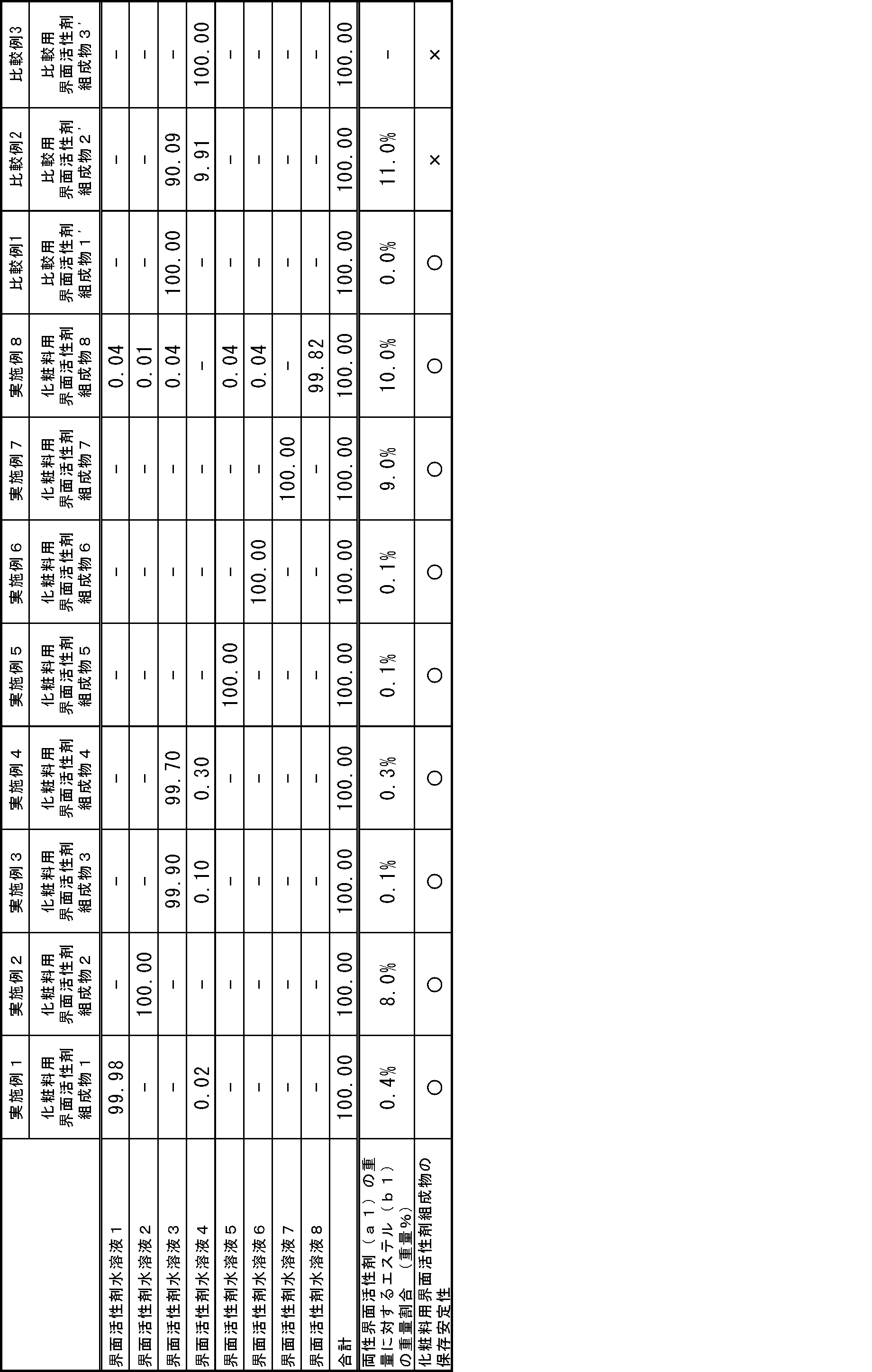
実施例1~8で得られた本発明の化粧料用界面活性剤組成物及び比較例1~3で得られた比較用の化粧料用界面活性剤組成物と、後述するその他の成分(C)とを表2~5に記載した割合で混合し、実施例9~17にかかる本願発明の化粧料である洗浄剤(シャンプー、ポンプフォーマー洗顔料及びクリーム洗顔料)、及び比較例4~6にかかる比較用の洗浄剤(シャンプー)を作製した。
なお、表2~5において括弧内に記載した数字は、各原料から水を除いて残留する成分(有効成分と呼ばれることもある)の値である。


・ポリオキシエチレン(重合度2)ラウリルエーテル硫酸ナトリウムの26重量%水溶液[商品名:ビューライトNA-25S{三洋化成工業(株)製(ビューライトは三洋化成工業(株)の登録商標である)}]
・ポリオキシエチレンラウリルエーテル酢酸ナトリウム(4EO)の28重量%水溶液[商品名:ビューライトLCA-25N{三洋化成工業(株)製}]
・ラウリルグリコールカルボン酸Naの29重量%水溶液[商品名:ビューライトSHAA{三洋化成工業(株)製}]
・ココイルグルタミン酸Naの29重量%水溶液[商品名:Plantapon Amino SCG-L{BASF社製(Plantaponはコグニス・アイピー・マネージメント・ゲゼルシャフト・ミット・ベシュレンクテル・ハフツングの登録商標である)}]
・ラウロイルグルタミン酸TEAの30重量%水溶液[商品名:アミソフト LT-12{味の素ヘルシーサプライ(株)製(アミソフトは味の素(株)の登録商標である)}]
・N-ラウロイルサルコシンNaの30重量%水溶液[商品名:ソイポン SLE{川研ファインケミカル(株)製(ソイポンは川研ファインケミカル(株)の登録商標である)}]
・ヤシ油脂肪酸グリシンK[商品名:アミライト GCK-11{味の素ヘルシーサプライ(株)製(アミライトは味の素(株)の登録商標である)}]
・オレフィン(炭素数14~16)スルホン酸ナトリウムの37重量%水溶液[商品名:リポランLJ-441{ライオン(株)製(リポランはライオン・スペシャリティケミカルズ(株)の登録商標である)}]
・コカミドプロピルベタインの30重量%水溶液[商品名:レボンHC-30W{三洋化成工業(株)製}]
・ココアンホ酢酸Naの43重量%水溶液[商品名:レボンCIB{三洋化成工業(株)製}]
・ラウリン酸[商品名:NAA-122{日油(株)製(NAAは日油(株)の登録商標である)}]
・ステアリン酸[商品名:NAA―172{日油(株)製}]
・パルミチン酸[商品名:NAA-160{日油(株)製}]
・BG[1,3-ブチレングリコール、ナカライテスク(株)製]
・グリセリン[商品名:化粧品用濃グリセリン{花王(株)製}]
・ポリクオタニウム-22(40%水溶液)[商品名:MERQUAT280{ルブリゾール社製(MERQUATはルブリゾル アドバンスド マテリアルズ,インコーポレイテッドの登録商標である)}]
・ポリクオタニウム-7(9%水溶液)[商品名:MERQUAT550(ルブリゾール社製)]
・ポリクオタニウム-10[商品名:Sensomer 10M Polymer(ルブリゾール社製)]
・ジメチコン[商品名:KF-96A-2CS{信越化学工業(株)製}]
・ビタミンE[商品名:D-α-トコフェロール{東京化成工業(株)製}]
・EDTA 2Na[商品名:2NA(EDTA・2Na){(株)同仁化学研究所製}]
・ヤシ油脂肪酸N-メチルエタノールアミド[商品名:アミノーンC-11S{花王(株)製(アミノーンは花王(株)の登録商標である)}]
・トリイソステアリン酸PEG-160ソルビタン[商品名:レオドールTW-IS399C{花王(株)製(レオドールは花王(株)の登録商標である)}]
・ジステアリン酸PEG-190[商品名:エマルミン862{三洋化成工業(株)製(エマルミンは三洋化成工業(株)の登録商標である)}]
・ジステアリン酸グリコール[商品名:EMALEX EG-di-S{日本エマルジョン(株)製(EMALEXは日本エマルジョン(株)の登録商標である)}]
・メントール[商品名:l-メントール{富士フイルム和光純薬(株)製}]
・クエン酸[富士フイルム和光純薬(株)製]
・水酸化カリウム[ナカライテスク(株)製]
実施例1~8で得られた化粧料用界面活性剤組成物並びに比較例1及び2で得られた比較用の化粧料用界面活性剤組成物と、後述するその他の成分(C)とを表6及び7に記載した仕込み割合で混合し、実施例18~21にかかる本願発明の化粧料であるスキンケア化粧料(ローション、クリーム、ハンドクリーム及びクレンジングオイル)、並びに比較例7及び8にかかる比較用のスキンケア化粧料(ハンドクリーム及びクレンジングオイル)を作製した。
なお、表6~7において括弧内に記載した数字は、各原料から水を除いて残留する成分(有効成分と呼ばれることもある)の値である。
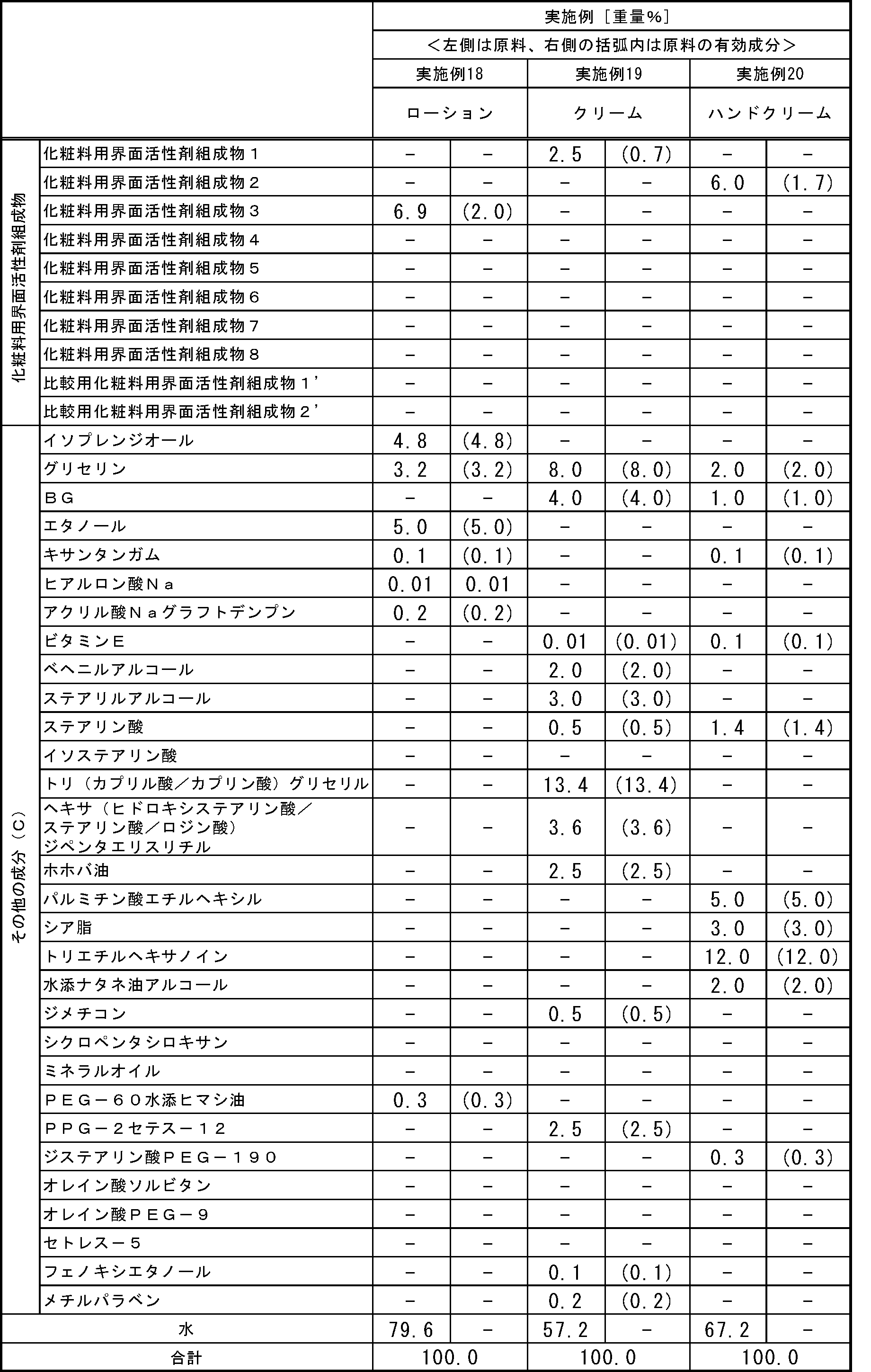

<スキンケア化粧料>
・イソプレンジオール[イソプレングリコール{(株)クラレ製}]
・グリセリン[商品名:化粧品用濃グリセリン{花王(株)製}]
・BG[1,3-ブチレングリコール、ナカライテスク(株)製]
・エタノール[富士フイルム和光純薬(株)製]
・キサンタンガム[Jungbunzlauer International AG製]
・ヒアルロン酸Na[商品名:ヒアルロン酸 FCH-120{キッコーマンバイオケミファ(株)製}]
・アクリル酸Naグラフトデンプン[商品名:サランジュールST-100MC{三洋化成工業(株)製(サランジュールは三洋化成工業(株)の登録商標である)}]
・ビタミンE[商品名:D-α-トコフェロール{東京化成工業(株)製}]
・ベヘニルアルコール[高級アルコール工業(株)製]
・ステアリルアルコール[商品名:ハイノール 18SS{高級アルコール工業(株)製(ハイノールは高級アルコール工業(株)の登録商標である)}]
・ステアリン酸[商品名:NAA―172{日油(株)製}]
・イソステアリン酸[商品名:イソステアリン酸EX{高級アルコール工業(株)製}]
・トリ(カプリル/カプリン酸)グリセリル[商品名:TCG-M{高級アルコール工業(株)製}]
・ヘキサ(ヒドロキシステアリン酸/ステアリン酸/ロジン酸)ジペンタエリスリチル[商品名:コスモール168ARV{日清オイリオグループ(株)製(コスモールは日清オイリオグループ(株)の登録商標である)}]
・ホホバ油[商品名:脱臭ホホバオイルM{綿半トレーディング(株)製}]
・パルミチン酸エチルヘキシル[商品名:コーヨーPOC{交洋ファインケミカル(株)製}]
・シア脂[商品名:精製シアバター{生活の木(株)製}]
・トリエチルヘキサノイン[商品名:T.I.O{日清オイリオグループ(株)製}]
・水添ナタネ油アルコール[商品名:アルコールNO.20-B{高級アルコール工業(株)製}]
・ジメチコン[商品名:KF-96A-2CS{信越化学工業(株)製}]
・シクロペンタシロキサン[商品名:KF-995{信越化学工業(株)製}]
・ミネラルオイル[商品名:Carnation{Sonneborn LLC製(Carnationはソンボーンエルエルシーの登録商標である)}]
・PEG-60水添ヒマシ油[商品名:HCO-60{日光ケミカルズ(株)製}]
・PPG-2セテス-12[商品名:アルファピュールHSG{三洋化成工業(株)製(アルファピュールは三洋化成工業(株)の登録商標である)}]
・ジステアリン酸PEG-190[商品名:エマルミン862{三洋化成工業(株)製(エマルミンは三洋化成工業(株)の登録商標である)}]
・オレイン酸ソルビタン[商品名:イオネットS-80{三洋化成工業(株)製(イオネットは三洋化成工業(株)の登録商標である)}]
・オレイン酸PEG-9[商品名:イオネットMO-400{三洋化成工業(株)製}]
・セトレス-5[商品名:エマルミン50{三洋化成工業(株)製}]
・フェノキシエタノール[商品名:ニューポールEFP{三洋化成工業(株)製(ニューポールは三洋化成工業(株)の登録商標である)}]
・メチルパラベン[商品名:Microcare MHB{ソー・ジャパン(株)製(Microcareはソー スペシャリティーズ(ユーケー)リミテッドの登録商標である)}]
実施例1~8で得られた化粧料用界面活性剤組成物並びに比較例1及び2で得られた比較用の化粧料用界面活性剤組成物と、後述するその他の成分(C)とを表8に記載した仕込み割合で混合し、実施例22及び23にかかる本願発明の化粧料であるヘアケア化粧料(コンディショナー及びノンカチオンコンディショナー)、並びに比較例9及び10にかかる比較用のヘアケア化粧料(コンディショナー及びノンカチオンコンディショナー)を作製した。
なお、表8において括弧内に記載した数字は、各原料から水を除いて残留する成分(有効成分と呼ばれることもある)の値である。

・グリセリン[商品名:化粧品用濃グリセリン{花王(株)製}]
・BG[1,3-ブチレングリコール、ナカライテスク(株)製]
・エタノール[富士フイルム和光純薬(株)製]
・ベヘントリモニウムクロリド[商品名:VARISOFT BT 85 Pellets{Evonik Operations GmbH製(VARISOFTはエボニック ゴールドシュミット コーポレーションの登録商標である)}]
・セテアリルアルコール[商品名:コノール1668{新日本理化(株)製(コノールは新日本理化(株)の登録商標である)}]
・セチルアルコール[商品名:セタノール{高級アルコール工業(株)製}]
・シア脂[商品名:精製シアバター{生活の木(株)製}]
・ステアリン酸グリセリル[商品名:TG-C{三洋化成工業(株)製}]
・ジメチコン[商品名:KF-96A-2CS{信越化学工業(株)製}]
・ミネラルオイル[商品名:Carnation{Sonneborn LLC製}]
・ヒドロキシプロピルメチルセルロース[商品名:食品添加物用メトローズ{信越化学工業(株)製}]
・キサンタンガム[Jungbunzlauer International AG製]
・フェノキシエタノール[商品名:ニューポールEFP{三洋化成工業(株)製}]
実施例1~8で得られた化粧料用界面活性剤組成物並びに比較例1及び2で得られた比較用の化粧料用界面活性剤組成物と、後述するその他の成分(C)とを表7に記載した仕込み割合で混合し、実施例24及び25にかかる本願発明の化粧料であるスタイリング剤(ヘアジェル及びヘアスプレー)、並びに比較例11及び12にかかる比較用のスタイリング剤(ヘアジェル及びヘアスプレー)を作製した。
なお、表9において括弧内に記載した数字は、各原料から水を除いて残留する成分(有効成分と呼ばれることもある)の値である。
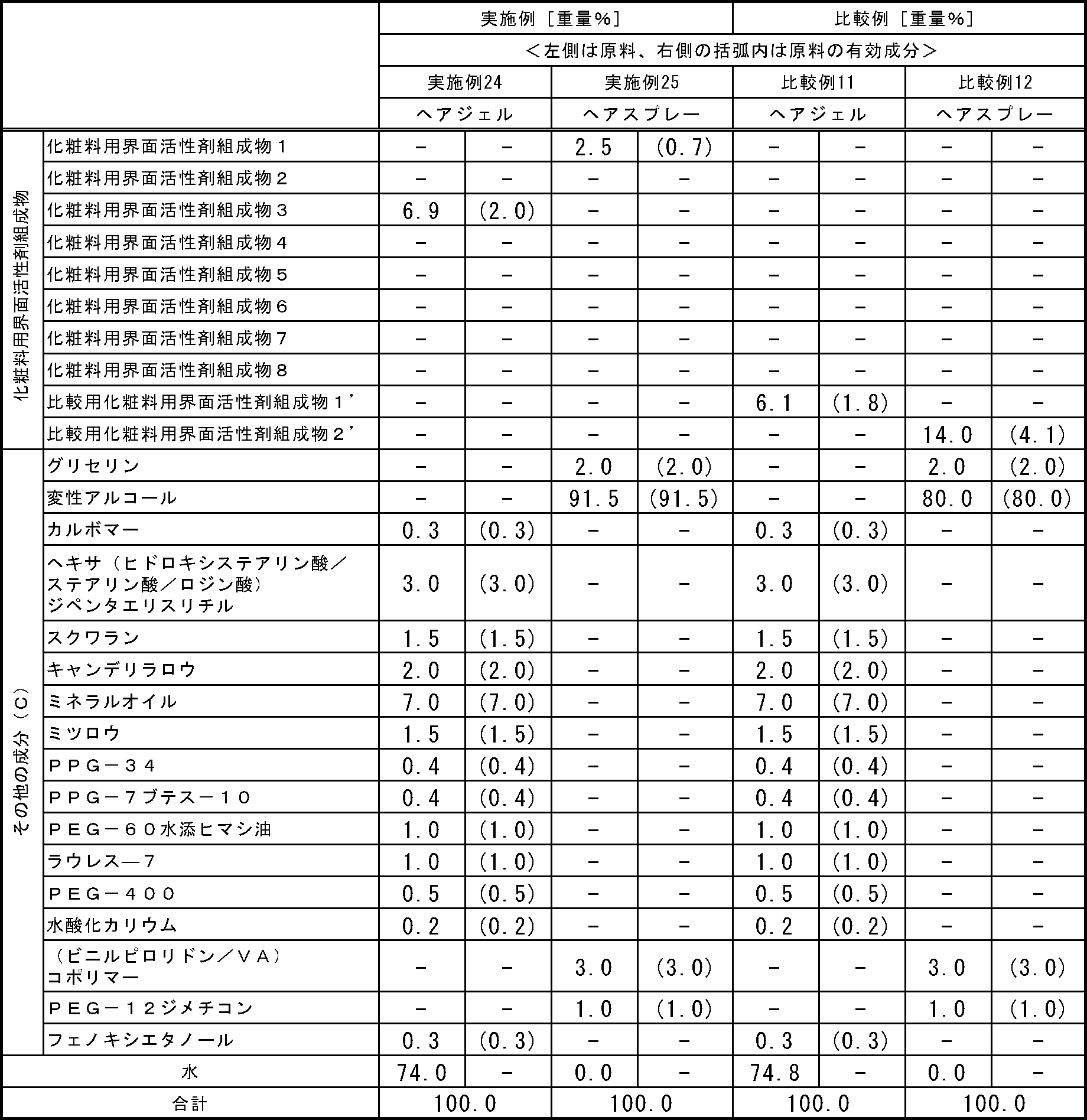
・グリセリン[商品名:化粧品用濃グリセリン{花王(株)製}]
・変性アルコール[商品名:ネオエタノール{大伸化学(株)製}]
・カルボマー[商品名:NTC-CARBOMER 380{日光ケミカルズ(株)製}]
・ヘキサ(ヒドロキシステアリン酸/ステアリン酸/ロジン酸)ジペンタエリスリチル[商品名:コスモール168ARV]
・スクワラン[富士フイルム和光純薬(株)製]
・キャンデリラロウ[商品名:精製キャンデリラワックスMK-2{横関油脂工業(株)製}]
・ミネラルオイル[商品名:Carnation{Sonneborn LLC製}]
・ミツロウ[商品名:精製ミツロウ CY-100{横関油脂工業(株)製}]
・PPG-34[商品名:ニューポールPP-2000{三洋化成工業(株)製}]
・PPG-7-ブテス-10[商品名:ニューポール50HB-260{三洋化成工業(株)製}]
・PEG-60水添ヒマシ油[商品名:HCO-60{日光ケミカルズ(株)製}]
・ラウレス―7[商品名:エマルミンNL-70{三洋化成工業(株)製}]
・PEG-400[商品名:PEG-20000{三洋化成工業(株)製}]
・水酸化カリウム[ナカライテスク(株)製]
・(ビニルピロリドン/VA)コポリマー[商品名:ルビスコールVA64P{BASF(株)製(ルビスコールはビーエーエスエフ ソシエタス・ヨーロピアの登録商標である)}]
・PEG-12ジメチコン[商品名:DOWSIL SS-2804{ダウ・東レ(株)製(DOWSILはザ・ダウ・ケミカル・カンパニーの登録商標である)}]
・フェノキシエタノール[商品名:ニューポールEFP{三洋化成工業(株)製}]
実施例1~8で得られた化粧料用界面活性剤組成物並びに比較例1及び2で得られた比較用の化粧料用界面活性剤組成物と、後述するその他の成分(C)とを表10に記載した仕込み割合で混合し、実施例26及び27にかかる本願発明の化粧料であるUVケア化粧料(クリーム及びジェル)、並びに比較例13及び14にかかる比較用のUVケア化粧料(クリーム及びジェル)を作製した。
なお、表10において括弧内に記載した数字は、各原料から水を除いて残留する成分(有効成分と呼ばれることもある)の値である。

・酸化チタン[商品名:MICRO TITANIUM DIOXIDE MT-100TV{テイカ(株)製}]
・酸化亜鉛[商品名:MICRO ZINC OXIDE MZ-300{テイカ(株)製}]
・リンゴ酸ジイソステアリル[商品名:コスモール222{日清オイリオグループ(株)製}]
・トリ(カプリル酸/カプリン酸)グリセリル[商品名:MIGLYOL 812N{IOI OLEOCHEMICAL GmbH製(MIGLYOLはクレーマー オレオ ゲゼルシャフト ミット ベシュレンクテル ハフツング ウント コンパニー コマンディートゲゼルシャフトの登録商標である)}]
・PPG-2セテス-12[商品名:アルファピュールHSG{三洋化成工業(株)製}]
・メトキシケイヒ酸エチルヘキシル[商品名:Uvinul MC80{BASF(株)製(Uvinulはビーエーエスエフ ソシエタス・ヨーロピアの登録商標である)}]
・t-ブチルメトキシジベンゾイルメタン[商品名:Escalol 517{Asuland製(Escalolはアイエスピー インベストメンツ インコーポレーテッドの登録商標である)}]
・パルミチン酸エチルヘキシル[商品名:コーヨーPOC{交洋ファインケミカル(株)製}]
・ベヘニルアルコール[高級アルコール工業(株)製]
・イソステアリン酸[商品名:イソステアリン酸EX{高級アルコール工業(株)製}]
・ステアリン酸[商品名:NAA―172{日油(株)製}]
・ジメチコン[商品名:KF-96A-2CS{信越化学工業(株)製}]
・グリセリン[商品名:化粧品用濃グリセリン{花王(株)製}]
・イソプレンジオール[イソプレングリコール{(株)クラレ製}]
・カルボマー[商品名:NTC-CARBOMER 380{日光ケミカルズ(株)製}]
・キサンタンガム[Jungbunzlauer International AG製]
・フェノキシエタノール[商品名:ニューポールEFP{三洋化成工業(株)製}]
・水酸化カリウム[ナカライテスク(株)製]
・クエン酸[富士フイルム和光純薬(株)製]
実施例1~8で得られた化粧料用界面活性剤組成物並びに比較例1及び2で得られた比較用の化粧料用界面活性剤組成物と、後述するその他の成分(C)とを表11及び12に記載した仕込み割合で混合し、実施例28~31にかかる本願発明の化粧料であるふき取り化粧料(パック、メイク落としシート、汗ふきシート及び髪の毛ふき取りシート)、並びに比較例15及び16にかかる比較用のふき取り化粧料(パック、メイク落としシート)を作製した。
なお、表11~12において括弧内に記載した数字は、各原料から水を除いて残留する成分(有効成分と呼ばれることもある)の値である。

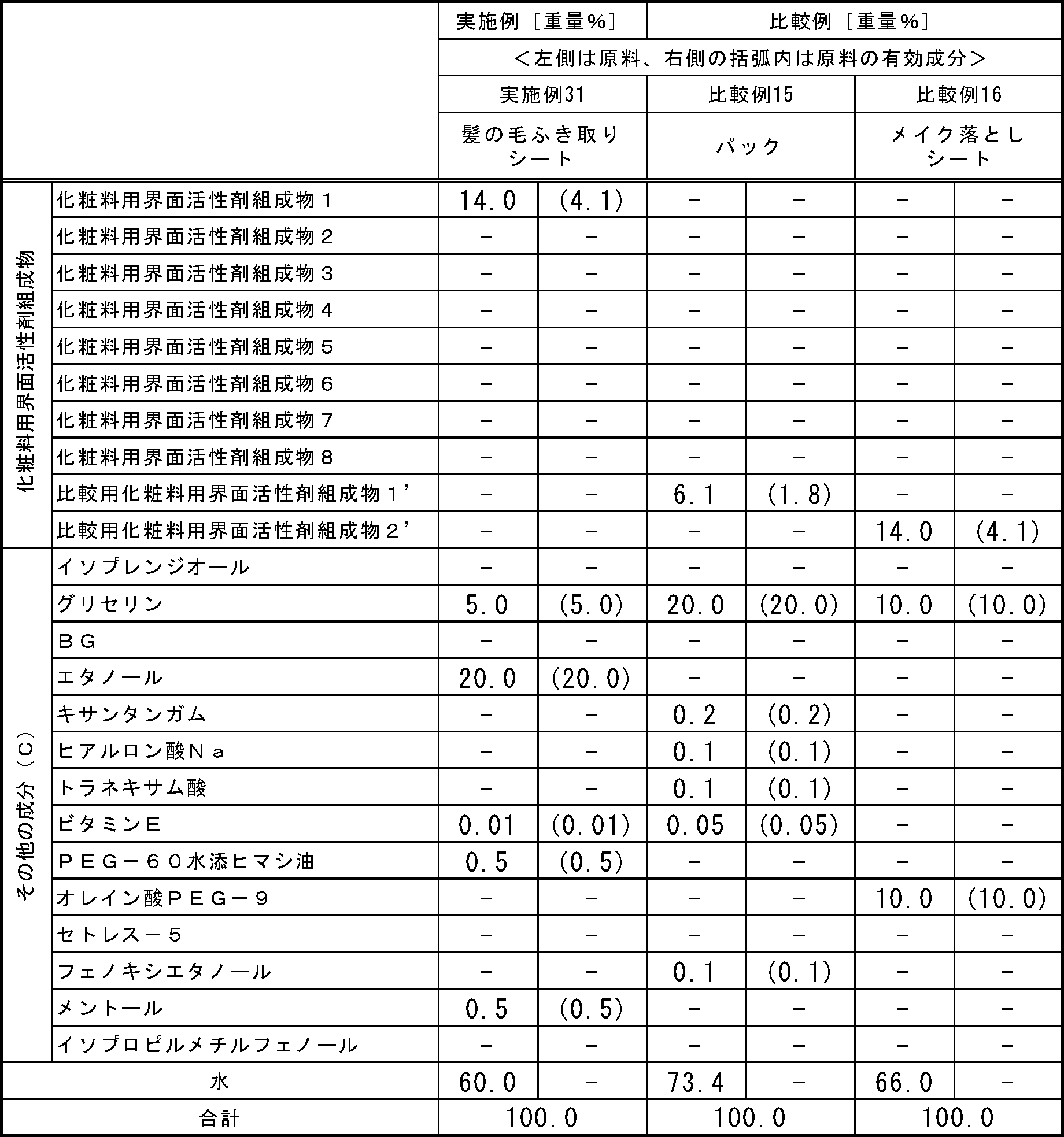
・イソプレンジオール[イソプレングリコール{(株)クラレ製}]
・グリセリン[商品名:化粧品用濃グリセリン{花王(株)製}]
・BG[1,3-ブチレングリコール、ナカライテスク(株)製]
・エタノール[富士フイルム和光純薬(株)製]
・キサンタンガム[Jungbunzlauer International AG製]
・ヒアルロン酸Na[商品名:ヒアルロン酸 FCH-120{キッコーマンバイオケミファ(株)製}]
・トラネキサム酸[富士フイルム和光純薬(株)製]
・ビタミンE[商品名:D-α-トコフェロール{東京化成工業(株)製}]
・PEG-60水添ヒマシ油[商品名:HCO-60{日光ケミカルズ(株)製}]
・オレイン酸PEG-9[商品名:イオネットMO-400{三洋化成工業(株)製}]
・セトレス-5[商品名:エマルミン50{三洋化成工業(株)製}]
・フェノキシエタノール[商品名:ニューポールEFP{三洋化成工業(株)製(ニューポールは三洋化成工業(株)の登録商標である)}]
・メントール[商品名:l-メントール{富士フイルム和光純薬(株)製}]
・イソプロピルメチルフェノール[商品名:ビオゾール{大阪化成(株)製(ビオゾールは大阪化成(株)の登録商標である)}]
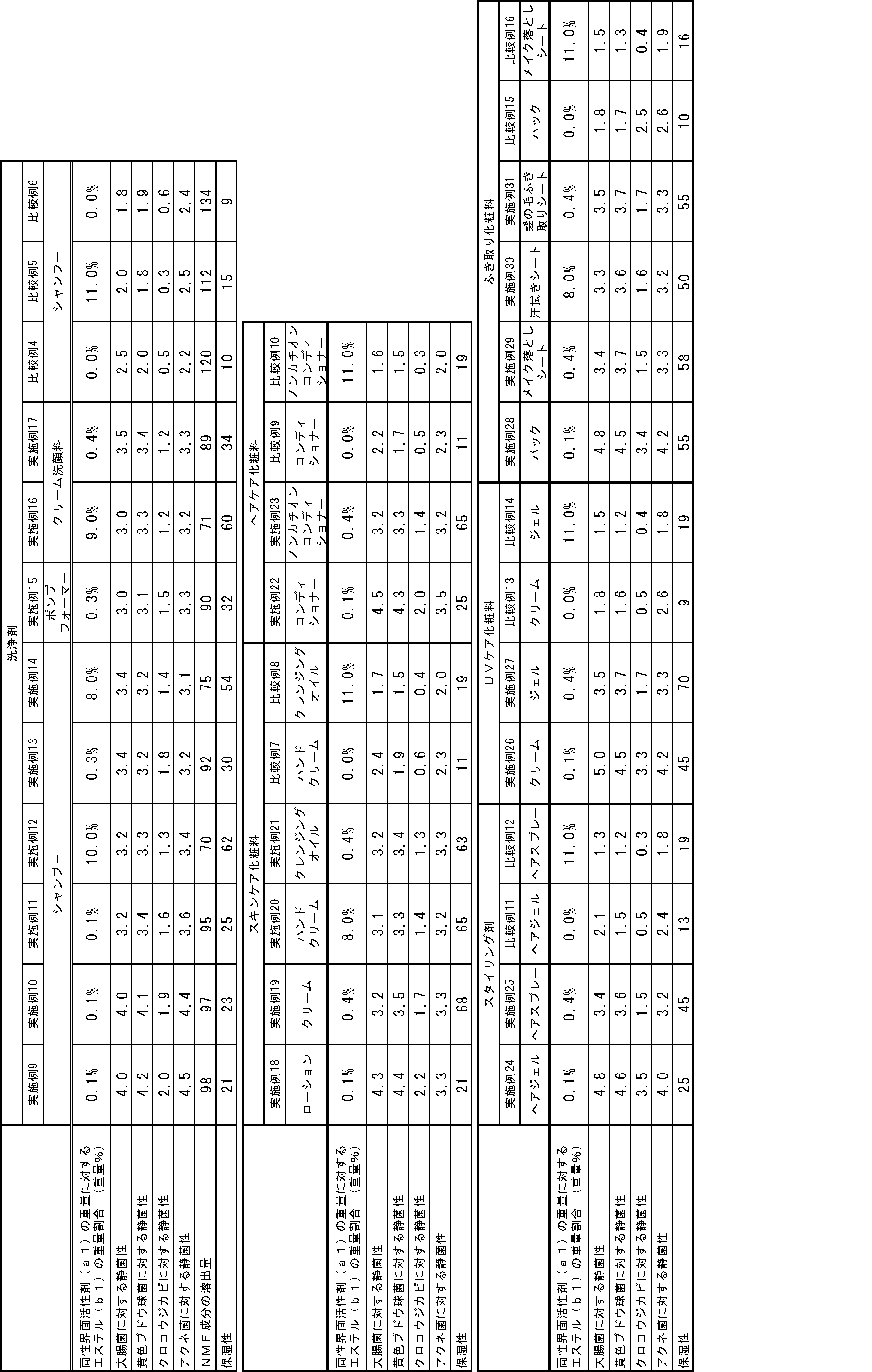
下記に詳述する保存効力試験にて大腸菌に対する静菌性の評価を行った。
1Lのメスフラスコに、ソイビーン・カゼイン・ダイジェスト培地「ダイゴ」(富士フイルム和光純薬(株)製)30g及び寒天粉末(富士フイルム和光純薬(株)製)14gを入れ、イオン交換水で1Lにメスアップしたものを120℃のオートクレーブ(BACcTオートクレーブ KTS-2322、日本細菌検査(株)製)で滅菌して培地とした。滅菌後の培地を滅菌シャーレ(IWAKI製)に15mLずつ分注し、室温で30分程度放置することで固化した寒天培地を作製した。得られた寒天培地に大腸菌(NRBC株、(独)製品評価技術基盤機構)を塗抹し、37℃で24時間振盪培養し、大腸菌の菌コロニーを形成させた。
1Lのメスフラスコに、ソイビーン・カゼイン・ダイジェスト培地「ダイゴ」(富士フイルム和光純薬(株)製)を30g入れ、イオン交換水で1Lにメスアップし、液体培地を作製した。作製した液体培地を遠沈管(遠沈管 コニカル型、15mL(アズワン(株)製))に10mL入れた。遠沈管に入れた液体培地に寒天培地から採取した大腸菌の菌コロニー1つ分を混合し、液体培地を大腸菌の菌コロニーで懸濁させることにより、懸濁液を作製した。得られた懸濁液を37℃で1日間恒温振盪培養した。
培養後の懸濁液を遠心分離機で3000rpmの条件で15分間遠心分離を行った。遠心分離後の懸濁液の上澄みの液体培地を捨て、残った残渣に対し、生理食塩水(0.9重量%食塩水)を5mL加えてボルテックスミキサー(アズワン(株)製)で攪拌し、再度遠心分離機にて3000rpmの条件で15分間遠心分離を行った。遠心分離後、液の上澄みの液体培地を捨て、残った残渣に対し、生理食塩水(0.9重量%食塩水)を5mL加えてボルテックスミキサー(アズワン(株)製)で攪拌したものを大腸菌の菌液とした。
オートクレーブ(BACcTオートクレーブ KTS-2322、日本細菌検査(株)製)滅菌した容器に実施例9~31及び比較例4~16の化粧料を10mL入れ、80℃の水浴中で1時間滅菌した。大腸菌の菌液を100μL加えて振り混ぜた後、1.5時間静置した。静置後の液を、滅菌したイオン水で10倍と103倍に希釈し、寒天培地に50μL塗布して37℃で24時間培養し、24時間培養直後に寒天培地に存在する菌コロニー数(培養初日の菌数)を数えた。24時間培養直後から、さらに37℃で27日静置した直後に寒天培地に存在する菌コロニー数(28日目の菌数)を数えた。
初日の菌数に対して28日目の菌数がどれだけ減少しているかをしめす対数減少値を計算し、結果を表13に記載した。表13において、静菌性が3.0と記載した場合には、対数減少値が3.0であることを意味し、生菌数が103分の1(1000分の1)に減少していることを意味する。
使用する菌を黄色ブドウ球菌((独)製品評価技術基盤機構から入手したNRBC株)に変更した以外は大腸菌に対する静菌性と同様の方法で評価を行い、結果を表13に記載した。
下記に詳述する保存効力試験にてクロコウジカビに対する静菌性の評価を行った。
1Lのメスフラスコに、ポテト・デキストロースカンテン培地「ダイゴ」日局試験用(富士フイルム和光純薬(株)製)39gを、イオン交換水で1Lにメスアップしたものを120℃のオートクレーブ(BACcTオートクレーブ KTS-2322、日本細菌検査(株)製)で滅菌した。
滅菌後の培地を滅菌シャーレ(IWAKI製)に15mLずつ分注し、室温で30分程度放置することで固化した寒天培地を作製した。
滅菌後の培地を10mLずつ試験管に流し入れ、室温で30分程度、液面が斜めになるように固めることで固化した斜面寒天培地を作製した。斜面寒天培地にクロコウジカビ((独)製品評価技術基盤機構から入手したNRBC株)を斜面寒天培地の表面に対し、画線を描いて(「画線を描いて」とは、斜面寒天培地上に線を引くように植菌することを意味する)、30℃で7日間静置して斜面寒天培地上のクロコウジカビを培養した。
50mLのビーカーにポリソルベート80(イオネットT-80V、三洋化成工業(株)製)を0.015g、食塩を0.270g、イオン交換水を29.716g加え、均一に混合し、0.05重量%ポリソルベート生理食塩水を30mL作製した。
クロコウジカビを培養した斜面寒天培地に0.05重量%ポリソルベート生理食塩水を5mL加え、白金耳で攪拌したものをクロコウジカビの菌液とした。
オートクレーブ(BACcTオートクレーブ KTS-2322、日本細菌検査(株)製)で滅菌した容器に実施例9~31及び比較例4~16の化粧料を10mL入れ、80℃の水浴中で1時間静置することで実施例9~31及び比較例4~16の化粧料を滅菌した。滅菌した実施例9~31及び比較例4~16の化粧料のそれぞれに、クロコウジカビの菌液を100μL加えて振り混ぜた後、1.5時間静置した。静置後の溶液を、オートクレーブ(BACcTオートクレーブ KTS-2322、日本細菌検査(株)製)で滅菌したイオン交換水で10倍と103倍に希釈し、滅菌シャーレで固化した寒天培地に50μL塗布して30℃で24時間培養し、24時間培養直後に寒天培地に存在する菌コロニー数(培養初日の菌数)を数えた。24時間培養直後から、さらに30℃で27日静置した直後に寒天培地に存在する菌コロニー数(28日目の菌数)を数えた。
初日の菌数に対して28日目の菌数がどれだけ減少しているかをしめす対数減少値を計算し、結果を表13に記載した。
使用する菌をアクネ菌[(独)製品評価技術基盤機構から入手したNRBC株]に変更した以外は大腸菌に対する静菌性と同様の方法でアクネ菌に対する静菌性の評価を行った。
20歳から50歳の日本人男女合計20名を被験者とし、NMF成分であるウロカニン酸、ピロリドンカルボン酸及び乳酸の3成分について、本願実施例の化粧料によって除去された量の合計を測定し、NMF成分の溶出量とした。
実施例9のシャンプーをイオン交換水で10倍希釈した溶液を試験用洗浄剤として作成した。試験用洗浄剤を2mL入れたスクリュー管No.5((株)マルエム製)の開口部を被試験者の左前腕内側部に載せ、溶液がこぼれないように右腕で抑えた。
次に、被験者の左前腕を、溶液が漏れないようにデジタルシェーカー(DLAB製)にのせ、100~120(往復/分)の速度で10分間振とうさせ、左前腕部内側表面の可溶分を試験用洗浄剤に抽出した。
可溶分抽出後の試験用洗浄剤を0.45μmメンブレンフィルターでろ過し、ろ液を下記の条件により高速液体クロマトグラフで測定し検量線法を用いてウロカニン酸、ピロリドンカルボン酸及び乳酸の量を算出し、3成分の値を合計した。
3成分の合計値の被験者20名の平均値を計算し、表13に記載した。
実施例10~14及び比較例4~6のシャンプー並びに実施例15~17の洗顔料についても、同様の方法で評価した。評価結果を表13に示す。
以下に記載の方法で各化粧料を使用した後の角質水分量を測定し、保湿性の評価を行った。角質水分量が多いほど保湿性に優れる。
20歳から50歳の日本人男女合計20名の被験者が、40℃のお湯で充分に髪を濡らした後、頭髪用洗浄剤(シャンプー)1gを用いて頭皮を洗浄し、40℃のお湯で充分にすすいだ後に、ヘアドライヤーで髪を5分間乾燥することを一日一回、14日間毎日繰り返した。
使用開始14日目の頭皮洗浄後の2時間後にコルネオメーター[商品名:Corneometer CM825{Courage+Khazaka製(CorneometerはCourage + Khazaka Electronic GmbHの登録商標である)}]で頭皮の角質水分量をランダムに3か所測定し、その平均値を計算した。
実施例9~14及び比較例4~6の頭髪用洗浄剤(シャンプー)のそれぞれについて、同じ試験を行い、被験者それぞれについて算出した平均値をもとに算出した全被験者20名における平均値を表13に記載した。
20歳から50歳の日本人男女合計20名が、40℃のお湯で充分に顔を濡らした後、顔用洗浄剤(ポンプフォーマー洗顔料及びクリーム洗顔料)1gを用いて顔を洗浄し、40℃のお湯で充分にすすいだ後に、タオルドライを5分間することを一日一回、14日間毎日繰り返した。
使用開始14日目の5分間のタオルドライ後の2時間後に、コルネオメーター[製品名:Corneometer CM825{Courage+Khazaka製}]で頬骨の上の角質水分量をランダムに3か所測定し、その平均値を計算した。
実施例15~17の顔用洗浄剤(ポンプフォーマー洗顔料及びクリーム洗顔料)のそれぞれについて、同じ試験を行い、被験者それぞれについて算出した平均値をもとに算出した全被験者20名における平均値を表13に記載した。
20歳から50歳の日本人男女合計20名の被験者が、スキンケア化粧料(ローション、クリーム、ハンドクリーム及びクレンジングオイル)0.5gを顔に塗布することを一日一回、14日間毎日繰り返した。
使用開始14日目の塗布後の2時間後にコルネオメーター[製品名:Corneometer CM825{Courage+Khazaka製}]で頬骨の上の角質水分量をランダムに3か所測定し、その平均値を計算した。
実施例18~21及び比較例7~8のスキンケア化粧料(ローション、クリーム、ハンドクリーム及びクレンジングオイル)のそれぞれについて、同じ試験を行い、被験者それぞれについて算出した平均値をもとに算出した全被験者20名における平均値を表13に記載した。
20歳から50歳の日本人男女合計20名の被験者が、40℃のお湯で充分に髪を濡らした後、10重量%に希釈したポリオキシエチレン(重合度2)ラウリルエーテル硫酸ナトリウム水溶液[エマール20C、花王(株)製(エマールは花王(株)の登録商標である)]1gで洗浄し、40℃のお湯で充分にすすいだ。次にヘアケア化粧料(コンディショナー及びノンカチオンコンディショナー)1gを頭髪に均一に塗布し、髪全体になじませた後、40℃の温水で充分にすすいだ後、ヘアドライヤーで髪を5分間乾燥した。前述の髪を洗浄、ヘアケア化粧料(コンディショナー及びノンカチオンコンディショナー)の塗布、すすぎ及び乾燥する作業を一日一回、14日間毎日繰り返した。
使用開始14日目の乾燥後の2時間後にコルネオメーター[製品名:Corneometer CM825{Courage+Khazaka製}]で頭皮の角質水分量をランダムに3か所測定し、その平均値を計算した。
実施例22~23及び比較例9~10のヘアケア化粧料(コンディショナー及びノンカチオンコンディショナー)のそれぞれについて、同じ試験を行い、被験者それぞれについて算出した平均値をもとに算出した全被験者20名における平均値を表13に記載した。
20歳から50歳の日本人男女合計20名の被験者が、スタイリング剤(ヘアジェル及びヘアスプレー)を用いて頭髪をセットすることを一日一回、14日間毎日繰り返した。
使用開始14日後の頭皮セット後の2時間後にコルネオメーター[製品名:Corneometer CM825{Courage+Khazaka製}]で頭皮の角質水分量をランダムに3か所測定し、その平均値を計算した。
実施例24~25及び比較例11~12のスタイリング剤(ヘアジェル及びヘアスプレー)のそれぞれについて、同じ試験を行い、被験者それぞれについて算出した平均値をもとに算出した全被験者20名における平均値を表13に記載した。
20歳から50歳の日本人男女合計20名の被験者が、UVケア化粧料(クリーム及びジェル)0.5gを顔に塗布することを一日一回、14日間毎日繰り返した。
使用開始14日目の塗布後の2時間後にコルネオメーター[製品名:Corneometer CM825{Courage+Khazaka製}]で頬骨の上の角質水分量をランダムに3か所測定し、その平均値を計算した。
実施例26~27及び比較例13~14のUVケア化粧料(クリーム及びジェル)のそれぞれについて、同じ試験を行い、被験者それぞれについて算出した平均値をもとに算出した全被験者20名における平均値を表13に記載した。
20歳から50歳の日本人男女合計20名の被験者が、ふき取り化粧料(パック)を用いた10分間のパックを一日一回、14日間毎日繰り返した。
使用開始14日目のパック後の2時間後にコルネオメーター[製品名:Corneometer CM825{Courage+Khazaka製}]で頬骨の上の角質水分量をランダムに3か所測定し、その平均値を計算した。
実施例29及び比較例15のふき取り化粧料(パック)のそれぞれについて、同じ試験を行い、被験者それぞれについて算出した平均値をもとに算出した全被験者20名における平均値を表13に記載した。
20歳から50歳の日本人男女合計20名の被験者が、ふき取り化粧料(メイク落としシート及び汗拭きシート)を用いて顔をふき取ることを一日一回、14日間毎日繰り返した。
使用開始14日目のふき取り後の2時間後にコルネオメーター[製品名:Corneometer CM825{Courage+Khazaka製}]で頬骨の上の角質水分量をランダムに3か所測定し、その平均値を計算した。
実施例29~30及び比較例16のふき取り化粧料(メイク落としシート及び汗拭きシート)のそれぞれについて、同じ試験を行い、被験者それぞれについて算出した平均値をもとに算出した全被験者20名における平均値を表13に記載した。
20歳から50歳の日本人男女合計20名の被験者が、実施例31のふき取り化粧料(髪の毛ふき取りシート)を用いて髪の毛をふき取ることを一日一回、14日間毎日繰り返した。
使用開始14日目の髪の毛のふき取り後の2時間後にコルネオメーター[製品名:Corneometer CM825{Courage+Khazaka製}]で頭皮の角質水分量をランダムに3か所測定し、その平均値を計算した。
被験者それぞれについて算出した平均値をもとに算出した全被験者20名における平均値を表13に記載した。
皮膚常在菌叢のバランスはシンプソンインデックスにより評価した。シンプソンインデックスは、皮膚常在菌叢中における菌数全体に基づくアクネ菌、表皮ブドウ球菌及びコリネバクテリウム属菌のそれぞれの菌数の割合(相対優先度という)を用い下記計算式により計算し、算出されたシンプソンインデックスを表14に記載した。
シンプソンインデックスの最大値は1であり、より大きな値であるほど常在菌の多様性に優れ、常在細菌叢が良好な状態であると解釈できる。
<シンプソンインデックスの計算式>
シンプソンインデックス=1-(アクネ菌の相対優先度の2乗+表皮ブドウ球菌の相対優先度の2乗+コリネバクテリウム属菌の相対優先度の2乗)

被験者である20歳代女性と40歳代男性の二名がそれぞれ、40℃のお湯で充分に髪を濡らした後、実施例9の頭髪用洗浄剤(シャンプー)1gで頭皮を洗浄し、40℃のお湯で充分にすすいだ後に、ヘアドライヤーで髪を5分間乾燥することを一日一回、8日間繰り返した。被験者の額の生え際から、1日目の頭髪用洗浄剤(シャンプー)使用前と8日目の頭髪用洗浄剤(シャンプー)使用後に採取した皮膚常在菌叢サンプルを評価対象に用いた。
採取した皮膚常在菌叢を遺伝子解析することで、採取した皮膚常在菌叢に含まれる菌の総菌数に対するアクネ菌、表皮ブドウ球菌及びコリネバクテリウム属菌のそれぞれの相対優先度を算出し、1日目の頭髪用洗浄剤(シャンプー)使用前のシンプソンインデックスと8日目の頭髪用洗浄剤(シャンプー)使用後のシンプソンインデックスとを計算し、その値を表14に記載した。
皮膚常在菌叢のサンプリングはTAK-Circulator(株)製の微生物採取キットMySkinKit[MySkinはTAK-Circulator(株)の登録商標である]を用いて行い、皮膚常在菌叢の解析はTAK-Circulator(株)に委託して行った。
被験者である20歳代女性と40歳代男性の二名がそれぞれ、40℃のお湯で充分に顔を濡らした後、実施例16の顔用洗浄剤(ポンプフォーマー洗顔料及びクリーム洗顔料)1gで顔を洗浄し、40℃のお湯で充分にすすぎ後、タオルで顔の水分をふき取ることを一日一回、8日間繰り返した。被験者の額から1日目の顔用洗浄剤(ポンプフォーマー洗顔料及びクリーム洗顔料)使用前と8日目の顔用洗浄剤(ポンプフォーマー洗顔料及びクリーム洗顔料)使用後に採取した皮膚常在菌叢サンプルを評価対象に用いた。
採取した皮膚常在菌叢を遺伝子解析することで、採取した皮膚常在菌叢に含まれる菌の総菌数に対するアクネ菌、表皮ブドウ球菌及びコリネバクテリウム属菌のそれぞれの相対優先度を算出し、1日目の顔用洗浄剤(ポンプフォーマー洗顔料及びクリーム洗顔料)使用前のシンプソンインデックスと8日目の顔用洗浄剤(ポンプフォーマー洗顔料及びクリーム洗顔料)使用後のシンプソンインデックスとを計算し、表14に記載した。
皮膚常在菌叢のサンプリングはTAK-Circulator(株)製の微生物採取キットMySkinKit[MySkinはTAK-Circulator(株)の登録商標である]を用いて行い、皮膚常在菌叢の解析はTAK-Circulator(株)に委託して行った。
被験者である20歳代女性と40歳代男性の二名がそれぞれ、実施例18のスキンケア化粧料(ローション)0.5gを顔に一日一回塗布することを毎日繰り返した。被験者の顔から1日目のスキンケア化粧料(ローション)塗布前と8日目のスキンケア化粧料(ローション)塗布後に採取した皮膚常在菌叢サンプルを評価対象に用いた。
採取した皮膚常在菌叢を遺伝子解析することで、採取した皮膚常在菌叢に含まれる菌の総菌数に対するアクネ菌、表皮ブドウ球菌及びコリネバクテリウム属菌のそれぞれの相対優先度を算出し、1日目のスキンケア化粧料(ローション)塗布前のシンプソンインデックスと8日目のスキンケア化粧料(ローション)塗布後のシンプソンインデックスとを計算し、表14に記載した。
皮膚常在菌叢のサンプリングはTAK-Circulator(株)製の微生物採取キットMySkinKit[MySkinはTAK-Circulator(株)の登録商標である]を用いて行い、皮膚常在菌叢の解析はTAK-Circulator(株)に委託して行った。
また、表14の通り、本発明の化粧料を使用した全てのケースにおいてシンプソンインデックスが増加しており、本発明の化粧料の使用により皮膚常在菌叢のバランスが改善されたことが分かる。
さらに、家庭用洗浄剤(衣料用洗剤及び食器用洗剤など)及び工業用洗浄剤(金属及び精密部品等の洗浄剤など)として使用できる。
Claims (2)
- 両性界面活性剤(A)及びエステル(B)を含有する化粧料用界面活性剤組成物であって、両性界面活性剤(A)が下記の一般式(1)で表される両性界面活性剤(a1)を含有し、エステル(B)が下記の一般式(2)で表されるエステル(b1)を含有し、両性界面活性剤(a1)の重量に対するエステル(b1)の重量割合が0.1重量%~10重量%である化粧料用界面活性剤組成物。

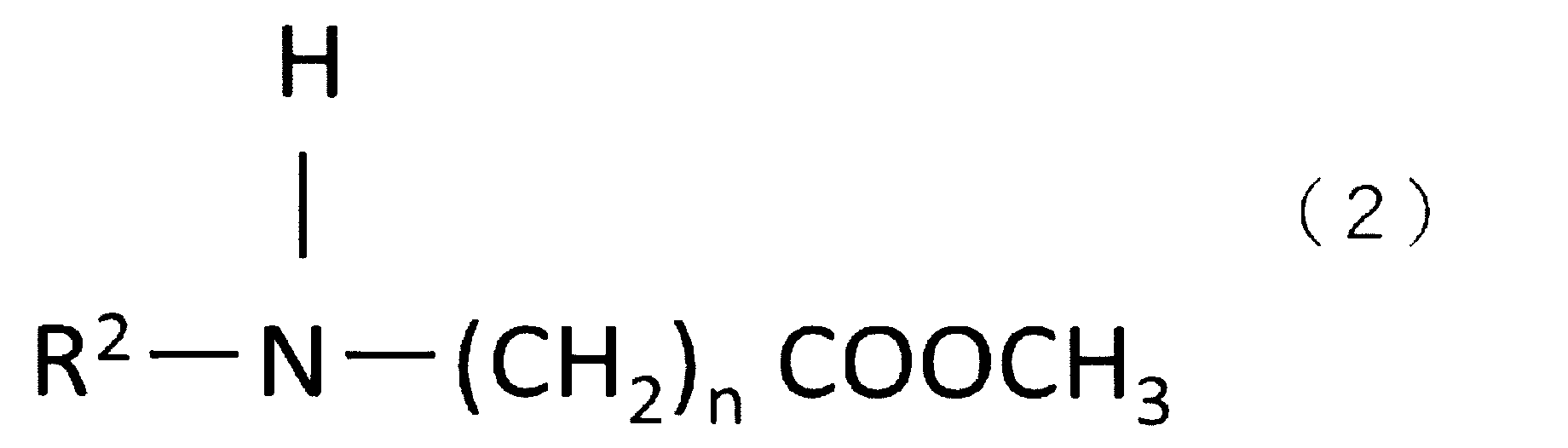
- 請求項1に記載の化粧料用界面活性剤組成物を含む化粧料。
Priority Applications (3)
| Application Number | Priority Date | Filing Date | Title |
|---|---|---|---|
| KR1020247019164A KR102897546B1 (ko) | 2021-11-30 | 2022-09-28 | 화장료용 계면 활성제 조성물 및 화장료 |
| CN202280079178.2A CN118338888A (zh) | 2021-11-30 | 2022-09-28 | 化妆料用表面活性剂组合物和化妆料 |
| JP2023564757A JP7790446B2 (ja) | 2021-11-30 | 2022-09-28 | 化粧料用界面活性剤組成物及び化粧料 |
Applications Claiming Priority (4)
| Application Number | Priority Date | Filing Date | Title |
|---|---|---|---|
| JP2021-193804 | 2021-11-30 | ||
| JP2021193804 | 2021-11-30 | ||
| JP2022039607 | 2022-03-14 | ||
| JP2022-039607 | 2022-03-14 |
Publications (1)
| Publication Number | Publication Date |
|---|---|
| WO2023100459A1 true WO2023100459A1 (ja) | 2023-06-08 |
Family
ID=86611936
Family Applications (1)
| Application Number | Title | Priority Date | Filing Date |
|---|---|---|---|
| PCT/JP2022/036208 Ceased WO2023100459A1 (ja) | 2021-11-30 | 2022-09-28 | 化粧料用界面活性剤組成物及び化粧料 |
Country Status (4)
| Country | Link |
|---|---|
| JP (1) | JP7790446B2 (ja) |
| KR (1) | KR102897546B1 (ja) |
| TW (1) | TW202329912A (ja) |
| WO (1) | WO2023100459A1 (ja) |
Citations (3)
| Publication number | Priority date | Publication date | Assignee | Title |
|---|---|---|---|---|
| CN102534060A (zh) * | 2011-12-21 | 2012-07-04 | 四川亭江新材料股份有限公司 | 一种复鞣加脂剂的制备方法 |
| US20190388858A1 (en) * | 2018-06-22 | 2019-12-26 | Shaanxi University Of Science & Technology | pH-RESPONSIVE AMPHOTERIC SURFACTANT N-LAURYL-(alpha-ALKYL)-beta-AMINOPROPIONIC ACID AND PREPARATION METHOD AND USES THEREOF |
| JP2022020597A (ja) * | 2020-07-20 | 2022-02-01 | 三洋化成工業株式会社 | 洗浄剤組成物 |
Family Cites Families (2)
| Publication number | Priority date | Publication date | Assignee | Title |
|---|---|---|---|---|
| MY167787A (en) | 2012-03-19 | 2018-09-26 | Lion Corp | Liquid detergent composition |
| US10259774B1 (en) * | 2017-10-09 | 2019-04-16 | Galaxy Surfactants Ltd. | Antimicrobials for preservation of home and personal care products |
-
2022
- 2022-09-28 JP JP2023564757A patent/JP7790446B2/ja active Active
- 2022-09-28 WO PCT/JP2022/036208 patent/WO2023100459A1/ja not_active Ceased
- 2022-09-28 KR KR1020247019164A patent/KR102897546B1/ko active Active
- 2022-10-04 TW TW111137675A patent/TW202329912A/zh unknown
Patent Citations (3)
| Publication number | Priority date | Publication date | Assignee | Title |
|---|---|---|---|---|
| CN102534060A (zh) * | 2011-12-21 | 2012-07-04 | 四川亭江新材料股份有限公司 | 一种复鞣加脂剂的制备方法 |
| US20190388858A1 (en) * | 2018-06-22 | 2019-12-26 | Shaanxi University Of Science & Technology | pH-RESPONSIVE AMPHOTERIC SURFACTANT N-LAURYL-(alpha-ALKYL)-beta-AMINOPROPIONIC ACID AND PREPARATION METHOD AND USES THEREOF |
| JP2022020597A (ja) * | 2020-07-20 | 2022-02-01 | 三洋化成工業株式会社 | 洗浄剤組成物 |
Also Published As
| Publication number | Publication date |
|---|---|
| JPWO2023100459A1 (ja) | 2023-06-08 |
| KR20240108454A (ko) | 2024-07-09 |
| KR102897546B1 (ko) | 2025-12-08 |
| JP7790446B2 (ja) | 2025-12-23 |
| TW202329912A (zh) | 2023-08-01 |
Similar Documents
| Publication | Publication Date | Title |
|---|---|---|
| JP7084165B2 (ja) | 洗浄剤組成物 | |
| JP4331584B2 (ja) | 油性基剤及びこれを含有する化粧料及び皮膚外用剤 | |
| JP4573690B2 (ja) | 化粧料用油剤又は皮膚外用剤用油剤、並びに化粧料又は皮膚外用剤 | |
| JP4589050B2 (ja) | ジエステル及び油剤、並びに化粧料及び皮膚外用剤 | |
| EP3632406B1 (en) | Oily humectant and topical skin composition containing same | |
| JP7752672B2 (ja) | グリセロール誘導体および二還式化合物を含む、抗微生物性の組み合わせ組成物 | |
| CN116615172A (zh) | 包含天然聚合物和一种或多种(生物)烷二醇的组合物 | |
| FR2795309A1 (fr) | Substances huileuses comprenant un ester de dimerdiol et produits cosmetiques comprenant cet ester | |
| WO2019228988A1 (en) | Process for forming 2-hydroxypyridine-1-oxide or derivatives thereof | |
| CN119497606B (zh) | 表面活性剂组合物和清洗剂 | |
| JP4815166B2 (ja) | 油性基剤及びこれを含有する化粧料及び皮膚外用剤 | |
| JP2020158396A (ja) | エリスリタン誘導体、及びこれを含有する化粧料 | |
| JP2023163353A (ja) | 日焼け止め化粧料 | |
| JP7336357B2 (ja) | 乳酸エステル及びこれを含有する化粧料 | |
| JP7790446B2 (ja) | 化粧料用界面活性剤組成物及び化粧料 | |
| JP7345325B2 (ja) | 硬質ラノリン脂肪酸のエステル化物を含有する化粧料 | |
| CN118338888A (zh) | 化妆料用表面活性剂组合物和化妆料 | |
| JP2024005458A (ja) | 皮膚製剤用の組成物及び皮膚用製剤 | |
| JP7841647B1 (ja) | 界面活性剤組成物及び洗浄剤 | |
| JP7750391B2 (ja) | 化粧料用組成物、皮膚化粧料及び洗浄料 | |
| JP7436110B2 (ja) | 特異的超分岐コポリマーとアクリルポリマーの液体分散液とを含む化粧品組成物 | |
| JP2021187751A (ja) | 化粧料 | |
| WO2024237074A1 (ja) | 化粧料 | |
| JP2023169101A (ja) | 毛髪用化粧料 | |
| JP2025168599A (ja) | 毛髪化粧料 |
Legal Events
| Date | Code | Title | Description |
|---|---|---|---|
| 121 | Ep: the epo has been informed by wipo that ep was designated in this application |
Ref document number: 22900894 Country of ref document: EP Kind code of ref document: A1 |
|
| ENP | Entry into the national phase |
Ref document number: 2023564757 Country of ref document: JP Kind code of ref document: A |
|
| WWE | Wipo information: entry into national phase |
Ref document number: 202280079178.2 Country of ref document: CN |
|
| ENP | Entry into the national phase |
Ref document number: 20247019164 Country of ref document: KR Kind code of ref document: A |
|
| WWE | Wipo information: entry into national phase |
Ref document number: 1020247019164 Country of ref document: KR |
|
| WWE | Wipo information: entry into national phase |
Ref document number: 202447048620 Country of ref document: IN |
|
| NENP | Non-entry into the national phase |
Ref country code: DE |
|
| 122 | Ep: pct application non-entry in european phase |
Ref document number: 22900894 Country of ref document: EP Kind code of ref document: A1 |