WO2023100433A1 - 文字列出力装置 - Google Patents
文字列出力装置 Download PDFInfo
- Publication number
- WO2023100433A1 WO2023100433A1 PCT/JP2022/033330 JP2022033330W WO2023100433A1 WO 2023100433 A1 WO2023100433 A1 WO 2023100433A1 JP 2022033330 W JP2022033330 W JP 2022033330W WO 2023100433 A1 WO2023100433 A1 WO 2023100433A1
- Authority
- WO
- WIPO (PCT)
- Prior art keywords
- character string
- sentence
- output device
- unit
- target
- Prior art date
- Legal status (The legal status is an assumption and is not a legal conclusion. Google has not performed a legal analysis and makes no representation as to the accuracy of the status listed.)
- Ceased
Links
Images






Classifications
-
- G—PHYSICS
- G06—COMPUTING OR CALCULATING; COUNTING
- G06F—ELECTRIC DIGITAL DATA PROCESSING
- G06F40/00—Handling natural language data
- G06F40/20—Natural language analysis
- G06F40/279—Recognition of textual entities
Definitions
- the character string output device 1 is a computer device that outputs character strings.
- a string consists of one or more characters.
- the character string is assumed to be Japanese, but the character string is not limited to this, and may be a language other than Japanese such as English.
- the sequentially acquired character string may not end at the end of the sentence due to the mechanism of speech recognition or character recognition, etc., as described above.
- the end of the sentence is the part at the end of the sentence.
- the end of a sentence may be indicated by an end-of-sentence symbol, which is a symbol indicating the end of a sentence. Examples of sentence ending symbols in Japanese include ⁇ .'', ⁇ !'', and ⁇ ?''.
- the character string output device 1 outputs the character string up to the end of the sentence even if the sequentially acquired character string does not end at the end of the sentence. Details of the functions of the character string output device 1 will be described later.
- the storage unit 10 stores arbitrary information used in calculations in the character string output device 1, calculation results in the character string output device 1, and the like.
- the information stored by the storage unit 10 may be referred to by each function of the character string output device 1 as appropriate.
- the learning data is a character string obtained by removing the sentence delimiter (or sentence ending symbol) from the extracted character string, which is a part of the character string extracted from the character string with the sentence delimiter (or sentence ending symbol), and the extracted character string. It may be a pair with
- the extracted character string may be, for example, a partial character string obtained by dividing a character string with a sentence delimiter (or a sentence end symbol) into word units and dividing at random positions.
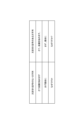
- FIG. 4 is a diagram showing an example of labeled learning data in series labeling.
- FIG. 4 for example, for a character string with a sentence delimiter "Now, let's start a meeting.” A label “ ⁇ O>” indicating that there is no sentence delimiter next to “meeting” and "o” is given, and a label “ ⁇ PERIOD>” indicating that a full stop comes next to the word “begin”. ” is given.
- the learning unit 11 generates a sentence ending symbol insertion model. More specifically, the learning unit 11 performs (machine) learning based on learning data that is a set of a character string without a sentence delimiter (or a sentence end symbol) and a character string with a sentence delimiter (or a sentence end symbol). and generate a sentence ending mark insertion model as a trained model. In addition, the learning unit 11 may perform (machine) learning based on the various types of learning data described above to generate a sentence ending symbol insertion model. Further, the learning unit 11 may generate the learning data itself based on the method of generating the learning data described above.
- the acquisition unit 12 may cause the storage unit 10 to store the sequentially acquired character strings, or may output them to the determination unit 13 .
- the determination unit 13 repeatedly determines whether or not the target character string, which is the character string to be determined, includes the end of the sentence.
- the determination unit 13 may determine the character string first acquired (output) by the acquisition unit 12 as the target character string in the initial determination. If it is determined that the target character string does not include the end of the sentence in the previous determination in the determination after the first time, the determination unit 13 determines that the target character string and the character subsequently acquired (output) by the acquisition unit 12 A new target character string (character string in which the target character string and a character string subsequently acquired (output) by the acquisition unit 12 are combined (in that order)) may be determined.
- the determination unit 13 may store the determination result in the storage unit 10 or output it to the output unit 14 .
- the output unit 14 When the determination unit 13 determines that the target character string includes the end of the sentence, the output unit 14 outputs the character string from the target character string (from the beginning of the sentence to the end of the sentence).
- the output unit 14 may output (display) to an output device 1006 (described later) such as a display, output to the translation unit 15, or output (transmit) to another device via a network. good too.
- the translation unit 15 outputs the result of machine-translating the character string output by the output unit 14.
- Machine translation uses existing technology.
- the translation unit 15 may output (display) to an output device 1006 (described later) such as a display, or may output (transmit) to another device via a network.
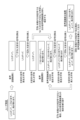
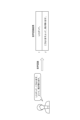
- FIG. 5 is a flowchart showing an example (part 1) of character string output processing executed by the character string output device 1.
- the user utters, "Therefore, it will be like this. Therefore, it will rain.”
- the speech recognition result A “Therefore.” is first output.
- the acquisition unit 12 first acquires the speech recognition result A “Therefore.”.
- the speech recognition result A “Therefore.” is the character string first acquired by the acquisition unit 12 .
- the determination unit 13 removes the sentence delimiter from the acquired speech recognition result A “henceforth.” to generate a sentence delimiter-removed character string “henceforth” (step S1a).
- the determination unit 13 inputs the generated sentence delimiter-removed character string “hence” to the sentence-end symbol insertion model, thereby converting the sentence delimiter-inserted character string “hence” into which the sentence delimiter is inserted. Generate (step S2a).
- the judgment unit 13 judges whether or not the end of the sentence is included in the generated character string "so," with the sentence delimiter inserted (first judgment), and judges that the end of the sentence is not included (step S3a).
- the judging unit 13 waits for the next speech recognition result after judging that the end of the sentence is not included (step S3a).
- the acquiring unit 12 acquires the speech recognition result B "It will be like this, rain.” (following the speech recognition result A "Therefore.”).
- the determining unit 13 inputs the sentence delimiter-removed character string "so" from which the sentence ending symbol is removed into the sentence ending symbol insertion model (which was replaced when the determining unit 13 performed the initial determination). A combined character string " Therefore, it will be like this, rain.” is generated (step S3a).
- the determination unit 13 removes the sentence delimiter from the generated combined character string "So, this will happen, rain.” Generate (step S4a). Next, the determination unit 13 inputs the generated sentence delimiter-removed character string “So this is how it will be like this, so it rains” to the sentence-end mark insertion model, so that the sentence-delimiter-inserted character string with the sentence delimiter inserted A column "Therefore, it will be like this. Therefore, it will rain” is generated (step S5a).
- the judgment unit 13 judges whether or not the end of the sentence is included in the generated sentence delimiter-inserted character string "Therefore, it becomes like this. Therefore, it rains.” determined to be included.
- the output unit 14 removes the end-of-sentence mark from the model for inserting the end-of-sentence symbol that was replaced when the determination unit 13 made the second determination. (This is a character string obtained by inputting the sentence delimiter removal character string ⁇ So, this is the case.'') )
- the character string “Therefore, it will be like this.” up to the end of the sentence is output as the speech recognition correction result (step S6a).
- the judgment unit 13 judges that the end of the sentence is included in the second judgment, the judgment unit 13 selects a character string after the end of the sentence in the sentence delimiter insertion character string "Therefore, it becomes like this. Therefore, it rains.”
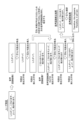
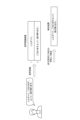
- FIG. 6 is a flowchart showing an example (part 2) of character string output processing executed by the character string output device 1.
- the user utters, "Therefore, it will be like this. Therefore, it will rain.”
- the speech recognition result C “Therefore.” is first output.
- the acquisition unit 12 first acquires the speech recognition result C “Therefore.”.
- the speech recognition result C “Therefore.” is a character string first acquired by the acquisition unit 12 .
- the determination unit 13 removes the sentence delimiter from the acquired speech recognition result C “Kareko” to generate a sentence delimiter-removed character string “Kareko” (step S1b).
- the determination unit 13 inputs the generated sentence delimiter-removed character string “hence” to the sentence-end symbol insertion model, thereby converting the sentence delimiter-inserted character string “hence” into which the sentence delimiter is inserted. Generate (step S2b).
- the judgment unit 13 judges whether or not the end of the generated sentence delimiter inserted character string "Therefore, it will be like this. Therefore, it will rain.” is the end of the sentence (second judgment). and determines that the end is the end of the sentence, that is, the end of the sentence is included.
- the output unit 14 removes the end-of-sentence mark from the model for inserting the end-of-sentence symbol that was replaced when the determination unit 13 made the second determination.
- Sentence delimiter removal character string (which is a string obtained by inputting the sentence delimiter removal character string "So it will be like this, so it will rain")
- Sentence delimiter insertion character string "Therefore, it will be like this, so it will rain.”
- a character string from the beginning of the sentence to the end of the sentence "Therefore, it will be like this.
- the determination unit 13 determines that the end of the sentence is not the end of the sentence in the second and subsequent determinations, that is, the end of the sentence is not included, the determination unit 13 determines that the sentence delimiter insertion character string and the acquisition unit 12 (speech recognition The character string obtained (output) following the result D "It will be like this, so it will rain") is continuously (repeatedly) determined (step S7b).
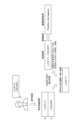
- FIG. 7 is a flowchart showing an example (part 3) of character string output processing executed by the character string output device 1.
- the user utters, "Therefore, it will be like this. Therefore, it will rain.”
- the speech recognition result E “Therefore.” is first output.
- the acquisition unit 12 first acquires the speech recognition result E "Therefore.”.
- the speech recognition result E “Therefore.” is a character string first obtained by the obtaining unit 12 .
- the determination unit 13 removes the punctuation marks from the obtained speech recognition result E "Kakegae.” to generate a punctuation-removed character string "Kakegae” (step S1c).
- the determination unit 13 (a character string obtained by inputting the punctuation-removed character string "so" in which the punctuation is removed into the punctuation insertion model, replaced when the determination unit 13 made the initial determination)
- the punctuation-inserted character string “henceforth,” and the speech recognition result F subsequently obtained by the obtaining unit 12, “it will be like this, so it will rain.” Therefore, it will rain.” is generated (step S3c).
- the determination unit 13 removes the punctuation marks from the generated combined character string "Therefore, it will rain.” Generate (step S4c). Next, the determination unit 13 inputs the generated punctuation-removed character string "Therefore, it will rain like this" to the punctuation insertion model, so that the punctuation-inserted character string "Therefore, it will rain”. Therefore, it will rain.” is generated (step S5c).
- FIG. 8 is a diagram showing an example of a conventional speech translation result for the speech recognition result of FIG. As shown in FIG. 8, when speech recognition result E "Therefore.” and speech recognition result F "It will rain like this.” what will happen, and it will rain.” is output.
- the acquisition unit 12 that sequentially acquires character strings, and the determination unit 13 that repeatedly determines whether or not the end of the sentence is included in the target character string that is the character string to be determined
- the character string first acquired by the acquisition unit 12 is judged as the target character string, and in the judgment after the first time, if it is judged that the target character string does not include the end of the sentence in the previous judgment , a determination unit 13 that determines a new target character string including the target character string and a character string subsequently acquired by the acquisition unit 12, and the determination unit 13 determines that the target character string includes the end of a sentence.
- an output unit 14 for outputting a character string up to the end of the sentence in the target character string when the target character string is input.
- the determination unit 13 determines that the end of the sentence is included if the end of the target character string is the end of the sentence, and that the end of the sentence is not included if the end of the target character string is not the end of the sentence. You can judge. With this configuration, only the end of the target character string is subject to determination, so the processing can be simplified and the processing speed can be increased.
- the determination unit 13 and a character string subsequently acquired by the acquisition unit 12 may be determined.
- the determination unit 13 inserts the target character string with the sentence ending symbol removed into the sentence ending symbol insertion model that outputs a character string with the sentence ending symbol inserted when the character string without the sentence ending symbol is input. It may be determined whether or not the end of the sentence is included based on whether or not the character string obtained by inputting has an end-of-sentence symbol. With this configuration, it is possible to perform determination on a more accurate character string corrected based on the sentence ending symbol insertion model, so that more accurate processing can be performed.
- the determination unit 13 replaces the target character string with a character string obtained by inputting the target character string from which the sentence ending symbol is removed into the sentence ending symbol insertion model when performing the determination. may With this configuration, it is possible to finally output a more accurate character string corrected based on the sentence ending mark insertion model.
- the sentence ending symbol insertion model may be a trained model trained based on learning data that is a set of a character string without a sentence ending symbol and a character string with a sentence ending symbol. good. With this configuration, it is possible to more reliably generate a sentence ending mark insertion model that provides more accurate output.
- the acquisition unit 12 may sequentially acquire character strings that are recognition results of voice recognition or character recognition. With this configuration, recognition results of voice recognition or character recognition can be targeted.
- the translation section 15 that outputs the result of machine-translating the character string output by the output section 14 may be further provided. This configuration can expand the range of applications in the real world.
- the character string output device 1 is a technique for correcting speech recognition results by judging the position of sentence divisions.
- the sentence will be a sentence in which the punctuation marks are not in appropriate positions when combined.
- the punctuation mark position after concatenation is inappropriate. That is, it depends on the punctuation position that the speech recognition engine inserts.
- the character string output device 1 all the punctuation marks inserted by the speech recognition engine are deleted, and the punctuation marks are re-inserted according to the self-created model to determine sentence boundaries. It is possible to process without any need, and the above problems can be solved.
- the target is not data such as voice recognition results that are input sequentially and often contain errors (does not use interrupted learning data).
- Punctuation processing only, sentence division determination, sentence merging, etc. are not performed.
- the discontinued sentence since the discontinued sentence is used as learning data, it is strong in predicting the punctuation mark position of the discontinued sentence. Also, in addition to punctuation, other sentence delimiters can be inserted (such as "##, "?"). It is also a technology that applies punctuation mark insertion to determine sentence breaks and join sentences.
- the character string output device 1 has the following advantages. (1) It is possible to perform sentence division determination (determine whether or not combination is necessary) using only one sentence as a result of speech recognition. That is, there is no delay for waiting for the next speech recognition result. (2) Sentence delimiter positions can be determined without depending on sentence delimiters such as punctuation marks inserted by the speech recognition engine. In other words, the accuracy of sentence segment determination is high. (3) It is possible to reinsert the sentence delimiter at an appropriate position in the combined sentence without depending on the sentence delimiter such as the punctuation mark inserted by the speech recognition engine. That is, the sentence after sentence combination can be corrected to a more natural sentence. (4) It is possible to insert sentence delimiters such as "?” and "! in addition to punctuation marks. That is, it is possible to improve the accuracy of the sentence delimiter determination and to modify the sentence after the sentence combination into a more natural sentence.
- the character string output device 1 may have the following configuration.
- the language is Japanese as an example, but the technology can also be used for languages other than Japanese.
- speech recognition is described as a target, but the technique is not limited to speech recognition, but is a technique effective for "sequentially input texts containing sentence segmentation errors".
- each functional block may be implemented using one device physically or logically coupled, or directly or indirectly using two or more physically or logically separated devices (e.g. , wired, wireless, etc.) and may be implemented using these multiple devices.
- a functional block may be implemented by combining software in the one device or the plurality of devices.
- Functions include judging, determining, determining, calculating, calculating, processing, deriving, examining, searching, checking, receiving, transmitting, outputting, accessing, resolving, selecting, choosing, establishing, comparing, assuming, expecting, assuming, Broadcasting, notifying, communicating, forwarding, configuring, reconfiguring, allocating, mapping, assigning, etc.
- a functional block (component) that performs transmission is called a transmitting unit or transmitter. In either case, as described above, the implementation method is not particularly limited.
- the character string output device 1 may function as a computer that performs processing of the character string output method of the present disclosure.
- FIG. 13 is a diagram showing an example of the hardware configuration of the character string output device 1 according to one embodiment of the present disclosure.
- the character string output device 1 described above may be physically configured as a computer device including a processor 1001, a memory 1002, a storage 1003, a communication device 1004, an input device 1005, an output device 1006, a bus 1007, and the like.
- the term "apparatus” can be read as a circuit, device, unit, or the like.
- the hardware configuration of the character string output device 1 may be configured to include one or more of each device shown in the figure, or may be configured without including some of the devices.
- Each function in the character string output device 1 is performed by causing the processor 1001 and the memory 1002 to read predetermined software (programs) into hardware such as the processor 1001 and the memory 1002, so that the processor 1001 performs calculations, controls communication by the communication device 1004, It is realized by controlling at least one of data reading and writing in the memory 1002 and the storage 1003 .
- the processor 1001 for example, operates an operating system and controls the entire computer.
- the processor 1001 may be configured by a central processing unit (CPU) including an interface with peripheral devices, a control device, an arithmetic device, registers, and the like.
- CPU central processing unit
- the learning unit 11 , acquisition unit 12 , determination unit 13 , output unit 14 , translation unit 15 and the like described above may be realized by the processor 1001 .
- the processor 1001 reads programs (program codes), software modules, data, etc. from at least one of the storage 1003 and the communication device 1004 to the memory 1002, and executes various processes according to them.
- programs program codes
- the program a program that causes a computer to execute at least part of the operations described in the above embodiments is used.
- the learning unit 11, the acquisition unit 12, the determination unit 13, the output unit 14, and the translation unit 15 may be stored in the memory 1002 and implemented by a control program that operates on the processor 1001.
- the same applies to other functional blocks. may be implemented in Although it has been explained that the above-described various processes are executed by one processor 1001, they may be executed simultaneously or sequentially by two or more processors 1001.
- FIG. Processor 1001 may be implemented by one or more chips.
- the program may be transmitted from a network via an electric communication line.
- the memory 1002 is a computer-readable recording medium, and is composed of at least one of, for example, ROM (Read Only Memory), EPROM (Erasable Programmable ROM), EEPROM (Electrically Erasable Programmable ROM), RAM (Random Access Memory), etc. may be
- ROM Read Only Memory
- EPROM Erasable Programmable ROM
- EEPROM Electrical Erasable Programmable ROM
- RAM Random Access Memory
- the memory 1002 may also be called a register, cache, main memory (main storage device), or the like.
- the memory 1002 can store executable programs (program code), software modules, etc. for implementing a wireless communication method according to an embodiment of the present disclosure.
- the storage 1003 is a computer-readable recording medium, for example, an optical disk such as a CD-ROM (Compact Disc ROM), a hard disk drive, a flexible disk, a magneto-optical disk (for example, a compact disk, a digital versatile disk, a Blu-ray disk), smart card, flash memory (eg, card, stick, key drive), floppy disk, magnetic strip, and/or the like.
- Storage 1003 may also be called an auxiliary storage device.
- the storage medium described above may be, for example, a database, server, or other suitable medium including at least one of memory 1002 and storage 1003 .
- the communication device 1004 is hardware (transmitting/receiving device) for communicating between computers via at least one of a wired network and a wireless network, and is also called a network device, a network controller, a network card, a communication module, or the like.
- the communication device 1004 includes a high-frequency switch, a duplexer, a filter, a frequency synthesizer, etc., in order to realize at least one of frequency division duplex (FDD) and time division duplex (TDD).
- FDD frequency division duplex
- TDD time division duplex
- the learning unit 11 , acquisition unit 12 , determination unit 13 , output unit 14 , translation unit 15 and the like described above may be realized by the communication device 1004 .
- the input device 1005 is an input device (for example, keyboard, mouse, microphone, switch, button, sensor, etc.) that receives input from the outside.
- the output device 1006 is an output device (for example, display, speaker, LED lamp, etc.) that outputs to the outside. Note that the input device 1005 and the output device 1006 may be integrated (for example, a touch panel).
- Each device such as the processor 1001 and the memory 1002 is connected by a bus 1007 for communicating information.
- the bus 1007 may be configured using a single bus, or may be configured using different buses between devices.
- the character string output device 1 includes hardware such as a microprocessor, a digital signal processor (DSP), an ASIC (Application Specific Integrated Circuit), a PLD (Programmable Logic Device), and an FPGA (Field Programmable Gate Array). part or all of each functional block may be implemented by the hardware.
- processor 1001 may be implemented using at least one of these pieces of hardware.
- Input/output information may be stored in a specific location (for example, memory) or managed using a management table. Input/output information and the like can be overwritten, updated, or appended. The output information and the like may be deleted. The entered information and the like may be transmitted to another device.
- the determination may be made by a value represented by one bit (0 or 1), by a true/false value (Boolean: true or false), or by numerical comparison (for example, a predetermined value).
- notification of predetermined information is not limited to being performed explicitly, but may be performed implicitly (for example, not notifying the predetermined information). good too.
- Software whether referred to as software, firmware, middleware, microcode, hardware description language or otherwise, includes instructions, instruction sets, code, code segments, program code, programs, subprograms, and software modules. , applications, software applications, software packages, routines, subroutines, objects, executables, threads of execution, procedures, functions, and the like.
- software, instructions, information, etc. may be transmitted and received via a transmission medium.
- the software uses at least one of wired technology (coaxial cable, fiber optic cable, twisted pair, digital subscriber line (DSL), etc.) and wireless technology (infrared, microwave, etc.) to website, Wired and/or wireless technologies are included within the definition of transmission medium when sent from a server or other remote source.
- wired technology coaxial cable, fiber optic cable, twisted pair, digital subscriber line (DSL), etc.
- wireless technology infrared, microwave, etc.
- data, instructions, commands, information, signals, bits, symbols, chips, etc. may refer to voltages, currents, electromagnetic waves, magnetic fields or magnetic particles, light fields or photons, or any of these. may be represented by a combination of
- system and “network” used in this disclosure are used interchangeably.
- information, parameters, etc. described in the present disclosure may be expressed using absolute values, may be expressed using relative values from a predetermined value, or may be expressed using other corresponding information. may be represented.
- determining and “determining” used in this disclosure may encompass a wide variety of actions.
- “Judgement” and “determination” are, for example, judging, calculating, computing, processing, deriving, investigating, looking up, search, inquiry (eg, lookup in a table, database, or other data structure), ascertaining as “judged” or “determined”, and the like.
- “judgment” and “decision” are used for receiving (e.g., receiving information), transmitting (e.g., transmitting information), input, output, access (accessing) (for example, accessing data in memory) may include deeming that something has been "determined” or "decided”.
- judgment and “decision” are considered to be “judgment” and “decision” by resolving, selecting, choosing, establishing, comparing, etc. can contain.
- judgment and “decision” may include considering that some action is “judgment” and “decision”.
- judgment (decision) may be read as “assuming”, “expecting”, “considering”, or the like.
- connection means any direct or indirect connection or coupling between two or more elements, It can include the presence of one or more intermediate elements between two elements being “connected” or “coupled.” Couplings or connections between elements may be physical, logical, or a combination thereof. For example, “connection” may be read as "access”.
- two elements are defined using at least one of one or more wires, cables, and printed electrical connections and, as some non-limiting and non-exhaustive examples, in the radio frequency domain. , electromagnetic energy having wavelengths in the microwave and optical (both visible and invisible) regions, and the like.
- any reference to elements using the "first,” “second,” etc. designations used in this disclosure does not generally limit the quantity or order of those elements. These designations may be used in this disclosure as a convenient method of distinguishing between two or more elements. Thus, reference to a first and second element does not imply that only two elements can be employed or that the first element must precede the second element in any way.
Landscapes
- Engineering & Computer Science (AREA)
- Theoretical Computer Science (AREA)
- Health & Medical Sciences (AREA)
- Artificial Intelligence (AREA)
- Audiology, Speech & Language Pathology (AREA)
- Computational Linguistics (AREA)
- General Health & Medical Sciences (AREA)
- Physics & Mathematics (AREA)
- General Engineering & Computer Science (AREA)
- General Physics & Mathematics (AREA)
- Machine Translation (AREA)
Priority Applications (1)
| Application Number | Priority Date | Filing Date | Title |
|---|---|---|---|
| JP2023564743A JP7789084B2 (ja) | 2021-11-30 | 2022-09-05 | 文字列出力装置 |
Applications Claiming Priority (2)
| Application Number | Priority Date | Filing Date | Title |
|---|---|---|---|
| JP2021-194136 | 2021-11-30 | ||
| JP2021194136 | 2021-11-30 |
Publications (1)
| Publication Number | Publication Date |
|---|---|
| WO2023100433A1 true WO2023100433A1 (ja) | 2023-06-08 |
Family
ID=86611889
Family Applications (1)
| Application Number | Title | Priority Date | Filing Date |
|---|---|---|---|
| PCT/JP2022/033330 Ceased WO2023100433A1 (ja) | 2021-11-30 | 2022-09-05 | 文字列出力装置 |
Country Status (2)
| Country | Link |
|---|---|
| JP (1) | JP7789084B2 (https=) |
| WO (1) | WO2023100433A1 (https=) |
Citations (5)
| Publication number | Priority date | Publication date | Assignee | Title |
|---|---|---|---|---|
| JPH11126091A (ja) * | 1997-10-22 | 1999-05-11 | Atr Onsei Honyaku Tsushin Kenkyusho:Kk | 音声言語処理単位変換装置 |
| WO2009101837A1 (ja) * | 2008-02-13 | 2009-08-20 | Nec Corporation | 記号挿入装置および記号挿入方法 |
| JP2017187797A (ja) * | 2017-06-20 | 2017-10-12 | 株式会社東芝 | テキスト生成装置、方法、及びプログラム |
| JP6605105B1 (ja) * | 2018-10-15 | 2019-11-13 | 株式会社野村総合研究所 | 文章記号挿入装置及びその方法 |
| WO2021199654A1 (ja) * | 2020-04-02 | 2021-10-07 | 株式会社Nttドコモ | 分割装置 |
Family Cites Families (1)
| Publication number | Priority date | Publication date | Assignee | Title |
|---|---|---|---|---|
| TWI858087B (zh) * | 2019-07-31 | 2024-10-11 | 日商東洋紡股份有限公司 | 雙軸配向聚酯膜 |
-
2022
- 2022-09-05 WO PCT/JP2022/033330 patent/WO2023100433A1/ja not_active Ceased
- 2022-09-05 JP JP2023564743A patent/JP7789084B2/ja active Active
Patent Citations (5)
| Publication number | Priority date | Publication date | Assignee | Title |
|---|---|---|---|---|
| JPH11126091A (ja) * | 1997-10-22 | 1999-05-11 | Atr Onsei Honyaku Tsushin Kenkyusho:Kk | 音声言語処理単位変換装置 |
| WO2009101837A1 (ja) * | 2008-02-13 | 2009-08-20 | Nec Corporation | 記号挿入装置および記号挿入方法 |
| JP2017187797A (ja) * | 2017-06-20 | 2017-10-12 | 株式会社東芝 | テキスト生成装置、方法、及びプログラム |
| JP6605105B1 (ja) * | 2018-10-15 | 2019-11-13 | 株式会社野村総合研究所 | 文章記号挿入装置及びその方法 |
| WO2021199654A1 (ja) * | 2020-04-02 | 2021-10-07 | 株式会社Nttドコモ | 分割装置 |
Also Published As
| Publication number | Publication date |
|---|---|
| JP7789084B2 (ja) | 2025-12-19 |
| JPWO2023100433A1 (https=) | 2023-06-08 |
Similar Documents
| Publication | Publication Date | Title |
|---|---|---|
| JP7222082B2 (ja) | 認識誤り訂正装置及び訂正モデル | |
| US9785631B2 (en) | Identification and extraction of acronym/definition pairs in documents | |
| JP7062056B2 (ja) | 作成文章評価装置 | |
| CN112036162A (zh) | 文本纠错的适配方法、装置、电子设备及存储介质 | |
| WO2018186445A1 (ja) | 対話システム | |
| US11994980B2 (en) | Method, device and computer program product for application testing | |
| US10120843B2 (en) | Generation of parsable data for deep parsing | |
| US12400464B2 (en) | System for dividing a character string in a machine translation process | |
| US12248758B2 (en) | Generation device and normalization model | |
| JP7682862B2 (ja) | 句点削除モデル学習装置、句点削除モデル及び判定装置 | |
| US20230401384A1 (en) | Translation device | |
| WO2023100433A1 (ja) | 文字列出力装置 | |
| JP2021136008A (ja) | 要約テキストのタギング方法、装置、デバイス及びコンピュータ記憶媒体 | |
| CN115658653B (zh) | 用于将数据文件迁移到目标数据库的方法、设备和介质 | |
| JP7836795B2 (ja) | 質問生成装置 | |
| US20210142007A1 (en) | Entity identification system | |
| WO2020235136A1 (ja) | 対話システム | |
| WO2023135963A1 (ja) | 翻訳装置 | |
| JP7547077B2 (ja) | 文章翻訳装置及び翻訳モデル | |
| JP2022164001A (ja) | 単言語変換装置 | |
| US12333267B2 (en) | Text generation model generating device, text generation model, and text generating device | |
| JP2021179665A (ja) | 文章作成装置 | |
| US20210012067A1 (en) | Sentence matching system | |
| JP2024112548A (ja) | 抽出装置 | |
| JP7608603B2 (ja) | 音声認識装置 |
Legal Events
| Date | Code | Title | Description |
|---|---|---|---|
| 121 | Ep: the epo has been informed by wipo that ep was designated in this application |
Ref document number: 22900868 Country of ref document: EP Kind code of ref document: A1 |
|
| WWE | Wipo information: entry into national phase |
Ref document number: 2023564743 Country of ref document: JP |
|
| NENP | Non-entry into the national phase |
Ref country code: DE |
|
| 122 | Ep: pct application non-entry in european phase |
Ref document number: 22900868 Country of ref document: EP Kind code of ref document: A1 |