WO2023100329A1 - 学習装置 - Google Patents
学習装置 Download PDFInfo
- Publication number
- WO2023100329A1 WO2023100329A1 PCT/JP2021/044305 JP2021044305W WO2023100329A1 WO 2023100329 A1 WO2023100329 A1 WO 2023100329A1 JP 2021044305 W JP2021044305 W JP 2021044305W WO 2023100329 A1 WO2023100329 A1 WO 2023100329A1
- Authority
- WO
- WIPO (PCT)
- Prior art keywords
- learning
- common
- model
- unit
- eigenmodel
- Prior art date
- Legal status (The legal status is an assumption and is not a legal conclusion. Google has not performed a legal analysis and makes no representation as to the accuracy of the status listed.)
- Ceased
Links
Images



Classifications
-
- G—PHYSICS
- G06—COMPUTING OR CALCULATING; COUNTING
- G06N—COMPUTING ARRANGEMENTS BASED ON SPECIFIC COMPUTATIONAL MODELS
- G06N20/00—Machine learning
Definitions
- the present invention relates to a learning device, a learning method, a recording medium, and a learning system.
- Patent Document 1 describes a learning device that includes a data generator and an additional learner that performs additional learning of a trained model using additional training data generated by the data generator.
- additional learning can also be called continuous learning.
- federated learning There is a technology called federated learning in which multiple clients work together to train a machine learning model without directly exchanging feature values, which are learning data owned by each client.
- learning In learning called horizontal federation learning among such federated learning, learning is performed using a feature quantity that each client has in common. Therefore, when horizontal federation learning is performed, there is a problem that, of the feature values owned by the clients, the feature values that are not common among the clients cannot be utilized.
- an object of the present invention is to provide a learning device, a learning method, a recording medium, and a learning system that can solve the problem that there are feature values that cannot be used when performing horizontal association learning.
- the learning device which is one aspect of the present disclosure, a common model learning unit that learns a common model that is also used by other learning devices by using a common feature quantity that is a feature quantity that is common to other learning devices among the feature quantities that the own device has; Based on the common model learned by the common model learning unit, a peculiar model, which is a model peculiar to the device, is generated by using a peculiar feature quantity, which is a feature quantity not common to other learning devices among the feature quantities possessed by the device itself.
- a learning eigenmodel learning unit It has a configuration of
- a learning method includes: The information processing device learning a common model that is also used by other learning devices by using a common feature quantity that is a feature quantity common to other learning devices out of the feature quantities possessed by the own device; Based on the learned common model, a peculiar model, which is a model peculiar to the device itself, is learned by using a unique feature quantity, which is a feature quantity not common to other learning devices among the feature quantities of the device itself. .
- a recording medium that is another aspect of the present disclosure includes: information processing equipment, learning a common model that is also used by other learning devices by using a common feature quantity that is a feature quantity common to other learning devices out of the feature quantities possessed by the own device; Based on the learned common model, a process of learning a peculiar model, which is a model peculiar to the device, is realized by using a unique feature quantity, which is a feature quantity that is not common to other learning devices among the feature quantities that the device has.
- a computer-readable recording medium recording a program for
- a learning system that is another aspect of the present disclosure includes: a common model learning unit that learns a common model that is also used by other learning devices by using a common feature quantity that is a feature quantity that is common to other learning devices among the feature quantities of the own device; and the common model learning unit A peculiar model learning unit that learns a peculiar model, which is a model peculiar to the device, by using a peculiar feature quantity, which is a feature quantity that is not common to other learning devices among the feature quantities that the device has, based on the learned common model. and a learning device having a server device having an integration unit that integrates the common model learned by each learning device by communicating with a plurality of learning devices; It has a configuration of
- a learning device According to each configuration as described above, there is provided a learning device, a learning method, a recording medium, and a learning system that can improve the accuracy of inference by using features that cannot be used in horizontal federated learning during learning and inference. can provide.
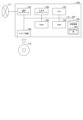
- FIG. 1 is a diagram showing an overall configuration example of a learning system
- FIG. 2 is a block diagram showing a configuration example of a learning device
- FIG. It is a figure which shows an example of learning data. It is a figure which shows the example of connection of a learning model. It is a figure which shows the structural example of a server apparatus.
- 4 is a flowchart showing an operation example of the learning device; It is a flow chart which shows a more detailed example of operation of Step S130.
- 9 is a flowchart showing another operation example of the learning device; It is a figure which shows the hardware structural example of the learning apparatus in the 2nd Embodiment of this invention.
- 2 is a block diagram showing a configuration example of a learning device; FIG.
- FIG. 1 is a diagram for explaining the outline of the present invention.
- FIG. 2 is a diagram showing an overall configuration example of the learning system 100.
- FIG. 3 is a block diagram showing a configuration example of the learning device 200.
- FIG. 4 is a diagram showing an example of the learning data 221.
- FIG. 5 is a diagram showing an example of combining a common model and a unique model, which are learning models.
- FIG. 6 is a diagram showing a configuration example of the server device 300.
- FIG. 7 and 8 are flowcharts showing an operation example of the learning device 200.
- FIG. FIG. 9 is a flow chart showing another operation example of the learning device 200 .
- horizontal association learning is performed using a common feature amount that is a feature amount shared by a plurality of clients, and a unique feature amount that is a feature amount unique to the own device is also utilized.
- a learning system 100 having a learning device 200 capable of learning and reasoning will be described.
- the learning device 200 has the feature amount of client 1
- the other learning device 400 in the learning system 100 has the feature amount of client 2 .
- the learning device 200 uses the feature quantity of attribute C, which is a common feature quantity among the feature quantities of attribute A, attribute B, and attribute C, which are feature quantities possessed by the learning device 200, to perform horizontal learning.
- Do associative learning is performed using a common feature amount that is a feature amount shared by a plurality of clients, and a unique feature amount that is a feature amount unique to the own device is also utilized.
- the learning device 200 learns the eigenmodel using at least the eigenfeature amount. For example, in the case of FIG. 1, the learning device 200 has feature amounts of attribute A and attribute B, but the other learning device 400 does not. Therefore, the learning device 200 learns the eigenmodel using at least the feature amounts of attribute A and attribute B, which are peculiar feature amounts. In addition, in the case of the present embodiment, the learning device 200 learns the eigenmodel so as not to forget the results of learning in the horizontal association learning when learning the eigenmodel. For example, the learning device 200 adopts a continual learning method, such as a method of learning the model of task 2 by fixing the model parameters that learned task 1 and inputting the output of the intermediate layer of task 1 to each layer. By applying this method, eigenmodel learning is performed so as not to forget the results of horizontal association learning. As a result, the learning device 200 creates a unique model inheriting the knowledge of the common model learned by horizontal association learning.
- FIG. 2 shows a configuration example of the learning system 100 as a whole.
- the learning system 100 has a learning device 200, a server device 300, and at least one or more other learning devices 400.
- learning device 200 and server device 300 are connected via a network or the like so that they can communicate with each other.
- the server device 300 and the other learning device 400 are connected via a network or the like so as to be able to communicate with each other.
- the learning device 200 is an information processing device that generates a common model in cooperation with the other learning devices 400 through horizontal association learning using common feature quantities, and also generates a unique model through learning using at least the unique feature quantities.
- FIG. 3 shows a configuration example of the learning device 200. As shown in FIG. Referring to FIG. 3, the learning device 200 has, for example, a communication I/F section 210, a storage section 220, and an arithmetic processing section 230 as main components.
- FIG. 3 illustrates a case where the function of the learning device 200 is realized using one information processing device.
- the learning device 200 may be implemented using a plurality of information processing devices, such as being implemented on a cloud. Further, the learning device 200 may have a configuration other than the above examples, such as an operation input unit such as a keyboard and a mouse, and a screen display unit.
- the communication I/F unit 210 consists of a data communication circuit and the like. Communication I/F section 210 performs data communication with an external device such as server device 300 connected via a communication line.
- the storage unit 220 is a storage device such as a hard disk or memory.
- the storage unit 220 stores processing information and programs 225 necessary for various processes in the arithmetic processing unit 230 .
- the program 225 realizes various processing units by being read and executed by the arithmetic processing unit 230 .
- the program 225 is read in advance from an external device or recording medium via a data input/output function such as the communication I/F section 210 and stored in the storage section 220 .
- Main information stored in the storage unit 220 includes, for example, learning data 221, common model information 222, joint parameter information 223, unique model information 224, and the like.
- the learning data 221 includes feature amounts such as common feature amounts and unique feature amounts, which are data used when learning the common model and the unique model.
- the learning data 221 is tabular data or the like, but may be feature amounts other than those exemplified.
- the learning data 221 is acquired in advance from an external device or the like via the communication I/F unit 210 or the like, or is input in advance using an operation input unit such as a keyboard or mouse of the learning device 200, and stored in the storage unit 220. stored in
- FIG. 4 shows an example of the learning data 221.
- the learning data 221 includes a common feature amount that is a feature amount shared with the other learning apparatuses 400, and a unique feature amount that is a feature amount unique to the own apparatus that the other learning apparatuses 400 do not have. and are included.
- the learning data 221 includes the feature amount of attribute A and attribute B, which are unique feature amounts, and the feature amount of attribute C, which is a shared feature amount.
- the common model information 222 includes models that have undergone machine learning processing using common feature amounts.
- the common model information 222 receives a common model, parameter update information, etc. from the server device 300 via the transmission/reception unit 231, and the common model learning unit 232 performs learning based on the common feature amount included in the learning data 221. It updates as you go.
- the common model included in the common model information 222 is a common feature quantity that the learning device 200 does not have (for example, the sample ID 4 in FIG. Attribute C feature amount, etc.) is also used to learn the model.
- the joint parameter information 223 includes joint parameters such as matrices used when jointing the common model and the unique model.
- the connection/learning unit 233 multiplies the output of the i-th layer of the common model by the matrix W i or the like and connects it to the j-th layer of the eigenmodel.
- the coupling parameter information 223 includes the matrix W i and the like as coupling parameters.
- the connection parameter information 223 includes, for example, connection parameters for each connection point.
- the combination parameter information 223 receives combination parameters, parameter update information, and the like from the server device 300 via the transmission/reception unit 231, and combines and learns based on common feature amounts and unique feature amounts included in the learning data 221. It is updated according to the part 233 learning.
- connection parameters included in the connection parameter information 223 also reflect the results of learning by the other learning devices 400 other than the learning device 200 as a result of horizontal association learning in cooperation with the other learning devices 400 .
- the unique model information 224 includes a model that has undergone machine learning processing using at least unique feature amounts.
- the eigenmodel information 224 is updated according to the result of learning by the eigenmodel learning unit 234 based at least on the eigenfeature amount included in the learning data 221 .
- the eigenmodel learning unit 234 learns eigenmodels so as not to forget the results of horizontal association learning. Therefore, the peculiar model included in the peculiar model information 224 inherits the knowledge of the common model learned by horizontal association learning.
- the arithmetic processing unit 230 has an arithmetic device such as a CPU (Central Processing Unit) and its peripheral circuits.
- the arithmetic processing unit 230 reads the program 225 from the storage unit 220 and executes it, so that the hardware and the program 225 work together to realize various processing units.
- Main processing units realized by the arithmetic processing unit 230 include, for example, a transmission/reception unit 231, a common model learning unit 232, a connection/learning unit 233, an eigenmodel learning unit 234, an inference unit 235, and the like.
- the transmission/reception unit 231 transmits/receives data necessary for horizontal federation learning to/from the server device 300 .
- the transmission/reception unit 231 receives the common model, parameter update information of the common model, and the like from the server device 300 . Then, the transmitting/receiving unit 231 stores the received common model and the like in the storage unit 220 as the common model information 222 .
- the transmission/reception unit 231 transmits the parameter update information of the common model or the updated common model to the server device 300 .
- the common model learning unit 232 updates the common model included in the common model information 222 using the common feature amount included in the learning data 221
- the transmitting/receiving unit 231 sets parameters indicating parameters updated by learning.
- the update information or the updated common model is transmitted to the server device 300 .
- the transmission/reception unit 231 receives a combination parameter or parameter update information for the combination parameter from the server device. Then, the transmitting/receiving unit 231 stores the received coupling parameters and the like in the storage unit 220 as the coupling parameter information 223 .
- the transmission/reception unit 231 transmits parameter update information of the binding parameters or updated binding parameters to the server device.
- the transmitting/receiving unit 231 is updated by learning when the combining/learning unit 233 updates the combined parameters included in the combined parameter information 223 using the common feature amount and the unique feature amount included in the learning data 221.
- Parameter update information indicating the parameters that have been added or updated combination parameters are transmitted to the server device 300 .
- the transmitting/receiving unit 231 transmits/receives information necessary for performing horizontal federation learning.
- the transmitting/receiving unit 231 transmits to or receives from the server device 300 a common model, parameter update information of the common model, coupling parameters, parameter update information of the coupling parameters, and the like.
- the common model learning unit 232 generates a common model using the common feature amount included in the learning data 221.
- the common model learning unit 232 cooperates with the other learning devices 400 to perform horizontal federation learning to generate a common model. to generate
- the common model learning unit 232 receives the common model from the server device 300 via the transmission/reception unit 231 . Also, the common model learning unit 232 generates a new common model by updating the common model using the common feature amount included in the learning data 221 . Then, the common model learning unit 232 stores the common model updated/generated by learning in the storage unit 220 as the common model information 222 . Further, the common model learning unit 232 transmits update parameter information indicating parameters updated by learning to the server device 300 via the transmission/reception unit 231 . Note that the common model learning unit 232 may repeat the processing of receiving the common model and then transmitting the update parameter information and the like to the server device 300 until the learning is completed.
- connection/learning unit 233 uses the connection parameter indicated by the connection parameter information 223 to connect the common model included in the common model information 222 and the unique model included in the unique model information 224 .
- the connection/learning unit 233 multiplies the output of the i-th layer of the common model by a predetermined value such as the matrix Wi , which is a connection parameter, and connects it to the j-th layer of the eigenmodel.
- a hyperparameter ⁇ i that indicates the strength of coupling is predetermined.
- the matrix W i as a combination parameter is received in advance from the server device 300 via the transmission/reception unit 231 .
- the connection/learning unit 233 uses hyperparameters ⁇ i and matrices W i to connect the common model and the eigenmodel.
- the connection/learning unit 233 multiplies the output of the i-th layer of the common model by the product of the matrix W i and ⁇ i and adds it to the output of the j-th layer of the eigenmodel before passing it through the activation function. , which combines the common and eigenmodels.
- the combining/learning unit 233 can, for example, add the output of the common model as it is to the output of the eigenmodel.
- the combining/learning unit 233 may also add some layers after the output.
- the hyperparameter ⁇ is an arbitrary value between 0 and 1 inclusive.
- connection/learning unit 233 learns connection parameters. For example, the combination/learning unit 233 learns the combination parameter using the common feature amount and the unique feature amount included in the learning data 221 . As an example, the connection/learning unit 233 learns connection parameters by performing horizontal association learning, as with the common model. For example, the connection/learning unit 233 receives connection parameters from the server device 300 via the transmission/reception unit 231 . After combining the common model and the unique model, the combining/learning unit 233 generates new combined parameters by updating the combined parameters using the common feature amount and the unique feature amount included in the learning data 221. do. Then, the connection/learning unit 233 stores the connection parameter updated/generated by learning in the storage unit 220 as the connection parameter information 223 . The linking/learning unit 233 also transmits updated parameter information indicating parameters updated by learning to the server apparatus 300 via the transmitting/receiving unit 231 . The connection/learning unit 233 may repeat the above process until the learning is completed.
- the eigenmodel learning unit 234 generates an eigenmodel using at least the eigenfeature amounts included in the learning data 221 .
- the eigenmodel learning unit 234 can learn and update eigenmodels so as not to forget the results of horizontal association learning.
- the eigenmodel learning unit 234 learns eigenmodels using eigenfeature amounts.
- the eigenmodel learning unit 234 inputs the output of the intermediate layer of the common model learned by the horizontal federation learning to each layer of the eigenmodel, and then performs learning based on at least the eigenfeature amount, thereby learning by the horizontal federation learning. Learn eigenmodels so that you don't forget your achievements.
- the eigenmodel learning unit 234 performs learning using the common model and the eigenmodel in the combined state by the combining/learning unit 233, using the common model and the combined parameters updated by the horizontal association learning. .
- the eigenmodel learning unit 234 generates a new eigenmodel by inputting the common feature amount into the common model, inputting the peculiar feature amount into the eigenmodel, performing learning, and updating the eigenmodel. Then, the eigenmodel learning unit 234 stores the koyu model updated/generated by learning in the storage unit 220 as the eigenmodel information 224 . Note that the eigenmodel included in the eigenmodel information 224 is unique to the learning device 200 . Therefore, the eigenmodel need not be transmitted to the server device 300 or the like.
- the feature amount used by the eigenmodel learning unit 234 to generate the eigenmodel may include other than the eigenfeature amount.
- the eigenmodel learning unit 234 may learn the eigenmodel using both the eigenfeature amount and the common feature amount.
- the eigenmodel learning unit 234 may learn the eigenmodel using the eigenfeature amount and a predetermined common feature amount. Any means may be used to determine whether or not the eigen-model learning unit 234 uses a feature other than the eigen-feature amount when learning the eigen-model.
- the inference unit 235 makes inferences using the learning results. For example, the inference unit 235 performs inference by inputting the common feature amount into the common model and inputting the unique feature amount into the unique model. For example, the inference unit 235 can use the output of the eigenmodel as the final inference result.
- the above is an example of the configuration of the learning device 200.
- the common model and eigenmodels are combined.
- the output of layer i of the eigenmodel is represented by a formula, for example, the following Formula 1 is obtained.
- hi indicates the output of the i-th layer.
- f is an activation function.
- U i is the weight matrix of the i-th layer of the eigenmodel
- b i is the bias of the i-th layer of the eigenmodel.
- per indicates a unique model
- com indicates a common model.
- the final output h out is, for example, as shown in Equation 2 below.
- the above is an example of the relationship between the common model, the eigenmodel, and the combination parameter learned by the learning device 200.
- server device 300 receives information to be subjected to horizontal federation learning, such as common models, joint parameters, and parameter update information, from learning device 200 and other learning devices 400, and performs averaging and other processing. It is an information processing device that performs integration processing. In addition, server device 300 transmits the integrated common model and combination parameters (or parameter update information, etc.) to learning device 200 and other learning devices 400 .
- FIG. 6 shows a configuration example of the server device 300.
- the server device 300 has a transmission/reception section 310 and an integration section 320 .
- the server device 300 has an arithmetic device such as a CPU and a storage device, and the arithmetic device executes a program stored in the storage device to realize each of the above processing units.
- the server device 300 may have general functions other than those exemplified above.
- the transmitting/receiving unit 310 receives the common model, the parameter update information of the common model, the joint parameter, the parameter update information of the joint parameter, and the like from the learning device 200, the other learning devices 400, and the like. Further, the transmitting/receiving unit 310 can transmit a common model, parameter update information of the common model, coupling parameters, parameter update information of the coupling parameters, and the like to the learning device 200 and the other learning devices 400 .
- the integration unit 320 advances the federated learning process by integrating a plurality of common models, connection parameters, etc. received from the learning device 200, the other learning devices 400, and the like.
- the integration unit 320 takes an average of a plurality of common models received from the learning device 200 and the other learning devices 400, thereby creating an integrated model that integrates the common models received from the learning device 200 and the other learning devices 400. Generate a common model. Also, the integration unit 320 can transmit the integrated common model or the parameter update information of the integrated common model to the learning device 200 and the other learning devices 400 via the transmission/reception unit 310 .
- the integration unit 320 averages a plurality of combination parameters received from the learning device 200 and the other learning devices 400, thereby integrating the combination parameters received from the learning device 200 and the other learning devices 400. Generate the binding parameters as . Also, the integration unit 320 can transmit the integrated connection parameters or the parameter update information of the integrated connection parameters to the learning device 200 and the other learning devices 400 via the transmission/reception unit 310 .
- the server device 300 has a configuration for realizing general horizontal federated learning.
- the server device 300 is configured to be able to perform horizontal association learning not only for common models but also for joint parameters.
- server device 300 may be configured to determine the initial common model and coupling parameters by any method.
- server device 300 may be configured to learn an initial common model using only shared features on the cloud and transmit the learned common model to learning device 200 and other learning devices 400 .
- the other learning device 400 is an information processing device that has at least a function for performing horizontal association learning for the common model described above. Moreover, at least some of the other learning devices 400 have a function for learning the above-described unique model in addition to the function for performing horizontal association learning for the common model. In other words, at least some of the other learning devices 400 included in the learning system 100 can have the same configuration as the learning device 200 described above. Since the configuration of the learning device 200 has already been described, a detailed description of the configuration of the other learning device 400 will be omitted.
- FIG. 7 is a configuration example of the learning system 100.
- an operation example of the learning device 200 will be described with reference to FIGS. 7 and 8.
- FIG. 7 is a configuration example of the learning system 100.
- FIG. 7 is a flowchart showing an operation example of the learning device 200.
- the learning device 200 uses arbitrary means to determine the hyperparameter ⁇ (step S110).
- the hyperparameter ⁇ may be predetermined.
- the learning device 200 uses arbitrary means to determine the feature amount to be input to the eigenmodel (step S120). For example, the learning device 200 can determine that only eigenfeature values are to be input to the eigenmodel. The types of feature values to be input to the eigenmodel may be determined in advance.
- the common model learning unit 232 communicates with the server device 300 via the transmitting/receiving unit 231, and updates the parameters of the common model using the horizontal federation learning method by performing learning using the common feature amount (step S130). Details of the processing in step S130 will be described later.
- connection/learning unit 233 uses the connection parameter W and the hyperparameter ⁇ to connect the common model and the eigenmodel (step S140). For example, the connection/learning unit 233 multiplies the output of the i-th layer of the common model by the product of the matrix W i and ⁇ i and adds it to the output of the j-th layer of the eigenmodel before passing it through the activation function. , which combines the common and eigenmodels.
- connection/learning unit 233 updates the connection parameter W using the method of horizontal association learning (step S150). Updating the joint parameters using horizontal association learning may be performed using a technique similar to step S130.
- the eigenmodel learning unit 234 learns and updates the eigenmodel so as not to forget the results of horizontal association learning (step S160). For example, the eigenmodel learning unit 234 performs learning using the common model and the eigenmodel in the combined state by the combining/learning unit 233 using the common model and the combined parameters updated by the horizontal association learning. Thereby, the eigenmodel learning unit 234 updates the parameters of the eigenmodel.
- the learning device 200 repeats the processing from step S130 to step S160 until the learning ends (step S170). Upon completion of learning (step S170, Yes), learning device 200 ends the process.
- FIG. 8 is a flowchart showing a detailed example of the processing of step S130.
- the transmitting/receiving unit 231 receives the common model from the server device 300 (step S1331).
- the transmitting/receiving unit 231 may receive the common model by requesting the server device 300 to transmit the common model, or may receive the common model from the server device 300 in advance.
- the common model learning unit 232 generates a new common model by updating the common model using the common feature amount included in the learning data 221 (step S132). In addition, the common model learning unit 232 transmits update parameter information indicating parameters updated by learning to the server device 300 via the transmitting/receiving unit 231 (step S133).
- the transmitting/receiving unit 231 and the common model learning unit 232 can repeat the processing from step S131 to step S133 until the learning ends (step S134). Upon completion of learning (step S134, Yes), the transmitting/receiving unit 231 and common model learning unit 232 terminate the process of step S130.
- the learning device 200 has a common model learning unit 232 and a unique model learning unit 234.
- the eigenmodel learning unit 234 can learn eigenmodels so as not to forget the results of horizontal association learning using the common model learning unit 232 .
- the learning device 200 may be configured to perform common model learning and unique model learning at the same time, as illustrated in FIG.
- the learning device 200 uses arbitrary means to determine the hyperparameter ⁇ in addition to the hyperparameter ⁇ (step S210).
- the hyperparameter ⁇ is any value greater than or equal to 0.
- the learning device 200 uses arbitrary means to determine the feature amount to be input to the eigenmodel (step S220).
- connection/learning unit 233 of the learning device 200 multiplies the output of the i-th layer of the common model by the product of the matrix W i and ⁇ i , and passes it through the activation function of the j-th layer of the eigenmodel.
- the common model and the unique model are combined by the same method as described in the present embodiment, such as addition to the output (step S230).
- the learning device 200 sets the loss function relating to the final output of the eigenmodel to L, the loss function relating to the output of the common model to L1 , and minimizes L+ ⁇ L1 to are updated at the same time (step S240).
- the common model and the joint parameter W i are updated by horizontal association learning.
- learning device 200 repeats the processing of combining and updating until learning is completed (step S250).
- the learning device 200 may be configured to simultaneously learn common models and unique models. In general, the accuracy is higher when the learning of the common model and the learning of the unique model are performed alternately.
- the learning device 200 may be configured to learn eigenmodels using general continuous learning techniques other than those exemplified in the present embodiment so as not to forget the results of horizontal association learning. . Also, the learning device 200 may be configured to update only the common model by horizontal federation learning.
- the learning system 100 has the server device 300 and the server device 300 is used to perform horizontal federation learning has been exemplified.
- the learning system 100 does not necessarily have to have the server device 300 .
- the learning device 200 performs horizontal federation learning by directly transmitting/receiving common models, connection parameters, parameter update information, etc. to/from the other learning devices 400.
- FIG. 10 and 11 show a configuration example of the learning device 500.
- FIG. 10 and 11 show a configuration example of the learning device 500.
- FIG. 10 shows a hardware configuration example of a learning device 500, which is an information processing device.
- the learning device 500 has the following hardware configuration as an example.
- - CPU Central Processing Unit
- 501 Arimetic unit
- ROM Read Only Memory
- RAM Random Access Memory
- Program group 504 loaded into RAM 503 - Storage device 505 for storing program group 504 -
- a drive device 506 that reads and writes a recording medium 510 outside the information processing device
- a communication interface 507 that connects to a communication network 511 outside the information processing apparatus
- a bus 509 connecting each component
- the learning device 500 can realize the functions of the common model learning unit 521 and the unique model learning unit 522 shown in FIG.
- the program group 504 is stored in advance in the storage device 505 or the ROM 502, for example, and is loaded into the RAM 503 or the like by the CPU 501 as necessary and executed.
- the program group 504 may be supplied to the CPU 501 via the communication network 511 or may be stored in the recording medium 510 in advance, and the drive device 506 may read the program and supply it to the CPU 501 .
- FIG. 10 shows an example of the hardware configuration of the learning device 500.
- the hardware configuration of learning device 500 is not limited to the case described above.
- the learning device 500 may consist of part of the configuration described above, such as not having the drive device 506 .
- the common model learning unit 521 learns a common model in cooperation with other learning devices by using common feature quantities that are common feature quantities with other learning devices among the feature quantities possessed by the own device. In other words, the common model learning unit 521 learns the common model by federated learning.
- the eigen model learning unit 522 learns the feature values of its own device so that the common model learning unit 621 will not forget the results of learning in cooperation with other learning devices.
- a unique model which is a model unique to the device itself, is learned using a unique feature quantity, which is a feature quantity that is not common to other learning devices.
- the learning device 500 has the eigenmodel learning unit 522.
- the eigenmodel learning unit 522 can learn eigenmodels using eigenfeature amounts so that the common model learning unit 621 does not forget the results of learning in cooperation with other learning devices. I can.
- the learning device 500 described above can be realized by installing a predetermined program in an information processing device such as the learning device 500.
- the program which is another aspect of the present invention, causes an information processing apparatus such as the learning apparatus 500 to use a common feature amount that is a feature amount common to other learning apparatuses among the feature amounts of the own apparatus. , learns a common model in cooperation with other learning devices, and based on the learned common model, learns other It is a program for realizing processing of learning a unique model, which is a model unique to the own device, using a unique feature quantity, which is a feature quantity that is not common to the learning device.
- the information processing apparatus uses common Learning a common model in cooperation with other learning devices using feature values, and based on the learned common model, the characteristics of the own device so as not to forget the results of learning in cooperation with other learning devices
- (Appendix 1) a common model learning unit that learns a common model that is also used by other learning devices by using a common feature quantity that is a feature quantity that is common to other learning devices among the feature quantities that the own device has; Based on the common model learned by the common model learning unit, a peculiar model, which is a model peculiar to the device, is generated by using a peculiar feature quantity, which is a feature quantity not common to other learning devices among the feature quantities possessed by the device itself.
- a learning eigenmodel learning unit A learning device having (Appendix 2) The learning device according to Appendix 1, The learning device, wherein the eigenmodel learning unit learns the eigenmodel by performing learning using a continuous learning method.
- the eigenmodel learning unit inputs the output of the intermediate layer of the common model learned by the common model learning unit to each layer of the eigenmodel, and then performs learning using the eigenfeature amount, thereby learning the eigenmodel.
- a learning device that learns. (Appendix 4) The learning device according to any one of Supplements 1 to 3, a combiner that combines the common model and the eigenmodel using a predetermined combination parameter; The learning device, wherein the eigenmodel learning unit performs learning using the common model and the eigenmodel combined by the combining unit.
- the information processing device learning a common model that is also used by other learning devices by using a common feature quantity that is a feature quantity common to other learning devices out of the feature quantities possessed by the own device; learning a peculiar model, which is a model peculiar to the own device, by using a peculiar feature quantity, which is a feature quantity not common to other learning devices among the feature quantities of the own device, based on the learned common model.
- a computer-readable recording medium that records a program for (Appendix 10) a common model learning unit that learns a common model that is also used by other learning devices by using a common feature quantity that is a feature quantity that is common to other learning devices among the feature quantities of the own device; and the common model learning unit A peculiar model learning unit that learns a peculiar model, which is a model peculiar to the device, by using a peculiar feature quantity, which is a feature quantity that is not common to other learning devices among the feature quantities that the device has, based on the learned common model. and a learning device having a server device having an integration unit that integrates the common model learned by each learning device by communicating with a plurality of learning devices; A learning system with
- learning system 200 learning device 210 communication I/F unit 220 storage unit 221 learning data 222 common model information 223 coupling parameter information 224 unique model information 225 program 230 arithmetic processing unit 231 transmission/reception unit 232 common model learning unit 233 coupling/learning unit 234 Eigen model learning unit 300 server device 310 transmission/reception unit 320 integration unit 400 other learning device 500 learning device 501 CPU 502 ROMs 503 RAM 504 program group 505 storage device 506 drive device 507 communication interface 508 input/output interface 509 bus 510 recording medium 511 communication network 521 common model learning section 522 specific model learning section
Landscapes
- Engineering & Computer Science (AREA)
- Theoretical Computer Science (AREA)
- Software Systems (AREA)
- Data Mining & Analysis (AREA)
- Evolutionary Computation (AREA)
- Medical Informatics (AREA)
- Computer Vision & Pattern Recognition (AREA)
- Physics & Mathematics (AREA)
- Computing Systems (AREA)
- General Engineering & Computer Science (AREA)
- General Physics & Mathematics (AREA)
- Mathematical Physics (AREA)
- Artificial Intelligence (AREA)
- Image Analysis (AREA)
Priority Applications (2)
| Application Number | Priority Date | Filing Date | Title |
|---|---|---|---|
| PCT/JP2021/044305 WO2023100329A1 (ja) | 2021-12-02 | 2021-12-02 | 学習装置 |
| JP2023564375A JP7700874B2 (ja) | 2021-12-02 | 2021-12-02 | 学習装置 |
Applications Claiming Priority (1)
| Application Number | Priority Date | Filing Date | Title |
|---|---|---|---|
| PCT/JP2021/044305 WO2023100329A1 (ja) | 2021-12-02 | 2021-12-02 | 学習装置 |
Publications (1)
| Publication Number | Publication Date |
|---|---|
| WO2023100329A1 true WO2023100329A1 (ja) | 2023-06-08 |
Family
ID=86611724
Family Applications (1)
| Application Number | Title | Priority Date | Filing Date |
|---|---|---|---|
| PCT/JP2021/044305 Ceased WO2023100329A1 (ja) | 2021-12-02 | 2021-12-02 | 学習装置 |
Country Status (2)
| Country | Link |
|---|---|
| JP (1) | JP7700874B2 (https=) |
| WO (1) | WO2023100329A1 (https=) |
Cited By (1)
| Publication number | Priority date | Publication date | Assignee | Title |
|---|---|---|---|---|
| JP2023128056A (ja) * | 2022-03-02 | 2023-09-14 | 株式会社日本総合研究所 | プログラム、情報処理装置、及び情報処理方法 |
-
2021
- 2021-12-02 WO PCT/JP2021/044305 patent/WO2023100329A1/ja not_active Ceased
- 2021-12-02 JP JP2023564375A patent/JP7700874B2/ja active Active
Non-Patent Citations (2)
| Title |
|---|
| ALJUNDI RAHAF; KELCHTERMANS KLAAS; TUYTELAARS TINNE: "Task-Free Continual Learning", 2019 IEEE/CVF CONFERENCE ON COMPUTER VISION AND PATTERN RECOGNITION (CVPR), IEEE, 15 June 2019 (2019-06-15), pages 11246 - 11255, XP033686829, DOI: 10.1109/CVPR.2019.01151 * |
| ANUDIT NAGAR: "Privacy-Preserving Blockchain Based Federated Learning with Differential Data Sharing", ARXIV.ORG, CORNELL UNIVERSITY LIBRARY, 201 OLIN LIBRARY CORNELL UNIVERSITY ITHACA, NY 14853, 10 December 2019 (2019-12-10), 201 Olin Library Cornell University Ithaca, NY 14853 , XP081549021 * |
Cited By (2)
| Publication number | Priority date | Publication date | Assignee | Title |
|---|---|---|---|---|
| JP2023128056A (ja) * | 2022-03-02 | 2023-09-14 | 株式会社日本総合研究所 | プログラム、情報処理装置、及び情報処理方法 |
| JP7751510B2 (ja) | 2022-03-02 | 2025-10-08 | 株式会社日本総合研究所 | プログラム、情報処理装置、及び情報処理方法 |
Also Published As
| Publication number | Publication date |
|---|---|
| JP7700874B2 (ja) | 2025-07-01 |
| JPWO2023100329A1 (https=) | 2023-06-08 |
Similar Documents
| Publication | Publication Date | Title |
|---|---|---|
| US20240354566A1 (en) | Generating discrete latent representations of input data items | |
| CN112200321B (zh) | 基于知识联邦和图网络的推理方法、系统、设备及介质 | |
| CN109767301A (zh) | 推荐方法及系统、计算机装置、计算机可读存储介质 | |
| JP2023179169A (ja) | サーバ装置 | |
| CN116781153A (zh) | 光传送网性能预测方法、系统、电子设备及存储介质 | |
| US11943277B2 (en) | Conversion system, method and program | |
| CN114997401A (zh) | 自适应推理加速方法、装置、计算机设备和存储介质 | |
| KR20230120080A (ko) | 태스크 모델 및 자연어 처리 모델의 학습 방법, 및 이를 수행하는 학습 장치 | |
| Ben Mahfoudh et al. | Learning-based coordination model for spontaneous self-composition of reliable services in a distributed system | |
| WO2023100329A1 (ja) | 学習装置 | |
| Ortt et al. | Exploring the market for breakthrough technologies | |
| US11403485B2 (en) | Use of a saliency map to train a colorization ANN | |
| CN117892805A (zh) | 基于超网络和层级别协作图聚合的个性化联邦学习方法 | |
| Fankhauser et al. | Epistemic horizons from deterministic laws: lessons from a nomic toy theory | |
| US12596962B2 (en) | Data transmission using data prioritization | |
| US20260037539A1 (en) | Database data replication tool | |
| CN112346870A (zh) | 模型处理方法及系统 | |
| CN115374952A (zh) | 模型贡献度评估方法、装置、计算机设备、介质和产品 | |
| CN114462600B (zh) | 一种有向图对应的图神经网络的训练方法及装置 | |
| CN117993016A (zh) | 隐私预算分配方法、装置、存储介质及计算机设备 | |
| de Oliveira et al. | Dynamic information design via deviation rules | |
| CN114416871A (zh) | 基于区块链的数据处理方法、装置、设备、系统及介质 | |
| US20250272610A1 (en) | Data exchange system and data exchange method for retraining decentralized artificial intelligence system | |
| CN115720707A (zh) | 在通信系统中训练 | |
| JP7562028B1 (ja) | 情報処理装置、情報処理方法及び情報処理システム |
Legal Events
| Date | Code | Title | Description |
|---|---|---|---|
| 121 | Ep: the epo has been informed by wipo that ep was designated in this application |
Ref document number: 21966412 Country of ref document: EP Kind code of ref document: A1 |
|
| WWE | Wipo information: entry into national phase |
Ref document number: 18711973 Country of ref document: US |
|
| ENP | Entry into the national phase |
Ref document number: 2023564375 Country of ref document: JP Kind code of ref document: A |
|
| NENP | Non-entry into the national phase |
Ref country code: DE |
|
| 122 | Ep: pct application non-entry in european phase |
Ref document number: 21966412 Country of ref document: EP Kind code of ref document: A1 |