WO2023067703A1 - 運動学習支援装置、運動学習支援方法、プログラム - Google Patents
運動学習支援装置、運動学習支援方法、プログラム Download PDFInfo
- Publication number
- WO2023067703A1 WO2023067703A1 PCT/JP2021/038641 JP2021038641W WO2023067703A1 WO 2023067703 A1 WO2023067703 A1 WO 2023067703A1 JP 2021038641 W JP2021038641 W JP 2021038641W WO 2023067703 A1 WO2023067703 A1 WO 2023067703A1
- Authority
- WO
- WIPO (PCT)
- Prior art keywords
- sound
- motion
- forearm
- upper arm
- angular acceleration
- Prior art date
- Legal status (The legal status is an assumption and is not a legal conclusion. Google has not performed a legal analysis and makes no representation as to the accuracy of the status listed.)
- Ceased
Links
Images




Classifications
-
- A—HUMAN NECESSITIES
- A63—SPORTS; GAMES; AMUSEMENTS
- A63B—APPARATUS FOR PHYSICAL TRAINING, GYMNASTICS, SWIMMING, CLIMBING, OR FENCING; BALL GAMES; TRAINING EQUIPMENT
- A63B69/00—Training appliances or apparatus for special sports
-
- A—HUMAN NECESSITIES
- A63—SPORTS; GAMES; AMUSEMENTS
- A63B—APPARATUS FOR PHYSICAL TRAINING, GYMNASTICS, SWIMMING, CLIMBING, OR FENCING; BALL GAMES; TRAINING EQUIPMENT
- A63B71/00—Games or sports accessories not covered in groups A63B1/00 - A63B69/00
- A63B71/06—Indicating or scoring devices for games or players, or for other sports activities
Definitions
- the present invention relates to a motor learning support device, a motor learning support method, and a program that support transfer of motor skills.
- an expert instructs a learner using language or gestures, thereby promoting skill transfer from the expert to the learner.
- the level of skill that a learner can reach can be influenced by multiple factors, including:
- Patent Literature 1 describes a system that feeds back the timing at which the magnitude of rotational movement of the learner's body is maximized, and feeds back the deviation from the ideal timing.
- the exercise learning support device of the present invention includes an upper arm angular acceleration acquisition unit, a forearm angular acceleration acquisition unit, an exercise corresponding sound generation unit, a feature addition unit, and a sound reproduction unit.
- the upper arm angular acceleration acquisition unit measures the angular acceleration of the rotational motion of the upper arm.
- the forearm angular acceleration acquisition unit measures the angular acceleration of the forearm rotational motion.
- the motion-corresponding sound generation unit generates an upper-arm motion-corresponding sound, which is a sound whose characteristics change according to the magnitude of the angular acceleration of the rotational motion of the upper arm, and a sound whose characteristics change according to the magnitude of the angular acceleration of the rotational motion of the forearm. generates a forearm motion corresponding sound.
- the feature imparting unit imparts different acoustic features to the generated upper arm motion corresponding sound and forearm motion corresponding sound.
- the audio reproduction unit reproduces the upper arm motion corresponding sound to which the acoustic feature is added and the forearm motion corresponding sound to which the acoustic feature is added.
- the motor learning support device of the present invention it is possible to share the difference between the exercise of the expert and the learner, and to support the transfer of the motor skill.
- FIG. 2 is a block diagram showing the functional configuration of the motor learning support device according to the first embodiment
- FIG. 4 is a first flowchart showing the operation of the motor learning support device of Example 1
- 4 is a second flowchart showing the operation of the motor learning support device of Example 1
- FIG. 4 is a schematic diagram showing an arrangement example of acceleration sensors on the upper arm
- FIG. 3 is a schematic diagram showing an arrangement example of acceleration sensors on the forearm
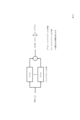
- FIG. 3 is a block diagram showing a detailed functional configuration of a feature assigning unit; A graph showing time-series changes in each acceleration of the rotation motion of the throwing arm. A graph showing time-series changes in the intensity of the feedback sound during pitching. Graph showing time-series changes in frequency components of feedback sound during pitching.
- the motor learning support device of the following embodiment measures the angular acceleration of rotational motion around the long axis with acceleration sensors attached to the upper arm and forearm of the throwing arm, and the characteristics change immediately according to the magnitude.
- the motor learning support device is used by both experts and learners. It is assumed that the motor learning support devices used for each of the skilled person and the learner have the same configuration.
- Means for presenting feedback information can be any of visual means using a light-emitting device, tactile means using a skin vibrating device, or auditory means using a sound wave generating device. appropriate measures can be applied.
- the average human visual, tactile, and auditory temporal resolution (the lower limit of the interval at which two temporally consecutive events can be distinguished) is visual (approximately 20-30 milliseconds)>tactile (approximately 10 milliseconds)>auditory. (approximately 5 milliseconds).
- the usefulness of visual or visual means is also expected.
- tactile means there is a possibility that the feedback information presented by this means may interfere with the proprioception such as skin deformation and deep body parts that accompany the learner's own body movements. is.
- visual means eye movement during pitching may adversely affect pitching performance, so caution is still required.
- auditory means as the presentation means will be described.
- the motor learning support device 1 of this embodiment includes an upper arm angular acceleration acquisition unit 11, a forearm angular acceleration acquisition unit 12, a motion corresponding sound generation unit 13, a feature addition unit 14, and a database 15. , an operation unit 16 and an audio reproduction unit 17 .
- a first flowchart which is part of the operation of the motor learning support device 1 of the present embodiment, will be described below with reference to FIG.
- the upper arm angular acceleration acquisition unit 11 includes a pair of acceleration sensors (acceleration sensors 1 and 2 to be described later) arranged at positions that are two-fold symmetrical with respect to the long axis of the upper arm as the axis of rotation, and measures the angular acceleration of the rotational motion of the upper arm.
- the forearm angular acceleration acquisition unit 12 includes a pair of acceleration sensors (acceleration sensors 3 and 4 to be described later) arranged at two-fold symmetrical positions with respect to the long axis of the forearm as the axis of rotation, and measures the angular acceleration of the forearm's rotational motion. (S12).
- the motion-corresponding sound generation unit 13 generates an upper-arm motion-corresponding sound, which is a sound whose characteristics change according to the magnitude of the angular acceleration of the rotational motion of the upper arm, and a sound corresponding to the motion of the upper arm, whose characteristics change according to the magnitude of the angular acceleration of the rotational motion of the forearm.
- a sound corresponding to forearm motion is generated (S13).
- the feature imparting unit 14 imparts different acoustic features to the upper arm motion corresponding sound and the forearm motion corresponding sound generated in step S13 (S14).
- the audio reproducing unit 17 reproduces the sound corresponding to the upper arm motion to which the acoustic feature is given and the sound corresponding to the forearm motion to which the acoustic feature is given (S17).
- the motor learning support device 1 By executing the above-described steps S11 to S14 and S17 by the motor learning support device 1, sounds corresponding to the rotational movements of the upper arm and forearm are generated and become audible. By listening to the sound corresponding to the upper arm movement and the sound corresponding to the forearm movement corresponding to the pitching motion of the expert and the learner, the skill transfer is promoted by repeating the pitching while communicating with the expert and the learner. Be expected. Furthermore, the motor learning support device 1 may execute the second flowchart shown in FIG. 3 in order to support the learner's acquisition of skills by self-study in the absence of an expert.
- the database 15 stores the corresponding sound to which the acoustic features have been added by executing steps S11 to S14 together with the ID of the corresponding person (S15).
- the database 15 stores the corresponding person's ID, date and time, etc. together with the corresponding sound. As a result, it is also possible to extract from the database 15 only the corresponding sounds of the person corresponding to the expert.
- the operation unit 16 accepts user's (for example, learner's, instructor's) operations (S16).
- the motor learning support device 1 executes control according to the operation input to the operation unit 16 .
- the motor learning support device 1 executes control to call and reproduce a corresponding sound designated by the user's operation (for example, a corresponding sound of an ID corresponding to an expert) among the corresponding sounds stored in the database 15. do.
- the audio reproducing unit 17 reproduces the corresponding sound according to the control (S17).
- the motor learning support device 1 may reproduce corresponding sounds stored in the database 15 as follows.
- the exercise learning support device 1 detects the end timing of one exercise motion based on the change in the value of the angular acceleration of the rotational motion of the upper arm and the forearm, and stores the end timing in the database 15 each time the end timing is detected.
- Control is executed to reproduce any one of the corresponding sounds specified in advance (for example, the corresponding sound of the ID corresponding to the expert) among the corresponding sounds.
- the audio reproduction unit 17 reproduces the corresponding sound according to the control (S17).
- the upper arm angular acceleration acquisition unit 11 and the forearm angular acceleration acquisition unit 12 measure the angular acceleration of the rotational motion of the forearm and upper arm by the following method (S12).
- a three-dimensional coordinate system is defined with the plane perpendicular to the long axis as the xy plane and the long axis as the z axis.
- a three-dimensional coordinate system is defined for the forearm, with the xy plane being the plane perpendicular to the long axis and the z axis being the long axis.
- the origin of the xy plane is the center of rotation of the shoulder joint (in the case of the upper arm) and the center of rotation of the elbow joint (in the case of the forearm).
- the acceleration sensors 1 and 2 are arranged at positions that are two-fold symmetrical about the z-axis of the upper arm as the axis of rotation.
- the acceleration sensors 3 and 4 are arranged at positions having two-fold symmetry about the z-axis of the forearm as a rotation axis.
- An external fixed coordinate system common to the upper arm is defined like the XYZ axes in FIG. 8, and similarly an external fixed coordinate system common to the forearm is defined like the XYZ axes in FIG.
- a 1 and a 2 include a component due to gravity, a component due to translational motion of the upper arm, a component due to rotational motion of the upper arm around the shoulder joint, and a component due to rotational motion around the long axis of the upper arm.
- the components due to the rotational motion have opposite polarities between the acceleration sensors 1 and 2, and the other components have the same values for the two sensors. Therefore, dividing the difference between a 1 and a 2 by 2 gives the tangential acceleration of the upper arm rotation.
- the upper arm angular acceleration acquisition unit 11 and the forearm angular acceleration acquisition unit 12 acquire the angular acceleration of the rotational motion of the upper arm and the forearm at the sampling period T by the above method.
- T is set so as to satisfy 2F ⁇ 1/T with respect to the maximum frequency F that can occur in the angular acceleration.
- the motion-corresponding sound generation unit 13 generates the upper arm motion-corresponding sound and the forearm motion-corresponding sound by the following method (S13).
- ⁇ i be the angular acceleration value obtained at time iT (where i is an integer equal to or greater than zero)
- x i (t) (where iT ⁇ t ⁇ (i+1)T) be the sound source whose characteristics change according to that value.
- Various types of signals can be used for the sources x i (t).
- p( ⁇ i ) is the amplitude of the first overtone (fundamental tone)
- f( ⁇ i ) is the frequency of the first overtone (fundamental tone)
- ⁇ k (iT) is the initial phase of the kth overtone
- M is Represents the order of the highest harmonic.
- the amplitude p and fundamental frequency f of the sawtooth wave may be a monotonically increasing function of the absolute value of the angular acceleration ⁇ .
- can be used.
- p( ⁇ ) and f( ⁇ ) may be the same function or different functions.
- the initial phase ⁇ k (iT) of the k-th harmonic is appropriately used to suppress discontinuous changes in the phase of each harmonic that may occur when the angular acceleration sampling time iT is updated.
- sawtooth waves not only sawtooth waves, but also periodic complex sounds such as triangular waves and square waves may be used, and their amplitude and frequency may be modulated by a function of acceleration.
- periodic complex sounds such as triangular waves and square waves
- amplitude and frequency may be modulated by a function of acceleration.
- aperiodic noise may be used and its amplitude modulated as a function of acceleration.
- the feature imparting unit 14 applies a time-invariant parallel band-pass filter group to the upper arm motion corresponding sound and the forearm motion corresponding sound generated by the above method, and imparts static characteristics to the timbre of each sound source.
- FIG. 10 shows a configuration example of the feature adding unit 14. As shown in FIG.
- the number N of bandpass filters constituting the bandpass filter group may be any number.
- the power spectrum of the output sound y i (t) output from the filter group can have two peak frequencies.
- the combination of those two peak frequencies gives rise to the perception of vowels (ah, i, u, eh, o).
- the feature imparting unit 14 performs band-pass filtering on the sound corresponding to the upper arm motion and the sound corresponding to the forearm motion so that a combination of two different peak frequencies is generated in the power spectra of the sound corresponding to the upper arm motion and the sound corresponding to the forearm motion. may be executed. This makes it easier to grasp the rotational motion of each of the upper arm and the forearm.
- the types of sound sources for the upper arm and forearm may be the same or different. Furthermore, when the types of sound sources for the upper arm and for the forearm are different, the band-pass filter groups for the upper arm and for the forearm may have the same setting.
- ⁇ Effects brought about by the motor learning support device 1 of the first embodiment> The expert and the learner can compare the feedback information generated immediately with each pitch and share information on how the two movements differ. As a result, it becomes easier for the learner to understand the intention of the expert's instruction, and for the expert to grasp the skill level of the learner. Also, even in a situation where the expert and the learner cannot communicate with each other, the learner can immediately receive feedback information of the expert stored in advance. The learner imitates the feedback information that is generated immediately following his or her own pitching while comparing it with the feedback of the expert, thereby promoting the acquisition of skills even through self-study.
- FIG. 11 shows the angular accelerations of the upper arm and forearm of the throwing arm when a skilled player throws two kinds of pitches (Fastball, Curveball) once each.
- 12 and 13 show the feedback sound signals and their spectrograms immediately generated using the motor learning support device 1 at the time of pitching.
- time 0 on the time axis represents the moment when the ball leaves the hand.
- the solid line represents the angular acceleration of the upper arm
- the dashed line represents the angular acceleration of the forearm. Comparing the Fastball graph and the Curveball graph in FIG.
- the apparatus of the present invention includes, for example, a single hardware entity, which includes an input unit to which a keyboard can be connected, an output unit to which a liquid crystal display can be connected, and a communication device (for example, a communication cable) capable of communicating with the outside of the hardware entity.
- a communication device for example, a communication cable
- CPU Central Processing Unit, which may include cache memory, registers, etc.
- memory RAM and ROM external storage device such as hard disk
- input unit, output unit, communication unit a CPU, a RAM, a ROM, and a bus for connecting data to and from an external storage device.
- the hardware entity may be provided with a device (drive) capable of reading and writing a recording medium such as a CD-ROM.
- a physical entity with such hardware resources includes a general purpose computer.
- the external storage device of the hardware entity stores a program necessary for realizing the functions described above and data required for the processing of this program (not limited to the external storage device; It may be stored in a ROM, which is a dedicated storage device). Data obtained by processing these programs are appropriately stored in a RAM, an external storage device, or the like.
- each program stored in an external storage device or ROM, etc.
- the data necessary for processing each program are read into the memory as needed, and interpreted, executed and processed by the CPU as appropriate.
- the CPU realizes a predetermined function (each component expressed as above, . . . unit, . . . means, etc.).
- a program that describes this process can be recorded on a computer-readable recording medium.
- Any computer-readable recording medium may be used, for example, a magnetic recording device, an optical disk, a magneto-optical recording medium, a semiconductor memory, or the like.
- magnetic recording devices hard disk devices, flexible disks, magnetic tapes, etc., as optical discs, DVD (Digital Versatile Disc), DVD-RAM (Random Access Memory), CD-ROM (Compact Disc Read Only Memory), CD-R (Recordable) / RW (ReWritable), etc.
- magneto-optical recording media such as MO (Magneto-Optical disc), etc. as semiconductor memory, EEP-ROM (Electrically Erasable and Programmable-Read Only Memory), etc. can be used.
- this program is carried out, for example, by selling, assigning, lending, etc. portable recording media such as DVDs and CD-ROMs on which the program is recorded.
- the program may be distributed by storing the program in the storage device of the server computer and transferring the program from the server computer to other computers via the network.
- a computer that executes such a program for example, first stores the program recorded on a portable recording medium or the program transferred from the server computer once in its own storage device. Then, when executing the process, this computer reads the program stored in its own recording medium and executes the process according to the read program. Also, as another execution form of this program, the computer may read the program directly from a portable recording medium and execute processing according to the program, and the program is transferred from the server computer to this computer. Each time, the processing according to the received program may be executed sequentially. In addition, the above-mentioned processing is executed by a so-called ASP (Application Service Provider) type service, which does not transfer the program from the server computer to this computer, and realizes the processing function only by its execution instruction and result acquisition. may be It should be noted that the program in this embodiment includes information that is used for processing by a computer and that conforms to the program (data that is not a direct instruction to the computer but has the property of prescribing the processing of the computer, etc.).
- ASP
- a hardware entity is configured by executing a predetermined program on a computer, but at least part of these processing contents may be implemented by hardware.
Landscapes
- Health & Medical Sciences (AREA)
- General Health & Medical Sciences (AREA)
- Physical Education & Sports Medicine (AREA)
- Instructional Devices (AREA)
- Toys (AREA)
Priority Applications (2)
| Application Number | Priority Date | Filing Date | Title |
|---|---|---|---|
| JP2023554132A JP7609295B2 (ja) | 2021-10-19 | 2021-10-19 | 運動学習支援装置、運動学習支援方法、プログラム |
| PCT/JP2021/038641 WO2023067703A1 (ja) | 2021-10-19 | 2021-10-19 | 運動学習支援装置、運動学習支援方法、プログラム |
Applications Claiming Priority (1)
| Application Number | Priority Date | Filing Date | Title |
|---|---|---|---|
| PCT/JP2021/038641 WO2023067703A1 (ja) | 2021-10-19 | 2021-10-19 | 運動学習支援装置、運動学習支援方法、プログラム |
Publications (1)
| Publication Number | Publication Date |
|---|---|
| WO2023067703A1 true WO2023067703A1 (ja) | 2023-04-27 |
Family
ID=86058929
Family Applications (1)
| Application Number | Title | Priority Date | Filing Date |
|---|---|---|---|
| PCT/JP2021/038641 Ceased WO2023067703A1 (ja) | 2021-10-19 | 2021-10-19 | 運動学習支援装置、運動学習支援方法、プログラム |
Country Status (2)
| Country | Link |
|---|---|
| JP (1) | JP7609295B2 (https=) |
| WO (1) | WO2023067703A1 (https=) |
Citations (4)
| Publication number | Priority date | Publication date | Assignee | Title |
|---|---|---|---|---|
| US5354050A (en) * | 1994-04-01 | 1994-10-11 | Mccarthy Robert L | Alarm device for teaching the correct mechanics for throwing a baseball |
| JP2009106323A (ja) * | 2007-10-26 | 2009-05-21 | Yamaha Corp | 運動フォーム評価装置および運動フォーム評価プログラム |
| JP2015221135A (ja) * | 2014-05-23 | 2015-12-10 | 日本電信電話株式会社 | 筋活動可聴化方法、筋活動可聴化装置およびプログラム |
| WO2017179423A1 (ja) * | 2016-04-14 | 2017-10-19 | ソニー株式会社 | 運動計測装置、情報処理装置及び運動計測方法 |
-
2021
- 2021-10-19 JP JP2023554132A patent/JP7609295B2/ja active Active
- 2021-10-19 WO PCT/JP2021/038641 patent/WO2023067703A1/ja not_active Ceased
Patent Citations (4)
| Publication number | Priority date | Publication date | Assignee | Title |
|---|---|---|---|---|
| US5354050A (en) * | 1994-04-01 | 1994-10-11 | Mccarthy Robert L | Alarm device for teaching the correct mechanics for throwing a baseball |
| JP2009106323A (ja) * | 2007-10-26 | 2009-05-21 | Yamaha Corp | 運動フォーム評価装置および運動フォーム評価プログラム |
| JP2015221135A (ja) * | 2014-05-23 | 2015-12-10 | 日本電信電話株式会社 | 筋活動可聴化方法、筋活動可聴化装置およびプログラム |
| WO2017179423A1 (ja) * | 2016-04-14 | 2017-10-19 | ソニー株式会社 | 運動計測装置、情報処理装置及び運動計測方法 |
Non-Patent Citations (1)
| Title |
|---|
| KASHINO MAKIO: "Representation and regulation of bodily movements by auralization. 可聴化による身体運動の表現と調節", JOURNAL OF ACOUSTICAL SOCIETY OF JAPAN, vol. 76, no. 7, 1 July 2020 (2020-07-01), pages 385 - 391, XP093058535 * |
Also Published As
| Publication number | Publication date |
|---|---|
| JP7609295B2 (ja) | 2025-01-07 |
| JPWO2023067703A1 (https=) | 2023-04-27 |
Similar Documents
| Publication | Publication Date | Title |
|---|---|---|
| Grillo et al. | Influence of smartphones and software on acoustic voice measures | |
| Miranda et al. | Guide to brain-computer music interfacing | |
| WO2020224322A1 (zh) | 音乐文件的处理方法、装置、终端及存储介质 | |
| US20230306960A1 (en) | Wearable vibrotactile speech aid | |
| Gong et al. | Instrumenting and analyzing fabrication activities, users, and expertise | |
| EP4341924A1 (en) | Computationally customizing instructional content | |
| JP6029223B1 (ja) | 音声診断装置、音声診断システム及び音声診断プログラム | |
| Li et al. | Smartphone automated motor and speech analysis for early detection of Alzheimer's disease and Parkinson's disease: Validation of TapTalk across 20 different devices | |
| WO2024082389A1 (zh) | 音乐分轨匹配振动的触觉反馈方法、系统及相关设备 | |
| JP7609295B2 (ja) | 運動学習支援装置、運動学習支援方法、プログラム | |
| Siedenburg et al. | The language of sounds unheard: Exploring musical timbre semantics of large language models | |
| US20220343882A1 (en) | Method and system for translation of brain signals into ordered music | |
| Ujitoko et al. | Vibrator transparency: Re-using vibrotactile signal assets for different black box vibrators without re-designing | |
| JP5908025B2 (ja) | 筋活動可聴化方法、筋活動可聴化装置およびプログラム | |
| Quinton et al. | Sonification of planetary orbits in asteroid belts | |
| JP2022506653A (ja) | 認知障害のスクリーニングおよび治療のためのオーディオのみの干渉トレーニング | |
| Castillo-Allendes et al. | Performance evaluation framework for contact microphones: A controlled laboratory study for voice research | |
| Arai et al. | Digital pattern playback: Converting spectrograms to sound for educational purposes | |
| Shamim Hossain et al. | Cloud-oriented emotion feedback-based Exergames framework | |
| Jatia et al. | Techniques Used in Phonocardiography: A Review | |
| McDonald | Demonstration by simulation: The philosophical significance of experiment in helmholtz's theory of perception | |
| Khoshaba et al. | Study of Impact and Reflected Waves in Computer Echolocation | |
| Miner | Creating wavelet-based models for real-time synthesis of perceptually convincing environmental sounds | |
| Darmendrail | Science Education with mobile devices | |
| US20240017166A1 (en) | Systems and methods for generating real-time directional haptic output |
Legal Events
| Date | Code | Title | Description |
|---|---|---|---|
| 121 | Ep: the epo has been informed by wipo that ep was designated in this application |
Ref document number: 21961356 Country of ref document: EP Kind code of ref document: A1 |
|
| WWE | Wipo information: entry into national phase |
Ref document number: 2023554132 Country of ref document: JP |
|
| WWE | Wipo information: entry into national phase |
Ref document number: 18702067 Country of ref document: US |
|
| NENP | Non-entry into the national phase |
Ref country code: DE |
|
| 122 | Ep: pct application non-entry in european phase |
Ref document number: 21961356 Country of ref document: EP Kind code of ref document: A1 |