WO2023032453A1 - 機能制限方法、機能制限装置及びプログラム - Google Patents
機能制限方法、機能制限装置及びプログラム Download PDFInfo
- Publication number
- WO2023032453A1 WO2023032453A1 PCT/JP2022/026293 JP2022026293W WO2023032453A1 WO 2023032453 A1 WO2023032453 A1 WO 2023032453A1 JP 2022026293 W JP2022026293 W JP 2022026293W WO 2023032453 A1 WO2023032453 A1 WO 2023032453A1
- Authority
- WO
- WIPO (PCT)
- Prior art keywords
- user
- level
- information
- equipment
- facility
- Prior art date
- Legal status (The legal status is an assumption and is not a legal conclusion. Google has not performed a legal analysis and makes no representation as to the accuracy of the status listed.)
- Ceased
Links
Images





Classifications
-
- H—ELECTRICITY
- H04—ELECTRIC COMMUNICATION TECHNIQUE
- H04L—TRANSMISSION OF DIGITAL INFORMATION, e.g. TELEGRAPHIC COMMUNICATION
- H04L12/00—Data switching networks
- H04L12/28—Data switching networks characterised by path configuration, e.g. LAN [Local Area Networks] or WAN [Wide Area Networks]
- H04L12/2803—Home automation networks
- H04L12/2816—Controlling appliance services of a home automation network by calling their functionalities
- H04L12/2821—Avoiding conflicts related to the use of home appliances
-
- G—PHYSICS
- G06—COMPUTING OR CALCULATING; COUNTING
- G06Q—INFORMATION AND COMMUNICATION TECHNOLOGY [ICT] SPECIALLY ADAPTED FOR ADMINISTRATIVE, COMMERCIAL, FINANCIAL, MANAGERIAL OR SUPERVISORY PURPOSES; SYSTEMS OR METHODS SPECIALLY ADAPTED FOR ADMINISTRATIVE, COMMERCIAL, FINANCIAL, MANAGERIAL OR SUPERVISORY PURPOSES, NOT OTHERWISE PROVIDED FOR
- G06Q50/00—Information and communication technology [ICT] specially adapted for implementation of business processes of specific business sectors, e.g. utilities or tourism
- G06Q50/10—Services
-
- H—ELECTRICITY
- H04—ELECTRIC COMMUNICATION TECHNIQUE
- H04L—TRANSMISSION OF DIGITAL INFORMATION, e.g. TELEGRAPHIC COMMUNICATION
- H04L12/00—Data switching networks
- H04L12/28—Data switching networks characterised by path configuration, e.g. LAN [Local Area Networks] or WAN [Wide Area Networks]
-
- H—ELECTRICITY
- H04—ELECTRIC COMMUNICATION TECHNIQUE
- H04L—TRANSMISSION OF DIGITAL INFORMATION, e.g. TELEGRAPHIC COMMUNICATION
- H04L12/00—Data switching networks
- H04L12/28—Data switching networks characterised by path configuration, e.g. LAN [Local Area Networks] or WAN [Wide Area Networks]
- H04L12/2803—Home automation networks
- H04L12/2816—Controlling appliance services of a home automation network by calling their functionalities
- H04L12/282—Controlling appliance services of a home automation network by calling their functionalities based on user interaction within the home
Definitions
- This disclosure relates to technology for limiting the functions of equipment or facilities.
- Patent Literature 1 discloses a technique of recommending control for a device using an estimated user situation and an environment determination model, and instructing the device to execute the recommended control. is disclosed.
- Patent Document 1 does not consider limiting the functions of devices or facilities according to the level of user's cognitive function.
- the present disclosure is made to solve the above problems, and presents an information output method, an information output device, and a program that can limit the function of equipment or equipment according to the level of the user's cognitive function.
- the purpose is to
- a function restriction method wherein a computer acquires user information about a user of a facility having equipment or facilities, the user information includes a level of cognitive function of the user, and the level of the user's
- the user information includes a level of cognitive function of the user, and the level of the user's
- FIG. 1 is a diagram illustrating an example of an overall configuration of a function control system according to an embodiment of the present disclosure
- FIG. It is a block diagram which shows an example of a structure of an information processing apparatus. It is a figure which shows an example of a data structure of the apparatus information regarding an apparatus and an installation. It is a figure which shows an example of a data structure of user information.
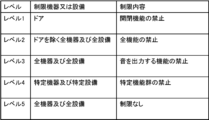
- FIG. 4 is a diagram showing an example of the data configuration of restriction rule information; 6 is a flowchart showing an example of function restriction processing;
- FIG. 10 is a diagram showing an example of the content of functional restrictions determined according to the cognitive function level of the user;
- FIG. 11 is a flowchart showing an example of processing for updating the level of cognitive function;
- FIG. 4 is a flow chart showing an example of the data configuration of a level determination table;
- Patent Document 1 As described above, there is conventionally known a technique for controlling equipment and facilities arranged in a facility based on the situation of users present in the facility. As such a technique, for example, in Patent Document 1, using an estimated user situation and an environment determination model, a control for a device is recommended, and an instruction is given to the device to execute the recommended control. disclosed.
- Patent Document 1 does not consider limiting the functions of devices or facilities according to the level of user's cognitive function.
- a user's cognitive functions are a collective term for a user's intellectual functions such as comprehension, judgment, memory, and learning. For this reason, for example, during a remote meeting in a room in a house, a child with a low level of cognitive function executes the function to open the door of the room and enters the room, interrupting the progress of the meeting. There is fear.
- a function restriction method in which a computer acquires user information about a user of a facility having equipment or facilities, the user information includes a cognitive function level of the user, and the user
- the rule for restricting the function of the equipment or facility according to the level of the content of restriction on the function of the equipment or equipment of the facility is determined, and information indicating the content of restriction is output.
- the information indicating the content of restrictions on the functions of the equipment or equipment of the facility which is determined by referring to the rules for restricting the functions of the equipment or equipment according to the cognitive function level of the user of the facility. output. Therefore, by restricting the functions of the equipment or equipment of the facility in accordance with the restrictions, the functions of the equipment or equipment of the facility can be restricted according to the level of cognitive function of the user of the facility.
- the facility is partitioned into a plurality of spaces, and a space currently being used or scheduled to be used among the plurality of spaces is specified as a space to be restricted.
- the content of restriction of functions of devices or facilities of the space subject to restriction may be determined.
- the first user currently using or planning to use the facility, among the plurality of users of the facility is different from the first user.
- a second user is specified, and in specifying the space to be restricted, a space currently being used or planned to be used by the first user among the plurality of spaces is specified as the space to be restricted;
- the user information relating to the second user is acquired, and in the determination of the content of restrictions, a rule for restricting the function of the device or facility according to the level of the second user is referred to.
- the contents of restrictions on the functions of equipment or facilities of the space subject to restriction may be determined.
- the function of the device or facility possessed by the space currently being used or planned to be used by the first user is the cognitive function of the second user, which is different from that of the first user. limited according to the level of
- the second user It is possible to avoid performing functions that are restricted depending on the second user's level of cognitive function.
- the user information includes a type for classifying each of the plurality of users, and the identification of the first user includes one user existing in the facility.
- the above users may be detected, the user information relating to each of the one or more users may be acquired, and the user indicated by the user information whose type is a predetermined type may be specified as the first user.
- the space currently being used or scheduled to be used by the first user who is classified into a predetermined type in the facility can be set as the space subject to restriction of the function of the device or facility.
- the user information includes a type for classifying each of the plurality of users, and in identifying the first user, each of the plurality of users may be acquired, and a user indicated by the user information whose type is a predetermined type may be identified as the first user.
- the user indicated by the user information whose type is the predetermined type is specified as the first user. Therefore, in this configuration, the space currently being used or planned to be used by the first user classified into the predetermined type can be set as the space subject to restriction of the function of the device or facility.
- the input of the predetermined type may be further accepted.
- the user indicated by the input user information including the predetermined type is identified as the first user. Therefore, by appropriately changing the predetermined type to be input, it is possible to appropriately change the space for which the function of the device or facility is restricted.
- the first user may be specified based on an input instruction specifying the first user.
- the first user is specified based on the input instruction specifying the first user. Therefore, by appropriately changing the designated first user, it is possible to appropriately change the space for which the function of the device or facility is restricted.
- the user information includes a type for classifying each of the plurality of users, and in specifying the second user, , the user information about each of the plurality of users may be acquired, and a user indicated by the user information including the type different from the user information about the first user may be specified as the second user. .
- the user indicated by the user information including the type different from the user information regarding the first user is specified as the second user.
- the function of the device or facility of the space currently being used or planned to be used by the first user is controlled according to the cognitive function level of the second user, whose type is different from that of the first user. can be restricted.
- the second user You can avoid performing functions that are restricted according to your level of cognitive function.
- schedule information indicating usage schedules of the plurality of spaces is acquired, and the schedule information includes: Based on this, the space to be restricted may be specified.
- the behavior information may include at least one of the user's attribute, position, voice, and image.
- the cognitive function level of the user included in the user information about the user of the facility can be appropriately updated based on at least one of the user's attribute, position, voice, and image. .
- a function control device includes an acquisition unit that acquires user information about a user of a facility having equipment or facilities, and the user information includes a cognitive function level of the user, A determination unit that determines the content of restrictions on the functions of the equipment or equipment of the facility by referring to rules for restricting the functions of the equipment or equipment according to the level of the user, and outputs information indicating the content of the restrictions. and an output unit.
- a program according to another aspect of the present disclosure is a program that causes a computer to function, wherein the computer is an acquisition unit that acquires user information about a user of a facility that has equipment or facilities, and the user information is , a determination unit that includes the cognitive function level of the user and refers to rules for limiting the functions of the equipment or equipment according to the level of the user, and determines the contents of restrictions on the functions of the equipment or equipment that the facility has and an output unit that outputs information indicating the content of the restriction.
- the present disclosure can also be implemented as a system operated by such a program. It goes without saying that such a computer program can be distributed via a computer-readable non-temporary recording medium such as a CD-ROM or a communication network such as the Internet.
- a computer-readable non-temporary recording medium such as a CD-ROM or a communication network such as the Internet.
- FIG. 1 is a diagram showing an example of the overall configuration of a function control system 100 according to an embodiment of the present disclosure.
- the function control system 100 includes a plurality of devices 3, equipment 5, and sensors 7 provided in a facility 4, and an information processing device 1 (an example of a function limiting device).
- a plurality of devices 3, facilities 5 and sensors 7, and the information processing device 1 are connected to communicate with each other via a network 9.
- the network 9 is, for example, a public communication line such as the Internet. Note that the network 9 may be a local area network.
- a plurality of devices 3 , facilities 5 and sensors 7 may be communicatively connected via a local network within facility 4 .
- the facility 4 is divided into a plurality of spaces, and a plurality of devices 3, facilities 5 and sensors 7 are arranged in any of the plurality of spaces.
- the facility 4 is divided into a first space 40a and a second space 40b. , a facility 5b and a sensor 7b.
- a space 40 when collectively referring to a plurality of spaces in the facility 4, it is described as a space 40.
- Facility 4 is, for example, a residence.
- a residence may be an apartment complex or a detached house.
- facility 4 may be an office.
- the space 40 is, for example, a living room, a dining room, a kitchen, an LDK (living dining kitchen), a Western-style room, a Japanese-style room, a corridor, a toilet, an entrance, a bath, and the like.
- LDK is a space that combines a living room, a dining room, and a kitchen. If the facility 4 is an office, the user of the device 3 and the facility 5 is the user of the office.
- the space 40 is, for example, an office, a meeting room, a hot water supply room, a reception room, a lobby, a corridor, a toilet, and the like.
- residents and users of the facility 4 are hereinafter referred to as users of the facility 4 .
- Devices 3 are electronic devices such as rice cookers, washing machines, refrigerators, microwave ovens, cleaning robots, smartphones, and laptops that can be freely arranged within the facility.
- Device 3 has one or more functions.
- the functions of the device 3 are executed by the user's operation of switches and remote controllers unique to the device 3 .
- the functions of the device 3 are executed according to control instructions received from the information processing device 1 via the network 9 .
- Execution of the function of the device 3 is restricted (prohibited) according to a restriction instruction received from the information processing device 1 via the network 9 .
- the facility 5 is an electronic device installed at a predetermined position in the facility 4, such as an electronic lock, an air conditioner, and a solar power generation device.
- Equipment 5 has one or more functions.
- the functions of the facility 5 are executed by the user's operation of switches and remote controllers unique to the facility 5 .
- the functions of the facility 5 are executed according to instructions received from the information processing device 1 via the network 9 . Execution of the functions of the facility 5 is restricted according to restriction instructions received from the information processing device 1 via the network 9 .
- the sensor 7 periodically detects information about the space 40 in which the sensor 7 is provided.
- the sensor 7 transmits detected information (hereinafter referred to as detection information), information indicating the date and time when the detection information was detected (hereinafter referred to as detection date and time information), and information including identification information of the sensor 7 (hereinafter referred to as sensor information) to the network. 9 to the information processing apparatus 1.
- detection information detected information
- detection date and time information information indicating the date and time when the detection information was detected
- sensor information information including identification information of the sensor 7
- the sensor 7 includes a camera, a microphone, a human sensor, a radio wave sensor, and the like.
- the camera captures an image of the space 40 and transmits sensor information including image data representing the captured image as detection information.
- the microphone picks up sound generated in the space 40 and transmits sensor information including audio data representing the picked-up sound as detection information.
- a human sensor detects whether or not a person exists in the space 40 . When detecting that a person exists in the space 40, the human sensor transmits sensor information including information indicating the position of the person as detection information.
- the radio wave sensor detects the position and shape of a person existing in the space 40 based on the intensity of radio waves, and transmits sensor information including information indicating the detected position and shape of the person as detection information.
- the information processing device 1 is composed of a cloud server, a personal computer, and the like. Note that the information processing device 1 may be configured by an edge server arranged at the facility 4 .
- FIG. 2 is a block diagram showing an example of the configuration of the information processing device 1. As shown in FIG.
- the information processing device 1 includes a communication circuit 11 , a processor 12 and a memory 13 .
- the communication circuit 11 is a communication interface circuit compatible with a communication method using the network 9 such as Ethernet (registered trademark), and connects the information processing device 1 to the network 9 .
- the communication circuit 11 outputs various information received via the network 9 to the processor 12 . Also, under the control of the processor 12 , the communication circuit 11 transmits various types of information via the network 9 to external devices connected to the network 9 .
- the processor 12 (an example of a computer) is composed of, for example, a CPU.
- the processor 12 includes an identification unit 120 , an acquisition unit 121 , a determination unit 122 , an output unit 123 , a determination unit 124 and an update unit 125 .
- the specifying unit 120 to the updating unit 125 may be implemented by the processor 12 executing a predetermined program, or may be configured by a dedicated hardware circuit. The details of the identifying unit 120 to the updating unit 125 will be described later.
- the memory 13 is composed of nonvolatile rewritable semiconductor memory such as flash memory, HDD (Hard Disk Drive), SSD (Solid State Drive), and the like.
- the memory 13 is composed of a storage device such as a hard disk drive and a solid state drive, and includes a device information storage section 131, a user information storage section 132, a schedule information storage section 133 and a rule information storage section 134.
- the equipment information storage unit 131 stores information about the equipment 3, the equipment 5, and the sensors 7 of the facility 4 (hereafter, equipment information).
- FIG. 3 is a diagram showing an example of the data configuration of device information regarding the device 3 and the facility 5.
- the device information about the device 3 and the facility 5 includes the location indicating the space 40 in which the device 3 and the facility 5 are arranged, the identification information of the device 3 and the facility 5, and the information about the device 3 and the facility 5. It includes an address indicating a destination when transmitting a control instruction, functions possessed by the device 3 and the facility 5, and the like.
- the device information (not shown) related to the sensor 7 includes an arrangement location indicating the space 40 in which the sensor 7 is arranged, identification information of the sensor 7, and the like.
- the user information storage unit 132 stores information about each of the users of the facility 4 (hereinafter referred to as user information).
- FIG. 4 is a diagram showing an example of the data configuration of user information. Specifically, the user information includes user identification information, type, level, attributes, and the like.
- a type is information for classifying each of a plurality of users of the facility 4.
- the type includes the type of work that the user mainly performs (eg, work, housework, study, play), and the order of priority (eg, 1 1st, 2nd), etc. are adopted.
- the facility 4 is a residence, the attributes of the user's family (for example, father, mother, child) may be adopted as the type.
- a level is the degree of a user's cognitive function.
- a user's cognitive functions are a collective term for a user's intellectual functions such as comprehension, judgment, memory, and learning.
- a user with a high level of cognitive function can fully understand the situation in which other users in facility 4 are using device 3 or facility 5 to perform tasks such as housework, work, and study.
- a user with a high level of cognitive function can limit himself/herself from performing functions of the device 3 or facility 5 that interfere with the other user's work.
- a user with a low level of cognitive function may not be able to fully understand the situation in which other users in the facility 4 are working using the device 3 or the facility 5 .
- a user with a low level of cognitive function may perform functions of the device 3 or facility 5 that interfere with the other user's work.
- the higher the numerical value the higher the degree of cognitive function.
- the level “level 5" of user “user A” indicates a higher degree of cognitive function than the level "level 1" of user "user C”.
- Attributes are information that indicates the characteristics of a user, including age and gender.
- the user information storage unit 132 further stores matching data used for matching with sensor information for purposes such as recognizing users existing in the facility 4 and estimating the actions of the users.
- the collation data includes various data indicating features of the user, such as image data indicating a photographed image of the user's face or whole body, voice data indicating the user's voice, and the like.
- the schedule information storage unit 133 stores schedule information (not shown) indicating the usage schedule of the space 40 within the facility 4 .
- the schedule information includes identification information of the space 40 to be used, identification information of the user who uses the space 40, information indicating the time zone when the space 40 is used, and the like.
- the rule information storage unit 134 stores information indicating rules for restricting the functions of the equipment 3 or facilities 5 according to the level of cognitive function of the user of the facility 4 (hereinafter referred to as restriction rule information).
- FIG. 5 is a diagram showing an example of the data configuration of restriction rule information.
- the restriction rule information includes the cognitive function level of the user of the facility 4, the identification information of the equipment 3 or equipment 5 whose functions are to be restricted according to the level, and the equipment 3 or equipment 5. Includes restrictions on functions performed in
- the restriction rule information in FIG. 5 indicates that the opening/closing function of the door is prohibited in the function restriction according to the cognitive function level "Level 1". In addition, the restriction rule information in FIG. 5 indicates that all functions are prohibited in all devices 3 and all facilities 5 except doors in the function restriction according to the cognitive function level "level 2". .
- restriction rule information in FIG. 5 indicates that the function of outputting sound is prohibited in all devices 3 and facilities 5 in the restriction of functions according to the cognitive function level "level 3".
- the restriction rule information in FIG. 5 indicates that the specific function group is prohibited in the specific device 3 and the equipment 5 in the function restriction according to the cognitive function level “level 4”.
- the function of outputting sound in all the equipment 3 and equipment 5 of the facility 4, the specific equipment 3 and equipment 5 of the facility 4, and the specific function group of the specific equipment 3 and equipment 5 are shown. Information is stored in the device information storage unit 131 .
- restriction rule information in FIG. 5 indicates that the functions of all devices 3 and facilities 5 are not restricted at all in the function restriction according to the cognitive function level "level 5".
- rule information storage unit 134 may store, for each space 40 provided in the facility 4, restriction rule information indicating rules for restricting functions of the equipment 3 or equipment 5 included in the space 40.
- the function restriction process is a process of restricting the functions of the equipment 3 or equipment 5 of the facility 4 according to the cognitive function level of the user of the facility 4 . Details of the identification unit 120 to the output unit 123 will be described in the description.
- FIG. 6 is a flowchart showing an example of function restriction processing. The function restriction process is executed every predetermined time, such as every 30 minutes, when the usage schedule of the space 40 is considered to change.
- the identifying unit 120 identifies a user currently using or planning to use the facility 4 (hereinafter referred to as the first user) from among multiple users of the facility 4 (step S100).
- the identification unit 120 detects detection date and time information indicating the date and time within the most recent predetermined period of time, among the sensor information stored in the memory 13 , and and the sensor information (hereinafter referred to as the latest sensor information) including the detection information indicating the .
- the identifying unit 120 collates the detection information included in the latest sensor information with the verification data stored in the user information storage unit 132, Detect one or more existing users.
- the identifying unit 120 acquires user information about each of the one or more users from the user information storage unit 132 .
- the identifying unit 120 identifies, as the first user, the user indicated by the user information whose type is the predetermined first type (an example of the predetermined type) among the acquired user information.
- the first type is defined as information corresponding to the user with the highest level of cognitive function within the facility 4, such as father, mother, work, study, or number one, and is stored in the memory 13 in advance.
- the identification unit 120 may receive input of information indicating the first type in the external device. Specifically, when the communication circuit 11 receives the information indicating the first type from the external device, the obtaining unit 121 obtains the information indicating the first type, and obtains the information indicating the first type. may be stored in the memory 13.
- the specifying unit 120 may acquire user information about each of all the users of the facility 4 from the user information storage unit 132. Then, the specifying unit 120 may specify, as the first user, the user indicated by the user information whose type is the predetermined first type among the acquired user information.
- the specifying unit 120 may specify the first user based on an input instruction specifying the first user. Specifically, it is assumed that the communication circuit 11 receives the identification information of the first user from an external device such as a smartphone used by the user of the facility 4 . In this case, the specifying unit 120 may specify the user identified by the identification information as the first user, assuming that an input instruction to specify the first user has been given.
- the identifying unit 120 identifies the space 40 (hereinafter referred to as the place of use) currently being used or planned to be used by the first user identified in step S100 in the facility 4 (step S200).
- step S ⁇ b>200 the identifying unit 120 refers to the schedule information stored in the schedule information storage unit 133 . Then, the specifying unit 120 specifies the space 40 that the first user specified in step S100 plans to use during the time period including the current time as a place of use (an example of a restricted space).
- the specifying unit 120 may specify the space 40 where the first user is present as the place of use based on the latest sensor information. Specifically, the identifying unit 120 acquires the identification information of the sensor 7 from the sensor information including the detection information indicating that the first user is present in the space 40, among the latest sensor information. good. Then, the identification unit 120 may refer to the device information about the sensor 7 stored in the device information storage unit 131 and grasp the space 40 in which the sensor 7 identified by the identification information is arranged. Then, the specifying unit 120 may specify the space 40 as the place of use.
- the identifying unit 120 identifies a user different from the first user (hereinafter referred to as the second user) from among the multiple users of the facility 4 (step S300).
- the identifying unit 120 identifies the second user in the same manner as the method for identifying the first user in step S100. For example, the identifying unit 120 acquires user information about each of all users of the facility 4 from the user information storage unit 132 . Then, the identifying unit 120 identifies, as a second user, a user indicated by user information of a predetermined second type different from the first type among the acquired user information. Note that when there are a plurality of pieces of user information whose type is the predetermined second type, the identification unit 120 identifies the user indicated by the user information including the lowest level as the second user.
- the second type is defined as information corresponding to the user with the lowest level of cognitive function within the facility 4, such as child, infant, play, or fourth, and is stored in the memory 13 in advance. Further, similar to the information indicating the first type, the identification unit 120 may receive input of information indicating the second type in the external device.
- the specifying unit 120 acquires the latest sensor information from the memory 13, compares the detection information included in the latest sensor information with the verification data stored in the user information storage unit 132, One or more users present at the facility 4 at the date and time of are detected. Then, the specifying unit 120 acquires user information about each of the one or more users from the user information storage unit 132 . Then, the identifying unit 120 identifies, as the second user, the user indicated by the user information whose type is the predetermined second type among the acquired user information. Note that when there are a plurality of pieces of user information whose type is the predetermined second type, the identification unit 120 identifies the user indicated by the user information including the lowest level as the second user.
- the specifying unit 120 may specify the second user based on an input instruction specifying the second user. Specifically, it is assumed that the communication circuit 11 receives the identification information of the second user from an external device such as a smartphone used by the user of the facility 4 . In this case, the specifying unit 120 may specify the user identified by the identification information as the second user, assuming that an input instruction to specify the second user has been received.
- the acquisition unit 121 acquires user information about the second user identified in step S300 from the user information storage unit 132 (step S400).
- the determination unit 122 determines the usage specified in step S200 based on the cognitive function level of the second user specified in step S300 and the restriction rule information stored in the rule information storage unit 134. The contents of restrictions on the functions of the equipment 3 or facility 5 that the place has are determined (step S500).
- the determining unit 122 refers to the cognitive function level of the second user included in the user information regarding the second user acquired in step S400.
- the determination unit 122 also acquires restriction rule information stored in the rule information storage unit 134 .
- the rule information storage unit 134 stores, for each space 40 , restriction rule information indicating rules for restricting the functions of the equipment 3 or equipment 5 of the space 40 .
- determination unit 122 acquires restriction rule information corresponding to the place of use identified in step S200, stored in rule information storage unit .
- the determination unit 122 determines from the acquired restriction rule information (eg, FIG. 5) the device 3 or facility that the place of use has that corresponds to the cognitive function level (eg, “level 1”) of the second user referred to. 5 identification information (e.g., "door") and function restriction content (e.g., "prohibit opening/closing function”). As a result, the determination unit 122 determines the acquired restriction content as the restriction content of the function of the device 3 or the facility 5 identified by the acquired identification information, which is owned by the location of use identified in step S200.
- the acquired restriction rule information eg, FIG. 5
- the determination unit 122 determines the acquired restriction content as the restriction content of the function of the device 3 or the facility 5
- FIG. 7 is a diagram showing an example of functional restrictions determined according to the level of the user's cognitive function.
- FIG. 7 shows that, when "LDK (living dining kitchen)" is specified as the place of use, the determining unit 122 selects five devices possessed by the place of use "LDK” according to the cognitive function level of the second user.
- 3 shows an example in which the contents of restrictions on the functions of each of the equipment 3 and equipment 5 are determined.
- the determining unit 122 refers to the restriction rule information shown in FIG. 5 and determines to prohibit the door opening/closing function.
- the determination unit 122 refers to the restriction rule information shown in FIG. It decides to prohibit the functioning of all facilities 5.
- the determining unit 122 determines the restriction rule information shown in FIG. 3 and information indicating the function of outputting sound in the facility 5. As a result, the determining unit 122 determines to prohibit execution of the display function and the response function of the intercom, which are the functions of outputting sound, among the functions of all the devices 3 and facilities 5 that the usage location "LDK" has. do.
- the determination unit 122 refers to the restriction rule information shown in FIG. In addition, the determination unit 122 stores information indicating the specific equipment 3 and equipment 5 of the facility 4 and information indicating specific functions of the specific equipment 3 and equipment 5, which are stored in the equipment information storage unit 131. , see. As a result, the determination unit 122 determines to prohibit execution of the gas heater ON/OFF function, which is the specific function of the specific equipment 3 and equipment 5 of the location of use “LDK”.
- the determining unit 122 refers to the restriction rule information shown in FIG. decide not to limit the functionality of
- step S500 the output unit 123 outputs information indicating the content of restrictions on the functions of the equipment 3 or equipment 5 at the place of use determined in step S500 (step S600).
- the output unit 123 includes the location of use specified in step S200 in the device information stored in the device information storage unit 131, and The device information including the identification information of the device 3 or facility 5 is referred to.
- the output unit 123 uses the communication circuit 11 to address the address corresponding to the identification information of the device 3 or the facility 5 acquired in step S500 included in the device information, and functions according to the restriction content determined in step S500. Send a restriction instruction to restrict the execution of
- the device 3 or equipment 5 identified by the identification information acquired in step S500 which is owned by the place of use, restricts the functions of the restricted content determined in step S500 according to the received restriction instruction.
- the function of the device 3 or the facility 5 of the place of use currently being used or planned to be used by the first user is adjusted according to the cognitive function level of the second user of the facility 4. can be restricted by
- step S100 may be omitted.
- the identification unit 120 may identify the location of use based on the schedule information stored in the schedule information storage unit 133 .
- the determination unit 122 refers to the schedule information stored in the schedule information storage unit 133, and specifies the space 40 scheduled to be used during the time period including the current time as the place of use. good.
- the identifying unit 120 may identify the location of use based on the sensor information stored in the memory 13 .
- the determination unit 122 acquires the latest sensor information from the memory 13, refers to the device information related to the sensor 7 stored in the device information storage unit 131, and determines whether the identification information included in the latest sensor information is
- the space 40 in which the indicated sensor 7 is arranged may be grasped and the space 40 may be specified as the place of use.
- FIG. 8 is a flow chart showing an example of a cognitive function level update process. The process of updating the level of cognitive function is performed at arbitrary timing such as once a month.
- the acquisition unit 121 acquires information about the behavior of the user of the facility 4 (hereinafter referred to as behavior information) (step S1001).
- the acquisition unit 121 acquires, out of the sensor information stored in the memory 13, the detection date and time information indicating the date and time within a predetermined period from the latest, and the position of the person existing in the space 40, and Detection information including at least one of and sensor information including (hereinafter referred to as target sensor information) are acquired as behavior information.
- the acquisition unit 121 collates the target sensor information with the verification data stored in the user information storage unit 132, and recognizes the user who was present at the facility 4 within a predetermined period of time from the most recent time. . Then, the acquisition unit 121 acquires the user information of the user from the user information storage unit 132 as behavior information.
- the determination unit 124 determines whether or not the cognitive function level of the user of the facility 4 has changed to a level different from the current level based on the behavior information acquired in step S1001 (step S1002).
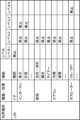
- FIG. 9 is a diagram showing an example of the data structure of the level determination table.
- the user information storage unit 132 stores a level determination table in which the level of the user's cognitive function and the content of the user's behavior at that level are associated with each other. .
- the determination unit 124 estimates the behavior of the user based on at least one of the user's position, voice, and image included in the behavior information acquired in step S1001.
- the determination unit 124 refers to the level determination table stored in the user information storage unit 132 and acquires the cognitive function level of the user corresponding to the estimated content of the user's behavior. If the obtained cognitive function level of the user is different from the level included in the user information about the user included in the behavior information, the determination unit 124 determines that the user's cognitive function level is different from the current level. It is determined that the level has changed.
- the determination unit 124 determines that the user whose cognitive function level is "level 1" and who has been in the facility 4 at a date and time within a predetermined period from the most recent time is " Assume that the user has attempted to open the door more than a threshold number of times while the function is restricted according to "Level 1". In this case, the determination unit 124 refers to the level determination table shown in FIG. It is determined that the cognitive function level of the user has not changed.
- the determination unit 124 opens the door after the user is instructed not to enter the place of use before the function is restricted according to “level 1”.
- the determination unit 124 refers to the level determination table shown in FIG. , it is determined that the cognitive function level of the user has changed to a level different from the current level.
- the user information storage unit 132 may store in advance a level determination table that associates the user's cognitive function level with the attribute of the user at that level.
- the determination unit 124 refers to the level determination table stored in the user information storage unit 132 to correspond to the attribute of the user of the facility 4 included in the behavior information acquired in step S1001. to obtain the level of cognitive function of the user.
- the determination unit 124 determines whether the level of the user's cognitive function is different from the current level, depending on whether the obtained level of the user's cognitive function is different from the level included in the user information of the user included in the behavior information. Determine whether the level has changed.
- step S1002 If it is determined in step S1002 that the user's cognitive function level has changed to a level different from the current level (YES in step S1002), the updating unit 125 changes the user's cognitive function level to a level different from the current level. Update to a different level (step S1003).
- step S1003 the update unit 125 updates the user information stored in the user information storage unit 132 regarding the user determined in step S1002 that the cognitive function level has changed to a level different from the current level. Update the included level to a different level than the current one.
- step S1002 if the determination unit 124 determines that the user's cognitive function level has not changed to a level different from the current level (NO in step S1002), the process of updating the cognitive function level ends.
- the level of cognitive function of the user included in the user information about the user of the facility 4 is changed to the attribute, position, voice and image of the user included in the behavior information. can be appropriately updated based on at least one of
- step S500 the determining unit 122 may detect whether or not there are a plurality of users of the first type at the place of use specified in step S200 (FIG. 6). Then, when the determination unit 122 detects that a plurality of users of the first type are present at the place of use, the determination unit 122 uses the restriction rule information ( FIG. 5 ) stored in the rule information storage unit 134 to perform step S300 It is also possible to determine the content of functional restrictions according to a level higher than the second user's cognitive function level specified in (FIG. 6) by a predetermined level.
- the detection of whether or not there are multiple users of the first type at the place of use can be realized as follows. Specifically, the determination unit 122 compares the latest sensor information stored in the memory 13 with the verification data stored in the user information storage unit 132 to obtain one or more sensors existing at the usage location. user can be specified. The determination unit 122 determines whether or not there are two or more pieces of user information containing the first type among the user information (FIG. 4) related to each of the one or more users stored in the user information storage unit 132. It is sufficient to detect whether or not there are a plurality of users of the first type at the place of use.
- the second user when there are a plurality of users of the same first type as the first user at the place of use, the second user is the first user different from the first user present at the place of use. under the supervision of a second type of user, can perform functions that would otherwise be limited according to the second user's own level of cognitive function. Further, when the cognitive function level of the other first-type user is higher than that of the second user, the other first-type user at the place of use has the second user's cognitive function level It is possible to avoid the inability to execute functions restricted according to
- step S300 (FIG. 6) is the same as the first user's cognitive function level identified in step S100 (FIG. 6). It is also assumed that the schedule information stored in the schedule information storage unit 133 includes the start time for using the usage location identified in step S200 (FIG. 6). In this case, the function restricted according to the level of the cognitive function may be executed only once until a predetermined time elapses from the start time of using the place of use specified in step S200.
- step S600 the output unit 123 further performs step S500 (FIG. 6) until a predetermined time elapses from the start time of using the place of use specified in step S200 (FIG. 6). It is only necessary to transmit a control instruction permitting the restricted function to be executed only once in the restricted content determined in FIG.
- the cognitive function level of the second user specified in step S300 is "level 1"
- step S500 FIG. 6
- the information is referred to and it is decided to prohibit execution of the opening/closing function of the door of the usage location.
- the first user since the first user can execute the opening/closing function of the door only once at the start time of the place of use, the first user can enter the place of use.
- the time until the first user leaves the place of use specified in step S200 (FIG. 6) During this period, the function restriction indicated by the restriction content determined in step S500 (FIG. 6) may not be executed. Furthermore, until the first user leaves the place of use specified in step S200, the contents of restrictions on the functions of the device 3 or facility 5 of the place of use are set by the first user and the second user. It is also possible to change the content of the restriction (hereinafter referred to as the content of restriction with a time limit) according to a level higher than the cognitive function level by a predetermined level.
- step S600 the output unit 123 further receives information indicating that the first user has left the usage location (hereinafter referred to as exit information). , it is sufficient to transmit a control instruction instructing to limit the function according to the contents of limitation with a time limit, not the contents of limitation of the function indicated by the limitation instruction.
- the determination unit 122 uses the restriction rule information to determine the content of the restrictions with a time limit, which is higher than the cognitive function levels of the first user and the second user by a predetermined level. What is necessary is just to determine the restriction
- the output unit 123 refers to the sensor information stored in the memory 13, and detects that the first user who is present at the place of use specified in step S200 (FIG. 6) has left the place of use. Sometimes, it is sufficient to transmit room exit information to the device 3 or equipment 5 that transmitted the restriction instruction in step S600 (FIG. 6).
- the cognitive function level of the second user is "level 1"
- step S500 FIG. 6
- the restriction rule information shown in FIG. Suppose that it is decided to prohibit execution of the opening/closing function of Further, in step S600, until the room exit information is received, at the place of use, the functions corresponding to "level 2" or "level 3" rather than "level 1" indicated by the limitation instruction are restricted.
- a control instruction is transmitted to instruct the function to be restricted according to the restriction content of .
- the first user since the first user can perform the opening/closing function of the door during the time period during which he/she plans to use the place of use, he/she can enter the place of use. Until the first user leaves the place of use, the execution of the functions of all the devices 3 or all the facilities 5 other than the door is restricted, or all the devices 3 or all of the facilities 5 at the place of use Execution of the function of outputting sound in the facility 5 can be restricted.
- the additional restriction information is information indicating restrictions on the functions of the device 3 or facility 5 that the location of use identified in step S200 (FIG. 6) has.
- the output unit 123 may transmit, to the device 3 or facility 5 indicated by the additional restriction information, a restriction instruction to restrict the function according to the restriction content indicated by the additional restriction information.
- the first user when the first user is executing the function of the device 3 or the facility 5 at the place of use, the first user cannot use the device 3 or the facility 5 that prevents another user from executing the function. Additional restriction information indicating restriction on execution of the function can be transmitted to the information processing apparatus 1 by operating the external device. Therefore, the first user can comfortably perform the functions of the device 3 or the facility 5 at the place of use.
- Steps S100 and S200 may be omitted.
- determination unit 122 determines the second user's cognitive function level identified in step S300 (FIG. 6) and the restriction rule information ( 5) and the contents of restrictions on the functions of the equipment 3 or facility 5 of the facility 4 may be determined. According to this modification, the functions of the equipment 3 or the equipment 5 of the facility 4 can be restricted according to the cognitive function level of the second user.
- the determining unit 122 omits step S100 (FIG. 6) and identifies the location of use by the same method as in identifying the location of use in step S200 (FIG. 6). Restrictions on the functions of the equipment 3 or facility 5 at the place of use may be relaxed.
- the determination unit 122 uses the restriction rule information shown in FIG. 5 to determine the contents of restrictions on the functions of the equipment 3 or equipment 5 that the usage location has to correspond to "level 3".
- the determination unit 122 may relax the content of the restriction from prohibition of the function that outputs sound to prohibition of the function that outputs sound larger than a predetermined volume.
- the user who uses the place of use can use the device 3 or the equipment 5 of the place of use to output a sound with a predetermined volume or less.
Landscapes
- Engineering & Computer Science (AREA)
- Computer Networks & Wireless Communication (AREA)
- Signal Processing (AREA)
- Automation & Control Theory (AREA)
- Business, Economics & Management (AREA)
- Human Computer Interaction (AREA)
- Computer Security & Cryptography (AREA)
- Tourism & Hospitality (AREA)
- General Health & Medical Sciences (AREA)
- Physics & Mathematics (AREA)
- Health & Medical Sciences (AREA)
- Human Resources & Organizations (AREA)
- Marketing (AREA)
- Primary Health Care (AREA)
- Strategic Management (AREA)
- Economics (AREA)
- General Business, Economics & Management (AREA)
- General Physics & Mathematics (AREA)
- Theoretical Computer Science (AREA)
- Telephonic Communication Services (AREA)
- Management, Administration, Business Operations System, And Electronic Commerce (AREA)
- Alarm Systems (AREA)
Priority Applications (3)
| Application Number | Priority Date | Filing Date | Title |
|---|---|---|---|
| CN202280059186.0A CN117917049A (zh) | 2021-09-01 | 2022-06-30 | 功能限制方法、功能限制装置以及程序 |
| JP2023545120A JP7812378B2 (ja) | 2021-09-01 | 2022-06-30 | 機能制限方法、機能制限装置及びプログラム |
| US18/586,841 US20240205044A1 (en) | 2021-09-01 | 2024-02-26 | Function restriction method, function restriction apparatus and non-transitory computer readable storage medium |
Applications Claiming Priority (2)
| Application Number | Priority Date | Filing Date | Title |
|---|---|---|---|
| JP2021142312 | 2021-09-01 | ||
| JP2021-142312 | 2021-09-01 |
Related Child Applications (1)
| Application Number | Title | Priority Date | Filing Date |
|---|---|---|---|
| US18/586,841 Continuation US20240205044A1 (en) | 2021-09-01 | 2024-02-26 | Function restriction method, function restriction apparatus and non-transitory computer readable storage medium |
Publications (1)
| Publication Number | Publication Date |
|---|---|
| WO2023032453A1 true WO2023032453A1 (ja) | 2023-03-09 |
Family
ID=85412085
Family Applications (1)
| Application Number | Title | Priority Date | Filing Date |
|---|---|---|---|
| PCT/JP2022/026293 Ceased WO2023032453A1 (ja) | 2021-09-01 | 2022-06-30 | 機能制限方法、機能制限装置及びプログラム |
Country Status (4)
| Country | Link |
|---|---|
| US (1) | US20240205044A1 (https=) |
| JP (1) | JP7812378B2 (https=) |
| CN (1) | CN117917049A (https=) |
| WO (1) | WO2023032453A1 (https=) |
Cited By (1)
| Publication number | Priority date | Publication date | Assignee | Title |
|---|---|---|---|---|
| WO2025173726A1 (ja) * | 2024-02-15 | 2025-08-21 | パナソニック インテレクチュアル プロパティ コーポレーション オブ アメリカ | 情報処理装置、情報処理システムおよび情報処理方法 |
Citations (1)
| Publication number | Priority date | Publication date | Assignee | Title |
|---|---|---|---|---|
| JP2020021260A (ja) * | 2018-07-31 | 2020-02-06 | パナソニックIpマネジメント株式会社 | 決定システム、決定方法、及びプログラム |
Family Cites Families (1)
| Publication number | Priority date | Publication date | Assignee | Title |
|---|---|---|---|---|
| JP6638026B2 (ja) | 2018-06-20 | 2020-01-29 | ソフトバンク株式会社 | 環境制御装置、環境設定方法及び環境設定プログラム |
-
2022
- 2022-06-30 WO PCT/JP2022/026293 patent/WO2023032453A1/ja not_active Ceased
- 2022-06-30 CN CN202280059186.0A patent/CN117917049A/zh active Pending
- 2022-06-30 JP JP2023545120A patent/JP7812378B2/ja active Active
-
2024
- 2024-02-26 US US18/586,841 patent/US20240205044A1/en active Pending
Patent Citations (1)
| Publication number | Priority date | Publication date | Assignee | Title |
|---|---|---|---|---|
| JP2020021260A (ja) * | 2018-07-31 | 2020-02-06 | パナソニックIpマネジメント株式会社 | 決定システム、決定方法、及びプログラム |
Cited By (1)
| Publication number | Priority date | Publication date | Assignee | Title |
|---|---|---|---|---|
| WO2025173726A1 (ja) * | 2024-02-15 | 2025-08-21 | パナソニック インテレクチュアル プロパティ コーポレーション オブ アメリカ | 情報処理装置、情報処理システムおよび情報処理方法 |
Also Published As
| Publication number | Publication date |
|---|---|
| CN117917049A (zh) | 2024-04-19 |
| US20240205044A1 (en) | 2024-06-20 |
| JP7812378B2 (ja) | 2026-02-09 |
| JPWO2023032453A1 (https=) | 2023-03-09 |
Similar Documents
| Publication | Publication Date | Title |
|---|---|---|
| US12298790B2 (en) | Home and building automation system | |
| KR102639900B1 (ko) | 공기 조화기 | |
| JP6858260B2 (ja) | インタラクティブ環境コントローラ | |
| Vanus et al. | Monitoring of the daily living activities in smart home care | |
| WO2016137552A1 (en) | Automatically learning and controlling connected devices | |
| US11736760B2 (en) | Video integration with home assistant | |
| CN112740640B (zh) | 用于物联网设备的消歧的系统和方法 | |
| US10605470B1 (en) | Controlling connected devices using an optimization function | |
| JP2021518004A (ja) | 事象/活動予測のための環境コンポーネント領域のコンテキスト情報の利用 | |
| WO2023032453A1 (ja) | 機能制限方法、機能制限装置及びプログラム | |
| KR102261198B1 (ko) | 스마트 서비스 제공장치 및 그 방법 | |
| CN112837671A (zh) | 智能语音提示方法、装置、设备及可读存储介质 | |
| KR20080006981A (ko) | 지능형 홈 서비스 제공 시스템 및 방법 | |
| CN118633069A (zh) | 信息通知方法、信息通知装置以及程序 | |
| Ajayi et al. | Design and Implementation of a WiFi-Enabled Home Automation System | |
| KR20160115457A (ko) | 사물 인터넷을 활용한 스마트 빌딩 시스템 및 제어 방법 | |
| US12498682B1 (en) | Systems and methods for adaptive spaces | |
| US20230251611A1 (en) | Methods and systems for controlling internet of things devices by predicting next user action | |
| WO2023248497A1 (ja) | 情報処理方法、情報処理装置及びプログラム | |
| JP7790028B2 (ja) | 制御方法、制御装置、及びプログラム | |
| JP6899358B2 (ja) | 宅内管理システム、宅内管理プログラム、および宅内管理方法 | |
| Deepika et al. | Advancing Smart Home Automation through AI-Driven Human-Pet Differentiation and Multi-Sensor Integration | |
| CN115053253A (zh) | 信息处理装置、通信系统、生成方法以及生成程序 | |
| JP2024011411A (ja) | 行動認識装置、行動認識システムおよび行動認識方法 | |
| Rathnayake et al. | Voice and Gesture Integrated Home Automation System |
Legal Events
| Date | Code | Title | Description |
|---|---|---|---|
| 121 | Ep: the epo has been informed by wipo that ep was designated in this application |
Ref document number: 22864041 Country of ref document: EP Kind code of ref document: A1 |
|
| WWE | Wipo information: entry into national phase |
Ref document number: 2023545120 Country of ref document: JP |
|
| WWE | Wipo information: entry into national phase |
Ref document number: 202280059186.0 Country of ref document: CN |
|
| NENP | Non-entry into the national phase |
Ref country code: DE |
|
| 122 | Ep: pct application non-entry in european phase |
Ref document number: 22864041 Country of ref document: EP Kind code of ref document: A1 |