WO2023027023A1 - 第1の装置、第2の装置及び方法 - Google Patents
第1の装置、第2の装置及び方法 Download PDFInfo
- Publication number
- WO2023027023A1 WO2023027023A1 PCT/JP2022/031561 JP2022031561W WO2023027023A1 WO 2023027023 A1 WO2023027023 A1 WO 2023027023A1 JP 2022031561 W JP2022031561 W JP 2022031561W WO 2023027023 A1 WO2023027023 A1 WO 2023027023A1
- Authority
- WO
- WIPO (PCT)
- Prior art keywords
- base station
- message
- handover
- route information
- inter
- Prior art date
- Legal status (The legal status is an assumption and is not a legal conclusion. Google has not performed a legal analysis and makes no representation as to the accuracy of the status listed.)
- Ceased
Links
Images




Classifications
-
- H—ELECTRICITY
- H04—ELECTRIC COMMUNICATION TECHNIQUE
- H04W—WIRELESS COMMUNICATION NETWORKS
- H04W36/00—Hand-off or reselection arrangements
- H04W36/24—Reselection being triggered by specific parameters
- H04W36/32—Reselection being triggered by specific parameters by location or mobility data, e.g. speed data
- H04W36/324—Reselection being triggered by specific parameters by location or mobility data, e.g. speed data by mobility data, e.g. speed data
-
- H—ELECTRICITY
- H04—ELECTRIC COMMUNICATION TECHNIQUE
- H04W—WIRELESS COMMUNICATION NETWORKS
- H04W4/00—Services specially adapted for wireless communication networks; Facilities therefor
- H04W4/30—Services specially adapted for particular environments, situations or purposes
- H04W4/40—Services specially adapted for particular environments, situations or purposes for vehicles, e.g. vehicle-to-pedestrians [V2P]
-
- H—ELECTRICITY
- H04—ELECTRIC COMMUNICATION TECHNIQUE
- H04W—WIRELESS COMMUNICATION NETWORKS
- H04W36/00—Hand-off or reselection arrangements
- H04W36/0005—Control or signalling for completing the hand-off
- H04W36/0055—Transmission or use of information for re-establishing the radio link
-
- H—ELECTRICITY
- H04—ELECTRIC COMMUNICATION TECHNIQUE
- H04W—WIRELESS COMMUNICATION NETWORKS
- H04W36/00—Hand-off or reselection arrangements
- H04W36/0005—Control or signalling for completing the hand-off
- H04W36/0055—Transmission or use of information for re-establishing the radio link
- H04W36/0064—Transmission or use of information for re-establishing the radio link of control information between different access points
-
- H—ELECTRICITY
- H04—ELECTRIC COMMUNICATION TECHNIQUE
- H04W—WIRELESS COMMUNICATION NETWORKS
- H04W36/00—Hand-off or reselection arrangements
- H04W36/08—Reselecting an access point
-
- H—ELECTRICITY
- H04—ELECTRIC COMMUNICATION TECHNIQUE
- H04W—WIRELESS COMMUNICATION NETWORKS
- H04W36/00—Hand-off or reselection arrangements
- H04W36/24—Reselection being triggered by specific parameters
- H04W36/32—Reselection being triggered by specific parameters by location or mobility data, e.g. speed data
- H04W36/326—Reselection being triggered by specific parameters by location or mobility data, e.g. speed data by proximity to another entity
-
- H—ELECTRICITY
- H04—ELECTRIC COMMUNICATION TECHNIQUE
- H04W—WIRELESS COMMUNICATION NETWORKS
- H04W92/00—Interfaces specially adapted for wireless communication networks
- H04W92/16—Interfaces between hierarchically similar devices
- H04W92/20—Interfaces between hierarchically similar devices between access points
Definitions
- the present disclosure relates to a first device, a second device and a method.
- Non-Patent Document 1 In Release 15 of 3GPP (3rd Generation Partnership Project) (registered trademark), some functions for UAV (Unmanned Aerial Vehicle) as user equipment (UE) are provided as LTE (Long Term Evolution) work items. It is discussed and specified (Non-Patent Document 1).
- Flight Path function the UAV's flight path is reported from the UAV to the network in response to a request from the network. This is expected to be useful for control of handover, beamforming, etc. based on the UAV movement plan on the network side (Non-Patent Document 2).
- 3GPP TS 36.331 V15.14.0 (2021-06), "3rd Generation Partnership Project; Technical Specification Group Radio Access Network; Evolved Universal Terrestrial Radio Access (E-UTRA); Radio Resource Control (RRC); protocol specification (Release 15)" 3GPP TSG-RAN WG2 Meeting #101bis Sanya, China, 16 - 20 Apr 2018, R2-1805125, Huawei, Hi Silicon, CMCC, Fraunhofer, Nokia, Nokia Shanghai Bell, Lenovo, Motorola Mobility, InterDigital, KDDI, "Discussion on flight path information" 3GPP TSG RAN - RAN-Rel-18 Workshop, Online, 2021-06-28 - 2021-07-02, RWS-210190, Ericsson, "Motivation for Rel-18 UAV" 3GPP TSG RAN Rel-18 workshop, Electronic Meeting, June 28 - July 2, 2021, RWS-210254, Lenovo, Motorola Mobility, "Discussion on UAV Swarm Support in NR RAN for Rel-18" 3GPP TSG RAN
- Non-Patent Documents 1 and 2 there is a risk that the reporting of route information will lead to a decrease in signaling efficiency.
- the UE reports path information to the base station each time it performs cell handover, so multiple signalings reporting the same path information may occur. As a result, the efficiency of signaling may decrease.
- An object of the present disclosure is to provide a first device, a second device, and a method capable of suppressing deterioration in signaling efficiency due to route information reporting.
- a first device (100A) acquires route information indicating at least a movement route of a user equipment on which handover is performed from the first device to a second device (100B). and a communication processing unit (145) for transmitting an inter-device message including the route information to the second device, the inter-device message being a message relating to handover.
- a second device (100B) is an inter-device message including route information indicating at least a movement route of the user equipment on which handover is performed from the first device (100A) to the second device and an information acquisition unit (141) for acquiring the route information included in the inter-device message, wherein the inter-device message is a handover-related message is.
- a method performed by a first device (100A) includes generating route information indicating at least a travel route of a user equipment on which handover is performed from said first device to a second device (100B). and sending an inter-device message containing said route information to said second device, said inter-device message being a message relating to handover.
- a method performed by a second device (100B) includes generating route information indicating at least a travel route of a user equipment on which handover is to be performed from the first device (100A) to said second device.
- receiving from the first device an inter-device message comprising: and obtaining the route information included in the inter-device message, wherein the inter-device message is a handover-related message.
- FIG. 1 is an explanatory diagram showing an example of a schematic configuration of a system according to an embodiment of the present disclosure
- FIG. FIG. 4 is an explanatory diagram for explaining an example of communication control based on the moving route of the user equipment according to the embodiment of the present disclosure
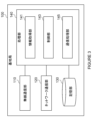
- 2 is a block diagram showing an example of a schematic functional configuration of a base station according to an embodiment of the present disclosure
- FIG. 2 is a block diagram showing an example of a schematic hardware configuration of a base station according to an embodiment of the present disclosure
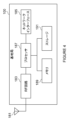
- FIG. 2 is a block diagram showing an example of a schematic functional configuration of a user device according to an embodiment of the present disclosure
- FIG. 2 is a block diagram showing an example of a schematic hardware configuration of a user device according to an embodiment of the present disclosure
- FIG. 4 is an explanatory diagram showing an example of an inter-base station message including route information according to an embodiment of the present disclosure
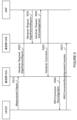
- FIG. 4 is a sequence diagram for explaining an example of a schematic flow of processing according to an embodiment of the present disclosure
- FIG. 11 is a sequence diagram for explaining an example of a schematic flow of processing according to a third modification of the embodiment of the present disclosure
- system 1 includes base station 100A, base station 100B, and user equipment (UE) 200 .
- UE user equipment
- System 1 is a system that complies with the 3GPP Technical Specification (TS). More specifically, for example, the system 1 is a system conforming to 5G or NR (New Radio) TS. Naturally, the system 1 is not limited to this example.
- the system 1 may be a system conforming to LTE, LTE-A (LTE Advanced), or 4G TS.
- Base station 100 is a node of a radio access network (RAN) and communicates with a UE (eg, UE 200) located within the coverage area 10 of the base station 100. do.
- RAN radio access network
- the base station 100 communicates with the UE (for example, the UE 200) using the RAN protocol stack.
- the protocol stack includes RRC (Radio Resource Control), SDAP (Service Data Adaptation Protocol), PDCP (Packet Data Convergence Protocol), RLC (Radio Link Control), MAC (Medium Access Control), and Physical: PHY) layer protocol.
- the protocol stack may not include all of these protocols, but some of these protocols.
- the base station 100 is a gNB.
- a gNB is a node that provides NR user plane and control plane protocol terminations towards the UE and is connected to the 5GC (5G Core Network) via the NG interface.
- base station 100 may be an en-gNB.
- An en-gNB is a node that provides NR user plane and control plane protocol termination for UEs and acts as a secondary node in EN-DC (E-UTRA-NR Dual Connectivity).
- the base station 100 may include multiple nodes.
- the plurality of nodes may include a first node that hosts a higher layer included in the protocol stack and a second node that hosts a lower layer included in the protocol stack. good.
- the upper layers may include RRC, SDAP and PDCP, and the lower layers may include RLC, MAC and PHY layers.
- the first node may be a CU (central unit), and the second node may be a DU (Distributed Unit).
- the plurality of nodes may include a third node that performs lower-level processing of the PHY layer, and the second node may perform higher-level processing of the PHY layer.
- the third node may be an RU (Radio Unit).
- the base station 100 may be one of the plurality of nodes, or may be connected to another unit among the plurality of nodes.
- the base station 100 may be an IAB (Integrated Access and Backhaul) donor or an IAB node.
- IAB Integrated Access and Backhaul
- the base station 100 communicates with other base stations via the Xn interface.
- the Xn control plane (Xn-C) is used for signaling between neighboring base stations.
- Xn-C signaling is based on XnAP (Xn Application Protocol).
- the Xn user plane (Xn-U) is used for the transmission of application data between adjacent base stations.
- UE200 UE 200 communicates with a base station.
- UE 200 communicates with base station 100 when located within coverage area 10 of base station 100 .
- UE 200 communicates with a base station (eg, base station 100) using the above protocol stack.
- a base station eg, base station 100
- the UE 200 is mounted on a mobile object.
- the mobile object may be an aircraft such as a UAV, or a vehicle such as an autonomous vehicle or a manually operated vehicle with navigation capabilities.
- a moving path may be set in advance for the moving object.
- the UE 200 can benefit from communication control based on the movement route by reporting the movement route to the network (that is, the base station 100).
- the movement route reporting may be supported by, for example, the Flight Path mechanism, or may be supported by another movement route reporting mechanism.
- UE 200 reports the set moving route to base station 100 .
- base station 100 Based on the future position of UE 200 estimated from the reported moving path, base station 100 performs processing for handover or beamforming in advance, for example. This makes it possible to perform communication control suitable for the position at the timing when the UE 200 reaches the estimated position.
- the base station 100 includes a wireless communication unit 110, a network communication unit 120, a storage unit 130 and a processing unit 140.
- FIG. 1 An example of the functional configuration of the base station 100 according to the embodiment of the present disclosure will be described with reference to FIG. Referring to FIG. 3, the base station 100 includes a wireless communication unit 110, a network communication unit 120, a storage unit 130 and a processing unit 140.
- FIG. 1 An example of the functional configuration of the base station 100 according to the embodiment of the present disclosure will be described with reference to FIG.
- the base station 100 includes a wireless communication unit 110, a network communication unit 120, a storage unit 130 and a processing unit 140.
- the wireless communication unit 110 wirelessly transmits and receives signals.
- the radio communication unit 110 receives signals from UEs and transmits signals to the UEs.
- the network communication unit 120 receives signals from the network and transmits signals to the network.
- the storage unit 130 stores various information for the base station 100.
- the processing unit 140 provides various functions of the base station 100.
- the processing unit 140 includes an information acquisition unit 141 , a control unit 143 and a communication processing unit 145 .
- the processing unit 140 may further include components other than these components. That is, the processing unit 140 can perform operations other than those of these components. Specific operations of the information acquisition unit 141, the control unit 143, and the communication processing unit 145 will be described in detail later.
- the processing unit 140 communicates with the UE (for example, the UE 200) via the wireless communication unit 110.
- the processing unit 140 (communication processing unit 145) communicates with other nodes (for example, network nodes in the core network or other base stations) via the network communication unit 120.
- base station 100 comprises antenna 181 , radio frequency (RF) circuitry 183 , network interface 185 , processor 187 , memory 189 and storage 191 .
- RF radio frequency
- Antenna 181 converts a signal into radio waves and radiates the radio waves into space. Also, the antenna 181 receives radio waves in space and converts the radio waves into signals.
- Antenna 181 may include a transmit antenna and a receive antenna, or may be a single antenna for transmission and reception.
- Antenna 181 may be a directional antenna and may include multiple antenna elements.
- the RF circuit 183 performs analog processing of signals transmitted and received via the antenna 181 .
- RF circuitry 183 may include high frequency filters, amplifiers, modulators, low pass filters, and the like.
- the network interface 185 is, for example, a network adapter, which transmits signals to and receives signals from the network.
- the processor 187 performs digital processing of signals transmitted and received via the antenna 181 and the RF circuit 183.
- the digital processing includes processing of the protocol stack of the RAN.
- Processor 187 also processes signals sent and received via network interface 185 .
- Processor 187 may include multiple processors or may be a single processor.
- the multiple processors may include a baseband processor that performs the digital processing and one or more processors that perform other processing.
- the memory 189 stores programs executed by the processor 187, parameters related to the programs, and various other information.
- the memory 189 may include at least one of ROM (Read Only Memory), EPROM (Erasable Programmable Read Only Memory), EEPROM (Electrically Erasable Programmable Read Only Memory), RAM (Random Access Memory), and flash memory. All or part of memory 189 may be included within processor 187 .
- the storage 191 stores various information.
- the storage 191 may include at least one of SSD (Solid State Drive) and HDD (Hard Disc Drive).
- the wireless communication unit 110 may be implemented by an antenna 181 and an RF circuit 183.
- Network communication unit 120 may be implemented by network interface 185 .
- Storage unit 130 may be implemented by storage 191 .
- Processing unit 140 may be implemented by processor 187 and memory 189 .
- Part or all of the processing unit 140 may be virtualized. In other words, part or all of the processing unit 140 may be implemented as a virtual machine. In this case, part or all of the processing unit 140 may operate as a virtual machine on a physical machine (that is, hardware) including a processor, memory, etc. and a hypervisor.
- the base station 100 may include a memory (ie, memory 189) for storing programs and one or more processors (ie, processor 187) capable of executing the programs.
- the one or more processors may execute the program to perform the operation of the processing unit 140 .
- the program may be a program for causing the processor to execute the operation of the processing unit 140 .
- FIG. 5 An example configuration of the UE 200 according to the embodiment of the present disclosure will be described with reference to FIGS. 5 and 6.
- FIG. 5 An example configuration of the UE 200 according to the embodiment of the present disclosure will be described with reference to FIGS. 5 and 6.
- FIG. 5 An example configuration of the UE 200 according to the embodiment of the present disclosure will be described with reference to FIGS. 5 and 6.
- FIG. 5 An example configuration of the UE 200 according to the embodiment of the present disclosure will be described with reference to FIGS. 5 and 6.
- the UE 200 includes a wireless communication unit 210, a storage unit 220 and a processing unit 230.
- the wireless communication unit 210 wirelessly transmits and receives signals.
- the wireless communication unit 210 receives signals from base stations and transmits signals to the base stations.
- the radio communication unit 210 receives signals from other UEs and transmits signals to other UEs.
- the storage unit 220 stores various information for the UE200.
- the processing unit 230 provides various functions of the UE 200.
- the processing unit 230 includes an information acquisition unit 231 , a control unit 233 and a communication processing unit 235 .
- the processing unit 230 may further include other components other than these components. That is, the processing unit 230 can perform operations other than those of these components. Specific operations of the information acquisition unit 231, control unit 233, and communication processing unit 235 will be described in detail later.
- the processing unit 230 communicates with base stations (eg, base station 100A and base station 100B) or other UEs via the wireless communication unit 210.
- base stations eg, base station 100A and base station 100B
- other UEs via the wireless communication unit 210.
- UE 200 comprises antenna 281 , RF circuitry 283 , processor 285 , memory 287 and storage 289 .
- the antenna 281 converts the signal into radio waves and radiates the radio waves into space. Also, the antenna 281 receives radio waves in space and converts the radio waves into signals.
- Antenna 281 may include a transmit antenna and a receive antenna, or may be a single antenna for transmission and reception. Antenna 281 may be a directional antenna and may include multiple antenna elements.
- the RF circuit 283 performs analog processing of signals transmitted and received via the antenna 281 .
- RF circuitry 283 may include high frequency filters, amplifiers, modulators, low pass filters, and the like.
- the processor 285 performs digital processing of signals transmitted and received via the antenna 281 and the RF circuit 283.
- the digital processing includes processing of the protocol stack of the RAN.
- Processor 285 may include multiple processors or may be a single processor.
- the multiple processors may include a baseband processor that performs the digital processing and one or more processors that perform other processing.
- the memory 287 stores programs executed by the processor 285, parameters related to the programs, and various other information.
- Memory 287 may include at least one of ROM, EPROM, EEPROM, RAM, and flash memory. All or part of memory 287 may be included within processor 285 .
- the storage 289 stores various information.
- Storage 289 may include at least one of SSD and HDD.
- the wireless communication unit 210 may be implemented by an antenna 281 and an RF circuit 283.
- Storage unit 220 may be implemented by storage 289 .
- Processing unit 230 may be implemented by processor 285 and memory 287 .
- the processing unit 230 may be implemented by an SoC (System on Chip) including a processor 285 and a memory 287.
- SoC System on Chip
- the SoC may include RF circuitry 283 and the wireless communication unit 210 may also be implemented by the SoC.
- the UE 200 may include a memory that stores a program (ie, memory 287) and one or more processors that can execute the program (ie, processor 285).
- One or more processors may execute the programs described above to perform the operations of the processing unit 230 .
- the program may be a program for causing the processor to execute the operation of the processing unit 230 .
- base station 100A receives route information from the UE 200 connected thereto.
- base station 100A transmits path information of UE200 to base station 100B of the handover destination (hereinafter also referred to as target).
- target base station 100B of the handover destination
- the base station 100A acquires route information indicating at least the movement route of the UE200. Specifically, the base station 100A (communication processing unit 145) receives an RRC message including route information from the UE200. The base station 100A (information acquisition unit 141) acquires route information included in the received RRC message.
- base station 100A when base station 100A receives RRC message A including information indicating availability of route information from UE 200, base station 100A transmits RRC message B including route request information indicating a request for route information to UE 200. . Then, the base station 100A receives the RRC message C including route information from the UE200.
- RRC message A is RRC SetupComp, ReestablishmentComp, ResumeComp, ReconfigurationComp, and the like.
- RRC message B is UEInformationRequest and RRC message C is UEInformationResponse.
- the information indicating the availability of route information is flightPathInfoAvailable or equivalent information
- the route request information is flightPathInfoReq or equivalent information
- the route information is flightPathInfoReport or equivalent. Information.
- route information may be obtained from another base station.
- route information may be obtained from other base stations via the Xn interface, as described below.
- the base station 100A executes handover processing for the UE200. Specifically, as a handover preparation process, the base station 100A (control unit 143) determines whether or not to execute handover for UE200 based on the measurement report from UE200. When executing a handover, the base station 100A (communication processing unit 145) transmits an inter-base station message regarding handover to the target base station 100B. The inter-base station message includes already acquired route information of the UE 200 . The base station 100A then receives a response message to the inter-base station message from the base station 100B. For example, the handover is an Xn-based handover.
- the inter-base station message is a message for requesting handover to the base station 100B.
- the inter-base station message may be a Handover Request message transmitted via the Xn interface as shown in information 21 in FIG.
- a Handover Request message is sent to the base station 100B by XnAP.
- route information may be included in UE Context Information, which is an information element (Information Element) of the Handover Request message. In this way, by including the route information in the existing handover request message, the route information can be transmitted to the base station 100B without additionally defining a new inter-base station message.
- the route information is included in the inter-base station message as RRC-related information.
- the route information may be included in the HandoverPreparationInformation message of the Handover Request message, as indicated by information 21 in FIG.
- the route information may be included in the RRCReconfiguration message of the HandoverPreparationInformation message as shown in FIG. In this way, by including the route information in the RRC message of the inter-base station message, it becomes possible to explicitly provide the route information to the base station 100B as RRC information (also referred to as RRC context information).
- RRC information also referred to as RRC context information
- route information may be included in an information element other than the UE Context Information as shown in the information 21 in FIG. 7, or may be included in an information element other than the RRC Context within the UE Context Information.
- the base station 100A transmits to the UE 200 an RRC message including information on the target base station 100B. For example, when the base station 100A receives a Handover Request Acknowledgment message as a response message to the inter-base station message, it transmits an RRC Reconfiguration message to the UE 200 based on the Handover Request Acknowledgment message. Also, the base station 100A transmits an SN (Sequence Number) Status Transfer message to the base station 100B using XnAP.
- SN Sequence Number
- the base station 100B receives the route information of the UE 200 from the base station 100A of the handover source (hereinafter also referred to as the source).
- the operation and related information of the base station 100B will be described in detail below. Note that detailed descriptions of the contents that are substantially the same as the description of the operation of the base station 100A will be omitted.
- the base station 100B receives the inter-base station message including route information from the base station 100A. Specifically, the base station 100B (communication processing unit 145) receives an inter-base station message including route information of the UE 200 from the base station 100A. The base station 100B (information acquisition unit 141) acquires route information included in the received inter-base station message.
- the inter-base station message is a message regarding handover.
- the above inter-base station message is a Handover Request message.
- the base station 100B transmits a Handover Request Acknowledgment message, which is a response to the Handover Request message, to the base station 100A using XnAP. After that, the base station 100B performs handover for the UE200.
- the routing information included in the inter-base station message is optional. Therefore, it is not always included in the inter-base station message.
- UE 200 reports path information to base station 100A. Also, when the UE 200 is handed over from the base station 100A to the base station 100B, the UE 200 performs a connection procedure to the base station 100B. At this time, the UE 200 does not report route information to the target base station 100B.
- the operation of the UE 200 and related information will be described in detail below. Note that detailed descriptions of the contents that are substantially the same as the descriptions of the operations of the base stations 100A and 100B will be omitted.
- the UE 200 reports route information to the base station 100A. Specifically, the UE 200 (information acquisition unit 231) acquires the set route information. UE 200 (communication processing unit 235) transmits an RRC message including the acquired route information to base station 100A.
- the UE 200 has report information (for example, a flag) indicating whether or not route information has been reported to any base station 100 .
- UE200 transmits the RRC message containing path
- the UE 200 transmits the above-described RRC message A including information indicating availability of route information to the base station 100A.
- the UE 200 Upon receiving the RRC message B containing the route request information from the base station 100A, the UE 200 transmits the RRC message C containing the route information to the base station 100A. Then, UE 200 updates the report information to reported.
- UE 200 does not transmit an RRC message including route information to base station 100A when the report information indicates that it has already been reported. For example, the UE 200 refers to report information when the connected base station is changed due to handover. If the report information indicates that it has been reported, the UE 200 does not send an RRC message including information indicating availability of route information to the target base station 100 . As a result, no route information is sent to the target base station 100 either.
- the report information will be reset to unreported. Then, when the opportunity to report arrives, UE 200 reports the changed route information to base station 100 connected thereto.
- the UE 200 executes handover processing with the source base station 100A and the target base station 100B. Specifically, the UE 200 transmits a Measurement Report to the base station 100A as handover preparation processing. Also, the UE 200 executes a connection procedure with the target base station 100B as handover execution processing.
- the UE 200 executes the Random Access Procedure with the base station 100B based on the information of the target base station 100B included in the RRC Reconfiguration message received from the base station 100A. After completing the connection with the base station 100B, the UE 200 transmits an RRCReconfigurationComplete message to the base station 100B.
- flightPathInfoAvailable is included in the above RRCReconfigurationComplete when route information is set in UE200. Thereafter, in response to a request from base station 100B, UE 200 transmits an RRC message including flightPathInfoReport, which is route information, to base station 100B.
- the route information of UE 200 has already been reported to base station 100A and transmitted from base station 100A to base station 100B. Therefore, the UE 200 does not need to transmit route information (and information indicating availability of route information) to the base station 100B. For example, since the report information possessed by UE 200 has been updated to have been reported at the time of reporting to base station 100A, UE 200 refers to the report information and determines not to transmit to base station 100B.
- FIG. 8 shows a case where the route information has already been reported from the UE 200 to the base station 100A.
- the UE 200 transmits the Measurement Report to the base station 100A (S410). For example, the UE 200 transmits a Measurement Report to the base station 100A periodically or with a specific event as a trigger.
- the base station 100A transmits a Handover Request message containing route information to the base station 100B (S420). For example, the base station 100A determines whether or not to execute handover for UE200 based on the Measurement Report received from UE200. When executing a handover, the base station 100A transmits a Handover Request message including the route information to the base station 100B by XnAP when the route information (for example flightPathInfoReport) of the UE200 has been received.
- the route information for example flightPathInfoReport
- the base station 100B transmits a Handover Request Acknowledgment message to the base station 100A (S430). For example, upon receiving the Handover Request message, the base station 100B stores the route information included in the Handover Request message as the RRC context information of the UE200. The base station 100B then transmits a Handover Request Acknowledgment message including a Handover Command message that encapsulates the RRC Reconfiguration message to the base station 100A using XnAP.
- the base station 100A transmits an RRCReconfiguration message to the UE 200 (S440). For example, the base station 100A transmits an RRCReconfiguration message to the UE200 based on the received Handover Request Acknowledgment message.
- the base station 100A transmits an SN Status Transfer message to the base station 100B (S450).
- the base station 100A transmits an SN Status Transfer message containing information about the status of the Sequence Number to the base station 100B using XnAP.
- the UE 200 and the base station 100B execute the Random Access Procedure (S460). For example, the UE 200 and the base station 100B execute the Random Access Procedure based on the information respectively received from the base station 100A in S450 and S460.
- the UE 200 transmits the RRCReconfigurationComplete message to the base station 100B (S470). For example, since the UE 200 has already reported the route information to the base station 100A, it transmits to the base station 100B an RRCReconfigurationComplete message that does not include information indicating the availability of the route information. Of course, the RRCReconfigurationComplete message does not contain route information either.
- a handover-related inter-base-station message including path information of the UE 200 for which handover is to be performed from the base station 100A to the base station 100B is transmitted from the base station 100A to the base station 100B. . Therefore, when a handover occurs, the UE 200 can provide the route information to the target base station 100B without re-reporting the route information already reported to the source base station 100A to the target base station 100B. That is, it is possible to suppress the occurrence of signaling for reporting route information. Therefore, it is possible to suppress a decrease in efficiency of signaling due to reporting of route information. As a result, waste of radio resources and power consumption for communication are suppressed.
- the inter-base station message including route information is a message for requesting handover.
- the inter-base station message including routing information according to embodiments of the present disclosure is not limited to this example.
- the inter-base station message containing route information may be a message for sharing the status of sequence numbers.
- the message for sharing the sequence number status may be an SN Status Transfer message.
- the base station 100A includes routing information in the SN Status Transfer message instead of including routing information in the Handover Request message.
- the base station 100A may transmit an SN Status Transfer message containing the flightPathInfoReport to the base station 100B at S450 instead of transmitting the Handover Request message containing the flightPathInfoReport at S420.
- the inter-base station message containing route information is a message for sharing the status of sequence numbers. Therefore, by transmitting the route information to the base station 100B after the handover preparation is completed, it is possible to avoid wasting the signaling of the route information when the base station 100B to which the handover is requested cannot perform the handover.
- route information is provided to the base station 100 that is the target of handover.
- the destination of route information according to the embodiment of the present disclosure is not limited to this example.
- an inter-base station message containing route information may be transmitted to multiple base stations 100 .
- an inter-base station message containing route information may be transmitted to a plurality of base stations 100 derived from the movement route indicated by the route information.
- the base station 100A (control unit 143) derives the base station 100B that is the target of handover and the base station 100C that is estimated to be the future target based on the route information.
- the base station 100A (communication processing unit 145) transmits a Handover Request message including route information to the base stations 100B and 100C.
- an inter-base station message containing route information is transmitted to multiple base stations 100 .
- the plurality of base stations 100 are derived based on route information.
- route information can be provided to the base station 100 on the movement route of the UE 200 even when handover does not occur due to communication interruption due to power off of the UE 200 or the like.
- handover processing is handover processing based on Xn.
- handover processing according to embodiments of the present disclosure is not limited to this example.
- handover processing based on N2 may be performed. Specifically, handover processing is performed based on signaling between the base station 100 and the core network via an NG (Next Generation) interface. Inter-base station messages are transmitted indirectly over the NG interface.
- NG Next Generation
- FIG. 9 shows a case where the route information has already been reported from the UE 200 to the base station 100A. Note that the description of the processing that is substantially the same as the processing in FIG. 8 will be omitted.
- the UE 200 transmits the Measurement Report to the base station 100A (S510).
- the base station 100A transmits a Handover Required message containing route information to the AMF (Access & Mobility Management Function) (S520). For example, the base station 100A determines whether or not to execute handover for UE200 based on the Measurement Report received from UE200. When executing a handover, the base station 100A transmits a Handover Required message including the route information to the AMF using NGAP when the route information (for example flightPathInfoReport) of the UE200 has been received.
- AMF Access & Mobility Management Function
- the AMF transmits a Handover Request message containing route information to the base station 100B (S530). For example, the AMF acquires the route information contained in the Handover Required message received from the base station 100A, and transmits a Handover Request message containing the route information to the target base station 100B for handover using NGAP.
- the base station 100B transmits a Handover Request Acknowledgment message to the AMF (S540). For example, when base station 100B receives a Handover Request message from AMF, it stores the route information included in the Handover Request message as RRC context information of UE200. The base station 100B transmits a Handover Request Acknowledgment message including the RRCConnectionReconfiguration message to the AMF using NGAP.
- the AMF transmits a Handover Command message to the base station 100A (S550).
- the AMF uses NGAP to transmit a Handover Command message including the RRCConnectionReconfiguration message included in the Handover Request Acknowledgment message received from the base station 100B to the base station 100A.
- the base station 100A transmits an RRCConnectionReconfiguration message to the UE 200 (S560). For example, base station 100A transmits an RRCConnectionReconfiguration message to UE200 based on the received Handover Command message.
- the UE 200 transmits an RRCConnectionReconfigurationComplete message to the base station 100B (S570). For example, since the UE 200 has already reported the route information to the base station 100A, the UE 200 transmits an RRCConnectionReconfigurationComplete message that does not include information indicating availability of the route information to the base station 100B. Of course, the RRCConnectionReconfigurationComplete message does not contain route information either.
- the inter-base station message containing route information is transmitted via the NG interface. Therefore, even if the Xn interface cannot be used between the base station 100A and the base station 100B, route information can be transmitted to the base station 100B, which is the target of handover.
- the inter-base station message that is a response to the inter-base station message for requesting handover includes handover information indicating that the route information has been handed over. good too.
- the Handover Request Acknowledgment message may contain a Handover Command message containing an RRC Reconfiguration message containing handover information.
- the UE 200 when the RRCReconfiguration message received from the handover source base station 100A includes handover information, the UE 200 receives the RRCReconfigurationComplete message, which does not include information indicating the availability of path information or path information, as the handover target. It transmits to the base station 100B.
- the inter-base station message that is a response to the inter-base station message for requesting handover indicates that the route information has been handed over.
- the system 1 is a 5G or NR TS compliant system.
- the system 1 according to the embodiment of the present disclosure is not limited to this example.
- system 1 may be a system compliant with other 3GPP TSs.
- the system 1 may be a system conforming to LTE, LTE-A or 4G TS, and the base station 100 may be an eNB (evolved Node B).
- base station 100 may be an ng-eNB.
- system 1 may be a 3G TS-compliant system and base station 100 may be a NodeB.
- the system 1 may be a next generation (eg, 6G) TS compliant system.
- system 1 may be a system conforming to the TS of another standardization body for mobile communications.
- steps in the processes described in this specification do not necessarily have to be executed in chronological order according to the order described in the flowcharts or sequence diagrams.
- steps in a process may be performed in an order different from that depicted in a flowchart or sequence diagram, or in parallel.
- some of the steps in the process may be deleted and additional steps may be added to the process.
- a method may be provided that includes the operation of one or more components of the apparatus described herein, and a program may be provided for causing a computer to perform the operation of the components. Further, a computer-readable non-transitional tangible recording medium recording the program may be provided.
- a method may be provided that includes the operation of one or more components of the apparatus described herein, and a program may be provided for causing a computer to perform the operation of the components.
- a computer-readable non-transitional tangible recording medium recording the program may be provided.
- such methods, programs, and computer-readable non-transitory tangible computer-readable storage mediums are also included in the present disclosure.
- user equipment refers to a mobile station, mobile terminal, mobile device, mobile unit, subscriber station, subscriber terminal, subscriber equipment, subscriber unit, wireless It may also be called a station, a wireless terminal, a wireless device, a wireless unit, a remote station, a remote terminal, a remote device, a remote unit, or the like.
- transmit may mean performing at least one layer of processing within the protocol stack used for transmission, or physically transmitting a signal wirelessly or by wire. It may mean sending to Alternatively, “transmitting” may mean a combination of performing the at least one layer of processing and physically transmitting the signal wirelessly or by wire. Similarly, “receive” may mean performing processing of at least one layer in the protocol stack used for reception, or physically receiving a signal wirelessly or by wire. may mean that Alternatively, “receiving” may mean a combination of performing the at least one layer of processing and physically receiving the signal wirelessly or by wire.
- the at least one layer may also be translated as at least one protocol.
- “obtain/acquire” may mean obtaining information among stored information, obtaining information among information received from other nodes. or to obtain the information by generating the information.
- the terms “include” and “comprise” are not meant to include only the recited items, but may include only the recited items, or may include only the recited items. It means that further items may be included in addition to the
- the first base station is a message regarding handover.
- Feature 3 The first base station according to feature 1, wherein the route information is included in the inter-base station message as RRC (Radio Resource Control) related information.
- RRC Radio Resource Control
- a second base station (100B), A communication processing unit that receives from the first base station an inter-base station message including path information indicating at least a movement path of the user equipment on which handover is to be performed from the first base station (100A) to the second base station. (145) and an information acquisition unit (141) for acquiring the route information included in the inter-base station message; with The inter-base station message is a message regarding handover.
- the second base station is a message regarding handover.
- Feature 11 obtaining path information indicative of at least a travel path of a user equipment on which handover is to be performed from a first base station (100A) to a second base station (100B); sending an inter-base station message including the route information to the second base station;
- a program that causes a computer to execute The message between base stations is a message regarding handover.
- Feature 13 obtaining path information indicative of at least a travel path of a user equipment on which handover is to be performed from a first base station (100A) to a second base station (100B); sending an inter-base station message including the route information to the second base station;
- a computer-readable non-transitional tangible recording medium recording a program that causes a computer to execute The inter-base-station message is a message relating to handover.
Landscapes
- Engineering & Computer Science (AREA)
- Computer Networks & Wireless Communication (AREA)
- Signal Processing (AREA)
- Mobile Radio Communication Systems (AREA)
Priority Applications (4)
| Application Number | Priority Date | Filing Date | Title |
|---|---|---|---|
| CN202280058186.9A CN118251928A (zh) | 2021-08-27 | 2022-08-22 | 第一装置、第二装置以及方法 |
| EP22861311.3A EP4395416A4 (en) | 2021-08-27 | 2022-08-22 | FIRST DEVICE, SECOND DEVICE AND METHOD |
| JP2023543900A JP7833470B2 (ja) | 2021-08-27 | 2022-08-22 | 第1の装置、第2の装置及び方法 |
| US18/586,751 US20240196299A1 (en) | 2021-08-27 | 2024-02-26 | First base station, communication apparatus, and method |
Applications Claiming Priority (2)
| Application Number | Priority Date | Filing Date | Title |
|---|---|---|---|
| JP2021138944 | 2021-08-27 | ||
| JP2021-138944 | 2021-08-27 |
Related Child Applications (1)
| Application Number | Title | Priority Date | Filing Date |
|---|---|---|---|
| US18/586,751 Continuation US20240196299A1 (en) | 2021-08-27 | 2024-02-26 | First base station, communication apparatus, and method |
Publications (1)
| Publication Number | Publication Date |
|---|---|
| WO2023027023A1 true WO2023027023A1 (ja) | 2023-03-02 |
Family
ID=85323192
Family Applications (1)
| Application Number | Title | Priority Date | Filing Date |
|---|---|---|---|
| PCT/JP2022/031561 Ceased WO2023027023A1 (ja) | 2021-08-27 | 2022-08-22 | 第1の装置、第2の装置及び方法 |
Country Status (5)
| Country | Link |
|---|---|
| US (1) | US20240196299A1 (https=) |
| EP (1) | EP4395416A4 (https=) |
| JP (1) | JP7833470B2 (https=) |
| CN (1) | CN118251928A (https=) |
| WO (1) | WO2023027023A1 (https=) |
Families Citing this family (1)
| Publication number | Priority date | Publication date | Assignee | Title |
|---|---|---|---|---|
| KR20240062005A (ko) * | 2022-11-01 | 2024-05-08 | 삼성전자주식회사 | 이동 통신 시스템에서 단말의 비행 경로를 송수신하기 위한 방법 및 장치 |
Citations (4)
| Publication number | Priority date | Publication date | Assignee | Title |
|---|---|---|---|---|
| EP3833059A1 (en) * | 2018-08-07 | 2021-06-09 | Beijing Xiaomi Mobile Software Co., Ltd. | Method and device for transmitting flight information |
| JP2021517437A (ja) * | 2018-04-04 | 2021-07-15 | 華為技術有限公司Huawei Technologies Co.,Ltd. | 無線通信方法及び装置 |
| US20210256855A1 (en) * | 2018-06-14 | 2021-08-19 | Beijing Xiaomi Mobile Software Co., Ltd. | Information transmission methods and apparatuses |
| JP2021138944A (ja) | 2020-02-28 | 2021-09-16 | イノックス・アドバンスト・マテリアルズ・カンパニー・リミテッドINNOX Advanced Materials Co., Ltd. | 接着フィルム、これを含む接着フィルム付き積層体、及びこれを含む金属箔積層体 |
Family Cites Families (1)
| Publication number | Priority date | Publication date | Assignee | Title |
|---|---|---|---|---|
| US11076318B2 (en) * | 2018-06-20 | 2021-07-27 | Apple Inc. | Vehicle-to-Everything (V2X) communication authorization in Fifth Generation (5G) systems |
-
2022
- 2022-08-22 WO PCT/JP2022/031561 patent/WO2023027023A1/ja not_active Ceased
- 2022-08-22 EP EP22861311.3A patent/EP4395416A4/en active Pending
- 2022-08-22 JP JP2023543900A patent/JP7833470B2/ja active Active
- 2022-08-22 CN CN202280058186.9A patent/CN118251928A/zh active Pending
-
2024
- 2024-02-26 US US18/586,751 patent/US20240196299A1/en active Pending
Patent Citations (4)
| Publication number | Priority date | Publication date | Assignee | Title |
|---|---|---|---|---|
| JP2021517437A (ja) * | 2018-04-04 | 2021-07-15 | 華為技術有限公司Huawei Technologies Co.,Ltd. | 無線通信方法及び装置 |
| US20210256855A1 (en) * | 2018-06-14 | 2021-08-19 | Beijing Xiaomi Mobile Software Co., Ltd. | Information transmission methods and apparatuses |
| EP3833059A1 (en) * | 2018-08-07 | 2021-06-09 | Beijing Xiaomi Mobile Software Co., Ltd. | Method and device for transmitting flight information |
| JP2021138944A (ja) | 2020-02-28 | 2021-09-16 | イノックス・アドバンスト・マテリアルズ・カンパニー・リミテッドINNOX Advanced Materials Co., Ltd. | 接着フィルム、これを含む接着フィルム付き積層体、及びこれを含む金属箔積層体 |
Non-Patent Citations (8)
| Title |
|---|
| "3rd Generation Partnership Project; Technical Specification Group Radio Access Network; Evolved Universal Terrestrial Radio Access (E-UTRA); Radio Resource Control (RRC); protocol specification (Release 15", 3GPP TS 36.331 V15.14.0, June 2021 (2021-06-01) |
| "Discussion on flight path information", 3GPP TSG-RAN WG2 MEETING #101BIS SANYA, CHINA, 16 April 2018 (2018-04-16) |
| "Discussion on UAV Swarm Support in NR RAN for Rel-18", 3GPP TSG RAN REL-18 WORKSHOP, 28 June 2021 (2021-06-28) |
| "Motivation for Rel-18 UAV", 3GPP TSG RAN - RAN-REL-18 WORKSHOP, 28 June 2021 (2021-06-28) |
| "Support of UAV for 5G Advanced", 3GPP TSG RAN REL-18 WORKSHOP, 28 June 2021 (2021-06-28) |
| LENOVO, MOTOROLA MOBILITY: "Discussion on flight path information reporting", 3GPP DRAFT; R2-1807894 DISCUSSION ON FLIGHT PATH INFORMATION REPORTING, 3RD GENERATION PARTNERSHIP PROJECT (3GPP), MOBILE COMPETENCE CENTRE ; 650, ROUTE DES LUCIOLES ; F-06921 SOPHIA-ANTIPOLIS CEDEX ; FRANCE, vol. RAN WG2, no. Busan, Korea; 20180521 - 20180525, 20 May 2018 (2018-05-20), Mobile Competence Centre ; 650, route des Lucioles ; F-06921 Sophia-Antipolis Cedex ; France , XP051444223 * |
| LG ELECTRONICS INC.: "Zone based Flight Path Reporting", 3GPP DRAFT; 36331_CR3463_(REL-15)_R2-1808611, 3RD GENERATION PARTNERSHIP PROJECT (3GPP), MOBILE COMPETENCE CENTRE ; 650, ROUTE DES LUCIOLES ; F-06921 SOPHIA-ANTIPOLIS CEDEX ; FRANCE, vol. RAN WG2, no. Busan, Republic of Korea; 20180521 - 20180525, 20 May 2018 (2018-05-20), Mobile Competence Centre ; 650, route des Lucioles ; F-06921 Sophia-Antipolis Cedex ; France , XP051442981 * |
| See also references of EP4395416A4 |
Also Published As
| Publication number | Publication date |
|---|---|
| EP4395416A1 (en) | 2024-07-03 |
| JP7833470B2 (ja) | 2026-03-19 |
| EP4395416A4 (en) | 2024-12-04 |
| US20240196299A1 (en) | 2024-06-13 |
| JPWO2023027023A1 (https=) | 2023-03-02 |
| CN118251928A (zh) | 2024-06-25 |
Similar Documents
| Publication | Publication Date | Title |
|---|---|---|
| US11012896B2 (en) | Base station and method thereof | |
| RU2767981C2 (ru) | Способ обработки информации и соответствующее устройство | |
| US20200112885A1 (en) | Handover control method and apparatus | |
| RU2767756C2 (ru) | Способ передачи данных, устройство доступа к сети и терминал | |
| US10064115B2 (en) | Method and apparatus for handover in dual connectivity user equipment and base station | |
| JP6920550B2 (ja) | 通信方法および装置ならびに無線アクセス・ネットワーク | |
| CN119547559A (zh) | 实现无随机接入信道的第1层/第2层触发移动性 | |
| EP3915213B1 (en) | Network nodes and methods supporting multiple connectivity | |
| WO2018000441A1 (zh) | 传输数据的方法和装置 | |
| KR20250033273A (ko) | 계층 1/계층 2 트리거된 이동성에 대한 구성 선택 강화들 | |
| JP2022043218A (ja) | 通信方法、セカンダリネットワークノード及び端末 | |
| KR20250075685A (ko) | 기지국 내 중앙 집중형 유닛 사용자 평면 재배치를 위한 계층 1/계층 2 트리거된 이동성 | |
| US20190104439A1 (en) | Data transmission method, apparatus, and system | |
| JP7833470B2 (ja) | 第1の装置、第2の装置及び方法 | |
| US20240121683A1 (en) | Upf based transmision of user data for selective activation to selective activation candidate nodes | |
| JP7623514B2 (ja) | 装置及び方法 | |
| JP7667864B2 (ja) | 装置及び方法 | |
| JP7764482B2 (ja) | 装置及び方法 | |
| JP7764481B2 (ja) | 装置及び方法 | |
| JP7781165B2 (ja) | 装置及び方法 | |
| WO2023053936A1 (ja) | 装置及び方法 |
Legal Events
| Date | Code | Title | Description |
|---|---|---|---|
| 121 | Ep: the epo has been informed by wipo that ep was designated in this application |
Ref document number: 22861311 Country of ref document: EP Kind code of ref document: A1 |
|
| WWE | Wipo information: entry into national phase |
Ref document number: 2023543900 Country of ref document: JP |
|
| WWE | Wipo information: entry into national phase |
Ref document number: 202280058186.9 Country of ref document: CN |
|
| REG | Reference to national code |
Ref country code: BR Ref legal event code: B01A Ref document number: 112024003618 Country of ref document: BR |
|
| WWE | Wipo information: entry into national phase |
Ref document number: 202417017698 Country of ref document: IN |
|
| WWE | Wipo information: entry into national phase |
Ref document number: 2022861311 Country of ref document: EP |
|
| NENP | Non-entry into the national phase |
Ref country code: DE |
|
| ENP | Entry into the national phase |
Ref document number: 2022861311 Country of ref document: EP Effective date: 20240327 |
|
| ENP | Entry into the national phase |
Ref document number: 112024003618 Country of ref document: BR Kind code of ref document: A2 Effective date: 20240223 |