WO2023013738A1 - 装置及び方法 - Google Patents
装置及び方法 Download PDFInfo
- Publication number
- WO2023013738A1 WO2023013738A1 PCT/JP2022/030007 JP2022030007W WO2023013738A1 WO 2023013738 A1 WO2023013738 A1 WO 2023013738A1 JP 2022030007 W JP2022030007 W JP 2022030007W WO 2023013738 A1 WO2023013738 A1 WO 2023013738A1
- Authority
- WO
- WIPO (PCT)
- Prior art keywords
- network
- information
- base station
- schedule
- parameters
- Prior art date
- Legal status (The legal status is an assumption and is not a legal conclusion. Google has not performed a legal analysis and makes no representation as to the accuracy of the status listed.)
- Ceased
Links
Images





Classifications
-
- H—ELECTRICITY
- H04—ELECTRIC COMMUNICATION TECHNIQUE
- H04W—WIRELESS COMMUNICATION NETWORKS
- H04W76/00—Connection management
- H04W76/10—Connection setup
- H04W76/15—Setup of multiple wireless link connections
-
- H—ELECTRICITY
- H04—ELECTRIC COMMUNICATION TECHNIQUE
- H04W—WIRELESS COMMUNICATION NETWORKS
- H04W36/00—Hand-off or reselection arrangements
- H04W36/0005—Control or signalling for completing the hand-off
- H04W36/0083—Determination of parameters used for hand-off, e.g. generation or modification of neighbour cell lists
- H04W36/0085—Hand-off measurements
- H04W36/0088—Scheduling hand-off measurements
-
- H—ELECTRICITY
- H04—ELECTRIC COMMUNICATION TECHNIQUE
- H04W—WIRELESS COMMUNICATION NETWORKS
- H04W36/00—Hand-off or reselection arrangements
- H04W36/14—Reselecting a network or an air interface
-
- H—ELECTRICITY
- H04—ELECTRIC COMMUNICATION TECHNIQUE
- H04W—WIRELESS COMMUNICATION NETWORKS
- H04W48/00—Access restriction; Network selection; Access point selection
- H04W48/08—Access restriction or access information delivery, e.g. discovery data delivery
- H04W48/12—Access restriction or access information delivery, e.g. discovery data delivery using downlink control channel
-
- H—ELECTRICITY
- H04—ELECTRIC COMMUNICATION TECHNIQUE
- H04W—WIRELESS COMMUNICATION NETWORKS
- H04W72/00—Local resource management
- H04W72/12—Wireless traffic scheduling
-
- H—ELECTRICITY
- H04—ELECTRIC COMMUNICATION TECHNIQUE
- H04W—WIRELESS COMMUNICATION NETWORKS
- H04W76/00—Connection management
- H04W76/20—Manipulation of established connections
-
- H—ELECTRICITY
- H04—ELECTRIC COMMUNICATION TECHNIQUE
- H04W—WIRELESS COMMUNICATION NETWORKS
- H04W36/00—Hand-off or reselection arrangements
- H04W36/14—Reselecting a network or an air interface
- H04W36/144—Reselecting a network or an air interface over a different radio air interface technology
- H04W36/1443—Reselecting a network or an air interface over a different radio air interface technology between licensed networks
-
- H—ELECTRICITY
- H04—ELECTRIC COMMUNICATION TECHNIQUE
- H04W—WIRELESS COMMUNICATION NETWORKS
- H04W8/00—Network data management
- H04W8/18—Processing of user or subscriber data, e.g. subscribed services, user preferences or user profiles; Transfer of user or subscriber data
- H04W8/183—Processing at user equipment or user record carrier
-
- H—ELECTRICITY
- H04—ELECTRIC COMMUNICATION TECHNIQUE
- H04W—WIRELESS COMMUNICATION NETWORKS
- H04W88/00—Devices specially adapted for wireless communication networks, e.g. terminals, base stations or access point devices
- H04W88/02—Terminal devices
- H04W88/06—Terminal devices adapted for operation in multiple networks or having at least two operational modes, e.g. multi-mode terminals
Definitions
- the present disclosure relates to devices and methods.
- Non-Patent Documents 1 to 4 use time gaps for multi-SIM user equipment (UE) to receive network information in other mobile networks when the UE is in a connected state in a mobile network. It is described to introduce a switching procedure that To implement the switching procedure, the use of an existing radio wave quality measurement mechanism is under consideration.
- Non-Patent Document 4 describes that time gaps include periodic time gaps and non-periodic time gaps, and that the time gap parameters are set from multi-SIM UEs to the network using RRC (Radio Resource Control) signaling provided.
- RRC Radio Resource Control
- the time gap parameters for the second mobile network are transmitted from the UE to the first mobile network, but the time gap parameters are transmitted to the first mobile network. is not necessarily suitable for
- An object of the present disclosure is to provide an apparatus and method capable of configuring a time gap for a second mobile network suitable for a first mobile network.
- a device (200) includes a communication processing unit (235) that processes communication between a first network and a second network different from the first network, and an information acquisition unit (231) for acquiring parameters of periodic gaps for switching to the second network when in an RRC (Radio Resource Control) connection state, wherein the communication processing unit acquires the parameters to the base station (100) of said first network, said parameters being based on schedule information used for scheduling system information in said second network.
- a communication processing unit that processes communication between a first network and a second network different from the first network
- an information acquisition unit (231) for acquiring parameters of periodic gaps for switching to the second network when in an RRC (Radio Resource Control) connection state
- the communication processing unit acquires the parameters to the base station (100) of said first network, said parameters being based on schedule information used for scheduling system information in said second network.
- a first network device (100) includes a communication processing unit (145) that communicates with a user device (200), and the user device performs RRC (Radio Resource Control) in the first network.
- a communication processing unit (145) that communicates with a user device (200), and the user device performs RRC (Radio Resource Control) in the first network.
- a method performed by an apparatus (200) comprises processing communications between a first network and a second network different from said first network; (Radio Resource Control) obtaining periodic gap parameters for switching to the second network when in a connected state, sending an RRC message including the parameters to the base station of the first network (100), said parameters being based on scheduling information used for scheduling system information in said second network.
- Radio Resource Control obtaining periodic gap parameters for switching to the second network when in a connected state, sending an RRC message including the parameters to the base station of the first network (100), said parameters being based on scheduling information used for scheduling system information in said second network.
- a method performed by a first network device comprises communicating with a user equipment (200), said user equipment performing RRC (Radio Resource Control) in said first network. obtaining periodic gap parameters for switching to a second network different from the first network when in a connected state, receiving an RRC message including the parameters from the user equipment. and said parameters are based on scheduling information used for scheduling system information in said second network.
- RRC Radio Resource Control
- FIG. 1 is an explanatory diagram showing an example of a schematic configuration of a system according to an embodiment of the present disclosure
- FIG. FIG. 4 is an explanatory diagram for explaining an example of a case in which a user device according to an embodiment of the present disclosure is equipped with two SIM cards
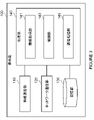
- 2 is a block diagram showing an example of a schematic functional configuration of a base station according to an embodiment of the present disclosure
- FIG. 2 is a block diagram showing an example of a schematic hardware configuration of a base station according to an embodiment of the present disclosure
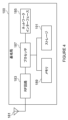
- FIG. 2 is a block diagram showing an example of a schematic functional configuration of a user device according to an embodiment of the present disclosure
- FIG. 2 is a block diagram showing an example of a schematic hardware configuration of a user device according to an embodiment of the present disclosure
- FIG. 2 is a block diagram showing an example of a schematic hardware configuration of a user device according to an embodiment of the present disclosure
- FIG. 1 is an explanatory diagram showing an example of a schematic configuration of a system according to an
- FIG. 4 is a diagram for explaining an example of SIB schedule information according to an embodiment of the present disclosure
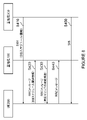
- FIG. 4 is a sequence diagram for explaining an example of a schematic flow of processing according to an embodiment of the present disclosure
- FIG. 11 is a diagram for explaining an example of SIB schedule information according to the first modification of the embodiment of the present disclosure
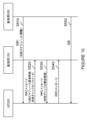
- FIG. 11 is a sequence diagram for explaining an example of a schematic flow of processing according to a second modification of the embodiment of the present disclosure
- system 1 includes base station 100 and user equipment (UE) 200 .
- UE user equipment
- System 1 is a system that complies with the 3GPP Technical Specification (TS). More specifically, for example, the system 1 is a system conforming to 5G or NR (New Radio) TS. Naturally, the system 1 is not limited to this example.
- TS 3GPP Technical Specification
- NR New Radio
- Base station 100 The base station 100 is a node of a radio access network (RAN) and communicates with UEs (eg, UE 200) located within the coverage area 10 of the base station 100.
- RAN radio access network
- the base station 100 communicates with the UE (for example, the UE 200) using the RAN protocol stack.
- the protocol stack includes RRC, SDAP (Service Data Adaptation Protocol), PDCP (Packet Data Convergence Protocol), RLC (Radio Link Control), MAC (Medium Access Control) and physical (PHY) layer protocols .
- the protocol stack may not include all of these protocols, but some of these protocols.
- the base station 100 is a gNB.
- a gNB is a node that provides NR user plane and control plane protocol terminations towards the UE and is connected to the 5GC (5G Core Network) via the NG interface.
- base station 100 may be an en-gNB.
- An en-gNB is a node that provides NR user plane and control plane protocol termination for UEs and acts as a secondary node in EN-DC (E-UTRA-NR Dual Connectivity).
- the base station 100 may include multiple nodes.
- the plurality of nodes may include a first node that hosts a higher layer included in the protocol stack and a second node that hosts a lower layer included in the protocol stack. good.
- the upper layers may include RRC, SDAP and PDCP, and the lower layers may include RLC, MAC and PHY layers.
- the first node may be a CU (central unit), and the second node may be a DU (Distributed Unit).
- the plurality of nodes may include a third node that performs lower-level processing of the PHY layer, and the second node may perform higher-level processing of the PHY layer.
- the third node may be an RU (Radio Unit).
- the base station 100 may be one of the plurality of nodes, or may be connected to another unit among the plurality of nodes.
- the base station 100 may be an IAB (Integrated Access and Backhaul) donor or an IAB node.
- IAB Integrated Access and Backhaul
- UE200 UE 200 communicates with a base station.
- UE 200 communicates with base station 100 when located within coverage area 10 of base station 100 .
- UE 200 communicates with a base station (eg, base station 100) using the above protocol stack.
- a base station eg, base station 100
- the UE 200 can be equipped with two or more SIM cards. That is, the UE 200 is a multi-SIM UE or multi-SIM device. The UE 200 can communicate in two or more mobile networks respectively corresponding to the two or more SIM cards.
- the UE 200 communicates in a mobile network corresponding to one of the two or more SIM cards and including the base station 100 (hereinafter referred to as "first mobile network”). be able to. Furthermore, the UE 200 can communicate in another mobile network (hereinafter referred to as "second mobile network”) corresponding to another one of the two or more SIM cards.
- the first mobile network is different from the second mobile network.
- UE 200 can communicate in a first mobile network including base station 100 and a second mobile network including base station 300 .
- the UE 200 can be in RRC connected state (RRC_CONNECTED) in the first mobile network and in RRC idle state (RRC_IDLE) or RRC inactive state (RRC_INACTIVE) in the second mobile network.
- RRC_CONNECTED RRC connected state
- RRC_IDLE RRC idle state
- RRC_INACTIVE RRC inactive state
- system information is system information for accessing the network. More specifically, system information includes MIB (Master Information Block) and SIB (System Information Block), and is broadcast from a base station (eg, base station 100 or base station 300).
- the MIB contains schedule information for SIB1.
- the SIB contains information about the cell and information about communications in the cell. More specifically, the SIBs include SIB1 and other SIBs.
- SIB1 contains scheduling information for several other SIBs.
- UE 200 receives other SIBs based on the schedule information of SIB1.
- the base station 100 includes a wireless communication unit 110, a network communication unit 120, a storage unit 130 and a processing unit 140.
- FIG. 1 An example of the functional configuration of the base station 100 according to the embodiment of the present disclosure will be described with reference to FIG. Referring to FIG. 3, the base station 100 includes a wireless communication unit 110, a network communication unit 120, a storage unit 130 and a processing unit 140.
- FIG. 1 An example of the functional configuration of the base station 100 according to the embodiment of the present disclosure will be described with reference to FIG.
- the base station 100 includes a wireless communication unit 110, a network communication unit 120, a storage unit 130 and a processing unit 140.
- the wireless communication unit 110 wirelessly transmits and receives signals.
- the radio communication unit 110 receives signals from UEs and transmits signals to the UEs.
- the network communication unit 120 receives signals from the network and transmits signals to the network.
- the storage unit 130 stores various information for the base station 100.
- the processing unit 140 provides various functions of the base station 100.
- the processing unit 140 includes an information acquisition unit 141 , a control unit 143 and a communication processing unit 145 .
- the processing unit 140 may further include components other than these components. That is, the processing unit 140 can perform operations other than those of these components. Specific operations of the information acquisition unit 141, the control unit 143, and the communication processing unit 145 will be described in detail later.
- the processing unit 140 communicates with the UE (for example, the UE 200) via the wireless communication unit 110.
- the processing unit 140 communicates with other nodes (eg, network nodes in the core network or other base stations) via the network communication unit 120 .
- base station 100 comprises antenna 181 , radio frequency (RF) circuitry 183 , network interface 185 , processor 187 , memory 189 and storage 191 .
- RF radio frequency
- Antenna 181 converts a signal into radio waves and radiates the radio waves into space. Also, the antenna 181 receives radio waves in space and converts the radio waves into signals.
- Antenna 181 may include a transmit antenna and a receive antenna, or may be a single antenna for transmission and reception.
- Antenna 181 may be a directional antenna and may include multiple antenna elements.
- the RF circuit 183 performs analog processing of signals transmitted and received via the antenna 181 .
- RF circuitry 183 may include high frequency filters, amplifiers, modulators, low pass filters, and the like.
- the network interface 185 is, for example, a network adapter, which transmits signals to and receives signals from the network.
- the processor 187 performs digital processing of signals transmitted and received via the antenna 181 and the RF circuit 183.
- the digital processing includes processing of the protocol stack of the RAN.
- Processor 187 also processes signals sent and received via network interface 185 .
- Processor 187 may include multiple processors or may be a single processor.
- the multiple processors may include a baseband processor that performs the digital processing and one or more processors that perform other processing.
- the memory 189 stores programs executed by the processor 187, parameters related to the programs, and various other information.
- the memory 189 may include at least one of ROM (Read Only Memory), EPROM (Erasable Programmable Read Only Memory), EEPROM (Electrically Erasable Programmable Read Only Memory), RAM (Random Access Memory), and flash memory. All or part of memory 189 may be included within processor 187 .
- the storage 191 stores various information.
- the storage 191 may include at least one of SSD (Solid State Drive) and HDD (Hard Disc Drive).
- the wireless communication unit 110 may be implemented by an antenna 181 and an RF circuit 183.
- Network communication unit 120 may be implemented by network interface 185 .
- Storage unit 130 may be implemented by storage 191 .
- Processing unit 140 may be implemented by processor 187 and memory 189 .
- Part or all of the processing unit 140 may be virtualized. In other words, part or all of the processing unit 140 may be implemented as a virtual machine. In this case, part or all of the processing unit 140 may operate as a virtual machine on a physical machine (that is, hardware) including a processor, memory, etc. and a hypervisor.
- the base station 100 may include a memory (ie, memory 189) for storing programs and one or more processors (ie, processor 187) capable of executing the programs.
- the one or more processors may execute the program to perform the operation of the processing unit 140 .
- the program may be a program for causing the processor to execute the operation of the processing unit 140 .
- FIG. 5 An example configuration of the UE 200 according to the embodiment of the present disclosure will be described with reference to FIGS. 5 and 6.
- FIG. 5 An example configuration of the UE 200 according to the embodiment of the present disclosure will be described with reference to FIGS. 5 and 6.
- FIG. 5 An example configuration of the UE 200 according to the embodiment of the present disclosure will be described with reference to FIGS. 5 and 6.
- FIG. 5 An example configuration of the UE 200 according to the embodiment of the present disclosure will be described with reference to FIGS. 5 and 6.
- the UE 200 includes a wireless communication section 210, a storage section 220 and a processing section 230.
- FIG. 5 An example of the functional configuration of the UE 200 according to the embodiment of the present disclosure will be described with reference to FIG. Referring to FIG. 5, the UE 200 includes a wireless communication section 210, a storage section 220 and a processing section 230.
- FIG. 5 An example of the functional configuration of the UE 200 according to the embodiment of the present disclosure will be described with reference to FIG. Referring to FIG. 5, the UE 200 includes a wireless communication section 210, a storage section 220 and a processing section 230.
- the wireless communication unit 210 wirelessly transmits and receives signals.
- the wireless communication unit 210 receives signals from base stations and transmits signals to the base stations.
- the radio communication unit 210 receives signals from other UEs and transmits signals to other UEs.
- the storage unit 220 stores various information for the UE200.
- the processing unit 230 provides various functions of the UE 200.
- the processing unit 230 includes an information acquisition unit 231 , a control unit 233 and a communication processing unit 235 .
- the processing unit 230 may further include other components other than these components. That is, the processing unit 230 can perform operations other than those of these components. Specific operations of the information acquisition unit 231, control unit 233, and communication processing unit 235 will be described in detail later.
- the processing unit 230 communicates with a base station (eg, base station 100 or base station 300) or another UE via the wireless communication unit 210.
- a base station eg, base station 100 or base station 300
- another UE via the wireless communication unit 210.
- UE 200 comprises antenna 281 , RF circuitry 283 , processor 285 , memory 287 and storage 289 .
- the antenna 281 converts the signal into radio waves and radiates the radio waves into space. Also, the antenna 281 receives radio waves in space and converts the radio waves into signals.
- Antenna 281 may include a transmit antenna and a receive antenna, or may be a single antenna for transmission and reception. Antenna 281 may be a directional antenna and may include multiple antenna elements.
- the RF circuit 283 performs analog processing of signals transmitted and received via the antenna 281 .
- RF circuitry 283 may include high frequency filters, amplifiers, modulators, low pass filters, and the like.
- the processor 285 performs digital processing of signals transmitted and received via the antenna 281 and the RF circuit 283.
- the digital processing includes processing of the protocol stack of the RAN.
- Processor 285 may include multiple processors or may be a single processor.
- the multiple processors may include a baseband processor that performs the digital processing and one or more processors that perform other processing.
- the memory 287 stores programs executed by the processor 285, parameters related to the programs, and various other information.
- Memory 287 may include at least one of ROM, EPROM, EEPROM, RAM, and flash memory. All or part of memory 287 may be included within processor 285 .
- the storage 289 stores various information.
- Storage 289 may include at least one of SSD and HDD.
- the wireless communication unit 210 may be implemented by an antenna 281 and an RF circuit 283.
- Storage unit 220 may be implemented by storage 289 .
- Processing unit 230 may be implemented by processor 285 and memory 287 .
- the processing unit 230 may be implemented by an SoC (System on Chip) including a processor 285 and a memory 287.
- SoC System on Chip
- the SoC may include RF circuitry 283 and the wireless communication unit 210 may also be implemented by the SoC.
- the UE 200 may include a memory that stores a program (ie, memory 287) and one or more processors that can execute the program (ie, processor 285).
- One or more processors may execute the programs described above to perform the operations of the processing unit 230 .
- the program may be a program for causing the processor to execute the operation of the processing unit 230 .
- UE 200 Operation of UE 200 UE 200 is connected to base station 100 in the first mobile network, and transmits schedule-related information of SIBs transmitted in the second mobile network to base station 100 as time gap-related information. . After that, the UE 200 receives time gap configuration information for the SIB from the base station 100 . The UE 200 then waits for SIBs transmitted in the second mobile network based on the configuration information of the time gap.
- the operation of the UE 200 and related information will be described in detail below.
- the UE 200 receives SIB1 from the base station 300 of the second mobile network.
- SIB1 contains schedule information for other SIBs.
- the UE 200 acquires schedule-related information based on the schedule information.
- the schedule-related information will be described in detail with reference to FIG. FIG. 7 shows an example of SIB schedule information according to an embodiment of the present disclosure.
- the schedule information for this SIB is contained in SIB1.
- the schedule-related information includes information indicating SIB transmission timing.
- the information indicating the SIB transmission timing is SchedulingInfo included in SIB1.
- SchedulingInfo includes si-BroadcastStatus, si-Periodicity and sib-MappingInfo.
- si-BroadcastStatus indicates Broadcasting or notBroadcasting. Broadcasting indicates that the SIBs are broadcast using a predefined periodic pattern, and notBroadcasting indicates that the SIBs are sent on demand by the UE using the on-demand procedure.
- si-Periocity indicates the SIB transmission interval.
- si-Periocicity indicates any of the predefined transmission intervals as shown in FIG.
- sib-MappinInfo includes type, valueTag and areaScope.
- type indicates the type of SIB.
- valueTag indicates whether the contents of the SIB have changed, with some exceptions. For example, the UE 200 refers to the valueTag and receives only SIBs whose contents have changed.
- areaScope indicates whether or not System Information Area is applied. For example, when the System Information Area is not applied, it is determined that the SIB will be received when the UE 200 moves to an adjacent cell, and when the System Information Area is applied, it is determined that the SIB will be received when the UE 200 moves outside the System Information Area.
- sib-MappinInfo is the transmission timing of the SIB from the viewpoint that when a certain SIB is to be received, the reception timing (that is, the transmission timing) of the SIB is added to the schedule for the entire SIB to be received. involved.
- the schedule-related information includes information indicating the length of the period for transmitting the SIB.
- information indicating the length of the period is si-WindowLength included in SIB1.
- si-WindowLength indicates any of the predefined lengths of the period as shown in FIG.
- SIB transmission is scheduled as indicated by SchedulingInfo in a period indicated by si-WindowLength.
- the transmission timing of the SIBs and the length of the period for transmission are provided to the base station 100 so that the time gap can be determined at the base station 100, ie the first mobile network side. Also, by providing the SIB schedule information contained in SIB1 to the base station 100, the base station 100, ie, the first mobile network, can determine a more accurate time gap.
- the information indicating the SIB transmission timing may be information generated based on SchedulingInfo instead of SchedulingInfo itself.
- the information indicating the length of the period for transmitting the SIB may be information generated based on the si-WindowLength instead of the si-WindowLength itself.
- schedule-related information for all SIBs may be obtained, or schedule-related information for some SIBs may be obtained.
- RRC message including schedule-related information UE 200 (communication processing unit 235) transmits to base station 100 an RRC message including the acquired schedule-related information.
- the RRC message includes schedule related information as time gap related information about time gaps for SIBs.
- This RRC message is an existing RRC message.
- the RRC message may be a UEAAssistanceInformation message. This allows time gap related information (that is, schedule related information) to be transmitted to the base station 100 without additionally defining a new RRC message.
- the RRC message may be an RRC message that requires a response.
- an RRC message that requires a response may be an RRCResumeRequest message.
- the RRC message may be an RRC message defined for periodic or aperiodic time gaps.
- the defined RRC message indicates to request the base station 100 to configure periodic or aperiodic time gaps. This allows communication of time gap configuration information without modifying existing RRC messages.
- the RRC message may be an RRC message defined for time gaps for SIBs.
- the RRC message includes request information requesting to configure a time gap.
- the RRC message includes request information requesting the base station 100 to configure time gaps based on the time gap related information in addition to the schedule related information. This allows the base station 100 to configure time gaps based on the schedule-related information included in the RRC message.
- UE 200 (communication processing unit 235) transmits an RRC message including schedule-related information, and then receives another RRC message including time gap configuration information from base station 100. Receive messages.
- UE 200 (information acquisition unit 231) acquires configuration information included in the other RRC message. This allows the reception of SIBs to be awaited in time gaps configured based on schedule-related information.
- the other RRC message may be the RRCReconfiguration message or the RRCResume message.
- the time gap configuration information can be received from the base station 100 without additionally defining a new RRC message.
- Reception of SIB in Time Gap UE 200 receives SIB transmitted in the second mobile network based on the configuration information of the time gap.
- the UE 200 switches from the first mobile network to the second mobile network in the time gap indicated by the configuration information received from the base station 100.
- the UE 200 then waits to receive the SIB from the base station 300 of the second mobile network within that time gap. In other words, UE 200 monitors the SIB. If the SIB is transmitted within the time gap, UE 200 receives the SIB.
- the UE 200 switches from the second mobile network to the first mobile network outside the time gap.
- the UE 200 can switch to the second mobile network according to the SIB transmission schedule in the second mobile network. Therefore, the UE 200 can receive the SIB of the second mobile network while communicating with the base station 100 of the first mobile network.
- the base station 100 is connected to the UE 200 in the first mobile network, and receives the SIB schedule-related information transmitted in the second mobile network from the UE 200 as time gap related information. .
- Base station 100 configures time gaps for SIBs based on the schedule-related information, and transmits configuration information of the time gaps to UE 200 .
- the operation of the base station 100 and related information will be described in detail below. In addition, the detailed description of the contents that are substantially the same as the description of the operation of the UE 200 will be omitted.
- Base station 100 receives from UE 200 an RRC message including schedule related information as time gap related information.
- the base station 100 acquires schedule-related information included in the RRC message.
- the RRC message may be a UEAAssistanceInformation message or a RRCResumeRequest message.
- the RRC message may also be an RRC message defined for periodic or aperiodic time gaps.
- the base station 100 may request the UE 200 to transmit the RRC message.
- the base station 100 may transmit to the UE 200 an existing RRC message including request information requesting transmission of schedule-related information.
- the base station 100 derives the timing and duration of transmission of SIBs in the second mobile network based on the schedule-related information. Base station 100 then configures a time gap that covers the timing and period length. That is, the base station 100 generates configuration information for the time gap.
- the base station 100 configures time gaps based on information other than the above schedule-related information. For example, the base station 100 configures the time gaps based on the schedule-related information in consideration of communication with other UEs, other base stations, the core network, or the like, or processing within the base station 100 . This allows configuring a suitable time gap for the base station 100, ie the first mobile network.
- an RRC message containing schedule-related information includes request information requesting the configuration of time gaps
- the base station 100 may configure the time gaps based on the schedule-related information.
- another RRC message containing the configuration information may be an RRCReconfiguration message or an RRCResume message.
- UE 200 communicates with base station 100 in a first mobile network and communicates with base station 300 in a second mobile network.
- the UE 200 receives SIB1 from the base station 300 (S410). For example, the UE 200 receives SIB1 from the base station 300 and acquires schedule information of each SIB included in SIB1.
- the UE 200 transmits an RRC message including the SIB schedule-related information as time gap-related information to the base station 100 (S420). For example, the UE 200 generates schedule-related information based on the acquired schedule information and transmits an RRC message including the generated schedule-related information to the base station 100 .
- the RRC message is a UEAAssistanceInformation message or a RRCResumeRequest message.
- the base station 100 transmits to the UE 200 an RRC message including time gap configuration information for SIBs (S430). For example, the base station 100 generates time gap configuration information based on the schedule-related information included in the received RRC message, the communication or processing schedule in the base station 100, and the like. The base station 100 then transmits an RRC message including the generated time gap configuration information to the UE 200 .
- the RRC message is the RRCReconfiguration message or the RRCResume message.
- the UE 200 transmits to the base station 100 an RRC message as a response to the RRC message containing the time gap configuration information (S440). For example, the UE 200 acquires time gap configuration information included in the received RRC message, and waits for reception of SIBs in the second mobile network based on the time gap configuration information.
- the response RRC message is the RRCReconfigurationComplete message or the RRCResumeComplete message.
- the UE 200 receives the SIB in the second mobile network based on the acquired time gap configuration information (S450). For example, the UE 200 switches to the second mobile network in the time gap indicated by the obtained configuration information and receives SIBs transmitted in the time gap.
- S450 acquired time gap configuration information
- the base station 100 and the UE 200 of the first mobile network communicate RRC messages containing time gap related information about time gaps for SIBs transmitted in the second mobile network, the time gap related information being , containing schedule-related information about the schedule of this SIB. Therefore, the schedule-related information used for determining the time gaps is shared to the base station 100 so that the time gaps can be determined at the base station 100, i.e. at the first mobile network side. It is thus possible to configure a time gap for the second mobile network that is suitable for the first mobile network. By extension, it can contribute to maintaining or improving the performance of the entire first mobile network.
- schedule-related information is information indicating the SIB transmission timing or the length of the period for SIB transmission .
- schedule-related information according to embodiments of the present disclosure is not limited to this example.
- the schedule-related information may include information for specifying SIB change timing.
- SIB1 Information for specifying the timing of changing the SIB is included in SIB1.
- the information for identifying the SIB change timing will be described in detail with reference to FIG. Information 23 shown in FIG. 9 is contained in SIB1.
- the information for specifying the timing of changing the SIB is modificationPeriodCoeff and defaultPagingCycle as shown in information 23 in FIG.
- the SIB modification timing (also referred to as the SIB modification period or si-modificationPeriod) is specified by modificationPeriodCoeff*defaultPagingCycle. Since si-modificationPeriod is the BCCH (Broadcast Control Channel) modification period, it is also the SIB modification period transmitted using the BCCH.
- BCCH Broadcast Control Channel
- the schedule-related information includes information for specifying the SIB change timing.
- the information for specifying the timing of changing the SIB is modificationPeriodCoeff and defaultPagingCycle included in SIB1.
- the time gap related information is schedule related information.
- the time gap related information according to embodiments of the present disclosure is not limited to this example.
- the time gap related information may further include time gap parameters.
- the UE 200 determines the time gap parameters based on the SIB schedule.
- the UE 200 (communication processing unit 235) transmits to the base station 100 an RRC message including the determined time gap parameters and schedule related information as time gap related information.
- the base station 100 (control unit 143) generates time gap configuration information based on the schedule-related information and time gap parameters.
- UE 200 communicates with base station 100 in a first mobile network and communicates with base station 300 in a second mobile network. Note that the description of the processing that is substantially the same as that in FIG. 8 will be omitted.
- the UE 200 receives SIB1 from the base station 300 (S510).
- the UE 200 transmits to the base station 100 an RRC message including SIB schedule-related information and time gap parameters as time gap-related information (S520). For example, the UE 200 determines the time gap parameters based on the schedule information obtained from SIB1. Also, the UE 200 generates schedule-related information based on the schedule information. The UE 200 then transmits to the base station 100 an RRC message including schedule-related information and time gap parameters.
- the base station 100 transmits to the UE 200 an RRC message including time gap configuration information for SIBs (S530). For example, the base station 100 determines whether the time gap parameters included in the received RRC message are suitable for the first mobile network. Specifically, the base station 100 determines whether the parameters of the time gap are suitable for the schedule of communication or processing in the base station 100 or not. If determined to be suitable, the base station 100 generates time gap configuration information based on the time gap parameters. If determined to be unsuitable, the base station 100 generates time gap configuration information based on the schedule-related information included in the received RRC message, the above-described communication or processing schedule, and the like. The base station 100 then transmits an RRC message including the generated time gap configuration information to the UE 200 .
- SIBs time gap configuration information for SIBs
- the UE 200 transmits to the base station 100 an RRC message as a response to the RRC message containing the time gap configuration information (S540). Then, the UE 200 receives the SIB in the second mobile network based on the acquired time gap configuration information (S550).
- the time gap related information further includes time gap parameters, and the UE 200 determines the time gap parameters based on the SIB schedule.
- the base station 100 generates time gap configuration information based on the time gap parameters and schedule-related information. Therefore, the time gap can be determined considering not only the situation of the base station 100 ie the first mobile network but also the situation of the UE 200 . Therefore, optimization of the entire system including the UE 200 can be achieved.
- time gap parameter may be included in an RRC message separate from the schedule-related information and transmitted.
- the system 1 is a 5G or NR TS compliant system.
- the system 1 according to the embodiment of the present disclosure is not limited to this example.
- system 1 may be a system compliant with other 3GPP TSs.
- the system 1 may be a system conforming to LTE (Long Term Evolution), LTE-A (LTE Advanced) or 4G TS, and the base station 100 may be an eNB (evolved Node B). good.
- base station 100 may be an ng-eNB.
- system 1 may be a 3G TS-compliant system and base station 100 may be a NodeB.
- the system 1 may be a next generation (eg, 6G) TS compliant system.
- system 1 may be a system conforming to the TS of another standardization body for mobile communications.
- steps in the processes described in this specification do not necessarily have to be executed in chronological order according to the order described in the flowcharts or sequence diagrams.
- steps in a process may be performed in an order different from that depicted in a flowchart or sequence diagram, or in parallel.
- some of the steps in the process may be deleted and additional steps may be added to the process.
- a method may be provided that includes the operation of one or more components of the apparatus described herein, and a program may be provided for causing a computer to perform the operation of the components. Further, a computer-readable non-transitional tangible recording medium recording the program may be provided.
- a method may be provided that includes the operation of one or more components of the apparatus described herein, and a program may be provided for causing a computer to perform the operation of the components.
- a computer-readable non-transitional tangible recording medium recording the program may be provided.
- such methods, programs, and computer-readable non-transitory tangible computer-readable storage mediums are also included in the present disclosure.
- user equipment refers to a mobile station, mobile terminal, mobile device, mobile unit, subscriber station, subscriber terminal, subscriber equipment, subscriber unit, wireless It may also be called a station, a wireless terminal, a wireless device, a wireless unit, a remote station, a remote terminal, a remote device, a remote unit, or the like.
- transmit may mean performing at least one layer of processing within the protocol stack used for transmission, or physically transmitting a signal wirelessly or by wire. It may mean sending to Alternatively, “transmitting” may mean a combination of performing the at least one layer of processing and physically transmitting the signal wirelessly or by wire.
- recipient may mean processing at least one layer in the protocol stack used for reception, or physically receiving a signal wirelessly or by wire. may mean that Alternatively, “receiving” may mean a combination of performing the at least one layer of processing and physically receiving the signal wirelessly or by wire.
- the at least one layer may also be translated as at least one protocol.
- “obtain/acquire” may mean obtaining information among stored information, obtaining information among information received from other nodes. or to obtain the information by generating the information.
- the terms “include” and “comprise” do not mean to include only the recited items, but may include only the recited items, or may include only the recited items. It means that further items may be included in addition to the
- SIBs System Information Blocks
- (Feature 2) The user equipment of feature 1, wherein the schedule-related information includes information indicating transmission timing of the SIB.
- Feature 3 The user equipment according to feature 2, wherein the information indicating the transmission timing of the SIB is SchedulingInfo included in SIB1.
- (Feature 6) The user equipment according to any one of the features 1 to 5, wherein the schedule-related information includes information for specifying the change timing of the SIB.
- the time gap related information further includes a parameter of the time gap;
- User equipment according to any one of the preceding claims, further comprising a control unit (233) for determining said time gap parameters based on said SIB schedule.
- a base station (100) of a first mobile network a communication processing unit (145) that communicates with the user device (200); an information acquisition unit (141) for acquiring time gap related information about time gaps for SIBs (System Information Blocks) transmitted in the second mobile network; with The communication processing unit receives an RRC (Radio Resource Control) message including the time gap related information from the user equipment,
- the time gap related information includes schedule related information regarding the schedule of the SIB.
- Base station A base station (100) of a first mobile network, a communication processing unit (145) that communicates with the user device (200); an information acquisition unit (141) for acquiring time gap related information about time gaps for SIBs (System Information Blocks) transmitted in the second mobile network; with The communication processing unit receives an RRC (Radio Resource Control) message including the time gap related information from the user equipment,
- the time gap related information includes schedule related information regarding the schedule of the SIB.
- Base station a base station (100) of a first mobile network, a communication processing unit (145) that communicates
- the time gap related information further includes a parameter of the time gap;
- the base station according to feature 16 wherein the control unit generates the time gap configuration information based on the schedule related information and the time gap parameters.
- SIBs System Information Blocks
- a method performed by a base station (100) of a first mobile network comprising: communicating with the user equipment (200); obtaining time gap related information about time gaps for System Information Blocks (SIBs) transmitted in a second mobile network; receiving an RRC (Radio Resource Control) message containing the time gap related information from the user equipment; including The method, wherein the time gap related information includes schedule related information regarding a schedule of the SIBs.
- SIBs System Information Blocks
- RRC Radio Resource Control
- Feature 20 communicating with a base station (100) of a first mobile network; obtaining time gap related information about time gaps for System Information Blocks (SIBs) transmitted in a second mobile network; transmitting an RRC (Radio Resource Control) message including the time gap related information to the base station;
- SIBs System Information Blocks
- RRC Radio Resource Control
- a program that causes a computer to execute The said time gap related information contains the schedule related information regarding the schedule of said SIB.
- SIB System Information Blocks
- RRC Radio Resource Control
- Feature 22 communicating with a base station (100) of a first mobile network; obtaining time gap related information about time gaps for System Information Blocks (SIBs) transmitted in a second mobile network; transmitting an RRC (Radio Resource Control) message including the time gap related information to the base station;
- SIBs System Information Blocks
- RRC Radio Resource Control
- a computer-readable non-transitional tangible recording medium recording a program that causes a computer to execute The time gap-related information includes schedule-related information regarding the schedule of the SIB.
- a computer-readable non-transitional tangible recording medium recording a program that causes a computer to execute The time gap-related information includes schedule-related information regarding the schedule of the SIB.
- a non-transitional physical recording medium
Landscapes
- Engineering & Computer Science (AREA)
- Computer Networks & Wireless Communication (AREA)
- Signal Processing (AREA)
- Computer Security & Cryptography (AREA)
- Mobile Radio Communication Systems (AREA)
Priority Applications (4)
| Application Number | Priority Date | Filing Date | Title |
|---|---|---|---|
| CN202280053945.2A CN117796040A (zh) | 2021-08-05 | 2022-08-04 | 装置以及方法 |
| EP22853156.2A EP4383826A4 (en) | 2021-08-05 | 2022-08-04 | DEVICE AND METHOD |
| JP2023540413A JPWO2023013738A1 (https=) | 2021-08-05 | 2022-08-04 | |
| US18/431,252 US20240179773A1 (en) | 2021-08-05 | 2024-02-02 | Apparatus, base station, and method |
Applications Claiming Priority (2)
| Application Number | Priority Date | Filing Date | Title |
|---|---|---|---|
| JP2021-128806 | 2021-08-05 | ||
| JP2021128806 | 2021-08-05 |
Related Child Applications (1)
| Application Number | Title | Priority Date | Filing Date |
|---|---|---|---|
| US18/431,252 Continuation US20240179773A1 (en) | 2021-08-05 | 2024-02-02 | Apparatus, base station, and method |
Publications (1)
| Publication Number | Publication Date |
|---|---|
| WO2023013738A1 true WO2023013738A1 (ja) | 2023-02-09 |
Family
ID=85156033
Family Applications (1)
| Application Number | Title | Priority Date | Filing Date |
|---|---|---|---|
| PCT/JP2022/030007 Ceased WO2023013738A1 (ja) | 2021-08-05 | 2022-08-04 | 装置及び方法 |
Country Status (5)
| Country | Link |
|---|---|
| US (1) | US20240179773A1 (https=) |
| EP (1) | EP4383826A4 (https=) |
| JP (1) | JPWO2023013738A1 (https=) |
| CN (1) | CN117796040A (https=) |
| WO (1) | WO2023013738A1 (https=) |
Families Citing this family (1)
| Publication number | Priority date | Publication date | Assignee | Title |
|---|---|---|---|---|
| US20260082431A1 (en) * | 2024-09-16 | 2026-03-19 | Qualcomm Incorporated | Postponement in contention-based transmission occasion groups |
Citations (1)
| Publication number | Priority date | Publication date | Assignee | Title |
|---|---|---|---|---|
| WO2020200252A1 (en) * | 2019-04-04 | 2020-10-08 | FG Innovation Company Limited | Method for monitoring paging and apparatus using the same |
Family Cites Families (11)
| Publication number | Priority date | Publication date | Assignee | Title |
|---|---|---|---|---|
| JP5391316B1 (ja) * | 2012-07-20 | 2014-01-15 | 株式会社Nttドコモ | 移動通信方法及び移動局 |
| US10623946B1 (en) * | 2019-03-25 | 2020-04-14 | Qualcomm Incorporated | Multi-SIM assistance information |
| WO2020201885A1 (en) * | 2019-04-01 | 2020-10-08 | Telefonaktiebolaget Lm Ericsson (Publ) | Enhanced paging occasion (po) monitoring for new radio (nr) user equipment (ue) power savings in rrc_idle/inactive |
| US11013054B2 (en) * | 2019-04-12 | 2021-05-18 | Ofinno, Llc | UE-assistance to support multiple systems based on frequency band combinations |
| EP3735049A1 (en) * | 2019-04-30 | 2020-11-04 | Comcast Cable Communications LLC | Wireless communications for network access configuration |
| JP7318111B2 (ja) * | 2019-08-14 | 2023-07-31 | エルジー エレクトロニクス インコーポレイティド | 条件付きモビリティのループ問題の処理 |
| EP3823413A1 (en) * | 2019-11-15 | 2021-05-19 | Panasonic Intellectual Property Corporation of America | User equipment, scheduling node, method for user equipment, and method for scheduling node for determining a target bwp |
| US11812405B2 (en) * | 2019-12-10 | 2023-11-07 | Intel Corporation | User equipment operation with multiple subscriber identity modules |
| KR20210083652A (ko) * | 2019-12-27 | 2021-07-07 | 삼성전자주식회사 | 차세대 이동통신 시스템에서 측정 갭을 요청하는 방법 및 장치 |
| JP7483897B2 (ja) * | 2020-01-20 | 2024-05-15 | テレフオンアクチーボラゲット エルエム エリクソン(パブル) | 2ステップのランダムアクセス |
| WO2021147958A1 (en) * | 2020-01-21 | 2021-07-29 | FG Innovation Company Limited | User equipment and method for multi-sim operation |
-
2022
- 2022-08-04 WO PCT/JP2022/030007 patent/WO2023013738A1/ja not_active Ceased
- 2022-08-04 JP JP2023540413A patent/JPWO2023013738A1/ja active Pending
- 2022-08-04 CN CN202280053945.2A patent/CN117796040A/zh active Pending
- 2022-08-04 EP EP22853156.2A patent/EP4383826A4/en active Pending
-
2024
- 2024-02-02 US US18/431,252 patent/US20240179773A1/en active Pending
Patent Citations (1)
| Publication number | Priority date | Publication date | Assignee | Title |
|---|---|---|---|---|
| WO2020200252A1 (en) * | 2019-04-04 | 2020-10-08 | FG Innovation Company Limited | Method for monitoring paging and apparatus using the same |
Non-Patent Citations (5)
| Title |
|---|
| DENSO CORPORATION: "Signalling design on short time switching procedure", 3GPP DRAFT; R2-2105442, 3RD GENERATION PARTNERSHIP PROJECT (3GPP), MOBILE COMPETENCE CENTRE ; 650, ROUTE DES LUCIOLES ; F-06921 SOPHIA-ANTIPOLIS CEDEX ; FRANCE, vol. RAN WG2, no. Online; 20210519 - 20210527, 11 May 2021 (2021-05-11), Mobile Competence Centre ; 650, route des Lucioles ; F-06921 Sophia-Antipolis Cedex ; France , XP052007043 * |
| NOKIA: "Report on LTE legacy, Mobility, DCCA, Multi-SIM and RAN slicing", 3GPP TSG-RAN WG2 MEETING #113 BIS ELECTRONIC, 12 April 2021 (2021-04-12) |
| NOKIA: "Report on LTE legacy, Mobility, DCCA, Multi-SIM and RAN slicing", 3GPP TSG-RAN WG2 MEETING #113 ELECTRONIC, 25 January 2021 (2021-01-25) |
| NOKIA: "Report on LTE legacy, Mobility, DCCA, Multi-SIM and RAN slicing", 3GPP TSG-RAN WG2 MEETING #114 ELECTRONIC, 19 May 2021 (2021-05-19) |
| VIVO: "post112-e][256][Multi-SIM] Network switching details (vivo", 3GPP TSG-RAN WG2 MEETING #113-E, 5 February 2021 (2021-02-05) |
Also Published As
| Publication number | Publication date |
|---|---|
| US20240179773A1 (en) | 2024-05-30 |
| JPWO2023013738A1 (https=) | 2023-02-09 |
| CN117796040A (zh) | 2024-03-29 |
| EP4383826A1 (en) | 2024-06-12 |
| EP4383826A4 (en) | 2024-12-04 |
Similar Documents
| Publication | Publication Date | Title |
|---|---|---|
| EP3827619B1 (en) | Transmission of network slicing constraints in wireless networks | |
| TWI568283B (zh) | 管理共存干擾之方法和裝置、來源無線電接取節點、目標無線電接取節點、以及包含程式碼手段之電腦程式 | |
| US12557088B2 (en) | Base station and user equipment | |
| US12581438B2 (en) | Base station and user equipment | |
| KR20230030009A (ko) | 무선 통신들에서의 유연한 다운링크 제어 신호 모니터링 | |
| KR20220104010A (ko) | 단일 다운링크 제어 정보(dci) 다중 송신 및 수신 포인트(multi-trp) 시간 분할 다중화(tdm) 향상 | |
| JP7578465B2 (ja) | 基地局及びユーザ機器 | |
| WO2022185941A1 (ja) | リレーノード及び方法 | |
| US20240179773A1 (en) | Apparatus, base station, and method | |
| CN116830613A (zh) | 用户设备及基站 | |
| US20240172327A1 (en) | Apparatus, base station apparatus, and method | |
| CN117880859B (zh) | 波形切换方法、设备、介质、芯片系统及产品 | |
| US11108531B2 (en) | Method and apparatus for setting symbol | |
| WO2023216929A1 (zh) | 一种通信的方法和装置 | |
| WO2019097828A1 (ja) | 無線通信装置、方法、プログラム、及び記録媒体 | |
| CN119697689A (zh) | 无线通信方法、用户设备和网络设备 | |
| WO2022153749A1 (ja) | ユーザ機器、ネットワークノード及び基地局 | |
| EP3972312A1 (en) | User equipment and base station device | |
| JP2025128427A (ja) | 装置および方法 | |
| WO2022163375A1 (ja) | 第1のユーザ機器、第2のユーザ機器及び基地局 | |
| WO2024245016A1 (zh) | 一种通信方法及装置 | |
| WO2022153747A1 (ja) | ユーザ機器、基地局及びネットワークノード |
Legal Events
| Date | Code | Title | Description |
|---|---|---|---|
| 121 | Ep: the epo has been informed by wipo that ep was designated in this application |
Ref document number: 22853156 Country of ref document: EP Kind code of ref document: A1 |
|
| WWE | Wipo information: entry into national phase |
Ref document number: 2023540413 Country of ref document: JP |
|
| WWE | Wipo information: entry into national phase |
Ref document number: 202280053945.2 Country of ref document: CN |
|
| REG | Reference to national code |
Ref country code: BR Ref legal event code: B01A Ref document number: 112024001851 Country of ref document: BR |
|
| NENP | Non-entry into the national phase |
Ref country code: DE |
|
| ENP | Entry into the national phase |
Ref document number: 2022853156 Country of ref document: EP Effective date: 20240305 |
|
| ENP | Entry into the national phase |
Ref document number: 112024001851 Country of ref document: BR Kind code of ref document: A2 Effective date: 20240129 |