WO2023013636A1 - 通信制御方法 - Google Patents
通信制御方法 Download PDFInfo
- Publication number
- WO2023013636A1 WO2023013636A1 PCT/JP2022/029640 JP2022029640W WO2023013636A1 WO 2023013636 A1 WO2023013636 A1 WO 2023013636A1 JP 2022029640 W JP2022029640 W JP 2022029640W WO 2023013636 A1 WO2023013636 A1 WO 2023013636A1
- Authority
- WO
- WIPO (PCT)
- Prior art keywords
- slice
- information
- user equipment
- control method
- base station
- Prior art date
- Legal status (The legal status is an assumption and is not a legal conclusion. Google has not performed a legal analysis and makes no representation as to the accuracy of the status listed.)
- Ceased
Links
Images




Classifications
-
- H—ELECTRICITY
- H04—ELECTRIC COMMUNICATION TECHNIQUE
- H04W—WIRELESS COMMUNICATION NETWORKS
- H04W48/00—Access restriction; Network selection; Access point selection
- H04W48/08—Access restriction or access information delivery, e.g. discovery data delivery
-
- H—ELECTRICITY
- H04—ELECTRIC COMMUNICATION TECHNIQUE
- H04W—WIRELESS COMMUNICATION NETWORKS
- H04W24/00—Supervisory, monitoring or testing arrangements
- H04W24/10—Scheduling measurement reports ; Arrangements for measurement reports
-
- H—ELECTRICITY
- H04—ELECTRIC COMMUNICATION TECHNIQUE
- H04W—WIRELESS COMMUNICATION NETWORKS
- H04W36/00—Hand-off or reselection arrangements
- H04W36/0005—Control or signalling for completing the hand-off
- H04W36/0055—Transmission or use of information for re-establishing the radio link
- H04W36/0072—Transmission or use of information for re-establishing the radio link of resource information of target access point
-
- H—ELECTRICITY
- H04—ELECTRIC COMMUNICATION TECHNIQUE
- H04W—WIRELESS COMMUNICATION NETWORKS
- H04W36/00—Hand-off or reselection arrangements
- H04W36/0005—Control or signalling for completing the hand-off
- H04W36/0083—Determination of parameters used for hand-off, e.g. generation or modification of neighbour cell lists
- H04W36/00835—Determination of neighbour cell lists
-
- H—ELECTRICITY
- H04—ELECTRIC COMMUNICATION TECHNIQUE
- H04W—WIRELESS COMMUNICATION NETWORKS
- H04W48/00—Access restriction; Network selection; Access point selection
-
- H—ELECTRICITY
- H04—ELECTRIC COMMUNICATION TECHNIQUE
- H04W—WIRELESS COMMUNICATION NETWORKS
- H04W48/00—Access restriction; Network selection; Access point selection
- H04W48/18—Selecting a network or a communication service
-
- H—ELECTRICITY
- H04—ELECTRIC COMMUNICATION TECHNIQUE
- H04W—WIRELESS COMMUNICATION NETWORKS
- H04W74/00—Wireless channel access
- H04W74/08—Non-scheduled access, e.g. ALOHA
-
- H—ELECTRICITY
- H04—ELECTRIC COMMUNICATION TECHNIQUE
- H04W—WIRELESS COMMUNICATION NETWORKS
- H04W74/00—Wireless channel access
- H04W74/08—Non-scheduled access, e.g. ALOHA
- H04W74/0833—Random access procedures, e.g. with 4-step access
Definitions
- the present invention relates to a communication control method used in mobile communication systems.
- Network slicing (or network slicing) is specified in 3GPP (Third Generation Partnership Project), which is a standardization project for mobile communication systems.
- Network slicing is a concept that allows differentiated processing according to the requirements of each customer.
- network slicing is a technique for effectively providing a network according to the requirements of services used by customers by virtually slicing the network.
- a communication control method is a communication control method in a mobile communication system that has a user device and a base station and that allows wireless communication between the user device and the base station.
- the communication control method comprises user equipment performing a random access procedure using resources associated with slice groups.
- the communication control method includes recording, in a memory, the first log information acquired when the user device executes the random access procedure. Further, the communication control method comprises the user equipment transmitting first log information to the base station.
- a communication control method is a communication control method in a mobile communication system that has a user device and a base station and that allows wireless communication between the user device and the base station.
- the communication control method comprises the user equipment performing slice-specific cell reselection using prioritized frequencies mapped per slice group.
- the communication control method includes recording, in a memory, the second log information acquired when the user equipment performs slice-specific cell reselection. Further, the communication control method comprises the user equipment transmitting the second log information to the base station.
- FIG. 1 is a diagram showing a configuration example of a mobile communication system according to one embodiment.
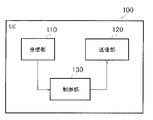
- FIG. 2 is a diagram illustrating a configuration example of a UE (user equipment) according to one embodiment.
- FIG. 3 is a diagram illustrating a configuration example of a gNB (base station) according to one embodiment.
- FIG. 4 is a diagram showing a configuration example of a protocol stack for the user plane according to one embodiment.
- FIG. 5 is a diagram illustrating a configuration example of a protocol stack for the control plane according to one embodiment.
- FIG. 6 is a diagram showing a configuration example of the mobile communication system 1 according to the first embodiment.
- FIG. 7 is a diagram showing an operation example according to the first embodiment.
- FIG. 8 is a diagram showing an operation example according to the second embodiment.
- An object of the present disclosure is to provide a communication control method capable of appropriately recording a log for predetermined processing and transmitting it to a base station.
- mobile communication system First, the configuration of a mobile communication system according to one embodiment will be described.
- the mobile communication system according to one embodiment is a 3GPP 5G system
- LTE may be at least partially applied to the mobile communication system.
- future mobile communication systems such as 6G may be applied to the mobile communication system.
- FIG. 1 is a diagram showing a configuration example of a mobile communication system 1 according to one embodiment.
- the mobile communication system 1 includes a user equipment (UE: User Equipment) 100, a 5G radio access network (NG-RAN: Next Generation Radio Access Network) 10, and a 5G core network (5GC: 5G Core Network) 20.
- UE User Equipment
- NG-RAN Next Generation Radio Access Network
- 5G Core Network 5G Core Network
- the UE 100 is a mobile device.
- the UE 100 may be any device as long as it is used by the user. (including chipset), sensors or devices installed in sensors, vehicles or devices installed in vehicles (Vehicle UE), aircraft or devices installed in aircraft (Aerial UE).
- the NG-RAN 10 includes a base station (called "gNB” in the 5G system) 200.
- the gNB 200 is also called an NG-RAN node.
- the gNBs 200 are interconnected via an Xn interface, which is an interface between base stations.
- the gNB 200 manages one or more cells.
- the gNB 200 performs radio communication with the UE 100 that has established connection with its own cell.
- the gNB 200 has a radio resource management (RRM) function, a user data (hereinafter simply referred to as “data”) routing function, a measurement control function for mobility control/scheduling, and the like.
- RRM radio resource management
- a “cell” is used as a term indicating the minimum unit of a wireless communication area.
- a “cell” is also used as a term indicating a function or resource for radio communication with the UE 100 .
- One cell belongs to one carrier frequency.
- the gNB 200 may be connected to an LTE core network, EPC (Evolved Packet Core), or an LTE base station may be connected to the 5GC 20. Also, an LTE base station and the gNB 200 may be connected via an interface between base stations.
- EPC Evolved Packet Core
- 5GC20 includes AMF (Access and Mobility Management Function) 301 (301-1, 301-2) and UPF (User Plane Function) 302 (302-1, 302-2).
- AMF301 performs various mobility control etc. with respect to UE100.
- the AMF 301 manages information on the area in which the UE 100 resides by communicating with the UE 100 using NAS (Non-Access Stratum) signaling.
- the UPF 302 controls data transfer.
- AMF 301 and UPF 302 are connected to gNB 200 via an NG interface, which is a base station-core network interface.
- AMF 301 and UPF 302 are examples of core network devices connected to 5GC (core network) 20 .
- FIG. 2 is a diagram showing a configuration example of the UE 100 (user equipment) according to one embodiment.
- the UE 100 has a receiver 110, a transmitter 120, and a controller .
- the receiving unit 110 performs various types of reception under the control of the control unit 130.
- the receiver 110 includes an antenna and a receiver.
- the receiver converts (down-converts) the radio signal received by the antenna into a baseband signal (reception signal) and outputs the baseband signal (reception signal) to control section 130 .
- the transmission unit 120 performs various transmissions under the control of the control unit 130.
- the transmitter 120 includes an antenna and a transmitter.
- the transmitter converts (up-converts) a baseband signal (transmission signal) output by the control unit 130 into a radio signal and transmits the radio signal from an antenna.
- the control unit 130 performs various controls in the UE 100.
- Control unit 130 includes at least one processor and at least one memory electrically connected to the processor.
- the memory stores programs executed by the processor and information used for processing by the processor.
- the processor may include a baseband processor and a CPU (Central Processing Unit).
- the baseband processor modulates/demodulates and encodes/decodes the baseband signal.
- the CPU executes programs stored in the memory to perform various processes.
- the control unit 130 may perform various operations and various processes executed by the UE 100 in each embodiment described below.
- FIG. 3 is a diagram showing a configuration example of the gNB 200 (base station) according to one embodiment.
- the gNB 200 has a transmission section 210, a reception section 220, a control section 230, and a backhaul communication section 240.
- the transmission unit 210 performs various transmissions under the control of the control unit 230.
- Transmitter 210 includes an antenna and a transmitter.
- the transmitter converts (up-converts) a baseband signal (transmission signal) output from the control unit 230 into a radio signal and transmits the radio signal from an antenna.
- the receiving unit 220 performs various types of reception under the control of the control unit 230.
- the receiver 220 includes an antenna and a receiver.
- the receiver converts (down-converts) a radio signal received by the antenna into a baseband signal (reception signal) and outputs the baseband signal (reception signal) to control section 230 .
- the control unit 230 performs various controls in the gNB200.
- Control unit 230 includes at least one processor and at least one memory electrically connected to the processor.
- the memory stores programs executed by the processor and information used for processing by the processor.
- a processor may include a baseband processor and a CPU.
- the baseband processor modulates/demodulates and encodes/decodes the baseband signal.
- the CPU executes programs stored in the memory to perform various processes.
- the control unit 230 may perform various operations and various processes executed by the gNB 200 in each embodiment described below.
- the backhaul communication unit 240 is connected to an adjacent base station via an interface between base stations. Backhaul communication unit 240 is connected to AMF 301 and/or UPF 302 via a base station-core network interface.
- the gNB 200 may be composed of a CU (Central Unit) and a DU (Distributed Unit), and the two units may be connected via an F1 interface.
- FIG. 4 is a diagram showing a configuration example of a protocol stack of a user plane radio interface according to an embodiment.
- the user plane radio interface protocol that handles data includes a physical (PHY) layer, a MAC (Medium Access Control) layer, an RLC (Radio Link Control) layer, and a PDCP (Packet Data Convergence Protocol) layer. layer and SDAP (Service Data Adaptation Protocol) layer.
- PHY physical
- MAC Medium Access Control
- RLC Radio Link Control
- PDCP Packet Data Convergence Protocol
- SDAP Service Data Adaptation Protocol
- the PHY layer performs encoding/decoding, modulation/demodulation, antenna mapping/demapping, and resource mapping/demapping. Data and control information are transmitted between the PHY layer of the UE 100 and the PHY layer of the gNB 200 via physical channels.
- the MAC layer performs data priority control, retransmission processing by hybrid ARQ (HARQ), random access procedures, and so on. Data and control information are transmitted between the MAC layer of the UE 100 and the MAC layer of the gNB 200 via transport channels.
- the MAC layer of gNB 200 includes a scheduler. The scheduler determines uplink and downlink transport formats (transport block size, modulation and coding scheme (MCS)) and resource blocks to be allocated to the UE 100 .
- MCS modulation and coding scheme
- the RLC layer uses the functions of the MAC layer and PHY layer to transmit data to the RLC layer on the receiving side. Data and control information are transmitted between the RLC layer of the UE 100 and the RLC layer of the gNB 200 via logical channels.
- the PDCP layer performs header compression/decompression and encryption/decryption. Data and control information are transmitted between the PDCP layer of the UE 100 and the PDCP layer of the gNB 200 via radio bearers.
- the SDAP layer maps the QoS flow, which is the unit of QoS control performed by the core network, and the radio bearer, which is the unit of QoS control performed by the AS (Access Stratum). Note that SDAP may not be present when the RAN is connected to the EPC.
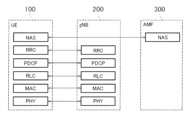
- FIG. 5 is a diagram showing a configuration example of the protocol stack of the radio interface of the control plane according to one embodiment.
- control plane radio interface protocol stack that handles signaling (control signals) has an RRC (Radio Resource Control) layer and a NAS layer instead of the SDAP layer shown in FIG.
- RRC signaling for various settings is transmitted between the RRC layer of the UE 100 and the RRC layer of the gNB 200.
- the RRC layer controls logical, transport and physical channels according to establishment, re-establishment and release of radio bearers.
- RRC connection connection between the RRC of UE 100 and the RRC of gNB 200
- UE 100 is in the RRC connected state.
- RRC connection no connection between RRC of UE 100 and RRC of gNB 200
- UE 100 is in RRC idle state.
- the RRC connection is interrupted (suspended), the UE 100 is in the RRC inactive state.
- the NAS (Non-Access Stratum) layer located above the RRC layer performs session management and mobility management.
- NAS signaling is transmitted between the NAS layer of UE 100 and the NAS layer of AMF 301 .
- the UE 100 has an application layer and the like in addition to the radio interface protocol.
- network slicing makes it possible to provide various services that meet user requirements.
- network slicing may be referred to as a "slice”.
- the part supported by NG-RAN 10 may be called RAN slicing.
- RAN slicing Even if there is no distinction between network slicing and RAN slicing, they may simply be referred to as “slices” below.
- a slice indicates a logically divided core network and/or radio access network.
- An identifier for identifying a slice is NSSAI (Network Slice Selection Assistance Information) or S-NSSAI (Single-NSSAI).
- a slice group is a group containing one or more slices, and an identifier (ID) is assigned to the group.
- a slice group may be created in a core network (eg, AMF 301) or may be created in a radio access network (eg, gNB 200). The created slice group may be notified to the UE 100.
- slice-specific cell reselection is being considered.
- frequencies are mapped (or linked) to each slice, and absolute priority is set for each frequency.
- absolute priority is set for each frequency.
- Slice-specific cell reselection makes it possible, for example, to provide frequency resources for each slice (or slice group), thereby suppressing duplication of frequency resources between slices.
- the UE 100 is located in an appropriate frequency for each slice that the UE 100 wishes to access. It is possible to (distribute and disperse).
- the UE 100 can be camped (located) in a different frequency (or cell) from a UE that does not desire access to a slice (for example, a legacy UE).
- Priority frequency mapped for each slice is provided to the UE 100, 2) "slice” may mean “slice group”; 3) It was agreed that the prioritized frequencies mapped per slice are part of the "Slice info", and so on.
- a slice-specific random access channel (Random Access Channel(s))
- RACH Random Access Channel
- a slice-specific random access channel (hereinafter sometimes referred to as "slice-specific RACH”) is a separated random access opportunity (RO (RACH Occasion)) and/or separated for each slice or each slice group.
- ROI Random access opportunity
- a separate preamble is used.
- a random access procedure performed using RACH resources separated for each slice or each slice group in this way is called a slice-specific RACH.
- the slice-specific RACH can prevent the resource from being duplicated between slices, between slice groups, or between accesses using slices and accesses not using slices, for example. Also, by avoiding the resource duplication, it is possible to suppress interference of RACHs transmitted by a plurality of UEs 100 . Also, access to a certain slice or slice group can be preferentially controlled (by allocating resources where interference is less likely to occur).
- 3GPP is also considering an "intended slice”.
- 3GPP has not yet reached agreement on specifics such as the definition of "intended slice.”
- a slice that is likely to be used, a candidate slice, a desired slice, a slice to be communicated, a requested slice, an accepted slice, or an intended slice will be referred to as an "intended slice.”
- the UE 100 can receive a desired service from the cell.
- SON is a technology that autonomously organizes or optimizes networks.
- SON is a technique for continuous optimization corresponding to dynamic changes in networks, optimization of parameters associated with troubleshooting, optimization of coverage and capacity, and the like.
- MDT is a technology that supports the collection of UE 100-specific measurement values. MDT makes it possible to use the UE 100 to implement the measurement data collected in the drive test by the electric survey vehicle, so that the measurement and collection can be automated, and the man-hours and costs can be reduced.
- the UE 100 records information acquired by executing (attempting) a slice-specific RACH as a log in memory as a function of SON and MDT.
- a user apparatus executes a slice-specific random access channel, which is a random access procedure using resources separated for each slice or each slice group.
- the user equipment records in memory the first log information obtained when executing the slice-specific random access channel.
- the user equipment sends the first log information to the base station (eg gNB 200).
- the UE 100 can appropriately record a log related to the slice-specific RACH and transmit it to the gNB 200.
- FIG. 6 is a diagram showing a configuration example of the mobile communication system 1 according to the first embodiment. As shown in FIG. 6 , an operation example of the first embodiment will be described with an example in which UE 100 performs slice-specific RACH and connects to a cell within gNB 200 . Then, the UE 100 records the first log information by executing the slice-specific RACH and transmits it to the gNB 200 .
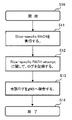
- FIG. 7 is a diagram showing an operation example according to the first embodiment.
- step S10 the UE 100 starts processing.
- step S11 the UE 100 performs slice-specific RACH.
- UE 100 slice-specific RACH parameters, by SIB (System Information Block: system information) or dedicated signaling, obtained from gNB200, by performing a random access procedure using the parameters, slice-specific RACH can run.
- SIB System Information Block: system information
- dedicated signaling obtained from gNB200
- step S12 the UE 100 records the first log information on the executed slice-specific RACH in the memory.
- the first log information may also include log information that can be obtained by executing a normal random access procedure instead of the slice-specific RACH. Examples of such log information include the following.
- At least one of the number of random access preambles transmitted from UE 100, the total number of consecutive random access preambles transmitted from UE 100, and contention detection may be included. These pieces of information are also information transmitted from the UE 100 to the gNB 200 as information included in the connection establishment failure report (ConnEstFailReport).
- At least one of the cell ID of the cell in which slice-specific RACH was performed, the purpose of random access, and the number of RACH Occasions may be included.
- These pieces of information are also information transmitted from the UE 100 to the gNB 200 as information included in a random access report (RA-Report) or a radio link failure report (RLF-Report).
- RA-Report random access report
- RLF-Report radio link failure report
- a slice-specific RACH-specific log is recorded in the memory as the first log information. That is, when the slice-specific RACH is executed (RACH attempt), the UE 100 records any of the following information as the first log information.
- PRACH Physical RACH
- the UE 100 may further record the identifier of the slice or slice group that performed the priority RACH (priority access).
- the above (A1) and (A4) for example, contain information about slices and can be said to be slice-specific RACH-specific logs. Also, for example, in the slice-specific RACH, RACH resources separated for each slice group are used, so (A2) and (A3) make it possible to record which RACH resource was used.
- the UE 100 transmits the first log information recorded in the memory to the gNB 200.
- the UE 100 may transmit a UE information response (UE Information Response) message including the first log information to the gNB 200.
- UE 100 transmits a UE information response message as a response message to the UE Information Request message received from gNB 200 .
- the UE 100 may transmit the above (A4) by transmitting a UE information response message in which the IE "raPurpose" indicating the purpose of random access is set to "Slice-specific RACH attempt".
- step S14 the UE 100 ends the series of processes.
- a connection establishment failure report, random access report, or radio link failure report is recorded as a log as log information that can be acquired by executing normal RACH.
- log information that can be acquired by executing normal RACH time stamp, position information (latitude, longitude, altitude, etc.), and radio conditions (RSRP (Reference Signal Received Power), RSRQ ( Reference Signal Received Quality), SINR (Signal to Interference plus Noise Ratio), etc.) may be recorded as first log information and transmitted to gNB 200 .
- RSRP Reference Signal Received Power
- RSRQ Reference Signal Received Quality
- SINR Signal to Interference plus Noise Ratio
- the cell ID of the cell visited by UE 100 may be reported to gNB 200 as a mobility history report. However, reporting the result of cell reselection in UE 100 to gNB 200 is not specified.
- the slice-specific cell reselection described above is introduced, whether or not the UE 100 was able to reselect a cell that supports the desired slice ("intended slice") is one of the information for network optimization. expected to become For example, the operator can place a new cell that supports the URLLC slice in an area where there are many UEs 100 that desire the URLLC (Ultra-Reliable and Low Latency Communications) slice as the desired slice.
- intended slice is one of the information for network optimization. expected to become For example, the operator can place a new cell that supports the URLLC slice in an area where there are many UEs 100 that desire the URLLC (Ultra-Reliable and Low Latency Communications) slice as the desired slice.
- the user apparatus for example, UE 100 performs slice-specific cell reselection using frequencies with priority mapped for each slice.
- the user equipment records in memory the second log information obtained when performing slice-specific cell reselection.
- the user equipment sends the second log information to the base station (eg gNB 200).
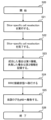
- FIG. 8 is a diagram showing an operation example according to the second embodiment.
- step S20 the UE 100 starts processing.
- step S21 the UE 100 performs slice-specific cell reselection.
- UE 100 slice-specific cell reselection parameters, SIB or dedicated signaling, by obtaining from gNB 200 and performing cell reselection using the parameters, slice-specific cell reselection can be performed.
- step S22 the UE 100 completes slice-specific cell reselection. Whether or not the slice-specific cell reselection is completed may be determined by whether or not a predetermined completion condition is met. Predetermined completion conditions include, for example, 1) reselecting a prioritized frequency (or cell) associated with a slice, 2) reselecting the highest priority frequency (or cell), and 3) reselecting Either the selected cell (or frequency) transmits slice-specific RACH parameters corresponding to a slice identifier indicating "intended slice". The UE 100 may determine a condition other than such a predetermined completion condition as the completion condition.
- step S23 when the slice-specific cell reselection is successful, the UE 100 records the first information in the memory as the second log information. Also, in step S23, when the slice-specific cell reselection fails, the UE 100 records the second information in the memory as the second log information. Successful or unsuccessful slice-specific cell reselection may be determined, for example, by meeting a completion condition. In addition, UE100 shall perform normal cell reselection, when slice specific cell reselection fails.
- the first information may be, for example, any of the following.
- (B4) Information indicating that the target slice ("intended slice") is located in a cell that supports priority access For example, when UE 100 receives slice-specific RACH parameters in a serving cell, it can be determined that UE 100 is serving a cell that supports priority access for the slice.
- Such information may be represented by a cell ID or ARFCN (Absolute radio-frequency channel number).
- the second information may be, for example, any of the following.
- (C1) Identifier of the desired slice ("intended slice”). For example, the identifier of the desired slice when slice-specific cell reselection fails for cells supporting the desired slice.
- C4 Information indicating that the cell is located in a cell that does not support priority access for the slice ("intended slice"). For example, when UE 100 does not receive slice-specific RACH parameters in a serving cell, it can be determined that UE 100 is serving a cell that does not support priority access for the slice.
- the UE 100 may record at least one of timestamp, position information (latitude, longitude, altitude, etc.), and radio conditions (RSRP, RSRQ, SINR, etc.) as the second log information.
- position information latitude, longitude, altitude, etc.
- radio conditions RSRP, RSRQ, SINR, etc.
- step S24 the UE 100 transitions to the RRC connected state.
- UE 100 may notify gNB 200 of information indicating that a log regarding slice-specific cell reselection is being recorded. The notification may be made by the UE 100 transmitting an RRC Setup Complete message or an RRC Resume Complete message containing "Slice-specific cell reselection log available".
- the UE 100 transmits the log (second log information) recorded in the memory to the gNB 200.
- the UE 100 may include the log in a UE Information Response message, which is a response message to the UE Information Request message received from the gNB 200 .
- step S26 the UE 100 ends the series of processes.
- a program that causes a computer to execute each process performed by the UE 100 or the gNB 200 may be provided.
- the program may be recorded on a computer readable medium.
- a computer readable medium allows the installation of the program on the computer.
- the computer-readable medium on which the program is recorded may be a non-transitory recording medium.
- the non-transitory recording medium is not particularly limited, but may be, for example, a recording medium such as CD-ROM or DVD-ROM.
- a circuit that executes each process performed by the UE 100 or gNB 200 may be integrated, and at least part of the UE 100 or gNB 200 may be configured as a semiconductor integrated circuit (chipset, SoC).
- the terms “based on” and “depending on,” unless expressly stated otherwise, “based only on.” does not mean The phrase “based on” means both “based only on” and “based at least in part on.” Similarly, the phrase “depending on” means both “only depending on” and “at least partially depending on.” Also, “obtain/acquire” may mean obtaining information among stored information, or it may mean obtaining information among information received from other nodes. or it may mean obtaining the information by generating the information.
- the terms “include,” “comprise,” and variations thereof are not meant to include only the recited items, and may include only the recited items or in addition to the recited items. Means that it may contain further items.
- references to elements using the "first,” “second,” etc. designations used in this disclosure do not generally limit the quantity or order of those elements. These designations may be used herein as a convenient method of distinguishing between two or more elements. Thus, references to first and second elements do not imply that only two elements may be employed therein, or that the first element must precede the second element in any way.
- references to first and second elements do not imply that only two elements may be employed therein, or that the first element must precede the second element in any way.
- Mobile communication system 10 5GC 100: UE 110: Wireless communication unit 130: Control unit 200: gNB 210: Wireless communication unit 220: Network communication unit 230: Control unit 301: AMF 302: UPF
Landscapes
- Engineering & Computer Science (AREA)
- Computer Networks & Wireless Communication (AREA)
- Signal Processing (AREA)
- Computer Security & Cryptography (AREA)
- Mobile Radio Communication Systems (AREA)
Priority Applications (2)
| Application Number | Priority Date | Filing Date | Title |
|---|---|---|---|
| JP2023540361A JP7823058B2 (ja) | 2021-08-05 | 2022-08-02 | 通信制御方法、移動通信システム、ユーザ装置、プログラム及びチップセット |
| US18/430,986 US20240172092A1 (en) | 2021-08-05 | 2024-02-02 | Communication control method |
Applications Claiming Priority (2)
| Application Number | Priority Date | Filing Date | Title |
|---|---|---|---|
| JP2021-128845 | 2021-08-05 | ||
| JP2021128845 | 2021-08-05 |
Related Child Applications (1)
| Application Number | Title | Priority Date | Filing Date |
|---|---|---|---|
| US18/430,986 Continuation US20240172092A1 (en) | 2021-08-05 | 2024-02-02 | Communication control method |
Publications (1)
| Publication Number | Publication Date |
|---|---|
| WO2023013636A1 true WO2023013636A1 (ja) | 2023-02-09 |
Family
ID=85155727
Family Applications (1)
| Application Number | Title | Priority Date | Filing Date |
|---|---|---|---|
| PCT/JP2022/029640 Ceased WO2023013636A1 (ja) | 2021-08-05 | 2022-08-02 | 通信制御方法 |
Country Status (3)
| Country | Link |
|---|---|
| US (1) | US20240172092A1 (https=) |
| JP (1) | JP7823058B2 (https=) |
| WO (1) | WO2023013636A1 (https=) |
Families Citing this family (1)
| Publication number | Priority date | Publication date | Assignee | Title |
|---|---|---|---|---|
| WO2020168538A1 (en) * | 2019-02-22 | 2020-08-27 | Qualcomm Incorporated | Random access channel occasion configuration |
Citations (3)
| Publication number | Priority date | Publication date | Assignee | Title |
|---|---|---|---|---|
| US20140241285A1 (en) * | 2011-11-02 | 2014-08-28 | Huawei Technologies Co., Ltd. | Method and device for processing random access parameter |
| JP2015528659A (ja) * | 2012-08-06 | 2015-09-28 | エルジー エレクトロニクス インコーポレイティド | 無線通信システムにおける移動性情報報告方法及びそれをサポートする装置 |
| WO2021025062A1 (ja) * | 2019-08-08 | 2021-02-11 | 京セラ株式会社 | 通信制御方法 |
Family Cites Families (2)
| Publication number | Priority date | Publication date | Assignee | Title |
|---|---|---|---|---|
| GB2552844A (en) * | 2016-08-12 | 2018-02-14 | Nec Corp | Communication system |
| CN111757527B (zh) * | 2019-03-29 | 2023-10-20 | 华为技术有限公司 | 通信方法、通信装置和系统 |
-
2022
- 2022-08-02 JP JP2023540361A patent/JP7823058B2/ja active Active
- 2022-08-02 WO PCT/JP2022/029640 patent/WO2023013636A1/ja not_active Ceased
-
2024
- 2024-02-02 US US18/430,986 patent/US20240172092A1/en active Pending
Patent Citations (3)
| Publication number | Priority date | Publication date | Assignee | Title |
|---|---|---|---|---|
| US20140241285A1 (en) * | 2011-11-02 | 2014-08-28 | Huawei Technologies Co., Ltd. | Method and device for processing random access parameter |
| JP2015528659A (ja) * | 2012-08-06 | 2015-09-28 | エルジー エレクトロニクス インコーポレイティド | 無線通信システムにおける移動性情報報告方法及びそれをサポートする装置 |
| WO2021025062A1 (ja) * | 2019-08-08 | 2021-02-11 | 京セラ株式会社 | 通信制御方法 |
Non-Patent Citations (2)
| Title |
|---|
| NOKIA, NOKIA SHANGHAI BELL: "Slice specific cell reselection", 3GPP DRAFT; R2-2105240, 3RD GENERATION PARTNERSHIP PROJECT (3GPP), MOBILE COMPETENCE CENTRE ; 650, ROUTE DES LUCIOLES ; F-06921 SOPHIA-ANTIPOLIS CEDEX ; FRANCE, vol. RAN WG2, no. Electronic; 20210519 - 20210527, 11 May 2021 (2021-05-11), Mobile Competence Centre ; 650, route des Lucioles ; F-06921 Sophia-Antipolis Cedex ; France , XP052006897 * |
| OPPO: "Consideration on slice-specific RACH", 3GPP DRAFT; R2-2105569, 3RD GENERATION PARTNERSHIP PROJECT (3GPP), MOBILE COMPETENCE CENTRE ; 650, ROUTE DES LUCIOLES ; F-06921 SOPHIA-ANTIPOLIS CEDEX ; FRANCE, vol. RAN WG2, no. E-meeting; 20210501, 11 May 2021 (2021-05-11), Mobile Competence Centre ; 650, route des Lucioles ; F-06921 Sophia-Antipolis Cedex ; France , XP052007147 * |
Also Published As
| Publication number | Publication date |
|---|---|
| JPWO2023013636A1 (https=) | 2023-02-09 |
| JP7823058B2 (ja) | 2026-03-03 |
| US20240172092A1 (en) | 2024-05-23 |
Similar Documents
| Publication | Publication Date | Title |
|---|---|---|
| US20240172070A1 (en) | Method and device for effectively performing standby mode operation in next generation mobile communication system | |
| CN102948202B (zh) | 在无线通信系统中报告记录的测量的方法和设备 | |
| JP7731472B2 (ja) | 通信制御方法、ユーザ装置、プロセッサ及びプログラム | |
| WO2018027988A1 (zh) | 网络切片的选择方法、无线接入设备和终端 | |
| US20250344063A1 (en) | Communication control method for communicating with public and non-public cellular networks | |
| JP7762262B2 (ja) | セル再選択方法及びユーザ装置 | |
| US20240373310A1 (en) | Communication control method | |
| US20240406824A1 (en) | Cell reselection method | |
| WO2020241426A1 (ja) | 無線測定収集方法及びユーザ装置 | |
| US20240172092A1 (en) | Communication control method | |
| US20240172090A1 (en) | Communication control method and user equipment | |
| US20240172088A1 (en) | Communication control method and core network apparatus | |
| US20240172089A1 (en) | Communication control method and base station | |
| US20240196285A1 (en) | Communication control method | |
| WO2023153360A1 (ja) | セル再選択方法 | |
| WO2023068262A1 (ja) | 通信制御方法、及びユーザ装置 | |
| CN115734257A (zh) | 一种被用于无线通信的方法和设备 | |
| JP7757521B2 (ja) | スライスサポート有無確認方法及びユーザ装置 | |
| US20250184981A1 (en) | Communication control method | |
| US20250184979A1 (en) | Communication control method | |
| US20240267803A1 (en) | Communication method and user equipment | |
| US20250048212A1 (en) | Slice-specific cell reselection method | |
| WO2025041636A1 (ja) | 通信方法、ユーザ装置、及びネットワークノード | |
| CN117858277A (zh) | 一种被用于无线通信的方法和设备 |
Legal Events
| Date | Code | Title | Description |
|---|---|---|---|
| 121 | Ep: the epo has been informed by wipo that ep was designated in this application |
Ref document number: 22853055 Country of ref document: EP Kind code of ref document: A1 |
|
| WWE | Wipo information: entry into national phase |
Ref document number: 2023540361 Country of ref document: JP |
|
| NENP | Non-entry into the national phase |
Ref country code: DE |
|
| 122 | Ep: pct application non-entry in european phase |
Ref document number: 22853055 Country of ref document: EP Kind code of ref document: A1 |