WO2023013179A1 - プログラム、方法、およびシステム - Google Patents
プログラム、方法、およびシステム Download PDFInfo
- Publication number
- WO2023013179A1 WO2023013179A1 PCT/JP2022/016697 JP2022016697W WO2023013179A1 WO 2023013179 A1 WO2023013179 A1 WO 2023013179A1 JP 2022016697 W JP2022016697 W JP 2022016697W WO 2023013179 A1 WO2023013179 A1 WO 2023013179A1
- Authority
- WO
- WIPO (PCT)
- Prior art keywords
- ticket
- visitor
- user
- information
- suspected
- Prior art date
- Legal status (The legal status is an assumption and is not a legal conclusion. Google has not performed a legal analysis and makes no representation as to the accuracy of the status listed.)
- Ceased
Links
Images



Classifications
-
- G—PHYSICS
- G06—COMPUTING OR CALCULATING; COUNTING
- G06Q—INFORMATION AND COMMUNICATION TECHNOLOGY [ICT] SPECIALLY ADAPTED FOR ADMINISTRATIVE, COMMERCIAL, FINANCIAL, MANAGERIAL OR SUPERVISORY PURPOSES; SYSTEMS OR METHODS SPECIALLY ADAPTED FOR ADMINISTRATIVE, COMMERCIAL, FINANCIAL, MANAGERIAL OR SUPERVISORY PURPOSES, NOT OTHERWISE PROVIDED FOR
- G06Q50/00—Information and communication technology [ICT] specially adapted for implementation of business processes of specific business sectors, e.g. utilities or tourism
- G06Q50/10—Services
Definitions
- the present disclosure relates to programs, methods, and systems.
- the present invention makes the ticket inspection process extremely simple and provides a certain fraud detection mechanism, so that the ticket inspection process of many visitors can be performed in a short time while suppressing the willingness of the visitors to fraud.
- the purpose is to provide a ticket system that can
- a program is provided in a processor of a computer, at least one of a ticket ID and a user ID that identify ticket information, a user's face image, and and registering them in association with each other; A step of extracting a user, and a step of assisting a prescribed measure for the user when the user who is likely to meet a prescribed condition is extracted are executed.
- the ticket inspection process for a large number of visitors can be performed in a short time by making the ticket inspection process extremely simple.
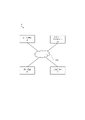
- FIG. 1 is an explanatory diagram of the outline of this embodiment; It is a figure which shows an example of the data structure of the user database of this embodiment, and an event database. It is a figure which shows an example of the data structure of the ticket database of this embodiment, and a visitor database.
- 4 is a flow chart of ticket issuing processing according to the present embodiment. It is a flowchart of the first half of the ticket inspection process of this embodiment. It is a flowchart of the latter half of the ticket inspection process of this embodiment. It is an example of the screen of the notification of the reexamination of body temperature measurement. 4 is a flowchart of processing for detecting suspected visitors according to the present embodiment.
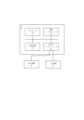
- FIG. 1 is a block diagram showing the configuration of a ticket system 1 of this embodiment.
- the ticket system 1 includes a user terminal 10 , a ticket management server 20 , a ticket inspection device 30 and an attendant terminal 40 .
- the user terminal 10, ticket management server 20, ticket inspection device 30, and attendant terminal 40 can be connected via a network (for example, the Internet or an intranet) NW.
- the user terminal 10 is an information processing device.
- the user terminal 10 is an information processing device owned by a ticket purchaser.
- the user terminal 10 is configured to request ticket information from the ticket management server 20 .
- the information processing device is, for example, a smartphone, a tablet terminal, a personal computer, a server computer (for example, a web server, an application server, a database server, or a combination thereof), a wearable device (for example, a smart watch, or a smart glasses), etc.
- a server computer for example, a web server, an application server, a database server, or a combination thereof
- a wearable device for example, a smart watch, or a smart glasses
- Ticket information is information about tickets.
- the ticket information includes information that identifies the ticket, information about the authority that the ticket certifies (for example, information about the performance that the ticket is intended for), information about the purchaser of the ticket (for example, a user ID), or any of these. It may include combinations, or code information that encodes them (eg, QR Codes®, or other one- or two-dimensional codes).
- a ticket is a carrier of ticket information.
- the ticket may be an image of ticket information displayed on the user terminal 10 held by the visitor (that is, an electronic ticket).
- a user terminal 10 held by a visitor is a mobile computer (smartphone, tablet terminal, laptop computer, or wearable device) connectable to the network NW.
- the ticket may be paper or other medium on which ticket information is printed.
- the ticket inspection device 30 is an information processing device arranged at a ticket inspection place of a facility.
- the ticket inspection device 30 is configured, for example, to refer to the ticket information held by the ticket presented by a person entering the event site (hereinafter referred to as "a visitor") and determine whether the visitor is permitted to enter. be.
- the ticket inspection device 30 captures the face image of the visitor and stores it in association with the ticket information.
- the ticket inspection device 30 is configured to refer to the measurement result of the visitor's body temperature measured when the ticket is presented, and determine whether or not the visitor has a high fever.
- the ticket inspection device 30 is configured to send a notification to the visitor's contact information according to the determination result of whether or not the visitor has a high fever.
- a facility refers to a space in which a service is provided.
- Facilities include, for example, event venues.
- a facility may be a part of the space within an area, such as an amusement facility in a theme park.
- the facility may be an indoor facility or an outdoor facility.
- the event venues included in the facility are entertainment venues, including, for example, concert venues, theater venues, game venues, exhibition venues, or combinations thereof.
- a plurality of surveillance cameras are installed in the facility in advance, and the faces of visitors who come and go within the event venue are acquired as videos.
- a moving image of a visitor's face captured inside the event venue is divided into still image frames (images taken inside the venue) shot from multiple directions for each visitor, and stored in a monitoring camera database. Note that only one monitoring camera may be installed in the facility.
- the attendant terminal 40 is an information processing device possessed by an attendant who manages the event site (including monitoring the event site).
- the attendant terminal 40 may include various computers with portability such as smart phones, tablet terminal wearable devices (eg, smart watches, or smart glasses). Note that the attendant terminal 40 may be a general personal computer that is not portable.
- the person in charge monitors illegal acts by visitors in the event venue. Misconduct by visitors includes nuisance within the event venue, acts not responding to the event management company's necessary requests for event management, unauthorized entry with forged or duplicated tickets, and unauthorized resale of tickets. Unauthorized entry by
- FIG. 2 is a block diagram showing the configuration of the user terminal 10 of this embodiment.
- the user terminal 10 includes a storage device 11, a processor 12, an input/output interface 13, and a communication interface 14.
- User terminal 10 is connectable to at least one of input device 15 and output device 16 .
- the storage device 11 is configured to store programs and data.
- the storage device 11 is, for example, a combination of ROM (Read Only Memory), RAM (Random Access Memory), and storage (eg, flash memory or hard disk).
- Programs include, for example, the following programs. ⁇ OS (Operating System) program ⁇ Application (for example, web browser) program that executes information processing
- the data includes, for example, the following data. ⁇ Databases referenced in information processing ⁇ Data obtained by executing information processing (that is, execution results of information processing)
- the processor 12 is configured to implement the functions of the user terminal 10 by activating programs stored in the storage device 11 .
- Processor 12 is an example of a computer.
- the input/output interface 13 acquires signals (e.g., user instructions, sensing signals, or combinations thereof) from the input device 15 and outputs signals (e.g., image signals, audio signals, or combinations thereof) to the output device 16. ).
- signals e.g., user instructions, sensing signals, or combinations thereof
- signals e.g., image signals, audio signals, or combinations thereof
- the input device 15 is, for example, a keyboard, pointing device, touch panel, physical button, sensor (eg, camera, vital sensor, or combination thereof), or a combination thereof.
- the output device 16 is, for example, a display, a speaker, a printer, or a combination thereof.
- the communication interface 14 is configured to control communication between the user terminal 10 and an external device (for example, at least one of the ticket management server 20, the ticket inspection device 30, or the attendant terminal 40).
- an external device for example, at least one of the ticket management server 20, the ticket inspection device 30, or the attendant terminal 40.
- FIG. 3 is a block diagram showing the configuration of the ticket management server 20 of this embodiment.
- the ticket management server 20 includes a storage device 21, a processor 22, an input/output interface 23, and a communication interface 24.
- the ticket management server 20 is connectable with at least one of an input device 25 and an output device 26 .
- the storage device 21 is configured to store programs and data.
- Storage device 21 is, for example, a combination of ROM, RAM, and storage (eg, flash memory or hard disk).
- Programs include, for example, the following programs. ⁇ OS program ⁇ Application program that executes information processing
- the data includes, for example, the following data. ⁇ Databases referenced in information processing ⁇ Execution results of information processing
- the processor 22 is configured to implement the functions of the ticket management server 20 by activating the programs stored in the storage device 21 .
- Processor 22 is an example of a computer.
- Input/output interface 23 acquires signals (e.g., user instructions, sensing signals, or combinations thereof) from input device 25 and outputs signals (e.g., image signals, audio signals, or combinations thereof) to output device 26 . ).
- signals e.g., user instructions, sensing signals, or combinations thereof
- signals e.g., image signals, audio signals, or combinations thereof
- the input device 25 is, for example, a keyboard, pointing device, touch panel, sensor, or a combination thereof.
- the output device 26 is, for example, a display, a speaker, or a combination thereof.
- the communication interface 24 is configured to control communication between the ticket management server 20 and an external device (eg, at least one of the user terminal 10, the ticket inspection device 30, or the attendant terminal 40).
- an external device eg, at least one of the user terminal 10, the ticket inspection device 30, or the attendant terminal 40.
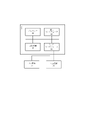
- FIG. 4 is a block diagram showing the configuration of the ticket inspection device 30 of this embodiment.
- FIG. 5 is a block diagram showing an example of the configuration of an input device connectable to the ticket inspection device 30 of this embodiment.
- the ticket inspection device 30 includes a storage device 31, a processor 32, an input/output interface 33, and a communication interface .
- the ticket inspection device 30 can be connected to at least one of the input device 35 and the output device 36 .
- the storage device 31 is configured to store programs and data.
- Storage device 31 is, for example, a combination of ROM, RAM, and storage.
- Programs include, for example, the following programs. ⁇ OS program ⁇ Application program that executes information processing
- the data includes, for example, the following data. ⁇ Databases referenced in information processing ⁇ Data obtained by executing information processing
- the processor 32 is configured to implement the functions of the ticket inspection device 30 by activating the program stored in the storage device 31 .
- Processor 32 is an example of a computer.
- Input/output interface 33 acquires signals (e.g., user instructions, sensing signals, or combinations thereof) from input device 35 and outputs signals (e.g., image signals, audio signals, or combinations thereof) to output device 36. ).
- signals e.g., user instructions, sensing signals, or combinations thereof
- signals e.g., image signals, audio signals, or combinations thereof
- Input device 35 is, for example, a keyboard, pointing device, touch panel, sensor (eg, camera, vital sensor, or combination thereof), or a combination thereof.
- the input device 35 includes a thermography 351 and a visible light camera 352, as shown in FIG.
- Thermography 351 is configured to photograph the visitor when the visitor presents the ticket.
- Visible light camera 352 is configured to photograph the ticket and the visitor upon presentation of the ticket by the visitor.
- the input device 35 either alone or in cooperation with the processor 32, implements at least authentication information acquisition means and body temperature measurement means.
- the authentication information acquisition means reads information (hereinafter referred to as "authentication information") necessary for determining whether or not the visitor can enter the venue when the ticket is presented by the visitor.
- Authentication information includes, for example: ⁇ Ticket information
- a ticket has a ticket information area for reading ticket information. Ticket information is displayed or printed in the ticket information area.
- the authentication information acquisition means is a combination of the visible light camera 352 and an application that analyzes the image captured by the visible light camera 352, extracts the image of the ticket information, and restores the ticket information from the image of the ticket information.
- OCR Optical Character Recognition
- the ticket and the visitor may be photographed simultaneously or sequentially by the same visible light camera 352, or one may be photographed by the visible light camera 352 and the other may be photographed by another visible light camera (not shown).
- the body temperature measurement means measures the body temperature of the visitor when the ticket is presented by the visitor.
- the body temperature measuring means preferably measures the body temperature of the visitor in a non-contact manner. This saves the trouble of disinfection after measurement. Also, even if a visitor has an infectious disease, the risk of spreading the infectious disease to other visitors and staff at the ticket inspection station is low.
- the body temperature measurement means analyzes the thermography 351 and the thermography image taken by the thermography 351 to extract the image of the visitor, and measures the temperature specified by referring to the pixel value of the image of the visitor. By combining with an application that obtains the result of measuring the body temperature (exactly body surface temperature) of the visitor, the body temperature of the visitor can be measured without contact.
- thermography image the measurement result of the visitor and the measurement result of other persons can be distinguished based on the interocular distance.
- the size of the face, the distance between the parts of the face, or a combination of these will be used to compare the measurement results of the visitor and the measurement results of other people in the thermography image. may be distinguished.
- thermography measurement of body temperature has an error due to, for example, the shooting conditions.
- the body temperature measuring means refers to the interocular distance of the visitor in the thermography image, estimates the distance from the photographing point of the thermography image to the visitor, and compares the estimated distance with the region corresponding to the visitor in the thermography image.
- the temperature specified by referring to the pixel value may be acquired as the result of measuring the body temperature of the visitor.
- the distance from the photographing point of the thermography image to the visitor is estimated based on the size of the face, the distance between parts, or a combination thereof. good too.
- the output device 36 is, for example, a display, a speaker, an alarm device, a motorized gate, or a combination thereof.
- the communication interface 34 is configured to control communication between the ticket inspection device 30 and an external device (eg, at least one of the user terminal 10, the ticket management server 20, or the attendant terminal 40).
- an external device eg, at least one of the user terminal 10, the ticket management server 20, or the attendant terminal 40.
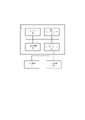
- FIG. 5 is a block diagram showing the configuration of the user terminal 10 of this embodiment.
- the attendant terminal 40 includes a storage device 41, a processor 42, an input/output interface 43, and a communication interface 44.
- Attendant terminal 40 can be connected to at least one of input device 45 and output device 46 .
- the storage device 41 is configured to store programs and data.
- the storage device 41 is, for example, a combination of ROM (Read Only Memory), RAM (Random Access Memory), and storage (eg, flash memory or hard disk).
- Programs include, for example, the following programs. ⁇ OS (Operating System) program ⁇ Application (for example, web browser) program that executes information processing
- the data includes, for example, the following data. ⁇ Databases referenced in information processing ⁇ Data obtained by executing information processing (that is, execution results of information processing)
- the processor 42 is configured to realize the functions of the attendant terminal 40 by activating the program stored in the storage device 41 .
- Processor 42 is an example of a computer.
- Input/output interface 43 acquires signals (e.g., user instructions, sensing signals, or combinations thereof) from input device 45 and outputs signals (e.g., image signals, audio signals, or combinations thereof) to output device 46 . ).
- signals e.g., user instructions, sensing signals, or combinations thereof
- signals e.g., image signals, audio signals, or combinations thereof
- the input device 45 is, for example, a keyboard, pointing device, touch panel, physical button, sensor (eg, camera, vital sensor, or combination thereof), or a combination thereof.
- the output device 46 is, for example, a display, a speaker, a printer, or a combination thereof.
- the communication interface 44 is configured to control communication between the attendant terminal 40 and an external device (eg, at least one of the user terminal 10, the ticket management server 20, or the ticket inspection device 30).
- an external device eg, at least one of the user terminal 10, the ticket management server 20, or the ticket inspection device 30.
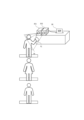
- FIG. 6 is an explanatory diagram of the outline of this embodiment.
- the tickets handled by the ticket system 1 according to the present invention include admission tickets, usage tickets, attendance tickets, passenger tickets, membership cards, theme park passports, etc., which are required to be presented by users when using facilities that provide various services.
- Various forms of certificates such as Various services include providing concerts and sports viewing experiences at event venues and stadiums, exhibitions of collections for appreciation at museums, providing attraction facilities at amusement facilities, providing training facilities at sports gyms, and lectures at regional organizations.
- a wide variety of content is included, such as the provision of In the ticket system of the present invention, at least one of the ticket information (or user ID) acquired at the time of entry and the face image is used to extract users who are likely to meet predetermined conditions. When extracting a user who may match the above, support the prescribed measures for the user.
- contents will be described with specific examples.
- an example of visiting an event site where a concert is held will be described. Visitors (users) to the event site enter the event site via a ticket inspection station installed in the event site. At this time, present the ticket at the ticket inspection office to enter the venue.
- the ticket inspection device 30 is placed at the ticket inspection station.
- a plurality of people form a line, and ticket inspection is performed for each person in turn.
- the visible light camera 352 photographs the ticket TC and the visitor TP within the imaging range of the visible light camera 352 when the ticket TC is presented by the visitor TP.
- the ticket inspection device 30 (specifically, the processor 32 ) obtains the ticket information of the ticket TC and the face image of the visitor TP from the image captured by the visible light camera 352 .
- the ticket inspection device 30 refers to the ticket information of the ticket TC and the ticket database, determines whether the ticket information is valid for the event, and determines whether the visitor TP is permitted to enter. As an example, the ticket inspection device 30 checks whether the ticket information of the visitor TP is properly issued ticket information.
- the ticket inspection device 30 creates a visitor database using the obtained face images of the visitors. Then, the ticket inspection device 30 detects suspicion of fraud by using at least one of the photographed image of the inside of the venue and the face image of the visitor, which is photographed inside the event venue and stored in the monitoring camera database.
- the information on the suspected visitor who is suspected of performing the fraudulent activity is sent to the staff terminal 40.
- the staff uses the information of the suspected visitor sent to the staff terminal 40 to confirm the fraud on site.
- the staff terminal 40 is input to report the fact.
- the ticket management server 20 imposes sanctions on the suspected visitor who is determined to have committed an illegal act and the person involved in the act, such as restricting subsequent ticket purchases.
- thermography 351 in the ticket inspection device 30 photographs the visitor TP who is within the imaging range of the thermography 351 when the ticket TC is presented by the visitor TP.
- the ticket inspection device 30 acquires the result of measuring the body temperature of the visitor TP from the thermography image captured by the thermography 351 .
- the ticket inspection device 30 refers to the acquired measurement results to determine whether the visitor TP has a high fever.
- the ticket inspection device 30 transmits a notification to the contact address of the visitor TP according to the determination result of whether or not the visitor TP has a high fever. At least, when it is determined that the visitor TP has a high fever, the ticket inspection device 30 sends the visitor TP a formal temperature measurement or a notification to prompt the visitor TP to leave the event site promptly.
- the ticket inspection device 30 determines whether admission is permitted without referring to the measurement result of the body temperature of the visitor TP, while referring to the measurement result to determine whether the visitor TP has a high fever. , when it is determined that the visitor TP has a high fever, a notification is sent to the contact information of the visitor TP. As a result, the visitor TP will not be stopped at the ticket inspection place only for the reason of high fever. Therefore, the surrounding people do not notice that the visitor has a high fever, so that they do not feel bad feelings such as anxiety and disgust about the presence of a person with a high fever nearby. On the other hand, visitors are not exposed to curiosity by being denied entry on the basis of high fever alone.
- this ticket inspection device 30 and the ticket system 1 including this ticket inspection device 30 none of the visitors to the event venue will feel uncomfortable due to the temperature measurement at the time of ticket inspection, so a person with a high fever can be found. It is also possible to prevent confusion and trouble from occurring.
- the visitor TP who is determined to have a high fever is prompted to take a formal temperature measurement or promptly leave the event site by checking the received notification. Therefore, it is possible to prevent the spread of infection due to the visitor TP determined to have a high fever staying at the event venue for a long time.
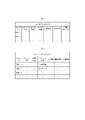
- FIG. 8A is a diagram showing the data structure of the user database of this embodiment.
- User information is stored in the user database.
- User information is information about the user of the ticket system 1 .
- the user database includes a "user ID” field, a "login PASS” field, a "user name” field, a “user attribute” field, a “contact” field, and a “payment method” field. and an "Action Status” field.
- the "User ID” field stores an ID for identifying the user who purchases the ticket.
- the "login PASS" field stores the password that the user corresponding to the user ID is required to enter when logging into the ticket system 1 when purchasing a ticket.
- the "user name” field stores the name of the user corresponding to the user ID.
- the "user attribute” field stores user attribute information identified by the user ID. Attribute information is information about user attributes. Attributes can include, for example, name, date of birth, gender, age, or combinations thereof. In addition, the "user attribute” field can include the status of the user, such as a fan club member, related to the provision of the event.
- the "contact information” field stores the contact information of the user identified by the user ID.
- Contact information is information about the user's contact information.
- the contact information is, for example, an email address, phone number, SNS (Social Networking Service) or other messaging-enabled application account information, or a combination thereof.
- Contact information is not limited to the examples given here, and can include any type of information that can be used to send real-time notifications to visitors via user terminal 10 .
- the "payment method” field stores the method of payment for the ticket purchase.
- the "measure status" field stores the contents of various sanctions applied as penalties for the user corresponding to the user ID having committed an illegal act.
- various sanctions include the following items. It should be noted that the content of the sanction may be other content as long as it serves as a deterrent to fraudulent actions against the user.
- the blacklist which is a list of visitors who are subject to predetermined restrictions and special monitoring, such as being prohibited from exiting or entering the facility on the day (The blacklist may be shared with other shows)
- ⁇ Restrictions on ticket purchases for a certain period of time (or at all in the future) ⁇ Deprivation of various membership qualifications such as fan clubs ⁇ Prohibition from participating in events (including attending as a companion) ⁇ Restrictions on viewing online events by the same organizer ⁇ Restrictions on purchasing various goods at the online shop
- FIG. 8B is a diagram showing an example of the data structure of the event database.
- event information is stored in the event database.
- the event information is information about an event held at an event site where the user purchases a ticket and attends.
- the event database includes an "event ID” field, an "event name” field, an "operating company” field, an "event content” field, a “performer” field, and an "event date” field. field and a "venue time” field.
- the "event ID” field stores an ID for identifying the event.
- the "event name” field stores information about the name of the event corresponding to the event ID.
- the "operating company” field stores information about the operating company of the event corresponding to the event ID.
- the "event content” field stores information about the content of the event corresponding to the event ID.
- Information about the content of the event includes, for example, "professional baseball” or "concert”.
- the "performer" field stores information about the performer of the event corresponding to the event ID.
- Information about performers includes team names, band names, group names, names of singers or actors, and the like.
- the "date and time of event” field stores information about the date and time of the event corresponding to the event ID.
- the "venue time” field stores the venue time of the event corresponding to the event ID.
- the venue time is the time at which visitors start entering the event venue.
- FIG. 8A is a diagram showing an example of the data structure of the ticket database of this embodiment.
- the ticket database stores ticket information.
- the ticket database contains a "ticket ID” field, an "event ID” field, a "purchaser ID” field, a “seat number” field, a “ticket inspection status” field, a “ticket price” field, and a “purchase date and time” field. ” fields.
- the "ticket ID" field stores the ticket ID.
- a ticket ID is information for identifying a ticket.
- the "event ID” field stores the event ID of the event to which the ticket corresponding to the ticket ID corresponds.
- the "purchaser ID” field stores the user ID of the user who purchased the ticket corresponding to the ticket ID. Note that the user's SNS ID may be registered as the purchaser ID. Also, if there is a companion, the companion ID may be registered together with the purchaser ID.
- the "seat number” field stores the seat number information.
- the seat number information is information about a seat (an example of a “zone”) assigned to the purchaser of the ticket identified by the ticket ID.
- the "Ticket inspection status” field stores information indicating whether the ticket corresponding to the ticket ID has been inspected. For example, when the ticket inspection is performed, "after tearing off” is displayed, and when the ticket inspection is not performed, "before tearing off” is displayed.
- the "Ticket Price” field stores information about the price of the ticket corresponding to the ticket ID.
- the "date and time of purchase" field stores information about the date and time when the ticket corresponding to the ticket ID was purchased.
- FIG. 8B is a diagram showing an example of the data structure of the visitor database of this embodiment. As shown in FIG. 8B, the visitor database stores information about visitors to the event site.
- the visitor database includes a "visitor ID” field, an "event ID” field, a “ticket ID” field, a “seat number” field, a “purchaser ID” field, and " Visitor face image” field, “ticket inspection time” field, “temperature measurement result” field, and “response status”.
- the "visitor ID" field stores the visitor ID that identifies the visitor.
- the visitor ID is an ID assigned, for example, in the order in which ticket inspection processing is performed.
- the "event ID” field stores the event ID of the event attended by the visitor corresponding to the visitor ID.
- the "ticket ID” field stores the ticket ID of the ticket possessed by the visitor corresponding to the visitor ID. That is, the ticket ID field of the visitor database stores the ticket ID of the ticket presented by the visitor at the time of ticket inspection.
- the "seat number" field stores the seat number associated with the ticket ID of the ticket possessed by the visitor corresponding to the visitor ID.
- the "visitor face image” field stores the face image of the visitor corresponding to the visitor ID taken at the time of ticket inspection.
- the "ticket inspection time” field stores the time at which the ticket inspection process was performed by the visitor corresponding to the visitor ID.
- the "primary temperature measurement result” field stores the result of the temperature measurement (primary temperature measurement) performed during the ticket inspection process for the visitor corresponding to the visitor ID.
- the temperature measurement result if the body temperature is less than a predetermined temperature, "Normal temperature” is displayed, and if the body temperature is equal to or higher than the predetermined temperature, "High temperature” is displayed.
- the "Secondary temperature measurement result” field stores the results of the re-examination imposed on visitors who were determined to have a high temperature in the primary temperature measurement among the visitors corresponding to the visitor ID. In other words, it can be confirmed that the visitor whose primary temperature measurement result is high temperature and whose secondary temperature measurement result has not been input has not undergone the reexamination that should have been taken.
- the "response status" field stores the contents of the response currently being made to the visitor corresponding to the visitor ID.
- items and contents of correspondence status are as follows. ⁇ No response (initial setting): State in which suspicion of fraudulent activity is not detected ⁇ Suspicious detection: Status in which suspicion of fraudulent activity is detected ⁇ Constraints have been dealt with...Some sanctions have been taken ⁇ Exited...Exit from the facility has been taken
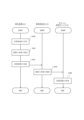
- FIG. 9 is a flow chart of the ticket issuing process of this embodiment.
- the user terminal 10 accepts a purchase operation (S110).
- the processor 12 receives a purchase operation made on the input device 15 via the input/output interface 13 .
- the purchaser of the ticket is not limited to the user himself/herself, but may be a person who operates a ticket purchase terminal having the same configuration as the user terminal 10 (for example, an attendant at a ticket sales office) instead of the user.
- a purchase operation may include, for example, inputting a user ID, selecting an event, selecting a date and time, selecting a seat type, pressing a purchase button (button object or physical button), or a combination thereof.
- the user terminal 10 issues a ticket issue request (S111).
- processor 12 generates a ticket issuance request by referring to the content of the purchase operation received in step S110.
- the ticket issuance request includes, for example, information specifying the type of ticket requested to be issued (for example, information specifying performance, date and time, and seat type) and the user ID of the purchaser of the ticket.
- the processor 12 transmits a ticket issue request to the ticket management server 20 via the communication interface 14 .
- the ticket management server 20 updates the ticket database (S120). Specifically, the processor 22 newly registers the user ID included in the ticket issuance request in the ticket database (FIG. 8A) in association with the unissued ticket ID, and updates the purchase date and time. This makes it possible to identify the purchaser of the ticket based on the ticket ID.
- the ticket management server 20 provides ticket information (S121). Specifically, the processor 22 generates ticket information by referring to the updated contents of the database in step S121.
- the ticket information includes the ticket ID newly registered in step S121. Further, the ticket information can include the user ID of the ticket purchaser identified in step S121. Some or all of the information included in the ticket information may be encoded in, for example, a QR code or other code information.
- the processor 22 provides the generated ticket information to the ticket purchaser. As an example, processor 22 transmits to user terminal 10 via communication interface 24 .
- the user terminal 10 saves the ticket information (S112). Specifically, processor 12 obtains the ticket information provided in step S122. The processor 12 stores the acquired ticket information in the storage device 11 . This allows processor 12 to display the ticket information, if desired. Additionally, processor 12 may optionally perform at least one of the following. • Cause the output device 16 (printing device) to print the ticket information onto paper or other media. - Cause the communication interface 14 to transmit the ticket information to the user terminal 10 of the purchaser of the ticket.
- FIG. 10 is a first half flowchart of the ticket inspection process of this embodiment.
- the user terminal 10 displays ticket information (step S113). Specifically, the processor 12 reads out and displays the ticket information stored in the storage device 11 in response to the operation of the user terminal 10 at the ticket inspection station of the event site by a visitor who has visited the event site. At this time, the ticket information may be displayed in the form of a two-dimensional code such as a QR code. The visitor presents the displayed ticket information to the ticket inspection device 30 .
- the ticket inspection device 30 reads the ticket (S130). Specifically, upon presentation of a ticket by an attendee, processor 32 cooperates with visible light camera 352 to read ticket information. In step S130, the processor 32 may display the image captured by the visible light camera 352 on the output device 36 (display) for visitors. As a result, it is possible to give the visitor feedback on how the ticket is being photographed, and prompt them to make fine adjustments to the position and posture of the ticket.
- the ticket inspection device 30 photographs the face image of the visitor (step S131).
- the processor 32 cooperates with the visible light camera 352 to photograph the face image of the visitor.
- the ticket ID and the face image are acquired at once by the same image capturing device, but they may be captured by different image capturing devices.
- the processor 32 may display the image captured by the visible light camera 352 on the output device 36 (display) for visitors or staff.
- the output device 36 display
- an attendant at the ticket inspection office may photograph the face and ticket ID of the visitor using a smartphone carried by the person to perform the admission process.
- the ticket inspection device 30 measures body temperature (S132). Specifically, when a visitor presents ticket information, the processor 32 cooperates with the thermography 351 to measure the temperature of the visitor. In addition, in step S132, the processor 32 does not display the thermography image captured by the thermography 351 on the output device 36 (display) for visitors. As a result, it is possible to prevent the visitor from being overwhelmed by the fact that the visitor has a high fever by people around them, or from being upset by knowing that the visitor himself has a high fever. However, the processor 32 may display the thermography image captured by the thermography 351 on the output device 36 (display) for the attendant.
- the ticket inspection device 30 may perform steps S130, S131, and S132 in an order different from that in FIG. As an example, the ticket inspection device 30 may perform a plurality of these steps at the same time.
- the ticket inspection device 30 determines whether to allow entry (S133). Specifically, the processor 32 refers to the ticket information read in step S130 and the ticket database to determine whether the visitor is permitted to enter. As an example, the processor 32 determines that the visitor is permitted to enter when the ticket ID included in the ticket information acquired in step S131 is stored in the ticket database and relates to a properly purchased ticket. On the other hand, the processor 32 determines to deny admission of the visitor when the ticket ID included in the ticket information is not related to a properly purchased ticket. Alternatively, without referring to the ticket ID, the acquired face image may be compared with a pre-created blacklist to determine whether to deny entry to the visitor who falls under the blacklist. In this case, information (personal information, images, feature amounts of images, etc.) of people on the blacklist, user IDs, and ticket IDs linked to the user IDs) may be stored in advance in a database.
- information personal information, images, feature amounts of images, etc.
- a copy of at least part of the database stored in the storage device 21 may also be stored in the storage device 31.
- the ticket inspection device 30 refers to the copy stored in the storage device 31, so that it is possible to quickly determine whether the visitor is allowed to enter without accessing the ticket management server 20.
- FIG. 7A the user database (FIG. 7A) may be excluded from duplication.
- the ticket inspection device 30 permits admission of the visitor when the ticket information presented by the visitor is judged to be genuine ticket information, and determines that the ticket information presented by the visitor is genuine ticket information. Failure to do so will result in denial of admission to the visitor. As a result, the visitor cannot enter by presenting a forged ticket, so it is possible to suppress the act of entering the venue using an illegal means.
- a predetermined notification for example, (including a notice of refusal and a notice of request for additional confirmation) may be issued, and a separate response may be made at a staff booth.
- FIG. 11 is a flowchart of the latter half of the ticket inspection process of this embodiment.
- FIG. 12 is an example of a screen for notifying a reexamination of body temperature measurement.
- the ticket inspection device 30 executes entry error processing (S135). Specifically, the processor 32 performs at least one of the following processes when it is determined in step S133 that the admission of the visitor is to be refused (NO in step S134).
- Closing gates e.g., closing bars on motorized gates or flap doors to physically prevent visitors from entering
- the aftercare by the staff may be performed after providing a predetermined service, such as allowing the person to conveniently enter the event venue.
- a predetermined service such as allowing the person to conveniently enter the event venue.
- After-sales care by staff refers to security camera footage and usage history of various services, etc., and the staff visits the seat where the visitor stays and the location of the facility used to confirm the authenticity of the ticket.
- You may interact with
- a notification may be sent to the user terminal of the unauthorized entrant to encourage them to visit the staff booth.
- the attendant may ask the visitor for attribute information for the visitor, contact information for the visitor, when the ticket was purchased, or a combination thereof, and match the information with the ticket information. Examples of information to be confirmed by the staff include the following.
- step S133 if entry is permitted, the ticket inspection device 30 permits entry (S136). Specifically, when the processor 32 determines in step S133 that the visitor is permitted to enter (YES in step S134), the processor 32 notifies at least one of the attendant or the visitor that the admission is permitted. Present.
- At least one of the following processes may be performed when permitting entry.
- ⁇ Information that entry is permitted for example, by turning on a lamp, outputting a predetermined sound, displaying a predetermined screen, or a combination thereof, the person in question and the attendant perceive that the visitor has been permitted to enter
- ⁇ Open gates e.g. open the bars of motorized gates or flap doors to allow visitors to enter
- the ticket inspection device 30 performs high fever determination (S137). Specifically, the processor 32 refers to the result of measuring the body temperature of the visitor in step S132, and determines whether the visitor has a high fever (for example, whether the visitor's body temperature is equal to or higher than a threshold). judge. This determination can also be referred to as primary thermometry.
- the threshold may be fixed (eg, 37.5 degrees) or variable. As an example of the latter, it may be determined by referring to the measurement result of the body temperature of another person whose admission to or from the event site has been decided before the visitor. As a result, it is possible to suppress determination errors caused by fluctuations in imaging conditions (for example, environmental temperature). If it is determined in step S137 that the visitor does not have a high fever (NO in step S138), the ticket inspection process of FIG. 11 ends.
- the ticket inspection device 30 executes notification transmission (S139). Specifically, when the ticket inspection device 30 determines that the visitor has a high fever in step S137 (YES in step S138), the ticket inspection device 30 identifies from the ticket information (for example, ticket ID or user ID) read in step S130. Send notifications to attendee contacts
- the notification transmitted in step S137 is displayed as a message image on the display of the visitor's user terminal 10, as shown in FIG. 12, for example. Visitors are urged to promptly exit the formal temperature measurement (secondary temperature measurement) by checking the notification.
- the notification includes, for example, at least one of the following information.
- Steps S137 to S139 may be executed independently of steps S133 to S136. As an example, step S137 may be performed before step S133. After step S139, the ticket inspection process of FIG. 11 ends.
- FIG. 13 is a flowchart of processing for detecting a suspected visitor according to this embodiment.
- the suspected visitor detection processing is performed after the aforementioned ticket inspection processing.
- the process of detecting a suspected visitor may be performed sequentially in parallel with the ticket inspection process using ticket information that has already been processed for ticket inspection. after it finishes).
- the ticket inspection device 30 creates a visitor database (step S140).
- the processor 32 of the ticket inspection device 30 assigns a visitor ID to each visitor in the order in which ticket inspection processing (picking) is performed, refers to the ticket database and the user database, Store items. At this time, the face image taken at the time of tearing off is stored in the visitor database.
- the processor 32 may use some of the contents of the visitor database to create or update a check-in list for attendants patrolling the event venue.
- the check-in list is information relating to a list of ticket inspection results for each visitor.
- the check-in list includes at least one of the following elements as an example. ⁇ Check-in time ⁇ Ticket ID of the ticket presented by the visitor ⁇ User ID associated with the ticket ID - User name associated with the user ID - Result of admission decision (step S133) (admission permitted/admission denied) ⁇ Results of determination of high fever (step S136) (high heat/normal heat) ⁇ Whether or not the visitor who was judged to have a high fever confirmed the notification areas (e.g. reserved seats)
- the check-in list can be used, for example, as a call list for staff members.
- the address list is, for example, information relating to a list of persons determined to have a high fever or a list of areas assigned to persons determined to have a high fever.
- the ticket inspection device 30 detects a suspected visitor (step S141). Specifically, the processor 32 of the ticket inspection device 30 uses at least one of the information registered in the visitor database and the photographed image of the visitor in the hall stored in the surveillance camera database to identify suspected fraudulent activity. Detect suspected visitors. Examples of types of fraudulent activity for which the processor 32 detects suspicion include the following.
- the processor 32 suspects illegal resale when different user IDs are linked to visitors with the same facial image in a plurality of events held on different days. Detect as That is, if a plurality of face images linked to a plurality of ticket IDs that correspond to the same user but have different corresponding events are compared with each other, and it is determined that the plurality of face images originate from different persons, an unauthorized Detect resale.
- the processor 32 associates one ticket ID with the facial images of a plurality of visitors in the visitor database.
- the plurality of face images are compared with each other. Then, when it is determined that the plurality of face images are derived from different persons, the ticket related to the ticket ID is assumed to be shared, and the visitor who entered by presenting the ticket ID is detected as a suspect visitor. If the SNS ID and accompanying person ID are registered in the visitor database, these information may be used as a key to check the overlap of the visitor's face image.
- the processor 32 registers the face of the visitor photographed in the photographed image of the venue with the visitor database. and the face image obtained. Then, the processor 32 confirms whether or not there is a visitor who is not registered in the visitor database among the visitors photographed in the venue image. If a visitor who is not registered in the visitor database is confirmed, the processor 32 suspects the visitor as possibly having entered the event hall without a ticket. Detect as a visitor.
- the processor 32 refers to the visitor database, the facial image of the visitor who should originally sit in the registered seat number, and the corresponding When the occupants of the seats are different, the occupants of the relevant seats are detected as suspected visitors.
- illegal resale if the estimated values such as gender and age calculated from the face image of the visitor and the registered information of the purchaser/companion are different, it may be detected as suspicious of illegal resale. Further, any of the following methods may be used to detect suspicion of illegal resale. ⁇ If the same person does not exist in the data registered in the visitor database even though the same purchaser has purchased tickets for multiple events, it is determined that the purchaser has not attended the event. ⁇ If the same purchaser purchases a large number of tickets, and the face image of the accompanying person is different each time, it will be detected as a suspicion of illegal resale.
- the processor 32 detects the visitor who does not respond to the retest after a certain period of time has passed after receiving the notification of the retest as a suspect visitor.
- the processor 32 detects various illegal acts against the surroundings, nuisance acts that hinder the operation of the event, and other acts prohibited by the event organizer from the captured images of the venue, and After finding out the user information of the visitor who acts from the user database, the perpetrator is detected as a suspect visitor.
- the ticket inspection device 30 supports sanctions.
- Supporting sanctions means providing information on suspected visitors who are subject to sanctions to the attendant terminal 40, thereby streamlining subsequent sanctions and preventing erroneous detection.
- the processor 32 transmits information prompting confirmation of unauthorized use to the attendant terminal 40 via the communication interface.
- the information transmitted to the staff terminal 40 includes at least one of the following.
- ⁇ Types of misconduct ⁇ A map of the event venue that shows the location where the illegal act was confirmed ⁇ Images of the venue that captured the illegal act Using the map, the face image of the suspected visitor registered in the visitor database, the user information of the suspected visitor, the seat number of the suspect visitor and the map of the event venue, the account information and payment information of the suspect visitor Information on the location within the event venue where actions such as purchases took place Instructions on how to respond to suspected visitors Among these, the information about suspected visitors photographed in the image taken inside the venue is the information photographed from the front. may be processed on the basis of only
- the attendant terminal 40 confirms the suspected visitor (step S150). Specifically, based on the information provided to the attendant terminal 40, the attendant goes to the site and confirms whether or not the suspected visitor is actually committing fraud. Then, the check result is input by the attendant to the attendant terminal 40, so that whether or not the suspected visitor has committed fraud is determined, and whether or not the suspected visitor corresponds to the suspected visitor is determined. The entered confirmation result is transmitted to the ticket management server 20 and the ticket inspection device 30 .
- the ticket management server 20 takes sanctions (step S160). Specifically, the processor 22 of the ticket management server 20 updates the "action status" field of the user database for the user subject to sanctions. As a result, various restrictions set as sanctions are then applied to the user. From the standpoint of deterrence, it is desirable that sanctions be applied to the suspected visitor or all users involved in the purchase of tickets used by the suspected visitor. It should be noted that a user who purchases without knowing that illegal resale is prohibited may be given relief measures at the discretion of the event organizer. In addition, if someone who does not have a user ID in the first place commits a fraudulent act such as entering the event venue without a ticket, the person's name, gender, address, face photo (including feature amount), etc. It is also possible to create a blacklist that registers the personal information of people and impose restrictions similar to sanctions. The content of the sanctions can be appropriately set according to the content of the fraudulent act, the number of times, etc.
- the ticket system 1 according to the present embodiment, at least one of image information captured by a surveillance camera and information registered in the visitor database is used to detect fraudulent activity. to detect suspected entrants with Then, sanctions will be taken against the user involved in the purchase of the ticket of the suspected visitor. Therefore, it is possible to secure deterrence against fraudulent acts such as illegal resale of tickets.
- the ticket information and the face image of the visitor can be photographed at the same time, and the face image of the visitor and the face image registered in advance are not compared, so the ticket inspection process is an extremely simple procedure. By doing so, it is possible to inspect the tickets of a large number of visitors in a short time.
- the work load of ticket inspection processing can be greatly reduced, and the tickets of the visitors can be inspected efficiently in an extremely short time. can be processed.
- information prompting confirmation of unauthorized use is sent to the attendant terminal 40, and by inputting unauthorized confirmation from the attendant terminal 40, the visitor is detected as a suspected visitor. , erroneous detection of suspected visitors can be suppressed.
- the ticket inspection device 30 determines whether admission is permitted without referring to the measurement result of the visitor's body temperature, while referring to the measurement result to determine whether the visitor has a high fever. If it is determined that the person has a high fever, a notification will be sent to the visitor's contact information. As a result, visitors will not be stopped at ticket checkpoints solely because of a high fever. Therefore, the surrounding people do not notice that the visitor has a high fever, so that they do not feel bad feelings such as anxiety and disgust about the presence of a person with a high fever nearby. On the other hand, visitors are not exposed to curiosity by being denied entry on the basis of high fever alone.
- the attendant patrols the event venue while browsing the call-out list, and monitors those who are committing fraudulent acts. For example, when the attendant finds a person in the area assigned to the visitor who is determined to have a high fever, he or she calls out to the person (for example, requests the presentation of a ticket). As a result, even if a person who is judged to have a high fever has not seen or ignored the notice to be re-examined (formal temperature measurement) or asked to leave, the person will be forced to take the temperature. , or can be ejected. Also, if this person simply misunderstood the area assigned to him, he could be directed to the correct area.
- the staff put a check in the column of the person whose temperature was taken or sent out, or the column of the area confirmed to be unmanned.
- the staff By sharing the status of the greeting list between the terminals of multiple attendants, it is possible to accurately identify people whose temperature has not been taken or confirmed to have left the venue, and to identify those who have a high fever within the limited time from the opening of the venue to the start of the show.
- a person who is determined to be a person can have their temperature taken or be expelled from the event venue.
- Modification 3 will be described. Modification 3 is an example in which ticket inspection and temperature measurement are performed when a visitor leaves.
- the ticket inspection device 30 of Modification 3 determines whether or not a visitor who is about to leave the event site can leave, and also determines whether the visitor has a high fever.
- the exit may be a temporary exit on the premise of re-entry.
- the entry is not limited to the first entry and may be a re-entry.
- the ticket inspection process of the ticket inspection device 30 of Modification 3 can be realized by appropriately replacing the word "entrance” with the word “exit” in the ticket inspection process (FIG. 11) of this embodiment.
- the ticket inspection device 30 may determine whether or not a visitor can enter the event venue, and can determine whether or not a visitor can leave the event venue.
- Modification 4 identifies a person (referred to as a "contact person") who has a predetermined positional relationship with the visitor when it is determined that the visitor has a high fever, and notifies the contact person's contact information. This is an example of sending
- the ticket inspection device 30 identifies persons who have come into contact with the visitors when entering or leaving the event venue, or when staying at the event venue.
- the ticket inspection device 30 identifies at least one person who was lined up next to the visitor who was determined to have a high fever when entering or leaving the event venue as a contact person. do.
- the person standing next to the visitors can be identified from the ticket inspection history.
- the number of people may be fixed, or may be variable according to the nature of the infectious disease determined with reference to epidemic information on infectious diseases at the time of sending the notification, or the distance between visitors determined at the ticket inspection office.
- the ticket inspection device 30 identifies the person in line one ahead of the visitor, the person in line two in front of the visitor, and the person in line one behind the visitor as contact persons.
- the ticket inspection device 30 is assigned an area (for example, an adjacent seat) that has a predetermined positional relationship with the area assigned to the visitors at the event site during their stay at the event site. Identify the person as a contact.
- the ticket inspection device 30 may query the ticket management server 20 or other external device for the zone assigned to each person.
- the seat assigned to each person can be identified from the seat number information stored in the aforementioned ticket database (FIG. 7).
- the ticket inspection device 30 refers to information exchanged with each other using close proximity wireless communication (for example, Bluetooth) when the user terminals 10 are close to each other, and when entering the event venue, Alternatively, the person who was around the visitor who was judged to have a high fever when leaving the event site or staying at the event site is identified as a contact person.
- a contact person may be specified using an image captured by a surveillance camera.
- the ticket inspection device 30 After identifying the contact person, the ticket inspection device 30 sends a notification to the identified contact person's contact information.
- the contact person's contact information can be identified, for example, from the ticket information presented by the contact person.
- the contact person By checking the notification, the contact person will recognize that they may have been infected with an infectious disease and will be encouraged to change their behavior. For example, after confirming the notification, contacts are encouraged to take actions such as closely monitoring their physical condition or avoiding crowded places. Furthermore, if a contact person develops a fever, by urging them to contact a designated point of contact, it is possible to collect information that contributes to understanding the actual state of the infectious disease.
- the notification includes, for example, at least one of the following information. ⁇ Information that the contact may have been in contact with someone who has developed a high fever ⁇ Information that the contact may have contracted an infectious disease , Infectious diseases defined with reference to epidemic information on infectious diseases at the time of sending the notification) Information that tells you that you may be suffering from
- the ticket inspection device 30 of Modification 4 identifies a contact person who has a predetermined positional relationship with the visitor, and contacts the contact person. Send notifications ahead of time. As a result, it is possible to call attention to contact persons who may have been infected with an infectious disease from visitors who have been determined to have a high fever, and to prevent further spread of the infectious disease originating from the contact person.
- the storage device 11 may be connected to the user terminal 10 via the network NW.
- the storage device 21 may be connected to the ticket management server 20 via the network NW.
- the storage device 31 may be connected to the ticket inspection device 30 via the network NW.
- the storage device 41 may be connected to the attendant terminal 40 via the network NW.
- the ticket inspection process described above may be performed by the ticket inspection device 30 alone as shown in FIG. 11, or may be performed in cooperation with the ticket inspection device 30 and another device (for example, the ticket management server 20).
- the ticket information may be read by other electronic means instead of the photographing device.
- the ticket inspection process may be performed by a terminal that reads the membership card, which is an NFC card, and a camera that captures the face of the visitor.
- the ticket inspection process may be performed by a terminal that confirms the visitors at a medium distance using RFID or Bluetooth (registered trademark) and a camera that photographs the face. In these cases, the photographing of the ticket ID or member ID (membership card) by the photographing device can be omitted.
- the user ID may be read. That is, at the time of ticket inspection, the user ID and face image of the visitor may be acquired, and then the ticket inspection device 30 may inquire about the user ID and ticket ID. In this case, it is later confirmed whether there is ticket information linked to the user ID. If there is no ticket information linked to the user ID, the suspected entrant is detected as unauthorized entry. In this case, the user's use authority is confirmed by reading the user ID stored in the electronic tag included in the membership card or the one-dimensional/two-dimensional code printed on the membership card. In other words, the ticket system may acquire information proving the user's authority to use the facility instead of the ticket information.
- a membership card and a face image of the user are obtained at the start of use. Then, once the use is permitted, if unauthorized use is detected, the staff can individually call out.
- a user ID and a face image are acquired and boarding is permitted. Then, for example, if there is a shortage of tickets purchased in advance, a notification to that effect is given, and a staff member personally calls out to the customer.
- a user ID such as a membership card
- the face image of the visitor may be captured by video shooting.
- means such as RFID that has a relatively wide communication range
- facial images of visitors passing through the entrance gate are continuously photographed in video, and within a certain period of time after the ticket information is read, A still image frame may be extracted from the captured moving image and associated with the visitor who presented the ticket.
- an example of photographing the face image of the visitor has been shown.
- information on other biometrics for example, fingerprint, palm print, iris, vein, myoelectric potential, etc.
- the gait information of the visitor, clothing, ornaments, or accessories such as eyeglasses may be acquired as information for identifying the visitor.
- a QR code containing ticket information may be read with a reading terminal, and the palm of the visitor may be photographed with a camera.
- the quality of the photographed face image is evaluated, and if the quality is poor, the visitor may be notified that entry is not permitted.
- the visitor may be requested to retake the face image.
- a refusal of admission may be notified.
- the photographed face image is evaluated from the following viewpoints. ⁇ Whether the face of the visitor to be photographed is the subject ⁇ Whether the face image is clearly captured to the extent that the person can be properly identified The reasons are as follows. ⁇ Some (or all) of the face is blocked by accessories such as glasses, sunglasses, masks, hats, etc. The face becomes unclear due to the behavior of the visitor, such as orientation, expression, makeup, disguise, etc. In addition, if the quality of the photographed face image is poor, the alternative method described above may be used to identify the visitor. .
- detection of fraudulent activity using information identifying visitors such as face images may be performed in the following manner. ⁇ When there are multiple areas such as outdoor festivals and stadiums, and the areas that can be entered are stipulated by the type of ticket, detection of unauthorized entry between each area ⁇ Re-entry after temporarily leaving the venue detection of fraudulent entry during re-entry ⁇ Detection of fraudulent payment when paying within the event venue using a payment method linked to ticket data Other information that identifies visitors The fraud detection used can be applied to all actions permitted for the user based on the ticket data.
- thermography 351 is used to implement body temperature measurement means.
- an infrared thermometer can also be used to realize the body temperature measuring means.
- Any means for measuring human body temperature such as electronic thermometers, liquid crystal thermometers, optical thermometers, and artificial intelligence-equipped thermometers, can be used instead of infrared thermometers.
- the measurement point is not limited to the face, and other parts such as wrists and ears may be measured.
- an example is shown in which a notification containing information is sent to the contact information of a visitor who has been determined to have a high fever, informing them that there is no allocation of an area (for example, a reserved seat) at the event venue.
- the ticket inspection device 30 sends a notification containing information about the area assigned to the visitor to the contact information of the visitor determined not to have a high fever, while contacting the visitor determined to have a high fever. It is not necessary to send a notification containing information about the area assigned to that visitor first.
- the ticket management server 20 transmits ticket information to the user terminal 10 .
- the ticket management server 20 may transmit resource information (for example, URL (Uniform Resource Locator)) for referencing the resource in which the ticket information is stored to the user terminal 10 .
- the visitor can display the ticket information on the display of the user terminal 10 by accessing the resource indicated by the resource information using the user terminal 10 of the visitor.
- the ticket inspection device 30 rewrites the flag (“high fever flag”) associated with the ticket ID of the ticket presented by the visitor who is determined to have a high fever in the check-in list from “0” to “1”. Then, the ticket inspection device 30 refers to the check-in list in determining whether or not to allow entry (step S133), and if the high fever flag associated with the ticket ID is "1", the target Decide to refuse entry of the item.
- some or all of the information included in the ticket information is coded into, for example, a QR code or other code information.
- a ticket may include a QR code in the ticket ID and reference string.
- the processor 22 of the ticket management server 20 calculates a reference character string by performing a predetermined function operation using, for example, the ticket ID and performance ID (information identifying the performance targeted by the ticket) as arguments. Generate.
- the storage device 31 of the ticket inspection device 30 stores the performance ID corresponding to the performance to be inspected and the above functions.
- the processor 32 of the ticket inspection device 30 uses the ticket ID read from the ticket and the performance ID read from the storage device 31 as arguments, and performs an operation of the function read from the storage device 31 to obtain a character string to be authenticated. to generate The ticket inspection device 30 determines whether or not the visitor is allowed to enter by comparing the reference character string read from the ticket with the authentication target character string. According to this example, unauthorized resale of tickets can be suppressed without storing the user's personal information in the storage device 31 of the ticket inspection device 30 .
- the present invention is not limited to such a mode. That is, the present invention is a system capable of extracting users who may meet predetermined conditions and assisting the users with predetermined measures. Predetermined conditions include the following.
- (Appendix 1) computer processor a step of acquiring at least one of a ticket ID and a user ID for identifying ticket information and a face image of the user when using a facility that provides various services, and registering them in association with each other; , a step of extracting a user who may meet a predetermined condition by using at least one of image information captured by a surveillance camera in the facility and a registered face image;
- a program for executing a step of, when extracting a user who is likely to meet a predetermined condition, assisting the user with a predetermined measure.
- Appendix 2 In the step of extracting users who may match a predetermined condition, causing a step to detect suspected entrants who are suspected of unauthorized use of the facility; In the step of providing support for prescribed measures, 1.
- Appendix 6 In the step of detecting suspected visitors, Compare the face of the visitor photographed in the image information with the face image registered in the visitor database, 6.
- Appendix 7 to the processor, a step of measuring the body temperature of a visitor when using the facility; further executing a step of determining whether the user has a high fever by referring to the measurement result of the measured body temperature of the user; In the step of detecting suspected users, 7.
- the computer's processor a step of acquiring at least one of a ticket ID and a user ID for identifying ticket information and a face image of the user when using a facility that provides various services, and registering them in association with each other; , a step of extracting a user who may meet a predetermined condition by using at least one of image information captured by a surveillance camera in the facility and a registered face image; and a step of, when extracting a user who is likely to meet a predetermined condition, providing support for a predetermined measure to the user.
- (Appendix 12) Equipped with a computer processor, a module that acquires at least one of a ticket ID and a user ID that identify ticket information and a user's face image when using a facility that provides various services, and registers them in association with each other; , a module for extracting users who may meet predetermined conditions using at least one of image information captured by surveillance cameras in the facility and registered face images; A system comprising a module that, when extracting a user who is likely to meet a predetermined condition, assists the user in taking a predetermined action.
- Ticket system 10 User terminal 20: Ticket management server 30: Ticket inspection device 351: Thermography 352: Visible light camera 40: Attendant terminal
Landscapes
- Business, Economics & Management (AREA)
- Tourism & Hospitality (AREA)
- Health & Medical Sciences (AREA)
- Economics (AREA)
- General Health & Medical Sciences (AREA)
- Human Resources & Organizations (AREA)
- Marketing (AREA)
- Primary Health Care (AREA)
- Strategic Management (AREA)
- Physics & Mathematics (AREA)
- General Business, Economics & Management (AREA)
- General Physics & Mathematics (AREA)
- Engineering & Computer Science (AREA)
- Theoretical Computer Science (AREA)
- Management, Administration, Business Operations System, And Electronic Commerce (AREA)
Applications Claiming Priority (2)
| Application Number | Priority Date | Filing Date | Title |
|---|---|---|---|
| JP2021129965A JP7098033B1 (ja) | 2021-08-06 | 2021-08-06 | プログラム、方法、およびシステム |
| JP2021-129965 | 2021-08-06 |
Publications (1)
| Publication Number | Publication Date |
|---|---|
| WO2023013179A1 true WO2023013179A1 (ja) | 2023-02-09 |
Family
ID=82356933
Family Applications (1)
| Application Number | Title | Priority Date | Filing Date |
|---|---|---|---|
| PCT/JP2022/016697 Ceased WO2023013179A1 (ja) | 2021-08-06 | 2022-03-31 | プログラム、方法、およびシステム |
Country Status (2)
| Country | Link |
|---|---|
| JP (2) | JP7098033B1 (enExample) |
| WO (1) | WO2023013179A1 (enExample) |
Families Citing this family (2)
| Publication number | Priority date | Publication date | Assignee | Title |
|---|---|---|---|---|
| WO2024224526A1 (ja) * | 2023-04-26 | 2024-10-31 | 日本電気株式会社 | サーバ装置、サーバ装置の制御方法及び記憶媒体 |
| JP7785307B1 (ja) | 2025-03-27 | 2025-12-15 | 株式会社hacomono | 情報処理システム、情報処理方法及びプログラム |
Citations (4)
| Publication number | Priority date | Publication date | Assignee | Title |
|---|---|---|---|---|
| JP2004126991A (ja) * | 2002-10-03 | 2004-04-22 | Casio Comput Co Ltd | 入退場管理システムおよびプログラム |
| WO2014041738A1 (ja) * | 2012-09-12 | 2014-03-20 | 株式会社ユー・エス・ジェイ | 入場システム |
| JP2019144933A (ja) * | 2018-02-22 | 2019-08-29 | 日本電気株式会社 | 情報処理装置 |
| JP6865321B1 (ja) * | 2020-07-22 | 2021-04-28 | playground株式会社 | 入退場管理装置、入退場管理方法、入退場管理プログラム、および入退場管理システム |
-
2021
- 2021-08-06 JP JP2021129965A patent/JP7098033B1/ja active Active
-
2022
- 2022-03-31 WO PCT/JP2022/016697 patent/WO2023013179A1/ja not_active Ceased
- 2022-06-28 JP JP2022104024A patent/JP7767234B2/ja active Active
Patent Citations (4)
| Publication number | Priority date | Publication date | Assignee | Title |
|---|---|---|---|---|
| JP2004126991A (ja) * | 2002-10-03 | 2004-04-22 | Casio Comput Co Ltd | 入退場管理システムおよびプログラム |
| WO2014041738A1 (ja) * | 2012-09-12 | 2014-03-20 | 株式会社ユー・エス・ジェイ | 入場システム |
| JP2019144933A (ja) * | 2018-02-22 | 2019-08-29 | 日本電気株式会社 | 情報処理装置 |
| JP6865321B1 (ja) * | 2020-07-22 | 2021-04-28 | playground株式会社 | 入退場管理装置、入退場管理方法、入退場管理プログラム、および入退場管理システム |
Also Published As
| Publication number | Publication date |
|---|---|
| JP7098033B1 (ja) | 2022-07-08 |
| JP7767234B2 (ja) | 2025-11-11 |
| JP2023023965A (ja) | 2023-02-16 |
| JP2023024292A (ja) | 2023-02-16 |
Similar Documents
| Publication | Publication Date | Title |
|---|---|---|
| US20240095607A1 (en) | Ticket system, program, and method | |
| US11437127B2 (en) | Trusted third-party computerized platform for AI-based health wallet | |
| US11755706B2 (en) | Entity identification and authentication using a combination of independent identification technologies or platforms and applications thereof | |
| US10043229B2 (en) | Method for confirming the identity of an individual while shielding that individual's personal data | |
| US20220382840A1 (en) | Entity identification and authentication using a combination of independent identification technologies or platforms and applications thereof | |
| JP6865321B1 (ja) | 入退場管理装置、入退場管理方法、入退場管理プログラム、および入退場管理システム | |
| JP2018151838A (ja) | 入場管理システム | |
| US11941919B2 (en) | Ticket issuing system, and ticket checking apparatus | |
| JP5813829B1 (ja) | 防犯システム | |
| JP7767234B2 (ja) | プログラム、方法、およびシステム | |
| Kim et al. | Hotel customer perceptions of biometric door locks: Convenience and security factors | |
| JP2008176689A (ja) | 年齢確認装置、年齢確認方法、及び年齢確認プログラム | |
| Galligan et al. | Cameras in the classroom: Facial recognition technology in schools | |
| Chan | Towards a calibrated trust-based approach to the use of facial recognition technology | |
| Guleria et al. | Global adoption of facial recognition technology with special reference to india—present status and future recommendations | |
| Okumura et al. | Identity verification of ticket holders at large-scale events using face recognition | |
| Bigos | Let's" Face" It: Facial Recognition Technology, Police Surveillance, and the Constitution | |
| WO2010030431A2 (en) | Method for confirming the identity of an individual while shielding that individual's personal data | |
| JP2015114982A (ja) | ゲート管理システム及びゲート管理方法 | |
| WO2023276322A1 (ja) | 入退管理システム | |
| JP2022117025A (ja) | 本人確認方法、プログラム、及び情報システム | |
| JP7649991B2 (ja) | 行動観察システム及び行動観察方法ならびにサーバ | |
| JP2025132824A (ja) | 情報処理装置、情報処理方法、及びプログラム | |
| JP2024099408A (ja) | プログラム、方法、およびシステム | |
| JP2025035199A (ja) | 検索システム及び検索方法 |
Legal Events
| Date | Code | Title | Description |
|---|---|---|---|
| 121 | Ep: the epo has been informed by wipo that ep was designated in this application |
Ref document number: 22852608 Country of ref document: EP Kind code of ref document: A1 |
|
| NENP | Non-entry into the national phase |
Ref country code: DE |
|
| 122 | Ep: pct application non-entry in european phase |
Ref document number: 22852608 Country of ref document: EP Kind code of ref document: A1 |