WO2022270144A1 - 仮想空間制御システム、仮想空間制御方法及びプログラム - Google Patents
仮想空間制御システム、仮想空間制御方法及びプログラム Download PDFInfo
- Publication number
- WO2022270144A1 WO2022270144A1 PCT/JP2022/018513 JP2022018513W WO2022270144A1 WO 2022270144 A1 WO2022270144 A1 WO 2022270144A1 JP 2022018513 W JP2022018513 W JP 2022018513W WO 2022270144 A1 WO2022270144 A1 WO 2022270144A1
- Authority
- WO
- WIPO (PCT)
- Prior art keywords
- area
- virtual space
- setting
- wall
- avatar
- Prior art date
- Legal status (The legal status is an assumption and is not a legal conclusion. Google has not performed a legal analysis and makes no representation as to the accuracy of the status listed.)
- Ceased
Links
Images





Classifications
-
- A—HUMAN NECESSITIES
- A63—SPORTS; GAMES; AMUSEMENTS
- A63F—CARD, BOARD, OR ROULETTE GAMES; INDOOR GAMES USING SMALL MOVING PLAYING BODIES; VIDEO GAMES; GAMES NOT OTHERWISE PROVIDED FOR
- A63F13/00—Video games, i.e. games using an electronically generated display having two or more dimensions
- A63F13/55—Controlling game characters or game objects based on the game progress
-
- G—PHYSICS
- G06—COMPUTING OR CALCULATING; COUNTING
- G06F—ELECTRIC DIGITAL DATA PROCESSING
- G06F3/00—Input arrangements for transferring data to be processed into a form capable of being handled by the computer; Output arrangements for transferring data from processing unit to output unit, e.g. interface arrangements
- G06F3/01—Input arrangements or combined input and output arrangements for interaction between user and computer
- G06F3/048—Interaction techniques based on graphical user interfaces [GUI]
- G06F3/0481—Interaction techniques based on graphical user interfaces [GUI] based on specific properties of the displayed interaction object or a metaphor-based environment, e.g. interaction with desktop elements like windows or icons, or assisted by a cursor's changing behaviour or appearance
- G06F3/04815—Interaction with a metaphor-based environment or interaction object displayed as three-dimensional [3D], e.g. changing the user viewpoint with respect to the environment or object
-
- G—PHYSICS
- G06—COMPUTING OR CALCULATING; COUNTING
- G06T—IMAGE DATA PROCESSING OR GENERATION, IN GENERAL
- G06T19/00—Manipulating three-dimensional [3D] models or images for computer graphics
Definitions
- the present invention relates to a virtual space control system, virtual space control method and program.
- Patent Document 1 As an example of a technology for creating a free virtual space, in Patent Document 1, by separating the virtual world of a game into a public area and a private area, an area where you can meet opponents and collaborators and an area where you can adventure etc. alternately. is disclosed.
- Patent Document 2 when a user's hand motion is performed in a virtual space experience device, a physical quantity corresponding to the motion is given to a group of particles existing in the virtual space, and the physical law is applied to the group of particles.
- a technique is disclosed that allows a user to experience the movement of fluid when applied.
- Patent Documents 1 and 2 relate to virtual space, they do not take into account changes in the laws of physics in the same virtual space.
- An object of the present invention is to provide a virtual space control system, a virtual space control method, and a program that allow the user to identify areas corresponding to different uses.
- the virtual space control system is capable of setting physical rules for a predetermined area and setting physical rules for an adjacent area adjacent to the predetermined area in a virtual space having a plurality of partitioned areas. and when the mismatch determination unit determines that the settings of the predetermined area and the adjacent area are different, a wall is created between the predetermined area and the adjacent area through which the avatar cannot pass through.
- a wall generator is provided.
- the virtual space control method is a virtual space in which a plurality of partitioned areas exist. and a wall generation step of generating a wall between the predetermined area and the adjacent area through which the avatar cannot pass through if it is determined that the settings of the predetermined area and the adjacent area are different. It is executed by the virtual space control system.
- a program according to the present embodiment is a virtual space in which a plurality of partitioned areas exist.
- the computer executes a mismatch determination step of determining whether or not there is a mismatch, and a wall generation step of generating a wall between the predetermined area and the adjacent area through which the avatar cannot pass through if it is determined that the settings of the predetermined area and the adjacent area are different. It is something that makes
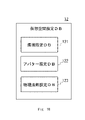
- FIG. 1 is a block diagram showing an example of a virtual space control system according to Embodiment 1;
- FIG. 3 is a block diagram showing an example of a virtual space setting DB according to Embodiment 1;
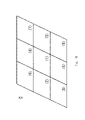
- FIG. 2 is a schematic diagram showing an example of multiple areas in the virtual space according to the first embodiment;
- FIG. 4 is a table showing a setting example of physical laws for each area according to the first embodiment;
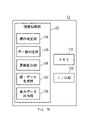
- 3 is a block diagram showing an example of a control unit according to the first exemplary embodiment;
- FIG. 1 is a schematic diagram showing an example of a virtual space according to Embodiment 1;
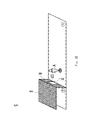
- FIG. 4 is a schematic diagram showing an example of generation of walls and gates according to the first embodiment; 4 is a schematic diagram showing an example of the transmittance of the wall according to the first embodiment; FIG. 4 is a schematic diagram showing an example of the transmittance of the wall according to the first embodiment; FIG. 4 is a schematic diagram showing an example of the transmittance of the wall according to the first embodiment; FIG. 7 is a flow chart showing a processing example of the virtual space setting server according to the first embodiment; FIG. 8 is a block diagram showing an example of a control unit according to the second embodiment; FIG.
- Embodiment 1 Embodiment 1 of the present invention will be described below with reference to the drawings.
- FIG. 1A is a block diagram showing a conceptual configuration example of a virtual space control system (hereinafter also referred to as a control system).
- the control system S1 is a system that manages and controls a three-dimensional virtual space, and includes a virtual space setting server 10 and user terminals 20A to 20C (hereinafter collectively referred to as user terminals 20).
- the virtual space setting server 10 transmits virtual space data to the user terminal 20 via the Internet.
- the user terminals 20A to 20C are arbitrary terminals such as HMD (Head Mounted Display) and PC (personal computer). It is possible to operate the character that becomes the alter ego of.
- the user terminal 20 transmits and receives information to and from the virtual space setting server 10 via the Internet.
- the virtual space setting server 10 includes a network connection unit 11, a virtual space setting DB (Database) 12, and a control unit 13.
- the virtual space setting DB 12 is composed of storage devices such as HDDs (Hard Disk Drives), optical disk drives, and MOs (Magnet Optical Disks).
- the virtual space setting server 10 may be a centralized system composed of a single computer, or a distributed system composed of a plurality of computers. Each component of the virtual space setting server 10 will be described below.
- the network connection unit 11 is an interface that connects the virtual space setting server 10 and a network (here, the Internet).
- the control unit 13 provides data related to virtual space to the user terminal 20 via the network connection unit 11 .
- the network connection unit 11 receives operations of each user's avatar in the virtual space from the user terminal 20 and outputs the operations to the control unit 13 .
- the network connection unit 11 may receive processing related to changes in settings of the virtual space, etc. from the administrator of the virtual space, and output the processing to the control unit 13 .
- the network connection unit 11 may connect the virtual space setting server 10 and other servers for managing the virtual space.
- control unit 13 may provide the user terminal 20 with not only video data but also data related to other senses such as sound, touch, and smell as data related to the virtual space. By providing such data to the user through the interface of the user terminal 20, the user can experience the virtual space with more reality.
- FIG. 1B is a block diagram showing an example of the virtual space setting DB 12.
- the virtual space setting DB 12 has an environment setting DB 121 , an avatar setting DB 122 and a physical law setting DB 123 . Each DB will be described below.
- the environment setting DB 121 is a DB in which the environment of the virtual space is set.
- the environment setting DB 121 stores video setting data defined by three-dimensional coordinates in the virtual space, such as buildings and objects existing in the virtual space, and ranges in which avatars can move.
- setting data related to sensations other than vision, such as sound may be stored in the environment setting DB 121 .
- the avatar setting DB 122 stores setting data related to avatars that can be operated by users who can use the virtual space.
- the configuration data also includes information about the user of the avatar.
- An avatar set in the avatar setting DB 122 can move in the virtual space set in the environment setting DB 121 by an operation from the user terminal 20 .
- the position of the avatar in the virtual space is defined by three-dimensional coordinates, and is appropriately updated by the user's operation.
- the updated avatar position is stored in the avatar setting DB 122 .
- the physical law setting DB 123 is a DB in which the physical laws in the virtual space are set.
- the laws of physics define physical phenomena in the virtual space, and may be laws relating to physical phenomena that exist in the real world, or laws relating to virtual physical phenomena that do not exist in the real world.
- the laws relating to physical phenomena that exist in the real world may be, for example, laws relating to classical physics such as mechanics, electromagnetism, optics, waves such as sound waves, and thermodynamics.
- the virtual space defined here has a plurality of areas separated by boundaries, and it is possible to set physical laws individually for each area.
- FIG. 1C is a schematic diagram showing an example of multiple areas in the virtual space.
- the virtual space C is divided into a central area 1 and areas 2 to 9 adjacent to the area 1, a total of 9 areas.
- the height of the virtual space is ignored and the virtual space C is represented as a two-dimensional plane.
- each area is defined by three-dimensional coordinates in the physical law setting DB 123 as a closed area in the virtual space. Therefore, for example, another area may exist in the vertical direction of a certain area.
- "adjacent" between one area and another area means that there is a route that allows movement from one area to another without passing through the other area.
- FIG. 1D shows a setting example of physical laws for each area in FIG. 1C.
- physical laws A to C are set for areas 1 to 3, respectively.
- A1, B1, and C1 are set in area 1
- A2, B2, and C2 are set in area 2
- A1, B2, and C1 are set in area 3.
- Area 1 and Area 2 different settings are made for all of the laws of physics A to C.
- areas 1 and 3 the same settings are made for the laws of physics A and C, and the settings for the laws of physics B are made different.
- the laws of physics are different is defined to correspond to at least one of the following.
- the constants in the formulas showing the laws of physics are different.
- the formulas themselves showing the laws of physics are different.
- the existence of the laws of physics itself is different. will be explained.
- the virtual space setting server 10 may change the following constants for each area. ⁇ Gravitational acceleration g ⁇ Friction coefficient ⁇ between a certain object and avatar (including at least one of static friction coefficient and dynamic friction coefficient) Speed of sound
- These constants may be basic physical constants or coefficients in commonly used physical formulas.
- the laws of physics A are the equations of motion of mechanics
- the gravitational acceleration g is set to half the real-world value
- the gravitational acceleration g is set to the real-world value. It may be set.
- the avatar in area 2 the avatar can jump as high as in the real world, while in area 1 it can jump higher than in the real world.
- the gravitational acceleration g is set to 0 or a very small value in setting A1, the avatar can also fly in area 1.
- FIG. 1 the laws of physics A are the equations of motion of mechanics
- the gravitational acceleration g is set to half the real-world value
- the gravitational acceleration g is set to the real-world value. It may be set.
- the avatar in area 2 the avatar can jump as high as in the real world, while in area 1 it can jump higher than in the real world.
- the gravitational acceleration g is set to 0 or a very small value in setting A1
- the avatar can also fly in area 1.
- the dynamic friction coefficient ⁇ between the avatar and concrete may be set to half the value in the real world, and in setting A2, the dynamic friction coefficient ⁇ may be set to the value in the real world.
- the degree of slippage in walking of the avatar is the same as in the real world, while in area 1, the avatar can walk more slippery than in the real world.
- the speed of sound may be set to 1/10 the value in the real world, and in setting A2, the speed of sound may be set to the value in the real world.
- the sound of the user operating the avatar sounds the same as in the real world, while in area 1, the sound of the user sounds much later than in the real world.
- the control unit 13 uses the data stored in the virtual space setting DB 12 to generate data related to the virtual space to be output to the terminal as follows. For example, when the gravitational acceleration g is small, tactile data is generated so that the impact felt by the user when landing in the virtual space is small. Also, when the value of the coefficient of dynamic friction ⁇ becomes smaller than the value in the real world, tactile data is generated so that the user can experience a smoother feel when moving his or her avatar.
- the virtual space setting server 10 may change the following formula representing the physical law for each area.
- ⁇ Equation of motion ⁇ Calculation formula of buoyancy ⁇ Law of refraction (for example, Snell's law and Fresnel's law)
- the avatar in Area 2, the avatar can perform actions similar to those in the real world, while in Area 1, the avatar can walk and run faster than in the real world, and the avatar can throw objects farther. can do.
- ⁇ is the density of the target fluid
- V is the volume of the object that receives the buoyant force.
- the avatar in area 2, the avatar can move underwater in the same way as in the real world, while in area 1, the avatar can maintain a floating state without performing any movement. .
- Snell's law or Fresnel's law may be changed from the law of the real world in setting A1, while the same law of refraction as in the real world may be set in setting A2.
- Area 2 the appearance of water seen by the user of the avatar is the same as in the real world, while in Area 1, the user can see underwater objects with more refraction than in the real world. , the reflected light from the surface of the water can be seen to shine even brighter than in the real world.
- not only water but also a predetermined object in the virtual space may be changed so as to change the degree of reflection between the settings A1 and A2.
- the virtual space setting server 10 may change the way the user operating the avatar sees the scenery by changing the degree of light scattering and attenuation in the space with the settings A1 and A2.
- the virtual space setting server 10 can set the presence or absence of laws relating to virtual physical phenomena that do not exist in the real world.
- Virtual physical phenomena are defined as magic in games and the like. A thing or something that creates or disappears from something else.
- the control unit 13 uses the data stored in the virtual space setting DB 12 to generate not only visual data such as heat and wind, but also the feeling of these.
- the data to be executed may be output to the user terminal 20 side.
- the user can feel the presence of "magic" through the interface on the terminal side.
- some actions of the avatar may allow the avatar to fly or move instantaneously in the virtual space, change the avatar's clothes, and the like.
- the data stored in the environment setting DB 121 to the physical law setting DB 123 shown above may be changed as appropriate by access from the user's or administrator's terminal. However, there may be settings that cannot be changed by the user. For example, in the physical law setting DB 123, an area in which the physical law cannot be changed may be set, or an unchangeable physical law may be set for a certain area.
- setting of all laws of physics in area 2 cannot be set by the user
- setting of all laws of physics in areas 1, 3 to 8 can be set by the user
- laws of physics A can be set.
- the setting is user configurable and the other physics settings are not user configurable.
- information to that effect is stored in the physical law setting DB 123 .
- the user can change the physical laws that the user can set by operating the avatar in the virtual space in areas other than area 2 . Thereby, the physical law stored in the physical law setting DB 123 is changed and updated.
- the virtual space setting server 10 classifies users into a plurality of attributes, and is set so that specific laws of physics in a certain area can be set for users with specific attributes (for example, premium members of a service). Also good. Whether or not the user has a specific attribute is determined by acquiring user information stored in the avatar setting DB 122 by an operation determination unit 134 that determines a user's operation. Further, when the user changes the setting of the laws of physics in a certain area, by changing the laws of physics stored in the laws of physics setting DB 123, all avatars in the area will be affected by the setting change of the laws of physics. reach. However, the virtual space setting server 10 may set exceptions to the laws of physics for that user in the laws of physics setting DB 123, thereby applying changes to the laws of physics only to the user's avatar.
- the administrator can change the settings such as the laws of physics by operating the administrator's avatar in the virtual space or by inputting information to the virtual space setting server 10 outside the virtual space. good.
- the data related to the environment setting DB 121 to the physical law setting DB 123 are also temporarily stored in the memory 131 of the control unit 13, which will be described later, and the contents may be changed according to the user's operation.
- the control unit 13 accesses the DB storing the information and updates the contents of the DB.
- At least one DB in the virtual space setting DB 12 may be provided outside the virtual space setting server 10 as, for example, a cloud service. In this case, the control unit 13 acquires desired information from the DB via the network connection unit 11 .
- the control unit 13 constructs a virtual space in which the user's avatar exists based on the virtual space data set in the virtual space setting DB 12 described above. Then, the user's operation related to the avatar received via the network connection unit 11 is reflected in the virtual space, and the reflected data related to the virtual space is provided to the user terminal of the user via the network connection unit 11. do.
- FIG. 1E is a block diagram of the control unit 13.
- the control unit 13 has a memory 131 , an I/O (Input/Output) unit 132 and an information processing unit 133 .
- the memory 131 is composed of a volatile memory, a non-volatile memory, or a combination thereof.
- the number of memories 131 is not limited to one, and a plurality of memories may be provided.
- the volatile memory may be RAM (Random Access Memory) such as DRAM (Dynamic Random Access Memory) or SRAM (Static Random Access Memory).
- the non-volatile memory may be, for example, PROM (Programmable ROM), EPROM (Erasable Programmable Read Only Memory), Flash Memory.
- the memory 131 is used to store one or more instructions.
- one or more instructions are stored in memory 131 as a group of software modules.
- the information processing unit 133 can perform the following processes by reading one or more instructions from the memory 131 and executing them.
- the I/O unit 132 is a hardware interface that inputs and outputs information to and from the outside of the control unit 13 .
- the control unit 13 is connected to the network connection unit 11 and the virtual space setting DB 12 and appropriately inputs and outputs information via these and the I/O unit 132 .
- the information processing unit 133 is composed of arbitrary processors such as CPU (Central Processing Unit), MPU (Micro Processing Unit), FPGA (Field-Programmable Gate Array), DSP (Digital Signal Processor), and ASIC (Application Specific Integrated Circuit). be done.
- the memory 131 may include a memory built in the information processing section 133 in addition to a memory provided outside the information processing section 133 .
- the information processing unit 133 reads out software (computer program) from the memory 131 and executes it to control the operation determination unit 134, the mismatch determination unit 135, the wall/gate generation unit 137, the distance calculation unit 136, the display data output unit 138, and the like. to realize the function of Each of these functions will be described below.
- the operation determination unit 134 determines what operation has been performed on the user's avatar (hereinafter referred to as the target avatar) by determining the user's operation received from the user terminal 20 via the network connection unit 11. do. For example, the operation determination unit 134 determines whether an operation in which the avatar moves in a certain direction in the virtual space or an operation in which the avatar performs a specific action (eg, a gesture or an action of emitting a predetermined sound) is performed by the user. Determine what is done by the terminal 20 . The operation determination unit 134 also updates the position of the target avatar in the virtual space based on the operation data received from the user terminal 20 and the position of the target avatar stored in the avatar setting DB 122 . The operation determination unit 134 stores the updated position of the avatar in the avatar setting DB 122 .
- the target avatar determines what operation has been performed on the user's avatar (hereinafter referred to as the target avatar) by determining the user's operation received from the user terminal 20 via the network connection unit 11. do. For example
- the disagreement determination unit 135 sets the laws of physics for the area where the target avatar exists at the time of determination (predetermined area in the claims, hereinafter referred to as the current area) and the area adjacent to the current area (hereinafter referred to as the current area). It is determined whether or not the settings of the laws of physics are different between adjacent areas). More specifically, the mismatch determination unit 135 compares the position of the target avatar updated by the operation determination unit 134 with the position of the area in the virtual space defined by the physical law setting DB 123 to determine the current position of the target avatar. Determine area. Then, based on the data of each area stored in the physical law setting DB 123, adjacent areas are identified. The mismatch determination unit 135 performs comparison determination with the above-described current area for all of the identified adjacent areas.
- the mismatch determination unit 135 determines that different physical rules are set between the current area and the adjacent area. You can In this case, even if the settings for the laws of physics other than the specific laws of physics differ between the current area and the adjacent area, if the settings for the specific laws of physics are not different, the laws of physics will differ between the current area and the adjacent areas. is not determined to be set.
- the non-coincidence determination unit 135 uses the physical law A as a non-coincidence determination target.
- the mismatch determination unit 135 determines whether or not the setting of the physical law A is different for each of Areas 2 and 3, which are adjacent areas.
- the settings of the laws of physics A for areas 1 and 2 are A1 and A2, respectively, the disagreement determination unit 135 determines that the settings of the laws of physics A are different.
- the settings of the laws of physics A for areas 1 and 3 are A1 and A1, respectively, the mismatch determination unit 135 determines that the settings of the laws of physics A are the same (not different).
- the disagreement determination unit 135 determines that, in the current area and the adjacent area, all the physical laws are set, or during the setting of a plurality of physical laws that constitute a specific group, different physical laws are set in both areas. If there are more than a predetermined threshold, it may be determined that different physical laws are set between the current area and the adjacent area.
- the non-coincidence determination unit 135 determines that, of the physical laws A to C, which are a specific group, if two or more physical laws are set differently between the current area and the adjacent area, the physical laws for both areas is determined to be different.
- the mismatch determination unit 135 performs determination on each of Areas 2 and 3, which are adjacent areas.
- Areas 2 and 3 which are adjacent areas.
- the mismatch determination unit 135 determines that the settings of the laws of physics are different between the areas 1 and 2.
- FIG. since only the setting of the physical law A differs between the areas 1 and 3, the discrepancy determination unit 135 determines that the setting of the physical law is not different between the areas 1 and 3.
- a specific physical law to be determined, a plurality of physical laws constituting a specific group, and a predetermined threshold value for determination are determined in advance by an administrator or the like, and are stored in the physical law setting DB 123. It may be defined in advance.
- the mismatch determination unit 135 uses such defined information to perform the determination described above.
- the distance calculation unit 136 acquires from the operation determination unit 134 where the target avatar is currently located in the virtual space. Then, the distance calculation unit 136 calculates the distance between the target avatar and the boundary between the adjacent area determined to be mismatched by the mismatch determination unit 135 and the current area (the boundary where walls and gates are generated, which will be described later). The calculated distance may be, for example, the distance between the target avatar and the portion of the boundary that is closest to the target avatar, or the distance may be calculated based on other criteria.
- the wall/gate generation unit 137 visually indicates that the target avatar cannot pass through the boundary between the two areas. Creates a wall and a gate (entrance) that only allows movement between the two areas. The walls and gates are created to be visible to at least the target avatar. Note that the gate is generated so as to be transparent when viewed from the target avatar.
- the wall/gate generation unit 137 obtains from the distance calculation unit 136 the calculation result of the distance between the boundary and the target avatar regarding the boundaries for generating walls and gates, and calculates the distance from the target avatar according to the distance. Change the light transmission of the wall. For example, by making the wall completely transparent for the target avatar until the target avatar approaches a predetermined distance from the boundary, the view of the virtual space seen from the user of the target avatar is not spoiled. be able to.
- the display data output unit 138 generates display data of the virtual space as seen from the target avatar based on the user's operation determined by the operation determination unit 134 . Further, when the wall/gate generation unit 137 generates a wall and a gate on the boundary between the current area and the adjacent area, the display data output unit 138 outputs the target avatar with the transparency of the wall set by the wall/gate generation unit 137. The image data of the wall and the gate are superimposed on the display data of the virtual space so that the wall can be seen from the virtual space. Then, the display data output unit 138 outputs the superimposed display data to the user terminal 20 of the target avatar. As a result, the user terminal 20 side can visually recognize the virtual space in which the wall and the gate are formed.
- FIG. 2A is a schematic diagram showing a specific example of the virtual space C shown in FIGS. 1C and 1D.
- the current area where the target avatar A is currently located is area 1, and area 2 is shown as an adjacent area that is adjacent to area 1 with a boundary B interposed therebetween.
- the settings of the laws of physics for areas 1 and 2 are as shown in FIG. 1D.
- A1 which is the setting of area 1
- the gravitational acceleration generated in the target avatar A is set to occur in the direction and magnitude specified by the user's operation.
- the user of target avatar A (hereinafter referred to as user A) can set the gravitational acceleration occurring in the target avatar to zero. Therefore, the user A can freely move the target avatar in the area 1 in the air (for example, raise, lower, advance, retreat, rotate, etc.) according to the operation.
- area 1 is an area in which target avatar A can act freely without being constrained by restrictions in the real world.
- the gravitational acceleration is generated in the downward direction of the virtual space with the magnitude g, as in the real world, and is set so that the user cannot change it. Therefore, in Area 2, the target avatar A cannot float or move in the air. Furthermore, other physical laws B, C, . . . of area 2 are also set according to the real world. Therefore, the target avatar A cannot act freely in area 2 without being constrained by the constraints of the real world.
- Area 2 which is set according to the real world, is an area where, for example, when a mirror world is set as virtual space C, users can view elaborate digital copies of important facilities (for example, the Diet Building) that cannot be easily invaded even in the real world. It is necessary for the purpose of preventing acquisition without permission.
- a work place in a virtual space may be provided.
- the laws of physics conform to the real world so that the user can concentrate on his work.
- the desired phenomenon cannot be caused by the user's actions when using the virtual space C. There is a possibility that the user will feel inconvenience when using it.
- the mismatch determination unit 135 determines the current area where the target avatar exists as area 1 as described above. Then, referring to the physical law setting DB 123, areas 2 to 9 are specified as adjacent areas. Here, a case will be described in which the discrepancy determination unit 135 performs discrepancy determination between the areas 1 and 2 with the law of physics A as the discrepancy determination target. Here, the mismatch determination unit 135 determines that the setting of the physical law A is different for areas 1 and 2 .
- the distance calculation unit 136 calculates the distance between the target avatar A and the boundary B between the areas 1 and 2. The calculated distance is the distance between the portion of the boundary B closest to the target avatar A and the target avatar A.
- FIG. 2B shows walls and gates generated at the boundary B by the wall/gate generation unit 137 based on the determination result of the mismatch determination unit 135 .
- the wall W is provided at the boundary B and prevents the target avatar A from moving from the area 1 to the area 2 from a place other than the gate G.
- the user A can understand that the setting of the laws of physics in the area 2 is different from that in the area 1 without having to confirm the setting situation of the area 2 as data.
- the gate G the user can also understand where the movement to area 2 is possible.
- the wall/gate generation unit 137 generates a ceiling E above Area 2 so that the target avatar A does not enter an area below a predetermined height in Area 2 .
- the height of the ceiling E is set to be equal to or higher than the height of the building.
- the wall/gate generation unit 137 may set the setting of the law of physics A in the area above the ceiling E of area 2 to A1, which is the same as the setting of the law of physics A of area 1, which is the current area. good.
- the wall/gate generation unit 137 may set one or a plurality of physical laws other than the physical law A in the area above the ceiling E to be the same as the setting of the corresponding physical laws in the area 1. It may be the same as the setting of the corresponding physical law. Also, the setting of the laws of physics in the area inside the wall of area 2 is as shown in FIG. 1D. The setting of the laws of physics in the area above the ceiling E set in this manner is stored in the laws of physics setting DB 123 by the wall/gate generation unit 137 . By setting the laws of physics as described above, the target avatar can fly over the ceiling E while moving from the area 1 . Therefore, the degree of freedom of movement of the target avatar in the virtual space is increased. However, the setting of the laws of physics in the area above the ceiling E may remain the same as the setting of the laws of physics A in the area 2 .
- the wall/gate generation unit 137 sets the height of the wall W to such a height that the target avatar A cannot enter from the area 1 to the area 2 from any place other than the gate G.
- the height of the wall W can be, for example, the height of infinity, the highest altitude of the area 1 defined in the virtual space, or the setting of various physical laws set in the area 1. is the highest possible altitude.
- the wall/gate generation unit 137 sets the height of the wall W as described above. can be done.
- the wall/gate generation unit 137 changes the light transmittance of the wall W viewed from the target avatar A according to the distance d calculated by the distance calculation unit 136 as follows.
- the distance d is equal to or greater than the threshold th1: transparency 100% (transparent)
- threshold th2 transparency 75%
- the distance d is less than the threshold th2: transparency 50%
- FIG. 2C to 2E are schematic diagrams showing how the gate transmittance changes according to the change in the distance d.
- FIG. 2C shows the case where the distance d is d1 (d1>th1).
- the wall W has a transparency of 100%
- the target avatar A cannot see it.
- the gate is also transparent, the target avatar A can see the building existing in the area 2 as it is. In this way, when the target avatar A is sufficiently far from the boundary B, the visual appearance of the virtual space as seen by the user is maintained by not visualizing the wall.
- walls W and gates G have already been created in this situation.
- FIG. 2D shows the case where the distance d is d2 (th1>d2>th2).
- the target avatar A has approached the boundary B, so the wall/gate generation unit 137 sets the transparency of the wall W to 75%.
- the presence of the wall W and the gate G is faintly visualized to the user A, and the presence of the area 2 is called to the user's attention.
- FIG. 2E shows the case where the distance d is d3 (th2>d3).
- the wall/gate generation unit 137 sets the transparency of the wall W to 50%. This allows the user A to further visualize the presence of the wall W and the gate G, and to emphasize the presence of the area 2 to call attention to it. Note that when the distance d is less than the threshold th2, the wall W is always visually recognized by the user A with a transparency of 50% regardless of the position of the target avatar A.
- the walls/gates are arranged so that the user of the target avatar, who has approached the boundary B to a certain extent or more, can gradually visualize the walls W and the gates G clearly according to the distance d.
- the generator 137 controls the transparency of the wall W. FIG. By clearly visualizing the walls W and the gates G gradually, the presence of the walls W and the gates G in the virtual space can be shown to the user in a natural way.
- the lower limit value set as the transmittance of the wall W does not have to be 50%, and the lower limit value may be 0%, for example.
- the transmittance of the wall W varies discretely according to the distance d.
- the wall/gate generator 137 may set f(d) so that (d) continuously decreases monotonically.
- the wall/gate generation unit 137 may set the transmittance of the ceiling E to the same as the transmittance of the wall W, or may set them differently. Also, the color of the wall W can be freely set by the wall/gate generation unit 137 .
- the wall/gate generation unit 137 changes the setting of the physical law setting DB 123 from the initial state in which the physical law settings of area 1 and area 2 are the same. It can be determined that the setting has changed to a different state. As a result of the determination, the wall/gate generation unit 137 can generate the walls W and gates G that were not initially on the boundary B later.
- FIG. 3 is a flow chart showing an example of overall processing executed by the virtual space setting server 10.
- the overall processing of the virtual space setting server 10 will be described with reference to FIG. Note that the details of each process are as described above, so description thereof will be omitted as appropriate.
- the operation determination unit 134 determines the operation performed on the target avatar (step S11).
- the operation determination unit 134 updates the position of the target avatar in the virtual space based on the determined operation.
- the mismatch determination unit 135 determines the current area where the target avatar exists based on the position of the target avatar updated by the operation determination unit 134 . Then, it is determined whether or not the setting of the physical rule of the current area is different from the setting of the physical rule of the adjacent area (step S12). This determination and subsequent processing are performed for each adjacent area.
- the distance calculation unit 136 calculates the distance d between the adjacent area and the target avatar (step S13).
- the wall/gate generation unit 137 determines the transparency of the wall to be generated based on the calculated distance d, and generates the wall and the gate (step S14).
- the display data output unit 138 generates display data to be displayed to the user of the target avatar by superimposing the video data of the wall and the gate on the display data of the virtual space, and outputs the display data to the user terminal 20 (step S15).
- step S12 If the settings of the laws of physics for both areas are the same (Yes in step S12), the distance calculation unit 136 and the wall/gate generation unit 137 do not execute processing.
- the display data output unit 138 generates display data of the virtual space and outputs it to the user terminal 20 (step S15).
- step S13 may be executed before the determination process of step S12. For example, when the distance d is equal to or greater than the predetermined threshold th1, the determination process in step S12 is not executed, and walls and gates may not be generated at the boundary.
- the virtual space setting server 10 can detect that the properties of the two areas are different, and that the settings of the laws of physics of the two areas are different. is detected by determining
- the two areas are, for example, an area where free action is possible without being constrained by restrictions in the real world, and an area where action is restricted according to the real world.
- the virtual space setting server 10 can create walls and gates on the boundaries of both areas. This wall is a visual indication to the avatar's user that the avatar cannot pass through.
- the user can identify that an area where actions are restricted according to the real world is different from other areas, such as an area where an important facility handling confidential matters or an area where a work place is located. be able to.
- the wall W and the gate G provided at the boundary B can be visually recognized from the user of the avatar located in the area 2 as well as the user A. The user can be made to recognize that it is the area of .
- the wall/gate generation unit 137 controls the transparency of the wall seen by the user of the avatar according to the distance d calculated by the distance calculation unit 136, thereby allowing the user to see the virtual wall in a way that is not unnatural. It can indicate the presence of walls and gates in space. However, such transparency control is not essential.
- the wall/gate generation unit 137 generates the wall W and the gate G as shown in FIG.
- the wall W may be set so that the sound generated by the user A's avatar operation is blocked by the wall W.
- user A located in area 1 generates data to be output to the terminal of user A so that the sound coming from the direction of area 2 can be heard quieter than when there is no wall W.
- FIG. Further, the wall/gate generation unit 137 defines a predetermined tactile sensation for the wall W and the gate G, and sets the tactile sensation so that the user A can experience the tactile sensation when the avatar A touches the wall W or the gate G. Also good.
- the predetermined tactile sensation is stored in the virtual space setting DB 12, for example, so that the wall/gate generation unit 137 can use it. Such control can also be performed using senses other than sound (for example, smell). Also, for the ceiling E, settings similar to those for the walls W can be made.
- Embodiment 2 describes a variation of Embodiment 1.
- FIG. 1 An illustration of Embodiment 1.
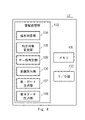
- FIG. 4 is a block diagram showing a conceptual configuration example of a control unit according to the second embodiment.
- the control unit 13' shown in FIG. 4 further includes a determination target changing unit 139 in addition to the control unit 13 shown in FIG. 1E.
- the determination target changing unit 139 executes a process of changing at least one of the items or the number of the laws of physics to be determined by the mismatch determination unit 135 . For example, when the user performs some operation via an avatar in the virtual space, the operation determination unit 134 determines that the detected operation changes the item or number of the laws of physics to be determined by the mismatch determination unit 135. Determine that there is. Based on the determination result, the determination target change unit 139 changes the contents of the non-match determination unit 135 with respect to the item or number of physical laws to be determined specified by the user.
- the determination target change unit 139 may set the determination target of the mismatch determination unit 135 to one or more physical laws B, C, . . . instead of the physical law A. , in addition to the physical law A, these other physical laws may be added to the determination target of the discrepancy determination unit 135 .
- the operation determination unit 134 may determine whether or not the user has a specific attribute as described in the first embodiment. Then, when the user has a specific attribute, a process of changing at least one of the items or the number of the physical laws to be determined by the mismatch determination unit 135 to the determination target change unit 139 in accordance with the user's operation. can be executed.
- the administrator can operate the administrator's avatar in the virtual space, or input information to the virtual space setting server 10 outside the virtual space, by at least one of the items or the number of physical laws to be determined. You may output the instruction
- the determination target changing unit 139 executes the above-described processing according to the instruction.
- the determination target changing unit 139 can change at least one of the items or the number of physical laws to be determined by the non-coincidence determination unit 135 . Thereby, it is possible to change whether or not to generate walls and gates according to the settings desired by the user or administrator.
- the present invention is not limited to the above embodiments, and can be modified as appropriate without departing from the scope of the invention.
- the wall/gate The generation unit 137 can generate walls and gates on the boundaries of both areas.
- the wall/gate generation unit 137 determines that the target avatar A is sufficiently separated from the area 2, and the wall W and the gate G It is not necessary to execute the process to generate.
- the wall/gate generation unit 137 determines that the target avatar A has approached the area 2, and determines that the transparent wall W and the gate G as shown in FIG. Execute the process to generate the .
- the wall/gate generation unit 137 may set the generated gate so that only users with specific attributes can enter. For example, in the example shown in FIG. 2B, the wall/gate generation unit 137 determines a user who can enter area 2 (for example, a user who has a workplace in area 2) from the user information stored in the avatar setting DB 122. Then, the gate G may be set so as to permit the user to move to the area 2 only. Note that the wall/gate generation unit 137 may set the gate G so that a user who cannot enter the area 2 can see the gate G in FIG. 2B but cannot enter the area 2. The gate G may be set so that the user cannot see the gate G in FIG. 2B (that is, only the wall W can be seen).
- the wall/gate generation unit 137 may display the gate to the user in some color different from that of the wall instead of being transparent when viewed from the target avatar.
- the wall/gate generating unit 137 may discretely or continuously change the transparency of the gate according to the distance between the boundary (or gate) provided with the gate and the target avatar. This process is performed in the same manner as the control of wall transmittance according to the first embodiment.
- the wall/gate generation unit 137 does not necessarily need to generate a gate, and may generate only a wall between the areas when the mismatch determination unit 135 determines that the determination target does not match between the two areas. . This also allows the user to identify that both areas have different uses. It is also possible to restrict the movement of users between areas. However, by generating not only walls but also gates by the wall/gate generation unit 137, it is possible to restrict the user's actions in areas where important facilities are located, while allowing the users to move to those areas. can be done.
- control unit 13 may be provided on the user terminal 20 side instead of on the virtual space setting server 10 .
- the user terminal 20 acquires data related to the virtual space from the virtual space setting DB 12 of the virtual space setting server 10 via the Internet according to the user's operation, and uses that data to perform If necessary, you can create walls between areas that avatars cannot pass through.
- one or more processors included in the imaging system in the above-described embodiments execute one or more programs containing instructions for causing a computer to execute the algorithms described with reference to the drawings. . By this processing, the processing described in each embodiment can be realized.
- a program includes a set of instructions (or software code) that, when read into a computer, cause the computer to perform one or more of the functions described in the embodiments.
- the program may be stored in a non-transitory computer-readable medium or tangible storage medium.
- computer readable media or tangible storage media may include random-access memory (RAM), read-only memory (ROM), flash memory, solid-state drives (SSD) or other memory technology, CDs - ROM, digital versatile disk (DVD), Blu-ray disc or other optical disc storage, magnetic cassette, magnetic tape, magnetic disc storage or other magnetic storage device.
- the program may be transmitted on a transitory computer-readable medium or communication medium.
- transitory computer readable media or communication media include electrical, optical, acoustic, or other forms of propagated signals.
- the program can also take the form of an application, for example.
- the present invention can be used for systems that provide virtual space.
Landscapes
- Engineering & Computer Science (AREA)
- General Engineering & Computer Science (AREA)
- Theoretical Computer Science (AREA)
- Physics & Mathematics (AREA)
- General Physics & Mathematics (AREA)
- Human Computer Interaction (AREA)
- Multimedia (AREA)
- Computer Graphics (AREA)
- Computer Hardware Design (AREA)
- Software Systems (AREA)
- Processing Or Creating Images (AREA)
- User Interface Of Digital Computer (AREA)
Abstract
本発明は、異なる用途に対応したエリアをユーザが識別可能な仮想空間制御システム、仮想空間制御方法及びプログラムを提供することができる。一実施の形態にかかる仮想空間制御システム(S1)は、複数の区切られたエリアが存在する仮想空間において、所定のエリアの物理法則の設定と、所定のエリアと隣接するエリアである隣接エリアの物理法則の設定が異なるか否かを判定する不一致判定部(135)と、不一致判定部(135)が、所定のエリアと隣接エリアに関して設定が異なることを判定した場合、所定のエリアと隣接エリア間に、アバターが通り抜けできない壁を生成する壁・ゲート生成部(137)を備える。
Description
本発明は仮想空間制御システム、仮想空間制御方法及びプログラムに関する。
近年、仮想空間にて仕事やプライベートの生活に関する様々な活動ができるサービスが可能となっている。具体例として、インターネットを用いたTV会議システムや、ネットワークを利用した情報共有や通信ゲーム、売り場に行かずに買い物ができるバーチャルネットワークショッピングが挙げられる。このようなサービスにより、人々のライフスタイルが変化しつつある。
自由な仮想空間を創造する技術の一例として、特許文献1では、ゲームの仮想世界をパブリックエリアとプライベートエリアとに分離することにより、対戦相手や協力者に出会う領域と冒険等をする領域を交互に設ける技術が開示されている。
また、特許文献2では、仮想空間体験装置においてユーザの手の動作がなされると、仮想空間内に存在する粒子群に対してその動作に相当する物理量が付与され、その粒子群に物理法則が適用されることで、ユーザが流動体の動きを体験することができる技術が開示されている。
仮想空間においては、その物理法則の設定を変えることにより、現実世界では起こりえない様々な現象を起こすことが出来る。それにより、ユーザは、いわば魔法の世界にいるような体験をすることができる。しかしながら、そのような体験ができる場所と同一の仮想空間上において、そのような体験をすることが目的ではない場所を別に設けても良い。このような場所では、上述のような物理法則の変更がない方が好ましい。このとき、ユーザにとって2種類の場所の区別がつかないと、仮想空間を使用する際に、ユーザが位置するエリアに適さない動作をしてしまうことで、仮想空間の使用に不自由さを覚える可能性がある。
特許文献1、2に記載の技術は、仮想空間に関するものであるが、同一の仮想空間上における物理法則の変更を考慮したものではない。
本発明は、異なる用途に対応したエリアをユーザが識別可能な仮想空間制御システム、仮想空間制御方法及びプログラムを提供することを目的とする。
本実施形態に係る仮想空間制御システムは、複数の区切られたエリアが存在する仮想空間において、所定のエリアの物理法則の設定と、所定のエリアと隣接するエリアである隣接エリアの物理法則の設定が異なるか否かを判定する不一致判定部と、不一致判定部が、所定のエリアと隣接エリアに関して設定が異なることを判定した場合、所定のエリアと隣接エリア間に、アバターが通り抜けできない壁を生成する壁生成部を備える。
本実施形態に係る仮想空間制御方法は、複数の区切られたエリアが存在する仮想空間において、所定のエリアの物理法則の設定と、所定のエリアと隣接するエリアである隣接エリアの物理法則の設定が異なるか否かを判定する不一致判定ステップと、所定のエリアと隣接エリアに関して設定が異なることを判定した場合、所定のエリアと隣接エリア間に、アバターが通り抜けできない壁を生成する壁生成ステップを仮想空間制御システムが実行するものである。
本実施形態に係るプログラムは、複数の区切られたエリアが存在する仮想空間において、所定のエリアの物理法則の設定と、所定のエリアと隣接するエリアである隣接エリアの物理法則の設定が異なるか否かを判定する不一致判定ステップと、所定のエリアと隣接エリアに関して設定が異なることを判定した場合、所定のエリアと隣接エリア間に、アバターが通り抜けできない壁を生成する壁生成ステップをコンピュータに実行させるものである。
本実施形態により、異なる用途に対応したエリアをユーザが識別可能な仮想空間制御システム、仮想空間制御方法及びプログラムを提供することができる。
実施の形態1
以下、図面を参照して本発明の実施の形態1について説明する。
以下、図面を参照して本発明の実施の形態1について説明する。
図1Aは、仮想空間制御システム(以下、制御システムとも記載)の概念的な構成例を示すブロック図である。制御システムS1は、3次元の仮想空間を管理及び制御するシステムで、仮想空間設定サーバ10及びユーザ端末20A~20C(以下、総称してユーザ端末20と記載)を備える。仮想空間設定サーバ10は、インターネットを介して、仮想空間のデータをユーザ端末20に送信する。ユーザ端末20A~20Cは、HMD(Head Mounted Display)やPC(personal computer)等の任意の端末であり、ユーザが仮想空間を視覚、聴覚等の五感で体験し、その仮想空間上でアバター(ユーザの分身となるキャラクター)を操作することができるものである。ユーザ端末20は、インターネットを介して、仮想空間設定サーバ10と情報の送受信を行う。
仮想空間設定サーバ10は、ネットワーク接続部11、仮想空間設定DB(Database)12及び制御部13を備える。仮想空間設定DB12は、HDD(Hard Disk Drive)、光ディスクドライブ、MO(Magnet Optical Disk)等の記憶装置で構成される。仮想空間設定サーバ10は、単一のコンピュータで構成された集中型のシステムであっても良いし、複数のコンピュータで構成された分散型のシステムであっても良い。以下、仮想空間設定サーバ10の各構成要素について説明する。
ネットワーク接続部11は、仮想空間設定サーバ10とネットワーク(ここではインターネット)とを接続するインタフェースである。制御部13は、仮想空間に係るデータを、ネットワーク接続部11を介してユーザ端末20に対して提供する。また、ネットワーク接続部11は、ユーザ端末20から、各ユーザの仮想空間上でのアバターの操作を受け付け、制御部13に出力する。仮想空間内では、アバターが何らかの行動を起こすことや、複数のアバターで集まって互いにコミュニケ―ションを取ることが可能となる。さらに、ネットワーク接続部11は、仮想空間の管理者から、仮想空間の設定変更等に関する処理を受け付け、制御部13に出力しても良い。また、ネットワーク接続部11は、仮想空間設定サーバ10と、仮想空間を管理するためのその他のサーバを接続していても良い。
なお、制御部13は、仮想空間に係るデータとして、映像データだけでなく、音、触覚、嗅覚といった他の感覚に関するデータをユーザ端末20に対して提供しても良い。ユーザ端末20のインタフェースを介してこのようなデータがユーザに提供されることで、ユーザはより現実感を伴った仮想空間の体験が可能となる。
図1Bは、仮想空間設定DB12の一例を示すブロック図である。仮想空間設定DB12は、環境設定DB121、アバター設定DB122及び物理法則設定DB123を有する。以下、各DBについて説明する。
環境設定DB121は、仮想空間の環境について設定がなされたDBである。例えば、環境設定DB121では、仮想空間上に存在する建物や物体、アバターが移動可能な範囲等について、仮想空間における3次元座標で定義された映像の設定データが格納されている。そのほか、音等、視覚以外の感覚に関する設定データがさらに環境設定DB121に格納されていても良い。
アバター設定DB122は、仮想空間を利用可能なユーザが操作可能なアバターに関する設定データが格納されている。設定データには、アバターのユーザに関する情報も含まれる。このアバター設定DB122で設定されたアバターは、ユーザ端末20からの操作により、環境設定DB121で設定された仮想空間内を移動することができる。また、仮想空間上のアバターの位置は、3次元座標で定義されており、ユーザの操作によって適宜更新される。更新されたアバターの位置はアバター設定DB122に格納される。
物理法則設定DB123は、仮想空間における物理法則について設定がなされたDBである。物理法則は、仮想空間における物理現象を定義するものであり、現実世界に存在する物理現象に関する法則でも良いし、現実世界に存在しない仮想的な物理現象に関する法則であっても良い。現実世界に存在する物理現象に関する法則は、例えば、力学、電磁気学、光学、音波等の波動、熱力学といった古典物理学に関する法則であっても良い。また、ここで定義される仮想空間には、境界によって区切られた複数のエリアが存在しており、各エリアに関して、個別に物理法則の設定が可能である。
図1Cは、仮想空間における複数のエリアの一例を示す概略図である。図1Cでは、仮想空間Cが、中央のエリア1と、そのエリア1に隣接したエリア2~9の計9個のエリアに分割されている。なお、図1Cでは、図示を簡便にするため、仮想空間の高さを無視し、2次元平面として仮想空間Cを表している。しかしながら、実際には、各エリアは、仮想空間内における閉じられた領域として、物理法則設定DB123において3次元座標で定義されている。そのため、例えばあるエリアの上下方向に別のエリアが存在していても良い。また、あるエリアと別のエリアとが「隣接」するとは、あるエリアから別のエリアに移動するときに、他のエリアを通過せずに移動可能な経路が存在することをいう。
図1Dは、図1Cにおけるエリア毎の物理法則の設定例を示す。図1Dでは、例示として、エリア1~3について、それぞれ物理法則A~Cの設定がなされている。各物理法則について、エリア1では、A1、B1、C1が設定され、エリア2では、A2、B2、C2が設定され、エリア3では、A1、B2、C1が設定されている。エリア1とエリア2では、物理法則A~Cの全てにおいて異なる設定がなされている。その一方で、エリア1とエリア3では、物理法則A及びCについて同じ設定がなされており、物理法則Bにおいて異なる設定がなされている。
本発明では、「物理法則が異なる」ことを、次の少なくともいずれかに該当するように定義する。
(i)物理法則を示す数式における定数が異なるものであること
(ii)物理法則を示す数式自体が異なるものであること
(iii)物理法則自体の存在の有無が異なること
以下、これらの具体例について説明する。
(i)物理法則を示す数式における定数が異なるものであること
(ii)物理法則を示す数式自体が異なるものであること
(iii)物理法則自体の存在の有無が異なること
以下、これらの具体例について説明する。
(i)の例として、仮想空間設定サーバ10は、エリア毎に以下の定数を変更しても良い。
・重力加速度g
・ある物体とアバター間の摩擦係数μ(静止摩擦係数、動摩擦係数の少なくともいずれかを含む)
・音速
これらの定数は、基礎物理定数であっても良いし、一般に用いられる物理の公式における係数であっても良い。
・重力加速度g
・ある物体とアバター間の摩擦係数μ(静止摩擦係数、動摩擦係数の少なくともいずれかを含む)
・音速
これらの定数は、基礎物理定数であっても良いし、一般に用いられる物理の公式における係数であっても良い。
例えば、図1Dの設定において、物理法則Aが力学の運動方程式であり、設定A1において、重力加速度gが現実世界の値の半分に設定され、設定A2において、重力加速度gが現実世界の値に設定されていても良い。この場合、エリア2において、アバターは現実世界と同様の高さだけジャンプすることが可能である一方、エリア1においては、現実世界よりも高くジャンプすることができる。また、設定A1において重力加速度gを0又は極めて小さい値とした場合、アバターは、エリア1を飛行することも可能になる。
別の例として、設定A1において、アバターとコンクリートとの動摩擦係数μが現実世界の値の半分に設定され、設定A2において、その動摩擦係数μが現実世界の値に設定されていても良い。この場合、エリア2においてはアバターの歩行における滑り度合いが現実世界と同様である一方、エリア1においては、アバターは現実世界よりも滑るような歩行をすることができる。
さらに別の例として、設定A1において、音速が現実世界の値の10分の1倍に設定され、設定A2において、音速が現実世界の値に設定されていても良い。この場合、エリア2ではアバターを操作するユーザの音の聞こえ方は現実世界と同様である一方、エリア1においては、そのユーザの音の聞こえ方は現実世界よりもはるかに遅れることになる。
なお、アバターが仮想空間で動いた際にアバターが感じる触覚を、ユーザがユーザ端末20のインタフェースを介して体験できても良い。このような場合、制御部13は、仮想空間設定DB12に格納されたデータを用いて、以下の通り、端末に出力する仮想空間に係るデータを生成する。例えば、重力加速度gが小さい場合には、ユーザが仮想空間での着地の際に感じる衝撃が小さくなるように、触覚に関するデータを生成する。また、動摩擦係数μの値が現実世界の値よりも小さくなった場合には、ユーザが自身のアバターを移動させる際により滑らかな感触を体験できるように、触覚に関するデータを生成する。
次に(ii)の例として、仮想空間設定サーバ10は、エリア毎に以下の物理法則を示す数式を変更しても良い。
・運動方程式
・浮力の計算式
・屈折の法則(例えば、スネルの法則や、フレネルの法則)
・運動方程式
・浮力の計算式
・屈折の法則(例えば、スネルの法則や、フレネルの法則)
例えば、図1Dの設定において、設定A1において、運動方程式がF=2maと設定され、設定A2において、運動方程式が現実世界と同様F=maと設定されていても良い。この場合、エリア2においては、アバターは現実世界と同様の動作が可能である一方、エリア1においては、現実世界よりもアバターの歩行及び走行が速くなったり、アバターが物体をより遠くまで投げたりすることができる。
別の例として、設定A1において、浮力の計算式がF=10ρVgと設定され、設定A2において、運動方程式が現実世界と同様F=ρVgと設定されていても良い。なお、ρは対象となる流体の密度、Vは浮力を受ける物体の体積である。この場合、エリア2においては、アバターは現実世界と同様の水中での動作が可能である一方、エリア1においては、何も動作をしなくともアバターが水に浮かんだ状態を維持することができる。
さらに別の例として、設定A1において、スネルの法則又はフレネルの法則を現実世界の法則から変化させる一方、設定A2において、現実世界と同じ屈折の法則が設定されていても良い。この場合、エリア2においてはアバターのユーザから見た水の見え方が現実世界と同様である一方、エリア1においては、ユーザは水中の物体を現実世界よりもさらに屈折して見ることができたり、水面からの反射光が現実世界よりもさらに輝くように見ることができたりする。また、水に限らず、仮想空間にある所定のオブジェクトに対して、設定A1とA2とで反射の度合いを変えるような変更がなされても良い。さらに、仮想空間設定サーバ10は、設定A1とA2とで、空間における光の散乱や減衰の度合いを変更することで、アバターを操作するユーザから見た景色の見方を変更させても良い。
(iii)の例として、仮想空間設定サーバ10は、現実世界に存在しない仮想的な物理現象に関する法則の有無を設定することができる。仮想的な物理現象は、ゲーム等で魔法として定義されているものであり、例えば、アバターの何かしらの動作(一例として身体的動作や発音)により、火、水、風、光、闇、雷といったものや、その他何かしらの物体を生成又は消滅させるようなものをいう。なお、このような「魔法」を発生させた場合に、制御部13は、仮想空間設定DB12に格納されたデータを用いて、熱や風等の視覚に関するデータだけでなく、それらの感触を生じさせるデータをユーザ端末20側に出力しても良い。これにより、ユーザは、「魔法」の存在を、端末側のインタフェースを介して感覚で体験できる。他にも、アバターの何かしらの動作で、アバターの飛行又は仮想空間上での瞬間的な移動や、アバターの服装変更等が可能とされても良い。
以上に示した環境設定DB121~物理法則設定DB123に格納されたデータは、ユーザ又は管理者の端末によるアクセスによって、適宜変更されても良い。ただし、ユーザにとって変更不可な設定があっても良い。例えば、物理法則設定DB123において、物理法則を変更不可能なエリアが設定されていても良いし、あるエリアについて、変更不可能な物理法則が設定されていても良い。
具体例として、図1Cにおいてエリア2の全ての物理法則の設定をユーザが設定不可とし、エリア1、3~8では全ての物理法則の設定をユーザが設定可能とし、エリア9では物理法則Aの設定をユーザが設定可能であり、他の物理法則の設定をユーザが設定不可という場合を仮定する。この場合に、物理法則設定DB123には、その旨を示す情報が格納される。ユーザは、エリア2以外のエリアにおいて、仮想空間内でアバターを操作することにより、ユーザが設定可能な物理法則を変更することができる。これにより、物理法則設定DB123に格納された物理法則が変更され、更新される。
なお、仮想空間設定サーバ10は、ユーザを複数の属性に分類し、特定の属性のユーザ(例えばサービスのプレミアム会員)に対し、あるエリアの特定の物理法則が設定可能となるように設定しても良い。ユーザが特定の属性のユーザであるか否かは、ユーザの操作を判定する後述の操作判定部134が、アバター設定DB122に格納されたユーザの情報を取得することにより判定する。また、ユーザがあるエリアにおいて物理法則の設定を変更した場合、物理法則設定DB123に格納された物理法則が変更されることで、以降、当該エリアにいる全アバターに物理法則の設定変更の影響が及ぶ。ただし、仮想空間設定サーバ10は、そのユーザに関しての物理法則の例外を物理法則設定DB123に設定することで、そのユーザのアバターのみに物理法則の設定変更を適用しても良い。
また、管理者は、仮想空間内における管理者のアバターを操作すること、又は仮想空間外での仮想空間設定サーバ10への情報入力の少なくともいずれかによって、物理法則等の設定を変更しても良い。
環境設定DB121~物理法則設定DB123に係るデータは、後述の制御部13のメモリ131にも一時的に格納され、ユーザ等の操作に応じて、内容が変更されても良い。この情報の変更に応じて、制御部13は、その情報を格納していたDBにアクセスし、DBの内容を更新する。また、仮想空間設定DB12内の少なくともいずれかのDBは、例えばクラウドサービスとして、仮想空間設定サーバ10の外部に設けられていても良い。この場合、制御部13はネットワーク接続部11を介して、DBから所望の情報を取得する。
図1Aに戻り、説明を続ける。制御部13は、上述の仮想空間設定DB12で設定された仮想空間のデータに基づいて、ユーザのアバターがいる仮想空間を構築する。そして、ネットワーク接続部11を介して受け付けたユーザのアバターに関する操作を仮想空間上で反映させ、そのユーザのユーザ端末に対し、反映された仮想空間に係るデータを、ネットワーク接続部11を介して提供する。
図1Eは、制御部13のブロック図である。制御部13は、メモリ131、I/O(Input/Output)部132及び情報処理部133を有する。
メモリ131は、揮発性メモリや不揮発性メモリ、またはそれらの組み合わせで構成される。メモリ131は、1個に限られず、複数設けられてもよい。なお、揮発性メモリは、例えば、DRAM (Dynamic Random Access Memory)、SRAM (Static Random Access Memory)等のRAM (Random Access Memory)であってもよい。不揮発性メモリは、例えば、PROM (Programmable ROM)、EPROM (Erasable Programmable Read Only Memory)、Flash Memory であってもよい。
メモリ131は、1以上の命令を格納するために使用される。ここで、1以上の命令は、ソフトウェアモジュール群としてメモリ131に格納される。情報処理部133は、1以上の命令をメモリ131から読み出して実行することで、以下の処理を行うことができる。
I/O部132は、制御部13の外部と情報の入出力を実行するハードウェアインタフェースである。この実施形態では、制御部13はネットワーク接続部11及び仮想空間設定DB12に接続されており、これらとI/O部132を介して情報の入出力を適宜行う。
情報処理部133は、CPU(Central Processing Unit)、MPU(Micro Processing Unit)、FPGA(Field-Programmable Gate Array)、DSP(Digital Signal Processor)、ASIC(Application Specific Integrated Circuit)など任意のプロセッサ等で構成される。なお、メモリ131は、情報処理部133の外部に設けられるものに加えて、情報処理部133に内蔵されているものを含んでもよい。
情報処理部133は、メモリ131からソフトウェア(コンピュータプログラム)を読み出して実行することで、操作判定部134、不一致判定部135、壁・ゲート生成部137、距離算出部136及び表示データ出力部138等の機能を実現する。以下、これらの各機能について説明する。
操作判定部134は、ネットワーク接続部11を介してユーザ端末20から受け付けたユーザの操作を判定することで、そのユーザのアバター(以下、対象アバターと記載)にどのような操作がなされたかを判定する。操作判定部134は、例えば、アバターが仮想空間上である方向に移動することや、アバターの具体的な動作(例えば、ジェスチャーや、所定の音声を発する動作)がなされるような操作が、ユーザ端末20によってなされたことを判定する。また、操作判定部134は、ユーザ端末20から受信した操作データ及びアバター設定DB122に格納された対象アバターの位置に基づき、仮想空間上の対象アバターの位置を更新する。操作判定部134は、更新されたアバターの位置をアバター設定DB122に格納する。
不一致判定部135は、判定の時点において対象アバターが存在するエリア(請求項中における所定のエリアであり、以下、現在エリアと記載)の物理法則の設定と、現在エリアと隣接するエリア(以下、隣接エリアと記載)の物理法則の設定が異なるか否かを判定する。詳細には、不一致判定部135は、操作判定部134が更新した対象アバターの位置と、物理法則設定DB123で定義された仮想空間上のエリアの位置を比較することで、対象アバターが存在する現在エリアを判定する。そして、物理法則設定DB123に格納された各エリアのデータに基づいて、隣接エリアを特定する。不一致判定部135は、特定した全ての隣接エリアに対して、上述の現在エリアとの比較判定を実行する。
ここで、不一致判定部135は、現在エリアと隣接エリアにおいて、1又は複数の特定の物理法則の設定が異なっていれば、現在エリアと隣接エリアとで異なる物理法則の設定がなされていると判定しても良い。この場合、特定の物理法則以外の物理法則について、現在エリアと隣接エリアとで設定が異なっていたとしても、特定の物理法則の設定が異なっていなければ、現在エリアと隣接エリアとで異なる物理法則の設定がなされているとは判定されない。
例えば、図1Dにおいて、不一致判定部135が、物理法則Aを不一致判定の判定対象とする場合を想定する。対象アバターの現在エリアがエリア1である場合、不一致判定部135は、隣接エリアであるエリア2、3の各エリアに対して、物理法則Aの設定が異なるか否かを判定する。ここで、エリア1、2の物理法則Aの設定は、それぞれA1、A2であるため、不一致判定部135は、物理法則Aの設定が異なると判定する。一方、エリア1、3の物理法則Aの設定は、それぞれA1、A1であるため、不一致判定部135は、物理法則Aの設定が同じ(異ならない)であると判定する。
別の例として、不一致判定部135は、現在エリアと隣接エリアにおいて、全ての物理法則の設定、又は特定のグループを構成する複数の物理法則の設定中において、両エリアで異なる物理法則の設定が所定の閾値以上存在する場合に、現在エリアと隣接エリアとで異なる物理法則の設定がなされていると判定しても良い。
例えば、図1Dにおいて、不一致判定部135が、特定のグループである物理法則A~Cのうち、現在エリアと隣接エリアとで2個以上の物理法則の設定が異なる場合に、両エリアについて物理法則の設定が異なると判定する場合を想定する。対象アバターの現在エリアがエリア1である場合、不一致判定部135は、隣接エリアであるエリア2、3の各エリアに対して判定を実行する。ここで、エリア1、2では、全ての物理法則A~Cの設定が異なるため、不一致判定部135は、エリア1とエリア2について物理法則の設定が異なると判定する。一方、エリア1、3では、物理法則Aの設定のみが異なるため、不一致判定部135は、エリア1とエリア3について物理法則の設定が異ならないと判定する。
ここで、判定対象となる特定の物理法則、特定のグループを構成する複数の物理法則、判定の閾値となる所定の閾値は、予め管理者等により定められたものであり、物理法則設定DB123に事前に定義されていても良い。不一致判定部135は、定義されたそのような情報を用いて、上述の判定を実行する。
距離算出部136は、対象アバターが仮想空間上で現在エリアのどの位置にあるかを、操作判定部134から取得する。そして、距離算出部136は、不一致判定部135で不一致が判定された隣接エリアと現在エリアの境界(後述の壁及びゲートが生成される境界)と、対象アバターとの距離を算出する。算出される距離は、例えば、対象アバターと最近接している境界の部分と対象アバターとの距離であっても良いし、それ以外の基準で距離が算出されても良い。
壁・ゲート生成部137は、不一致判定部135が現在エリアと隣接エリアとで物理法則の設定が異なると判定した場合に、この両エリアの境界に、対象アバターが通り抜けできないことを視覚的に示す壁と、両エリア間の移動を唯一許容するゲート(入口)を生成する。この壁及びゲートは、少なくとも対象アバターに対して視認可能なように生成される。なお、ゲートは、対象アバターから見て透明となるように生成される。
さらに、壁・ゲート生成部137は、壁及びゲートを生成する境界に関して、その境界と対象アバターとの距離の算出結果を距離算出部136から取得し、その距離に応じて、対象アバターから見た壁の光の透過度を変更させる。例えば、対象アバターがその境界に対して所定の距離に近づくまでは、対象アバターにとって壁を完全に透明にすることで、対象アバターのユーザから見た際の仮想空間の景観を損なわないようにすることができる。
表示データ出力部138は、操作判定部134で判定されたユーザの操作に基づいて、対象アバターから見た仮想空間の表示データを生成する。また、表示データ出力部138は、壁・ゲート生成部137が現在エリアと隣接エリアとの境界に壁及びゲートを生成した場合に、壁・ゲート生成部137が設定した壁の透過度で対象アバターから壁が見えるように、壁及びゲートの映像データを仮想空間の表示データに重畳する。そして、表示データ出力部138は、重畳された表示データを対象アバターのユーザ端末20に出力する。これにより、ユーザ端末20側で、壁及びゲートが形成された仮想空間が視認できるようになる。
以下、情報処理部133が実行する処理の詳細について、図2A~2Eを用いてさらに説明する。
図2Aは、図1C、1Dに示した仮想空間Cの具体例を示した概略図である。図2Aにおいて、対象アバターAが現在位置する現在エリアはエリア1であり、エリア1と境界Bを挟んで隣接する隣接エリアとしてエリア2が示されている。
エリア1、2の物理法則の設定は、図1Dに示した通りである。ここで、物理法則Aとして、エリア1の設定であるA1では、対象アバターAに生じる重力加速度がユーザ操作で指定した方向及び大きさで発生するという設定がなされている。例えば、対象アバターAのユーザ(以下、ユーザAと記載)は、対象アバターに生じる重力加速度を0にすることができる。このため、ユーザAは、操作に応じて、エリア1での対象アバターを空中で自由に移動させる(例えば、上昇、下降、前進、後退、回転等させる)ことができる。つまり、エリア1は、対象アバターAが現実世界の制約にとらわれない自由な行動が可能となるエリアである。
一方、エリア2の設定であるA2では、重力加速度が現実世界と同様、仮想空間の下向きに大きさgで生じており、ユーザの変更が不可であるという設定がなされている。そのため、エリア2において、対象アバターAは空中に浮いたり空中を移動したりすることはできない。さらに、エリア2のその他の物理法則B、C、・・・の設定も、現実世界に準じた設定がなされている。そのため、対象アバターAは、エリア2において、現実世界の制約にとらわれない自由な行動ができない。
このような現実世界に準じた設定がなされたエリア2は、例えば仮想空間Cとしてミラーワールドを設定した場合に、現実世界でも安易に侵入できない重要施設(例えば国会議事堂)の精巧なデジタルコピーをユーザが許可なく取得できないようにする等の目的で必要になる。別の例として、エリア2において、仮想空間における仕事の職場が設けられていても良い。この場合、エリア2でユーザが仕事をするため、ユーザが仕事に集中できるよう、物理法則を現実世界に準じたものとすることが好ましい。このような場合に、ユーザにとってエリア1とエリア2の区別がつかないと、仮想空間Cを使用する際に、ユーザの動作によって所望の現象を発生させることができなくなることで、仮想空間Cの使用にユーザが不自由さを覚える可能性がある。
不一致判定部135は、上述の通りにして、対象アバターが存在する現在エリアをエリア1として判定する。そして、物理法則設定DB123を参照し、隣接エリアとしてエリア2~9を特定する。ここでは、不一致判定部135が物理法則Aを不一致判定の判定対象として、エリア1とエリア2との不一致判定を実行する場合を説明する。ここで、不一致判定部135は、エリア1、2について、物理法則Aの設定が異なると判定する。
また、距離算出部136は、対象アバターAと、エリア1とエリア2の境界Bとの距離を算出する。算出される距離は、対象アバターAに最近接している境界Bの部分と対象アバターAとの距離である。
図2Bは、壁・ゲート生成部137が不一致判定部135の判定結果に基づいて境界Bに生成する壁とゲートを示す。壁Wは、境界Bに設けられ、ゲートG以外の場所から対象アバターAがエリア1からエリア2に移動できないようにする。これにより、ユーザAは、壁Wを見ることで、エリア2の設定状況をデータとして確認する必要なく、エリア2においてエリア1と物理法則の設定が異なることを理解することができる。また、ユーザはゲートGを見ることで、エリア2への移動が可能な場所を理解することもできる。
なお、図2Bにおいて示される通り、壁・ゲート生成部137は、エリア2の所定の高さ以下の領域に対象アバターAを侵入させないように、エリア2の上空に天井Eを生成している。天井Eの高さは、例えば仮想空間設定DB12に格納された設定データにおいてエリア2に設定された建造物がある場合は、その建造物の高さ以上の高さに設定される。このとき、壁・ゲート生成部137は、少なくとも、エリア2の天井Eの上空の領域における物理法則Aの設定を、現在エリアであるエリア1の物理法則Aの設定と同じA1に設定しても良い。壁・ゲート生成部137は、天井Eの上空の領域における物理法則A以外の1又は複数の物理法則の設定を、エリア1の対応する物理法則の設定と同じにしても良いし、エリア2の対応する物理法則の設定と同じにしても良い。また、エリア2の壁の内側の領域における物理法則の設定は、図1Dに示した通りとなる。このようにして設定された天井Eの上空の領域における物理法則の設定は、壁・ゲート生成部137により、物理法則設定DB123に格納される。以上のように物理法則が設定されることで、対象アバターは、エリア1から移動した状態で、天井Eの上空の領域を飛行することができる。そのため、対象アバターの仮想空間上での移動の自由度が広がる。ただし、天井Eの上空の領域における物理法則の設定は、エリア2の物理法則Aの設定と同じのままであっても良い。
壁・ゲート生成部137は、天井Eを設ける代わりに、壁Wの高さを、対象アバターAがエリア1からエリア2にゲートG以外の場所から侵入することができなくなるような高さに設定しても良い。このような壁Wの高さは、例えば、無限遠の高さ、仮想空間上で規定されているエリア1の最高の高度、又はエリア1において設定された各種の物理法則の設定によって対象アバターAが取り得る最高の高度である。これにより、エリア1で対象アバターAが飛行していたとしても、対象アバターAはエリア1からエリア2にゲートG以外の場所から侵入することができなくなる。なお、仮にエリア1において、対象アバターAの飛行又は現実世界で不可能な高いジャンプ等の行動ができない場合でも、壁・ゲート生成部137は、上述のように壁Wの高さを設定することができる。
さらに、壁・ゲート生成部137は、距離算出部136が算出した距離dに応じて、対象アバターAから見た壁Wの光の透過度を次のように変更させる。
距離dが、閾値th1以上である場合:透過度100%(透明)
距離dが、閾値th1未満かつ閾値th2(th2<th1)以上である場合:透過度75%
距離dが、閾値th2未満である場合:透過度50%
距離dが、閾値th1以上である場合:透過度100%(透明)
距離dが、閾値th1未満かつ閾値th2(th2<th1)以上である場合:透過度75%
距離dが、閾値th2未満である場合:透過度50%
図2C~2Eは、距離dの変化に応じたゲートの透過度変更の様子を示す概略図である。図2Cは、距離dがd1(d1>th1)である場合を示す。この場合、壁Wは透過度100%であるため、対象アバターAからは視認できない。また、ゲートも透明であるため、対象アバターAからは、エリア2に存在する建造物をそのまま見ることができる。このように、対象アバターAが境界Bから十分に離れている場合に、壁を視覚化させないことで、ユーザから見た仮想空間の美観を保つようにしている。ただし、視覚化されていないものの、壁W及びゲートGはこの状況で既に生成されている。
図2Dは、距離dがd2(th1>d2>th2)である場合を示す。この場合、図2Cの状態と比較すると、対象アバターAが境界Bに接近してきたため、壁・ゲート生成部137は壁Wの透過度を75%に設定する。これにより、ユーザAに対して壁W及びゲートGの存在をうっすらと視覚化させ、エリア2の存在を注意喚起させるようにする。
図2Eは、距離dがd3(th2>d3)である場合を示す。この場合、図2Dの状態と比較すると、対象アバターAが境界Bにさらに接近してきたため、壁・ゲート生成部137は壁Wの透過度を50%に設定する。これにより、ユーザAに対して壁W及びゲートGの存在をさらに視覚化させ、エリア2の存在を強調して注意喚起させるようにする。なお、距離dが閾値th2未満である場合には、対象アバターAがどの位置にいても、ユーザAからは常に透過度50%で壁Wが視認されることになる。
以上に示したように、境界Bに対してある程度以上接近した対象アバターのユーザに対して、距離dに応じて壁W及びゲートGの明瞭な視覚化が徐々になされるように、壁・ゲート生成部137は壁Wの透明度を制御する。壁W及びゲートGの明瞭な視覚化が徐々になされることで、ユーザに対して、不自然でない形で仮想空間上における壁W及びゲートGの存在を示すことができる。
なお、壁Wの透過度として設定される下限値は50%でなくても良く、例えば下限値は0%であっても良い。また、以上の例は、距離dに応じて離散的に壁Wの透過度が変化する例であったが、透過度を距離dの関数f(d)としたときに、dに応じてf(d)が連続的に単調減少するように、壁・ゲート生成部137がf(d)を設定しても良い。
壁・ゲート生成部137は、天井Eの透過度を、壁Wの透過度と同じに設定しても良いし、異なる設定をしても良い。また、壁Wの色味は、壁・ゲート生成部137によって自由に設定されることができる。
また、上述の通り、ユーザ又は管理者によって物理法則設定DB123の設定変更が可能である。そのため、例えば、壁・ゲート生成部137は、エリア1とエリア2の物理法則の設定が同じであった当初の状態から、物理法則設定DB123の設定変更がなされたことにより両エリアの物理法則の設定が異なった状態に変化したことを判定することができる。判定の結果、壁・ゲート生成部137は、境界B上に当初なかった壁W及びゲートGを後発的に生成させることができる。
図3は、仮想空間設定サーバ10が実行する全体処理の一例を示したフローチャートであり、以下、図3を参照して、仮想空間設定サーバ10の全体処理を説明する。なお、各処理の詳細については上述の通りであるため、適宜説明を省略する。
まず、操作判定部134は、対象アバターになされた操作を判定する(ステップS11)。操作判定部134は、判定された操作に基づき、仮想空間上の対象アバターの位置を更新する。
不一致判定部135は、操作判定部134が更新した対象アバターの位置に基づいて、対象アバターが存在する現在エリアを判定する。そして、現在エリアの物理法則の設定と、隣接エリアの物理法則の設定とが異なるか否かを判定する(ステップS12)。この判定及び以降の処理は、隣接エリア毎になされる。
両エリアの物理法則の設定が異なる場合(ステップS12のNo)、距離算出部136は、隣接エリアと対象アバターとの距離dを算出する(ステップS13)。壁・ゲート生成部137は、算出された距離dに基づいて、生成する壁の透過度を決定し、壁及びゲートを生成する(ステップS14)。表示データ出力部138は、壁及びゲートの映像データを仮想空間の表示データに重畳することで、対象アバターのユーザに表示させる表示データを生成し、ユーザ端末20に出力する(ステップS15)。
両エリアの物理法則の設定が同じである場合(ステップS12のYes)、距離算出部136及び壁・ゲート生成部137は処理を実行しない。表示データ出力部138は、仮想空間の表示データを生成し、ユーザ端末20に出力する(ステップS15)。
なお、ステップS13の処理は、ステップS12の判定処理よりも前に実行されても良い。例えば、距離dが所定の閾値th1以上である場合には、ステップS12の判定処理は実行されず、境界に壁及びゲートは生成されなくても良い。
以上のように、本発明に係る仮想空間設定サーバ10は、仮想空間内に隣接する2つのエリアが存在する際に、両エリアの性質が異なることを、両エリアの物理法則の設定が異なることを判定することで検出する。2つのエリアは、例えば、現実世界の制約にとらわれない自由な行動が可能となるエリアと、現実世界に準じた行動の制約がなされるエリアである。このような場合に、仮想空間設定サーバ10は、両エリアの境界に壁及びゲートを生成することができる。この壁は、アバターが通り抜けできないことをアバターのユーザに視覚的に示すものである。これにより、例えば機密事項を扱う重要施設や仕事の職場が配置されたエリアのように、現実世界に準じた行動の制約がなされるエリアが他のエリアと用途が異なることを、ユーザは識別することができる。なお、図2Bの例においてエリア2に位置するアバターのユーザからも、ユーザAと同様に、境界Bに設けられた壁W及びゲートGが視認可能となるため、エリア2とエリア1が異なる用途のエリアであることをそのユーザに認識させることができる。
また、壁・ゲート生成部137は、距離算出部136が算出した距離dに応じて、アバターのユーザから見た壁の透過度を制御することで、ユーザに対して、不自然でない形で仮想空間上における壁及びゲートの存在を示すことができる。ただし、このような透過度の制御は必須ではない。
なお、壁・ゲート生成部137は、図2Bに記載のように壁W及びゲートGを生成した場合に、仮想空間設定DB12により設定されたエリア2内の環境音や、エリア2内にいる他のユーザのアバター操作により生じた音について、壁WによりユーザAに対して遮音の効果がなされるように設定しても良い。つまり、壁Wがない場合と比較すると、エリア1に位置するユーザAは、エリア2の方向から聞こえる音が小さく聞こえるように、ユーザAの端末に出力するデータを生成する。また、壁・ゲート生成部137は、所定の触感を壁W及びゲートGについて定義し、アバターAが壁W又はゲートGに触れた際に、その触感をユーザAが体験できるように設定しても良い。所定の触感は、例えば仮想空間設定DB12に格納されることで、壁・ゲート生成部137が使用可能となる。このような制御は、音以外の感覚(例えば匂い)でも実行可能である。また、天井Eについても、このような壁Wの設定と同様の設定ができる。
実施の形態2
実施の形態2では、実施の形態1のバリエーションについて説明する。
実施の形態2では、実施の形態1のバリエーションについて説明する。
図4は、実施の形態2に係る制御部の概念的な構成例を示すブロック図である。図4に示す制御部13’は、図1Eに示す制御部13に対して、判定対象変更部139をさらに備える。
判定対象変更部139は、不一致判定部135の判定対象となる物理法則の項目又は数の少なくともいずれかを変更する処理を実行する。例えば、ユーザが、仮想空間上でアバターを介して何らかの操作をすると、操作判定部134は、検出したその操作が、不一致判定部135の判定対象となる物理法則の項目又は数を変更する処理であると判定する。その判定結果に基づき、判定対象変更部139は、ユーザが指定した判定対象となる物理法則の項目又は数について、不一致判定部135のその内容を変更する。
例えば、図1Dに示した物理法則の設定例において、不一致判定部135の当初の判定対象が、物理法則Aであったとする。このとき、ユーザの操作に応じて、判定対象変更部139は、不一致判定部135の判定対象を、物理法則Aに代えて1又は複数の別の物理法則B、C・・・としても良いし、物理法則Aに加えて、これらの別の物理法則を不一致判定部135の判定対象に加えても良い。
なお、操作判定部134は、ユーザが特定の属性であるか否かを実施の形態1に記載の通り判定しても良い。そして、ユーザが特定の属性である場合に、ユーザの操作に応じて、判定対象変更部139に対し、不一致判定部135の判定対象となる物理法則の項目又は数の少なくともいずれかを変更する処理を実行させても良い。
また、管理者は、仮想空間内における管理者のアバターを操作すること、又は仮想空間外での仮想空間設定サーバ10への情報入力の少なくともいずれかによって、判定対象となる物理法則の項目又は数の少なくともいずれかを変更する指示を出力しても良い。判定対象変更部139は、その指示に応じて、上述の処理を実行する。
以上のように、判定対象変更部139は、不一致判定部135の判定対象となる物理法則の項目又は数の少なくともいずれかを変更することができる。これにより、ユーザや管理者の所望の設定に応じて、壁及びゲートの生成の有無を変更させることもできる。
なお、本発明は上記実施の形態に限られたものではなく、趣旨を逸脱しない範囲で適宜変更することが可能である。例えば、仮想空間内で隣接したエリアが、両方とも現実世界の制約にとらわれない自由な行動が可能となるエリアであっても、両エリアの所定の物理法則の設定が異なる場合に、壁・ゲート生成部137は、両エリアの境界に壁及びゲートを生成することができる。
図2Cに記載の例において、距離dが閾値th1以上である場合に、壁・ゲート生成部137は、対象アバターAがエリア2と十分に離れていると判定して、壁W及びゲートGを生成する処理を実行しなくても良い。ここで、距離dが閾値th1未満となった場合に、壁・ゲート生成部137は、対象アバターAがエリア2に近接してきたと判定して、図2Dに示すような透明度の壁W及びゲートGを生成する処理を実行する。
壁・ゲート生成部137は、生成するゲートを、特定の属性のユーザだけが入ることができるように設定しても良い。例えば、図2Bに記載の例では、エリア2に入ることができるユーザ(一例として、エリア2に職場を有するユーザ)を、壁・ゲート生成部137がアバター設定DB122に格納されたユーザ情報から判定して、そのユーザに限定してエリア2への移動を許可するようにゲートGを設定しても良い。なお、壁・ゲート生成部137は、エリア2に入ることができないユーザからは、図2BのゲートGが見えているがエリア2に入れないようにゲートGが設定されていても良いし、そのようなユーザから図2BのゲートGが見えない(つまり、壁Wのみが見える)ようにゲートGが設定されていても良い。
壁・ゲート生成部137は、ゲートを対象アバターから見て透明ではなく、壁と異なる何らかの色でユーザに対して表示させても良い。ここで、壁・ゲート生成部137は、ゲートの透過度を、ゲートが設けられた境界(又はゲート)と対象アバターとの距離に応じて、離散的又は連続的に変更しても良い。この処理は、実施の形態1に係る壁の透過度の制御と同様で実行される。
また、壁・ゲート生成部137は、ゲートを必ずしも生成する必要はなく、不一致判定部135が2つのエリア間の判定対象の不一致を判定した場合に、エリア間に壁だけを生成しても良い。これによっても、両方のエリアの用途が異なることを、ユーザは識別することができる。また、ユーザのエリア間の移動を規制することもできる。ただし、壁・ゲート生成部137が壁だけでなくゲートも生成することにより、例えば重要施設が位置するエリアにおけるユーザの行動を制限させつつ、そのエリアへのユーザが移動することを可能とすることができる。
さらに、制御部13は、仮想空間設定サーバ10ではなく、ユーザ端末20側に設けられても良い。この場合、ユーザ端末20は、ユーザの操作に応じて、インターネットを介して仮想空間設定サーバ10の仮想空間設定DB12から仮想空間に係るデータを取得し、そのデータを用いて、上述と同様に、必要に応じてエリア間にアバターが通り抜けできない壁を生成することができる。
以上に説明したように、上述の実施形態における撮影システムが有する1又は複数のプロセッサは、図面を用いて説明されたアルゴリズムをコンピュータに行わせるための命令群を含む1又は複数のプログラムを実行する。この処理により、各実施の形態に記載された処理が実現できる。
プログラムは、コンピュータに読み込まれた場合に、実施形態で説明された1又はそれ以上の機能をコンピュータに行わせるための命令群(又はソフトウェアコード)を含む。プログラムは、非一時的なコンピュータ可読媒体又は実体のある記憶媒体に格納されてもよい。限定ではなく例として、コンピュータ可読媒体又は実体のある記憶媒体は、random-access memory(RAM)、read-only memory(ROM)、フラッシュメモリ、solid-state drive(SSD)又はその他のメモリ技術、CD-ROM、digital versatile disk(DVD)、Blu-ray(登録商標)ディスク又はその他の光ディスクストレージ、磁気カセット、磁気テープ、磁気ディスクストレージ又はその他の磁気ストレージデバイスを含む。プログラムは、一時的なコンピュータ可読媒体又は通信媒体上で送信されてもよい。限定ではなく例として、一時的なコンピュータ可読媒体又は通信媒体は、電気的、光学的、音響的、またはその他の形式の伝搬信号を含む。また、プログラムは、例えばアプリケーションとしての形態をとることもできる。
以上、実施の形態を参照して本発明を説明したが、本発明は上記によって限定されるものではない。本発明の構成や詳細には、本発明のスコープ内で当業者が理解し得る様々な変更をすることができる。
この出願は、2021年6月24日に出願された日本出願特願2021-104881を基礎とする優先権を主張し、その開示の全てをここに取り込む。
本発明は、仮想空間を提供するシステム等に利用可能である。
S1 仮想空間制御システム
10 仮想空間設定サーバ
11 ネットワーク接続部 12 仮想空間設定DB
13 制御部
20 ユーザ端末
121 環境設定DB 122 アバター設定DB
123 物理法則設定DB
131 メモリ 132 I/O部
133 情報処理部 134 操作判定部
135 不一致判定部 136 距離算出部
137 壁・ゲート生成部 138 表示データ出力部
139 判定対象変更部
10 仮想空間設定サーバ
11 ネットワーク接続部 12 仮想空間設定DB
13 制御部
20 ユーザ端末
121 環境設定DB 122 アバター設定DB
123 物理法則設定DB
131 メモリ 132 I/O部
133 情報処理部 134 操作判定部
135 不一致判定部 136 距離算出部
137 壁・ゲート生成部 138 表示データ出力部
139 判定対象変更部
Claims (5)
- 複数の区切られたエリアが存在する仮想空間において、所定のエリアの物理法則の設定と、前記所定のエリアと隣接するエリアである隣接エリアの物理法則の設定が異なるか否かを判定する不一致判定部と、
前記不一致判定部が、前記所定のエリアと前記隣接エリアに関して前記設定が異なることを判定した場合、前記所定のエリアと前記隣接エリア間に、アバターが通り抜けできない壁を生成する壁生成部と、を備える
仮想空間制御システム。 - 前記所定のエリアと前記隣接エリアとの境界と、前記アバターとの距離を算出する距離算出部をさらに備え、
前記壁生成部は、前記距離算出部にて算出された前記距離に応じて、前記壁の透明度を制御する、
請求項1に記載の仮想空間制御システム。 - 前記不一致判定部の判定対象となる物理法則の項目又は数の少なくともいずれかを変更する判定対象変更部をさらに備える、
請求項1又は2に記載の仮想空間制御システム。 - 複数の区切られたエリアが存在する仮想空間において、所定のエリアの物理法則の設定と、前記所定のエリアと隣接するエリアである隣接エリアの物理法則の設定が異なるか否かを判定する不一致判定ステップと、
前記所定のエリアと前記隣接エリアに関して前記設定が異なることを判定した場合、前記所定のエリアと前記隣接エリア間に、アバターが通り抜けできない壁を生成する壁生成ステップと、
を仮想空間制御システムが実行する仮想空間制御方法。 - 複数の区切られたエリアが存在する仮想空間において、所定のエリアの物理法則の設定と、前記所定のエリアと隣接するエリアである隣接エリアの物理法則の設定が異なるか否かを判定する不一致判定ステップと、
前記所定のエリアと前記隣接エリアに関して前記設定が異なることを判定した場合、前記所定のエリアと前記隣接エリア間に、アバターが通り抜けできない壁を生成する壁生成ステップと、
をコンピュータに実行させるプログラム。
Applications Claiming Priority (2)
| Application Number | Priority Date | Filing Date | Title |
|---|---|---|---|
| JP2021-104881 | 2021-06-24 | ||
| JP2021104881A JP7618925B2 (ja) | 2021-06-24 | 2021-06-24 | 仮想空間制御システム、仮想空間制御方法及びプログラム |
Publications (1)
| Publication Number | Publication Date |
|---|---|
| WO2022270144A1 true WO2022270144A1 (ja) | 2022-12-29 |
Family
ID=84545627
Family Applications (1)
| Application Number | Title | Priority Date | Filing Date |
|---|---|---|---|
| PCT/JP2022/018513 Ceased WO2022270144A1 (ja) | 2021-06-24 | 2022-04-22 | 仮想空間制御システム、仮想空間制御方法及びプログラム |
Country Status (2)
| Country | Link |
|---|---|
| JP (1) | JP7618925B2 (ja) |
| WO (1) | WO2022270144A1 (ja) |
Cited By (1)
| Publication number | Priority date | Publication date | Assignee | Title |
|---|---|---|---|---|
| WO2025084038A1 (ja) * | 2023-10-19 | 2025-04-24 | ヤマハ株式会社 | 音処理方法、音処理装置およびプログラム |
Citations (2)
| Publication number | Priority date | Publication date | Assignee | Title |
|---|---|---|---|---|
| JP2004341572A (ja) * | 2003-05-12 | 2004-12-02 | Namco Ltd | 画像生成システム、プログラム及び情報記憶媒体 |
| WO2019187862A1 (ja) * | 2018-03-30 | 2019-10-03 | ソニー株式会社 | 情報処理装置、情報処理方法、および記録媒体 |
-
2021
- 2021-06-24 JP JP2021104881A patent/JP7618925B2/ja active Active
-
2022
- 2022-04-22 WO PCT/JP2022/018513 patent/WO2022270144A1/ja not_active Ceased
Patent Citations (2)
| Publication number | Priority date | Publication date | Assignee | Title |
|---|---|---|---|---|
| JP2004341572A (ja) * | 2003-05-12 | 2004-12-02 | Namco Ltd | 画像生成システム、プログラム及び情報記憶媒体 |
| WO2019187862A1 (ja) * | 2018-03-30 | 2019-10-03 | ソニー株式会社 | 情報処理装置、情報処理方法、および記録媒体 |
Cited By (1)
| Publication number | Priority date | Publication date | Assignee | Title |
|---|---|---|---|---|
| WO2025084038A1 (ja) * | 2023-10-19 | 2025-04-24 | ヤマハ株式会社 | 音処理方法、音処理装置およびプログラム |
Also Published As
| Publication number | Publication date |
|---|---|
| JP2023003664A (ja) | 2023-01-17 |
| JP7618925B2 (ja) | 2025-01-22 |
Similar Documents
| Publication | Publication Date | Title |
|---|---|---|
| CN105934227B (zh) | 音频导航辅助 | |
| CN107667331B (zh) | 共享空间多人沉浸式虚拟现实中共享触觉交互和用户安全 | |
| US12056268B2 (en) | Platformization of mixed reality objects in virtual reality environments | |
| JP2017513535A5 (ja) | ||
| US10088900B2 (en) | Information processing method and information processing system | |
| CN114945947A (zh) | 可通行世界的映射和定位 | |
| US12164698B2 (en) | Locomotion using finger tracking | |
| Yu et al. | Bookshelf and bird: Enabling real walking in large vr spaces through cell-based redirection | |
| CN117590931A (zh) | 人工现实环境中的手势移动 | |
| WO2022270144A1 (ja) | 仮想空間制御システム、仮想空間制御方法及びプログラム | |
| CN120917420A (zh) | 调整化身的语音的可听区域 | |
| Boukhris et al. | 360 versus 3D Environments in VR Headsets for an Exploration Task | |
| JP2009193574A (ja) | 仮想環境内のオブジェクトの自然言語による記述を最適化するためのシステム及び方法 | |
| US20250316000A1 (en) | Multimodal Scene Graph for Generating Media Elements | |
| CN121866526A (zh) | 针对人工现实环境的辅助场景捕获 | |
| Turan | Virtual reality implementation for university presentation | |
| KR102605956B1 (ko) | 3차원게임엔진을 기반으로 한 공연미디어 콘텐츠 제공시스템 | |
| US20240192973A1 (en) | Artificial Reality Simulation for Augment Manipulation Controls on a Two-Dimensional Interface | |
| US20260072523A1 (en) | Locomotion using finger tracking | |
| Trivedi | Virtual and Augmented Reality | |
| CN118648030A (zh) | 将二维图像转变成天空盒 | |
| HK1223540B (zh) | 音頻導航輔助 | |
| Wong | Unleashing the artificial horde: al-driven simulation finds a new home in architecture. |
Legal Events
| Date | Code | Title | Description |
|---|---|---|---|
| 121 | Ep: the epo has been informed by wipo that ep was designated in this application |
Ref document number: 22828063 Country of ref document: EP Kind code of ref document: A1 |
|
| DPE1 | Request for preliminary examination filed after expiration of 19th month from priority date (pct application filed from 20040101) | ||
| NENP | Non-entry into the national phase |
Ref country code: DE |
|
| 122 | Ep: pct application non-entry in european phase |
Ref document number: 22828063 Country of ref document: EP Kind code of ref document: A1 |