WO2022254626A1 - 機械学習プログラム,機械学習方法および機械学習装置 - Google Patents
機械学習プログラム,機械学習方法および機械学習装置 Download PDFInfo
- Publication number
- WO2022254626A1 WO2022254626A1 PCT/JP2021/021059 JP2021021059W WO2022254626A1 WO 2022254626 A1 WO2022254626 A1 WO 2022254626A1 JP 2021021059 W JP2021021059 W JP 2021021059W WO 2022254626 A1 WO2022254626 A1 WO 2022254626A1
- Authority
- WO
- WIPO (PCT)
- Prior art keywords
- fairness
- machine learning
- attribute
- data
- ranking
- Prior art date
- Legal status (The legal status is an assumption and is not a legal conclusion. Google has not performed a legal analysis and makes no representation as to the accuracy of the status listed.)
- Ceased
Links
Images



Classifications
-
- G—PHYSICS
- G06—COMPUTING OR CALCULATING; COUNTING
- G06N—COMPUTING ARRANGEMENTS BASED ON SPECIFIC COMPUTATIONAL MODELS
- G06N20/00—Machine learning
-
- G—PHYSICS
- G06—COMPUTING OR CALCULATING; COUNTING
- G06N—COMPUTING ARRANGEMENTS BASED ON SPECIFIC COMPUTATIONAL MODELS
- G06N3/00—Computing arrangements based on biological models
- G06N3/02—Neural networks
- G06N3/08—Learning methods
Definitions
- the present invention relates to a machine learning method that considers fairness.
- rank learning which uses machine learning models to predict rankings arranged in order of the likelihood of positive examples from past binary data such as clicks on web pages, credit, and acceptance of employment.
- Rank learning has come to be used for decision-making in many companies such as banks and SNS (Social Networking Service) companies.
- the input data used in machine learning contains discriminatory bias.
- the cause is data with an overwhelmingly large number of male positive cases and data with an overwhelmingly large number of males.
- an in-processing method that performs fairness correction processing by adding fairness constraints to AI (Artificial Intelligence) algorithms for rank learning.
- AI Artificial Intelligence
- the fairness constraint is added to the loss and the approximation is optimized, as shown in Equation (1) below.
- the fairness constraint in the above equation (1) cannot be differentiated and must be approximated. This may overestimate (under)estimate fairness. Also, when optimizing the approximated fairness constraint, we need to adjust by adding slack (a small amount) as the derivative goes to zero in many regions. This can lead to overfitting and failing tradeoffs in testing when there is little training data available. That is, the fairness-constrained optimization of the ranking accuracy loss by the conventional method may cause overfitting. In one aspect, the present invention aims to enable fairness-constrained optimization without overfitting.
- the machine learning program identifies the first rank in the plurality of data according to the output of the machine learning model for each of the plurality of data, and determines the first rank of the first attribute among the plurality of data.
- the fairness value based on the attribute of the second ranking when the ranking in the first ranking of the data of the second attribute and the second data of the second attribute are exchanged, and the attribute of the first ranking is based on the fairness value
- a computer executes a process of calculating a parameter based on a difference from a fairness value of , and training the machine learning model using a loss function including the parameter.
- fairness-constrained optimization can be achieved without overfitting.
- FIG. 1 is a diagram schematically showing a functional configuration of an information processing device as an example of an embodiment
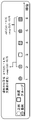
- FIG. 11 is a diagram showing an example in which rankings are set for a plurality of examples according to predicted scores
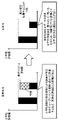
- FIG. 4 is a diagram for explaining swap variables in an information processing device as an example of an embodiment
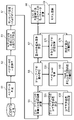
- 4 is a flowchart for explaining processing in an information processing apparatus as an example of an embodiment
- It is a figure which shows the fairness evaluation value by the information processing apparatus as an example of embodiment compared with the conventional method.
- FIG. 10 is a diagram showing a comparison of a fairness correcting method by an information processing apparatus as an example of an embodiment with a method that does not consider pairs
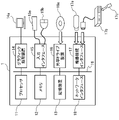
- It is a figure which illustrates the hardware constitutions of the information processing apparatus as an example of embodiment.
- FIG. 1 is a diagram schematically showing the functional configuration of an information processing device 1 as an example of an embodiment.
- the information processing device 1 ranks a plurality of (N) pieces of input data.
- the information processing device may also be referred to as a computer or computing device.
- the following relationship is assumed between the unobserved true label and the observed label. That is, it is assumed that the label y′ belonging to the true data set D true and the label y belonging to the observed data set D biased have the following binary relationship. P(y) ⁇ P(y′) ⁇ w where w ⁇ [0,1] is the bias for the true label y′. Bias is different for each group.
- a machine learning model can simply be called a model.
- the information processing device 1 includes a pair data creation unit 101, a ranking generation unit 102, a prediction score calculation unit 103, a weighted loss function creation unit 104, and a model parameter calculation unit 108, as shown in FIG.
- the paired data creating unit 101 creates paired data using the input binary input data.
- the input data is binary data containing positive and negative examples of labels. If the number of input data is N, it may be expressed as N examples.
- the paired data creation unit 101 creates paired data by combining positive and negative examples. Specifically, the paired data creation unit 101 creates paired data of (number of positive examples) ⁇ (number of negative examples).
- the paired data created by the paired data creation unit 101 is stored, for example, in a predetermined storage area in the memory 12 or the storage device 13, which will be described later with reference to FIG.
- the prediction score calculation unit 103 inputs the input data to the machine learning model and calculates the prediction score for the label ⁇ 0, 1 ⁇ .
- the prediction score for example i may be represented by the following symbols.
- a higher prediction score value (probability) is determined to be a positive example.
- a machine learning model used in known rank learning may be used to calculate the prediction score.
- the prediction score calculation unit 103 may use all the paired data created by the paired data creation unit 101. Moreover, when the number of paired data created by the paired data creating unit 101 is large and the number of paired data is equal to or greater than a predetermined threshold, a predetermined number of paired data may be extracted.
- the ranking generation unit 102 sorts the prediction scores of each example calculated by the prediction score calculation unit 103 to create a descending list of the prediction scores of the examples.
- a descending list of predicted scores may be referred to as a predicted ranking.
- the weighted loss function creation unit 104 creates a weighted loss function including weights that are used without approximating the fairness constraint.
- the weighted loss function generator 104 includes a cumulative fairness evaluation difference calculator 105, a weight calculator 106, and a weighted loss function calculator 107, as shown in FIG.
- the cumulative fairness evaluation difference calculation unit 105 calculates a fairness evaluation difference (diff) for each protection group pair with respect to the prediction ranking based on the prediction ranking set by the ranking generation unit 102 . Also, the fairness evaluation difference (diff) indicates the current fairness. The cumulative fairness evaluation difference calculation unit 105 calculates a cumulative fairness evaluation difference by accumulating the fairness evaluation difference (diff) calculated for each training step. At each training step, a process of inputting training data to the machine learning model and updating parameters of the machine learning model based on a loss function according to the obtained predicted ranking is executed.
- FIG. 2 is a diagram showing an example in which rankings are set for a plurality of (four in the example shown in FIG. 2) according to predicted scores.
- shaded circles represent positive or negative cases, and numbers inside the circles represent prediction scores.
- circles surrounded by squares indicate, for example, belonging to a socially minority group.
- Socially minority groups are sometimes called protection groups.
- a circle without a square indicates belonging to, for example, a socially majority group.
- the social majority group is sometimes called the unprotected group.
- the four examples shown in Figure 2 are ranked according to the predicted score.
- a positive case with a prediction score of 0.9 and a negative case with a prediction score of 0.7 belong to the same group Gi.
- positive cases with a prediction score of 0.4 and negative cases with a prediction score of 0.1 belong to the same group Gj.
- group combinations may be referred to as group pairs.
- group pairs there can be four group pairs, for example (Gi, Gi), (Gi, Gj), (Gj, Gi), (Gj, Gj).
- the cumulative fairness evaluation difference calculation unit 105 calculates the difference diff of the fairness evaluation function for each group pair.
- the difference in the fairness evaluation function may be called the difference in fairness.
- the difference in fairness evaluation function represents the current fairness.
- the cumulative fairness evaluation difference calculation unit 105 may calculate the difference diff of the fairness evaluation function using, for example, an evaluation reference value E that is a listwise evaluation criterion.
- the cumulative fairness evaluation difference calculation unit 105 calculates the evaluation reference value E Gi of the group G i using, for example, the following equations (2) to (4).
- the cumulative fairness evaluation difference calculation unit 105 calculates the evaluation reference value E Gj of the group G j by the same method. Then, the cumulative fairness evaluation difference calculation unit 105 calculates the difference diff of the fairness evaluation function using the following equation (5).
- the fairness evaluation function difference diff represents the difference in the fairness evaluation value of each group.
- the difference diff of the fairness evaluation function corresponds to the fairness value based on the attribute of the first rank.
- the difference diff of the fairness evaluation function is the evaluation reference value EGi of the group G i (the first evaluation value indicating the fairness of the first attribute based on the first rank) and the evaluation reference value E of the group G j It is the difference from Gj (the second evaluation value indicating the fairness of the second attribute based on the first ranking).
- the cumulative fairness evaluation difference calculation unit 105 may calculate the difference diff of the fairness evaluation function using AUC (Area Under the Curve), which is a pairwise evaluation reference value.
- AUC is represented by the following formula.
- the cumulative fairness evaluation difference calculation unit 105 calculates the difference diff of the fairness evaluation function using, for example, Equation (6) below.
- the fairness evaluation function difference diff represents the difference in the fairness evaluation value of each group.
- the cumulative fairness evaluation difference calculation unit 105 calculates the cumulative fairness evaluation differences c ij and c ji based on the following equations (7) and (8) using the calculated difference diff of the fairness evaluation functions. do.
- the cumulative fairness evaluation differences c ij and c ji are values obtained by accumulating diff ij and diff ji by simple iteration.
- a cumulative fairness evaluation difference may be referred to as a cumulative fairness value.
- the cumulative fairness evaluation difference calculation unit 105 estimates the cumulative fairness evaluation difference cij using the update formula shown in the following equation (7) using the learning rate ⁇ .
- the cumulative fairness evaluation difference value calculated by the cumulative fairness evaluation difference calculation unit 105 is stored in a predetermined storage area in the memory 12 or the storage device 13, for example.
- Weight calculator 106 sets a weight for each group pair. Denote the weight of the pair (i,j) as weight wij .
- a weight calculator 106 calculates a swap variable.
- the swap variable indicates group fairness that varies by swapping (optimizing) pairs. Even in the same group pair. The swap changes depending on the ranking position.
- FIG. 3 is a diagram for explaining swap variables in the information processing device 1 as an example of the embodiment.
- each shaded circle represents a positive or negative example, and indicates the ranking of each example. Also, in the figure, a circle surrounded by a square indicates that it belongs to the protection group. A circle without a square indicates belonging to the unprotected group.
- the swap variable is the second order after swapping the order of the first data of the protected group (first attribute) and the second data of the non-protected group (second attribute) among the plurality of data. It is a parameter based on the difference diff between the fairness value based on the attribute and the fairness value based on the attribute of the first order (prediction ranking).
- the swap variable represents the importance of the pair according to the fairness change rate after swapping.
- Weight calculator 106 then calculates a swap variable for each pair.
- Weight calculator 106 calculates weight wij based on cij .
- the weight w ij is represented by the following equation (8). That is, the weight w ij is proportional to the probability distribution with swap ij ⁇ c ij as an argument.
- the weight calculator 106 may calculate the weight w ij using, for example, the sigmoid function ⁇ . That is, the weight calculator 106 may calculate the weight w ij using the following equation (9).
- ⁇ (x) ⁇ (swap ij ⁇ c ij ) (9)
- ⁇ (x) is a function that transforms the argument x into the range [0, 1], and is a function that stochasticizes variables.
- ⁇ (x) is represented by, for example, the following formula.
- the weight calculator 106 calculates a weight that reflects the difference between the swap and the fairness evaluation function.
- the weighted loss function calculator 107 uses the weights w ij calculated by the weight calculator 106 to calculate a weighted loss function Loss represented by the following equation (10).
- the weight is multiplied by the accuracy loss. That is, the weighted loss function calculation unit 107 calculates a predicted ranking error (accuracy loss) and accumulates values obtained by multiplying the error by a weight to calculate the weighted loss function Loss.
- the weighted loss function Loss is obtained by cumulatively processing the attribute-based fairness value calculated based on the ranking of the data according to the output of the machine learning model at each training step. contains the accumulated fairness value.
- the model parameter calculation unit 108 uses the weighted loss function Loss created (calculated) by the weighted loss function creation unit 104 (weighted loss function calculation unit 107) to calculate each of the machine learning models used by the prediction score calculation unit 103. Update parameters.
- the model parameter calculator 108 calculates each parameter of the machine learning model by gradient descent using the weighted loss function Loss. Each calculated parameter is reflected in the machine learning model used by the prediction score calculation unit 103 .
- Equation (10) In the loss function shown in Equation (10) above, c ij increases when diff ij ⁇ 0, that is, when group G i is treated more disadvantageously than group G j .
- the model parameter calculation unit 108 updates the parameters of the machine learning model using the weighted loss function Loss, so that the machine learning model learns to rank items with larger losses higher. .
- the paired data creation unit 101 creates a plurality of paired data by combining positive and negative examples using the input binary input data.
- the paired data creation unit 101 creates paired data for all combinations of positive and negative examples.
- the prediction score calculation unit 103 extracts a predetermined number of paired data when the number of paired data generated by the paired data generating unit 101 is large and the number of paired data is equal to or greater than a predetermined threshold. Note that when the number of paired data is less than the threshold, the process may be skipped and the process may proceed to S3.
- the prediction score calculator 103 inputs each example of the input data to the machine learning model to calculate the prediction score for the label ⁇ 0, 1 ⁇ .
- the ranking generation unit 102 sorts the prediction scores of each example calculated by the prediction score calculation unit 103, thereby creating a descending list of the prediction scores of the examples.
- the cumulative fairness evaluation difference calculation unit 105 calculates the cumulative fairness evaluation difference based on the predicted ranking set by the ranking generation unit 102 .
- the cumulative fairness evaluation difference calculation unit 105 calculates the fairness evaluation difference (diff) for each group pair when calculating the cumulative fairness evaluation difference (S51). Then, the cumulative fairness evaluation difference calculation unit 105 calculates the cumulative fairness evaluation difference by accumulating the calculated fairness evaluation difference (diff) by iteration (S52).
- the evaluation reference value E Gi of group G i is 0.58 (E Gi ⁇ 0.58)
- the evaluation reference value E Gj of group G j is 0.33 (E Gj ⁇ 0.33).
- the difference diff ij between the fairness evaluation functions of the group pair (G i , G j ) is obtained as follows.
- the cumulative fairness evaluation difference calculation unit 105 calculates the cumulative fairness evaluation differences cij and cji based on the fairness evaluation function difference diffij and the above equation (7).
- the weight calculator 106 sets a weight for each group pair.
- the weight calculation unit 106 calculates a swap (swap) for each pair (S61), and calculates the weight wij based on the product of the calculated swap (swap) and the cumulative fairness evaluation difference cij . Calculate (S62). It is desirable that the weight calculator 106 considers only pairs of positive and negative examples.
- the weighted loss function calculator 107 calculates a weighted loss function.
- the weighted loss function calculator 107 calculates errors (accuracy loss) of each prediction ranking (S71) and multiplies the weights corresponding to these errors (S72). Then, the weighted loss function calculation unit 107 calculates the weighted loss function Loss by accumulating the product of the error and the weight.
- the predicted ranking error is represented by, for example, the following formula.
- the model parameter calculation unit 108 uses the weighted loss function Loss created (calculated) by the weighted loss function creation unit 104 (weighted loss function calculation unit 107), and the prediction score calculation unit 103 uses Calculate each parameter of the machine learning model.
- the model parameter calculation unit 108 updates the machine learning model used by the prediction score calculation unit 103 using the calculated parameters. After that, the process ends.
- the weight calculation unit 106 changes the order of the positive examples of the protected group and the negative examples of the unprotected group.
- a swap variable is calculated, and the weighted loss function calculator 107 calculates a loss function that reflects the swap variable as a weight.
- weight estimation is performed by directly using the fairness constraint without approximation.
- FIG. 5 is a diagram showing the fairness evaluation value by the information processing apparatus 1 as an example of the embodiment in comparison with the conventional method.
- FIG. 6 is a diagram showing a fairness correcting method by the information processing apparatus 1 as an example of the embodiment in comparison with a method that does not consider pairs.
- the weight calculator 106 sets weights for each group pair. Since the magnitudes of the weights are different for different pair combinations, the order loss can be detected more accurately during the training step, and error detection can be performed.
- the weight calculation unit 106 can optimize pairs by setting weights that consider swap variables for each pair (order) and varying the weights according to the combination of pairs.
- FIG. 7 is a diagram illustrating the hardware configuration of the information processing apparatus 1 as an example of the embodiment.
- the information processing apparatus 1 is a computer and has, for example, a processor 11, a memory 12, a storage device 13, a graphic processing device 14, an input interface 15, an optical drive device 16, a device connection interface 17, and a network interface 18 as components. . These components 11 to 18 are configured to communicate with each other via a bus 19 .
- the processor (control unit) 11 controls the information processing device 1 as a whole.
- Processor 11 may be a multiprocessor.
- the processor 11 is, for example, one of a CPU, MPU (Micro Processing Unit), DSP (Digital Signal Processor), ASIC (Application Specific Integrated Circuit), PLD (Programmable Logic Device), and FPGA (Field Programmable Gate Array).
- MPU Micro Processing Unit
- DSP Digital Signal Processor
- ASIC Application Specific Integrated Circuit
- PLD Program Language
- FPGA Field Programmable Gate Array
- the processor 11 may be a combination of two or more types of elements among CPU, MPU, DSP, ASIC, PLD, and FPGA.
- the processor 11 executes the control program (machine learning program, not shown) to create the pair data generation unit 101, the ranking generation unit 102, the prediction score calculation unit 103, and the weighted loss function shown in FIG. Functions as the unit 104 and the model parameter calculation unit 108 are realized.
- control program machine learning program, not shown
- the information processing device 1 executes a program (machine learning program, OS program) recorded in a non-temporary computer-readable recording medium, for example, to generate the pair data generation unit 101, the ranking generation unit 102, the prediction Functions as a score calculator 103, a weighted loss function generator 104, and a model parameter calculator 108 are realized.
- a program machine learning program, OS program
- a program describing the processing content to be executed by the information processing device 1 can be recorded in various recording media.
- a program to be executed by the information processing device 1 can be stored in the storage device 13 .
- the processor 11 loads at least part of the program in the storage device 13 into the memory 12 and executes the loaded program.
- the program to be executed by the information processing device 1 can be recorded in a non-temporary portable recording medium such as the optical disk 16a, memory device 17a, memory card 17c, or the like.
- a program stored in a portable recording medium becomes executable after being installed in the storage device 13 under the control of the processor 11, for example.
- the processor 11 can read and execute the program directly from the portable recording medium.
- the memory 12 is a storage memory including ROM (Read Only Memory) and RAM (Random Access Memory).
- a RAM of the memory 12 is used as a main storage device of the information processing apparatus 1 . At least part of the program to be executed by the processor 11 is temporarily stored in the RAM.
- the memory 12 also stores various data necessary for processing by the processor 11 .
- the storage device 13 is a storage device such as a hard disk drive (HDD), SSD (Solid State Drive), storage class memory (SCM), etc., and stores various data.
- the storage device 13 stores an OS program, a control program, and various data.
- a control program includes a machine learning program.
- a semiconductor storage device such as an SCM or flash memory can also be used as the auxiliary storage device.
- a plurality of storage devices 13 may be used to configure RAID (Redundant Arrays of Inexpensive Disks).
- the storage device 13 and the memory 12 store the calculation results generated by the pair data generation unit 101, the ranking generation unit 102, the prediction score calculation unit 103, the weighted loss function generation unit 104, and the model parameter calculation unit 108, and various data to be used. etc. may be stored.
- a monitor 14a is connected to the graphics processing device 14.
- the graphics processing unit 14 displays an image on the screen of the monitor 14a according to instructions from the processor 11.
- FIG. Examples of the monitor 14a include a display device using a CRT (Cathode Ray Tube), a liquid crystal display device, and the like.
- a keyboard 15a and a mouse 15b are connected to the input interface 15.
- the input interface 15 transmits signals sent from the keyboard 15 a and the mouse 15 b to the processor 11 .
- the mouse 15b is an example of a pointing device, and other pointing devices can also be used.
- Other pointing devices include touch panels, tablets, touch pads, trackballs, and the like.
- the optical drive device 16 uses laser light or the like to read data recorded on the optical disk 16a.
- the optical disc 16a is a portable, non-temporary recording medium on which data is recorded so as to be readable by light reflection.
- the optical disk 16a includes DVD (Digital Versatile Disc), DVD-RAM, CD-ROM (Compact Disc Read Only Memory), CD-R (Recordable)/RW (ReWritable), and the like.
- the device connection interface 17 is a communication interface for connecting peripheral devices to the information processing device 1 .
- the device connection interface 17 can be connected with a memory device 17a and a memory reader/writer 17b.
- the memory device 17a is a non-temporary recording medium equipped with a communication function with the device connection interface 17, such as a USB (Universal Serial Bus) memory.
- the memory reader/writer 17b writes data to the memory card 17c or reads data from the memory card 17c.
- the memory card 17c is a card-type non-temporary recording medium.
- the network interface 18 is connected to the network.
- a network interface 18 transmits and receives data via a network.
- Other information processing devices, communication devices, and the like may be connected to the network.
Landscapes
- Engineering & Computer Science (AREA)
- Theoretical Computer Science (AREA)
- Physics & Mathematics (AREA)
- Software Systems (AREA)
- Computing Systems (AREA)
- Artificial Intelligence (AREA)
- Mathematical Physics (AREA)
- General Physics & Mathematics (AREA)
- Data Mining & Analysis (AREA)
- Evolutionary Computation (AREA)
- General Engineering & Computer Science (AREA)
- Biomedical Technology (AREA)
- Molecular Biology (AREA)
- General Health & Medical Sciences (AREA)
- Computational Linguistics (AREA)
- Biophysics (AREA)
- Life Sciences & Earth Sciences (AREA)
- Health & Medical Sciences (AREA)
- Computer Vision & Pattern Recognition (AREA)
- Medical Informatics (AREA)
- Management, Administration, Business Operations System, And Electronic Commerce (AREA)
Priority Applications (4)
| Application Number | Priority Date | Filing Date | Title |
|---|---|---|---|
| JP2023525255A JP7568085B2 (ja) | 2021-06-02 | 2021-06-02 | 機械学習プログラム,機械学習方法および機械学習装置 |
| EP21944130.0A EP4350585A4 (en) | 2021-06-02 | 2021-06-02 | MACHINE LEARNING PROGRAM, MACHINE LEARNING METHOD AND MACHINE LEARNING DEVICE |
| PCT/JP2021/021059 WO2022254626A1 (ja) | 2021-06-02 | 2021-06-02 | 機械学習プログラム,機械学習方法および機械学習装置 |
| US18/515,847 US20240086706A1 (en) | 2021-06-02 | 2023-11-21 | Storage medium, machine learning method, and machine learning device |
Applications Claiming Priority (1)
| Application Number | Priority Date | Filing Date | Title |
|---|---|---|---|
| PCT/JP2021/021059 WO2022254626A1 (ja) | 2021-06-02 | 2021-06-02 | 機械学習プログラム,機械学習方法および機械学習装置 |
Related Child Applications (1)
| Application Number | Title | Priority Date | Filing Date |
|---|---|---|---|
| US18/515,847 Continuation US20240086706A1 (en) | 2021-06-02 | 2023-11-21 | Storage medium, machine learning method, and machine learning device |
Publications (1)
| Publication Number | Publication Date |
|---|---|
| WO2022254626A1 true WO2022254626A1 (ja) | 2022-12-08 |
Family
ID=84322866
Family Applications (1)
| Application Number | Title | Priority Date | Filing Date |
|---|---|---|---|
| PCT/JP2021/021059 Ceased WO2022254626A1 (ja) | 2021-06-02 | 2021-06-02 | 機械学習プログラム,機械学習方法および機械学習装置 |
Country Status (4)
| Country | Link |
|---|---|
| US (1) | US20240086706A1 (https=) |
| EP (1) | EP4350585A4 (https=) |
| JP (1) | JP7568085B2 (https=) |
| WO (1) | WO2022254626A1 (https=) |
Cited By (2)
| Publication number | Priority date | Publication date | Assignee | Title |
|---|---|---|---|---|
| WO2024166331A1 (ja) * | 2023-02-09 | 2024-08-15 | 富士通株式会社 | 機械学習プログラム、方法、及び装置 |
| WO2024184982A1 (ja) * | 2023-03-03 | 2024-09-12 | 富士通株式会社 | 公平性制御プログラム、公平性制御装置、および公平性制御方法 |
Citations (3)
| Publication number | Priority date | Publication date | Assignee | Title |
|---|---|---|---|---|
| US20200293839A1 (en) | 2019-03-15 | 2020-09-17 | Cognitive Scale, Inc. | Burden Score for an Opaque Model |
| WO2020240981A1 (ja) | 2019-05-27 | 2020-12-03 | ソニー株式会社 | 人工知能装置及びプログラム製造方法 |
| WO2021085188A1 (ja) * | 2019-10-29 | 2021-05-06 | ソニー株式会社 | バイアス調整装置、情報処理装置、情報処理方法及び情報処理プログラム |
-
2021
- 2021-06-02 EP EP21944130.0A patent/EP4350585A4/en active Pending
- 2021-06-02 JP JP2023525255A patent/JP7568085B2/ja active Active
- 2021-06-02 WO PCT/JP2021/021059 patent/WO2022254626A1/ja not_active Ceased
-
2023
- 2023-11-21 US US18/515,847 patent/US20240086706A1/en active Pending
Patent Citations (3)
| Publication number | Priority date | Publication date | Assignee | Title |
|---|---|---|---|---|
| US20200293839A1 (en) | 2019-03-15 | 2020-09-17 | Cognitive Scale, Inc. | Burden Score for an Opaque Model |
| WO2020240981A1 (ja) | 2019-05-27 | 2020-12-03 | ソニー株式会社 | 人工知能装置及びプログラム製造方法 |
| WO2021085188A1 (ja) * | 2019-10-29 | 2021-05-06 | ソニー株式会社 | バイアス調整装置、情報処理装置、情報処理方法及び情報処理プログラム |
Non-Patent Citations (2)
| Title |
|---|
| See also references of EP4350585A4 |
| ZEHLIKE MEIKE MEIKEZEHLIKE@MPI-SWS.ORG; CASTILLO CARLOS CHATO@ACM.ORG: "Reducing Disparate Exposure in Ranking: A Learning To Rank Approach", PROCEEDINGS OF THE 28TH ACM JOINT MEETING ON EUROPEAN SOFTWARE ENGINEERING CONFERENCE AND SYMPOSIUM ON THE FOUNDATIONS OF SOFTWARE ENGINEERING, ACM, NEW YORK, NY, USA, 20 April 2020 (2020-04-20) - 13 November 2020 (2020-11-13), New York, NY, USA , pages 2849 - 2855, XP058726345, ISBN: 978-1-4503-7043-1, DOI: 10.1145/3366424.3380048 * |
Cited By (2)
| Publication number | Priority date | Publication date | Assignee | Title |
|---|---|---|---|---|
| WO2024166331A1 (ja) * | 2023-02-09 | 2024-08-15 | 富士通株式会社 | 機械学習プログラム、方法、及び装置 |
| WO2024184982A1 (ja) * | 2023-03-03 | 2024-09-12 | 富士通株式会社 | 公平性制御プログラム、公平性制御装置、および公平性制御方法 |
Also Published As
| Publication number | Publication date |
|---|---|
| JP7568085B2 (ja) | 2024-10-16 |
| JPWO2022254626A1 (https=) | 2022-12-08 |
| US20240086706A1 (en) | 2024-03-14 |
| EP4350585A4 (en) | 2024-07-31 |
| EP4350585A1 (en) | 2024-04-10 |
Similar Documents
| Publication | Publication Date | Title |
|---|---|---|
| US20200134716A1 (en) | Systems and methods for determining credit worthiness of a borrower | |
| Dejaeger et al. | Data mining techniques for software effort estimation: a comparative study | |
| US20240086706A1 (en) | Storage medium, machine learning method, and machine learning device | |
| US11461793B2 (en) | Identification of behavioral pattern of simulated transaction data | |
| CN111008898B (zh) | 评估模型解释工具的方法和装置 | |
| US20220207420A1 (en) | Utilizing machine learning models to characterize a relationship between a user and an entity | |
| Mokheleli et al. | Machine learning approach for credit score predictions | |
| CN111325344A (zh) | 评估模型解释工具的方法和装置 | |
| CN119272897A (zh) | 基于低秩分解的参数更新方法、装置、设备及存储介质 | |
| JP7207540B2 (ja) | 学習支援装置、学習支援方法、及びプログラム | |
| US11488172B2 (en) | Intelligent agent to simulate financial transactions | |
| US11373760B2 (en) | False detection rate control with null-hypothesis | |
| US7716145B2 (en) | System for supporting user's behavior | |
| US20090204555A1 (en) | System and method using hidden information | |
| US20210133772A1 (en) | Intelligent agent to simulate customer data | |
| US20230060869A1 (en) | Systems and methods to implement trained intelligence agents for detecting activity that deviates from the norm | |
| US20240185369A1 (en) | Biasing machine learning model outputs | |
| US12536466B2 (en) | Systems and methods to monitor trained intelligence agents | |
| WO2020167156A1 (ru) | Способ отладки обученной рекуррентной нейронной сети | |
| US11645555B2 (en) | Feature selection using Sobolev Independence Criterion | |
| JP7670229B2 (ja) | 訓練データ生成プログラム,訓練データ生成方法および情報処理装置 | |
| WO2021090142A1 (en) | Intelligent agent to simulate customer data | |
| JP7666142B2 (ja) | 情報処理プログラム,情報処理方法および情報処理装置 | |
| JP7388660B2 (ja) | 情報処理装置、利用者端末、情報処理方法、及び情報処理プログラム | |
| US11847679B2 (en) | Persona based co-operative multi-agent reinforcement learning to enhance user experience |
Legal Events
| Date | Code | Title | Description |
|---|---|---|---|
| 121 | Ep: the epo has been informed by wipo that ep was designated in this application |
Ref document number: 21944130 Country of ref document: EP Kind code of ref document: A1 |
|
| WWE | Wipo information: entry into national phase |
Ref document number: 2023525255 Country of ref document: JP |
|
| WWE | Wipo information: entry into national phase |
Ref document number: 2021944130 Country of ref document: EP |
|
| NENP | Non-entry into the national phase |
Ref country code: DE |
|
| ENP | Entry into the national phase |
Ref document number: 2021944130 Country of ref document: EP Effective date: 20240102 |