WO2022224621A1 - 健康行動提案システム、健康行動提案方法及びプログラム - Google Patents
健康行動提案システム、健康行動提案方法及びプログラム Download PDFInfo
- Publication number
- WO2022224621A1 WO2022224621A1 PCT/JP2022/011019 JP2022011019W WO2022224621A1 WO 2022224621 A1 WO2022224621 A1 WO 2022224621A1 JP 2022011019 W JP2022011019 W JP 2022011019W WO 2022224621 A1 WO2022224621 A1 WO 2022224621A1
- Authority
- WO
- WIPO (PCT)
- Prior art keywords
- function
- motion
- subject
- oral
- health behavior
- Prior art date
- Legal status (The legal status is an assumption and is not a legal conclusion. Google has not performed a legal analysis and makes no representation as to the accuracy of the status listed.)
- Ceased
Links
Images



Classifications
-
- A—HUMAN NECESSITIES
- A61—MEDICAL OR VETERINARY SCIENCE; HYGIENE
- A61B—DIAGNOSIS; SURGERY; IDENTIFICATION
- A61B10/00—Instruments for taking body samples for diagnostic purposes; Other methods or instruments for diagnosis, e.g. for vaccination diagnosis, sex determination or ovulation-period determination; Throat striking implements
-
- A—HUMAN NECESSITIES
- A61—MEDICAL OR VETERINARY SCIENCE; HYGIENE
- A61B—DIAGNOSIS; SURGERY; IDENTIFICATION
- A61B5/00—Measuring for diagnostic purposes; Identification of persons
- A61B5/103—Measuring devices for testing the shape, pattern, colour, size or movement of the body or parts thereof, for diagnostic purposes
- A61B5/11—Measuring movement of the entire body or parts thereof, e.g. head or hand tremor or mobility of a limb
-
- G—PHYSICS
- G16—INFORMATION AND COMMUNICATION TECHNOLOGY [ICT] SPECIALLY ADAPTED FOR SPECIFIC APPLICATION FIELDS
- G16H—HEALTHCARE INFORMATICS, i.e. INFORMATION AND COMMUNICATION TECHNOLOGY [ICT] SPECIALLY ADAPTED FOR THE HANDLING OR PROCESSING OF MEDICAL OR HEALTHCARE DATA
- G16H20/00—ICT specially adapted for therapies or health-improving plans, e.g. for handling prescriptions, for steering therapy or for monitoring patient compliance
- G16H20/30—ICT specially adapted for therapies or health-improving plans, e.g. for handling prescriptions, for steering therapy or for monitoring patient compliance relating to physical therapies or activities, e.g. physiotherapy, acupressure or exercising
-
- G—PHYSICS
- G16—INFORMATION AND COMMUNICATION TECHNOLOGY [ICT] SPECIALLY ADAPTED FOR SPECIFIC APPLICATION FIELDS
- G16H—HEALTHCARE INFORMATICS, i.e. INFORMATION AND COMMUNICATION TECHNOLOGY [ICT] SPECIALLY ADAPTED FOR THE HANDLING OR PROCESSING OF MEDICAL OR HEALTHCARE DATA
- G16H20/00—ICT specially adapted for therapies or health-improving plans, e.g. for handling prescriptions, for steering therapy or for monitoring patient compliance
- G16H20/60—ICT specially adapted for therapies or health-improving plans, e.g. for handling prescriptions, for steering therapy or for monitoring patient compliance relating to nutrition control, e.g. diets
-
- G—PHYSICS
- G16—INFORMATION AND COMMUNICATION TECHNOLOGY [ICT] SPECIALLY ADAPTED FOR SPECIFIC APPLICATION FIELDS
- G16H—HEALTHCARE INFORMATICS, i.e. INFORMATION AND COMMUNICATION TECHNOLOGY [ICT] SPECIALLY ADAPTED FOR THE HANDLING OR PROCESSING OF MEDICAL OR HEALTHCARE DATA
- G16H50/00—ICT specially adapted for medical diagnosis, medical simulation or medical data mining; ICT specially adapted for detecting, monitoring or modelling epidemics or pandemics
- G16H50/30—ICT specially adapted for medical diagnosis, medical simulation or medical data mining; ICT specially adapted for detecting, monitoring or modelling epidemics or pandemics for calculating health indices; for individual health risk assessment
Definitions
- the present invention relates to a health behavior proposal system, a health behavior proposal method, and a program for proposing health behavior.
- Patent Document 1 discloses an activity support method that encourages a subject to act in order to maintain the subject's health.
- Patent Literature 1 In order to promote healthy behavior, physical frailty (undernutrition, oral dysfunction, muscle weakness, etc.), mental frailty (MCI (mild cognitive impairment), depression, etc.) and social It is necessary to promote behavioral change from the perspective of preventing frailty (withdrawal, isolation, eating alone, etc.).
- MCI mental frailty
- depression etc.
- Patent Literature 1 The technique disclosed in Patent Literature 1 described above performs measurements and proposals only from the viewpoint of exercise and nutrition, and is insufficient from the viewpoint of prevention of the three major factors of frailty.
- the purpose of the present invention is to provide a health behavior suggestion system that can encourage healthy behavior to prevent the three major factors of frailty.
- a health behavior proposal system includes a speech feature quantity extraction unit that extracts a sound feature quantity from a subject's voice, a motion feature quantity extraction unit that extracts a motion feature quantity from the motion of the subject, An oral function estimating unit for estimating the oral function related to eating of the subject according to the extracted voice feature amount, and a cognitive function for estimating the cognitive function of the subject according to the extracted voice feature amount a function estimation unit, a motion function estimation unit for estimating a motion function related to the subject's daily life activities according to the extracted motion feature amount, and the estimated oral function, the cognitive function, and the motion function. and a proposing unit for proposing a health behavior based on the health behavior.
- a method for suggesting health behavior includes a voice feature amount extraction step of extracting a voice feature amount from a subject's voice; a motion feature amount extraction step of extracting a motion feature amount from the motion of the subject; an oral function estimating step of estimating an oral function related to eating of the subject according to the extracted voice feature; and a cognitive function of estimating the subject's cognitive function according to the extracted voice feature.
- a program according to one aspect of the present invention is a program for causing a computer to execute the above-described method for suggesting healthy behavior.
- the health behavior suggestion system of the present invention it is possible to encourage healthy behaviors to prevent the three major factors of frailty.
- FIG. 1 is a diagram showing the configuration of a health behavior suggestion system according to an embodiment.
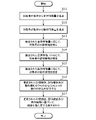
- FIG. 2 is a flow chart showing an example of the operation of the health behavior suggestion system according to the embodiment.
- FIG. 3 is a diagram showing an example of a table in which levels of oral cavity function, cognitive function, and action function are associated with proposal contents according to the embodiment.
- FIG. 4 is a diagram illustrating an example of presentation of operational function states.
- FIG. 5 is a diagram showing an example of presentation of overall state of oral function, cognitive function, and action function, and an example of a proposal regarding exercise.
- FIG. 6 is a diagram showing an example of presentation of the state of oral function, cognitive function and movement function.
- FIG. 7 is a diagram showing an example of presentation of the state of oral cavity function and motion function.
- FIG. 8 is a diagram showing an example of suggestions regarding nutrition, exercise, and social participation.
- each figure is a schematic diagram and is not necessarily strictly illustrated. Moreover, in each figure, the same code
- FIG. 1 is a diagram showing the configuration of a health behavior proposal system 1 according to an embodiment.
- the health behavior proposal system 1 analyzes the voice and motion of a target person such as an elderly person to estimate the degree (level) of the subject's frailty state, and proposes health behaviors according to the level of the subject's frailty state. It is a system that makes proposals.
- the components constituting the health behavior suggestion system 1 may be provided in one housing, or may be distributed.
- the health action suggestion system 1 is, for example, a server.
- the components constituting the health behavior suggestion system 1 may be distributed and arranged in a plurality of servers.
- the health behavior suggestion system 1 may be a personal computer.
- the health behavior proposal system 1 includes an acquisition unit 11 , a voice feature quantity extraction unit 12 , a motion feature quantity extraction unit 13 , an oral function estimation unit 14 , a cognitive function estimation unit 15 , a motion function estimation unit 16 and a proposal unit 17 .
- the health behavior suggestion system 1 is a computer including a processor, a communication interface, a memory, and the like.
- the memory is ROM (Read Only Memory), RAM (Random Access Memory), etc., and can store programs executed by the processor.
- Acquisition unit 11, speech feature quantity extraction unit 12, motion feature quantity extraction unit 13, oral function estimation unit 14, cognitive function estimation unit 15, motion function estimation unit 16, and proposal unit 17 execute programs stored in memory. It is implemented by a processor, a communication interface, and the like.
- the acquisition unit 11 acquires the voice and motion of the subject.
- the acquisition unit 11 acquires the subject's voice from a device having a sound collection function (microphone, smartphone, tablet, laptop, etc.).
- the health behavior suggestion system 1 may include a device having a sound collection function.
- the acquisition unit 11 acquires the motion of the subject from a device having a photographing function (a camera, a smartphone, a tablet, a notebook computer, or the like).
- the acquiring unit 11 acquires a moving image in which the subject is captured as a subject from a device having a shooting function, and acquires the movement of the subject from the moving image.
- the health behavior suggestion system 1 may include a device having a photographing function.
- the health behavior proposal system 1 uses a device such as a microphone or a camera that can acquire information about the subject without contact with the subject, so that the voice and actions of the subject can be easily heard without the subject feeling annoyed. can be obtained.
- the voice feature quantity extraction unit 12 extracts the voice feature quantity from the subject's voice. The details of the audio feature extraction unit 12 will be described later.
- the motion feature quantity extraction unit 13 extracts a motion feature quantity from the motion of the subject. Details of the motion feature amount extraction unit 13 will be described later.
- the oral function estimating unit 14 estimates the oral function related to eating of the subject according to the extracted speech feature amount. For example, the oral function estimation unit 14 estimates the level of the oral function of the subject. Details of the oral cavity function estimation unit 14 will be described later.
- the cognitive function estimation unit 15 estimates the subject's cognitive function according to the extracted speech feature amount. For example, the cognitive function estimation unit 15 estimates the cognitive function level of the subject. Details of the cognitive function estimation unit 15 will be described later.
- the movement function estimating unit 16 estimates the movement function related to the daily life activities of the subject according to the extracted movement feature amount. For example, the movement function estimation unit 16 estimates the level of the subject's movement function. The details of the motion function estimation unit 16 will be described later.
- the proposal unit 17 makes proposals regarding health behavior based on the estimated oral function, cognitive function, and movement function.
- the proposal unit 17 may further present the state of at least one of the estimated oral cavity function, cognitive function, and movement function.
- the proposal unit 17 makes a proposal and presentation via a display device such as a smartphone, a tablet, or a personal computer possessed by the subject or a person related to the subject (a family member, a doctor in charge, or the like). Details of the proposal unit 17 will be described later.
- FIG. 2 is a flow chart showing an example of the operation of the health behavior suggestion system 1 according to the embodiment.
- the ID Identity
- the subject is specified. If the input ID is an unregistered ID, the input ID may be newly registered together with the information of the subject.
- the voice feature quantity extraction unit 12 extracts the voice feature quantity from the subject's voice (step S11). For example, the voice feature quantity extraction unit 12 extracts the voice feature quantity from the voice of the target person uttering a predetermined syllable or a predetermined sentence. For example, the subject is instructed to pronounce a predetermined syllable or a predetermined sentence (sentence containing a specific sound), and the subject's voice when the instructed predetermined syllable or predetermined sentence is pronounced Features are extracted.
- a predetermined syllable may consist of a consonant and a vowel following the consonant.
- predetermined syllables are "ki", “ta”, “ka”, “ze”, and the like.
- "Ki” is composed of a consonant “k” and a vowel “i” following the consonant.
- "ta” is composed of the consonant "t” and the vowel "a” following the consonant.
- ⁇ ka'' consists of a consonant ⁇ k'' followed by a vowel ⁇ a''.
- ⁇ ze'' consists of a consonant ⁇ z'' followed by a vowel ⁇ e''.
- a given sentence may include a syllable part consisting of a consonant, a vowel following the consonant, and a consonant following the vowel.
- a syllable part is the "kaz" part in “Kaze”.
- the syllable part consists of a consonant "k”, a vowel "a” following the consonant, and a consonant "z” following the vowel.
- a given sentence may include a string of consecutive syllables containing vowels.
- such character strings are "aiueo" and the like.
- a given sentence may contain a given word.
- such words are "taiyo: sun”, “kitakaze: north wind”, and so on.
- the predetermined sentence may include a phrase in which a syllable composed of a consonant and a vowel following the consonant is repeated.
- a syllable composed of a consonant and a vowel following the consonant is repeated.
- such phrases are "papapapapa", “tatata tatata", “kakakakaka", or "la-la-la-la-la-la".
- "Pa” is composed of the consonant "p” and the vowel “a” following the consonant.
- ta” is composed of the consonant "t” and the vowel "a” following the consonant.
- ⁇ ka'' consists of a consonant ⁇ k'' followed by a vowel ⁇ a''.
- "Ra” consists of a consonant "r” followed by a vowel "a”.
- the voice feature amount extraction unit 12 extracts the sound pressure difference between the consonant and the vowel. You may extract as a feature-value.
- the speech feature quantity extraction unit 12 extracts the syllable You may extract the time required to emit a part as a feature-value.
- the voice feature amount extraction unit 12 extracts the repeated syllable may be extracted as the feature amount.
- the voice feature amount extraction unit 12 extracts the first formant frequency obtained from the spectrum of the vowel part and The second formant frequency may be extracted as a speech feature quantity.
- the motion feature quantity extraction unit 13 extracts a motion feature quantity from the motion of the subject (step S12).
- the motion feature amount extraction unit 13 extracts the motion feature amount from the motion of the target person in a moving image in which the target person is shown as the subject while walking.
- the subject is instructed to walk in front of a camera or the like, and motion feature amounts are extracted from the motion of the subject during walking.
- the motion feature amount extraction unit 13 uses an existing algorithm to identify a 3D skeleton model of a person (three-dimensional coordinate data of each joint such as a knee joint, hip joint, and ankle) of a person captured in a moving image, and extracts three-dimensional A motion feature amount is extracted using the position change of each skeletal point of the skeletal model.
- motion feature amounts include walking speed, stride length, stride interval, walking cycle, cadence, step difference between left and right, swing of trunk during walking, or change in joint angle.
- a two-dimensional skeleton model may be used, although the motion feature amount to be extracted is limited by the imaging direction.
- the oral function estimating unit 14 estimates the oral function related to the subject's eating according to the extracted speech feature amount (step S13).
- oral function includes multiple elements such as tongue movement, jaw movement, swallowing movement, lip strength, ability to hold food together, ability to prevent choking, and ability to chew hard objects. 14 may estimate oral function for each of a plurality of factors.
- the movement of the tongue can be estimated from the sound pressure difference between "k” and “i” or the sound pressure difference between "t” and “a”.
- the movement of the tongue can be estimated from the sound pressure difference between "k” and “i” or the sound pressure difference between "t” and “a”.
- the tip of the tongue in order to emit "ze”, it is necessary to bring the tip of the tongue into contact with or close to the upper front teeth, so from the sound pressure difference between "z” and "e”, the number of remaining teeth , biting force, etc. can be estimated.
- the time required to pronounce a syllable consisting of "kaz” varies according to the movement of the tongue. can do.
- the force of the lips can be estimated from the number of times "papapapapa" is pronounced within a predetermined time. can.
- the tip of the tongue must touch the upper jaw behind the front teeth, as described above.
- the movement of the tip of the tongue in contact with the upper jaw behind the front teeth is the movement that occurs when food is pressed against the teeth, mixed with saliva to hold food together, and the movement of the bolus from the oral cavity to the pharynx. Similar to what happens when moving.
- the cognitive function estimation unit 15 estimates the subject's cognitive function according to the extracted speech feature amount (step S14).
- the subject's cognitive function from the first formant frequency and the second formant frequency obtained from the spectrum of the vowel part in the voice uttered by the subject "AIUEO".
- the first formant frequencies and Plot the points corresponding to the second formant frequency were larger in dementia patients than in healthy subjects. It becomes smaller, and the distance between each point of the shape of the polygon is closer for dementia patients than for healthy subjects. Therefore, the cognitive function level of the subject can be estimated from the area or shape of the polygon.
- the motion function estimating unit 16 estimates the motion function related to the daily life activities of the subject according to the extracted motion feature amount (step S15). For example, since the motion function includes a plurality of elements such as balance strength, muscle strength, walking rhythm, posture reaction, and flexibility, the motion function estimation unit 16 may estimate the motion function for each of the plurality of elements. .
- the subject's balance strength, muscle strength, walking Rhythm, postural response and flexibility can be estimated.
- the subject's level of motor function can be estimated.
- the proposing unit 17 presents the state of at least one of the estimated oral cavity function, cognitive function, and movement function (step S16). Moreover, the proposal part 17 makes a proposal regarding health behavior based on the estimated oral cavity function, cognitive function, and movement function (step S17). For example, the proposing unit 17 compares the estimated levels of oral function, cognitive function, and operational function with a table in which proposal contents are associated with each level of oral function, cognitive function, and operational function. may make suggestions about health behaviors.
- the table will be described with reference to FIG.
- FIG. 3 is a diagram showing an example of a table in which the level of each oral cavity function, cognitive function, and action function and proposal contents are associated with each other according to the embodiment.
- levels are associated with each of the plurality of elements for the oral cavity function and the movement function (walking function).
- the specific proposal content is left blank, but in reality, the recommended proposal content is associated with each function level. Since the content of the proposal is predetermined for each level of each function, it is possible to easily make proposals regarding health behavior by comparing the estimated levels of oral function, cognitive function, and movement function with the table. can.
- a table may be prepared for each subject, or may be prepared for each subject's attributes (age, sex, height, weight, etc.).
- the target person or the attribute of the target person can be specified by the ID of the target person described above.
- Suggestions regarding health behavior include, for example, suggestions regarding exercise, nutrition or social participation. It should be noted that when a proposal regarding exercise is made, a proposal regarding equipment used for exercise may be made. Also, when the nutrition-related suggestions are made, suggestions related to supplements, foodstuffs, cooking utensils, and the like may be made. Here, specific examples of presentation and proposal will be described with reference to FIGS. 4 to 8. FIG.
- FIG. 4 is a diagram showing an example of presentation of the state of the operating function.
- the state of the motion function of the subject As the state of the motion function of the subject, the state of the subject walking as shown on the left side of FIG. 4, or the 3D skeleton model as shown on the right side of FIG. 4 may be displayed. For example, it is possible to check the movement of the 3D skeletal model from various viewpoints while reproducing a moving image in which a walking target person is shown as a subject.
- FIG. 5 is a diagram showing an example of presentation of the overall state of oral function, cognitive function, and movement function, and an example of a proposal regarding exercise.
- the overall state of oral function, cognitive function and movement function may be displayed as symbols or radar charts indicating the degree of the state.
- the state of oral function, cognitive function and movement function may be displayed by QR code (registered trademark). Note that the content of the proposal may also be displayed using a QR code.
- exercise suggestions for the prevention of mental and physical frailty are also shown in FIG. 5 as exercise suggestions for the prevention of mental and physical frailty.
- FIG. 6 is a diagram showing an example of presentation of oral function, cognitive function, and movement function.
- the state of oral function, the state of cognitive function, and the state of movement function may be displayed individually. For example, for each function status, the one that is most degraded may be displayed.
- the states of multiple elements in the action function may be displayed by a radar chart or the like, and the states of the multiple elements in the oral cavity function may be displayed by a radar chart or the like.
- FIG. 7 is a diagram showing an example of presentation of the state of oral cavity function and movement function.
- the state of each function estimated this time and the state of each function estimated last time may be displayed. Further, whether the state of each function has improved, maintained, or deteriorated from the time of the previous measurement may be displayed.
- Fig. 8 is a diagram showing an example of a proposal regarding nutrition, exercise and social participation.
- nutrition suggestions and exercise suggestions may be displayed separately. Proposals for ingredients and amounts to be consumed may be displayed as suggestions regarding nutrition. Also, the content of the exercise may be displayed as a suggestion regarding exercise. In addition, equipment used for social participation may be displayed as a proposal for social participation.
- proposals and suggestions are displayed on the screen, but may be printed and displayed on paper.
- the health behavior proposal system 1 includes the speech feature quantity extraction unit 12 for extracting the speech feature quantity from the subject's speech, and the operation for extracting the action feature quantity from the motion of the subject.
- the feature amount extraction unit 13 the oral function estimation unit 14 for estimating the oral function related to the subject's eating according to the extracted voice feature amount, and the subject's cognitive function according to the extracted voice feature amount
- a cognitive function estimating unit 15 for estimating, a motional function estimating unit 16 for estimating a motional function related to the daily life motion of the subject according to the extracted motion feature amount, and an estimated oral function, cognitive function and motional function and a proposing unit 17 for proposing health behaviors based on the above.
- the proposal unit 17 may further present the state of at least one of the estimated oral cavity function, cognitive function, and movement function.
- suggestions for health behavior may include suggestions for exercise, nutrition, or social participation.
- suggestions related to exercise, nutrition, or social participation can encourage healthy behavior to prevent the three major factors of frailty.
- the oral function estimation unit 14 may estimate oral functions for each of a plurality of elements.
- oral function includes multiple elements such as tongue movement, jaw movement, swallowing movement, lip strength, food gathering ability, choking prevention ability, and chewing ability.
- elements such as tongue movement, jaw movement, swallowing movement, lip strength, food gathering ability, choking prevention ability, and chewing ability.
- the motion function estimation unit 16 may estimate motion functions for each of a plurality of elements.
- motion function includes multiple elements such as balance strength, muscle strength, walking rhythm, postural reaction, and flexibility. It can be performed. In addition, it is possible to present more detailed operation function states.
- the proposing unit 17 compares the estimated levels of oral function, cognitive function, and operational function with a table in which proposal contents are associated with each level of oral function, cognitive function, and operational function. may make suggestions about health behaviors.
- the speech feature quantity extraction unit 12 may extract the speech feature quantity from the speech of the subject speaking a predetermined syllable or a predetermined sentence.
- the motion feature amount extraction unit 13 may extract the motion feature amount from the motion of the target person in a moving image in which the target person is shown as the subject while walking.
- the proposal unit 17 presents the state of at least one of the estimated oral cavity function, cognitive function, and movement function, but the present invention is not limited to this.
- the proposal unit 17 may not present the state of at least one of the estimated oral cavity function, cognitive function, and movement function.
- the oral cavity function estimating unit 14 estimates the oral cavity function for each of a plurality of elements has been described, but the present invention is not limited to this.
- the oral cavity function estimating unit 14 does not need to estimate the oral cavity function for each of the plurality of elements.
- the motion function estimating unit 16 estimates the motion function for each of a plurality of elements has been described, but the present invention is not limited to this.
- the motion function estimating unit 16 does not have to estimate the motion function for each of the plurality of elements.
- the proposal unit 17 stores the estimated oral cavity function, cognitive function, and motion function in a table in which proposal content is associated with each level of the oral cavity function, cognitive function, and motion function.
- the proposal unit 17 uses the levels of oral function, cognitive function, and movement function as input, and uses a learned model or the like that has been learned to output appropriate proposal content, and makes suggestions regarding health behavior. good too. By using the learned model, suggestions regarding health behavior can be easily made.
- the present invention can be realized not only as the health action proposal system 1, but also as a health action proposal method including steps (processing) performed by each component constituting the health action proposal system 1.
- the method for proposing health behavior includes a speech feature quantity extraction step (step S11) for extracting a speech feature quantity from the subject's voice, and a motion feature quantity for extracting a motion feature quantity from the motion of the subject.
- the steps in the health behavior suggestion method may be executed by a computer (computer system).
- the present invention can be realized as a program for causing a computer to execute the steps included in those methods.
- the present invention can be implemented as a non-temporary computer-readable recording medium such as a CD-ROM recording the program.
- each step is executed by executing the program using hardware resources such as a computer's CPU, memory, and input/output circuits.
- hardware resources such as a computer's CPU, memory, and input/output circuits.
- each step is executed by the CPU acquiring data from a memory, an input/output circuit, or the like, performing an operation, or outputting the operation result to the memory, an input/output circuit, or the like.
- each component included in the health behavior suggestion system 1 of the above embodiment may be implemented as a dedicated or general-purpose circuit.
- each component included in the health behavior proposal system 1 of the above-described embodiment may be implemented as an LSI (Large Scale Integration), which is an integrated circuit (IC: Integrated Circuit).
- LSI Large Scale Integration
- IC integrated circuit
- integrated circuits are not limited to LSIs, and may be realized by dedicated circuits or general-purpose processors.
- a programmable FPGA (Field Programmable Gate Array) or a reconfigurable processor in which connection and setting of circuit cells inside the LSI can be reconfigured may be used.
Landscapes
- Health & Medical Sciences (AREA)
- Engineering & Computer Science (AREA)
- Life Sciences & Earth Sciences (AREA)
- Medical Informatics (AREA)
- Public Health (AREA)
- General Health & Medical Sciences (AREA)
- Primary Health Care (AREA)
- Biomedical Technology (AREA)
- Pathology (AREA)
- Epidemiology (AREA)
- Molecular Biology (AREA)
- Animal Behavior & Ethology (AREA)
- Veterinary Medicine (AREA)
- Surgery (AREA)
- Heart & Thoracic Surgery (AREA)
- Biophysics (AREA)
- Databases & Information Systems (AREA)
- Physics & Mathematics (AREA)
- Data Mining & Analysis (AREA)
- Oral & Maxillofacial Surgery (AREA)
- Physiology (AREA)
- Dentistry (AREA)
- Physical Education & Sports Medicine (AREA)
- Nutrition Science (AREA)
- Medical Treatment And Welfare Office Work (AREA)
Priority Applications (1)
| Application Number | Priority Date | Filing Date | Title |
|---|---|---|---|
| JP2023516329A JPWO2022224621A1 (https=) | 2021-04-23 | 2022-03-11 |
Applications Claiming Priority (2)
| Application Number | Priority Date | Filing Date | Title |
|---|---|---|---|
| JP2021-072951 | 2021-04-23 | ||
| JP2021072951 | 2021-04-23 |
Publications (1)
| Publication Number | Publication Date |
|---|---|
| WO2022224621A1 true WO2022224621A1 (ja) | 2022-10-27 |
Family
ID=83722891
Family Applications (1)
| Application Number | Title | Priority Date | Filing Date |
|---|---|---|---|
| PCT/JP2022/011019 Ceased WO2022224621A1 (ja) | 2021-04-23 | 2022-03-11 | 健康行動提案システム、健康行動提案方法及びプログラム |
Country Status (2)
| Country | Link |
|---|---|
| JP (1) | JPWO2022224621A1 (https=) |
| WO (1) | WO2022224621A1 (https=) |
Citations (2)
| Publication number | Priority date | Publication date | Assignee | Title |
|---|---|---|---|---|
| WO2019187099A1 (ja) * | 2018-03-30 | 2019-10-03 | 株式会社日立製作所 | 身体機能自立支援装置およびその方法 |
| WO2019225242A1 (ja) * | 2018-05-23 | 2019-11-28 | パナソニックIpマネジメント株式会社 | 摂食嚥下機能評価方法、プログラム、摂食嚥下機能評価装置および摂食嚥下機能評価システム |
-
2022
- 2022-03-11 WO PCT/JP2022/011019 patent/WO2022224621A1/ja not_active Ceased
- 2022-03-11 JP JP2023516329A patent/JPWO2022224621A1/ja active Pending
Patent Citations (2)
| Publication number | Priority date | Publication date | Assignee | Title |
|---|---|---|---|---|
| WO2019187099A1 (ja) * | 2018-03-30 | 2019-10-03 | 株式会社日立製作所 | 身体機能自立支援装置およびその方法 |
| WO2019225242A1 (ja) * | 2018-05-23 | 2019-11-28 | パナソニックIpマネジメント株式会社 | 摂食嚥下機能評価方法、プログラム、摂食嚥下機能評価装置および摂食嚥下機能評価システム |
Also Published As
| Publication number | Publication date |
|---|---|
| JPWO2022224621A1 (https=) | 2022-10-27 |
Similar Documents
| Publication | Publication Date | Title |
|---|---|---|
| Tedesco et al. | Accuracy of consumer-level and research-grade activity trackers in ambulatory settings in older adults | |
| Hiiemae et al. | Tongue movements in feeding and speech | |
| CN112135564B (zh) | 摄食吞咽功能评价方法、记录介质、评价装置以及评价系统 | |
| US10405786B2 (en) | Systems, environment and methods for evaluation and management of autism spectrum disorder using a wearable data collection device | |
| US20170273634A1 (en) | Meal estimation method, meal estimation apparatus, and recording medium | |
| EP3111349A1 (en) | Systems, environment and methods for evaluation and management of autism spectrum disorder using a wearable data collection device | |
| Wang et al. | Eating detection and chews counting through sensing mastication muscle contraction | |
| Schiboni et al. | Automatic dietary monitoring using wearable accessories | |
| Paulina-Carabajal et al. | Endocranial morphology of the primitive nodosaurid dinosaur Pawpawsaurus campbelli from the Early Cretaceous of North America | |
| Giggins et al. | The use of inertial sensors for the classification of rehabilitation exercises | |
| JP2021135995A (ja) | アバター表情生成システム及びアバター表情生成方法 | |
| JP2015228202A (ja) | 判断システム、判断方法、及び判断プログラム | |
| WO2022224621A1 (ja) | 健康行動提案システム、健康行動提案方法及びプログラム | |
| Serrurier et al. | Comparative articulatory modelling of the tongue in speech and feeding | |
| Álvarez et al. | Description of tongue movements on swallowing patterns | |
| CN111403042A (zh) | 基于ai的虚拟标准病人模拟系统 | |
| EP4283631A1 (en) | Prediction system, control method, and control program | |
| WO2022232933A1 (en) | Personalized microdosing kits and protocols based on biometric and movement data correlated with natural product qualities | |
| CN117279568A (zh) | 口腔功能评价方法、程序、口腔功能评价装置及口腔功能评价系统 | |
| Ross | The Objective Assessment of Movement Quality Using Motion Capture and Machine Learning | |
| Ataguba et al. | Systematic Review of AR/VR Applications for Health and Wellness: Trends and Future Opportunities | |
| JP7637922B2 (ja) | 口腔機能評価装置、口腔機能評価システム、及び、口腔機能評価方法 | |
| Silva et al. | Go Across Immersive Technology: A Preliminary Study of the Design and Development of a System for Gait Training Using Virtual Reality | |
| JP2022117339A (ja) | 健康支援装置、健康支援システム、健康支援方法 | |
| Mahajan et al. | PLHI-MC10: A dataset of exercise activities captured through a triple synchronous medically-approved sensor |
Legal Events
| Date | Code | Title | Description |
|---|---|---|---|
| 121 | Ep: the epo has been informed by wipo that ep was designated in this application |
Ref document number: 22790217 Country of ref document: EP Kind code of ref document: A1 |
|
| WWE | Wipo information: entry into national phase |
Ref document number: 2023516329 Country of ref document: JP |
|
| NENP | Non-entry into the national phase |
Ref country code: DE |
|
| 122 | Ep: pct application non-entry in european phase |
Ref document number: 22790217 Country of ref document: EP Kind code of ref document: A1 |