WO2022219785A1 - 暗号システム、暗号化装置、復号装置、方法、及びプログラム - Google Patents
暗号システム、暗号化装置、復号装置、方法、及びプログラム Download PDFInfo
- Publication number
- WO2022219785A1 WO2022219785A1 PCT/JP2021/015630 JP2021015630W WO2022219785A1 WO 2022219785 A1 WO2022219785 A1 WO 2022219785A1 JP 2021015630 W JP2021015630 W JP 2021015630W WO 2022219785 A1 WO2022219785 A1 WO 2022219785A1
- Authority
- WO
- WIPO (PCT)
- Prior art keywords
- tbe
- key
- encryption
- algorithm
- dec
- Prior art date
- Legal status (The legal status is an assumption and is not a legal conclusion. Google has not performed a legal analysis and makes no representation as to the accuracy of the status listed.)
- Ceased
Links
Images

Classifications
-
- H—ELECTRICITY
- H04—ELECTRIC COMMUNICATION TECHNIQUE
- H04L—TRANSMISSION OF DIGITAL INFORMATION, e.g. TELEGRAPHIC COMMUNICATION
- H04L9/00—Cryptographic mechanisms or cryptographic arrangements for secret or secure communications; Network security protocols
- H04L9/32—Cryptographic mechanisms or cryptographic arrangements for secret or secure communications; Network security protocols including means for verifying the identity or authority of a user of the system or for message authentication, e.g. authorization, entity authentication, data integrity or data verification, non-repudiation, key authentication or verification of credentials
- H04L9/3263—Cryptographic mechanisms or cryptographic arrangements for secret or secure communications; Network security protocols including means for verifying the identity or authority of a user of the system or for message authentication, e.g. authorization, entity authentication, data integrity or data verification, non-repudiation, key authentication or verification of credentials involving certificates, e.g. public key certificate [PKC] or attribute certificate [AC]; Public key infrastructure [PKI] arrangements
-
- H—ELECTRICITY
- H04—ELECTRIC COMMUNICATION TECHNIQUE
- H04L—TRANSMISSION OF DIGITAL INFORMATION, e.g. TELEGRAPHIC COMMUNICATION
- H04L9/00—Cryptographic mechanisms or cryptographic arrangements for secret or secure communications; Network security protocols
- H04L9/30—Public key, i.e. encryption algorithm being computationally infeasible to invert or user's encryption keys not requiring secrecy
- H04L9/3093—Public key, i.e. encryption algorithm being computationally infeasible to invert or user's encryption keys not requiring secrecy involving Lattices or polynomial equations, e.g. NTRU scheme
-
- H—ELECTRICITY
- H04—ELECTRIC COMMUNICATION TECHNIQUE
- H04L—TRANSMISSION OF DIGITAL INFORMATION, e.g. TELEGRAPHIC COMMUNICATION
- H04L9/00—Cryptographic mechanisms or cryptographic arrangements for secret or secure communications; Network security protocols
- H04L9/32—Cryptographic mechanisms or cryptographic arrangements for secret or secure communications; Network security protocols including means for verifying the identity or authority of a user of the system or for message authentication, e.g. authorization, entity authentication, data integrity or data verification, non-repudiation, key authentication or verification of credentials
-
- H—ELECTRICITY
- H04—ELECTRIC COMMUNICATION TECHNIQUE
- H04L—TRANSMISSION OF DIGITAL INFORMATION, e.g. TELEGRAPHIC COMMUNICATION
- H04L9/00—Cryptographic mechanisms or cryptographic arrangements for secret or secure communications; Network security protocols
- H04L9/32—Cryptographic mechanisms or cryptographic arrangements for secret or secure communications; Network security protocols including means for verifying the identity or authority of a user of the system or for message authentication, e.g. authorization, entity authentication, data integrity or data verification, non-repudiation, key authentication or verification of credentials
- H04L9/3236—Cryptographic mechanisms or cryptographic arrangements for secret or secure communications; Network security protocols including means for verifying the identity or authority of a user of the system or for message authentication, e.g. authorization, entity authentication, data integrity or data verification, non-repudiation, key authentication or verification of credentials using cryptographic hash functions
- H04L9/3242—Cryptographic mechanisms or cryptographic arrangements for secret or secure communications; Network security protocols including means for verifying the identity or authority of a user of the system or for message authentication, e.g. authorization, entity authentication, data integrity or data verification, non-repudiation, key authentication or verification of credentials using cryptographic hash functions involving keyed hash functions, e.g. message authentication codes [MACs], CBC-MAC or HMAC
Definitions
- the present invention relates to cryptographic systems, encryption devices, decryption devices, methods, and programs.
- Non-Patent Document 1 describes a method of constructing an IND-CCA secure public key cipher by BK conversion from an ID-based cipher.
- Non-Patent Document 1 if a public key is included in the ciphertext, it is possible to know from the ciphertext to whom the ciphertext is addressed, so that sufficient anonymity cannot be ensured. A problem exists.
- An embodiment of the present invention has been made in view of the above points, and aims to realize secure public key cryptography that ensures anonymity.
- a cryptosystem that performs encryption and decryption by a public key cryptosystem composed of MAC (T, V), where a security parameter is ⁇ and an encryption key ek is generated by a key generation algorithm Gen TBE (1 ⁇ ) Generate a TBE and a decryption key dk TBE , generate a common parameter pub by an initialization algorithm Init(1 ⁇ ), and convert the encryption key ek TBE and the common parameter pub to the encryption key ek of the public key cryptosystem , a key generation unit that uses the decryption key dk TBE as the decryption key dk of the public key cryptosystem, and a sender algorithm S (1 ⁇ , pub) to generate a random number r,
- the public key cryptosystem PKE is composed of three algorithms ( GenPKE , EncPKE , DecPKE ).
- Gen PKE ( 1 ⁇ ) ⁇ (ek, dk)
- the key generation algorithm Gen PKE takes as input 1 ⁇ with a security parameter ⁇ and outputs a key pair (ek, dk).
- ek is called an encryption key
- dk is called a decryption key.
- 1 ⁇ represents a ⁇ bit string of 1s. Strictly speaking, ⁇ is called a safety parameter, but if there is no misunderstanding, 1 ⁇ may be called a safety parameter.
- Enc PKE receives an encryption key ek and a plaintext m ⁇ M and outputs a ciphertext c ⁇ C.
- M represents a plaintext space
- C represents a ciphertext space.
- Dec PKE receives decryption key dk and ciphertext c, and outputs plaintext m ⁇ M or a symbol ⁇ representing rejection.
- the symbol ⁇ representing refusal means that the decryption of the ciphertext c has failed, and is not included in the plaintext space M.
- Tag-based encryption The tag-based encryption scheme TBE is composed of three algorithms (Gen TBE , Enc TBE , Dec TBE ).
- Gen TBE (1 ⁇ ) ⁇ (ek, dk)
- the key generation algorithm Gen TBE takes as input 1 ⁇ with a security parameter ⁇ and outputs a key pair (ek, dk).
- Enc TBE receives an encryption key ek, a tag ⁇ , and a plaintext m ⁇ M, and outputs a ciphertext c ⁇ C.
- Dec TBE receives the decryption key dk, the tag ⁇ , and the ciphertext c, and outputs the plaintext m ⁇ M or the symbol ⁇ representing rejection.
- the weak commitment scheme wCom consists of three algorithms (Init, S, R).
- the initialization algorithm Init takes as input 1 ⁇ using the security parameter ⁇ and outputs the common parameter pub.
- the sender algorithm S takes as input 1 ⁇ using the security parameter ⁇ and the common parameter pub, and outputs a random value r ⁇ 0,1 ⁇ ⁇ , commitment com and de-commitment dec. Note that ⁇ 0, 1 ⁇ ⁇ represents a ⁇ -bit long binary sequence.
- the recipient algorithm R takes as input the public parameters pub, the commitment com and the decommitment dec, and outputs a random value r ⁇ 0,1 ⁇ ⁇ or a symbol ⁇ representing rejection. Note that the symbol ⁇ representing rejection means that the commit has failed and is not included in ⁇ 0, 1 ⁇ ⁇ .
- the message authentication code scheme MAC consists of two algorithms (T, V).
- the MAC generation algorithm T takes as input a key r ⁇ 0,1 ⁇ ⁇ and a message ⁇ 0,1 ⁇ * and outputs a tag ⁇ .
- ⁇ 0,1 ⁇ * represents a binary sequence of arbitrary length.
- a verification algorithm V takes as input a key r, a message ⁇ and a tag ⁇ , and outputs a symbol T representing acceptance or a symbol ⁇ representing rejection. If the symbol T representing acceptance is output, it means that the verification of the tag ⁇ is successful, and if the symbol ⁇ representing rejection is output, it means that the verification of the tag ⁇ has failed.
- the anonymous public key encryption scheme PKE is configured.
- This configuration method itself is the BK conversion described in Non-Patent Document 1 above.
- the ID-based encryption method IBE is used instead of the tag-based encryption method TBE.
- each algorithm is configured as follows.
- the encryption key ek and the decryption key dk of the tag-based encryption scheme TBE are hereinafter referred to as ek TBE and dk TBE , respectively.
- Step 1 ⁇ ⁇ (ek, dk)
- the key generation algorithm Gen PKE takes as input 1 ⁇ using a security parameter ⁇ and outputs a pair (ek, dk) of an encryption key ek and a decryption key dk.
- the key generation algorithm Gen PKE outputs (ek, dk) by the following Steps 1-1 to 1-3.
- Step 1-1 and Step 1-2 are in no particular order.
- Step 1-1 (ek TBE , dk TBE ) ⁇ Gen TBE (1 ⁇ )
- Enc PKE receives an encryption key ek and a plaintext m ⁇ M, and outputs a ciphertext ct ⁇ C. At this time, the encryption algorithm Enc PKE outputs the ciphertext ct through the following Steps 2-1 to 2-4.
- Step 2-1 (r, com, dec) ⁇ S (1 ⁇ , pub)
- Step 2-2 c ⁇ Enc TBE (ek TBE , com, (m, dec))
- Step 2-3 ⁇ T(r, c)
- Step 2-4: Output ct: (com, c, ⁇ ).
- the decryption algorithm Dec PKE takes as input the decryption key dk and the ciphertext ct, and outputs the plaintext m ⁇ M or the symbol ⁇ representing rejection. At this time, the decryption algorithm Dec PKE outputs a plaintext m or a symbol ⁇ representing refusal by the following Steps 3-1 to 3-4.
- the security of the anonymous public key cryptosystem PKE constructed above varies according to the security of its components, namely the tag-based cryptosystem TBE, the weak commitment system wCom, and the message authentication code system MAC.
- the security of the anonymous public key cryptosystem PKE also changes.
- the security of the anonymous public key cryptosystem PKE is INDr-CCA security and OS-CCA security, respectively.
- security pattern 1 or security pattern 2 as the security of the tag-based encryption method TBE, the weak commitment method wCom, and the message authentication code method MAC, a secure public key cryptosystem that secures anonymity PKE can be implemented. It is possible to prove that the anonymous public key cryptosystem PKE is INDr-CCA secure in the case of security pattern 1, and that the anonymous public key cryptosystem PKE is OS-CCA secure in the case of security pattern 2. is.
- Reference 1 Ran Canetti and Marc Fischlin. Universally composable commitments. In Joe Kilian, editor, CRYPTO 2001, volume 2139 of LNCS, pages 19-40. Springer, Heidelberg, August 2001. Reference 2: Charles Rackoff and Daniel R. Simon. Noninteractive zero-knowledge proof of knowledge and chosen ciphertext attack. In Joan Feigenbaum, editor, CRYPTO'91, volume 576 of LNCS, pages 433-444. Springer, Heidelberg, August 1992. Reference 3: Mihir Bellare, Anand Desai, David Pointcheval, and Phillip Rogaway. Relations among notions of security for public-key encryption schemes. In Hugo Krawczyk, editor, CRYPTO'98, volume 1462 of LNCS, pages 26-45.
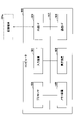
- FIG. 1 is a diagram showing an example of the overall configuration of a cryptographic system 1 according to this embodiment.
- the encryption system 1 includes an encryption device 10 and a decryption device 20. Also, the encryption device 10 and the decryption device 20 are communicably connected via a communication network 30 such as the Internet.
- the encryption device 10 is various information processing devices such as terminals and devices that encrypt the plaintext m.
- the encryption device 10 has an encryption processing unit 101 and a storage unit 102 .
- the encryption processing unit 101 encrypts the plaintext m by the encryption algorithm Enc PKE of the anonymous public key cryptosystem PKE.
- the storage unit 102 stores various kinds of information (for example, encryption key ek, security parameter ⁇ , common parameter pub, etc.) necessary for executing the encryption algorithm Enc PKE of the anonymous public key cryptosystem PKE.
- the decryption device 20 is various information processing devices such as a terminal and equipment for decrypting the ciphertext ct.
- the decryption device 20 has a key generation processing unit 201 , a decryption processing unit 202 and a storage unit 203 .
- the key generation processing unit 201 generates an encryption key ek and a decryption key dk by a key generation algorithm Gen PKE of the anonymous public key cryptosystem PKE.
- the decryption processing unit 202 decrypts the ciphertext ct using the decryption algorithm Dec PKE of the anonymous public key cryptosystem PKE.
- the storage unit 203 stores information (for example, security parameter ⁇ , common parameter pub, decryption key dk, etc.) necessary for executing the key generation algorithm Gen PKE and the decryption algorithm Dec PKE of the anonymous public key cryptosystem PKE. .
- the security parameter ⁇ and the common parameter pub are hereinafter also referred to as public parameters.
- the decryption device 20 generates the encryption key ek and the decryption key dk of the anonymous public key cryptosystem PKE, but this is just an example, and functions as a key generation authority, for example.
- a server may generate the encryption key ek and the decryption key dk.
- the server has a key generation processing unit 201, and the encryption key ek and the decryption key dk are generated by the key generation processing unit 201, and the decryption key dk is generated by a decryption device by some secure method.
- the encryption key ek and public parameters are made public to the encryption device 10 and the decryption device 20 .
- a computer 500 shown in FIG. 2 has an input device 501, a display device 502, an external I/F 503, a communication I/F 504, a processor 505, and a memory device 506 as hardware. Each of these pieces of hardware is communicably connected via a bus 507 .
- the input device 501 is, for example, a keyboard, mouse, touch panel, or the like.
- the display device 502 is, for example, a display. Note that the computer 500 may not have at least one of the input device 501 and the display device 502 .
- the external I/F 503 is an interface with an external device such as a recording medium 503a.
- Examples of the recording medium 503a include CD (Compact Disc), DVD (Digital Versatile Disk), SD memory card (Secure Digital memory card), USB (Universal Serial Bus) memory card, and the like.
- a communication I/F 504 is an interface for connecting to the communication network 30 .
- the processor 505 is, for example, various arithmetic units such as a CPU (Central Processing Unit) and a GPU (Graphics Processing Unit).
- the memory device 506 is, for example, various storage devices such as HDD (Hard Disk Drive), SSD (Solid State Drive), RAM (Random Access Memory), ROM (Read Only Memory), and flash memory.
- the encryption device 10 and the decryption device 20 according to the present embodiment can implement various processes described later by the hardware configuration of the computer 500 shown in FIG.
- the hardware configuration of the computer 500 shown in FIG. 2 is an example, and various hardware configurations may be adopted according to the intended use to which the cryptographic system 1 is applied.
- the encryption processing unit 101 is realized, for example, by causing the processor 505 of the computer 500 that realizes the encryption device 10 to execute one or more programs installed in the encryption device 10 .
- the storage unit 102 is implemented by, for example, the memory device 506 of the computer 500 that implements the encryption device 10 .
- the key generation processing unit 201 and the decryption processing unit 202 are implemented, for example, by causing the processor 505 of the computer 500 that implements the decryption device 20 to execute one or more programs installed in the decryption device 20.
- the storage unit 203 is implemented by, for example, the memory device 506 of the computer 500 that implements the decoding device 20 .
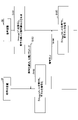
- FIG. 3 is a sequence diagram showing an example of the overall processing flow of the cryptographic system 1 according to this embodiment.
- the key generation processing unit 201 of the decryption device 20 executes a key generation algorithm Gen PKE (1 ⁇ ) of the anonymous public key cryptosystem PKE to generate an encryption key ek and a decryption key dk (step S101).
- the decryption key dk is stored in the storage unit 203 .
- the key generation processing unit 201 of the decryption device 20 transmits the public parameters (that is, the security parameter ⁇ and the common parameter pub) and the encryption key ek generated in step S101 to the encryption device 10. (step S102).
- the public parameters and the encryption key ek are transmitted to the encryption device 10 in this step, they do not necessarily need to be transmitted, and may be stored in a server or the like that can be referred to by the encryption device 10, for example. .
- the encryption processing unit 101 of the encryption device 10 executes the encryption algorithm Enc PKE (ek, m) of the anonymous public key cryptosystem PKE to encrypt the plaintext m (step S103). Thus, the ciphertext ct is generated.
- the encryption processing unit 101 of the encryption device 10 transmits the ciphertext ct generated in step S103 above to the decryption device 20 (step S104).
- the decryption processing unit 202 of the decryption device 20 executes the decryption algorithm Dec PKE (dk, ct) of the anonymous public key cryptosystem PKE to decrypt the ciphertext ct (step S105). Plaintext m is thereby generated.
- Encryption System 10 Encryption Device 20 Decryption Device 30 Communication Network 101 Encryption Processing Unit 102 Storage Unit 201 Key Generation Processing Unit 202 Decryption Processing Unit 203 Storage Unit
Landscapes
- Engineering & Computer Science (AREA)
- Computer Security & Cryptography (AREA)
- Computer Networks & Wireless Communication (AREA)
- Signal Processing (AREA)
- Power Engineering (AREA)
- General Physics & Mathematics (AREA)
- Algebra (AREA)
- Mathematical Analysis (AREA)
- Mathematical Optimization (AREA)
- Mathematical Physics (AREA)
- Pure & Applied Mathematics (AREA)
- Computing Systems (AREA)
- Theoretical Computer Science (AREA)
- Physics & Mathematics (AREA)
- Storage Device Security (AREA)
Abstract
Description
以下では、匿名公開鍵暗号を説明するために必要な構成要素を準備する。
公開鍵暗号方式PKEは、3つのアルゴリズム(GenPKE,EncPKE,DecPKE)で構成される。
鍵生成アルゴリズムGenPKEは、安全性パラメータκを使った1κを入力とし、鍵のペア(ek,dk)を出力する。ekを暗号化鍵、dkを復号鍵と呼ぶ。なお、1κは1のκビット列を表す。正確にはκのことを安全性パラメータというが、誤解がない場合は1κのことを安全性パラメータと呼んでもよい。
暗号化アルゴリズムEncPKEは、暗号化鍵ekと平文m∈Mを入力とし、暗号文c∈Cを出力する。なお、Mは平文空間、Cは暗号文空間を表す。
復号アルゴリズムDecPKEは、復号鍵dkと暗号文cを入力とし、平文m∈M又は拒否を表す記号⊥を出力する。なお、拒否を表す記号⊥は暗号文cの復号に失敗したことを意味し、平文空間Mには含まれない。
タグベース暗号方式TBEは、3つのアルゴリズム(GenTBE,EncTBE,DecTBE)で構成される。
鍵生成アルゴリズムGenTBEは、安全性パラメータκを使った1κを入力とし、鍵のペア(ek,dk)を出力する。
暗号化アルゴリズムEncTBEは、暗号化鍵ekとタグτと平文m∈Mを入力とし、暗号文c∈Cを出力する。
復号アルゴリズムDecTBEは、復号鍵dkとタグτと暗号文cを入力とし、平文m∈M又は拒否を表す記号⊥を出力する。
弱いコミットメント方式wComは、3つのアルゴリズム(Init,S,R)で構成される。
初期化アルゴリズムInitは、安全性パラメータκを使った1κを入力とし、共通パラメータpubを出力する。
送信者アルゴリズムSは、安全性パラメータκを使った1κと共通パラメータpubを入力とし、乱数値r∈{0,1}κとコミットメントcomとデコミットメントdecを出力する。なお、{0,1}κはκビット長のバイナリ系列を表す。
受信者アルゴリズムRは、公開パラメータpubとコミットメントcomとデコミットメントdecを入力とし、乱数値r∈{0,1}κ又は拒否を表す記号⊥を出力する。なお、拒否を表す記号⊥はコミットに失敗したことを意味し、{0,1}κに含まれない。
メッセージ認証符号方式MACは、2つのアルゴリズム(T,V)で構成される。
MAC生成アルゴリズムTは、鍵r∈{0,1}κとメッセージμ∈{0,1}*を入力とし、タグσを出力する。なお、{0,1}*は任意長のバイナリ系列を表す。
検証アルゴリズムVは、鍵rとメッセージμとタグσを入力とし、受諾を表す記号Τ又は拒否を表す記号⊥を出力する。なお、受諾を表す記号Tが出力された場合はタグσの検証に成功したことを意味し、拒否を表す記号⊥が出力された場合はタグσの検証に失敗したことを意味する。
次に、上記で準備したタグベース暗号方式TBEと弱いコミットメント方式wComとメッセージ認証符号方式MACとを用いて、本実施形態に係る匿名公開鍵暗号方式PKEを構成する。なお、この構成方法そのものは、上記の非特許文献1に記載されているBK変換である。ただし、上記の非特許文献1では、タグベース暗号方式TBEではなく、IDベース暗号方式IBEを用いている。
鍵生成アルゴリズムGenPKEは、安全性パラメータκを使った1κを入力とし、暗号化鍵ekと復号鍵dkのペア(ek,dk)を出力する。このとき、鍵生成アルゴリズムGenPKEは、以下のStep1-1~Step1-3により(ek,dk)を出力する。ただし、Step1-1とStep1-2は順不同である。
Step1-2:pub←Init(1κ)
Step1-3:ek:=(ekTBE,pub)とdk:=dkTBEを出力する。
暗号化アルゴリズムEncPKEは、暗号化鍵ekと平文m∈Mを入力とし、暗号文ct∈Cを出力する。このとき、暗号化アルゴリズムEncPKEは、以下のStep2-1~Step2-4により暗号文ctを出力する。
Step2-2:c←EncTBE(ekTBE,com,(m,dec))
Step2-3:σ←T(r,c)
Step2-4:ct:=(com,c,σ)を出力する。
復号アルゴリズムDecPKEは、復号鍵dkと暗号文ctを入力とし、平文m∈M又は拒否を表す記号⊥を出力する。このとき、復号アルゴリズムDecPKEは、以下のStep3-1~Step3-4により平文m又は拒否を表す記号⊥を出力する。
Step3-3:r←R(pub,com,dec);そして、r=⊥である場合は、拒否を表す記号⊥を出力
Step3-4:V(r,c,σ)=⊥である場合は⊥を出力し、そうでない場合はmを出力する。
上記で構成した匿名公開鍵暗号方式PKEは、その構成要素であるタグベース暗号方式TBEと弱いコミットメント方式wComとメッセージ認証符号方式MACの安全性に応じて、その安全性も変化する。
タグベース暗号方式TBEがIND-st-wCCA安全
弱いコミットメント方式wComが安全
メッセージ認証符号方式MACがsEUF-OT-CMA安全
である場合は、匿名公開鍵暗号方式PKEはIND-CCA安全となる。
タグベース暗号方式TBEがINDr-st-wCCA安全
弱いコミットメント方式wComが安全かつINDr安全
メッセージ認証符号方式MACがsEUF-OT-CMA安全かつ疑似ランダム
である場合は、匿名公開鍵暗号方式PKEはINDr-CCA安全となる。
タグベース暗号方式TBEがOS-st-wCCA安全
弱いコミットメント方式wComが安全かつOS安全
メッセージ認証符号方式MACがsEUF-OT-CMA安全かつOS安全
である場合は、匿名公開鍵暗号方式PKEはOS-CCA安全となる。
参考文献2:Charles Rackoff and Daniel R. Simon. Noninteractive zero-knowledge proof of knowledge and chosen ciphertext attack. In Joan Feigenbaum, editor, CRYPTO'91, volume 576
of LNCS, pages 433-444. Springer, Heidelberg, August 1992.
参考文献3:Mihir Bellare, Anand Desai, David Pointcheval, and Phillip Rogaway. Relations among notions of security for public-key encryption schemes. In Hugo Krawczyk, editor, CRYPTO'98, volume 1462 of LNCS, pages 26-45. Springer, Heidelberg, August 1998.
参考文献4:Eike Kiltz. Chosen-ciphertext security from tag-based encryption. In Shai Halevi and Tal Rabin, editors, TCC 2006, volume 3876 of LNCS, pages 581-600. Springer, Heidelberg, March 2006.
<暗号システム1の全体構成>
次に、本実施形態に係る暗号システム1の全体構成について、図1を参照しながら説明する。図1は、本実施形態に係る暗号システム1の全体構成の一例を示す図である。
次に、本実施形態に係る暗号システム1に含まれる暗号化装置10及び復号装置20のハードウェア構成について説明する。これらの暗号化装置10及び復号装置20は、例えば、図2に示すコンピュータ500のハードウェア構成により実現可能である。
次に、本実施形態に係る暗号システム1の全体処理の流れについて、図3を参照しながら説明する。図3は、本実施形態に係る暗号システム1の全体処理の流れの一例を示すシーケンス図である。
10 暗号化装置
20 復号装置
30 通信ネットワーク
101 暗号化処理部
102 記憶部
201 鍵生成処理部
202 復号処理部
203 記憶部
Claims (6)
- タグベース暗号方式TBE=(GenTBE,EncTBE,DecTBE)と弱いコミットメント方式wCom=(Init,S,R)とメッセージ認証符号方式MAC=(T,V)とで構成される公開鍵暗号方式により暗号化及び復号を行う暗号システムであって、
安全性パラメータをκとして、鍵生成アルゴリズムGenTBE(1κ)により暗号化鍵ekTBE及び復号鍵dkTBEを生成すると共に、初期化アルゴリズムInit(1κ)により共通パラメータpubを生成し、前記暗号化鍵ekTBEと前記共通パラメータpubとを前記公開鍵暗号方式の暗号化鍵ek、前記復号鍵dkTBEを前記公開鍵暗号方式の復号鍵dkとする鍵生成部と、
送信者アルゴリズムS(1κ,pub)により乱数rとコミットメントcomとデコミットメントdecとを生成し、暗号化対象の平文をmとして暗号化アルゴリズムEncTBE(ekTBE,com,(m,dec))により暗号文cを生成し、MAC生成アルゴリズムT(r,c)によりタグσを生成し、前記コミットメントcomと前記暗号文cと前記タグσとを前記公開鍵暗号方式の暗号文ctとする暗号化部と、
前記暗号文ctを前記コミットメントcomと前記暗号文cと前記タグσとにパースし、復号アルゴリズムDecTBE(dkTBE,com,c)により平文mとデコミットメントdecを生成し、受信者アルゴリズムR(pub,com,dec)により乱数値rにコミットできたか否かを検証し、前記コミットに成功した場合は検証アルゴリズムV(r,c,σ)により前記タグσを検証する復号部と、
を有する暗号システム。 - 前記タグベース暗号方式TBEがINDr-st-wCCA安全、前記弱いコミットメント方式wComが安全かつINDr安全、前記メッセージ認証符号方式MACがsEUF-OT-CMA安全かつ疑似ランダムである場合、前記公開鍵暗号方式は、INDr-CCA安全であり、
前記タグベース暗号方式TBEがOS-st-wCCA安全、前記弱いコミットメント方式wComが安全かつOS安全、前記メッセージ認証符号方式MACがsEUF-OT-CMA安全かつOS安全である場合、前記公開鍵暗号方式は、OS-CCA安全である、請求項1に記載の暗号システム。 - タグベース暗号方式TBE=(GenTBE,EncTBE,DecTBE)と弱いコミットメント方式wCom=(Init,S,R)とメッセージ認証符号方式MAC=(T,V)とで構成される公開鍵暗号方式により平文mを暗号化する暗号化装置であって、
安全性パラメータをκ、共通パラメータをpubとして送信者アルゴリズムS(1κ,pub)により乱数rとコミットメントcomとデコミットメントdecとを生成し、前記公開鍵暗号方式の暗号化鍵をek=ekTBEとして暗号化アルゴリズムEncTBE(ekTBE,com,(m,dec))により暗号文cを生成し、MAC生成アルゴリズムT(r,c)によりタグσを生成し、前記コミットメントcomと前記暗号文cと前記タグσとを前記公開鍵暗号方式の暗号文ctとする暗号化部と、
前記暗号化装置と通信ネットワークを介して接続される復号装置に前記暗号文ctを送信する送信部と、
を有する暗号化装置。 - タグベース暗号方式TBE=(GenTBE,EncTBE,DecTBE)と弱いコミットメント方式wCom=(Init,S,R)とメッセージ認証符号方式MAC=(T,V)とで構成される公開鍵暗号方式により暗号文ctを復号する復号装置であって、
安全性パラメータをκとして、鍵生成アルゴリズムGenTBE(1κ)により暗号化鍵ekTBE及び復号鍵dkTBEを生成すると共に、初期化アルゴリズムInit(1κ)により共通パラメータpubを生成し、前記暗号化鍵ekTBEと前記共通パラメータpubとを前記公開鍵暗号方式の暗号化鍵ek、前記復号鍵dkTBEを前記公開鍵暗号方式の復号鍵dkとする鍵生成部と、
前記暗号文ctをコミットメントcomと暗号文cとタグσとにパースし、復号アルゴリズムDecTBE(dkTBE,com,c)により平文mとデコミットメントdecを生成し、受信者アルゴリズムR(pub,com,dec)により乱数値rにコミットできたか否かを検証し、前記コミットに成功した場合は検証アルゴリズムV(r,c,σ)により前記タグσを検証する復号部と、
を有する復号装置。 - タグベース暗号方式TBE=(GenTBE,EncTBE,DecTBE)と弱いコミットメント方式wCom=(Init,S,R)とメッセージ認証符号方式MAC=(T,V)とで構成される公開鍵暗号方式により暗号化及び復号を行う暗号システムが、
安全性パラメータをκとして、鍵生成アルゴリズムGenTBE(1κ)により暗号化鍵ekTBE及び復号鍵dkTBEを生成すると共に、初期化アルゴリズムInit(1κ)により共通パラメータpubを生成し、前記暗号化鍵ekTBEと前記共通パラメータpubとを前記公開鍵暗号方式の暗号化鍵ek、前記復号鍵dkTBEを前記公開鍵暗号方式の復号鍵dkとする鍵生成手順と、
送信者アルゴリズムS(1κ,pub)により乱数rとコミットメントcomとデコミットメントdecとを生成し、暗号化対象の平文をmとして暗号化アルゴリズムEncTBE(ekTBE,com,(m,dec))により暗号文cを生成し、MAC生成アルゴリズムT(r,c)によりタグσを生成し、前記コミットメントcomと前記暗号文cと前記タグσとを前記公開鍵暗号方式の暗号文ctとする暗号化手順と、
前記暗号文ctを前記コミットメントcomと前記暗号文cと前記タグσとにパースし、復号アルゴリズムDecTBE(dkTBE,com,c)により平文mとデコミットメントdecを生成し、受信者アルゴリズムR(pub,com,dec)により乱数値rにコミットできたか否かを検証し、前記コミットに成功した場合は検証アルゴリズムV(r,c,σ)により前記タグσを検証する復号手順と、
を実行する方法。 - コンピュータを、請求項3に記載の暗号化装置、又は、請求項4に記載の復号装置、として機能させるプログラム。
Priority Applications (3)
| Application Number | Priority Date | Filing Date | Title |
|---|---|---|---|
| PCT/JP2021/015630 WO2022219785A1 (ja) | 2021-04-15 | 2021-04-15 | 暗号システム、暗号化装置、復号装置、方法、及びプログラム |
| US18/553,346 US12381736B2 (en) | 2021-04-15 | 2021-04-15 | Cipher system, encryption apparatus, decryption apparatus, method, and program |
| JP2023514282A JP7605297B2 (ja) | 2021-04-15 | 2021-04-15 | 暗号システム、暗号化装置、復号装置、方法、及びプログラム |
Applications Claiming Priority (1)
| Application Number | Priority Date | Filing Date | Title |
|---|---|---|---|
| PCT/JP2021/015630 WO2022219785A1 (ja) | 2021-04-15 | 2021-04-15 | 暗号システム、暗号化装置、復号装置、方法、及びプログラム |
Publications (1)
| Publication Number | Publication Date |
|---|---|
| WO2022219785A1 true WO2022219785A1 (ja) | 2022-10-20 |
Family
ID=83640254
Family Applications (1)
| Application Number | Title | Priority Date | Filing Date |
|---|---|---|---|
| PCT/JP2021/015630 Ceased WO2022219785A1 (ja) | 2021-04-15 | 2021-04-15 | 暗号システム、暗号化装置、復号装置、方法、及びプログラム |
Country Status (3)
| Country | Link |
|---|---|
| US (1) | US12381736B2 (ja) |
| JP (1) | JP7605297B2 (ja) |
| WO (1) | WO2022219785A1 (ja) |
Citations (1)
| Publication number | Priority date | Publication date | Assignee | Title |
|---|---|---|---|---|
| JP2015501110A (ja) * | 2011-12-15 | 2015-01-08 | トムソン ライセンシングThomson Licensing | グループ暗号化方法およびデバイス |
Family Cites Families (5)
| Publication number | Priority date | Publication date | Assignee | Title |
|---|---|---|---|---|
| US8108678B1 (en) * | 2003-02-10 | 2012-01-31 | Voltage Security, Inc. | Identity-based signcryption system |
| WO2014177610A1 (en) * | 2013-04-30 | 2014-11-06 | Thomson Licensing | Device and method for traceable group encryption |
| EP2846492A1 (en) * | 2013-09-05 | 2015-03-11 | Thomson Licensing | Cryptographic group signature methods and devices |
| CN119603635A (zh) * | 2019-04-17 | 2025-03-11 | 苹果公司 | 为无线附件共享密钥 |
| EP4052193A1 (en) * | 2019-10-31 | 2022-09-07 | Ousia Ltd | System and method for encryption and decryption using logic synthesis |
-
2021
- 2021-04-15 US US18/553,346 patent/US12381736B2/en active Active
- 2021-04-15 JP JP2023514282A patent/JP7605297B2/ja active Active
- 2021-04-15 WO PCT/JP2021/015630 patent/WO2022219785A1/ja not_active Ceased
Patent Citations (1)
| Publication number | Priority date | Publication date | Assignee | Title |
|---|---|---|---|---|
| JP2015501110A (ja) * | 2011-12-15 | 2015-01-08 | トムソン ライセンシングThomson Licensing | グループ暗号化方法およびデバイス |
Also Published As
| Publication number | Publication date |
|---|---|
| JP7605297B2 (ja) | 2024-12-24 |
| US12381736B2 (en) | 2025-08-05 |
| JPWO2022219785A1 (ja) | 2022-10-20 |
| US20240187246A1 (en) | 2024-06-06 |
Similar Documents
| Publication | Publication Date | Title |
|---|---|---|
| Yang et al. | Data storage auditing service in cloud computing: challenges, methods and opportunities | |
| Perlner et al. | Quantum resistant public key cryptography: a survey | |
| JP6763378B2 (ja) | 暗号情報作成装置、暗号情報作成方法、暗号情報作成プログラム、及び、照合システム | |
| EP3167569B1 (en) | Method and system for providing a secure update of code on a memory-constrained device | |
| JP6059347B2 (ja) | 復号装置、復号能力提供装置、それらの方法、およびプログラム | |
| Singh et al. | Data security using private key encryption system based on arithmetic coding | |
| Nosouhi et al. | Bit flipping key encapsulation for the post-quantum era | |
| US20210135851A1 (en) | Encryption processing system and encryption processing method | |
| CN102187617A (zh) | 密码系统 | |
| JPWO2018016330A1 (ja) | 通信端末、サーバ装置、プログラム | |
| Iqbal et al. | A survey on post quantum cryptosystems: concept, attacks, and challenges in IoT devices | |
| Ramesh et al. | Secure data storage in cloud: an e-stream cipher-based secure and dynamic updation policy | |
| WO2019235102A1 (ja) | 変換鍵生成装置、暗号文変換装置、復号装置、暗号文変換システム、変換鍵生成方法、暗号文変換方法、復号方法、及びプログラム | |
| Bene et al. | Post-quantum security overview of the public key infrastructure | |
| JP7605297B2 (ja) | 暗号システム、暗号化装置、復号装置、方法、及びプログラム | |
| JP2017038336A (ja) | 復号方法 | |
| JP7452676B2 (ja) | 暗号システム、方法及びプログラム | |
| Potey et al. | Efficient homomorphic encryption using ECC-ElGamal scheme for cloud data | |
| JP4758110B2 (ja) | 通信システム、暗号化装置、鍵生成装置、鍵生成方法、復元装置、通信方法、暗号化方法、暗号復元方法 | |
| WO2022254578A1 (ja) | 暗号システム、暗号文更新装置、プログラム | |
| CN116415265A (zh) | 加密、加密签名处理、解密方法及相关设备 | |
| Jasuja et al. | Crypto-compression system: an integrated approach using stream cipher cryptography and entropy encoding | |
| JP7700960B2 (ja) | 情報処理装置、方法及びプログラム | |
| JP7786593B2 (ja) | 暗号システム、方法及びプログラム | |
| Hati | HYBRID APPROACHES IN CRYPTOGRAPHY. |
Legal Events
| Date | Code | Title | Description |
|---|---|---|---|
| 121 | Ep: the epo has been informed by wipo that ep was designated in this application |
Ref document number: 21936981 Country of ref document: EP Kind code of ref document: A1 |
|
| WWE | Wipo information: entry into national phase |
Ref document number: 2023514282 Country of ref document: JP |
|
| WWE | Wipo information: entry into national phase |
Ref document number: 18553346 Country of ref document: US |
|
| NENP | Non-entry into the national phase |
Ref country code: DE |
|
| 122 | Ep: pct application non-entry in european phase |
Ref document number: 21936981 Country of ref document: EP Kind code of ref document: A1 |
|
| WWG | Wipo information: grant in national office |
Ref document number: 18553346 Country of ref document: US |