WO2022201795A1 - 情報処理システム、情報処理方法、及び、プログラム - Google Patents
情報処理システム、情報処理方法、及び、プログラム Download PDFInfo
- Publication number
- WO2022201795A1 WO2022201795A1 PCT/JP2022/001895 JP2022001895W WO2022201795A1 WO 2022201795 A1 WO2022201795 A1 WO 2022201795A1 JP 2022001895 W JP2022001895 W JP 2022001895W WO 2022201795 A1 WO2022201795 A1 WO 2022201795A1
- Authority
- WO
- WIPO (PCT)
- Prior art keywords
- evaluation
- information processing
- explanation
- processing system
- unit
- Prior art date
- Legal status (The legal status is an assumption and is not a legal conclusion. Google has not performed a legal analysis and makes no representation as to the accuracy of the status listed.)
- Ceased
Links
Images






Classifications
-
- G—PHYSICS
- G06—COMPUTING OR CALCULATING; COUNTING
- G06N—COMPUTING ARRANGEMENTS BASED ON SPECIFIC COMPUTATIONAL MODELS
- G06N20/00—Machine learning
-
- G—PHYSICS
- G06—COMPUTING OR CALCULATING; COUNTING
- G06N—COMPUTING ARRANGEMENTS BASED ON SPECIFIC COMPUTATIONAL MODELS
- G06N5/00—Computing arrangements using knowledge-based models
- G06N5/04—Inference or reasoning models
- G06N5/045—Explanation of inference; Explainable artificial intelligence [XAI]; Interpretable artificial intelligence
-
- G—PHYSICS
- G06—COMPUTING OR CALCULATING; COUNTING
- G06F—ELECTRIC DIGITAL DATA PROCESSING
- G06F40/00—Handling natural language data
- G06F40/40—Processing or translation of natural language
- G06F40/55—Rule-based translation
- G06F40/56—Natural language generation
Definitions
- the present technology relates to an information processing system, an information processing method, and a program, and particularly relates to an information processing system, an information processing method, and a program suitable for explaining AI (artificial intelligence) processing.
- AI artificial intelligence
- An information processing system includes an evaluation unit that evaluates a plurality of options based on two or more evaluation criteria based on parameters obtained by the process or result of machine learning, and a phrase corresponding to each of the evaluation criteria. and a description unit that generates a description about the option using
- the information processing system evaluates a plurality of options based on two or more evaluation criteria based on parameters obtained by the process or result of machine learning, and corresponds to each of the evaluation criteria.
- a descriptive text for the option is generated using the phrases to be used.
- a program of one aspect of the present technology evaluates a plurality of options based on two or more evaluation criteria based on parameters obtained by the process or result of machine learning, and uses words and phrases corresponding to each of the evaluation criteria,
- a computer is caused to perform a process including generating a descriptive text for the option.
- a plurality of options are evaluated based on two or more evaluation criteria based on parameters obtained by the process or result of machine learning, and the options are evaluated using words corresponding to each of the evaluation criteria.
- a description is generated for
- FIG. 10 is a diagram showing an outline of evaluation of options and creation of explanatory text;
- FIG. 4 is a diagram showing the correspondence between evaluation criteria and auxiliary verbs;
- FIG. 4 is a diagram showing an example of a coordinate space of evaluation criteria;
- FIG. 10 is a diagram showing an example of a template for an explanatory note; It is a figure which shows the example of an explanatory note.
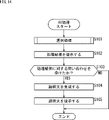
- FIG. 11 is a flow chart for explaining a second embodiment of AI processing
- FIG 1A shows the general flow of AI processing up to now.
- various predictions are made for multiple options based on the results of machine learning. Based on the predicted results, the best option is selected as the final output and presented to the user.
- FIG. 1B shows the general flow of AI processing in the new framework to which this technology is applied.
- Evaluation criteria are, for example, based on parameters obtained by the process or results of machine learning, and are assumed to include reward, certainty, feasibility, conditional suitability, and the like.
- the rewards for example, the rewards obtained by selecting each option or executing the method indicated by each option are shown.
- a reward amount (Reward) in reinforcement learning is used as a reward.
- the reward amount of reinforcement learning can be predicted by using, for example, a reinforcement learning framework.
- the reward is not limited to the reward amount of reinforcement learning.
- Certainty means, for example, the probability of obtaining the above reward.
- Feasibility indicates, for example, the probability that the method indicated by each option can be executed.
- Conditional suitability indicates, for example, the degree to which each option conforms to mandatory and prohibited conditions.
- the best option is selected as the final output and presented to the user.
- the text presents the user with a simple explanation of AI processing (for example, selection results for each option).
- This explanation uses a phrase (word or phrase) corresponding to each evaluation criterion.
- auxiliary verbs such as should for reward, might for certainty, can for feasibility, and must for suitability.
- modal auxiliaries such as should, might, can, and must are often used when humans evaluate options and explain the reasons for selection.
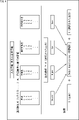
- FIG. 2 shows a configuration example of an information processing system 1 to which the present technology is applied.
- the information processing system 1 is a system that uses AI to present to the user a method (for example, actions, etc.) for achieving a goal set by the user, and to achieve the goal set by the user.
- the information processing system 1 includes a server 111, a DB (database) 112, and user terminals 113-1 to 113-n.
- the server 111, DB 112, and user terminals 113-1 to 113-n are interconnected via a network 121.
- FIG. 1
- user terminals 113-1 to 113-n are simply referred to as user terminals 113 when there is no need to distinguish them individually.
- the server 111 uses AI to provide a method of achieving a goal set by the user or a service that presents the execution results of the method (hereinafter referred to as an AI service). For example, the server 111 uses AI to examine a method for achieving a goal set by the user based on input information received from the user terminal 113 and information accumulated in the DB 112. Then, the server 111 generates output information including a result of the AI processing and an explanation about the AI processing, and transmits it to the user terminal 113 via the network 121 .
- an AI service a service that presents the execution results of the method
- the DB 112 stores information necessary for AI processing of the server 111.
- the DB 112 stores rule information indicating rules (for example, laws, etc.) for setting essential conditions and prohibited conditions for achieving the purpose set by the user.
- rules for example, laws, etc.
- the DB 112 stores case information indicating cases processed in the past by the server 111 and cases that occurred in the past.
- the case information includes, for example, the subject of the case, the content of the action by the subject, the result of the action (for example, the content of the reward obtained by the action), and the information on the environment when the case occurs.
- the user terminal 113 is composed of an information processing terminal such as a PC (personal computer), a smartphone, a tablet terminal, etc., and is used by users who use AI services. For example, the user terminal 113 generates input information for using the AI service provided by the server 111 and transmits it to the server 111 via the network 121 .
- an information processing terminal such as a PC (personal computer), a smartphone, a tablet terminal, etc.
- the user terminal 113 generates input information for using the AI service provided by the server 111 and transmits it to the server 111 via the network 121 .
- Input information includes, for example, objective information, subject information, and environmental information.
- the purpose information includes, for example, information on the purpose desired by the user.
- the information about the purpose includes, for example, the type of remuneration desired by the user, a target value, and the like.
- the subject information includes, for example, information about the subject of the purpose indicated by the purpose information.
- the subject of purpose is, for example, a subject that executes a method for achieving the purpose, a subject that obtains a reward for achieving the purpose, or the like.
- Information about the subject includes, for example, attributes, characteristics, and capabilities of the subject, and information about resources available to the subject.
- the type of subject is not particularly limited, and for example, living things including humans, plants, various objects, countries, corporations, various groups, etc. are assumed. Moreover, a plurality of subjects may exist.
- Environmental information includes, for example, information about the environment when the subject executes a method to achieve its purpose.
- the environment information includes sensor data acquired by a sensor included in the user terminal 113 .
- Sensor data includes, for example, data indicating weather, temperature, location information, and the like.
- a sensor included in the server 111 may collect environmental information such as sensor data.
- the user terminal 113 receives, via the network 121, the output information generated by the server 111 in response to the input information. Based on the output information, the user terminal 113 presents the result of the AI processing and an explanation regarding the AI processing to the user.
- FIG. 2 is a block diagram showing a functional configuration example of the server 111 of FIG.
- the server 111 includes a CPU (Central Processing Unit) 151, a memory 152, a storage 153, an operation unit 154, a display unit 155, a communication unit 156, an external I/F (interface) 157, and a drive 158.
- the CPU 151 to drive 158 are connected to a bus and perform necessary communications with each other.
- the CPU 151 performs various processes by executing programs installed in the memory 152 and storage 153.
- the memory 152 is composed of, for example, a volatile memory or the like, and temporarily stores programs executed by the CPU 151 and necessary data.
- the storage 153 is composed of, for example, a hard disk or non-volatile memory, and stores programs executed by the CPU 151 and necessary data.
- the operation unit 154 is composed of physical keys (including a keyboard), a mouse, a touch panel, and the like.
- the operation unit 154 outputs an operation signal corresponding to the user's operation onto the bus.
- the display unit 155 is composed of, for example, an LCD (Liquid Crystal Display) or the like, and displays an image according to data supplied from the bus.
- LCD Liquid Crystal Display
- the communication unit 156 includes a communication circuit, an antenna, etc., and communicates with the DB 112 and the user terminal 113 via the network 121 .
- the external I/F 157 is an interface for exchanging data with various external devices.
- the drive 158 allows removable media 158A such as memory cards to be attached and detached, and drives the removable media 158A attached there.
- programs to be executed by the CPU 151 can be recorded in advance in the storage 153 as a recording medium incorporated in the CPU 151 .
- the program can be stored (recorded) in the removable media 158A, provided as so-called package software, and installed in the server 111 from the removable media 158A.
- the program can be downloaded from another server (not shown) or the like via the network 121 and the communication unit 156 and installed on the server 111.
- the CPU 151 implements an AI processing unit 171 and a communication control unit 172 by executing programs installed on the server 111 .
- the AI processing unit 171 performs processing using AI.
- the AI processing unit 171 includes a learning unit 181 , an option generation unit 182 , an evaluation unit 183 , a selection unit 184 , an explanation unit 185 and a presentation control unit 186 .
- the learning unit 181 performs learning processing such as machine learning necessary for AI processing. For example, the learning unit 181 performs reinforcement learning based on case information stored in the DB 112 to generate an evaluation function used by the evaluation unit 183 .
- the option generation unit 182 Based on the input information received from the user terminal 113 and the information stored in the DB 112, the option generation unit 182 generates options regarding methods for achieving the purpose indicated in the input information.
- the evaluation unit 183 evaluates each generated option based on multiple evaluation criteria.
- the selection unit 184 selects the output to be presented to the user based on the evaluation based on each evaluation criterion for each option.
- the explanation unit 185 executes processing for explaining AI processing by the AI processing unit 171 .
- the explanation unit 185 generates an explanation about AI processing based on the input information received from the user terminal 113, the evaluation result of each option by the evaluation unit 183, the output selection result by the selection unit 184, and the like. .
- the presentation control unit 186 controls the presentation of the result of AI processing in the user terminal 113 and the presentation of the explanation regarding the AI processing.
- the presentation control unit 186 generates output information including a result of AI processing and an explanation about AI processing.
- the result of AI processing includes, for example, information on the output selected by the selection unit 184, or the result of executing processing according to the selected output.
- the explanation about AI processing includes, for example, an explanation generated by the explanation unit 185 .
- the presentation control unit 186 transmits the output information to the user terminal 113 via the communication unit 156 and the network 121, thereby causing the user terminal to present the result of AI processing and an explanation of the AI processing.
- the communication control unit 172 controls communication by the communication unit 156.
- the input information includes, for example, purpose information, subject information, and environment information, as described above.
- step S1 the server 111 executes selection processing.
- step S51 the server 111 executes preprocessing. Specifically, the communication unit 156 supplies the input information received from the user terminal 113 to the CPU 151 .
- the option generation unit 182 extracts the subject and purpose set by the user based on the subject information and purpose information included in the input information.
- the option generator 182 for example, extracts, from the case information stored in the DB 112, case information relating to past cases having similar subjects and purposes to those set by the user.
- step S52 the option generation unit 182 generates options.
- the option generation unit 182 considers a method that may achieve the purpose set by the user based on the past cases extracted in the process of step S51.
- the option generation unit 182 generates a plurality of options each indicating a plurality of methods obtained as a result of examination.
- the option generation unit 182 may generate options without much consideration of whether the objective can actually be achieved and whether it is executable. Further, for example, the option generation unit 182 evaluates options using an evaluation function (described later) generated by the learning unit 181 that performs a weaker evaluation, and calculates the number of options based on the evaluation result. You can also narrow it down.
- the user may create options and enter the created options in the input information.
- the option generation unit 182 adds the options set by the user to the generated options.
- options A, B, C, D, etc. are generated as shown in FIG.
- step S53 the server 111 evaluates each option.
- the learning unit 181 performs reinforcement learning based on past similar cases, and individually generates evaluation functions that perform evaluation based on three types of evaluation criteria: reward, certainty, and feasibility.
- the learning unit 181 generates an evaluation function that predicts the reward obtained by executing the method corresponding to each option based on each option and the environment when executing the method corresponding to each option. do.
- the learning unit 181 is an evaluation function that predicts the probability of obtaining a reward by executing the method corresponding to each option, based on each option and the environment when executing the method corresponding to each option. to generate
- the learning unit 181 predicts the probability that the method corresponding to each option can be executed based on the ability of the subject, the resources available to the subject, and the environment when executing the method corresponding to each option. Generate an evaluation function.
- the evaluation unit 183 uses the generated evaluation function to evaluate the reward, certainty, and feasibility of each option. Thereby, the evaluation unit 183 predicts evaluation values of reward, certainty, and feasibility of each option.
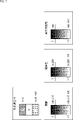
- the evaluation unit 183 normalizes the evaluation values of the reward, certainty, and feasibility of each option to values within the range of -1 to 1, as shown in FIG. In this case, the higher the reward, certainty, and feasibility evaluation, the closer the evaluation value approaches 1, and the lower the reward, certainty, and feasibility evaluation, the lower the evaluation value -1. Get closer.
- the evaluation unit 183 extracts, from the rule information stored in the DB 112, rules indicating essential items and prohibited items for achieving the purpose based on the set subject and purpose. . Based on the extracted rules, the evaluation unit 183 sets essential conditions indicating essential items and prohibited conditions indicating prohibited items. It should be noted that the evaluation unit 183 does not set the essential condition and the prohibited condition if there is no rule indicating the essential items and prohibited items for achieving the purpose.
- the waypoints that need to be passed through are set as essential conditions.
- a prohibited section is set as the prohibition condition.
- the evaluation unit 183 sets the condition suitability evaluation value of each option to 1, 0, or -1 based on the essential conditions and the prohibited conditions. Specifically, when the prohibition condition exists, the evaluation unit 183 sets the condition suitability evaluation value of the option satisfying the prohibition condition to ⁇ 1. Further, when the essential condition exists, the evaluation unit 183 sets the condition suitability evaluation value of the option satisfying the essential condition to 1 among the options not satisfying the prohibition condition. In addition, the evaluation unit 183 sets the condition suitability evaluation value of options that satisfy neither the essential condition nor the prohibited condition to zero. Note that the evaluation unit 183 sets the condition suitability evaluation value of all options to 0 when neither the essential condition nor the prohibited condition exists.
- evaluation unit 183 may rank each option for each evaluation item as necessary, for example, as shown in FIG.
- step S54 the selection unit 184 selects an output based on the evaluation result.
- the selection unit 184 selects outputs with priority given to condition suitability. For example, if there is only one option with an evaluation value of 1, that is, if there is only one option that satisfies the essential condition and does not satisfy the prohibition condition, the selection unit 184 outputs that option. select.
- the selection unit 184 extract the options for Then, the selection unit 184 calculates the sum of the evaluation values of the reward, certainty, and feasibility of each extracted option as a comprehensive evaluation value. At this time, the selection unit 184 may weight the respective evaluation values of remuneration, certainty, and feasibility, and perform weighted addition. In this case, for example, the weight for the reward is set to the largest value. Then, the selection unit 184 selects the option with the largest comprehensive evaluation value as an output.
- the selection unit 184 selects an option that does not have a condition suitability evaluation value of ⁇ 1 from among all the options, that is, does not satisfy the prohibition condition. Extract options. As a result, options that satisfy the prohibition conditions are excluded. Then, the selection unit 184 calculates the comprehensive evaluation value of each option by the method described above, and selects the option with the largest comprehensive evaluation value for output.
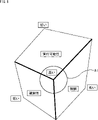
- Figure 8 shows a coordinate system consisting of three axes: reward, certainty, and feasibility. For example, when each option is arranged in the coordinate system of FIG. 8 based on each evaluation value of reward, certainty, and feasibility, the option that falls within area A1 is selected for output. That is, options with high reward, certainty, and feasibility evaluation values are selected for output.
- step S2 the explanation unit 185 generates an explanation regarding AI processing.
- the description part 185 combines the subject (S), any auxiliary verb of Should, Might, Can, or Must, and the selected output (A) to Generate a description.
- the explanation unit 185 generates explanations regarding options other than the selected output, that is, options that were not selected, as necessary.
- the part A of the explanation contains the options that were not selected.
- the explanation unit 185 selects auxiliary verbs to be used in the explanation of each option based on the evaluation value of each selection criterion for each option, and sets how to use the auxiliary verbs.
- the method of using auxiliary verbs includes, for example, whether or not to use auxiliary verbs, and the selection of positive or negative forms.
- conditional suitability value when the conditional suitability value is +1, the explanation unit 185 selects must as the auxiliary verb corresponding to the conditional suitability. For example, if the value of conditional suitability is -1, the explanation unit 185 selects must not as the auxiliary verb corresponding to the conditional suitability. For example, if the conditional suitability value is 0, the explanation unit 185 does not use the auxiliary verb corresponding to the conditional suitability.
- the explanation unit 185 selects should as the auxiliary verb corresponding to the reward.
- the reward evaluation value is equal to or less than the second threshold, that is, when the reward evaluation value is close to ⁇ 1
- the explanation unit 185 selects should not as the auxiliary verb corresponding to the reward.
- the explanation unit 185 does not use the auxiliary verb corresponding to the reward when the evaluation value of the reward is greater than the second threshold and less than the first threshold.
- the explanation unit 185 selects might as an auxiliary verb corresponding to certainty when the certainty evaluation value is greater than or equal to the first threshold, that is, when the certainty evaluation value is close to 1.
- the explanation unit 185 selects might not as the auxiliary verb corresponding to certainty.
- the explanation unit 185 does not use the auxiliary verb corresponding to certainty when the certainty evaluation value is greater than the second threshold and smaller than the first threshold.
- the explanation unit 185 selects can as the auxiliary verb corresponding to feasibility.
- the explanation unit 185 selects can not as the auxiliary verb corresponding to feasibility. do.
- the explanation unit 185 does not use the auxiliary verb corresponding to the feasibility when the feasibility evaluation value is greater than the second threshold and less than the first threshold.
- cognition is often limited by the language they use. For example, even if humans process feasibility probabilistically in their minds, in most cases they consciously classify it into three categories (possible, impossible, and unknown). Therefore, even if reward, certainty, and feasibility are classified into three levels as described above, and auxiliary verbs are used differently for each level, the possibility of the user feeling uncomfortable is reduced.
- the explanation unit 185 uses the selected auxiliary verb to generate an explanation for each option for each evaluation criterion.
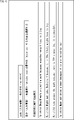
- the explanation unit 185 uses, for example, a rule-based template as shown in FIG.
- the (subject) part contains, for example, a phrase representing the subject that is set based on the subject information.
- the (choice) part contains, for example, a word or phrase representing the choice for which the explanation is to be generated.
- the (type of remuneration) part contains, for example, a phrase representing the type of remuneration.
- the (predicted reward value) portion contains, for example, a phrase representing the evaluation value of the reward for the option.
- the (subject) part contains, for example, a phrase representing the subject that is set based on the subject information.
- the (choice) part contains, for example, a word or phrase representing the choice for which the explanation is to be generated.
- the (predicted value of certainty) contains, for example, a phrase representing the evaluation value of the certainty of the option.
- the (type of remuneration) part contains, for example, a phrase representing the type of remuneration.
- the (predicted reward value) portion contains, for example, a phrase representing the evaluation value of the reward for the option.
- the (subject) part contains, for example, a phrase representing the subject that is set based on the subject information.
- the (choice) part contains, for example, a word or phrase representing the choice for which the explanation is to be generated.
- the (predicted value of practicability) portion contains, for example, a phrase representing an evaluation value of the practicability of the option.
- conditional compatibility is generated using the following template.
- the (subject) part contains, for example, a phrase representing the subject that is set based on the subject information.
- the (choice) part contains, for example, a word or phrase representing the choice for which the explanation is to be generated.
- the (referenced rule) portion contains, for example, a word or phrase indicating a rule such as a law referred to for setting a mandatory condition or a prohibited condition.
- FIGS. 10 to 12 show descriptions when the subject is “I” and the purpose is "to select a route that minimizes the travel time (duration).” shows an example.
- the reward is the travel time, and the shorter the travel time, the higher the reward.
- FIG. 10 shows an example of a descriptive text regarding route 3 selected as an output.
- the probability that the travel time (reward) will be 12 minutes is 82%, so it is shown that I (the subject) can choose Route 3.
- I the subject
- Route 3 because the feasibility (for example, the possibility of arriving at the destination by Route 3) is 95%.
- the user can easily understand the reason and grounds for choosing Route 3. For example, the user knows that Route 3 has been selected because the travel time is short, the certainty of the travel time is high, the feasibility of Route 3 is high, and it is not prohibited. As a result, for example, the user's reliability and satisfaction with respect to the AI processing results are improved.
- FIG. 11 shows an example of an explanatory note regarding route 4 that was not selected.
- route 4 was not selected because it takes less time to travel than route 3, but has a low probability of reaching the destination of 10%.
- the user's reliability and satisfaction with respect to the AI processing results are improved.
- FIG. 12 shows an example of an explanatory note regarding route 6 that was not selected.
- This explanation indicates, for example, that I (the subject) should not choose Route 6 because the estimated travel time (reward) is 30 minutes.
- I the subject
- Route 6 because the feasibility (for example, the possibility of arriving at the destination by Route 6) is 85%.
- FIG. 13 shows how to select a weight loss method when the subject is "my child" and the purpose is "select a method to maximize weight loss". An example is shown.
- the reward is weight loss, and the greater the weight loss, the higher the reward.
- Fig. 13 shows an example of an explanation for each option.
- step S3 the server 111 presents the processing result and an explanation.
- the presentation control unit 186 generates presentation data for presenting an AI processing result and an explanatory text regarding the AI processing.
- AI processing results include, for example, information about the output selection results by AI (for example, information about each option and the output selected from among the options). Also, for example, the processing result of AI may include the result of executing a method (for example, an action, etc.) corresponding to the selected output, if necessary.
- the explanation about AI processing includes, for example, an explanation about each evaluation criterion for each option described above.
- the presentation control unit 186 transmits presentation data to the user terminal 113 .
- the user terminal 113 presents AI processing results and explanations based on the presentation data.
- only the selected output may be presented, or other options may also be presented. Also, for example, execution results of the method corresponding to the selected output may be presented.
- the explanation of the AI processing results is presented in a natural form of sentences. This allows the user to easily understand the reason and grounds for the result of AI processing. As a result, for example, the user's reliability and satisfaction with respect to the AI processing results are improved. Conversely, for example, when the user has doubts about the processing results of AI, there is a possibility that the cause can be found.
- the descriptive text is generated mechanically using a predetermined template, the load required to generate the descriptive text is reduced.
- This process is started, for example, when the server 111 receives input information from the user terminal 113, as in the first embodiment.
- step S101 selection processing is executed in the same manner as the processing in step S1 of FIG.
- step S102 the server 111 presents the processing result.
- the presentation control unit 186 generates presentation data for presenting the AI processing result by the same process as in step S3 of FIG. 4 described above.
- the presentation control unit 186 transmits presentation data to the user terminal 113 .
- the user terminal 113 presents AI processing results based on the presentation data. At this time, unlike the process of step S3 in FIG. 4, no explanation about the AI process is presented.
- step S103 the presentation control unit 186 determines whether or not an inquiry regarding the processing result has been received.
- the user when the user determines that an explanation is required for the presented AI processing result, the user performs an operation on the user terminal 113 to request an explanation for the processing result. Specifically, for example, when the user wants to know the reason why the AI selected the output or the reason why the AI did not select any other option, the user terminal 113 uses the perform an operation.
- the user terminal 113 transmits a command requesting an explanation of the processing result to the server 111 via the network 121 .
- step S103 when the presentation control unit 186 of the server 111 receives the command from the user terminal 113, it determines that an inquiry about the processing result has been received, and the process proceeds to step S104.
- step S104 a description is generated in the same manner as in the process of step S2 in FIG.
- step S105 the server 111 presents an explanation.
- the presentation control unit 186 generates presentation data for presenting an explanation about the AI processing by performing the same processing as in step S3 of FIG. 4 described above.
- the presentation control unit 186 transmits presentation data to the user terminal 113 .
- the user terminal 113 presents an explanation regarding AI processing based on the presented data.
- step S103 if it is determined in step S103 that an inquiry regarding the processing result has not been received, the processing of steps S104 and S105 is skipped, and the AI processing ends.
- the user can receive an explanation of AI processing results as necessary.
- the user may specify the content of the explanation to be presented.
- the user may specify options and evaluation criteria for which the explanatory text is presented.
- the present technology can be applied to general recognition system software.
- the present technology can be applied to recognition system software for security.
- the following examples are conceivable as a combination of options, rewards, certainty, feasibility, and condition compatibility in this case.
- recognition processes such as “recognize the target” and “determine actions based on recognition results” are options, and one of the processes is the output.
- the reward is evaluated based on the expected value of obtaining the desired recognition result.
- certainty For example, certainty is evaluated based on the probability of obtaining the reward described above.
- certainty is evaluated based on how much recognition accuracy can be guaranteed.
- feasibility is evaluated based on available resources for recognition processing. Specifically, feasibility is evaluated based on, for example, whether or not the computation time with available resources is realistic.
- feasibility is evaluated based on accessibility.
- feasibility is evaluated based on whether or not information necessary for recognition processing, learning data, etc. can be accessed.
- feasibility is evaluated based on knowledge accuracy.
- feasibility is evaluated based on whether or not there is knowledge of the user or recognition target, and whether or not recognition is possible.
- Condition suitability For example, the prohibition conditions are set based on the viewpoints of privacy, security, pornography, prohibited areas, and the like. Then, condition suitability is evaluated based on the set prohibited conditions.
- search software for example, image search, text search, etc.
- search system software for example, image search, text search, etc.
- the following examples are conceivable as a combination of options, rewards, certainty, feasibility, and condition compatibility in this case.
- each search result is rated for certainty based on how well it satisfies the user.
- certainty is evaluated based on the existence of other search results that are similar due to variations in language.
- feasibility is evaluated based on available resources for the search process. For example, feasibility is evaluated based on whether computation time with available resources is realistic or not.
- feasibility is evaluated based on accessibility.
- feasibility is evaluated based on whether or not information necessary for the search process, learning data, etc. can be accessed.
- feasibility is evaluated based on knowledge accuracy.
- feasibility is evaluated based on whether or not there is knowledge of the user or search target, and whether or not search is possible.
- Condition suitability For example, the prohibition conditions are set based on the viewpoints of privacy, security, pornography, prohibited areas, and the like. Then, condition suitability is evaluated based on the set prohibited conditions.
- ⁇ Sentence generation software> the present technology can be applied to software for generating sentences (eg, conversational sentences).
- sentences eg, conversational sentences.
- the following examples are conceivable as a combination of options, rewards, certainty, feasibility, and condition compatibility in this case.
- candidate sentences for an inquiry and candidate sentences for casual conversation are options, and sentences finally presented to the user are output.
- the reward is evaluated based on the appropriateness of the inquiry.
- the reward is evaluated based on the expected value that can entertain the user in chat.
- certainty For example, certainty is evaluated based on the probability of obtaining the reward described above.
- certainty is evaluated based on the existence of other sentences that are similar due to fluctuations in words.
- feasibility is evaluated based on the resources available for the sentence generation process. For example, feasibility is evaluated based on whether or not sentence generation time with available resources is realistic.
- feasibility is evaluated based on accessibility.
- feasibility is evaluated based on whether or not information necessary for sentence generation processing, learning data, etc. can be accessed.
- feasibility is evaluated based on knowledge accuracy.
- feasibility is evaluated based on knowledge of the user and topic.
- the prohibition conditions are set based on the viewpoints of privacy, security, pornography, prohibited areas, and the like.
- the prohibited conditions are set based on prohibited words and phrases, conversations that have offended the user in the past, and the like. Then, condition suitability is evaluated based on the set prohibited conditions.
- This technology can be applied to general hardware that performs various processes using AI, for example.
- the present technology can be applied to devices that autonomously perform various processes using AI, such as robots, machine tools, and self-driving vehicles.
- Control processing of robots and machine tools For example, the present technology can be applied to control processing of robots and machine tools.
- the following examples are conceivable as a combination of options, rewards, certainty, feasibility, and condition compatibility in this case.
- candidate actions of a robot or a machine tool are options, and the action to be finally executed or the result of the action to be finally executed is the output.
- candidate actions such as grabbing and releasing are options.
- various actions are options.
- rewards are evaluated based on several metrics. For example, the reward is evaluated based on the degree of achievement of the input purpose. For example, rewards are evaluated based on the degree of achievement of goals set by robots and machine tools according to the situation.
- certainty For example, certainty is evaluated based on the probability of obtaining the reward described above.
- the certainty is evaluated based on the execution accuracy of the action.
- feasibility is evaluated based on physical constraints. For example, based on the degrees of freedom of hardware joints, the degree of difficulty of motions to achieve a goal is calculated, and the feasibility is evaluated based on the degree of difficulty of motions. For example, feasibility is evaluated based on hardware durability.
- feasibility is evaluated based on the resources available for operation. For example, feasibility is evaluated based on whether the operating time with available resources is realistic or not.
- a prohibited condition is set based on a prohibited operation (for example, an operation that cannot be performed in the process).
- prohibition conditions are set based on actions that may cause an accident. Then, condition suitability is evaluated based on the set prohibited conditions.
- ⁇ Path Planning> the technology can be applied to route planning.
- the following examples are conceivable as a combination of options, rewards, certainty, feasibility, and condition compatibility in this case.
- a candidate route becomes an option, and the finally selected route becomes an output.
- rewards are evaluated based on several metrics. For example, the reward is evaluated based on safety, required time, lowness of uncertainties (for example, traffic congestion, etc.), and the like.
- certainty For example, certainty is evaluated based on the probability of obtaining the reward described above.
- feasibility For example, feasibility is assessed based on available resources (eg, available transportation).
- feasibility is evaluated based on physical constraints. Specifically, feasibility is evaluated based on physical constraints such as the operation status of transportation facilities and budgets.
- Condition suitability For example, prohibition conditions are set based on laws, traffic rules, probability of occurrence of accidents, and the like. Then, condition suitability is evaluated based on the set prohibited conditions.
- Vehicle control For example, the technology can be applied to vehicle control.
- the following examples are conceivable as a combination of options, rewards, certainty, feasibility, and condition compatibility in this case.
- Control parameters include, for example, steering wheel control parameters, accelerator and brake control parameters, and the like.
- rewards are evaluated based on several metrics. For example, rewards are evaluated based on comfort, safety, time required to reach a destination, and the like.
- certainty For example, certainty is evaluated based on the probability of obtaining the reward described above.
- feasibility is evaluated based on physical constraints. Specifically, feasibility is evaluated based on, for example, the maximum speed of the vehicle, physical constraints such as not being able to turn right at a specified speed.
- feasibility is evaluated based on available resources (eg, fuel).
- Conditional suitability For example, prohibition conditions are set based on laws, traffic regulations, probability of occurrence of accidents, and the like. For example, mandatory conditions are set based on user selection. Then, condition suitability is evaluated based on the set essential conditions and prohibited conditions.
- the present technology can be used not only to explain processing executed by hardware and software using AI, but also to explain processing prior to execution by hardware and software using AI. is.
- options indicating candidate processes and explanations about each option are presented to the user before the AI performs the process.
- the user can select, for example, which process AI should perform.
- this technology can be used as criteria for judging user behavior.
- the server 111 generates options for achieving a goal set by the user and evaluates each option based on each selection criterion. Also, the server 111 generates an explanation for each option. Then, the server 111 presents each option and an explanation about each option. At this time, the server 111 may also present an evaluation value based on each evaluation criterion for each option. On the other hand, the user can refer to the explanation, etc., select the best option from the options, and execute it.
- the user terminal 113 may perform part or all of the processing of the server 111 .
- the user terminal 113 can independently perform the above-described processing based on the information stored in the DB 112 .
- a device eg, robot, machine tool, etc.
- the server 111 it is also possible to provide a device (eg, robot, machine tool, etc.) that operates under the control of the server 111.
- the server 111 may have a DB that stores part or all of the information in the DB 112 .
- auxiliary verbs used in the above descriptions are examples, and different auxiliary verbs can be used.
- the type of auxiliary verb used may be changed based on the evaluation value of the evaluation criterion.
- the type of auxiliary verb used may be changed based on the reward evaluation value.
- words of parts of speech other than auxiliary verbs may be used.
- the type of template to be used may be changed based on the evaluation value of the evaluation criterion.
- the type of template to be used may be changed based on the reward evaluation value.
- words and phrases corresponding to multiple types of evaluation criteria may be used to generate explanations that include descriptions of multiple types of evaluation criteria.
- this technology can also be applied to generate explanations in languages other than English.
- ⁇ should'' instead of should ⁇ may'' instead of might, ⁇ can be done'' instead of can, and ⁇ '' instead of must.
- Expressions such as “must do” are used.
- the program executed by the computer may be a program that is processed in chronological order according to the order described in this specification, or may be executed in parallel or at a necessary timing such as when a call is made. It may be a program in which processing is performed.
- a system means a set of multiple components (devices, modules (parts), etc.), and it does not matter whether all the components are in the same housing. Therefore, a plurality of devices housed in separate housings and connected via a network, and a single device housing a plurality of modules in one housing, are both systems. .
- this technology can take the configuration of cloud computing in which one function is shared by multiple devices via a network and processed jointly.
- each step described in the flowchart above can be executed by a single device, or can be shared by a plurality of devices.
- one step includes multiple processes
- the multiple processes included in the one step can be executed by one device or shared by multiple devices.
- An evaluation unit that evaluates a plurality of options based on two or more evaluation criteria based on parameters obtained by the process or result of machine learning;
- An information processing system comprising: an explanation unit that generates an explanation about the option using words corresponding to each of the evaluation criteria.
- the explanation unit generates the explanations regarding each of the evaluation criteria based on the evaluation based on each of the evaluation criteria.
- the phrase includes an auxiliary verb corresponding to each of the evaluation criteria;
- the information processing system according to (3) wherein the explanation unit sets the usage of the auxiliary verb corresponding to each evaluation criterion based on the evaluation based on each evaluation criterion.
- the evaluation criteria include two or more of reward, certainty, feasibility, and condition suitability, the auxiliary verb corresponding to the reward includes should; the auxiliary verb corresponding to the certainty includes might, said auxiliary verb corresponding to said feasibility includes can;
- (6) The information processing system according to any one of (2) to (5), wherein the explanation unit uses a template corresponding to each of the evaluation criteria to generate the explanation regarding each of the evaluation criteria.
- the selection unit selects the output with priority given to the condition suitability.
- the information processing system according to any one of (1) to (11), further comprising a presentation control unit that controls presentation of the explanation. (13) Further comprising a selection unit that selects an output from the options based on the evaluation based on each of the evaluation criteria, The information processing system according to (12), wherein the presentation control unit controls presentation of the output selection result and the explanation. (14) The information processing system according to (13), wherein the presentation control unit performs control to present the explanation in response to an inquiry from a user after presenting the selection result of the output. (15) further comprising a learning unit that generates an evaluation function for evaluating the options based on each of the evaluation criteria by reinforcement learning, The information processing system according to any one of (1) to (14), wherein the evaluation unit evaluates the option using the evaluation function.
- a program for causing a computer to execute a process including the step of generating an explanation about the option using words and phrases corresponding to each of the evaluation criteria.
Landscapes
- Engineering & Computer Science (AREA)
- Theoretical Computer Science (AREA)
- General Engineering & Computer Science (AREA)
- Artificial Intelligence (AREA)
- Software Systems (AREA)
- General Physics & Mathematics (AREA)
- Physics & Mathematics (AREA)
- Medical Informatics (AREA)
- Computational Linguistics (AREA)
- Data Mining & Analysis (AREA)
- Evolutionary Computation (AREA)
- Computing Systems (AREA)
- Mathematical Physics (AREA)
- General Health & Medical Sciences (AREA)
- Health & Medical Sciences (AREA)
- Audiology, Speech & Language Pathology (AREA)
- Computer Vision & Pattern Recognition (AREA)
- Management, Administration, Business Operations System, And Electronic Commerce (AREA)
- Information Retrieval, Db Structures And Fs Structures Therefor (AREA)
- Machine Translation (AREA)
Priority Applications (3)
| Application Number | Priority Date | Filing Date | Title |
|---|---|---|---|
| CN202280021700.1A CN116997902A (zh) | 2021-03-23 | 2022-01-20 | 信息处理系统、信息处理方法和程序 |
| JP2023508687A JPWO2022201795A1 (https=) | 2021-03-23 | 2022-01-20 | |
| US18/550,013 US20240152788A1 (en) | 2021-03-23 | 2022-01-20 | Information processing system, information processing method, and program |
Applications Claiming Priority (2)
| Application Number | Priority Date | Filing Date | Title |
|---|---|---|---|
| JP2021-048705 | 2021-03-23 | ||
| JP2021048705 | 2021-03-23 |
Publications (1)
| Publication Number | Publication Date |
|---|---|
| WO2022201795A1 true WO2022201795A1 (ja) | 2022-09-29 |
Family
ID=83395336
Family Applications (1)
| Application Number | Title | Priority Date | Filing Date |
|---|---|---|---|
| PCT/JP2022/001895 Ceased WO2022201795A1 (ja) | 2021-03-23 | 2022-01-20 | 情報処理システム、情報処理方法、及び、プログラム |
Country Status (4)
| Country | Link |
|---|---|
| US (1) | US20240152788A1 (https=) |
| JP (1) | JPWO2022201795A1 (https=) |
| CN (1) | CN116997902A (https=) |
| WO (1) | WO2022201795A1 (https=) |
Cited By (1)
| Publication number | Priority date | Publication date | Assignee | Title |
|---|---|---|---|---|
| JP7665697B2 (ja) | 2023-08-31 | 2025-04-21 | エヌ・ティ・ティ・コミュニケーションズ株式会社 | 情報提供装置、情報提供方法、及び情報提供プログラム |
Citations (3)
| Publication number | Priority date | Publication date | Assignee | Title |
|---|---|---|---|---|
| JP2018014113A (ja) * | 2017-08-09 | 2018-01-25 | キヤノン株式会社 | 医療意志決定支援装置及びその制御方法 |
| JP2018180649A (ja) * | 2017-04-04 | 2018-11-15 | 公立大学法人大阪府立大学 | 情報処理装置、制御装置、制御プログラム、および記録媒体 |
| JP2019046094A (ja) * | 2017-08-31 | 2019-03-22 | キヤノン株式会社 | 情報処理装置、情報処理装置の制御方法及びプログラム |
-
2022
- 2022-01-20 JP JP2023508687A patent/JPWO2022201795A1/ja active Pending
- 2022-01-20 CN CN202280021700.1A patent/CN116997902A/zh active Pending
- 2022-01-20 WO PCT/JP2022/001895 patent/WO2022201795A1/ja not_active Ceased
- 2022-01-20 US US18/550,013 patent/US20240152788A1/en active Pending
Patent Citations (3)
| Publication number | Priority date | Publication date | Assignee | Title |
|---|---|---|---|---|
| JP2018180649A (ja) * | 2017-04-04 | 2018-11-15 | 公立大学法人大阪府立大学 | 情報処理装置、制御装置、制御プログラム、および記録媒体 |
| JP2018014113A (ja) * | 2017-08-09 | 2018-01-25 | キヤノン株式会社 | 医療意志決定支援装置及びその制御方法 |
| JP2019046094A (ja) * | 2017-08-31 | 2019-03-22 | キヤノン株式会社 | 情報処理装置、情報処理装置の制御方法及びプログラム |
Cited By (1)
| Publication number | Priority date | Publication date | Assignee | Title |
|---|---|---|---|---|
| JP7665697B2 (ja) | 2023-08-31 | 2025-04-21 | エヌ・ティ・ティ・コミュニケーションズ株式会社 | 情報提供装置、情報提供方法、及び情報提供プログラム |
Also Published As
| Publication number | Publication date |
|---|---|
| US20240152788A1 (en) | 2024-05-09 |
| CN116997902A (zh) | 2023-11-03 |
| JPWO2022201795A1 (https=) | 2022-09-29 |
Similar Documents
| Publication | Publication Date | Title |
|---|---|---|
| Reif et al. | Automatic classifier selection for non-experts | |
| JP2025534976A (ja) | 言語生成ニューラルネットワーク及び検索を使用した誘導型対話 | |
| Gervais | Towards an effective transnational regulation of AI | |
| Gyevnar et al. | Causal explanations for sequential decision-making in multi-agent systems | |
| Ochoa et al. | Architecting e-coaching systems: a first step for dealing with their intrinsic design complexity | |
| Lahijanian et al. | Social Trust: A Major Challenge for the Future of Autonomous Systems. | |
| US20200126676A1 (en) | Cross reflexivity cognitive method | |
| CN113806512B (zh) | 机器人对话模型的训练方法、装置、设备及存储介质 | |
| Menon et al. | A safety-case approach to the ethics of autonomous vehicles | |
| Bangui et al. | Deep-learning based trust management with self-adaptation in the internet of behavior | |
| Ponomaryova et al. | DEVISING AN APPROACH FOR THE AUTOMATED RESTORATION OF SHIPMASTER’S NAVIGATIONAL QUALIFICATION PARAMETERS UNDER RISK CONDITIONS. | |
| Harel et al. | Creating a foundation for next-generation autonomous systems | |
| WO2022201795A1 (ja) | 情報処理システム、情報処理方法、及び、プログラム | |
| Hwang et al. | Predicting driver’s transition time to a secondary task given an in-vehicle alert | |
| Dogan et al. | Evaluation of takeover time performance of drivers in partially autonomous vehicles using a wearable sensor | |
| US20240416934A1 (en) | Method for controlling a robotic device | |
| Schwammberger et al. | Explainability engineering challenges: connecting explainability levels to run-time explainability | |
| Tang et al. | Encoding social & ethical values in autonomous navigation: Philosophies behind an interactive online demonstration | |
| CN119537876A (zh) | 一种模型测试方法和装置 | |
| Jo et al. | Enhancing ride comfort and driving safety in urban autonomous buses: a data-driven hierarchical longitudinal motion planning using approximate and stochastic MPCs | |
| Liu et al. | AI 2023: Advances in Artificial Intelligence: 36th Australasian Joint Conference on Artificial Intelligence, AI 2023, Brisbane, QLD, Australia, November 28–December 1, 2023, Proceedings, Part II | |
| Yu et al. | Ethics by Design in Autonomous Driving: Developing a Model-Based Liability Determination Framework | |
| Wahde | Models with Verbally Enunciated Explanations: Towards Safe, Accountable, and Trustworthy Artificial Intelligence. | |
| Gyevnar et al. | Causal social explanations for stochastic sequential multi-agent decision-making | |
| WO2021140952A1 (ja) | 情報処理装置、情報処理方法、並びにプログラム |
Legal Events
| Date | Code | Title | Description |
|---|---|---|---|
| 121 | Ep: the epo has been informed by wipo that ep was designated in this application |
Ref document number: 22774598 Country of ref document: EP Kind code of ref document: A1 |
|
| WWE | Wipo information: entry into national phase |
Ref document number: 2023508687 Country of ref document: JP |
|
| WWE | Wipo information: entry into national phase |
Ref document number: 18550013 Country of ref document: US |
|
| WWE | Wipo information: entry into national phase |
Ref document number: 202280021700.1 Country of ref document: CN |
|
| NENP | Non-entry into the national phase |
Ref country code: DE |
|
| 122 | Ep: pct application non-entry in european phase |
Ref document number: 22774598 Country of ref document: EP Kind code of ref document: A1 |