WO2022196206A1 - 推奨データ生成装置、制御方法、及び非一時的なコンピュータ可読媒体 - Google Patents
推奨データ生成装置、制御方法、及び非一時的なコンピュータ可読媒体 Download PDFInfo
- Publication number
- WO2022196206A1 WO2022196206A1 PCT/JP2022/005623 JP2022005623W WO2022196206A1 WO 2022196206 A1 WO2022196206 A1 WO 2022196206A1 JP 2022005623 W JP2022005623 W JP 2022005623W WO 2022196206 A1 WO2022196206 A1 WO 2022196206A1
- Authority
- WO
- WIPO (PCT)
- Prior art keywords
- physical property
- recommended data
- node
- target
- information
- Prior art date
- Legal status (The legal status is an assumption and is not a legal conclusion. Google has not performed a legal analysis and makes no representation as to the accuracy of the status listed.)
- Ceased
Links
Images



Classifications
-
- G—PHYSICS
- G06—COMPUTING OR CALCULATING; COUNTING
- G06N—COMPUTING ARRANGEMENTS BASED ON SPECIFIC COMPUTATIONAL MODELS
- G06N3/00—Computing arrangements based on biological models
- G06N3/02—Neural networks
- G06N3/08—Learning methods
- G06N3/088—Non-supervised learning, e.g. competitive learning
-
- G—PHYSICS
- G16—INFORMATION AND COMMUNICATION TECHNOLOGY [ICT] SPECIALLY ADAPTED FOR SPECIFIC APPLICATION FIELDS
- G16C—COMPUTATIONAL CHEMISTRY; CHEMOINFORMATICS; COMPUTATIONAL MATERIALS SCIENCE
- G16C60/00—Computational materials science, i.e. ICT specially adapted for investigating the physical or chemical properties of materials or phenomena associated with their design, synthesis, processing, characterisation or utilisation
-
- G—PHYSICS
- G06—COMPUTING OR CALCULATING; COUNTING
- G06F—ELECTRIC DIGITAL DATA PROCESSING
- G06F30/00—Computer-aided design [CAD]
- G06F30/20—Design optimisation, verification or simulation
- G06F30/27—Design optimisation, verification or simulation using machine learning, e.g. artificial intelligence, neural networks, support vector machines [SVM] or training a model
-
- G—PHYSICS
- G06—COMPUTING OR CALCULATING; COUNTING
- G06N—COMPUTING ARRANGEMENTS BASED ON SPECIFIC COMPUTATIONAL MODELS
- G06N3/00—Computing arrangements based on biological models
- G06N3/02—Neural networks
- G06N3/04—Architecture, e.g. interconnection topology
-
- G—PHYSICS
- G16—INFORMATION AND COMMUNICATION TECHNOLOGY [ICT] SPECIALLY ADAPTED FOR SPECIFIC APPLICATION FIELDS
- G16C—COMPUTATIONAL CHEMISTRY; CHEMOINFORMATICS; COMPUTATIONAL MATERIALS SCIENCE
- G16C20/00—Chemoinformatics, i.e. ICT specially adapted for the handling of physicochemical or structural data of chemical particles, elements, compounds or mixtures
- G16C20/30—Prediction of properties of chemical compounds, compositions or mixtures
-
- G—PHYSICS
- G16—INFORMATION AND COMMUNICATION TECHNOLOGY [ICT] SPECIALLY ADAPTED FOR SPECIFIC APPLICATION FIELDS
- G16C—COMPUTATIONAL CHEMISTRY; CHEMOINFORMATICS; COMPUTATIONAL MATERIALS SCIENCE
- G16C20/00—Chemoinformatics, i.e. ICT specially adapted for the handling of physicochemical or structural data of chemical particles, elements, compounds or mixtures
- G16C20/70—Machine learning, data mining or chemometrics
Definitions
- This disclosure relates to technology for providing information related to product development.
- Patent Literature 1 discloses a system that supports tire design using a self-organizing map.
- Patent Document 1 a self-organizing map is used to identify which of a plurality of tire design variables is an important factor. Therefore, it is not assumed that the self-organizing map will be used for any other purpose.
- the present disclosure has been made in view of the above problems, and an object of the present disclosure is to provide a new technology that provides useful information for product development.
- the recommended data generation device of the present disclosure includes, for each of a plurality of patterns of materials that can be used in a target process, material specification information that represents the material specifications of the material, and a deliverable that can be generated in the process using the material.
- an acquisition unit that acquires physical property information indicating physical property amounts for each of a plurality of physical properties of the product; a self-organizing map generating unit that generates a self-organizing map in which a physical property vector indicating a physical property vector is assigned to each node; and the node to which the physical property vector corresponding to the desired physical property indicated by the target information is obtained, and the node to which the physical property vector corresponding to the desired physical property indicated by the target information is obtained.
- a target node and a recommendation representing material specifications of a material capable of producing the product having the desired physical properties using the specification vector assigned to the target node. and a recommended data generator for generating data.
- the control method of the present disclosure is executed by a computer.
- the control method includes, for each of a plurality of patterns of materials that can be used in a target process, material specification information representing the material specifications of the material, and a plurality of physical properties of products that can be produced in the process using the material.
- a self-organizing map is generated in which each node is assigned a position on the map space and a physical property vector indicating a physical property amount of each of a plurality of types of physical properties of the product.
- a specification map generation step of using the material specification information a specification assignment step of assigning a specification vector indicating a value related to the material specification to each of the nodes, and a target indicating a desired physical property of the deliverable
- a target node detection step of acquiring information and detecting, as a target node, the node to which the physical property vector corresponding to the desired physical property indicated by the target information is assigned; and and a recommended data generation step of generating recommended data representing material specifications of a material capable of producing the product having the desired physical properties, using the specification vector.
- the non-transitory computer-readable medium of the present disclosure stores a program that causes a computer to execute the control method of the present disclosure.
- FIG. 4 is a diagram exemplifying an overview of the operation of the recommended data generating device of Embodiment 1;
- FIG. 2 is a block diagram illustrating the functional configuration of the recommended data generating device of Embodiment 1;
- FIG. It is a block diagram which illustrates the hardware constitutions of the computer which implement
- 4 is a flowchart illustrating the flow of processing executed by the recommended data generation device of Embodiment 1; It is a figure which illustrates material specification information in a table form. It is a figure which illustrates physical-property information in a table form.
- FIG. 3 is a diagram illustrating, in a table format, the configuration of a self-organizing map in which a specification vector is assigned to each node; 4 is a diagram exemplifying an overview of the operation of the recommended data generating device of Embodiment 1;
- FIG. 2 is a block diagram illustrating the functional configuration of the recommended data generating device of Embodiment 1;
- FIG. 4 is a flowchart illustrating the flow of processing executed by the recommended data generation device of Embodiment 1;
- predetermined information such as predetermined values and threshold values is stored in advance in a storage device or the like that can be accessed from a device that uses the information.
- FIG. 1 is a diagram illustrating an overview of the operation of the recommended data generation device 2000 of the first embodiment.
- FIG. 1 is a diagram for facilitating understanding of the overview of the recommended data generation device 2000, and the operation of the recommended data generation device 2000 is not limited to that shown in FIG.
- the recommendation data generation device 2000 supports the search for materials that can generate a product with desired physical properties for a specific process of product development (hereinafter referred to as the target process).
- the target process can be any process in which a product is generated from materials.
- the recommended data generation device 2000 generates material specification data (hereinafter referred to as recommended data) that is recommended for simulation or experimental generation.
- the recommended data is material specification data with a high probability that a product having desired physical properties can be produced.
- the recommended data generation device 2000 performs the following operations in order to generate recommended data.
- the recommended data generation device 2000 generates material specification information 10 representing the material specification of the material 60 for each of the plurality of patterns of material 60 (in other words, for the material 60 specified by each of the plurality of patterns of material specification), Physical property information 20 indicating physical properties of a product 70 that can be generated in the target process using the material 60 is acquired.
- the pair of the material specification information 10 and the physical property information 20 has been generated by the already performed simulation and the experimental generation of the product 70 .
- One pattern of the material 60 is specified by material specifications. In other words, materials 60 with different material specifications are treated as materials 60 with different patterns. On the other hand, materials 60 having the same material specifications are treated as materials 60 having the same pattern.
- Material specifications are represented, for example, by the type of material, the type of substances that make up the material, the mixing ratio of each substance, and the type of processing performed to create the material.
- Types of materials include, for example, carbon fiber reinforced plastics and stainless steel.
- the material specifications of the material 60 include the types of one or more carbon fibers that make up the material 60 (such as polyacrylonitrile fibers and carbonized cellulose fibers), and one or more resins that make up the material 60. type (epoxy, polyether terephthalate, etc.) and the blending ratio of those substances.
- the material specifications may further include the type of fiber directional polymerization method, the type of compression method, resin composition, and the like.
- the physical property information 20 indicates physical property quantities of each of multiple types of physical properties for the product 70 .
- Types of physical properties are, for example, flame retardancy, heat resistance, elastic modulus, toughness, and the like.
- Artifact 70 is what is predicted or actually produced by processing material 60 in the production process of the subject process.
- the recommendation data generation device 2000 uses the physical property information 20 to generate a self-organizing map 30 representing the physical property distribution of the product 70 .
- the self-organizing map 30 has a plurality of nodes arranged on an m-dimensional map space (m>0).
- Each node of the self-organizing map 30 is assigned multi-dimensional data (hereinafter referred to as a physical property vector) representing the magnitude of each physical property of multiple types of physical properties.
- a physical property vector representing the magnitude of each physical property of multiple types of physical properties.
- the physical property vector is four-dimensional data representing the magnitude of each of these four types of physical properties.
- the number of dimensions of the physical property vector is assumed to be n. Note that n>m. That is, in the self-organizing map 30, the physical property vector space is a high-dimensional space, and the map space is a low-dimensional space.
- the physical property information 20 indicates physical property amounts for n or more types of physical properties.
- the recommended data generation device 2000 learns the self-organizing map 30 using the physical property quantities of the n types of physical properties indicated by the physical property information 20, thereby determining the physical property vector to be assigned to each node. , generates a self-organizing map 30 .
- the recommendation data generation device 2000 uses the material specification information 10 to assign material specifications to each node of the self-organizing map 30 . More specifically, the recommended data generation device 2000 generates multi-dimensional data (hereinafter referred to as "specification vectors") representing respective values of a plurality of types of parameters of material specifications (hereinafter referred to as "specification parameters") for each node. assign. Thereby, at each node of the self-organizing map 30, the specification vector and the physical property vector are associated with each other. That is, at each node, the material specifications and physical properties of the product 70 are associated.
- specification vectors multi-dimensional data representing respective values of a plurality of types of parameters of material specifications
- the recommendation data generation device 2000 acquires target information 80 representing physical properties of the product 70 desired by the user.
- the recommended data generation device 2000 detects nodes having physical property vectors corresponding to desired physical properties indicated by the target information 80 from the self-organizing map 30 . This node is hereinafter referred to as the target node.
- the recommended data generation device 2000 uses the target node to generate recommended data. For example, the recommended data generation device 2000 generates recommended data indicating material specifications represented by specification vectors assigned to the target node and nodes located around the target node in the map space.
- the recommendation data generation device 2000 uses the physical property information 20 to generate a self-organizing map 30 in which physical property vectors representing physical properties are assigned to each node.
- the recommendation data generation device 2000 uses the material specification information 10 to further assign specification vectors representing material specifications to each node of the self-organizing map 30 . Thereby, the material specifications and physical properties are associated in the self-organizing map 30 . Then, using this association, the recommended data generation device 2000 generates recommended data 90 representing the material specifications of the material 60 with a high probability that the product 70 having the desired physical properties can be produced.
- the recommended data generation device 2000 detects a target node having a physical property vector corresponding to the desired physical property indicated in the target information 80, and associates the target node and nodes located in the vicinity thereof with the target node.
- Recommended data 90 is generated using the specified specification vector.
- the pair of material specification information 10 and physical property information 20 is generated based on the results of simulation and experimental generation of the product 70 that has already been performed. Therefore, it can be said that the pair of the material specification information 10 and the physical property information 20 is knowledge about the correspondence relationship between the material specification and the physical property, which is obtained by simulations performed so far. According to the recommendation data generation device 2000, using such knowledge, the search for the material 60 capable of generating the product 70 having the desired physical properties can be performed efficiently (in a short time and at a low computational cost). be able to do it.
- the recommended data generation device 2000 of this embodiment will be described in more detail below.
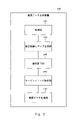
- FIG. 2 is a block diagram illustrating the functional configuration of the recommended data generation device 2000 according to the first embodiment.
- the recommended data generation device 2000 has an acquisition unit 2020 , a self-organizing map generation unit 2040 , a specification allocation unit 2060 , a target node detection unit 2080 and a recommended data generation unit 2100 .
- the acquisition unit 2020 acquires the material specification information 10 and the physical property information 20 for each of the multiple patterns of the material 60 .
- the self-organizing map generator 2040 uses the physical property information 20 to generate the self-organizing map 30 .
- the specification assigning unit 2060 assigns specification vectors to each node of the self-organizing map 30 using the material specification information 10 .
- the target node detection unit 2080 acquires the target information 80 and detects a node to which a physical property vector corresponding to the desired physical property indicated by the target information 80 is assigned as a target node.
- the recommended data generator 2100 generates recommended data 90 using the target node.
- Each functional configuration unit of the recommended data generation device 2000 may be realized by hardware (eg, hardwired electronic circuit, etc.) that implements each functional configuration unit, or may be implemented by a combination of hardware and software (eg, : a combination of an electronic circuit and a program that controls it, etc.).
- hardware e.g., hardwired electronic circuit, etc.
- software e.g., : a combination of an electronic circuit and a program that controls it, etc.
- FIG. 3 is a block diagram illustrating the hardware configuration of the computer 500 that implements the recommended data generation device 2000.
- Computer 500 is any computer.
- the computer 500 is a stationary computer such as a server machine or a PC (Personal Computer).
- the computer 500 is a portable computer such as a smart phone or a tablet terminal.
- the computer 500 may be a dedicated computer designed to implement the recommended data generation device 2000, or may be a general-purpose computer.
- each function of the recommended data generation device 2000 is realized on the computer 500.
- the application is composed of a program for realizing each functional component of the recommended data generation device 2000 .
- the acquisition method of the above program is arbitrary.
- the program can be acquired from a storage medium (DVD disc, USB memory, etc.) in which the program is stored.
- the program can be obtained by downloading the program from a server device that manages the storage device in which the program is stored.
- Computer 500 has bus 502 , processor 504 , memory 506 , storage device 508 , input/output interface 510 and network interface 512 .
- the bus 502 is a data transmission path through which the processor 504, memory 506, storage device 508, input/output interface 510, and network interface 512 exchange data with each other.
- the method of connecting the processors 504 and the like to each other is not limited to bus connection.
- the processor 504 is various processors such as a CPU (Central Processing Unit), GPU (Graphics Processing Unit), or FPGA (Field-Programmable Gate Array).
- the memory 506 is a main memory implemented using a RAM (Random Access Memory) or the like.
- the storage device 508 is an auxiliary storage device implemented using a hard disk, SSD (Solid State Drive), memory card, ROM (Read Only Memory), or the like.
- the input/output interface 510 is an interface for connecting the computer 500 and input/output devices.
- the input/output interface 510 is connected to an input device such as a keyboard and an output device such as a display device.
- a network interface 512 is an interface for connecting the computer 500 to a network.
- This network may be a LAN (Local Area Network) or a WAN (Wide Area Network).
- the storage device 508 stores a program that implements each functional component of the recommended data generation device 2000 (a program that implements the application described above).
- the processor 504 implements each functional component of the recommended data generation device 2000 by reading this program into the memory 506 and executing it.
- the recommended data generation device 2000 may be realized by one computer 500 or may be realized by a plurality of computers 500. In the latter case, the configuration of each computer 500 need not be the same, and can be different.
- FIG. 4 is a flowchart illustrating the flow of processing executed by the recommended data generation device 2000 of the first embodiment.
- the acquiring unit 2020 acquires the material specification information 10 and the physical property information 20 for each of the multiple patterns of the material 60 (S102).
- the self-organizing map generator 2040 uses the physical property information 20 to generate the self-organizing map 30 (S104).
- the item allocation unit 2060 uses the material item information 10 to allocate an item vector to each node of the self-organizing map 30 (S106).
- the target node detection unit 2080 acquires the target information 80 (S108).
- the target node detection unit 2080 detects target nodes using the target information 80 (S110).
- the recommended data generator 2100 uses the target node to generate the recommended data 90 (S112).
- FIG. 5 is a diagram illustrating the material specification information 10 in a table format.
- the table 100 of FIG. 5 has columns of material identification information 102 and material specifications 104 .
- Material identification information 102 indicates identification information assigned to material 60 .
- a material specification 104 indicates the specification of the material 60 .
- the material specification information 10 is represented by one record in the table 100. That is, the material specification information 10 associates the identification information of the material 60 with the material specification of the material 60 having the identification information.
- FIG. 6 is a diagram exemplifying the physical property information 20 in a table format.
- the table 200 in FIG. 6 has columns of product identification information 202 and physical properties 204 .
- the product identification information 202 indicates identification information of the product 70 .
- a physical property 204 indicates a physical property of the deliverable 70 .
- the physical properties of the product 70 are represented by showing a correspondence of "label representing type of physical property: physical amount of the physical property" for each physical property.
- the physical property information 20 is represented by one record in the table 200. That is, the physical property information 20 associates the identification information of the product 70 with the physical properties of the product 70 having the identification information.
- the acquisition unit 2020 acquires multiple pairs of material specification information 10 and physical property information 20 .
- a pair of material specification information 10 and physical property information 20 is stored in advance in an arbitrary storage device accessible from the recommendation data generation device 2000 .
- the acquisition unit 2020 acquires a pair of material specification information 10 and physical property information 20 by accessing this storage device.
- the acquisition unit 2020 may acquire a pair of the material specification information 10 and the physical property information 20 by accepting user input for inputting the pair of the material specification information 10 and the physical property information 20 .
- the acquisition unit 2020 may acquire a pair of material specification information 10 and physical property information 20 by receiving a pair of material specification information 10 and physical property information 20 transmitted from another device. good.
- the pair of material specification information 10 and physical property information 20 is generated by simulating the generation of the product 70 . Specifically, by giving specific material specifications as input and executing a simulation, the physical property information 20 indicating the predicted value of the physical quantity of each physical property is generated for the product 70 . Then, a pair of the generated physical property information 20 and the material specification information 10 indicating the material specification given as an input is obtained.
- a technology that realizes a simulation that acquires material specifications as input and outputs predictive data on the physical properties of deliverables that are produced in specific processes using the materials specified by the material specifications. can use existing technology.
- the pair of material specification information 10 and physical property information 20 may be generated by actually generating the deliverable 70.
- the product 70 is experimentally generated by using the material 60 represented by specific material specifications in the target process.
- the physical property information 20 is generated by measuring the physical quantity of each physical property of the generated product 70 . As a result, a pair of generated physical property information 20 and material specification information 10 representing the material 60 used is obtained.
- the physical property information 20 acquired by the acquisition unit 2020 may include information with different data representation methods. For example, different labels may be used for essentially identical physical properties. In addition, it is conceivable that the physical quantity of the same physical property is expressed in units different from each other. In such a case, the acquisition unit 2020 preferably unifies the data expression method by unifying labels, converting units, and the like.
- a situation in which the physical property information 20 has different data representation methods is, for example, the physical property information 20 generated using a simulation and the physical property information 20 generated by experimentally generating a product 70. It is thought that this may occur when both are acquired. In addition, it is preferable that such unification of data expression methods is also performed for the material specification information 10 in the same manner.
- the self-organizing map generator 2040 uses the physical property information 20 to generate the self-organizing map 30 (S104).
- the self-organizing map 30 has a plurality of nodes arranged on an m-dimensional map space. The number of dimensions of the map space may be predetermined or specified by the user.
- Each node of the self-organizing map 30 is assigned an n-dimensional physical property vector. Assignment of physical property vectors to each node is performed by learning the self-organizing map 30 . Learning of the self-organizing map 30 can be performed by inputting n-dimensional training data used for learning into the self-organizing map 30 . An existing method can be used as a specific method for learning a self-organizing map using training data.
- the self-organizing map generator 2040 initializes the self-organizing map 30 by any method.
- an initialization method for example, a method of initializing the physical property vector of each node to a random value can be adopted.
- the self-organizing map generation unit 2040 generates a plurality of n-dimensional physical property vectors by extracting physical property amounts of n types of physical properties from each of the acquired plurality of physical property information 20 .
- the self-organizing map generation unit 2040 generates the self-organizing map 30 by learning the self-organizing map 30 by treating each of the plurality of physical property vectors as training data.
- the physical property vector of each node of the self-organizing map 30 becomes n-dimensional data indicating the value of each physical property quantity of n types of physical properties.
- the physical property vector obtained from the physical property information 20 may indicate the physical property amount of each of the n types of physical properties indicated by the physical property information 20 as it is, or each physical property amount may be converted by a predetermined method (for example, normalization, standardization, etc.). You may indicate the value obtained by
- the number of physical properties indicated by the physical property information 20 may be greater than n.
- part of the data indicated by the physical property information 20 is used for generating the self-organizing map 30.
- FIG. which type of physical properties among the physical properties indicated by the physical property information 20 is used to generate the self-organizing map 30 may be determined in advance or may be designated by the user.
- the specification assigning unit 2060 uses the material specification information 10 to assign a specification vector to each node of the self-organizing map 30 (S106).
- the specification vector obtained from the material specification information 10 may indicate values for all specification parameters indicated by the material specification information 10, or for some of the specification parameters value may be indicated. That is, if the number of dimensions of the specification vector is k, the value of k may be the same as the number of specification parameters indicated by the material specification information 10, or the specification parameters indicated by the material specification information 10. may be less than the number of
- the material specification information 10 indicates both parameters that take continuous values (for example, the compounding ratio of substances) and parameters that do not take continuous values (for example, the type of processing).
- the specification vector is generated by parameters that take continuous values.
- the specification vector may indicate the value of the parameter indicated by the material specification information 10 as it is, or the value of each parameter may be converted by a predetermined method (for example, normalization or standardization). You may indicate the value obtained by
- the specification assignment unit 2060 assigns each piece of material specification information 10 to the node.
- Physical property information 20 corresponding to the material specification information 10 is used to assign the material specification information 10 to the nodes. That is, the specification assigning unit 2060 identifies a node having a physical property vector most similar to the physical property vector obtained from the physical property information 20 corresponding to the material specification information 10 .
- the specification assigning unit 2060 assigns the material specification information 10 to the specified node.
- the specification assignment unit 2060 assigns specification vectors obtained from the material specification information 10 to nodes to which the material specification information 10 is assigned.
- the specification assigning unit 2060 obtains, by estimation, specification vectors to be assigned to nodes to which the material specification information 10 is not assigned. That is, the specification assigning unit 2060 estimates the distribution of the specification vectors based on the specification vectors of the nodes to which the material specification information 10 is assigned and the arrangement of those nodes on the map space. Then, the item allocation unit 2060 also uses the estimated distribution to allocate the item vectors to the nodes to which the material item information 10 has not been assigned.
- the specification assigning unit 2060 estimates the distribution of specification vectors by arbitrary interpolation processing such as linear interpolation or spline interpolation.
- the specification allocation unit 2060 may estimate the distribution of specification vectors by sparse estimation. Note that when estimating the distribution of the specification vectors, the estimation accuracy may be improved by further applying Bayesian estimation.
- FIG. 7 is a diagram exemplifying the configuration of the self-organizing map 30 in which a specification vector is assigned to each node in a table format.
- Table 300 of FIG. 7 has four columns: position 302 , physical property vector 304 , material identification information 306 , and specification vector 308 .
- Table 300 has one record per node.
- the position 302 indicates the coordinates of the node on the map space.
- m 2 and nodes are assigned x and y coordinates.
- a physical property vector 304 represents an n-dimensional physical property vector assigned to a node.
- n 4.
- the material identification information 306 indicates, for a node to which the material specification information 10 is assigned, the identification information of the material 60 indicated by the material specification information 10 assigned to the node. In the record of the node to which the material specification information 10 is not assigned, the material identification information 306 indicates "-".
- the target node detection unit 2080 acquires the target information 80 (S108).
- the target information 80 represents physical properties of the deliverable 70 desired by the user of the recommended data generation device 2000 .
- the target information 80 indicates desired values of physical properties for each of one or more physical properties of the product 70 .
- the target information 80 may indicate a desired range of physical properties for each of one or more physical properties of the product 70 .
- the method by which the target node detection unit 2080 acquires the target information 80 is arbitrary.
- the target information 80 is pre-stored in any storage device accessible from the recommended data generation device 2000 .
- the target node detection unit 2080 acquires the target information 80 by accessing the storage device.
- the target node detection unit 2080 receives an input operation specifying a desired physical property from the user, and acquires the target information 80 as a result of the input.
- the target node detection unit 2080 may acquire the target information 80 by receiving the target information 80 transmitted from another device.
- the target node detection unit 2080 detects target nodes using the target information 80 (S110). For this purpose, the target node detection unit 2080 determines whether or not the physical property vector assigned to each node of the self-organizing map 30 corresponds to the desired physical property indicated by the target information 80. do.
- the target information 80 indicates desired values for each of one or more types of physical properties.
- the physical property vector of a certain node indicates a value that matches the desired value for any type of physical property whose desired value is indicated by the target information 80, that node is selected as the target node. detected.
- the physical property vector indicates a value obtained by normalizing the physical property amount
- the physical property vector indicates a value that matches the desired value
- the physical property vector indicates a value that matches the desired value
- the target information 80 indicates desired ranges for each of one or more types of physical properties.
- the physical property vector of a certain node indicates a value within the desired range for any type of physical property whose desired value is indicated by the target information 80, the node is detected as the target node. be done.
- the physical property vector indicates a value obtained by normalizing the physical property amount, etc.
- the physical property vector indicates a value within a desired range
- the target node detection unit 2080 can detect multiple nodes as target nodes.
- the recommended data generator 2100 uses the target node to generate the recommended data 90 (S112). Specifically, the recommended data generator 2100 generates the recommended data 90 using the specification vector assigned to the target node. For example, it is assumed that the specification vector indicates the value of each of a plurality of specification parameters. In this case, the recommended data generator 2100 generates recommended data 90 representing material specifications specified by the values indicated by the specification vectors. On the other hand, it is assumed that the specification vector does not indicate the values themselves of each of the plurality of specification parameters, but the values obtained by converting them by a method such as normalization. In this case, the recommended data generator 2100 converts the values indicated by the specification vectors into specification parameter values, and generates the recommended data 90 using the converted values.
- the recommended data generation unit 2100 may add to the recommended data 90 the values of the specification parameters that are not included in the specification vector. For example, suppose the specification vector does not indicate values for material types. In this case, the recommended data generator 2100 adds a value representing the type of material to the recommended data 90 generated from the specification vector. The type of material added at this time may be predetermined, specified by the user, or determined using the material specification information 10 . For example, it is assumed that all of the material specification information 10 acquired by the recommended data generation device 2000 indicate the same type of material. In this case, the recommended data generator 2100 adds the same material type as indicated by the material specification information 10 to the recommended data 90 .
- the recommended data generation unit 2100 may generate a plurality of recommended data 90.
- the recommended data generation unit 2100 selects one or more other nodes located around the target node in the map space, and for each selected node, recommends data from the specification vector assigned to that node. 90 is generated.
- the method of generating recommendation data 90 from each node is similar to the method of generating recommendation data 90 from the target node.
- the recommended data generation unit 2100 selects one or more nodes from a partial area including the target node in the map space.
- a partial area is an area that is centered on the target node and whose distance from the target node is equal to or less than a predetermined threshold. Any type of distance, such as Euclidean distance or Manhattan distance, can be used.
- a partial area may be determined by clustering the map space.
- the recommended data generator 2100 divides the map space into a plurality of clusters based on the specification vectors assigned to each node. As a result, nodes to which the assigned specification vectors are similar to each other are classified into the same cluster.
- the recommended data generator 2100 uses the cluster to which the target node belongs as the predetermined range. That is, the recommended data generator 2100 generates the recommended data 90 from each node belonging to the same cluster as the target node.
- Existing clustering algorithms such as the k-means method can be used as a technique for clustering nodes based on vectors associated with each of a plurality of nodes.
- the order of selection is arbitrary. For example, the recommended data generator 2100 selects nodes in random order from the partial areas. In addition, for example, the recommended data generation unit 2100 selects nodes in order from those closest to the target node. Note that if there are a plurality of nodes that are at equal distances from the target node, the recommended data generation unit 2100 may select nodes in random order from among them, or may select nodes according to a predetermined rule (for example, The nodes may be selected according to ascending order, clockwise order in map space, etc.).
- the recommended data generation unit 2100 may use all the nodes included in the partial area, or may use some of the nodes. In the latter case, for example, the recommended data generator 2100 selects a predetermined number of nodes. The predetermined number may be predetermined or specified by the user.
- the recommended data generation unit 2100 may repeat node selection while the recommended data 90 is being requested. For example, the recommended data generation unit 2100 acquires input data indicating whether or not more recommended data 90 is required each time the recommended data generation unit 2100 generates the recommended data 90 . If the input data indicates that more recommended data 90 is required, the recommended data generator 2100 selects a node that has not yet been selected and generates the recommended data 90 using that node. On the other hand, if the input data indicates that the recommendation data 90 is no longer needed, the recommendation data generation unit 2100 terminates node selection.
- the above input data is input by the user, for example.
- the user can operate an input screen for receiving an input as to whether or not it is necessary to further generate the recommended data 90. to display.
- the recommended data generation device 2000 acquires the result of the input by the user as the input data.
- the input data may be transmitted from a simulator that uses the recommended data 90.
- the recommended data generation device 2000 and the simulator operate in cooperation with each other.
- the recommended data generating device 2000 provides the generated recommended data 90 to the simulator.
- the simulator uses the provided recommendation data 90 to simulate the generation of the product 70 .
- the simulator sends an input requesting the next recommended data 90 (the input indicating that more recommended data 90 is required) to the recommended data generator 2000 .
- the recommended data generation device 2000 that has received the above request further selects a node and generates the recommended data 90 .
- the method of selecting a node is not limited to the method of selecting from a partial area.
- the recommended data generation unit 2100 may select a predetermined number of nodes in order from the nodes closest to the target node.
- the output mode of the recommended data 90 is arbitrary.
- the recommended data generation device 2000 stores the recommended data 90 in any storage device accessible from the recommended data generation device 2000 .
- the recommended data generation device 2000 displays the recommended data 90 on any display device that can be controlled from the recommended data generation device 2000 .
- the recommended data generation device 2000 transmits the recommended data 90 to any device (for example, the aforementioned simulator) communicably connected to the recommended data generation device 2000 .
- the recommendation data 90 is used for simulation of generation of the product 70 and experimental generation of the product 70 .
- the recommended data 90 may be referred to by the operator who performs the simulation or experimental generation, or may be referred to by the simulator which performs the simulation.
- the worker performs a simulation by inputting the recommended data 90 into the simulator, or prepares the material 60 specified by the material specifications shown in the recommended data 90 to experiment with the deliverable 70. such as generation.
- the latter case will be described as a second embodiment as follows.
- FIG. 8 is a diagram illustrating an overview of the operation of the recommended data generation device 2000 of the second embodiment.
- FIG. 8 is a diagram for facilitating understanding of the outline of recommended data generation device 2000, and the operation of recommended data generation device 2000 is not limited to that shown in FIG.
- the recommended data generation device 2000 inputs the recommended data 90 to the simulator 400 to cause the simulator 400 to perform a simulation.
- the simulator 400 simulates the generation process of the target process. Specifically, the simulator 400 acquires input data representing material specifications, and expresses predicted physical properties of the deliverable 70 generated using the material 60 specified by the input data. Generate prediction data 410 .
- the simulator 400 any existing simulator can be used that obtains input data representing material specifications, performs simulation using the input data, and outputs predicted physical property data of a product.
- the simulator 400 may be implemented by the computer that implements the recommended data generation device 2000, or may be implemented by another computer.
- the recommended data generating device 2000 acquires the predicted data 410 generated by the simulator 400 and outputs a pair of the recommended data 90 and the predicted data 410. As a result, a pair of the recommended data 90 and the predicted data 410 obtained by inputting the recommended data 90 to the simulator 400 is output.
- the above pair corresponds to the pair of the material specification information 10 and the physical property information 20 described above. Therefore, by using the recommended data generation device 2000, it is possible to improve the efficiency of subsequent simulations based on the results of simulations and experiments for generating the product 70 that have already been performed. For example, for the first certain number of times, the material specifications to be simulated or experimentally generated are determined according to past knowledge or randomly. After that, by inputting these results into the recommendation data generation device 2000, recommendation data 90 representing material specifications with a high probability of obtaining a product 70 having desired physical properties is obtained. As a result, the simulation can be performed by focusing on the material specifications with a high probability of obtaining the product 70 having the desired physical properties, so that the simulation can be performed efficiently.
- the output mode of the pair of recommended data 90 and predicted data 410 is arbitrary.
- the recommended data generation device 2000 stores the pairs in any storage device accessible from the recommended data generation device 2000 .
- the recommended data generation device 2000 causes any display device controllable from the recommended data generation device 2000 to display the pairs.
- the recommended data generation device 2000 transmits the pair to any device communicably connected to the recommended data generation device 2000 .
- recommended data generating apparatus 2000 may cause simulator 400 to execute a simulation using recommended data 90 each time recommended data 90 is generated, or after generating a plurality of recommended data 90, generate a plurality of recommended data.
- the simulator 400 may sequentially execute the simulation for each of the data 90 .
- FIG. 9 is a block diagram illustrating the functional configuration of the recommended data generation device 2000 of the second embodiment.
- the recommended data generation device 2000 of the second embodiment further has a simulator control section 2120 and a simulation result output section 2140 .
- the simulator control unit 2120 causes the simulator 400 to simulate the generation of the product 70 using the material 60 specified by the material specifications represented by the recommendation data 90.
- the simulation result output unit 2140 acquires the prediction data 410 output from the simulator 400 and outputs a pair of the recommended data 90 and the prediction data 410 .
- Example of hardware configuration The hardware configuration of the recommended data generating device 2000 of the second embodiment is shown in FIG. 3, for example, like the recommended data generating device 2000 of the first embodiment.
- the storage device 508 of the second embodiment stores a program that implements each functional component of the recommended data generation device 2000 of the second embodiment.
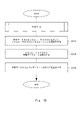
- FIG. 10 is a flowchart illustrating the flow of processing executed by the recommended data generation device 2000 of the second embodiment.
- the simulator control unit 2120 inputs the recommended data 90 to the simulator 400 and causes the simulator 400 to perform the simulation.
- the simulation result output unit 2140 acquires the prediction data 410 from the simulator 400 (S116).
- the simulation result output unit 2140 outputs a pair of recommended data 90 and predicted data 410 (S118).
- Non-transitory computer readable media include various types of tangible storage media.
- Examples of non-transitory computer-readable media include magnetic recording media (e.g., floppy disks, magnetic tapes, hard disk drives), magneto-optical recording media (e.g., magneto-optical discs), CD-ROMs, CD-Rs, CD-Rs /W, including semiconductor memory (e.g. mask ROM, PROM (programmable ROM), EPROM (erasable PROM), flash ROM, RAM);
- the program may also be provided to the computer on various types of transitory computer readable medium. Examples of transitory computer-readable media include electrical signals, optical signals, and electromagnetic waves. Transitory computer-readable media can deliver the program to the computer via wired channels, such as wires and optical fibers, or wireless channels.
- a transformation map generating means for assigning, to each node, a specification vector indicating values relating to material specifications using the material specification information;
- Target node detection for acquiring target information indicating a desired physical property of the artifact, and detecting, as a target node, the node to which the physical property vector corresponding to the desired physical property indicated by the target information is assigned.
- means and recommendation data generating means for generating recommendation data representing material specifications of a material capable of producing the product having the desired physical properties, using the specification vectors assigned to the target nodes. Data generator.
- the recommended data generating means selects one or more of the nodes from a partial area including the target node in the map space, and generates the specification vector assigned to each of the selected nodes.
- the recommended data generating device according to appendix 1 further generating the recommended data using the recommended data.
- (Appendix 3) 2.
- the recommended data generating means includes: dividing the map space into a plurality of clusters based on the specification vectors assigned to each of the nodes; The recommended data generation device according to appendix 2, wherein the cluster to which the target node belongs is used as the partial area. (Appendix 5) The recommended data generating means generates the recommended data using the specification vector assigned to each of the predetermined number of nodes that are ranked high in order of proximity to the target node in the map space.
- the recommendation data generation device according to appendix 1, further generating (Appendix 6)
- a simulator that generates predictive data of physical properties of the deliverables executes a simulation with input of the material specifications represented by the recommended data.
- a simulator control means for causing 6.
- the recommended data generation device according to any one of appendices 1 to 5, further comprising simulation result output means for acquiring the prediction data generated by the simulator and outputting the prediction data and the recommended data.
- a control method implemented by a computer comprising: For each of a plurality of patterns of materials that can be used in the target process, material specification information that represents the material specifications of the material, and physical property amounts for each of the multiple physical properties of the deliverable that can be generated in the process using the material an acquisition step of acquiring physical property information indicating Using the physical property information, a self-organizing map is generated in which each node is assigned a position on the map space and a physical property vector indicating a physical property amount of each of a plurality of types of physical properties of the product.
- a transformation map generation step a specification assignment step of assigning, to each node, a specification vector indicating values relating to material specifications, using the material specification information;
- Target node detection for acquiring target information indicating a desired physical property of the artifact, and detecting, as a target node, the node to which the physical property vector corresponding to the desired physical property indicated by the target information is assigned.
- a step ; and a recommended data generation step of generating recommended data representing material specifications of a material capable of producing the product having the desired physical properties, using the specification vectors assigned to the target nodes.
- a transformation map generation step a specification assignment step of assigning, to each node, a specification vector indicating values relating to material specifications, using the material specification information;
- Target node detection for acquiring target information indicating a desired physical property of the artifact, and detecting, as a target node, the node to which the physical property vector corresponding to the desired physical property indicated by the target information is assigned.
- a step ; and a recommended data generation step of generating recommended data representing material specifications of a material capable of producing the product having the desired physical properties, using the specification vector assigned to the target node.
- the recommended data generating step for each of a predetermined number of the nodes that are ranked high in order of proximity to the target node in the map space, the recommended data is generated using the specification vector assigned to the node. 14.
- a simulator For the deliverable that can be produced using the material specified by the input material specifications, a simulator that generates prediction data of physical properties executes a simulation with input of the material specifications represented by the recommended data. a simulator control step that causes 18.
- Material specification information 20 Physical property information 30 Self-organizing map 60 Material 70 Product 80 Target information 90 Recommended data 100 Table 102 Material identification information 104 Material specification 200 Table 202 Product identification information 204 Physical property 300 Table 302 Position 304 Physical property vector 306 material identification information 308 specification vector 400 simulator 410 prediction data 500 computer 502 bus 504 processor 506 memory 508 storage device 510 input/output interface 512 network interface 2000 recommended data generation device 2020 acquisition unit 2040 self-organizing map generation unit 2060 specification allocation Unit 2080 Target node detection unit 2100 Recommended data generation unit 2120 Simulator control unit 2140 Simulation result output unit
Landscapes
- Engineering & Computer Science (AREA)
- Theoretical Computer Science (AREA)
- Physics & Mathematics (AREA)
- Computing Systems (AREA)
- Evolutionary Computation (AREA)
- Life Sciences & Earth Sciences (AREA)
- Artificial Intelligence (AREA)
- Software Systems (AREA)
- General Engineering & Computer Science (AREA)
- General Physics & Mathematics (AREA)
- Bioinformatics & Computational Biology (AREA)
- Bioinformatics & Cheminformatics (AREA)
- Health & Medical Sciences (AREA)
- Biomedical Technology (AREA)
- Biophysics (AREA)
- Computational Linguistics (AREA)
- Data Mining & Analysis (AREA)
- General Health & Medical Sciences (AREA)
- Molecular Biology (AREA)
- Mathematical Physics (AREA)
- Geometry (AREA)
- Computer Hardware Design (AREA)
- Medical Informatics (AREA)
- Computer Vision & Pattern Recognition (AREA)
- Information Retrieval, Db Structures And Fs Structures Therefor (AREA)
Priority Applications (4)
| Application Number | Priority Date | Filing Date | Title |
|---|---|---|---|
| EP22770965.6A EP4310717A4 (en) | 2021-03-18 | 2022-02-14 | DEVICE FOR GENERATING RECOMMENDATION DATA, CONTROL METHOD AND NON-TRANSITIOUS COMPUTER-READABLE MEDIUM |
| JP2023506873A JP7621598B2 (ja) | 2021-03-18 | 2022-02-14 | 推奨データ生成装置、制御方法、及びプログラム |
| CN202280022361.9A CN117121009A (zh) | 2021-03-18 | 2022-02-14 | 推荐数据生成设备、控制方法和非暂时性计算机可读介质 |
| US18/279,506 US20240304287A1 (en) | 2021-03-18 | 2022-02-14 | Recommendation data generation apparatus, control method, and non-transitory computer readable medium |
Applications Claiming Priority (2)
| Application Number | Priority Date | Filing Date | Title |
|---|---|---|---|
| JP2021044485 | 2021-03-18 | ||
| JP2021-044485 | 2021-03-18 |
Publications (1)
| Publication Number | Publication Date |
|---|---|
| WO2022196206A1 true WO2022196206A1 (ja) | 2022-09-22 |
Family
ID=83322230
Family Applications (1)
| Application Number | Title | Priority Date | Filing Date |
|---|---|---|---|
| PCT/JP2022/005623 Ceased WO2022196206A1 (ja) | 2021-03-18 | 2022-02-14 | 推奨データ生成装置、制御方法、及び非一時的なコンピュータ可読媒体 |
Country Status (5)
| Country | Link |
|---|---|
| US (1) | US20240304287A1 (https=) |
| EP (1) | EP4310717A4 (https=) |
| JP (1) | JP7621598B2 (https=) |
| CN (1) | CN117121009A (https=) |
| WO (1) | WO2022196206A1 (https=) |
Citations (5)
| Publication number | Priority date | Publication date | Assignee | Title |
|---|---|---|---|---|
| JP2007087098A (ja) * | 2005-09-22 | 2007-04-05 | Nissan Motor Co Ltd | 最適化システム、最適化方法、最適化プログラム、及びプログラム媒体 |
| JP2008293315A (ja) * | 2007-05-25 | 2008-12-04 | Yokohama Rubber Co Ltd:The | データ解析プログラム、データ解析装置、構造体の設計プログラム、および構造体の設計装置 |
| JP2016099737A (ja) * | 2014-11-19 | 2016-05-30 | 横浜ゴム株式会社 | データの分析方法およびデータの表示方法 |
| JP2016148988A (ja) | 2015-02-12 | 2016-08-18 | 横浜ゴム株式会社 | データの分析方法およびデータの表示方法 |
| JP2021044485A (ja) | 2019-09-13 | 2021-03-18 | 株式会社Ihi | コイル装置 |
Family Cites Families (2)
| Publication number | Priority date | Publication date | Assignee | Title |
|---|---|---|---|---|
| US10014076B1 (en) * | 2015-02-06 | 2018-07-03 | Brain Trust Innovations I, Llc | Baggage system, RFID chip, server and method for capturing baggage data |
| WO2020056405A1 (en) * | 2018-09-14 | 2020-03-19 | Northwestern University | Data-driven representation and clustering discretization method and system for design optimization and/or performance prediction of material systems and applications of same |
-
2022
- 2022-02-14 JP JP2023506873A patent/JP7621598B2/ja active Active
- 2022-02-14 WO PCT/JP2022/005623 patent/WO2022196206A1/ja not_active Ceased
- 2022-02-14 EP EP22770965.6A patent/EP4310717A4/en not_active Withdrawn
- 2022-02-14 CN CN202280022361.9A patent/CN117121009A/zh active Pending
- 2022-02-14 US US18/279,506 patent/US20240304287A1/en active Pending
Patent Citations (5)
| Publication number | Priority date | Publication date | Assignee | Title |
|---|---|---|---|---|
| JP2007087098A (ja) * | 2005-09-22 | 2007-04-05 | Nissan Motor Co Ltd | 最適化システム、最適化方法、最適化プログラム、及びプログラム媒体 |
| JP2008293315A (ja) * | 2007-05-25 | 2008-12-04 | Yokohama Rubber Co Ltd:The | データ解析プログラム、データ解析装置、構造体の設計プログラム、および構造体の設計装置 |
| JP2016099737A (ja) * | 2014-11-19 | 2016-05-30 | 横浜ゴム株式会社 | データの分析方法およびデータの表示方法 |
| JP2016148988A (ja) | 2015-02-12 | 2016-08-18 | 横浜ゴム株式会社 | データの分析方法およびデータの表示方法 |
| JP2021044485A (ja) | 2019-09-13 | 2021-03-18 | 株式会社Ihi | コイル装置 |
Non-Patent Citations (1)
| Title |
|---|
| See also references of EP4310717A4 |
Also Published As
| Publication number | Publication date |
|---|---|
| CN117121009A (zh) | 2023-11-24 |
| EP4310717A4 (en) | 2025-01-08 |
| EP4310717A1 (en) | 2024-01-24 |
| US20240304287A1 (en) | 2024-09-12 |
| JP7621598B2 (ja) | 2025-01-27 |
| JPWO2022196206A1 (https=) | 2022-09-22 |
Similar Documents
| Publication | Publication Date | Title |
|---|---|---|
| CN109657805B (zh) | 超参数确定方法、装置、电子设备及计算机可读介质 | |
| US9276821B2 (en) | Graphical representation of classification of workloads | |
| US20230153491A1 (en) | System for estimating feature value of material | |
| Thomas et al. | Probing for sparse and fast variable selection with model‐based boosting | |
| Dib et al. | CLAG: an unsupervised non hierarchical clustering algorithm handling biological data | |
| CN113853614A (zh) | 在量子特征空间中使用量子相似性矩阵的无监督聚类 | |
| US11782947B2 (en) | Apparatus for recommending feature and method for recommending feature using the same | |
| CN110796262B (zh) | 机器学习模型的测试数据优化方法、装置及电子设备 | |
| JP7572664B2 (ja) | 特異材料検出装置、制御方法、及びプログラム | |
| CN112433952A (zh) | 深度神经网络模型公平性测试方法、系统、设备及介质 | |
| JP7598107B2 (ja) | マップ画像生成装置、制御方法、及びプログラム | |
| JP7621598B2 (ja) | 推奨データ生成装置、制御方法、及びプログラム | |
| JP7701681B2 (ja) | マップ生成装置、マップ生成方法、及びプログラム | |
| Kim et al. | Difference-based clustering of short time-course microarray data with replicates | |
| KR20240028822A (ko) | 사용자 맞춤형 솔루션을 제공하기 위한 다중 센서 기반의 예측 모델 생성 방법 및 그러한 방법을 수행하는 전자 장치 | |
| JP7661763B2 (ja) | 学習データ作成システム、学習データ作成方法及び学習データ作成プログラム | |
| JP7164060B1 (ja) | 情報処理装置、情報処理方法及び情報処理プログラム | |
| US20250232083A1 (en) | Recommendation data generation apparatus, recommendation data generation method, and non-transitory computer-readable medium | |
| dos Santos Fernandes et al. | Generating diverse clustering datasets with targeted characteristics | |
| WO2022196209A1 (ja) | 物性マップ画像生成装置、制御方法、及び非一時的なコンピュータ可読媒体 | |
| JP7224263B2 (ja) | モデル生成方法、モデル生成装置及びプログラム | |
| JP2022024384A (ja) | 情報処理装置及び情報処理方法 | |
| US20250022191A1 (en) | Method for generating training image used to train image-based artificial intelligence model for analyzing images obtained from multi-channel one-dimensional signals, and device performing same | |
| Warni et al. | WebGIS Visualization of Infectious Disease Clustering with a Hybrid Sequential Approach | |
| WO2025220370A1 (ja) | 計算機システム及び予測モデルの学習方法 |
Legal Events
| Date | Code | Title | Description |
|---|---|---|---|
| 121 | Ep: the epo has been informed by wipo that ep was designated in this application |
Ref document number: 22770965 Country of ref document: EP Kind code of ref document: A1 |
|
| WWE | Wipo information: entry into national phase |
Ref document number: 18279506 Country of ref document: US |
|
| WWE | Wipo information: entry into national phase |
Ref document number: 2023506873 Country of ref document: JP |
|
| WWE | Wipo information: entry into national phase |
Ref document number: 2022770965 Country of ref document: EP |
|
| NENP | Non-entry into the national phase |
Ref country code: DE |
|
| ENP | Entry into the national phase |
Ref document number: 2022770965 Country of ref document: EP Effective date: 20231018 |
|
| WWW | Wipo information: withdrawn in national office |
Ref document number: 2022770965 Country of ref document: EP |