WO2022181426A1 - 情報処理システム、情報処理装置、情報処理方法およびプログラム - Google Patents
情報処理システム、情報処理装置、情報処理方法およびプログラム Download PDFInfo
- Publication number
- WO2022181426A1 WO2022181426A1 PCT/JP2022/006264 JP2022006264W WO2022181426A1 WO 2022181426 A1 WO2022181426 A1 WO 2022181426A1 JP 2022006264 W JP2022006264 W JP 2022006264W WO 2022181426 A1 WO2022181426 A1 WO 2022181426A1
- Authority
- WO
- WIPO (PCT)
- Prior art keywords
- information processing
- inference
- learning
- processing device
- model
- Prior art date
- Legal status (The legal status is an assumption and is not a legal conclusion. Google has not performed a legal analysis and makes no representation as to the accuracy of the status listed.)
- Ceased
Links
Images







Classifications
-
- G—PHYSICS
- G06—COMPUTING OR CALCULATING; COUNTING
- G06N—COMPUTING ARRANGEMENTS BASED ON SPECIFIC COMPUTATIONAL MODELS
- G06N3/00—Computing arrangements based on biological models
- G06N3/02—Neural networks
- G06N3/08—Learning methods
- G06N3/09—Supervised learning
-
- G—PHYSICS
- G06—COMPUTING OR CALCULATING; COUNTING
- G06F—ELECTRIC DIGITAL DATA PROCESSING
- G06F21/00—Security arrangements for protecting computers, components thereof, programs or data against unauthorised activity
- G06F21/60—Protecting data
-
- G—PHYSICS
- G06—COMPUTING OR CALCULATING; COUNTING
- G06F—ELECTRIC DIGITAL DATA PROCESSING
- G06F21/00—Security arrangements for protecting computers, components thereof, programs or data against unauthorised activity
- G06F21/60—Protecting data
- G06F21/62—Protecting access to data via a platform, e.g. using keys or access control rules
-
- G—PHYSICS
- G06—COMPUTING OR CALCULATING; COUNTING
- G06N—COMPUTING ARRANGEMENTS BASED ON SPECIFIC COMPUTATIONAL MODELS
- G06N20/00—Machine learning
-
- G—PHYSICS
- G06—COMPUTING OR CALCULATING; COUNTING
- G06N—COMPUTING ARRANGEMENTS BASED ON SPECIFIC COMPUTATIONAL MODELS
- G06N3/00—Computing arrangements based on biological models
- G06N3/02—Neural networks
- G06N3/04—Architecture, e.g. interconnection topology
-
- G—PHYSICS
- G06—COMPUTING OR CALCULATING; COUNTING
- G06N—COMPUTING ARRANGEMENTS BASED ON SPECIFIC COMPUTATIONAL MODELS
- G06N3/00—Computing arrangements based on biological models
- G06N3/02—Neural networks
- G06N3/04—Architecture, e.g. interconnection topology
- G06N3/0464—Convolutional networks [CNN, ConvNet]
-
- G—PHYSICS
- G06—COMPUTING OR CALCULATING; COUNTING
- G06N—COMPUTING ARRANGEMENTS BASED ON SPECIFIC COMPUTATIONAL MODELS
- G06N3/00—Computing arrangements based on biological models
- G06N3/02—Neural networks
- G06N3/08—Learning methods
-
- G—PHYSICS
- G06—COMPUTING OR CALCULATING; COUNTING
- G06N—COMPUTING ARRANGEMENTS BASED ON SPECIFIC COMPUTATIONAL MODELS
- G06N3/00—Computing arrangements based on biological models
- G06N3/02—Neural networks
- G06N3/08—Learning methods
- G06N3/098—Distributed learning, e.g. federated learning
-
- G—PHYSICS
- G16—INFORMATION AND COMMUNICATION TECHNOLOGY [ICT] SPECIALLY ADAPTED FOR SPECIFIC APPLICATION FIELDS
- G16H—HEALTHCARE INFORMATICS, i.e. INFORMATION AND COMMUNICATION TECHNOLOGY [ICT] SPECIALLY ADAPTED FOR THE HANDLING OR PROCESSING OF MEDICAL OR HEALTHCARE DATA
- G16H30/00—ICT specially adapted for the handling or processing of medical images
Definitions
- the present invention relates to an information processing system, an information processing device, an information processing method, and a program for performing learning processing on an inference model.
- Machine learning technology is applied to medical data such as medical images acquired by medical imaging equipment (modality) and medical information acquired from medical information systems, and inferences about specific diseases (disease detection, benign/malignant discrimination, prognosis prediction) , risk prediction, etc.) are known.
- Non-Patent Document 1 discloses a technique of learning a model consisting of an encoder/decoder with a medical image as an input and performing feature extraction using an inference model (encoder).
- Non-Patent Document 1 learning of an inference model is performed by an information processing device on the side of the inference model provider. It is difficult to protect privacy because it is necessary to transmit to the information processing device of the third party. On the other hand, if the inference model is stored in an information processing device managed by the user of the inference model, it prevents the user from duplicating the inference model and distributing it to a third party, or from illegally using the inference model by altering it. Since it is difficult to do so, the confidentiality of the inference model cannot be guaranteed.
- the purpose of the present invention is to provide an information processing system capable of learning an inference model while ensuring the privacy of training data and the confidentiality of an inference model.
- an information processing system includes: a first information processing device operated by an administrator of training data; and two information processing devices, and performing a learning process for learning an inference model based on a neural network composed of an input layer, an intermediate layer and an output layer, wherein the first information processing device is a teacher data acquisition unit that acquires teacher data; and inputting the teacher data to a first partial model composed of the input layer of the inference model and an intermediate layer that is part of the intermediate layers.
- the second information processing device has a first learning unit that performs a first learning process by using and a second learning unit that performs a second learning process by inputting to a second partial model composed of layers.
- the inference model can be learned while ensuring the privacy of the teacher data and the confidentiality of the inference model.
- FIG. 1 is a diagram showing the configuration of an information processing system according to a first embodiment;
- 2 is a diagram showing the hardware configuration of the first information processing apparatus according to the first embodiment;
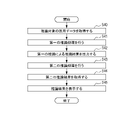
- FIG. 4 is a flowchart showing inference processing of the information processing system according to the first embodiment; The figure which shows the structure of the information processing system which concerns on 2nd Embodiment.
- FIG. 11 is a flowchart showing inference processing of the information processing system according to the second embodiment; The figure which shows the structure of the information processing system which concerns on 3rd Embodiment. Schematic diagram of an inference model according to the third embodiment.
- FIG. 11 is a flowchart showing learning processing of the information processing system according to the third embodiment; Schematic diagram of an information processing system according to a fourth embodiment. Schematic diagram of an inference model according to the fourth embodiment. The flowchart which shows the learning process of the information processing system which concerns on 4th Embodiment.
- the present invention can be preferably applied to medical data such as raw data (signal data) acquired by a modality and diagnostic medical image data generated by image reconstruction from raw data.
- Modalities include, for example, X-ray CT devices, MRI devices, SPECT devices, PET devices, and electrocardiographs.
- the inference target data and teacher data may be not only medical data but also information related to patient privacy, such as age, gender, and disease information.
- the inference process by the inference model in the information processing system of the present invention will be described below in the first and second embodiments.
- the inference model learning process in the information processing system of the present invention will be described.
- the inference model used in the inference process is not limited to the inference model generated through the learning process of the third and fourth embodiments of the present invention.
- the inference model used in the inference process is a trained inference model that has been trained based on machine learning or deep learning by a known technique or the learning process described in the present invention.
- the learned inference model may be a learned inference model that has been subjected to a learning process that satisfies a predetermined condition. good. Therefore, as additional learning of an inference model that has already been trained by a known method, a learning process may be performed in a learning process described later, or the learning process may be performed in reverse order.
- An information processing system 1 comprises a first information processing device 2, a second information processing device 3, and a network 4 that communicably connects the two information processing devices.
- the information processing system 1 comprises a first information processing device 2 and a second information processing device 3 .
- the first information processing device 2 and the second information processing device 3 each have a partial model that is a part of an inference model that performs inference processing on medical data to be inferred and outputs an execution result.
- the inference model here is a trained model based on a neural network composed of an input layer, an intermediate layer, and an output layer. Through learning processing, parameters for outputting an inference result are determined, and a model in which the parameters and the network model are paired is defined as an inference model.
- the first information processing device 2 performs a first inference using a first partial model composed of an input layer and at least a part of the intermediate layers among the learned inference models described above.
- the second information processing device 3 performs the second inference using the second partial model configured from a layer different from the first partial model among the learned inference models described above. Run. The configuration of each information processing device will be described below.
- the first information processing device 2 is an information processing device that can be operated by, for example, a medical worker who is a user of the inference model who has the authority to manage medical data to be inferred.
- the second information processing device 3 is an information processing device owned by a model provider who has the authority to manage the inference model used for inference.
- the second information processing device 3 resides in a server outside the first information processing device 2 and is configured to be communicable via the network 4 .
- the first information processing device 2 includes an acquisition unit 11 that acquires medical data to be inferred, and a learned neural network that is configured from an input layer, an intermediate layer, and an output layer that performs inference processing on the medical data.
- a first partial model composed of an input layer and at least a partial intermediate layer of the intermediate layers is used to perform the first inference processing on the inference target medical data and the first inference result of the first inference processing is transferred to a first inference unit 12 configured from a layer different from the layer constituting the first partial model of the inference processing. and an output unit 13 for outputting to the second information processing device 3, which is another information processing device having two partial models.
- the first information processing device 2 also has a storage unit 10 that stores a first partial model that is part of a learned inference model and medical data to be inferred. It also has an inference result obtaining unit 14 for obtaining a second inference result by the second information processing apparatus 3, which is another information processing apparatus, and a display control unit 15 for displaying the obtained inference result on a display device. .
- the storage unit 10 stores a first partial model including an input layer of a learned inference model and medical data to be inferred.
- the storage unit 10 associates and stores a network corresponding to the partial model and a learned parameter corresponding to the network as a first partial model.
- medical data to be inferred may be medical data automatically transferred from a modality or an external image server.
- the part of the trained inference model refers to a continuous part from one layer to another layer, but is not limited to this, a continuous part from one neuron to another neuron, or an isolated neuron There may be.
- the partial model may be a plurality of non-adjacent parts in the learned inference model.
- the acquisition unit 11 acquires inference target medical data from the storage unit 10 and transmits the acquired inference target medical data to the first inference unit 12 .
- the first inference unit 12 acquires the first partial model from the storage unit 10 and performs first inference using the first partial model on medical data to be inferred. A first inference result from the first partial model is sent to the output unit 13 .
- the first partial model is a first partial model composed of an input layer and at least a part of the intermediate layers among the learned inference models, and the output unit 13 sends the output from the hidden layer.
- the output of the hidden layer is tensor information, and if the inference model is a CNN-based model, the output is a feature map.
- the output unit 13 transmits the first inference result to the second information processing device 3, which is another information processing device.
- the information of the inference model corresponding to the partial model used in the first inference is output to the second information processing device.
- the inference result acquisition unit 14 acquires the inference result of the second inference processing for the inference target medical image data from the second information processing device 3 . After acquiring the inference result, the inference result acquisition unit 14 transmits the inference result to the display control unit 15 .
- the display control unit 15 controls display of the inference result acquired by the inference result acquisition unit 14 on the display device.
- the display device is a display attached to the information processing device, a mobile terminal of a hospital official via an external server, or the like.
- the first information processing device 2 may be configured by a computer equipped with a processor, memory, storage, and the like. In this case, by loading the program stored in the storage into the memory and executing the program by the processor, the storage unit 10, the acquisition unit 11, the first inference unit 12, the output unit 13, the inference result acquisition unit 14, Functions and processes such as the display control unit 15 are realized.
- all or part of the configuration of the first information processing device 2 may be realized by a specially designed processor (such as ASIC) or FPGA.
- part of the arithmetic processing may be executed by a processor such as GPU or DSP.
- the first information processing device 2 may be composed of a single piece of hardware, or may be composed of a plurality of pieces of hardware. For example, using cloud computing or distributed computing, a plurality of computers may work together to realize the functions and processing of the first information processing device 2 .
- FIG. 3 shows an example of a specific configuration of the first information processing device 2.
- the local information processing device 2 has a CPU 20 , a GPU 21 , a RAM 22 , a ROM 23 and a storage device 24 , which are connected by a system bus 25 .
- a display device 26 and an input device 27 such as a mouse and a keyboard are connected to the local information processing device 2 .
- the user of the inference model who is the administrator of the medical data does not need to transmit the medical data to be inferred to the external information processing device. , can protect the privacy of medical data. Also, the provider of the inference model can secure the confidentiality of the inference model by installing only a part of the inference model in the first information processing device 2 .
- the second information processing device 3 exists in a server outside the first information processing device 2, and performs inference processing on medical data.
- a first partial model composed of an input layer and at least a part of intermediate layers among intermediate layers, of the learned inference model based on the learned inference for the medical data to be inferred
- the second inference process is performed using the second partial model composed of a layer different from the layer constituting the first partial model in the inference process. It is composed of a second inference unit 71 that performs processing.
- the second information processing apparatus also has a storage unit 70 for storing 3 second partial models.
- the second partial model is composed of an intermediate layer different from the intermediate layer forming the first inference model, and an output layer, among the learned inference models.
- the network configuration of the partial models described above is an example, and the number of partial models and the number of information processing apparatuses can be changed as appropriate.
- the storage unit 70 associates and stores a network corresponding to the second partial model and a learned parameter corresponding to the network.
- a partial model refers to a continuous portion from one layer to another layer, but is not limited to this, and may be a continuous portion from one neuron to another neuron or an isolated neuron.
- a partial model may also be a plurality of non-adjacent parts in an inference model.
- the second inference unit 12 acquires the second partial model from the storage unit 10 and performs second inference using the second partial model on medical data to be inferred. Then, the inference result of the second inference is transmitted to the first information processing device 2 .
- the second partial model corresponding to the corresponding learned inference model is acquired, and the second inference model is acquired. to implement.
- the second partial model is a model having an output layer
- the inference result is output in the second information processing device.
- the second partial model may consist only of the intermediate layer and the output of the intermediate layer may be sent to the first information processing device 2 .
- the second information processing device 3 is configured as described above, so that the provider of the inference model can install only a part of the learned inference model in the first information processing device 2 and use the learned inference model.
- a part of the inference model can be kept in the information processing device 3 owned and managed by itself, and the confidentiality of the inference model can be secured.
- step S40 the acquisition unit 11 in the first information processing device 2 acquires medical data to be inferred. After acquiring the inference target medical data, the acquisition unit 11 transmits the acquired inference target medical data to the first inference unit 12, and proceeds to the next step.
- step S41 the first inference unit 12 in the first information processing device 2 uses a first partial model composed of an input layer and at least a part of the intermediate layers to generate an inference target. medical data, the first inference processing is executed. After executing the first inference processing, the first inference unit 12 transmits the inference result of the first inference processing to the output unit 13, and proceeds to the next step.
- step S42 the output unit 13 in the first information processing device 2 outputs the inference result of the first inference to the second information processing device 2, and proceeds to the next step.
- step S43 the second inference unit 71 in the second information processing device 3 performs second inference processing using a second partial model configured from a layer different from the layer configuring the first partial model. to implement.
- the second partial model includes an intermediate layer of the inference model that is different from the intermediate layer that forms the first partial model.
- the second partial model further has an output layer, and outputs an inference result for inference target medical data.
- the second inference unit 71 advances the processing to the next step after transmitting the inference result for the medical data to be inferred to the first information processing device 2 .
- the second inference unit 71 may store the inference result of the second inference process in the storage unit 70 and present the inference result in response to access from the outside.
- the output destination is not limited to the first information processing apparatus 2, and the result may be transmitted to a designated information terminal or a contact.
- step S44 the inference result acquisition unit 14 in the first information processing device 2 acquires the second inference result from the second inference unit 71 in the second information processing device 3. After acquiring the second inference result, the inference result acquisition unit 14 transmits the second inference result to the display control unit 15, and proceeds to the next step.
- step S45 the display control unit 15 causes the display device 25 to display the inference result for the medical data to be inferred.
- the inference result displayed on the display device 25 is a series of inference processing (first inference processing and second inference processing).
- the display control unit 15 may display the medical data to be inferred and the inference results in association with each other, or may display information about the inference model used for the inference.
- the information processing system 1 can perform inference while protecting the privacy of inference-targeted medical data and ensuring the confidentiality of an inference model that performs inference on the inference-targeted medical data. can.
- a trained inference model based on a neural network that performs inference processing on medical data and is composed of an input layer, an intermediate layer, and an output layer, the input layer and part of the intermediate layer and a second partial model composed of a layer different from the first partial model among the learned inference models.
- the information processing system comprising the second information processing device 3 having the .
- the first information processing device 2 further includes a third inference unit that performs inference using a third partial model including an output layer, and outputs to the first information processing device side.
- a third inference unit that performs inference using a third partial model including an output layer, and outputs to the first information processing device side.
- An information processing system 1 includes a first information processing device 2, a second information processing device 3, and a network 4 that communicably connects the respective information processing devices, as in the first embodiment. be done.
- the information processing system 1 is also composed of three partial models.
- the first information processing device 2 on the user side has an input layer of a trained inference model based on a neural network that performs inference processing on medical data and is composed of an input layer, an intermediate layer, and an output layer. and a part of the intermediate layers, and further a third partial model composed of a part of the intermediate layers and an output layer.
- the second information processing device 3 on the inference model manager side among the intermediate layers of the inference model, between the intermediate layer of the first partial model and the intermediate layer of the third partial model has a second partial model consisting of at least part of the intermediate layer of Note that the number of partial models is variable, and the partial model having the input layer and the partial model having the output layer are the first information processing device 2 on the user side who has the authority to manage medical data to be inferred. should be prepared for As for the first information processing apparatus 2, the number thereof does not matter as long as the information processing apparatus is managed by the user.
- the inference model implements high image quality
- the output layer is in an information processing device that is not on the user side
- the image obtained by improving the image quality of the medical data to be inferred is sent to the second information processing device. 3
- the first information processing device 2 has a partial model having an output layer, and the privacy of the output can be protected by performing inference using the partial model.
- the information processing apparatus 1 includes a storage unit 10, an acquisition unit 11, a first inference unit 12, an output unit 13, an inference result acquisition unit 14, a display control unit 15, and the third partial model described above. It has at least a third inference unit 51 that performs a third inference using
- the information processing device 2 also includes a storage unit 70 and a second inference unit 71 .
- the second partial model used in the second inference unit 71 is an intermediate layer between the intermediate layer of the first partial model and the intermediate layer of the third partial model among the learned inference models. It consists of a network composed of layers.
- step S42 The flow up to step S42 is the same as that of the first embodiment, so the explanation is omitted.
- step S73 the second information processing device 3 receives the inference result of the first inference unit 12 as input, and performs second inference using the second partial model.
- the second partial model is composed of a network composed of intermediate layers between the intermediate layer of the first partial model and the intermediate layer of the third partial model among the learned inference models.
- step S74 the third inference unit 51 in the first information processing device 2 receives the second inference result and makes a third inference using the third partial model.
- the third inference unit 51 transmits the result of the third inference to the inference result acquisition unit 14, and proceeds to the next step.
- step S ⁇ b>75 the inference result acquisition unit 14 acquires the third inference result as the inference result for the inference target medical data, and transmits the acquired inference result to the display control unit 15 .
- step S45 the inference result displayed on the display device 25 is a series of inference processes ( (first inference processing, second inference processing, and third inference processing).
- the inference model learning process of the present invention will be described below.
- the inference model used in the inference process described above is not limited to the inference model generated through the learning process of the third and fourth embodiments.
- the inference model in the following embodiments may be an inference model that has not undergone learning processing or a learned inference model that has undergone learning processing.
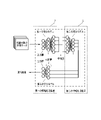
- the information processing system 800 includes a first information processing device 900 that is an information processing device on the user side of the inference model, a second information processing device 1000 that is an information processing device on the side of the provider of the inference model, and an information processing device. It consists of a network 1100 connecting between them.
- a network configuration of an inference model corresponding to each information processing device will be described with reference to FIG.
- the first information processing device 900 performs inference processing on medical data, and includes an inference model based on a neural network that is configured from an input layer, an intermediate layer, and an output layer. It has a first partial model configured with at least a part of the intermediate layer.
- the second information processing apparatus 1000 also has a second partial model having a second partial model composed of a layer different from the layer constituting the first partial model in the inference model. Also, in this embodiment, the second partial model is a partial model composed of part of the intermediate layer and the output layer. In this way, the first partial model including the input layer is provided in the first information processing device 900 on the user side, and the second partial model, which is a part of the inference model, is provided in the second model of the inference model provider.
- the learning process of the inference model can be performed while protecting the privacy of the medical data and securing the confidentiality of the inference model.
- the first partial model may be configured as a network for public use, and the second partial model as a network for confidentiality.
- the model provider can further enhance the confidentiality of the inference model by using a confidential network as the second partial model.
- the first information processing device 900 has a storage unit 901 that stores teacher data and inference model information. Further, it includes a teacher data acquisition unit 902 that acquires teacher data from the storage unit 900 and a first learning unit 903 that learns the first partial model based on the acquired teacher data. Note that the storage unit 900 may be configured by a storage device or the like managed by the user of the inference model. Further, when the learning process of the first partial model is completed, the first learning unit 903 stores the information of the learned first partial model in the storage unit 901 .
- the second information processing device 1000 has a storage unit 1001 that stores inference model information and a second learning unit 1002 that learns a second partial model.
- the learning process performed by the learning unit refers to forward propagating the teacher data to the partial model and updating the parameters of the partial model using the error information obtained by the error backpropagation method.
- the teacher data is composed of learning data and a correct label.
- the learning data is, for example, medical image data
- the correct label is information indicating an object appearing in the medical image data.
- the correct label may be set as correct image data indicating what an object is captured in each pixel.
- the first information processing device 900 transmits the model selection information to the second information processing device 900, so that when at least one of the first partial model and the second partial model exists in plural, Also in , an appropriate model can be selected.
- step S50 the teacher data acquisition unit 902 acquires from the storage unit 901 teacher data in which the learning data and the correct label are paired.
- the teacher data acquisition unit 902 transmits the information of the learning data to the first learning unit 903 and the correct label to the second information processing device 1000, and proceeds to the next step.
- step S51 the first learning unit 903 acquires the learning data transmitted from the teacher data acquisition unit 902 and the information of the first partial model from the storage unit 901.
- the first learning unit 903 may transmit information indicating the acquired first partial model to the second information processing apparatus 1000 .
- step S ⁇ b>52 the second learning unit 1002 acquires the information of the second partial model from the storage unit 1001 and the information of the correct label from the teacher data acquisition unit 902 .
- step S53 the first learning unit 903 inputs the learning data to the first partial model, forward propagates it, and performs the first learning process, which is a part of the learning process.
- the data generated by the first learning process such as tensors, is sent to the second learning unit 1002 .
- step S54 the second learning unit 1002 inputs the parameters transmitted from the first learning unit 903 to the second partial model, forward propagates them, and executes the second learning process, which is a part of the learning process. do.
- step S55 the second learning unit 1002 compares the output of the second partial model by forward propagation of the second partial model including the output layer in the network configuration with the correct label, and uses the loss function to calculate the error Get information about Also, the second learning unit 1002 determines here whether or not the learning is completed. The second learning unit 1002 determines the end of the learning process depending on whether the calculated error information is less than a predetermined value or whether the learning process has been performed a predetermined number of times. When the second learning unit 1002 determines that the learning process has ended, the flow ends. On the other hand, when it is determined to continue the learning process, the process proceeds to step S56. Note that step S55 may be determined by the first learning unit 903 before starting the first learning process.
- step S56 the second learning unit 1002 updates the parameters of the second partial model based on the error information calculated in step S55.
- parameters refer to weights and biases, for example.
- the error information is transmitted from the intermediate layer close to the output layer side to the input layer side by back propagation (error back propagation method).
- back propagation error back propagation method
- step S57 the first learning unit 903 updates the parameters of the first partial model based on the error information transmitted from the second learning unit 1002. After updating the parameters of the first partial model, the process proceeds to step S53. Incidentally, as described in step S55, the first learning unit 903 may determine the end of the learning process at this timing.
- the information processing system 800 in the present invention By configuring the information processing system 800 in the present invention in this way, it is possible to learn the inference model while ensuring the privacy of medical data and the confidentiality of the inference model.
- the number of partial models is not limited to two, and the present invention can be applied as long as the partial model including the input layer exists in the information processing device on the user side of the inference model.
- information for selecting a partial model corresponding to each of the plurality of inference models may be transmitted from the first learning unit 903 to the second learning unit 1002 .
- a partial model may be selected by the user or may be selected by the information processing device according to input data.
- the first information processing device has a first partial model composed of an input layer and at least a part of the intermediate layers, which is different from the first partial model.
- the learning process in the information processing system in which the second information processing device has the second partial model composed of layers has been described.
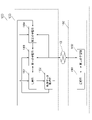
- the first information processing apparatus further includes a third partial model including at least an intermediate layer different from the first partial model and the second partial model, and an output layer. Learning of the system will be explained with reference to FIG. Also, the network configuration of the inference model in this embodiment will be described with reference to FIG. Note that the description of the overlapping parts with the third embodiment will be omitted as appropriate.
- An information processing system 1200 includes a first information processing device 1300 that is an information processing device on the user side of an inference model, and a second information processing device 1400 that is an information processing device on the side of the provider of an inference model. and a network 1100 connecting the information processing apparatuses.
- the first information processing device 1300 performs inference processing on medical data, and in an inference model based on a neural network composed of an input layer, an intermediate layer, and an output layer, the input layer and the intermediate layer It has a first partial model configured with at least a part of the intermediate layer. Furthermore, the first information processing device 1300 has a third partial model of the inference model that includes at least the output layer.
- the second information processing device 1400 has a second partial model composed of at least a part of the intermediate layers of the inference model.
- the first information processing apparatus 1300 has a third partial model that further includes an output layer. Inference model learning processing can be performed without sending to 1400 . Furthermore, the provider of the inference model can secure the confidentiality of the inference model by having a second partial model including at least a part of the intermediate layers constituting the inference model. In this embodiment, if the first information processing apparatus 1300 has a partial model including an input layer and a partial model including an output layer, the number of partial models, the number of information processing apparatuses, and the like can be appropriately designed. be.
- the first information processing device 1300 has a storage unit 1301 that stores teacher data and inference model information. Also, a teacher data acquisition unit 902 that acquires teacher data from the storage unit 1301, a first learning unit 1303 that learns the first partial model based on the acquired teacher data, and a third model that learns the third partial model. and three learning units.
- the second information processing device 1400 includes a storage unit 1001 that stores information on the inference model, and a second learning unit that learns the second partial model.
- the learning process means forward propagation of the learning data that constitutes the teacher data to the partial model, and back propagation of the error information between the correct label and the output value from the output layer (error backpropagation method). shows a series of processes for updating the parameters of The training data consists of learning data and correct labels.
- step S130 the third learning unit 1304 acquires third partial model information from the storage unit 1301 and correct label information from the teacher data acquisition unit 1302.
- step S132 the second learning unit 1402 inputs the parameters transmitted from the first learning unit 903 to the second partial model, forward propagates them, and performs the second learning process, which is a part of the learning process. do.
- step S133 the third learning unit 1304 inputs the parameters transmitted from the second learning unit 1402 to the third partial model, forward propagates them, and executes the third learning process, which is a part of the learning process. do.
- step S134 the third learning unit 1304 compares the output of the third partial model by forward propagation of the third partial model including the output layer in the network configuration with the correct label, and uses the loss function to calculate the error Get information about Also, the third learning unit 1304 determines here whether or not the learning is completed. The third learning unit 1304 determines completion of the learning process based on whether the calculated error information is less than a predetermined value or whether the learning process has been performed a predetermined number of times. When the third learning unit 1304 determines that the learning process has ended, the flow ends. On the other hand, when the third learning unit 1304 determines to continue the learning process, the process proceeds to step S53. Note that the end determination of the learning process in step S134 may be determined by the first learning unit 1303 before the start of the first learning process.
- step S135 the third learning unit 1304 updates the parameters of the third partial model based on the error information calculated in step S134.
- parameters refer to weights and biases, for example.
- the third learning unit 1304 transmits the error information from the intermediate layer close to the output layer side to the input layer side by backpropagation of the error information.
- the process proceeds to the next step.
- step S136 the second learning unit 1402 updates the parameters of the second partial model based on the error information transmitted from the third learning unit 1304.
- the second learning unit 1402 transmits the error information from the intermediate layer close to the output layer side to the input layer side by backpropagation of the error information, and transfers the output from the intermediate layer close to the input layer side to the first After transmitting to the learning unit 1303, the process proceeds to the next step.
- step S137 the first learning unit 1303 updates the parameters of the first partial model based on the error information transmitted from the second learning unit 1402. After updating the parameters of the first partial model, the process proceeds to step S53. Incidentally, as described in step S134, the first learning unit 1303 may determine the end of the learning process at this timing.
- the inference model learning process can be performed while ensuring the privacy of medical data and the confidentiality of the inference model. Furthermore, it is not necessary to transmit the learning data and the correct label that constitute the training data from the information processing device on the user side of the inference model, so that the confidentiality of the medical data can be further ensured.
- the inference model learned by the third and fourth embodiments may be used as the inference model that performs the inference processing in the first and second embodiments.
- the third and fourth learning processes are effective as a technique for additional learning of an inference model that performs inference processes.
- the first partial model can be customized according to the data you want to input. For example, the first learning unit 903 performs additional learning specialized for the characteristics of the modality for acquiring medical data, a specific imaging range, etc. for the first partial model. This has the effect of preventing unintended modification of the model.
- the second learning unit 1002 updates the parameters of the second partial model and the first learning unit 903 does not update the parameters of the first partial model
- the first model under the control of the provider of the inference model It can be expected to improve the accuracy and robustness of the second partial model.
- first partial models and second partial models may be created, or a plurality of partial models may be used in combination as appropriate.
- the output of the inference model is equivalent to the input learning data, such as increasing the resolution of the input data, place the inference model including the output layer on the information processing device on the user side of the inference model.
- the output is an inference model for classifying and detecting medical data
- the inference model including the output layer is placed in the information processing device of the inference model provider.
- a first partial model that performs the first inference may be selected from a plurality of first models according to the medical data to be inferred, or a plurality of second partial models may be selected from the inference target medical data.
- a second classification model may be selected that makes a second inference depending on the medical data.
- a method such as Synthetic Gradient that trains a model that estimates the expected gradient for each layer, a method such as Feedback Alignment that uses a fixed random matrix when backpropagating the error, a goal rather than an error It can be a method like Target Prop that propagates, or any other method.
- the present invention is also realized by executing the following processing. That is, the software (program) that realizes the functions of the above-described embodiments is supplied to a system or device via a network or various storage media, and the computer (or CPU, MPU, etc.) of the system or device reads the program. This is the process to be executed.
Landscapes
- Engineering & Computer Science (AREA)
- Theoretical Computer Science (AREA)
- Physics & Mathematics (AREA)
- Health & Medical Sciences (AREA)
- Software Systems (AREA)
- General Health & Medical Sciences (AREA)
- General Physics & Mathematics (AREA)
- General Engineering & Computer Science (AREA)
- Mathematical Physics (AREA)
- Evolutionary Computation (AREA)
- Data Mining & Analysis (AREA)
- Artificial Intelligence (AREA)
- Computing Systems (AREA)
- Computational Linguistics (AREA)
- Molecular Biology (AREA)
- Biophysics (AREA)
- Biomedical Technology (AREA)
- Life Sciences & Earth Sciences (AREA)
- Bioethics (AREA)
- Medical Informatics (AREA)
- Computer Hardware Design (AREA)
- Computer Security & Cryptography (AREA)
- Computer Vision & Pattern Recognition (AREA)
- Nuclear Medicine, Radiotherapy & Molecular Imaging (AREA)
- Radiology & Medical Imaging (AREA)
- Epidemiology (AREA)
- Primary Health Care (AREA)
- Public Health (AREA)
- Measuring And Recording Apparatus For Diagnosis (AREA)
Applications Claiming Priority (2)
| Application Number | Priority Date | Filing Date | Title |
|---|---|---|---|
| JP2021027606A JP7661059B2 (ja) | 2021-02-24 | 2021-02-24 | 情報処理システム、情報処理装置、情報処理方法およびプログラム |
| JP2021-027606 | 2021-02-24 |
Publications (1)
| Publication Number | Publication Date |
|---|---|
| WO2022181426A1 true WO2022181426A1 (ja) | 2022-09-01 |
Family
ID=83049318
Family Applications (1)
| Application Number | Title | Priority Date | Filing Date |
|---|---|---|---|
| PCT/JP2022/006264 Ceased WO2022181426A1 (ja) | 2021-02-24 | 2022-02-16 | 情報処理システム、情報処理装置、情報処理方法およびプログラム |
Country Status (2)
| Country | Link |
|---|---|
| JP (1) | JP7661059B2 (https=) |
| WO (1) | WO2022181426A1 (https=) |
Citations (2)
| Publication number | Priority date | Publication date | Assignee | Title |
|---|---|---|---|---|
| US20180129900A1 (en) * | 2016-11-04 | 2018-05-10 | Siemens Healthcare Gmbh | Anonymous and Secure Classification Using a Deep Learning Network |
| JP2019153216A (ja) * | 2018-03-06 | 2019-09-12 | Kddi株式会社 | 学習装置、情報処理システム、学習方法、及びプログラム |
-
2021
- 2021-02-24 JP JP2021027606A patent/JP7661059B2/ja active Active
-
2022
- 2022-02-16 WO PCT/JP2022/006264 patent/WO2022181426A1/ja not_active Ceased
Patent Citations (2)
| Publication number | Priority date | Publication date | Assignee | Title |
|---|---|---|---|---|
| US20180129900A1 (en) * | 2016-11-04 | 2018-05-10 | Siemens Healthcare Gmbh | Anonymous and Secure Classification Using a Deep Learning Network |
| JP2019153216A (ja) * | 2018-03-06 | 2019-09-12 | Kddi株式会社 | 学習装置、情報処理システム、学習方法、及びプログラム |
Non-Patent Citations (1)
| Title |
|---|
| PRANEETH VEPAKOMMA; OTKRIST GUPTA; TRISTAN SWEDISH; RAMESH RASKAR: "Split learning for health: Distributed deep learning without sharing raw patient data", ARXIV.ORG, 3 December 2018 (2018-12-03), pages 1 - 7, XP080988124 * |
Also Published As
| Publication number | Publication date |
|---|---|
| JP2022129061A (ja) | 2022-09-05 |
| JP7661059B2 (ja) | 2025-04-14 |
Similar Documents
| Publication | Publication Date | Title |
|---|---|---|
| JP2021056995A (ja) | 医用情報処理装置、医用情報処理システム及び医用情報処理方法 | |
| CN114787832A (zh) | 联邦机器学习的方法和服务器 | |
| US20180144244A1 (en) | Distributed clinical workflow training of deep learning neural networks | |
| KR20220004476A (ko) | 진단 결과를 제공하기 위한 방법 및 장치 | |
| JP7033202B2 (ja) | 医用画像処理装置及び方法、機械学習システム、プログラム並びに記憶媒体 | |
| CN114254360B (zh) | 模型训练方法、装置、存储介质、系统以及区块链节点 | |
| JP7066385B2 (ja) | 情報処理方法、情報処理装置、情報処理システム及びプログラム | |
| JP7058988B2 (ja) | 情報処理装置、情報処理方法およびプログラム | |
| US20250086785A1 (en) | High-quality embeddings for medical imaging and small, easy-to-train networks for low-data tasks | |
| US20220375610A1 (en) | Multi-Variable Heatmaps for Computer-Aided Diagnostic Models | |
| JP6071338B2 (ja) | 医療診断支援装置、医療診断支援方法及びプログラム | |
| JP2021104140A (ja) | 医用情報処理装置、医用情報処理方法、及び医用情報処理プログラム | |
| KR20150140237A (ko) | 프로토콜 관리 시스템 | |
| JP7746045B2 (ja) | 情報処理システム、情報処理装置、情報処理方法およびプログラム | |
| Lanjewar et al. | Small size CNN-Based COVID-19 disease prediction system using CT scan images on PaaS cloud | |
| WO2022181425A1 (ja) | 情報処理システム、情報処理装置、情報処理方法およびプログラム | |
| JP6220435B2 (ja) | 診断支援装置及びその制御方法 | |
| JP2018005317A (ja) | 医療データ処理装置、端末装置、情報処理方法、およびシステム | |
| WO2022181426A1 (ja) | 情報処理システム、情報処理装置、情報処理方法およびプログラム | |
| JP7805758B2 (ja) | 情報処理システム及び情報処理方法 | |
| Ghanta et al. | Federated transfer learning for chest X-ray classification: an explainable and generative AI framework with reliability assessment | |
| US20240054404A1 (en) | Information processing system, information processing apparatus, method for training inference model, and non-transitory storage medium | |
| Guo et al. | Advanced Technologies in Healthcare | |
| JP7393882B2 (ja) | 医用情報処理装置及び医用情報処理システム | |
| JP2017153691A (ja) | 診断支援装置、診断支援装置の制御方法及びプログラム |
Legal Events
| Date | Code | Title | Description |
|---|---|---|---|
| 121 | Ep: the epo has been informed by wipo that ep was designated in this application |
Ref document number: 22759465 Country of ref document: EP Kind code of ref document: A1 |
|
| NENP | Non-entry into the national phase |
Ref country code: DE |
|
| 122 | Ep: pct application non-entry in european phase |
Ref document number: 22759465 Country of ref document: EP Kind code of ref document: A1 |