WO2022176953A1 - 脂質ナノ粒子 - Google Patents
脂質ナノ粒子 Download PDFInfo
- Publication number
- WO2022176953A1 WO2022176953A1 PCT/JP2022/006427 JP2022006427W WO2022176953A1 WO 2022176953 A1 WO2022176953 A1 WO 2022176953A1 JP 2022006427 W JP2022006427 W JP 2022006427W WO 2022176953 A1 WO2022176953 A1 WO 2022176953A1
- Authority
- WO
- WIPO (PCT)
- Prior art keywords
- cells
- lipid nanoparticles
- lipid
- group
- lnp
- Prior art date
- Legal status (The legal status is an assumption and is not a legal conclusion. Google has not performed a legal analysis and makes no representation as to the accuracy of the status listed.)
- Ceased
Links
Images










Classifications
-
- A—HUMAN NECESSITIES
- A61—MEDICAL OR VETERINARY SCIENCE; HYGIENE
- A61K—PREPARATIONS FOR MEDICAL, DENTAL OR TOILETRY PURPOSES
- A61K35/00—Medicinal preparations containing materials or reaction products thereof with undetermined constitution
- A61K35/12—Materials from mammals; Compositions comprising non-specified tissues or cells; Compositions comprising non-embryonic stem cells; Genetically modified cells
- A61K35/14—Blood; Artificial blood
- A61K35/17—Lymphocytes; B-cells; T-cells; Natural killer cells; Interferon-activated or cytokine-activated lymphocytes
-
- A—HUMAN NECESSITIES
- A61—MEDICAL OR VETERINARY SCIENCE; HYGIENE
- A61K—PREPARATIONS FOR MEDICAL, DENTAL OR TOILETRY PURPOSES
- A61K31/00—Medicinal preparations containing organic active ingredients
- A61K31/70—Carbohydrates; Sugars; Derivatives thereof
- A61K31/7088—Compounds having three or more nucleosides or nucleotides
-
- A—HUMAN NECESSITIES
- A61—MEDICAL OR VETERINARY SCIENCE; HYGIENE
- A61K—PREPARATIONS FOR MEDICAL, DENTAL OR TOILETRY PURPOSES
- A61K31/00—Medicinal preparations containing organic active ingredients
- A61K31/70—Carbohydrates; Sugars; Derivatives thereof
- A61K31/7088—Compounds having three or more nucleosides or nucleotides
- A61K31/7105—Natural ribonucleic acids, i.e. containing only riboses attached to adenine, guanine, cytosine or uracil and having 3'-5' phosphodiester links
-
- A—HUMAN NECESSITIES
- A61—MEDICAL OR VETERINARY SCIENCE; HYGIENE
- A61K—PREPARATIONS FOR MEDICAL, DENTAL OR TOILETRY PURPOSES
- A61K31/00—Medicinal preparations containing organic active ingredients
- A61K31/70—Carbohydrates; Sugars; Derivatives thereof
- A61K31/7088—Compounds having three or more nucleosides or nucleotides
- A61K31/713—Double-stranded nucleic acids or oligonucleotides
-
- A—HUMAN NECESSITIES
- A61—MEDICAL OR VETERINARY SCIENCE; HYGIENE
- A61K—PREPARATIONS FOR MEDICAL, DENTAL OR TOILETRY PURPOSES
- A61K48/00—Medicinal preparations containing genetic material which is inserted into cells of the living body to treat genetic diseases; Gene therapy
-
- A—HUMAN NECESSITIES
- A61—MEDICAL OR VETERINARY SCIENCE; HYGIENE
- A61K—PREPARATIONS FOR MEDICAL, DENTAL OR TOILETRY PURPOSES
- A61K9/00—Medicinal preparations characterised by special physical form
- A61K9/10—Dispersions; Emulsions
- A61K9/127—Synthetic bilayered vehicles, e.g. liposomes or liposomes with cholesterol as the only non-phosphatidyl surfactant
-
- A—HUMAN NECESSITIES
- A61—MEDICAL OR VETERINARY SCIENCE; HYGIENE
- A61K—PREPARATIONS FOR MEDICAL, DENTAL OR TOILETRY PURPOSES
- A61K9/00—Medicinal preparations characterised by special physical form
- A61K9/10—Dispersions; Emulsions
- A61K9/127—Synthetic bilayered vehicles, e.g. liposomes or liposomes with cholesterol as the only non-phosphatidyl surfactant
- A61K9/1271—Non-conventional liposomes, e.g. PEGylated liposomes or liposomes coated or grafted with polymers
-
- A—HUMAN NECESSITIES
- A61—MEDICAL OR VETERINARY SCIENCE; HYGIENE
- A61P—SPECIFIC THERAPEUTIC ACTIVITY OF CHEMICAL COMPOUNDS OR MEDICINAL PREPARATIONS
- A61P35/00—Antineoplastic agents
-
- C—CHEMISTRY; METALLURGY
- C12—BIOCHEMISTRY; BEER; SPIRITS; WINE; VINEGAR; MICROBIOLOGY; ENZYMOLOGY; MUTATION OR GENETIC ENGINEERING
- C12N—MICROORGANISMS OR ENZYMES; COMPOSITIONS THEREOF; PROPAGATING, PRESERVING, OR MAINTAINING MICROORGANISMS; MUTATION OR GENETIC ENGINEERING; CULTURE MEDIA
- C12N15/00—Mutation or genetic engineering; DNA or RNA concerning genetic engineering, vectors, e.g. plasmids, or their isolation, preparation or purification; Use of hosts therefor
- C12N15/09—Recombinant DNA-technology
- C12N15/11—DNA or RNA fragments; Modified forms thereof; Non-coding nucleic acids having a biological activity
-
- C—CHEMISTRY; METALLURGY
- C12—BIOCHEMISTRY; BEER; SPIRITS; WINE; VINEGAR; MICROBIOLOGY; ENZYMOLOGY; MUTATION OR GENETIC ENGINEERING
- C12N—MICROORGANISMS OR ENZYMES; COMPOSITIONS THEREOF; PROPAGATING, PRESERVING, OR MAINTAINING MICROORGANISMS; MUTATION OR GENETIC ENGINEERING; CULTURE MEDIA
- C12N15/00—Mutation or genetic engineering; DNA or RNA concerning genetic engineering, vectors, e.g. plasmids, or their isolation, preparation or purification; Use of hosts therefor
- C12N15/09—Recombinant DNA-technology
- C12N15/11—DNA or RNA fragments; Modified forms thereof; Non-coding nucleic acids having a biological activity
- C12N15/113—Non-coding nucleic acids modulating the expression of genes, e.g. antisense oligonucleotides; Antisense DNA or RNA; Triplex- forming oligonucleotides; Catalytic nucleic acids, e.g. ribozymes; Nucleic acids used in co-suppression or gene silencing
-
- C—CHEMISTRY; METALLURGY
- C12—BIOCHEMISTRY; BEER; SPIRITS; WINE; VINEGAR; MICROBIOLOGY; ENZYMOLOGY; MUTATION OR GENETIC ENGINEERING
- C12N—MICROORGANISMS OR ENZYMES; COMPOSITIONS THEREOF; PROPAGATING, PRESERVING, OR MAINTAINING MICROORGANISMS; MUTATION OR GENETIC ENGINEERING; CULTURE MEDIA
- C12N15/00—Mutation or genetic engineering; DNA or RNA concerning genetic engineering, vectors, e.g. plasmids, or their isolation, preparation or purification; Use of hosts therefor
- C12N15/09—Recombinant DNA-technology
- C12N15/87—Introduction of foreign genetic material using processes not otherwise provided for, e.g. co-transformation
- C12N15/88—Introduction of foreign genetic material using processes not otherwise provided for, e.g. co-transformation using microencapsulation, e.g. using amphiphile liposome vesicle
-
- C—CHEMISTRY; METALLURGY
- C12—BIOCHEMISTRY; BEER; SPIRITS; WINE; VINEGAR; MICROBIOLOGY; ENZYMOLOGY; MUTATION OR GENETIC ENGINEERING
- C12N—MICROORGANISMS OR ENZYMES; COMPOSITIONS THEREOF; PROPAGATING, PRESERVING, OR MAINTAINING MICROORGANISMS; MUTATION OR GENETIC ENGINEERING; CULTURE MEDIA
- C12N5/00—Undifferentiated human, animal or plant cells, e.g. cell lines; Tissues; Cultivation or maintenance thereof; Culture media therefor
- C12N5/06—Animal cells or tissues; Human cells or tissues
- C12N5/0602—Vertebrate cells
- C12N5/0634—Cells from the blood or the immune system
- C12N5/0646—Natural killers cells [NK], NKT cells
-
- C—CHEMISTRY; METALLURGY
- C12—BIOCHEMISTRY; BEER; SPIRITS; WINE; VINEGAR; MICROBIOLOGY; ENZYMOLOGY; MUTATION OR GENETIC ENGINEERING
- C12N—MICROORGANISMS OR ENZYMES; COMPOSITIONS THEREOF; PROPAGATING, PRESERVING, OR MAINTAINING MICROORGANISMS; MUTATION OR GENETIC ENGINEERING; CULTURE MEDIA
- C12N2510/00—Genetically modified cells
Definitions
- the present invention relates to lipid nanoparticles that are useful as gene delivery carriers that can be delivered to natural killer (NK) cells with high efficiency.
- Lipid nanoparticles are used as carriers for encapsulating lipid-soluble drugs, nucleic acids such as siRNA (small interfering RNA) and mRNA, and delivering them to target cells.
- nucleic acids such as siRNA (small interfering RNA) and mRNA
- lipid nanoparticles that serve as carriers for the efficient delivery of nucleic acids such as siRNA into target cells are electrically neutral at physiological pH and cationic under weakly acidic pH environments such as endosomes.
- Lipid nanoparticles containing varying pH-sensitive cationic lipids as constituent lipids have been reported (Patent Document 1).
- Chimeric antigen receptor T-cell therapy has shown remarkable therapeutic effects against hematological cancers and has contributed significantly to cancer treatment.
- NK cell therapy is expected to follow cell therapy using T cells (Non-Patent Document 1).
- NK cells are effective effector cells against cancers that have been mutated to evade attack from T cells. Since the number of NK cells in the blood is smaller than that of T cells, it is difficult to secure a sufficient number of them. Therefore, clinical trials using the human NK cell line NK-92 are underway.
- Non-Patent Document 2 Using a cell line has many advantages, such as securing a sufficient number of cells, preserving them, and easily maintaining a constant quality (Non-Patent Document 2). Therefore, future development of NK cell therapy using human NK cell lines such as NK-92 is expected.
- Non-Patent Document 3 lipid nanoparticles capable of efficiently introducing siRNA into human immune cell lines. Since the lipid nanoparticles have the pH-sensitive cationic lipid YSK12-C4 as a constituent lipid, they are efficiently incorporated into human cells such as lymphocytes and monocytes.
- Lipid nanoparticles containing YSK12-C4 are the first non-viral carriers that have been able to efficiently introduce siRNA into NK-92 cells compared to commercially available reagents.
- NK cells have a problem that the delivery efficiency is not high and toxicity is recognized (Non-Patent Document 3).
- toxicity was reduced by reducing the YSK12-C4 content of lipid nanoparticles, gene knockdown activity could not be increased (Non-Patent Document 4).
- the purpose of the present invention is to provide lipid nanoparticles that serve as gene delivery carriers that can be delivered to NK cells with high efficiency.
- the present inventors have found that the constituent lipids of lipid nanoparticles encapsulating nucleic acids have a pKa of about 8.0 to 8.5 and have a hydrocarbon chain with a specific structure including an ester structure.
- the inventors have found that the inclusion of a cationic lipid can achieve excellent nucleic acid transfer efficiency and low toxicity into a human NK cell line, and have completed the present invention.
- R 1 and R 2 are each independently a linear C 10-14 alkyl group, a linear C 10-20 alkenyl group having 1 or 2 unsaturated bonds, or —CH(R 5 )(R 6 ) (R 5 and R 6 are each independently a linear C 5-10 alkyl group); p is an integer of 3 to 8; 3 and R 4 are each independently a methyl group or an ethyl group]
- [3] The lipid nanoparticles of [1] or [2] above, wherein the ratio of the amount of the pH-sensitive cationic lipid to the total amount of lipids constituting the lipid nanoparticles is 20 mol% or more.
- [4] The lipid nanoparticles of any one of [1] to [3] above, which contain nucleic acids.
- [5] The lipid nanoparticles of [4] above, wherein the nucleic acid is siRNA or mRNA.
- the lipid nanoparticles of [4] wherein the nucleic acid is plasmid DNA.
- [7] The lipid nanoparticle of any one of [4] to [6] above, wherein the nucleic acid is a gene to be expressed in NK cells or a functional nucleic acid that controls expression of a gene in NK cells.
- NK cells into which the lipid nanoparticles of any one of [1] to [7] have been introduced.
- a pharmaceutical composition comprising the lipid nanoparticles of any one of [1] to [7] or the NK cells of [8] as an active ingredient.
- [12] The pharmaceutical composition of [11] above, which is used for cancer immunotherapy.
- a kit for transforming NK cells comprising the lipid nanoparticles of any one of [1] to [7] and NK cells.
- a method for transforming NK cells comprising introducing the lipid nanoparticles of [7] into NK cells, and transforming the NK cells with the nucleic acid contained in the lipid nanoparticles.
- a method of inhibiting cancer which inhibits [16] A gene or functional nucleic acid, wherein the lipid nanoparticle of [7] is administered to a subject animal, and the gene or functional nucleic acid contained in the lipid nanoparticle is expressed in the NK cells of the subject animal. expression method.
- the lipid nanoparticles according to the present invention can highly express the enclosed gene in NK cells and have low toxicity. Therefore, the lipid nanoparticles are useful as NK cell-specific gene delivery carriers for gene therapy.
- FIG. 1 is a diagram showing the results of measurement of GAPDH gene knockdown activity of NK-92 cells introduced with each siGAPDH-encapsulated lipid nanoparticle in Example 1.
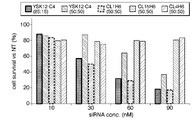
- FIG. 1 is a diagram showing the results of measuring the viability (%) of NK-92 cells transfected with each siGAPDH-encapsulated lipid nanoparticle in Example 1.
- FIG. 10 is a diagram showing the results of measuring the GAPDH gene knockdown activity of NK-92 cells introduced with each siGAPDH-encapsulated lipid nanoparticle (CL1H6-LNP) in Example 2.
- FIG. 10 shows the results of measuring the viability (%) of NK-92 cells into which each siGAPDH-encapsulated lipid nanoparticle (CL1H6-LNP) was introduced in Example 2.
- FIG. FIG. 2 is a diagram showing the results of measurement of the GAPDH gene knockdown activity of NK-92 cells introduced with each siGAPDH-encapsulated lipid nanoparticle (YSK12-LNP) in Example 2.
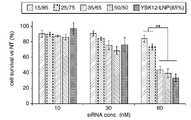
- FIG. 2 is a diagram showing the results of measuring the viability (%) of NK-92 cells introduced with each siGAPDH-encapsulated lipid nanoparticle (YSK12-LNP) in Example 2.
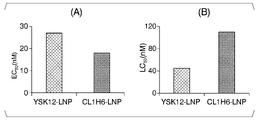
- FIG. 7 (A) is a diagram showing FIG. 2 is a diagram showing the gene knockdown activity (%) of YSK12-LNP (85%), YSK12-LNP (25%) and CL1H6-LNP (25%) at a cell viability of 80% in Example 2.
- FIG. 8B is a diagram showing FIG. 2 is a diagram showing the gene knockdown activity (%) of YSK12-LNP (85%), YSK12-LNP (25%) and CL1H6-LNP (25%) at a cell viability of 80% in Example 2.
- FIG. 2 is a diagram showing the gene knockdown activity (%) of YSK12-LNP (85%), YSK12-LNP (25%) and CL1H6-LNP (25%) at a cell viability of 80% in Example 2.
- FIG. 2 is a diagram plotting the content ratio (mol %) of YSK12-C4 or CL1H6 on the horizontal axis and EC 50 (nM) on the vertical axis in Example 2.
- FIG. FIG. 10 is a diagram showing the results of measuring the GAPDH gene knockdown activity of NK-92 cells transfected with each siGAPDH-encapsulated lipid nanoparticle in Example 3.
- FIG. 10 shows the results of measuring the viability (%) of NK-92 cells introduced with each siGAPDH-encapsulated lipid nanoparticle in Example 3.
- FIG. FIG. 10 shows the results of measuring the GAPDH gene knockdown activity of KHYG-1 cells transfected with each siGAPDH-encapsulating lipid nanoparticle in Example 3.
- FIG. 10 is a diagram showing the results of measuring the viability (%) of KHYG-1 cells transfected with each siGAPDH-encapsulated lipid nanoparticle in Example 3.
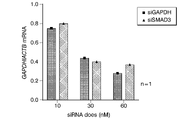
- FIG. 10 shows the results of measuring the gene knockdown activity of NK-92MI cells transfected with CL1H6-LNP encapsulating siGAPDH or siSMAD3 in Example 4.
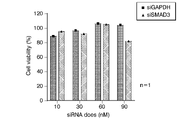
- FIG. 10 shows the results of measuring the viability (%) of NK-92MI cells introduced with CL1H6-LNP encapsulating siGAPDH or siSMAD3 in Example 4.
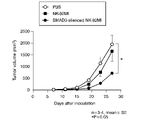
- FIG. FIG. 10 shows the results of measurement of changes in tumor volume over time in mice to which PBS, untreated NK-92MI cells, or SMAD3-knockdown NK-92MI cells were administered in Example 5.
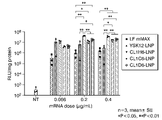
- FIG. FIG. 10 shows the results of luciferase activity measurement after 24 hours in NK-92 cells transfected with each lipid nanoparticle encapsulating Luc-mRNA in Example 6.
- FIG. FIG. 10 is a diagram showing the results of measuring the viability (%) of NK-92 cells transfected with each lipid nanoparticle encapsulating Luc-mRNA in Example 6.
- FIG. 10 shows the results of luciferase activity measurement after 24 hours in NK-92MI cells transfected with each lipid nanoparticle encapsulating Luc-mRNA in Example 7.
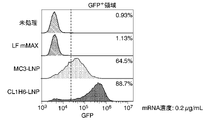
- FIG. 10 is a histogram showing the results of measurement of GFP expression after 24 hours in NK-92MI cells transfected with each lipid nanoparticle encapsulating GFP-mRNA in Example 8.
- FIG. 10 shows the results of measurement of GFP expression (median value of fluorescence intensity) after 24 hours in NK-92MI cells into which each lipid nanoparticle encapsulating GFP-mRNA was introduced in Example 8.
- FIG. 10 is a fluorescence micrograph showing GFP expression after 24 hours in NK-92 cells transfected with each lipid nanoparticle encapsulating GFP-mRNA in Example 8.
- FIG. 10 shows the results of measuring the viability (%) of NK-92MI cells introduced with each lipid nanoparticle encapsulating GFP-mRNA in Example 8.
- X1 to X2 (X1 and X2 are real numbers satisfying X1 ⁇ X2)" means "X1 or more and X2 or less”.
- the lipid nanoparticles according to the present invention are lipid nanoparticles containing a pH-sensitive cationic lipid represented by the following general formula (1) (hereinafter sometimes referred to as "the pH-sensitive cationic lipid of the present invention”). is.
- the pH-sensitive cationic lipid represented by the general formula (1) as a constituent lipid of the lipid nanoparticles, the lipid nanoparticles according to the present invention have good delivery efficiency to NK cells and low toxicity. suppressed.
- p represents an integer of 3 to 8, preferably 4.
- R 3 and R 4 are each independently a methyl group or an ethyl group. That is, both R 3 and R 4 may be methyl groups, one of R 3 and R 4 may be a methyl group and the other may be an ethyl group, and both R 3 and R 4 may be ethyl groups. may be a base. Due to this structure of the tertiary amino group, the pKa of the pH-sensitive cationic lipid represented by the general formula (1) is about 8.0 to 9.0, preferably about 8.0 to 8.5. , and more preferably about 8.0 to 8.3.
- the lipid nanoparticles containing the pH-sensitive cationic lipid represented by general formula (1) as a constituent lipid are well taken up by NK cells.
- the pH-sensitive cationic lipid in which both R 3 and R 4 are methyl groups has a pKa of about 8.20, and one of R 3 and R 4 is a methyl group
- the pKa of the pH-sensitive cationic lipid in which the other is an ethyl group is about 8.05
- the pKa of the pH-sensitive cationic lipid in which both R3 and R4 are ethyl groups is about 8.10.
- the pKa of pH-sensitive cationic lipids in which both R3 and R4 are isopropyl groups suddenly decreases to about 6.25 (Non-Patent Document 5).
- R 1 and R 2 each independently represent a linear C 10-14 alkyl group, a linear C 10-20 alkenyl group having 1 or 2 unsaturated bonds, or —CH(R 5 )(R 6 ) (R 5 and R 6 are each independently a linear C 5-10 alkyl group).
- the scaffold R 1 and R 2 are relatively medium-chain alkyl groups, alkenyl groups, or branched-chain alkyl groups. , resulting in better transduction efficiency into NK cells and lower toxicity.
- the linear C 10-14 alkyl group (alkyl group having 10 to 14 carbon atoms) includes n-decyl group, n-undecyl group, n-dodecyl group, n-tridecyl group and n-tetradecyl group. .
- the pH-sensitive cationic lipid represented by general formula (1) is a C 10- 14 alkyl group, more preferably R 1 and R 2 are each independently n-undecyl group, n-dodecyl group, or n-tridecyl group, and both R 1 and R 2 are n- It is more preferably an undecyl group, an n-dodecyl group, or an n-tridecyl group, and even more preferably both R 1 and R 2 are an n-tridecyl group.
- the linear C 10-20 alkenyl group having 1 or 2 unsaturated bonds includes a linear C 10-20 alkyl group (having 10 to 20 carbon atoms). alkyl group), any group in which one or two of the saturated bonds between carbon atoms in the alkyl chain are unsaturated bonds, and between the carbon atoms near the middle of the linear C 10-20 alkyl group A group in which one or two of the saturated bonds are unsaturated bonds is preferable, and one of the saturated bonds between carbon atoms near the middle of a linear C 13-18 alkyl group (alkyl group having 13 to 18 carbon atoms) A group having one or two unsaturated bonds is more preferable.
- alkyl groups having 10 to 20 carbon atoms include n-decyl group, n-undecyl group, n-dodecyl group, n-tridecyl group, n-tetradecyl group, n-pentadecyl group, n-hexadecyl group and n-heptadecyl group. , n-octadecyl group, n-nonadecyl group and n-eicosyl group.
- Examples of groups in which one or two of the saturated bonds between carbon atoms near the middle of a linear C 13-18 alkyl group are unsaturated bonds include n-tridecyl group, n-tetradecyl group and n-pentadecyl group.
- n-hexadecyl group, n-heptadecyl group, or n-oxadecyl group more preferably a group in which one or two of the saturated bonds between carbon atoms near the middle of the n-oxadecyl group are unsaturated bonds, 5-tridecenyl group , 6-tridecenyl group, 7-tridecenyl group, 8-tridecenyl group, 9-tridecenyl group, 5-tetradecenyl group, 6-tetradecenyl group, 7-tetradecenyl group, 8-tetradecenyl group, 9-tetradecenyl group, 6-pentadecenyl group , 7-pentadecenyl group, 8-pentadecenyl group, 9-pentadecenyl group, 10-pentadecenyl group, 6-hexadecenyl group, 7-
- the pH-sensitive cationic lipid represented by general formula (1) is a C 10- 20 alkenyl group is preferable, and each of R 1 and R 2 independently has one or two unsaturated bonds between carbon atoms near the middle of the linear C 13-18 alkyl group.
- R 1 and R 2 are each independently 6-hexadecenyl, 7-hexadecenyl, 8-hexadecenyl, 9-hexadecenyl, 10-hexadecyl, 6-heptadecenyl, 7 -heptadecenyl group, 8-heptadecenyl group, 9-heptadecenyl group, 10-heptadecenyl group, 11-heptadecenyl group, 12-heptadecenyl group, 9,12-heptadecenyl group, 7-octadecenyl group, 8-octadecenyl group, 9-octadecenyl group , 10-octadecenyl group, or 11-octadecenyl group, and R 1 and R 2 are each independently 6-heptadecenyl group, 7-heptadecenyl group, 8-
- —CH(R 5 )(R 6 ) (each of R 5 and R 6 is independently a linear C 5-10 alkyl group) includes —CH(—C 5 H 11 ) ( —C 7 H 15 ), —CH(—C 6 H 13 )(—C 8 H 17 ), —CH(—C 7 H 15 )(—C 9 H 19 ), —CH(—C 8 H 17 ) (-C 10 H 21 ) and the like.
- the pH-sensitive cationic lipid represented by the general formula ( 1 ) includes —CH (R 5 ) ( R 6 ), and R 1 and R 2 are each independently —CH(—C 5 H 11 )(—C 7 H 15 ), —CH(—C 6 H 13 )(—C 8 H 17 ), —CH(—C 7 H 15 )(—C 9 H 19 ), or —CH(—C 8 H 17 )(—C 10 H 21 ), and R 1 and R 2 are more preferably More preferably, both are —CH(—C 6 H 13 )(—C 8 H 17 ).
- R 1 and R 2 are each independently one saturated bond between carbon atoms near the middle of a linear C 13-18 alkyl group. or two of which are unsaturated bonds, or R 1 and R 2 are each independently an n-undecyl group, an n-dodecyl group, or an n-tridecyl group, and Compounds in which p is 3 to 5 are preferred, and R 1 and R 2 are each independently unsaturated at one or two of the saturated bonds between carbon atoms near the middle of the linear C 13-18 alkyl group.
- R 1 and R 2 are each independently a 6-heptadecenyl group, a 7-heptadecenyl group, an 8- Compounds which are a heptadecenyl group, 9-heptadecenyl group, 10-heptadecenyl group, 11-heptadecenyl group, 12-heptadecenyl group, or 9,12-heptadecenyl group and p is 3 to 5 are more preferred, and R 1 and R 2 are both 8-heptadecenyl groups and p is 3 to 5 are even more preferred, R 1 and R 2 are both 8-heptadecenyl groups, R 3 and R 4 are both methyl groups, Compounds in which p is 4 are particularly preferred.
- pH-sensitive cationic lipids represented by general formula (1) include compounds in which R 1 and R 2 are each independently —CH(R 5 )(R 6 ) and p is 3 to 5. and R 1 and R 2 are each independently —CH(—C 5 H 11 )(—C 7 H 15 ), —CH(—C 6 H 13 )(—C 8 H 17 ) , —CH(—C 7 H 15 )(—C 9 H 19 ), or —CH(—C 8 H 17 )(—C 10 H 21 ), and p is 3 to 5.
- R 1 and R 2 are both —CH(—C 6 H 13 )(—C 8 H 17 ), and p is 3 to 5 are more preferred, and R 1 and R 2 are both —CH( -C 6 H 13 )(-C 8 H 17 ) and p is 4 are even more preferred.
- the pH-sensitive cationic lipid represented by general formula (1) can be easily produced, for example, by the method specifically shown in the examples of this specification. By referring to this production method and appropriately selecting starting compounds, reagents, reaction conditions, and the like, a person skilled in the art can easily produce any lipid within the scope of general formula (1).
- the pH-sensitive cationic lipid of the present invention that constitutes the lipid nanoparticle of the present invention may be of only one type, or may be of two or more types.
- the amount of the pH-sensitive cationic lipid of the present invention is It means the total amount of lipid molecules corresponding to the pH-sensitive cationic lipids of the invention.
- the ratio of the amount of the pH-sensitive cationic lipid of the present invention to the total amount of lipids constituting the lipid nanoparticles is preferably 20 mol % or more.
- the proportion of the pH-sensitive cationic lipid in the lipid molecules constituting the lipid nanoparticles is more preferably 25 mol% or more, more preferably 25 to 60 mol%, even more preferably 25 to 50 mol%, especially 25 to 45 mol%. preferable.
- lipids that are generally used for forming liposomes can be used as lipids other than the pH-sensitive cationic lipid of the present invention.
- lipids include, for example, phospholipids, sterols, glycolipids, saturated or unsaturated fatty acids, and the like. These can be used singly or in combination of two or more.
- Phospholipids include phosphatidylserine, phosphatidylinositol, phosphatidylglycerol, phosphatidylethanolamine, phosphatidylcholine, cardiolipin, plasmalogen, ceramide phosphorylglycerol phosphate, glycerophospholipids such as phosphatidic acid; sphingomyelin, ceramide phosphorylglycerol, ceramide sphingophospholipids such as phosphorylethanolamine; and the like.
- Phospholipids derived from natural products such as egg yolk lecithin and soybean lecithin can also be used.
- Fatty acid residues in glycerophospholipids and sphingophospholipids are not particularly limited, but examples thereof include saturated or unsaturated fatty acid residues having 12 to 24 carbon atoms, saturated or unsaturated Fatty acid residues are preferred. Specific examples include acyl groups derived from fatty acids such as lauric acid, myristic acid, palmitic acid, palmitoleic acid, stearic acid, oleic acid, linoleic acid, linolenic acid, arachidic acid, arachidonic acid, behenic acid, and lignoceric acid. can be done. When these glycerolipids or sphingolipids have two or more fatty acid residues, all the fatty acid residues may be the same group or different groups.
- sterols examples include animal-derived sterols such as cholesterol, cholesterol succinate, lanosterol, dihydrolanosterol, desmosterol and dihydrocholesterol; plant-derived sterols (phytosterols) such as stigmasterol, sitosterol, campesterol and brassicasterol; Examples thereof include microorganism-derived sterols such as zymosterol and ergosterol.
- animal-derived sterols such as cholesterol, cholesterol succinate, lanosterol, dihydrolanosterol, desmosterol and dihydrocholesterol
- plant-derived sterols phytosterols
- stigmasterol such as stigmasterol, sitosterol, campesterol and brassicasterol
- microorganism-derived sterols such as zymosterol and ergosterol.
- Glycolipids include, for example, glyceroglycolipids such as sulfoxyribosylglyceride, diglycosyldiglyceride, digalactosyldiglyceride, galactosyldiglyceride, and glycosyldiglyceride; glycosphingolipids such as galactosylcerebroside, lactosylcerebroside, and ganglioside; be done.
- saturated or unsaturated fatty acids include saturated or unsaturated fatty acids having 12 to 20 carbon atoms such as palmitic acid, oleic acid, stearic acid, arachidonic acid and myristic acid.
- the constituent lipids of the lipid nanoparticles according to the present invention preferably contain neutral lipids, more preferably contain phospholipids or sterols, and more preferably contain sterols. Even more preferably, it contains cholesterol.
- the lipid nanoparticles according to the present invention preferably contain polyalkylene glycol-modified lipids as lipid components.
- Polyalkylene glycol is a hydrophilic polymer, and the surface of lipid nanoparticles can be modified with polyalkylene glycol by constructing lipid nanoparticles using polyalkylene glycol-modified lipids as lipid membrane-constituting lipids. Stability such as blood retention of lipid nanoparticles can sometimes be enhanced by surface modification with polyalkylene glycol.
- polyalkylene glycol for example, polyethylene glycol, polypropylene glycol, polytetramethylene glycol, polyhexamethylene glycol, etc. can be used.
- the molecular weight of polyalkylene glycol is, for example, about 300 to 10,000, preferably about 500 to 10,000, more preferably about 1,000 to 5,000.
- stearylated polyethylene glycol eg, PEG45 stearate (STR-PEG45), etc.
- PEG45 stearate e.g., PEG45 stearate (STR-PEG45), etc.
- the ratio of the polyalkylene glycol-modified lipid to the total amount of lipids constituting the lipid nanoparticles according to the present invention is such that the pH-sensitive cationic lipid of the present invention introduces high efficiency into NK cells.
- the ratio of the polyalkylene glycol-modified lipid to the total amount of lipids constituting the lipid nanoparticles is preferably 0.5 to 3 mol%.
- the lipid nanoparticles according to the present invention can be subjected to appropriate surface modification or the like as necessary.
- the lipid nanoparticles according to the present invention can be enhanced in blood retention by modifying the surface with a hydrophilic polymer or the like.
- surface modification can be performed by using lipids modified with these modifying groups as constituent lipids of lipid nanoparticles.
- lipid derivatives for improving blood retention include, for example, glycophorin, ganglioside GM1, phosphatidylinositol, ganglioside GM3, glucuronic acid derivatives, glutamic acid derivatives, polyglycerol phospholipid derivatives, and the like. can also be used.
- polyalkylene glycol, dextran, pullulan, ficoll, polyvinyl alcohol, styrene-maleic anhydride alternating copolymer, and divinyl ether-maleic anhydride alternating copolymer are also used as hydrophilic polymers for increasing blood retention.
- amylose, amylopectin, chitosan, mannan, cyclodextrin, pectin, carrageenan, etc. can also be used for surface modification.
- the lipid nanoparticles can be surface-modified with an oligosaccharide compound having three or more sugars.
- the type of tri- or more oligosaccharide compound is not particularly limited, but for example, an oligosaccharide compound in which about 3 to 10 sugar units are bonded can be used, and preferably about 3 to 6 sugar units are bonded.
- Oligosaccharide compounds can be used. Among them, oligosaccharide compounds that are trimers or hexamers of glucose are preferably used, and oligosaccharide compounds that are trimers or tetramers of glucose are more preferably used.
- isomaltotriose, isopanose, maltotriose, maltotetraose, maltopentaose, maltohexaose and the like can be preferably used.
- Triose, maltotetraose, maltopentaose or maltohexaose are more preferred.
- Particularly preferred is maltotriose or maltotetraose, most preferred is maltotriose.
- the amount of surface modification of the lipid nanoparticles with the oligosaccharide compound is not particularly limited. is.
- the method of surface-modifying lipid nanoparticles with an oligosaccharide compound is not particularly limited, for example, liposomes in which the surface of lipid nanoparticles is modified with monosaccharides such as galactose and mannose (International Publication No. 2007/102481) are known. Therefore, the surface modification method described in this publication can be employed. The entire disclosure of the above publications is incorporated herein by reference.
- the lipid nanoparticles according to the present invention can be endowed with one or more functions such as temperature change sensitive function, membrane permeation function, gene expression function, and pH sensitive function. Appropriate addition of these functions improves the retention of lipid nanoparticles in blood, efficiently escapes lipid nanoparticles from endosomes after endocytosis in target cells, and releases encapsulated nucleic acids. It can be expressed more efficiently in NK cells.
- functions such as temperature change sensitive function, membrane permeation function, gene expression function, and pH sensitive function.
- the lipid nanoparticles according to the present invention are one or more selected from the group consisting of antioxidants such as tocopherol, propyl gallate, ascorbyl palmitate, or butylated hydroxytoluene, charged substances, and membrane polypeptides.
- Membrane polypeptides include, for example, surface-to-membrane polypeptides and integral-to-membrane polypeptides. The blending amount of these substances is not particularly limited, and can be appropriately selected according to the purpose.
- the average particle size is preferably 400 nm or less, and the average particle size is preferably 300 nm or less, because high delivery efficiency to NK cells in vivo is likely to be obtained. More preferably, the average particle size is 200 nm or less, and even more preferably 150 nm or less.
- the average particle size of lipid nanoparticles means the number average particle size measured by dynamic light scattering (DLS). Measurement by the dynamic light scattering method can be performed by a conventional method using a commercially available DLS device or the like.
- the polydispersity index (PDI) of the lipid nanoparticles according to the present invention is about 0.01 to 0.7, preferably about 0.01 to 0.5, more preferably about 0.03 to 0.2.
- the zeta potential can range from 1 mV to 20 mV, preferably from 5 mV to 15 mV.
- lipid nanoparticles according to the present invention are not particularly limited, examples of forms dispersed in an aqueous solvent include unilamellar liposomes, multilamellar liposomes, spherical micelles, and amorphous layered structures. Lipid nanoparticles according to the present invention are preferably unilamellar liposomes or multilamellar liposomes.
- the lipid nanoparticles according to the present invention contain the target components to be delivered into the target cells inside the particles covered with a lipid membrane.
- the component to be encapsulated in the lipid nanoparticles of the present invention is not particularly limited as long as it has a size that allows encapsulation.
- Lipid nanoparticles according to the present invention can encapsulate arbitrary substances such as nucleic acids, sugars, peptides, low-molecular-weight compounds, and metal compounds.
- a nucleic acid is preferable as a component to be encapsulated in the lipid nanoparticles according to the present invention.
- the nucleic acid may be DNA, RNA, analogues or derivatives thereof (eg, peptide nucleic acid (PNA), phosphorothioate DNA, etc.).
- the nucleic acid to be encapsulated in the lipid nanoparticles according to the present invention may be a single-stranded nucleic acid, a double-stranded nucleic acid, a linear nucleic acid, or a circular nucleic acid.
- the nucleic acid to be encapsulated in the lipid nanoparticles according to the present invention preferably contains a foreign gene to be expressed in the target cell, and is a nucleic acid that functions to express the foreign gene in the cell by being taken up into the cell. It is more preferable to have The foreign gene may be a gene originally contained in the genomic DNA of target cells (preferably NK cells), or may be a gene not contained in the genomic DNA. Examples of such nucleic acids include gene expression vectors containing a nucleic acid consisting of a base sequence encoding a gene to be expressed. The gene expression vector may exist as an extrachromosomal gene in the introduced cell, or may be incorporated into genomic DNA by homologous recombination.
- the gene expression vector to be encapsulated in the lipid nanoparticles according to the present invention is not particularly limited, and vectors generally used in gene therapy and the like can be used.
- the gene expression vector to be encapsulated in the lipid nanoparticles according to the present invention is preferably a nucleic acid vector such as a plasmid vector.
- the plasmid vector may remain circular, or may be preliminarily cut into a linear shape and encapsulated in the lipid nanoparticles of the present invention.
- Gene expression vectors can be designed by conventional methods using commonly used molecular biological tools based on the nucleotide sequence information of the gene to be expressed, and can be produced by various known methods. .
- the nucleic acid to be encapsulated in the lipid nanoparticles of the present invention is also preferably a functional nucleic acid that controls the expression of target genes present in target cells.
- the functional nucleic acid include antisense oligonucleotides, antisense DNA, antisense RNA, siRNA, microRNA, mRNA and the like.
- it may be a plasmid DNA (pDNA) that serves as an siRNA expression vector for expressing siRNA in cells.
- the siRNA expression vector can be prepared from a commercially available siRNA expression vector, which may be modified as appropriate.
- mRNA or pDNA is preferable, since the efficiency of introduction into NK cells is particularly good.
- the method for producing lipid nanoparticles according to the present invention is not particularly limited, and any method available to those skilled in the art can be adopted.
- all the lipid components are dissolved in an organic solvent such as chloroform, dried under reduced pressure by an evaporator or spray-dried by a spray dryer to form a lipid film, and then components to be encapsulated in the lipid nanoparticles.
- it can be produced by adding an aqueous solvent containing nucleic acid or the like to the above dried mixture and further emulsifying with an emulsifier such as a homogenizer, an ultrasonic emulsifier, or a high-pressure jet emulsifier.
- extrusion extrusion filtration
- membrane filter with a uniform pore size
- the composition of the aqueous solvent (dispersion medium) is not particularly limited. can be done.
- These aqueous solvents (dispersion media) can stably disperse lipid nanoparticles, and furthermore, monosaccharides such as glucose, galactose, mannose, fructose, inositol, ribose, xylose sugar, lactose, sucrose, cellobiose, trehalose, Disaccharides such as maltose, trisaccharides such as raffinose and melezinose, polysaccharides such as cyclodextrin, sugars (aqueous solutions) such as sugar alcohols such as erythritol, xylitol, sorbitol, mannitol and maltitol, glycerin, diglycerin and polyglycerin Polyhydric alcohols (aqueous solutions) such as propylene glycol, polypropylene glycol, ethylene
- the pH of the aqueous solvent should be set from weakly acidic to near neutral (about pH 3.0 to 8.0), and/or the dissolved oxygen should be removed by nitrogen bubbling or the like. is desirable.
- the lipid nanoparticles according to the present invention can also be produced by an alcohol dilution method using a channel.
- a solution obtained by dissolving a lipid component in an alcoholic solvent and a solution obtained by dissolving a water-soluble component to be included in lipid nanoparticles in an aqueous solvent are introduced from separate channels and combined.
- a method for producing lipid nanoparticles Lipid nanoparticles with a diameter of about 30 nm can be produced with good reproducibility by using a microchannel with a built-in three-dimensional micromixer that can achieve instantaneous mixing of two liquids (Non-Patent Document 6).
- a nano-sized lipid particle forming system with high particle size controllability can be formed. It is preferable to use a flow path structure having a simple two-dimensional structure in which baffles (baffle plates) having a constant width are alternately arranged from both sides of the path width.
- baffles baffle plates
- aqueous solvent used in the alcohol dilution method those mentioned above can be used.
- lipid nanoparticles for example, glucose, galactose, mannose, fructose, inositol, ribose, xylose monosaccharides, lactose, sucrose, cellobiose, trehalose
- Stability can be improved by using sugars (aqueous solutions) such as disaccharides such as maltose, trisaccharides such as raffinose and melezinose, polysaccharides such as cyclodextrin, and sugar alcohols such as erythritol, xylitol, sorbitol, mannitol and maltitol.
- aqueous dispersion for example, the above sugars, glycerin, diglycerin, polyglycerin, propylene glycol, polypropylene glycol, ethylene glycol, diethylene glycol, triethylene glycol, polyethylene glycol, ethylene glycol monoalkyl ether , diethylene glycol monoalkyl ether, 1,3-butylene glycol, and other polyhydric alcohols (aqueous solutions) may improve stability.
- the lipid nanoparticles according to the present invention function as gene expression carriers targeting NK cells.
- the lipid nanoparticles according to the present invention have good delivery efficiency to NK cells, and thus are suitably used in methods for transforming NK cells.
- lipid nanoparticles containing foreign genes to be expressed in NK cells and functional nucleic acids that control the expression of genes in NK cells are used. Used.
- genes to be expressed in NK cells and functional nucleic acids that control the expression of genes in NK cells may be collectively referred to as "NK cell target nucleic acids”.
- the NK cells are transformed with the NK cell-targeting nucleic acids contained in the lipid nanoparticles.
- the NK cell target nucleic acid contained in the introduced lipid nanoparticles is a gene to be expressed in NK cells, the gene is expressed in transformed NK cells.
- the NK cell target nucleic acid contained in the introduced lipid nanoparticles is a functional nucleic acid that controls the expression of genes in NK cells, the target gene of the functional nucleic acid in the transformed NK cells expression is suppressed.
- a kit for NK cell transformation can also be produced by making a kit from the lipid nanoparticles of the present invention used for NK cell transformation and NK cells.
- the kit allows easier transformation of NK cells.
- the lipid nanoparticles according to the present invention are encapsulated with a foreign gene to be expressed in NK cells or a functional nucleic acid that controls the expression of genes in NK cells, and then administered to a subject animal.
- the exogenous gene or functional nucleic acid contained in the lipid nanoparticles can be expressed in the NK cells.
- the gene expression vector encapsulated in the lipid nanoparticles is highly efficiently expressed in NK cells.
- the lipid nanoparticles according to the present invention encapsulating a foreign gene to be expressed in NK cells are administered to a subject animal, the foreign gene can be expressed in the NK cells of the subject animal.
- the lipid nanoparticles according to the present invention encapsulating a functional nucleic acid or siRNA expression vector are administered to an animal individual, the functional nucleic acid or siRNA expression vector encapsulated in the lipid nanoparticle becomes NK in the body of the animal. Expressed in cells with high efficiency, the expression of genes targeted by these nucleic acids is suppressed.
- the lipid nanoparticles according to the present invention can be used as active ingredients of pharmaceutical compositions. Since the lipid nanoparticles according to the present invention are excellent as gene carriers, they are useful as active ingredients of pharmaceutical compositions used for gene therapy, particularly gene therapy targeting NK cells. It is also useful as an active ingredient of pharmaceutical compositions used for cancer therapy.
- NK cells are cells that play an important role in immune function. Therefore, the lipid nanoparticles according to the present invention, which are highly selective gene carriers for NK cells, are effective pharmaceutical compositions used for immunotherapy. It can be used as an ingredient, and is particularly suitable as an active ingredient of a pharmaceutical composition used for cancer immunotherapy.
- the cancer immunotherapy includes NK cell therapy and cancer vaccine therapy.
- NK cells introduced with the lipid nanoparticles of the present invention are also useful as active ingredients of pharmaceutical compositions.
- the transformed NK cells can also be used as NK cells administered to patients in NK cell therapy.
- the lipid nanoparticles according to the present invention containing NK cell-targeting nucleic acids that contribute to the activation of NK cells are introduced into NK cells ex vivo, and the resulting transformed NK cells are provided with cancer tissue.
- the transformed NK cells are activated by the expression of the introduced NK cell target nucleic acid, and the activated transformed NK cells attack cancer tissues in the body of the animal. As a result, cancer can be suppressed by shrinking or suppressing growth of cancer tissue in the body of the animal.
- the animals to which the lipid nanoparticles according to the present invention and the transformed NK cells into which they are introduced are not particularly limited, and may be humans or animals other than humans.
- Non-human animals include mammals such as cows, pigs, horses, sheep, goats, monkeys, dogs, cats, rabbits, mice, rats, hamsters and guinea pigs, and birds such as chickens, quails and ducks.
- the administration route for administering the lipid nanoparticles according to the present invention to animals is not particularly limited, and includes intravenous administration, enteral administration, intramuscular administration, subcutaneous administration, transdermal administration, and intranasal administration. Parenteral administration such as administration and pulmonary administration is preferred.
- CL1A6 (YSK12-C4), CL1H6, CL15H6, CL4H6, CL1C6, and CL1D6 were synthesized by the method described in Patent Document 1 and used.
- CL1F6 was prepared by dissolving 7-(4-(dimethylamino)butyl)tridecane-1,7,13-triol (1.30 mmol) synthesized by the method described in Patent Document 1 in 5 mL of dichloromethane, followed by 2-hexyldecanoic acid (3.12 mmol), DMAP (N,N-dimethyl-4-aminopyridine) (0.26 mmol) and EDCI (1-ethyl-3-(3-dimethylaminopropyl) carbodiimide) (3 .9 mmol) was added and allowed to react overnight at room temperature.
- cholesterol cholesterol
- PEG2k-DMG polyethylene glycol 2000-modified dimyristoylglycerol
- lipid nanoparticles were prepared using the t-butanol dilution method. Specifically, first, a t-butanol solution containing all lipid components was prepared as the lipid solution. Then, the siRNA or mRNA solution was added little by little to the prepared lipid solution while stirring with a vortex mixer. The mixed solution was filled into a 1 mL syringe equipped with a 27G injection needle, and injected into 2 mL of 20 mM citrate buffer (pH 6.0) from the syringe.
- Lipofectamine Messenger Max Reagent and the mRNA solution were each diluted with a culture medium (Opti-MEM) to a predetermined concentration, mixed at a ratio of 1:1 using a vortex mixer, and left standing at room temperature for 5 minutes to prepare. .
- Opti-MEM culture medium
- pKa of lipid nanoparticles was measured using p-Toluenesulfonic acid (TNS).
- TNS p-Toluenesulfonic acid
- lipid nanoparticles final concentration: 30 mM
- the fluorescence intensity of the prepared mixture was measured with a microplate reader. Among the measured values, the highest value and the lowest value were defined as 100% and 0% charge rate, respectively, and the pH showing 50% charge rate was calculated as pKa.
- ⁇ Nucleic acid encapsulation rate of lipid nanoparticles The encapsulation rate of nucleic acids (siRNA or mRNA) in lipid nanoparticles is determined by "Quant-iT (registered trademark) RiboGreen (registered trademark) RNA” (Thermo Fisher Scientific Co., Ltd.), which selectively intercalates into RNA and emits fluorescence. (manufactured). 10 mM HEPES buffer, 10% triton (if triton is not added, an equal amount of 10 mM HEPES buffer is added), and RiboGreen are mixed with the prepared lipid nanoparticle solution in each well of a 96-well plate. The addition was followed by shaking on a shaker mixer for 5 minutes. After that, the plate was placed in a microplate reader ("EnSpire", manufactured by PerkinElmer) to measure the fluorescence intensity of the solution in each well. The nucleic acid encapsulation rate was calculated based on the following formula.
- [encapsulation rate (%)] ([nucleic acid concentration in Triton(+)] - [nucleic acid concentration in Triton(-)])/[nucleic acid concentration in Triton(+)] x 100
- NK cell culture> The human NK cell line NK-92 was subcultured when the color of the medium changed from red to orange. The cells were collected in a 50 mL tube, centrifuged (130 xg, 4 °C, 5 minutes) to remove the supernatant, and the cells were counted. Human recombinant IL-2 was added to a final concentration of 200 U/mL, and cultured at 37° C., 5% CO 2 .
- the human NK cell line KHYG-1 was subcultured when the color of the medium changed from red to orange. Cell passaging was performed by simple dilution. Specifically, after diluting 3- to 4-fold, human recombinant IL-2 was added to a final concentration of 200 U/mL and cultured at 37° C. and 5% CO 2 .
- the human NK cell line NK-92MI was cultured in the same manner as the NK-92 cells, except that human recombinant IL-2 was not added to the medium.
- the human malignant melanoma cell line A375 was subcultured when the color of the medium changed from red to orange. Cells were collected in a 50 mL tube, centrifuged (130 xg, 4°C, 5 min) to remove the supernatant, and seeded in 10 cm dishes at a passage ratio of 1:3 to 1:5. °C and 5% CO2 conditions.
- NK-92 or NK-92MI NK cell line
- knocking of siGAPDH or siSMAD3-encapsulated lipid nanoparticles by RT-qPCR method using RNA extracted from the cells 24 hours later as a template.
- Down activity was examined. First, the NK cell line was collected in a 50 mL tube and centrifuged (130 xg, 4°C, 5 minutes).
- the supernatant was removed, the cells were suspended in 10 mL of culture medium (Opti-MEM), the cells were counted, and then resuspended in the culture medium to 4 ⁇ 10 6 cells/mL.
- siGAPDH or siSMAD3-encapsulated lipid nanoparticles were added to an siRNA concentration of 10 nM, 30 nM, 60 nM, or 90 nM, and human recombinant IL-2 was added to a final concentration of 200 U/mL. After addition, they were dispensed onto a suspension culture plate (MS-8012R) at 4 ⁇ 10 5 or 8 ⁇ 10 5 cells/well. The plates were incubated for 2 hours at 37°C, 5% CO2 .
- serum-containing medium (IL-2: 200 U/mL) was added at 500 ⁇ L/well and incubated at 37° C., 5% CO 2 for 22 hours.
- IL-2 200 U/mL
- RNA was recovered from a reverse transcription reaction kit ("PrimeScript RT reagent kit", manufactured by TaKaRa Bio). Then, using the resulting cDNA as a template, the amount of GAPDH or SMAD3 mRNA was measured by real-time PCR using ⁇ -actin (ACTB) as an endogenous gene and relative quantification by the ⁇ Ct method.
- ACTB ⁇ -actin
- the ratio of the amount of GAPDH or SMAD3 mRNA to the amount of ACTB was defined as the knockdown activity of siGAPDH- or siSMAD3-encapsulated lipid nanoparticles.
- NK cell lines NK-92 or NK-92MI
- WST-1 assay The toxicity of siGAPDH- or siSMAD3-encapsulated lipid nanoparticles was examined by transfecting each lipid nanoparticle into NK cell lines (NK-92 or NK-92MI) and by WST-1 assay.
- NK cell line was collected in a 50 mL tube and centrifuged (130 xg, 4°C, 5 minutes). The supernatant was removed, the cells were suspended in 10 mL of culture medium (Opti-MEM), the cells were counted, and then resuspended in the culture medium to 4 ⁇ 10 6 cells/mL.
- siRNA concentrations of 10 nM, 30 nM, 60 nM, or 90 nM 1.2 ⁇ 10 5 or 2 wells were added to each 96-well plate. .4 ⁇ 10 5 cells/well, and incubated at 37° C., 5% CO 2 for 2 hours. After that, serum-containing medium (IL-2: 200 U/mL) was added at 50 ⁇ L/well and incubated at 37° C., 5% CO 2 for 22 hours. However, in the case of NK-92MI cells, no IL-2 was added to the medium.
- IL-2 200 U/mL
- reaction premix (“Premix WST-1 Cell Proliferation Assay System”, manufactured by Takara Bio) was added to each well, and 0.5 to 0.5 ⁇ L was added at 37° C., 5% CO 2 conditions. After incubation for 1 hour, absorbance was measured using a plate reader ("Varioskan LUX”, manufactured by Thermo Scientific). The survival rate (%) of cells was calculated by the following formula.
- [Viability (%)] ([absorbance value of cells added with siGAPDH- or siSMAD3-encapsulated lipid nanoparticles]-[base absorbance value])/([of cells without added siGAPDH- or siSMAD3-encapsulated lipid nanoparticles] Absorbance value]-[Base absorbance value]) ⁇ 100 (%)
- NK-92 cells or NK-92MI cells were collected in a 50 mL tube and centrifuged (130 ⁇ g, 4° C., 5 minutes). The supernatant was removed, the cells were suspended in 10 mL of culture medium (Opti-MEM), the cells were counted, and then resuspended in culture medium (Opti-MEM) to 4 ⁇ 10 6 cells/mL.
- Opti-MEM culture medium
- IL-2 200 U/mL
- a reaction premix (“Premix WST-1 Cell Proliferation Assay System", manufactured by Takara Bio) was added (10 ⁇ L/well), incubated at 37° C. under 5% CO 2 conditions for 1 hour, and placed in a plate reader ( Absorbance was measured using Varioskan LUX). The survival rate (%) of cells was calculated by the following formula.
- NK-92 cells or NK-92MI cells were collected in a 50 mL tube and centrifuged (130 xg, 4°C, 5 minutes). The supernatant was removed, the cells were suspended in 10 mL of culture medium (Opti-MEM), the cells were counted, and then resuspended in the culture medium to 4 ⁇ 10 6 cells/mL.
- Opti-MEM culture medium
- Each Luc-mRNA (trade name: "CleanCap FLuc mRNA", manufactured by TriLink) was added to this cell suspension so that the mRNA concentration was 0.066 ⁇ g/mL, 0.2 ⁇ g/mL, or 0.4 ⁇ g/mL.
- NK-92 cells or NK-92MI cells were collected in a 50 mL tube and centrifuged (130 ⁇ g, 4° C., 5 minutes). The supernatant was removed, the cells were suspended in 10 mL of culture medium (Opti-MEM), the cells were counted, and then resuspended in culture medium (Opti-MEM) to 4 ⁇ 10 6 cells/mL.
- Opti-MEM culture medium
- Each GFP-mRNA (trade name: "CleanCap EGFP mRNA", manufactured by TriLink) was added to this cell suspension so that the mRNA concentration was 0.066 ⁇ g/mL, 0.2 ⁇ g/mL, or 0.4 ⁇ g/mL.
- Cells were collected from each well into a 1.5 mL tube and centrifuged (800 xg, 4°C, 3 minutes). After removing the supernatant, 1 mL of D-PBS( ⁇ ) was added and centrifuged (800 ⁇ g, 4° C., 3 minutes). After removing the supernatant, 1 mL of FACS Buffer was added, centrifuged (800 ⁇ g, 4° C., 3 minutes), and the supernatant was removed. After that, it was suspended in 500 to 1000 ⁇ L of FACS Buffer and analyzed for GFP expression by Cyto FLEX.
- NK-92MI was collected in a 50 mL tube and centrifuged (130 xg, 4°C, 5 minutes). The supernatant was removed, the cells were suspended in 10 mL of culture medium (Opti-MEM), the cells were counted, and then resuspended in culture medium (Opti-MEM) to 4 ⁇ 10 6 cells/mL.
- Opti-MEM culture medium
- Opti-MEM culture medium
- each EGFP-mRNA (“CleanCap EGFP mRNA”, manufactured by TriLink) was added so that the mRNA concentration was 0.2 ⁇ g/mL. ) (4 ⁇ 10 5 cells/well) and incubated at 37° C., 5% CO 2 for 2 hours. Thereafter, serum-containing medium was added at 500 ⁇ L/well, and incubated for 22 hours under conditions of 37° C. and 5% CO 2 .
- Example 1 In order to examine the effects of the apparent pKa of the pH-sensitive cationic lipids constituting the lipid nanoparticles on the siRNA transfection efficiency and cytotoxicity into NK-92 cells, YSK12-C4 (pKa8.2), CL1H6 (pKa8. 2), CL15H6 (pKa7.3), and CL4H6 (pKa6.35) were used to prepare lipid nanoparticles encapsulating siRNA and introduced into NK-92 cells.
- Lipid nanoparticles whose pH-sensitive cationic lipid content ratio ([amount of pH-sensitive cationic lipid (mol)]/([amount of total lipid constituting lipid nanoparticles (mol)]) ⁇ 100%) is 50 mol%
- Lipid nanoparticles encapsulating siRNA against GAPDH (siGAPDH) in the particles were prepared. Specifically, as the lipid solution, a t-butanol solution with a total lipid concentration of 1.25 mM containing a pH-sensitive cationic lipid, cholesterol, and PEG2k-DMG in a molar ratio of 50:50:1 was used.
- lipid nanoparticles encapsulating siGAPDH were prepared by the method described in ⁇ Preparation of lipid nanoparticles> using a 3 ⁇ M siGAPDH aqueous solution.
- the measurement results are shown in FIG.
- "YSK12-C4 (85:15)” is siGAPDH-encapsulated lipid nanoparticles (YSK12-LNP (85%)) containing 85 mol% of YSK12-C4
- YSK12-C4 (50:50) is siGAPDH-encapsulated lipid nanoparticles with a YSK12-C4 content of 50 mol% (YSK12-LNP (50%)
- CL1H6 (50:50) are siGAPDH-encapsulated lipid nanoparticles with a CL1H6 content of 50 mol% (CL1H6- LNP (50%)
- “CL15H6 (50:50)” is a siGAPDH-encapsulated lipid nanoparticle (
- CL1H6-LNP 50%) showed higher gene knockdown activity than YSK12-LNP (85%).
- FIG. 2 shows the measurement results of the viability (%) of cells into which each siGAPDH-encapsulated lipid nanoparticle was introduced.
- CL1H6-LNP 50%) showed the same level of cytotoxicity as YSK12-LNP (85%).
- CL15H6-LNP (50%) and CL4H6-LNP 50%) showed little toxicity.
- CL15H6-LNP (50%) and CL4H6-LNP 50%) showed neither knockdown activity nor toxicity, suggesting that these lipid nanoparticles were not taken up by NK cell lines in the first place. was done.
- Example 2 For CL1H6-LNP (50%) prepared in Example 1, siGAPDH-encapsulated lipid nanoparticles were prepared with different ratios of CL1H6 and cholesterol, and their effects on gene knockdown activity and cytotoxicity were verified.
- siGAPDH-encapsulated lipid nanoparticles were prepared in the same manner as in Example 1, except that each 25 mM t-butanol solution was used.
- siGAPDH-encapsulated lipid nanoparticles were prepared in the same manner as in Example 1, except that a 0.25 mM t-butanol solution was used in each case.
- Example 2 The knockdown activity and cytotoxicity of each siGAPDH-encapsulated lipid nanoparticle were measured in the same manner as in Example 1.
- YSK12-LNP (85%) prepared in Example 1 was also measured in the same manner.
- the results of CL1H6-LNP knockdown activity are shown in FIG. 3, the results of CL1H6-LNP cytotoxicity are shown in FIG. 4, the results of YSK12-LNP knockdown activity are shown in FIG. 5, and the results of YSK12-LNP cytotoxicity are shown.
- CL1H6-LNP containing 25 mol% or more of CH1H6 showed gene knockdown activity comparable to or higher than YSK12-LNP (85%). Moreover, as shown in FIG. 4, almost no cytotoxicity was observed in CL1H6-LNP containing 25 mol % or less of CL1H6.
- FIG. 7(A) shows the results for YSK12-LNP (85%), and FIG. 7(B) shows the results for CL1H6-LNP (25%). As shown in FIG. 7, it was revealed that CL1H6-LNP (25%) successfully differentiated between gene knockdown activity and cytotoxicity.
- Example 3 As shown in Example 1, the pH-sensitive cationic lipids contained in the lipid nanoparticles that showed high gene knockdown activity in NK-92 cells were YSK12-C4 and CL1H6, which have the same hydrophilic site. rice field. These results suggested that the pKa of lipid nanoparticles around 8.2 is suitable for achieving high gene knockdown activity in NK cells. Therefore, the influence of the structure of the scaffold portion of CL1H6 on gene knockdown activity was investigated.
- CL1H6 CL1C6 or CL1D6 is used, and a mixed solution of lipid solution and siRNA solution is injected from a syringe.
- 20 mM citrate buffer (pH 6.0) is replaced with 5 mM citrate buffer (pH 6.0, 60°C).
- siGAPDH with a CL1C6 content of 25 mol% was encapsulated in the same manner as in Example 2, except that D-PBS(-) used for dilution was replaced with D-PBS(-) (pH 8.5, 60°C).
- Lipid nanoparticles (CL1C6-LNP (25%)) and siGAPDH-encapsulated lipid nanoparticles (CL1D6-LNP (25%)) containing 25 mol % of CL1D6 were prepared.
- CL1C6-LNP (25%) and YSK-LNP (85%) prepared in the same manner as in Example 2 were used.
- each siGAPDH-encapsulated lipid nanoparticle was measured using NK-92 cells in the same manner as in Example 1.
- the results of knockdown activity of each siGAPDH-encapsulated lipid nanoparticle are shown in FIG. 11, and the results of cytotoxicity are shown in FIG. 12, respectively.
- "**" indicates P ⁇ 0.01
- "*” indicates P ⁇ 0.05 (by ANOVA followed by Tukey-Kramer method).
- CL1H6-LNP 25%) showed the highest gene knockdown activity.
- CL1C6-LNP 25%) had higher gene knockdown activity than CL1D6-LNP (25%). found to affect activity.
- CL1H6-LNP 25%) had the highest toxicity-reducing effect.
- CL1H6-LNP (25%) showed the highest gene knockdown activity even in KHYG-1 cells.
- cytotoxicity evaluation no significant toxicity was observed with CL1H6-LNP (25%) (Fig. 14).
- Lipid nanoparticles encapsulating siGAPDH or siSMAD3 in CL1H6 were introduced into NK-92MI cells to examine the potential for gene knockdown in NK-92MI cells and their cytotoxicity to NK-92MI cells.
- Lipid nanoparticles encapsulating siGAPDH or siSMAD3 were prepared by the method ⁇ Preparation of lipid nanoparticles> using the prepared siRNA solution and lipid solution.
- FIG. 15 shows the measurement results.
- siGAPDH indicates the results for siGAPDH-encapsulated lipid nanoparticles (CL1H6-LNP)
- siSMAD3 indicates the results for siSMAD3-encapsulated lipid nanoparticles (CL1H6-LNP).
- CL1H6-LNP encapsulating each siRNA exhibited high gene knockdown activity even in NK-92MI cells. Also, siGAPDH-encapsulated CL1H6-LNP and siSMAD3-encapsulated CL1H6 showed the same level of knockdown activity.
- FIG. 16 shows the measurement results of the viability (%) of cells introduced with each siRNA-encapsulated lipid nanoparticle.
- siGAPDH-encapsulated CL1H6-LNP and siSMAD3-encapsulated CL1H6 did not exhibit cytotoxicity at concentrations where gene knockdown activity was observed.
- mice (5 ⁇ 10 6 cells/70 ⁇ L/mouse, 26G needle) subcutaneously transplanted with A375 cells were prepared.
- Administration was carried out twice a week, 6 times in total. That is, administration was performed on the 7th, 10th, 14th, 17th, 21st and 24th days after the tumor transplantation.
- Tumor volume (mm 3 ) major axis x minor axis x minor axis x 0.52 Tumor major and minor diameters were measured on days 7, 11, 15, 19, 23 and 27. The results are shown in FIG. As shown in FIG. 17, significant antitumor activity was observed in the group administered with NK-92MI cells in which SMAD3 was knocked down using CL1H6-LNP.
- Lipid nanoparticles encapsulating Luc-mRNA were prepared using YSK12-C4, CL1H6, CL1C6, CL1D6 and Dlin-MC3.
- Luc-mRNA solution was prepared by mixing the solutions shown below.
- Luc-mRNA solution (1 mg/mL) 3.95 ⁇ L RNase free water 186.05 ⁇ L
- a lipid solution was prepared by mixing the following solutions dissolved in t-BuOH.
- luciferase-encapsulated lipid nanoparticles were prepared by the method described in ⁇ Preparation of lipid nanoparticles> above.
- Luc-mRNA solution was prepared by mixing the solutions shown below.
- Luc-mRNA solution (1 mg/mL) 3.95 ⁇ L RNase free water 86.05 ⁇ L
- a lipid solution was prepared by mixing the following solutions dissolved in t-BuOH.
- Luc-mRNA solution was prepared by mixing the solutions shown below.
- Luc-mRNA solution (1 mg/mL) 3.95 ⁇ L RNase free water 86.05 ⁇ L
- a lipid solution was prepared by mixing the following solutions dissolved in t-BuOH.
- Luc-mRNA solution was prepared by mixing the solutions shown below.
- Luc-mRNA solution (1 mg/mL) 10 ⁇ L RNase free water 90 ⁇ L
- a lipid solution was prepared by mixing the following solutions dissolved in t-BuOH.
- NK-92 cells were transfected with each lipid nanoparticle encapsulating Luc-mRNA and the Lipofectamine-mRNA complex, and luciferase activity was examined after 24 hours by the method described in ⁇ Evaluation of Luc-mRNA delivery ability>.
- FIG. 18 shows the measurement results.
- each lipid nanoparticle encapsulating Luc-mRNA and the Lipofectamine-mRNA complex were transfected into NK-92 cells, and after 24 hours by the method described in ⁇ Evaluation of toxicity of mRNA-encapsulating lipid nanoparticles> Cytotoxicity was investigated.
- FIG. 19 shows the measurement results.
- CL1H6-LNP, CL1C6-LNP and CL1D6-LNP exhibited high cell viability at concentrations sufficient to obtain luciferase activity and did not exhibit cytotoxicity.
- Example 7 Luc-mRNA-encapsulated MC3-LNP, Luc-mRNA-encapsulated CL1H6-LNP, and Lipofectamine-mRNA complex were prepared in the same manner as in Example 6. Each lipid nanoparticle encapsulating Luc-mRNA and the Lipofectamine-mRNA complex were transfected into NK-92MI cells, and the luciferase activity after 24 hours was examined by the method described in ⁇ Evaluation of Luc-mRNA delivery ability>. FIG. 20 shows the measurement results. As shown in Figure 20, CL1H6-LNP exhibited higher luciferase activity than MC3-LNP.
- Example 8 Lipid nanoparticles encapsulating GFP-mRNA were prepared using CL1H6 and Dlin-MC3.
- CL1H6-LNP CL1H6-LNP was prepared in the same manner as in Example 6, except that GFP-mRNA was used instead of Luc-mRNA.
- MC3-LNP MC3-LNP was prepared in the same manner as in Example 6, except that GFP-mRNA was used instead of Luc-mRNA.
- NK-92MI cells were transfected with each lipid nanoparticle encapsulating GFP-mRNA and Lipofectamine-mRNA complex, and the method described in ⁇ GFP-mRNA delivery ability evaluation> and ⁇ GFP observation using a fluorescence microscope>, GFP expression was examined after 24 hours.
- the measurement results are shown in FIG. 21 (histogram), FIG. 22 (median value of fluorescence intensity (FI)), and FIG. 23 (fluorescence micrograph).
- FI fluorescence intensity
- CL1H6-LNP showed significantly higher GFP expression than MC3-LNP.
- each lipid nanoparticle encapsulating GFP-mRNA and Lipofectamine-mRNA complex were transfected into NK-92MI cells, and 24 hours later by the method described in ⁇ Evaluation of toxicity of mRNA-encapsulating lipid nanoparticles>. Cytotoxicity was investigated.
- FIG. 24 shows the measurement results. As shown in FIG. 24, no cytotoxicity was observed at concentrations sufficient for GFP expression.
Landscapes
- Health & Medical Sciences (AREA)
- Life Sciences & Earth Sciences (AREA)
- Chemical & Material Sciences (AREA)
- Engineering & Computer Science (AREA)
- Genetics & Genomics (AREA)
- Biomedical Technology (AREA)
- General Health & Medical Sciences (AREA)
- Biotechnology (AREA)
- Organic Chemistry (AREA)
- Zoology (AREA)
- Bioinformatics & Cheminformatics (AREA)
- Wood Science & Technology (AREA)
- Molecular Biology (AREA)
- Veterinary Medicine (AREA)
- Animal Behavior & Ethology (AREA)
- Pharmacology & Pharmacy (AREA)
- Public Health (AREA)
- Medicinal Chemistry (AREA)
- General Engineering & Computer Science (AREA)
- Epidemiology (AREA)
- Biochemistry (AREA)
- Immunology (AREA)
- Cell Biology (AREA)
- Microbiology (AREA)
- Hematology (AREA)
- Biophysics (AREA)
- Physics & Mathematics (AREA)
- Plant Pathology (AREA)
- Dispersion Chemistry (AREA)
- Developmental Biology & Embryology (AREA)
- Virology (AREA)
- Chemical Kinetics & Catalysis (AREA)
- General Chemical & Material Sciences (AREA)
- Nuclear Medicine, Radiotherapy & Molecular Imaging (AREA)
- Medicinal Preparation (AREA)
- Medicines That Contain Protein Lipid Enzymes And Other Medicines (AREA)
Priority Applications (2)
| Application Number | Priority Date | Filing Date | Title |
|---|---|---|---|
| US18/277,409 US20240050477A1 (en) | 2021-02-17 | 2022-02-17 | Lipid nanoparticle |
| JP2023500925A JPWO2022176953A1 (https=) | 2021-02-17 | 2022-02-17 |
Applications Claiming Priority (2)
| Application Number | Priority Date | Filing Date | Title |
|---|---|---|---|
| JP2021-023184 | 2021-02-17 | ||
| JP2021023184 | 2021-02-17 |
Publications (1)
| Publication Number | Publication Date |
|---|---|
| WO2022176953A1 true WO2022176953A1 (ja) | 2022-08-25 |
Family
ID=82932232
Family Applications (1)
| Application Number | Title | Priority Date | Filing Date |
|---|---|---|---|
| PCT/JP2022/006427 Ceased WO2022176953A1 (ja) | 2021-02-17 | 2022-02-17 | 脂質ナノ粒子 |
Country Status (3)
| Country | Link |
|---|---|
| US (1) | US20240050477A1 (https=) |
| JP (1) | JPWO2022176953A1 (https=) |
| WO (1) | WO2022176953A1 (https=) |
Citations (3)
| Publication number | Priority date | Publication date | Assignee | Title |
|---|---|---|---|---|
| WO2018230710A1 (ja) * | 2017-06-15 | 2018-12-20 | 国立大学法人北海道大学 | siRNA細胞内送達のための脂質膜構造体 |
| WO2019131770A1 (ja) * | 2017-12-27 | 2019-07-04 | 武田薬品工業株式会社 | 核酸含有脂質ナノ粒子及びその用途 |
| WO2020252375A1 (en) * | 2019-06-14 | 2020-12-17 | Dnalite Therapeutics, Inc. | Compositions and methods for biological delivery vehicles |
-
2022
- 2022-02-17 JP JP2023500925A patent/JPWO2022176953A1/ja active Pending
- 2022-02-17 US US18/277,409 patent/US20240050477A1/en active Pending
- 2022-02-17 WO PCT/JP2022/006427 patent/WO2022176953A1/ja not_active Ceased
Patent Citations (3)
| Publication number | Priority date | Publication date | Assignee | Title |
|---|---|---|---|---|
| WO2018230710A1 (ja) * | 2017-06-15 | 2018-12-20 | 国立大学法人北海道大学 | siRNA細胞内送達のための脂質膜構造体 |
| WO2019131770A1 (ja) * | 2017-12-27 | 2019-07-04 | 武田薬品工業株式会社 | 核酸含有脂質ナノ粒子及びその用途 |
| WO2020252375A1 (en) * | 2019-06-14 | 2020-12-17 | Dnalite Therapeutics, Inc. | Compositions and methods for biological delivery vehicles |
Non-Patent Citations (2)
| Title |
|---|
| NAKAMURA TAKASHI; NAKADE TAISEI; YAMADA KOHARU; SATO YUSUKE; HARASHIMA HIDEYOSHI: "The hydrophobic tail of a pH-sensitive cationic lipid influences siRNA transfection activity and toxicity in human NK cell lines", INTERNATIONAL JOURNAL OF PHARMACEUTICS, ELSEVIER, NL, vol. 609, 27 September 2021 (2021-09-27), NL , XP086850950, ISSN: 0378-5173, DOI: 10.1016/j.ijpharm.2021.121140 * |
| SATO YUSUKE; HASHIBA KAZUKI; SASAKI KOSUKE; MAEKI MASATOSHI; TOKESHI MANABU; HARASHIMA HIDEYOSHI: "Understanding structure-activity relationships of pH-sensitive cationic lipids facilitates the rational identification of promising lipid nanoparticles for delivering siRNAsin vivo", JOURNAL OF CONTROLLED RELEASE, ELSEVIER, AMSTERDAM, NL, vol. 295, 1 January 1900 (1900-01-01), AMSTERDAM, NL , pages 140 - 152, XP085589363, ISSN: 0168-3659, DOI: 10.1016/j.jconrel.2019.01.001 * |
Also Published As
| Publication number | Publication date |
|---|---|
| US20240050477A1 (en) | 2024-02-15 |
| JPWO2022176953A1 (https=) | 2022-08-25 |
Similar Documents
| Publication | Publication Date | Title |
|---|---|---|
| EP3695850B1 (en) | Pharmaceutical compositions comprising a negatively charged drug and a cationic lipid | |
| JP6638072B2 (ja) | アニオン性薬物含有医薬組成物及びその製造方法 | |
| EP2377517B1 (en) | Pharmaceutical composition containing an anionic drug, and a production method therefor | |
| JP2021525277A (ja) | マンノースを標的としたナノ製剤とその調製および適用 | |
| JP7589998B2 (ja) | 脂質ナノ粒子 | |
| KR101296326B1 (ko) | 폴리락트산을 포함하는 음이온성 약물 전달용 조성물 및 그 제조 방법 | |
| JP6570188B2 (ja) | siRNA細胞内送達のための脂質膜構造体 | |
| CN103037840A (zh) | 具有核内转运性的脂质膜结构体 | |
| KR20190127277A (ko) | mRNA 전달용 고분자 나노입자 조성물 및 그 제조방법 | |
| US10292932B2 (en) | Polymeric micelle particle comprising anionic drugs and method of preparing the same | |
| JP5787323B2 (ja) | 脂質膜構造体 | |
| US20240238202A1 (en) | Lipid nanoparticles | |
| KR102259513B1 (ko) | 음이온성 약물 함유 약제학적 조성물의 동결건조 조성물 및 방법 | |
| WO2022176953A1 (ja) | 脂質ナノ粒子 | |
| JP2026501441A (ja) | 核酸-脂質粒子 | |
| Niculescu et al. | New applications of lipid and polymer-based nanoparticles for nucleic acids delivery. Pharmaceutics. 2021; 13: 2053 | |
| Soleimani et al. | CD73 Downregulation by EGFR-Targeted Liposomal CD73 siRNA Potentiates Antitumor Effect of Liposomal Doxorubicin (Doxil) in 4T1 Tumor-Bearing Mice | |
| WO2015098907A1 (ja) | 核内移行性を有する脂質膜構造体 |
Legal Events
| Date | Code | Title | Description |
|---|---|---|---|
| 121 | Ep: the epo has been informed by wipo that ep was designated in this application |
Ref document number: 22756271 Country of ref document: EP Kind code of ref document: A1 |
|
| WWE | Wipo information: entry into national phase |
Ref document number: 2023500925 Country of ref document: JP |
|
| WWE | Wipo information: entry into national phase |
Ref document number: 18277409 Country of ref document: US |
|
| NENP | Non-entry into the national phase |
Ref country code: DE |
|
| 122 | Ep: pct application non-entry in european phase |
Ref document number: 22756271 Country of ref document: EP Kind code of ref document: A1 |