WO2022145157A1 - 内燃機関の制御方法とその制御装置 - Google Patents
内燃機関の制御方法とその制御装置 Download PDFInfo
- Publication number
- WO2022145157A1 WO2022145157A1 PCT/JP2021/043629 JP2021043629W WO2022145157A1 WO 2022145157 A1 WO2022145157 A1 WO 2022145157A1 JP 2021043629 W JP2021043629 W JP 2021043629W WO 2022145157 A1 WO2022145157 A1 WO 2022145157A1
- Authority
- WO
- WIPO (PCT)
- Prior art keywords
- fuel
- internal combustion
- combustion engine
- control device
- parameters
- Prior art date
- Legal status (The legal status is an assumption and is not a legal conclusion. Google has not performed a legal analysis and makes no representation as to the accuracy of the status listed.)
- Ceased
Links
Images

Classifications
-
- F—MECHANICAL ENGINEERING; LIGHTING; HEATING; WEAPONS; BLASTING
- F02—COMBUSTION ENGINES; HOT-GAS OR COMBUSTION-PRODUCT ENGINE PLANTS
- F02D—CONTROLLING COMBUSTION ENGINES
- F02D19/00—Controlling engines characterised by their use of non-liquid fuels, pluralities of fuels, or non-fuel substances added to the combustible mixtures
- F02D19/06—Controlling engines characterised by their use of non-liquid fuels, pluralities of fuels, or non-fuel substances added to the combustible mixtures peculiar to engines working with pluralities of fuels, e.g. alternatively with light and heavy fuel oil, other than engines indifferent to the fuel consumed
- F02D19/08—Controlling engines characterised by their use of non-liquid fuels, pluralities of fuels, or non-fuel substances added to the combustible mixtures peculiar to engines working with pluralities of fuels, e.g. alternatively with light and heavy fuel oil, other than engines indifferent to the fuel consumed simultaneously using pluralities of fuels
- F02D19/082—Premixed fuels, i.e. emulsions or blends
- F02D19/085—Control based on the fuel type or composition
- F02D19/087—Control based on the fuel type or composition with determination of densities, viscosities, composition, concentration or mixture ratios of fuels
-
- F—MECHANICAL ENGINEERING; LIGHTING; HEATING; WEAPONS; BLASTING
- F02—COMBUSTION ENGINES; HOT-GAS OR COMBUSTION-PRODUCT ENGINE PLANTS
- F02D—CONTROLLING COMBUSTION ENGINES
- F02D2200/00—Input parameters for engine control
- F02D2200/02—Input parameters for engine control the parameters being related to the engine
- F02D2200/06—Fuel or fuel supply system parameters
- F02D2200/0606—Fuel temperature
-
- F—MECHANICAL ENGINEERING; LIGHTING; HEATING; WEAPONS; BLASTING
- F02—COMBUSTION ENGINES; HOT-GAS OR COMBUSTION-PRODUCT ENGINE PLANTS
- F02D—CONTROLLING COMBUSTION ENGINES
- F02D2200/00—Input parameters for engine control
- F02D2200/02—Input parameters for engine control the parameters being related to the engine
- F02D2200/06—Fuel or fuel supply system parameters
- F02D2200/0611—Fuel type, fuel composition or fuel quality
Definitions
- the present invention relates to a control method for an internal combustion engine having a configuration for burning a fuel mixture containing one or more components, and a control device thereof.
- Electric fuel is a synthetic fuel produced by reacting hydrogen derived from renewable energy with carbon dioxide. This process, commonly known as "power-to-x,” provides the opportunity to convert energy from renewable resources into chemical forms for storage, and for long-term storage and utilization. .. "X" means any gaseous and liquid fuel available in an internal combustion engine. Examples of liquid electric fuels available in gasoline engines include methanol and dimethyl carbonate (DMC). It is expected that these synthetic fuels will be provided at gas stations in the future, either as is or in combination with conventional fuels.
- DMC dimethyl carbonate
- Synthetic fuel has different fuel characteristics from conventional fossil fuels such as gasoline. To ensure that a conventional internal combustion engine performs proper operation with synthetic fuels or fuel mixtures, it is necessary to determine the calorific value parameters of the fuel used, such as lower calorific value and stoichiometric air-fuel ratio. A control method and a control device that can be used are required.
- Patent Document 1 discloses a fuel control system that controls the fuel injection amount of the fuel mixture to be injected by using the measured refractive index of the fuel mixture.
- Patent Document 1 the fuel examined in Patent Document 1 is limited to a mixed fuel of gasoline and ethanol. Given the number of synthetic fuels expected in the future, simply measuring the index of refraction is not sufficient in accuracy to determine all possible fuel and fuel mixtures.
- the invention disclosed herein considers a plurality of physical fuel parameters capable of determining the composition of the fuel mixture with high accuracy.
- An object of the invention disclosed herein is a control method capable of burning a plurality of fuel mixtures of synthetic fuels and / or conventional fuels in an internal combustion engine with high efficiency and reduced exhaust gas emissions. And to provide a control device. This problem is solved by the invention described in the independent section. More preferred embodiments are described in the Dependent Section.
- FIG. 1 is a diagram schematically showing an example of a control system for controlling combustion of an internal combustion engine to which a fuel mixture containing various fuel components is supplied.
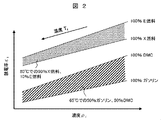
- FIG. 2 is a diagram schematically showing an example of a map that may be included in a first predetermined data set and may also include physical fuel parameters of various fuel components.
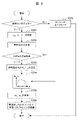
- FIG. 3 is a flowchart showing a first embodiment for controlling fuel injection and air measurement of an internal combustion engine using a fuel mixture containing various fuel components.
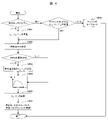
- FIG. 4 is a flowchart showing a second embodiment for controlling fuel injection and air measurement of an internal combustion engine using a fuel mixture containing various fuel components.
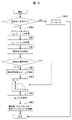
- FIG. 5 is a flowchart showing a third embodiment for controlling fuel injection and air measurement of an internal combustion engine using a fuel mixture containing various fuel components.
- the invention disclosed in the present specification is a method for controlling an internal combustion engine, and the internal combustion engine may be provided with a fuel injector for injecting fuel into the internal combustion engine.
- the injected fuel may contain one or more fuel components.
- the one or more fuel components may be any known type of synthetic fuel or fossil fuel that is expected to be available at gas stations, either intact or mixed in the future. Examples of fuel components for gasoline engines include gasoline, ethanol, methanol and dimethyl carbonate (DMC).
- the internal combustion engine may further include a sensor for measuring at least two physical fuel parameters of the fuel injected into the internal combustion engine and a temperature sensor for measuring the temperature of the fuel. Further, the internal combustion engine may include an air measuring device for measuring the air supplied to the internal combustion engine and a control device.
- the above sensor may measure at least two physical fuel parameters of the fuel.
- the controller may also determine one or more fuel components of the fuel based on the measured physical fuel parameters and a first predetermined data set stored in the controller. At least two physical fuel parameters measured by the above sensors may be permittivity, concentration and / or kinematic viscosity.
- Table 1 below shows an example of the physical fuel parameters of various fuel components. In particular, it is clear that the permittivity of each fuel is significantly different. Therefore, by measuring the dielectric constant, the fuel component can be reliably detected.
- the above sensor is preferably a tuning fork resonator.
- capacitive sensors or other types of sensors suitable for detecting the physical fuel parameters described above can be used.
- the first predetermined data set may include physical fuel parameters of a plurality of fuel components corresponding to the measured fuel parameters. For example, the permittivity, concentration and kinematic viscosity of gasoline, dimethyl carbonate (DMC), methanol and ethanol may be stored in a first predetermined dataset.
- the first predetermined data set may include the physical parameters of the fuel mixture containing each predetermined fuel component.
- the proportion of each fuel component is changed in small increments to improve the accuracy of the data.
- the proportion of the mixture may be varied from 100% for gasoline to 100% for DMC in 0.1% increments. This makes it possible to determine the proportion of each fuel component from the measured physical fuel parameters of each of the possible fuel mixtures.
- the control device may further determine the calorific value parameter of the injected fuel based on the determined fuel component and a second predetermined data set stored in the control device.
- a second predetermined dataset may include calorific fuel parameters for one or more fuel components.
- the calorific value parameters stored in the second predetermined data set may be the lower calorific value of the fuel component, the stoichiometric air-fuel ratio and the concentration.
- the controller may then use the determined calorific value parameters to determine the mass of fuel and the mass of air introduced into the internal combustion engine.
- the mass of fuel and the mass of air introduced into the internal combustion engine may be determined using the determined calorific value parameters.
- Predetermined values are measured during the engine adaptation process and stored in each map of the engine controller.
- the synthetic fuel has a calorific value parameter different from that of gasoline.
- a given value as the amount of fuel and air required must match the determined fuel composition of the fuel mixture to be injected.
- the lower calorific value Hu_gDMC of the mixture is only about 70% of the lower calorific value of gasoline alone.
- the amount of fuel injected needs to be increased based on the following equation (1).
- mgDMC is the mass of the fuel mixture of the injected gasoline and DMC
- mg is the predetermined mass of gasoline
- Hu_g is the lower calorific value of gasoline
- Hu_gDMC is the gasoline and DMC. The lower calorific value of the mixture of.
- the above example is an example of a mixture of gasoline and DMC. It is self-evident to those skilled in the art that the above-mentioned effects apply to any fuel mixture containing one or more fuel components, including formula (1). In other words, any other standard fuel, any other synthetic fuel, can be used in place of gasoline and DMC.
- control device may control the fuel injector and the air measuring device in order to introduce the determined mass of fuel and air into the internal combustion engine.
- This control can be performed using the respective control maps of the injector and the air measuring device, and these control maps can be stored in the control device.
- each of the physical fuel parameters of one or more fuel components of a first predetermined dataset may be stored in the control as a function of the temperature of each fuel component.
- the physical fuel parameters of the fuel components vary with differences in fuel temperature. As an example, the permittivity, concentration and viscosity decrease with increasing temperature. Therefore, under various environmental conditions, it is necessary to store the physical fuel parameters as a function of the fuel temperature in order to accurately determine the fuel components.
- the temperature of the fuel injected into the internal combustion engine may be measured by a temperature sensor.
- a temperature sensor In order to determine the fuel component of the injected fuel with high accuracy, it is possible to correctly specify the physical fuel parameters stored in the first predetermined data set by measuring the current fuel temperature. In other words, by directly measuring the fuel temperature, the physical fuel parameters in the first predetermined dataset can be determined at an accurate temperature.
- one or more fuel components of the fuel are the first predetermined predetermined physical fuel parameters stored in the controller, taking into account the measured fuel temperature. It can be determined by matching with the corresponding physical fuel parameters in the data set of. In other words, the measured physical fuel parameters are compared to the stored physical fuel parameters at the currently measured temperature. As a result, the temperature dependence of the physical fuel parameter can be taken into consideration, and the accuracy of determining the fuel component can be improved.
- At least two physical fuel parameters of fuel injected into an internal combustion engine may be received by the controller from an external server.
- the external server may be installed at a gas station and the physical fuel parameters of the fuel to be added may be transmitted to the controller via a wireless connection.
- the calorific value parameter of the fuel injected into the internal combustion engine may be determined by interpolating the stored calorific value parameter of the fuel component corresponding to the determined fuel component.
- the controller determines that the fuel to be injected contains a first percentage of gasoline and a second percentage of DMC, the lower calorific value Hu_gDMC of the fuel mixture will be the stored lower of the gasoline. It is calculated by interpolating between the calorific value Hu_g and the stored lower calorific value Hu_DMC according to the ratio of the fuel components x g and x DMC of gasoline and DMC.
- the stoichiometric air-fuel ratio L st and / or the concentration ⁇ can also be determined in the same manner (see equations (2) to (4) below).
- feedback control of the determined fuel mass and the determined air mass is performed by the control device using the measured air mass and the measured air-fuel ratio.
- the mass flow rate of air may be measured by an air flow meter, and the air-fuel ratio may be measured by an oxygen sensor.
- the injection time of the fuel injector may be appropriately adjusted by the control device using the measured fuel temperature. Since the fuel temperature affects the fuel concentration, the mass of the fuel can be measured with high accuracy by appropriately adjusting the injection time as a function of the fuel temperature.
- the ignition timing of the internal combustion engine may be adjusted by the control device according to the determined fuel component. If the fuel mixture contains a component having a high octane number, the ignition timing may be advanced or delayed. In order to calculate the octane number of the fuel mixture, the octane number of the fuel component may be included in the second predetermined data set stored in the control device. The octane number of the fuel mixture may be calculated in the same manner as the calculation of the lower calorific value, for example, by interpolation.
- the invention disclosed herein may include a control device for controlling an internal combustion engine and performing the method described above.
- the control device may be an engine control device or may be incorporated in the engine control device. Further, this control device may be a separate device installed remotely from the engine control device.
- the invention disclosed in the present specification can further include an internal combustion engine provided with a fuel injection device for injecting fuel into the internal combustion engine.
- the fuel may contain one or more fuel components.
- the internal combustion engine measures a sensor for measuring at least two physical fuel parameters of the fuel injected into the internal combustion engine, a temperature sensor for measuring the temperature of the fuel, and air supplied to the internal combustion engine.
- An air measuring device for the purpose and the control device described above may be provided.
- the air measuring device may be a throttle valve and / or a variable valve train.
- the invention disclosed herein may include a computer program product that can be stored in memory.
- This computer program when executed by a computer, includes instructions that cause the computer to perform the methods described above.
- the invention disclosed in the present specification can efficiently and cleanly burn various fuel mixtures in an internal combustion engine under any operating conditions.
- a controller in which the physical parameters of one or more fuel components are stored can be used to derive the components of the fuel mixture currently in use.
- control device has the calorific value of the fuel component, which can accurately determine the amount of fuel and air introduced into the engine.
- FIG. 1 is a diagram schematically showing an example of a control system for controlling combustion of an internal combustion engine (hereinafter, abbreviated as "engine") to which a fuel mixture containing various fuel components is supplied.
- the illustrated control system comprises a control device 18.
- the control device 18 controls a plurality of operating entities attached to the engine by using measurement signals from a plurality of engine sensors, so that the engine efficiently and cleanly burns various fuel mixtures under any operating conditions. To be able to.
- the illustrated engine fuel system includes a fuel tank 1.
- the fuel mixture is supplied from the fuel tank 1 to the fuel rail 14 by a fuel pump (not shown).
- the fuel rail 14 includes a sensor 15 and a temperature sensor 16 electrically connected to the control device 18.
- the sensor 15 can measure physical fuel parameters such as dielectric constant, concentration and / or kinematic viscosity of the fuel mixture.
- the controller 18 determines the fuel components of the fuel mixture based on a first predetermined data set stored in the controller 18.
- the condensate water separator 2 is installed in the fuel pipe 19 between the fuel tank 1 and the fuel rail 14 so that the injection component is not damaged and the measured value of the sensor 15 does not take an incorrect value due to fuel contamination. Is installed.
- the controller 18 may then calculate the lower calorific value of the fuel mixture and the amount of the fuel mixture injected into the engine, based on the determined components of the fuel mixture. Further, the injection time of the fuel injector 13 electrically connected to the control device 18 may be appropriately adjusted according to the measured value of the temperature sensor 16.
- the fuel injector 13 is connected to the fuel rail 14 via the fuel pipe 20, and injects the fuel mixture directly into the combustion chamber 5.
- the fuel injector 13 may be attached to the intake system 3 of the engine. Further, instead of attaching the sensor 15 and the temperature sensor 16 to the fuel rail 14 as shown in FIG. 1, these sensors are attached to the fuel pipe 19 between the fuel tank 1 and the fuel rail 14, or the fuel rail 14 and the fuel injection. It may be installed at another position on the fuel pipe 20 between the vessel 13 and the fuel pipe 20.
- Air is sucked into the combustion chamber 5 from the illustrated engine intake system 3 via the intake valve 4.
- the intake system 3 includes an air flow meter 10 electrically connected to the control device 18 and an electronic throttle valve 11.
- the opening angle of the electronic throttle valve 11 is determined by the control device 18 based on the determined amount of the fuel mixture injected into the engine and the air-fuel ratio of the fuel mixture. The latter may be calculated using the determined air-fuel ratio of the fuel component stored in the controller 18.
- the measured value of the air flow meter 10 may be used for feedback control of the throttle valve 11. Alternatively or additionally, a variable valve train may be used to measure the air introduced into the combustion chamber 5.
- the piston 8 of the engine is driven by a crankshaft (not shown) via a connecting rod 9. As the engine piston 8 approaches top dead center, the air fuel mixture in the combustion chamber 5 is ignited by the spark plug 12.
- the spark plug 12 is electrically connected to the control device 18 via an ignition coil (not shown).
- the ignition timing of the air fuel mixture may be adjusted as appropriate according to the determined components of the fuel mixture. If the fuel mixture contains components with a high octane number, the ignition timing may be advanced or delayed.
- a second predetermined data set stored in the controller may include the octane number of the fuel component to calculate the octane number of the fuel mixture.
- the combustion exhaust gas is discharged from the combustion chamber 5 to the exhaust system 7 via the exhaust valve 6.
- An oxygen sensor 17 is attached to the illustrated exhaust system 7.
- the oxygen sensor 17 may be electrically connected to the control device 18 and measure residual oxygen in the exhaust gas.
- the measured value of the oxygen sensor 17 may be used for feedback control of the injected fuel mixture.
- control system can efficiently and cleanly burn various fuel mixtures in the internal combustion engine under all operating conditions.
- a controller 18 is used in which the physical parameters of one or more fuel components are stored and from which the components of the fuel mixture currently in use can be derived.
- the control device 18 uses the calorific value of the fuel component, whereby the exact amount of fuel and air introduced into the engine can be determined.
- the measured values from the plurality of sensors are transmitted to the control device 18, and the feedback control is executed.
- FIG. 2 is a diagram showing an example of a map that may be stored in a first predetermined data set and may include physical fuel parameters of various fuel components.
- the map shows the concentrations ⁇ f and the dielectric constant ⁇ rf , which are the parameters of gasoline and DMC at different fuel temperatures.
- the map wiggles the value of a mixture of gasoline and DMC between the limit of 100% gasoline and the limit of 100% DMC. This makes it possible to determine the proportion of gasoline to DMC in all possible mixtures by comparing the measured concentration ⁇ f of the fuel under analysis with the measured permittivity ⁇ rf to the stored value. Is.
- a fuel mixture of 50% gasoline and 50% DMC is determined by collating the permittivity and concentration measured at a temperature of 65 ° C.
- the map shows the parameters ⁇ f and permittivity ⁇ rf of the unknown fossil fuel component (X fuel) and any electric fuel component (E fuel) at different fuel temperatures.
- the map wiggles the value of the mixture of X fuel and E fuel between the limit value of 100% X fuel and the limit value of 100% E fuel.
- a fuel mixture of 90% X fuel and 10% E fuel is determined by collating the permittivity and concentration measured at a temperature of 80 ° C.
- the map may include the values of the kinematic viscosity ⁇ kf of each fuel component and its mixture.
- FIG. 3 is a flowchart showing a first embodiment for controlling fuel injection and air measurement of an internal combustion engine using a fuel mixture containing various fuel components.
- this control method is started, the operation preparation status of the sensor 15 is checked. If the sensor 15 indicates an error, the engine is operated in a safe mode that can reach the nearest garage (S300).
- the physical parameters of the injected fuel such as the kinematic viscosity ⁇ kf , the concentration ⁇ f and the dielectric constant ⁇ rf are measured in step S301.
- step S302 based on these parameters, the fuel component of the fuel mixture is determined using the map illustrated in FIG.
- step S303 the low calorific value Hu of the fuel mixture and the stoichiometric air-fuel ratio Lst use , for example, equations (1) and (2). Will be decided.
- the amount of fuel and air in the engine map is adjusted based on the determined amount of heat to achieve the required engine output (S304 and S305).
- step S306 the fuel injector 13, throttle valve 11 and / or variable valve train (VVT) are controlled to introduce the determined fuel and air quantities into the internal combustion engine.
- VVT variable valve train
- FIG. 4 is another flowchart showing a second embodiment for controlling fuel injection and air measurement of an internal combustion engine using a fuel mixture containing various fuel components. Steps S400 to S406 of the flowchart shown in FIG. 4 correspond to steps S300 to S306 of the flowchart shown in FIG.
- an inquiry is made when an error occurs in the sensor 15, and the presence or absence of a physical fuel parameter received from a gas station is inquired.
- physical fuel parameters such as kinematic viscosity ⁇ kf , concentration ⁇ f and permittivity ⁇ rf are received, the fuel component of the injected fuel can be determined even if the sensor 15 shows an error. can.
- FIG. 5 is another flowchart showing a third embodiment for controlling fuel injection and air measurement of an internal combustion engine using a fuel mixture containing various fuel components.
- step S501 is different from the first embodiment.
- the control device 18 receives physical fuel parameters such as kinematic viscosity ⁇ kf, concentration ⁇ f and dielectric constant ⁇ rf from the gas station.
- the added step S501 provides initial parameters that facilitate the accurate determination of physical fuel parameters based on the stored map, reducing the fuel determination time of the controller 18.
- the invention disclosed herein can efficiently and cleanly burn various fuel mixtures in an internal combustion engine under all operating conditions.
- a controller is used in which the physical parameters of one or more fuel components are stored and from which the components of the fuel mixture currently in use can be derived.
- the control device has the calorific value of one or more fuel components, whereby the amount of fuel and air introduced into the engine can be accurately determined.
Landscapes
- Engineering & Computer Science (AREA)
- Chemical & Material Sciences (AREA)
- Oil, Petroleum & Natural Gas (AREA)
- Combustion & Propulsion (AREA)
- Mechanical Engineering (AREA)
- General Engineering & Computer Science (AREA)
- Combined Controls Of Internal Combustion Engines (AREA)
- Electrical Control Of Air Or Fuel Supplied To Internal-Combustion Engine (AREA)
Abstract
本発明は、1つ以上の燃料成分を含む燃料を燃焼させる構成の内燃機関を制御するための方法と制御装置に関する。センサ(15)は、内燃機関に噴射される燃料の少なくとも2つの物理的燃料パラメータを測定する。制御装置(18)は、測定された物理的燃料パラメータと、制御装置(18)に記憶された第1の所定のデータセットとに基づき、燃料の1つ以上の燃料成分を決定する。第1の所定のデータセットは、1つ以上の燃料成分の物理的燃料パラメータを含む。また、制御装置(18)は、決定された燃料成分と、制御装置に記憶され、1つ以上の燃料成分の熱量燃料パラメータを含む第2の所定のデータセットとに基づき、噴射される燃料の熱量パラメータを決定する。決定された熱量パラメータを使用することで、内燃機関に導入される燃料の質量と空気の質量が、制御装置(18)によって決定される。制御装置(18)は、決定された燃料の質量と空気の質量に基づき、内燃機関の燃料噴射器(13)と空気測定装置(11)を制御する。
Description
本発明は、1つ以上の成分を含む燃料混合物を燃焼する構成を有する内燃機関の制御方法と、その制御装置に関する。
世界的な気候変動を減速させるためには、産業界と運送業界において二酸化炭素排出量の大幅な削減が必要となっている。電気駆動の利用が増えていることに加えて、長距離の移動を可能にするためには、車両には内燃機関が依然として必要とされている。
必要な二酸化炭素削減を達成するためには、近い将来、内燃機関用のバイオ燃料及びいわゆる電気燃料が、重要な役割を果たすことになる。電気燃料は、再生可能エネルギー由来の水素を二酸化炭素と反応させることで生成される合成燃料である。このプロセスは、「power-to-x」として一般的に知られ、再生可能資源からのエネルギーを化学的な形態に変換して保存し、長期間にわたって貯蔵し利用する機会を提供するものである。「x」は、内燃機関で利用可能な任意のガス状及び液状の燃料を意味する。ガソリンエンジンで利用可能な液状電気燃料の一例としては、メタノール及びジメチルカーボネート(DMC)が挙げられる。これらの合成燃料は、将来、ガソリンスタンドにおいて、そのままの状態で又は従来の燃料と混ぜ合わせて、提供されることが予想される。
なお、合成燃料は、ガソリンなどの従来の化石燃料と異なる燃料特性を有する。従来の内燃機関が、合成燃料又は燃料混合物を用いて適切な運転を確実に実行するためには、低位発熱量及び化学量論的空燃比などの、使用される燃料の熱量パラメータを決定することができる制御方法と制御装置が必要である。
特許文献1には、燃料混合物の測定された屈折率を利用して、噴射される燃料混合物の燃料噴射量を制御する燃料制御システムが開示されている。
しかしながら、特許文献1で検討された燃料は、ガソリンとエタノールの混合燃料に限定されている。将来に予想される合成燃料の数を鑑みると、単に屈折率を測定するだけでは、可能性のある全ての種類の燃料と燃料混合物を決定するためには、精度として十分ではない。本明細書に開示される発明では、燃料混合物の成分を高精度で決定することができる、複数の物理的な燃料パラメータを考察する。
本明細書に開示される発明の目的は、内燃機関において、合成燃料及び/又は従来の燃料の複数の燃料混合物を、高効率でかつ排気ガスの排出を低減して燃焼させることができる制御方法と制御装置を提供することである。この課題は、独立項に記載の発明により解決される。さらに好ましい実施の形態は、従属項に記載される。
本明細書に開示される発明は、内燃機関を制御する方法であって、内燃機関に燃料を噴射する燃料噴射器を内燃機関が備えていてもよい。噴射された燃料は、1つ以上の燃料成分を含んでもよい。この1つ以上の燃料成分は、将来、そのままの状態で又は混合されて、ガソリンスタンドで入手可能になると予想される任意の既知の種類の合成燃料又は化石燃料であってもよい。ガソリンエンジン用の燃料成分の一例としては、ガソリン、エタノール、メタノール及びジメチルカーボネート(DMC)が挙げられる。
内燃機関は、内燃機関に噴射される燃料の少なくとも2つの物理的燃料パラメータを測定するためのセンサと、燃料の温度を測定するための温度センサをさらに備えてもよい。また、内燃機関は、内燃機関に供給される空気を測定するための空気測定装置と、制御装置とを備えてもよい。
上記のセンサは、燃料の少なくとも2つの物理的燃料パラメータを測定してもよい。また、制御装置は、測定された物理的燃料パラメータと、制御装置に記憶された第1の所定のデータセットに基づき、燃料の1つ以上の燃料成分を決定してもよい。上記のセンサにより測定される少なくとも2つの物理的燃料パラメータは、誘電率、濃度及び/又は動粘性率であってもよい。
以下の表1に、様々な燃料成分の物理的燃料パラメータの一例を示す。特に、それぞれの燃料の誘電率が大きく異なることが明らかである。したがって、誘電率を測定することで、燃料成分を確実に検出することができる。

検出精度を向上させるために、噴射される燃料の濃度及び動粘性率などの物理パラメータを追加で測定してもよい。
上記のセンサは、音叉共振器が好ましい。これに代えて又はこれに加えて、上述した物理的燃料パラメータを検出するのに適した容量センサ又はその他の種類のセンサが使用可能である。
第1の所定のデータセットは、測定された燃料パラメータに対応する、複数の燃料成分の物理的燃料パラメータを含んでもよい。例えば、ガソリン、ジメチルカーボネート(DMC)、メタノール及びエタノールの誘電率、濃度及び動粘性率が、第1の所定のデータセットに記憶されてもよい。さらに、第1の所定のデータセットは、前もって決められた各燃料成分を含む燃料混合物の物理パラメータを含んでもよい。燃料混合物の物理的燃料パラメータを前もって決める際には、データの精度を高めるために、各燃料成分の割合を少しずつ変化させる。一例として、ガソリン及びDMCの混合物の物理的燃料パラメータを決める際に、混合物の割合をガソリンが100%からDMCが100%まで0.1%刻みで変化させてもよい。これにより、考えられる燃料混合物それぞれの測定された物理的燃料パラメータから、燃料成分のそれぞれの割合を決定することが可能となる。
制御装置は、さらに、決定された燃料成分と、制御装置に記憶された第2の所定のデータセットに基づき、噴射される燃料の熱量パラメータを決定してもよい。第2の所定のデータセットは、1つ以上の燃料成分の熱量燃料パラメータを含んでよい。好ましくは、第2の所定のデータセットに記憶された熱量パラメータは、燃料成分の低位発熱量、化学量論的空燃比及び濃度であってもよい。
次に、制御装置は、決定された熱量パラメータを使用して、内燃機関に導入される燃料の質量と空気の質量を決定してもよい。一例として、ガソリンをエンジン適合のための基準燃料として利用する従来の内燃機関の場合には、所定の空燃比で特定のエンジン出力を達成するために必要とされる燃料と空気の分量に対して所定の値が、エンジン適合過程において測定され、また、エンジン制御装置の各マップに記憶される。
なお、表2に列挙された例示値から分かる通り、合成燃料は、ガソリンと異なる熱量パラメータを有する。
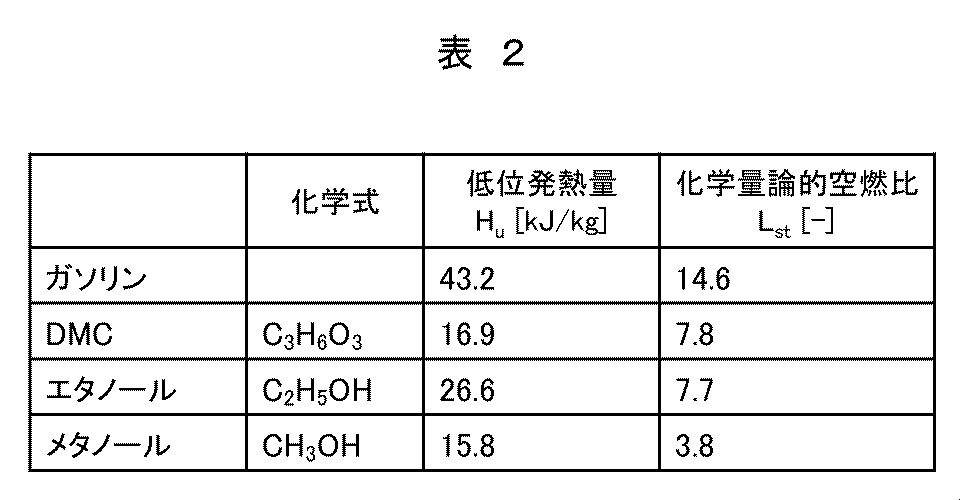
したがって、必要とされる燃料と空気の分量としての所定値は、噴射される燃料混合物の決定された燃料成分に適合する必要がある。例えば、燃料混合物が50%のガソリンと50%のDMCを含む場合には、混合物の低位発熱量Hu_gDMCは、ガソリン単独の低位発熱量の約70%に過ぎない。エンジンパワーの損失を補うために、噴射される燃料の分量は、以下の式(1)に基づいて増加させる必要がある。

ここで、mgDMCは、噴射されるガソリンとDMCの燃料混合物の質量であり、mgは、ガソリンの所定の質量、Hu_gは、ガソリンの低位発熱量であり、Hu_gDMCは、ガソリンとDMCの混合物の低位発熱量である。
さらに、必要とされる空燃比を維持するためには、導入される空気の質量を、噴射される燃料混合物に適合させる必要がある。上に列挙した合成燃料は、一定パーセントの酸素を含むので、同じ燃料の質量に対して化学量論的空燃比を達成するために必要な空気が少ない。したがって、上述した燃料混合物を利用する場合に、一定の空燃比で必要なエンジン出力を得るためには、空気の割合を燃料の割合よりも少なく増加させる必要がある。
上述した例は、ガソリンとDMCの混合物についての例である。なお、上述した効果が、式(1)を含め、1つ以上の燃料成分を含む任意の燃料混合物について当てはまることは、当業者には自明である。換言すれば、その他のいかなる標準燃料も、その他のいかなる合成燃料でも、ガソリン及びDMCに代えて利用可能である。
また、制御装置は、決定された質量の燃料と空気を内燃機関に導入するため、燃料噴射器と空気測定装置を制御してもよい。この制御は、噴射器と空気測定装置のそれぞれの制御マップを用いて実行することができ、これらの制御マップは、制御装置に保存することができる。
本発明による方法のさらなる態様によると、第1の所定のデータセットの1つ以上の燃料成分の物理的燃料パラメータのそれぞれは、各燃料成分の温度の関数として制御装置に記憶されてもよい。燃料成分の物理的燃料パラメータは、燃料温度の差異により変化する。一例として、誘電率、濃度及び粘性率は、温度の上昇と共に低下する。このため、様々な環境条件下において、燃料成分を正確に決定するためには、物理的燃料パラメータを燃料温度の関数として記憶する必要がある。
本発明による方法のさらなる態様によると、内燃機関に噴射される燃料の温度は、温度センサにより測定されてもよい。噴射される燃料の燃料成分を高精度で決定するため、現在の燃料温度を測定することで、第1の所定のデータセットに記憶された物理的燃料パラメータを正しく指定することが可能となる。換言すれば、燃料温度を直接測定することで、第1の所定のデータセット内の物理的燃料パラメータを正確な温度で決定することができる。
本発明による方法のさらなる態様によると、燃料の1つ以上の燃料成分は、測定された物理的燃料パラメータを、測定された燃料の温度を考慮して、制御装置に記憶された第1の所定のデータセットの対応する物理的燃料パラメータと照合することで、決定できる。換言すれば、測定された物理的燃料パラメータは、現時点で測定された温度での記憶された物理的燃料パラメータと比較される。これにより、物理的燃料パラメータの温度依存性を考慮することができ、燃料成分を決定する精度を向上できる。
本発明による方法のさらなる態様によると、内燃機関に噴射される燃料の少なくとも2つの物理的燃料パラメータは、制御装置が外部サーバーから受信してもよい。好ましくは、外部サーバーは、ガソリンスタンドに設置されてもよく、加えられる燃料の物理的燃料パラメータを、無線接続を介して制御装置に送信してもよい。ガソリンスタンドから直接、物理的燃料パラメータを受信することで、上記のセンサが誤作動を起こした場合でも燃料成分を決定することができ、さらに、正常動作中に燃料成分を決定する精度を向上させることができる。
本発明による方法のさらなる態様によると、内燃機関に噴射される燃料の熱量パラメータは、決定された燃料成分に対応する燃料成分の記憶された熱量パラメータを補間することによって決定されてもよい。換言すれば、例えば、噴射される燃料には第1割合のガソリンと第2割合のDMCが含まれると制御装置が決定した場合、燃料混合物の低位発熱量Hu_gDMCは、ガソリンの記憶された低位発熱量Hu_gとDMCの記憶された低位発熱量Hu_DMCとの間を、ガソリンとDMCの燃料成分xg、xDMCの割合に従って補間することにより算定される。化学量論的空燃比Lst及び/又は濃度ρも、同様にして決定することができる(以下の式(2)~(4)参照)。



本発明による方法のさらなる態様によると、決定された燃料の質量と決定された空気の質量のフィードバック制御が、測定された空気の質量と測定された空燃比を使用して、制御装置により実行されてもよい。空気の質量流量は、エアフロメーターにより測定されてもよく、空燃比は、酸素センサにより測定されてもよい。これにより、必要とされる燃料の質量と空気の質量をさらに精度良く決定でき、エンジンの高効率化と排気ガス排出の低減につながる。
本発明による方法のさらなる態様によると、燃料噴射器の噴射時間は、測定された燃料温度を使用して、制御装置によって適宜調整されてもよい。燃料温度が燃料濃度に影響を及ぼすため、噴射時間を燃料温度の関数として適宜調整することで、燃料の質量を高精度で測定できる。
本発明による方法のさらなる態様によると、内燃機関の点火タイミングは、決定された燃料成分に応じて、制御装置によって調整されてもよい。燃料混合物が高オクタン値を有する成分を含む場合には、点火タイミングを早めにしても、又は遅めにしてもよい。燃料混合物のオクタン価を算定するために、制御装置に記憶された第2の所定のデータセットには、燃料成分のオクタン価を含めてもよい。燃料混合物のオクタン価は、低位発熱量の算定と同じ態様により、例えば、補間により算定されてもよい。
本明細書に開示される発明には、内燃機関を制御し、かつ上述した方法を実行するための制御装置が含まれていてもよい。好ましくは、この制御装置は、エンジン制御装置であってもよく、エンジン制御装置に組み込まれていてもよい。また、この制御装置は、エンジン制御装置から遠隔して設置された別個の装置であってもよい。
また、本明細書に開示される発明は、内燃機関に燃料を噴射するための燃料噴射装置を備える内燃機関をさらに含むことができる。燃料は、1つ以上の燃料成分を含んでもよい。この内燃機関は、内燃機関に噴射される燃料の少なくとも2つの物理的燃料パラメータを測定するためのセンサと、燃料の温度を測定するための温度センサと、内燃機関に供給される空気を測定するための空気測定装置と、上述した制御装置とを備えてもよい。空気測定装置は、スロットルバルブ及び/又は可変バルブトレインでもよい。
さらに、本明細書に開示される発明は、メモリに記憶可能なコンピュータプログラム製品を含んでもよい。このコンピュータプログラムは、コンピュータにより実行される場合には、上述した方法をコンピュータに実行させる指令を含む。
以上を要約すると、本明細書に開示される発明では、あらゆる運転状況においても、様々な燃料混合物を内燃機関で効率的かつクリーンに燃焼させることができる。この目的を達成するために、1つ以上の燃料成分の物理パラメータが記憶された制御装置が使用され、この物理パラメータから現在使用されている燃料混合物の成分を導き出すことができる。
また、制御装置は、燃料成分の熱量を有し、これにより、エンジンに導入される燃料と空気の分量を正確に決定することができる。
以下、添付の例示図を参照しつつ、少なくとも1つの好ましい実施の形態に基づき、本発明をさらに詳しく説明する。
図1は、様々な燃料成分を含む燃料混合物が供給される内燃機関(以下、「エンジン」と略称する)の燃焼を制御するための制御システムの例を概略的に示す図である。図示された制御システムは、制御装置18を備える。制御装置18は、エンジンに取り付けられた複数の動作主体を複数のエンジンセンサからの測定信号を使用して制御し、いかなる運転状況においてもエンジンが様々な燃料混合物を効率的かつクリーンに燃焼させることができるようにする。
図示されたエンジンの燃料システムは、燃料タンク1を備える。燃料混合物は、燃料タンク1から燃料ポンプ(図示なし)により燃料レール14に供給される。燃料レール14は、制御装置18に電気的に接続されたセンサ15と温度センサ16を備える。センサ15は、燃料混合物の誘電率、濃度及び/又は動粘性率などの物理的燃料パラメータを測定できる。測定された物理的燃料パラメータと測定された燃料温度に基づいて、制御装置18は、制御装置18に記憶された第1の所定のデータセットに基づいて、燃料混合物の燃料成分を決定する。噴射成分が損なわれないように、かつセンサ15の測定値が燃料汚染により間違った値を取らないように、燃料タンク1と燃料レール14との間の燃料パイプ19には、凝縮水分離器2が設置されている。制御装置18は、次に、燃料混合物の決定された成分に基づき、燃料混合物の低位発熱量とエンジン内に噴射される燃料混合物の分量を算定してもよい。また、制御装置18に電気的に接続された燃料噴射器13の噴射時間は、温度センサ16の測定値に応じて、適宜調整されてもよい。
図示の実施例において、燃料噴射器13は、燃料パイプ20を介して燃料レール14に接続されており、燃料混合物を燃焼室5内へ直接噴射する。燃料噴射器13は、エンジンの吸気システム3に取り付けられてもよい。さらに、図1に示すようにセンサ15と温度センサ16を燃料レール14に取り付ける代わりに、これらのセンサを、燃料タンク1と燃料レール14との間の燃料パイプ19、又は燃料レール14と燃料噴射器13との間の燃料パイプ20の、別の位置に設置してもよい。
図示されたエンジンの吸気システム3から、空気が吸気バルブ4を介して燃焼室5内へ吸引される。吸気システム3は、制御装置18に電気的に接続されたエアフロメーター10と電子スロットルバルブ11を備える。電子スロットルバルブ11の開口角度は、エンジン内へ噴射される決定された燃料混合物の分量と燃料混合物の空燃比に基づき、制御装置18により決定される。後者は、制御装置18に記憶された決定された燃料成分の空燃比を使用して算定してもよい。エアフロメーター10の測定値は、スロットルバルブ11のフィードバック制御のために使用してもよい。これに代えて又はこれに加えて、燃焼室5へ導入される空気を測定するために、可変バルブトレインを使用してもよい。
エンジンのピストン8は、連結ロッド9を介してクランクシャフト(図示なし)により駆動される。エンジンのピストン8がその上死点に近づくと、燃焼室5内の空気燃料混合物は、スパークプラグ12により点火される。スパークプラグ12は、点火コイル(図示なし)を介して、制御装置18に電気的に接続されている。燃料混合物の決定された成分に応じて、空気燃料混合物の点火タイミングを適宜調整してもよい。燃料混合物が高オクタン価を有する成分を含む場合には、点火タイミングを早めにしても、又は遅めにしてもよい。制御装置に記憶された第2の所定のデータセットは、燃料混合物のオクタン価を算定するために、燃料成分のオクタン価を含んでもよい。
燃焼排気ガスは、排気バルブ6を介して、燃焼室5から排気システム7へ排出される。図示された排気システム7には、酸素センサ17が取り付けられている。酸素センサ17は、制御装置18に電気的に接続され、排気ガス内の残留酸素を測定してもよい。酸素センサ17の測定値は、噴射される燃料混合物のフィードバック制御のため使用されてもよい。
以上を考慮すると、本実施例による制御システムは、あらゆる運転状況においても、内燃機関で様々な燃料混合物を効率的かつクリーンに燃焼できることが明らかである。この目的を達成するために、1つ以上の燃料成分の物理パラメータが記憶され、これから現在使用されている燃料混合物の成分を導き出すことができる制御装置18が使用される。また、制御装置18は、燃料成分の熱量を使用し、これにより、エンジンに導入される燃料と空気の正確な分量を決定することができる。燃料と空気の測定精度を高めるために、複数のセンサからの測定値が制御装置18に送信され、フィードバック制御が実行される。
図2は、第1の所定のデータセットに記憶されてもよく、また様々な燃料成分の物理的燃料パラメータを含んでもよいマップの例を示す図である。第1の例として、マップが、異なる燃料温度におけるガソリンとDMCのパラメータである濃度ρfと誘電率εrfを示す例を説明する。このマップには、100%ガソリンという限界値と100%DMCという限界値の間に、ガソリンとDMCの混合物の値が小刻みに含まれている。これにより、分析対象の燃料の測定された濃度ρfと測定された誘電率εrfを記憶された値と比較することで、考えられる全ての混合物においてガソリンとDMCの割合を決定することが可能である。図示の例では、温度65℃で測定された誘電率と濃度を照合することで、50%ガソリンと50%DMCの燃料混合物が決定される。
第2の例として、マップが、異なる燃料温度での、未知の化石燃料成分(X燃料)と任意の電気燃料成分(E燃料)のパラメータである濃度ρfと誘電率εrfを示す例を説明する。第2の例によれば、マップは、100%X燃料という限界値と100%E燃料という限界値の間に、X燃料とE燃料の混合物の値が小刻みに含まれている。図示の例では、温度80℃で測定された誘電率と濃度を照合することで、90%X燃料と10%E燃料の燃料混合物が決定される。これに代えて又はこれに加えて、マップは、各燃料成分とその混合物の動粘性率νkfの値を含んでもよい。
図3は、様々な燃料成分を含む燃料混合物を使用する内燃機関の燃料噴射と空気測定を制御する第1実施例を示すフローチャートである。本制御方法が開始されると、センサ15の操作準備状況がチェックされる。センサ15がエラーを示す場合は、最寄りの整備工場に到達可能なセーフモードでエンジンが運転される(S300)。センサ15が操作準備状態にある場合は、ステップS301において、動粘性率νkf、濃度ρf及び誘電率εrfなどの噴射される燃料の物理パラメータが測定される。ステップS302では、これらのパラメータに基づき、図2に例示されたマップを使用して、燃料混合物の燃料成分が決定される。分析された燃料が100%のガソリンから成る場合は、所定の燃料と空気の分量の補正は不要であり、このため、それぞれの値は、エンジンマップから直接、導き出せる(S304とS305)。なお、分析された燃料が、燃料混合物から成る場合は、ステップS303において、燃料混合物の低位発熱量Huと化学量論的空燃比Lstが、例えば、式(1)と(2)を使用して決定される。必要とされるエンジン出力を達成するために、決定された熱量に基づいて、エンジンマップ内の燃料と空気の分量が調整される(S304とS305)。最後に、ステップS306において、燃料噴射器13、スロットルバルブ11及び/又は可変バルブトレイン(VVT)が制御され、決定された燃料と空気の分量を内燃機関へ導入する。
図4は、様々な燃料成分を含む燃料混合物を使用する内燃機関の燃料噴射と空気測定を制御する第2実施例を示す別のフローチャートである。図4に示すフローチャートのステップS400~ステップS406は、図3に示すフローチャートのステップS300~ステップS306に対応する。図4に示すフローチャートでは、図3に示すフローチャートと異なり、センサ15にエラーが発生した場合に問い合わせが実施され、ガソリンスタンドから受信した物理的燃料パラメータの有無が問い合わされる。動粘性率νkf、濃度ρf及び誘電率εrfなどの物理的燃料パラメータが受信された場合には、センサ15がエラーを示したとしても、噴射される燃料の燃料成分を決定することができる。
図5は、様々な燃料成分を含む燃料混合物を使用する内燃機関の燃料噴射と空気測定を制御する第3実施例を示すもう1つのフローチャートである。第3実施例は、ステップS501が第1実施例と異なる。ステップS501では、制御装置18は、ステップS502でのパラメータの測定に加えて、動粘性率νkf、濃度ρf及び誘電率εrfなどの物理的燃料パラメータをガソリンスタンドから受信する。追加されたステップS501によって、記憶されたマップに基づいて物理的燃料パラメータを精度良く決定するのを容易にする初期パラメータが提供され、制御装置18の燃料決定時間が短縮される。
再度まとめると、本明細書に開示された発明は、あらゆる運転状況においても、様々な燃料混合物を内燃機関で効率的かつクリーンに燃焼させることができる。この目的を達成するために、1つ以上の燃料成分の物理パラメータが記憶され、これから現在使用されている燃料混合物の成分を導き出すことができる制御装置が使用される。また、制御装置は、1つ以上の燃料成分の熱量を有し、これにより、エンジンに導入される燃料と空気の分量を正確に決定することができる。
1…燃料タンク、2…凝縮水分離器、3…吸気システム、4…吸気バルブ、5…燃焼室、6…排気バルブ、7…排気システム、8…ピストン、9…連結ロッド、10…エアフロメーター、11…(電子)スロットルバルブ、12…スパークプラグ、13…燃料噴射器、14…燃料レール、15…センサ、16…温度センサ、17…酸素センサ、18…制御装置、19、20…燃料パイプ。
Claims (12)
- 内燃機関に燃料を噴射するように構成されており前記燃料に1つ以上の燃料成分が含まれている燃料噴射器と、前記内燃機関に噴射される前記燃料の少なくとも2つの物理的燃料パラメータを測定するように構成されたセンサと、前記燃料の温度を測定するように構成された温度センサと、前記内燃機関に供給される空気を測定するように構成された空気測定装置と、制御装置とを備える内燃機関の制御方法であって、
前記センサによって、前記内燃機関に噴射される前記燃料の少なくとも2つの前記物理的燃料パラメータを測定するステップと、
測定された前記物理的燃料パラメータと、前記制御装置に記憶されており、測定された前記物理的燃料パラメータに対応する前記燃料成分の前記物理的燃料パラメータを含む第1の所定のデータセットとに基づき、前記燃料の前記燃料成分を決定するステップと、
決定された前記燃料成分と、前記制御装置に記憶されており、前記燃料成分の熱量燃料パラメータを含む第2の所定のデータセットとに基づき、噴射される前記燃料の熱量パラメータを決定するステップと、
決定された前記熱量パラメータを使用して、前記内燃機関に導入される前記燃料の質量と前記空気の質量を決定するステップと、
決定された前記燃料の質量と決定された前記空気の質量とに基づき、前記内燃機関の前記燃料噴射器と前記空気測定装置を制御するステップと、
を有することを特徴とする、内燃機関の制御方法。 - 前記第1の所定のデータセットの前記燃料成分の前記物理的燃料パラメータのそれぞれは、それぞれの前記燃料成分の温度の関数として前記制御装置に記憶されていることを特徴とする、
請求項1に記載の制御方法。 - 前記内燃機関に噴射される前記燃料の温度は、前記温度センサにより測定されることを特徴とする、請求項1または2に記載の制御方法。
- 前記燃料の前記燃料成分は、測定された前記燃料の温度を考慮して、測定された前記物理的燃料パラメータと前記制御装置に記憶された前記第1の所定のデータセットの対応する前記物理的燃料パラメータとを照合することで決定されることを特徴とする、
請求項1から3のいずれか1項に記載の制御方法。 - 前記内燃機関に噴射される前記燃料の少なくとも2つの前記物理的燃料パラメータは、前記制御装置によって外部サーバーから受信されることを特徴とする、
請求項1から4のいずれか1項に記載の制御方法。 - 前記燃料の前記熱量パラメータは、決定された前記燃料成分に対応する前記燃料成分の、記憶された前記熱量パラメータを補間することにより決定されることを特徴とする、
請求項1から5のいずれか1項に記載の制御方法。 - 決定された前記燃料の質量と決定された前記空気の質量のフィードバック制御が、測定された前記空気の質量と測定された空燃比を使用して、前記制御装置により実行されることを特徴とする、
請求項1から6のいずれか1項に記載の制御方法。 - 前記燃料噴射器の噴射時間は、測定された前記燃料の温度を使用して、前記制御装置により調整されることを特徴とする、
請求項1から7のいずれか1項に記載の制御方法。 - 前記内燃機関の点火タイミングは、決定された前記燃料成分に応じて、前記制御装置により調整されることを特徴とする、
請求項1から8のいずれか1項に記載の制御方法。 - 請求項1から9のいずれか1項に記載の制御方法を実行し、内燃機関を制御する制御装置。
- 内燃機関に燃料を噴射するように構成されており、前記燃料に1つ以上の燃料成分が含まれている燃料噴射器と、
前記内燃機関に噴射される前記燃料の少なくとも2つの物理的燃料パラメータを測定するように構成されたセンサと、
前記燃料の温度を測定するように構成された温度センサと、
前記内燃機関に供給される空気を測定し、スロットルバルブと可変バルブトレインとの一方または両方で構成された空気測定装置と、
請求項10に記載の前記制御装置と、
を備えることを特徴とする内燃機関。 - メモリに保存可能であり、コンピュータにより実行され、前記コンピュータに請求項1から9のいずれか1項に記載の制御方法を実行させる指令を含むコンピュータプログラム。
Priority Applications (1)
| Application Number | Priority Date | Filing Date | Title |
|---|---|---|---|
| JP2022572941A JP7449412B2 (ja) | 2020-12-30 | 2021-11-29 | 内燃機関の制御方法とそのコンピュータプログラム |
Applications Claiming Priority (2)
| Application Number | Priority Date | Filing Date | Title |
|---|---|---|---|
| DE102020216593.9A DE102020216593A1 (de) | 2020-12-30 | 2020-12-30 | Verfahren und vorrichtung zum steuern eines verbrennungsmotors |
| DE102020216593.9 | 2020-12-30 |
Publications (1)
| Publication Number | Publication Date |
|---|---|
| WO2022145157A1 true WO2022145157A1 (ja) | 2022-07-07 |
Family
ID=81972512
Family Applications (1)
| Application Number | Title | Priority Date | Filing Date |
|---|---|---|---|
| PCT/JP2021/043629 Ceased WO2022145157A1 (ja) | 2020-12-30 | 2021-11-29 | 内燃機関の制御方法とその制御装置 |
Country Status (3)
| Country | Link |
|---|---|
| JP (1) | JP7449412B2 (ja) |
| DE (1) | DE102020216593A1 (ja) |
| WO (1) | WO2022145157A1 (ja) |
Families Citing this family (1)
| Publication number | Priority date | Publication date | Assignee | Title |
|---|---|---|---|---|
| DE112022004923T5 (de) | 2021-11-22 | 2024-08-08 | Hitachi Astemo, Ltd. | Kraftstoff-versorgungssystem und verfahren zum steuern einer kraftstoffpumpe eines kraftstoff-versorgungssystems für einen verbrennungsmotor |
Citations (3)
| Publication number | Priority date | Publication date | Assignee | Title |
|---|---|---|---|---|
| WO2010050017A1 (ja) * | 2008-10-29 | 2010-05-06 | 三菱電機株式会社 | 燃料制御システム |
| JP2011231747A (ja) * | 2010-04-30 | 2011-11-17 | Toyota Motor Corp | 燃料セタン価検出方法および装置 |
| JP2016169660A (ja) * | 2015-03-12 | 2016-09-23 | 株式会社デンソー | ディーゼル機関の制御装置 |
-
2020
- 2020-12-30 DE DE102020216593.9A patent/DE102020216593A1/de active Pending
-
2021
- 2021-11-29 WO PCT/JP2021/043629 patent/WO2022145157A1/ja not_active Ceased
- 2021-11-29 JP JP2022572941A patent/JP7449412B2/ja active Active
Patent Citations (3)
| Publication number | Priority date | Publication date | Assignee | Title |
|---|---|---|---|---|
| WO2010050017A1 (ja) * | 2008-10-29 | 2010-05-06 | 三菱電機株式会社 | 燃料制御システム |
| JP2011231747A (ja) * | 2010-04-30 | 2011-11-17 | Toyota Motor Corp | 燃料セタン価検出方法および装置 |
| JP2016169660A (ja) * | 2015-03-12 | 2016-09-23 | 株式会社デンソー | ディーゼル機関の制御装置 |
Also Published As
| Publication number | Publication date |
|---|---|
| DE102020216593A1 (de) | 2022-06-30 |
| JP7449412B2 (ja) | 2024-03-13 |
| JPWO2022145157A1 (ja) | 2022-07-07 |
Similar Documents
| Publication | Publication Date | Title |
|---|---|---|
| US7367223B2 (en) | Method and device for assessing the quality of a fuel, in particular a diesel or petrol fuel | |
| US6975933B2 (en) | Fuel properties estimation for internal combustion engine | |
| US7793536B2 (en) | Method to determine the composition of a fuel mixture | |
| US7762127B2 (en) | Method for determining the composition of a fuel mixture | |
| Yoon et al. | Effect of bioethanol as an alternative fuel on the emissions reduction characteristics and combustion stability in a spark ignition engine | |
| KR101551163B1 (ko) | 공기/연료비를 조절하기 위한 방법 및 연료량을 탐지하기 위한 방법 | |
| BRPI0901606A2 (pt) | processo e dispositivo para a determinação da composição de uma mistura de combustìvel | |
| Genchi et al. | Octane rating of natural gas-gasoline mixtures on CFR engine | |
| JP6317219B2 (ja) | 燃料性状推定装置 | |
| US7996144B2 (en) | Method for determining the composition of a fuel blend | |
| JP7449412B2 (ja) | 内燃機関の制御方法とそのコンピュータプログラム | |
| Hamilton et al. | Pre-ignition characteristics of ethanol and E85 in a spark ignition engine | |
| Kumar et al. | Development of optimal engine control map for flex fuel application in ethanol powered direct injection spark ignition engine | |
| US5159898A (en) | Process and apparatus for utilization of fuels with alcohol additives for an internal combustion engine | |
| JP2005113715A5 (ja) | ||
| JP2005113715A (ja) | 動作制御装置および補給装置 | |
| JP5249345B2 (ja) | 燃料制御システム | |
| Truedsson et al. | Pressure sensitivity of HCCI auto-ignition temperature for gasoline surrogate fuels | |
| CN109826714B (zh) | Ffv车辆的乙醇传感器故障处理系统及方法 | |
| Warguła et al. | DETERMINING THE AIR-FUEL RATIO (() FOR GASOLINE AND GASOLINE-ETHANOL BLENDS (E5 AND E10): DIFFERENCES IN CALCULATION METHODS AND TECHNICAL AND COMMERCIAL SIMPLIFICATIONS. | |
| Stradling et al. | Effect of octane on the performance of two gasoline direct injection passenger cars | |
| JP5593794B2 (ja) | 内燃機関の制御装置 | |
| Masurier et al. | Application of an ozone generator to control the homogeneous charge compression ignition combustion process | |
| Irimescu | Back-pressure and fuel type effects on exhaust gas oxygen sensor readings for a single cylinder spark ignition engine running on gasoline and ethanol | |
| JP6139156B2 (ja) | 内燃機関の制御装置 |
Legal Events
| Date | Code | Title | Description |
|---|---|---|---|
| 121 | Ep: the epo has been informed by wipo that ep was designated in this application |
Ref document number: 21915018 Country of ref document: EP Kind code of ref document: A1 |
|
| ENP | Entry into the national phase |
Ref document number: 2022572941 Country of ref document: JP Kind code of ref document: A |
|
| NENP | Non-entry into the national phase |
Ref country code: DE |
|
| 122 | Ep: pct application non-entry in european phase |
Ref document number: 21915018 Country of ref document: EP Kind code of ref document: A1 |