WO2022145144A1 - X連鎖性鉄芽球性貧血の治療剤 - Google Patents
X連鎖性鉄芽球性貧血の治療剤 Download PDFInfo
- Publication number
- WO2022145144A1 WO2022145144A1 PCT/JP2021/042347 JP2021042347W WO2022145144A1 WO 2022145144 A1 WO2022145144 A1 WO 2022145144A1 JP 2021042347 W JP2021042347 W JP 2021042347W WO 2022145144 A1 WO2022145144 A1 WO 2022145144A1
- Authority
- WO
- WIPO (PCT)
- Prior art keywords
- cells
- aza
- erythroblasts
- alkynyl
- alkenyl
- Prior art date
- Legal status (The legal status is an assumption and is not a legal conclusion. Google has not performed a legal analysis and makes no representation as to the accuracy of the status listed.)
- Ceased
Links
Images




Classifications
-
- A—HUMAN NECESSITIES
- A61—MEDICAL OR VETERINARY SCIENCE; HYGIENE
- A61K—PREPARATIONS FOR MEDICAL, DENTAL OR TOILETRY PURPOSES
- A61K31/00—Medicinal preparations containing organic active ingredients
- A61K31/70—Carbohydrates; Sugars; Derivatives thereof
- A61K31/7042—Compounds having saccharide radicals and heterocyclic rings
- A61K31/7052—Compounds having saccharide radicals and heterocyclic rings having nitrogen as a ring hetero atom, e.g. nucleosides, nucleotides
- A61K31/706—Compounds having saccharide radicals and heterocyclic rings having nitrogen as a ring hetero atom, e.g. nucleosides, nucleotides containing six-membered rings with nitrogen as a ring hetero atom
-
- A—HUMAN NECESSITIES
- A61—MEDICAL OR VETERINARY SCIENCE; HYGIENE
- A61K—PREPARATIONS FOR MEDICAL, DENTAL OR TOILETRY PURPOSES
- A61K45/00—Medicinal preparations containing active ingredients not provided for in groups A61K31/00 - A61K41/00
-
- A—HUMAN NECESSITIES
- A61—MEDICAL OR VETERINARY SCIENCE; HYGIENE
- A61P—SPECIFIC THERAPEUTIC ACTIVITY OF CHEMICAL COMPOUNDS OR MEDICINAL PREPARATIONS
- A61P43/00—Drugs for specific purposes, not provided for in groups A61P1/00-A61P41/00
-
- A—HUMAN NECESSITIES
- A61—MEDICAL OR VETERINARY SCIENCE; HYGIENE
- A61P—SPECIFIC THERAPEUTIC ACTIVITY OF CHEMICAL COMPOUNDS OR MEDICINAL PREPARATIONS
- A61P7/00—Drugs for disorders of the blood or the extracellular fluid
- A61P7/06—Antianaemics
-
- C—CHEMISTRY; METALLURGY
- C12—BIOCHEMISTRY; BEER; SPIRITS; WINE; VINEGAR; MICROBIOLOGY; ENZYMOLOGY; MUTATION OR GENETIC ENGINEERING
- C12N—MICROORGANISMS OR ENZYMES; COMPOSITIONS THEREOF; PROPAGATING, PRESERVING, OR MAINTAINING MICROORGANISMS; MUTATION OR GENETIC ENGINEERING; CULTURE MEDIA
- C12N5/00—Undifferentiated human, animal or plant cells, e.g. cell lines; Tissues; Cultivation or maintenance thereof; Culture media therefor
- C12N5/06—Animal cells or tissues; Human cells or tissues
-
- C—CHEMISTRY; METALLURGY
- C12—BIOCHEMISTRY; BEER; SPIRITS; WINE; VINEGAR; MICROBIOLOGY; ENZYMOLOGY; MUTATION OR GENETIC ENGINEERING
- C12N—MICROORGANISMS OR ENZYMES; COMPOSITIONS THEREOF; PROPAGATING, PRESERVING, OR MAINTAINING MICROORGANISMS; MUTATION OR GENETIC ENGINEERING; CULTURE MEDIA
- C12N5/00—Undifferentiated human, animal or plant cells, e.g. cell lines; Tissues; Cultivation or maintenance thereof; Culture media therefor
- C12N5/10—Cells modified by introduction of foreign genetic material
Definitions
- the present invention relates to a therapeutic agent for X-linked sideroblastic anemia.
- This application claims priority over Japanese Patent Application No. 2020-218557 filed on December 28, 2020, and integrates the content of the Japanese patent application into this application.
- X-linked sideroblastic anemia is a hereditary disease that causes a high degree of erythroid differentiation disorder due to mutation of the gene of the enzyme ALAS2 (erythrocyte type 5-aminolevulinic acid synthase) that catalyzes the first stage of heme synthesis.
- ALAS2 erythrocyte type 5-aminolevulinic acid synthase
- Vitamin B6 administration is effective for about half of patients with X-linked sideroblastic anemia, but there is no effective treatment other than blood transfusion and hematopoietic stem cell transplantation for about half of patients who are ineffective with vitamin B6 administration ( Non-Patent Documents 1 and 2) are expected to develop alternative treatment methods.
- the present inventors have been diligently researching to solve the above problems.
- the present inventors have found that the use of ⁇ -aminolevulinic acid can improve the erythrocyte differentiation potential of iPS cell-derived erythroblasts in which mutant ALAS2 is activated, but the required ⁇ -aminolevulinic acid is required.
- the present inventors searched for an effective drug in a smaller amount, and found that a demethylating agent, particularly 5-azacitidine and a derivative thereof, can improve the above-mentioned erythrocyte differentiation in a small amount, and completed the present invention.
- AZA 5-azacitidine
- a pharmaceutical composition for treating X-linked sideroblastic anemia which comprises a demethylating agent.
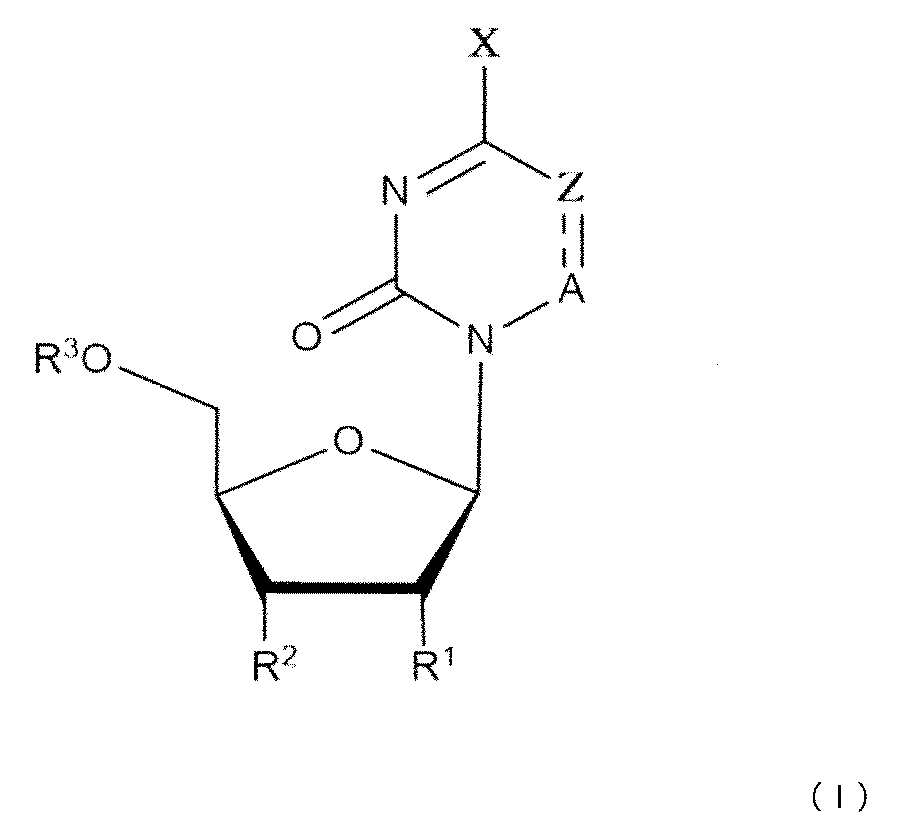
- the demethylating agent is the formula (I) :.
- R 1 and R 2 are independently hydrogen, C 1-6 alkyl, C 1-6 alkenyl, C 1-6 alkynyl, halogen, OH, OC 1-6 alkyl, OC 1-6 alkenyl, respectively.
- R 3 is hydrogen, C 1-6 alkyl, C 1-6 alkenyl, C 1-6 alkynyl, COC 1-6 alkyl, COC 1-6 alkenyl, COC 1-6 alkynyl, or phosphate group
- A is CR 4 or CR 5 R 6
- R 4 is hydrogen, C 1-6 alkyl, C 1 -6 alkenyl, C 1-6 alkynyl, OH, or halogen, where R 5 and R 6 are independently hydrogen, C 1-6 alkyl, C 1-6 alkenyl, C 1-6 alkynyl, OH, or, respectively.
- Halogen, Z is N, NR 7 , CR 8 or CR 9 R 10 ,
- R 7 is hydrogen, OH, C 1-6 alkyl, C 1-6 alkenyl, C 1-6 alkynyl, or halogen.
- R 8 is hydrogen, OH, C 1-6 alkyl, C 1-6 alkenyl, C 1-6 alkynyl, or halogen
- R 9 and R 10 are independent hydrogen, OH, C 1-6 , respectively.
- X is hydrogen or NR 11 R 12 , R 11 and R 12 are independently hydrogen, C 1-6 alkyl, C 1 respectively.
- a method for producing normal erythrocytes from iPS cells derived from patients with X-linked sideroblastic anemia which comprises inducing differentiation of the iPS cells into erythrocytes, and a demethylating agent at the time of induction of differentiation.
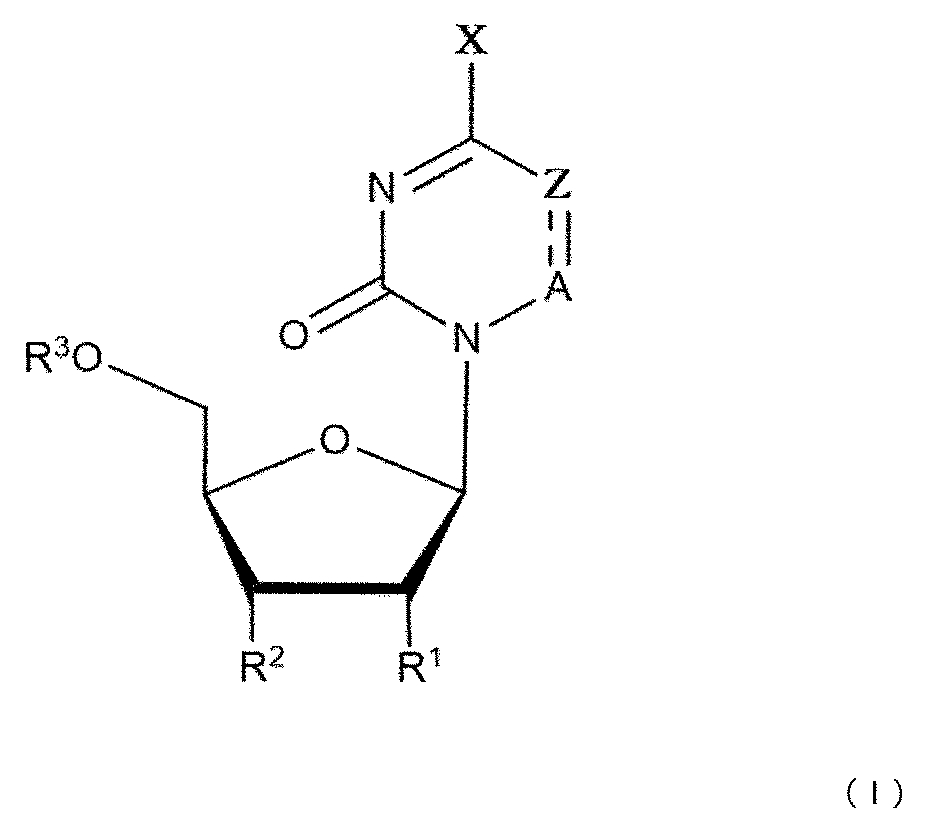
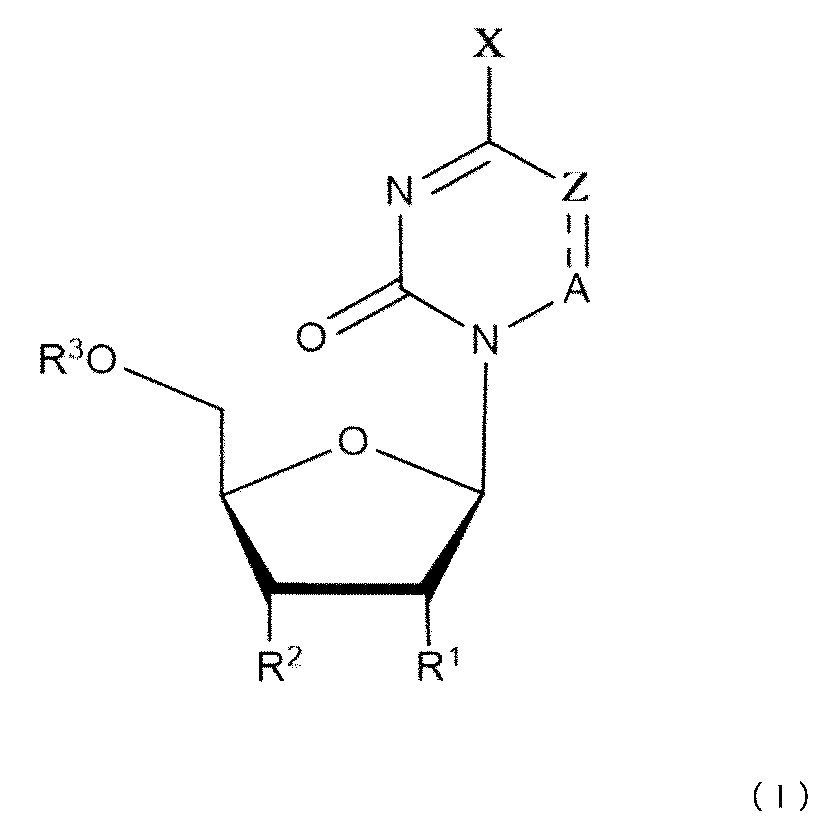
- the demethylating agent is the formula (I) :. [In the formula, R 1 ⁇ R 12 , A, Z, X, and ⁇ are the same as the definitions in (2). ], The method according to (6).
- the method according to (8), wherein the demethylating agent is AZA.
- the demethylating agent according to any one of (16) to (19), wherein the patient to be treated is a patient with X-linked sideroblastic anemia in which vitamin B6 administration is ineffective.
- the demethylating agent is the formula (I) :. [In the formula, R 1 ⁇ R 12 , A, Z, X, and ⁇ are the same as the definitions in (2). ], The use according to (21).
- the use according to (23) The use according to (22), wherein the demethylating agent is AZA or 5-aza-2'-deoxycytidine.
- the use according to (23), wherein the demethylating agent is AZA.
- AZA which is one of the active ingredients of the therapeutic agent of the present invention, is currently used as a therapeutic agent for myelodysplastic syndrome, and its safety and pharmacokinetics have been tested in humans. There is little anxiety.
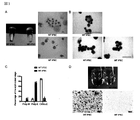
- FIG. 1A shows pellets and iron staining of erythroblasts (day 34) derived from WT1-iPSC2 (indicated as “WT iPSC” in the figure) and MT1-iPSC3 (indicated as “MT iPSC” in the figure). Show the image. Arrows indicate annular sideroblasts. The scale bar is 10 ⁇ m.
- FIG. 1B is derived from erythroblasts (day 34) (top) derived from WT1-iPSC2 (indicated as “WT iPSC” in the figure) and MT1-iPSC4 (indicated as “MT iPSC” in the figure).
- FIG. 1C shows pluripotent megakaryocytes (Poly-M), polychromatic erythroblasts (Poly-E) and orthochromatic erythroblasts derived from three WT-iPSC strains and four MT-iPSC strains. It is a graph which shows the ratio of the sphere (Ortho-E).
- FIG. 1D shows erythroblasts derived from WT1-iPSC3 (indicated as “WT iPSC” in the figure) (day 34) and erythroblasts derived from MT1-iPSC3 (indicated as “MT iPSC” in the figure). (Day 34) o-dianisidine-stained pellets (top) and o-dianisidine-stained images (bottom). The scale bar is 200 ⁇ m.
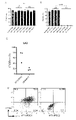
- FIG. 2A is a graph showing the proportion of CD43 + cells obtained from WT-iPSC and MT-iPSC from different patients.
- FIG. 2B is a graph showing the proportion of CD235a + cells obtained from WT-iPSC and MT-iPSC from different patients.
- FIG. 2C is a graph showing the ratio of CD235a + cells derived from two types of WT-iPSC strains (WT3-iPSC1, WT3-iPSC2) derived from SA3 and two types of MT-iPSC strains (MT3-iPSC1 and MT3-iPSC2). Is.
- FIG. 2D is a flow cytometry showing the co-expression of CD235 and CD71 in erythroblasts differentiated by a feeder cell-free method.
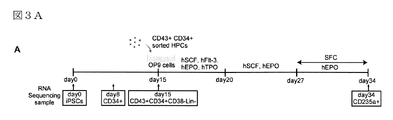
- FIG. 3A is a scheme showing a protocol for erythroid differentiation from iPSCs and the time of collection of each sample.
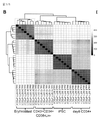
- FIG. 3B is a heat map showing the distance between samples and a hierarchy clustering of iPSCs.
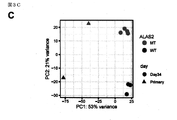
- FIG. 3C shows the results of PCA of erythroblasts from 3 WT-iPSC strains and 4 MT-iPSC strains, healthy donors and bone marrow erythroblasts from SA3.
- FIG. 3D is the result of GO analysis showing concentrated molecular function terms for WT erythroblasts (left) and MT erythroblasts (right).
- FIG. 3E shows the GSEA results of the heme metabolism dataset enriched with WT erythroblasts.
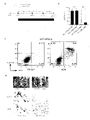
- FIG. 4A is a scheme of AZA administration in erythrocyte differentiation.
- FIG. 4B shows the proportion of CD235a + erythroblasts treated with DMSO or AZA. The data are expressed as mean ⁇ SEM. P-values were calculated using one-way ANOVA, Tukey's rotation, and unpaired two-sided student's t-test. ** P ⁇ 0.01; N. S. No significant difference.
- FIG. 4C is representative data of flow cytometry of MT1-iPSC2-derived erythroblasts differentiated without using feeder cells by administration of DMSO or AZA. The upper panel of FIG.
- FIG. 4D shows o-Dianisidine unstained pellets (left) and stained pellets (right) of erythroblasts derived from MT1-iPSC2 when treated with DMSO or AZA.
- the middle and lower panels of FIG. 4D are o-dianisidine-stained images of erythroblasts derived from WT1-iPSC1 (left) and MT1-iPSC2 (right) treated with DMSO or AZA.
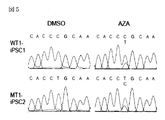
- FIG. 5 is a diagram showing the results of analysis of ALAS2 mutation sites by Sanger sequencing.
- DMSO indicates a DMSO administration group
- AZA indicates an AZA 500 nM administration group.
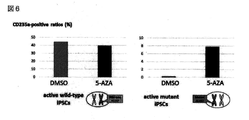
- FIG. 6 is a graph showing the effect of AZA on improving the erythrocyte differentiation potential of iPS cell-derived erythroblasts in which mutant ALAS2 is activated.
- the left panel of FIG. 6 shows the results of a similar experiment on iPS cell-derived erythroblasts in which mutant ALAS2 is activated.
- the vertical axis of the graph is the percentage of CD235a-positive cells.
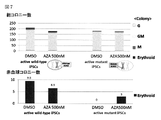
- FIG. 7 is a graph showing the effect of AZA on increasing the number of erythrocyte colonies from erythroblasts derived from iPS cells in which mutant ALAS2 is activated.
- the upper panel shows the ratio of cell and erythrocyte colonies in each cell cycle to total colonies. The percentage of erythrocyte colonies is indicated by the dark area at the top of each bar.
- FIG. 8A shows the results of a colonization assay on day 15 of differentiation of hematopoietic progenitor cells derived from WT1-iPSC1 and MT1-iPSC2 treated with DMSO or AZA.
- FIG. 8B shows the number of red blood cells and mixed colonies in FIG. 8A.
- the above data is expressed as mean ⁇ SEM. P-values were calculated using one-way ANOVA, Tukey's rotation, and unpaired two-sided student's t-test. * P ⁇ 0.05; N. S. No significant difference.
- FIG. 8C is a representative image of mixed colonies derived from AZA-treated MT1-iPSC2.
- FIG. 9 shows the results of colony formation assay on day 15 of differentiation of hematopoietic progenitor cells derived from DMSO or AZA treated WT1-iPSC1 and WT1-iPSC3 (left) and DMSO or AZA treated MT1-iPSC1 and The results of the colony formation assay on the 15th day of differentiation of hematopoietic progenitor cells derived from MT1-iPSC2 (right) are shown.
- the present invention provides, in one embodiment, a pharmaceutical composition comprising a demethylating agent for treating X-linked sideroblastic anemia.
- the demethylating agent refers to a drug that inhibits DNA methylation.
- the preferred demethylating agent is an AZA derivative.
- the AZA derivative is a compound represented by the formula (I).
- the compound of the formula (I) may include its structural isomers and stereoisomers.
- a compound in which both R 1 and R 2 are OH, or a compound in which one of R 1 and R 2 is hydrogen and the other is OH is preferable.
- a compound in which R3 is hydrogen is preferable.
- a compound in which A is CH or CH 2 , Z is N, NH, CH, or C-halogen, and X is hydrogen or NH 2 is preferable.
- C 1-6 alkyl, C 1-6 alkenyl and C 1-6 alkynyl in the formula (I) mean alkyl, alkenyl and alkynyl having 1 to 6 carbon atoms, respectively.
- C 1-6 alkyl, C 1-6 alkenyl and C 1-6 alkynyl include structural isomers.
- the C 1-6 alkyl, C 1-6 alkenyl and C 1-6 alkynyl in formula (I) may be unsubstituted or substituted with one or more hydroxyl groups or halogens.
- the halogen is F, Cl, Br, or I, preferably F or Cl.
- Examples of the compound represented by the formula (I) are AZA, 5-aza-2'-deoxycytidine, camrabine, decitabine, 5-fluoro-2'-deoxycytidine, 5,6-dihydro-5-azacitidine (DHAC). ), Zebularine, etc., but are not limited to these.
- Examples of preferred compounds in the present invention include, but are not limited to, AZA and 5-aza-2'-deoxycytidine. In the present invention, a more preferred compound is AZA.
- the treatment of X-linked sideroblastic anemia is by alleviating, alleviating, ameliorating or eliminating anemia-related symptoms such as palpitations, dizziness, and tiredness caused by the disease in a patient, and by anemia. It means to prevent heart failure and liver damage that occur.
- the treatment of X-linked sideroblastic anemia includes the prevention of X-linked sideroblastic anemia.
- the therapeutic effect of the pharmaceutical composition of the present invention is exhibited by demethylation of the site corresponding to the mutation of the ALAS2 gene by the demethylating agent and the expression of the wild-type sequence in addition to the mutant sequence.
- the site corresponding to the R227C mutation arginine at position 227 from the N-terminus of the ALAS2 protein is replaced with cysteine
- C mutant type
- T wild type
- the pharmaceutical composition of the present invention contains all vitamins including the R227C mutation. It is considered to be effective in treating patients with X-chain sideroblastic anemia, preferably female patients, for whom B6 administration is ineffective.
- ineffective vitamin B6 administration includes cases where vitamin B6 does not respond at all, and cases where it partially responds but is insufficient for treatment.
- a known method can be used to confirm the response of the pharmaceutical composition of the present invention. For example, interviewing patients and / or erythrocyte count, MCV, MCH, MCHC values, erythrocyte morphology observation (microscopic observation), erythrocyte color tone observation, erythrocyte morphology observation, confirmation of bias in X-chromosome inactivation, erythrocyte
- the response may be confirmed by the expression rate of the mutant / wild type ALAS2 by the cDNA of.
- the pharmaceutical composition of the present invention usually contains a pharmaceutically acceptable carrier or excipient.
- the administration route of the pharmaceutical composition of the present invention may be any route.
- the pharmaceutical composition of the present invention is administered subcutaneously, intravenously, intravenously, or orally.
- the pharmaceutical composition of the present invention can be produced by a known method depending on the route of administration.
- the pharmaceutical composition of the present invention which is an injection or a drip infusion, may be produced by mixing and dissolving an active ingredient (for example, AZA) in a known carrier such as water for injection, physiological saline, glucose solution, or Ringer's solution. ..
- AZA active ingredient
- the pharmaceutical composition of the present invention which is an orally administered agent, may be produced by mixing with a known solid, semi-solid or liquid carrier.
- Examples of the dosage form of the pharmaceutical composition of the present invention which is an orally administered agent include, but are not limited to, tablets, capsules, powders, granules, tablets, gels, syrups, drinks and the like.
- the pharmaceutical composition of the present invention may appropriately contain, for example, a buffer component for pH adjustment, a fragrance, a sweetener and the like.
- the dose of a compound such as AZA according to the pharmaceutical composition of the present invention should be determined by a doctor in consideration of the type of the administered compound, the severity of the patient's symptoms, age, body weight, health condition, pre-existing illness, current treatment, and the like. Can be decided.
- AZA of about 50 to about 100 mg / m 2 (body surface area) may be injected subcutaneously or intravenously once a day.
- the pharmaceutical composition of the present invention may contain an anemia therapeutic component other than the demethylating agent, for example, an iron preparation.
- an iron preparation for example, an iron preparation.
- the pharmaceutical composition of the present invention may be used in combination with other anemia treatments such as iron administration therapy.
- the present invention is a method for producing normal erythrocytes from iPS cells derived from an X-linked sideroblastic anemia patient, which comprises inducing differentiation of the iPS cells into erythrocytes.
- a method for adding a demethylating agent to cells at the time of is provided.
- IPS cells can be obtained by introducing a nuclear reprogramming factor into somatic cells.
- the method for producing iPS cells is known, and any method may be used.
- Nuclear reprogramming factors basically include the Oct family gene or the gene product, the Klf family gene or the gene product, the Sox family gene or the gene product, and the Myc family gene or the gene product.
- the Lin28 gene or the gene product thereof, the nanog gene or the gene product may be introduced into somatic cells to increase the induction efficiency of iPS cells.
- Methods for introducing nuclear reprogramming factors into somatic cells are also known.
- the efficiency of establishing iPS cells may be increased by treating the cells with a histone deacetylase (HDAC) inhibitor after the introduction of the nuclear reprogramming factor.
- HDAC histone deacetylase
- Somatic cells may be derived from any part of the body.
- the somatic cells are preferably blood cells such as peripheral blood mononuclear cells.
- a method for differentiating stem cells into erythrocytes is also known.
- an embryoid body (EB) formation method in the presence of appropriate factors is used, but is not limited to this.
- iPS cells are cultured in the presence of BMP4, Rock inhibitor, bFGF, VEGF, IL6, IL3, IL11, SCF, FLT3, TPO, EPO, etc. to form embryoid bodies (EB) into erythrocytes. It may be differentiated with.
- the obtained EB may be cultured in a medium containing stem cell factor (SCF) and erythropoietin (EPO) to further differentiate into erythrocytes.
- SCF stem cell factor
- EPO erythropoietin
- cells positive for hematopoietic stem cells and / or cell surface markers specific to hematopoietic progenitor cells are selected, and the selected cells are selected as SCF or SCF.
- Cell populations rich in erythrocytes may be obtained by culturing in a medium containing EPO.
- Cell surface markers specific for hematopoietic stem cells and / or hematopoietic progenitor cells include, but are not limited to, CD34 and CD43. The method of selecting cells is known, and for example, a cell sorter may be used.
- stroma cells When culturing in a medium containing SCF or EPO, it may be co-cultured with stroma cells to promote erythrocyte differentiation. When co-culturing with the stroma cells, the cells in the process of differentiation may be replaced with the stroma cells again to further promote the induction of erythrocyte differentiation.
- the stroma cells may be any of them, but are preferably bone marrow-derived stroma cells. Examples of bone marrow-derived stroma cells include, but are not limited to, OP9 cells.
- Erythrocyte differentiation efficiency can be investigated by detecting erythrocyte progenitor cells and / or erythrocyte-specific cell surface markers.
- markers include, but are not limited to, CD235a, CD71, CD36, CD23, CD234, CD235b, CD236 and the like.
- Preferred markers include CD235a, CD71 and CD36.
- a method for detecting a marker is also known, and for example, a marker with a visualization label may be used, or a specific antibody may be used.
- a method for selecting differentiated erythrocytes is also known, and for example, a cell sorter may be used.
- the demethylating agent is added to the cells under the condition that the cells and the demethylating agent come into contact with each other.
- a demethylating agent is added to the medium.
- the demethylating agent may be added to cells at any stage of erythrocyte differentiation from iPS cells.
- the demethylating agent is added at a stage where differentiation has progressed to some extent by the EB method (for example, 10 to 20 days after the start of EB formation).
- a demethylating agent may be added after each medium change.
- the concentration of the demethylating agent added to the medium can be appropriately selected and changed.
- the AZA concentration in the medium may be usually about 100 to about 1000 nM, preferably about 300 to about 700 nM, for example about 500 nM.
- Confirmation of normal erythrocytes may be performed by examining whether or not the mutation of the ALAS2 gene is normalized. Such confirmation may be made by comparing the base sequence of the ALAS2 gene of erythrocytes or erythroblasts obtained by differentiation with the base sequence of the ALAS2 gene without mutation (known). A method for analyzing the base sequence of a gene is known, and for example, an automatic sequencer may be used.
- red blood cells are normal red blood cells by a known method. For example, it may be confirmed by a method such as microscopic observation, confirmation of gene expression such as Hmox-1, globin, o-dianisidine staining, confirmation of the base sequence of ALAS2 mutation site, and confirmation of X-chromosome inactivation.
- confirmation may be performed by comparing (for example, with the naked eye) the color tone of erythrocytes obtained from the iPS cells of a patient with the color tone of erythrocytes of a healthy person (a person having no disorder in erythrocyte differentiation). If the color tone of the red blood cells obtained from the iPS cells of the patient is the same as or close to the color tone of the red blood cells of a healthy person, the obtained red blood cells may be judged to be normal.
- the present invention provides, in a further aspect, the following: -Use of demethylating agents to treat X-linked sideroblastic anemia; Demethylating agent for use in the treatment of X-linked sideroblastic anemia; • Use of demethylating agents in the manufacture of drugs to treat X-chain sideroblastic anemia; and • Administering demethylating agents to patients in need of treatment for X-linked sideroblastic anemia.
- Methods for treating X-linked sideroblastic anemia including.
- the demethylating agent and the patient in these embodiments are as described above.
- the invention provides: A method for producing normal erythrocytes from iPS cells derived from patients with X-linked sideroblastic anemia, which comprises inducing differentiation of the iPS cells into erythrocytes, and using a demethylating agent during induction of differentiation.
- a pharmaceutical composition for treating X-linked sideroblastic anemia which comprises normal erythrocytes obtained by a method that is added to.
- Methods for treating X-linked sideroblastic anemia including.
- the demethylating agent and the patient in these embodiments are as described above.
- SA2 and SA3 are X-linked sideroblastic anemia patients with an R227C mutation in the ALAS2 gene hetero on the X chromosome.
- Administration of vitamin B6 was ineffective for SA1.
- the procedure for producing iPS cells was as follows.
- Peripheral blood was collected from the patient, and peripheral blood mononuclear cells were isolated using Ficoll-Paque Plus (GE Healthcare). Using MACS CD3 MicroBeads (Mltenyi Biotec, 130-050-101), CD3-positive T cells and CD3-negative non-T cells were separated. Gene transfer was performed using pCXLE-hOCT3 / 4-shop53-F, pCXLE-hSK, pCXLE-hUL, and pCXWB-EBNA1 using Amaxa kit (Lonza) (these vectors were obtained from Adgene, USA) (T.
- T cells For cells, Amaxa Human T Cell Nucleofector Kit (Lonza) was used, and for non-T cells, Amaxa Human Monocyte Nucleofector Kit (Lonza) was used).
- 50 ⁇ LM of Dynabeads CD3 / CD28 was lysed in 1 cc of blood cell medium X VIVO-10 (Lonza) in a 1.5 ml tube, and the tube was allowed to stand in DynaMag-2 to remove the supernatant. Then, the cells were cultured on MEF feeder in a medium containing 3 ng / ml IL-2 to XVIVO-10.
- Non-T cells were cultured using a medium containing 10% FBS and 10 ng / ml of IL3, IL-6, G-CSF, and GM-CSF added to ⁇ MEM.
- the ALAS2 gene is on the X chromosome, one of the two ALAS2 genes is randomly inactivated by X-chromosome inactivation in female patients. Therefore, the iPS cells obtained from each patient were the following two types: -IPS cells in which the X chromosome with the ALAS2 mutation is inactivated and expresses only wild-type ALAS2 (referred to as "wild-type ALAS2 active iPS cells” or "active wild-type iPSCs" or "WT-iPSC").
- iPS cells in which the X chromosome without the ALAS2 mutation is inactivated and expresses only the mutant ALAS2 referred to as "iPS cells in which the mutant ALAS2 is active” or “active mutant iPSCs" or “MT-iPSC”).
- iPS cells may be referred to as "iPSC”.
- 58 iPSC strains were obtained from SA1.
- 94 iPSC strains were obtained from SA2.
- 47 iPSC strains were obtained from SA3.
- the WT-iPSC strain obtained from SA1 is referred to as "WT1-iPSC1", “WT1-iPSC2", “WT1-iPSC3”, and the MT-iPSC strain obtained from SA1 is referred to as "MT1-iPSC1".
- MT1-iPSC2 WT1-iPSC3
- MT1-iPSC4 MT1-iPSC4
- WT-iPSC strain obtained from SA3 is referred to as "WT3-iPSC1” and “WT3-iPSC2”
- the MT-iPSC strain obtained from SA3 is referred to as "MT3-iPSC1" and "MT3-iPSC2".
- iPSC strain 692D2
- a cell is represented by "positive” or “+” for being positive with respect to a marker, and is represented by “negative” or “-” if it is negative.
- CD235a-positive cells are referred to as “CD235a-positive cells” or "CD235a + cells”.
- iPSC strains were maintained on STO feeder cells in primate ES cell medium (ReproCell) supplemented with 4 ng / mL recombinant bFGF. After 1 subculture on Matrigel-coated plates to remove feeder cells, iPSC strains were differentiated.
- ReproCell primate ES cell medium
- iPS cells were differentiated on Stem Pro-34 medium (gibco) using the EB method (Grigoliadis AE et. Al Blood. Apr. 8; 115 (14): 2769-76 (2010)).
- Day 0 was medium containing BMP4 and Rock inhibitor
- days 1 to 4 were medium containing BMP4 and bFGF
- days 4 to 8 were VEGF, IL6, IL3, IL11, SCF and bFGF.
- Flow Cytometry Analysis and Cell Sorting To submit iPSC-derived hematopoietic cells for flow cytometry analysis and sorting, embryos were dissected with 0.25% trypsin and then pipeted 10-20 times. Cells were subjected to flow cytometric analysis and sorting using FACS ARIA II (Becton-Dickinson). Dead cells were removed using 7-AAD (BD Harmingen). Antibodies used for sorting hematopoietic progenitor cells (HPC) were CD34-PE (BD Biosciences, 348557) and CD43-FITC (BD Biosciences, 555475).
- Red blood cell differentiation was performed on OP9 stromal feeder cells.
- FACS-sorted 15-day hematopoietic progenitor cells were plated on OP9 cells, 10% fetal bovine serum, 100 mM Invitrogen, 100 ⁇ M monothioglycerol (Sigma Aldrich), 5 ⁇ g / mL transferase (Roche). And 50 ⁇ g / mL ascorbic acid (Sigma Aldrich) supplemented with alpha minimal essential medium (Invitrogen) was cultured and maintained.
- Cytokines and compounds used for differentiation were: days 15-20, hSCF (100 ng / mL), human Fms-like tyrosine kinase 3 ligand (hFlt-3; 100 ng / mL, R & D Systems), hEPO ( 4U / mL) and human thrombopoietin (hTPO; 50 ng / mL, R & D Systems); days 20-27, hSCF (100 ng / mL) and hEPO (4U / mL); days 27-34, hEPO (4U / mL). mL) and ferrous citrate (SFC; 250 ⁇ M, Nihon Generic Co., Ltd).
- Berlin blue staining Using a Fe stain kit (Muto Pure Chemicals Co., Ltd.), Berlin blue staining was performed according to the manufacturer's instructions.
- O-Dianisidine staining was performed in 0.01 M sodium acetate, 0.65% water, 40% ethanol, and 0.6 mg / mL o-Dianisidine (Sigma) for 15 minutes.
- MT erythroblasts changes in dysplasia such as nuclear marginal irregularities and nuclear collapse were observed, similar to the patient's erythroblasts (Fig. 1B).
- Most WT erythroblasts were orthochromatic erythroblasts, while most MT erythroblasts were polychromatic erythroblasts and megaloblasts (Fig. 1C).
- Fig. 4D o-dianisidine staining of WT erythroblasts was normal, MT erythroblasts were only slightly stained (Fig. 4D), and heme synthesis was significantly impeded in MT erythroblasts. was suggested.
- erythrocyte differentiation potential of MT-iPSC was examined under erythrocyte culture conditions without feeder cells.
- Day 15 hematopoietic progenitor cells from iPSC sorted by fluorescence activated cell sorting (FACS) were differentiated in StemPro-34 medium (Invitrogen) for erythrocyte differentiation under feeder cell-free conditions. ..
- Cytokines used for differentiation were: days 15-23, human stem cell factor (hSCF; 100 ng / mL, R & D Systems), human erythropoietin (hEPO; 4U / mL, Kyowa Kirin Co., Ltd.) .) And human IL-3 (hIL-3; 5 ng / mL, R & D Systems); days 23-26, hSCF (100 ng / mL) and hEPO (4U / mL); days 26-29, hEPO (4U /). mL).
- the hematopoietic differentiation potential was equivalent between the two iPSC strains (Fig. 2A). However, compared to the WT-iPSC strains obtained from both SA1 and SA3, the MT-iPSC strain was significantly impaired in further differentiation into CD235 + erythrocyte cells (FIGS. 2B, 2C and 2D).
- RNA was extracted from eye CD235a + erythroblasts.
- RNA was also extracted from MACS-sorted CD235a + erythroblasts in patient bone marrow mononuclear cells isolated using Ficoll-Paque (GE Healthcare), and bone marrow mononuclear cells (Lonza) from healthy donors.
- a library was constructed using TruSeq Standard RNA with Ribo-Zero Gold LT Sample Prep Kit, Sets A and B (Illumina) according to the manufacturer's instructions. Sequence determination was performed using NextSeq 500/550 High Output Kit v2 (75 cycles) (Illumina). The adapter sequence contained in the read was trimmed using cutadapt-1.15. Bowtie 2 and Samtools were used to remove the reads mapped to ribosomal RNA. Reads were mapped to the human genome (GRCh38 from the UCSC Genome Browser) using STAR (version 2.5.4a) and RSeQC (version 2.6.4) was used for quality checks.
- PCA main component analysis
- Genes up-regulated in WT cells are regulated by GO terms associated with mature erythroblasts, including Ras GTPase binding, Rho GTPase binding and actin binding, as well as iron transporters such as transition metal ion transmembrane transporter activity.
- Ras GTPase binding Ras GTPase binding
- Rho GTPase binding Rho GTPase binding and actin binding
- iron transporters such as transition metal ion transmembrane transporter activity.
- GSEA gene set enrichment analogysis
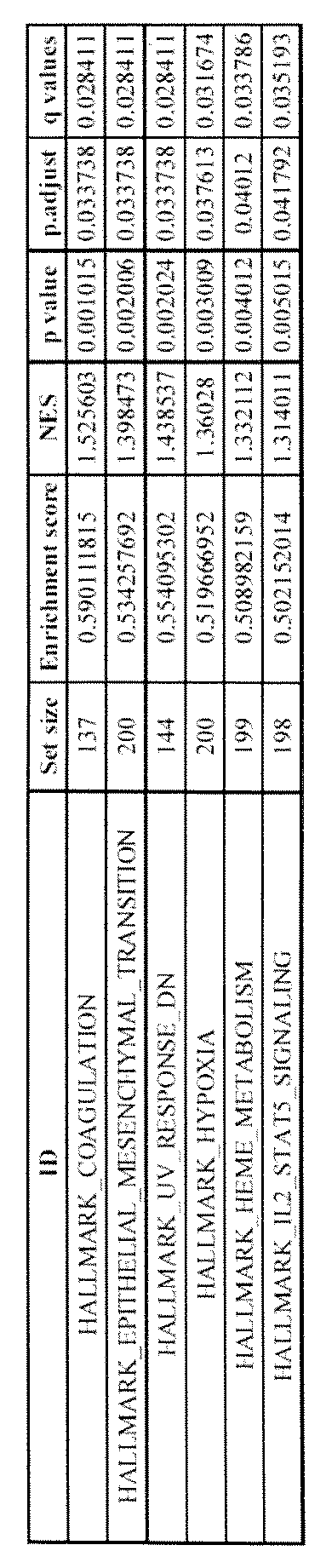
- the heme metabolism dataset was significantly enriched in WT erythroblasts (FIG. 3E and Table 1).
- Hierarchical cluster analysis of iPSC-derived erythroblasts and bone marrow-derived erythroblasts was performed on genes specifically expressed in early orthochromatic erythroblasts (Fig. 3F). Expression of these genes was lower in MT erythroblasts and SA3 bone marrow erythroblasts than in WT erythroblasts and healthy donor bone marrow erythroblasts.
- the change in the nucleotide sequence of the ALAS2 gene by AZA was investigated.
- I. Experimental method Induction of erythrocyte differentiation of iPS cells The SA1-derived WT-iPSC and MT-iPSC obtained in Example 1 were used. IPS cells were differentiated on Stem Pro-34 medium (gibco) using the EB method (Grigoliadis AE et. Al Blood. Apr. 8; 115 (14): 2769-76 (2010)). Day 0 was medium containing BMP4 and Rock inhibitor, days 1 to 4 were medium containing BMP4 and bFGF, and days 4 to 8 were VEGF, IL6, IL3, IL11, SCF and bFGF.
- the cells differentiated for 15 days were reacted with FITC CD43 (BD Biosciences, 555475) / PE CD34 (BD Biosciences, 348557), and CD43 + CD34 + cells were FACS-sorted.
- the sorted cells were differentiated into erythrocytes for 14 days. From the 15th to the 23rd day from the start of EB formation, the medium containing SCF, EPO, and IL3 in the Stem Pro-34 medium (gibco), and from the 23rd to the 26th day, the medium containing SCF and EPO. From the 26th day to the 29th day, the cells were cultured in a medium containing EPO. Culturing was performed under feeder-free conditions.
- a medium containing 500 nM of AZA (Nacalai Tesque Co., Ltd.) was used in the AZA-administered group, and a medium containing DMSO was used instead of AZA in the control group.
- ALAS2 Mutant Site by Sanger Sequencing Cells induced to differentiate for 29 days were lysed into QIAZOL and RNA was extracted using miRNeasy Micro kit (QIAGEN NV). Reverse transcription was performed using RiverTra Ace qPCR RT Master Mix with gDNA Remover (Toyobo Co., Ltd.), and the mutation site of exon 6 of ALAS2 was sequence-analyzed by a sanger sequence using a Big Dye reaction.
- both the erythroblasts derived from iPS cells in which wild-type ALAS2 is active and the erythroblasts derived from iPS cells in which mutant ALAS2 is active are of the original wild type and mutant type.
- mutant and wild-type expressions were observed, respectively, and it is considered that the inactivated ALAS2 methylation was removed.
- Example 1 Experimental method Using the SA1-derived iPS cells obtained in Example 1, differentiation was induced for 29 days by the EB method in the same manner as in Example 5. Sorting of CD43 + CD34 + cells was also performed in the same manner as in Example 1. The administration of AZA was also carried out in the same manner as in Example 5. The obtained cells were analyzed by FACS using APC CD235a as an index.
- CFU Assay Cell Stem Cell. 2016; 19 (3): 341-354 A CFU assay was performed based on the method described in. Phylogenetic assignments were determined by morphological analysis and some typical colonies (especially erythrocytes and mixed colonies) were picked up and evaluated using May Grunwald-Giemsa staining.
- the present invention is useful in the therapeutic fields of hereditary diseases, especially hematopoietic diseases, and research fields of such diseases.
Landscapes
- Health & Medical Sciences (AREA)
- Life Sciences & Earth Sciences (AREA)
- Engineering & Computer Science (AREA)
- Chemical & Material Sciences (AREA)
- Bioinformatics & Cheminformatics (AREA)
- General Health & Medical Sciences (AREA)
- Organic Chemistry (AREA)
- Genetics & Genomics (AREA)
- Biomedical Technology (AREA)
- Pharmacology & Pharmacy (AREA)
- Wood Science & Technology (AREA)
- Animal Behavior & Ethology (AREA)
- Public Health (AREA)
- Veterinary Medicine (AREA)
- Medicinal Chemistry (AREA)
- Zoology (AREA)
- Biotechnology (AREA)
- Cell Biology (AREA)
- Nuclear Medicine, Radiotherapy & Molecular Imaging (AREA)
- General Chemical & Material Sciences (AREA)
- Chemical Kinetics & Catalysis (AREA)
- Microbiology (AREA)
- Epidemiology (AREA)
- Biochemistry (AREA)
- General Engineering & Computer Science (AREA)
- Hematology (AREA)
- Diabetes (AREA)
- Molecular Biology (AREA)
- Pharmaceuticals Containing Other Organic And Inorganic Compounds (AREA)
Abstract
本発明は、脱メチル化剤、特に5−アザシチジンまたはその誘導体を含む、X連鎖性鉄芽球性貧血を治療するための医薬組成物、ならびにX連鎖性鉄芽球性貧血患者由来のiPS細胞から脱メチル化剤の存在下で分化誘導された正常な赤血球を提供する。
Description
本発明は、X連鎖性鉄芽球性貧血の治療剤に関する。
本願は、2020年12月28日に出願された日本国特許出願第2020−218557号に対して優先権を主張するものであり、当該日本国特許出願の内容を本願に一体化させる。
本願は、2020年12月28日に出願された日本国特許出願第2020−218557号に対して優先権を主張するものであり、当該日本国特許出願の内容を本願に一体化させる。
X連鎖性鉄芽球性貧血は、ヘム合成の最初の段階を触媒する酵素ALAS2(赤血球型5−アミノレブリン酸合成酵素)の遺伝子が変異することにより高度の赤血球分化障害を来す遺伝性疾患である。X連鎖性鉄芽球性貧血患者の約半数にはビタミンB6投与が有効であるが、ビタミンB6投与が無効である約半数の患者には輸血や造血幹細胞移植以外に有効な治療法はなく(非特許文献1、2)、代替となる治療法の開発が期待されている。
Gonzalez MI,Caballero D,Vazquez L,et al.Allogeneic peripheral stem cell transplantation in a case of hereditary sideroblastic anemia.Br J Haematol.2000;109:658−660.
Medeiros BC,Kolhouse JF,Cagnoni PJ,et al.Nonmyeloablative allogeneic hematopoietic stem cell transplantation for congenital sideroblastic anemia.Bone Marrow Transplant.2003;31:1053−1055.
X連鎖性鉄芽球性貧血、とりわけビタミンB6投与が無効である患者に対する有効な治療を提供することが必要である。
本発明者らは、上記課題を解決するために鋭意研究を重ねてきた。本発明者らは、δ−アミノレブリン酸を用いることにより、変異型ALAS2が活性化されているiPS細胞由来の赤芽球の赤血球分化能を改善できることを見いだしたが、必要とされるδ−アミノレブリン酸の量が多いという問題があった。そこで本発明者らは、より少量で効果的な薬剤について検索し、脱メチル化剤、とりわけ5−アザシチジンおよびその誘導体が少量で上記の赤血球分化を改善できることを見いだし、本発明を完成させるに至った。本明細書の以下の部分において、5−アザシチジンをAZAと略称する。
すなわち本発明は以下のものを提供する:
(1)脱メチル化剤を含む、X連鎖性鉄芽球性貧血を治療するための医薬組成物。
(2)脱メチル化剤が式(I):
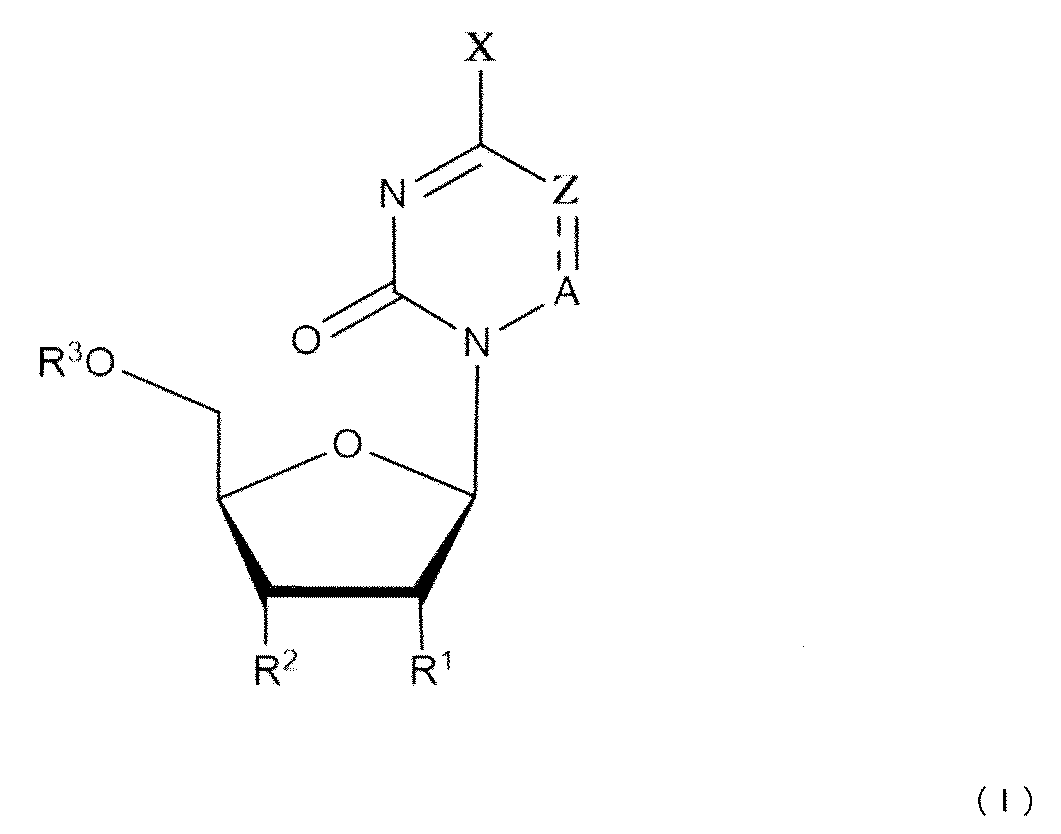
[式中、R1およびR2はそれぞれ独立して水素、C1−6アルキル、C1−6アルケニル、C1−6アルキニル、ハロゲン、OH、OC1−6アルキル、OC1−6アルケニル、OC1−6アルキニル、OCOC1−6アルキル、OCOC1−6アルケニル、またはCOC1−6アルキニルであり、R3は水素、C1−6アルキル、C1−6アルケニル、C1−6アルキニル、COC1−6アルキル、COC1−6アルケニル、COC1−6アルキニル、またはリン酸基であり、AはCR4またはCR5R6であり、R4は水素、C1−6アルキル、C1−6アルケニル、C1−6アルキニル、OH、またはハロゲンであり、R5およびR6はそれぞれ独立して水素、C1−6アルキル、C1−6アルケニル、C1−6アルキニル、OH、またはハロゲンであり、ZはN、NR7、CR8、またはCR9R10であり、R7は水素、OH、C1−6アルキル、C1−6アルケニル、C1−6アルキニル、またはハロゲンであり、R8は水素、OH、C1−6アルキル、C1−6アルケニル、C1−6アルキニル、またはハロゲンであり、R9およびR10はそれぞれ独立して水素、OH、C1−6アルキル、C1−6アルケニル、C1−6アルキニル、またはハロゲンであり、Xは水素またはNR11R12であり、R11およびR12はそれぞれ独立して水素、C1−6アルキル、C1−6アルケニル、またはC1−6アルキニルであり、上記アルキル、アルケニルおよびアルキニルは1個以上の水酸基またはハロゲンで置換されていてもよく、−−は一重結合または二重結合を表す。]で示される化合物である、(1)記載の医薬組成物。
(3)脱メチル化剤がAZAまたは5−アザ−2’−デオキシシチジンである、(2)記載の医薬組成物。
(4)脱メチル化剤がAZAである、(3)記載の医薬組成物。
(5)ビタミンB6投与が無効であるX連鎖性鉄芽球性貧血患者に使用される(1)~(4)のいずれか記載の医薬組成物。
(6)X連鎖性鉄芽球性貧血患者由来のiPS細胞から正常な赤血球を製造する方法であって、該iPS細胞を赤血球に分化誘導することを含み、分化誘導の際に脱メチル化剤を細胞に添加するものである方法。
(7)脱メチル化剤が式(I):
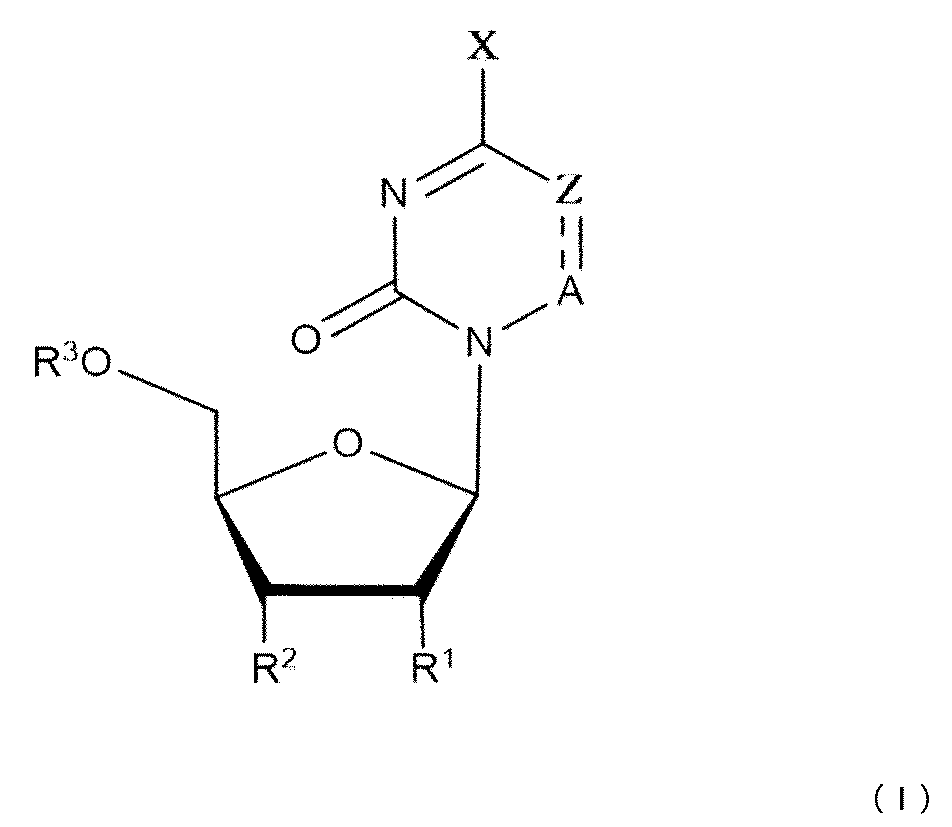
[式中、R1−R12、A、Z、X、および−−は(2)における定義と同じ。]で示される化合物である、(6)記載の方法。
(8)脱メチル化剤がAZAまたは5−アザ−2’−デオキシシチジンである、(7)記載の方法。
(9)脱メチル化剤がAZAである、(8)記載の方法。
(10)患者が、ビタミンB6投与が無効であるX連鎖性鉄芽球性貧血患者である、(6)~(9)のいずれか記載の方法。
(11)X連鎖性鉄芽球性貧血を治療するための脱メチル化剤の使用。
(12)脱メチル化剤が式(I):
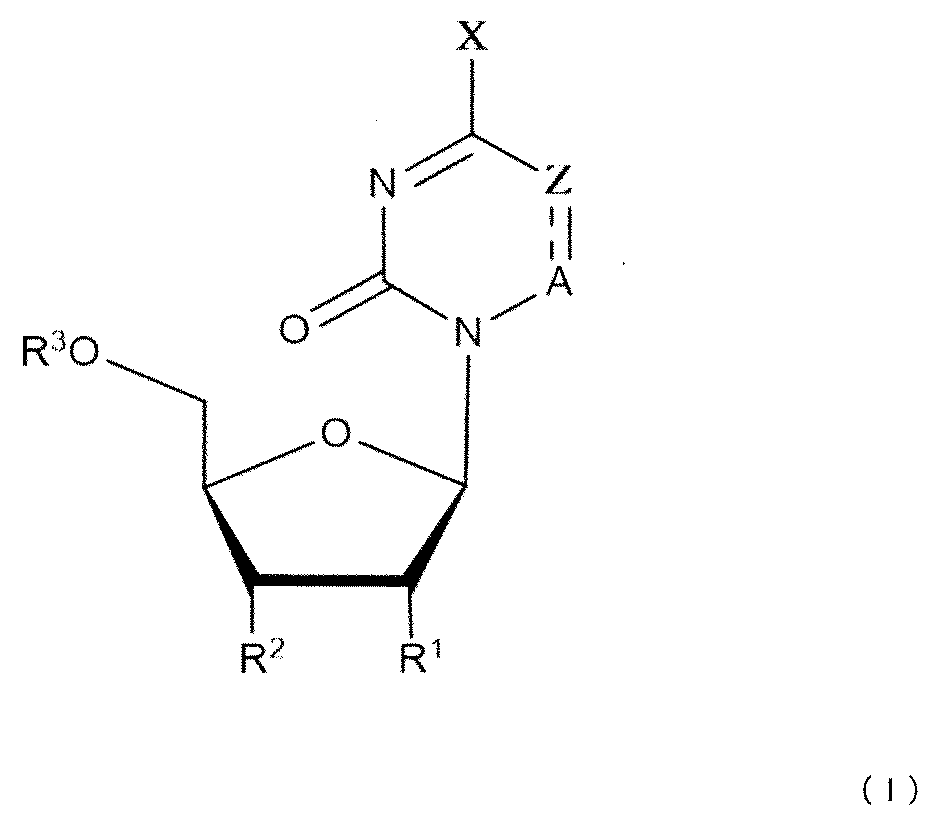
[式中、R1−R12、A、Z、X、および−−は(2)における定義と同じ。]で示される化合物である、(11)記載の使用。
(13)脱メチル化剤がAZAまたは5−アザ−2’−デオキシシチジンである、(12)記載の使用。
(14)脱メチル化剤がAZAである、(13)記載の使用。
(15)治療すべき患者が、ビタミンB6投与が無効であるX連鎖性鉄芽球性貧血患者である、(11)~(14)のいずれか記載の使用。
(16)X連鎖性鉄芽球性貧血の治療において使用するための脱メチル化剤。
(17)式(I):

[式中、R1−R12、A、Z、X、および−−は(2)における定義と同じ。]で示される化合物である、(16)記載の脱メチル化剤。
(18)AZAまたは5−アザ−2’−デオキシシチジンである、(17)記載の脱メチル化剤。
(19)AZAである、(18)記載の脱メチル化剤。
(20)治療すべき患者が、ビタミンB6投与が無効であるX連鎖性鉄芽球性貧血患者である、(16)~(19)のいずれか記載の脱メチル化剤。
(21)X連鎖性鉄芽球性貧血を治療するための医薬の製造における脱メチル化剤の使用。
(22)脱メチル化剤が式(I):

[式中、R1−R12、A、Z、X、および−−は(2)における定義と同じ。]で示される化合物である、(21)記載の使用。
(23)脱メチル化剤がAZAまたは5−アザ−2’−デオキシシチジンである、(22)記載の使用。
(24)脱メチル化剤がAZAである、(23)記載の使用。
(25)治療すべき患者が、ビタミンB6投与が無効であるX連鎖性鉄芽球性貧血患者である、(21)~(24)のいずれか記載の使用。
(26)X連鎖性鉄芽球性貧血の治療を要する患者に脱メチル化剤を投与することを含む、X連鎖性鉄芽球性貧血の治療方法。
(27)脱メチル化剤が式(I):
[式中、R1−R12、A、Z、X、および−−は(2)における定義と同じ。]で示される化合物である、(26)記載の方法。
(28)脱メチル化剤がAZAまたは5−アザ−2’−デオキシシチジンである、(27)記載の方法。
(29)脱メチル化剤がAZAである、(28)記載の方法。
(30)患者が、ビタミンB6投与が無効であるX連鎖性鉄芽球性貧血患者である、(26)~(29)のいずれか記載の方法。
(31)(6)~(10)のいずれか記載の方法によって得られた正常な赤血球を含む、X連鎖性鉄芽球性貧血を治療するための医薬組成物。
(32)(6)~(10)のいずれか記載の方法によって得られた正常な赤血球の、X連鎖性鉄芽球性貧血を治療するための使用。
(33)X連鎖性鉄芽球性貧血の治療において使用するための、(6)~(10)のいずれか記載の方法によって得られた正常な赤血球。
(34)(6)~(10)のいずれか記載の方法によって得られた正常な赤血球の、X連鎖性鉄芽球性貧血を治療するための医薬の製造における使用。
(35)(6)~(10)のいずれか記載の方法によって得られた正常な赤血球を、X連鎖性鉄芽球性貧血の治療を要する患者に投与することを含む、X連鎖性鉄芽球性貧血の治療方法。
(1)脱メチル化剤を含む、X連鎖性鉄芽球性貧血を治療するための医薬組成物。
(2)脱メチル化剤が式(I):
(3)脱メチル化剤がAZAまたは5−アザ−2’−デオキシシチジンである、(2)記載の医薬組成物。
(4)脱メチル化剤がAZAである、(3)記載の医薬組成物。
(5)ビタミンB6投与が無効であるX連鎖性鉄芽球性貧血患者に使用される(1)~(4)のいずれか記載の医薬組成物。
(6)X連鎖性鉄芽球性貧血患者由来のiPS細胞から正常な赤血球を製造する方法であって、該iPS細胞を赤血球に分化誘導することを含み、分化誘導の際に脱メチル化剤を細胞に添加するものである方法。
(7)脱メチル化剤が式(I):
(8)脱メチル化剤がAZAまたは5−アザ−2’−デオキシシチジンである、(7)記載の方法。
(9)脱メチル化剤がAZAである、(8)記載の方法。
(10)患者が、ビタミンB6投与が無効であるX連鎖性鉄芽球性貧血患者である、(6)~(9)のいずれか記載の方法。
(11)X連鎖性鉄芽球性貧血を治療するための脱メチル化剤の使用。
(12)脱メチル化剤が式(I):
(13)脱メチル化剤がAZAまたは5−アザ−2’−デオキシシチジンである、(12)記載の使用。
(14)脱メチル化剤がAZAである、(13)記載の使用。
(15)治療すべき患者が、ビタミンB6投与が無効であるX連鎖性鉄芽球性貧血患者である、(11)~(14)のいずれか記載の使用。
(16)X連鎖性鉄芽球性貧血の治療において使用するための脱メチル化剤。
(17)式(I):
(18)AZAまたは5−アザ−2’−デオキシシチジンである、(17)記載の脱メチル化剤。
(19)AZAである、(18)記載の脱メチル化剤。
(20)治療すべき患者が、ビタミンB6投与が無効であるX連鎖性鉄芽球性貧血患者である、(16)~(19)のいずれか記載の脱メチル化剤。
(21)X連鎖性鉄芽球性貧血を治療するための医薬の製造における脱メチル化剤の使用。
(22)脱メチル化剤が式(I):
(23)脱メチル化剤がAZAまたは5−アザ−2’−デオキシシチジンである、(22)記載の使用。
(24)脱メチル化剤がAZAである、(23)記載の使用。
(25)治療すべき患者が、ビタミンB6投与が無効であるX連鎖性鉄芽球性貧血患者である、(21)~(24)のいずれか記載の使用。
(26)X連鎖性鉄芽球性貧血の治療を要する患者に脱メチル化剤を投与することを含む、X連鎖性鉄芽球性貧血の治療方法。
(27)脱メチル化剤が式(I):
(28)脱メチル化剤がAZAまたは5−アザ−2’−デオキシシチジンである、(27)記載の方法。
(29)脱メチル化剤がAZAである、(28)記載の方法。
(30)患者が、ビタミンB6投与が無効であるX連鎖性鉄芽球性貧血患者である、(26)~(29)のいずれか記載の方法。
(31)(6)~(10)のいずれか記載の方法によって得られた正常な赤血球を含む、X連鎖性鉄芽球性貧血を治療するための医薬組成物。
(32)(6)~(10)のいずれか記載の方法によって得られた正常な赤血球の、X連鎖性鉄芽球性貧血を治療するための使用。
(33)X連鎖性鉄芽球性貧血の治療において使用するための、(6)~(10)のいずれか記載の方法によって得られた正常な赤血球。
(34)(6)~(10)のいずれか記載の方法によって得られた正常な赤血球の、X連鎖性鉄芽球性貧血を治療するための医薬の製造における使用。
(35)(6)~(10)のいずれか記載の方法によって得られた正常な赤血球を、X連鎖性鉄芽球性貧血の治療を要する患者に投与することを含む、X連鎖性鉄芽球性貧血の治療方法。
本発明によれば、X連鎖性鉄芽球性貧血、とりわけビタミンB6投与が無効である患者、より好ましくは女性患者に対する有効な治療が提供される。特に、本発明の治療剤の有効成分の1つであるAZAは現在骨髄異形成症候群の治療薬として用いられており、ヒトでの安全性や薬物動態の試験が済んでいるため、使用上の不安が少ない。
本発明は、1の態様において、脱メチル化剤を含む、X連鎖性鉄芽球性貧血を治療するための医薬組成物を提供する。
本発明において、脱メチル化剤は、DNAのメチル化を阻害する薬剤をいう。
本発明において、好ましい脱メチル化剤はAZA誘導体である。具体的には、AZA誘導体は式(I)で示される化合物である。なお、式(I)の化合物は、その構造異性体および立体異性体を包含しうる。
式(I)で示される化合物のうち、R1、R2の両方がOHである化合物、あるいはR1、R2の一方が水素であり他方がOHである化合物が好ましい。式(I)で示される化合物のうち、R3が水素である化合物が好ましい。式(I)で示される化合物のうち、AがCHまたはCH2であり、ZがN、NH、CH、またはC−ハロゲンであり、Xが水素またはNH2である化合物が好ましい。
式(I)におけるC1−6アルキル、C1−6アルケニルおよびC1−6アルキニルは、それぞれ炭素数1~6個のアルキル、アルケニルおよびアルキニルを意味する。C1−6アルキル、C1−6アルケニルおよびC1−6アルキニルは構造異性体を包含する。式(I)におけるC1−6アルキル、C1−6アルケニルおよびC1−6アルキニルは未置換であってもよく、あるいは1個以上の水酸基またはハロゲンで置換されていてもよい。ハロゲンはF、Cl、Br、またはIであり、好ましくはFまたはClである。
式(I)で示される化合物の例としては、AZA、5−アザ−2’−デオキシシチジン、ファザラビン、デシタビン、5−フルオロ−2’−デオキシシチジン、5,6−ジヒドロ−5−アザシチジン(DHAC)、ゼブラリンなどが挙げられるが、これらに限定されない。
本発明において好ましい化合物の例としては、AZAおよび5−アザ−2’−デオキシシチジンが挙げられるが、これらに限定されない。本発明において、より好ましい化合物はAZAである。
本明細書において、X連鎖性鉄芽球性貧血の治療とは、患者における当該疾病に起因する動悸、めまい、疲れやすいなどの貧血関連症状を緩和、軽減、改善または消失させること、および貧血によって生じる心不全、肝障害などを予防することをいう。本明細書において、X連鎖性鉄芽球性貧血の治療には、X連鎖性鉄芽球性貧血の予防が包含される。
本発明の医薬組成物の治療効果は、脱メチル化剤によりALAS2遺伝子の変異に対応している部位のメチル化が外れ、変異型配列に加えて野生型配列が発現することにより発揮される。例えば、ALAS2のcDNAにおいて、R227C変異(ALAS2タンパク質のN末端から227番目のアルギニンがシステインに置換されている)に対応する部位のメチル化が外れ、679番目の塩基の一部でC(変異型)に加えてT(野生型)が発現することにより、本発明の医薬組成物の治療効果が発揮される。特に、ビタミンB6が無効であるX連鎖性鉄芽球性貧血患者のALAS2遺伝子変異の一つであるR227C変異で有効性が示されたため、本発明の医薬組成物はR227C変異を含め全てのビタミンB6投与が無効であるX連鎖性鉄芽球性貧血患者、好ましくは女性患者の治療に有効であると考えられる。
ビタミンB6投与が無効であるとは、ビタミンB6が全く奏功しない場合、ならびに部分的に奏功するが治療には不十分である場合を包含する。
本発明の医薬組成物の奏功を確認するために公知の方法を用いることができる。例えば、患者の問診、および/または赤血球数、MCV、MCH、MCHCの値、赤血球の形態観察(顕微鏡観察)、赤血球の色調観察、骨髄の形態観察、X染色体不活性化の偏りの確認、赤血球のcDNAによる変異型・野生型ALAS2の発現割合などにより、奏功を確認してもよい。
本発明の医薬組成物は、通常、医薬上許容される担体または賦形剤を含む。
本発明の医薬組成物の投与経路はいずれの経路であってもよい。好ましくは、本発明の医薬組成物は皮下注射、静脈注射、静脈点滴、または経口投与される。
本発明の医薬組成物は、投与経路に応じて公知の方法にて製造することができる。注射剤または点滴剤である本発明の医薬組成物を、注射用水、生理食塩水、ブドウ糖溶液、リンゲル液などの公知の担体に有効成分(例えばAZA)を混合、溶解することにより製造してもよい。経口投与剤である本発明の医薬組成物を、公知の固体、半固体または液体担体と混合することにより製造してもよい。経口投与剤である本発明の医薬組成物の剤形の例としては、錠剤、カプセル剤、粉末、顆粒、錠剤、ゲル、シロップ、ドリンク等が挙げられるが、これらに限定されない。本発明の医薬組成物は、例えばpH調節用の緩衝成分、香料、甘味料等を適宜含んでいてもよい。
本発明の医薬組成物によるAZA等の化合物の投与量は、投与化合物の種類、患者の症状の重さ、年齢、体重、健康状態、既往症、現在受けている治療等を考慮して、医師が決定しうる。例えば、約50~約100mg/m2(体表面積)のAZAを1日1回皮下注射または点滴静注してもよい。
本発明の医薬組成物は、脱メチル化剤以外の貧血治療成分、例えば鉄剤を含んでいてもよい。また、本発明の医薬組成物を、他の貧血治療、例えば鉄剤投与療法と併用してもよい。
本発明は、もう1つの態様において、X連鎖性鉄芽球性貧血患者由来のiPS細胞から正常な赤血球を製造する方法であって、該iPS細胞を赤血球に分化誘導することを含み、分化誘導の際に脱メチル化剤を細胞に添加するものである方法を提供する。
iPS細胞は、体細胞に核初期化因子を導入することにより得ることができる。iPS細胞の作製方法は公知であり、いずれの方法を用いてもよい。核初期化因子は、基本的にはOctファミリー遺伝子または当該遺伝子産物、Klfファミリー遺伝子または当該遺伝子産物、Soxファミリー遺伝子または当該遺伝子産物、およびMycファミリー遺伝子または当該遺伝子産物を含む。これらの因子に加えて、Lin28遺伝子または当該遺伝子産物、nanog遺伝子または当該遺伝子産物など体細胞に導入して、iPS細胞の誘導効率を高めてもよい。核初期化因子の体細胞への導入方法も公知である。また、核初期化因子導入後にヒストン脱アセチル化酵素(HDAC)阻害剤で細胞を処理することで、iPS細胞の樹立効率を高めてもよい。核初期化因子を導入した体細胞の培養方法、iPS細胞の検出・選択方法についても公知である。
体細胞は、身体のいずれの部位に由来するものであってもよい。体細胞は末梢血単核細胞などの血液細胞が好ましい。
幹細胞を赤血球へと分化させる方法も公知である。一般的には、適切な因子の存在下での胚様体(EB)形成法が用いられるが、これに限定されない。例えば、BMP4、Rockインヒビター、bFGF、VEGF、IL6、IL3、IL11、SCF、FLT3、さらにはTPO、EPOなどの存在下においてiPS細胞を培養し、胚様体(EB)を形成させることにより赤血球へと分化させてもよい。得られたEBをステムセルファクター(SCF)およびエリスロポエチン(EPO)を含む培地にて培養して、さらに赤血球へと分化させてもよい。
例えば、EB形成開始から一定期間後(例えば10~20日目)に、造血幹細胞および/または造血前駆細胞に特異的な細胞表面マーカーが陽性である細胞を選択し、選択された細胞をSCFやEPOを含む培地にて培養して、赤血球が豊富な細胞集団を得てもよい。造血幹細胞および/または造血前駆細胞に特異的な細胞表面マーカーとしては、CD34やCD43が挙げられるが、これらに限定されない。細胞の選択方法は公知であり、例えばセルソーターを用いてもよい。
SCFやEPOを含む培地にて培養する際に、ストロマ細胞と共培養して赤血球分化を促進してもよい。ストロマ細胞と共培養する際に、分化途中の細胞を再度ストロマ細胞に載せ替えて赤血球分化誘導をさらに促進してもよい。ストロマ細胞はいずれのものであってもよいが、好ましくは骨髄由来のストロマ細胞である。骨髄由来のストロマ細胞の例としてはOP9細胞が挙げられるが、これに限定されない。
赤血球分化効率は、赤血球前駆細胞および/または赤血球に特異的な細胞表面マーカーを検出することにより調べることができる。かかるマーカーとしてはCD235a、CD71、CD36、CD23、CD234、CD235b、CD236などが挙げられるが、これらに限定されない。好ましいマーカーとしてはCD235a、CD71、CD36が挙げられる。マーカーの検出方法も公知であり、例えば、可視化標識を付したマーカーを用いてもよく、特異的抗体を用いてもよい。分化した赤血球の選択方法も公知であり、例えばセルソーターを用いてもよい。
脱メチル化剤の細胞への添加は、細胞と脱メチル化剤が接触する条件下で行われる。通常は、脱メチル化剤を培地に添加する。脱メチル化剤の細胞への添加は、iPS細胞から赤血球分化のいずれの段階で行ってもよい。好ましくは、EB法にてある程度分化が進んだ段階(例えば、EB形成開始から10~20日目)で、脱メチル化剤を添加する。培地交換ごとに脱メチル化剤を添加してもよい。
培地中に添加する脱メチル化剤の濃度は、適宜選択、変更することができる。例えばAZAを添加する場合、培地中のAZA濃度は通常約100~約1000nM、好ましくは約300~約700nM、例えば約500nMであってもよい。
正常な赤血球であるかどうかの確認は、ALAS2遺伝子の変異が正常化しているかどうかを調べることにより行ってもよい。分化によって得られた赤血球または赤芽球のALAS2遺伝子の塩基配列と、変異のないALAS2遺伝子の塩基配列(公知である)とを比較することにより、かかる確認を行ってもよい。遺伝子の塩基配列の解析方法は公知であり、例えば自動シークエンサーを用いてもよい。
また、正常な赤血球であるかどうかの確認は公知の方法にて行うことができる。例えば、顕微鏡観察、Hmox−1,globinなどの遺伝子発現の確認、o−dianisidine染色、ALAS2変異部位の塩基配列の確認やX染色体不活性化の確認などの方法にて確認してもよい。あるいは、患者のiPS細胞から得られた赤血球の色調を、健常人(赤血球分化における障害を有しない人)の赤血球の色調と比較(例えば肉眼で)することにより、確認を行ってもよい。患者のiPS細胞から得られた赤血球の色調が、健常人の赤血球の色調と同じいかまたはそれに近い濃さであれば、得られた赤血球が正常と判断してもよい。
本発明はさらなる態様において、以下のものを提供する。
・X連鎖性鉄芽球性貧血を治療するための脱メチル化剤の使用;
・X連鎖性鉄芽球性貧血の治療において使用するための脱メチル化剤;
・X連鎖性鉄芽球性貧血を治療するための医薬の製造における脱メチル化剤の使用;ならびに
・X連鎖性鉄芽球性貧血の治療を要する患者に脱メチル化剤を投与することを含む、X連鎖性鉄芽球性貧血の治療方法。
これらの態様における脱メチル化剤、患者については上で説明したとおりである。
・X連鎖性鉄芽球性貧血を治療するための脱メチル化剤の使用;
・X連鎖性鉄芽球性貧血の治療において使用するための脱メチル化剤;
・X連鎖性鉄芽球性貧血を治療するための医薬の製造における脱メチル化剤の使用;ならびに
・X連鎖性鉄芽球性貧血の治療を要する患者に脱メチル化剤を投与することを含む、X連鎖性鉄芽球性貧血の治療方法。
これらの態様における脱メチル化剤、患者については上で説明したとおりである。
本発明はさらなる態様において、以下のものを提供する:
・X連鎖性鉄芽球性貧血患者由来のiPS細胞から正常な赤血球を製造する方法であって、該iPS細胞を赤血球に分化誘導することを含み、分化誘導の際に脱メチル化剤を細胞に添加するものである方法によって得られた正常な赤血球を含む、X連鎖性鉄芽球性貧血を治療するための医薬組成物;
・X連鎖性鉄芽球性貧血を治療するための前記正常な赤血球の使用;
・X連鎖性鉄芽球性貧血の治療において使用するための、前記正常な赤血球;
・X連鎖性鉄芽球性貧血を治療するための医薬の製造における前記正常な赤血球の使用;ならびに
・X連鎖性鉄芽球性貧血の治療を要する患者に前記正常な赤血球を投与することを含む、X連鎖性鉄芽球性貧血の治療方法。
これらの態様における脱メチル化剤、患者については上で説明したとおりである。
以下に実施例を示して本発明をさらに詳細かつ具体的に説明するが、実施例の記載は本発明の範囲を限定するものではない。
X連鎖性鉄芽球性貧血患者からのiPS細胞の取得
X染色体上のALAS2遺伝子ヘテロにR227C変異が入ったX連鎖性鉄芽球性貧血患者(42歳(iPS細胞樹立当時)、女性、以下「SA1」ともいう)、その妹(40歳(iPS細胞樹立当時)、女性、以下「SA2」ともいう)、およびその母(70歳(iPS細胞樹立当時)、女性、以下「SA3」ともいう)の血液細胞(末梢血単核細胞)からiPS細胞を作製した。SA1と同様に、SA2およびSA3もX染色体上のALAS2遺伝子ヘテロにR227C変異が入ったX連鎖性鉄芽球性貧血患者である。SA1はビタミンB6投与が無効であった。iPS細胞の作製手順は以下のとおりであった。
X染色体上のALAS2遺伝子ヘテロにR227C変異が入ったX連鎖性鉄芽球性貧血患者(42歳(iPS細胞樹立当時)、女性、以下「SA1」ともいう)、その妹(40歳(iPS細胞樹立当時)、女性、以下「SA2」ともいう)、およびその母(70歳(iPS細胞樹立当時)、女性、以下「SA3」ともいう)の血液細胞(末梢血単核細胞)からiPS細胞を作製した。SA1と同様に、SA2およびSA3もX染色体上のALAS2遺伝子ヘテロにR227C変異が入ったX連鎖性鉄芽球性貧血患者である。SA1はビタミンB6投与が無効であった。iPS細胞の作製手順は以下のとおりであった。
患者から末梢血を採血し、Ficoll−Paque Plus(GEヘルスケア)を用いて末梢血単核細胞を分離した。MACS CD3 MicroBeads(Mlltenyi Biotec、130−050−101)を用いて、CD3陽性のT細胞とCD3陰性の非T細胞に分離した。Amaxa kit(Lonza)を用い、pCXLE−hOCT3/4−shp53−F、pCXLE−hSK、pCXLE−hUL、pCXWB−EBNA1を用いて遺伝子導入を行った(これらのベクターは米国Addgeneから得た)(T細胞についてはAmaxa Human T Cell Nucleofector Kit(Lonza)を用い、非T細胞についてはAmaxa Human Monocyte Nucleofector Kit(Lonza)を用いた)。T細胞については、血球培地X VIVO−10(Lonza)1ccに50μLMのDynabeads CD3/CD28を1.5mlのチューブに加えて溶解し、チューブをDynaMag−2に静置し、上清を取り除いた。その後、X VIVO−10に3ng/mlのIL−2を加えた培地中、MEF feeder上で細胞を培養した。非T細胞は、αMEMに10%FBS、各10ng/mlのIL3、IL−6、G−CSF、GM−CSF加えた培地を用いて培養を行った。
ALAS2遺伝子はX染色体上にあるため、2つのALAS2遺伝子のうち1つは、女性患者においてX染色体不活性化によってランダムに不活性化される。そのため、各患者から得られたiPS細胞は以下の2種類であった:
・ALAS2変異のあるX染色体が不活性化し、野生型ALAS2のみを発現しているiPS細胞(「野生型ALAS2がactiveなiPS細胞」または「active wild−type iPSCs」または「WT−iPSC」という)
・ALAS2変異のないX染色体が不活性化し、変異型ALAS2のみを発現しているiPS細胞(「変異型ALAS2がactiveなiPS細胞」または「active mutant iPSCs」または「MT−iPSC」という)。
本明細書においてiPS細胞を「iPSC」ということがある。
SA1から58のiPSC株を得た。SA2から94のiPSC株を得た。SA3から47のiPSC株を得た。
本明細書において、SA1から得たWT−iPSC株を、「WT1−iPSC1」、「WT1−iPSC2」、「WT1−iPSC3」といい、SA1から得たMT−iPSC株を、「MT1−iPSC1」、「MT1−iPSC2」、「MT1−iPSC3」、「MT1−iPSC4」という。同様に、SA3から得たWT−iPSC株を、「WT3−iPSC1」、「WT3−iPSC2」といい、SA3から得たMT−iPSC株を、「MT3−iPSC1」、「MT3−iPSC2」という。
健康なドナーから得た1のiPSC株(692D2)を対照として使用した。
本明細書において、細胞があるマーカーに関して陽性であることを「陽性」または「+」で、陰性であることを「陰性」または「−」で表す。例えばCD235a陽性細胞を「CD235a陽性細胞」または「CD235a+細胞」と表記する。
iPSCの維持
4ng/mLの組換えbFGFを補足した霊長類用ES細胞培地(ReproCell)中、STOフィーダー細胞上ですべてのiPSC株を維持した。フィーダー細胞を除去するためにMatrigelで被覆したプレート上で1継代培養後、iPSC株を分化させた。
4ng/mLの組換えbFGFを補足した霊長類用ES細胞培地(ReproCell)中、STOフィーダー細胞上ですべてのiPSC株を維持した。フィーダー細胞を除去するためにMatrigelで被覆したプレート上で1継代培養後、iPSC株を分化させた。
iPS細胞の赤血球分化誘導
I.実験方法
EB法(Grigoriadis AE et.al Blood.Apr.8;115(14):2769−76(2010))を用いてiPS細胞をStem Pro−34培地(gibco)で分化させた。0日目はBMP4、Rockインヒビターを含む培地にて、1日目~4日目はBMP4、bFGFを含む培地にて、4日目~8日目はVEGF、IL6、IL3、IL11、SCF、bFGFおよび所望によりFlt3aを含む培地にて、8日目~15日目はVEGF、IL6、IL3、IL11、SCF、TPO、EPOおよび所望によりFlt3aを含む培地にて培養した。
I.実験方法
EB法(Grigoriadis AE et.al Blood.Apr.8;115(14):2769−76(2010))を用いてiPS細胞をStem Pro−34培地(gibco)で分化させた。0日目はBMP4、Rockインヒビターを含む培地にて、1日目~4日目はBMP4、bFGFを含む培地にて、4日目~8日目はVEGF、IL6、IL3、IL11、SCF、bFGFおよび所望によりFlt3aを含む培地にて、8日目~15日目はVEGF、IL6、IL3、IL11、SCF、TPO、EPOおよび所望によりFlt3aを含む培地にて培養した。
フローサイトメトリー分析および細胞ソーティング
iPSC由来の造血細胞をフローサイトメトリー分析およびソーティングに供するために、0.25% トリプシンを用いて胚葉体を解離させ、次いで10~20回ピペッティングした。細胞を、FACS ARIA II(Becton−Dickinson)を用いるフローサイトメトリー分析およびソーティングに供した。7−AAD(BD Pharmingen)を用いて死細胞を除去した。
造血前駆細胞(HPC)のソーティングに用いた抗体は、CD34−PE(BD Biosciences, 348057)およびCD43−FITC(BD Biosciences, 555475)であった。
iPSC由来の造血細胞をフローサイトメトリー分析およびソーティングに供するために、0.25% トリプシンを用いて胚葉体を解離させ、次いで10~20回ピペッティングした。細胞を、FACS ARIA II(Becton−Dickinson)を用いるフローサイトメトリー分析およびソーティングに供した。7−AAD(BD Pharmingen)を用いて死細胞を除去した。
造血前駆細胞(HPC)のソーティングに用いた抗体は、CD34−PE(BD Biosciences, 348057)およびCD43−FITC(BD Biosciences, 555475)であった。
OP9間質フィーダー細胞上で赤血球分化を行った。FACSによりソーティングされた15日目の造血前駆細胞を、OP9細胞上にプレーティングし、10% ウシ胎児血清、100mM グルタミン(Invitrogen)、100μM モノチオグリセロール(Sigma Aldrich)、5μg/mL トランスフェリン(Roche)および50μg/mL アスコルビン酸(Sigma Aldrich)を補足したアルファー最小必須培地(Invitrogen)中で培養し、維持した。分化に使用したサイトカインおよび化合物は以下のものであった:15~20日目、hSCF(100ng/mL)、ヒトFms様チロシンキナーゼ3リガンド(hFlt−3;100ng/mL,R&D Systems)、hEPO(4U/mL)およびヒトスロンボポイエチン(hTPO;50ng/mL,R&D Systems);20~27日目、hSCF(100ng/mL)およびhEPO(4U/mL);27~34日目、hEPO(4U/mL)およびクエン酸第一鉄(SFC;250μM,Nihon Generic Co., Ltd)。
May Grunwald−Giemsa染色
ギムザ染色液(Wako)およびギムザ液(Wako)を用い、製造者の説明書に従ってMay Grunwald−Giemsa染色を行った。
ギムザ染色液(Wako)およびギムザ液(Wako)を用い、製造者の説明書に従ってMay Grunwald−Giemsa染色を行った。
ベルリン青染色
Fe stain kit(Muto Pure Chemicals Co., Ltd.)を用い、製造者の説明書に従ってベルリン青染色を行った。
Fe stain kit(Muto Pure Chemicals Co., Ltd.)を用い、製造者の説明書に従ってベルリン青染色を行った。
o−ジアニシジン染色
0.01M 酢酸ナトリウム、0.65% 水、40% エタノール、および0.6mg/mL o−ジアニシジン(Sigma)中で、o−ジアニシジン染色を15分間行った。
0.01M 酢酸ナトリウム、0.65% 水、40% エタノール、および0.6mg/mL o−ジアニシジン(Sigma)中で、o−ジアニシジン染色を15分間行った。
II.実験結果
active wild−type iPSCに由来する赤芽球(WT赤芽球)のペレットは赤色であったが、active mutant iPSCに由来する赤芽球(MT赤芽球)のペレットは白色であった(図1A)。鉄染色により、環状鉄芽球はMT赤芽球中に存在するがWT赤芽球中には存在しないことが示された(図1A)。May Grunwald−Giemsa染色により、大部分のWT赤芽球は成熟しているが、大部分のMT赤芽球は未成熟な形態学的表現型を示すことが示された。さらに、MT赤芽球において、患者の赤芽球と同様に、核辺縁不整や核崩壊などの異形成の変化が観察された(図1B)。大部分のWT赤芽球は正染性赤芽球であったが、大部分のMT赤芽球は多染性赤芽球および巨赤芽球であった(図1C)。さらに、WT赤芽球のo−ジアニシジン染色は正常であったが、MT赤芽球はわずかに染色されるだけであり(図4D)、MT赤芽球においてヘム合成が大きく妨げられていることが示唆された。
active wild−type iPSCに由来する赤芽球(WT赤芽球)のペレットは赤色であったが、active mutant iPSCに由来する赤芽球(MT赤芽球)のペレットは白色であった(図1A)。鉄染色により、環状鉄芽球はMT赤芽球中に存在するがWT赤芽球中には存在しないことが示された(図1A)。May Grunwald−Giemsa染色により、大部分のWT赤芽球は成熟しているが、大部分のMT赤芽球は未成熟な形態学的表現型を示すことが示された。さらに、MT赤芽球において、患者の赤芽球と同様に、核辺縁不整や核崩壊などの異形成の変化が観察された(図1B)。大部分のWT赤芽球は正染性赤芽球であったが、大部分のMT赤芽球は多染性赤芽球および巨赤芽球であった(図1C)。さらに、WT赤芽球のo−ジアニシジン染色は正常であったが、MT赤芽球はわずかに染色されるだけであり(図4D)、MT赤芽球においてヘム合成が大きく妨げられていることが示唆された。
また、フィーダー細胞のない赤血球培養条件下で、MT−iPSCの赤血球分化能を調べた。
フィーダー細胞のない条件下で赤血球分化を行うために、蛍光活性化セルソーティング(FACS)によりソーティングされたiPSC由来の15日目の造血前駆細胞を、StemPro−34培地(Invitrogen)中で分化させた。分化に使用したサイトカインは以下のものであった:15~23日目、ヒト幹細胞因子(hSCF;100ng/mL,R&D Systems)、ヒトエリスロポイエチン(hEPO;4U/mL,Kyowa Kirin Co., Ltd.)およびヒトIL−3(hIL−3;5ng/mL,R&D Systems);23~26日目、hSCF(100ng/mL)およびhEPO(4U/mL);26~29日目、hEPO(4U/mL)。
フィーダー細胞のない条件下で赤血球分化を行うために、蛍光活性化セルソーティング(FACS)によりソーティングされたiPSC由来の15日目の造血前駆細胞を、StemPro−34培地(Invitrogen)中で分化させた。分化に使用したサイトカインは以下のものであった:15~23日目、ヒト幹細胞因子(hSCF;100ng/mL,R&D Systems)、ヒトエリスロポイエチン(hEPO;4U/mL,Kyowa Kirin Co., Ltd.)およびヒトIL−3(hIL−3;5ng/mL,R&D Systems);23~26日目、hSCF(100ng/mL)およびhEPO(4U/mL);26~29日目、hEPO(4U/mL)。
造血分化能は2種類のiPSC株間で同等であった(図2A)。しかしながら、SA1およびSA3の両方から得られたWT−iPSC株と比較すると、MT−iPSC株では、CD235+赤血球細胞へのさらなる分化が有意に妨げられていた(図2B、図2Cおよび図2D)。
赤芽球における赤血球成熟関連遺伝子の発現
I.実験方法
RNA−seq
あらかじめFACSを用いてソーティングされた3種類のWT−iPSC株および4種類のMT−iPSC株から得られたTRA1−60+iPSC、8日目のCD34+細胞、15日目のCD43+CD34+CD38−Lin−細胞および34日目のCD235a+赤芽球からRNAを抽出した。Ficoll−Paque(GE Healthcare)を用いて単離された患者骨髄単核細胞中のMACSによりソーティングされたCD235a+赤芽球、および健康なドナーの骨髄単核細胞(Lonza)からもRNAを抽出した。TruSeq Stranded Total RNA with Ribo−Zero Gold LT Sample Prep Kit,Sets A and B(Illumina)を用いて、製造者の説明書に従って、ライブラリーを構築した。NextSeq 500/550 High Output Kit v2(75サイクル)(Illumina)を用いて配列決定を行った。cutadapt−1.15を用いてリードに含まれるアダプター配列をトリミングした。Bowtie2およびSamtoolsを用いて、リボソームRNAにマップされたリードの除去を行った。STAR(version 2.5.4a)を用いてリードをヒトゲノム(GRCh38 from the UCSC Genome Browser)にマッピングし、RSeQC(version 2.6.4)をクオリティーチェックに使用した。HTSeq(version 0.9.1)を用いて、GENCODEアノテーションファイル(version 27)に従ってリードをカウントした。そしてR(version 3.6.1)中のパッケージであるDESeq2(version 1.24.0)を用いてカウントを正規化した。DESeq2パッケージ、clusterProfiler(version 3.12.0)およびenrichplot(version 1.6.1)パッケージを用いて、GO分析、GSEA、PCAおよびWald検定を行った。
II.実験結果
WT細胞およびMT細胞において、赤血球分化過程における転写発現パターンを比較するために、3種類のWT−iPSC株および4種類のMT−iPSC株において、iPSC、8日目のCD34+細胞、15日目のCD43+CD34+CD38−Lin−細胞、および34日目のCD235a+赤芽球のRNA−seqを行った(図3A)。iPSC、CD34+細胞、およびCD43+CD34+CD38−Lin−細胞の段階ではWTとMTとの間に相違は観察されなかった。しかしながら、ヒエラルキークラスタリングによると、赤芽球は2つのクラスターに分けられた(図3B)。5種類のiPSC株から分化した赤芽球ならびに健康なドナーおよびSA3から得た骨髄赤芽球の主成分分析(PCA)により、iPSC由来の赤芽球は、対応する患者の骨髄赤芽球と類似のクラスターパターンを有することが示された。MT赤芽球およびSA3由来の骨髄赤芽球はPC2のポジティブ側に存在したが、WT赤芽球および健康なドナーの骨髄赤芽球はネガティブ側に存在した(図3C)。この観察結果を証明するために、RNA−seqデータのGene Ontology(GO)分析を用いて細胞を評価した。WT細胞においてアップレギュレートされた遺伝子は、Ras GTPase結合、Rho GTPase結合およびアクチン結合を含む成熟赤芽球に関連したGOターム、ならびに遷移金属イオン膜貫通トランスポーター活性のような鉄トランスポーターによりレギュレートされるGOタームの豊富化を示した(図3D)。この分析により、同じ分化方法であるにもかかわらず、MT赤芽球よりもWT赤芽球のほうが、より成熟した段階へと分化することが示された。gene set enrichment analysis(GSEA)を用いて、赤血球分化の間に異なって発現される遺伝子のセットに関して、WT赤芽球とMT赤芽球における遺伝子発現の豊富化についても調べた。WT赤芽球においてヘム代謝データセットが有意に豊富化されていた(図3Eおよび表1)。初期の正染性赤芽球で特異的に発現された遺伝子についてiPSC由来の赤芽球および骨髄由来の赤芽球のヒエラルキークラスター分析を行った(図3F)。これらの遺伝子の発現は、WT赤芽球および健康なドナーの骨髄赤芽球よりもMT赤芽球およびSA3骨髄赤芽球において低かった。これらの遺伝子発現データは表現型実験での知見を支持するものであり、MT−iPSC由来の赤芽球は未成熟な赤血球段階で分化を停止することが示された。
WT細胞およびMT細胞において、赤血球分化過程における転写発現パターンを比較するために、3種類のWT−iPSC株および4種類のMT−iPSC株において、iPSC、8日目のCD34+細胞、15日目のCD43+CD34+CD38−Lin−細胞、および34日目のCD235a+赤芽球のRNA−seqを行った(図3A)。iPSC、CD34+細胞、およびCD43+CD34+CD38−Lin−細胞の段階ではWTとMTとの間に相違は観察されなかった。しかしながら、ヒエラルキークラスタリングによると、赤芽球は2つのクラスターに分けられた(図3B)。5種類のiPSC株から分化した赤芽球ならびに健康なドナーおよびSA3から得た骨髄赤芽球の主成分分析(PCA)により、iPSC由来の赤芽球は、対応する患者の骨髄赤芽球と類似のクラスターパターンを有することが示された。MT赤芽球およびSA3由来の骨髄赤芽球はPC2のポジティブ側に存在したが、WT赤芽球および健康なドナーの骨髄赤芽球はネガティブ側に存在した(図3C)。この観察結果を証明するために、RNA−seqデータのGene Ontology(GO)分析を用いて細胞を評価した。WT細胞においてアップレギュレートされた遺伝子は、Ras GTPase結合、Rho GTPase結合およびアクチン結合を含む成熟赤芽球に関連したGOターム、ならびに遷移金属イオン膜貫通トランスポーター活性のような鉄トランスポーターによりレギュレートされるGOタームの豊富化を示した(図3D)。この分析により、同じ分化方法であるにもかかわらず、MT赤芽球よりもWT赤芽球のほうが、より成熟した段階へと分化することが示された。gene set enrichment analysis(GSEA)を用いて、赤血球分化の間に異なって発現される遺伝子のセットに関して、WT赤芽球とMT赤芽球における遺伝子発現の豊富化についても調べた。WT赤芽球においてヘム代謝データセットが有意に豊富化されていた(図3Eおよび表1)。初期の正染性赤芽球で特異的に発現された遺伝子についてiPSC由来の赤芽球および骨髄由来の赤芽球のヒエラルキークラスター分析を行った(図3F)。これらの遺伝子の発現は、WT赤芽球および健康なドナーの骨髄赤芽球よりもMT赤芽球およびSA3骨髄赤芽球において低かった。これらの遺伝子発現データは表現型実験での知見を支持するものであり、MT−iPSC由来の赤芽球は未成熟な赤血球段階で分化を停止することが示された。
AZAによるヘム合成および赤血球分化の変化について調べた。
I.実験方法
AZAでの処理
赤血球分化の開始時から、100nMまたは500nMのAZA(Nacalai Tesque)を培地に添加した。培地交換時にAZAを培地に添加した(EB法でフィーダー細胞を用いない方法にて、19、23および26日目)。
I.実験方法
AZAでの処理
赤血球分化の開始時から、100nMまたは500nMのAZA(Nacalai Tesque)を培地に添加した。培地交換時にAZAを培地に添加した(EB法でフィーダー細胞を用いない方法にて、19、23および26日目)。
II.実験結果
赤血球分化段階においてAZAを添加したところ(図4A)、MT造血前駆細胞においてCD235+赤芽球の生成が有意に改善された(図4Bおよび4C)。さらに、o−ジアニシジン染色において、AZA不存在下でMT造血前駆細胞から分化したかなりの数の赤芽球は陽性でなかったが、AZA存在下でMT造血前駆細胞から分化したかなりの数の赤芽球は陽性であった(図4D)。
赤血球分化段階においてAZAを添加したところ(図4A)、MT造血前駆細胞においてCD235+赤芽球の生成が有意に改善された(図4Bおよび4C)。さらに、o−ジアニシジン染色において、AZA不存在下でMT造血前駆細胞から分化したかなりの数の赤芽球は陽性でなかったが、AZA存在下でMT造血前駆細胞から分化したかなりの数の赤芽球は陽性であった(図4D)。
AZAによるALAS2遺伝子のヌクレオチド配列の変化について調べた。
I.実験方法
iPS細胞の赤血球分化誘導
実施例1で得られたSA1由来のWT−iPSCおよびMT−iPSCを用いた。EB法(Grigoriadis AE et.al Blood.Apr.8;115(14):2769−76(2010))を用いてiPS細胞をStem Pro−34培地(gibco)で分化させた。0日目はBMP4、Rockインヒビターを含む培地にて、1日目~4日目はBMP4、bFGFを含む培地にて、4日目~8日目はVEGF、IL6、IL3、IL11、SCF、bFGFおよび所望によりFlt3aを含む培地にて、8日目~15日目はVEGF、IL6、IL3、IL11、SCF、TPO、EPOおよび所望によりFlt3aを含む培地にて培養した。
15日間分化させた細胞をFITC CD43(BD Biosciences, 555475)/PE CD34(BD Biosciences, 348057)と反応させ、CD43+CD34+細胞をFACSソーティングした。ソーティングした細胞を14日間赤血球分化させた。EB形成開始から15日目~23日目は、Stem Pro−34培地(gibco)にSCF、EPO、IL3を含む培地にて、23日目~26日目は、SCF、EPOを含む培地にて、26日目~29日目は、EPOを含む培地にて培養した。培養はフィーダーフリー条件下で行った。培地交換毎に、AZA投与群では500nMのAZA(ナカライテスク株式会社)を含む培地を用い、コントロール群ではAZAのかわりにDMSOを含む培地を用いた。
サンガーシークエンスによるALAS2変異部位の解析
29日間分化誘導した細胞をQIAZOLに溶解し、miRNeasy Micro kit(QIAGEN N.V.)を用いてRNA抽出した。ReverTra Ace qPCR RT Master Mix with gDNA Remover(東洋紡株式会社)を用いて逆転写し、ALAS2のエクソン6の変異部位を、Big Dye反応を用いるサンガーシークエンスにて配列解析した。
29日間分化誘導した細胞をQIAZOLに溶解し、miRNeasy Micro kit(QIAGEN N.V.)を用いてRNA抽出した。ReverTra Ace qPCR RT Master Mix with gDNA Remover(東洋紡株式会社)を用いて逆転写し、ALAS2のエクソン6の変異部位を、Big Dye反応を用いるサンガーシークエンスにて配列解析した。
II.実験結果
結果を図5に示す。野生型ALAS2がactiveなiPS細胞由来の赤芽球では、DMSO投与群でシークエンス配列が正常配列CGCのみであった。AZA 500nM投与群では、正常配列CGCに加えて、変異配列TGCが発現していた。一方で、変異型ALAS2がactiveなiPS細胞由来の赤芽球では、DMSO投与群でシークエンス配列が変異配列TGCのみであった。AZA 500nM投与群では、変異配列TGCに加えて、正常配列CGC配列が発現していた。これらのことから、AZAの投与により、野生型ALAS2がactiveなiPS細胞由来の赤芽球と、変異型ALAS2がactiveなiPS細胞由来の赤芽球いずれにおいても、本来の野生型、変異型の発現に加えて、それぞれ変異型、野生型の発現が見られ、不活性化されていたALAS2のメチル化が外れていることが考えられる。
結果を図5に示す。野生型ALAS2がactiveなiPS細胞由来の赤芽球では、DMSO投与群でシークエンス配列が正常配列CGCのみであった。AZA 500nM投与群では、正常配列CGCに加えて、変異配列TGCが発現していた。一方で、変異型ALAS2がactiveなiPS細胞由来の赤芽球では、DMSO投与群でシークエンス配列が変異配列TGCのみであった。AZA 500nM投与群では、変異配列TGCに加えて、正常配列CGC配列が発現していた。これらのことから、AZAの投与により、野生型ALAS2がactiveなiPS細胞由来の赤芽球と、変異型ALAS2がactiveなiPS細胞由来の赤芽球いずれにおいても、本来の野生型、変異型の発現に加えて、それぞれ変異型、野生型の発現が見られ、不活性化されていたALAS2のメチル化が外れていることが考えられる。
AZAによる赤血球分化能の改善について調べた。
I.実験方法
実施例1で得られたSA1由来のiPS細胞を用い、実施例5と同様にEB法にて29日間分化誘導した。CD43+CD34+細胞のソーティングも実施例1と同様に行った。AZAの投与も実施例5と同様に行った。得られた細胞をAPC CD235aを指標としてFACSにより解析した。
実施例1で得られたSA1由来のiPS細胞を用い、実施例5と同様にEB法にて29日間分化誘導した。CD43+CD34+細胞のソーティングも実施例1と同様に行った。AZAの投与も実施例5と同様に行った。得られた細胞をAPC CD235aを指標としてFACSにより解析した。
II.実験結果
野生型ALAS2がactiveなiPS細胞由来の赤芽球では、DMSO投与群(図6の一番左)、AZA 500nM投与群(図6の左から二番目)のいずれにおいても赤血球分化能が良好であった。一方で、変異型ALAS2がactiveなiPS細胞由来の赤芽球では、DMSO投与群(図6の右から二番目)では赤血球分化能が著しく低下していたが、AZA 500nM投与群(図6の一番右)では赤血球分化能の顕著な改善が認められた。
野生型ALAS2がactiveなiPS細胞由来の赤芽球では、DMSO投与群(図6の一番左)、AZA 500nM投与群(図6の左から二番目)のいずれにおいても赤血球分化能が良好であった。一方で、変異型ALAS2がactiveなiPS細胞由来の赤芽球では、DMSO投与群(図6の右から二番目)では赤血球分化能が著しく低下していたが、AZA 500nM投与群(図6の一番右)では赤血球分化能の顕著な改善が認められた。
AZAによる赤血球コロニー数の増加について調べた。
I.実験方法
実施例1で得られたSA1由来のiPS細胞を用い、実施例5と同様にEB法にて29日間分化誘導した。CD43+CD34+細胞のソーティングも実施例5と同様に行った。ソーティング後の細胞をMethoCult(H4435)に溶解して播き、14日間培養した。AZA投与群では100nMまたは500nMのAZAを含む培地を用い、コントロール群ではAZAのかわりにDMSOを含む培地を用いた。コロニー数は以下のCFUアッセイにより計測した。
I.実験方法
実施例1で得られたSA1由来のiPS細胞を用い、実施例5と同様にEB法にて29日間分化誘導した。CD43+CD34+細胞のソーティングも実施例5と同様に行った。ソーティング後の細胞をMethoCult(H4435)に溶解して播き、14日間培養した。AZA投与群では100nMまたは500nMのAZAを含む培地を用い、コントロール群ではAZAのかわりにDMSOを含む培地を用いた。コロニー数は以下のCFUアッセイにより計測した。
CFUアッセイ
Nishizawa MらによるCell Stem Cell.2016;19(3):341−354.に記載された方法に基づいてCFUアッセイを行った。形態学的分析により系統アサインメントを決定し、いくつかの典型的なコロニー(特に赤血球および混合コロニー)をピックアップし、May Grunwald−Giemsa染色を用いて評価した。
Nishizawa MらによるCell Stem Cell.2016;19(3):341−354.に記載された方法に基づいてCFUアッセイを行った。形態学的分析により系統アサインメントを決定し、いくつかの典型的なコロニー(特に赤血球および混合コロニー)をピックアップし、May Grunwald−Giemsa染色を用いて評価した。
II.実験結果
野生型ALAS2がactiveなiPS細胞では、DMSO投与群(図7上段および下段の一番左)、AZA 500nM投与群(図7上段および下段の左から二番目)のいずれにおいても赤血球コロニー数は正常範囲内であった。一方で、変異型ALAS2がactiveなiPS細胞由来の赤芽球では、DMSO投与群(図7上段および下段の右から二番目)では赤血球コロニーが認められなかったが、AZA投与群(図7上段および下段の一番右)では赤血球コロニーの出現が認められ、コロニー数は野生型ALAS2がactiveなiPS細胞のAZA投与群の約半分にまで改善された。
野生型ALAS2がactiveなiPS細胞では、DMSO投与群(図7上段および下段の一番左)、AZA 500nM投与群(図7上段および下段の左から二番目)のいずれにおいても赤血球コロニー数は正常範囲内であった。一方で、変異型ALAS2がactiveなiPS細胞由来の赤芽球では、DMSO投与群(図7上段および下段の右から二番目)では赤血球コロニーが認められなかったが、AZA投与群(図7上段および下段の一番右)では赤血球コロニーの出現が認められ、コロニー数は野生型ALAS2がactiveなiPS細胞のAZA投与群の約半分にまで改善された。
複数の株を用いて、AZA投与によるMT−iPSC由来のHPCの赤血球系コロニー形成能の変化を調べた。CFUアッセイは、上述の手順に従って行った。AZA投与群およびコントロール群で全コロニー数に違いはなかった(図8A)。コントロール群のMT造血前駆細胞において、赤血球コロニーは観察されず、わずかな混合コロニーが観察された。他方、AZA投与群のMT造血前駆細胞において、赤血球コロニーおよび混合コロニーの形成が有意に改善された(図8B、図8C)。WT−iPSC3およびMT−iPSC1についても同じ手順で実験を行って、上と同様の結果を得た(図9)。これらの結果は、AZA投与が、MT造血前駆細胞における欠陥のあるヘム合成および無効造血を改善することを示すものである。
本発明は、遺伝性疾患、特に造血疾患の治療用医薬品およびこのような疾患の研究分野等において有用である。
Claims (10)
- 脱メチル化剤を含む、X連鎖性鉄芽球性貧血を治療するための医薬組成物。
- 脱メチル化剤が式(I):
- 脱メチル化剤が5−アザシチジン(AZA)または5−アザ−2’−デオキシシチジンである、請求項2記載の医薬組成物。
- 脱メチル化剤がAZAである、請求項3記載の医薬組成物。
- ビタミンB6投与が無効であるX連鎖性鉄芽球性貧血患者に使用される請求項1~4のいずれか1項記載の医薬組成物。
- X連鎖性鉄芽球性貧血患者由来のiPS細胞から正常な赤血球を製造する方法であって、該iPS細胞を赤血球に分化誘導することを含み、分化誘導の際に脱メチル化剤を細胞に添加するものである方法。
- 脱メチル化剤が式(I):
- 脱メチル化剤がAZAまたは5−アザ−2’−デオキシシチジンである、請求項7記載の方法。
- 脱メチル化剤がAZAである、請求項8記載の方法。
- 患者が、ビタミンB6投与が無効であるX連鎖性鉄芽球性貧血患者である、請求項6~9のいずれか1項記載の方法。
Priority Applications (1)
| Application Number | Priority Date | Filing Date | Title |
|---|---|---|---|
| JP2022572934A JPWO2022145144A1 (ja) | 2020-12-28 | 2021-11-11 |
Applications Claiming Priority (2)
| Application Number | Priority Date | Filing Date | Title |
|---|---|---|---|
| JP2020218557 | 2020-12-28 | ||
| JP2020-218557 | 2020-12-28 |
Publications (1)
| Publication Number | Publication Date |
|---|---|
| WO2022145144A1 true WO2022145144A1 (ja) | 2022-07-07 |
Family
ID=82260418
Family Applications (1)
| Application Number | Title | Priority Date | Filing Date |
|---|---|---|---|
| PCT/JP2021/042347 Ceased WO2022145144A1 (ja) | 2020-12-28 | 2021-11-11 | X連鎖性鉄芽球性貧血の治療剤 |
Country Status (2)
| Country | Link |
|---|---|
| JP (1) | JPWO2022145144A1 (ja) |
| WO (1) | WO2022145144A1 (ja) |
Citations (1)
| Publication number | Priority date | Publication date | Assignee | Title |
|---|---|---|---|---|
| WO2018230505A1 (ja) * | 2017-06-12 | 2018-12-20 | 国立大学法人京都大学 | X連鎖性鉄芽球性貧血治療薬のスクリーニング方法 |
-
2021
- 2021-11-11 WO PCT/JP2021/042347 patent/WO2022145144A1/ja not_active Ceased
- 2021-11-11 JP JP2022572934A patent/JPWO2022145144A1/ja active Pending
Patent Citations (1)
| Publication number | Priority date | Publication date | Assignee | Title |
|---|---|---|---|---|
| WO2018230505A1 (ja) * | 2017-06-12 | 2018-12-20 | 国立大学法人京都大学 | X連鎖性鉄芽球性貧血治療薬のスクリーニング方法 |
Non-Patent Citations (3)
| Title |
|---|
| CAZZOLA MARIO, MAY ALISON, BERGAMASCHI GAETANO, CERANI PAOLA, ROSTI VITTORIO, BISHOP DAVID F.: "Familial-skewed X-chromosome inactivation as a predisposing factor for late-onset X-linked sideroblastic anemia in carrier females", BLOOD, AMERICAN SOCIETY OF HEMATOLOGY, US, vol. 96, no. 13, 15 December 2000 (2000-12-15), US , pages 4363 - 4365, XP055947457, ISSN: 0006-4971, DOI: 10.1182/blood.V96.13.4363.h8004363_4363_4365 * |
| INOKURA KYOKO; FUJIWARA TOHRU; SAITO KEI; IINO TATSUYA; HATTA SHUNSUKE; OKITSU YOKO; FUKUHARA NORIKO; ONISHI YASUSHI; ISHIZAWA KEN: "Impact of TET2 deficiency on iron metabolism in erythroblasts", EXPERIMENTAL HEMATALOGY, ELSEVIER INC., US, vol. 49, 5 February 2017 (2017-02-05), US , pages 56, XP029980229, ISSN: 0301-472X, DOI: 10.1016/j.exphem.2017.01.002 * |
| MORITA YASUYOSHI, MAEDA YASUHIRO, YAMAGUCHI TERUFUMI, URASE FUMIAKI, KAWATA SHUHEI, HANAMOTO HITOSHI, TSUBAKI KAZUO, ISHIKAWA JUN,: "Five-day regimen of azacitidine for lower-risk myelodysplastic syndromes (refractory anemia or refractory anemia with ringed sideroblasts): A prospective single-arm phase 2 trial", CANCER SCIENCE, JAPANESE CANCER ASSOCIATION, TOKYO, JP, vol. 109, no. 10, 1 October 2018 (2018-10-01), JP , pages 3209 - 3215, XP055947458, ISSN: 1347-9032, DOI: 10.1111/cas.13739 * |
Also Published As
| Publication number | Publication date |
|---|---|
| JPWO2022145144A1 (ja) | 2022-07-07 |
Similar Documents
| Publication | Publication Date | Title |
|---|---|---|
| EP3702458A1 (en) | Method for increasing fetal hemoglobin expression level | |
| Louis et al. | Enumeration of neural stem and progenitor cells in the neural colony-forming cell assay | |
| JP6288615B2 (ja) | ヒト赤血球前駆細胞株及びヒト脱核赤血球の製造方法 | |
| Venkataramana et al. | Open-labeled study of unilateral autologous bone-marrow-derived mesenchymal stem cell transplantation in Parkinson's disease | |
| Roybon et al. | Failure of transdifferentiation of adult hematopoietic stem cells into neurons | |
| CN107075473B (zh) | 其中未分化细胞被去除的分化诱导的细胞群、其用途及其制备方法 | |
| Okada et al. | Hydrogen sulphide increases hepatic differentiation of human tooth pulp stem cells compared with human bone marrow stem cells | |
| JP2023504424A (ja) | 代謝は内皮から造血への移行中の決定的系統指定を誘導する | |
| Williams et al. | Maintenance of hematopoietic stem cells by tyrosine-unphosphorylated STAT5 and JAK inhibition | |
| Lu et al. | A biological study of supernumerary teeth derived dental pulp stem cells based on RNA‐seq analysis | |
| SG11202112072QA (en) | Method for predicting effectiveness of treatment of hemoglobinopathy | |
| Kim et al. | Extended protective effects of three dimensional cultured human mesenchymal stromal cells in a neuroinflammation model | |
| CN114990164B (zh) | 中介体复合物亚基抑制剂及其应用 | |
| CN1871342B (zh) | p18对干细胞的调控 | |
| WO2022148015A1 (en) | Signaling pathway inhibitor and drug for up-regulating mllt3 gene expression in hematopoietic stem cells, and use of signaling pathway inhibitor | |
| CN119899800A (zh) | 从iPSC诱导分化NK细胞的方法 | |
| Laowtammathron et al. | Repurposing of an inotropic drug dobutamine to enhance the production of human hematopoietic stem cells from human induced pluripotent stem cells | |
| CN117946967A (zh) | 人多能干细胞来源类间充质干细胞产生的外泌体在脑卒中治疗中的应用 | |
| CN115768870A (zh) | 诱导型调节性t细胞,其生产方法及其用途 | |
| Quinchia‐Rios et al. | Down‐regulation of epidermal growth factor receptor‐dependent signaling by Porphyromonas gingivalis lipopolysaccharide in life‐expanded human gingival fibroblasts | |
| CN115386551B (zh) | 小鼠骨髓造血干/祖细胞体外衰老细胞模型的应用 | |
| Ruan | Metabolic and Immunomodulatory Control of Stress Erythroid Progenitors Ensures Effective Erythroid Regeneration | |
| JPWO2018230505A1 (ja) | X連鎖性鉄芽球性貧血治療薬のスクリーニング方法 | |
| Menegazzi | Metabolic control of BCR/Abl oncoprotein expression and maintenance of stem cell potential in Chronic Myeloid Leukaemia cells | |
| Woods | Deciphering stromal dysregulations in clonal hematopoiesis and myelodysplasia |
Legal Events
| Date | Code | Title | Description |
|---|---|---|---|
| 121 | Ep: the epo has been informed by wipo that ep was designated in this application |
Ref document number: 21915005 Country of ref document: EP Kind code of ref document: A1 |
|
| ENP | Entry into the national phase |
Ref document number: 2022572934 Country of ref document: JP Kind code of ref document: A |
|
| NENP | Non-entry into the national phase |
Ref country code: DE |
|
| 122 | Ep: pct application non-entry in european phase |
Ref document number: 21915005 Country of ref document: EP Kind code of ref document: A1 |