WO2022144991A1 - 情報処理システム、情報処理方法、及びコンピュータプログラム - Google Patents
情報処理システム、情報処理方法、及びコンピュータプログラム Download PDFInfo
- Publication number
- WO2022144991A1 WO2022144991A1 PCT/JP2020/049170 JP2020049170W WO2022144991A1 WO 2022144991 A1 WO2022144991 A1 WO 2022144991A1 JP 2020049170 W JP2020049170 W JP 2020049170W WO 2022144991 A1 WO2022144991 A1 WO 2022144991A1
- Authority
- WO
- WIPO (PCT)
- Prior art keywords
- learning
- series data
- likelihood ratio
- classification
- information processing
- Prior art date
- Legal status (The legal status is an assumption and is not a legal conclusion. Google has not performed a legal analysis and makes no representation as to the accuracy of the status listed.)
- Ceased
Links
Images








Classifications
-
- G—PHYSICS
- G06—COMPUTING OR CALCULATING; COUNTING
- G06N—COMPUTING ARRANGEMENTS BASED ON SPECIFIC COMPUTATIONAL MODELS
- G06N20/00—Machine learning
-
- G—PHYSICS
- G06—COMPUTING OR CALCULATING; COUNTING
- G06N—COMPUTING ARRANGEMENTS BASED ON SPECIFIC COMPUTATIONAL MODELS
- G06N5/00—Computing arrangements using knowledge-based models
- G06N5/02—Knowledge representation; Symbolic representation
- G06N5/022—Knowledge engineering; Knowledge acquisition
Definitions
- This disclosure relates to, for example, the technical fields of information processing systems, information processing methods, and computer programs that process information related to classification.
- Patent Document 1 discloses that when a learning image is classified, a value that minimizes the total number of failures is searched for and determined.
- Patent Document 2 discloses that in a classification device using log-likelihood, learning is performed in advance using time-series data.
- Patent Document 3 discloses a technique for calculating a likelihood ratio and performing spoofing determination.
- Patent Document 4 discloses a technique in which a device for collating a face image determines that the registered image is an image that is difficult to authenticate and turns on an update flag when the authentication time exceeds a predetermined time. There is.
- Japanese Unexamined Patent Publication No. 2009-086749 Japanese Unexamined Patent Publication No. 2009-245314
- Japanese Unexamined Patent Publication No. 2009-289253 Japanese Unexamined Patent Publication No. 2012-208610
- This disclosure is intended to improve the related techniques mentioned above.
- One aspect of the information processing system of this disclosure is an acquisition means for acquiring a plurality of elements included in the series data, and a class to which the series data belongs based on at least two consecutive elements among the plurality of elements.
- the likelihood ratio is calculated using a calculation means for calculating a likelihood ratio indicating plausibility, a classification means for classifying the series data into at least one class based on the likelihood ratio, and a plurality of the series data.
- the learning means includes a learning means for learning about the calculation of the above, and the learning means changes the degree of contribution of each of the plurality of the series data to the learning according to the ease of classifying the series data.
- One aspect of the information processing method of this disclosure is to acquire a plurality of elements included in the series data and to determine the plausibility of the class to which the series data belongs based on at least two consecutive elements among the plurality of elements.
- the indicated likelihood ratio is calculated, the series data is classified into at least one class based on the likelihood ratio, and learning regarding the calculation of the likelihood ratio is performed using the plurality of the series data, and the learning is performed.
- the degree of contribution of each of the plurality of series data to the learning is changed according to the ease of classifying the series data.
- One aspect of the computer program of this disclosure is to acquire a plurality of elements contained in the series data and show the plausibility of the class to which the series data belongs based on at least two consecutive elements among the plurality of elements.
- the likelihood ratio is calculated, the series data is classified into at least one class based on the likelihood ratio, and learning regarding the calculation of the likelihood ratio is performed using the plurality of the series data, and the learning is performed.
- the computer is operated so as to change the degree of contribution of each of the plurality of series data to the learning according to the ease of classifying the series data.
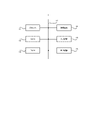
- FIG. 1 is a block diagram showing a hardware configuration of an information processing system according to the first embodiment.
- the information processing system 1 includes a processor 11, a RAM (Random Access Memory) 12, a ROM (Read Only Memory) 13, and a storage device 14.
- the information processing system 1 may further include an input device 15 and an output device 16.
- the processor 11, the RAM 12, the ROM 13, the storage device 14, the input device 15, and the output device 16 are connected via the data bus 17.
- Processor 11 reads a computer program.
- the processor 11 is configured to read a computer program stored in at least one of the RAM 12, the ROM 13, and the storage device 14.
- the processor 11 may read a computer program stored in a computer-readable recording medium using a recording medium reading device (not shown).
- the processor 11 may acquire (that is, read) a computer program from a device (not shown) located outside the information processing system 1 via a network interface.
- the processor 11 controls the RAM 12, the storage device 14, the input device 15, and the output device 16 by executing the read computer program.
- a functional block for executing a classification using a likelihood ratio and a learning process related thereto is realized in the processor 11.
- processor 11 a CPU (Central Processing Unit), a GPU (Graphics Processing Unit), an FPGA (field-programmable get array), a DSP (Demand-Side Platform), an ASIC, and an ASIC.
- processor 11 one of the above-mentioned examples may be used, or a plurality of processors 11 may be used in parallel.
- the RAM 12 temporarily stores the computer program executed by the processor 11.
- the RAM 12 temporarily stores data temporarily used by the processor 11 while the processor 11 is executing a computer program.
- the RAM 12 may be, for example, a D-RAM (Dynamic RAM).
- the ROM 13 stores a computer program executed by the processor 11.
- the ROM 13 may also store fixed data.
- the ROM 13 may be, for example, a P-ROM (Programmable ROM).
- the storage device 14 stores data stored in the information processing system 1 for a long period of time.
- the storage device 14 may operate as a temporary storage device of the processor 11.
- the storage device 14 may include, for example, at least one of a hard disk device, a magneto-optical disk device, an SSD (Solid State Drive), and a disk array device.
- the input device 15 is a device that receives an input instruction from the user of the information processing system 1.
- the input device 15 may include, for example, at least one of a keyboard, a mouse and a touch panel.
- the input device 15 may be a dedicated controller (operation terminal). Further, the input device 15 may include a terminal owned by the user (for example, a smartphone, a tablet terminal, or the like).
- the input device 15 may be a device capable of voice input including, for example, a microphone.
- the output device 16 is a device that outputs information about the information processing system 1 to the outside.
- the output device 16 may be a display device (for example, a display) capable of displaying information about the information processing system 1.
- the display device here may be a television monitor, a personal computer monitor, a smartphone monitor, a tablet terminal monitor, or another mobile terminal monitor.
- the display device may be a large monitor, a digital signage, or the like installed in various facilities such as a store.
- the output device 16 may be a device that outputs information in a format other than an image.
- the output device 16 may be a speaker that outputs information about the information processing system 1 by voice.
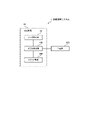
- FIG. 2 is a block diagram showing a functional configuration of the information processing system according to the first embodiment.
- the information processing system 1 includes a classification device 10 and a learning unit 300.
- the classification device 10 is a device that classifies the input series data, and has a data acquisition unit 50, a likelihood ratio calculation unit 100, and a class classification unit 200 as processing blocks for realizing the function. It is configured in preparation.
- the learning unit 300 is configured to be able to execute the learning process related to the classification device 10.
- the classification device 10 may be configured to include the learning unit 300.
- Each of the data acquisition unit 50, the likelihood ratio calculation unit 100, the classification unit 200, and the learning unit 300 may be realized by the processor 11 (see FIG. 1) described above.
- the data acquisition unit 50 is configured to be able to acquire a plurality of elements included in the series data.
- the data acquisition unit 50 may acquire data directly from an arbitrary data acquisition device (for example, a camera, a microphone, etc.), or may read data previously acquired by the data acquisition device and stored in the storage or the like. It may be a thing.
- the data acquisition unit 50 may be configured to acquire data from each of the plurality of cameras.
- the elements of the series data acquired by the data acquisition unit 50 are configured to be output to the likelihood ratio calculation unit 100.
- the series data is data including a plurality of elements arranged in a predetermined order, and for example, time series data can be mentioned as an example. More specific examples of series data include, but are not limited to, video data and audio data.
- the likelihood ratio calculation unit 100 is configured to be able to calculate the likelihood ratio based on at least two consecutive elements among the plurality of elements acquired by the data acquisition unit 50.
- the "likelihood ratio" here is an index showing the likelihood of the class to which the series data belongs.
- the likelihood ratio may be calculated, for example, as a log-likelihood cost (LLR: Log Likelihood Ratio). Specific examples and specific calculation methods of the likelihood ratio will be described in detail in other embodiments described later.
- the class classification unit 200 is configured to be able to classify series data based on the likelihood ratio calculated by the likelihood ratio calculation unit 100.
- the class classification unit 200 selects at least one class to which the series data belongs from a plurality of classes that are classification candidates.
- the plurality of classes that are candidates for classification may be preset. Alternatively, the plurality of classes that are classification candidates may be appropriately set by the user, or may be appropriately set based on the type of series data to be handled and the like.
- the learning unit 300 learns about the calculation of the likelihood ratio in the classification device 10. Specifically, the learning unit 300 learns the likelihood ratio calculation unit 100 in the classification device 10 by using the training data prepared in advance.
- the learning unit 300 according to the present embodiment particularly determines the degree of contribution of a plurality of series of data as training data to learning (hereinafter, appropriately referred to as "learning contribution") in terms of ease of classification of the series data. Change accordingly.
- the degree of learning contribution is a degree indicating the magnitude of the influence of series data on learning, and the higher the degree, the greater the influence on learning. A more specific method of changing the learning contribution will be described in detail in other embodiments described later.
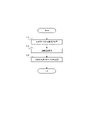
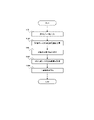
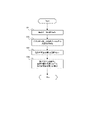
- FIG. 3 is a flowchart showing the operation flow of the classification device in the information processing system according to the first embodiment.
- the data acquisition unit 50 first acquires the elements included in the series data (step S11).
- the data acquisition unit 50 outputs the elements of the acquired series data to the likelihood ratio calculation unit 100.
- the likelihood ratio calculation unit 100 calculates the likelihood ratio based on the acquired two or more elements (step S12).
- the class classification unit 200 classifies the class based on the calculated likelihood ratio (step S13).
- the classification may determine one class to which the series data belongs, or may determine a plurality of classes to which the series data is likely to belong.
- the class classification unit 200 may output the result of the class classification to a display or the like. Further, the class classification unit 200 may output the result of the class classification by voice via a speaker or the like.
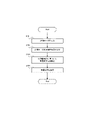
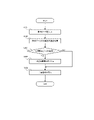
- FIG. 4 is a flowchart showing the flow of operation of the learning unit in the information processing system according to the first embodiment.
- the training data is first input to the learning unit 300 (step S101).
- the training data may be configured, for example, as a set of sequence data and information about the correct answer class to which the sequence data belongs (that is, correct answer data).
- the learning unit 300 acquires information on the classification ease of the series data input as training data (step S102).
- the "classification ease” here is a value indicating the degree of ease of classification of the series data, and more specifically, the classification unit 200 in the classification device 10 classifies the series data into accurate classes. It is a value indicating the ease of.
- the degree of ease of classification can be determined, for example, by inputting training data to the classification device 10 and actually executing the classification process. A specific method for determining the ease of classification of series data will be described in detail in other embodiments described later.
- the learning unit 300 may read and acquire the pre-acquired classification ease level when learning. That is, the degree of classification ease may be acquired by simply reading the training data without performing the classification process of the training data at the time of learning.
- the learning unit 300 sets the learning contribution degree of the series data based on the acquired classification ease (step S103).
- the learning unit 300 can set the learning contribution degree by weighting the loss function calculated from the series data, for example. For example, the learning contribution of the series data with a large weight is high, while the learning contribution of the series data with a small weight is low.
- the setting of the learning contribution degree using the weight is an example, and the learning contribution degree may be set by using another method.
- the learning unit 300 executes the learning process in consideration of the learning contribution degree (step S104).
- the learning contribution of the series data used for learning is set high, the influence on the learning process will be relatively large.
- the learning contribution of the series data used for learning is set low, the influence on the learning process is relatively small.
- the specific mode of the learning process is not particularly limited, but for example, a method of optimizing the parameters using a loss function may be used.
- the parameter optimization method for example, an error back propagation method may be used, or another method may be used.
- the learning contribution degree is set according to the classification ease of the series data which is the training data. Therefore, the influence on learning can be changed between the series data that is easy to classify and the series data that is difficult to classify. By performing such learning, it is possible to perform more effective learning as compared with the case where the learning contribution of all the series data is uniform. That is, if the learning contribution degree is set according to the ease of classification, the influence of each series data on learning can be adjusted to an appropriate level, and more efficient learning can be performed. As a result, the classification by the classification device 10 can be performed with higher accuracy.
- the information processing system 1 according to the second embodiment will be described with reference to FIGS. 5 to 7.
- the second embodiment differs from the first embodiment described above in only a part of the operation.
- the device configuration see FIGS. 1 and 2) and the operation of the classification device 10 (see FIG. 3).
- the like may be the same as in the first embodiment. Therefore, in the following, the parts different from the first embodiment will be described in detail, and the description of other overlapping parts will be omitted as appropriate.
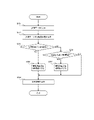
- FIG. 5 is a flowchart showing the flow of operation of the learning unit in the information processing system according to the second embodiment.
- the same reference numerals are given to the same processes as those shown in FIG.
- the training data is first input to the learning unit 300 (step S101). Then, the learning unit 300 acquires information on the classification ease of the series data input as the training data (step S102).
- the learning unit 300 determines whether or not the acquired classification ease is higher than the first threshold value (step S201).
- the "first threshold value” here is a threshold value for determining whether or not the degree of ease of classification is sufficiently high (in other words, whether or not the series data is easy to classify).
- the first threshold value may be determined, for example, by a preliminary simulation or the like.
- step S201: YES When the degree of ease of classification is higher than the first threshold value (step S201: YES), the learning unit 300 lowers the degree of learning contribution of the series data (step S202). For example, the learning unit 300 changes the series data whose classification ease is higher than the first threshold value so that the learning contribution degree is lower than the initial value.
- step S201: NO when the classification ease is not higher than the first threshold value (step S201: NO), the learning unit 300 does not execute the process of step S202 for the series data (that is, does not lower the learning contribution degree). For example, the learning unit 300 makes it possible to maintain the learning contribution degree as the initial value for the series data whose classification ease is not higher than the first threshold value.
- the learning contribution of the series data whose classification ease is higher than the first threshold is relatively low, while the classification ease is higher than the first threshold.
- the learning contribution of not high series data is relatively high.
- the learning unit 300 executes the learning process in consideration of the learning contribution degree (step S104). Specifically, when the degree of learning contribution is lowered in step S202, the influence on learning using the series data is relatively small. On the other hand, when step S202 is not executed (that is, when the learning contribution is not lowered), the influence on learning using the series data is relatively large.
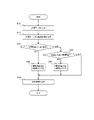
- FIG. 6 is a flowchart showing the operation flow of the first modification of the learning unit in the information processing system according to the second embodiment.
- the same reference numerals are given to the same processes as those shown in FIG.
- the training data is first input to the learning unit 300 (step S101). Then, the learning unit 300 acquires information on the classification ease of the series data input as the training data (step S102).
- the learning unit 300 determines whether or not the acquired classification ease is higher than the first threshold value (step S201).
- the learning contribution degree of the series data is lowered by two steps (step S203). That is, the learning unit 300 significantly lowers the learning contribution of the series data for which the classification ease is determined to be higher than the first threshold value.
- the learning unit 300 determines whether or not the acquired classification ease is higher than the second threshold value (step S204).
- the "second threshold value” here is for determining whether the classification ease is higher or lower in the series data for which the classification ease is determined to be lower than the first threshold. It is a threshold. Therefore, the second threshold value is set as a value lower than the first threshold value.
- the second threshold value may be determined, for example, by a preliminary simulation or the like.
- step S204 When the degree of ease of classification is higher than the second threshold value (step S204: YES), the learning unit 300 lowers the degree of learning contribution of the series data by one step (step S205). That is, the learning unit 300 changes the learning contribution degree of the series data whose classification ease is higher than the second threshold value so as to be smaller and lower than that of step S203. On the other hand, when the classification ease is not higher than the second threshold value (step S204: NO), the learning unit 300 does not execute the process of step S205 for the series data (that is, does not lower the learning contribution degree).
- the learning contribution level is set in three patterns, "one step lower”, “one step lower”, and “not lower", depending on the degree of ease of classification.
- the learning unit 300 executes the learning process in consideration of the learning contribution degree (step S104). Specifically, when the learning contribution degree is lowered by two steps in step S203, the influence on learning using the series data is significantly reduced. Further, when the learning contribution degree is lowered by one step in step S205, the influence on the learning using the series data becomes slightly small. On the other hand, when neither step S203 nor step S205 is executed (that is, when the learning contribution is not lowered), the influence on learning using the series data is that the learning contribution is lowered. Will be larger than.
- FIG. 7 is a flowchart showing the operation flow of the second modification of the learning unit in the information processing system according to the second embodiment.
- the same reference numerals are given to the same processes as those shown in FIGS. 5 and 6.
- the training data is first input to the learning unit 300 (step S101). Then, the learning unit 300 acquires information on the classification ease of the series data input as the training data (step S102).
- the learning unit 300 determines whether or not the acquired classification ease is higher than the first threshold value (step S201).
- the learning unit 300 determines whether or not the acquired classification ease is higher than the third threshold value (step S206).
- the "third threshold value" here is for determining whether the classification ease is higher or lower in the series data determined to have a higher classification ease than the first threshold. It is a threshold. Therefore, the third threshold value is set as a value higher than the third threshold value.
- the third threshold value may be determined, for example, by a preliminary simulation or the like.
- step S206: YES When the degree of ease of classification is higher than the third threshold value (step S206: YES), the learning unit 300 lowers the degree of learning contribution of the series data by two steps (step S203). That is, the learning unit 300 significantly lowers the learning contribution of the series data for which the classification ease is determined to be higher than the third threshold value.
- step S206: NO when the degree of ease of classification is not higher than the third threshold value (step S206: NO), the learning unit 300 lowers the degree of learning contribution of the series data by one step (step S205). That is, the learning unit 300 slightly lowers the learning contribution degree of the series data for which it is determined that the classification ease is higher than the first threshold value but lower than the third threshold value.
- step S201: NO when the classification ease is not higher than the first threshold value (step S201: NO), the learning unit 300 does not execute any of the processes of steps S203 and S205 on the series data (that is, the learning contribution degree is determined). Do not lower).
- the learning contribution degree is "one step lower”, “one step lower”, and “not lower” depending on the degree of ease of classification. It is set in 3 patterns.
- the learning unit 300 executes the learning process in consideration of the learning contribution degree (step S104). Specifically, when the learning contribution degree is lowered by two steps in step S203, the influence on learning using the series data is significantly reduced. Further, when the learning contribution degree is lowered by one step in step S205, the influence on the learning using the series data becomes slightly small. On the other hand, when neither step S203 nor step S205 is executed (that is, when the learning contribution is not lowered), the influence on learning using the series data is that the learning contribution is lowered. Will be larger than.
- the learning contribution is lowered in one or two steps, but the learning contribution may be lowered in more steps.
- the learning contribution may be lowered in three stages, or the learning contribution may be lowered in four or more steps.
- the degree of learning contribution does not change stepwise according to the threshold value, but may change linearly.
- a relational expression showing the relationship between the degree of ease of classification and the degree of lowering the learning contribution may be prepared, and the relational expression may be used to lower the learning contribution.
- a table showing the relationship between the degree of ease of classification and the degree of lowering the learning contribution may be prepared, and the table may be used to lower the learning contribution.
- the learning contribution of the series data having a high degree of easy classification is low.
- the influence of the series data that is easy to classify on the learning can be relatively small, and the influence of the series data that is difficult to classify on the learning can be relatively large.
- the learning is focused on the series data that is difficult to classify (for example, the data around the classification boundary). As a result, even data that is difficult to classify can be accurately classified by learning.
- the information processing system 1 according to the third embodiment will be described with reference to FIGS. 8 to 10. It should be noted that the third embodiment may be the same as the first and second embodiments except for a part of the operation different from the above-mentioned first and second embodiments. Therefore, in the following, the parts different from each of the above-described embodiments will be described in detail, and the description of other overlapping parts will be omitted as appropriate.
- FIG. 8 is a flowchart showing the flow of operation of the learning unit in the information processing system according to the third embodiment.
- the same reference numerals are given to the same processes as those shown in FIG.
- the training data is first input to the learning unit 300 (step S101). Then, the learning unit 300 acquires information on the classification ease of the series data input as the training data (step S102).
- the learning unit 300 determines whether or not the acquired classification ease is lower than the fourth threshold value (step S301).
- the "fourth threshold” here is a threshold for determining whether or not the degree of ease of classification is sufficiently low (in other words, whether or not the series data is difficult to classify).
- the fourth threshold value may be determined, for example, by a preliminary simulation or the like.
- step S301: YES When the degree of ease of classification is lower than the fourth threshold value (step S301: YES), the learning unit 300 increases the degree of learning contribution of the series data (step S302). For example, the learning unit 300 changes the series data whose classification ease is lower than the fourth threshold value so that the learning contribution degree is higher than the initial value.
- step S301: NO when the classification ease is not lower than the fourth threshold value (step S301: NO), the learning unit 300 does not execute the process of step S302 on the series data (that is, does not increase the learning contribution degree). For example, the learning unit 300 makes it possible to maintain the learning contribution degree as the initial value for the series data whose classification ease is not higher than the fourth threshold value.
- the learning contribution of the series data whose classification ease is lower than the fourth threshold is relatively high, while the classification ease is higher than the fourth threshold.
- the learning contribution of not low series data is relatively low.
- step S104 the learning unit 300 executes the learning process in consideration of the learning contribution degree. Specifically, when the degree of learning contribution is increased in step S302, the influence on learning using the series data becomes relatively large. On the other hand, when step S302 is not executed (that is, when the learning contribution is not increased), the influence on learning using the series data is relatively small.
- FIG. 9 is a flowchart showing the operation flow of the first modification of the learning unit in the information processing system according to the third embodiment.
- the same reference numerals are given to the same processes as those shown in FIG.
- the training data is first input to the learning unit 300 (step S101). Then, the learning unit 300 acquires information on the classification ease of the series data input as the training data (step S102).
- the learning unit 300 determines whether or not the acquired classification ease is lower than the fourth threshold value (step S201).
- the learning contribution of the series data is increased by two steps (step S303). That is, the learning unit 300 significantly increases the learning contribution of the series data for which the classification ease is determined to be lower than the fourth threshold value.
- the learning unit 300 determines whether or not the acquired classification ease is lower than the fifth threshold value (step S304).
- the "fifth threshold” here is for determining whether the classification ease is higher or lower in the series data determined to have a higher classification ease than the fourth threshold. It is a threshold. Therefore, the fifth threshold value is set as a value higher than the fourth threshold value.
- the fifth threshold value may be determined, for example, by a preliminary simulation or the like.
- step S304 When the degree of ease of classification is lower than the fifth threshold value (step S304: YES), the learning unit 300 increases the degree of learning contribution of the series data by one step (step S305). That is, the learning unit 300 changes the learning contribution degree of the series data whose classification ease is lower than the fifth threshold value so as to be smaller and lower than that of step S303. On the other hand, when the classification ease is not lower than the fifth threshold value (step S304: NO), the learning unit 300 does not execute the process of step S305 for the series data (that is, does not lower the learning contribution degree).
- the learning contribution level is set in three patterns, "one step higher”, “one step higher”, and “not higher”, depending on the degree of ease of classification.
- the learning unit 300 executes the learning process in consideration of the learning contribution degree (step S104). Specifically, when the learning contribution degree is increased by two steps in step S303, the influence on learning using the series data becomes significantly large. Further, when the learning contribution degree is increased by one step in step S305, the influence on the learning using the series data becomes slightly large. On the other hand, when neither step S303 nor step S305 is executed (that is, when the learning contribution is not increased), the influence on learning using the series data is that the learning contribution is increased. Is smaller than.
- FIG. 10 is a flowchart showing the operation flow of the second modification of the learning unit in the information processing system according to the third embodiment.
- the same reference numerals are given to the same processes as those shown in FIGS. 8 and 9.
- the training data is first input to the learning unit 300 (step S101). Then, the learning unit 300 acquires information on the classification ease of the series data input as the training data (step S102).
- the learning unit 300 determines whether or not the acquired classification ease is lower than the fourth threshold value (step S301).
- the learning unit 300 determines whether or not the acquired classification ease is lower than the sixth threshold value (step S306).
- the "sixth threshold" here is for determining whether the classification ease is higher or lower in the series data determined to be lower than the fourth threshold. It is a threshold. Therefore, the sixth threshold value is set as a value lower than the fourth threshold value.
- the sixth threshold value may be determined, for example, by a preliminary simulation or the like.
- step S306 When the degree of ease of classification is lower than the sixth threshold value (step S306: YES), the learning unit 300 increases the degree of learning contribution of the series data by two steps (step S303). That is, the learning unit 300 significantly increases the learning contribution of the series data for which the classification ease is determined to be lower than the sixth threshold value.
- step S306: NO when the degree of ease of classification is not lower than the sixth threshold value (step S306: NO), the learning unit 300 increases the degree of learning contribution of the series data by one step (step S305). That is, the learning unit 300 slightly increases the learning contribution of the series data for which it is determined that the classification ease is lower than the fourth threshold value but higher than the sixth threshold value.
- step S301 when the classification ease is not lower than the fourth threshold value (step S301: NO), the learning unit 300 does not execute any of the processes of steps S303 and S305 on the series data (that is, the learning contribution degree is determined). Not expensive).
- the learning contribution degree is "one step higher”, “one step higher”, and “not higher” depending on the degree of ease of classification. It is set in 3 patterns.
- the learning unit 300 executes the learning process in consideration of the learning contribution degree (step S104). Specifically, when the learning contribution degree is increased by two steps in step S303, the influence on learning using the series data becomes significantly large. Further, when the learning contribution degree is increased by one step in step S305, the influence on the learning using the series data becomes slightly large. On the other hand, when neither step S303 nor step S305 is executed (that is, when the learning contribution is not increased), the influence on learning using the series data is that the learning contribution is increased. Is smaller than.
- the learning contribution may be increased in more stages.
- the learning contribution may be increased in three stages, or the learning contribution may be increased in four or more stages.
- the degree of learning contribution does not change stepwise according to the threshold value, but may change linearly.
- a relational expression showing the relationship between the degree of ease of classification and the degree of increasing the degree of learning contribution may be prepared, and the degree of learning contribution may be increased by using the relational expression.
- a table showing the relationship between the degree of ease of classification and the degree of increasing the degree of learning contribution may be prepared, and the table may be used to increase the degree of learning contribution.
- the learning contribution of the series data having a low degree of easy classification is high.
- the influence of the series data that is easy to classify on the learning can be relatively small, and the influence of the series data that is difficult to classify on the learning can be relatively large.
- the learning is focused on the series data that is difficult to classify (for example, the data around the classification boundary). As a result, even data that is difficult to classify can be accurately classified by learning.
- FIG. 11 is a flowchart showing the operation flow of the learning unit that combines the information processing systems according to the second embodiment and the third embodiment.
- the same reference numerals are given to the same processes as those shown in FIGS. 5 and 8.
- training data is first input to the learning unit 300 (step S101). Then, the learning unit 300 acquires information on the classification ease of the series data input as the training data (step S102).
- the learning unit 300 determines whether or not the acquired classification ease is higher than the seventh threshold value (step S210).
- the "seventh threshold” here is a threshold for determining whether the degree of ease of classification is high or low (in other words, whether the series data is easy to classify or difficult to classify).
- the seventh threshold value may be determined, for example, by a preliminary simulation or the like.
- the seventh threshold value may be the same value as the first threshold value in the second embodiment.
- step S210 may be a process of determining whether or not the acquired classification ease is lower than the seventh threshold value (in this case, "YES" and "NO” in the flowchart may be reversed).
- the seventh threshold value at this time may be the same value as the fourth threshold value in the third embodiment.
- step S207 When the degree of ease of classification is higher than the seventh threshold value (step S207: YES), the learning unit 300 lowers the degree of learning contribution of the series data (step S202). For example, the learning unit 300 changes the series data whose classification ease is higher than the seventh threshold value so that the learning contribution degree is lower than the initial value.
- step S210: NO when the degree of ease of classification is not higher than the seventh threshold value (step S210: NO), the learning unit 300 increases the degree of learning contribution of the series data (step S302). For example, the learning unit 300 changes the series data whose classification ease is lower than the seventh threshold value so that the learning contribution degree is higher than the initial value.
- the learning unit 300 executes the learning process in consideration of the learning contribution degree (step S104). By doing so, the influence on learning is relatively small for the series data whose learning contribution is low in step S202. On the other hand, the series data having a high learning contribution in step S302 has a relatively large influence on learning. As described above, even when the process of lowering the degree of learning contribution and the process of increasing the degree of learning contribution are combined, it is possible to appropriately set the degree of learning contribution according to the degree of ease of classification.
- the information processing system 1 according to the fourth embodiment will be described with reference to FIGS. 12 to 15. It should be noted that the fourth embodiment may be the same as the first to third embodiments except for a part of the operation different from the above-mentioned first to third embodiments. Therefore, in the following, the parts different from each of the above-described embodiments will be described in detail, and the description of other overlapping parts will be omitted as appropriate.
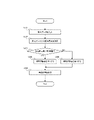
- FIG. 12 is a flowchart showing the flow of operation of the learning unit in the information processing system according to the fourth embodiment.
- the same reference numerals are given to the same processes as those shown in FIG.
- the training data is first input to the learning unit 300 (step S101). Then, the learning unit 300 acquires information on the classification ease of the series data input as the training data (step S102).
- the learning unit 300 ranks the series data based on the degree of ease of classification (step S401). For example, the learning unit 300 ranks a plurality of series data in descending order of ease of classification (in other words, in order of ease of classification). Alternatively, the learning unit 300 may rank the plurality of series data in ascending order of ease of classification (in other words, in order of difficulty in classification).
- the learning unit 300 sets the learning contribution degree according to the ranking (step S402).
- the higher the ranking that is, the easier it is to classify
- the lower the learning contribution may be set.
- the higher the ranking that is, the more difficult it is to classify
- the higher the learning contribution may be set.
- the learning unit 300 executes the learning process in consideration of the learning contribution degree (step S104).
- the lower the learning contribution is set the smaller the influence on learning using the series data.
- the higher the learning contribution is set the greater the influence on learning using the series data.
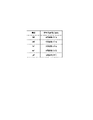
- FIG. 13 is a table (No. 1) showing an example of setting the learning contribution degree by the learning unit in the information processing system according to the fourth embodiment.
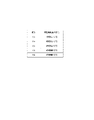
- FIG. 14 is a table (No. 2) showing an example of setting the learning contribution degree by the learning unit in the information processing system according to the fourth embodiment.
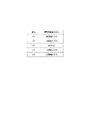
- FIG. 15 is a table (No. 3) showing an example of setting the learning contribution degree by the learning unit in the information processing system according to the fourth embodiment.
- FIGS. 13 to 15 it is assumed that the higher the degree of ease of classification (that is, the easier it is to classify), the higher the ranking.
- the higher the rank that is, the easier it is to classify
- the learning contribution level is lowered by 5 levels for the series data having the first rank.
- the learning contribution level is lowered by four levels.
- the learning contribution is lowered by three levels.
- the learning contribution is lowered by 2 levels.
- the learning contribution is lowered by one level. In this way, the easier it is to classify the series data, the lower the learning contribution can be set.
- the learning contribution degree is increased by one step for the series data having the first rank.
- the learning contribution level is increased by two levels for the series data that ranks second.
- the learning contribution level is increased by three levels.
- the learning contribution is increased by 4 levels.
- the learning contribution level is increased by 5 levels. Even in this case, the learning contribution can be set lower as the series data is easier to classify.
- the learning contribution degree may be increased or decreased according to the order.
- the learning contribution level is lowered by two levels for the series data having the first rank.
- the learning contribution level is lowered by one level for the series data that ranks second.
- the learning contribution is not changed (that is, the initial value is maintained).
- the learning contribution level is increased by one level.
- the learning contribution is increased by 2 levels. Even in this case, the learning contribution can be set lower as the series data is easier to classify.
- the learning contribution degree may be set by another method. That is, the specific content is not limited as long as the method determines the degree of learning contribution according to the order of ease of classification.
- the learning contribution degree is set based on the order according to the classification ease. By doing so, it is possible to set an appropriate degree of learning contribution according to the ease of classification. For example, the influence of easy-to-classify series data on learning can be relatively small, and the influence of difficult-to-classify series data on learning can be relatively large. As a result, even data that is difficult to classify can be accurately classified by learning.
- the information processing system 1 according to the fifth embodiment will be described with reference to FIGS. 16 to 19. It should be noted that the fifth embodiment may be the same as the first to fourth embodiments except for a part of the configuration and operation different from the above-mentioned first to fourth embodiments. Therefore, in the following, the parts different from each of the above-described embodiments will be described in detail, and the description of other overlapping parts will be omitted as appropriate.
- FIG. 16 is a block diagram showing a functional configuration of the information processing system according to the fifth embodiment.
- the same reference numerals are given to the same elements as those of the constituent elements shown in FIG.
- the likelihood ratio calculation unit 100 in the classification device 10 includes a first calculation unit 110 and a second calculation unit 120.
- the first calculation unit 110 includes an individual likelihood ratio calculation unit 111 and a first storage unit.
- the second calculation unit 120 includes an integrated likelihood ratio calculation unit 121 and a second storage unit 122.
- Each of the individual likelihood ratio calculation unit 111 and the integrated likelihood ratio calculation unit 121 may be realized by, for example, the processor 11 (see FIG. 1) described above.
- each of the first storage unit 112 and the second storage unit 122 may be realized by, for example, the above-mentioned storage device 14 (see FIG. 1).
- the first calculation unit 110 is configured to be able to calculate the individual likelihood ratio by the individual likelihood ratio calculation unit 111 and the first storage unit 112.
- the individual likelihood ratio calculation unit 111 is configured to be able to calculate the individual likelihood ratio based on two consecutive elements among the elements sequentially acquired by the data acquisition unit 50. More specifically, the individual likelihood ratio calculation unit 111 calculates the individual likelihood ratio based on the newly acquired element and the past data stored in the first storage unit 112.
- the information stored in the first storage unit 112 is configured to be readable by the individual likelihood ratio calculation unit 111.
- the individual likelihood ratio calculation unit 111 reads out the stored past individual likelihood ratio and obtains a new individual in consideration of the element. The likelihood ratio may be calculated.
- the individual likelihood ratio calculation unit 111 calculates the past individual likelihood ratio from the stored past elements and newly calculates the individual likelihood ratio.
- the likelihood ratio to the acquired element may be calculated.
- the second calculation unit 120 is configured to be able to calculate the integrated likelihood ratio by the integrated likelihood ratio calculation unit 121 and the second storage unit 122.
- the integrated likelihood ratio calculation unit 121 is configured to be able to calculate the integrated likelihood ratio based on a plurality of individual likelihood ratios calculated by the first calculation unit 110. That is, the integrated likelihood ratio is a likelihood ratio calculated based on a plurality of factors considered in the calculation of the plurality of individual likelihood ratios.
- the integrated likelihood ratio calculation unit 121 uses the individual likelihood ratio calculated by the individual likelihood ratio calculation unit 111 and the past integrated likelihood ratio stored in the second storage unit 122 to perform a new integrated likelihood ratio. Calculate the likelihood ratio.
- the information stored in the second storage unit 122 (that is, the past integrated likelihood ratio) is configured to be readable by the integrated likelihood ratio calculation unit 121.
- the integrated likelihood ratio calculated by the second calculation unit 120 is output to the classification unit 200.
- the class classification unit 200 classifies the series data based on the integrated likelihood ratio.
- the learning unit 300 is further configured to include a determination unit 310.
- the determination unit 310 is configured to be able to determine the degree of ease of classification of the series data as training data used for learning.
- the determination unit 310 determines the ease of classification based on the likelihood ratio calculated by the likelihood ratio calculation unit 100. The specific method for determining the ease of classification will be described in detail later.
- the learning unit 300 may perform learning as a whole of the likelihood ratio calculation unit 100 (that is, the first calculation unit 110 and the second calculation unit 120 together). Learning may be performed separately for 1 calculation unit 110 and 2nd calculation unit 120. Alternatively, the learning unit 300 may be separately provided as a first learning unit that learns only the first calculation unit 110 and a second learning unit that learns only the second calculation unit 120. In this case, only one of the first learning unit and the second learning unit may be provided.
- FIG. 17 is a flowchart showing the operation flow of the likelihood ratio calculation unit in the information processing system according to the fifth embodiment.
- the individual likelihood ratio calculation unit 111 in the first calculation unit 110 first stores the first memory.
- the past data is read from the unit 112 (step S31).
- the past data is, for example, the processing result (in other words, calculated for the previous element) in the individual likelihood ratio calculation unit 111 of the element acquired immediately before the element acquired this time by the data acquisition unit 50. (Individual likelihood ratio).
- the past data may be the element itself acquired immediately before the element acquired by acquisition.
- the individual likelihood ratio calculation unit 111 has a new individual likelihood ratio (that is, a data acquisition unit) based on the elements acquired by the data acquisition unit 50 and the past data read from the first storage unit 112.
- the individual likelihood ratio to the element acquired this time in 50) is calculated (step S32).
- the individual likelihood ratio calculation unit 111 outputs the calculated individual likelihood ratio to the second calculation unit 120.
- the individual likelihood ratio calculation unit 111 may store the calculated individual likelihood ratio in the first storage unit 112.
- the integrated likelihood ratio calculation unit 121 in the second calculation unit 120 reads out the past integrated likelihood ratio from the second storage unit 122 (step S33).
- the past integrated likelihood ratio is, for example, the processing result of the integrated likelihood ratio calculation unit 121 (in other words, the previous one) for the element acquired before the element acquired this time by the data acquisition unit 50. It may be the integrated likelihood ratio calculated for the element).
- the integrated likelihood ratio calculation unit 121 newly integrates based on the likelihood ratio calculated by the individual likelihood ratio calculation unit 111 and the past integrated likelihood ratio read from the second storage unit 122.
- the likelihood ratio (that is, the integrated likelihood ratio to the element acquired this time by the data acquisition unit 50) is calculated (step S34).
- the integrated likelihood ratio calculation unit 121 outputs the calculated integrated likelihood ratio to the classification unit 200.
- the integrated likelihood ratio calculation unit 121 may store the calculated integrated likelihood ratio in the second storage unit 122.
- FIG. 18 is a flowchart showing the flow of operation of the learning unit in the information processing system according to the fifth embodiment.
- the same reference numerals are given to the same processes as those shown in FIG.
- the training data is first input to the learning unit 300 (step S101).
- the learning unit 300 determines the ease of classification of the series data based on the likelihood ratio calculated from the series data which is the training data (step S501). Specifically, the learning unit 300 is based on at least one of the time until the likelihood ratio reaches the correct or incorrect threshold, the slope of the likelihood ratio, and the variance of the slope of the likelihood ratio. Determine the ease of classifying the data.
- the likelihood ratio of the series data used for determining the ease of classification may be calculated at the time of the learning operation, or may be calculated in advance before the learning operation is started.
- the learning unit 300 sets the learning contribution degree of the series data based on the determined classification ease (step S103). After that, the learning unit 300 executes the learning process in consideration of the learning contribution degree (step S104).
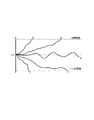
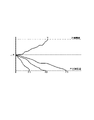
- FIG. 19 is a graph showing an example of the likelihood ratio used for learning in the information processing system according to the fifth embodiment.
- the likelihood ratio (here, logarithmic likelihood cost: LLR) calculated by the likelihood ratio calculation unit 100 according to the fifth embodiment is sequentially acquired with elements of series data. As the iterative calculation process is executed, it gradually fluctuates with the passage of time.
- the five likelihood ratios A, B, C, D, and E in FIG. 18 are likelihood ratios corresponding to different series data.
- the likelihood ratios of A to E change differently. Specifically, the likelihood ratio of A reaches the correct answer threshold value (that is, the threshold value corresponding to the correct answer class) at a relatively early stage after the calculation process is started.
- the likelihood ratio of B reaches the correct answer threshold at a relatively late stage (specifically, at a timing later than the likelihood ratio of A) after the calculation process is started.
- the likelihood ratio of C reaches the incorrect answer threshold value (that is, the threshold value corresponding to the incorrect answer class other than the correct answer class) at a relatively early stage after the calculation process is started.
- the likelihood ratio of D reaches the incorrect answer threshold at a relatively late stage (specifically, at a timing later than the likelihood ratio of C) after the calculation process is started.
- the likelihood ratio of E has not reached either the correct answer threshold value or the incorrect answer threshold value since the calculation process was started.
- the determination unit 310 in the learning unit 300 determines the degree of ease of classification based on the change in the likelihood ratio described above.
- the determination unit 310 may determine the degree of ease of classification, for example, based on the time until the likelihood ratio reaches the correct answer threshold value or the incorrect answer threshold value.
- the likelihood ratios A and B shown in FIG. 18 both reach the correct answer threshold value, but the arrival timings are different.
- the likelihood ratios C and D both reach the incorrect answer threshold, but the arrival timings are different. It can be considered that such a difference in the timing of reaching the threshold value corresponds to the ease of classification of each likelihood ratio.
- the determination unit 310 may determine the degree of ease of classification based on the difference in the timing of reaching the threshold value in this way. A more specific determination method will be described in detail in another embodiment described later.
- the determination unit 310 may determine the ease of classification based on the slope of the likelihood ratio. For example, the likelihood ratio of A has a slope to the correct answer threshold, and the value of the slope is relatively large. As a result, the likelihood ratio of A reaches the correct answer threshold at a relatively early timing. Like A, the likelihood ratio of B has a slope toward the correct answer threshold, but the value of the slope is relatively small. As a result, the likelihood ratio of B reaches the correct answer threshold at a relatively late timing. On the other hand, the likelihood ratio of C has a slope toward the incorrect answer threshold, and the value of the slope is relatively large. As a result, the likelihood ratio of C reaches the incorrect answer threshold at a relatively early timing.
- the likelihood ratio of D has a slope toward the incorrect answer threshold, but the value of the slope is relatively small. As a result, the likelihood ratio of D reaches the incorrect answer threshold at a relatively late timing. As described above, the slope of the likelihood ratio is greatly related to the time until the threshold is reached. Therefore, the determination unit 310 can determine the degree of ease of classification from the slope of the likelihood ratio, as in the case of using the time until the threshold value is reached.
- the determination unit 310 may determine the ease of classification based on the variance (that is, variation) of the slope of the likelihood ratio.
- the "variance of the slope” here means that the direction of the slope of the likelihood ratio changes many times in the direction of the correct answer threshold value or the direction of the incorrect answer threshold value.
- the likelihood ratio of E in the likelihood ratio of E, the direction of the slope is reversed many times, and the variance of the slope is large.
- the likelihood ratio of E has not reached either the correct answer threshold or the incorrect answer threshold.
- the likelihood ratio with a small slope variance can be judged to be easy to classify because it fluctuates greatly in one direction.
- the handling of the likelihood ratio that does not reach either the correct answer threshold value or the incorrect answer threshold value, such as the likelihood ratio of E will be described in detail in another embodiment described later.
- the slope of the entire likelihood ratio or the slope of the entire likelihood ratio may be used, or the likelihood may be used.
- a dispersion of a partial slope of the ratio or a partial slope of the likelihood ratio may be used.
- the variance of the entire slope of the likelihood ratio or the variance of the slope of the entire likelihood ratio is used, for example, the average value of the slope or the variance of the slope may be obtained, and the classification ease may be determined based on the average value.
- the classification ease is determined from the entire series data in this way, the learning contribution degree to the entire series data may be set.
- the ease of classification should be determined based on the slope of the likelihood ratio or the variance of the likelihood ratio at an arbitrary timing. Just do it.
- the classification ease is determined from only a part of the series data in this way, the learning contribution degree to the part of the series data may be set. Even if it is one series of data, different learning contributions may be set depending on the part.
- the ease of classification is determined based on the likelihood ratio calculated by the likelihood ratio calculation unit 100.
- the information processing system 1 according to the sixth embodiment will be described with reference to FIGS. 20 and 21.
- the sixth embodiment describes a specific method for determining the degree of ease of classification in the fifth embodiment, and the apparatus configuration and the flow of operation may be the same as those in the fifth embodiment. Therefore, in the following, the parts different from each of the above-described embodiments will be described in detail, and the description of other overlapping parts will be omitted as appropriate.
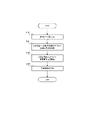
- FIG. 20 is a flowchart showing the flow of operation of the learning unit in the information processing system according to the sixth embodiment.
- the same reference numerals are given to the same processes as those shown in FIG.
- the training data is first input to the learning unit 300 (step S101).
- the learning unit 300 determines the ease of classification of the series data based on the time until the likelihood ratio calculated from the series data, which is the training data, reaches the correct answer threshold value. (Step S601).
- the likelihood ratio of the series data used for determining the ease of classification may be calculated at the time of the learning operation, or may be calculated in advance before the learning operation is started. Further, the time until the likelihood ratio reaches the correct answer threshold value may be calculated at the time of the learning operation, or may be calculated in advance before the learning operation is started.
- the learning unit 300 sets the learning contribution degree of the series data based on the determined classification ease (step S103). After that, the learning unit 300 executes the learning process in consideration of the learning contribution degree (step S104).
- FIG. 21 is a graph showing an example of the likelihood ratio used for learning in the information processing system according to the sixth embodiment.
- the determination unit 310 determines that the shorter the time until the correct answer threshold is reached, the higher the degree of ease of classification. Specifically, the determination unit 310 has the highest classification ease of the likelihood ratio T1, the second highest classification ease of the likelihood ratio T2, and the third highest classification ease of the likelihood ratio T3. judge.
- FIG. 21 also shows the likelihood ratio F reaching the incorrect answer threshold value
- the likelihood ratios T1, T2, and T3 reaching the correct answer threshold value are higher than the likelihood ratio F. It can be judged that it is easy to classify. That is, the likelihood ratios T1, T2, and T3 are common in that the correct answer can be selected, although the time until the correct answer threshold is reached is different, and the likelihood that the incorrect answer is selected has been selected. It can be determined that it is easier to classify than the degree ratio F. Therefore, it may be determined that the classification ease of the series data corresponding to the likelihood ratios T1, T2, and T3 is higher than the classification ease of the series data corresponding to the likelihood ratio F.
- the ease of classification is determined based on the time until the likelihood ratio reaches the correct answer threshold value.
- the degree of ease of classification of the series data which is the training data, can be easily and appropriately acquired as an appropriate value. Therefore, it is possible to change the degree of learning contribution according to the degree of ease of classification and realize appropriate learning.
- the information processing system 1 according to the seventh embodiment will be described with reference to FIGS. 22 and 23.
- the seventh embodiment like the sixth embodiment, describes a specific method for determining the degree of ease of classification in the fifth embodiment, and the apparatus configuration and the flow of operations are described in the fifth embodiment. May be similar to. Therefore, in the following, the parts different from each of the above-described embodiments will be described in detail, and the description of other overlapping parts will be omitted as appropriate.
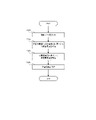
- FIG. 22 is a flowchart showing the flow of operation of the learning unit in the information processing system according to the seventh embodiment.
- the same reference numerals are given to the same processes as those shown in FIG.
- the training data is first input to the learning unit 300 (step S101).
- the learning unit 300 determines the ease of classification of the series data based on the time until the likelihood ratio calculated from the series data, which is the training data, reaches the incorrect answer threshold value. (Step S701).
- the likelihood ratio of the series data used for determining the ease of classification may be calculated at the time of the learning operation, or may be calculated in advance before the learning operation is started. Further, the time until the likelihood ratio reaches the incorrect answer threshold value may be calculated at the time of the learning operation, or may be calculated in advance before the learning operation is started.
- the learning unit 300 sets the learning contribution degree of the series data based on the determined classification ease (step S103). After that, the learning unit 300 executes the learning process in consideration of the learning contribution degree (step S104).
- FIG. 23 is a graph showing an example of the likelihood ratio used for learning in the information processing system according to the seventh embodiment.
- the determination unit 310 determines that the shorter the time until the incorrect answer threshold is reached, the lower the degree of ease of classification. Specifically, the determination unit 310 has the lowest classification ease of the likelihood ratio F1, the second lowest classification ease of the likelihood ratio F2, and the third lowest classification ease of the likelihood ratio F3. judge.
- FIG. 23 also shows the likelihood ratio T reaching the correct answer threshold value
- the likelihood ratios F1, F2, and F3 reaching the incorrect answer threshold value are higher than the likelihood ratio T. It can be judged that it is difficult to classify. That is, the likelihood ratios F1, F2, and F3 are common in that they have selected the incorrect answer, although the time until the incorrect answer threshold is reached is different, and the correct answer is selected. Compared with the likelihood ratio T, it can be determined that it is difficult to classify. Therefore, it may be determined that the classification ease of the series data corresponding to the likelihood ratios F1, F2, and F3 is lower than the classification ease of the series data corresponding to the likelihood ratio T.
- the classification ease is determined based on the time until the likelihood ratio reaches the incorrect answer threshold value.
- the degree of ease of classification of the series data which is the training data, can be easily and appropriately acquired as an appropriate value. Therefore, it is possible to change the degree of learning contribution according to the degree of ease of classification and realize appropriate learning.
- the information processing system 1 according to the eighth embodiment will be described with reference to FIGS. 24 to 26.
- the eighth embodiment like the sixth and seventh embodiments, describes a specific method for determining the degree of ease of classification in the fifth embodiment, and the apparatus configuration and the flow of operations are described in the fifth embodiment. 5 It may be the same as the embodiment. Therefore, in the following, the parts different from each of the above-described embodiments will be described in detail, and the description of other overlapping parts will be omitted as appropriate.
- FIG. 24 is a flowchart showing the flow of operation of the learning unit in the information processing system according to the eighth embodiment.
- the same reference numerals are given to the same processes as those shown in FIG.
- the training data is first input to the learning unit 300 (step S101).
- the learning unit 300 can easily classify the series data based on the time until the likelihood ratio calculated from the series data, which is the training data, reaches the correct answer threshold value or the incorrect answer threshold value.
- the degree is determined (step S801). That is, as described in the sixth embodiment (see FIG. 20) and the seventh embodiment (see FIG. 22), the shorter the time until the correct answer threshold is reached, the higher the classification ease is, and the incorrect answer threshold is reached. It is judged that the shorter the time is, the lower the ease of classification is.
- the learning unit 300 determines whether or not there is a likelihood ratio that does not reach either the correct answer threshold value or the incorrect answer threshold value (step S802).
- This determination process may be executed, for example, at a timing when a predetermined time has elapsed from the start of the likelihood ratio calculation process.
- the "predetermined time” here is a time set as an upper limit of the time for executing the likelihood ratio calculation process. Therefore, after the lapse of a predetermined time, the likelihood ratio calculation process is stopped even when the likelihood ratio does not reach either the correct answer threshold value or the incorrect answer threshold value. Then, the likelihood ratio that has not reached either the correct answer threshold value or the incorrect answer threshold value is treated as “not reached”.
- the determination unit 310 sets a predetermined classification ease for the series data corresponding to the unreachable likelihood ratio. Specifically, the classification ease of the series data corresponding to the unreachable likelihood ratio is lower than the classification ease of the series data corresponding to the likelihood ratio reaching the correct answer threshold, and the incorrect answer threshold is reached. It is set as higher than the classification ease of the series data corresponding to the likelihood ratio.
- a more specific method for setting the degree of ease of classification will be described in detail later with a specific example.
- the learning unit 300 sets the learning contribution degree of the series data based on the determined classification ease (step S103). After that, the learning unit 300 executes the learning process in consideration of the learning contribution degree (step S104).
- FIG. 25 is a graph (No. 1) showing an example of the likelihood ratio used for learning in the information processing system according to the eighth embodiment.
- FIG. 26 is a graph (No. 2) showing an example of the likelihood ratio used for learning in the information processing system according to the eighth embodiment.
- the likelihood ratio T that has reached the correct answer threshold, the likelihood ratio F that has reached the incorrect answer threshold, and the likelihood ratio that has not reached any of the correct answer threshold and the incorrect answer threshold Suppose there is a U. In such a case, the likelihood ratio U that has not reached either the correct answer threshold or the incorrect answer threshold is more difficult to classify than the likelihood ratio T that has reached the correct answer threshold because the correct answer cannot be selected. It can be judged that. Therefore, the determination unit 310 determines that the ease of classification of the likelihood ratio U is lower than the ease of classification of the likelihood ratio T.
- the determination unit 310 determines that the ease of classification of the likelihood ratio U is higher than the ease of classification of the likelihood ratio F.
- the likelihood ratio T that has reached the correct answer threshold value the likelihood ratio F that has reached the incorrect answer threshold value
- the likelihood ratio that has not reached either the correct answer threshold value or the incorrect answer threshold value there are U1 and U2.
- the value of the likelihood ratio U1 is finally closer to the correct answer threshold value, while the likelihood ratio is close to the correct answer threshold value.
- the value of the degree ratio U2 is finally closer to the incorrect answer threshold. Therefore, it can be determined that the likelihood ratio U1 is closer to the correct answer than the likelihood ratio U2.
- the determination unit 310 determines that the ease of classification of the likelihood ratio U1 is higher than the ease of classification of the likelihood ratio U2. Including other likelihood ratios, the determination unit 310 has the highest classification ease of the likelihood ratio T that has reached the correct answer threshold value, and the classification ease of the likelihood ratio U1 that has not reached the correct answer. It is determined that the likelihood ratio U2, which is the second highest and has not been reached due to the incorrect answer, has the third highest classification ease and the likelihood ratio F reaching the incorrect answer threshold is the fourth highest.
- the likelihood ratios that have not reached either the correct answer threshold value or the incorrect answer threshold value are classified easily. It is judged. In this way, the degree of ease of classification of the series data, which is the training data, can be easily and appropriately acquired as an appropriate value. Therefore, it is possible to change the degree of learning contribution according to the degree of ease of classification and realize appropriate learning.
- the information processing system 1 according to the ninth embodiment will be described with reference to FIG. 27.
- the ninth embodiment describes a specific example in which the information processing system 1 according to the first to eighth embodiments described above is applied to the biological determination, and the configuration and operation thereof are described in the first to eighth embodiments. It may be the same as the embodiment. Therefore, in the following, the parts different from each of the above-described embodiments will be described in detail, and the description of other overlapping parts will be omitted as appropriate.
- the captured face is a real face (that is, a face of a living body) or a fake face (for example, a face other than the living body such as a photograph or a mask). It is applied to a biological judgment system that can judge whether or not.
- a moving image of a person's face image is input as series data to the information processing system 1 according to the ninth embodiment.
- the data acquisition unit 50 acquires a plurality of frames of images included in the moving image as elements included in the series data.
- the likelihood ratio calculation unit 100 calculates a likelihood ratio indicating the likelihood that a face captured from a plurality of images is a real face.
- the classification unit 200 classifies whether the imaged face is a real face or a fake face based on the calculated likelihood ratio.
- FIG. 27 is a graph showing an example of the likelihood ratio used for learning in the information processing system according to the ninth embodiment. It is assumed that each likelihood ratio shown in FIG. 27 is a likelihood ratio calculated from a moving image of a real face (that is, series data in which "real face" is the correct answer).
- the likelihood ratios of L1, L2, L3, L4, L5, and L6 are calculated from each of the moving images input as training data.
- the likelihood ratio L1 has reached the correct answer threshold, and the time to reach it is relatively short.
- the likelihood ratio L2 has reached the correct answer threshold, and it takes a relatively long time to reach it.
- the likelihood ratio L3 has reached the incorrect answer threshold value, and the time to reach it is relatively short.
- the likelihood ratio L4 has reached the incorrect answer threshold value, and it takes a relatively long time to reach it.
- the likelihood ratio L5 has not reached either the correct answer threshold value or the incorrect answer threshold value, and is finally a value closer to the correct answer.
- the likelihood ratio L6 has not reached either the correct answer threshold value or the incorrect answer threshold value, and is finally a value closer to the incorrect answer.
- the likelihood ratio is set to the correct answer threshold value or the incorrect answer threshold value.
- the degree of ease of classification can be determined by the time until arrival and the final value (correct answer or incorrect answer) when not reached. Specifically, it is determined that the likelihood of classification is higher in the order of the likelihood ratio L1, the likelihood ratio L2, the likelihood ratio L5, the likelihood ratio L6, the likelihood ratio L4, and the likelihood ratio L3.
- the ease of classification may be determined based on the slope of the likelihood ratio or the variance of the slope of the likelihood ratio.
- the learning contribution can be set from the determined classification ease. Therefore, it becomes possible to perform more appropriate learning by changing the influence on learning according to the ease of classifying the likelihood ratio. Specifically, the learning contribution of series data that is easy to classify (for example, data that can be easily determined to be a real face) is lowered, and series data that is difficult to classify (for example, data that can be easily determined to be a real face) is judged to be a real face. Learning is performed with a high degree of learning contribution (data that is difficult to learn). As a result, in the biological determination system to which the information processing system 1 according to the ninth embodiment is applied, it is possible to accurately determine a real face and a fake face.
- Each embodiment also implements a processing method in which a program for operating the configuration of the embodiment is recorded on a recording medium so as to realize the functions of the above-described embodiments, the program recorded on the recording medium is read out as a code, and the program is executed by a computer. Included in the category of morphology. That is, a computer-readable recording medium is also included in the scope of each embodiment. Further, not only the recording medium on which the above-mentioned program is recorded but also the program itself is included in each embodiment.
- the recording medium for example, a floppy (registered trademark) disk, a hard disk, an optical disk, a magneto-optical disk, a CD-ROM, a magnetic tape, a non-volatile memory card, or a ROM can be used.
- a floppy (registered trademark) disk for example, a hard disk, an optical disk, a magneto-optical disk, a CD-ROM, a magnetic tape, a non-volatile memory card, or a ROM
- the program recorded on the recording medium is executed by itself, but also the program that operates on the OS and executes the process in cooperation with other software and the function of the expansion board is also an embodiment. Is included in the category of.
- Appendix 1 The information processing system according to Appendix 1 is based on an acquisition means for acquiring a plurality of elements included in the series data and at least two consecutive elements among the plurality of elements, and the plausibility of the class to which the series data belongs.
- Calculation means for calculating the likelihood ratio indicating the above a classification means for classifying the series data into at least one class based on the likelihood ratio, and calculation of the likelihood ratio using a plurality of the series data.
- the learning means includes a learning means for learning about, and the learning means changes the degree of contribution of each of the plurality of the series data to the learning according to the ease of classifying the series data. It is a processing system.
- Appendix 2 The information processing system according to Appendix 2 is characterized in that the learning means lowers the contribution of the series data that is easy to classify and increases the contribution of the series data that is difficult to classify. The information processing system described.
- Appendix 3 The information processing system according to Appendix 3 is characterized in that the learning means ranks a plurality of the series data according to the ease of classification and determines the degree of contribution based on the ranking. Or the information processing system according to 2.
- the learning means has a time until the likelihood ratio reaches a predetermined threshold value corresponding to each class of classification candidates, a gradient of the likelihood ratio, and the likelihood ratio.
- Appendix 5 determines that the determination means makes it easier to classify the series data as the time until the likelihood ratio reaches the first predetermined threshold corresponding to the correct answer class is shorter.
- the information system according to Appendix 4 wherein it is determined that the shorter the time required for the likelihood ratio to reach the second predetermined threshold corresponding to the incorrect answer class, the more difficult it is to classify the series data. Is.
- Appendix 6 determines that the determination means makes it easier to classify the series data as the inclination until the likelihood ratio reaches the first predetermined threshold corresponding to the correct answer class is larger.
- Appendix 7 In the information processing system described in Appendix 7, the determination means is said to be more difficult to classify the series data as the dispersion of the gradient until the likelihood ratio reaches the first predetermined threshold corresponding to the correct answer class is larger. From Appendix 4, it is determined that the smaller the dispersion of the slope until the likelihood ratio reaches the second predetermined teacher threshold corresponding to the incorrect answer class, the easier it is to classify the series data.
- the information processing system according to any one of 6.
- the determination means has a probability ratio of both a first predetermined threshold value corresponding to the correct answer class and a second predetermined threshold value corresponding to the incorrect answer class within a predetermined time. It is characterized in that it is determined that the series data that does not reach is more difficult to classify than the series data that has reached the first predetermined threshold value and is easier to classify than the series data that has reached the second predetermined threshold value.
- the information processing system according to any one of Supplementary note 4 to 7.
- the information processing method acquires a plurality of elements included in the series data, and indicates the plausibility of the class to which the series data belongs based on at least two consecutive elements among the plurality of elements.
- the degree ratio is calculated, the series data is classified into at least one class based on the likelihood ratio, and the learning related to the calculation of the likelihood ratio is performed using the plurality of the series data, and the learning is performed.
- the information processing method is characterized in that the degree of contribution of each of the plurality of series data to the learning is changed according to the ease of classifying the series data.
- Appendix 10 The computer program according to Appendix 10 acquires a plurality of elements included in the series data, and based on at least two consecutive elements among the plurality of elements, a likelihood indicating the plausibility of the class to which the series data belongs.
- a likelihood indicating the plausibility of the class to which the series data belongs.
- classifying the series data into at least one class based on the likelihood ratio learning about the calculation of the likelihood ratio using a plurality of the series data, and performing the learning.
- it is a computer program characterized in that a computer is operated so as to change the degree of contribution of each of the plurality of series data to the learning according to the ease of classifying the series data.
- Appendix 11 The recording medium described in Appendix 11 is a recording medium characterized in that the computer program described in Appendix 10 is recorded.
Landscapes
- Engineering & Computer Science (AREA)
- Theoretical Computer Science (AREA)
- General Engineering & Computer Science (AREA)
- Software Systems (AREA)
- Mathematical Physics (AREA)
- Evolutionary Computation (AREA)
- Physics & Mathematics (AREA)
- Computing Systems (AREA)
- General Physics & Mathematics (AREA)
- Data Mining & Analysis (AREA)
- Artificial Intelligence (AREA)
- Computational Linguistics (AREA)
- Computer Vision & Pattern Recognition (AREA)
- Medical Informatics (AREA)
- Information Retrieval, Db Structures And Fs Structures Therefor (AREA)
Priority Applications (3)
| Application Number | Priority Date | Filing Date | Title |
|---|---|---|---|
| US18/269,499 US20240046118A1 (en) | 2020-12-28 | 2020-12-28 | Information processing system, information processing method, and computer program |
| JP2022572837A JP7537519B2 (ja) | 2020-12-28 | 2020-12-28 | 情報処理システム、情報処理方法、及びコンピュータプログラム |
| PCT/JP2020/049170 WO2022144991A1 (ja) | 2020-12-28 | 2020-12-28 | 情報処理システム、情報処理方法、及びコンピュータプログラム |
Applications Claiming Priority (1)
| Application Number | Priority Date | Filing Date | Title |
|---|---|---|---|
| PCT/JP2020/049170 WO2022144991A1 (ja) | 2020-12-28 | 2020-12-28 | 情報処理システム、情報処理方法、及びコンピュータプログラム |
Publications (1)
| Publication Number | Publication Date |
|---|---|
| WO2022144991A1 true WO2022144991A1 (ja) | 2022-07-07 |
Family
ID=82259144
Family Applications (1)
| Application Number | Title | Priority Date | Filing Date |
|---|---|---|---|
| PCT/JP2020/049170 Ceased WO2022144991A1 (ja) | 2020-12-28 | 2020-12-28 | 情報処理システム、情報処理方法、及びコンピュータプログラム |
Country Status (3)
| Country | Link |
|---|---|
| US (1) | US20240046118A1 (cg-RX-API-DMAC7.html) |
| JP (1) | JP7537519B2 (cg-RX-API-DMAC7.html) |
| WO (1) | WO2022144991A1 (cg-RX-API-DMAC7.html) |
Family Cites Families (2)
| Publication number | Priority date | Publication date | Assignee | Title |
|---|---|---|---|---|
| JP2009122829A (ja) * | 2007-11-13 | 2009-06-04 | Sony Corp | 情報処理装置、情報処理方法、およびプログラム |
| US12165374B2 (en) * | 2020-05-11 | 2024-12-10 | Nec Corporation | Determination device, determination method, and recording medium |
-
2020
- 2020-12-28 JP JP2022572837A patent/JP7537519B2/ja active Active
- 2020-12-28 US US18/269,499 patent/US20240046118A1/en active Pending
- 2020-12-28 WO PCT/JP2020/049170 patent/WO2022144991A1/ja not_active Ceased
Non-Patent Citations (2)
| Title |
|---|
| EBIHARA, AKINORI F. ET AL.: "Deep Neural Networks for the Sequential Probability Ratio Test on Non- i.i.d. Data Series", ARXIV, 17 June 2020 (2020-06-17), pages 1 - 12, Retrieved from the Internet <URL:https://arxiv.org/abs/2006.05587v2> [retrieved on 20210322] * |
| HASEGAWA, OSAMU ET AL.: "Pattern Recognition by Compression of High Dimension Vectors and Weighted K-Nearest Neighbor Rule", IPSJ JOURNAL, COMPUTER VISION AND IMAGE MEDIA, vol. 44, no. 9, 15 July 2003 (2003-07-15), pages 75 - 85 * |
Also Published As
| Publication number | Publication date |
|---|---|
| JP7537519B2 (ja) | 2024-08-21 |
| JPWO2022144991A1 (cg-RX-API-DMAC7.html) | 2022-07-07 |
| US20240046118A1 (en) | 2024-02-08 |
Similar Documents
| Publication | Publication Date | Title |
|---|---|---|
| CN111341341B (zh) | 音频分离网络的训练方法、音频分离方法、装置及介质 | |
| CN111095293B (zh) | 图像美学处理方法及电子设备 | |
| CN114742230A (zh) | 信息处理系统、信息处理方法及信息处理装置 | |
| EP3712825A1 (en) | Model prediction method and device | |
| CN111263241B (zh) | 媒体数据的生成方法、装置、设备及存储介质 | |
| US20120237042A1 (en) | Signal clustering apparatus | |
| CN108875502B (zh) | 人脸识别方法和装置 | |
| CN113850238B (zh) | 文档检测方法、装置、电子设备及存储介质 | |
| CN117979088A (zh) | 用于视频生成的方法、装置、设备和存储介质 | |
| JPWO2019225229A1 (ja) | 採点装置、採点方法、記録媒体 | |
| CN120279034A (zh) | 基于改进天鹰优化算法的图像分割方法及设备 | |
| CN114648487A (zh) | 一种基于异常检测技术的图像篡改定位方法、装置及终端 | |
| CN115394295A (zh) | 分段处理方法、装置、设备及存储介质 | |
| CN119540402A (zh) | 一种图像处理方法、装置、计算机设备及存储介质 | |
| CN115798022A (zh) | 一种基于特征提取的人工智能识别方法 | |
| CN113010416B (zh) | 银行柜面交易自动化测试方法及装置 | |
| US20220075456A1 (en) | System and method for providing electric book based on reading type | |
| JP6759796B2 (ja) | 問題作成プログラム、問題作成方法及び問題作成装置 | |
| US20240046118A1 (en) | Information processing system, information processing method, and computer program | |
| CN112633689A (zh) | 对象等级显示方法、装置、电子设备及可读存储介质 | |
| CN108764206B (zh) | 目标图像识别方法和系统、计算机设备 | |
| CN114549889A (zh) | 细胞密度分类方法及装置、电子装置及存储介质 | |
| US12111244B2 (en) | Method for calculating a density of stem cells in a cell image, electronic device, and storage medium | |
| CN114529774B (zh) | 翻拍图像识别模型构建方法以及翻拍图像识别方法 | |
| CN114846543A (zh) | 语音识别结果检测方法及装置、存储介质 |
Legal Events
| Date | Code | Title | Description |
|---|---|---|---|
| 121 | Ep: the epo has been informed by wipo that ep was designated in this application |
Ref document number: 20968004 Country of ref document: EP Kind code of ref document: A1 |
|
| ENP | Entry into the national phase |
Ref document number: 2022572837 Country of ref document: JP Kind code of ref document: A |
|
| WWE | Wipo information: entry into national phase |
Ref document number: 18269499 Country of ref document: US |
|
| NENP | Non-entry into the national phase |
Ref country code: DE |
|
| 122 | Ep: pct application non-entry in european phase |
Ref document number: 20968004 Country of ref document: EP Kind code of ref document: A1 |