WO2022130521A1 - データ流通装置、提供装置、利用装置、データ流通システム、データ流通方法、データ提供方法、データ利用方法、及びプログラム - Google Patents
データ流通装置、提供装置、利用装置、データ流通システム、データ流通方法、データ提供方法、データ利用方法、及びプログラム Download PDFInfo
- Publication number
- WO2022130521A1 WO2022130521A1 PCT/JP2020/046859 JP2020046859W WO2022130521A1 WO 2022130521 A1 WO2022130521 A1 WO 2022130521A1 JP 2020046859 W JP2020046859 W JP 2020046859W WO 2022130521 A1 WO2022130521 A1 WO 2022130521A1
- Authority
- WO
- WIPO (PCT)
- Prior art keywords
- information
- data
- flow passage
- request
- request information
- Prior art date
- Legal status (The legal status is an assumption and is not a legal conclusion. Google has not performed a legal analysis and makes no representation as to the accuracy of the status listed.)
- Ceased
Links
Images









Classifications
-
- H—ELECTRICITY
- H04—ELECTRIC COMMUNICATION TECHNIQUE
- H04L—TRANSMISSION OF DIGITAL INFORMATION, e.g. TELEGRAPHIC COMMUNICATION
- H04L41/00—Arrangements for maintenance, administration or management of data switching networks, e.g. of packet switching networks
- H04L41/06—Management of faults, events, alarms or notifications
-
- G—PHYSICS
- G06—COMPUTING OR CALCULATING; COUNTING
- G06F—ELECTRIC DIGITAL DATA PROCESSING
- G06F13/00—Interconnection of, or transfer of information or other signals between, memories, input/output devices or central processing units
-
- H—ELECTRICITY
- H04—ELECTRIC COMMUNICATION TECHNIQUE
- H04L—TRANSMISSION OF DIGITAL INFORMATION, e.g. TELEGRAPHIC COMMUNICATION
- H04L41/00—Arrangements for maintenance, administration or management of data switching networks, e.g. of packet switching networks
- H04L41/08—Configuration management of networks or network elements
- H04L41/0803—Configuration setting
- H04L41/0806—Configuration setting for initial configuration or provisioning, e.g. plug-and-play
Definitions
- the present invention relates to a technique for distributing data from a providing device to a utilization device.
- Patent Document 1 describes a technique for setting a channel for transmitting data when a combination of a sell offer by a provider and a buy offer by a user satisfies a matching condition.
- One aspect of the present invention has been made in view of the above problems, and one example of the present invention is to provide a technique for more reliably providing data desired by a user while enhancing security. ..
- the data distribution device transmits the first provided information regarding the provided data that can be provided by the providing device and the first request information indicating the request regarding the provided data by the utilization device via the first flow passage.
- the first receiving means for receiving, the first determining means for determining whether or not the first provided information and the first request information satisfy the first condition, and the providing device when the first condition is satisfied.
- the second flow passage notifying means for notifying the utilization device to connect to a non-public second flow passage different from the first flow passage, and the provided data which is more detailed than the first provided information.
- a second receiving means for receiving the second provided information relating to the above and the second request information indicating the request, which is more detailed than the first request information, via the second flow passage, the second provided information, and the second provided information.
- the second determination means for determining whether or not the second request information satisfies the second condition, and the utilization of the providing device via the second flow passage when the second condition is satisfied.
- a provision notification means for notifying the device to provide the provided data is provided.
- the providing device is communicably connected to the above-mentioned data distribution device via the first flow passage, and the providing data acquisition means for acquiring the provided data, and the first item based on the provided data.
- the second provided information generation means for generating the second provided information based on the provided data and the data distribution device are referred to the second flow passage via the second flow passage.
- the utilization device is communicably connected to the above-mentioned data distribution device via the first flow passage, and is connected to the input data acquisition means for acquiring the input data indicating the request and the input data.
- a first request information generation means for generating the first request information
- a first request information transmission means for transmitting the first request information to the data distribution device via the first flow passage
- the second request information generation means for generating the second request information based on the input data and the data distribution device are referred to via the second flow passage. It includes a second request information transmitting means for transmitting the second request information, and a provided data receiving means for receiving the provided data from the providing device via the second flow passage.
- the data distribution system includes the above-mentioned data distribution device, the above-mentioned providing device, and the above-mentioned utilization device.
- the first provided information regarding the provided data that can be provided by the providing device and the first request information indicating the request regarding the provided data by the utilization device are transmitted via the first flow passage.
- the provision device is notified to provide the provided data to the utilization device via the second flow passage.
- the data providing method is communicably connected to a data distribution device that executes the above-mentioned data distribution method via the first flow passage, and acquires the provided data.
- a data distribution device that executes the above-mentioned data distribution method via the first flow passage, and acquires the provided data.
- To generate the second provided information based on the provided data to transmit the second provided information to the data distribution device via the second flow passage, and to provide the provided data. This includes transmitting the provided data to the utilization device via the second flow passage when notified to do so.
- the data utilization method is to be communicably connected to a data distribution device that executes the above-mentioned data distribution method via the first flow passage, and to acquire input data indicating the request. Notified to generate the first request information based on the input data, to transmit the first request information to the data distribution device via the first flow passage, and to connect to the second flow passage.
- the second request information is generated based on the input data, the second request information is transmitted to the data distribution device via the second flow passage, and the providing device is provided. To receive the provided data from the second flow passage.
- the program according to one aspect of the present invention is a program for making a computer function as a data distribution device, and relates to the first provided information regarding the provided data that can be provided by the providing device and the data provided by the utilization device.
- the first receiving means for receiving the first request information indicating the request via the first flow passage, and the first determining whether or not the first provided information and the first request information satisfy the first condition.
- a second flow passage that notifies the providing device and the utilization device to connect to a non-public second flow passage different from the first flow passage when the determination means and the first condition are satisfied.
- the notification means, the second provision information regarding the provided data, which is more detailed than the first provision information, and the second request information indicating the request, which is more detailed than the first request information, are provided in the second flow passage.
- a second receiving means for receiving via the above, a second determining means for determining whether or not the second provided information and the second request information satisfy the second condition, and when the second condition is satisfied.
- the providing device is made to function as a providing notification means for notifying the utilization device to provide the provided data via the second flow passage.
- the program according to one aspect of the present invention is a program for making a computer function as a providing device, and is communicably connected to a data distribution device that executes the above-mentioned program via the first flow passage, and the computer.
- the first provided information generating means for generating the first provided information based on the provided data
- the data distribution device via the first flow passage.
- Second provided information generation that generates the second provided information based on the provided data when notified to connect to the first provided information transmitting means for transmitting the first provided information and the second flow passage.
- the device is made to function as a provided data transmitting means for transmitting the provided data via the second flow passage.
- the program according to one aspect of the present invention is a program for making a computer function as a utilization device, and is communicably connected to a data distribution device that executes the above-mentioned program via the first flow passage, and the computer.
- the first flow passage for the input data acquisition means for acquiring the input data indicating the request, the first request information generation means for generating the first request information based on the input data, and the data distribution device.
- the first request information transmitting means for transmitting the first request information and the second request for generating the second request information based on the input data when notified to connect to the second flow passage.
- the information generation means, the second request information transmission means for transmitting the second request information to the data distribution device via the second flow passage, and the providing device via the second flow passage. It functions as a provided data receiving means for receiving the provided data.
- FIG. 4 It is a sequence diagram explaining the flow of the information processing method which concerns on the exemplary Embodiment 3 of this invention. It is a sequence diagram following FIG. It is a block diagram which shows the structure of the data distribution system which concerns on the exemplary Embodiment 4 of this invention. It is a figure which shows an example of the data structure which concerns on the exemplary Embodiment 4 of this invention. It is a figure which shows an example of another data structure which concerns on an exemplary embodiment 4 of this invention. It is a sequence diagram explaining the flow of the information processing method which concerns on the exemplary Embodiment 4 of this invention. It is a sequence diagram following FIG. It is a block diagram which shows the structure of the data distribution system which concerns on Embodiment 5 of this invention.
- FIG. 5 It is a figure which shows an example of the data structure which concerns on the exemplary Embodiment 5 of this invention. It is a figure which shows an example of another data structure which concerns on an exemplary embodiment 5 of this invention. It is a sequence diagram explaining the flow of the information processing method which concerns on the exemplary Embodiment 5 of this invention. It is a sequence diagram following FIG. It is a block diagram which shows an example of the hardware composition of the information processing apparatus in each exemplary Embodiment of this invention.
- FIG. 1 is a block diagram showing a configuration of a data distribution system 1.
- the data distribution system 1 includes a data distribution device 10, a providing device 20, and a utilization device 30.
- the data distribution system 1 is a public / Subscribe type communication system, and provides data provided from the providing device 20 to the utilization device 30 under the control of the data distribution device 10.
- the data distribution device 10 and each of the providing device 20 and the utilization device 30 are communicably connected via the first flow passage. Further, the data distribution device 10 and each of the providing device 20 and the utilization device 30 can be communicably connected via the second flow passage.
- FIG. 1 shows one providing device 20 and one utilization device 30, the number of each device included in the data distribution system 1 is not limited to one, and may be a plurality.
- the provided data is data that can be provided by the providing device 20.
- Examples of the provided data include, but are not limited to, video data, document data, audio data, sensor data, resource data, and the like.
- the resource data referred to here means, for example, information about resources (for example, people, devices, etc.) used for implementing a service.
- the providing device 20 can provide one or more provided data.
- the first flow passage is a flow passage connecting the data distribution device 10 and each of the providing device 20 and the utilization device 30.
- the first flow passage connects these devices while the data distribution system 1 is in operation.
- the first-stream passage is permanently installed.
- the first flow path is a flow path for transmitting and receiving information with low confidentiality.
- the first stream passage is composed of a public network. Examples of networks that realize the first-class passage include the Internet and public wireless LAN (Local Area Network). However, the network that realizes the first-stream passage is not limited to the above-mentioned one.
- the second flow passage is a private flow passage different from the first flow passage that temporarily connects the data distribution device 10, the providing device 20, and the utilization device 30.
- “non-public” means that the connection information to the second flow path is not disclosed, and the connection information is notified only to the providing device 20 and the utilization device 30. Therefore, the second flow passage can be used as a flow passage for transmitting and receiving information having higher confidentiality than the information transmitted and received via the first flow passage.
- the connection between the data distribution device 10, the providing device 20, and the utilization device 30 by the second flow passage is to open the second flow passage. In other words, the second-stream passage will be temporarily opened.
- the second flow passage is temporarily opened when the first condition described later is satisfied in the first flow passage.
- the second stream passage is composed of a private network.
- a VPN Virtual Private Network
- a VPN is an example of a network that realizes a second-stream passage.
- the network that realizes the second-stream passage is not limited to the above-mentioned one.
- the state of the data distribution system 1 may be either the first mode or the second mode.
- the first mode is a state in which the disclosure range of the provided data is limited.
- the second mode is a state in which all disclosure of the provided data is permitted.
- FIG. 2 is a block diagram showing the configuration of the data distribution device 10.
- the data distribution device 10 includes a first receiving unit 11, a first determining unit 12, a second flow passage notification unit 13, a second receiving unit 14, and a second determining unit 15. Includes the provision notification unit 16.
- the first receiving unit 11 is an example of a configuration that realizes the first receiving means described in the claims.
- the first determination unit 12 is an example of a configuration that realizes the first determination means described in the claims.
- the second flow passage notification unit 13 is an example of a configuration that realizes the second flow passage notification means described in the claims.
- the second receiving unit 14 is an example of a configuration that realizes the second receiving means described in the claims.
- the second determination unit 15 is an example of a configuration that realizes the second determination means described in the claims.
- the provision notification unit 16 is an example of a configuration that realizes the provision notification means described in the claims.
- the first receiving unit 11 receives the first provided information and the first request information via the first flow passage.
- the first provided information and the first request information will be described later.
- the first determination unit 12 determines whether or not the first provided information and the first request information satisfy the first condition.
- the first condition will be described later.
- the second flow passage notification unit 13 notifies the providing device 20 and the utilization device 30 to connect to the second flow passage when the first condition is satisfied. As a result, the state of the data distribution system 1 shifts to the first mode.
- the second receiving unit 14 receives the second provided information and the second request information via the second flow passage.
- the second provided information and the second request information will be described later.
- the second determination unit 15 determines whether or not the second provided information and the second request information satisfy the second condition.
- the second condition will be described later.
- the provision notification unit 16 When the second condition is satisfied, the provision notification unit 16 notifies the provision device 20 to provide the provision data to the utilization device 30 via the second flow passage. As a result, the state of the data distribution system 1 shifts to the second mode.
- the first provided information is information regarding provided data transmitted and received via the first flow passage.
- the first provided information has a lower degree of detail than the second provided information described later.
- the first provided information includes more schematic information than the second provided information. Therefore, the first provided information is less confidential than the second provided information.
- the first provided information may include information included in the provided data or information accompanying the provided data as schematic information. Further, the first provided information may include information obtained by analyzing the provided data as schematic information, or may include information obtained by integrating a plurality of provided data. As an example of the information included in the first provided information, "classification" of the provided data, "document format” of the document data which is the provided data, "color of the subject” obtained by analyzing the video data which is the provided data, and identification. "Number of provided data” and the like acquired during the time period of. However, the information included in the first provided information is not limited to these.
- the first request information indicates a request regarding the data provided by the utilization device 30 transmitted and received via the first flow passage.
- the first request information has a lower degree of detail than the second request information described later. In other words, the first request information is more schematic than the second request information. Therefore, the first request information is less confidential than the second request information.
- the first request information is generated from, for example, the input data input to the utilization device 30.
- the input data is, for example, video data, sensor data, or user input information input by the user, but is not limited thereto.
- the first request information may include information included in the input data or may include information accompanying the input data as a schematic request regarding the provided data.
- the first request information may include information obtained by analyzing the input data or may include information obtained by integrating a plurality of input data as a schematic request regarding the provided data. Examples of the information included in the first request information include "classification" of the provided data to be used, "document format” of the document data to be used, "color of the subject” included in the video data to be used, and the like. However, the information included in the first request information is not limited to these.
- the second provided information is information regarding the provided data transmitted and received via the second flow passage.
- the second provided information is more detailed than the first provided information. Therefore, the second provided information is more confidential than the first provided information.
- the second provided information may include information included in the provided data as detailed information, or may include information accompanying the provided data.
- the first provided information may include information obtained by analyzing the provided data as detailed information, or may include information obtained by integrating a plurality of provided data.
- the information included in the second provided information it is obtained from the "creator" of the document data which is the provided data, the "face image” extracted from the video data which is the provided data, and a plurality of video data including the same subject.
- the “moving range of the subject” and the like can be mentioned.
- the information included in the second provided information is not limited to these.
- the second request information indicates a request regarding the data provided by the utilization device 30 transmitted and received via the second flow passage.
- the second request information is more detailed than the first request information. Therefore, the second request information is more confidential than the first request information.
- the second request information is generated from, for example, the above-mentioned input data. Further, the second request information may include information included in the input data or may include information accompanying the input data as a detailed request regarding the provided data. Further, the second request information may include information obtained by analyzing the input data or may include information obtained by integrating a plurality of input data as detailed requests regarding the provided data. Examples of the information included in the second request information include the "creator" of the document data to be used, the "face image” included in the video data to be used, and the "moving range of the subject” included in the video data to be used. Be done. However, the information included in the second request information is not limited to these.
- the first condition is a condition that can be satisfied by the first provided information and the first request information, and is a condition for determining whether or not the first provided information and the first request information match.
- Matching means, for example, that at least a part of the first provided information and the first request information are matched, at least a part is similar, and the range indicated by at least a part of one is the range indicated by at least a part of the other. It is included.
- Examples of the first condition include "the classifications match", "the colors of the subjects are similar”, "the date and time indicated by one includes the date and time indicated by the other", and the like. However, the first condition is not limited to these.
- the second condition is a condition that can be satisfied by the second provided information and the second request information, and is a condition for determining whether or not the second provided information and the second request information match.
- Matching means, for example, that at least a part of the second provided information and the second request information are matched, at least a part is similar, and the range indicated by at least a part of one is the range indicated by at least a part of the other. It is included.
- Examples of the second condition include "matching creators", “similar face images”, "moving range of one subject includes moving range of the other subject", and the like. However, the second condition is not limited to these.
- FIG. 3 is a block diagram showing the configuration of the providing device 20.
- the provision device 20 includes a provision data acquisition unit 21, a first provision information generation unit 22, a first provision information transmission unit 23, a second provision information generation unit 24, and a second provision information.
- the transmission unit 25 and the provided data transmission unit 26 are included.
- the provided data acquisition unit 21 is an example of a configuration that realizes the provided data acquisition means described in the claims.
- the first provision information generation unit 22 is an example of a configuration for realizing the first provision information generation means described in the claims.
- the first provided information transmitting unit 23 is an example of a configuration for realizing the first provided information transmitting means described in the claims.
- the second provided information generation unit 24 is an example of a configuration for realizing the second provided information generation means described in the claims.
- the second provided information transmitting unit 25 is an example of a configuration for realizing the second provided information transmitting means described in the claims.
- the provided data transmitting unit 26 is an example of a configuration that realizes the provided data transmitting means described in the claims.
- the provided data acquisition unit 21 acquires the provided data.
- the first provided information generation unit 22 generates the first provided information based on the provided data.
- the first provision information transmission unit 23 transmits the first provision information to the data distribution device 10 via the first flow passage.
- the second provided information generation unit 24 generates the second provided information based on the provided data when notified to connect to the second flow passage.
- the second provided information transmitting unit 25 transmits the second provided information to the data distribution device 10 via the second flow passage.
- the provided data transmitting unit 26 transmits the provided data to the utilization device 30 via the second flow passage.
- FIG. 4 is a block diagram showing the configuration of the utilization device 30.
- the utilization device 30 includes an input data acquisition unit 31, a first request information generation unit 32, a first request information transmission unit 33, a second request information generation unit 34, and a second request information.
- a transmission unit 35 and a provided data reception unit 36 are included.
- the input data acquisition unit 31 is an example of a configuration that realizes the input data acquisition means described in the claims.
- the first request information generation unit 32 is an example of a configuration that realizes the first request information generation means described in the claims.
- the first request information transmission unit 33 is an example of a configuration that realizes the first request information transmission means described in the claims.
- the second request information generation unit 34 is an example of a configuration that realizes the second request information generation means described in the claims.
- the second request information transmission unit 35 is an example of a configuration that realizes the second request information transmission means described in the claims.
- the provided data receiving unit 36 is an example of a configuration that realizes the provided data receiving means described in the claims.
- the input data acquisition unit 31 acquires input data indicating a request regarding the provided data. The details of the input data will be described later.
- the first request information generation unit 32 generates the first request information based on the input data.
- the first request information transmission unit 33 transmits the first request information to the data distribution device 10 via the first flow passage.
- the second request information generation unit 34 generates the second request information based on the input data when notified to connect to the second flow passage.
- the second request information transmission unit 35 transmits the second request information to the data distribution device 10 via the second flow passage.
- the provided data receiving unit 36 receives the provided data from the providing device 20 via the second flow passage.
- the flow of the information processing method executed by the data distribution system 1 configured as described above will be described with reference to FIGS. 5 to 7.
- the information processing method executed by the data distribution system 1 includes a data distribution method S10, a data provision method S20, and a data utilization method S30.
- the providing device 20 can provide only one provided data.
- the utilization device 30 makes one request.
- the providing device 20 and the utilization device 30 are one each.
- "when a plurality of provided data and a plurality of requests are targeted" and "when a plurality of provided devices 20 and a plurality of used devices 30 are included" will be described later.
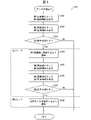
- FIG. 5 is a flow chart showing the flow of the data distribution method S10 executed by the data distribution device 10. As shown in FIG. 5, the data distribution method S10 includes steps S101 to S108.
- step S101 the first receiving unit 11 receives the first provided information from the providing device 20 via the first flow passage.
- Step S102 the first receiving unit 11 receives the first request information from the utilization device 30 via the first flow passage.
- the execution order of the processes of steps S101 and S102 is not limited to this order.
- the first determination unit 12 determines whether or not the first provided information and the first request information satisfy the first condition.
- step S103 If No is determined in step S103, the data distribution device 10 ends the data distribution method S10.
- step S104 If it is determined to be Yes in step S103, in step S104, the second flow passage notification unit 13 notifies the providing device 20 and the utilization device 30 to connect to the second flow passage.
- the second flow passage notification unit 13 may acquire connection information for connecting to an existing second flow passage and transmit the connection information to the providing device 20 and the utilization device 30. Further, for example, the second flow passage notification unit 13 may open a new second flow passage and transmit connection information for connecting to the new second flow passage to the providing device 20 and the utilization device 30. good. As a result, the state of the data distribution system 1 shifts to the first mode.
- step S105 the second receiving unit 14 receives the second provided information from the providing device 20 via the second flow passage.
- step S106 the second receiving unit 14 receives the second request information from the utilization device 30 via the second flow passage.
- step S107 the second determination unit 15 determines whether or not the second provided information and the second request information satisfy the second condition.
- step S107 If No is determined in step S107, the data distribution device 10 ends the data distribution method S10.
- step S108 If it is determined to be Yes in step S107, in step S108, the provision notification unit 16 notifies the provision device 20 to provide the provision data to the utilization device 30 via the second flow passage. As a result, the state of the data distribution system 1 shifts to the second mode.
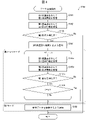
- FIG. 6 is a flow chart showing the flow of the data providing method S20 executed by the providing device 20. As shown in FIG. 6, the data providing method S20 includes steps S201 to S208.
- Step S201 the provided data acquisition unit 21 acquires the provided data.
- the provided data acquisition unit 21 acquires provided data from a sensor, an input device, a user terminal, or the like (not shown).
- Step S202 the first provided information generation unit 22 generates the first provided information based on the provided data. For example, the first provided information generation unit 22 generates the first provided information including the information included in the provided data or the accompanying information. Further, for example, the first provided information generation unit 22 generates the first provided information including the information obtained by analyzing the provided data.
- step S203 the first provision information transmission unit 23 transmits the first provision information to the data distribution device 10 via the first flow passage.
- step S204 the second provided information generation unit 24 determines whether or not the data distribution device 10 has notified the user to connect to the second flow passage. In other words, the second provided information generation unit 24 determines whether or not the state of the data distribution system 1 is the first mode.
- step S204 If it is determined as No in step S204, the providing device 20 ends the data providing method S20.
- step S205 the second provided information generation unit 24 generates the second provided information based on the provided data. For example, the second provided information generation unit 24 generates the second provided information including the information included in the provided data or the accompanying information. Further, for example, the second provided information generation unit 24 generates the second provided information including the information obtained by analyzing the provided data.
- step S206 the second provided information transmitting unit 25 transmits the second provided information to the data distribution device 10 via the second flow passage.
- Step S207 the provided data transmission unit 26 determines whether or not it has been notified to provide the provided data. In other words, the provided data transmission unit 26 determines whether or not the state of the data distribution system 1 is the second mode. It should be noted that steps S205 to S207 show the operation of the providing device 20 in the first mode.
- step S207 If it is determined as No in step S207, the providing device 20 ends the data providing method S20.
- step S208 If it is determined to be Yes in step S207, in step S208, the providing device 20 transmits the provided data to the utilization device 30 via the second flow passage. Note that step S208 shows the operation of the providing device 20 in the second mode.
- FIG. 7 is a flow chart showing the flow of the data utilization method S30 executed by the utilization device 30. As shown in FIG. 7, the data utilization method S30 includes steps S301 to S307.
- step S301 the input data acquisition unit 31 acquires the input data.
- the input data acquisition unit 31 acquires input data from a sensor (not shown), an input device, a user terminal, or the like.
- Examples of the input data include, but are not limited to, video data, sensor data, user input information, and the like, as described above.
- step S302 the first request information generation unit 32 generates the first request information based on the input data. For example, the first request information generation unit 32 generates the first request information including the information included in the input data or the accompanying information. Further, for example, the first request information generation unit 32 generates the first request information including the information obtained by analyzing the input data.
- step S303 the first request information transmission unit 33 transmits the first request information to the data distribution device 10 via the first flow passage.
- Step S304 the second request information generation unit 34 determines whether or not it has been notified to connect to the second flow passage. In other words, the second request information generation unit 34 determines whether or not the state of the data distribution system 1 is the first mode.
- step S304 If it is determined as No in step S304, the utilization device 30 ends the data utilization method S30.
- step S305 the second request information generation unit 34 generates the second request information based on the input data. For example, the second request information generation unit 34 generates the second request information including the information included in the input data or the accompanying information. Further, for example, the second request information generation unit 34 generates the second request information including the information obtained by analyzing the input data.
- Step S306 the second request information transmission unit 35 transmits the second request information to the data distribution device 10 via the second flow passage. It should be noted that steps S305 to S306 show the operation of the utilization device 30 in the first mode.
- Step S307 the provided data receiving unit 36 receives the provided data from the providing device 20 via the second flow passage.
- the process of the step is not executed when it is determined in the data distribution device 10 that the second condition is not satisfied.
- the utilization device 30 can receive the provided data when the second provided information and the second request information satisfy the second condition.
- the state of the data distribution system 1 is the second mode.
- Step S307 shows the operation of the utilization device 30 in the second mode.
- ⁇ Modification 1> A modification for a plurality of provided data and a plurality of requests will be described.
- the providing device 20 can provide a plurality of provided data.
- the utilization device 30 makes one or more requests regarding the provided data.
- the provision method S20, the usage method S30, and the data distribution method S10 are each modified as follows.
- the providing device 20 executes the processes of steps S201 to S203 at any time.
- the providing device 20 generates the first providing information in response to the acquisition of the provided data, and transmits the first providing information to the data distribution device 10 via the first flow passage.
- the first provision information generation unit 22 may generate the first provision information including the information obtained by integrating a plurality of provision data in step S202.
- the providing device 20 executes the processes of steps S204 to S206 at an arbitrary time point.
- the providing device 20 each time the providing device 20 is notified to connect to the second flow passage, the providing device 20 generates the second providing information corresponding to the first providing information, and the data distribution device 10 is notified via the second flow passage. And send.
- the second flow passage may be different at each notification.
- the second provided information corresponding to the first provided information is the second provided information generated from the provided data referred to for generating the first provided information.
- the second provided information generation unit 24 may generate the second provided information including the information obtained by integrating a plurality of provided data in step S205.
- the utilization device 30 executes the processing of steps S301 to S303 at an arbitrary time point.
- the utilization device 30 generates the first request information in response to the input of the input data, and transmits the first request information to the data distribution device 10 via the first flow passage.
- the first request information generation unit 32 may generate the first request information including the information obtained by integrating a plurality of input data in step S302.
- the utilization device 30 executes the processes of steps S304 to S306 at an arbitrary time point.
- the second request information corresponding to the first request information is generated, and the data distribution device 10 is notified via the second flow passage. And send.
- the second flow passage may be different at each notification.
- the second request information corresponding to the first request information is the second request information generated from the input data referred to for generating the first request information.
- the second request information generation unit 34 may generate the second request information including the information obtained by integrating a plurality of input data in step S305.
- step S101 each time the data distribution device 10 receives the first provided information from the providing device 20 (step S101), the data distribution device 10 stores the first provided information in a memory (not shown). Further, each time the data distribution device 10 receives the first request information from the utilization device 30 (step S102), the data distribution device 10 stores the first request information in the memory. As a result, a plurality of first provided information and a plurality of first request information are stored in the memory.
- step S103 the first determination unit 12 extracts a combination of the first provision information and the first request information satisfying the first condition from the plurality of first provision information and the plurality of first request information.
- the second flow passage notification unit 13 establishes a different second flow passage according to the combination of the first provision information and the first request information satisfying the first condition.
- the second flow passage to be opened is a dedicated flow passage according to the combination.
- the second flow passage notification unit 13 transmits the second provided information corresponding to the first provided information satisfying the first condition. Notify me to do so.
- the second flow passage notification unit 13 notifies the utilization device 30 to connect to the second flow passage, and in addition, the second request information corresponding to the first request information satisfying the first condition. Notify you to send.
- the data distribution device 10 repeatedly executes steps S103 to S106 to store a plurality of second provision information and a plurality of second request information in the memory.
- step S107 the data distribution device 10 extracts a combination of the second provision information and the second request information satisfying the second condition from the plurality of second provision information and the plurality of second request information.
- step S108 the data distribution device 10 notifies the providing device 20 to provide the provided data corresponding to the second provided information satisfying the second condition.
- the provided data corresponding to the second provided information is the provided data referred to for generating the second provided information.
- each providing device 20 can provide a plurality of provided data.
- each utilization device 30 makes a plurality of requests regarding the provided data.
- the information processing method in this case is modified as follows in addition to being modified in the same manner as the "information processing method when a plurality of provided data and a plurality of requests are targeted".
- step S104 the second flow passage notification unit 13 of the data distribution device 10 establishes a different second flow passage according to the combination of the first provided information and the first request information satisfying the first condition. After that, the second flow passage notification unit 13 notifies the providing device 20 of the transmission source of the first provision information and the utilization device 30 of the transmission source of the first request information to connect to the second flow passage. conduct.
- step S108 the data distribution device 10 notifies the providing device 20 of the transmission source of the second provided information that satisfies the second condition to provide the provided data corresponding to the second provided information.
- This exemplary embodiment can be modified to provide the provided data through a plurality of stages of condition determination in the second stream passage.
- the state of the data distribution system 1 may be any of the first mode to the nth mode (n is an integer of 3 or more) while the second flow passage is being opened.
- n is an integer of 3 or more
- the disclosure range of the provided data is gradually limited.
- the nth mode is a state in which all disclosure of the provided data is permitted.
- the second receiving unit 14, the second determination unit 15, and the provision notification unit 16 in the data distribution device 10 are modified as follows.
- the i + 1 provided information is information about the provided data, and is more detailed than the i-provided information.
- the i + 1 request information is information indicating a request regarding the provided data to be used, and is more detailed than the i-request information.
- the i-condition is a condition that can be satisfied by the i-provided information and the i-requested information, and is a condition for determining whether or not the i-provided information and the i-requested information match.
- the provision notification unit 16 notifies the provision device 20 to provide the provision data to the utilization device 30 when the nth condition is satisfied.
- the data distribution device 10 executes the data distribution method S10a which is a modification of the data distribution method S10.
- the data distribution method S10a will be described with reference to FIG.
- Step S105a the second receiving unit 14 receives the i-provided information by notifying the providing device 20 to transmit the i-provided information via the second flow passage.
- Step S106a the second receiving unit 14 receives the i-request information by notifying the utilization device 30 to transmit the i-request information via the second flow passage.
- Step S107a the second determination unit 15 determines whether or not the i-provided information and the i-requested information satisfy the i-satisfaction.
- step S107a If No is determined in step S107, the data distribution device 10 ends the data distribution method S10.
- step S107b If No is determined in step S107b, the second determination unit 15 adds 1 to i and repeats the process from step S105a.
- step S108 If it is determined to be Yes in step S107b, the state of the data distribution system 1 shifts to the nth mode. Then, in step S108, the provision notification unit 16 notifies the providing device 20 to provide the providing data to the utilization device 30 via the second flow passage.
- the providing device 20 modifies and executes steps S205 and S206 of the providing method S20 as follows.
- the providing device 20 When notified by the data distribution device 10 to transmit the i-provided information, the providing device 20 generates the i-provided information in step S205 and transmits the i-provided information in step S206.
- the utilization device 30 When notified by the data distribution device 10 to transmit the i-request information, the utilization device 30 generates the i-request information in step S305 and transmits the i-request information in step S306.
- the data distribution system 1 may have a function of not allowing transmission / reception of more detailed information than the specified level of detail for each mode of the first flow passage and the second flow passage.
- the data distribution device 10 relays the information transmitted through the first flow passage and the second flow passage, and if the transmitted information is more detailed than the specified degree of detail, the information is transmitted. It may be discarded and not relayed.
- the present exemplary embodiment and each modification can more reliably provide the data desired by the user while enhancing security.
- the reason is that the schematic first provision information and the first request information transmitted / received via the first flow passage satisfy the first condition, and the detailed first transmission / reception via the private second flow passage. This is because the provided data is provided when the provided information and the second request information satisfy the second condition.
- the provided data is provided when the provided information and the second request information satisfy the second condition.
- the present exemplary embodiment can reduce the possibility of information leakage due to the provision of data not desired by the user, and enhances security.
- FIG. 9 is a block diagram showing an example of the data structure of the provided data, the input data, the first provided information, the first request information, the second provided information, and the second requested information.
- the provided data and the input data have the same data structure.
- the provided data and input data include the attributes "position” and “date and time” and one or more other attributes.
- Each attribute has an attribute identification information (key: attribute 1-1, 1-2, ..., 2-1, 2-2, ..., n-1, n-2, ...) and a value (value: value 1). -1, 1-2, ..., 2-1, 2-2, ..., n-1, n-2, ).
- the attribute consisting of the key "attribute XX” and the value "value XX” may be simply described as “attribute XX”.
- the attribute "position” represents a position with respect to the provided data or the input data.
- the attribute "position” is information indicating a point where the data is generated or a point where the data is acquired, but is not limited to these.
- the attribute "date and time” represents the date and time related to the provided data or the input data.
- the attribute "date and time” is information indicating the date and time when the data was generated or the date and time when the data was acquired, but is not limited thereto.
- the disclosure range i is information indicating the degree of detail. In this example, the disclosure range i indicates that the larger i is, the more detailed it is. In other words, the disclosure range i indicates that the larger i is, the higher the confidentiality is. Further, the attribute to which the disclosure range 1 is associated is permitted to be transmitted / received in the first flow passage. Further, the attribute to which two or more disclosure ranges i are associated is not permitted to be transmitted / received in the first flow passage, and is permitted to be transmitted / received in the second flow passage when the first [i-1] condition is satisfied. Ru. The attribute to which the disclosure range n is associated is the actual data that is finally permitted to be transmitted / received when the first [n-1] condition is satisfied. In the example of FIG. 9, the disclosure range i is not associated with the attributes “position” and the “date and time”, but the disclosure range i may be associated with one or both of them.
- the provided data does not necessarily have to include the information itself indicating the disclosure range i.
- the disclosure range may be associated with each attribute by preparing information in which the attribute key and the disclosure range i are associated with each other, which is different from the provided data.
- the provided data or the input data does not necessarily have to include all the attributes associated with each of the disclosure ranges 1 to n.
- the provided data may include at least a "location", a "date and time”, and "actual data” associated with the disclosure scope n.
- the attribute of the disclosure range 1 to be included in the first provided information may be generated by the first provided information generation unit 22 of the providing device 20 based on the provided data.
- the attribute of the disclosure range 2 to be included in the second provided information may be generated by the second provided information generation unit 24 of the providing device 20 based on the provided data.
- the input data does not necessarily have to include the "actual data" associated with the disclosure range n.
- the input data includes the attributes associated with the disclosure range 1 and the disclosure range 2
- the first request information and the second request information are contained even if the attributes associated with the disclosure range n are not included. It can be generated.
- the first provided information and the first request information have the same data structure.
- the first provided information and the first request information include attributes 1-1, attributes 1-2, .... These attributes included in the first provided information are attributes included in the provided data or generated based on the provided data and associated with the disclosure range 1 or less. These attributes included in the first request information are attributes included in the input data or generated based on the input data and associated with the disclosure range 1 or less.
- the second provided information and the second request information have the same data structure.
- the second provided information and the second request information include attributes 2-1 and 2-2, ....
- the attributes included in the second provided information are the attributes included in the provided data or generated based on the provided data and associated with the disclosure range 2 or less.
- These attributes included in the second request information are attributes included in the input data or generated based on the input data and associated with the disclosure range 2 or less.
- step S103 the first determination unit 12 of the data distribution device 10 determines whether or not each combination of the corresponding attributes included in the first provided information and the first request information satisfies the first condition.
- the combination of the corresponding attributes is predetermined, for example, the attribute 1-1 included in the first provided information and the attribute 1-1 included in the first request information correspond to each other.
- the process of step S104 is executed.
- step S107 the second determination unit 15 of the data distribution device 10 determines whether or not each combination of the corresponding attributes included in the second provided information and the second request information satisfies the second condition.
- the combination of the corresponding attributes is predetermined, for example, the attribute 2-1 included in the second provided information and the attribute 2-1 included in the second request information correspond to each other.
- the process of step S108 is executed.
- the first provided information generation unit 22 of the providing device 20 acquires the attribute associated with the disclosure range 1 with reference to the provided data, and generates the first provided information including the acquired attribute.
- the first provided information generation unit 22 may acquire the attributes 1-1, the attributes 1-2, ..., Which are included in the provided data and are associated with the disclosure range 1.
- the first provided information generation unit 22 may generate the attributes 1-1, the attributes 1-2, ... Associated with the disclosure range 1 by analyzing the provided data.
- the first provided information generation unit 22 may generate attributes 1-1, attributes 1-2, ... Associated with the disclosure range 1 based on a plurality of provided data.
- step S205 the second provided information generation unit 24 of the providing device 20 acquires the attributes associated with the disclosure range 2 or less with reference to the provided data, and generates the second provided information including the acquired attributes.
- the second provided information generation unit 24 may acquire the attributes 2-1 and the attributes 2-2, ... Associated with the disclosure range 2, which are included in the acquired provided data.
- the second provided information generation unit 24 may generate the attribute 2-1 and the attribute 2-2 associated with the disclosure range 2 by analyzing the acquired provided data.
- the second provided information generation unit 24 may generate the attributes 2-1 and the attributes 2-2, ... Associated with the disclosure range 2 based on the plurality of provided data.
- the first request information generation unit 32 of the utilization device 30 refers to the input data and acquires the attribute associated with the disclosure range 1.
- the first request information generation unit 32 generates the first request information including the acquired attributes.
- the first request information generation unit 32 may acquire the attributes 1-1, the attributes 1-2, ..., Which are included in the input data itself and are associated with the disclosure range 1.
- the first request information generation unit 32 may generate attributes 1-1, attributes 1-2, ... Associated with the disclosure range 1 by analyzing the input data.
- the first request information generation unit 32 may generate attributes 1-1, attributes 1-2, ... Associated with the disclosure range 1 based on a plurality of input data.
- the second request information generation unit 34 of the utilization device 30 refers to the input data, acquires the attributes associated with the disclosure range 2 and below, and generates the second request information including the acquired attributes.
- the second request information generation unit 34 may acquire the attributes 2-1 and the attributes 2-2, ... Associated with the disclosure range 2, which are included in the input data.
- the second request information generation unit 34 may generate the attributes 2-1 and the attributes 2-2, ... Associated with the disclosure range 2 by analyzing the input data.
- the second request information generation unit 34 may generate attributes 2-1 and attributes 2-2, ... Associated with the disclosure range 2 based on a plurality of input data.
- the data distribution system 1 can be operated for general purposes even when the types of provided data or the types of requests are diverse. Play.
- the exemplary embodiment 3 is a modification of the data distribution system 1 according to the exemplary embodiment 1 so as to be applied in a security guard dispatch system. Further, in the present exemplary embodiment, the provided data, the input data, the first provided information, the second provided information, the first requested information, and the second requested information having the data structure according to the exemplary embodiment 2 are used. The same reference numerals are added to the components having the same functions as the components described in the exemplary embodiments 1 and 2, and the description thereof will not be repeated.
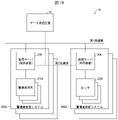
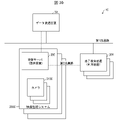
- FIG. 10 is a block diagram showing the configuration of the data distribution system 1A.
- the data distribution system 1A includes a data distribution device 10, one or more security guard management systems 200A, and one or more security guard request systems 300A.
- the security guard management system 200A includes a management server 20A and one or more security guard terminals 210A.
- the guard request system 300A includes a request server 30A and one or more sensors 310A.
- the data distribution system 1A is a Pubscribe / Subscribe type communication system.
- the data distribution system 1A provides security guard information regarding dispatchable security guards from the security guard management system 200A to the security guard request system 300A under the control of the data distribution device 10.
- the data distribution device 10 and each of the management server 20A and the request server 30A are communicably connected via the first flow passage while the data distribution system 1A is operating. Further, the data distribution device 10, the management server 20A, and the request server 30A can be temporarily and communicably connected via the second flow passage.
- FIG. 10 shows three security guard management systems 200A and three security guard terminals 210A, the number of security guard management systems 200A included in the data distribution system 1A and each security guard management system 200A. The number of security guard terminals 210A included in is not limited to three. Further, FIG. 10 shows three security guard request systems 300A and three sensors 310A, but the number of security guard request systems 300A included in the data distribution system 1A and each security guard request system 300A are included. The number of sensors 310A is not limited to three.
- the management server 20A is an example of a configuration that realizes the "providing device" described in the claims.
- the management server 20A is configured in substantially the same manner as the providing device 20 in the exemplary embodiment 1, but at least the point that it is communicably connected to the security guard terminal 210A and the point that it provides security guard information as provided data is at least. different.
- the management server 20A and each guard terminal 210A are connected by a network.
- the network is composed of, for example, a wireless LAN, a wired LAN, a WAN, mobile data communication, or a combination thereof, but is not limited to these.
- the management server 20A generates security guard information based on the current position and personal information acquired from the security guard terminal 210A.
- the management server 20A may receive the current position and personal information by periodically requesting the guard terminal 210A, or may receive the current position and personal information periodically transmitted from the guard terminal 210A. May be good.
- the management server 20A generates vacant guard information as the first provided information and generates vacant guard detailed information as the second provided information based on the guard information.
- the security guard terminal 210A is composed of a computer portable to the security guard.
- the guard terminal 210A is, for example, a smartphone, a tablet, or the like, but is not limited thereto.
- the guard terminal 210A has a processor, a memory, a communication interface, and a GPS (Global Positioning System) receiver.
- the security guard terminal 210A transmits the personal information of the security guard stored in the memory to the management server 20A via the communication interface by executing the program stored in the memory by the processor. Further, the security guard terminal 210A transmits the current position calculated by using the GPS receiver to the management server 20A via the communication interface.
- the guard terminal 210A may periodically transmit personal information and the current position, or may transmit personal information and the current position in response to a periodic request from the management server 20A.
- the request server 30A is an example of a configuration that realizes the "utilization device" described in the claims.
- the request server 30A is configured in substantially the same manner as the utilization device 30 in the exemplary embodiment 1, but is at least different in that it is communicably connected to the sensor 310A and that the sensor value is acquired as input data.
- the request server 30A and each sensor 310A are connected by a network.
- the network is, but is not limited to, serial communication, wireless LAN, wired LAN, WAN, mobile data communication, or at least two combinations thereof.
- the request server 30A may receive the sensor value by periodically requesting the sensor value from the sensor 310A, or may receive the sensor value periodically transmitted from the sensor 310A.
- the request server 30A generates the dispatch request information as the first request information and the dispatch request detailed information as the second request information from the sensor value.
- the sensor 310A is a sensor for detecting the degree of congestion.
- the sensor 310A is, for example, a camera, an infrared sensor, a sensor for detecting the concentration of carbon dioxide, and the like, but is not limited thereto.
- the sensor 310A transmits the measured sensor value to the request server 30A.
- the sensor 310A may transmit the sensor value measured periodically to the request server 30A, or may transmit the sensor value measured in response to a periodic request from the request server 30A.
- the sensor 310A when the sensor 310A is a camera, the sensor 310A includes a condenser lens, an image pickup device, a processor, a memory, and a communication interface.
- the sensor 310A converts the incident light from the condenser lens into an electric signal by the image pickup element when the processor executes the program stored in the memory, and A / D-converts the electric signal to perform image processing. Generate data. Further, the sensor 310A transmits the generated video data, the current date and time, and the information indicating the installation position stored in the memory to the request server 30A via the communication interface.
- the security guard information is an example of the "provided data” described in the claims, and is the data that can be provided by the management server 20A.
- the security guard information is information about the security guard holding the security guard terminal 210A, and is information indicating resources (security guards) that can be dispatched by the security guard management system 200A.
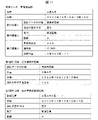
- FIG. 11 is a diagram showing an example of a data structure of security guard information, vacant security guard information, and vacant security guard detailed information.
- the guard information includes the attributes "position" and "date and time".
- "Position” is an attribute that indicates the current position of the guard over a wide area.
- the attribute indicating the current position over a wide area is information indicating up to the municipality among the addresses, but is not limited to this.
- the attribute indicating the current position over a wide area may be information that identifies a zone specified separately.
- the security guard information includes "classification of provided data” and "current availability” as attributes associated with disclosure range 1.
- the "classification of provided data” is “security guard information”.
- the "current availability” is "vacancy”.
- the security guard information includes "ability” and "class” as attributes associated with the disclosure range 2.
- “ability” is "crowd control”.
- Other examples of “ability” include, but are not limited to, "facility security” and "evacuation guidance”.
- the "class” is "A”.
- Other examples of “class” include “B", "C”, and the like, in which case the ranks are higher in the order of A, B, and C, but the class is not limited to these.
- it is assumed that the classes that can be handled are determined according to the degree of congestion of the requester.
- the security guard information includes "security guard name”, "contact information”, and "detailed location” as attributes associated with the disclosure range 3.
- the "detailed position” is information that narrowly indicates the current position of the guard.
- the information indicating the current position in a narrow area is information indicating a detailed address, but is not limited to this.
- the information indicating the current position in a narrow range may be information including latitude and longitude.
- the vacant guard information is an example of the "first provided information” described in the claims.
- Vacancy guard information is generated by integrating multiple security guard information.
- the vacant security guard information generated from the plurality of security guard information will be described with reference to FIG. 11.
- the vacant security guard information includes "security guard information” as the attribute "classification of provided data”.
- the vacant guard information includes "A city, A prefecture” as the attribute "location”.
- the vacant guard information includes "December 12, 2020 at 12:00” as the attribute "date and time”. Further, the vacant guard information includes "10" as the attribute "current number of vacant guards”.
- the "classification of provided data” is “security guard information”
- the “location” is “A prefecture A city”
- the “date and time” is “12:00 on December 12, 2020”. It is generated by the integration of 10 guard information that is “table” and “current availability” is “vacant”. It is predetermined that the disclosure range 1 is associated with these attributes generated by the integration.
- the detailed information of the vacant guard is an example of the "second provision information” described in the claims.
- the vacant guard details are generated from the individual guard information. Detailed information on the vacant guards will be described with reference to FIG. As shown in FIG. 11, the vacant guard detailed information includes the attributes "detailed position", “date and time”, “current availability”, “ability”, and “class”. These attributes are included in the guard information. Further, the disclosure range 2 is associated with these attributes.
- the sensor value is an example of "input data” described in the claims, and is information indicating a request by the request server 30A.
- the sensor values will be described with reference to FIG.
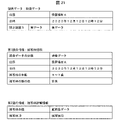
- FIG. 12 is a diagram showing an example of the data structure of the sensor value, the dispatch request information, and the dispatch request detailed information.
- the sensor value includes "date and time”, “position”, and "actual data”.
- the “date and time” is the measurement date and time of the sensor value.
- the “position” is the installation position of the sensor 310A.
- “Actual data” is a measured value.
- the dispatch request information is an example of the "first request information" described in the claims.
- the dispatch request information is generated from the sensor value which is the input data.
- the dispatch request information will be described with reference to FIG. As shown in FIG. 12, the dispatch request information includes the attributes “location”, “date and time”, “classification of provided data”, and “required number of people”.
- Each attribute is an attribute to which the disclosure range 1 is associated with the security guard information to be used.
- this dispatch request information indicates a request to use the information whose "classification of provided data" is "security guard information". In this exemplary embodiment, it is predetermined to include “security guard information” as the attribute "classification of provided data" in the dispatch request information. In addition, this dispatch request information indicates a request to use security guard information whose attribute "location” is close to "5-5, A ward, A city, A prefecture”. The attribute is generated from the attribute "position” of the sensor value. In addition, this dispatch request information indicates a request to use security guard information whose attribute "date and time” is close to "12:20 on December 12, 2020”. The attribute is generated from the attribute "date and time” included in the sensor value.
- this dispatch request information indicates a request to use the security guard information whose attribute "current number of vacant guards" is “2 people” or more.
- the attribute "required number of people” is a value according to the degree of congestion, which is the analysis result of the sensor value (for example, video data). Further, it is predetermined that the attribute "required number of people” included in the dispatch request information and the attribute "current number of vacant guards" included in the vacant guard information are attributes corresponding to each other.
- the dispatch request detailed information is an example of the "second request information" described in the claims.
- the dispatch request detailed information is generated from the sensor value which is the input data.
- the dispatch request detailed information generated from the sensor values will be described with reference to FIG.
- the dispatch request detailed information will be described with reference to FIG. 12 with respect to the dispatch request detailed information.
- the dispatch request detailed information includes the attributes “capacity” and “congestion degree”. Each attribute is an attribute associated with the disclosure range 2 possessed by the security guard information to be used.
- this dispatch request detailed information indicates a request to use security guard information whose attribute "ability" is "crowd control". In this exemplary embodiment, it is predetermined to include “crowd control" as the attribute "ability" in the dispatch request detailed information. In addition, this dispatch request detailed information indicates a request to use security guard information whose "class” is "B” or higher because the "congestion degree" is about “medium”.
- the attribute "congestion degree” is a value according to the congestion degree which is the analysis result of the sensor value (for example, video data). For example, the attribute "congestion degree” takes any value of "large”, “medium”, and "small”.
- the attribute "congestion degree” included in the dispatch request detailed information and the attribute "class” included in the vacant guard detailed information are attributes corresponding to each other. Further, when the "congestion degree” is “medium”, it is predetermined that a "class” of "B" or higher is required.
- FIG. 13 is a sequence diagram illustrating the flow of the information processing method S1A.
- FIG. 14 is a sequence diagram following FIG.
- the information processing method S1A is implemented by the data distribution device 10, the management server 20A, and the request server 30A executing the data distribution method S10, the data provision method S20, and the data utilization method S30, respectively.
- the information processing method S1A includes steps A101 to A112 and steps A201 to A208 after the second flow passage is opened. Further, after opening the second flow passage, the first mode (steps A201 to A205) in which the disclosure range of the provided data is limited and the second mode (steps A206 to A208) in which the disclosure range is not limited are included.
- step A101 the provided data acquisition unit 21 of the management server 20A generates security guard information, which is provided data, based on the current position and personal information acquired from the security guard terminal 210A.
- the security guard information to be generated is as described with reference to FIG.
- step A102 the first provided information generation unit 22 generates vacant security guard information based on a plurality of security guard information.
- the vacant guard information to be generated is as described with reference to FIG.
- the first provided information generation unit 22 is the number of security guard information whose attribute "current free information" is "vacant” among a plurality of security guard information whose attributes "position” and “date and time” satisfy predetermined conditions. Is calculated as the number of vacant guards and included in the vacant guard information.
- step A103 the first provision information transmission unit 23 transmits the vacant guard information to the data distribution device 10 via the first flow passage.
- the first receiving unit 11 of the data distribution device 10 receives the vacant guard information and stores it in the memory.
- the processing of steps A101 to A103 is repeatedly executed at an arbitrary time point.
- Step A104 the input data acquisition unit 31 of the request server 30A acquires the sensor value from the sensor 310A.
- the sensor values to be acquired are as described with reference to FIG. In this example, it is assumed that video data is acquired from the sensor 310A, which is a camera.
- Step A105 the first request information generation unit 32 generates dispatch request information based on the video data.
- the dispatch request information to be generated is as described with reference to FIG.
- the first request information generation unit 32 calculates the required number of guards based on the degree of congestion obtained by analyzing the video data by AI (artificial intelligence) and includes it in the dispatch request information.
- AI artificial intelligence
- Step A106 the first request information transmission unit 33 transmits the dispatch request information to the data distribution device 10 via the first flow passage.
- the first receiving unit 11 of the data distribution device 10 receives the dispatch request information and stores it in the memory.
- the processing of steps A104 to A106 is repeatedly executed at an arbitrary time point.
- step A107 the first determination unit 12 of the data distribution device 10 determines whether or not there is a combination that satisfies the first condition among the plurality of vacant guard information and the plurality of dispatch request information stored in the memory.
- the first condition is that all of the following plurality of conditions are satisfied.
- -The classification of the provided data matches.
- -The location included in the vacant guard information (wide area location) includes the location included in the dispatch request information.
- -The date and time (range of date and time) included in the vacant guard information includes the date and time included in the dispatch request information.
- -The current number of vacant guards included in the vacant guard information is greater than or equal to the required number included in the dispatch request information.
- step A107 If No is determined in step A107, the information processing method S1A ends.
- step A108 If it is determined to be Yes in step A107, in step A108, the second flow passage notification unit 13 acquires the connection information of the second flow passage.
- step A109 the second flow passage notification unit 13 notifies the management server 20A of the connection information of the second flow passage. Further, the second-stream passage notification unit 13 requests the management server 20A for detailed information on the vacant guards corresponding to the vacant guard information satisfying the first condition.
- step A110 the second provision information transmission unit 25 of the management server 20A connects to the second flow passage using the received connection information.
- step A111 the second flow passage notification unit 13 of the data distribution device 10 notifies the request server 30A of the connection information of the second flow passage. Further, the second-stream passage notification unit 13 requests the request server 30A for the dispatch request detailed information corresponding to the dispatch request information satisfying the first condition.
- step A112 the second request information transmission unit 35 of the request server 30A connects to the second flow passage using the received connection information.
- step A201 the second provided information generation unit 24 of the management server 20A identifies a plurality of security guard information referred to when generating vacant security guard information satisfying the first condition.
- the second provided information generation unit 24 generates detailed information on each vacant security guard based on a part or all of the specified security guard information.
- the detailed information of the vacant guards to be generated is as described with reference to FIG.
- the second provided information generation unit 24 includes the attributes “ability” and “class” associated with the disclosure range 2 included in the security guard information in the vacant security guard detailed information.
- step A202 the second provided information transmission unit 25 transmits one or more vacant guard detailed information to the data distribution device 10 via the second flow passage.
- the second receiving unit 14 of the data distribution device 10 receives one or more vacant guard detailed information and stores it in the memory.
- the processes of steps A201 to A202 are repeatedly executed at any time point.
- step A203 the second request information generation unit 34 of the request server 30A specifies the video data referred to when generating the dispatch request information satisfying the first condition.
- the second request information generation unit 34 generates dispatch request detailed information based on the specified video data.
- the detailed information on the dispatch request to be generated is as described with reference to FIG.
- the second request information generation unit 34 includes the degree of congestion obtained by analyzing the video data by AI in the dispatch request detailed information.
- step A204 the second request information transmission unit 35 transmits the dispatch request detailed information to the data distribution device 10 via the second flow passage.
- the second receiving unit 14 of the data distribution device 10 receives the dispatch request detailed information and stores it in the memory.
- the processing of steps A203 to A204 is repeatedly executed at an arbitrary time point.
- step A205 the second determination unit 15 of the data distribution device 10 determines whether or not there is a combination that satisfies the second condition among the plurality of free security guard detailed information and the plurality of dispatch request detailed information stored in the memory. do.
- the second condition is that all of the following plurality of conditions are satisfied.
- ⁇ The abilities match.
- the value of the class included in the detailed information of the vacant guard includes the value of the class included in the detailed information of the dispatch request.
- step A205 If No is determined in step A205, the information processing method S1A ends.
- step A206 If it is determined to be Yes in step A205, in step A206, the provision notification unit 16 provides the management server 20A with the security guard information corresponding to the vacant security guard detailed information satisfying the second condition in the second flow passage. Notify the request server 30A via the system.
- step A207 the provided data transmission unit 26 of the management server 20A identifies the security guard information corresponding to the vacant security guard detailed information satisfying the second condition. Further, the provided data transmission unit 26 transmits the specified security guard information to the request server 30A via the second stream passage.
- step A208 the provided data receiving unit 36 of the request server 30A receives security guard information via the second stream passage.
- the exemplary embodiment 4 is a modification of the data distribution system 1 according to the exemplary embodiment 1 so as to be applied as an IoT (Internet of Things) sensor value collection system. Further, in the present exemplary embodiment, the provided data, the input data, the first provided information, the second provided information, the first requested information, and the second requested information having the data structure according to the exemplary embodiment 2 are used. The same reference numerals are added to the components having the same functions as the components described in the exemplary embodiments 1 and 2, and the description thereof will not be repeated.
- FIG. 15 is a block diagram showing the configuration of the data distribution system 1B.
- the data distribution system 1B includes a data distribution device 10B, one or more sensor value sales systems 200B, and one or more purchasing devices 30B.
- the sensor value sales system 200B includes a sales server 20B and one or more IoT sensors 210B.
- the data distribution system 1B is a Pubscribe / Subscribe type communication system. Based on the control by the data distribution device 10B, the sensor value information is provided from the sensor value sales system 200B to the purchasing device 30B.
- the data distribution device 10B and each of the sales server 20B and the purchasing device 30B are communicably connected via the first flow passage while the data distribution system 1B is operating. Further, the data distribution device 10B, the sales server 20B, and the purchasing device 30B can be temporarily and communicably connected via the second flow passage.
- FIG. 15 shows three sensor value sales systems 200B and three IoT sensors 210B, the number of sensor value sales systems 200B included in the data distribution system 1B and each sensor value sales system 200B are shown. The number of IoT sensors 210B included is not limited to three. Further, although FIG. 15 shows three purchasing devices 30B, the number of purchasing devices 30B included in the data distribution system 1B is not limited to three.
- the data distribution device 10B is configured in substantially the same manner as the providing device 20 in the exemplary embodiment 1, except that the provided data is notified when the second condition is satisfied and when confirmation information is further received.
- step S107 of the data distribution method S10 described with reference to FIG. 5 the process of transmitting the second provided information and the process of transmitting the second provided information before executing step S108. Executes the process of receiving confirmation information. That is, when the second condition is satisfied (Yes in step S107), the provision notification unit 16 transmits the second provision information to the purchasing device 30B. Further, when the provision notification unit 16 receives the confirmation information from the purchasing device 30B, the provision notification unit 16 notifies the sales server 20B to provide the sensor value information to the purchasing device 30B (step S108).
- the confirmation information includes information indicating the user's consent to purchase the corresponding sensor value information and information necessary for payment.
- the sales server 20B is an example of a configuration that realizes the "providing device" described in the claims.
- the sales server 20B is configured in substantially the same manner as the providing device 20 in the exemplary embodiment 1, but is at least different in that it is communicably connected to the IoT sensor 210B and that the sensor value information is sold as provided data. .. Another difference is that payment is made when selling sensor value information.
- the sales server 20B and each IoT sensor 210B are connected by a network.
- the network is composed of, for example, a wireless LAN, a wired LAN, a WAN, mobile data communication, or a combination thereof, but is not limited to these.
- the sales server 20B generates sensor value information based on the sensor value acquired from the IoT sensor 210B.
- the sales server 20B may receive the sensor value by periodically requesting the IoT sensor 210B, or may receive the sensor value periodically transmitted from the IoT sensor 210B.
- the sales server 20B generates sales information as the first provision information and generates sales detail information as the second provision information based on the sensor value information.
- the sales server 20B when the sales server 20B is notified by the data distribution device 10B to provide the provided data to the purchasing device 30B, the sales server 20B connects to the payment server (not shown) and makes a payment.
- the IoT sensor 210B is composed of a sensor that can be used as an IoT.
- the IoT sensor 210B is, for example, a temperature sensor, a humidity sensor, an optical sensor, a pressure sensor, a sound sensor, and the like, but is not limited thereto.
- the IoT sensor 210B transmits the measured sensor value to the sales server 20B.
- the IoT sensor 210B may transmit the sensor value measured periodically to the sales server 20B, or may transmit the sensor value measured in response to a periodic request from the sales server 20B.
- the purchasing device 30B is an example of a configuration that realizes the "utilizing device" described in the claims.
- the purchasing device 30B is configured in substantially the same manner as the utilization device 30 in the exemplary embodiment 1, but has a point of acquiring user input information as input data and a point of being able to transmit confirmation information in response to receiving sales detailed information. Is at least different.
- the purchasing device 30B may acquire user input information input by operating an input device (not shown), or may input user information from a user terminal (not shown) connected via a network. Information may be obtained. Further, the purchasing device 30B generates purchasing information as the first request information and purchase detailed information as the second request information from the user input information.
- the purchasing device 30B performs a process of receiving the second provided information and a process of transmitting confirmation information after executing step S306 of the data utilization method described with reference to FIG. 7 and before executing step S307. Run. That is, when the provided data receiving unit 36 receives the second provided information from the data distribution device 10B via the second flow passage after transmitting the second request information, the provided data receiving unit 36 displays the second provided information (FIG. FIG. Not shown). Further, when the provided data receiving unit 36 receives the confirmation information input by the user in response to the display of the second provided information, the provided data receiving unit 36 transmits the confirmed information to the data distribution device 10B via the second flow passage. do. After that, the provided data receiving unit 36 executes step S307 and receives the sensor value information via the second flow passage.
- the sensor value information is an example of "provided data” described in the claims, and is data that can be provided by the sales server 20B.
- the sensor value information includes actual data of the sensor value measured by the IoT sensor 210B.
- FIG. 16 is a diagram showing an example of a data structure of sensor value information, sales information, and sales detailed information.
- the sensor value information includes the attributes “position” and “date and time”.
- the “position” is an attribute indicating the installation location of the IoT sensor 201B for which the sensor value included in the sensor value information is measured.
- the sensor value information includes the attribute "classification of provided data” associated with the disclosure range 1.
- the "classification of provided data” is "temperature data”.
- the sensor value information includes the attributes "measurement interval” and "price” associated with the disclosure range 2.
- the "measurement interval” is "every hour”.
- the “price” is "5000 yen / month”.
- the sensor value information includes the attribute "actual data” associated with the disclosure range 3.
- the sales information is an example of the "first provided information" described in the claims. Sales information is generated based on sensor value information. The sales information will be described with reference to FIG. As shown in FIG. 16, the sales information includes the attribute “classification of provided data”. In addition, the sales information includes the attribute "position”. In addition, the sales information includes the attribute "date and time”. As these attributes, the attributes included in the sensor value information are applied as they are. Disclosure scope 1 is associated with these attributes.
- the detailed sales information is an example of the "second provision information" described in the claims.
- the detailed sales information is generated from the sensor value information.
- the sales details include the attributes “measurement interval” and “price”. As these attributes, the attributes included in the sensor value information are applied as they are. Disclosure scope 2 is associated with these attributes.
- the user input information is an example of "input data" described in the claims, and is information indicating a request by the purchasing device 30B.
- the user input information will be described with reference to FIG.
- FIG. 17 is a diagram showing an example of a data structure of user input information, purchase information, and purchase details information.
- the user input information includes the attributes “position”, “date and time”, “classification of provided data”, “measurement interval”, and “price”. For example, user input information is generated by the user inputting desired information for each of these attributes.
- the purchase information is an example of the "first request information" described in the claims. Purchasing information is generated from user input information which is input data. Purchasing information will be described with reference to FIG. As shown in FIG. 17, the purchasing information includes the attributes “location”, “date and time”, and “classification of provided data”. Each attribute is an attribute to which the disclosure range 1 is associated with the sensor value information to be purchased.
- this purchase information indicates a request to purchase sensor value information whose "classification of provided data" is "temperature data”.
- the attribute is generated from the attribute "classification of provided data” included in the user input information.
- this purchase information indicates a request to purchase sensor value information whose "location” is “prefecture A”.
- the attribute is generated from the attribute "position” included in the user input information.
- this purchase information indicates a request to purchase sensor value information whose "date and time” is "2010 or later”.
- the attribute is generated from the attribute "date and time” included in the user input information.
- the purchase details information is an example of the "second request information" described in the claims.
- the purchase details information is generated from the user input information which is the input data.
- the purchase detailed information generated from the user input information will be described with reference to FIG. As shown in FIG. 17, the purchase details include the attributes “measurement interval” and “price”. Each attribute is an attribute to which the disclosure range 2 is associated with the sensor value information to be purchased.
- this purchase detailed information indicates a request to purchase sensor value information whose "measurement interval" is "every day or less”. The attribute is generated from the attribute "measurement interval” included in the user input information. Further, this purchase detailed information indicates a request to purchase sensor value information whose "price” is "6000 yen or less”. The attribute is generated from the attribute "price” included in the user input information.
- FIG. 18 is a sequence diagram illustrating the flow of the information processing method S1B.
- FIG. 19 is a sequence diagram following FIG.
- the information processing method S1B is implemented by the data distribution device 10B, the sales server 20B, and the purchasing device 30B executing the data distribution method S10, the data provision method S20, and the data utilization method S30, respectively.
- the information processing method S1B includes steps B101 to B107, A108 to A112, and steps B201 to B212 after the second flow passage is opened. Further, after opening the second flow passage, the first mode (steps B201 to B205) in which the disclosure range of the provided data is limited and the second mode (steps B206 to B208) in which the disclosure range is not limited are included.
- Step B101 the provided data acquisition unit 21 of the sales server 20B acquires a sensor value from the IoT sensor 210B and generates sensor value information including the acquired sensor value.
- the sensor value information to be generated is as described with reference to FIG.
- the provided data acquisition unit 21 does not have to generate sensor value information each time the sensor value is acquired from the IoT sensor 210B.
- the provided data acquisition unit 21 may store the acquired sensor values in a memory (not shown) and generate sensor value information including the sensor values accumulated during a certain period of time.
- Step B102 the first provided information generation unit 22 generates sales information based on the sensor value information.
- the sales information to be generated is as described with reference to FIG.
- the first provided information generation unit 22 includes the attributes “position” and “date and time” included in the sensor value information and the attribute “classification of provided data” associated with the disclosure range 1 in the sales information.
- Step B103 the first provision information transmission unit 23 transmits sales information to the data distribution device 10B via the first flow passage.
- the first receiving unit 11 of the data distribution device 10B receives the sales information and stores it in the memory.
- the processing of steps B101 to B103 is repeatedly executed at an arbitrary time point.
- Step B104 the input data acquisition unit 31 of the purchasing device 30B acquires user input information.
- the user input information to be acquired is as described with reference to FIG.
- Step B105 the first request information generation unit 32 generates purchase information based on the user input information.
- the purchase information to be generated is as described with reference to FIG.
- the first request information generation unit 32 includes the attributes “position” and “date and time” included in the user input information and the attribute “classification of provided data” associated with the disclosure range 1 in the purchase information.
- Step B106 the first request information transmission unit 33 transmits purchase information to the data distribution device 10B via the first flow passage.
- the first receiving unit 11 of the data distribution device 10B receives the purchase information and stores it in the memory.
- the processing of steps B104 to A106 is repeatedly executed at an arbitrary time point.
- Step B107 the first determination unit 12 of the data distribution device 10B determines whether or not there is a combination that satisfies the first condition among the plurality of sales information and the plurality of purchase information stored in the memory.
- the first condition is that all of the following plurality of conditions are satisfied.
- -The classification of the provided data temperature data, etc.
- -The position included in the sales information is included in the range of the position included in the purchasing information.
- -The date and time included in the sales information is included in the range of the date and time included in the purchasing information.
- step B107 If No is determined in step B107, the information processing method S1B ends.
- step B107 steps A108 to A112 If it is determined to be Yes in step B107, the data distribution system 1B executes steps A108 to A112 in the same manner as the information processing method S1A. As a result, the sales server 20B and the purchasing device 30B are connected to the second distribution passage.
- Step B201 the second provided information generation unit 24 of the sales server 20B generates detailed sales information corresponding to the sales information satisfying the first condition.
- the detailed sales information to be generated is as described with reference to FIG.
- the second provided information generation unit 24 includes the attributes “measurement interval” and “price” associated with the disclosure range 2 included in the sensor value information in the detailed sales information.
- Step B202 the second provided information transmission unit 25 transmits detailed sales information to the data distribution device 10B via the second flow passage.
- the second receiving unit 14 of the data distribution device 10B receives one or a plurality of sales detailed information and stores it in the memory.
- the processes of steps B201 to B202 are repeatedly executed at any time point.
- Step B203 the second request information generation unit 34 of the purchase device 30B generates purchase detailed information corresponding to the purchase information satisfying the first condition.
- the detailed purchase information to be generated is as described with reference to FIG.
- the second request information generation unit 34 includes the attributes “measurement interval” and “price” associated with the disclosure range 2 included in the user input information in the purchase details information.
- Step B204 the second request information transmission unit 35 transmits detailed purchase information to the data distribution device 10B via the second flow passage.
- the second receiving unit 14 of the data distribution device 10B receives the purchase detailed information and stores it in the memory.
- the processing of steps B203 to B204 is repeatedly executed at an arbitrary time point.
- Step B205 the second determination unit 15 of the data distribution device 10B determines whether or not there is a combination that satisfies the second condition among the plurality of sales detail information and the plurality of purchase detail information stored in the memory.
- the second condition is that all of the following plurality of conditions are satisfied.
- -The measurement interval included in the sales details information is included in the measurement interval range included in the purchase details information.
- -The price included in the sales details is included in the price included in the purchase details.
- step B205 If No is determined in step B205, the information processing method S1B ends.
- step B206 If it is determined to be Yes in step B205, in step B206, the provision notification unit 16 transmits detailed sales information to the purchasing device 30B via the second distribution passage.
- Step B207 the provision data receiving unit 36 of the purchasing device 30B displays the received detailed sales information on the display device.
- the user confirms the content of the displayed sales detailed information, and if he / she approves the sale, inputs the confirmation information.
- the confirmation information includes information indicating the consent and information necessary for payment.
- Step B208 the provided data receiving unit 36 transmits the confirmation information input by the user in step B207 to the data distribution device 10B via the second flow passage. If the confirmation information is not input in step B208, the information processing method S1B ends.
- step B209 the provision notification unit 16 of the data distribution device 10B determines whether or not the confirmation information has been received.
- step B209 If No is determined in step B209, the information processing method S1B ends.
- step B210 If it is determined to be Yes in step B209, in step B210, the provision notification unit 16 provides the sales server 20B with sensor value information corresponding to the sales detailed information satisfying the second condition via the second flow passage. Notify the request server 30A to provide it. At this time, the provision notification unit 16 also notifies the information required for payment, which is included in the confirmation information.
- Step B211 In step B211 the provided data transmission unit 26 of the sales server 20B connects to the payment server using the information necessary for payment and makes a payment.
- the provided data transmission unit 26 identifies the sensor value information corresponding to the sales detailed information satisfying the second condition. Further, the provided data transmission unit 26 transmits the specified sensor value information to the purchasing device 30B via the second flow passage.
- Step B212 the provided data receiving unit 36 of the purchasing device 30B receives the sensor value information via the second flow passage.
- the second-stream passage notification unit 13 transmits sales information to the purchasing device 30B when the first condition is satisfied, and receives confirmation information from the purchasing device 30B.
- a flow passage may be opened.
- This exemplary embodiment can more reliably sell the sensor value information desired by the purchaser while enhancing security.
- the reason is that the general sales information and purchase information transmitted and received via the first-stream passage satisfy the first condition, and the detailed sales detailed information and purchase transmitted and received via the private second-stream passage. This is because the sensor value information is sold when the detailed information satisfies the second condition.
- the sold sensor value information is what the purchaser desires, as compared with the case where the sensor value information is sold only by satisfying the first condition.
- the possibility that the data sold is data that the purchaser does not want is reduced.
- this exemplary embodiment can reduce the possibility of information leakage due to the sale of data that the purchaser does not want, and enhances security.
- the exemplary embodiment 5 is a modification of the data distribution system 1 according to the exemplary embodiment 1 so as to be applied as a lost child search system. Further, in the present exemplary embodiment, the provided data, the input data, the first provided information, the second provided information, the first requested information, and the second requested information having the data structure according to the exemplary embodiment 2 are used. The same reference numerals are added to the components having the same functions as the components described in the exemplary embodiments 1 and 2, and the description thereof will not be repeated.
- FIG. 20 is a block diagram showing the configuration of the data distribution system 1C.
- the data distribution system 1C includes a data distribution device 10, one or more video monitoring systems 200C, and one or more lost child search devices 30C.
- the video surveillance system 200C includes a video server 20C and one or more cameras 210C.
- Each video monitoring system 200C monitors the inside of facilities such as theme parks, stadiums, office buildings, commercial buildings, shopping streets, transportation facilities, etc. by video.
- each camera 210C is installed at each location in the facility.
- the lost child search device 30C is installed at the lost child center in the corresponding facility.
- the data distribution system 1C is a public / Subscribe type communication system, and provides video data captured by the camera 210C from the video monitoring system 200C to the lost child search device 30C under the control of the data distribution device 10.
- the data distribution device 10 and each of the video server 20C and the lost child search device 30C are communicably connected via the first flow passage while the data distribution system 1C is operating. Further, the data distribution device 10, the video server 20C, and the lost child search device 30C can be temporarily and communicably connected via the second flow passage.
- FIG. 20 shows three video surveillance systems 200C and three cameras 210C, the number of video surveillance systems 200C included in the data distribution system 1C and the number of cameras 210C included in each video surveillance system 200C. The number is not limited to three. Further, although FIG. 20 shows three lost child search devices 30C, the number of lost child search devices 30C included in the data distribution system 1C is not limited to three.
- the video server 20C is an example of a configuration that realizes the "providing device" described in the claims.
- the video server 20C is configured in substantially the same manner as the providing device 20 in the first embodiment, but is at least different in that it is communicably connected to the camera 210C and that the video data is acquired as the provided data.
- the video server 20C and each camera 210C are connected by a network.
- the network is composed of, for example, a wireless LAN, a wired LAN, a WAN, mobile data communication, or a combination thereof, but is not limited to these.
- the video server 20C may receive video data by periodically requesting the camera 210C, or may receive video data periodically transmitted from the camera 210C.
- the video server 20C generates subject information as the first provided information and generates detailed subject information as the second provided information from the video data.
- the camera 210C is installed in a place where the space in the facility can be photographed.
- the camera 210C includes, for example, a condenser lens, an image sensor, a processor, a memory, and a communication interface.
- the camera 210C converts the incident light from the condenser lens into an electric signal by an image pickup element, and A / D-converts the electric signal to perform image processing to generate video data.
- Information indicating the shooting date and time and the shooting location is attached to the video data. Further, the camera 210C transmits the generated video data to the video server 20C via the communication interface.
- the video data when the camera 210 generates a still image as video data, the video data may be periodically generated and transmitted, or the video data may be transmitted in response to a periodic request from the video server 20C. good. Further, for example, when the camera 210 generates a moving image as video data, the generated video data is transmitted in real time.
- the lost child search device 30C is an example of a configuration that realizes the "utilization device" described in the claims.
- the lost child search device 30C is configured in substantially the same manner as the utilization device 30 in the exemplary embodiment 1, except that it acquires user input information as input data.
- the lost child search device 30C may acquire user input information input by an operator of the lost child center, for example, via an input device (not shown), or a user terminal connected via a network (not shown). User input information may be obtained from (1).
- the lost child search device 30C generates the lost child information as the first request information and the lost child detailed information as the second request information from the user input information.
- the video data is an example of the "provided data” described in the claims, and is the data that can be provided by the video server 20C.
- the video data is data generated by the camera 210C.
- FIG. 21 is a diagram showing an example of a data structure of video data, subject information, and subject detailed information.
- the video data includes the attributes “position”, “date and time”, and “actual data”.
- the “position” is the installation location of the camera 210C.
- the “date and time” is the shooting date and time of the video data.
- "Actual data” is one or more frame data.
- the "real data” is the latest one or a plurality of frame data extracted from the moving image at predetermined intervals.
- the "date and time” is a range of the date and time when the extracted one or more frame data is generated.
- the disclosure range 3 is associated with the "actual data”.
- the subject information is an example of the "first provided information” described in the claims.
- Subject information is generated from video data.
- the subject information will be described with reference to FIG.
- the subject information includes "video data” as the attribute "classification of provided data”.
- the subject information includes "installation place A” as "position” and "12:12 on December 12, 2020” as “date and time”.
- These attributes are generated from the information contained in the video data.
- the subject information includes "5 to 7 years old” as the "age of the subject” and “red” as the "color of the clothes of the subject”.
- These attributes are generated by analyzing the actual data of the video data by AI. It is predetermined that the disclosure range 1 is associated with these attributes "age of subject” and "color of clothes of subject” generated by analysis.
- the subject detailed information is an example of the "second provided information” described in the claims.
- Subject detailed information is generated from video data. Detailed subject information will be described with reference to FIG. As shown in FIG. 21, the subject detailed information includes "face image data" and "subject ID” as the attribute "face of the subject”. These attributes are generated by analyzing the actual data of the video data by AI. It is predetermined that these attributes are associated with the disclosure range 2.
- the user input information is an example of "input data" described in the claims, and is information indicating a request by the lost child search device 30C.
- the user input information will be described with reference to FIG.
- FIG. 22 is a diagram showing an example of a data structure of user input information, lost child information, and lost child detailed information.
- the user input information includes the attributes "position”, “date and time”, “age”, “clothing color”, and "image data".
- the user input information is generated by the operator of the lost child center inputting the information heard from the requester of the lost child search for each of these attributes.
- the attribute "image data" is input by scanning a photograph provided by the client.
- the lost child information is an example of the "first request information" described in the claims. Lost child information is generated from user input information. The lost child information will be described with reference to FIG. As shown in FIG. 22, the lost child information includes the attributes “classification of provided data”, “date and time”, “position”, “age” and “clothing color”. These attributes are the attributes associated with the disclosure range 1 of the video data to be used.
- this lost child information indicates a request to use data whose "classification of provided data” is "video data”.
- the lost child information includes "video data” as the attribute "classification of provided data”.
- this lost child information indicates a request to use video data whose attribute "date and time” is close to "12:00 on December 12, 2020”.
- this lost child information indicates a request to use video data whose attribute "position” is close to "1-1, A ward, A city, A prefecture”.
- this lost child information indicates a request to use video data in which the "age of the subject” is “6 years old”.
- this lost child information indicates a request to use video data in which the "color of the subject's clothes” is similar to “red”.
- these attributes included in the lost child information are generated from the attributes included in the user input information and associated with the disclosure range 1.
- the lost child detailed information is an example of the "second request information" described in the claims.
- the lost child details are generated from the user input information. Detailed information on lost children will be described with reference to FIG. As shown in FIG. 22, the lost child detailed information includes the attribute “face of the subject”. This lost child detailed information indicates a request to use video data including a "face” similar to the "face of the subject”.
- the attribute "face of the subject” is generated by analyzing the attribute "image data" included in the user input information.
- FIG. 23 is a sequence diagram illustrating the flow of the information processing method S1C.
- FIG. 24 is a sequence diagram following FIG. 23.
- the information processing method S1C is implemented by the data distribution device 10, the video server 20C, and the lost child search device 30C executing the data distribution method S10, the data provision method S20, and the data utilization method S30, respectively.
- the information processing method S1C includes steps C101 to C107, steps A108 to A112, and steps C201 to C208 after the second flow passage is opened. Further, after opening the second flow passage, the first mode (steps C201 to C205) in which the disclosure range of the provided data is limited and the second mode (steps C206 to C208) in which the disclosure range is not limited are included.
- Step C101 the provided data acquisition unit 21 of the video server 20C acquires video data from the camera 210C.
- the video data to be acquired is as described with reference to FIG. 21.
- the provided data acquisition unit 21 uses the received still image as video data.
- the provided data acquisition unit 21 extracts the latest one or a plurality of frame data from the received moving image at predetermined intervals, and extracts the extracted one or a plurality of frames.
- the frame of is used as video data.
- Step C102 the first provided information generation unit 22 generates subject information based on the video data.
- the subject information to be generated is as described with reference to FIG. 21.
- the first provided information generation unit 22 analyzes the video data by AI to generate the attributes “age of subject” and “color of clothes of subject” and includes them in the subject information.
- Step C103 the first provided information transmission unit 23 transmits subject information to the data distribution device 10 via the first flow passage.
- the first receiving unit 11 of the data distribution device 10 receives the subject information and stores it in the memory.
- the processing of steps C101 to C103 is repeatedly executed at an arbitrary time point.
- step C104 the input data acquisition unit 31 of the lost child search device 30C acquires user input information.
- the user input information is input by the operator of the lost child center.
- the user input information to be input is as described with reference to FIG. 22.
- Step C105 the first request information generation unit 32 generates lost child information based on the user input information.
- the generated lost child information is as described with reference to FIG. 22.
- the first request information generation unit 32 obtains the attributes “position” and “date and time” included in the user input information and the attributes “age” and “clothes color” associated with the disclosure range 1 as lost child information. Include in.
- Step C106 the first request information transmission unit 33 transmits lost child information to the data distribution device 10 via the first flow passage.
- the first receiving unit 11 of the data distribution device 10 receives the lost child information and stores it in the memory.
- the processing of steps C104 to C106 is repeatedly executed at an arbitrary time point.
- step C107 the first determination unit 12 of the data distribution device 10 determines whether or not there is a combination that satisfies the first condition among the plurality of subject information and the plurality of lost child information stored in the memory.
- the first condition is that all of the following plurality of conditions are satisfied.
- -The classification of the provided data (video data) matches.
- -The distance between the position included in the subject information and the position included in the lost child information is equal to or less than the threshold value.
- -The period between the date and time included in the subject information and the date and time included in the lost child information is less than or equal to the threshold value.
- -The range of the age of the subject included in the subject information includes the age of the subject included in the lost child information.
- -The color of the subject's clothes included in the subject information is similar to the color of the subject's clothes included in the lost child information.
- step C107 If No is determined in step C107, the information processing method S1C ends.
- step C107 steps A108 to A112 If it is determined to be Yes in step A107, the data distribution system 1C executes steps A108 to A112 in the same manner as the information processing method S1A. As a result, the video server 20C and the lost child search device 30C are connected to the second stream passage.
- step C201 the second provided information generation unit 24 of the video server 20C specifies the video data referred to when generating the subject information satisfying the first condition. Further, the second provided information generation unit 24 generates detailed subject information based on the specified video data. The detailed subject information to be generated is as described with reference to FIG. 21. For example, the second provided information generation unit 24 generates "face image data" extracted from the video data and "subject ID” specified by analyzing the "face image data” by AI, and uses the subject detailed information. include.
- Step C202 the second provided information transmitting unit 25 transmits the subject detailed information to the data distribution device 10 via the second flow passage.
- the second receiving unit 14 of the data distribution device 10 receives one or more subject detailed information and stores it in the memory.
- the processing of steps C201 to C202 is repeatedly executed at an arbitrary time point.
- Step C203 the second request information generation unit 34 of the lost child search device 30C identifies the video data referred to when generating the lost child information satisfying the first condition. Further, the second request information generation unit 34 generates detailed lost child information based on the specified video data. The detailed information on the lost child to be generated is as described with reference to FIG. 22. For example, the second request information generation unit 34 extracts "face image data" from the "image data" included in the user input information and includes it in the lost child detailed information.
- Step C204 the second request information transmission unit 35 transmits the lost child detailed information to the data distribution device 10 via the second flow passage.
- the second receiving unit 14 of the data distribution device 10 receives the lost child detailed information and stores it in the memory.
- the processing of steps C203 to C204 is repeatedly executed at an arbitrary time point.
- step C205 the second determination unit 15 of the data distribution device 10 determines whether or not there is a combination that satisfies the second condition among the plurality of subject detailed information and the plurality of lost child detailed information stored in the memory.
- the second condition is that all of the following plurality of conditions are satisfied.
- the degree of similarity between the face image data included in the subject detailed information and the face image data included in the lost child detailed information is equal to or higher than the threshold value.
- step C205 If No is determined in step C205, the information processing method S1C ends.
- step C206 If it is determined to be Yes in step C205, in step C206, the provision notification unit 16 causes the video server 20C to get lost video data corresponding to the subject detailed information satisfying the second condition via the second flow passage. Notify the search device 30C to provide it.
- Step C207 the provided data transmission unit 26 of the video server 20C identifies the video data corresponding to the subject detailed information satisfying the second condition. Further, the provided data transmission unit 26 transmits the specified video data to the lost child search device 30C via the second flow passage.
- step A208 the provided data receiving unit 36 of the lost child search device 30C receives video data via the second flow passage.
- This exemplary embodiment can more reliably provide the video data desired by the lost child search requester while enhancing security.
- the reason is that the schematic subject information and lost child information transmitted and received via the first-stream passage satisfy the first condition, and the detailed subject detailed information and lost child transmitted and received via the private second-stream passage. This is because the video data is provided when the detailed information satisfies the second condition.
- the present exemplary embodiment can reduce the possibility of information leakage due to the provision of video data in which the lost child is not included as a subject, and the security is enhanced.
- each device constituting the data distribution systems 1, 1A, 1B, and 1C may be realized by hardware such as an integrated circuit (IC chip) or by software. good.
- each device constituting the data distribution systems 1, 1A, 1B, and 1C is realized by, for example, a computer that executes a program instruction that is software that realizes each function.
- a computer that executes a program instruction that is software that realizes each function.
- FIG. 1 An example of such a computer (hereinafter referred to as computer C) is shown in FIG.
- the computer C includes at least one processor C1 and at least one memory C2.
- a program P for operating the computer C as each device constituting the data distribution systems 1, 1A, 1B, and 1C is recorded.
- the processor C1 reads the program P from the memory C2 and executes it, so that each function of each device constituting the data distribution systems 1, 1A, 1B, and 1C is realized.
- Examples of the processor C1 include CPU (Central Processing Unit), GPU (Graphic Processing Unit), DSP (Digital Signal Processor), MPU (Micro Processing Unit), FPU (Floating point number Processing Unit), and PPU (Physics Processing Unit). , Microcontrollers, or combinations thereof.
- the memory C2 for example, a flash memory, an HDD (Hard Disk Drive), an SSD (Solid State Drive), or a combination thereof can be used.
- the computer C may further include a RAM (RandomAccessMemory) for expanding the program P at the time of execution and temporarily storing various data. Further, the computer C may further include a communication interface for transmitting / receiving data to / from another device. Further, the computer C may further include an input / output interface for connecting an input / output device such as a keyboard, a mouse, a display, and a printer.
- RAM RandomAccessMemory
- the computer C may further include a communication interface for transmitting / receiving data to / from another device. Further, the computer C may further include an input / output interface for connecting an input / output device such as a keyboard, a mouse, a display, and a printer.
- the program P can be recorded on a non-temporary tangible recording medium M that can be read by the computer C.
- a recording medium M for example, a tape, a disk, a card, a semiconductor memory, a programmable logic circuit, or the like can be used.
- the computer C can acquire the program P via such a recording medium M.
- the program P can be transmitted via the transmission medium.
- a transmission medium for example, a communication network, a broadcast wave, or the like can be used.
- the computer C can also acquire the program P via such a transmission medium.
- a first receiving means for receiving the first provided information regarding the provided data that can be provided by the providing device and the first request information indicating a request regarding the provided data by the utilization device via the first flow passage.
- a first determination means for determining whether or not the first provided information and the first request information satisfy the first condition, and
- a second-stream passage notification means for notifying the providing device and the utilization device to connect to a private second-stream passage different from the first-stream passage when the first condition is satisfied.
- the second provision information regarding the provided data which is more detailed than the first provision information, and the second request information indicating the request, which is more detailed than the first request information, are received via the second flow passage.
- Second receiving means to be A second determination means for determining whether or not the second provided information and the second request information satisfy the second condition, and A data distribution device provided with a provision notification means for notifying the providing device to provide the provided data to the utilization device via the second flow passage when the second condition is satisfied. ..
- the present exemplary embodiment can reduce the possibility of information leakage due to the provision of data not desired by the user, and enhances security.
- the provision notification means transmits the second provision information to the utilization device when the second condition is satisfied, and provides the provision data to the utilization device when confirmation information is received from the utilization device.
- the data distribution device according to Appendix 1, which notifies the providing device.
- the provided data is not provided, so that the probability that the provided data is the data desired by the user is further increased.
- the second flow passage notification means transmits the first provided information to the utilization device when the first condition is satisfied, and connects to the second flow passage when confirmation information is received from the utilization device.
- the data distribution device according to Appendix 1 or 2, which notifies the user to do so.
- the confirmation information is not received from the user device, it is not notified to connect to the second flow passage, so that it is not necessary to connect to the second flow passage if it is unnecessary.
- the second receiving means relates to the provided data, which is more detailed than the i-provided information when the second determination means determines that the i-provided information and the i-requested information satisfy the i-satisfaction.
- Receiving the i + 1 provided information and the i + 1 request information indicating the request, which is more detailed than the i-request information, via the second flow passage, i 2, ..., N-1 (n-1). Is an integer greater than or equal to 3)
- the provision notification means is The data according to any one of Supplementary note 1 to Supplementary note 3, which notifies the providing device to provide the provided data to the utilization device when the nth provided information and the nth request information satisfy the nth condition. Distribution equipment.
- the provided data is provided to the utilization device through a plurality of stages of condition determination, the certainty that the provided data is the data desired by the user is further increased.
- An input data acquisition means for acquiring input data indicating the request, and an input data acquisition means.
- the first request information generation means for generating the first request information based on the input data, and A first request information transmitting means for transmitting the first request information to the data distribution device via the first flow passage, and a method for transmitting the first request information.
- a second request information generation means that generates the second request information based on the input data when notified to connect to the second flow passage.
- a second request information transmitting means for transmitting the second request information to the data distribution device via the second flow passage, and A utilization device including a provided data receiving means for receiving the provided data from the providing device via the second flow passage.
- Appendix 7 The data distribution device according to any one of the appendices 1 to 4 and the data distribution device.
- (Appendix 8) Receiving the first provided information regarding the provided data that can be provided by the providing device and the first request information indicating the request regarding the provided data by the utilization device via the first flow passage. Determining whether or not the first provided information and the first request information satisfy the first condition. When the first condition is satisfied, the providing device and the utilization device are notified to connect to a private second flow passage different from the first flow passage. The second provision information regarding the provided data, which is more detailed than the first provision information, and the second request information indicating the request, which is more detailed than the first request information, are received via the second flow passage. To do, Determining whether or not the second provided information and the second request information satisfy the second condition, and A data distribution method comprising notifying the providing device to provide the provided data to the utilization device via the second flow passage when the second condition is satisfied.
- Appendix 9 It is communicably connected to the data distribution device that executes the data distribution method described in Appendix 8 via the first flow passage. Acquiring the provided data, To generate the first provided information based on the provided data, To transmit the first provided information to the data distribution device via the first flow passage. To generate the second provided information based on the provided data when notified to connect to the second flow passage. To transmit the second provided information to the data distribution device via the second flow passage, and A data providing method including transmitting the provided data to the utilization device via the second flow passage when notified to provide the provided data.
- Appendix 10 It is communicably connected to the data distribution device that executes the data distribution method described in Appendix 8 via the first flow passage. Acquiring input data indicating the request, Generating the first request information based on the input data, To transmit the first request information to the data distribution device via the first flow passage. To generate the second request information based on the input data when notified to connect to the second flow passage. To transmit the second request information to the data distribution device via the second flow passage, and A data utilization method including receiving the provided data from the providing device via the second flow passage.
- a first receiving means for receiving the first provided information regarding the provided data that can be provided by the providing device and the first request information indicating a request regarding the provided data by the utilization device via the first flow passage.
- a first determination means for determining whether or not the first provided information and the first request information satisfy the first condition, and
- a second-stream passage notification means for notifying the providing device and the utilization device to connect to a private second-stream passage different from the first-stream passage when the first condition is satisfied.
- the second provision information regarding the provided data, which is more detailed than the first provision information, and the second request information indicating the request, which is more detailed than the first request information, are received via the second flow passage.
- Second receiving means to be A second determination means for determining whether or not the second provided information and the second request information satisfy the second condition, and A program that functions as a provision notification means for notifying the utilization device to provide the provision data to the utilization device via the second flow passage when the second condition is satisfied.
- Appendix 12 A program for making a computer function as a providing device, which is communicably connected to a data distribution device that executes the program described in Appendix 11 via the first flow passage, and causes the computer.
- the provided data acquisition means for acquiring the provided data
- the first provided information generation means for generating the first provided information based on the provided data
- a first provided information transmitting means for transmitting the first provided information to the data distribution device via the first flow passage
- a second provision information generation means that generates the second provision information based on the provision data when notified to connect to the second flow passage.
- a second provided information transmitting means for transmitting the second provided information to the data distribution device via the second flow passage and A program that, when notified to provide the provided data, causes the utilization device to function as a provided data transmitting means for transmitting the provided data via the second flow passage.
- Appendix 13 A program for making a computer function as a utilization device, which is communicably connected to a data distribution device that executes the program described in Appendix 11 via the first flow passage, and causes the computer.
- An input data acquisition means for acquiring input data indicating the request, and an input data acquisition means.
- the first request information generation means for generating the first request information based on the input data, and
- a first request information transmitting means for transmitting the first request information to the data distribution device via the first flow passage, and a method for transmitting the first request information.
- a second request information generation means that generates the second request information based on the input data when notified to connect to the second flow passage.
- a second request information transmitting means for transmitting the second request information to the data distribution device via the second flow passage, and A program that functions as a provided data receiving means that receives the provided data from the providing device via the second flow passage.
- the first determination process for determining whether or not the first provided information and the first request information satisfy the first condition, and When the first condition is satisfied, the second flow passage notification process for notifying the providing device and the utilization device to connect to a private second flow passage different from the first flow passage, and
- the second provision information regarding the provided data, which is more detailed than the first provision information, and the second request information indicating the request, which is more detailed than the first request information, are received via the second flow passage.
- the data distribution device may further include a memory, which includes the first reception process, the first determination process, the second flow passage notification process, and the second reception process.
- a program for causing the processor to execute the second determination process and the provision notification process may be stored.
- the program may also be recorded on a computer-readable, non-temporary, tangible recording medium.
Landscapes
- Engineering & Computer Science (AREA)
- Computer Networks & Wireless Communication (AREA)
- Signal Processing (AREA)
- Theoretical Computer Science (AREA)
- Physics & Mathematics (AREA)
- General Engineering & Computer Science (AREA)
- General Physics & Mathematics (AREA)
- Management, Administration, Business Operations System, And Electronic Commerce (AREA)
- Information Transfer Between Computers (AREA)
Priority Applications (3)
| Application Number | Priority Date | Filing Date | Title |
|---|---|---|---|
| PCT/JP2020/046859 WO2022130521A1 (ja) | 2020-12-16 | 2020-12-16 | データ流通装置、提供装置、利用装置、データ流通システム、データ流通方法、データ提供方法、データ利用方法、及びプログラム |
| US18/267,067 US20240314028A1 (en) | 2020-12-16 | 2020-12-16 | Data distribution device, providing device, usage device, data distribution system, data distribution method, data provision method, data usage method, and program |
| JP2022569384A JP7563484B2 (ja) | 2020-12-16 | 2020-12-16 | データ流通装置、提供装置、利用装置、データ流通システム、データ流通方法、データ提供方法、及びプログラム |
Applications Claiming Priority (1)
| Application Number | Priority Date | Filing Date | Title |
|---|---|---|---|
| PCT/JP2020/046859 WO2022130521A1 (ja) | 2020-12-16 | 2020-12-16 | データ流通装置、提供装置、利用装置、データ流通システム、データ流通方法、データ提供方法、データ利用方法、及びプログラム |
Publications (1)
| Publication Number | Publication Date |
|---|---|
| WO2022130521A1 true WO2022130521A1 (ja) | 2022-06-23 |
Family
ID=82059249
Family Applications (1)
| Application Number | Title | Priority Date | Filing Date |
|---|---|---|---|
| PCT/JP2020/046859 Ceased WO2022130521A1 (ja) | 2020-12-16 | 2020-12-16 | データ流通装置、提供装置、利用装置、データ流通システム、データ流通方法、データ提供方法、データ利用方法、及びプログラム |
Country Status (3)
| Country | Link |
|---|---|
| US (1) | US20240314028A1 (https=) |
| JP (1) | JP7563484B2 (https=) |
| WO (1) | WO2022130521A1 (https=) |
Citations (2)
| Publication number | Priority date | Publication date | Assignee | Title |
|---|---|---|---|---|
| JP2000322440A (ja) * | 1999-05-13 | 2000-11-24 | Koji Kobayashi | 個人情報管理システム及び方法並びに個人情報管理プログラムを記録した記憶媒体 |
| JP2016115007A (ja) * | 2014-12-11 | 2016-06-23 | 大和ハウス工業株式会社 | 情報表示システム及び情報表示方法 |
-
2020
- 2020-12-16 US US18/267,067 patent/US20240314028A1/en not_active Abandoned
- 2020-12-16 JP JP2022569384A patent/JP7563484B2/ja active Active
- 2020-12-16 WO PCT/JP2020/046859 patent/WO2022130521A1/ja not_active Ceased
Patent Citations (2)
| Publication number | Priority date | Publication date | Assignee | Title |
|---|---|---|---|---|
| JP2000322440A (ja) * | 1999-05-13 | 2000-11-24 | Koji Kobayashi | 個人情報管理システム及び方法並びに個人情報管理プログラムを記録した記憶媒体 |
| JP2016115007A (ja) * | 2014-12-11 | 2016-06-23 | 大和ハウス工業株式会社 | 情報表示システム及び情報表示方法 |
Also Published As
| Publication number | Publication date |
|---|---|
| JPWO2022130521A1 (https=) | 2022-06-23 |
| JP7563484B2 (ja) | 2024-10-08 |
| US20240314028A1 (en) | 2024-09-19 |
Similar Documents
| Publication | Publication Date | Title |
|---|---|---|
| US11128838B2 (en) | Systems and methods for automated cloud-based analytics for security and/or surveillance | |
| US8922650B2 (en) | Systems and methods for geographic video interface and collaboration | |
| US10084995B2 (en) | Systems and methods for an automated cloud-based video surveillance system | |
| US9686514B2 (en) | Systems and methods for an automated cloud-based video surveillance system | |
| US20190108735A1 (en) | Globally optimized recognition system and service design, from sensing to recognition | |
| US20190108404A1 (en) | Consumer Camera System Design for Globally Optimized Recognition | |
| US11044206B2 (en) | Live video anomaly detection | |
| US20150381417A1 (en) | Systems and Methods for an Automated Cloud-Based Video Surveillance System | |
| US11093545B2 (en) | Systems and methods for an automated cloud-based video surveillance system | |
| US9843611B2 (en) | Incident data collection for public protection agencies | |
| US20190108405A1 (en) | Globally optimized recognition system and service design, from sensing to recognition | |
| US11870849B2 (en) | Safety network of things | |
| Nikouei et al. | Decentralized smart surveillance through microservices platform | |
| US20160110972A1 (en) | Systems and methods for automated cloud-based analytics for surveillance systems | |
| Kim et al. | A study on the security threats and privacy policy of intelligent video surveillance system considering 5G network architecture | |
| US20150312535A1 (en) | Self-rousing surveillance system, method and computer program product | |
| WO2022130521A1 (ja) | データ流通装置、提供装置、利用装置、データ流通システム、データ流通方法、データ提供方法、データ利用方法、及びプログラム | |
| CN114708545A (zh) | 基于图像的对象侦测方法、装置、设备和存储介质 | |
| US12266254B2 (en) | Corroborating device-detected anomalous behavior | |
| JPWO2022130521A5 (https=) | ||
| US10659385B2 (en) | Provisioning insight services in a data provider landscape | |
| US11990245B2 (en) | Dynamic infection map | |
| CN110047236B (zh) | 一种高风险等级区域安全管理方法及系统 | |
| JP7755518B2 (ja) | 作業代行用の管理装置及び方法 | |
| KR102729113B1 (ko) | 고층광각 cctv 영상 정보 제공 시스템 및 방법 |
Legal Events
| Date | Code | Title | Description |
|---|---|---|---|
| 121 | Ep: the epo has been informed by wipo that ep was designated in this application |
Ref document number: 20965909 Country of ref document: EP Kind code of ref document: A1 |
|
| ENP | Entry into the national phase |
Ref document number: 2022569384 Country of ref document: JP Kind code of ref document: A |
|
| WWE | Wipo information: entry into national phase |
Ref document number: 18267067 Country of ref document: US |
|
| NENP | Non-entry into the national phase |
Ref country code: DE |
|
| 122 | Ep: pct application non-entry in european phase |
Ref document number: 20965909 Country of ref document: EP Kind code of ref document: A1 |