WO2022118973A1 - 遺伝子スイッチを選抜する方法 - Google Patents
遺伝子スイッチを選抜する方法 Download PDFInfo
- Publication number
- WO2022118973A1 WO2022118973A1 PCT/JP2021/044574 JP2021044574W WO2022118973A1 WO 2022118973 A1 WO2022118973 A1 WO 2022118973A1 JP 2021044574 W JP2021044574 W JP 2021044574W WO 2022118973 A1 WO2022118973 A1 WO 2022118973A1
- Authority
- WO
- WIPO (PCT)
- Prior art keywords
- gene
- transcriptional
- cell
- expression
- cells
- Prior art date
- Legal status (The legal status is an assumption and is not a legal conclusion. Google has not performed a legal analysis and makes no representation as to the accuracy of the status listed.)
- Ceased
Links
Images





Classifications
-
- C—CHEMISTRY; METALLURGY
- C12—BIOCHEMISTRY; BEER; SPIRITS; WINE; VINEGAR; MICROBIOLOGY; ENZYMOLOGY; MUTATION OR GENETIC ENGINEERING
- C12N—MICROORGANISMS OR ENZYMES; COMPOSITIONS THEREOF; PROPAGATING, PRESERVING, OR MAINTAINING MICROORGANISMS; MUTATION OR GENETIC ENGINEERING; CULTURE MEDIA
- C12N15/00—Mutation or genetic engineering; DNA or RNA concerning genetic engineering, vectors, e.g. plasmids, or their isolation, preparation or purification; Use of hosts therefor
- C12N15/09—Recombinant DNA-technology
-
- C—CHEMISTRY; METALLURGY
- C12—BIOCHEMISTRY; BEER; SPIRITS; WINE; VINEGAR; MICROBIOLOGY; ENZYMOLOGY; MUTATION OR GENETIC ENGINEERING
- C12N—MICROORGANISMS OR ENZYMES; COMPOSITIONS THEREOF; PROPAGATING, PRESERVING, OR MAINTAINING MICROORGANISMS; MUTATION OR GENETIC ENGINEERING; CULTURE MEDIA
- C12N15/00—Mutation or genetic engineering; DNA or RNA concerning genetic engineering, vectors, e.g. plasmids, or their isolation, preparation or purification; Use of hosts therefor
- C12N15/09—Recombinant DNA-technology
- C12N15/63—Introduction of foreign genetic material using vectors; Vectors; Use of hosts therefor; Regulation of expression
- C12N15/79—Vectors or expression systems specially adapted for eukaryotic hosts
- C12N15/80—Vectors or expression systems specially adapted for eukaryotic hosts for fungi
- C12N15/81—Vectors or expression systems specially adapted for eukaryotic hosts for fungi for yeasts
-
- C—CHEMISTRY; METALLURGY
- C12—BIOCHEMISTRY; BEER; SPIRITS; WINE; VINEGAR; MICROBIOLOGY; ENZYMOLOGY; MUTATION OR GENETIC ENGINEERING
- C12Q—MEASURING OR TESTING PROCESSES INVOLVING ENZYMES, NUCLEIC ACIDS OR MICROORGANISMS; COMPOSITIONS OR TEST PAPERS THEREFOR; PROCESSES OF PREPARING SUCH COMPOSITIONS; CONDITION-RESPONSIVE CONTROL IN MICROBIOLOGICAL OR ENZYMOLOGICAL PROCESSES
- C12Q1/00—Measuring or testing processes involving enzymes, nucleic acids or microorganisms; Compositions therefor; Processes of preparing such compositions
- C12Q1/68—Measuring or testing processes involving enzymes, nucleic acids or microorganisms; Compositions therefor; Processes of preparing such compositions involving nucleic acids
-
- C—CHEMISTRY; METALLURGY
- C40—COMBINATORIAL TECHNOLOGY
- C40B—COMBINATORIAL CHEMISTRY; LIBRARIES, e.g. CHEMICAL LIBRARIES
- C40B40/00—Libraries per se, e.g. arrays, mixtures
- C40B40/04—Libraries containing only organic compounds
- C40B40/06—Libraries containing nucleotides or polynucleotides, or derivatives thereof
Definitions
- This disclosure relates to a method for selecting or producing a gene switch. More specifically, the present disclosure relates to an efficient selection method that can dramatically enhance the performance of conventional early gene switch sensors.
- gene switch sensors that respond to compounds such as metabolites have been attracting attention, and their development is being promoted especially for bacteria such as Escherichia coli.
- mutants whose gene expression is in an activated state under the condition that gene expression should be ON and / or in a suppressed state under the condition that the gene expression should be OFF are expressed. It is essential to select for the amount (ON selection / OFF selection), but it is important to carry out selection under appropriate conditions in both of these two states.
- the selection conditions can be changed, only one condition can be examined at a time. In addition, it is difficult to change the selection conditions in the selection technique using a drug.
- the present disclosure provides an efficient method that can dramatically improve the performance of an early-type gene switch sensor constructed in eukaryotes, especially yeast, and a gene switch system using the same.
- the present disclosure provides: (Item X1) A method for selecting transcriptional regulators in an organism, wherein (A) a plurality of nucleic acid molecules having introduced random mutations into a promoter to which a gene switch expression sequence and / or a transcriptional regulator encoded by the gene switch expression sequence binds. A step of providing a DNA library containing the above, (B) a step of introducing the library into a host cell, and (C) the host cell under OFF conditions for killing a cell expressing a gene whose expression is regulated by the promoter. And / or the purpose of not expressing the gene whose expression is regulated by the promoter in the steps (D) and (C) of exposing the surviving cells (cells surviving under OFF conditions).
- the step of selecting a living cell by exposing it to an ON condition that kills a cell that has not reached the expression level of the above, and the live contained in the living cell (the cell that survives under the ON condition) in (E) and (D).
- a method comprising the step of selecting a nucleic acid molecule having the same nucleic acid sequence as that contained in the rally as a transcriptional regulator.
- Item X3 The method according to any one of the above items, wherein the gene used under the ON condition does not have catalytic activity for the toxic substance.
- (Item X4) The method according to any one of the above items, wherein the gene used under the ON condition produces a gene product that stoichiometrically attenuates the toxicity of the toxic substance with respect to the amount of the gene product.
- (Item X5) The method according to any one of the above items, wherein the gene used for the ON condition contains a mutation that weakens the binding property to the toxic substance.
- (Item X6) The method according to any one of the above items, wherein the gene used for the ON condition comprises a gene sequence encoding a bleomycin resistant protein (Ble), and the mutation comprises a D25A mutation.
- (Item X6A) The method according to any one of the above items, wherein the bleomycin resistant protein (Ble) is derived from Streptoalloteichus hindustanus.
- (Item X7) The method according to any one of the above items, wherein the gene whose expression is regulated by the promoter is a fusion gene in which a plurality of genes are fused.
- (Item X8) The method according to any one of the above items, wherein the host cell comprises an expression vector having the gene switch expression sequence and the gene sequence whose expression is regulated by the promoter.
- the ON condition comprises incubation in the presence of an inducing factor that binds to the transcriptional activator and in the presence of the toxic substance.
- the method described in any one of the items. (Item X12) Any of the above items, wherein when the transcriptional regulator is a transcriptional inhibitor, the ON condition comprises incubation in the absence of an inducing factor that binds to the transcriptional inhibitor and in the presence of the toxic substance. The method described in item 1.
- the transcriptional regulator is a transcriptional repressor
- the OFF condition is in the presence of an inducing factor that binds to the transcriptional repressor, and the presence of an inhibitor of the de novo synthesis pathway of deoxythymidine triphosphate (dTTP).
- dTTP deoxythymidine triphosphate
- (Item X14A) The method according to any one of the above items, wherein the gene whose expression is regulated by the promoter comprises a gene sequence encoding a human herpesvirus-derived thymidine kinase.
- the inhibitor of the denov synthesis pathway of deoxythymidine triphosphate (dTTP) is 5-fluoro-2'-deoxyuridine (5FdU) or a derivative thereof.
- the toxic substance comprises an antibiotic.
- (Item X17) The method according to any one of the above items, wherein the organism is a eukaryote.
- (Item X21A) The method according to any one of the above items, wherein the arbitrary sequence comprises an ARG4 sequence.
- (Item X22) The method according to any one of the above items, wherein the promoter comprises an operator array of a plurality of copies.
- (Item X22A) A gene switch library containing a gene switch selected by the method according to any one of the above items.
- (Item Y1) A combination for screening a transcriptional regulatory factor from a gene sequence encoding a transcriptional regulatory factor, wherein the toxic precursor is expressed by a cell, a toxic precursor, a toxic substance, and the cell.
- a combination comprising a toxicity-imparting-enhancing gene that is converted to impart or enhance toxicity to a cell, a resistance-imparting enhancing gene that imparts or enhances resistance to the toxic substance to the cell by being expressed, and a marker gene.
- the combination according to any one of the above items, wherein the resistance-imparting enhanced gene produces a gene product that stoichiometrically attenuates the toxicity of the toxic substance with respect to the amount of the gene product.
- the resistance-imparting enhancing gene contains a mutation that weakens the binding property to the toxic substance.
- the resistance-imparting-enhancing gene comprises a gene sequence encoding a bleomycin resistance protein (Ble), and the mutation comprises a D25A mutation.
- (Item Y6A) The combination according to any one of the above items, wherein the bleomycin resistant protein (Ble) is derived from Streptoalloteichus hindustanus.
- (Item Y7) The combination according to any one of the above items, further comprising an inhibitor of the de novo synthetic pathway of deoxythymidine triphosphate (dTTP).
- (Item Y8) The combination according to any one of the above items, further comprising an inducing factor that binds to the transcriptional regulator.
- the toxicity-imparting enhancing gene comprises a gene sequence encoding a herpesvirus-derived thymidine kinase.
- the toxicity-imparting enhancing gene comprises a gene sequence encoding a human herpesvirus-derived thymidine kinase.
- the inhibitor of the denov synthesis pathway of deoxythymidine triphosphate (dTTP) is 5-fluoro-2'-deoxyuridine (5FdU) or a derivative thereof.
- the toxic substance comprises an antibiotic.
- (Item Z1) It is a method for selecting a transcriptional regulatory factor in an organism, and is a step of introducing an expression vector containing a gene sequence encoding a candidate transcriptional regulatory factor into a cell, (B) a toxicity-imparting enhancing gene, and a resistance-imparting enhancing gene. Toxicity is imparted by the step of operably linking the fusion gene containing the marker gene with the promoter that binds to the candidate transcriptional regulator and introducing it into the cell, and (C) the gene product of the toxicity-imparting-enhancing gene.
- a step of placing the cell in the presence of a concentration of at least one of the enhanced toxic precursors and selecting a surviving cell, and (D) a toxic substance exhibiting toxicity to the cell Alternatively, a step of placing the cell in the presence of a concentration of at least one of the enhanced toxic precursors and selecting a surviving cell, and (D) a toxic substance exhibiting toxicity to the cell.
- the resistance-imparting enhancing gene produces a gene product that attenuates the toxicity of the toxic substance by binding to the toxic substance.
- (Item Z3) The method according to any one of the above items, wherein the resistance-imparting enhanced gene does not have catalytic activity for the toxic substance.
- (Item Z4) The method according to any one of the above items, wherein the resistance-imparting enhanced gene produces a gene product that stoichiometrically attenuates the toxicity of the toxic substance with respect to the amount of the gene product.
- (Item Z5) The method according to any one of the above items, wherein the resistance-imparting enhancing gene contains a mutation that weakens the binding property to the toxic substance.
- the resistance-imparting gene comprises a gene sequence encoding a bleomycin resistance protein (Ble), and the mutation comprises a D25A mutation.
- the bleomycin resistant protein (Ble) is derived from Streptoalloteichus hindustanus.
- the gene whose expression is regulated by the promoter is a fusion gene in which a plurality of genes are fused.
- the arrangement in (C) is in the absence of an inducing factor that binds to the transcriptional activator, and deoxythymidine triphosphate (dTT).
- the method according to any one of the above items which comprises incubation in the presence of an inhibitor of the de novo synthetic pathway of P).
- the arrangement in (D) comprises incubation in the presence of an inducing factor that binds to the transcriptional activator and in the presence of the toxic substance. The method described in any one of the above items.
- the arrangement in (D) comprises incubation in the absence of an inducing factor that binds to the transcriptional repressor and in the presence of the toxic substance.
- the arrangement in (C) inhibits the de novo synthesis pathway of deoxythymidine triphosphate (dTTP) in the presence of an inducing factor that binds to the transcriptional repressor.
- the toxicity-imparting enhancing gene comprises a gene sequence encoding a herpesvirus-derived thymidine kinase.
- the toxicity-imparting enhancing gene comprises a gene sequence encoding a human herpesvirus-derived thymidine kinase.
- the inhibitor of the denov synthesis pathway of deoxythymidine triphosphate (dTTP) is 5-fluoro-2'-deoxyuridine (5FdU) or a derivative thereof.
- (Item Z18A) The method according to any one of the above items, wherein the arbitrary sequence comprises an ARG4 sequence.
- (Item Z19) The method according to any one of the above items, wherein the promoter comprises an operator array of a plurality of copies.
- (Item Z19A) A gene switch library containing a transcriptional regulator selected by the method according to any one of the above items.
- (Item A1) A system for selecting transcriptional regulators in living organisms, in which (A) multiple nucleic acid molecules with random mutations introduced into the promoter to which the gene switch expression sequence and / or the transcriptional regulator encoded by the gene switch expression sequence binds.
- the host cell is exposed to a DNA library containing the above, (B) a means for introducing the library into the host cell, and (C) an OFF condition that kills the cell expressing the gene whose expression is regulated by the promoter.
- Means for selecting viable cells and, in (D) and (C), the surviving cells (cells that survive under OFF conditions) do not express the gene whose expression is regulated by the promoter, and / or reach the desired expression level. It is contained in a means for selecting a surviving cell by exposing it to an ON condition that kills a cell that has not been reached, and in the library contained in the surviving cell (cell that survives in the ON condition) in (E) and (D).
- a system comprising a means of selecting a nucleic acid molecule having the same nucleic acid sequence as the one that had it as a transcriptional regulator.
- (Item A1A) A system for selecting transcriptional regulators in living organisms, the system in which random mutations are introduced into the promoter to which the gene switch expression sequence and / or the transcriptional regulator encoded by the gene switch expression sequence binds. The gene switch is selected from a DNA library containing a molecule, and the system expresses (B) a means for introducing the library into a host cell and (C) a gene whose expression is regulated by the promoter.
- the means for exposing the host cell to the OFF condition for killing the cell and selecting a surviving cell, and the expression of the surviving cell (the cell surviving under the OFF condition) in (D) and (C) are regulated by the promoter.
- a system comprising a means of selecting a nucleic acid molecule having the same nucleic acid sequence as that contained in the library as a transcriptional regulator.
- (Item A2) The system according to the above item, wherein the gene used in the ON condition produces a gene product that attenuates the toxicity of the toxic substance by binding to the toxic substance that is toxic to the cell.
- (Item A3) The system according to any one of the above items, wherein the gene used for the ON condition does not have catalytic activity for the toxic substance.
- (Item A4) The system according to any one of the above items, wherein the gene used in the ON condition produces a gene product that stoichiometrically attenuates the toxicity of the toxic substance with respect to the amount of the gene product.
- (Item A5) The system according to any one of the above items, wherein the gene used for the ON condition contains a mutation that weakens the binding property to the toxic substance.
- the bleomycin resistant protein (Ble) is derived from Streptoalloteichus hindustanus.
- the gene whose expression is regulated by the promoter is a fusion gene in which a plurality of genes are fused.
- the host cell comprises an expression vector having the gene switch expression sequence and the gene sequence whose expression is regulated by the promoter.
- the gene whose expression is regulated by the promoter is described in any one of the above items, wherein the expression is regulated by binding the complex of the transcriptional regulator and the inducing factor to the operator sequence of the promoter. system.
- the transcriptional regulator is a transcriptional activator
- the OFF condition is in the absence of an inducing factor that binds to the transcriptional activator, and inhibition of the de novo synthesis pathway of deoxythymidine triphosphate (dTTP).
- the ON condition comprises incubation in the presence of an inducing factor that binds to the transcriptional activator and in the presence of the toxic substance.
- the ON condition comprises incubation in the absence of an inducing factor that binds to the transcriptional inhibitor and in the presence of the toxic substance. Or the system described in paragraph 1.
- the transcriptional regulator is a transcriptional repressor
- the OFF condition is in the presence of an inducing factor that binds to the transcriptional repressor, and the presence of an inhibitor of the de novo synthesis pathway of deoxythymidine triphosphate (dTTP).
- dTTP deoxythymidine triphosphate
- (Item A14A) The system according to any one of the above items, wherein the gene whose expression is regulated by the promoter comprises a gene sequence encoding a human herpesvirus-derived thymidine kinase.
- the inhibitor of the de novo synthetic pathway of deoxythymidine triphosphate (dTTP) is 5-fluoro-2'-deoxyuridine (5FdU) or a derivative thereof.
- the toxic substance comprises an antibiotic.
- (Item A17) The system according to any one of the above items, wherein the organism is a eukaryote.
- (Item A22) The system according to any one of the above items, wherein the promoter comprises an operator array of a plurality of copies.
- (Item B1) It is a system for selecting transcriptional regulators in living organisms, and is a means for introducing (A) an expression vector containing a gene sequence encoding a candidate transcriptional regulator into cells, (B) a toxicity-imparting-enhancing gene, and a resistance-imparting enhancing gene. Toxicity is imparted by means of operably linking the fusion gene containing the marker gene with the promoter that binds to the candidate transcriptional regulator and introducing it into the cell, and (C) the gene product of the toxicity-imparting-enhancing gene.
- a means for arranging the cell in the presence of a concentration of at least one of the enhanced toxic precursors and selecting a surviving cell, and (D) a toxic substance exhibiting toxicity to the cell Means for arranging the cells and selecting surviving cells in the presence of at least one concentration of a toxic substance conferred or enhanced by the gene product of the resistance-imparting-enhancing gene, (E) (C) and ( A system comprising the means of selecting surviving cells in D) and selecting the gene sequence encoding the included candidate transcriptional regulator as the transcriptional regulator.
- the resistance-imparting enhancing gene produces a gene product that attenuates the toxicity of the toxic substance by binding to the toxic substance.
- (Item B3) The system according to any one of the above items, wherein the resistance-imparting enhanced gene does not have catalytic activity for the toxic substance.
- (Item B4) The system according to any one of the above items, wherein the resistance-imparting enhanced gene produces a gene product that stoichiometrically attenuates the toxicity of the toxic substance with respect to the amount of the gene product.
- (Item B5) The system according to any one of the above items, wherein the resistance-imparting enhancing gene contains a mutation that weakens the binding property to the toxic substance.
- the resistance-imparting gene comprises a gene sequence encoding a bleomycin resistance protein (Ble), and the mutation comprises a D25A mutation.
- the bleomycin resistant protein (Ble) is derived from Streptoalloteichus hindustanus.
- the gene whose expression is regulated by the promoter is a fusion gene in which a plurality of genes are fused.
- the arrangement in (C) is in the absence of an inducing factor that binds to the transcriptional activator, and deoxythymidine triphosphate (dTT).
- dTT deoxythymidine triphosphate
- the arrangement in (D) comprises incubation in the presence of an inducing factor that binds to the transcriptional activator and in the presence of the toxic substance. The system described in any one of the above items.
- the arrangement in (D) comprises incubation in the absence of an inducing factor that binds to the transcriptional repressor and in the presence of the toxic substance.
- the arrangement in (C) inhibits the de novo synthesis pathway of deoxythymidine triphosphate (dTTP) in the presence of an inducing factor that binds to the transcriptional repressor.
- dTTP deoxythymidine triphosphate
- (Item B12) The system according to any one of the above items, wherein the toxicity-imparting enhancing gene comprises a gene sequence encoding a herpesvirus-derived thymidine kinase.
- (Item B12A) The system according to any one of the above items, wherein the toxicity-imparting enhancing gene comprises a gene sequence encoding a human herpesvirus-derived thymidine kinase.
- (Item B13) The system according to any one of the above items, wherein the inhibitor of the de novo synthetic pathway of deoxythymidine triphosphate (dTTP) is 5-fluoro-2'-deoxyuridine (5FdU) or a derivative thereof.
- dTTP de novo synthetic pathway of deoxythymidine triphosphate
- 5FdU 5-fluoro-2'-deoxyuridine
- (Item B19) The system according to any one of the above items, wherein the promoter comprises an operator array of a plurality of copies.
- (Item C1) A method for breeding an organism or cell having a desired property, wherein the method is A) a method for selecting a transcriptional regulator according to any one of the above items, and the transcriptional regulator having a desired activity. And the process of providing B) A step of modifying one or more genes involved in imparting the desired property by using the transcription factor to have the desired transcription property.
- C) A step of introducing a gene having the desired transcriptional properties modified in step B into a target cell, and a step of introducing the gene.
- D) A method comprising the step of selecting cells having desired characteristics from the cells obtained in step C.
- (Item C2) A method for breeding an organism or cell having desired properties, wherein the method is A) a step of providing the gene switch library according to any one of the above items, wherein the library is desired. A step that is configured to have a transcriptional regulator with activity, and B) A step of modifying one or more genes involved in imparting the desired property by using the transcription factor to have the desired transcription property. C) A step of introducing a gene having the desired transcriptional properties modified in step B into a target cell, and a step of introducing the gene. D) A method comprising the step of selecting cells having desired characteristics from the cells obtained in step C.
- (Item C3) A method for breeding an organism or cell that produces a desired substance, wherein the method is A) a method for selecting a transcriptional regulatory factor according to any one of the above items, and a transcriptional regulatory having a desired activity. The process of providing the factor and B) A step of modifying one or more genes involved in the biosynthesis of the substance using the transcriptional regulator to have desired transcriptional properties. C) A step of introducing a gene having a desired transcriptional property modified in step B into a target cell, and a step of introducing the gene. D) A method comprising the step of selecting cells having desired characteristics from the cells obtained in step C.
- a method for producing a desired promoter which comprises a step of selecting the transcriptional regulatory factor according to any one of the above items, and which has a desired activity in the selection of the gene switch is selected. A method that embraces that.
- a method for producing a desired promoter which comprises a step of performing a method for selecting a transcriptional regulator according to any one of the above items, which has activity in a desired cell in the selection of the transcriptional regulator.
- Item C6 A method of selecting an organism or cell having the desired properties.
- the cell is a cell derived from eukaryote.
- the cells contain yeast.
- Item C9 The method according to any one of the above items, wherein the cell is a cell derived from a prokaryote.
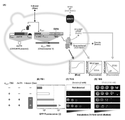
- FIG. 1 is a schematic diagram illustrating a workflow of a method of creating a gene switch sensor according to an embodiment of the present disclosure.
- FIG. 1A shows a synthetic promoter (synP) in which a core promoter and an operator sequence are fused.
- FIG. 1B shows a method for selecting a gene switch having a desired property from a gene switch library.
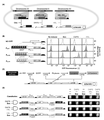
- FIG. 2 is a schematic diagram showing the results of evaluating the performance of TB D25AG used in one embodiment of the present disclosure.
- (A) A schematic diagram of TB D25AG gene expression controlled by Tet-ON is shown. Nucleosides (5FdU or dP) are integrated via hENT1 and toxinized by the kinase activity of TB D25AG .
- FIG. 3 shows the improved S / N ratio of the Tet-ON type gene switch in one embodiment of the present disclosure.
- FIG. 4 shows mutation sites of various gene switches developed in one embodiment of the present disclosure and their S / N ratios.
- FIG. 5 is a schematic diagram showing flux control from FPP to ⁇ -carotene using the gene switch developed in one embodiment of the present disclosure.
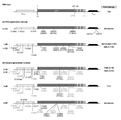
- FIG. 6 shows nucleotide and amino acid (AA, shown in parentheses) mutations found in the rPhlTA expression cassette of the DAPG-ON switch evolved in one embodiment of the present disclosure.
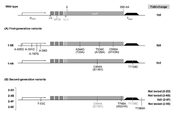
- FIG. 7 shows mutations in nucleotides and amino acids (AA, shown in parentheses) found in the LuxTA expression cassette of the HSL-ON switch evolved in one embodiment of the present disclosure.
- FIG. 8 is a schematic diagram of a gene switch in Pichia yeast developed in one embodiment of the present disclosure.
- FIG. 9 is a graph showing the relationship between the change in the number of copies of phlO and the change in the expression level in the gene switch of Pichia yeast in one embodiment of the present disclosure.
- a “gene switch” or “gene switch sensor” is a factor that is interchangeably used and contains a transcriptional regulatory domain (eg, a molecule, a complex thereof, or a fusion thereof, etc.).
- a transcriptional regulatory domain eg, a molecule, a complex thereof, or a fusion thereof, etc.
- the "gene switch” may be referred to as a "transcription factor” and can be used interchangeably.
- the activity of such factors is regulated by the interaction (eg, binding or dissociation) of the inducing substance (activator, or inducing factor), and its function can be changed.
- the interaction (eg, binding) of an inducing substance (activator, or inducing factor) with a gene switch changes the degree or state of its interaction (eg, binding) with the target sequence of the gene switch.
- the expression of the gene of interest is suppressed or induced.
- the "gene switch" in the present specification is a molecule containing a transcriptional activation domain, and a site to which a substance capable of activating the molecule by binding (for example, an activating substance or an inducing factor) binds. Examples thereof include molecules having the above, and binding or dissociation to the target sequence due to the binding of the substance.
- the “gene switch system” refers to the entire system using the gene switch as described above, that is, a transcription factor and its binding sequence (expression control sequence, regulatory DNA element, etc.), and further downstream thereof. Refers to the whole including the promoter of.
- the "gene switch expression sequence” means a nucleic acid sequence encoding the gene switch when the gene switch (transcriptional regulator) is a protein or polypeptide.
- a “gene switch activator” activates a gene switch or alters its function by interacting with (eg, binding to) a gene switch (transcriptional regulator), resulting in.
- a substance that directly or indirectly induces the regulation of the expression of one or more genes for example, such a compound.
- the "activating substance” may be referred to as an "inducing factor” or an “inducing substance” and can be used interchangeably.
- the activator can also be different for each gene switch (transcription factor). Examples of the combination of the gene switch and the activating substance include rtetTA and Dox, CamTA and D-Camphor, PhlTA and DAPG, LuxTA and HSL, and the like.
- a "gene switch target sequence” is a nucleic acid sequence located 5'upstream of a gene encoding a gene of interest, and refers to a nucleic acid sequence or regulatory DNA element that controls transcription of the target gene. It may preferably be an artificial promotor having a promotor activity and having a promotor arrangement or a fusion of an operator arrangement and a core promotor.
- the enhancer can also act indirectly or directly on the target sequence of the gene switch (transcription factor).
- the action of a gene switch (transcriptional regulator) on a target sequence can be regulated by the addition of an inducer, thereby controlling the expression of the target gene, unless the gene switch (transcriptional regulator) acts on the target sequence.
- the target gene is not expressed.
- the gene switch rtetTA acts on its target sequence teO promoter (artificial promoter containing teto) by the addition of its activator Dox, and promotes transcription of the target gene located downstream of the promoter.
- the term "promotor” refers to a region on DNA that controls the initiation of transcription of a gene and directly regulates the degree of transcription thereof, and refers to a nucleic acid sequence that initiates transcription by binding to RNA polymerase. ..
- the promoter can be appropriately selected and used depending on the type of host cell used. When yeast is used as a host, the promoter is not particularly limited as long as it can be expressed in a host cell such as yeast, and any of them may be used.
- examples of the promoter include a GAL1 promoter, a GAL10 promoter, a heat shock protein promoter, an MF ⁇ 1 promoter, a PHO5 promoter, a PGK promoter, a GAP promoter, an ADH promoter, a TDH promoter, a DAS1 promoter, and an AOX1 promoter.
- gene switches those that are in the activated state under the condition that gene expression should be ON (ON selection) and / or those that are in the suppressed state under the condition that the gene expression should be OFF are selected.
- ON selection a gene switch having arbitrary output characteristics can be obtained.
- OFF selection a gene switch having arbitrary output characteristics can be obtained.
- the term "ON selection” or "ON condition” refers to selecting a gene that is in an activated state under conditions where gene expression should be ON, or the condition thereof, for example, a gene switch (transcription factor). ) Is ON (activated state), a gene switch (transcription factor) whose gene expression is OFF (suppressed state), and / or a gene switch in an activated state that has not reached the target activation level. It can be referred to as selection by removing (transcription factor).
- the ON condition includes a condition that kills a cell that does not express a gene whose expression is regulated by a promoter and / or does not express a target amount.
- the host cell cannot survive unless it is expressed" and / or "the host cell must be expressed in the target amount".
- a gene switch transcription factor that cannot express downstream genes without being activated under the condition that the gene switch is ON (activated state), and / or a gene switch that is in an activated state that has not reached the target activation level. (Transcription factor) can be removed by killing the cells into which it has been introduced.
- ON selection cell death can be avoided by expressing a gene whose expression is regulated by the action of a gene switch (transcription factor) and / or by expressing only a target amount.
- OFF selection refers to selecting a gene that is in a suppressive state under conditions where gene expression should be OFF, or the condition thereof, for example, a gene switch (transcriptional regulator). ) Is OFF (suppressed state), by removing the gene switch (transcriptional regulator) in which the downstream gene is expressed, that is, the gene switch (transcriptional regulator) with leak expression (leak expression). You can say selection.
- the OFF condition includes a condition for killing a cell expressing a gene whose expression is regulated by a promoter.
- a method of arranging a gene that "causes cell death of a host cell when expressed” can be mentioned under the control of a gene switch (transcriptional regulator) to be selected.
- a gene switch transcriptional regulator
- the gene switch transcriptional regulator
- the gene switch transcriptional regulator that expresses the downstream gene (causes leak expression) is the cell that introduced it. It can be removed by dying.
- cell death can be avoided when the expression of a gene whose expression is regulated by the action of a gene switch (transcription factor) is OFF (attenuation or disappearance).
- transcriptional regulator refers to a protein that acts on a regulatory DNA element such as a promoter.
- Transcription regulators are broadly divided into transcriptional repressors (repressors) and transcriptional activators (activators).
- Transcription suppressors can act on regulatory DNA elements to suppress gene transcription and reduce gene expression.
- Transcriptional activators can act on regulatory DNA elements to promote gene transcription and increase gene expression.
- known factors can be used as the transcriptional repressor and the transcriptional activator. The expression of a gene sequence located downstream of a regulatory DNA element on which a transcriptional regulator acts is suppressed or promoted by the action of the transcriptional regulator.
- Gene expression means a series of processes in which gene information is transcribed into mRNA and further translated as an amino acid sequence of a protein encoded by the gene. If expression is promoted, a gene-encoded protein is produced and its amount increases, and if expression is suppressed, a gene-encoded protein is not produced and its amount decreases.
- the "candidate transcription factor” is a factor that can be a candidate for a transcription factor.
- inducing factor As used herein, the term “inducing factor”, “inducing substance” or “inducing agent” is used to activate, inactivate, or change the function of a transcriptional regulator by binding to the transcriptional regulator. As a result, a factor capable of regulating the direct or indirect expression of one or more genes.
- a "DNA library” is a nucleic acid library containing a nucleic acid sequence isolated from nature or a synthetic nucleic acid sequence. Sources of naturally isolated nucleic acid sequences include, but are not limited to, eukaryotic cells, prokaryotic cells, or virally derived genomic or cDNA sequences. A library in which an arbitrary sequence (eg, signal, tag, etc.) is added to a sequence isolated from nature is also included in the DNA library of the present disclosure.
- an arbitrary sequence eg, signal, tag, etc.
- the term "host cell” refers to a cell into which a heterologous (eg, exogenous) nucleic acid or protein has been introduced.
- the host cell can include not only a specific target cell but also a progeny of the cell.
- Host cells include prokaryotic or eukaryotic cells and are any cells that have the appropriate traits to receive and produce heterologous nucleic acids or proteins. Includes, for example, prokaryotic and eukaryotic cells, bacterial cells, mycobacterial cells, fungal cells, yeast cells, plant cells, insect cells, non-human animal cells, human cells, or cell fusions such as hybridoma or quadroma. Is done.
- the term "expression vector” refers to a vector DNA that carries an external gene to a host cell and is capable of expressing the target gene in the host cell.
- the vector DNA is not particularly limited as long as it can be replicated in the host, and can be appropriately selected depending on the type of host and the purpose of use.
- the vector DNA may be a vector DNA obtained by extracting a naturally occurring DNA, or a vector DNA in which a part of the DNA other than the part necessary for replication is missing.
- Representative vector DNAs include, for example, plasmids, bacteriophages, and virus-derived vector DNAs.
- plasmid DNA a plasmid derived from Escherichia coli, a plasmid derived from Bacillus subtilis, a plasmid derived from yeast, or the like can be used.
- bacteriophage DNA include ⁇ phage and the like.
- virus-derived vector DNA include vectors derived from animal viruses such as retrovirus, vaccinia virus, adenovirus, papovavirus, SV40, chicken pox virus, and pseudomad dog disease virus, and vectors derived from insect viruses such as baculovirus. be able to.
- vector DNA derived from a transposon, an insertion element, a yeast chromosomal element, and the like can be mentioned.
- a vector DNA prepared by combining these for example, a vector DNA prepared by combining genetic elements of a plasmid and a bacteriophage (such as cosmid and phagemid) can be mentioned. It is necessary to incorporate the target gene into the vector DNA so that the target gene is expressed, and at least the target gene and a regulatory DNA element, for example, a promoter are included in the vector DNA. In addition to these elements, if desired, gene sequences carrying information on replication and regulation can be combined and incorporated into vector DNA by known techniques.
- Such gene sequences include, for example, ribosome binding sequences, terminators, signal sequences, cis-elements such as enhancers, splicing signals, and selectable markers (dihydrofolate reductase gene, ampicillin resistance gene, neomycin resistance gene, etc.). can. One or more gene sequences selected from these can be integrated into the vector DNA.
- fusion gene refers to a new gene that is generated by artificially or naturally linking multiple genes, and is the result of recombination such as chromosomal translocation, insertion, or inversion. Things are also included.
- the fusion gene may also encode a fusion protein.
- the number of genes linked in the fusion gene is not particularly limited as long as it can give rise to a protein that is functional as a fusion gene.
- the orientation of each gene in the fusion gene is also not particularly limited, and all are forward (original transcription orientation), all are reverse (opposite to the original transcription orientation), and any combination of forward and reverse. May be good. Further, in the fusion gene, each gene may be linked at any position.
- the "fusion gene” in the present specification includes not only a gene in which different genes are linked but also a gene in which the same gene is linked.
- operably linked means that a polypeptide encoded by a nucleic acid is linked to an element such that it is expressed in a state that exhibits the biological activity of the polypeptide under the control of an element such as a promoter. It means that it has been done.
- an "operably linked” sequence is an expression control sequence or regulatory DNA element flanking the gene of interest, and expression that acts trans or at a distance to control the gene of interest. Includes either regulatory sequences or regulatory DNA elements.
- random mutation refers to the random inclusion of mutations in a nucleic acid sequence and such mutations, where the number of mutations may be one or two or more. There may be. Mutations in random mutations may be artificially introduced or may be naturally occurring mutations.
- the term "toxic substance” has the property of harming (including killing) the survival or proliferation of a target such as a cell, or suppressing the survival or proliferation of the target.
- a substance which may be an antibiotic.
- the term "toxic precursor" is not toxic by itself, or even if it is, it does not harm the survival or proliferation of a target such as a cell. , A substance that changes to a toxic substance due to internal or external factors such as binding to other substances or phosphorylation.
- toxicity-imparting-enhancing gene refers to a nucleic acid sequence or nucleic acid molecule that, upon expression, transforms the toxicity precursor to impart or enhance toxicity to the cell.
- the term "resistance-imparting-enhancing gene” refers to a nucleic acid sequence or nucleic acid molecule that imparts or enhances resistance to the toxic substance to the cell by being expressed.
- it may produce a gene product that attenuates the toxicity of the toxic substance by binding to the toxic substance.
- the resistance-imparting enhancing gene does not have catalytic activity for toxic substances or does not express a gene having catalytic activity for toxic substances.
- it may produce a gene product that stoichiometrically attenuates the toxicity of the toxic substance with respect to the amount of the gene product.
- it may contain, for example, a mutation that weakens the binding to a toxic substance.
- the term "marker gene” refers to a gene encoding an arbitrary protein that is translated intracellularly, functions as a marker, and enables discrimination of a cell type that meets specific conditions.
- the protein is not particularly limited as long as it is a protein that can be translated intracellularly and functions as a marker.
- a protein that exhibits fluorescence, luminescence, or coloration, or by assisting fluorescence, luminescence, or coloration, etc. Contains proteins that can be visualized and quantified.
- the fluorescent protein examples include blue fluorescent proteins such as Siris and EBFP; cyanofluorescent proteins such as mTurquoise, TagCFP, AmCyan, mTFP1, MidoriishiCyan and CFP; TurboGFP, AcGFP, TagGFP, Azami-Green (eg, h Green fluorescent protein such as EGFP, GFP2, HyPer, mUkG (Umikinoko Green); Yellow fluorescent protein such as TagYFP, EYFP, Venus, YFP, PhiYFP, PhiYFP-m, TurboYFP, ZsYellow, mBana, etc.
- blue fluorescent proteins such as Siris and EBFP
- cyanofluorescent proteins such as mTurquoise, TagCFP, AmCyan, mTFP1, MidoriishiCyan and CFP
- TurboGFP AcGFP
- TagGFP Azami-Green
- Yellow fluorescent protein such as TagYFP, EYFP, Venus, YFP, PhiYFP,
- Orange fluorescent protein such as TurboRFP, DsRed-Express, DsRed2, TagRFP, DsRed-Monomer, AsRed2, mStrawbury, etc .; Red fluorescent protein such as TurboFP602, mRFP1, JRed, KillerRed, , MPlum and other near-infrared fluorescent proteins, but are not limited thereto.
- the term "combination" refers to a combination of factors such as cells, compounds, or genes, and the combination can include any factor.
- the combination does not necessarily have to be in the form of a composition or the like, and each factor constituting the combination may exist as a separate substance, and may include, for example, a kit.
- the "gene” refers to a factor that defines a genetic trait, and the “gene” may refer to a "polynucleotide", an “oligonucleotide”, and a “nucleic acid”.
- a method for selecting a gene switch (transcriptional regulator) in an organism wherein (A) a promoter to which a gene switch expression sequence and / or a transcriptional regulator encoded by the gene switch expression sequence is bound.
- the DNA library used here has various performances.
- a gene switch transcriptional regulator
- a gene switch system using the gene switch can be applied to mass production of useful proteins, and in protein production, for example, heterologous to a host cell such as Escherichia coli.
- a technique for forcibly expressing a target protein obtained from an organism is used.
- the gene switch according to one embodiment of the present disclosure has a sufficiently low basal expression level at the time of non-induction (that is, low leakage expression), and when expression is induced (ON). Sufficient gene expression is performed (that is, the expression level ratio at ON / OFF is large).
- the gene switch (transcriptional regulator) of the present disclosure can regulate the expression of a downstream gene with high sensitivity even when the concentration of the inducing factor is low.
- the gene switch and the gene switch system utilizing the gene switch can be used as a means of metabolic engineering.
- metabolic engineering multiple enzyme genes are simultaneously expressed in one host cell to construct a biosynthetic pathway for a certain target substance.
- the expression levels of individual genes should be detailed and independently. It needs to be adjusted. Therefore, in one embodiment of the present disclosure, when the expression of a plurality of genes is regulated simultaneously in one cell, the inducer of one gene switch (transcription factor) has the desired ON / OFF switching characteristics.
- a gene switch transcriptional regulator
- a gene switch capable of continuously regulating the expression level of each gene switch (transcriptional regulator) without malfunctioning another gene switch and the gene switch system using the same. can do.
- the gene switch sensor of the present disclosure and the gene switch system using the same can easily and quickly produce a target metabolite by GFP or the like without using an analysis method such as HPLC or GCMS. (Concentration) can be measured.
- the gene switch sensor of the present disclosure and the gene switch system using the same are used as a metabolite sensor, the production amount is increased by using the highly sensitive gene switch sensor and the gene switch system using the same.
- a DNA library can be made using a variety of known methods and to a promoter to which a gene switch expression sequence and / or a transcriptional regulator encoded by the gene switch expression sequence binds. It is not particularly limited as long as it has a random mutation introduced.
- such a DNA library can be introduced into a host cell by introducing an expression vector into the host cell.
- the expression cassette (fragment) can also be integrated into the genome.
- the "expression vector" is a vector DNA that carries an external gene to a host cell and can express the target gene in the host cell.
- the vector DNA is not particularly limited as long as it can be replicated in the host, and can be appropriately selected depending on the type of host and the purpose of use.
- the vector DNA may be a vector DNA obtained by extracting a naturally occurring DNA, or a vector DNA in which a part of the DNA other than the part necessary for replication is missing.
- Representative vector DNAs include, for example, plasmids, bacteriophages, and virus-derived vector DNAs.
- plasmid DNA a plasmid derived from Escherichia coli, a plasmid derived from Bacillus subtilis, a plasmid derived from yeast, or the like can be used.
- the bacteriophage DNA include ⁇ phage and the like.
- virus-derived vector DNA examples include vectors derived from animal viruses such as retrovirus, vaccinia virus, adenovirus, papovavirus, SV40, chicken pox virus, and pseudomad dog disease virus, and vectors derived from insect viruses such as baculovirus. be able to.
- vector DNA derived from a transposon, an insertion element, a yeast chromosomal element, and the like can be mentioned.
- a vector DNA prepared by combining these for example, a vector DNA prepared by combining genetic elements of a plasmid and a bacteriophage (such as cosmid and phagemid) can be mentioned.
- target gene it is necessary to incorporate the target gene into the vector DNA so that the target gene is expressed, and at least the target gene and a regulatory DNA element, for example, a promoter are included in the vector DNA.
- a regulatory DNA element for example, a promoter
- gene sequences carrying information on replication and regulation can be combined and incorporated into vector DNA by known techniques.
- Such gene sequences include, for example, ribosome binding sequences, terminators, signal sequences, cis-elements such as enhancers, splicing signals, and selectable markers (dihydrofolate reductase gene, ampicillin resistance gene, neomycin resistance gene, etc.). can.
- One or more gene sequences selected from these can be integrated into the vector DNA.
- a known genetic engineering technique can be applied to the method of incorporating the target gene into the vector DNA.
- a method can be used in which the gene of interest is treated with an appropriate restriction enzyme, cleaved at a specific site, then mixed with the similarly treated vector DNA, and recombined with ligase.
- the desired vector DNA can also be obtained by ligating an appropriate linker to the target gene and inserting it into the multicloning site of the vector suitable for the target.
- the method for introducing the expression vector into the host cell is not particularly limited as long as it is an introduction method capable of introducing the vector DNA into the host cell to express the target gene in the host cell, and is known as appropriately selected depending on the species of the host cell. Any of the methods may be used. For example, a lithium acetate method, an electroporation method, a calcium phosphate method, a lipofection method and the like can be mentioned.
- the OFF condition for killing a cell expressing a gene whose expression is regulated by a promoter and / or the ON condition for killing a cell not expressing a gene whose expression is regulated by a promoter are, for example, artificial or artificial.
- Downstream of the natural promoter thymidin kinase (eg, hsvTK), a gene product-producing gene that attenuates the toxicity of the toxic substance by binding to it (eg, ble (breomycin-resistant protein)), and a fluorescent protein-producing gene.
- An expression cassette operably linked with a reporter gene fused with (for example, GFP (green fluorescent protein)) can be introduced into cells.
- hsvTK phosphorylates an artificial nucleic acid such as 5FdU or dP to impart cytotoxicity
- cells transformed with an expression vector containing the gene cassette express hsvTK in the presence of the artificial nucleic acid such as 5FdU or dP. Then it dies (OFF selection).
- cells transformed with the above expression vector can acquire resistance to zeocin and survive by expressing ble, even in the presence of the antibiotic zeocin as a toxic substance, for example (). ON selection).
- the expression sequence and the gene switch in the same expression vector, and the expression vector containing the expression sequence of the fusion reporter gene and the gene switch (transcriptional regulator). It can also be carried out by co-transforming an expression vector containing the above into the same cell.
- the gene sequence encoding thymidine kinase is not particularly limited, and gene sequences encoding thymidine kinase derived from mammalian cells or viruses can be mentioned, and thymidine kinase derived from human herpes virus, A gene sequence encoding a thymidine kinase derived from Escherichia coli and a nucleoside kinase derived from Drospophila can also be used. More preferably, a gene sequence encoding thymidine kinase (hsvTK) derived from human herpesvirus can be used.
- hsvTK thymidine kinase
- wild-type thymidine kinase In addition to the gene sequence of wild-type thymidine kinase, one or more, for example, 1 to about 100, preferably 1 to about 30, more preferably 1 to about 20, and even more preferably 1 to about 1 in the gene sequence.
- the kinase activity of the mutant is preferably comparable or higher than that of wild-type kinase.
- the degree of mutation and their positions in the gene sequence encoding the mutant are particularly limited as long as the gene sequence having the mutation is a gene sequence encoding a protein exhibiting kinase activity equivalent to that of wild-type thymidin kinase. Not done.
- the means for introducing the mutation is known, and for example, a site-specific mutagenesis method, a gene homologous recombination method, a primer extension method, a polymerase chain reaction, or the like can be used alone or in combination as appropriate.
- Thymidine kinase is an enzyme that catalyzes the phosphorylation reaction of deoxythymidine and plays an important role as a regulator of DNA synthesis.
- the artificial nucleic acids 5FdU and dP like other nucleosides, are incorporated into the genome via the salvage pathway of thymidine.
- 5FdU and dP are mutagenic nucleosides that are incorporated into the genome and frequently cause gene mutations. Therefore, in cells expressing thymidine kinase, cell death is induced by the addition of 5FdU or dP, but in cells not expressing thymidine kinase, cell death is not induced by the addition of 5FdU or dP.
- the mutagenic nucleoside is not particularly limited as long as it mutates the gene and induces cell death when incorporated into the gene, and is a naturally occurring mutagenic nucleoside. It may be present or it may be artificially created.
- the concentration of mutable nucleoside is not particularly limited as long as it is a concentration that causes mutation in the gene and induces cell death when incorporated into the gene, and can be determined by a simple repeated experiment.
- dP is used at a concentration of 50 nM to 1 ⁇ M, more preferably 100 nM.
- the incubation time between the mutagenic nucleoside and the cells is not particularly limited as long as the time at which cell death occurs, and can be determined by a simple repeated experiment.
- the incubation between dP and cells may be any time as long as it is the time during which cell death due to the mutation caused by the mutagenic nucleoside is induced, for example, about 5 minutes to about 24 hours, preferably about 15 hours to about. It can be 24 hours.
- an inhibitor of the de novo synthesis pathway of deoxythymidine triphosphate can be further included.
- the inhibitor of the de novo synthesis pathway of deoxythymidine triphosphate (dTTP) is not particularly limited as long as it is a compound capable of inhibiting the de novo synthesis pathway and inhibiting the production of dTTP, and examples thereof include 5-fluorouracil and its derivatives. be able to. More specifically, 5-fluoro-2'-deoxyuridine (5FdU) can be mentioned. The concentration of 5-fluorouracil and its derivative may be determined by a simple repeated experiment as long as it can inhibit the de novo synthesis pathway of dTTP.
- 5FdU can be used at a concentration of 50 nM to 1 ⁇ M, preferably 100 nM.
- the incubation time between the inhibitor of the de novo synthesis pathway of dTTP and the cells is not particularly limited as long as the time at which cell death occurs, and can be determined by a simple repeated experiment.
- a broad substrate nucleoside transporter (equilibrium nucleoside transporter 1 (ENT1)) (eg, human equilibrium nucleoside transporter 1 (eg, human equilibrium nucleoside transporter 1)) is used to allow cells to incorporate artificial nucleic acids such as dP and 5FdU.
- ENT1 Equilibrium nucleoside transporter 1
- human equilibrium nucleoside transporter 1 eg, human equilibrium nucleoside transporter 1
- the gene encoding hENT1) can also be cloned and integrated into the chromosome. For example, since natural yeast cells cannot take up these artificial nucleic acids, incorporating such a transporter can promote the uptake of nucleotides.
- such transporters may clone only one copy, or may clone multiple transporters such as 2 copies, 3 copies, 5 copies, 7 copies, 10 copies.
- multiple copies are cloned, the advantage of increasing screening efficiency (eliminating escaping cells) can also be expected.
- the gene product that attenuates the toxicity of the toxic substance by binding to the toxic substance may be any as long as it can reduce the toxicity of the toxic substance such as an antibiotic to cells.
- ble bleomycin resistant protein
- the range value of the reporter expression intensity to be selected can be changed depending on the difference in drug concentration, and mutations that weaken the binding property can be included, for example, ble.
- the selection sensitivity can be adjusted by adding a mutation such as D25A.
- hsvTK is preferred for OFF selection and ble is preferred for ON selection, but any other reporter gene may be used as long as it exerts the desired effect shown in the present disclosure. can.
- a fusion protein (hsvTK-Ble-GFP (TBG)) can be used as the fusion reporter.
- TBG hsvTK-Ble-GFP
- a zeocin resistance gene derived from Streptalloteichus hindustanus as a selector in the ON state ( ble) is included.
- This protein is widely used as a positive selection marker for plasmid maintenance and recombination in yeast.
- the ble dimer binds and sequesters antibiotics in a 1: 1 molar ratio. Therefore, it can be said that the zeocin resistance of the cell directly reflects the expression level of Bl. With this selection mechanism, it is possible to switch by simply changing the amount of zeocin.
- the output (TBG expression) selection threshold can be freely set.
- a promoter sequence operably linked to the reporter gene sequence upstream of the reporter gene sequence for ON or OFF selection expresses these reporter genes.
- the promoter sequence is not particularly limited as long as it has a function of causing the gene switch (transcriptional regulator) to be tested and the gene product of the gene switch (transcription factor) to be tested acts on it, and a known promoter sequence can be used.
- a gene switch transcriptional regulator
- a gene switch transcriptional regulator
- Expression vectors used for screening can be prepared.
- such an expression vector further contains a gene sequence encoding a fluorescent protein in addition to these sequences.
- a gene sequence encoding a fluorescent protein in addition to these sequences.
- the gene sequence encoding the fluorescent protein is not particularly limited as long as it encodes a protein that can emit fluorescence in the cell, but green fluorescent protein (Green Fluorescence Protein, GFP), yellow fluorescent protein (Yellow Fluorescence Protein, YFP).
- Cyan Fluorescence Protein CFP
- Blue Fluorescence Protein CFP
- variants of these fluorescent proteins such as UV-optimized Green Fluorescence rotein, GFPuv, Enhanced Green Fluorescence Protein, EGFP, Enhanced Yellow Fluorescence Protein, EYFP, Enhanced Cyan Fluorescence Protein, ECFP, and Enhanced Blue Fluorescence Protein, ECFP.
- a gene sequence encoding a thymidine kinase as described above a gene sequence encoding a gene product that attenuates the toxicity of the toxic substance by binding to the toxic substance, and a gene encoding a fluorescent protein.
- a plasmid containing these gene sequences can also be used. In other practice systems, these gene sequences can also be introduced into an expression vector as a fusion reporter gene.
- cell death or cell death means a state in which a function as a cell such as proliferative ability is lost.
- a function as a cell such as proliferative ability is lost.
- cells such as yeast are cultured on a solid medium, the ability to grow from a single cell and form a cell colony (colony) of a certain size or larger that can be visually counted is lost. ..
- cell death and cell death are caused by active cell death (apsorption) and external factors that actively remove unnecessary cells, damaged cells, etc. caused by physiological or pathological factors. Passive cell death (necrosis) due to reaction to is also possible.
- budding yeast fission yeast and the like can be used as the yeast.
- Saccharomyces genus Saccharomyces cerevisiae, etc.
- Zygosaccharomyces genus Zygosaccharomyces rouxii, etc.
- Pichia yeast Komagataella phaffii, Komagataella pastoris, Komagataella pseudopastoris
- methanol-utilizing yeast for example.
- Ogataea minuta, Ogataea angusta Pichia meethanolica, Ogataea parapolymorpha, etc.
- a methanol-utilizing yeast is defined as a yeast cell that can be cultivated using methanol as the sole carbon source. Originally, it was a methanol-utilizing yeast cell, but it was artificially modified. Alternatively, yeast cells that have lost their methanol assimilation performance due to mutation are also included in the methanol-utilizing yeast cells.
- Pichia yeast has the property of assimilating methanol and is widely used industrially mainly in protein production.
- the AOX1 promoter is widely used as a methanol induction system.
- the expression level of this AOX1 promoter is very strong, and it is said that 5% of the total mRNA amount is derived from AOX1p in cells grown under methanol, and its expression can be strictly controlled by methanol.
- rPhlTA which is an artificial transcription activator
- DAPG DAPG
- a gene sequence encoding a transcriptional regulatory factor is a combination for screening a gene switch (transcriptional regulatory factor) from among the cells, a toxic precursor, and a toxic substance.
- a combination comprising a marker gene is provided.
- the resistance-imparting enhanced gene produces a gene product that attenuates the toxicity of the toxic substance by binding to the toxic substance, and preferably has no catalytic activity against the toxic substance. It is a thing.
- ble bleomycin resistant protein
- ON selection in liquid culture is possible, the range value of the reporter expression intensity to be selected can be changed depending on the difference in drug concentration, and mutations that weaken the binding property can be included, for example, ble. In this case, the selection sensitivity can be adjusted by adding a mutation such as D25A.
- the resistance-imparting enhanced gene produces a gene product that stoichiometrically attenuates the toxicity of the toxic substance with respect to the amount of the gene product, for example, the Bre dimer is an antibiotic.
- Zeosin can be inactivated by binding and sequestering substances in a 1: 1 molar ratio. Therefore, it can be said that cell zeocin resistance directly reflects the expression level of Bl.
- inducing factor that binds to a transcriptional regulator.
- Inducing factors also called activators, activate gene switches (transcriptional regulators) by binding to gene switches (transcriptional regulators) or alter their function, resulting in one or more genes. It can induce direct or indirect regulation of expression. It can be different for each gene switch (transcription factor), and the combination of the gene switch (transcription factor) and the inducing factor is, for example, rtetTA and Dox, CamTA and D-Camphor, PhlTA and DAPG, LuxTA. And HSL.
- a method for selecting a gene switch (transcriptional regulator) in an organism wherein (A) an expression vector containing a gene sequence encoding a candidate transcriptional regulator is introduced into a cell, and ( B) A step of operably linking a fusion gene containing a toxicity-imparting enhancing gene, a resistance-imparting enhancing gene, and a marker gene to a promoter that binds to the candidate transcriptional regulatory factor and introducing it into the cell, and (C). A step of arranging the cell in the presence of at least one concentration of a toxic precursor whose toxicity is imparted or enhanced by the gene product of the gene for enhancing the toxicity, and selecting a surviving cell, and (D) for the cell.
- the cells are placed in the presence of at least one concentration of a toxic substance that is toxic and the resistance is conferred or enhanced by the gene product of the resistance-imparting-enhancing gene, and the surviving cells are selected.
- a method comprising the steps of selecting surviving cells in (E), (C) and (D) and selecting the gene sequence encoding the included candidate transcriptional regulator as a gene switch (transcriptional regulator). Will be done.
- the transcriptional regulator when the transcriptional regulator is a transcriptional activator, the de novo synthetic pathway of deoxythymidine triphosphate (dTTP) in the absence of an inducing factor that binds to the transcriptional activator.
- OFF selection can be performed by incubation in the presence of an inhibitor.
- ON selection can be performed by incubation in the presence of an inducing factor that binds to the transcriptional activator and in the presence of a toxic substance. can.
- the transcriptional regulator when the transcriptional regulator is a transcriptional inhibitor, incubation is performed in the absence of an inducing factor that binds to the transcriptional inhibitor and in the presence of the toxic substance. OFF selection can be done.
- incubation in the presence of an inducing factor that binds to the transcriptional inhibitor and in the presence of an inhibitor of the de novo synthetic pathway of deoxythymidine triphosphate (dTTP). By doing, ON selection can be done.
- a method for simply and dramatically improving the response performance to a compound by using a transcription factor corresponding to a DNA sequence in which an operator sequence and a core promoter region are fused as a component of an early type switch sensor can be provided.
- HSV-TK thymidine kinase
- Bre bleomycin-resistant protein
- HSV-TK thymidine kinase
- Bl breomycin-resistant protein
- the flow cytometer After culturing under various OFF and ON selection conditions in which the concentration of the selected drug (OFF selection: 5FdU, dP, etc., ON selection: Zeocin, etc.) and the concentration of the inducer are changed, the flow cytometer The concentration status of the mutant is confirmed from the fluorescence distribution of GFP, colonies are isolated from the mutant population selected under more desirable conditions, and the GFP fluorescence intensity and the mutant sequence in both ON / OFF states of each colony are determined. be able to.
- gene switch sensors transcriptional regulators
- HSL homoserine lactone
- 2,4-diacetylfluorolog An improved version of lucinol (DAPG) responsive type, etc.
- DAPG lucinol
- the gene switch system can be used as an inducible promoter, and there is a high need for a high-performance artificial gene switch system that overcomes the drawbacks of the natural inducible promoter, which has characteristics that are difficult to use.
- the gene switch system can perform simple indirect quantitative evaluation of products and regulation of gene expression, the need for its use has been increasing in recent years.
- yeast which is also useful as an industrial microorganism, if a high-performance gene switch sensor and / or a gene switch system using it can be easily produced by this method, the time for strain construction can be overwhelmingly shortened. It can perform advanced metabolism and gene network control. Therefore, industrial application is expected especially in the fields of metabolic engineering and synthetic biology.
- the gene switch of the present disclosure can be used for mass production of useful proteins, control of expression of proteins showing toxicity, simple concentration measurement of metabolic compounds, and the like.
- an inducible promoter can be utilized for inducible expression (secretion or intracellular production) of a protein.
- Tet-ON, DAPG-ON, and HSL-ON having an excellent S / N ratio can be assumed to be used for controlling the expression of metabolic enzymes.
- it may be used for an enzyme that branches a metabolic pathway.
- the production amount of squalene can be increased by turning off the enzyme in the downstream ergosterol pathway that consumes squalene only at the timing of high production of squalene.
- useful proteins that are highly toxic to cells, such as antibody proteins can be mentioned as candidates.
- the expression level of antibody proteins is directly proportional to the production amount, unlike the metabolic engineering that constructs the conversion process of chemical reactions. Therefore, it is necessary to increase the expression level to the limit, but if the S / N ratio of the expression induction system is low, expression leakage occurs, and it is impossible to obtain a yeast strain due to cytotoxicity due to overexpression of protein. be. Due to its high signal-to-noise ratio, DAPG-ON, Tet-ON, and HSL-ON switches are expected to produce high toxic proteins.
- the gene switch system can be used to turn ON / OFF the expression of genes that are particularly toxic to cells.
- Intrayeast expression of antibody proteins expected to be used as pharmaceuticals or heterologous enzyme genes responsible for the synthesis of plant metabolites often show cytotoxicity when overexpressed. However, even if a gene is toxic during the cell proliferation phase, its toxicity may be alleviated if the expression is induced after the proliferation is completed. Therefore, by using a gene switch system to turn off the expression of the toxic gene during the growth phase and turn it on after the growth is completed, cytotoxicity due to overexpression of the heterologous gene can be avoided.
- the gene switch system is also attracting attention in the field of biocomputing.
- a "gene circuit" composed of a combination of a plurality of gene switch systems can be interpreted as an analogy of an "electronic circuit” that processes external information given to a cell.
- ON / OFF switching of gene switches is analog, so the number of combinations of gene circuits is limited to a few, limiting their expandability. There is a possibility that such a weak point of the gene circuit can be solved by a gene switch having an excellent ratio of OFF and ON.
- the present disclosure is for creating a high-performance new gene switch system or metabolite sensor in various species such as yeast as a main component, other eukaryotes, and prokaryotes containing Escherichia coli. Method can be used. You can also sell the switch sensor you create as part of a license or kit, or develop a switch sensor on a contract basis.
- the created gene switch system can be used as a promoter for inducing new protein production that is safe, inexpensive, and easy to use (for example, no explosion-proof equipment is required, carbon sources are not limited, etc.), and gene expression in metabolic pathways is strictly expressed.
- the developed metabolite sensor is used to easily quantify the production volume of target products and by-products instead of HPLC and GCMS, accelerating the development speed of high-performance (high-production) substance production strains. You can also let it.
- a gene switch using a cheaper and safer compound as an inducer, and / or a gene switch system using the same, has been developed and licensed or used as a part of a kit. Can be sold. Transcription factors possessed by various species will be screened using the physical properties of the inducer as an index, and a gene switch (transcriptional regulator) using this and / or a prototype of a gene switch system using it will be prototyped. Random gene mutations are introduced into the components of the prototype prototype. OFF / ON selection is performed on the gene switch library thus prepared.
- gene expression is induced by culturing a yeast strain carrying a gene switch library in the presence of 100 nM of 5 FdU and then transferring it to a medium containing an inducer. ON selection is performed by transferring the culture medium to a medium containing 1 to 3 mM Zeocin and an inducer.
- the gene switch (transcription factor) mutant that responds to the lower concentration inducer is also isolated (higher sensitivity).
- the developed gene switch (transcriptional regulator) and / or the gene switch system using it is used to control the expression of metabolic enzymes that are the key to substance production and to induce the production of proteins that have a heavy load on cells.
- it is a system for selecting a gene switch (transcriptional regulator) in an organism, and is a promoter to which (A) a gene switch expression sequence and / or a transcriptional regulator encoded by the gene switch expression sequence is bound.
- a DNA library containing multiple nucleic acid molecules into which random mutations have been introduced (B) means for introducing the library into host cells, and (C) killing cells expressing genes whose expression is regulated by the promoter.
- a system includes a means of selecting a nucleic acid molecule having the same nucleic acid sequence as that contained in the library contained in a cell) as a gene switch (transcriptional regulator).
- a system for selecting a gene switch (transcriptional regulator) in an organism which is a promoter to which a gene switch expression sequence and / or a transcriptional regulator encoded by the gene switch expression sequence is bound.
- the gene switch (transcriptional regulator) is selected from a DNA library containing a plurality of nucleic acid molecules into which random mutations have been introduced, and the system is (B) a means for introducing the library into a host cell.
- (C) A means for selecting a surviving cell by exposing the host cell to an OFF condition that kills a cell expressing a gene whose expression is regulated by the promoter, and (D) (C) the surviving cell ( Means that expose cells that survive under OFF conditions to ON conditions that kill cells that do not express the gene whose expression is regulated by the promoter and / or have not reached the desired expression level, (E) (D).
- a system comprising a means for selecting as a gene switch (transcriptional regulator) a nucleic acid molecule having the same nucleic acid sequence as that contained in the library contained in the surviving cell (cell surviving under ON conditions). ..
- the DNA library can be made using a variety of known methods, to which a gene switch expression sequence and / or a transcriptional regulator encoded by the gene switch expression sequence binds. It is not particularly limited as long as a random mutation is introduced into the promoter.
- means for introducing the library into a host cell include various molecular biological instruments capable of introducing an expression vector into the host cell or incorporating an expression cassette (fragment) into the genome. can.
- (C) means for exposing the host cell to an OFF condition that kills cells expressing a gene whose expression is regulated by the promoter and selecting surviving cells, and (D) regulation of expression by the promoter.
- a means for selecting a surviving cell by exposing it to an ON condition that kills a cell that does not express the gene to be expressed and / or has not reached the desired expression level for example, various conditions are set and the cell under the condition is set. Examples thereof include an incubator capable of culturing, and the present invention is not particularly limited as long as the cells can be cultured under predetermined conditions.
- a nucleic acid molecule having the same nucleic acid sequence as that contained in the library contained in the living cells (cells living under ON conditions) in (E) and (D) is genetically switched (transcriptional regulation).
- the means selected as the factor) is not particularly limited as long as it is possible to extract a nucleic acid molecule contained in the cell from a cell that survives under predetermined conditions and determine the nucleic acid sequence thereof. , Sequencer, etc. can be included.
- individual cultured cells provide information on each nucleic acid molecule in the DNA library to ensure that the nucleic acid molecules contained in the surviving cells have the same nucleic acid sequences as those contained in the library. It may be a device that can be linked to and cultured.
- Gene switch library and the breeding of organisms or cells by it
- a gene switch transcriptional regulator
- a promoter having a variation in expression intensity and transcription property depending on a target compound or metabolite is libraryed.
- a method for breeding an organism or cell having a desired characteristic A) a method for selecting a gene switch (transcriptional regulator) of the present disclosure, has a desired activity. A step of providing a gene switch (transcriptional regulator) and B) using the gene switch (transcriptional regulator) to obtain the desired transcriptional properties of one or more genes involved in imparting the desired properties. From the steps of modifying to have, C) the step of introducing the gene having the desired transcriptional properties modified in step B into the target cells, and D) the cells obtained in step C, the desired properties.
- a method is provided that comprises the step of selecting cells having.
- a method for breeding an organism or cell having a desired characteristic A) a step of providing the gene switch library of the present disclosure, wherein the library is a gene having a desired activity.
- a step configured to have a switch (transcriptional regulator) and B) the gene switch (transcriptional regulator) is used to obtain one or more genes involved in imparting the desired properties.
- From the steps of modifying the cells to have the transcriptional properties of, C) introducing the gene having the desired transcriptional properties modified in step B into the target cells, and D) the cells obtained in step C. A method comprising the step of selecting cells having the desired properties is provided.
- a method of breeding an organism or cell that produces the desired substance A) a gene switch having the desired activity using the method of selecting the gene switch (transcriptional regulator) of the present disclosure.
- the steps of providing (transcriptional regulator) and B) the gene switch (transcriptional regulator) are used to modify one or more genes involved in the biosynthesis of the substance to have the desired transcriptional properties. From the steps, C) the step of introducing the gene having the desired transcriptional properties modified in step B into the target cells, and D) the cells obtained in step C, cells having the desired properties are selected.
- a method is provided that includes a step of selection.
- the gene switch transcriptional regulatory factor selection method disclosed in the present disclosure and the gene switch library using the gene switch, based on cells expressing a gene switch capable of controlling transcription in response to a target metabolic compound. It is also possible to construct a library (type of gene to be introduced, type of organism species from which it is derived, expression level of each gene, etc.) and select cells having desired characteristics from the library. Therefore, in another aspect of the present disclosure, a method of selecting an organism or cell having a desired characteristic, A) a step of providing the gene switch library of the present disclosure, wherein the library is of interest.
- a method comprising the step of selecting cells having desired properties from among them.
- the desired substances include, for example, an enzyme for synthesizing a useful substance such as an amino acid or polylactic acid, an enzyme for decomposing a target compound (for example, a persistent compound such as PET), and an antibiotic.
- a target compound for example, a persistent compound such as PET
- an antibiotic for example, an enzyme for synthesizing antibacterial substances such as substances, and antibody proteins that specifically interact with target proteins.
- the organism or cell to be bred may include eukaryotes and prokaryotes, and may be any cell, and for example, yeast (Pikia yeast, budding yeast). , Escherichia coli, yeast, lactic acid bacteria, corine bacteria, filamentous fungi, microalgae and the like.
- a promoter having a desired activity can be selected, thereby producing a desired promoter. Can be provided. At this time, it is also possible to select cells having activity in the desired cells as described above.
- the method of selecting a genetic switch (transcriptional regulator) of the present disclosure and the products and processed products such as the switch obtained thereby are high in the so-called DBTL (design, build, test, learn) cycle. It is possible to rapidly create high-producing strains of functional biological substances (for example, antibodies, metabolites, other various substances such as proteins, lipids, sugars, organellas, etc.).
- DBTL design, build, test, learn
- the arrangement, structure, and modified cell design of biological substances are assumed.
- biological substances for example, antibodies
- the products and workpieces such as switches obtained thereby can be utilized.
- the method for selecting the gene switch (transcriptional regulator) of the present disclosure by combining the method for selecting the gene switch (transcriptional regulator) of the present disclosure and the products and processed products such as the switch obtained by the method, it is possible to improve the biopharmaceutical fed batch production technique by microorganisms. It is also possible to improve the fed batch production technology suitable for producing varieties.
- Another example is the production of biopharmacy by microorganisms, which can be improved by combining the methods of selecting gene switches (transcriptional regulators) of the present disclosure with products and processed products such as switches obtained thereby. can.
- gene synthesis and fragment synthesis services such as GeneArt, GenScript, Integrated DNA Technologies (IDT) can also be used, and others, for example, Gait. , M. J. (1985). Oligonicleotide Synthesis: A Practical Approach, IRL Press; Gait, M. Gait. J. (1990). Oligonucleotide Synthesis: A Practical Approach, IRL Press; Eckstein, F.M. (1991). Oligonucleotides and Analogues: A Practical Approach, IRL Press; Adams, R.M. L. et al. (1992). The Biochemistry of the Nucleic Acids, Chapman &Hall; Shabarova, Z.
- Example 1 Construction of fusion reporter gene
- a fusion protein with three functions simple herpesvirus thymidine kinase (hsvTK) as a protein for OFF selection, zeosin-resistant protein (Ble) as a protein for ON selection, and a fluorescent reporter (green fluorescent protein, GFP)
- hsvTK-Ble-GFP TBG
- a synthetic promoter in which a core promoter and an operator sequence were fused was constructed.
- the synthetic transcription activator sTA
- sTA binds to the inducing factor in a positive or negative reaction and activates the transcription of the downstream gene encoding the fusion protein (hsvTK-Ble-GFP (TBG)) which is the output of the gene switch.
- TBG fusion protein
- the desired gene switch variants were then enriched by various OFF / ON selections.
- inappropriate switch output that is, variants with hsvTK expression are 5-fluoro-2'-deoxyuridine (5FdU) or 6- ( ⁇ -D-2-deoxyribofuranosyl)- Phosphorylates 3,4-dihydro-8H-pyrimid [4,5-c] [1,2] oxadin-7-one (dP) and is subsequently killed by the toxic effects of nucleoside monophosphates (5FdUMP and dPMP). I let you. For ON selection, mutants with insufficient switch output (Ble expression) were killed with zeocin.
- yeast cells were first transformed with a gene switch library consisting of randomly mutated components (eg, an expression cassette encoding sTA), followed by OFF selection with 5FdU or dP.
- a gene switch library consisting of randomly mutated components (eg, an expression cassette encoding sTA), followed by OFF selection with 5FdU or dP.
- different concentrations of inducers were added to the obtained cell pool, and ON selection was performed using various concentrations of zeocin.
- the resulting cell populations were evaluated for inducer-dependent fluorescence shifts using flow cytometry and screened for enriched populations for the desired switch variants.
- mutants with the best performance were isolated by evaluating the GFP fluorescence of individual cells in both the OFF and ON states.
- Example 2 Selection of gene switch
- the gene encoding TGB constructed as in Example 1 was described in S.I.
- An E. coli tet operator (tetO) fused to the cerevisiae GAL1 core promoter (p GAL1-c ) was placed downstream of synP (p tetO7 ) with 7 copies connected (FIG. 2A).
- the construct encoding the TGB is S.I. It was integrated into chromosome V of the cerevisiae genome.
- RTetTA also referred to as sTA, rtTA2 S -M2
- sTA reverse bacterial transcription inhibitor
- rTetR reverse bacterial transcription inhibitor
- 3 copies of the virus transcription activation motif 3 ⁇ VP16, VP48
- hsvTK includes 6- ( ⁇ -D-2-deoxyribofuranosyl) -3,4-dihydro-8H-pyrimid [4,5-c] [1,2] oxazine-7-one (dP) and 5-fluoro. It has been shown to be an excellent kinase for -2'-deoxyuridine (5FdU) and is used as a negative selection marker for E. coli. Before evaluating the TBG gene as an OFF selector, yeast cells need to be modified for efficient OFF selection.
- the gene encoding the broad substrate nucleoside transporter (human equilibrium nucleoside transporter 1 (hENT1)) was cloned and integrated into the yeast chromosome to promote the uptake of nucleoside by cells. Since the cytotoxicity of dP is very high in TBG-expressing cells, the survival rate of yeast cells expressing ptetO7 -TBG is reduced even with a low concentration (up to 50 nM) of dP without adding Dox or rTetTA. did. Although TBG / dP is suitable for selecting very rigorous gene switches that exhibit near-zero leakage expression, most existing induction systems exhibit some degree of leakage expression.
- 5FdU As shown in FIG. 2D, as a result of using 5FdU, 5FdU showed a dose-dependent effect, and when 100 nM of 5FdU was added to the medium, yeast having rTetTA did not survive in the presence of Dox (high). Mode), on the other hand, the cells had reduced viability in the absence of Dox (low mode). This reflects the TBG expression due to leakage (non-induction) observed in fluorescence, as shown in FIG. 2C.
- the resulting transformants ( ⁇ 105 unique clones) were cultured in Dox-free 5FdU -containing liquid medium to remove leaking (ie, Dox-independent) mutants with TBG expression. Then, OFF selection was performed. Next, ON selection was performed under various conditions to remove non-functional variants and thereby concentrate good switches. Specifically, the pool of OFF-selected cells was dispensed into 14 tubes containing various combinations of Dox (0.01-10 ⁇ g / mL) and zeocin (1 or 2 mM), and a sample was dispensed. It was shaken in the evening.
- 93 clones were randomly selected from the two selected pools and subjected to fluorescence screening on 96-well plates (FIG. 3B).
- a total of 48% (45/93) of the clones tested showed more than 5-fold induction with Dox (10 ⁇ g / mL), with the highest rTetTA mutants (rTetTA K8N, L131L ) at 0.3 and 10 ⁇ g / mL.
- rTetTA K8N, L131L the highest rTetTA mutants
- Fig. 3C In the presence of Dox, 8-fold and 11-fold induction was shown, respectively.
- a random mutation was introduced into the expression cassette encoding rTetTA of the Tet-ON switch, and the obtained library was subjected to OFF / ON selection in parallel under different selection conditions.
- the resulting cell population was evaluated for Dox-dependent fluorescence shift.
- the regions shown in green and blue show undesired behavior: variants with leaking expression (cells with 104 or more GFP fluorescence in the absence of Dox) and inactive variants (in the presence of 10 ⁇ g / mL Dox). Each relative amount ( %) of (cells with GFP fluorescence less than 104) is shown.
- the relative quantity (%) of the switching variant was obtained by subtracting both of these two numbers from 100%.
- the dashed line shows a histogram obtained from a yeast strain having a plasmid that does not contain rTetTA.
- FIG. 3B shows the results of fluorescence screening on a 96-well plate of the Tet-ON variant.
- FIG. 3C shows the transfer function of the selected mutant. Error bars represent the mean ⁇ SD of three independent experiments.
- the 50% effective concentration (EC 50 ) value was calculated from a dose-response curve adapted to the Hill equation by the least squares method.
- the upper panel shows fluorescence images of yeast strain cell pellets with wild-type and evolved Tet-ON switches (rTetTA K8N, L13L ) incubated with and without 10 ⁇ g / mL Dox.
- rTetTA K8N, L13L wild-type and evolved Tet-ON switches
- Dox 10 ⁇ g / mL Dox.
- Any transcription factor can be used as a component of the eukaryotic transcription switch according to the protocol for developing the Tet-ON system.
- different transcription factors are obtained because they differ in stability, DNA binding affinity, and how their function changes when fused with other proteins or domains to produce sTA. Switch performance is unpredictable.
- the switching behavior of sTA is highly dependent on various factors (expression level, promoter position and number of copies, and strain type). In reality, new systems need to be re-evolved to ensure proper performance under each condition.
- DAPG 2,4-Diacetylfluorologsinol
- DAPG-OFF D-Camphor-repressible
- Camphor-OFF D-Camphor-repressible switch
- DAPG and CamR D-Camphor responsive bacterial repressors
- NLS nuclear localization signal
- FIG. 4 shows a schematic diagram showing the production and evolution method of the yeast transfer switch (evaluated by S / N ratio, sensitivity, and behavior type).
- FIG. 4A shows the yeast gene switch developed in the present disclosure. The plasmid expression of the identified sTA mutant expressed a dose-dependent activation gene placed under the control of pphrO1 , pcamO1 , or pluxO1 in the host cell.
- 4B-4F show parent and variant transfers of DAPG-OFF switch (FIG. 4B), Camphor-OFF switch (FIG. 4C), DAPG-ON switch (FIG. 4D), and HSL-ON switch (FIG. 4F). Shown the function. GFP fluorescence from TBG was plotted as a function of each inducer concentration.
- the error bars shown represent the mean ⁇ SD of the three independent experiments.
- the concentration of the inducer added during the OFF / ON selection is indicated by an arrow and a broken line.
- the EC50 value was calculated from a dose-response curve adapted to the Hill equation by the least squares method and expressed in micromolar units.
- 4E and 4G show the structural mapping of mutations in PhlF and LuxR that invert / sensitize PhlTA and sensitize LuxTA, respectively.
- the structures of PhlF and LuxR were modeled using the Swiss-Model server based on the crystal structures of the TetR family transcription factor SCO0332 (PDB: 2ZB9) and the quorum sensor protein TraR (PDB: 1L3L), respectively.
- the DNA structure is taken from the corresponding reference crystal structure.
- Example 7 Conversion from DAPG-OFF system to DAPG-ON system
- Mutations allow the emergence of transcription factors with novel switching behavior. Repressors of various bacteria are known to reverse their ligand response by causing several mutations. Therefore, it was confirmed whether or not the construct can be converted into the DAPG-ON switch by inducing a mutation in the gene encoding the DAPG-OFF switch described above.
- the same PhlTA library used to isolate the DAPG-OFF switch was subjected to OFF selection in the absence of DAPG and then ON selection in the presence of this compound (5 ⁇ M).
- DAPG-ON variants (1-11E, 1-11G) were isolated and showed an 8-fold increase in DAPG-dependent fluorescence.
- FIG. 4D FIG. 6A.
- Mutation analysis of this variant revealed the existence of three novel mutations. One of them (Q117R) is essential for the functional reversal of PhlTA (rPhlTA) and the other two mutations (E143K and / or K86T) are the responsiveness of the inverted switch (both sensitivity and multiple change). It was essential for the improvement of (Fig. 4E).
- FIG. 6 shows nucleotide and amino acid (AA, shown in parentheses) mutations found in the rPhlTA expression cassette of the evolved DAPG-ON switch. Found in first-generation (FIG. 6A) and second-generation (FIG. 6B) rPhlTA expression cassettes, with the exception of the second-generation mutant, which was also found in the parental (1-11E) mutant. The mutations that have been made are shown by the red line. Fold change was calculated from the data shown in FIG. 4D as the average ⁇ SD ratio of fluorescence intensity in the presence and absence of 10 ⁇ M DAPG.
- coli RNA polymerase significantly reduced expression from the lux promoter in E. coli.
- the W201R substitution is thought to have a negative effect on the function of LuxR as a recruiter for RNA polymerase, in order to find the LuxR mutation that this mutation has so far sensitized to proteins for activation by HSL. It could be the reason why it was overlooked in the screening.
- yeast HSL-ON switches the role of LuxR is to promote HSL-induced DNA binding. Therefore, it is considered that this sensitizing mutation can be identified only by the yeast gene switch.
- FIG. 7 shows mutations in nucleotides and amino acids (AA, shown in parentheses) found in the LuxTA expression cassette of the evolved HSL-ON switch. Except for the 2nd generation mutant in which the mutation was also found in the parental (1-4A) mutant, it was found in the 1st generation (FIG. 7A) and 2nd generation (FIG. 7B) LuxTA expression cassettes. The mutations made are shown by the red line. Fold change was calculated from the data shown in FIG. 4F as the average ⁇ SD ratio of fluorescence intensity in the presence and absence of 100 ⁇ M HSL (3 ⁇ M for 2-4F).
- Example 9 Integration of yeast switch mutant into AND gate ⁇ -carotene biosynthetic pathway
- yeast Since yeast has developed a series of gene switches with improved signal-to-noise ratio, we tried to apply these structures to pathway flux control.
- Three isolated sTAs (DAPG-ON 2-1E , HSL-ON 2-4F , and Tet-ON 1-11F ) were integrated into different yeast chromosomes (FIG. 5A).
- the resulting strain was transformed with plasmids (p tetO7 , pflO6 , and pluxO5 ) in which the gfp gene was cloned downstream of each synP.
- the potential promoter sequence contained in the vector sequence 500 or more upstream of synP was deleted, and the number of repetitions of phlO and luxO was increased.
- the GFP fluorescence of the resulting cells was induced only in the presence of their cognate inducers and by more than 102 factors (FIG. 5B). All of these synthetic promoters were stringent, i.e., showed low basal TBG expression in the absence of inducers.
- the yeast When the yeast was transformed under the control of a promoter constructing a plasmid expressing all three genes (BTS1, crtYB, and crtI), the yeast produced ⁇ -carotene with or without an inducer (Fig. 5D).
- the promoters of BTS1 and crtYB were replaced with pflO6 and ptetO7 , respectively. Since all three of these genes needed to be expressed, ⁇ -carotene production was expected only in the presence of both DAPG and Dox (AND-gate control). However, leaked expression by the ptetO7 promoter was found to be non-negligible, probably due to the strong catalytic activity of CrtYB, resulting in significant false pigmentation in the absence of Dox.
- This leakage expression is alleviated by converting the gene switch used to control crtYB from ptetO7 to plusO5 , and the ⁇ -carotene biosynthetic pathway is placed under AND gate control by a combination of HSL and DAPG. rice field. In this strain, the expected AND gate behavior was observed, with ⁇ -carotene biosynthesis only seen in the presence of both DAPG and HSL. A similar strategy was adopted in the construction of strains in which the ⁇ -carotene biosynthetic pathway was placed under the AND gate.
- FIG. 5 shows flux control from FPP to ⁇ -carotene using a newly developed gene switch.
- FIG. 5A shows a yeast strain used for AND gate control of carotenoid biosynthesis. Three plasmids expressing sTA for use with the DAPG-ON 2-1E , HSL-ON 2-4F , and Tet-ON K8N, L131L switches were chromosomally integrated. The genes downstream of each synP ( pflO6 , ptetO7 , and plusO5 ) were expressed only in the presence of the corresponding inducers (DAPG, Dox, and HSL, respectively).
- FIG. 5B shows the results of flow cytometric measurement of orthogonal GFP expression control using Dox, DAPG, and HSL.
- FIG. 5C shows the synthetic route to ⁇ -carotene.
- FPP stands for farnesyl diphosphate
- GGPP stands for geranylgeranyl diphosphate.
- FIG. 5D shows a schematic diagram of steady ⁇ -carotene biosynthesis and ⁇ -carotene biosynthesis by AND gate control.
- Cell pellets of yeast strains (FIG. 5D right panel) expressing (BTS1, crtYB, and crtI) under the control of a constitutive promoter or synP ( pphrO6 , ptetO7 , and luxO5 ) in the combination shown in the left panel of FIG. 5D. Is shown.
- Example 10 Development of gene switch in Pichia yeast
- a gene switch was developed using Pichia yeast. Specifically, as shown in FIG. 8A, a DAPG-responsive bacterial repressor (PhlF) is fused with a VP48 activation domain and a nuclear localization signal (NLS) to generate an artificial transcriptional activator (rPhlTA).
- a DAPG-responsive bacterial repressor PhlF
- NLS nuclear localization signal
- Gene switches for yeast can reverse the mode of control by fusing not only artificial transcriptional activators but also transcriptional repressive motifs such as Mxi1 (transcriptional repressor) instead of VP16. ..
- gene expression can be controlled more efficiently by using AOX1 core or DAS1 core than by using GAL1 core derived from Saccharomyces cerevisiae as an artificial promoter.
- the artificial promoter using GAL1core has extremely low activity, and when it is turned on (gene expression induction) by changing to a core promoter such as AOX1 or DAS1 (strong methanol-inducing promoter) or GAP derived from Pichia yeast. The value will be extremely large.
- ARG4 is placed upstream of the operator sequence instead of the phlO tandem copy (48 copies), the leakage expression is similarly extremely small. It is considered that ARG4 is functioning as an insulator. Even if ARG4 is cut down to about 1000bp, it functions as an insulator. Even with phlO1, an S / N ratio of about 600 times can be achieved (FIGS. 8C and 8D). Even if the number of copies of the operator is increased and the sequence is lengthened, the leakage occurrence is similarly reduced, so it is considered that the length of the distance from the upstream has an effect.
- a high-performance gene switch sensor can be easily produced in yeast which is also useful as an industrial microorganism, mass production of useful proteins, expression control of proteins showing toxicity, and simple metabolic compounds. It can be used for concentration measurement, etc.
- the productivity of biopharmacy and industrial enzymes can be greatly increased, the time for strain construction can be overwhelmingly shortened, and advanced metabolism and gene network control can be performed. Therefore, industrial application is expected especially in the fields of metabolic engineering and synthetic biology.
Landscapes
- Life Sciences & Earth Sciences (AREA)
- Health & Medical Sciences (AREA)
- Chemical & Material Sciences (AREA)
- Organic Chemistry (AREA)
- Genetics & Genomics (AREA)
- Engineering & Computer Science (AREA)
- Zoology (AREA)
- Wood Science & Technology (AREA)
- General Engineering & Computer Science (AREA)
- Biotechnology (AREA)
- Bioinformatics & Cheminformatics (AREA)
- Biomedical Technology (AREA)
- Molecular Biology (AREA)
- Biochemistry (AREA)
- General Health & Medical Sciences (AREA)
- Biophysics (AREA)
- Physics & Mathematics (AREA)
- Microbiology (AREA)
- Plant Pathology (AREA)
- Mycology (AREA)
- Proteomics, Peptides & Aminoacids (AREA)
- Medicinal Chemistry (AREA)
- Analytical Chemistry (AREA)
- General Chemical & Material Sciences (AREA)
- Immunology (AREA)
- Chemical Kinetics & Catalysis (AREA)
- Measuring Or Testing Involving Enzymes Or Micro-Organisms (AREA)
- Micro-Organisms Or Cultivation Processes Thereof (AREA)
Abstract
初期型の遺伝子スイッチ・センサの性能を劇的に高めることができる効率的な方法を提供すること。生物における遺伝子スイッチ(転写調節因子)を選抜する方法であって、(A)遺伝子スイッチ発現配列および/または該遺伝子スイッチ発現配列によってコードされる転写調節因子が結合するプロモータにランダムな変異を導入した複数の核酸分子を含むDNAライブラリーを提供する工程と、(B)該ライブラリーを宿主細胞に導入する工程と、(C)該プロモータによって発現調節される遺伝子を発現する細胞を死滅させるOFF条件に該宿主細胞を曝露し、生存する細胞を選択する工程と、(D)該生存する細胞を、前記プロモータによって発現調節される遺伝子を発現しない、及び/または目的の発現レベルに達していない細胞を死滅させるON条件に曝露し、生存する細胞を選択する工程と、(E)該生存する細胞に含まれる該ライブラリーに含まれていたものと同じ核酸配列を有する核酸分子を遺伝子スイッチ(転写調節因子)として選択する工程とを含む、方法。
Description
本開示は、遺伝子スイッチを選抜または作出する方法に関する。より詳しくは、本開示は、従来の初期型の遺伝子スイッチ・センサの性能を劇的に高めることができる効率的な選択手法に関する。
近年、代謝物などの化合物に応答する遺伝子スイッチ・センサ(メタボライトセンサ)が注目を集めており、特に大腸菌などのバクテリアを中心にその開発が進められている。しかし、真核生物である酵母では、バクテリアに比べて転写制御領域が長く、その機能領域が曖昧なため、高性能な遺伝子スイッチ・センサを開発することが困難である。
ところで、遺伝子スイッチ・センサの開発においては、変異体において、遺伝子発現がONであるべき条件下で起動状態にあるもの、および/またはOFFであるべき条件下で抑制状態にあるものをその遺伝子発現量に対して選抜(ON選抜/OFF選抜)することが必須であるが、この2つの状態ともに適切な条件で選抜を実施することが重要となる。従来のFluorescence activating-cell sortingでは、選抜条件を変えることはできるものの、一度に一つの条件しか検討することができない。また、薬剤を用いた選抜技術では、選抜条件を変えること自体が困難である。
本開示は、真核生物、特に酵母において構築した初期型の遺伝子スイッチ・センサ、およびそれを利用した遺伝子スイッチ系の性能を劇的に高めることができる効率的な方法を提供する。
したがって、本開示は以下を提供する。
(項目X1)
生物における転写調節因子を選抜する方法であって、(A)遺伝子スイッチ発現配列および/または該遺伝子スイッチ発現配列によってコードされる転写調節因子が結合するプロモータにランダムな変異を導入した複数の核酸分子を含むDNAライブラリーを提供する工程と、(B)該ライブラリーを宿主細胞に導入する工程と、(C)該プロモータによって発現調節される遺伝子を発現する細胞を死滅させるOFF条件に該宿主細胞を曝露し、生存する細胞を選択する工程と、(D)(C)において該生存する細胞(OFF条件で生存する細胞)を、前記プロモータによって発現調節される遺伝子を発現しない、及び/または目的の発現レベルに達していない細胞を死滅させるON条件に曝露し、生存する細胞を選択する工程と、(E)(D)において該生存する細胞(ON条件で生存する細胞)に含まれる該ライブラリーに含まれていたものと同じ核酸配列を有する核酸分子を転写調節因子として選択する工程とを含む、方法。
(項目X2)
前記ON条件に用いられる遺伝子は、前記細胞に対して毒性を示す毒性物質に結合することで前記毒性物質の毒性を減弱させる遺伝子産物を産生する、上記項目に記載の方法。(項目X3)
前記ON条件に用いられる遺伝子は、前記毒性物質に対して触媒活性を有さない、上記項目のいずれか一項に記載の方法。
(項目X4)
前記ON条件に用いられる遺伝子は、遺伝子産物の量に対して化学量論的に前記毒性物質の毒性を減弱させる遺伝子産物を産生する、上記項目のいずれか一項に記載の方法。
(項目X5)
前記ON条件に用いられる遺伝子は、前記毒性物質との結合性を弱める変異を含む、上記項目のいずれか一項に記載の方法。
(項目X6)
前記ON条件に用いられる遺伝子はブレオマイシン耐性タンパク質(Ble)をコードする遺伝子配列を含み、前記変異はD25A変異を含む、上記項目のいずれか一項に記載の方法。
(項目X6A)
前記ブレオマイシン耐性タンパク質(Ble)がStreptoalloteichus hindustanus由来である、上記項目のいずれか一項に記載の方法。
(項目X7)
前記プロモータによって発現調節される遺伝子は、複数の遺伝子が融合された融合遺伝子である、上記項目のいずれか一項に記載の方法。
(項目X8)
前記宿主細胞が、前記遺伝子スイッチ発現配列と、前記プロモータによって発現調節される遺伝子配列とを有する発現ベクターを含む、上記項目のいずれか一項に記載の方法。(項目X9)
前記プロモータによって発現調節される遺伝子は、前記転写調節因子と誘導因子が結合した複合体が、前記プロモータのオペレータ配列に結合することによって発現が調節される、上記項目のいずれか一項に記載の方法。
(項目X10)
前記転写調節因子が転写活性化因子である場合に、前記OFF条件が、前記転写活性化因子と結合する誘導因子の非存在下で、かつデオキシチミジン三リン酸(dTTP)のデノボ合成経路の阻害剤の存在下でのインキュベーションを含む、上記項目のいずれか一項に記載の方法。
(項目X11)
前記転写調節因子が転写活性化因子である場合に、前記ON条件が、前記転写活性化因子と結合する誘導因子の存在下で、かつ前記毒性物質の存在下でのインキュベーションを含む、上記項目のいずれか一項に記載の方法。
(項目X12)
前記転写調節因子が転写抑制因子である場合に、前記ON条件が、前記転写抑制因子と結合する誘導因子の非存在下で、かつ前記毒性物質の存在下でのインキュベーションを含む、上記項目のいずれか一項に記載の方法。
(項目X13)
前記転写調節因子が転写抑制因子である場合に、前記OFF条件が、前記転写抑制因子と結合する誘導因子の存在下で、かつデオキシチミジン三リン酸(dTTP)のデノボ合成経路の阻害剤の存在下でのインキュベーションを含む、上記項目のいずれか一項に記載の方法。
(項目X14)
前記プロモータによって発現調節される遺伝子が、ヘルペスウイルス由来チミジンキナーゼをコードする遺伝子配列を含む、上記項目のいずれか一項に記載の方法。
(項目X14A)
前記プロモータによって発現調節される遺伝子が、ヒトヘルペスウイルス由来チミジンキナーゼをコードする遺伝子配列を含む、上記項目のいずれか一項に記載の方法。
(項目X15)
前記デオキシチミジン三リン酸(dTTP)のデノボ合成経路の阻害剤が、5-フルオロ-2’-デオキシウリジン(5FdU)またはその誘導体である、上記項目のいずれか一項に記載の方法。
(項目X16)
前記毒性物質が抗生物質を含む、上記項目のいずれか一項に記載の方法。
(項目X17)
前記生物が真核生物である、上記項目のいずれか一項に記載の方法。
(項目X18)
前記生物がピキア酵母である、上記項目のいずれか一項に記載の方法。
(項目X18A)
前記生物が原核生物である、上記項目のいずれか一項に記載の方法。
(項目X19)
さらに、工程Dの後に、該生存する細胞を、マーカー遺伝子の発現量に応じてスクリーニングする工程を含む、上記項目のいずれか一項に記載の方法。
(項目X20)
前記生物がピキア酵母であり、前記プロモータがピキア酵母由来のものである、上記項目のいずれか一項に記載の方法。
(項目X21)
前記プロモータが、その上流に任意の配列長の任意の配列を含む、上記項目のいずれか一項に記載の方法。
(項目X21A)
前記任意の配列が、ARG4配列を含む、上記項目のいずれか一項に記載の方法。
(項目X22)
前記プロモータが、複数コピー数のオペレータ配列を含む、上記項目のいずれか一項に記載の方法。
(項目X22A)
上記項目のいずれか一項に記載の方法によって選抜された遺伝子スイッチを含む遺伝子スイッチライブラリー。
(項目Y1)
転写調節因子をコードする遺伝子配列の中から転写調節因子をスクリーニングするための組み合わせ物であって、細胞と、毒性前駆物質と、毒性物質と、発現されることにより前記毒性前駆物質を、前記細胞に対する毒性を付与または強化するよう変換させる毒性付与強化遺伝子と、発現されることにより前記細胞に前記毒性物質に対する耐性を付与または強化する耐性付与強化遺伝子と、マーカー遺伝子とを含む組み合わせ物。
(項目Y2)
前記耐性付与強化遺伝子は、前記毒性物質に結合することで前記毒性物質の毒性を減弱させる遺伝子産物を産生する、上記項目に記載の組み合わせ物。
(項目Y3)
前記耐性付与強化遺伝子は、前記毒性物質に対して触媒活性を有さない、上記項目のいずれか一項に記載の組み合わせ物。
(項目Y4)
前記耐性付与強化遺伝子は、遺伝子産物の量に対して化学量論的に前記毒性物質の毒性を減弱させる遺伝子産物を産生する、上記項目のいずれか一項に記載の組み合わせ物。
(項目Y5)
前記耐性付与強化遺伝子は、前記毒性物質との結合性を弱める変異を含む、上記項目のいずれか一項に記載の組み合わせ物。
(項目Y6)
前記耐性付与強化遺伝子はブレオマイシン耐性タンパク質(Ble)をコードする遺伝子配列を含み、前記変異はD25A変異を含む、上記項目のいずれか一項に記載の組み合わせ物。
(項目Y6A)
前記ブレオマイシン耐性タンパク質(Ble)がStreptoalloteichus hindustanus由来である、上記項目のいずれか一項に記載の組み合わせ物。
(項目Y7)
さらに、デオキシチミジン三リン酸(dTTP)のデノボ合成経路の阻害剤を含む、上記項目のいずれか一項に記載の組み合わせ物。
(項目Y8)
さらに、前記転写調節因子と結合する誘導因子を含む、上記項目のいずれか一項に記載の組み合わせ物。
(項目Y9)
前記毒性付与強化遺伝子が、ヘルペスウイルス由来チミジンキナーゼをコードする遺伝子配列を含む、上記項目のいずれか一項に記載の組み合わせ物。
(項目Y9A)
前記毒性付与強化遺伝子が、ヒトヘルペスウイルス由来チミジンキナーゼをコードする遺伝子配列を含む、上記項目のいずれか一項に記載の組み合わせ物。
(項目Y10)
前記デオキシチミジン三リン酸(dTTP)のデノボ合成経路の阻害剤が、5-フルオロ-2’-デオキシウリジン(5FdU)またはその誘導体である、上記項目のいずれか一項に記載の組み合わせ物。
(項目Y11)
前記毒性物質が抗生物質を含む、上記項目のいずれか一項に記載の組み合わせ物。
(項目Z1)
生物における転写調節因子を選抜する方法であって、(A)候補転写調節因子をコードする遺伝子配列を含む発現ベクターを細胞に導入する工程と、(B)毒性付与強化遺伝子と、耐性付与強化遺伝子と、マーカー遺伝子とを含む融合遺伝子を、該候補転写調節因子と結合するプロモータと作動可能に連結して前記細胞に導入する工程と、(C)該毒性付与強化遺伝子の遺伝子産物によって毒性が付与または強化される毒性前駆物質の少なくとも1種の濃度の存在下に該細胞を配置し、生存する細胞を選択する工程と、(D)該細胞に対して毒性を示す毒性物質であって、該耐性付与強化遺伝子の遺伝子産物によって耐性が付与または強化される毒性物質の少なくとも1種の濃度の存在下に該細胞を配置し、生存する細胞を選択する工程と、(E)(C)および(D)で生存した細胞を選択し、含まれる候補転写調節因子をコードする遺伝子配列を転写調節因子として選択する工程とを含む、方法。
(項目Z2)
前記耐性付与強化遺伝子は、前記毒性物質に結合することで前記毒性物質の毒性を減弱させる遺伝子産物を産生する、上記項目に記載の方法。
(項目Z3)
前記耐性付与強化遺伝子は、前記毒性物質に対して触媒活性を有さない、上記項目のいずれか一項に記載の方法。
(項目Z4)
前記耐性付与強化遺伝子は、遺伝子産物の量に対して化学量論的に前記毒性物質の毒性を減弱させる遺伝子産物を産生する、上記項目のいずれか一項に記載の方法。
(項目Z5)
前記耐性付与強化遺伝子は、前記毒性物質との結合性を弱める変異を含む、上記項目のいずれか一項に記載の方法。
(項目Z6)
前記耐性付与遺伝子はブレオマイシン耐性タンパク質(Ble)をコードする遺伝子配列を含み、前記変異はD25A変異を含む、上記項目のいずれか一項に記載の方法。
(項目Z6A)
前記ブレオマイシン耐性タンパク質(Ble)がStreptoalloteichus hindustanus由来である、上記項目のいずれか一項に記載の方法。
(項目Z7)
前記プロモータによって発現調節される遺伝子は、複数の遺伝子が融合された融合遺伝子である、上記項目のいずれか一項に記載の方法。
(項目Z8)
前記転写調節因子が転写活性化因子である場合に、前記(C)における配置が、前記転写活性化因子と結合する誘導因子の非存在下で、かつデオキシチミジン三リン酸(dTT
P)のデノボ合成経路の阻害剤の存在下でのインキュベーションを含む、上記項目のいず
れか一項に記載の方法。
(項目Z9)
前記転写調節因子が転写活性化因子である場合に、前記(D)における配置が、前記転写活性化因子と結合する誘導因子の存在下で、かつ前記毒性物質の存在下でのインキュベーションを含む、上記項目のいずれか一項に記載の方法。
(項目Z10)
前記転写調節因子が転写抑制因子である場合に、前記(D)における配置が、前記転写抑制因子と結合する誘導因子の非存在下で、かつ前記毒性物質の存在下でのインキュベーションを含む、上記項目のいずれか一項に記載の方法。
(項目Z11)
前記転写調節因子が転写抑制因子である場合に、前記(C)における配置が、前記転写抑制因子と結合する誘導因子の存在下で、かつデオキシチミジン三リン酸(dTTP)のデノボ合成経路の阻害剤の存在下でのインキュベーションを含む、上記項目のいずれか一項に記載の方法。
(項目Z12)
前記毒性付与強化遺伝子が、ヘルペスウイルス由来チミジンキナーゼをコードする遺伝子配列を含む、上記項目のいずれか一項に記載の方法。
(項目Z12A)
前記毒性付与強化遺伝子が、ヒトヘルペスウイルス由来チミジンキナーゼをコードする遺伝子配列を含む、上記項目のいずれか一項に記載の方法。
(項目Z13)
前記デオキシチミジン三リン酸(dTTP)のデノボ合成経路の阻害剤が、5-フルオロ-2’-デオキシウリジン(5FdU)またはその誘導体である、上記項目のいずれか一項に記載の方法。
(項目Z14)
前記毒性物質が抗生物質を含む、上記項目のいずれか一項に記載の方法。
(項目Z15)
前記生物が真核生物である、上記項目のいずれか一項に記載の方法。
(項目Z16)
前記生物がピキア酵母である、上記項目のいずれか一項に記載の方法。
(項目Z16A)
前記生物が原核生物である、上記項目のいずれか一項に記載の方法。
(項目Z17)
前記生物がピキア酵母であり、前記プロモータがピキア酵母由来のものである、上記項目のいずれか一項に記載の方法。
(項目Z18)
前記プロモータが、その上流に任意の配列長の任意の配列を含む、上記項目のいずれか一項に記載の方法。
(項目Z18A)
前記任意の配列が、ARG4配列を含む、上記項目のいずれか一項に記載の方法。
(項目Z19)
前記プロモータが、複数コピー数のオペレータ配列を含む、上記項目のいずれか一項に記載の方法。
(項目Z19A)
上記項目のいずれか一項に記載の方法によって選抜された転写調節因子を含む遺伝子スイッチライブラリー。
(項目A1)
生物における転写調節因子を選抜するシステムであって、(A)遺伝子スイッチ発現配列および/または該遺伝子スイッチ発現配列によってコードされる転写調節因子が結合するプロモータにランダムな変異を導入した複数の核酸分子を含むDNAライブラリーと、(B)該ライブラリーを宿主細胞に導入する手段と、(C)該プロモータによって発現調節される遺伝子を発現する細胞を死滅させるOFF条件に該宿主細胞を曝露し、生存する細胞を選択する手段と、(D)(C)において該生存する細胞(OFF条件で生存する細胞)を、該プロモータによって発現調節される遺伝子を発現しない、及び/または目的の発現レベルに達していない細胞を死滅させるON条件に曝露し、生存する細胞を選択する手段と、(E)(D)において該生存する細胞(ON条件で生存する細胞)に含まれる該ライブラリーに含まれていたものと同じ核酸配列を有する核酸分子を転写調節因子として選択する手段とを含む、システム。
(項目A1A)
生物における転写調節因子を選抜するシステムであって、該システムは、遺伝子スイッチ発現配列および/または該遺伝子スイッチ発現配列によってコードされる転写調節因子が結合するプロモータにランダムな変異を導入した複数の核酸分子を含むDNAライブラリーから該遺伝子スイッチを選抜するものであり、該システムは、(B)該ライブラリーを宿主細胞に導入する手段と、(C)該プロモータによって発現調節される遺伝子を発現する細胞を死滅させるOFF条件に該宿主細胞を曝露し、生存する細胞を選択する手段と、(D)(C)において該生存する細胞(OFF条件で生存する細胞)を、該プロモータによって発現調節される遺伝子を発現しない、及び/または目的の発現レベルに達していない細胞を死滅させるON条件に曝露する手段と、(E)(D)において該生存する細胞(ON条件で生存する細胞)に含まれる該ライブラリーに含まれていたものと同じ核酸配列を有する核酸分子を転写調節因子として選択する手段とを含む、システム。
(項目A2)
前記ON条件に用いられる遺伝子は、前記細胞に対して毒性を示す毒性物質に結合することで前記毒性物質の毒性を減弱させる遺伝子産物を産生する、上記項目に記載のシステム。
(項目A3)
前記ON条件に用いられる遺伝子は、前記毒性物質に対して触媒活性を有さない、上記項目のいずれか一項に記載のシステム。
(項目A4)
前記ON条件に用いられる遺伝子は、遺伝子産物の量に対して化学量論的に前記毒性物質の毒性を減弱させる遺伝子産物を産生する、上記項目のいずれか一項に記載のシステム。
(項目A5)
前記ON条件に用いられる遺伝子は、前記毒性物質との結合性を弱める変異を含む、上記項目のいずれか一項に記載のシステム。
(項目A6)
前記ON条件に用いられる遺伝子はブレオマイシン耐性タンパク質(Ble)をコードする遺伝子配列を含み、前記変異はD25A変異を含む、上記項目のいずれか一項に記載のシステム。
(項目A6A)
前記ブレオマイシン耐性タンパク質(Ble)がStreptoalloteichus hindustanus由来である、上記項目のいずれか一項に記載のシステム。
(項目A7)
前記プロモータによって発現調節される遺伝子は、複数の遺伝子が融合された融合遺伝子である、上記項目のいずれか一項に記載のシステム。
(項目A8)
前記宿主細胞が、前記遺伝子スイッチ発現配列と、前記プロモータによって発現調節される遺伝子配列とを有する発現ベクターを含む、上記項目のいずれか一項に記載のシステム。
(項目A9)
前記プロモータによって発現調節される遺伝子は、前記転写調節因子と誘導因子が結合した複合体が、前記プロモータのオペレータ配列に結合することによって発現が調節される、上記項目のいずれか一項に記載のシステム。
(項目A10)
前記転写調節因子が転写活性化因子である場合に、前記OFF条件が、前記転写活性化因子と結合する誘導因子の非存在下で、かつデオキシチミジン三リン酸(dTTP)のデノボ合成経路の阻害剤の存在下でのインキュベーションを含む、上記項目のいずれか一項に記載のシステム。
(項目A11)
前記転写調節因子が転写活性化因子である場合に、前記ON条件が、前記転写活性化因子と結合する誘導因子の存在下で、かつ前記毒性物質の存在下でのインキュベーションを含む、上記項目のいずれか一項に記載のシステム。
(項目A12)
前記転写調節因子が転写抑制因子である場合に、前記ON条件が、前記転写抑制因子と結合する誘導因子の非存在下で、かつ前記毒性物質の存在下でのインキュベーションを含む、上記項目のいずれか一項に記載のシステム。
(項目A13)
前記転写調節因子が転写抑制因子である場合に、前記OFF条件が、前記転写抑制因子と結合する誘導因子の存在下で、かつデオキシチミジン三リン酸(dTTP)のデノボ合成経路の阻害剤の存在下でのインキュベーションを含む、上記項目のいずれか一項に記載のシステム。
(項目A14)
前記プロモータによって発現調節される遺伝子が、ヘルペスウイルス由来チミジンキナーゼをコードする遺伝子配列を含む、上記項目のいずれか一項に記載のシステム。
(項目A14A)
前記プロモータによって発現調節される遺伝子が、ヒトヘルペスウイルス由来チミジンキナーゼをコードする遺伝子配列を含む、上記項目のいずれか一項に記載のシステム。
(項目A15)
前記デオキシチミジン三リン酸(dTTP)のデノボ合成経路の阻害剤が、5-フルオロ-2’-デオキシウリジン(5FdU)またはその誘導体である、上記項目のいずれか一項に記載のシステム。
(項目A16)
前記毒性物質が抗生物質を含む、上記項目のいずれか一項に記載のシステム。
(項目A17)
前記生物が真核生物である、上記項目のいずれか一項に記載のシステム。
(項目A18)
前記生物がピキア酵母である、上記項目のいずれか一項に記載のシステム。
(項目A19)
さらに、工程Dの後に、該生存する細胞を、マーカー遺伝子の発現量に応じてスクリーニングする工程を含む、上記項目のいずれか一項に記載のシステム。
(項目A20)
前記生物がピキア酵母であり、前記プロモータがピキア酵母由来のものである、上記項目のいずれか一項に記載のシステム。
(項目A21)
前記プロモータが、その上流に任意の配列長の任意の配列を含む、上記項目のいずれか一項に記載のシステム。
(項目A21A)
前記任意の配列が、ARG4配列を含む、上記項目のいずれか一項に記載のシステム。(項目A22)
前記プロモータが、複数コピー数のオペレータ配列を含む、上記項目のいずれか一項に記載のシステム。
(項目B1)
生物における転写調節因子を選抜するシステムであって、(A)候補転写調節因子をコードする遺伝子配列を含む発現ベクターを細胞に導入する手段と、(B)毒性付与強化遺伝子と、耐性付与強化遺伝子と、マーカー遺伝子とを含む融合遺伝子を、該候補転写調節因子と結合するプロモータと作動可能に連結して前記細胞に導入する手段と、(C)該毒性付与強化遺伝子の遺伝子産物によって毒性が付与または強化される毒性前駆物質の少なくとも1種の濃度の存在下に該細胞を配置し、生存する細胞を選択する手段と、(D)該細胞に対して毒性を示す毒性物質であって、該耐性付与強化遺伝子の遺伝子産物によって耐性が付与または強化される毒性物質の少なくとも1種の濃度の存在下に該細胞を配置し、生存する細胞を選択する手段と、(E)(C)および(D)で生存した細胞を選択し、含まれる候補転写調節因子をコードする遺伝子配列を転写調節因子として選択する手段とを含む、システム。
(項目B2)
前記耐性付与強化遺伝子は、前記毒性物質に結合することで前記毒性物質の毒性を減弱させる遺伝子産物を産生する、上記項目に記載のシステム。
(項目B3)
前記耐性付与強化遺伝子は、前記毒性物質に対して触媒活性を有さない、上記項目のいずれか一項に記載のシステム。
(項目B4)
前記耐性付与強化遺伝子は、遺伝子産物の量に対して化学量論的に前記毒性物質の毒性を減弱させる遺伝子産物を産生する、上記項目のいずれか一項に記載のシステム。
(項目B5)
前記耐性付与強化遺伝子は、前記毒性物質との結合性を弱める変異を含む、上記項目のいずれか一項に記載のシステム。
(項目B6)
前記耐性付与遺伝子はブレオマイシン耐性タンパク質(Ble)をコードする遺伝子配列を含み、前記変異はD25A変異を含む、上記項目のいずれか一項に記載のシステム。(項目B6A)
前記ブレオマイシン耐性タンパク質(Ble)がStreptoalloteichus hindustanus由来である、上記項目のいずれか一項に記載のシステム。
(項目B7)
前記プロモータによって発現調節される遺伝子は、複数の遺伝子が融合された融合遺伝子である、上記項目のいずれか一項に記載のシステム。
(項目B8)
前記転写調節因子が転写活性化因子である場合に、前記(C)における配置が、前記転写活性化因子と結合する誘導因子の非存在下で、かつデオキシチミジン三リン酸(dTT
P)のデノボ合成経路の阻害剤の存在下でのインキュベーションを含む、上記項目のいず
れか一項に記載のシステム。
(項目B9)
前記転写調節因子が転写活性化因子である場合に、前記(D)における配置が、前記転写活性化因子と結合する誘導因子の存在下で、かつ前記毒性物質の存在下でのインキュベーションを含む、上記項目のいずれか一項に記載のシステム。
(項目B10)
前記転写調節因子が転写抑制因子である場合に、前記(D)における配置が、前記転写抑制因子と結合する誘導因子の非存在下で、かつ前記毒性物質の存在下でのインキュベーションを含む、上記項目のいずれか一項に記載のシステム。
(項目B11)
前記転写調節因子が転写抑制因子である場合に、前記(C)における配置が、前記転写抑制因子と結合する誘導因子の存在下で、かつデオキシチミジン三リン酸(dTTP)のデノボ合成経路の阻害剤の存在下でのインキュベーションを含む、上記項目のいずれか一項に記載のシステム。
(項目B12)
前記毒性付与強化遺伝子が、ヘルペスウイルス由来チミジンキナーゼをコードする遺伝子配列を含む、上記項目のいずれか一項に記載のシステム。
(項目B12A)
前記毒性付与強化遺伝子が、ヒトヘルペスウイルス由来チミジンキナーゼをコードする遺伝子配列を含む、上記項目のいずれか一項に記載のシステム。
(項目B13)
前記デオキシチミジン三リン酸(dTTP)のデノボ合成経路の阻害剤が、5-フルオロ-2’-デオキシウリジン(5FdU)またはその誘導体である、上記項目のいずれか一項に記載のシステム。
(項目B14)
前記毒性物質が抗生物質を含む、上記項目のいずれか一項に記載のシステム。
(項目B15)
前記生物が真核生物である、上記項目のいずれか一項に記載のシステム。
(項目B16)
前記生物がピキア酵母である、上記項目のいずれか一項に記載のシステム。
(項目B17)
前記生物がピキア酵母であり、前記プロモータがピキア酵母由来のものである、上記項目のいずれか一項に記載のシステム。
(項目B18)
前記プロモータが、その上流に任意の配列長の任意の配列を含む、上記項目のいずれか一項に記載のシステム。
(項目B18A)
前記任意の配列が、ARG4配列を含む、上記項目のいずれか一項に記載のシステム。(項目B19)
前記プロモータが、複数コピー数のオペレータ配列を含む、上記項目のいずれか一項に記載のシステム。
(項目C1)
所望の特性を有する生物または細胞を育種する方法であって、前記方法は
A)上記項目のいずれか一項に記載の転写調節因子を選抜する方法を用いて、所望の活性を有する転写調節因子を提供する工程と、
B)前記転写調節因子を用いて、前記所望の特性を付与することに関与する1または複数の遺伝子を、所望の転写特性を持つように改変する工程と、
C)工程Bで改変された所望の転写特性を有する遺伝子を、目的の細胞に導入する工程と、
D)工程Cで得られた細胞の中から、所望の特性を有する細胞を選択する工程と
を包含する、方法。
(項目C2)
所望の特性を有する生物または細胞を育種する方法であって、前記方法は
A)上記項目のいずれか一項に記載の遺伝子スイッチライブラリーを提供する工程であって、前記ライブラリーは、所望の活性を有する転写調節因子を有するように構成される、工程と、
B)前記転写調節因子を用いて、前記所望の特性を付与することに関与する1または複数の遺伝子を、所望の転写特性を持つように改変する工程と、
C)工程Bで改変された所望の転写特性を有する遺伝子を、目的の細胞に導入する工程と、
D)工程Cで得られた細胞の中から、所望の特性を有する細胞を選択する工程と
を包含する、方法。
(項目C3)
所望の物質を生産する生物または細胞を育種する方法であって、前記方法は
A)上記項目のいずれか一項に記載の転写調節因子を選抜する方法を用いて、所望の活性を有する転写調節因子を提供する工程と、
B)前記転写調節因子を用いて、前記物質の生合成に関与する1または複数の遺伝子を、所望の転写特性を持つように改変する工程と、
C)工程Bで改変された所望の転写特性を有する遺伝子を、目的となる細胞に導入する工程と、
D)工程Cで得られた細胞の中から、所望の特性を有する細胞を選択する工程と
を包含する、方法。
(項目C4)
上記項目のいずれか一項に記載の転写調節因子を選抜する方法を行う工程を含む、所望のプロモーターを生産する方法であって、該遺伝子スイッチの選抜において、所望の活性を有するものを選抜することを包含する、方法。
(項目C5)
上記項目のいずれか一項に記載の転写調節因子を選抜する方法を行う工程を含む、所望のプロモーターを生産する方法であって、該転写調節因子の選抜において、所望の細胞において活性を有するものを選抜することを包含する、方法。
(項目C6)
所望の特性を有する生物または細胞を選抜する方法であって、
A)上記項目のいずれか一項に記載の遺伝子スイッチライブラリーを提供する工程であって、前記ライブラリーは、目的の代謝化合物に応答する転写調節因子を有するように構成される、工程と、
B)前記転写調節因子を用いて、前記目的の代謝化合物への応答性を付与することに関与する1または複数の遺伝子を、所望の転写特性を持つように改変する工程と、
C)工程Bで改変された所望の転写特性を有する遺伝子を、目的の細胞に導入する工程と、
D)工程Cで得られた細胞の中から、所望の特性を有する細胞を選択する工程と
を包含する、方法。
(項目C7)
前記細胞は、真核生物由来の細胞である、上記項目のいずれか一項に記載の方法。
(項目C8)
前記細胞は、酵母を含む、上記項目のいずれか一項に記載の方法。
(項目C9)
前記細胞は、原核生物由来の細胞である、上記項目のいずれか一項に記載の方法。
(項目C10)
前記細胞は、細菌を含み、必要に応じて前記細菌は放線菌、大腸菌、枯草菌、糸状菌、および微細藻類を含む、上記項目のいずれか一項に記載の方法。
(項目X1)
生物における転写調節因子を選抜する方法であって、(A)遺伝子スイッチ発現配列および/または該遺伝子スイッチ発現配列によってコードされる転写調節因子が結合するプロモータにランダムな変異を導入した複数の核酸分子を含むDNAライブラリーを提供する工程と、(B)該ライブラリーを宿主細胞に導入する工程と、(C)該プロモータによって発現調節される遺伝子を発現する細胞を死滅させるOFF条件に該宿主細胞を曝露し、生存する細胞を選択する工程と、(D)(C)において該生存する細胞(OFF条件で生存する細胞)を、前記プロモータによって発現調節される遺伝子を発現しない、及び/または目的の発現レベルに達していない細胞を死滅させるON条件に曝露し、生存する細胞を選択する工程と、(E)(D)において該生存する細胞(ON条件で生存する細胞)に含まれる該ライブラリーに含まれていたものと同じ核酸配列を有する核酸分子を転写調節因子として選択する工程とを含む、方法。
(項目X2)
前記ON条件に用いられる遺伝子は、前記細胞に対して毒性を示す毒性物質に結合することで前記毒性物質の毒性を減弱させる遺伝子産物を産生する、上記項目に記載の方法。(項目X3)
前記ON条件に用いられる遺伝子は、前記毒性物質に対して触媒活性を有さない、上記項目のいずれか一項に記載の方法。
(項目X4)
前記ON条件に用いられる遺伝子は、遺伝子産物の量に対して化学量論的に前記毒性物質の毒性を減弱させる遺伝子産物を産生する、上記項目のいずれか一項に記載の方法。
(項目X5)
前記ON条件に用いられる遺伝子は、前記毒性物質との結合性を弱める変異を含む、上記項目のいずれか一項に記載の方法。
(項目X6)
前記ON条件に用いられる遺伝子はブレオマイシン耐性タンパク質(Ble)をコードする遺伝子配列を含み、前記変異はD25A変異を含む、上記項目のいずれか一項に記載の方法。
(項目X6A)
前記ブレオマイシン耐性タンパク質(Ble)がStreptoalloteichus hindustanus由来である、上記項目のいずれか一項に記載の方法。
(項目X7)
前記プロモータによって発現調節される遺伝子は、複数の遺伝子が融合された融合遺伝子である、上記項目のいずれか一項に記載の方法。
(項目X8)
前記宿主細胞が、前記遺伝子スイッチ発現配列と、前記プロモータによって発現調節される遺伝子配列とを有する発現ベクターを含む、上記項目のいずれか一項に記載の方法。(項目X9)
前記プロモータによって発現調節される遺伝子は、前記転写調節因子と誘導因子が結合した複合体が、前記プロモータのオペレータ配列に結合することによって発現が調節される、上記項目のいずれか一項に記載の方法。
(項目X10)
前記転写調節因子が転写活性化因子である場合に、前記OFF条件が、前記転写活性化因子と結合する誘導因子の非存在下で、かつデオキシチミジン三リン酸(dTTP)のデノボ合成経路の阻害剤の存在下でのインキュベーションを含む、上記項目のいずれか一項に記載の方法。
(項目X11)
前記転写調節因子が転写活性化因子である場合に、前記ON条件が、前記転写活性化因子と結合する誘導因子の存在下で、かつ前記毒性物質の存在下でのインキュベーションを含む、上記項目のいずれか一項に記載の方法。
(項目X12)
前記転写調節因子が転写抑制因子である場合に、前記ON条件が、前記転写抑制因子と結合する誘導因子の非存在下で、かつ前記毒性物質の存在下でのインキュベーションを含む、上記項目のいずれか一項に記載の方法。
(項目X13)
前記転写調節因子が転写抑制因子である場合に、前記OFF条件が、前記転写抑制因子と結合する誘導因子の存在下で、かつデオキシチミジン三リン酸(dTTP)のデノボ合成経路の阻害剤の存在下でのインキュベーションを含む、上記項目のいずれか一項に記載の方法。
(項目X14)
前記プロモータによって発現調節される遺伝子が、ヘルペスウイルス由来チミジンキナーゼをコードする遺伝子配列を含む、上記項目のいずれか一項に記載の方法。
(項目X14A)
前記プロモータによって発現調節される遺伝子が、ヒトヘルペスウイルス由来チミジンキナーゼをコードする遺伝子配列を含む、上記項目のいずれか一項に記載の方法。
(項目X15)
前記デオキシチミジン三リン酸(dTTP)のデノボ合成経路の阻害剤が、5-フルオロ-2’-デオキシウリジン(5FdU)またはその誘導体である、上記項目のいずれか一項に記載の方法。
(項目X16)
前記毒性物質が抗生物質を含む、上記項目のいずれか一項に記載の方法。
(項目X17)
前記生物が真核生物である、上記項目のいずれか一項に記載の方法。
(項目X18)
前記生物がピキア酵母である、上記項目のいずれか一項に記載の方法。
(項目X18A)
前記生物が原核生物である、上記項目のいずれか一項に記載の方法。
(項目X19)
さらに、工程Dの後に、該生存する細胞を、マーカー遺伝子の発現量に応じてスクリーニングする工程を含む、上記項目のいずれか一項に記載の方法。
(項目X20)
前記生物がピキア酵母であり、前記プロモータがピキア酵母由来のものである、上記項目のいずれか一項に記載の方法。
(項目X21)
前記プロモータが、その上流に任意の配列長の任意の配列を含む、上記項目のいずれか一項に記載の方法。
(項目X21A)
前記任意の配列が、ARG4配列を含む、上記項目のいずれか一項に記載の方法。
(項目X22)
前記プロモータが、複数コピー数のオペレータ配列を含む、上記項目のいずれか一項に記載の方法。
(項目X22A)
上記項目のいずれか一項に記載の方法によって選抜された遺伝子スイッチを含む遺伝子スイッチライブラリー。
(項目Y1)
転写調節因子をコードする遺伝子配列の中から転写調節因子をスクリーニングするための組み合わせ物であって、細胞と、毒性前駆物質と、毒性物質と、発現されることにより前記毒性前駆物質を、前記細胞に対する毒性を付与または強化するよう変換させる毒性付与強化遺伝子と、発現されることにより前記細胞に前記毒性物質に対する耐性を付与または強化する耐性付与強化遺伝子と、マーカー遺伝子とを含む組み合わせ物。
(項目Y2)
前記耐性付与強化遺伝子は、前記毒性物質に結合することで前記毒性物質の毒性を減弱させる遺伝子産物を産生する、上記項目に記載の組み合わせ物。
(項目Y3)
前記耐性付与強化遺伝子は、前記毒性物質に対して触媒活性を有さない、上記項目のいずれか一項に記載の組み合わせ物。
(項目Y4)
前記耐性付与強化遺伝子は、遺伝子産物の量に対して化学量論的に前記毒性物質の毒性を減弱させる遺伝子産物を産生する、上記項目のいずれか一項に記載の組み合わせ物。
(項目Y5)
前記耐性付与強化遺伝子は、前記毒性物質との結合性を弱める変異を含む、上記項目のいずれか一項に記載の組み合わせ物。
(項目Y6)
前記耐性付与強化遺伝子はブレオマイシン耐性タンパク質(Ble)をコードする遺伝子配列を含み、前記変異はD25A変異を含む、上記項目のいずれか一項に記載の組み合わせ物。
(項目Y6A)
前記ブレオマイシン耐性タンパク質(Ble)がStreptoalloteichus hindustanus由来である、上記項目のいずれか一項に記載の組み合わせ物。
(項目Y7)
さらに、デオキシチミジン三リン酸(dTTP)のデノボ合成経路の阻害剤を含む、上記項目のいずれか一項に記載の組み合わせ物。
(項目Y8)
さらに、前記転写調節因子と結合する誘導因子を含む、上記項目のいずれか一項に記載の組み合わせ物。
(項目Y9)
前記毒性付与強化遺伝子が、ヘルペスウイルス由来チミジンキナーゼをコードする遺伝子配列を含む、上記項目のいずれか一項に記載の組み合わせ物。
(項目Y9A)
前記毒性付与強化遺伝子が、ヒトヘルペスウイルス由来チミジンキナーゼをコードする遺伝子配列を含む、上記項目のいずれか一項に記載の組み合わせ物。
(項目Y10)
前記デオキシチミジン三リン酸(dTTP)のデノボ合成経路の阻害剤が、5-フルオロ-2’-デオキシウリジン(5FdU)またはその誘導体である、上記項目のいずれか一項に記載の組み合わせ物。
(項目Y11)
前記毒性物質が抗生物質を含む、上記項目のいずれか一項に記載の組み合わせ物。
(項目Z1)
生物における転写調節因子を選抜する方法であって、(A)候補転写調節因子をコードする遺伝子配列を含む発現ベクターを細胞に導入する工程と、(B)毒性付与強化遺伝子と、耐性付与強化遺伝子と、マーカー遺伝子とを含む融合遺伝子を、該候補転写調節因子と結合するプロモータと作動可能に連結して前記細胞に導入する工程と、(C)該毒性付与強化遺伝子の遺伝子産物によって毒性が付与または強化される毒性前駆物質の少なくとも1種の濃度の存在下に該細胞を配置し、生存する細胞を選択する工程と、(D)該細胞に対して毒性を示す毒性物質であって、該耐性付与強化遺伝子の遺伝子産物によって耐性が付与または強化される毒性物質の少なくとも1種の濃度の存在下に該細胞を配置し、生存する細胞を選択する工程と、(E)(C)および(D)で生存した細胞を選択し、含まれる候補転写調節因子をコードする遺伝子配列を転写調節因子として選択する工程とを含む、方法。
(項目Z2)
前記耐性付与強化遺伝子は、前記毒性物質に結合することで前記毒性物質の毒性を減弱させる遺伝子産物を産生する、上記項目に記載の方法。
(項目Z3)
前記耐性付与強化遺伝子は、前記毒性物質に対して触媒活性を有さない、上記項目のいずれか一項に記載の方法。
(項目Z4)
前記耐性付与強化遺伝子は、遺伝子産物の量に対して化学量論的に前記毒性物質の毒性を減弱させる遺伝子産物を産生する、上記項目のいずれか一項に記載の方法。
(項目Z5)
前記耐性付与強化遺伝子は、前記毒性物質との結合性を弱める変異を含む、上記項目のいずれか一項に記載の方法。
(項目Z6)
前記耐性付与遺伝子はブレオマイシン耐性タンパク質(Ble)をコードする遺伝子配列を含み、前記変異はD25A変異を含む、上記項目のいずれか一項に記載の方法。
(項目Z6A)
前記ブレオマイシン耐性タンパク質(Ble)がStreptoalloteichus hindustanus由来である、上記項目のいずれか一項に記載の方法。
(項目Z7)
前記プロモータによって発現調節される遺伝子は、複数の遺伝子が融合された融合遺伝子である、上記項目のいずれか一項に記載の方法。
(項目Z8)
前記転写調節因子が転写活性化因子である場合に、前記(C)における配置が、前記転写活性化因子と結合する誘導因子の非存在下で、かつデオキシチミジン三リン酸(dTT
P)のデノボ合成経路の阻害剤の存在下でのインキュベーションを含む、上記項目のいず
れか一項に記載の方法。
(項目Z9)
前記転写調節因子が転写活性化因子である場合に、前記(D)における配置が、前記転写活性化因子と結合する誘導因子の存在下で、かつ前記毒性物質の存在下でのインキュベーションを含む、上記項目のいずれか一項に記載の方法。
(項目Z10)
前記転写調節因子が転写抑制因子である場合に、前記(D)における配置が、前記転写抑制因子と結合する誘導因子の非存在下で、かつ前記毒性物質の存在下でのインキュベーションを含む、上記項目のいずれか一項に記載の方法。
(項目Z11)
前記転写調節因子が転写抑制因子である場合に、前記(C)における配置が、前記転写抑制因子と結合する誘導因子の存在下で、かつデオキシチミジン三リン酸(dTTP)のデノボ合成経路の阻害剤の存在下でのインキュベーションを含む、上記項目のいずれか一項に記載の方法。
(項目Z12)
前記毒性付与強化遺伝子が、ヘルペスウイルス由来チミジンキナーゼをコードする遺伝子配列を含む、上記項目のいずれか一項に記載の方法。
(項目Z12A)
前記毒性付与強化遺伝子が、ヒトヘルペスウイルス由来チミジンキナーゼをコードする遺伝子配列を含む、上記項目のいずれか一項に記載の方法。
(項目Z13)
前記デオキシチミジン三リン酸(dTTP)のデノボ合成経路の阻害剤が、5-フルオロ-2’-デオキシウリジン(5FdU)またはその誘導体である、上記項目のいずれか一項に記載の方法。
(項目Z14)
前記毒性物質が抗生物質を含む、上記項目のいずれか一項に記載の方法。
(項目Z15)
前記生物が真核生物である、上記項目のいずれか一項に記載の方法。
(項目Z16)
前記生物がピキア酵母である、上記項目のいずれか一項に記載の方法。
(項目Z16A)
前記生物が原核生物である、上記項目のいずれか一項に記載の方法。
(項目Z17)
前記生物がピキア酵母であり、前記プロモータがピキア酵母由来のものである、上記項目のいずれか一項に記載の方法。
(項目Z18)
前記プロモータが、その上流に任意の配列長の任意の配列を含む、上記項目のいずれか一項に記載の方法。
(項目Z18A)
前記任意の配列が、ARG4配列を含む、上記項目のいずれか一項に記載の方法。
(項目Z19)
前記プロモータが、複数コピー数のオペレータ配列を含む、上記項目のいずれか一項に記載の方法。
(項目Z19A)
上記項目のいずれか一項に記載の方法によって選抜された転写調節因子を含む遺伝子スイッチライブラリー。
(項目A1)
生物における転写調節因子を選抜するシステムであって、(A)遺伝子スイッチ発現配列および/または該遺伝子スイッチ発現配列によってコードされる転写調節因子が結合するプロモータにランダムな変異を導入した複数の核酸分子を含むDNAライブラリーと、(B)該ライブラリーを宿主細胞に導入する手段と、(C)該プロモータによって発現調節される遺伝子を発現する細胞を死滅させるOFF条件に該宿主細胞を曝露し、生存する細胞を選択する手段と、(D)(C)において該生存する細胞(OFF条件で生存する細胞)を、該プロモータによって発現調節される遺伝子を発現しない、及び/または目的の発現レベルに達していない細胞を死滅させるON条件に曝露し、生存する細胞を選択する手段と、(E)(D)において該生存する細胞(ON条件で生存する細胞)に含まれる該ライブラリーに含まれていたものと同じ核酸配列を有する核酸分子を転写調節因子として選択する手段とを含む、システム。
(項目A1A)
生物における転写調節因子を選抜するシステムであって、該システムは、遺伝子スイッチ発現配列および/または該遺伝子スイッチ発現配列によってコードされる転写調節因子が結合するプロモータにランダムな変異を導入した複数の核酸分子を含むDNAライブラリーから該遺伝子スイッチを選抜するものであり、該システムは、(B)該ライブラリーを宿主細胞に導入する手段と、(C)該プロモータによって発現調節される遺伝子を発現する細胞を死滅させるOFF条件に該宿主細胞を曝露し、生存する細胞を選択する手段と、(D)(C)において該生存する細胞(OFF条件で生存する細胞)を、該プロモータによって発現調節される遺伝子を発現しない、及び/または目的の発現レベルに達していない細胞を死滅させるON条件に曝露する手段と、(E)(D)において該生存する細胞(ON条件で生存する細胞)に含まれる該ライブラリーに含まれていたものと同じ核酸配列を有する核酸分子を転写調節因子として選択する手段とを含む、システム。
(項目A2)
前記ON条件に用いられる遺伝子は、前記細胞に対して毒性を示す毒性物質に結合することで前記毒性物質の毒性を減弱させる遺伝子産物を産生する、上記項目に記載のシステム。
(項目A3)
前記ON条件に用いられる遺伝子は、前記毒性物質に対して触媒活性を有さない、上記項目のいずれか一項に記載のシステム。
(項目A4)
前記ON条件に用いられる遺伝子は、遺伝子産物の量に対して化学量論的に前記毒性物質の毒性を減弱させる遺伝子産物を産生する、上記項目のいずれか一項に記載のシステム。
(項目A5)
前記ON条件に用いられる遺伝子は、前記毒性物質との結合性を弱める変異を含む、上記項目のいずれか一項に記載のシステム。
(項目A6)
前記ON条件に用いられる遺伝子はブレオマイシン耐性タンパク質(Ble)をコードする遺伝子配列を含み、前記変異はD25A変異を含む、上記項目のいずれか一項に記載のシステム。
(項目A6A)
前記ブレオマイシン耐性タンパク質(Ble)がStreptoalloteichus hindustanus由来である、上記項目のいずれか一項に記載のシステム。
(項目A7)
前記プロモータによって発現調節される遺伝子は、複数の遺伝子が融合された融合遺伝子である、上記項目のいずれか一項に記載のシステム。
(項目A8)
前記宿主細胞が、前記遺伝子スイッチ発現配列と、前記プロモータによって発現調節される遺伝子配列とを有する発現ベクターを含む、上記項目のいずれか一項に記載のシステム。
(項目A9)
前記プロモータによって発現調節される遺伝子は、前記転写調節因子と誘導因子が結合した複合体が、前記プロモータのオペレータ配列に結合することによって発現が調節される、上記項目のいずれか一項に記載のシステム。
(項目A10)
前記転写調節因子が転写活性化因子である場合に、前記OFF条件が、前記転写活性化因子と結合する誘導因子の非存在下で、かつデオキシチミジン三リン酸(dTTP)のデノボ合成経路の阻害剤の存在下でのインキュベーションを含む、上記項目のいずれか一項に記載のシステム。
(項目A11)
前記転写調節因子が転写活性化因子である場合に、前記ON条件が、前記転写活性化因子と結合する誘導因子の存在下で、かつ前記毒性物質の存在下でのインキュベーションを含む、上記項目のいずれか一項に記載のシステム。
(項目A12)
前記転写調節因子が転写抑制因子である場合に、前記ON条件が、前記転写抑制因子と結合する誘導因子の非存在下で、かつ前記毒性物質の存在下でのインキュベーションを含む、上記項目のいずれか一項に記載のシステム。
(項目A13)
前記転写調節因子が転写抑制因子である場合に、前記OFF条件が、前記転写抑制因子と結合する誘導因子の存在下で、かつデオキシチミジン三リン酸(dTTP)のデノボ合成経路の阻害剤の存在下でのインキュベーションを含む、上記項目のいずれか一項に記載のシステム。
(項目A14)
前記プロモータによって発現調節される遺伝子が、ヘルペスウイルス由来チミジンキナーゼをコードする遺伝子配列を含む、上記項目のいずれか一項に記載のシステム。
(項目A14A)
前記プロモータによって発現調節される遺伝子が、ヒトヘルペスウイルス由来チミジンキナーゼをコードする遺伝子配列を含む、上記項目のいずれか一項に記載のシステム。
(項目A15)
前記デオキシチミジン三リン酸(dTTP)のデノボ合成経路の阻害剤が、5-フルオロ-2’-デオキシウリジン(5FdU)またはその誘導体である、上記項目のいずれか一項に記載のシステム。
(項目A16)
前記毒性物質が抗生物質を含む、上記項目のいずれか一項に記載のシステム。
(項目A17)
前記生物が真核生物である、上記項目のいずれか一項に記載のシステム。
(項目A18)
前記生物がピキア酵母である、上記項目のいずれか一項に記載のシステム。
(項目A19)
さらに、工程Dの後に、該生存する細胞を、マーカー遺伝子の発現量に応じてスクリーニングする工程を含む、上記項目のいずれか一項に記載のシステム。
(項目A20)
前記生物がピキア酵母であり、前記プロモータがピキア酵母由来のものである、上記項目のいずれか一項に記載のシステム。
(項目A21)
前記プロモータが、その上流に任意の配列長の任意の配列を含む、上記項目のいずれか一項に記載のシステム。
(項目A21A)
前記任意の配列が、ARG4配列を含む、上記項目のいずれか一項に記載のシステム。(項目A22)
前記プロモータが、複数コピー数のオペレータ配列を含む、上記項目のいずれか一項に記載のシステム。
(項目B1)
生物における転写調節因子を選抜するシステムであって、(A)候補転写調節因子をコードする遺伝子配列を含む発現ベクターを細胞に導入する手段と、(B)毒性付与強化遺伝子と、耐性付与強化遺伝子と、マーカー遺伝子とを含む融合遺伝子を、該候補転写調節因子と結合するプロモータと作動可能に連結して前記細胞に導入する手段と、(C)該毒性付与強化遺伝子の遺伝子産物によって毒性が付与または強化される毒性前駆物質の少なくとも1種の濃度の存在下に該細胞を配置し、生存する細胞を選択する手段と、(D)該細胞に対して毒性を示す毒性物質であって、該耐性付与強化遺伝子の遺伝子産物によって耐性が付与または強化される毒性物質の少なくとも1種の濃度の存在下に該細胞を配置し、生存する細胞を選択する手段と、(E)(C)および(D)で生存した細胞を選択し、含まれる候補転写調節因子をコードする遺伝子配列を転写調節因子として選択する手段とを含む、システム。
(項目B2)
前記耐性付与強化遺伝子は、前記毒性物質に結合することで前記毒性物質の毒性を減弱させる遺伝子産物を産生する、上記項目に記載のシステム。
(項目B3)
前記耐性付与強化遺伝子は、前記毒性物質に対して触媒活性を有さない、上記項目のいずれか一項に記載のシステム。
(項目B4)
前記耐性付与強化遺伝子は、遺伝子産物の量に対して化学量論的に前記毒性物質の毒性を減弱させる遺伝子産物を産生する、上記項目のいずれか一項に記載のシステム。
(項目B5)
前記耐性付与強化遺伝子は、前記毒性物質との結合性を弱める変異を含む、上記項目のいずれか一項に記載のシステム。
(項目B6)
前記耐性付与遺伝子はブレオマイシン耐性タンパク質(Ble)をコードする遺伝子配列を含み、前記変異はD25A変異を含む、上記項目のいずれか一項に記載のシステム。(項目B6A)
前記ブレオマイシン耐性タンパク質(Ble)がStreptoalloteichus hindustanus由来である、上記項目のいずれか一項に記載のシステム。
(項目B7)
前記プロモータによって発現調節される遺伝子は、複数の遺伝子が融合された融合遺伝子である、上記項目のいずれか一項に記載のシステム。
(項目B8)
前記転写調節因子が転写活性化因子である場合に、前記(C)における配置が、前記転写活性化因子と結合する誘導因子の非存在下で、かつデオキシチミジン三リン酸(dTT
P)のデノボ合成経路の阻害剤の存在下でのインキュベーションを含む、上記項目のいず
れか一項に記載のシステム。
(項目B9)
前記転写調節因子が転写活性化因子である場合に、前記(D)における配置が、前記転写活性化因子と結合する誘導因子の存在下で、かつ前記毒性物質の存在下でのインキュベーションを含む、上記項目のいずれか一項に記載のシステム。
(項目B10)
前記転写調節因子が転写抑制因子である場合に、前記(D)における配置が、前記転写抑制因子と結合する誘導因子の非存在下で、かつ前記毒性物質の存在下でのインキュベーションを含む、上記項目のいずれか一項に記載のシステム。
(項目B11)
前記転写調節因子が転写抑制因子である場合に、前記(C)における配置が、前記転写抑制因子と結合する誘導因子の存在下で、かつデオキシチミジン三リン酸(dTTP)のデノボ合成経路の阻害剤の存在下でのインキュベーションを含む、上記項目のいずれか一項に記載のシステム。
(項目B12)
前記毒性付与強化遺伝子が、ヘルペスウイルス由来チミジンキナーゼをコードする遺伝子配列を含む、上記項目のいずれか一項に記載のシステム。
(項目B12A)
前記毒性付与強化遺伝子が、ヒトヘルペスウイルス由来チミジンキナーゼをコードする遺伝子配列を含む、上記項目のいずれか一項に記載のシステム。
(項目B13)
前記デオキシチミジン三リン酸(dTTP)のデノボ合成経路の阻害剤が、5-フルオロ-2’-デオキシウリジン(5FdU)またはその誘導体である、上記項目のいずれか一項に記載のシステム。
(項目B14)
前記毒性物質が抗生物質を含む、上記項目のいずれか一項に記載のシステム。
(項目B15)
前記生物が真核生物である、上記項目のいずれか一項に記載のシステム。
(項目B16)
前記生物がピキア酵母である、上記項目のいずれか一項に記載のシステム。
(項目B17)
前記生物がピキア酵母であり、前記プロモータがピキア酵母由来のものである、上記項目のいずれか一項に記載のシステム。
(項目B18)
前記プロモータが、その上流に任意の配列長の任意の配列を含む、上記項目のいずれか一項に記載のシステム。
(項目B18A)
前記任意の配列が、ARG4配列を含む、上記項目のいずれか一項に記載のシステム。(項目B19)
前記プロモータが、複数コピー数のオペレータ配列を含む、上記項目のいずれか一項に記載のシステム。
(項目C1)
所望の特性を有する生物または細胞を育種する方法であって、前記方法は
A)上記項目のいずれか一項に記載の転写調節因子を選抜する方法を用いて、所望の活性を有する転写調節因子を提供する工程と、
B)前記転写調節因子を用いて、前記所望の特性を付与することに関与する1または複数の遺伝子を、所望の転写特性を持つように改変する工程と、
C)工程Bで改変された所望の転写特性を有する遺伝子を、目的の細胞に導入する工程と、
D)工程Cで得られた細胞の中から、所望の特性を有する細胞を選択する工程と
を包含する、方法。
(項目C2)
所望の特性を有する生物または細胞を育種する方法であって、前記方法は
A)上記項目のいずれか一項に記載の遺伝子スイッチライブラリーを提供する工程であって、前記ライブラリーは、所望の活性を有する転写調節因子を有するように構成される、工程と、
B)前記転写調節因子を用いて、前記所望の特性を付与することに関与する1または複数の遺伝子を、所望の転写特性を持つように改変する工程と、
C)工程Bで改変された所望の転写特性を有する遺伝子を、目的の細胞に導入する工程と、
D)工程Cで得られた細胞の中から、所望の特性を有する細胞を選択する工程と
を包含する、方法。
(項目C3)
所望の物質を生産する生物または細胞を育種する方法であって、前記方法は
A)上記項目のいずれか一項に記載の転写調節因子を選抜する方法を用いて、所望の活性を有する転写調節因子を提供する工程と、
B)前記転写調節因子を用いて、前記物質の生合成に関与する1または複数の遺伝子を、所望の転写特性を持つように改変する工程と、
C)工程Bで改変された所望の転写特性を有する遺伝子を、目的となる細胞に導入する工程と、
D)工程Cで得られた細胞の中から、所望の特性を有する細胞を選択する工程と
を包含する、方法。
(項目C4)
上記項目のいずれか一項に記載の転写調節因子を選抜する方法を行う工程を含む、所望のプロモーターを生産する方法であって、該遺伝子スイッチの選抜において、所望の活性を有するものを選抜することを包含する、方法。
(項目C5)
上記項目のいずれか一項に記載の転写調節因子を選抜する方法を行う工程を含む、所望のプロモーターを生産する方法であって、該転写調節因子の選抜において、所望の細胞において活性を有するものを選抜することを包含する、方法。
(項目C6)
所望の特性を有する生物または細胞を選抜する方法であって、
A)上記項目のいずれか一項に記載の遺伝子スイッチライブラリーを提供する工程であって、前記ライブラリーは、目的の代謝化合物に応答する転写調節因子を有するように構成される、工程と、
B)前記転写調節因子を用いて、前記目的の代謝化合物への応答性を付与することに関与する1または複数の遺伝子を、所望の転写特性を持つように改変する工程と、
C)工程Bで改変された所望の転写特性を有する遺伝子を、目的の細胞に導入する工程と、
D)工程Cで得られた細胞の中から、所望の特性を有する細胞を選択する工程と
を包含する、方法。
(項目C7)
前記細胞は、真核生物由来の細胞である、上記項目のいずれか一項に記載の方法。
(項目C8)
前記細胞は、酵母を含む、上記項目のいずれか一項に記載の方法。
(項目C9)
前記細胞は、原核生物由来の細胞である、上記項目のいずれか一項に記載の方法。
(項目C10)
前記細胞は、細菌を含み、必要に応じて前記細菌は放線菌、大腸菌、枯草菌、糸状菌、および微細藻類を含む、上記項目のいずれか一項に記載の方法。
本開示において、上記の1つまたは複数の特徴は、明示された組み合わせに加え、さらに組み合わせて提供され得ることが意図される。なお、本開示のさらなる実施形態および利点は、必要に応じて以下の詳細な説明を読んで理解すれば、当業者に認識される。
なお、上記した以外の本開示の特徴及び顕著な作用・効果は、以下の発明の実施形態の項及び図面を参照することで、当業者にとって明確となる。
本開示の方法により、高効率に性能の高い遺伝子スイッチ・センサを取得することができる。特に酵母において改良型の遺伝子スイッチ・センサ、およびそれを利用した遺伝子スイッチ系を構築することができる点が有利である。
以下、本開示を最良の形態を示しながら説明する。本明細書の全体にわたり、単数形の表現は、特に言及しない限り、その複数形の概念をも含むことが理解されるべきである。従って、単数形の冠詞(例えば、英語の場合は「a」、「an」、「the」など)は、特に言及しない限り、その複数形の概念をも含むことが理解されるべきである。また、本明細書において使用される用語は、特に言及しない限り、当該分野で通常用いられる意味で用いられることが理解されるべきである。したがって、他に定義されない限り、本明細書中で使用される全ての専門用語および科学技術用語は、本開示の属する分野の当業者によって一般的に理解されるのと同じ意味を有する。矛盾する場合、本明細書(定義を含めて)が優先する。
以下に本明細書において特に使用される用語の定義および/または基本的技術内容を適宜説明する。
本明細書において、「約」とは、後に続く数値の±10%を意味する。
本明細書において、「遺伝子スイッチ」または「遺伝子スイッチ・センサ」とは、交換可能に使用され、転写調節ドメインを含有する因子(例えば、分子、その複合体、またはそれらの融合物等)であって、対象となる遺伝子を構成する核酸に相互作用(例えば、結合)することにより当該因子を活性化し得る物質(例えば、活性化物質、または誘導因子)が相互作用(例えば、結合)する部位を有するものをいう。本明細書において、「遺伝子スイッチ」は「転写調節因子」と呼ぶ場合があり、相互互換的に使用することができる。このような因子は、誘導物質(活性化物質、または誘導因子)の相互作用(例えば、結合や解離)により活性が調節され、その機能を変化させることができる。遺伝子スイッチに誘導物質(活性化物質、または誘導因子)が相互作用(例えば、結合)することにより、遺伝子スイッチの標的配列へのその相互作用(例えば、結合)の程度または状態が変化し、その結果、目的の遺伝子の発現が抑制または誘導される。例えば、本明細書における「遺伝子スイッチ」は、転写活性化ドメインを含有する分子であって、結合することにより当該分子を活性化し得る物質(例えば、活性化物質、または誘導因子)が結合する部位を有し、該物質の結合により標的配列への結合もしくは解離が生じる分子が例示される。
また本明細書において、「遺伝子スイッチ系」とは、上記のような遺伝子スイッチを用いた系の全体、すなわち転写調節因子とその結合配列(発現制御配列や調節DNAエレメントなど)、さらにはその下流のプロモータまでを含む全体を指す。
本明細書において、「遺伝子スイッチ発現配列」は、遺伝子スイッチ(転写調節因子)がタンパク質またはポリペプチドの場合、その遺伝子スイッチをコードする核酸配列を意味する。
本明細書において、「遺伝子スイッチの活性化物質」は、遺伝子スイッチ(転写調節因子)に相互作用(例えば、結合)することにより遺伝子スイッチを活性化させ、またはその機能を変化させ、その結果、直接的または間接的に、1または複数の遺伝子の発現の調節を誘導する物質をいい、例えばそのような化合物を意味する。本明細書において、「活性化物質」は「誘導因子」または「誘導物質」と呼ぶ場合があり、相互互換的に使用することができる。活性化物質は、遺伝子スイッチ(転写調節因子)ごとに異なるものとすることもできる。遺伝子スイッチと活性化物質との組み合わせとしては、例えば、rtetTAとDox、CamTAとD-Camphor、PhlTAとDAPG、LuxTAとHSLなどを挙げることができる。
本明細書において、「遺伝子スイッチの標的配列」は、目的のタンパク質をコードする遺伝子の5’上流に位置する核酸配列であって、標的遺伝子の転写を制御する核酸配列または調節DNAエレメントをいい、好ましくはプロモータ活性を有し、プロモータ配列や、オペレーター配列とコアプロモータとが融合された人工プロモータであってもよい。好ましくは、エンハンサが、遺伝子スイッチ(転写調節因子)の標的配列に間接的にまたは直接的に作用されることもできる。標的配列への遺伝子スイッチ(転写調節因子)の作用は誘導物質の添加により調節されることができ、それにより標的遺伝子の発現が制御され、標的配列に遺伝子スイッチ(転写調節因子)が作用しないと標的遺伝子は発現しない。例えば、遺伝子スイッチrtetTAは、その活性化物質Doxの添加により、その標的配列tetOプロモータ(tetOを含む人工プロモータ)に作用し、該プロモータの下流に位置する標的遺伝子の転写を促進する。
本明細書において、「プロモータ」とは、遺伝子の転写開始を制御し、またその転写の程度を直接的に調節するDNA上の領域をいい、RNAポリメラーゼの結合により転写を開始する核酸配列をいう。プロモータは、使用する宿主細胞の種によって適宜選択して使用されることができる。酵母を宿主として使用する場合、プロモータとして、酵母などの宿主細胞中で発現できるものであれば特に限定されず、いずれを使用してもよい。例えば、プロモータとして、GAL1プロモータ、GAL10プロモータ、ヒートショックタンパク質プロモータ、MFα1プロモータ、PHO5プロモータ、PGKプロモータ、GAPプロモータ、ADHプロモータ、TDHプロモータ、DAS1、およびAOX1プロモータなどを挙げることができる。
遺伝子スイッチ(転写調節因子)の選抜において、遺伝子発現がONであるべき条件下で起動状態にあるものを選抜し(ON選抜)、および/またはOFFであるべき条件下で抑制状態にあるものを選抜すること(OFF選抜)により、任意の出力特性をもつ遺伝子スイッチ(転写調節因子)を取得することができる。このON/OFF選抜を連続して行うことで、さまざまな遺伝子スイッチ(転写調節因子)を迅速に開発することができる。
本明細書において、「ON選抜」または「ON条件」とは、遺伝子発現がONであるべき条件下で起動状態にあるものを選抜すること、またはその条件をいい、例えば遺伝子スイッチ(転写調節因子)がON(起動状態)である条件下で、遺伝子発現がOFF(抑制状態)にある遺伝子スイッチ(転写調節因子)、及び/または目標とする起動レベルには達していない起動状態にある遺伝子スイッチ(転写調節因子)を除去することによる選抜をいうことができる。ON条件には、プロモータによって発現調節される遺伝子を発現しない、及び/または目標とする量の発現をしない細胞を死滅させる条件が含まれる。ON選抜を行うには、例えば、選抜対象となる遺伝子スイッチ(転写調節因子)の制御下に、「発現しないと宿主細胞が生存できない」、及び/または「目標とする量だけ発現しないと宿主細胞が生存できない」遺伝子を配置する手法を挙げることができる。遺伝子スイッチがON(起動状態)である条件下で起動せずに下流の遺伝子を発現できない遺伝子スイッチ(転写調節因子)、及び/または目標とする起動レベルには達していない起動状態にある遺伝子スイッチ(転写調節因子)は、それを導入した細胞が死滅などすることにより除去することができる。ON選抜では、遺伝子スイッチ(転写調節因子)の作用により発現調節される遺伝子が発現することにより、及び/または目標とする量だけ発現することより、細胞死を回避することができる。
本明細書において、「OFF選抜」または「OFF条件」とは、遺伝子発現がOFFであるべき条件下で抑制状態にあるものを選抜すること、またはその条件をいい、例えば遺伝子スイッチ(転写調節因子)がOFF(抑制状態)である条件下で、下流の遺伝子が発現してしまう遺伝子スイッチ(転写調節因子)、つまり漏出発現(リーク発現)のある遺伝子スイッチ(転写調節因子)を除去することによる選抜をいうことができる。OFF条件には、プロモータによって発現調節される遺伝子を発現する細胞を死滅させる条件が含まれる。OFF選抜を行うには、例えば、選抜対象である遺伝子スイッチ(転写調節因子)の制御下に、「発現すると、宿主細胞の細胞死を起こす」遺伝子を配置する手法を挙げることができる。遺伝子スイッチ(転写調節因子)がOFF(抑制状態)である条件下で、下流の遺伝子を発現させてしまう(リーク発現をさせてしまう)遺伝子スイッチ(転写調節因子)は、それを導入した細胞が死滅などすることにより除去することができる。OFF選抜では、遺伝子スイッチ(転写調節因子)の作用により発現調節される遺伝子の発現がOFF(減弱または消失)であるときに細胞死を回避することができる。
本明細書において、「転写調節因子」は、プロモータなどの調節DNAエレメントに作用して働くタンパク質をいう。転写調節因子は転写抑制因子(リプレッサ)および転写活性化因子(アクチベータ)に大別される。転写抑制因子は調節DNAエレメントに作用して遺伝子の転写を抑制し、遺伝子の発現量を低減させることができる。転写活性化因子は調節DNAエレメントに作用して遺伝子の転写を促進し、遺伝子の発現量を増加させることができる。本開示の一実施形態において、転写抑制因子および転写活性化因子は公知の各因子を使用することができる。転写調節因子が作用する調節DNAエレメントの下流に配置された遺伝子配列は、転写調節因子の作用によりその発現が抑制または促進される。遺伝子の発現とは、遺伝子の情報がmRNAに転写され、さらに該遺伝子によりコードされるタンパク質のアミノ酸配列として翻訳される一連の過程を意味する。発現が促進されれば遺伝子によりコードされるタンパク質が産生されてその量が増大し、発現が抑制されれば遺伝子によりコードされるタンパク質は産生されずその量は減少する。
本明細書において、「候補転写調節因子」とは、転写調節因子の候補となり得る因子である。
本明細書において、「誘導因子」、「誘導物質」または「誘導剤」とは、転写調節因子と結合することにより、転写調節因子を活性化させ、または不活性化させ、またはその機能を変化させ、その結果、1または複数の遺伝子の直接的または間接的な発現を調節することができる因子をいう。
本明細書において、「DNAライブラリー」とは、天然から単離された核酸配列または合成の核酸配列を含む、核酸ライブラリーである。天然から単離された核酸配列の供給源としては、真核生物細胞、原核生物細胞、またはウイルス由来のゲノム配列やcDNA配列が挙げられるが、これらに限定されるものではない。天然から単離された配列に、任意の配列(例えば、シグナル、タグなど)を付加したライブラリーもまた、本開示のDNAライブラリーに含まれる。
本明細書において、「宿主細胞」とは、異種(例えば、外因性)核酸またはタンパク質が導入された細胞を指す。宿主細胞には、特定の対象細胞だけでなく、当該細胞の子孫も含むことができる。宿主細胞は原核生物細胞または真核生物細胞を含み、異種の核酸またはタンパク質を受容して産生するために適切な形質を有する任意の細胞である。例えば、原核生物および真核生物の細胞、細菌細胞、マイコバクテリア細胞、真菌細胞、酵母細胞、植物細胞、昆虫細胞、非ヒト動物細胞、ヒト細胞、または、ハイブリドーマもしくはクアドローマなどの細胞融合物が含まれる。
本明細書において、「発現ベクター」とは、宿主細胞に外部遺伝子を運搬するベクターDNAであって、宿主細胞中で目的遺伝子を発現させ得るDNAをいう。ベクターDNAは宿主中で複製可能なものであれば特に限定されず、宿主の種類および使用目的により適宜選択することができる。ベクターDNAは、天然に存在するDNAを抽出して得られたベクターDNAの他、複製に必要な部分以外のDNAの部分が一部欠落しているベクターDNAでもよい。代表的なベクターDNAとして、例えば、プラスミド、バクテリオファージ、およびウイルス由来のベクターDNAを挙げることができる。プラスミドDNAとして、大腸菌由来のプラスミド、枯草菌由来のプラスミド、酵母由来のプラスミドなどを使用することができる。バクテリオファージDNAとしては、λファージなどを挙げることができる。ウイルス由来のベクターDNAとしては、例えばレトロウイルス、ワクシニアウイルス、アデノウイルス、パポバウイルス、SV40、鶏痘ウイルス、および仮性狂犬病ウイルスなどの動物ウイルス由来のベクター、あるいはバキュロウイルスなどの昆虫ウイルス由来のベクターを挙げることができる。その他、トランスポゾン由来、挿入エレメント由来、酵母染色体エレメント由来のベクターDNAなどを挙げることができる。あるいは、これらを組み合わせて作成したベクターDNA、例えばプラスミドおよびバクテリオファージの遺伝学的エレメントを組み合わせて作成したベクターDNA(コスミドやファージミドなど)を挙げることができる。ベクターDNAには、目的遺伝子が発現されるように目的遺伝子を組み込むことが必要であり、少なくとも目的遺伝子と調節DNAエレメント、例えばプロモータとをその構成要素とする。これら要素に加えて、所望によりさらに、複製そして制御に関する情報を担持した遺伝子配列を組み合わせて公知の手法によりベクターDNAに組み込むことができる。このような遺伝子配列として、例えば、リボソーム結合配列、ターミネーター、シグナル配列、エンハンサなどのシスエレメント、スプライシングシグナル、および選択マーカー(ジヒドロ葉酸還元酵素遺伝子、アンピシリン耐性遺伝子、ネオマイシン耐性遺伝子など)を挙げることができる。これらから選択した1種類または複数種類の遺伝子配列をベクターDNAに組み込むことができる。
本明細書において、「融合遺伝子」とは、人工的にまたは自然に複数の遺伝子が連結されて生じる新たな遺伝子のことをいい、染色体の転座、挿入、逆位などの組換えの結果生じるものも含まれる。また、融合遺伝子は、融合タンパク質をコードしていることもある。融合遺伝子として機能的なタンパク質を生じさせることができるものであれば、融合遺伝子において連結される遺伝子の数は特に限られるものではない。融合遺伝子における各遺伝子の向きも特に限定されず、すべてがフォワード(本来の転写の向き)、すべてがリバース(本来の転写の向きと逆向き)、及びフォワードとリバースとの組み合わせのいずれであってもよい。また融合遺伝子において、各遺伝子はいずれの位置で連結されていてもよい。本明細書における「融合遺伝子」は、異なる遺伝子が連結しているものだけではなく、同一の遺伝子同士が連結しているものも含まれる。
本明細書において、「作動可能に連結」とは、核酸にコードされたポリペプチドが、プロモーターなどのエレメントによる制御下に当該ポリペプチドの生物学的活性を示す状態で発現するようにエレメントに連結されていることを意味する。本明細書において、「作動可能に連結された」配列は、目的の遺伝子に隣接する発現制御配列または調節DNAエレメント、および目的の遺伝子を制御するためにトランスで、または距離をおいて作用する発現制御配列または調節DNAエレメントのいずれも含む。
本明細書において、「ランダムな変異」とは、核酸配列において変異がランダムに入っていること、およびそのような変異を指し、変異の数は1個であってもよいし、2個以上であってもよい。ランダムな変異における変異は、人工的に導入されたものであってもよく、または自然に発生した突然変異でもよい。
本明細書において、「毒性物質」とは、細胞などの標的に対して、当該標的の生存や増殖に害を与える(死滅させることを含む)か、またはその生存や増殖を抑制させる性質を有する物質をいい、抗生物質であってもよい。
本明細書において、「毒性前駆物質」とは、それ自体では毒性を備えていないか、または備えていたとしても細胞などの標的に対して当該標的の生存や増殖に害を与えるものではないが、他の物質との結合やリン酸化などの内部または外部の要因により、毒性物質に変化するものをいう。
本明細書において、「毒性付与強化遺伝子」とは、発現されることにより前記毒性前駆物質を、前記細胞に対する毒性を付与または強化するよう変換させる核酸配列または核酸分子をいう。
本明細書において、「耐性付与強化遺伝子」とは、発現されることにより前記細胞に前記毒性物質に対する耐性を付与または強化する核酸配列または核酸分子をいう。例えば、毒性物質に結合することで前記毒性物質の毒性を減弱させる遺伝子産物を産生するものであってもよい。好ましくは、耐性付与強化遺伝子は、毒性物質に対して触媒活性を有さないか、毒性物質に対して触媒活性を有するものを発現しないものが有利である。あるいは、例えば、遺伝子産物の量に対して化学量論的に前記毒性物質の毒性を減弱させる遺伝子産物を産生するものであってもよい。あるいは、例えば毒性物質との結合性を弱める変異を含むものであってもよい。
本明細書において、「マーカー遺伝子」とは、細胞内で翻訳されて、マーカーとして機能し、特定の条件を満たした細胞種の判別を可能にする任意のタンパク質をコードする遺伝子をいう。細胞内で翻訳されてマーカーとして機能しうるタンパク質であれば特に限られるものではなく、例えば、蛍光、発光、または呈色を示すもの、あるいは蛍光、発光、または呈色を補助することなどにより、視覚化し、定量化することができるタンパク質が含まれる。蛍光タンパク質としては、Sirius、EBFPなどの青色蛍光蛋白質;mTurquoise、TagCFP、AmCyan、mTFP1、MidoriishiCyan、CFPなどのシアン蛍光タンパク質;TurboGFP、AcGFP、TagGFP、Azami-Green(例えば、hmAG1)、ZsGreen、EmGFP、EGFP、GFP2、HyPer、mUkG(Umikinoko Green)などの緑色蛍光タンパク質;TagYFP、EYFP、Venus、YFP、PhiYFP、PhiYFP-m、TurboYFP、ZsYellow、mBananaなどの黄色蛍光タンパク質;KusabiraOrange (例えば、hmKO2)、mOrangeなどの橙色蛍光タンパク質;TurboRFP、DsRed-Express、DsRed2、TagRFP、DsRed-Monomer、AsRed2、mStrawberry、などの赤色蛍光タンパク質;TurboFP602、mRFP1、JRed、KillerRed、mCherry、HcRed、KeimaRed(例えば、hdKeimaRed)、mRasberry、mPlumなどの近赤外蛍光タンパク質が挙げられるが、これらには限定されない。
本明細書において、「組み合わせ物」とは、細胞、化合物、または遺伝子などの因子を組み合わせたものをいい、組み合わせ物には任意の因子を含むことができる。組み合わせ物は必ずしも組成物などの形態である必要はなく、その組み合わせ物を構成する各因子が別個のものとして存在していてもよく、例えばキットなども含むことができる。
本明細書において、「遺伝子」とは、遺伝形質を規定する因子をいい、「遺伝子」は、「ポリヌクレオチド」、「オリゴヌクレオチド」および「核酸」を指すことがある。
(好ましい実施形態)
以下に本開示の好ましい実施形態を説明する。以下に提供される実施形態は、本開示のよりよい理解のために提供されるものであり、本開示の範囲は以下の記載に限定されるべきでない。したがって、当業者は、本明細書中の記載を参酌して、本開示の範囲内で適宜改変を行うことができることは明らかである。また、本開示の以下の実施形態は単独でも使用されあるいはそれらを組み合わせて使用することができる。
以下に本開示の好ましい実施形態を説明する。以下に提供される実施形態は、本開示のよりよい理解のために提供されるものであり、本開示の範囲は以下の記載に限定されるべきでない。したがって、当業者は、本明細書中の記載を参酌して、本開示の範囲内で適宜改変を行うことができることは明らかである。また、本開示の以下の実施形態は単独でも使用されあるいはそれらを組み合わせて使用することができる。
(遺伝子スイッチの作出)
本開示の一局面において、生物における遺伝子スイッチ(転写調節因子)を選抜する方法であって、(A)遺伝子スイッチ発現配列および/または該遺伝子スイッチ発現配列によってコードされる転写調節因子が結合するプロモータにランダムな変異を導入した複数の核酸分子を含むDNAライブラリーを提供する工程と、(B)該ライブラリーを宿主細胞に導入する工程と、(C)該プロモータによって発現調節される遺伝子を発現する細胞を死滅させるOFF条件に該宿主細胞を曝露し、生存する細胞を選択する工程と、(D)該生存する細胞を、前記プロモータによって発現調節される遺伝子を発現しない細胞を死滅させるON条件に曝露し、生存する細胞を選択する工程と、(E)該生存する細胞に含まれる遺伝子(ライブラリーに含まれていたものと同じ核酸配列を有する核酸分子)を遺伝子スイッチ(転写調節因子)として選択する工程とを含む、方法が提供される。ここで使用されるDNAライブラリーは、多様な性能を持つ。
本開示の一局面において、生物における遺伝子スイッチ(転写調節因子)を選抜する方法であって、(A)遺伝子スイッチ発現配列および/または該遺伝子スイッチ発現配列によってコードされる転写調節因子が結合するプロモータにランダムな変異を導入した複数の核酸分子を含むDNAライブラリーを提供する工程と、(B)該ライブラリーを宿主細胞に導入する工程と、(C)該プロモータによって発現調節される遺伝子を発現する細胞を死滅させるOFF条件に該宿主細胞を曝露し、生存する細胞を選択する工程と、(D)該生存する細胞を、前記プロモータによって発現調節される遺伝子を発現しない細胞を死滅させるON条件に曝露し、生存する細胞を選択する工程と、(E)該生存する細胞に含まれる遺伝子(ライブラリーに含まれていたものと同じ核酸配列を有する核酸分子)を遺伝子スイッチ(転写調節因子)として選択する工程とを含む、方法が提供される。ここで使用されるDNAライブラリーは、多様な性能を持つ。
本開示の一実施形態において、遺伝子スイッチ(転写調節因子)、およびそれを利用した遺伝子スイッチ系は、有用タンパク質の大量生産に応用でき、タンパク質の生産においては、例えば、大腸菌などの宿主細胞に異種生物から得た標的タンパク質を強制発現させる手法が用いられる。宿主細胞にとって毒性を示すタンパク質を生産させる場合、宿主細胞を充分な数まで増殖させて、適切なタイミングで発現を誘導して強制発現させる。したがって、本開示の一実施形態に係る遺伝子スイッチ(転写調節因子)は、非誘導時の基底発現レベルが充分低く(すなわち、漏出発現が小さいこと)、および発現が誘導(ON)されたときに充分な遺伝子発現を行う(すなわち、ON/OFF時の発現レベル比が大きいこと)ものである。
また他の実施形態において、本開示の遺伝子スイッチ(転写調節因子)は、誘導因子の濃度が低い場合にも高感度に下流の遺伝子の発現を調節することができるものである。
他の実施形態において、遺伝子スイッチ、およびそれを利用した遺伝子スイッチ系は、代謝工学の手段として使用することができる。代謝工学では、複数の酵素遺伝子を1つの宿主細胞の中で同時に発現させ、ある目的物質の生合成経路を構築する。構築した人工の生合成経路において最高の成果、例えば、バイオマスあたりの最終生成物の収量最大化、副産物の最少化などを目指す場合には、個々の遺伝子の発現レベルを詳細に、かつ独立して調節することが必要となる。そのため、本開示の一実施形態において、望みどおりのON/OFF切り替え特性をもち、複数の遺伝子の発現調節をひとつの細胞で同時に行う場合に、1つの遺伝子スイッチ(転写調節因子)の誘導物質が別の遺伝子スイッチ、およびそれを利用した遺伝子スイッチ系を誤作動させることなく、それぞれの遺伝子スイッチ(転写調節因子)による発現量を連続的に調節することができる遺伝子スイッチ(転写調節因子)を提供することができる。
他の実施形態において、本開示の遺伝子スイッチ・センサ、およびそれを利用した遺伝子スイッチ系は、目的の代謝産物をHPLCやGCMSなどの分析手法を用いずに、GFP等で簡便かつ高速な生産量(濃度)測定を行うことができる。本開示の遺伝子スイッチ・センサ、およびそれを利用した遺伝子スイッチ系をメタボライトセンサとして用いる場合には、高感度化させた遺伝子スイッチ・センサ、およびそれを利用した遺伝子スイッチ系を用いて生産量が低い化合物を測定するだけではなく、低感度化させた遺伝子スイッチ・センサ、およびそれを利用した遺伝子スイッチ系を用いて生産量が高くなってきた株の生産量を測定することもでき、本開示の方法によれば、その感度調整を容易に行うことができる。
本開示の一実施形態において、DNAライブラリーは公知の種々の方法を用いて作製することができ、遺伝子スイッチ発現配列および/または該遺伝子スイッチ発現配列によってコードされる転写調節因子が結合するプロモータにランダムな変異が導入されているものであれば特に限られるものではない。本開示の一実施形態において、このようなDNAライブラリーを宿主細胞に導入する場合には、宿主細胞に発現ベクターを導入することによって行うことができる。また他の実施形態において、発現カセット(フラグメント)をゲノムに組み込むこともできる。「発現ベクター」は、宿主細胞に外部遺伝子を運搬するベクターDNAであって、宿主細胞中で目的遺伝子を発現させ得るDNAをいう。ベクターDNAは宿主中で複製可能なものであれば特に限定されず、宿主の種類および使用目的により適宜選択することができる。ベクターDNAは、天然に存在するDNAを抽出して得られたベクターDNAの他、複製に必要な部分以外のDNAの部分が一部欠落しているベクターDNAでもよい。代表的なベクターDNAとして、例えば、プラスミド、バクテリオファージ、およびウイルス由来のベクターDNAを挙げることができる。プラスミドDNAとして、大腸菌由来のプラスミド、枯草菌由来のプラスミド、酵母由来のプラスミドなどを使用することができる。バクテリオファージDNAとしては、λファージなどを挙げることができる。ウイルス由来のベクターDNAとしては、例えばレトロウイルス、ワクシニアウイルス、アデノウイルス、パポバウイルス、SV40、鶏痘ウイルス、および仮性狂犬病ウイルスなどの動物ウイルス由来のベクター、あるいはバキュロウイルスなどの昆虫ウイルス由来のベクターを挙げることができる。その他、トランスポゾン由来、挿入エレメント由来、酵母染色体エレメント由来のベクターDNAなどを挙げることができる。あるいは、これらを組み合わせて作成したベクターDNA、例えばプラスミドおよびバクテリオファージの遺伝学的エレメントを組み合わせて作成したベクターDNA(コスミドやファージミドなど)を挙げることができる。ベクターDNAには、目的遺伝子が発現されるように目的遺伝子を組み込むことが必要であり、少なくとも目的遺伝子と調節DNAエレメント、例えばプロモータとをその構成要素とする。これら要素に加えて、所望によりさらに、複製そして制御に関する情報を担持した遺伝子配列を組み合わせて公知の手法によりベクターDNAに組み込むことができる。このような遺伝子配列として、例えば、リボソーム結合配列、ターミネーター、シグナル配列、エンハンサなどのシスエレメント、スプライシングシグナル、および選択マーカー(ジヒドロ葉酸還元酵素遺伝子、アンピシリン耐性遺伝子、ネオマイシン耐性遺伝子など)を挙げることができる。これらから選択した1種類または複数種類の遺伝子配列をベクターDNAに組み込むことができる。
ベクターDNAに目的遺伝子を組み込む方法は、公知の遺伝子工学的技術を適用することができる。例えば、目的遺伝子を適当な制限酵素により処理して特定部位で切断し、次いで同様に処理したベクターDNAと混合し、リガーゼにより再結合する手法を用いることもできる。あるいは、目的遺伝子に適当なリンカーをライゲーションし、これを目的に適したベクターのマルチクローニングサイトへ挿入することによっても所望のベクターDNAを得ることができる。
宿主細胞への発現ベクターの導入方法は、宿主細胞にベクターDNAを導入して宿主細胞中で目的遺伝子を発現させ得る導入方法であれば特に限定されず、宿主細胞の種により適宜選択した公知の方法のいずれを使用してもよい。例えば、酢酸リチウム法、エレクトロポレーション法、リン酸カルシウム法、リポフェクション法などを挙げることができる。
本開示の一実施形態において、プロモータによって発現調節される遺伝子を発現する細胞を死滅させるOFF条件、および/またはプロモータによって発現調節される遺伝子を発現しない細胞を死滅させるON条件は、例えば、人工または天然のプロモータの下流に、チミジンキナーゼ(例えば、hsvTK)、毒性物質に結合することで該毒性物質の毒性を減弱させる遺伝子産物産生遺伝子(例えば、ble(ブレオマイシン耐性タンパク質))、及び蛍光タンパク質産生遺伝子(例えば、GFP(緑色蛍光タンパク質))を融合したレポーター遺伝子を作動可能に連結した発現カセットを細胞に導入して行うことができる。例えば、hsvTKは5FdUやdPなどの人工核酸をリン酸化して細胞毒性を付与するため、当該遺伝子カセットを含む発現ベクターを形質転換した細胞は、5FdUやdPなどの人工核酸の存在時にhsvTKを発現すると死滅する(OFF選抜)。
一方、上記発現ベクターを形質転換した細胞は、例えば、毒性物質として抗生物質であるゼオシンの存在化であっても、bleを発現することでゼオシンへの耐性を獲得し、生存することができる(ON選抜)。
本開示の一実施形態において、発現配列と遺伝子スイッチ(転写調節因子)とを同一の発現ベクターに含む必要はなく、上記融合レポーター遺伝子の発現配列を含む発現ベクターと、遺伝子スイッチ(転写調節因子)を含む発現ベクターとを同一の細胞に共形質転換することにより実施することもできる。
本開示の一実施形態において、チミジンキナーゼをコードする遺伝子配列は、特に限定されず、哺乳動物細胞やウイルス由来のチミジンキナーゼをコードする遺伝子配列を挙げることができ、ヒトヘルペスウイルス由来のチミジンキナーゼ、大腸菌由来のチミジンキナーゼ、ショウジョウバエ(Drospophila)由来のヌクレオシドキナーゼをコードする遺伝子配列を用いることもできる。より好ましくは、ヒトヘルペスウイルス由来のチミジンキナーゼ(hsvTK)をコードする遺伝子配列を用いることができる。また、野生型チミジンキナーゼの遺伝子配列の他、該遺伝子配列において1個以上、例えば1~約100個、好ましくは1~約30個、より好ましくは1~約20個、さらに好ましくは1~約10個、さらにより好ましくは1個~数個のヌクレオチドの欠失、置換、付加または挿入などの変異が存在する遺伝子配列であって、野生型チミジンキナーゼと同質のキナーゼ活性を示すタンパク質をコードする遺伝子配列を使用することもできる。変異体のキナーゼ活性は、野生型キナーゼと比較して、同等または高いことが好ましい。変異体をコードする遺伝子配列における変異の程度およびそれらの位置などは、該変異を有する遺伝子配列が野生型チミジンキナーゼの遺伝子配列と同質のキナーゼ活性を示すタンパク質をコードする遺伝子配列である限り特に制限されない。変異を導入する手段は公知であり、例えば、部位特異的変異導入法、遺伝子相同組換え法、プライマー伸長法、またはポリメラーゼ連鎖反応などを単独でまたは適宜組合せて使用することができる。
チミジンキナーゼ(TK)は、デオキシチミジンのリン酸化反応を触媒する酵素であり、DNA合成の調節因子として重要な役割を果たす。人工核酸である5FdUやdPは、他のヌクレオシドと同様に、チミジンのサルベージ経路を経由してゲノムに取り込まれる。5FdUやdPはゲノムに取り込まれて遺伝子変異を頻発する変異原性ヌクレオシドである。したがって、チミジンキナーゼを発現する細胞は、5FdUやdPの添加により細胞死が誘導されるが、チミジンキナーゼを発現しない細胞では、5FdUやdPを添加しても細胞死は誘導されない。
本開示の一実施形態において、変異原性ヌクレオシドは、遺伝子に取り込まれたときに遺伝子に変異を生じて細胞死を誘導するものであれば特に限定されず、天然に存在する変異原性ヌクレオシドであってもよく、人工的に作成されたものであってもよい。変異原性ヌクレオシドの濃度は、遺伝子に取り込まれたときに遺伝子に変異を生じて細胞死を誘導する濃度であれば特に限定されず、簡単な繰り返し実験により決定できる。例えば、dPは、50nM~1μM、より好ましくは100nMの濃度で使用する。変異原性ヌクレオシドと細胞とのインキュベーション時間は、細胞死が生じるような時間であれば特に限定されるものではなく、簡単な繰り返し実験により決定できる。dPを用いる場合、dPと細胞とのインキュベーションは、変異原性ヌクレオシドによる変異に起因する細胞死が惹起される時間であればよく、例えば約5分間~約24時間、好ましくは約15時間~約24時間とすることができる。
本開示の一実施形態において、さらに、デオキシチミジン三リン酸(dTTP)のデノボ合成経路の阻害剤を含むことができる。デオキシチミジン三リン酸(dTTP)のデノボ合成経路の阻害剤は、デノボ合成経路を阻害してdTTPの産生を阻害し得る化合物であれば特に限定されず、例えば、5-フルオロウラシルおよびその誘導体を挙げることができる。より具体的には、5-フルオロ-2’-デオキシウリジン(5FdU)を挙げることができる。5-フルオロウラシルおよびその誘導体の濃度は、dTTPのデノボ合成経路を阻害し得る濃度であればよく、簡単な繰り返し実験により決定できる。例えば、5FdUは、50nM~1μM、好ましくは100nMの濃度で使用することができる。dTTPのデノボ合成経路の阻害剤と細胞とのインキュベーション時間は、細胞死が生じるような時間であれば特に限定されるものではなく、簡単な繰り返し実験により決定できる。
本開示の一実施形態において、dPおよび5FdUなどの人工核酸を細胞に取り込ませるために、細胞に広基質ヌクレオシドトランスポーター(平衡ヌクレオシドトランスポーター1(ENT1))(例えば、ヒト平衡ヌクレオシドトランスポーター1(hENT1))をコードする遺伝子をクローニングし、染色体に組み込むこともできる。例えば天然の酵母細胞はこれらの人工核酸を取り込むことができないため、このようなトランスポーターを組み込むことで、ヌクレオチドの取り込みを促進させることができる。本開示の一実施形態において、このようなトランスポーターは、1コピーだけクローニングしてもよく、または2コピー、3コピー、5コピー、7コピー、10コピーなど複数のトランスポーターをクローニングすることもでき、複数コピーをクローニングした場合には、スクリーニング効率が高まる(エスケープする細胞を排除できる)という利点も期待できる。
本開示の一実施形態において、毒性物質に結合することで該毒性物質の毒性を減弱させる遺伝子産物は、抗生物質などの毒性物質による細胞への毒性を減弱させることができるものであればよく、例えば、ble(ブレオマイシン耐性タンパク質)などを用いることができる。望ましくは、液体培養でのON選抜が可能であり、薬剤濃度の違いにより選抜するレポーター発現強度の域値を変えることができるものであり、結合性を弱める変異を含むことができ、例えばbleの場合、D25Aなどの変異を加えて選抜感度を調節することもできる。
一実施形態において、OFF選抜にはhsvTK、ON選抜にはbleが好ましいが、他のレポーター遺伝子であても、本開示で示される所望の効果を発揮する限り、いずれのレポーター遺伝子をも用いることができる。
本開示の一実施形態において、融合レポーターとして、融合タンパク質(hsvTK-Ble-GFP(TBG)を用いることができる。TBGをコードする遺伝子には、ON状態のセレクターとしてStreptoalloteichus hindustanus由来のゼオシン耐性遺伝子(ble)が含まれている。このタンパク質は、酵母におけるプラスミド維持および組換えのための陽性選択マーカーとして広く用いられている。Ble二量体は抗生物質を1:1のモル比で結合・隔離することでゼオシンを不活性化することができる。したがって、細胞のゼオシン耐性はBleの発現レベルを直接反映しているといえる。この選択機構があることにより、ゼオシンの量を変えるだけで、スイッチ出力(TBG発現)の選択閾値を自由に設定できることとなる。
本開示の一実施形態において、上記のようなチミジンキナーゼなどを含むON選抜またはOFF選抜用のレポーター遺伝子配列の上流に該遺伝子配列に作動可能に連結されるプロモータ配列は、これらのレポーター遺伝子を発現させる機能を有し、かつ試験される遺伝子スイッチ(転写調節因子)の遺伝子産物が作用するプロモータ配列であれば特に限定されず、公知のプロモータ配列を使用することができる。
本開示の一実施形態において、上記のようなレポーター遺伝子配列と前記プロモータ配列とを、公知の遺伝子工学的技術を用いて、公知の発現ベクターにクローニングすることにより、遺伝子スイッチ(転写調節因子)のスクリーニングに使用される発現ベクターを作成することができる。
このような発現ベクターは、これら配列に加えて、蛍光タンパク質をコードする遺伝子配列をさらに含むことが好ましい。蛍光タンパク質をコードする遺伝子を発現ベクター内に配置することにより、レポーター遺伝子の発現の有無によるON選抜およびOFF選抜を実施する場合に、該発現ベクター内のプロモータの起動状態を蛍光タンパク質の発現の有無により視認することができる。蛍光タンパク質をコードする遺伝子配列は、細胞内で蛍光を発することができるタンパク質をコードするものであれば特に限定されないが、緑色蛍光タンパク質(Green Fluorescence Protein、GFP)、黄色蛍光タンパク質(Yellow FluorescenceProtein、YFP)、シアン蛍光タンパク質(Cyan FluorescenceProtein、CFP)、および青色蛍光タンパク質(BlueFluorescence Protein、CFP)、並びにこれら蛍光タンパク質の変異体、例えば、UV最適化緑色蛍光タンパク質(UV-optimized Green Fluorescence rotein、GFPuv)、強化緑色蛍光タンパク質(Enhanced Green Fluorescence Protein、EGFP)、強化黄色蛍光タンパク質(Enhanced Yellow Fluorescence Protein、EYFP)、強化シアン蛍光タンパク質(Enhanced Cyan Fluorescence Protein、ECFP)、および青色蛍光タンパク質(Enhanced Blue Fluorescence Protein、ECFP)を挙げることができる。
本開示の一実施形態において、上記のようなチミジンキナーゼをコードする遺伝子配列、毒性物質に結合することで前記毒性物質の毒性を減弱させる遺伝子産物をコードする遺伝子配列、および蛍光タンパク質をコードする遺伝子配列を含む発現ベクターとして、これらの遺伝子配列を含むプラスミドを用いることもできる。他の実施系多において、これらの遺伝子配列を融合レポーター遺伝子として、発現ベクターに導入することもできる。
本開示において使用される細胞は、特に限定されるものではなく、酵母や大腸菌などの種々の細胞を用いることができる。本開示の一実施形態において、細胞死や細胞の死滅とは、増殖能などの細胞としての機能を消失している状態を意味する。例えば、酵母などの細胞を固形培地上で培養したとき、一個の細胞から増殖して可視的に計数できる一定以上の大きさの細胞集落(コロニー)を形成できる能力を消失している状態をさす。また他の実施形態において、細胞死や細胞の死滅には、生理的または病理的な要因により生じた不要な細胞や障害細胞などを積極的に除去する能動的細胞死(アポトーシス)および外的要因への反応による受動的細胞死(ネクローシス)も含まれ得る。
本開示の一実施形態において、酵母としては、出芽酵母、分裂酵母などを用いることができる。出芽酵母としては、例えば、Saccharomyces属(Saccharomyces cerevisiaeなど)、Zygosaccharomyces属(Zygosaccharomyces rouxiiなど)や、ピキア酵母(Komagataella phaffii、Komagataella pastoris、Komagataella pseudopastoris)、メタノール資化性酵母(Ogataea polymorpha、Hansenula polymorpha、Candidaboidinii、Ogataea minuta、Ogataea angusta、Pichia methanolica、Ogataea parapolymorphaなど)などを用いることができる。分裂酵母としては、例えば、Zygosaccharomyces属(Zygosaccharomyces rouxiiなど)を用いることができる。これらのうちでも特に好ましい酵母は、Saccharomyces cerevisiaeまたはピキア酵母(Komagataella phaffii、Komagataella pastoris、Komagataella pseudopastoris)である。一実施形態において、メタノール資化性酵母とは、唯一の炭素源としてメタノールを利用して培養可能な酵母細胞と定義されるが、本来メタノール資化性酵母細胞であったが、人為的な改変あるいは変異によりメタノール資化性能を喪失した酵母細胞もメタノール資化性酵母細胞に包含される。
ピキア酵母はメタノール資化性の性質をもち、主にタンパク質生産で産業的に広く使われている。このピキア酵母では、メタノール誘導システムとしてAOX1プロモータが広く用いられている。このAOX1プロモータは発現量が非常に強く、メタノール下で増殖した細胞では全mRNA量の5%がAOX1p由来といわれており、その発現はメタノールで厳密に制御することができる。
本開示の一実施形態においては、人工転写活性化因子であるrPhlTAと誘導剤としてDAPGを用いることで、AOX1プロモータに匹敵する新規誘導性プロモータを提供することができる。
本開示の一局面において、転写調節因子をコードする遺伝子配列を中から遺伝子スイッチ(転写調節因子)をスクリーニングするための組み合わせ物であって、細胞と、毒性前駆物質と、毒性物質と、発現されることにより前記毒性前駆物質を、前記細胞に対する毒性を付与または強化するよう変換させる毒性付与強化遺伝子と、発現されることにより前記細胞に前記毒性物質に対する耐性を付与または強化する耐性付与強化遺伝子と、マーカー遺伝子とを含む組み合わせ物が提供される。
本開示の一実施形態において、耐性付与強化遺伝子は、毒性物質に結合することで毒性物質の毒性を減弱させる遺伝子産物を産生するものであり、好ましくは毒性物質に対して触媒活性を有さないものである。例えば、ble(ブレオマイシン耐性タンパク質)などを用いることができる。望ましくは、液体培養でのON選抜が可能であり、薬剤濃度の違いにより選抜するレポーター発現強度の域値を変えることができるものであり、結合性を弱める変異を含むことができ、例えばbleの場合、D25Aなどの変異を加えて選抜感度を調節することもできる。
本開示の一実施形態において、耐性付与強化遺伝子は、遺伝子産物の量に対して化学量論的に毒性物質の毒性を減弱させる遺伝子産物を産生するものであり、例えば、Ble二量体は抗生物質を1:1のモル比で結合・隔離することでゼオシンを不活性化することができる。したがって、細胞のゼオシン耐性はBleの発現レベルを直接反映しているといえる。
一実施形態においては、さらに、転写調節因子と結合する誘導因子を含むこともできる。誘導因子は活性化物質とも呼ばれ、遺伝子スイッチ(転写調節因子)に結合することにより遺伝子スイッチ(転写調節因子)を活性化させ、またはその機能を変化させ、その結果、1または複数の遺伝子の直接的または間接的な発現の調節を誘導することができる。遺伝子スイッチ(転写調節因子)ごとに異なるものとすることもでき、遺伝子スイッチ(転写調節因子)と誘導因子との組み合わせとしては、例えば、rtetTAとDox、CamTAとD-Camphor、PhlTAとDAPG、LuxTAとHSLなどを挙げることができる。
本開示の他の局面において、生物における遺伝子スイッチ(転写調節因子)を選抜する方法であって、(A)候補転写調節因子をコードする遺伝子配列を含む発現ベクターを細胞に導入する工程と、(B)毒性付与強化遺伝子と、耐性付与強化遺伝子と、マーカー遺伝子とを含む融合遺伝子を、該候補転写調節因子と結合するプロモータと作動可能に連結して前記細胞に導入する工程と、(C)該毒性付与強化遺伝子の遺伝子産物によって毒性が付与または強化される毒性前駆物質の少なくとも1種の濃度の存在下に該細胞を配置し、生存する細胞を選択する工程と(D)該細胞に対して毒性を示す毒性物質であって、該耐性付与強化遺伝子の遺伝子産物によって耐性が付与または強化される毒性物質の少なくとも1種の濃度の存在下に該細胞を配置し、生存する細胞を選択する工程と(E)(C)および(D)で生存した細胞を選択し、含まれる候補転写調節因子をコードする遺伝子配列を遺伝子スイッチ(転写調節因子)として選択する工程とを含む、方法が提供される。
本開示の一実施形態において、転写調節因子が転写活性化因子である場合に、転写活性化因子と結合する誘導因子の非存在下で、かつデオキシチミジン三リン酸(dTTP)のデノボ合成経路の阻害剤の存在下でのインキュベーションをすることで、OFF選抜を行うことができる。この場合、転写調節因子が転写活性化因子である場合に、転写活性化因子と結合する誘導因子の存在下で、かつ毒性物質の存在下でのインキュベーションをすることで、ON選抜をすることができる。
本開示の他の実施形態において、転写調節因子が転写抑制因子である場合に、転写抑制因子と結合する誘導因子の非存在下で、かつ前記毒性物質の存在下でのインキュベーションをすることで、OFF選抜をすることができる。この場合、転写調節因子が転写抑制因子である場合に、転写抑制因子と結合する誘導因子の存在下で、かつデオキシチミジン三リン酸(dTTP)のデノボ合成経路の阻害剤の存在下でのインキュベーションをすることで、ON選抜をすることができる。
本開示の一実施形態において、オペーレーター配列とコアプロモーター領域を融合したDNA配列と対応する転写因子を初期型のスイッチ・センサの構成要素として、それらの化合物に対する応答性能を簡便かつ劇的に高める手法を提供することができる。具体的には、本開示の一実施形態において、転写因子を発現するカセットと、オペーレーター配列とコアプロモーター領域を融合したDNA配列の下流にHSV-TK(チミジンキナーゼ)、Ble(ブレオマイシン耐性タンパク質)及びGFP(緑色蛍光タンパク質)を融合した遺伝子を挿入した発現カセットを準備し、そのいずれかもしくは両方に変異を導入した後に酵母へ導入し、ON/OFF選抜およびGFPスクリーニングを行う手法を提供することができる。
一実施形態において、選抜薬剤(OFF選抜:5FdUやdPなど、ON選抜:Zeocinなど)の濃度や誘導剤の濃度などを変化させた様々なOFFおよびON選抜の条件で培養したのち、フローサイトメーター等でGFPの蛍光分布から変異体の濃縮状況を確認し、より望ましい条件で選抜した変異集団についてコロニー単離を行い、それぞれのコロニーのON/OFF両状態のGFP蛍光強度および変異配列を決定することができる。このような手法によって遺伝子スイッチ(転写調節因子)の選抜を行うことにより、様々な遺伝子スイッチ・センサ(転写調節因子)(テトラサイクリン応答型、ホモセリンラクトン(HSL)応答型、2,4-ジアセチルフロログルシノール(DAPG)応答型、など)の改良型を簡便に作出することができる。また初期型センサではほとんど応答の見られなかった遺伝子センサについても、有意な応答が見られるレベルにまで簡便に改良できる。また、逆転型のスイッチも簡単に構築することができる。さらに、オペレーター配列をタンデム化することで、さらなる劇的な応答性能の向上を達成している。
遺伝子スイッチ系は、誘導プロモーターとして利用することができ、使用しにくい特性を持つ天然型の誘導プロモーターの欠点を克服した性能の良い人工の遺伝子スイッチ系はニーズが高い。また、遺伝子スイッチ系は生産物の簡便な間接定量評価や遺伝子発現の調節を行うことができるため、近年その利用ニーズが高まってきている。産業微生物としても有用な酵母において、本手法により、簡便に高性能遺伝子スイッチ・センサ、および/またはそれを利用した遺伝子スイッチ系を作ることができれば、菌株構築の時間を圧倒的に短縮したり、高度な代謝や遺伝子ネットワーク制御を行うことができる。そのため、特に代謝工学や合成生物学分野において産業応用が期待される。また本開示の遺伝子スイッチは、有用タンパク質の大量生産や毒性を示すタンパク質などの発現制御、代謝化合物の簡易的な濃度測定などに利用できる。
本開示の一実施形態において、誘導プロモーターはタンパク質の誘導発現(分泌または細胞内での生産)に利用することができる。
本開示の一実施形態において、S/N比に優れたTet-ON、DAPG-ON、HSL-ONは、代謝酵素の発現制御への利用を想定することができる。例えば代謝経路を分岐させる酵素への使用が考えられる。例えばテルペノイドの一種のスクアレンの生産において、スクアレン消費する下流のエルゴステロール経路の酵素を、スクアレンを高生産するタイミングでのみOFFにすることで、スクアレンの生産量を高めることができる。または他の実施形態において、細胞に強い毒性を示す有用タンパク質、例えば抗体タンパク質などを候補として挙げることができる。抗体タンパク質の生産では、化学反応の変換プロセスを構築する代謝工学とはことなり、抗体タンパク質の発現量がそのまま生産量に比例する。そのため、発現量を限界まで高める必要があるが、発現誘導系のS/N比が低いと、発現の漏出が起き、タンパク質の過剰発現による細胞毒性のために酵母株を得ること自体不可能である。DAPG-ONやTet-ON、HSL-ONスイッチでは、その高いS/N比ゆえに、毒性タンパク質の高生産が見込まれる。
一実施形態において、遺伝子スイッチ系は、特に細胞に対して毒性を示す遺伝子の発現のON/OFF切り替えに利用されることができる。医薬品としての利用が期待される抗体タンパク質、あるいは植物代謝物の合成を担う異種酵素遺伝子の酵母内発現は、過剰に発現させ過ぎると往々にして細胞毒性を示す。しかし、細胞増殖期には毒性を示す遺伝子であっても、増殖完了後の発現誘導であればその毒性が緩和されることがある。そこで、遺伝子スイッチ系を用いて、増殖期には毒性遺伝子の発現をOFF、増殖完了後にONにすることで、異種遺伝子の過剰発現による細胞毒性を回避できる。
本開示の一実施形態において、遺伝子スイッチ系は、バイオコンピューティングの分野でも注目を集めている。複数の遺伝子スイッチ系の組み合わせで構成される「遺伝子回路」は、細胞に与えられた外部情報を処理する「電子回路」のアナロジーとして解釈することができる。実際に、合成生物学分野では、遺伝子回路を構築し、細胞に新規機能を付与すること目的として、実際のコンピュータに実装されている論理回路と同じトポロジーを持つ多数の遺伝子回路を設計・構築してきた。しかし、電子回路とは異なり、遺伝子スイッチのON/OFF切り替えはアナログであるため、遺伝子回路の組み合わせは数個に止まり、その拡張性を制限していた。OFFとONの比に優れた遺伝子スイッチによって遺伝子回路の抱えるこのような弱点を解決できる可能性がある。
本開示の一実施形態において、酵母をメインとして、その他の真核生物や大腸菌を含む原核細胞など様々な生物種において、高性能な新たな遺伝子スイッチ系またはメタボライトセンサを作出するために本開示の方法を使用することができる。作出するスイッチ・センサをライセンス若しくはキットの一部としての販売する、あるいはスイッチ・センサの受託開発をすることもできる。また、作出した遺伝子スイッチ系は、安全かつ安価で使いやすい(たとえば防爆設備が不要、炭素源を限定しない、など)新たなタンパク質生産の誘導プロモーターとして利用したり、代謝経路中の遺伝子発現を厳密にコントロールしたり、遺伝子回路を組むことによって、実用プロセスまたは研究用途の高性能(高生産)な物質生産株を開発(自社開発・受託開発を含む)するために利用することもできる。また、開発したメタボライトセンサは、HPLCやGCMSの代わりに目的産物や副産物の生産量を簡易的にハイスループット定量するために利用し、高性能(高生産)な物質生産株の開発スピードを加速させることもできる。
本開示の一実施形態において、より安価かつ安全な化合物を誘導剤とする遺伝子スイッチ(転写調節因子)、および/またはそれを利用した遺伝子スイッチ系を開発し、そのライセンス化やキットの一部としての販売を行うことができる。さまざまな生物種が持つ転写因子について、誘導剤の物性を指標にスクリーニングを行い、これを用いた遺伝子スイッチ(転写調節因子)、および/またはそれを利用した遺伝子スイッチ系のプロトタイプを試作する。試作したプロトタイプについて、その構成要素にランダムな遺伝子変異を導入する。そうして作製した遺伝子スイッチライブラリに対して、OFF/ON選抜を行う。すなわち、遺伝子スイッチライブラリを保持する酵母株を、100nMの5FdU存在下で培養したのちに、誘導剤を加えた培地に移すことで、遺伝子発現を誘導する。培養液を1~3mMのZeocinと誘導剤を含む培地へと移すことで、ON選抜を行う。用途に合わせて誘導剤の濃度を調整することで、より低濃度の誘導剤に応答する遺伝子スイッチ(転写調節因子)変異体の単離(高感度化)も行う。開発した遺伝子スイッチ(転写調節因子)、および/またはそれを利用した遺伝子スイッチ系は、物質生産の鍵となる代謝酵素の発現制御や、細胞にとって負荷の大きいタンパク質の生産を誘導することに用いる。スイッチ・センサの受託開発においては、指定の誘導剤と転写因子のペアについて同様の進化分子工学サイクルを実施する。誘導剤・転写因子ペアについては、代謝工学上重要な化合物、例えば目的の生産物やあるいはその中間体などに応答するものを選定することで,これらの濃度を簡易モニタリングできるメタボライトセンサを開発する。こうして得たメタボライトセンサは、菌株開発のスピードアップに用いる。
本開示の一局面において、生物における遺伝子スイッチ(転写調節因子)を選抜するシステムであって、(A)遺伝子スイッチ発現配列および/または該遺伝子スイッチ発現配列によってコードされる転写調節因子が結合するプロモータにランダムな変異を導入した複数の核酸分子を含むDNAライブラリーと、(B)該ライブラリーを宿主細胞に導入する手段と、(C)該プロモータによって発現調節される遺伝子を発現する細胞を死滅させるOFF条件に該宿主細胞を曝露し、生存する細胞を選択する手段と、(D)(C)において該生存する細胞(OFF条件で生存する細胞)を、該プロモータによって発現調節される遺伝子を発現しない、及び/または目的の発現レベルに達していない細胞を死滅させるON条件に曝露し、生存する細胞を選択する手段と、(E)(D)において該生存する細胞(ON条件で生存する細胞)に含まれる該ライブラリーに含まれていたものと同じ核酸配列を有する核酸分子を遺伝子スイッチ(転写調節因子)として選択する手段とを含む、システムが提供される。
また他の局面において、生物における遺伝子スイッチ(転写調節因子)を選抜するシステムであって、該システムは、遺伝子スイッチ発現配列および/または該遺伝子スイッチ発現配列によってコードされる転写調節因子が結合するプロモータにランダムな変異を導入した複数の核酸分子を含むDNAライブラリーから該遺伝子スイッチ(転写調節因子)を選抜するものであり、該システムは、(B)該ライブラリーを宿主細胞に導入する手段と、(C)該プロモータによって発現調節される遺伝子を発現する細胞を死滅させるOFF条件に該宿主細胞を曝露し、生存する細胞を選択する手段と、(D)(C)において該生存する細胞(OFF条件で生存する細胞)を、該プロモータによって発現調節される遺伝子を発現しない、及び/または目的の発現レベルに達していない細胞を死滅させるON条件に曝露する手段と、(E)(D)において該生存する細胞(ON条件で生存する細胞)に含まれる該ライブラリーに含まれていたものと同じ核酸配列を有する核酸分子を遺伝子スイッチ(転写調節因子)として選択する手段とを含む、システム。
一実施形態において、DNAライブラリーは、DNAライブラリーは公知の種々の方法を用いて作製することができ、遺伝子スイッチ発現配列および/または該遺伝子スイッチ発現配列によってコードされる転写調節因子が結合するプロモータにランダムな変異が導入されているものであれば特に限られるものではない。
一実施形態において、該ライブラリーを宿主細胞に導入する手段は、宿主細胞に発現ベクターを導入したり、発現カセット(フラグメント)をゲノムに組み込むことができる種々の分子生物学的機器を挙げることができる。
一実施形態において、(C)該プロモータによって発現調節される遺伝子を発現する細胞を死滅させるOFF条件に該宿主細胞を曝露し、生存する細胞を選択する手段、および(D)該プロモータによって発現調節される遺伝子を発現しない、及び/または目的の発現レベルに達していない細胞を死滅させるON条件に曝露し、生存する細胞を選択する手段は、例えば、種々の条件を設定して当該条件で細胞培養を行うことができる培養器などを挙げることができ、所定の条件下で細胞を培養し得るものであれば特に限られるものではない。
一実施形態において、(E)(D)において該生存する細胞(ON条件で生存する細胞)に含まれる該ライブラリーに含まれていたものと同じ核酸配列を有する核酸分子を遺伝子スイッチ(転写調節因子)として選択する手段は、例えば、所定の条件下で生存する細胞から、当該細胞に含まれる核酸分子を抽出し、その核酸配列を決定することができるものであれば特に限られるものではなく、シーケンサーなどを含むことができる。他の実施形態において、生存する細胞に含まれる核酸分子がライブラリーに含まれていたものと同じ核酸配列を有することを確認するため、DNAライブラリーにおける各核酸分子の情報を、個々の培養細胞に紐づけて培養できる機器であってもよい。
(遺伝子スイッチライブラリー、およびそれによる生物または細胞の育種)
本開示の方法によれば、所望の性質の遺伝子スイッチ(転写調節因子)を選抜することができるため、目的の化合物や代謝産物に応じて、その発現強度や転写特性にバリエーションのあるプロモータをライブラリとして提供することができる。したがって、本開示の一局面において、本開示の方法によって選抜された遺伝子スイッチ(転写調節因子)を含む遺伝子スイッチライブラリーを提供することができる。
本開示の方法によれば、所望の性質の遺伝子スイッチ(転写調節因子)を選抜することができるため、目的の化合物や代謝産物に応じて、その発現強度や転写特性にバリエーションのあるプロモータをライブラリとして提供することができる。したがって、本開示の一局面において、本開示の方法によって選抜された遺伝子スイッチ(転写調節因子)を含む遺伝子スイッチライブラリーを提供することができる。
またこのような誘導性プロモーターライブラリーを用いて微生物などの生物やその細胞の育種を行うことができ、代謝経路中の遺伝子を所望の発現強度となるように調節することで、当該微生物や細胞に目的の化合物を効率よく生産させることが可能となる。したがって、本開示の一局面において、所望の特性を有する生物または細胞を育種する方法であって、A)本開示の遺伝子スイッチ(転写調節因子)を選抜する方法を用いて、所望の活性を有する遺伝子スイッチ(転写調節因子)を提供する工程と、B)前記遺伝子スイッチ(転写調節因子)を用いて、前記所望の特性を付与することに関与する1または複数の遺伝子を、所望の転写特性を持つように改変する工程と、C)工程Bで改変された所望の転写特性を有する遺伝子を、目的の細胞に導入する工程と、D)工程Cで得られた細胞の中から、所望の特性を有する細胞を選択する工程とを包含する、方法が提供される。
また他の局面において、所望の特性を有する生物または細胞を育種する方法であって、A)本開示の遺伝子スイッチライブラリーを提供する工程であって、前記ライブラリーは、所望の活性を有する遺伝子スイッチ(転写調節因子)を有するように構成される、工程と、B)前記遺伝子スイッチ(転写調節因子)を用いて、前記所望の特性を付与することに関与する1または複数の遺伝子を、所望の転写特性を持つように改変する工程と、C)工程Bで改変された所望の転写特性を有する遺伝子を、目的の細胞に導入する工程と、D)工程Cで得られた細胞の中から、所望の特性を有する細胞を選択する工程とを包含する、方法が提供される。
さらに他の局面において、所望の物質を生産する生物または細胞を育種する方法であって、A)本開示の遺伝子スイッチ(転写調節因子)を選抜する方法を用いて、所望の活性を有する遺伝子スイッチ(転写調節因子)を提供する工程と、B)前記遺伝子スイッチ(転写調節因子)を用いて、前記物質の生合成に関与する1または複数の遺伝子を、所望の転写特性を持つように改変する工程と、C)工程Bで改変された所望の転写特性を有する遺伝子を、目的となる細胞に導入する工程と、D)工程Cで得られた細胞の中から、所望の特性を有する細胞を選択する工程とを包含する、方法が提供される。
本開示の遺伝子スイッチ(転写調節因子)の選抜方法や、それを利用した遺伝子スイッチライブラリーを応用することで、目的の代謝化合物に応答して転写制御可能な遺伝子スイッチを発現する細胞を元にライブラリ(導入する遺伝子の種類や、由来する生物種の種類、各遺伝子の発現量など)を構築し、その中から所望の特性を有する細胞を選択することもできる。したがって、本開示の別の局面において、所望の特性を有する生物または細胞を選抜する方法であって、A)本開示の遺伝子スイッチライブラリーを提供する工程であって、前記ライブラリーは、目的の代謝化合物に応答する転写調節因子を有するように構成される、工程と、B)前記転写調節因子を用いて、前記目的の代謝化合物への応答性を付与することに関与する1または複数の遺伝子を、所望の転写特性を持つように改変する工程と、C)工程Bで改変された所望の転写特性を有する遺伝子を、目的の細胞に導入する工程と、D)工程Cで得られた細胞の中から、所望の特性を有する細胞を選択する工程とを包含する、方法が提供される。
一実施形態において、所望の物質としては、例えば、アミノ酸やポリ乳酸等の有用物質を合成するための酵素、目的の化合物(例えば、PETなどの難分解性化合物)を分解するための酵素、抗生物質などの抗菌性の物質を合成するための酵素、標的タンパク質と特異的に相互作用する抗体タンパク質などを挙げることができる。
また本開示の一実施形態において、育種の対象となる生物や細胞としては、真核生物および原核生物を含み、どのような細胞であってもよいが、例えば、酵母(ピキア酵母、出芽酵母)、大腸菌、枯草菌、乳酸菌、コリネ菌、糸状菌、および微細藻類などを挙げることができる。
また本開示の一局面において、本開示の遺伝子スイッチ(転写調節因子)を選抜する方法を用いることで、所望の活性を有するプロモータを選抜することができ、これにより、所望のプロモーターを生産する方法を提供することができる。またこの際に、上記のような所望の細胞において活性を有するものを選抜することも可能である。
本開示の別の局面において、本開示の遺伝子スイッチ(転写調節因子)を選抜する方法およびこれによって得られるスイッチなどの産物および加工物は、いわゆるDBTL(デザイン、ビルド、テスト、ラーン)サイクルによる高機能な生体物質(例えば、抗体、代謝物、その他タンパク、脂質、糖などの各種物質、オルガネラなど)の高生産株を迅速に創出することができる。
ここで、デザインの側面では、生体物質(例えば、抗体)の配列や構造・改変細胞のデザインが想定される。例えば、生体物質(例えば、抗体)の構造安定性や発現量最適化のシミュレーション、候補配列提案のためのアルゴリズムなどを設計することができ、本開示の遺伝子スイッチ(転写調節因子)を選抜する方法およびこれによって得られるスイッチなどの産物および加工物を利用することができる。
ビルドの側面では、設計した生体物質(例えば、抗体)の候補配列やゲノム改変細胞の並列・迅速作出を行うことができる。ここでは、自動DNA合成や自動タンパク質精製システムが利用され得、更なるプロセス自動化と最適化・拡張を行うことができ、本開示の遺伝子スイッチ(転写調節因子)を選抜する方法およびこれによって得られるスイッチなどの産物および加工物を利用することができる。
テストの側面では、生体物質(例えば、抗体)の機能や生産性評価を行うことができる。ここでは、自動化や次世代シーケンサー(NGS),マイクロ流体システム等による超ハイスループット(HTP)評価系の開発を行うことができる。これによって得られた評価をもとに、本開示の遺伝子スイッチ(転写調節因子)を選抜する方法およびこれによって得られるスイッチなどの産物および加工物を用いて更なる改良を行ってもよい。
ラーンでは、機械学習やルール抽出を行い、学習をさせる。データ管理や、生体物質(例えば、抗体)設計に適した学習アルゴリズム,膨大なデータの管理システム開発を行うことができ、本開示の遺伝子スイッチ(転写調節因子)を選抜する方法およびこれによって得られるスイッチなどの産物および加工物を組み合わせることで、高機能な生体物質(例えば、抗体)の高生産株を迅速に創出することができる。
一例として、本開示の遺伝子スイッチ(転写調節因子)を選抜する方法およびこれによって得られるスイッチなどの産物および加工物を組み合わせることで、微生物によるバイオ医薬品フェドバッチ生産技術の改良を行うことができ、多品種製造に適したフェドバッチ生産技術を改良することもできる。
別の例として、微生物によるバイオ医薬品の生産が挙げられ、本開示の遺伝子スイッチ(転写調節因子)を選抜する方法およびこれによって得られるスイッチなどの産物および加工物を組み合わせることで、改良することができる。例えば、連続生産技術の開発により、あるいは大量製造に適した連続生産技術を開発することができる。
(一般技術)
本明細書において用いられる分子生物学的手法、生化学的手法、微生物学的手法は、当該分野において周知であり慣用されるものであり、例えば、Sambrook J. et al.(1989). Molecular Cloning: A Laboratory Manual, Cold Spring Harborおよびその3rd Ed.(2001); Ausubel, F.M.(1987).Current Protocols in Molecular Biology, Greene Pub. Associates and Wiley-Interscience; Ausubel, F.M.(1989). Short Protocols in Molecular Biology: A Compendium of Methods
from Current Protocols in Molecular Biology, Greene Pub. Associates and Wiley-Interscience; Innis, M.A.(1990).PCR Protocols: A Guide to Methods and Applications, Academic Press; Ausubel, F.M.(1992).Short Protocols in Molecular Biology: A Compendium of Methods from Current Protocols in Molecular Biology, Greene Pub. Associates; Ausubel, F.M. (1995).Short Protocols in Molecular Biology: A Compendium of Methods from Current Protocols in Molecular Biology, Greene Pub. Associates; Innis, M.A. et al.(1995).PCR Strategies, Academic Press; Ausubel, F.M.(1999).Short Protocols in Molecular Biology: A Compendium of Methods from Current Protocols in Molecular Biology, Wiley, and annual updates; Sninsky, J.J. et al.(1999).
PCR Applications: Protocols for Functional Genomics, Academic Press、別冊実験医学「遺伝子導入&発現解析実験法」羊土社、1997などに記載されており、これらは本明細書において関連する部分(全部であり得る)が参考として援用される。
本明細書において用いられる分子生物学的手法、生化学的手法、微生物学的手法は、当該分野において周知であり慣用されるものであり、例えば、Sambrook J. et al.(1989). Molecular Cloning: A Laboratory Manual, Cold Spring Harborおよびその3rd Ed.(2001); Ausubel, F.M.(1987).Current Protocols in Molecular Biology, Greene Pub. Associates and Wiley-Interscience; Ausubel, F.M.(1989). Short Protocols in Molecular Biology: A Compendium of Methods
from Current Protocols in Molecular Biology, Greene Pub. Associates and Wiley-Interscience; Innis, M.A.(1990).PCR Protocols: A Guide to Methods and Applications, Academic Press; Ausubel, F.M.(1992).Short Protocols in Molecular Biology: A Compendium of Methods from Current Protocols in Molecular Biology, Greene Pub. Associates; Ausubel, F.M. (1995).Short Protocols in Molecular Biology: A Compendium of Methods from Current Protocols in Molecular Biology, Greene Pub. Associates; Innis, M.A. et al.(1995).PCR Strategies, Academic Press; Ausubel, F.M.(1999).Short Protocols in Molecular Biology: A Compendium of Methods from Current Protocols in Molecular Biology, Wiley, and annual updates; Sninsky, J.J. et al.(1999).
PCR Applications: Protocols for Functional Genomics, Academic Press、別冊実験医学「遺伝子導入&発現解析実験法」羊土社、1997などに記載されており、これらは本明細書において関連する部分(全部であり得る)が参考として援用される。
人工的に合成した遺伝子を作製するためのDNA合成技術および核酸化学については、例えばGeneArt、GenScript、Integrated DNA Technologies(IDT)などの遺伝子合成やフラグメント合成サービスを用いることもでき、その他、例えば、Gait, M.J.(1985). Oligonucleotide Synthesis: A Practical Approach, IRL Press; Gait, M.J.(1990). Oligonucleotide Synthesis: A Practical Approach, IRL
Press; Eckstein, F.(1991). Oligonucleotides and Analogues: A Practical Approach, IRL Press; Adams, R.L. et al.(1992). The Biochemistry of the Nucleic Acids, Chapman & Hall; Shabarova, Z. et al.(1994).Advanced Organic Chemistry of Nucleic Acids, Weinheim; Blackburn, G.M. et al.(1996). Nucleic Acids in Chemistry and Biology, Oxford University Press; Hermanson, G.T.(I996). Bioconjugate Techniques, Academic Pressなどに記載されており、これらは本明細書において関連する部分が参考として援用される。
Press; Eckstein, F.(1991). Oligonucleotides and Analogues: A Practical Approach, IRL Press; Adams, R.L. et al.(1992). The Biochemistry of the Nucleic Acids, Chapman & Hall; Shabarova, Z. et al.(1994).Advanced Organic Chemistry of Nucleic Acids, Weinheim; Blackburn, G.M. et al.(1996). Nucleic Acids in Chemistry and Biology, Oxford University Press; Hermanson, G.T.(I996). Bioconjugate Techniques, Academic Pressなどに記載されており、これらは本明細書において関連する部分が参考として援用される。
本明細書において「または」は、文章中に列挙されている事項の「少なくとも1つ以上」を採用できるときに使用される。「もしくは」も同様である。本明細書において「2つの値」の「範囲内」と明記した場合、その範囲には2つの値自体も含む。
本明細書において引用された、科学文献、特許、特許出願などの参考文献は、その全体が、各々具体的に記載されたのと同じ程度に本明細書において参考として援用される。
以上、本開示を、理解の容易のために好ましい実施形態を示して説明してきた。以下に、実施例に基づいて本開示を説明するが、上述の説明および以下の実施例は、例示の目的のみに提供され、本開示を限定する目的で提供したのではない。従って、本開示の範囲は、本明細書に具体的に記載された実施形態にも実施例にも限定されず、特許請求の範囲によってのみ限定される。
(実施例1:融合レポーター遺伝子の構築)
OFF選抜用のタンパク質として単純ヘルペスウイルスチミジンキナーゼ(hsvTK)、ON選抜用のタンパク質としてゼオシン耐性タンパク質(Ble)、および蛍光レポーター(緑色蛍光タンパク質、GFP)の3つの機能の融合タンパク質を使用して、酵母の遺伝子スイッチの迅速な並列構築/進化のための進化プラットフォームを構築した(図1A)。この融合タンパク質であるhsvTK-Ble-GFP(以下、TBG)は、3つの利点を提供する。第1に、TBGは、改良された遺伝子スイッチの連続的な選択を可能にする。第2に、すべての工程がリキッドハンドリングのみで完了できることを考えると、マルチウェルプレートを用いて複数の選択条件を並行して試験することができる。第3に、選択されたすべての変異体を蛍光分析によりシームレスに特徴づけることができ、異なる仕様の酵母遺伝子スイッチを系統的に生成することが可能である。
OFF選抜用のタンパク質として単純ヘルペスウイルスチミジンキナーゼ(hsvTK)、ON選抜用のタンパク質としてゼオシン耐性タンパク質(Ble)、および蛍光レポーター(緑色蛍光タンパク質、GFP)の3つの機能の融合タンパク質を使用して、酵母の遺伝子スイッチの迅速な並列構築/進化のための進化プラットフォームを構築した(図1A)。この融合タンパク質であるhsvTK-Ble-GFP(以下、TBG)は、3つの利点を提供する。第1に、TBGは、改良された遺伝子スイッチの連続的な選択を可能にする。第2に、すべての工程がリキッドハンドリングのみで完了できることを考えると、マルチウェルプレートを用いて複数の選択条件を並行して試験することができる。第3に、選択されたすべての変異体を蛍光分析によりシームレスに特徴づけることができ、異なる仕様の酵母遺伝子スイッチを系統的に生成することが可能である。
図1Aに示すように、コアプロモーターとオペレーター配列を融合させた合成プロモーター(synP)を構築した。これにより、合成転写アクチベーター(sTA)が誘導因子に正または負の反応で結合し、遺伝子スイッチの出力である融合タンパク質(hsvTK-Ble-GFP(TBG))をコードする下流遺伝子の転写を活性化させる。次いで、所望の遺伝子スイッチ変異体を、種々のOFF/ON選抜で濃縮した。OFF選抜としては、不適切なスイッチ出力(リーク発現)、つまりhsvTK発現を持つ変異体は5-フルオロ-2’-デオキシウリジン(5FdU)または6-(β-D-2-デオキシリボフラノシル)-3,4-ジヒドロ-8H-ピリミド[4,5-c][1,2]オキサジン-7-オン(dP)をリン酸化し、その後ヌクレオシド一リン酸塩(5FdUMPおよびdPMP)の毒性効果により死滅させた。ON選抜としては、スイッチ出力(Ble発現)が不十分な変異体はゼオシンで死滅させた。
続いて、図1Bに示すように、酵母遺伝子スイッチの誘導進化を以下のようにして行った。まず酵母細胞を、ランダムに変異させた成分(例えば、sTAをコードする発現カセット)からなる遺伝子スイッチライブラリーで最初に形質転換し、次いで5FdUまたはdPによるOFF選抜をおこなった。次に、得られた細胞プールに、異なる濃度の誘導剤を添加し、様々な濃度のゼオシンを用いたON選抜をおこなった。得られた細胞集団を、フローサイトメトリーを用いて誘導因子依存性の蛍光シフトについて評価し、所望のスイッチ変異体について濃縮された集団をスクリーニングした。以上のように、OFF状態とON状態の両方で個々の細胞のGFP蛍光を評価することによって、最良のパフォーマンスを持つ変異体を分離した。
(実施例2:遺伝子スイッチの選抜)
実施例1のようにして構築したTGBをコードする遺伝子を、S.cerevisiae GAL1コアプロモーター(pGAL1-c)に融合した大腸菌tetオペレーター(tetO)を7コピーつなげたsynP(ptetO7)の下流に配置した(図2A)。TGBをコードするコンストラクトは、S.cerevisiaeゲノムのV番染色体に組み込んだ。逆バクテリア転写抑制因子rTetRと3コピーのウイルス転写活性化モチーフ(3×VP16、VP48)との融合体であるrTetTA(sTA、rtTA2S-M2ともいう)がptetO7に結合し、さらにDoxが結合するとTBGコード遺伝子の転写が始まる。得られた細胞株の細胞蛍光はDoxに応答しており(図2B)、この結果から、TBGがプロモーターの強度を示すレポーターとして有用であることがわかった。
(実施例2:遺伝子スイッチの選抜)
実施例1のようにして構築したTGBをコードする遺伝子を、S.cerevisiae GAL1コアプロモーター(pGAL1-c)に融合した大腸菌tetオペレーター(tetO)を7コピーつなげたsynP(ptetO7)の下流に配置した(図2A)。TGBをコードするコンストラクトは、S.cerevisiaeゲノムのV番染色体に組み込んだ。逆バクテリア転写抑制因子rTetRと3コピーのウイルス転写活性化モチーフ(3×VP16、VP48)との融合体であるrTetTA(sTA、rtTA2S-M2ともいう)がptetO7に結合し、さらにDoxが結合するとTBGコード遺伝子の転写が始まる。得られた細胞株の細胞蛍光はDoxに応答しており(図2B)、この結果から、TBGがプロモーターの強度を示すレポーターとして有用であることがわかった。
ptetO7はリーク発現を示し、rTetTAの非存在下でも、低いものの検出可能な活性を有していた。プラスミドを用いてrTetTAを発現させた場合、Doxの非存在下でも細胞蛍光は4倍に上昇した。このようにOFF状態の出力が高いため、Doxを添加した場合には3倍程度の蛍光上昇しか得られなかった(図2B)。
(実施例3:Ble変異体の評価)
TBGコンストラクトのONセレクターとしての性能を評価した。野生型のble遺伝子を組み込んだTBG(すなわちTBWTG)では、Doxによって誘導されるプロモーター強度における3倍の差を識別することができなかった。プラスミドから発現させたrTetTAを用いた場合、TBWTGコンストラクトをもつ細胞は、試験したすべての濃度のゼオシンで増殖し、TBWTGの細胞性Ble活性はすでにOFF状態で飽和していることを示していた。そのため、Bleに1つのアミノ酸置換(D25A)を導入し、このタンパク質の機能がわずかに損なわれるようにした。その結果、TBD25AGを持つ細胞は、優れたONセレクターであることが判明した。すなわち、2mMゼオシンを含む培地では、TBD25AGを持つ細胞の生存率は、細胞の蛍光から推定されるTBG発現レベルに実質的に比例していた(図2C)。
(実施例4:dPおよび5FdUの取り込み)
hsvTKは、6-(β-D-2-デオキシリボフラノシル)-3,4-ジヒドロ-8H-ピリミド[4,5-c][1,2]オキサジン-7-オン(dP)や5-フルオロ-2’-デオキシウリジン(5FdU)に対して優れたキナーゼであることが示されており、大腸菌の負の選抜マーカーとして利用されている。TBG遺伝子をOFFセレクターとして評価する前に、効率的なOFF選択を行うためには、酵母細胞を改変する必要がある。具体的には、広基質ヌクレオシドトランスポーター(ヒト平衡ヌクレオシドトランスポーター1(hENT1))をコードする遺伝子をクローニングし、酵母染色体に組み込むことで、細胞によるヌクレオシドの取り込みを促進させた。TBG発現細胞ではdPの細胞毒性が非常に高いため、ptetO7-TBGを発現させた酵母細胞は、DoxやrTetTAを添加しなくても、低濃度(~50nM)のdPだけでも生存率が低下した。TBG/dPは、ほぼゼロに近い漏出発現を示す非常に厳格な遺伝子スイッチを選択するのに適しているものの、既存の誘導系のほとんどは、ある程度の漏出発現を示す。このような場合には、5FdUを選択剤として用いて変異体を選択する必要がある。図2Dに示したとおり、5FdUを用いた結果、5FdUは用量依存的な効果を示し、100nMの5FdUを培地に添加した場合には、rTetTAをもつ酵母はDoxの存在下では生存しなくなり(高モード)、一方、この細胞は、Doxの非存在下では生存率が低下した(低モード)。これは図2Cで示したように、蛍光で観察された漏出(非誘導)によるTBG発現を反映している。
(実施例5:Tet-ON型遺伝子スイッチのS/N比の評価)
Tet-ON型遺伝子スイッチは、以前の研究により、Dox添加時に3倍の誘導しか示さなかったことがわかっているが、これはrtTetTAがtetOに非特異的に結合したこと、およびptetO7の上流でのプロモーターの偶然の出現によるものと考えられている。tetOへの非特異的結合を減少させるために、rTetTA発現カセットの全領域を、エラーを起こしやすいPCR(epPCR)によってランダムに変異させ、その結果得られたPCR産物を、GAP修復クローニングによって、ptetO7-TBGをもつ細胞内のプラスミドに直接クローニングした(図3A)。得られた形質転換体(~105個のユニークなクローン)を、Doxを含まない5FdU含有液体培地で培養することにより、漏出の(すなわち、Doxに依存しない)TBG発現を有する変異体を除去してOFF選抜を行った。次に、非機能性バリアントを除去し、これにより良好なスイッチを濃縮するために、様々な条件下でON選抜を行った。具体的には、OFF選抜された細胞のプールを、Dox(0.01~10μg/mL)とゼオシン(1または2mM)の様々な組み合わせを含む14本の試験管に分注し、サンプルを一晩振盪した。
(実施例3:Ble変異体の評価)
TBGコンストラクトのONセレクターとしての性能を評価した。野生型のble遺伝子を組み込んだTBG(すなわちTBWTG)では、Doxによって誘導されるプロモーター強度における3倍の差を識別することができなかった。プラスミドから発現させたrTetTAを用いた場合、TBWTGコンストラクトをもつ細胞は、試験したすべての濃度のゼオシンで増殖し、TBWTGの細胞性Ble活性はすでにOFF状態で飽和していることを示していた。そのため、Bleに1つのアミノ酸置換(D25A)を導入し、このタンパク質の機能がわずかに損なわれるようにした。その結果、TBD25AGを持つ細胞は、優れたONセレクターであることが判明した。すなわち、2mMゼオシンを含む培地では、TBD25AGを持つ細胞の生存率は、細胞の蛍光から推定されるTBG発現レベルに実質的に比例していた(図2C)。
(実施例4:dPおよび5FdUの取り込み)
hsvTKは、6-(β-D-2-デオキシリボフラノシル)-3,4-ジヒドロ-8H-ピリミド[4,5-c][1,2]オキサジン-7-オン(dP)や5-フルオロ-2’-デオキシウリジン(5FdU)に対して優れたキナーゼであることが示されており、大腸菌の負の選抜マーカーとして利用されている。TBG遺伝子をOFFセレクターとして評価する前に、効率的なOFF選択を行うためには、酵母細胞を改変する必要がある。具体的には、広基質ヌクレオシドトランスポーター(ヒト平衡ヌクレオシドトランスポーター1(hENT1))をコードする遺伝子をクローニングし、酵母染色体に組み込むことで、細胞によるヌクレオシドの取り込みを促進させた。TBG発現細胞ではdPの細胞毒性が非常に高いため、ptetO7-TBGを発現させた酵母細胞は、DoxやrTetTAを添加しなくても、低濃度(~50nM)のdPだけでも生存率が低下した。TBG/dPは、ほぼゼロに近い漏出発現を示す非常に厳格な遺伝子スイッチを選択するのに適しているものの、既存の誘導系のほとんどは、ある程度の漏出発現を示す。このような場合には、5FdUを選択剤として用いて変異体を選択する必要がある。図2Dに示したとおり、5FdUを用いた結果、5FdUは用量依存的な効果を示し、100nMの5FdUを培地に添加した場合には、rTetTAをもつ酵母はDoxの存在下では生存しなくなり(高モード)、一方、この細胞は、Doxの非存在下では生存率が低下した(低モード)。これは図2Cで示したように、蛍光で観察された漏出(非誘導)によるTBG発現を反映している。
(実施例5:Tet-ON型遺伝子スイッチのS/N比の評価)
Tet-ON型遺伝子スイッチは、以前の研究により、Dox添加時に3倍の誘導しか示さなかったことがわかっているが、これはrtTetTAがtetOに非特異的に結合したこと、およびptetO7の上流でのプロモーターの偶然の出現によるものと考えられている。tetOへの非特異的結合を減少させるために、rTetTA発現カセットの全領域を、エラーを起こしやすいPCR(epPCR)によってランダムに変異させ、その結果得られたPCR産物を、GAP修復クローニングによって、ptetO7-TBGをもつ細胞内のプラスミドに直接クローニングした(図3A)。得られた形質転換体(~105個のユニークなクローン)を、Doxを含まない5FdU含有液体培地で培養することにより、漏出の(すなわち、Doxに依存しない)TBG発現を有する変異体を除去してOFF選抜を行った。次に、非機能性バリアントを除去し、これにより良好なスイッチを濃縮するために、様々な条件下でON選抜を行った。具体的には、OFF選抜された細胞のプールを、Dox(0.01~10μg/mL)とゼオシン(1または2mM)の様々な組み合わせを含む14本の試験管に分注し、サンプルを一晩振盪した。
14本のON選抜された細胞混合物のそれぞれをフローサイトメトリーを用いて分析した(図3A)。機能的なスイッチを、様々な選抜条件下で異なる程度に濃縮した。すべての場合において、試験したゼロではない濃度のDoxにおいて、望ましい(Dox誘導性)変異体の有意な濃縮が観察された(図3A)。一般に、誘導条件(Dox+)の下での出力シグナルは、低い選択圧(ラン1~7;1mMゼオシン)の下でのそれぞれの対応するプールよりも、より高い選択圧(2mMゼオシン)がON条件の下で適用されたラン8~14からのプールの方が高かった。しかし、2mMゼオシンでON選抜されたプールは、Doxの非存在下でも高い蛍光シグナルを示した高割合の「常にON」のバリアントで汚染されていた。2mMのゼオシンを用いたON選抜は、Dox誘導時に高い出力を持つ陽性(望ましい)クローンにも毒性効果を及ぼし、それによって「常にON」の表現型を持つ非スイッチング変異体(スーパーアクチベーター)と比較してスイッチング変異体の割合を減少させたことがわかった。いずれの場合にも、低濃度のDox、特に0.1μg/mL以下の濃度では、プール内に漏出発現のあるバリアントが徐々に蓄積される結果となった。この特定のケースでは、機能的スイッチの最も効率的な濃縮は、ラン9および11(プール#9および#11)で達成された。最高の誘導出力と最高のストリンジェンシーの両方を持つバリアントを分離するため、その後のスクリーニングにはラン8と11を用いた。
選択された2つのプールから、93個のクローンをランダムに選び、96ウェルプレートで蛍光スクリーニングを行った(図3B)。試験したクローンの合計48%(45/93)は、Dox(10μg/mL)で5倍以上の誘導を示し、最高のrTetTA変異体(rTetTAK8N、L131L)は、0.3および10μg/mLのDoxの存在下でそれぞれ8倍および11倍の誘導を示した(図3C)。
図3Aに示すように、Tet-ONスイッチのrTetTAをコードする発現カセットにランダムな変異を導入し、得られたライブラリーを異なる選抜条件でOFF/ON選抜の並列操作を行った。スイッチバリアントが濃縮される条件をスクリーニングするために、得られた細胞集団をDox依存性の蛍光シフトについて評価した。緑と青で示した領域は、望ましくない挙動、すなわち漏出発現のあるバリアント(Doxが存在しない場合に104以上のGFP蛍光を持つ細胞)と不活性バリアント(10μg/mLのDoxの存在下で104未満のGFP蛍光を持つ細胞)のそれぞれ相対的な量(%)を示す。スイッチングバリアントの相対的な量(%)は、これらの2つの数値の両方を100%から差し引くことによって得られた。破線は、rTetTAを含まないプラスミドをもつ酵母株から得られたヒストグラムを示す。図3Bでは、Tet-ONバリアントの96ウェルプレートでの蛍光スクリーニングの結果を示した。また図3Cでは、選択された変異体のトランスファー機能を示した。エラーバーは、3つの独立した実験の平均±SDを表す。50%有効濃度(EC50)値は、最小二乗法によりヒル式に適合した用量反応曲線から計算した。上のパネルは、野生型および進化させたTet-ONスイッチ(rTetTAK8N、L13L)をもつ酵母株の細胞ペレットを10μg/mLのDoxの有無にかかわらずインキュベートした場合の蛍光画像を示す。
(実施例6:遺伝子スイッチの改良)
Tet-ONシステムを開発するためのプロトコルに従って、任意の転写因子を真核生物の転写スイッチの構成要素として使用することができる。しかし、異なる転写因子の場合、安定性、DNA結合親和性、およびsTAを生成するために他のタンパク質またはドメインと融合したときにそれらの機能がどのように変化するのかがそれぞれ異なるため、得られるスイッチの性能は予測不可能である。さらに、sTAのスイッチング挙動は、種々の要因(発現レベル、プロモーターの位置およびコピー数、および株の種類)に大きく依存する。実際には、それぞれの条件において適切な性能を確保するために、新しいシステムを再進化させる必要がある。
(実施例6:遺伝子スイッチの改良)
Tet-ONシステムを開発するためのプロトコルに従って、任意の転写因子を真核生物の転写スイッチの構成要素として使用することができる。しかし、異なる転写因子の場合、安定性、DNA結合親和性、およびsTAを生成するために他のタンパク質またはドメインと融合したときにそれらの機能がどのように変化するのかがそれぞれ異なるため、得られるスイッチの性能は予測不可能である。さらに、sTAのスイッチング挙動は、種々の要因(発現レベル、プロモーターの位置およびコピー数、および株の種類)に大きく依存する。実際には、それぞれの条件において適切な性能を確保するために、新しいシステムを再進化させる必要がある。
負に制御された真核生物の遺伝子スイッチを改良するため、2つの酵母の転写スイッチを再構築した。2,4-ジアセチルフロログシノール(DAPG)-repressible(DAPG-OFF)スイッチとD-Camphor-repressible(Camphor-OFF)スイッチ(図4A)。具体的には、DAPGおよびD-Camphor応答性細菌リプレッサー(PhlFおよびCamR)をVP48活性化ドメインおよび核局在化シグナル(NLS)と融合させ、公表されている配列と同一のタンパク質配列を有するsTA(それぞれPhlTAおよびCamTA)を生成した。また、7コピーのtetOの代わりに、PhlFとCamRのシングルオペレーター(それぞれphlOとcamO)をpGAL1-cに融合させ、合成プロモーター(それぞれpphlO1とpcamO1)を作製した。本発明者らの手法は可能な限り報告された方法と一致していたものの、初期のコンストラクトは、報告されているように機能しなかった。これはおそらくsTAの発現を駆動するために使用されるシス制御エレメント(プロモーター/ターミネーター)のわずかな違いに起因するものと思われた。さらに、本発明者らはPhlTA発現プラスミドで高い毒性を観察した。プラスミドを酵母に形質転換したところ、DAPGに感受性のない数個の生存可能なコロニーのみが得られた(図4B)。これらの単離株は、VP16を過剰に発現させた場合の毒性効果を緩和すると思われるPhlTA発現プラスミドの自然発生的なダウンチューニング変異を持つ突然変異体と考えられた。CamTA発現プラスミドは、酵母においてより低い毒性を示したが、再構成されたCamphor-OFFスイッチは、D-camphorの存在下で有意な漏出発現を示した(図4C)。
epPCRを用いて、PhlTAおよびCamTA発現カセット全体を変異させ、得られたライブラリーをON/OFF選抜をおこなった。この選抜により、DAPG添加時に4倍の発現低下を示した機能的なDAPG-OFF変異体(1-2Eおよび1-6H)(図4B)、ならびにD-Camphorに対する応答性がS/N比で2倍に改善されたCamphor-OFFスイッチ変異体(1-8D)(図4C)を迅速に単離することができた。特筆すべきことに、新たに単離された変異体については、酵母において明らかな毒性は観察されなかった。最良の性能を有するCamphor-OFFスイッチのうちの5つは、完全なNLSを無効にするフレームシフト変異(A695del)を共有していた。その一方で、最良の性能を有するDAPG-OFFスイッチのうちの4つは、無傷のNLSを保持していたが、PhlTA発現カセットに同じ変異を有していた。これらの観察から、D-camphorの存在下で漏出のTBG発現がないか、またはそれ以下であることを確実にするために、最適なCamTA活性のためには、NLS機能(およびおそらく核内局在性)の部分的な障害が必要であることが示唆された。コントロール実験では、NLSを欠いたCamTAによる転写活性化は検出されなかった。
図4に酵母転写スイッチの作出と進化方法を示す模式図を示した(S/N比、感度、行動タイプで評価)。図4Aに本開示で開発した酵母遺伝子スイッチを示す。特定されたsTA変異体のプラスミド発現によって、宿主細胞においてpphlO1、pcamO1、またはpluxO1の制御下に置かれた用量依存的な活性化遺伝子が発現した。図4B~図4Fに、DAPG-OFFスイッチ(図4B)、Camphor-OFFスイッチ(図4C)、DAPG-ONスイッチ(図4D)、およびHSL-ONスイッチ(図4F)の親および変異体のトランスファー機能を示した。TBG由来のGFP蛍光は、各誘導剤濃度の関数としてプロットした。示されているエラーバーは、3つの独立した実験の平均±SDを表している。OFF/ON選抜中に添加された誘導剤の濃度は、矢印および破線で示した。EC50値は、最小二乗法によりヒル式に適合した用量反応曲線から計算され、マイクロモル濃度単位で表した。図4Eおよび図4Gには、それぞれPhlTAを反転/増感させ、LuxTAを増感させる、PhlFおよびLuxRにおける変異の構造マッピングを示した。PhlFとLuxRの構造は、それぞれTetRファミリーの転写調節因子SCO0332(PDB:2ZB9)とクォーラムセンサータンパク質TraR(PDB:1L3L)の結晶構造をもとに、Swiss-Modelサーバーを用いてモデル化した。DNA構造は対応する参照結晶構造から引用した。
(実施例7:DAPG-OFFシステムからDAPG-ONシステムへの変換)
突然変異によって、新規なスイッチング動作を持つ転写因子を出現させることができる。様々な細菌のリプレッサーは、いくつかの突然変異が生じることによって、それらのリガンド応答を反転させることが知られている。したがって、前述のDAPG-OFFスイッチをコードする遺伝子に変異を誘発させることにより、DAPG-ONスイッチにコンストラクトを変換することができるかどうかを確認した。この目的のために、DAPG-OFFスイッチの単離に使用したのと同じPhlTAライブラリーを、DAPGの非存在下でOFF選抜にかけ、次いでこの化合物(5μM)の存在下でON選抜にかけた。生存プールから、30のバリアントをランダムに選択し、OFF/ONスクリーニングを行った結果、DAPG-ONバリアント(1-11E、1-11G)を単離し、8倍のDAPG依存性の蛍光増加を示した(図4D、図6A)。このバリアントの変異解析を行ったところ、3つの新規変異の存在を明らかにした。そのうちの1つ(Q117R)は、PhlTA(rPhlTA)の機能の反転に必須であり、他の2つの変異(E143Kおよび/またはK86T)は、反転したスイッチの応答性(感度および倍数変化の両方)の改善に必須であった(図4E)。ON選抜のためのより低い濃度のDAPG(0.5μM)を用いた別のサイクルの突然変異誘発、選抜、およびスクリーニングによって、最大1/8倍に減少したEC50値を示す3つの第2世代バリアント(2-1E、2-4E、および2-7E)を得た(図4D)。これらの第2世代バリアントはすべて、DAPGに対する感受性の増加の原因となった新規変異(F109L)を共有していた(図4E)。PhlFはこれまでに、大腸菌においてDAPGに対する感度および選択性を改変されているが、本実施例において反転PhlF(rPhlF)機能を示す変異は、これまでに報告されていない。同様に、rPhlFの感度をあげる変異はこれまで報告されていない。
(実施例7:DAPG-OFFシステムからDAPG-ONシステムへの変換)
突然変異によって、新規なスイッチング動作を持つ転写因子を出現させることができる。様々な細菌のリプレッサーは、いくつかの突然変異が生じることによって、それらのリガンド応答を反転させることが知られている。したがって、前述のDAPG-OFFスイッチをコードする遺伝子に変異を誘発させることにより、DAPG-ONスイッチにコンストラクトを変換することができるかどうかを確認した。この目的のために、DAPG-OFFスイッチの単離に使用したのと同じPhlTAライブラリーを、DAPGの非存在下でOFF選抜にかけ、次いでこの化合物(5μM)の存在下でON選抜にかけた。生存プールから、30のバリアントをランダムに選択し、OFF/ONスクリーニングを行った結果、DAPG-ONバリアント(1-11E、1-11G)を単離し、8倍のDAPG依存性の蛍光増加を示した(図4D、図6A)。このバリアントの変異解析を行ったところ、3つの新規変異の存在を明らかにした。そのうちの1つ(Q117R)は、PhlTA(rPhlTA)の機能の反転に必須であり、他の2つの変異(E143Kおよび/またはK86T)は、反転したスイッチの応答性(感度および倍数変化の両方)の改善に必須であった(図4E)。ON選抜のためのより低い濃度のDAPG(0.5μM)を用いた別のサイクルの突然変異誘発、選抜、およびスクリーニングによって、最大1/8倍に減少したEC50値を示す3つの第2世代バリアント(2-1E、2-4E、および2-7E)を得た(図4D)。これらの第2世代バリアントはすべて、DAPGに対する感受性の増加の原因となった新規変異(F109L)を共有していた(図4E)。PhlFはこれまでに、大腸菌においてDAPGに対する感度および選択性を改変されているが、本実施例において反転PhlF(rPhlF)機能を示す変異は、これまでに報告されていない。同様に、rPhlFの感度をあげる変異はこれまで報告されていない。
図6に進化させたDAPG-ONスイッチのrPhlTA発現カセットに見出されたヌクレオチドおよびアミノ酸(AA、括弧内に示す)変異を示した。その変異が親である(1-11E)変異体にも見出された第二世代の変異体を除いて、第一世代(図6A)および第二世代(図6B)のrPhlTA発現カセットに見出された変異を赤線で示した。フォールドチェンジは、10μMのDAPGの存在下および非存在下での蛍光強度の平均±SD比として、図4Dに示すデータから計算した。
(実施例8:その他の新規なスイッチ)
これまでのところ、原核生物の転写活性化因子は酵母の転写活性化因子として利用されていない。そこで、3-オキソ-ヘキサノイルホモセリンラクトン(HSL)誘導細菌転写活性化因子であるVibrio fischeri LuxRを誘導成分として用いて、sTAの生成を試みた。LuxTA(LuxR、VP48、およびNLSの融合体、図4A)の単純なプラスミド発現では、pluxO1(LuxR結合ボックス(luxO)と融合したGAL1コアプロモーター)の制御下では、TBGのHSL依存性発現はみられなかった(図4F)。この非機能的な親を出発材料として、誘導剤の濃度を段階的に減少させながら2ラウンドの突然変異誘発および選抜を行い(1ラウンド目、10μMのHSL;2ラウンド目、1μMのHSL)、機能的なHSL-ONのバリアントを同定することに成功した。このようにして、迅速に、酵母が細菌のシグナルを感知し、応答することを初めて可能にした。
これまでのところ、原核生物の転写活性化因子は酵母の転写活性化因子として利用されていない。そこで、3-オキソ-ヘキサノイルホモセリンラクトン(HSL)誘導細菌転写活性化因子であるVibrio fischeri LuxRを誘導成分として用いて、sTAの生成を試みた。LuxTA(LuxR、VP48、およびNLSの融合体、図4A)の単純なプラスミド発現では、pluxO1(LuxR結合ボックス(luxO)と融合したGAL1コアプロモーター)の制御下では、TBGのHSL依存性発現はみられなかった(図4F)。この非機能的な親を出発材料として、誘導剤の濃度を段階的に減少させながら2ラウンドの突然変異誘発および選抜を行い(1ラウンド目、10μMのHSL;2ラウンド目、1μMのHSL)、機能的なHSL-ONのバリアントを同定することに成功した。このようにして、迅速に、酵母が細菌のシグナルを感知し、応答することを初めて可能にした。
3μMのHSLを添加したときにTBG発現の6倍の増強を示した最高のパフォーマンスのバリアント(図4F)は、2つの非同義変異(S116Y、W201R)を持っていた(図4G、図7)。酵母のHSL-ONスイッチでは、いずれの変異も、程度は異なるものの、LuxTAを単独でHSLに増感させるのに十分であった。しかし、それぞれの変異は大腸菌では全く異なる挙動を示した。酵母で見られるように、LuxR構造のリガンド結合領域に位置するS116Y変異は、大腸菌ではLuxR/plux転写制御因子のHSL感度を増加させた。一方、大腸菌RNAポリメラーゼと相互作用することが知られているLuxRの表面に位置するもう一つの変異(W201R)は、大腸菌におけるluxプロモーターからの発現を著しく低下させた。W201R置換がRNAポリメラーゼのリクルーターとしてのLuxRの機能に負の影響を与えると考えられるが、これはこの変異がこれまでにHSLによる活性化のためにタンパク質を増感させるLuxR変異を見つけるためのスクリーニングで見落とされていた理由となり得ると考えられる。酵母のHSL-ONスイッチでは、LuxRの役割は、HSLによって誘導されたDNA結合を促進することとなる。したがって、この増感性変異は酵母の遺伝子スイッチでのみ同定できると考えられる。
図7は進化させたHSL-ONスイッチのLuxTA発現カセットに見出されたヌクレオチドおよびアミノ酸(AA、括弧内に示す)の変異を示す。その変異が親である(1-4A)変異体にも見出された第2世代の変異体を除いて、第1世代(図7A)および第2世代(図7B)のLuxTA発現カセットに見出された変異は赤線で示した。フォールドチェンジは、100μMのHSL(2-4Fについては3μM)の存在下および非存在下での蛍光強度の平均±SD比として、図4Fに示すデータから計算した。
(実施例9:酵母スイッチ変異体のANDゲートβ-カロテン生合成経路への統合)
酵母では、S/N比を向上させた一連の遺伝子スイッチを開発してきたので、これらの構造をパスウェイ・フラックス制御に応用することを試みた。単離された3つのsTA(DAPG-ON2-1E、HSL-ON2-4F、およびTet-ON1-11F)を酵母の異なる染色体に統合した(図5A)。得られた株を、それぞれのsynPの下流にgfp遺伝子がクローニングされたプラスミド(ptetO7、pphlO6、およびpluxO5)で形質転換した。なお、synPの500以上上流のベクター配列に含まれる潜在的なプロモーター配列は削除し、phlOおよびluxOの繰り返し数を増加させた。得られた細胞のGFP蛍光は、それらの同族の誘導剤の存在下でのみ誘導され、102以上の因子によって誘導された(図5B)。これらの合成プロモーターはいずれもストリンジェントであり、すなわち、誘導剤が存在しない場合には低い基底TBG発現を示した。
(実施例9:酵母スイッチ変異体のANDゲートβ-カロテン生合成経路への統合)
酵母では、S/N比を向上させた一連の遺伝子スイッチを開発してきたので、これらの構造をパスウェイ・フラックス制御に応用することを試みた。単離された3つのsTA(DAPG-ON2-1E、HSL-ON2-4F、およびTet-ON1-11F)を酵母の異なる染色体に統合した(図5A)。得られた株を、それぞれのsynPの下流にgfp遺伝子がクローニングされたプラスミド(ptetO7、pphlO6、およびpluxO5)で形質転換した。なお、synPの500以上上流のベクター配列に含まれる潜在的なプロモーター配列は削除し、phlOおよびluxOの繰り返し数を増加させた。得られた細胞のGFP蛍光は、それらの同族の誘導剤の存在下でのみ誘導され、102以上の因子によって誘導された(図5B)。これらの合成プロモーターはいずれもストリンジェントであり、すなわち、誘導剤が存在しない場合には低い基底TBG発現を示した。
これらのスイッチをβ-カロテン生合成経路の調節因子として利用することで、直交的な調節能を利用することを試みた。そのために、S.cerevisiae Bts1pを用い、Xanthophyllomyces dendrorousのCrtYBおよびCrtIタンパク質と組み合わせた3つの酵素の作用による9段階のプロセスでβ-カロテンの合成を行った(図5C)。
3つの遺伝子(BTS1、crtYB、およびcrtI)をすべて発現するプラスミドを構成プロモーターの制御下で酵母を形質転換すると、誘導剤の有無にかかわらず、酵母はβ-カロテンを産生した(図5D)。BTS1とcrtYBのプロモーターをそれぞれpphlO6とptetO7で置換した。これらの3つの遺伝子のすべてが発現する必要があったので、β-カロテン産生は、DAPGとDoxの両方の存在下でのみ期待された(AND-ゲート制御)。しかし、ptetO7プロモーターによる漏出発現は、おそらくCrtYBの強力な触媒活性のために、無視できないことが判明し、Doxの非存在下では有意な誤った色素沈着をもたらした。この漏出発現は、crtYBを制御するために使用される遺伝子スイッチをptetO7からpluxO5に変換することによって緩和され、β-カロテン生合成経路はHSLとDAPGの組み合わせによってANDゲート制御下に置かれた。この株では、β-カロテンの生合成はDAPGとHSLの両方の存在下でのみ見られるという、期待されたANDゲートの挙動が観察された。同様の戦略を、β-カロテン生合成経路をANDゲート下に配置した株の構築においても採用した。
図5に新たに開発した遺伝子スイッチを用いたFPPからβ-カロテンへのフラックス制御を示した。図5Aでは、カロテノイド生合成のANDゲート制御に用いた酵母株を示す。DAPG-ON2-1E、HSL-ON2-4F、およびTet-ONK8N,L131Lスイッチで使用するためのsTAを発現する3つのプラスミドを染色体統合した。各synPの下流の遺伝子(pphlO6、ptetO7、およびpluxO5)は、対応する誘導剤(それぞれ、DAPG、Dox、およびHSL)の存在下でのみ発現した。図5Bに、Dox、DAPG、およびHSLを用いた直交GFP発現制御をフローサイトメトリーで測定した結果を示す。図5Cにβ-カロテンへの合成経路を示す。FPPはファルネシル二リン酸を、GGPPはゲラニルゲラニル二リン酸を示す。図5Dに、定常的なβ-カロテン生合成とANDゲート制御によるβ-カロテン生合成の模式図を示した。図5D左パネルに示す組み合わせで構成的プロモーターまたはsynP(pphlO6、ptetO7、およびpluxO5)の制御下で(BTS1、crtYB、およびcrtI)を発現する酵母株(図5D右パネル)の細胞ペレットを示す。これらの菌株を、異なる組み合わせの誘導剤(Dox、DAPG、およびHSL)を含む液体培地に接種し、30℃で24時間培養した。誘導剤の濃度は、DAPG(3μM)、HSL(3μM)、およびDox(10μg/mL)であった。
(実施例10:ピキア酵母での遺伝子スイッチの開発)
本実施例ではピキア酵母を用いて遺伝子スイッチを開発した。具体的には、図8Aに示すとおり、DAPG応答性細菌リプレッサー(PhlF)をVP48活性化ドメインおよび核局在化シグナル(NLS)と融合させて人工の転写活性化因子(rPhlTA)を生成し、GAPプロモータとAOX1ターミネータの間にクローニングした。またPhlFのオペレーター(phlO)を1個あるいはタンデムに18個つなげたものを、AOX1
coreプロモータに融合させ、合成プロモーター(pphlO1およびpphlO18)を作製し、EGFP遺伝子の上流にクローニングした。EGFPの下流にはAOX1ターミネータを配置した。以上のrPhlTAの発現カセットと人工プロモータカセットを、Komagataella phaffii CBS 7435株の T38473とARG4座位に組み込んだ(図8A)。
(実施例10:ピキア酵母での遺伝子スイッチの開発)
本実施例ではピキア酵母を用いて遺伝子スイッチを開発した。具体的には、図8Aに示すとおり、DAPG応答性細菌リプレッサー(PhlF)をVP48活性化ドメインおよび核局在化シグナル(NLS)と融合させて人工の転写活性化因子(rPhlTA)を生成し、GAPプロモータとAOX1ターミネータの間にクローニングした。またPhlFのオペレーター(phlO)を1個あるいはタンデムに18個つなげたものを、AOX1
coreプロモータに融合させ、合成プロモーター(pphlO1およびpphlO18)を作製し、EGFP遺伝子の上流にクローニングした。EGFPの下流にはAOX1ターミネータを配置した。以上のrPhlTAの発現カセットと人工プロモータカセットを、Komagataella phaffii CBS 7435株の T38473とARG4座位に組み込んだ(図8A)。
その結果、図8Bに示すとおり、rPhlTAをARG4座位,人工プロモータpphlO1またはpphlO18を含むEGFPカセットをT38473座位に組み込んだ場合において,それぞれおよそ600および3000倍のS/N比を示した。これは従来の天然のプロモータの性能と匹敵し、さらに培地成分(主に糖源)の制約がなく、また従来の低性能の人工プロモータと比較して極めて高いS/N比を示すことがわかった。
図8Cに示すとおり、rPhlTAをT38473座位、人工プロモータpphlO1またはpphlO18を含むEGFPカセットをT38473座位に組み込んだ場合では、DAPG 0μMのときのGFP発現が大きく増加し、S/N比がおよそ7および300倍にまで低下した。
ARG4遺伝子の全部(約1.6kbp)または部分(1kbp)を、人工プロモータpphlO1またはpphlO18の上流にクローニングすると、図8Dに示すとおり、DAPG 0μMのときの発現量のGFP発現のみが低下し、pphlO1を用いた場合において、S/N比が300倍に回復した。このことから、人工プロモータの上流に1kbp以上の配列を挿入しておくことが、導入されるゲノム上の座位に依らず高いS/N比を実現するために必要であることがわかった。図8Eに示すとおり、同様の効果はphlOのコピー数を48に増やし、phlOのタンデムリピート全体で約1.6kbpにまで伸ばしたときにも確認され、3000倍を超えるS/N比を示すことがわかった。
ピキア酵母を含む酵母用の遺伝子スイッチは、人工の転写活性化因子だけでなく、VP16の代わりに転写抑制モチーフ、例えばMxi1(転写抑制因子)を融合することで、制御様式を反転することができる。
ピキア酵母用の遺伝子スイッチでは、人工プロモータとして、Saccharomyces cerevisiae由来のGAL1coreを用いるよりも、AOX1coreやDAS1coreを用いたほうが効率よく遺伝子の発現を制御することができる。ピキア酵母においては、GAL1coreを用いた人工プロモーターは活性が極めて低く、ピキア酵母由来のAOX1やDAS1(強力なメタノール誘導プロモーター)やGAPなどのコアプロモーターに変えることでON(遺伝子発現誘導)の際の値が極めて大きくなる。
また上記のとおり、phlOのコピー数を48に増やした場合には高いS/N比を達成している一方で、1、6、12、18、24コピーでも応答性は高い。ON(遺伝子発現誘導)の際の最大の発現量は大きく変わらないものの、phlOのコピー数が増えるにつれて、漏出発現が大きく低減することがわかった(図8B、図8E、図9)。これはプロモーター上流のDNAの長さが漏出発現の低減に影響している可能性がある。上流からの何等かの転写が漏出発現の原因となっており、上流からの距離が遠くなるとその影響が低減され、漏出発現が減少していると考えられる。このような上流配列に起因する漏出発現については、上流配列を変更したり、または上流からの距離を遠くさせるなどによって、漏出発現のほぼない人工プロモーターを開発することができる。
また、phlOタンデムコピー(48コピー)の代わりに、ARG4をオペレーター配列の上流に置いても同じように漏出発現が極めて小さくなる。これはARG4がinsulatorとして機能していると考えられる。ARG4を1000bpくらいまで削ってもinsulatorとして機能する。phlO1でも600倍程度のS/N比を達成することができる(図8C、図8D)。オペレーターのコピー数を増やして配列を長くしても同じように漏出発現が低減することから、上流からの距離の長さが影響していると考えられる。
(注記)
以上のように、本開示の好ましい実施形態を用いて本開示を例示してきたが、本開示は、特許請求の範囲によってのみその範囲が解釈されるべきであることが理解される。本明細書において引用した特許、特許出願及び他の文献は、その内容自体が具体的に本明細書に記載されているのと同様にその内容が本明細書に対する参考として援用されるべきであることが理解される。本願は、日本国特許庁に2020年12月4日に出願された特願2020-202233に対して優先権主張をするものであり、その内容はその全体があたかも本願の内容を構成するのと同様に参考として援用される。
以上のように、本開示の好ましい実施形態を用いて本開示を例示してきたが、本開示は、特許請求の範囲によってのみその範囲が解釈されるべきであることが理解される。本明細書において引用した特許、特許出願及び他の文献は、その内容自体が具体的に本明細書に記載されているのと同様にその内容が本明細書に対する参考として援用されるべきであることが理解される。本願は、日本国特許庁に2020年12月4日に出願された特願2020-202233に対して優先権主張をするものであり、その内容はその全体があたかも本願の内容を構成するのと同様に参考として援用される。
本開示の方法によって、産業微生物としても有用な酵母において簡便に高性能遺伝子スイッチ・センサを作出することができ、有用タンパク質の大量生産や毒性を示すタンパク質などの発現制御、代謝化合物の簡易的な濃度測定などに利用できる。これにより、バイオ医薬品や産業酵素の生産性を大きく高めたり、菌株構築の時間を圧倒的に短縮させることができ、高度な代謝や遺伝子ネットワーク制御を行うことができる。そのため、特に代謝工学や合成生物学分野において産業応用が期待される。
Claims (66)
- 生物における転写調節因子を選抜する方法であって、
(A)遺伝子スイッチ発現配列および/または該遺伝子スイッチ発現配列によってコードされる転写調節因子が結合するプロモータにランダムな変異を導入した複数の核酸分子を含むDNAライブラリーを提供する工程と、
(B)該ライブラリーを宿主細胞に導入する工程と、
(C)該プロモータによって発現調節される遺伝子を発現する細胞を死滅させるOFF条件に該宿主細胞を曝露し、生存する細胞を選択する工程と、
(D)(C)において該生存する細胞を、前記プロモータによって発現調節される遺伝子を発現しない、及び/または目的の発現レベルに達していない細胞を死滅させるON条件に曝露し、生存する細胞を選択する工程と、
(E)(D)において該生存する細胞に含まれる該ライブラリーに含まれていたものと同じ核酸配列を有する核酸分子を転写調節因子として選択する工程と
を含む、方法。 - 前記ON条件に用いられる遺伝子は、前記細胞に対して毒性を示す毒性物質に結合することで前記毒性物質の毒性を減弱させる遺伝子産物を産生する、請求項1に記載の方法。
- 前記ON条件に用いられる遺伝子は、前記毒性物質に対して触媒活性を有さない、請求項1または2に記載の方法。
- 前記ON条件に用いられる遺伝子は、遺伝子産物の量に対して化学量論的に前記毒性物質の毒性を減弱させる遺伝子産物を産生する、請求項1~3のいずれか一項に記載の方法。
- 前記ON条件に用いられる遺伝子は、前記毒性物質との結合性を弱める変異を含む、請求項1~4のいずれか一項に記載の方法。
- 前記ON条件に用いられる遺伝子はブレオマイシン耐性タンパク質(Ble)をコードする遺伝子配列を含み、前記変異はD25A変異を含む、請求項1~5のいずれか一項に記載の方法。
- 前記ブレオマイシン耐性タンパク質(Ble)がStreptoalloteichus hindustanus由来である、請求項6に記載の方法。
- 前記プロモータによって発現調節される遺伝子は、複数の遺伝子が融合された融合遺伝子である、請求項1~7のいずれか一項に記載の方法。
- 前記宿主細胞が、前記遺伝子スイッチ発現配列と、前記プロモータによって発現調節される遺伝子配列とを有する発現ベクターを含む、請求項1~8のいずれか一項に記載の方法。
- 前記プロモータによって発現調節される遺伝子は、前記転写調節因子と誘導因子が結合した複合体が、前記プロモータのオペレータ配列に結合することによって発現が調節される、請求項1~9のいずれか一項に記載の方法。
- 前記転写調節因子が転写活性化因子である場合に、前記OFF条件が、前記転写活性化因子と結合する誘導因子の非存在下で、かつデオキシチミジン三リン酸(dTTP)のデノボ合成経路の阻害剤の存在下でのインキュベーションを含む、請求項1~10のいずれか一項に記載の方法。
- 前記転写調節因子が転写活性化因子である場合に、前記ON条件が、前記転写活性化因子と結合する誘導因子の存在下で、かつ前記毒性物質の存在下でのインキュベーションを含む、請求項1~11のいずれか一項に記載の方法。
- 前記転写調節因子が転写抑制因子である場合に、前記ON条件が、前記転写抑制因子と結合する誘導因子の非存在下で、かつ前記毒性物質の存在下でのインキュベーションを含む、請求項1~10のいずれか一項に記載の方法。
- 前記転写調節因子が転写抑制因子である場合に、前記OFF条件が、前記転写抑制因子と結合する誘導因子の存在下で、かつデオキシチミジン三リン酸(dTTP)のデノボ合成経路の阻害剤の存在下でのインキュベーションを含む、請求項1~11のいずれか一項に記載の方法。
- 前記プロモータによって発現調節される遺伝子が、ヘルペスウイルス由来チミジンキナーゼをコードする遺伝子配列を含む、請求項1~14のいずれか一項に記載の方法。
- 前記プロモータによって発現調節される遺伝子が、ヒトヘルペスウイルス由来チミジンキナーゼをコードする遺伝子配列を含む、請求項1~15のいずれか一項に記載の方法。
- 前記デオキシチミジン三リン酸(dTTP)のデノボ合成経路の阻害剤が、5-フルオロ-2’-デオキシウリジン(5FdU)またはその誘導体である、請求項11~16のいずれか一項に記載の方法。
- 前記毒性物質が抗生物質を含む、請求項1~17のいずれか一項に記載の方法。
- 前記生物が真核生物である、請求項1~18のいずれか一項に記載の方法。
- 前記生物がピキア酵母である、請求項1~19のいずれか一項に記載の方法。
- 前記生物が原核生物である、請求項1~18のいずれか一項に記載の方法。
- さらに、工程Dの後に、該生存する細胞を、マーカー遺伝子の発現量に応じてスクリーニングする工程を含む、請求項1~21のいずれか一項に記載の方法。
- 請求項1~22のいずれか一項に記載の方法によって選抜された遺伝子スイッチを含む遺伝子スイッチライブラリー。
- 転写調節因子をコードする遺伝子配列の中から目的の転写調節因子をスクリーニングするための組み合わせ物であって、
細胞と、
毒性前駆物質と、
毒性物質と、
発現されることにより前記毒性前駆物質を、前記細胞に対する毒性を付与または強化するよう変換させる毒性付与強化遺伝子と、
発現されることにより前記細胞に前記毒性物質に対する耐性を付与または強化する耐性付与強化遺伝子と、
マーカー遺伝子と
を含む組み合わせ物。 - 前記耐性付与強化遺伝子は、前記毒性物質に結合することで前記毒性物質の毒性を減弱させる遺伝子産物を産生する、請求項24に記載の組み合わせ物。
- 前記耐性付与強化遺伝子は、前記毒性物質に対して触媒活性を有さない、請求項24または25に記載の組み合わせ物。
- 前記耐性付与強化遺伝子は、遺伝子産物の量に対して化学量論的に前記毒性物質の毒性を減弱させる遺伝子産物を産生する、請求項24~26のいずれか一項に記載の組み合わせ物。
- 前記耐性付与強化遺伝子は、前記毒性物質との結合性を弱める変異を含む、請求項24~27のいずれか一項に記載の組み合わせ物。
- 前記耐性付与強化遺伝子はブレオマイシン耐性タンパク質(Ble)をコードする遺伝子配列を含み、前記変異はD25A変異を含む、請求項24~28のいずれか一項に記載の組み合わせ物。
- 前記ブレオマイシン耐性タンパク質(Ble)がStreptoalloteichus hindustanus由来である、請求項29に記載の組み合わせ物。
- さらに、デオキシチミジン三リン酸(dTTP)のデノボ合成経路の阻害剤を含む、請求項24~30のいずれか一項に記載の組み合わせ物。
- さらに、前記転写調節因子と結合する誘導因子を含む、請求項24~31のいずれか一項に記載の組み合わせ物。
- 前記毒性付与強化遺伝子が、ヘルペスウイルス由来チミジンキナーゼをコードする遺伝子配列を含む、請求項24~32のいずれか一項に記載の組み合わせ物。
- 前記毒性付与強化遺伝子が、ヒトヘルペスウイルス由来チミジンキナーゼをコードする遺伝子配列を含む、請求項24~33のいずれか一項に記載の組み合わせ物。
- 前記デオキシチミジン三リン酸(dTTP)のデノボ合成経路の阻害剤が、5-フルオロ-2’-デオキシウリジン(5FdU)またはその誘導体である、請求項29~34のいずれか一項に記載の組み合わせ物。
- 前記毒性物質が抗生物質を含む、請求項24~35のいずれか一項に記載の組み合わせ物。
- 生物における転写調節因子を選抜する方法であって、
(A)候補転写調節因子をコードする遺伝子配列を含む発現ベクターを細胞に導入する工程と、
(B)毒性付与強化遺伝子と、耐性付与強化遺伝子と、マーカー遺伝子とを含む融合遺伝子を、該候補転写調節因子と結合するプロモータと作動可能に連結して前記細胞に導入する工程と、
(C)該毒性付与強化遺伝子の遺伝子産物によって毒性が付与または強化される毒性前駆物質の少なくとも1種の濃度の存在下に該細胞を配置し、生存する細胞を選択する工程と(D)該細胞に対して毒性を示す毒性物質であって、該耐性付与強化遺伝子の遺伝子産物によって耐性が付与または強化される毒性物質の少なくとも1種の濃度の存在下に該細胞を配置し、生存する細胞を選択する工程と
(E)(C)および(D)で生存した細胞を選択し、含まれる候補転写調節因子をコードする遺伝子配列を転写調節因子として選択する工程と
を含む、方法。 - 前記耐性付与強化遺伝子は、前記毒性物質に結合することで前記毒性物質の毒性を減弱させる遺伝子産物を産生する、請求項37に記載の方法。
- 前記耐性付与強化遺伝子は、前記毒性物質に対して触媒活性を有さない、請求項37または38に記載の方法。
- 前記耐性付与強化遺伝子は、遺伝子産物の量に対して化学量論的に前記毒性物質の毒性を減弱させる遺伝子産物を産生する、請求項37~39のいずれか一項に記載の方法。
- 前記耐性付与強化遺伝子は、前記毒性物質との結合性を弱める変異を含む、請求項37~40のいずれか一項に記載の方法。
- 前記耐性付与遺伝子はブレオマイシン耐性タンパク質(Ble)をコードする遺伝子配列を含み、前記変異はD25A変異を含む、請求項37~41のいずれか一項に記載の方法。
- 前記ブレオマイシン耐性タンパク質(Ble)がStreptoalloteichus hindustanus由来である、請求項42に記載の方法。
- 前記プロモータによって発現調節される遺伝子は、複数の遺伝子が融合された融合遺伝子である、請求項37~43のいずれか一項に記載の方法。
- 前記転写調節因子が転写活性化因子である場合に、前記(C)における配置が、前記転写活性化因子と結合する誘導因子の非存在下で、かつデオキシチミジン三リン酸(dTTP)のデノボ合成経路の阻害剤の存在下でのインキュベーションを含む、請求項37~44のいずれか一項に記載の方法。
- 前記転写調節因子が転写活性化因子である場合に、前記(D)における配置が、前記転写活性化因子と結合する誘導因子の存在下で、かつ前記毒性物質の存在下でのインキュベーションを含む、請求項37~45のいずれか一項に記載の方法。
- 前記転写調節因子が転写抑制因子である場合に、前記(D)における配置が、前記転写抑制因子と結合する誘導因子の非存在下で、かつ前記毒性物質の存在下でのインキュベーションを含む、請求項37~44のいずれか一項に記載の方法。
- 前記転写調節因子が転写抑制因子である場合に、前記(C)における配置が、前記転写抑制因子と結合する誘導因子の存在下で、かつデオキシチミジン三リン酸(dTTP)のデノボ合成経路の阻害剤の存在下でのインキュベーションを含む、請求項37~45のいずれか一項に記載の方法。
- 前記毒性付与強化遺伝子が、ヘルペスウイルス由来チミジンキナーゼをコードする遺伝子配列を含む、請求項37~48のいずれか一項に記載の方法。
- 前記毒性付与強化遺伝子が、ヒトヘルペスウイルス由来チミジンキナーゼをコードする遺伝子配列を含む、請求項37~49のいずれか一項に記載の方法。
- 前記デオキシチミジン三リン酸(dTTP)のデノボ合成経路の阻害剤が、5-フルオロ-2’-デオキシウリジン(5FdU)またはその誘導体である、請求項45~50のいずれか一項に記載の方法。
- 前記毒性物質が抗生物質を含む、請求項37~51のいずれか一項に記載の方法。
- 前記生物が真核生物である、請求項37~52のいずれか一項に記載の方法。
- 前記生物がピキア酵母である、請求項37~53のいずれか一項に記載の方法。
- 前記生物が原核生物である、請求項37~52のいずれか一項に記載の方法。
- 請求項37~55のいずれか一項に記載の方法によって選抜された転写調節因子を含む遺伝子スイッチライブラリー。
- 所望の特性を有する生物または細胞を育種する方法であって、前記方法は
A)請求項1~22または37~55のいずれか一項に記載の転写調節因子を選抜する方法を用いて、所望の活性を有する転写調節因子を提供する工程と、
B)前記転写調節因子を用いて、前記所望の特性を付与することに関与する1または複数の遺伝子を、所望の転写特性を持つように改変する工程と、
C)工程Bで改変された所望の転写特性を有する遺伝子を、目的の細胞に導入する工程と、
D)工程Cで得られた細胞の中から、所望の特性を有する細胞を選択する工程と
を包含する、方法。 - 所望の特性を有する生物または細胞を育種する方法であって、前記方法は
A)請求項23または56に記載の遺伝子スイッチライブラリーを提供する工程であって、前記ライブラリーは、所望の活性を有する転写調節因子を有するように構成される、工程と、
B)前記転写調節因子を用いて、前記所望の特性を付与することに関与する1または複数の遺伝子を、所望の転写特性を持つように改変する工程と、
C)工程Bで改変された所望の転写特性を有する遺伝子を、目的の細胞に導入する工程と、
D)工程Cで得られた細胞の中から、所望の特性を有する細胞を選択する工程と
を包含する、方法。 - 所望の物質を生産する生物または細胞を育種する方法であって、前記方法は
A)請求項1~22または37~55のいずれか一項に記載の転写調節因子を選抜する方法を用いて、所望の活性を有する転写調節因子を提供する工程と、
B)前記転写調節因子を用いて、前記物質の生合成に関与する1または複数の遺伝子を、所望の転写特性を持つように改変する工程と、
C)工程Bで改変された所望の転写特性を有する遺伝子を、目的となる細胞に導入する工程と、
D)工程Cで得られた細胞の中から、所望の特性を有する細胞を選択する工程と
を包含する、方法。 - 請求項1~22または37~55のいずれか一項に記載の転写調節因子を選抜する方法を行う工程を含む、所望のプロモーターを生産する方法であって、該遺伝子スイッチの選抜において、所望の活性を有するものを選抜することを包含する、方法。
- 請求項1~22または37~55のいずれか一項に記載の転写調節因子を選抜する方法を行う工程を含む、所望のプロモーターを生産する方法であって、該転写調節因子の選抜において、所望の細胞において活性を有するものを選抜することを包含する、方法。
- 所望の特性を有する生物または細胞を選抜する方法であって、
A)請求項23または56に記載の遺伝子スイッチライブラリーを提供する工程であって、前記ライブラリーは、目的の代謝化合物に応答する転写調節因子を有するように構成される、工程と、
B)前記転写調節因子を用いて、前記目的の代謝化合物への応答性を付与することに関与する1または複数の遺伝子を、所望の転写特性を持つように改変する工程と、
C)工程Bで改変された所望の転写特性を有する遺伝子を、目的の細胞に導入する工程と、
D)工程Cで得られた細胞の中から、所望の特性を有する細胞を選択する工程と
を包含する、方法。 - 前記細胞は、真核生物由来の細胞である、請求項57~62のいずれか一項に記載の方法。
- 前記細胞は、酵母を含む、請求項57~63のいずれか一項に記載の方法。
- 前記細胞は、原核生物由来の細胞である、請求項57~62のいずれか一項に記載の方法。
- 前記細胞は、細菌を含み、必要に応じて前記細菌は放線菌、大腸菌、枯草菌、糸状菌、および微細藻類を含む、請求項57~62、及び65のいずれか一項に記載の方法。
Priority Applications (1)
| Application Number | Priority Date | Filing Date | Title |
|---|---|---|---|
| JP2022567014A JPWO2022118973A1 (ja) | 2020-12-04 | 2021-12-03 |
Applications Claiming Priority (2)
| Application Number | Priority Date | Filing Date | Title |
|---|---|---|---|
| JP2020-202233 | 2020-12-04 | ||
| JP2020202233 | 2020-12-04 |
Publications (1)
| Publication Number | Publication Date |
|---|---|
| WO2022118973A1 true WO2022118973A1 (ja) | 2022-06-09 |
Family
ID=81853357
Family Applications (1)
| Application Number | Title | Priority Date | Filing Date |
|---|---|---|---|
| PCT/JP2021/044574 Ceased WO2022118973A1 (ja) | 2020-12-04 | 2021-12-03 | 遺伝子スイッチを選抜する方法 |
Country Status (2)
| Country | Link |
|---|---|
| JP (1) | JPWO2022118973A1 (ja) |
| WO (1) | WO2022118973A1 (ja) |
Citations (2)
| Publication number | Priority date | Publication date | Assignee | Title |
|---|---|---|---|---|
| JP2011125333A (ja) * | 2009-11-18 | 2011-06-30 | Chiba Univ | 遺伝子スイッチおよび遺伝子回路の選択方法 |
| WO2012060407A1 (ja) * | 2010-11-02 | 2012-05-10 | 国立大学法人 千葉大学 | 遺伝子スイッチおよび遺伝子回路の高速開発方法 |
-
2021
- 2021-12-03 WO PCT/JP2021/044574 patent/WO2022118973A1/ja not_active Ceased
- 2021-12-03 JP JP2022567014A patent/JPWO2022118973A1/ja active Pending
Patent Citations (2)
| Publication number | Priority date | Publication date | Assignee | Title |
|---|---|---|---|---|
| JP2011125333A (ja) * | 2009-11-18 | 2011-06-30 | Chiba Univ | 遺伝子スイッチおよび遺伝子回路の選択方法 |
| WO2012060407A1 (ja) * | 2010-11-02 | 2012-05-10 | 国立大学法人 千葉大学 | 遺伝子スイッチおよび遺伝子回路の高速開発方法 |
Non-Patent Citations (3)
| Title |
|---|
| KENTA NOZAKI, MASAHIRO TOMINAGA, TASUKE UMENO, AKIHIKO KONDO, JUN ISHII: "05: Systematic development of yeast gene switch using a novel trifunctional fusion marker", JAPAN SOCIETY FOR BIOSCIENCE AND BIOTECHNOLOGY KANSAI BRANCH BRANCH REGULAR MEETING (511TH LECTURE), vol. 511, 7 December 2019 (2019-12-07) - 7 December 2019 (2019-12-07), JP, pages 10, XP009536982 * |
| TASHIRO YOHEI, FUKUTOMI HIROKI, TERAKUBO KEI, SAITO KYOICHI, UMENO DAISUKE: "A nucleoside kinase as a dual selector for genetic switches and circuits", NUCLEIC ACIDS RESEARCH, OXFORD UNIVERSITY PRESS, GB, vol. 39, no. 3, 1 February 2011 (2011-02-01), GB , pages e12 - e12, XP055936170, ISSN: 0305-1048, DOI: 10.1093/nar/gkq1070 * |
| TOMINAGA MASAHIRO, NOZAKI KENTA, UMENO DAISUKE, ISHII JUN, KONDO AKIHIKO: "Robust and flexible platform for directed evolution of yeast genetic switches", NATURE COMMUNICATIONS, vol. 12, no. 1, 1 December 2021 (2021-12-01), XP055936172, DOI: 10.1038/s41467-021-22134-y * |
Also Published As
| Publication number | Publication date |
|---|---|
| JPWO2022118973A1 (ja) | 2022-06-09 |
Similar Documents
| Publication | Publication Date | Title |
|---|---|---|
| Guet et al. | Combinatorial synthesis of genetic networks | |
| Basgall et al. | Gene drive inhibition by the anti-CRISPR proteins AcrIIA2 and AcrIIA4 in Saccharomyces cerevisiae | |
| Stanton et al. | Systematic transfer of prokaryotic sensors and circuits to mammalian cells | |
| Tominaga et al. | Robust and flexible platform for directed evolution of yeast genetic switches | |
| Schwartz et al. | Post-translational enzyme activation in an animal via optimized conditional protein splicing | |
| Sparks et al. | Establishment of expression in the SHORTROOT-SCARECROW transcriptional cascade through opposing activities of both activators and repressors | |
| Immethun et al. | Physical, chemical, and metabolic state sensors expand the synthetic biology toolbox for Synechocystis sp. PCC 6803 | |
| WO2018145068A1 (en) | An integrated system for programmable dna methylation | |
| Williams et al. | Positive-feedback, ratiometric biosensor expression improves high-throughput metabolite-producer screening efficiency in yeast | |
| Ji et al. | Synthetic inducible regulatory systems optimized for the modulation of secondary metabolite production in Streptomyces | |
| WO2008134593A1 (en) | Molecular circuits | |
| Cuperus et al. | A tetO toolkit to alter expression of genes in Saccharomyces cerevisiae | |
| Harada et al. | Functional evolution of duplicated odorant-binding protein genes, Obp57d and Obp57e, in Drosophila | |
| Ikushima et al. | New orthogonal transcriptional switches derived from Tet repressor homologues for Saccharomyces cerevisiae regulated by 2, 4-diacetylphloroglucinol and other ligands | |
| Gaikani et al. | From beer to breadboards: yeast as a force for biological innovation | |
| Sano et al. | Plasmid copy number underlies adaptive mutability in bacteria | |
| Windhagauer et al. | Characterisation of novel regulatory sequences compatible with modular assembly in the diatom Phaeodactylum tricornutum | |
| Hummel et al. | Systematic identification of transcriptional activation domains from non-transcription factor proteins in plants and yeast | |
| Carroll et al. | Sign epistasis limits evolutionary trade-offs at the confluence of single-and multi-carbon metabolism in Methylobacterium extorquens AM1 | |
| Shrivastava et al. | The Adr1 transcription factor directs regulation of the ergosterol pathway and azole resistance in C. albicans | |
| Tominaga et al. | Rapid and liquid-based selection of genetic switches using nucleoside kinase fused with aminoglycoside phosphotransferase | |
| WO2022118973A1 (ja) | 遺伝子スイッチを選抜する方法 | |
| JP5757608B2 (ja) | 遺伝子スイッチおよび遺伝子回路の選択方法 | |
| Hosoda et al. | Adaptation of a cyanobacterium to a biochemically rich environment in experimental evolution as an initial step toward a chloroplast-like state | |
| Hebra et al. | POMBOX: A fission yeast cloning toolkit for molecular and synthetic biology |
Legal Events
| Date | Code | Title | Description |
|---|---|---|---|
| 121 | Ep: the epo has been informed by wipo that ep was designated in this application |
Ref document number: 21900722 Country of ref document: EP Kind code of ref document: A1 |
|
| ENP | Entry into the national phase |
Ref document number: 2022567014 Country of ref document: JP Kind code of ref document: A |
|
| NENP | Non-entry into the national phase |
Ref country code: DE |
|
| 122 | Ep: pct application non-entry in european phase |
Ref document number: 21900722 Country of ref document: EP Kind code of ref document: A1 |