WO2022097634A1 - 血管新生依存性疾患治療に使用される医薬用組成物 - Google Patents
血管新生依存性疾患治療に使用される医薬用組成物 Download PDFInfo
- Publication number
- WO2022097634A1 WO2022097634A1 PCT/JP2021/040374 JP2021040374W WO2022097634A1 WO 2022097634 A1 WO2022097634 A1 WO 2022097634A1 JP 2021040374 W JP2021040374 W JP 2021040374W WO 2022097634 A1 WO2022097634 A1 WO 2022097634A1
- Authority
- WO
- WIPO (PCT)
- Prior art keywords
- lnp
- group
- sting
- rgd
- administered
- Prior art date
- Legal status (The legal status is an assumption and is not a legal conclusion. Google has not performed a legal analysis and makes no representation as to the accuracy of the status listed.)
- Ceased
Links
Images


Classifications
-
- A—HUMAN NECESSITIES
- A61—MEDICAL OR VETERINARY SCIENCE; HYGIENE
- A61K—PREPARATIONS FOR MEDICAL, DENTAL OR TOILETRY PURPOSES
- A61K31/00—Medicinal preparations containing organic active ingredients
- A61K31/70—Carbohydrates; Sugars; Derivatives thereof
- A61K31/7084—Compounds having two nucleosides or nucleotides, e.g. nicotinamide-adenine dinucleotide, flavine-adenine dinucleotide
-
- A—HUMAN NECESSITIES
- A61—MEDICAL OR VETERINARY SCIENCE; HYGIENE
- A61K—PREPARATIONS FOR MEDICAL, DENTAL OR TOILETRY PURPOSES
- A61K31/00—Medicinal preparations containing organic active ingredients
- A61K31/70—Carbohydrates; Sugars; Derivatives thereof
- A61K31/7088—Compounds having three or more nucleosides or nucleotides
-
- A—HUMAN NECESSITIES
- A61—MEDICAL OR VETERINARY SCIENCE; HYGIENE
- A61K—PREPARATIONS FOR MEDICAL, DENTAL OR TOILETRY PURPOSES
- A61K39/00—Medicinal preparations containing antigens or antibodies
- A61K39/395—Antibodies; Immunoglobulins; Immune serum, e.g. antilymphocytic serum
-
- A—HUMAN NECESSITIES
- A61—MEDICAL OR VETERINARY SCIENCE; HYGIENE
- A61K—PREPARATIONS FOR MEDICAL, DENTAL OR TOILETRY PURPOSES
- A61K45/00—Medicinal preparations containing active ingredients not provided for in groups A61K31/00 - A61K41/00
- A61K45/06—Mixtures of active ingredients without chemical characterisation, e.g. antiphlogistics and cardiaca
-
- A—HUMAN NECESSITIES
- A61—MEDICAL OR VETERINARY SCIENCE; HYGIENE
- A61K—PREPARATIONS FOR MEDICAL, DENTAL OR TOILETRY PURPOSES
- A61K47/00—Medicinal preparations characterised by the non-active ingredients used, e.g. carriers or inert additives; Targeting or modifying agents chemically bound to the active ingredient
- A61K47/06—Organic compounds, e.g. natural or synthetic hydrocarbons, polyolefins, mineral oil, petrolatum or ozokerite
- A61K47/24—Organic compounds, e.g. natural or synthetic hydrocarbons, polyolefins, mineral oil, petrolatum or ozokerite containing atoms other than carbon, hydrogen, oxygen, halogen, nitrogen or sulfur, e.g. cyclomethicone or phospholipids
-
- A—HUMAN NECESSITIES
- A61—MEDICAL OR VETERINARY SCIENCE; HYGIENE
- A61K—PREPARATIONS FOR MEDICAL, DENTAL OR TOILETRY PURPOSES
- A61K47/00—Medicinal preparations characterised by the non-active ingredients used, e.g. carriers or inert additives; Targeting or modifying agents chemically bound to the active ingredient
- A61K47/30—Macromolecular organic or inorganic compounds, e.g. inorganic polyphosphates
- A61K47/42—Proteins; Polypeptides; Degradation products thereof; Derivatives thereof, e.g. albumin, gelatin or zein
-
- A—HUMAN NECESSITIES
- A61—MEDICAL OR VETERINARY SCIENCE; HYGIENE
- A61K—PREPARATIONS FOR MEDICAL, DENTAL OR TOILETRY PURPOSES
- A61K47/00—Medicinal preparations characterised by the non-active ingredients used, e.g. carriers or inert additives; Targeting or modifying agents chemically bound to the active ingredient
- A61K47/50—Medicinal preparations characterised by the non-active ingredients used, e.g. carriers or inert additives; Targeting or modifying agents chemically bound to the active ingredient the non-active ingredient being chemically bound to the active ingredient, e.g. polymer-drug conjugates
- A61K47/69—Medicinal preparations characterised by the non-active ingredients used, e.g. carriers or inert additives; Targeting or modifying agents chemically bound to the active ingredient the non-active ingredient being chemically bound to the active ingredient, e.g. polymer-drug conjugates the conjugate being characterised by physical or galenical forms, e.g. emulsion, particle, inclusion complex, stent or kit
-
- A—HUMAN NECESSITIES
- A61—MEDICAL OR VETERINARY SCIENCE; HYGIENE
- A61K—PREPARATIONS FOR MEDICAL, DENTAL OR TOILETRY PURPOSES
- A61K48/00—Medicinal preparations containing genetic material which is inserted into cells of the living body to treat genetic diseases; Gene therapy
-
- A—HUMAN NECESSITIES
- A61—MEDICAL OR VETERINARY SCIENCE; HYGIENE
- A61K—PREPARATIONS FOR MEDICAL, DENTAL OR TOILETRY PURPOSES
- A61K9/00—Medicinal preparations characterised by special physical form
- A61K9/48—Preparations in capsules, e.g. of gelatin, of chocolate
- A61K9/50—Microcapsules having a gas, liquid or semi-solid filling; Solid microparticles or pellets surrounded by a distinct coating layer, e.g. coated microspheres, coated drug crystals
- A61K9/51—Nanocapsules; Nanoparticles
-
- A—HUMAN NECESSITIES
- A61—MEDICAL OR VETERINARY SCIENCE; HYGIENE
- A61P—SPECIFIC THERAPEUTIC ACTIVITY OF CHEMICAL COMPOUNDS OR MEDICINAL PREPARATIONS
- A61P35/00—Antineoplastic agents
-
- A—HUMAN NECESSITIES
- A61—MEDICAL OR VETERINARY SCIENCE; HYGIENE
- A61P—SPECIFIC THERAPEUTIC ACTIVITY OF CHEMICAL COMPOUNDS OR MEDICINAL PREPARATIONS
- A61P43/00—Drugs for specific purposes, not provided for in groups A61P1/00-A61P41/00
-
- C—CHEMISTRY; METALLURGY
- C12—BIOCHEMISTRY; BEER; SPIRITS; WINE; VINEGAR; MICROBIOLOGY; ENZYMOLOGY; MUTATION OR GENETIC ENGINEERING
- C12N—MICROORGANISMS OR ENZYMES; COMPOSITIONS THEREOF; PROPAGATING, PRESERVING, OR MAINTAINING MICROORGANISMS; MUTATION OR GENETIC ENGINEERING; CULTURE MEDIA
- C12N15/00—Mutation or genetic engineering; DNA or RNA concerning genetic engineering, vectors, e.g. plasmids, or their isolation, preparation or purification; Use of hosts therefor
- C12N15/09—Recombinant DNA-technology
- C12N15/11—DNA or RNA fragments; Modified forms thereof; Non-coding nucleic acids having a biological activity
Definitions
- the present invention relates to a pharmaceutical composition used for the treatment of angiogenesis-dependent diseases such as cancer.
- Angiogenesis plays a central role in human reproduction, organ development, wound healing, and tissue repair, but also plays an important role in the development and progression of diseases such as cancer, age-related macular degeneration, and diabetic retinopathy.
- Non-Patent Document 1 For example, in cancer, angiogenesis plays an important role in tumor progression by supplying nutrients to rapidly dividing cancer cells, and in fact, by suppressing angiogenesis, cancer progression, It has been confirmed that metastasis is suppressed. It has also been confirmed that in age-related macular degeneration and diabetic retinopathy, visual acuity is improved by suppressing angiogenesis.
- immune checkpoint inhibitors On the other hand, the success of cancer immunotherapy represented by immune checkpoint inhibitors has revolutionized cancer treatment. However, its effectiveness is limited and remains in 20-30% of cancer patients. Therefore, the development of combined cancer immunotherapy that combines immune checkpoint inhibitors with other therapies is currently underway.
- the effectiveness of immune checkpoint inhibitors depends on the immune status of the tumor microenvironment. Causes of treatment resistance include insufficient induction of cancer immunity, inhibition of infiltration of immune cells, inhibition by inhibitory cells, expression of other immune checkpoint molecules, and the like.
- Fas ligand FasL expressed in cancer vascular endothelial cells is involved in the inhibition of infiltration of immune cells into tumors as a cause of treatment resistance (Non-Patent Document 2). FasL on cancer vascular endothelial cells inhibits the infiltration of cancer-specific killer T cells into the tumor by killing cancer-specific killer T cells through Fas-FasL binding. Inhibition of FasL with an antibody has been shown to synergistically increase the efficacy of T cell import therapy. However, unfortunately, even with the combination therapy of anti-FasL antibody and T cell import therapy, the tumor is not completely cured, and a treatment method having higher antitumor activity is required.
- Non-Patent Document 3 The STING (stimulator of interferon genes) pathway, which is an innate immune response pathway in the cytoplasm, is an essential pathway for initiating a cancer immune response. Therefore, agonists of the STING pathway are attracting attention as cancer adjuvants (Non-Patent Document 4). Since the STING agonist is a nucleic acid, it is difficult to make it function by itself, but it has been reported that it can induce antitumor activity by mounting it on lipid nanoparticles (LNP) (STING-LNP). (Non-Patent Documents 5 and 6).
- lipid nanoparticles are used as a carrier for encapsulating a fat-soluble drug or nucleic acid such as siRNA (short interfering RNA) or mRNA and delivering it to a target cell.
- lipid nanoparticles containing pH-sensitive cationic lipids as constituent lipids have been reported as lipid nanoparticles serving as carriers for efficiently delivering nucleic acids such as siRNA into target cells (Patent Document 1).
- Lipid nanoparticles containing nucleic acids and the like to be delivered inside the lipid membrane are also referred to as multifunctional envelope nanodevices (MENDs).
- LNP LNP in which the surface of a lipid membrane is modified with a cyclic RGD peptide that is selectively taken up by cancer vascular endothelial cells
- a carrier Non-Patent Document 7
- An object of the present invention is to provide a pharmaceutical composition containing a STING agonist as an active ingredient for the treatment of angiogenesis-dependent diseases such as cancer.
- the present inventors have found that by using a STING agonist in combination with a FasL expression inhibitor or an angiogenesis inhibitor, remarkably strong destruction of new blood vessels (particularly antitumor activity) is observed, and the present invention is completed. I let you.
- the active ingredient is one or more selected from the group consisting of a FasL expression inhibitor, an angiogenesis inhibitor, and a STING agonist.
- the FasL expression inhibitor is one or more selected from the group consisting of a substance that targets the FasL gene and suppresses its expression itself and a substance that deletes the FasL gene. Composition.
- the angiogenesis inhibitor is one or more selected from the group consisting of a substance that targets the CD31 gene and suppresses its expression itself, a substance that deletes the CD31 gene, an anti-CD31 antibody, and a CD31 antagonist. , The pharmaceutical composition according to the above [1] or [2].
- the angiogenesis inhibitor is one or more selected from the group consisting of a substance that targets the VEGFR2 gene and suppresses its expression itself, a substance that deletes the VEGFR2 gene, an anti-VEGFR2 antibody, and a VEGFR2 antagonist. , The pharmaceutical composition according to the above [1] or [2].
- the STING agonist is one or more selected from the group consisting of cyclic dinucleotides, small molecule compounds (excluding cyclic dinucleotides), and nucleic acids that bind to cGAS. 4] The pharmaceutical composition according to any one of. [6] The pharmaceutical composition according to any one of the above [1] to [5], wherein the active ingredient is mounted on lipid nanoparticles. [7] The active ingredient is a FasL expression inhibitor or an angiogenesis inhibitor. The active ingredient is contained in lipid nanoparticles, and the active ingredient is contained in the lipid nanoparticles.
- the lipid nanoparticles are PEGylated in which a peptide that selectively binds to vascular endothelial cells, an antibody that specifically binds to vascular endothelial cells, or an antigen-binding fragment of the antibody is bound to phospholipids via polyethylene glycol.
- the pharmaceutical composition according to any one of the above [1] to [5], which contains a phospholipid. [8] Any of the above-mentioned [1] to [7] used for the treatment of cancers in which tumor antigen-specific CD8 + T cells have not been induced, PD-L1-negative cancers, or microsatellite instability-negative cancers.
- the medicinal composition [9] A pharmaceutical composition containing a FasL expression inhibitor or an angiogenesis inhibitor as an active ingredient, and A pharmaceutical composition containing a STING agonist as an active ingredient, and A pharmaceutical product containing and used for the treatment of angiogenesis-dependent diseases.
- the pharmaceutical composition and the pharmaceutical product according to the present invention include a FasL expression inhibitor or an angiogenesis inhibitor, and a STING agonist for the treatment of angiogenesis-dependent diseases such as cancer, age-related macular degeneration and diabetic retinopathy. , Used in combination therapy. Combination therapy using the pharmaceutical composition or the like can exert remarkably strong destruction of new blood vessels (particularly antitumor activity) against various angiogenesis-dependent diseases such as cancer.
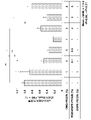
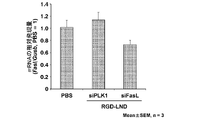
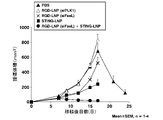
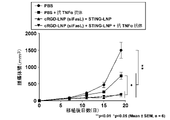
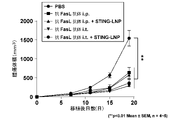
- Example 1 it is a figure which showed the result of having measured the gene knockdown activity of RGD-LNP carrying siRNA against CD31. In Reference Example 1, it is a figure which showed the result of having measured the gene knockdown activity of RGD-LNP carrying siRNA with respect to FasL. It is a figure which showed the result of having measured the tumor volume of the mouse of each group with time in Example 1.
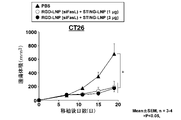
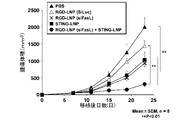
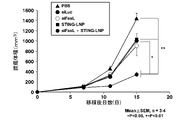
- Example 3 it is a figure which showed the result of having measured the tumor volume of each group of the mouse transplanted with CT26 cells with time.
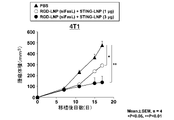
- FIG. 3 is a diagram showing the results of measuring the tumor volume of each group of mice transplanted with 4T1 cells over time in Example 3.
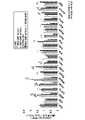
- FIG. 4 is a diagram showing the results of administration of RGD-LNP (siFasL) or STING-LNP to mice transplanted with CT26 cells in Example 4 and examining changes in gene expression in tumor tissues.
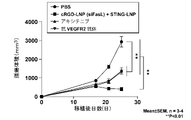
- mice transplanted with CT26 cells were subjected to combined administration of RGD-LNP and STING agonist carrying siRNA for CD31, combined administration of RGD-LNP and STING agonist carrying siRNA for VEGFR2, and siRNA for Luc.
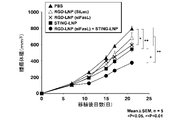
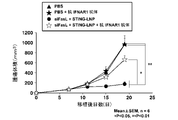
- FIG. 6 is a diagram showing the results of measuring the tumor volume of each group of nude mice transplanted with CT26 cells over time in Example 6.
- Example 7 it is a figure which showed the result of having measured the tumor volume of each group of the mouse transplanted with CT26 cells with time.
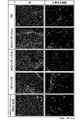
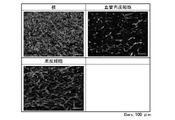
- Example 8 it is the figure which showed the nuclear staining image and the cancer vascular endothelial cell staining image of the tumor tissue of each group of the mouse transplanted with CT26 cells.
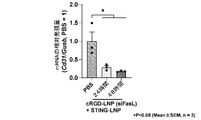
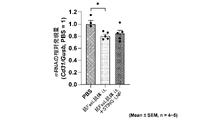
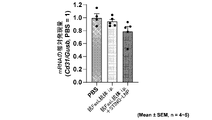
- Example 9 RGD-LNP (siFasL) and STING-LNP were administered to mice transplanted with CT26 cells, and the results of examining changes in the expression level of CD31 in tumor tissues are shown.
- PBS was administered to mice on the 17th day after transplantation of CT26 cells, and a stained image of tumor tissue collected 24 hours after the administration of PBS is shown.
- RGD-LNP carrying siFasL was administered to mice 17 days after transplantation, STING-LNP was administered 18 days after transplantation, and 24 hours after STING-LNP administration. It is a figure which showed the stained image of the collected tumor tissue.
- Example 10 RGD-LNP carrying siFasL was administered to mice 17 days after transplantation, STING-LNP was administered 18 days after transplantation, and 48 hours after STING-LNP administration. It is a figure which showed the stained image of the collected tumor tissue. In Example 11, it is the figure which showed the result of having measured the tumor volume of each group of the mouse transplanted with CT26 cells with time. In Example 12, it is a figure which showed the result of having measured the tumor volume of each group of the mouse transplanted with CT26 cells with time. In Comparative Example 1, it is a figure which showed the result of having measured the tumor volume of each group of the mouse transplanted with CT26 cells with time.
- Comparative Example 2 it is a figure showing the result of examining the change in the expression level of CD31 in the tumor tissue by the administration of CT26 cells to mice, the intratumor administration of anti-FasL antibody, and the administration of STIN-LNP.
- FIG. 2 is a diagram showing the results of examining changes in the expression level of CD31 in tumor tissue due to intraperitoneal administration of anti-FasL antibody after transplantation of CT26 cells into mice and administration of STIN-LNP in Comparative Example 2. ..
- X1 to X2 (X1 and X2 are real numbers satisfying X1 ⁇ X2)" means “X1 or more and X2 or less”.
- C X3-X4 (X3 and X4 are real numbers satisfying X3 ⁇ X4) "means" the number of carbon atoms is X3 or more and X4 or less ".
- the pharmaceutical composition according to the present invention is a substance that suppresses the expression of FasL gene (hereinafter, "FasL expression inhibitor" for the treatment of angiogenesis-dependent diseases such as cancer, age-related macular degeneration and diabetic retinopathy. It is used in the therapy in which an angiogenesis inhibitor and a STING agonist are used in combination, and is selected from the group consisting of a FasL expression inhibitor, an angiogenesis inhibitor, and a STING agonist. One or more of them are active ingredients.
- the pharmaceutical composition according to the present invention may be a pharmaceutical composition containing only a FasL expression inhibitor as an active ingredient, or a pharmaceutical composition containing only an angiogenesis inhibitor as an active ingredient.
- It may be a pharmaceutical composition containing only a STING agonist as an active ingredient, or a pharmaceutical composition containing a FasL expression inhibitor and a STING agonist as an active ingredient, and angiogenesis as an active ingredient. It may be a pharmaceutical composition containing an inhibitor and a STING agonist.
- the FasL expression inhibitor contained in the pharmaceutical composition according to the present invention may be one kind or two or more kinds.
- the angiogenesis inhibitor contained in the pharmaceutical composition according to the present invention may be one kind or two or more kinds.
- the STING agonist contained in the pharmaceutical composition according to the present invention may be one kind or two or more kinds.
- FasL expression inhibitor used in the present invention examples include a substance that targets the FasL gene and suppresses its expression itself, a substance that deletes the FasL gene, and the like, and a substance that targets the FasL gene and suppresses its expression itself. More preferred.
- Examples of the substance that targets the FasL gene and suppresses its expression itself include nucleic acids that hybridize with the transcript of the FasL gene.
- Examples of the nucleic acid include antisense oligonucleotides that inhibit the translation of the transcript by hybridizing with the transcript of the FasL gene, and nucleic acids that degrade the transcript by RNA interference (RNAi).
- the nucleic acid for degrading the transcript of the FasL gene by RNAi may be any nucleic acid that hybridizes with the RNAi target region in the transcript of the FasL gene, for example, siRNA, shRNA (short hairpin RNA), miRNA (microRNA). And so on. Further, it may be an RNAi induction vector capable of producing siRNA or the like in the target cell.
- RNAi induction vector Preparation of antisense oligonucleotide, siRNA, shRNA, miRNA, and RNAi induction vector can be designed and manufactured by a conventional method from the nucleotide sequence information of the cDNA of the target FasL gene.
- the RNAi induction vector generally uses plasmid DNA, and can also be produced by inserting the base sequence of the RNAi target region into the base sequence of various commercially available RNAi vectors.
- siRNA is a double-stranded RNA having 21 to 23 base pairs, and has a structure in which the 3'part of the RNA strand protrudes by 2 bases, and each strand has a phosphate group and a 3'end at the 5'end.
- siRNA may be a siRNA in which the hydroxyl group at the 2'position of the ribose skeleton is partially substituted with a methoxy group, a fluoro group, or a methoxyethyl group, and the phosphodiester bond is partially substituted with a phosphorothioate bond.
- Examples of the substance that deletes the FasL gene include a substance for performing genome editing targeting the FasL gene.
- Substances for genome editing include artificial nucleases that link a DNA-binding domain designed to specifically bind to a target sequence in the FasL gene and a DNA-cleaving domain of the restriction enzyme FokI, and the FasL gene.
- Examples thereof include a combination of a guide RNA designed and prepared to specifically bind to the target sequence in the Cas9 (CRISPR-associated proteins 9) protein.
- Artificial nuclease and guide RNA can be designed and manufactured by a conventional method from the nucleotide sequence information of the cDNA of the target FasL gene.
- the Cas9 protein to be used can be appropriately selected from the Cas9 proteins used in genome editing, and a known Cas9 protein may be appropriately modified.
- the angiogenesis inhibitor used in the present invention is not particularly limited as long as it is a substance having an activity of inhibiting angiogenesis (preferably angiogenesis in tumor tissue).
- the substance include a substance that suppresses gene expression of a factor involved in angiogenesis (angiogenic factor) in tumor tissue and the like, a substance that deletes a gene of an angiogenic factor, and a substance that binds to an angiogenic factor.
- examples include substances that suppress the function of factors.
- angioplasting factors in tumor tissue include CD31, VEGFR2 (Vascular Endothelial Growth Factor Receptor-2) and the like.
- Examples of the substance that suppresses the gene expression of the angiogenesis factor include a substance that targets the gene of the angiogenesis factor and suppresses its expression itself, a substance that deletes the gene of the angiogenesis factor, and the like.
- Examples of the substance that suppresses the function of the angiogenesis factor by binding to the angiogenesis factor include an antibody of the angiogenesis factor, an antigen-binding fragment thereof, and an antagonist of the angiogenesis factor.
- Examples of the substance that targets the angiogenesis factor gene and suppresses its expression itself include nucleic acids that hybridize with the transcript of the angiogenesis factor gene.
- Examples of the nucleic acid include antisense oligonucleotides that inhibit the translation of the transcript by hybridizing with the transcript of the angiogenesis factor gene, and nucleic acids that degrade the transcript by RNAi.
- the nucleic acid for degrading the transcript of the target gene by RNAi the same nucleic acid as described above can be used.
- Examples of the substance that deletes the angiogenesis factor gene include a substance for performing genome editing targeting the angiogenesis factor gene.
- the substance for performing genome editing the same substances as described above can be used.
- the antibody of the angioplasting factor contained in the pharmaceutical composition according to the present invention may be a polyclonal antibody, but is preferably a monoclonal antibody.
- the monoclonal antibody may be any of a non-human animal-derived monoclonal antibody, a chimeric antibody, a humanized antibody, and a fully human antibody.
- Examples of the antigen-binding fragment of the angioplasting factor antibody include Fab fragment, F (ab') 2 fragment, scFv fragment and the like.
- the angiogenic factor antagonist contained in the pharmaceutical composition according to the present invention is not particularly limited, and may be any of nucleic acids, peptides, proteins, and small molecule compounds.
- the angiogenesis inhibitor contained in the pharmaceutical composition according to the present invention includes a substance that targets the CD31 gene and suppresses its expression itself, a substance that deletes the CD31 gene, an anti-CD31 antibody or an antigen-binding fragment thereof, and an antigen-binding fragment thereof. It is preferably one or more selected from the group consisting of CD31 antagonists.
- the angiogenesis inhibitor contained in the pharmaceutical composition according to the present invention is selected from the group consisting of a substance that targets the VEGFR2 gene and suppresses its expression itself, a substance that deletes the VEGFR2 gene, an anti-VEGFR2 antibody and a VEGFR2 antagonist. It is also preferable that the number is one or more.
- angiogenesis inhibitor contained in the pharmaceutical composition according to the present invention it is appropriately selected from known substances known to have an angiogenesis inhibitory action, particularly an angiogenesis inhibitory action in tumor tissue, and used. You can also do it. Of these, angiogenesis inhibitors that have already been used as therapeutic agents for various angiogenesis-dependent diseases such as cancer are preferable because their safety to humans has been confirmed.
- Clinically applied angiogenesis inhibitors that can be used as the active ingredient of the pharmaceutical composition according to the present invention include bevacizumab, ramsylvam, cetuximab, panitumumab, necitumumab, trussumab, and antibody drugs such as pertuzumab; sorafenib, sunitinib.
- Imatinib Imatinib, pazopanib, gefitinib, ellotinib, bandetanib, legorafenib, neratinib, rapatinib, afatinib, axitinib, cabozantinib, and lembatinib tyrosine kinase inhibitors; Will be.
- the STING agonist contained in the pharmaceutical composition according to the present invention is not particularly limited as long as it is a substance capable of activating STING.
- the STING agonist contained in the pharmaceutical composition according to the present invention includes a group consisting of a cyclic dinucleotide, a small molecule compound (excluding the cyclic dinucleotide), and a nucleic acid that binds to cGAS (cyclic GMP-AMP synthase). It is preferably one or more selected.
- Cyclic dinucleotide is a ligand for STING.
- the cyclic dinucleotide used in the present invention may be natural or chemically synthesized.
- Examples of the cyclic dinucleotide include 2'3'-cyclicGAMP (CASNo .: 1441190-66-4), 3'3'-cyclicGAMP (CASNo .: 849214-04-6), and cyclic-di-AMP (CASNo.: 849214-04-6).
- Natural cyclic dinucleotides such as CAS No .: 54447-84-6), cyclic-di-GMP (CAS No .: 61093-23-0); cyclicAIMP (CL592) (CAS No .: 1507367-51-2) , CyclicAIMPDifluor (CL614) (CASNo .: 1951464-78-0), cycloicAIM (PS) 2Difluor (Rp / Sp) (CL656) (CASNo .: 1951464-79-1), 2'2'-cyclicGAMP , 2'3'-cyclicGAM (PS) 2 (Rp / Sp) (CASNo .: 1637675-05-8), 3'3'-cyclicGAMP Fluorinated, cyclic-di-AMP Fluorinated (CASNo .: 1427269-47) -3), 2'3'-cyclic-di-AMP (CAS No .: 1638241-77-6), 2'3'-cyclic-di-AM
- low-molecular-weight compounds other than cyclic dinucleotides used as STING agonists in the present invention include SR-717 (CAS No.: 2375421-09-1) and SR-717 free acid (CAS No .: 2375420-34-9).
- MSA-2 (CAS No .: 129425-81-6), diABZI STING Agonist-1 (CAS No .: 2138299-33-7), diABZI STING Agonist-1 Trihydrochloride (CAS No .: 2138299-34-) 8), STING Agonist-1 (CAS No .: 702662-50-8), STING Agonist-3 (CAS No .: 2138299-29-1), STING Agonist-4 (CAS No .: 2138300-40-8) And so on.
- the nucleic acid that binds to cGAS used as a STING agonist in the present invention is not particularly limited as long as it is a nucleic acid that binds to cGAS and thereby activates STING.
- a nucleic acid capable of binding to a DNA binding site in cGAS is preferable.
- the pharmaceutical composition according to the present invention contains other active ingredients as long as the neovascularization effect (preferably antitumor effect) due to the combined use of a FasL expression inhibitor or angiogenesis inhibitor and a STING agonist is not impaired. May be.
- Other active ingredients include, for example, anticancer agents having a mechanism of action different from the mechanism of destruction of new blood vessels (preferably antitumor mechanism) by the combined use of a FasL expression inhibitor or angiogenesis inhibitor and a STING agonist.
- the pharmaceutical composition according to the present invention preferably contains an active ingredient other than a FasL expression inhibitor, an angiogenesis inhibitor, and a STING agonist, and further contains a component that activates the innate immune system, and is type I.
- IFNA receptor agonists include interferon ⁇ (IFN ⁇ ), interferon ⁇ (IFN ⁇ ), and CDM-3008 (2- [2,4-bis (trifluoromethyl) imidazo [1,2-a] 1,8-naphthyridin-8- yl] -1,3,4-oxadiazole) and the like.
- the pharmaceutical composition according to the present invention does not contain a type I IFN receptor antibody or cannot be used in combination with a type I IFN receptor antibody.
- the administration route of the pharmaceutical composition according to the present invention is not particularly limited, and is appropriately determined according to the type of target angiogenesis-dependent disease (preferably cancer).
- the administration route of the pharmaceutical composition according to the present invention includes oral administration, intravenous administration, intraperitoneal administration, enema administration, transdermal administration, ocular administration and the like.
- the pharmaceutical composition according to the present invention can be obtained by an ordinary method, an oral solid preparation such as a powder, a granule, a capsule, a tablet, a chewable agent or a sustained-release agent, an oral liquid preparation such as a solution or a syrup, or an injection. It can be formulated as an agent, an enema agent, a spray agent, a patch, an ointment, an ophthalmic solution, an eye ointment, or the like.
- the formulation is performed as an excipient, a binder, a lubricant, a disintegrant, a fluidizing agent, a solvent, a solubilizing agent, a buffering agent, a suspending agent, an emulsifier, and an isotonic agent, as required in the formulation.
- Stabilizers, preservatives, antioxidants, flavoring agents, coloring agents and the like can be blended and carried out by a conventional method.
- the pharmaceutical composition according to the present invention may contain the active ingredient in a state of being carried on a delivery device (carrier) for delivery to a target tissue (for example, tumor tissue).
- a delivery device for example, tumor tissue
- the pharmaceutical composition according to the present invention preferably contains the active ingredient in a state of being encapsulated in lipid nanoparticles.
- the FasL expression inhibitor, angiogenesis inhibitor, and STING agonist which are the active ingredients of the pharmaceutical composition according to the present invention, all have an antitumor effect alone and are cytotoxic. By mounting these active ingredients inside the lipid nanoparticles, it is possible to reduce the effect of the active ingredient on cells and tissues to which the lipid nanoparticles have not been taken up, and further, the active ingredient is more stable in vivo. Can be delivered to the target tumor tissue.
- the lipid constituting the lipid membrane of the lipid nanoparticles carrying the FasL expression inhibitor, the angiogenesis inhibitor, and the STING agonist is not particularly limited, but includes one kind or two or more kinds of cationic lipids. Is preferable.
- a cationic lipid as a part of the constituent lipid, the efficiency of uptake of lipid nanoparticles carrying a FasL expression inhibitor or the like into a target cell is improved.
- Examples of the cationic lipid include DODAC (dioctadecyldimethylammonium chloride), DOTMA (N- (2,3-dioleryloxy) propane-N, N, N-trimethyllammonium), DDAB (didodecylombi) 3-trimethylammonium propane), DC-Chol (3 ⁇ -N- (N', N', -dimethyl-aminoethane) -carbamol chloride), DMRIE (1,2-dimlystoyloxypropyl2, dythrym, -Dioleyloxy-N- [2 (sperminecarboxamide) ethylyl] -N, N-dimethyl-1-propanaminum trifluoroacetylate), DSTAP (1,2-distearoyl-3-trimethylamide, etc. Can be mentioned.
- DODAC dioctadecyldimethylammonium chloride
- DOTMA N- (2,3-di
- the pH-sensitive cationic lipid is preferable as the cationic lipid contained in the constituent lipid of the lipid nanoparticles carrying the FasL expression inhibitor, the angiogenesis inhibitor, and the STING agonist.
- the pH-sensitive cationic lipid contained in the constituent lipids of the lipid nanoparticles may be one kind or two or more kinds.
- the pH-sensitive cationic lipid is, for example, a lipid represented by the following general formula (I) (hereinafter, may be referred to as “pH-sensitive cationic lipid (I)”) or a pH-sensitive cationic lipid represented by the following general formula (II).
- Lipids hereinafter sometimes referred to as “pH-sensitive cationic lipids (II)” are preferably used.
- a represents an integer of 3 to 5, but is preferably 4.
- b indicates 0 or 1. When b is 0, it means that the -O-CO- group does not exist and it is a single bond.
- R 1 and R 2 each independently represent a group represented by the following general formula (A).
- q indicates an integer of 1 to 9; r indicates an integer of 0 or 1; s indicates an integer of 1 to 3; t indicates an integer of 0 or 1; u indicates an integer of 1 to 8. ; C indicates 0 or 1; v indicates an integer of 4-12.
- b and c are 0 at the same time, q is an integer of 3 to 5, r and t are 1, s is 1, and u + v is an integer of 6 to 10. except.
- the hydrocarbon chains of R1 and R2 are preferably relatively long chains from the viewpoint of the stability of the lipid nanoparticles.
- R 1 and R 2 are groups having 20 or more carbon atoms, that is, in the general formula (A), q + 2r + s + 2t + u + c + v is an integer of 19 or more. Is preferable.
- q + 2r + s + 2t + u + c + v is preferably an integer of 19 to 33, more preferably an integer of 19 to 31, and even more preferably an integer of 21 to 31. , 21-27, more preferably an integer.
- t is 1
- q + s is an integer of 5 to 11, preferably an integer of 6 to 10
- u is an integer of 5 to 8
- c is 1
- v is 4 to 12.
- a group that is an integer and q + s + u + v is an integer of 16 or more; r and t are 0, q + s + u is an integer of 13 to 23, preferably 15 to 21, c is 1, and v is 4 to 12.
- a group that is an integer and q + s + u + v is an integer of 18 or more; r and t are 0, q + s + u is an integer of 13 to 23, preferably 15 to 21, c is 1, and v is 6 to 10.
- a group that is an integer and q + s + u + v is an integer of 18 or more is preferable.
- R 1 and R 2 may be groups represented by the general formula (A) and may be different groups from each other, but the same group is preferable.
- X represents a group represented by the following general formula (B) or a 5- to 7-membered non-aromatic heterocyclic group.
- the 5- to 7-membered non-aromatic heterocyclic group indicated by X is bonded to (O-CO) b- by a carbon atom.
- d represents an integer of 0 to 3. When d is 0, it means that the-(CH 2 ) -group does not exist and it is a single bond.
- R 3 and R 4 independently form a C 1-4 alkyl group (alkyl group having 1 to 4 carbon atoms) or a C 2-4 alkenyl group (alkenyl group having 1 to 4 carbon atoms), respectively. show.
- the C 1-4 alkyl group or C 2-4 alkenyl group indicated by R 3 and R 4 may have one or two hydrogen atoms substituted with a phenyl group.
- Examples of the C 1-4 alkyl group include a methyl group, an ethyl group, a propyl group, an isopropyl group, an n-butyl group, an isobutyl group and a t-butyl group.
- the C2-4 alkenyl group includes a vinyl group, a 1-propenyl group, a 2-propenyl group, a 1-methylvinyl group, a 2-methyl-1-propenyl group, a 1-butenyl group, a 2-butenyl group and a 3-butenyl group. The group is mentioned.
- R 3 and R 4 may be bonded to each other to form a 5- to 7-membered non-aromatic heterocycle.
- Examples of the 5- to 7-membered non-aromatic heterocycle formed by binding R 3 and R 4 to each other include 1-pyrrolidinyl group, 1-piperidinyl group, 1-morpholinyl group, and 1-piperazinyl group. ..
- one or two hydrogen atoms in the ring become a C 1-4 alkyl group or a C 2-4 alkenyl group. It may be replaced.
- two hydrogen atoms in the ring are substituted with a C 1-4 alkyl group or a C 2-4 alkenyl group, they may be substituted with the same group or different groups. May be good.
- heteroatom contained in the heterocyclic group examples include a nitrogen atom, an oxygen atom, and a sulfur atom. ..
- the heteroatom constituting the heterocycle in the heterocyclic group may be one, and the same or different heteroatoms may be two or more.
- the heterocycle in the heterocyclic group may be a saturated heterocycle or may contain one or more double bonds, but the heterocycle does not become an aromatic ring.
- a is an integer of 3 to 5
- b is 1
- X is a 5- to 7-membered non-aromatic heterocyclic group (however, hetero). It is attached to (O-CO) b- by the carbon atom in the ring group), preferably 1-pyrrolidinyl group, 1-piperidinyl group, 1-morpholinyl group, or 1-piperazinyl group (by the carbon atom in the ring ( It is bonded to O-CO) b-, and one hydrogen atom may be substituted with a C 1-4 alkyl group or a C 2-4 alkenyl group), and R 1 and R 2 are respectively.
- r is 1, t is 0, q is an integer of 5 to 11, preferably an integer of 6 to 10, and s + u is an integer of 5 to 11, preferably.
- Is a group of 6 to 10, c is 1, v is an integer of 4 to 12, and q + s + u + v is an integer of 16 or more; in the general formula (I), a is 3 to It is an integer of 5, b is 1, and X is a 5- to 7-membered non-aromatic heterocyclic group (where carbon atoms in the heterocyclic group bind to (O-CO) b-), preferably.
- Q + s is an integer of 5 to 11, preferably an integer of 6 to 10
- u is an integer of 5 to 8
- c is 1
- v is an integer of 4 to 12
- q + s + u + v is 16 or more.
- a group which is an integer of, a lipid; general formula (I) In, a is an integer of 3 to 5, b is 0, X is 0 in the general formula (B), and R 3 and R 4 are independently C 1-4 alkyl groups or C, respectively.
- a 2-4 alkenyl group (the C 1-4 alkyl group or C 2-4 alkenyl group indicated by R 3 and R 4 may have one or two hydrogen atoms substituted with a phenyl group).
- R 1 and R 2 are independent of each other, and in the general formula (A), r is 0, t is 1, q + s is an integer of 5 to 11, preferably an integer of 6 to 10, and u is.
- a lipid having R 1 and R 2 having the same group is more preferable as the pH-sensitive cationic lipid (I), R 1 and R 2 have the same group, and a is 4. Lipids are particularly preferred.
- the pKa of the pH-sensitive cationic lipid (I) is not particularly limited, but can be selected, for example, from about 4.0 to 9.0, preferably about 4.5 to 8.5, and more preferably about 6 to 8. , It is preferable to select the type of each substituent so as to give pKa in this range.
- the pH-sensitive cationic lipid (I) can be easily produced, for example, by the method specifically shown in the examples of the present specification. By appropriately selecting raw material compounds, reagents, reaction conditions and the like with reference to this production method, those skilled in the art can easily produce any lipid included in the range of the general formula (I).
- pH-sensitive cationic lipid (I) a lipid represented by the following general formula (I-1) (hereinafter, may be referred to as “pH-sensitive cationic lipid (I-1)”) is preferable.
- n indicates an integer of 3 to 5
- m indicates an integer of 6 to 10.
- a lipid in which n is 4 and m is an integer of 7 to 9 is preferable, and a lipid in which n is 4 and m is 8 is more preferable.
- R 11 and R 12 may be the same group or different groups, but are preferably the same group.
- p indicates an integer of 2 to 7.
- a lipid having p of 3 to 5 is preferable, and a lipid having p of 4 is more preferable.
- R 13 and R 14 independently represent a C 1-4 alkyl group or a C 2-4 alkenyl group, respectively.
- a lipid in which R 13 and R 14 are independently C 1-4 alkyl groups is preferable, and a lipid in which each is independently a methyl group or an ethyl group is more preferable.
- R 11 and R 12 are the same group, n is 4, m is 8, and R 13 and R 14 are both methyl groups.
- YSK12 a lipid having p of 4 in YSK12 (hereinafter, may be referred to as "YSK12-C4") is more preferable (Patent Document 2).
- R 21 and R 22 are linear hydrocarbon groups having 12 to 24 carbon atoms independently of each other.
- the hydrocarbon group may be an alkyl group or an alkenyl group.
- the alkenyl group may be a group having one unsaturated bond, a group having two unsaturated bonds, or a group having three unsaturated bonds.
- Examples of the linear alkyl group having 12 to 24 carbon atoms include a dodecyl group, a tridecylic group, a tetradecyl group, a pentadecyl group, a hexadecyl group, a heptadecyl group, an octadecyl group, a nonadecil group, an icosyl group, an eicosyl group, a henicosyl group, and a heneicosyl group. Examples thereof include a docosyl group, a tridecylic group, and a tetracosyl group.
- the linear alkenyl group having 12 to 24 carbon atoms includes a decenyl group, a tetradecenyl group, a pentadecenyl group, a hexadecenyl group, a heptadecenyl group, an octadecenyl group, a nonadesenyl group, an icosenyl group, an eicosenyl group, a henicosenyl group, a heneicosenyl group, and a docosenyl group. , Tricosenyl group and the like.
- R 21 and R 22 are independent of each other and are a linear alkyl group having 14 to 22 carbon atoms or a linear alkenyl group having 14 to 22 carbon atoms. Is preferable, and lipids in which R 1 and R 2 are independent of each other and are a linear alkyl group having 16 to 20 carbon atoms or a linear alkenyl group having 16 to 20 carbon atoms are more preferable, and R 21 and R are more preferable. Lipids, in which 22 are independent of each other and are linear alkenyl groups having 16 to 20 carbon atoms, are more preferable, and YSK05 (Non-Patent Document 8) is particularly preferable.
- the amount of pH-sensitive cationic lipid is not particularly limited in the lipid nanoparticles loaded with the FasL expression inhibitor, angiogenesis inhibitor, or STING agonist.
- the ratio of the amount of pH-sensitive cationic lipid to the total amount of lipid constituting the lipid nanoparticles is easy to adjust the size of the lipid nanoparticles within a preferable range in terms of delivery efficiency to the tumor tissue.
- ([Amount of pH-sensitive cationic lipid (mol)] / ([Amount of total lipid constituting lipid nanoparticles (mol)]) ⁇ 100%) is preferably 40 to 90 mol%, preferably 50 to 90 mol%. Is more preferable, and 65 to 90 mol% is further preferable.
- Lipid nanoparticles carrying a FasL expression inhibitor or angiogenesis inhibitor are peptides that selectively bind to vascular endothelial cells (preferably vascular endothelial cells in tumor tissue) to some of the constituent lipids (hereinafter, "blood vessels").
- An antibody that specifically binds to vascular endothelial cells (preferably vascular endothelial cells in tumor tissue) or an antigen-binding fragment of the antibody is a polyethylene glycol (PEG). It is preferable to contain a PEGylated phospholipid bound to the phospholipid (hereinafter, may be referred to as “vascular endothelial cell-bound PEGylated lipid”).
- FasL expression inhibitors and angiogenesis inhibitors are selected for vascular endothelial cells (preferably vascular endothelial cells in tumor tissue) by mounting them on lipid nanoparticles having vascular endothelial cell-binding PEGylated lipids on the surface of the lipid membrane. Can be taken in as a target.
- the vascular endothelial cell-binding PEGylated lipid contained in the constituent lipids of the lipid nanoparticles may be one kind or two or more kinds.
- vascular endothelial cell-binding PEGylated lipid contained in the lipid a vascular endothelial cell-binding peptide, an antibody that specifically binds to vascular endothelial cells, or an antigen-binding fragment of the antibody contains PEG.
- the PEGylated glycerophospholipid that binds to the phospholipid via PEG is not particularly limited, but the peptide that selectively binds to the cancer cell (cancer vascular endothelial cell) becomes the phospholipid via PEG. It is preferably a PEGylated glycerophospholipid that is bound.
- vascular endothelial cell-binding PEGylated lipid As a vascular endothelial cell-binding PEGylated lipid, one end of PEG is bound to the hydrophilic group portion of the phospholipid directly or via a linking group, and the remaining other end is vascular endothelial cell binding.
- examples thereof include a sex peptide, an antibody that specifically binds to vascular endothelial cells, or a phospholipid that binds directly or via a linking group to an antigen-binding fragment of the antibody.
- Examples of the phospholipid in the vascular endothelial cell-binding PEGylated lipid include phosphatidylethanolamine (PE), phosphatidylcholine (PC), phosphatidylserine (PS), phosphatidylinositol (PI), and phosphatidylglycerol (PG). Cardiolipin, sphingomyelin, ceramide phosphatidylethanolamine, ceramide phosphatidylglycerol, ceramide phosphatidylglycerol phosphate, 1,2-dimiristoyl-1,2-deoxyphosphatidylcholine, plasmalogen, phosphatidylate (PA), etc. be able to.
- PE phosphatidylethanolamine
- PC phosphatidylcholine
- PS phosphatidylserine
- PI phosphatidylinositol
- PG phosphatidylglycerol
- the phospholipid in the vascular endothelial cell-binding PEGylated lipid is not particularly limited, but has a high affinity with pH-sensitive cationic lipids and easily forms a phospholipid membrane, and thus has 12 to 12 carbon atoms. It is preferably a glycerophospholipid having 24 fatty acid residues.
- the glycerophospholipid may be a monoacyl glycerophospholipid having one fatty acid residue having 12 to 24 carbon atoms, or a diacyl glycerophospholipid having two fatty acid residues having 12 to 24 carbon atoms.
- the vascular endothelial cell-binding PEGylated lipid in the lipid nanoparticles carrying the FasL expression inhibitor or angiogenesis inhibitor is a vascular endothelial cell-binding peptide, an antibody that specifically binds to vascular endothelial cells, or an antigen of the antibody.
- the binding fragment is preferably a lipid bound via PEG to the hydrophilic group moiety of a glycerophospholipid having one or two saturated fatty acid residues of 12 to 24 carbon atoms, preferably a vascular endothelial cell binding peptide.
- an antibody that specifically binds to vascular endothelial cells or an antigen-binding fragment of the antibody is PEG-mediated by distearylphosphatidylethanolamine (DSPE), monostearylphosphatidylethanolamine (MSPE), dipalmitoylphosphatidylethanolamine (DPPE).
- DSPE distearylphosphatidylethanolamine
- MSPE monostearylphosphatidylethanolamine
- DPPE dipalmitoylphosphatidylethanolamine
- DPPC phosphatidylcholine
- MPPC dimyristylphosphatidylcholine
- MMPC monomyristylphosphatidylcholine
- DPPC phosphatidylcholine
- MPPC monopalmitylphosphatidylcholine
- DMPC dimyristylphosphatidylcholine
- MMPC monomyristylphosphatidylcholine
- a vascular endothelial cell binding peptide vascular endothelial cell binding peptide
- the antibody that specifically binds to vascular endothelial cells or the antigen-binding fragment of the antibody is a lipid bound to the hydrophilic group moiety of distearylphosphatidylethanolamine via PEG.
- the vascular endothelial cell-binding peptide in the vascular endothelial cell-binding PEGylated lipid is not particularly limited as long as it is a peptide that selectively binds to the surface of vascular endothelial cells (preferably cancer vascular endothelial cells). , Can be appropriately selected from known peptides and used.
- cancer vascular endothelial cell-binding peptide include cyclic RGD peptide (Cyclo (Arg-Gly-Asp-D-Phe-Lys): SEQ ID NO: 1).
- the antibody that specifically binds to vascular endothelial cells may be a polyclonal antibody, but a monoclonal antibody is preferable.
- the monoclonal antibody may be a monoclonal antibody derived from a non-human animal, but a chimeric antibody derived from a human other than the variable region in the monoclonal antibody derived from a non-human animal, or a hypervariable region in a monoclonal antibody derived from a non-human animal ( It may be a humanized antibody derived from a human other than CDR), or a completely human antibody.
- antigen-binding fragment of the antibody that specifically binds to vascular endothelial cells examples include Fab fragment of antibody, F (ab') 2 fragment, scFv fragment and the like. Humanization of non-human animal-derived monoclonal antibodies and fragmentation of antibodies can be performed by conventional methods.
- the PEG in the vascular endothelial cell-binding PEGylated lipid is hydrophilic of the glycerophospholipid without impairing the effect of the vascular endothelial cell-binding peptide, the antibody that specifically binds to the vascular endothelial cell, or the antigen-binding fragment of the antibody.
- the length is not particularly limited as long as it can be connected to the sex base portion.
- the number average molecular weight of PEG of the vascular endothelial cell-binding PEGylated lipid contained in the constituent lipids of lipid nanoparticles is 2,000 to 2,000 because it is easy to satisfactorily regulate both blood retention and endosome escape ability. 5,000 is preferable.
- the number average molecular weight of PEG can be calculated, for example, based on the hydroxyl value measured by the acetylation method according to JIS K1557-1.
- a linking group that binds PEG to the hydrophilic group portion of phospholipid and an antibody that specifically binds to PEG and vascular endothelial cell-binding peptide or vascular endothelial cells, or an antigen of the antibody.
- the amount of vascular endothelial cell-binding PEGylated lipid is not particularly limited in the lipid nanoparticles loaded with the FasL expression inhibitor or angiogenesis inhibitor.
- the ratio of the amount of vascular endothelial cell-binding PEGylated lipid to the total amount of lipids constituting the lipid nanoparticles is 0.1 to 10 mol from the viewpoint that sufficient selectivity for vascular endothelial cells can be easily obtained. %, More preferably 0.5 to 5 mol%.
- lipids other than cationic lipids and vascular endothelial cell-binding PEGylated lipids generally form liposomes.
- the lipids used in the process can be used. Examples of such lipids include phospholipids, sterols, saturated or unsaturated fatty acids and the like. These can be used alone or in combination of two or more.
- the same phospholipid as the phospholipid constituting the vascular endothelial cell-binding PEGylated lipid can be used.
- sterols include animal-derived sterols such as cholesterol, cholesterol succinic acid, lanosterol, dihydrolanosterol, desmostelloll, and dihydrocholesterol; plant-derived sterols such as stigmasterol, cytosterol, campesterol, and brushcasterol (phytosterols); Examples thereof include sterols derived from microorganisms such as thymosterol and ergosterol.
- the lipid nanoparticles carrying the FasL expression inhibitor or the like preferably contain sterols, and more preferably cholesterol.
- the lipid nanoparticles carrying the FasL expression inhibitor or the like may contain a polyalkylene glycol-modified lipid as a lipid component.
- the polyalkylene glycol is a hydrophilic polymer, and the surface of the lipid nanoparticles can be modified with the polyalkylene glycol by constructing the lipid nanoparticles using the polyalkylene glycol-modified lipid as the lipid film-constituting lipid.
- surface modification with polyalkylene glycol it may be possible to enhance the stability of lipid nanoparticles such as retention in blood.
- polyethylene glycol for example, polyethylene glycol, polypropylene glycol, polytetramethylene glycol, polyhexamethylene glycol and the like can be used.
- the molecular weight of the polyalkylene glycol is, for example, about 300 to 10,000, preferably about 500 to 10,000, and more preferably about 1,000 to 5,000.
- stearylylated polyethylene glycol for example, PEG45 stearate (STR-PEG45)
- PEG45 stearate STR-PEG45
- Lipid nanoparticles carrying a FasL expression inhibitor or the like can be appropriately surface-modified, if necessary.
- modifying the surface of the lipid nanoparticles with a hydrophilic polymer or the like the retention in blood can be enhanced.
- surface modification can be performed by using the lipid modified with these modifying groups as the constituent lipid of the lipid nanoparticles.
- lipid derivatives for enhancing blood retention for example, glycophorin, ganglioside GM1, phosphatidylinositol, ganglioside GM3, glucuronic acid derivative, glutamic acid derivative, polyglycerin.
- a phospholipid derivative or the like can also be used.
- polyalkylene glycol as a hydrophilic polymer for enhancing blood retention, dextran, purulan, ficoll, polyvinyl alcohol, styrene-maleic anhydride copolymer, and divinyl ether-maleic anhydride copolymer are also used.
- Amylose, amylopectin, chitosan, mannan, cyclodextran, pectin, carrageenan and the like can also be used for surface modification.
- the lipid nanoparticles can be surface-modified with an oligosaccharide compound having 3 or more sugars.
- the type of the oligosaccharide compound having 3 or more sugars is not particularly limited, but for example, an oligosaccharide compound to which about 3 to 10 sugar units are bound can be used, and preferably about 3 to 6 sugar units are bound. Oligosaccharide compounds can be used.
- the method for surface-modifying the lipid nanoparticles with the oligosaccharide compound is not particularly limited, and for example, a liposome (International Publication No. 2007/102481) in which the surface of the lipid nanoparticles is modified with a simple sugar such as galactose or mannose is known. Therefore, the surface modification method described in this publication can be adopted. All disclosures of the above publications are included as disclosures herein by reference.
- the lipid nanoparticles carrying the FasL expression inhibitor or the like are sterol, a film stabilizer such as glycerin or a fatty acid ester thereof, an antioxidant such as tocopherol, propyl gallate, ascorbyl palmitate, or a butylated hydroxytoluene, and are charged. It may contain one or more substances selected from the group consisting of substances, membrane polypeptides and the like. Examples of the charged substance that imparts a positive charge include saturated or unsaturated aliphatic amines such as stearylamine and oleylamine; saturated or unsaturated cationic synthetic lipids such as dioleoyltrimethylammonium propane; and cationic polymers.
- Examples of the charged substance that imparts a negative charge include disetyl phosphate, cholesteryl hemiscusinate, phosphatidylserine, phosphatidylinositol, and phosphatidic acid.
- Examples of the membrane polypeptide include a membrane superficial polypeptide, a membrane endogenous polypeptide, and the like. The blending amount of these substances is not particularly limited and can be appropriately selected depending on the intended purpose.
- the lipid nanoparticles carrying the FasL expression inhibitor or the like are imparted with any one or more functions such as a temperature change sensitive function, a membrane permeation function, a gene expression function, and a pH sensitive function. be able to.
- a temperature change sensitive function e.g., a temperature change sensitive function
- a membrane permeation function e.g., a membrane permeation function
- a gene expression function e.g., lipid nanoparticles carrying the FasL expression inhibitor or the like
- a pH sensitive function e.g., a pH sensitive function.
- the size of the lipid nanoparticles carrying the FasL expression inhibitor or the like is preferably such that the number average particle diameter is 500 nm or less, more preferably 400 nm or less, and further preferably 300 nm or less.
- the average particle size of the lipid nanoparticles means the number average particle size measured by a dynamic light scattering (DLS) method.
- the measurement by the dynamic light scattering method can be performed by a conventional method using a commercially available DLS device or the like.
- the polydispersity index (PDI) of lipid nanoparticles carrying a FasL expression inhibitor or the like is about 0.05 to 0.7, preferably about 0.1 to 0.6, and more preferably 0.2 to 0.6. Degree.
- the zeta potential can be in the range of ⁇ 50 mV to -1 mV, preferably in the range of ⁇ 30 mV to ⁇ 5 mV.
- the form of the lipid nanoparticles carrying the FasL expression inhibitor or the like is not particularly limited, and examples thereof include single membrane liposomes, multilamellar liposomes, spherical micelles, and atypical layered structures as forms dispersed in an aqueous solvent. be able to.
- the lipid nanoparticles carrying the FasL expression inhibitor or the like single membrane liposomes and multilamellar liposomes are preferable.
- the method for producing lipid nanoparticles equipped with a FasL expression inhibitor or the like is not particularly limited, and any method available to those skilled in the art can be adopted.
- all lipid components are dissolved in an organic solvent such as chloroform, and a lipid film is formed by vacuum drying with an evaporator or spray drying with a spray dryer, and then the components are encapsulated in the lipid nanoparticles.
- it can be produced by adding an aqueous solvent containing a nucleic acid or the like to the above-dried mixture and further emulsifying it with an emulsifier such as a homogenizer, an ultrasonic emulsifier, or a high-pressure jet emulsifier.
- lipid nanoparticles it can also be produced by a well-known method for producing liposomes, for example, a reverse phase evaporation method. If it is desired to control the size of lipid nanoparticles, it may be subjected to extrusion (extrusion filtration) under high pressure using a membrane filter having a uniform pore size or the like.
- composition of the aqueous solvent is not particularly limited, and examples thereof include a buffer solution such as a phosphate buffer solution, a citrate buffer solution, a phosphate buffered physiological saline solution, a physiological saline solution, and a medium for cell culture. Can be done.
- aqueous solvents can stably disperse lipid nanoparticles, but also glucose, galactose, mannose, fructose, inositol, ribose, xylose sugar monosaccharides, lactose, sucrose, cellobiose, trehalose, Disaccharides such as maltose, trisaccharides such as raffinose and mereginose, polysaccharides such as cyclodextrin, sugars (aqueous solutions) such as sugar alcohols such as erythritol, xylitol, sorbitol, mannitol and martitol, glycerin, diglycerin and polyglycerin.
- Polyhydric alcohol such as propylene glycol, polypropylene glycol, ethylene glycol, diethylene glycol, triethylene glycol, polyethylene glycol, ethylene glycol monoalkyl ether, diethylene glycol monoalkyl ether, and 1,3-butylene glycol may be added. ..
- aqueous solution such as propylene glycol, polypropylene glycol, ethylene glycol, diethylene glycol, triethylene glycol, polyethylene glycol, ethylene glycol monoalkyl ether, diethylene glycol monoalkyl ether, and 1,3-butylene glycol may be added. ..
- aqueous solution such as propylene glycol, polypropylene glycol, ethylene glycol, diethylene glycol, triethylene glycol, polyethylene glycol, ethylene glycol monoalkyl ether, diethylene glycol monoalkyl ether, and 1,3-butylene glycol may be added. ..
- the pH of the aqueous solvent should be set from weakly
- Lipid nanoparticles carrying a FasL expression inhibitor or the like can also be produced by an alcohol dilution method using a flow path.
- a solution in which a lipid component is dissolved in an alcohol solvent and a solution in which a water-soluble component to be included in the lipid nanoparticles is dissolved in an aqueous solvent are introduced from separate flow paths and merged.
- This is a method for producing lipid nanoparticles.
- lipid nanoparticles having a diameter of about 30 nm can be produced with good reproduction (Non-Patent Document 9).
- the flow path used for production since a nano-sized lipid particle formation system having high particle size controllability can be formed, the flow is made in a micro-sized flow path through which the raw material solution is flowed, as described in Patent Document 2. It is preferable to use a flow path structure having a simple two-dimensional structure in which baffles (obstruction plates) having a constant width with respect to the road width are alternately arranged from both side surfaces.
- the aqueous solvent used in the alcohol dilution method the above-mentioned solvent can be used.
- aqueous dispersion of lipid nanoparticles is freeze-dried or spray-dried, for example, glucose, galactose, mannose, fructose, inositol, ribose, xylose sugar monosaccharide, lactose, sucrose, cellobiose, trehalose, etc.
- disaccharides such as maltoose, trisaccharides such as raffinose and mereginose, polysaccharides such as cyclodextrin, and sugars such as sugar alcohols such as erythritol, xylitol, sorbitol, mannitol and martitol (aqueous solution).
- sugars such as sugar alcohols such as erythritol, xylitol, sorbitol, mannitol and martitol (aqueous solution).
- sugars such as sugar alcohols such as erythritol, xylitol, sorbitol, mannitol and martitol
- sugar alcohols such as erythritol, xylitol, sorbitol, mannitol and martitol
- the pharmaceutical composition according to the present invention is a combination of a FasL expression inhibitor or an angiogenesis inhibitor and a STING agonist for the treatment of angiogenesis-dependent diseases such as cancer, age-related macular degeneration and diabetic retinopathy. Used for therapy. FasL expression inhibitors, angiogenesis inhibitors, and STING agonists each have an antitumor effect by themselves. However, by using a FasL expression inhibitor or angiogenesis inhibitor in combination with a STING agonist, a very strong neovascularization effect (particularly antitumor effect) that cannot be compared with the case of single use can be obtained.
- a pharmaceutical composition containing at least one of a FasL expression inhibitor and an angiogenesis inhibitor as an active ingredient but not containing a STING agonist is a pharmaceutical composition according to the present invention.
- a pharmaceutical composition containing a STING agonist but not containing either a FasL expression inhibitor or an angiogenesis inhibitor is used in combination with a pharmaceutical composition containing a STING agonist but not containing either a FasL expression inhibitor or an angiogenesis inhibitor.
- the pharmaceutical composition containing a STING agonist as an active ingredient but containing neither a FasL expression inhibitor nor an angiogenesis inhibitor is a pharmaceutical composition according to the present invention.
- the active ingredient is used in combination with a pharmaceutical composition containing at least one of a FasL expression inhibitor and an angiogenesis inhibitor, but not a STING agonist.
- a pharmaceutical composition containing at least one of a FasL expression inhibitor, an angiogenesis inhibitor and a STING agonist as an active ingredient is an angiogenesis-dependent disease such as cancer alone. Used for the treatment of.
- a pharmaceutical composition containing at least one of a FasL expression inhibitor and an angiogenesis inhibitor as an active ingredient but not containing a STING agonist, and a FasL expression inhibitor as an active ingredient.
- a pharmaceutical composition containing at least one of a FasL expression inhibitor and an angiogenesis inhibitor as an active ingredient but not containing a STING agonist, and a FasL expression inhibitor as an active ingredient.
- the drug does not contain type I IFN receptor antibody or cannot be used in combination with type I IFN receptor antibody.
- the pharmaceutical composition according to the present invention is administered in an amount effective for destroying new blood vessels (preferably obtaining antitumor activity) to an individual animal developing an angiogenesis-dependent disease such as cancer.
- angiogenesis-dependent diseases preferably cancer
- the animal is not particularly limited, and may be a human or a non-human animal.
- non-human animals include mammals such as cows, pigs, horses, sheep, goats, monkeys, dogs, cats, rabbits, mice, rats, hamsters and guinea pigs, and birds such as chickens, quail and ducks.
- the FasL expression inhibitor or angiogenesis inhibitor and the STING agonist may be administered simultaneously or independently. May be administered. When administered independently, the administration time of the FasL expression inhibitor or angiogenesis inhibitor and the administration time of the STING agonist may be separated by about 1 to several days, preferably about 1 to 2 days. preferable.
- the dose of the FasL expression inhibitor or angiogenesis inhibitor is appropriately set according to the type of the FasL expression inhibitor or angiogenesis inhibitor and the animal to be administered, and is not particularly limited, but is 0.1 mg / kg to 3 mg / kg.
- the dose of the STING agonist is appropriately set according to the type of the STING agonist and the animal to be administered, and is not particularly limited, but is preferably about 0.5 ⁇ g / kg to 5 ⁇ g / kg, preferably 1 ⁇ g / kg to 3 ⁇ g / kg. More preferably.
- the FasL expression inhibitor or angiogenesis inhibitor and the STING agonist are simply used as in the treatment method using other anticancer agents. It may be administered in multiple doses, but it is preferable to administer multiple doses because a stronger angiogenesis inhibitory effect (particularly antitumor effect) can be obtained. In the case of multiple doses, the dosing interval of each dose can be adjusted to about 2 to 14 days in a balance between the obtained effect and the intensity of side effects. The dose of FasL expression inhibitor, angiogenesis inhibitor, and STING agonist at each administration can also be adjusted to balance the obtained effect and the intensity of side effects.
- the pharmaceutical composition according to the present invention can be used for the treatment of various angiogenesis-dependent diseases (preferably cancer) such as cancer, age-related macular degeneration and diabetic retinopathy.
- angiogenesis-dependent diseases preferably cancer
- cancer preferably cancer
- a cancer treatment method in which a FasL expression inhibitor or angiogenesis inhibitor and a STING agonist are administered in combination using the pharmaceutical composition according to the present invention (hereinafter, may be simply referred to as “combination therapy”).
- has a therapeutic effect on both "Hot tumor” also called “T cell inflamed tumor”
- Cold tumor also called “T cell non-inflamed tumor”
- hot tumors are cancers in which cancer-specific killer T cells (tumor antigen-specific CD8 + T cells) are induced and accumulated in tumor tissue even before treatment, and activated T cells are generated.
- Cytokines such as IFN- ⁇ that are secreted induce the expression of PD-L1 and PD-L2 in cancer cells and surrounding macrophages.
- it is a cancer in which the cancer immune system is activated.
- Cold tumor is a cancer in which tumor antigen-specific CD8 + T cells are not induced and does not accumulate in tumor tissue, and the cancer immune system is hardly functioning. For this reason, cancer immunotherapy tends to have a therapeutic effect on hot tumors, but has little therapeutic effect on cold tumors.
- PD-L1 negative cancer and microsatellite instability (MSI) negative cancer are cancers that have not been activated in the cancer immune system and are not therapeutically suitable for cancer immunotherapy.
- the pharmaceutical composition according to the present invention has a therapeutic effect on PD-L1-negative cancer and MSI-negative cancer as well as PD-L1-positive cancer and MSI-positive cancer.
- PD-L1-negative cancer is an immunostaining of a tissue section of cancer using an anti-PD-L1 antibody, and PD-L1-positive tumor cells (immunostaining using an anti-PD-L1 antibody).
- the PD-L1 positive rate ([number of PD-L1-positive tumor cells] / [total number of tumor cells] ⁇ 100%) calculated by counting the tumor cells (stained with) and the tumor cells, respectively, was set in advance.
- a tumor having a PD-L1 positive rate of less than a predetermined threshold and a PD-L1 positive rate is a cancer having a PD-L1 positive rate of more than or equal to the predetermined threshold.
- the threshold value can be appropriately set according to the type of cancer, and can be, for example, 10%, more preferably 1%.
- MSI-negative cancer multiplex PCR-fragment analysis was performed using genomic DNA extracted from cancer tissue as a template and a primer set sandwiching a microsatellite region, and each MSI marker was positive based on the obtained migration waveform.
- the threshold value can be appropriately set according to the type of cancer, and may be, for example, two or more, or two to five.
- the number of positive MSI markers can be measured using, for example, an in vitro diagnostic drug MSI detection kit (product name: MSI test kit (FALCO), manufacturing and marketing approval number: 23000EZX00047000, manufactured by Falco Biosystems).
- the cyclic RGD peptide (Cyclo (RGDfK)) (CAS No: 161552-03-0) was obtained from PEPTRIDES INTERRNATIONAL. Cholesterol is from SIGMA-ALDRICH, 1,2-dimiristyl-rac-glycero-3-methylpolyoxyethylene (PEG2k-DMG), and N- [N'-(succinimidyloxyglutaryl) aminopropylpoly.
- Oxyethyleneoxycarbonyl] -1,2-distearoyl-sn-glycero-3-phosphoethanolamine sodium salt (DSPE-PEG2k) was obtained from Nichiyu Co., Ltd., respectively.
- YSK05 was obtained by adding 1-methyl-4-piperidion 4 and p-toluenesulfonic acid to anisole solution of (9Z, 12Z) -octadecadien-1-ol and heating to reflux (Non-Patent Document 8). reference).
- YSK12-C4 was synthesized by the method described in Patent Document 2. Specifically, linoleic acid was added dropwise to a suspension of lithium aluminum hydride in tetrahydrofuran (THF), and the mixture was heated under reflux overnight to obtain (9z, 12z) -octadien-1-ol.
- N, N-dimethyl-4-aminopyridine (DMAP) and triethylamine (TEA) were added to a dichloromethane solution of (9z, 12z) -octadien-1-ol, and methanesulfonyl chloride diluted with dichloromethane was added thereto. The mixture was added dropwise and stirred overnight at room temperature to obtain (9z, 12z) -octadien-1-methanesulfonate.
- SiRNA for CD31 (siCD31), siRNA for FasL (siFasL), siRNA for VEGFR2 (siVEGFR2), siRNA for luciferase (siLuc), and siRNA for PLK1 (siPLK1) were purchased from Hokkaido System Science Co., Ltd. It was dissolved in acid (DEPC) treated water at a concentration of 2 mg / mL, then dispensed and cryopreserved until use (siRNA concentrate).
- DEPC acid
- the encapsulation efficiency (EE) of siRNA in lipid nanoparticles is a reagent that selectively intercalates RNA to emit fluorescence (product name: "Quant-iTTM RiboGreen RNA", manufactured by Thermo Fisher Scientific).
- EE encapsulation efficiency
- the encapsulation efficiency was calculated by the following formula.
- CT26 cells The mouse colorectal cancer-derived cell line CT26 cells and the mouse breast cancer-derived cell line 4T1 cells were purchased from ATCC (American Type Culture Collection). CT26 cells are hot tumors and 4T1 cells are cold tumors. CT26 cells were prepared in RPMI-1640 (4,500 mg / L glucose) (Wako) medium containing 500 mL of L-glutamine, phenol red, HEPES and sodium pyruvate with 50 mL of fetal bovine serum and 5 mL of penicillin. / Cultured in a medium supplemented with streptomycin.
- 4T1 cells were cultured in 500 mL of RPMI-1640 medium (manufactured by SIGMA-ALDRICH) supplemented with 50 mL of fetal bovine serum and 5 mL of penicillin / streptomycin.
- mice BALB / c (female, 6-10 weeks old) was purchased from Sankyo Lab Service. All mice were bred in an SPF (specific pathogen free) environment. Animal experiments were conducted based on the regulations regarding animal experiments at Hokkaido University.
- the primers used for PCR for examining the expression level of each gene commercially available products were used. That is, among the mouse genes, the forward primer and the reverse primer for obtaining the amplification products of the B220 gene, FasL gene, IL-10 gene, TGF ⁇ gene, and ⁇ -glucuronidase gene were all purchased from Hokkaido System Science Co., Ltd. ..
- any of the forward and reverse primers for obtaining the amplification products of the CD31 gene, the Vegf-A gene, the Vegfr gene, the Vegfr1 gene, the Vegfr2 gene, the aSMA gene, the Angiopoietin 1 gene, the HIF1a gene, and the iNOS gene will be used.
- a lipid solution of 1/1 (molar ratio) was prepared.
- the siRNA solution was added little by little while stirring the prepared lipid solution with a Voltex mixer.
- the mixed solution was filled in a 1 mL syringe equipped with a 27 G injection needle and injected into 2 mL of 20 mM citric acid buffer (pH 4.0). Then, while adding PBS ( ⁇ ) and diluting, ultrafiltration was performed using an ultrafiltration membrane (MWCO: 100,000, manufactured by Amicon). Next, this ultrafiltration membrane was washed with DDW to replace PBS ( ⁇ ) with DDW, and then the total amount was recovered to 500 ⁇ L.
- MWCO ultrafiltration membrane
- the recovered solution contains 6 ⁇ L (1 mol%) of 5 mM RGD-DSPE-PEG2k (ethanol solution), 69 ⁇ L of 7.5% by volume ethanol, and 425 ⁇ L of 20 mM citric acid buffer (pH 5.5). It was added little by little to a 2 mL tube.
- the mixed solution was incubated in a shaking incubator at 60 ° C., 1100 rpm, and 30 minutes. Then, while adding PBS ( ⁇ ) and diluting, ultrafiltration was performed using an ultrafiltration membrane (MWCO: 100,000, manufactured by Amicon). The filtrate on the ultrafiltration membrane was replaced with a buffer, concentrated, and then measured up to an arbitrary volume using PBS ( ⁇ ) to produce siRNA-loaded RGD-LNP.
- MWCO ultrafiltration membrane
- SiRNA-loaded unmodified RGD-LNP was produced in the same manner using DSPE-PEG2k (ethanol solution) and DMG-PEG2k in place of or in combination with RGD-DSPE-PEG2k (ethanol solution).
- RGD-LNP carrying siCD31 was administered to cancer cell transplanted mice, and the knockdown activity of the CD31 gene was examined.
- CT26 cells 8 ⁇ 105 cells / 40 ⁇ L / mouse
- RGD-LNP (siRNA dose of 2 mg / kg) carrying siCD31 was administered from the tail vein of mice 10 days after transplantation of CT26 cells. Twenty-four hours after administration, tumor tissue was collected in a 2 mL screw cap microtube containing 1.4 mm zirconia beads, frozen in liquid nitrogen and stored at -80 ° C.
- RNA extraction from the collected tumor tissue was performed according to the method recommended by the manufacturer using an RNA extraction kit (product name: "Direct-sol (registered trademark) RNA MiniPrep", manufactured by ZYMO RESEARCH). The details are as follows. 600 ⁇ L of RNAisoPlus (manufactured by Takara Bio Inc.) is added to the recovered tumor tissue, and the tumor tissue is disrupted using a cell crusher (product name: “MicroSmash® MS-100R”, manufactured by TOMY). (4000 rpm, 40 seconds x 3 times).
- the concentration and purity of the obtained RNA were calculated by measuring the absorbance using an ultra-trace spectrophotometer (product name: "Nanodrop”, manufactured by Thermo Fisher Scientific).
- a reverse transcription reaction was carried out using the obtained RNA as a template.
- the reverse transcription reaction use the oligo dT primer (random, 6 bases) of a commercially available reverse transcription reaction kit (product name: "PrimeScript (registered trademark) RT reagent kit” manufactured by Takara Bio Inc.) and follow the method attached to the kit. gone.
- a commercially available reverse transcription reaction kit product name: "PrimeScript (registered trademark) RT reagent kit” manufactured by Takara Bio Inc.
- ⁇ -glucuronidase (Gusb) was used as an endogenous gene, relative quantification was performed in consideration of amplification efficiency, and the expression level (mRNA amount) of the CD31 gene was calculated according to the following formula.
- ER indicates the amplification efficiency of the Gusb gene
- ET indicates the amplification efficiency of the CD31 gene.
- the measurement results are shown in Fig. 1.
- X, Y and Z are the numerical values in the DMG-PEG2k column, the RGD-DSPE-PEG2k column and the DSPE-PEG2k column in FIG. 1, respectively.
- the leftmost column in FIG. 1 is the result of mice injected with PBS in the tail vein instead of lipid nanoparticles. As shown in FIG.
- RGD-LNP carrying siFasL was administered to cancer cell transplanted mice, and the knockdown activity of the FasL gene was examined.
- RGD-LNP carrying siPLK1 was also administered to cancer cell transplanted mice, and the knockdown activity of the FasL gene was examined.
- FIG. 2 the knockdown efficiency of the FasL gene of RGD-LNP carrying siFasL was about 30%, and no significant difference from the control group of PBS administration was confirmed.
- FasL was expressed in other than vascular endothelial cells, so it was hypothesized that FasL in vascular endothelial cells could be knocked down in the same manner as CD31.
- Example 1 The antitumor effect was investigated when RGD-LNP equipped with siFasL and LNP (STING-LNP) equipped with a STING agonist were co-administered to cancer cell transplanted mice. Cyclic-di-GMP was used as the STING agonist.
- c-di-GMP cyclic-di-GMP
- 1 mM citric acid buffer pH 4.5
- the c-di-GMP / lipid mixed solution was collected with a syringe with a 25 G needle, and the entire amount was added dropwise to 1.6 mL of 1 mM citric acid buffer while vortexing, and 4 mL of D-PBS (-) was added. Mix well.
- Ultrafiltration 1000 g, 25 ° C., 20 minutes
- an ultrafiltration membrane MWCO: 100,000, manufactured by Amicon
- 4 mL of D-PBS (-) is added
- ultrafiltration 1000 g is performed again.
- the liposomes collected on the ultrafiltration membrane are collected in a 1.5 mL volumetric tube while being washed with D-PBS (-), and then measured up to 250 ⁇ L with D-PBS (-) to produce STING-LNP. bottom.
- RGD-LNP (siFasL) + STING-LNP administration group RGD-LNP carrying siFasL was administered to the tail vein (2 mg / kg) on days 6, 9, 12, and 15 after CT26 cell transplantation, and after CT26 cell transplantation. On days 7, 10, 13 and 16, STING-LNP was administered to the tail vein (6 ⁇ g / mouse in terms of cyclic-di-GMP).
- the RGD-LNP (siFasL) -administered group received siFasL-loaded RGD-LNP in the tail vein on days 6, 9, 12, and 15 after CT26 cell transplantation (2 mg / kg).
- the RGD-LNP (siPLK1) -administered group received siPLK1-loaded RGD-LNP in the tail vein on days 6, 9, 12, and 15 after CT26 cell transplantation (2 mg / kg).
- STING-LNP-administered group STING-LNP was administered to the tail vein on 7, 10, 13, and 16 days after CT26 cell transplantation (6 ⁇ g / mouse in terms of cyclic-di-GMP).
- PBS was administered to the tail vein on days 6, 9, 12, and 15 after CT26 cell transplantation.
- Tumor volume (mm 3 )] [major diameter (mm)] x [minor diameter (mm)] 2 x 0.52
- no antitumor effect was observed in the RGD-LNP (siPLK1) -administered group, but the antitumor effect was confirmed in the RGD-LNP (siFasL) -administered group and the STING-LNP-administered group.
- the RGD-LNP (siFasL) + STING-LNP administration group a very high antitumor effect was confirmed.
- a rapid tumor regression effect was observed even though STING-LNP was administered only once.
- RGD-LNP carrying siFasL was administered to the PBS-administered group on the 17th and 21st days after CT26 cell transplantation (2mg / kg), and on the 18th and 22nd days after CT26 cell transplantation.
- STING-LNP was administered to the tail vein (4 ⁇ g / mouse in terms of cyclic-di-GMP), and the tumor volume after RGD-LNP (siFasL) + STING-LNP administration was measured 21 and 24 days after CT26 cell transplantation. The measurement results are shown in FIG.
- the tumor volume decreased rapidly on the 21st day after the CT26 cell transplantation, which was the time when the first combination administration was completed, and 24 after the CT26 cell transplantation, which was the time when the second combination administration was completed.
- the tumor had almost disappeared. That is, it was confirmed that a very strong antitumor effect can be rapidly obtained only by administering RGD-LNP and STING-LNP equipped with siFasL once each.
- the survival of 4 mice was confirmed. From these results, the combination therapy of siFasL and STING agonist has a very high sharpness antitumor activity that conventional cancer immunotherapy does not have, and it may be an effective treatment method for terminal cancer. Sex was suggested.
- Non-Patent Documents 5 and 6 It has been reported that the antitumor activity of a STING agonist is exerted by inducing the initiation of a cancer immune response.
- drug administration is required at least twice in order to activate the immune system.
- FIG. 3 extremely strong antitumor activity due to the combined use of siFasL and the STING agonist is obtained by administering siFasL and the STING agonist only once.
- the tumor volume can already be reduced on the 9th day after CT26 cell transplantation, which is the time when one administration is completed.
- the antitumor activity by the combined use of siFasL and the STING agonist is not the conventional STING agonist that activates the immune system, but the antitumor activity obtained by a novel mechanism. Will be done.
- Example 2 The antitumor effect of combined administration of RGD-LNP and STING-LNP equipped with siFasL was investigated in hot tumor cancer cell transplanted mice and cold tumor cancer cell transplanted mice.
- RGD-LNP and STING-LNP equipped with siFasL those manufactured in the same manner as in Example 1 were used.
- the dose of STING-LNP was reduced and the dosing interval was widened.
- mice transplanted with CT26 cells were prepared by transplanting CT26 cells (8 ⁇ 10 5 cells / mouse) under the flank of a 6-week-old BALB / c mouse (female) with a 26G needle.
- RGD-LNP (siFasL) + STING-LNP (1 ⁇ g) -administered group RGD-LNP carrying siFasL was administered to the tail vein (2 mg / kg) 7 and 14 days after CT26 cell transplantation, and 8 after CT26 cell transplantation.
- STING-LNP was administered to the tail vein on the 15th day (1 ⁇ g / mouse in terms of cyclic-di-GMP).
- RGD-LNP (siFasL) + STING-LNP (3 ⁇ g) -administered group RGD-LNP carrying siFasL was administered to the tail vein (2 mg / kg) 7 and 14 days after CT26 cell transplantation, and 8 after CT26 cell transplantation.
- STING-LNP was administered to the tail vein on the 15th day (3 ⁇ g / mouse in terms of cyclic-di-GMP).
- PBS was administered to the tail vein 7 and 14 days after CT26 cell transplantation.
- mice transplanted with 4T1 cells were prepared by transplanting 4T1 cells (8 ⁇ 105 cells / mouse) under the flank of a 6-week-old BALB / c mouse (female) with a 26G needle.
- 4T1 cells 8 ⁇ 105 cells / mouse
- BALB / c mouse female
- 26G needle 26G needle.
- RGD-LNP (siFasL) + STING-LNP (1 ⁇ g) administration group RGD-LNP carrying siFasL was administered to the tail vein (2 mg / kg) on days 7, 12, and 14 after 4T1 cell transplantation (2 mg / kg), and 4T1 cell transplantation.
- STING-LNP was administered to the tail vein (1 ⁇ g / mouse in terms of cyclic-di-GMP).
- RGD-LNP (siFasL) + STING-LNP (3 ⁇ g) administration group RGD-LNP carrying siFasL was administered to the tail vein (2 mg / kg) on days 7, 12, and 14 after 4T1 cell transplantation, and 4T1 cell transplantation.
- STING-LNP was administered to the tail vein (3 ⁇ g / mouse in terms of cyclic-di-GMP).
- PBS-administered group for comparison PBS was administered to the tail vein on days 7, 12, and 14 after 4T1 cell transplantation.
- the combination therapy of siFasL and the STING agonist is an effective treatment method for so-called cold tumors for which the therapeutic effect cannot be obtained by conventional cancer immunotherapy.
- the survival of 4 mice was confirmed in each group, it was confirmed that the safety was improved by reducing the dose of STING-LNP or widening the administration interval.
- Example 3 The antitumor effect of combined administration of siFasL-equipped RGD-LNP and STING-LNP to mice transplanted with CT26 cells and mice transplanted with 4T1 cells was investigated.
- RGD-LNP and STING-LNP equipped with siFasL those manufactured in the same manner as in Example 1 were used.
- STING-LNP was administered to the tail vein (3 ⁇ g / mouse in terms of cyclic-di-GMP).
- the RGD-LNP (siFasL) -administered group received siFasL-loaded RGD-LNP in the tail vein on days 7, 12, and 17 after cancer cell transplantation (2 mg / kg).
- the RGD-LNP (siLuc) -administered group received siLuc-laden RGD-LNP in the tail vein on days 7, 12, and 17 after cancer cell transplantation (2 mg / kg).
- STING-LNP-administered group for comparison STING-LNP was administered to the tail vein on the 8th, 13th, and 18th days after cancer cell transplantation (3 ⁇ g / mouse in terms of cyclic-di-GMP).
- PBS-administered group for comparison PBS was administered to the tail vein on days 7, 12, and 17 after cancer cell transplantation.
- Example 4 We evaluated the change in status in the tumor microenvironment when RGD-LNP and STING-LNP carrying siFasL were co-administered to mice transplanted with CT26 cells.
- RGD-LNP carrying siLuc was prepared and administered in the same manner as in Example 1 except that siLuc was used instead of siFasL.
- Cancer cell transplanted mice were prepared by transplanting CT26 cells (8 ⁇ 10 5 cells / mouse) under the flank of a 6-week-old BALB / c mouse (female) with a 26G needle.
- tail vein administration (2 mg / kg) of RGD-LNP equipped with siFasL or RGD-LNP equipped with siLuc was performed on the 7th and 12th days after CT26 cell transplantation, STING- The administration treatment was performed in each administration group in the same manner as in Example 3 except that the tail vein administration of LNP (3 ⁇ g / mouse in terms of cyclic-di-GMP) was performed on the 8th and 13th days after CT26 cell transplantation. ..
- RNA extraction and reverse transcription reaction were performed from the tumor tissue by the same method as in Reference Example 1, and further, relative quantification was performed using Gusb as an endogenous gene by real-time PCR, and the amount of mRNA of each gene was measured. The measurement results are shown in FIG.
- Example 5 The antitumor effect when the angiogenesis inhibitors siCD31 and siVEGFR2 were used in combination with a STING agonist was investigated.
- An RGD-LNP equipped with siCD31 or siVEGFR2 was prepared in the same manner as in Example 1 except that siCD31 or siVEGFR2 was used instead of siFasL.
- siCD31 or siVEGFR2 was used instead of siFasL.
- RGD-LNP equipped with siFasL, RGD-LNP and STING-LNP equipped with siLuc the same ones used in Example 4 were used.
- Cancer cell transplanted mice were prepared by transplanting CT26 cells (8 ⁇ 10 5 cells / mouse) under the flank of a 6-week-old BALB / c mouse (female) with a 26G needle.
- RGD-LNP (siFasL) + STING-LNP administration group RGD-LNP carrying siFasL was administered to the tail vein (2 mg / kg) 7 and 12 days after CT26 cell transplantation, and 8 and 13 days after CT26 cell transplantation.
- STING-LNP was administered to the eyes via the tail vein (3 ⁇ g / mouse in terms of cyclic-di-GMP).
- RGD-LNP (siCD31) + STING-LNP administration group RGD-LNP carrying siCD31 was administered to the tail vein (2 mg / kg) 7 and 12 days after CT26 cell transplantation, and 8 and 13 days after CT26 cell transplantation. STING-LNP was administered to the eyes via the tail vein (3 ⁇ g / mouse in terms of cyclic-di-GMP).
- RGD-LNP (siVEGFR2) + STING-LNP administration group RGD-LNP carrying siVEGFR2 was administered to the tail vein (2 mg / kg) 7 and 12 days after CT26 cell transplantation, and 8 and 13 days after CT26 cell transplantation.
- STING-LNP was administered to the eyes via the tail vein (3 ⁇ g / mouse in terms of cyclic-di-GMP).
- RGD-LNP (siLuc) + STING-LNP administration group for comparison RGD-LNP carrying siLuc was administered to the tail vein (2 mg / kg) 7 and 12 days after CT26 cell transplantation, and after CT26 cell transplantation.
- STING-LNP was administered to the tail vein (3 ⁇ g / mouse in terms of cyclic-di-GMP).
- RGD-LNP carrying siFasL was administered to the tail vein 7 and 12 days after CT26 cell transplantation (2 mg / kg).
- the RGD-LNP (siCD31) -administered group received tail vein administration of RGD-LNP carrying siCD31 on the 7th and 12th days after CT26 cell transplantation (2 mg / kg).
- RGD-LNP (siVEGFR2) -administered group was administered to the tail vein 7 and 12 days after CT26 cell transplantation (2 mg / kg).
- STING-LNP STING-LNP was administered to the tail vein 8 and 13 days after CT26 cell transplantation (3 ⁇ g / mouse in terms of cyclic-di-GMP).
- RGD-LNP (siLuc) -administered group for comparison RGD-LNP carrying siLuc was administered to the tail vein 7 and 12 days after CT26 cell transplantation (2 mg / kg).
- PBS PBS was administered to the tail vein on the 7th and 12th days after CT26 cell transplantation.
- the RGD-LNP (siCD31) + STING-LNP administration group and the RGD-LNP (siVEGFR2) + STING-LNP administration group showed almost the same antitumor activity as the RGD-LNP (siFasL) + STING-LNP administration group. From these results, it was confirmed that the combined use of siCD31 or siVEGFR2 and the STING agonist obtained the same antitumor activity as the combined use of siFasL and the STING agonist.
- Example 6 After transplanting cancer cells into nude mice with thymic hypoplasia, the antitumor effect of combined administration of siFasL-equipped RGD-LNP and STING-LNP was investigated.
- RGD-LNP equipped with siFasL, RGD-LNP and STING-LNP equipped with siLuc the same ones used in Example 4 were used.
- CT26 cells 8 ⁇ 105 cells / mouse were transplanted under the flank of a 6-week-old BALB / cSlc-nu / nu mouse (female) with a 26G needle to prepare a cancer cell transplanted nude mouse.
- RGD-LNP (siFasL) + STING-LNP administration group RGD-LNP carrying siFasL was administered to the tail vein (2 mg / kg) on the 7th and 12th days after the cancer cell transplantation, and 8 after the cancer cell transplantation. On the 13th day, STING-LNP was administered to the tail vein (3 ⁇ g / mouse in terms of cyclic-di-GMP).
- Example 7 The effect of the innate immune system on the antitumor activity of the combined use of a FasL expression inhibitor and a STING agonist was investigated. Specifically, the antitumor effect was investigated when RGD-LNP carrying siFasL, STING-LNP, and an antibody against type I IFN (IFNA) receptor were co-administered to mice transplanted with CT26 cells. .. As an antibody against the IFNA receptor, an anti-IFNAR1 antibody (manufactured by Bio X Cell, catalog number: BE0241, clone: MAR1-5A3) was used. As RGD-LNP and STING-LNP equipped with siFasL, those manufactured in the same manner as in Example 1 were used.
- IFNA type I IFN
- Cancer cell transplanted mice were prepared by transplanting CT26 cells (8 ⁇ 10 5 cells / mouse) under the flank of a 6-week-old BALB / c mouse (female) with a 26G needle.
- RGD-LNP (siFasL) + STING-LNP administration group RGD-LNP carrying siFasL was administered to the tail vein (2 mg / kg) on the 7th, 12th, and 17th days after the cancer cell transplantation, and after the cancer cell transplantation.
- STING-LNP was administered to the tail vein (3 ⁇ g / mouse in terms of cyclic-di-GMP).
- the RGD-LNP (siFasL) + STING-LNP + anti-IFNAR1 antibody-administered group received the anti-IFNAR1 antibody intraperitoneally on days 6, 11 and 16 after cancer cell transplantation, and after cancer cell transplantation 7, On the 12th and 17th days, RGD-LNP carrying siFasL was administered to the tail vein (2 mg / kg), and on the 8th, 13th, and 18th days after cancer cell transplantation, STING-LNP was administered to the tail vein (cyclic-). 3 ⁇ g / mouse in terms of di-GMP).
- the anti-IFNAR1 antibody was intraperitoneally administered on the 6th, 11th, and 16th days after the cancer cell transplantation, and the PBS was administered to the tail vein on the 7th, 12th, and 17th days.
- PBS was administered to the tail vein on days 7, 12, and 17 after cancer cell transplantation.
- Example 8 The effect of the combined use of a FasL expression inhibitor and a STING agonist on tumor vascular endothelial cells (TEC) in CT26 tumors was investigated.
- TEC tumor vascular endothelial cells
- RGD-LNP (siFasL) + STING-LNP administration group RGD-LNP carrying siFasL was administered to the tail vein (2 mg / kg) on the 7th and 12th days after the cancer cell transplantation, and 8 after the cancer cell transplantation. On the 13th day, STING-LNP was administered to the tail vein (3 ⁇ g / mouse in terms of cyclic-di-GMP).
- RGD-LNP (siFasL) -administered group as a comparison target, RGD-LNP carrying siFasL was administered to the tail vein 7 to 12 days after the cancer cell transplantation (2 mg / kg).
- RGD-LNP (siLuc) -administered group RGD-LNP carrying siLuc was administered to the tail vein 7 to 12 days after the cancer cell transplantation (2 mg / kg).
- STING-LNP-administered group for comparison STING-LNP was administered to the tail vein on the 8th and 13th days after cancer cell transplantation (3 ⁇ g / mouse in terms of cyclic-di-GMP).
- PBS-administered group for comparison PBS was administered to the tail vein on the 7th and 12th days after cancer cell transplantation.
- the tumor tissue was collected in a 50 mL conical tube containing 2 mL of Mildform® 10N (manufactured by Fuji Film Wako Pure Chemical Industries, Ltd., catalog number: 133-10311), and overnight, 4 It was immobilized under the condition of ° C. Then, the immobilized tumor tissue was transferred to a 50 mL conical tube containing 2 mL of a 20% sucrose (manufactured by Fuji Film Wako Pure Chemical Industries, Ltd., catalog number: 193-00025) solution and incubated overnight at 4 ° C. ..
- the tumor tissue after sucrose replacement was transferred to a container made of aluminum foil, and a frozen block was prepared using Tissue-Tek (registered trademark) OCT compound (manufactured by Sakura Fine Tew Japan Co., Ltd., catalog number: 45833). Then, a 12 ⁇ m-thick section was cut out from the frozen block using a Leica CM3050 S cryostat (manufactured by Leica Biosystems) and attached to a MAS-coated slide glass (Matsunami Glass Industry Co., Ltd., catalog number: MAS-03).
- Tissue-Tek registered trademark
- OCT compound manufactured by Sakura Fine Tew Japan Co., Ltd., catalog number: 45833
- a 12 ⁇ m-thick section was cut out from the frozen block using a Leica CM3050 S cryostat (manufactured by Leica Biosystems) and attached to a MAS-coated slide glass (Matsunami Glass Industry Co., Ltd., catalog number: MAS-03
- washing After incubating frozen sections in PBS for 5 minutes (hereinafter referred to as "washing") (twice in total), PAP Pen Super-Liquid Blocker Mini (trade name, Daido Sangyo Co., Ltd., catalog number: DAI-PAP). -SM) was used to create water repellent circles around the frozen sections.
- a PBS solution (BSA) in which albumin, bovine serum-derived, fraction V, pH 7.0 (manufactured by Fuji Film Wako Pure Chemical Industries, Ltd., catalog number: 013-27054, hereinafter referred to as "BSA" is dissolved is dissolved therein. Blocking was performed by adding (concentration: 1.5% by volume) and incubating for 1 hour.
- a primary antibody CD31 monoclonal antibody (2H8) (manufactured by Invitrogen, catalog number: MA3105), diluted 200-fold with a PBS solution containing 1.5% BSA) was added, and the conditions were 1 hour at room temperature. Incubated in. After that, it was washed and used as a secondary antibody (DyLight® 488 goat anti-Armenian hamster IgG antibody (Biolegend, catalog number: 405503), diluted 200-fold with a PBS solution containing 1.5% by volume BSA). Was added and incubated in the dark for 1 hour at room temperature.
- a primary antibody CD31 monoclonal antibody (2H8) (manufactured by Invitrogen, catalog number: MA3105)
- diluted 200-fold with a PBS solution containing 1.5% BSA was added, and the conditions were 1 hour at room temperature. Incubated in. After that, it was washed and used as a secondary antibody (DyLight® 488 goat anti-Armenian
- FIG. 11 shows a nuclear stained image and a vascular endothelial cell stained image of the tumor tissue of each administration group.
- cancer vascular endothelial cells CD31
- RGD-LNP siFasL + STING-LNP administration group
- Example 9 The change in the expression level of CD31 mRNA in CT26 tumor by the combined use of FasL expression inhibitor and STING agonist was investigated.
- Cancer cell transplanted mice were prepared by transplanting CT26 cells (8 ⁇ 10 5 cells / mouse) under the flank of a 6-week-old BALB / c mouse (female) with a 26G needle.
- RGD-LNP (siFasL) + STING-LNP administration group RGD-LNP carrying siFasL was administered to the tail vein (2 mg / kg) on the 17th day after cancer cell transplantation, and 18 days after cancer cell transplantation.
- STING-LNP was administered to the tail vein (3 ⁇ g / mouse in terms of cyclic-di-GMP). Twenty-four and 48 hours after STING-LNP administration, tumor tissue was collected in 2 mL screw cap microtubes containing 1.4 mm zirconia beads, frozen in liquid nitrogen and stored frozen at -80 ° C. In the PBS-administered group for comparison, PBS was administered to the tail vein 17 days after cancer cell transplantation. Twenty-four hours after the administration of PBS, the tumor tissue was collected by the same method as the above-mentioned RGD-LNP (siFasL) + STING-LNP administration group.
- RNA extraction and reverse transcription reaction were performed from the tumor tissue by the same method as in Reference Example 1, and the amount of CD31 mRNA was measured by real-time PCR using Gusb as an endogenous gene and using relative quantification. As a result, as shown in FIG. 12, it was confirmed that the amount of CD31 mRNA was remarkably decreased 24 hours after the administration of STING-LNP.
- Example 10 The change in TEC in CT26 tumors due to the combined use of a FasL expression inhibitor and a STING agonist was investigated.
- Cancer cell transplanted mice were prepared by transplanting CT26 cells (8 ⁇ 10 5 cells / mouse) under the flank of a 6-week-old BALB / c mouse (female) with a 26G needle.
- RGD-LNP (siFasL) + STING-LNP administration group RGD-LNP carrying siFasL was administered to the tail vein (2 mg / kg) on the 17th day after cancer cell transplantation, and 18 days after cancer cell transplantation.
- STING-LNP was administered to the tail vein (3 ⁇ g / mouse in terms of cyclic-di-GMP).
- the tumor tissue was collected in a 50 mL conical tube containing 2 mL of Mildform® 10N (manufactured by Fuji Film Wako Pure Chemical Industries, Ltd.).
- Mildform® 10N manufactured by Fuji Film Wako Pure Chemical Industries, Ltd.
- PBS was administered to the tail vein 17 days after cancer cell transplantation.
- the tumor tissue was collected in a 50 mL conical tube containing 2 mL of Mildform® 10N (manufactured by Fuji Film Wako Pure Chemical Industries, Ltd.).
- the recovered tumor tissue was immobilized by the same method as in Example 8 to prepare frozen sections.
- a primary antibody a CD31 monoclonal antibody (2H8) (manufactured by Invitrogen) and an anti-collagen antibody type IV (manufactured by Merck Millipore, catalog number: AB756P), and as a secondary antibody, Alexa Fluor (registered trademark) 647 goat anti-almenian.
- results of the PBS administration group are shown in FIG. 13, and the results of the RGD-LNP (siFasL) + STING-LNP administration group 24 hours after the STING-LNP administration are shown in FIG. 14, and the RGD-LNP (siFasL) + STING-LNP administration is shown.
- the results 48 hours after the administration of STING-LNP in the group are shown in FIG.
- the expression of pericytes (pericytes) surrounding the capillaries was expressed 24 hours after the administration of STING-LNP in the RGD-LNP (siFasL) + STING-LNP administration group as compared with the PBS administration group.
- Example 11 The involvement of TNF- ⁇ cytokine signals in antitumor activity was investigated.
- Cancer cell transplanted mice were prepared by transplanting CT26 cells (8 ⁇ 10 5 cells / mouse) under the flank of a 6-week-old BALB / c mouse (female) with a 26G needle.
- RGD-LNP (siFasL) + STING-LNP administration group RGD-LNP carrying siFasL was administered to the tail vein (2 mg / kg) on the 7th, 12th, and 17th days after the cancer cell transplantation, and after the cancer cell transplantation.
- STING-LNP was administered to the tail vein (3 ⁇ g / mouse in terms of cyclic-di-GMP).
- anti-TNF ⁇ antibody InVivoMAb® anti-mouse TNF ⁇ , manufactured by Bio X Cell
- BE0058 was intraperitoneally administered (500 ⁇ g / mouse)
- RGD-LNP equipped with siFasL was administered tail vein (2 mg / kg) on days 7, 12, and 17 after cancer cell transplantation for cancer.
- STING-LNP was administered to the tail vein (3 ⁇ g / mouse in terms of cyclic-di-GMP).
- the anti-TNF ⁇ antibody was intraperitoneally administered (500 ⁇ g / mouse) on the 6th, 11th, and 16th days after the cancer cell transplantation, and the PBS was administered on the 7th, 12th, and 17th days. It was administered by the tail vein.
- PBS-administered group for comparison PBS was administered to the tail vein on days 7, 12, and 17 after cancer cell transplantation. Tumor volume was measured on days 7, 11, 15, and 19 after transplantation of CT26 cells (tumor volume was calculated by the formula described in Example 1).
- Tumor volume growth was suppressed in the anti-TNF ⁇ antibody-administered group, RGD-LNP (siFasL) + STING-LNP-administered group, and RGD-LNP (siFasL) + STING-LNP + anti-TNF ⁇ antibody-administered group as compared with the PBS-administered group.
- the antitumor effect was confirmed.
- the increase in tumor volume was significantly suppressed in the RGD-LNP (siFasL) + STING-LNP administration group and the RGD-LNP (siFasL) + STING-LNP + anti-TNF ⁇ antibody administration group as compared with the anti-TNF ⁇ antibody administration group. It was confirmed that it has a high antitumor effect.
- the RGD-LNP (siFasL) + STING-LNP administration group and the RGD-LNP (siFasL) + STING-LNP + anti-TNF ⁇ antibody administration group are not different in tumor volume, and the FasL expression inhibitor and the STING agonist are the same. It was confirmed that TNF- ⁇ was not involved in the high antitumor activity of the combined use.
- Example 12 The antitumor activity of the combined use of FasL expression inhibitor and STING agonist was compared with the antitumor activity of angiogenesis inhibitor.
- Cancer cell transplanted mice were prepared by transplanting CT26 cells (8 ⁇ 10 5 cells / mouse) under the flank of a 6-week-old BALB / c mouse (female) with a 26G needle.
- RGD-LNP (siFasL) + STING-LNP administration group RGD-LNP carrying siFasL was administered to the tail vein (2 mg / kg) 17 and 21 days after cancer cell transplantation, and 18 after cancer cell transplantation.
- STING-LNP was administered to the tail vein (4 ⁇ g / mouse in terms of cyclic-di-GMP).
- the axitinib-administered group for comparison was poly (ethylene glycol) BioUltra, 400 (trade name, manufactured by Sigma-Aldrich, catalog number: 25322-68-3) and water (pH: 2.5) at 3: 7.
- An axitinib solution prepared by dissolving axitinib (manufactured by Celleck Chemicals, Catalog No .: S1005) in a mixed solution was intraperitoneally administered daily from the 17th day to the 24th day after cancer cell transplantation (25 mg /). kg).
- the anti-VEGFR2 antibody-administered group received an anti-VEGFR2 antibody (InVivoMAb® anti-mouse VEGFR2, manufactured by Bio X Cell, catalog number: BE0060) intraperitoneally on the 17th and 21st days after cancer cell transplantation. It was administered (40 mg / kg).
- PBS-administered group for comparison PBS was administered to the tail vein on the 17th and 21st days after the cancer cell transplantation. Tumor volume was measured on days 17, 21, and 25 after transplantation of CT26 cells (tumor volume was calculated by the formula described in Example 1).
- Fig. 17 Compared with the PBS-administered group, the increase in tumor volume was suppressed in the RGD-LNP (siFasL) + STING-LNP-administered group, the axitinib-administered group and the anti-VEGFR2 antibody-administered group, and the antitumor effect was confirmed. Furthermore, the increase in tumor volume was suppressed in the RGD-LNP (siFasL) + STING-LNP-administered group as compared with the axitinib-administered group and the anti-VEGFR2 antibody-administered group, and a high antitumor effect was confirmed. That is, it was confirmed that when a FasL expression inhibitor is used in combination with a STING agonist, a significantly higher antitumor activity is exhibited as compared with a conventional angiogenesis inhibitor.
- the tumor tissue was collected in a 2 mL screw cap microtube containing 1.4 mm zirconia beads, frozen in liquid nitrogen, and stored frozen at -80 ° C. Then, RNA extraction and reverse transcription reaction were performed from the tumor tissue by the same method as in Reference Example 1, and further, relative quantification was performed using Gusb as an endogenous gene by real-time PCR, and the amount of CD31 mRNA was measured.
- FIG. 19A The results of the intratumorally administered group are shown in FIG. 19A. A decrease in the amount of CD31 mRNA was confirmed in the anti-FasL antibody intratumoral administration group compared with the PBS intratumoral administration group, but no further decrease in the mRNA amount due to the combined use of STING-LNP was confirmed. .. The results of the intraperitoneal administration group are shown in FIG. 19B. No significant suppression of CD31 expression was confirmed in the anti-FasL antibody intraperitoneal administration group and the anti-FasL antibody + STING-LNP intraperitoneal administration group as compared with the PBS intraperitoneal administration group.
- the high antitumor activity due to the combined use of siFasL and STING agonist may be mainly due to the destruction of new blood vessels involved in the mechanism mediated by type I IFN and IFNA receptor, and siFasL and STING agonist. It was confirmed that suppression of FasL expression is necessary to obtain high antitumor activity when used in combination with.
- the pharmaceutical composition and drug according to the present invention are used in a therapeutic method in which a FasL expression inhibitor or an angiogenesis inhibitor and a STING agonist are used in combination for the treatment of angiogenesis-dependent disease.
- Combination therapy using the pharmaceutical composition or the like can exhibit remarkably strong angiogenesis-inhibiting activity against various angiogenesis-dependent diseases.
Landscapes
- Health & Medical Sciences (AREA)
- Life Sciences & Earth Sciences (AREA)
- Chemical & Material Sciences (AREA)
- General Health & Medical Sciences (AREA)
- Medicinal Chemistry (AREA)
- Animal Behavior & Ethology (AREA)
- Engineering & Computer Science (AREA)
- Pharmacology & Pharmacy (AREA)
- Public Health (AREA)
- Veterinary Medicine (AREA)
- Epidemiology (AREA)
- Bioinformatics & Cheminformatics (AREA)
- Molecular Biology (AREA)
- Genetics & Genomics (AREA)
- Organic Chemistry (AREA)
- Biomedical Technology (AREA)
- Biotechnology (AREA)
- Chemical Kinetics & Catalysis (AREA)
- General Chemical & Material Sciences (AREA)
- Microbiology (AREA)
- Wood Science & Technology (AREA)
- Nuclear Medicine, Radiotherapy & Molecular Imaging (AREA)
- Zoology (AREA)
- Physics & Mathematics (AREA)
- Biophysics (AREA)
- General Engineering & Computer Science (AREA)
- Plant Pathology (AREA)
- Inorganic Chemistry (AREA)
- Oil, Petroleum & Natural Gas (AREA)
- Optics & Photonics (AREA)
- Biochemistry (AREA)
- Proteomics, Peptides & Aminoacids (AREA)
- Nanotechnology (AREA)
- Immunology (AREA)
- Mycology (AREA)
- Pharmaceuticals Containing Other Organic And Inorganic Compounds (AREA)
Priority Applications (1)
| Application Number | Priority Date | Filing Date | Title |
|---|---|---|---|
| JP2022560780A JPWO2022097634A1 (cg-RX-API-DMAC7.html) | 2020-11-04 | 2021-11-02 |
Applications Claiming Priority (2)
| Application Number | Priority Date | Filing Date | Title |
|---|---|---|---|
| JP2020-184442 | 2020-11-04 | ||
| JP2020184442 | 2020-11-04 |
Publications (1)
| Publication Number | Publication Date |
|---|---|
| WO2022097634A1 true WO2022097634A1 (ja) | 2022-05-12 |
Family
ID=81457183
Family Applications (1)
| Application Number | Title | Priority Date | Filing Date |
|---|---|---|---|
| PCT/JP2021/040374 Ceased WO2022097634A1 (ja) | 2020-11-04 | 2021-11-02 | 血管新生依存性疾患治療に使用される医薬用組成物 |
Country Status (2)
| Country | Link |
|---|---|
| JP (1) | JPWO2022097634A1 (cg-RX-API-DMAC7.html) |
| WO (1) | WO2022097634A1 (cg-RX-API-DMAC7.html) |
Citations (2)
| Publication number | Priority date | Publication date | Assignee | Title |
|---|---|---|---|---|
| US6268350B1 (en) * | 1997-10-23 | 2001-07-31 | Biocrystal Ltd. | Polynucleotides for inhibiting metastasis and tumor cell growth |
| JP2007536324A (ja) * | 2004-05-05 | 2007-12-13 | サイレンス・セラピューティクス・アーゲー | 脂質、脂質複合体、およびその使用 |
-
2021
- 2021-11-02 JP JP2022560780A patent/JPWO2022097634A1/ja active Pending
- 2021-11-02 WO PCT/JP2021/040374 patent/WO2022097634A1/ja not_active Ceased
Patent Citations (2)
| Publication number | Priority date | Publication date | Assignee | Title |
|---|---|---|---|---|
| US6268350B1 (en) * | 1997-10-23 | 2001-07-31 | Biocrystal Ltd. | Polynucleotides for inhibiting metastasis and tumor cell growth |
| JP2007536324A (ja) * | 2004-05-05 | 2007-12-13 | サイレンス・セラピューティクス・アーゲー | 脂質、脂質複合体、およびその使用 |
Non-Patent Citations (2)
| Title |
|---|
| SAKURAI YU, HATAKEYAMA HIROTO, SATO YUSUKE, HYODO MAMORU, AKITA HIDETAKA, OHGA NORITAKA, HIDA KYOKO, HARASHIMA HIDEYOSHI: "RNAi-mediated gene knockdown and anti-angiogenic therapy of RCCs using a cyclic RGD-modified liposomal-siRNA system", JOURNAL OF CONTROLLED RELEASE, ELSEVIER, AMSTERDAM, NL, vol. 173, 1 January 2014 (2014-01-01), AMSTERDAM, NL , pages 110 - 118, XP055927641, ISSN: 0168-3659, DOI: 10.1016/j.jconrel.2013.10.003 * |
| YANG HANNAH, LEE WON SUK, KONG SO JUNG, KIM CHANG GON, KIM JOO HOON, CHANG SEI KYUNG, KIM SEWHA, KIM GWANGIL, CHON HONG JAE, KIM C: "STING activation reprograms tumor vasculatures and synergizes with VEGFR2 blockade", THE JOURNAL OF CLINICAL INVESTIGATION, B M J GROUP, GB, vol. 129, no. 10, 1 October 2019 (2019-10-01), GB , pages 4350 - 4364, XP055927642, ISSN: 0021-9738, DOI: 10.1172/JCI125413 * |
Also Published As
| Publication number | Publication date |
|---|---|
| JPWO2022097634A1 (cg-RX-API-DMAC7.html) | 2022-05-12 |
Similar Documents
| Publication | Publication Date | Title |
|---|---|---|
| Hao et al. | Lipid‐based nanoparticles as drug delivery systems for cancer immunotherapy | |
| Cheng et al. | Lipid-based nanosystems: the next generation of cancer immune therapy | |
| JP7636330B2 (ja) | 酸化コレステロールを含有する薬物送達システム | |
| JP7411258B2 (ja) | 治療用ナノ粒子およびその使用方法 | |
| Guimarães et al. | Nanoparticles for immune cytokine TRAIL-based cancer therapy | |
| Stavnsbjerg et al. | Accelerated blood clearance and hypersensitivity by PEGylated liposomes containing TLR agonists | |
| EP3303598B1 (en) | Targeted lipid particles for systemic delivery of nucleic acid molecules to leukocytes | |
| Tagami et al. | CpG motifs in pDNA-sequences increase anti-PEG IgM production induced by PEG-coated pDNA-lipoplexes | |
| Vangala et al. | Combating glioblastoma by codelivering the small-molecule inhibitor of STAT3 and STAT3siRNA with α5β1 integrin receptor-selective liposomes | |
| Chen et al. | Activated T cell-derived exosomes for targeted delivery of AXL-siRNA loaded paclitaxel-poly-L-lysine prodrug to overcome drug resistance in triple-negative breast cancer | |
| Fan et al. | Lipid-based nanoparticles for cancer immunotherapy | |
| Li et al. | Liposomal co-delivery of PD-L1 siRNA/Anemoside B4 for enhanced combinational immunotherapeutic effect | |
| Dacoba et al. | Nano‐oncologicals: a tortoise trail reaching new avenues | |
| JP2025535815A (ja) | 脂質組成物および治療剤を送達する方法 | |
| Wang et al. | Nanotechnology applications in breast cancer immunotherapy | |
| Shin et al. | Hybrid nanovesicle of chimeric antigen receptor (CAR)-engineered cell-derived vesicle and drug-encapsulated liposome for effective cancer treatment | |
| JP2025508798A (ja) | 脂質とブロックコポリマーとを含むポリマー-脂質ハイブリッドナノ粒子ならびにその作製方法および使用方法 | |
| WO2026103877A1 (zh) | 脂质化合物和脂质纳米颗粒组合物 | |
| Sun et al. | Sialic acid conjugate-modified cationic liposomal paclitaxel for targeted therapy of lung metastasis in breast cancer: what a difference the cation content makes | |
| Kowalski et al. | SAINT-liposome-polycation particles, a new carrier for improved delivery of siRNAs to inflamed endothelial cells | |
| Gül et al. | Precision engineering of macrophage reprogramming with RNA interference-loaded lipid nanoparticles: a game-changer in cancer immunotherapy | |
| JP2026501441A (ja) | 核酸-脂質粒子 | |
| WO2020017590A1 (ja) | AタイプCpGオリゴデオキシヌクレオチド含有脂質粒子 | |
| WO2020232701A1 (zh) | 单醣标记的纳米脂质体药物递送系统,其制法及其作为药物靶定递送载体的应用 | |
| JP2022551311A (ja) | 活性剤の沈殿物を含む送達系複合体および使用方法 |
Legal Events
| Date | Code | Title | Description |
|---|---|---|---|
| 121 | Ep: the epo has been informed by wipo that ep was designated in this application |
Ref document number: 21889187 Country of ref document: EP Kind code of ref document: A1 |
|
| ENP | Entry into the national phase |
Ref document number: 2022560780 Country of ref document: JP Kind code of ref document: A |
|
| NENP | Non-entry into the national phase |
Ref country code: DE |
|
| 122 | Ep: pct application non-entry in european phase |
Ref document number: 21889187 Country of ref document: EP Kind code of ref document: A1 |